Open Space
Nature’s treasures inspiring enduring protection

Nature’s treasures inspiring enduring protection
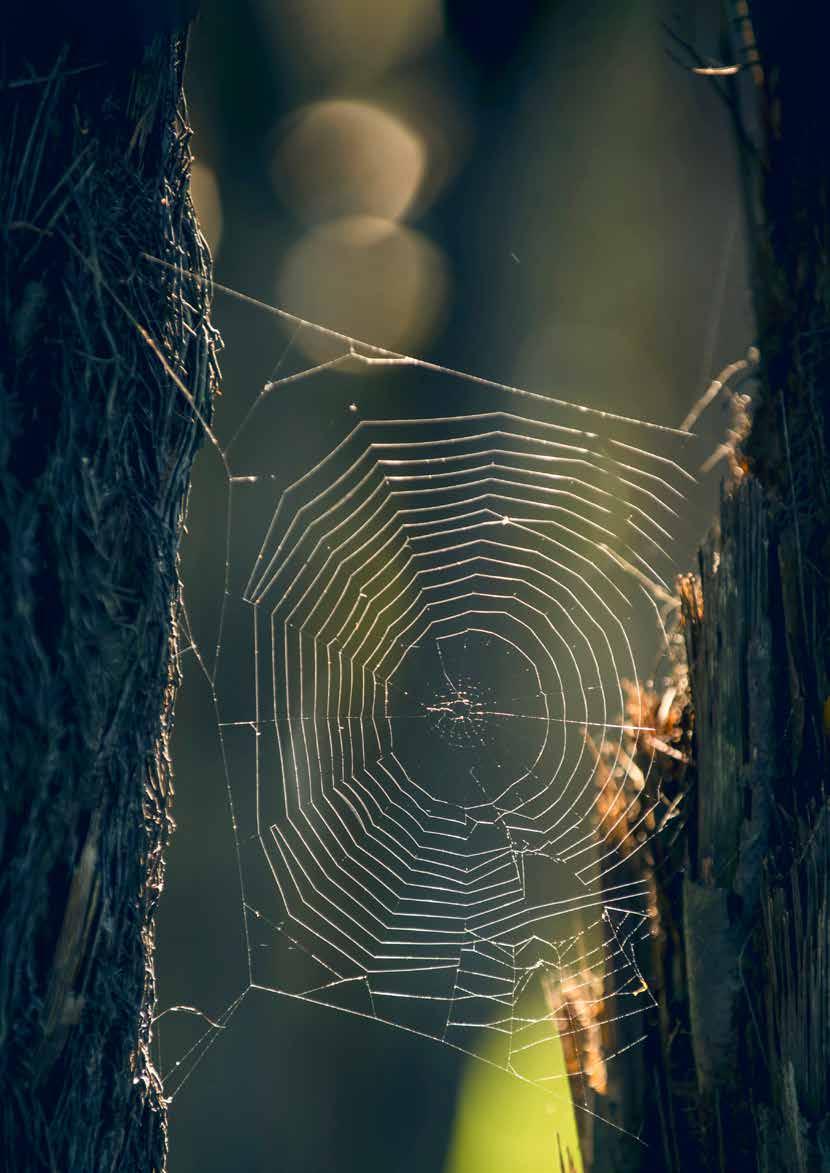
COVER IMAGE: A spiderweb catches the light between two trees. QEII stock image
QUEEN ELIZABETH II NATIONAL TRUST is a statutory organisation independent from government and managed by a Board of Directors. We are a registered charitable entity under the Charities Act 2005. Registration number CC28488.
BOARD OF DIRECTORS Chair Alan Livingston, Debbie Hyland, Philip Hulme, Richard McDowell, Marie Taylor, Graham Mourie
CHIEF EXECUTIVE Dan Coup T 04 472 6626 E dcoup@qeii.org.nz
VICE REGAL PATRON Her Excellency, The Right Honourable Dame Cindy Kiro, GNZM, QSO, Governor-General of New Zealand
OPEN SPACE™ is published by the Queen Elizabeth II National Trust, PO Box 3341, Wellington 6140, New Zealand.
Level 4, 138 The Terrace, Wellington ISSN 1179-3880 (Print) ISSN 1179-3899 (Online) T 04 472 6626 E info@qeii.org.nz
Design Pogo Design www.pogodesign.co.nz
Editor Laura Dalby E editor@qeii.org.nz W qeiinationaltrust.org.nz
Readers
Featuring one of your special protected places
A snapshot of what our members think
Our 2025 Annual Report now online
Introducing a new map of QEII-protected sites
A conversation with our ecological consultant BOTANICAL TREASURES
Philip Smith visits a very special maunga
Potential new trapdoor spider found in Taranaki
Exploring the tiny, exciting world of spiders
How you can support us with a bequest
Taking on the triple threat – possums, mustelids and rats
Facing climate change when you have a QEII covenant
Meet Max Crowe, regional rep for South Canterbury
Honouring the memory of John Cowie
Jennifer Bennet and her dedication to the covenant next door
Mangarakau swamp, Golden Bay and Forest
Masterton
Contact details for our
I am in the unexpected position of introducing the 110th issue of our Open Space magazine.
Shortly before this issue was finalised, our chair, Alan Livingston, sadly passed away. Alan has introduced our Open Space magazine since he took on the role of QEII’s chair in 2023. I am sure he would have given you a warm welcome to this issue.
This has been devastating news for us, but especially for Alan’s family, who I want to acknowledge at this difficult time.
Alan’s connection to QEII began long before he first joined our board of directors in 2020. Alan and his family were proud to have two QEII open space covenants on their farm on the slopes of Mt Pirongia, the first of which was registered in 1988. As a farmer and covenant owner himself, he was adept at connecting with the landowners he met with – a great listener who cared about what other people had to say.
At QEII, we will remember Alan as a dedicated leader, deeply connected to his community, and most importantly a very kind person who had time for everyone. He will be so missed by all those who knew him.
There will be a proper obituary for Alan in the next issue of Open Space in November, but until then if you would like to share any memories of Alan or condolences for his family, please email editor@qeii.org.nz and we will pass them on.
Over to this present issue of our Open Space magazine, one thing that struck me in particular about these stories is the incredible people putting so much dedication and love into their QEII covenants. Rob and Bethne Hooper set aside an important habitat on their farm that eventually was found to contain a potential new species of spider (page 16). Jennifer Bennet took on the daunting and very weedy task of restoring Paekawakawa reserve in urban Wellington (page 38). And there are so many more examples out there of people quietly getting on with conservation on their private land.
It is certainly true that there are significant challenges and hurdles for landowners looking after a QEII covenant. I really feel for the QEII covenant owners hit by increasingly frequent severe weather events (page 32). Controlling pest animals of all kinds is another tricky and enduring challenge for those who own QEII covenants. On page 26, we have collated some thoughts on how to approach control of possums, rats and mustelids.
In his introduction to the November 2025 Open Space, Alan explained that things have been quite different at QEII since July 2025. We are now about nine months into having to reduce the number of new covenants we can protect. This is disappointing for both us and interested landowners, but necessary to responsibly manage our work within the bounds of our baseline funding. We hope this situation is temporary and we are working hard to secure a long-term increase to our funding.
At the end of 2025, we were very grateful to receive a generous bequest, which has had a meaningful impact on QEII’s work. Because of the amazing generosity of this person leaving this gift in their will, we have been able to slightly increase the number of new covenants we will approve this year. It has also meant we could assist more covenant owners to care for their protected sites through The Stephenson Fund. You can read more about the impact of leaving a gift in your will on page 22.
I hope you enjoy reading this issue. I’m very sad to be introducing it instead of Alan, but am grateful for the uplifting stories that some of the QEII family of covenantors have shared with us.
In Alan’s stead, I warmly welcome you to our 110th issue.
Dan Coup Chief Executive QEII National Trust
Read the latest issue of Open Space whenever and wherever you want with our digital subscription option.
Readers with a digital subscription will get email access to read the magazine online as soon as it is published. Back issues of Open Space can also be accessed on our website.
To switch to a digital subscription, complete the digital subscription form on our website: bit.ly/qeiidigitalsubs
You can opt in or out of a digital subscription at any time. If you want to go back to getting a physical copy of Open Space, let us know online through our ‘contact us’ form or send us an email.
If you have any questions about the digital subscription or any other feedback about Open Space, email us at editor@qeii.org.nz
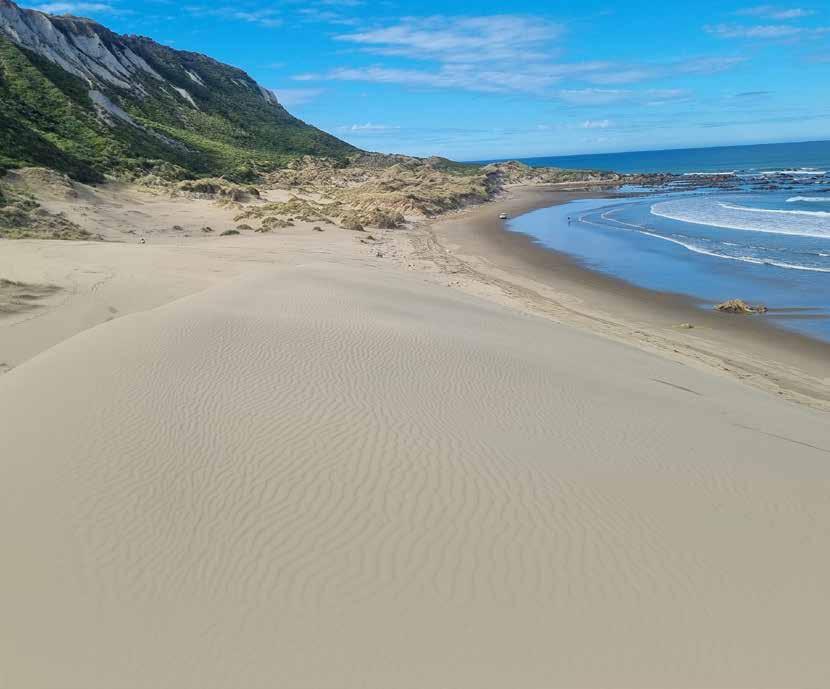
When you opened the envelope that holds this issue of the Open Space magazine, you may have noticed the photo on the front taken by QEII Tararua rep Lou Hagger of the coastal edge of Tautane Station. Tautane Station is a Ngāti Kahungunu owned 3,500 ha sheep and beef breeding/semi-finishing station situated at Herbertville and features significantly in Kahungunu history and Aotearoa history.
A lot of love and care has gone into the protected sites at Tautane, home to special plants, lizards and a threatened day-flying moth.
You can read more about Tautane in the previous issue of Open Space (issue 109).
If you have a photo of your covenant that you would like to feature on a future envelope for Open Space, please send a copy of a highresolution photo with a short description to editor@qeii.org.nz
In late 2025 we worked with a research partner, Primary Purpose, to survey current and former covenant owners.
Our aim was to gather insights about the relationship we have with landowners past and present, understand more about the connection you have with your covenants and identify areas where we could provide additional support or make improvements.
The survey also enabled us to identify any trends or changing needs and monitor progress compared to the first survey, undertaken in 2022.
We had over 900 responses, a similar number to 2022. Thank you to everyone who took the time to take part in the survey. Knowing more about what is important to you helps us to provide better support.
83% of members felt the amount of personal interaction they had with their local QEII representative such as monitoring visits, phone and email contact was the ‘right amount’ were satisfied with their overall relationship with the QEII National Trust, only 6% were not satisfied. 81%
The survey will be repeated in 2028. In the meantime, we’ll be using the results to help us develop policy and prioritise our work.
Some results from the survey are highlighted on this page, and the full report can be found on our website at qeii.org.nz/publications-andresources/qeii-membership-survey
If you would like to know more or have any additional feedback to share, please contact Laura Dalby, Manager, Communications & Information on info@qeii.org.nz.
declared it was easy to set up a covenant 82%
81
declared it was easy to transition into becoming an owner of QEII covenanted land
We asked participants how often they, or someone they know, spends time enjoying the land they have protected with a QEII covenant.
Often 26% Sometimes
8% Hardly ever
Members more likely to ‘often’ spend time:
1% Never 75%
Lifestyle block owners
Half of members declared that they ‘often’ worked to enhance their land, 36% said they ‘sometimes’ did this,
Only 3% said they ‘never’ did this kind of work.
Most common types of enhancement activities being done in covenants:
of members agreed that having land protected with a QEII covenant gave them ‘ a feeling that they were doing their part to preserve some of New Zealand’s native bush or landforms’.
Location
Canterbury/Otago/Southland
Marlborough/Nelson/Tasman/West Coast
Taranaki/Manawatū-Whanganui/Wellington
Bay of Plenty/Gisborne/Hawke’s Bay
Waikato
Northland/Auckland
Age
Under 60
60-69 years
70+ years
Type of covenant owner
Has established a QEII covenant on their current property
Purchased a property with a pre-established QEII covenant
Both pre-established and newly established covenants
Established a covenant but no longer owns the land
We asked participants about communications they receive from QEII. In particular, we asked about our Open Space magazine and whether they found it useful.
Do you read Open Space?
How useful do you find Open Space?
2%
QEII National Trust was established in 1977 by visionary rural landowners who wanted a way to protect the ‘open space values’ on their land forever. Almost 50 years later, QEII National Trust continues to inspire conservation on private land.
QEII’s 50th anniversary year will be in 2027, and we are gearing up to celebrate QEII-style.
You will hear more about what we’re planning soon. In the meantime, if you have any stories or old photos you would like to share with us—of the people and places that are part of the QEII story—get in touch with us at editor@qeii.org.nz
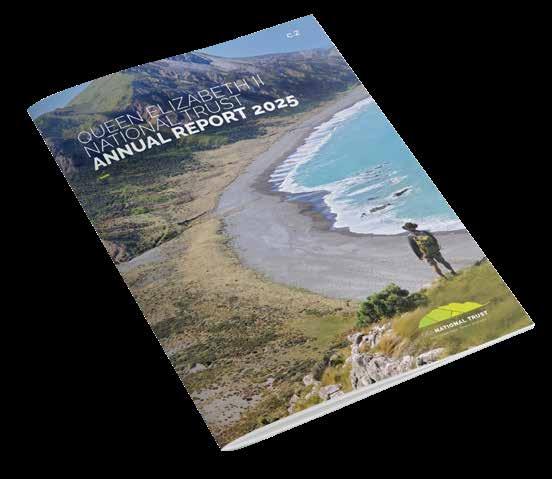
The QEII 2025 Annual Report is now available online at qeii.org.nz, in the Publications and Resources section.
It includes highlights of our work, measuring our progress towards our strategic objectives and our financial statements. If you would like to receive a physical copy of the report, please get in touch with us on 0800 467 367, send an email to info@qeii.org.nz or submit an online enquiry.
We’ve been working to improve the accessibility of our publicly available geospatial data to enable covenantors and other partners to better understand, view, use and share relevant covenant information.
In March, we launched an online data service for the use of organisations and individuals with their own GIS software. Soon, at the end of June, we will be launching our new QEII-protected areas map. This will show the extent of QEII covenants across Aotearoa New Zealand using public covenant boundary data. It will also include our QEII region boundaries so you can easily find out what QEII region you are in and who your local regional representative is.
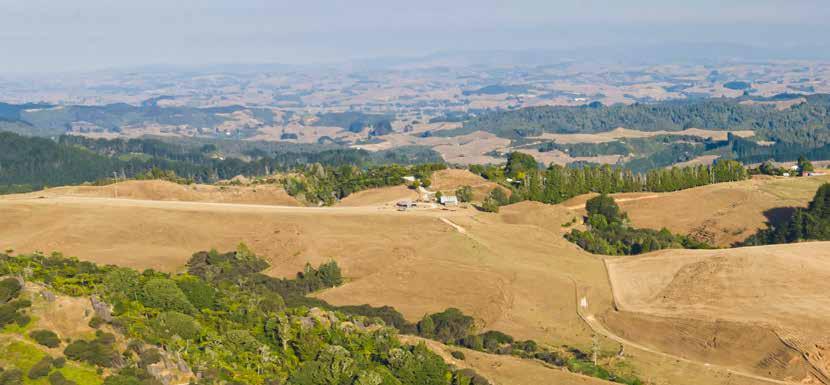
Organisations like councils and lines companies need to know where protected areas are within their own mapping software, so we have recently launched an online service for them to use.
This location data is already publicly available, but making the data accessible as an online service is more efficient, both for QEII and our partners. It also protects the integrity of our data, ensuring the most up-to-date data is being referenced consistently.
This online data service is now available from a new QEII data portal, launched on 30 March 2026. You can visit the portal via the GIS data link on the Publications and Resources section of our website.
Increasingly, QEII covenant owners and individuals have asked to be able to view our protected areas on a map. Many covenantors want to be able to view their covenants in a landscape context, and those looking to buy new properties want to be aware of the location of covenants on the land. A public map of covenant locations is also an important tool to communicate with the public the significance of our growing network of QEII protected areas.
The new public map will be launched in June 2026 and will show:
• The current boundaries of QEII protected areas, including their covenant reference number, the type of protection e.g., open space covenant, the date registered and the survey area in hectares. QEII region boundaries and the name of the regional rep.
• LINZ property title boundaries, with associated title numbers, to help viewers to identify their properties.
We have been very careful to ensure landowner privacy is respected, by limiting the information that can be viewed on the public map:
• No ownership information or any other private information will be shared. Only covenant information that is already publicly available will appear on the map. The location of covenants is currently available to the public from LINZ through their online land record search and other data services.
• It will be made very clear to users of the map that, in most cases, areas protected by QEII covenants are on private land with no public access. Information on sites that do have provisions for public access can be found on the Protected Places to Visit section of the QEII National Trust website.
If you have any questions or feedback for us about the new QEII-protected areas map, please contact us at gisadmin@qeii.org.nz
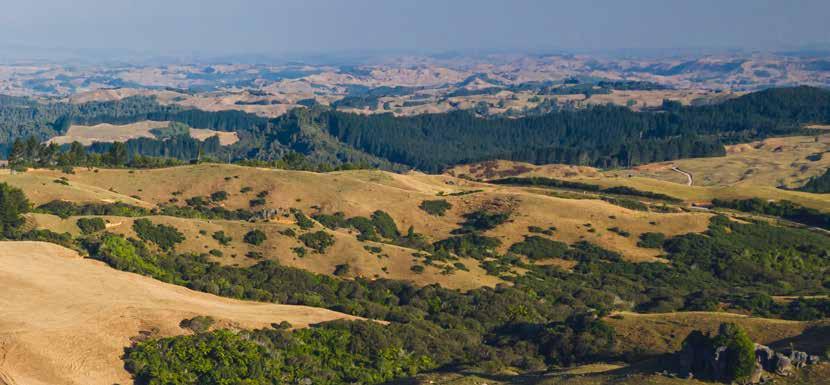
Brian Rance has been QEII’s ecological consultant since 2023, supporting regional representatives and staff by undertaking flora (plant) surveys of covenant proposals and existing covenants; providing management advice and other advice as required.
Brian worked as an ecologist at DOC for over 35 years. He has enjoyed working in all sorts of ecosystems from the coast to mountain tops, including wetlands, forest, tussocklands, alpine vegetation and on islands.
Brian and his wife Chris live on a lifestyle block where they run the Southland Community Nursery, and they have their own QEII covenant and are undertaking restoration planting in it.
We had a chat with Brian about his work and his take on exploring the natural world.
What is your favourite part of your work?
The highlights involve getting to experience many different covenants and working with some great people (including landowners, reps and staff). I also get to learn from these people and places.
Have you had any particularly memorable visits to QEII covenants or interesting finds?
Each covenant is different and special in its own way. It is always great to visit unusual and rare ecosystems including some limestone geology areas. In most surveys, I’ll find extra species (that were not previously known to be there), and it’s not uncommon to find something rare.
For instance, working with Dr Ilse Bretwieser on the woolly head daisies (Craspedia) was special (full story in Open Space issue 108). It was a case of thinking of which covenants had records of the plant, but because it was unknown, we were trying to think of the likely covenants. Ilse was able to confirm ‘yes, that’s the rare one’. It’s a great feeling when you’re looking for a particular plant and you find it.
Why do you think it’s important to know more about what lives within the protection of QEII covenants?
It is important to know what is present and special in every covenant if we are to protect and enhance these things – how do you manage something if you don’t know it is present!
I think owners often know there’s something special in their covenant and think it’s nice its protected, but they’re usually chuffed to know that their place has something particularly precious. There might be a little bit of ‘what does that mean?’ but they also might be thinking ‘what can we do to help it?’.
Some things might have a particular threat. Native mistletoes are particularly susceptible to possum browse for example. While resources to implement management measures such as possum control may be limited, knowing that native mistletoe is present can help prioritise management efforts.
Do you have any advice on building our interest in looking closer at te taiao/the natural world around us?
The more that you look the more that you find! Sometimes we find things in unusual places where we did not expect them.
Firstly, get out into nature and the environment. Take time to look around your covenant and other local reserves. Secondly, there may be a local Catchment or Landcare Group or local community nursery or restoration groups near you to join. Regional groups such as botanical societies, walking groups or Forest & Bird branches could also be a good place to start. Thirdly, there are some great apps available for identifying and recording plants. One that I use is the iNaturalist app.
Learning of something unusual or rare (and learning why they are unusual or rare) often gets people keen to learn more about it and what else may be present in your covenant or local area. Sometimes, once people learn about plants (or animals) and learn the difference between species, their interest to learn more grows. There are some great guides for helping to learn more about plants.
Any other thoughts or reflections?
The protection of covenants and the multitude of values within them provides future opportunities. QEII covenants can provide opportunities for future science, conservation, knowledge growth and enjoyment.
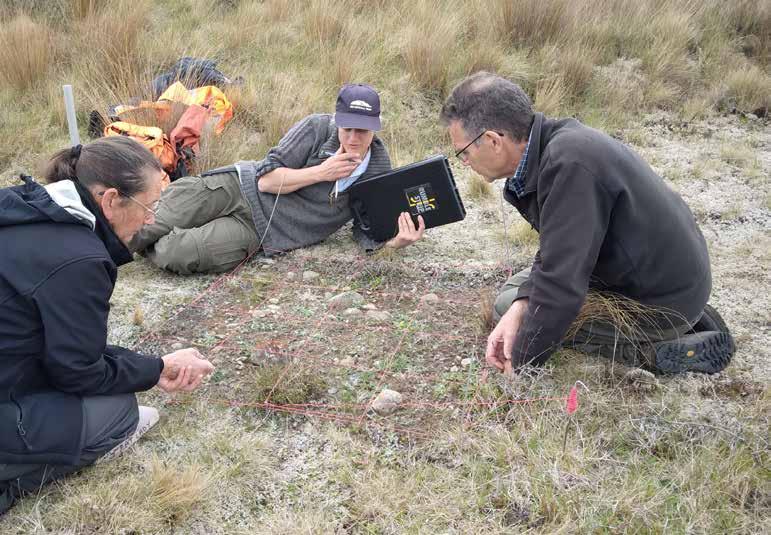
ABOVE: Brian Rance (right), Catriona Gower (Environment Southland, left) and Jesse Bythell (QEII, centre) undertaking monitoring of the dwarf lily Wurmbea novae-zelandiae enhancement plots in the Ernslaw One Dunrobin covenant
Words by Philip Smith
Landscape designer Philip Smith visited Taraoneone/Mt Percy with Trevor Thompson, QEII rep for Wairarapa. Taraoneone is a maunga on Wairarapa’s eastern coastline protected by a covenant since 1998 and home to one of our most endangered plants, the goldenflowered tree daisy (Brachyglottis pentacopa).
There’s a certain judgement that one should exercise as a plant nerd in the wilds; especially when a colleague is showing you around a very special landscape on his weekend. That said, our guide for a day exploring Taraoneone, Trevor Thompson, conspicuously mentioned that we had a fair amount of leeway when it came to our staccato progress up the maunga. If only he had known how literally we would take those words...
For Trevor, the fact that we exhibit little self-control when wanting to learn more about a place was an opportunity to have fresh eyes on a landscape that he knows very well. Eyes that had already looked at Tony Druce and Geoff Park’s list from the mid-1960s to gain an idea of what we might see up there, in addition to the major drawcard of the critically endangered golden-flowered tree daisy (B. pentacopa).
Having helped to carry waratahs and mesh up to the site of future and current exclosures (primarily erected to keep out goats), Logan Drummond and I shifted our attention towards Taraoneone’s botanical occupants. It didn’t take long before Logan pointed out the presence of an ‘at-risk’ native grass not mentioned within Druce’s highly accomplished plant lists – the bamboo-like Microlaena polynoda
At this early stage in our walk, we also noticed the beginnings of one of our
abiding impressions of Taraoneone –well-developed herbfields that one often doesn’t see in modified coastal habitats. The presence of significant patches of herbs such as Geranium aff. microphyllum (a taxon noted by Druce) and Azorella hookeri is often an indicator for us of high-quality habitats with a degree of continuity to the ecosystem. In many parts of our coastlines, they also serve as an echo of former seabird populations or (better yet) potential evidence of recovering colonies.
Not far above the exclosures, Trevor showed us the lowermost natural specimens of B. pentacopa and pointed out areas in which we should be on the lookout for further shrubs, which resulted in a number of plants being added to the sum of previous population surveys over the course of our day.
At the crest of the ridge, we came into a significant grouping of B. pentacopa where one specimen was in danger of being crushed by a fallen kānuka. After a short discussion about the feasibility of mitigating risk towards this mature fruiting specimen and us, Trevor (as QEII rep) approved some tree surgery with his folding saw, to ensure that 1% (or more) of the total population of this species was not crushed when the offending kānuka eventually snapped. This was achieved with no damage to people or plants, unless you count one dead kānuka.
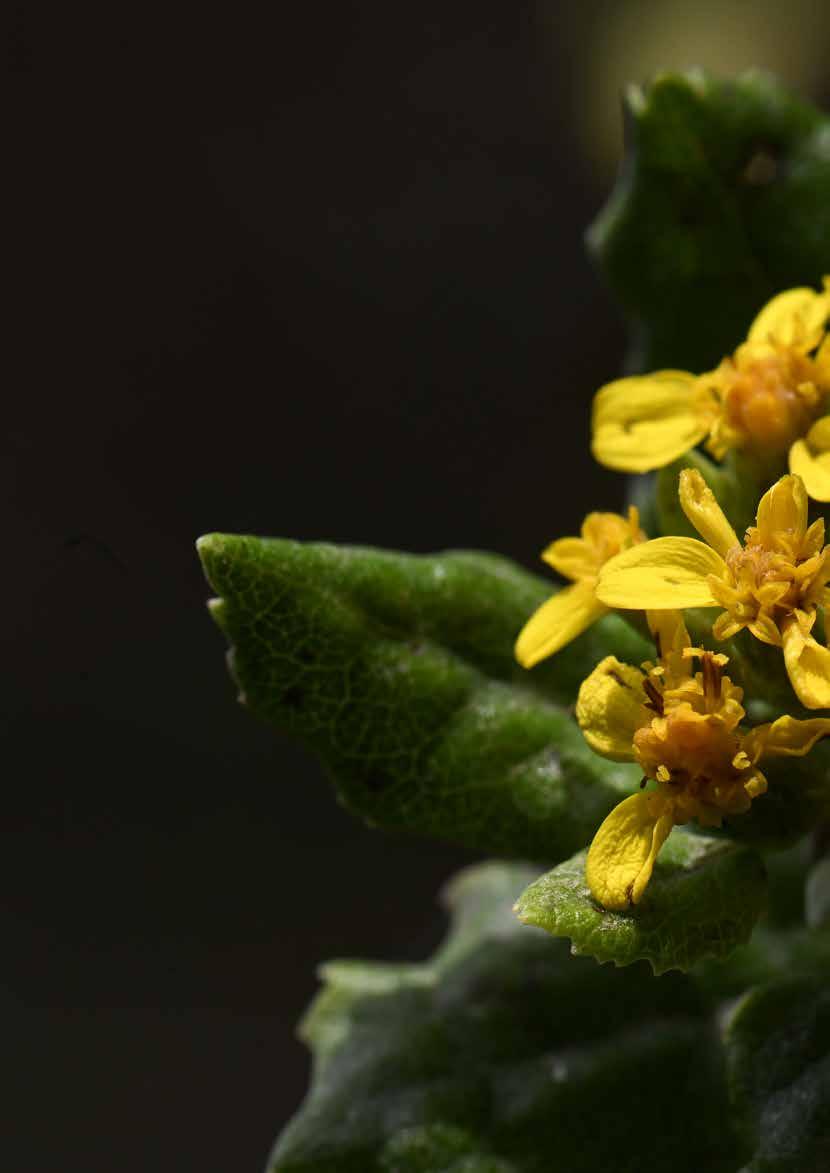
Golden-flowered tree daisy (Brachyglottis pentacopa, Threatened – Nationally Critical) flowers.
Photo credit: Philip Smith; O2 Landscapes
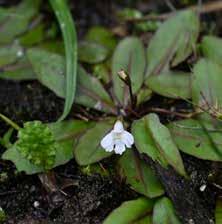
ABOVE: Dwarf musk (Mazus novaezeelandiae subsp. novaezeelandiae, At Risk - Declining).
Photo credit: Philip Smith; O2 Landscapes
Upon reaching the summit, the hitherto-inconspicuous wind made itself very apparent, in a pattern that is clearly prevailing if the wildly differing plant communities on either side of the summit ridge are to be listened to. On the west-facing, windward side, low shrubland of Pomaderris amoena, Coprosma rhamnoides and Helichrysum lanceolatum forms an open matrix amongst which dryland species like the diminutive daisy, Vittadinia australis grow.
On our descent, Logan noticed the rare dwarf musk (Mazus novaezeelandiae subsp. novaezeelandiae, At Risk – Declining) in one of the most unusual habitats in which I have seen this plant – a broad, relatively steep slope into which adjacent ridges drain.
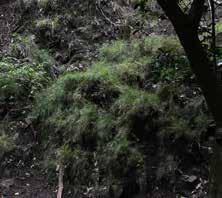
ABOVE: Bamboo grass (Microlaena polynoda, At Risk - Declining).
Photo credit: Philip Smith; O2 Landscapes
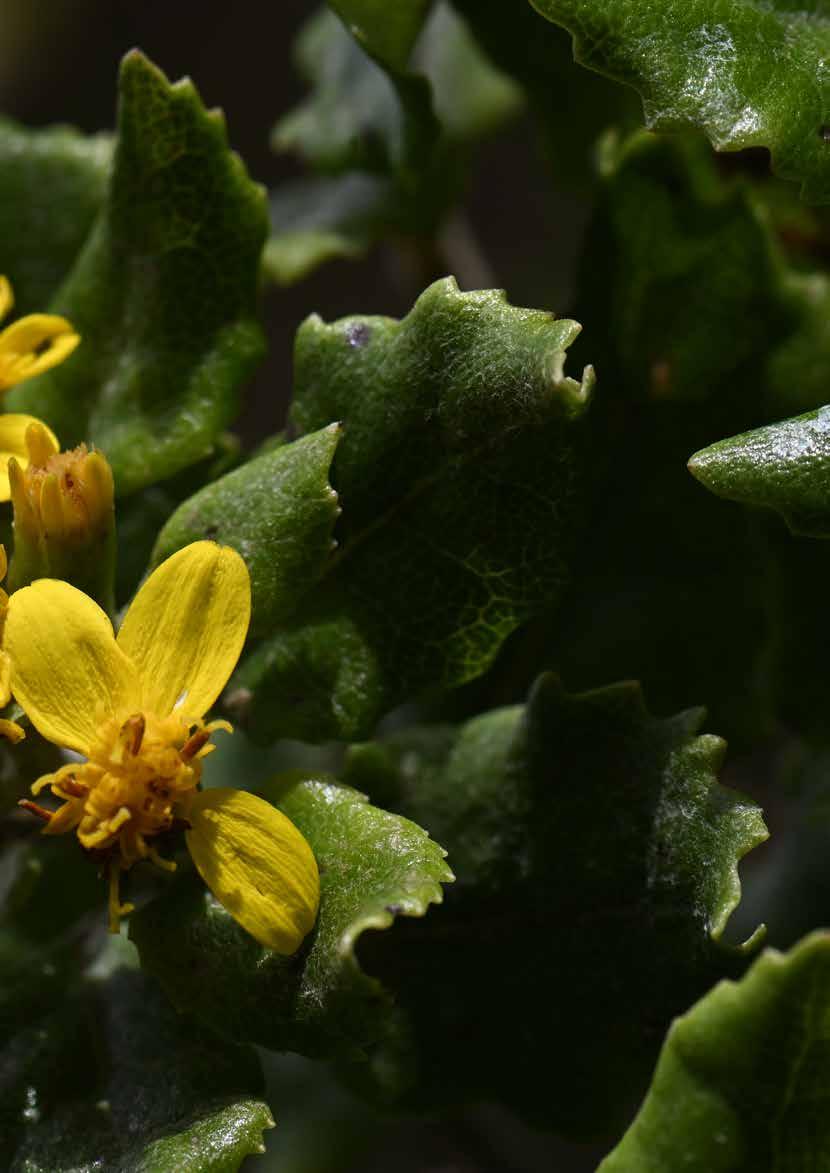
This was a particularly good find, as it has not been recorded here since Druce’s records in the 1960s. To our surprise, we found significant patches of this subspecies towards the base of ridgelines as we descended further, and yet more within damp gullies that represent more typical habitat – to the extent that this is the best population that I have seen of this attractive herb.
I was excited to visit this mountain before Trevor kindly offered to take us up, largely due to the intriguing circumstance of one vibrant species of tree daisy being confined to its slopes. And after spending a day amongst its karaka orchards, herbfields and upland forest, we can see that there is a lot more going on here than one very rare daisy. Special plants remain in special places, and one day looking around this maunga has only revealed part of the many interesting layers of Taraoneone’s natural and unnatural histories. All of which makes a return trip seem mandatory.
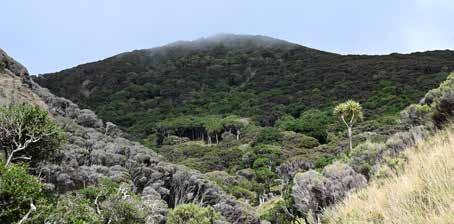
ABOVE RIGHT: Taraoneone, protected by a QEII covenant.
Photo credit: Philip Smith; O2 Landscapes
Taranaki Regional Council Biodiversity Officer
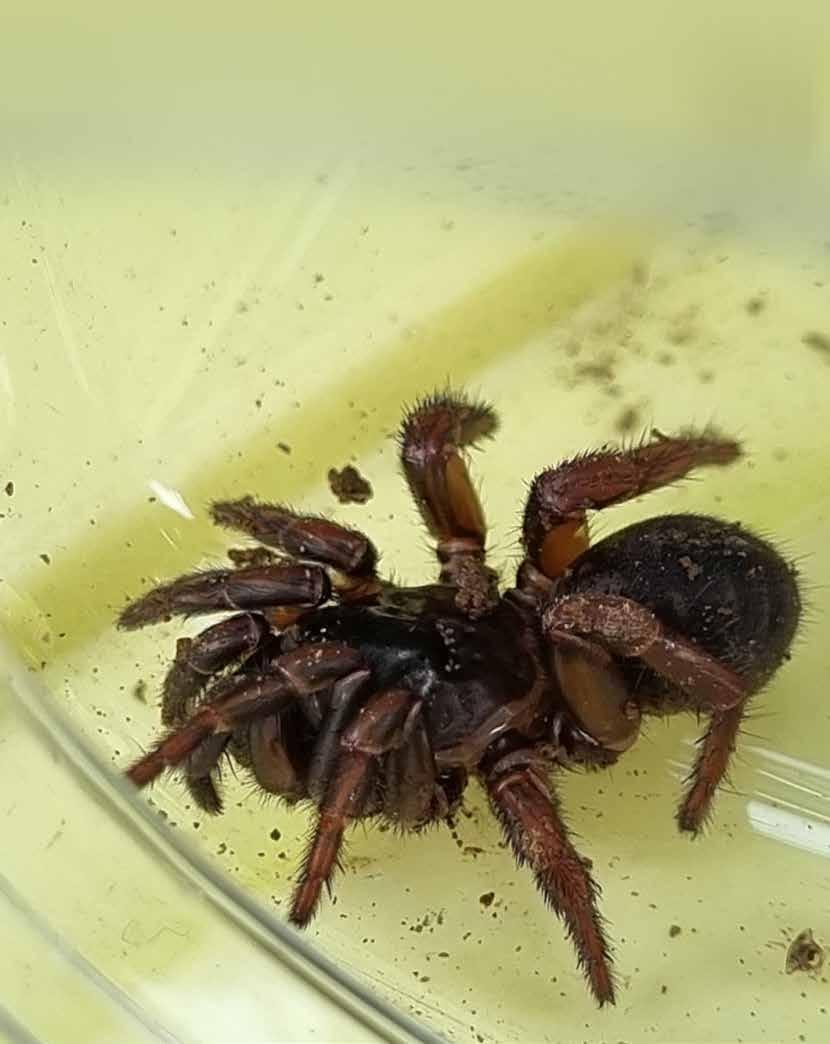
Sandra Sánchez was monitoring flora and fauna at Mataitawa Bush when she spotted some unusual tunnels. After taking a closer look, Sandra saw a member of Idiopidae or trapdoor spider she was not familiar with.
“ When we look out over the view of the bush, we like to picture the little spider out there.”
She took photos and with the permission of the landowners, uploaded them to iNaturalistNZ. She was then contacted by Te Papa PhD student Shaun Thompson through the app. He suspected it was a new species due to that genus of spider (called Cantuaria) having restricted distributions.
“Finding a new species is every biologist’s dream so I was over the moon when Shaun got in touch to say it is likely a new species of trapdoor spider,” says Sandra.
“I was also delighted for the landowners, Rob Hooper and son Mark, as they work extremely hard to protect these forest remnants, so this is a fitting way to reward them for their mahi.”
Mataitawa Bush is part of the Taranaki Regional Council’s Key Native Ecosystem (KNE) programme, where significant remnant forests, wetlands, coastal turfs and dunelands are legally protected, in this case with a QEII covenant.
Bethne and Rob Hooper made the decision to fence off Mataitawa Bush about 50 years ago, setting aside modified primary forest, with tawa, kohekohe and pūriri. In 2006, with the
help of previous QEII rep Neil Philips, the site was protected with a QEII covenant. Further covenants were established, creating a 14-hectare protected corridor following a gully through the farm.
“The initial reason for saving those areas was the heritage point of view,” say Rob and Bethne. “We were sorry to see so much nature destroyed.”
Exploring the forest has been part of their family’s life. “Over the years, we’ve walked through the covenants with our children and grandchildren, inspecting rotten logs and teaching them about the crawlies that live there. The kids have found bugs, beetles, moths, lizards, all sorts.”
When Bethne and Rob were told about the potential new spider species found at their place, Bethne thought it looked familiar. “I was like: ‘I’ve seen those all over the place’. But while we recognise a trapdoor generally, we were excited for Sandra that she had actually discovered a species that looked different to her. It’s Murphy’s law – ever since she saw it, I haven’t seen them in the garden!”
The couple are pleased that all those years ago they thought to protect habitat to give birds and other
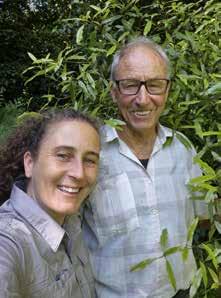
RIGHT: Sandra Sánchez and Rob Hooper. Photo credit: Taranaki Regional Council
creatures an opportunity to thrive. “We would have liked to have a kiwi pop up but a spider is also fun,” says Bethne. “Even the smallest creatures have a part to play in the ecosystem.”
Rob has done a lot of weed control and pest animal control throughout their protected sites. “You don’t just fence off a place and leave it,” say Rob and Bethne. “There’s a lot of work involved in maintaining these areas. We’ve trapped rats, stoats, weasels, possums, hedgehogs and all the things that we want to keep out so that the bugs running around are safe.”
Rob and Bethne say that they can see the Mataitawa Bush covenant from their house. “When we look out over the view of the bush, we like to picture the little spider out there.”
Where are you, as you read this?
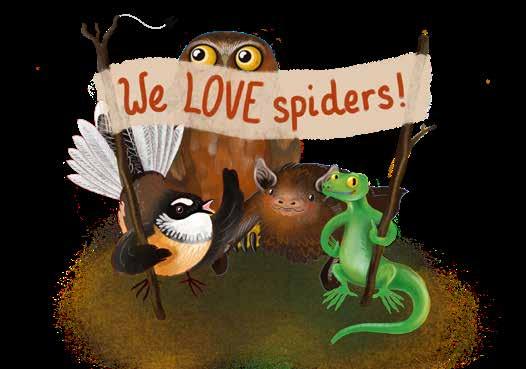
Chances are there’s a spider nearby, quietly going about its business. If you look closely… the world of a spider has enough activity, drama, creativity and problem solving to always be interesting!
Spiders can float high above us, camp out in dark caves beneath the surface of the earth and even lie submerged underwater in a silvery case of bubbles.
We share our homes with them, and they share theirs with us. Spiders have been here for approximately 380 million years, about ten times longer than humans. During this time, they have developed all sorts of incredible strategies for survival.
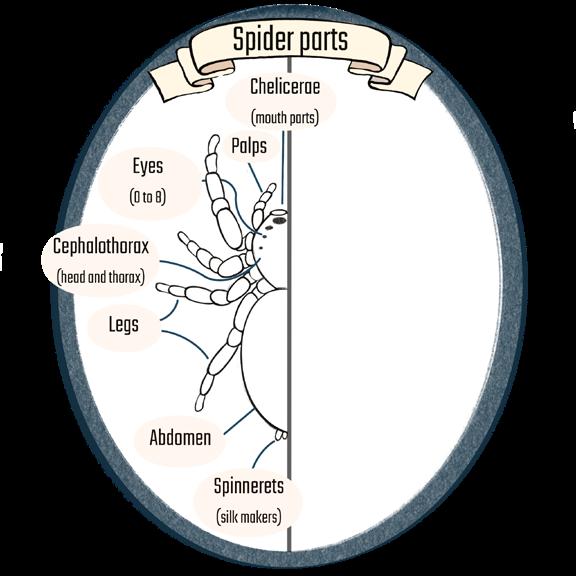
Well, it’s not an insect. Their anatomy (body parts) is quite different. Spiders are arachnids, which have two/rua main body sections and eight/waru legs. Insects have three/toru main body sections and six/ono legs. Insects and spiders both belong to an enormous group of creatures named invertebrates, which do not have a spine. Spiders have a hard casing to protect their body and as they grow, they have to discard their too-tight case (like old clothing) and grow a new one. You might find these old spider ‘shells’ around the place.
Can you practice your spider anatomy by creating the other half of the diagram here?
Often it is the webs of spiders we notice, rather than the creatures themselves. Different web types can be a great starting point for finding and recognising a range of types of spiders.
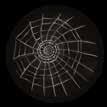
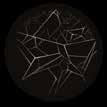
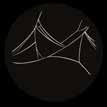
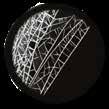

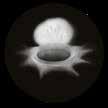
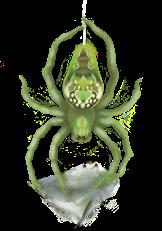
ORB WEB
These webs are skilfully constructed by female orb web spiders, who produce different kinds of silk for different parts of the web. Sticky bits, strong bits, stretchy bits. Some orb web spiders rebuild their web every night - gobbling them up after each use so that they can recycle the materials in their next masterpiece.
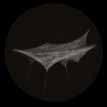
SHEETWEB
These are very common in our forests. They look like trampolines stretched between tree trunks and the non-sticky silk lines built above the “sheet” are this spiders’ secret weapon. At night, insects accidentally fly into this maze of lines and fall down to the sheet below where the spider is waiting to pierce them from its hiding spot underneath.
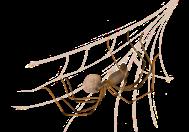
COBWEB
Cobweb spiders often use the corners of ceilings or windows as nice, sheltered spots to construct their insect-traps. The cobwebs may seem untidy to us, but they are very strong and effective!
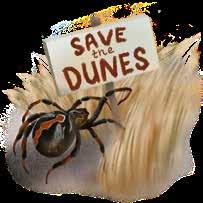
Our beautiful katipō is a cobweb spider, using her silk to ensnare sandhoppers and ground beetles beneath coastal dunes. She is very shy, despite having a venomous bite. She is a mascot of the dunes, reminding us that those delicate ecosystems need protection.
LINEWEB
Have you ever seen a ‘daddy longlegs’ spider in your home? She is the creator of loose, tangled and often very long webs which are built around human structures (porches, garages, bathroom nooks and crannies), looking very similar to those built by the cobweb spiders. She wraps up tasty insects like Egyptian mummies: because spiders can’t chew, they need to immobilise their prey before injecting a special brew to liquidize their innards and sipping them slowly. Spider smoothie, anyone?
LADDERWEB
This silken structure can also be found in corners, like a cobweb. It often has a special zigzag pattern which looks like a slightly dizzying ladder.
TUNNELWEB
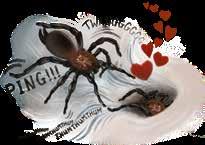
Tunnelweb females build beautiful, silken tunnels which they live in for nearly their entire lives. You can find them under woodpiles, in tree trunks, along banks. By night they sit with their front legs close to the tunnel entrance, waiting for the vibrations of unlucky insects/snails, or perhaps a lucky male. He has no web, but can tap out a lovely rhythm on the silk strings outside a female’s lair. If she appreciates his taste in ‘music’ he might get a date!
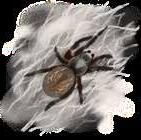
TRAPDOOR SPIDER
Because trapdoor spiders can live for 20 years or more, they need a really great strategy for avoiding danger, such as predatory wasps. Their silky tunnel (dug into soil or wood) often has an extremely well camouflaged trapdoor at its entrance; a perfect place to wait for wandering invertebrates.
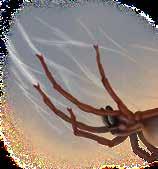
Sit-and-wait spider
ROAMING NIGHT-TIME HUNTERS
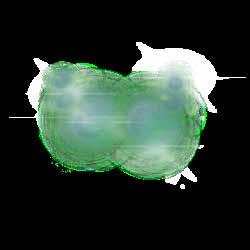
This group includes visitors who you may have encountered in your home such as the large brown vagrant spider. Or maybe you have seen the creations of the nurseryweb spider: white, tent-like structures strung atop plant stems or branches. The māmā spider carries her egg sac around in her mouth until they are ready to hatch, which is when she will build her nursery. After a few weeks living in the nursery, the hatchlings nibble their way out, lift their rears to the wind, let out a strand of silk and catch the breeze like teeny spidery kites. This is called ‘ballooning’ and it’s how spiders can ‘fly’ great distances – sometimes across oceans!
ANCIENT CAVE SPIDERS
This is our largest native spider, and it is also incredibly rare.
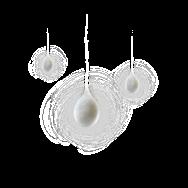
They use silk to assist them as they clamber around dark cave ceilings in search of cave wētā, and to parcel up their eggs like little Christmas decorations hanging in the gloom.
All spiders create and use silk - up to nine/iwa different types! Not just for webs and egg cases though – here are some of the other silk spinners we have in Aotearoa:
SIT-AND-WAIT SPIDERS
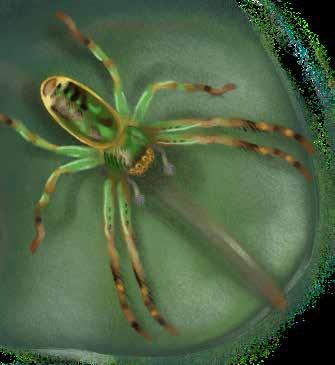
These spiders wait quietly before leaping on their unsuspecting victim. They can rely on their silk like a bungee-jump rope or an anchor as they pounce on prey or escape from predators. Many spiders from this group are beautifully camouflaged to blend in with the flowers, leaves or bark where they hide themselves.
ROAMING DAYTIME HUNTERS
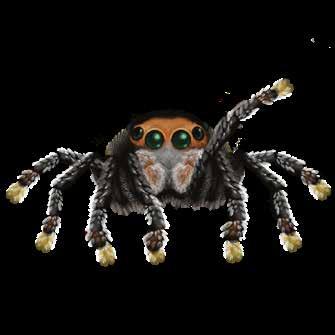
These spiders aren’t confined to one place - they wander widely in search of food. Jumping spiders are part of this group, described by some as ‘the cats of the spider world’ with their big eyes, furry little paws, interactive personalities and mammal-like hunting style. They use silk to create strong ‘discs’ which anchor them as they jump about. Some jumping spider males dance to win a date!

Nurseryweb spider ‘tent’ and eye-shine under torchlight
Cave spider eggs
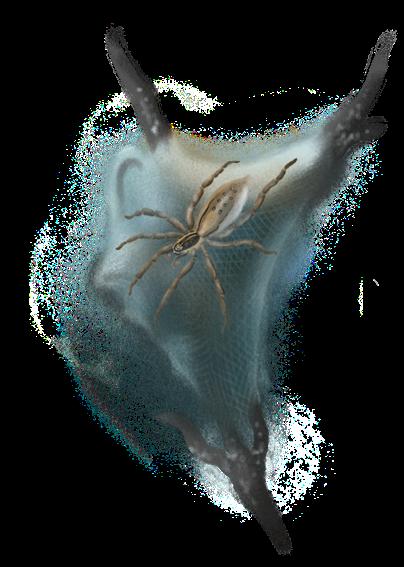
Spiders are predators – they help to keep other invertebrate populations under control. Without them we might end up with plagues of houseflies, mosquitoes, aphids or beetles. Many of these bugs are pests, eating our food crops and native plants, or causing a nuisance.
Spiders are also prey, providing food for many of the birds which we cherish. Think of korimako/bellbirds, tūī, ruru/moreporks, riroriro/ grey warblers and kōtare/kingfishers. Mokomoko/geckos and pekapeka/bats love spidery snacks as well!
Spider silk is used by other creatures too. Have you seen pīwakawaka flitting around your windows? They collect spider webs from buildings and forests to line their lovely nests.
Humans have tried to mimic spider silk for all sorts of purposes, but we have never managed to create a material which is so strong, flexible and soft all at once. Tests are even underway to use spider webs inside our own bodies as a frame for growing new nerves!
There are thought to be about 40,000 spider species worldwide. Here in Aotearoa we likely have about 2,000 species - that’s 5% of the world’s spiders - and around 95% of them exist only here. Around half of our spiders are undescribed, which means we do not know enough about them to formally name them or know how they fit into our environment. Perhaps one day you might discover or name a new species! You can find a story about a spider discovery on page 16.
Find a spider near you to observe – maybe name her/him! To figure out whether you are looking at a male or female, take a look at the diagram on page 18. The ‘pedipalps’ or ‘palps’ of males are longer and larger, and the abdomen of females are usually much bigger.
Over time you might see entire life cycles play out, complete with ‘music’, dancing, hunting, eating, fighting, protecting and more. Let us know what you discover by sending your stories, photos or drawings to editor@qeii.org.nz
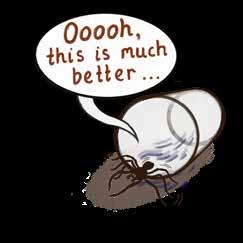
And if, by chance, there is a lost spider in your home who needs to be guided outdoors, here’s a friendly way to do it…
You will need:
• A spider
• A wide glass or clear plastic container (check your recycling bin)
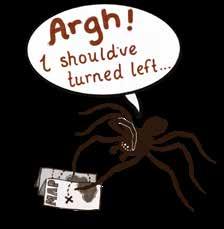
• A piece of card or paper folded in half
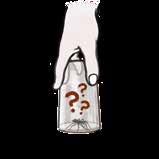
STEP TWO: Slide the paper/ card gently under the container.


STEP ONE: Place the glass/ container over the spider.
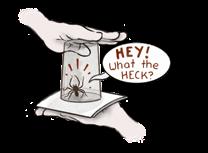
STEP FOUR: Lay down the paper and container in a safe space. Lift the glass to release the spider.
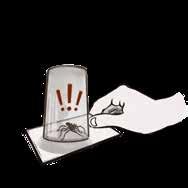
STEP THREE: Flip the container over and hold it firmly on the paper with your other hand underneath. Carry it outside.
For nearly 50 years, landowners across Aotearoa New Zealand have chosen to protect their special places with open space covenants through QEII. These legally binding commitments keep native forests, wetlands, dunes, and more, safe. Forever.
Covenants aren’t just lines drawn on a map. They are living spaces loved, owned and cared for by ordinary Kiwis. In many cases the land itself is special – limestone ecosystems, salt pans, wetlands, sand dunes, kauri gumlands and the last stands of ancient forests. They support species of all kinds, some that are found nowhere else.
Why bequests matter (and why general funds help most)
Every covenant is a promise that lasts beyond any owner or lifetime. But keeping that promise takes stewardship and hard work: fencing, pest and weed control, and even dealing with weather damage. Bequests allow QEII to make a difference where and when it counts, from the first conversation about a covenant to the third generation of landowner.
Because we can’t predict exactly what needs QEII will have when a bequest comes our way, unrestricted bequests to our general fund are especially valuable. They give us flexibility to use the gift in a way that will have the greatest impact. That may be covering the cost of establishing a new covenant, providing expert advice and support to landowners, or increasing the amount of funding landowners can apply for to help them undertake projects within their covenants via The Stephenson Fund.
The Stephenson Fund: small grants, big impact
A recent bequest has allowed us to increase the amount available through The Stephenson Fund in the latest funding round. The Stephenson Fund provides targeted funds to enable landowners to carry out projects within their covenant.
One of the covenants that benefitted from the increase to The Stephenson Fund sits within an important ‘mountains to sea’ corridor in Golden Bay – a landscape pathway allowing native wildlife to move safely between habitats. The site was purchased by a group of locals, donated to the Native Forest Restoration Trust (NFRT) and covenanted. Thanks to the dedication of this group, it is now coming back to life.
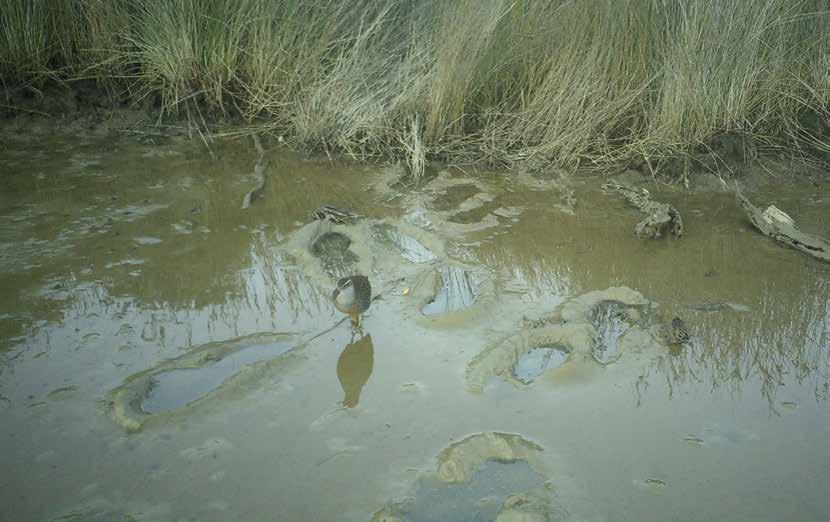
The covenant is home to estuarine species including whio and banded rail, and potentially crake. These species rely on connected habitats to survive, making this land important to their future.
With a grant from The Stephenson Fund, predator control across the covenant has been strengthened. New traps have been installed, older ones upgraded and trail cameras have
been introduced. These tools allow predators to be monitored more effectively, helping refine control efforts and supporting those involved to build skills and knowledge.
The impact is already visible. Stock exclusion has allowed native vegetation to regenerate, weeds are being removed, and early photography confirms the presence of banded rail at the site. Over time, this work will help ensure the covenant remains a safe haven for wildlife that depends on it.
This is the enduring power of a bequest. It transforms personal values into real outcomes. A decision made while writing a will is now protecting native species, restoring ecosystems, and supporting conservation efforts that extend beyond a single lifetime.
This project met the criteria for funding, but without the increase enabled by this bequest, it would not have been supported in this funding round due to high demand. We are incredibly grateful to the bequestor who made this possible this year. Every trap laid or upgraded in that Golden Bay covenant this year, every predator detected and every bird that makes its home in this restored landscape is part of that legacy and will be felt for generations to come.
ABOVE: Spot the moho pererū/banded rail (Hypotaenidia philippensis)! Image taken on trail camera in the Parapara wetland estuary covenant. Photo credit: Bert Harris
Thanks to the same bequest, we could also increase the number of planned new covenants for this financial year. With no consistent increase to QEII’s baseline funding in recent years, we have had to make some difficult decisions. To ensure we can continue to support the more than 5,500 covenants already in place, we have had to limit the number of new covenants we can approve this year.
Since approving new protection is core to QEII’s work, this was not a decision we made lightly. For this year we had budgeted to approve 30 new covenants. Thanks to this bequest we were able to modestly increase that budget for this year. That means that more new covenants will become a reality than were planned. That is a very real impact on the future.
And it was only possible because of one hardworking, passionate individual who made the choice to support the causes he was already passionate about beyond his own lifetime.
Find out how more about bequests on our website: qeii.org.nz/partners-in-protection
As we get closer to celebrating 50 years of protection through QEII, one thing is very clear: people protect places The covenant model works because landowners lead and QEII stands beside them for the long term. We don’t know what the next 50 years will bring, but we do know that well-supported covenants will be the islands that hold wider landscapes and biodiversity together.
Leaving a gift to QEII in your will is a way to be part of that story. And if you want your legacy to go where the need is greatest, an unrestricted gift ensures future decisions can be made that address those needs at the time.
For nearly 50 years, landowners have protected the places that make Aotearoa unique.
With a bequest to QEII, you can help them care for those places for the next 50.
In our recent membership survey, we asked covenant owners which pests posed the biggest problem to their QEII-protected land. Possums, rats and mustelids (stoats, ferrets and weasels) came out as the top three problem pests across the country*.
While the list of threats to Aotearoa’s precious native landscapes is much longer, we have put together some guidance on tackling these three pest species in particular.
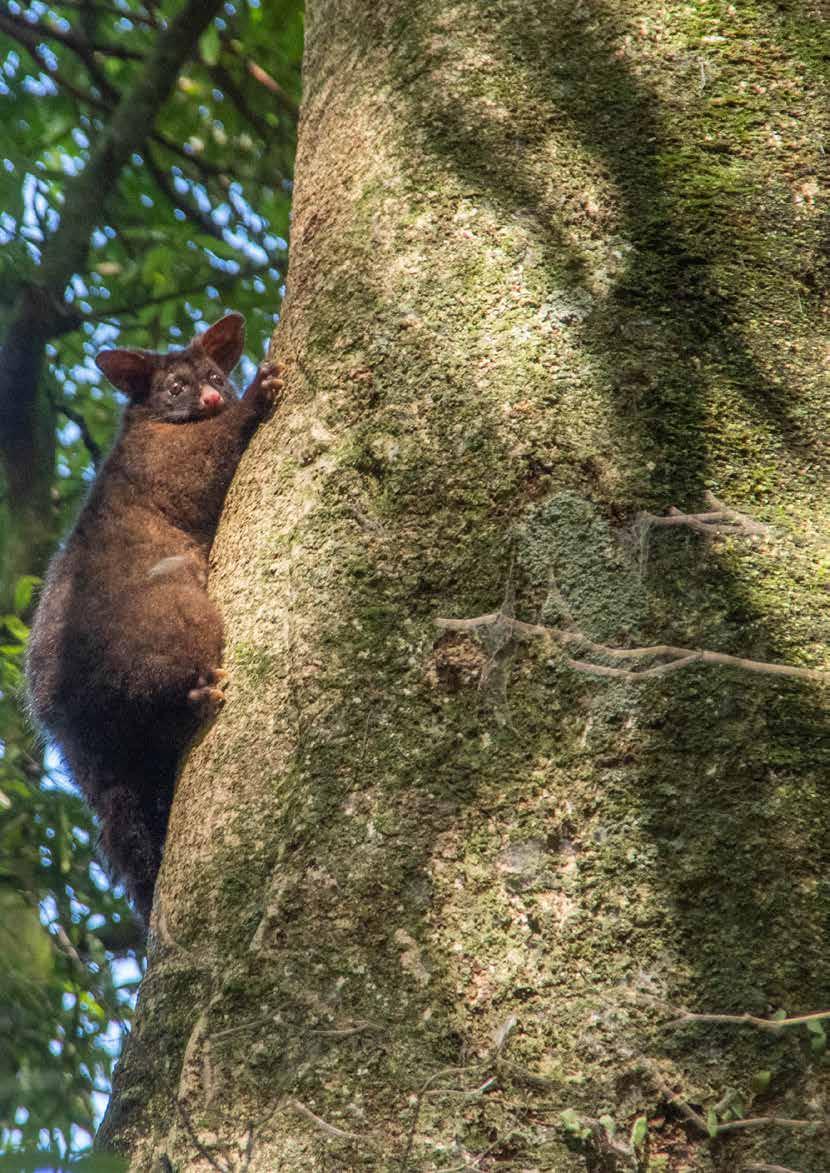
POSSUM
Species: Brushtail possum (Trichosurus vulpecula)
Diet: Leaves, flowers, fruit/berries and nectar. Possums are also opportunistic omnivores, eating what they come across like eggs, chicks and invertebrates.
Good at: Climbing with their powerful limbs and sharp claws – perfect for munching on all levels of our forests!
The problem: Unfortunately, as is the case with most of our most invasive pests, our biodiversity has not evolved in such a way as to have natural defences against the likes of possums, which is why pest control is so important.
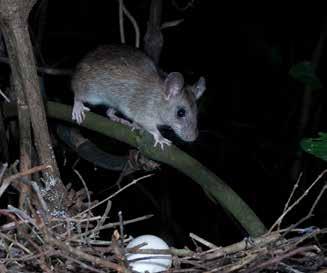
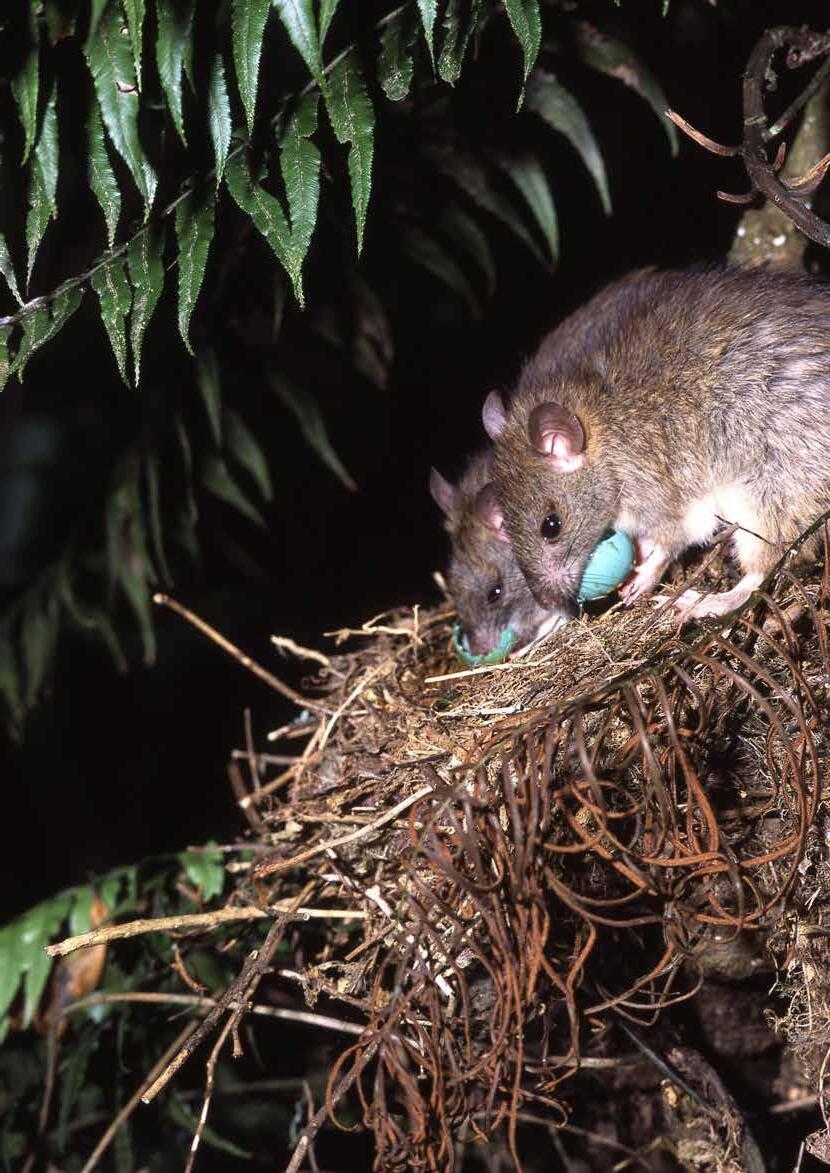
Species: Norway rat (Rattus norvegicus), ship rat (Rattus rattus)
Diet: Omnivores – eating birds, seeds, snails, lizards, fruit, insects, eggs, chicks, larvae and flowers
Good at: Ship rats are great climbers and Norway rats are great swimmers
The problem: Rats have a devastating impact on our fauna. Rats not only prey on our wildlife but also compete with them for food. They also breed rapidly, making their populations challenging to control.
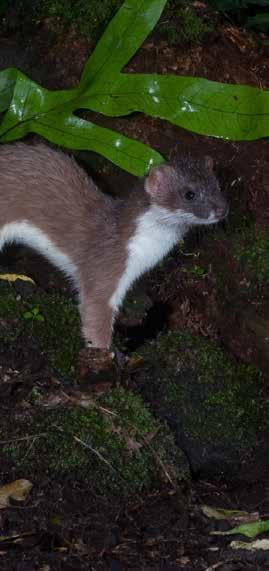
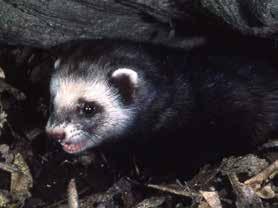
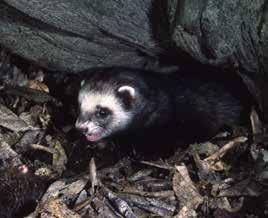
Species: Weasels (Mustela nivalis), stoats (Mustela erminea), ferrets (Mustela furo)
Diet: Weasels eat mice, lizards, insects and other smaller prey. Stoats eat rats, rabbits, mice, birds including young kiwi, invertebrates and lizards. Ferrets eat rabbits and even adult kiwi. This means stoat and ferret control is very important in areas with kiwi present.
Good at: Baby weasels grow very quickly and are good hunters by the time they are eight weeks old. Stoats can climb exceedingly well and have acute hearing and sense of smell. Stoats are also very intelligent and quick learners. Ferrets are not great climbers but have a much more powerful build than weasels or stoats.
The problem: Mustelids are the ultimate killing machines and have a high metabolism, which means they need to eat often. They can do a lot of damage to our native fauna in a short space of time. Although they tend to have one litter of kits a year, females are usually impregnated prior to them leaving the nest. The number of young born also depends on food supplies, meaning they can rapidly grow in numbers when food is abundant.
Ferret and stoat populations are also intertwined with other pest species. High rabbit numbers can result in high ferret numbers, and rat numbers are a population driver for stoats.
An important thing to think about when undertaking a predator control operation is what you are trying to protect and which introduced predators you’re dealing with.
This can be a good point at which to contact your QEII regional representative. They might know which pests are particularly known to be a problem in your area and how to proceed.
Optimal distance between traps varies slightly across species but setting your traps on lines 100m apart with a trap every 50m is generally a good rule of thumb for rats. The spacing for traps for mustelids should be much more widely spaced and more in line with likely invasion routes.
Unless you have the time for intensive trapping, initial knock down of rats and possums is best done by toxins, with subsequent residual populations being dealt to through other methods. Reinvasion can be quite rapid however if there is untreated land around you, as nature loves a vacuum. Vigilance and persistence are key.
A note on toxins: While we have not gone into detail on toxin types, we encourage seeking guidance on what kind of toxin to choose, e.g., first generation toxin vs second generation toxin (which can impact the wider ecosystem). Remember to do your due diligence when using and handling toxins. Follow safety instructions and seek advice if needed.
Selecting the right bait or lure will also improve your catch rate. Different species have different preferences, and your location can also impact what works best (coastal vs. inland). Trap suppliers tend to give high level advice on their websites, otherwise the Department of Conservation and Predator Free NZ Trust have guides available to help.
There’s no single “best” tool, and what works well will depend on your property and target species. The list below highlights commonly used traps, but it’s worth seeking tailored advice—your QEII representative can help, and there is also excellent guidance available on the Predator Free NZ and Department of Conservation websites.
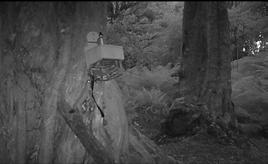
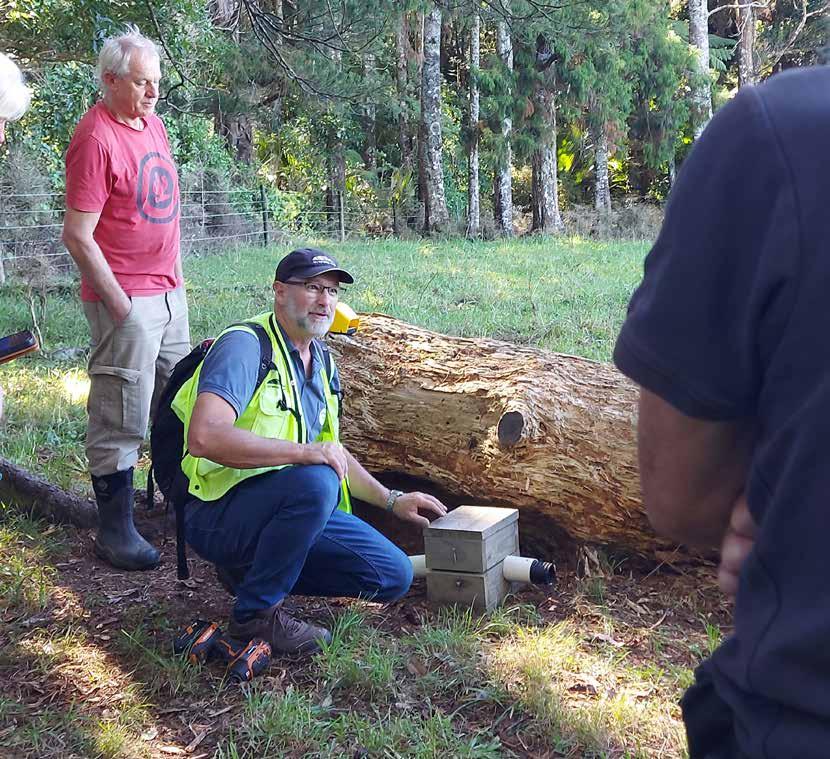
DOC200 in a wooden box – Good for stoats and weasels
DOC250 – Good for ferrets
Lures – Caught mice or other meat lures for weasels. Rabbit, erayz, egg, raw mutton fat or venison for stoats. Meat lures, erayz or eggs for ferrets.
Flipping Timmy – Easy to set up and cost-effective. It is mounted on a tree trunk and is hinged, which makes setting and checking traps more comfortable as no bending is required. They can also be set up out of reach of non-target species and the scent of the bait will travel further and last longer.
NZ Auto Traps AT220 – A self-setting trap that is great for initial and ongoing control of possums. While they are expensive, they use a rechargeable battery that powers a pump, pumping fresh lure from a container. It is triggered by the target breaking a laser beam. Once broken, it activates the trap and a mechanism that is geared down to reset the trap, with a claim of up to 100 cycles on one battery charge. Will still need checking every so often.
Trapinator – Simple and effective for trapping low-density possum populations.
Lures – Fruit, mayonnaise, molasses, ‘possum dough’
Victor professional rat trap – A powerful and affordable trap. It can be used on the ground or nailed to a tree. Safest if housed in a wooden box when trapping outdoors. If kiwi or other non-target species are around, then they must be suitably covered or put out of reach. Consider setting three or more in problem areas.
Envirotools D-Rat trap – Designed to be mounted up a tree, with the added advantage of easy fine setting, and clearing and setting the trap without getting hands near the dead rat or killing arm.
DOC200 in a wooden box – More expensive, but robust and durable.
NZ Auto Traps AT220 – As above. Works well for rats too.
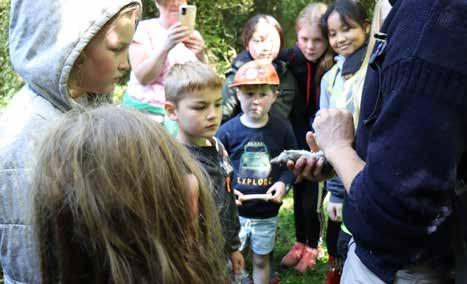
ABOVE RIGHT: QEII rep Jesse Bythell shows schoolkids how to tell the difference between Norway and ship rats
ABOVE TOP: Close up of a ferret. Photo credit: Ngā Manu Images
ABOVE BOTTOM: A curious stoat investigating an AT220 in Southland. Photo credit: Jesse Bythell
Lures – Fatty proteins like cooked bacon, fish oil or erayz for Norway rats. Peanut butter, Nutella, apples, macadamias or walnuts for ship rats.
Keep up the good work!
Maintain your traps so they work effectively. Good placement, regular cleaning, lubrication, and occasional calibration all help reduce trap-shyness. Rotating baits can also improve results. Trap-shyness occurs when a pest survives an encounter and learns to avoid traps, sometimes passing this behaviour on—so changing lure types or trap locations can help. It also pays to observe pest behaviour. Seasonal patterns, preferred habitats and feeding signs can all help refine your approach—for example, leaf drop beneath fivefinger or lancewood in spring can indicate possum browsing.
Consistent effort is key. While pest control can be challenging, the long-term benefits for native biodiversity make it worthwhile.
When Mary Brady noticed pests like stoats on the farm, she wanted to start doing something about it. As well as the four AT220 Autotraps and two magpie traps she was able to purchase with help from The Stephenson Fund, Mary says it was also a conversation with a neighbour that really got the ball rolling for their pest control.
“I heard from a neighbour who had been trapping in the area. He ended up coming to our farm and setting up wooden traps for us,” says Mary. “He’d have about 20-30 traps on our farm, which is about 800 acres. It’s a lot of work, lots of time for him going across the farm checking all those traps. I’m very appreciative.”
Mary has been making good use of the Autotraps but also resets the other traps when she comes across a catch. Her neighbour keeps her updated on how many pests are being caught. In the last year, they caught 716 possums, 98 rats, 25 stoats, five weasels, five ferrets, as well as three feral cats, five hares, three magpies and seven hedgehogs.
Mary hopes that one day they will see more birds around their place. “I want more birds around here. We’re by the bush, but I don’t have wood pigeons by my place. I’d love to see more of them.”
When asked about advice for others wanting to approach pest control at their place, Mary reflects that there can be some unexpected learnings, like figuring out the best place for a trap and trying out different baits such as rabbit innards for mustelids.
Where can I find more information?
This article draws from three previous Open Space articles on possums, rats and mustelids:
Open Space issue 98
Open Space issue 100
Open Space issue 99
You can read the full articles on our website: qeii.org.nz/publications-andresources/open-space-magazine
Predator Free NZ Trust and the Department of Conservation have some excellent resources and advice: predatorfreenz.org and doc.govt.nz/ nature/pests-and-threats/predatorfree-2050/community-trapping
A great place to start is DOC’s Practical Guide to Trapping.
* Note: There is regional variation across the country, with respondents from some regions reporting more problems with some species than others.
Have a pest control project in mind but could use some help?
Contact your regional rep for guidance on your project.
If you have a covenant in the Auckland Region, consider applying to the Auckland Council Fund.
You can find out more information on our website: qeii.org.nz/managing-your-covenant/theauckland-council-fund
Or email us at: aucklandcouncilfund@qeii.org.nz
The Stephenson Fund accepts applications annually for QEII covenantors around the country. The Stephenson Fund is currently closed for applications; you can find out more information about the fund and the 2026 opening dates on our website: qeii.org.nz/managing-your-covenant/ the-stephenson-fund
Or email us at: thestephensonfund@qeii.org.nz
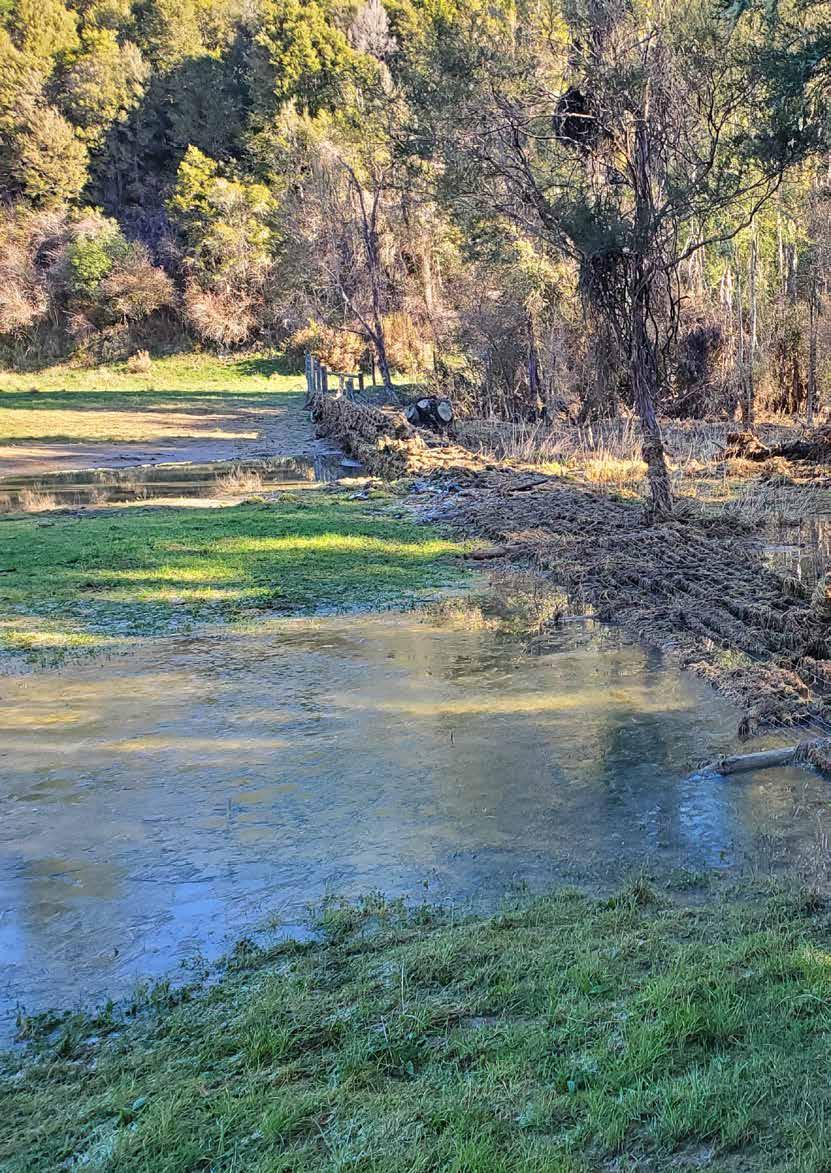
Across the country, QEII covenant owners have been impacted by severe weather events, with some regions hit repeatedly over the last several years. We wanted to say ‘you’re not alone’ and share some guidance on what to do in the aftermath of a weather event.
1. Your safety and the safety of your whānau comes first
Always dial 111 if life is in danger.
Follow the advice of your local Civil Defence Emergency Management Group and emergency services. There are lots of great resources and advice on the Civil Defence website: getready.govt.nz
IN A FLOOD:
Put safety first. Don’t take any chances. Act quickly if you see rising water.
Floods and flash floods can happen quickly. If you see rising water do not wait for official warnings. Head for higher ground and stay away from floodwater.
IN A STORM:
Stay inside. Don't walk around outside. Don't drive unless absolutely necessary.
Close exterior and interior doors and windows. Pull curtains and blinds over windows. This could prevent injury from flying glass if the window breaks.
Once safe to do so, it could be a good idea to check on any neighbours who might need assistance.
2. We understand getting your farm, property and livelihood in order will be next
There is often a lot of cleanup required after a severe weather event. Weather events can disrupt farming operations and there can be damage to property to deal with.
We completely understand that your QEII covenant will not be forefront of your mind and may be well down the priority list.
3. When you’re ready, here’s what to know about your QEII covenant
Following a weather event, some risks to the health of a QEII covenant might be:
• stock getting into the protected area due to fence damage,
• pest plant species spreading into protected areas following flooding or treefall,
• slips, and
• waterway management impacts (e.g., waterways in covenants that have become full of debris).
If there has been damage to your covenant, get in touch with your regional representative about what to do next. This might involve coming up with temporary solutions or ‘quick fixes’ to secure your QEII covenant such as temporary fencing.
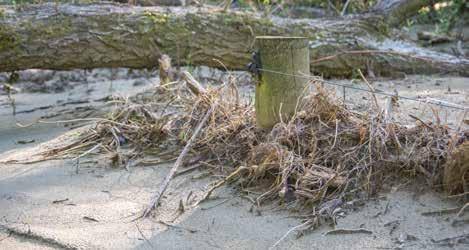
Tom Stein, QEII rep for NelsonTasman and Marlborough, says he was surprised in the aftermath of the last weather events in his region that some people were happy to volunteer to help clean up damaged covenants. “Two examples I had were the student army getting involved in hauling rubbish out of a covenant, and a group of four blokes who cleared debris off a covenant fence and made temporary repairs,” says Tom. “After the flood waters recede or the ground stops shaking or the wind calms down and you have surveyed the damage to your property, let the rep know about any difficulties you may have with getting the covenant sorted out as sometimes we have contacts with people who are keen to lend a hand.”
Clare Moore, also rep for NelsonTasman and Marlborough, notes that where there have been slips in a covenant, reestablishment of native species will often occur naturally and planting won’t always be required. “Landowners might panic and want to spend money on planting, but really it might just take some patience. Weed control may be required depending on what the seed source surrounding it is,” says Clare. “The exception may be if you need to speed things up for the safety of something below.”
We have listed a few avenues for support following a weather event on our website: qeii.org. nz/managing-your-covenant/ supportforweatherevents
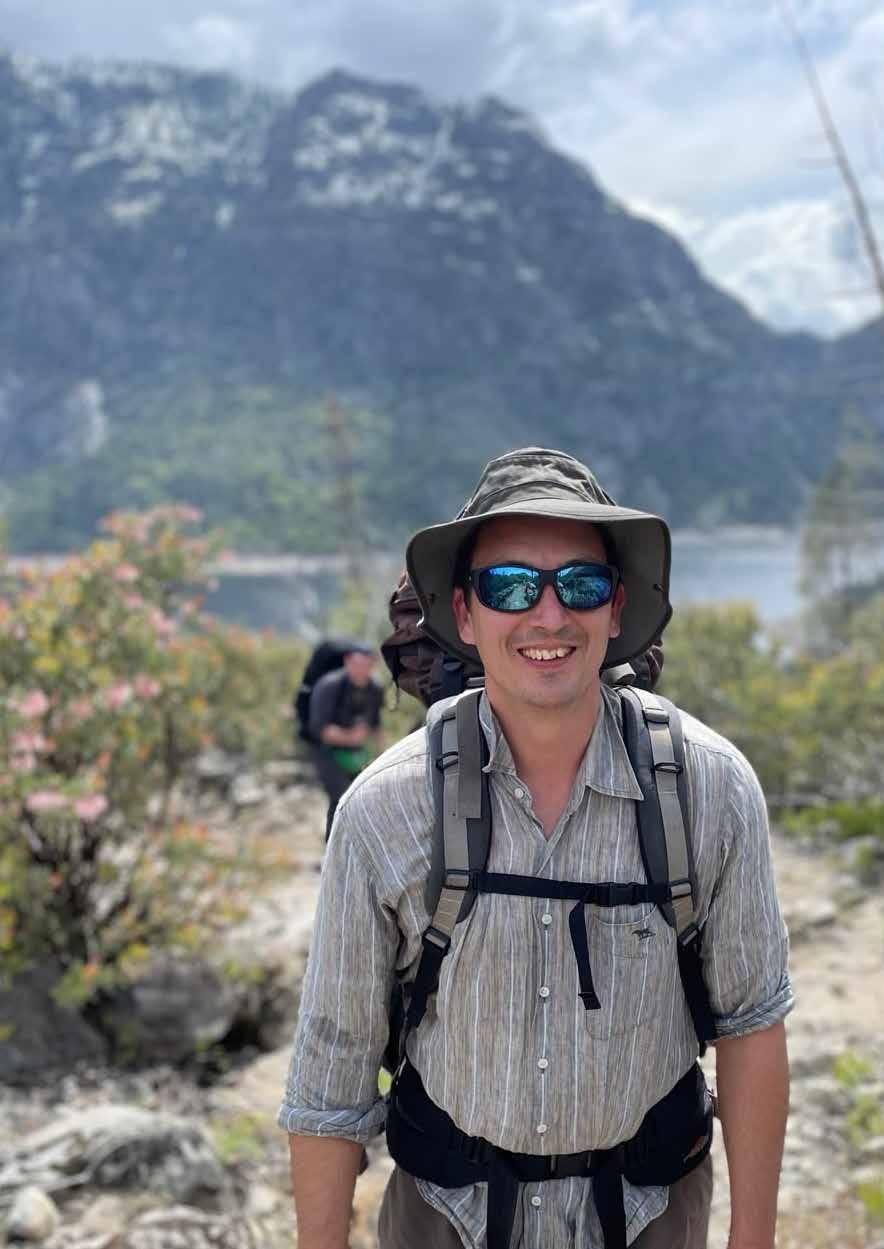
South Canterbury rep Max Crowe has experienced all kinds of ways to protect biodiversity on private land over the years but sees something special in the relationship-based approach at QEII.
“I’ve always enjoyed working with people, especially with farmers. I enjoy drawing on my prior experiences and botanical knowledge – and sharing my insights. There’s also a lot to be learnt from landowners about these places,” he says.
Max joined QEII ten months ago and brings over seven years of experience as a biodiversity ranger and advisor. Originally from Timaru, Max has lived and worked all over the South Island before landing in Dunedin. He notes that it’s unusual for a rep to live outside the region they work in, but having a place in Kakanui just south of Oamaru makes a nice base to operate from.
There are just over 100 covenants in the South Canterbury region, which stretches from the Waitaki River to the Rangitata River, and inland to the foothills of the alps. The region is very geologically diverse, with volcanic features, braided rivers and their alluvial fans, the almost arid Mackenzie country, as well as all the hill country.
The weird and wonderful limestone ecosystems and all the rare plants associated with them are an exciting draw for Max, as are the long-tailed bats. “It’s interesting. These bat habitats aren’t what you’d typically expect of indigenous habitat, which has helped me reconsider the role of exotic species like gnarly old crack willows for indigenous biodiversity conservation.”
Max has been impressed with the work of dedicated landowners that has allowed a range of habitats to persist. “On the east coast of the South Island, farming is the dominant feature of the landscape and the biodiversity values are typically associated with geology or topology that hasn’t lent itself to intensive development, but there are patches of forest and other habitat that clearly have been intentionally left for nature.” This has resulted in gems of the landscape like Waihi bush, Kakahu bush and Hook bush.
“ It’s always a real privilege to be invited onto these properties and meet these people, many of whom have dedicated most of their lives taking care of these places.”
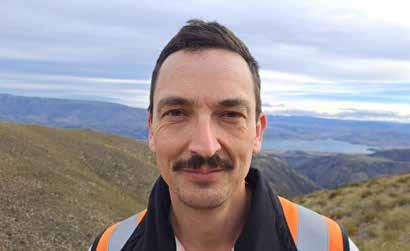
The big challenges Max sees in his region are the woody weed species like sycamore, but also those ever-present pest animals like deer, pigs and wallabies. “Wallabies in the Waimate Ecological District are a massive issue, almost an existential issue for some of those forests. Many of these challenges are just too big an issue for individual landowners and need landscape-scale collaboration.”
Max says that although he’s pretty fresh to the job, he’s got a few favourite protected places so far, including some sites where the habitats might not be exceptional, but they’re special because of the history and intent behind them and the farm landscapes that they occur in. “It’s always a real privilege to be invited onto these properties and meet these people, many of whom have dedicated most of their lives taking care of these places.”
Max says he enjoys being able to do some botanising and poking around to get familiar with the places, plants and ecosystems. Outside of his rep work, Max and partner Sophie love going for walks in the hills. “I’ve got a few tramping trips lined up for May, all going well. I’m also a bit of a gardener; I spend time pottering around in the garden with my dog, Pat, and when I get a chance, working on my section at Kakanui.”

QEII National Trust is overseen by a board of six directors who serve for a maximum of three terms (nine years). The Minister of Conservation appoints four directors who have the right mix of environmental and conservation values, and who can reflect the interests of rural landowners, and the interests of the Māori community. The remaining two directors are elected by our members.
In October last year, Minister of Conservation Hon Tama Potaka appointed Debbie Hyland as a new board director for a three-year term. We asked Debbie a few questions to get to know her.
Debbie, of Te Ātihaunui-a-Pāpārangi descent and raised in Kawerau, is a mother of three and a qualified accountant (FCCA, London) with Strategic CFO credentials from the University of Auckland. A passionate and experienced governance and executive leader, she brings local, national, and global expertise to advancing generational outcomes, grounded in values of environmental stewardship and legacy.
What attracted you to QEII?
Working with whānau and te taiao. The idea of protecting native bush – increasing ecological values and the values of the whenua – is important mahi. It was also the wonderful reputation that QEII has had over many years.
How has your time on the QEII board been so far?
It personally has enhanced my wellbeing. I have loved going on farm and meeting with the covenantors. The board is very inclusive, knowledgeable and passionate about what we do. It’s been really awesome!
What’s your favourite species (plant, bird, etc.)?
The pīwaiwaka/fantail sings to us every time we go into the ngahere/ forest. They seem to bring us messages and are so curious. I love our kōwhai, our national flower. At home I have two beautiful rimu, considered one of the rākau rangatira of Tāne Mahuta, they all hold space for us. At home I like to sit under the rimu when I’ve had a day of being in front of the computer.
If you could have a holiday anywhere in the country, where would it be and why?
I do love to spend time in Paihia. All three of my children whakapapa to the Far North. But I also love heading back home to Whanganui where I whakapapa.
Anything else to add?
The education component in what we do is very important; the responsibility that comes with land ownership and how we, as QEII, can prepare our young people for what’s ahead in terms of caring for the land - kaitiakitanga.
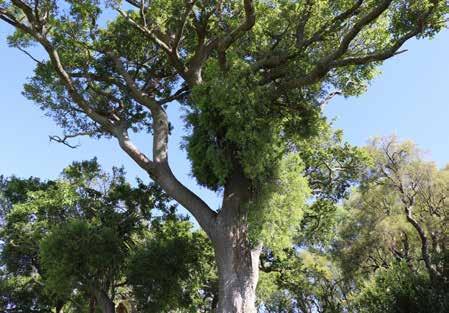
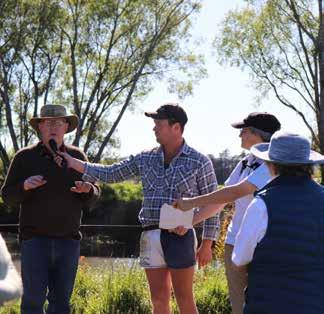
A quiet leader in the Southland farming community, John Cowie is remembered by QEII National Trust as a man dedicated to the protection and exemplary stewardship of the land under his care.
Winton
Invercargill
ABOVE RIGHT:
John Cowie with son Andrew and QEII rep Jesse Bythell at a Southland Ecological Restoration Network field trip
ABOVE LEFT:
Tāpia/white mistletoe (Tupeia antarctica) on mānatu/ lowland ribbonwood (Plagianthus regius) host at one of John Cowie’s covenants.
When QEII regional representative Jesse Bythell met John for the first time on a visit to his farm with Brian Rance, she was struck by his thoughtfulness and positive attitude. Over the years, John stood out for how much care he took as a farmer and his strong interest in the natural world.
The steady sound of an axe on the hillside above the farm was the soundtrack to John’s childhood, as the neighbour worked to clear the forest. Years later when he came to run the family farm and later acquired the neighbour’s land, John retained the remaining pockets of forest and worked with QEII to formally protect them with covenants.
John didn’t just protect the forest that was left, he actively worked to improve it. His work along the Ōtāpiri Stream has resulted in a more resilient ecosystem and this area now supports the largest population of Hector’s tree daisy (Shawia hectorii) in Southland. This nationally threatened plant has an estimated population of fewer than 5,000 and supports several threatened moth species.
“I’ve enjoyed my talks with John about his land and especially found the
stories of his childhood interesting,” says Jesse. “Experiences John had growing up have fed into his ethos of land stewardship. Family picnics down at Ōtāpiri Stream under the shade of the ancient mataī tree are memorialised in the legal and physical protection he gave to this forest.”
John was particularly fond of the tāpia/white mistletoe (Tupeia antarctica) and took great care to ensure they were safe from possums. “John’s Tupeia population is the largest I have seen in my career and another example of the positive contribution he has made as an active steward of the natural world,” says Jesse.
John was known for his ‘lead by doing’ approach that was both inspiring and credible among his farming peers. He also generously allowed people to come and see the restoration work he has done on his farm.
“John’s wairua, his spirit, runs through this land, through the plants and animals that live here and through us all who knew him,” says Jesse. “It has been a privilege to know John. John’s influence extends beyond his lifetime, and his positive actions leave a lasting impact.”
Despite its name, Paekawakawa Reserve is not classified as a “reserve” under the Reserves Act 1977 and is not administered by Wellington City Council. The land is owned by Island Bay Natural Heritage Charitable Trust.
The woman on a mission to bring back the trees
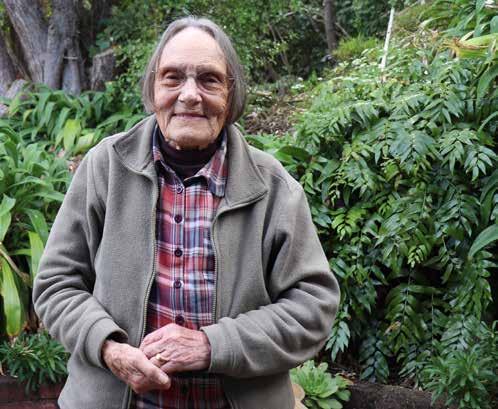
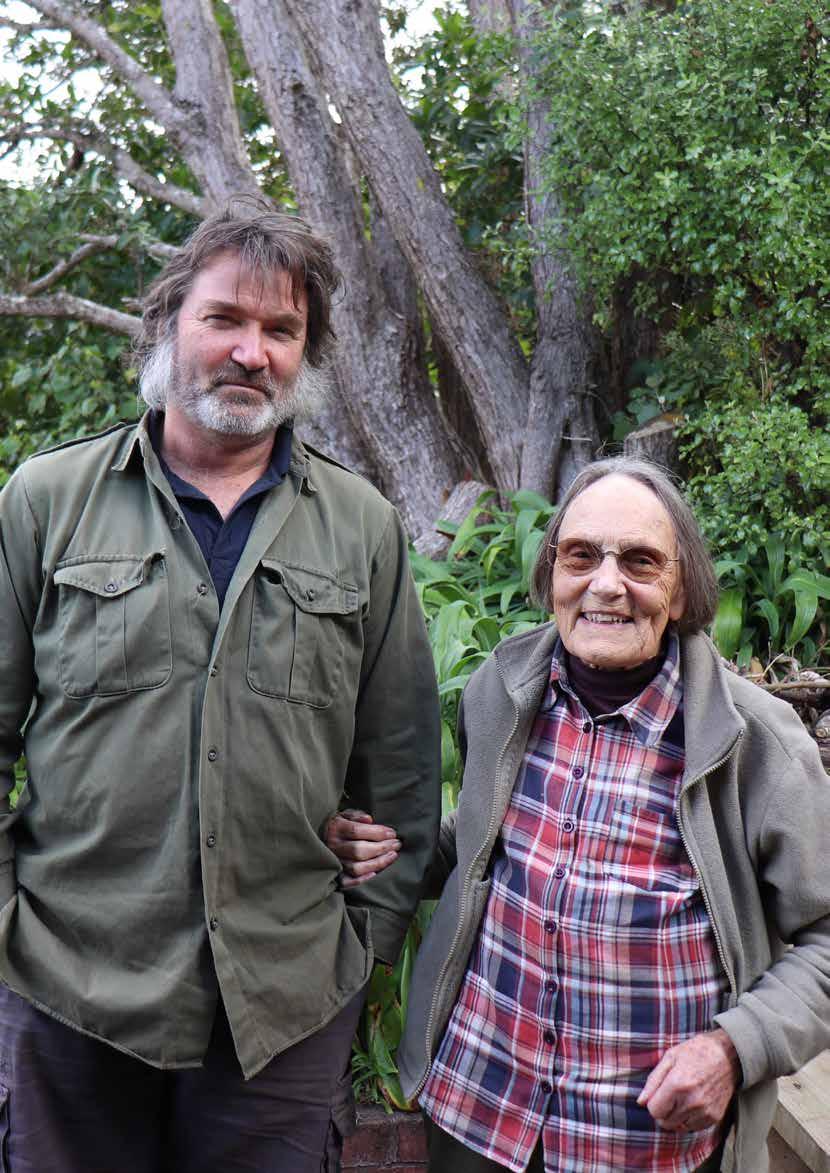
It had been a doctor’s garden, a BMX track, a proposed development site, but when Robert Logan saw the land that would become Paekawakawa reserve, he saw a crucial green space for the community to enjoy. Jennifer Bennet, and now her son Ian, have been doing the remarkable work of restoring a beloved community reserve ever since.
Robert Logan, a lawyer and conservationist, was instrumental in setting up key reserves on Wellington’s southern coast. “He wanted to see every ridgeline on the southern coast of Wellington protected,” says Jennifer. In the mid1990s, Robert formed the Southern Environmental Association (SEA) and later the Island Bay Natural Heritage Trust as a way to organise protecting sites for the benefit of the community. When the property that is now Paekawakawa reserve came up, Jennifer remembers Robert Logan saying, ‘we can’t lose this green space’.
Jennifer says the group bought the land “by the skin of our teeth”. The land was being sold as a development opportunity, and a developer got in there just before them, but later withdrew.
“From there, there was such a lot of work to do,” says Jennifer. Aside from the “everlasting fundraising”, the groups had their work cut out for them with weeding, rubbish removal, fencing, creating tracks and putting in an accessway.
“The reserve was full of sycamores, bay trees, cherry, old man’s beard and tradescantia. It had been completely covered in weeds, with tradescantia up to my knees. We had to get the tradescantia sprayed as it was too big a job for hand pulling.”
There were some unusual challenges to deal with as well. “The old BMX track had to be levelled off, and it had been filled with rubbish: couches,
“ When I go into the reserve now, I see trees growing well above my head. I think of what we wanted at the beginning, to bring back the nīkau and kohekohe that was once here.”
beer cans… We initially took three truckloads of rubbish away and have been finding rubbish there ever since.”
In 2010, Robert Logan went missing. “It was a devastating time,” recalls Jennifer. “He was the leader of our group and we had all just followed. We had to reorganise ourselves.” It was decided that one group would look after Tawatawa reserve, another restoration project further up the hill, and Jennifer would look after Paekawakawa since it was so close to her house. “That was the beginning of my trials,” says Jennifer.
“Robert liked to do everything himself. I didn’t feel as qualified, so I reached out for help. It was a big learning curve with the planting and care. Reaching out to the Parks and Reserves staff at council, plant experts, local rangers, all that help was really good. Volunteers from Conservation Volunteers New Zealand used to come along to Paekawakawa – my saving grace –once a month for a working bee.”
Paekawakawa reserve was protected with a QEII covenant in 2011, and the site was opened to the public in 2013. Paekawakawa reserve is unusual for a QEII covenant in that it is publicly accessible and in an urban area.
Jennifer says the biggest challenge in caring for the reserve has been the
weeds. “It gives me much joy going in there, but the weeds are depressing. There are garden escapees from the surrounding houses, like lilies and wych elms and rambling roses.”
Jennifer notes that compared to what it was like at the beginning, the reserve has come a long way. “At first we planted quick-growing species. Kawakawa and rangiora came up on their own, hence the name Paekawakawa. Now the reserve has filled in with trees and we’re planting canopy species.”
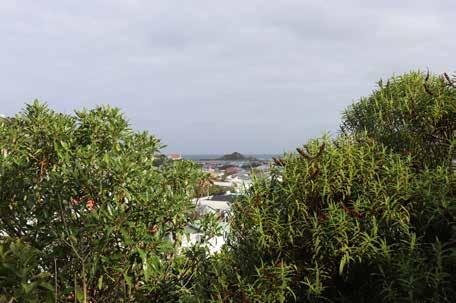
After twenty years of hard work in Paekawakawa reserve, Jennifer’s son Ian and other trustees are continuing to care for the reserve. Jennifer still enjoys a cup of tea with volunteers at the working bees and even admits to taking the path through the reserve as “a shortcut home”, pulling up weeds as she goes. “When I go into the reserve now, I see trees growing well above my head. I think of what we wanted at the beginning, to bring back the nīkau and kohekohe that was once here.”
Jennifer thinks that 50-100 years from now, there should be plenty of trees in Paekawakawa for people to enjoy.
FAR LEFT: Jennifer and her son Ian at her home, which borders Paekawakawa reserve
ABOVE: View from Paekawakawa reserve over Island Bay to the island, Tapu Te Ranga
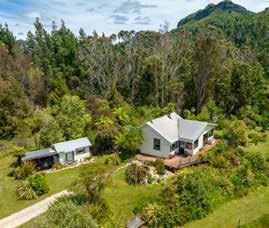
The Mangarakau swamp is situated northwest of Golden Bay. The surrounding area has been altered in many ways – with gold and coal mines, timber mills, a large flax mill and numerous attempts to drain the swamp. There was once a thriving village here with a school and a post office.
Now only the swamp remains, which is protected by DOC and the Friends of Mangarakau Swamp. It’s important because no farmland or urban areas drain into it, and it was with this in mind that the owners protected 27.5 hectares of their 38.23-hectare property with a QEII covenant.
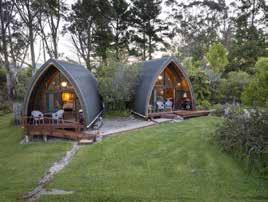
The property features a weatherboard, 2-bedroom house, two modern chalets that have been rented out to tourists and a large 20m x 12m shed/workshop.
There are about 50 beehives, three sites on the property and four on neighbouring properties collecting mānuka nectar from the local area. The owners have a bee-proof container that they use as their honey house.
There is a large garden with fruit and nut trees and some areas in fenced grazing on the home block.
There is also a 10-hectare block of good grazing land on a separate title that is on the boundary, presently leased to a neighbour in conjunction with pasture on the home block. The owners would be happy to sell this with the home block or separately once the home block has sold.
The property is a 5-min drive from the long, interesting west coast beaches. The Paturau beach has a great swimming hole and this coast is known for its fishing, diving and whitebait (in season). There is also good hunting in the surrounding bush.
The owner’s income comes from four sources: tourist accommodation, pasture lease, honey and carbon credits from the QEII Covenant.
If you are interested in this property, please contact:
Claire.Sitwell@bayleys.co.nz 021 663 733
Or view online at trademe property listing #5644386117
We have taken care to ensure the information in this advertisement is accurate, but we cannot guarantee it. All prospective buyers should verify the details for themselves before making any decisions. Photographs have been supplied by the vendor (or their agent) and are published on their behalf.
QEII is not a party to any sale or transaction connected to this advertisement. Any sale is solely between the parties involved. We accept no responsibility or liability for the condition or suitability of any property listed, for any statements made about a listed property, or for any party’s title to a property.
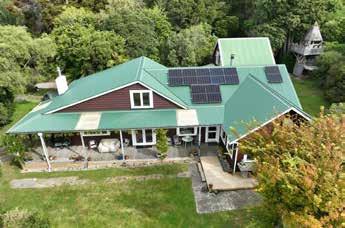
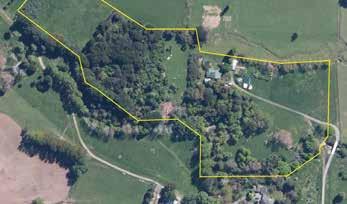
‘Forest Home’ is a historic and secluded paradise sanctuary located at 184 Kiriwhakapapa Road, Masterton. Established circa 1873, this 5.261-hectare (plus some) property offers total privacy with no close neighbours and stunning views, just 20km north of Masterton and minutes from Tararua Forest Park and Pūkaha.
Property Highlights:
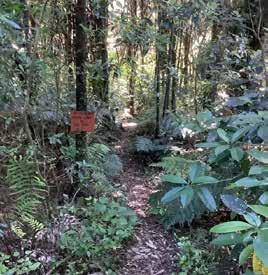
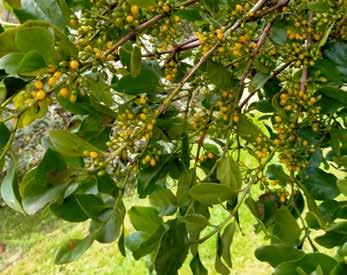
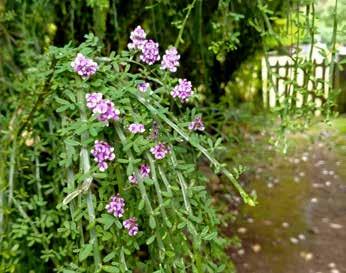
• Land & nature: Mostly flat, fully fenced land featuring the treecovered Te Mara Stream with year-round flow. The property includes 200m of bush paths around the house, established vegetable gardens, an orchard, and a 1-hectare QEII Covenant featuring tawa, tītoki, and rewarewa. It is a true haven for biodiversity, with over 40 bird species visiting and rare native plants. Mature trees including a lancewood with a girth of 200cm.
• Main residence: Established approximately 1880, with major renovations in 2010. A double-glazed, solar-powered home featuring four bedrooms, a study and two living areas. Heating is provided by a Wood Rayburn stove with a wet back, underfloor and radiator heating, and a heat pump. A wet floor shower and large spa bath add to the delight of this home.
• Self-contained chalet: A fully furnished, two-plus bedroom cottage with a kitchen and heat pump, ideal for guests or extended family.
• Infrastructure: Extensive outbuildings including a very large double garage with 30 power points, three carports, a potting shed and various implement sheds – all with power.
• Outdoor entertainment areas for adults and children including outdoor kitchen.
• Business potential: Includes a complete nursery setup with two propagation houses and a large shade house, specialising in over 70 varieties of native and rare species.
With a 2023 Rateable Valuation of $932,000, this property combines rich New Zealand history with modern sustainability, including rainwater harvesting and active pest control. The local community is vibrant, offering school bus services and a nearby community hall.
‘Forest Home’ will be officially on the market from June 2026.
For more information or to discover the many surprises this unique property holds, please contact us:
Jude Clark jude.clark@raywhite.co.nz 027 611 9199
District Council Location Covenant Name Area (ha) Main open space type
Ōtorohanga Kāwhia Puti 0.65
Central Hawke’s Bay Pōrangahau Amy’s Forest 23.17
Upper Hutt Whitemans Valley Waipango Forest 4.62
Waikato Waingaro van den Bemd Block 44.01
New Plymouth Waitara Chris Jury Forest 2.02
Queenstown-Lakes Arthurs Point Paddy Mathias’ Place 2.08
ThamesCoromandel Matapaua Bay Matapaua Bluffs 12.73
Far North Parapara Kaurinui 5.85
Waimate Waimate Hook Bush 70.87
Ashburton Upper Rakaia Gorge McIntyre Wetland 30.56
Hurunui Napenape Le Pine Family Covenant 44.87
Timaru Milford Bonifacio 8.08
Upper Hutt Whitemans Valley 16.29
Carterton Ahiaruhe Kōtare Covenant 0.48
Carterton Ahiaruhe Wolfreys-Court Forest 3.34
Carterton Ahiaruhe Pīwakawaka Covenant 0.79
Far North Rawene The Olive Bush 2.09
Gisborne Otoko 9.23
Upper Hutt Mangaroa Deep Creek 2.13
Tasman Māpua Folly Ghyll 1.48
Whakatāne Manawahe 6.64
Gisborne Rere Te Kopae Station Bush 28.20
Whanganui Otamatea He Piringa āio o Te Hāhi Tūhauwiri 1.75
Buller Little Wanganui Grey’s Gully 17.63
Coastal modified secondary rushland, treeland, wetland swamp and exotic grass
Lowland modified primary and modified secondary forest
Lowland modified primary forest and treeland
Lowland secondary forest
Semicoastal modified primary forest
Historic cottage and surrounding land which are of cultural, historical and landscape significance
Coastal modified primary forest, rock bluffs and modified secondary forest.
Lowland modified primary and modified secondary forest, secondary shrubland and a pre-1769 pa and terraces
Lowland modified primary podocarp forest
Montane modified primary sedgeland, shrubland and grassland
Semicoastal secondary scrub, treeland, modified secondary grassland and exotic pasture
Coastal modified primary rushland, reedland, sedgeland, shrubland and exotic grassland
Lowland modified primary and secondary forest
Lowland primary sedgeland, revegetated forest, exotic treeland and artificially created open water
Lowland modified primary forest and treeland
Lowland modified primary and revegetated forest and exotic grassland
Semicoastal modified primary and modified secondary forest
Lowland secondary broadleaf podocarp forest remnant with exotic pasture and boulderfield.
Lowland modified secondary forest and stream
Coastal revegetated shrubland, flaxland and forest, and artificially created open water
Semicoastal modified primary forest, modified secondary scrub and exotic grassland
Lowland modified primary and modified secondary forest and exotic grassland
Semicoastal revegetated forest, treeland and artificially created open water
Semicoastal primary forest
Mieke Kapa FAR NORTH 027 494 0733 mkapa@qeii.org.nz
Trina Upperton KAIPARA 021 0822 9802 tupperton@qeii.org.nz
Nan Pullman WHANGĀREI 027 490 4483 npullman@qeii.org.nz
Chris Floyd NORTH AUCKLAND 021 066 2165 cfloyd@qeii.org.nz
Jessica Reaburn CENTRAL & EAST AUCKLAND 021 026 23436 jreaburn@qeii.org.nz
Paul Goldsmith SOUTH & WEST AUCKLAND 021 622 368 pgoldsmith@qeii.org.nz
Gerry Kessels WAIKATO 027 286 8449 gkessels@qeii.org.nz
Jason Roxburgh HAURAKI-COROMANDEL & part 027 535 8327 jroxburgh@qeii.org.nz
WESTERN BAY OF PLENTY: north of Whakamaramara road
Zipporah Ploeg TAUPŌ & CENTRAL WAIKATO & part 020 4095 2800 zploeg@qeii.org.nz
WESTERN BAY OF PLENTY: south of Whakamaramara road and north of SH36 and the Tauranga District
Melissa Sinton WAITOMO, NORTH TARANAKI 027 867 6407 msinton@qeii.org.nz & RUAPEHU
Hōri Barsdell EASTERN BAY OF PLENTY & part 027 634 8958 hbarsdell@qeii.org.nz WESTERN BAY OF PLENTY: south of SH36
Carol Burgess NEW PLYMOUTH 021 932 555 cburgess@qeii.org.nz
Jake Goonan SOUTH TARANAKI 022 327 0445 jgoonan@qeii.org.nz
Malcolm Rutherford GISBORNE 022 310 6818 mrutherford@qeii.org.nz
Troy Duncan HAWKE’S BAY 021 629 426 tduncan@qeii.org.nz
Lou Hagger TARARUA 022 477 3833 lhagger@qeii.org.nz
Laurie Whitehead MANAWATŪ-WHANGANUI 021 022 59259 lwhitehead@qeii.org.nz
Trevor Thompson WAIRARAPA 027 333 3243 tthompson@qeii.org.nz
Lee Barry WELLINGON – KĀPITI 021 0525 857 lbarry@qeii.org.nz
Tom Stein NELSON – TASMAN & MARLBOROUGH 0274 453 890 tstein@qeii.org.nz
Clare Moore NELSON – TASMAN & MARLBOROUGH 021 656 035 cmoore@qeii.org.nz
Martin Abel WEST COAST 03 753 3012 mabel@qeii.org.nz
James Kilgour NORTH CANTERBURY
027 474 9327 jkilgour@qeii.org.nz
Joe Potter Butler CENTRAL CANTERBURY 027 374 3013 jpotterbutler@qeii.org.nz
Max Crowe SOUTH CANTERBURY 020 400 31969 mcrowe@qeii.org.nz
Morgan Trotter COASTAL OTAGO
027 222 3067 mtrotter@qeii.org.nz
Rob Wardle CENTRAL OTAGO 0204 012 6483 rwardle@qeii.org.nz
Mark Sutton WAIAU CATCHMENT
Jesse Bythell SOUTHLAND
021 540 814 msutton@qeii.org.nz
0204 003 2109 jbythell@qeii.org