― Law Firms
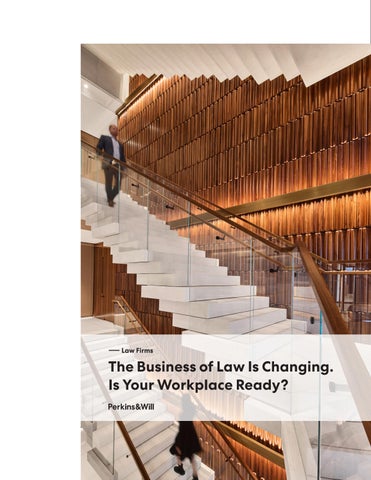
The Business of Law Is Changing. Is Your Workplace Ready?
four seismic shifts law firms should prepare for
The legal workplace has been the subject of intense discussion in recent years, with much of the conversation centered on hybrid work, workplace amenities, and attracting talent back to the office. While those topics remain important, they are symptoms of a much larger transformation taking place across the legal profession.
Confidential Law Firm Austin, Texas
Our Confidential Client expanded their Houston practice with a bold transformation by adding a floor and refreshing another to create an inviting full-service cafe with a coffee bar and Barista, an action servery food station, and a flexible all-day dining area.
Today’s law firms are navigating profound changes in how legal services are delivered, how value is measured, how talent is developed, and how multidisciplinary teams come together to solve increasingly complex client challenges. Alternative fee structures are reshaping business models. Artificial intelligence is changing the nature of junior legal work. Clients expect greater speed, transparency, and collaboration. Specialized expertise is becoming just as critical as legal knowledge itself. Collectively, these shifts raise a larger question:
— If the business of law is evolving, how does the workplace evolve with it?
— Our law firm expertise At Perkins&Will, we believe the most effective legal workplaces are not designed around today’s organizational charts or yesterday’s workplace norms. They are designed around the future operating model of the firm— supporting how work is actually created, how expertise is transferred, how clients experience the practice, and how organizations adapt over time. The following perspectives explore four business shifts we believe will have an outsized influence on the legal workplace in the years ahead and the spatial implications firms should begin considering today.
Confidential Law Firm Houston, Texas
four
shifts
Ashurst Perkins Coie Austin, Texas
01 From time-based work to outcome-driven delivery
As clients place greater emphasis on efficiency, predictability, and measurable value, firms are under increasing pressure to demonstrate outcomes beyond billable hours. Thomson Reuters 2026 State of the US Legal Market reports that while traditional hourly billing still dominates the industry, AI is exposing a growing disconnect between time spent and value delivered. As technology compresses work that once required hours into minutes, firms are increasingly exploring pricing models such as fixed fees, success-based arrangements, and subscription services that better align with client business objectives rather than hours worked. That shift is influencing everything from staffing models to project delivery, requiring teams to work more collaboratively and strategically around client outcomes rather than individual utilization. As legal work becomes more project-oriented and multidisciplinary, the workplace has an opportunity to support faster decision-making, more integrated teams, and greater operational efficiency.
Design Implication Private offices remain essential for confidentiality, focused work, and client trust. But they no longer represent every place where value is created. Firms may increasingly require environments that support high-intensity collaboration: enclosed trial preparation rooms, deposition suites, strategy spaces, and flexible project environments where teams can convene quickly around complex matters. Rather than a reduction on office space, the focus should be on rebalancing the workplace so that it supports both deep individual expertise and the accelerated coordination of a professional studio.
02 From passive proximity to intentional mentorship
Artificial intelligence is beginning to absorb many of the routine tasks that have historically formed the foundation of junior attorney development, including legal research, document review, and first-pass drafting. According to Thomson Reuters 2026 Report on the State of the US Legal Market, rather than reducing the need for talent, new technology has driven a growth in hiring. Firms are increasingly using AI to automate work that was previously being written off allowing associates to focus on and contribute to higher-value work—from strategic analysis and client engagement to business development and multidisciplinary collaboration. That evolution also increases demand for a new kind of mentorship. For generations, lawyers built judgment through repetition—learning by drafting, observing experienced attorneys, and gradually taking on greater responsibility. With increased capacity and potential, mentorship becomes not only about accelerating professional judgement but about stewarding talent to create the greatest value for the firm and its clients. At a time when firms are also investing heavily in hiring and competing aggressively to retain top performers, they will need to be far more intentional about how they develop staff—as both a talent and business strategy.
Design Implication The workplace may need to become more intentional in creating opportunities for visibility, access, and interaction across levels of experience. This is not about eliminating hierarchy, but about rethinking how it is expressed spatially. Thoughtful adjacencies, circulation, and shared environments can create more deliberate moments of connection, helping mentorship remain an active part of firm culture as the mechanics of work continue to evolve.
Orrick Austin, Texas
03 From spatial status to experiential prestige
Ashurst Perkins Coie Austin, Texas
Corporate counsel increasingly differentiate firms based on the quality of the experience they receive. According to BTI Consulting’s Client Service A-Team, factors such as understanding a client’s business, responsiveness, collaboration, practical solutions, and overall client service consistently rank among the strongest drivers of hiring decisions and long-term client relationships. At the same time, firms continue to compete aggressively for top talent, with attorneys
Orrick Austin, Texas
placing greater emphasis on workplace culture, professional development, flexibility, and environments that support both individual performance and meaningful connection. In the modern legal landscape, the office is no longer simply a symbol of prestige or a place to conduct legal work. Rather, it’s an extension of the firm’s brand and a strategic asset for attracting both clients and talent. Every interaction within the workplace reinforces how a firm collaborates, communicates, and delivers value. Ashurst Perkins Coie Austin, Texas
Design Implication The most successful legal workplaces create exceptional experiences for two equally important audiences: clients and the people who serve them. For clients, the office should reinforce confidence in the firm’s capabilities through welcoming hospitality, seamless technology, adaptable meeting environments, and spaces that support meaningful conversations and strategic collaboration. Every touchpoint should reflect the firm’s professionalism, responsiveness, and commitment to partnership. For attorneys and staff, the workplace must enable the realities of modern legal practice. That means balancing spaces for focused work with environments that encourage mentorship, interdisciplinary collaboration, wellbeing, and informal connection. As firms compete to recruit and retain top performers, the workplace becomes a tool for strengthening culture, supporting professional growth, and helping people perform at their highest level throughout demanding careers.
For its new Austin office, this confidential law firm engaged the design team to create a unique and contextual design that would speak to the company’s brand, culture, and work style.
Confidential Law Firm Austin, Texas
Confidential Law Firm Austin, Texas
Shearman & Sterling Austin, Texas
04 From pure legal practice to multidisciplinary performance
Today’s legal matters rarely exist in isolation. Increasingly, they require expertise that extends beyond traditional legal counsel— drawing on cybersecurity, artificial intelligence, data analytics, digital forensics, risk management, regulatory strategy, and other specialized disciplines to help clients navigate increasingly complex challenges. At the same time, clients are looking for advisors who can understand broader business contexts, anticipate interconnected risks, and collaborate seamlessly with internal teams and external specialists. As the practice of law becomes more integrated and multidisciplinary, firms have an opportunity to rethink how expertise comes together. Success will increasingly depend not only on individual legal excellence, but on the ability to assemble diverse teams, share knowledge efficiently, and move fluidly across disciplines while maintaining the precision, confidentiality, and trust that define the profession.
Design Implication The legal workplace may need to support a broader spectrum of work styles simultaneously: highly confidential legal work alongside dynamic, technology-enabled collaboration. This may require more varied acoustic environments, enhanced digital infrastructure, and planning strategies that enable multidisciplinary teams to work seamlessly while maintaining the privacy and security essential to legal practice. The legal workplace is unlikely to resemble a technology office. But it may increasingly need to deliver the same level of adaptability, technical sophistication, and operational agility.
Putting it into practice Design strategies for the modern law firm There is no one-size-fits-all workplace solution. Every law firm has its own culture, business strategy, and operational priorities, and every project brings its own unique parameters. But the workplace is a powerful business tool—one that works alongside operations, technology, and culture to shape how a firm serves clients, develops talent, and delivers work. As the business of law continues to evolve, these design strategies offer powerful opportunities to create environments that better support collaboration, mentorship, client relationships, innovation, and performance
Confidential Law Firm Austin, Texas
Project Delivery Enable teams to assemble, adapt, and deliver work efficiently. •
Flexible project neighborhoods that expand and contract around active matters
•
Dedicated deal rooms and litigation war rooms that remain assigned for the duration of a case
•
Shared collaboration hubs between practice groups
•
Integrated digital displays for case management and document review
•
Adaptable meeting rooms that easily transition between internal strategy sessions and client meetings
Mentorship & Learning Accelerate knowledge sharing, coaching, and professional growth. •
Partner-associate team tables that encourage side-by-side review
•
Small coaching rooms for one-onone mentoring
•
Learning studios for AI training, CLEs, and mock arguments
•
Internal cafés and gathering spaces that encourage informal knowledge transfer
•
Visible project spaces that expose junior attorneys to active work
Confidential Law Firm Houston, Texas
Client Experience Strengthen relationships through seamless, thoughtful, hospitality-driven experiences. •
Hospitality suites with concierge-style reception and client lounges
•
Executive conference centers with adjacent breakout rooms
•
Curated art, digital storytelling, and branded arrival experiences
•
Client cafés, terraces, and event spaces for networking and education
•
Seamless hybrid technology and frictionless guest experiences
Focus & Confidentiality Protect deep work, sensitive conversations, and client trust. •
Quiet libraries reimagined as focus environments
•
Reservable concentration rooms
•
Secure project suites with controlled access
•
Acoustically isolated phone rooms and virtual hearing rooms
•
Layered privacy strategies balancing openness with discretion
Culture & Wellbeing Build connection, belonging, and resilience into the workday. •
Destination cafés that become the social heart of the office
•
Wellness rooms, fitness spaces, and outdoor terraces
•
Multipurpose gathering spaces for recruiting, celebrations, and firm meetings
•
Flexible amenity spaces that support both employees and client events
•
Neighborhood planning that increases connection across generations and practice groups
— The legal workplace, reconsidered
Today’s legal matters rarely exist in isolation. Increasingly, they require expertise that extends beyond traditional legal counsel—drawing on cybersecurity, artificial intelligence, data analytics, digital forensics, risk management, regulatory strategy, and other specialized disciplines to help clients navigate increasingly complex challenges. At the same time, clients are looking for advisors who can understand broader business contexts, anticipate interconnected risks, and collaborate seamlessly with internal teams and external specialists. As the practice of law becomes more integrated and multidisciplinary, firms have an opportunity to rethink how expertise comes together. Success will increasingly depend not only on individual legal excellence, but on the ability to assemble diverse teams, share knowledge efficiently, and move fluidly across disciplines while maintaining the precision, confidentiality, and trust that define the profession.
Select law firm experience Our Team has designed over 100 law firms around the world, including 46 of the current AmLaw 100 firms.
Akin Gump
Brownstein Hyatt Farber
DLA Piper
Hogan Lovells
London, United Kingdom
Schreck
Washington, DC
Abu Dhabi, United Arab
Washington, DC
New York, New York
Armstrong Hirsch Jackoway Tyerman & Werttheimer
Bryan Cave
Los Angeles, California
Dallas, Texas
Arnold & Porter
Buckley
Washington, DC
Washington, DC
San Francisco, California Houston, Texas Newark, New Jersey Los Angeles, California BakerHostetler Washington, DC
Cadwalder, Wickersham & Taft London, United Kingdom Chapman and Cutler Chicago, Illinois New York, New York
Baker Botts
Salt Lake City, Utah
Austin, Texas
Washington, D.C.
Chicago, Illinois Austin, Texas Dallas, Texas Elias Law Group Washington, DC Finnegan Reston, Virginia Washington, DC Palo Alto, California Foley & Lardner Chicago, Illinois Gibson Dunn & Crutcher Dallas, Texas
Emirates London, United Kingdom Hunton Andrews Kurth Dallas, Texas Richmond, Virginia Charlotte, North Carolina Husch Blackwell Austin, Texas Kelley Drye Washington, DC Chicago, Illinois Kirkland & Ellis London, United Kingdom
Barnes & Thornburg
Cleary Gottlieb Steen &
Chicago, Illinois
Hamilton
Goodwin Procter
Houston, Texas
Abu Dhabi, United Arab
Los Angeles, California
Austin, Texas
Emirates
Gowling
Barbanel Truer & Dantzler Collette & Levy Los Angeles, California
Crowell&Moring
Ottawa, Ontario
Blakes
New York, New York
Greisinger, Tighe & Maffei
Vancouver, British Columbia
Washington, DC
Boston, Massachusetts
Blum Law Firm Austin, Texas Dallas, Texas Bradley Arant Washington, DC
San Francisco, California Chicago, Illinois London, United Kingdom Dallas, Texas Dentons New York, New York
Bristows
Chicago, Illinois
London, United Kingdom
Dallas, Texas
Greenberg Traurig LLP Miami, Florida Haynes & Boone Austin, Texas Dallas, Texas Fort Worth, Texas San Antonio, Texas
Salt Lake City, Utah
Dallas, Texas Brussels, Belgium Frankfurt, Germany Paris, France KutakRock Washington, DC Leff Cohen & Winkler Chicago, Illinois Levene Neale Bender Rankin & Brill Los Angeles, California
Select law firm experience
Leventon
Morris Manning & Martin
Robinson & Cole
Tressler Soderstrom
Los Angeles, California
Washington, DC
Hartford, Connecticut
Maloney & Priess
Sarasota, Florida
Chicago, Illinois
Robinson Diamant Brill &
Troutman Pepper
Klausner
Washington, DC
Linklaters
Morrison & Foerster
Brussels, Belgium
Washington, DC
London, United Kingdom Washington, D.C. Locke Lord Dallas, Texas New York, New York Machado Meyer São Paulo, Brazil Marshall Gerstein & Borun Chicago, Illinois
Munsch Hardt Austin, Texas Murphy & McGonigle Washington, DC Nixon Peabody Chicago, Illinois New York, New York Washington, D.C. North Carolina Bar
McDonnell Boehnen Hulbert
Association
& Berghoff
Cary, North Carolina
Chicago, Illinois McDonald Sanders Dallas, Texas McGinnis Lochridge Austin, Texas McGuire Craddock & Strother Dallas, Texas Merchant & Gould Minneapolis, Minnesota Miller Titerle Vancouver, British Columbia
Los Angeles, California Rothwell Figg Washington, DC Schiff Hardin Atlanta, Georgia Chicago, Illinois Lake Forest, Illinois
Van Ness Feldman Washington, DC Vedder Price Washington, DC Venner Shipley London, United Kingdom
New York, New York
Weil
Washington, D.C.
Dallas, Texas
Shearman & Sterling
Houston, Texas
Austin, Texas
White & Case
Norton Rose
Menlo Park, California
New York, New York
Abu Dhabi, United Arab
New York, New York
Washington, DC
Emirates
Simmons & Simmons
Nossaman
London, United Kingdom
Miami, Florida Williams & Connolly Washington, DC
Washington, DC
Skadden Arps Slate
Los Angeles, California
Meagher & Flom
Wiley
Chicago, Illinois
Washington, DC
Sonnenschein Nath &
Wilson Sonsini
Rosenthal
New York, New York
Chicago, Illinois
Wilmington, DE
O’Keefe Lyons & Hynes Chicago, Illinois Oliff Alexandria, Virginia Ashurst Perkins Coie Washington, DC
New York, New York St. Louis, Missouri
Winstead Dallas, Texas
Squire Patton Boggs
Forth Worth, Texas
London, United Kingdom
Houston, Texas
Boise, Idaho Dallas, TX Los Angeles, California
Thompson Hine
Winthrop & Weinstine
Washington, DC
Minneapolis, Minnesota
Trowers & Hamlins
Womble Bond Dickinson
Philadelphia, Pennsylvania
Powers Pyles Sutter &
London, United Kingdom
Washington, DC
San Francisco, California
Verville
New York, New York
Washington, DC
The Quisenberry Law Firm
Zelle
Dallas, Texas
Los Angeles, California
Dallas, Texas
Quinn Emanuel
Moore & Van Allen
Washington, DC
Thompson & Horton
Zorc, Rissetto, Weaver &
Charlotte, North Carolina
Austin, Texas
Rosen
Ray & Berndtson
Mintz
Austin, Texas
New York, New York
Bellevue, Washington
Montgomery Bartnett Dallas, Texas Morgan Lewis
Charleston, South Carolina Research Triangle Park, North Carolina Morris, Manning, & Martin, LLP Washington, DC
Los Angeles, California Richards Layton, & Finger Wilmington, Delaware
Tozzini Freire São Paulo, Brazil Trench, Rossi & Wantanabe São Paulo, Brazil
Washington, DC Zuckerman Spaeder Washington, DC
Confidential Law Firm Houston, Texas
For more information, contact: Lina.Murillo@perkinswill.com