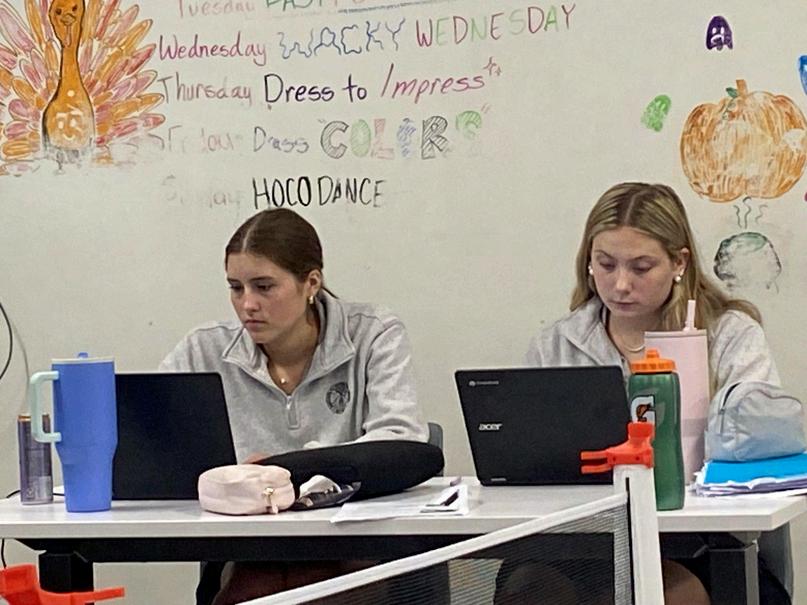
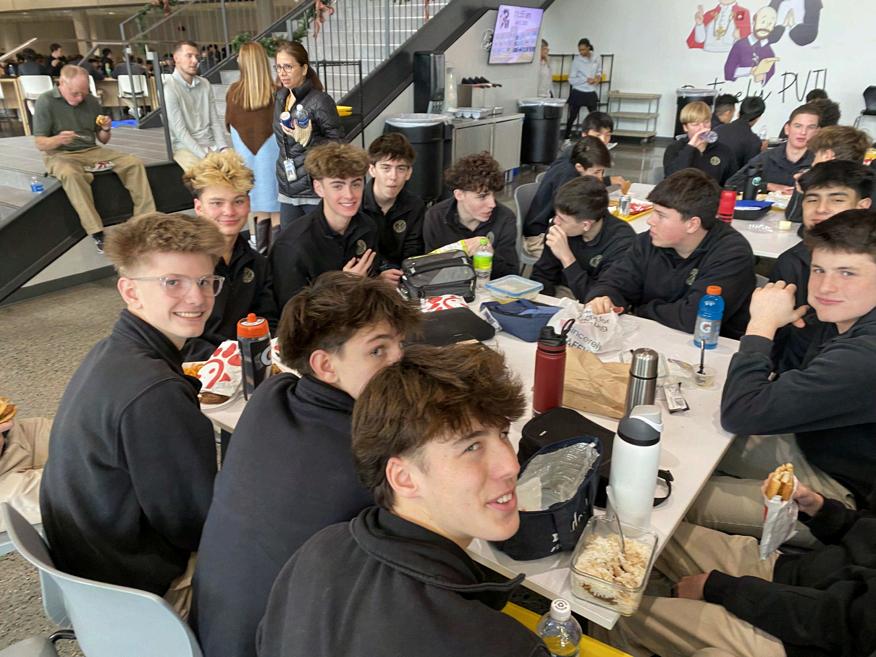
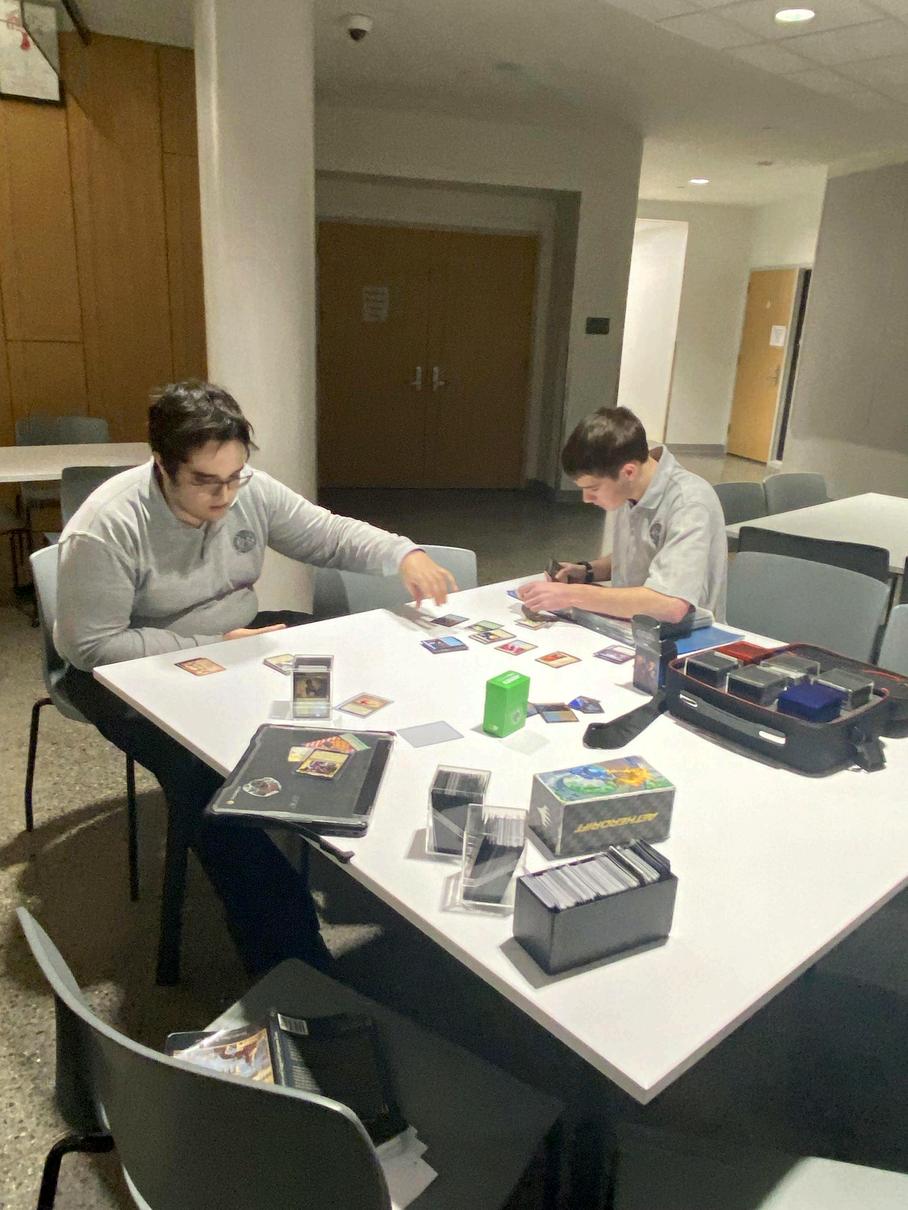
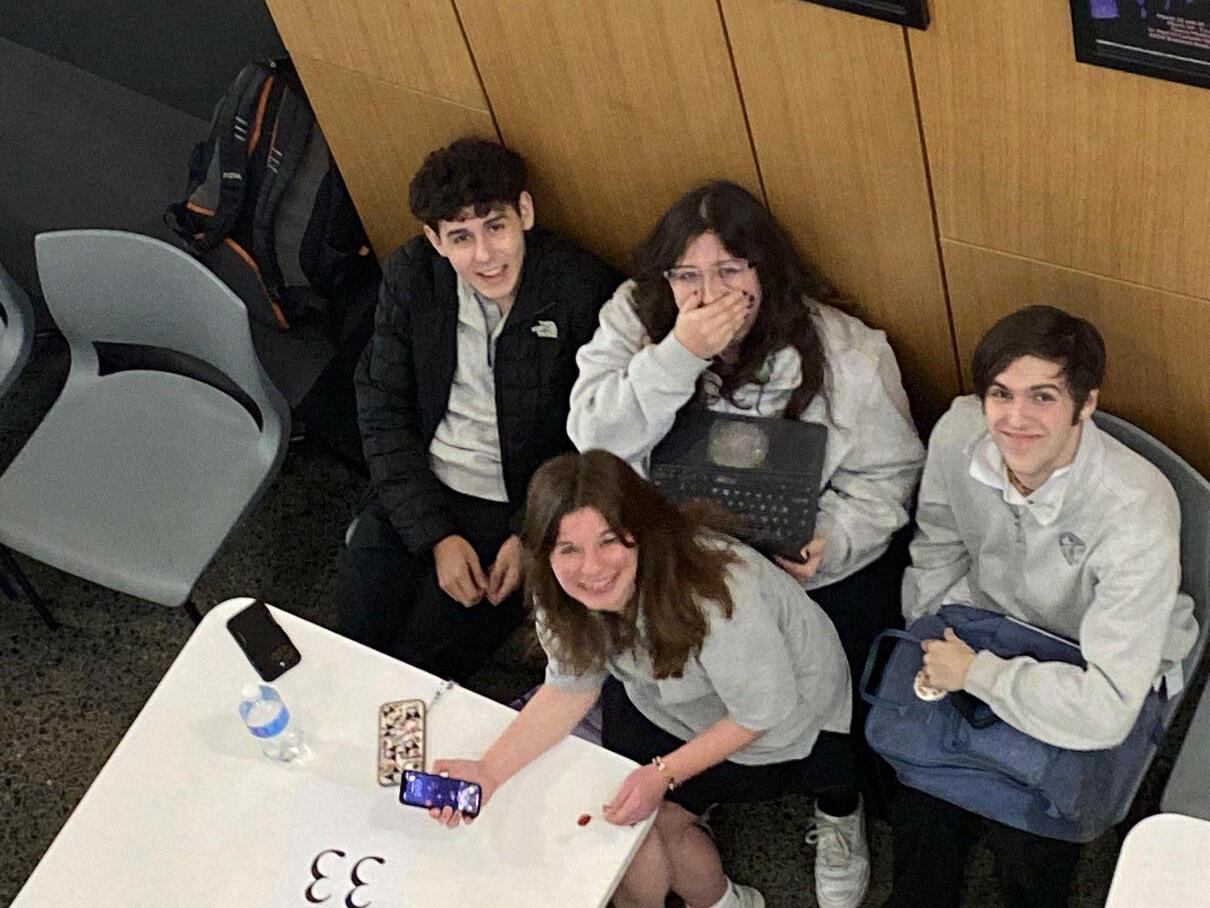
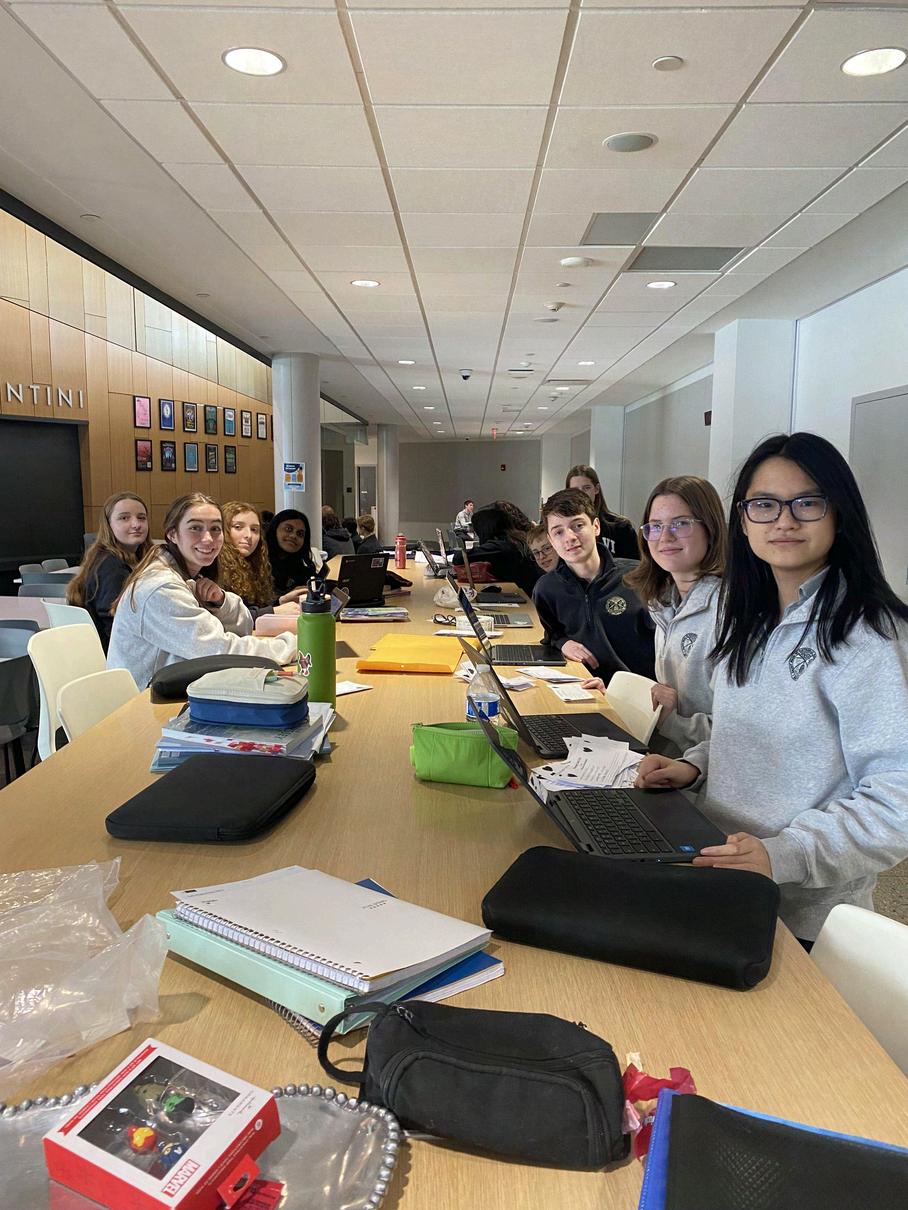
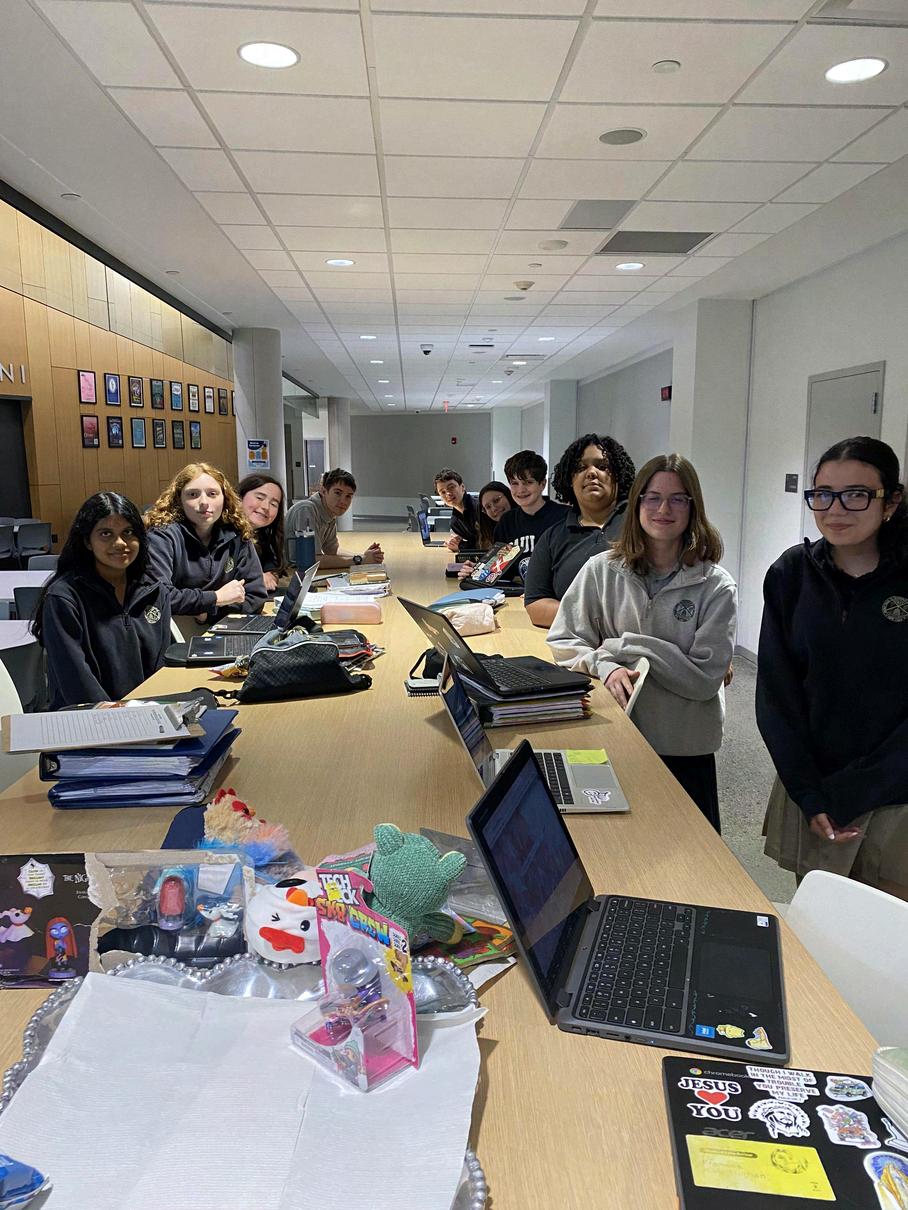
As summer draws near and another remarkable school year comes to a close, this issue of celebrates the people, stories, accomplishments, and traditions that made our 2025-2026 school year so goosebump-inflicting and extraordinary. Within these pages, we celebrate the students whose talents and dedication have earned national recognition not only for themselves, but also for PVI. We share the stories and words from those who have earned accolades in sports, top honors in academics, and lasting admiration from their peers and teachers. You'll also find stories of faith, perseverance, creativity, and service — from reflections on personal pilgrimages to features that preserve the history and spirit of our school. celebrate the achievements of our seniors as they prepare for new adventures, recognize beloved faculty members whose influence will continue long after retirement, and shine a light on the passions and interests that connect us — from the arts and literature to athletics, science, and beyond. As we conclude another year together, we hope these pages help you to celebrate and appreciate the people and moments that have shaped this school year. From all of us at Crossroads and The Writer’s Block Club, we wish you a joyful, slow-going summer filled with naps beneath shady trees, quiet moments of gratitude and reflection, and wondrous and laughter-filled ventures — whether with your family, your friends, your furry four-legged buddy, or simply (and magnificently) with yourself and God.
by: Mrs. Gurley
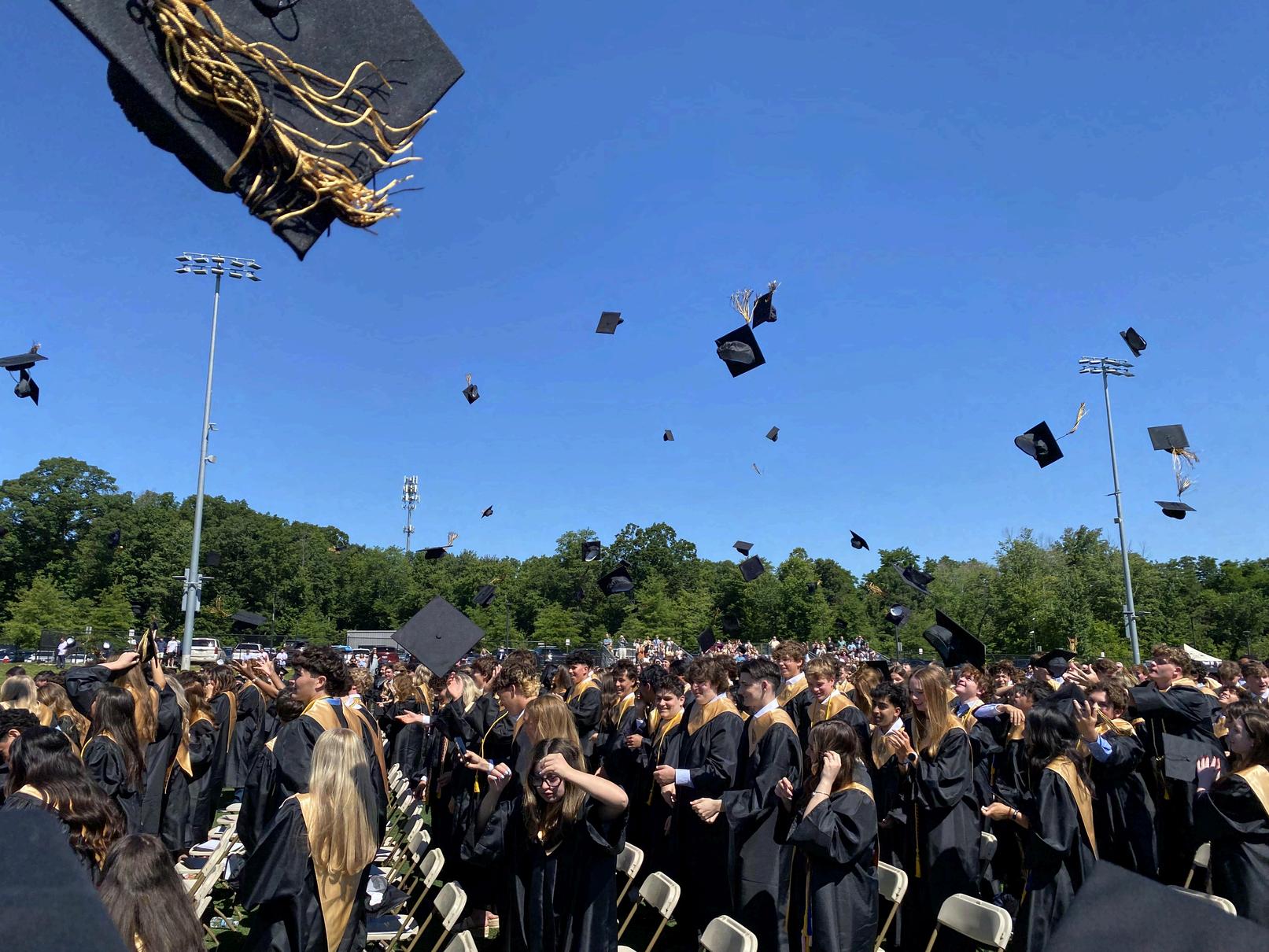
In the first week of June, you will be absolutely surrounded by such a crowd of witnesses celebrating the crowning achievements of your high school journey. To be surrounded with such support will be the most encouraging and joyful experience! In the presence of this crowd, you may actually feel as if you are being enveloped in a cloud — the best kind of sunny-day cloud our earthly atmosphere can offer — one that embraces you with love, pride, and joy. This cloud of witnesses will include your parents and guardians, your siblings and grandparents, your aunts and uncles, your teachers and members of the administration; and of course, you will be surrounded by your classmates — those with whom you have grown in grace and wisdom over the past four years. Most of the members of this cloud of witnesses have worked tirelessly to ensure that you would make it to graduation successfully! They will rightfully rejoice as you cross the stage to grasp your diploma, for they have witnessed your becoming smarter, stronger, more mature, and holier than you were when you first walked through the doors of PVI! Bask in the loving glow of this sunny-day cloud of witnesses! Look keenly, take it all in, and try to commit the scene to memory. Indulge in the tender support with which you will be surrounded!
Yet there will be another cloud of witnesses present at your graduation festivities, but this group will remain as yet unseen — beyond this world but very much invested in it and in you! All of the heroes of the Faith, who have walked this earth before you and have fought the good fight, will be gathered to witness your incredible achievements! Some days over the past four years you may have lost sight of their presence, but they have been dedicated to you and have prayed you through to this time, in a manner more perfect than even your earthly cloud of witnesses! You are very familiar with some who will be in spiritual attendance. If you have lost a loved one, who was devoted to living a life in Christ, he or she will be in this heavenly cloud of witnesses! Your guardian angel and a whole host of angels will be in this cloud! Your namesake saint, given at Baptism, and your Confirmation saint will be in this cloud! The favorite saints you have studied in Theology class will be in this cloud! (If you had me for Theology, the saints whose quotes you reflected on each day in class will be in this cloud!) The saints pictured in the stunning paintings in our chapel (and those painted by your classmates hanging in the hallway) will be members of this cloud of witnesses! St. Paul VI will be front and center, just next to St. Francis de Sales and St. Jane de Chantal! These are all members of the Communion of Saints, known as the Church Triumphant, and leading them will be our precious Lord Jesus, walking hand-in-hand with His Blessed Mother Mary!
But what follows is my essential point — after the graduation ceremonies and parties have ended, your earthly, sunny-day cloud will have to dissipate. You will launch off on your own, stepping into the wonderful unknowns of college life. There may be days when you long for the members of your sunny-day cloud of witnesses, and they will be back home going about their everyday lives. But please do not despair! Do not give in to loneliness, feeling as if no one is there for you! You still will be SURROUNDED by your great heavenly cloud of witnesses! They go with you! They stay with you! You are a part of the same GREAT CHURCH that they call home; and as a member of the Church Militant, you are integral to Christ’s plan for the family of God! You have friends in high places! They will go with you into your new life, and they will continue to embrace you with the arms of the Church! They will lead you, intercede for you, love you, and remind you of your place in God’s family, the Communion of Saints…even when you are far from home and missing your sunny-day cloud of witnesses.
“Therefore, since we are surrounded by such a great cloud of witnesses, let us throw off everything that hinders and the sin that so easily entangles. And let us run with perseverance the race marked out for us, fixing our eyes on Jesus, the pioneer and perfecter of faith.” ~Hebrews 12:1-2a
Missy’s Musings: Still Seen, Still Heard, Still Called Dearest Graduates of the Class of 2026, Mrs. Gurley
PVI’s Science Hall
by: Sophia Messiha ’29 and Bethany Beauchan ’29
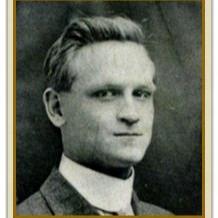
Have you ever walked through the science hall at PVI and noticed the name Dr. Claude Moore overhead without giving it much thought? It is one of those details that blends into the background of daily school life — familiar, but often overlooked. Yet behind that name is a story shaped by determination, service, and a lifelong impact that stretches far beyond the classroom.
After stepping away from medicine in 1956, Moore shifted his focus toward land investment and development. Over time, his work in that area expanded significantly, and he became one of the most prominent landowners in Loudoun County, Virginia.
The Dr. Claude Moore Science Hall at PVI was named in recognition of support from the Claude Moore Charitable Foundation, which has helped fund educational spaces and programs across Virginia. His legacy also lives on outside of PVI in places such as Claude Moore Park in Loudoun County and other community and educational projects supported by his foundation. These spaces continue to reflect his lasting commitment to learning and public service.
Dr. Claude Moore grew up in southwest Virginia in the early 1900s, spending his childhood between Radford and Roanoke. His early years were shaped by limited financial resources, but also by a strong drive to pursue education. After completing preparatory coursework at Roanoke College, he continued his studies at the University of Virginia, entering the medical program in the early 1910s.
While at UVA, Moore challenged himself far beyond academics alone. He joined the university’s football team despite reservations from some faculty and managed to balance athletics, medical studies, and a departmental assistantship. Those years became a defining period in his life, teaching him discipline and persistence under pressure.
After earning his medical degree, Moore continued his training at Cornell Medical Center. When World War I escalated, he chose to serve in the U.S. Army, receiving additional training in military surgery at the Mayo Clinic before being deployed overseas. He served in France as part of the Army Medical Corps, an experience that deepened both his medical knowledge and his commitment to service.
Following the war, Moore returned to Virginia and continued his work in medicine, eventually building a long career in radiology in the Washington, D.C. area. Over time, he became recognized not only for his medical expertise, but also for his leadership in the development of the field.
Years earlier, just before the events of Pearl Harbor in 1941, Moore had purchased a property at auction known as Lanesmoore. Rather than treating it as a simple residence, he transformed it into a personal project that reflected his hands-on approach to life. On the property, which included an old schoolhouse, he constructed a log cabin using reclaimed materials from other lands he owned. Even in advanced age, he continued working on the site, eventually building a stone chimney by hand in his late eighties.
Moore’s success in both medicine and land ownership ultimately allowed him to give back on a large scale. He created the Claude Moore Charitable Foundation to support educational and community initiatives across Virginia, directing much of his wealth toward long-term public benefit.
Dr. Claude Moore passed away in 1991, but his influence remains visible today in parks, educational centers, and school spaces across Virginia — including the science hall at PVI. For students who pass through it each day, it stands as a quiet reminder that names on buildings often represent lives defined not just by success, but by service, perseverance, and lasting generosity.
Spring Wildflowers and Trees of Virginia
BY: AVERY THOM ‘27
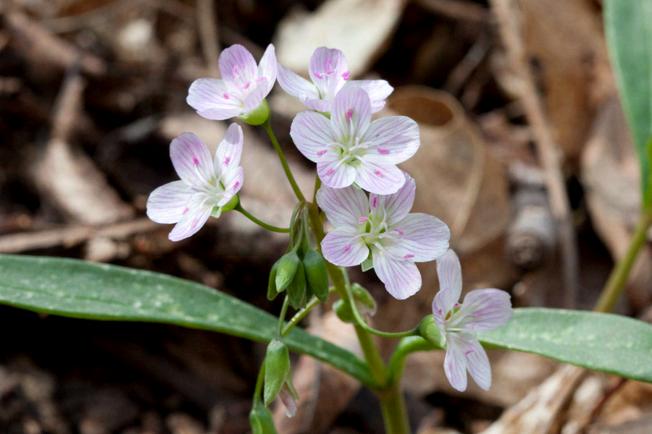
SPRING BEAUTIES
Common, native, short-lasting wildflowers that bloom from February to May; they thrive in damp forested areas; small, delicate plants with small pink flowers.
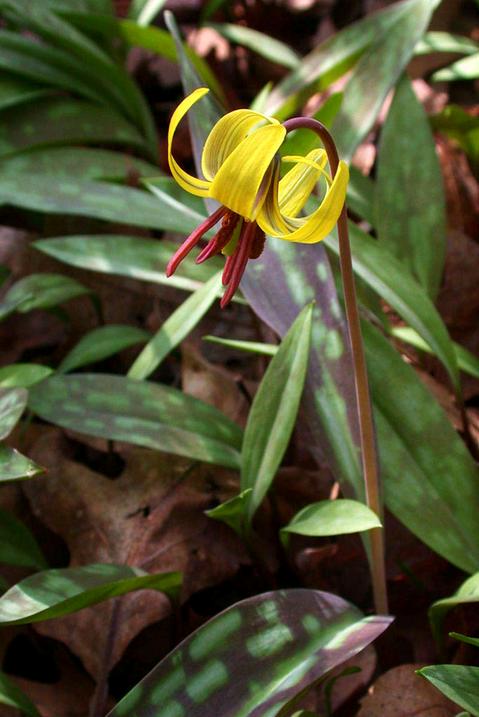
YELLOW TROUT LILIES
BLOODROOT
Native flower blooming in March and April; thrives in moist woodlands with rich soil; its roots create bright orange sap used by Native Americans as a dye.
YELLOW LADY SLIPPER
Rare native orchid blooming from May to June; they prefer moist forested areas. The Thompson Wildlife Management Area in Fauquier County has a protected habitat for them to grow.
Bloom from March through April; they thrive in forests and floodplains; two leaves dappled with purplish and a single, yellow, lily-like flower; take 5-7 years to flower.
VIRGINIA BLUEBELLS
Native plant blooming from March to mid-April; they thrive in moist, shady floodplains; Bull Run Regional Park is famous for its 150-acre display of Bluebells.
PINXTERBLOOM AZALEA
Native shrub blooming from April to May; they grow in dappled shade in moist, slightly acidic soil; its fragrant flowers are a crucial source of food for hummingbirds and butterflies.
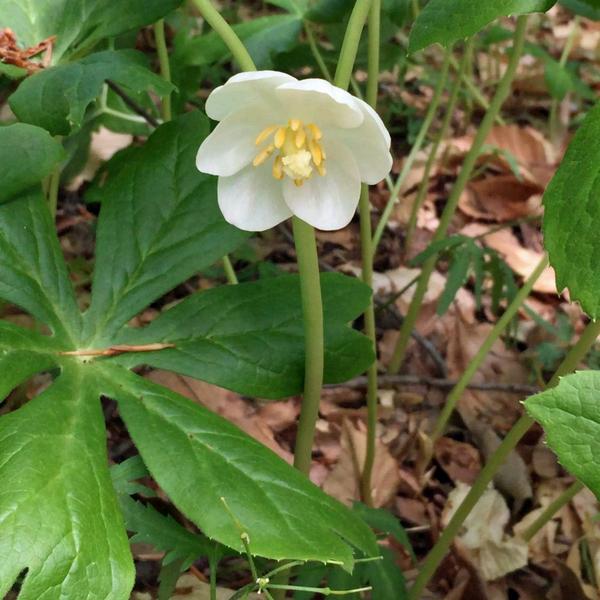
MAYAPPLE
Native shade-loving plants growing in woodland areas; they bloom in April and May, and produce edible yellow fruit in mid-summer.
PHLOX
Bloom from spring to summer; they form dense blankets of evergreen needle-like leaves and small colorful flowers; many different unique species.
Blooming Trees
REDBUDS
Native tree blooming in early spring; its bare branches sprout vibrant magenta-pink pea-like flowers and grow heart-shaped leaves; it thrives in partial shade and moist soil.
DOGWOOD
CHERRY BLOSSOMS
Bloom from late March to early May; they are famous in D.C. and in Arlington National Cemetery.
Virginia’s state tree and flower; it blooms in early April to early May; native varieties are more susceptible to disease, making later-blooming nonnative varieties more popular.
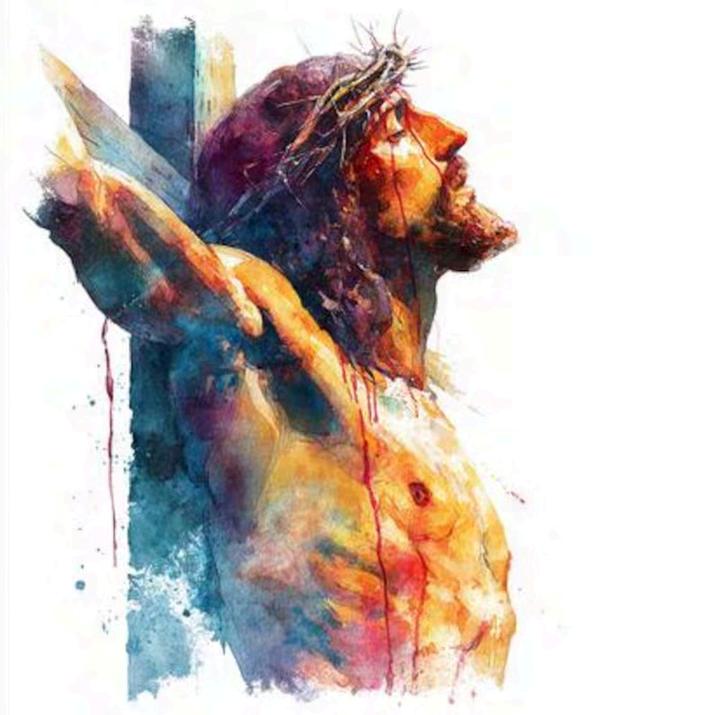
The Machine or the cross
by: Apolonio Latar
I once heard a story that a certain young man was about to go through a major surgery, and before he went into the operating room, he asked the nurses to give him his iPhone so that he could hold it for comfort. I do not know whether he had any close family members or friends who were there with him, but the point of the story is that minutes before the major moment he was dreading, he went to a machine for comfort. And we all do this in some way. Machines make us feel safe. They make us feel connected to something, to anyone, in the world. At least that is the feeling.
Now suppose I were to tell you that, in the near future, there will be a machine that will be able to give you what you want even before you know you want it. What if this machine can predict your behavior so well that it seems like it knows you, that it understands you? It may seem to understand you more than your friends or your future spouse will be able to. It seductively offers you a (false) promise: it can give you whatever you want. You ask it to write your essay in your own voice, and it imitates it well. You tell it about your kids' problems, and it gives you great advice. You ask what stocks you should invest in, and it is so up-to-date and can calculate everything so well that there are no longer financial advisors around because it does your budget for you and makes you richer. It unexpectedly gives you compliments when your soul is downcast. Again: it seems to know you well. And isn’t that what we really want — to be known?
What makes machines seductive is the same reason why the beautiful is attractive: it promises the infinite. And that is what power does. It is easy to see why pleasure, relationships, or any material good can ultimately be unsatisfying. We can get tired of them in time. But power is something we can always have something of, something we can always want. Why shouldn’t I adore and be addicted to something that seems to give me what I want, that seems to know me more than I know myself?
Will we have the strength to detach from these machines in the future? A lot of people speak of “moderation” or “using it for the good.” But these are superficial answers. These machines, by their very nature, will shape the way we think and feel by the simple use of them. In other words, when we use these machines, we cannot but think the way they make us think, feel the way they make us feel. Our criteria for many things now are efficiency and immediate gratification, and we cannot help but think that everything should be efficient and that our value comes from the immediate results of our work.
As Neil Postman, an author who studied technology and culture, noted a long time ago, every technological change is an ecological change. When these machines come to us in the future, it will be as if a drop of red dye is placed into a glass of water. Everything will be changed and affected.
What, then, is the solution? To offer one right now is to fall into the technological mindset that this problem should be given an immediate and easy answer. Rather, what I would like to do is to offer some questions that need to be suffered for us to understand the gravity of what these machines will do and maybe help us see what truly matters in life. The questions are these: what is it that power or the Machine will be unable to give you? Is there a need in the human heart that surpasses that which the Machine can give? What is this need? Is this need something that we should prioritize?
The other questions have to do with the present moment. Why are we so quick to provide technology to young people even when we do not know its long-term effects? A lot of people today already know the harm social media has done to young people. And the justifications for it were that it would bring people together, that they need to use it or they would fall behind, and that they should just learn how to use it with moderation. What we have produced are young people who are more anxious, more lonely, and more depressed. And I do not know of a single good-quality study that shows technology has actually improved education. Why are we so quick to adopt whatever those who are in power tell us to adopt? Did we even want social media? Did we even want AI?
A lot more things can be said here, but let me end with a final thought. Jesus once took a child and said, “Unless you become like this infant, you will not inherit the kingdom of God.” Why is it that God always chooses those who are powerless, those who are poor, and those who suffer for His sake? Those who encounter Christ become poor; they become those who know that they depend totally on another.
If God were to ask you to choose between the Cross, which is the sign of powerlessness, and the Machine, which is the sign of power, would you be able to choose that sign which has saved so many broken hearts? We may be coming to an age when the martyrdom that is asked of Christians is to detach from the Machine. They will not worship it, and they will suffer, for sure. But they will receive a joy that no Machine can ever give. They will know what it is like to have true, real relationships with others, what nature feels and smells like, what it means to love what is good and true over what is immediately satisfying. They will know what is essential in life, and they will know their own worth. They will smile and sing when everyone who is stuck in a Machine is filled with an unspeakable loneliness. They will be the hope of humanity.
“What religion are you? Were you baptized?” they asked. I didn’t know how to answer, so they sent me home to ask my mother.
“When I did, she told me simply that I had not been baptized. Nancy and Jayne reacted quite dramatically. One insisted, “If Linda dies, she’s going to Purgatory!” The other countered, “No — she’s going to Hell!” They went back and forth, debating my eternal fate as I stood silently in the middle of it all.
I left that conversation with one clear realization: whatever baptism was, I needed it. And until I understood more, I didn’t even know where I stood with God. In many ways, that moment became the beginning of my journey.
I began asking my friend-advisors how I might come to know God, and they told me I needed to know Jesus. “Well, where do I find Him?” I asked. They pointed me to the Bible. Of course, there was no Bible in my home, so I went to the library and checked one out. I remember feeling slightly self-conscious, as though this might look unusual, but I didn’t really care — I was determined to find Jesus in those pages.
I remember holding the Bible in my hands and thinking of it as the “instruction manual” for life. In my child’s mind, I had pieced together a simple understanding: everyone’s task was to figure out who or what they “were,” be baptized, and then attend whatever church belonged to that identity on Sundays. With that logic in place, I began my search.
Opening to Genesis, I read and re-read the creation stories, searching for Jesus — but I couldn’t find Him. The words, along with many unfamiliar names I couldn’t pronounce, seemed to pass right through me. Frustration began to set in, along with a quiet sense that perhaps I wasn’t meant for this. How could I become a Christian if I couldn’t even understand the “instruction manual?” Eventually, I returned the Bible to the library. I tried a few times again in later years, but each attempt ended the same way — confusion and frustration.
Truly, however, this fear of not knowing where I would go if I died, in a strange way, kept me “safe.” I was certainly an adventuresome girl, but not a big risk-taker, because I was often afraid of what might happen. I had a persistent sense that there was still unfinished business in my life, and so my journey continued.
I still remember the day a friend invited me to his Baptist church on a Wednesday night when they were having baptisms. I felt a sense of anticipation — this was it. I was finally going to witness the ritual I knew I would one day experience myself. The baptism took place in a large glass tank at the front of the church, almost like a dunk tank. I was fifteen, and when I saw a teenage girl come up out of the water, her hair dripping and mascara running down her face, I remember thinking, Well, I’m not going to be Baptist. I was still very much a kid.
Later in high school, when we had sleepovers, I often encouraged them to be on Saturday nights so I could go to church with my friend’s family the next morning. I loved attending Mass at St. Timothy’s. I remember the warmth, the sounds, the incense, and the beauty of those surroundings. “Nancy” and “Jayne” had something very special there, and yet, in my own ignorance at the time, I assumed one could never simply “become” Catholic. I thought “Catholic” was something you were born into — part of your DNA. They lived their faith so deeply that, to me, it seemed almost genetic.
When it came time for college, I already knew I wanted to teach. I was fluent in Spanish and decided I would become a Spanish teacher — it felt like the perfect combination. During my sophomore year, I traveled to Spain to further immerse myself in the language and culture. We were all registered for an Introduction to Early Christian Art class at the Prado Museum. This was not a course I would have chosen on my own, without a doubt. I will never forget the first day of class, when we gathered in an early Christian hermitage chapel reconstructed inside the museum. Our professor introduced himself and then directed our attention to the murals surrounding us. “Here is Creation,” he said. “Here is the Temptation of Adam.” “Here is the Expulsion from the Garden.”
As I stood there, I was suddenly transported back to the Genesis stories I had read so many years before. In that moment, I was overcome — not with a feeling, but with a knowing. This was how I was meant to encounter Scripture. This was how I would come to understand the Bible and meet Jesus: through images. Tears streamed down my face as I tried to write down every word the professor spoke about the artwork before us. For me, it was catechesis. It became unmistakably clear that God was revealing Himself to me in a way I could finally understand.
After two weeks of intense study at the Prado, I knew two things very clearly. First, I needed to change my major. I could not get enough, and I knew this path was drawing me closer to God. Second, I needed to be baptized as soon as I returned to the United States, although I still did not know where that would happen.
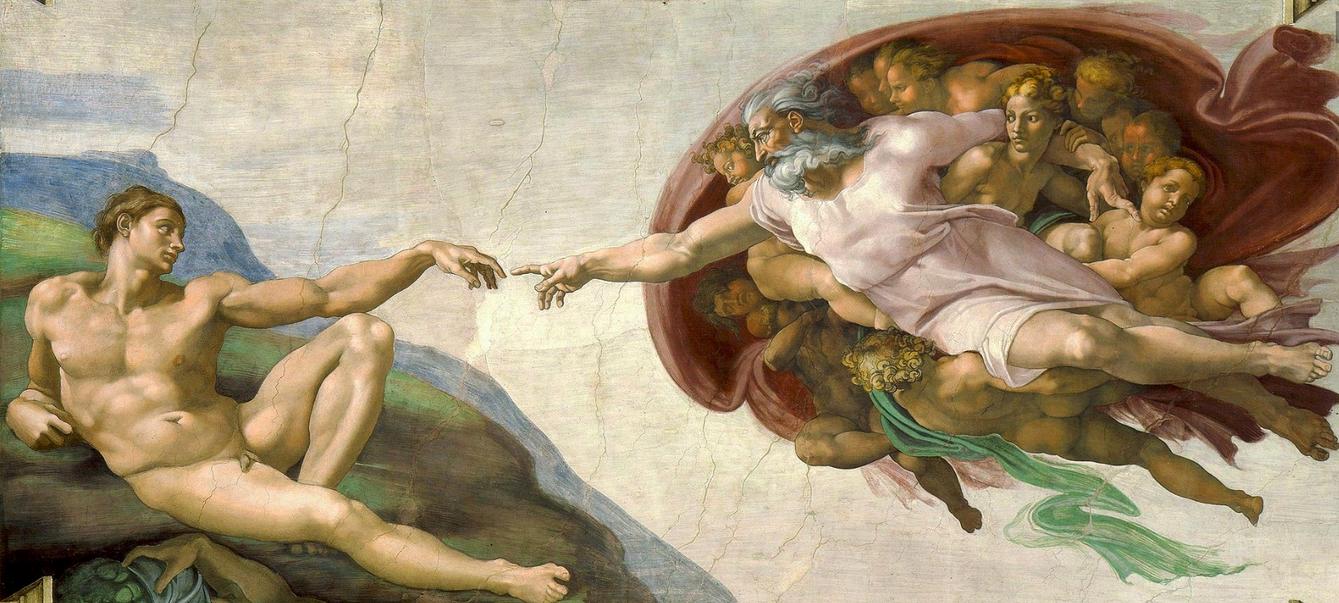
The Creation of Adam (c. 1508–1512) is a masterpiece by Italian Renaissance artist Michelangelo, located on the ceiling of the Sistine Chapel in the Vatican in Vatican City
I found a Bible and, with the help of some devout Christian students, began to feel a growing thirst for God. In 1981, before the internet, I called my college and changed my major over the phone. I needed to study Art History. I remember standing before Diego Velázquez’s Crucifixion, where I fell in love with Jesus. I even returned to the Prado to say goodbye to the painting before leaving. That image has stayed with me ever since, and to this day it remains in my classroom.
When I returned home, I visited many different churches with friends, but it was not until I went back to campus that I felt I needed to take the next step. I remember walking to the church closest to my dorm — I did not even care what denomination it was. I simply needed to sit down and speak with someone about my journey of faith. It happened to be an Episcopal church, and Father Bob welcomed me with great patience as I shared my story with him.
What struck me most was how familiar the church felt. In many ways, it felt very Catholic to me. With Father Bob’s guidance, I decided I would be baptized in the spring at the Easter Vigil. Although I never explicitly asked about becoming Catholic, it no longer seemed to matter in the same way. What I had found was something deeper — a spiritual home.
I immediately obtained information about RCIA and began the process. I still remember when my husband returned from deployment, and I told him I was going to enter the Church. His first reaction was surprise, as expected, though he made it clear he did not want me to do it for him. I remember telling him that it had nothing to do with him at all. There was never any doubt in my heart that this was God’s will for me. I was confirmed in the Catholic Church in April of 1992 at the Easter Vigil.
As our children reached school age, I continued to grow in the Catholic faith alongside them. Eventually, we moved to Northern Virginia and once again made St. Timothy’s our spiritual home, a place that felt deeply familiar to me. We homeschooled for many years, and later, when our children entered high school, I began teaching Spanish.
Teaching Spanish? Wait — wasn’t this exactly what I had originally planned? I enjoyed my dream career, but I also continued to deepen my study of the faith. Some years later, my principal approached me and asked if I would consider teaching middle school religion. There was really no decision to make. That wise and trusted man set me on a path that eventually brought me here to Paul VI.
As I have always done, I incorporate religious art into my theology classes. It is, after all, how God first revealed Himself to me, and I often wonder if there is a student sitting in my classroom who learns best through the visual image as I once did.
My message to my students over the years is simple: God has a personal and unique way of revealing Himself to each of us. I often tell them, “Who knows you best? God knows you best — He made you. Who loves you the most? God loves you the most. He will reveal Himself to you as long as you keep your eyes and your heart open to His presence in your life.”
What began as my search to find God became the quiet realization that He had been present in every step of my life.
Art, Faith, and Mrs. Gott
by: Janna Joseph '29
Mrs. Gott has been teaching for 24 years, inspiring countless students along the way. If you have ever had her as a teacher or stepped inside her classroom, you know it is filled with beautiful and meaningful works of art. As Mrs. Gott prepares for retirement, I would like to share a few of my favorite pieces and the special impact they have had on her classroom.
This painting is The Return of the Prodigal Son by Pompeo Batoni. The story of the prodigal son is told in Luke 15:11–32. In the parable, a younger son asks his father for his inheritance early and then recklessly wastes all of it. After losing everything, he returns home expecting rejection and punishment. Instead, his father welcomes him back with love and celebrates his return.
How does this relate to us? Jesus told this parable to show that no matter how far we stray, we can always repent and return to God. Just as the father welcomed his son home, God welcomes us with forgiveness and love.
Looking more closely at the painting, the first thing that stands out to me is the expressions on the faces of the father and son. The son appears sorrowful and ashamed, while the father has a calm, compassionate expression. Another detail that catches my attention is the father's red robe. Batoni uses rich colors and detailed folds in the fabric to draw the viewer's eye to the father, emphasizing his importance in the scene. Through these details, the painting beautifully captures the themes of mercy, forgiveness, and unconditional love.
This painting is The Good Samaritan by Vincent van Gogh. The story of the Good Samaritan is found in Luke 10:25–37. In this parable, Jesus tells of a man who is beaten, robbed, and left on the side of the road. Several people pass by without helping him, but a Samaritan — someone from a group that was often disliked by the Jews at that time — stops to care for the injured man. He treats the man's wounds, brings him to safety, and makes sure he is taken care of.
Jesus told this parable to teach that we should show kindness and compassion to everyone, regardless of who they are, what they look like, or where they come from. The message reminds us that loving our neighbor means helping those in need, even when it may be inconvenient or unexpected.
One of my favorite things about this painting is Van Gogh's artistic style. Unlike many of the other paintings in Mrs. Gott's classroom, this work is less realistic and more expressive. I especially enjoy the way Van Gogh uses bold colors and distinctive brushstrokes to create movement and emotion. His unique style brings the scene to life and helps the viewer focus on the compassion and care shown by the Good Samaritan.
Mrs. Gott has taught her students that great religious art is much more than something beautiful to look at. Through sharing some of her collection of paintings and sculptures, she has helped us discover the deeper meanings behind the images and better understand our faith. Her passion for art and theology has left a lasting impression on her students, and it is one of the many reasons she will be greatly missed.
This painting is The Crucifixion by Rogier van der Weyden. It is by far my favorite painting because of all the details Weyden included. One of the most interesting parts of the painting is the background. We see buildings in the distance, which might seem unusual because those buildings were not around during Jesus' lifetime. However, they have an important meaning. The buildings remind us that although Jesus died for us over 2,000 years ago, people continue to remember and celebrate His sacrifice today.
Another fascinating detail is the dark figures in the sky. Some people might mistake them for demons, but they are actually angels. They appear dark because they are mourning and filled with sorrow as they witness Jesus' suffering on the cross.
I also find the people in the painting very interesting. Along with Jesus, His mother Mary, and John, there are two figures who clearly do not belong to Jesus' time period. These figures are a nun and a priest who commissioned the painting. Weyden did not include them simply because they paid for the artwork. Instead, he included them to symbolize that they remain spiritually present at the foot of the Cross through prayer and devotion. He even painted a crack in the ground between them and the others to show that they are not physically there but connected through faith.
Last year, from January to February, wildfires struck California in one of the most terrifying scenes. The damages totaled $131 billion in economic losses, with 30 lives lost and 180,000 people forced to flee their homes. This event made clear the destructiveness of an out-of-control wildfire. These kinds of events can be made worse by the current significant data gaps that limit the ability to fight fires. According to a 2025 report from the Environmental Defense Fund, ”Currently, most regions lack dedicated wildfire detection and monitoring systems.” The very first prototype FireStat launched in March 2025 detected a small cool fire that was not detected by other satellite systems.
THEEARTHFIREALLIANCE
The Earth Fire Alliance is a 501(c) (3) nonprofit founded in 2024. Its vision, as stated on their website, is to provide a united global response to the wildfire crisis. To achieve this vision, Google Research, Muon Space, and the Earth Fire Alliance developed FireSat. “FireSat is the first satellite constellation purpose-built for the global wildfire challenge, and will soon generate an unprecedented dataset focused specifically on wildfire and its effects on the planet and our communities” (Earth Fire Alliance). The technology is cutting-edge and unmatched.
“FireSat uses high-res multispectral satellite imagery and AI to provide near real-time insights on wildfires. It enables faster detection, improved situational awareness for first responders, and ultimately helps to reduce the devastating impacts of wildfires.”
The satellite can detect a 5-by-5-meter fire from space. Advanced infrared sensors detect fires every 20 minutes. The company plans to build 50 satellites by 2030 to scan the most fire-prone areas in the world. Not only will the satellites help firefighters on the ground, but also help replace an outdated and faulted method. The Rothermel Spread Equation, developed in the 1960s by Dick Rothermel, serves as the foundation for firefighter training, fire modeling, and decision-making in fire management and control. However, it does not take into account a large number of factors that can greatly influence the spread of a fire: wind conditions, moisture conditions, and variability of vegetation or fuel. Mark Finney, who has been working to replace the Rothermel Spread Equation using conventional fire models for many years, is collaborating with Google and its AI to produce more models and work toward a more reliable equation. These more accurate and abundant models, combined with satellite intelligence, will allow firefighters to better understand and control fires.
BySylviaSchafer'28
“Carrying the Fire: The Transformative Power of Reading”
First Class Distinction
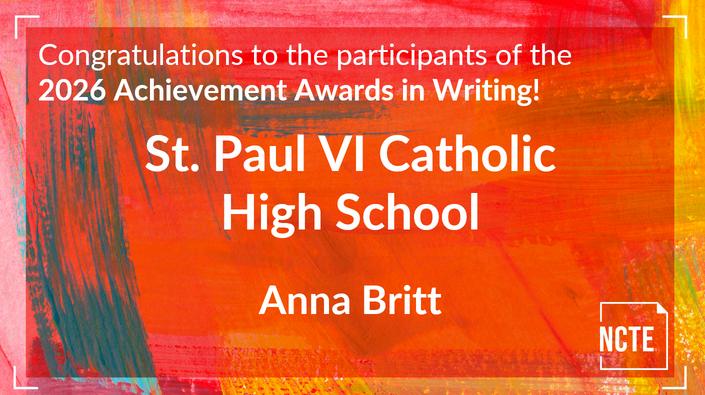
When junior Anna Britt arrived at PVI at the start of the 2025–2026 school year, I first got to know her during an after-school conversation in August in the dining commons, where I quickly discovered her passion for rowing. Since then, Anna has become a valued member of The Writer’s Block Club and a regular contributor to Crossroads, where she writes an engaging column focused on all-things-rowing. A well-rounded, bright, and multi-talented student, Anna enjoys reading the plays of William Shakespeare and the works of philosophers. At PVI, physics and history are among her favorite subjects. Gifted musically, she plays multiple instruments and has already contributed to PVI’s music program. Outside of school, Anna enjoys spending time with her pets, practicing gymnastics, and rowing — a sport she approaches with remarkable discipline and dedication.
When the National Council of Teachers of English (NCTE) invited teachers to nominate exceptional sophomore and junior writers for its 2026 Achievement Awards in Writing contest focused on “The Joy and Power of Reading,” Anna was one of the well-read student writers who came to mind. She gratefully embraced the opportunity, and I was delighted to nominate her essay, “Carrying the Fire: The Transformative Power of Reading.”
Established in 1957, the Achievement Awards in Writing recognize some of the nation’s most outstanding young writers for their expression of ideas, language use, and originality of voice and perspective. With no surprise to me, out of 689 student-writers nominated internationally for this contest by teachers, it was PVI’s Anna Britt who earned the First Class distinction — the contest’s highest honor.
~ Ms. Fassinger, English Teacher and Moderator of The Writer’s Block Club
CarryingtheFire: TheTransformative PowerofReading
by: Anna Britt ’27
A book is not paper.
It is a pulse.
It is a door flung open in the dark.
It is a wound that learned how to sing.
Somewhere in a dim room in Saint Petersburg, Fyodor Dostoevsky bent over a desk as if confessing to the dark. He wrote not to decorate language but to survive it. His characters do not speak; they erupt. Raskolnikov’s fever in Crime and Punishment is not merely narrative tension; it is guilt liquified and poured into consciousness.
When we read, we do not observe his torment from a safe moral distance. We sweat in that cramped room. We pace the floorboards. We feel the suffocating gravity of an idea carried too far.
Dostoevsky’s private torment becomes our internal courtroom. And suddenly, we are the ones on trial.
Then comes Leo Tolstoy, whose vision feels continental. In War and Peace, armies march, and empires tremble, but the true revolutions happen in the human soul. Pierre’s spiritual hunger, Andrei’s disillusionment, Natasha’s luminous vitality; these are not simply characters but climates of being.
Tolstoy refused to divide life into “important” and “unimportant.” He poured everything in: war and waltzes, philosophy and family dinners, despair and devotion. And as we read, something in us expands to hold that abundance.
Our inner lives grow rooms. We become larger than we were.
Anton Chekhov is quieter, but no less devastating. In The Cherry Orchard, nothing explodes. An orchard is sold. A family drifts. Time passes with unbearable gentleness.
Yet in that softness lies revelation. Chekhov releases into the page the soft grief of ordinary loss, the kind that does not announce itself. And when we read him, we begin to recognize the delicate tragedies in our own lives: conversations that end without knowing they are final, rooms we will never enter again. We recognize the fragile heartbreak hidden inside our own routines.
We learn that silence can shatter.
But the philosophers press further still.
Friedrich Nietzsche writes like a man striking flint against the cosmos. In Thus Spoke Zarathustra, language becomes lightning. He offers no comfort, only height. “Become who you are,” he urges, as if identity were not a fact but a summit.
When we read Nietzsche, we feel the exhilaration and terror of standing without railings. The author releases a defiance against despair; the reader inherits the spark.
Soren Kierkegaard tolls like a solitary bell in fog. Anxiety. Faith. Choice. His words do not resolve these tensions; they deepen them. He suggests that existence itself is a question mark shaped like a human being.
And reading him, we feel the vertigo of our own freedom. We understand that to choose is to tremble. That doubt is not failure but the shadow cast by possibility.
Then Albert Camus, who stared into the silence of the universe and refused to blink. In The Myth of Sisyphus, he imagines a man condemned to roll a stone forever, and dares to call him happy.
Camus gives us a fierce dignity: meaning is not found; it is forged. Not in denial, but in revolt. When we read him, our burdens do not grow lighter —
But they become chosen.
And that changes everything
And above, beneath, and within them all stands William Shakespeare.
Shakespeare does not merely describe emotion; he discovers new chambers for it. In Hamlet, hesitation becomes philosophy. Thought becomes paralysis. “To be, or not to be,” and suddenly existence trembles between syllables. Four centuries dissolve, and the question is ours.
In King Lear, a father howls into a storm, and the storm answers. Love is mistaken. Pride is stripped bare. Madness becomes revelation. The stage collapses into the human condition.
We recognize ourselves in the ruin.
We always have.
What is this power?
How can ink outlive breath?
Perhaps because when writers descend into their deepest fracture, they strike what is most universal. The more honestly they enter their singular grief or ecstasy, the more clearly they touch the shared root beneath us all.
Reading is not passive; it is participation, it is ignition.
Dostoevsky gives anguish; we supply our moral fear. Tolstoy gives us immensity; we bring our hunger for meaning. Nietzsche gives us flame; we decide whether to burn. Shakespeare gives us language; we answer with our pulse.
The page is only half alive until a reader arrives. And when we do, time collapses. A Russian exile, a Danish solitary, a French rebel, an Elizabethan playwright — they speak. And when they do, something inside us answers. Their solitude dissolves into recognition. Their fire becomes oxygen.
We close the book, but the book has cracked us open forever.
We walk differently, question more fiercely, endure more consciously.
Literature does not solve existence; it deepens it. It teaches us that to feel profoundly is not weakness but courage. That to wrestle with ideas is not indulgence but participation in the cast, trembling experiment of being human.
A book is not paper.
It is a bridge between mortal minds across impossible distances. It is a match struck in the dark, proof that someone else has been here, lived this life, and survived long enough to leave a voice behind.
And every time we read, we cross that bridge. We carry their fire forward into the unfinished story of ourselves.
All Things Rowing
by: Anna Britt '27
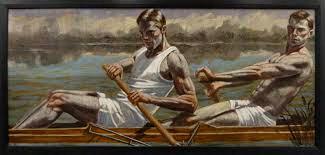
Alright, children, it’s spring. You may think spring only means showers and flowers, but you would be wrong. Spring means the rowing season is back! The water’s thawing (sort of), the ergs are screaming, and college crews across the country are dusting off their dignity for another round of 2,000-meter suffer-fests. The season is upon us. Dual races are firing up, conference champs loom, and by late May we’ll see who had what it took to survive, thrive, and win at the IRA Nationals on Lake Natoma (first time back West in years).
Since I’ve already preached the gospel of rowing basics in past articles (you’re welcome for the education), let’s cut to the good stuff: who’s looking scary good, who might surprise us, and my hot-take prediction for the one event I least expect to happen this year. Buckle Up.
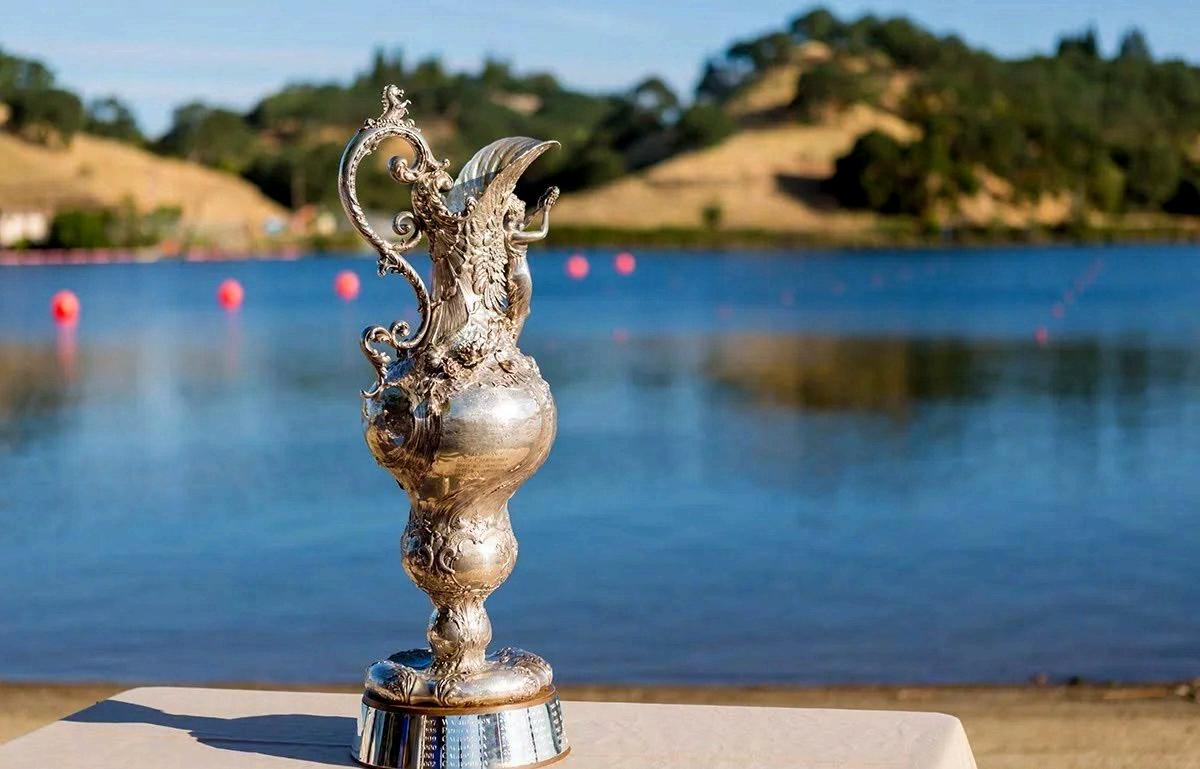
The TEN EYCK TROPHY pays honor and respect to James Ten Eyck, Syracuse University's revered and famed crew coach from 1903 to 1938.
Men’s Side: The Usual Suspects + Some West Coast Chaos
The IRA Men’s heavyweight varsity eight is always a bloodbath, and 2026 looks no different. Way-too-early rankings have the usual Ivy/Cal/Washington elite at the top, but things get fun with the IRA moving to Lake Natoma — home-water advantage for the West Coasters who’ve been training on it forever. Washington Huskies are circling back for MPSF glory and then the big show, while some MPSF teams are splintering off to chase Dad Vail autos instead. Translation: more unpredictability, more upsets, more reasons to watch.
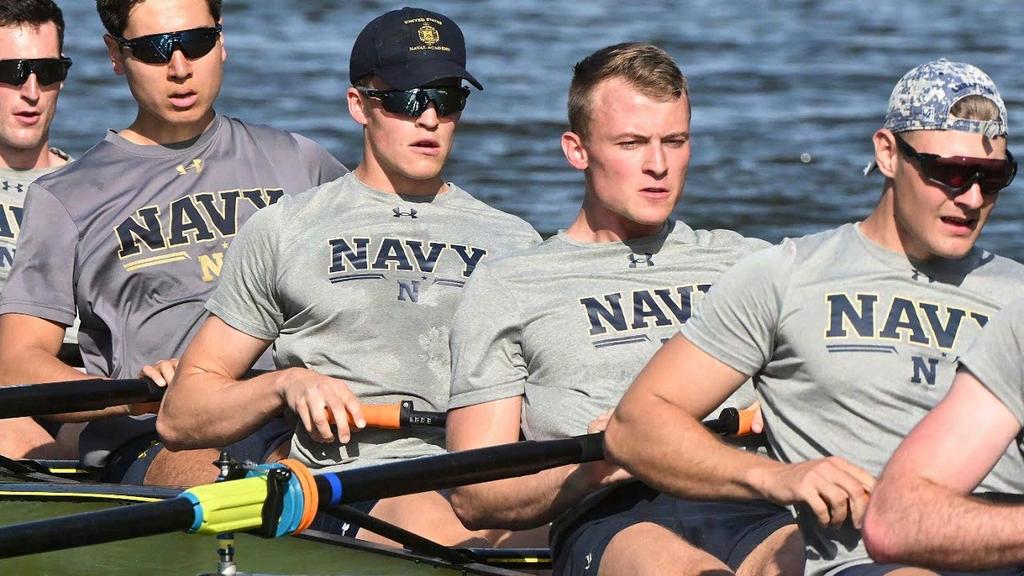
People to beat: Yale, Princeton, Harvard, Brown (the Eastern Sprints royalty), plus Cal and Washington bringing the power from the West Coast. Navy? They’re young, hungry, and meshing well according to the coaches. I’m calling a solid top-15 push, maybe sneak into the grand final if the stars (and erg scores) align. Go Navy. Beat the Ivies. Make them row like they mean it.
Women’s Side: Stanford Reigns, But the Field is Stacked.
Stanford just snatched the NCAA points trophy last year, and they’re preseason No. 1 again — shocker. The Cardinal are loaded, especially after sweeping boats like it was personal. But Yale, Princeton, Brown, and Harvard are right there, breathing fire, and ACC teams like Virginia, Cal, Syracuse, Duke, and Clemson are climbing fast. The ACC championship on Lake Wheeler in mid-May could be a preview of nationals.
UCF’s women are coming off a historic Big 12 title and NCAA top-15 finish — new program energy is real. Watch for them to keep punching above their weight.
The One Event I Least Expect to Happen
Here’s my bold prediction: Navy heavyweight men do NOT finish outside the top 20 at IRA Nationals.
Yeah, I said it. The one thing I least expect? Navy getting embarrassed. These midshipmen balance service academy life, academics that would melt lesser brains, and still pull boats on the water that move like they’re possessed. I refuse to believe Navy will fade quietly. Upset a ranked crew? Steal a heat? Make the petite final at least? That’s the baseline. Anything less, and I’m personally rowing to Annapolis to apologize to Coach Schlosberg.
If Navy medals? I’ll probably say that it’s one of the greatest days of my life, second to the Caps winning the Stanley Cup.
The Bottom Line
The season is starting. First races pop off this month. You should be watching, following along, posting memes, and telling your friends that rowing is back from the dead; it will remain back from the dead, and weird people – like myself – are excited.
Go Navy. Sink the competition (metaphorically). And get ready for the intense love you will have for this sport at the end of this.
UPDATE: The University of Washington Huskies won the overall team championship (Ten Eyck Trophy) at the 2026 IRA National Championships on Lake Natoma. Washington also won gold in the prestigious Varsity Eight (V8+) Grand Final, with the California Golden Bears finishing second. Navy finished ninth overall in the team points standings for the Lightweight Crew and 14th overall for the Heavyweight Crew.
Seeking Jazz Singers, Musicians,
and Enthusiasts
The PVI Jazz Band is looking for musicians and vocalists of all levels to join us. Whether you’re new to jazz or already into improv, we welcome anyone ready to dig into swing feel, charts, and ensemble playing. Rehearsals kick off at the start of the 2026–2027 school year. Come bring your sound and get into the pocket with us!
For more info, contact: zjoyce28@pvipanther.net and mtarvertaboada27@pvipanther.net
Jordan “Smitty” Smith
Jr.’s Legacy at PVI
by: Sian Chen '27
2026 Jersey Mike’s Naismith Boys’ High School Player of the Year
2026 Gatorade National Player of the Year (first male player from the DMV area)
Averaged 26.6 points, 6.3 rebounds, 5.6 assists, 3.2 steals per game in 2025–2026
Shot 56% from the field, 36.9% from three, 72.4% from free throws
Scored 35 points at the April 2026 Chipotle Nationals
Led PVI to four consecutive VISAA state championships
Led PVI to multiple WCAC titles; concluded conference career 64–1
Nationally ranked 5-star prospect
Top-ranked Class of 2026 shooting guard
Represented the U.S., winning gold at the 2025 Men’s U19 and 2024 Men’s U17 Cups
Committed to the University of Arkansas
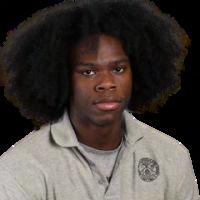
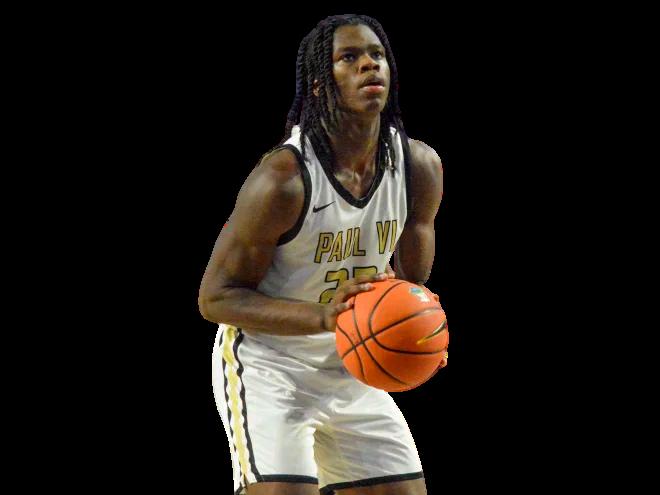
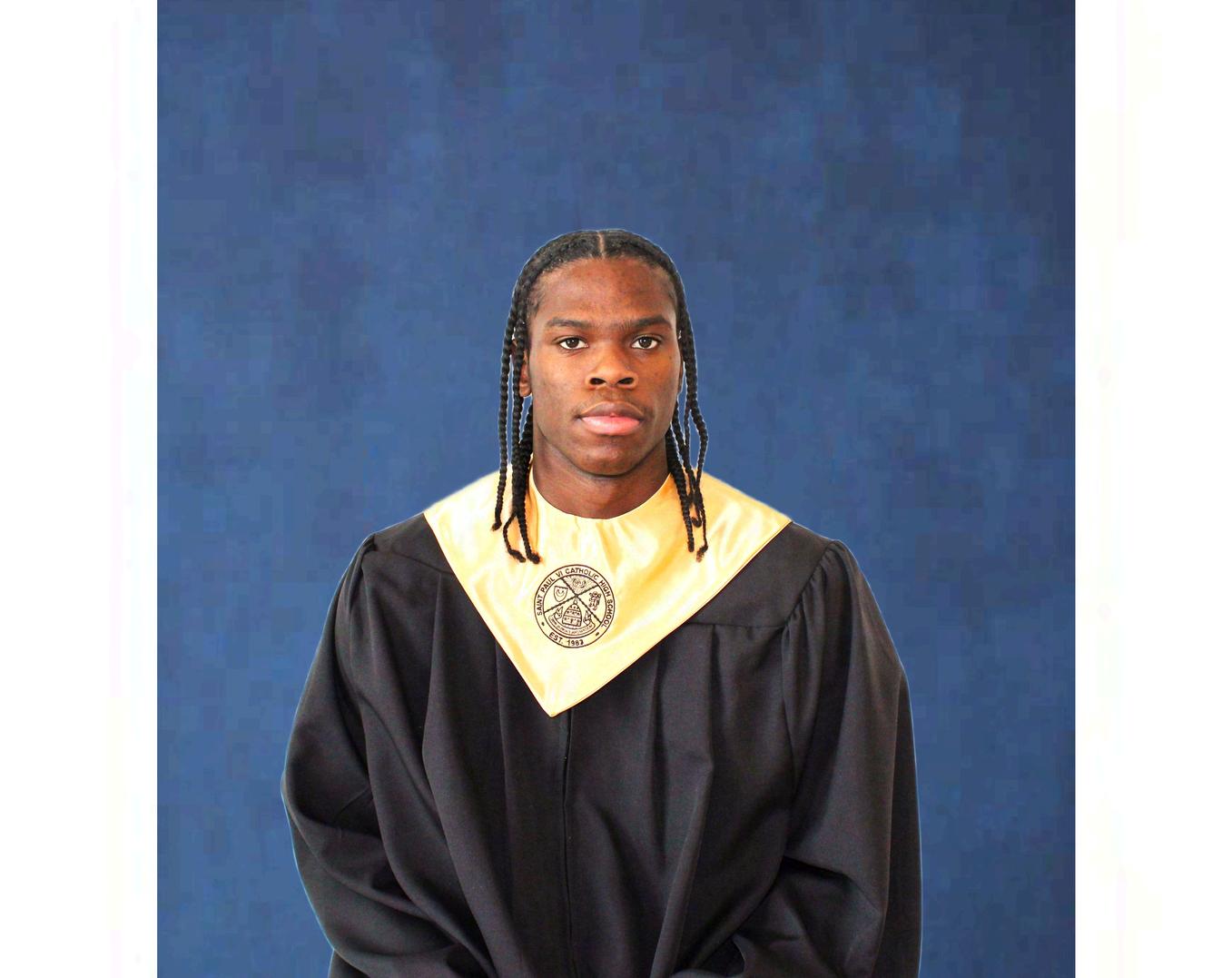
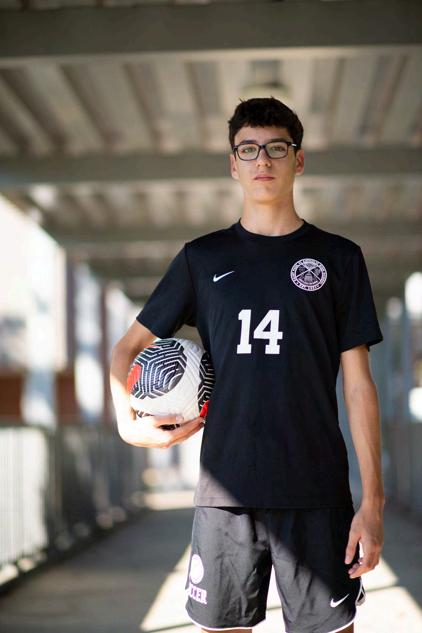
On the playing surface of PVI’s PAC, the squeak of sneakers on the hardwood mingled with the roar of the crowd. Captivating loyal fans and newcomers alike, one number stood out — its player bringing relentless excitement and a streetball flair to the hardwood, treating defenders like playground opponents while effortlessly commanding the court as if it were just another day on the blacktop: 23 — a number upon which another legacy was built. As with NBA phenom LeBron James, the number #23 also became synonymous with relentless drive, unyielding skill, and a journey that leaves a lasting mark for Jordan “Smitty” Smith Jr.
Jordan’s passion for basketball began on the street courts of Washington, D.C., when he was just a preschooler — standing on the sidelines watching his dad play. That early spark ignited a lifelong love for the game — and a friendly father-son rivalry.
“I’m better [at basketball] than him now,” Jordan laughed, though their matchups continued over the years. Growing up in D.C., he was also shaped by the city’s rich basketball culture. He admired local legends like Antwan Walker and Keon Boyd of H.D. Woodson High School. “Their style represented our area,” he said. “That’s one of the reasons I wanted to be great at basketball.”
But Jordan’s rise did not happen by chance—it came from relentless work. At PVI, Jordan honed his skills and built a resilient mindset. As a freshman, he did not expect to shine so quickly. “I didn’t even think I’d be this good,” he said. Coaches and teammates nurtured his potential, giving him space to learn from mistakes while building strong friendships. Known for his demanding training routines, he described a favorite drill: “I ran from the corner to half-court and back before taking a three-pointer. It helped me get a real game feel and know what to do in a game situation.” Beyond hard work, he emphasized enjoying the game and listening to music before tip-off to relax and get in the right mindset. The journey was not always easy. “There were times I felt like quitting,” he admitted. “Games end. Basketball is just a game. What kept me going was the relationships with people.” That pure love for the sport and the relationships he fostered with his teammates and coaches fueled him through challenges. While his family remained his cornerstone. Even though they lived far from PVI, his parents attended key games.
The influence of the bond with his teammates and the support from his family was evident during the WCAC championship game, when Jordan scored 29 points to lead the Panthers to victory. At the start of the season, when some may have questioned the team’s ability, “Winning the championship was our answer.” On the court, Jordan’s talent was undeniable. Over his high school career, he helped lead PVI to four consecutive VISAA state championships and multiple WCAC titles. In the 2025–26 season, he averaged 26.6 points, 6.3 rebounds, 5.6 assists, and 3.2 steals per game, shooting 56% from the field, 36.9% from three, and 72.4% from the line. He scored 35 points at the Chipotle Nationals in April 2026 and concluded his conference career with a 64–1 record, the best in league history. Nationally, he was recognized as the 2026 Jersey Mike’s Naismith Boys’ High School Player of the Year and the Gatorade National Player of the Year, becoming the first male player from the DMV area to earn the award. He was widely regarded as a 5-star prospect and a top-ranked member of the Class of 2026, committing to the University of Arkansas to continue his athletic and
PVI’s coach, Glenn Farello, who himself won the 2026 Jersey Mike’s Naismith High School Coach of the Year, shared in a March 2026 article from the Atlanta Tipoff Club that Jordan had a transformative impact on the program. He highlighted Jordan’s leadership, work ethic, and ability to elevate his teammates, noting that his performance on both ends of the floor made him a fan favorite and that the school was proud of how he
Jordan’s impact extends beyond stats and awards. Inspired by his father’s work at a recreational therapy center, Jordan also volunteered with children who have special needs, saying, “It’s important to me because I grew up seeing my dad do it and also because my best friend is in a wheelchair. I know what that’s like.” Jordan values humility, relationships, and giving back.
“I want people to remember me as a humble, fun, and approachable guy,” he said. His advice to younger players at PVI is simple but meaningful: “Trust the process, don’t rush. Focus on the little things and enjoy
“I played basketball at PVI, but I wanted to leave more than that.” From the streets of D.C. to the national spotlight, Jordan Smith Jr. leaves behind a first chapter of what will surely be a career magnum opus of talent, discipline, and character—a story that will inspire future
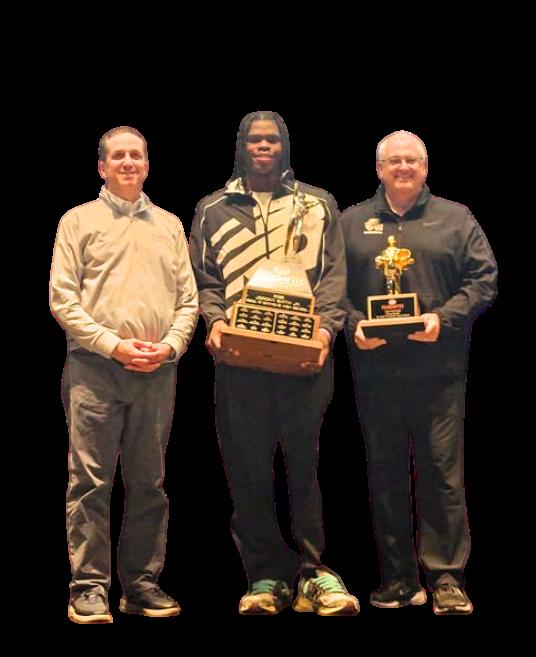
Congratulations to the 2026 Jersey Mike’s Naismith Boys’ High School Player and Coach of the Year:
Jordan Smith Jr. ‘26 and Coach Glenn Farello were both awarded the 2026 Jersey Mike’s Naismith Boys’ High School Player and Coach of the Year Award. This is the first time both awards have been given to a player and coach from a Catholic school. The Player of the Year award has been presented to exceptional basketball players since 1987; meanwhile, the newer Coach of the Year award was introduced in 2008. In his speech, Coach Farello expressed deep appreciation for the hard work and support of his fellow coaches, the PVI faculty, and the VI Man. He also expressed heartfelt thanks to his wife, who is always there for him. He ended his speech with the inspiring words, “Stay hungry and humble,” exemplifying how it is important to combine striving for excellence with a sense of modesty to be able to achieve true success.
Jordan Smith Jr., a University of Arkansas commit, is the 40th winner of this prestigious award. In his speech, he expressed his gratitude toward the PVI community for their support and talked about how he was glad he chose to spend his four years of high school at PVI.
He said that all his coaches “built him up, brick by brick” to where he is today, and called out all his teammates by name to show his appreciation towards them. His mom and sister were instrumental in his journey, being a support system for him.
He even invited his sister Jade up onto the stage, sharing that she had always been there to cheer him on and was his support system. He talked about how he is sad to see his time at PVI come to an end, and how he truly loves everyone in the community. He will be greatly missed here at PVI. Replica trophies of both awards were presented to Mrs. Swenson to be displayed at the school, and they will serve as a reminder of the talented, supportive, and hardworking people in our PVI community that were able to make this happen.
Jordan Smith Jr. '26
THE BOOK BEHIND THE COVER
by: Charlie Huly '29
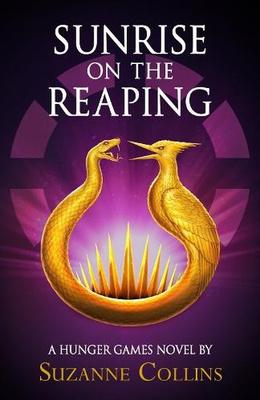
A Review of Suzanne Collins’
Sunrise on the Reaping
The Hunger Games is easily one of the most well-known book series in young adult fiction. It has also continued to remain culturally significant, earning new readers with each generation.
I was one of these readers, and went through a period of obsession that rendered me unable to read anything else until I finished the series. This, of course, was reignited when I got my hands on the first of the prequel novels, The Ballad of Songbirds and Snakes, and once again last year when I read the second prequel novel, Sunrise on the Reaping.
Sunrise on the Reaping follows Haymitch Abernathy, a character familiar to fans of the original The Hunger Games trilogy as the hardened tribute mentor from District Twelve. About twenty-four years before the original books take place, he is selected to take part in the fiftieth annual Hunger Games, the yearly fight-to-the-death competition that impoverished young people of the dystopian nation of Panem are forced to take part in. As Haymitch experiences the games, from the moment he is reaped to when he is crowned victor, he becomes aware of exactly how much control the autocratic Capitol has, experiencing severe loss after even the smallest acts of resistance.
Haymitch is one of the most complicated characters in The Hunger Games. He is emotionally scarred, having leaned on vices to cope with the painful memories of his time in the games. At the same time, he is strong-willed and true to his morals, eventually helping in the effort to overthrow the authoritarian government that rules Panem. Sunrise on the Reaping does exactly what any prequel that centers a certain character should do; it explains and gives justification for who Haymitch ends up becoming. It shows us his loved ones and the life he has at the beginning; it also shows how both of these things are tragically taken from him by the end, making him into the man we meet in the first book of the original trilogy.
I would recommend Sunrise on the Reaping to any reader keen on gaining a deeper appreciation for The Hunger Games. For anyone who is not yet familiar with the series as a whole, I highly encourage you to give it a try. If you find that you enjoyed the trilogy, then I suggest you check out Sunrise on the Reaping as well as The Ballad of Songbirds and Snakes. No matter which camp you fall into, the book is definitely worth your time and is sure to be a thought-provoking read.
MY RATING OF:
Sunrise on the Reaping
4/5 stars
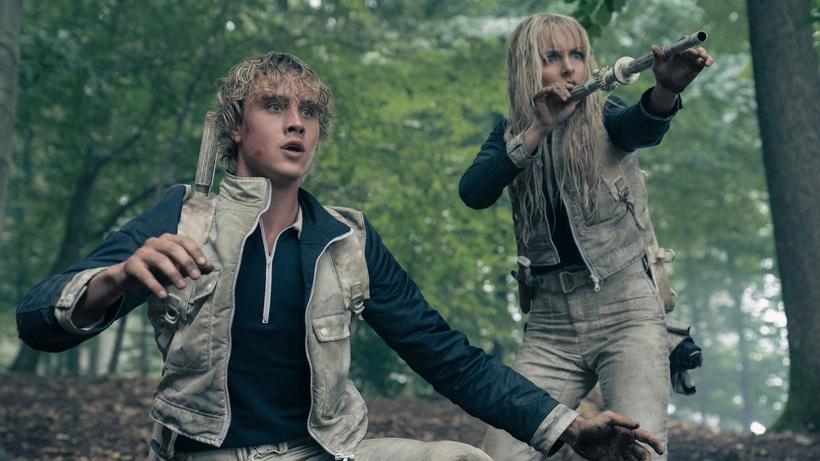
A still from the upcoming film adaptation of SunriseontheReaping, featuring Joseph Zada as Haymitch Abernathy and McKenna Grace as Maysilee Donner.
The Best Fishing Lures and When to Use Them
by: Ryan McInerney '29
Fishing is a hobby enjoyed by many around the world. The quiet atmosphere and the excitement of catching a fish are part of what makes it so appealing to anglers. One of the most important tools used in fishing is the lure. Lures come in many shapes and sizes and are designed to attract fish by mimicking natural prey and triggering a feeding response. Because different lures work better for different species and conditions, it is important to know which type to use for the fish you are trying to catch.
Spinners
Spinners are metallic fishing lures that use vibrating blades to create flashes and vibrations that imitate a small, distressed fish struggling to swim. These lures are typically most effective in the spring when trout, bass, and pike are active and feeding aggressively. They also perform well in murky water, where reduced visibility makes their flash and movement especially effective at attracting fish.
Jigs
Jigs are a year-round bait consisting of a weighted hook paired with soft plastic or hair, designed to mimic prey such as crawfish. They are commonly used to attract bass, walleye, and other species in both freshwater and saltwater environments. Jigs are most effective when worked along the bottom by dragging or hopping them, and they tend to perform best in clear, deep water.
Spoons
Spoons are metallic, wobbling fishing lures used to catch a variety of fish species. They are designed to mimic wounded baitfish, creating an erratic flash and movement in the water. Depending on their weight, spoons can be used in both shallow and deep water and are effective when cast, retrieved, or jigged to attract attention.
Topwater Lures
Topwater lures are designed to float on the surface of the water and create surface commotion to attract fish. They are often shaped or painted to resemble frogs or injured baitfish and are typically most effective at dawn and dusk when fish are actively feeding near the surface. These lures usually come equipped with treble hooks, although some anglers prefer replacing them with single hooks for easier removal and, in certain situations, improved performance.
Crankbait/plugs
Crankbaits, or plugs, are typically made of wood or plastic and are designed to mimic wounded baitfish. They feature a “lip,” which helps create their diving action and produces a side-to-side wobble that imitates natural swimming movement. These lures are commonly used to catch bass, pike, and tuna. As noted earlier, the lip is responsible for the lure’s swimming action. Crankbaits are most effective at dawn and dusk and tend to perform best in calm, deeper waters.
It happened in the blink of an eye. Before I knew it, the summer season was about to be drastically different from what I had imagined. I remember the day so vividly — the smell of the warm spring air and the scorch of the sultry sun. The 20-minute chairlift ride to the summit was filled with our trail plans for the rest of the day. Most importantly, I remember hitting the ground and the pain of a broken collarbone.
It was May 25, my dad and I were going on a little day trip to Bryce Bike & Ski Park in West Virginia. Beginning in May, we head out to the park almost every weekend that I’m free from my commitments to other sports. It was our first trip to the park that season, and it was our fifth run down the mountain. We were feeling invincible, and our bikes were dialed, but that’s a dangerous combination because we were overconfident and starting to get tired. I felt like a pro dropping into Red Bull Rampage. I was on my favorite trail and I was getting to my favorite part, the wooden jumps. I came into the section way too fast. I ended up overshooting the first jump.
The landing caused my right foot to come off the pedal. At the time, I thought I could still land the drop with one foot on a pedal, so I didn’t slow down one bit.
The Break That Broke My Summer of '25
by: Dan Sowala '29
I was mistaken. I went off the drop sideways, landing completely off my center of gravity and straight onto my left shoulder and head. I have fallen many times before, and although my tuck and roll couldn’t have been any better, it just wasn't enough. I was just going too fast and hit the ground too hard. After I rolled a couple times, I got up thinking nothing of it. I grabbed my bike off the trail. As I moved my left arm, I felt a little pop. I immediately knew what I had done. I immediately knew what that meant for my summer. I wasn’t able to participate in any summer sports, my summer pass was now worthless, and my summer was pretty much over.
I now realize I need to be more mindful and ride with caution, or summer-braking events like this will happen again. The more experienced I get and the faster I ride, the more it just multiplies the risk. I learned the importance of thinking before I do something, and if I would have slammed on my brakes, this wouldn’t have been the topic of this feature article. It’s crazy that such a split-second decision can change the course of a whole summer.
My Unforgettable All-Star Catch of Confidence
by: Roman Munoz '29
As the ball flew towards me, I knew I had to make the catch to save the game. It was the district championship, and my team was competing for an opportunity to go to the state tournament. I was on the Loudoun South All-Star team, and I had been playing with them all summer. The pressure was very high, and I was very nervous.
Late in the game with the bases loaded and two outs, the ball came hurtling towards me. Once I saw the ball, I focused in and made the catch. It was a low-scoring game, and both teams were tired. Going into the last inning, I was still a little nervous because I knew I couldn’t afford to make a mistake this late in the game. One after the other, runners kept getting on base, and the bases were soon loaded. As the hot sun hit my skin, I noticed the ball flying right towards me again. I knew I had to make the gamesaving play. Like a rocket, the baseball was moving so fast right at me. The ball was hit short. I didn’t know if I was going to be able to reach it, but I dove for it. I made the catch.
Having confidence with no hesitation is sometimes the way to win. This moment will always be a part of my life’s story not only because it was a time in my youth when I led my team to win a district championship, but also because it affirmed for me that with confidence in my back pocket, I can catch a seemingly impossible memory in my mitt.
The Illusion of Self
Are You the Same Person You Were Yesterday?
by:EmmaFuller '29
There is a quiet assumption most people live with, rarely questioning it: that they are a single, continuous person. That despite change, growth, and time, there is some stable “self” that remains constant underneath it all. But philosophy and, increasingly, psychology suggest something far less comforting.
The idea of a fixed identity begins to unravel when examined closely. Memories fade or distort. Beliefs shift. Personality traits evolve in response to experience. Even the way we interpret our own past changes over time. If the “self” is built from memory, perception, and belief, and all of those are unstable, then what exactly is staying the same?
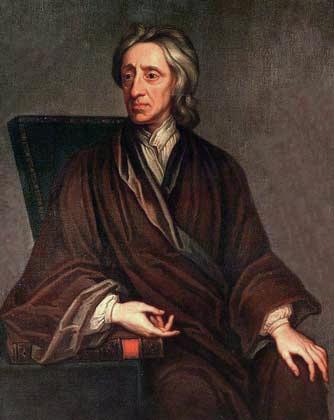
The philosopher John Locke argued that personal identity is rooted in memory, that you are the same person as long as you can remember being that person. At first, this seems intuitive. Memory creates continuity. It connects your present to your past.
But this idea breaks down under pressure.
Memories are not perfect recordings; they are reconstructions. They can be altered, forgotten, or even entirely fabricated without us realizing it. If your sense of self depends on something so unreliable, then your identity is built on unstable ground.
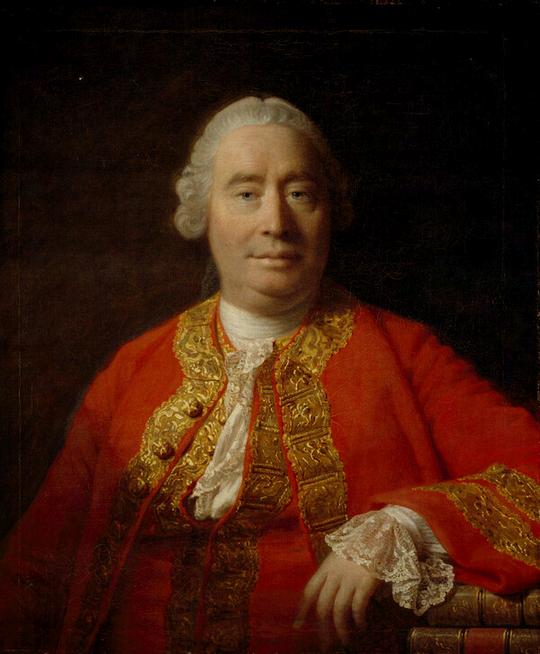
Other philosophers took this even further. David Hume rejected the idea of a fixed self entirely, describing identity as nothing more than a collection of changing perceptions, a “bundle” rather than a core. According to this view, there is no single “you” behind your thoughts and experiences. There is only the ongoing process of thinking and experiencing.
This perspective is deeply unsettling because it removes the idea of permanence. If there is no stable self, then who is making your decisions? Who is responsible for your actions? And perhaps more disturbingly, what does it mean to “become” a better person if there is no consistent person to improve?
Modern psychology echoes some of these concerns. Studies on memory, personality, and cognition suggest that identity is far more fluid than we tend to believe. People can undergo significant personality changes over time, sometimes gradually, sometimes suddenly. Traumatic experiences, in particular, can reshape how individuals see themselves and the world, to the point where their past identity feels almost like someone else entirely.
There is also the phenomenon of self-narrative, the internal story we tell about who we are. This narrative gives our lives a sense of coherence, but it is selective. We highlight certain memories, ignore others, and reinterpret events to fit the story we want to believe. In this sense, identity is not discovered; it is constructed.
And like any construction, it can be revised.
There is a certain existential weight to this realization. If the self is not fixed, then it is also not guaranteed. The person you are now is not permanent. Your values, your beliefs, even your sense of right and wrong could shift under the right circumstances. This raises an uncomfortable question: how much of who you are is a matter of choice, and how much is shaped by forces outside your control?
Yet there is another way to interpret this instability, not as a loss, but as a kind of freedom.
If identity is not fixed, then change is always possible. You are not bound to past versions of yourself, even if they feel defined. Growth does not require uncovering some hidden “true self,” but actively shaping who you become over time.
Still, that freedom comes with uncertainty. There is no final version of you waiting to be reached, no point at which identity becomes complete and unchanging. There is only the ongoing process of becoming imperfect and inconsistent, never entirely finished.
And perhaps that is the most difficult idea to accept: that the self is not something you are, but something you are continuously creating, whether you realize it or not.
John Locke
David Hume
Two Delightful, Sugar-Free Drinks to Make This Summer
There is nothing better than a fun drink to kick off a new season! That sentiment has never been more true as we transition from a cold and rainy spring into a vibrant and sunny summer. As flowers continue blossoming, a new fun drink can help you romanticize this renewal of life and sun.
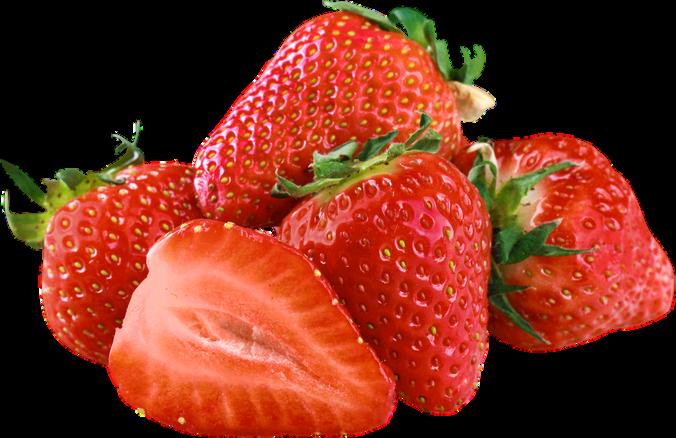
Iced Strawberry Matcha Latte
This drink blends earthy matcha green tea with the freshness of strawberries for a rejuvenating drink that’s both gorgeous and refreshing! It’s the perfect balance of sweet, earthy, fresh, and creamy–all in one glass.
Instructions:
Make the strawberry cold foam by adding all 4 ingredients together in a small blender. Blend for 5-10 seconds until thickened but still pourable. Make sure not to over-blend so the mixture doesn’t become too grainy.
Add matcha and hot water to a separate bowl and whisk until foamy with a whisk or an electric frother.
Add the ½ cup stemmed strawberries and honey/syrup to a tall glass. Muddle or blend until the strawberries are broken down into a puree.
Fill ¾ of the glass with ice and top with milk. Top that with matcha and mix.
Add the cold foam and serve.
Ingredients:
1 tsp matcha powder
3-4 tbsp hot water
½ cup strawberries, stemmed
2 tsp honey or maple syrup
Ice
1 cup milk of choice
Strawberry Cold Foam
3 strawberries ¼ cup heavy
whipping cream
1-2 tsp maple syrup
1 tsp vanilla extract
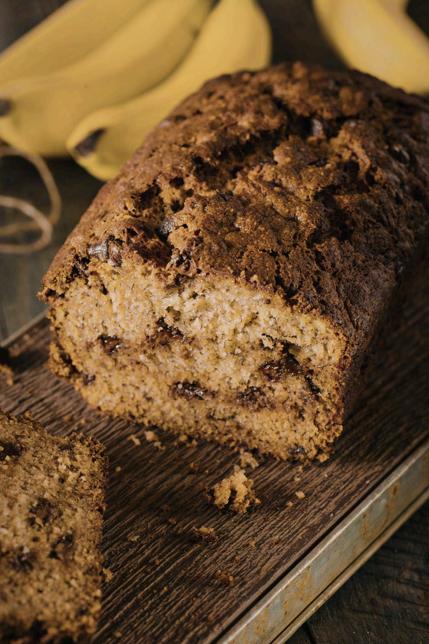
Banana Bread “Cold Brew”
I’m sure you’ve heard of the viral Starbucks banana bread iced matcha, but have you ever had a banana bread iced coffee? Surprisingly, this delightful treat doesn’t even have a banana in it! The nostalgic banana syrup recipe makes enough to share this treat with friends, family, and more!
Ingredients:
8oz chilled coffee
Banana Bread Syrup:
7oz water
200g honey
1 tsp cinnamon
1 tsp butter extract
1 tsp vanilla extract
½ cup chopped walnuts
Banana Bread Cold Foam:
3 tbsp heavy whipping cream
1 tbsp banana milk
1 tbsp banana bread syrup
Instructions:
To make the banana bread syrup, add the water, honey, cinnamon, butter extract, vanilla extract, and walnuts to a small saucepan. Stir over medium heat until the mixture comes to a simmer. Let the syrup simmer for 5 minutes before removing from the heat. After the syrup has fully cooled, strain the mixture through a fine mesh sieve to remove the walnuts.
To make the cold foam, froth the heavy whipping cream, banana milk, and syrup until thick and foamy. Mix 1 tbsp banana bread syrup with the coffee. Pour over ice, then top with cold foam and serve. Note: If you prefer a creamier drink, add 1-2 tbsp of banana milk to the coffee before topping with cold foam.
Cash Colbert '26
What are some things you wish someone would have told you when you were a freshman at PVI?
“I wish I would have built better relationships with the teachers and staff around me.”
Cash’s words of wisdom for PVI underclassmen:
“Be willing to be vulnerable with your faith and your problems. The people around you can help you grow the more they know you.”
A Legacy on the PVI Mat: Cash Colbert
by: Sian Chen '27
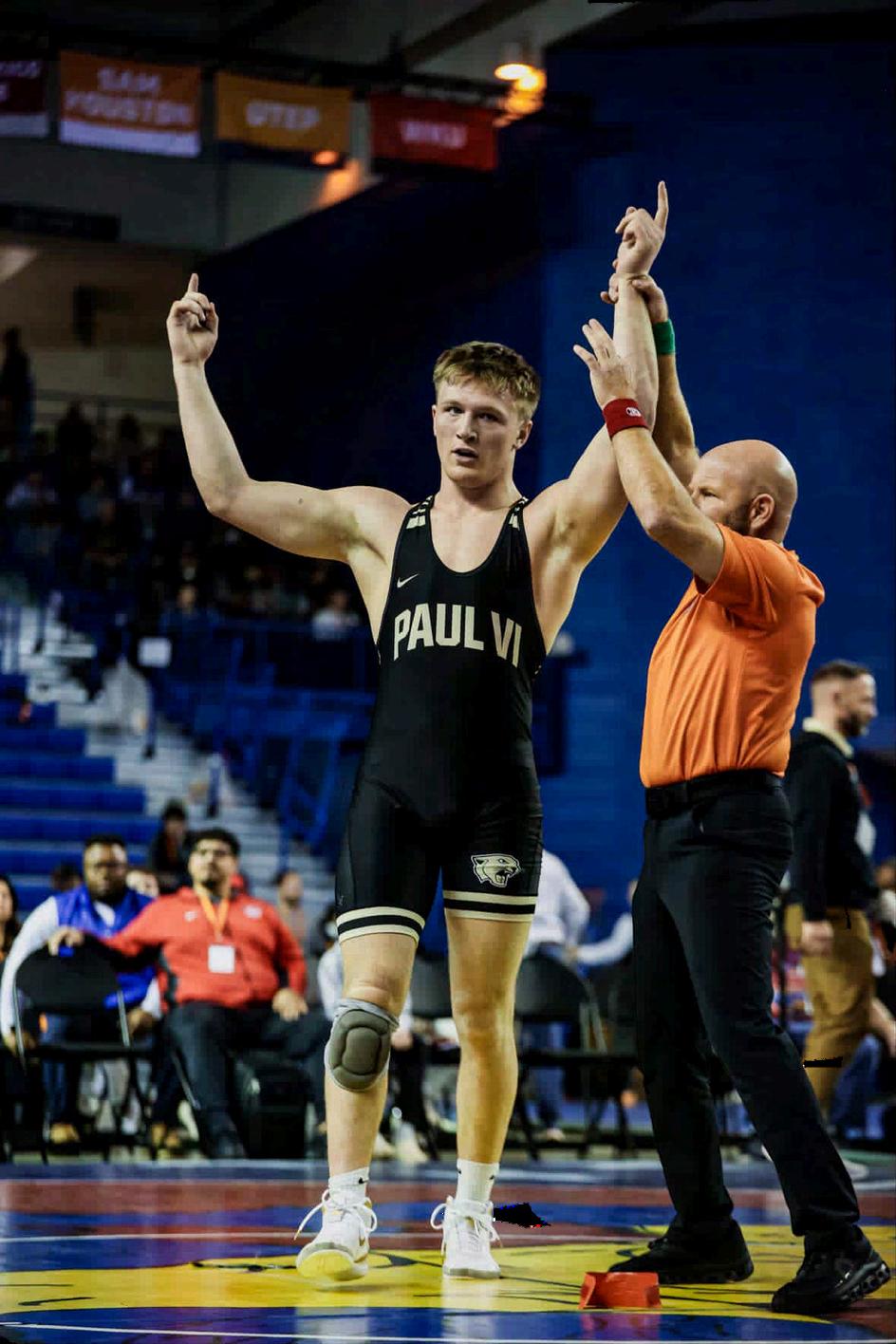
Long before the wins, the records, and the national recognition, Cash Colbert was a young boy staring at a trophy in his family’s glass cabinet — imagining what it would take to earn one of his own. That trophy belonged to his father, a runner-up in the National Prep Wrestling Championships, and it inspired six-year-old Cash to step onto the mat. “At first, it was just for fun, but over time, I realized it was what I really wanted,” he shared. What began as curiosity quickly became purpose, as a clear goal took hold: to win a national championship — and even surpass his father.
For Cash, family has always been both his foundation and his fuel. His father was his first coach, and his siblings his first training partners. Backyard matches sharpened his skills and strengthened the bond that continued to drive him throughout his career. “Those moments taught me how to face challenges—not just in wrestling, but in life,” he said.
• Virginia Independent Wrestler of the Year
• Virginia 4-Year Most Wins Record (234)
• 150+ Pins
• 4x State Champion
• 4x WCAC Champion
• 2x Beast of the East Champion (the first wrestler in PVI history to win the prestigious Beast of the East championship)
• 2x Prep Finalist, 3x All-American
• Washington Post All-Met Wrestler of the Year
• Career Record 234-17
• 3x Team Captain
• Ranked #10 nationally
• 2025-2026 Season: Recognized as the state's top 215-lber, setting school records for victories and dominating at the Benedictine Quad
• Celebrated as one of the top high school wrestlers in Virginia and the DMV region
• Committed to Army West Point
Choosing St. Paul VI Catholic High School wasn’t by chance — it was about finding the right culture. “This place not only taught me how to be a better wrestler, but also a better person,” he said. From his freshman year, he was drawn to the team’s close-knit dynamic and shared commitment to improvement. By his senior year, Cash had grown into a team captain, leading with the same intensity and discipline that defined his career. He pushed himself by training across weight classes, taking on faster, lighter wrestlers and stronger, heavier opponents — an approach that sharpened both his speed and strength while elevating those around him. Known for his “heavy hands” strategy, Cash wore opponents down by controlling the head and neck. “By the third period, they’re usually too tired to keep up,” he said. But for him, success was just as mental as it was physical. “Your biggest opponent is yourself. Whether you can give it your all and try new moves depends on your mindset.”
His advice to younger wrestlers reflected that perspective: “Enjoy the sport. Work hard, but don’t get caught up in winning or losing — the journey matters more.” That mindset fueled one of the most accomplished careers in program history. A four-time state and WCAC champion, Cash amassed over 230 career wins and more than 150 pins, earning recognition as Virginia Independent Wrestler of the Year and Washington Post All-Met Wrestler of the Year. Nationally ranked and a two-time Beast of the East champion — the first in PVI history — he redefined what excellence on the mat could look like.
His accomplishments also opened the door to competing at the next level. Cash committed to the United States Military Academy at West Point, where he will join a Division I wrestling program in the highly competitive EIWA conference — one that regularly sends athletes to the NCAA Championships. The opportunity carries added meaning, as his brother, Brady, is already part of the program, continuing a family legacy that first began years earlier in their own home.
After years of relentless work, Cash Colbert leaves behind more than a headturning, jaw-dropping record during his high school years at PVI — he leaves a legacy defined by discipline, resilience, and leadership. His impact on the program established a benchmark for future wrestlers, one that will continue to inspire those who follow.
HEAVEN-TUNED: Uplifting, Inspiring,
and
Cool Christian Music... with a Theme
by: Hans Sirotniak '24
The Start of a New Season
We want our lives to be filled with goodness: with joy, hope, love, and peace.
However, there are times when situations lead our lives to seem far from the goodness that we seek.
And we can get caught in a state of confusion or doubt that seems to take its place as something ordinary.
When that is the case, we have to spend time to reset and redirect our lives to be able to go back to where we need to be.
We listen to the voice of God, giving us guidance. Jesus’ teachings are giving us a certain lifestyle to follow in how we live, in our motivations, and in what we seek.
If God asks us to move, we move. If God asks us to speak, we speak.
If God asks us to be kind, we be kind. And if God asks us not to be afraid, we are not afraid.
Because, we believe, God’s plan is best. We follow this way to choose goodness. God has good plans for us. We choose good.
If our situations are leading us out of the good, let’s take the time to reset, to restart, and to be brave in allowing us to redirect ourselves to a life reflecting God’s goodness.
*These songs are copyrighted by their respective owners. I attempt to mention songs in accordance with fair use guidelines for commentary and educational purposes. I am not affiliated with any of the artists mentioned.*
Ryan Stevenson asks God to give him a fresh start, to replace brokenness with grace.
“Day One”
“Fresh Start”
Matthew West lets a new day of life starting over begin, one day at a time to see God’s mercy.
Matt Maher reminds us of the power of love, holding us together so that we can start living with more hope in our lives.
“Old Dreams”
“Hold Us Together”
Chris Renzema lets old dreams fall apart, accepting life in the present and not having to let his wants get the best of him.
Joshua Micah & Owl City remind us to open up to God’s presence to grow in trust and accept true freedom.
“All
Things New”
“Let The Light In”
Big Daddy Weave surrenders to God and lets God take responsibility for making things new, to fix a broken heart with perfect love.
Leanna Crawford reminds us that there is a way to see God in every moment, offering a new perspective for all times, to see life in a new way.
“Ordinary (Gospel Version)”
“How Can You Not”
Chuckey Ellis takes us out of the “ordinary” and puts God’s extraordinary in the spotlight, reminding us of a new way of life focused on serving God.
SEU Worship celebrates God’s love changing our lives and allowing us to start anew, turning our vision to God’s glory.
“What A God”
by:
Eleanor Slowe '29
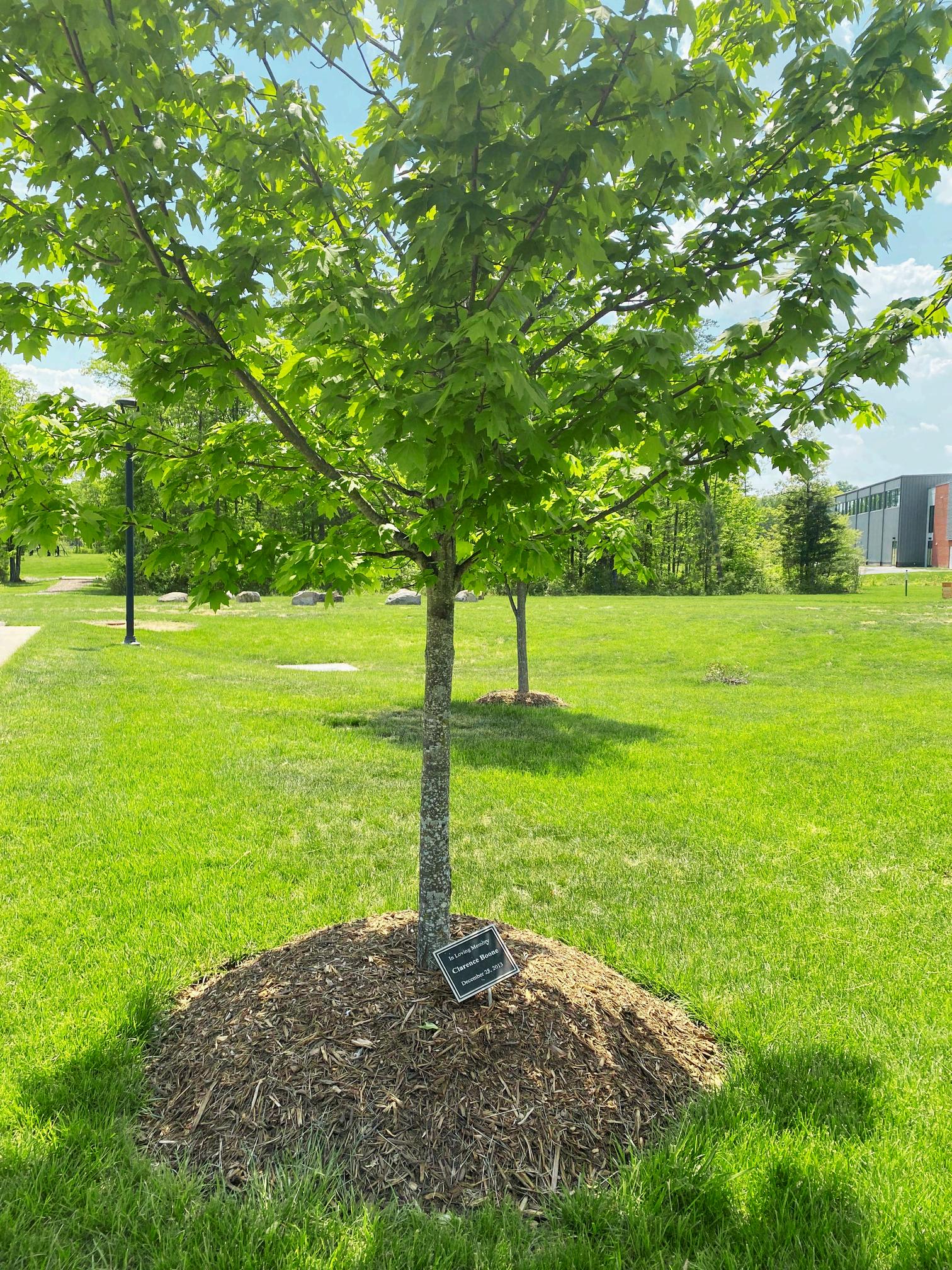
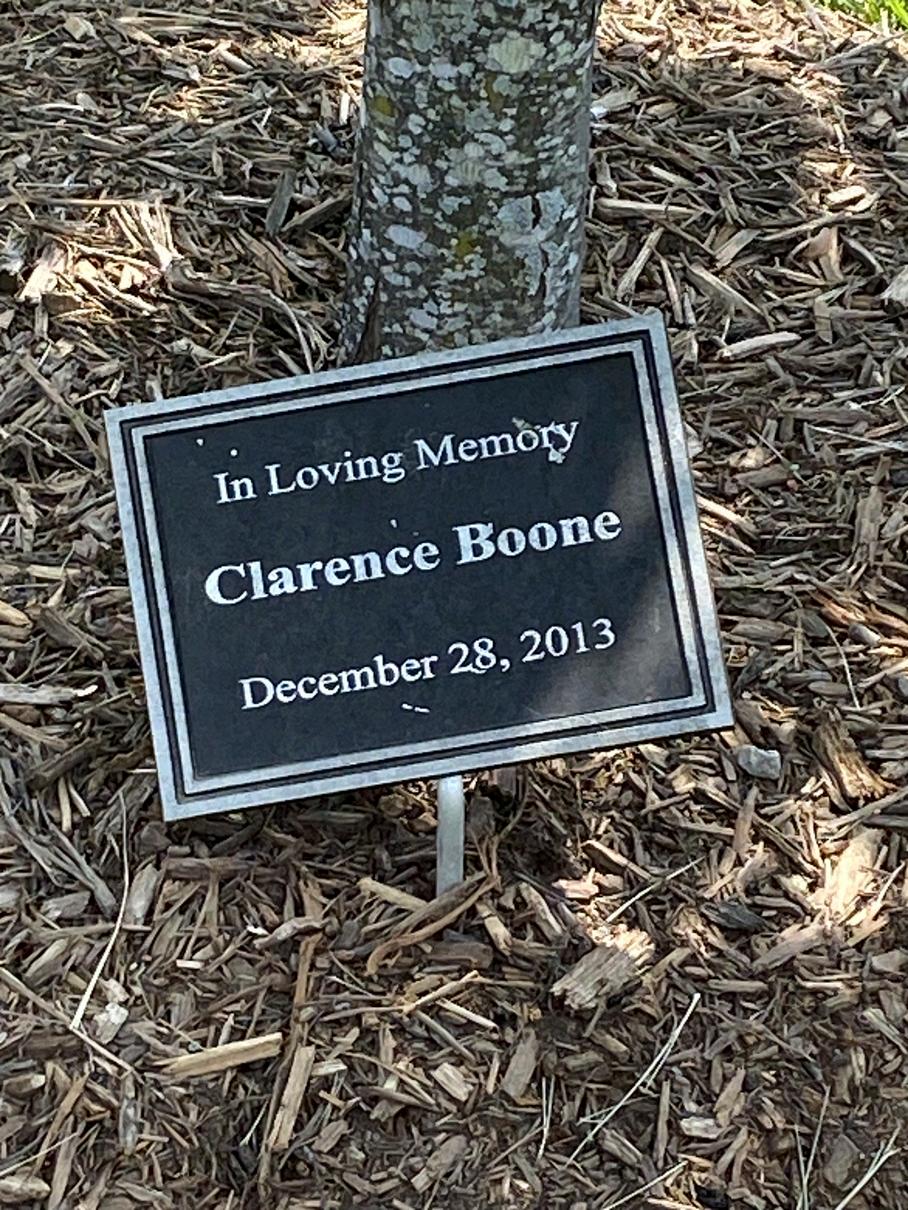
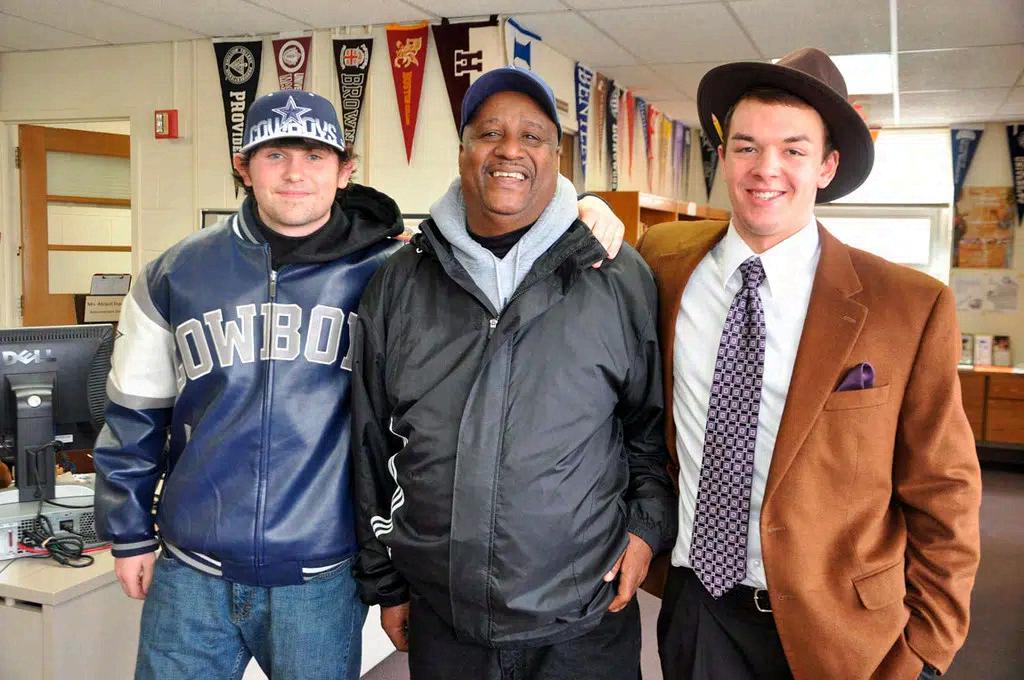
As we come and go from the building, many of us pass the memorial tree near the faculty parking lot, rarely pausing to look closer. This maple tree was planted in remembrance of Mr. Clarence Boone, the beloved building manager and custodian for PVI for nearly twenty years, before his sudden passing in 2013 at the age of 65.
Born in Gumberry, North Carolina, in 1948, Mr. Boone had three brothers and three sisters. He later moved to the D.C. area and worked as an emergency call dispatcher for first responders. During his time at PVI, he had an immense impact on the school community, especially the students. Through small acts of kindness and steady support, he built lasting relationships with those around him. He consistently helped facilitate school activities and events by setting up equipment, fixing lockers, assisting with Mass preparations, cooking for rallies, and selling football tickets. Many remember him for his personality and the Dallas Cowboys hat he often wore.
Though Mr. Boone had a strong physical impact on the school, perhaps even more important was the lasting impression he left on the students he served. Many describe him as a role model, a mentor, and a friend. Mr. Boone truly loved the PVI community and modeled Christ through his service.
Today, the legacy of Mr. Clarence Boone can be seen not only in his memorial tree, but also in the Clarence Boone Award at PVI. The award is presented to those who, like Mr. Boone, are dedicated to serving others in every way.
Let us all pray for Mr. Clarence Boone and keep him in our minds as we strive to continue serving our PVI community, as Mr. Boone did. Each time we notice the tree, we continue his legacy.
THOUGHTS: The Joyful Disturbance of Wonder
by: Dr. Jonathan Wanner
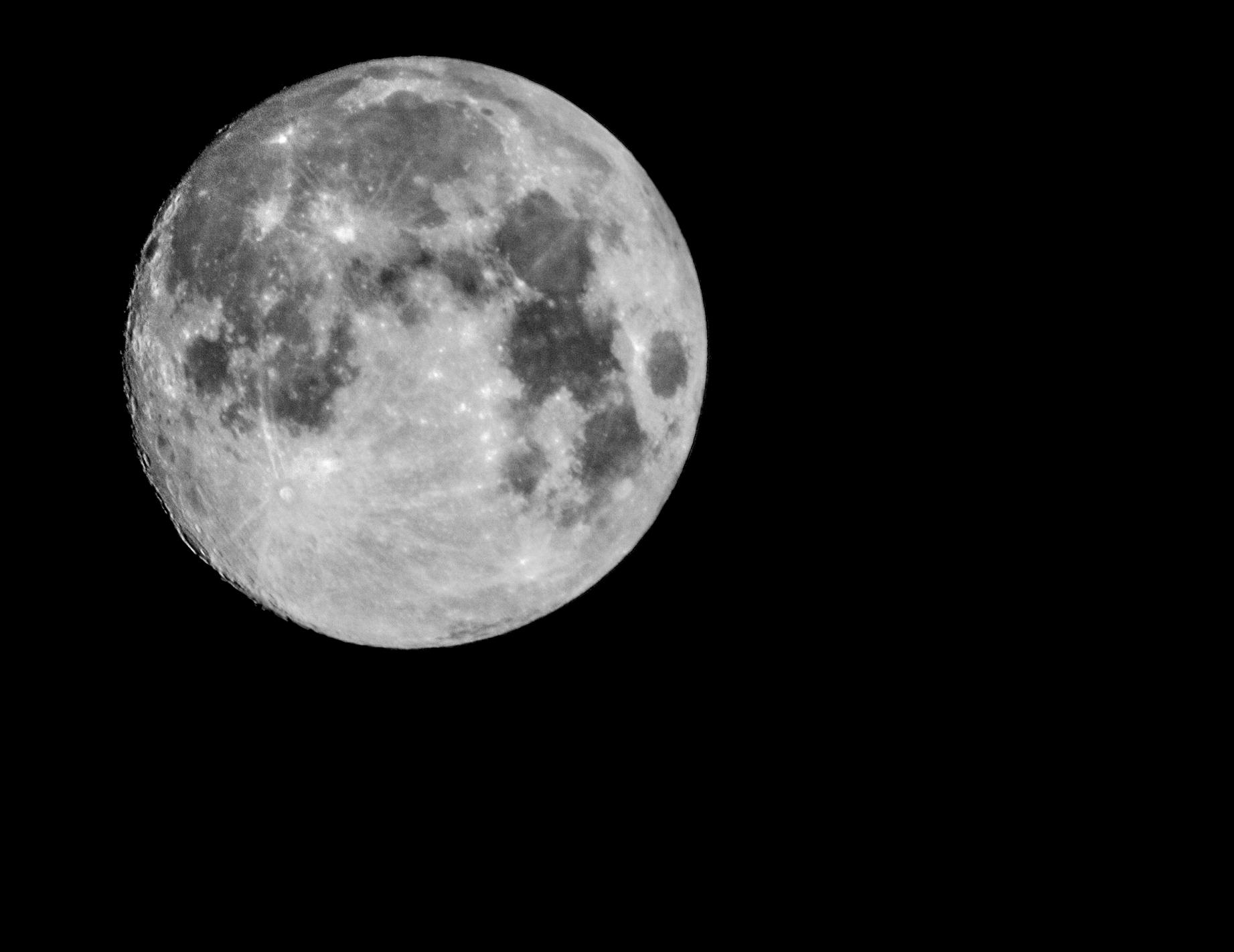
It is one of the greatest modern tragedies: to see the moon as a moon. In full wax, a moon is a porcelain doorknob (Ted Kooser), the door of night (Edna St. Vincent Millay) a celestial period (Charles Write), the aspirin of the sky (Chris Forhan), a basket of jasmine (Nazik al-Mala’ika). What it is not is “a natural satellite…a secondary planet which orbits around the earth” (Oxford English Dictionary). I am, of course, being sardonic There will, indeed, always be a place for the cut-and-dry practicality of an Oxford Dictionary definition: we gain a certain scientific wisdom in knowing what all moons share and how they differ from all other celestial bodies. What is less apparent, however, is the value of poetic definitions — metaphors — that define a thing in terms of what it is not. For in poetry a pig is not just a pig: it is a wart with legs.
Whether elevating the mundane or familiarizing the fantastic, the surprise poetry elicits in a short span not only entertains us: it has the capacity to awaken a profound sense of wonder. I am not talking about mere sentimentality, but an awful and sublime encounter with the real. Wonder, in its classical sense, is “the passion that arises from consciousness of ignorance.” Emerging from an encounter with the extraordinary, the strange, the baffling, it seizes the soul and disturbs it with the realization of “I do not know.” As Josef Pieper says, “Wonder acts upon a man like a shock, he is ‘moved’ and ‘shaken’ and in the dislocation that succeeds all that he had taken for granted as being natural or self-evident loses its compact solidity and obviousness; he is literally dislocated and no longer knows where he is.” It is Gollum’ s agitation of not knowing the answer to Bilbo’ s riddle; it is the perplexity of reading that time-old paradox “love is a pleasing pain” for the first time
What makes this disturbance unexpected is the fact that it is rooted in the ordinary: whatever is in Bilbo’ s pocket, it is surely something simple and common to a traveler; whatever the paradox means, pleasure and pain are part of everyone’ s daily toil. This is where the wisdom of life lies veiled: in common places. In the words of Pieper, “the deeper aspects of reality are apprehended in the ordinary … it is in the things we come across in the experience of everyday life that the unusual emerges, and we no longer take them for granted.” If you want to wonder, squint hardest at what is right in front of your eyes
The anxiety that necessarily accompanies this consciousness of ignorance may seem like a great nuisance, but its value is not in its discomfort. The joy of wonder’ s “joyful disturbance” is that it spurs the ignorant to seek an understanding of the causes of things. In the words of Aristotle, “Wisdom is knowledge about certain principles and causes.” On this account, the quintessential question of philosophy is that of every three-year-old child: “why?” When we find out Bilbo has nothing in his pocket, we may not be curious at the answer of the riddle anymore, but a sense of wonder may yet arise: why did the author choose for the character to win the Ring of Power by way of nothingness? When we consider the evil character of the Ring, and how the hole at its center is defined by non-being, we begin to think about the possibility of a subtle yet deeper implication of how evil is a privation of the good. What before was a playful riddle suddenly becomes an escape route to deeper and more abiding insights
I say escape route because that is exactly what wisdom is: a way out of the cave of ignorance, away from the fear of not knowing. For Aristotle, to philosophize is literally “to flee ignorance.” For this reason, as Dennis Quinn observes, wonder is classically categorized as a species of fear. Fear, after all, is the passion which has the practical use of shifting the body’s gears into “fight or flight.” It arises from a perception of some evil that may harm us. Ignorance may not wear the flesh of a lion, tiger, or bear, but it is beast enough to put the mind in peril Of course, not all kinds of ignorance are deadly. If you don’t know that the letter “G” is the answer to the riddle “What always ends everything?”, you are probably not going to lose sleep over it. Trivial confrontations with ignorance may feel like irritating tics that cling to the back of the mind, but there is little at stake. Discover the answer, and you might have a few moments of delight — The letter G?! Ha, clever — but if you never find the answer, fuggedaboutit! This is the very meaning of curiosity: to ask how something is so without a wonder of higher causes.
“THE GREATEST MENACE TO OUR CAPACITY FOR CONTEMPLATION IS THE INCESSANT FABRICATION OF TAWDRY EMPTY STIMULI WHICH KILL THE RECEPTIVITY OF THE SOUL.”
- JOSEF PIEPER
We cannot begin to fulfill the Delphic command — “know thyself” — by attending to curiosities and practical concerns alone. We must develop a wonder-struck awareness of how much we do not know ourselves. To begin the escape, we must — as parents, as teachers, as friends, as strangers — peer with the eyes of a poet. We need to learn how to see again by, first, loving creation and playing with it in doublevisioned ways Take a metaphor on a date until it kisses you. Are you an adult? Be a child Are you a child? Still be a child Look close at boiling water, you will see Argus’ one hundred eyes; look close at a pot of coffee, you will see liquid gold stained brown; look close at a light bulb, you will see a seed of the sun. Do not stop there, not before you have asked, “Why?” Be a magician. Pull the rabbit out of the hat, wonder out of curiosity: there are more ways to do it than there are people who can wonder.
For the 2026–2027 school year, Crossroads will be published once a month, beginning in September. If you would like to submit articles, artwork, and/or photographs for any issue throughout the year, or if you would like to contribute a regular monthly column, all submissions MUST BE RECEIVED BY by the 10th of each month.
The Writer’s Block Club
k77wekpk
In a Google Document, submit work to: athom27@pvipanther.net (Crossroads Managing Editor) AND vfassinger@paulvi.net (Club Moderator and Publication Advisor)
2026-2027 DEADLINES
for submission of all feature articles, columns, artwork, and photographs:
August 10 (Monday)
Join The Writer’s Block Club Google Classroom for announcements and more info!
k77wekpk
September 10 (Thursday)
October 10 (Saturday)
November 10 (Tuesday)
December 10 (Thursday)
January 10 (Sunday)
February 10 (Wednesday)
March 10 (Wednesday)
April 10 (Saturday)
May 10 (Monday)
The Writer’s Block Club is perpetually seeking: photographers WRITERS page designers meticulous proofreaders
Join now and continue writing and taking photos over the summer for our first issue next year!
The Return of Catholic Culture: The Catholic Factor in the Founding of the United States
by: Roy Wulf '26
This July 4th marks 250 years since America’s founding fathers declared independence from Great Britain. However, in 1776, the American Revolution was far from over. At the end of that year, Washington’s army was driven out of New York in a series of terrible defeats. In September 1777, following the retreat of the Continental Army after the Battle of Brandywine, the de facto American capital of Philadelphia was captured by the British, and the Continental Congress was forced to flee.
The Americans had declared independence, but how did America actually win its independence as a new nation? A widespread myth in popular culture is that some plucky backcountry farmers simply pulled together and managed to vanquish the British, one of the most powerful military forces in the world. The Americans, it is said, cleverly used tactics they had learned from Native Americans, such as hiding behind trees and rocks, while harassing British soldiers who foolishly fought out in the open in tight mass formations. However, the historical record tells us that most battles fought between the British and Continental forces in the Revolutionary War actually ended in triumph for the well-disciplined redcoats. Americans simply lacked the supplies, equipment, and discipline to stand up to the British regulars, and time and again, they were badly beaten.
For much of the war, General Washington and the other American commanders did an excellent job of somehow managing to keep the American forces from being utterly annihilated. Yet, if it had not been for very timely and urgently needed help from certain European nations friendly to America (or, it is perhaps more accurate to say, hostile to Great Britain), it is difficult to imagine how the United States might have realistically prevailed. Indeed, it was critical support from the Catholic nations of Europe, the Kingdoms of France and Spain, that made American independence possible.
Many Americans of the Colonial era would have regarded Catholics from Europe as unlikely allies. Historian Susan Juster writes in A Common Grave: Being Catholic in English America that “Catholicism was a fugitive faith in English America.” As British territory, the American colonies were almost uniformly Protestant, and Catholics formed a small, oppressed minority. Catholics were mistrusted. One of the reasons colonists were furious with the British Parliament was the Quebec Act of 1774, which had restored French law in Quebec and extended toleration of Catholics in Britain's Canadian colonies. This was done even as Parliament was levying ever-increasing taxes on the colonies, who saw themselves as superior to the French Catholic population in Quebec.
Yet, when war broke out between Britain and her colonies, it would be the Catholic nation of France that would be the first to lend its support to the beleaguered American insurgents. Many may not be aware of the central place of Catholicism in the Kingdom of France at that time.
Royal Banner of Spain, with the cross of Burgundy
Royal Banner of France, bearing three Fleur-de-Lys
Catholic France was known as the “Oldest Daughter of the Church,” for she was the first major nation to emerge as Catholic after the fall of Rome. Clovis I, the first king of the Franks, converted to Catholicism in AD 496. Over the centuries, the kings of France were defenders of the Faith and received the title “His Most Christian Majesty.” King Louis IX even became a saint for his virtuous leadership of his kingdom. By the 18th century, Catholicism pervaded every part of French life. The fleur-de-lys, known to Americans today as the emblem of the New Orleans Saints, was on the coat of arms of the house of Bourbon and on the Royal Flag of France. It is a lily flower, a heraldic representation of the purity of the Virgin Mary and Saint Joseph and a reminder of the Trinity. Regimental Flags, blessed with the regiment at a special mass, were dominated by a huge white cross. The drill book for the French army even contained specific instructions for what soldiers were to do when the Blessed Sacrament passed by their battalion. This was truly a Catholic army.
Spain, too, was unabashedly Catholic. According to Romans 15:28, it is possible that the Apostle Paul visited the Roman region Hispania on his journeys of Christian evangelization. Though these Christian lands were conquered for a time by the Islamic Moors from North Africa, Spain dramatically reinstated Catholicism in the Reconquista. Spain played a central role in evangelizing Catholicism to the world, bringing the Faith to the Americas and the Philippines. Englishmen were still angry at these zealous Spanish Catholics for sending the Armada to attempt to re-Catholicize England.
Long before the partnership of America and France was officially cemented in early 1778, and Spain with France in 1779, both Catholic nations had been quietly supplying the Americans with financial aid and military supplies. The Comte de Vergennes, the French minister of foreign affairs, worked with Pierre-Augustin de Beaumarchais (who, in addition to being a covert arms dealer, was a playwright who authored the famous Figaro plays) and the Spanish government to secretly funnel support to America through a front enterprise masquerading as a Spanish merchant business under the name “Roderigue Hortalez & Co.”
In December 1776, King Carlos III of Spain decided to begin supplying the American insurgents with additional covert aid, though no formal agreement had yet been reached. The Spanish governor of Luisiana, Don Bernardo de Gálvez, was instructed to send the Americans supplies up the Mississippi River from New Orleans. This was crucial because the American coast was closed by a virtually unbreakable British blockade, and only the Mississippi River was open. In 1778, the American Continental Congress congratulated Gálvez for his assistance.
Don Bernardo de Galvez, Spanish governor of Luisiana and victor of the Siege of Pensacola
The historic Basilica of Saint Mary in Alexandria, VA was founded in 1795 and became the first Catholic parish in Virginia after the Revolution.
Before the alliances were formalized, several French officers, including the Baron de Kalb and, of course, the famous Marquis de Lafayette, offered their services to fight in the American army. Lafayette was one of the richest noblemen in France, but, after hearing of the Americans’ fight for liberty and independence, he set the comforts of his aristocratic life aside. Against the orders of his king, he purchased a ship and sailed to America. Over the course of the war, Lafayette would serve as a brave officer on Washington’s staff, eventually becoming an indispensable link between the Continental Congress and the court of King Louis XVI, working to secure more aid for the American cause.
At long last, in February 1778, the Treaty of Alliance was signed between “His Most Christian Majesty Louis the Sixteenth, King of France and Navarre, and the 13 united states of America.” From that point forward, France began fueling the American war effort openly, sending weapons, equipment, and uniforms to the Continental Army. On the new coats sent from France, tailors sewed hearts prominently on the coat tails to communicate their love of America clearly.
Then, thanks to the constant advocacy of the Marquis de Lafayette at the court of Versailles, the French Expédition Particulière was dispatched to America under the command of the Comte de Rochambeau. When Rochambeau and his troops first arrived in New England, the Catholic newcomers were initially viewed with much mistrust by the descendants of the original Puritans. However, after several dances were held with the charming French officers as guests, the French army was welcomed.
Having lost New York early in the war, Washington was fixated with winning it back. However, Rochambeau saw that the capture of General Cornwallis’ force in Virginia ought to be the priority. The French fleet under Admiral de Grasse was in the West Indies, and he had sent word that his ships would be wintering up north. This meant that the French navy would be potentially available to collaborate with the allied troops on the land. Wisely, Washington listened to the advice of his French subordinate and abandoned his plans to try to recapture New York.
Spanish victories in the South had also facilitated the allied move on Yorktown. After his king officially declared war on England, Governor Gálvez, serving as the general of a diverse army of Spaniards, Natives, and African Americans, led his forces against English strongholds in the South, capturing Baton Rouge, Natchez, and Mobile. Then, in 1781, Gálvez attacked into West Florida, laying siege to Pensacola. On May 8, after the Spanish had managed to blow up the British powder magazine, the British raised the white flag of surrender. The capture of Pensacola meant that the British would no longer be able to launch attacks into the American South or West, which demoralized the British. West Florida was the first non-rebellious colony to fall out of British control. Incidentally, the city of Galveston, Texas, is named after the brave Spanish General Bernardo de Gálvez.
François Joseph Paul de Grasse, admiral of the French navy at the decisive Battle of the Virginia Capes
Marie-Joseph Paul Yves Roch Gilbert du Motier, Marquis de Lafayette as a Major General in the Continental Army
The Spanish had also made the victory at Yorktown possible in another crucial way. Rochambeau wrote to de Grasse, asking him to raise money in the West Indies sugar islands to pay the soldiers at Yorktown. In response, the Spanish of Cuba raised 500,000 silver pesos in 24 hours thanks to donations of jewelry by the wealthy ladies of Havana. Because of Spanish generosity, Washington’s troops could be paid during the Yorktown campaign.
Washington dispatched Lafayette to hold Cornwallis in Virginia. Tired of chasing the young French general without success, Cornwallis made the fateful decision to dig in at Yorktown while awaiting reinforcements to arrive by sea. However, those British troops would never arrive. For over a century, the British Royal Navy had been considered superior to the French Fleets, yet the French ships were narrowly able to defeat the British in the furious Battle of the Virginia Capes in September 1781. Not only was Cornwallis not reinforced, but this also meant that his troops would be unable to escape from Yorktown by sea. Meanwhile, Washington and Rochambeau had together moved their forces swiftly southward in the heat of summer with the aim of cornering Cornwallis in Yorktown by land. Thus began the Siege of Yorktown.
The French were renowned as masters of the siege. As the allies’ lines of trenches moved ever nearer to the walls of Yorktown, it became apparent that British Redoubts 9 and 10 were the linchpins of the town’s defense. On the moonless night of October 14, 1781, 400 French troops, along with their German allies, attacked Redoubt 9 (the harder nut to crack), and Alexander Hamilton led 400 of Lafayette’s American troops to capture Redoubt 10. The French suffered heavy casualties in violent handto-hand combat, but both redoubts were eventually secured. On October 19, Cornwallis officially surrendered to Washington. The Battle of Yorktown had been won by a truly international effort. Because of sustained European support for the American cause, Britain ultimately decided to abandon their attempt to subdue the colonies. Peace was signed in Paris in 1783.
Incidentally, Catholics from other European nations also served with distinction alongside the Americans. In 1776, the Polish military architect Thaddeus Kościuszko became a colonel and later brigadier general in the Continental Army, designing and supervising the construction of many excellent fortifications, including West Point. His statue, along with those of Lafayette, Rochambeau, and von Steuben, stands today in Lafayette Square in Washington, D.C. There is another statue in our nation’s capital of the Polish cavalry officer, Brigadier General Casimir Pulaski, who served with conspicuous bravery, once saving the life of George Washington. He was fatally wounded at the 1779 Siege of Savannah, another joint French and American operation. Today, Pulaski is known as “the Father of the American Cavalry.”
Thaddeus Kościuszko, Polish brigadier general in the Continental Army, and designer of West Point
Brigadier General Casimir Pulaski, "Father of the American Cavalry”
Besides helping to achieve American victory in the Revolutionary War, the assistance provided by European Catholics in our nation’s fight for freedom led to greater toleration and acceptance of Catholicism in the young United States. On July 4, 1779, members of the Continental Congress attended the first public religious commemoration of the Declaration of Independence at Old Saint Mary’s, Philadelphia’s Catholic Cathedral. Later, on November 4, 1781, after the victory at Yorktown, French and American officers, including Washington (who was Protestant), attended a Solemn Mass of Thanksgiving in Saint Mary’s. Then, in the 1780s, Catholicism would at long last become fully legal in the Commonwealth of Virginia. Thomas Jefferson drafted the Virginia Statute for Religious Freedom, which passed the Virginia General Assembly on January 16, 1786. This act made Catholicism legal to practice openly through the official disestablishment in Virginia of the Church of England. On St. Patrick’s Day of 1788, Colonel John Fitzgerald, former aide-de-camp of General Washington, asked his one-time commanding officer for financial assistance toward the construction of the Basilica of Saint Mary in Alexandria, Virginia. Washington contributed handsomely, allowing this first Catholic parish in Virginia to be completed in 1795. A century after the Glorious Revolution of 1688 had unleashed a wave of anti-Catholic sentiment in the colonies, these events certainly marked an amazing and hopeful reversal of fortunes for Catholicism in the United States.
With 2026 marking the 250th Anniversary of the signing of the Declaration of Independence, St. Paul VI Catholic High School is proud to contribute to our nation’s celebration by fielding its own fife & drum corps inspired by the European alliance with America in the Revolutionary War. Our musical unit wears the uniforms and carries the flag of the French Régiment Bourbonnais, one of the regiments that participated in the Battle of Yorktown. The PVI Corps looks forward to participating in the celebrations that will take place in Yorktown in October 2031, which will be the semiquincentennial of that pivotal Franco-American victory that centrally contributed to America’s independence.
If you are interested in joining the PVI Fife & Drum Corps as a fifer, drummer, bugler, or flag bearer, or if you want to learn what a Turkish Crescent is, contact Roy Wulf, Mrs. Janice Siegfried,orspeaktoacorpsmembertofindoutmore.
Pictured are 1770s uniform plates showing the uniform and flags of the Régiment Bourbonnais, one of Rochambeau’s regiments at Yorktown. The white and black color scheme of the uniform makes it ideally suited for a fife and drum corps at PVI.
The PVI Fife & Drum Corps
Check out The Writer’s Block Club’s full feature piece on PVI artists in our club’s For Art’s Sake literary zine
Keira Malli '27
Lukas Broadwell '27
Le ’26
Katie
Student Contributors
Anna Britt '27 Writer
New to PVI this school year, Anna is a well-rounded, bright, and multi-talented individual. She enjoys reading the plays of William Shakespeare and the works of philosophers. At PVI, physics and history are among her favorite subjects. With the ability to play multiple instruments wonderfully, Anna has already contributed to PVI’s music program! Outside of school, she enjoys spending time with her pets, practicing gymnastics, and rowing — a sport to which she brings discipline and dedication.
Leah Cashman '29
Writer
Leah loves to spend time reading, baking, playing her violin, and studying.
Sian Chen '27
Lead Features Writer
Sian transferred to PVI last year and immediately became a significant contributing writer and photographer to Crossroads and For Art’s Sake. She’s clever, confident, and cool. When she’s not studying for her classes or writing fiction and short stories, she’s exploring the sights and sounds of Northern Virginia and D.C. — capturing goosebump-inflicting photos along the way. In addition to The Writer’s Block Club, Sian is also a member of REACH, PVI-TV, and FBLA. If there’s someone you’d like her to interview for a feature article, send her an email!
Tommy Collens '29 Tech Topics Writer
Tommy is an inquisitive, bright, and creative student who enjoys hiking, camping, and developing his bushcraft skills. He also has a passion for 3D design and printing, often taking things apart to understand how they work — and putting them back together again. His favorite classes are in engineering, math, history, and science. At PVI, he is a member of the Robotics Club and competes in track and cross-country.
Charlie Huly '29
Book Review Writer
Charlie is the writer of “The Book Behind the Cover,” where she reviews books across all genres. As the content of her column would suggest, she is an avid reader. However, she also enjoys playing music on her piano and guitar, crocheting, and binge-watching her favorite TV shows. Professionally, she would like to pursue a career either as an author or a musician. A fun fact about her is that she has lived in over six countries.
Taylor Kosin '28
Artist
When she’s not drawing in her sketchbook, you can find Taylor creating awesome full-color images and cartoons on classroom walls! She’s thrilled to create art for Crossroads this year!
Addyson Lang '29
Photographer
A freshman, Addyson enjoys sports, baking, technology, and photography.
Ava Martin '28
Writer
Ava is a friendly, easygoing, and thoughtful individual who likes cinnamon rolls, listening to music, and spending time with her friends. She was the manager for Girls JV Basketball this past season, and is now one of the managers for JV Softball! Her favorite classes are chemistry and history.
Madie Mays '29
Writer
Madie has two cats and two dogs and loves them all equally the same. In her free time, she likes to play sports, travel, bake, and hang out with her friends. Her favorite classes are math and PE.
Iyla Sharifahmadian '28
Writer
Iyla is an impressive and insightful teenager — an “old soul” with a love for music, pop culture, and all things history. When she’s not at school, you can find her at a concert, doodling in her room, or writing reflective pieces for her column.
Hans Sirotniak '24
Christian Music Columnist
Hans is a sophomore at the College of William & Mary. During the school year, he is involved in education and teacher training at Williamsburg-James City County Public Schools. He is also passionate about training in taekwondo martial arts and volunteering for religious education. Hans served as the 2023-2024 Senior Editor, Communications Specialist, and Writer with Crossroads.
Mykola Shostakovskyi '28
Originally from Kiev, Mykola is a true multi-talented adventurer. A chess champion and skilled guitarist, he also excels in sports like boxing and taekwondo, and has a passion for languages. When he’s not exploring the outdoors — fishing, camping, or practicing with his bow and arrow — he’s honing survival skills, building shelters, or collecting crystals and rocks. If you want to see the world through the eyes of someone with experiences beyond your imagination, take the time to get to know Mykola.
Grace Ortube '28
Photographer
Grace loves taking walks with her dog, Bella, drawing, and doing various arts and crafts projects.
Cameron Mangal '29
Writer and Graphic Designer
Freshman Cameron’s favorite pastime is hanging out with his friends and family. He loves to play sports — especially tennis! His favorite classes are English, math, and world history (when they don’t have homework). Oh! And he also likes to write.
Kate Santiagu '29
Writer and Graphic Designer
Kate loves traveling to new places and hanging out with her friends. She enjoys reading books and watching her favorite shows on TV.
Kameron Smith '28
Electives Column Writer
Kameron likes Rubik’s Cubes and all things puzzlerelated. He decided to write a column on electives at PVI because there are so many unique ones from which to choose!
Emma Fuller '28
Writer
A world traveler, SCUBA diver, and avid reader, Emma is a sophomore who somehow manages to do it all. When she's not running laps with cross-country or track, you can find her in the sound booth for theatre, advocating as a Black & Gold Ambassador, or curled up with a good book. She's also a proud member of the Pink & White Club and The Writer’s Block Club because, apparently, sleep is overrated.
Antonio Tamariz '28 Photographer
Antonio loves watching horror movies, and his favorites are The Conjuring, Smile, Final Destination, and Insidious
Eve Robinson '29
Artist
Eve is a cool, authentic, and artistic individual. A straight-A student, when Eve’s not doodling creative characters and images in the margins of her notes, she’s daydreaming about her annual summer ventures to Texas, where she enjoys daily fishing excursions with her friends and studying marine biology at Sea Camp on Texas A&M’s campus!
Janna Joseph '29
Writer
Janna is a rising 10th grader at PVI. In her free time, she likes baking desserts such as banana bread and cake. When she is not in the kitchen, she enjoys playing volleyball. Janna also loves art and enjoys learning about it.
Tyler Sperow '28
Special Events Coordinator and Graphic Designer
Tyler, a sophomore, has been a member of The Writer’s Block Club since his freshman year and enjoys spending time working on Crossroads. His organizational skills, combined with his creative ideas, make him the perfect person to manage the club’s special events, including the Valentine’s Extravaganza and the Rummy Card Tournament. When he isn’t working on an issue, he can often be found rehearsing for a school or community play or musical. He loves listening to music and relentlessly tries — without success — to beat Ms. Fassinger at Rummy.
Charlotte Streeter '28
Writer
Charlie enjoys singing — whether simply for herself, her friends, her family, or at our school Masses! Her gifts of singing and piano playing make her feel great inside and bring hope and light into her life. Whenever she’s feeling down, she uses her music as an outlet to channel her emotions through her compositions. In addition to music, she loves knitting, wood carving, hiking, camping, and nature!
Sylvia Schafer '28
Writer and Graphic Designer
Sylvia is a friendly, easygoing sophomore who enjoys blending her love of creativity and science with writing, design, and engineering projects. In both academic and personal pursuits, she strives to bring structure and imagination together in meaningful ways.
Javion Zdimal '28
Writer and Graphic Designer
There’s something about Javion. Maybe it’s his unique name, or the fact that he serves as an altar server and is a member of the Noblis Christi club to “strengthen my walk with Christ.” Maybe it’s his dedication as an athlete — a member of PVI’s wrestling team — or the fact that he genuinely enjoys spending time with his younger brother, a freshman at PVI. Perhaps it’s the calm, confident, and kind personality he exudes, making him so pleasant and welcoming to talk to. Whatever it is, The Writer’s Block Club is grateful to have him as a member.
Ryan McInerney '29
Writer and Graphic Designer
Ryan has been a fantastic addition to our school community. Since joining us, he has distinguished himself as a respectful, diligent young man who is deeply committed to his academic growth. He had an impressive fall season, successfully balancing his participation in track with a smooth transition into the rigors of high school life. Ryan enjoys casting a line in Virginia’s many fishing spots with his dad and learning how things work. As a member of both the Fishing Club and the Robotics Club, he balances hands-on skill with curiosity and problem-solving. Thoughtful and dedicated, The Writer’s Block Club is delighted he has taken the initiative to join us!
Katie Le '26
Artist
Throughout her four years at PVI, Katie was able to expand and elevate our school’s arts community in her role as president of the Art Honor Society. She also embraced a wide range of additional leadership and service roles as a Big Sister, Black & Gold Ambassador, and member of both the Spanish Honor Society and the National Honor Society! Beyond her activities, Katie most valued the relationships she built along the way, taking every opportunity to get to know those around her and form meaningful connections. She will always cherish the memories, laughter, and friendships that grew out of these experiences, and is grateful to have been part of such a spirited and memorable graduating class.
Brigid Culipher '29
Writer
A dedicated member of The Writer’s Block Club and a regular contributor to Crossroads, Brigid enjoys spending weekends hiking with her family and expressing her creativity through a variety of art forms, especially sketching and sculpting. She has participated in several sports, with Track & Field remaining her favorite. One of the quotes she lives by is, “Keep your face toward the sun — and the shadows will fall behind you.” This message has become especially meaningful to her during her time at PVI, a period marked by growth, change, and new experiences. She looks forward with excitement to continuing her journey at the school.
Roman Munoz '29
Writer
Roman spends his free time playing baseball, cooking, and traveling. His favorite subjects are history and math.
Avery Thom '27
Managing Editor, Multi-Hat Wearer, and The Great Outdoors Feature
Writer
She is a junior and has been in The Writer's Block Club since her sophomore year. She has enjoyed designing different articles and writing some of her own in Crossroads and For Art's Sake. She loves to garden, make art, and spend time with her family in her free time. She looks forward to writing more articles about the natural elements of PVI's campus!
Morgan Watts '29
Writer
She enjoys playing sports such as softball and field hockey. She loves reading and writing both creative and nonfiction works. Some of her favorite classes are history and English, but she mostly enjoys being at home with her family. She has a dog named Luna, and three brothers who all attend Catholic schools. She loves spending time with her friends and looks forward to making more friends at PVI.
Roy Wulf '26
Writer
If you don’t know Roy by now, don’t let another minute go by without introducing yourself to our “man about PVI.” From being an altar server, a member of the choir, and an actor in our school plays (and even a movie!), to playing countless instruments, Roy truly embodies the spirit of an inspiring PVI student.
Ms. Fassinger
Club Moderator, Writer Wrangler, Proofreader, Brainstormer, and Editorial Designer
Get it in writing.
Join The Writer’s Block Club: Contribute your nonfiction pieces to Crossroads; contribute your fiction, nonfiction, plays, artwork, photographs, and poetry to For Art’s Sake (PVI’s annual art & literary zine) Attend our weekly meetings next school year in the dining commons during Panther Time!