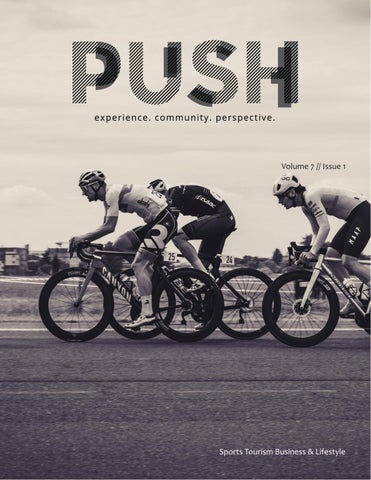
Volume 7 // Issue 1
Sports Tourism Business & Lifestyle
1
2
FIELD NOTES There are certain times of the year when the sports world seems to move in perfect rhythm; July and August are one of them. Recently, I attended the Sports ETA Chief Executives Summit and the Florida Sports Foundation Annual Summit. These diverse gatherings showcased how our industry evolves through shared ideas, challenging assumptions, and building stronger destinations via sport. At the same time, millions of fans have been glued to televisions and mobile devices watching some of the world’s greatest competitions. The Tour de France continued to captivate audiences with incredible displays of endurance and strategy. The FIFA World Cup reminded us of sport’s unmatched ability to unite countries and cultures. Baseball is in full swing, while the WNBA and professional golf continue to deliver unforgettable moments. I’ve said it before, and I’ll say it again. July and August are the best months of the year for watching sports. For those of us in sports tourism, we do more than watch these events. We study them. We pay attention to how cities welcome visitors, how volunteers shape the athlete experience, how sponsors engage fans, and how every successful event provides lessons we can confidently apply in our own communities. That commitment to continuous improvement is one of the things I appreciate most about this industry. There is always another idea to borrow, another partnership to build, and another opportunity to create lasting economic and community impact. I’ve also just returned from Ohio, where PUSH Magazine was proud to sponsor the Team Ohio Sports Summit, August 3-4 at Sawmill Creek Resort in Huron. These gatherings foster a sense of community by bringing together destinations, rights holders, and industry partners to exchange ideas and strengthen sports tourism. What a week it was! As we have entered the second half of 2026, I remain encouraged by the momentum across our industry. New facilities are opening, emerging sports continue to grow, and technology is changing how we market, measure, and manage events. Most importantly, strong relationships remain the foundation of everything we accomplish. That is why conferences matter. That is why conversations matter. And that is why PUSH Magazine exists: to keep those ideas moving long after the closing keynote. Enjoy the games, enjoy the journey, and wherever the road takes you this summer, I hope to see you along the way.
x Matt Dunn
3
Contents Volume 7 // Issue 1
4
6
PUSH industry spotlight - Rico Tesio, Rico Solutions
14
PUSH conference review - 2026 Sports ETA CE Summit
20
PUSH health - Healthy Eating on the Road
26
PUSH partnerships - How Partnerships Make History
32
PUSH conference review - Florida Celebrates 35 Years of Growth & Collaboration at the 2026 Florida Sports Foundation Summit
36
PUSH travel - The Travel Cure: Why Time Away is One of Your Most Important Professional Investments
40
PUSH conference review - From Alignment to Action Inside the 2026 Team Ohio Sports Summit
44
Industry Confidential
Editor-in-Chief: Matthew Dunn * Design: Anytakers Sports * Sales: raconteurs LLC Contributing Writers: raconteurs staff writers, Auburn Opelica Tourism Volume 7 // Issue 1 * raconteurs.us * info@raconteurs.us * © 2026 raconteurs, LLC 1417 Sadler Rd. #349 Fernandina Beach FL 32034 904-303-0552
5
PUSH industy spotlight
Rico Tesio
Founder
On patience, purpose, and why the best-run sporting events are almost always the most sustainable ones
R
ico Tesio has spent his career convincing the sports tourism industry that sustainability and good operations are the same conversation. As the founder of Rico Solutions, he’s guided everything from community 5Ks to world-class championships toward cleaner, more efficient, more profitable event days. Within PUSH Magazine’s Volume 7 interview, Tesio talked candidly about the misconceptions that still dog the industry, the experiences that shaped him, and what really sets organizations apart.
6
7
Q1: Sustainability has become one of the biggest conversations in sports tourism. What first inspired you to dedicate your career to helping events and destinations become more responsible? I don’t think there was a single moment that changed everything. It developed over years of working behind the scenes at events and seeing how small operational decisions could have a huge impact. The more experience I gained, the more I realized that better planning, stronger partnerships, and smarter use of resources didn’t just reduce waste, they made events run better. Over time, that evolved into a genuine interest in helping organizations think differently about how they operate. To me, sustainability has never been about adding another initiative. It’s about being intentional with the decisions we make, creating better experiences for participants and spectators, and leaving every event a little stronger than we found it. Q2: Many organizations still think sustainability is simply about recycling. What’s the biggest misconception you encounter, and how do you change that narrative? Many people immediately think of recycling, but that’s just one piece of the puzzle. The bigger opportunity is to look at how an event is planned and operated from the very beginning. When you make thoughtful decisions about purchasing, logistics, vendors, volunteers, and guest experience, recycling becomes the result of a well-designed system rather than the goal itself. We help organizations focus on practical improvements that make events run more efficiently while creating value for everyone involved.
8
Q3: You’ve worked with sporting events ranging from community competitions to world-class championships. What separates organizations that truly embrace sustainability from those that simply check a box?
The organizations that truly embrace sustainability don’t see it as a separate initiative or a box to check— they see it as part of delivering a better event. It starts with leadership setting clear priorities, but it succeeds when every department is aligned around the same goals, from operations and vendors to sponsors and volunteers. What really sets these organizations apart is their commitment to continuous improvement. They measure results, learn from each event, and make informed decisions for the next one. They understand that sustainability isn’t about perfection; it’s about making smarter operational choices that improve efficiency, strengthen partnerships, enhance the guest experience, and create long-term value. In our experience, the best-run events are often the most sustainable.
Q4: As budgets tighten, many destinations worry that sustainability is an added expense. How do you demonstrate that responsible event management can improve operations, strengthen partnerships, and create long-term value?
Q6: Was there a particular event or experience that convinced you sustainability would become your life’s work? My time at the Monterey Bay Aquarium was the experience that truly shaped my perspective. I saw firsthand how education, collaboration, and small actions could inspire meaningful change on a much larger scale. It wasn’t just about protecting the environment; it was about helping people understand that their choices matter and that organizations can influence positive outcomes.
As budgets tighten, we encourage organizers to stop viewing sustainability as a line-item expense and start viewing it as an operational strategy. When it’s integrated into event planning from the beginning, it reduces waste, improves labor efficiency, creates cleaner venues, and enhances the guest experience. It also strengthens relationships with sponsors, venues, municipalities, That experience sparked a passion that has stayed and community partners who increasingly expect with me throughout my career. Today, I bring that measurable environmental and social outcomes. same mindset to the events industry, helping organizations create cleaner, more efficient events while The real value comes from measurement. When making a positive impact on the communities they you can quantify diversion rates, operational ef- serve. For me, sustainability has always been about ficiencies, volunteer engagement, or community creating lasting change, one event and one partnerimpact, you create a story that sponsors want to ship at a time. support, and stakeholders want to invest in. Responsible event management isn’t about spending more; it’s about operating smarter, delivering a better event, and building long-term value that extends well beyond event day. “The best-run events are
often the most sustainable.”
Q5: Looking ahead five years, what sustainability trends do you believe will become standard practice throughout the sports tourism industry?
- Rico Tesio, Founder, Rico Solutions
Five years from now, I believe sustainability will no longer be viewed as a specialty. It will simply be part of running a successful event. Measuring environmental and social impact will become as Q7: When you’re not helping organizations create common as tracking attendance or economic im- better events, what sport or outdoor activity helps pact, and organizers will expect vendors and part- you recharge? ners to contribute to those goals. When I need to recharge in the summertime, I watch We’ll also see greater collaboration across des- baseball. I’ve always appreciated the pace of the tinations, venues, sponsors, and service provid- game; it forces you to slow down, be present, and ers to improve event performance from planning appreciate the moments between the action. Basethrough post-event reporting. Ultimately, sus- ball is built on patience, preparation, and consistainability won’t be a separate program, it will tency rather than constant urgency, and I find that be recognized as a core element of good event refreshing. After spending so much time solving management and a competitive advantage for problems and making decisions, it’s the perfect redestinations looking to attract and retain events. minder that not everything has to move at full speed to be meaningful. 9
Q9: Imagine you could redesign one sporting event anywhere in the world with unlimited resources and complete creative freedom. Which event would it be, and what would make it the world’s most sustainable sporting event? I don’t know if I’d want to redesign an event at all. I’d rather spend time with an organization that’s already doing well and learning from the people behind it. There are a lot of events making real progress, and I think the best ideas come from listening, collaborating, and sharing what’s working. A great example is the Paris 2024 Olympic and Paralympic Games, which made sustainability a core part of planning by emphasizing existing venues, lower-carbon operations, and measurable environmental goals. I’d be less interested in changing what they did and more interested in understanding the decisions, partnerships, and operational discipline that made it possible on that global stage at that scale. That’s how our industry moves forward, not by believing one organization has all the answers, but by learning from those who are raising the bar and applying those lessons to the next event. Q8: If you weren’t leading Rico Solutions, what career do you think you would have pursued instead? I’m not sure exactly what path I would have taken, but I’m confident it would have been in sports. For decades, I’ve been drawn to the sports industry, not just the competition, but the role sports play in bringing communities together and creating a sense of place. I’ve always been fascinated by the impact events and teams can have on a city or region. I studied broadcasting in college and, for a long time, thought play-by-play radio might be my future. Looking back, I think it was less about the microphone and more about wanting to be part of an industry that inspires people and creates shared experiences. In many ways, that’s still what I get to do today, just from a different perspective. 10
Q10: If you could sit down with any leader, inside or outside of sports, to talk about sustainability, innovation, or leadership, who would it be, and what’s the first question you’d ask? I’d choose Walt Disney. What fascinates me most isn’t just what he built; it’s how he built it. He understood that great experiences don’t happen by accident. They come from creating a culture where every person, every detail, and every interaction contribute to a shared vision. Long before “customer experience” became a business strategy, Disney was proving that culture behind the scenes is what creates unforgettable moments for guests. The first question I’d ask him is, “How did you
build a culture where thousands of people believed they were responsible for creating the same exceptional guest experience?” That question resonates with me because it’s something I think about every day. In the event industry, guests may never notice the logistics, the waste operations, or the janitorial team—but they absolutely notice how an event feels. Creating that experience requires a culture where every team member understands their role, takes pride in their work, and believes they’re contributing to something bigger than themselves. I think Walt Disney mastered that better than almost anyone, and there are lessons from his leadership that still apply to every organization striving to deliver exceptional experiences today.
Q11: Every veteran has a few must-haves. What’s always packed in Rico’s event survival kit? People are usually surprised by how little I carry. I work in fast-paced environments, so I like to travel light. Most event days, you’ll find a radio on my hip, a phone in one pocket, and Burt’s Bees in the other. That’s about it. The one thing that’s always close by is water. Staying hydrated is essential when you’re spending long days at event sites. Everything else can wait until the event is over... and, honestly, most of the time it does. Ha! And, for good measure, I always keep a sense of humor with me, because you need it in this business.
Q12: Sustainability often requires creative problem-solving. What’s the funniest, strangest, or most unexpected challenge you’ve ever encountered at an event? That’s one of the things I love most about live events; there’s no such thing as a “normal” day. Every event brings something unexpected, whether it’s a last-minute change in the weather, a surprise VIP request, or a problem no one could have planned for. You quickly learn that adaptability is just as important as preparation.
11
The funny and unexpected moments are honestly too numerous to count. They’re part of what makes this industry so rewarding. Every event has a story, and those stories are usually created by the challenges you never saw coming. Q13: If sustainability were an Olympic sport, I’d take home the gold medal in ________. I’d probably take home the gold medal in “Connecting the Dots.” The best solutions rarely come from one person or one department. They happen when you bring together the right people, ask good questions, and help everyone see how their decisions affect the bigger picture. I’ve found that once people understand how their piece fits into the whole, good ideas turn into meaningful action.
Q14: What’s your go-to song while driving to an event to motivate yourself for the day? I’m not really a “one-song” person. I’m a Deadhead, so it’s more about the show than the track. If I had to choose one recording to put me in the right mindset before an event, it would be the Cornell ‘77 performance. There’s something about the energy, improvisation, and musicianship that gets me focused on the day ahead. In many ways, live events remind me of a Dead show. Every event has a plan, but no two are ever exactly alike. Success comes from having a talented team, trusting each other, adapting in the moment, and delivering a memorable experience.
Q15: If PUSH Magazine handed you a Times Square billboard for one day, what message would you share to inspire the sports tourism industry to think differently about sustainability?
Sustainability isn’t a choice. It’s our responsibility.
12
13
PUSH conference review
Sports ETA Chief Executive Summit 2026 Executive Leadership Takes Center Stage in Columbus Every industry has a gathering where meaningful conversations and forward-thinking ideas shape its future. For sports tourism, the 2026 Sports ETA Chief Executive Summit in Columbus, Ohio, fulfilled this role. Unlike the Annual Symposium, which welcomes professionals at all levels, the Chief Executive Summit is designed specifically for presidents, CEOs, executive directors, and senior decision-makers. The conference centers on strategic leadership, with discussions focused on organizational leadership, financial sustainability, workforce development, advocacy, and preparing for the industry’s future.
14
Held at the Hilton Columbus Downtown, this year’s Summit brought together executives from destination marketing organizations, sports commissions, rights holders, venues, and industry partners for two days of executive education and peer networking. The intimate setting encour-
aged candid idea exchange, discussion of shared challenges, and relationship-building that extends beyond the event. Leadership Conversations That Matter Chief executives often face challenges unique to their positions. They are responsible not only for attracting sporting events but also for managing boards of directors, navigating political landscapes, overseeing staff development, balancing budgets, communicating with elected officials, and preparing organizations for longterm success. The Summit created an environment where these conversations could take place openly. Attendees discussed topics such as succession planning, organizational culture, workforce recruitment, funding strategies, public-private partnerships, and new ways to measure success, all among peers facing similar opportunities and challenges. This executive-level collaboration distinguishes the Summit from other industry events.
A key strength of the Chief Executive Summit is its ability to facilitate discussions not typically possible at larger conferences. Columbus Delivers Once Again Columbus demonstrated its appeal as a host city for major sporting events at all levels. The Hilton Columbus Downtown provided a central location near restaurants, entertainment, and networking venues, enabling conversations to continue beyond scheduled sessions. The Welcome Mixer at Stories on High, the city’s tallest rooftop bar, set the tone for the event. Executives reconnected with colleagues and welcomed new industry leaders, all with panoramic views of the Columbus skyline. Networking remained a central theme throughout the Summit.
The Welcome Party at Lincoln Social Rooftop, hosted by the Greater Columbus Sports Commission, offered another opportunity for meaningful discussions in a relaxed setting. These informal conversations often lead to valuable collaborative ideas. For many attendees, networking opportunities are as important as the educational sessions. Education Focused on Executive Decision-Making The educational programming was tailored to the Summit’s executive audience. Sessions focused on strategic leadership and organizational management rather than event operations or marketing tactics. 15
Greater Columbus is recognized as a leading sports tourism destination, making it a fitting host for the Chief Executive Summit. Topics explored the evolving landscape of sports tourism, changing expectations from communities and stakeholders, financial stewardship, governance, innovation, and the growing influence of technology on destination management.
While students have joined previous Sports ETA initiatives, including them in an executive-level conference is a significant investment in the profession’s future. Students attended educational sessions, interacted with industry leaders, and participated in networking opportunities that many professionals value early in their careers. Executives also benefited from engaging with the next generation of industry talent.
Industry leaders shared lessons from both successes and setbacks, fostering an atmosphere that valued transparency over polished presentations.
With workforce development a growing challenge, connecting students with experienced leaders strengthens recruitment pipelines and highlights diverse career opportunities in sports tourism.
With growing competition in sports tourism, destinations recognize that attracting events requires more than quality facilities and strong bids. Long-term success relies on visionary leadership, sustainable funding, collaboration, and adaptability.
The initiative underscored that leadership involves developing future leaders, not just managing current organizations.
These themes echoed throughout the Summit. Artificial intelligence, workforce development, data analytics, destination branding, sponsorship trends, and organizational resilience remain central topics for executives. Importantly, discussions often focused on preparing organizations for emerging and unforeseen challenges.
For today’s CEOs, anticipating change is as important as responding to it. Investing in Tomorrow’s Leaders A notable addition to this year’s Summit was the introduction of Sports ETA’s Student Enrichment Program. The initiative welcomed university students to select conference sessions, offering firsthand exposure to sports events and the tourism industry. 16
Technology Continues to Enhance Experience Another key trend was the ongoing evolution of conference technology. Attendees used the official mobile application for real-time access to sessions, networking, directories, venue information, and schedule updates, replacing printed materials. The digital-first approach reflects broader changes occurring throughout the meetings and events industry. Technology improves attendee engagement, reduces printed materials, and offers greater flexibility as schedules change during live events. For executives hosting conferences at their own destinations, these improvements provide practical examples for local implementation. Creating a Safe and Inclusive Environment Sports ETA continued to emphasize professionalism and attendee well-being through its Conference Safety & Support Plan. While safety policies are now common across associations, their presence reinforces the impor-
tance of organizational culture. Executives are expected to lead by example, creating environments built on professionalism, respect, inclusion, and accountability. As conferences bring together professionals from across North America, clear expectations foster meaningful networking and ensure all attendees feel welcome and respected. Leadership begins with culture, and culture begins with expectations. The Value of Executive-Level Networking The greatest takeaway from this year’s Chief Executive Summit cannot be measured by keynote presentations or educational credits. It is the relationships. The sports tourism industry has always been remarkably collaborative despite its competitive nature. Destinations compete for events while also sharing ideas, benchmarking successes, and helping each other address common challenges. The Chief Executive Summit strengthens those relationships. Breakfast conversations often lead to future partnerships. Discussions at networking receptions can develop into collaborative initiatives. Ideas shared among peers often inspire organizational changes. In a relationship-driven industry, these interactions are highly valuable.
Executives recognize that today’s conversations can become tomorrow’s strategic partnerships.
Looking Ahead Sports tourism is evolving rapidly. Communities demand greater accountability, technology is reshaping operations, artificial intelligence is influencing marketing and engagement, economic uncertainty affects travel, and public funding discussions are increasingly complex. Meanwhile, sports participation is growing, competition among destinations is intensifying, and consumer expectations are evolving rapidly. Navigating this environment requires strong leadership. The Chief Executive Summit is designed to help develop these skills. The conference encourages executives to think strategically about the future direction of their organizations and the industry over the next five to ten years, rather than focusing only on current trends. This long-term perspective is increasingly essential. 17
Closing Reflections The 2026 Sports ETA Chief Executive Summit reinforced the importance of executive education in professional development for sports tourism. The conference balanced strategic learning, networking, leadership development, and relationship-building, creating an environment tailored for those guiding organizations in a dynamic marketplace. From the hospitality of Columbus and the Greater Columbus Sports Commission to thoughtful programming and the debut of the Student Enrichment Program, this year’s Summit demonstrated Sports ETA’s commitment to investing in both current and future leaders. Attendees left Columbus with more than conference notes and business cards. They returned with fresh ideas, renewed relationships, practical leadership insights, and a broader perspective on the future of sports tourism.
18
19
PUSH health
Healthy Eating on the Road Smart Choices for Sports Tourism Professionals
A DAY IN THE LIFE
6:00 AM Flight
Rental Car
Venue Tours
Lunch on the Run
Evening Reception
Client Dinner
Between flights, venue tours, and back-to-back meetings, eating well on the road isn’t about being perfect, it’s about knowing what to watch for. Here’s a field guide to eating smart, staying fueled, and steering clear of the risks that healthy-looking food can quietly carry. If you’ve spent any time in sports tourism, you already know the routine: a 6:00 a.m. flight, a rental car, venue tours, lunch squeezed between client meetings, an evening networking reception, and a client dinner before doing it all over again. For many in this field, travel is just part of the job. Whether you’re at a conference, checking out venues, meeting with partners, or running events, it can feel almost impossible to eat healthy. The good news is, healthy travel isn’t about being perfect. It’s about making smart choices along the way.
20
21
Most of us already know that a salad usually beats fries, and grilled fish usually beats fried chicken. Foods like fruits, vegetables, smoothies, lean proteins, and seafood can give you the energy to power through long days on the road. But according to the Centers for Disease Control and Prevention (CDC), foods considered healthy can also pose food safety risks — especially when traveling internationally, or even to unfamiliar destinations within the United States.
Healthy travel isn't about being perfect. It's about making smart choices along the way.
to fruit you can peel yourself, since pre-cut fruit from street vendors or buffet lines may have been washed with untreated water.
Salads: Fresh Fuel, With a Catch ● USE CAUTION Salads are the default “healthy lunch” for business travelers — filling, and full of veggies that are hard to eat on the road. But leafy greens are linked to foodborne illness more than many other foods, because they’re hard to clean well and usually eaten raw. At reputable restaurants, salads remain an excellent option. Abroad or where water quality is uncertain, cooked vegetables are the safer call — cooking eliminates bacteria that rinsing alone can’t.
Smoothies: Healthy Until They’re Not The point isn't to avoid healthy foods. It's to be aware. Knowing where your food comes from, how it's made, and how it's stored can help you enjoy healthy meals — without spending your trip stuck in your hotel room instead of at your event.
Healthy Doesn't Always Mean Risk-Free A common mistake is thinking that if food is fresh, it's always safe. Fresh produce can be contaminated by dirty water or poor handling. Seafood is healthy, but raw or undercooked, it can be risky. Even smoothies can be a problem if they use ice from unsafe water or unwashed produce. These risks shouldn't stop you from eating healthy — they're simply a reminder to treat food safety like any other part of your travel plan, right alongside booking hotels and checking flight times.
Fruit: Nature’s Perfect Travel Snack ●
LOW RISK
Fruit is full of vitamins, antioxidants, fiber, and water — exactly what you need to fight the tiredness of long travel days. Bananas, oranges, apples, grapes, and berries all make excellent snacks between meetings. Domestically, fresh fruit is generally safe. Internationally, the CDC recommends sticking 22
● USE CAUTION Smoothies are an easy, portable alternative to fast food — but like salads, they’re worth a second look. In places where tap water isn’t safe, ice can be just as risky as the water itself. When ordering abroad, pick busy, clean-looking shops; high turnover usually means fresher ingredients.
BEFORE YOU SIP: ASK YOURSELF ? Was the fruit properly washed? ? Is the dairy pasteurized? ? Was the ice made from purified water? ? Are the ingredients kept refrigerated?
Seafood: Lean Protein, Great Benefits ● USE CAUTION Fish is full of omega-3s, good for your heart, and often a lighter choice than red meat after a long travel day — grilled salmon, blackened mahi-mahi, broiled shrimp, and seared tuna are all great options. Problems arise when seafood is served raw or undercooked: sushi, oysters,
ceviche, and raw shellfish can expose travelers to bacteria, parasites, and viruses depending on how they were harvested and handled. The CDC recommends thoroughly cooked seafood, especially internationally. If raw seafood is a local specialty, check the venue’s reputation first — or wait until you’re home.
Water Matters More Than You Think Water isn’t just what you drink — it’s in the ice, coffee, tea, smoothies, juice, washed produce, and even your toothbrushing routine. If you’re unsure about local water, stick to sealed bottled water and skip drinks with ice unless you know it was made from purified water. Staying hydrated is essential for long days at events and site visits — just make sure the water itself is safe.
Food Safety at a Glance FOOD
RISK
ENJOY WHEN
WATCH FOR
Fruit
● LOW
Peel it yourself. Bananas, oranges, avocados, mangoes are safest.
Pre-cut fruit from street vendors or buffets; may be washed in untreated water.
Salads
● CAUTION
Reputable restaurants with strong food safety practices.
Raw leafy greens abroad or where water quality is uncertain — choose cooked veggies instead.
Smoothies
● CAUTION
Busy, clean shops using pasteurized dairy and purified ice.
Unwashed fruit, unpasteurized dairy, or ice made from unsafe water.
Seafood
● CAUTION
Thoroughly cooked. Grilled salmon, blackened mahimahi, seared tuna.
Raw or undercooked — sushi, oysters, ceviche, raw shellfish.
Buffets
● LOW
Freshly refilled trays; hot food hot, cold food cold.
Food that's been sitting out, or nearly empty trays.
Street Food
● CAUTION
Cooked fresh in front of you, busy with local customers.
Food left sitting out in the sun for hours.
Unpasteurized Dairy
● CAUTION
Ask first — most vendors will tell you.
Local cheeses or fresh milk in rural areas or unfamiliar regions. 23
24
Just because you might be able to play anywhere doesn't mean you should. Bring your next sporting event to Pensacola for the facilities and hospitality. Stay for the historic culture, unique adventures, and award-winning sugar-white beaches.
IT'S NOT IF YOU WIN OR LOSE, IT'S WHERE YOU PLAY THE GAME PensacolaSports.org
25
PUSH partnerships
How Partnerships Make History When Auburn-Opelika hosted Argentina and Iceland for an international soccer match as part of Road to 26 presented by Turkish Airlines, the event meant much more to Auburn-Opelika Tourism than attendance numbers. It was the first soccer match at Jordan-Hare Stadium, brought the reigning FIFA World Cup champions to Auburn, and placed the community on the international stage. With Lionel Messi playing and global attention on East Alabama, the event became a once-in-a-generation experience for residents, visitors, and all involved. Sports tourism centers on the experiences people gain through sport, whether as spectators or athletes. Auburn-Opelika Tourism prioritizes creating positive, seamless experiences. The recruitment for this match shows how early efforts by destination professionals shape the environment participants remember long after the event. The Road to 26 match resulted from years of relationship-building, strategic recruitment, and trust among event organizers, Auburn University, local governments, community partners, and Auburn-Opelika Tourism. 26
27
“Relationships mean everything in sports tourism because trust is the foundation of recruiting and successfully executing events, especially large-scale events,” - Anthony Terling, Sports Development Director Auburn-Opelika Tourism
tions while incorporating the traditions, personality, and sense of place that define the host destination.
“Event organizers need confidence that the destina- This goal guided the planning for international tion, facilities, community partners and local leader- soccer at Jordan-Hare Stadium. Organizers asked, “How do you make an event of this scale feel auship will deliver on every promise.” thentic to Auburn-Opelika beyond simply placing This promise was built on a shared vision and a it inside Jordan-Hare Stadium?” Auburn Universicommunity experienced in hosting large crowds. ty’s game-day traditions differ from international Auburn-Opelika Tourism embraced this vision by soccer customs, but this contrast became a highadopting innovative approaches. Flexible and cre- light. Tailgating, the Eagle Flight, and the stadium’s ative destinations often create opportunities oth- energy combined with international fans, drums, ers overlook. Hosting international soccer at Jor- chants, and team songs to create an experience dan-Hare Stadium required local leaders to see that was both familiar and entirely new. beyond the venue’s traditional use and consider This combination made the event about more than new possibilities. attendance or economic impact. It showed how a “Destinations that think creatively can uncover new destination can honor international sporting culways to use existing facilities to attract emerging ture while delivering an experience authentic to sports, host nontraditional competitions and devel- its own community. op homegrown events,” Terling said. The key takeaway is not just that Auburn hosted This mindset enabled Auburn-Opelika to secure an Argentina versus Iceland, but that ambitious leadevent many considered out of reach for a midsize ership, strong relationships, and a willingness to innovate can achieve what once seemed out of destination. reach. As the Auburn mayor said, “our tourism “This was our mega event, our Super Bowl, and it department has big dreams. And they’re aggresshowed what strong partnerships, collaboration and sive.” a shared commitment to excellence can accomFor industry leaders, this is the true case study. plish,” Terling said. Major events are not secured by facilities alone, When hosting new events, destination profession- but through preparation, collaboration, ongoing als should highlight what makes their community relationship building, and the ability to blend new unique. The aim is to honor participants’ expecta- experiences with authentic local traditions. 28
29
T h i s
i s
w h a t
“ m u l t i - s p o r t ”
W I R E
R O A D
S O C C E R
r e a l l y
m e a n s .
C O M P L E X
|
A U B U R N ,
A L
Meet the coolest college town in the South. And his hip older sister. aotourism.com
30
31
PUSH conference review
Florida Sports Tourism Industry Celebrates 35 Years of Growth and Collaboration at the 2026 Florida Sports Summit Annual gathering highlights innovation, partnerships, and the people driving Florida’s continued success as a sports tourism leader. The 2026 Florida Sports Summit highlighted the unique combination of competition and collaboration that defines Florida’s sports tourism industry. Florida’s status as a leading sports tourism destination is the result of decades of partnerships, shared ideas, and a collective commitment to excellence. Held June 15-18 at The Legacy Hotel at IMG Academy in Bradenton, the Summit brought together more than 75 destination leaders, event rights holders, venue representatives, and industry partners for three days of education, networking, and professional development. Hosted by Bradenton Area Sports, the event marked the Florida Sports Foundation’s 35th anniversary, recognizing its pivotal role in advancing Florida’s sports tourism industry. For over thirty years, the Foundation has positioned Florida as a premier sports tourism state, enabling communities to attract tournaments, championships, and major events that drive significant economic impact. 32
Building Stronger Partnerships A central theme of the Summit was the importance of partnerships. As competition increases, destinations recognize that success depends on authentic relationships and a shared vision among all event partners, not just facilities and marketing. Industry leaders shared insights on hospitality, partnerships, research, and professional development. Carol Dover, President and CEO of the Florida Restaurant and Lodging Association, discussed the vital link between hospitality and sports tourism, emphasizing the essential role of hotels, restaurants, and tourism businesses in creating memorable experiences for athletes, families, and fans. Tom Van Dam, founder of Van Dam Coaching and Consulting, presented “The A.R.T. of Partnerships,” focusing on building stronger relationships and fostering meaningful collaborations between organizations. Jackie Reau of Gameday Connections led the Sports Tourism Strategist (STS) Certification session with Isiah Lewis, Director of Client Relations for Downs & St. Germain Research, and Amanda Moffett, Director of Destination Partnerships at Key Data. The session offered valuable insights into destination strategy, research, and tools to better understand today’s sports traveler.
Bringing the Team Spirit to IMG Academy In addition to education and networking, attendees experienced IMG Academy’s world-class facilities through the Gold Rush Games. 33
The team competition allowed industry professionals to step away from meetings and embrace the competitive spirit of sports tourism. More importantly, it reinforced the camaraderie and relationships that define Florida’s sports tourism community. The winning red team included Chris Mero of Orlando North/Seminole County; Taylor Wheaton of Visit Tallahassee Sports; Chris Coleman of Columbia County Sports Commission; Laura McCullers of Pensacola Sports; Quinn Bourque of Lee County Sports Development; Tyler Weyant of Experience Kissimmee; and Kirsten Lovett of Bradenton Area Sports. The event underscored that, while Florida destinations compete for business, the industry’s greatest strength lies in professionals supporting each other and sharing knowledge.
A $70 Billion Industry Continues to Grow Florida’s sports tourism remains a leading example of economic development through sport. According to the Sports ETA 2026 State of the Industry Report, the industry generates about $70 billion in economic activity, supports nearly 978,200 jobs statewide, and attracts over 13 million out-of-state visitors annually. These figures reflect more than statistics. They represent communities benefiting from tournaments, families creating memories, businesses growing through visitor spending, and destinations strengthening their identities through sports. The Florida Sports Foundation Summit emphasized that continued growth will require innovation, investment, and collaboration. As the industry evolves, Florida’s ability to adapt while maintaining strong partnerships will be its greatest advantage.
The 2026 Florida Sports Summit emphasized the industry’s ongoing evolution and the need to strengthen relationships among destinations, rights holders, hospitality partners, and community stakeholders. Celebrating Excellence at the Larry Pendleton Awards Dinner The annual highlight of the Florida Sports Summit is the Larry Pendleton Awards Dinner, which recognizes destinations, events, venues, and individuals who exemplify excellence in Florida’s sports tourism industry. The 2026 awards celebration was especially significant, honoring the Florida Sports Foundation’s 35th anniversary and recognizing Larry Pendleton’s legacy as founder and former President and CEO. Awards were presented in small, mid, and large market categories, recognizing outstanding achievements in event hosting, acquisition, sports venues, leadership, and professional excellence. 34
Looking Ahead The 2026 Florida Sports Summit concluded with the announcement that the Gainesville Sports Commission will host the 2027 Florida Sports Summit. As Florida marks 35 years of sports tourism leadership, one message was clear throughout the Summit: the future is bright because of the people behind the industry. Facilities matter. Events matter. Economic impact matters. Ultimately, though, sports tourism is built on relationships. And in Florida, those relationships continue to be the foundation for success.
2026 Larry Pendleton Partner Award Winners Best Small Market Awarded Event Daytona Beach Area CVB – National Cheerleading Association/ National Dance Association College Nationals Best Mid-Market Awarded Event Gainesville Sports Commission – 2027 World Masters Athletics Indoor Championship Best Large Market Awarded Event Greater Orlando Sports Commission – International Olympic Committee 2028 Olympic Q Series Mid-Market Sports Tourism Venue Award Ocala/Marion County CVB – World Equestrian Center Large Market Sports Tourism Venue Award Florida’s Sports Coast – Wiregrass Ranch Sports Campus Best Small Market Hosted Event Punta Gorda/Englewood Beach – Englewood Beach Waterfest Best Mid-Market Hosted Event Visit Tallahassee – World Athletics Cross Country Championships Best Large Market Hosted Event Tampa Bay Sports Commission – 2026 NHL Stadium Series Recognizing Industry Leaders The Summit also honored individuals shaping the future of Florida sports tourism. The Florida Emerging Leader Award Alex Dry, Senior Sales and Events Supervisor at Visit Central Florida Sports The MVP Partner Award Matt Dunn, Co-Founder of Salty Sports Society, The Florida Sports Tourism Professional Award Larry Pendleton Leadership Award Jeff Mielke, Executive Director of Lee County Sports Development
35
PUSH travel
The Travel Cure: Why Time Away is One of Your Most Important Professional Investments Sports tourism is all about movement. We help athletes, families, and communities get where they need to go, conferences, venue tours, meetings, tournaments, facility walkthroughs, hour after hour spent making sure everyone else has a great experience. But many of us who create memorable travel for others have stopped making our own a priority. A packed calendar now feels like a badge of honor. There’s always another event, another proposal, another partner call. A vacation fund isn’t an extra, or a reward for surviving a busy season. It’s an investment in your health, your work, and your long-term success. It’s the support for the physical, mental, and emotional reset that lets you come back with more creativity, energy, and focus.
The Burnout Challenge: When Passion Turns Into Exhaustion Sports tourism pros are fortunate to work in an industry driven by passion. We see communities transformed, athletes achieve goals, events create lifelong memories. But that same passion can make it hard to notice when we’re running on empty. Burnout doesn’t happen all at once. It builds with long hours, constant connectivity, heavy travel, and the feeling that we always have to be available. Many of us spend weeks preparing for an event, days running it, then jump straight into planning the next one. The result is a team that’s dedicated and committed, and often worn out. 36
37
Many of us see rest as something we have to earn, instead of something we should plan for. Smartphones mean the office is always with us, emails at dinner, texts on weekends. For destination marketing organizations, sports commissions, and event organizers, the pressure is especially intense because the work is highly visible: a successful event creates community pride and economic impact, and a challenge during one creates immediate scrutiny. Research continues to show that chronic stress affects sleep quality, concentration, mood, immune function, and overall health. The same traits that make someone great at this job, commitment, responsiveness, going above and beyond, become risks without room to recover. The answer isn’t to care less about the work. It’s realizing that recovery is what lets us keep caring for years to come.
Travel also strengthens relationships outside of work. Family, friends, and personal connections often make sacrifices during busy event seasons. Taking time away lets professionals reconnect with the people who provide support all year. That balance is essential.
Leadership Sets the Example A vacation fund is like investing in continuing education, technology, or professional development. It supports the person behind the job title. For sports tourism leaders, encouraging employees to take meaningful time off should be part of organizational culture. A workplace that celebrates constant availability may unintentionally create burnout; a workplace that values recovery creates healthier, more sustainable teams.
Just as athletes need recovery days to perform at their highest level, professionals need time away to maintain peak performance.
Travel as Medicine: The Health Benefits When executives and managers openly prioritize of Getting Away Travel has always been associated with discovery, adventure, and connection. Increasingly, researchers and wellness experts recognize it also provides measurable health benefits. A vacation creates physical distance from daily stressors, letting the brain step away from routine patterns and responsibilities . Professionals who leave the office, even temporarily, often experience reduced stress, improved mood, better sleep, and increased mental clarity. This matters because creativity is a major part of the job. Developing new events, spotting emerging sports trends, building community partnerships, innovation rarely happens when the mind is overwhelmed. Travel creates space for new ideas: a new city can inspire facility concepts, another destination’s approach to hospitality can shape future visitor strategies, and watching a game as a fan instead of a professional can remind us what makes competition meaningful. 38
vacations, they send a message that rest is not a weakness, it’s part of professional excellence. The goal isn’t simply a few days away from email. It’s creating enough separation to truly recharge, whether that means a new destination, time outdoors, visiting family, or watching a game purely as a spectator. The destination matters less than the opportunity to disconnect.
The Best of Both The best sports tourism professionals understand the importance of creating memorable journeys for others. They should also create those moments for themselves. The travel cure isn’t about avoiding responsibility, it’s about maintaining the energy, creativity, and perspective needed to keep making an impact. In sports, the strongest competitors aren’t the ones who never stop. They’re the ones who know when to recover. The same is true in sports tourism.
DISCOVER
Located 30-minutes west of Orlando, Lake County is the host destination for championship events and Olympic athletes in Central Florida. Contact us today to learn why so many have chosen “Florida's Lakeside Escape.”
DISCOVERLAKEFL.COM @DISCOVERLAKECOUNTYFL
39
PUSH conference review Alignment to Action
Inside the 2026 Team Ohio Sports Summit
For two days in early August, the sports tourism leaders who power Ohio’s current wins gathered not on a field or a court, but in the meeting rooms of Sawmill Creek Resort along the shores of Lake Erie. The 2026 Team Ohio Sports Annual Summit, held August 3–4 in Huron, drew rightsholders , partners and destination marketers from across the state around a single, pointed theme: turning industry alignment into industry action. The Summit opened Monday evening with a welcome reception in Sawmill Creek’s Millers Creek area, hosted by Shores & Islands Ohio, ahead of a packed Tuesday agenda inside the Huron Room. Early Tuesday morning host Jon Limber (Shores & Islands Ohio) opened the day alongside outgoing Team Ohio Sports President Matt Prewitt (Travel Butler County) before Sports ETA’s John David delivered a virtual state-of-the-industry address on the trends, opportunities, and threats facing sports tourism nationally.
40
From Alignment to Action Now in its second year, Team Ohio Sports built this Summit around a deliberate bet: the fastest way for the state to compete nationally is to stop competing internally first. It’s a strategy already paying off. Ohio currently ranks 5th in the nation in sports tourism impact , a remarkable position for a state that, until recent years, had no dedicated statewide effort. That ranking is the argument for everything that followed in Huron: alignment isn’t a nice-to-know theme, it’s the mechanism behind results Ohio is already producing. The format reflected that philosophy. Rather than hand destinations, rightsholders, and state partners a fixed agenda, Team Ohio Sports built this year’s program around real-time input from the people in the room, splitting roundtable discussions by rightsholders and by small-, medium-, and largemarket destinations so a rural county’s version of alignment could surface on equal footing with a major metro’s.
A state as geographically and economically varied as Ohio doesn’t grow from a single top-down model, it grows from a Summit willing to evolve each year around what its own network says it needs next. Much of that structure came from The Collective BEST, which took a directive hand in shaping both the content and format of this year’s program, partners Casey Taker, Kevin Smith, Kris Smith and Matt Dunn in attendence to support. This approach allowed each member of Team Ohio Sports to participate equally, giving the room the neutral environment needed to dig in. Kris Smith’s two-part arc, “Building My Own House” in the morning and “Building Your Block” in the afternoon, gave the day’s roundtables a narrative spine, walking the room from individual growth as a sports tourism leader toward the shared identity and momentum that only exists when destinations choose to build together. It helped that the room met that ambition halfway. The destinations, rightsholders, and partners who make up Team Ohio Sports arrived eager to learn, genuinely excited to collaborate, and ready to take individual responsibility for moving the state forward, the kind of energy that turns a roundtable prompt into a real working session instead of a scheduled discussion. Hosts Shores & Islands Ohio and Sawmill Creek Resort provided the perfect stage for that work along the shores of Lake Erie, and the flexible programming gave the Summit room to be exactly what a second-year gathering should be: sharper, more specific, and ever growing into the network it’s building.
The afternoon’s “Power Pulse” block, sponsored by Raconteurs and PUSH Magazine, opened with Matt Dunn, President/CEO of Raconteurs and PUSH Magazine, delivering the Summit’s most practical takeaway of the two days: sameness, not budget or market size, is the biggest threat facing a sports tourism brand today. His PUSH Lens — three questions built around Experience, Community, and Perspective — pushed destinations past generic pitches toward the specific, sensory detail no rival can copy, sending attendees home with a “Story Audit” worksheet to put it into practice. Casey Taker, wearing her Anytakers Sports hat, closed the hour with a look at the underestimated growth potential in endurance events sector, providing a high level overview of the current ecosystem present in throughout the state. The day wound down with a second round of mixed-group roundtables revisiting Alignment to Action which delivered actionable ideas for the 2027 Summit and overall state efforts. Incoming Team Ohio Sports President Jordan Stinson delivered closing remarks. The day wrapped in downtown Sandusky for a closing reception at Clubhouse 3, co-sponsored by Shores & Islands Ohio and Stay Play Made Simple, sending the Summit out on an appropriately casual note of waterfront views, simulators, shuffleboard, darts, and Tuesday Trivia. What stood out most about this year’s Team Ohio Sports Summit wasn’t any single session, it was the energetic nature of the members who attended, all putting their name behind one idea: Ohio’s destinations are stronger acting as one network than as competing lines on a map.
41
42
43
Industry Confidential Check in every issue for the unfiltered thoughts of our guest writers and contributors as they discuss the hottest topics in sports tourism. In this issue, our guest writer explores the International Olympic Committee’s decision to lift Russia’s suspension from international competition.
The International Olympic Committee’s decision to provisionally lift the suspension of the Russian Olympic Committee (ROC) has reopened one of the most complex conversations in global sport: How should the international sporting community balance athlete participation, geopolitical realities, and the values that define competition? For the sports tourism industry in the United States, where communities invest millions of dollars to attract tournaments, championships, and international events, the decision carries implications far beyond the Olympic movement. It raises important questions about governance, event hosting, destination responsibility, and the role sports leaders play in protecting the integrity of competition. The controversy began in February 2022 when Russia and Belarus invaded Ukraine during the Olympic Truce period established ahead of the Beijing Winter Games. The IOC responded by recommending that international sports federations and event organizers restrict the participation of Russian and Belarusian athletes and officials. The Russian Olympic Committee was later suspended in October 2023 after recognizing regional Olympic organizations in Ukrainian territories occupied by Russian forces. The latest IOC decision reverses that suspension, at least provisionally.
44
According to the IOC, the decision followed a review by its Legal Affairs Commission. It was based on confirmation from the ROC that it no longer includes regional sports organizations operating in territories recognized by the IOC as falling under the jurisdiction of the National Olympic Committee of Ukraine. The ROC also confirmed it will not conduct activities in those areas. The IOC stated that it will continue monitoring the situation and reserves the right to take additional action if circumstances change. While the IOC maintains that its position regarding Russia’s invasion of Ukraine has not changed, critics argue the decision represents a significant shift in priorities. For many within the international sports community, the issue is not simply whether an Olympic committee has changed its membership structure, but whether a nation involved in a military invasion that has resulted in the deaths of athletes and widespread destruction of sports facilities should return to full participation. That debate will continue as the Olympic movement moves toward the 2028 Olympic and Paralympic Games in Los Angeles. The decision comes at a pivotal moment as qualification pathways for the Los Angeles 2028 Olympic Games and the 2028 Winter Youth Olympic Games begin. The IOC emphasized that athletes should have equal access to international competition and that participation decisions should be based on individual athletes rather than on government actions. Under the new framework, Russian athletes returning to international competition must meet strict anti-doping requirements. Those requirements include participation in a national anti-doping program, independent oversight through the International Testing Agency, appropriate testing histories, and compliance with World Anti-Doping Agency standards. The IOC also confirmed that Russian athletes must demonstrate compliance with the Olympic Charter principles, which require competitors to serve as role models who respect and promote a peaceful society through sport. The organization stated that it will not host Olympic events in Russia, invite Russian government or state officials to IOC events, or immediately determine whether Russian flags, anthems or other national symbols will be permitted at future Olympic competitions. International federations and event organizers will continue to have discretion regarding participation policies within their own competitions. The IOC argues that separating athletes from government actions protects competitors who may have little control over geopolitical decisions. Supporters believe sport should remain a place where athletes can compete regardless of national conflicts. Opponents
45
counter that international sport does not exist in isolation and that national Olympic committees often receive significant government support, making a complete separation between athletes and state influence difficult. Here in the United States, this discussion is not theoretical. Destination marketing organizations, sports commissions, and event venues routinely host international competitions involving athletes, teams, and governing bodies from around the world. These organizations must increasingly navigate questions involving political tensions, athlete eligibility, national representation, and community expectations. Major sporting events have always carried cultural and diplomatic significance. The Olympic Games, FIFA World Cup, and other global competitions are not only athletic showcases; they are platforms where national identity, international relationships, and social values intersect. For destination leaders, hosting sport has become about more than securing hotel room nights, visitor spending, and economic impact. Successful events require a safe and welcoming environment for athletes and spectators, clear communication with governing bodies and rights holders, alignment between event values and community expectations, and strong operational planning for increasingly complex circumstances. The IOC decision reinforces the need for event organizers to be prepared for difficult conversations about who participates, under what conditions, and how those decisions impact the communities hosting the competition. Sports tourism itself has evolved significantly over the past decade. Destinations are placing greater emphasis on the purpose of events, social responsibility, and community impact. Economic impact remains a critical measurement tool, but communities are increasingly evaluating whether events align with their identity, values, and long-term vision. Before pursuing major competitions, destinations are asking more comprehensive questions: Does this event reflect the community’s values? How does the event organization address global issues? What policies exist regarding athlete participation? How are safety, inclusion and fairness managed? What expectations should be established with rights holders? The return of Russian athletes to international competition demonstrates that these conversations will continue to shape the sports tourism landscape. The IOC maintains that its mission is to use sport as a tool for peace and connection among nations. The organization has highlighted its continued support for Ukrainian athletes through financial assistance, training resources, travel support and equipment programs.
46
However, the challenge facing global sport is finding the balance between inclusion and accountability. Sports organizations must continue to address difficult questions. Can athletes be separated from the actions of their governments? When does participation become a symbol of political acceptance? What responsibility do governing bodies and event organizers have when international conflicts impact competition? There are no simple answers. Sports have always operated at the intersection of competition and diplomacy. From Olympic boycotts during the Cold War to modern debates surrounding human rights and international hosting decisions, major sporting events have reflected the world around them. Today, those conversations extend beyond international governing bodies. Sports tourism destinations, local leaders, sponsors, and communities are increasingly part of the decision-making process. They are expected to understand the broader implications of the events they host and to ensure those events reflect the values of the communities that welcome them. The return of Russian athletes to international competition will likely remain one of the most closely watched issues leading into the Los Angeles 2028 Olympic Games. For our industry, the takeaway is clear: The environment surrounding major events is becoming more complex, and destinations must be prepared to manage issues that extend beyond logistics and economic impact. The future of sports tourism will continue to depend on partnerships between destinations, governing bodies, rights holders, and communities. Those partnerships must be built on trust, transparency, and a shared understanding of what sport represents. The power of sports has always been its ability to bring people together. The challenge for the global sports community is to ensure that the pursuit of inclusion does not come at the expense of the principles that make competition meaningful. As Los Angeles prepares to welcome the world in 2028, the conversation surrounding Russia’s return serves as a reminder that hosting international sport requires more than venues and visitors. It requires leadership, thoughtful decision-making, and a commitment to the values that define the global sports community. For our colleagues, this moment reinforces an important reality: The future of hosting sport will be measured not only by attendance numbers, economic impact, and medals won. It will also be measured by the choices made before the opening ceremony begins.
47
1417 Sadler Road #349 Fernandina Beach, FL 32034 www.raconteurs.us 48