Hello and welcome to the Summer 2026 issue of Wholesaler & Electrical Distributor . I’m honoured to be aboard as the new editor for W&ED , alongside our sister publication Electrical Times . Together, W&ED and Electrical Times have been a source of information for electrical wholesalers and distributors, and electrical contractors, respectively for 135 years.
As we move forward, Electrical Times has witnessed a rebranding and, W&ED will continue to remain closely affiliated to ensure our readers miss nothing of note from across the wider electrical industry. In addition, new insights will be provided in The Electrical Times Podcast, which recently launched to a great reception. The first three episodes are previewed from page 26-28 in this issue, and can be found at electricaltimes.co.uk/podcast as well as on Spotify and YouTube.
Enjoy your Summer, and I’ll see you back here in the Autumn!
W&ED is published by Purple Media Solutions Ltd. Registered in England. Registered Number 5949065. Registered Office: The Old School House, St Stephen’s Street, Tonbridge, Kent TN9 2AD, UK, Tel: 01732 371 570.
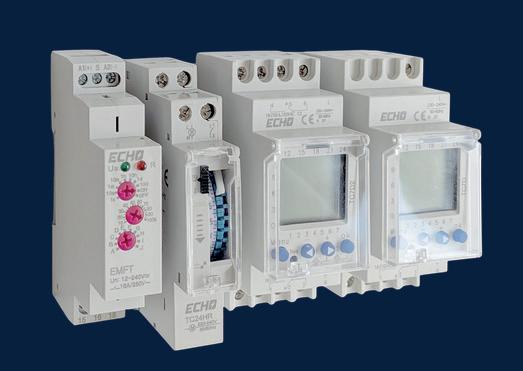
DIN Rail Mounted Timers & Clocks
DIN rail mounted timers and timer relays provide precise and reliable time-based control for electrical systems and automation application
Designed for easy installation within standard distribution boards and control panels, these devices help manage switching operations, delays, and sequencing with accuracy and consistency Learn more on our website: https://discover.deligo.co.uk/timers
lays,
Editor James Cooke
UPDATE
The projects, people and trade issues making the news
CEF Secures SBTi Validation for Near- and Long-Term Net-Zero Targets
CEF Limited (‘CEF’) has announced that the Science Based Targets initiative (SBTi) has validated its near-and long-term science-based emissions reduction targets. This milestone distinguishes CEF as one of the first in its sector to have its science-based net-zero target verified, reinforcing its ambition to lead the sector in sustainability & social value.
This independent validation confirms that CEF’s carbon reduction goals align with the latest climate science, in line with the Paris Agreement goal of limiting global warming to 1.5°C. CEF has committed to a credible, sciencebased pathway for reaching net-zero greenhouse gas emissions across its entire value chain by 2040, with near-and long-term net-zero targets:
Near Term:
• Reducing absolute Scope 1 and 2 emissions by 63%, and absolute Scope 3 emissions by 63%, by 2033 against a 2023 baseline
Long Term:
• Net-zero* Scope 1, 2 and 3 emissions by 2040 against a 2023 baseline
As part of its purpose to ‘inspire the exceptional every day,’ CEF is moving forward
with a clear, validated plan to reduce carbon emissions and lead the industry’s collective journey toward net-zero.
The validation is a critical element in delivering CEF’s Sustainability & Social Value (SSV) strategy, centred on the mission to create opportunities and improve lives. By managing and reducing environmental and social impacts across its operations and value chain, CEF seeks to set an example that contributes to a sustainable future for the planet, its people, and its communities.
This journey is a collective, company-wide effort toward decarbonisation.
Connor Dalton, Director of Sustainability, Health & Safety at CEF, said: “Validating our net-zero targets through the SBTi is about more than just numbers: it’s about accountability. This achievement sits at the heart of our SSV
strategy, converting ambition into action. We are committed to inspiring positive change across the electrical industry and creating a brighter future for everyone.”
“Securing SBTi validation is the ‘gold standard’ for corporate climate action. It provides our customers and partners with the transparency they deserve, proving our net-zero plan is rooted in science rather than just ambition. We are holding ourselves accountable for driving reductions across our entire value chain.”
The SBTi validation follows CEF’s progress across sustainability benchmarks, including achieving an EcoVadis Silver rating, with a target of reaching EcoVadis Gold by the end of 2026. From engaging supplier partners to electrifying their vehicle fleet, CEF continues to integrate ethical and environmental best practice into every level of its business.
For more information on CEF’s Sustainability & Social Value strategy, visit https://www.cef.co.uk/blogs/sustainabilityand-social-value-impact-report-2025
*Net-zero refers to 90% decarbonisation across CEF’s operations and value chain, neutralising the remaining 10% with permanent carbon removals and storage (in line with SBTi criteria).
HDM Solar Accelerates UK Growth with First Scottish Branch
HDM Solar, one of the UK’s fastestgrowing suppliers of renewable energy products, officially opened its first Scottish branch on Friday 8th May in Livingston at Brucefield Industrial Park West.
The new branch is strategically located to serve installers in Scotland and the North of England with quality products from HDM Solar’s platinum partners, including Astronergy, Fastensol, SolaX, Sungrow, EcoFlow, Rolec, Sunsynk, APsystems, as well as key partners Marley/Viridian and others. The launch event brought together local installers and dignitaries to celebrate the company’s arrival in Scotland. The day’s highlights included a ribbon-cutting by Gregor Poynton MP for Livingston, alongside live demonstrations from industry-leading suppliers.
Installers across the region had the opportunity to network with the HDM Solar team, gain valuable knowledge from a range of solar
experts, access exclusive deals and enjoy free refreshments.
Attendees also toured the 10,000 sq ft Livingston branch, which is home to an internal sales office, sizable warehouse, and one of HDM Solar’s Renewable Training Centres of Excellence. These purpose-built facilities are set up with roofing rigs and live products for practical learning directly from manufacturers, demonstrating the company’s ongoing commitment to the industry by investing in the upskilling of installers.
Gregor Poynton MP for Livingston said,“In Livingston, and right across West Lothian, we are a growing hub for the green energy economy and creating good jobs, and HDM
Solar does that. It’s an opportunity for people to bring down their bills too, and create energy security. More and more people are asking how do I get solar on my roof? How do I get a battery pack? How do I get a heat pump installed? And as a government, we’re now saying, how can we support businesses like HDM Solar, and how can we support people and commercial businesses right across Livingston to install these? Welcome to the area, it’s really exciting to have this open today.”
Stevie Paton, branch manager for Livingston, said,“Covering Scotland and the North of England, our management team combine over 55 years of expertise with a clear commitment to our ‘customer, company, branch’ philosophy— putting our clients’ needs first at every stage.”
Adam Firth, Group CEO of HDM Solar, added,“Scotland has a strong installer community, and
opening in Livingston is a major step forward for our business and the installer community. We’ve built HDM Solar around what installers actually need, stock on the ground, fast delivery, technical support and people who understand the industry properly. This branch gives installers across Scotland and the North of England quicker access to products, training and support that help keep projects moving. With order to collection within 20 minutes, next day and same day deliveries, we focus on fast delivery, so when an installer is on a roof and has forgotten something, we can get it to them fast! The Livingston branch also includes one of HDM Solar’s Renewable Training Centres of Excellence, to offer free practical training to support installers. Our drive is to help installers win more work and deliver great installations.”
For more information about HDM Solar, visit hdmsolar.co.uk
And it’s kicked off!
Give your customers the chance to beat the keeper and comepte with electrical installers across the UK for a top place on the Score to Win 26 leaderboard!
Top scorers have the chance to win:
• A football shirt signed by a legend
• Football stadium tour
• A gift card for multiple retail outlets
Interested in participating?
Contact your local Schneider Electric sales manager or scan the QR code below.
Learn more
Terms and conditions apply.
• Premier League hospitality or standard tickets
UPDATE
The projects, people and trade issues making the news
F C Lane Electronics celebrate 60 years of success
F C Lane Electronics a market-leading franchised distributor for many of the industry’s major electrical, electronic and optical connector manufacturers is celebrating 60 years of trading since their foundation on 12th of April 1966.
FC Lane was established by the muchrespected Fred Lane, who had previously been running a division of an electronic components business dealing in a variety of device types and selling across the UK as well as to several overseas markets.
One of the primary reasons why FC Lane has been so successful for so long was Fred Lane’s original vision to specialise in just one type of component – the connector.
Time has shown this to be a wise decision as connectors are an essential part of almost every electronic product or system manufactured. As the electronics industry rapidly evolved throughout the decades that followed, the connector industry developed newer, more sophisticated, and smaller products to keep pace with and help the industry’s development process. From day one, Fred Lane ensured his company remained at the forefront of interconnection technology.
Starting life in outbuildings behind a public house provided few clues to how they would develop into the multi-million-pound operation it is today. But, as any good businessman knows, careful planning from day one allows a
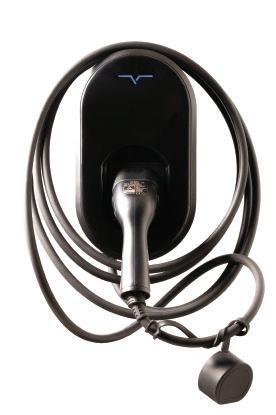
VCHRGD, the UK-based EV charging manufacturer, has announced a new distribution partnership with Kelvelec, further expanding its presence across the UK electrical wholesale market.
The agreement will see Kelvelec stock and distribute VCHRGD’s range of smart EV chargers via their UK-wide base of wholesale clients, improving accessibility for electrical contractors and installers seeking reliable, costeffective charging solutions backed by strong technical support,.
The partnership marks a continued focus for VCHRGD on building its wholesale channel, a core route to market that enables their growth while maintaining close alignment with installers and trade partners.
It also builds on recent momentum created through
business to spend valuable resources on the right things – people and products. This is a philosophy that Fred Lane followed throughout his personal leadership, and which today sees FC Lane Electronics employ 70 people with a finished product and parts inventory level approaching nine million pounds.
The company quickly expanded into premises in the centre of Horsham in a building due for short-term redevelopment before finding its eventual home – Slinfold Lodge. Combining traditional office environments with modern assembly and test facilities, Slinfold Lodge itself, is an imposing country house set in its own grounds and is surrounded by a golf course. Slinfold Lodge remains to this day the headquarters for FC Lane Electronics and its sister connector manufacturing company, Weald Electronics.
Nick Wheeler, Sales Director of Lane
VCHRGD’s partnerships with leading energy providers including Octopus Energy and So Energy, enabling installers to offer customers smart charging solutions that combine competitive hardware with lowcost, smart off-peak tariffs.
Through this partnership, Kelvelec customers will benefit from access to VCHRGD’s portfolio of chargers, designed to be simple to install, competitively priced and built for consistent real-world performance.
VCHRGD’s hardware is supported by a UK-based technical team and a strong track record for reliability, with less than 0.54% of units requiring return for replacement. This
Electronics, says, “Our success continues Fred Lane’s principle of building direct personal relationships with our customers, offering a wide range of products, high levels of customer service and supply adaptability, adding value to our customer’s supply chains. We have very long-standing relationships with our suppliers, such as that of our forty years of working with EATON Souriau, which reflects our deep knowledge and experience of the connector market” .
Lane Electronics connectivity solutions include RF and Fibre-Optic connector and cable assemblies, widely used in defence and security applications, and is a franchised distributor for many of the industry’s leading electrical and electronic connector manufacturers including EATON Souriau, CINCH Fibreco, HUBER+SUHNER, HellermannTyton, Positronic, Nicomatic and LEMO.
Backed by a strong commitment to quality, reliability and traceability procedures Lane Electronics also hold a significant number of key approvals. Next day delivery is available on more than 90% of standard products while, for non-standard products, rapid inhouse development, assembly and testing of specialist military, industrial and motorsport circular connectors is available lead times which are generally much quicker than those offered by other connector suppliers.
combination of hardware reliability, tariff integration and partner support reflects VCHRGD’s broader strategy to deliver practical, scalable solutions through its partner ecosystem.
Phil McDermott, Chairman at VCHRGD, said: “Wholesale is a critical channel for us, and partnering with Kelvelec is an important step in expanding our reach across the UK.
They have a strong understanding of the electrical trade and share our focus on service, reliability, and supporting wholesalers and installers on the ground.
For our partners, this means easier access to chargers that are simple to install, competitively priced and fully supported, alongside integrations with energy providers like Octopus and So Energy that are helping customers reduce charging costs.”
Matt Gooding, Director at Kelvelec added: “VCHRGD share the same ethos and values as Kelvelec, prioritising the customer experience and delivery of exceptional service, so partnering with them was a no-brainer for us.
Meeting the passionate people within their team gave us huge confidence in the partnership, and we are proud to be working together with them to promote the products for exponential growth throughout 2026 and beyond.”
Founded in 2021, VCHRGD has established itself as a customer and installer-focused EV charging manufacturer, operating across wholesale, installer and fleet channels.
The partnership with Kelvelec represents a further step in strengthening that network, supporting the continued rollout of EV infrastructure across the UK.
EDA drives the future of digital innovation and data excellence in the electrotechnical sector
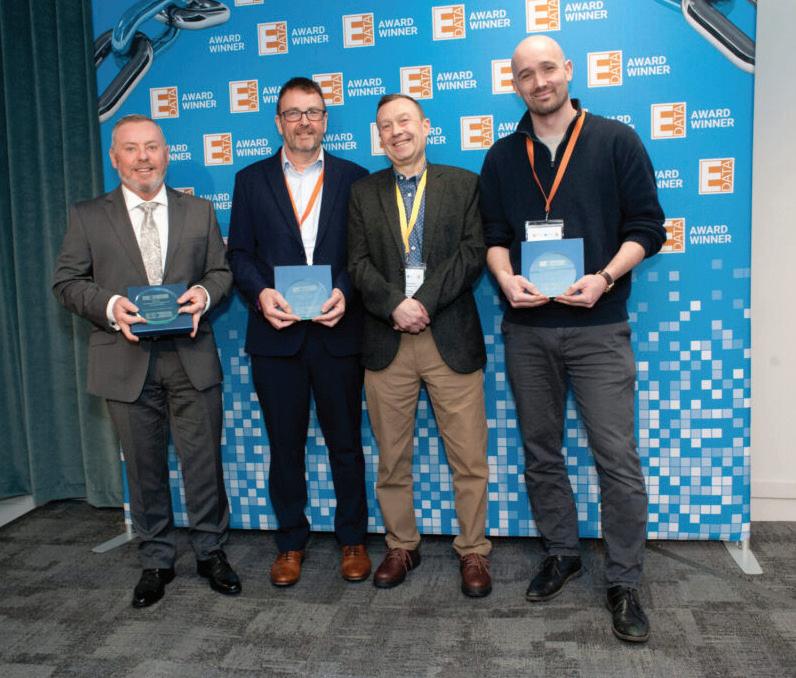
Now in its 7th year, the Electrical Distributors’ Association’s Digitalisation Forum and Data Quality Awards 2026 held in London recently brought together over 100 forward-thinking professionals from across the electrotechnical supply chain to explore the latest digitalisation opportunities, share practical insights, and celebrate excellence in product data quality.
Delegates heard from expert speakers and panel discussions on a range of topics surrounding the rules and tools that are shaping the way product sustainability data, notably embodied carbon data, is shared and used, and the role of artificial intelligence in making the supply chain more agile and responsive.
Margaret Fitzsimons, CEO at the EDA said, “The 2026 EDA Digitalisation Forum & Data Quality Awards was a fantastic opportunity to see the innovation and commitment
driving our sector. From insightful discussions on sustainability and environmental product data, and AI through to celebrating outstanding achievements in product data quality, it was inspiring to witness so many of the EDA’s member businesses actively shaping the future of digital transformation. Congratulations to all our award winners – your dedication to the EDATA data pool sets the benchmark for excellence across our sector.”
Richard Appleton, Head of Digitalisation at the EDA, highlighted latest developments
and plans for the EDATA data pool, where information on over 320,000 products is shared by leading manufacturers with their wholesaler customers. Richard also unveiled early insights from the latest EDA Digitalisation Survey, adding, “This is an important piece of research, last undertaken in 2022/2023, because it provides a clear, accurate picture of the current state of digitalisation in the UK’s electrotechnical supply chain. Our approach is both qualitative and quantitative, giving both the wholesaler and manufacturer viewpoints on digitalisation challenges, opportunities, and predictions for the future. The results make fascinating reading for anyone with a keen interest in the digital strategies that are changing the way this sector does business. For those interested in the full results these are available at www.eda.org.uk.”
At the heart of the event are the Data Quality Awards, where
leading manufacturers are singled out as top contributors to the EDATA data pool, and EDA wholesalers are celebrated as exemplars of data pool engagement.
This year’s EDATA manufacturer winners are:
• Overall Data Quality Award
<1,000 SKUs: Atlantic
• Overall Data Quality Award 1,000
– 3,000 SKUs: Marshall-Tufflex
• Overall Data Quality Award
>3,000 SKUs: Legrand Electric Ltd
• EDATA Sustainability and Packaging Data Pioneer Award: Collingwood Lighting Ltd
On the wholesaler side, Chorley Electrical Traders, Edmundson Electrical Ltd, and LEW Electrical Distributors were recognised for their engagement with the data pool: Also as part of the Forum, those manufacturers recently achieving the coveted EDATA Gold Standard Product Data were presented with their certificates.
Flockstone Group Acquires Gough Electrical
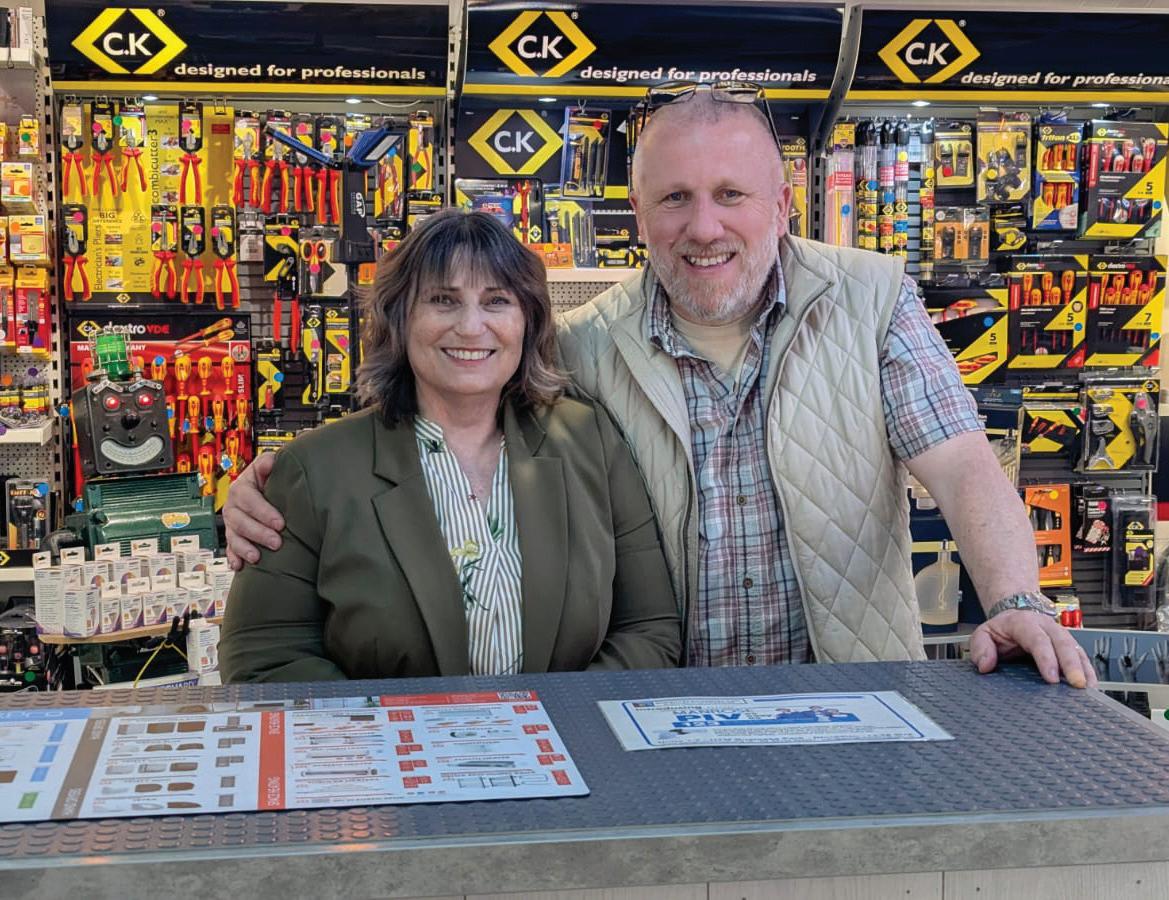
Flockstone Group has announced the acquisition of Gough Electrical, securing the future of another long-established independent electrical wholesaler with deep roots in its local community.
After many years serving Rhuddlan and the surrounding area, owners Paul and Angela Gough have taken the decision to sell the business as they move toward retirement.
The acquisition marks an important milestone for both businesses, with Flockstone Group continuing its strategy of supporting strong independent wholesalers while preserving the identity, relationships and service standards that made them successful in the fi rst place.
For Paul Gough, the sale represents the closing of a chapter that began more than four decades ago.
Having started his wholesaling career in 1979 at H & J Supplies in Chester before moving to G.P. Dennis on Parkgate Road, Paul quickly developed what he describes as “the wholesaling bug.” A conversation with Terry Deakin of Deakin Electrical in Old Colwyn would eventually set him on the path that led to Gough Electrical becoming a respected name within the industry and local area.
Speaking following the sale, Paul and Angela Gough said: “After many years of proudly serving the Rhuddlan community and wider area, we have made the decision to sell Gough Electrical to the Flockstone Group as we move toward retirement. This is not a step we have taken lightly, but one we feel is right at this stage in our lives. We are genuinely pleased that the business is passing into such capable hands and feel confi dent that under the new ownership, Gough Electrical will not only continue to deliver the high standards customers have come to expect but will also grow and thrive in the years ahead.”
The couple also took the opportunity to thank customers, suppliers and staff for their loyalty and support over the years,
paying particular tribute to team members Daz, Neil and Craig for their contribution to the success of the business.
The couple were keen to ensure the business moved into ownership that would continue to support both the staff and customer base going forward.
Alan Cutler of Flockstone Group said: “Paul and Angela have built a fantastic business with a strong reputation, loyal customers and a great team around them. Businesses like Gough Electrical are incredibly important to the industry and to their local communities. Our role now is to support what has already been built, invest carefully where needed and create opportunities for the business and team to continue growing for many years to come.”
EDA UPDATE
The sector speaks: What EDA
Wholesalers and Manufacturers
are saying in Q2 2026
In the second of the EDA ’s quarterly State of the Sector Surveys for 2026, businesses shared their thoughts on a range of topics exploring the impact the Middle East crisis on the supply chain, biggest operational headaches, and predictions for sales volumes this year
Each quarter Wholesalers and Manufacturers in the Electrical Distributors’ Association (EDA) are invited to contribute (anonymously) to the Association’s State of the Sector survey. Each Survey is a mix of core questions, revealing patterns throughout the year, while others address current topics in the supply chain. The EDA has created a Supply Chain Planning Group of senior wholesalers and manufacturers who provide valuable insights that help shape the survey questions.
In Q2 2026, 78 wholesalers responded (29% response rate) and 41 manufacturers (35% response rate).
If you didn’t join us on teams to hear the results at our quarterly EDA’s Talking Shop Live Online webinar on Friday 24 April, the surveys are also available to download a www.eda.org.uk in the Support and Resources menu.
Read on for a selection of highlights from the latest survey.
IN THE SAME BOAT: ARE YOU FACING THESE 5 OPERATIONAL CHALLENGES TOO?
EDA businesses shared their top 5 operational challenges from a prompted list. Feedback from both groups shows manufacturers and wholesalers are on the same page in many areas, offering the potential for better understanding.
EDA Wholesalers
1. Increasing business overheads
2. Middle East Crisis
3. Downturn in market demand
4. Difficulties attracting, recruiting, or retaining staff
5. Delays to project starts
EDA Manufacturers
1. Increasing business overheads
2. Middle East Crisis
3. Downturn in market demand
4. A slowdown in my traditional market segments
5. Delays to project starts
Wholesalers commented on the challenges:
“Rising costs, in particular staff costs, outstripping our ability to retain profit as the internet chips away on the other end.”
“Continued legislative burdens from the government, increasing admin workload.”
“Dealing with fast growth”
Manufacturers commented on the challenges:
“We are concerned about customer debt, even if we are paid this does lead to de-stocking. Project delays can always be an issue.”
Middle East conflict: its impact
Our Q2 survey included a series of questions put to both Manufacturers and Wholesalers exploring the impact of the Middle East crisis on the supply chain.
While it isn’t possible to present all the findings here, they can be accessed at www.eda.org.uk. The selection below highlights some of the key supply chain challenges.
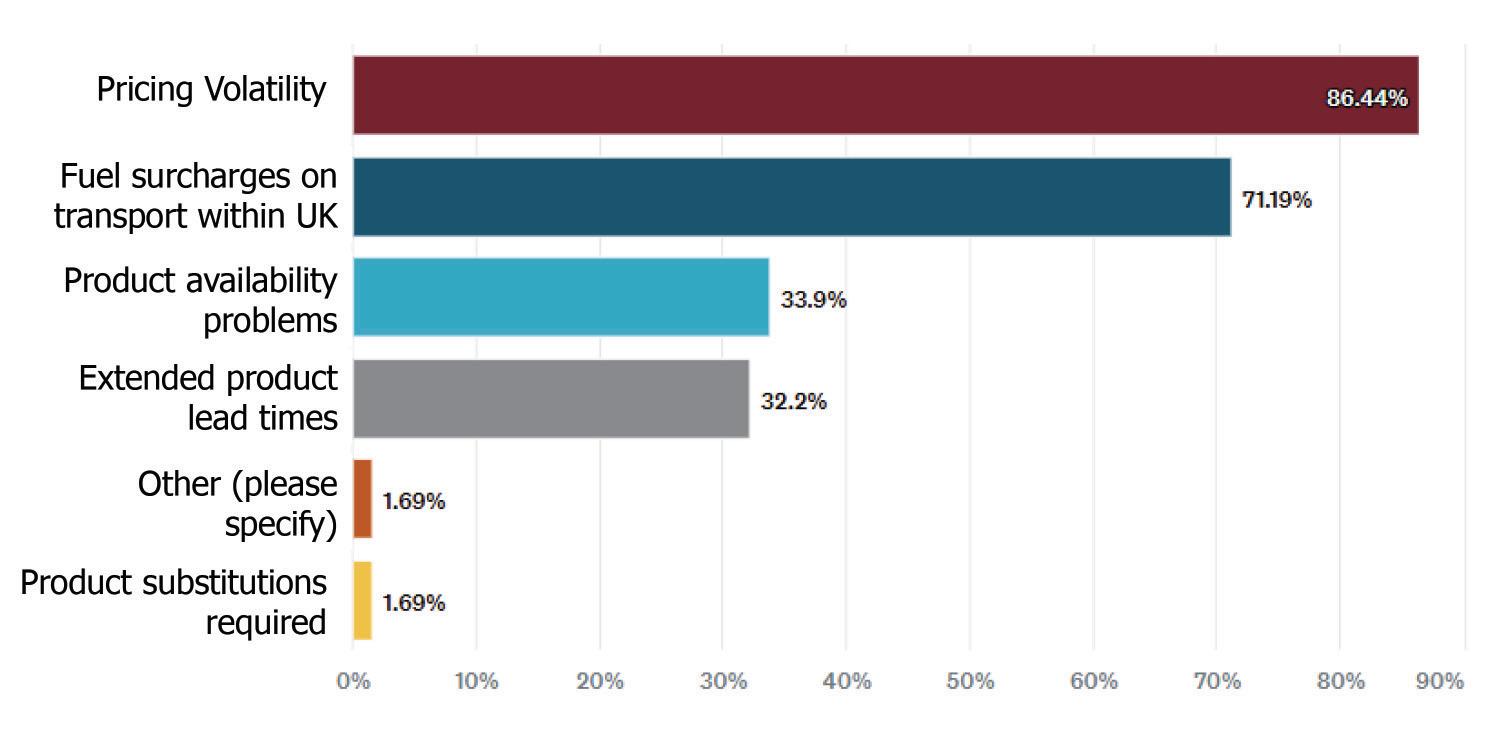
Wholesalers were asked to identify which challenges they had experienced as a result of the conflict: the top challenge was “pricing volatility” with “fuel surcharges on transport within the UK” in second place, and “product availability problems” in third.
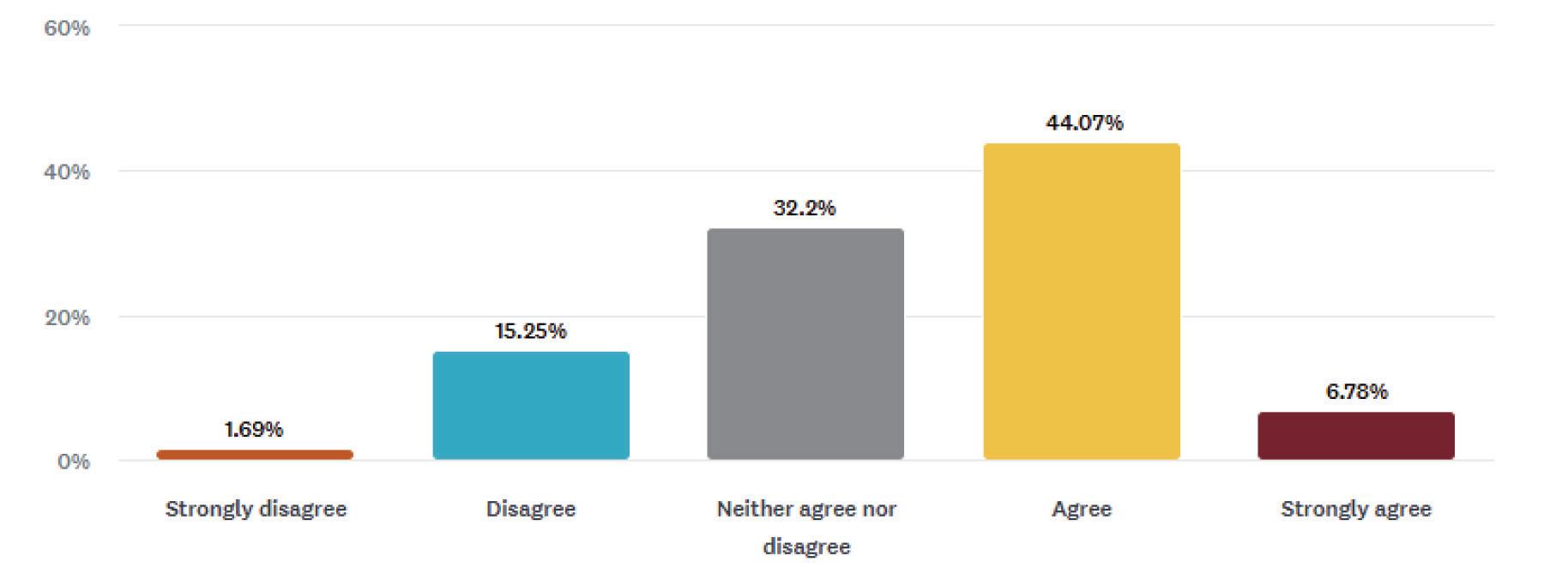
Q. Wholesalers: To what extent do you agree with this statement? “My manufacturer suppliers are keeping me well informed about current or potential impacts on product supply and costs”
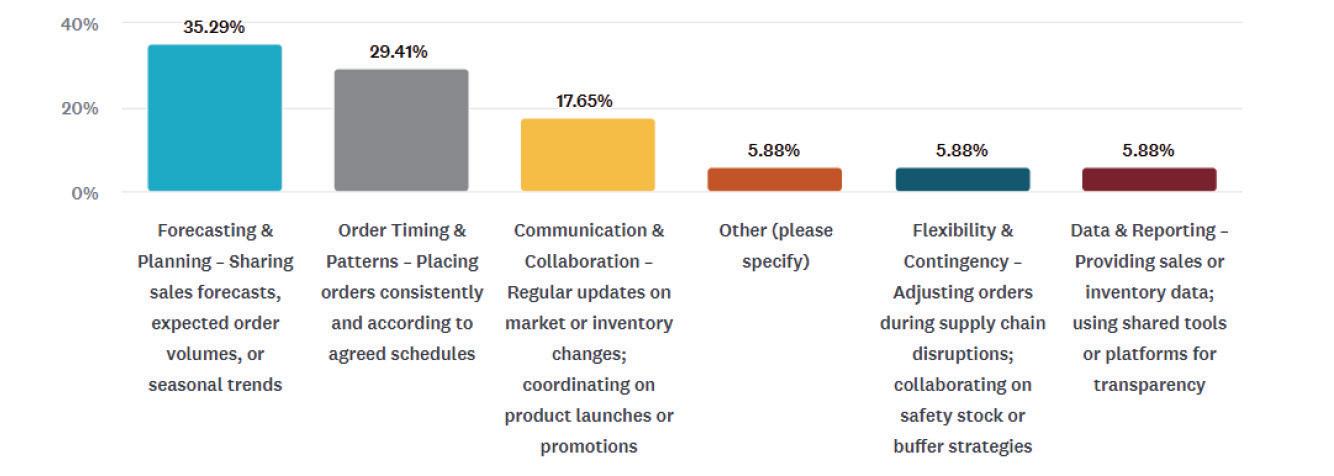
Q. Manufacturers: What actions, if any, could your wholesaler customers take to help you plan demand more effectively? Please select all that apply.
Comments from Manufacturers included: “All of them.”
“Wholesalers advising their customers to plan/order in advance as last minute orders are more likely to be the ones that will be harder to fulfil. Plan - Communicate – Collaborate”
“Without seeming critical, with a few exceptions our customer base seems very reactive to contractor orders not general stock (this is a general statement there are exceptions).”
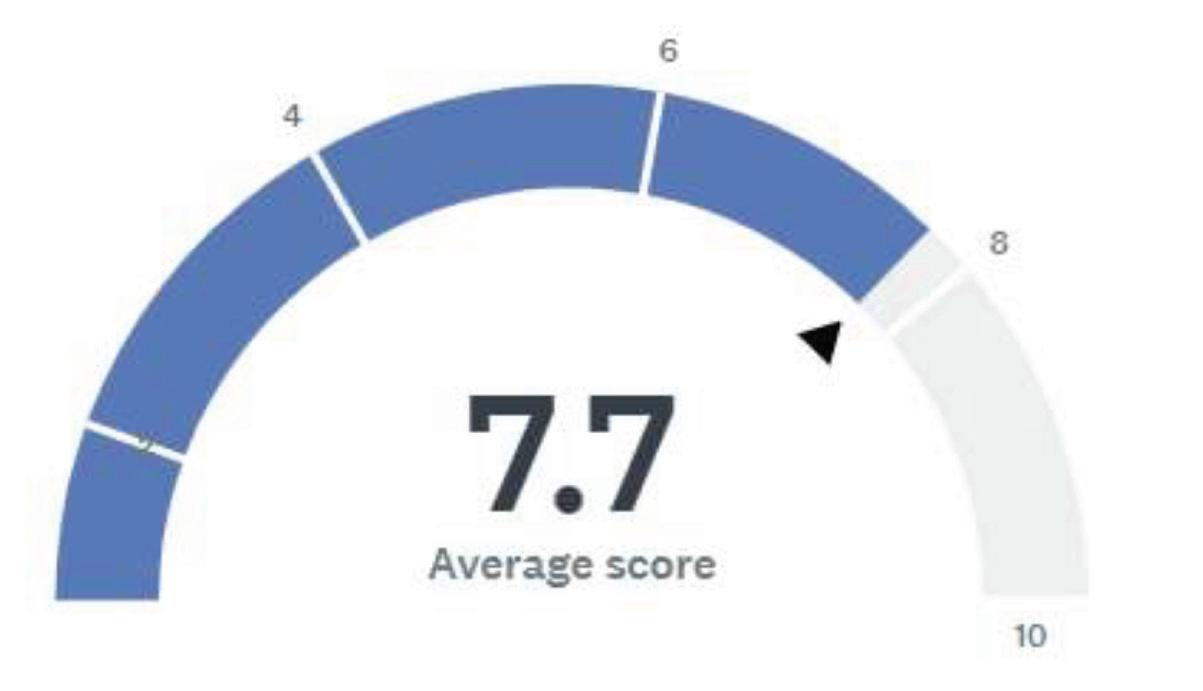
Q. Wholesalers: How important is your role in helping your contractor customers navigate supply chain disruption? Where 1 is not at all important and 10 is extremely important.
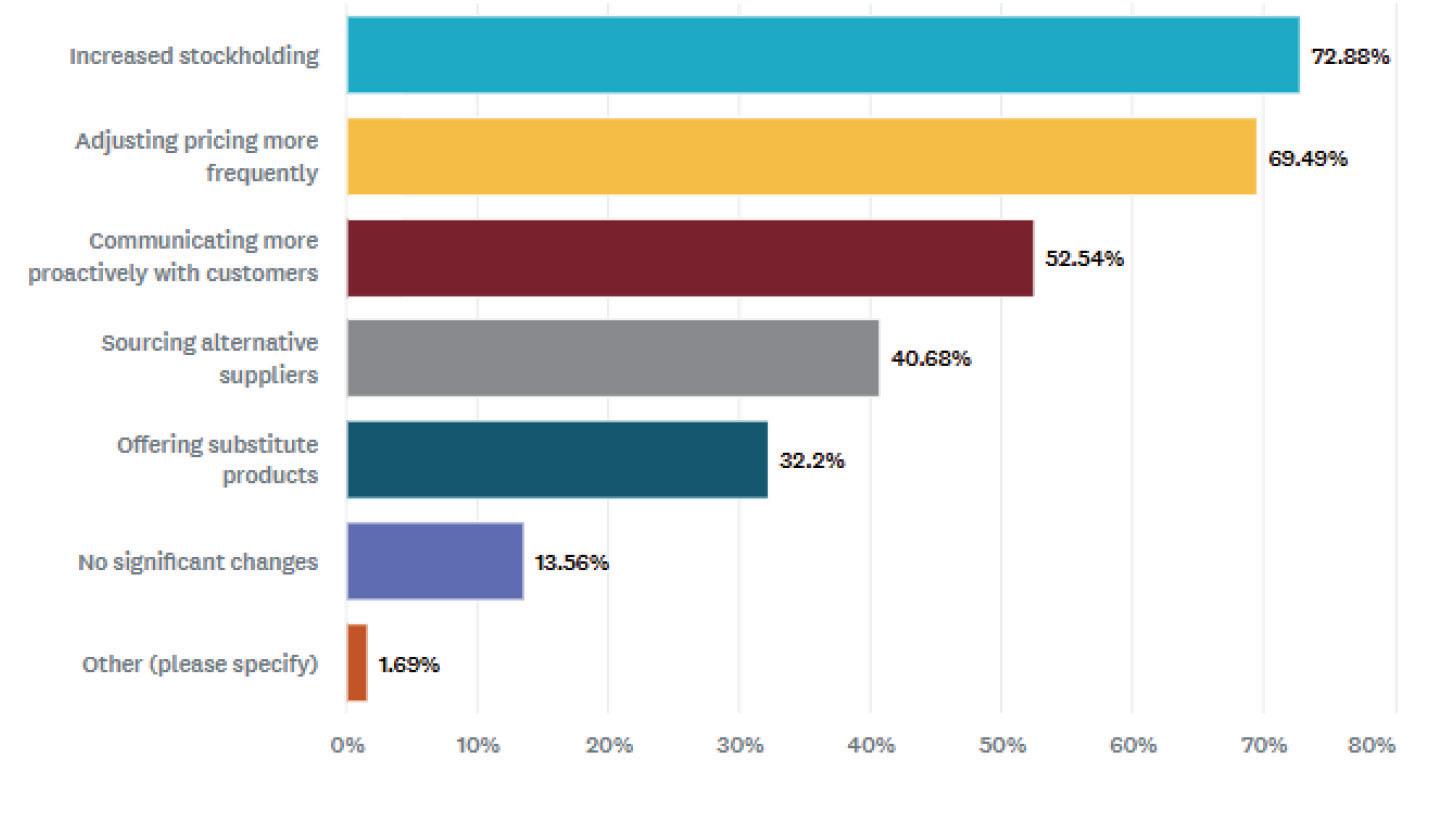
Q. Wholesalers: What actions has your business taken in response to supply chain disruption?
SALES PREDICTIONS FOR 2026: DO YOU AGREE?
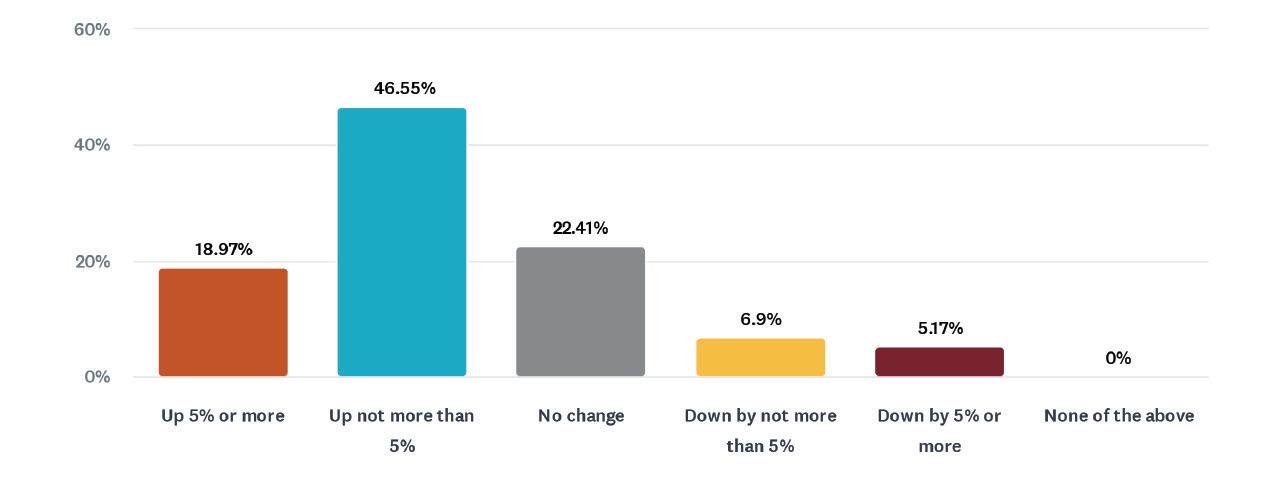
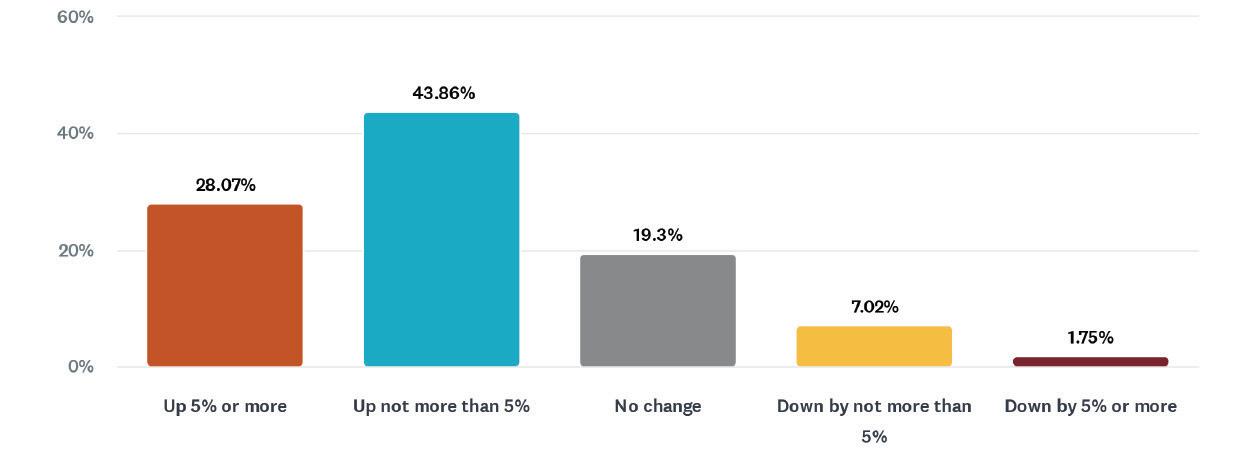
Q: Wholesalers: How do you anticipate sales volumes (like for like sales) will change during Q2 2026 ?
Q. Wholesalers: How do you anticipate sales volumes (like for like sales) will change during 2026?
As the results show, the majority of EDA wholesaler respondents are optimistic about volume sales in 2026.
Hear the Q3 2026 survey results first
If you work in an EDA business and haven’t previously joined us virtually to hear the survey results live, please register for the Q3 2026 Talking Shop Live Online: Industry Insight in 90 Minutes. You’ll find the online registration at www.eda.org.uk in the Events section. As well as our survey results, we often invite subject specialists to give insight into important topics and share opportunities.
Talking Shop Live Online: Industry Insight in 90 Minutes 11.00am – 12.30pm
Q3 2026: Friday 24 July Q4 2026: Friday 23 October
www.eda.org.uk 020 3141 7350
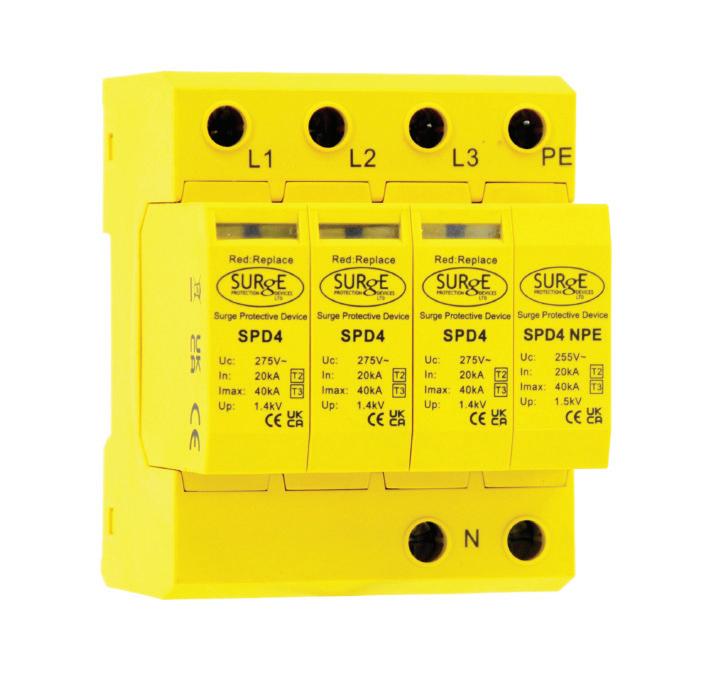
SURGE PROTECTION DEVICES COVER STORY
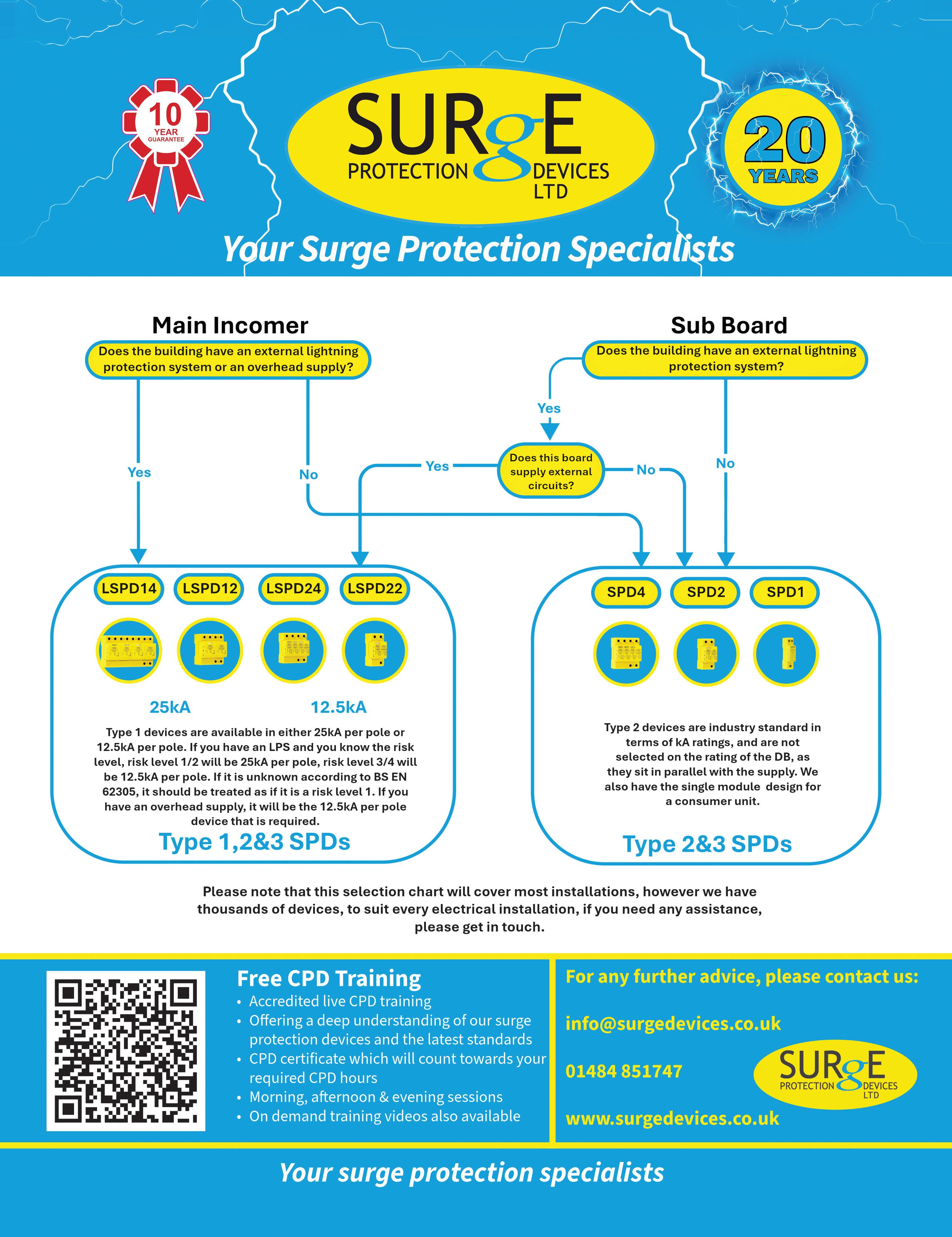
Celebrating Two Decades of Excellence: Surge Protection Devices Ltd
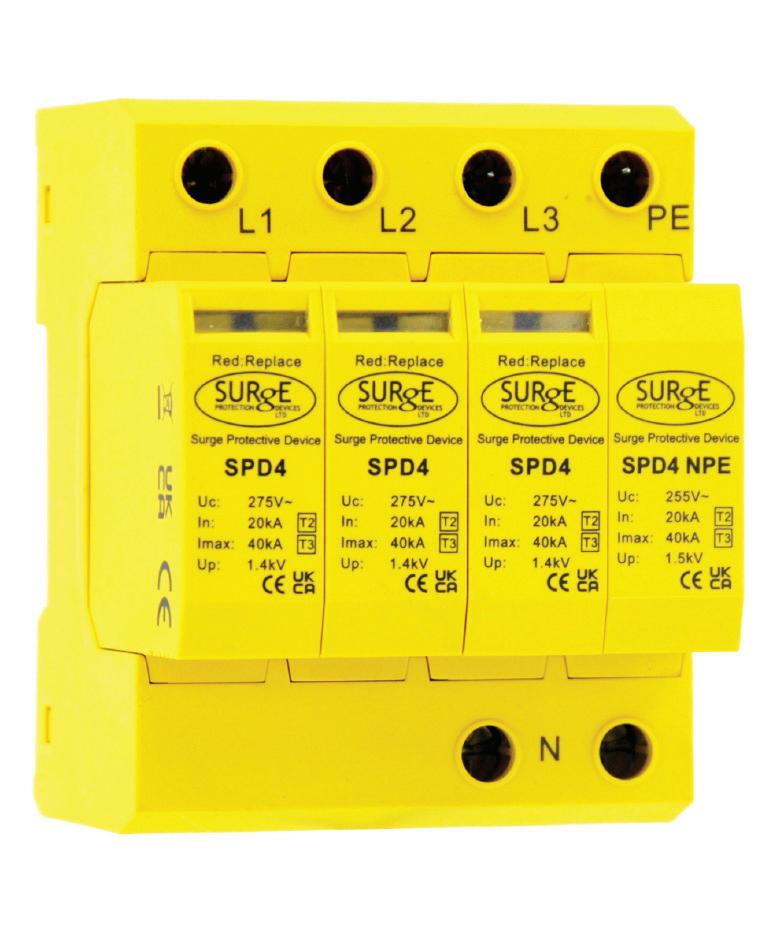
The electrical landscape has shifted dramatically over the last 20 years, but for Surge Protection Devices Ltd, one thing has remained constant: our commitment to protecting what matters most. In 2026, we are incredibly proud to celebrate our 20th anniversary – a milestone that represents two decades of technical innovation, industry leadership, and an unwavering dedication to electrical safety
From humble beginnings to becoming the UK’s go-to team for lightning and surge protection, our journey has been defined by a deep understanding of the risks posed by transient overvoltages. Today, our devices are trusted in every corner of the globe, providing a silent shield for everything from high-security military bases and historic landmarks to the essential infrastructure of modern factories and the heart of family homes.
Our mission has always been rooted in demystifying surge protection. With nearly twenty years of experience solving the industry’s most complex technical challenges, we have seen firsthand how the demand for protection has evolved. The last eight years, in particular, have marked a turning point for the UK electrical sector. Since the BS7671 wiring regulations began mandating enhanced surge protection, our role has transitioned from providing optional safety features to delivering critical, mandatory infrastructure.
In an era where technology is integrated into every facet of our lives, the stakes have never been higher. Whether it is a smart fridge in a kitchen or a sophisticated server rack in a data
centre, modern equipment relies on sensitive electronics that are easily compromised by power surges. We build our devices to ensure these installations remain safe and run smoothly, no matter what the elements – or the grid – throw at them.
While our 20th anniversary is a time for reflection, it is also a time to celebrate our recent successes. We are thrilled to share that our dedication to the craft has been recognised on the national stage. Most notably, we were honoured to be named the Innovation & Excellence Awards – Electrical Safety Specialists of the Year 2025.
This award is a testament to the fact that we aren’t just selling products; we are actively shaping the future of the industry. Our Technical Director, Kirsty Johnson MIET, serves as a vital voice on the British Standards Wiring Regulations committee. By focusing specifically on lightning and surge protection at a regulatory level, Kirsty ensures that our company remains at the forefront of safety standards, helping to raise the bar for the entire electrical field.
At Surge Protection Devices Ltd, we believe that sharing knowledge is just as important as manufacturing hardware. We understand that surge protection can often seem like
a complex or daunting subject. To combat this, we offer free, in-depth CPD training to professionals across the sector.
Our goal is to make technical understanding accessible. Whether we are working with established consultancies, experienced installers or apprentices. By explaining surge protection in a way that is easy to understand and apply, we empower everyone to deliver safer, more reliable installations for their clients, regardless of how complicated the project may seem.
As we look toward the next twenty years, the electrical industry is entering its most transformative phase yet. The global push toward Net Zero and the rapid expansion of renewable energy sources have placed electrical design in the spotlight. High-quality surge protection is no longer just a safety requirement; it is a foundational element of sustainable infrastructure. We are ready to meet these challenges head-on. By combining our decades of experience with a forward-thinking approach to renewables, we continue to provide the outstanding support and expertise that our partners have come to rely on.
Throughout 2026, the Surge Protection Devices team will be out and about celebrating this massive milestone with the industry that helped us grow. We owe our success to the contractors, wholesalers, and engineers who have trusted our products over the last two decades.
If you see our team at an event this year, please come and say hello – we’d love to celebrate with you! And, as always, if you need assistance with any aspect of surge protection, our experts are ready to help.
Thank you for all of your support, Here is to twenty years of safety, and many more to come.
Your surge protection specialists
The £530 Billion Construction Pipeline: Navigating Cost Pressures in a Growing Market INSIGHT
The government’s Infrastructure Pipeline sets out 780 projects worth £530 billion over the next ten years, covering transport, energy, education and healthcare.
For UK construction firms, this represents a significant pipeline of opportunity. However, the sector recorded more insolvencies than any other UK industry in 2025, with almost 4,000 firms collapsing.
This contrast highlights a critical point: a strong pipeline does not guarantee commercial viability. With construction costs forecast to rise by 15 per cent over the next five years and tender prices expected to increase alongside them, successful contractors will be those who balance opportunity with disciplined pricing and robust risk management.
Experts at Executive Compass, a bid and tender writing specialist, examine how construction firms can evaluate opportunities and identify which contracts are commercially viable.
RISING COSTS ARE EATING INTO EVERY TENDER
The Building Cost Information Service (BCIS) forecasts construction costs to rise by 15 per cent over the next five years, with tender prices expected to follow at 16 per cent.
Labour remains the primary pressure point, with employer National Insurance contributions and the National Living Wage driving the BCIS Labour Cost Index upwards. Skills shortages are compounding the issue, and demand from the booming data centre sector is adding further strain on mechanical and electrical contractors.
While the volume of available work is growing, the cost of delivering it is growing faster. For firms operating on tight margins, this significantly reduces tolerance for error.
THE HIDDEN DANGER OF BIDDING TOO AGGRESSIVELY
“The sizeable pipeline is very positive for the sector, and the long-term visibility it provides is something the industry has needed for years,” said Christian Rowe, CEO at Executive Compass.
“However, visibility alone does not make a contract viable. We are seeing firms bid aggressively to secure work, only to find that cost inflation erodes margin before delivery is complete.”
The Procurement Act 2023 introduces greater accountability for contract performance. Suppliers that fail to meet required standards risk exclusion from future opportunities through the public debarment regime.
“Bid/no-bid decisions need to be made objectively,” Rowe added. “That means assessing whether you have the cost base, workforce and supply chain resilience to deliver. It is not just about whether you can win.”
HOW TO IDENTIFY GENUINE COMMERCIAL OPPORTUNITIES IN THE PIPELINE
With £285 billion of the pipeline funded by the public sector, there is real work to be won.
But Rowe urges construction businesses to apply a structured evaluation before committing resources to any tender, “Start by asking whether the contract aligns with your strategic direction and whether you have a genuine competitive advantage such as local presence, specialist skills or delivery track record.”
“Then look hard at the risk profile,” adds Rowe. “If price weighting is high and you are competing against national contractors with greater buying power, you need to be realistic
about whether you can compete without undercutting yourself into difficulty.”
It’s also very important to gain an understanding of the full cost picture before submitting a price. “With tender prices forecast to climb and material costs subject to increasing volatility as infrastructure output grows, firms that price on today’s costs for contracts beginning in 12 to 18 months risk building in losses from day one,” warns Rowe.
SEEKING SUPPORT WITH BID/NO-BID DECISIONS
While the infrastructure pipeline brings the construction sector some much needed certainty, firms that use it wisely, with realistic cost forecasting, careful bid decisions and a solid delivery model, have a real opportunity to grow.
But for those that chase volume of bids without checking whether their numbers stack up properly, it could mean more contracts ending in financial difficulty.
“The pipeline gives the sector the roadmap it has been asking for,” advises Rowe. “The key is selecting the right opportunities, not simply pursuing more of them.”
Specialist bid support can assist firms in evaluating opportunities and making informed bid/no-bid decisions, reducing exposure to commercial risk and improving long-term outcomes.
Recolight isn't just about recycling, we help the lighting industry take real steps toward a sustainable future. From our Reuse Hub and Circular Lighting Live Conference, to workshops, webinars, and Life Cycle Assessments, we support businesses in taking practical actions to embrace the Circular Economy. What’s more, we can provide carbon footprint data for every waste collection. Make your lighting more sustainable. Make it circular.
DISTRIBUTOR CORNER
Why cost pressures are reshaping SME fleets in 2026
For many small and medium-sized businesses, the vehicle fleet is a necessity to get the job done. Vans carry tools, reach customers and keep business moving. But in 2026, the cost and complexity of running those vehicles is changing quickly
From volatile fuel costs due to the war in the Middle East, to electrification targets and new charging considerations, SME fleets are under pressure from several directions at once. For trades such as electrical contractors, wholesalers and service providers, these changes affect margins, job pricing and day-to-day operations.
Fuel remains one of the largest operating costs for many small fleets. Even where pump prices stabilise, the overall cost picture is rarely simple. Insurance, maintenance, clean air zone charges and compliance costs continue to rise, while margins across the trades remain tight.
At the same time, there is the arena of electric vehicle consideration. For large corporate fleets, that transition is often supported by dedicated teams, infrastructure investment and long planning cycles. SMEs rarely have those resources. Instead, many are dealing with a patchwork of vehicles and energy types while still trying to keep costs predictable.
Recent industry research suggests electrification is increasingly becoming financially viable for many operators. However, while total cost of ownership may be improving at a headline level, the practical challenges and operational disruption remain significant for smaller businesses. This points to a shift in the economics of fleet energy, but the practical challenges for smaller operators remain.
MIXED-ENERGY FLEETS ARE NOW THE REALITY
Despite headlines about full electrification, most SME fleets are not moving from diesel to electric overnight. The reality is a gradual shift, where businesses run a mix of petrol, diesel and electric vehicles depending on routes, payloads and available infrastructure.
For example, an electrical contractor may run electric vans for urban jobs, while keeping diesel vehicles for longer distances or heavier loads. That creates a mixed-energy fleet, which brings new administrative and financial challenges.
Instead of managing one fuel type and one payment method, businesses must now deal with fuel cards, public charging networks, home charging reimbursements and depot charging payments. Without the right systems in place, that complexity quickly becomes a hidden cost.
Paul Holland Managing Director for UK/ANZ Fleet at Corpay
CHARGING REMAINS THE BIGGEST UNKNOWN
For many SMEs, the decision to switch to electric is less about the vehicle itself and more about how and where it will be charged. Drivers may need to rely on a combination of home, depot and public charging. Each option comes with different tariffs, payment methods and reporting requirements.
There is also the issue of cash flow. Public charging can involve higher per-session costs and pre-authorisation holds, which can affect cash flow for smaller businesses while home charging requires fair and accurate reimbursement for employees. Without clear visibility, businesses can lose control of their fleet spend.
The charging landscape itself is also evolving. Opinions from figures in the industry in early 2026 suggests the number of UK charge point operators could shrink from more than 100 to just a handful of dominant players. While consolidation may eventually simplify access, it also creates uncertainty for fleets planning long-term charging strategies.
DATA AND VISIBILITY ARE BECOMING ESSENTIAL
As fleets become more complex, cost control increasingly depends on good data. SMEs that once managed fuel receipts manually are now expected to track multiple energy sources, monitor driver behaviour and plan around charging availability.
The businesses that adapt most successfully tend to be those that bring all vehicle energy payments into one place. Having a single view of fuel, charging and related expenses makes it far easier to spot trends, control costs and make informed decisions about when to replace vehicles. It can also simplify life for drivers, reducing the need to juggle multiple cards, apps and reimbursement processes.
Understanding the true running cost of a diesel van compared with an electric one requires real-world data, not just brochure figures. That insight can help SMEs plan a transition at a pace that works for their operations.
PRACTICAL STEPS FOR SMES IN 2026
For smaller fleets, the focus in 2026 should not be on going fully electric as quickly as possible. Instead, it should be on building a practical, cost-effective transition plan. That includes reviewing total fleet costs, identifying routes suitable for early electrification, planning where drivers will charge, and putting payment and reporting systems in place before scaling up.
For many SMEs, the goal is stability rather than rapid transformation. A well-managed mixedenergy fleet can provide flexibility, control costs and reduce risk while the wider infrastructure continues to develop.
The fleet conversation this year is less about distant ambitions and more about real-world decisions. For electrical wholesalers and contractors in particular, vehicles remain critical business assets. Keeping them running efficiently, whether on fuel, electricity or both, will be key to protecting margins and maintaining service levels.
LIGHTING FOCUS ON
Modular lighting: a more flexible future for contractors
The shift to modular lighting can reduce plastic and electrical waste, as well as creating more install and maintenance opportunities for electricians. CEF is working to bring modular products, as well as advice and support, to trade counters across the UK
Until recently, many LED lighting products were designed as fixed, single-purpose fittings. If a component failed or functionality needed to change, the only option was to replace the whole product. As a result, large amounts of plastic and electrical components were wasted that, really, didn’t need to be.
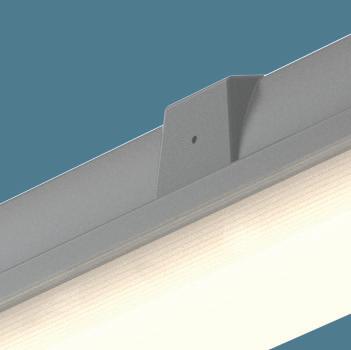
Modular lighting offers a more flexible approach. By designing luminaires around interchangeable components, fittings can be configured for different applications, adapted when requirements change (for instance, when PIR dimming is needed) and maintained or repaired more easily over time. For contractors, that means more practical options on site. For customers, it can mean less disruption, longer product life and less unnecessary waste.
A bulkhead is a good example. In one setting, a contractor may need a standard fitting. In another, they may need to add a photocell for external use, so the light responds to natural daylight levels. In another application, they may need emergency functionality, or a different bezel or surround to suit the environment. With a modular approach, those options can be built around the same core product, rather than needing a completely separate fitting for every job.
Having that flexibility not only makes it more straightforward to select or specify products; it supports better van stock management and can help contractors respond more quickly to customer requirements. If the right modules or components are available, there is greater potential to complete work on the first visit, rather than having to leave site, order a new fitting and extend the duration of the project.
It also creates a stronger maintenance opportunity. As integrated LED fittings have become more common, traditional lamp replacement work in commercial settings has reduced. Modular lighting starts to bring
some of that service element back, because individual components such as drivers, LED boards, or emergency modules can be replaced or upgraded without removing the whole luminaire. It even allows electricians to quickly change lighting functionality (for instance, from PIR to photocell sensors), which is especially useful on long-term maintenance contracts.
The benefits are just as important for end users. If a fitting has been installed for several years and one component fails, finding an exact like-for-like replacement can be difficult. Product ranges move on, dimensions change, and replacing a whole fitting can mean additional disruption, not to mention decorative repairs. With a modular product, the visible fitting can often remain in place while the failed component is changed.
There is also a clear environmental case to modular lighting. LED has helped the industry reduce energy consumption, but the next challenge is product lifecycle and waste. Too often, a complete fitting is removed and discarded when much of it is still perfectly serviceable. If the body, diffuser or housing remains fit for purpose, replacing one failed component is a more responsible approach than throwing away the whole luminaire.
Modularity can also support better endof-life management. When products are designed so that components can be separated, plastics, electrical parts and other materials can be handled through more appropriate recycling routes, including WEEE processes where relevant.
The important shift now is that modularity is becoming more accessible. Historically, it has been more common in project or specification ranges, where the cost base made it easier to justify. But modular thinking is now moving into more everyday, over-thecounter trade products. As more suppliers develop these ranges and costs continue to settle, modularity is set to become a much
more familiar part of the lighting market. CEF are supporting that shift as it develops. The market is still relatively early, but suppliers are moving in this direction and CEF are becoming early adopters where the right products and solutions are available. CEF’s goal is to make modular products and components accessible quickly, and recommended as much as possible at trade counters.
Modular lighting is about giving contractors a more practical way to meet different requirements, support customers over time and reduce the amount of usable material added to site waste. As more modular ranges become available, the opportunity is to think beyond the immediate installation. The right fitting can do the job today, but it can also be adapted, maintained and kept in service for longer. That is where modular lighting has the potential to make a real difference for contractors, customers and the wider industry.
ABOUT CEF
CEF is the expert supplier of electrical products and services for professional buyers and installers all over the UK. CEF offer the largest range of products including leading brands and value alternatives, alongside specialist knowhow, friendly advice and support that’s the best in the industry.
Established in 1951, privately owned CEF has a UK national network of more than 390 branches and the business now extends to the USA, Canada, Ireland, Spain, and Australia. Customers can place online orders for next working day delivery at cef. co.uk with access to more than 44,000 products from over 300 leading suppliers.
REWARDING EXCELLENCE FOR 34 YEARS
ENTER NOW!
The industry’s largest and most respected event, the Electrical Industry Awards is back.
Brought to you by Electrical Times, the Awardscelebrating its 34th year - recognise outstanding product innovation as well as individual talents. The winner of each category receives a coveted Electrical Industry Award.
So if you, or your company have something to shout about, these awards will get you noticed.
Some incentives for entry....
Gain independent industry recognition for the excellent work delivered by you, highlighted across the range of categories.
Promote your excellence, demonstrate a competitive edge and position your company alongside the best in the business.
A winners reception in central London with food, drinks, entertainment and completely free of charge!
Being a finalist is proof of excellence in your business and proves to clients new and existing you are in industry innovator.
CATEGORY:
Electrical Wholesaler of the Year
The award will be judged on the following criteria:
Quality of contribution
Growth - significant, profitable growth in the sector
Innovation - demonstrates an approach that has led to a tangible return
Examples of technological advancements and sustainability
Marketing and product development
Future skills - evidence of a scheme that develops the next generation of wholesalers
MAIN SPONSOR: CATEGORY SPONSORS:
LIGHTING FOCUS ON
How Multi-Option Lighting Products Are Reshaping The Industry
As product innovation continues to reshape the lighting market, multi-option solutions are quickly becoming the go-to choice for specifiers and installers. Offering greater flexibility on site, reduced stock complexity and improved efficiency, these adaptable products are changing how lighting purchases are made across the industry
In this article, Nick Gwilliam, Lighting Designer at Ansell Lighting, explores why demand for multi-option lighting is accelerating and what it means for electrical wholesalers and distributors.
Across all areas of the lighting industry, demand is growing for products that offer users more choice and flexibility. Products with multi-option features such as variable CCT and selectable wattage are soaring in popularity as specifiers and installers look to simplify specification and install more flexible and future-ready solutions within their projects.
For wholesalers and distributors this presents a number of welcome opportunities. The first is that they can streamline their stock levels into a smaller number of variants. As multi-option products encompass different wattages, colour temperatures and functions in one fitting, there is no need for them to hold multiple individual SKUs. This in turn, can also free up valuable storage space which could be given to other fast selling lines, improving the availability of these products and increasing customer satisfaction and service levels, as they are no longer let down or subjected to project delays by out of stock items. It also frees up working capital and helps to minimises the risk of obsolete stock, improving cash flow that could be invested more effectively in other
areas of the business or in product lines that better meet a wider range of customers’ needs.
Looking to front of house operations, sales processes are also benefitting from the introduction of multi-option lighting products. When installers walk into a branch needing a lighting solution, wholesalers can recommend a single fitting that can be adjusted to suit the job rather than searching through multiple variants. This makes the sales process quicker and reduces the chances of contractors purchasing the wrong specification.
This also translate into fewer returns meaning less admin for wholesalers and electrical distributors while other administrative tasks such as inventory management will also become much simpler and more efficient.
So what are the types of multi option products available and why are they proving so popular?
Pretty much every product category now has luminaires which offer multi option functionality. From downlights to battens and LED strips, the technology can be found across all product types.
CCT selectable is perhaps the most commonly found multi option function. It allows installers to switch between colour temperatures - typically warm white, cool white and daylight – so that they can choose the right hue for the style and use of the area the product is being installed in.
Wattage selectable products are also very popular, enabling light output to be adjusted depending on the size and function of the space. This is especially useful for projects where room sizes vary or where the final use of a space may change, allowing installers to fine-tune output without needing to change the fittings.
Products with modular designs are also becoming increasingly popular amongst specifiers and contractors. Here, a standard luminaire can be installed and then, where required, easily upgraded with more advanced
features such as microwave sensor capability or an emergency lighting function. It offers a ‘one product fits many jobs’ solution and simplifies specification.
Multi-option fittings are proving popular with specifiers and installers due to their flexibility. Last minute specification changes on site, SKU availability issues, complex specification processes and money tied up in unused van stock can all create unnecessary hassle and pressure. These products are the ideal solution, allowing them to adapt quickly to changing project requirements, carry less stock and fewer product variants, and streamlining specification processes.
They also offer a level of future proofing which is becoming a key consideration amongst specifiers. As buildings are repurposed or layouts change, lighting requirements often shift. Multi option fittings allow systems to be adapted without the need for complete replacement, reducing waste and extending product lifespan. As manufacturers continue to invest in modular design and selectable performance features, multi-option lighting is set to become the standard across many product categories. For wholesalers, embracing this trend offers a clear opportunity to simplify stockholding, improve operational efficiency and deliver greater value to customers.
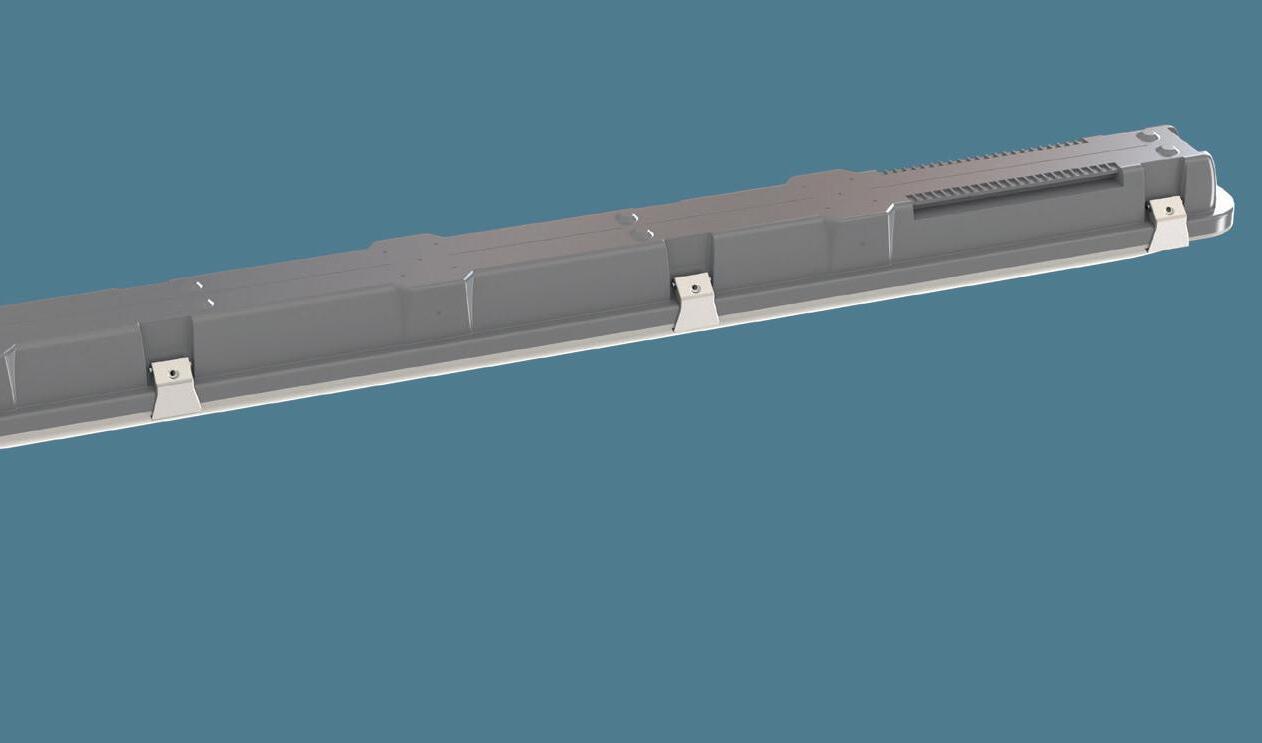
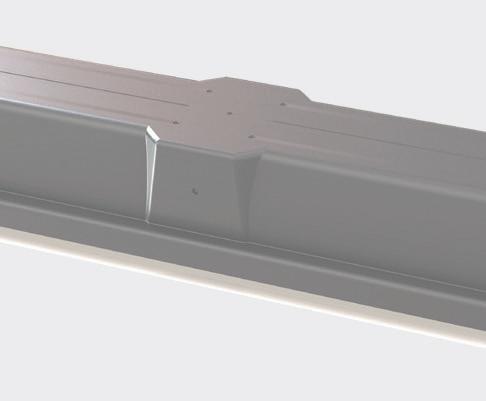
The Tornado EVO XPRESS represents the next evolution in weatherproof lighting.
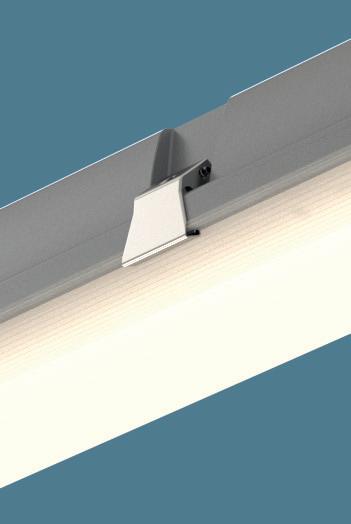
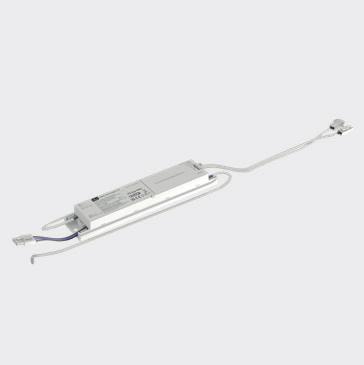
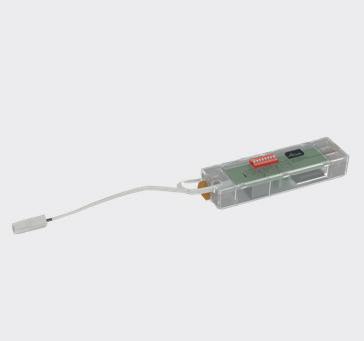
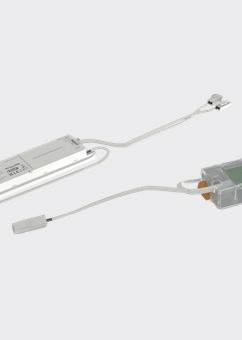
Introducing XPRESS clip-in emergency and sensor capability, delivering greater flexibility and faster installation on site.
Designed with contractors and industrial environments in mind, it prioritises ease of installation, durability and reliability.
7 YEAR WARRANTY
IP 66 IK 10
7-year warranty for long-lasting performance and total peace of mind.
IP66 and IK10, offering superior protection against water, dust, and impact.
Easy Emergency and Sensor conversion with simple clip-in XPRESS modules.
Power selectable with 3000K/4000K/6500K colour temperature options for a varied range of installations.
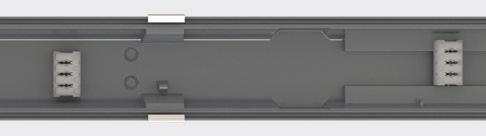
Flexible placement of the terminal block, at either end or the middle.
Aico Celebrates Excellence at Community Awards 2026
Aico’s Community Awards 2026 brought together leaders, innovators, and changemakers from across the social housing and fire safety sectors for an unforgettable evening of recognition, inspiration, and celebration.
THE GUESTS
The evening commenced with a warm welcome from returning host Carl Jones, followed by a powerful speech from Kevin Sinfield, who spoke about the impact of Motor Neurone Disease (MND) on his close friend Rob Burrow and countless others around the world. Aico is proud to support the MND Association and name it as its chosen charity for the 2026 awards.
The evening also featured a standout comedy performance from Ignacio Lopez, and an electrifying musical performance by Soho Collective, whose energy and talent brought the ICC to life and provided a memorable close to the night.
Aico extends its sincere thanks to the panel of judges who each presented the awards. They faced the challenging task of selecting winners from an exceptional pool
of entries, each demonstrating remarkable dedication and impact.
THE AWARDS
A new addition to this year’s event, the People’s Choice Award, created a buzz of excitement as attendees voted live on the night. The interactive element was a resounding success, and the winner was announced at the end of the awards ceremony.
Community Awards 2026 Winners
Apprentice of the Year Award: Emily-Jane Simmons
Best Distributor Community Initiative Award: City Electrical Factors NW London
Collaborative Partnership Award: Equans
College Initiative of the Year Award: Cheshire College South and West
Corporate Social Responsibility Initiative Award: Smith & Byford
Electrical Contractor of the Year Award: Magnus Electrical Services
Inspirational Colleague of the Year Award: Steve Messenger from Booker & Best
Lifetime Achievement Award: June Anderson from Clackmannanshire
Tenants & Residents Federation
Neighbourhood Transformation Award: Mid Devon District Council & Zed Pods Limited
People’s Choice Award: Wolverhampton Homes
Resident Engagement Award: Magenta Living
Rising Star Award: Alfie Squirrell from Wiggett Group
Sustainability Project of the Year Award: H&A Group
Woman in Fire Safety Award: Martina Lydon from WHG
This year’s awards were uniquely handcrafted by students at Severndale Academy, a specialist school supporting children and young people with special educational needs across Shropshire and Telford. Catering for learners aged 2 to 25, the Academy provides an inclusive and inspiring educational environment. Each award was created using coloured fused glass, thoughtfully designed to represent the tree featured in the Aico in the Community logo.
Neal closed the awards evening with a speech that reflected on the importance of the Community Awards, emphasising Aico’s commitment to supporting both the sector and the communities it serves. He highlighted how recognising inspirational individuals, organisations, and initiatives helps to champion excellence, encourage knowledge sharing, and foster collaboration in creating safer homes.
Following an incredible evening, Aico is delighted to officially announce the winners of the Community Awards 2026, celebrating outstanding achievements, innovation, and commitment across the sector.
Thank you to everyone who applied for the 2026 awards. Together, we are striving for excellence in the housing industry.
We look forward to doing it all over again in 2028!
BECOME AN AICO EXPERT DISTRIBUTOR
Become the go-to Expert in Fire Safety Compliance and Alarm Technology
The Aico Expert Distributor training equips distributors with the knowledge and confidence to specify, support, and promote best-practice fire and carbon monoxide alarm solutions.
What you’ll gain:
Book training with your Relationship Manager
Clear understanding of fire safety legislation and British Standards
Confidence in system design, alarm and sensor selection
Expert insight into Aico’s full product range and technologies
30 minutes of FIA-accredited CPD
From core compliance to the future of connected home life safety with HomeLINK, you’ll have the expertise your customers rely on.
Step into the Future of Safety Footwear
Peter Lawson, Brand Manager for Overland Shoes, explains why the latest step change in safety footwear - combining bold, disruptive design and unmatched wearability - could provide the perfect addition to the trade counter.
Take a look at the mainstream footwear category and you’ll find an industry-defining, technology-driven transformation. From adaptive cushioning and wellness-focused design to energy return foams and personalised fit, what was once a market defined by siloed breakthroughs is awash with innovation as advances in material science and manufacturing reshape how shoes are designed, made and experienced. The impact goes far beyond aesthetics, with user benefits that include enhanced comfort, performance and customisation.
Why then, should the safety footwear category be any different? The answer, put bluntly, is it shouldn’t. Yet, for far too long the reality is that the sector has been at a stalemate. Anchored in a compliance-first mindset, manufacturers have often prioritised tick-boxing over the real needs of the wearer, with comfort and design taking a backseat. This has meant that busy electricians have had no choice but to make do with clunky, basic, ‘one-size-fits-all’ designs - that is, unless willing to pay a premium for a designer label they neither need nor want.
Arguably, this logic becomes even more flawed when you consider just how critical work footwear really is. Many electricians are on their feet for up to 12 hours a day, five or more days a week. That’s up to 3,000 hours a year spent in uncomfortable safety boots. It’s no surprise, then, that many tradespeople can’t wait to slip back into their favourite trainers once the working day is over.
The good news, however, is that the days of compromising on comfort - and style, for that matter - are finally over. Enter Bobcat Safety Footwear by Overland Shoes; a gamechanging range designed to bridge this gap by offering truly innovative, ergonomic design, all-day wearability and contemporary, smart looks at a mid-market price point.
At its core is smart engineering built to maximise comfort with every step. Utilising the Redbacks cushioning system, every pair features energy-returning Leaf-Spring Technology insoles. Developed by experts in podiatry and biomechanics, this unique technology has been purpose-built to help reduce fatigue, distribute pressure evenly and deliver long-lasting comfort through the toughest shifts. Independent testing proved that this technology improves absorption of impact shock by up to 46%, delivering
industry-leading protection and outperforming rival insoles by as much as 30%.
The upshot is not just all-day wearability, even for the toughest shifts, but better posture, alignment and reduced injury risk with every step. The technology has also been proven to reduce strain on joints, tendons and the plantar fascia for improved lower-body well-being.
Meanwhile, features such as lightweight materials, composite safety toe caps, metal-free construction and puncture-resistant midsoles ensure maximum protection without sacrificing flexibility or comfort. Combined with an adaptive fit, the result is, quite possibly, the most wearable safety footwear the market has ever seen.
Comfort, however, is only part of the story. We know that today’s electricians are not just working long hours but across diverse environments and industries. That’s why we’ve taken careful measures to ensure there’s a suitable option for every requirement. For electricians working from a height,
the Forge series delivers precision performance with ladder grip technology, while the Rapid and Toledo ensure indoor/outdoor versatility. Then there’s the Keystone series that offers heat-resistant protection for more arduous environments, while the Bastion series provides maximum protection with heavy-duty boots for the most demanding applications. That’s not to mention women-specific ranges and more, all found across 27 SKUs and safety ratings from S3 to S7.
Another key advantage is the range’s distinctive design handle. With Bobcat Safety Footwear, bland, boring, clunky safety boots become a thing of the past, with each pair combining bold, sharp styling that looks as good as it feels. For busy electricians on the go, this means no more desperate dash to change up the moment the shift ends - in fact, in our experience, many like them so much, they wear them when off duty too.
The PPE market is changing. As consumers continue to demand much more from their everyday footwear, it is only a matter of time before those working in the trades come to expect the same level of innovation, comfort and design from their safety footwear. Those wholesalers and distributors that take stock of the opportunity now will be best placed to lead this exciting next phase of category growth – as basic, box-ticking safety footwear makes way for a more modern, innovative future that raises the bar from the ground up.
For more information please visit: www.bobcat-footwear.com
FOCUS ON TEST & MEASUREMENT
Staying Safe - with Safe Isolation
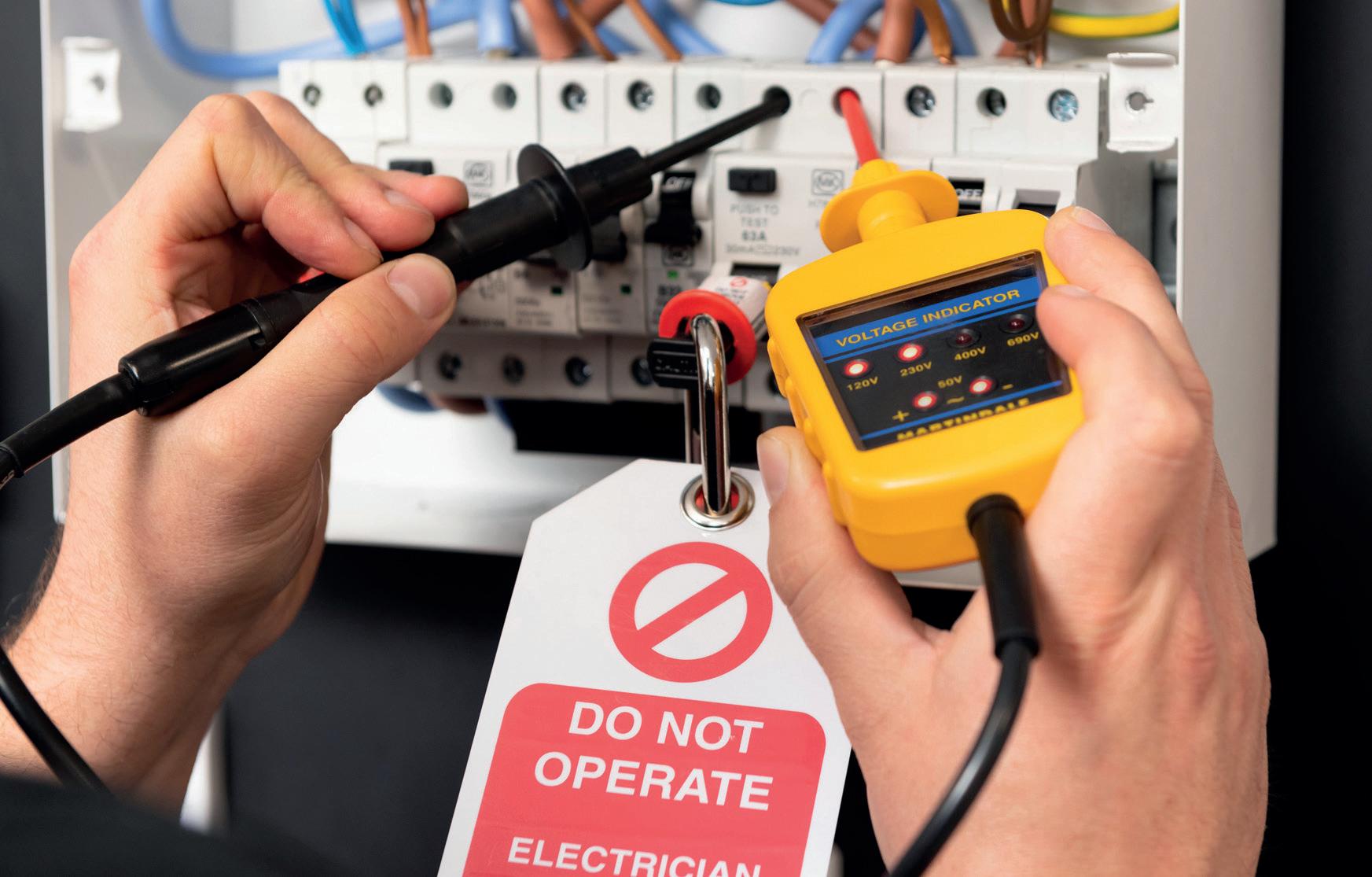
Using the correct tools and processes around electrical equipment safeguards workers and reduces potential liability. It’s essential circuits have been de-energised and properly isolated and checked with fully compliant test equipment before work commences –explains Steve Dunning, MD of Martindale Electric
When it comes to electrical testing and maintenance, safe isolation procedures are critical for preventing injuries. This starts by identifying the circuit to be worked on, finding the point of isolation, disconnecting and locking in the off position, and warning tags placed on all equipment - lock out /tag out (LOTO).
If equipment can be turned off but not isolated, then the person doing it should isolate at the point of connection, tracing the supply back to a point where it can be locked off. This is because if equipment is proven dead, only for someone else to restore power, the hazard has returned. An important point to remember when working on existing sites is that labelling can be misleading. Unqualified or untrained staff could have made alterations, so even where changes are safe, the labelling might be incorrect.
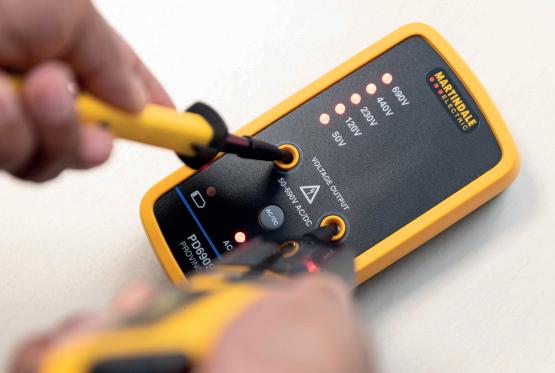
PROVING DEAD – USING THE RIGHT EQUIPMENT.
Once a circuit is locked off, the focus is on proving dead and two key pieces of equipment come into play - the Voltage Indicator (VI) and the associated Proving Device (PD). For voltage indicators there are three key safety requirements to check:
BS EN61243-3:
A VI should be designed to and be fully compliant with BS EN 61243-3. This regulation specifically covers devices designed to be used in a live working environment to determine the status, presence, or absence of operating voltage of low-voltage installations.
GS38:
The Health & Safety Executive GS38 guidance note is aimed at electricians, tradespeople and other electrical workers using testers on low voltage electrical systems and equipment. GS38 provides advice and guidance on how to work safely and gives specific information regarding test equipment use and maintenance.
BS EN 61010:
The BS EN 61010 safety rating tells you that the unit can cope with the risks from hazardous transient impulses on the mains supply system. BS EN 61010 Installation Categories (CAT ratings) are based on where you are working. It is essential the test equipment used, including any accessories (leads, probes etc), are safe to use in the location and meet the maximum voltage rating:
Measurement Category I refers to measurements performed on circuits not directly connected to the mains supply, or specially protected secondary circuits such as those powered by regulated low-voltage sources.
Measurement Category II refers to those performed on circuits directly connected to a low-voltage mains installation and might include standard 13A socket outlets, household appliances, portable tools and equipment.
Measurement Category III refers to measurements performed within a building’s permanent installation: distribution wiring including mains bus, feeders and branch circuits or hard-wired loads.
Measurement Category IV refers to the supply side source of the building’s installation – for measurements performed at the source of the
low-voltage installation such as electricity meters and measurements on primary overcurrent protection devices and ripple control units. It also includes devices and locations between the supply side of the building and the source, typically a substation.
Choosing the correct voltage indicator (VI) is critical. The best VI models do not use batteries, and have no ranges or switches, which makes them very user-friendly - making it virtually impossible to misinterpret the results.
WHAT NOT TO USE
Guidance advises against the use of both multimeters and non-contact devices for proving dead. Multimeters are not suitable for this process, as it is all too easy to select the wrong range and importantly, a multimeter relies on battery power to function fully, thus there is a high risk of making a false “dead” reading on a live circuit.
Non-contact voltage detectors also require a battery in order to work and are often sensitive to other signals, such as static electricity. It’s also not possible to prove they are working correctly with a standard proving unit. Whilst these units can be used to detect live cables, they cannot reliably be used to prove dead.
PROVE IT
By incorporating a proving device into an electrical safety process, that process becomes inherently more robust and reliable. Although a relatively straightforward addition, when working with or near electrical systems and equipment, a proving device can significantly reduce the risk of electrical injury to you, your team, and others around you.
A proving device is always on hand to check the operation of the voltage indicator, to be reliant on other sources could be hazardous. A dedicated matched proving unit will test the full range (and light/test all LED’s) on a VI.
STAYING ALIVE
Nothing is more important than preventing injuries and protecting lives, so to ensure the critical phases are memorable, Martindale has created the A.L.I.V.E: 5 fail-proof steps to safe isolation to shine a spotlight on what must be carried out for your own protection and to prevent injury.
FOCUS ON TEST & MEASUREMENT
The ALVA Series: A Profitable Proposition for Electrical Wholesalers
In a competitive wholesale landscape, success hinges on offering products electricians trust, tools that deliver strong margins, consistent sell through and minimal returns. The Di-LOG ALVA Series of multifunction testers is rapidly gaining traction across the UK, driven by sustained national marketing activity and increasing demand for cost effective, professional grade testing equipment. We are investing heavily in trade press advertising, digital campaigns and social media outreach to ensure the ALVA Series is front of mind for electricians. This sustained visibility is actively creating demand at contractor level, meaning wholesalers who stock or promote the range are perfectly placed to benefit as customers begin asking for it by name.
Whether your customers are domestic installers, commercial contractors or EV specialists, the ALVA Series provides tailored solutions that make your branch their go to destination.
A COMPLETE RANGE FOR EVERY CONTRACTOR
The ALVA Series includes:
ALVA MFT
ALVA MFT Pro ALVA MFT EV ALVA MFT Pro EV Alongside essential EVSE adaptors: DLEVLite DLEV1
The ALVA MFT is a cost effective, fully featured tester for everyday use. The ALVA MFT Pro adds enhanced diagnostics and onboard data storage, ideal for commercial and industrial environments. For EV applications, the ALVA MFT EV comes bundled with the DLEVLite adaptor for compliant testing of Type 2 chargers.The ALVA MFT Pro EV, paired with the DLEV1 adaptor, supports both Type 1 and Type 2 chargers and delivers full Auto EV safety verification, combining earth loop, 6mA RDC PD MD and RCD testing into one streamlined process. This modular line up allows wholesalers to offer multiple price points and capabilities, appealing to everyone from sole traders to major contractors.
DESIGNED FOR TODAY’S ELECTRICAL MARKET
Electricians are working under tighter budgets, evolving regulations and growing demand for EV infrastructure. The ALVA Series is built to meet these challenges:
Full colour TFT display with intuitive navigation; Auto start loop and continuity testing for faster workflows; Comprehensive RCD testing including AC, A, F, EV, B and B Plus and selective types; Rechargeable models reducing downtime and running costs. For contractors, this means faster testing, fewer errors and greater confidence at a price that aligns with today’s market realities.
CAPITALISING ON THE EV OPPORTUNITY
Why Carry the ALVA Series? Because Electricians Are Already Asking for It.
EV testing is one of the fastest growing segments in the industry, and the ALVA Series delivers a complete solution.
The ALVA MFT performs the critical 6mA RDC PD MD test required for EV charger verification. The EV specific kits offer:
• ALVA MFT EV with DLEVLite providing a portable, cost-effective Type 2 testing solution
• ALVA MFT Pro EV with DLEV1 delivering full Type 1 and Type 2 compatibility with automated test sequences
Contractors working with leading EV brands are already adopting these solutions and are actively looking for local wholesalers who can supply them quickly.
DRIVING DEMAND AND SUPPORTING YOUR SALES
Di-LOG’s commitment to the ALVA Series goes beyond product development. We are actively creating demand through:
• Heavy advertising in leading trade magazines
• Targeted digital and social media campaigns
• Product reviews and real world application content
This multi channel strategy ensures that electricians are already aware of and asking for the ALVA range.
• To help you convert that demand into sales:
• Regional agents provide demo units for hands on experience
• In branch training and walkthroughs are available for your team
• Point of sale materials, videos and digital assets support engagement
MAXIMISE VISIBILITY IN YOUR BRANCH
Wholesalers do not just need to stock ALVA, they can actively profit from promoting it.
Even if you are not ready to commit to full stock levels, we strongly encourage you to:
• Advertise the ALVA Series on your trade counters
• Display in branch promotional materials
• Engage your customers with the range early To support this, we have created a dedicated Wholesale Marketing Hub where you can request:
• Roller banners
• Counter displays
• Printed literature
• Digital sales assets
Visit: www.dilog.co.uk/distributor-support-hub/
A STANDOUT AFTERCARE PROPOSITION
A key differentiator for the ALVA Series is its industry first optional five-year optional support package, which includes:
• Annual calibration
• Guaranteed 72-hour turnaround on firmware updates
• Five-year parts and labour warranty
• Replacement leads in years two and four
• Fixed cost accidental damage repair
This level of aftercare reduces returns, builds customer loyalty and provides an additional upsell opportunity for your team.
A SMART COMMERCIAL DECISION
The market is evolving. Electricians are actively seeking reliable, affordable alternatives to high priced testers and the ALVA Series delivers exactly that.
By stocking or promoting the ALVA Series, you are not just adding another product, you are aligning with:
• Strong, marketing driven demand
• Attractive margins
• A scalable product range
• Add-on sales accessories
BE PART OF THE ALVA GROWTH STORY
Electricians are already seeing the ALVA brand across trade media and social channels. Make sure your branch is where they come to buy it.
Visit www.dilog.co.uk/ALVA, contact your Di-LOG account manager or access the Wholesale Marketing Hub to request your promotional materials today.
Electrical Contractors’ Association
– Past, Present and Future
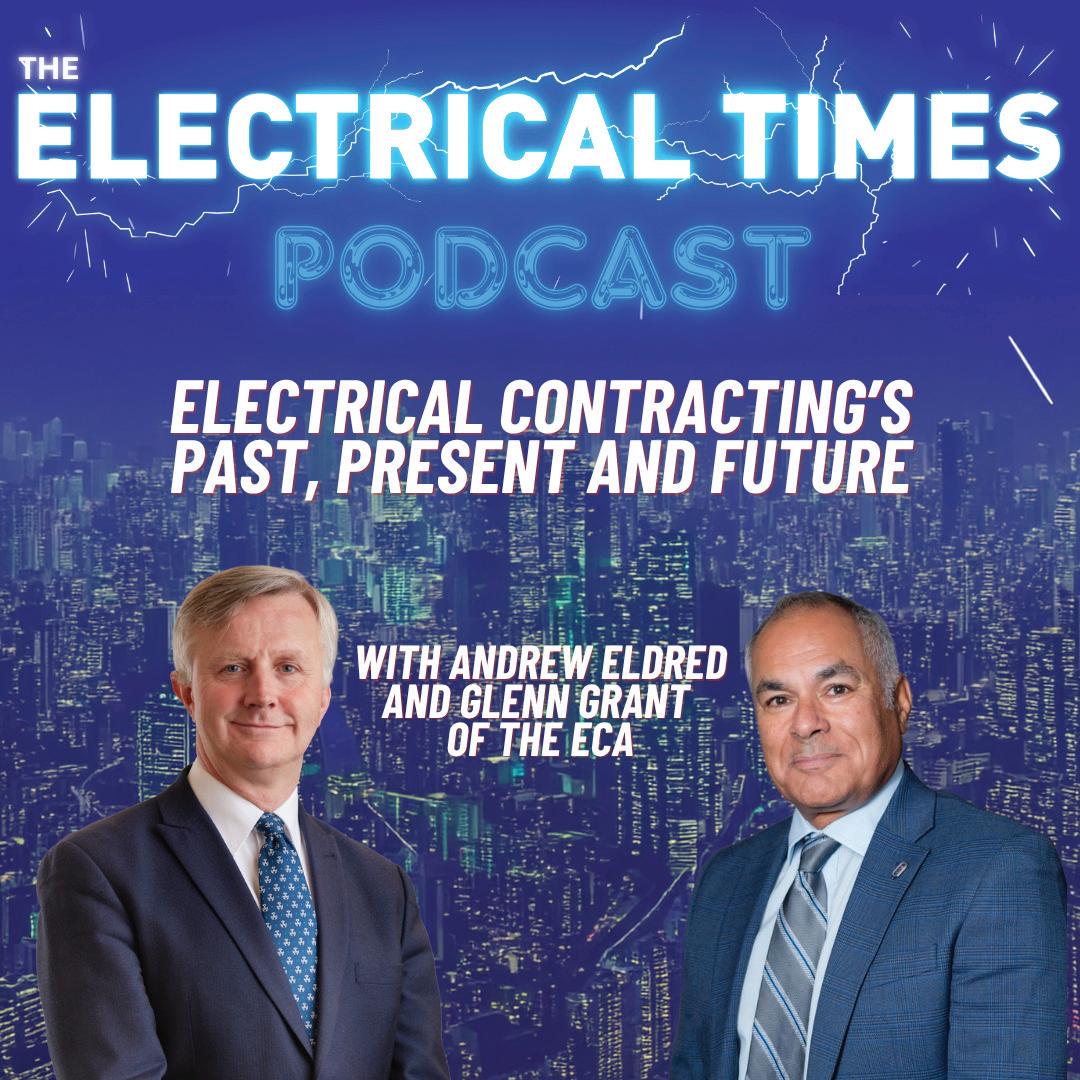
In the inaugural episode of The Electrical Times Podcast, Andrew Eldred and Glenn Grant from the Electrical Contractors’ Association (ECA) discuss the vanguard of electrification, the apprenticeship bottleneck, and why the “sparky” of 2026 is becoming an energy consultant
Looking back at ECA’s 125-year history, how has the identity of the electrical contractor evolved from the past to where we are now?
Glenn Grant: In the past, we were a predominantly manual trade – skilled, yes, but predictable. You had a toolkit, a roll of cable, and a set of drawings. Today, that identity has shifted. We aren’t just “sparkies” anymore; we are at the heart of the UK’s infrastructure. ECA was founded to bring order to the “Wild West” era of early electrification. Nowadays, the complexity of a modern commercial site – designing and integrating multiple systems – means we’ve moved from being installers to technical consultants.
THAT TECHNICAL SHIFT REQUIRES A SPECIFIC PIPELINE OF TALENT. THE PRESENT REALITY, HOWEVER, SEEMS TO BE A BROKEN PIPELINE. WHAT IS THE CURRENT STATE OF THE 2026 SKILLS INDEX?
Andrew Eldred: The present is a paradox. Demand for our services is at an all-time high, yet the skill-base is actually under threat. Our latest data shows a 5.5% drop in electrical apprenticeship starts last year. The bottleneck isn’t a lack of interest from young people; we have 26,000 learners in classrooms right now. The problem is that fewer than one in five are progressing into an actual apprenticeship. We are spending £80 million of public money annually on courses that don’t produce siteready, qualified electricians.
WHY IS THAT PROGRESSION FAILING? IS IT A LACK OF WILLINGNESS FROM FIRMS TO TAKE ON TRAINEES?
Andrew Eldred: It’s an economic squeeze. SMEs – which do the heavy lifting on training – are facing a 100% increase in the apprentice minimum wage since COVID, alongside rising NI contributions and other costs. When you’re a small firm, the financial risks are substantial. We need the government to realise that you can’t have safe buildings, new homes and hospitals, clean energy, or AI infrastructure without a massive army of electricians, fire engineers, and other skilled trades. That requires supporting the firms who pay the wages and provide the on-site experience.
FROM A CONTRACTOR’S PERSPECTIVE, HOW IS THE PRESENT DAY-TO-DAY WORK CHANGING ON-SITE?
Glenn Grant: It’s about the software-hardware merge. We’re no longer just pulling cables for power and lighting; we’re advising on software applications and commissioning specialist systems. The Building Safety Act has also changed the present landscape significantly, especially in my own area of fire safety systems. “Competence” is no longer a buzzword; it’s a legal requirement. You have to prove that our people have the right knowledge, skills for everything you’re installing, and keep yourself up to date. It’s professionalising the industry, which is a good thing, but there’s also a layer of administrative pressure that wasn’t there 10 years ago.
LOOKING TO THE FUTURE, WHAT DOES THE SKILLS LANDSCAPE LOOK LIKE FOR AN ECA MEMBER FIRM IN FIVE TO 10 YEARS?
Andrew Eldred: A big part of the future is regional and collaborative. We are moving away from a single, centralised skills system. As promised in our Recharging Electrical Skills Charter, we and our Members are rolling out regional Electrotechnical Training and Careers Alliances (ETCAs) around the country. These allow employers in Greater Manchester, South Yorkshire, Kent and elsewhere to work with training providers and local decision makers
to boost the quantity and quality of electrical skills outcomes in their own backyard. It’s about making the most of the resources and the system we have got.
AND FOR THE INDIVIDUAL TRADESPERSON ON THE TOOLS? WHAT IS THEIR FUTURE?
Glenn Grant: Good rewards and a great career. I truly believe the future electrician and fire engineer should have professional status. With electrification of everything, we are becoming the most important people in the building. We will be the ones managing “Smart Person Density” and using AI to optimise building loads. If you aren’t looking at renewables and smart integration now, you’re going to be left behind very quickly.
FINALLY, IF YOU HAD ONE MESSAGE FOR THE SECRETARY OF STATE REGARDING THE SECTOR’S FUTURE, WHAT WOULD IT BE?
Andrew Eldred: Listen to the industry. The Recharging Electrical Skills Charter isn’t just a wish list; it’s a blueprint for sustainability and economic growth. Cap classroom-only funding and start supporting the employers who turn learners into professionals.
Glenn Grant: My message is simple: The future is electric, and our Members are the ones who will build it. Give us the pipeline of talent, and we’ll deliver.
This interview has been abridged for clarity and length. For the full conversation, visit the Electrical Times YouTube channel or subscribe to the ET Podcast on Spotify. Alternatively, scan the QR code to watch or listen at https://www.electricaltimes.co.uk/ electrical-contractings-past-present-and-future/
This interview has been abridged for clarity and length. For the full conversation, visit the Electrical Times YouTube channel or subscribe to the ET Podcast on Spotify. Alternatively, scan the QR code to watch or listen at https://www.electricaltimes.co.uk/ electrical-contractings-past-present-and-future/
The Future of Electrical Standards
In an era of rapid technological advancement and evolving safety regulations, the role of industry bodies like NICEIC has never been more critical. On the latest episode of The Electrical Times Podcast, James Cooke speaks with Paul Collins, Technical Director at NICEIC, to discuss the current landscape of electrical contracting, the challenges of new technology, and what the future holds for the trade
ELECTRICAL TIMES (ET): PAUL, IT’S GREAT TO HAVE YOU. TO START OFF, HOW WOULD YOU DESCRIBE THE CURRENT STATE FOR ELECTRICAL CONTRACTORS IN THE UK TODAY?
Paul Collins: It’s a busy time, no doubt about it. We’re seeing a real shift in the industry. It’s not just about traditional wiring anymore. The “prosumer” model is becoming a reality. People aren’t just consuming energy; they’re generating it, storing it, and managing it. For the contractor, this means a massive broadening of the skill set required. We’re moving into a space where electrical work is deeply integrated with data, renewables, and smart home technology. It’s exciting, but it brings a level of complexity we haven’t seen before.
Guides” to break down the changes – whether it’s the new requirements for Arc Fault Detection Devices (AFDDs) or the updated approach to risk assessments for overvoltage protection. The goal is to give contractors the confidence to explain these safety benefits to their customers. It’s about moving the conversation from “the regs say I have to” to “this is why your installation will be safer.”
ET: YOU MENTIONED RENEWABLES. SOLAR PV AND BATTERY STORAGE ARE HUGE TOPICS RIGHT NOW. WHAT ARE THE COMMON PITFALLS YOU’RE SEEING IN THESE INSTALLATIONS?
Paul Collins: The biggest issue is often integration. You can have a perfectly good
ET: WITH THAT COMPLEXITY COMES THE NEED FOR ROBUST STANDARDS. HOW IS NICEIC HELPING CONTRACTORS NAVIGATE THE LATEST UPDATES TO THE WIRING REGULATIONS?
Paul Collins: Amendment 2 was a significant milestone. Our focus at NICEIC has been on making sure contractors don’t just see it as a set of rules to follow, but as a framework for safety and best practice. We’ve invested heavily in technical support, webinars, and our “Pocket
solar array and a great battery system, but if they aren’t communicating correctly or if the earthing arrangements aren’t properly considered for when the system is running in island mode, you’ve got a problem. We’re seeing cases where installers aren’t fully grasping the specific DC requirements, which are very different from the AC side of things. At NICEIC, we’re pushing for more specific training in these areas. It’s about ensuring that as we “green” the grid, we aren’t
compromising on the fundamental safety principles that the industry is built on.
ET: EV CHARGING IS ANOTHER MASSIVE GROWTH AREA. IS THE INDUSTRY KEEPING UP WITH THE DEMAND FOR QUALIFIED INSTALLERS?
Paul Collins: Demand is high, and the infrastructure needs to grow rapidly. The challenge isn’t just sticking a charger on a wall; it’s understanding the load characteristics of the property. Can the existing supply handle a 7kW charger running for eight hours? Does the consumer unit need upgrading? We’re seeing a lot of “non-traditional” players entering the EV space. Our message remains clear: EV charging is a significant electrical load and should only be installed by a competent certified business. Safety can’t be a secondary thought in the race to provide infrastructure.
ET: LOOKING AHEAD, WHAT DO YOU SEE AS THE “NEXT BIG THING” THAT CONTRACTORS NEED TO HAVE ON THEIR RADAR?
Paul Collins: I think the continued convergence of electrical and digital systems is inevitable. We’re looking at more sophisticated Energy Management Systems (EMS) that use AI to optimise energy use based on weather patterns and tariff pricing. Also, keep an eye on the “Circular Economy” in electrical products – how we install, maintain, and eventually recycle components. But ultimately, through all the change, competence will remain fundamental. As technology changes, the one constant is the need for the person doing the work to be properly trained, assessed, and held to a high standard. That’s what keeps the lights on and people safe. For more technical guidance and updates on industry standards, visit niceic.com.
This interview has been abridged for clarity and length. For the full conversation, visit the Electrical Times YouTube channel or subscribe to the ET Podcast on Spotify. Alternatively, scan the QR code to watch or listen at https://www.electricaltimes.co.uk/ the-future-of-electrical-standards/
The “Cool” Factor: Why Gen Z is choosing the trades
A Q&A with Sarah Hartland, Head of Marketing at Draper Tools
There is a quiet revolution happening in the UK workforce. While previous generations were pushed down the university route with an office job at the end of the tunnel, Gen Z is increasingly looking towards apprenticeships and working with their hands. Recent research by Draper Tools reveals a surprising trend: 61% of young people now believe working in a trade is a “cool job”.
On The Electrical Times Podcast, we recently sat down with Sarah Hartland, Head of Marketing at Draper Tools, to discuss this generational shift and how the industry is adapting to a new wave of hands-on professionals.
ET: THE RECENT DRAPER TOOLS SURVEY FOUND THAT A MAJORITY OF YOUNG PEOPLE NOW VIEW THE TRADES AS “COOL.” WHAT DO YOU THINK IS DRIVING THIS CHANGE IN PERCEPTION?
Sarah Hartland: It’s a fascinating shift. For a long time, there was a stigma that trades were a “backup plan,” but that narrative is dead. Social media has played a huge role – influencers and TV shows are showcasing the pride of creating something tangible.
Young people are seeing the fun side of the job; over a quarter of those we polled think tradespeople have more fun than office workers. There’s a sense of pride in fixing or building something that you just don’t get sitting behind a desk.
ET: FINANCIAL FREEDOM SEEMS TO BE A MAJOR MOTIVATOR FOR THIS GROUP. WHAT DID THE DATA TELL YOU ABOUT THEIR CAREER PRIORITIES?
Sarah Hartland: It was eye-opening. Almost half of the young people we surveyed see the trades as a quicker path to earning £100,000 than a university degree. With rising student debt, 34% said they want to avoid that financial burden and start earning sooner.
But it isn’t just about the money. They are looking at the property ladder. 53% believe a trade will help them buy a home faster than a degree would. It’s a very pragmatic, ambitious generation.
ET: YOU’VE MENTIONED THAT MENTAL HEALTH AND THE RISE OF AI ARE ALSO INFLUENCING THESE CAREER CHOICES. HOW SO?
Sarah Hartland: We found that 55% of young people believe working in a trade is better for their mental health than a desk job. There’s a desire to be active; 41% told us they prefer to be on their feet while working.
Regarding AI, a third of respondents said that recent advances in artificial intelligence have made them consider a career in the trades. You can’t automate a plumber or an electrician easily. There’s a level of future-proofing in manual skills that is becoming very attractive as the digital world becomes more uncertain.
ET: DRAPER TOOLS RECENTLY LAUNCHED THE DXPULSE RANGE. HOW DOES THIS PRODUCT TIE INTO YOUR STRATEGY FOR THE YOUNGER GENERATION?
Sarah Hartland: The DXPulse range was built directly from these insights. We realised that, for an apprentice starting out, the cost of highquality tools can be a barrier.
Over a quarter of young people told us they need tools that are professional-grade but affordable. DXPulse is a 12V brushless range designed to be light, compact, and accessible. It’s about giving them the right starter kit for a career they can be proud of.
ET: AS A MARKETING LEADER IN A 106-YEAR-OLD COMPANY, HOW DOES YOUR PERSPECTIVE INFLUENCE HOW YOU TALK TO THE YOUNGER AUDIENCE?
Sarah Hartland: I joined Draper in 2019 and worked my way up, so I understand that generational shift firsthand. I want our marketing to be as modern as the tools we make.
We are moving away from traditional lead-gen toward demand generation – creating content that actually educates and inspires. We want to be a brand that doesn’t just sell to the next generation but supports them as they build their own businesses and legacies.
With a 106-year history, Draper Tools is proving that you can be a legacy brand while staying at the cutting edge of cultural shifts. By championing the trades as a viable, lucrative, and “cool” career path, they are helping to bridge the UK’s skills gap one apprentice at a time.
This interview has been abridged for clarity and length. For the full conversation, visit the Electrical Times YouTube channel or subscribe to the ET Podcast on Spotify. Alternatively, scan the QR code to watch or listen at https://www.electricaltimes. co.uk/why-gen-z-is-choosing-the-trades/
FIRE & CO DETECTION
Simple. Smart. Reliable. Protection for every home.
BLACK+DECKER alarms combine advanced safety with effortless installation. Our range includes battery and interlinked mains powered smoke, heat, and CO alarms, available as standalone units or wirelessly connected systems for whole home protection. With sleek designs and 3rd party trusted performance, you get complete coverage and peace of mind.
FEATURING OUR CONNECTED RANGE
Link up to 20 alarms for whole home protection. When one alarm is activated, all CONNECTED alarms trigger.
When one alarm sounds, all alarms trigger, protecting every floor and room.
Reliable wireless connection with seamless interlink, no messy wiring.
EASY TO INSTALL
Pair and install within minutes with no wiring or additional modules required.
Now available at:
Tel: 020 8847 5544
Email: wholesale@attgb.co.uk
Web: www.attgb.co.uk
ESP ignites the fire and CO alarm market
ESP, has invested significantly to introduce a new name to the fire and safety alarm sector with the launch of Espire. Espire is a comprehensive range of high performance fire and CO alarm products that has at its core quality, reliability and innovation. Sitting as a separate brand under ESP’s growing product portfolio, Espire is supported by Scolmore Group, distributed by ESP.
The Espire fire and safety alarms are suitable for Grade D1, Grade D2 and Grade F1 installations. The comprehensive range comprises five alarm types:
• Optical smoke alarms.
• Heat alarms.
• Smoke and heat alarms.
• Carbon Monoxide (CO) alarms.
• CO and heat alarms.
The range offers a number of pioneering features, some unique in the market:
The optical smoke alarms and heat alarms are available in three options - powered by mains with a sealed tamper-proof 10-year lithium battery: powered by mains with 9v replaceable battery: powered by a sealed tamper-proof 10-year lithium battery.
The smoke and Heat alarms, CO Alarms, and CO and heat alarms are available in two options - powered by mains with a sealed tamper-proof 10-year lithium battery: powered by a sealed tamper-proof 10 year lithium battery. www.espireuk.com
A cut above the rest
Makita has launched the new JR003GZ 40VMax Reciprocating Saw XGT®. Equipped with a newly engineered chain vice to securely fix the workpiece, the tool enhances stability, safety and helps to improve accuracy in the cut. Powered by a 40VMax Li-ion battery, it delivers just the right combination of power and durability, making it the ideal solution for cutting large diameter pipes and other challenging materials.
Delivering a high cutting capacity, the durable Reciprocating Saw is an ideal option for heavy duty requirements. With an impressive maximum cutting diameter of 220mm, a handy adjustable stroke rate based on the material as well as constant speed control, the saw can be used for a variety of materials including wood, cast iron, iron and steel pipes.
An expertly engineered tool, the unique pipe clamp style chain vice has a built-in spring that achieves a quick and secure fixing and allows the chain to be temporarily held in place while wrapped around the pipe. This enables operators to achieve a true parallel cut, essential for applications where pipes need to be welded together achieving an accurate join. In another practical design feature, the tool can be used as a standard recipro saw by attaching the front grip accessory supplied. Furthermore, the blade clamp, which requires frequent replacement when used in heavy-duty conditions, can be easily replaced by loosening the hex socket bolts without removing the shoe.
For further information visit: www.makitauk.com
Enhanced circuit protection with Elucian’s new 10kA3 Pole + Switched Neutral Bi-Directional RCBO
Click Scolmore has announced the launch of Elucian’s new 10kA 3 Pole + Switched Neutral Bi-Directional RCBO, further expanding its comprehensive circuit protection portfolio.
Developed in response to growing market demand, the new 10kA 3 Pole + Switched Neutral Bi-Directional RCBOs are supplied with a one metre Neutral fly lead and are available in a wide range of current ratings from 6A to 63A. Products are offered in both B Curve and C Curve variants, each featuring Type A 30mA protection.This ensures suitability across a broad spectrum of commercial and industrial applications where additional protection may be required.
Regulation 411.3.3 sets out the requirements for socket-outlets up to 32A to incorporate additional protection when being used by ordinary persons. While many installations use SWA cables in this environment - which typically do not require additional protection - the regulation is clear that additional protection is required for socket-outlets up to 32A. Installers often install an RCD closer to the socket. This approach can be costly and time-consuming.The new addition provides a reliable and space-saving solution for three-phase installations allowing multiple points to be installed on one RCBO, extending Elucian’s offering beyond its established single-pole solutions.
Designed with bi-directional functionality, the new RCBOs are suitable for a wide range of applications, including:
Three-Phase Distribution Boards, Renewable Energy & HVAC Systems, EV Charging Stations, Industrial Environments and Commercial Buildings.
For more information, visit the Elucian website or download the Scolmore Group app. www.elucianuk.com
TRT Lighting expands heritage
TRT Lighting has launched its first dedicated heritage lantern range. Developed in response to growing customer demand, the new range enables TRT to support projects where traditional aesthetics are required alongside modern road lighting, strengthening its ability to compete across a wider range of public realm and conservation-led schemes.
The initial launch includes two of the most widely specified heritage forms: Heming, a traditional top-entry, cradle-mounted teardrop lantern, and Merse, a classic four-sided frog-mounted lantern. By focusing on these established styles, TRT Lighting is targeting the most commonly specified lanterns, with the flexibility to support a broad range of applications from day one.
Designed to complement TRT’s existing road lighting ranges, including the market-leading Aspect Gen2, the heritage lanterns combine classic styling with modern LED performance. The range offers a choice of colour temperatures, including and 2200K, 2700K, supporting schemes where ecological sensitivity or reduced blue light content are key considerations. This flexibility allows specifiers to respond to increasingly stringent guidance around obtrusive light and environmental impact, while still achieving required lighting levels and uniformity.
Optical performance has been developed to align with current road lighting requirements, ensuring the luminaires can deliver efficient, controlled light distribution suitable for a range of applications, from residential streets to heritage town centres.
For more information on the new heritage lantern range, visit the website: www.trtlighting.co.uk/products/?_sft_product-category=heritage-lighting
Ovia launches LED floodlighting system for professional sport facilities
Ovia, part of the Scolmore Group, has launched Pitch Finder, a new high performance LED sports floodlighting system engineered specifically for professional outdoor sports environments, offering a scalable and fully configurable lighting solution. Pitch Finder has been developed as a modular floodlighting system, allowing each installation to be tailored to the exact requirements of the project. Available in 600W, 1200W and 1800W configurations, the platform enables lighting performance to be matched precisely to the scale and operational needs of the sports facility.This ensures consistent illumination, optimal coverage and improved energy efficiency across a wide range of applications.
The system also supports multiple driver configurations, with the option to contain one driver per floodlighting system or one driver per LED module depending on output requirements and preferred installation layout. Drivers support 0–10V, DMX and DALI
The extensive Unicrimp conduit accessories range has been developed with the installer in mind, combining robust materials with practical design features to streamline on-site installation while delivering long-term reliability. The range includes more than 90 individual products, ensuring installers have the right accessory for virtually any application - whether residential, commercial, or industrial.
In addition to size extensions, the Q-Crimp range now welcomes a completely new product type - Threaded Nipples - which are available in 20mm, 25mm and 32mm sizes. This addition further strengthens the range’s position as a complete conduit accessory solution. Designed for secure conduit-to-enclosure connections and system extensions, threaded nipples provide reliable alignment and mechanical stability while maintaining electrical continuity. The introduction of this new category reflects Unicrimp’s continued commitment to evolving the range in line with installer needs.
Click Scolmore makes full suite of laser etched Mode 20A DP Switches and FCUs available from stock
Click Scolmore has reinforced its commitment to product availability and contractor convenience with the announcement that its expanded range of laser etched Mode 20A Double Pole switches and 13A Switched Fused Connection Units will now be offered entirely as stocked lines.
The move sees seven product types across the popular Mode wiring accessories range available off the shelf in a wide selection of clearly defined laser etched legends – removing the need for special orders and extended lead times. Mode 20A Double Pole switches will be available with a comprehensive choice of 18 laser etched legends, while the Mode 13A Double Pole Switched Fused Connection Units will be stocked in 17 popular etched variations – ensuring fast, straightforward access to the most commonly specified applications. Each plate is precision laser etched for clarity and durability, with markings covering appliances such as Extractor Fan, Cooker Hood, Dishwasher, Fridge, Fridge Freezer, Boiler, Oven, Tumble Dryer, Microwave, Hob, Freezer and more.
Laser etched plates of this type are widely specified by Local Councils and in Social Housing projects, where clear identification, consistency and compliance are essential. By committing to hold all variants as standard stock products, Click Scolmore is enabling wholesalers to support contractors with immediate availability, helping streamline installation schedules and maintain specification standards without delay.
For more information visit Click Scolmore’s website or download the Scolmore Group app. www.scolmore.com
dimming protocols (DALI as standard), ensuring seamless integration with modern lighting control systems. Built to withstand challenging environments, Pitch Finder carries an IP66 weatherproof rating, C4 corrosion resistance and IK08 impact resistance, ensuring reliable performance in all weather conditions. With an impressive 100,000 hour LED lifetime, the system is engineered for long term durability and reduced maintenance. Its robust construction makes it suitable for a wide range of outdoor sports applications, including football pitches, tennis courts, track and field facilities, baseball fields, stadium installations and ski tracks.
For more information, visit oviauk.com or download the Scolmore Group app for further resources. www.oviauk.com
Unicrimp’s comprehensive Conduit Accessories range
Other key product categories to highlight include Conduit Boxes, Light Gauge Saddles, Inspection Tees, Inspection Bends, and Metal Hooks.
Installers also benefit from the technical back-up of the Scolmore Group technical department, providing additional reassurance on specification and compliance matters.
For more information on Unicrimp’s Q-Crimp portfolio, visit the website or download the Scolmore Group app. www.unicrimp.com
Makita has expanded its advanced cordless range with the introduction of two new high performance combo kits, the DLX3193TJ and the DLX4195JX1. Designed to give trade professionals greater productivity and value, the two sets combine Makita’s industry leading LXT 18V technology with a selection of powerful tools, supplied in convenient carry cases. Offering versatility, reliability and long runtimes, both provide an efficient solution for users looking to expand their tools.
The Makita DLX3193TJ 18V 3pc cordless kit is designed for tradespeople who require reliable performance across trimming, planing and drilling applications. Supplied in a Makpac Type 4 carry case, the kit includes two BL1850B 5.0Ah lithium-ion batteries and a DC 18 RC Rapid Charger, along with three efficient power tools, starting with the DHP490 Combi Drill. Alternatively, the DLX4195JX1 18V LXT 4pc Combo Kit includes three 5.0Ah batteries, a fast charger, two Makpac stacking cases for easy portability, and four high-performance brushless tools.
For more information, please visit: www.makitauk.com