








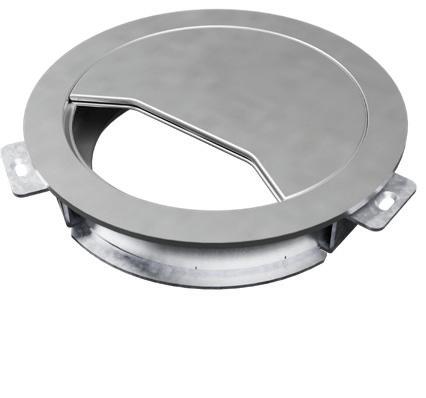
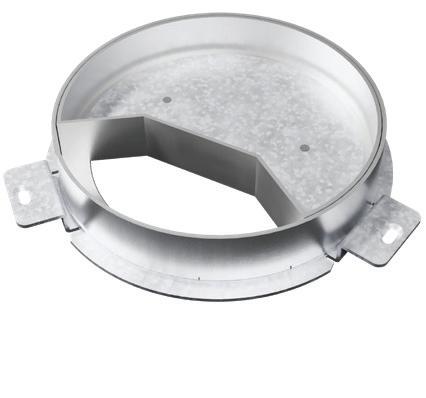
Our Stainless Steel Grommet is an elegant, premium quality floor-access solution that allows you to connect seamlessly with your underfloor power distribution system.
The Stainless Steel Grommet is designed for use in high-end commercial environments and is suitable for raised floor applications. It can be installed in a range of flexible and efficient configurations that permit safe and easy of access to power and data services within the under-floor void.

Stainless Steel Flanged Trim for carpet installations.
Steel Tramline
for premium floor tile installations.

4, 6, 8, 9, 16, 18, 23, 24, 45, 51
Awards
10 Managing product information under the building safety act
Contractor Corner
14 How technology relieves admin burdens and drives growth
Features
LIGHTING
20 Circular Lighting Live: Industry unites for sustainable change
22 Why we need to prioritise lighting controls this winter
EV
26 Darren Harris at Believ unpicks EV rollout challenge
28 eHGVs risk stalling in the UK it and how will it fall short?
30 Wonderful world of Type 3 SPDs
FIRE, SAFETY AND SECURITY
32 The two sides of solar safety
34 Why follow british standards?





36 C-TEC’s CAST ZFP and CAST-PRO specified for £250m development
Alarming rise in fake ATEX equipment threatens worker safety 39 Why rigorous testing and handover matter in domestic fire safety
A game-changer for kitchen safety
& MEASUREMENT 42 How to use a circuit tracer to locate a dead short
EV charger installation and maintenance set to surge
The unsung hero of operational resilience and safety
Anna Mazzoleni, ABB
Snowdon at night: Dan Griffiths leads the team to the summit
How project failures begin before construction starts Editor



The Electrical Industry Awards 2025 once again shone a spotlight on excellence, innovation and achievement across the UK’s electrical sector.
On Thursday, October 23, the finalists and winners of this year’s Electrical Industry Awards were announced at a virtual ceremony by BBC weather presenter Sarah Keith-Lucas.
This year’s ceremony celebrated the professionals, companies and products driving the industry forward – from groundbreaking technologies and sustainable projects to exceptional training initiatives and community impact.
The judging panel, comprising representatives from leading industry bodies including the ECA, JIB, LIA, NAPIT and NICEIC, praised the exceptional quality and innovation demonstrated across all categories.
A total of 12 awards were presented, recognising standout achievements across products, projects, contracting, and wholesaling. The event was supported by main sponsor Luckins Live, section sponsor Aico, and category sponsors WISKA, and NAPIT.
A huge congratulations to the winners and a big thank you to the sponsors and judging panel for their invaluable support.
To watch the ceremony, visit: www.electricaltimes.co.uk
Lisa Peake, EDITOR, lisa.peake@purplems.com @electricaltimes



Phil Thompson, former Procurement Data Manager at NG Bailey, has joined the team as Manager - ETIM UK and Ireland Limited.
This is a new role reflecting the increased demand by businesses for technical and practical ETIM support. Phil will divide his time between the Electrical Distributors’ Association (EDA) and their ETIM work in the electrotechnical sector, and the Builders Merchants Federation (BMF), covering businesses in the building materials, HVAC and plumbing sectors. The EDA and BMF are partners in ETIM UK and Ireland.
Freedom Heat Pumps has announced the appointment of Graham McCracken as its new Managing Director, a move that marks the start of a new chapter, positioning Freedom Heat Pumps as a leading independent distributor.
Graham brings over 20 years of experience in customer insight and strategic leadership, including a decade at Certas Energy, the UK’s largest independent fuel and energy distributor.
Logic4training, the South East’s leading building services engineering training provider, has strengthened its growing apprenticeship provision with the appointment of Iza Salegui as Head of Apprenticeships and Funding.
Iza brings a wealth of experience in training, quality improvement and funding management across education and employment sectors, at both local and national levels. Iza’s skills and leadership will drive Logic4training’s mission to support industry employers and learners in tackling skills shortages.
Corpay, the global S&P 500 corporate payments company, has appointed Matt Hanks as Vice President Marketing for UK Fleet, a new role created to accelerate growth across its UK fleet and payments brands, including Allstar, Keyfuels and The Fuelcard Company (TFC).
ABB celebrates half a century of innovation and energy efficiency with variable speed drives
October 2025 marked the 50th anniversary of the Low Voltage Variable Speed Drive (LV VSD), which was used in a commercial application for the first time at a sawmill in Finland, in 1975. It was developed in the 1970s by Strömberg, a predecessor to ABB.

The LV VSD addressed a long-standing limitation of the traditional squirrel-cage induction motor, which had remained fixed-speed since its invention by Nikola Tesla in 1888.
Martti Harmoinen (pictured), the Strömberg engineer credited with leading the original development team, received the Finnish Engineering Award in 1981 and the honorary title of Professor in 1995.
Independent studies suggest that if VSDs were applied more broadly, including both constant and variable flow applications like pumps, fans, and compressors, annual energy consumption in EU could be reduced by around 140 terawatt-hours. ABB
estimates that using VSDs in these scenarios can lead to energy savings of up to 12 per cent per installation.
Though Martti Harmoinen passed away in 2023, his work remains central to ABB’s mission to advance smart, efficient motor systems worldwide.
For more about the history and impact of the Low Voltage Variable Speed Drive, visit https://campaign-mo.abb.com/drives50
Vent-Axia’s Sentinel Apex gains Passivhaus
Vent-Axia is proud to have gained Passivhaus Certification for its award-winning Sentinel Apex commercial Mechanical Ventilation with Heat Recovery (MVHR) range.

Passivhaus is a method of creating buildings that require very little energy for heating or cooling whilst maintaining exceptional indoor comfort. The certification is a performance-based standard that is increasingly important to specifiers who need the lowest carbon building solutions. With its class-leading performance number, gaining this certification confirms that the Sentinel Apex is ideal for low and zero-carbon buildings, especially beneficial with the Net Zero 2050 deadline approaching. The Sentinel Apex also continues to deliver, ‘Simply more as Standard’, as the Passivhaus Certified models are available at no extra cost.
“We are delighted that our Sentinel Apex commercial MVHR units have achieved the globally recognised Passivhaus Certification thanks to their excellent performance number and thermal efficiency. The Sentinel Apex has been designed to help specifiers on their decarbonisation journey, maximising its energy efficiency and performance, while providing excellent IAQ, ultra-low sound levels, and thermal comfort, making the units ideal for Passivhaus projects. Not only that, but as Passivhaus buildings use up to 90 per cent less heating and cooling than conventional buildings, end-users can benefit from lower energy bills too,” said Alexis Roberts, Channel Marketing Manager at Vent-Axia.
For further information on Vent-Axia and the Sentinel Apex, visit www.vent-axia.com.
Evolt Charging partners with CatStrap to bring robust and durable EV cable protection solution to the UK market
Evolt Charging, part of SWARCO Smart Charging, one of the UK’s leading electric vehicle (EV) charging businesses, has announced a new agreement to become the exclusive UK distributor for CatStrap – EV Cable Protector, a robust protection system that is specifically designed to prevent EV charger cable theft.
Cable theft is a nationwide challenge that continues to affect all UK Charge Point Operators (CPOs), with hundreds of incidents of theft and vandalism reported within the last few years. Despite the relatively low resale value of the copper wiring within EV charging cables, each stolen cable can cost the CPO thousands to replace.
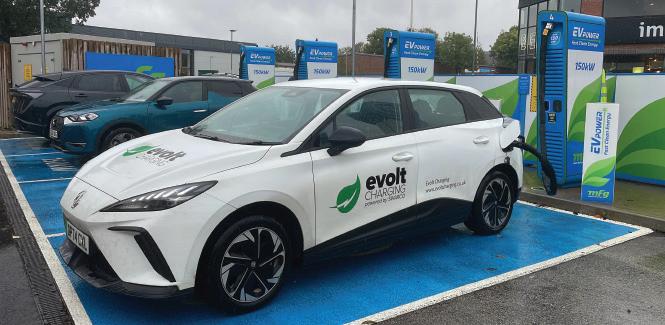
CatStrap combines dual steel materials in a proprietary armoured sleeve design that successfully deters saws, cable cutters, and other handheld or powered cutting tools. The robust protection system features three layers of steel strip, four times harder than stainless steel, and aircraft-grade cable for superior theft protection.
Evolt has rigorously tested the CatStrap in real-world conditions, proving its exceptional resistance to cutting and theft attempts.
“We’re proud to partner with Evolt Charging to bring our EV Cable Protector technology to the UK,” said David Birsen, Vice President of CatStrap. “After protecting thousands of public chargers across North America in high-theft areas with virtually 100 per cent success, we’re excited to extend that protection to UK operators. Evolt’s nationwide service capability, operational excellence, and expertise in charge point hardware make them the ideal partner to ensure consistent, high-quality installations and successful implementation of our products.”












While earliergeneration PHEVs offered electric-only ranges of just 20 to 30 miles, new and upcoming models are providing range suitable for daily driving.
This trend aligns with what drivers are saying: most daily travel needs fall within the 30-to-40-mile range, and with these new PHEVs the use of petrol can be the exception rather than the rule.
Viktors said: “Our research underlines the growing importance of destination charging – being able to charge where the vehicle is parked during a stay or visit, such as at hotels, tourist attractions, restaurants or shopping centres. Many PHEV drivers are now comfortable using petrol occasionally but prefer to recharge whenever possible –especially while staying somewhere for a few hours or overnight.
“I heard another EV driver say, ‘We used petrol on the motorway, sure, but we charged at our hotel and used only electricity for all our local driving the next day. That made the trip feel cleaner – and more relaxed.’”
Modern PHEVs don’t just go further – they now charge faster. Many support 11kW 3-phase AC, allowing a full recharge in under two hours. That means destination charging doesn’t need to be limited to overnight stays. Short stops for a meal, event or shopping trip can easily restore a full battery – if the chargers are there.
CTEK’s findings confirm a major evolution in PHEV use: electricity for the everyday, fuel only when needed. The growth in battery size, real-world EV range and smart charging capability has turned PHEVs into highly capable, low-emission travel tools.
As world leaders prepare to gather in Brazil for COP30, a new major study from Siemens reveals geopolitics is reshaping infrastructure strategy, with national energy security overtaking global climate cooperation as the primary driver of the energy transition. The Siemens Infrastructure Transition Monitor 2025 reveals senior leaders believe a resilient energy supply should be the top governmental priority among infrastructure transition goals – up from third place in 2023. Meanwhile, national energy independence and the proactive management of climate risks have seen the most significant growth in priority.

mitigate the use of energy as a geopolitical tool, governments are prioritising security, independence, and preparedness alongside climate mitigation.
The report, based on a global survey of 1,400 senior executives and government representatives in 19 countries, highlights a shift: from a multilateral vision of clean energy to one increasingly centered on sovereign resilience and regional production. With mounting pressure on public and private energy systems amid overlapping climate, geopolitical, and market challenges, it finds that energy resilience is now seen as a critical enabler of the clean energy transition – not a trade-off.
Rising global instability is intensifying market and supply chain volatility. To
Report: siemens.com/global/en/company/insights/infrastructure-transition-monitor-2025
Experts in a diverse range of skills in fire safety are becoming the fire aware educators to help guide those in the supply chain trying to find their way around the wave of legislation and compliance currently being introduced.

Gavin Skelly, Fire Aware CEO, said members specifically provide training courses relating to fire safety and management relevant for designers, main contractors, domestic trades, material suppliers, building management, hotel and leisure, commercial and private landlords and local authorities.
He said: “At a time of increasing concern for the safety of the public who use our buildings and spaces, the fire safety industry is under increasing scrutiny and those with a duty of care should understand this is more than a job, it is a vocation.
“We believe there is enough legislation to ensure safety if they are understood and followed. We have specialists who can help guide anyone in the supply chain around some of this new legislation because it can be challenging given its complexity and scale.”
The expanding industry body is leading the way by focusing on the moral responsibility of all those working in the fire safety supply chain including designers, developers, asset owners, managers and other stakeholders. It aims to change the culture of the built environment sector by introducing a moral code of conduct.
InstaVolt is set to begin construction on Monday on the country’s first ever motorway services featuring on-site battery storage directly connected to its chargers.
The revolutionary project at Welcome Break Corley Services is located between Junctions 3 and 3A on the M6. It will mark a major milestone in the development of ultra-rapid EV charging infrastructure in the UK with two large battery storage units being installed on either side of the motorway.
The system, will store electricity on-site and distribute it directly to the chargers, allowing for a smaller grid connection and ensuring consistent ultra-rapid charging performance even during periods of high demand.
Saving on standing and capacity charges this innovation further supports InstaVolt’s off

peak charging rate of 60p per kWh between the hours of 8pm to 7am.
This is just the start of the battery rollout programme with an additional 12 batteries to be installed across the InstaVolt network over the coming weeks with its next battery sites in North Wales and Eastbourne.
Once completed, the upgraded Corley Services on the M6 will enhance driver
convenience and fleet efficiency along one of the UK’s busiest transport corridors, providing faster, cleaner and more resilient charging to motorists on the move.
In addition to the battery installation, InstaVolt will also upgrade the existing chargers from 62.5kW to 160kW ultra rapid chargers, further improving charge times for drivers. The northbound site will feature eight chargers, while the southbound site will provide seven chargers for drivers travelling in the opposite direction.
With more than 2,200 chargers already operating nationwide at 99 per cent+ uptime and powered by 100 per cent renewable energy, the company continues to set new standards excellence and accessibility.
For more information visit: InstaVolt.co.uk










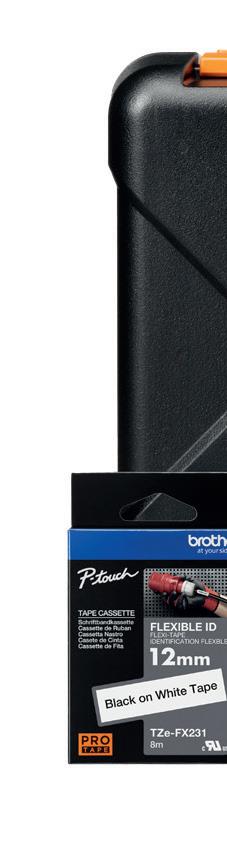
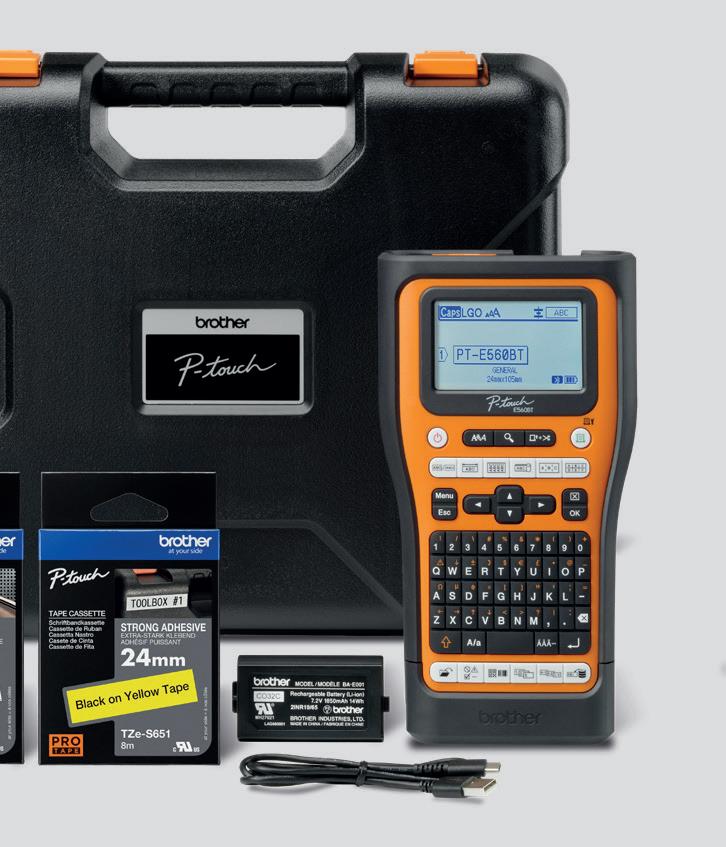
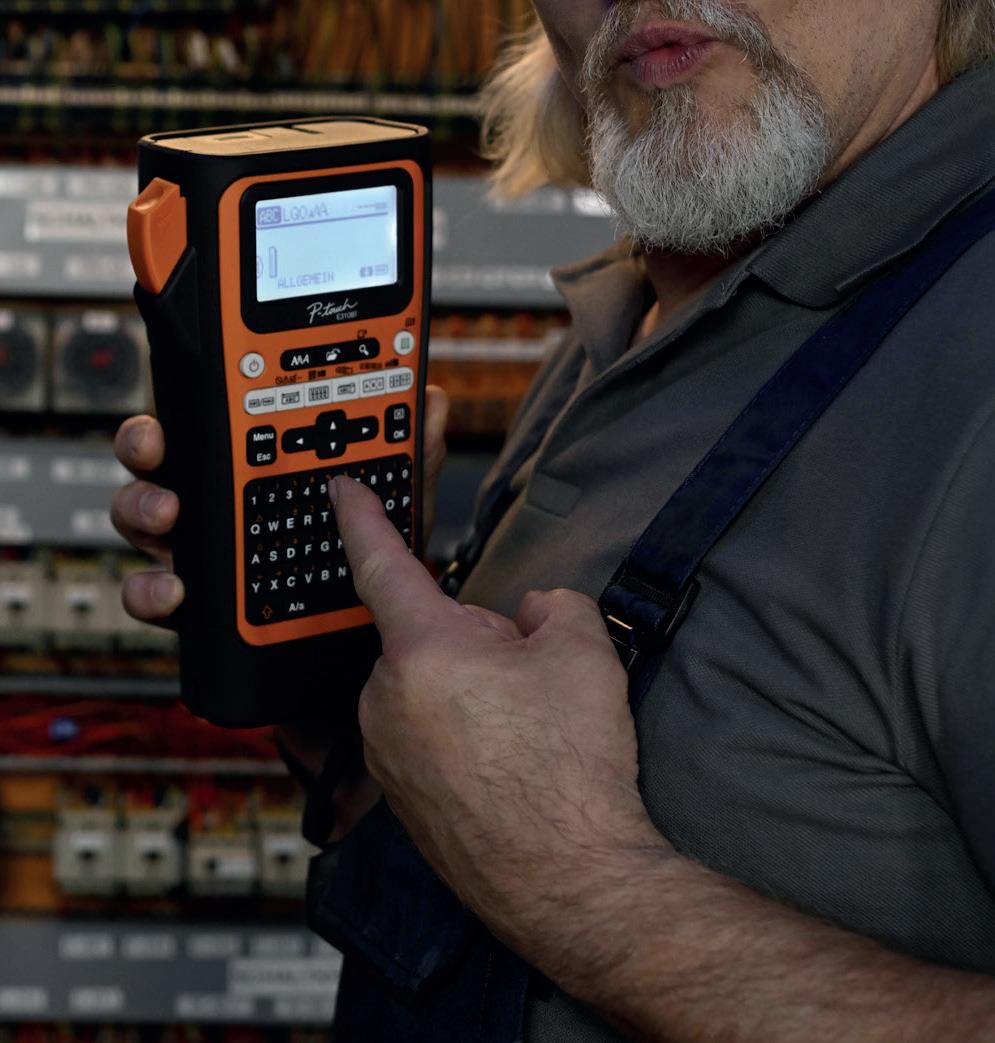

Design
Pro
Industrial-grade
Label
Store



Last Mile, the multi-utility infrastructure group that designs, builds, owns and manages more than 910,000 connections across Great Britain, has announced the appointment of Sofia Arhall Bergendorff and Helen Moore as NonExecutive Directors (NEDs).
Sofia Arhall Bergendorff is an experienced infrastructure and technology professional, with an extensive 35-year track record in property development.
Nexans has announced that its Board of Directors has resolved to appoint Julien Hueber as the new Chief Executive Officer and to part ways with Christopher Guérin. These decisions will take effect immediately; Christopher will be available to Julien until October 31, 2025.
Julien Hueber has solid experience in supply chain and purchasing, in-depth knowledge of the Asia-Pacific region.
Stiebel Eltron UK has strengthened its South West operations with the appointment of a new specification manager who will drive forward the adoption of renewable heating solutions across the region.
Helping to promote Stiebel Eltron’s range of air and ground source heat pumps and ventilation products, Claire will play a key role in strengthening existing relationships and developing new partnerships in the region.
Ovia, part of the Scolmore Group, is pleased to announce the appointment of Jordan Charran as the new Area Sales Manager for the Southwest region.
Jordan brings a wealth of industry experience to the role, with over a decade in the electrical sector, beginning his career with one of the UK’s largest electrical wholesalers, where he spent seven years progressing through a variety of roles from the warehouse to external sales.
phs Compliance has appointed Jonathan Mackie as Managing Director.
Jonathan Mackie joins phs Compliance, which is part of the phs Group, with over 25 years’ experience as a commercial director and an extensive background in global service links.
Scolmore Group is pleased to announce the expansion of its Click sales team with the appointment of three new Area Sales Managers.
Alistair Lishman, James Louriero, and Paul Sawyer join the business, bringing with them a wealth of industry knowledge, technical expertise, and commercial experience.
The appointments mark a significant step in the ongoing development of the Click Scolmore brand. Their combined experience and regional expertise will ensure that customers across these key areas continue to receive the highest level of service, support, and access to innovative wiring accessories and circuit protection products.

Ten Greater Manchester firms will get rare access to Bosch’s German hydrogen operations, in a new challenge designed to give UK businesses the knowledge to compete in the emerging hydrogen economy.
Delivered by GM Business Growth Hub with Bosch and Manchester Metropolitan University, the Hydrogen Supply Chain Innovation Challenge will give selected firms direct insight into how hydrogen systems are designed and tested.
The launch comes as the Greater Manchester Combined Authority (GMCA), working with Manchester Met, opens consultation on its new hydrogen and fuel cell strategy. Firms will take part in a site visit to Bosch Germany in January 2026, as well as workshops and development sessions. The challenge runs until March 2026, with further support beyond that.
Alongside the Bosch visit, participants will receive mentoring and commercial support from the Hub, and opportunities to connect with a network of industry leaders.
Janine Smith, Director at GM Business Growth Hub, said: “Manchester was the birthplace of the Industrial Revolution and now, across Greater Manchester, we’re once again driving the next wave of change - this time through clean energy.
“This challenge gives our firms a front-row seat with Bosch, one of the global leaders in hydrogen technology, and the opportunity to help shape the supply chains of the future.” Applications are now open: https://www.businessgrowthhub.com/programmes/gmhydrogen-supply-chain-innovation-challenge/.
Rolec and Go Zero are joining forces on a mission to accelerate the deployment of EV infrastructure across the UK’s hospitality sector, providing leisure destinations and hotels with reliable and scalable charging solutions.
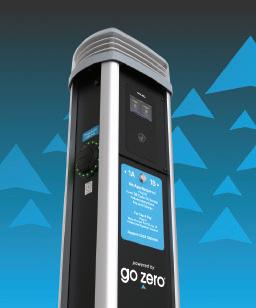
EV drivers are no longer a niche group, they are business commuters, families, and international visitors, and increasingly, they expect to plug in as easily as they connect to Wi-Fi when they arrive at a hotel. With a £100M debt financing facility secured by Go Zero, this partnership has the financial strength to roll out multibay EV hubs at scale through Go Zero’s VendEx model, removing large upfront capital expenditure for businesses.
With Go Zero and Rolec working together, financial barriers are removed, enabling businesses to implement charging infrastructure quickly and efficiently.
Andy Taylor, CEO of Go Zero, said: “Securing this £100M debt facility is a strong vote of confidence in Go Zero’s strategy and growth prospects within hospitality. With funding in place, we can fully deliver our current project pipeline, expand rapidly across key hotel locations, and continue providing scalable, guestfriendly charging solutions. Partnering with Rolec for hardware supply ensures faster installation, multi-bay EV hubs, and a bigger national footprint, bringing our vision of 10,000 sockets closer to reality.”
GTEC Training has announced the launch of its Commercial Solar PV Installation & Design course. It’s the first dedicated programme in the UK focused specifically on the design, planning, and delivery of large-scale rooftop solar systems for commercial and industrial buildings.
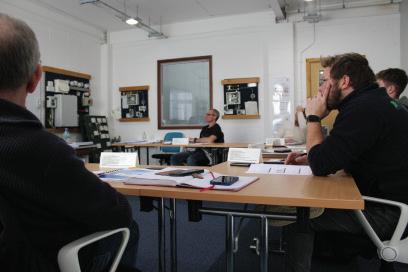
The course is endorsed by LCL Awards and sets a new benchmark for professional development in the UK’s fast-growing commercial solar market.
Delivered over two intensive days, the programme provides a comprehensive foundation in commercial solar PV design,
specification and management. Participants will gain a deep understanding of system design and supervision, array layout, electrical configuration, and the use of solar PV software for performance modelling and feasibility studies. The course also covers project planning and preparation for complex installations, large-scale health and safety protocols, professional documentation and specification standards, and best practice for monitoring and maintaining long-term system performance.
The commercial solar PV course is now open for enrolment, with additional regional sessions planned for 2026.
LiGHT Expo London isn’t just another trade show lined with rows of exhibitors.



It’s a space for discoverywhere designers, specifiers, contractors, architects and beyond come together to explore how light shapes the built environment, how innovation drives design forward, and how collaboration continues to define the lighting community.



With over 200 exhibitors, thoughtprovoking talks and dedicated networking areas, LiGHT 25 offers visitors the chance to experience light in all its dimensions.
Following the success of 2024’s Intra-Spectrum by light artist Frankie Boyle, LiGHT 25 proudly welcomes a bold new light art immersive centrepiece: Re:Vision, a creative collaboration between Speirs






Major Light Architecture and formalighting.
Re:Vision invites visitors to step into a world of light and perception - a sensory journey that challenges how we see and understand the visual experience of other species. Using custom spectral profiles and reimagined Ishihara colour blindness test patterns, the installation explores how different life forms perceive colour and light in ways entirely distinct from our own.
For visitors to LiGHT 25, Re:Vision is more than an installation - it’s an experience that stays with you. It will make you pause, question, and perhaps even see your own work differently. Re:Vision is a symbol of what LiGHT 25 is all about: imagination, exploration and connection.
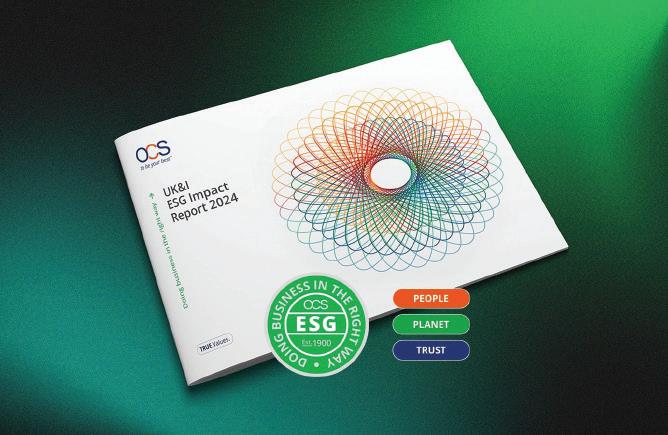
OCS builds on ESG progress, driving social mobility and sustainability across the UK & Ireland
OCS has published its UK & Ireland ESG Impact Report, building on the progress made in social value creation, environmental performance, and governance standards. The report underscores OCS’s commitment to doing business responsibly while delivering measurable impact for colleagues, customers and communities.
The report highlights that in 2024, OCS supported 378 individuals into employment through its People into Work programme, and delivered 564 active apprenticeships, reinforcing its mission to create inclusive pathways into employment. Community engagement also grew, with OCS colleagues raising over £143,000 for charities and contributing 1,072 volunteering hours across the UK and Ireland.
Environmental performance remained a key focus, with 92 per cent of electricity procured from renewable sources and 99 per cent of waste diverted from landfill. OCS also continued its transition to a low-emission fleet and invested in energy efficiency measures across its operations. This year also saw the strategic acquisition of FES FM and FES Support Services, significantly enhancing OCS’s capabilities in energy efficiency and decarbonisation. Governance improvements included strengthened anti-bribery measures, ISO 27001 certification for information security, and enhanced modern slavery risk assessments across the supply chain.
The findings come at a time when ESG performance is under increasing scrutiny from investors, customers, and regulators. Across industries, there is growing pressure for businesses to demonstrate not just intent,
but measurable progress on sustainability and social value. Regulatory frameworks such as the EU Corporate Sustainability Reporting Directive (CSRD) and the UK’s evolving climate disclosure requirements are raising the bar for transparency, while stakeholder demands and the need for risk mitigation are making ESG credentials increasingly weighted in the procurement process.
Jacky So, Sustainability Director OCS UK & Ireland, says: “ESG is no longer a ‘nice to have’. Stakeholders expect transparency, measurable targets, and tangible social impact. We’re seeing a clear trend; organisations that embed ESG into their core strategy are outperforming on resilience, reputation, and long-term value creation. This isn’t just about compliance; it’s about competitive advantage. Companies that fail to act risk losing trust, talent, and market share.”
OCS’s approach links social mobility initiatives with environmental commitments and strong governance, reflecting best practice in the sector. “
Download the full ESG Impact Report at: https://ocs.com/uk/esg/esg-impactreport-2024/
Thousands of trade businesses unprepared for 2026

Thousands of trade businesses across Scotland and the UK are said to be unprepared for tax changes coming in April 2026, prompting experts to urge early action to stay compliant.
From next year, tradespeople operating as sole traders and landlords earning more than £50,000 will be required under Making Tax Digital (MTD) to report income and expenses quarterly using specialist bookkeeping software, as tax returns move fully online.
Christine Nisbet, Finance Director from FBR Seed’s bookkeeping and payroll team, said: “We speak to sole traders every week who still don’t realise this change is coming, or how close it is.
“From April next year, manual tax returns will no longer be accepted. Instead, submissions must be made quarterly through HMRC-recognised software like Xero or Sage.
“This is a big shift for people used to paper records or Excel spreadsheets. Many are simply unaware of the changes, or unsure how to go about getting set up, and we want to make sure as many businesses as possible understand what’s coming, so they can stay compliant and avoid unnecessary headaches down the road.”
While MTD will first apply to those earning over £50,000, the threshold will fall to £30,000 in 2027 and £20,000 in 2028, eventually covering all sole traders. Originally introduced for VAT-registered businesses in 2019, the reforms now represent the most significant shift yet for the self-employed, with digital reporting set to become the default for millions across the UK.
As a certified Silver Xero Partner, FBR Seed is helping clients access Xero’s MTDready package, available from just £7 per month. Its bookkeeping and payroll team can aid sole traders and small businesses of all kinds across Scotland and Northern England, from tradespeople and retailers to service providers and beyond.
With a heritage dating back to 1966, FBR Seed was officially formed in 2019 following the merger of Seed & Company and FBR Ltd. Continued growth and further acquisitions have shaped it into a 25-strong, multi-disciplinary advisory, with offices in Kelso, Haddington, Brechin and Duns.
To learn more about FBR Seed, please visit: https://www.fbrseed.com/
As the evenings grow darker, Steve Kaye from Forum Lighting Solutions discusses why now is the time to focus on outdoor lighting to create a welcoming atmosphere for the colder months and to improve safety
As the darker months close in, outdoor lighting suddenly moves from a “nice to have” to an operational necessity. Whether it’s a pathway to the front door, driveway, garden patio or public walkway, outdoor lighting plays a crucial role in safety, security, and energy efficiency. Yet every year, too many properties limp through winter with outdated fittings, inconsistent illumination, and rising energy bills.
Now is the perfect time to review, upgrade, and future-proof your outdoor lighting. And with smart, controllable solutions now more accessible than ever, there’s never been a better opportunity to get it right.
The shift toward smarter, connected lighting
In recent years, outdoor lighting has undergone a quiet revolution. Advances in LED efficiency, coupled with the rise of intelligent control systems, mean lighting can now do far more than simply switch on and off at dusk.
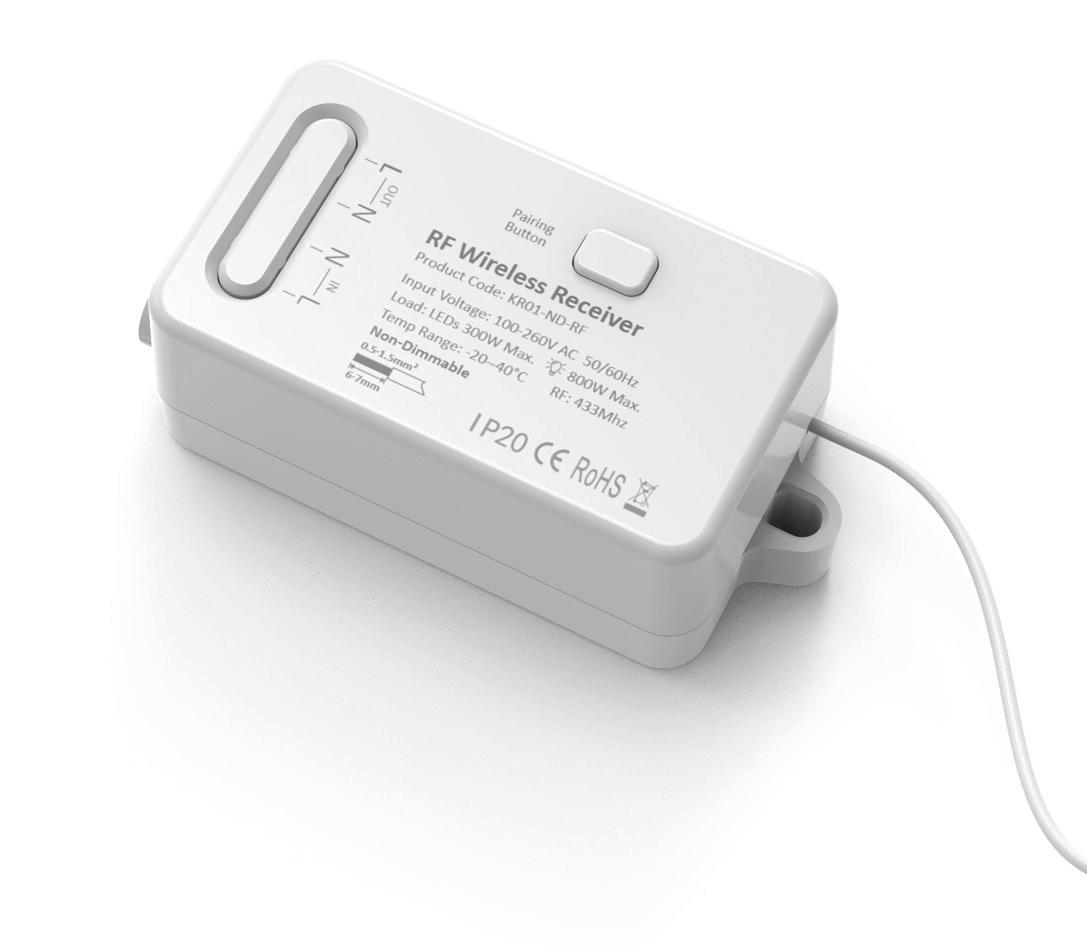
At Forum, we’ve been at the coal face for 30 years and we’ve seen a growing demand for connected systems like our Kinetic control platform, which allows multiple outdoor luminaires to be managed remotely. With a Wi-Fi enabled Kinetic receiver, users can group fittings, schedule operation times, adjust brightness levels, and monitor performance via the Tuya app or controlled through Alexa or Google home.
This kind of control isn’t just convenient; it delivers tangible value. For example, a homeowner can set outdoor lights to come on at set times, or at dusk. Turn on garden lights

Energy efficiency that pays for itself
Switching to high-efficiency LED lighting remains one of the fastest ways to improve energy performance. Outdoor lighting is often left running for long hours, sometimes all night, so every watt saved has a measurable impact on operating costs.
Forum’s latest outdoor luminaires, such as the Tetbury and Ren ranges use advanced LEDs and efficient drivers to maximise light output while minimising energy draw. Combined with Kinetic control, these products allow for adaptive dimming, which reduces brightness during low-activity periods or off-peak hours.
With energy prices remaining unpredictable, these savings matter more than ever.
Compliance and safety - lighting you can trust
Outdoor lighting plays a vital role in ensuring safe environments. Poorly lit drive ways, walkways, and entrances are not only inconvenient, but can be unsafe for pedestrians and vehicles.
Forum’s luminaires are engineered to deliver consistent illumination and meet the relevant regulations, ensuring that businesses and local authorities can demonstrate due diligence in safety and accessibility.
Timing Is everything
Autumn and early winter are ideal times to assess and upgrade lighting systems. The nights draw in, the need becomes visible, and installation work can be planned ahead of the
peak demand period. Contractors can help clients see the long-term benefits: lower running costs, reduced maintenance, and a safer, more welcoming environment.
Forum has these tips for autumn and winter outdoor lighting:
Prioritise safety
Illuminate pathways, steps, and potential hazards with task lighting to prevent accidents in the dark.
Embrace the warm glow
Use warm-toned light, such as oranges and warm yellows, to create a cozy and relaxing ambiance as the weather cools.
Highlight features with accent lighting
Use spotlights to draw attention to specific features like trees, sculptures, or walls, creating a visually interesting scene from inside a property.
Play with light and shadow
A successful lighting scheme uses contrast. For example, avoid flooding an entire garden with light, and instead, strategically highlight key areas to create drama and dimension.
Consider “moonlighting”
This trend mimics the effect of moonlight by using a light source positioned high up to create a soft, dappled effect on the ground below.
Minimise environmental impact
If lighting for wildlife is a concern, concentrate lights on paths and steps, keep the light low and directed, and use warm, dim light colours.
Think about year-round enjoyment
Choose fixtures that can be enjoyed throughout the year. Evergreen trees are great focal points for accent lighting.
At Forum, we believe the future of outdoor lighting is intelligent, efficient, and adaptable. Our new generation of outdoor luminaires gives users all the tools they need to manage their lighting smartly and sustainably.
So, before winter’s darkness really sets in, take the opportunity to review your lighting. A modern, well-designed outdoor lighting system doesn’t just illuminate spaces - it adds safety, efficiency, and value for years to come.

















The Building Safety Act 2022 has introduced transformative changes in how the construction and maintenance industries approach safety. Electrical Industry Awards 2025 sponsor Trimble Luckins looks at how the Act impacts the industry and the steps stakeholders must take to manage product information effectively

While health and safety on construction sites have long been a focus, the Act extends this responsibility across the entire lifecycle of a building, ensuring the safety of occupants over time. A central aspect of this new framework is the management of product information, which is vital for ensuring compliance and safety standards are upheld.
Accurate documentation and record-keeping: a new priority
A cornerstone of the Building Safety Act is its emphasis on precise documentation and thorough record-keeping. Reliable information about the materials and products
used during construction and maintenance is critical for ensuring compliance and longterm safety. Manufacturers now play a pivotal role in this process, providing accurate and regularly updated product data.
To meet these requirements, many in the industry have turned to datapools—centralised platforms that store verifi ed product information. These platforms simplify compliance by offering easily accessible, up-to-date data for contractors, sub-contractors, engineers, and building owners. For example, the use of a unique TSI code for each product ensures quick reference to critical information, streamlining integration into internal systems and project documentation. This approach
reduces administrative burdens while ensuring compliance with the Act’s rigorous standards.
“Golden thread” of information: a continuous record
The concept of the Golden Thread—a continuous digital record of a building’s design, construction, and maintenance— is a game-changer introduced by the Act. This ensures that every product used during the building process is documented and that the information remains accessible throughout the building’s lifecycle. Highrise buildings, where safety is especially critical, benefi t most from this approach.
The Act mandates that this documentation be retained for at least 15 years, a shift requiring signifi cant changes in working practices. By leveraging datapools, contractors can integrate expert-curated data from manufacturers and wholesalers into their digital
records, creating a robust, accessible evidence base.
Product traceability is critical for ensuring that the materials specifi ed in a building’s design match those installed on-site. In the past, substitutions were common due to availability or convenience, often introducing safety risks. The Building Safety Act now requires a traceable thread of information from specifi cation through to installation and maintenance. Traceability ensures that any replacements or repairs over the building’s lifespan align with the original specifi cations. For instance, in the event of a repair 10 or 20 years later, accurate records allow for like-for-like replacements, preserving the building’s integrity. Verifi ed databases ensure all stakeholders can access accurate, up-to-date information, mitigating risks and enhancing safety.
A digital twin—a detailed, asbuilt digital representation of a building—has become a standard deliverable upon project completion. These models store comprehensive data about the building’s systems, materials, and products, making it easier for building owners and maintenance teams to perform repairs or upgrades. By integrating product information into digital twins,


stakeholders can quickly retrieve specifi cations, installation guides, and safety certifi cations. This approach not only saves time but also ensures that any future work maintains the building’s original safety standards.
The Building Safety Act imposes new obligations across the supply chain, ensuring collaborative accountability:
• Manufacturers must provide accurate product data in formats compatible with supply chain systems and prove compliance with safety regulations.
• Wholesalers are tasked with supplying specifi ed products without substitutions driven by stock or pricing considerations.
• Contractors are responsible for assembling and maintaining comprehensive documentation throughout a building’s lifecycle.

• Building owners must ensure ongoing access to this information for maintenance and compliance purposes.
This collective effort ensures safer buildings, where every participant plays a role in upholding the new standards.
The Building Safety Act marks a turning point in construction, introducing robust standards for managing product information. Focusing on accuracy, traceability, accessibility and safety, the Act ensures that buildings are safer for occupants throughout their lifespan. Leveraging centralised databases, digital twins, and collaborative processes, the industry can rise to meet these challenges. Ultimately, the Act not only ensures compliance but also fosters confidence in the longterm safety and performance of our built environment.
For more information, visit luckinslive.com.


By Billy Price, Managing Director of Field Services at ClearCourse
Electrical contractors across the country are facing a painful paradox. With demand rising for EV charging points, renewable installations, and energyefficient upgrades, contractors are busier than ever, but the systems that support their work haven’t always kept pace. According to Checkatrade, they are eager to scale up and contribute to the government’s growth agenda but rising business costs and taxes are holding them back.
When growing suddenly feels like a risk, rather than an opportunity, this highlights a bigger problem in the sector. While these businesses are winning more work than ever, many aren’t taking advantage of the technology solutions available to help them overcome obstacles to growth. Whether it’s tool costs, and theft, addressing the skills gap or managing margins – integrated solutions such as inventory and asset management, automated job status updates, and invoicing solutions all support a business ready to take on new customers.
Add to the fact that we’re experiencing a nation-wide shortage of skilled tradespeople, which is projected to cost the UK £98 billion in missed growth opportunity by 2030 - it becomes clear that we need to find smarter ways to ensure the sector can deliver on its ambitions to scale up and boost economic growth. To support the great talent we do have, businesses need to consider how technology can boost their efforts, save time and help them expand to win new customers. That’s where technology steps in, not as a luxury, but as a necessity for modern electrical businesses ready to grow without adding unnecessary strain.
A lot of qualified contractors start out as a sole trader, but when business starts to come in thick and fast, the team quickly expands. The basic or even paper-based management systems that worked for a sole operator quickly become incapable of handling multiple traders across different locations, managing multiple call outs. Paper diaries and disjointed spreadsheets are not equipped to handle the real-time logistics required of a modern electrical contractor. When an urgent customer call requires a rapid rerouting, or when a job overruns and impacts

Growing electrical businesses often find themselves caught in the middle: too small to benefit from the expensive enterprise systems of the big players, yet too big to rely on their original, non-integrated or paper-based processes.
the rest of the day, an inefficient management system forces the business owner to manually coordinate, which can waste time, lead to inaccuracies or mistakes, and can impact customer satisfaction.
Smart job management software changes this dynamic entirely. By moving to an easy-to-use, integrated platform, independent traders can leverage seamless, real-time coordination features like drag-and-drop scheduling, automated route optimisation, and mobile updates, making it easy to manage multiple jobs at the same time.
flow
For a lot of micro electrician businesses, invoicing, quoting and chasing small payments is handled after hours by family members or founders after the tools are put away. This not only burdens the business owner’s personal life but is an inefficient way to handle payments that can drain cash flow.
According to the Federation of Small Businesses (FSB), small trades businesses
lose approximately £22,000 annually to late payments, contributing to the 50,000 closures seen each year - money which could otherwise fund training, equipment, or business expansion. Modern management platforms combat this by integrating finance with field operations. Built-in payment features can automate invoicing immediately upon job completion, send payment links to customers on site, and automatically chase outstanding payments when they become overdue. By digitising the back-office process, business owners are freed from late-night admin to focus on the job at hand, and more importantly, they can stabilise their cash flow, which is the lifeblood of any growing SME
Levelling the playing field
Growing electrical businesses often find themselves caught in the middle: too small to benefit from the expensive enterprise systems of the big players, yet too big to rely on their original, nonintegrated or paper-based processes. The perception is that only large corporate competitors can afford high-end operational tools, but the reality is that accessible, integrated tech is now the fastest way to level the playing field. Software platforms like Eworks Manager equip smaller businesses with professional features that mirror the services of their biggest rivals, without the corresponding overheads. This includes smart job scheduling, digital documentation and compliance, inventory and asset management, real-time job updates via SMS, and transparent financial tools that ensure every quote is accurate and every payment is instantly tracked.
These automated features not only help build and maintain customer trust but allows independent traders to compete on service quality and efficiency, not just price.
Ultimately, the goal for every growing electrical contractor is to maintain the service quality of a sole trader while managing the capacity of a scaling business. Technology is the bridge that makes this possible. By adopting simple, integrated management solutions, independent tradespeople can focus on what they do best. If small electrical firms embrace these tools, they’ll not only future-proof their businesses but play a key role in driving the UK’s wider growth and net-zero ambitions.”
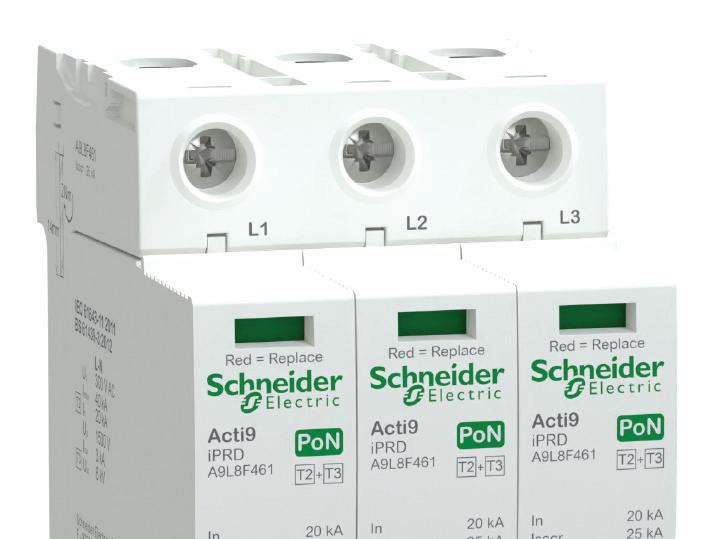
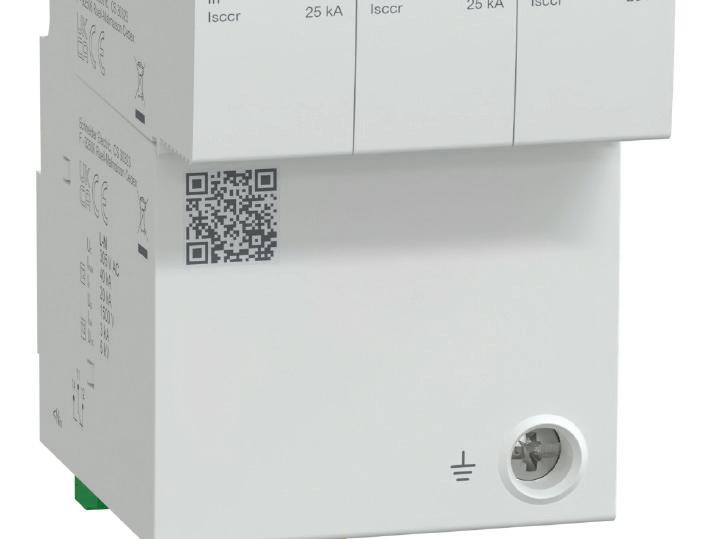
The rise in interconnected systems has amplified the impact of transient overvoltages across industrial and commercial environments. Effective surge protection is now vital to safeguard assets, maintain compliance, and ensure the reliability of modern electrical installations, says David Williams, VP Transactional Business and Major Pursuits UK&I at Schneider Electric
Transient overvoltage events can have serious consequences for organisations that rely heavily on electronic systems.
A single surge can halt production, corrupt data, and damage vital infrastructure - often at considerable financial and operational cost. Beyond the immediate disruption, these incidents can also present safety risks to workers.
As digitalisation accelerates, these risks are intensifying. With more systems connected across networks and facilities, a single transient event can propagate rapidly, multiplying its effect across devices and operations.
Transient overvoltage events pose a real threat to business-critical systems and can lead to unexpected and unplanned downtime.
Manufacturing facilities have experienced production halts when voltage spikes have damaged motors, drives, and robotic systems. In fact, research from IDS-INDATA, suggests that downtime will cost UK and European manufacturers £80bn this year. At a time when businesses are facing multi-pronged headwinds, with profit margins often under 10 per cent, most have little buffer against disruption.
IT infrastructure is equally vulnerable; data centres servers may crash, resulting in data loss or corruption.
Looking beyond equipment concerns, transient overvoltage events can present safety hazards, including fire risk and electrical shock leading to potentially serious injury.
There is an increasing expectation that businesses must proactively manage electrical risks. In practice, this means adopting robust protection measures to comply with regulations. Protecting people, equipment, and operations cannot be an afterthought.
business impact
Beyond the immediate operational impact, the effects of repeated transient overvoltage events are often underestimated. Equipment lifespan may be shortened, and maintenance costs way higher than they should be.



Repeated exposure to transient overvoltage can degrade sensitive electronic equipment, including servers, networking devices, and industrial control systems. Even in the absence of immediate failure, the cumulative stress can accelerate component aging, leading to increased maintenance requirements and reduced operational lifespan.
Powering a safer, resilient future
Ensuring operational continuity and the integrity of electrical assets demands proactive risk management. Transient overvoltages can’t be eliminated entirely, but it can be effectively controlled. Surge Protection Devices (SPDs) provide the most practical and economical defence, preventing the costly downtime, equipment damage, and safety hazards associated with overvoltages.
By safely diverting excess voltage to earth, SPDs protect critical equipment from harm. Even the best-engineered installations can contain weak points, and without coordinated surge protection, those vulnerabilities can be exposed.
Surge Protective Devices (SPDs) are typically deployed in a coordinated, multi-stage approach to ensure comprehensive protection across an electrical installation:
Type 1 SPDs are installed at the origin of the electrical installation, typically where the supply enters the building. They are designed to divert high-energy surges caused by direct lightning strikes and are mandatory in buildings equipped with a structural Lightning Protection System or connected to overhead power lines. These
devices can handle the most severe surge conditions.
Type 2 SPDs serve as the primary protection layer for all low-voltage installations. They are installed at main or sub-distribution boards and protect against transient overvoltage events resulting from indirect lightning strikes or switching operations.
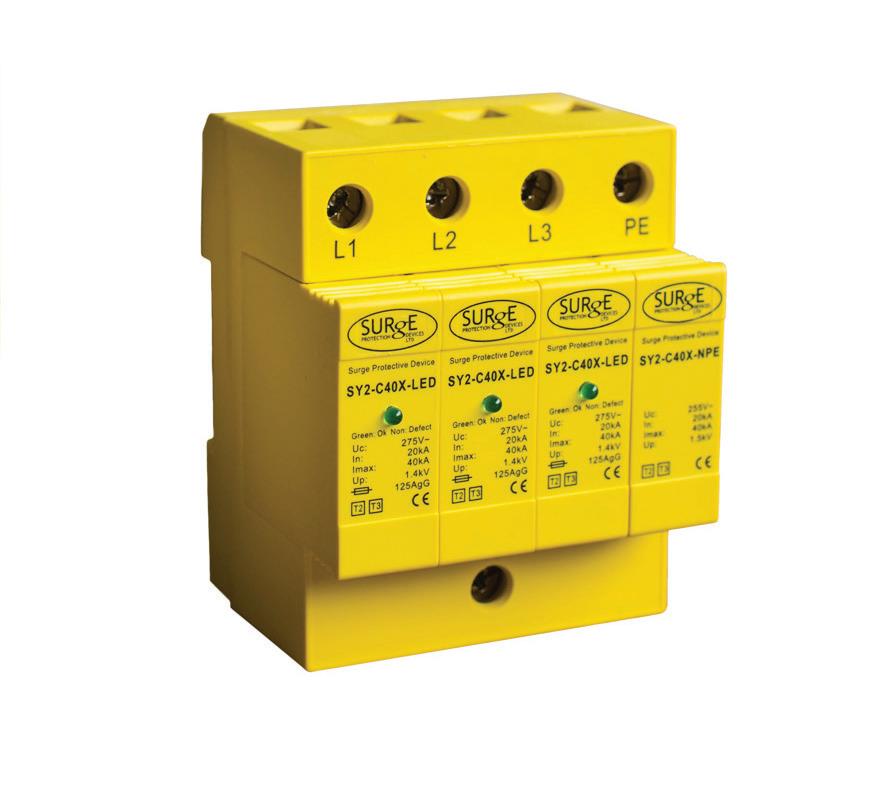
Type 3 SPDs provide localised protection for sensitive electronic equipment such as servers, computers, and control systems. These are installed as close as possible to the equipment and must be used in conjunction with a Type 2 SPD. They are designed to handle short-duration voltage and current transients, with a lower discharge capacity suited for fine protection.
For modern organisations, transient overvoltage protection is no longer just a safety measure - it’s a cornerstone of operational strategy. Those that prioritise resilience, safeguard their assets, and ensure compliance will not only minimise risk but also strengthen their competitive position in the digital economy.


A school in Market Bosworth, rural Leicestershire, has been equipped with special outdoor wall lighting designed to preserve dark skies for multiple species of local bats and other nocturnal animals. Glamox, a world leader in lighting, is providing energy-efficient LED wall lights, specifically designed to minimise light spillage and approved by DarkSky International, a nonprofit organisation that aims to restore the nighttime environment and protect communities and wildlife from light pollution.
Hinckley House School is an independent day school designed specifically for students with special educational needs. It serves children aged 5 to 11 with Social, Emotional and Mental Health (SEMH) needs, alongside a range of other associated conditions.
The school is housed in a Grade II-listed Old Rectory within a conservation area. During its renovation, careful effort was made to preserve and enhance its historic character while protecting local wildlife.
“In 2018, a bat detection study identified five distinct bat species and indicated a thriving bat community with a variety of roosting and foraging sites,” said Jake Smith, Senior Electrical Engineer at Crookes Walter Consulting, the electrical design consultant on the Hinckley House School renovation project. “For lighting the school perimeter, we specified lighting that was durable, energy efficient, and which would provide sufficient illumination for the safety of pupils and staff whilst minimising light spillage that could affect nocturnal species. Our goal was to preserve the nighttime environment as best we could.”
DarkSky approved and environmentally friendly
Glamox provided the DarkSky-approved version of its O21-W wall light for lighting the perimeter of the school building. The tough luminaire emits light only where it is needed, in a downward direction, minimising light spill into the night sky.
“Artificial light can adversely affect wildlife and plants, interfering with their perception of day and night and disrupting their natural behaviour. The lighting for this project has a warm colour temperature of 3000 K and uses special optics to restrict light spillage,” said David Hunt, Managing Director of Glamox’s business in the United Kingdom & Ireland.
“The wall light also supports a circular economy, which is the opposite of a throwaway society. It’s been designed to be disassembled, enabling parts to be replaced to extend its lifespan. Additionally, parts can be reused or recycled at the end of their life. Around 45 per cent of the wall light’s housing is made from recycled aluminium,” added Hunt.
lights up energy-efficient forecourts for St1
In an ongoing refurbishment project, Glamox, a global leader in lighting, is providing energyefficient LED lighting to 120 of St1’s station forecourts in Norway.
In total, Glamox is providing 3,220 energyefficient LED luminaires that will be installed under the forecourt canopies and used to illuminate the EV charging bays and station perimeters. The luminaires feature a light sensor, enabling them to switch on and off automatically based on daylight levels (see Notes to Editors for lighting details).
St1’s replacement of old fluorescent lighting with LED luminaires will improve light quality and reduce the electricity used for lighting the forecourts by up to 60 per cent.
“Through this refurbishment, we aim to reduce the amount of electricity used for lighting the forecourts at many of our retail sites across Norway,” says Erlend Føleide, Marketing Director at St1. “Importantly, the project will

Thorn and Zumtobel Lighting have announced the launch of their new customer websites for the UK & Ireland, bringing lighting professionals a streamlined digital experience with cleaner navigation, faster search and direct access to support. Built around the needs of specifiers, designers, contractors and distributors, the refreshed sites provide 24/7 access to solutions and services with a single login across both brands.
The new experience makes it simple to explore complete product ranges, review technical content, and plan projects end-to-end. Key updates include enhanced product discovery and filters, family pages with side-by-side comparison, wish lists, “request a quote”, and customer-portal login with order and quotation overviews. Rich technical data, planning tools and configurators are integrated to help reduce admin and speed up decision-making.
“Our goal is to make it faster to move from inspiration to specification,” said Neil Raithatha, Head of Marketing, Thorn and Zumtobel Lighting UK & Ireland. “With streamlined search, cleaner product pages and a single login to manage requests, we’re helping project teams save time and work more confidently, while giving them round-the-clock access to the essentials across both brands.”
For customers, the new sites mean seamless browsing on mobile or desktop, on-demand access to case studies and expert guides, and a simpler way to manage quotes and orders. One account provides smooth access to the wider Zumtobel Group portfolio, so users can switch between Thorn and Zumtobel without losing their place.
Access products, tools and services at the usual brand URLs: thornlighting.co.uk or zumtobel.co.uk

also align our forecourts with the EU directive that phases out fluorescent lighting.”
In August 2023, the Restriction of Hazardous Substances (RoHS) directive began the phaseout of the most popular types of fluorescent
lighting, including the most common linear (T5 and T8) fluorescent tubes. The goal is to reduce harmful substances in electronic waste, like mercury in fluorescent tubes. In Norway alone, more than 10 million fluorescent luminaires need to be replaced.
“Customers across the country are taking steps to align with the directive, as once current stocks run out, that is the end of the road for fluorescent lighting. With the added upside in light quality and energy savings, switching to LED, like St1 is doing, is an allaround great investment,” says Toril Bache Jenssen, Sales Director for Glamox in Norway. To ensure consistent deliveries to St1 across Norway, Glamox established a stockpile of LED luminaires. Its contract for the project is with installer OneCo, which delivers services and projects within electrical engineering, automation, telecoms, mobile, security, electrical power and technical infrastructure.





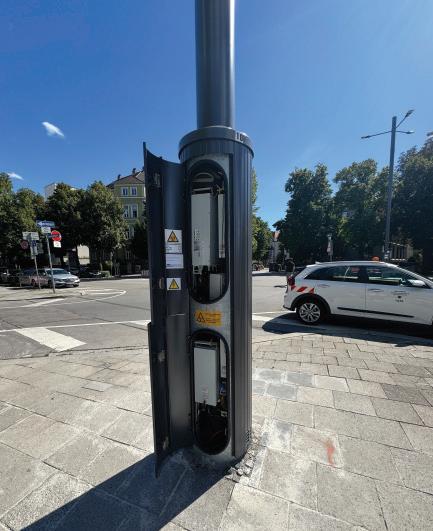
CU Phosco, in collaboration with 5G Synergiewerk and Telefónica, has completed the successful installation of six Connected Urban smart poles in Munich. Strategically placed near key subway stations, the smart poles were deployed to eliminate mobile coverage blackspots and increase network capacity ahead of Oktoberfest, one of the world’s most attended public festivals.
The project follows previous successful installations of Connected Urban smart poles in Augsburg, Cologne, Frankfurt, Hannover and Würzburg and reinforces CU Phosco’s growing reputation as a smart city infrastructure leader across Germany. Each pole combines cutting-edge lighting with integrated 4G/5G radio equipment, all within a compact and aesthetically sympathetic footprint designed to suit the urban landscape. The base section comprises two x 900mm door openings and the overall height of the poles ranges from 11.9m to 13.9m including the tri sector cannister antenna on the top of each pole.
The Munich installation supports Telefónica’s wider densification strategy, increasing mobile network performance where demand is greatest. The smart poles offer a dual benefit: improved network coverage for safety and situational awareness, and enhanced connectivity for high-density public use.
Connected Urban smart poles are modular and highly adaptable, able to host a range of smart city applications – from antennas and CCTV to public address systems – all from one discreet structure. These poles are a direct replacement for traditional street lighting columns and are designed to integrate seamlessly into existing streetscapes.
The first installation was marked by a high-profile demonstration event attended by Telefónica and key government officials, highlighting the importance of smart infrastructure in modern urban planning.
In addition to supporting Oktoberfest, the upgraded infrastructure is expected to serve future large-scale events and daily use, especially in the surrounding transport zones.
With further rollouts anticipated in other key international cities, including London, CU Phosco continues to redefine the role street-lighting infrastructure plays in modern city.
For more information on Connected Urban, visit www.cuphosco.com.
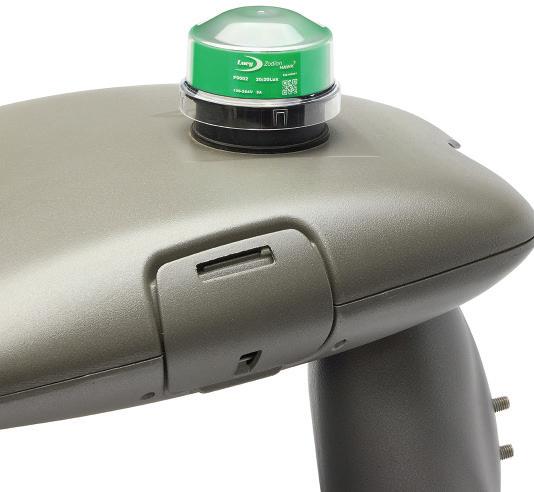
Lucy Zodion has secured a Build Back Better GREEN Award for HAWK3, its nextgeneration photocell designed to meet the evolving needs of modern street lighting.
The award highlights Lucy Zodion’s leadership in sustainable innovation, with HAWK3 moving beyond outdated standards to deliver unmatched switching accuracy, ultra-low power consumption, and a design philosophy rooted in longterm circularity.
The Build Back Better Awards celebrate products that combine engineering excellence with environmental responsibility. HAWK3 impressed the judging panel by pairing digital switching precision with energy use as low as 0.1W, while embedding cradle-to-cradle principles at every stage of design and manufacture. Developed as a complete redesign of Lucy Zodion’s photocell range, HAWK3 reflects extensive feedback from local authorities, contractors, and asset managers. The result is a product that not only reduces operating costs and energy consumption but also supports recyclability and longer asset life, helping customers align with their Net Zero goals.
John Fox, Managing Director at Lucy Zodion, commented: “Receiving the Build Back Better GREEN Award is a brilliant recognition of our journey with HAWK3. We’ve listened closely to what customers need from their photocells, not just in terms of accuracy and reliability, but also sustainability and future resilience. HAWK3 reflects our continued ambition to set the standard for what smart street lighting control should look like in the years ahead.”
For more information about HAWK3 or to arrange a product demo, visit: lucyzodion.com/product/hawk3/
Collingwood Lighting has supplied the lighting to help artist Sarah Nelson realise her dream of a net zero carbon home which featured on Channel 4’s Grand Designs TV show.
In the living areas Sarah specified Collingwood’s 1901 spotlights, which she can rotate and tilt to direct light where she wants it. The fittings have a contemporary black cylindrical design and produce a warm light of 2700K for a relaxing atmosphere.
To create an intimate but modern feel around the eating area, the company also supplied its Linear Prism fitting in black which is suspended above the table. With colour switchable options to choose what light source she wanted, Sarah opted for a warm light of 3,000K.
For the gallery hall, Sarah chose the OKTO 4 architectural lights. They have a similar sleek black cylindrical design as the 1901 spotlights and provide ambient lighting for large areas with their 85o beam angle.

Commenting on the installation Sarah explains: “I wanted energy efficient LED lighting with a modern contemporary design. The black, sleek design of all the fittings really work as a visual statement, especially when set against the textured grey Hempcrete walls.”
In the studio, where she works, Sarah specified industrial looking lights with Collingwood’s Caiman Versa anticorrosive
fitting. The two fittings are suspended from the steel ridge beams, and their steel bodies work well set against the bare hempcrete walls and this exposed metal girder. With plenty of glazing facing north, the studio has an abundance of natural diffuse light for her work, which the light fittings supplement as it gets dark with a cool white light of 5700K that is similar to natural light.
The building has also got an air source heat pump and solar panels to provide power.
Commenting on her new home and studio she says: “I have shown that you can build a sustainable zero carbon building that is very individual and good looking. My emphasis has been on energy saving solutions, but that does not mean that you must sacrifice style.
“As an artist light is very important to me and Collingwood’s fittings allow me to achieve what I believe in and create and showcase a space that is visually stunning.”


Recolight isn't just about recycling, we help the lighting industry take real steps toward a sustainable future. From our Reuse Hub and Circular Lighting Live Conference, to workshops, webinars, and Life Cycle Assessments, we support businesses in taking practical actions to embrace the Circular Economy. What’s more, we can provide carbon footprint data for every waste collection. Make your lighting more sustainable. Make it circular.









Circular Lighting Live 2025
reaffirmed its role as the UK’s leading sustainability platform for the lighting sector. Organised by Recolight and hosted in London, the event brought together 35 expert speakers and leading lighting brands, with over 200 delegates determined to accelerate the industry’s shift towards a circular economy.
The conference atmosphere captured much of the urgency and optimism expressed by many of the speakers. There was wide recognition among many of the delegates, sponsors, and panellists that a linear economy business as usual is no longer viable, and that the lighting industry must fully embrace new approaches built on sustainability, resource efficiency, and the circular economy.
Rethinking industry practices
Several speakers noted that misplaced perceptions of risk often slow progress in the adoption of reused and remanufactured luminaires. Solutions to those perceived barriers, including warranties, remaining luminaire lifetime, and client acceptance were discussed by panels.
The call was clear: the industry must shift from talking about change to embedding it as standard practice.










Emerging trends and key insights
The programme highlighted the technical and regulatory developments reshaping the sector:
• Environmental Product Declarations (EPDs) seem likely to become a market requirement, providing the transparency needed to evaluate products fairly.
• TM65 and TM66 have gained momentum as key tools to measure embodied carbon and assess circularity.
• Legislative updates from the UK and EU offered insight into current and forthcoming













regulations that will impact lighting product development and compliance.
• Reuse, refurbishment, and energy transition were recurrent themes, particularly for designers seeking to cut carbon at every stage.
• Design for repairability, decarbonisation strategies, and skills development all featured, pointing to the cultural change required to embed circularity.
Nigel Harvey, CEO of Recolight, summed up the energy of the event: “Circular Lighting Live this year was buzzing with ideas and opportunities. It was inspiring to hear new approaches to tackling sustainability and the circular economy. It was particularly pleasing to note the tangible desire to press on, despite political headwinds elsewhere.”
Industry support
The event drew wide support from leading brands including Signify, Sylvania Group, Glamox, KKDC, Prime Light Group, Prolojik, Thorlux Lighting, Trojan Lighting Solutions, NVC Lighting UK, Mymesh by Chess UK, SMART SYSTEMS UK, and ALBIS Distribution, and from supporters including A1 Lighting, the Society of Light and Lighting, the Lightmongers, and Material Index.
Delegate feedback underlined the impact of Circular Lighting Live:
“10/10 best year yet! Relevant & engaging topics… Circular Lighting Live was a vital catalyst in the evolution in these topics.” Justine Walmsey, Signify
“Circular Lighting Live this year showed that meaningful change is underway… Business as usual is no good, we must challenge, and we must change.” Gary Thronton, Nulty
“An important conversation about circular design in lighting. Events like this are vital in
helping our industry move from talking about circularity to embedding it as standard practice.”
Paul Beale, 18 Degrees.
“Prolojik was proud to sponsor Circular Lighting Live and be part of such an inspiring event. It was fantastic to be in a space where innovation, collaboration, and sustainability truly come together.” Darcy Hudson, Prolojik
“Circular Lighting Live was an inspiring event, full of passionate people driving change in the industry.” Nicholas Holmes, Ambit
“Circular Lighting Live is a great event that brings the industry together in a common goal. Positive and Inspiring!” Nick Revell, Philip Payne Limited.
“Commercial lighting companies dedication to carbon reduction is an inspiration to KKDC, we feel that reducing waste and reducing carbon are both key, no matter on the industry sector or size.” Tom Hall, KKDC
Looking ahead
Co-organiser Ray Molony captured the forwardlooking spirit of the conference:
“With sustainability now at the heart of lighting product development, design, and specification, Circular Lighting Live has become a vital platform for collaboration and innovation. By tackling barriers, sharing knowledge, and embedding circularity as standard practice, the UK lighting industry is leading the way towards a truly sustainable future.”
The feedback over the last four years confirmed that Circular Lighting Live is more than a just conference; it has been a real catalyst for change. And the 2025 event showed how the industry is moving from aspiration to action, building momentum towards a circular economy. Through innovation, collaboration, and determination, the UK lighting sector is beginning to demonstrate that circularity is not only possible but already taking shape.














































































































































































































































For over 75 years, Dimplex has been a dependable name in electric heating, supporting professionals with innovative, energy-efficient solutions.
Market leader in energy-efficient electric heating
Trusted support and BEABapproved safety
Committed to sustainability and smarter energy use


















As facilities managers prepare their buildings for another long British winter, the to-do list is already looking full: heating systems, insulation checks, reactive maintenance, energy budgeting - the list goes on. But one area that still too often gets overlooked is lighting control and that can be a costly oversight.
Lighting may seem like a fixed utility - a necessity - but how it’s managed can have a major impact on both running costs and the wellbeing of everyone in the building. In fact, installing intelligent lighting controls is one of the most effective things facilities managers can do this season to make buildings more efficient, comfortable, and sustainable.
At B.E.G., we’ve been working with facilities teams across sectors - from education and healthcare to commercial and public buildings - for over 50 years. And time and again, the same truth emerges: lighting controls deliver immediate wins. They save energy. They lower bills. They improve the occupant experience. And they’re especially powerful in winter.
During the colder, darker months, lighting demand naturally increases. Days are shorter, skies are gloomier, and artificial lighting becomes essential - often for 10–12 hours a day. Without controls in place, lights are frequently left on in empty rooms, unoccupied corridors, and external spaces long after they’re needed.


By Paul Jones, Sales Director
That’s money - and energy - slipping away hour by hour.
With smart controls, that waste stops. Presence detectors ensure lights only switch on when someone is in the room. Daylight sensors automatically dim artificial lighting when there’s sufficient natural light. Timers and astronomical clocks can align exterior lighting with actual sunrise and sunset, adjusting automatically as the year progresses. These systems aren’t theoretical they’re proven. We’ve seen buildings reduce their lighting energy usage by up to 70 per cent just by implementing sensor-based controls.
The financial implications are significant, especially as energy costs remain volatile in the UK. For large sites, such as schools, office blocks, hospitals, this can translate into thousands of pounds saved every year, with a payback period of just a couple of years in many cases. And with carbon reduction targets tightening, these savings aren’t just good for the budget, they’re essential for compliance and corporate responsibility.
But saving money is only half the story. Just as important is how lighting affects the people inside the building. As we head into winter, many building occupants will arrive and leave in darkness. The quality and responsiveness of artificial lighting has a direct impact on how people feel and perform during the day. Poor lighting can cause eye strain, headaches, fatigue, and low mood - especially when daylight is in short supply. That is where HumanCentric Lighting (HCL) comes into play.
At B.E.G., we’re strong advocates for HCL - systems that adjust colour temperature and
intensity throughout the day to better support the body’s natural rhythms. Cooler, brighter light in the morning helps stimulate alertness and focus; warmer tones in the afternoon support calmness and reduce overstimulation. We’ve deployed this kind of lighting in multiple buildings - wherever people spend long hours indoors during the darker months.
The result is a better environment for everyone. Workers report higher satisfaction. Absenteeism tends to decrease. And in environments like hospitals or care homes, where lighting plays a crucial role in health and safety, the benefits can be even more profound. For facilities managers, that means fewer complaints, better working conditions, and tangible proof that their building is supporting wellbeing - not just energy performance.
And the beauty is: you don’t need to start from scratch. Most existing lighting systems can be retrofitted with sensors, control modules, and smart interfaces. Whether it’s a corridor in a school, a stairwell in an office, or external lighting in a hospital, B.E.G. offers flexible, scalable solutions that integrate with common protocols like DALI, KNX, or LON, ensuring you can build a system that fits your site and your budget.
It’s also worth noting that lighting controls are low maintenance. Once installed and correctly commissioned, these systems largely run themselves - adjusting to occupancy, daylight, or schedule without needing constant input. For busy facilities teams juggling dozens of responsibilities, that kind of automation is invaluable.
This winter, the pressure on buildings - and the people managing them - will be intense. Energy budgets are under scrutiny. Occupants expect more from their environments. And sustainability targets are more urgent than ever. Lighting controls are not a silver bullet, but they are one of the most straightforward, costeffective upgrades available. They deliver results quickly, improve the user experience, and contribute meaningfully to long-term carbon goals.
Questions for facilities managers to ask is where is energy being wasted? Where could automation bring consistency and savings? And most importantly - how can lighting be used not just to see, but to support the wellbeing of every person in your building?
Answering those questions helps facilities teams take control of their lighting. Because when the days are short and the bills are high, smart lighting isn’t a luxury. It’s a necessity.
Visit: www.beg-luxomat.com/en
Ansell Lighting has expanded the popular Primo Track lighting range with two innovative new additions, improving both aesthetic and design capabilities across a wide range of applications.
Compatible with the Primo Three Circuit range, the Primo Deco Trackspot is a high-end architectural luminaire developed specifically for projects where visual appeal is paramount.

Distinctively shaped, the Primo Deco Trackspot offers a fresh, circular design that complements modern interiors. Available in a black or white finish, the fitting can be further enhanced with a stylish brass baffle as well as honeycomb, dome and decorative lenses.
Available in 7W, 12W and 25W versions, the fitting delivers high-quality light with excellent colour rendering, thanks to its high CRI performance and 4,000K colour temperature. It also offers 350-degree rotation and 0–90 degree tilt on the bracket, providing excellent adjustability for directional lighting.
The Primo Deco Trackspot comes with Triac dimming as standard, with DALI dimming and OCTO smart control options available, while the Primo Mini is a 24V track system designed for more discreet display applications.
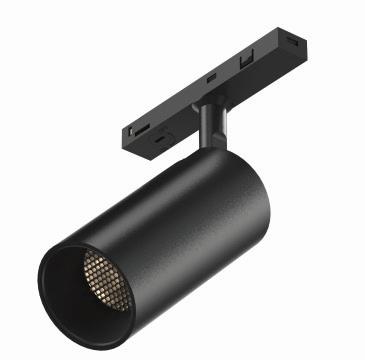
Included within the system is the Primo Mini Trackspot – a compact, 24VDC track light that is lightweight and sleek in appearance. It features 360-degree rotation and a 0–180-degree tilt range for complete flexibility, and incorporates an anti-glare design to enhance visual comfort.
The Primo Mini range also includes a selection of other architectural luminaires suitable for both residential and hospitality settings, allowing the creation of cohesive, layered lighting designs.
For more information on the Primo Track range visit the website. www.ansell-lighting.com
Three Phase Power and Lighting Distribution Boards are critical components in commercial, industrial, and large residential electrical systems. They provide a centralised point for power distribution, control, and protection of electrical circuits, including both lighting and power loads.

Designed with the installer in mind, the Elucian power and lighting boards from Click Scolmore are engineered to deliver reliability, efficiency, and ease of installation for electrical contractors working across a range of projects. Whether upgrading an existing system or building from scratch, Elucian provides a dependable solution for modern electrical demands.
The boards are split into three sections - power, lighting, and accessories. Most distribution boards on the market don't allow isolation of the different compartments. If a board needs amending it simply shuts off both power and lighting sections. However, the Elucian board allows a section of the board to be switched off while the other section is working, allowing for ease of maintenance without compromise.
They feature a built-in Energy Meter for accurate tracking – allowing both power and lighting to be monitored separately on one energy meter rather than on two separate meters. This saves on cabling and space within the board. The boards are also supplied pre-installed as standard with type 1 and type 2 SPDs. This is for easy installation and to save time.
There are 24 different combinations available – from an 8 Way (4 Power / 4 Lighting) 125A Vertical Consumer Unit, through to a 32 Way (20 Power / 12 Lighting) 125A Vertical Consumer Unit.
They each feature quick release doors – fitted with spring clips, making them quick and easy to remove. They also offer device alignment, with the boards maintaining device alignment when fully installed, to ensure a neat and organised appearance.
To view the full range, download the Scolmore app or visit www.elucianuk.com
The new dedicated commercial lighting catalogue from Knightsbridge, is powerful resource for the trade, consolidating the brand commercial solutions into one expert guide.

Created with electricians, specifiers and wholesalers in mind, the catalogue is a response to increasing demand for highperformance lighting across commercial, industrial, and retail settings. From robust floodlights to sleek suspended panels, the catalogue showcases Knightsbridge’s extensive product portfolio – with options designed to meet the demands of both indoor and outdoor environments. Whether tracklights, downlights or batten through to bulkheads, bollards and accessories, the 61pp document really covers it all.
Products are grouped by category with suggested applications, making it easier than ever for professionals to match solutions to project requirements. Each item is accompanied by in-depth technical data, including compliance information, photometric imagery, and performance specifications. Whether assessing lumen output or verifying IP ratings, users can make informed choices with complete confidence.
Recognising the importance of sustainability and energy management, the Knightsbridge catalogue features a broad selection of energy-efficient options, such as wattage switchable and CCT-adjustable fittings.
To enhance accessibility and interactivity, the catalogue incorporates QR codes throughout, giving readers instant access to additional online resources, such as installation guides and detailed product breakdowns.
The catalogue highlights the company’s lighting design service that helps professionals plan and optimise lighting layouts tailored to each project.
The Commercial lighting catalogue is ready to empower the trade with the clarity, versatility, and confidence it needs to deliver outstanding projects. www.mlaccessories.co.uk/marketing-hub
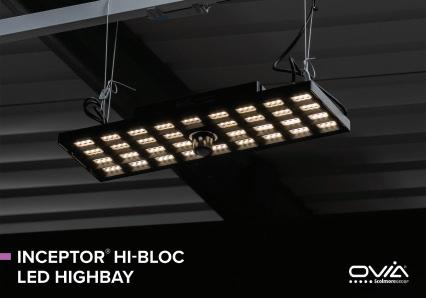
The Hi-Bloc is a CCT and power switchable linear Highbay, aimed to deliver highperformance illumination across environments that demand both precision and intensity— such as warehouses, factories, gymnasiums, and other large-scale, high-ceilinged industrial or commercial spaces.
The launch of the Hi-Bloc marks a expansion of Ovia’s Highbay offering, with a shift toward an aesthetically unique yet highly practical product. The distinctive diffuser design not only elevates the visual profile of the fitting, but also supports superior glare control, with a UGR rating of ≤22.
The Hi-Bloc's distinct linear design is engineered specifically to improve lighting efficiency in tight aisles and long rectangular spaces. The Hi-Bloc's rectangular form and narrow 72° beam angle focus light directly where it is needed most, ensuring optimal visibility in every corner of the space.
The Hi-Bloc is engineered for versatility and ease of use. The CCT and power switch is intuitively positioned behind an IP65 threaded cap for easy access. Each unit includes two mounting hooks as standard, allowing for chain mounting), and features an integrated spirit level to ensure perfect alignment during installation. For added flexibility, a mounting bracket accessory is available, catering to a wide range of installation requirements.
For further enhanced control, the programmable remote allows full customisation of lighting, with the ability to adjust PIR detection range and sensitivity, daylight thresholds, standby periods, and hold times, allowing for easy fine-tune performance for maximum efficiency, comfort, and flexibility across different environments. In addition, the Hi-Bloc integrates seamlessly with Ovia’s 5W 3 Hour Maintained IP65 Emergency Pack, just like all other Ovia LED Highbays, ensuring consistent emergency lighting performance across the range. www.oviauk.com
Niglon has expanded its offering through an exclusive UK and Ireland partnership with leading Spanish test equipment manufacturer KPS. The collaboration strengthens Niglon’s position as a trusted one-stop shop for electrical wholesalers, adding a range of high-quality, sustainable, and affordable test instruments backed by expert technical support
Niglon has always prided itself on offering electrical wholesalers a comprehensive selection of products designed to meet the diverse needs of professionals working in domestic, commercial, and industrial environments. With over 4,500 items available for same-day dispatch anywhere in the UK, the company strives to be a one-stop shop for electrical essentials.
In 2024 the family-run distributor partnered with KPS, a leading Spanish manufacturer of high-quality test instruments. KPS is a renowned name in the electrical testing and measurement industry, and this partnership presents a fantastic opportunity for both companies to provide top-tier solutions to professionals across the UK and Ireland. Through the agreement, Niglon exclusively supports the sale and distribution of KPS test equipment across the UK and Irish electrical wholesale markets. This significant milestone enables Niglon to offer its valued customers a wider range of reliable, precise, and affordable test instruments, backed by the high standards of customer service that they’ve proudly maintained for over 70 years.
Why KPS?
KPS brings more than 35 years of experience in Original Equipment Manufacturing (OEM) and has built a strong reputation for delivering high-quality, precise measurement instruments. What sets KPS apart is their dedication to craftsmanship, sustainability, and innovation. With their primary manufacturing facility
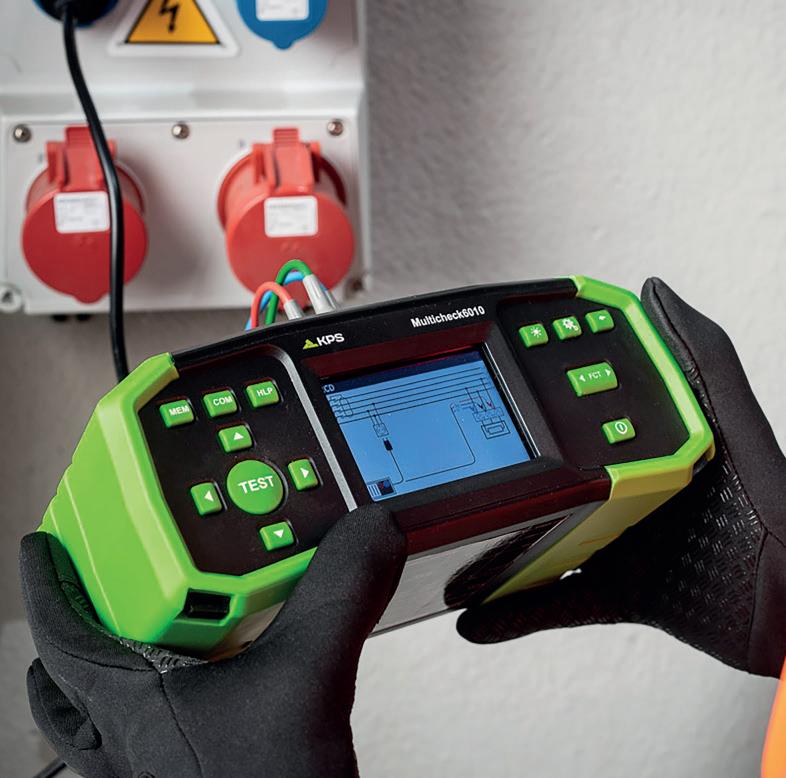
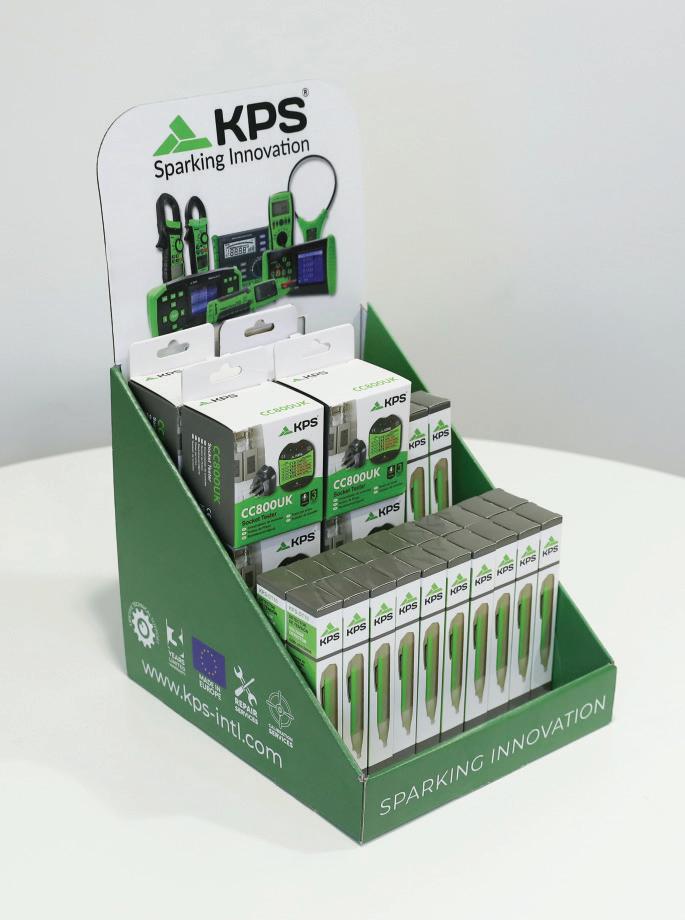
based in Argame, Spain, KPS integrates sustainable practices into their operations by using recycled materials and renewable energy, aligning with our shared commitment to environmental responsibility.
KPS has played a pivotal role in the development of test equipment, and their products are known for their reliability and performance. The company’s expansion into the UK market over the last year has already made waves, and with Niglon as their exclusive partner, they look forward to significantly increasing the availability of their products throughout the UK and Ireland.
Oliver Hinley, Director at Niglon, commented: “This partnership is an exciting step forward in our range offering. We are committed to working with KPS to deliver high-quality products whilst also offering the technical guidance and support necessary for our customers to make better buying decisions.”
One area in which Niglon has seen particular success is the point-of-sale counter displays, which have been widely taken up in the first few months of trading. These displays, stocked with the fastest moving KPS items (voltage pens and socket testers) allow wholesalers to trial the company’s offering with very little
risk associated. It is also an eye catching and innovative way of displaying a brand new to most UK electrical contractors. With an exceptionally low carriage paid, Niglon is the perfect distribution partner for a wholesaler wishing to trial a new range of test equipment, as most product can be ordered back-to-back and in store stock can be kept to a minimum. This represents a significant cashflow advantage for Niglon’s customers.
One standout product from KPS that we’re particularly excited to introduce to our customers is MC6010, a competitive and versatile multifunction tester.
The MC6010 is designed to meet the rigorous demands of professionals in the electrical field. Fully compliant with DIN VDE 0100 and EN 61557 standards, the MC6010 ensures electrical safety through precision measurements. Its wide array of features includes loop resistance testing, internal network resistance, short circuit current, low resistance, continuity measurements, and insulation testing. Additionally, it performs RCD/FI measurements, including the RCD AUTO test for types A, AC, B, B+, and F. With its TRMS voltage, rotary field, and frequency measurements, plus earth resistance testing, the MC6010 covers all the essential tests a professional needs. Its 3.5” TFT colour display provides a clear and intuitive interface, making it easier for users to perform their tasks quickly and efficiently.
Such a product embodies KPS’s dedication to quality and precision, ensuring that professionals can carry out their work with confidence.
Niglon’s focus has always been on providing high-quality products backed by exceptional customer service, and this partnership will be no different. We are working closely with KPS to ensure that both companies offer the necessary technical guidance and support for the full range of test equipment. In addition, KPS backs its products with a 3-year warranty and lifetime technical support, giving customers the peace of mind they need when investing in these essential tools.
For more information, visit niglon.co.uk




The IT1000BT Insulation Tester is essential for professionals who need precise measurements of insulation resistance within EV systems. Insulation resistance is critical in electric vehicles, where high-voltage systems and battery packs require strict adherence to safety standards.
Features
• Insulation tester (50V, 100V, 250V, 500V and 1000V)
• Insulation test with PI/DAR/Timed
• mA selectable mode • Automatic bi-directional continuity test
• 1500 Store/Recall records • Visual/audible comparison function
• Automatic AC/DC voltage test with LPF





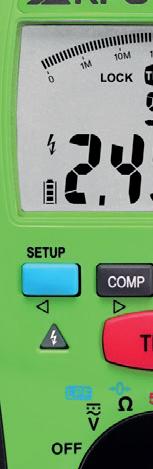

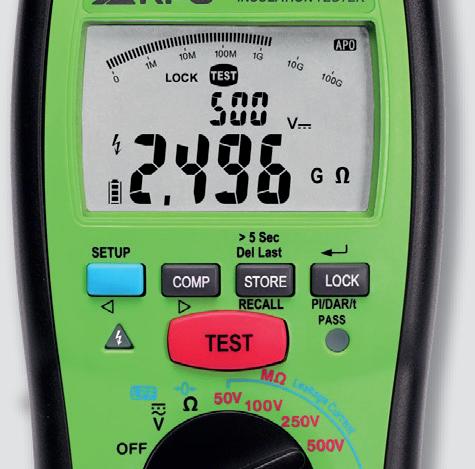



The MC6010 is designed to meet the rigorous demands of professionals in the electrical field. Fully compliant with DIN VDE 0100 and EN 61557 standards, the MC6010 ensures electrical safety through precision measurements. Its 3.5” TFT colour display provides a clear and intuitive interface, making it easier for users to perform their tasks quickly and efficiently.



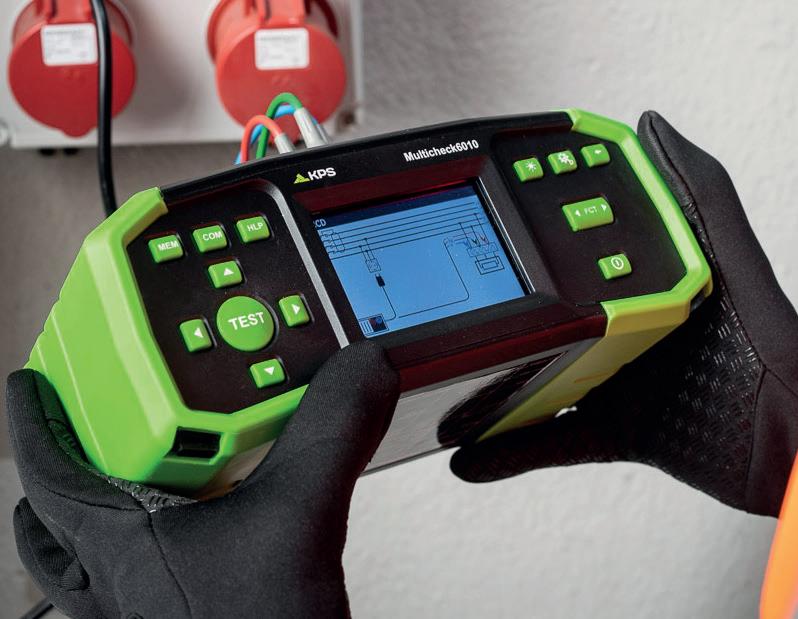
Features
• Continuity (RLO) - Up to 1999Ω
• Line Resistance (ZLine) - Up to 9999Ω
• Loop Resistance (Zloop) - Up to 9999Ω
• Earth resistance (RE) - Up to 9999Ω
• Insulation resistance (RISO) - Up to 999MΩ
• AC Voltage - Up to 550V
• Phase rotation - Up to 550V
• PC communication - Via USB • Data storage - Yes
• RCD test - Uc test / time test / I (Ramp)test.
RCD Types: A,AC,B,B+,F
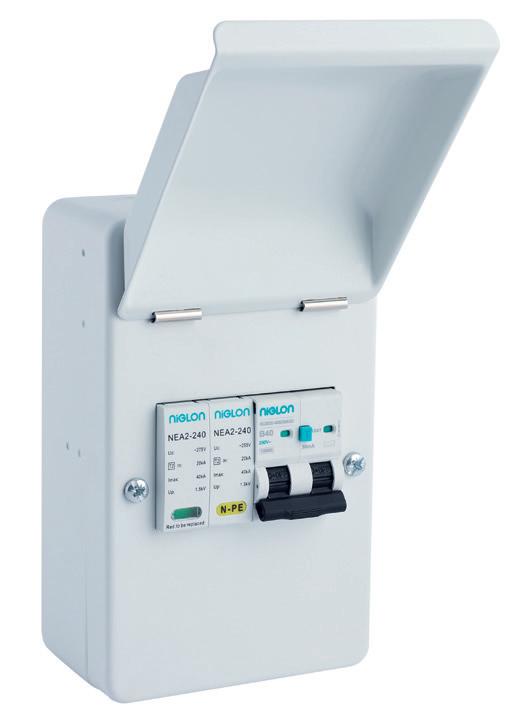

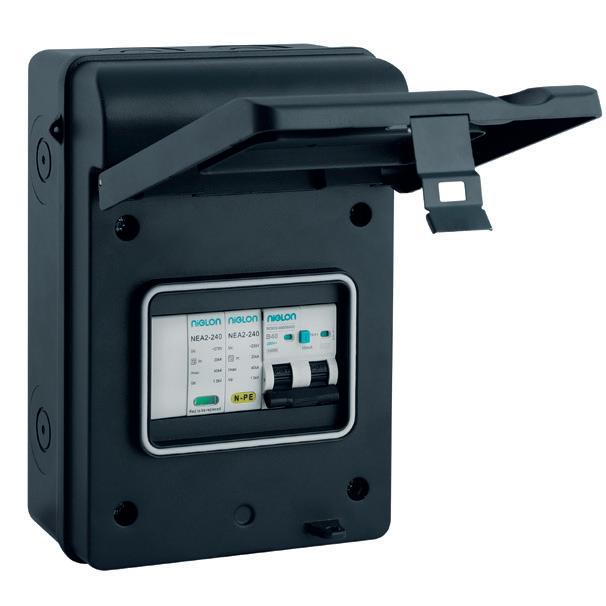
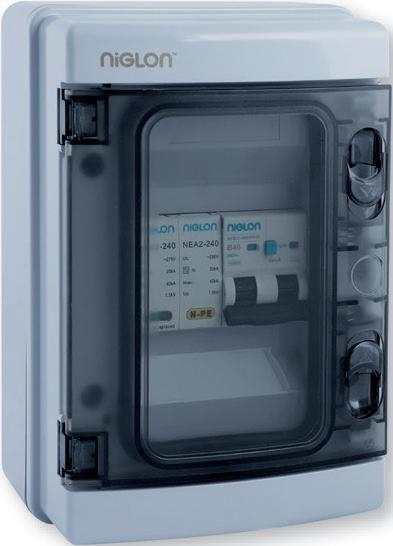



Former Future of Roads Minister, Lilian Greenwood, says an electric vehicle (EV) charge point is being rolled out every 29 minutes, and has pledged to support another 100,000 chargers. This is alongside an expected £6 billion in private investment, including £300 million from charge point operator (CPO) Believ – designed to support at least 30,000 new charge points. Rolling out infrastructure on this scale will always pose challenges, and CPOs are working to overcome them and meet the needs of today’s and tomorrow’s electric vehicle (EV) drivers, helping them to feel confident in making the transition to an EV.
Darren Harris, Head of Build at Believ, explores the role of CPO delivery teams and what support is needed to accelerate the rollout.
What are the biggest charging infrastructure delivery challenges that the industry is facing?
Although the situation is improving, resident opposition remains the most significant challenge we encounter when installing infrastructure through local authorities. Parking will always be a contentious topic for residents, and those not yet on their EV journey worry about losing parking availability.
Limited staffing resources and a lack of guidelines can complicate the process for handling resident opposition, leading local authorities to respond in a wide variety of ways.
For the private sector, the challenges are often tied up in legal departments – where again the relative newness of the industry results in lengthy contractual negotiations.
For both the private and public sector, Distribution Network Operator (DNO) connections are another significant challenge – it’s a system under pressure as a result of so many requests coming in at the same time.
It is our job as a CPO to navigate the needs of businesses, communities, local authorities and individual residents to find a way to install charge points in locations that work for all –ultimately to deliver cleaner air for all.
How are CPOs like Believ over-coming these challenges?

resident pushback – there really isn’t much our team hasn’t seen! We’re now in a good position to offer advice on best practice that helps get charge points in the ground more quickly and efficiently.
Q: A: Q: A: Q: A: Q:
The key is good account management, communicating timelines and responsiveness. My team has the experience and skills needed to mitigate logistical challenges and provide solutions, as well support local authorities in how they handle
How confident are you that Believ is able to deliver on its delivery promises?
The numbers are not a problem–because of our relationship with Virgin Media O2, sizable back office teams, and vast backing following our recent £300 million funding – we have the scale and capacity to deliver on these numbers – and more. The challenges are in overcoming local authority site selection barriers, and pushing through legal negotiations – and we’re using our experience to provide solutions.
Local authority personnel resourcing is also improving, which will continue to speed the process up in the public sector.
It is also important to balance the installation of charge points with driver demand. This is a task that sits primarily with the Government, and so recent initiatives such as the EV Grant scheme are very welcome It is also the responsibility of the industry and the media to ensure that the benefits of owning an EV are clearly communicated to potential drivers.
What are the biggest lessons learned in the charge point rollout so far?
into their journeys and driving patterns and understand where rapid and ultra rapid chargers are needed, and also where slower (and therefore lower cost for the driver) chargers are more appropriate.
Q: A: Q: A:
Why is it so important to make sustainable transport accessible to all and?
Installing reliable, convenient EV charging infrastructure is critical to making sustainable transport available to all, reducing emissions, and tackling climate change. The rollout is encouraging more drivers to feel confident in switching to an electric vehicle. We’re building infrastructure that’s going to positively impact our children, grandchildren, and generations to come. And that’s an amazing feeling.
How does the future of charge point delivery look?
I hope and expect to see greater alignment in best practice. Such as the use of a Government led standardised process that works as a blueprint for how local authorities should approach getting charge points in the ground as efficiently as possible. This industry is already experiencing, and will continue to see, the very fast development of technology – both with electric vehicles themselves and charging technology. As a result, we’ll continue to see faster and more convenient ways of charging.
Q: A:
There was a land grab mentality at the start of the charging infrastructure rollout, where too often getting a charge point in the ground was prioritised over it being the right charger in the right location. Switching this mentality on its head has been the most important lesson learned. To truly meet driver needs , you have to do a deep dive
If you had three wishes to support the rollout of EV infrastructure, what would they be?
A:
I’d like to see reduced resident push back regarding charge point installation. This will be achieved when everyone recognises that EVs are the future and that charging infrastructure is a means to decarbonise transport and deliver cleaner air for all. The sector plays a key role in this by making EVs more and more convenient and affordable on one hand, and by providing high standards of charging experience and reliability on the other.
My second wish would be to help streamline the processes involving DNOs – with a dedicated system for EV charging infrastructure requests. Finally, enhanced government support regarding the rollout process, as well as continued funding for dedicated local authority EV charging officers.
Visit: www.believ.com/about-us/#whoweserve



While electrification accelerates, electric heavy goods vehicles (eHGVs) remain largely absent from UK roads. Ashley Hutchinson, chief operating officer at Sinewave, explores the critical infrastructure gap that’s holding back the UK’s electric fleet ambitions
Encouraged by benefit-in-kind incentives and the 2035 deadline for zero-emissions sales, the UK’s car drivers are beginning to embrace electric vehicles (EVs). But new vans and smaller HGVs must also be zero emissions by 2035, and their sales aren’t on track. With just a handful of zero-emissions large HGVs on the road, it’s fair to say the haulage sector is barely away from the lights.
Logistics operators and hauliers are reluctant to invest in EVs. Their upfront cost is significant, and their residual values remain uncertain. But these concerns are only amplified by doubts about the UK’s charging infrastructure, and in particular whether it’s ready to support longhaul HGV operations.
Not plugged in eHGV charging infrastructure is nowhere near where it needs to be to support the UK’s zero-emission targets. HGVs are large vehicles, consuming a huge amount of energy. They’re physically too big to fit in public car and van charging infrastructure, and only the most powerful ultra-fast chargers can turn them round quickly enough for drivers taking midshift breaks, or stopping at overnight parks.
To get the best return from their vehicles and drivers, haulage operators need megawatt-scale charging parks. And as yet, we don’t have any.
Currently, most of the focus for electric van and goods charging is on the depot. Through the Depot Charging Scheme, the government is helping fund electric infrastructure for commercial fleets – it’s very welcome, but only expected to deliver around 3,000 van and 200 HGV chargers. However, there’s no funding for new charge parks for goods vehicles, and no strategic plan for a network of charging facilities spanning the UK’s long-distance routes.
Continental hauliers won’t bring over electric trucks they can’t recharge, potentially creating friction as European logistics – and wider supply chains – increasingly go emissions-free. Conversely, UK operators with diesel trucks might find themselves regulated or surcharged out of trans-continental routes, a real blow to this important part of our economy
The industry is already working collaboratively to highlight the issues, most notably through projects like eFreight 2030, a cross-functional group involving manufacturers, fleet operators
and other stakeholders. This has already attracted nearly £50 million in government support, with funding through programmes including the zero emission heavy goods vehicles and infrastructure fund.
eFreight 2030 is hoping to unlock £500 million of private investment, and it plans to have 32 charging locations operational ‘from day one’. It’s undoubtedly the most focused eHGV infrastructure initiative, and a great start, but the truth is that our road network needs hundreds of opportunity charging locations to support a fleet of eHGVs. Yet installing them is such a complex and costly undertaking that one major operator has already effectively withdrawn from our market.
Why are eHGV charging facilities particularly challenging? HGVs are around three times the length of a light van, and nothing like as easy to manoeuvre. With batteries up to 700 kilowatt hours, they can store up to about seven times as much power as even the longest-legged cars. A charging hub for 10 eHGVs might need a fourmegawatt or greater connection to the grid.
eHGV charging infrastructure requires lots of dedicated space, and service and truck stop operators need a convincing business case for providing the room, particularly if they could gain more revenue by dedicating the same area to car and van charging, or retail concessions; there’s more chance of a return when there’s already an established and growing need for public charging.
This is creating a vicious cycle: there isn’t private funding for HGV charge points because there isn’t the demand, while fleet operators can’t invest in vehicles because they can’t charge them on long routes.
Moving everything forward
The UK needs a network of strategically positioned, purpose-built eHGV charging hubs. Truck drivers need overnight and break-stop charging opportunities, and investors and operators need the reassurance that they can reliably run electric fleets. This simply isn’t going to happen without focused government support. We need decisive and effective policy, and the financial incentives or funding to make eHGV charging more attractive to fleet and infrastructure investors.
Solving the UK’s eHGV charging woes demands a strategic approach, conceived collaboratively between policymakers, fleet operators, truck manufacturers, and the entire power and charging supply chain. The current focus on depot charging only addresses part of the problem, and will only lay down a tiny fraction of the infrastructure the UK needs. Without proper engagement, leading to effective policy, the UK will lag behind its European competitors, and risk missing its zero-emission commitments.
View Sinewave’s fleet success stories at https://www.sinewave.co.uk/projects/ project-one-h346n-bjdhj-yt3l7


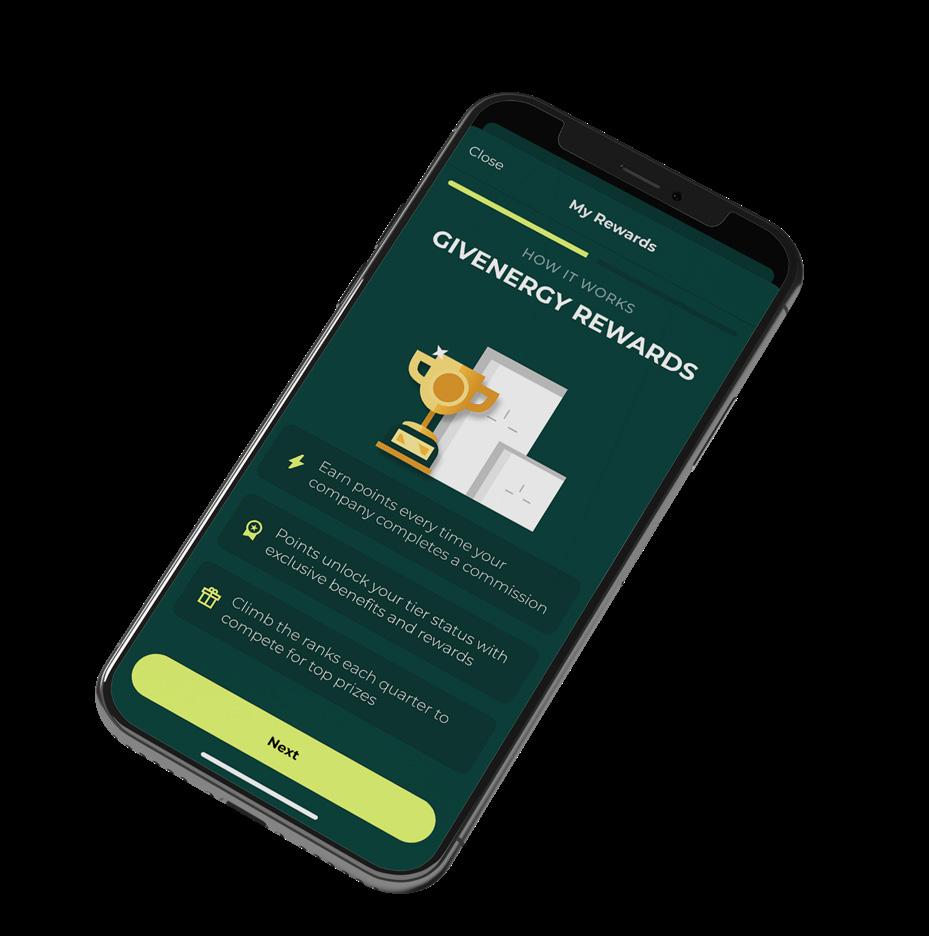

Type 3 surge protection devices offer vital localised protection for sensitive equipment, bridging the gap between distribution board SPDs and the assets they safeguard. Kirsty Johnson, Technical Director at Surge Protection Devices Ltd., explains how and when to specify Type 3 SPDs, and why their correct selection is key to achieving the highest level of protection
When we consider SPDs, usually we are considering protecting a whole building or a distribution board from the effects of lightning or overvoltages. These SPDs are our Type 1 and Type 2 devices, which are designed to be installed inside or next to the distribution board that they are protecting. But, what if you are only interested in protecting a piece of equipment you are installing, or want to protect equipment that has been damaged previously? This is where we enter the world of Type 3 Surge protection devices.
Unlike Type 1 and 2 SPDs, Type 3 SPDs are designed to be installed within or next to the equipment that they are protecting. This means they provide increased protection in comparison to having an SPD within the distribution board, which may be located a distance upstream. The further away the SPD is from the equipment, the lower the protection level provided. So, Type 3 SPDs are how we get the best possible protection level for sensitive equipment.
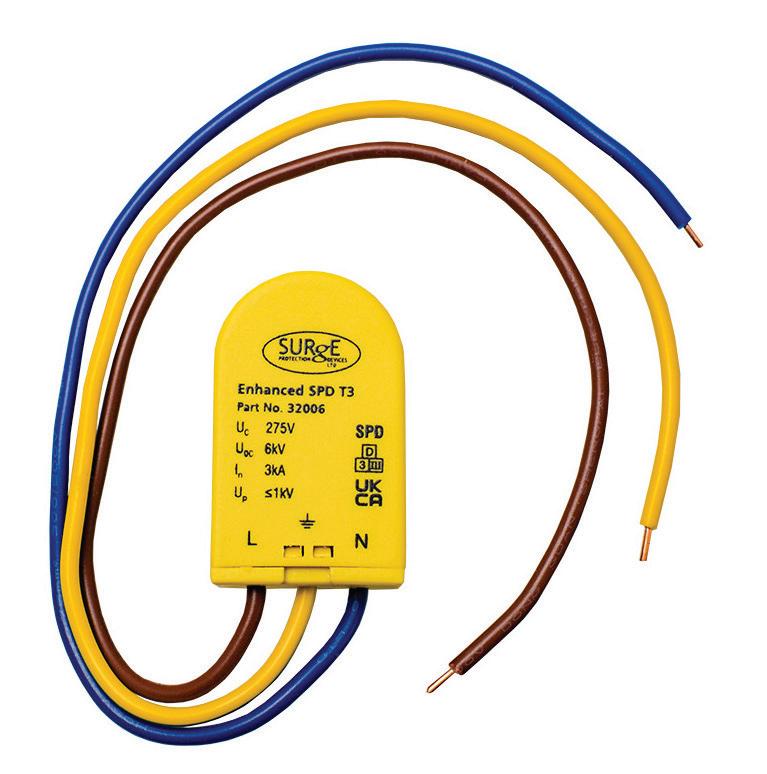
the level of protection required. Sometimes this can mean that we recommend a Type 2 and 3 combined device to be installed locally to the equipment, such as from an isolator, to provide the appropriate level of protection. We may also ask for additional information, such as if the equipment is running on a specific voltage or needs additional consideration, such as bandwidth requirements on POE cables.
We offer many different variations of Type 3 devices, providing protection for any equipment that requires an SPD, starting from protection as low as 6 V. Get in touch if you or your customers need advice on selecting Type 3 SPDs. We hope this article has been useful to you and if you wish to discuss this further, or require further information on the use of surge protection devices, contact the surge protection experts on 01484 851747, or email us at info@ surgedevices.co.uk.
As Type 3 devices are designed to protect equipment, there are many different variations,
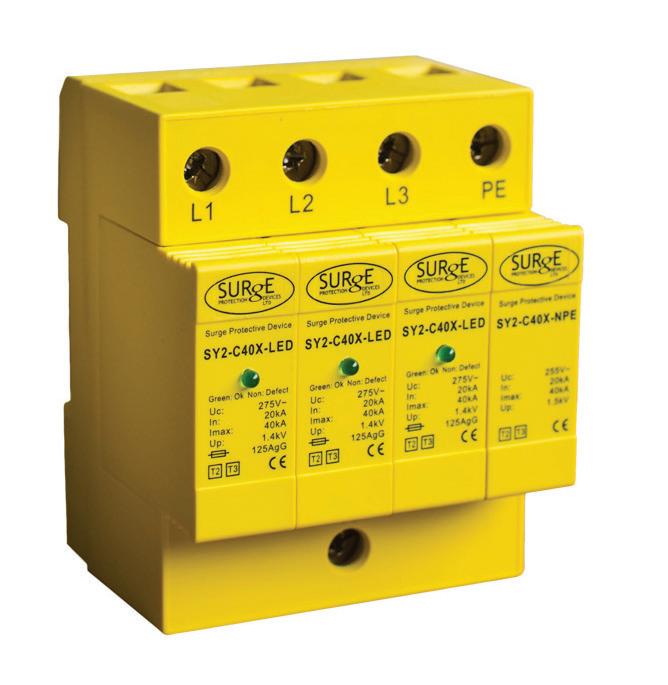
for example, an SPD designed to protect a Cat 6 cable, will be different to an SPD designed to protect a fused spur. Not only do these devices look different, but they also have different technical data, different configurations and quite often different installation requirements. When selecting an SPD, the information we usually ask for includes whether the building is at risk of direct lightning effects, such as whether it has an external lightning protection system or an overhead supply. We also need to know whether the distribution board is single-phase or three-phase. This information then allows us to select the appropriate SPD for the installation.
When selecting a Type 3 device, we need more comprehensive information, such as the specific equipment that requires protection. As discussed above, this will have an impact on what device is required. We will also need information on how far the equipment is located from the distribution board, as this helps us determine
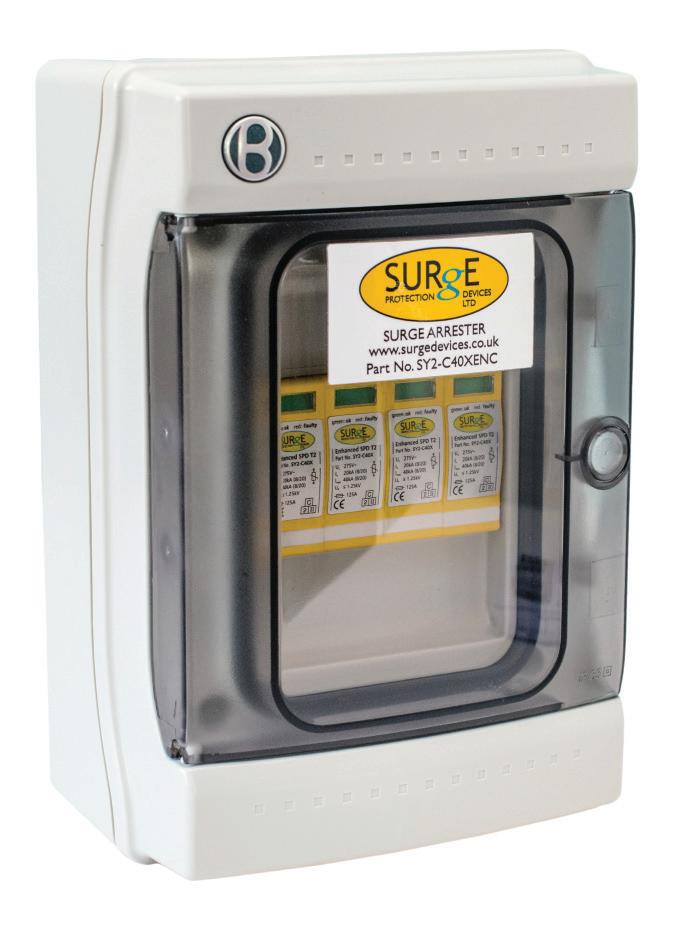
When selecting an SPD, the information we usually ask for includes whether the building is at risk of direct lightning effects, such as whether it has an external lightning protection system or an overhead supply. We also need to know whether the distribution board is single-phase or three-phase. This information then allows us to select the appropriate SPD for the installation.

By
Christelle Barnes, UK Country Manager
at SolarEdge Technologies, outlines what electrical contractors and installers need to know to stay ahead of evolving safety expectations
As solar system technology becomes more advanced and widely adopted, it is fundamentally reshaping the way energy is produced. However, with innovation comes complexity, and a range of safety challenges that extend beyond fire prevention alone. Understanding the full spectrum of risks – from electrical hazards to emerging cybersecurity vulnerabilities – is vital for protecting people, property and energy infrastructure, and for ensuring that solar remains a trusted and secure part of our energy future.
Best practice for physical protection
Let’s start by looking at physical safety.
Commercial infrastructure fires can be caused by many things, including electrical malfunctions in heating systems, factory machinery or even lightning. While fires stemming from solar PV systems are rare, it is important to thoroughly evaluate the safety of any existing or planned installations, particularly when selecting or upgrading system components.
When a building fire is found to originate from a solar PV system, causes may include installation error or improper maintenance, particularly involving connector wear and tear. These errors may not cause a problem initially, but over time they can potentially lead to electrical faults, which, if not caught, can develop into something more serious. Fortunately, advances in solar system technology now enable effective detection and prevention of overheating at the connector level – a topic we’ll explore in more detail later in this article. To support safer installations, many technology providers invest in ongoing training. For example, SolarEdge has trained over two thousand professionals in the UK alone so far this year. However, even when installations are carried out flawlessly, external factors beyond anyone’s control, such as an animal chewing through a cable, can introduce faults. It is at this point that component selection becomes key.
Safety starts at the panel level
Before we explore specific safety features, it is useful to first step back and review the individual components of solar PV systems – and how each can be secured.
The main components of solar systems are PV panels and inverters. The panels generate electrical power by converting solar radiation into direct current (DC). Inverters then convert the DC power to alternating current (AC) used to power homes, buildings and businesses.

As long as the sun is shining, solar panels and cables remain energised with high DC voltages, even if the main circuit breaker is shut off. In the event of a fire, firefighters typically disconnect the grid supply before intervening. They assume there is no risk of electrocution once the grid has been disconnected, allowing the spray of water and creation of holes in the roof so that heat and smoke can dissipate. However, this assumption is not true in the case of a typical PV roof system, as the system is creating its own electricity independent of the grid.
Traditional string inverters typically have limited safety functionality since they do not necessarily reduce the DC voltage when switched off. To meet safety standards, additional hardware may need to be purchased, adding more cost and labour to the installation.
Due to this and other limitations, we have seen a notable shift away from traditional string inverters in favour of more advanced systems that leverage DC-optimisation. These systems split the functionality of a traditional string inverter and use Power Optimizers placed directly onto panels to monitor performance in real time. This not only increases energy production and provides more flexibility in system design and layout, but it also improves safety through embedded safety features that are capable of identifying and mitigating faults at a panel level.
There are two safety features in particular to look out for when choosing an inverter. The first is SafeDC. This is a module-level safeguard which automatically reduces the output voltage of solar arrays to a touch-safe level to provide safe roof access to firefighters and maintenance teams. The second is arc fault detection and prevention. Although rare, arc faults can be triggered by false trips or loose connections and may result in heat build-up that, if undetected, could cause an arc fault to develop. DC-optimised systems monitor terminal blocks
for abnormal heat buildup, quickly identifying the source and isolating it to prevent escalation. Confidence in this technology extends to firefighters installing solar on the roofs of their own fire stations. In the UK, a fire and rescue service selected SolarEdge for 700kW of PV systems on 12 different fire stations and three headquarter buildings due to these and other embedded safety features.
Digital defences: safeguarding solar from cyber threats
Recent high-profile cyberattacks on companies like HMRC and Marks & Spencer – although not related to solar – demonstrate how internetconnected systems can serve as entry points into wider networks if not properly protected. Modern solar inverters, connected for remote monitoring, software updates, and participation in demand response services, are no exception. While this connectivity unlocks significant value, it also introduces risk. Fortunately, UK regulation is beginning to catch up. The UK’s Product Security and Telecommunications Infrastructure (PSTI) Act, introduced in 2024, sets out minimum cybersecurity standards for connected devices. This includes requiring strong, unique passwords and better protection of user data. Additional frameworks, such as the EU’s Radio Equipment Directive (RED) and NIS2 Directive, are expected to influence UK policy in the near future.
Selecting inverters equipped with encrypted communication and strong authentication should be a fundamental part of this process. By adopting these forward-looking practices, contractors and installers can avoid costly retrofits or complete system replacements, while ensuring lasting project success and maintaining a strong professional reputation.
Turning challenges into opportunity Navigating both physical and cybersecurity challenges is crucial in today’s evolving solar PV landscape. Choosing technologies that comply with current and anticipated regulations helps address these risks effectively. By staying proactive and adopting future-ready solutions, contractors and installers can prevent costly updates, ensure project longevity, and build customer trust, turning regulatory demands into a competitive advantage. Ultimately, those who embrace these challenges not only safeguard their installations but also strengthen their reputation and position themselves for longterm success in a rapidly changing market.
For more information, visit: solaredge.com/uk



ENHANCED FEATURES, ENDURING PERFORMANCE: THE NEXT GENERATION OF FLOODLIGHTS

BUILT TO LAST, LIGHTING THE WAY
THE NEW, ROBUST OUTDOOR FLOODLIGHTS FOR ANY WEATHER
The new standard for demanding outdoor applications: The FLOODLIGHT GEN 4 range is extremely efficient and very durable. Thanks to MULTI LUMEN, the brightness can be adapted to requirements. Sensor and Photocell versions add a further layer of versatility. Reliable even in the harshest conditions thanks to the waterproof cable gland, breather membrane, C4 corrosion resistance and up to IP66 and IK08. FLOODLIGHT GEN 4 are easy to install and come with a comprehensive 5-year guarantee.
















Since its founding in 1901, the British Standards Institution (BSI) has helped set the benchmark for quality, safety and reliability across industries. Today, Aico continues to uphold these standards in its approach to fire and carbon monoxide protection, ensuring every product, installation and training programme aligns with best practice to create safer homes
BSI (British Standards Institution) were established in 1901 to promote trade, reduce waste and to protect the consumer by using recognised conformity markers. The BSI Kitemark, a symbol to represent quality, was then adopted two years later. The BSI was granted Royal Charter status in 1929, making it one of the most recognised standard issuers and a champion for consumers. Today the Kitemark is globally recognised and is used as a way of judging whether a process or product is at the required level to ensure safety and continuity. There are currently over 30,000 live standards. Aico promote many of these standards as best practice when providing recommendations on fire and carbon monoxide safety, including the following: BS 5839-6: Code of practice for the design, installation, commissioning and maintenance of fire detection and fire alarm systems in domestic premises.
BS EN 50292: A guide on the selection, installation, use and maintenance of electrical apparatus for the detection of carbon monoxide in domestic premises, caravans and boats. Additionally, all Aico alarms meet the relevant manufacturing standards and are third-party certified by BSI to carry the Kitemark.
Why follow British Standards?
Following British Standards provides a mechanism to gauge whether a service or a product is fit for purpose. Without it, it would be impossible to verify whether a system is suitable or able to operate as required in emergency conditions. As an installer, following the British Standards and the product’s manufacturer’s instructions, ensures that the installation is correct and of high quality. This in turn, results in safer homes.






















We will continue to follow British Standards when manufacturing products, providing recommendations and delivering training. They are there to give guidance, offer advice and give us a best practice document to align our training programmes with.
At Aico, we will continue to follow British Standards when manufacturing products, providing recommendations and delivering training. They are there to give guidance, offer advice and give us a best practice document to align our training programmes with.
The current relevant British Standards are covered within Aico’s free Expert Installer training programme. The two-hour session is FIA CPD accredited and is designed to ensure electrical installers have all the information they need to correctly install domestic fire and carbon monoxide alarms. On completion, attendees will be invited to Aico’s online Installer Community, where users can complete challenges, redeem rewards, and register for our City & Guilds assured training.
How to apply British Standards
When installing a fire detection system, always refer to Table 1 in BS 5839-6. This
table describes the grade of alarm and category of coverage required within a domestic dwelling to reach the standard, which is a great place to start when carrying out a domestic installation. However, this isn’t the only requirement you should consider.
Whilst British Standards provide useful information, it is essential to take the resident’s individual needs into account. When installing alarms for a resident with additional needs, such as someone who is hard of hearing or with mobility issues, additional sounders and indicators are required to give them the earliest warning in an emergency. There are multiple alarm system solutions to suit all different types of needs. For example, Aico’s Ei171RF RadioLINK strobe light is built to indicate a visual warning in living spaces when the alarm system has activated. Equipped with a simple strobe light and a lens specifically for wide-angle light output, it has been designed for use in daytime rooms.
Following British Standards ensures that our alarms are installed correctly. British Standards are a best practice guide. However, in some cases, British Standards may be referred to as a requirement at a contractual level and are seen as the best way to assess whether a process or product meets a required need. Additionally, some legislation and regulatory documents refer to relevant standards for guidance.
To find out more, visit www.aico.co.uk.










At Aico, we understand what a huge responsibility it is to provide home life safety devices into UK homes, which is why we hold both ourselves and the partners we work with to such a high standard. Gold Standard Installers are another way to ensure the safety of UK homes and their residents.
Anetwork of C-TEC’s CAST ZFP systems and its award-winning CAST-PRO combined fire detection and alarm devices have been installed in Phase One of an ambitious £250m development in Wigan. Masterminded by property development experts, The Heaton Group, the six-year project is set to convert the disused 17-acre Eckersley Mills site into the Cotton Works, a fabulous complex featuring 817 new-build apartments, a hotel, offices, shops, a new pub (The Three Mills) and restaurants.
The first phase of the project is nearing completion. Mill One, comprising a food hall featuring six independent restaurants, office spaces and co-working area (Weave Coworking) topped by a rooftop bar, is set to open shortly – with The Three Mills pub now open to the public. The magnificent 5-storey building has been equipped with a network of C-TEC’s ZFP CAST fire panels connected to multiple integrated CAST-PRO devices by leading life safety specialists Solid State. With heat, smoke and CO fire detection plus a tone or voice sounder and a visual alarm device in just one unit, CAST-PRO is proven to reduce installation times, a fact which Paul Turner, Solid State’s Installation Manager, attests to.
Paul said: “CAST-PRO is excellent and using it has cut our second fix installation times substantially – that’s important when you have tight deadlines to meet on site. Performance wise, the devices are powerful and designed to offer the highest levels of protection from false fire alarms which is an essential feature in a mixed-use building of this size.”
“As a local company, we were delighted to secure this very prestigious project as it represents a special step forward for the town. It is exciting to know that we’ve played a part in creating something that’s going to contribute to the future prosperity of Wigan and its people.”
About CAST-PRO
Fully compatible with C-TEC’s ZFP CAST and XFP CAST addressable fire panels and ENVISION Cloud-based monitoring system, CAST-PRO
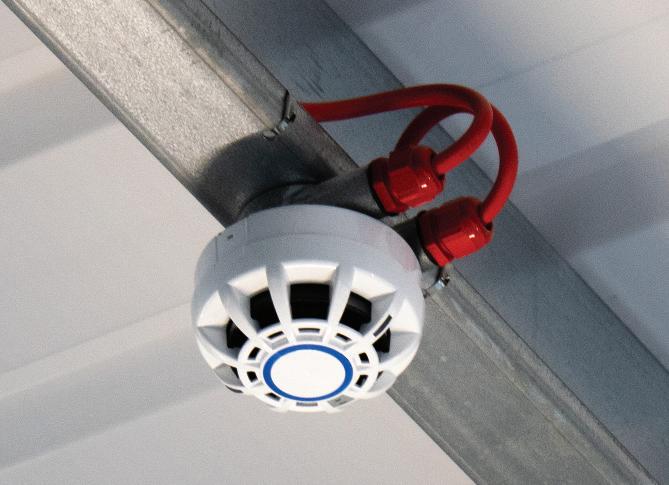

is a British designed and built, fully EN 54 parts 3, 5, 7, 17, 23, 29 and 31 certified heat, smoke and CO fire detector with a tone or voice sounder and onboard visual alarm device. Recently named Fire Innovation of the Year at the FSM Awards, CAST-PRO doesn’t just reduce installation costs, it reduces false alarms effectively, detects real fires reliably and indicates true alarm conditions decisively.
At the heart of its design is the MASC miniature advanced smoke detection chamber. Featuring computer designed airflow layers and a revolutionary non-focal non-linear prismatic angular bandpass filter, it has been specifically designed to allow space for reliable Heat and CO detection, a 92 dB(A) tone or 86 dB(A) voice sounder AND a C-3-9.4 visual alarm device – all in the same attractive, compact device. CASTPRO’s benefits include:
Less wiring and lower installation costs –advanced CAST-PRO single device detection and alarm solution provides multiple on-site engineer and end user benefits. All this functionality in one device means significant cost and time savings on installation, commissioning and maintenance over systems with separate detection and alarm devices. There’s only one wiring point instead of two and common bases across the range.
Increased functionality/efficiency – CAST-PRO isn’t just a fire detector – it is an alarm device too. Customers can choose from a 92dB(A) tone or 86dB(A) voice sounder with or without a C-3-9.4 white VAD or an O-C-1.9-4 red VAD. With 32 tones or 6 synchronised voice messages
to choose from, CAST-PRO uses just one address and is very efficient from a current consumption point of view even when in full alarm.
False alarm rejection – CAST-PRO’s powerful false alarm rejection algorithms recognise nonfire events but still track real fire signals. This means false alarms are massively reduced whilst ensuring real alarms are acknowledged quickly, especially if CAST-PRO’s additional fire sensing functions are utilised. As a result, CAST-PRO is a game-changer for sites prone to false alarms, including, for example, industrial sites, hotels or houses of multiple occupation.
Environmentally-friendly – CAST-PRO’s highly efficient integrated single device solution means less plastic and a lower carbon footprint.
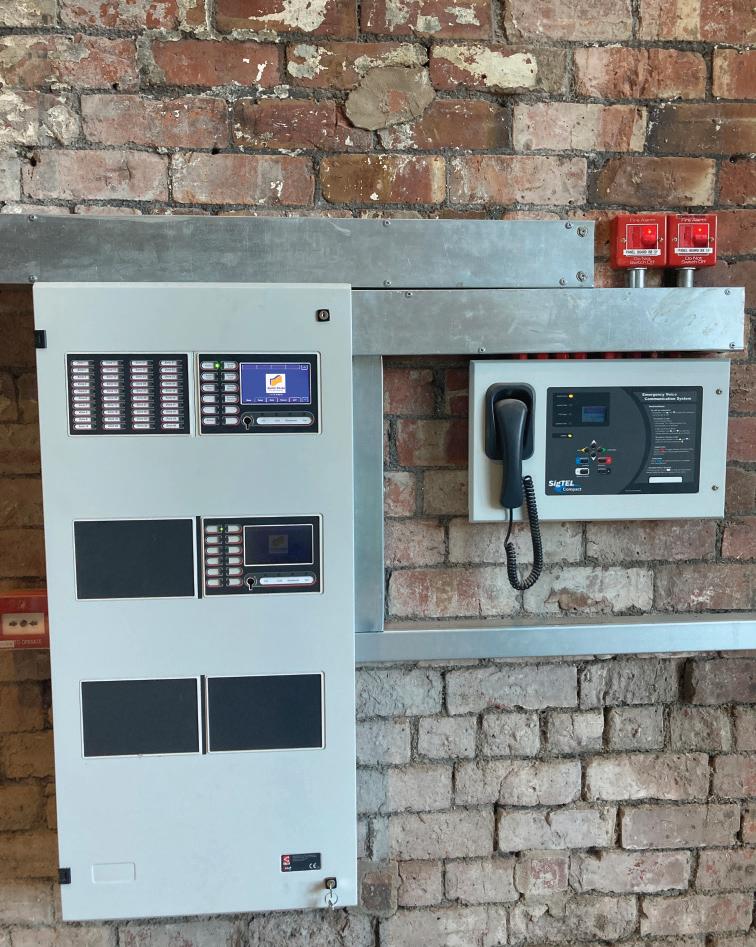





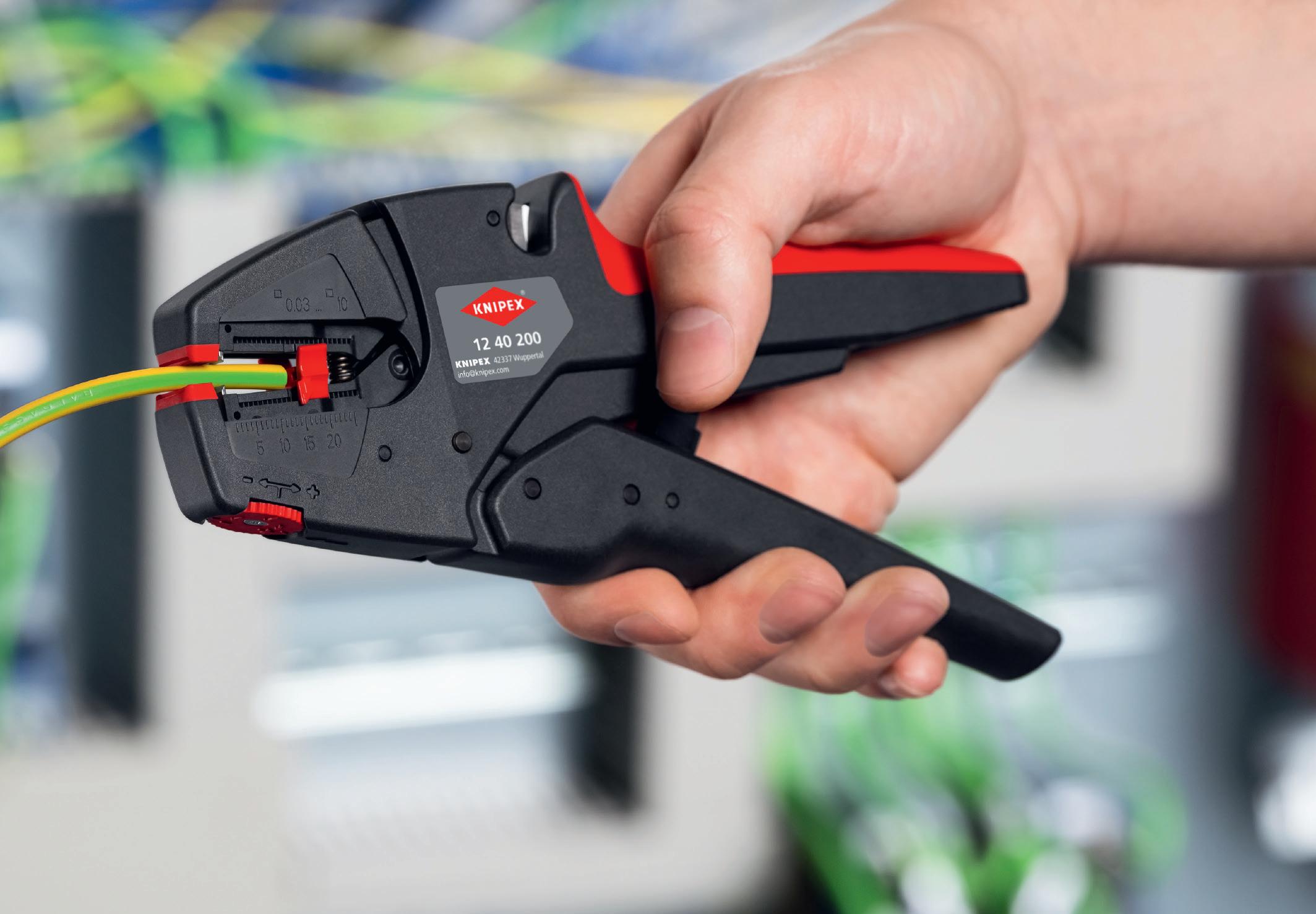

Now even better: faster, more precise and more convenient
Particularly easy stripping in the large capacity range from 0.03 to 10 mm² cuts cables up to 10 mm²
No damage to the conductors due to automatic adaptation to different conductor cross-sections With its two-component handle and comfortable handle width, it sits comfortably in the hand and the ingenious handle design minimizes the risk of hand injuries





















ATEX certification is essential for explosive environments in Europe, but it is only valid if verified through official channels. Terry McDonald, Technical Sales Manager at Thorne & Derrick International says businesses should take steps to reduce the risk
Counterfeit ATEX-certified equipment is flooding industrial supply chains, putting workers and businesses at serious risk of explosions, injuries — and even death.
“As businesses, it’s natural to seek the best price for a product, but this is where unscrupulous distributors and manufacturers are callously risking lives. There are a number of checks that procurement and purchasing departments can do to prevent purchasing a falsely ATEX certified product,” said Terry.
He added, “They can reduce the risk by checking certifications directly with notified bodies and purchase from trusted suppliers. Cutting corners on safety is not an option. The hidden cost of fake ATEX equipment could be human life.”
The scale of the problem
ATEX-certified equipment is specifically designed for use in explosive atmospheres — environments where flammable gases, vapours, mists or combustible dusts may be present. Genuine ATEX products undergo rigorous testing and certification processes to ensure they meet stringent European safety standards. However, counterfeit versions bypass these checks entirely, often masquerading as certified and flameproof equipment.
According to industry estimates, around 60 per cent of professionals have encountered fake products during their careers. More shockingly, it’s believed that 3 million counterfeit devices are currently in circulation across Europe alone, falsely promoted as ATEX-compliant by untraceable, “faceless” organisations.
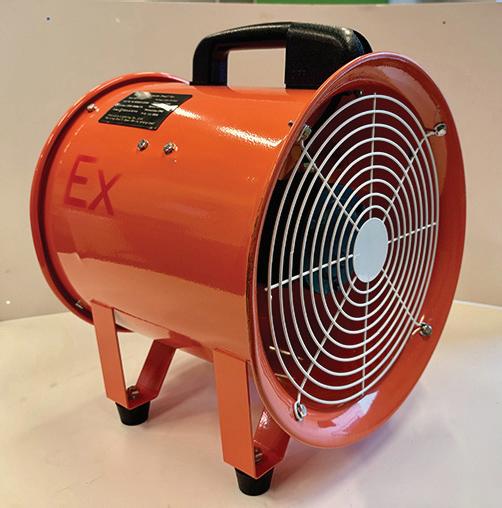

The cost of compromise
While counterfeit equipment may seem like a cost-effective alternative, the hidden costs can be devastating. Fake equipment lacks proper design and safety controls, increasing the risk of sparks or overheating that could trigger explosions in hazardous environments.
Beyond the immediate threat to life and limb, such incidents can cause major disruptions to operations, legal liabilities, and reputational damage. Tragically, industrial explosions contribute to over 16 incidents per day globally and resulting in approximately 380,000 fatalities annually due to industrial accidents.
Why are fake products prevalent?
One of the key issues lies in procurement practices. In many cases, buyers lack the knowledge or resources to verify whether equipment is genuinely certified. The pressure to cut costs often leads to purchasing decisions based on price rather than safety compliance
Additionally, enforcement remains a challenge. In the UK, for instance, there are only 30 police officers tasked with tackling counterfeit goods, despite the global counterfeit market being valued at over $1 trillion annually.
How to protect your business
There are steps businesses can take to mitigate the risk:
• Verify certification: Always cross-check product certifications with the relevant authorising body. For ATEX equipment, this involves confirming documentation through official EU notified bodies.
• Use official channels: Purchase equipment exclusively through reputable suppliers who can provide full traceability and certification documentation.
• Stay informed: The EU Safety Gate system provides a public database of recalled products. Checking this portal regularly can help identify known counterfeit or unsafe items.
• Raise awareness: Educate procurement teams and site managers about the risks associated with non-compliant equipment and the importance of due diligence.
The rise of fake ATEX equipment is more than just a supply chain issue, it’s a critical safety concern with real-world consequences. With lives and livelihoods at stake, companies must prioritise safety over savings and ensure every piece of equipment entering hazardous environments is fully compliant and certified.
As Thorne & Derrick mark their 40th anniversary, its team are proud to keep delivering safe, fully certified equipment worldwide, where compromising on safety is never an option.
Compliance doesn’t end at installation. Daniel Grimsdell, Regional Account Manager (Trade) at FireAngel, explores why testing, commissioning, and a thorough handover are essential in delivering fully compliant domestic fire alarm systems and why installers have a critical role to play at every stage
When it comes to domestic fire detection and alarm systems, compliance is often considered complete once devices are installed. But as any experienced contractor or installer knows, genuine compliance extends far beyond simply fitting alarms to walls or ceilings. It’s an ongoing process that includes testing, commissioning, handover, and routine checks. Getting each stage right can mean the difference between life-saving protection and serious liability.
Across the UK, BS 5839-6:2019+A1:2020 provides the recognised standard for domestic fire detection and alarm systems. Its guidance is particularly relevant to social housing, private rental properties, houses in multiple occupation (HMOs), and new-build developments. The standard sets clear expectations for system design, installation, commissioning, and maintenance to ensure fire detection solutions are reliable, properly installed, and capable of protecting lives.
Product specification and system design undertaken by organisations and individuals that can demonstrate competence form the foundations of compliance, but there remains a common misconception that using certified devices alone guarantees a compliant system. In reality, the final stages of testing and commissioning of detectors using test apparatus are just as critical, and often where issues arise if standards and best practice are not strictly followed.
Even the most advanced fire detection system depends entirely on correct installation, testing, and environmental considerations. BS 5839-6 reflects this, with Clause 23.3n highlighting testing and commissioning as fundamental to system effectiveness. This stage isn’t optional or administrative; it’s a vital safety measure to ensure all detectors, alarm devices, low-level controllers and any relays to other systems, including the transmission of alarms to alarm receiving centres, operate as intended in the real-world environment where they’ve been installed. Rigorous commissioning verifies that detectors respond correctly to test stimuli using manufacturer-approved test apparatus, that interconnected devices communicate effectively, and that both primary and backup

power supplies meet performance standards. Testing must also consider real-life conditions, such as detector placement in consideration of numerous factors such as proximity to heating, ventilation, light fittings, walls, beams and the highest point within the protected space, all of which can affect system performance. Skipping or rushing this process undermines system reliability and leaves landlords, housing providers, and installers exposed to legal risks and, more importantly, increased danger to life.
Achieving compliance is a shared responsibility. Manufacturers play a role by developing products aligned with British Standards, but correct installation, testing, and maintenance rest with installers, contractors, and housing providers. Their collaboration is essential, from aligning system design with property requirements, to following manufacturer instructions during installation, to ensuring accurate documentation is provided at handover.
Ongoing system reliability requires more than a one-off installation. It is essential that the home occupier is provided written information relating to the system by the installer. Over time, factors like wear and tear, tampering, battery degradation, or environmental changes can compromise system performance. BS 5839-6 emphasises the need for routine testing and maintenance by the home occupier to ensure continued compliance and effective protection
For landlords and housing providers, maintaining compliance means putting robust processes in place for regular checks, fault
reporting, and timely repairs. Since 2019, systems installed within sheltered housing schemes and or that are connected to social telecare systems require annual test and inspection by a competent person using test apparatus with a certificate of conformity being produced to evidence compliance. The emergence of connected and smart technologies, such as those developed by FireAngel, provides early alerts of faults, tampering, or system issues. While these innovations offer greater visibility and enhanced protection, they are not a substitute for professional inspections or educating residents about the importance of leaving detection devices undisturbed.
Installers have a unique role in raising safety standards across the UK housing sector. Whether working on social housing retrofits, private rental properties, or newbuild developments, their expertise ensures systems are not only installed to standard but tested, commissioned, and handed over with confidence in their performance. In 2021 British Approvals for Fire Equipment launched the first 3rd party certification scheme DS301 to enable those who design, install, commission and maintain Grade D fire alarm systems to demonstrate competence, providing the consumer with assurances of quality and compliance.
At FireAngel, we understand that compliance is about more than just supplying certified products. Our connected technologies and advanced detection solutions are designed to support installers and housing providers with ongoing system monitoring, real-time alerts, and enhanced fault detection, helping to ensure systems remain compliant long after installation. In domestic fire safety, compliance should never be treated as a one-off task. It’s an ongoing process built around collaboration, rigorous testing, thorough commissioning, and consistent system monitoring. With the right approach and by working in partnership, the sector can continue to raise safety standards, reduce risk, and deliver peace of mind for residents and property owners alike.
For more information on FireAngel and its advanced range of CO safety solutions, please visit www.fireangel.co.uk/trade.
With cooking the leading cause of fires in student housing, award-winning HobSensus is providing a smart, practical answer. Easy to install and retrofit, its helping landlords, universities, and electrical contractors reduce fire risks in student kitchens, but it could be just as at home in domestic settings too!
Student accommodation poses distinct fire safety challenges. Many first-year students are living independently for the first time, often in shared kitchens where distraction, inexperience, and late-night cooking can lead to dangerous situations. According to Electrical Safety First, one in seven students admit to falling asleep while cooking. In London alone, fire services attended over 1,200 cooking-related fires and false alarms in university halls over just five years.
These figures tell a clear story. Unattended cooking is the single biggest fire hazard in student accommodation, accounting for the majority of callouts to halls and shared flats. Beyond the risk to life, these incidents cause expensive disruption, evacuation, and reputational damage for accommodation providers.
How HobSensus works
Prefect Controls, long established as a trusted name in energy and safety management, developed HobSensus in response to increasing demand for an effective way to reduce kitchen fire incidents caused by hobs being left on or unattended. It’s key features include: 64-zone heat sensor: Constantly monitors the hob surface. If temperatures climb too high, the device warns the user with flashing amber lights and an audible alarm, then cuts power if there’s no response.
Integrated timer: Pressing the red button activates the hob for a set duration. When the timer expires, the hob powers off automatically unless re-activated.
Tamper-proof and durable: Built for the demands of communal use and easily retrofitted to most standard electric hobs.
Compliance and connectivity: Certified to BS EN50615 (Category B) and compatible with Prefect’s Irus central control system for monitoring or emergency power isolation during building evacuations.
This layered approach of thermal monitoring, time control, and automatic shut-off provides comprehensive protection against one of the most persistent risks in shared living spaces.
Built for student life
HobSensus has been designed around the realities of student living, environments where vigilance can’t always be guaranteed.
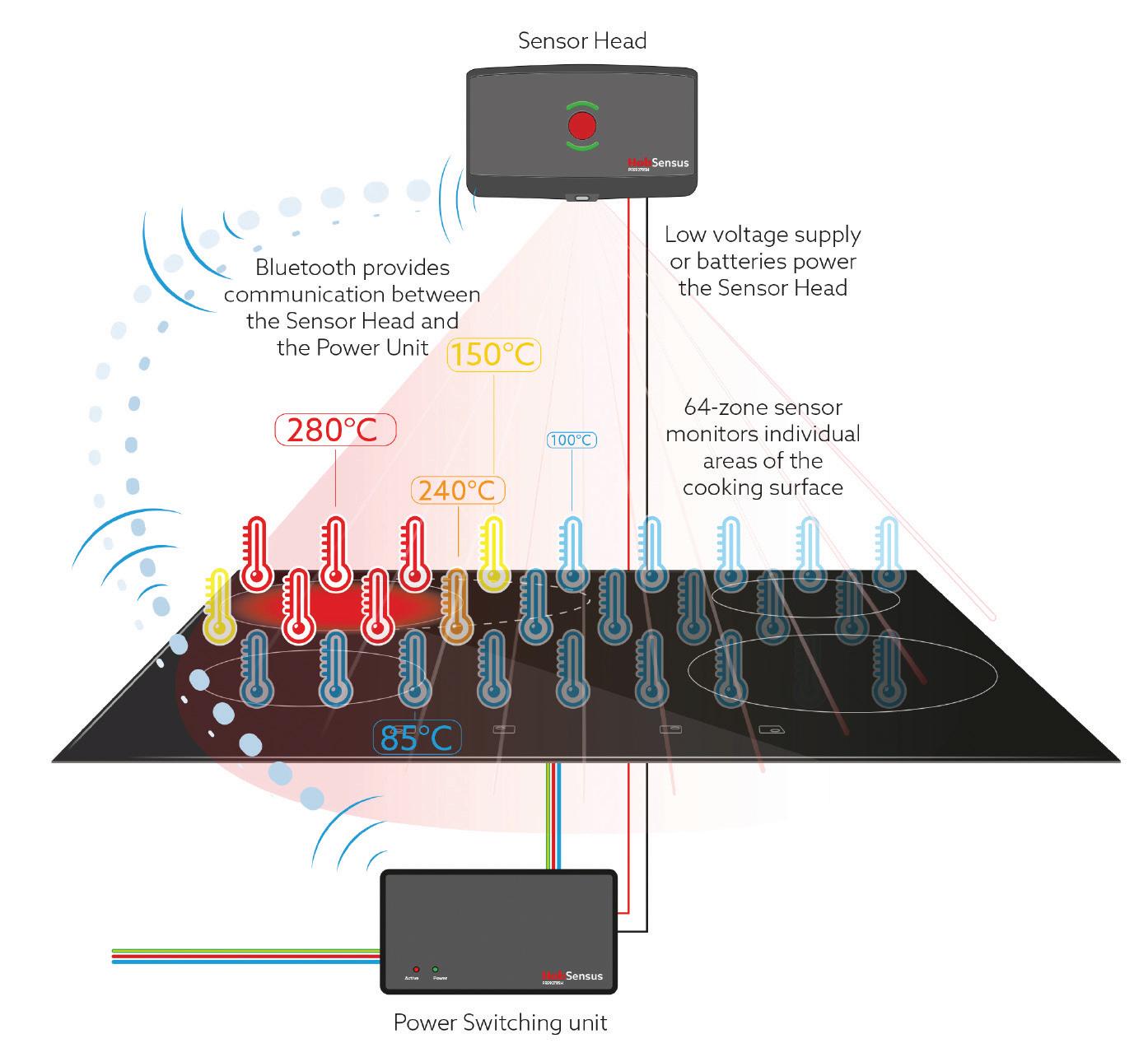
Distraction-proof: Whether cooking while socialising, studying, or returning to their rooms, residents are prompted to re-engage, or the hob shuts down safely.
Shared kitchens: Multiple users and varying levels of cooking experience make HobSensus a vital safeguard that doesn’t rely on user judgement alone.
Night-time protection: Fires frequently occur late at night when concentration is low. Automatic sensors and alerts act as a vital safety net.
Peace of mind for landlords: For accommodation operators, universities, and private landlords, HobSensus demonstrates proactive risk management, helping cut false alarms, insurance costs, and disruption.
By integrating HobSensus into new builds or retrofit schemes, landlords can significantly reduce fire risk while reassuring residents, parents, and insurers that safety is prioritised.
Electricians appreciate that HobSensus has been designed with simple installation in mind. It can be retrofitted quickly to most electric hobs without specialist tools or major rewiring - making it ideal for refurbishments, phased upgrades, or end-of-term maintenance.
Adrian Barber from Prefect Controls commented: “Electrical contractors operate in many situations where this simple device
could be a real benefit - the home of an elderly person, hostels, assisted living properties, holiday lets… let’s face it, we can all be distracted! A recommendation to customers to fit HobSensus could literally be a lifesaver.”
In 2023, HobSensus earned the Safety Innovation Award from Electrical Safety First, recognising its intelligent design, affordability, and retrofit potential. Judges praised its 64-zone thermal sensor, intuitive alerts, and focus on high-risk environments such as student accommodation. Although developed with universities in mind, the technology has far broader potential.
As thousands of students return to halls and shared flats each autumn, the kitchen remains a front-line fire risk. HobSensus offers a proven, award-winning solution. One that protects property, prevents false alarms, and most importantly, saves lives.
For accommodation managers and electricians alike, Prefect Controls’ HobSensus represents a smart, simple, and safe step forward in kitchen fire prevention. Combining technology, practicality, and peace of mind in one compact, life-saving innovation.
hobsensus.com
WINNER SAFETY INNOVATION OF THE YEAR AWARD





























Designed specifically for student housing, HMOs, Airbnbs and Assisted living homes etc.












































Prevent hobs from being left switched on.
HobSensus ‘watches’ over hobs, and cuts the power when temperatures approach dangerous levels. This cost effective, easy to fit device makes any kitchen safer by switching the hob off if the person preparing food is distracted or leaves the kitchen unattended.


Dead shorts can be difficult and time-consuming to locate, but a circuit tracer offers a fast, accurate and safe solution. IDEAL Electrical explains how electricians can use a circuit tracer, with or without an inductive sensing clamp, to pinpoint faults and restore circuits efficiently
Circuit tracers play a vital role in modern electrical work, helping to streamline fault-finding and improve efficiency. Consisting of a transmitter that sends signal through cables and a receiver that detects it, a circuit tracer permits electricians to quickly identify which breaker or fuse protects a circuit, trace concealed cables, and locate electrical faults. Troubleshooting can be a time-consuming task, but a circuit tracer makes it a faster, one-person job.
A dead short is one type of fault that highlights the true value of a circuit tracer. This fault occurs when current flows along an unintended path with no resistance, leading to a hazardous level of current in the circuit that can damage equipment and put workers at risk. Attempting to locate such a fault manually can be time-consuming, as the associated protective device will trip almost instantly to prevent damage. Manual testing might involve individually isolating and inspecting each device along the circuit, a lengthy and often frustrating process.
A circuit tracer provides a powerful, time-saving solution. With a tracer in hand, electricians can quickly and accurately pinpoint a dead short. But how exactly can a circuit tracer be used in this way? This article provides step-by-step instructions.
Instructions on finding a dead short Before using their circuit tracer, electricians must first prepare for the testing. To prepare:
1. De-energise the circuit. This is essential to avoid electrical hazards.
2. Disconnect any connected devices to eliminate potential interference.
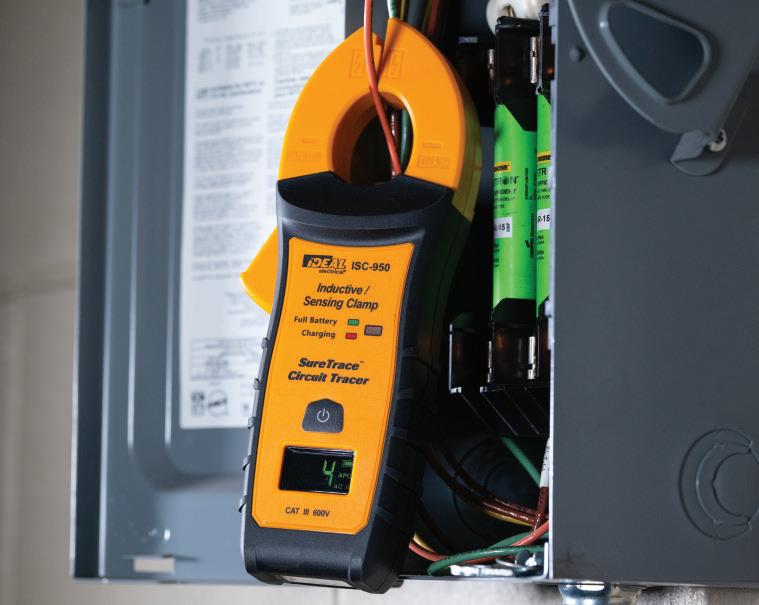
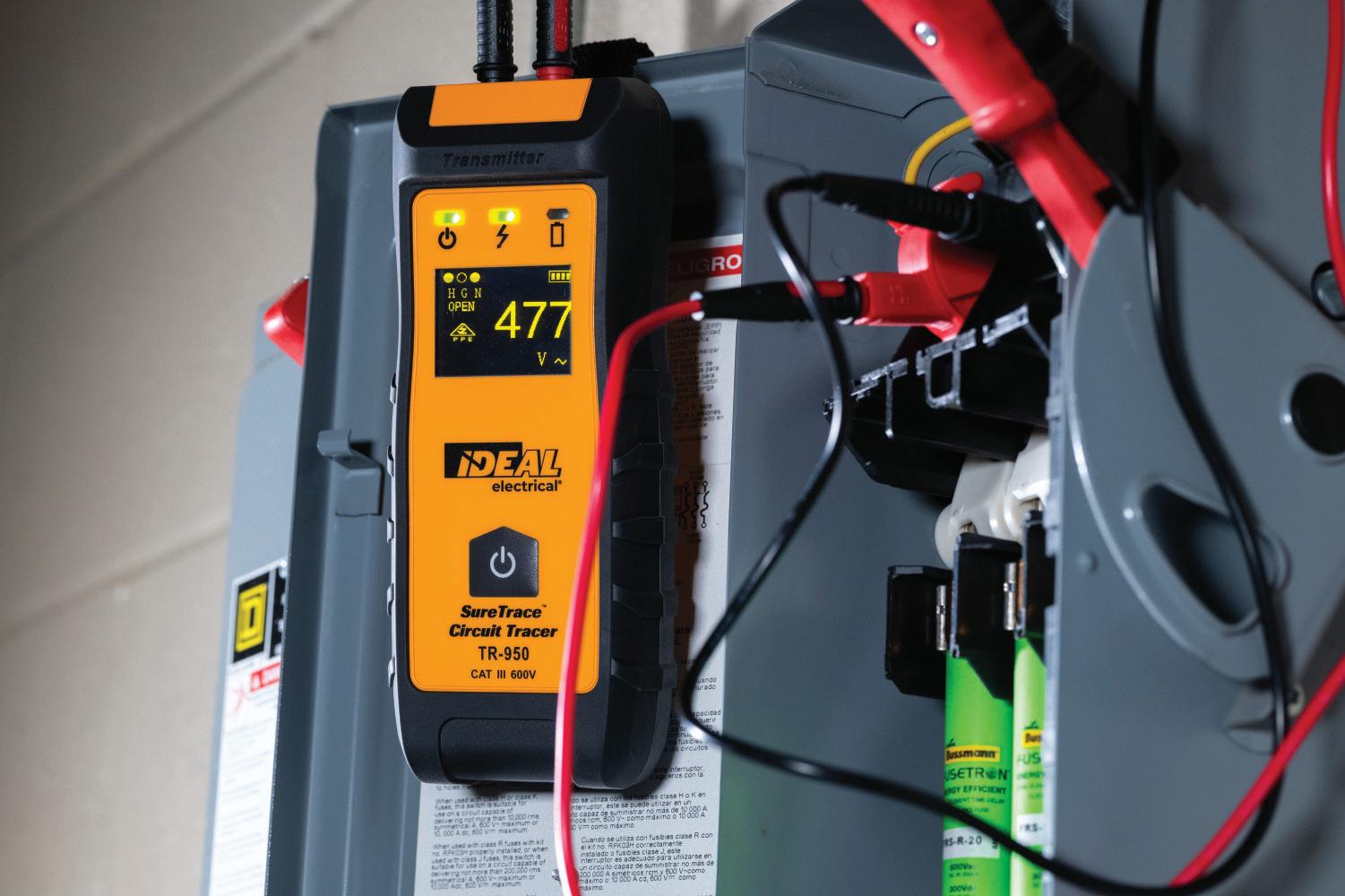
3. Inspect the wiring visually for obvious signs of damage, such as burnt insulation or exposed conductors.
Next, electricians should turn on and use the circuit tracer transmitter. Some advanced transmitters include a built-in automatic continuity test, which can be used to identify the shorted conductors.
The circuit tracer receiver can be used to pinpoint the short. The receiver detects the signal that the transmitter sends through the cables.
1. Turn on the device and adjust its sensitivity levels.
2. Scan the circuit by moving the receiver along the cable run.
3. Follow the highest signal reading, which indicates the path of the circuit.
4. Reduce sensitivity as you approach the suspected fault to pinpoint the exact location.
5. Follow the circuit until the receiver registers a sharp drop in signal strength –indicating the likely location of the short.
After identifying the short, corrective action can be taken quickly and efficiently. Damaged cables or components should be replaced and proper insulation added to prevent future faults. Once completed, the circuit can be re-energised and tested again to confirm the dead short is resolved.
In some cases, accessing the cable termination points to connect the transmitter may not be possible or safe. In this case, electricians can use an inductive sensing clamp for a noncontact solution.
By placing the clamp around a conductor at any accessible point along its run, the clamp can induce a signal without a direct connection. Then, the receiver can be used in the same way to follow the signal and locate the fault. Today’s most advanced circuit tracers include an inductive clamp in their kit, providing a versatile troubleshooting tool for non-contact fault-finding.
Fast, accurate fault-finding with circuit tracers
Circuit tracers enable faster, more accurate troubleshooting, turning the process of locating dead shorts and other faults into a straightforward task. Whether using the transmitter or an inductive sensing clamp, electricians can easily inject a traceable signal into the circuit and use the receiver to pinpoint the fault. By following these steps, electricians can work more efficiently, save valuable time, and find dead shorts with ease.
Visit IDEAL at www.idealind.com/eu/en.html


TThe rapid rollout of EV charge point installations is a massive opportunity for contractors, because any work or test maintenance carried out on EV chargers should be performed by an electrician or competent person, explains Steve Dunning, MD at Martindale Electric
here’s no denying that EV charge point installation requirements are growing rapidly and therefore present a business opening too good to miss.
The UK government has a target to increase the number of charge points from 82,000 to around 300,000 by 2030, so a major expansion of the associated infrastructure is planned. Plus, it is estimated that over 50 per cent of UK households have access to a driveway or parking space which could accommodate an EV charge point.
Electric Vehicle Supply Equipment (EVSE) ready test equipment is required to install and verify the installation, and many manufacturers have already introduced appropriate kit and break out boxes, but more simplified and affordable EV testing tools are being introduced for basic safety testing - opening doors for electrical contractors armed with the right kit.
EV charge points checking
You’re probably thinking multifunction tester. But a MFT is not usually the first- line tool for very basic functional checks of commercial and domestic outlets - this would generally be performed by equipment such as a simple socket tester. Subsequently, the arsenal of tools for EVSE checking has improved with the likes of dedicated EV socket testers such as the Martindale BZ820-EV.
The BZ820-EV is a first-line checker for EV chargers fitted with a Type-2 EV connector. While it cannot test RCD’s or measure earth loop impedance it can detect up to 28 wiring fault conditions and confirm the voltage supply level is within limits. Correct or incorrect operation of the EV charger is indicated by a combination of LEDs and an audible tone.
An integral slider switch on the connector allows vehicle states to be simulated: no vehicle, vehicle connected, and ready to charge. Additionally, an additional error setting simulates failure of the CP signal causing the charger to inhibit charging.
Just as socket testers are widely used in standard residential and commercial outlet checks, it is expected these cost-effective tools will be widely used for EVSE checks alongside the more capable multifunction tester solutions.
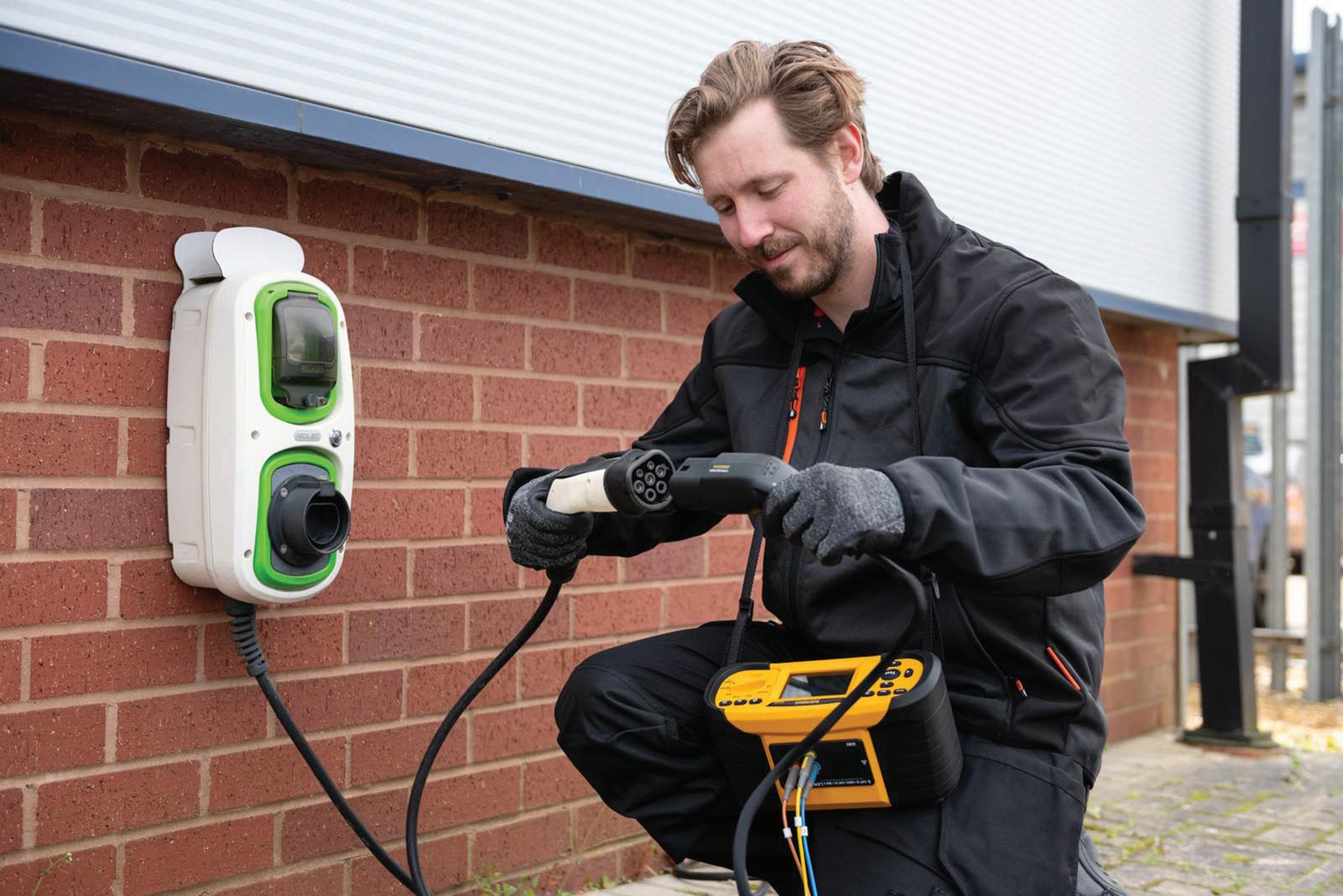
The Multifunction Installation Tester has become a must-have contractor tool for EV charge point testing, because it covers most of the basic tests needed for EVSE, and is the solution for both initial installation testing and periodic inspection. Key tests include Earth loop impedance measurement, RCD testing and, for three phase systems, a phase sequence test.
More recent introductions to the market such as the Martindale ET6500 and ET6300 are EV ready and able to perform installation tests on EV chargers. The ET6500 is the complete kit; ready to test out of the box and includes a Type-2 adapter. The ET6300 is ideal for contractors and installers who are not currently testing EVSE but may need this option in the future. Simply add the EV adapter accessory.
These are also becoming more plentiful, with varying built-in test capabilities. Including, simulation of a connected vehicle, basic CP testing, and the ability to be used to connect from the EVSE charge point to standard test instrumentation.
One advanced example is the Martindale TL326-EV Electric vehicle charger test adapter.
This accessory enables connection to an EVSE charging point Type-2 connector to relevant test equipment, using standard 4mm jack plugs. When used with a suitable Multifunction Tester (MFT) it will allow the tester to support all relevant measurements via the standard measurement inputs.
Ideal for both single and three-phase applications the TL326-EV gives access to L1, L2, L3, N and PE. The integral CP mode slider switch also allows vehicle states to be simulated (no vehicle connected, vehicle connected, connected & ready to charge). As with the BZ820-EV, the unit has an error position simulating failure of the CP signal, which should cause the charger to inhibit charging.
An increasingly comprehensive set of cost effective and easy-to-use EV infrastructure tools are being offered by test equipment innovators such as Martindale. So, it’s time to future proof your business and help support the march towards cleaner and greener transportation. Safety and full compliance are paramount of course, and this particular skillset will always be in demand as the UK EV market continues its inevitable surge forward.
Visit: https://martindale-electric.co.uk/ product-category/socket-testing/
BG Electrical, part of the Luceco group, launches its new Smart dimmer and brand-new smart app. Designed with both contractors and end-users in mind, the BG smart dimmer combines the familiarity of traditional dimming with the convenience of smart control. Whether installing a full smart dimmer switch or retrofitting with BG’s smart module, the system provides an intuitive and flexible solution that’s fully app-enabled and voice-assistant ready.
For installers, the BG smart dimmer removes many of the common frustrations associated with smart lighting. Thanks to its simple Bluetooth setup, there’s no need for a hub, just connect and go.
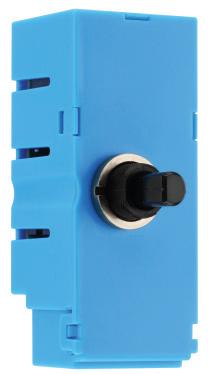
The product range includes both 1-gang and 2-gang, master and secondary switches in the popular white Moulded profile, as well as retrofit smart dimmer modules, which are universal fit, compatible with the BG decorative dimmer ranges. No neutral wire is required, making it suitable for standard lighting circuits across a wide variety of residential applications.
With compatibility across Alexa, Siri, and Hey Google, users can control their lighting via the free BG smart app.
Contractors can pre-configure timers, presets, and lighting scenes for their clients during installation, handing over a fully set-up system that enhances customer satisfaction and adds professional value.
The app supports full dimming control, timer setup, scene creation, and more. Existing BG Home devices can easily be migrated to the new BG Smart App via the BG Connect feature. And because no hub is needed, getting started is as simple as downloading the app and pairing the device.
Available in master and secondary switch formats, or as a universal retrofit module, the BG Smart Dimmer offers a scalable solution to suit any installation. Whether upgrading an existing switch or specifying for a full home project, contractors can offer a smart dimmer setup that’s quick to install, easy to operate, and built to last. www.bgelectrical.uk/uk/smart-dimmer-switches
Electronic devices must be protected from external influences. Therefore, the quality of the enclosure and especially the locking system is crucial. Highest demands are placed on the housing and locking mechanism when machines, plants, and vehicles are exposed to constant vibrations and oscillations. EMKA’s vibration-resistant quarter turn offers maximum protection for these challenging environments and reliably secures doors and flaps throughout their entire service life.

The specially designed quarter turn and additional functional elements ensure maximum protection against unintentional loosening. Constant spring pressure on the internal mechanism, combined with two positive-locking end positions, ensures secure latching, which is also audible.
A simple 90° turn engages the locking cam behind the inner door frame, reliably locking the door or flap. This vibration-resistant quarter turn provides the same level of protection as a traditional safety quarter turn – while offering enhanced ease of use. This locking solution is also the more cost-effective option.
EMKA has patented its vibration-resistant quarter turn and subjected it to extensive testing. Users benefit from consistently high locking performance throughout the product’s entire service life. All requirements for vibration and shock resistance according to DIN EN 61373 are fully and reliably met. The stainless steel version also complies with the fire protection standard DIN EN 45545-3 with an E60 classification, making it especially suitable for use in railway vehicles. Moreover, this locking solution meets all criteria for deployment in rugged and mobile outdoor applications – such as in railway systems, road vehicles, or agricultural machinery – in accordance with protection class IP66. Internal electronic components are shielded from ingress of dust and water, even under high-pressure and steam-jet cleaning.
An upgrade to the highest ingress protection rating, IP69K, is currently in development. The vibration-resistant quarter-turn is available in both zinc die-cast and stainless steel, with two surface finishes and a variety of actuation options. www.emka.com
The trusted Profix PVC Conduit Fittings range offers a complete highquality solution for surface wiring and cable protection in residential, commercial and industrial electrical installations. Manufactured from durable, impact-resistant virgin PVC and designed to meet International requirements, Profix PVC conduit is capable of withstanding harsh environments. Available in black or white finish, the conduit and fittings respectively meet BS EN 50086 and BS4607 standards.
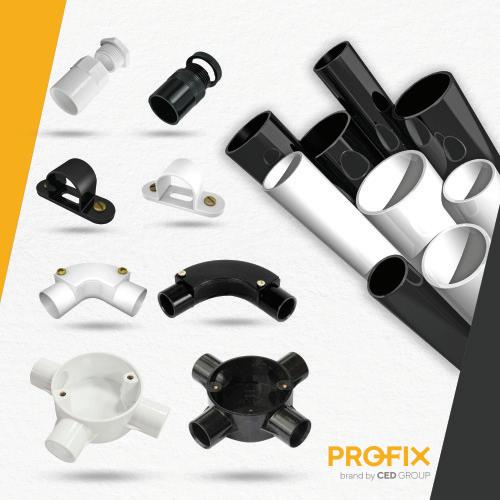
In detail, the basic Round Conduit is available in two grades – light and heavy duty, each with outer diameters of 20 or 25mm. Corresponding Circular junction boxes are available from 1 way to 4 way in all required variations as well as lids, with further round accessories including Spacer Bars and Saddles, Adaptors, Loop in boxes, Extension rings and more – all designed for easy installation, long service life and no discolouration.
The range also includes heavy and light-duty Bending Springs, Reducers and Mounting accessories, providing Electricians with a comprehensive, compliant system for all round use.
For further information, please call 0208 503 8500 or visit the website. www.cedelectrical.co.uk
Makita has introduced its new SKR001 Rechargeable Rotary Laser that makes levelling and alignment simple. With impressive range diameter capabilities and flexible charging options, the Rotary Laser provides outstanding accuracy, enhanced visibility, and convenience for trade professionals undertaking levelling tasks.
The SKR001 delivers a measuring range of up to 800 meters in diameter when used with the laser receiver and provides horizontal and vertical accuracy of ±0.5mm and ±0.75mm per 10m respectively. With automatic self-levelling capabilities within ±5°, and manual slope adjustment, the new rotary laser allows for quick setup and consistent, high-precision layout work on large sites.
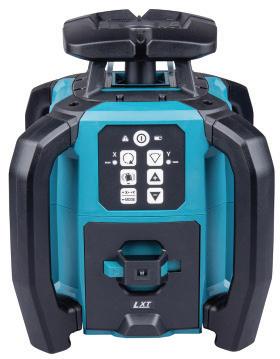
Thanks to its green laser beam, visibility is significantly improved over red laser models, especially in bright daylight conditions. Users can select from static, or three rotation speeds: 150, 300, 600 rpm and three scan angles: 10°, 20°, 30° depending on application needs, adding to the tool’s adaptability and versatility.
The SKR001 is extremely flexible given it is compatible with three Makita battery platforms, CXT (12V), LXT (18V) and XGT (40V) can all be used to power the laser when fitted with the respective battery tray options. The Rotary Laser also comes equipped with a Bluetooth remote control (RC1) for operation up to 100 meters and features auto shut off and anti-drift systems to maintain laser integrity. Run time is equally impressive, with up to 160 hours of continuous use with a 40VMax 4.0Ah XGT battery, ensuring minimal downtime.
Built for real-world jobsite durability, this Rotary Laser features IP67-rated protection against dust and water, as well as shock-absorbing rubber bumpers to safeguard the unit from drops of up to 2 meters. Weighing only 4kg (without battery), it is a manageable weight yet sturdy enough for demanding and daily professional use.
The SKR001 is supplied with an 18V LXT battery tray holder as standard. For more information about the SKR001 and Makita’s full range of cordless machines, visit the website. www.makitauk.com
The electrical engineering profession is undergoing a major transformation. As industries move toward electrification and digitalisation, the growing skills gap is pushing up costs, slowing innovation and creating new challenges for critical infrastructure. Anna Mazzoleni, ABB Electrification Service, explains how this shortage is changing the role of the electrical engineer and why developing hybrid expertise across legacy and digital systems is vital
Q:
The World Economic Forum has identified skills gaps as the biggest barrier to transformation. How is this impacting electrical engineering right now?
A:
The skills shortage is creating immediate bottlenecks in critical electrical engineering projects globally across industries such as renewable energy, data centres, and manufacturing. This is because employers can’t find engineers who understand both the complexities of existing legacy infrastructure and modern digital systems.
I’ve witnessed first-hand how customers are forced to choose between maintaining aging electrical systems with increasingly expensive specialist knowledge, or upgrading to digital solutions their current teams can’t properly commission or maintain. This forces facilities into an awkward position, where they’ve invested in new electrical technology but can’t realize its benefits because they don’t have the expertise to make it work with their existing infrastructure.
Q:
What does it mean to be an electrical engineer today compared to ten years ago?
A:
The fundamental shift is from engineering components to engineering intelligent systems. Ten years ago, electrical engineers focused on moving electricity safely from point A to point B. Today, they’re designing systems that continuously analyze their own performance and make autonomous decisions about energy use.
This transformation shows up everywhere. Maintenance has evolved from following rigid manufacturer schedules to creating systems that predict their own failures and automatically schedule repairs during low-cost energy periods. Every design decision now

carries carbon implications that engineers must factor into their calculations. And perhaps most significantly, modern electrical systems generate vast amounts of operational data that engineers must interpret to optimize everything from energy consumption to real-time energy trading.
Essentially, today’s electrical engineers are data scientists who work with electricity. Their role has expanded from keeping the lights on to optimizing how energy moves, when it’s used, and what impact it has.
Q:
With nearly a quarter of engineers set to retire in the next decade, how can the industry bridge that generational gap?
A:
This retirement wave represents the greatest knowledge transfer challenge in electrical engineering history. The industry is losing engineers who possess irreplaceable understanding of electrical installations from the 1970s and 1980s that will continue operating for decades, while bringing in younger digital natives who may lack hands-on experience with energised equipment.
IEA research shows this skills and generational divide is worsening, while utilities need both traditional electrical expertise and
advanced digital skills, only 11 per cent of their job postings require digital capabilities, indicating the industry is failing to attract the hybrid talent it needs. At the same time, while there is a growing demand for data analysis, scripting languages, and cloud solutions since 2021, which has created a fundamental mismatch between what retiring engineers know and what new engineers need to learn.
Traditional one-on-one mentoring won’t be enough to handle this knowledge transfer challenge and close this gap fully because most electrical engineering knowledge is experiential, such as knowing what a failing transformer sounds like, or understanding how a particular installation behaves under stress. I believe the industry needs structured approaches to capture what retiring engineers know and teach it to multiple newcomers at once. This involves recording expert thinking, building safe practice environments, and creating training that bridges traditional electrical knowledge with modern digital skills.
How are younger engineers approaching the profession differently, and what motivates them to join and stay?
A: Q:
The new generation brings a fundamentally different relationship with both technology and purpose. They don’t see digital tools as add-ons to traditional engineering, they expect AI diagnostics, real-time data, and global expert networks as standard parts of how engineering should be done.
What motivates them is seeing direct connections between their technical decisions and climate goals, combined with meaningful project ownership early in their careers. Traditional hierarchies matter less when expert knowledge is instantly accessible.
From my experience, the engineers who stay are those given genuine ownership of digital transformation and sustainability
initiatives with direct customer interaction. Give them that combination of purpose, modern technology, and real impact, and they become passionate advocates for the profession.
Q:
The skills gap is said to drive project costs up by as much as 20 per cent. Where does that impact show up?
A:
The 20 per cent figure only captures the obvious costs of higher labor rates and project delays. The real financial impact runs much deeper and shows up in places most companies don’t track properly.
The biggest hidden cost is opportunity loss. When engineering teams lack expertise in modern energy systems, they default to conservative, proven solutions rather than more efficient alternatives. A skilled engineer might specify smart switchgear that provides decades of operational insights and predictive maintenance capabilities. A less experienced team chooses conventional equipment that requires manual inspections and provides no performance data. The upfront costs look similar, but the lifetime value differs dramatically.
There’s also a knock-on effect where less experienced teams build systems that work fine on their own but don’t communicate effectively. Companies end up with electrical infrastructure that can’t tap into demand response programs or energy trading opportunities. Add in the current global policy uncertainty around energy projects, and investors are getting spooked by both skills shortages and government reliability — making everything much more expensive to finance.
All these hidden costs mean the real impact usually goes well beyond 20 per cent. What’s most frustrating is watching inexperienced teams either gold-plate everything because they’re unsure or make risky shortcuts that turn into expensive safety problems down the line.
existing power systems. Running a power grid that’s mostly solar and wind is completely different from running one that’s mostly coal and gas. Without engineers who understand how to balance unpredictable renewable power with battery storage and smart demand management, we could end up with clean energy projects that actually make power outages more likely.
There’s also a cybersecurity dimension that’s often overlooked but becoming increasingly critical. As electrical systems become more digitalized and interconnected, they become potential targets for cyber-attacks. Engineers who understand only the traditional electrical aspects without grasping cyber vulnerabilities may inadvertently create security risks affecting millions of people. Electrical infrastructure today means securing the computer systems that run it, not just the power systems themselves. Perhaps most concerning is the risk of creating “stranded renewable assets”, which is clean energy installations that work technically but can’t integrate with smart grid systems. This happens when teams understand either the electrical or digital aspects, but not both. These installations may generate clean energy, but they can’t participate in the grid services essential for a fully renewable energy system, limiting their potential for decarbonization.
Q:
A:
How is ABB’s training helping to close this gap in practice?
The skills shortage requires tackling multiple fronts simultaneously, starting with upskilling our existing workforce to handle both legacy and modern systems. Our significantly expanded training approach develops engineers who can work across traditional electrical and digital domains, which has allowed us to take on projects that other companies struggle to staff properly.
We’ve seen this reduce project timelines because engineers get immediate expert support without waiting for specialists to travel to sites, plus we’re avoiding massive amounts of carbon-intensive business travel.
Perhaps most importantly, we’re creating engineers who can work across the traditional electrical-digital divide. Engineers developed through our programs are increasingly sought after by customers who need teams that understand both legacy infrastructure and smart grid technologies. While we’re developing talent for our own projects, we’re also helping build the broader engineering capacity the industry desperately needs.
Q:
Looking ahead, how can the profession reinvent itself to meet the challenges of the next 20 years?
A:
Honestly, I think we need to stop thinking of electrical engineering as just about electricity. In my work, I’m already seeing projects where we’re integrating climate data, energy market prices, and even user behavior patterns into electrical system design. The engineers who succeed in the next twenty years will be those who understand that electricity is just one part of much larger, interconnected systems.
The biggest shift is moving from reactive to predictive engineering. Right now, we have systems that respond to problems. But I’m working with technologies that anticipate issues and continuously improve themselves. Engineers need to see machine learning and data analytics as fundamental skills, not add-ons.
Beyond cost, what risks does the shortage pose to critical infrastructure and to the global push for energy transition?
Q: A:
The skills shortage could seriously slow down the shift to clean energy. We have the renewable technology we need, but there are not enough people who know how to connect it properly to our
We’re also using augmented reality and simulation technologies to let engineers practice complex scenarios safely, which means they develop critical skills faster than traditional apprenticeships allow. The bigger impact comes from how we’re scaling expertise. Through our remote assistance systems, one senior engineer can now effectively support multiple junior engineers simultaneously across different projects. This means we’re multiplying the impact of experienced professionals rather than losing their knowledge when they retire.
What gives me hope is how the younger generation approaches their careers. When I speak with new engineers, they’re looking for work that tackles climate change directly. Electrical engineering sits at the heart of decarbonization efforts, so we should be telling that story boldly rather than just discussing technical specifications.
What’s worked for me is having the opportunity to specialize in areas that genuinely interest me. My path into service digitalization and AR technologies builds directly on electrical engineering principles, just applied in completely new ways. Give engineers that freedom to explore, and they’ll find remarkable applications.
Traditional one-on-one mentoring won’t be enough to handle this knowledge transfer challenge and close this gap fully because most electrical engineering knowledge is experiential, knowing what a failing transformer sounds like, or understanding how a particular installation behaves under stress. I believe the industry needs structured approaches to capture what retiring engineers know and teach it to multiple newcomers at once. This involves recording expert thinking, building safe practice environments, and creating training that bridges traditional electrical knowledge with modern digital skills.






EMAIL lisa.peake@purplems.com TO SHARE YOUR HOBBY

Lisa Peake talks to Dan Griffiths, Technical Operations Manager at the LIA and judge at the Electrical Industry Awards 2025, about his mission to shine a light on emergency lighting compliance by climbing a mountain in the dark. Dan shares how teamwork, endurance, and purpose came together in a challenge that tested both body and spirit

Iam the Technical Operations Manager at the Lighting Industry Association (LIA), overseeing both the Standards Development team and the Quality Assurance team responsible for auditing our members. In addition, I play a key role in authoring and developing training courses focused on lighting design, product design, and lighting controls.
I spent 14 years working for an LIA member and was always aware of the valuable work the LIA was doing, especially following Ayca’s efforts to modernise and enhance the organisation. I’ve now been with the LIA for 18 months. I joined to take a more active role within the industry and to further develop my expertise and capabilities in lighting.
We are a small, dedicated team, which gives us a great deal of freedom to lead initiatives and take ownership of projects when we propose them. It’s incredibly rewarding to make a real difference within the industry. I also feel fortunate to work closely with many of our members and learn from their expertise.

From, left to right: Martin Green (Hochiki), Kevin James (One Lux), Ayça Donaghy (LIA), Dan Griffiths(LIA), Mark Jones (Fox Lux), Ellie Warner (Lux Box), Melissa Duckett (LIA), Caroline Armstrong (P4), Sophie Jongen (P4), Kyle Lindsay (LIA), Jack Anthony (LIA), Matthew Higgins (Mackwell), Sarah Morton (LIA)
Lighting the way up
I was motivated to raise awareness about the critical importance of emergency lighting and the need for compliance. In the past, I’ve demonstrated its role by creating dark corridors with and without emergency lighting to highlight its impact. However, I wanted to take this further and find a more striking
way to show just how vital emergency lighting is. That’s when the idea came about to attempt climbing a mountain powered solely by emergency lighting. The three-hour time limit added an exciting sense of urgency and challenge to the event.
I have climbed Snowdon once before for charity during daylight hours, so I had a
general idea of what to expect. I’m active in rugby and powerlifting, which has given me a good level of fitness, but those sports are more focused on short, explosive movements rather than endurance.
I was eager to get the team practicing well in advance. Fortunately, here in Shropshire, we have some incredible hills nearby. Starting in early January, we began training by climbing these steep hills in the dark. This not only gave us a realistic sense of what to expect during a night climb but also helped improve our fitness and build resilience by getting used to feeling uncomfortable and out of breath.
Snowdon was truly a unique experience. Since we were climbing through a Dark Skies area, we adapted our emergency lighting to be wildlife-friendly. Climbing at 3 a.m., it was impressive how much the emergency lighting helped with wayfinding. It also made it easy to keep track of everyone against the pitchblack backdrop.
At one point, we lost the path and had to scramble over loose, uneven rocks. I think the hardest part of the experience was not knowing how far we were from the summit. Although we could see the mountain’s outline in the pitch black, the top was never clearly visible. Every time we thought we’d reached the summit, the path kept going further.
Generally, the group was in great spirits. I think seeing everyone with their lights on, ready to go, really set a positive tone from the start. We had come together for a shared purpose, united in our determination to highlight the importance of emergency lighting. Of course, there were moments when each of us struggled, but the encouragement and teamwork kept morale high throughout the climb.
There were plenty of moments that called for teamwork, helping each other over rocks and through the trickier parts of the route.Even simple things like guidance on where to step or which areas to avoid made a big difference. On numerous occasions, we’d pause to huddle together briefly, checking that everyone was okay before continuing.
What stood out most to me was how resilient everyone was. We have an incredible team who were all willing to take on this crazy challenge, and everyone pushed

through. I was genuinely so proud of each person, a feeling I’ll never forget.
It was also really special to share the experience with others from the wider industry. We definitely bonded with some of our members who joined us, and now there’s a real sense of camaraderie when we see each other at events or meetings.
The toughest part of the climb was definitely the weather. We were lucky to have clear skies and no rain during the night, but it was just 3 °C when we set off. While the cold wasn’t initially an issue, the experience became brutal as the wind picked up. Near the summit, the wind chill dropped to around -20 °C.
The summit was covered in ice, making footing treacherous. Many of us at the front took shelter against a wall at the summit while waiting for the rest of the team, but even so, I don’t think I’ve ever experienced cold like that before. As we waited, we kept an eye out for the other groups, cheering them on as they arrived. Some of us tried to eat and refuel, but the freezing temperatures had turned much of our food solid.
Standing together at the top, holding our banner, knowing we’d all made it – it was a truly special moment.
There was definitely a sense of elation when we reached the summit, especially knowing
the climb was finally behind us. All of our lights made it to the top, and witnessing the sunrise together was unforgettable.
The wind chill remained the toughest challenge throughout, making the descent even more treacherous, with a few nasty falls along the way.. However, when we got back to the base, there was a real sense of happiness and pride in what we had accomplished together as a team.
The Next Big Challenge
Raising over £2,000 for the Electrical Industries Charity was incredibly rewarding, but more importantly, it highlights the real impact we can have when the industry comes together. The EIC does vital work supporting people across our sector who may be facing personal or financial difficulties – often quietly, behind the scenes. I’d encourage everyone in the industry to support causes like this, not just because they help those in need, but because they strengthen the sense of community and responsibility that defines our sector. You never know when you or someone you work with might need support.
I would like to do something for the Grenfell Foundation next year, knowing how much their lives have been affected by such a tragedy. I am also keen to take part in another LIA charity event, hopefully with other associations within our industry as we try to build our community.
“I was motivated to raise awareness about the critical importance of emergency lighting and the need for compliance. In the past, I’ve demonstrated its role by creating dark corridors with and without emergency lighting to highlight its impact. However, I wanted to take this further and find a more striking way to show just how vital emergency lighting is. That’s when the idea came about to attempt climbing a mountain powered solely by emergency lighting.”
With over four decades of experience, Ian Rogers, CEO and Chief Visionary Officer of Procync explains why early alignment, disciplined planning, and whole-life thinking are essential to delivering projects that run smoothly and stand the test of time
When a construction project fails, the finger is often pointed at design flaws, supply chain breakdowns, or site-level inefficiencies. Yet, in my four decades of experience across the built environment, I’ve seen the real causes take root far earlier, often before a single spade hits the ground. The truth is that most problems start in the pre-construction phase. Rushed decisions, poorly defined objectives, and lack of clarity in responsibilities almost always sow the seeds for disputes, delays, and spiralling costs. If we want to deliver projects that run smoothly and stand the test of time, we must give far greater attention to the frontend of the process.
Overlooked foundation of delivery
Pre-construction is where strategy, scope, budget, and timelines are set. Too often, this phase is treated as a box-ticking exercise, a necessary hurdle to “get building started” rather than the critical foundation of delivery. Arguably, the most important stage is pre-design, where the project baseline is established through a clear and detailed brief that accurately reflects the client’s requirements.
Part of the problem lies in the culture of the industry. Visible progress; digging, piling, concrete pours, is often valued more highly than the invisible work of aligning objectives or interrogating assumptions. Political deadlines, commercial pressures, or a client’s desire to “show activity” can all push teams into rushing ahead before plans are truly watertight.
Fundamental questions such as what success looks like, who owns the risks and how decisions will be made are often left unanswered until it is too late. That early silence quickly evolves into disputes on site, contractor claims and fractured client relationships. Key risks emerge here:
• Unclear client requirements – failing to capture what the client truly needs
• Unclear objectives – stakeholders may not share the same definition of success
• Rushed procurement – the wrong partners, chosen for cost alone, undermine delivery later
• Incomplete risk planning – optimism bias causes teams to underestimate challenges

• Poor communication – assumptions go unchallenged until they turn into disputes on site
By the time shovels are in the ground, these cracks have already set, and “fixing” them becomes infinitely more expensive and disruptive.
Alignment matters more than speed
One of the biggest pressures today is speed. Clients and investors want rapid progress to secure funding, capture market opportunities, or demonstrate momentum, but rushing the frontend leads to chaos down the line.
When projects lack early alignment, we see familiar consequences; shifting objectives as different stakeholders push for competing priorities, contractual disputes when responsibilities were never clearly defined, and costly procurement exercises where the ‘cheapest’ partner turns out to be the most expensive in the long run.
The projects that succeed are the ones where stakeholders invest time upfront by:
• Defining responsibilities clearly
• Setting transparent reporting processes
• Agreeing on risk ownership and escalation routes
• Embedding whole-life thinking, so that the asset performs long after completion
Whole-life thinking is especially important. A building is not just a capital project, it is an asset that must perform over decades. Decisions taken in the pre-construction phase
about design, quality, maintenance planning, and operational efficiency will shape how that asset functions long after the ribbon is cut. By embedding this thinking early, owners can avoid the frustration of buildings that underperform or require endless retrofitting.
It’s not about slowing projects down, it’s about ensuring the time invested at the beginning saves months, even years, of rework later.
Better pre-construction processes don’t necessarily require radical change, they require discipline and clarity. Structured workshops, clear communication channels, and stress-testing delivery plans can help identify risks before they materialise.One effective technique is scenario planning, pressure-testing delivery models against “what if” situations, from labour shortages to supply chain disruption. Another is capturing lessons from previous projects, something the industry rarely does well. Documenting what went wrong before, and ensuring those pitfalls are not repeated, is one of the simplest yet most underused tools in the sector.
This applies equally to large infrastructure schemes and smaller projects. Whether you are a tier-one contractor or an SME in the electrical trades, time invested at the front end means fewer disputes, more predictable cashflow, and stronger relationships across the supply chain.
Electrical and building services contractors feel the impact when pre-construction is rushed, but when they are involved early, they benefit from clearer scopes, fewer late design changes, and more realistic expectations. Smarter frontend planning means fewer change orders, claims, and smoother delivery for everyone involved
For too long, the construction sector has tolerated project failure as inevitable, but it doesn’t have to be this way. If we shift our mindset to view pre-construction as the most important stage of a project, not the quickest, we can prevent many of the issues that derail construction project delivery.
Ultimately, project success isn’t defined by how quickly we break ground, but by how wellprepared we are when we do. Investing more time at the outset makes the whole project quicker and smoother in the long run.
Expand your power tool kit and claim a free Makita battery
Between 1st October and 31st December 2025, customers can claim a free XGT® 2.5Ah battery (BL4025) when purchasing a DK0176G205 XGT® Twin Kit, and a free LXT® 5.0Ah battery (BL1850B) when buying a DLX2549TJ LXT® Twin Kit.
The XGT® Twin Kit includes a brushless combi drill and impact driver with two 2.5Ah batteries and a fast charger. With a brushless motor, the impact driver offers low power consumption and ensures improved dust and water resistance for use in challenging construction site conditions. The combi drill is also ideal for continuous heavy-duty applications with variable speed control and active feedback sensing technology, designed to protect its user.

Alternatively, the DLX2549TJ 18V LXT® Brushless Twin Kit comes equipped with a DHP492 Combi Drill and DTD173 Impact Driver. With a maximum torque of 141Nm and a compact and robust design, the combi drill is suitable for demanding drilling and fastening applications, while the impact driver has four impact modes with up to 180Nm fastening torque for precise control.
Finally, the two batteries included in the redemption are high performance options. The BL4025 is part of Makita’s XGT® 40V Max battery system and when paired with a rapid charger, the battery can be fully charged in just 28 minutes. The BL1850B is also ideal for demanding tools and tasks, and has a higher capacity compared to other batteries, making it better suited for extended work periods where uninterrupted run time is critical.
To claim, purchase an eligible kit from an authorised dealer and register proof of purchase within 28 days to receive your free battery within 30 days. On successful application, customers will receive their free battery after 30 days. For more information and to see the full terms and conditions for the promotion, please visit the website. www.makitauk.com/redemptions
Unicrimp, part of the Scolmore Group, unveils the latest addition to its Q-Crimp fixings range - the Squarelock 6-inch Woodscrew Drill Bit – an essential tool for electrical contractors and installers working with SQ2 square-drive fasteners. Engineered for maximum performance, the Squarelock Woodscrew Bit ensures a snug, secure fit, offering unparalleled torque, reach, and reliability for even the toughest installations.
Key features include:

• 6-inch length perfect for tight or recessed spaces where conventional bits can’t reach.
• Precision-cut SQ2 square tip engineered for a snug, accurate fit to reduce cam-out and minimise screw stripping.
• Locking design that provides a secure grip within the drill or driver, reducing wobble and enhancing stability.
• Made from durable carbon steel (1018A) featuring a shock-resistant SQ2 tip, built to withstand repeated heavy-duty use.
• Power tool compatible, standard 1/4-inch hex shank ensures easy compatibility with most power drills and drivers.
Whether you're installing cabinetry, framing, or securing decking, the Squarelock 6-inch Woodscrew Drill Bit ensures smooth, confident fastening. Additionally, the Squarelock Woodscrew Bit is packaged individually in eco-friendly green paper packaging, reflecting Unicrimp’s commitment to sustainability while delivering exceptional value.
For more information visit Unicrimp’s website or download the Scolmore Group app. www.unicrimp.com
Standing the test of time
Sangamo has been manufacturing its Round Pattern Time Switches for over 65 years, and in that time has sold more than 11 million units.
The Round Pattern Time Switch is trusted by installers for a wide variety of applications, not just because of its reliability but its ease of use. The simple dial and levers make setting the switch up for daily fixed timings a breeze with no complicated menu options to navigate through. All Round Pattern Time Switches are also 20 Amp rated, providing a more robust switch than most other products on the market.
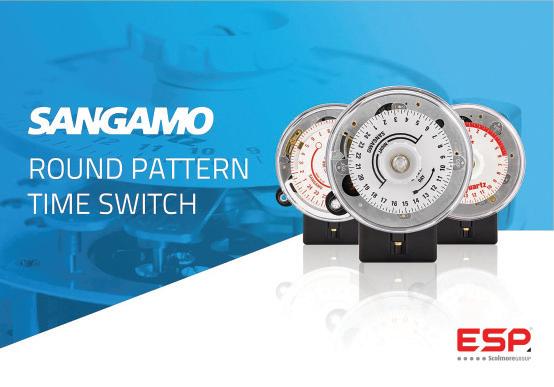
The switches are split into four categories:
a) Basic ‘black dial’ 24-hour time clock for simple on and off switching of up to 20A
b) Standard 24-hour ‘red dial’ switch with added 100 hour battery reserve
c) Solar Range - specially designed for lighting applications
d) Digital Range - the newest addition combines the high capacity and reliability of the electro-mechanical models but provides full seven-day programming.
Sangamo regularly hears from people with Round Pattern Time Switches still going strong after 40 and 50 years. When they eventually need a new switch, they reasonably assume, because of its age, that it might not be possible to get a direct like for like replacement. However, because the original design has never needed to be updated, an RPTS you buy today is completely interchangeable with one bought decades ago.
The Sangamo range of specialist time switches and heating controls is distributed through Scolmore Group company, ESP. www.espuk.com
Click Scolmore adds to its growing GridPro
Click Scolmore’s GridPro Dimmer Modules offer an enhanced design which eliminates the need for a mounting kit and delivers a 100W maximum load.

In response to customer demand for a more streamlined, efficient dimmer solution, the Click GridPro Dimmer Modules have been engineered with a compact, space-saving design that fits directly into GridPro plates. The new modules can deliver a 100W maximum load, despite the reduction in housing size. This ensures a reliable and consistent dimming experience for standard home downlights and lighting, with a versatile wattage range of 5W to 100W.
One of the standout features of the Click GridPro Dimmer Modules is the elimination of the previously required mounting kit. Users can easily integrate the dimmer module directly into the GridPro plates, ensuring a clean, seamless look with minimal hassle.
The Click Grid Pro Dimmer Modules are suitable for a variety of domestic applications, giving the user the ability to adjust the dimming level throughout areas of the home. Combining style, efficiency, and ease of installation, these dimmers offer a versatile solution for modern lighting control.
In addition, Click’s GridPro Dimmers support both Leading and Trailing edge functions, with specific usage scenarios to complement a broad range of applications:
• Leading Edge Mode – Use with Inductive Load and Resistive Load
• Trailing Edge Mode – Use with Capacitive Load and Resistive Load
The Grid Pro Dimmer Modules come in eleven finishes including antique brass, polished brass, polished chrome, satin chrome, satin brass, black nickel, pearl nickel, stainless steel, brushed stainless, metal black, and matt bronze. www.scolmore.com