

essionals













Introducing Spec+
A range of Grade D1 smoke, heat and multi-sensor alarms for domestic properties, in accordance with BS 5839-6.





A range of Grade D1 smoke, heat and multi-sensor alarms for domestic properties, in accordance with BS 5839-6.





Multi-sensor detection
Five sensor combinations available, covering smoke, heat and CO detection.

Lever clip installation












Bug mesh & dust compensation
Designed to reduce nuisance alarms and ensure accurate detection across product lifespan.


For installation in seconds with level clips to secure wiring within the terminal block.
Multiple installation holes
Making retrofit easy, the base has multiple holes to cover existing installations.




Bluetooth wireless interlink
Built-in Bluetooth Low Energy (BLE) allows interlinking of up to 50 alarms.
Find out more about the range




Rechargeable lithium battery
10-year backup battery to maintain protection during power interruptions.

To learn more about our professional services, CPD training, and free design service, contact your local FireAngel expert.





It may have been the hottest May on record, but June’s issue of Electrical Times is equally on fi re.
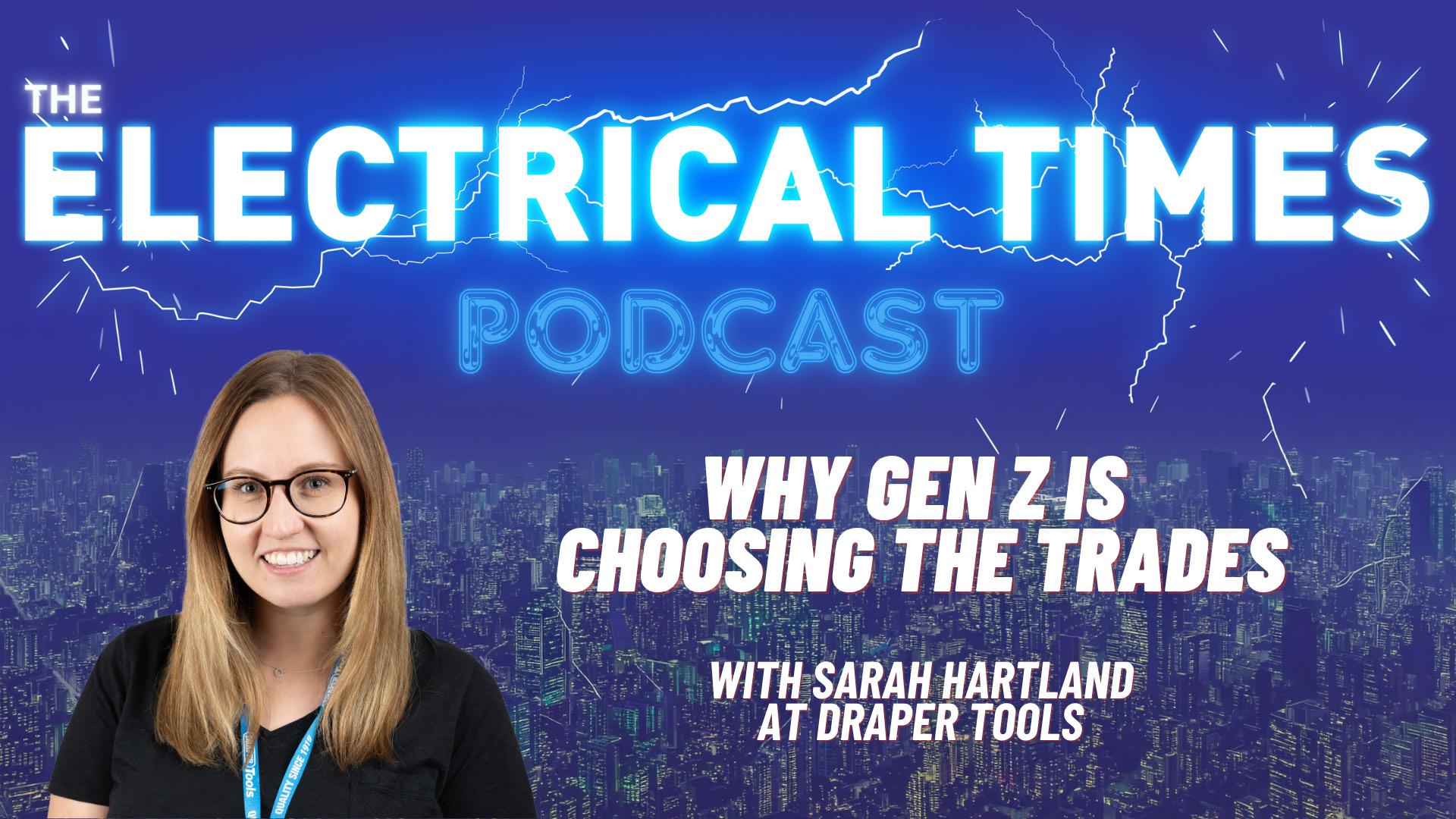
This month’s episode of The Electrical Times Podcast features an interview with Sarah Hartland of Draper Tools, who joins us to discuss why the trades are viewed as ‘cool’ with the up-and-coming Gen Z workforce. The fi ndings came as part of research commissioned by Draper Tools, in support of the launch of its DXPulse Range. Read more on page 12 or, for the full conversation, visit electricaltimes.co.uk/podcast. You can also fi nd us on YouTube and Spotify.
Elsewhere in this issue, Dave Curry, Health & Safety Lead at Salko UK, explains how the M&E industry can adapt to an unpredictable climate on page 6 –rather apt given the fact we’ve gone from wearing shorts to winter jackets and back again in May.
I’ve not even scratched the surface but fi nd myself running out of space already! Flick through to fi nd features on lighting, test & measurement, and fi re, safety, and security, among other topics.
Oh! And don’t forget to enter the Electrical Industry Awards - the clock is ticking to celebrate your achievements in 2026, so visit electricaltimes.co.uk/electrical-industry-awards/
IN THE KING’S speech to open parliament on 13 May, the UK’s focus on skills and apprenticeships was mentioned: “My ministers will continue to invest in apprenticeships and measures that tackle youth unemployment.”
Reacting to the comment, Phillip Dingle, Future Networks Director at British electrical equipment manufacturer Lucy Electric, commented: “The UK’s skills gap is becoming a critical fault line that could undermine the push for greater energy independence. While significant challenges remain around the future of electricity networks and infrastructure delivery, it is encouraging to see continued commitment to apprenticeships and long-term workforce development.
“The people and careers challenge is felt across the industry. It is why the topic has soaked up so much discussion at today’s All Energy Show. But to get real change we need to take this energy network opportunity into the education system to inspire future talent.
“The devil will be in the detail when it comes to skills. When you look across networks and the wider supply chain, there is demand for skills across multiple disciplines – particularly in engineering and technical roles, which are highly resilient, long-term careers. So, it is important that we have the flexibility to upskill both those who want to transition into the sector, and those who want to start their careers.
“The scale of the skill transformation is enormous. If we are to succeed with building a future that is electric, we need an additional 130,000 jobs by



2050. It is why we continue to place a high emphasis on investing to upskill our existing workforce and the Lucy Electric apprenticeship programme.”
Meanwhile, Yselkla Farmer, CEO of BEAMA, the trade body for manufacturers of electrical equipment, said: “It is positive to see the Government’s commitment from the King’s Speech to implementing the policy measures announced in the past year that could benefit BEAMA members. These include acceleration of grid deployment, improving domestic energy efficiency, launching a Warm Homes Agency, facilitating energy

flexibility and improving cybersecurity.
“We hope that despite the current political turbulence the Government and its officials can retain focus on delivering policy changes that can accelerate electrification to benefit industry, improve our energy system and boost energy security.
“BEAMA’s Market Pulse shows that political and policy uncertainty hurts investment and market growth, so we hope that the Government is able to reassure us as soon as possible on the details and timings for implementation of policies – many of which are already running on challenging timelines.”

NAPIT HAS ANNOUNCED that Frank Bertie will retire as Managing Director at the end of June 2026 when Stephen Melton will be appointed to the role.

During his time at NAPIT, Frank served as Managing Director for two years, following over 30 years as Technical Director. Frank will continue his long and proud relationship with NAPIT and still share his extensive technical knowledge supporting the organisation in a consultative role.
Following Frank’s retirement, Stephen Melton, currently Commercial and Compliance Director, will become Managing Director, bringing a strong track record of leadership and having overseen rapid growth since joining NAPIT in 2019. Stephen is excited to build on this and continue driving standards with key industry stakeholders.
Brett Forster, currently Head of Training, is also being promoted to Technical and Commercial Director. With more than 25 years’ industry experience and having joined NAPIT in 2021, Brett brings a strong understanding of the organisation’s commitment to quality, training and customer experience.





SCOLMORE GROUP, THROUGH its community-focused platform Scolmore Connect, has announced a new partnership with the Marc Albrighton Centre of Development (MACOD), a collaboration that underlines the company’s wider commitment to delivering meaningful social value alongside its established role in the electrical industry.
By bringing together business and community organisations, Scolmore Connect reflects Scolmore Group’s peoplefirst approach and demonstrates how businesses operating in the electrical sector can make a lasting difference beyond the products and services they supply.
Founded in 2016, MACOD has grown significantly over the past decade, evolving from a single Saturday morning session of 20 children at a local youth centre into a thriving coaching programme now supporting over 1,000 young people. Operating across multiple schools across Tamworth, MACOD delivers structured coaching sessions for children aged 18-months to 14-years,
alongside football camps, after-school clubs, and development pathways into Tamworth Academy.
As MACOD celebrates its 10-year anniversary, the new partnership with Scolmore Connect marks an important investment in a programme that is already making a tangible difference to young people and families across the Tamworth area.
Through the partnership, Scolmore Connect will support a range of initiatives designed to increase access and participation across MACOD’s programmes, including football camps, lunchtime clubs and after-school sessions. The aim is to help more children benefit from consistent, high-quality coaching in a safe, inclusive and well-structured environment.
A key feature of the partnership is the launch of MACOD’s new anniversary kit, which will feature the Scolmore Connect logo at its centre, symbolising the strength and visibility of the collaboration.
The partnership will also focus on delivering
RECOLIGHT CEO NIGEL Harvey and marketing and communications manager Suzanne Castine received SLL honorary fellowships at the AGM in CIBSE’s headquarters in London last week.
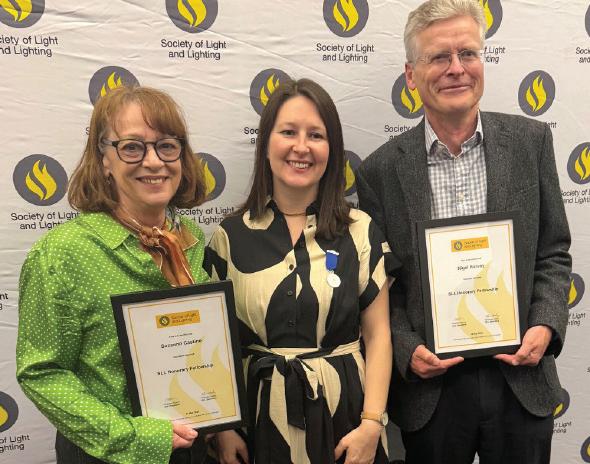
Commenting on the award, the outgoing Society of Light and Lighting president Kristina Allison said, “The honorary fellowship recognises a significant contribution not only of services to the Society but to the wider lighting profession. It’s sanctioned by the Executive Committee of the SLL. The work that both do with Recolight has a positive impact on the industry and is incredible.”
Usually, one award is given each year, but this year an exception was made. Previous recipients have included Kevin McCloud in 2010, Jonathan Speirs in 2003, and Philip, The Duke of Edinburgh back in 1959.
F Mark Ltd founder Simon Fisher FSLL and Circular Lighting Report editor Ray
Molony gave the citations for Harvey and Castine respectively.
On accepting his award, Nigel Harvey said: “I’m absolutely delighted to receive the honorary fellowship of the Society of Light and Lighting. The recognition of professional peers, colleagues and friends is uniquely special. My sincere thanks to the SLL Executive Committee for the award. But I’m only the helmsman at Recolight. We’ve an amazing team, who all play vital roles and this award belongs to us all.”
And Suzanne Castine said: “Thank you to the SLL executive committee for recognising the work I do. Marketing is an overhead, so we’re constantly looking at ways to reduce cost. And as a notfor-profit funded by our WEEE Scheme Lighting manufacturer Members, it’s even more critical for me to be mindful of spend. Therefore, I keep our work in house and don’t use agencies. We were recognised for going above and beyond and were in a room full of lighting professionals who do that too. So many have helped Recolight along the way, presenting at webinars and conferences, offering support, guidance and help.”
As a Sustaining Member of the SLL, Recolight are part of a network of businesses who collaborate to give financial, technical and practical support to a wide range of Society initiatives.

meaningful, structured opportunities for young people. By working closely with school welfare leads across Tamworth, MACOD and Scolmore Connect aim to ensure that the programmes are delivered in a safe, supportive setting and that opportunities are extended thoughtfully and responsibly. A clear and transparent system will also be implemented to help schools identify and support pupils who would benefit most from additional engagement.
Access to structured sporting opportunities can play an important role in supporting children’s confidence, physical wellbeing and personal development. Through this
collaboration, MACOD and Scolmore Connect are helping to create positive pathways for young people both in and beyond the school environment.
“The impact is immeasurable,” says Jon Baker, Headteacher of Woodlands Primary School. “Yes, we see improvements in children’s football skills, but far more importantly, we see the difference it makes in their personal lives. With positive role models, encouragement and highquality coaching, we see young girls and boys develop confidence, resilience and patience.”
Together, Scolmore Connect and MACOD are committed to creating an environment where all children can build confidence, develop skills, and enjoy the many benefits of football both on and off the pitch.
The partnership reinforces Scolmore Group’s commitment to building stronger communities and demonstrates how a leading business can use its platform to support meaningful, long-term initiatives that extend well beyond the workplace.

Our bare wire technology means longer product life and better sustained performance even in hard water areas. With a range from 3-27kW we have every job covered.
Faster heat up time
Can take pre-heated water
Resistant to limescale = better sustained performance and longer product life
Faster to react to changes in water pressure and voltage to maintain constant water temperatures
Highly compact and efficient
Example product video
www.stiebel-eltron.co.uk/instant
sales@stiebel-eltron.co.uk | 0151 346 2300





As climate volatility intensifies, the Mechanical and Electrical (M&E) sector is having to adapt to rethink how it delivers projects, protects its workforce and balances sustainability with resilience. Dave Curry, Health & Safety Lead at Salko UK, shares his insights on how the industry is adapting to increasingly unpredictable conditions.



How is climate unpredictability changing the priorities of the M&E industry?
Climate unpredictability is shifting the M&E industry’s priorities from sustainability pledges to operational resilience. In the current environment, clients and contractors may have differing goals due to the ever-changing climate. Fixed-price contracts can impose financial penalties on contractors due to frequent delays in construction schedules caused by adverse weather. In contrast, time-and-materials contracts may benefit contractors but introduce higher cost uncertainty for clients.
How can industrial sites prepare for warmer weather and heatwaves?
Preparing for warm weather and heatwaves is crucial for ensuring safety on-site. Managers should consider rescheduling work to cooler parts of the day, providing more frequent rest breaks, and introducing shading in both rest and work areas. Installing mechanical ventilation fans can help manage elevated temperatures, along with ensuring access to cool drinking water and electrolyte supplements. Additionally, personal protective equipment (PPE) should be removed during rest periods to facilitate heat loss. When managing a site in warmer weather, it’s essential to identify employees at heightened risk of heat stress due to pre-existing conditions. Workers should be informed about recognising early symptoms of heat stress, along with encouraging peer-to-peer monitoring to spot these signs.
What does “climate resilience” mean in practical M&E terms today?
In the M&E sector, climate resilience involves tracking, assessing and understanding how effectively projects, systems, or communities prepare for, adapt to and recover from climate-related risks. It is imperative across the industry to take proactive measures, such as building temporary shelters to protect construction workers from adverse weather conditions like high winds and rain.

Planned outages sometimes require managing more time and resources to ensure we meet a project on time and to specification. This can involve increasing project timeframes to allow for weather variability. Implementing these actions helps mitigate the effects of a changing climate, ensuring that work remains efficient, safe and up to high standards.
How do you balance decarbonisation goals with resilience?
Balancing decarbonisation goals with resilience, such as navigating the challenges of electrification vs grid vulnerability, will remain a main focus area as the landscape of climate resilience continues to evolve.
As we aim for a sustainable future in line with Net Zero targets, it’s essential to not only reduce carbon footprints but also ensure that our energy systems are robust enough to handle disruptions.
Promoting energy conservation measures is crucial. Simple practices, such as turning off unnecessary power use in offices, industrial sites and residential properties -particularly for out-of-hours lighting -can lead to significant cost savings. These actions
not only contribute to lower energy bills but also play a vital role in reducing overall demand on the grid, consequently enhancing its stability and resilience in the face of increasing challenges posed by climate change.
How do planned outages help us address unplanned outages caused by extreme weather events?
Planned outages are controlled and temporary shutdowns which are used to perform maintenance or infrastructure upgrades, directly enhancing the power grid against extreme weather. By proactively replacing older equipment and strengthening circuits during calm weather, operators prevent the sudden mishaps that occur when extreme weather overwhelms the grid.
From experience, I believe that the safety protocols affected by adverse weather conditions should remain consistent regardless of whether outages are planned or unplanned. If activities are deemed unsafe during planned outages due to weather, they will also be unsafe during unplanned outages.
When weather events are unpredictable, how important is workforce safety, testing and measurement, contingency planning etc?
In unpredictable weather, it’s essential to monitor weather forecasts and be selective about construction activities to ensure work is conducted in a safe manner. Plan using short-duration lookaheads and postpone activities that are adversely affected, such as those from high winds and rain, and make progress in work areas that are not affected.
Clear communication among team members is essential to keep everyone updated on changing conditions, risks and revised plans. Being proactive on-site is crucial for maintaining safety measures and minimising issues. Safety should always be the utmost priority and projects can successfully handle unpredictable conditions when managed effectively.
For more information, please visit www.salko.co.uk.











Unpack the changes at CEF TechTalks this May - July Talk tech. Earn CPD credits.
Grab a bacon butty. AND it’s all free.






Register for free now cef.co.uk/TechTalks



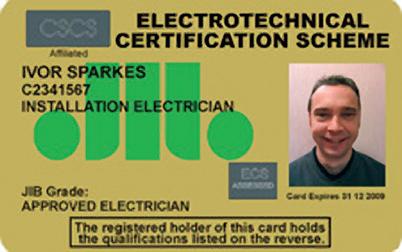
XS Training provides ONLINE TRAINING COURSES for electricians at all stages in the industry. From beginners to improvers to experienced workers looking to attain their ECS/JIB Gold Card.
City & Guilds Level 3 Electrical Qualification
Since 2011, XS Training Ltd have delivered NVQs, 18th Edition and AM2 preparation training throughout the UK and is now the UK’s number one online training provider for the NVQ Level 3 Electrical Installation. To be eligible to undertake these NVQs you must already have prior experience and qualifications and be currently working in the industry.
Upon successful completion of your NVQ qualification, you become eligible to apply for the highly prized contractors’ ECS Gold Card and JIB grading.
These NVQs are completed online with their efficient and easy-to-use e-Portfolio system, OneFile. This means that you can complete the NVQ at a time of your choosing and in the comfort of your own home. Most people comfortably complete their NVQ between three and eight months.
The NVQ courses they currently offer include:
• NVQ 2346-03 Level 3 Electrical Installation (Experienced Worker)
• NVQ 2346-03 Level 3 Electrical Maintenance (Experienced Worker)
• NVQ 2347-03 Level 3 Electrotechnical in Dwellings
• NVQ 2357 Level 3 Electrical Installation
• and also the 18th Edition Course
XS Training have a unique course system to help you attain your chosen NVQ Level 3 qualification both quicker and easier than many alternative providers.
• Experienced Assessors. You are supported from start to finish by a team of highly professional trainers and assessors who will provide you with support, advice and guidance on how to successfully complete your NVQ.
• Online Portfolio. These NVQs are completed online with their efficient and easy-to-use e-Portfolio system. No written work is required because you simply upload your evidence and then have a professional discussion with your assessor based on the evidence you’ve collected.
• Remote Assessments. They offer remote assessment, via the internet on your mobile phone whilst you’re working, meaning you don’t have to take time out to come to a training centre to be assessed.
Learners who successfully complete their NVQ Level 3 qualification will meet the requirements to be eligible to apply for the highly prized ECS Gold Card from the JIB.
Attainment of this card is the ultimate recognition of competence as a qualified electrician and will open-up many more opportunities for better and more well-paid work.
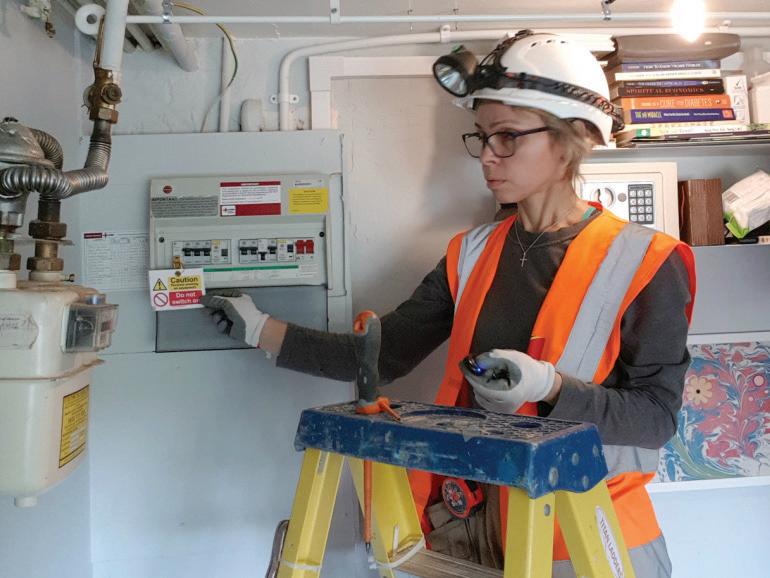
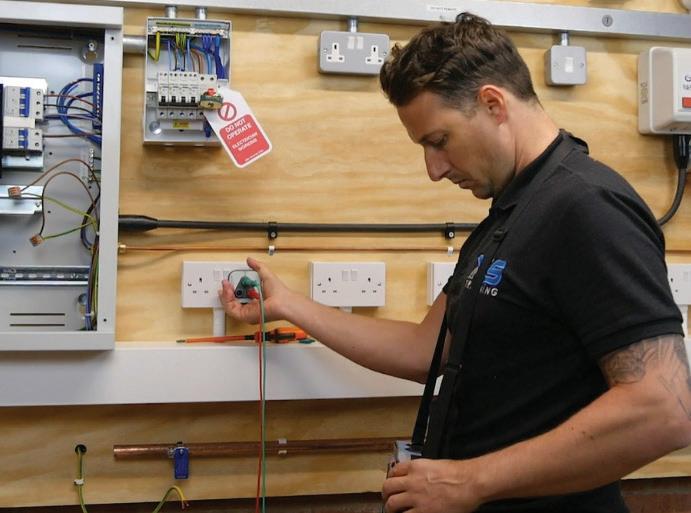
In addition to providing ePortfolio-based, assessorassisted courses for all NVQ Level 3 Electrical qualifications, XS Training now offers additional online electrical courses created through its XS Training Academy
Courses currently available include the popular AM2/AMS2/AM2E Preparation & Revision course , which has delivered excellent results, increasing the number of first-time passers of the AM2 Practical Examination (Unit 399) to over 85%. All their online courses are based around a series of video training with a multiple-choice quiz at the end to test your knowledge and understanding. Other bespoke courses currently available include:
• C&G 2365 Level 2 Diploma in Electrical Installations (Beginners Foundation Course)
• C&G 2365 Level 3 Diploma in Electrical Installations
• C&G 2391-50 Initial Verification
• C&G 2391-51 Periodic Inspection & Testing
• C&G 2391-52 Initial Verification & Periodic Inspection & Testing
• C&G 2919-01 Electric Vehicle Charging Point Installation
• PAT – Portable Appliance Testing and courses on how to comprehensively complete the E.I.C, E.I.C.R, & M.E.I.W.C reports.
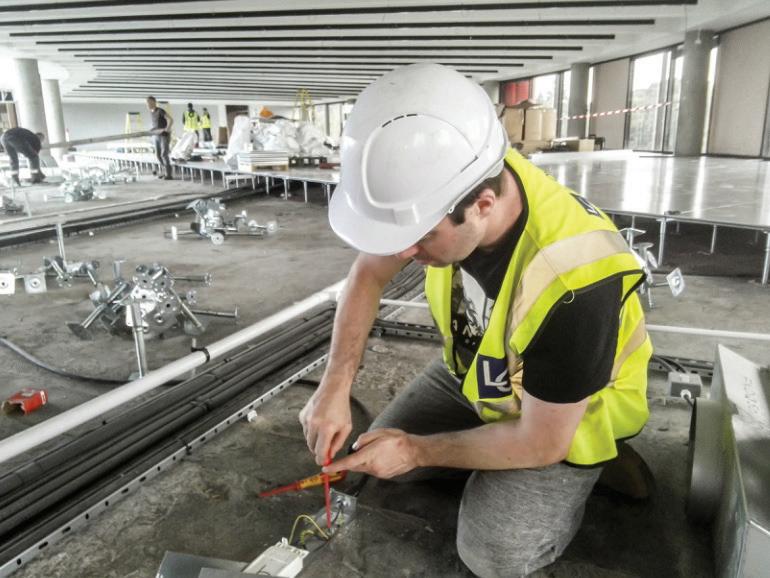
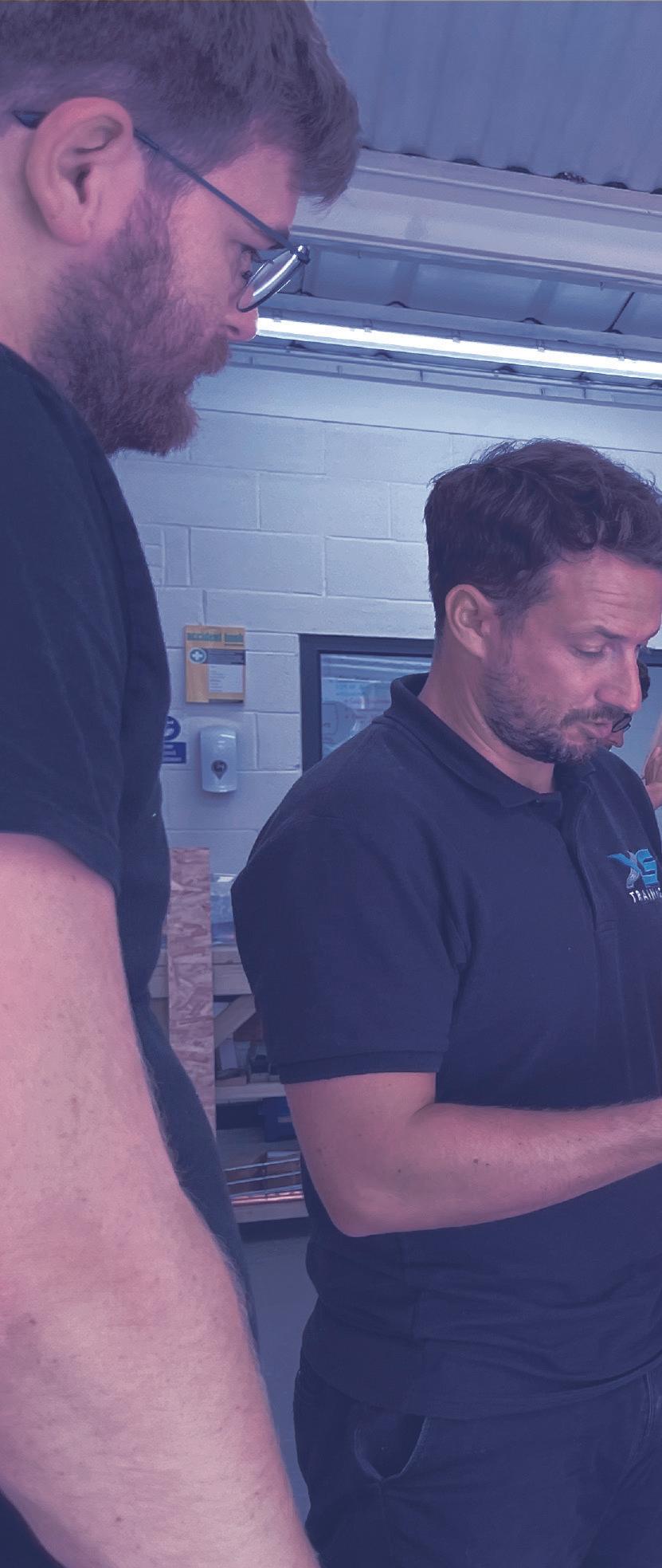
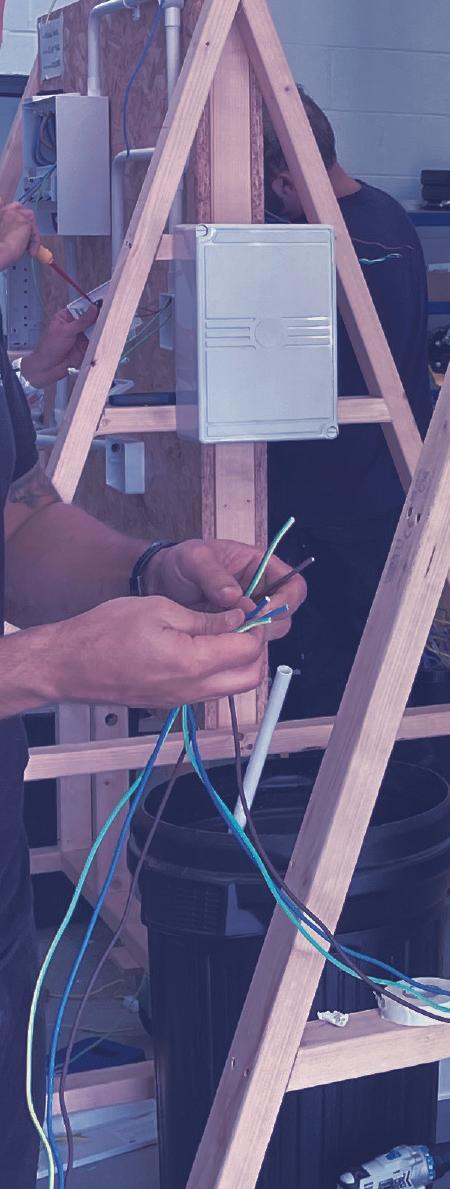
C&G 2365 Level 2 & Level 3 Diplomas in Electrical Installations Online Courses
The Level 2 qualification is designed for new entrants to the industry - for aspiring electricians not already started on an Electrical Apprenticeship and with very little, if any, experience.
The Level 3 Electrical Installations Diploma is aimed at those who have already completed the Level 2 Diploma or have sufficient current, relevant industry experience and knowledge.
Successful completion of these qualifications will provide the practical skills and knowledge and a firm foundation to progress further – and ultimately onto a qualification such as the Level 3 NVQ Diploma in Electrotechnical Technology (2357), which can lead to becoming a fully qualified electrician.
Whether you’re an experienced electrician looking to gain your ECS/JIB Gold Card, an electrical improver, or a beginner looking to take your first steps in the electrical industry, then XS Training is here to help and guide you on your journey. Get in Touch with XS Training & Find Out More TODAY.
Website: https://www.xstraining.com
Email: enquiries@xstraining.com
Telephone: 0800 170 0294





















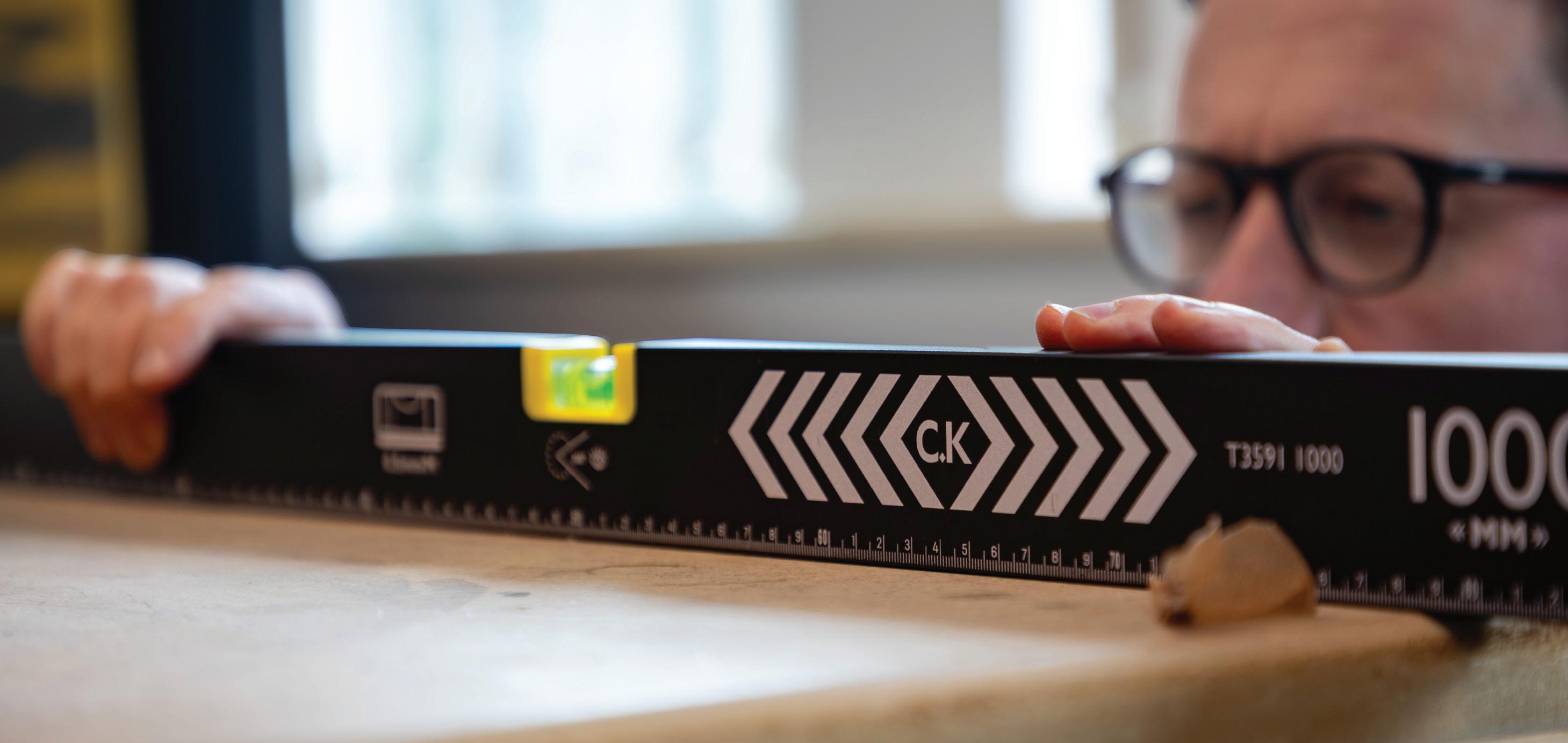

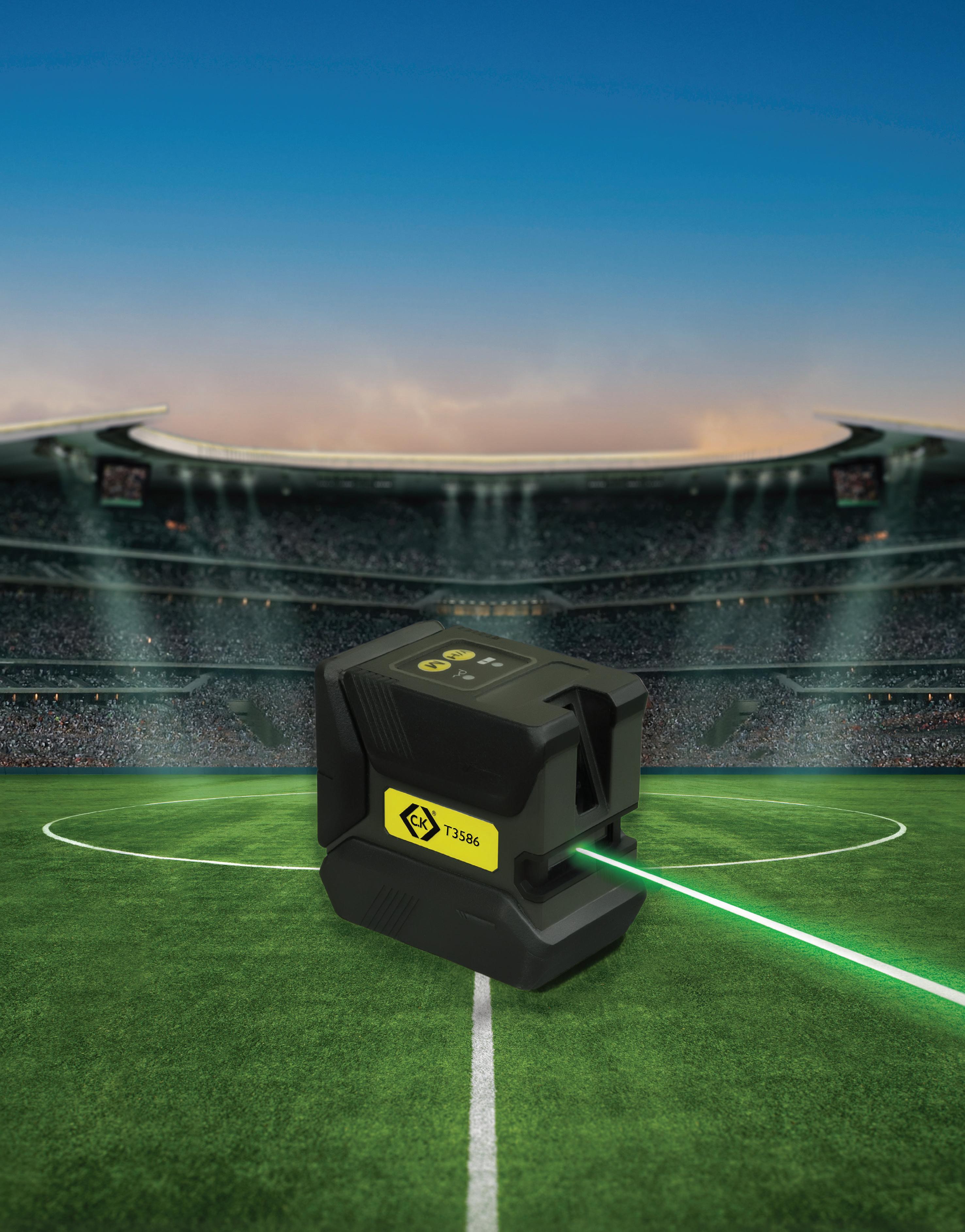
In football, fine margins often decide the outcome. The same is increasingly true on site, where accurate measuring, marking and levelling are essential to delivering safe, efficient and professional electrical installations. Whether it’s aligning containment, positioning sockets, installing cable tray or marking fixing points, precision remains one of the most important parts of getting the job right first time.
For electricians, measuring and marking tools are among the most frequently used products in the toolkit. While they may not always attract the same attention as power tools or test equipment, they play a critical role in ensuring installations are completed accurately, efficiently and to a high standard. Even small inaccuracies can quickly lead to problems on site, from uneven accessories and poorly aligned containment to wasted materials, additional labour time and unnecessary rework.
As installation projects become increasingly fastpaced and demanding, the pressure on electricians to deliver both speed and accuracy continues to grow. Modern installations often involve tighter tolerances, more visible finishes and greater client expectations, making dependable measuring and marking tools more important than ever before.
At the same time, the industry is continuing to evolve. Electricians are increasingly looking for products that combine traditional reliability with features that improve efficiency and save time on site. This has driven growing demand for digital measuring solutions and multi-functional tools that help streamline everyday installation tasks without compromising on precision.
Recognising these changing demands, C.K Tools has launched a major expansion of its Measuring and Marking range, introducing a comprehensive line-up of products developed specifically with professional tradespeople in mind.
The refreshed range includes a mix of traditional measuring essentials alongside new digital solutions designed to support accuracy across a wide range of electrical installation applications. Among the highlights are the new Laser Cross Level and Digital Laser Measure, helping electricians achieve fast and accurate alignment, spacing and positioning when installing electrical accessories, trunking, conduit and cable management systems.
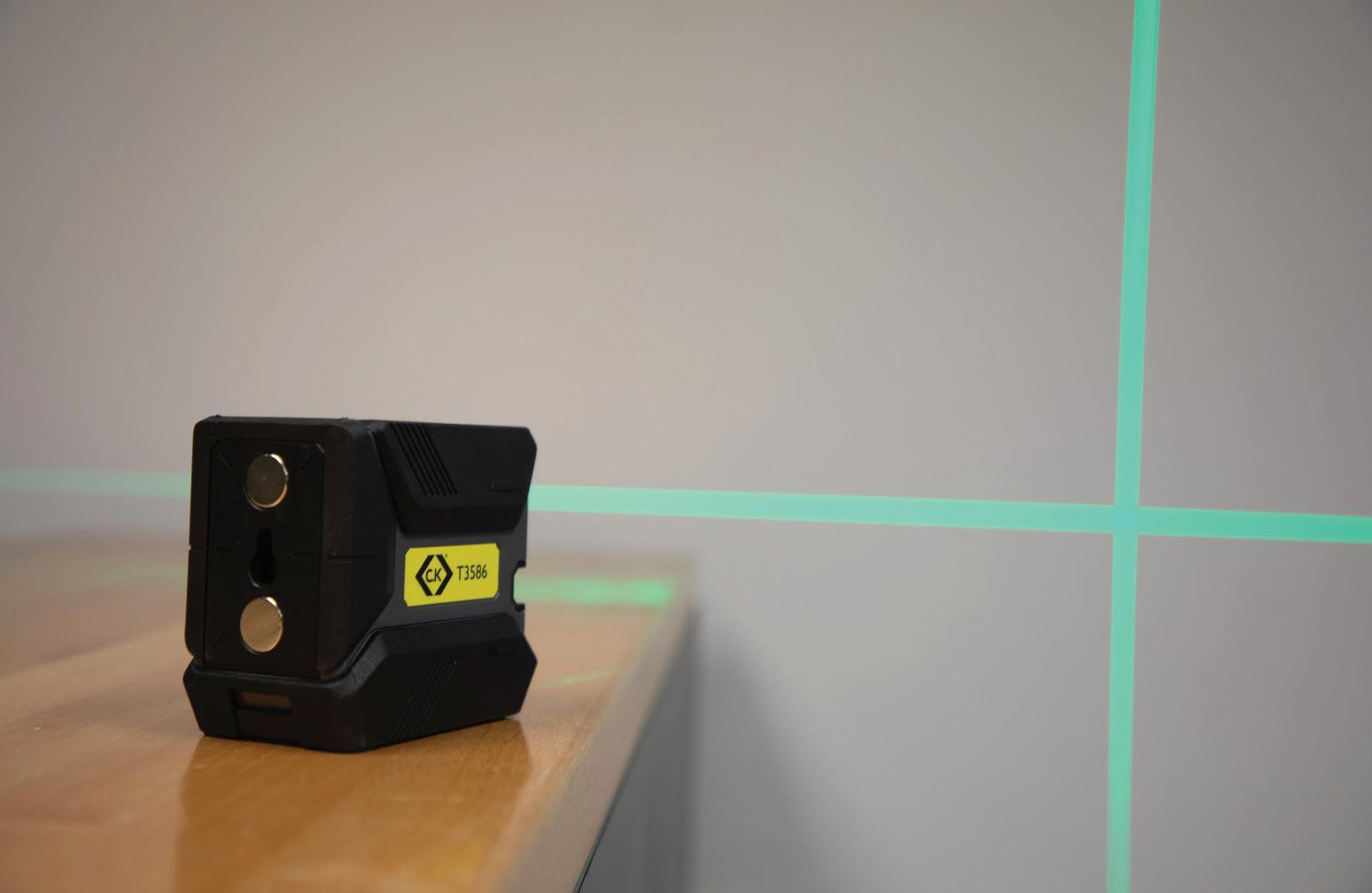
Laser levelling technology in particular has become increasingly valuable on modern installations, allowing users to quickly establish consistent lines and reduce the risk of alignment errors across larger working areas. Digital measuring tools are also helping electricians improve efficiency, reducing manual measuring time while delivering reliable precision in busy site conditions.
One of the standout additions to the range is the new Electricians Marker Level, developed specifically to support electrical installation work. Combining marking and levelling functionality within one compact tool, it has been designed to help electricians work faster and more accurately when marking out sockets, accessories and containment routes.
Alongside the digital additions, the expanded range also includes new box levels, torpedo levels, speed squares and a broad selection of professional marking products suitable for multiple applications and surfaces. Built for demanding site environments, the new marker pen range has been developed to provide clear, dependable marking performance where visibility and precision matter most.
Durability also remains a key consideration for tradespeople working across busy construction and installation environments. Measuring and marking tools are often exposed to knocks, dust, moisture and constant daily use, making robust construction and dependable performance essential factors when selecting products for professional use.
As the electrical sector continues to develop, precision is becoming increasingly important across every stage of the installation process. Clients expect cleaner finishes, projects are delivered to tighter deadlines and installers are under greater pressure to avoid costly mistakes and rework. In many cases, accurate measuring and marking at the beginning of a job can save significant time and labour further down the line.
The expansion of the C.K Tools Measuring and Marking range reflects this growing focus on efficiency, reliability and precision across the professional trades sector. By combining practical design, robust construction and modern measuring technology, the range has been developed to support electricians in delivering accurate professional results every day.

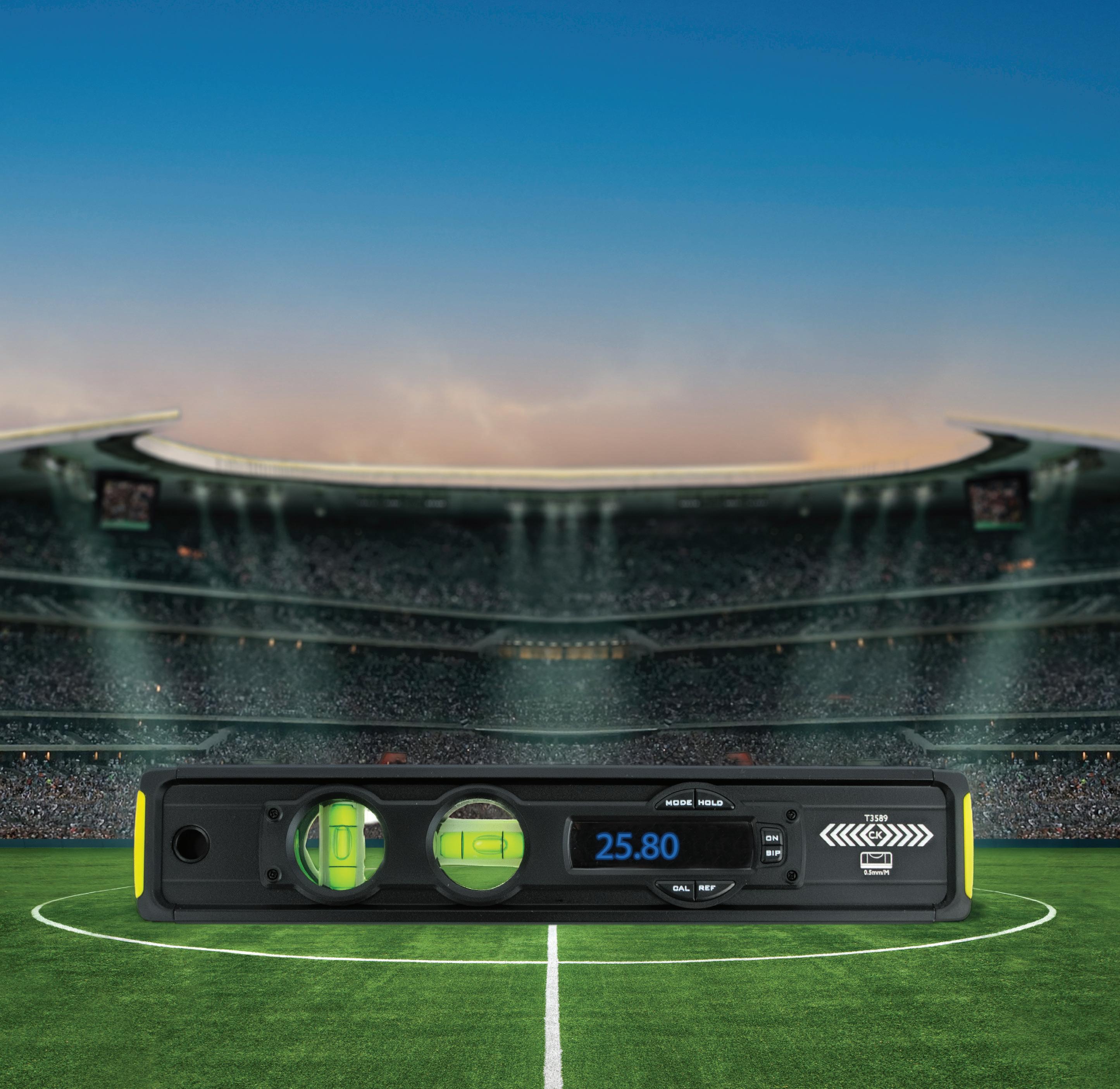



The C.K Laser Digital Level part of our new measuring and marking lineup SCAN


here is a quiet revolution happening in the UK workforce. While previous generations were pushed down the university route with an office job at the end of the tunnel, Gen Z is increasingly looking towards apprenticeships and working with their hands.
Recent research by Draper Tools reveals a surprising trend: 61% of young people now believe working in a trade is a “cool job”.
On The Electrical Times Podcast, we recently sat down with Sarah Hartland, Head of Marketing at Draper Tools, to discuss this generational shift and how the industry is adapting to a new wave of hands-on professionals.
ET: The recent Draper Tools survey found that a majority of young people now view the trades as “cool.” What do you think is driving this change in perception?
Sarah Hartland : It’s a fascinating shift. For a long time, there was a stigma that trades were a “backup plan,” but that narrative is dead. Social media has played a huge role – influencers and TV shows are showcasing the pride of creating something tangible. Young people are seeing the fun side of the job; over a quarter of those we polled think tradespeople have more fun than office workers. There’s a sense of pride in fixing or building something that you just don’t get sitting behind a desk.
ET: Financial freedom seems to be a major motivator for this group. What did the data tell you about their career priorities?
Sarah Hartland : It was eye-opening. Almost half of the young people we surveyed see the trades as a quicker path to earning £100,000 than a university degree. With rising student debt, 34% said they want to avoid that financial burden and start earning sooner.
But it isn’t just about the money. They are looking at the property ladder. 53% believe a trade will help them buy a home faster than a degree would. It’s a very pragmatic, ambitious generation.
ET: You’ve mentioned that mental health and the rise of AI are also influencing these career choices. How so?
Sarah Hartland : We found that 55% of young people believe working in a trade is better for their mental health than a desk job. There’s a desire to be active; 41% told us they prefer to be on their feet while working.
Regarding AI, a third of respondents said that recent advances in artificial intelligence have made them consider a career in the trades. You can’t automate a plumber or an electrician easily. There’s a level of future-proofing in manual skills that is becoming very attractive as the digital world becomes more uncertain.
ET: Draper Tools recently launched the DXPulse range. How does this product tie into your strategy for the younger generation?
Sarah Hartland : The DXPulse range was built directly from these insights. We realised that, for an apprentice starting out, the cost of high-quality tools can be a barrier.
Over a quarter of young people told us they need tools that are professional-grade but affordable. DXPulse is a 12V brushless range designed to be light, compact, and accessible. It’s about giving them the right starter kit for a career they can be proud of.
ET: As a marketing leader in a 106-year-old company, how does your perspective influence how you talk to the younger audience?
Sarah Hartland : I joined Draper in 2019 and worked my way up, so I understand that generational shift firsthand. I want our marketing to be as modern as the tools we make.
We are moving away from traditional lead-gen toward demand generation – creating content that actually educates and inspires. We want to be a brand that doesn’t just sell to the next generation but supports them as they build their own businesses and legacies.
With a 106-year history, Draper Tools is proving that you can be a legacy brand while staying at the cutting edge of cultural shifts. By championing the trades as a viable, lucrative, and “cool” career path, they are helping to bridge the UK’s skills gap one apprentice at a time.
This interview has been abridged for clarity and length. For the full conversation, visit the Electrical Times YouTube channel or subscribe to the ET Podcast on Spotify. Alternatively, scan the QR code to watch or listen at https://www.electricaltimes.co.uk/ why-gen-z-is-choosing-the-trades/




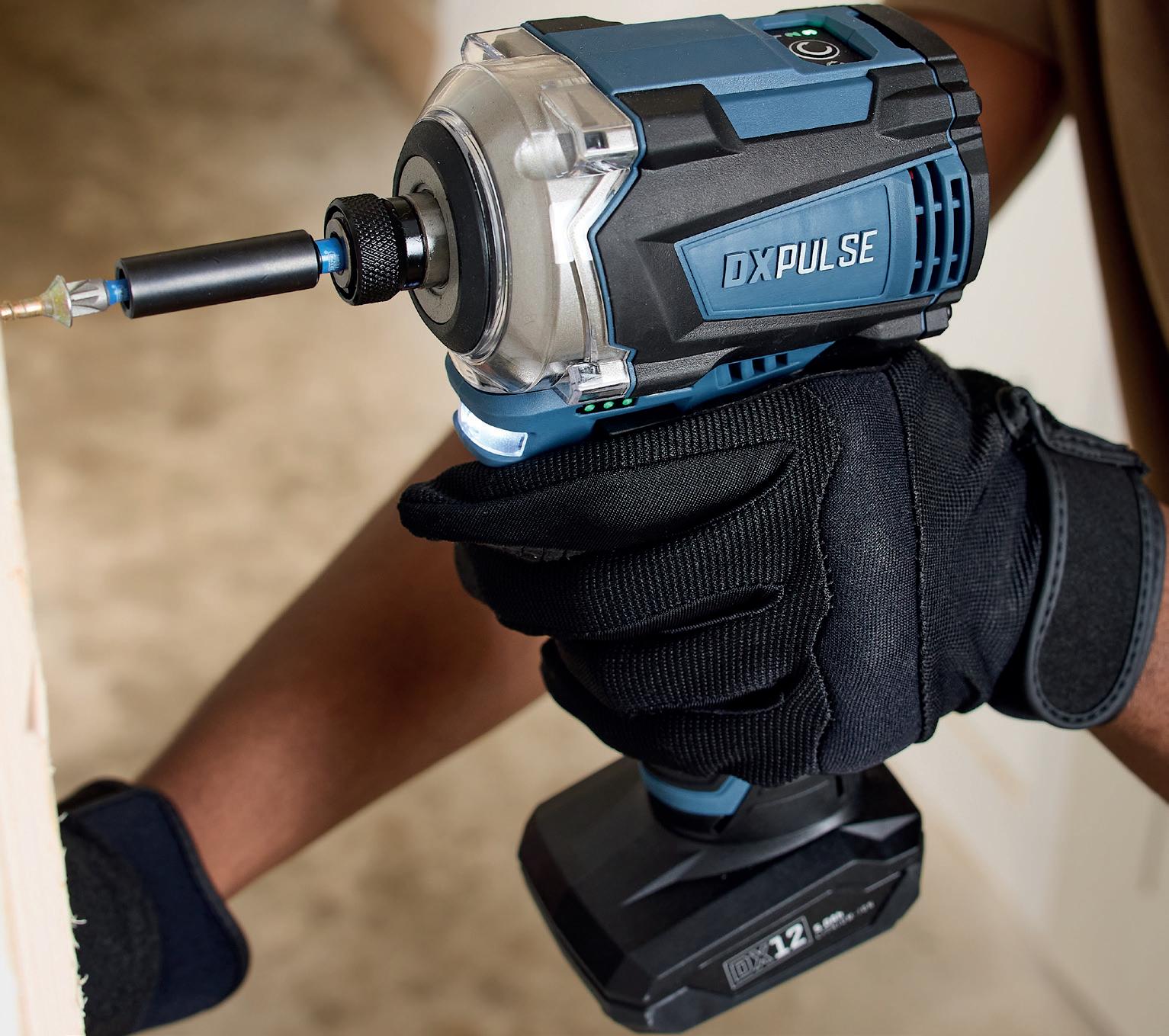
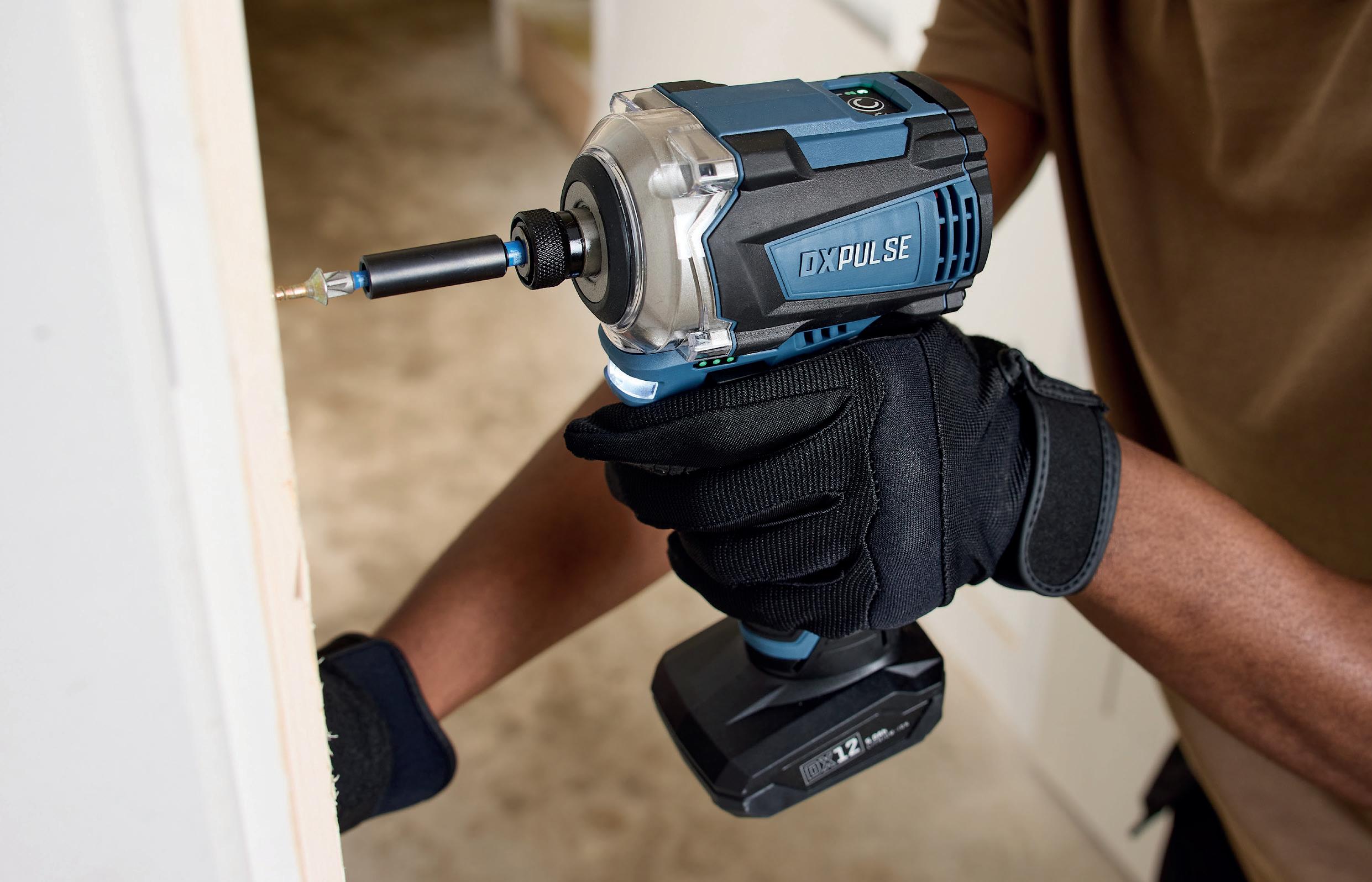















Body In today’s fast-moving electrical industry, installers, contractors and engineers face increasing pressure to deliver systems that are not only efficient and reliable, but also capable of performing in the harshest environments. From rail infrastructure and industrial automation to renewable energy and modern commercial buildings, cable protection has become more critical than ever before. Electrical systems are exposed to vibration, moisture, dust, temperature fluctuations and mechanical stress on a daily basis — and without the right protection, performance and safety can quickly be compromised.
This is where the WISKA Brace ® System sets a new benchmark.
Built on more than 100 years of cable management expertise, the Brace® System has been engineered as a complete flexible conduit solution designed for demanding applications where reliability cannot be left to chance. Combining innovative fitting technology, durable conduit options and industry-leading ingress protection, the Brace® range delivers a smarter, faster and more dependable way to protect cables across virtually every sector.
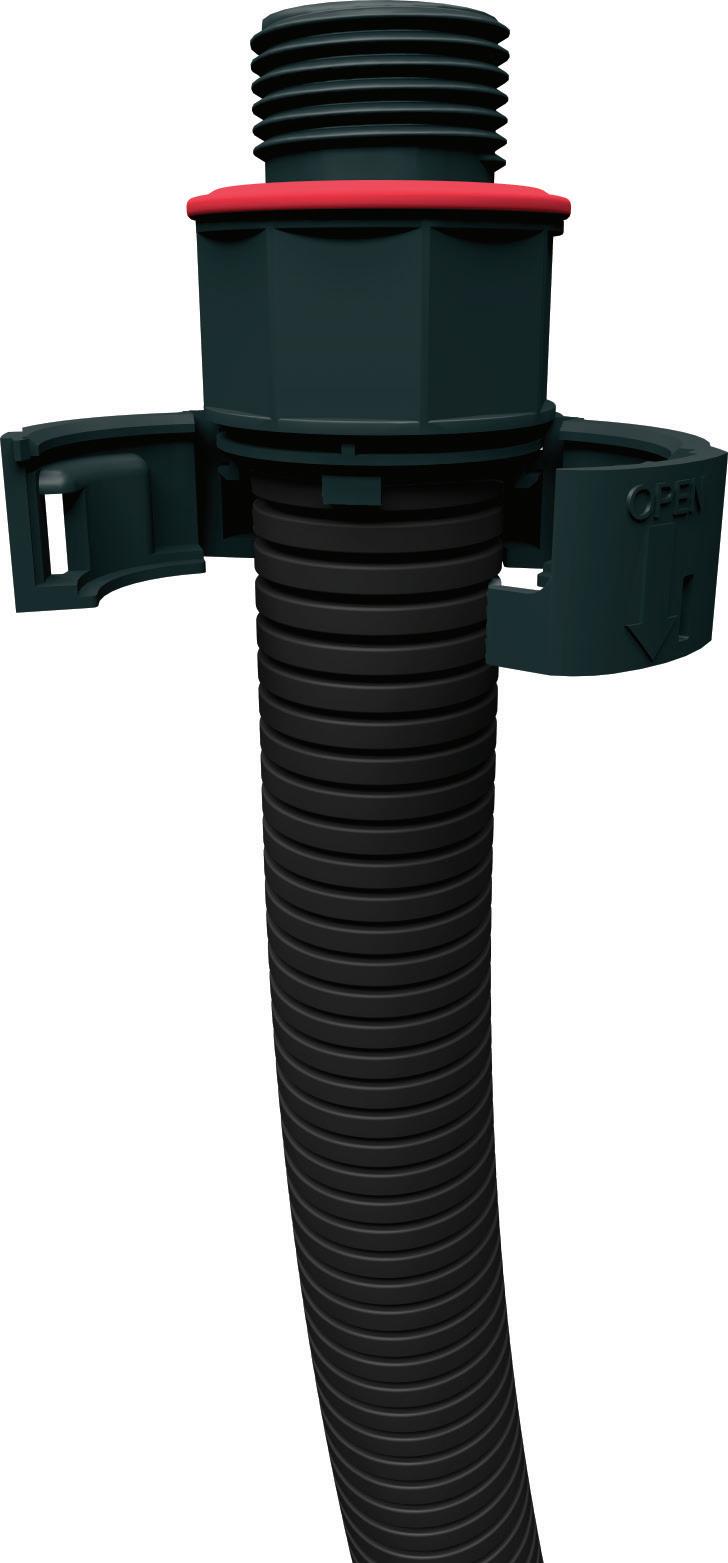
At the heart of the system is the revolutionary BraceFITTING — an innovative one-piece conduit fitting designed to simplify installation while maintaining exceptional performance. Unlike traditional conduit fittings that rely on multiple components and complicated assembly, BraceFITTING features a fully integrated design that eliminates unnecessary parts and reduces the risk of incorrect installation. The result is a fitting that saves time on site while giving installers complete confidence in every connection.
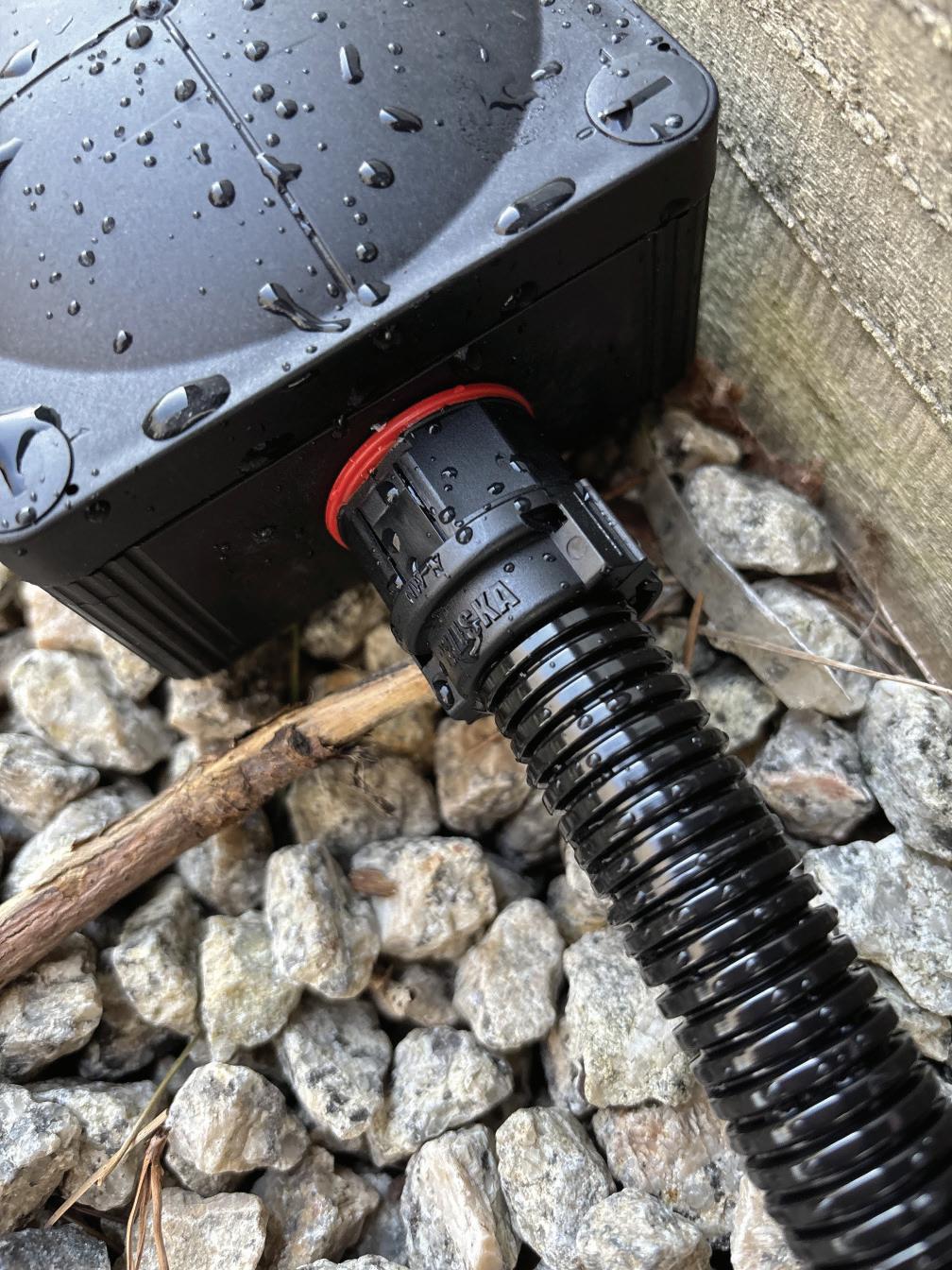
Its intelligent closing mechanism creates a secure, tear-proof grip around the conduit, delivering excellent strain relief and long-term reliability. Combined with a directly injected O-ring seal, the fitting ensures outstanding sealing performance without the risk of slipping, falling off or snapping — a common issue with conventional sealing methods. This attention to detail allows the Brace® System to achieve IP69-rated protection, safeguarding installations against dust, moisture and even close-range highpressure, high-temperature water jets. The fittings are also fully submersible, making them suitable for some of the most demanding environments imaginable.
Versatility is another key strength of the Brace® range. With more than 300 different fittings available, the system offers solutions for virtually any installation requirement.
Straight fittings, angled fittings, Y-connectors, T-connectors, cable gland variants and metallic options provide complete flexibility for installers working across a wide variety of applications. Whether the requirement is for lightweight plastic conduit or heavy-duty metallic cable protection, the Brace® System provides a fully integrated solution designed to work seamlessly together.
The conduit range itself has been developed to match the same high-performance standards. WISKA offers a comprehensive selection of polypropylene, PA6 and PA12 flexible conduits,
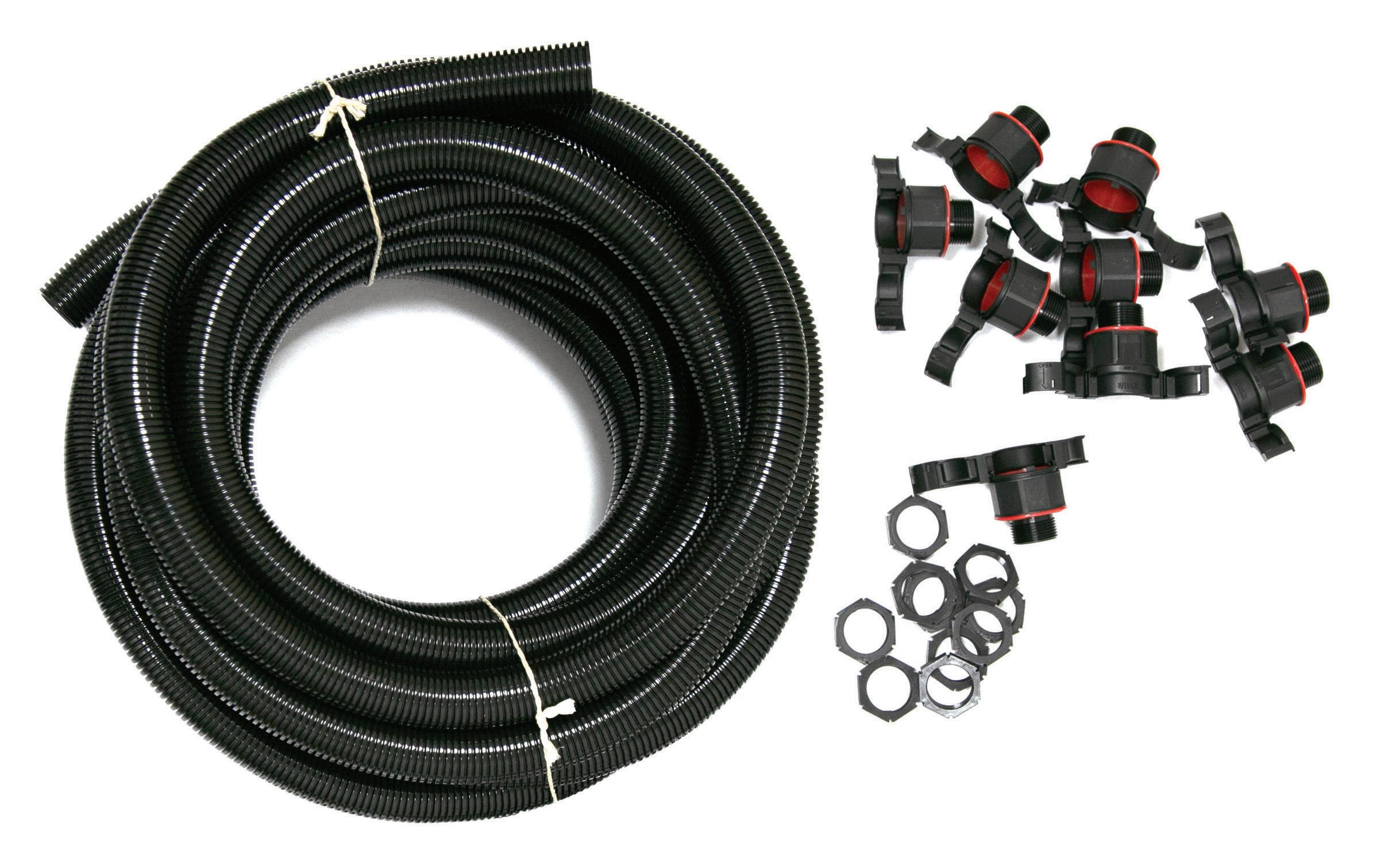
available in standard, heavy-duty and divided versions to suit different installation demands. These conduits provide excellent resistance to mechanical stress, environmental exposure and temperature extremes, helping to reduce downtime, maintenance costs and the risk of cable failure.
For more extreme environments, WISKA’s Metallic Brace® range provides an even higher level of protection. Designed specifically for heavy industrial, infrastructure and transport applications, the metallic system combines galvanised steel and brass nickelplated components to deliver exceptional durability and mechanical strength. The metallic conduits are resistant to vibration, impact, twisting and pull-out forces, while the IP67-rated metallic fittings ensure secure and leakfree performance even in challenging conditions.
Ease of installation remains central throughout the entire Brace® philosophy. Pre-assembled fittings reduce installation complexity and save valuable time on site, while contractor kits provide installers with complete ready-to-use solutions that include conduit, fittings and locknuts in convenient packs. Available in both black and white options, these kits are designed to integrate seamlessly with WISKA’s renowned COMBI junction boxes, offering a clean, professional and highly reliable installation solution.
The Brace® System has also been designed with modern applications firmly in mind. In rail environments, components are available in compliance with EN 45545-2 HL3 fire protection standards, ensuring enhanced safety in passenger transport systems. In industrial automation and machinery, the system protects cables from continuous movement and vibration while maintaining system reliability. For solar installations and EV infrastructure, the conduits and fittings provide resistance to UV exposure, chemicals and extreme temperatures, helping ensure
long-term performance in exposed outdoor conditions.
From CCTV and data centres to residential developments and refurbishment projects, the Brace® System provides a professional, dependable cable management solution built for the realities of modern electrical installations.
Ultimately, the WISKA Brace® System is more than just a conduit range — it is a complete cable protection solution engineered around performance, reliability and ease of use. By combining innovative design with proven engineering expertise, WISKA has created a system that not only simplifies installation but also delivers the long-term durability today’s demanding applications require.
In an industry where performance matters and reliability is essential, the future of flexible conduit protection has arrived — and it’s called Brace®


The industry’s largest and most respected event, the Electrical Industry Awards is back.
Brought to you by Electrical Times, the Awardscelebrating its 34th year - recognise outstanding product innovation as well as individual talents. The winner of each category receives a coveted Electrical Industry Award.
So if you, or your company have something to shout about, these awards will get you noticed.
Some incentives for entry....
Gain independent industry recognition for the excellent work delivered by you, highlighted across the range of categories.
Promote your excellence, demonstrate a competitive edge and position your company alongside the best in the business.
A winners reception in central London with food, drinks, entertainment and completely free of charge!
Being a finalist is proof of excellence in your business and proves to clients new and existing you are in industry innovator.
MAIN SPONSOR: CATEGORY SPONSORS:




MJames Daniels, Business Unit Manager at BASEC, part of Kiwa, explores how cable manufacturers can strike the right balance between optimising materials, reducing costs and meeting market demands for both innovation and compliance.
anufacturing cables for commercial, industrial, and public settings in the UK is strictly governed by safety and performance standards focused on the key areas of fire safety, electrical integrity and environmental impact.
The main regulatory framework includes the Construction Products Regulation (CPR), the UKCA marking scheme and the updated BS 7671 IET Wiring Regulations.
Since July 2017, compliance with CPR standard EN 50575 has been mandatory for all power, control and communication cables installed permanently in buildings and civil engineering works.
All cables must be tested and labelled based on their fire performance, ranging from Aca (non-combustible) to Fca (flammable). The most commonly required classification in the UK is Eca or higher, with high-risk public buildings often requiring Cca or B2ca.
Manufacturers must also draw up a Declaration of Performance (DoP), which must be retained for at least 10 years, with the DoP reference and classification appearing on all cable packaging.
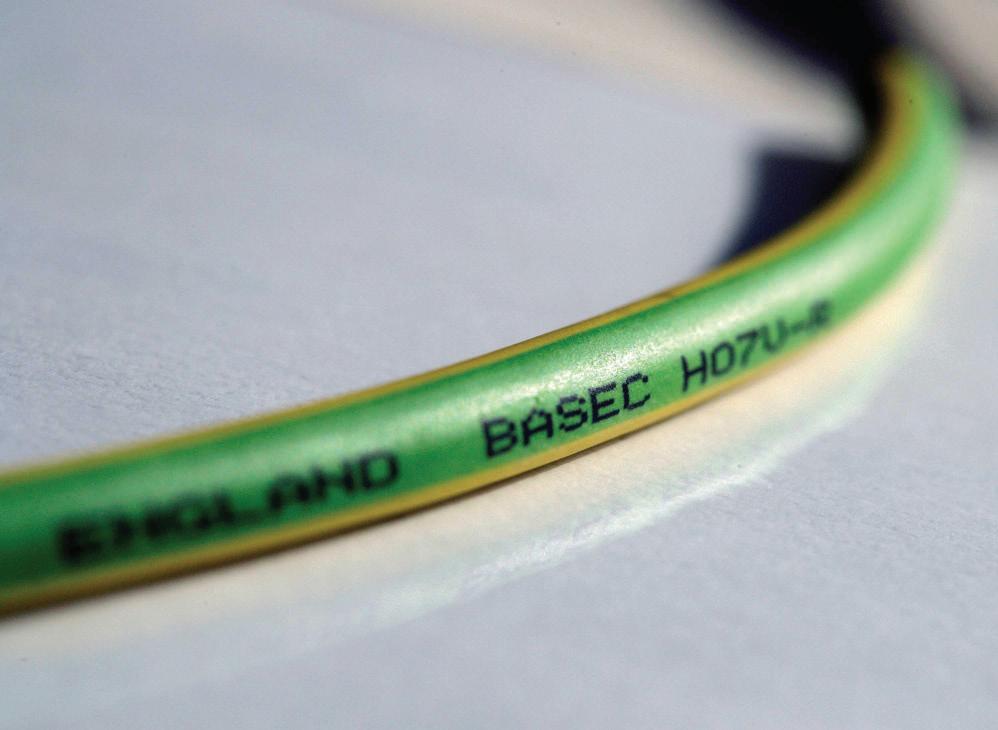
In the UK, products and/or, depending upon type, their packaging must also carry the UKCA mark or the CE mark, which demonstrates compliance with the CPR. The UKCA mark requires products to be tested against the EU (EN) standards used for CE marking.
Meanwhile, all cables should be manufactured to specific British Standards depending on their intended use.
For cables being installed in public buildings such as schools, hospitals and airports, low-smoke zero-halogen (LSZH) or low-smoke halogen-free (LSHF) cables are generally required to prevent toxic fume emission. Again, there are specific British Standards which these must meet.
Manufacturers also need to consider legislation governing the manufacturing process, in particular the Restriction of Hazardous Substances (RoHS), which restricts the use of hazardous materials such as lead and cadmium in cable manufacturing; and Registration, Evaluation,
Authorisation & Restriction of Chemicals (REACH), which governs the safe management of chemicals in products.
It is clear, therefore, that cable manufacturers are faced with many strict parameters that they must operate within to ensure quality, safety and compliance.
In such a tightly regulated environment, then, how can they deliver the level of innovation which specifiers and end users are seeking, and expecting, and still manage to stay competitive in an ever more crowded marketplace?
This challenge becomes even more pronounced in the face of evolving market trends, such as the demand for miniaturisation of cables in telecommunications and smart cities, with a requirement for thinner products which do not compromise on performance. This sector is also seeing innovations such as the incorporation of sensors and data transmission capabilities within cables.
At the same time, the shift toward offshore wind, solar and hydrogen power necessitates the use of durable high-voltage cables.
However, irrespective of the application, a proactive approach to the achievement of compliance can actually serve as a catalyst for innovation, rather than a constraint upon it.
Indeed, many of the leading players have already moved away from a reactive, tick-box approach to compliance, through the adoption of integrated, proactive strategies which ingrain quality and reliability into the manufacturing process.
Continued investment in the development and harnessing of innovative, advanced materials, alongside new opportunities being opened up by AI-driven quality control and digital twin technology, which allow for real-time monitoring of cable performance, is proving a key driver of innovation and standards.
This is accompanied by a shift from solely productbased innovation to process-oriented innovation. One example of this sees manufacturers seeking to tightly control material behaviour during processing, for example through dispersion at source, spreading and mixing
particles or substances immediately after they are released before they can be impacted by local conditions.
Many manufacturers have also invested in integrated ERP systems specifically designed for the cable sector, which again aid with tracking and production planning.
Not only do they enable manufacturers to deliver higher quality, these new approaches are also proving integral to improving overall process efficiency, reducing waste and optimising material usage across the board, helping to meet aspirations around sustainability too.
Furthermore, a proactive approach to compliance can assist in identifying potential failures and hazards before they occur, allowing manufacturers to avoid costly recalls and lawsuits.
BASEC’s focus has always been on making the cable industry safer - for manufacturers, installers, and end users alike. To support this mission, we maintain a rigorous and comprehensive approach to compliance, including detailed auditing of our scheme members, regular unannounced inspections, and proactive, ongoing market surveillance. In parallel, BASEC continually seeks ways to strengthen its support for the industry, for example by introducing increasingly robust testing methodologies that deliver an even higher level of confidence in the quality and performance of our customers’ cables.
It is not uncommon for BASEC to collaborate closely with manufacturers, end users, or specifiers to develop bespoke testing programmes, incorporating both initial verification and ongoing compliance testing. This tailored approach ensures that each cable product consistently meets the required safety and performance standards throughout its lifecycle.
We also actively support innovative manufacturers bringing new cable technologies to market. Where formal standards have yet to be established, independent accredited third-party approval remains achievable through BASEC’s Certificate of Assessed Design (CAD). This certification verifies and confirms the performance of new and emerging products that fall outside existing standards, providing a credible and trusted route to market. As a result, manufacturers can confidently demonstrate product integrity while gaining a valuable competitive advantage. Ultimately, the BASEC mark is far more than a symbol of compliance; it is a mark of trust. It provides assurance to the entire supply chain that cables have been independently verified against demanding criteria, that manufacturing processes are consistently maintained to a high standard, and that products placed on the market will perform reliably and safely. In an increasingly complex and quality-conscious industry, the BASEC mark offers clear, independent reassurance, giving specifiers, installers, and end users the confidence to choose cables that meet the highest expectations for safety, performance, and long-term reliability.

CAs new regulations are brought in and electrical projects become increasingly complex, Tom Armenante, director at GTSE.co.uk, an online trade supplies retailer, shares four reasons cable management standards are vital to reduce risk.
able management hasn’t always been a hot topic in the electrical contracting world; however, this is changing. While the aesthetic of a tidy installation is a perk, the reality is that cable management is a foundation for technical risk mitigation.
For the modern electrical contractor, managing cables is about navigating projects that deal with increasing power densities, stringent safety audits, and evolving regulations such as Amendment 4 to BS 7671. As projects grow in complexity, the difference between a successful, completed piece of work and a costly liability or delay may come down to how well the cabling infrastructure is organised and protected.
Commenting on the need for evolving industry regulations, Tom Armenante, director at GTSE.co.uk said, “Electrical contractors are often challenged by tight deadlines and complex conditions, making clear industry standards vital. Amendment 4 is a welcome addition to the regulations, providing the
clarity required to navigate trends like growing data centre demand and EV infrastructure both safely and confidently.”
4 Key Benefits to Mitigate Risk for Contractors
Effective cable management is a strategic tool that addresses four critical areas of project risk:
An installation is often the only immediately visible evidence of a contractor’s expertise. Neat, structured cable runs signal high-quality workmanship and attention to detail.
1. Enhanced Safety and Fire Mitigation
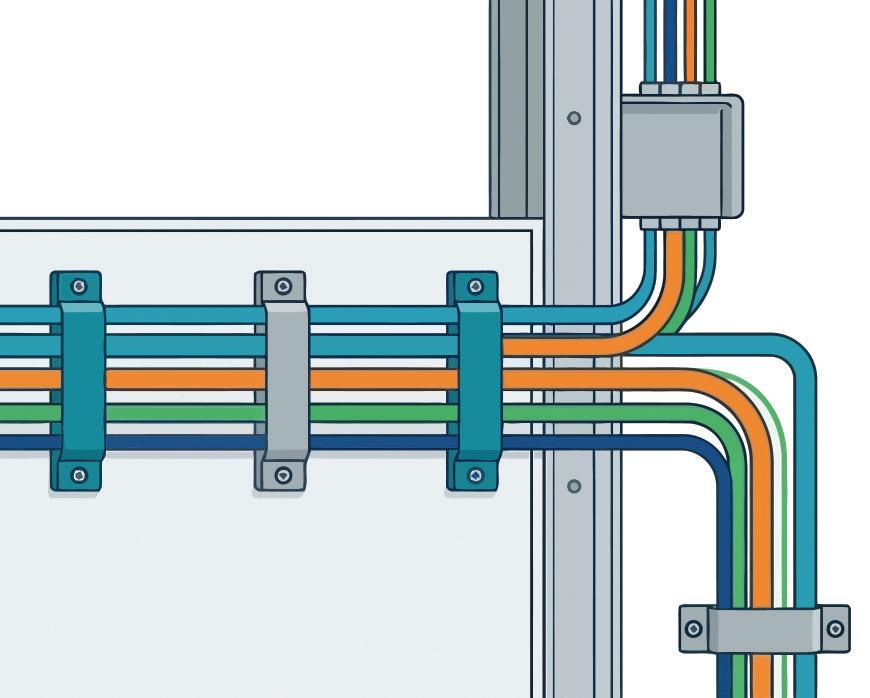
Loose or tangled cabling is a trip hazard and even more concerning is the thermal risk it creates. Poorly managed cables can lead to “bundling” issues where heat cannot dissipate, potentially causing insulation failure or electrical fires. Proper containment ensures adequate airflow and physical protection from mechanical stress, significantly reducing the likelihood of faults.
2. Improved Efficiency and Reduced Downtime
Time is important in any contract. When a fault occurs, an unorganised “spaghetti” of wires can turn a ten-minute fix into hours of investigation. Organised, labeled systems allow for rapid troubleshooting and seamless maintenance, ensuring that productivity remains high and client downtime
remains low. Plus, it’s a key part of BS 7671 section five, under “Selection and Erection of Equipment”, meaning that failing to address it can become a compliance issue on top of a productivity one.
3. Guaranteed Compliance with Standards
Electrical contractors operate in a highly regulated environment. As hinted at already, proper cable management ensures that contractors meet the specific requirements of BS 7671, facilitating smoother inspections; avoiding failed certifications and expensive rework.
4. Professional Reputation and Client Satisfaction
An installation is often the only immediately visible evidence of a contractor’s expertise. Neat, structured cable runs signal high-quality workmanship and attention to detail. In a competitive market, the professional appearance of a contractor’s work can make you stand out from the competition, making you more likely to secure repeat business.
Trends Driving Industry Changes: Data Centres and EV Infrastructure
The demand for cable management is being reshaped by the rapid expansion of high-growth sectors. Two areas include,
1. Data Centres: With the UK data centre market projected to grow significantly through 2030, contractors are dealing with cable densities that they have unlikely seen before. These environments require specialised containment and planning, that can handle massive data loads while preventing signal interference and heat buildup.


2. EV Infrastructure: The adoption of electric vehicles is becoming a reality. With over 1 million EVs now on UK roads, the installation of commercial charging hubs requires cable management that can withstand outdoor environments, high mechanical impact, and heavy-duty power delivery.
The Introduction of Amendment 4 (A4:2026) to BS 7671
Amendment 4 (A4:2026) to the BS 7671:2018 (18th Edition) is an interesting moment for UK contractors. The update introduces a new sectionspecifi cally addressing the requirements for evolving infrastructure, such as smart technology integration, renewable energy storage, and high-density data environments. It is designed to bring UK standards inline with international benchmarks; providing specifi c guidance on the integration of renewable energy sources and smart building technologies.
Tom adds,
“The updated regulations mean that the industry can avoid guesswork, as there is a standardised framework for installations. Electrical contractors can deliver high-performance, compliant, and safe systems that stand the test of time, and do so with greater confi dence.
How to Comply: Best Practices
Staying compliant in light of A4:2026 requires a proactive approach to product selection and installation techniques:
• Planning and Design: Before starting any installation, create a detailed cable layout plan. Consider cable routes, access points, and future expansion needs.
• Proper Cable Selection: Choose the right type of cable for each application. Factors to consider include voltage, current, environment, and flexibility.
• Cable Support and Containment: Utilise conduits for robust protection, and consider types such as
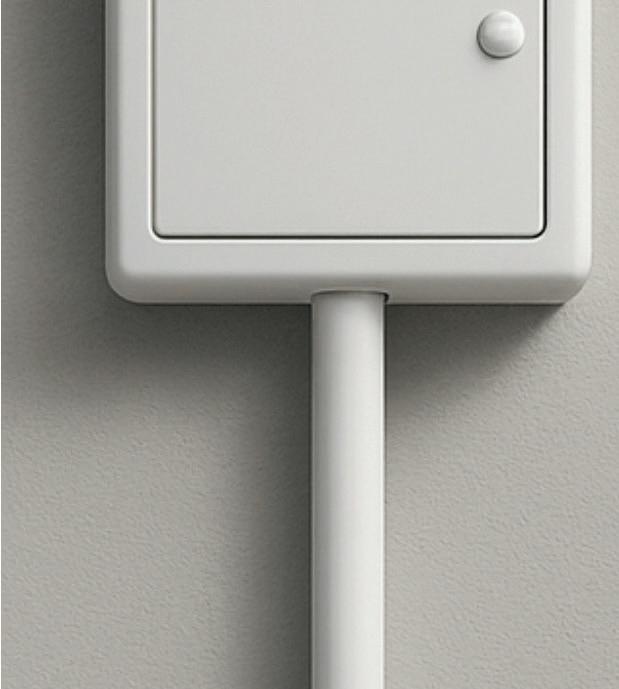
EMT, PVC, or flexible conduits based on the specific application. When using cable trays for larger cable runs, ensure proper spacing and load distribution.
• Cable Identifi cation and Labeling: Label all cables clearly to facilitate easy identifi cation during maintenance and troubleshooting. Use colorcoding to differentiate between cable types.
• Strain Relief and Protection: Employ heat shrink tubing to protect cable terminations and provide strain relief. Ensure proper sealing to prevent moisture ingress.
• Cable Ties and Routing: Bundle cables neatly using cable ties. Use proper routing techniques alongside conduits and heat shrink.
• Regular Inspection and Maintenance: Conduct periodic inspections of cable management systems to identify and address any issues promptly. Ultimately, cable management has evolved from a matter of site “neatness” into a critical part of professional risk management. As Amendment 4 (A4:2026) brings modern infrastructure like EV hubs and data centres into focus, the margin for error has disappeared. By adopting these best practices and adhering to the updated BS 7671 framework, contractors do more than just pass inspections; they future-proof their work, protect their margins from costly rework, and ensure that every installation is as safe as it is professional.
For further information, read GTSE’s Cable Management Buyer’s Guides at https://gtse.co.uk/blog/ cable-management-for-electrical-contractors-bestpractices-solutions













Much of today’s fire detection work happens in buildings never designed with easy replacement in mind. As upgrades become part of everyday work, installers are increasingly required to bridge the gap between what looks straightforward on paper and what actually works on site
For many electrical contractors, replacing a mains smoke or heat alarm should be routine. In reality, it rarely is. Misaligned fixing points, exposed drill holes, cable management challenges and the need to make good before sign-off can quickly turn a simple task into something more time-consuming. Across multi-property upgrades, those extra minutes add up quickly.
Working in real buildings
Much of this work takes place in occupied buildings, where access is limited and disruption must be kept to a minimum.
Installers often work around existing infrastructure, where previous layouts dictate fi xing positions and cable routes. Delivering a consistent, professional fi nish under these conditions is less about ideal specifi cations and more about how well a system accommodates the site realities.
Where time is really lost
Most time overruns do not come from major technical failures. They stem from smaller, persistent frustrations such as cramped terminals, limited space for wiring, components that do not sit neatly, or bases that almost, but not quite, align with what is already on the ceiling.
On retrofit projects, these details matter even more.
Exposed marks from previous alarms, misaligned fixing points and limited compatibility can quickly turn a routine replacement into a difficult conversation with a client. These issues add up, resulting in lost time, reduced margins and avoidable risk.
Electrical contractors feel this pressure directly. Time spent resolving fi nishing issues, reworking connections or returning to site cannot be recovered elsewhere. This ultimately affects productivity and confi dence at handover.
Designing out friction
In practice, how a system installs can be just as important as the alarm itself.
Elements such as cable access, wiring space and fixing alignment have a direct impact on how

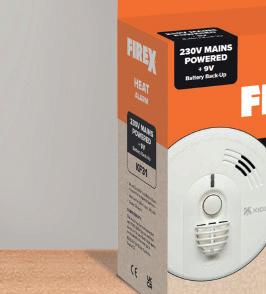

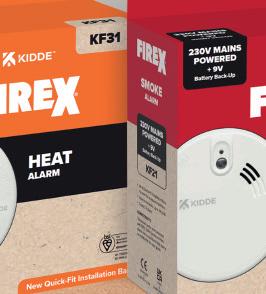




quickly and cleanly work can be completed. Where components align with existing fixings, wiring can be dressed neatly and devices sit securely supporting efficient, repeatable installation.
Increasingly, fire detection systems are being designed with these realities in mind. Features such as slide-on bases that simplify alignment, integrated cable management that removes the need for additional wiring tails, and base designs that help cover the footprint of previous alarms can reduce unnecessary work on site, particularly in retrofit environments.
This approach is reflected in systems such as the Kidde FIREX Sentry, which has been developed to support faster, cleaner installation while accommodating the challenges of replacement work. By removing steps that commonly introduce friction, installations become easier to repeat at scale.
Of course, installation speed is only part of the assessment. The real test of any fire detection system comes after the contractor has left site.
A reliable fire detection system behaves predictably once installed. This predictability is what allows contractors to walk away from a project with confidence.
“The most efficient installation is the one you don’t have to come back to.”
When a system behaves as expected, there is less need to second-guess installation decisions and less concern about issues resurfacing weeks or months later.
Over time, systems that operate quietly and consistently are the ones installers are most comfortable standing behind.
Achieving predictable performance after handover is influenced by system design as much as by installation quality. Smoke, heat and carbon monoxide alarms are expected to operate as a coordinated system, often evolving as properties are extended or upgraded.
Consistency across that system matters. Compatibility between device types and generations helps ensure that interconnection remains stable as installations grow, reducing uncertainty over long-term behaviour. This approach is reflected in systems such as Kidde FIREX Sentry, which builds on the established FIREX hardwired platform. By maintaining compatibility across smoke, heat and CO devices, the system is designed to support stable interconnection as installations are expanded over time.
For installers, that continuity reinforces confidence. It supports predictable behaviour after handover and allows projects to be closed out knowing the system can evolve without introducing unintended issues.
Confidence that lasts beyond installation day
A reliable fire detection system is one that does not generate unnecessary work once installed. Clean installation reduces the risk of initial faults, while consistent performance over time supports long-term reliability.
In a sector where reputation is shaped as much by what happens after installation as during it, fi re detection systems that respect the realities of electrical work, from fi rst fi x through to long-term operation, will continue to stand out.


Aico’s SmartLINK Radio Frequency (RF) technology has played a pivotal role in delivering a flexible and innovative fire detection solution for a housing development in Galston, Scotland, led by East Ayrshire Council.
Aico’s SmartLINK Radio Frequency Technology
Building on the success of Aico’s established RadioLINK technology, which wirelessly interconnects alarms to ensure clear audibility throughout a property, SmartLINK is the next innovation.
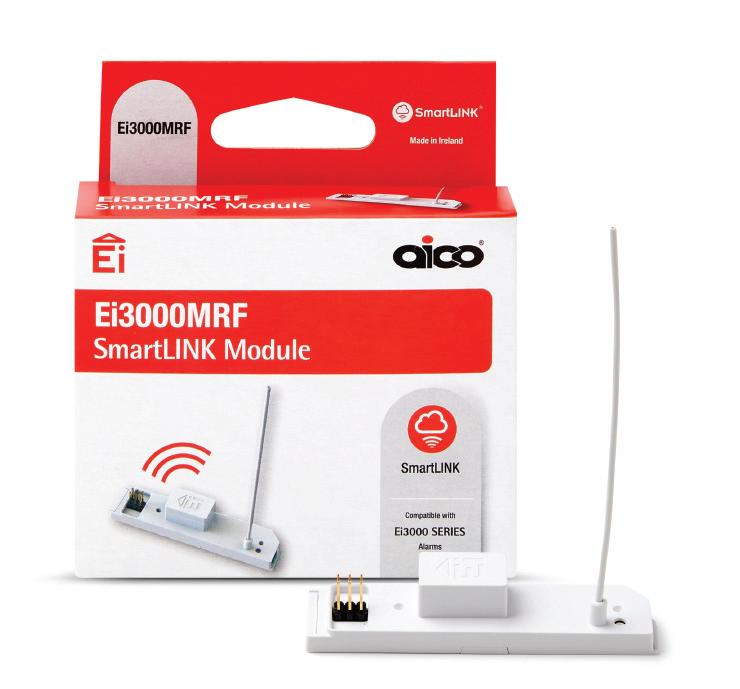
By incorporating data monitoring capabilities, SmartLINK enables a more intelligent approach to fire safety. When an Ei3000MRF SmartLINK module is added to any alarm in the 3000 Series, it allows for remote access to system data, enabling monitoring and extraction without the need to enter the property. This not only improves efficiency but also enhances ongoing maintenance and compliance.
James Frew Ltd
The project was delivered by James Frew Ltd, a highly respected electrical contractor with over a century of experience in building services. Established in 1911, the company is one of Scotland’s largest privately owned providers in the sector.
With extensive expertise in housing, compliance, and maintenance, James Frew Ltd works closely with local authorities and housing providers to deliver safe, high-quality electrical installations. The company is also recognised as an Aico Gold Standard Installer, an accreditation awarded to contractors who demonstrate best practice, ongoing professional development, and exceptional workmanship in the installation of domestic Fire and Carbon Monoxide (CO) detection systems.
This recognition requires completion of Aico’s Expert Installer training and their City & Guilds assured course in domestic Fire and CO alarm systems, and registration with governing bodies such as NICEIC, NAPIT, SELECT, or FIA.
The project began when David Martin, Electrical Manager at James Frew Ltd, consulted with Aico’s Relationship Manager, Russell Virtue, after reviewing East Ayrshire Council’s fire detection specification. The brief called for a bespoke system capable of managing both individual dwelling protection and communal fire detection, while ensuring residents

would only be alerted when appropriate, depending on the location of a fire event. This presented several technical challenges, particularly around how alarms in private dwellings and communal areas could interact without causing unnecessary disruption.
Working collaboratively, Aico and James Frew Ltd designed a solution using SmartLINK RF technology. By leveraging wireless interconnection, the system could support complex communication scenarios without the need for extensive additional wiring, saving time on installation while maintaining flexibility.
A key advantage of SmartLINK RF technology is its ability to support multiple alarm configurations within a single building. For this development, several tailored solutions were implemented:
• Interlinked dwellings across the block Fire detection systems within individual flats can be linked across the building, enabling a coordinated response where required while maintaining clear communication between properties.
• Integration of communal and domestic systems Communal areas, such as corridors and stairwells, are connected to individual dwellings without interfering with each property’s internal alarm network. This ensures residents receive early warning of incidents in shared spaces.
• Minimised disruption between properties
When an alarm is triggered within a single dwelling, the alert remains contained within that property. This prevents unnecessary disturbance to neighbouring residents while ensuring immediate warning for those affected.

After confirming that Aico’s RF technology could meet the council’s specification, the project progressed to installation by the James Frew Ltd electrical team. Throughout the process, Aico provided technical support and worked alongside the contractor to ensure the system was configured correctly.
Aico specialists also assisted with on-site commissioning, helping to verify that the RF communication and alarm linking solutions operated as required. This collaborative approach ensured the final installation met both the technical specification and the practical safety needs of the building’s residents.
The successful implementation of this system in Galston demonstrates how Aico’s unique RF fire detection technology can provide adaptable solutions for complex residential environments. By combining flexible alarm linking with clear communication between communal and private spaces, the system delivers a balanced approach to fire safety while minimising unnecessary disturbance for residents.
Through close collaboration between East Ayrshire Council, James Frew Ltd and Aico, the project highlights how innovative technology and strong partnership working can deliver effective fire safety solutions in social housing developments.
To fi nd out more about Aico’s SmartLINK technology, visit: www.aico.co.uk



Scan to learn more about the Ei3024




Mains powered with lithium cell back-up 10-year rechargeable










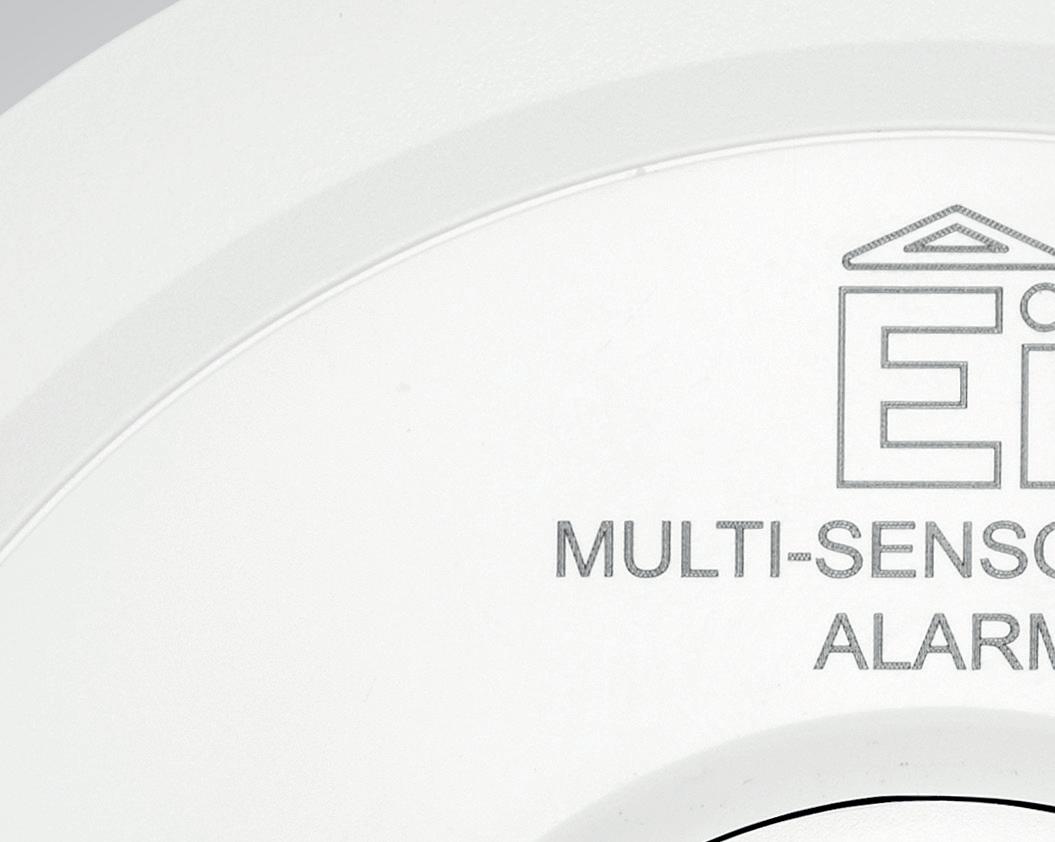
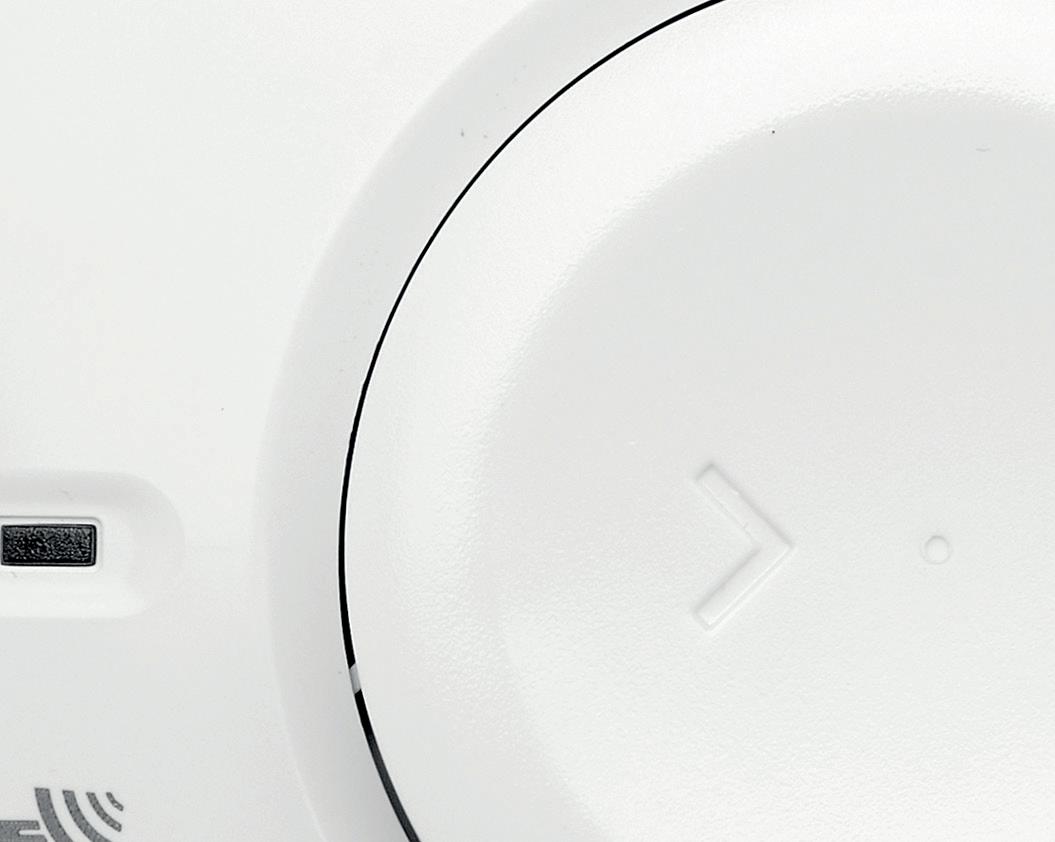

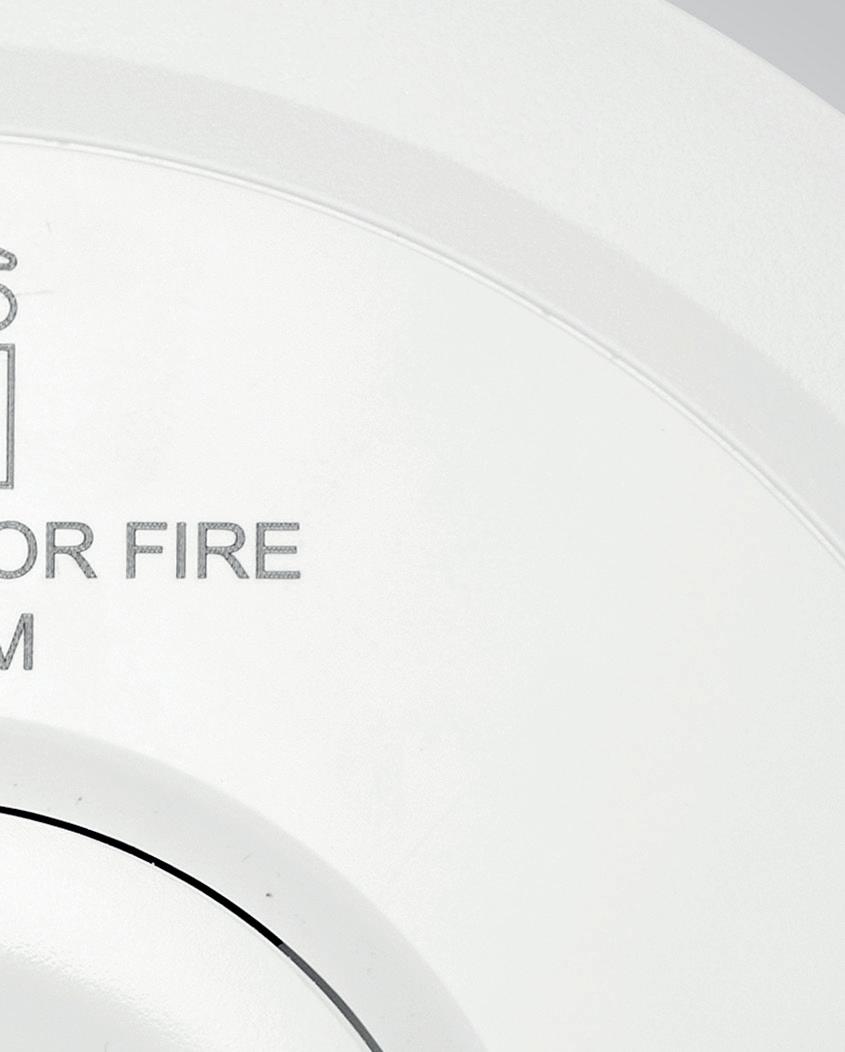


Built-in AudioLINK+ technology data extraction


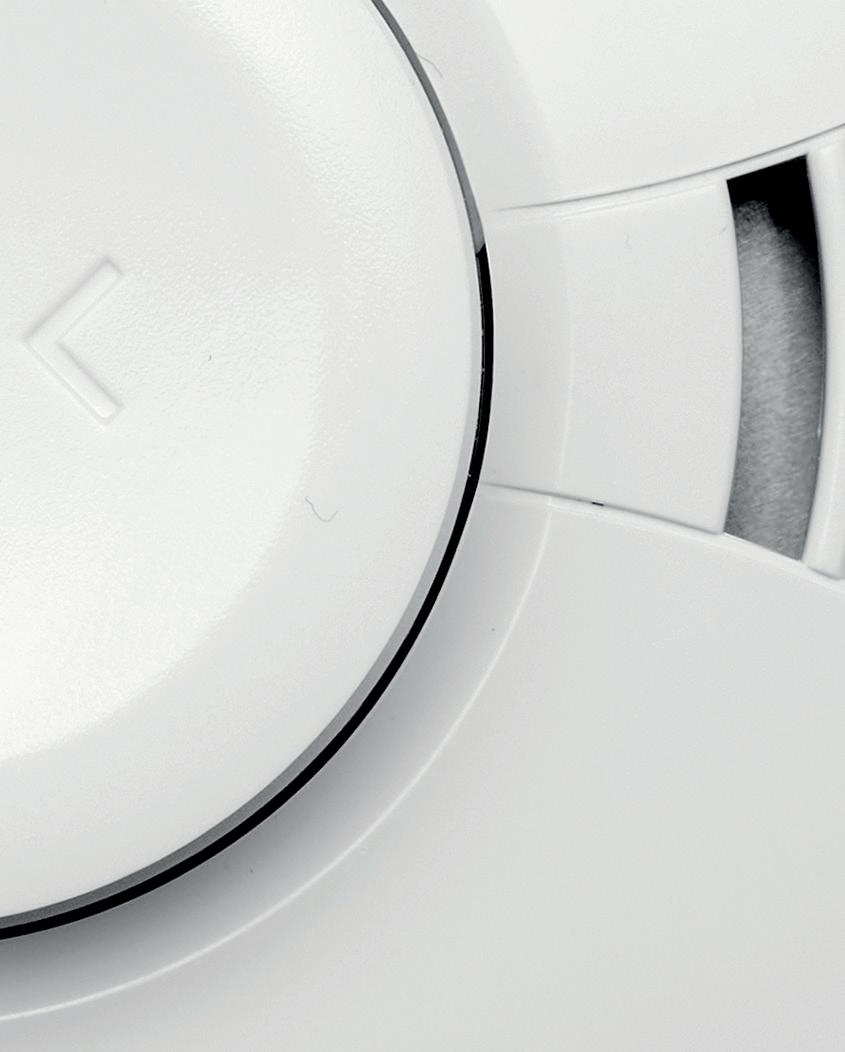




Dust Compensation mechanism with self monitoring














Add an Ei3000MRF interconnection module for wireless

C-TEC’s innovative CA740 Conventional to CAST Addressable Zone Converter and CAST-PRO fire detection and alarm devices have been utilised in a hotel in Hampshire.
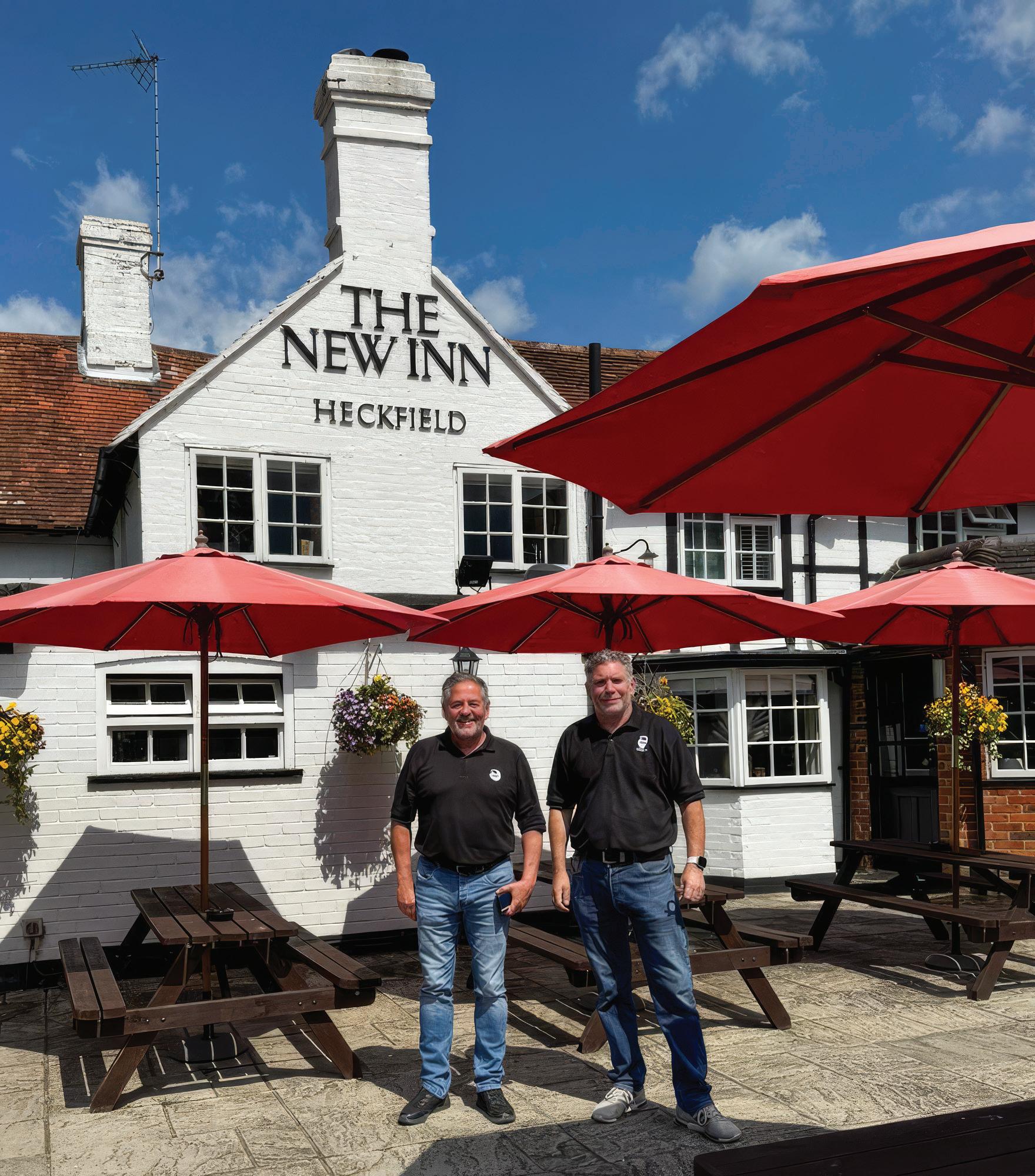
Located in the rural village of Heckfield and famous locally for once playing host to superstar boxer Muhammad Ali, the New Inn is a Grade II listed country pub, restaurant and hotel which has recently undergone a complete refurbishment.
Life-safety specialists, Bespoke Detection Services (BDS), were tasked with upgrading the fire alarm system to L1 coverage to provide the highest level of protection throughout the building. This involved replacing all the conventional devices with CAST-PRO, C-TEC’s award-winning combined fire detection and alarm devices.
Crucial to a seamless switchover was C-TEC’s ingenious new 4-way Conventional to CAST Addressable Zone Converter. Designed to facilitate the upgrade of a multi-zone conventional fire alarm system to an addressable CAST system by utilising pre-existing wiring while maintaining loop and individual zone circuit integrity, the simple converter saves time and money.
Kevin Blyde, MD of BDS said: “C-TEC’s Zone Converter is a clever invention. It is ideal for projects like this where conventional devices are being replaced in situ with addressable devices, in this case, CAST-PRO.
“The converter allowed us, wherever possible, to retain the existing cables to keep the work efficient and reduce disruption. By using C-TEC’s loop calculator, we identified that some of the original zones were overloaded and, as a result, made changes to the wiring setup. The entire system has now been reconfigured to handle the increased load safely and reliably.
“This upgrade helps to keep everyone safe and ensures the system meets the latest standards. In addition, we also added sounder beacons in all bedrooms to ensure clear alerts in case of an emergency.”
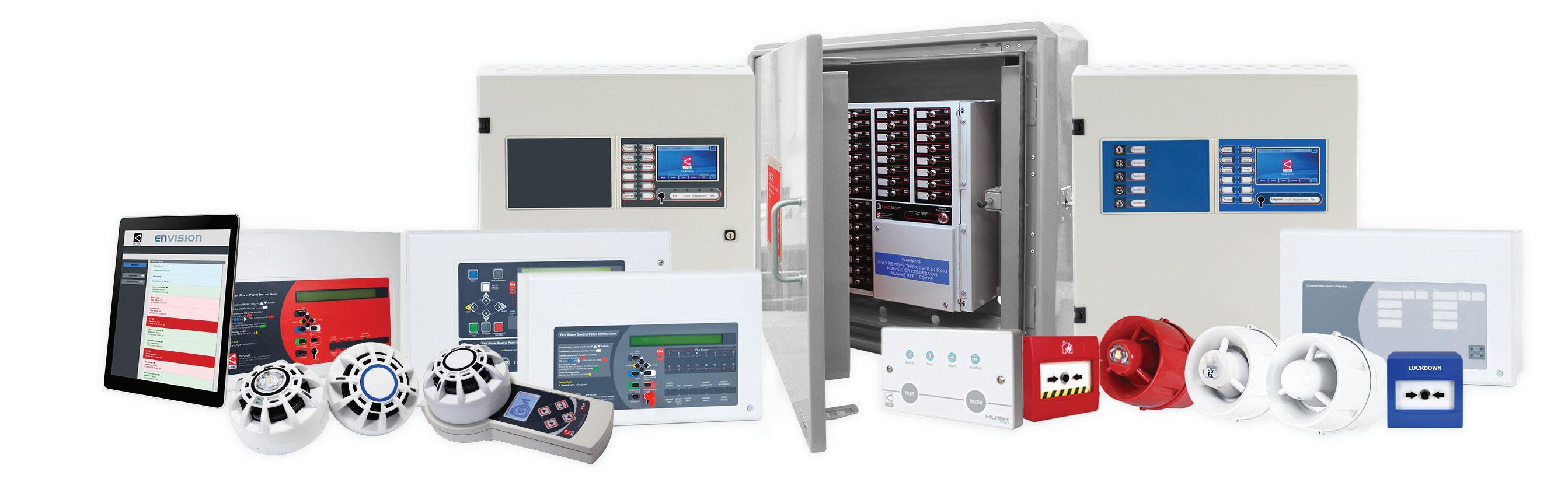
Leading life-safety systems manufacturer, C-TEC, has launched FastConvert, an innovative new four to eight-way conventional to addressable zone converter.
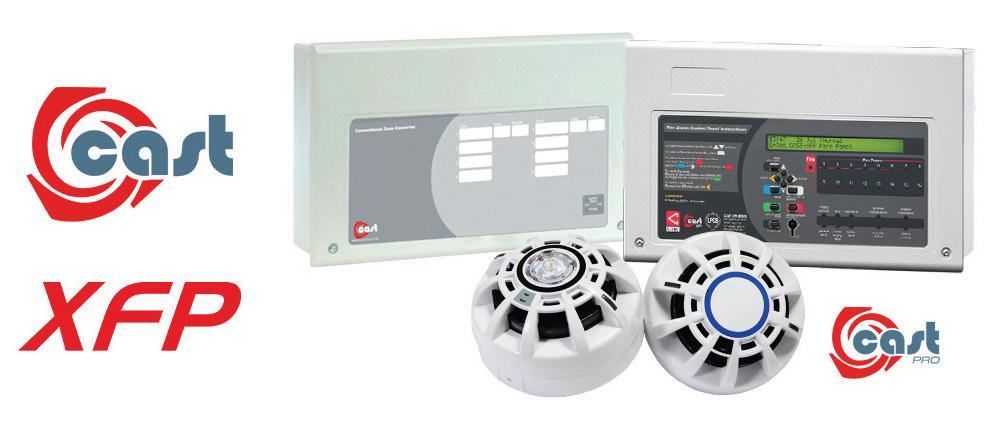
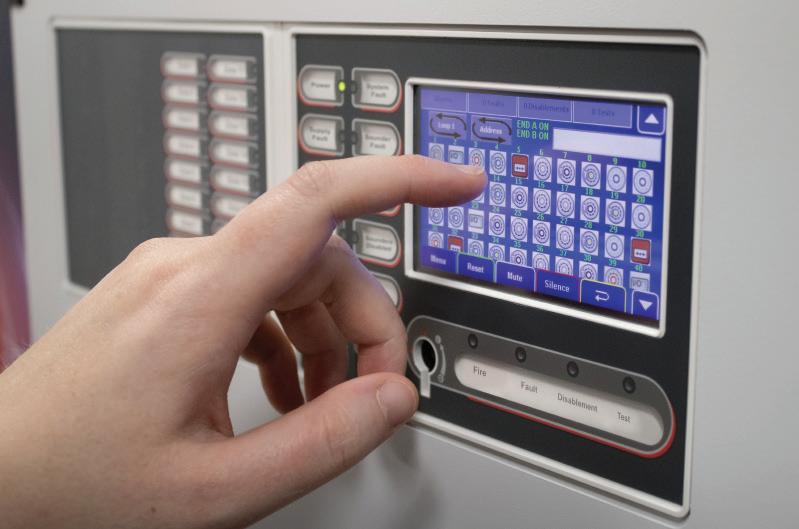
Designed to facilitate the fast conversion and upgrade of a multi-zone conventional fire system to an addressable CAST system utilising pre-existing wiring, FastConvert can save fire alarm installers thousands of pounds.
Fully compatible with C-TEC’s XFP and ZFP CAST fire systems and its award-winning CASTPRO combined fire detection and alarm devices, FastConvert fills the gap in the market for a solution which enables engineers to carry out speedy and economical upgrades of conventional to more sophisticated and powerful addressable systems.
Andy Green, C-TEC’s Marketing Director said: “FastConvert is designed with the installer in
mind. As fire detection and alarm technology has improved, more and more sites are looking to upgrade their old conventional systems to addressable, not just because the conventional devices are reaching end of life, but also because an addressable system can identify the precise location of a fire or fault, facilitate sophisticated cause and effects and reduce false alarms.
“We are definitely seeing this in schools, care homes and hotels where FastConvert is coming into its own as an ingenious retrofit upgrade solution which can utilise a conventional system’s existing zone wiring whilst maintaining compliance with BS 5839-1.”

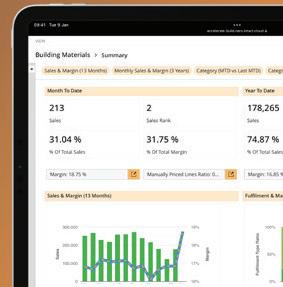

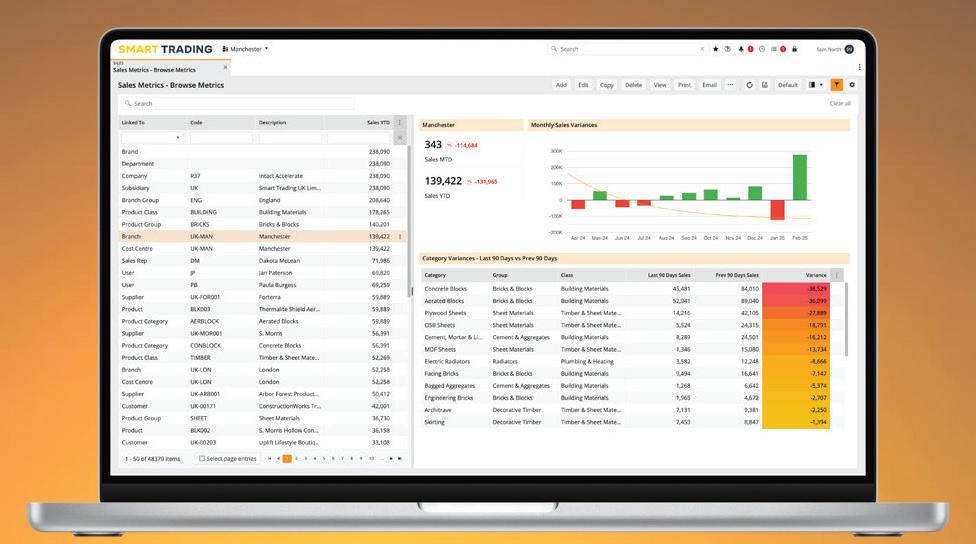



by Dialight and Agilix Solutions

Industrial environments push equipment to its limits.
High temperatures, airborne contaminants, vibration, and corrosive exposure are common realities inside many facilities. While these conditions are typically considered when specifying heavy machinery or process equipment, lighting is often overlooked.
Yet lighting systems operate continuously within these same demanding environments. When fixtures are not designed for these conditions, environmental stresses can significantly impact reliability, maintenance requirements, and overall lighting performance.
Understanding how common industrial conditions affect lighting systems is an important step when selecting fixtures built to perform over the long term.
Dust is present in nearly every industrial facility. The movement of materials, forklifts, and personnel continuously sends fine particles into the air where they eventually settle on surfaces throughout the plant. When dust accumulates on lighting fixtures, it can trap heat within the fixture housing. Even relatively small increases in operating temperature can accelerate component degradation and reduce fixture life. Facilities handling materials such as grain, pigments, fibers, or carbon often experience particularly rapid buildup. Proper fixture design can help mitigate these challenges by preventing dust accumulation from interfering with thermal performance.
Many manufacturing processes involve chemicals,
solvents, or oils that release vapors or volatile organic compounds (VOCs). Over time, these airborne contaminants can interact with lighting equipment, gradually degrading optical materials, and electronic components.
The result may be reduced light output or color shifting that affects visibility in work areas. In certain environments, some vapors may also present ignition risks if lighting systems generate excessive heat or electrical sparks.
Lighting solutions designed for industrial environments often incorporate sealed construction and appropriate certifications where hazardous conditions may exist.
Industrial facilities frequently operate in elevated temperatures generated by motors, furnaces and other process equipment. High ambient heat places additional stress on LEDs and electronic components, potentially shortening fixture life if thermal management is inadequate.
Moisture and corrosive contaminants can present an additional challenge. Facilities located near coastal environments or those exposed to humidity, washdowns or salt spray may experience accelerated corrosion of fixture housings and mounting hardware. Over time, this corrosion can compromise both lighting performance and fixture integrity.
Lighting systems designed for these environments often incorporate protective finishes, corrosion-resistant materials and sealed enclosures to help maintain durability under these conditions.
Continuous vibration from heavy industrial equipment is another factor that can affect lighting reliability. Fixtures mounted near motors, conveyors or other machinery may experience constant mechanical stress over time. Although LED lighting technology is generally more robust than traditional light sources, poorly designed fixtures can still suffer failures related to vibration. Drivers, electrical connections, and mechanical components may loosen or degrade if they are not engineered to withstand these conditions.
Fixtures tested for vibration resistance and designed with rugged mechanical construction are better suited for environments where equipment operates continuously.
Lighting plays a critical role in maintaining safe and efficient operations across industrial facilities. However, environmental factors such as dust, chemical exposure, high temperatures, moisture and vibration can all influence how reliably lighting systems perform over time. Evaluating these environmental conditions during the specification process helps facilities select lighting solutions designed to withstand the realities of industrial operation.
Collaboration between experienced lighting manufacturers and knowledgeable industrial distributors can also help facilities assess these environmental challenges and identify lighting solutions suited to their specific applications.



Recolight isn't just about recycling, we help the lighting industry take real steps toward a sustainable future. From our Reuse Hub and Circular Lighting Live Conference, to workshops, webinars, and Life Cycle Assessments, we support businesses in taking practical actions to embrace the Circular Economy. What’s more, we can provide carbon footprint data for every waste collection. Make your lighting more sustainable. Make it circular.








As we get closer to the summer holidays many schools need to replace outdated and inefficient fluorescent fittings. To win the business in the face of tight budgets, Lee Brodie, technical manager at Collingwood Lighting explains what you should prioritise
With the ban on manufacturing fluorescent fittings now more than 2 years old, pressure is mounting on schools to replace them as replacement lamps and parts are getting harder to source. Ultimately, they will all need replacing with modern LED luminaires, which will reduce a school’s running costs and give a payback on the investment of as little as a year.
But schools operate on tight capital budgets and may not have enough for a full lighting refurbishment. By phasing in LED lighting, you ensure that you install it where the school will benefit most and they can then use the old fittings and lamps as spares for other areas.
Cost savings are just one benefit of LED lighting. Good modern fittings with a low unified glare rating (UGR) of 19 or less and a colour correlated temperature of 4000K will improve visual comfort and aid concentration. So, the priority will be to install them in classrooms as this will improve learning.

Survey their needs
Before you start, get a lighting survey done for them. Many manufacturers offer this free and they will design a solution that gets the best solution within your customer’s budget. It allows you to explore their options.
Not only will they get better lighting than before but because the technology is better you will need fewer fittings than the ones you are replacing, which means the capital cost may be less than your customer thinks.
This survey should also give you estimated energy running costs, carbon savings, and the potential payback time for the investment. Armed with the facts make sure that the school and whoever oversees the budget understands what savings they will achieve. You never know they may find some extra funding for a more extensive lighting refurbishment.
Focus on entire areas
And because LED lighting will not need maintenance for several years, schools will only need to worry about non-LED areas in the near future.
It also means that instead of replacing individual fluorescents as they fail, it’s better to replace a complete area or room with a proper lighting design. This maximises lighting quality and makes it easier to use the old fluorescent fittings as spares for those areas that still use them.
After completing a refurbishment it’s worth having a conversation about phasing in other energy and cost saving measures such as lighting control.
This may start in areas that yield the greatest savings for the least cost – so presence detection in toilets and
corridors for example. In the longer term the school can really address their ongoing lighting costs and carbon footprint by using daylight linking sensors for fittings near windows.
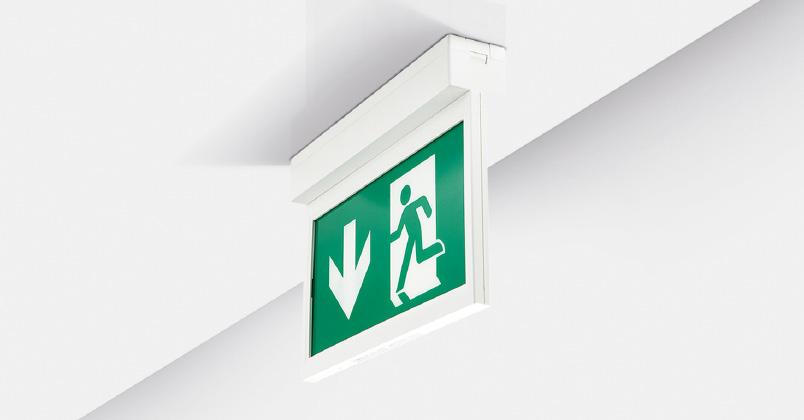
Check emergency lighting
Many schools are finding that they do not have compliant emergency lighting. You need to address this before or certainly alongside any other lighting refurbishment.
While it might have been compliant when the system was installed, systems must match current building use and layout. In addition, emergency packs degrade over time and while the lights may be okay, some fittings could fail their battery duration test.
Remember that the responsible person for the building has a legal duty to ensure the occupants safety as part of the Fire Safety Act 2021.
Getting the emergency lighting right needs a thorough risk assessment and it is the topic of completely different conversation. But if you are getting a lighting survey done, then it is worth asking whether this includes an assessment of this safety critical aspect of lighting. At least then the “responsible person” knows their legal obligations and what needs to be done.
This summer many schools will have to install LED lighting. The good news is that you can help them achieve better lighting to aid learning and save them ongoing running costs. Ideally, they should replace all their lighting, but if there is not enough capital budget then suggesting a phased installation could help you win their business.








Outdoor lighting projects can be complex and multifaceted. From placement and aesthetic lighting effects to more practical safety and security considerations, installers must consider a range of factors if an effective scheme is to be achieved. Nick Gwilliam, Lighting Designer at Ansell Lighting, offers his best practice advice on outdoor lighting design for installers
Whether its highlighting architectural and natural features, illuminating accessways or adding security, outdoor lighting design and specification requires an individual approach. A ‘one size fits all’ method does not work for these projects, for a variety of reasons.
For any professional embarking on an outdoor lighting project, the best place to start is by considering the purpose and objectives of the scheme itself. Think about why illumination is needed, what it is expected to achieve, where it is required and how often it will be used. It is also important to consider any legal or insurance requirements that may apply - these will often differ between domestic and commercial projects. By clearly setting out the project objectives and brief from the outset, installers can ensure all requirements are met as it naturally progresses.
Once a list is in order, the next step is to go through each objective and consider how it can be achieved. This will commonly involve thinking about factors such as product placement, specification, energy efficiency and technological requirements.
Product placement can be as simple as using bollards to line either side of a path or driveway to improve

safety and security or it can be more design led, requiring deeper thought to create aesthetic effects and highlight architectural or botanical features. For example, to make buildings or trees stand out, up lighting is a popular technique where light is placed beneath features to illuminate upwards and create drama and depth. Similarly, down-lighting techniques are often used to illuminate areas such as doorways or patios from above, giving a softer, more ambient effect. Other popular lighting effects include wall washing, grazing, cross-lighting, mirroring, and silhouetting, all of which involve specific placement on luminaires to create texture and captivating visual effects.
When it comes to product specification, different products are suited to specific areas. Car parks for example are best lit by floodlights and streetlights, whilst wall mounted lights are the obvious choice for building frontages. As a rule of thumb use bollards for walkways, driveways, and pathways, in-ground luminaires along steps and borders, wall-mounted bulkheads and sconces for entrances, façades, and patios and floodlights for expansive areas like car parks or gardens. Festoon lighting can also be used to add a decorative touch and is popular in residential and hospitality applications.
Whatever the type of fitting specified, it is important to opt for robust, durable products made from die-cast aluminium, polycarbonate or stainless-steel and with a high IP and IK rating to ensure the best performance against the elements for a longer lifespan.
When specifying products, factors such as CCT and wattage also need to be considered alongside the overall design objectives to ensure fittings deliver the desired result. Choosing the correct CCT is essential for achieving the right ambience and visibility while wattage will determine brightness and light output.
Another factor to consider when looking at product specification is embedded technology. Where possible, products with photocell or microwave sensors are a great, energy efficient option, ensuring lighting is only used when required. Automated systems such
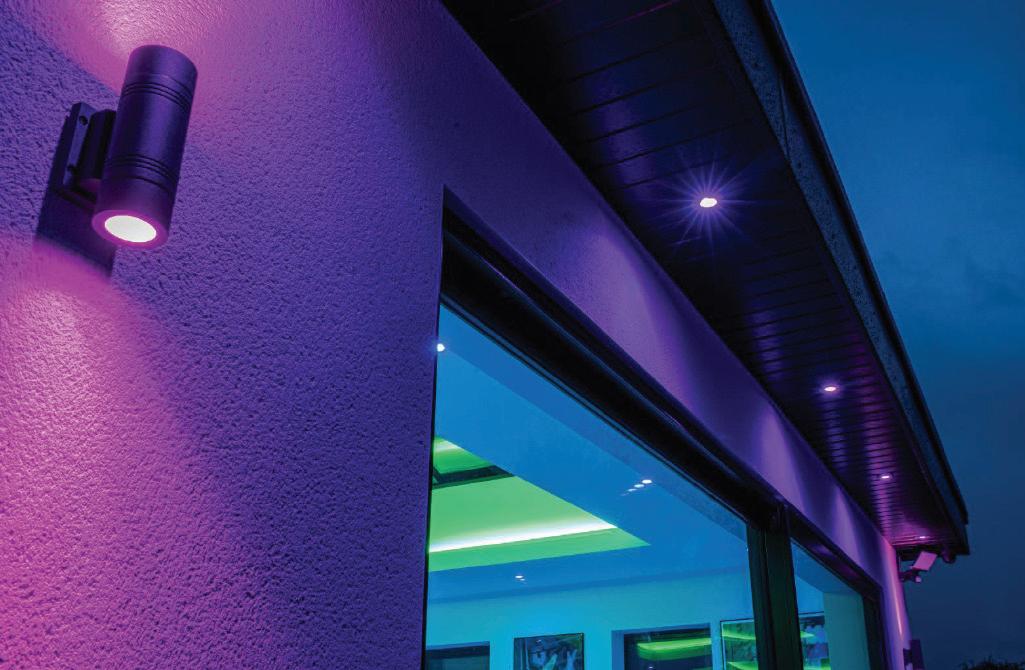
as smart lighting can also help to optimise energy use by allowing installers to set schedules so lighting only operates between specific times. One important caveat when installing smart lighting outdoors however is to check the WIFI coverage first. If there is not sufficient coverage, then a WIFI extender can be used.
Light pollution is also a major consideration when designing an outdoor lighting scheme. It is a huge problem in today’s world and is having an adverse effect on the global ecosystem, disrupting the natural patterns of wildlife and harming human health, largely due to nighttime lighting being too bright and poorly directed. To avoid it, follow the five Dark Sky Design best practice design principles; ensuring lighting is useful, targeted, low level, easy to control and of the right colour. Installers should also specify fittings that hold the DarkSky Fixture Seal of Approval accreditation, which confirms that products are designed to minimise glare and reduce unnecessary upward light spill.
Outdoor lighting schemes do require rigorous upfront planning but by fully understanding the brief, selecting the appropriate luminaires and integrating intelligent control technologies, installers can easily deliver systems that perfectly balance aesthetics, safety and sustainability.
B.E.G. Powers sustainable transformation at edinburgh’s ocean terminal
Asmarter approach to lighting is transforming everyday living at Ocean Terminal in Edinburgh where a new leading lighting controls system is delivering an advanced system that does more than just illuminate spaces.
The solution, installed by lighting controls manufacturer B.E.G., is playing a key role in supporting the development’s broader sustainability ambitions by intelligently reducing energy consumption while enhancing comfort and efficiency,
The 338-unit development, which transforms previously derelict land into a vibrant new community, comprises four residential buildings ranging from 10 to 14 storeys, alongside amenities including a gym, rooftop garden, and shared communal spaces overlooking the city.
A key objective of the project was to minimise operational energy use and reduce the overall environmental footprint of the development, particularly through more intelligent control of lighting - one of the largest ongoing energy loads in residential buildings.
To achieve this, lighting controls specialist B.E.G. implemented a tailored, multi-layered lighting control strategy across selected fl oors on the site, combining standalone controls in low-demand back-of-house

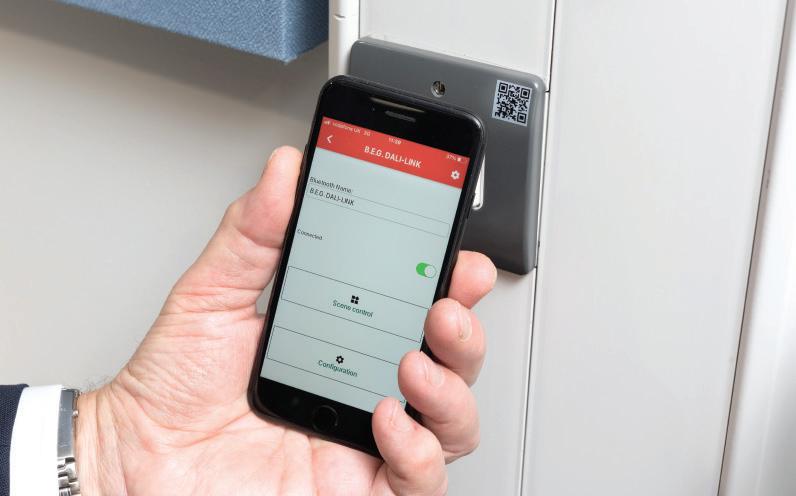
areas, DALI Broadcast systems in landlord corridors and circulation spaces, DALI-SYS in communal amenity areas, and networked systems across tenantfacing zones. This ensured lighting was precisely controlled according to occupancy and usage, eliminating unnecessary illumination and signifi cantly reducing wasted energy.
The solution enables lighting to operate only when and where it is needed, with automated control responding to real-time conditions. This reduces electricity consumption across communal and shared areas, lowers peak demand, and contributes directly to the building’s overall energy efficiency performance. It also reduces maintenance requirements by optimising usage patterns and extending system lifespan.
Overall, the system supports a substantial reduction in lighting-related energy use across the development, helping to lower operational carbon emissions and improve long-term sustainability outcomes.
Paddy McGlone, Specification Sales Manager Scotland & Northern Ireland at B.E.G. said: “This project was driven by a clear sustainability agenda, with a strong focus on reducing energy consumption across a large and complex residential development. Lighting is one of the most consistent energy draws in schemes like this, so improving how it is controlled delivers immediate and long-term benefits.
“By matching the right control technology to each area of the building, we’ve been able to significantly cut unnecessary energy use, reduce waste, and improve overall operational efficiency without compromising safety or comfort.
“This project is a strong example of how intelligent lighting control can directly support carbon reduction goals in residential developments. The B.E.G. system delivers measurable energy savings today, while also providing a flexible platform to optimise performance further in the future.”
The project was delivered in collaboration with PMK Electrical and marks another successful large-scale residential installation for B.E.G., with further joint projects already underway.

Available in two colour variants
‘Glow’, selectable ambient lighting
3 m to 16 m range
Electronically and mechanically adjustable range
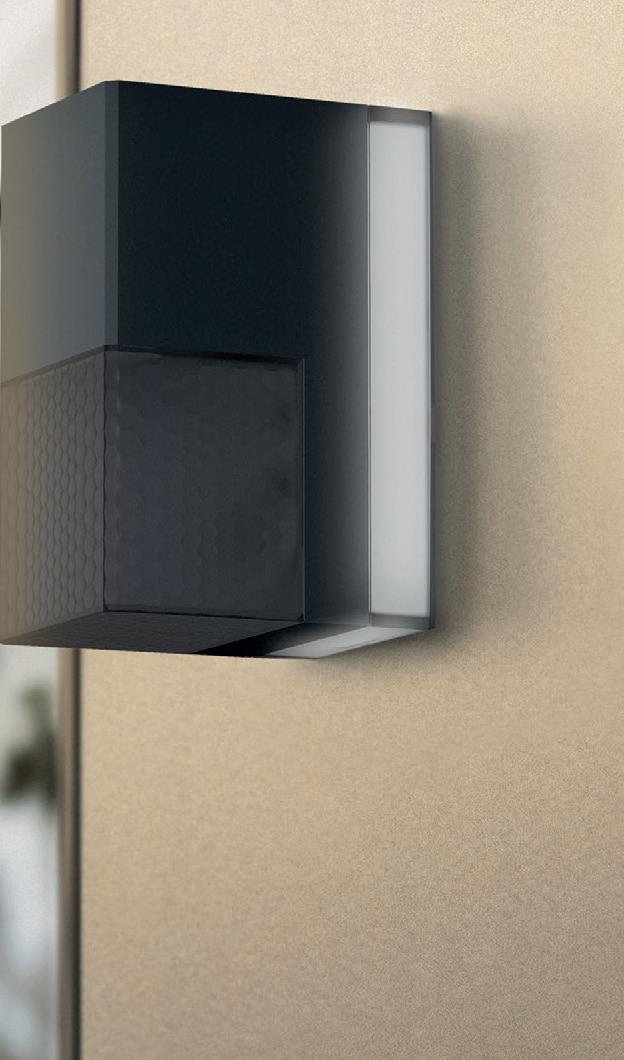


by Martin Plumbridge – TMIET, Doepke Technical manager
Distribution switchgear to BS EN 60947-3 defines the requirements for low voltage switchgear and control gear, specifically: switches, disconnectors, Switch-disconnectors and switchfuse disconnectors. For Example, this applies to equipment used in distribution circuits and motor circuits up to 1000 V AC.
Switch-fuse-disconnector
These integrate a switch disconnector and fuse holders, allowing load switching, overcurrent protection and safe isolation.
Functions: Making and breaking load current, Overcurrent and short circuit protection via fuses, safe isolation with visible or verifiable separation e.g. positive indication of contact position.
Characteristics: Typically fitted with NH or BS88 fuse links, lockable in the off position for maintenance safety, Suitable for AC 22 or AC 23 duties depending on rating, provides discrimination through fuse selection.
Switch-disconnector
These combine the functions of a switch and disconnector capable of load switching and providing safe isolation.
Functions: On load switching (subject to utilisation category), isolation of circuits for safety and maintenance.
Characteristics: Rated according to utilisation categories AC 21, AC 22, or AC 23. May incorporate visible isolation or mechanically linked contacts, lockable handles are common, typically installed upstream or downstream of protective devices.
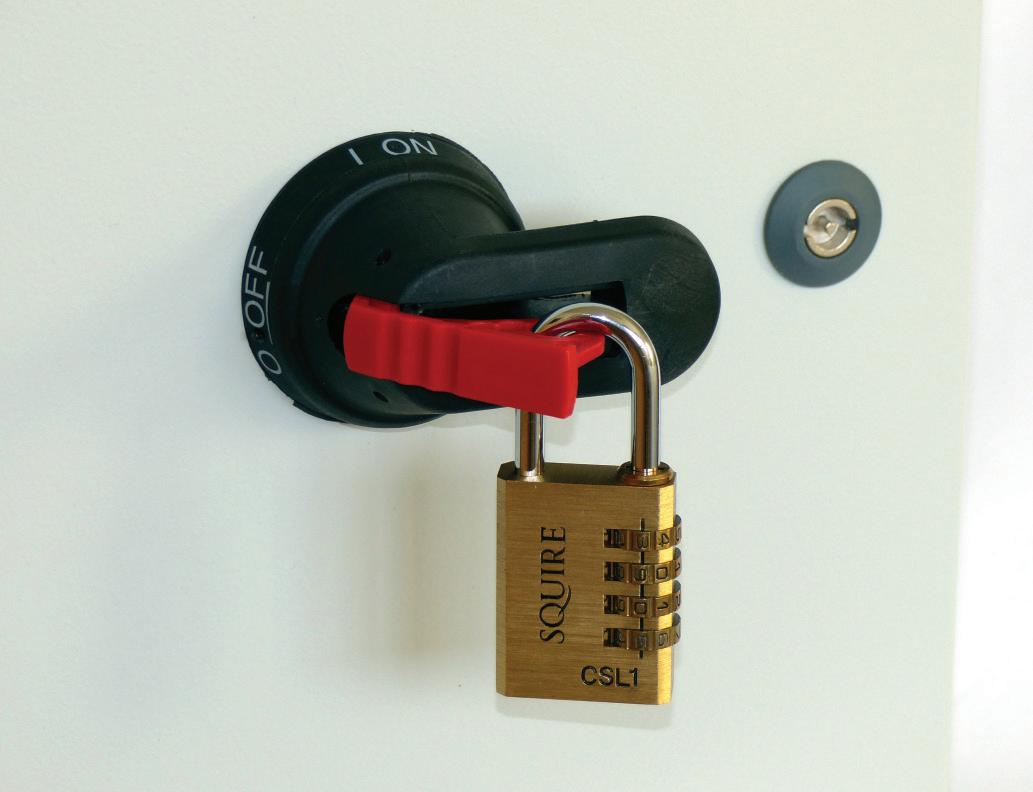
These are mechanical switching devices capable of making, carrying and breaking current under defined circuit conditions. Depending on their utilisation category, they may or may not be suitable for on load switching.
Functions: Routine switching of circuits, operational control.
Characteristics: Load breaking capacity depends on utilisation category, does not provide isolation i.e. see switch disconnector. Not all switches are suitable for breaking inductive loads.
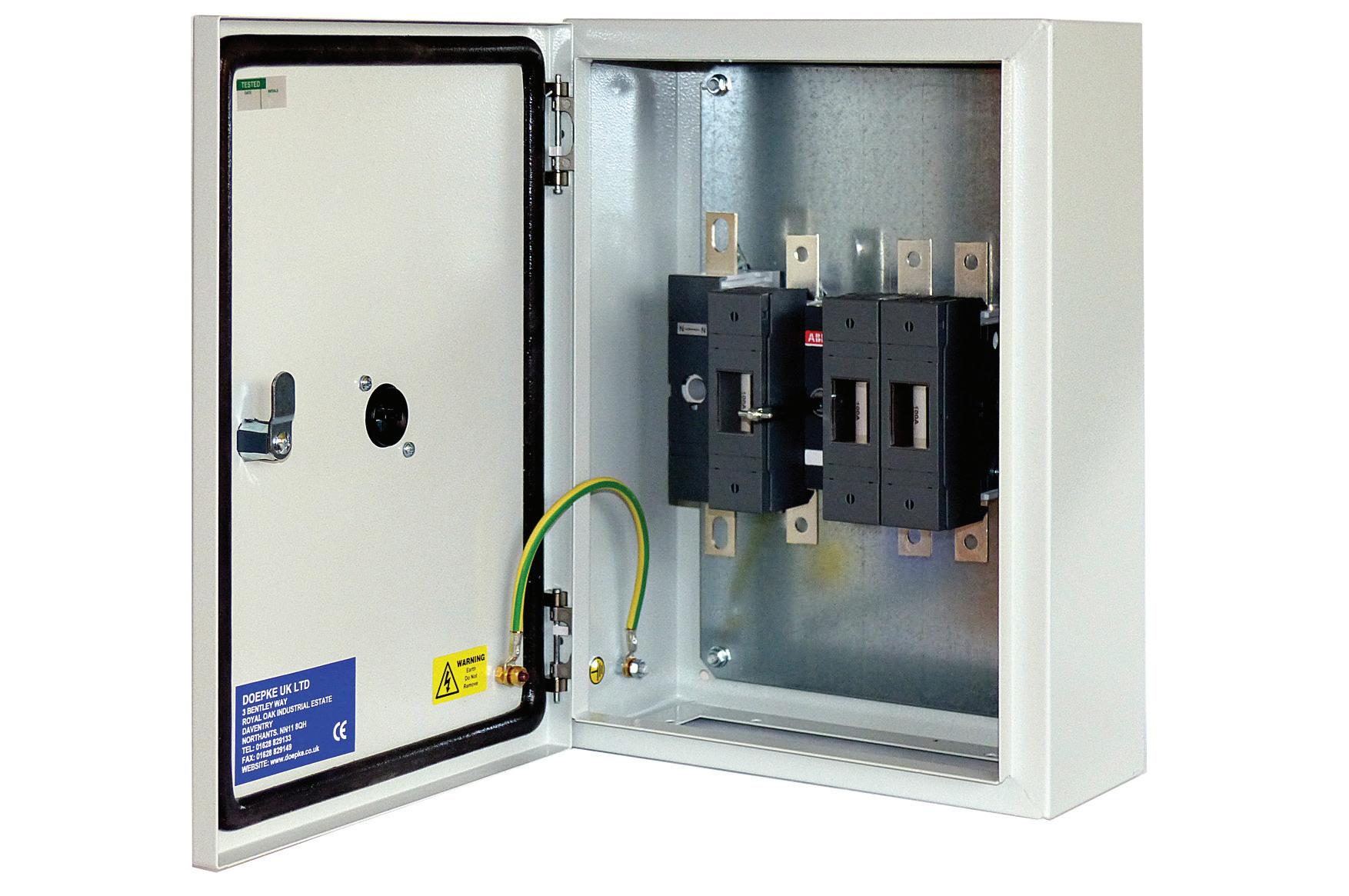
Designed for circuit isolation. A disconnector must provide positive indication of contact position or verifiable air gap so circuits can be safely worked on.
Functions: Safe electrical isolation, protection of personnel during maintenance
Characteristics: Not designed to make or break load current, provides visible or verifiable isolation, typically rated AC 20 (isolation only), often lockable to prevent inadvertent operation.
Utilization categories to BS EN 60947-3 BS EN 60947 3 defines utilisation categories which describe the type of load and duty under which a switch, disconnector, or switch disconnector is designed to operate. These categories are critical for correct product selection and compliance with BS 7671.
AC 20A / AC 20B – Isolation Only
Function: Isolation of a circuit without making or breaking load current.
Characteristics: Devices are not intended to switch load current, operation must only take place when the circuit is off load, designed to provide safe isolation with visible or verifiable separation.
Applications: Maintenance isolation points, lockable isolators upstream of protective devices, circuits were switching under load is prevented by design. Note: Using an AC 20 device for on load switching would be non compliant and potentially unsafe.
AC 21A / AC 21B – Switching of Resistive Loads
Function: Making and breaking resistive or slightly inductive loads. Load Type: Heaters, Incandescent lighting, low inductance circuits.
Applications: Heating circuits, general resistive distribution loads, control panels with stable load conditions. This category represents light switching
duty. Electrical Characteristics: Low inrush current, minimal arcing compared to inductive loading.
AC 22A / AC 22B – Switching of Mixed Resistive and Inductive Loads
Function: Making and breaking mixed resistive and inductive loads, including moderate overload conditions. Load Type: Distribution boards, Transformers (lightly loaded), Mixed panel circuits
Electrical Characteristics: Moderate inrush current, higher breaking capacity required than AC 21, Typical duty for distribution switchgear. Most common category for main switches in low voltage installations.
AC 23A / AC 23B – Switching of Highly Inductive Loads
Function: Making and breaking highly inductive loads, including motor loads.
Load Type: Motors, motor feeders, large solenoids, high inductance devices. Electrical Characteristics: Very high inrush currents, significant arcing during breaking, mechanically and electrically demanding duty.
Applications: Motor isolators, duty switches for motor circuits, industrial production equipment. Required where a switch is expected to break full motor load current and occasional locked rotor current.
Meaning of “A” and “B” Suffixes. A: Frequent operation, normal service duty. B: Infrequent operation or emergency duty. This relates to endurance testing and operational expectation
Selection Guidance, isolation only AC 20, resistive loads AC 21, distribution / mixed loads AC 22, motors / inductive loads AC 23
Note: BS7671 462.1.201: A main linked switch or linked circuit-breaker shall be provided as near as practicable to the origin of every installation as a means of switching the supply on load and as a means of isolation.
For selection refer to BS 7671 table 537.4



INTUITIVE TO USE. ENGINEERED FOR SAFETY.

Secure hold: Two stage locking mechanism ensures reliable retention of all conductor types



Convenient test ports: Located on both sides for quick continuity checks in any position.



Maximum visibility: Transparent window and strip length guide for easy visual inspection.


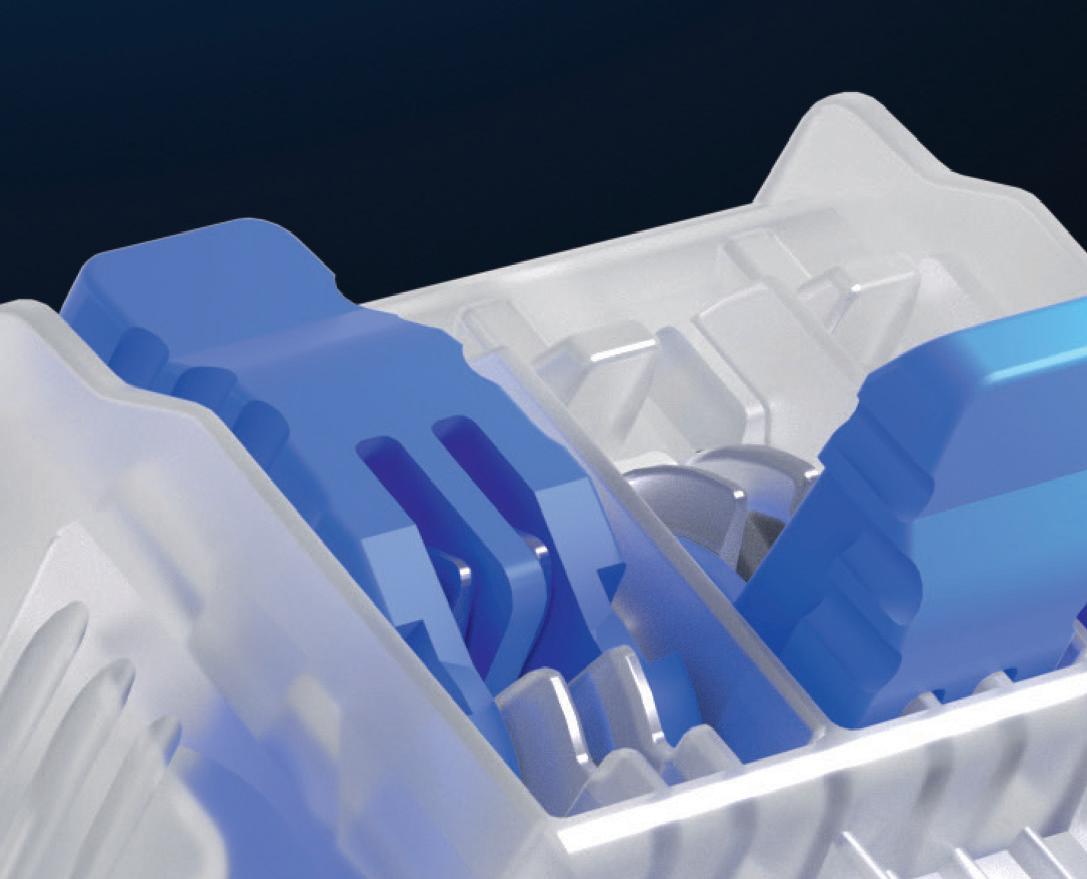








No accidental release: Lever opens and closes in the opposite direction to the conductor entry point.


Fast installation:
Simply strip solid conductors and push them in - no need to open the lever.


Wide compatibility: Suitable for solid, stranded, and flexible conductors from 0.14 mm² to 4.0 mm² - rated up to 32 A.

At IDEAL Electrical, we build products with professionals, for professionals. For more than a century, our solutions have earned their place on job sites across the world - making everyday electrical work faster, safer, and more reliable.
Sign up for our newsletter and get a sample pack for free


Compact design
Perfect for installations in tight or crowded spaces.


SIGN UP HERE


Steve Humphreys, Technical Commercial Manager at NAPIT, explains how battery storage systems can safely operate in island mode. From isolators to earth electrodes and system referencing relays, he outlines the key components that ensure automatic disconnection of supply (ADS) protects essential circuits when the grid goes down
With so many battery inverters and all-in-one systems, it can be difficult for designers and installers to select a system that provides the required fault protection against electric shock in island mode.
Island mode occurs when the battery storage system operates independently from the main grid supply. When the grid supply is lost, the battery system supplies power to essential consumer loads, effectively creating an “island” of power. This article looks at how fault protection through automatic disconnection of supply (ADS) can be achieved using three critical components operating in the correct sequence.
An island mode isolator is required to meet the requirements of Section 551 of BS 7671, that deals with low voltage generators and Regulation 21 of the Electricity, Safety, Quality and Continuity Regulations (ESQCR). Regulation 21 of the ESQCR states:
“Where a person operates a source of energy as a switched alternative to a distributor’s network, they shall ensure that that source of energy cannot operate in parallel with that network and where the source of energy is part of a low voltage consumer’s installation, that installation shall comply with British Standard Requirements.”
BS 7671 and Regulation 551.6.1 go into more detail on how to achieve this by stating: Precautions shall be taken so that the generator cannot operate in parallel with the system for distribution of electricity to the public. Suitable precautions may include one or more of the following:
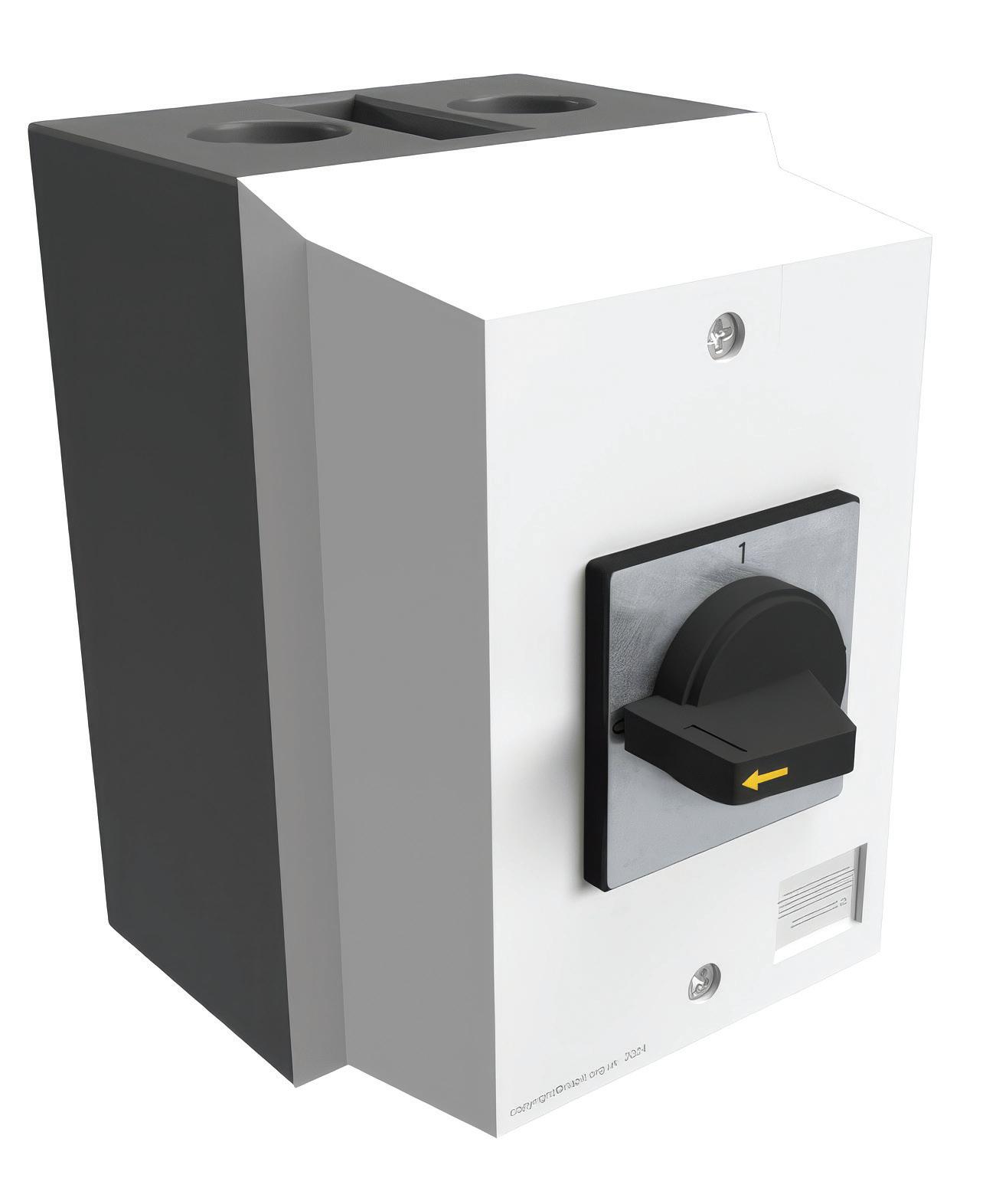
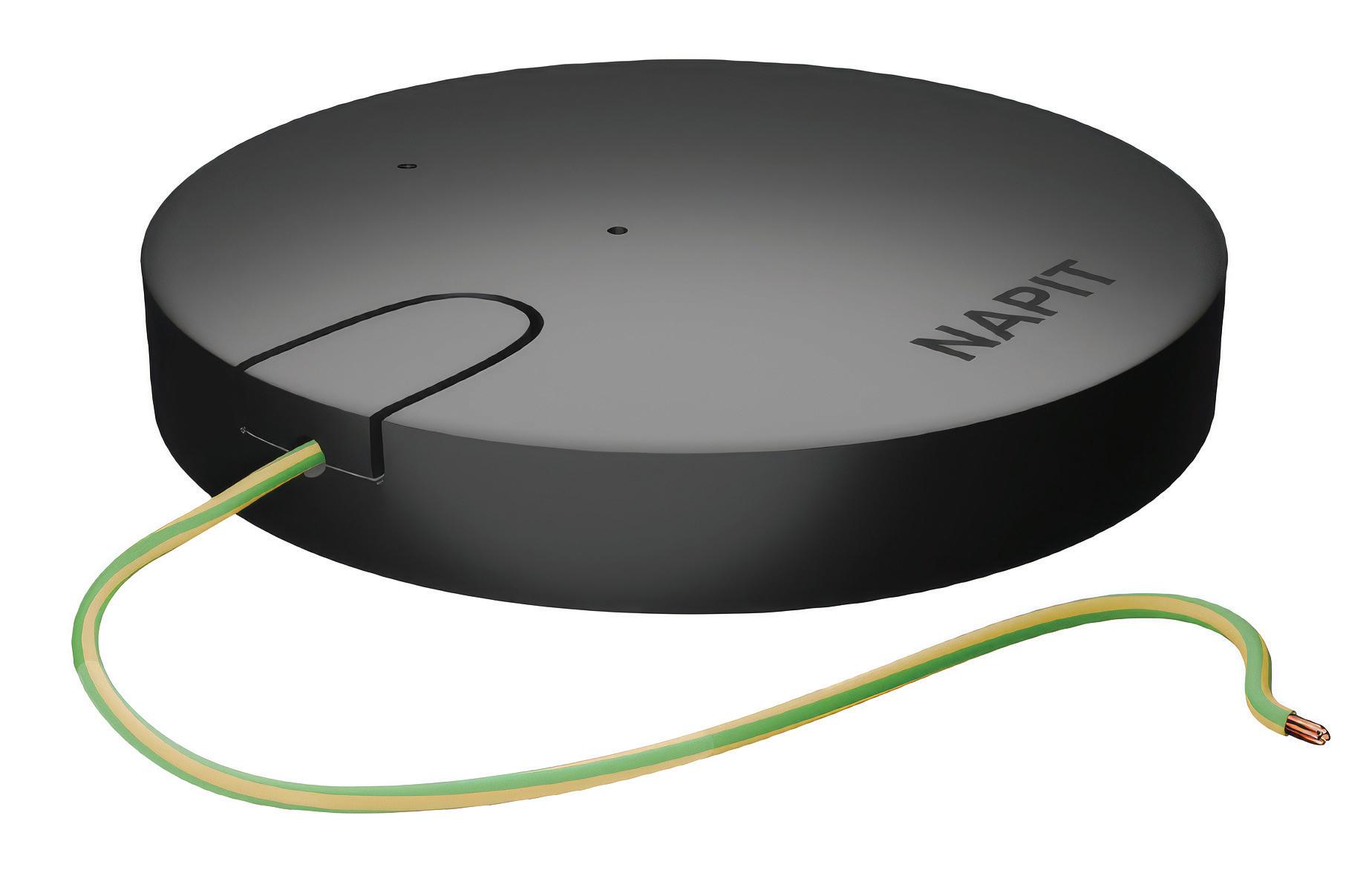
Consumers Earth Electrode
• An electrical, mechanical or electromechanical interlock between the operating mechanisms or control circuits of the changeover switching devices
• A system of locks with a single transferable key
• A three-position break-beforemake changeover switch
• An automatic changeover switching device with a suitable interlock
• Other means providing equivalent security of operation
During island mode, the isolator must disconnect all live conductors, including the neutral, to prevent back-feeding into the grid and protect anyone working on the distribution system, such as line workers.
Relays alone do not meet the requirements of the ESQCR Regulations 21 and 22, or an appropriate British CENLEC or IEC Standards in BS 7671. The isolator must meet the requirements of BS 7671 and specifically Table 537.4. The isolator could be integral to the inverter in the form of a contactor that complies with BS EN IEC 60947-4-1 or an external manual switching device complying with BS EN IEC 60947-3, see Fig 1.
In island mode the battery storage system will need to be provided with a means of earthing. This is often overlooked in the design of systems that are capable of supplying back up
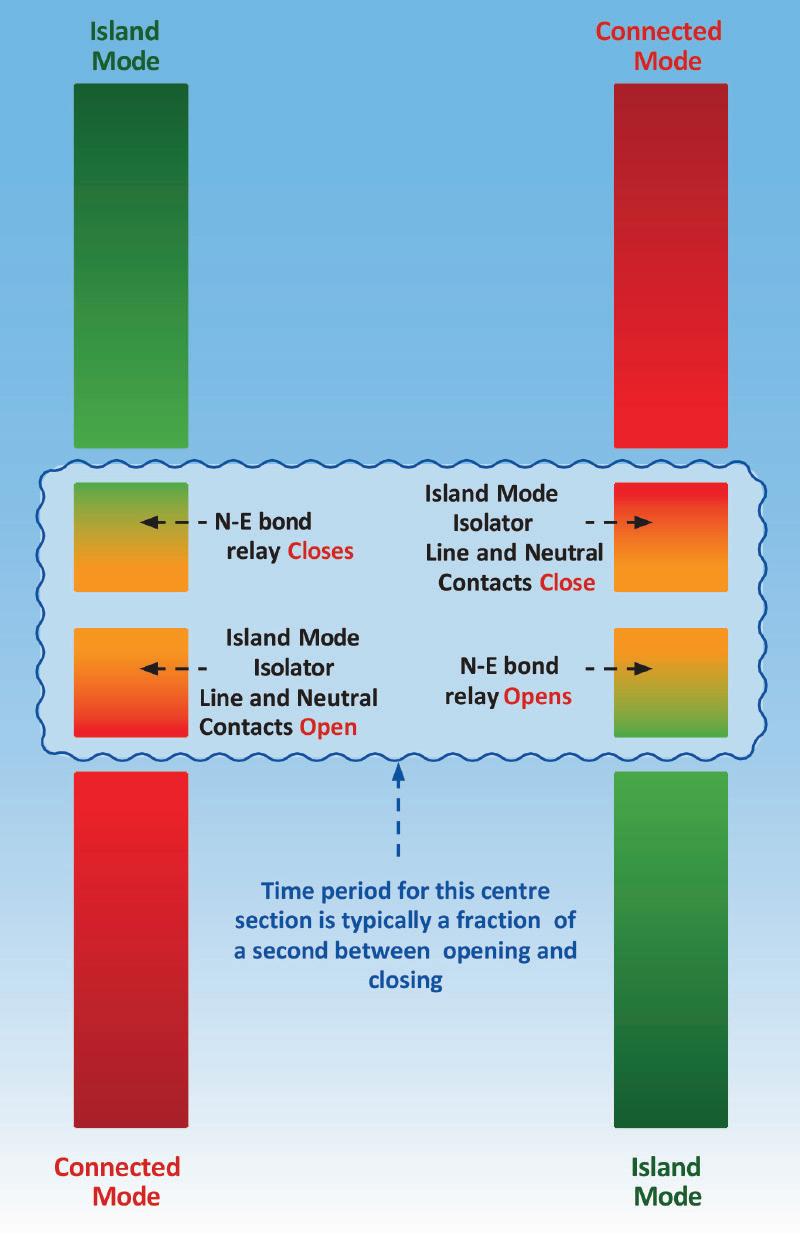
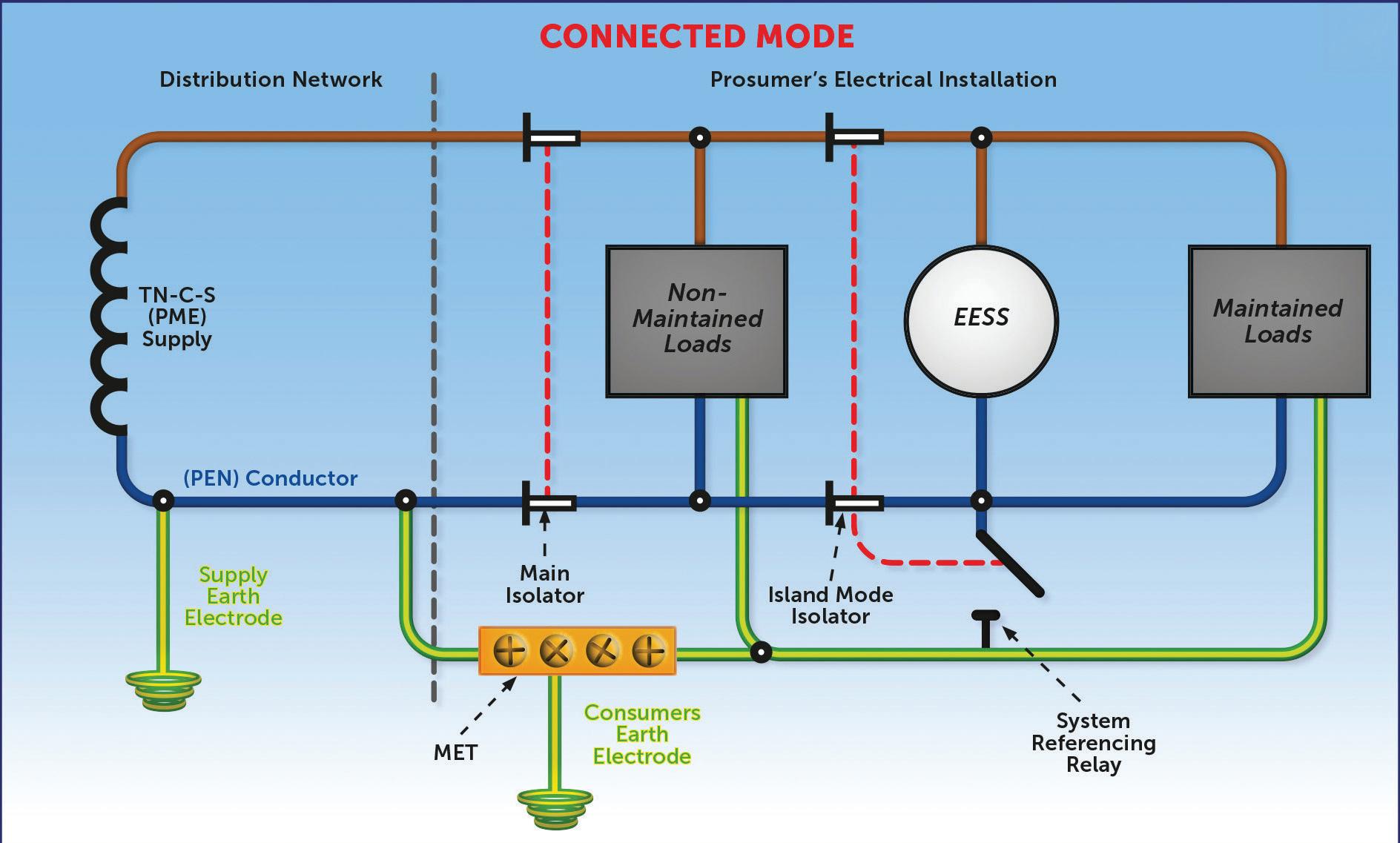
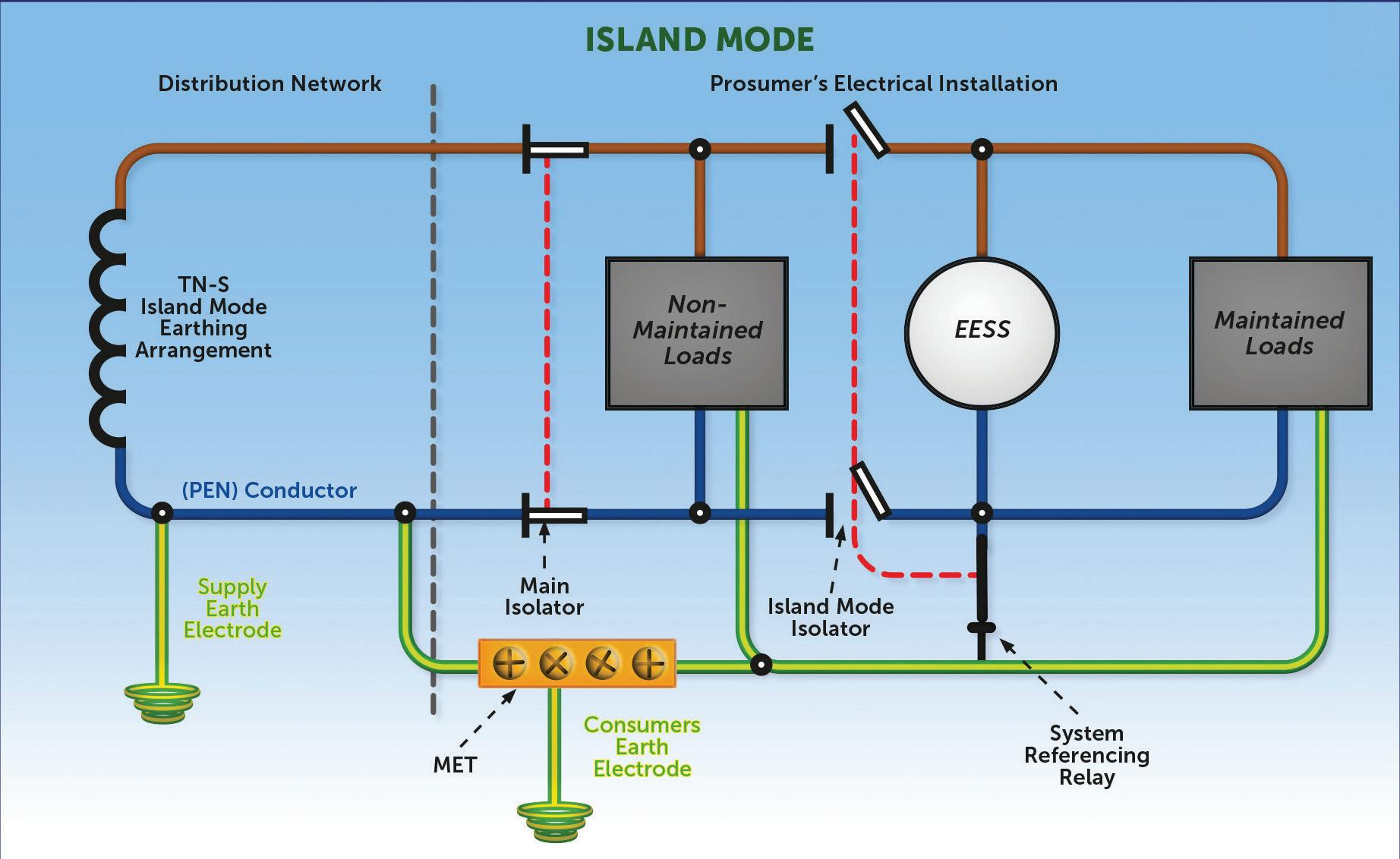
power in the event of the grid supply being lost. It stands to reason that any essential loads being supplied during island mode still need to have fault protection.
BS 7671 tells us that during a loss of grid supply the distributors earth connection cannot be relied upon. This is stated in Regulation 551.4.3.2.1:
“Protection by automatic disconnection of supply shall not rely upon the connection to the earthed point of the system for distribution of electricity to the public when the generator is operating as a switched alternative to a TN system. A suitable means of earthing shall be provided”
This means that a consumer’s earth electrode shall be provided for TN systems, as shown in Fig 2.
The consumers earth electrode shall be connected to the main earthing terminal, and the earthing conductor shall be suitability sized in accordance with Chapter 54 of BS 7671.
In TT systems, the existing consumers earth electrode can be used if its suitability has been
confirmed, i.e. stable with a low resistance (not exceeding 200 Ω ).
System Referencing Relay
The system referencing relay, previously known as the neutral/earth bond relay, is a component part of the system that is integral to island mode operation. In island mode we cannot have two neutral connections to protective earth at the same time. Ultimately this will help prevent circulating neutral currents, unwanted tripping of RCDs and reduce the risks for DNO engineers working on the network.
When the system moves into island mode, the system referencing relay closes to create a neutral/ earth bond between the neutral of the essential circuits to be supplied by the battery storage system and earth, as shown in Fig 3.
The system referencing relay must:
• Close immediately after the island mode isolator opens for island mode operation
• Open immediately before the island mode isolator closes for connected operation
The system referencing relay contact should be rated to be capable of making or breaking the largest sum of the prospective currents from all sources capable of simultaneously operating in parallel.
The system referencing relay should be connected between neutral and protective earth as near to the output of the inverter as possible.
Now we have looked at these three parts of the system and explained what they do, we can bring them all together to show how they work in unison.
1. Once the grid supply is lost, the island mode isolator will disconnect all live conductors
2. The system referencing relay closes immediately after the island mode isolator opens (typically within a fraction of a second). This ensures only one neutral is connected to the protective earth
3. The consumers earth electrode has now become our reference point between the neutral of any essential circuits to true Earth
4. In island mode, a TN-S earthing arrangement has now been created
The diagrams in Fig 4 and Fig 5 show the differences between Connected and Island modes using TN-C-S and TN-S arrangements. For all connected mode supply earthing arrangements, it is recommended to switch to a TN-S earthing arrangement in island mode. Where PME conditions apply in connected mode, these conditions will remain in island mode, because for TN-C-S and TN-S supplies the installation remains connected to the distributor’s means of earthing. However, as stated earlier in Regulation 551.4.3.2.1, the suppliers earth connection cannot be relied upon in island mode, it may be lost or become unreliable, so the system needs a new, dedicated earth to protect against electric shock. Now that we have an earth reference point in island mode, along with suitable protective devices, essential circuits being supplied by the battery storage system will have fault protection by automatic disconnection of supply (ADS).
A word of caution, some inverter manufacturers claim the consumer earth electrode and system referencing relay are unnecessary. This type of inverter may use a ‘floating voltage’ arrangement that is unearthed during island mode operation, similar to an IT system. This type of system is not suitable for domestic battery storage systems and may violate BS 7671, The Electricity at Work Regulations (EAWR) and The Electricity Safety, Quality and Continuity Regulations (ESQCR).
Essential circuits being supplied during island mode still need to have fault protection. Therefore, designers, installers and inspectors need to consider how fault protection is achieved during island mode operation of battery storage systems.
In this article we have shown how fault protection, using ADS, can be achieved in island mode by selecting the correct equipment and component parts and ensuring they operate correctly and safely.
The tester everyone is talking about
Your guide to the ultimate MFT and why it is fast becoming the industry favourite
Every electrical contractor knows that testing isn’t just about ticking boxes. It’s about confidence.
Confidence that your readings are accurate, your results are defensible, and your equipment won’t let you down when you’re under pressure on site. That’s why Kewtech has spent decades designing test instruments with one clear philosophy in mind: make electrical testing faster, simpler and safer for the UK electrician.
The KT66DL multifunction tester is a perfect example of that approach. Rather than chasing gimmicks or unnecessary complexity, it focuses on solving real-world testing problems—noisy environments, sensitive RCDs, EV circuits, tight timescales and demanding clients, all the while remaining intuitive and easy to use. This is a tester designed by people who understand how electricians actually work.
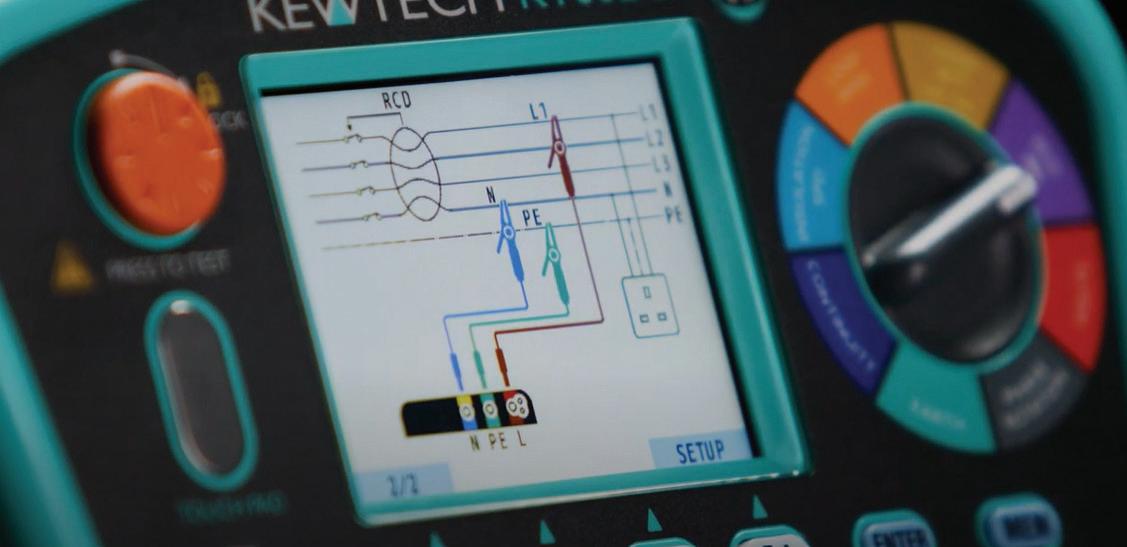
At the heart of safe electrical installations is accurate loop impedance testing. If your loop values are wrong, disconnection times may not be met and protective devices may not operate as intended. That’s why loop accuracy has always been a cornerstone of Kewtech design.
The KT66DL delivers highly accurate and, importantly, repeatable loop values, time after time, even in challenging conditions. This accuracy gives contractors confidence that what they’re recording is genuinely representative of the installation, not distorted by noise, uplift or unstable supply conditions. When certification, liability and reputation are on the line, that confidence matters.
Where a 2-wire high-current test would trip the RCD, Kewtech’s KT66DL offers a 2-wire low-current no-trip loop test is designed to remove that problem entirely, allowing you to carry out loop testing quickly and safely at light fittings and light switches.
A 2-wire low-current test option is not commonplace within the industry due to the sophisticated and complex algorithms required to carry out the test accurately and provide repeatable results.
Not all loop testing is equal. When testing close to a supply transformer (usually at the main distribution panel), loop impedance values can be extremely low and prospective fault currents extremely high. The vast majority of testers will simply display “>20kA” once they reach their limit, but that doesn’t confirm whether the true fault current is actually within the safe breaking capacity of the protective device. However, the Kewtech KT66DL uniquely overcomes this with both a 6A and 25A high-current loop test, delivering 0.001Ω resolution for accurate measurement of very low loop values near the supply origin.
Rather than relying on estimated readings, this 25A test means that you can obtain genuine PFC measurements up to 50kA, helping ensure protective devices are correctly rated and can operate safely under real fault conditions, reducing the risk of equipment damage or fire.
Real sites are rarely electrically “clean”. Machinery, inverters and other connected equipment introduce noise that can cause unstable readings.
The KT66DL automatically detects this and activates its noise handling feature, extending the test and measuring at different frequencies to deliver a stable, usable result. Combined with Kewtech’s renowned resistance to RCD uplift, this ensures that readings remain reliable even in hostile environments.
The benefit is simple: less frustration, fewer failed tests, and more confidence in the numbers you’re recording.
Oxidised terminations and aged connections are a fact of life, especially on older or industrial installations.
The KT66DL’s PULSE function applies a short burst of high current to clean the contact point and remove surface oxidation. This produces more stable and repeatable readings, saving time and avoiding misleading results. Again, it’s a practical feature that exists because Kewtech designs testers for the conditions electricians actually face.
EV charge points bring new challenges, particularly with over-sensitive RCD protection that can trip during conventional loop testing.
The KT66DL includes a specialist extra-low current loop test specifically for EV circuits, allowing testing to be carried out without nuisance tripping. As EV installations continue to grow, this feature ensures contractors can test confidently without workarounds or compromises.
Coupled with the KEWEVSE or KEWEVA adaptors, the KT66DL will carry out a full auto EVSE RCD test covering both the internal EV DC & AC protective devices but also the external EV circuit RCD / RCBO.
It’s a clear demonstration of Kewtech future-proofing of its products for modern electrical work.
The KT66DL warns you if it detects a live circuit, and even if the test button is locked, internal protection prevents damage to the PCB. This protects both the tester and your investment, helping ensure long-term reliability. Kewtech builds longevity into its MFTs, which is why many contractors continue using them for years rather than replacing them every upgrade cycle.
No touch screen…and we’re proud of that. There is no touch screen on Kewtech MFTs…and that’s to your benefit. Kewtech’s dot matrix screen provides clear, reliable visibility in all site conditions and can be operated easily with gloves, wet hands or in cold weather while also offering significantly lower repair costs should the unthinkable happen. This all helps to reduce downtime and long-term ownership costs.
The KT66DL displays all key test results simultaneously on a single screen, eliminating the need to scroll through menus or repeat tests. RCD results, PSC/PFC and even simultaneous TRMS display of L-PE, L-N and N-PE are all there to provide you with a complete, instant overview of circuit conditions, speeds up fault current assessment, and make testing more efficient.
The KT66DL makes SPD (Surge Protection Device) testing quick and straightforward, allowing contractors to verify that SPDs are functioning correctly without damaging the life of the SPD. By quickly identifying faulty or degraded surge protection, the tester helps protect sensitive equipment, ensures compliance, and gives electricians confidence that the installation is safe and reliable—saving time and preventing costly damage for clients.
The KT66DL provides a range of additional features, including:
• Phase rotation testing
• Earth electrode testing (2-wire and 3-wire)
• PAT testing with the optional adapter
With such a feature-rich tester, you would be forgiven for thinking that with such capabilities must come a level of complexity that you would rather avoid. But rest assured that its intuitive, user-friendly operation means this simply isn’t the case…we bet you won’t even have to consult the manual to start testing straight away.
Just a single rotary dial, clear all-in-one result screens, logical menu structure and dedicated help buttons providing on-screen guidance, all help to reduce training time, speed up testing, and ensure new to Kewtech users can hit the ground running.
Kewtech universal test leads are put through a rigorous 7-step testing procedure to ensure that they stand up to the demands of the everyday contractor, providing reliable contact, consistent readings and long service life.
Support you can rely on
Real technical support is always on hand, offering advice, guidance and reassurance when needed. Kewtech understand that this level of backup matters when your tester is central to your livelihood, and we are genuine in our approach to after-sales care.
We are with you every step of the way, just ask one of the thousands of trusting Kewtech users across the UK.
The KT66DL isn’t just a multifunction tester; it’s a reflection of Kewtech’s design philosophy. Every feature is there to make testing faster, simpler and safer, all the while excelling in accuracy and repeatability of results.
For UK electrical contractors who want a reliable, long-term investment backed by real support, Kewtech and the KT66DL isn’t just another tool—it’s a partner you can depend on, job after job.
For faster, simpler and safer testing.
Repeatable results, time after time.
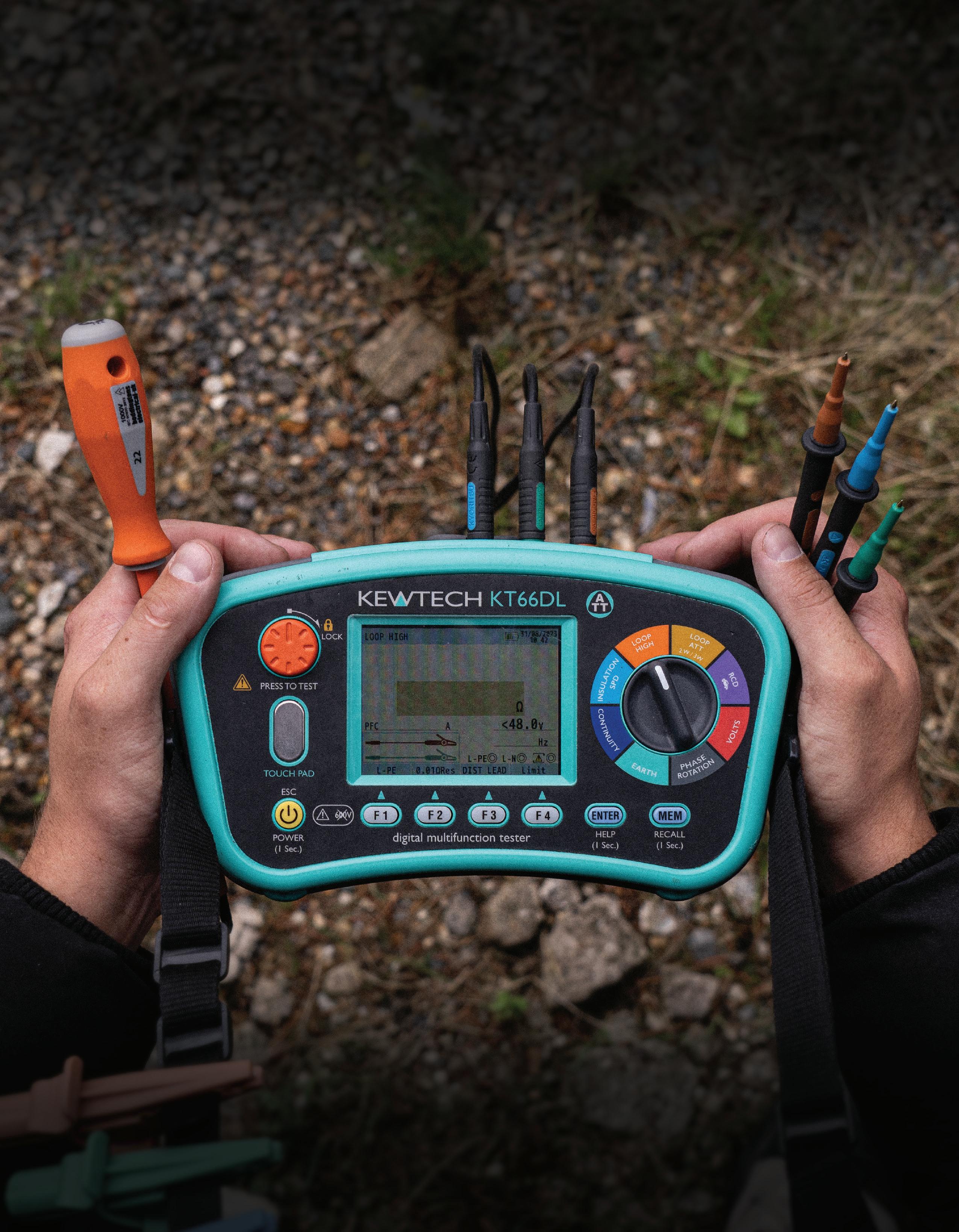
Scan for video KT66DL THE ULTIMATE MFT

● Low current 2 wire loop testing
● 50kA PFC range
● Specialist EV RCD & loop testing features
● Automatic electronic noise handling feature
Makita has launched the new JR003GZ 40VMax Reciprocating Saw XGT®. Equipped with a newly engineered chain vice to securely fix the workpiece, the tool enhances stability, safety and helps to improve accuracy in the cut. Powered by a 40VMax Li-ion battery, it delivers just the right combination of power and durability, making it the ideal solution for cutting large diameter pipes and other challenging materials.
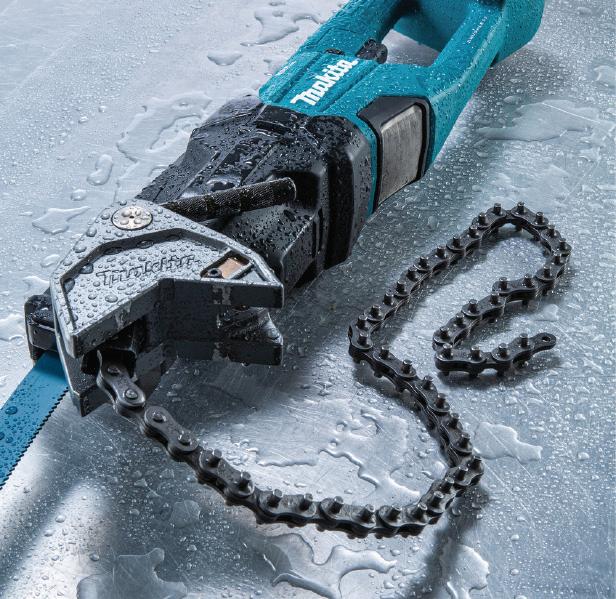
Delivering a high cutting capacity, the durable Reciprocating Saw is an ideal option for heavy duty requirements. With an impressive maximum cutting diameter of 220mm, a handy adjustable stroke rate based on the material as well as constant speed control, the saw can be used for a variety of materials including wood, cast iron, iron and steel pipes.
An expertly engineered tool, the unique pipe clamp style chain vice has a built-in spring that achieves a quick and secure fixing and allows the chain to be temporarily held in place while wrapped around the pipe. This enables operators to achieve a true parallel cut, essential for applications where pipes need to be welded together achieving an accurate join. In another practical design feature, the tool can be used as a standard recipro saw by attaching the front grip accessory supplied. Furthermore, the blade clamp, which requires frequent replacement when used in heavy-duty conditions, can be easily replaced by loosening the hex socket bolts without removing the shoe.
For further information visit: www.makitauk.com
Unicrimp has announced the launch of its new Bullfix Universal Fixing – a high performance, patented plasterboard fixing that forms part of the company’s extensive Q Crimp fixings range. Featuring an innovative wing design, Bullfix is engineered to deliver exceptional strength, reliability and ease of installation.
Designed specifically for securing heavy objects to plaster boards walls in domestic properties, the Bullfix range comprises two robust options: a Heavy Duty fixing capable of supporting loads of up to 116kg, with a 7mm cavity requirement, and a Heavy-Duty Extra version with an impressive load capability of up to 133kg, with a 20mm cavity requirement.
The Bullfix is designed for fast, straightforward installation. The process involves just five simple steps; drill into the wall, insert the collar, push in the fixing, tap until flush, attached the fixing to the wall. This simple method allows installers to achieve a secure fixing quickly and efficiently, reducing installation time without compromising strength.
Primarily developed for domestic environments, Bullfix is suited for securing heavy household items such as radiators, shelving units, cabinets, televisions and other wall-mounted fixtures to plasterboard walls. Its high-load bearing capacity provides confidence and peace of mind where safety and durability are paramount.
With the launch of Bullfix, Unicrimp continues to strengths its portfolio of practical, installer-driven solutions, delivering products that meet the demands of modern construction and renovation projects.
For more information, visit the Unicrimp website or download the Scolmore Group app. www.unicrimp.com
Click Scolmore has announced the launch of its new Flow 6 Pole range, an advanced addition to the company’s established Flow lighting connection and management system. Designed to meet the growing demand for flexible, intelligent, and future proof lighting installations, the new 6 Pole solution brings enhanced capability for modern commercial environments - including full support for DALI, switch-dim, and (0) 1-10V dimming solutions.

The 6 Pole range provides contractors with a simple, plug and play method for creating more complex lighting installations quickly, safely, and with minimal disruption. The system has been engineered to reduce installation time, simplify configuration, and support easy re configuration as building layouts and client requirements evolve. Advanced lighting control made simple
The 6 Pole Flow connectors provide six dedicated terminals, enabling seamless integration with many lighting control systems including both DALI (Digital Addressable Lighting Interface) and (0) 1-10 dimming. This allows luminaires, sensors, and control devices to communicate intelligently, delivering precise lighting management and improved energy efficiency.
With two way communication and built in monitoring capabilities, DALI enabled installations can be easily adapted as spaces change, without the need for rewiring, it also offers emergency lighting and energy monitoring which can be critical for commercial and industrial installations. The system also supports switch-dim and (0) 1-10V dimming, offering smooth, reliable brightness control for everyday use and full dimmable control during emergency operation. This allows the required light levels to be set or adjusted depending on the application of the area.
For more information, visit the Click Scolmore website at https://scolmore.com, where a dedicated brochure covering the full Click Flow 6 Pole range is available, or download the Scolmore Group app www.scolmore.com
TRT Lighting has launched its first dedicated heritage lantern range. Developed in response to growing customer demand, the new range enables TRT to support projects where traditional aesthetics are required alongside modern road lighting, strengthening its ability to compete across a wider range of public realm and conservation-led schemes.
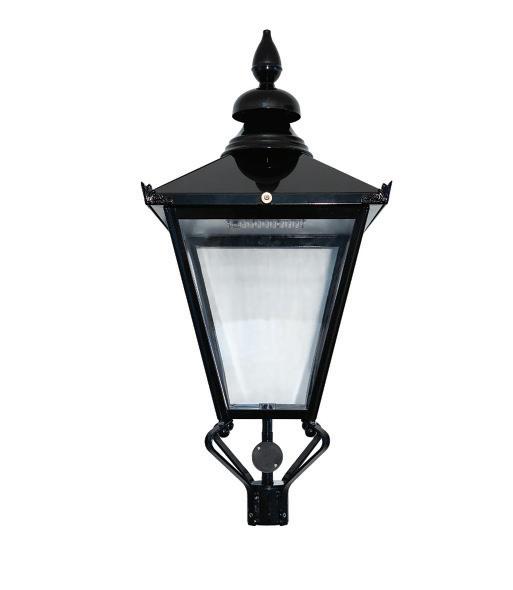
The initial launch includes two of the most widely specified heritage forms: Heming, a traditional top-entry, cradlemounted teardrop lantern, and Merse, a classic four-sided frog-mounted lantern. By focusing on these established styles, TRT Lighting is targeting the most commonly specified lanterns, with the flexibility to support a broad range of applications from day one.
Designed to complement TRT’s existing road lighting ranges, including the market-leading Aspect Gen2, the heritage lanterns combine classic styling with modern LED performance. The range offers a choice of colour temperatures, including and 2200K, 2700K, supporting schemes where ecological sensitivity or reduced blue light content are key considerations. This flexibility allows specifiers to respond to increasingly stringent guidance around obtrusive light and environmental impact, while still achieving required lighting levels and uniformity.
Optical performance has been developed to align with current road lighting requirements, ensuring the luminaires can deliver efficient, controlled light distribution suitable for a range of applications, from residential streets to heritage town centres.
For more information on the new heritage lantern range, visit the website: www.trtlighting.co.uk/products/?_sft_product-category=heritage-lighting
Click Scolmore has announced the launch of the Elucian Type B Heat Pump (HP) BiDirectional RCCB, a high specification protective device designed to protect people and equipment by disconnecting the power supply when excess leakage current to earth is detected.

The new Elucian Type B HP RCCB builds on the capabilities of a standard Type B device by delivering enhanced sensitivity at higher frequencies. While a conventional Type B RCCB detects pure direct current from 0Hz upwards and alternating current leakage up to 1kHz, the Type B HP extends detection capability to 20kHz. This significantly broader detection range provides reliable protection in installations where high frequency leakage currents are present.
Enhancing Elucian’s growing circuit protection portfolio offerings, this advanced RCCB helps prevent electric shock and potential fire hazards, making it suitable for advanced residual current protection for modern high-performance electrical installations. Designed to detect high-frequency and DC leakage currents that standard RCCBs might miss, the new Type B HP provides reliable protection for these increasingly complex circuits.
Key features of the Type B HP Bi-Directional RCCB include:
• Detects leakage up to 20kHz
• True DC detection from 0Hz
• Designed for inverter-driven loads
• Minimum tripping threshold of 150mA for frequencies above 1kHz For more information, visit the Elucian website - https://elucianuk.com/ - or download the Scolmore Group app. www.elucianuk.com
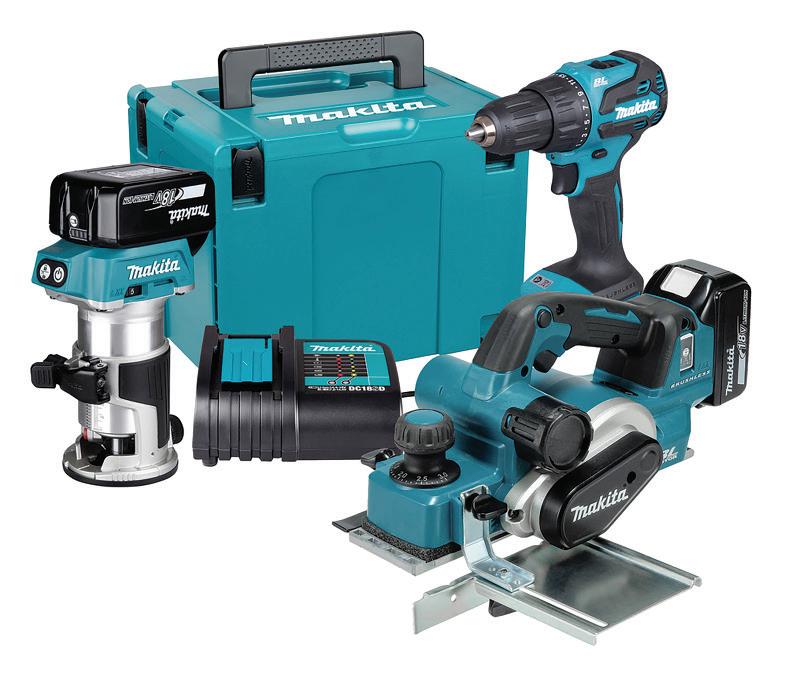
Makita has expanded its advanced cordless range with the introduction of two new high performance combo kits, the DLX3193TJ and the DLX4195JX1. Designed to give trade professionals greater productivity and value, the two sets combine Makita’s industry leading LXT 18V technology with a selection of powerful tools, supplied in convenient carry cases. Offering versatility, reliability and long runtimes, both provide an efficient solution for users looking to expand their tools.
The Makita DLX3193TJ 18V 3pc cordless kit is designed for tradespeople who require reliable performance across trimming, planing and drilling applications. Supplied in a Makpac Type 4 carry case, the kit includes two BL1850B 5.0Ah lithium-ion batteries and a DC 18 RC Rapid Charger, along with three efficient power tools, starting with the DHP490 Combi Drill.
Alternatively, the DLX4195JX1 18V LXT 4pc Combo Kit includes three 5.0Ah batteries, a fast charger, two Makpac stacking cases for easy portability, and four high-performance brushless tools.
For more information, please visit: www.makitauk.com
ESP, part of the Scolmore Group, has expanded its Espire fire and CO alarm accessory range with the introduction of the new IP65 mains powered sounder strobe unit, engineered for a range of applications including apartment buildings, residential properties, HMOs and multioccupancy dwellings, assisted living environments and student accommodation.
Building on the success of the previous model, the latest Espire sounder strobe has been designed to deliver enhanced functionality while simplifying installation. The unit operates directly with Espire interconnected alarms and does not require a relay base, helping installers reduce both installation time and overall project costs.
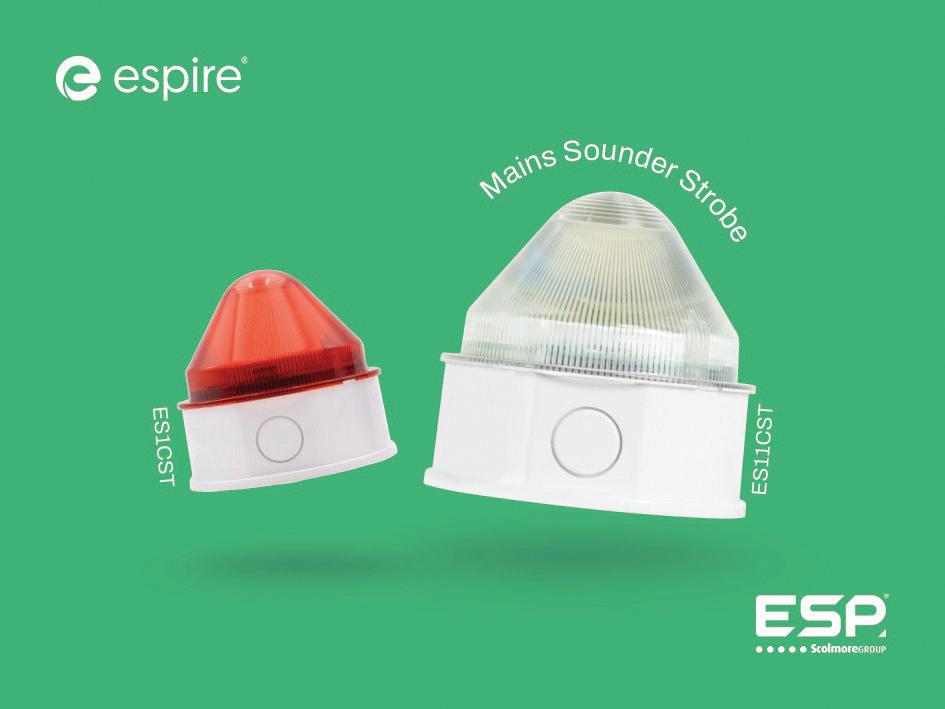
The mains powered sounder strobe activates an audible and visual alert when an Espire alarm signal is activated. This dual notification provides a clear indication of the alarm location, supporting quicker identification by residents and responding personnel.
Apartment developments typically incorporate Part 6 fire detection systems within living areas while communal areas and escape routes are protected by Part 1 systems. The new Espire sounder strobe integrates seamlessly with an Espire Part 6 system, providing a clear visual and audible indicator when an alarm within an apartment is triggered.
The sounder strobe is available with either a red or transparent lens, offering flexibility to suit a variety of design preferences and installation environments.
Offering a five-year warranty, the introduction of the Espire IP65 mains sounder strobe reinforces ESP’s commitment to providing practical, compliant and installer-friendly fire safety solutions for modern residential developments. www.espuk.com
Ovia, part of the Scolmore Group, has expanded its domestic lighting range with the launch of the Infinity COB LED Strip, designed to deliver smooth, dotless illumination for residential and commercial applications. Created to meet growing demand for discreet architectural lighting, the strip provides consistent light output and clean visual lines, making it ideal for kitchens, living areas and refined commercial environments.
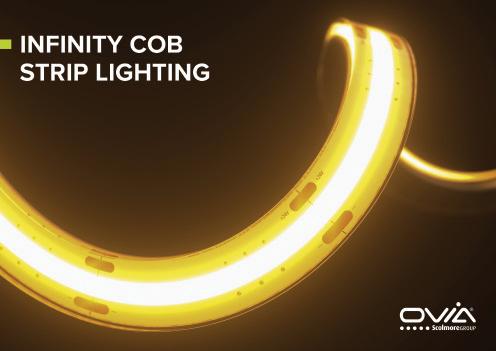
The Infinity range includes Standard and Pro Series options to suit different project requirements. The Standard range delivers an average light output of 100 lumens per watt and is available in 8W and 12W versions, supported by a threeyear warranty.
For projects requiring brighter output and cleaner light, the Pro Series offers an enhanced output of 135 lumens per watt and is available in 6W, 9W and 12W variants. The Pro Series is backed by a six-year warranty, providing additional assurance for installers and end users.
Both versions include 50mm cutting points for precision, and are available in 5M, 30M and 50M reels (product dependent). Two ingress protection ratings are available: IP20 for standard indoor applications, and IP67 for installations where protection from moisture or dust is required.
Each strip is supplied with a 1M starter lead and 3M adhesive backing tape to support straightforward installation.
The Infinity COB range is available in five colour temperature options, providing lighting designers and installers with flexibility across different applications:
• 3000K warm white
• 4000K cool white
• CCT adjustable white (2700K to 6500K)
• RGB3K (RGB plus 3000K white)
• RGB4K (RGB plus 4000K white) www.oviauk.com

WHarsha Raghavan - General Manager, Lawson Fuses. Harsha joined Lawson Fuses in 2022 and is responsible for leading business operations globally, including overseeing factories in the UK and India
alk through any modern facility - a factory floor, a data centre, a transport hub - and you’ll see impressive machinery, control systems and infrastructure humming with activity. What you won’t notice are the small components quietly protecting it all.
Among the most important of these are industrial fuses.
They are simple devices, often inexpensive compared with the equipment they protect, yet they perform one of the most critical roles in electrical safety. When something goes wrong in an electrical system, a fuse is designed to sacrifice itself instantly, disconnecting dangerous currents before they can cause damage.
When a fuse performs correctly, the result is uneventful: the circuit is interrupted, the fault is isolated and operations can resume quickly once the problem is resolved.
When it doesn’t, the consequences can be severe.
A small device with a big responsibility
At its simplest, a fuse is a protective link placed in an electrical circuit. If the current flowing through that circuit exceeds a safe level - whether due to an overload or a short circuit - the fuse element melts and breaks the connection.
That momentary interruption can prevent catastrophic outcomes. The fuse acts as a frontline defence. It isolates faults locally, preventing them from escalating into system-wide failures
Without that protection, excessive current can overheat cables, destroy expensive equipment, ignite insulation and even cause fires or explosions. In this sense, the fuse acts as a deliberate weak point in the system, a component designed to fail safely before anything else does.
Industrial environments rely on this principle every day. Motors starting up, transformers handling large loads, or power distribution systems dealing with sudden faults all depend on reliable protection.
A fuse must therefore perform a delicate balancing act. It must allow normal current, including brief surges such as motor start-ups, to pass unhindered. But when a genuine fault occurs, it must react instantly and decisively, containing and extinguishing the resulting arc to safely break the circuit before damage spreads.
Not all fuses are created equal
That ability is not accidental. It depends on meticulous engineering and strict quality control. Such precision is what separates high-quality
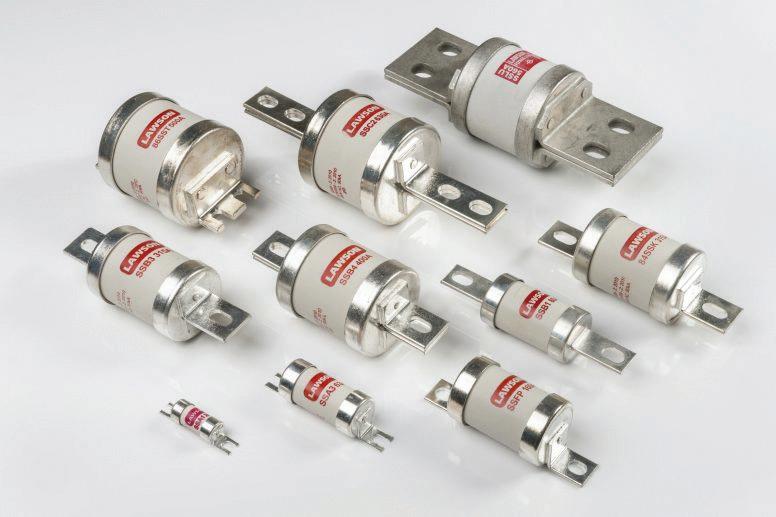
industrial fuses from cheaper alternatives.
From the outside, many industrial fuses appear identical. They may share similar dimensions, markings and ratings. Yet what lies inside the casing determines whether they perform reliably under fault conditions.
Several factors influence fuse performance:
• The precision of the fuse element that melts during an overcurrent event
• The quality of materials used in the fuse body and end connections
• The arc-quenching medium that suppresses electrical arcs when the fuse operates
• The accuracy of the fuse’s time-current characteristics
In high-quality fuses, these components are manufactured with extremely tight tolerances.
For example, when a fuse operates under fault conditions, the fuse element vaporises and an electrical arc forms. High-purity quartz sand or similar materials are used inside the fuse to extinguish this arc quickly and safely. If the filler material is impure or poorly packed, the arc may not be contained effectively.
The result can be catastrophic.
A fuse that cannot control the arc properly may rupture, eject molten material or fail to interrupt the current altogether.
The difference between safe operation and dangerous failure often comes down to details that are invisible to the naked eye.
The importance of certification
Because the stakes are so high, industrial fuses are subject to rigorous international standards.
Certification bodies test fuses under extreme conditions to confirm that they perform exactly as specified. These tests assess key parameters such as:
• Breaking capacity (the maximum fault current the fuse can interrupt)
• Time-current characteristics (how quickly it responds to overloads)
• Temperature tolerance
• Mechanical integrity and safety under fault conditions
When a fuse carries a recognised certification mark, it represents far more than administrative compliance. It signals that the product has been independently verified to operate safely under demanding electrical conditions.
In practical terms, certification is a contract of trust between manufacturer, installer and end user.
Without that assurance, engineers and operators are forced to rely on assumptions, an uncomfortable position when dealing with highenergy electrical systems.
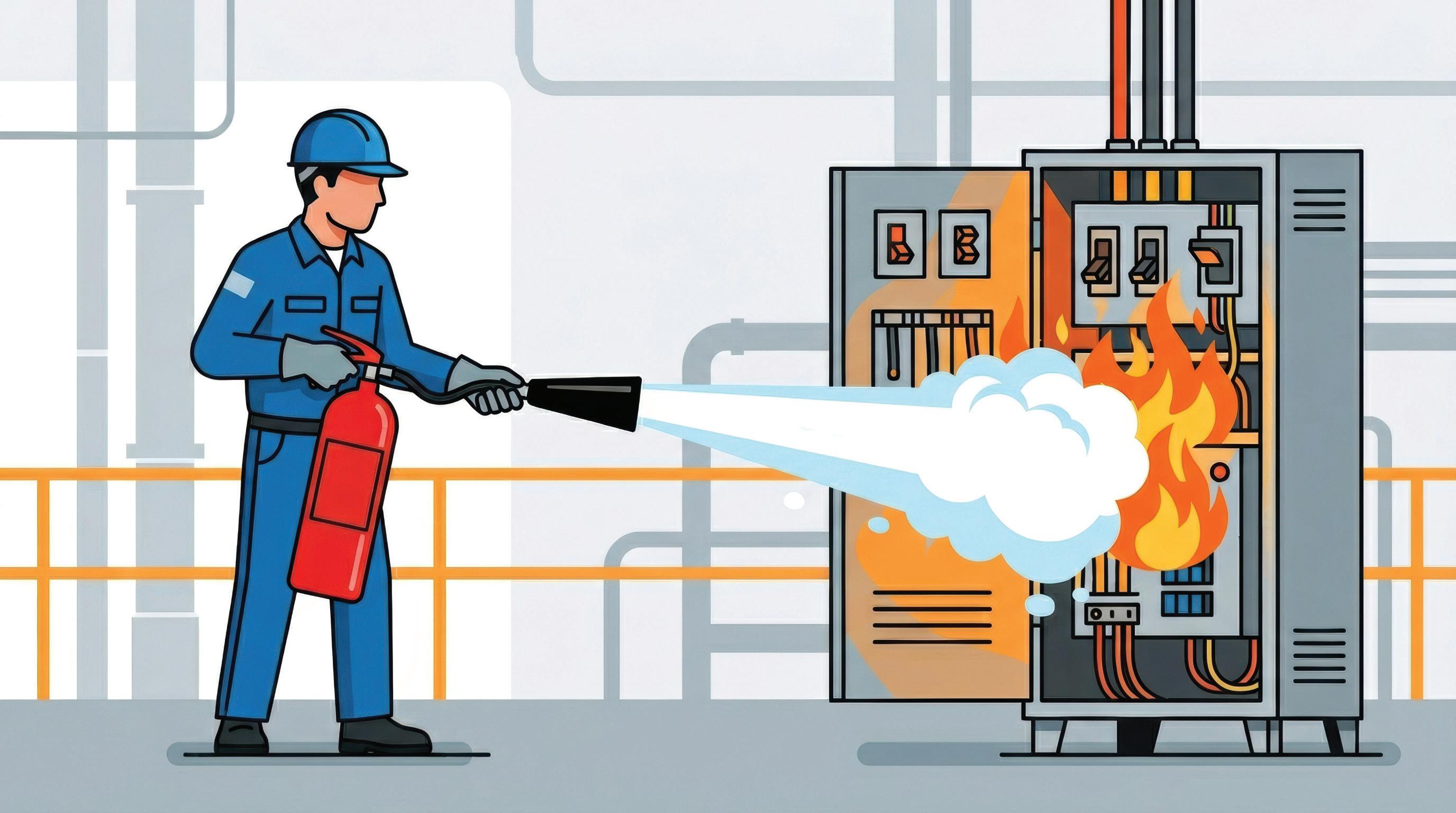
Electrical faults are an inevitable reality in any complex system. What determines the severity of the outcome is how effectively those faults are contained.
If a fuse fails to operate when it should, the results can escalate rapidly.
One of the most serious risks is electrical fire. Excessive current can heat cables and insulation beyond their safe limits, igniting surrounding materials. Electrical fires are particularly dangerous because they often begin inside panels, walls or equipment enclosures where they are difficult to detect early.
Another risk is irreversible equipment damage. Motors, transformers, drives and power electronics represent major capital investments. If fault currents are allowed to pass unchecked, these assets can be destroyed in seconds.
There are also operational consequences. Equipment failures lead to unplanned downtime, lost production and expensive repairs. In sectors where continuity is critical - manufacturing, data processing or energy infrastructure - even a brief outage can carry significant financial implications.
Ironically, these outcomes are sometimes triggered by attempts to save money.
Industrial fuses represent a tiny fraction of the cost of the systems they protect. Yet they are sometimes treated as interchangeable commodities, with purchasing decisions based primarily on price.
That assumption can prove dangerously misleading. Lower-cost products may achieve similar external specifications while compromising on internal materials, manufacturing precision or quality assurance. These compromises can lead to inconsistent performance.
In some cases, the fuse may trip unnecessarily, interrupting normal operations and causing avoidable downtime.
In more serious cases, the fuse may fail to operate during a fault, allowing damaging currents to flow through the system.
Either scenario undermines the entire purpose of the device.
Viewed in this context, the price of a highquality fuse is not an expense but an insurance policy, one that protects equipment worth thousands or even millions.
Understanding the whole system
It is also important to recognise that a blown fuse often tells a story.
A fuse that operates repeatedly may indicate deeper problems in the system: persistent overloads, poor ventilation causing heat build-up, or environmental conditions such as corrosion or vibration affecting connections.
Simply replacing the fuse without investigating the underlying cause risks repeating the same failure.
Effective electrical protection therefore involves more than selecting a component from a catalogue. It requires understanding the application, the operating environment and the characteristics of the equipment being protected.
Choosing the correct fuse type - whether fast-acting, time-delay or specialised for motors, semiconductors or DC systems - is critical to achieving the right balance between protection and operational continuity.
The quiet Importance of getting It right Fuses rarely attract attention. Unlike large electrical equipment or sophisticated control systems they protect, they are designed to remain invisible until the moment they are needed.
Yet when that moment arrives, everything depends on them working exactly as intended.
In that sense, industrial fuses are among the quietest yet most important guardians of electrical safety. They protect equipment, infrastructure and ultimately the people who depend on those systems every day.
Their role is simple: when danger appears, they step in and take the hit.
But that simple act only works if the fuse has been designed, manufactured and certified to the highest standards.
In electrical protection, reliability is not a luxury. It is a necessity.
And when the moment comes for a fuse to do its job, there is no room for pale imitations.
Part of Lucy Group, Lawson Fuses specialises in the design, development and manufacture of low-voltage, high-rupturing capacity (HRC) fuse links, fuse holders and other circuit protection devices.
Sold direct and via distributors, Lawson’s products comply with the highest standards of certification and protect people, assets and reputations in 50 countries across the world. The product are suitable for electric and electronic capital equipment, the utilities sector, renewable energy applications and domestic households.
For more information, please visit: www.lawsonfuses.com
EMAIL james.cooke@purplems.com TO SHARE YOUR HOBBY
Ian Murphy , Technical Solutions Engineer at Ventilux, details his passion for history in the first of a two-part interview – Don’t miss part two next month!
What initially sparked your interest in history and what has maintained your passion for the subject?
I’ve always been drawn to understanding why things are the way they are, and a big part of that early interest in history was shaped by a fantastic teacher, Mr Collins.
He had a way of bringing the subject to life and, more importantly, challenging you to think beyond just facts and dates. He would ask questions like: “What would the world look like today if this hadn’t happened?”
Looking back, that was really an introduction to thinking about cause, effect, and alternative outcomes, and I suppose it aligned with my default thought process. It has probably shaped how I still approach history now.
History naturally felt like the ultimate form of root-cause analysis for me - every system, idea, or conflict we see today has a lineage.
What started as curiosity about big headline historical events gradually evolved into a deeper interest in the decisions behind them - the trade-offs people made, the pressures they were under, and the unintended consequences that followed.
What has maintained my interest is that history never really settles. I’ll revisit the same event years later after reading a book or watching a documentary, and start to notice patterns or connections I hadn’t seen before.
That’s what keeps it engaging. It’s not static or “finished”, it’s something you can keep re-analysing, refining, and understanding at a deeper level over time.
What are your key areas of interest and how do you pursue the subject?
On reflection, I tend to gravitate towards systems under stress, periods in history where something is being pushed to its limits. That could be wars, monarchic collapse, economic crises, major technological shifts, or empires in decline.
I’m not so interested in memorising dates or focusing purely on individuals. I’m more interested in the mechanics behind events - how decisions were made, how systems behaved, and where and why things started to break down.
The real cause-and-effect analysis.
What really draws me in are things like:
• Logistics - how resources, supply chains, and infrastructure enable or constrain outcomes
• Incentives - what was driving decision-makers, and whether those incentives aligned or conflicted
• Communication breakdowns - delays, misinformation, or misunderstandings that lead to poor decisions
• Structural weaknesses - underlying issues that existed long before a crisis was exposed
Often, it’s those less visible system factors that have the biggest impact. The headline event - whether war or collapseis usually just the final outcome of pressure building over time. Small cracks eventually lead to failure.
I also like to move across different periods rather than staying fixed on one. I tend to follow threads of cause and effect across time, and you start to see how one decision or shift in thinking ripples forward across decades or even centuries. It becomes more of a connected system rather than a series of isolated events.
In terms of how I pursue it, I take a mixed approach - reading books, listening to podcasts, watching documentaries, and attending the occasional lecture if something catches my interest.
Each format gives something different. Books tend to go deeper, while podcasts and lectures often introduce alternative perspectives or challenge established views, which I find thought-provoking. Podcasts in particular are useful when authors are interviewed — it gives you insight into how they think.
One thing I find particularly valuable is comparing different historians’ interpretations. I rarely take a single account at face value.
Instead, I look at how different authors approach the same event, what they emphasise, and what they might downplay.
It’s a bit like reviewing a site failure report; you rarely get the full picture from one source. There are always unknowns.
Each perspective highlights different parts of the system, and by layering them together, you build a more complete understanding.
That process - questioning, comparing, and connecting - is what keeps it engaging. It’s not just about what happened, but why it happened and what it led to next.
History is your way of “switching off” from the day job, but does your brain ever actually rest, or are you just debugging a different kind of system?
This is a really thought-provoking question - and honestly, the answer is not entirely, if I’m honest.
I think it’s less “switching off” and more “switching focus”.
I’ve got quite an engineering brain, so I’m naturally wired to analyse things. Even when I’m trying to relax, I end up looking at systems and cause and effect.
The only difference is that instead of analysing schematics or real-time engineering problems, I’m looking at systems that have already played out - some that failed spectacularly, others that evolved or succeeded - just on a much larger and more complex scale.
What changes is the pressure, not the mindset.
In my day-to-day work, there are clear objectives, time constraints, and real-world consequences if something goes wrong. You’re working within defined parameters to reach a solution efficiently.
With history, that pressure disappears. There’s no immediate outcome riding on my analysis other than my own curiosity or expectations, so it becomes a much more open-ended exercise.

That’s where it starts to feel like a genuine break.
I can take my time, follow a line of thought purely out of curiosity, and go down paths that wouldn’t necessarily be “productive” in a work setting. One question leads to another, and before you know it, you’ve moved across centuries just by following cause and effect.
I’m currently reading The Gunpowder Plot: Terror and Faith in 1605 by Michael Carrafiello. I picked it up just thinking: how did the conspirators ever think that would work?
The whole plot was incredibly audacious - the idea of eliminating the King, wiping out Parliament in one strike, creating a power vacuum, and installing a Catholic-friendly monarchy is almost unbelievable in scale.
From an engineering brain point of view, the plan seems riddled with flaws. It relied on perfect timing, absolute secrecy, and a very narrow sequence of events going exactly to plan. Yet despite all those risks, they came remarkably close to pulling it off.
That in itself makes it even more fascinating.
But what I keep coming back to is why they continued. These weren’t irrational individuals - they were, for their time, educated and well-connected men who understood the consequences of failure.
They knew they were risking not just execution for treason, but the destruction of their families and estates.
To understand it, you have to step away from a modern rational framework and look at the mindset of the time. They were operating in a world shaped heavily by religion, where faith wasn’t just personal - it defined politics, identity, loyalty, and place in society.
For them, it wasn’t just a political act; it was tied to a belief that they were correcting a deep injustice.
The facts of history are fixed - in this case, we know the plot occurred, and gunpowder was found in the Houses of Parliament, but the meaning we draw from them is not.
We’re working with incomplete and sometimes unreliable data, so interpretation becomes unavoidable. It’s still analytical, but it’s a different kind of analysis. There’s more room for interpretation, more room to challenge assumptions, and less pressure to arrive at a single “correct” answer.
That balance is what works for me - and what enables me to switch off. I’m engaging the same part of my brain, but in a more relaxed, exploratory way.



















No matter how you show 3, The NEW COMBI 310 shows it best!
The new COMBI 310 gives you three M20 side entries on one box — making looping connections and outdoor installs faster, neater, and more reliable. With 10 total M20 threaded membrane entries, IP66/67 protection, and a 10% bigger belly space, it’s built to take on any job.
Quick to fit, built to last, and ready for anything — from outdoor lighting to renewable energy installs.
COMBI 310. Three entries. One smart solution.













®