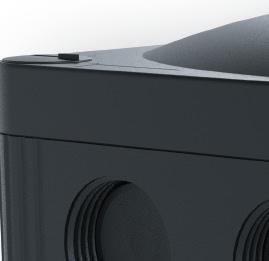
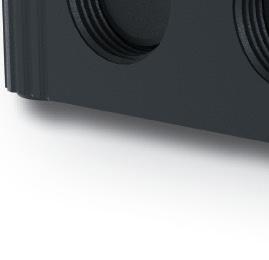
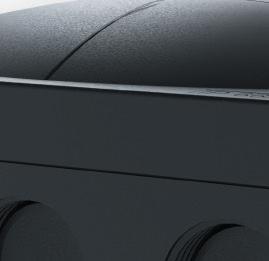
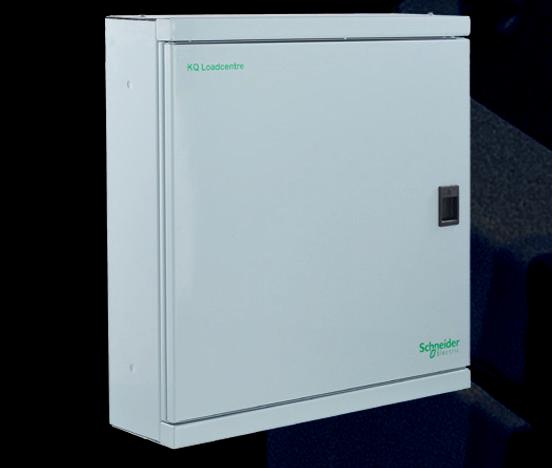
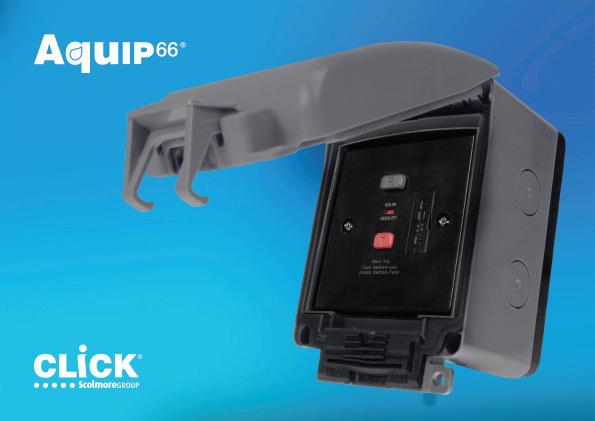
No matter how you show 3, The NEW COMBI 310 shows it best!
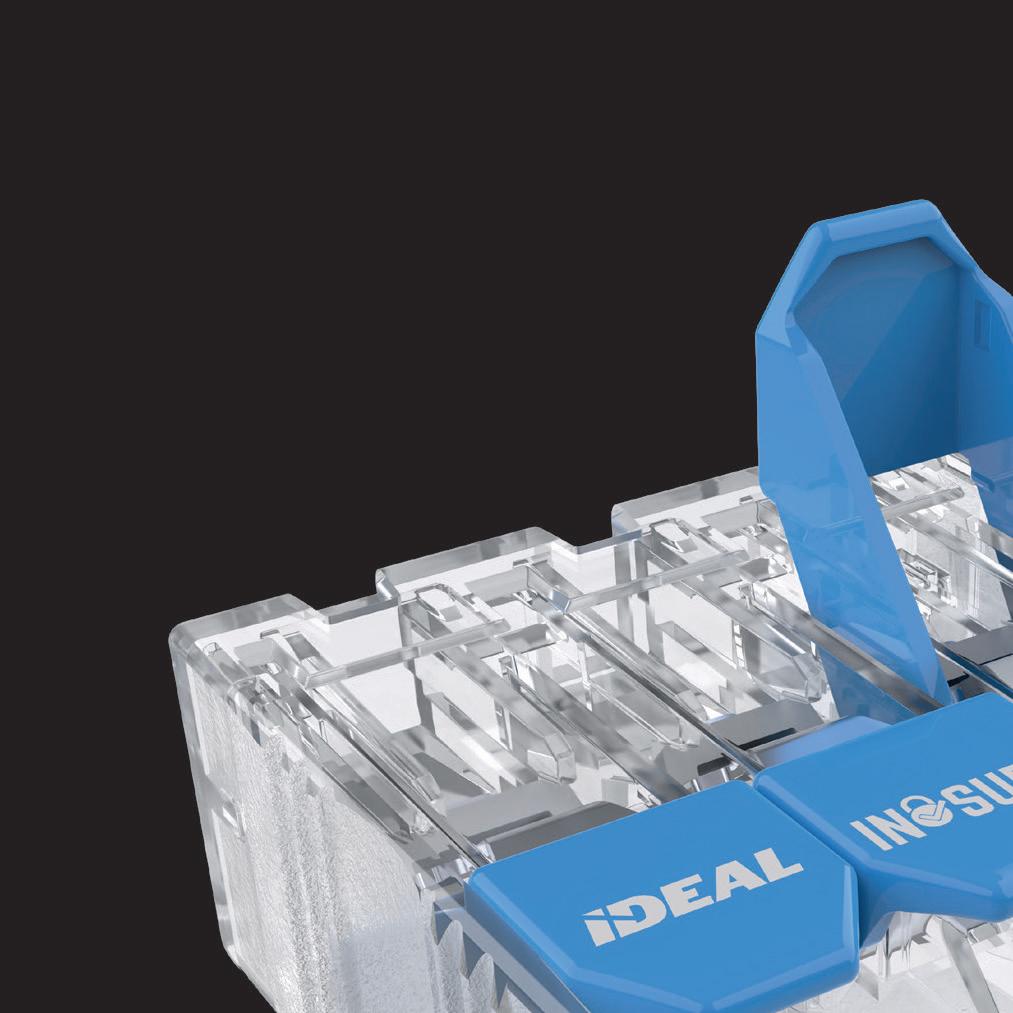
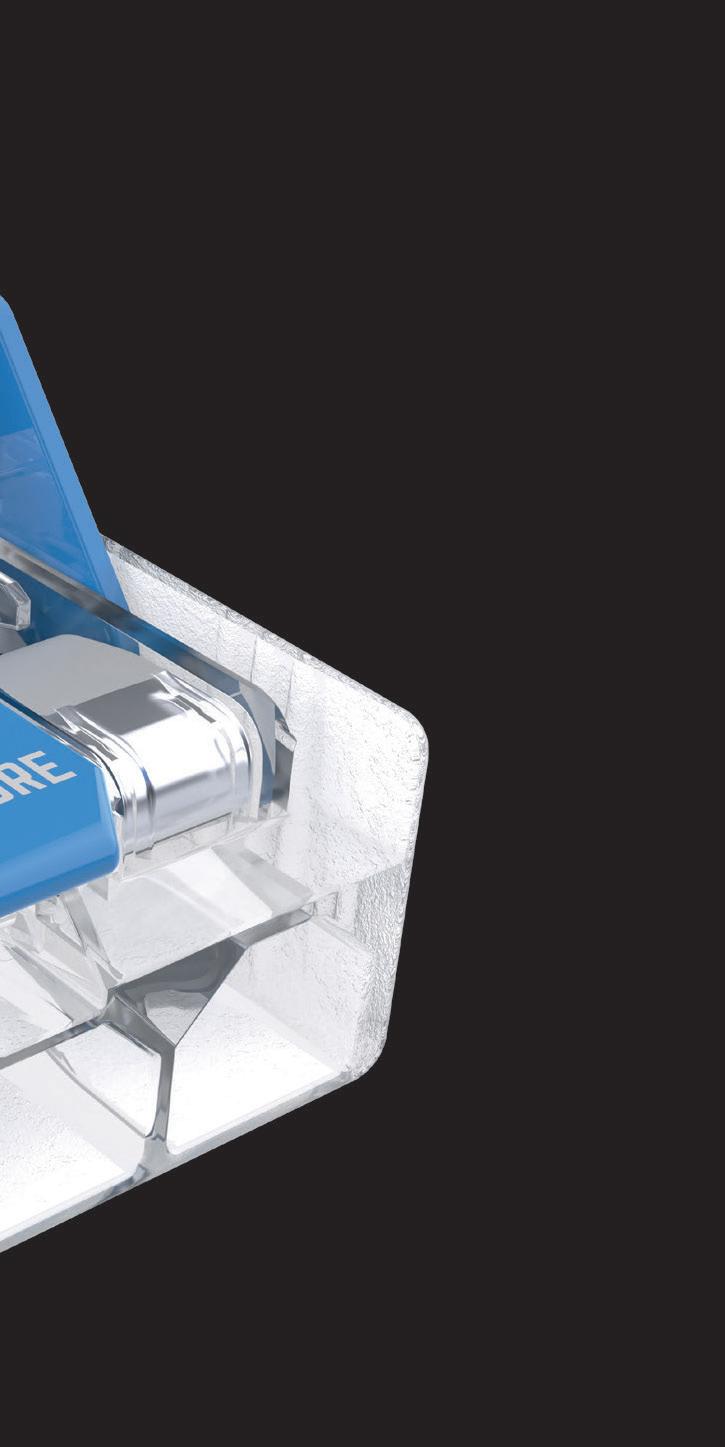
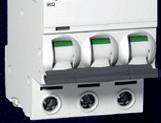
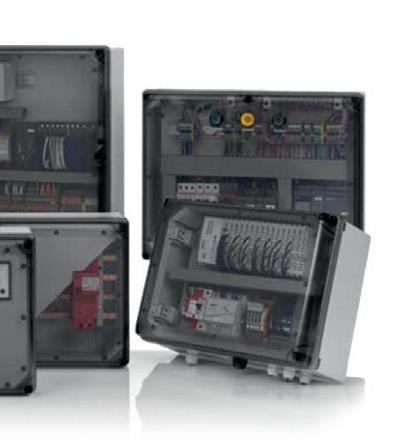
The new COMBI 310 gives you three M20 side entries on one box — making looping connections and outdoor installs faster, neater, and more reliable. With 10 total M20 threaded membrane entries, IP66/67 protection, and a 10% bigger belly space, it’s built to take on any job.
Quick to fit, built to last, and ready for anything — from outdoor lighting to renewable energy installs.
COMBI 310. Three entries. One smart solution.
®
I had the chance to celebrate with the Electrical Contractors’ Association in June, as the organisation also known as the ECA turned 125 years old. Never one to dwell on the past, the theme of the event at London’s Science Museum was ‘Powering a Future of Opportunity’.
It was a fantastic event with many interesting speakers. The ECA states that ‘we stand on the threshold of a new era: the age of electrification. The surge in smart technologies and the growing demand for safer, more sustainable systems are redefining our world.’
Solar was high on the agenda, but the one topic that cropped up time and time again was AI – our good friend artificial intelligence. Love it or hate it, AI appears to be here to stay and, when used as a tool, can help lighten the workload with admin tasks.
AI is also a running theme of this issue. In our Podcast Interview this month, Dan Griffiths of The LIA answers our questions of whether AI can design a compliant lighting layout faster than a human and how traditional “smart lighting” differs from today’s AI-driven systems. You can read that on page 8, or watch the full interview at electricaltimes.co.uk/podcast
Oh! And don’t forget to enter the Electrical Industry Awards at https://www.electricaltimes.co.uk/electricalindustry-awards/ - the clock is ticking to celebrate your achievements in 2026!
Plug-in solar panels safe for UK Homes, government study finds — but safety charity urges caution
A major government-commissioned study has concluded that plug-in photovoltaic systems can operate safely in UK homes without modification to existing wiring or consumer units — though the research has drawn measured criticism from Electrical Safety First, which warns that important gaps remain
THE DEPARTMENT FOR Energy Security and Net Zero (DESNZ) has published the results of a wide-ranging technical study into plug-in solar PV systems, providing the most comprehensive UK-specific evidence base to date on whether so-called ‘balcony solar’ products can be safely deployed by consumers without the need for professional electrical installation work.
The study, carried out by engineering consultancy Arceio Limited with laboratory support from Eurofins E&E UK, tested six commercially available plug-in PV devices — typically in the 400 W to 800 W AC export range — across a battery of scenarios designed to replicate the realistic and sometimes degraded conditions found in UK homes. These included aged socket outlets, coiled extension leads, mixed domestic loading, high ambient temperatures, and a range of modern and legacy protective device configurations.
What the Testing Found
Across the core safety tests, the results were broadly reassuring. Devices maintained stable thermal behaviour during sustained maximum-output operation, with no evidence of overheating at plugs, sockets, or wiring under representative conditions. Critically, existing circuit protection — including RCBOs and RCDs — continued to operate correctly when faults were introduced during plug-in PV operation, and no instance of sustained unintended energisation was observed after a protective device had tripped.
Anti-islanding performance — the ability of an inverter to detect the loss of mains supply and cease exporting power — was found to be particularly strong. All successfully tested devices disconnected well within the 500 ms limit specified by Engineering Recommendation G98, with many achieving disconnection times of just 16 to 19 milliseconds under synchronous disconnection conditions. The study describes this as confirming that the core inverter control logic of the tested devices is compatible with the fundamental safety expectation for smallscale grid-connected generation.
Reverse power flow — the export of electricity back along a domestic circuit in the opposite direction to normal — did not produce localised thermal hotspots or disproportionate conductor loading
at the tested export levels, a finding that will be significant given that UK ring-final circuits were not originally designed with embedded generation in mind.
Where Concerns Remain
The picture was less uniform in other areas. Conducted electromagnetic compatibility (EMC) emissions exceeded the EN 61000-6-3 Class B limits applicable to domestic premises across the tested sample when measured at maximum rated export power — the condition the study’s authors argue should be mandatory for any future product specification. Notably, baseline domestic loads tested without any plug-in PV also exceeded Class B limits, pointing to a wider challenge with power electronics in the home rather than a hazard attributable to plug-in solar alone.
Export limitation accuracy also proved variable: while no device approached the broader G98 single-phase export threshold, two devices with declared 400 W ratings exceeded that figure during portions of the voltage sweep. Voltage and frequency threshold disconnection behaviour likewise varied between devices at the outer limits of the supply range. Taken together, these findings led the authors to conclude that the plug-in PV product category is not yet technically homogeneous enough to be treated as fully standardised, and that a UK qualifying product standard is needed.
One device also exhibited physical shrinkage of its AC cable sheath during prolonged high-temperature exposure — an observation the report flags as a material integrity concern, even though it was not accompanied by broader electrical instability.
A Controlled Pathway Forward
The study stops well short of recommending unrestricted ‘plug and play’ deployment. Instead, it proposes a framework built around six key elements: a defined qualifying product category; verified export and disconnection requirements; mandatory EMC assessment at full rated output; operationally specific consumer guidance; a simplified consumer registration system to give distribution network operators visibility of cumulative uptake; and product identification mechanisms to enable market surveillance by OPSS.
The report also notes that the appropriate UK export limit for plug-in PV has not been independently established by this study — the 800 W ceiling used during testing reflects European market convention rather than a hard safety threshold — and calls for the G98 amendment process currently under way to determine the correct figure for UK conditions.
“Whilst
we welcome the progress made on researching potential safety issues by the Government, we remain concerned the research published is limited in its scope.”
—
Electrical Safety First
The study is also frank about what it does not cover. It does not assess the impact of large-scale deployment on distribution networks, the long-term ageing of sockets and inverter components under real-world conditions, or the fire safety implications of systems mounted on balconies and external walls — an area it identifies as a priority for follow-on work, particularly in multi-occupancy buildings.
Electrical Safety First Calls for Further Assessment
The publication of the study has prompted a measured but pointed response from Electrical Safety First, which broadly welcomed the government’s research effort while urging that unresolved safety questions not be overlooked in any rush to bring the technology to market.
A spokesperson for the charity said: “Whilst we welcome the progress made on researching potential safety issues by the Government, we remain concerned the research published is limited in its scope. We believe work is needed to understand the impact of reverse energy flow on older type RCDs, which may be more common in homes across the country. Other areas of concern previously highlighted by the charity have yet to be assessed, such as the potential for DC leakage deriving from plug-in solar panels and the potential impact this may also have on certain RCDs.
“Any negative impact on an RCD could mean people are more exposed to a
serious electric shock in the home. It is vital that any timetable for the roll out of these devices allows for a thorough assessment of remaining safety considerations and that any necessary safeguards are put in place before widespread deployment. We look forward to working with the Government on its new consultation into plug-in solar to help identify a safe and practical route forward.”
The charity’s concern about older RCD types is notable given that the study’s own test programme used modern Type A and Type AC RCBO-protected circuits. The study itself acknowledges that mixed legacy protective device configurations are a distinguishing feature of UK domestic installations and lists interaction with residual current protection as a key area where the UK cannot simply adopt international deployment experience without domestic qualification.
What Happens Next
The Government has already indicated that plug-in PV will be made available to UK consumers in the near term, and DESNZ has confirmed a new consultation into plug-in solar is under way. The study recommends that initial deployment be confined to products meeting clearly defined qualifying technical criteria, accompanied by a real-world monitoring programme to capture consumer behaviour and any cumulative effects not observable in a laboratory setting.
For the electrical industry, the implications are significant. The study concludes that plug-in PV occupies a genuinely novel regulatory space — sitting between consumer product regulation, electrical installation standards, and network-connected generation rules — and that none of the existing frameworks individually provides a complete fit. Coordination across product safety authorities, standards bodies such as BSI and the IET, distribution network operators, and DESNZ will be required to deliver a coherent implementation pathway.
For installers and electrical contractors, the study’s insistence that consumer guidance, socket condition, and installation quality all form part of the safety case — even in a plug-in model — suggests that professional advice will retain a role, even if full MCSstyle commissioning is not required for qualifying devices.
Amendment 4 has landed.
Are you ready?
Unpack the changes at CEF TechTalks this May - July Talk tech. Earn CPD credits.
Grab a bacon butty. AND it’s all free.
Register for free now cef.co.uk/TechTalks
Surge Protection Devices to surge up Mount Snowden
Body Surge Protection Devices Ltd is preparing to swap office desks and electrical systems for hiking boots and mountain trails as a team of eight employees takes on the challenge of climbing Mount Snowdon on 11th July 2026, in aid of ANDYSMANCLUB, which facilitates groups where men aged 18 and above can speak openly about their issues in a non judgmental environment through shared experiences. Groups run nationwide every Monday 7pm except bank holidays and are completely volunteer-led with no charge to any man.
The challenge will see the group attempt the ascent of Wales’ highest mountain, standing at 1,085 metres above sea level, in a fundraising effort that reflects both the team spirit and determination that defines the company. While Surge Protection Devices Ltd is best known for delivering specialist surge and lightning protection solutions across the UK, this summer the focus turns from protecting infrastructure to supporting a worthwhile cause through endurance, teamwork, and community fundraising.
The eight-person team is made up of colleagues from different areas of the business, all united by the shared ambition of completing one of the UK’s most iconic climbs while raising as much money as possible along the way. For several participants, the Snowdon challenge will be their first experience tackling a mountain of this scale, making the event as much a personal achievement as a collective one.
Training has already begun, with team members balancing preparation around busy work schedules. Weekend hikes, fitness sessions, and endurance walks have become part of the build-up as the group prepares for the physical demands of the climb. Although Snowdon attracts thousands of walkers every year, the mountain is still regarded as a demanding challenge, with steep paths, unpredictable weather conditions, and long ascents testing even experienced hikers.
With the date fast approaching, excitement is continuing to build around the company.
Support has already started coming in from friends, family members, customers, and industry partners, all eager to encourage the team as they prepare for the climb. Every donation received will help motivate the group as they take on the demanding route to the summit.
For the team at Surge Protection Devices Ltd, however, the challenge is about far more than simply reaching the summit. It represents an opportunity to come together outside the workplace, strengthen team bonds, and support a cause that is close to their hearts. The company has long valued collaboration and reliability within its day-to-day operations, and those same values are now driving the group forward as they prepare for July’s challenge.
Events such as this also highlight the growing importance businesses place on community involvement and charitable initiatives. Across many industries, companies are increasingly recognising the positive impact that fundraising events can have — not only for the charities involved but also for employee wellbeing, morale, and teamwork. The Snowdon challenge is a perfect example of colleagues stepping outside their comfort zones to achieve something meaningful together.
Although the challenge will undoubtedly test the team both physically and mentally, the participants are embracing the opportunity with enthusiasm and determination. Reaching the top of Snowdon will mark the culmination of months of preparation, commitment, and fundraising efforts — as well as a memorable achievement for everyone involved.
Most importantly, the challenge serves as a reminder of what can be accomplished when people work together towards a common goal. Whether in business or fundraising, teamwork remains at the heart of success, and the team from Surge Protection Devices Ltd hopes their efforts will inspire others to support charitable causes and take on challenges of their own.
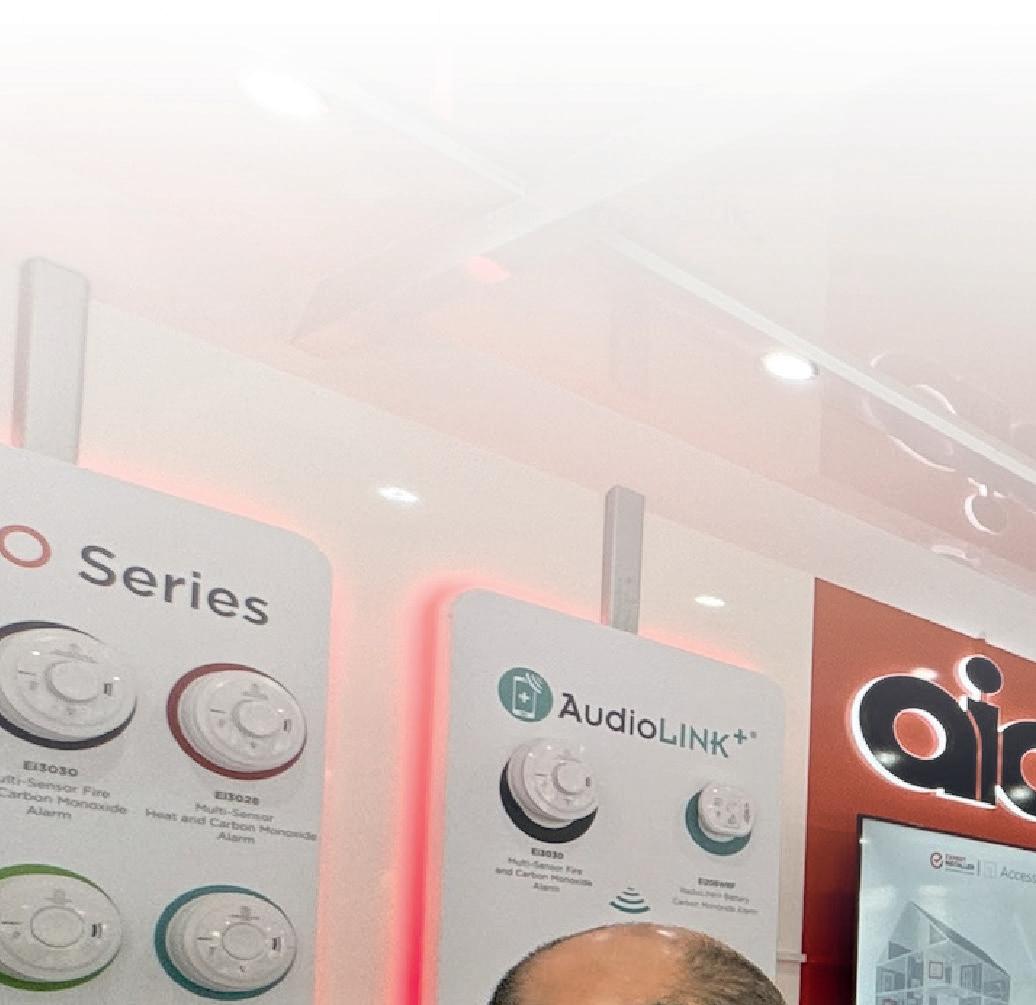
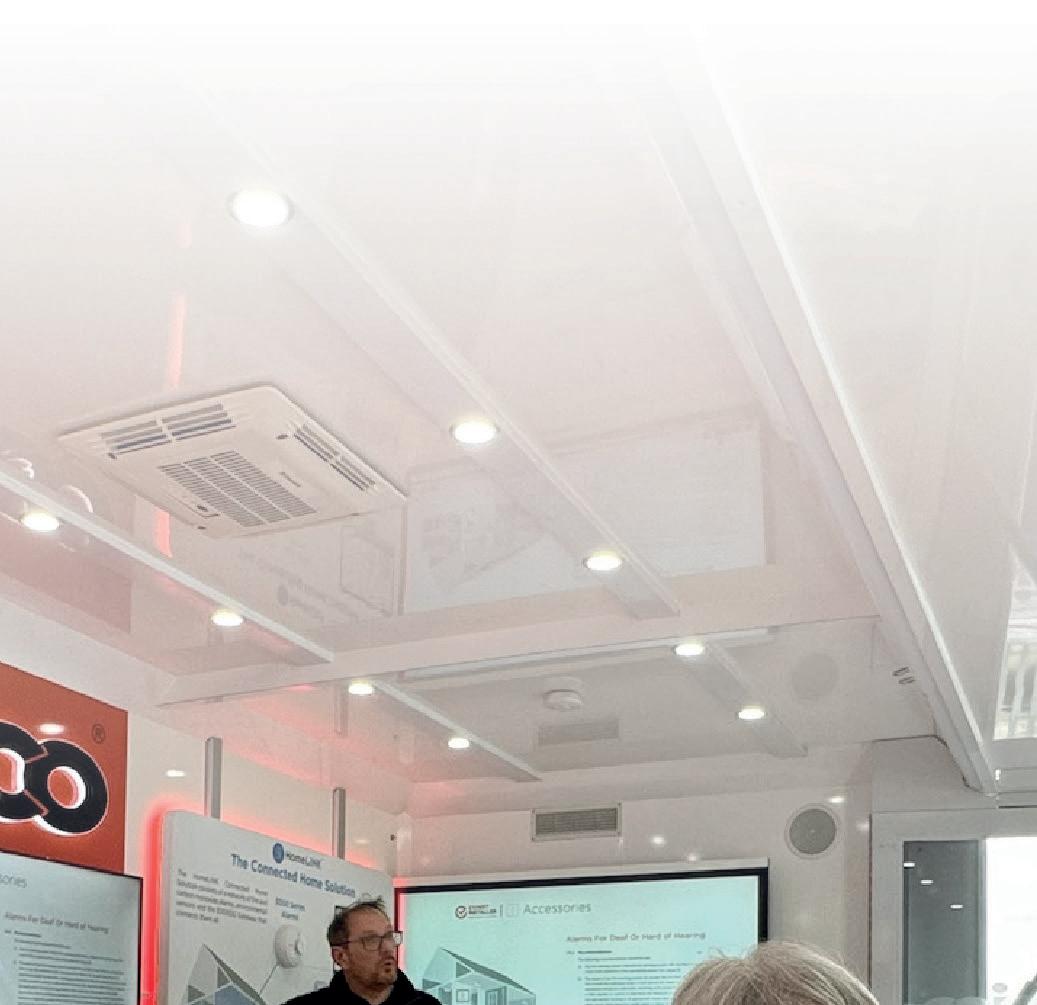
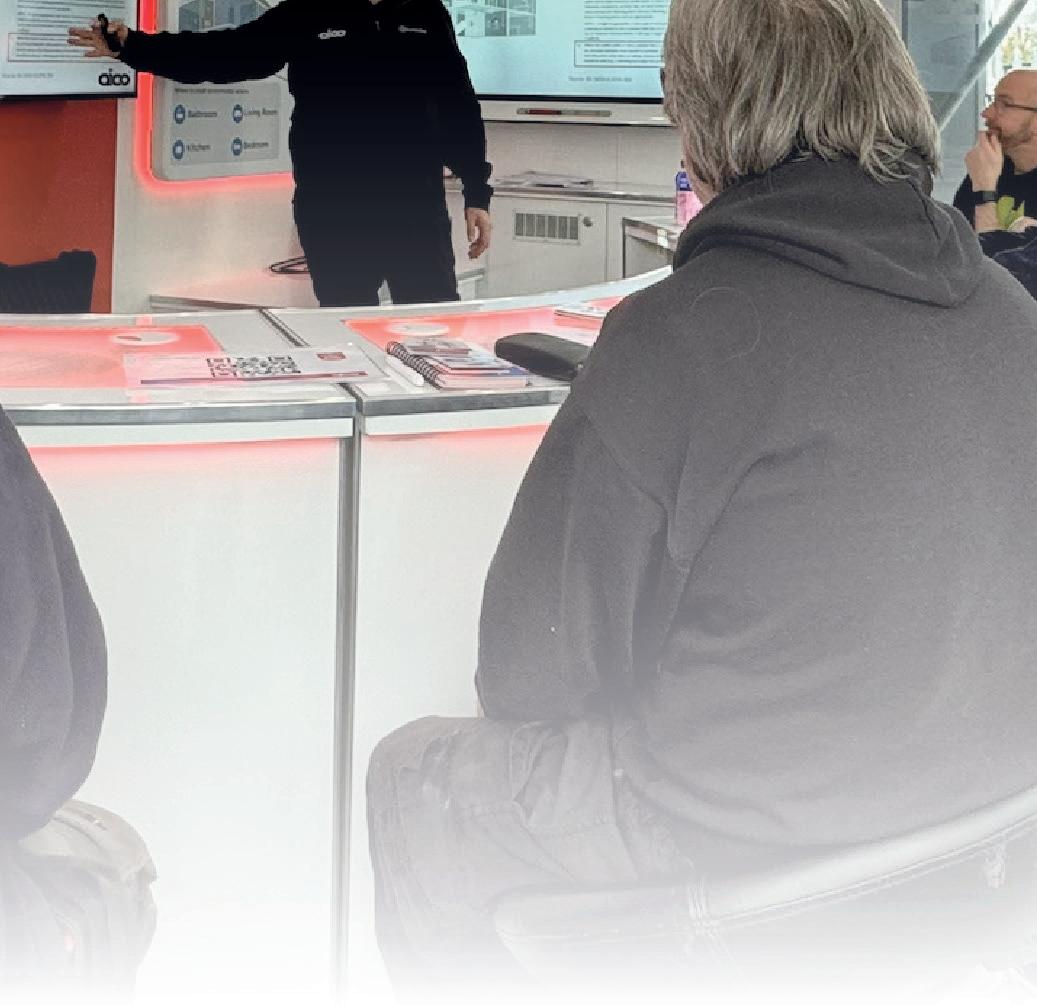
BECOME AN AICO EXPERT INSTALLER
Aico’s free, award-winning Expert Installer training scheme is FIA CPD accredited and is designed to make sure installers have all the information they need to correctly install domestic home life safety systems, including Fire and Carbon Monoxide alarms and Environmental Sensors.
Join our connected community built to support Expert Installers
Connect with fellow professionals Learn new skills to earn points and receive prizes Rewards for members every month
Members of the community are eligible to participate in Aico’s free-of-charge City & Guilds Assured TrainingDomestic Fire & CO Alarm Systems.
Lighting under the spotlight
TThe LIA’s Dan Griffiths on standards, control, and the rise of AI
he Electrical Times Podcast recently sat down with Dan Griffiths, Technical Operations Manager at the Lighting Industry Association (LIA), to unpack the massive shifts hitting the lighting sector. From navigating complex regulatory updates to understanding the true impact of AI on design, Griffiths shares vital insights for the modern electrical contractor
Electrical Times (ET): To start, could you introduce yourself and tell us how you came to your role at the LIA?
Dan Griffiths (DG): I’ve been in the lighting industry for 16 years, initially driven by a creative background in screenwriting and playwriting. I became fascinated by light, starting in lighting design before moving into product and optical design.
I’ve been with the LIA for two years now, sitting on British and European application standards committees. I look after how we can make lighting better and lead our lighting design courses, which beautifully marries my creative side with my technical interest in how things work.
ET: For those who might not know, what exactly is the LIA?
DG: We are a not-for-profit trade and membership association representing lighting manufacturers, importers, and distributors. We have around 185 members, representing roughly £1.6 billion of the UK’s estimated £2.4 billion industry turnover. Our team assists with compliance, safety, and standards, but a massive part of our role is advocacy—working directly with government bodies to ensure upcoming regulations are feasible and won’t damage the industry.
ET: With the recent updates to Building Regulations Part L (energy efficiency) and Part B (fire safety), what is the single biggest change for contractors on the ground?
DG: For Part L, the big change is the efficacy increase. The target for a whole building has gone to 105 lumens per watt. At the LIA, we successfully advocated to lower this slightly for decorative lighting and high-CRI, tuned-white options. Contractors just need to ensure that they can provide solid evidence to the Building Safety Regulator (BSR) if a whole building or serious modification undergoes assessment. Part B is a trickier challenge surrounding TP(a) and TP(b) flammability ratings. The current standard referenced by building regulations dates back to 1977 and was actually withdrawn in 1992 – making it over 30 years out of date! It was designed for thick, single-layer fluorescent diffusers, but modern products use multiple
layers. Our market surveillance showed that nine out of 10 currently rated TP(a) products would fail under potential future multi-layer testing methods. Contractors must ask their suppliers whether their products were tested using single or multi-layer methods.
ET: Regulators are heavily focused on the “performance gap” between building design and reality. How do controls help close this?
DG: Part L mandates controls, but they are rarely enforced or continuously commissioned. LED efficiency gains have plateaued—we used to see 10% year-onyear increases, but now it’s less than 1%. The real energy savings are now in controls. A building’s layout adapts over time as desks and movement patterns change. Continual commissioning ensures lights are dimmed or turned off when not needed, which provides the ultimate saving.
ET: There is a lot of buzz around “healthy lighting.” Beyond color temperature, what key metrics actually define a healthy scheme?
DG: If I exclude intensity, I would point to the spectrum of the light and, crucially, time. It’s about getting the right doses of light at the right time. We need high-dose blue spectrum light in the morning to get us going, but we want to avoid it late at night. There is also massive interest right now in the benefits of deep red wavelengths for cell regeneration and melatonin management. It’s a rapidly evolving field, and a new standard (12464-3) is currently being developed to address the non-visual effects of lighting.
ET: Moving to technology, can AI design a compliant lighting layout faster than a human right now?
DG: AI is incredibly powerful for conceptualization. What used to take a designer hours or days on Photoshop or Blender can now be generated as 10 full concepts in minutes. However, it still struggles with compliant engineering layouts and lacks the human element. The risk over the next five years is competency; people will be able to generate beautiful portfolios using AI to sound like experts, without actually knowing how to physically design or install it in real life.
ET: Finally, how does traditional “smart lighting” differ from today’s AI-driven systems?
DG: Smart lighting has suffered for a decade because systems gathered a mass amount of data that no one had the horsepower or time to analyse. For example, data could show you which warehouse aisles are triggered most often to help optimize logistics, but the data just sat there. AI is changing this by automating the data analysis for you, providing instant answers on where your efficiencies and control systems can be improved.
This interview has been abridged for clarity and length. For the full conversation, visit the Electrical Times YouTube channel or subscribe to the ET Podcast on Spotify. Alternatively, scan the QR code to watch or listen at https://www.electricaltimes.co.uk/ lighting-under-the-spotlight/
The Trade Counter of the Future
David Williams, Schneider Electric’s VP Transactional Business and Major Pursuits UK & Ireland, explores the shift from traditional inperson trade counters to blended, multichannel experiences for the electrical installation industry
Our electrical installation industry continues to navigate changes and new trends.
The digital world has opened many opportunities across our sector, both now and for the future.
Schneider Electric’s research into the Trade Counter of the Future reveals current and future evolutions in our industry.
Distribution is now firmly multichannel
The trade counter remains the vital channelaccounting for 41% of all purchases. At the same time, we’re seeing a purchasing evolution with increases in the use of digital channels. Our research found that 3 in 4 customers are expecting to use online for ordering and quoting more in the next five years. And let’s not forget, websites aren’t the only digital channel. Trade customers are also using email, mobile and even messaging apps such as WhatsApp to place orders these days.
It’s important to recognise that multichannel is here to stay. To succeed in this multichannel world, consistency of service and product availability across all channels are vital to create a seamless experience that suits individual customer needs.
Adapting to generational differences
Despite the move to online, a generational divide is evident. Younger tradespeople (25-34 years) overwhelmingly prefer online and mobile ordering, with 84% expecting to increase their use of digital channels in the next five years. In contrast, 39% of those over 55 don’t think their use of online will change.
This means wholesalers could benefit from segmenting their communications and offerings. Digital-first, mobile-friendly platforms are essential for younger trades, while relationshipdriven, face-to-face service remains crucial for older customers. Channels like WhatsApp, YouTube, TikTok, and email should be tailored to audience age and digital behaviour.
Setting new standards in terms of speed and convenience
Consumerism has raised the bar when it comes to fulfilment and convenience in our everyday lives. This is influencing the business sector where speed, convenience and customer service are key elements in the purchasing journey, it’s no longer just about price. Over half of trade customers now expect the same speed and convenience from their business suppliers as they get in their personal (consumer) lives. More than half say they choose
online ordering because it saves valuable working time (56%), it offers convenient delivery direct to home or job site (54%) and it ensures fast, reliable and on-time deliveries (53%).
To respond to this, it’s worth investing in supply chain transparency, real-time stock visibility, and robust fulfilment infrastructure to meet these expectations with a seamless approach.
Differentiating with knowledge and education
When visiting trade counters, almost three-quarters (71%) of customers rate knowledgeable staff as extremely important, two-thirds (66%) like to browse new products and two in five are attracted by innovation hubs to trial new technology (41%) or attend live demonstrations (43%).
As product research and price comparisons move online, the physical trade counter can differentiate itself with its deep expertise and experience. Innovation hubs, digital POS displays, and QR-linked product information can transform the trade counter into a centre for upskilling and discovery. Training modules, digital brochures, and incentives for attending knowledge sessions can drive footfall and foster loyalty, especially among younger and new-to-industry tradespeople.
Aligning to customer behaviour and preferences
We identified two main customer mindsets that need to be considered. “Quick Collectors,” who value efficiency and speed, and “Browsers”, who seek advice, product discovery, and in-person engagement.
In this increasingly multichannel world, the trade counter can be reimagined as a hybrid service hub. Express lanes and streamlined collection points will cater to the Quick Collectors, while interactive education zones, live demonstrations, and innovation hubs will engage the Browsers.
Getting ready for the trade counter of the future
In our multichannel world, the trade counter is evolving. Channel customers expect a seamless blend of speed, service, and knowledge regardless of the channels they prefer.
Wholesalers are perfectly positioned to deliver consistent experience wherever an order is placed, while using the physical counter to provide what digital alone can’t: trusted expertise, hands-on discovery and human relationships. By embracing these changes, electrical wholesalers can not only keep pace with evolving customer expectations and behaviour but also secure their place at the heart of the industry for years to come.
Tools for today’s electrical jobs
From large-scale cable preparation to solar installations, KNIPEX’s latest additions are designed around the tasks electricians are tackling more frequently on site
Electrical work is becoming increasingly varied. Alongside traditional installation projects, many electricians are spending more time on solar installations, working with larger cable sizes and navigating more complex systems in confined spaces. As job requirements change, the tools used every day need to keep pace.
KNIPEX’s latest additions to its electrical range have been developed with these challenges in mind. Covering cable preparation, PV installation and precision cutting, the new tools focus on reducing fatigue, improving efficiency and helping electricians achieve consistent results on site.
Precision in confined spaces
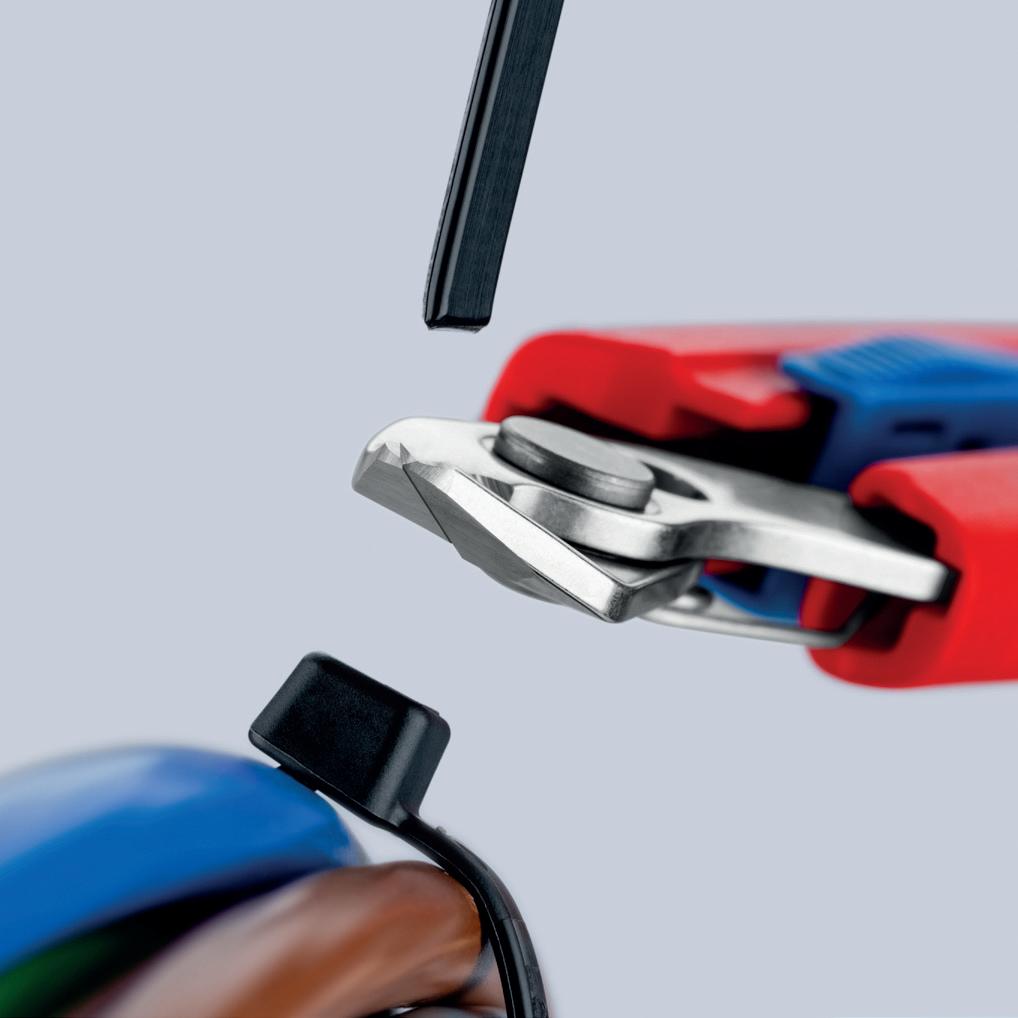
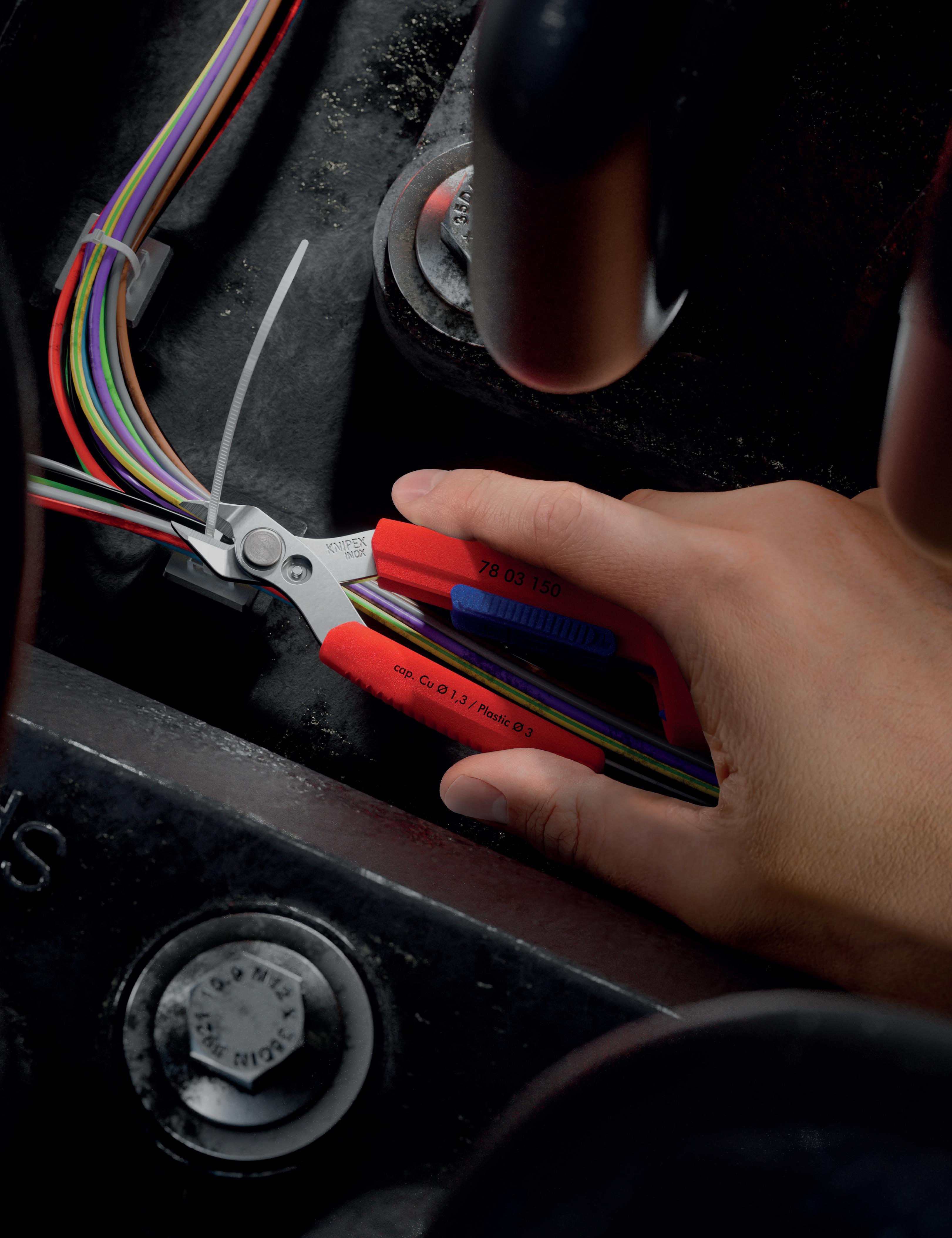
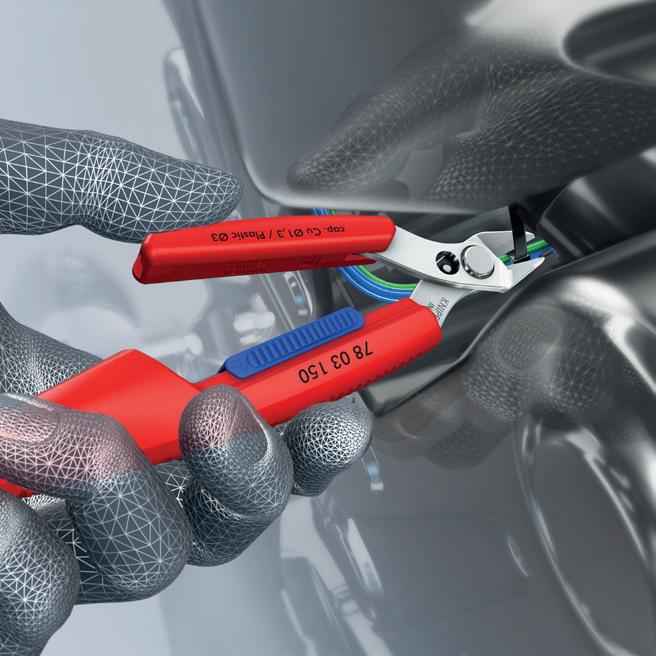
Working inside crowded enclosures, distribution boards and control panels often requires a different approach to cutting. The new Slim Knips (78 03/61 150) have been developed for these situations. They have a slim asymmetrical design that makes it easier to reach into awkward spaces and a micro-offset cutting edge that leaves clean cuts on both solid and fine-stranded copper conductors.
A transport lock keeps the cutting edges safely closed during storage and also acts as a stop when tightening cable ties, helping prevent accidental cutting. Combined with a wide opening range for trimming cable ties flush to surfaces, the Slim Knips are a practical solution for detailed work where access and control are key.
Built for larger cables
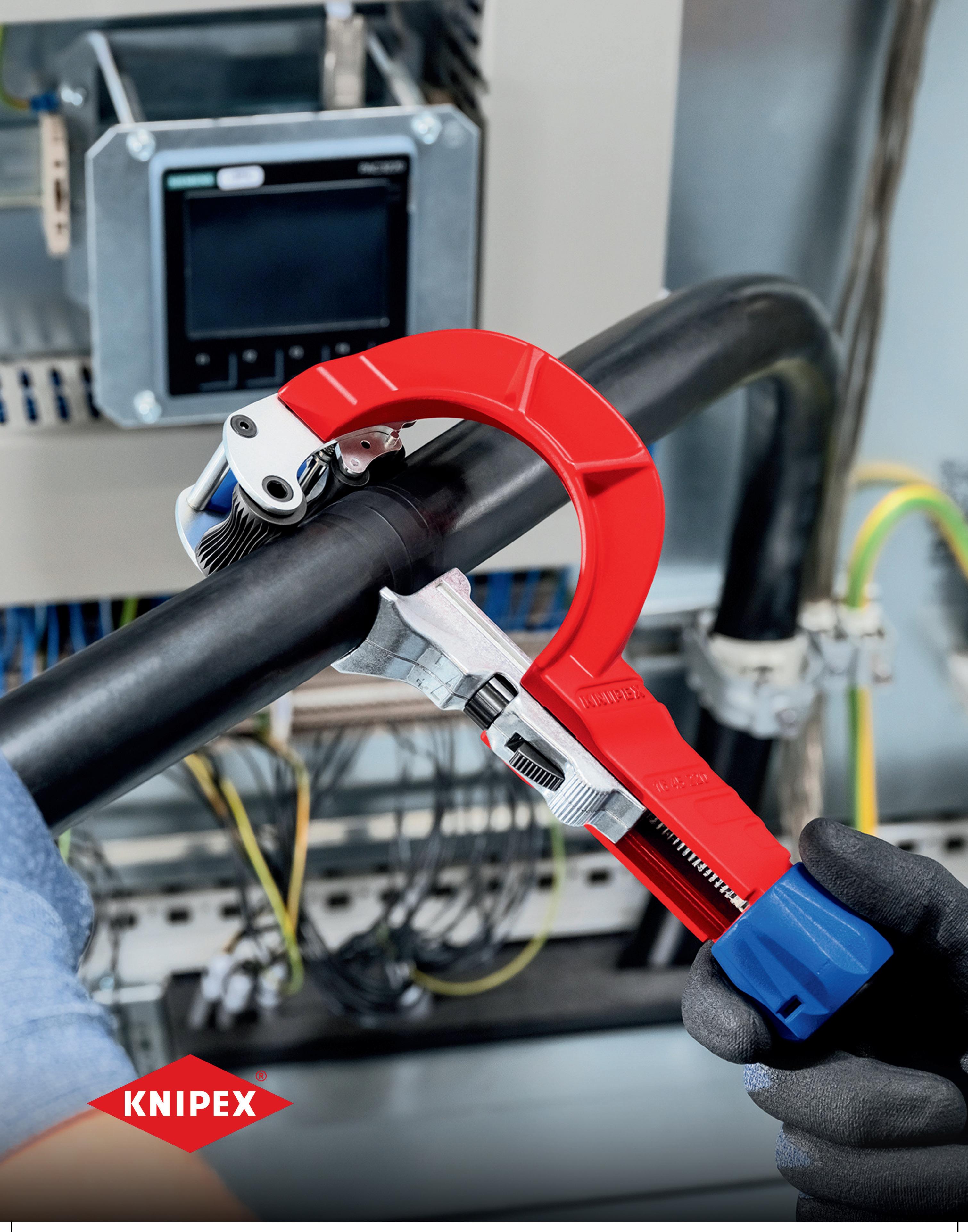
At the other end of the scale is the KNIPEX STX60, designed for preparing larger diameter power cables used in industrial and renewable energy applications. Suitable for cables between 30 mm and 60 mm in diameter, the STX60 works with a variety of insulation materials, including PVC, rubber and PUR. A quickadjust mechanism allows users to set the required cable size quickly while a fine adjustment dial provides additional precision when needed.
Guide rollers support both circumferential and longitudinal cutting, helping maintain control and reduce the risk of damaging internal conductors. When it comes to tougher materials, the integrated ratchet function reduces effort during repeated cuts. The STX60 is housed in die-cast aluminium designed to withstand demanding site conditions.
Solar installation made simple
As solar installations continue to grow, dedicated tools that streamline connector work are becoming increasingly valuable.
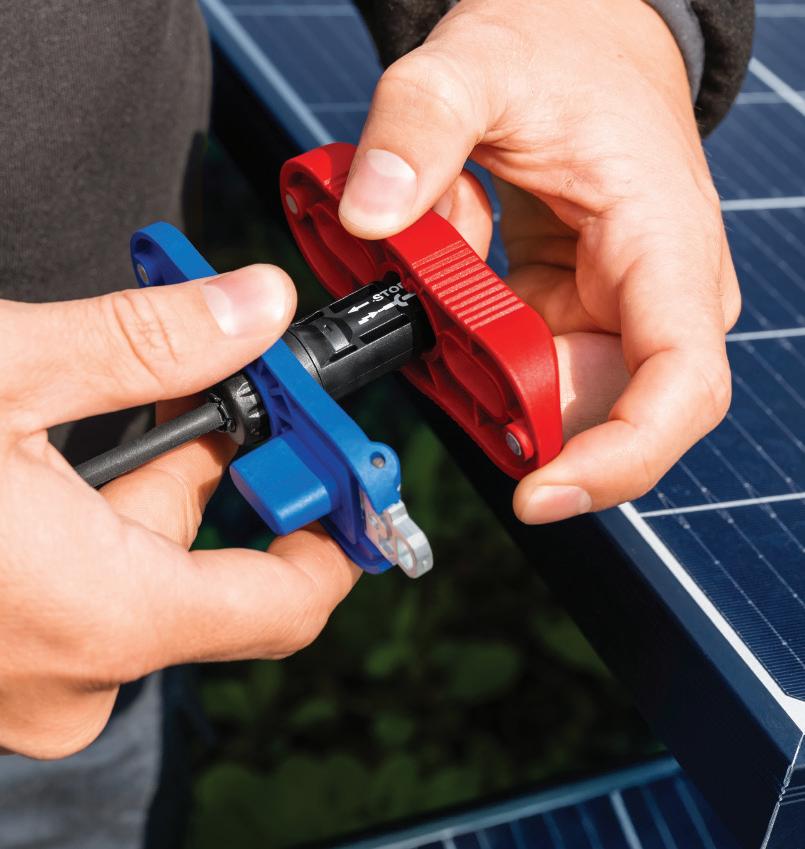
The KNIPEX Set of Mounting Tools (97 49 66 3) has been developed specifically for MC4® and MC4® Evo 2 connectors. The compact kit combines two essential functions so users can tighten housing screw connections and unlock plug-type connectors without carrying multiple separate tools.
The kit includes two compact wrenches made from glass-fibre-reinforced plastic. Integrated magnets hold the tools together during storage and transport, helping keep smaller tools organised but they pull apart easily when needed. This Set of Mounting Tools is lightweight, durable and a simple way to reduce clutter while covering essential PV connection tasks.
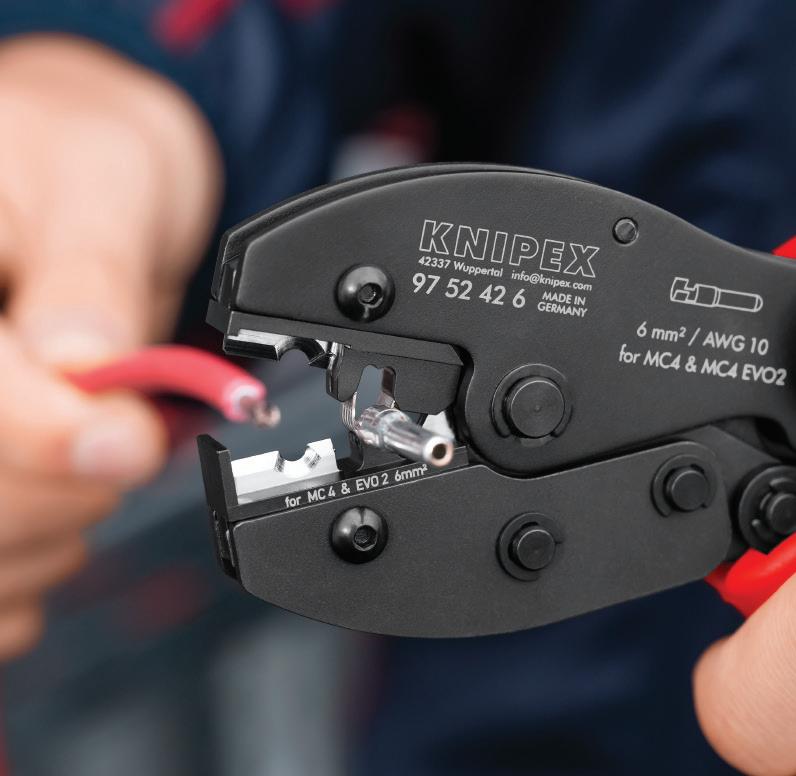
applied and factory-set crimping pressure helps keep consistency across repeated connections.
Less effort, more cutting power Diagonal cutters remain one of the most heavily used tools in an electrician’s kit, so comfort and performance is equally important.
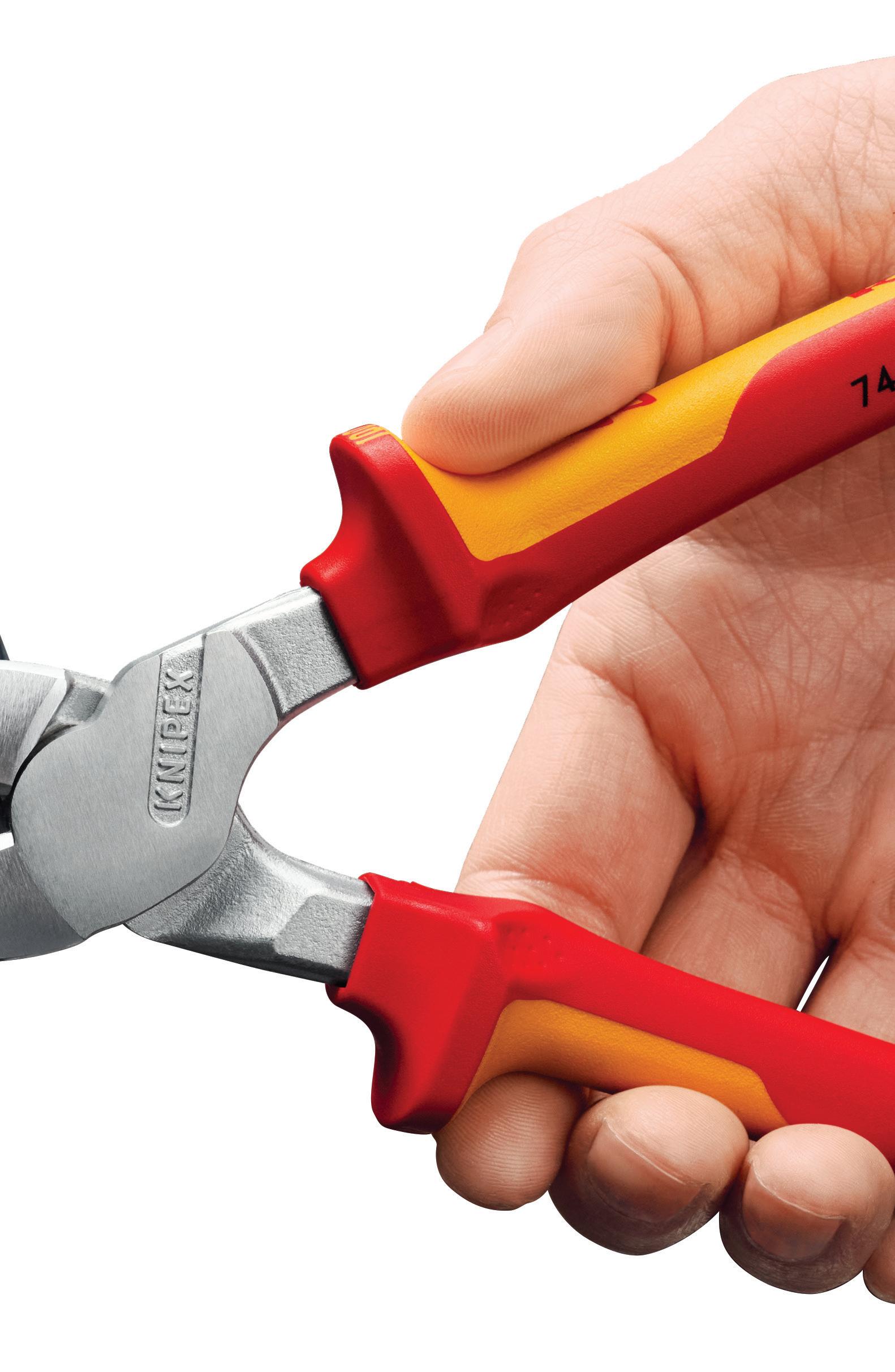
KNIPEX has updated its 200 mm High Leverage Diagonal Cutters (74 xx 200) with a redesigned power joint that improves leverage by positioning the cutting edges closer to the pivot point. The result is around 20% less effort required compared with the previous model, helping reduce fatigue during repetitive cutting tasks.
Available in a range of versions, including VDEinsulated models, the cutters also have new threecomponent comfort handles designed to improve grip and control. The addition of the KNIPEXTEND interface means users can personalise the tool with ColourCode Clips, tether attachments or name labels so it’s easier to identify your tool on busy sites.
Although each of these tools addresses a different application, they share a common goal: helping electricians work more efficiently and comfortably. Whether providing better access in confined spaces, making large cable preparation more manageable, simplifying PV installation or improving cutting performance, the latest additions from KNIPEX reflect the changing demands of electrical work.
To view the full KNIPEX new product range, visit: knipex.com/en-uk/products/new-products
Comfortable to transport and reaches into deep, confined spaces
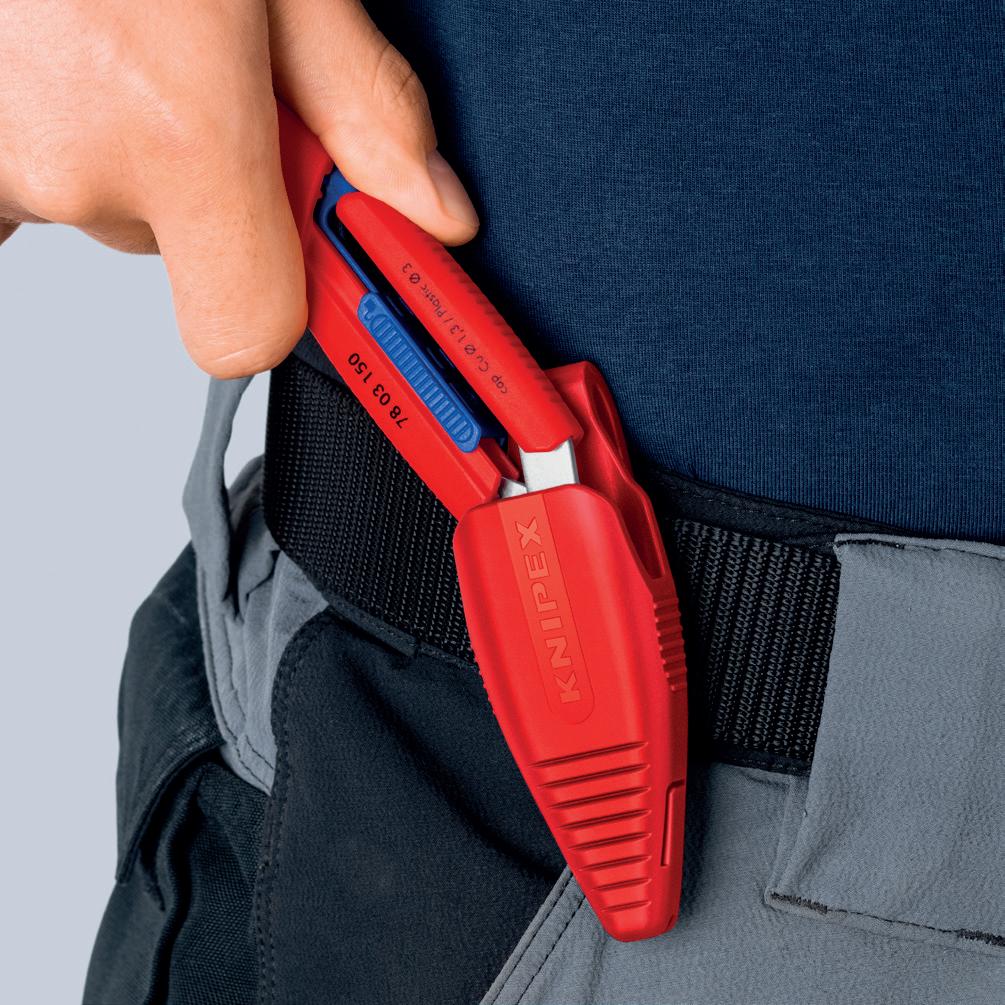
Compact storage, always ready – with excellent accessibility and lockable cutting edges for transport
The space-saving pen-shaped design allows for precise cutting and ensures a clear view of the material at all times
For cutting soft materials
For electrical contractors, AI is ready to be promoted from just a tool to an employee
In the skilled trades, AI adoption is no longer a novelty; it’s an imperative. That shift is especially visible in field-support tasks like phone answering, outbound scheduling and customer support. Electrical contractors are increasingly turning to AI to handle customer communication more efficiently. Just a few years ago, resistance to AI adoption was common. Today, the range of practical applications has made AI adoption close to an industry standard. For early adopters, AI has the potential to create more opportunities than it eliminates. Like any technology, its competitive advantage will eventually level out, but right now, the edge belongs to companies that can answer 50 calls at once or book appointments at 2 a.m. instead of sending customers to voicemail. Contractors using Voice AI and AI-powered support tools will simply be better positioned to capture business and stay responsive.
AI receptionists allow contractors to take more calls without overextending themselves or their office personnel with phone answering during off-hours..
This isn’t about replacing people. It’s about recognizing that AI is finally practical enough to function like an additional team member. Rather than taking jobs away from electricians, AI tools can help generate more bookings and create greater stability for teams. AI receptionists and similar tools free electricians to focus on skilled work, in-person customer relationships and even personal time instead of returning calls after dinner.
Lost calls mean lost revenue
One of the primary advantages to adopting an AI receptionist is that it means there’s always someone on hand to receive calls and to book appointments –no matter the hour, and no matter the call volume. This is good news for any service-based business but it’s especially welcome for home service contractors. That’s because, whether
Jason Luo is the CEO of Newo.ai, the leader in Voice AI and AI Receptionist for the skilled trades and beyond
homeowners are calling an electrician, a plumber or an HVAC service team they inevitably perceive their issue to be an emergency.
For electrical work, it often is; something like faulty wiring could be a legitimate fire threat, while a blown circuit may mean home heating or cooling systems are offline when they’re needed most. In other instances, the issue may be more a matter of comfort and convenience. Regardless, homeowners expect electricians to answer promptly and to schedule service ASAP.
The problem is, not all electrical contractors have the financial resources, let alone the mental bandwidth, to handle calls 24/7. And when homeowners don’t get an immediate response, they’re all too happy to try another electrician in the area. The risk of lost business and diminished market share is real, but having an AI employee who can book calls at any time of day, and even handle a number of different calls at once, can be a significant advantage.
Not for nothing, AI receptionists allow contractors to take more calls without overextending themselves or their office personnel with phone answering during off-hours..
Not all AI is created equal
When deployed strategically, then, AI receptionists don’t merely handle calls; they actually result in more booked work for the contractor. But of course, it’s
important to understand that not all AI tools are equally valuable or effective. For electricians who want their job volume to increase, it’s important to do some due diligence.
For instance, an AI receptionist is only useful inasmuch as it can facilitate meaningful interactions with potential customers, capturing their needs accurately while also supplying credible information about the contractor’s services. There are valid concerns about AI “hallucinations,” which can result in customers receiving information that is false, misleading or even nonsensical. Such interactions are unlikely to result in new bookings, and in fact they may lead to significant reputational damage. It’s essential for contractors to choose AI receptionist tools that put safeguards in place against hallucinations; of course, zero-hallucination models are the gold standard.
It’s also important to acknowledge that, while AI has become a widely used tool in virtually every industry, consumers have differing levels of comfort with it. Contractors can minimize friction by seeking the AI receptionists best-designed to mimic humansounding voices and to replicate the rhythms of real conversation. Even when consumers know they are dealing with an AI receptionist, they may be less guarded when the agent they’re addressing feels friendly and relatable.
While there isn’t necessarily a one-size-fits all AI receptionist option, every electrical contractor should prioritize technology that doesn’t merely receive calls, but extends high standards of customer service. That’s what ultimately leads to more bookings and fewer lost opportunities.
Putting AI to work
One of the most common concerns about AI is that it may wind up taking jobs from people who need them. In the electrical trade, the opposite is true. AI can never do the work of actual, skilled electricians, but it can be an important tool to capture more calls and generate more bookings, ensuring there is more work than ever to go around.
For more information, visit http://newo.ai.
Solar and battery: the perfect pairing
Record numbers
Data from MCS (Microgeneration Certification Scheme), the UK’s quality mark for small-scale renewables like solar panels and battery storage, shows a rising demand for certified low-carbon technologies. Dan White, Market Development Director at MCS, discusses how installers can benefit from the increasing popularity of solar panels and battery storage among UK consumers
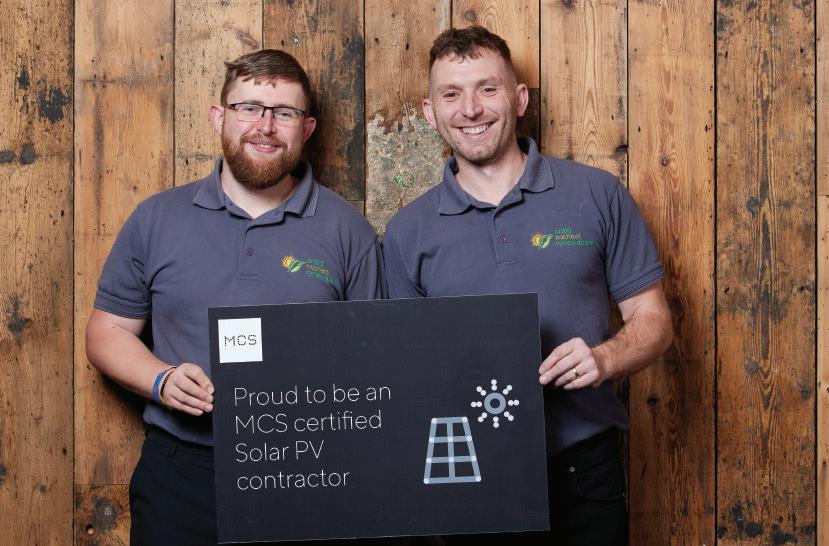
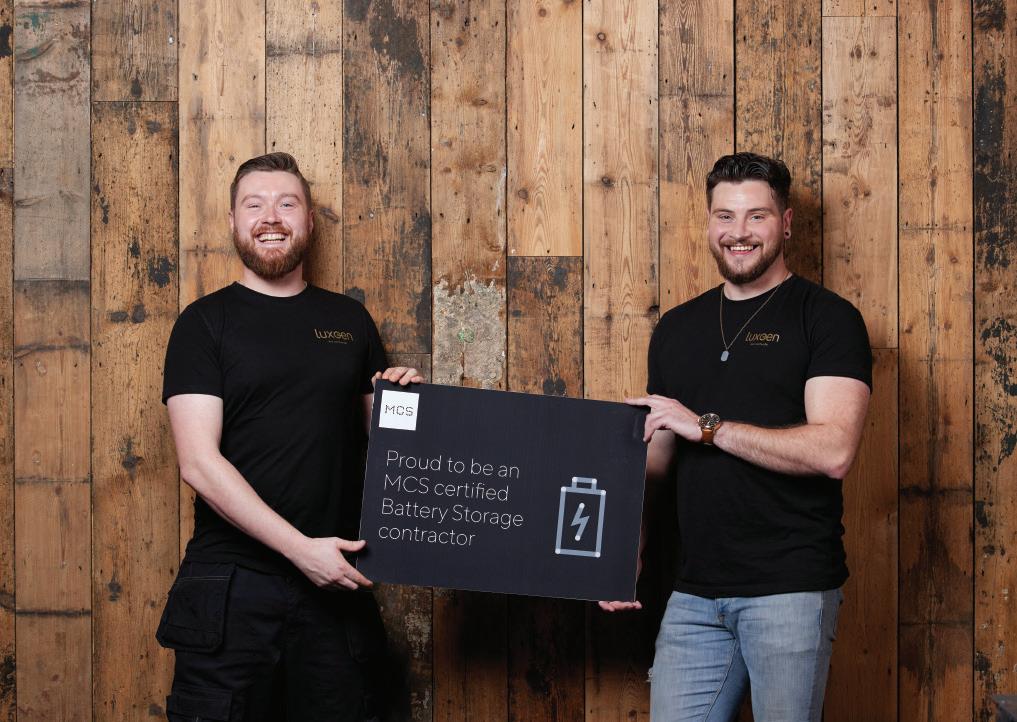
Amidst a record-breaking 2025 for small-scale renewables in the UK, solar and battery storage set new annual records, with 267,000 and 40,000 certified installations respectively. For battery storage, this more than doubled the previous record, as more people invest in the benefits of multi-tech systems. Across both technologies, the fi rst quarter of 2026 has continued this momentum. The number of certifi ed battery installations is 70% higher compared to the same time period last year. Recently, solar has surpassed two million total installations on the Data Dashboard, with this number set to rise even further as the industry prepares to deliver new government initiatives.
Multi-tech homes
While solar has been a popular low-carbon alternative for households since 2011, battery storage has only been within scope of MCS since 2022, and is predominantly installed alongside or in properties that already have solar panels. These households can benefit from storing excess electricity generated by solar panels to use when prices are higher, optimising the energy generated for their homes. With solar and battery so often paired together, there are big opportunities in the sector for installers certified for both technologies. Competency requirements for installation businesses delivering solar and battery can be found on the MCS Find a Training Course tool.
In March, the government announced details of the Future Homes Standard, which will further accelerate the demand for small-scale renewable energy – particularly solar in new build properties. As part of the commitment to make homes more energy efficient, the majority of new homes built from 2028 in England will come with solar panels by default. The new build market has already been steadily growing for renewable installers, with 28% of all MCS certified installations last year on new build properties.
As these initiatives roll out, the need for competent, reputable installers to deliver these installations at scale increases.
Built for the future
As the industry continues to grow and adapt to rising demand, MCS’ redeveloped installer Scheme – rolling out to our installer base across 2026 and 2027 - will play a pivotal role in giving everyone the confidence they need to invest in these technologies, which are likely to be unfamiliar to many households.
The redeveloped MCS goes beyond just technical compliance to put consumer protection at the heart of what we do. It sets new universal requirements for financial protection, giving your potential customers peace of mind and a simple, accessible route to follow if something were to go wrong.
We are committed to working directly with installers to help their certification a success. Every installer on the redeveloped Scheme will have a dedicated Account Manager that is on-hand through every stage of the MCS journey, offering guidance and support towards gaining certification and beyond.
Multiple markets
MCS can give your customers confidence across multiple markets; accepted for Government funding schemes and by all energy retailers for all technologies.
Government funding for renewables is increasing as all parts of the UK try to respond to cost of living challenges. MCS certification is a key requirement of participation in these programmes, such as the Smart Export Guarantee (SEG).
Become MCS certified
Installers looking to become MCS certified for both solar and battery storage will need to achieve certification for each technology separately.
To support installers through the certification process, we have created an interactive e-learning
platform containing everything you need to know about MCS. It is the latest in a series of investments for installers joining the redeveloped installer Scheme. It covers:
• What MCS does and how it works with industry
• How certification can help installations businesses grow
• The practical steps to becoming certified
The platform is split into modules that you can take at your own pace, providing you with everything you need to make the most of your certification and position yourself as a trusted, certified installer – whether you’re just starting out in the industry or an experiences installer looking to make the switch to renewables.
Looking to the future
As the sole certification Scheme for clean heat measures, and with the redeveloped installer Scheme recognised in the upcoming £15 billion Warm Homes Plan as being set to play a pivotal role in consumer confidence, MCS is at the forefront of the net-zero transition.
For your business, MCS is a mark of quality, giving your customers confidence that you are committed to upholding industry standards and quality consumer protection. In an increasingly competitive market, as government schemes speed up demand even further, MCS certification strengthens your credibility and expands your business opportunities.
To find out more about how to get your business MCS certified, you can access MCS’ free interactive guide here: www.mcscertified.com/installers/ view-our-guide-to-certification
Improving matchday atmosphere with dynamic lighting control
At the home ground of Stoke City FC, the bet365 Stadium, a major lighting and controls upgrade has delivered a dramatic enhancement to both matchday presentation and operational efficiency. The project demonstrates how intelligent lighting control can elevate fan engagement while meeting the demanding technical standards of elite football.
Commissioned and installed by Elite Contract Services Ltd (ECS), with lighting design and manufacture by Midstream Lighting, the new solution replaces a previous floodlighting system with a fully integrated LED installation controlled by Pharos Architectural Controls. The brief was clear: achieve Premier League-standard illumination, reduce energy consumption, and introduce flexible RGBW lighting capable of transforming the stadium environment before, during and after matches.
At the heart of the system is a Pharos Designer control solution comprising a two-universe Designer LPC controller, a Designer RIO A remote device, and three BPS keypad wall stations. Together, these provide a powerful yet intuitive platform for managing complex lighting scenes across the stadium, from broadcast-critical pitch lighting to immersive architectural effects.
The LPC delivers the processing power and reliability required for large-scale venues, running multiple
timelines and scenes simultaneously. This allows Stoke City FC to programme dynamic sequences for player walk-ons, pre-match build-up and post-match moments, while maintaining consistent, regulationcompliant lighting levels for live sport.
The BPS keypads have been strategically installed in the Match Control room, Media Suite and Groundsman’s Shed, giving staff simple, tactile access to pre-set scenes and manual overrides when needed. With clear button labelling and LED feedback, the BPS stations ensure confident operation even during high-pressure matchday scenarios.
Beyond performance, sustainability was a key driver for the project. The upgraded system now delivers 1650 lux across the pitch while achieving a reported 51% reduction in energy consumption, supporting the club’s long-term operational and environmental goals. RGBW under-bowl lighting, advertising boards and pitch-side screens further extend the visual impact, creating a cohesive and immersive experience for supporters inside and outside the stadium.
Adam Hardy, Director at Elite Contract Services (ECS), shared: “Working with Pharos was a key factor in the success of this project. Their technology gave us the flexibility and reliability we needed to deliver
a complex stadium-wide lighting control system with confidence. The support from the Pharos team throughout design, commissioning and handover was excellent, making them a longstanding trusted partner at ECS - achieving a solution that truly enhances the matchday experience at the bet365 Stadium.”
From a Pharos perspective, the project highlights the flexibility and robustness of its technology in demanding sporting environments.
Ryan Sainsbury, Regional Sales Manager for the UK, Ireland, N. Europe and Benelux at Pharos Architectural Controls, added: “Stadiums demand absolute reliability alongside creative freedom. At the bet365 Stadium, our Designer products are enabling Stoke City FC to deliver broadcast-ready illumination and memorable fan moments, all from a system that is intuitive to operate and built to run day in, day out for many football seasons to come.”
The result is a future-ready lighting control system that enhances the spectacle of football, improves efficiency behind the scenes, and reinforces the bet365 Stadium as a modern venue capable of delivering unforgettable matchday experiences.
Community-Driven Lighting for Safe, Sustainable Cycling
When Pendle Borough Council set out to replace ageing HID lanterns at the Steven Burke Sports Hub (a free-access, 1.1 km cycling circuit and BMX pump track in Nelson), it became a true community endeavour. Named after hometown hero Sir Steven Burke, a double Olympic gold medallist, the facility now boasts safer, more sustainable illumination thanks to Thorn Lighting staff who ride the circuit alongside Pendle Forest Cycling Club members. The upgrade respects local wildlife and shines a spotlight on community spirit and sporting excellence.
Illuminating a Community Hub
The inspiration for this upgrade came directly from the track itself. Paul Whittaker, who was working for Thorn at the time and is an avid club rider and event organiser, together with Key Account Manager Craig Lensky, who rode with the club in the 1970s, approached Pendle Borough Council with a vision to modernise the Sports Hub’s lighting. The original lighting and electrical installations were carried out by a local contractor (within a 5-mile radius), who also fitted the new replacement luminaires for this upgrade. Working in close partnership with club members, council officers, and Thorn’s project team, new luminaires were manufactured in Thorn’s Spennymoor factory and a local wholesaler less than a mile away from the track, ensuring high quality and low carbon footprint.
A Collaborative Lighting Solution
Faced with forty-one fixed column positions around the circuit, Thorn’s Isaro Pro LED lanterns were selected for their precision optics and robust construction. Each lantern contains 24 LEDs with specifically tuned drive currents and appropriate lenses, these were configured to provide even, glare-controlled light across the entire track surface while keeping spill to a minimum beyond the boundary. The 4000K colour temperature LED chipsets ensures excellent visual clarity for riders and coaches during early-morning training or late-evening sessions.
Overcoming Project Challenges
Addressing dark spots between the existing fixed-position columns required precise optical specification. Thorn
engineers produced a Lighting Design solution and conducted multiple site visits to select the correct distribution and lumen levels to check uniformity and light levels throughout the loop. Protecting the nocturnal environment was equally critical: by eliminating upward light and minimising horizontal spill, the scheme safeguards the bats, owls, hedgehogs and rabbits that share Swinden Playing Fields.
Delivering Benefits for Riders and Wildlife
Since commissioning, the LED upgrade has cut energy consumption by approximately 45%, freeing council funds for coaching and track improvements. The Isaro Pro’s uniform, low-glare illumination enhances rider confidence and safety, while precise beam control preserves dark corridors for wildlife. Maintenance demands have dropped dramatically thanks to the lanterns’ long life and accessible gear trays, keeping the circuit open and welcoming to all.
Tricia Wilson, Project Manager (Engineering & Cycling), Pendle Borough Council
“This wasn’t just a lighting upgrade; it was a community effort. Club members and Thorn staff all contributed. The result is a safer, greener facility that honours Steven Burke’s legacy.”
For more information on Thorn’s Isaro Pro, visit www.thornlighting.co.uk/Isaro_Pro
NEW IDEAL 6MM2 LEVER CONNECTORS
PREMIUM PERFORMANCE, BUILD FOR SPEED AND RELIABILITY
IDEAL’s new 6mm² lever connectors deliver fast, secure and reliable connections across a 0.5–6.0mm² wire range Rated to 41A and available with 2, 3, and 5 port options - perfect for demanding domestic, commercial and industrial applications.
• REUSEABLE AND VERSATILE: Easily supports 0.5–6.0mm² solid, rigid stranded and flexible wires
• SECURE CONNECTIONS: Built in locking feature, continuity check port and strip length guide
• 2, 3 and 5 port models available
• Rated to 41A
• Test-point verification for peace of mind
• LOW LIFT FORCE: Patented easy to open lever, minimising hand strain
• CONFIDENCE: Visual inspection window
• Audible click when closed for reassurance
• Safe, reliable and re-usable
At IDEAL Electrical, we build products with professionals, for professionals. For more than a century, our solutions have earned their place on job sites across the world - making everyday electrical work faster, safer, and more reliable.
Upgrade your connections today. Visit idealelectricalinc.com or contact your local distributor.
Considerations for Domestic Safety Alarm Installations in a Changing, Complex Landscape
The Building Safety Act and updates to the Building Regulations have brought about a plethora of new requirements for developers, asset managers, installers and specifiers for the design, installation, commissioning and maintenance of alarm systems. David Cunningham, Technical Specification Manager, at FireAngel, explains how to navigate this changing safety landscape
Over the past decade, the building home safety and housing industries have been intensely scrutinised resulting in new legislation, revised standards and enhanced frameworks of responsibility. An evolved home safety regulatory landscape means that developers, contractors, specifiers and landlords need to adapt to remain legally compliant. Crucially, installers, who provide the ‘golden thread’ evidence that installation work meets building regulations, must stay cognisant of regulatory changes and ensure competency meets current requirements.
‘Duty Holder’ responsibilities
One of the most significant drivers of change is the Building Safety Act 2022 (BSA), introduced in response to the Grenfell Tower tragedy. As a result of which, much of the public focus has been on high-rise buildings, yet the Act encompasses all new buildings and alterations to existing buildings.
Fundamental to the BSA is the legal obligation for all individuals and organisations involved in a construction project, from design to contractors, to be allocated ‘Duty Holder’ responsibilities to manage safety risks and prove compliance with Building Regulations.
Work cannot be started until all parties are satisfied that everyone is aware of their own duties under the Act. Other key legal responsibilities for contractors / installers include demonstrating competence with the necessary skills, knowledge, experience and behaviours to carry out the work and providing evidence that any installation work complies with Building Regulations.
The more granular focus on compliance can be complex for installers who work across a wide variety of property types, all of which present different risks and practical considerations. Property layout, occupancy type, resident vulnerability, escape routes, existing wiring, maintenance access and the potential for future adaptations all influence the appropriate alarm solution.
Certification nuance
The Building Regulations Approved Document B1 in England and Wales and its equivalent in Scotland and Northern Ireland sets out the terms that contractors must comply to in relation to fire safety in domestic premises and the installation of Grade D fire alarm systems in dwellings, typically new builds.
The leading UK certification schemes for electrical contractors primarily assess competence in general electrical installation and safety, in accordance with BS 7671, the IET Wiring Regulations. However, the design, installation, commissioning and maintenance of Grade D fire alarm systems that are intended to satisfy BS 5839-6 are generally not included within these technical assessments.
This creates a significant risk to residents as non-compliant alarm systems may endanger lives and leave housing developers exposed to potential defect rectification claims from buyers. Operations that fail to meet the requirements of Building Regulations Document B1 can also result in claims and penalties brought against the electrical contractor responsible for the works.
Another major challenge is the diversity of building stock across the UK as older properties in need of retrofit may require wireless or radio-interlinked solutions where hardwiring is disruptive or impractical. Being knowledgeable about regulatory and certification nuances depending on the type of installation is paramount from compliance and resident safety perspectives.
Specification
Developers and installers have a vital role in selecting the correct alarm type for each location in a dwelling to prevent ‘false positive’ alarm sounding, for example, heat alarms in kitchens, optical smoke alarms in circulation spaces, and suitable multisensor technology where appropriate. Compliance requires a comprehensive and assigned record of specification and installation of alarms and installers a have a responsibility to maintain these records.
Specifying the correct alarm system for each individual property is no longer simply a product choice, but a compliance-led process. Each specification must reflect the dwelling’s layout, occupancy and risk profile, with clear evidence that the selected system meets BS 5839-6 and relevant Building Regulations. FireAngel’s thirdparty insured, free of charge Design Service provides fully compliant, property-specific alarm system designs to support developers, specifiers and contractors in evidencing compliance. By helping to document design decisions and reduce the risk of misinterpretation, the service offers an additional layer of assurance while supporting safer outcomes for residents.
Competence
The sector is also facing practical pressures, including skills shortages and the need for ongoing training, implied competency from an electrical certificate does not necessarily confirm that the fire alarm system has been designed, installed or commissioned by a contractor with current competency requirements. As regulations are constantly evolving, installers must keep pace with standards, manufacturer guidance and best practice to avoid being caught out. Competence is no longer just about technical ability or existing certification as compliance requirements are changing at a rapid rate.
Competency has also become currency when it comes to remaining competitive in the market as a contractor. Being able to prove this competence will become a differentiation that will reward those with demonstrable knowledge, compliance and CPD training. FireAngel offers this CPD certified training as well as project opportunities that recognise their competence and commitment to best practice.
As the fire safety industry faces these changes to the way that companies and individuals operate, from housebuilders to contractors, installers must remain informed of the responsibilities placed upon them. Compliance and competency will remain essential to individual reputation and by maintaining current competence, understanding each property’s risks and selecting appropriate technologies, installers can support safer homes while protecting themselves and clients from compliance failures. As standards continue to develop, ongoing training, clear documentation and a proactive approach will be essential to delivering effective, future-ready protection.
For more information about FireAngel, visit: https://fireangel.co.uk
To learn more about FireAngel’s Design Service, visit: https://www.fireangel.co.uk/design-service/
Introducing Spec+
A range of Grade D1 smoke, heat and multi-sensor alarms for domestic properties, in accordance with BS 5839-6.
A SMARTER, MORE POWERFUL SOLUTION
Multi-sensor detection
Five sensor combinations available, covering smoke, heat and CO detection.
Lever clip installation
Bug mesh & dust compensation
Designed to reduce nuisance alarms and ensure accurate detection across product lifespan.
For installation in seconds with level clips to secure wiring within the terminal block.
Multiple installation holes
Making retrofit easy, the base has multiple holes to cover existing installations.
Bluetooth wireless interlink
Built-in Bluetooth Low Energy (BLE) allows interlinking of up to 50 alarms.
Find out more about the range
Rechargeable lithium battery
10-year backup battery to maintain protection during power interruptions.
To learn more about our professional services, CPD training, and free design service, contact your local FireAngel expert.
Sponsor Q&A
Kevin Gutteridge is Data Services Technical Director at Luckins
How do you think sponsoring The Electrical Industry Awards fits with what Trimble Luckins stands for and where the company is heading?
Luckins is fundamentally about making quality data accessible at the point of use, for all consumers in the supply chain. By working closely with manufacturers to structure and validate their product data, we can ensure that it flows seamlessly into the systems our customers have at the core of their businesses.
Crucially, we do all of this within the customer’s system of choice, rather than forcing them into a new environment. That’s key to our approach, availability of high-quality data directly in existing workflows enabling better decisions naturally, not as an extra step.
Sponsoring awards like this reflects our commitment to championing excellence and innovation in the electrical industry, and also supporting closer collaboration across the supply chain, ultimately driving adoption of data led best practices that improve efficiency and outcomes.
Which key trends do you see shaping the industry in 2026?
This year sees our 60th year of supporting the industry and, reflecting a little, has seen us move from a printed trade pricing publication to a data service, delivering feeds into a myriad of different systems. While still supplying trade prices, increasingly we are now including specific buying and selling prices from all members of the supply chain and an enriched product specification experience.
Deeper Digital Integration Across the Supply Chain
This has been a theme for some time and an area where Trimble globally are focussed. Systems are now expected to talk to each other seamlessly, with the obvious benefits of consistency and reducing the need for human intervention. We are now connecting not only our own Trimble solutions together, but solutions from other providers through our platforms, enabling digital supply chains to become a reality.
MAIN SPONSOR
Increased Focus on Specification-Led Purchasing
This is an increasingly important and growing trend across the MEP sector, driven by a combination of product safety requirements and sustainability considerations. While price remains a key factor, it is no longer the sole driver, buyers and specifiers are placing greater emphasis on selecting the right product first time, based on performance, compliance, and environmental credentials.
As a result, more decisions are being made earlier in the project lifecycle, with specification playing a critical role in procurement outcomes. Contractors and consultants need confidence that specified products meet evolving regulations, are fit for purpose, and align with sustainability targets.
Ultimately, specification-led purchasing reinforces the need for trusted data flowing seamlessly across the supply chain, enabling wholesalers and contractors to make informed, confident decisions at the point of use.
AI
Like many organisations, we have been actively exploring and developing AI based solutions focused on improving workflows, both internally and within the solutions we deliver to our customers. This work is already shaping how we ingest, validate, and manage the product data feeds we produce, helping to drive greater efficiency and scalability. However, we are approaching this evolution with appropriate caution. In the rush toward an AI-enabled world, we remain firmly committed to ensuring that the quality, accuracy, and integrity of the data we provide is never compromised. As Charles Babbage, widely regarded as the Father of the Computer, famously observed in an 1864 publication, “On two occasions I have been asked, ‘Pray, Mr. Babbage, if you put into the machine wrong figures, will the right answers come out?’ … I am not able rightly to apprehend the kind of confusion of ideas that could provoke such a question.” The principle still holds true today, “garbage in, garbage out”, and underpins our approach to applying AI responsibly, ensuring that our service is always built on accurate, validated data.
CATEGORY SPONSORS
The industry’s largest and most respected event, the Electrical Industry Awards is back.
Brought to you by Electrical Times, the Awardscelebrating its 34th year - recognise outstanding product innovation as well as individual talents. The winner of each category receives a coveted Electrical Industry Award.
So if you, or your company have something to shout about, these awards will get you noticed.
Some incentives for entry....
Gain independent industry recognition for the excellent work delivered by you, highlighted across the range of categories.
Promote your excellence, demonstrate a competitive edge and position your company alongside the best in the business.
A winners reception in central London with food, drinks, entertainment and completely free of charge!
Being a finalist is proof of excellence in your business and proves to clients new and existing you are in industry innovator.
MAIN SPONSOR: CATEGORY SPONSORS:
Why Awaab’s Law Is Changing Ventilation Strategy
Lee Stones, Senior Category Manager - Ventilation at Xpelair, discusses why effective ventilation is becoming increasingly important as homes become more airtight, indoor air quality comes under greater scrutiny and the industry shifts from reactive fixes to healthier long-term environments
The hidden challenge inside modern homes
With people spending up to 90% of their time indoors1, the quality of the air inside our homes is becoming increasingly important.
At the same time, properties are becoming more insulated and energy efficient, trapping moisture, pollutants and stale air indoors. Everyday activities such as cooking, showering, drying clothes and even breathing release litres of water vapour into the home and, without effective airflow, the result can be condensation, damp and ultimately mould.
Moisture is only part of the picture though because indoor air can contain a wide mix of pollutants, from mould spores and dust mites to airborne viruses, nitrogen dioxide and volatile organic compounds (VOCs). Poor indoor air quality (IAQ) is increasingly linked to health and wellbeing concerns, particularly for those with respiratory conditions or weakened immune systems.
For electrical contractors, expectations around ventilation are evolving. Effective airflow is now being recognised as part of creating healthier indoor environments, particularly as homes become more energy efficient and concerns around indoor air quality continue to grow.
Why Awaab’s Law matters beyond compliance
The introduction of Awaab’s Law has brought renewed attention to damp and mould across residential housing, particularly in the social housing sector.
Following the death of two-year-old Awaab Ishak, Awaab’s Law came into force in social housing in October 2025, placing clear duties on landlords to investigate and resolve hazardous damp and mould issues within strict timeframes. Yet beyond compliance, it is also helping highlight a broader issue: damp and mould are often symptoms of poor airflow, excess moisture and inadequate ventilation rather than isolated maintenance problems.
Treating visible signs without addressing the root cause risks the same issue returning, reinforcing the need for a more preventative approach to ventilation and indoor air quality.
Importantly, the conversation is already broadening beyond social housing. The government has committed to extending similar protections to privately rented homes through the Renters’ Rights Act, although the detail and timing of how those requirements will apply are still being developed. While the approach may differ between the social and private rented sectors, the direction of travel is clear, meaning expectations around damp, mould prevention and indoor air quality are only increasing.
From reactive fixes to proactive ventilation
For contractors and installers, this represents an important shift in mindset. Historically, ventilation was often viewed as a straightforward requirement, replacing a fan, meeting extraction rates or satisfying Building Regulations. Today, they are being asked to take a broader view of airflow and long-term indoor air quality, particularly in existing homes where insulation upgrades may have improved efficiency without improving ventilation.
There is a real opportunity now for contractors to play a more consultative role, helping landlords, housing providers and homeowners really understand the root causes of damp and condensation issues rather than just treating the symptoms.
Choosing
the right ventilation strategy
There is no single solution suitable for every property. Understanding the source of moisture, how occupants use the building and the wider airflow challenge all play an important role in identifying the right approach.
In wet rooms such as kitchens and bathrooms, decentralised Mechanical Extract Ventilation (dMEV) systems can offer a more consistent way to manage humidity and odours. Operating at a continuous low airflow, they help maintain good air quality and reduce
moisture build-up over time. Solutions such as Xpelair CV4 and CF20TX are designed to provide low-noise extraction suitable for residential settings.
Elsewhere, Positive Input Ventilation (PIV) systems can help improve airflow by introducing filtered fresh air into the property, gently displacing stale, moisture-laden air. In homes where condensation repeatedly returns, this can significantly improve indoor conditions. Xpelair’s Evendri PIV for example, is designed to help address condensation and mould concerns, particularly in existing homes where ventilation challenges already exist.
What matters most is understanding the root cause of the issue and selecting a system that genuinely suits the property and as homes become more energy efficient, ventilation decisions carry greater long-term importance.
A changing role for contractors
As expectations around ventilation performance continue to rise, so too does the role of the installer. The job extends beyond installation, by helping to identify airflow challenges, recommend suitable systems and support long-term performance.
This is particularly relevant as Part F requirements continue to evolve and scrutiny around ventilation grows. Installers who build confidence in product selection, airflow principles and system performance will be better placed to support both landlords and homeowners. To help support the industry, at Xpelair we have expanded our CPDs and training resources, helping contractors enhance their expertise around ventilation requirements, system selection and best practice.
Ultimately, Awaab’s Law may come to represent something far broader than compliance. It is helping bring ventilation and indoor air quality into sharper focus, reinforcing the role airflow plays in creating healthier homes.
When damp and mould appear, treating the visible signs is only part of the answer. The underlying issue often lies in how air moves through the home.
For more information on Xpelair visit: https://www. xpelair.dimplex.co.uk/
The HVAC skills gap starts long before hiring
Jonathan Howes is Managing Director of SGS Energy, a certified B Corp renewable energy company specialising in solar PV, battery storage, air source heat pumps, MVHR, and EV charging solutions. Drawing on his engineering background, he helps commercial and residential clients improve energy performance and reduce carbon emissions.
I’ve lost count of how many times I’ve heard people in this industry say we need more skilled installers.
But, what stands out is when that conversation happens. It tends to come up at the point of recruitment, when businesses are already trying to hire. However, by then, the problem is already baked in.
The earlier stage is where more of the damage is done. Long before applications open, young people decide which careers feel relevant to them and which ones don’t.
If HVAC isn’t visible at that point, it never really enters the running. So, I don’t think the problem is young people actively dismissing careers in this sector, rather, it simply doesn’t show up as an option in the first place.
That’s why we at SGS Energy have been focusing our efforts much earlier…
Starting younger than most expect
A lot of our community-focused work has been with primary school students, which often surprises people. Through visits to our showroom and our involvement in the Green School Awards, we have introduced younger pupils to renewable technologies in a way that feels accessible and relevant.
At that age, the aim isn’t to steer anyone towards a career decision. Instead, it’s about giving them something they can picture. When pupils visit our showroom, their reactions say a lot. There’s curiosity, but also genuine surprise at what they find.
Many arrive without a clear idea of what this kind of work involves. Some expect something quite basic
or narrowly hands-on. But, what they see instead is how much is going on behind the scenes, and how different technologies and processes work together in ways they had not considered.
Even at primary school age, that shift is noticeable. Once they see the systems in person, the questions change. They want to understand how it works, why it matters, and what else connects to it.
I think that says a lot about where the skills gap really sits. The interest is there. It just hasn’t been tapped into yet.
Making the industry visible
I don’t think this has to be complicated.
What this work has shown us is that early engagement should be part of the skills conversation, not treated as something separate from it. School outreach is often seen as a community initiative, but as I’ve already touched on, it also shapes how young people understand the industry and whether they ever see themselves in it.
More businesses could be doing this in simple ways. For example:
• Opening up sites or showrooms so students can see the work up close
• Linking up with local schools or colleges and offering short visits or talks
• Taking part in community programmes or local initiatives tied to sustainability or HVAC careers
• Offering work experience placements, even for a small number of students each year
• Speaking at careers events and explaining what the job actually involves day to day
• Partnering with training providers to show how classroom learning connects to real systems
• Giving younger audiences exposure to newer technologies like heat pumps and solar, not just traditional setups
None of this needs a big plan or a large budget. In most cases, it just comes down to making the time to show people what the work actually looks like.
Not just a community initiative
This has changed how I think about outreach. It’s easy to see school engagement and community work as something separate from the day-to-day running of a business. But, now, it feels more connected to the wider skills conversation. The earlier examples show how much of a difference simple exposure can make to how young people understand the industry.
Recognition like winning “Community Champion of the Year” at the Octopus Trusted Partner Awards reinforced that for us as a sign this kind of work is starting to be taken more seriously.
Of course, training pathways and hiring plans still matter. But they tend to come into play later on. Before that, there’s a quieter stage where young people are forming their first impressions of what different careers look like.
That’s where I think that small, practical efforts can have more impact than they might seem.
Six Benefits of Residential MVHR Systems
by Paul Williams, Product Manager at Domus Ventilation
All homes, old and new, need effective ventilation to maintain a healthy and comfortable living environment. As our awareness of indoor air quality grows—and with it our understanding of the health risks posed by poor ventilation—it has never been more important to ensure that homes are not only adequately ventilated, but well ventilated.
Latest changes to Building Regulations Part F (Ventilation) have increased minimum airflow requirements by 46–48% across all property sizes. For developers, contractors, and specifiers, this presents both a challenge and an opportunity: how to meet compliance while also enhancing occupant comfort and energy performance. Among the available options, Mechanical Ventilation with Heat Recovery (MVHR) stands out as a complete solution that goes beyond compliance to deliver tangible, long-term benefits.
Meeting the Needs of Modern Homes
The homes we build today are more airtight than ever before. This is essential for energy efficiency and to meet sustainability targets, but it comes with a trade-off: without carefully designed ventilation, these homes can trap pollutants, humidity, and stale air inside. Opening windows can help, but this undermines energy efficiency and is often impractical in winter or in areas with high external noise, pollution or safety concerns.
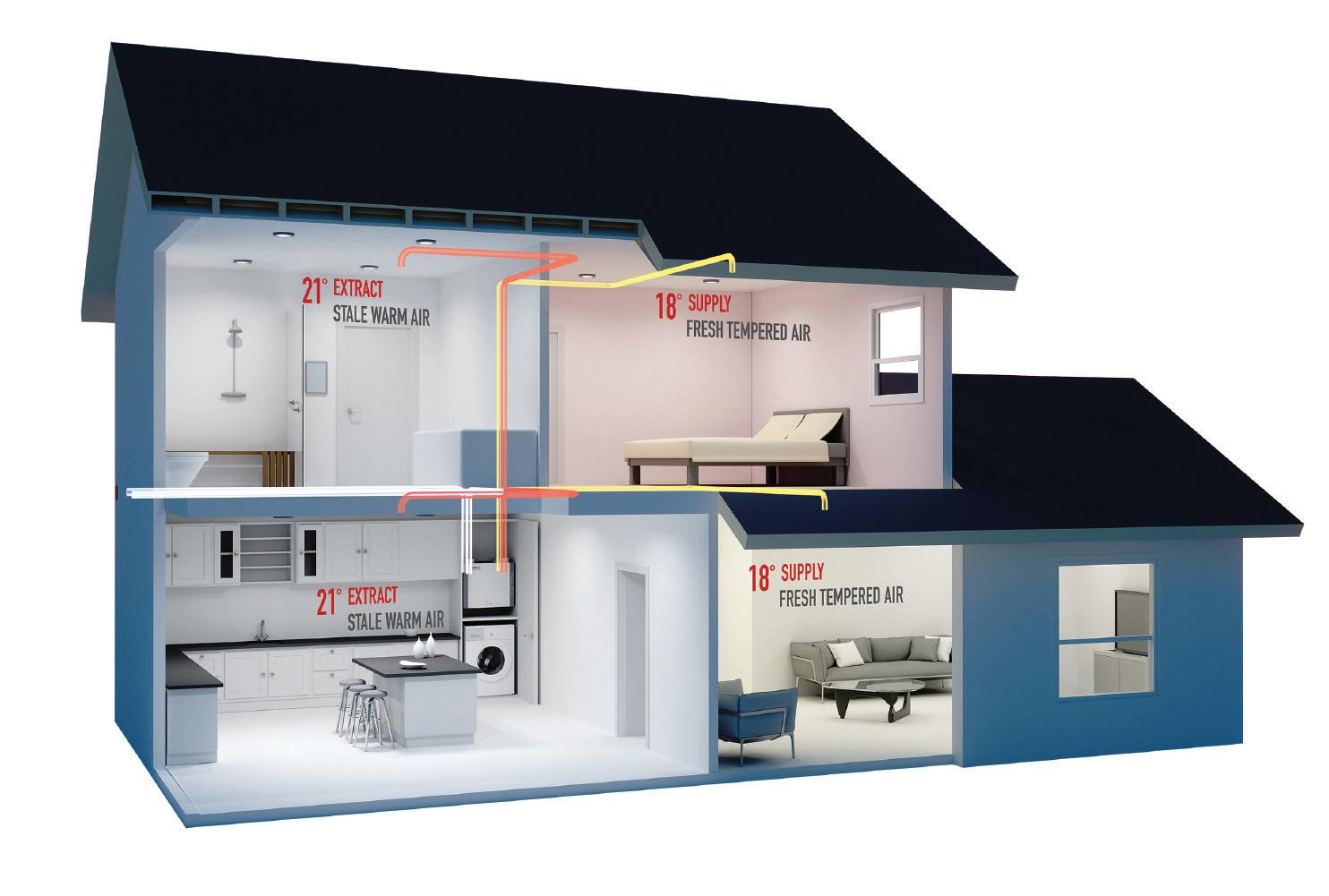
This is where MVHR comes into its own. By continuously supplying fresh, filtered air while recovering warmth from outgoing air, MVHR delivers both comfort and efficiency without compromise. It is ideally suited to new builds, where ducting and system design can be integrated into the planning stage. Here we look at the six key benefits MVHR systems can bring to bear.
1. Superior Indoor Air Quality
The most immediate and visible benefit of MVHR is healthier air. The system continuously extracts stale, moisture-laden air from kitchens, bathrooms, and utility rooms while simultaneously supplying fresh, filtered air into living spaces and bedrooms. Unlike extract-only solutions, MVHR provides balanced, whole-house ventilation that ensures every room benefits.
By filtering incoming air, MVHR helps reduce allergens, fine particles, and other airborne pollutants, making it particularly valuable in urban environments or for occupants with respiratory issues. The result is a healthier indoor environment—an increasingly important consideration for homeowners and tenants who are more aware than ever of the impact of indoor air quality on wellbeing.
2. Energy Efficiency and Heat Recovery
Energy efficiency is a key driver in modern housing design, and MVHR is an important contributor. The technology captures waste heat from extracted air and transfers it to the incoming fresh air via a heat exchanger. In doing so, it significantly reduces the demand on a home’s heating system. For occupants, this means lower energy bills and greater comfort. For developers, it represents a straightforward way to meet sustainability targets and demonstrate commitment to energy-efficient design.
Modern systems such as Domus Ventilation’s HRXE range are A+ energy rated, with exceptionally low Specific Fan Power (SFP) and high heat exchange efficiency. They also provide intelligent control options, enabling performance to be optimised for each property type. In practice, this means MVHR can contribute to lowering overall carbon emissions from residential developments, aligning with the industry’s Net Zero ambitions.
3. Quiet Comfort
Noise is a common concern for residents, yet a properly designed and installed MVHR system is virtually silent in operation. Modern systems, including those using the Domus HRXE range, can readily meet and improve upon the Approved Document F 30dB LAeq,T requirement for noise-sensitive rooms (e.g. bedrooms and living rooms).
Additional options, such as anti-vibration trays and inline sound attenuators, are available to further minimise background noise. The result is year-round comfort with a constant supply of fresh air, all without disruption.
4. Design Flexibility for Developers
One misconception is that MVHR ducting requires excessive space. In reality, with proper planning at the design stage, duct runs can be accommodated without issue. Both traditional branch-based systems and radial semi-rigid ducting systems are available. Radial systems are particularly useful where space is tight, as they allow each room vent to be served by single or twin duct runs directly connected to the distribution system.
Domus Ventilation also offers Domus Thermal duct insulation, which ensures thermal performance is maintained when ducting passes through unheated areas such as lofts. This makes it straightforward to achieve regulatory compliance while optimising energy efficiency. By engaging with MVHR specialists early in the design process, developers can ensure smooth installation, reduce costs, and avoid the need for compromises later in the build.
5. Low Maintenance, Long Lifespan
Another key benefit of MVHR is its low maintenance requirements. Unlike other building services, which can require frequent checks or servicing, MVHR units typically only need their filters replaced once a year. In the case of Domus HRXE systems, this process is quick and userfriendly thanks to front-access filter panels designed with homeowners in mind.
With minimal intervention required, occupants enjoy peace of mind and long-term reliability, while developers can be confident in delivering a robust and dependable ventilation solution.
6. Adding Value to Homes
For developers, MVHR is more than just a compliance tool—it’s a feature that enhances a property’s marketability. Buyers and tenants are increasingly seeking homes that are energy-efficient, sustainable, and healthy to live in. A well-designed MVHR system ticks all of these boxes. By investing in MVHR, developers are future-proofing their projects, ensuring homes are not only compliant with current Building Regulations but also aligned with the higher performance standards likely to come in the years ahead. For occupants, the benefits—lower energy bills, improved health, and year-round comfort—are immediate and long-lasting.
Conclusion
As the building industry adapts to stricter regulations, tighter energy targets, and rising consumer expectations, MVHR offers a powerful solution. It improves indoor air quality, reduces energy demand, operates quietly, and requires minimal maintenance—all while adding value for both developers and homeowners.
For HVAC professionals, contractors, and developers, embracing MVHR is an opportunity to deliver better living environments while meeting the challenges of tomorrow’s housing standards head-on.
Our stock is always on standby, ready to ensure your projects stay on track.
Budget-Friendly Quality
Keep your project and budget aligned with our cost-effective options.
Reliable and Industry-Compliant
Ensuring your project stays on spec and built with reliable solutions.
Scan
Installer-Friendly Design
High-quality components and quick-install features.
Excellence and Reliability
We are committed to delivering best-in-class solutions for your needs.
Norwich’s Eaton Park Pavilion Scores Bespoke Baxi Heat Pump Solution to Kick-Off Decarbonisation Plans
A tailored Baxi air source heat pump (ASHP) solution is supplying low-carbon heating and hot water at Eaton Park Pavilion, a Grade II-listed building at the heart of one of Norwich City Council’s most popular parks
The century-old historic pavilion has recently undergone an extensive refurbishment project to provide upgraded, modern, Football Association-compliant sports changing facilities. This includes new individual showering cubicles, toilets and officials’ rooms.
The improvements ensure the pavilion meets the highest standards of inclusivity, with the aim to boost participation of women and girls in sports within the park.
In keeping with Norwich City Council’s 2030 net zero goal for council operations and a 2045 target for the entire city, the listed building has received a substantial decarbonisation investment with building fabric and ventilation upgrades as well as solar PV panels and battery storage.
The project was designed by Jonathan Gray at M&E Consultancy JD Gray Associates Ltd, working with Chaplin Farrant Architects. Baxi provided technical and product support as well as commissioning to help achieve a successful heating and hot water solution that meets the project requirements.
Heating and hot water at the refurbished pavilion are now provided by the Baxi all-electric solution, comprising:
• Two roof-mounted Baxi HP50 13 kW ASHPs
• Two buffer vessels
• Two Baxi 300 litre ASHP cylinders.
Jonathan said: “One of the factors to consider was the size and placement of the ASHPs. Due to its heritage and distinctive architectural design, the pavilion is frequently photographed by both cameras and drones. As the ASHPs needed to be roofmounted, a key design parameter of the council was to keep visibility of any of the kit on the roof minimal above the pavilion balustrade.
“When researching this project, I also had a session with the Baxi technical solutions team, which proved extremely useful. Critically, the Baxi heat pump that we selected was actually a good six inches lower than the one we’d considered up to that stage. And as this was to be a packaged heat pump and hot water plant, we selected the Baxi ASHP cylinder as well.”
With four football matches held consecutively at Eaton Park on both Saturdays and Sundays, the solution needed to meet high simultaneous demand for domestic hot water for the post-match showers. The challenge from an engineering perspective was designing a heat pump system capable of ensuring sufficient hot water as efficiently as possible, even on a cold winter’s day.
Jonathan added: “Using large-volume hot water storage was not an option due to plant room space limitations. Instead, working with Baxi’s technical solutions team, we explored different ways of using PV panels and battery storage with the heat pumps. The aim was to accumulate and store low-carbon energy for use at times of peak load.
“We established that we could accommodate 66 solar panels on the roof, which would be sufficient to charge two 8 kW batteries ahead of the weekend. The technical advice Baxi provided and their analysis of the different schematic options were invaluable.”
The pavilion’s solar PV panels generate electricity throughout the week to charge the batteries. When the batteries are full, the control divertor panel detects this and diverts the excess energy into the immersion heaters in the hot water tank.
The heat pumps then use the stored solar energy to heat water, which is held in the buffer tanks. Hot water is drawn from these stored cylinders when needed. Low-temperature fan convectors use the stored heat from the heat pumps to provide space heating within the pavilion.
By prioritising solar power, the solution reduces reliance on grid electricity and lowers bills by converting surplus energy into heat.
“Accurate control and ongoing energy monitoring are critical to ensuring the success of any heat pump system,” added Jonathan. “Remote access via the web allows the council to monitor energy consumption easily and control the time periods for the heating of hot water. Extension timers mean that the system can be brought on quickly if there is any out-of-hours or out-of-program use required.
“And, of course, the ability to monitor remotely also means we can keep an eye on how the system is operating and identify potential ways of optimising performance through time-of-use tariffs.”
Richard Green, project co-ordinator in parks and open spaces, climate and environment at Norwich City Council, said: “We were already familiar with Baxi’s boiler solutions and are extremely pleased with our all-electric heat pump heating and hot water solution at
the pavilion. It’s been running issue-free for the last four months now. This is a great project that successfully meets sustainability objectives – and it looks good too!
“Working with Jonathan, we will continue to monitor energy performance at the pavilion closely to maximise the benefits of this system and identify the most suitable electrical tariffs for us.”
Shane Suter, commercial business director at Baxi, said: “As local authorities and councils work towards tighter climate goals, decarbonising heat across their building estate and operations is a natural target to reduce their carbon footprint. Heat pumps are a proven technology, but the challenge is to strike the right balance between financial and environmental sustainability.
“We are proud that the technical design service and product support we provided on this project helped identify and deliver the right outcome for Norwich City Council at this iconic UK landmark.”
Project team
• Client: Norwich City Council
• Architect: Chaplin Farrant
• Mechanical Design: Jonathan Gray at J D Gray Associates
• Contractor: P J Plumbing and Heating
• Heat pump solution provider: Baxi
Discover more about Baxi’s portfolio of energy-efficient and low-carbon heating and hot water solutions at https://www.baxi.co.uk/ commercial/help-and-advice/knowledge-hub/
Discover the STIEBEL ELTRON DEM Mini Instantaneous Water Heater
The STIEBEL ELTRON DEM mini instantaneous water heater is a compact, high-performance solution designed to deliver instant hot water at hand wash basins without the energy waste associated with traditional storage systems.
With bare wire technology it is limescale resistant for long product life with no loss of flow. Its sleek, space-saving design allows the unit to be discreetly installed either above or below a sink, making it ideal for locations where space is at a premium. Despite its compact size and low electrical load,
the DEM Mini delivers reliable performance and consistent hot water for handwashing applications, ensuring users enjoy comfort and convenience whenever they turn on the tap.
Perfect for commercial washrooms, offices, healthcare facilities, schools, retail/hospitality environments, and domestic cloakrooms, it is an ideal solution where is it is impractical or expensive to run a pipe to a central supply of water – or indeed where none exists!
Built with the renowned engineering quality that STIEBEL ELTRON is known for, the DEM Mini offers durability, reliability, and long-term performance. The unit is designed for straightforward installation and minimal maintenance, making it a practical choice for contractors, facility managers, and homeowners alike.
The unit comes complete with a special aerator for perfect water flow pattern and integral flow controller for use in existing taps.
Safety is guaranteed with an internal permanent set temperature for child and tamper proofing and anti-scalding protection, whilst the electronic controls ensure accurate temperature delivery at all times.
In addition to its energy-saving benefits, the DEM Mini supports sustainability goals by reducing unnecessary water and energy waste.
DEM forms part of the STIEBEL ELTRON bare wire range of instant water heaters and comes in 3.8, 4.8 and 6.2 kW models (rated output at 240v). Other models in the range offer higher levels of flow, additional features and are suitable for multiple outlets. All are capable of taking pre-heated water.
For more information on the range or help specifying the correct product for your range email projects@stiebel-eltron.co.uk
New handheld PAT tester aims to improve efficiency and compliance
Portable appliance testing specialists
First Stop Safety have launched the InstaTest100, a new handheld PAT tester designed to help organisations and individuals carry out electrical safety testing quickly, accurately, and efficiently.
Developed and manufactured in the UK by First Stop Safety’s team of PAT testing experts, the InstaTest100 has been created to meet the needs of professionals who undertake regular PAT testing across a wide range of environments, including workplaces, schools, healthcare settings, and commercial premises.
The compact device combines portability with comprehensive testing functionality, allowing users to perform Class I, Class II, and IEC appliance tests using a single handheld unit. An integrated LED display provides clear visibility of individual test results, including earth continuity, insulation resistance, substitute leakage, and cable polarity. Separate pass and fail indicators for each test help users identify faults quickly and accurately.
Battery performance has also been a key consideration during development. The InstaTest100 can perform around 1,400 tests from a single charge of its internal rechargeable battery, making
it suitable for technicians and organisations carrying out large volumes of testing.
Another notable feature is its ability to test appliances with cable lengths of up to 45 metres. This long-lead testing capability provides greater
flexibility when testing equipment in larger facilities or more challenging environments.
Alongside the tester itself, First Stop Safety has introduced a package that combines the InstaTest100 with the company’s FirstPrint Bluetooth label printer. The system enables users to print PAT labels directly from a smartphone app, helping to streamline workflows and improve efficiency during testing programmes. First Stop Safety’s PAT tester and printer package is the best value currently on the market, priced under £500.
The launch represents the latest step in First Stop Safety’s expansion as a UK manufacturer of PAT testing equipment. According to CEO David Yodaiken, the company is focused on developing products that deliver reliability, simplicity, and value for testing professionals.
Backed by a lifetime warranty and acclaimed technical customer support, the InstaTest100 has been designed to provide a long-term solution for organisations seeking a practical partner to support them in delivering robust electrical safety and easy compliance to regulations.
For easy-to-use PAT testers, comprehensive training and calibration services, contact our team at First Stop Safety today.
For faster, simpler and safer testing.
Voltage auto-select feature
Non-contact voltage detection
Single & two-pole voltage indication
1000V AC / 1500V DC
200A current measurement
Scan to view demo
Five load bank test data signals you need to listen to
What your load bank data is telling you before failure happens
Most backup power failures are not random. Early indicators show up in load bank test data – but only if engineers interpret the patterns rather than simply record a pass or fail result.
Here Andrew Keith, division director of load bank manufacturer Power Prove, explains five signals in load bank test data that reveal deeper issues and what maintenance teams should do next.
Resilience in backup power systems is no longer optional. According to the Uptime Institute Annual Outage Analysis 2025, power issues remain the leading cause of impactful data centre outages. More than half of operators reported that their most recent outage cost over $100,000 (£74,600), with around one in five reporting losses exceeding $1 million.
Importantly, roughly 80 per cent of operators believe their outages could have been prevented with better operational monitoring and operational processes.
When a facility loses power, the impact can be immediate and severe. Facilities managers commissioning engineers and critical power operations teams need to go beyond whether equipment simply started under load and instead understand what the data tells them about stability control and readiness.
Pass/fail is not the point
Uptime Institute Annual Outage Analysis 2025 notes that “power issues remain the most common cause of serious and severe data centre outages and many of these incidents could have been mitigated through better operational monitoring and testing practices.”
A generator or UPS system that runs during a load test may superficially appear ready for service. But
by Andrew Keith, Division Director at Power Prove
what really matters for operational resilience is how the system behaves under changing load conditions and whether it does so consistently across repeated tests.
Voltage droop or instability during load steps
What you see during a test may include voltage dipping as load is applied and then slow or erratic recovery occurs before stabilising. This pattern signals that the automatic voltage regulator or governor control is not tuned optimally. It could also indicate weak regulation poor connections or degraded cabling that cannot support rapid load transitions.
The correct next step is to repeat the test with controlled incremental loads check and recalibrate regulation components and inspect all terminations to confirm they meet design tolerances. Addressing these issues early prevents instability when the system must handle real facility loads.
Frequency drift or sluggish recovery
Load bank data often reveals frequency behaviour that is not obvious during simple pass/fail tests. If the frequency drops under load and takes longer than expected to recover, engineers should suspect problems with governor response or fuel delivery control loops. A generator that
cannot maintain stable frequency under varying load may experience similar behaviour in real operation under stress leading to outages or protective trips.
The recommended action here is to verify control settings conduct service checks on fuel and governor systems and repeat the test with carefully staged load increments to confirm performance improvements.
Unexpected temperature rise or uneven thermal profile
Unexpected spikes in coolant exhaust or local component temperatures during testing can be the first indication of cooling restrictions or thermal stress. A hot spot on a radiator a blocked airflow path or a failing fan can all cause rapid temperature increases that the test data will show before a real-world failure occurs.
When teams see this signal, they should conduct cooling system inspections verify airflow paths and if necessary, consider supplemental cooling solutions. Early thermal issue detection helps avoid overheating during extended runs during actual outages.
Load sharing imbalance in parallel systems
In systems with multiple generators sets, data often reveals one unit taking a disproportionate share of the load while others lag. This imbalance affects overall system stability and can shorten equipment life. The likely causes are mismatched synchronisation settings instrumentation errors or control incompatibilities.
After identifying this pattern engineers should calibrate load sharing control parameters confirm instrumentation accuracy and then execute a structured parallel load test protocol to validate balanced distribution across units.
Harmonics and poor power quality under load
Backup systems that show high total harmonic distortion or unstable interactions with UPS systems during load bank testing suggest power quality issues. These often arise from nonlinear loads control incompatibilities or test scenarios that do not reflect actual operational conditions.
The next step is to test with representative loads to review compatibility between power system components and adjust the test design, so it reveals realistic behaviour.
Interpreting load bank test data as a diagnostic tool rather than a compliance requirement helps maintenance teams catch hidden issues before they cause downtime. Understanding the signals hidden in load bank test data requires both the right equipment and the right expertise. Most failures are completely predictable – as long as engineers treat testing as a tool, and not a tick of a box.
Get in touch with Power Prove to learn how load bank solutions support clearer insight into backup power performance and help teams prevent costly downtime at https://powerprove.com/contact
Introducing The Elite TRMS AC Earth Leakage Clampmeter
Insulation measurement with test voltage 250V, 500V & 1000V DC
NEW OPT Insulation measurement with DC
Optimisers present
Open circuit voltage (Voc) measurement up to 1000V DC
Short circuit current (Isc) measurement up to 30A
Measurement of Irradiance using the HT305 Reference cell & Solar-03 communication meter supplied
Measurement of Bi-facial solar photovoltaic panels using 2 extra optional HT305 Reference cells
Measurement of Temperature through the PT305 Temperature probe supplied
IVCK Measurement with the press of one button
testinstrumentsolutions.co.uk
GFL (Ground Fault Locator) to identify faulty solar panels in a string from 4 panels up to 60 panels
DMM Feature to measure DC voltage and AC
TRMS voltage
240 X 240 COG LCD screen with backlight
Internal database of panels maximum 64
Memory maximum 999 tests
Power supply 6 x 1.5V AA alkaline batteries or 6 x 1.2V
AA NiMH rechargeable batteries
PC Communication Optical USB & WiFi
Solar-03 Communication Bluetooth range up to 100 Metres clear site
Conforms to BSEN 62446-1
CAT III 1000V
IP40
600V Is No Longer Enough – Are You Ready for 1500V PV Testing?
by David Sweetman, Managing Director – Commercial, Di-LOG Group
Solar PV Testing for the Next Generation of High Voltage Systems
The rapid evolution of solar photovoltaic technology is bringing both greater efficiency and new challenges for installers and electrical contractors. As module efficiency improves, the voltage characteristics of PV strings are increasing, with open circuit voltage (VOC) regularly exceeding the traditional 600V range that many standard clamp meters were originally designed to measure.
For today’s installer, this shift is not just a technical detail – it directly impacts safe working practices, correct equipment selection, and ultimately compliance. This is where purpose-built Solar PV test kits such as the Di-LOG SL350 and the newly launched SL550 are becoming essential tools on site.
The Move Beyond 600V – Why It Matters
Higher efficiency panels mean more modules can be connected in series, delivering greater system output. However, this inevitably pushes string voltages upwards. Modern installations are increasingly operating at 1000V DC, and in larger commercial and utility-scale applications, 1500V DC systems are now becoming commonplace.
The move towards 1500V DC systems aligns with wider industry design practices and safety frameworks, including the requirements surrounding PV power systems and equipment safety outlined in IEC 62109, which addresses protection against electrical hazards in high voltage environments.
“IEC 62109 is an international safety standard ensuring that photovoltaic power converters are designed and tested to safely withstand high voltage conditions, including applications aligned with CAT III 1500V systems protecting against electric shock, fire, and mechanical hazards.”
For contractors, the implication is clear: test equipment must be capable of safely and accurately measuring higher voltages, particularly when verifying open circuit voltage during commissioning or fault finding.
SL350 – Practical Testing for Domestic and Commercial Installations
The Di-LOG SL350 Professional Solar PV Test Kit has been designed to provide installers with a comprehensive yet accessible solution for everyday PV testing.
At the core of the kit is the DL6414 True RMS AC/ DC clamp meter, capable of measuring voltages up to 1000V AC/DC. This allows safe verification of high VOC values typically encountered in larger domestic and medium-scale commercial installations.
Complementing this is the SL104 Solar Irradiance Survey Tool, which enables accurate measurement of irradiance, array direction, roof pitch and, importantly, panel temperature. The inclusion of both internal and external temperature probes ensures compliance with IEC 62446-1 requirements for PV system testing, including cell temperature measurement.
For installers, the benefit is clear: the SL350 brings together electrical and environmental measurements in one compact kit, reducing the need for multiple instruments and streamlining the commissioning process.
Introducing the SL550 – Meeting High Voltage Demands
With the continued shift towards higher voltage PV systems, the newly launched Di-LOG SL550 Advanced Solar PV Test Kit has been developed to support the next generation of installations.
While the SL350 comfortably supports systems up to 1000V DC, the SL550 is positioned to address the growing requirement for testing at 1500V DC. This is particularly relevant for larger commercial and industrial projects, where higher system voltages are now standard practice.
A key differentiator of the SL550 is the inclusion of Di-LOG’s new flagship clamp meter, the DL6415. Rated CAT III 1500V, this advanced instrument has been designed specifically for modern high-voltage PV applications conforming to IEC 62109, providing installers with the confidence to work safely and accurately on higher energy systems.
Beyond voltage and current measurement, the DL6415 delivers a significantly enhanced feature set, including Power and Energy measurement, Harmonics analysis, and Bluetooth connectivity. This allows contractors not only to verify electrical parameters, but also to gain deeper insight into system performance and share or record data more efficiently.
For contractors working in this space, having test equipment that matches system voltage ratings is not just about capability – it is about safety, compliance, and confidence on site. The SL550 ensures installers are equipped for modern PV architectures, reducing risk while also expanding diagnostic capability.
A Practical Approach for Today’s Installer
For larger installations operating at higher voltages, the SL550, complete with the advanced DL6415 clamp meter, ensures safe and effective testing aligned with modern PV system demands, while also providing enhanced measurement and reporting capability.
Beyond Basic Testing – Full PV System Verification
While solar PV kits such as the SL350 and SL550 provide essential tools for installation and maintenance, full system verification often requires dedicated PV testers.
Di-LOG also supplies the Seaward PV:1525 Series, a comprehensive handheld test solution capable of performing electrical safety tests and performance measurements on PV systems up to 1500V DC and 25A. These instruments support key commissioning tests, including open circuit voltage, short circuit current, insulation resistance, and continuity.
For more advanced diagnostics, the PV:1525-IV model adds I-V curve tracing, enabling installers to assess system performance and identify faults beyond basic electrical checks. By offering both solar PV test kits and advanced PV testers, contractors can scale their testing capability depending on project size and complexity.
For electrical contractors looking to stay ahead of evolving PV system demands, having the right test equipment is essential. Whether you are working on domestic installations or high voltage commercial projects, Di-LOG offers practical, future-ready solutions to support safe and compliant testing. To explore the full range of Solar PV test kits and solutions, visit www.dilog.co.uk/pv or speak directly to the team on 0161 877 0322 for expert advice and support tailored to your next project.
Digitalisation and the Future of LowCarbon Housing: A Practical Guide
The UK’s high-rise residential sector is moving into a new phase of development, shaped increasingly by net-zero ambitions and the Future Homes Standard. Digitalisation has become the backbone of this shift, enabling a new generation of homes that are not only more efficient to design and construct, but fundamentally smarter in how they operate day-to-day
For developers, M&E consultants, and utility specialists, digitalisation is no longer an add-on, but a strategic imperative. Integrated digital systems now coordinate low-carbon heating, power infrastructure, smart controls, and grid interaction with a level of precision that simply wasn’t possible before. Networked Ground Source Heat Pumps (GSHPs), Community Heat Hubs (CHHs), and smart energy platforms exemplify this shift, forming the intelligent ecosystem underpinning the next generation of low-carbon homes.
Beyond Technology: Building Digitally Ready Housing from the Ground Up
The success of digitalised housing projects lies not only in the technology itself but in how early it’s integrated into the project lifecycle.
Developers benefit when smart-ready infrastructure is considered from the outset. By planning for connected heating systems, real-time monitoring, and demandside flexibility, developers can deliver homes that exceed compliance and offer added value to buyers and tenants. Digitalisation also supports differentiation in a competitive market, as more consumers prioritise sustainability, cost savings, and smart technology in their purchasing decisions.
M&E consultants are increasingly tasked with designing building systems that do more than just operate efficiently, they must be adaptable, data-rich, and interoperable with digital platforms. Whether specifying Networked GSHP systems or integrating CHHs into larger schemes, M&E professionals must ensure that these systems communicate effectively with smart thermostats, building management systems, and the energy grid.
Utility consultants, meanwhile, play a pivotal role in aligning these systems with network capacity and grid requirements. With heating systems moving away from gas to electricity, load profiling and demand management become critical. Digitalisation allows utility consultants to better understand energy behaviour across developments, optimise connection planning, and support schemes that reduce or shift peak demand.
Smart Heating Systems:
Networked GSHPs and CHHs in a Digital World Networked Ground Source Heat Pumps deliver reliable, low-carbon heat using renewable energy from the ground. Their electrical operation makes them ideal for decarbonised housing, but digitalisation is what makes them truly smart. When connected to cloud-based control platforms, Networked GSHPs can be monitored and adjusted in real time, respond to time-of-use tariffs, and provide valuable performance data to consultants and developers.
by Neil Fitzsimons, Managing Director of Power On
Building Smarter, Together
Digitalisation is no longer just about smart gadgets, it’s about designing energy systems that work intelligently at every level. By integrating lowcarbon technologies like Networked GSHPs and CHHs with smart control platforms, developers and their consultants can deliver homes that are more efficient, responsive, and future-ready.
Community Heat Hubs, on the other hand, offer centralised heating for larger developments, distributing heat efficiently across multiple units. Digitally enabling these systems adds the ability to balance load across properties, monitor usage patterns, and participate in energy flexibility schemes. This leads to better operational control, lower emissions, and long-term cost savings.
Resident-Facing Technology
At a homeowner level, the latest generation of smart controls bring all this technology together into an intuitive interface. It empowers residents to manage their heating with insight and control offering real-time energy feedback, comfort automation, and tariff-aware scheduling. But the value extends beyond the occupant. For M&E consultants, data and integration capabilities enhance commissioning processes, simplify fault diagnostics, and provide ongoing visibility into system performance. For developers, it increases the desirability of homes by adding a smart, sustainable feature that buyers understand and appreciate. And for utility consultants, it enables demand response participation allowing homes to shift energy use during peak times, reducing strain on the grid and helping manage connection capacity.
Collaboration Is Key
The effectiveness of digitalised heating systems doesn’t rest on any one party, it relies on early, joined up thinking across all stakeholders. Developers need to set the vision, utility consultants must align it with power infrastructure, and M&E consultants must design the systems that connect everything together. When these roles work in sync, digitalisation becomes a powerful tool for unlocking long-term performance, compliance, and operational value.
As the housing sector embraces electrification, sustainability, and user-centric design, digitalisation is the common thread that enables success. For developers, M&E consultants, and utility consultants alike, embracing this shift isn’t just good practice, it’s essential for delivering the homes of tomorrow.
Why and when should you oversize a Solar Array?
When designing an effective solar photovoltaic (PV) system, it is well worth considering oversizing the array. This approach allows the system to generate power more consistently throughout the day, and maintain better performance during winter months. The result is higher overall energy output – and potentially more revenue too!
Inverters are rated by their AC output, which you’ll find on the data plate. For example, a 3.6kW inverter can deliver a maximum 3.6kW of AC power to your customer and to the grid. However, most inverters will accept a higher kW DC input from the solar array relative to the AC rating of the unit. This means you can connect more solar panels to the same inverter – a strategy known as oversizing. When designing a PV system, always consult the inverter data sheet. There you will find the recommended maximum DC input compared to the rated AC output, which can be as high as 150%, or even 200%. This headroom exists for a reason. Panels rarely operate at nameplate output. Temperature losses, seasonal irradiance, orientation and shading all eat into real-world performance. Designing at a 1:1 ratio assumes conditions that almost never occur. However, it’s important to note that any oversizing must comply with the limitations set out by the manufacturer of your chosen product. It is also essential to review your plans with a relevant technical specialist before installation.
Design Considerations: Hybrid Inverters and East–West Arrays
Oversizing is particularly beneficial when using a hybrid inverter with battery storage. As a rule of thumb, the default operation mode of many hybrid inverters is to charge the battery first and then export any excess energy. Once the battery is full, generation will drop to the maximum limit that you can export on the AC side. It’s worth noting that you won’t get the full oversizing benefit from pairing a PV inverter to an AC-coupled battery inverter. In this setup, the bottleneck will be the rating of the PV inverter. While the AC-coupled battery inverter will be able to draw excess from the PV inverter’s AC output, a system with separate AC-coupled inverters will not allow DC oversizing advantages in the same way a hybrid inverter does.
Plot of solar generation through a sunny day: The lower line is a 4kWp array on a 4kWAC PV inverter, the higher line is a 4.8kWp array on the same 4kWAC PV inverter. The green area is the additional solar energy generated. The red area is the energy being clipped by the inverter.
Oversizing is also particularly beneficial for east-west configurations. Typical solar systems are angled south to maximise irradiance at midday, but an east–west setup has some panels facing east and others facing west. The east-facing panels produce more energy in the morning, while the west-facing panels produce more in the afternoon, meaning the system never reaches the inverter’s theoretical maximum DC rating.
East-west configurations are growing in popularity because they provide more energy outside peak hours, which can increase revenue from exporting to the grid and boost self-consumption. When designing such a system, remember to observe the inverter’s minimum and maximum voltage limits constraints and keep the east and west arrays on separate MPPT trackers to ensure the correct performance of the system.
Grid Benefits: Smoother Energy Supply
By undersizing the inverter you are also doing a good deed by helping to reduce grid congestion. The wider, fatter generation curve from the solar system will result in more consistent energy to the grid and less peak inconsistent power. On a large scale, this helps grid operators by reducing the duck curve effect.
The duck curve describes the shape of daily electricity demand (excluding solar), specifically the difference from high demand to low demand. In the morning, when there is little solar, demand is stable, then at midday when all the solar is generating demand drops, only to rise back up to the daily peak
by Steve Donovan, Head of Technical (UK & Ireland) and Giulio Stangarone MIET, Technical Engineer, at Segen Ltd
in the late afternoon. These daily differences make energy trading complex and expensive as operators need to turn on peaking powerplants burning gas and biomass to cover the demand peak.
By oversizing solar arrays, you contribute, albeit modestly, to a smoother, more consistent power supply in the afternoon, helping delay the use of peaking plants. This effect becomes even more significant when paired with battery storage systems that trade energy.
Managing Excess Energy: Clipping
As mentioned previously, solar panels rarely operate at their nameplate output. However, in an oversized array, there are times—typically on very sunny days—when the panels can produce more DC power than the inverter can handle. The excess energy is managed through a process called “clipping.”
During clipping, the inverter adjusts the maximum power point along the IV curve, with the MPPT (maximum power point tracker) deliberately operating at a slightly suboptimal voltage. This reduces the power drawn from the array, keeping the inverter within its AC rating. Any energy above this threshold is “clipped” and cannot be converted, although in systems with a hybrid inverter, the surplus can instead be directed to charge the battery.
Despite these brief losses, oversizing still increases total daily energy production and extends the periods during which the inverter operates at its maximum capacity.
The bottom line: more power, more cost effective
To conclude, there are numerous benefits to installing an oversized PV array. It allows for better utilisation of the inverter’s AC rated output and can reduce the levelized cost of electricity produced. Additionally, the system owner can enjoy a more consistent output throughout the day and across the year. Pairing the system with a hybrid inverter and battery storage further enhances self-consumption, making the most of the energy your panels generate.
As always, ensure your design stays within the limits of the equipment. If you are unsure, refer to the manufacturer’s specifications or design tools. Alternatively, reach out to Segen’s technical team for guidance. Segen is online at www.segen.co.uk/info/
Smart Homes Need Smarter Energy Management
The UK’s smart home revolution is well underway. Solar PV, battery storage, EV chargers and heat pumps are becoming increasingly common as homeowners look to reduce energy costs and take greater control of their energy use. However, while homes are becoming more connected, many homeowners still face a significant challenge: understanding how all these technologies work together.
A typical household may have separate apps for solar generation, battery storage, EV charging and energy tariffs. Each provides useful information, but often in isolation. Homeowners can see what individual devices are doing, yet struggle to understand the bigger picture – how much energy they are using, what it is costing them and whether their system is operating efficiently.
As the smart home market matures, the next step is not simply adding more technology. It is helping people make better decisions with the technology they already have.
From Monitoring to Management
Traditional energy monitoring platforms have focused on displaying data. While visibility is important, graphs and charts alone do not always help homeowners understand what actions they should take.
The future of home energy management lies in turning complex energy data into practical insights.
This is the thinking behind Birdy, a new wholehome energy management platform developed by Shocking Energy. Rather than focusing on individual devices, Birdy brings together solar generation, battery storage, household consumption, grid imports and exports, EV charging and future heat pump integration into a single dashboard.
The platform provides a live view of how energy is flowing around the home, helping users understand what is happening right now and how different technologies are interacting.
For installers and renewable maintenance providers, this addresses a growing challenge. Customers increasingly expect their solar, battery and EV systems to operate as one integrated energy ecosystem rather than as separate products.
Providing visibility across the entire home helps customers better understand the value of their investment while giving installers and maintenance providers an additional
by Kevin Bird CEO Shocking Energy
tool to support long-term system performance, customer engagement and ongoing optimisation.
Predicting Tomorrow’s Energy Needs
One of the most exciting developments in home energy management is the use of forecasting and predictive intelligence.
Most monitoring systems are designed to show what happened yesterday. Newer platforms are helping homeowners understand what is likely to happen tomorrow.
Birdy’s solar forecasting capability combines weather forecasts with historical performance data to create a more accurate prediction of future solar generation. Over time, the system learns the unique characteristics of each home, including roof orientation, shading and generation patterns. This forecast is then used to optimise battery charging decisions.
Instead of automatically charging a battery to full capacity overnight, Birdy calculates how much solar energy is expected the following day and determines how much low-cost electricity should be purchased during off-peak periods.
This helps maximise self-consumption, reduce unnecessary grid imports and lower overall energy costs.
As dynamic tariffs become more common and homes become increasingly electrified, these intelligent planning tools are likely to become an essential part of energy management.
Making Energy Data Understandable
While monitoring and forecasting are important, many homeowners still struggle to interpret energy data. This is where artificial intelligence is beginning to play a transformative role.
Birdy includes a built-in AI energy assistant that allows homeowners to interact with their energy system using natural language. Rather than navigating multiple dashboards, users can simply ask questions about their home’s performance.
Questions such as “How much did my solar system save me this week?”, “Why did my battery charge overnight?” or “How much energy did my EV use yesterday?” can be answered using the household’s own energy data.
The aim is to make energy management more accessible, helping homeowners understand not only what their system is doing, but why.
Alongside this, the platform tracks actual energy costs and savings, allowing users to compare what they have paid against what they would have spent without technologies such as solar and battery storage.
For many homeowners, this provides a clearer understanding of return on investment and system performance.
A Growing Opportunity for Installers and Renewable Maintenance Providers
As residential energy systems become more sophisticated, there is a growing opportunity for both installers and renewable maintenance providers to deliver value beyond the initial installation.
Customers are increasingly looking for guidance on how to optimise their systems, reduce waste and maximise savings long after their solar, battery or EV charger has been commissioned. Intelligent energy management platforms help bridge the gap between installation and long-term performance, providing ongoing visibility into how a home energy system is operating.
For installers, Birdy offers a way to extend customer relationships beyond the installation itself, helping homeowners continue to get the best performance from their renewable energy systems. For renewable maintenance providers, it creates an opportunity to enhance service contracts and maintenance packages with proactive energy monitoring, performance tracking and optimisation support.
By incorporating Birdy into maintenance packages, providers can offer customers ongoing insight into system performance, identify potential issues earlier, monitor energy consumption patterns and demonstrate measurable savings over time. This not only helps homeowners maximise the return on their investment but also creates a valuable recurring service offering for businesses operating in the renewable maintenance sector.
As dynamic tariffs, battery storage and home electrification become more commonplace, homeowners are likely to place greater value on services that help them understand and optimise their energy use throughout the lifetime of their system.
The next generation of smart homes will not be defined by how many technologies they contain, but by how effectively those technologies work together.
By combining real-time monitoring, predictive planning and AI-powered insights, platforms such as Birdy are helping homeowners move beyond simply collecting energy data and towards actively managing their energy future, while creating new opportunities for installers and renewable maintenance providers to deliver ongoing value.
For more information about Birdy, go to: https://energymonitor.shocking.energy/#features
Connected Controls and the rise of the Intelligent Home
Demand for smart home technology continues to accelerate, but today’s homeowners are looking for far more than standalone smart thermostats or app-controlled heating. Increasingly, the focus is shifting towards connected ecosystems that help households reduce energy consumption, improve convenience, and futureproof their homes for an increasingly electrified future. Here, Merlin Milner, Product Owner for Water-based Systems at Drayton, explores the latest trends shaping the smart home market, the growing importance of integrated controls, and why electrical contractors are perfectly placed to capitalise on this next phase of home energy management.
For many homeowners, the motivation behind smart technology adoption remains resolutely cost driven. After all, the implementation of some degree of smart home technology is proven to reduce energy bills. And while wholesale energy prices have stabilised compared to the peak of the energy crisis, household bills remain significantly higher than historic averages. Alongside this, sustainability concerns are increasingly influencing purchasing decisions, particularly for more climate conscious property owners.
As a result, homeowners want more insight than ever into how energy is used throughout the home. Smart controls offer an accessible solution, giving users greater visibility, automation and control over heating, lighting and other high-consumption devices.
This shift is reflected across the wider UK smart home market. Recent industry forecasts suggest it will continue to see strong year-on-year growth throughout 2026, driven by demand for energy-saving technologies, EV charging integration, and connected home automation systems. For electrical contractors, this represents a major opportunity. Consumers are increasingly asking for not simply a smart thermostat; but fully integrated systems that work together to improve efficiency, comfort and convenience.
Beyond heating controls
Heating remains at the heart of the connected home conversation. Smart thermostats, zoning systems and intelligent thermostatic radiator valves continue to play a central role in helping homeowners optimise energy usage through room-by-room control, remote access and intelligent scheduling.
However, the market is rapidly evolving beyond heating alone.
A growing number of today’s homeowners want to integrate multiple technologies into a single smart ecosystem. Smart lighting, EV charging, security devices, smoke alarms and environmental sensors are all becoming part of the wider connected home experience. Environmental sensors in particular are becoming increasingly valuable in supporting smarter energy management. Window and door sensors, humidity sensors and motion detection devices can all help automate heating behaviour and reduce unnecessary energy use.
For example, if a window is left open, the heating system can automatically adjust to avoid wasting energy. Likewise, humidity sensors can help identify excess moisture and trigger more efficient ventilation or
heating responses. Motion sensors can help ensure rooms are only heated or lit when occupied.
Individually, these may seem like relatively small adjustments. Collectively, however, they can have a significant impact on household energy efficiency and overall comfort.
The importance of integration
As more connected devices enter the home, integration is becoming increasingly important.
Homeowners do not want multiple disconnected apps controlling separate systems. Instead, they are seeking unified platforms that bring together heating, lighting, sensing and automation into one intuitive interface.
This is where the next generation of smart home controls is evolving.
Alongside smart heating, Drayton’s Wiser 2nd Generation system has expanded to incorporate a whole range of connected controls, transforming Wiser from a smart heating solution into a broader home automation and energy management platform.
The latest additions to the Wiser ecosystem include Smoke Alarms, Window and Door Sensors, Water Leakage Sensors, Temperature and Humidity Sensors, Motion Sensors, Lighting Dimmer Micromodules, Shades Control Micromodules and Power Micromodules — all of which can be managed through the Wiser Home app, alongside heating. By bringing these technologies together into one connected platform, Wiser 2nd Generation helps homeowners move beyond isolated smart devices towards a fully integrated smart home experience, one that not only improves convenience, but also supports more efficient energy management across the property.
As part of this, another key advancement in this release is the introduction of a built-in Matter Bridge within the new hub. This enables existing Wiser devices to integrate seamlessly into the wider Matter ecosystem, allowing them to be controlled alongside third-party smart home products
through a single platform. In practice, it removes traditional ecosystem barriers, extending the lifespan and compatibility of installed devices while giving homeowners and installers a more open, future-proof smart home architecture. Importantly, this level of automation delivers more than convenience. It can also play a vital role in reducing energy waste, supporting sustainability targets and helping homeowners better manage household running costs.
A changing role for installers
The continued growth of smart home technology is also changing the role of the electrical contractor.
Today’s professionals are increasingly expected to advise not only on smart heating systems, but on wider home energy management strategies. Customers are looking for guidance on how technologies interact, how systems can be configured effectively, and how to maximise energysaving potential.
For installers willing to embrace connected home technologies, this creates a valuable opportunity to differentiate themselves in a competitive market.
The ability to specify, install and optimise integrated smart home systems allows electrical contractors to deliver greater long-term value for customers while also futureproofing their own businesses. As electrification continues, particularly through the growth of heat pumps, EV charging and renewable energy integration, demand for intelligent control systems is only expected to increase further.
Smarter homes for a lower-carbon future
The rise of connected controls reflects a much wider shift in how homeowners think about energy usage.
Rather than simply consuming energy reactively, consumers are increasingly seeking smarter, proactive ways to monitor, automate and optimise their homes.
Heating will remain central to this conversation given its significant contribution to household energy consumption. However, the future of smart homes lies in connected systems working together as part of a wider energy management approach.
For installers, understanding this evolution will be key. Those who can deliver integrated, intelligent and energy-efficient solutions will be well positioned to meet growing demand as UK homes continue their transition towards a smarter, lower-carbon future. For more information on Drayton’s range of heating controls and thermostatic radiator valves, visit draytoncontrols.co.uk
Peak solar season exposes a bigger problem in UK housing design
by Steve Day, Product Director at Levelise
Peak solar season is now exposing a structural issue in how UK homes are being designed under the Future Homes Standard. As generation increases – and with new solar records set this year already - large volumes of electricity are being produced at the same time, placing pressure on how that energy is stored, used and exported.
The challenge is not the availability of solar technology, but how it is integrated into the wider energy system. Without systems that connect homes to pricing signals and flexibility markets, much of this seasonal value is lost at the point of production.
When electricity is cheap or abundant, batteries charge. When demand peaks and prices spike, batteries discharge back to the grid. This arbitrage reduces bills, but the real value comes from participating across multiple markets simultaneously: wholesale trading, grid balancing services, capacity payments and local network flexibility. A single home battery can generate revenue from four or five sources in a day.
Since October 2019, companies like Levelise have delivered exactly this outcome through energy flexibility, paying over £2 million directly to more than 5,500 customers by trading their battery storage across energy markets. These are not subsidised demonstration projects. They are ordinary homes with batteries, supported by infrastructure that connects them to multiple revenue streams. This represents a proven seven-year track record of turning household
batteries into active grid participants that earn money for homeowners while supporting system stability. However, installing a battery does not automatically unlock these benefits. Most residential batteries today sit largely idle during peak demand periods, unable to access the flexibility markets where the value lies. Ownership alone is not enough; participation requires compliant metering, control systems and market access.
Today’s solutions only partially address this gap. Some optimisation platforms shift consumption into cheaper tariff periods, delivering savings but capturing only a fraction of available system value. Certain supplier-led programmes offer incremental improvements yet confine households within closed ecosystems. Meanwhile, API-based trading platforms provide software capability but lack the settlement-grade hardware integration required for higher-value grid services. Without the full stack, assets remain underutilised.
Performance at scale requires an integrated layer between the home and the energy system, one that handles regulatory compliance, accurate measurement at the grid connection point, real-time control and simultaneous access to wholesale, balancing, capacity and local flexibility markets. When delivered as infrastructure rather than a product, this capability can be deployed without upfront cost to homeowners, monetised through flexibility participation and shared in measurable returns.
The industry must move beyond subsidised hardware alone. Germany’s plug-in solar rollout illustrates the limits of a deployment-first approach. More than one million homes installed small solar units in two years, reducing bills modestly through self-consumption, yet without the ability to trade power, store it strategically or provide grid services.
The UK’s decision to allow plug-in solar under the Future Homes Standard signals a similar push towards rapid deployment. While this lowers barriers to adoption, scaling installation without integration risks replicating the same outcome: widespread generation capacity with limited system impact.
Subsidies and regulation can accelerate adoption. But without the systems that connect homes to flexibility markets, millions of distributed assets will operate passively, capturing only a fraction of their potential value and contributing little to wider grid resilience.
A well-insulated home with solar can significantly reduce consumption through self-use. Adding a battery allows generation to be shifted into evening peaks.
The step-change comes when homes are designed to operate as part of the energy system itself - dynamically responding to price signals, participating in balancing markets and supporting network stability in real time.
As the Future Homes Standard reshapes housing design, the question is no longer whether solar should be installed, but whether homes are being built to perform. Peak solar season makes the answer increasingly visible.
EMAIL james.cooke@purplems.com TO SHARE YOUR HOBBY
Ian Murphy , Technical Solutions Engineer at Ventilux, details his passion for history in the second of a two-part interview.
If you could look at a major historical turning point as a poorly designed system, which stands out as the biggest design flaw in human history?
One of the best examples for me is the Treaty of Versailles at the end of World War I.
The reason is purely the consequences - it set in motion a chain reaction politically, economically, and socially, which ultimately led to the Second World War, and in my opinion could have been prevented.
If you look at it through an engineering lens, it was a system designed to stabilise Europe, effectively a hard reset.
But it was built on fundamentally flawed assumptions, with no real tolerance for failure.
The treaty attempted to impose long-term peace by assigning full blame to Germany, enforcing heavy reparations, reducing military capability, and redrawing borders across Europe to Germany’s detriment.
On paper, it looked like a controlled geopolitical reset.
In reality, it introduced multiple critical weaknesses:
• No redundancy or resilience - it relied on full compliance from a defeated and economically weakened Germany, with no realistic mechanism to manage instability
• Built-in instability - reparations created internal pressure, fuelling hyperinflation, political extremism, and unrest
• Poor feedback loops - early warning signs weren’t properly acted on, including economic collapse and rising radicalisation
• Unintended consequences - humiliation and instability contributed directly to conditions that enabled Hitler, the Third Reich, and ultimately WWII
From a systems perspective, it’s a classic case of solving one failure mode while inadvertently designing in the conditions for a much larger one later.
It’s like fixing a fault in one part of a system by overloading another; everything looks stable short-term, but you’ve increased the risk of catastrophic failure later.
What stands out is that many of the risks were visible at the time. Some policymakers even warned that the treaty was too punitive. Woodrow Wilson, who developed the original Fourteen Points, later expressed disappointment and concern about the outcome.
But the system was pushed through, driven by French and British politics and post-war sentiment, rather than sustainable design thinking.
It’s a reminder that if you don’t account for human behaviour, economic pressure, and longterm feedback loops in any system, you’re not solving the problem - you’re just redistributing the consequences.
Because you study how systems behave, do you ever look at current events and think “we’ve seen this chain reaction before”?
Constantly - but it’s not that events repeat in exactly the same way. It’s that systems behave in familiar patterns when under stress or rapid change.
You see recurring themes: overextension, fragile supply chains, economic imbalance, information bubbles, and technology advancing faster than systems can adapt.
A good example is AI today, which has parallels with earlier technological leaps like the steam engine or the Spinning Jenny during the Industrial Revolution.
Those innovations transformed productivity but also caused disruption; jobs were displaced faster than they could be replaced, and regulation struggled to keep pace.
We’re seeing something similar now. AI is delivering huge capability gains, but development is extremely fast, and regulation is lagging behind. There’s uncertainty around long-term impact on jobs, industries, and decision-making.
From a systems viewpoint, it’s a familiar pattern: a new technology emerges, scales rapidly, and outpaces the structures designed to manage it. When systems fail to adapt to rapid change, instability tends to follow.
In emergency lighting and power systems, how does that engineering mindset influence how you view history? Do you look for single points of failure?
It has a big influence. I naturally approach historical events like systems, looking at structure, pressure points, and where things break.
The Gunpowder Plot is a perfect example. From an engineering perspective, it was built almost entirely around a single point of failure - the explosion itself. Everything depended on that one moment working exactly as planned. If it failed, the entire system collapsed - which is exactly what happened. There was no redundancy or fallback.
Beyond that, it relied on a fragile chain of events: timing, communication, capturing Princess Elizabeth, and an uncertain public reaction.
It’s a system with too many variables and no tolerance for deviation.
In life safety engineering, you design for failureredundancy, resilience, and safe states when things go wrong. None of that exists in the Gunpowder Plot. It’s a high-risk system with no backup, but it almost worked.
For an electrician or engineer who wants to think more analytically, what history book would you recommend? I would probably recommend The Making of the Atomic Bomb by Richard Rhodes.
I came across it after watching Oppenheimer, and it really struck me how much more there was behind the story than a film can show.
The book doesn’t just describe what happened - it explains how everything connects. It traces the journey from theoretical physics through to the industrial-scale engineering of the Manhattan Project.
From an engineering perspective, what stands out is how abstract ideas had to be turned into real systems built under constraints and made to work reliably at scale.
One part I found fascinating was that two different bomb designs were developed: the uranium “guntype” device used at Hiroshima (“Little Boy”), and the far more complex plutonium implosion design used at Nagasaki (“Fat Man”).
This wasn’t a choice - it was a necessity. Material constraints forced entirely different engineering solutions. That, for me, is real engineering: adapting designs based on physical limitations and risk trade-offs. What makes the book powerful is that there’s rarely a perfect solution - only competing compromises, made under uncertainty.
It’s also incredibly detailed (well over 800 pages), but even selective reading gives huge value.
Watching Oppenheimer opens the door - but the book shows the full system behind it. It changes how you think, not just about history, but about how large-scale engineering change actually happens.
Ovia, part of the Scolmore Group, continues to strengthen its Orbik by Ovia emergency lighting range, a portfolio that has undergone significant investment to elevate innovation, performance, and compliance.
Among the hero products of the upgraded portfolio is the Calvip 65, a Slimline IP65-Rated Exit Box. The Calvip 65 combines robust performance with a slim, contemporary design. Featuring an IP65 ingress protection rating, the unit is well suited to damp or humid environments such as changing rooms and shower areas, where reliability is essential.
In addition to Calvip 65, every product within the Orbik by Ovia range benefits from a number of key technical and functional upgrades including enhanced self-test functionality, long-life LiFePO4 battery technology, a five-year warranty, and refined designs to meet the evolving demands of modern emergency lighting applications.
The Expanded Orbik portfolio
The Orbik range is broken down into the following categories: exit signs, ‘Five in One’ exit sign, hanging exit signs, exit boxes, twin spots, circular and square spots, bulkheads, pin spots, and control gear and accessories - encompassing a comprehensive selection of emergency lighting solutions designed to meet diverse commercial and industrial requirements.
Bespoke Emergency Lighting Designs
Ovia also offers bespoke Emergency Lighting Design schemes engineered to comply with the latest BS5266 code of practice, incorporating all design objectives for optimal performance. Ovia’s highly skilled specialists produce detailed, accurate lighting layouts tailored to project requirements, ensuring comprehensive solutions that are perfectly engineered for safety, compliance, and peace of mind.
For more information on the Orbik emergency lighting range visit Ovia’s website or download the Scolmore Group app. www.oviauk.com
TRT Lighting expands heritage
TRT Lighting has launched its first dedicated heritage lantern range. Developed in response to growing customer demand, the new range enables TRT to support projects where traditional aesthetics are required alongside modern road lighting, strengthening its ability to compete across a wider range of public realm and conservation-led schemes.
The initial launch includes two of the most widely specified heritage forms: Heming, a traditional top-entry, cradlemounted teardrop lantern, and Merse, a classic four-sided frog-mounted lantern. By focusing on these established styles, TRT Lighting is targeting the most commonly specified lanterns, with the flexibility to support a broad range of applications from day one.
Designed to complement TRT’s existing road lighting ranges, including the market-leading Aspect Gen2, the heritage lanterns combine classic styling with modern LED performance. The range offers a choice of colour temperatures, including and 2200K, 2700K, supporting schemes where ecological sensitivity or reduced blue light content are key considerations. This flexibility allows specifiers to respond to increasingly stringent guidance around obtrusive light and environmental impact, while still achieving required lighting levels and uniformity.
Optical performance has been developed to align with current road lighting requirements, ensuring the luminaires can deliver efficient, controlled light distribution suitable for a range of applications, from residential streets to heritage town centres.
For more information on the new heritage lantern range, visit the website: www.trtlighting.co.uk/products/?_sft_product-category=heritage-lighting
Unicrimp expands Q Crimp range with new white grommet strips
Unicrimp, a Scolmore Group company, has announced the expansion of its Q-Crimp fixings range with the introduction of a new White Grommet Strip, further strengthening its offering for professional installers.
Following the successful launch of the product in black, the addition of a white option responds directly to market demand and provides greater flexibility for a wider range of installation environments. Available in 3m, 5m and 10m lengths, this new product reflects Unicrimp’s ongoing commitment to developing practical, installer-focused solutions that meet the evolving needs of the electrical sector.
An essential component for consumer unit installations, the premium white grommet strips have been engineered for both durability and ease of use.
Manufactured from a flexible yet hard-wearing material, they are designed to protect cables from sharp and abrasive metal edges, helping to ensure a safe and compliant installation. This makes them particularly suited to rewires and consumer unit replacements, where reliable cable protection is critical.
The heavy-duty white grommet strip can be easily cut to the required length, offering installers a convenient and efficient solution on site. Retaining the same performance characteristics as the original black version, the new white variant allows for improved aesthetic integration where required, without compromising on quality or protection.
For more information, visit Unicrimp’s website - https://unicrimp.com/ - or download the Scolmore Group app. www.unicrimp.com
SUPPLIES4HEAT introduces new Cornel electric radiator to deliver smarter heating
The new Cornel Electric radiator from Supplies4Heat delivers a modern, efficient solution for reliable heating. Designed with performance and style in mind, the radiator combines a sleek aesthetic with advanced smart technology to provide consistent warmth, while helping to optimise energy use. Ideal for all living spaces, the Cornel Electric offers precise temperature control for tailored comfort.
Featuring a new, modern design, the steel multi-column radiator comes in flexible formats, including both two and three column options, two height options and eight widths (set sizes only). Designed and manufactured in Italy, it is available in a durable White RAL 9016 powder coat or a clear lacquer, which showcases the distinct texture of the raw steel, highlighting each radiator’s unique welding and polishing marks.
Each radiator includes an intuitive infra-red remote control, giving users the ability to customise its settings to suit their lifestyles. Smart modes include the customisable weekly program, comfort, eco, antifreeze, holiday and standby as well as open window detection. Additional features on the remote include adaptive start up, which heats the space so that it is ready when needed, a practical child lock and pilot wire compatibility.
Each Cornel Electric comes with a two-year guarantee on the element and a 10-year guarantee on the radiator.
Richard Lister, National Sales Manager at IRSAP commented: “The new Cornel Electric radiator combines high quality design with reliable performance to meet the needs of modern homes. In addition, next day delivery options are available on orders placed by 11.00am, and orders made after this time will be delivered in just two working days. This means customers can get their hands on a contemporary and efficient radiator fast.”
For more information about the Cornel Electric, please visit the website. www.supplies4heat.co.uk/cornel-electric
launches new Aquip66 13A FCU with passive RCD protection
Click Scolmore has announced the launch of its latest outdoor wiring solution, the Aquip66 13A fused connection unit (FCU) with passive RCD protection. Designed to meet the growing demand for robust and reliable external electrical installations, the new unit delivers secure and controlled power distribution while enhancing safety for both installers and end users.
Engineered for use across a wide range of outdoor applications, the 1-gang Aquip66 unit is suitable for powering garden lighting, outdoor equipment and fixed appliances. Its IP66-rated enclosure provides a high level of protection against dust and water, ensuring dependable performance in challenging weather conditions as well as indoor environments where durability is essential.
At the core of the product is a 13A FCU that enables safe and regulated power supply. The addition of passive RCD protection offers an extra layer of safety by continuously monitoring leakage currents and automatically disconnecting the power supply in the event of a fault. This function helps reduce the risk of electric shock and supports compliance with modern safety expectations.
Manufactured with longevity in mind, the Aquip66 13A FCU RCD combines durable construction with practical functionality. Its waterproof design ensures straightforward installation while maintaining the integrity of the enclosure in exposed locations.
Backed by a five-year warranty, the introduction of the Aquip66 13A FCU with passive RCD protection reflects the company’s ongoing commitment to delivering high quality electrical solutions that prioritise safety, performance and ease of use. The product has been developed to give professionals and end users confidence in outdoor power distribution without compromise. www.scolmore.com
ESP launches new Espire fire alarm input module for enhanced domestic detection
ESP has expanded its Espire domestic fire detection range with the launch of the new Espire Fire Alarm Input Module, delivering a practical and reliable solution for seamless third-party system integration across a wide range of applications including HMOs and social housing.
Designed to operate as part of the Espire alarm system using ESP’s RF-Link wire-free technology, the new input module is powered by a sealed, non-replaceable 10-year lithium battery, providing long-term reliability while significantly simplifying installation.
The wire-free design removes the need for mains wiring to the device, making it suitable for projects where cable installation is difficult, disruptive or cost prohibitive. This allows contractors and installers to complete installations quickly and efficiently, particularly in retrofit environments.
The Espire Fire Alarm Input Module enables compatible third-party devices, including fire suppression systems such as sprinklers, to trigger connected Espire alarm sounders and deliver a clear audible warning throughout the property. This enhanced level of integration provides greater flexibility for specifiers and installers working across a wide range of domestic settings. Ideally suited for HMOs, social housing schemes and standard residential properties, the module offers a compact footprint that fits within a standard 1-gang back box, supplied as standard, enabling discreet installation. A clear front-facing LED indicator provides simple visual confirmation of operational status for both installers and maintenance.
Key features and benefits include:
• Compatible with RF-Link Enabled Espire Alarms
• Volt-free input switch to sound alarms
• 10-year sealed battery • Standard 1-gang installation surface box included For more information, visit the ESP website or download the Scolmore Group app. www.espuk.com/products/espire www.espuk.com
Shocking Energy launches UK-wide install isolator network
Shocking Energy has launched a nationwide Install Isolator Network designed to connect businesses with verified, Safe Isolation Providers (SIP) accredited installers authorised to carry out compliant safe isolation works quickly and safely. The new network has been created to bridge a growing gap in the market, where increasing installation volumes and project pressures have led to unsafe and non-compliant practices, including electricians removing service cutout fuses without the correct authorisation.
The network already includes established SIP-accredited contractors such as Crystal Electronics Ltd, MI Glasgow, L&B Electrical and McVickers, with nationwide coverage continuing to expand.
Businesses using the network benefit from:
• Access to verified, SIP-accredited installers
• Faster turnaround times and reduced project delays
• Tailored installer matching based on geography and project requirements
• Fully compliant, audit-ready delivery
• Reduced reliance on third-party attendance and scheduling bottlenecks
The network is backed by Shocking Energy’s AI-driven operational platform and accreditation expertise, which has already supported around half of the UK’s SIPaccredited companies through the accreditation process.
No delays. No workarounds. Just compliant, audit-ready delivery. www.shocking.energy/isolator-installer-network
Click Scolmore reveals Elucian 250A power and lighting board
Click Scolmore introduces the new Elucian 250A Power and Lighting Board. Designed to meet the evolving demands of modern electrical installations, this latest addition to the Elucian Three Phase range provides a practical and robust solution for environments requiring higher load capacity while maintaining compliance with current energy regulations.
A newly engineered base, developed using the same structure and dimensions as a four-way unit, has been introduced with installer convenience in mind. The design ensures improved accessibility and increased space for cabling, addressing common on-site challenges and supporting efficient installation practices.
While the 125A board continues to serve a wide range of general applications, the 250A version has been specifically developed for installations where higher electrical loads are required. Typical use cases include agricultural operations, industrial machinery, HVAC systems, commercial kitchens, data centres, and other environments that rely on three-phase power for equipment such as motors, pumps, conveyor systems, and air compressors.
The Elucian 250A Power and Lighting Board also incorporates a range of practical features including the ability to install Surge Protection Devices across all configurations, an earth connection point and built-in energy meter.
There are 15 different combinations from an 8 Way (8 Power / 4 Lighting) 250A Vertical Consumer Unit, through to a 20 Way (20 Power / 12 Lighting) 250A Vertical Consumer Unit. They each feature quick release doors – fitted with spring clips, making them quick and easy to remove. For more information, visit Elucian’s website or download the app. www.elucianuk.com
Arc flash PPE: are workers overestimating how protected they really are?
In electrical environments, compliance is often viewed as reassurance. If protective clothing meets the required standards, risk assessments are complete, and PPE has been issued correctly, organisations would assume that team members are adequately protected from electrical hazards, such as arc flash.
However, research suggests the reality on site may be far more uncertain.
Alsico’s latest study of professionals working in environments with live electricity found that 57% of wearers do not always feel protected from electrical hazards in their current uniform. This applied to more experienced staff, too – 52% of those working in industry for eight years or more did not always feel protected from electrical hazards in their uniform. At the same time, only 40% of the total wearer group surveyed agreed they consistently wear every component of the protective clothing provided to them. These findings point towards a growing challenge across high-risk electrical industries, which is the gap between perceived compliance and actual protection.
Arc flash incidents remain among the most dangerous hazards facing electrical workers today. Temperatures can reach approximately 19,000°C - almost four times hotter
by David Ward, Technical Development Manager at Alsico
than the surface of the sun - generating explosive heat, intense pressure waves and molten metal capable of causing catastrophic injuries within fractions of a second.
Despite this, arc flash PPE is still frequently discussed in terms of compliance checklists rather than operational understanding.
The problem with “minimum standard” thinking
The research revealed that while 96% of employers agreed safety should remain the highest priority during uniform selection, understanding of arc protection performance remains inconsistent.
Protective features ranked highly during procurement decision-making, yet only 27% of
uniform selectors specifically prioritised higher ELIM ratings when assessing garments. ELIM (Incident Energy Limit) represents the maximum incident energy a garment can withstand with a 0% probability of enough energy transferring through the fabric to cause a second-degree burn. By comparison, the more commonly used ATPV (Arc Thermal Performance Value) measures the point at which there is a 50% probability of a second-degree burn.
Both values are important, but they do not communicate the same level of protection. The fact that ELIM remains comparatively overlooked suggests many organisations may still be relying on minimum compliance thresholds without fully understanding how those values translate into real-world risk exposure.
In practice, a garment can technically meet required standards while still offering significantly different levels of protection depending on the environment and task being carried out.
Confidence, understanding and behaviour
The issue extends beyond technical specification into how protection is interpreted and applied in day-to-day operational settings by wearers.
Where team members carrying out their responsibilities lack confidence in their protective clothing, compliance can quickly become inconsistent. If garments feel unsuitable for the task, appear poorly specified, or their protective function is not fully understood, wearers are more likely to adapt how they are used. This may include partially removing garments, layering incorrectly with their own clothes, or substituting PPE altogether.
Importantly, these behaviours do not always reflect disregard for safety procedures. In many cases, they reflect a disconnect between how PPE is specified in procurement processes and how it is experienced operationally on site. The research suggests that many workers are still not receiving enough practical guidance on how arc-rated garments function, what protection ratings actually mean, or how incorrect wear can compromise their safety during an incident.
From compliance to real protection
For the electrical industry, the task at hand is to move beyond viewing PPE as a procurement exercise and instead treat it as a critical safety measure. That means improving understanding of garment metrics such as ELIM, strengthening communication with suppliers to lean on experience and expertise for guidance, introduce robust feedback loops with wearers, and ensure that PPE decisions reflect real operational experience rather than minimum specification targets alone.
It also requires organisations to ask not just whether PPE has been issued, but whether workers genuinely trust the protection it provides. In arc flash environments, protection only works when it is understood, worn correctly, and consistently applied in practice.
For more information on the research conducted, visit: https://www.alsico.com/uk/environments/wearerprotection/closing-the-ppe-knowledge-gap/ or reach out to the Alsico technical team directly for support.