






































































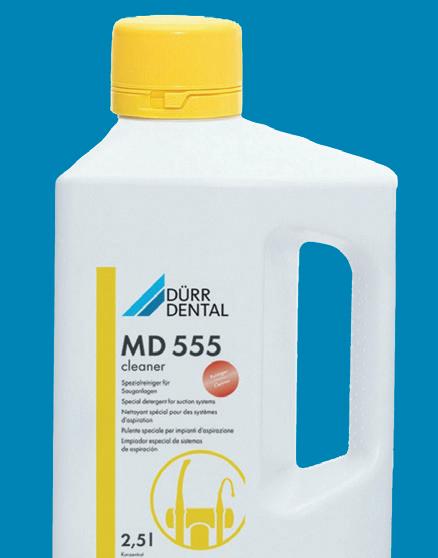


Bactericidal, with yeasticidal activity against enveloped viruses (enveloped viruses incl. HBV, HCV, HIV, and coronaviruses), non-enveloped adenoviruses and noroviruses.
Orotol Plus disinfects, deodorises and cleans all suction and amalgam separating systems and spittoon bowls. Use alongside MD555 to descale and physically clean all components of the suction unit and drain lines.
Orotol Plus is non-foaming, designed to protect and care for your suction unit. It’s high-standard material compatibility ensures performance and longevity.
For more information visit www.duerrdental.com/en/products/hygiene


President
Preetee Hylton RDN president@badn.org.uk
Chairman Michelle Brand RDN BSc MA chairman@badn.org.uk
Treasurer Ruth Garrity RDN finance@badn.org.uk
Education Representative Jane Dalgarno RDN MSc education@badn.org.uk

Immediate Past President
Joan Hatchard RDN LCGI FBADN FAETC president@badn.org.uk
For Executive Committee member biographies, please go to the About Us page of the BADN website: www.badn.org.uk
Executive Editor: Pamela Swain MBE MBA FCMI
Managing Editor: James Cooke
Group Sales: Gary Henson
Production Designer: Rob Tremain
Divisional Administrator: Francesca Colclough
Managing Director: Ed Hunt
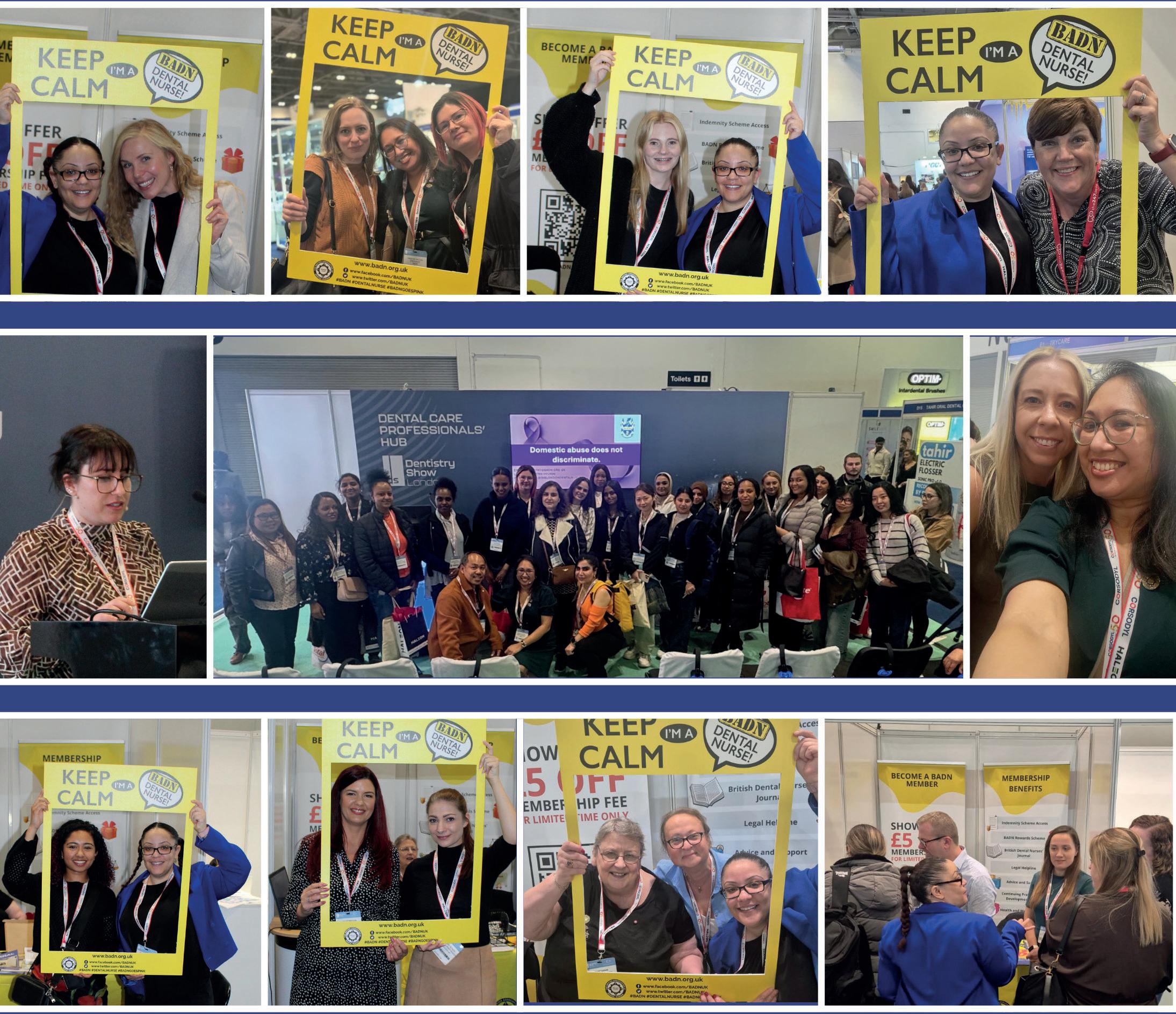
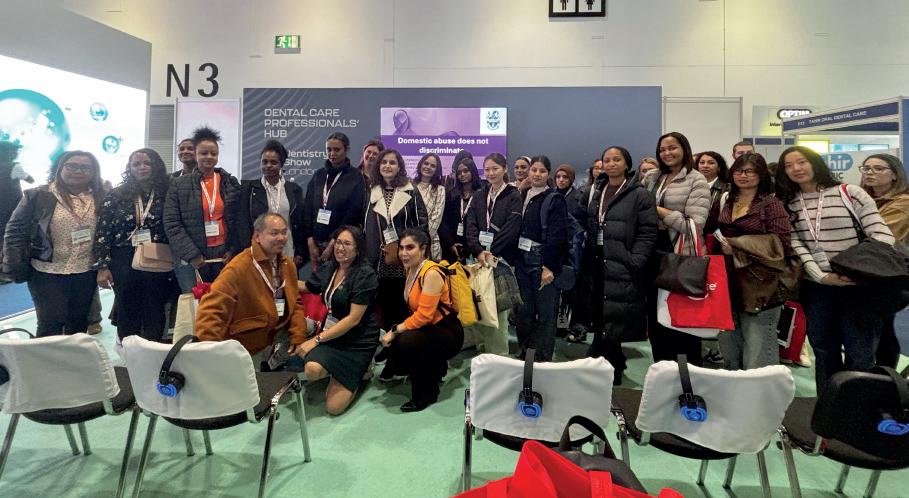
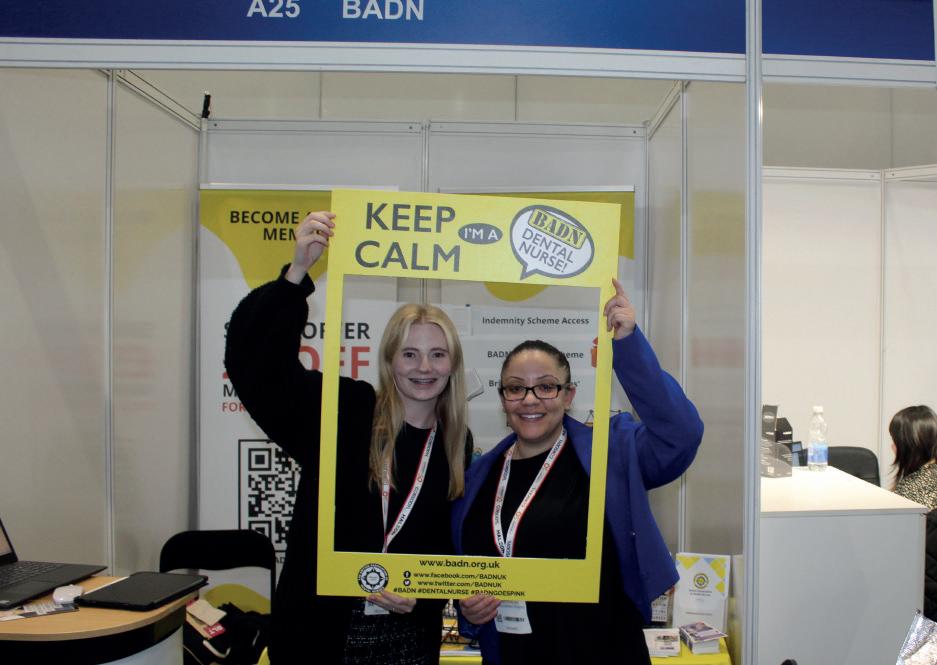
Front Cover: A look back at Dentistry Show London 2025
Please address all correspondence to: Executive Editor Email: pam@badn.org.uk Tel: 01253 338365
Membership Subscriptions: Full Members – £50 Student e-Associates £15 Associates – £40
Journal Subscriptions: £120 per annum (UK institutions only) £150 per annum (overseas institutions only)
Printed by Buxton Press Limited ISO14001 certified © British Dental Nurses’ Journal Published by Purple Media Solutions Registered in England. Registered number 5949065
The views expressed in The British Dental Nurses’ Journal are not necessarily the views of the magazine, nor of BADN.
Connect on Facebook: www.facebook.com/BADNUK

Autumn always brings with it a sense of reflection, a gentle pause between summer and winter. Perhaps now is the time to slow down and look at how far we all have come as a profession – and as individuals.
Lately, I have been reminded how strong, capable, and compassionate our community of dental nurses is; whether in meetings, conferences, or training facilities, I have witnessed much energy and passion for making dental nurses visible and valued.
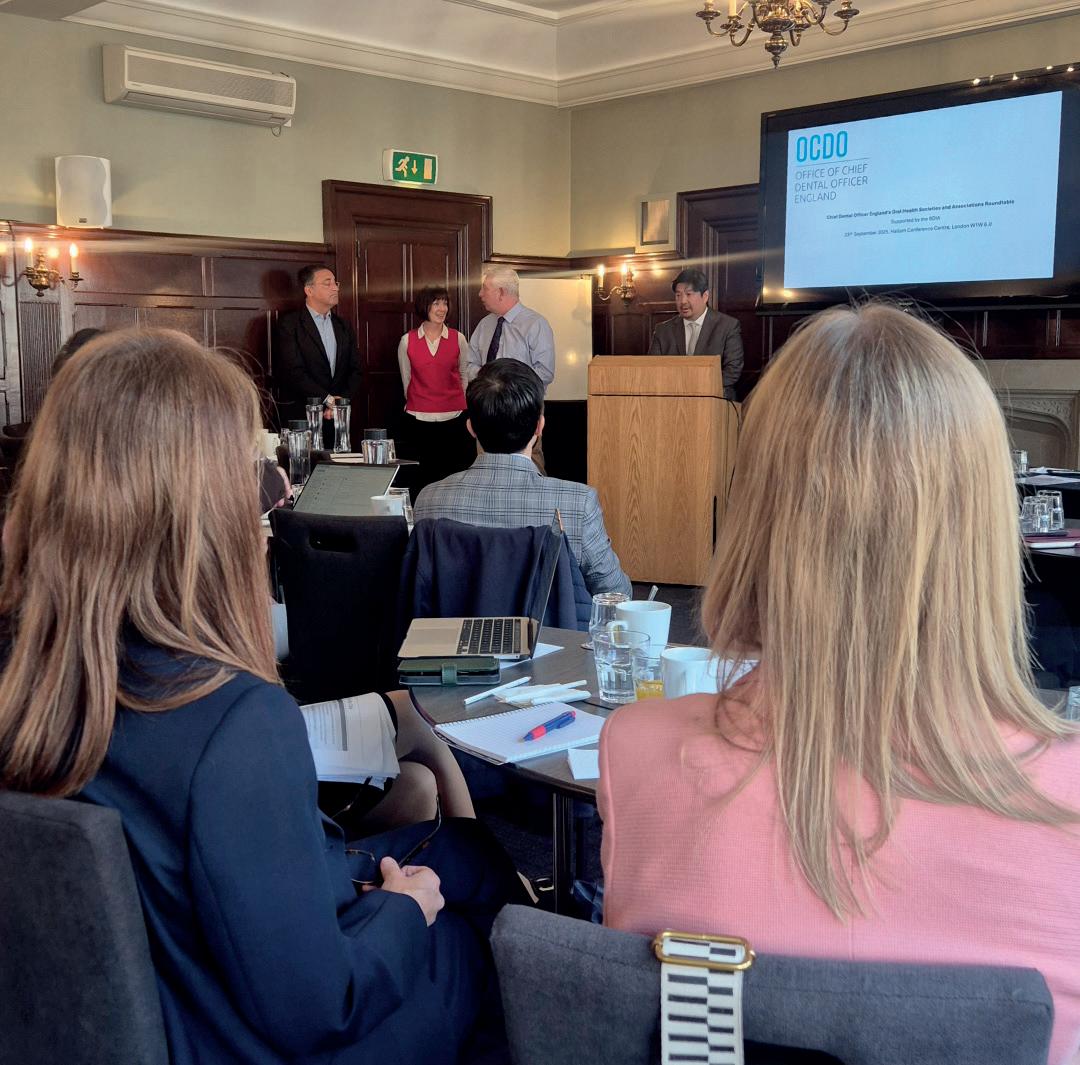
At the Oral Health Associations and Societies Roundtable in London, where I represented BADN, it was encouraging to hear recognition of the vital role dental nurses play in patient care. The conversation focused on the government’s 10-Year Health Plan and how the entire oral health team can be strengthened. I left with a deep sense of pride, knowing that our profession is finally being seen as the backbone of oral healthcare, not just a supporting act.

care, to notice, and to create safe spaces for our patients and colleagues. Sometimes the quietest conversation can make the biggest difference.
October also brings us Stoptober and World Mental Health Day, both of which remind us how closely oral health and general wellbeing are connected. Encouraging a patient to give up smoking or checking in with a colleague who seems withdrawn may seem small, but these acts of kindness build healthier teams and communities. Dental nurses have a unique gift for empathy; let us use it not just in our surgeries, but in our daily lives.

That same pride stayed with me when I visited Bupa’s new training campus in Staines. It is an extraordinary space, designed with education and innovation at its heart – from life-sized manikins and clinical training rooms to the immersive virtual reality suites.
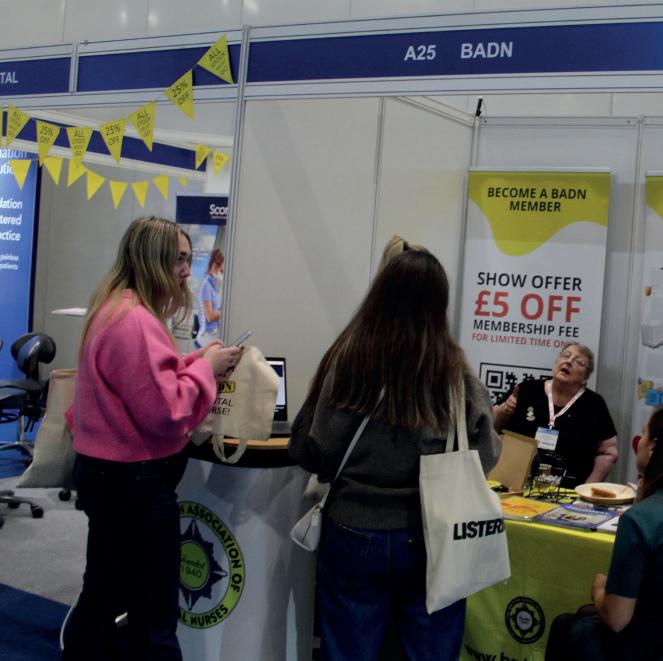
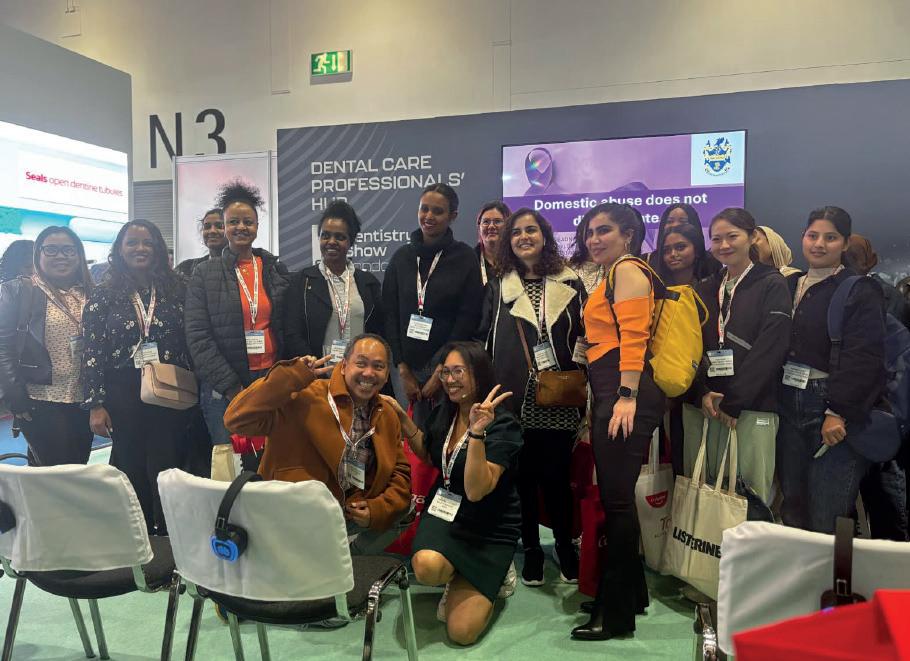
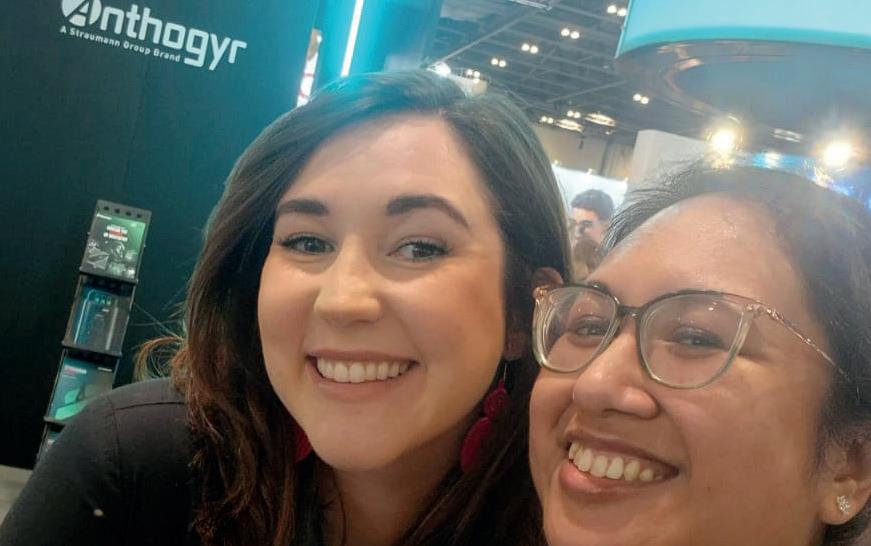
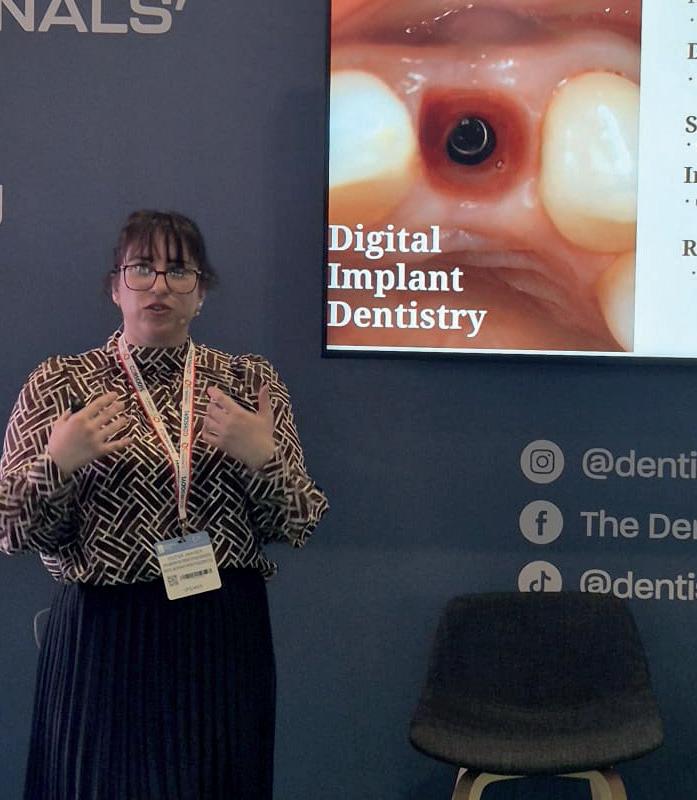
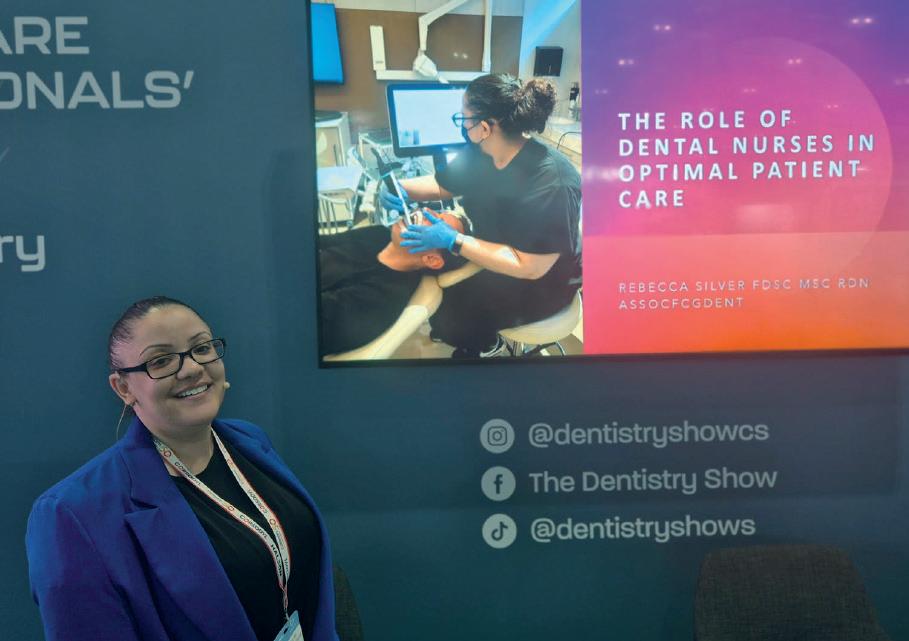
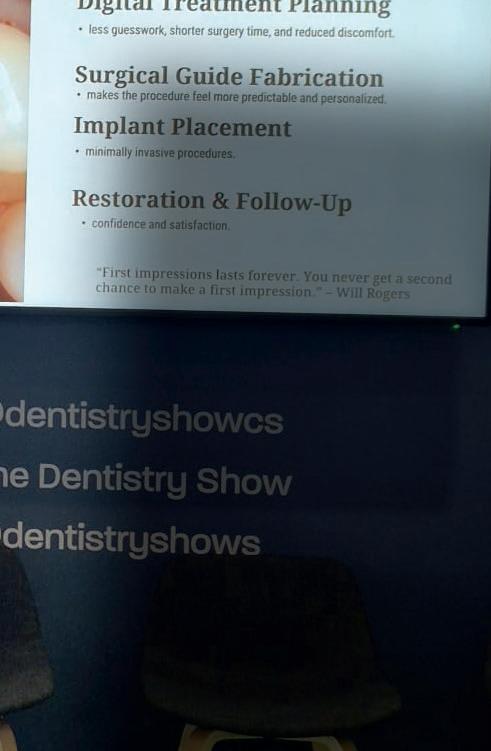
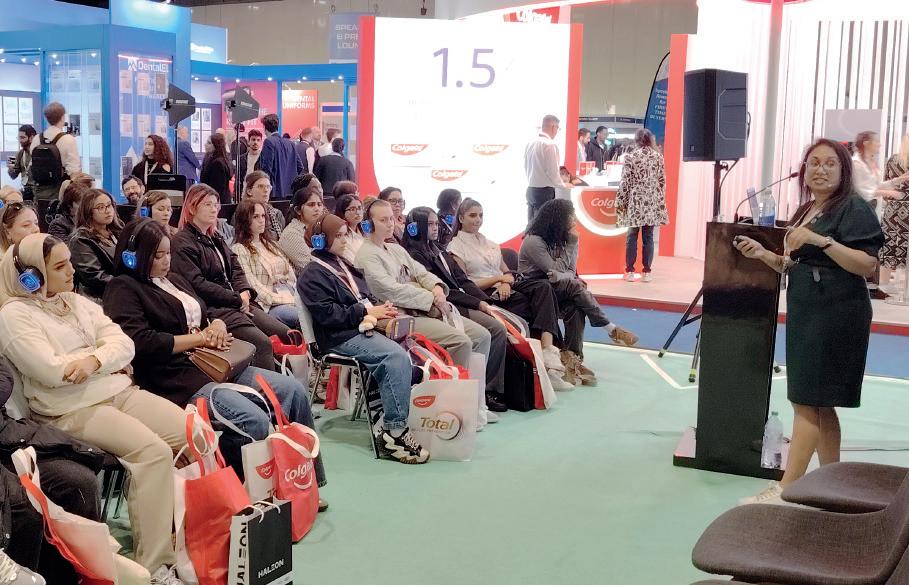
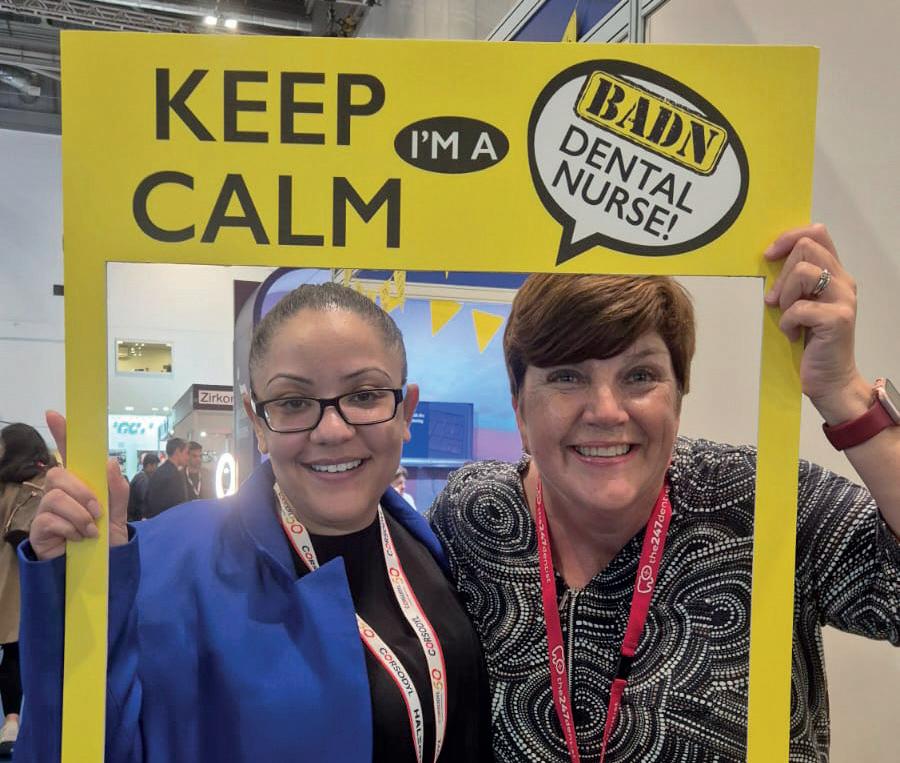
Dentistry Show London was another joyful highlight this autumn – full of learning, laughter, and connection. I am proud of our BADN representatives, who took to the stage and spoke with such confidence and warmth. Eszter Janusek offered a fascinating look into the patient journey in implant dentistry; Rebecca Silver energised the room with her engaging session on teamwork and professional identity; and I had the privilege of speaking on behalf of the College of General Dentistry about our responsibility in supporting our patients and colleagues experiencing domestic abuse.
This season has also brought significant changes, with the General Dental Council’s revised Scope of Practice coming into effect. It is less prescriptive and encourages the exercising of professional judgement. It also reminds us of our shared responsibility to maintain high standards and to keep patients at the heart of everything we do.
I would also like to extend a warm welcome to Dr Helen Phillips, the new Chair of the GDC. Her experience across regulation and public service brings valuable insight at a pivotal time, and I look forward to working together to build stronger, more trusting relationships between the GDC and oral healthcare professionals.
As October is Domestic Violence Awareness Month, this topic feels especially important. We often see what others might miss: a hesitation, a bruise, a moment of fear. Our role as a dental nurse is not to diagnose, but to
Finally, I would like to use this opportunity to welcome Danielle Child to our panel of representatives, as well as congratulate Natalie Marucci, our representative for the South West, on successfully passing her first CQC inspection.
As we move through the rest of autumn and into winter, I want to say thank you all, for your resilience, your kindness, and your unwavering professionalism. It has been an inspiring few months, and I am proud that we are not only shaping the future of dental nursing but that we are also shaping a future built on respect, compassion, and care.
With warmth,
Preetee Hylton RDN BADN President

The British Association of Dental Nurses (BADN), the UK’s professional association for dental nurses is proud to introduce the BADN EduPortal — a new members-only hub designed to support dental nurses in their professional journey.

The EduPortal brings together a wide range of courses, webinars, and educational resources to help members expand their knowledge, enhance their skills, and continue their development within the dental profession.
Working closely with our trusted education partners, we’ve created a platform where BADN members can access exclusive discounts, expertled courses, and high-quality training opportunities — all in one place.
Each partner offers a range of accredited courses designed to meet the evolving needs of dental nurses, from Oral Health Education and Dental Radiography to Fluoride Varnish Application, Decontamination Compliance, and more.
BADN members can enjoy discounts of up to 15% or more on selected courses, with some partners offering even higher savings. These benefits are designed to make continuous learning more accessible — empowering members to build confidence, progress in their careers, and stay at the forefront of best practice.
All discounts and exclusive offers can be accessed directly through the Members’ Area of our website www.badn.org.uk via the BADN EduPortal. Current BADN members simply log in, explore the list of providers, and choose the course that best suits their professional goals.
The BADN AGM will be held on Saturday 22 November at 2pm via MS Teams. All current members will shortly receive an email with instructions for registering for the AGM, and the Agenda and supporting documents will be posted in the members’ area.
At the AGM, the following will take up their 2 year posts:
• Chairman and General Secretary: Ruth Garrity RDN
• President-elect: Carolyn Roberts RDN LCGI
• Treasurer: Rebecca Silver RDN MSc Motions for the AGM and items for Any Other Business must reach the Chief Exec (pam@badn.org.uk) by close of business on 7 November 2025.
President Preetee Hylton and Education Representative Jane Dalgarno will continue in their posts until the 2026 AGM.
UK dental charity SmileStar are thrilled to announce the winner of their competition to select one lucky dental nurse to join an overseas outreach programme in 2026.
In partnership with leading UK manufacturer, Perfection Plus, and chosen by an industry panel including SmileStar founder Dr Mitesh Badiani, the lucky winner was Georgiana Vlad of Hemel Smile Studios in Hemel Hempstead.
SmileStar and Perfection Plus were looking for a dental nurse who was passionate about dentistry and excited to use their skills to help those in need. They were also looking for innovative ways in which the winner was planning to raise an initial £500 themselves, with the rest of the costs being covered by Perfection Plus.
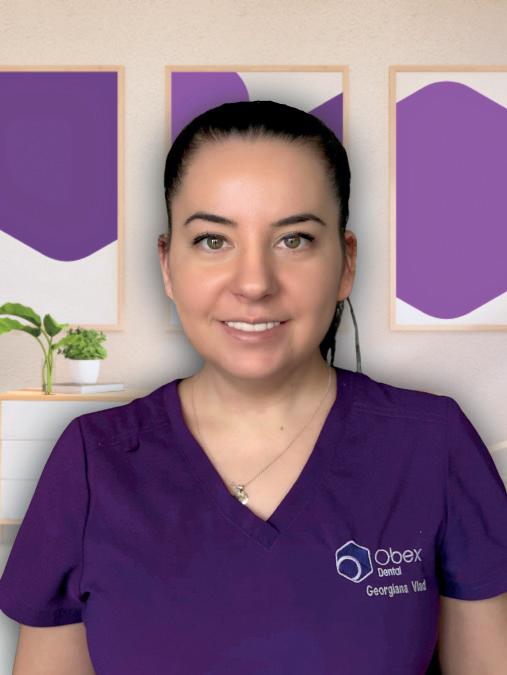
Georgiana was selected from a significant number of high quality applicants, and the panel decided to choose her based on her enthusiasm for dental nursing and oral care and giving back to underprivileged communities, as well as her unique take on how she would raise the £500.
Georgiana’s idea was to run a special event called “Smiles for Africa”, encouraging the dental team in her practice to create unique artwork reflecting their idea of the perfect smile, which will be auctioned off to raise the money.
In her application, Georgiana remarked that, “it will be a fun, creative way to highlight the importance of oral health and the joy a smile can bring. It will not only raise funds, but create new connections, and for the team to take part in this journey in a personal, meaningful way.”
The panel were especially impressed with Georgiana’s enthusiasm and passion for caring for patients in underprivileged areas, noting her comments that even simple treatment can change someone’s life. Drawing on her own experiences growing up without easy access to safe dental care, Georgiana impressively outlined how her own experience and personal empathy would make her a great asset to the SmileStar team on their outreach programme.
In response to learning she was chosen as the winner, Georgiana commented, “I’m absolutely thrilled and so grateful to have been selected for the subsided funded place on the SmileStar outreach programme. I’m beyond excited to bring the “Smiles for Africa” idea to life with the support of SmileStar and Perfection Plus. I can’t wait to get started and be part of something so impactful!”
Dr Mitesh Badiani, founder of SmileStar said, “Huge congratulations to Georgiana on this well-deserved recognition. Your dedication to oral health and community care really shone through. What an incredible opportunity you have to make a difference with SmileStar’s outreach programme!”
Samantha Wells, Managing Director of Perfection Plus stated, “We are absolutely delighted by the great response and high quality applications received for this competition. Georgiana is a well-deserved winner, drawing on her own personal experience which has given her a genuine desire to help others. Her ideas are both innovative and exciting and we look forward to supporting her and seeing some of the amazing artwork too!”
In addition to winning this part-funded place, Georgiana will receive a year’s free membership from the British Association of Dental Nurses, as reward for her excellent application and passion for dental nursing.
Georgiana will join an outreach programme in 2026, and Perfection Plus and SmileStar will be documenting her fundraising efforts and following her progress in the build-up to the trip next year.














The Oral Health Foundation has named former dental nurse
Dr Rachael England as its new Head of Policy and Advocacy.
Dr England brings extensive experience in public health, advocacy, and strategic communications, having spent the last six years at FDI World Dental Federation in Geneva. There, she led global campaigns, developed national policies on sugar reduction, and worked with governments, NGOs, and international health organisations to influence policy and drive forward action on oral health.
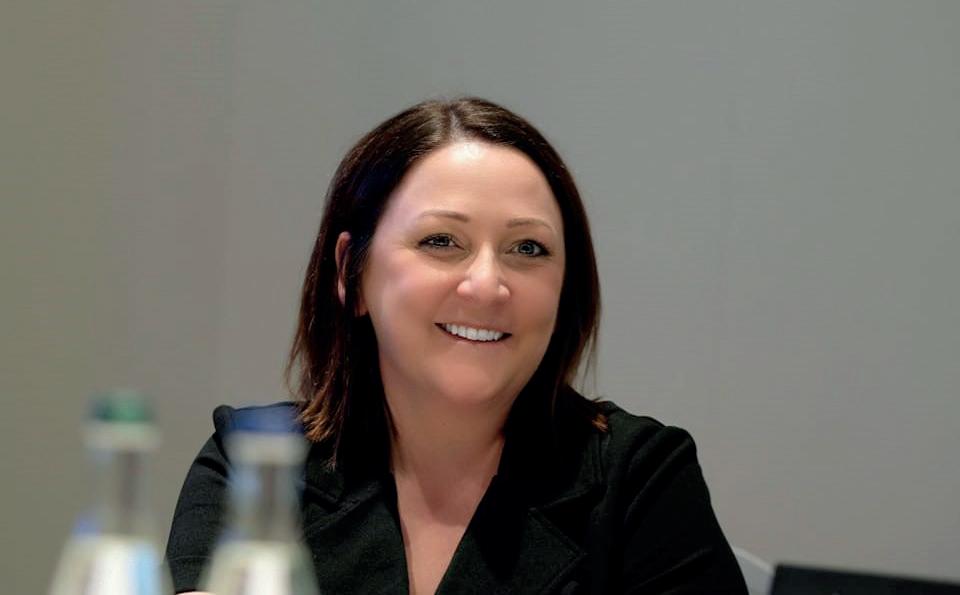
Her career has spanned roles in research, clinical practice, and management, alongside founding and leading community health projects such as Maasai Molar, a charity integrating oral health into primary healthcare in Kenya. She is a Fellow of the College of General Dentistry and holds a Doctorate in Public Health, as well as a Master’s in Public Health.
In her new role, Dr England will shape the Oral Health Foundation’s policy positions, lead advocacy strategies, and work with stakeholders across government, healthcare, and industry to reduce oral health inequalities. Policy and advocacy will be one of the charity’s key areas of work in its new Strategy to 2030. She will also play a central role in advancing the charity’s campaigns, including National Smile Month and Mouth Cancer Action Month.
Dr England said: “I am honoured to be joining the Oral Health Foundation. The organisation has a proud history of championing better oral health, and I look forward to building on this legacy by developing evidence-based policy and forging partnerships that can deliver meaningful, long-term change.”
Dr Nigel Carter OBE, Chief Executive of the Oral Health Foundation, welcomed the appointment: “We are thrilled to have Rachael on board. Her global experience, expertise in advocacy, and proven ability to influence public health agendas will be invaluable as we continue our work to improve oral health and reduce inequalities.”
BSPD’s Annual Scientific Conference, hosted in London in September, saw the Society welcome Dr Urshla Devalia as President for 2025-26. Dr Devalia takes over the reins from Dr Shannu Bhatia.
Amongst many professional roles, Dr Urshla Devalia, widely known as Oosh, is a Consultant in Paediatric Dentistry, at the Royal National ENT & Eastman Dental Hospitals, University College London Hospitals NHS Trust. She is also the National Lead for Mini Mouth Care Matters (Mini MCM) – and it is this role that will form the thrust of her focus during her BSPD Presidential year.
Mini MCM is an initiative designed to systematically implement and assess the effectiveness of evidence-based oral health practices within hospital settings. Building on the established principles from the Delivering Better Oral Health toolkit, Mini MCM aims to demonstrate how these practices can be embedded effectively and sustainably in hospital environments. The programme empowers medical and allied health professionals to ensure that oral health becomes an integral part of holistic patient care in new clinical contexts. Launched in July 2018, Mini MCM has since been expanded to numerous healthcare settings and is endorsed by BSPD and the Royal College of Paediatrics and Child Health (RCPCH). However, Oosh’s mission is to go further and push for Mini MCM to receive systemwide support and become part of the standard healthcare toolkit.
Dr Devalia has long been a passionate advocate for whole-person healthcare and believes in harnessing the full potential of the oral health workforce. She champions cross-sectional working, ensuring that gaps in workforce provision are addressed and that expertise is delivered to patients in settings closer to their homes. A central focus of Dr Devalia’s work is ensuring equitable access to dental care for vulnerable children and young people. Her professional energies go into identifying and addressing barriers to care, both regionally and nationally, and she is dedicated to supporting initiatives that improve outcomes for those most at risk.
Dr Oosh Devalia, PresidentElect, BSPD said: “I am honoured and excited to be taking over the role of President of BSPD in September. For over 70 years, the Society has been laying down the foundations for children and young people to enjoy a lifetime of good oral health. Recently, BSPD has focused specifically on the most vulnerable children in our communities, and I see that recognising the importance of caring for a child’s mouth while they are in hospital as standard practice is part of this responsibility.
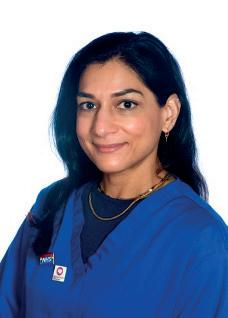
“I created Mini Mouth Care Matters seven years ago after seeing first-hand how the oral health of a child who spends a prolonged time in the hospital can suffer. I have even witnessed children’s critical cancer treatments and heart operations having to be postponed due to infections in the mouth. This is why I believe that simple training for healthcare professionals to look inside a child’s mouth as part of their standard checks is so important. Every hospitalised child should have the right to receive preventative oral healthcare measures, such as twice daily toothbrushing during their hospital stay. Mini MCM is simple and quick to perform.
“I am looking forward to working with colleagues at BSPD to push for Mini MCM to become mandatory as we encourage healthcare professionals to remember that oral health is an integral part of overall health and wellbeing. It is our duty to ensure that children who are vulnerable due to their health challenges and in our care are properly supported.”








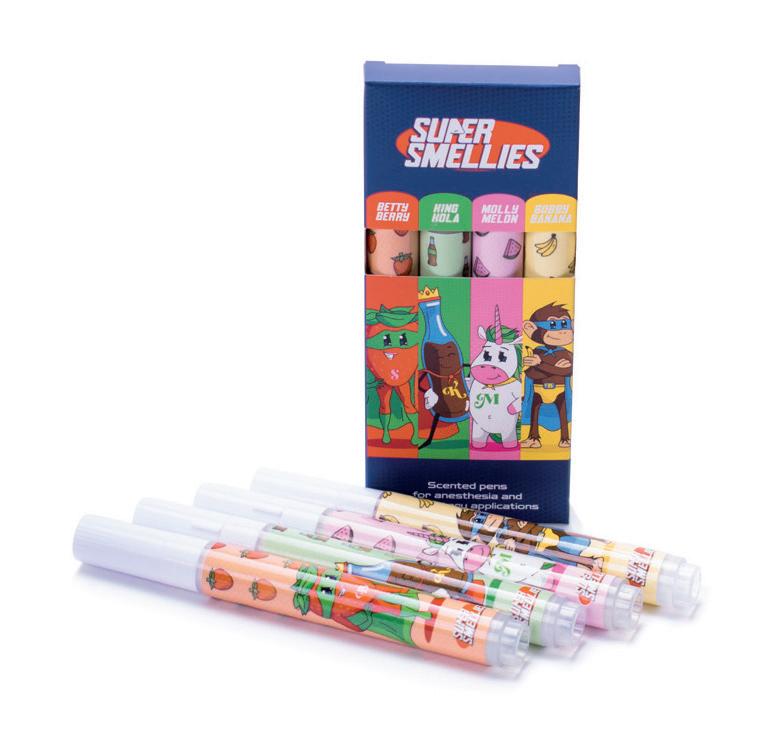














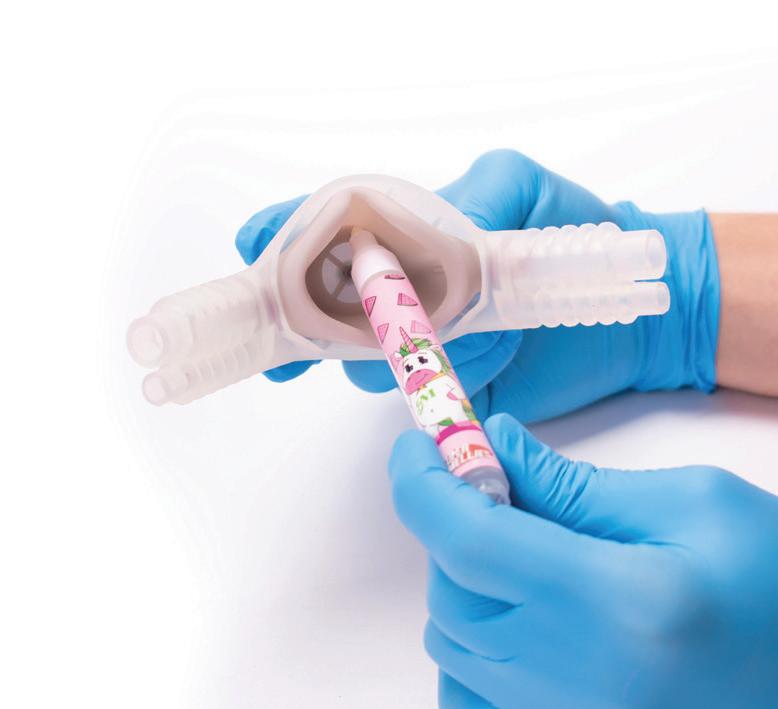
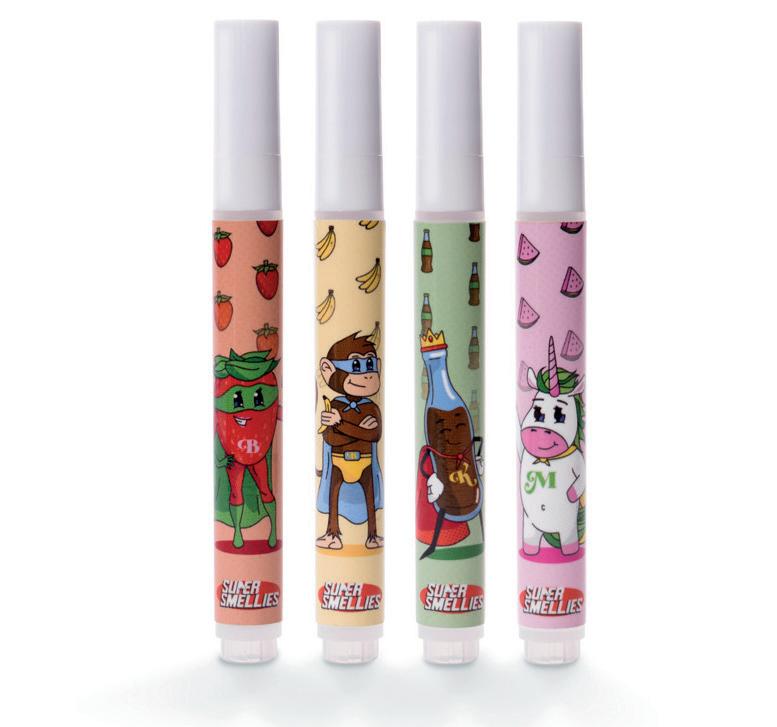
Introducing the new Super Smellie pens; A safe way to add a great scent to your unscented nasal masks.
New research from Bupa Dental Care highlights that dental professionals are increasingly seeking supportive, flexible workplaces that offer development opportunities and a culture that supports well-being.
• Work-life balance (35%), career development (31%) and a supportive culture (29%) top the list of priorities for dental professionals
• Mental health support (40%) and mentoring (38%) are important to their well-being
• Bupa Dental Care launches new campaign to help dental teams feel at ease in their careers
Dental practitioners prioritise work-life balance (35%), training and development (31%), and a collaborative, supportive culture (29%) when it comes to their career. At the same time, one in three (33%) feel there are limited opportunities for progression and a lack of mentoring. A quarter of respondents said they want to make a meaningful impact in the industry, while 24% want to feel valued and work somewhere they are proud of.
Dental professionals also emphasised that access to mental health services (40%), peer mentoring (38%), and better support for physical pain (38%) would enhance their well-being at work. More than a third (37%) also stated that a more flexible work environment would make a difference to their roles, particularly during key life events, such as menopause or when they have caring responsibilities.
The findings come as Bupa Dental Care launches its Feel at Ease campaign, which is designed to support dental professionals in feeling confident and cared for in their careers. The campaign also supports the patient experience, recognising that dental anxiety remains a common barrier to care. By helping patients feel more comfortable in the dentist’s chair, and supporting dental professionals in their careers, the campaign takes a holistic approach to well-being for all.
Mark Allan, General Manager for Bupa Dental Care, said: “The dentist’s chair is at the heart of every surgery, and we want our people to feel as supported as the patients they care for every day. That’s why our Feel at Ease campaign prioritises both sides of the chair –making it a place of comfort for patients, while instilling confidence and support for our teams, helping them thrive in their careers, and in turn, deliver the best possible care.
“Our findings highlight the importance of supporting well-being in the workplace as well as encouraging professional growth through rewarding career paths. This is something we’re proud to offer at Bupa Dental Care, recognising that looking after our practice team’s health and well-being and future goals helps them be the best version of themselves.”
BADN President, Preetee Hylton attended the CDO England Societies and Associations roundtable, where the conversations centred on how we can make the most of the entire oral healthcare team and prepare for the government’s 10-Year Health Plan. The event brought together leaders from across industry to reflect openly on the pressures we face and to share ideas for practical, implementable solutions.
BADN appreciates the recognition given to dental nurses throughout the discussion. For too long, dental nursing has often felt invisible, but it was heartening to hear the role of the dental nurse acknowledged and valued as a fundamental part of the oral healthcare team. There was a clear understanding that sustaining and supporting dental nurses, dental hygienists and dental therapists within the NHS requires investment, incentives, and a commitment to building meaningful career pathways.
BADN supports using the full range of skills within the team to improve access, prevention, and effective patient care. The language we use during the patient journey matters; educating the public that they are cared for by the entire oral healthcare team was a key takeaway.
BADN appreciates being part of such constructive dialogue, and to ensure the voices of dental nurses were heard at a national level. We look forward to continuing this work and helping to shape a future where every member of the oral healthcare team is visible, respected, and supported to thrive.





















Guests join us from all areas of the industry to provide their own unique perspectives on a wide range of topics, from manufacturers and figureheads of various dental organisations, to those in the trenches working in practice, and more.








For








































Nothing is o limits in The Probe Dental Podcast, so be sure to tune in wherever you get your podcasts! The Probe Dental Podcast features discussions that explore all areas of the British dental sector.






























The General Dental Council (GDC) has announced the appointment of Dr Helen Phillips as its new Chair from 1 October 2025, following the completion of Lord Toby Harris’s four-year term in September 2025.
Dr Phillips brings a wealth of senior experience across a 30year career in sectors including insurance, legal, social care and further education.
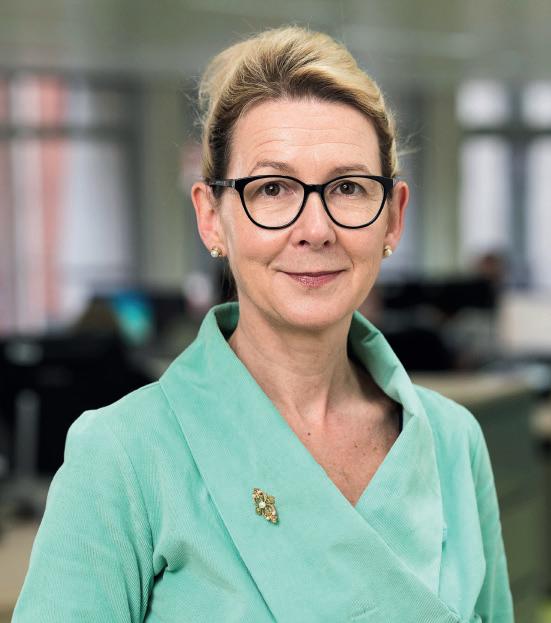
A former senior environmental regulator, Dr Phillips has held numerous non-executive roles since 2015. With expertise in professional standards, she currently chairs the Chartered Insurance Institute and NHS Professionals, a workforce partner to the NHS, putting thousands of highly skilled healthcare professionals into NHS Trusts and other places to care.
Dr Phillips has also chaired the Legal Services Board and Chesterfield Royal Hospital NHS Foundation Trust, where she served during the pandemic, and is an independent Commissioner at the Gambling Commission. On her new role at the UK’s regulator of more than 125,000 dental professionals, she outlined her vision for upstream regulation and supporting the dental professions to remain competent and confident throughout their careers:
“My ambition is that dental care professionals feel a sense of pride – never fear – in being regulated by a trusted, effective, proportionate regulator that embodies our values of being respectful, transparent, inclusive and purposeful.”
Dr Phillips emphasised her commitment to working with the dental professions to address systemic challenges: “We must work collaboratively with the dental sector to make meaningful progress in addressing health inequalities and the growing problem of equitable access to dental services for all.”
Her appointment comes as the GDC consults on its new Corporate Strategy 2026-2028, which focuses on building trust with the profession, moving away from a climate of fear, and adopting more supportive approaches to regulation that prioritise learning and professional development over punitive measures.
Lord Toby Harris, the outgoing Chair, welcomed the appointment: “I am delighted that the GDC has secured the services of such an outstanding leader as Dr Helen Phillips. She has exceptional experience in regulation across multiple sectors, combined with her deep understanding of healthcare challenges. I know her knowledge and expertise will ensure we continue building trust with the professions.”
Dr Phillips has a BSc in Zoology and a PhD in Environmental Science from University College Dublin. She has previously served as a Board Director of Yorkshire Water and chair of Loop Customer Management Ltd, a Kelda Group subsidiary.
Prior to her non-executive career, she served as founding Chief Executive of Natural England and Director for Wales of the Environment Agency.
Dr Phillips added: “I look forward to working with my fellow Council Members, the Chief Executive and the whole GDC team as we gear up to deliver the Corporate Strategy, ensuring we remain an effective regulator that puts public protection at its heart while empowering dental professionals to flourish.”
The appointment follows the Privy Council’s approval, with Dr Phillips set to take up the role in October 2025.

The General Dental Council (GDC), alongside eight other UK healthcare regulators, today published its 2025 annual report on whistleblowing disclosures, covering the period from 1 April 2024 to 31 March 2025.
The joint report demonstrates the healthcare regulators’ continued coordinated effort in addressing whistleblowing concerns and maintaining transparency in how these disclosures are handled.
Key fi ndings for the GDC:
• 79 whistleblowing disclosures received - the same number as last year
• All disclosures resulted in regulatory action taking place, namely the opening of a fitness to practise case
• 46 cases proceeded with regulatory action taken, while 32 were closed due to insufficient information despite efforts to obtain it
• Of the 46 remaining cases, 29 are still being considered at the assessment stage, and may lead to a referral by the Case Examiners
• 51 of the concerns came from dental professionals, 22 from nonregistrants employed in dentistry, and six were anonymous
• Conduct concerns featured in 54 of the 79 disclosures
During the reporting period, the GDC strengthened its approach to identifying and supporting whistleblowers through quarterly reviews and additional verification processes implemented in 2024-25, ensuring appropriate support for those raising concerns.
The GDC also enhanced its approach to managing whistleblowing disclosures through improved quarterly review processes. The regulator completed additional reviews in 2024 and 2025 to confirm the status of individuals raising concerns and ensure they meet the whistleblowing criteria.
The Whistleblowing disclosures report 2025 is published jointly by the GDC with the General Chiropractic Council, General Medical Council, General Optical Council, General Osteopathic Council, General Pharmaceutical Council, Health and Care Professions Council, Nursing and Midwifery Council and Social Work England.
Speaking up to protect patients and maintain public confidence in dental care remains a priority for the GDC, particularly when serious concerns regarding public safety or professional conduct are raised.



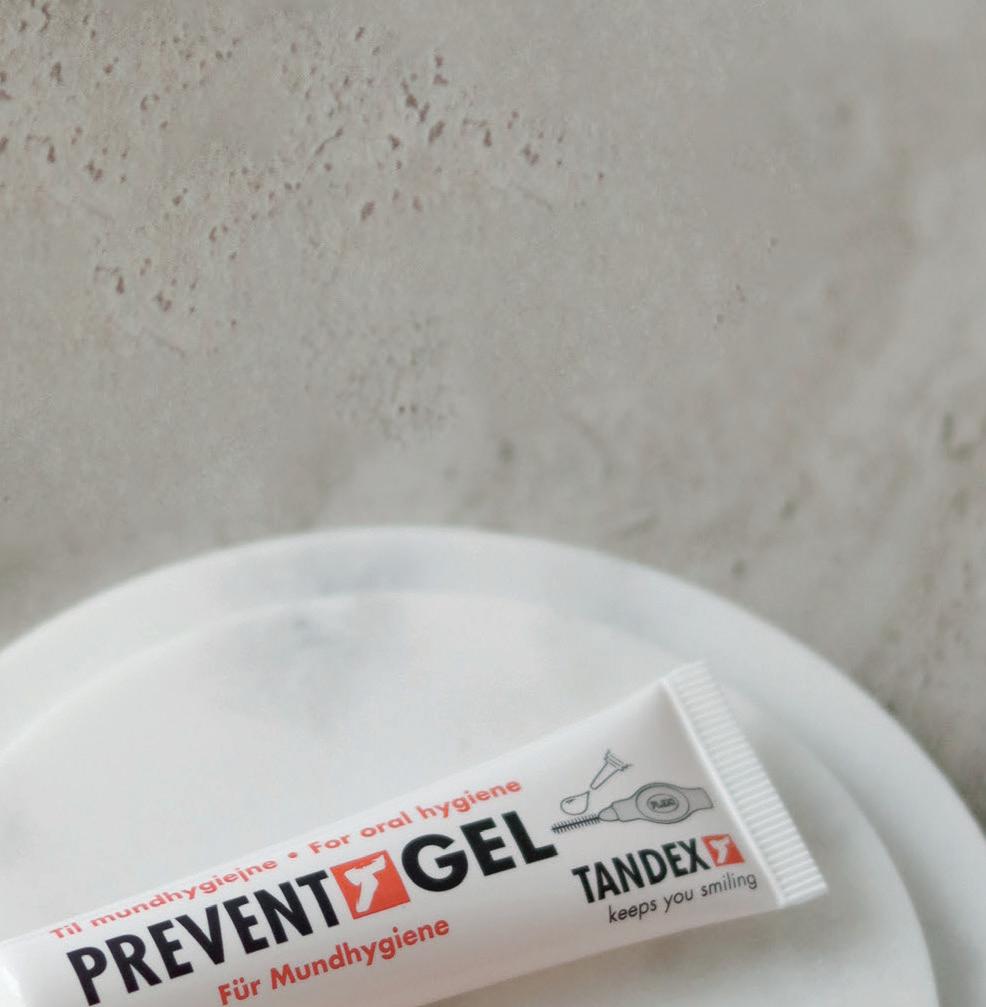

The couple that helps you to achieve even better oral hygiene

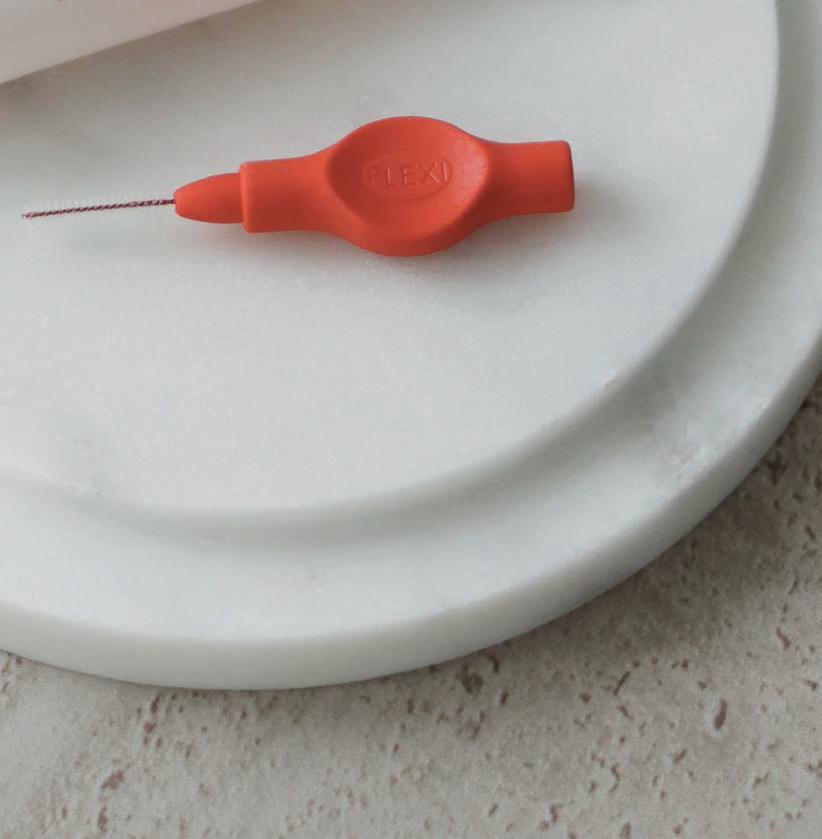


FLEXI
• The special flexible handle makes it possible to angle the handle to achieve better and easier access to all interdental spaces.
• The non-slip handle ensures good grip, even when fingers are wet.
• All brushes have plastic coated wire. This ensures no metal is in direct contact with teeth and gums, thus making them much more comfortable to use and preventing dental injuries.
• 11 sizes ensure that all needs are covered.
• Strengthens the enamel and has an anti-bacterial effect.
• 0.12% chlorhexidine and 900 ppm fluoride.
• The consistency combined with the needle shaped tube end make it easy to apply directly on the FLEXI brush and use wherever needed.
• Pleasant taste of peppermint.
• No alcohol or abrasives.
Author: BADN President Preetee Hylton

October marks Domestic Violence Awareness Month; this a time to reflect, to speak, and to stand with survivors. For me, it is also a time of remembrance and renewed purpose. As a dental nurse and President of the British Association of Dental Nurses (BADN), I share my story not for sympathy, but to shine a light on an issue that affects colleagues, patients, and communities across the UK.
This is only a hint of my experience of domestic abuse. Some memories still hurt deeply, but if sharing them helps even one person feel less alone, or prompts one employer to act with compassion, the pain has a purpose.
I was 19 when I met him; he was 37 - older, confident, experienced. I thought I was in love; in reality, I was being groomed and controlled. From the beginning, the power imbalance was clear, but I could not see it. He told me stories about how other women wanted him, keeping me constantly insecure. The house we lived in was rented only in his name, and he persuaded me to make my bank account joint so he could monitor my spending and help himself to anything I earned. He made me feel embarrassed, compared me to others, and slowly eroded my confidence. When I developed postnatal depression, instead of compassion, I was told I was “possessed.” His religious beliefs became another means of control and shame. He isolated me from friends and family, and with my loved ones thousands of miles away in Mauritius, I became completely dependent on him.
When I reached out for professional support, the path was not straightforward; I confided in my GP about my postnatal depression and the abuse I suspected I was experiencing, they identified it as domestic abuse and tried to help, but soon after, the abuser discovered the disclosure and launched a complaint, attempting to discredit the GP and accusing them of bias. This experience left me shaken and reinforced how difficult it can be for survivors to ask for help safely. It also highlighted the extra layers of vulnerability that come from being young, isolated, and from a minority background.
The turning point came when the situation became life-threatening.
After years of physical, emotional, financial and psychological abuse, one day his behaviour escalated and I realised that if I did not leave, my children and I might never be safe. I tried to call for help, but he stopped me and took away everything that could connect me to the outside world. I involved the authorities, and he was arrested but I did not pursue the case further for reasons which were personal and complex. I fled with my two children, and we were placed in temporary accommodation. We had almost nothing, just a few bags and one another.
There were times when I had no choice but to take my children to work during school holidays, as I could not afford childcare. My employers allowed it, but they were not always pleased, and at times, they would reprimand my children. These moments were stressful and painful, but they also showed me the importance of empathy and flexibility in the workplace. Small accommodations by colleagues or
managers can make a huge difference for staff who are struggling with domestic abuse, financial insecurity, or family responsibilities. I will never forget the kindness of some colleagues and friends who quietly brought bedding, food and clothes. Their compassion meant everything when I had almost nothing left.
My mental health was at its lowest. True to his threats, he took away what I loved most - my children. He played the loving father in public, while painting me as the villain. He launched a smear campaign against me that left me isolated and doubting myself even further. For five to six years, he kept our daughters away from me. Because he had local family and friends’ support and I did not, he was granted custody after years of alienating the children from me.
Then, a few months ago, he contacted me saying he wanted to “make amends” and rebuild the relationship between my children and I. For the sake of my children, I approached this carefully. Today, I do have a relationship with my girls - something I treasure deeply and on which we are consistently working. I do not trust the abuser; I have learnt the importance of firm boundaries, which I have established, therefore protecting my mental health.
I am now blessed with a supportive partner, a stronger relationship with my parents, and good friends and colleagues who have stood by me; having a support network changes everything. We are often at our most vulnerable when we must ask for help, but asking for help is the first step toward safety and healing.
Domestic abuse is not a private matter, it is a public health crisis.
According to the Office for National Statistics (ONS), around 2.3 million people aged 16 and over experienced domestic abuse in England and Wales in the year ending March 2024 - a prevalence rate of 4.8%. Police recorded around 851,000 domestic abuserelated crimes, with over 51,000 prosecutions in the same period. Behind these numbers are real lives, real colleagues, real patients, and stories that rarely get told.
Research from Dr Sandi Dheensa, Dr Alison Gregory, and colleagues at the University of Bristol has revealed that healthcare professionals, including dental nurses, are not immune to domestic abuse.
Their studies found that:
• Around 31% of healthcare professionals have experienced domestic abuse at some point.
• 85% said their abuser interfered with their work.
• 92% said their career was affected.
• Most workplaces had no policy for supporting affected staff.ii
In their 2025 article “Domestic abuse: nurses experience it too”, Gregory and Dheensa highlighted how many nurses and healthcare workers hide their experiences for fear of being judged, disbelieved, or professionally penalised.iii
It is a reminder that compassion must extend inward to the carers, not just the cared-for.
In the oral health industry, we are in a unique position; we build longterm trust with our patients and see them regularly. We notice the subtle changes - missed appointments, bruises, anxiety, controlling partners. Let us remind ourselves that these same signs can exist within our own teams. Dental nurses, dental hygienists, receptionists, practice managers, dentists, patients - any of us could be living with abuse and small practices without HR support, survivors often feel trapped or invisible.
Every dental workplace should have:
1. A clear domestic abuse policy for both staff and patients; BADN has created a Domestic Abuse Response Handbook for Dental Professionals (which include a comprehensive list of helplines) and a Domestic Abuse Policy Template for Employers of Dental Professionals - these can be downloaded from our website.iv
2. Training beyond safeguarding for oral healthcare teams.
3. Confidential support pathways as survivors need safe options.
4. Compassionate leadership - flexibility and understanding can be life-saving.
5. Links with local domestic abuse services.

When I began speaking publicly about my experiences, I realised how many others were hiding similar pain. The silence surrounding domestic abuse in healthcare is deafening and it must end.
As current President of the BADN, I am committed to:
• Embedding domestic abuse awareness into dental safeguarding training.
• Advocating for better workplace support and policy.
• Strengthening partnerships between dental services and domestic abuse organisations.
Our profession is built on care, and that must include care for one another. Domestic abuse affects every layer of society, including our profession. Let us stop seeing it as a private issue and recognise it as part of our duty of care.
If you are reading this as a survivor, please know that you are not alone. If you are an employer, your compassion could change or even save a life. If you are a dental nurse who feels trapped or afraid, remember, asking for help is not weakness, it is courage.
References
i. Domestic abuse prevalence and trends, England and WalesOffice for National Statistics. (2024, November 27). Gov.uk; Office for National Statistics. https://www.ons.gov.uk/ peoplepopulationandcommunity/crimeandjustice/articles/ domesticabuseprevalenceandtrendsenglandandwales/ yearendingmarch2024
ii. Dheensa, S., Doughty, J., & Gregory, A. (2024). Healthcare professionals as domestic abuse survivors: workplace impact and support-seeking. Occupational Medicine (Oxford, England), 74(7), 514–522. https://doi.org/10.1093/occmed/kqae070
iii. Gregory, A., Coates, H., Barnes, S., & Dheensa, S. (2025). Domestic abuse: nurses experience it too. British Journal of Nursing (Mark Allen Publishing), 34(12), 798–800. https://doi. org/10.12968/bjon.2025.0363
iv. BADN non-members area. (n.d.). Org.uk. Retrieved October 10, 2025, from https://www.badn.org.uk/NewPublic/Non-Members/ BADN-Non-Members-Area.aspx?hkey=449a9b45-995e-48f0842a-12eb70b5f91f


Polly Bhambra reports on the GDC’s latest analysis of DCP working patterns and what it means for dental nurses
If you want to understand the health of UK dentistry, look first to the people who keep it moving: our dental nurses.
The General Dental Council’s latest analysis of dental care professionals’ (DCP) working patterns finally puts numbers behind what many of us have felt for years – a committed workforce, predominantly employed and overwhelmingly clinical, holding practices (and patients) together.
The question is: how do we turn these insights into action that improves careers, and retention?

The GDC’s survey reached 43,692 DCPs (58% of the DCP register), representing 54,600 professional titles (64%). Dental nurses are the largest group by far. And most respondents in the DCP dataset are dental nurses – more than three quarters. That breadth gives the findings real weight in workforce planning conversations.
Look at employment status first. Nearly nine in 10 dental nurses (88%) are employed. With a small proportion self-employed/locum (7%) and around 3% on parental leave. In other words, dental nursing is structurally an employed profession, unlike dental hygiene and therapy where selfemployment is far more common.
Any policy or practice solution that ignores this reality – from pay, to progression, to benefits – will miss the mark.
Now consider how we actually work. Half of dental nurses work 30-40 hours a week. A further 28% work 20-30 hours – a clear signal that fulltime and substantial part-time patterns dominate.
Most nurses are rooted to a single site: around 81% work in one location. With only 11% in two, and a tiny minority commuting between multiple sites (some even seven or more). That stability is a strength for continuity of care and team culture – but it also means that flexibility needs designing into one workplace, not assumed via multi-site rotations.
Where do dental nurses work?
Two-thirds (66%) are in general practice, with around 13% in specialist practices and 5% in dental hospitals.
Geographically, the spread mirrors the wider system: 81% in England, 11% in Scotland, 5% in Wales and 3.3% in Northern Ireland. If you’re commissioning services or recruiting, these are signals about where support and investment will land.
Clinical/non-clinical balance?
Forty-four per cent of dental nurses report being fully clinical. With a further 25% split between clinical and non-clinical work.
That split role is important: it recognises the reality of what dental nurses actually do – decontamination, compliance, coordination, treatment planning support, patient communication – and why ‘chairside only’ job descriptions no longer reflect modern practice.
The funding mix.
More than a third (37%) of dental nurses say they provide a mix of NHS and private care; 22% are private-only with another 10% mostly private. This is a workforce living the everyday reality of mixed practice. And juggling different expectations and administrative burdens within the same week.
Reading between the lines
1. Employed status, limited ladders. When 88% of your workforce is employed, the onus falls on principals and managers to build clear career pathways: lead nurse roles, decon/compliance leads, treatment coordination, radiography, impression taking, fluoride varnish, mentoring and education. Without visible ladders, you can’t be surprised by attrition
2. With 44% fully clinical and a quarter splitting roles, contracts and rotas should explicitly value the “invisible” non-clinical work that keeps the CQC (and the surgery) happy. Build it into job plans, not as overtime favours
3. Because most nurses work in a single location, flexibility must come from smarter scheduling (e.g., school-friendly shifts, predictable rotas, annualised hours), not from expecting people to fill gaps across multiple sites
4. Operating across NHS and private lists requires different communication styles and time allocations. Invest in conversational skills and digital tools that help nurses manage that shift hour-to-hour
5. With a visible cohort on parental leave, re-entry routes matter.
A guide for principals and managers
1. Write the job the way the work is actually done. If your nurses split clinical and non-clinical tasks, reflect that in contracts and pay banding. Create protected time for compliance, stock, audits and patient follow-ups – and stop squeezing it into lunch. Your governance will improve and burnout will fall.
2. Build a visible skills escalator. Map a nurse’s career from day one to senior leadership in your practice. Publish it. Talk about it. Fund it.
3. Rethink flexibility where it’s needed most – on one site. Because 81% of dental nurses work in a single location, consider school-hours clinics, fixed ‘A-day/B-day’ rotas, and predictable Saturdays on rotation. Small changes in predictability are often worth more than abstract promises of ‘flexibility’.
4. Train for mixed-model communication. With 37% working across NHS and private in the same role, invest in short, scenario-based training. Patients will feel better informed resulting in improved uptake.
5. Create a confident return pathway. Offer refresher sessions for those coming back from parental leave, pair them with a mentor and stage their return over four to eight weeks. You’ll hold onto talent and cut the time to full confidence.
6. Move beyond “years served” to “skills held” levels of pay. If a nurse adds radiography or takes on decontamination leadership, reflect it in the pay packet. It’s fair – and cheaper than replacing them.
7. Make recognition routine. Whether it’s monthly shout-outs, CPD vouchers or nominating nurses for external awards, visible appreciation changes culture. People stay where they feel seen.
The GDC has given us the data; we need to supply the leadership. If you’re a principal or manager, pick two changes you’ll make this quarter: publish a skills escalator; schedule protected non-clinical time; pilot a family-friendly rota; or launch a returner scheme. Then measure the impact: retention, sickness, satisfaction, patient feedback.
If you’re a dental nurse reading this, know this: the profession is finally talking about you with numbers, not just anecdotes. Use the data in your appraisal. Ask about the skills escalator. Put your hand up for that lead role. Your work is the constant in a system that’s still finding its future.
I started my journey as a dental nurse. Everything I’ve built since –practices, teams, training – rests on the truth this report underlines: dental nurses are not an afterthought. They are the backbone. Let’s design careers, rotas and recognition like we mean it.
Polly Bhambra, Practice Principal at Treetops Dental Surgery.
Follow me on Instagram to keep fighting the corner and making sure dental nurses are heard in dentistry: @pollybhambra

As a registered dental care professional with over 20 years of experience, my journey has taken me from the discipline of military service to the dynamic world of dental practice management, clinical support, and strategic leadership. Today, I oversee Clinical Services for Denplan, guiding specialist teams and shaping the future of dental care delivery. Through every step of this journey, one truth has become increasingly clear – the dental chair is just the beginning.
For many dental nurses, the daily rhythm of chairside support, suction units, sterilisation, and patient prep can feel like the full scope of their professional identity. But beyond the chairside environment lies a world of opportunity. And for those asking, “What’s next?”, the answer is: leadership, innovation, education, and impact.
The traditional image of the dental nurse is evolving. No longer confined to clinical duties, today’s dental care professionals are stepping into roles that influence policy, shape patient experience, and drive strategic change. Whether it’s leading compliance initiatives, mentoring new team members, or contributing to public health outreach, dental nurses are proving that their skills extend far beyond the chairside.
Dental nurses with strong organisational, communication, and problem-solving skills are increasingly stepping into leadership roles. In practice management, they oversee daily operations, coordinate teams, manage patient flow, and ensure compliance with clinical standards. These roles offer the chance to influence how care is delivered, improve patient experiences, and support the wellbeing of the wider dental team. Leadership also provides a platform to advocate for staff development and drive positive change within the practice.
Clinical governance and compliance
With their deep understanding of clinical procedures and patient safety, dental nurses are well-positioned to lead on governance and compliance. These roles involve managing audits, ensuring adherence to regulatory frameworks (such as CQC and GDC standards), and identifying areas for improvement. Dental nurses in these positions help safeguard the reputation of the practice and protect patient welfare. It’s a career path that blends clinical insight with strategic oversight, ideal for those who enjoy detail, structure, and accountability.
Many experienced dental nurses find fulfilment in sharing their knowledge with others. Whether through formal teaching roles, CPD facilitation, or informal mentoring, they help shape the next generation of dental professionals. These roles foster a culture of learning, support team resilience, and promote high standards of care. For dental nurses who enjoy coaching, guiding, and inspiring others, education offers a rewarding and impactful career direction.
Dental nurses are increasingly involved in community based initiatives aimed at improving oral health and reducing inequalities. From school visits and care home programmes to public health campaigns, these roles allow dental nurses to connect with diverse populations and deliver preventive education. Outreach work is especially vital in underserved areas, where access to care is limited. It’s a chance to make a tangible difference in people’s lives, outside the walls of the practice.
As dentistry embraces digital transformation and new models of care, dental nurses are contributing to strategic planning and innovation.
Their frontline experience gives them valuable insight into patient needs, workflow challenges, and service gaps. Dental nurses in these roles help shape future services, implement new technologies, and support sustainable growth. Whether involved in project development, service redesign, or digital integration, they play a key role in driving progress across the profession.
Transitioning beyond the chair doesn’t require abandoning clinical roots, it means building on them. The key is recognising your transferable skills: communication, empathy, organisation, and clinical insight. Seek out training, mentorship, or shadowing opportunities. Ask questions. Share ideas. The profession is ready for your voice.
In my own role, I encourage idea-sharing and innovation, ensuring our teams align with organisational goals while creating sustainable solutions for long-term success. Dental nurses are central to this mission, not just in delivering care, but in shaping how care is delivered. To every dental nurse who has ever wondered what lies beyond the suction unit – your career can be as expansive as your ambition. The dental chair may be where your journey began, but it doesn’t have to be where it ends. With curiosity, courage, and support, you can step into roles that challenge, inspire, and transform both your career and the profession itself.
Lianne
Scott-Munden, Clinical Services Lead at Denplan
Ar ddydd Sadwrn 11fed o Hydref, cefais y pleser o fynychu fy nghynhadledd gyntaf gyda’r Cymdeithas Ddeintyddol.
Cynhaliwyd y gynhadledd yn Gwesty Brenhinol y Celtiaid yng Nghaernarfon, a noddwyd gan Deintyddfa Glandwr
Gan Carolyn Roberts RDN LCGI, Panel Cynrychiolwyr BADN
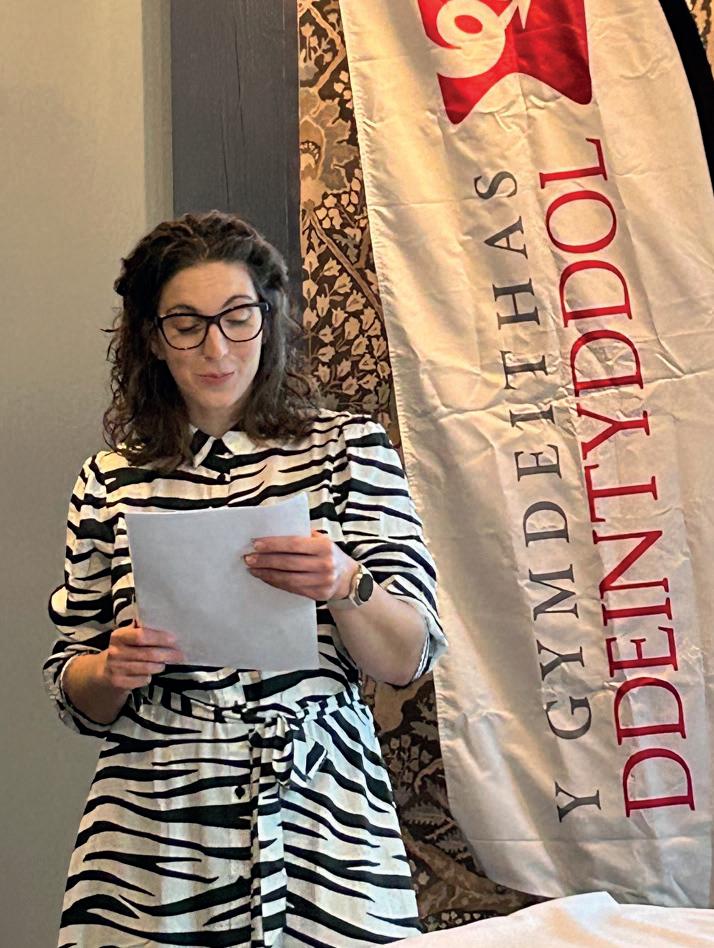
Roeddwn yn gyffrous i fynychu gan fod y diwrnod cyfan yn cael ei gyflwyno drwy gyfrwng y Gymraeg. Y rheswm a’r pwrpas oedd cyflwyno pynciau deintyddol drwy’r Gymraeg. Mae hyn yn dal i fod yn eithaf prin gan fod llawer o’n hyfforddiant deintyddol yn cael ei ddarparu’n genedlaethol ac fel arfer drwy gyfrwng y Saesneg. Roedd hwn yn gyfle gwych i gymryd rhan mewn DPP (datblygiad proffesiynnol parhaus -CPD) perthnasol yn fy iaith gyntaf.
Dechreuodd y diwrnod gyda’r te a choffi arferol a chyfle i rwydweithio’n hamddenol. Roedd tua 40 o gynrychiolwyr yn bresennol, ac er mai grwp bach oedd hi, roedd hynny’n cyfrannu at brofiad mwy personol.
Agorwyd y gynhadledd gan y cyd-gadeirydd, Ms Lois Davies, a groesawodd y siaradwr cyntaf.
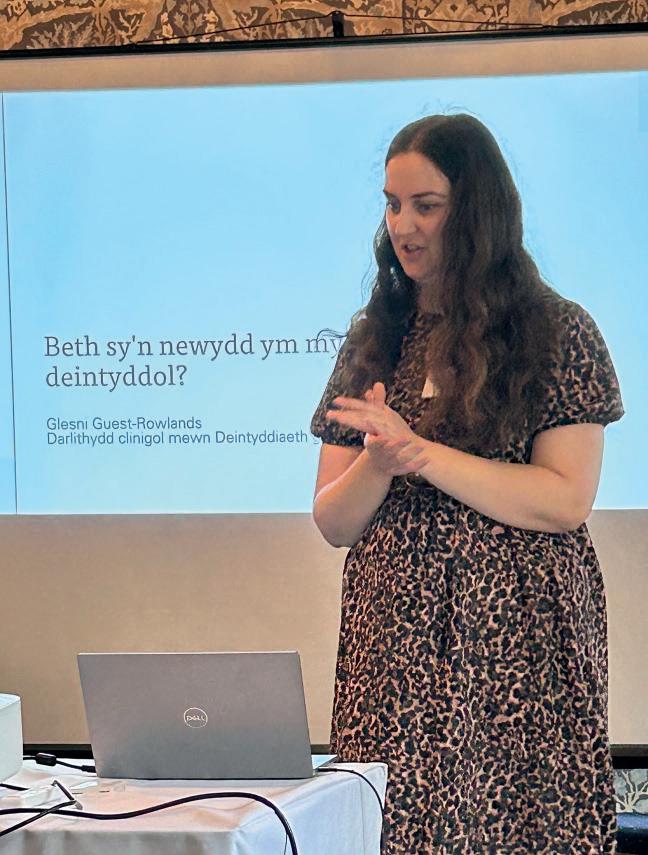
Cyflwynodd Dr Glesni Guest-Rowlands, Darlithydd Clinigol mewn Deintyddiaeth Gofal Arbennig, ddwy ddarlith. Y gyntaf oedd diweddariad ar y datblygiadau diweddar ym maes tawelydd deintyddol. Roedd y cyflwyniad yn addysgiadol iawn ac fe’m gadawodd yn adlewyrchu ar yr amgylchedd deintyddol a sut y gallwn wneud newidiadau cynnil megis goleuo ac aromatherapi i leddfu pryder deintyddol. Un o’r pwyntiau mwyaf oedd sut y gall Nyrsys Deintyddol chwarae rhan allweddol wrth gefnogi cleifion pryderus, gan gynnwys darparu clinigau dan arweiniad Nyrsys Deintyddol ar gyfer rheoli pryder deintyddol.
Ar ôl egwyl fer gyda choffi, te a rhwydweithio, ailymgynghorwyd â darlith ail Dr Glesni.
Teitl y ddarlith oedd “Trafodaeth seiliedig ar achosion mewn deintyddiaeth gofal arbennig”, ac roedd yn ymwneud â’r cymhlethdodau a’r heriau wrth drefnu a darparu gofal i gleifion ag anghenion ychwanegol
a chymhleth. Cyflwynwyd astudiaeth achos o un o’i chleifion gyda anghenion dysgu ysgafn a rhestr hir o gyflyrau meddygol a meddyginiaethau. Trwy ddull sy’n canolbwyntio ar y claf a chydweithio ag arbenigeddau eraill, cafodd y claf ei weld a’i drin yn llwyddiannus. Roedd yn ddiddorol gweld y dull amlddisgyblaethol ac eto roeddwn yn adlewyrchu ar sut y gall Nyrsys Deintyddol gefnogi’r tîm amlddisgyblaethol, a pha mor werthfawr yw’r dystysgrif ôl-gofrestru mewn Deintyddiaeth Gofal Arbennig i Nyrsys Deintyddol.
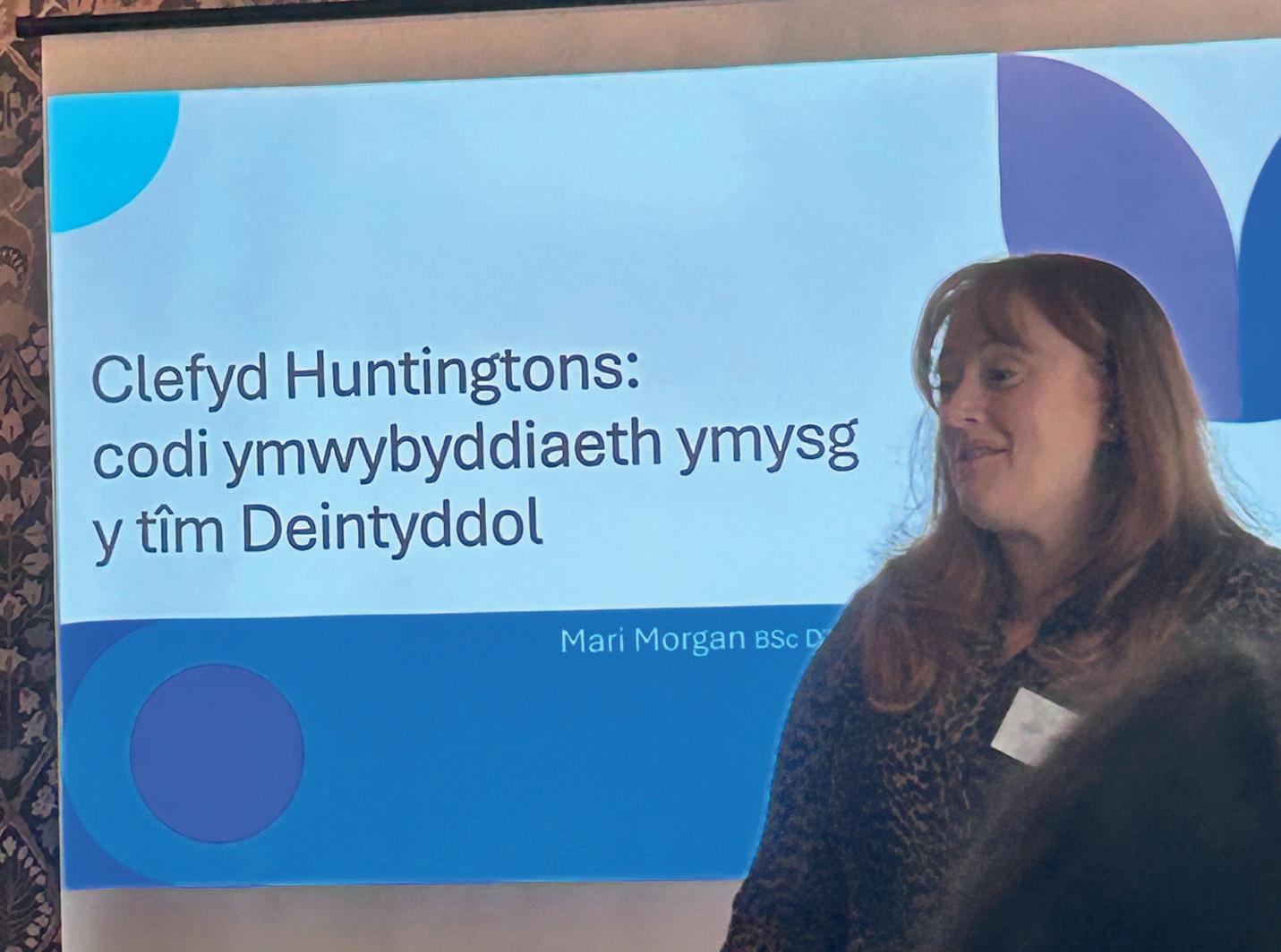
Yn parhau â’r thema gofal arbennig, cyflwynodd Mrs Mari Morgan, Therapydd Deintyddol ac Aelod Cynrychioliadol BADT Cymru, ddarlith ar ystyriaethau a gwybodaeth i’r tîm deintyddol ynghylch cleifion â Chlefyd Huntington. O ddewis cynhyrchion gofal y geg sy’n cefnogi annibyniaeth y claf am gyfnod hirach, i ddeintfrwsh nad yw’n ewynnog ar gyfer cleifion sydd mewn perygl o anadlu hylif neu wrthrychau tramor yn ddamweiniol ynghyd â dysffagia (anawsterau llyncu). Roedd hefyd yn bendigedig clywed am y cynnydd mewn therapi genynnol sy’n gallu arafu dechrau’r clefyd hyd at 75%, fel y nodwyd yn y BMJ.
Yna torrodd y gynhadledd am ginio blasus a mwy o gyfleoedd i rwydweithio.
Agorwyd y prynhawn gan y cyd-gadeirydd Dr Huw Cadwaladr Owen a groesawodd yr Athro Philip Jonathan, Modelwr Ystadegol yn Ysgol y Gwyddorau Mathemategol, Caerhirfryn. Rhoddodd sgwrs ddiddorol iawn ar risg a phosibilrwydd o safbwynt mathemategol. Er nad oedd yn benodol i ddeintyddiaeth, roedd y ddarlith hon yn bwnc agored er cof am un o sylfaenwyr y gymdeithas, T. Arfon Williams. Roedd y ddarlith yn hynod ddiddorol, yn enwedig sut y gallwn gyfrifo tebygolrwydd gyda systemau corfforol megis y tywydd, a sut mae’r cyfrifiadau hyn wedi cynyddu cywirdeb rhagfynegi’r tywydd.

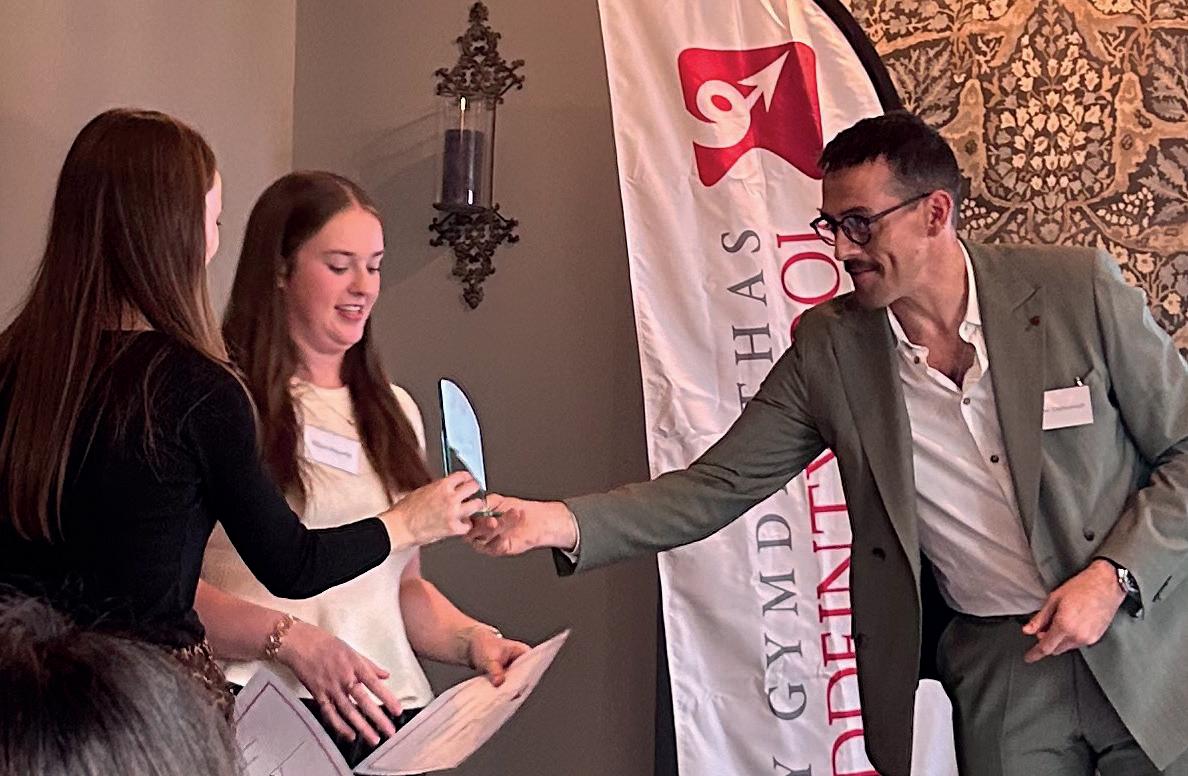
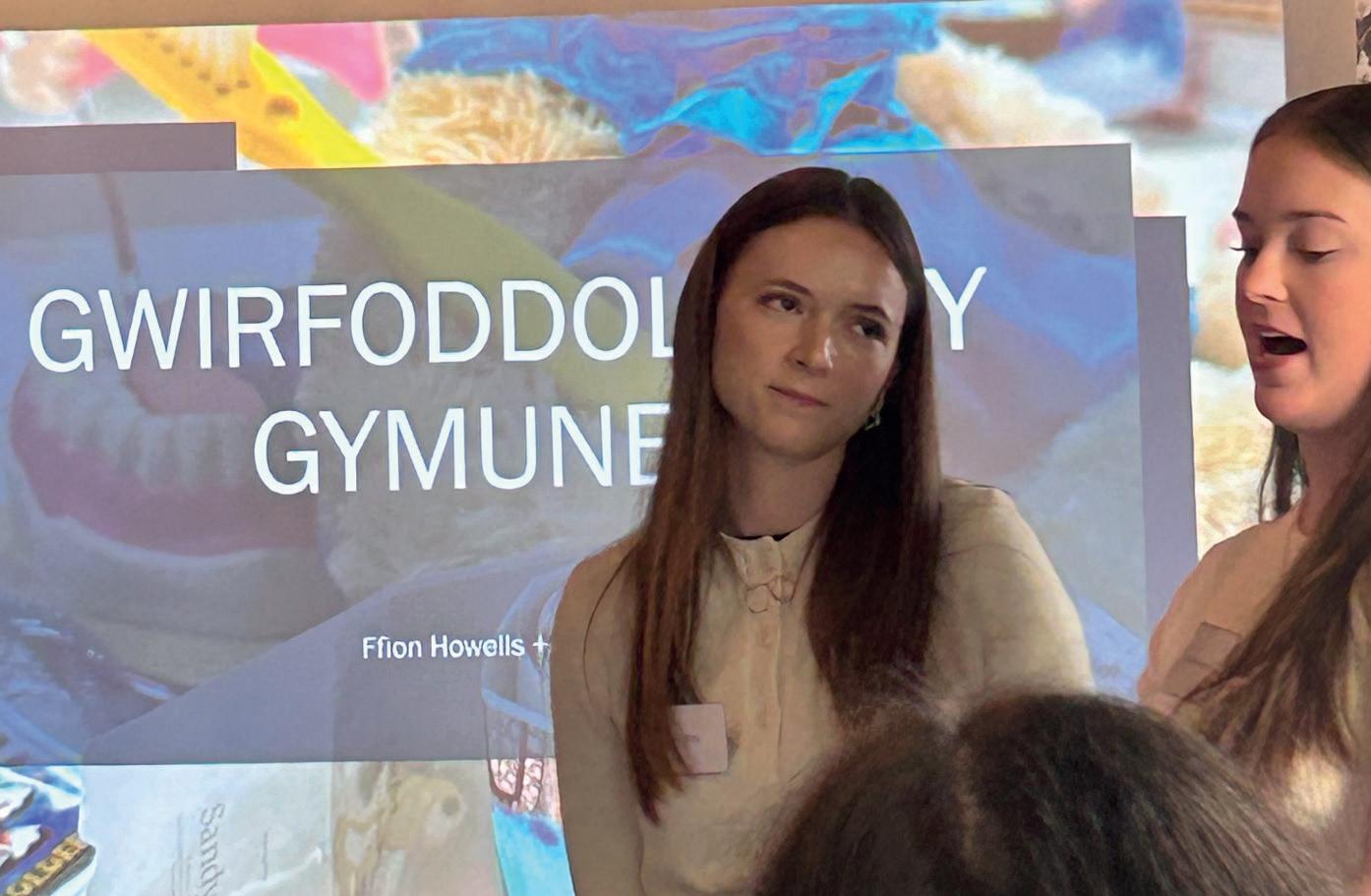
Yna symudwyd ymlaen at gystadleuaeth tlws coffa Bryn Morris Jones. Cyflwynodd dau fyfyriwr deintyddol israddedig, Ffion
Howells a Non Elis, gyflwyniad gwych wedi’i seilio ar dystiolaeth am roi’n ôl i’r gymuned, lle buont yn darparu cyfarwyddiadau a chyngor ar iechyd y geg mewn ysgolion penodol yn yr ardal.
Teimlent eu bod wedi ennill sgiliau trosglwyddadwy gwerthfawr o’r prosiect hwn y gallant eu defnyddio yn eu gyrfaoedd deintyddol. Yna cyflwynwyd Tlws Bryn iddynt.
Daeth y gynhadledd i ben ar ôl y cyfarfod cyffredinol blynyddol. Hanes byr a phwrpas Cymdeithas Ddeintyddol
Sefydlwyd Y Gymdeithas Ddeintyddol yn 1991 gan grwp o Ddeintyddion o Wynedd a Chlwyd yng Ngogledd Cymru. Cynhaliwyd eu cyfarfod cyntaf ym mis Hydref y flwyddyn honno a etholwyd T Arfon Williams, Swyddog Deintyddol ar gyfer Y Swyddfa Gymreig, fel y cadeirydd cyntaf. Penderfynwyd mai prif bwrpas y gymdeithas oedd hyrwyddo trafodaeth ddeintyddol drwy gyfrwng y Gymraeg. Ers ei sefydlu, mae’r gymdeithas wedi datblygu Geiriadur Deintyddol Cymraeg, cynhyrchu llyfryn ymadroddion deintyddol a chyfieithu taflenni gwybodaeth i gleifion a gymeradwywyd gan y BDA i’r Gymraeg.
Yn wreiddiol, roedd aelodaeth y gymdeithas wedi’i neilltuo ar gyfer Deintyddion a Myfyrwyr Deintyddol, ond mae wedi ymdrechu yn y blynyddoedd diwethaf i fod yn fwy cynhwysol o’r Tîm Deintyddol cyfan. Rwy’n aelod ers mis Mawrth ac yn hyrwyddo’r ethos hwn o gynhwysiant.
Rwy’n falch iawn o fod yn rhan o gymdeithas sy’n berthnasol nid yn unig i’m proffesiwn ond hefyd i’m hiaith. Dyma i’r gynhadledd nesaf!
On Saturday 11th of October, I had the pleasure of attending my first Welsh Dental Society conference. It was held at the Celtic Royal Hotel in Caernarfon and the conference was sponsored by Glandwr Dental Practice.
Iwas excited to attend as the whole day was going to be delivered through the medium of Welsh. The reason and purpose of this was to deliver dental related topics in Welsh. These are still a fairly rare occurrence as a lot of our dental training is delivered nationally and usually through the medium of English. This was a great opportunity to partake in relevant CPD in my first language.
The day started with the usual tea, coffee and an opportunity for some relaxed networking. There were around 40 delegates in attendance, and although it was a small group it also made for a much more personal experience.
The conference was opened by the co-chair, Ms Lois Davies who welcomed the first speaker of the day.
Dr Glesni Guest-Rowlands, Clinical Lecturer in Special Care Dentistry, presented two lectures and the first was an update on what’s new in the world of dental sedation. The presentation was very informative and I came away reflecting on the dental environment and how we can make subtle changes such as lighting and aromatherapy to help alleviate dental anxiety. The other big takeaway I had was how as Dental Nurses we are a pivotal part of helping the dentally anxious patient and how we can further support them by providing Dental Nurse led clinics for dental anxiety management.
We had a short coffee, tea and networking break before re-starting with Dr Glesni’s second lecture
Titled, Case based discussion of special care dentistry, and was around the complexities and challenges of organising and providing care to patients with additional and complex needs. This was done in a form of a case study of one of her patients who had mild learning needs and a long list of medical conditions and medications. Using a patient centred approach and considering their needs around the proposed treatment, the patient was seen and treated successfully with input from other specialities. It was interesting to see the multidisciplinary approach and again I was left reflecting on how Dental Nurses could support the multi-disciplinary team, and how the post registration certificate in Special Care Dentistry for Dental Nurses is so valuable to help understand the logistics and complexities of some of our more vulnerable and complex patients.
Continuing the special care theme, the third lecture was delivered by Mrs Mari Morgan, Dental Therapist and BADT Wales Rep. her lecture was around considerations and awareness for the Dental team for patients with Huntington’s Disease. From choosing oral care products that supported patients to be as independent as possible for longer to
By Carolyn Roberts RDN LCGI, BADN Panel of Representatives
non-foaming toothpaste for those patients who were at risk of aspiration (accidentally inhaling fluid or foreign objects) coupled with dysphagia (difficulty swallowing). It was also heart-warming to hear the advancements in a gene therapy treatment which can slow the onset of the disease by 75%, as reported in the BMJ 1.
The conference then broke for a lovely lunch and more opportunities for networking.
The afternoon was opened by co-chair Dr Huw Cadwaladr Owen by welcoming Prof Philip Jonathan, Statistical modeller at the school of mathematical science, Lancaster. He gave a very interesting talk on risk and probability from a mathematic perspective. Although not specifically dental, this lecture in an open topic in memory of one of the society’s founders T. Arfon Williams. I found this lecture was really interesting, especially how we can calculate probability with physical systems such as the weather and how these calculations have increased the accuracy of weather predicting.
We then moved onto the Bryn Morris Jones memorial trophy competition. Two undergraduate Dental Students, Ffion Howells and Non Elis, presented a wonderful evidence-based presentation on giving back to the community, where they undertook oral health instruction and advice at targeted schools in the area. They felt they had earned valuable transferable skills from this project which they can carry forward into their dental careers. They were then presented with Bryn’s Trophy.
The conference closed after the annual general meeting.
Brief history and purpose of the Welsh Dental Society
The Welsh Dental Society was formed in 1991 by a group of Dentists from Gwynedd and Clwyd in North Wales. They held their first meeting in the October that year and elected T Arfon Williams, Dental Officer for the Welsh Office, as their first chair. They decided that the main purpose of the Welsh Dental Society was to promote dental discussion through the medium of Welsh. From the society’s birth it has developed a Welsh Dental Dictionary, produced a dental phrase book and translated patient information leaflets from, and approved by, the BDA into Welsh.
The society’s membership was initially reserved for Dentists and Dental Students but it has strived in recent years to be more inclusive of the whole Dental Team. I am a member since March and champion this ethos of being inclusive. I’m so happy to be part of a society that is not only relevant to my profession but also my language. Here’s to the next conference.
























































































By Rebekah Martin, Oral Health Education Representative, BADN
As the Oral Health Education Representative for the British Association of Dental Nurses (BADN), I am passionate about promoting oral health within our communities. Sharing knowledge and encouraging good oral care habits can make a real difference to people’s lives, and volunteering gives me the opportunity to do just that. In this article, I’d like to share some of my recent experiences of volunteering and working with Dentaid’s BrightBites programme and reflect on the impact these sessions can have.
I am a proud volunteer for Dentaid BrightBites, an initiative designed to support volunteers in delivering oral health education in their local communities. The programme provides a fantastic range of free educational materials, including PowerPoint presentations, take-home leaflets, stickers, posters, a large demonstration mouth with toothbrush, and individual toothbrush and toothpaste packs for children.
Recently, I was invited to speak to a local Beavers group of around 15 children aged 6–8 years. I was joined by my colleague, Dr Gemma Hanks, and together we delivered an engaging and interactive session covering brushing techniques, diet, and visiting the dentist. The children were enthusiastic, asked lots of questions, and loved taking home their BrightBites packs
Following this, I was also invited to visit a local Squirrels group for children aged 4–6 years. This time I presented the session on my own, once again supported by the excellent BrightBites resources. Both groups particularly enjoyed a fun game where they learned to identify “good” and “bad” foods for their teeth. Feedback from both visits was overwhelmingly positive, with the children and leaders expressing how much they had enjoyed and learned from the sessions
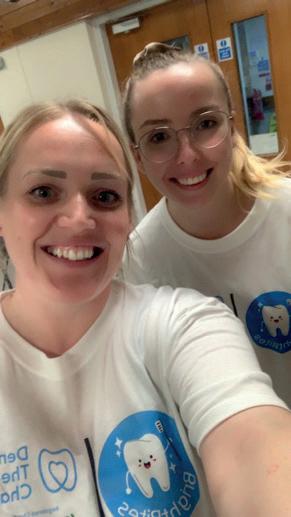
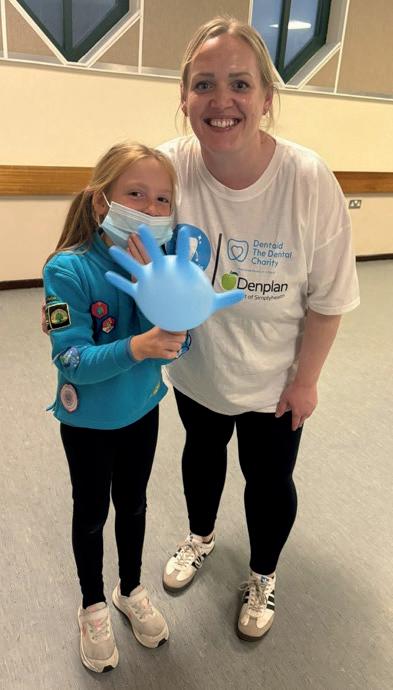
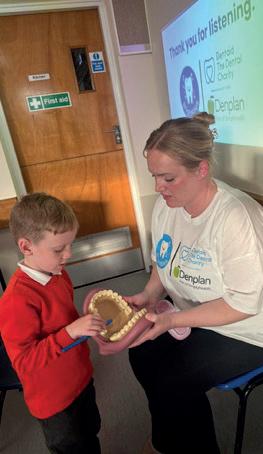
Through the corporate dental company I work for, I was also invited to attend a local social club for adults with additional needs. For this visit, I was joined by two of my fellow dental nurses Joanne and Bex to help deliver a hands-on, interactive evening.
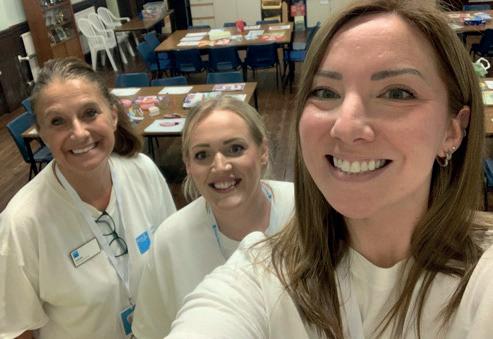
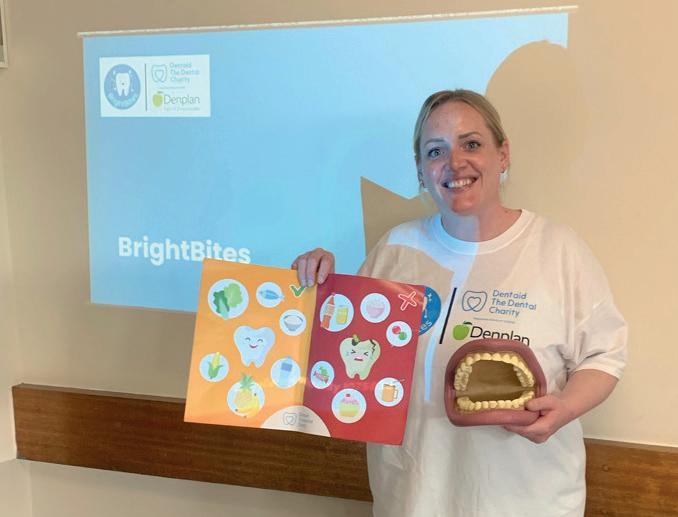
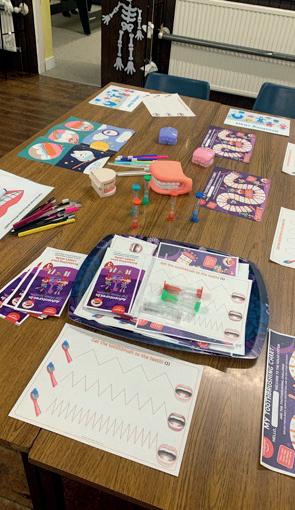
After liaising with the centre coordinator, we decided to set up four themed activity stations around the room: brushing, flossing, a “dentist experience”, and a dental-themed craft table (a few photos from our set up below). After a short introduction, participants were free to move between stations, where we explained different topics such as tooth types, brushing and flossing techniques, and the importance of regular dental visits.
The event lasted around two hours and was incredibly rewarding. We had the chance to meet some wonderful individuals, and everyone was keen to join in and ask questions. The centre coordinator thanked us for our time and invited us to return in the future—an invitation we were delighted to accept.
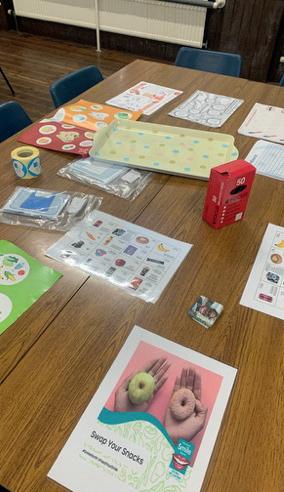
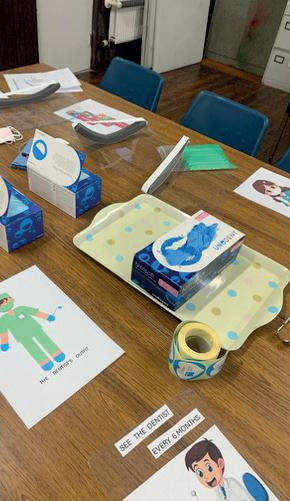
Volunteering within the community to promote oral health is something I find extremely fulfilling. Dentaid BrightBites provides outstanding support and resources to make this work possible, allowing dental professionals like myself to reach a wide range of groups—from young children to adults with additional needs.
I would encourage any BADN members who are passionate about oral health education to consider signing up as a volunteer. It’s a fantastic opportunity to share your knowledge, represent the profession, and help improve the oral health of your local community. For more information about Dentaid BrightBites and how to get involved, visit: www.dentaid.org/brightbites
Sharna
After more than 20 years as a dental nurse, I decided to take on a new challenge and applied to work as a dental triage nurse. I have always enjoyed patient interaction and wanted to expand my knowledge in a different area of dentistry, but I’ll admit I was surprised by just how different the role of a dental triage nurse is compared to face-to-face dental nursing.
Dental triage is a very different environment. When a patient calls with an urgent dental need, an initial assessment is carried out before the case is passed on for dental triage. As a dental triage nurse, my role is to assess patients safely over the phone. This involves asking relevant questions to identify the problem, taking a full medical history, keeping accurate records, booking appointments, offering advice on managing symptoms and recognising when to seek further help.
Most calls are relatively straightforward, this includes broken teeth, exposed nerves, trauma or post operative bleeding. However, there are also many complex cases: Patients with complex medical conditions, mental health concerns, or special care needs; those in care homes or requiring sedation; asylum seekers; people experiencing homelessness; and victims of domestic violence. Then there are the angry callers, patients in such severe pain and distress that their frustration with the dental system is directed at the person on the other end of the phone.
These complex calls can be challenging and time-consuming, but they’re also the most rewarding. Talking patients through what’s happening, providing practical advice, helping them understand what to expect, and doing everything possible to find a solution. These are the moments that make this role so fulfilling. The gratitude from patients who feel genuinely listened to and supported is something that keeps you going on the harder days.
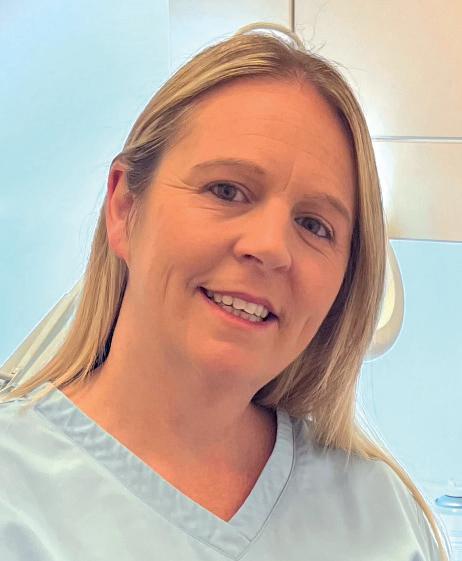
Becoming a triage nurse has been a huge learning curve. Moving from a surgery setting where you work alongside a dentist at all times to now being responsible for assessment, documentation, and decision-making is a big step. I’ve learned so much about medication contraindications, mental health awareness, communication, and compassion.
The role has taught me to listen more, to reassure confidently, and to use my clinical knowledge in new ways. Most importantly, it’s shown me how vital dental nurses are whether chairside or at the end of a phone in supporting patients during some of their most anxious, painful and stressful moments of their lives.
By Rachel Dilley - Registered Dental Nurse and BADN Member, Practice Owner
Over the past year, I have been honoured to receive several national awards recognising leadership and dedication within the dental profession. These include the Business Leadership & Dedication Excellence Award 2025 from the AI Influential Businesswoman Awards, Best Dental Leadership & Practice Growth Advocate UK at the Global Excellence Awards 2025, and Best Dental Team at the Yorkshire Prestige Awards.
As dental nurses, much of our work takes place quietly behind the scenes. We are the reassuring presence that supports both patients and teams, ensuring that every aspect of care runs seamlessly. To be recognised publicly and on such respected platforms has been a humbling and empowering experience, not only for me personally, but for what it represents for our profession.
“These awards are not just personal achievements, they are a reflection of the dedication, professionalism, and expertise found within every dental nurse.”
Like many in the field of dentistry, I did not enter dental nursing seeking awards or recognition. My journey began with a simple desire; to help others and to be part of a care profession that truly makes a difference.
Over the years, my career has evolved. I have pursued further qualifications, taken on mentoring roles, co-founded a business, and now manage my own dental practice. Each milestone has been driven by the same motivation: to raise standards, empower colleagues, and champion professional growth within dentistry.
Receiving these awards offered a valuable moment for reflection. They represent not just my own efforts, but the collective passion and perseverance of dental nurses everywhere who work tirelessly to ensure the highest standards of care.
What these accolades truly highlight is a broader shift in how dental
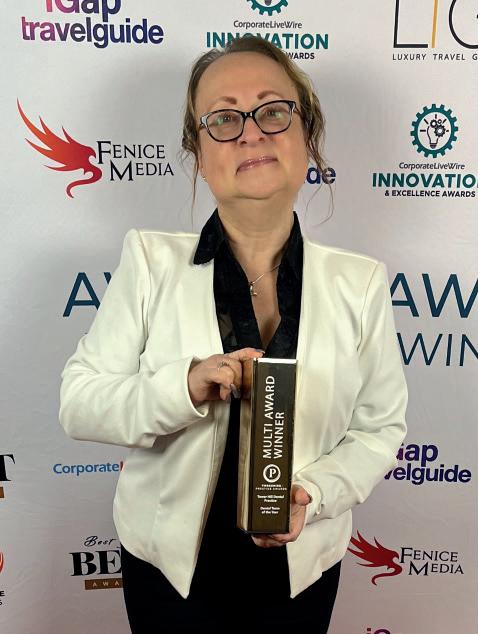
nursing is viewed. Increasingly, dental nurses are being recognised as essential, highly skilled professionals, integral to the success and safety of every dental practice.
Our contributions in infection control, safeguarding, patient communication, education, and leadership, are vital components of modern dentistry. Recognition such as this helps to elevate the profile of our work and reinforces our value to patient care and the team dynamics.
I see these achievements not as a finish line, but as a platform. If my story encourages even one colleague to invest in further training, present at a conference, or step forward into leadership, then the recognition has achieved something far greater than a trophy or award title.
“Recognition is wonderful, but the real reward is knowing that what we do, every single day, truly matters.”
This experience has reignited my enthusiasm for the profession. I am more motivated than ever to continue advocating for dental nurses, supporting career development, mentoring new entrants, and championing respect for the pivotal role we play within the wider dental team.
My hope is that more dental nurses will see the potential within themselves to lead, innovate, and inspire. Every member of our profession deserves to feel valued and recognized - not only by others, but by themselves. Because ultimately, the strength of our profession lies in the quiet dedication we bring to every patient, every colleague, and every day working in a dental practice.
Hello and welcome to Brush up on CPD. This program, produced by Purple Media Solutions, provides you with clinical features from which you can claim up to two hours of Continuing Professional Development (CPD), a mandatory part of registration with the General Dental Council. Each article offers an hour verifiable CPD on subjects.
CPD questions –Leading Behaviour Change: The Role of Dental Nurses at the Heart of a Practice-Based Research Trial
1. What was the specific patient group the RETURN intervention was designed to help?
a) Children needing early orthodontic screening.
b) Patients who had not visited a dentist for more than five years.
c) Adult patients who only visit the dentist when they’re in pain.
d) Patients requiring complex restorative treatment plans.
2. Which core skill did the dental nurses learn to guide, rather than instruct, patients in their conversations?
a) Cognitive Behavioural Therapy (CBT) techniques.
b) Motivational interviewing techniques.
c) Advanced clinical diagnosis.
d) Non-verbal body language training.
3. Which of the following was explicitly mentioned as a gain for the dental nurses involved in the trial?
a) A significant increase in their clinical hourly pay.
b) New qualifications in restorative dentistry.
c) A renewed focus on patient-focused, empathetic care.
d) The opportunity to replace the dentist for routine check-ups.
4. The RETURN intervention was grounded in which behavioural theory, which emphasises a person seeing themselves being able to take action?
a) The Health Belief Model.
b) Identity-Based Motivation Theory.
c) Theory of Planned Behaviour.
d) Social Learning Theory.
1. What is the fundamental issue with medical emergency training standards in UK dentistry?
a) The cost of training is too high for most practices.
b) There is no regulation, oversight, or standardisation of the training received by dental teams.
c) Most dental professionals refuse to attend the required annual training.
d) Trainers are not permitted to use any video resources.
2. In the event of an investigation following a medical emergency, who remains ultimately accountable if the team’s response falls short due to inaccurate training?
a) The external medical emergency trainer.
b) The professional regulatory bodies (GDC and CQC).
c) The practice and its registered professionals.
d) The Resuscitation Council UK.
3. Which two key, recognised guidance sources must dental professionals cross-check their medical emergency training against to ensure accuracy?
a) The CQC Standards and NICE Guidelines.
b) The Health and Safety Executive (HSE) and The GDC.
c) The British National Formulary (BNF) and the Resuscitation Council UK.
d) The World Health Organisation (WHO) and The British Medical Association (BMA).
4. What does the author suggest is the most critical step needed to bring consistency and accountability to training providers?
a) Making training attendance compulsory twice a year.
b) Increasing the amount of time allocated to practical drills.
c) A standardised curriculum aligned with national guidance.
d) Requiring all trainers to also be registered dentists.
To answer the questions below, visit cpd.the-probe.co.uk and register/log in. Click on ‘Courses’. Search for the course with the same headline as the corresponding article. Alternatively, follow the link at the foot of the respective article.
How a brief intervention led by dental nurses helped patients with routine care appointments, by Dr Victoria Lowers and Professor Rebecca Harris , University of Liverpool
The aim of the article is to share the development and delivery of a brief, effective behaviour change intervention called RETURN, which was led by dental nurses in urgent dental care settings, with the goal of reducing inequalities in dental visiting.
Learning objectives
• Understand the core problem: how to support adult patients who only visit the dentist when in pain to start attending more regularly for check-ups and routine care.
• Recognise the central role of the dental nurse in facilitating patient conversations and delivering a behaviour change intervention.
• Identify the key components of the RETURN intervention, including motivational interviewing, a short video, and a patient pack.
• Appreciate how a research trial can increase the confidence and expand the role and communication skills of dental nurses in clinical practice.
Development Outcome: A, B, D
When we set out to design a behaviour change intervention for adult patients who only visit the dentist when they’re in pain, we knew one thing for certain: it had to work in realworld NHS dental practices. That meant it had to be simple, flexible, and delivered by the people patients often feel most at ease with - dental nurses.
This article shares what it was like to develop and deliver a practice-based research trial in urgent dental care settings, and how dental nurses played a central role - not just in supporting patients, but in shaping the intervention itself. We also reflect on what the dental nurses told us they gained, and what we, as researchers, learned along the way.
Developing an intervention that could work
In 2018, Professor Rebecca Harris from the University of Liverpool, alongside a team of collaborators from across the UK, were awarded £2.3 million from NIHR in research funding to tackle a stubborn problem in dentistry: how do we support patients who only come in when they’re in pain to start attending more regularly for check-ups and routine care?
The aim was to design a simple, effective intervention that could help reduce inequalities in dental visiting –something that could easily be used in the fast-paced urgent care setting. We wanted something that would take up less than 15 minutes or so of time, but that would tap into that ‘teachable moment’ when people are most aware of the importance of oral health amidst all the other issues in their lives. We know from the evidence that people from more disadvantaged backgrounds are less likely to come for check-ups and are more likely to experience dental caries and tooth loss [1] [2] - something that can affect not just their smile, but their confidence, ability to eat, speak, and socialise. Even their chances of getting a job. We felt that by providing more support for people who really needed it, this would pay dividends not just in their lives, but also to help reduce health inequalities.
From the very beginning, we were clear about one thing: we wanted the RETURN intervention to be delivered by dental nurses. Why? Because dental nurses often connect with patients in a way that few other members of the dental team can. Their approachability
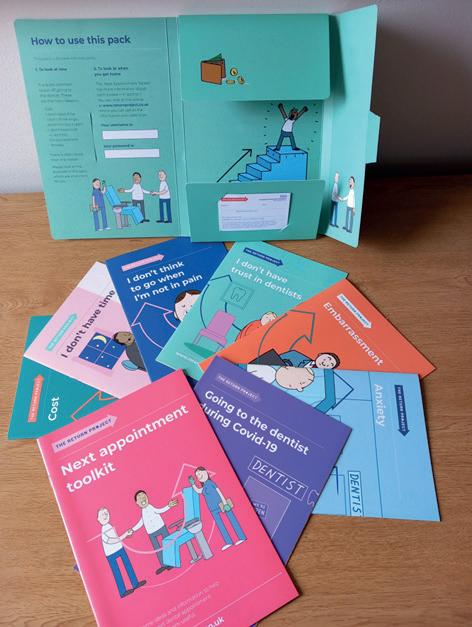
The RETURN patient pack: A set of practical, patient-friendly materials designed to support behaviour change conversations in urgent dental care. Dental nurses used these resources to help patients explore their barriers to regular dental visiting and set personalised goals for future care.
and understanding of patients’ lives make them especially relatable, helping patients feel comfortable and supported when discussing their dental care. Many people who haven’t visited a dentist for some-time are afraid of being judged and criticised for neglecting their oral health. Some people are scarred by previous bad experiences where they ended up feeling
https://cpd.the-probe.co.uk/courses/leading-behaviour-change/
ashamed. For some people, this stays with them for years. We heard many such stories when patients were interviewed: “It replays in my head every time I go, the bad experiences I’ve had at the dentist. I had to use the emergency dentist on my 19th birthday, something to do with my wisdom teeth if I remember correctly, and that was… I’m 30 now, over ten years ago. And I can still remember the dentist saying to me ‘Oh you’re such a beautiful girl but you have such ugly teeth. I can’t imagine a doctor saying I’m a beautiful girl, but I’ve got ugly lungs’.”
Conversations about routine dental visiting can be tricky and difficult, but dental nurses, with a bit of training, are well placed to have a conversation which helps the patient open up and talk about their hopes and fears - a key ingredient when you’re trying to support someone to think differently about their dental care. With that aim in mind, we set about developing the intervention [3]. We spoke to both dental patients and members of the public who don’t routinely attend dental care, and we spent time in urgent care settings to understand the flow of appointments and the realities of the environment. We knew that for the intervention to be successful, dental nurses had to believe in it, feel comfortable delivering it, and see its value. That thinking shaped everything - from how we designed the materials to how we developed and delivered the training. We also drew on behaviour change theory and evidence from previous successful interventions to build something practical, meaningful and grounded in evidence.
The RETURN intervention was designed to be multi-faceted, practical, and engaging. It needed to resonate with patients and feel natural for dental nurses to deliver as they were central to how it worked. Dental nurses weren’t just messengers; they were the facilitators of change. Their trusted presence, communication skills, and ability to build quick rapport made them ideal for this role.
Grounded in behaviour change theory, particularly Identity-Based Motivation Theory which emphasises the power of people seeing themselves in the materials and imagining themselves being able to
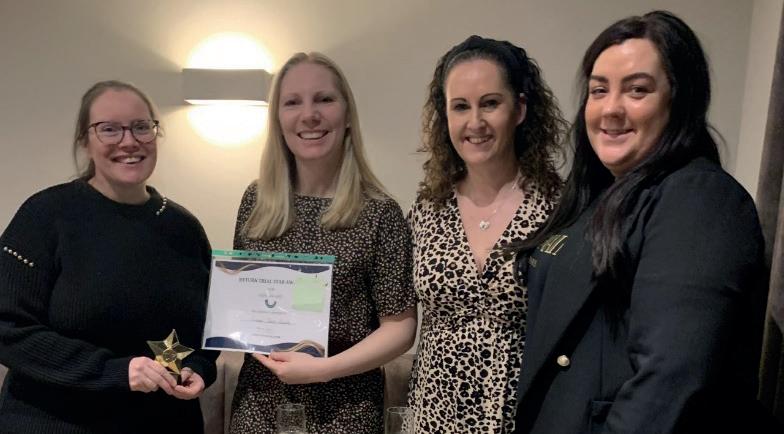
take action, the intervention used simple tools to help patients move towards regular dental care. Everything was delivered during an urgent dental care visit. The five main components were:
1. A conversation with the dental nurse
At the heart of the intervention was a short, meaningful conversation. Dental nurses were trained in motivational interviewing techniques [4] designed to guide rather than instruct. They helped patients explore their own barriers and generate their own solutions, moving away from the more traditional educational model. Conversations were non-judgmental, empathic, and rooted in listening to patients’ experiences, not correcting them.
2. A video
Based on the barrier discussed in the conversation, the dental nurse would show a short video featuring someone with a similar challenge, whether it was anxiety, cost, time, embarrassment, or another common barrier. These personal stories helped patients feel understood and showed that change was possible.
3. The patient pack
Next, the dental nurse introduced the Patient Pack. This was a set of colourful, engaging booklets focused on different barriers to dental visiting. One was discussed during the session, and the rest were given to take home. The pack included practical tips, behaviour change messages, and calming strategies like breathing exercises and example scripts of what to say when making an appointment.
4. 4. Goal setting and action planning
With the support of the dental nurse, patients set a personal goal
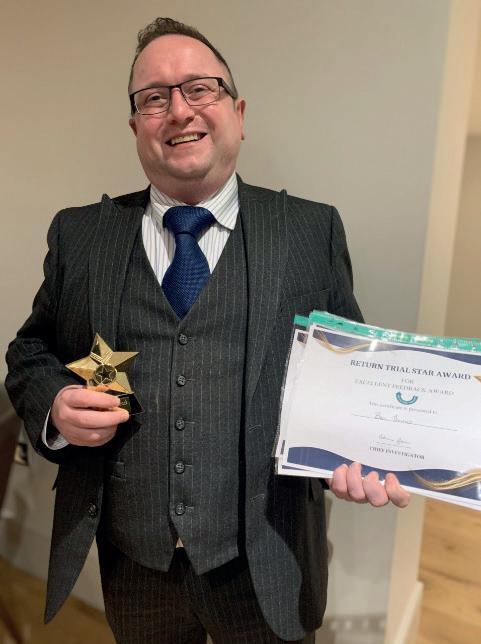
for when they’d like to return to the dentist and created an action plan to help them overcome their barrier. This was written down and given to the patient as a reminder.
5. Follow-up text message
A week later, the research team sent a personalised text message reminding the patient of their goal and offering encouragement—a small, timely nudge to help keep them on track.
To view the intervention materials, visit www.returnproject.co.uk, or scan the QR code at the end of this article.
The randomised controlled trial
A randomised controlled trial (RCT) is the gold standard in research [5]. The trial needs to be big enough to show a difference between people getting the intervention and those who don’t and so RCTs often involve large numbers of people because of the statistics involved. Over 1,100 people were needed for the RETURN trial – although so many adults attend for urgent dental care, that this was achievable entirely in the Cheshire and Merseyside area. In RETURN, patients were randomly assigned to one of two groups: usual urgent dental care, or usual urgent care plus the RETURN intervention. Randomisation helps ensure any differences in outcomes are likely due to the intervention itself. But RCTs are complex, with strict rules and processes – and our dental nurses had to quickly get up to speed.
We trained 14 dental nurses across 13 practices and Liverpool Dental Hospital where NHS urgent care was delivered. The dental nurses learned how to deliver RETURN in real-world settings, hold brief behaviour change conversations, and embed the work into busy clinic schedules. But they also became research-ready:
https://cpd.the-probe.co.uk/courses/leading-behaviour-change/
learning how to consent patients (a more rigorous process than for dental treatment), randomise using a secure system, complete trial paperwork, and use a research database to store data securely. None had done this before – it was a steep but successful learning curve.
The patient conversations were unpredictable and often emotional. Many patients shared anxieties and fears they’d never voiced before – about pain, mental health, or struggles accessing NHS dentistry in the wake of COVID-19. Key to the intervention’s success was the dental nurses’ ability to quickly build trust with unfamiliar patients and offer empathy without judgement.
Despite the challenges, the dental nurses excelled. They achieved the target recruitment of patients, needing just a six-week extension – a remarkable achievement post-pandemic. Most importantly, they delivered the RETURN intervention as intended, using motivational interviewing techniques to support meaningful behaviour change conversations about routine dental visiting [6].
For the dental nurses involved, this was a step into new territory. They weren’t just delivering an intervention—they were helping to run a clinical trial, taking on responsibilities far beyond their usual role. Most of the training focused not on how to talk to patients or deliver the intervention (they were naturals at that), but on the nuts and bolts of trial delivery: gaining informed consent, managing research paperwork, using secure databases, and following strict protocols.
The biggest challenge? Confidence. Dental nurses had to approach patients cold in the waiting room, explain the study, and build enough trust to hold a meaningful behaviour change conversation, all in a busy clinical setting. It wasn’t easy, but they rose to the challenge.
And what did they gain? Confidence, communication skills, and a new sense of their own potential. Many told us the experience had changed the way they work with patients, making them more patient-focused, empathetic, and aware of the hidden barriers patients face. A few
even went on to study counselling skills, inspired to take on more patient-facing roles in the future.
Here’s what some of the dental nurses told us:
“Being part of RETURN has given me more confidence; I am much better at talking to patients now. Using the booklets has given me a better use of language and the training helped me to put the patient first and really hear what they’re saying. I ask all my patients about their barriers now - that wouldn’t have occurred to me before. Even just asking patients what they’re worried about and asking them to think through what can be done to change that is such a powerful thing. This is probably one of the best things I have ever done and hopefully this will be a thing of the future.”
“RETURN has been great in encouraging dental nurses to think about how patients are feeling. It has been really helpful to remind ourselves of issues patients have about coming to the dentist. I think it is easy to forget that not everyone thinks how we do about dental visits, and not everyone is happy to go to the dentist.”
“I am proud of being trusted and it has boosted my confidence. Now I find myself taking more time to reassure and make the nervous patients feel as relaxed as I can. I have realised how much easier I find talking to patients, and how they often want to talk to us.”
The trial results are not formally published yet, but our analysis shows that people who received the brief, 15-minute intervention from a dental nurse were more likely to try booking a routine appointment, even up to 18 months later. Many had not been in regular care for years, and this shift happened despite the significant pressures of the post-COVID period (January 2022 – April 2024). Even more encouraging, many patients did get back into routine dental care, and the intervention proved to be cost-effective, showing potential to save the NHS money. Crucially, the effect appeared strongest among patients living in the most disadvantaged areas, fulfilling one of the
intervention’s core aims: to help reduce inequalities in dental visiting.
Patients also valued the experience deeply. Different components resonated with different people, but what stood out was the opportunity to have protected, judgment-free time with a dental nurse. That space to talk, often for the first time, about their fears, past experiences, and hopes for change made a real difference.
Here’s what some of them told us: “That conversation stayed with me, months later I’m still trying my hardest.”
“It was nice that [the dental nurse] didn’t judge. I just thought they could see my point of view, and how difficult it’s been.”
“[The dental nurse] told me, ‘if you’re ever unsure, just ask questions. If asking helps give you peace of mind, just come out with it’. Thinking about it like that really helped.”
This project has shown what’s possible when dental nurses take the lead, and we hope this paves the way for further research based in primary care dentistry. We also hope that more dental nurses consider playing a role in future research delivery. Dental nurses stepped into a new role with confidence, empathy, and professionalism. We’ve seen the potential for the future of skill-mix in dentistry, and it includes dental nurses playing a bigger role in behaviour change and patient support. They are perfectly placed to help patients return to the dentist regularly, which is key to tackling inequalities in oral health. The message is clear: if we want to build a more preventive, person-centred dental service, dental nurses are an important part of the solution. For more information, please contact Victoria Lowers (v.lowers@liverpool.ac.uk) n
References available upon request

https://cpd.the-probe.co.uk/courses/leading-behaviour-change/
Scan for RETURN Project intervnetion materials
The aim of this article is to expose the critical lack of regulation, oversight, and standardisation in medical emergency training for UK dental teams and advocate for a national standard to safeguard patients and professionals.
On completion of this article, the reader will be able to:
• Identify the current risks to patient safety and the professional due to the industry-wide inconsistency and misinformation in medical emergency training.
• Understand that the dental professional and the practice are ultimately responsible for ensuring the accuracy and adequacy of their medical emergency training, regardless of the trainer’s advice.
• Recognise the key guidance sources (Resuscitation Council UK and BNF) that all training must align with to ensure a competent response in critical moments.
• Appreciate the need for systemic change, including a standardised curriculum, minimum trainer qualifications, and regulatory oversight for emergency training in dentistry.
Part One – Exposing The Problem
When a medical emergency strikes, every second counts. Yet there is no regulation, oversight, or standardisation of the training received by dental teams across the UK. Meaning anyone can set themselves up as a medical emergency trainer with no knowledge, experience, or qualifications. The consequences? Confusion, inconsistency, and a growing risk to patient safety.
Throughout my career in dentistry, I’ve heard firsthand the worrying variation in what teams are being taught.
“Our trainer said dental nurses can’t give more than one dose of adrenaline.”
“We were told no oxygen during CPR anymore.”
“We were told we don’t have to have Midazolam.”
These are not just minor misunderstandings; they are lifethreatening errors. And they’re happening because there’s no mandated curriculum, no required qualifications, and no regulatory oversight for medical emergency training in dentistry.
Unfortunately, these aren’t isolated cases; it’s industry-wide. The guidance exists, but the quality of training and interpretation of that guidance is wildly inconsistent. This disparity puts patients at risk and leaves dental professionals unsure of their responsibilities in the most critical moments.
Most dental professionals assume their annual medical emergency training is delivered to an agreed standard. But this is not the case. I’ve spoken to practices whose trainer told them it’s acceptable to use EpiPens instead of adrenaline ampoules, keep Piriton in with their emergency drugs, and even draw their own markings onto prefilled Midazolam syringes.
Many trainers are not familiar with the essential resources and specific regulatory requirements dental
professionals must meet, including guidance from the Resuscitation Council UK and the British National Formulary (BNF). Because of this, two practices might get completely different, even contradictory advice, and yet both are expected to respond competently in a life-threatening situation.
Ultimately, the GDC makes it clear that dental professionals are personally responsible for maintaining their
https://cpd.the-probe.co.uk/courses/when-every-second-counts/
competence in medical emergencies. And practices are responsible for vetting their trainers and ensuring their teams are prepared. This means that, even if incorrect advice was given during training, the responsibility lies with both the individual and the practice to ensure that what is being taught aligns with recognised guidance.
In short, dental teams are being left to trust that their trainer is telling them the right thing. It is up to us to determine if our training is adequate and accurate.
In a recent survey, dental professionals were asked who they believe should be responsible for ensuring adequate training. Nearly half (47.6%) felt this should fall to the dental practice, while 42.9% said professional regulatory bodies like the GDC or CQC. Only a small number believed responsibility should rest with the individual clinician. But would that still be the case if they knew their “expert” trainer was giving incorrect or incomplete information?
In reality, most dental teams are not in a position to scrutinise the credentials of their trainer or the content of the training. They assume, reasonably, that the person teaching them is an expert. But when trainers are unaware of the guidance we must follow, or misinterpret it, this gap in assurance becomes a risk not only to patient safety, but to the professional involved.
In Part 2, we’ll explore how other healthcare sectors approach emergency training, how dentistry is being left behind, and what steps we can take to bring consistency, safety, and accountability to training providers.
In Part 1, we examined the hidden inconsistencies in medical emergency training and discovered that, currently, there’s no mechanism in place to stop misinformation from spreading, or to hold providers accountable for the training they deliver. So how do we compare to other healthcare sectors, and what can we do about this issue?
In settings like hospitals, GP surgeries and ambulance services, emergency
training is delivered in a tightly controlled, standardised way. Trainers are accredited, the learning outcomes are set nationally, and there are audits and refreshers to make sure everything remains up to date.
By contrast, dentistry has none of this central governance. Teams receive an annual session delivered by someone external, with no assurance that it’s evidence-based, in line with the guidance provided by the Resuscitation Council UK or BNF, or that it actually reflects what the GDC expects of us. Despite having the same moral and professional obligation to save a life, the way we’re being prepared couldn’t be more different.
Treating medical emergencies isn’t our day job! Dental teams rarely encounter medical emergencies, which makes correct, consistent training even more vital. When adrenaline is pumping and seconds matter, there’s no time to debate whether oxygen is “optional” or whether a nurse can give a second dose of adrenaline. The information must always be clear, accurate, and reliable. Saving a life shouldn’t have any grey areas.
In the aftermath of a medical emergency, the response of practices and professionals can be subjected to scrutiny. If the team’s actions fall short because their training was inaccurate or incomplete, it is the practice and its registered professionals who remain accountable - not the external trainer. This could lead to investigations by the CQC or questions of fitness to practise from the GDC. Aligning training with recognised guidance is therefore essential - it safeguards patients and protects professionals.
Dentistry needs a national standard for medical emergency training:
• Minimum trainer qualifications
• Standardised curriculum aligned with the Resuscitation Council UK, BNF, and GDC requirements
• Regular auditing and oversight by a regulatory body
This doesn’t mean reinventing the wheel, but rather anchoring
training in the regulatory and clinical frameworks that already exist. A centralised accreditation system for medical emergency trainers and a set curriculum endorsed by regulatory bodies could both provide the consistency dentistry desperately needs. It would give practices confidence, trainers accountability, and, most importantly, our patients a better chance.
If we truly want to protect patients and uphold the standards of our profession, this gap in medical emergency training must be closed. Misinformation isn’t just unhelpful; it’s dangerous. Dental teams don’t deal with emergencies every day, so we must be taught the right information from day one. We owe it to our patients, and to ourselves, to raise the bar.
As you now know, there is currently no formal mechanism to guarantee training quality. However, there are steps practices can take now: cross-check what you are taught against the BNF and Resuscitation Council UK guidance, ask trainers to reference their sources, and keep discussions alive within your team throughout the year. These actions won’t solve the wider problem, but they will strengthen your confidence and safeguard your patients while we push for change.
Let’s ensure every dental professional feels confident, competent, and prepared, because when a life is on the line, there’s no room for uncertainty. n
Hannah Lambourn is a qualified dental professional with over 12 years of experience in clinical practice, now specialising in medical emergency training and dental compliance. She has taught life-saving skills to dental teams across the UK and volunteers for the ambulance service in her spare time. As a passionate advocate for patient safety, Hannah’s goal is to raise awareness about the critical need for regulated, accurate medical emergency training within the dental profession.
https://cpd.the-probe.co.uk/courses/when-every-second-counts/

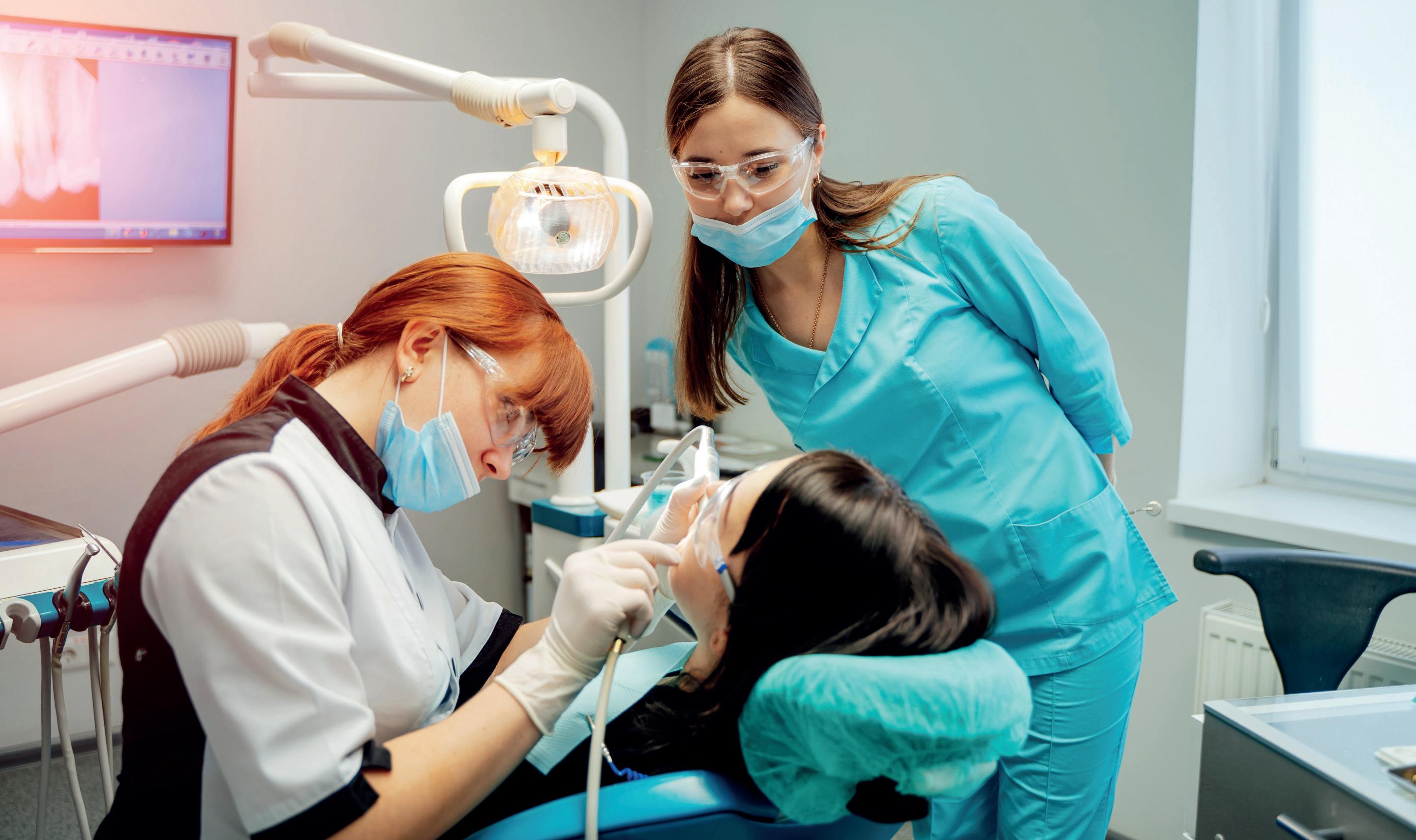
Apprentices and trainee dental nurses are a valuable part of the dental team, bringing enthusiasm, fresh perspectives, and a strong commitment to learning. The support they receive in the workplace plays a crucial role in shaping their progress, confidence, and overall success in achieving their qualification. Employers and dental practices have a responsibility to create an environment where Learners can thrive, develop their skills, and contribute meaningfully to patient care.
A well-structured induction is essential to help Learner’s feel welcomed and confident from the outset. This should include an introduction to the team and practice procedures, a tour of the facilities and equipment, and a clear explanation of their role, responsibilities, and boundaries. Learners must also be introduced to key policies such as infection prevention, confidentiality, safeguarding, and health and safety. It is important to highlight that “dental nurse” is a protected title for those registered with the General Dental Council (GDC), and that trainee dental nurses must gain informed consent from patients before providing any treatment. Setting clear expectations early helps Learners integrate smoothly into the team and understand their professional responsibilities.
Workplace mentorship is another vital element of Learner support. Ideally, mentors should be experienced dental nurses or senior team members who can offer consistent guidance, feedback, and encouragement. Through demonstrations, supervised practice, encouragement to ask questions and reflective learning, mentors help trainees build confidence and competence. This one-to-one relationship fosters trust and accelerates professional growth, making a significant impact on the Learner’s experience.
Balancing work duties with study requirements can be challenging, and Employers play a key role in supporting this balance. Providing protected time for Learners to complete assignments or attend live lessons, avoiding scheduling conflicts with training sessions, and encouraging participation in continuing professional development (CPD) activities are all effective ways to support learning. When education is prioritised alongside work, it reinforces the value placed on professional development and helps trainees feel supported.
Practical experience is essential for reinforcing classroom learning and developing clinical competence. Where safe and appropriate, Learners
should be given opportunities to assist with treatments under supervision, prepare the surgery, handle instruments correctly, follow decontamination procedures, and maintain accurate records. These tasks also help build confidence in patient communication and the process of gaining consent. Regular, constructive feedback is key to Learner progress. Feedback should be specific, timely, and supportive whilst highlighting strengths, identifying areas for improvement, and encouraging a growth mindset. Documenting feedback in Progress Reviews ensures continuity and allows both Learners and Supervisors to track development and address concerns proactively.
Finally, Learners should feel respected and included as valued members of the dental team. Employers can promote equality, diversity, and inclusion, adapt to different learning needs, and encourage knowledgesharing among staff. Creating an inclusive and supportive environment boosts Learner confidence and contributes to a positive experience for the whole dental team and patients.
By providing structured training, mentorship, practical opportunities, and a culture of support, dental practices help shape confident, capable professionals who will contribute to the future of dentistry.
Kim Morrison is an Apprenticeship Specialist at Skills4Dental.
I’m passionate about connecting aspiring dental professionals with practices that can help them thrive. With extensive experience in dental recruitment, learner support, and employer engagement, I focus on creating meaningful pathways into the dental industry through high-quality apprenticeship programmes.
My work centres on helping practices grow their teams while ensuring every apprentice receives the right training, mentorship, and guidance to build long-term, successful careers. I collaborate closely with dental employers across England to identify the right talent and maintain strong relationships built on trust, care, and professionalism.
At Skills4Dental, I’m proud to be part of a team that champions opportunity, development, and progression within dentistry, making a real impact on both practices and people.
CPD 4 DCPs is a fully veri able ECPD programme that enables each member of the dental team to complete one year’s ECPD requirement in a highly cost-effective manner. Covering all the highly recommended subjects, each volume is specially designed to cover the ECPD needs of up to 10 DCPs.
Providing 10 hours of veri able ECPD, one Volume covers the annual veri able ECPD needs of most practices.
Subjects
• The reality of mouth cancer
• Young patients and consent
• Complaints and how to avoid them
• Regulating X-rays





• Supporting patients through menopause
• Tracking infectious touchpoints
• Managing patient care prior to an emergency appointment
• Trismus and cancer treatment
• Sepsis – knowing the signs, and preventing infection
• Understanding dental risks
As some of you may know already, we have launched another app, specifically for accessing all of your rewards and discounts. You should have received an email by now inviting to verify your account and download the app onto your phone.
This is a separate app from the BADN app so please
have the full membership experience. You will still be able to access your rewards via the members area.







BADN – see www.badn.org.uk
UK Bank Holidays
New Year/religious dates – which are not UK Bank Holidays. If your faith is not represented, please send dates of New Year and/or the three major religious festivals to events@badn.org.uk.
Other dental dates – to add your event to the Calendar, please send details to events@badn.org.uk
Other notable dates which are not UK Bank Holidays
NEBDN – contact www.nebdn.org for details
NHSE South (Ox/Bucks/Berks/Hants/IoW Dental Nurse Forum 2025 – to book http://www.maxcourse.co.uk/heetvw/guestHome.asp
BADN Chief Executive & Editor, British Dental Nurses’ Journal: Pamela Swain 01253 338365
Membership, journal subscriptions, invoicing:
Val Forshaw 01253 338366
BADN events, social media, website, IT matters, etc:
Jacek Drozdek 01253 338364
pam@badn.org.uk
val@badn.org.uk
jacek@badn.org.uk events@badn.org.uk
General Enquiries enquiries@badn.org.uk
Our phone lines are very busy! If you are put through to voicemail, please leave a message stating your name, BADN membership number, and contact phone number, and we will get back to you as soon as possible – please do not hang up; or keep ringing round all the various phone numbers and hanging up – this just blocks the system!
Should you wish to contact members of the BADN Executive Committee, please do so via the BADN office or use the email addresses below – for reasons of of privacy, work/life balance, etc, please do not use the individual concerned’s personal home or work email address:
President (Preetee Hylton) & Immediate Past President (Joan Hatchard) president@badn.org.uk
Chairman (Michelle Brand) chairman@badn.org.uk
Treasurer (Ruth Garrity) finance@badn.org.uk
Educational Representative (Jane Dalgarno) education@badn.org.uk
For queries regarding BADN Rewards, please contact Katie Alvarez at Parliament Hill at katie@parliament-hill.co.uk
For queries regarding CPD in the Journal, or access to the CPD certificates, please contact Lorna Reekie at Purple Media on lorna.reekie@purplems.com.
For queries regarding indemnity, please contact Trafalgar Risk Management Ltd on trmadmin@trafalgar.uk.com
To advertise in the Journal, please contact Ed Hunt at Purple Media at ed.hunt@purplems.com
To obtain your long service member badge (5, 10, 15, 20, 25 years), please go to www.badn.org.uk/longservicebadge and complete the claim. You will then receive an email from Val confirming your eligibility and requesting an SAE. Please put a Self Addressed Envelope, with stamps to the value of £1.05 (second class mail) or £1.45 (first class mail), together with a note of your name and BADN membership number, into a second envelope addressed to the BADN office and with “BADGE” written in the top right hand corner of the outer envelope. Remember to stamp the outer envelope too!
To obtain your hard copy of the CPD Activity Log, Personal Development Planner or Menopause Policy, please go to the online shop in the members’ area of www.badn.org.uk, where you can order any or all of these for the just cost of P&P
You can obtain replacement membership badges (£5), 80th Anniversary brooches (£10.50) and BADN Bundles containing a BADN pen, coaster and keyring with trolly pound (£5) from our online shop at www.badn.org.uk/membershop
Our new address is:
BADN 13-15 Preston Street Fleetwood FY7 6JA
Our phone numbers and email/web addresses will remain the same.
Please don’t send any hard copy correspondence to the old Hillhouse address – the building is due to be demolished, and we wont be able to get back on site to collect mail!








Kevin O, Dentist