df kfrj Kyqr swc dI Koj krnf qy iswDy sfDy ZMg nfl jIvn bqIq krnf sI. qryqf Xuwg dy smyN ’c mnuwK dIaF ivhfrk loVF ’c sqXuwg nfloN kuJ vfDf hox lwigaf. mnuwK ny Éud dI pCfx krn dy nfl-nfl afpxIaF loVF nUM pUrf krn leI sfDnF dI Koj krnI ÈurU kIqI. duafpr ivc mnuwK dIaF loVF ivc asImq vfDf hoxf ÈurU hoieaf. Aus ny afpxy rihx leI pwky qOr ’qy Gr bxfAuxf aqy buinafdI loVF dI pUrqI leI sfDnF nUM iekwTf krnf ÈurU kr idwqf. Aus aMdr Éud nUM siQr rwKx leI mukfbly dI Bfvnf ivkisq hoxI ÈurU ho geI.
hux Aus df jIvn pihlF nfloN kfÌI bdl igaf sI. iewQoN hI nvIaF cIËF nUM qlfÈ krn dI Aus Xfqrf df afgfË huMdf hY. iewQy Aus aMdr mOjUd iensfnI gux iksy hwd qwk Aus df mfrg-drÈn krdy hn. sihjqf, sihXog, sMjmqf, sbr, isdk, lgn, imhnq Aus leI AUrjf df sfDn bxdy hn, jdoNik nÌrq, bdslUkI, byeImfnI, eIrKf, afls vrgIaF rukfvtF df aks kuJ DuMdlf idKfeI idMdf sI. aglf Xuwg ijs nUM Dfrimk gRMQF ivc klXuwg dy nF nfl sMboiDq kIqf jFdf hY. ies Xuwg ivc afAuNidaF mnuwK dIaF bhuq sfrIaF suBfivk pRivrqIaF aMdr qbdIlIaF afeIaF. ies Xuwg ’c mnuwK leI jIvn ijAUxf, sfDn iekwTy krnf, vsqF df afdfn-pRdfn krnf hI muwK AudyÈ nhIN sI sgoN ienHF sB sfDnF nUM hr hIly hfisl krnf, Aus Auwqy aiDkfr jmfAuxf, afpxI swqf kfiem krnf, hr dUsry nUM afpxy aDIn krnf, iksy leI shI-Êlq df ÌYslf krnf afid sB Aus dI iËMdgI df afDfr bx igaf.
awj asIN awKIN vyK hI rhy hF ik smyN dI byrok dOV ivc lgfqfr Bwijaf jf irhf
mnuwK afpxy AudyÈ qoN Btk igaf hY. sbr, sihjqf, sMjm, sMvfd, sihXog, sihxÈIlqf aqy sMvydnf ijvyN Aus dI iËMdgI ’coN Kfirj hI ho gey hn. awj ieh aijhy Èbd bx gey hn, jo ieiqhfs df ilKqI nmUnf bx ky mnuwK dy bOiDk buwq ’c kYd ho ky ikqy guMm ho gey hox. smyN dI krvt ny aijhf rMg bdilaf ik dyKidaF hI dyKidaF bMdf mnuwK qoN cwldI iPrdI byrok ÉudgrË mÈIn bx igaf hY. vrqmfn smyN ’c gurU nfnk jI df ÌlsPf ‘ikrq kro, vMz Cko aqy nfm jpo’ afid Èbd gRMQ poQIaF dI hI suhjqf ivc smo gey pRqIq huMdy hn. awj asl iËMdgI ’c ienHF ÈbdF dI klpnf DuMdlI nËr af rhI hY. awj dy mnuwK aMdr sfDn pRfpqI dI hoVH eynI qIbr ho cuwkI hY ik mnuwK afpxy kImqI asUlF nUM vI bldI BwTI ivc JokI jf rhy hY. ÉUn dy irÈiqaF dI aihmIaq qF ijvyN kfgË dI ikÈqI vrgI ho geI hY. ijwQy afpxy hI nËdIkI musIbq dy smyN ivc afpxf sfQ Cwz ikDry alop ho jFdy hn, inwkI-motI nok-Jok nfl hI irÈqy kwc dy bfbq tuwt jFdy hn. afpxIaF inwjI loVF leI svfrQI mnuwK afpixaF dI hI jfn lYx leI iqafr ho jFdf hY. iensfnIaq qF ijvyN mnuwKI srIr dy klbUq ivc hI ikqy kYd ho geI hovy. keI vfr qF iksy dy duwK jF qklIÌ nUM afpxI pRfpqI smJ ky Aus ’qy jÈn mnfey jFdy hn. iksy ÊrIb mËdUr, mjbUr ivakqI, byshfrf mfipaF, pirvfrF qy loVvMdF nfl do pl ÉuÈI nfl guËfrn df smF awj-kwlH iksy ivrly kol hI hovygf. hr vkq mnuwK Aus ipwCy Bwj irhf hY, jo jF qF asQfeI hY jF aidwK. asl ’c ies sMsfr aMdr kuJ vI swc, sQfeI, sdIvI nhIN ho skdf pr mn dI iqRpqI leI mnuwK hr qrHF dy shI Êlq kfrj krdf hY,ijs dy nqIjy vI Aus df pwK nhIN pUrdy. ies qoN Ault Aus dIaF icMqfvF ’c hor vfDf huMdf jFdf hY. ieh icMqfvF mnuwK dI srIrk, mfnisk, bOiDk, smfijk qy pirvfrk smwisafvF df kfrn bxdIaF hn. so loV hY asl nfl rUbrU hox dI, shI-Êlq nUM pCfxn qy iensfnIaq nUM muV surjIq krn dI, qF jo mnuwK nfl mnuwK dI hoNd nUM surwiKaq rwiKaf jf sky. irÈiqaF nUM apxwq dy pfxI nfl isMijaf jf sky qy mnuwKqf ivwcoN apwxq, sFJIvflqf, ipafr, muhwbq, isdk, isrVqf dI mihk af sky. afE sB ipafr, BfeIcfry, sihjqf, sMjmqf, sMvydnf dI Ìsl dy bIj bIjIey, nfl hI ies Ìsl dI rfKI krIey.
The Patrika
DGB HOME RENOVATION
•
•
•
2026 Mazda CX-90 PHEV
Signature–
Classy SUV Rocks!
Review by Veeno Dewan
For 2026, the Mazda CX-90 SUV continues on as a large three-row Crossover that can seat can seat seven to eight occupants and represents the company’s flagship premium SUV. The CX-90 is set apart with a luxuriously elevated high-quality cabin. The CX90 can seat five , eight or seven occupants. Opt for the second-row captain’s chairs and the total seating drops to seven.
For 2026 there are some changes - All models now come with Amazon Alexa integration and enhanced voice command capability. Also added is Heated 2nd-row seats, ventilated front seats, and a 1,500-watt cargo area power outlet standard on higher trims. New, standard blacked-out badging (side and rear) and improved LED lighting systems are present. The 2026 Mazda CX-90 PHEV (Plug In Hybrid) model receives as standard 21-inch wheels. Finally, there is an improved 5,000 lb towing for 2026.
The as tested - 2026 Mazda CX-90 PHEV is equipped with a 2.5L I-4 gasoline engine and a 129-kW electric motor combined with a 17.80-kWh battery. The total power output is to 323 hp @ 6000 rpm horsepower and a maximum torque of 369 lb-ft @ 4000 rpm. The transmission is an 8-Speed Automatic with all-wheel drive. The electric battery provides approxi -
mately 43 km of all- electric range, and ~800 km total combined driving range. You can cleverly “store” the charge for later use. Charging times for the battery come in at 1.3 hours on a Level 2 plug: and 6.4 hours via Level 1.
The Signature version offers luxurious Nappa leather, ventilated seats, and a 12.3-inch display. Other Signature Trim Enhancements include 21-inch wheels, ventilated front and secondrow seats, and adaptive lighting. The Signature offers exclusive seating configurations with either a 6- or 7-seat configuration with ventilated secondrow captain’s chairs. Cargo Space: is 423 L behind the third row, expanding to 1,133 L with the third row folded and up to 2,101 L with all rear seats stowed.
The CX-90’s cabin design has a luxury premium feel. High quality materials, such as Nappa leather, wood, and tone-on-tone fabrics that all come together harmoniously. Our top line Signature models had a simply fabulous white Nappa leather trim with unique Japanese Kumihimo stitching using negative space to create a oneof-a-kind design ethos. Contrast light inlay panels and flying metal insert on the doors set off the cabin even more. New, advanced technologies and amenities enhancements include such fea-
tures as a larger 12.3-inch infotainment display controlled via a click wheel on the CX-90’s center console, which is more intuitive to use. Apple CarPlay and Android Auto are both standard, The CX-90 offers a 12-speaker Bose premium stereo. available third-row USB-C charging ports, air conditioning vents, and upgraded interior lighting, are among many more features.
The safety suite is good. Mazda CX-90 gets smart brake support front, blind spot monitoring, rear cross-traffic alert, adaptive cruise with stop and go, lane keep assist, and road departure protection standard across the board. Mazda has also introduced a new Driver Personalization System that uses cameras to ID your face and switch dozens of functions to your setting. Great for a family ride that sees multiple drivers.
The 2026 Mazda CX-90 PHEV features total of 10 (Front, Side, Side Curtain, Knee) airbags and Standard anti-collision System, Standard lane departure warning, Standard hill holder and Standard low tire pressure monitor. Additional safety equipment includes LED, Projector Beam, Auto
jy qusIN dMd lvfAuxy hn jF iPr lgvfey hn
On the road – ride and handling is stand out thanks to Mazda Kinematic Posture Control, which suppresses body lift on tight corners to enhance the grip and allows all occupants to maintain a natural posture. There’s Normal, Sport, and Off-Road for drive modes, and of course EV Mode of you opt for the Plug in Hybrid (PHEV) version as tested in which Mazda that lets you either use the up-to-42-km of electric range; or store and accumulate it for on-demand use. Fuel ratings are 9.9 L/100 km city; 8.7 highway; and 9.4 combined, or 4.2 Le/100 km with the battery working. The electric motor is placed between the engine and transmission unit, making for r well balanced handling and smooth upscale ride.
To sum up, the 2026 CX 90 is an attractive proposition, with a PHEV version offering decent fuel economy, all electric range for urban and city driving up to three rows of seats and eight seating capacity- A must buy if you need maximum people carrying ability and comes highly recommended.
2026 Mazda CX-90. PHEV Signature – Priced from $53,750 - $69,650plus options, Freight and PDE. More info at www.mazda.ca
dMd purfxy hn aqy nvyN lvfAuxy hn
quhfzy lvfey dMd iZqly hn jF tuwt gey hn
blrfj nfl apfieMtmYNt bxfE aqy Kfxf
cMgI qrHF KfE
jy quhfzy sfry dMd nhIN inkly pr Kfxf TIk qrHF nhIN Kf huMdf qF blrfj nUM imlo ieh quhfzI syvf leI srI ivwc hn.
Minister’s statement about amendments to Bill 9
Diana Gibson, Minister of Citizens’ Services, has released the following statement about updates to the Freedom of Information and Protection of Privacy Act:
“Bill 9 is about keeping B.C.’s access and privacy laws strong, modern and effective, while maintaining independent oversight by the Information and Privacy Commissioner.
“Through thoughtful discussions with other members of the legislature about government’s intent on the updates to the Freedom of Information and Protection of Privacy Act, a small number of areas in Bill 9 were identified where minor adjustments would provide additional clarity.
“Today, I am introducing targeted amendments to Bill 9 to bring further clarity to the legislation and reaffirm British Columbians’ right to access
government information, while ensuring that it remains one of the strongest acts in Canada.
“We are happy to make these adjustments that provide more precision on the intent of the provisions outlined in the legislation, and I wish to thank MLAs who engaged in good faith on improving the legislation.
“Contrary to some some false claims that have been made by official Opposition MLAs, this bill and these amendments do not change FOI response timelines, allow public bodies to refuse legitimate requests or introduce any new fees.
“Protecting transparency and accountability remains central to this work, and our government remains committed to ensuring British Columbians continue to have strong access to government information.”
High beam headlights and parking assistance.
kuafltI bOzI aqy pyNt rIpyar syvfvF
Prym vrk aqy XUnIbOzI rIpyars
pUrIaF pYNt jObs (sOilzs, mYtfolks, trfeIkots, kuaYzkots)
jdoNik ieh mIlpwQr mhwqvpUrx qrwkI nUM drsfAuNdf hY, zblXUaYsE ny Ëor dy ky ikhf ik vwzf mslf hfly vI hwl nhIN hoieaf. mOjUdf inXmk BfÈf ajy vI “sikntU-sIl” DfrxfvF nUM qrjIh idMdI hY, ijs nfl surwiKaq aqy pRBfvÈflI ivklp mOjUd hox dy bfvjUd vI klIn-Èyv imafr kfiem rihMdf hY.
ieh rukfvtF isrÌ mrIn Kyqr qwk sIimq nhIN hn, sgoN aYmrjYNsI irspFs, PfierPfeIitMg, qyl aqy gYs, inrmfx, ishq syvfvF aqy hor AudXogF ivwc kMm krdy krmcfrIaF nUM vI pRBfivq krdIaF hn zblXUaYsE ny ikhf ik Auh vrksyPbIsI rfhIN inXmk suDfr leI afpxI vkflq jfrI rwK irhf hY aqy aijhy imafrF vwl bdlfa dI mMg krdf hY jo pRdrÈnaDfirq hox. ieh imafr ieh jFcx ‘qy iDafn dyx ik rYspIrytr pRBfvÈflI sIl bxfAuNdy hn jF nhIN, nf ik krmcfrIaF nUM klIn-Èyv hox dI Èrq lgfAux. ijvyN ik zblXUaYsE dIaF aiDkfirk pyÈkÈF
ivwc drsfieaf igaf hY, afDuink surwiKaf imafrF nUM nqIijaF ‘qy iDafn dyxf cfhIdf hY, nf ik idKfvy ‘qy.
bfad ivwc, bfjvf ny bIsI PYrIË dy ivsQfrpUrx joiKm mulFkx pRikiraf dOrfn XUnIan krmcfrIaF dI numfieMdgI kIqI, ijwQy AunHF ny klIn-Èyv nIqI leI ÈfimlIaq vfly aqy ivklpI qrIikaF dI vkflq kIqI, ijs nfl ieh XkInI bxfieaf igaf ik surwiKaf imafr kfiem rihx aqy iswK krmcfrIaF dI Dfrimk pCfx df siqkfr kIqf jfvy.
bfjvf ny ikhf: “mYN afpxy Drm leI zt ky KVHf irhf, isrÌ afpxy leI nhIN, sgoN ies leI ik myry bfad iksy nUM vI afpxI pCfx aqy afpxy hwk vfly krIar ivcoN cox nf krnI pvy.”
jdoNik ieh AuplbDI iewk vwzf kdm hY, zblXUaYsE ny Ëor idwqf ik pUrI brfbrI leI ivafpk inXmk suDfr dI loV hY, qF jo purfxIaF DfrxfvF krky iswK krmcfrIaF nUM iksy vI pyÈy qoN bfhr nf rwiKaf jfvy.
Expanding free, fast access to family law support in B.C. Provincial Court family registries will reduce conflict, help families resolve disputes out of court
Quicker, more affordable family-law solutions are now available to more families throughout British Columbia with the expansion of the early resolution process program to 35 more Provincial Court family registry locations.
“Separations and divorces are stressful enough situations without adding costly, time-consuming court processes to the mix,” said Niki Sharma, Attorney General. “Families navigating these difficult times need all the support they can get, which is why we introduced the early resolution process. With this latest expansion, many more families in B.C. will be able to access to this service, when and where they need it.”
What’s happening
The early resolution process is a free service that applies to family-law matters, such as parenting arrangements, contact, child and spousal support, and companion animals. It is designed to reduce conflict, resolve disputes out of court and develop plans in the best interests of children.
The service began as a pilot project in Victoria in 2019, which was gradually expanded to select Provincial Court family registries in the Lower Mainland. With this latest expansion, the process is now available in all remaining Provincial Court family registry locations within the Vancouver, Fraser, Vancouver Island and Interior regions. By expanding the program to more communities, more families can resolve disputes without going to court, freeing up court resources for other matters and improving overall court efficiency.
Evaluation of the program shows positive outcomes for families, with results of the service in Surrey showing 57% of families resolved their family-law issues without going to court, and a 61% decline in new family-law cases at the courthouse. Evaluations conducted in Victoria also found that the median time from assessment to completion of consensual dispute resolution was 60 days.
The process also provides an opportunity for an early assessment for family violence in every family law case proceeding to Provincial Court. This includes screening for family violence to ensure that dispute resolution is only recommended when it is safe and appropriate, taking into account power imbalances and patterns of violence. People can also access earlier referrals to legal advice and to victim services and community organizations.
Of the people who identified having safety or family violence concerns, and who participated in consensual dispute resolution, 72% said their concerns were addressed.
The majority of families who were assisted were supportive of the process and indicated that it helped them better understand the options available to them. This allowed them to feel better prepared for the next steps.
“Everyone should have access to affordable options when navigating family law disputes,” said Jennifer Blatherwick, parliamentary secretary for gender equity. “Expanding the early resolution process helps resolve disputes involving parenting arrangements and child support, as well as screening for family violence to identify and help address risks early on.”
How the process works
The early resolution process applies to disputes involving parenting arrangements, including:
parental responsibilities and parenting time
child support
contact with a child guardianship of a child spousal support companion animals
Before filing or replying to a familylaw application in Provincial Court, people participating in the early resolution process must meet with a provincial family justice counsellor to conduct a needs assessment, and might be asked to take a parenting education course or a consensual dispute resolution session.
These steps help identify safety concerns, as well as legal and non-legal needs, before a potentially costly and stressful court appearance is required. People are connected to community supports and are provided information and legal advice about what options they have to resolve their issues in and out of court. If the dispute persists after these steps are completed, either party can apply to court for any unresolved matters.
“The best interests of children guide everything we do in family law, especially during times of separation and change,” said Suzette Norbonne, managing lawyer, Society for Children and Youth of BC. “When families are supported early, it creates space for healthier outcomes and greater stability for children. The early resolution process helps families move forward with care, while ensuring that children’s perspectives remain central to important decisions.”
This expansion is part of government’s work to help families prepare for the next steps in their legal journey and ensure timely access to justice for people in British Columbia.
How the early resolution process helps people
A N A N D Irrigation
Well Pump Installation and Service We install septic tanks
• Irrigation Installation
• Post Pounding
• Drip and Sprinkler Systems
• Ditch Digging and Cleaning
• Farm Drains
• waste water treatment
Workers Wanted: Welder & General helper good wages, must speak English, knowledge of Punjabi will be an asset
Mother’s Day: A Timeless Tribute to Love, Sacrifice, and Strength
Mother’s Day is more than just a date on the calendar—it is an emotional and meaningful celebration dedicated to honoring the women who shape our lives in the most profound ways. Observed in many countries across the globe, this special day recognizes the unconditional love, endless sacrifices, and irreplaceable role of mothers in nurturing families and building strong societies.
From the very beginning of life, a mother becomes a child’s first world. She is the one who nurtures, protects, and teaches even before a child fully understands the meaning of care. Her love is often described as selfless because it expects nothing in return. Whether it is staying awake through sleepless nights, guiding children through their struggles, or silently supporting their dreams, a mother’s contribution is immeasurable.
Historically, the concept of honoring mothers has existed for centuries. Ancient civilizations, including the Greeks and Romans, held festivals to celebrate mother goddesses, symbolizing fertility and creation. Over time,
this evolved into the modern-day celebration of Mother’s Day, which gained popularity in the early 20th century. Today, it is widely celebrated on the second Sunday of May in many parts of the world, including India, the United States, and Canada.
In today’s fast-paced and demanding world, the role of a mother has become even more complex. Modern mothers often balance multiple responsibilities—they are caregivers, professionals, mentors, and emotional anchors all at once. Many women juggle careers alongside managing households, ensuring their children receive the best opportunities while also contributing to society in meaningful ways. Despite these pressures, mothers continue to demonstrate resilience, adaptability, and strength.
Mother’s Day provides an opportunity to pause and reflect on these efforts. It is a day when children and families express their gratitude through gestures of love—be it a handwritten note, a heartfelt message, a thoughtful gift, or simply spending quality time together. While gifts and celebrations
are meaningful, what truly matters is the recognition of a mother’s efforts and the appreciation of her presence.
However, beyond the celebrations, Mother’s Day also highlights the challenges many mothers face. Issues such as work-life balance, lack of support systems, societal expectations, and emotional stress are realities for countless women. Single mothers, in particular, often carry the weight of dual responsibilities, making their role even more demanding. Recognizing these challenges is essential in creating a more supportive and understanding environment for mothers everywhere.
In cultures like India, the respect for mothers is deeply rooted in tradition. Mothers are often seen as the backbone of the family, and their role is highly valued. While the modern celebration of Mother’s Day may be influenced by Western traditions, the essence of honoring and respecting mothers has always been an integral part of Indian society.
Motherhood is not limited to biological relationships. Many women take on maternal roles as grandmothers, aunts,
guardians, or mentors, offering the same love, care, and guidance. Their influence shapes lives in powerful ways, reminding us that motherhood is defined by compassion and responsibility rather than just biology.
Ultimately, Mother’s Day is a reminder of the enduring impact mothers have on our lives. It encourages us to express gratitude not just once a year, but every day. A simple “thank you,” a moment of appreciation, or an act of kindness can mean more than any grand gesture.
As we celebrate Mother’s Day, it is important to remember that mothers are the foundation of our emotional and social well-being. Their love teaches us empathy, their strength inspires us to persevere, and their guidance helps us navigate life’s challenges.
In the end, Mother’s Day is not just about celebration—it is about recognition, respect, and love. Because no matter where life takes us, a mother’s influence remains with us forever, shaping who we are and who we become.
ÉUbsUrq iËMdgI nUM ijAUx dIaF surIly surF qF Aus ivc vI hn pr hflfq awgy byvws huMdI hoeI hfr jFdI hY. afE awj dy aMqrrfÈtrI nfrI idvs qy ieh pRx krIey ik iesqrI dI qrwkI leI hr sMBv Xqn krFgy. Aus nUM jIvn dy hr Kyqr ivc awgy ivgsx dy mOky dyvFgy.
mF nUM koeI CuwtI nhIN huMdI. Auh qfa Aumr afpxy bwicaF aqy pirvfr nUM smripq huMdI hY. svyry sUrj dy jfgx qoN pihlF Auh jfg jFdI hY. iPr ÈurU huMdf hY pUry idn df kfrj, subHf qoN lY ky rfq qwk. sfry pirvfr dy kMm krdI hY, Kfxf bxfAuNdI hY, kwpVy DoNdI hY, sÌfeI krdI hY aqy hor idhfVI dy anykF kMmkfr pr mF nUM kdy CuwtI nhIN huMdI. jo aOrqF nOkrI pyÈf hn, AunHF dI jIvn khfxI qF GrylU aOrq qoN vI bdqr hY. nOkrI krnI, Gr sMBflxf, smfijk ijæMmyvfrIaF. sdIaF qoN mrd pRDfn smfj ivc aOrq nUM hmyÈF hI dUjy drjy ’qy rwiKaf igaf. ieiqhfs gvfh hY, aOrq nUM pYr dI juwqI ikhf igaf hY.
15vIN sdI ivwc sRI gurU nfnk dyv jI df afgmn huMdf hY. Aus smyN vI smfj ivc iesqrI dy hflfq bhuq qrsXog sn. AunHF pihlI vfr iesqrI jfqI dy hwk ivc afvfË bulMd kIqI aqy afpxI bfxI ivc iesqrI nUM ‘so ikAu mMdf afKIaY, ijq jMmy rfjfn’ kih ky vwzf mfx idwqf. irgvyd dI gwl krIey qF Aus ivc iqMn mhfn aOrqF ivÈvf, GoÈf aqy Auplf df iËkr afAuNdf hY. ieh iqMnoN aOrqF iswiKafdfiek aqy afpxy aiDkfrF pRqI sucyq hox dy nfÜ-nfÜ smfj ivc bfkI aOrqF nUM vI cyqnf pRqI jfgrUk krdIaF sn. smyN dy nfÜ bdldIaF pirsiQqIaF dy kfrn aqy ivdyÈI hmilaF ny iesqrI dI jfgRqI nUM Zfh lfeI hY. cfry vrxF ivc vI iesqrI dy suDfr dI koeI gwl nhIN kIqI geI, aOrq nUM durkfiraf hI hY. vrixk vMz ivc ÈUdr nfrI dI siQqI smfj ivc byhwd qrsXog sI. ies qoN vI ipwCy Jfq mfrIey qF afrIanF dy afAux qoN bfad aqy muÊl ivdyÈI hmlfvrF dy Bfrq ivc afAux qoN bfad BfrqI nfrI dI siQqI bd qoN bdqr huMdI geI. iswK Drm dy moZI sRI gurU nfnk dyv jI, sMqF, sUÌI, ÌkIrF aqy smyN-smyN ’qy pYdf hoeIaF smfj suDfrk lihrF ny byÈwk
mF nUM kdy CuwtI nhIN huMdI
aOrq dy mfn snmfn dI gwl qF kIqI pr mrd
pRDfn smfj ivc Auh ruqbf hfsl nf kr skI jo Aus nUM mrd dy brfbr df sQfn pRfpq huMdf. iswiKaf dI jfgrqI ny iesqrI nUM Aus dy aiDkfrF pRqI sucyq qF kIqf hY pr ieh cyqnf afriQk qOr ’qy mËbUq Éfs vrg qwk hI mihdUd ho ky rih geI. iesqrI dI Êulfm mfniskqf df kfrn ikqy nf ikqy sfzf BfrqI smfj aqy swiBafcfr vI ies dI proVqf ivc ieËfÌf krdf hY.
suJfa idwqf. ies qoN bfad hI 1911 ivc pihlI vfr 19 mfrc nUM afstrylIaf, jrmnI, sivtËrlYNz aqy zYnmfrk ivc mihlf idvs mnfieaf igaf. iPr aMqrrfÈtrI mihlf idvs mnfieaf igaf. 08 mfrc dI qfrIÉ ies krky qYa hoeI ik 1917 ivc rUs ivc kRFqI afeI AuQoN dIaF aOrqF ny ‘rotI aqy amn’ leI hVqfl kr idwqI. rUsI kRFqI ivc aOrqF nUM mqf pRfpq hox qoN bfad afeI[ zbilAU[ zI[
mOjUdf smyN ivwc vyiKaf jfvy BfvyN mihlfvF ny afriQk aqy smfijk Kyqr ivc vDIaf pRgqI kIqI hY pr ajy vI AunHF leI brfbr dy mOky, surwiKaf aqy roËgfr ivc cuxOqIaF mOjUd hn. ieh gwl bVy dfvy nfl khI jf skdI hY ik 30% BfrqI nfrI hI afpxy aiDkfrF pRqI cyqn hY, bfkI vwzf ihwsf BfrqI nfrI df awj vI ÊulfmI dIaF jMËIrF ivc jkiVaf hoieaf hY. ijs ivwcoN mnIpur, hfQrs aqy dyÈ dIaF hor bhuq sfrIaF GtnfvF jnm lYNdIaF hn. ijs krky Auh afsmfnqf, byruËgfrI , BuwKmrI aqy axmnuwKI ivvhfr dI pIVf sih rhI hY. ipCly sflF dOrfn ilMg afsmfnqf iesy gwl dI gvfhI BrdI hY ijs ivc hËfr mrdF ipwCy isrÌ 835 aOrqF hI rih geIaF sn. ijs df ÉimafËf smkfl Bugq irhf hY. lVkIaF nUM kuwK ivc hI mfr dyxf sfzy
hux gwl krdy hF ivÈv pwDr qy aMqrrfÈtrI mihlf idvs dI jo aOrqF dy ËmInI
aqy XQfriQkqf dy pwDr qwk dy aiDkfrF dI agvfeI krdI hY. aMqrrfÈtrI mihlf idvs jF kOmFqrI nfrI idvs , ijs nUM ÈurU ivwc ‘International working a women’s Day’ ikhf igaf, hr sfl 8 mfrc nUM pUry sMsfr Br ivwc mnfieaf jFdf hY. ieh idvs iek aMdoln dy rUp ivc sI. ijs nUM sMXukq rfÈtr ny slfnf smfgm dy qOr qy svIkfr kIqf. ies smfgm df bIj 1908 eIsvI ivwc hI bIijaf igaf sI, jdoN inAUXfrk Èihr ivc 15 hËfr mihlfvF ny kMm dy GMty Gwt krny, cMgf vyqn dyxf aqy vot df aiDkfr dyx dI mMg dy nfÜ ivroD pRdrÈn kIqf. ies qoN iek sfl bfad 1909 ivc XUnfeItz styts ivc 28 PrvrI nUM nYÈnl vImn ‘Ë zya mnfieaf igaf. amrIkI soÈilst pfrtI ny pihlI vfr rfÈtrI mihlf idvs mnfAux dI ÈurUafq kIqI. ies idn nUM aMqrrfÈtrI bxfAux df ivcfr ‘kulfrf jYtikn”(jrmn iewk smfj syvkf) dy idmfÊ ivc afieaf. AunHF ny afpxf ieh ivcfr 1910 eIsvI ivc kfpnhygn ivc afXoijq ieMtrnYÈnl kfnPrMs afP vrikMg vImn ivc mihlfvF leI iek ivÈyÈ idn mnfAux df
nUM rfÈtrI CuwtI bxf idwqf igaf sI. ies ieiqhfisk Gtnf dI Xfd ivc awT mfrc nUM mihlf idvs mnfieaf jfx lwigaf. 1960 dy dhfky dy aÉIr ivwc ivÈv nfrIvfdI lihr Kwby pwKI aMdoln nfl juVI hoeI sI. ‘glorIaf stInym’ ivÈv pRiswD nfrIvfdI pwqrkfr ny iek vfr ikhf sI ik smfnqf leI aOrqF dy sMGrÈ dI khfxI iksy iek nfrIvfdI, nf hI iksy sMgTn nfl sMbMiDq hY pr mnuwKI aiDkfrF dI prvfh krn vfly sfiraF dy smUihk XqnF nfl sbMiDq hY. 1975 ivc sMXukq rfÈtr ny ies idn nUM aiDkfrk ’qOr qy mnfAuxf ÈurU kIqf. ies
smfj dI agFh vDU soc df ihwsf bx igaf sI. ÊrIbI ryKf qoN hyTF rih rhI nfrI sfrI Aumr bhuq hI nfËuk hflfq df sfhmxf krdI hY. ÉUbsUrq iËMdgI nUM ijAUx dIaF surIly surF qF Aus ivc vI hn pr hflfq awgy byvws huMdI hoeI hfr jFdI hY. afE awj dy aMqrrfÈtrI nfrI idvs qy ieh pRx krIey ik iesqrI dI qrwkI leI hr sMBv Xqn krFgy. Aus nUM jIvn dy hr Kyqr ivc awgy ivgsx dy mOky dyvFgy. ikMnf sohxf iliKaf hY iksy ny : surF df ielm hY mYnUM, surIlI bFsurI hF mYN. qyrI durkfr dy sdkf, hoeI pr bysurI hF mYN.
DR. BAJAJ & ASSOCIATES WELCOME
DR. MUKESH KUMAR KRISHANANI
Dr. Mukesh Kumar Krishanani is an experienced Family Physician dedicated to providing comprehensive, patient-centered primary care.
He brings extensive clinical experience in managing a wide range of medical conditions and is committed to building long-term, trusted relationships with individuals and families in the community.
Dr. Krishanani is available 5 days a week and is currently accepting new patients.
Languages Spoken: English | Punjabi | Hindi | Urdu | Arabic | Sindhi
zf[ mukyÈ kumfr ikRÈnfnI iewk qjrbykfr pirvfrk zfktr hY jo ivafpk, mrIË-kyNidRq pRfiemrI dyKBfl pRdfn krn leI smripq hY.
Auh zfktrI siQqIaF dI iewk ivÈfl ÈRyxI dy pRbMDn ivwc ivafpk klIinkl anuBv ilafAuNdf hY aqy kimAUintI ivwc ivakqIaF aqy pirvfrF nfl lMby smyN dy, BrosymMd irÈqy bxfAux leI vcnbwD hY.
In our building we have Hillcrest pharmacy, Hillcrest dental, Hillcrest Eyecare, Hillcrest Physio Phone number - (604) 746-1004
- #240 – 32156 Hillcrest Ave, Abbotsford
Look West Update: Billions of dollars of investment, tens of thousands of new jobs
Eighty-eight billion dollars worth of proposed major project investments are estimated to create tens of thousands of jobs in B.C. communities over the next three years, demonstrating the progress the Province is making to grow B.C.’s economy through the Look West strategy. To continue accelerating economic growth, the Government of B.C. is adding 17 new major projects to the list of priority projects, nearly double the previous number, as another step toward becoming a more independent economy that’s less reliant on a single trading partner.
“At a time when countries around the world are looking for responsibly developed resources and stable trading partners, this is British Columbia’s moment,” said Premier David Eby. “Through our Look West plan, we’re leveraging our strengths here to get major projects built, create good jobs, and invest in skills training so people can step into these opportunities and earn bigger paycheques. This is how we create long-term prosperity to support the public services that make us all better off.”
Look West was launched in November 2025 as a targeted plan designed to deliver major projects, strengthen B.C.’s and Canada’s economic security in the face of economic threats, and create good jobs and opportunities for people to train for careers in the skilled trades.
It includes a goal to secure $200 billion in investment by 2035 for major projects in B.C., and a commitment of $241 million over three years to double trades training funding and permanently strengthen and expand B.C.’s trades training system.
“The global uncertainty from U.S. tariffs and the war in Iran are having real impacts on people and businesses, but we're not backing down or waiting,” said Ravi Kahlon, Minister of Jobs and Economic Growth. “Forty per cent of the federal government’s priority major projects are right here in B.C., and we believe there should be more. That’s why we’ll be submitting this new list of projects to the Government of Canada, so we can keep working together to grow a strong, national economy that can stand on its own.”
Generating new revenue
By speeding up permitting while also recognizing the importance of Indigenous
engagement and strong environmental stewardship, major mines and energy projects are moving faster and will provide new opportunities and good jobs for people, and significant revenue to the Province that will help pay for the schools, hospitals, police and transportation infrastructure that people in B.C. rely on.
This includes the Phase 2 expansion of the Blackwater gold and silver mine, a $1.44-billion investment, which is anticipated to create 1,500 construction jobs and an additional 300 operational jobs, bringing total employment to 1,200 permanent operations positions, and could generate an estimated $2 billion in mineral tax over the multi-decade life of the mine.
This is one of the projects that is now included in the Province’s list of priority major projects to support their progress.
Powering the economy with clean energy Clean energy is B.C.’s superpower and the Province is taking action to boost electricity supply needed to power communities and major industrial developments throughout the province.
The Province has passed regulations to make the BC Energy Regulator the primary regulator for renewable energy projects, including wind and solar power, as well as major transmission infrastructure such as BC Hydro’s North Coast Transmission Line (NCTL). The immediate benefit of this change will be streamlined and expedited permitting for BC Hydro’s 2024 call for power projects. These 10 wind and solar projects represent approximately $6 billion in private-sector investment.
Combined, the clean-energy projects are expected to create approximately 2,000 jobs annually during construction and will generate nearly 5,000 GWh per year, boosting B.C.’s electricity supply by 8% - enough energy to power approximately 500,000 homes.
One of these projects is the sniwt iʔ kʷulmntn Wind Project, which is majority owned by the Upper Nicola Band and being developed in partnership with Elemental Energy. This 94-megawatt wind farm will be located between Merritt and Kelowna. The project is targeting construction in spring 2027. Once operational, the project will produce enough clean electricity to power approximately 25,000 average homes each year.
In 2025, the Province and BC Hydro launched a second call for power, which is targeting an additional 5,000 GWh annually. Projects resulting from the 2025 call will be announced this spring.
B.C.'s North is experiencing historic growth, and to ensure that enough clean energy is available to power new mines, energy projects and communities in northwestern B.C., the Province has taken action to support the North Coast Transmission Line (NCTL).
Through the Energy Statutes Amendment Act, the Province has created legislative tools to advance the project and enable First Nations ownership participation, while related regulatory actions are designed to help major industrial customers connect and move toward final investment decisions.
Building the NCTL is a cornerstone of government’s co-ordinated strategy to meet the rising demand for clean electricity and to power economic growth, jobs, climate action and reconciliation throughout British Columbia. Construction on the NCTL is expected to begin this summer.
Reaching new markets
As global conflicts and uncertainty continue to impact resource supply chains worldwide, moving natural gas projects forward quicker is critical to ensuring Canada plays a leading role in global energy markets.
Cedar LNG, a $4.7-billion private-sector investment and the largest Indigenous majority-owned infrastructure project in Canada, is well underway. It will create as many as 500 construction jobs and 100 long-term operational jobs and is expected to be complete in 2028.
The Government of Canada also recently approved the Sunrise expansion program, a $4-billion expansion of Enbridge’s pipeline network. This will allow more natural gas to reach international markets from B.C. while creating 2,500 jobs during construction and significant revenue for the Province.
In addition, approximately $50 billion worth of final investment decisions are expected this year or early next year, including Phase 2 of LNG Canada, which would be the largest private-sector investment in Canada’s history, as well as the Ksi Lisims LNG and Prince Rupert Gas
Transmission projects, a partnership between the Nisga’a Nation, Western LNG and Rockies LNG.
Getting critical minerals to the world
An all-of-government approach is underway to speed up approvals, reduce duplication, remove barriers and simplify processes so projects can move more quickly from proposal to construction.
As part of that work, several priority projects have received permitting needed to proceed, including the Eskay Creek mine, the Copper Mountain mine's New Ingerbelle expansion and Mount Milligan mine's 2035 extension.
The Province is also developing an expedited major projects environmental assessment process to help get priority projects reviewed and built quicker.
Since Look West was launched, five major mines have been permitted:
Quintette coal mine – $500 million
Highland Valley Copper extension – $2.25 billion
Mount Milligan mine extension – $400 million
Eskay Creek mine – $713 million
Copper Mountain mine expansion – $290 million
Since the 18 priority major projects were announced, Eskay Creek and the Mount Milligan and Highland Valley Copper mine extensions have all been approved by the Province.
Accomplishing Look West goals
Since launching Look West, the Province has advanced the strategic plan’s shortterm goals, including prioritizing major projects, speeding up permitting, supporting clean and low-carbon energy infrastructure, strengthening interprovincial trade, creating a new $400-million B.C. Strategic Investment Fund, and growing innovation and defence-related opportunities in B.C.
Six months since it was launched, Look West is delivering real results: bringing investment certainty, accelerating construction, and creating good-paying jobs in communities throughout British Columbia while strengthening Canada’s long-term economic security.
2026 EVENT SERIE S
RUN RIDE TRAIL
5K FUN RUN / 10K RACE
May 24, 2026
Mill Lake Park
10k / 25k / 50k
May 30, 2026
Sumas Mountain
20k family ride / 55k & 100K gravel
80k mountain bike
June 20, 2026 | Chilliwack River Valley
Nominations Open for 8th Annual Inclusive Employer Excellence Awards
The Inclusive Employer Excellence Awards (IEEA) is now accepting nominations to recognize employers in Abbotsford and Mission who are committed to creating diverse, equitable, and inclusive workplaces for people with disabilities.
The IEEA is organized by Archway Community Services, Bethesda Christian Association, Communitas Supportive Care Society, Mission Association for Community Living (MACL), and WorkBC Abbotsford/Mission.
Fronya x SARA for Women received the Inclusive Employer of the Year award in 2025.
“It was incredibly meaningful recognition of the commitment and care our team brings to creating a workplace
rooted in inclusion, compassion, and collaboration,” said Paula Sharpe, director of housing and programs at Fronya x SARA for Women.
The IEEA committee is currently seeking nominations from the local community in Abbotsford and Mission in four categories:
Outstanding Commitment to Inclusive Hiring
Creative Workplace Accommodations
Community Champion for Inclusive Employment
Emergent Inclusive Employer
Nominations are open from May 1 –June 30, 2026. The award recipients will be announced at the breakfast event this fall.
For more information and to submit a nomination, visit InclusiveAwards.ca
UFV Revives Indigenous Arts Certificate, Launching New Cohort in Fall 2026
The College of Arts at the University of the Fraser Valley (UFV) is pleased to announce the revival of the Indigenous Arts Certificate, welcoming a new cohort of students starting in Fall 2026. The certificate is designed to support Indigenous artists at many stages of their creative journey, whether they are emerging artists developing their practice or experienced practitioners seeking new opportunities for growth and professional advancement.
Through this cohort-based program, Indigenous learners will explore the relationship between creative arts practices rooted in their own communities and cultures alongside broader discussions of Indigenous rights, histories, politics, sovereignty, settler colonialism, and other contemporary issues shaping Indigenous life today.
The Indigenous Arts Certificate can be completed over three consecutive fulltime semesters, with flexible part-time options available to support learners balancing work, family, and other commitments.
Offering both critical and contextual foundations, the program emphasizes hands-on learning, mentorship, and experiential opportunities such as field trips and community engagement. Learning experiences are shaped by student interests and are designed to foster both creative and professional development.
The program will be guided by Stó:lō artist and scholar Cody Tolmie, who recently joined UFV’s Visual Arts faculty. Tolmie will serve as a mentor and academic point of contact for students throughout the program, bringing cultural grounding, care, and lived experience to the learning environment.
"The Indigenous Art Certificate is a way to bridge contemporary and traditional practices to the academic setting. This is an exciting step for new learners, emerging artists and those who want to engage in a formal exploration of Indigenous arts. We want to welcome people from many different paths into this program as a part of their educational experience."
Deb Silver of Semá:th First Nation is also a member of the Visual Arts faculty and UFV alumna, teaching across areas that intersect with the Certificate.
“Looking back on my experience at UFV—as positive as it was—I believe I would have benefited from a certificate program like this. I think Indigenous artists are interested in further developing culturally informed traditional and contemporary art practices. Ideally, by the end of the program students will be equipped to engage professionally with curators, galleries, and clients.”
The Indigenous Arts Certificate is a meaningful credential on its own and also provides a pathway into further
studies, including diploma or degree programs, for those who wish to continue their education.
Indigenous artists working in all mediums are encouraged to apply, including but not limited to painting, drawing, weaving, digital design, carving, beading, photography, sculpture, installation, performance, and new media.
The application deadline for the fall cohort is June 30, 2026. Application support is available, including waived application fees for this program.
For more information, please contact soca@ufv.ca.
Jag Sidhu - A Local Voice Focused on
Affordability, Growth, and Community Safety
Long-time Abbotsford resident and respected real estate professional Jag Sidhu has officially announced his campaign for a seat on Abbotsford City Council, bringing with him nearly two decades of local industry experience and a deep commitment to community service.
Having lived in Abbotsford for over 37 years and graduating from Abbotsford Senior Secondary in 1994, Sidhu has built both his life and career in the city. As a top-performing realtor and Medallion Club member ranked in the top 10% of his field, he has developed a firsthand understanding of the challenges residents face—particularly when it comes to housing affordability and availability.
Sidhu says his decision to run comes at a critical time, as Abbotsford continues to grow rapidly while infrastructure and housing supply struggle to keep pace. His campaign is centered on practical priorities: improving housing affordability, addressing traffic congestion in Abbotsford—and strengthening community safety while supporting local businesses.
Sidhu emphasizes that his approach is rooted in action and accessibility. He is committed to being present in the community year-round, listening to residents, and delivering results—not politics.
As he begins his campaign, Sidhu expressed gratitude for the strong turnout at his announce-
ment, noting that building a stronger, safer, and more inclusive Abbotsford will take a collective effort from the entire community.
lMby smyN qoN aYbtsPorz dy rihx vfly aqy mfxXog rIal aYstyt ivÈyÈigafr jg iswDU ny aYbtsPorz istI kONsl dI iewk sIt leI afpxI AumIdvfrI df aiDkfrk aYlfn kIqf hY. Auh afpxy nfl lgBg do dhfikaF df sQfnk AudXog anuBv aqy kimAUintI syvf pRqI gihrI vcnbwDqf ilaf rhy hn.
wiKaf nUM mËbUq krnf aqy sQfnk kfrobfrF df smrQn krnf.
Beyond his professional work, Sidhu has been actively involved in the community through volunteering with organizations such as the Canada Blood Bank and Archway Food Bank, organizing annual blanket drives, supporting flood relief efforts, and contributing to local sports clubs and fundraising initiatives. His commitment to service also extends internationally, supporting students in their education abroad.
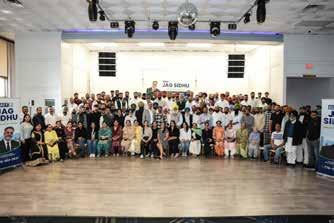
As he begins his campaign, Jag Sidhu expressed sincere gratitude for the strong turnout of more than 400 attendees at his announcement. He extended special thanks to the Khalsa Diwan Society, Kalgidhar Darbar Sahib, and Dasmesh Darbar Gurudwaras, along with the Lakshmi Narayan Mandir, local sports clubs, and the many community members who came out in support. Sidhu noted that the energy, ideas, and encouragement shared at the event reflect a collective commitment to Abbotsford’s future—one he hopes to continue building together as his campaign moves forward.
37 sfl qoN vwD smyN qoN aYbtsPorz ivwc rihMdy hoey aqy 1994 ivwc aYbtsPorz sInIar sYkMzrI qoN gRYjUeyt krn vfly iswDU ny afpxI iËMdgI aqy krIar dovyN ies Èihr ivwc hI bxfey hn. iewk Auwqm pRdrÈn krn vfly rIaltr aqy afpxy Kyqr dy isry dy 10% ivwc Èfml mYzyilan klwb mYNbr vjoN, AunHF nUM rihx vfilaF vwloN drpyÈ muÈklF—Kfs krky GrF dI ikÌfieqI kImq aqy AuplbDqf—dI iswDI smJ hY.
iswDU dy anusfr, AuhnF df cox lVn df PYslf iewk aihm smyN ‘qy afieaf hY, jdoN aYbtsPorz qyËI nfl vD irhf hY pr ieMPrfstRkcr aqy hfAUisMg splfeI ies dy nfl kdm imlfAux ivwc ipwCy rih rhy hn. AunHF dI muihMm vfsqivk qrjIhF ‘qy kyNdirq hY: GrF dI ikÌfieqI bxfAuxf, aYbtsPorz ivwc tRYiPk BIV nUM GtfAuxf, kimAUintI sur-
pyÈfvr kMm qoN ielfvf, iswDU kimAUintI ivwc srgrm rhy hn. Auh kYnyzf blwz bYNk aqy afrcvy PUz bYNk vrgIaF sMsQfvF nfl syvf krdy rhy hn, hr sfl blYNkt zrfeIvF df afXojn krdy hn, bfZ rfhq XqnF df smrQn krdy hn aqy sQfnk Kyz klwbF aqy PMzryiËMg muihMmF ivwc Xogdfn pfAuNdy hn. AunHF dI syvf dI Bfvnf aMqrrfÈtrI pwDr ‘qy vI idKfeI idMdI hY, ijwQy Auh ivdyÈF ivwc pVH rhy ividafrQIaF dI mdd krdy hn. iswDU Ëor dy ky kihMdy hn ik AunHF df idRÈitkox kfrvfeI aqy phuMcXogqf ‘qy afDfirq hY. Auh sfl Br kimAUintI ivwc mOjUd rihx, lokF dI gwl suxn aqy nqIjy dyx leI vcnbwD hn—nf ik isrÌ rfjnIqI krn leI. afpxI muihMm dI ÈurUafq krdy hoey, iswDU ny afpxy aYlfn smfgm ivwc vwzI igxqI ivwc phuMcy lokF df DMnvfd kIqf aqy ikhf ik iewk mËbUq, surwiKaq aqy smfvyÈI aYbtsPorz bxfAux leI pUrI kimAUintI dI sFJI koiÈÈ loVINdI hY.
AunHF ny afpxy aYlfn smfgm ivwc 400 qoN vwD lokF dI Èfndfr hfËrI leI idloN DMnvfd pRgtfieaf. AunHF ny Éfs qOr ‘qy Kflsf dIvfn sosfietI, klgIDr drbfr sfihb aqy dsmyÈ drbfr gurduafiraF df, nfl hI lkÈmI nfrfiex mMdr, sQfnk Kyz klwbF aqy AuhnF sfry kimAUintI mYNbrF df DMnvfd kIqf jo smrQn dyx leI phuMcy. iswDU ny ikhf ik smfgm dOrfn sFJI kIqI geI Aurjf, ivcfr aqy huMslf aYbtsPorz dy BivwK leI sFJI vcnbwDqf nUM drsfAuNdy hn—ijsnUM Auh afpxI muihMm dy nfl awgy vDfAuxf cfhuMdy hn.
prbIn kOr mfn aYbtrsPorz sUbfeI adflq dI jwj bxI
aYbtsPorz (gurdIp isMG gryvfl) ibRitsL kolMbIaf srkfr dy atfrnI jnrl mMqrfly ny vYnkUvr dI sInIar pMjfbx vkIl prbIn kOr mfn nMU aYbtsPorz dI sUbfeI adflq df jwj inXukq kIqf hY jo pMjfbI BfeIcfry leI mfx vflI gwl hY. prbIn mfn ny sMn 2001 ivwc vkflq krnI sLurU kIqI dI qy sMn 2004 qoN Auh kyNdrI srkfrI vkIl vjoN syvfvF inBf rhI hY. 2007 ‘c Aus ny pbilk pROsikAUsLn srivs afP kYnyzf juafien kIqf qy 2009 ‘c prbIn nMU sMgiTq aprfiDk kysF dI pROsikAUtr bxfieaf igaf qy 2022 ‘c Aus nMU pI pI aYs sI srI dPqr dI tIm df muKI inXukq kIqf igaf. prbIn kOr vYnkUvr dI XUnIvristI afP ibRitsL kolMbIaf ‘c siQq pItr ey alrz skUl afP lfa ivKy shfiek pRoPYsr rih cuwkI hY. vrxnXog hY ibRitsL kolMbIaf kYnyzf df iewko iewk aijhf sUbf hY ijwQy 9 pMjfbxF jwj vjoN syvfvF inBf rhIaF hn. jsits plibMdr kOr sLyrigwl, blijMdr kOr igrn qy jsits nInf sLrmf ibRitsL kolMbIaf suprIm kort dIaf jwj hn, jdo ik hrbMs iZwlo, siqMdr iswDU, nInf puryvfl, sUjn sMGf, prvIn inwjLr qy prbIn mfn sUby dy vwK-vwK sLihrF ivwc ibRitsL kolMbIaf sUbfeI adflq dIaf jwj hn.
kYnyzf dy kOmI kusLqI mukfbilaF ‘c pMjfbxF ny ijwqy 13 sony dy qgmy
aYbtsPorz (gurdIp isMG gryvfl) kYnyzf dy albrtf
sUby dy sLihr grYNz pRyrI ivKy
hoey lVkIaF dy kYnyzIan rYsilMg cYNpIanisLp kusLqI
mukfbilaF ‘c pMjfbx pihlvfnF ny cMgf pRdrsLn krdy hoey 13 sony dy qgmy ijwq ky BfeIcfry df mfx vDfieaf hY.
gYRNz pRyrI dy izjfien vrksL sYNtr ivKy hoey iehnF kOmI kusLqI mukfbilaF ivc kYnyzf Br ‘coN 700 pihlvfnF ny ihwsf ilaf sI. ienHF mukfbilaf nMU aMzr 19, 17 aqy 15 iqMn sRyLxIaF ivwc vMizaf igaf sI. aMzr 19 lVkIaF dy 43 ikwlo vrg kusLqI mukfbly ‘c KLusI JwlI ny sony dy qgmy ijwqy jdik aMzr 17 sLRyxI ivwc 49 ikwlovrg ‘c rIq qUr, 53 ikwlovrg ivwc jYrIq bfhI, 57 ikwlovrg ‘c gurlIn iZwlo, 65 ikwlovrg ‘c jspRIq pMnU qy 69 ikwlo vrg mukfbly ‘c qmMnf muMzI ny sony dy qgmy ijwqy qy gurlIn kOr iZwlo nMu most afAUtstYizMg rYslr df iKqfb idwqf igaf qy aMzr 15 dy 39 ikwlovrg kusLqI mukfbly ‘c ElIvIaf qUr, 42 ikwlovrg ivwc myGf sLrmf, 58 ikwlovrg ‘c jsLn DfmI, 62 ikwlovrg ‘c smrIn kOr qy 70 ikwlovrg kusLqI mukfbly ‘c anrIq kOr ZIzsf ny sony dy qgmy ijwqy.
The Province and seven Treaty 8 First Nations have taken a next step toward creating a thriving and communitycentered local economy in northeastern British Columbia.
Restoration agreements will restore and protect the environment, provide predictability and stability to existing industries, as well as establish new business opportunities in the region, while ensuring historic Treaty Rights are upheld.
“The restoration agreements will build on the strong partnership that we have with the Treaty 8 First Nations, which is a First Nations led approach,” said Adrian Dix, Minister of Energy and Climate Solutions. “This work is guided by the belief that healing the land and healing the people are inseparable. Through restoration activities, community members are reconnecting with ancestral knowledge, reinforcing language, and strengthening cultural practices tied to the land. This partnership approach to land and resource management will help to uphold constitutionally protected Treaty Rights, while supporting a vibrant economy.”
Restoration work
These agreements provide a combined investment of $283 million to the seven Treaty 8 First Nations over the next 10 years to support projects that will help restore and enhance ecosystems including:
species-at-risk recovery and habitat restoration
post-wildfire restoration
wetland and fish habitat restoration
creating and implementing cultural burn plans
enhancing the restoration of historic industrial sites (where no legal obligations exist)
adopting climate change mitigation strategies
The funding will also support projects that will help protect and revive the culture and well-being of Treaty 8 First Nations. This includes language revitalization, cultural education, community programming and events, and reviving cultural land-management practices.
Restoration plans will be developed by individual Treaty 8 First Nations, and will include projects that reflect each Nation’s unique priorities and values. The Nations will work collaboratively
with the provincial government and each other to co-ordinate, monitor and report on restoration activities.
Creating a sustainable economy
Treaty 8 First Nations will continue to partner with qualified businesses and workers to implement restoration projects, generating new business and employment opportunities for the people in these communities. This keeps economic benefits in the local communities, strengthens local businesses and creates meaningful, year-round employment opportunities.
For example, Fort Nelson First Nation is proactively partnering with local educational institutions, including Chalo school, to develop culturally relevant curriculum centred on restoration, land stewardship and Indigenous traditions. Mentorship initiatives are being developed to connect youth with restoration practitioners, providing hands-on experience in the field, guided by experts within local communities. These efforts aim to build career paths in environmental stewardship and natural-resource management for community members.
“Fort Nelson First Nation is proud to lead this restoration work that supports our lands, our people, and our Treaty Rights,” said Chief Archie Harrold, Fort Nelson First Nation. “By investing in youth through partnerships with Chalo school and mentorship opportunities, we are helping build the next generation of land stewards, while supporting a sustainable local restoration economy.”
This co-ordinated approach to restoration planning will help reduce uncertainty for industry, while strengthening environmental outcomes for the benefit of local economies and future generations. This balanced method, done in partnership and respectful of Treaty Rights, supports continued economic activity and growth, while accelerating meaningful restoration across the region.
Treaty 8 is about partnership, respect, and shared land stewardship, helping to build a sustainable and prosperous future for all.
Mary McKanachaa, Prophet River First Nation –
“To understand how Dane-zaa people think, you have to understand the symphony of the trees. It is out on the land we know our place.”
Chief Harley Chingee, McLeod Lake Indian Band –
“Our members are the strength of our Nation, and these restoration agreements invest directly in our people. By creating local jobs and supporting intergenerational knowledge sharing, this work strengthens the economy, while restoring the land for future generations.”
Randene Neill, Minister of Water, Land and Resource Stewardship –
“Building respectful and mutually beneficial relationships with First Nations is a cornerstone of our government’s approach to reconciliation and economic growth throughout the province. The agreements signed with these Treaty 8 First Nations will support employment opportunities in their communities and enhance how the Province is already working with First Nations on environmental stewardship and natural resource management.”
Spencer Chandra Herbert, Minister of Indigenous Relations and Reconciliation –
“Together, the Province and Treaty 8 First Nations are advancing projects that focus on restoring ecologically important landscapes and waterways, and preserving sites of cultural significance. This is about leaving the land in a good way for future generations and ensuring Treaty 8 First Nations members can meaningfully exercise their rights, all while building a healthy, stable and secure future for everyone in the region.”
Ravi Parmar, Minister of Forests –
“Together, we are forging powerful partnerships by ensuring conservation, habitat restoration and responsible stewardship are at the core of how we manage our forests. This is what coming together looks like. Led by First Nations, these agreements will create more local jobs, build healthier, more resilient forests that better protect communities from wildfires and ensure First Nations have a meaningful role in stewarding their lands as we build a working forest together.”
IT ’S A GREAT TIME TO BUY. GIVE US A CALL
Science World transforming its dome into FIFA World Cup 2026 official match ball
One of Vancouver’s iconic landmarks will undergo a stunning transformation beginning on Wednesday, May 6, 2026.
Science World will be unveiled as The Beautiful Dome, a massive, 360-degree, 40-metre-diameter recreation of the Adidas Trionda, the official match ball of the FIFA World Cup 2026.
A nod to “the beautiful game,” the project is made up of 131 custom-shaped and -sized panels. Installation of the Trionda design will take approximately four weeks to install (depending on weather conditions) with completion anticipated in early June 2026.
To coincide with FIFA World Cup 2026, Science World will host Soccer and Technology from the FIFA Museum, presented in partnership with the Province of British Columbia, which takes fans behind the scenes of the game, showing how innovation has shaped its continuing evolution. Making its North American debut, the new exhibition runs from May 15 until Sept. 7, and is part of a summer of celebration of science and sport at Science World.
“Forty years after it first welcomed the world at Expo 86, the dome that
now houses Science World is proud to be part of another extraordinary moment in Vancouver’s history,” said Tracy Redies, president and CEO, Science World. “This unique installation is a bold feat of engineering and a testament to what is possible through creativity and collaboration. We are excited to welcome visitors from around the world and be part of an experience that will inspire and unite people.”
Trionda, meaning “three waves” in Spanish, pays homage to the three host countries. For the first time in FIFA World Cup history, Canada, Mexico and the United States are uniting to host the largest tournament ever. The ball’s design reflects this historic collaboration through unique, innovative features that symbolize connection across borders.
Designed to become one of the defining visual moments of FIFA World Cup 2026, the transformation will create a backdrop for broadcast, digital storytelling and visitor experiences.
“This is about creating a globally iconic image that immediately connects Vancouver to the FIFA World Cup and showcases our city’s creativity and ambition,” said Royce Chwin, president and CEO, Destination Vancouver.
“The transformation of Science World is more than a visual transformation, it is an investment in telling British Columbia’s global story and represents a shared commitment to delivering an unforgettable FIFA World Cup experience, building a lasting economic and community legacy for Vancouver and the province.”
Hosting the FIFA World Cup 2026, the world’s largest single-sport event, is an unprecedented opportunity. Science World’s transformation will help draw global attention to B.C. as a premier destination for hosting major, world-class events, driving visitation and investment, and creating lasting economic and cultural benefits for people in B.C.
“We’re thrilled to support bringing such an iconic visual to life, helping anchor this once-in-a-generation opportunity to welcome the world to B.C.," said Anne Kang, Minister of Tourism, Art, Culture and Sport. “FIFA World Cup 2026 is capturing global attention and the excitement is building. Transforming the Science World dome into this symbol of the beautiful game helps us reach new audiences and turn that spotlight into lasting benefits
for people in B.C. for many years to come.”
The initiative reflects a strong collaboration between tourism, government and community leaders, all working together to elevate British Columbia’s presence on the world stage. Partners that made the project come to life include Destination Vancouver, Science World, the Province of B.C., the FIFA World Cup 2026 Vancouver Host Committee and the Vancouver Hotel Destination Association.
The Look Company, founded in Canada in 1998, will oversee the installation. With its expertise in transforming retail and sport environments with innovative display solutions, the award-winning company was the fit for the project.
“Capturing the excitement of FIFA World Cup 2026 on an architectural landmark like Science World's iconic dome is no small achievement,” said Jacob Burke, global CEO, The Look Company. “It takes an immense amount of vision, creativity and collaboration at a scale that very few projects reach. This design embodies the World Cup and creates a visual experience that fans and players alike will remember for years to come.”
Ërf soco ik ikMnI ivzMbxf hY ik hr mF ny nON mhIinaF qwk afpxy grB ivc bwcy leI cMgy ivcfr XkInI bxfAux dI pUrI koiÈÈ kIqI hovygI aqy jnm qoN lY ky lgpg 7 qoN 8 sfl qwk Aus dy srIrk qy mfnisk ivkfs leI hr sMBv kdm cuwky hoxgy.
meI mhInf ÈurU huMdy hI sfnUM mF idvs Xfd afAuNdf hY. ipafr, iqafg qy sihxÈIlqf df dUjf nF hY ‘mF’. mF df ipafr ibnF iksy svfrQ qoN huMdf hY. Auh bwicaF dy suwK-afrfm Éfqr afpxf hr suwK kurbfn krn leI hmyÈf iqafr-br-iqafr rihMdI hY. bwcy nUM rwqI Br vI duwK hovy qF Aus dI cIs mF dy idl ’coN AuwTxI suBfvk huMdI hY. mF vjoN afpxy ÌrËF dI smIiKaf krn dI siQqI mn ivc vfr-vfr AuwTdI hY. ies vfr vI meI dy mhIny ivc ieh sfnUM 22 apRYl dy mnhUs idn nUM Buwlx nhIN dyvygf.
mF idvs ’qy AunHF mfvF dy mnF ivc kI cwl irhf hovygf ijnHF dy puwqr awqvfdIaF df iÈkfr bx gey, AunHF aOrqF ’qy kI bIqdI hovygI ijnHF dy sfhmxy AunHF dy pqIaF nUM jnqk qOr ’qy mfr idwqf igaf sI. aijhy hflfq ’c jvfnI qoN lY ky buZfpy qwk, bwcy dy mfnisk ivkfs ’qy mF dI pkV Aus dI iewCf dy bfvjUd afpxy-afp iZwlI pY jFdI hY. ieh pirvfrk mfhOl qoN ÈurU huMdf hY ijwQy iek bwcf rwbI hukm anusfr pYdf huMdf hY aqy kdrF-kImqF vI gRihx krdf hY pr ijvyN hI Auh afpxy GroN bfhr inkldf hY, skUl ivc dfÉly smyN dfÉlf Pfrm rfhIN Aus df Drm, jfq aqy BfÈf puwCI jFdI hY. jdoN Auh QoVHf vwzf huMdf hY qF smfj aqy Aus dy afly duafly df mfhOl vI Aus qoN ienHF svflF dy jvfb jfxnf cfhuMdf hY.
ies siQqI
ivc kuJ bwcy pihlF Éfs
krky afpxIaF mfvF qoN jvfb puwCdy hn jF
zf[ inDI Èrmf
aksr Auh ieMtrnYwt dI dunIaf ivc dfÉl huMdy hn aqy ienHF svflF bfry afpxI rfey bxfAuNdy hn ijs kfrn Auh afsfnI nfl boDfqmk pwKpfq df iÈkfr ho jFdy hn. iewQy lok jfxkfrI dI asl smwgrI dI bjfey jfxkfrI pyÈ krn dy qrIky dy afDfr ’qy ÌYsly lYNdy hn. bdiksmqI nfl ienHF siQqIaF ivc bwcy afpxIaF mfvF qoN iswKx dI bjfey AunHF nUM
isKfAuxf ÈurU kr idMdy hn. afpxIaF pUrIaF
koiÈÈF dy bfvjUd mF mOjUdf hflfq ivc Aus
nUM Aus dy pwKpfq dy BulyKy qoN mukq krn ivc asPl jfpdI hY.
Ërf soco ik ikMnI ivzMbxf hY ik hr mF ny nON mhIinaF qwk afpxy grB ivc bwcy leI cMgy ivcfr XkInI bxfAux dI pUrI koiÈÈ kIqI hovygI aqy jnm qoN lY ky lgpg 7 qoN 8 sfl qwk Aus dy srIrk qy mfnisk ivkfs leI hr sMBv kdm cuwky hoxgy. pr hOlI-hOlI jvfnI dI dihlIË ’qy jfxkfrI dy qUÌfn ivc Ps ky ivakqI acfnk mfnisk qOr ’qy svY-inrBr ho jFdf hY. ies nUM smJx dI bhuq loV
hY. pr mF nUM kI krnf cfhIdf hY?
Auh afpxy nfl ikhVf jfdUeI pl ilaf skdI hY ik Auh afpxy bwcy df srIrk aqy mfnisk ivkfs Éud XkInI bxf sky? hflfq aijhy hn ik Kfxf, pihrfvf, qurnf, bolxf aqy socxf vI
imlfvtI ho igaf hY. mYN AulJx ivc hF ik ikwQoN ÈurU krF.
hr pirvfr afpxy sfDnF anusfr pihlF
Bojn df pRbMD krdf hY pr kuJ lflcI lok
Aus Bojn ’qy nËr mfrdy hn aqy sfÌ Bojn bwicaF qwk nhIN phuMcx idMdy. hfl hI ivc lok sBf ivc altrf-pRosYsz Bojn aqy imlfvtI Koaf-pnIr qoN pYdf hox vfly ishq sbMDI gMBIr ÉqiraF df muwdf crcf df ivÈf irhf. ies ivc sdn ny Kfx-pIx dIaF vsqF ’qy pYk qy ikAUafr koz afDfrq lybilMg pRxflI lfgU krn dI mMg kIqI hY qF jo asIN jfx skIey ik koeI vI Bojn bxfAux ivc hryk smwgrI df ikMnf pRqIÈq vriqaf igaf hY. Kfxy dI plyt qoN awgy vDdy hoey ieMtrnYwt ieh vI ÌYslf kr irhf hY ik bwicaF nUM ikhVy kwpVy pihnxy cfhIdy hn, hflFik ieh ruJfn huxy hI Auwc aqy mwD vrg qwk phuMicaf hY.
iek hor vI duKdfeI pihlU ieh hY ik bwicaF dI jIvn-ÈYlI aqy qurn dI ÈYlI pRBfvkF duafrf inrDfrq kIqI jf rhI hY. jykr kuJ pRqIÈq lok mfnisk qOr ’qy ÉflI rihMdy hn qF ieMtrnYwt dI AuplbDqf ny Aus ÉflIpx nUM keI qrIikaF nfl Br idwqf hY. ies nkfrfqmk siQqI ivc mF df sQfn, bwicaF df pihlf gurU Aus smyN qwk srbAuwc irhf hY jdoN qwk Aus nUM kuJ vI nhIN pqf sI. kfÈ ik Aus nUM ies tkrfa Bry mfhOl ivc kdy kuJ pqf nf lwgy. pr iPr Auh ipwCy rih jFdf aqy smfj vwloN ies df doÈ sB qoN pihlF Aus dI mF Auwqy miVHaf jFdf hY. ies AulJx vfly mfhOl ivc kI kIqf jfxf cfhIdf hY? jykr asIN suJfvF aqy ivcfrF qoN pry gwl krIey qF ivhfrkqf ’qy crcf kIqI jfxI cfhIdI hY. nwby dy dhfky qoN pihlF pirvfr ivÈvIkrn qoN axCoihaf sI aqy Aus ivc bwicaF leI smF bhuq mhwqvpUrn sI. pr ies dy afAux nfl jIvn-ÈYlI ruJyivaF BrpUr ho geI. hOlI-hOlI bwcy qknflojI nfl dosqI kr ky sfmrfjvfd dy jfÜ ivc Ps gey. hflfq ieh hn ik 21vIN sdI ivc sfzy bwicaF ny bcpn qoN hI sB kuJ iswK ilaf hY ijs kfrn AunHF df bcpn mfmUlI ijhf ho igaf hY. sfzf Drm qy iswiKaf sfzI sMsikRqI df ihwsf sn pr qknflojI dy iËafdf sMprk ny bwicaF qy nOjvfn pIVHI nUM ihMsk bxf idwqf hY. ies leI ieh ËrUrI hY ik mfvF Éud agvfeI krn qy afpxy bwicaF nUM ies inrBrqf qoN bfhr kwZx aqy smyN dI Gft df hvflf idMdy hoey Pon qy qknflojI AunHF nUM nf sONpx. hfl hI ivc afey XUpIaYwssI dy iemiqhfn ivc sPl hoey iËafdfqr AumIdvfrF ny ies df ishrf afpxIaF mfvF nUM idwqf hY.
hrcrn isMG sfmf, pMjfbI jfgrx iProËpur : mF[[[ ieh isrÌ iewk Èbd nhIN, blik iewk aihsfs hY, iewk irÈqf hY jo dunIaf ivwc sB qoN pivwqr aqy anmol hY. mF Auh ÈÉsIaq hY jo sfnUM ies dunIaF ivwc ilafAuNdI hY, jo afpxI nINd kurbfn krky sfnUM sulfAuNdI hY, jo afpxf Bojn Cwz ky sfnUM iKlfAuNdI hY. mF sfzI pihlI aiDafpkf, sfzI sB qoN cMgI dosq aqy hr muÈkl ivwc sfzf shfrf bxdI hY. Ausdy ipafr ivwc koeI Èrq nhIN huMdI, AusdI kurbfnI dI koeI sImf nhIN huMdI aqy AusdI mmqf byaMq huMdI hY. hr sfl meI mhIny dy dUjy aYqvfr nUM mF idvs mnfieaf jFdf hY. ieh idn dunIaf Br ivwc mfvF dy ipafr, AunHF dI kurbfnI aqy AunHF dy byimsfl Xogdfn nUM slfm krn leI mnfieaf jFdf hY. ieh idn sfnUM mOkf idMdf hY ik asIN afpxIaF mfvF pRqI afpxf ipafr aqy siqkfr pRgt krIey aqy AunHF df DMnvfd krIey jo AunHF ny sfzy leI kIqf hY. juigMdr isMG mfxk, pRDfn XUQ vYlPyar klwb mF df irÈqf iewk aijhf irÈqf hY jo jnm qoN ÈurU huMdf hY aqy pUrI iËMdgI sfzy nfl rihMdf hY. iewk mF afpxy bwcy nUM afpxI kuwK ivwc nON mhIny rwKdI hY, jnm dy dOrfn asih drd sihMdI hY aqy iPr afpxI pUrI iËMdgI AusdI prvirÈ ivwc lgf idMdI hY. Auh afpxy bwcy dI hr loV df iDafn rwKdI hY, AusnUM cMgy sMskfr idMdI hY aqy AusnUM iewk cMgf iensfn bxn ivwc mdd krdI hY. mF sfzI pihlI gurU huMdI hY. Auh sfnUM bolxf isKfAuNdI hY, cwlxf isKfAuNdI hY aqy dunIaF nUM smJx ivwc sfzI mdd krdI hY. Auh sfnUM shI aqy glq ivwc Prk dwsdI hY aqy sfnUM iËMdgI dIaF muÈklF df sfhmxf krn leI iqafr krdI hY. mnivMdr isMG sMDU, XUQ afgU awj dy qyË rÌqfr
jIvn ivwc asIN aksr afpxIaF mfvF nUM smF dyxf Buwl jFdy hF. mF idvs sfnUM Xfd idvfAuNdf hY ik sfnUM afpxIaF mfvF leI smF mF df irÈqf iewk aijhf irÈqf hY jo jnm qoN ÈurU huMdf hY aqy pUrI iËMdgI sfzy nfl rihMdf hY. iewk mF afpxy bwcy nUM afpxI kuwK ivwc nON mhIny rwKdI hY, jnm dy dOrfn asih drd sihMdI hY aqy iPr afpxI pUrI
iËMdgI AusdI prvirÈ ivwc lgf idMdI hY. Auh afpxy bwcy dI hr loV df iDafn rwKdI hY, AusnUM cMgy sMskfr idMdI hY aqy AusnUM iewk cMgf iensfn bxn ivwc mdd krdI hY. mF sfzI pihlI gurU huMdI hY. Auh sfnUM bolxf isKfAuNdI hY, cwlxf isKfAuNdI hY aqy dunIaF nUM smJx ivwc sfzI mdd krdI hY. ieMdrjIq isMG iswDU, aYmzI, iksfn afAUtlYt mF sfzI sB qoN cMgI dosq vI huMdI hY. asIN Aus nfl afpxy idl dI hr gwl sFJI kr skdy hF. Auh sfnUM ibnF iksy Èrq dy ipafr krdI hY aqy hmyÈf sfzf sfQ idMdI hY. jdoN asIN muÈkl ivwc huMdy hF, qF Auh sfnUM hONslf idMdI hY aqy sfnUM awgy vDx leI pRyirq krdI hY. Ausdf shfrf sfnUM hmyÈf mËbUq bxfAuNdf hY. mF dI kurbfnI byimsfl huMdI hY. Auh afpxy bwicaF dI ÉuÈI leI afpxIaF ÉuÈIaF nUM vI kurbfn kr idMdI hY. Auh afpxIaF loVF nUM ipwCy rwK ky afpxy bwicaF dIaF loVF nUM pUrf krdI hY. Auh idn rfq kMm krdI hY qF jo Ausdy bwicaF nUM iksy cIË dI kmI nf afvy. AusdI ieh kurbfnI hI AusnUM dunIaF dI sB qoN mhfn ÈÉsIaq bxfAuNdI hY. primMdr isMG jwj, mIq pRDfn Èyr ey pMjfb sports klwb mF rwb df dUjf rUp hY, kihMdy ny mF dy kdmF ivwc jMnq hY. mF dI isÌq krn leI vYsy qF asIN kudrq
pfsoN rwb dI Ausqq vI AuDfr mMg skdy hF pr gwl mF dy Auwcy mfx-siqkfr nfl
juVI hY, ies leI ibnF Èwk ikhf jf skdf
hY ik mF dIaF lorIaF ivc svrg vrgf
anMd hY, ijs dy pivwqr crnF ivcoN jMnq
df duafr KuwlHdf hY aqy Aus inwGI god ivc
rUhfnI suwKF dI Kfx CupI hY. aOlfd leI
mF dI imwTVI Ëbfn qy asIsF, awKF ivc
supny, iZwz ivc zr, ihrdy c mmqf, idl
ivc rihm, socF ivc iÌkr aqy KUn ivc
aËIb qVp hmyÈf hI bxI rihMdI hY. Auh
aOlfd dy KuÈ hox qy hwsdI hY qy duKI hox
qy awKF BrdI hY.iewk mF nf isrÌ afpxy
pirvfr dI dyKBfl krdI hY, sgoN smfj
nUM vI iewk ibhqr idÈf idMdI hY. blivMdr
isMG josn, srpMc gRfm pMcfieq ruknf
muMglf Auh rwb ijsnUM asIN Dfrimk QfvF
’qy lwBdy hF, asl ivwc Auh mF dy crnF ’c vwsdf hY. mdr zya koeI isrÌ iqAuhfr nhIN, ieh iek aijhf idn hY jo sfnUM smJfAuNdf hY ik mmqf dI koeI jfq, koeI Drm nhIN huMdI. mF dI QF kdy vI koeI nhIN lY skdf. mF hI Auh hY jo Kud BuwKI rih ky afpxy bwicaF dI BuwK imtfAuNdI hY. ijhVI aOrq iek jIvn nUM jnm idMdI hY, Aus dI qfkq nUM kmËorI kihxf mrd dI soc dI kmËorI ho skdI hY, aOrq dI nhIN. smfj aksr mF dI kdr iewk idn leI krdf hY, mdr zya ’qy. pr kI asIN hryk idn AusdI syvf krdy hF? kI asIN roË Aus dy crnF ’c isr JukfAuNdy hF? jy nhIN, qF ieh idn isrÌ iewk idKfvf bx ky rih jFdf hY.
mF bolI df gIq
ariqMdr sMDU
sLbdF df kwqF crKf gIqF dy gloHty lfhvF ies qrF mF bolI df mYN swjxf sLgn mnfvF dwsxy jy dwuK afpxy qy mn ‘coN AuWTIaF hfvF aihsfsF dy rMg Kfqr mYN mF bolI kol jfvF
awKrF dI dfq lvF
qy sLbdF ivwc sjfvF[[[eys qrF[[[ kIhnMU ikvyN kI afKxf
kwcIaF kMDF ‘qy peIaF AuNglF dIaF lIkF hux pwky plsqrF hyT dwbIaF geIaF ny pr Auh inG ajy vI
AunHF purfxIaF iewtF dy por-por ivwcoN kdy-kdy bfhr afAux leI qVPLdf hY. swQ ivwc bYTy bdibaF dIaF gwlF koeI khfxIaF nhIN huMdIaF sn, Auh qF qjLribaF dIaF Auh pusqkF sn ijnHF nUM pVHn leI
iksy skUl dI loV nhIN sI.
imwtI dy cuwlHy ‘coN inkldf DUMaF asmfn nUM CUhx dI koisLsL nhIN sI krdf
sgoN Auh qF Aus Gr dI
brkq aqy sFJ dI gvfhI idMdf sI.
asIN lwB rhy hF sLihrF dIaF rOsLnIaF ivwc
Auh skUn, jo sfnUM iksy purfxI Xwq hyT
mINh dIaF kxIaF dI guPLqgU suxidaF ibnF mMigaF hI iml jFdf sI.
duwD dI KusLbU dI QF DUMeyN ny Gr bxf ilaf hY ! pqf nhIN ikMnIaF mfvF roNdIaF hn afpxI god nMU JulfAudINaF hnpr hux JUlf KflI hY. kI iksy mF df drd srhwdF vyKdf hY?
kI iksy bwcy dI mOq
Drm jF dysL puwCdI hY?
mYN isafsq nhIN jfxdf mYN XuwD nIqI nhIN jfxdf mYN isrPL ieh jfxdf hFAuh bytIaF mfsUm sn Ehnf df ksUr isrPL ieh sI ik Auh jnmIaF sI[[[[ iek aYsI dunIaf ‘c ijwQy vwzy lok
CoitaF dI ijMLdgI nfl Kyzdy hn ! hy dunIaf dy nyqfE ! quhfzy PYsilaF dI kImq bwicaF dy lhU nfl ikAuN adf hovy?
mIn : ishq gVbV, pyt dI KrfbI, Dn hfnI, Brf df swuK, sMpqI lfB, sMqfn pwKoN suwK, iesqrI ksLt, kfrobfr ivwc qrwkI. apYRl 17,18,25,26, meI 3,4,5,13 asLuB.
The Full Moon this week occurs in your sign. If there is any time to be noticed for something, it is now. The position you might want to take when it comes to any situation will be made quite clear by you. This won’t necessarily fit in with what others might want or expect, generating the need for them to reconsider.
You could suddenly begin to realise that somebody else isn’t planning to be as agreeable as you have presumed. This may make you wonder about exactly what might be building up behind the scenes that might prove difficult. Focus on what gives you greatest enjoyment and any decisions you need to make in these directions.
Something you have been putting your energy into over the last 2 weeks might now require some rethinking, especially if you feel certain obligations take up too much of your time and might be better dropped. Look at this as a first stage up to late October. Developing greater personal freedom in the long term will be important.
What is possible in the long term could become clearer, making you realise that what once seemed important might need to be rethought. This could be as a result of what someone else now wants or expects. You must not put your wishes to one side as there is the opportunity to fulfil those eventually, even if it is not obvious right now.
There can be much to enjoy this week though there will be other situations that will provide some challenges. You need to be creative with thinking or decision making to late October, especially if you are being put under pressure when it comes to the expectations of somebody else. Your focus will be to bring something to an end.
Don’t hesitate to either challenge or bring something to an end with somebody else if this will generate greater peace, balance or harmony to you on a personal level. This could bring some surprising things to the surface that you didn’t expect, making it necessary to rethink, to late September, the decisions you should make.
Your focus will move to finances to late September and this can have some sort of new beginnings attached, though this is a first stage. There could be final details you need to sort out so that you will be in a good position to handle any increase in responsibilities. The true position of somebody else could become more obvious.
Somebody else could become surprisingly generous, which you might find hard to trust. When it comes to any definite decision making you need to take your time to late September. Matters will require careful contemplation especially in any situations where you need to scale back obligations rather than take new ones on.
You could come to the realisation, from now to late September, that it is better to scale down ideas you might have had late July to mid August to be able to take these things into the future successfully. Others might have bigger ambitions but you can be happier with small steps, allowing you to have a feeling of better control.
You are in a position to late September to contemplate future plans and possibilities that you may have wanted from late July to mid August but could not finalise. You have the opportunity to engage with others and get a response. This could also have a lot to do with leaving the past behind up to 20th November so you can move on with a new life direction.
Something you thought had become evident since mid August where someone else’s decision making is concerned could again become more unknown to late September. It could be that they need to withdraw to make final decisions. These could involve taking your priorities into account as well as generating some sort of pleasure in life.
Interactions with other people can be pleasant on one hand but challenging on another when it comes to any situation where personal commitment from you is expected. What should be aimed for in the long term can be communicated to late September, though this is a first stage. Winding things up is part of the process.
A simple spring car reset every Canadian driver should know
While we often think of self-care as something personal, it should also extend to the things we rely on every day, especially our cars. With so much wear and tear, it’s easy to forget that our vehicles need care and attention too.
“Vehicles often feel fine after winter, but that doesn’t mean they haven’t been affected,” says Brian Mielko, the CEO of OK Tire. “Spring is the best time to catch small issues early, before they turn into bigger problems during peak driving season.”
Showing your car a little love doesn’t have to be complicated. Here are some simple steps to take:
1. Start with a 15-minute interior clean
A quick interior clean will make your vehicle look and feel better for every drive.
2. Don’t ignore what you can’t see
Underneath your car, road salt, moisture and grime can speed up rust and corrosion. That damage is important to address early, to protect against future wear. An undercarriage treatment adds a protective, rust-resistant layer.
3. Check your tires before you hit the road
Watch for:
Low tread depth (below ~3/32 inch, or visible wear bars), Cracks or bulges, especially on sidewalls, Uneven wear (may indicate alignment or suspension issues), Vibration while driving, Frequent air loss
Minister’s statement on Emergency Preparedness Week
Kelly Greene, Minister of Emergency Management and Climate Readiness, has released the following statement during Emergency Preparedness Week (May 3-9, 2026):
“An ounce of prevention is worth a pound of cure.
“That well-known proverb was coined almost 300 years ago, but its meaning still rings true. Simply, it means that taking small steps now can prevent a problem, or at least reduce the size of the problem we face.
“This is the spirit behind Emergency Preparedness Week, a national awareness initiative that calls on people to take action to make sure they’re prepared to protect themselves, their families and communities during an emergency.
“This is the 30th anniversary of Emergency Preparedness Week in Canada, and in B.C. this year’s theme is ‘In it together,’ which recognizes that everyone’s readiness and resilience is strengthened when we’re looking out for one another.
“Preparing for emergencies is a team effort, whether it’s the Province, the federal government, local governments, First Nations, or people and families.
“Everyone has a role to play, and a good way to start is by creating a household emergency plan and having a grab-and-go bag ready.
“The Province’s online, interactive Emergency Ready Planner details each step in building an emergency plan that you can save to your phone and share with loved ones, so everyone has a copy.
“Part of living in this beautiful province are the hazards that are beyond our control, and it’s especially important to be mindful of climate-caused emergencies, especially floods and wildfires, as we head into warmer weather.
“When there is an emergency, evacuation alerts and evacuation orders may be issued by your local government or First Nation. In urgent situations, people may also receive an alert through cellphones, radio and cable television.
“It’s vitally important that people stay alert, stay informed and stay prepared.
“The best time to prevent the worst of an emergency situation is before one happens, and I encourage everyone in B.C. to act on the messages of Emergency Preparedness Week and apply them to your daily life.
“After all, we’re in it together.”
Pro tip: Use a soft brush to lift any stubborn debris from crooks in fabric car seats.
blUbyrI pYikMg df kMm isrP sfzI aYbtsPorz lokysLn qy Auplbd hY. afpxy rYjLmy eImyl jF PYks kr skdy ho jF Kud af ky iml skdy ho.
eImyl: Jass@westberryfarms.com
PYks: 604-855-1625
Blueberry Receiving stations
vYstbyrI PfrmjL 30 sflF qoN vDIaf kuafiltI dI KyqI aqy pRosYisMg krdy hn.
sfzy kol do kMzy hn, iewk aYbtsPorz ivwc aqy iewk srI ivwc. grovr iehnF dovF ivcoN iksy kMzy qy vI byrI lY ky af skdy hn.
Opening new supportive homes in Surrey
People experiencing or at risk of homelessness in Surrey have access to 60 new homes with supports with the opening of Bentley Place, a new supportive-housing building.
“Supportive homes help bring people indoors, where they can have access to supports and get connected to services that will help them,” said Christine Boyle, Minister of Housing and Municipal Affairs. “These homes will go a long way to ensure more people in Surrey are getting the care and support they need when they fall on hard times. We know our communities are stronger and more connected when we take care of each other and we are committed to building homes that create full, complete communities.”
The new six-storey building at 13559 Bentley Rd. is just off King George Boulevard, a short walk from Gateway SkyTrain station.
On-site supports by an experienced provider
Phoenix Society, an experienced non-profit housing provider based in Surrey, will operate the building and provide the following services:
24/7 staffing
daily meals
life skills and employment training
access to health supports
connections to community services
There are also security measures in place, such as well-lit and fenced grounds, camera monitoring and a controlled single point of entry.
The building will also include dining areas in addition to indoor and outdoor lounge spaces. Residents of the building will have extensive services available through the downtown Surrey area, including the Chuck Bailey Recreation Centre and the Surrey North Community Health Centre.
“We know people experiencing homelessness need warm, safe indoor places to go during a time of need and I’m thrilled to see these homes open in my community,” said Amna Shah, MLA for Surrey-City Centre. “These homes will immediately help people experiencing homelessness in Surrey find good places to live where they can stabilize their lives through support services and connection. I’m grateful to all partners for their work on making these homes a reality.”
Supportive housing is a vital and proven way to help vulnerable people come indoors and access supports that lead to better health outcomes, improve physical and mental health for residents and build safer, stronger communities for everyone.
Strong partnerships
These homes were made possible by leadership and strong partnerships between the Province, through BC Housing, the Government of Canada,
through Canada Mortgage and Housing Corporation, the City of Surrey and Phoenix Society.
The Province contributed approximately $18.5 million from the Supportive Housing Fund, along with approximately $2.4 million in annual operating funding.
The City of Surrey bought the land for Bentley Place, valued at approximately $1.8 million, and secured approximately $11.4 million in Government of Canada funding from the Rapid Housing Initiative for the homes. The city also waived development cost charges of more than $500,000.
This project is part of a $19-billion housing investment by the B.C. government. Since 2017, the Province has more than 95,000 homes that have been delivered or are underway, including nearly 2,700 homes in Surrey.
Malaika questions beauty standards
Actor-entrepreneur
Malaika Arora led her life on her own terms as she stepped into showbiz, and continues to do it after almost 30 years of being here. During a conversation on an entertainment show, she said people still place the pressure of looking a certain way only on women. Asked whether the thought of ageing crosses her mind, even as her fitness and looks are still praised, she said, “Now that’s a doubleedged sword. There are days when it does cross my mind, where I do wonder or question the obvious. And then there are days where I don’t. I just don’t care
Kritika calls out showbiz hierarchy
because I am doing what I love, I am enjoying it, and I feel like I am in my prime.” But she feels men too should be asked the same question. “I feel women are constantly asked this question. Very rarely is a man asked any of these things. A woman who is asked, ‘At your prime you were like this, and now you are at this age, so how does it feel? Do you still feel beautiful? Do you still feel desirable?’ I’ve never heard anybody ask a man this question. Women are always subjected to this test of looking a certain way,” she confessed on the show.
Amitabh Bachchan is considered one of the best actors in Indian cinema. Be it a film or as a host of a television show, he has earned praise for his commitment and dedication towards his work.Amitabh often takes to his blog to share his personal opinions on variety of things. In his latest blog post on Tumblr, the veteran actor talked about growth and how he considers 'learning' to be an integral part of life.He wrote, "As long as there is life there is a learning ... learning of matters and obstacles and achievements, the lot. It needs recognition. It needs desire ... It requires belief ... And eventually - the deed ... How many of us can relate to this, is also a learning ... So ... I learn each day ... for no day can ever be the same ... The sooner we can 'learn' to contend with it the better."In a post that was shared last month, Amitabh had said that whenever he does not work for a day, the daily routine gets disrupted and it ends up making him anxious.
Kritika Kamra, currently in the spotlight for her web show Matka King, has opened up about the darker realities of her journey in the entertainment industry. In a candid conversation, she revealed having a brief encounter with the casting couch early in her career, adding that she escaped it largely due to luck rather than awareness, as she was very young at the time. Kritika also spoke about the persistent bias against television actors in Bollywood, describing it as an unspoken hierarchy. Coming from a small town, she initially saw no distinction between TV and films, but later realised how deeply ingrained these perceptions are within the industry. The actress emphasised that one principle has always guided her choices, portraying strong, independent women on screen. Identifying as a feminist, she shared that she has consciously rejected regressive roles, even if it meant turning down big projects. From avoiding stereotypical TV dramas to refusing film roles with minimal substance, Kritika has remained firm in her approach. On the work front, the actress is currently seen in the web show Matka King, directed by Nagraj Manjule, starring Vijay Varma and Sai Tamhankar. Meanwhile, on the personal front, she got hitched to Gaurav Kapur in an intimate registered marriage ceremony in Mumbai.
Madalasa's shocking disclosure
Actor Madalsa Sharma has opened up about a shocking incident of casting couch in Mumbai.During a chat with an entertainment portal, Madalsa shared what happened when a director made a shocking request in front of her. She said, “A very renowned filmmaker had called me for a meeting. Once I'm inside the room, he said that he wants to see whether I can wear a bikini. ‘I want to see your body language,’ he said, that whether I would be comfortable to wear it in front of the camera. I said, ‘I am sorry,
I am an actor by profession and if there is a requirement for a bikini scene, or whether it is a saree or a lehenga, whatever it is, I am ready to wear it in front of the camera, and I would be comfortable because that is a part of my job. But to wear it in front of you is not a part of my job! So if you want to cast me on the basis of trusting a talent then you can, and if you don't, then I know where the door is!’” Madalsa then shared that after a few days, she read a report of the same casting, and found out that the director and the actress for that part, were dating.
Nawazuddin shares his early struggles
Nawazuddin Siddiqui’s journey to success is marked by years of struggle, resilience, and self-doubt. Long before gaining recognition, he arrived in Mumbai with minimal resources, worked as a watchman and immersed himself in theatre while chasing film opportunities. His breakthrough came much later with Gangs of Wasseypur, but the road leading up to it was anything but easy. In a recent interview, Siddiqui reflected on the emotional toll of constant rejection. He admitted that repeated failures slowly eroded his confidence, making him question his abilities and training. For nearly a decade, he felt “unlucky,” as promising opportunities would disappear at the last moment, sometimes even after he had shared the news with loved ones. The disappointment was often overwhelming, leading to moments where he broke down in public while trying to hide his tears. Financial hardship was another harsh reality. He survived on basic food like Parle-G biscuits, a reminder of those difficult days that still brings back painful memories. Despite everything, Siddiqui remained committed to his craft, eventually rising to prominence with powerful performances across films and series.
asIN aksr socdy hF ik jo iensfn hmyÈf muskrfAuNdf rihMdf hY, AuhI dunIaf df sB qoN KuÈ ivakqI hY. dUjy pfsy, jykr koeI ÈFq jF gMBIr hY, qF asIN qurMq mMn lYNdy hF ik Auh ËrUr iksy gwl qoN pryÈfn jF qxfa ivwc hovygf. hflFik, idwlI dy pI[aYs[afr[afeI[ hspqfl dI kMsltYNt sfeIkoloijst aripqf kohlI anusfr, ieh Dfrnf pUrI qrHF glq hY. afਓ smJdy hF ik ikAuN iewk ‘gMBIr’ ichry dy ipwCy vI zUMGI KuÈI iCpI ho skdI hY.
asIN aksr socdy hF ik jo iensfn hmyÈf muskrfAuNdf rihMdf hY, AuhI dunIaf df sB qoN KuÈ ivakqI hY. dUjy pfsy, jykr koeI ÈFq jF gMBIr hY, qF asIN qurMq mMn lYNdy hF ik Auh ËrUr iksy gwl qoN pryÈfn jF qxfa ivwc hovygf.
hflFik, idwlI dy pI[aYs[afr[afeI[ hspqfl dI kMsltYNt sfeIkoloijst aripqf kohlI anusfr, ieh Dfrnf pUrI qrHF glq hY. afਓ smJdy hF ik ikAuN iewk ‘gMBIr’ ichry dy ip-
wCy vI zUMGI
KuÈI iCpI ho skdI hY.
muskrfht
nhIN, sMquÈtI hY aslI pYmfnf
KuÈI nUM isrÌ ichry dI
muskrfht
nfl nhIN mfipaf jf skdf. swcI KuÈI iewk aMdrUnI aihsfs hY, jo mn dI ÈFqI, siQrqf aqy afpxy afp nUM svIkfr krn nfl pYdf huMdI hY. dunIaf ivwc aijhy keI lok hn jo ibnF iËafdf muskrfey jF hwsy vI afpxI iËMdgI ivwc pUrI qrHF sMquÈt aqy sMquilq rihMdy hn. Auh jIvn dIaF CotIaF-CotIaF gwlF df afnMd lYNdy hn, bws AunHF dy jqfAux df qrIkf dUijaF nfloN QoVHf vwKrf huMdf hY.
suBfa df huMdf hY vwzf asr
asIN KuÈI nUM ikvyN pRgt krdy hF, ies ivwc sfzI ÈKsIaq dI bhuq vwzI BUimkf huMdI
hY. jo lok ‘aYkstrovrt’ huMdy hn, Auh afpxIaF BfvnfvF nUM dunIaf dy sfhmxy KuwlH ky Ëfhr krdy hn. dUjy pfsy, ‘ieMtrovrt’ jF ÈFq suBfa vfly lok afpxI KuÈI nUM afpxy aMdr hI mihsUs krnf iËafdf psMd krdy hn. iehI kfrn hY ik bfhroN AunHF df ichrf BfvyN bhuq gMBIr jF ÈFq lwgy, pr aMdroN Auh pUrI qrHF KuÈ ho skdy hn. idKfvy dI bjfey mihsUs krn ‘qy Ëor
kuJ lok afpxIaF BfvnfvF ‘qy ibhqrIn kfbU rwKxf iswK jFdy hn. hflfq cfhy ijho ijhy vI hox, Auh bhuq iËafdf pRqIikiraf idKfAux dI bjfey iewk sMquilq huMgfrf idMdy hn. aijhy gMBIr idKx vfly lok aksr mfnisk qOr ‘qy bhuq mËbUq huMdy hn. AunHF df pUrf iDafn afpxI KuÈI df idKfvf krn ‘qy nhIN, blik Aus nUM zUMGfeI nfl mihsUs krn ‘qy huMdf hY. hr vkq muskrfAuxf ËrUrI nhIN ieh smJxf bhuq ËrUrI hY ik hr smyN muskrfAuNdy rihxf koeI inXm nhIN hY. keI vfr lok isrÌ smfj dy dbfa ivwc jF idKfvy leI vI JUTI muskrfht pihn lYNdy hn. ies leI, kyvl iksy ivakqI dy ichry dy hfvBfv dyK ky Aus dy duKI jF pryÈfn hox df aMdfËf lgfAuxf iewk vwzI Buwl hY. iewk ÈFq aqy gMBIr ichrf duwK df nhIN, sgoN mn dI siQrqf df pRqIk vI ho skdf hY.
B.C. testing emergency alerts to cellphones, TV, radio
Provincial test ensures readiness of public alerting system
A test of the BC Emergency Alert system will occur at 1:55 p.m. (Pacific time) on Wednesday, May 6, 2026, during Emergency Preparedness Week.
The test alert will be sent to all compatible cellphones and will interrupt radio and television broadcasts. The alert will be clearly identified as a test and will not require any action from the public.
The test message to cellphones will resemble the following:
“This is a TEST of the Emergency Alert system. This is ONLY a TEST. In an emergency, this message would tell you what to do to stay safe. This information could save your life. This is ONLY a TEST. No action is required.”
To receive alerts, cellphones must be:
- turned on
- connected to an LTE cellular network
- not set to “do not disturb” or airplane mode
- wireless public alerting (WPA) compatible
- within the alert area and have up-todate cellular software
Strengthening emergency alerting in B.C.
The alert is part of a national test of the National Public Alerting System, which is a collaboration among federal, provincial and territorial governments, as well as industry partners.
The emergency alerting system is tested twice a year in British Columbia.
Testing improves public awareness about B.C.’s emergency alerting system, provides people with an example of what to expect in the event of an emergency, and provides an opportunity to adjust the system before any real emergency.
BC Emergency Alerts are an important tool to provide people with timely, lifesaving information when they need it.
Who sends emergency alerts
The Province can issue BC Emergency Alerts for emergency situations, including wildfires, floods, landslides, tsunamis and extreme-heat emergencies.
Environment and Climate Change Canada is responsible for issuing emergency alerts for tornadoes, hur-
ricanes, severe thunderstorms and storm surges.
Through the Earthquake Early Warning system, Natural Resources Canada can issue automatic alerts for earthquakes when thresholds are met. This system will automatically send an emergency alert to cellphones in the area expected to be affected, before strong shaking is felt.
Police are responsible for issuing emergency alerts for police-related incidents and Amber Alerts.
People in British Columbia can participate in a short online survey following the test to help determine the reach of the test message.
Adding more fun for students with new school playgrounds $5
million in new playground funding will support kids’ health, well-being
Through Budget 2026, students throughout B.C. will have access to modern, inclusive playground equipment so they can continue to learn and grow.
“Every child deserves the opportunity to enjoy a safe and accessible place to play,” said Premier David Eby. “Playgrounds are outdoor classrooms that teach our children valuable life skills – exploration, imagination, risk taking. This is about making life better for our children and easing the fundraising pressure on parents and schools, so they can focus on other great things for their kids.”
New funding expands playground access throughout B.C.
Twenty-five school communities will each receive $200,000 toward a new playground.
“Let the kids play and grow! Playgrounds are vital to the physical and cognitive development of children,” said Bowinn Ma, Minister of Infrastructure. “With this additional round of funding, we’ll have delivered a total of 332 new playgrounds to schools across the province since 2018.”
Every B.C. school district has received at least one playground since the program started in 2018.
“Play is an important part of education. It helps children stay active, build friendships, solve problems and grow in confidence," said Lisa Beare, Minister of Education and Child Care.
“Students all over British Columbia are benefiting from accessible places to play, learn and grow, thanks to government’s playground fund.”
Accessible playgrounds support student mental health and well-being
Playgrounds support children’s development by encouraging physical activity that builds strength, co-ordination and overall health.
Playgrounds promote social skills, creativity and problem-solving as kids learn to interact, share and navigate play together.
“This investment allows parent advisory councils to focus on enriching school communities instead of fundraising for expensive playground equipment,” said Kendra Mann, president, BC Confederation of Parent Advisory Councils. “Playgrounds
play a crucial role in schools and neighbourhoods, creating safe, welcoming spaces where children can play, connect and develop a sense of belonging. Ongoing support like this helps ease financial strain on families, while fostering stronger, healthier, more-connected communities.”
Supporting students throughout B.C.
Since 2018, the Province has supported students and families with more than $50 million toward new playgrounds at more than 330 schools, benefiting more than 88,000 students.
In addition to playground space, since 2017, the Province has approved more than $7 billion to create more than 47,000 new student seats and more than 39,000 seismically safer seats in B.C. schools. Of these spaces, more than 23,500 new student seats and more than 33,000 seismically safer seats are complete provincewide.
As the Province grows, government is committed to working with school districts and municipalities to provide all students with safe, modern and inspiring places to play and learn.
Langley’s Sikh Heritage Month Celebration A
Combination of Education, Awareness, and Entertainment
Langley - Sunday, April 26, 2026:
The City of Langley and the Langley Library brought vibrant energy and community spirit to their second annual Sikh Heritage Month celebration, drawing a lively crowd of over a hundred attendees. The event buzzed with excitement as guests enjoyed the electrifying rhythms of Punjabi folk dance Bhangra, an engaging presentation on Sikh history and culture in Canada, hands-on calligraphy, cultural displays, and delicious refreshments.
The event began with a land acknowledgement, followed by greetings and a short speech on Vaisakhi by the event’s special guest Manjit Kaur Gill. The program continued with a very informative presentation by Ramneek Sikh Sekhon, highlighting the Sikh history in Canada, including the hardships
faced in the early days, as well as the community’s achievements and contributions to Canada. A young girl Pargun Kaur Gill Sang a beautiful prayer song.
The Punjabi folk dance Bhangra performances by the Shan-E-Punjab Arts Club team were full of energy, excitement, and entertainment. The
team instructor Mandeep Singh invited attendees to the stage, where everyone enjoyed learning a few steps of Bhangra. The Punjabi calligraphy workshop by Sarbjit Kaur Randhawa was also a big attraction, with several children learning the basics of Punjabi writing. There was also a display highlighting the rich history, vibrant
culture, and meaningful contributions of the Sikh community in Canada. Attendees enjoyed traditional refreshments.
Overall, the celebration was a joyful showcase of heritage, connection, and shared experiences. It was a great opportunity for locals to reflect, learn, and celebrate Sikh heritage and culture, while also gaining a deeper understanding of Sikh values of equality, service, compassion, and resilience that continue to strengthen our communities today. Langley Library programs expert Donna Gomes did a fantastic job as the MC for the program. At the end of the program, the Library Manager Dr. Sarwan Singh Randhawa thanked the attendees, special guest, the speakers and performers, volunteers, the city and library staff, and the media.
ALG Lawyers was founded by Jasdeep Aujla. ALG established its roots in Abbotsford and now provides legal services and has lawyers across the Lower Mainland and Fraser Valley, with offices in Surrey and Vancouver. Jas has been acknowledged and has the distinction of being the first South Asian from the city of Abbotsford to play CIS football at UBC. On account of pioneering that achievement, he continues to ensure that ALG is involved in local sports organizations amongst other local community initiatives. Most recently, Jas and other lawyers at ALG were asked to assist in helping to bring the 55+ BC Summer Games to Abbotsford.