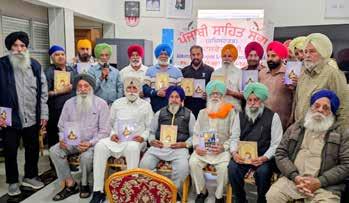
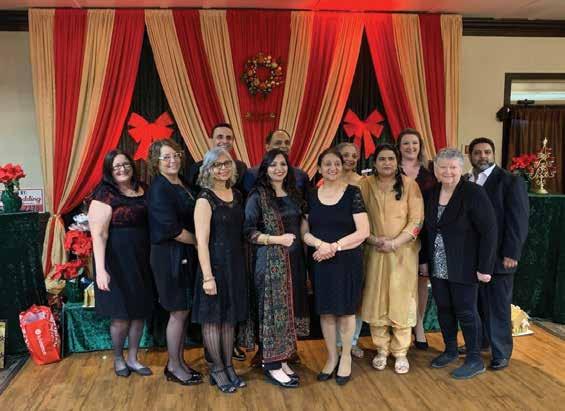
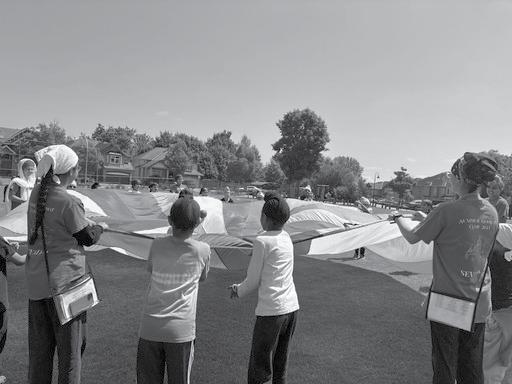
pMjfbI sfihwq sBf df pusqkF lok arpx Kflsf dIvfn gurUduafrf sfihb ivKy pvn igwlFvflf dI pRDfngI hyT hoieaff. Dfrimk pusqkF –cfr lfvF aqy siqgur rivdfs dI jIvnI, ipRsIpl jgrUp isMG igwl vwloN imhnq krky iqafr kIqIaF hn| ilKfrIaF dI hfjLrI qoN bfad, hkUmq isMG inwJr ny lok qwQ pysL kIqy, bKsLIsL isMG DflIvfl ny Drm dI DrqI gIq gfieaf, lKvIr Prvfhf jI ny vwzI Aumr ‘c imlvrqx dI loV vIcfr kIqf, lKvIr kulfr ny jUn 84 nUM smripq gIq gfieaf, kuldIp kYNQ ny gurU arjn dyv jI dI sLhIdI gIq gfieaf
bldyv suwKI rozy ny- surjIq isMG”awcrvfl” vwloN
ByjI geI kivqf “igrJF”
pVI, mlkIq igwl srpMc ny afpxI ilKLqF nUM lokF
dy pVHn Xog bxfAux qy jLor idwqf, bldyv isMG ny
rItYrmYt kivqf suxfeI, pusqk pVcol sMbMDI gurdyv aflmvflf ny cfr lfvF pusqk dI hr lfeIn dI ivafiKaf kIqI, lKvIr kulfr jI ny siqgur rivdfs vfry
prcf piVHaf, bldyv sMGf aqy ipRsLIpl
jgrUp isMG igwl ny dohF pusqkF dI jfxkfrI
sFJI kIqI aqy dohF pusqkF df iewk iewk
sYt dovF gurduafiraF nUM ByNt kIqf| cfh
pkOiVaF dI syvf grU Gr vwloN kIqI geI|
aMq ivc pvn igwlFvflf ny sBnf df DMnvfd kIqf.
pMjfbI sfihwq sBf dI mfisk irport
pysL krqf:- bldyv suKI rozy
aYbtsPorz (gurdIp isMG gryvfl) ibRits kolMbIaf dI ikrq mMqrI jYnIPr vfeItsfeIz ny vYnkUvr dI sInIar pMjfbx vkIl rfjvMq kOr
rfËI mFgt nUM vrk syP bIsI dy borz afP zfierYktrË ivwc zfierYktr vjoN inXukq kIqf hY. AunHF nUM jnihq borz mYNbr vjoN do sflF leI inXukq kIqf igaf hY, ijs dI imafd 31 meI 2028 nUM Kqm hovygI.rfËI mFgt iewk sInIar vkIl hn ijnHF kol sMivDfnk aqy pRÈfskI kfnUMn ivwc 20 sfl qoN vwD df qjrbf hY. Auh hfl hI ivwc Auh
vYnkUvr dI pMjfbx vkIl nUM imilaf aihm ahudf
vYst kost lIP nfmk gYr-munfÌf kfnUMnI sMsQf dI aYgiËikAUitv zfierYktr rhI h
vrk syP bIsI df borz bI[sI[ dy vrkrË kMpnsyÈn isstm dI dyKBfl krdf hY. vrkrË kMpnsyÈn aYkt anusfr, borz ivwc vwK-vwK KyqrF dy mfihrF dI numfieMdgI hoxI lfËmI hY. ishq sMBfl aqy afikAUpyÈnl hYlQ aYNz syPtI vrgy KyqrF dy numfieMidaF qoN ielfvf, borz ivwc mËdUrF, inXogqfvF aqy jnihq dy pRqIinDI vI Èfml hoxy cfhIdy h
One in ten Canadians has kidney disease. Abbotsford is walking about it this Sunday
One in ten Canadians has kidney disease — and most don't know it until significant damage has already occurred. It has no cure, and over 4 million Canadians are living with it today.
On June 7, the Kidney Foundation of Canada is bringing communities across B.C. together for the annual Kidney Walk, including a local event in Abbotsford. The walk raises funds for research, patient programs, and awareness around kidney disease and organ donation.
Among those speaking at the Abbotsford event is local resident and author Alister Mathieson, whose granddaughter lives with kidney disease. He and his granddaughter co-authored a children's book, Kaylee and Koru and the Long Way Home, with proceeds supporting the Kidney Foundation.
"I know all too well the journey kidney patients and their families face every day," said Mathieson. "I invite oth ers to join me at the Kidney Walk. It will be a wonderful community event featuring food, activities, and an op portunity to celebrate our collective efforts while shining a brighter light on kidney disease."
The numbers behind the cause are sobering: more than 50,000 Canadi ans are currently on dialysis or living with a kidney transplant, and 72 per cent of those on the organ transplant waiting list are waiting for a kidney. With prevalence projected to grow to over 6.2 million Canadians by 2050, the need for awareness and funding is only growing.
Five Southern BC municipalities announce resiliency partnership
Abbotsford, Chilliwack, Hope, Merritt and Princeton have joined forces to improve key infrastructure in South BC amid mounting challenges for the agricultural region.
The municipalities announced last Wednesday that they had launched the West Coast Corridor Resiliency Partnership (WCCRP) to advocate for long-term investments in the region’s public safety and economic stability, particularly in the face of climate and trade threats.
The partners are calling for improve ments in interprovincial and interna tional trade, the resiliency of essential transportation corridors and flood mitigation strategies to protect local industries.
“This partnership recognizes that the resiliency challenges facing our communities do not stop at municipal boundaries,” said the WCCRP in a release. “Protecting these corridors means protecting communities, supply chains, agriculture, transportation net
* brykF
* aYgjLfst
* itAUn-awp
* ieMjn vrk
* trFsimsLn
* ielYktrIkljL
* eyar kyar rIpyar
* kMipAUtr rFhI cYkawp
World iBcycle Day 2026 : sfeIkl kmfl dI svfrI hY ijs ivc svfr Kud hI ieMjx jF ‘pfvr’ huMdf hY. sfeIkl gqI df pRqIk hY. cwldy rihxf hI iËMdgI hY. KVoq, siVhFd hY, bs mOq hI smJo. ies vfr df QIm ‘sfeIkilMg Pfr a gRInr iPAUcr’ (Cycilng for a Greener Future) hY. gwl 65-66 sfl pihlF dI hY. AudoN sfry ipMz ivc iek-awD sfeIkl hI huMdf sI. ies bfie-sfeIkl nUM AudoN sfry ‘ÈYkl’ afKdy sn. keI bËurg ies nUM ‘lohy df GoVf’ vI kihMdy sn. ipMz dy iek twbr df muKI kInIaf igaf hoieaf sI. Aus ny afpxy byty leI rYly sfeIkl ilaFdf. sfeIkl kfhdf sI, awjkwÜH dI mihMgI kfr brfbr hI smJo. bVI tOhr sI sfeIkl dI qy bhuq tÈn sI Aus nUM bVy hI ‘svYg’ nfl clfAux vfly df. cyn kvr qy awgy lfeIt leI lwgy zfienmo vflf ieh sfeIkl myry bcpn df pihlf supnf sI. socdf ik kdI cfr pYsy kmfAux jogy hoey qF ieho ijhf sfeIkl KrIdUM. skUtr jF kfr vfry qF AudoN supny ivc vI supnf nhIN sI ilaf.
ÉYr ! iek idn sfeIkl KrIdx jogy ho gey. mYN afpxf pihlf sfeIkl kflj ‹c pRf-aiDafpk lwgx AuprMq ilaf qy Auh vI ikÈqF ‹qy. 1974 ‹c imlI nOkrI dI 450 rupey mhInf qnKfh sI qy sfeIkl dI kImq
myrf kwd drimafnf hY. myry ipqf jI df kwd krIb 6 Puwt sI. jd sfeIkl KrIdx gey qF mYN 22 ieMcI sfeIkl lYxf cfihaf pr ipqf jI 24 ieMcI df pwK pUrn. Auh ies leI ik Kud Auh vI Aus nUM clf ilaf krn. sfeIkl dI dukfn Aupr ies muwdy Aupr sfzI ipAu-puwq dI imwTI-imwTI bihs iCV peI. mYN khF ik 22 ieMcI sfeIkl KrIdxf hY ikAuNik 24 ieMcI Aupr myry pYr DrqI nfl nhIN lg skxy. dukfn dy mflk, jo ipqf jI dy dosq sn, ny dKl dy ky gwl nbyVI. Aus ny myry ipqf nUM sMboDn kridaf ikhf ik ‘muMzy nUM cfa pUrf kr lYxdy, qUM iËd nf kr’. so, asIN bfeI ieMcI df nvF nkor ilÈkF mfrdf sfeIkl lY ky afpxy ipMz af gey ijvyN sfeIkl ‘qy nf afey hoeIey iksy ‘vfXUdUq’ Aupr cVH ky Auwz ky afey hoeIey. hvf nfl gwlF krdy Auwzdy jFdy sfeIkl nUM clfAuNidaF iek lokbolI guxguxfAux lg pey-“twlIaF vjfAuNdf jfAUN bih jf sfeIkl qy’! sfeIkl dI sfzy jIvn ‘c ikMnI mhwqqf hY, ies bfry aYlbrt afieMstfeIn dIaF sqrF hn- jIvn bfie-sfeIkl Auwpr svfr hox vFg hY, afpxf sMquln kfiem rKx leI quhfnUM cldy rihxf pYNdY”.
The Patrika
DGB HOME RENOVATION
•
•
2027 Ram 1500 Rumble BeeMuscle Truck!
Preview by Veeno Dewan.
Windsor, Ontario - The new entry point to Ram’s new muscle trucks is the 2027 Ram 1500 Rumble Bee with the 345 cu.-in. (5.7-litre) HEMI V-8, producing 395 horsepower at 5,600 rpm and 410 lb.-ft. of torque at 3,950 rpm. Code name Eagle, the engine uses the legendary muscle car formula of cam-in-block push rod design, but with modern hardware like variable valve timing – operated via an oil control valve that lubricates a unique camshaft sprocket and phasing device to adjust camshaft timing. Horsepower is routed through Ram’s TorqueFlite eight-speed automatic transmission (8HP75) with both automatic and manual shifting capability controlled via aluminum paddle shifters or the G/T console shifter. The transmission design optimizes power delivery and fuel economy, depending on load and the weight of a driver’s right foot.
This first-time offering of a Quad Cab/short bed (overall length 5,575 millimetres / 219.5 inches) with a widebody stance (2,235 millimetres / 88 inches) gave Ram designers compelling proportions when creating Rumble Bee. Designers reached into Mopar world visuals from the 1960s for inspiration and created an updated Rumble Bee character that
evokes Ram’s performance heritage. The logo makes three appearances in the muscle truck lineup, changing in colour, wing design and attitude
Every Rumble Bee includes fulltime active four-wheel drive, thanks to the Borg Warner 48-11 transfer case with a variable torque split in four-wheel-drive. Rumble Bee 392 and Rumble Bee 392 Track Pack deliver on a long-time request for more displacement in the Ram 1500 with the platform’s first application of the 392-cu.-in. (6.4-litre) HEMI V-8. Code name Apache after the renowned attack helicopter, the larger and more powerful HEMI V-8 delivers 470 horsepower at 6,000 rpm and 455 lb.-ft. torque at 4,200 rpm. The Ram 1500 Rumble Bee SRT follows the awe-inspiring power edict of SRT with the high-performance, 6.2-litre supercharged HEMI V-8 engine, code name Hellcat. This variant of the HEMI is the most powerful internal combustion engine ever offered in a production pickup. Rumble Bee and Rumble Bee 392 are customizable with five different drive modes: auto, sport, snow, tow and custom. Each mode adjusts stability control, throttle mapping, braking and steering to assist the driver with the specific task.
Designers reached into Mopar world visuals from the 1960s for inspiration and created an updated Rumble Bee character that evokes Ram’s performance heritage. For the body design, Rumble Bee and Rumble Bee 392 feature an aggressive front grille, premium front and rear LED lighting and widebody fenders. Bodycolor fender flares and bumpers help plant the truck visually. Wheels on the Rumble Bee and Rumble Bee 392 measure 22 inches by 10 inches with 285/45R22 allseason tires. A 20-by-10-inch wheel with 305/50R20 all-season tires will be available following launch. Rumble Bee takes a page from the interior design ethos of muscle cars with a focus on connecting the driver to the engine. Stepping up to Rumble Bee 392 adds a 10-way power cloth bucket seat for the driver and Twill Deco trim for the G/T console shifter and other interior trim pieces. Rumble Bee 392 is controlled through a fat-handed steering wheel with Prowler Yellow accent stitching
that extends to the door panels and console. The 12.3-inch cluster has a unique Rumble Bee 392 start-up graphic, while the Uconnect touchscreen radio grows from 8.4 inches to 12 inches and powers a 10-speaker Alpine audio system.
The SRT team took the already badass Rumble Bee and molded it under the four pillars of SRT.
With a hearty dose of our “last tenth” philosophy, the SRT variant earns the title of the most powerful, quickest and fastest V-8-powered production truck, ever.
The 2027 Ram 1500 Rumble Bee is built in Saltillo, Mexico, and launches with the 5.7-litre HEMI V-8, with projected availability starting late 2026. Rumble Bee 392 and Rumble Bee SRT arrive in the first half of 2027.
cMgI qrHF KfE jy quhfzy sfry dMd nhIN inkly pr Kfxf TIk qrHF nhIN Kf huMdf qF blrfj nUM imlo ieh quhfzI syvf leI srI ivwc hn.
Huge Selection of Flowers
We’re a local Abbotsford, British Columbia orist delivering courteous, professional service and the highest quality owers in Abbotsford. We pride ourselves in an inviting shop. Our experienced designers can create oral arrangements that will complement any occasion and meet your budget and style expectations as well. We also o er daily delivery to all local funeral homes and hospitals. www.abbotsford orist.com | PICK UP OR DELIVERY
kuafltI bOzI aqy pyNt rIpyar syvfvF
Prym vrk aqy XUnIbOzI rIpyars
pUrIaF pYNt jObs (sOilzs, mYtfolks, trfeIkots, kuaYzkots)
#1, 32056 SOUTH FRASERWAY (ABOVE MEDICAL CLINIC) CALL DR. SHVETA SAINI MBBS, MD, DHMHS (ONTARIO) PRACTICE SINCE 15 YEARS 604-304-2236
nqIjf aMkF df sUck hY, kfblIaq qy hunr df nhIN
rfj kumfr KMnf
awj dy smyN ’c iswiKaf nUM afm qOr ’qy nMbrF nfl joV idwqf igaf hY. ijvyN hI iksy ividafrQI df nqIjf afAuNdf hY, sB qoN pihlF puwiCaf jFdf hY ik ikMny aMk jF ÌIsd afey ny’? koeI ieh nhIN puwCdf ik Aus ny kI iswiKaf, Aus dI soc ikMnI vDI jF Auh jIvn dIaF muÈklF df sfhmxf krn leI ikMnf iqafr hoieaf.
awj dy smyN ’c iswiKaf nUM afm qOr ’qy nMbrF nfl joV idwqf igaf hY. ijvyN hI iksy ividafrQI df nqIjf afAuNdf hY, sB qoN pihlF puwiCaf jFdf hY ik ikMny aMk jF ÌIsd afey ny’? koeI ieh nhIN puwCdf ik
Aus ny kI iswiKaf, Aus dI soc ikMnI vDI jF Auh jIvn dIaF muÈklF df sfhmxf krn leI ikMnf iqafr hoieaf. ies dOV ny bwicaF nUM aijhy mMc ’qy KVHf kr idwqf hY, ijwQy Auh afpxI kfblIaq dI bjfey aMkF nfl afpxI pCfx bxfAux lwg pey hn. swc ieh hY ik nqIjf kyvl aMkF df sUck hY, kfblIaq jF hunr df nhIN. hr bwcy dI Xogqf huMdI vwKrI
skUlI pRIiKafvF df mMqv ividafrQI dy pRfpq igafn dI jFc krnf huMdf hY pr iqMn GMitaF dI pRIiKaf iksy mnuwK dI pUrI smrwQf nUM nhIN mfp skdI. hr
Gwt aMk ilafvy qF smfj Aus nUM kmËor smJ lYNdf hY, jdoNik ho skdf hY ik Aus aMdr koeI aijhI klf hovy, jo BivwK ivc Aus nUM mhfn bxfvy. asl smrwQf df aMiqm ÌYslf nhIN huMdy aMk
ieiqhfs gvfh hY ik bhuq sfry mhfn ivakqI skUlI nMbrF ’c awgy nhIN sn pr AunHF dI kfblIaq ny dunIaf bdl idwqI. keI ivigafnI, lyKk, klfkfr aqy AudXogpqI aijhy rhy hn, ijnHF ny ikqfbI pRIiKafvF ivc vwzy nMbr nhIN ley pr afpxy jËby aqy imhnq nfl ieiqhfs bxf idwqf. Audfhrx vjoN albrt afeInstfeIn nUM kuJ aiDafpk afm ividafrQI mMndy sn pr bfad ’c Auh sMsfr dy mhfn ivigafnIaF ivwcoN iek bxy. stIv jObs kflj Cwz gey sn pr bfad ivc aYpl kMpnI dy sih-sMsQfpk bxy. ibl gyts ny afpxI pVHfeI pUrI krn qoN pihlF kflj Cwz idwqf pr bfad
nfloN ikRkt vwl vwD sI aqy Auh dunIaf dy mhfn bwlybfË bxy. ieh sfibq krdf hY
ik aMk iksy dI asl smrwQf df aMiqm
ÌYslf nhIN huMdy.
mfpy bxfAuNdy hn dbfa
awj mfpy vI bwicaF ’qy aMkF df byhwd
dbfa pfAuNdy hn. Auh cfhuMdy hn ik AunHF
df bwcf hr hflq ivc awvl afvy. ies
dbfa kfrn bwcy zr, qxfa aqy inrfÈqf df iÈkfr ho rhy hn. keI vfr iek Cotf ijhf nqIjf bwcy dy afqm-ivÈvfs nUM qoV
idMdf hY jdoNik bwicaF nUM ieh smJfAux
dI loV hY ik asPlqf aMq nhIN sgoN nvIN
ÈurUafq huMdI hY. asl iswiKaf Auh hY jo mnuwK nUM socxf, smJxf aqy hflqF nfl
lVnf isKfvy.
Xogqf nUM inKfrnf
smfj dI sB qoN vwzI ÊlqI ieh hY ik Auh
aMkF nUM hI sPlqf/asPlqf df mfpdMz
mMn ilaf hY. jy iksy dy 95 ÌIsdI af jfx
qF Auh hoxhfr ikhf jFdf hY aqy jy iksy
dy 60 ÌIsdI hox qF Aus nUM afm smJ
ilaf jFdf hY pr jIvn dI aslI pRIiKaf
skUl qoN bfhr ÈurU huMdI hY. AuwQy nf koeI
rol nMbr huMdf hY, nf koeI pRqIÈq. AuwQy
mnuwK dI ihMmq, imhnq, iemfndfrI aqy
ÌYsly lYx dI smrwQf kMm afAuNdI hY.
kfblIaq qy hunr df sbMD isrP Xfd
krn nfl nhIN sgoN nvF socx nfl huMdf
hY. iek ividafrQI jo pRÈnF dy Auwqr rwt ky ilK idMdf hY, ho skdf hY vDIaf aMk lY
afvy pr ËrUrI nhIN ik Auh jIvn dIaF
smwisafvF df hwl vI lwB sky. dUjy pfsy
koeI ividafrQI Gwt aMk lY ky vI bhuq
rcnfqmk aqy qrkÈIl ho skdf hY. ies
leI iswiKaf df mksd isrÌ pRIiKaf
pfs krnf nhIN sgoN ivakqI dI aMdrlI
Xogqf nUM inKfrnf hoxf cfhIdf hY.
aiDafpkF dI iËMmyvfr
aiDafpkF dI vI ies mfmly ivc vwzI
iËMmyvfrI hY. AunHF nUM bwicaF nUM isrP
nMbrF leI nhIN sgoN jIvn leI iqafr
krnf cfhIdf hY. jdoN iek aiDafpk iksy kmËor ividafrQI nUM hOslf idMdf hY qF Auh Aus aMdr ivÈvfs dI nvIN joq jgf idMdf hY. hr bwcy ivwc koeI nf koeI Éfs gux huMdf hY. loV isrP Aus gux nUM pCfxn qy Aus nUM AuqÈfihq krn dI hY ikAuNik ikqfbF isrP rfh idKfAuNdIaF hn, mMiËl qF hOsly qYa krdy hn. ajokI iswiKaf pRxflI ’c vI bdlfa dI loV hY. pRIiKafvF nUM hI sPlqf df iekmfqr mfpdMz nhIN bxfAuxf cfhIdf. nYiqk kdrFkImqF dI iswiKaf, rcnfqmk soc, KyzF, klf, sMgIq nUM vI ਓnf hI mhwqv imlxf cfhIdf hY. jdoN asIN bwicaF dIaF rucIaF qy XogqfvF nUM smJFgy, AudoN hI asl arQF ivc ishqmMd qy pRgqIÈIl smfj df inrmfx kr skFgy.
kfblIaq bxdI mnuwK dI asl pCfx sfnUM ieh vI smJxf hovygf ik hr bwcy dI Xfqrf vwKrI huMdI hY. koeI qyË dOVdf hY, koeI hOlI pr mMiËl hr iewk leI vwKrI huMdI hY. ies leI iksy iek nqIjy dy afDfr ’qy iksy dI pUrI iËMdgI df mulFkx krnf Êlq hY. aMk iewk smyN dy pRdrÈn df sUck hY pr mnuwK dI soc, suBfa, iemfndfrI aqy sMGrÈ krn dI qfkq nhIN mfp skdy. afÉr ieh kihxf Êlq nhIN hovygf ik nqIjf isrÌ iek kfgË df tukVf hY jdoNik kfblIaq mnuwK dI asl pCfx hY. jy asIN swcmuwc bwicaF nUM sPl bxfAuxf cfhuMdy hF qF sfnUM AunHF nUM nMbrF dI dOV qoN bfhr kwZ ky jIvn dIaF asl kdrF nfl joVnf hovygf. shI ikhf igaf hY ik aMk kfgËF Auwqy ilKy jFdy hn pr kfblIaq mnuwK dy krmF ivc idKfeI idMdI hY.”
Nominations open for 2026 Civic Recognition Awards
Following updates to the City’s Civic Awards and Recognition Policy, the City of Abbotsford is now accepting nominations for its annual civic recognition awards: the Order of Abbotsford and the Community Champion Achievement Award. These awards honour individuals and/or organizations who have made exceptional contributions to the community, achieved significant lifetime accomplishments, or demonstrated outstanding community service.
The Order of Abbotsford is the highest honour the City can present to residents. It recognizes a long-term Abbotsford resident (or former resident of 10+ years) who has demonstrated a particularly high level of contribution or length of service to the community, and whose achievements have brought distinction to themselves and Abbotsford. Contributions and achievements may be in a variety of areas, including but not limited to, arts and culture, public or community service, environmental conservation, economic
development, philanthropy, research or academia, heritage conservation, and sports. Recipients of the Order of Abbotsford are recorded in the Order of Abbotsford Merit Book, which is maintained by the Office of the Mayor.
The Community Champion Achievement Award recognizes an Abbotsford individual or organization that has made a noteworthy contribution or performed a significant one-time act that benefits the community. Recipients have their names engraved on a paving stone placed along the city-wide
Discovery Trail within Abbotsford’s Community Champions pavilion.
Nominations may be submitted online or in person at City Hall until June 25. Recipients of the 2026 awards will be recognized in Fall 2026.
Link for more information including criteria for recognition and nomination forms:
• Order of Abbotsford
• Community Champion Achievement Award
BC NDP MLA Amna Shah says funding will support community safety and crime prevention in Surrey
BC New Democrat MLA Amna Shah says that people in Surrey will benefit from provincial funding for community safety projects led by local organizations.
“I’m proud to see Civil Forfeiture Grant funding supporting programs that strengthen safety and wellbeing for young people and families in Surrey,” says Amna Shah, MLA for Surrey City Centre. “These grants reflect our commitment to investing in frontline organizations that protect, empower, and uplift everyone.”
In Surrey, projects include:
The Centre for Child Development of the Lower Mainland — Sophie’s Place Child and Youth Advocacy Centre
This project provides funding to support service delivery for the Sophie’s Place Child and Youth Advocacy Centre.
Amount: $200,000
BC Lions Football Limited Partnership — Lions Pride
This project will mentor at-risk youth (ages 13–16) by introducing them to Flag Football and highlighting the importance of making positive choices
and choosing alternative activities to gang involvement. Amount: $75,000
Surrey Women's Centre — Interview Room Technology
This project supports technology improvements to the Interview Room.
Amount: $43,843
The BC New Democrat government is providing $8.23 million through the Civil Forfeiture Grant Program, supporting 173 community-led projects across the province. The funding comes from the seized proceeds of unlawful activity, which are redirected
back into making our communities safer.
Projects receiving this funding focus on areas including crime prevention, Indigenous healing, restorative justice, addressing gender-based and domestic violence, child and youth supports, and addressing hate crimes.
This year, the new anti-hate funding stream supports organizations and meeting places for groups that may be at higher-risk of hate-motivated crimes, like LGBTQ2S+, faith-based, or minority cultural groups.
Findlay’s racist campaign hands control of B.C. Conservatives to pro-Trump faction
The pro-Trump wing of the B.C. Conservatives has seized control of the party with Kerry-Lynne Findlay’s win, thanks in part to her racist attacks on her leadership opponents.
“Kerry-Lynne Findlay and her supporters in caucus have more in common with Donald Trump’s Republicans than they do with Canadian Conservatives,” said Jennifer Whiteside, MLA for New Westminster-Coquitlam. “Even B.C. Conservative MLAs say British
Columbians should think twice before voting for her.”
Her campaign included a direct racist attack on Peter Milobar, claiming he was in a conflict of interest on DRIPA because his wife and children are Indigenous.
Peter Milobar described her attack as “the worst side of politics possible” and said her victory would “give a lot of British Columbians pause for thought of whether they would actually vote for a party like this.”
Asked directly if he would stay in caucus under leadership, Milobar said “That will give me pause for thought. I'm not going to lie about that.”
Iain Black called her out: “This is now a clear pattern of behaviour. We lost the election in 2024 in part due to the racist comments made by our candidate in Surrey South, who happens to be the husband of Kerry-Lynne Findlay. She did not then, and has not since, denounced those comments as reprehensible.”
Findlay was backed by 4 of the 5 MLAs who voted in the legislature against condemning Trump’s tariffs, including Chapman.
“In this campaign, she’s shown that she’ll use the politics of Donald Trump, like targeting her opponents for their race,” said Whiteside. “She’s the most extreme and divisive leader of a major political party in B.C. history, and British Columbians won’t stand for it.”
A N A N D Irrigation
Well Pump Installation and Service
• Irrigation Installation
• Post Pounding
• Drip and Sprinkler Systems
• Ditch Digging and Cleaning
• Farm Drains
• waste water treatment
Workers Wanted: Welder & General helper good wages, must speak English, knowledge of Punjabi will be an asset
UFV introduces revenue-neutral fees for EV charging stations
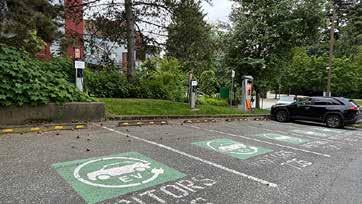
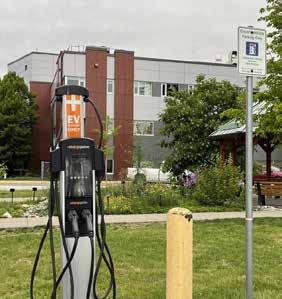
The University of the Fraser Valley (UFV) is introducing a new revenueneutral fee structure for electric vehicle (EV) charging stations across its campuses. The change is designed to support the long-term operation and maintenance of campus charging infrastructure while continuing to encourage sustainable transportation choices among students, faculty, staff, and visitors.
As the number of users continues to grow, UFV is adapting its campus services to meet increasing demand for reliable and accessible charging options. The new fee will help offset the operational costs associated with electricity consumption, equipment maintenance, software management, and infrastructure improvements.
Importantly, the fee is revenue-neutral, meaning it is not intended to generate profit for the university. Instead, the pricing model is structured to recover the direct costs of providing the service and ensure the charging stations remain financially sustainable over time.
The fees take effect July 1, and revenue may also be used to expand UFV’s charging network.
The university recently added several chargers at the Abbotsford and Chilliwack campuses. Currently, up to 37 EVs can be charged at one time.
owned and operated by BC Hydro have their own fees that may differ from the ChargePoint stations.
and environmental sustainability. “EV charging stations remain an important part of the university’s ongoing efforts to build a more sustainable and resilient campus environment.”
Vehicles must be plugged in and actively charging at all times when parked in an EV spot, and Doran emphasizes the importance of EV charging etiquette.
The new fees apply to the UFVowned ChargePoint stations.
The BC Hydro chargers that are
“The introduction of user fees aligns with broader sustainability goals at UFV, including reducing greenhouse gas emissions and supporting cleaner transportation alternatives,” said Doran Hoge, UFV director, energy
“EV chargers are most successful when we work together as a community,” Doran said. “Drivers should ensure they are using the stations only when needed and move their car if not actively charging. Being gentle with the cords and charging port, keeping them off the ground tangle free are also steps our community can take to help extend the station life and avoid long outages due to repairs.”
Questions about EV charging at UFV can be sent by email to Sustainability@ufv.ca, or click this link to see frequently asked questions.
4 qoN
‘bfie-sfeIkl’ Èbd
ikwQoN afieaf
Èbd-ivigafn anusfr bfie-sfeIkl do ÈbdF dy joV qoN bixaf hY- bfie+ sfeIkl. aMgryËI ny ieh Èbd AunIvIN sdI dy mwD ‹c PrYNc BfÈf qoN ilaf.‘bfie’ iek agyqr hY jo lfqInI BfÈf qoN afieaY. ies df arQ do jF do guxf jF do vfr hox vflf hY. ‘sfeIkl’ Èbd
XUnfnI mUl dy Èbd ‘sfeIklos’ qoN afieaf hY ijs df arQ ‘srkl’ Bfv dfierf jF phIaf hY. so bfie-sfeIkl df arQ do-phIaF vflf pYzldfr vfhn hY.
byÈk bfie-sfeIkl dI kfZ vfry vwK vwK ivcfr hn pr ivwkIpIzIaf anusfr mOjUdf vyilaF dy sfeIkl df ‘Por-rnr’ sfeIkl ibnF pYzlF df sI. ies nUM 1817 ‘c jrmnI dy jMglfq mihkmyN dy aPsr kfrl vfn zrys ny bxfieaf sI .bMdy vloN pihlF ies nUM afp dOVf ky iPr Auwpr bYTxf pYNdf sI. grys ny 1818 ‘c ies nUM ‘pyNtYNt’ krvfieaf sI. sfeIkl kmfl dI svfrI hY ijs ivc svfr Kud hI ieMjx jF ‘pfvr’ huMdf hY. sfeIkl gqI df pRqIk hY. cwldy rihxf hI iËMdgI hY. KVoq, siVhFd hY, bs mOq hI smJo. ivÈv sfeIkl idvs 2026 df QIm ies vfr df QIm ‘sfeIkilMg Pfr a gRInr iPAUcr’ (Cycilng for a Greener Future) hY. ieh ivÈf pRdUÈx, trYiPk jfm, pOx-pfxI pirvrqn qy Érfb jIvn ÈYlI nfl juVIaF ishq smwisafvF df sfhmxf kr rhI dunIaf ‘c sfeIkl clfAux dy vfqfvrxk mhwqv nUM Aujfgr krdf hY. ieh ivÈf muwK qOr ‘qy sfeIkl nUM sfÌ-suQry afvfjfeI dy ivklp vjoN AuqÈfihq krnf, bflx (pYtrol-zIËl) ‘qy cwlx vfly vfhnF ‘qy inrBrqf nUM GtfAuxf, roËfnf jIvn ‘c ishqmMd gqIivDIaF nUM AuqÈfihq krnf, sfeIkl clfAux leI surwiKaq buinafdI ZFcf iqafr krnf, siQr aqy itkfAU ÈihrI ivkfs df smrQn krnf, lokF nUM vfqfvrn pwKI sÌr dIaF afdqF apxfAux leI pRyirq krnf afid ibMdUaF ‘qy kyNidRq hY. smyN df phIaf vI hY sfeIkl mhfBfrq tIvI sIrIal ‘c iek vwzf sfrf phIaf GuMmdY qy kihMdY-‘mYN smX hUM…’. ijvyN smF bdldf rihMdf hY, AuvyN hI iËMdgI ‘c bdlfa afAuNdf rihMdf. kdI Duwp, kdI CF, kdI cVHq, kdI invfx! phIey df cln hI clxf aqy GuMmxf hY,ies ny jy Aupr jfxf hY qF hyTF vl vI afAuxf hY. iksy vyly sI styts isMbl iksy vyly sfeIkl iek styts isMbl huMdf sI. rYly qy roibnhuwz sfeIkl qF AudoN awj dIaF mihMgIaF-2 kfrF vflI Tuwk-TfT rKdy sn. Kfs krky ‘rYly’ sfeIkl df qF kryË aYnf huMdf sI ik jy ipMz ivc iksy iek-awDy kol
ieh sfeIkl hoxf qF smJo awj klH dI koeI aYsXUvI hox dy brfbr huMdf sI. pihilaF vyilaF ‘c jy iksy ny afpxI DI dy dfj ivc sfeIkl dy dyxf qF aYnI bwly bwly ho jFdI sI ijMnI awj klH lgËrI kfr dyx vyly vI nhIN huMdI.
bVI kMm dy sn sfeIkl dI GMtI qy zMzf
sfeIkl dI twlI bVI kMm dI cIË hY. dhfikaF pihlF mYN keI nÈyVI ies nfl rfh ivc ivkdI dysI dfrU pINdy dyKy hn. jugfVU qF pMjfbI hn hI. GMtI lfh ky, Aus ivckfrlI morI hyTF hwQ df aMgUTf jF AuNgl rK ky, GMtI dI kOlI/kwp bxf ky dfrU leI vrq lYNdy sn.
sfeIkl dI
GMtI afÈkF leI vI bVI
PfiedymMd hY. pRyimkf dy Gr awigEN lMGx vyly ieÈfrydfr GMtI
vjfAux
nfl swjxI dy drÈn ho jFdy sn.
pihlF pMjfb ivc sfeIkl dy kfgË-pwqr bxdy sn. bfkfiedf rijstRÈn huMdI sI. iek ruipaf PIs lY ky sfeIkl ‘qy iek tokn jV idqf jFdf sI. ies dI gYrhfËrI ‘c clfn ho jFdf sI. iPr jd skUtr, motrsfeIkl, kfrF qy hor cIËF af geIaF qF sfeIkl ‘ivcfrf’ ijhf ho igaf.
srIrk hI nhIN mfnisk qMdrusqI leI vI PfiedymMd
- koronf mhfmfrI dOrfn sfeIkl dI kdr iPr vD geI ikAuNik ies nUM clfAux nfl sfzy ieimAUintI isstm nUM ÈkqI imldI hY.
sfeIkl df aglf zMzf vI keI kMm idMdY. purfxy smyN GrF ‘c bVI sKqI huMdI sI. swj-ivafhI dulhn vI afpxy pqI nfl KuwlH ky hws-Kyz nhIN sI skdI. pyky jF vFZy jfx vyly GroN qurn ligaF vhutI ipClI sIt
Aupr ibTf lYxI pr ipMz tpidaF hI agy
zMzy Aupr ibTf ky Dur qIk cohl-mohl krdy
jfxf. keI ies zMzy Aupr kwpVf vI bMnH lYNdy sI. bwicaF nUM ibTfAux leI iek inwkI ijhI sIt vI luaf lYNdy sI.
ipClI sIt ijs nUM kYrIar afKdy hn, afm nfloN vDyry cOVI krvf ky pwiTaF dI pMz/BrI rK ky lY afAuNdy sI.zwgIaF vfly kwpVy dI BfrI gTVI rK ky ipMzF ivc kpVy vycx jFdy sn.keI jxy mUhry tOkrI lgvf lYNdY sn qF ik sOdf-pwqf riKaf jf sky.PtI kfTI df nMg kwjx leI iek Bfrf ijhf kwpVf lpyt leIdf sI. sfeIkl dI cyn nfl lgI grIs qy kflK qoN pjfmf bcfAux leI swjy pONcyy Aupr rwsI bMn ky pONcf tfeIt kr lYNdy sI qF ik kwpVf cyn nfl iGsr nf sky.iPr iek kilwp ijhf vI af igaf jo pONcy qy bMn lYNdy sI.cyn-kvr vflf sfeIkl hfrI sfrI kol nhIN sI huMdf. sfeIkl dy purfxy cwky jF tfierF nUM DuwdlawtI iPrnI Aupr qyË-qyË roVHnf sfzy bcpn
dIaF KyzF ivc Èfml sI. iek sfeIkl Aupr
iqMn jxy sOKy hI cVH jFdy hn-clfAux vflf, ipwCy qy awgy bYTx vflf/vflI. lyzI sfeIkl bMidaF vfly sfeIkl qoN vKrI Èkl dI huMdf hY.
sfeIkilMg dIaF ienHF KUbIaF dy mwdynËr hI sMXukq rfÈtr dI jnrl asYNblI ny 12 apRYl 2018 nUM iek mqy rfhIN 3 jUn nUM ‘kOmFqrI bfie-sfeIkl idvs’ aYlfinaf hY qF ik pUry sMsfr ‘c ieh sMdyÈ jf sky ik sfeIkl smuwcI mnuwKqf df hY qy Aus dI syvf krdY.
‘iek-pYzl stfeIl sfeIkilMg’ asIN sfeIkl clfAuxf 64-65 sfl pihlF bcpn ‘c iswiKaf sI, bVy ajIb ZMg nfl. zMgrF vfly aMdr sfeIkl df iek ipMjr ipaf huMdf sI. phIey sI pr tfier nhIN sn, kfTI sI pr isrP spirMg, kvr qoN swKxI, pYzl sn pr Aupr rbVF nhIN sn, bs lohy dIaF kIÜIaF ijhIaF hI sn. smJo bfbf afdm vyly df kbfV sI. kwcI iPrnI Auwpr iek pYr kIlI Aupr rK ky aqy dUjy pYr nUM DrqI Aupr mfr-mfr Aus ipMjr nUM ryVHdf sI qy iPr dUjf pYr vI kIlI Aupr rwK lYNdf sI. keI vfr dosqF ny Dwkf lf dyxf. igwty-gozykUhxIaF iClf ky ies ‘iek-pYzl stfeIl sfeIkilMg’ nfl sMquln krnf af igaf. sfzy vyly hux vFg sfeIz-sportF vfly sfeIkl nhIN sn afey.
‘kYNcI stfeIl sfeIkilMg’ iPr ipqf jI dy sfeIkl nfl ‘kYNcI stfeIl sfeIkilMg’ rfhIN sfeIkl clfAuxf ÈurU kIqf. ies inrflI ÈYlI ‘c Kwbf pYr Kwby pYzl Auwpr rwK ky swjf pYr sfeIkl dy iqkony Prym ‘c dI afr-pfr kr ky dUsry pfsy dy pYzl Auwpr rwK leIdf sI. iPr pYzl mfrIdy sn. Coty hox kfrn pYzl pUry nhIN sn vwjdy, bs awDy-awDy hI mfr ky kMm sfr leIdf sI,ies nUM awDI kYNcI kihMdy sn. ies qoN hI ‘pUrI kYNcI’ dI muhfrq ho jFdI sI. iPr kfTI Auwpr bYTx df aiBafs kIqf. kwd Cotf hox kfrn pYr pUry nhIN sn phuMcdy. so pYzl jd Aupr afAuNdy qF pYr mfr dyxy qy iPr Cz dyxf. hujky ijhy vjdy rihxy pr sfeIkl cldf rihxf. ‘irkÈf-stfeIl sfeIkilMg’ hor vzy hoey qF rysF lfAuxIaF. vDyry Ëor nfl clfAux leI ‘irkÈf-stfeIl sfeIkilMg’ ÈYlI apnfAuxI. ies qihq hYNzlF Aupr hwQF df Bfr pf ky pYzlF qy KVH jfxf aqy hyTF-Aupr huMidaF irkÈf clfAux vfilaF vFg sfeIkl clfAuxf. keI jxy qF ipClI kfTI(kYrIar) Auwpr bYT ky vI sfeIkl clfAuNdy sn,jfxI ‘bYk-sIt zrfeIivMg’. afiKr ‘c iehI khFgf ik sfeIkl mgroN skUtr-kfr vI ley pr jo bihÈqI hulfry Aus bfeI ieMcI sfeIkl ‘qy afey Auh muV kdI nhIN afey,kfr qy vI nhIN.
DR. BAJAJ & ASSOCIATES WELCOME
DR. MUKESH KUMAR KRISHANANI
Dr. Mukesh Kumar Krishanani is an experienced Family Physician dedicated to providing comprehensive, patient-centered primary care.
He brings extensive clinical experience in managing a wide range of medical conditions and is committed to building long-term, trusted relationships with individuals and families in the community.
Dr. Krishanani is available 5 days a week and is currently accepting new patients.
Languages Spoken: English | Punjabi | Hindi | Urdu | Arabic | Sindhi
zf[ mukyÈ kumfr ikRÈnfnI iewk qjrbykfr pirvfrk zfktr hY jo ivafpk, mrIË-kyNidRq pRfiemrI dyKBfl pRdfn krn leI smripq hY.
Auh zfktrI siQqIaF dI iewk ivÈfl ÈRyxI dy pRbMDn ivwc ivafpk klIinkl anuBv ilafAuNdf hY aqy kimAUintI ivwc ivakqIaF aqy pirvfrF nfl lMby smyN dy, BrosymMd irÈqy bxfAux leI vcnbwD hY.
Applications are accepted on a first-come, firstserved basis. Spots may fill before the deadline, so apply early.
Special Days Special Days
Wh : Slushy Slushy Walk Walk
Who: Who:
For children who completed Kindergarten to Gr. 5. Gr. 6 & older may volunteer (refer to other side for details).
Where: Where:
Gurdwara Sahib Kalgidhar Darbar (30640 Blueridge Drive, Abbotsford, BC)
Fee: Fee:
$20/Day
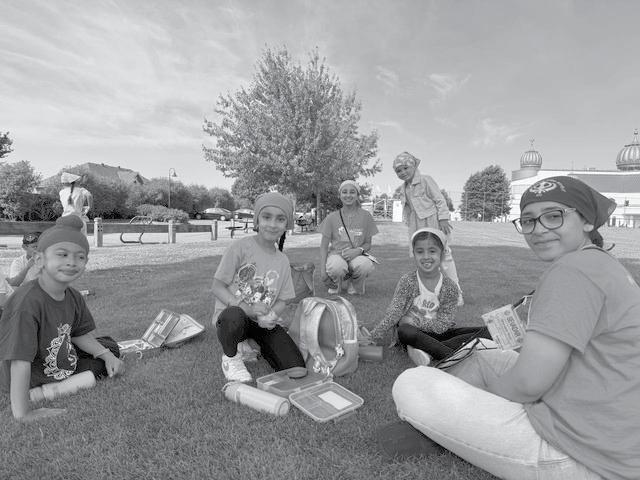
A camp full of learning and excitement! Camp will include Gatka, Punjabi, Sikh Videos, Seva Time, Sakhi Time as well as Sports & Games! What: What:
When: When:
Time: 9:00 am - 2:45 pm
SESSION 1 (LIMITED SPOTS) Monday, July 6 - Thursday, July 16, 2026 (9 Days)
SESSION 2 (LIMITED SPOTS) Monday, July 27 - Friday, August 7, 2026 (9 Days)
This camp will allow young Sikh children to grow emotionally, mentally, socially and spiritually. Other opportunities include making friends, interactions with positive role models, Gurmat & Sikh history education and lots of fun!
mfx nfl do BYxF duafrf mlkIaq aqy sMcfilq, ijnHF ny iml ky BfeIcfry dI syvf krn leI BfeIvflI kIqI hY! BrosymMd dyKBfl aqy hr muskrfht leI iewk inwjI sMprk ilafAuxf.
toothbrush*. *Free
nvyN mrIËF nUM muPq ielYkitRk tUQbRÈ imldf hY*.
*nvyN mrIË dI jFc aqy aYks-ry pUrI hox qoN bfad muPq ielYkitRk tUQbrwÈ pRdfn kIqf igaf.
Volunteers Needed for Taste Around the World: Cultural Food Sharing Event on June 27th
The Archway Food Justice program is currently seeking volunteers, event tents, and sponsors for Taste Around the World, a free culturally diverse food sharing event in Abbotsford on June 27th.
The gathering aims to celebrate the cultural diversity within Abbotsford and connect community members as they share their cultural recipes and stories with attendees.
"Our goal is to encourage local cultural awareness and appreciation, provide a platform for cultural exchange, highlight the importance of access to culturally preferable foods, and showcase cultural culinary diversity within our community,” said Vicki Lin, Supervi-
sor of the Archway Food Justice program.
In 2024, this event saw more than 300 community members come together to sample a variety of foods from different cultures.
Once again, volunteer cooks will lead small groups in cooking their favorite
afrcvy PUz jsits pRogrfm dI suprvfeIËr ivkI iln ny ikhf, “sfzf mksd sQfnk pwDr ‘qy vwK-vwK swiBafcfrF pRqI jfgrUkqf aqy snmfn nUM AuqÈfihq krnf, swiBafcfrk adfn-pRdfn leI mMc muhweIaf krnf, lokF dIaF swiBafcfrk psMdF anusfr Bojn qwk phuMc dI mhwqqf nUM Aujfgr krnf aqy sfzy BfeIcfry ivwc mOjUd Bojnk iviBMnqf nUM drsfAuxf hY.”
sfl 2024 ivwc ies smfgm ivwc 300 qoN vwD BfeIcfrk mYNbrF ny ihwsf ilaf sI aqy vwK-vwK swiBafcfrF dy suafdly BojnF df afnMd mfixaf sI.
ies vfr vI vlMtIar rsoeIey Coty smUhF dI agvfeI krdy hoey afpxy mnpsMd rvfieqI ivaMjn
afrcvy PUz jsits pRogrfm vwloN 27 jUn nUM aYbtsPorz ivwc hox vfly muÌq aqy bhuswiBafcfrk Bojn sFJf smfgm ‘tyst arfAUNz d vrlz’ leI vlMtIarF, ievYNt tYNtF aqy spFsrF dI Bfl kIqI jf rhI hY. ies smfgm df AudyÈ aYbtsPorz dI swiBafcfrk iviBMnqf df jÈn mnfAuxf aqy BfeIcfry dy mYNbrF nUM iewk-dUjy nfl joVnf hY, ijwQy Auh afpxIaF rvfieqI ivaMjn ivDIaF aqy swiBafcfrk khfxIaF hfËrInF nfl sFJIaF krngy.
Dr. Tejasvi Gill Dr. Shivans K Grover
The Wood Remembers: A Stilled Voice Reawakens in Zurich
There are objects that survive us, objects that wait.
And sometimes—after decades of silence—an object begins to breathe again.
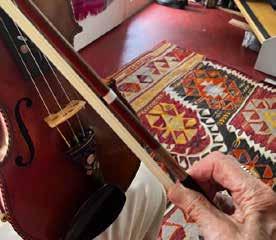
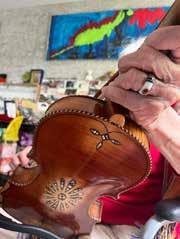
In a quiet home in Zurich, a violin has awakened. Its wood, darkened by time and touched by sorrow, remembers the hands of a German Romani man who once played it before he was taken into the machinery of the Holocaust. Today, after more than eighty years of stillness, its voice rises once more under the care of Anna Kohler, well-known and established Jungian therapist and long-time resident of the city. She has become the guardian of both the instrument and the story it carries.
Author: Dr. Lakhbir K. Jassal
The violin’s journey is as fragile as its varnish. It was safeguarded during the Second World War by the uncle of a Swiss woman living in the then BadenWurttemberg: a man who kept it safe after its Romani owner was deported. No name remains. No photograph. No written trace. Only the violin survived, an orphaned witness to a life erased.
It’s worth remembering that not every life leaves a tidy trail of documents. When people are forced to move, the record of their existence scatters. Anyone who has lived on the
move knows this: when the future turns dark and slips beyond your control, the first things lost are the papers meant to prove you were ever there.
The violin remains one of the few surviving witnesses of this man’s existence. His life, like so many Romani lives, was swallowed by the Porajmos, the Romani genocide, rooted in racial ideology and bureaucratic precision.
According to Marushiakova & Popov (2016): “across Europe, many communities identify as Roma and speak Romani čhib
(Romanes)— a language woven from memory, movement, and resilience. Their identity is diverse, adaptive, and deeply connected to cultural expression”.
And at the heart of that expression is music. For
Romani communities, music has long been:
A vessel of memory, carrying stories and emotions across generations.
A livelihood, shaping the musical traditions of Central and Eastern Europe.
A form of resistance, a declaration of humanity even in the darkest hours.
In the camps, when everything else was stripped away, music often remained the final thread of dignity. Instruments like this violin were not merely tools, they were lifelines.
Now restored, the violin’s sound is warm, fragile, and resonant.
It carries the echo of a man whose name we do not know, yet whose spirit vibrates in every note. For Anna Kohler, the instrument is both a personal inheritance and a collective responsibility.
“Playing this violin feels like opening a door that has been locked for generations”, she reflects. “Its music is a reminder that even when a life is erased, its spirit can still be heard”.
When Anna plays this violin she allows its melodies unfurl like breath returning to a long - silent room. The violin’s story, once buried, begins to rise.
She is exploring where this historically significant instrument might one day belong: a museum, a memorial institution, a cultural archive. A place where its voice can continue to speak.
For now, the violin remains with Anna, who honours its legacy by allowing its music to live again—after so many years of silence.
And with each bright, steady note, the instrument steps back into the world it once knew, reminding us that history is not only what survives, but what we choose to carry forward with care, gratitude and light.
Abbotsford Run For Water sees strong community turnout, winners announced
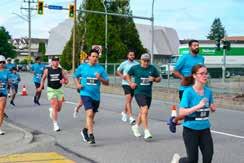
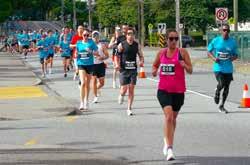
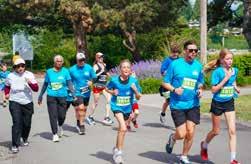
Abbotsford, BC – May 25, 2026 – The 19th annual Run For Water brought the community together on Sunday at Mill Lake Park for a day of running, walking, and volunteering in support of clean water projects in Uganda and the Democratic Republic of Congo. The event was presented by HyLand Properties.
An estimated 3,000 runners, walkers, volunteers, and supporters took part in the 5K and 10K events. Participants included students, local businesses, and community organizations.
Funds raised in 2026 and 2027 will support clean water access in three villages: Kasese in Uganda, and Tshikapa and Kikwit in the Democratic Republic of Congo. Families in these communities continue to rely on unsafe water sources and often travel long distances
to collect water. Women and girls are disproportionately affected, frequently responsible for water collection, which can limit access to education and economic opportunities.
“The energy and support from the community is incredible to see,” shares Phil Wiens, General Manager of Run For Water. “What stands out every year is knowing that this run is directly connected to communities where people are still walking for water every day and drinking unsafe water. Seeing our community come together here to change that is deeply meaningful.”
This year’s event also introduced new recognition categories in the 5K and 10K races, adding awards for youth and senior top finishers.
The event concluded with a dance performance in memory of Letisha Reimer, who was fatally stabbed in a random incident at Abbotsford Secondary School ten years ago. Led by her aunt and friends, the performance offered a
moment of reflection and remembrance, honouring Letisha’s legacy and the impact she continues to have through Run For Water and the communities she supported. Donations to Team Letisha are being collected at runforwater.ca/TeamLetisha.
For more highlights from the 2026 event, visit runforwater.ca/2026.
Run For Water is hosting two additional races in 2026 in support of clean water. A Trail Race on Sumas Mountain is on May 30, 2026. Ride For Water in Chilliwack River Valley is on June 20, 2026. To register or learn more, visit runforwater.ca.
Run For Water is a non-profit organization that hosts an annual series of community events based in Abbotsford and engages with the community year-round to raise funds for longterm clean water solutions around the world. To learn more, visit runforwater.ca.
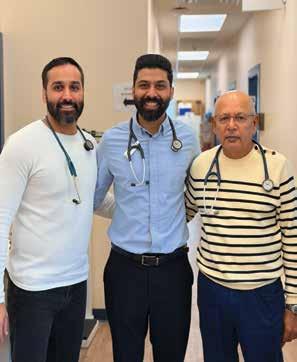
Dr. Grover and associates welcome Dr. Mandeep Grewal to our clinic from July 2026. Mandeep did his trianing in Fraser Valley. He will be helping Dr. Gagan Grover and ot her doctors in t he clinic to reduce appointment wait ing t imes and slowly take on Dr. Gagan Grover ’s pat ients. He will also offer walk in ser vice for our own pat ients. He will be working full t ime. He will not be taking new pat ients outside of our clinic. Please welcome Dr. Mandeep Grewal.
Fraser Valley Leaders Advance Regional Economic Vision at 2026 Economic Summit
More than 200 business, government, Indigenous, and institutional leaders gathered in Abbotsford on May 21 for the second Fraser Valley Economic Summit, reinforcing the Fraser Valley’s growing role as a driver of economic growth, trade, investment, and innovation for British Columbia and Canada.
Hosted by the Fraser Valley Business Coalition (FVBC) at the University of the Fraser Valley and presented by Royal Bank of Canada, the Summit convened senior leaders from across the province for a full day of discussions focused on economic
At a time of increasing global economic uncertainty and shifting trade relationships, the Summit underscored both the opportunities and vulnerabilities facing the Fraser Valley economy.
As one of the most trade-dependent and tariff-exposed regions in Canada, the Fraser Valley plays a critical role in agriculture, manufacturing, transportation, aerospace and cross-border commerce - sectors that are central not only to the region’s prosperity, but
increasingly to Canada’s broader economic resilience and competitiveness.
The Summit featured keynote discussions and panel conversations with nationally recognized leaders including Chief David Jimmie of Squiala First Nation, Susannah Pierce, former President and Country Chair of Shell Canada, and Parliamentary Secretary and MP Anthony Housefather, alongside leaders from industry, government, post-secondary institutions, and the Indigenous business community.
Throughout the day, speakers emphasized the need for coordinated invest-
ment in transportation infrastructure, trade-enabling corridors, industrial land, housing, workforce development, and energy systems to support continued growth across the Fraser Valley and British Columbia.
“The Fraser Valley is at a turning point,” said Alex Mitchell, Chair of the Fraser Valley Business Coalition and CEO of the Abbotsford Chamber of Commerce. “As Canada looks to nation-building projects and economic growth, we can’t afford to overlook the Fraser Valley - one of the country’s most important trade corridors. This is our Continued on Page-21
vYnkUvr dy mnuwKI aiDkfr sMmyln ‘c iProjLpur dI ividafrQx ny iksfnF dy hwkF dI avfjL AuTfeI
dIaF jmInF dy mflkfnf hwkF leI afvfjL bulMd kIqI. kYnyzf dy ieiqhfs ivwc ieh pihlI vfr hY ik pMjfb qoN afeI ividafrQx ny aMqrrfstrI mMc qy pMjfb dy srhwdI iksfnF dy hwkF leI afvfjL AuTfeI hovy. ies mnuwKI aiDkfr sMmyln ivwc hyjLl sB qoN Gwt Aumr dI zYlIgyt hY qy ies leI sMsQf vloN Aus nMU ivsLysL qOr qy snmfinq vI kIqf igaf hY ieh vI pqf lwgf hY ik hyjLl pVHn ivwc bhuq huisLafr hY qy Aus dy mfqf jI iProjLpyr ivKy aiDafpk hn.
cultural recipes and then share how the cultural dishes reflect their respective homelands and cultures at the event. The event will have up to 400 attendees who will get to taste a sample of foods from around the world.
“This is a great opportunity for individuals to nurture meaningful connections around food and represent diverse voices in our community. Through this event, we hope to also bring to light the different challenges newcomers face around food and highlight the
importance of an inclusive and food secure community,” said Lin.
Event organizers are looking for volunteers, particularly with food safe certificates, event tents and sponsors. Those interested in supporting can reach out to foodjustice@archway.ca.
This year's event will be held on Saturday, June 27th, outside Clearbrook Library from 2:30pm-5:00pm. Tickets are available at FoodJustice.ca/tickets .
Volunteers and community partners are encouraged to get involved early, as space is limited.
iqafr krngy aqy dwsxgy ik
ieh pkvfn AunHF dy dyÈF aqy swiBafcfrF nUM ikvyN drsfAuNdy hn. smfgm ivwc lgBg 400 hfËrInF dy Èfml hox dI AumId hY, ijnHF nUM dunIaf Br dy vwK-vwK BojnF dy nmUny cwKx df mOkf imlygf.
iln ny ikhf, “ieh lokF leI Bojn rfhIN arQpUrn irÈqy bxfAux aqy sfzy BfeIcfry dIaF iviBMn afvfËF dI numfieMdgI krn df Èfndfr mOkf hY. ies smfgm rfhIN asIN nvyN afey lokF nUM Bojn nfl sMbMiDq drpyÈ vwKvwK cuxOqIaF nUM vI Aujfgr krnf cfhuMdy hF aqy iewk smfvyÈI qy Bojn-surwiKaq BfeIcfry dI mhwqqf nUM roÈn krnf cfhuMdy hF.”
smfgm dy afXojk Éfs qOr ‘qy PUz syÌtI srtIiPkyt rwKx vfly vlMtIarF, ievYNt tYNtF aqy spFsrF dI Bfl kr rhy hn. sihXog krn dy iewCuk ivakqI foodjusitce@ archway[ca ‘qy sMprk kr skdy hn. ies sfl df smfgm ÈnIvfr, 27 jUn nUM dupihr 2:30 vjy qoN Èfm 5:00 vjy qwk klIarbruwk lfiebRyrI dy bfhr afXoijq kIqf jfvygf. itktF FoodJusitce[ca/itckets ‘qy AuplbD hn.
vlMtIarF aqy BfeIcfrk BfgIdfrF nUM jldI Èfml hox leI AuqÈfihq kIqf jf irhf hY ikAuNik QF sImq hY.
Drug deaths nearly doubled in the Fraser Valley between
February and March
The BC Coroners Service says 135 people in BC died from toxic drug use in March, 38 of whom were in the Fraser Health region.
This is nearly double the number of deaths in February, when 20 people died. The province’s death toll that month—equating to 4.4 deaths per day—was also higher than in February.
Toxic drug death data for April hasn’t been released yet, but Fraser Health put out an overdose alert for the Surrey and White Rock region, saying there was an increase in non-opioid sedatives that aren’t responsive to overdosereversing naloxone.
In the first three months of 2026, 401 British Columbians died from unregu-
lated drug use. Fraser Health accounts for 101 of those deaths, with 26 occurring in the North Fraser Valley, 29 in East Fraser, and 46 in South Fraser.
Abbotsford has lost 10 people to illicit drugs in 2026, Chilliwack lost nine, Langley lost 10 and Surrey lost 35. Drug death data is not available for all municipalities.
People aged 30 to 59 accounted for 68% of toxic drug deaths in the province. The majority—nearly 80%— were male.
Most drug deaths occur indoors: this year, 82% happened in private residences, supportive housing, and shelters. Outdoor deaths accounted for 17%.
Continued from Page-17
IT ’S A GREAT TIME TO BUY. GIVE US A CALL
moment to seize the opportunity, align as a region, and push for the infrastructure and investment needed to keep British Columbia and Canada competitive.”
“The Fraser Valley has emerged as one of the most strategically important economic corridors in British Columbia, if not all of Canada,” said Cory Redekop, CEO of the Greater Langley Chamber of Commerce. “There is strong momentum around regional collaboration and a clear recognition that the opportunities ahead will require coordinated leadership. We encourage businesses and community leaders across the region to stand up, get involved and help shape the future of the Fraser Valley economy.”
The Summit also highlighted the importance of continued collaboration between local governments, business organizations, Indigenous communities, educational institutions, and industry leaders to address shared challenges and opportunities.
“Growth in the Fraser Valley is happening at a scale and pace that requires long-term thinking and strong partnerships,” said Miriam Bozman, CEO of the Mission Regional Chamber of Commerce. “The Economic Summit and the work of the Fraser Valley Business Coalition continues to create a valuable platform for leaders to come together around practical solutions that support sustainable economic growth and regional prosperity.”
Formed by the Abbotsford, Langley, and Mission Regional Chambers of Commerce, the Fraser Valley Business Coalition represents thousands of businesses across the region and works to advance shared economic priorities through advocacy, collaboration, and regional leadership.
Planting 125 million more trees in B.C.
The Province is investing $155 million toward reforestation programs to plant more than 125 million trees throughout British Columbia.
The funding, whch also includes investments from the federal government, will deliver both large-scale reforestation and targeted projects that restore critical habitats, conserve biodiversity and support wildfire recovery.
“Since 2017, we’ve invested in planting 400 million trees in B.C. Now, we’re adding 125 million more,” said Ravi Parmar, B.C. Minister of Forests. “As we head into the Council of Canadian Forest Ministers Conference, hosted right here at home, we’re showing how B.C. continues to lead not only in forestry, but in reforestation and restoration. We’re securing the future of our forests and forestry jobs for generations to come.”
The Province’s reforestation investments will support:
more than $56 million for reforestation that supports habitat restoration through the BC Aggregation 2 Billion Trees Project
more than $1 million for B.C.’s Riparian Recovery Project
more than $99 million for large-scale reforestation through the BC Forest Investment Program
The funding builds on the $95 million the Province invests annually via the Forest Investment Program, targeted toward long-term sustainability and forest health.
“Funding for tree planting work under the 2 Billion Tree agreement supports
our efforts to restore habitat for wildlife and safeguard B.C.’s iconic ecosystems for future generations,” said Randene Neill, B.C. Minister of Water, Land and Resource Stewardship. “This funding, which will plant up to 20 million trees in B.C., highlights what we can do when we work across governments to support our province’s biodiversity.”
B.C. has secured more than $200 million in federal funding for reforestation and habitat restoration initiatives in British Columbia, including:
- dedicating $97.6 million to B.C.’s 2 Billion Trees aggregation project
- more than $99 million supporting the B.C. Forest Investment Program
“From restoring wildlife habitat to supporting recovery after wildfires, these projects will help rebuild healthier forests throughout British Columbia and strengthen the resilience of our natural landscapes for years to come,” said Nathalie Provost, federal Secretary of State (Nature). “Through collaboration with provinces, local communities, Indigenous partners and environmental organizations, we are ensuring that Canada’s forests continue to thrive for generations to come. Our government is proud to support stronger forests for a stronger Canada.”
The stream of 2 Billion Trees funding will support the province in bringing partners together to plant as many as 20 million trees, focused on restoring critical habitats.
It will enable targeted projects that replant trees and native vegetation, restoring habitats for wildlife, with particular focus on areas that will support species identified in B.C. as at risk or of interest.
This work will include:
environmental assessments from forest professionals
planting seedlings and vegetation that reflects the surrounding environment supporting the use of machinery to remove manufactured structures to reclaim space for natural habitats
Indigenous-led projects are eligible to receive federal funding of as much as $13.3 million, supporting Indigenous stewardship and leadership in restoration efforts.
Large-scale reforestation restoring wildfire-affected areas
Reforestation for wildfire restoration is funded equally by the Province, representing a joint Canada-B.C. investment over four years, funding tree-planting in wildfire-affected areas.
The funding will support the planting of 53.8 million trees on public lands throughout B.C. by 2027, with planting targets to be determined in later years. The initiative enables the Province to undertake large-scale reforestation in areas that have been damaged by wildfire, promoting forest regeneration and sustainable forestry.
Together, the investments represent the benefits of reforestation to restore forests, strengthen ecosystems and support communities throughout B.C.
VAISHNO DEVI HINDU TEMPLE
FRASER VALLEY HINDU CULTURAL SOCIETY
31545 Walmsley Ave, Abbotsford BC V2T 6G5
Notice is hereby given to the life members of the Fraser Valley Hindu Cultural Society (The “Society”) pursuant to the societies Act of British Columbia and the Bylaws of the Society, that the election of Directors and O cers of the Fraser Valley Hindu Cultural Society will be held as follows:
Election Date: Sunday, July 12, 2026
Time: 9:00 AM. To 3:00 PM
Location: Fraser Valley Hindu Cultural Society 31545 Walmsley Ave, Abbotsford, BC V2T 6G5
Nominations will be accepted until: Friday, June 12, 2026, at 4:00 PM
Withdrawal of nominations will be accepted until: Sunday, June 21, 2026, at 4:00 PM
Only Life Members in good standing of the Society as of December 31, 2025, shall be eligible to vote or stand for election, in accordance with the Society’s bylaws.
President and 10 additional directors will be elected by slate nomination in accordance with the Society bylaw (5.11)
• Voting, if required, will be conducted by secret ballot.
• If only one quali ed slate is received, the slate will be declared elected by acclamation.
• Only Eligible Life Members in good standing may vote and must present valid government-issued identi cation on election day.
Eligible members interested in serving on the Board of Directors may submit their nomination in accordance with the Society’s bylaws. For nomination forms or further information regarding the election process, please contact the returning o cers.
Jasbir Manku Phone (604) 217-0334
Daljit Dhanoa Phone (604) 825-4408
Randhir (Randy) Kailey Phone (604) 308-4800
Dated: May 22, 2026 BY THE ORDER OF THE RETURNING OFFICERS
iswiKaf nfl bdldI iËMdgI dI idÈf
iswiKaf iksy vI bwcy dy jIvn dI nINh huMdI hY. ijvyN mËbUq nINh ibnF iemfrq KVHI nhIN rih skdI, Ausy qrHF cMgI iswiKaf ibnF bwcy df srbpwKI ivkfs sMBv nhIN. awj df Xuwg bdl igaf hY aqy ies dy nfl hI iswiKaf df srUp qy Aus dI mhwqqf vI bdl geI hY. iswiKaf iksy vI bwcy dy jIvn dI nINh huMdI hY. ijvyN mËbUq nINh ibnF iemfrq KVHI nhIN rih skdI, Ausy qrHF cMgI iswiKaf ibnF bwcy df srbpwKI ivkfs sMBv nhIN. awj df Xuwg bdl igaf hY aqy ies dy nfl hI iswiKaf df srUp qy Aus dI mhwqqf vI bdl geI hY. awj dI iswiKaf isrÌ ikqfbI igafn qwk sImq nhIN sgoN bwcy dy srIrk, mfnisk, smfijk qy nYiqk ivkfs ’c aihm BUimkf inBfAuNdI hY. mfnisk qy bOiDk ivkfs awj dI iswiKaf df muwK AudyÈ bwcy dI socxsmJx dI ÈkqI nUM vDfAuxf hY. nvIN iswiKaf nIqI 2020 rwtf pRxflI dI QF smJ, qrk qy rcnfqmkqf ’qy Ëor idMdI hY. gixq, ivigafn aqy BfÈfvF rfhIN bwcy dI qrk-ÈkqI ivkisq huMdI hY. koizMg, roboitks qy pRfjYkt afDfirq pVHfeI nfl bwcy smwisafvF nUM hwl krnf iswKdy hn. ieh mfnisk ivkfs AunHF nUM
12vIN pfs kridaF hI iksy nf iksy hunr ivc inpuMn ho jFdf hY aqy afpxy pYrF ‘qy KVHf ho skdf hY.
qknIkI ivkfs
awj df bwcf izjItl Xuwg df bwcf hY. smfrt klfsF, tYblYt, eI-lrinMg aqy ieMtrnYwt ny iswiKaf nUM rOck bxf idwqf hY. XUitAUb aqy anlfeIn korsF nfl bwcf klfs qoN bfhr vI iswK skdf hY. ies nfl Aus dI qknIkI smJ vDdI hY, jo awj dy smyN dI sB qoN vwzI loV hY.
cuxOqIaF
ies dy nfl hI sfnUM ieh vI mMnxf pvygf ik awj dI iswiKaf sfhmxy keI cuxOqIaF hn. mobfeIl dI lq, KyzF dI Gft aqy aMkF dI dOV ny bwicaF ’qy dbfa vDf idwqf hY. ies leI mfipaF aqy aiDafpkF nUM iml ky bwcy dy sMquilq ivkfs vwl iDafn dyxf cfhIdf hY. awj dI iswiKaf bwcy df isrÌ idmfg hI nhIN sgoN idl aqy hwQ vI qrfÈdI hY. ieh Aus nUM cMgf nfgirk, sPl pyÈyvr aqy sB qoN vwD cMgf iensfn bxfAuNdI hY. jy asIN iswiKaf nUM shI idÈf dyeIey qF sfzy bwcy hI sfzy dyÈ df BivwK sMvfrngy. ies leI ikhf jFdf pVHogy qF vDogy.
Men’s Mental Health: The Conversations We Avoid
June is Men’s Health Month in Canada, and every year there’s usually a lot of focus on physical health. Blood pressure. Heart disease. Diabetes. Cholesterol. Those things matter, especially in South Asian communities where many families have seen relatives struggle with these conditions at younger ages than expected. But this year, a lot of the conversation around men’s health has also shifted toward something quieter: mental health and isolation.
The Canadian Men’s Health Foundation has been focusing on the idea that men are “Never Alone,” which feels important right now. Their recent 2025 research found that many Canadian men are reporting high levels of stress, low social support, and symptoms linked to depression, while most still never reach out for professional help. About half of men surveyed were considered at risk of social isolation, and nearly two-thirds reported moderateto-high stress levels. Honestly, that probably does not surprise a lot of people.
In many South Asian families, men are often expected to quietly carry pressure without talking much about it. Work stress. Financial responsibility. Supporting parents. Supporting children. Trying to appear stable even when things feel heavy. A lot of men grow up hearing versions of the same message: stay strong, keep going, do not complain. Over time, that can make it difficult to ask for help, even when someone is clearly struggling.
And mental health struggles in men do not always look the way people expect. It is not always someone openly saying they feel depressed. Sometimes it shows up as irritability,
exhaustion, pulling away from friends, poor sleep, anger, headaches, or drinking more than usual. Some men throw themselves deeper into work instead. Others stop taking care of themselves altogether.
That is part of why family medicine matters so much. Many men will not book an appointment specifically for mental health, but they may come in for fatigue, chest tightness, poor sleep, stomach problems, or blood pressure checks. Sometimes those conversations slowly open the door to talking about stress, burnout, anxiety, or low mood. Prevention in family medicine is not only about preventing heart attacks and strokes. It is also about catching emotional strain before it becomes a crisis.
The physical side still matters too. South Asian men already face higher risks of conditions like high blood pressure, diabetes, and heart disease. Those conditions often build quietly over years, especially when regular checkups get pushed aside. A lot of men only come in once symptoms become impossible to ignore. By
then, blood sugar may already be very high, blood pressure may have been uncontrolled for years, or cholesterol problems may already be affecting the heart and blood vessels.
That is why preventive healthcare becomes more important as men get older, especially after 40. It does not mean someone needs endless tests. Often it is basic things: blood pressure checks, diabetes screening, reviewing family history, talking about smoking, alcohol, exercise, sleep, and stress levels. Small conversations can prevent much bigger problems later.
fortable talking honestly about stress or emotional struggles, even with people close to them.
Sometimes support starts with very ordinary things. Going for a walk with a friend. Talking after work instead of keeping everything bottled up. Checking in on someone who suddenly seems quieter than usual. Even one good conversation can matter more than people realize.
As a medical school graduate, one thing I have noticed is that men are often very willing to take care of others while putting themselves last. They will encourage their parents to go to appointments, remind their spouse to take medication, or worry about their children’s health while ignoring their own symptoms completely. That mindset is common, but it is not sustainable.
The Canadian Men’s Health Foundation also points out that many men lack strong support systems. That can be easy to miss because someone may still appear social on the surface. They go to work. Attend family events. Joke around with friends. But real support is different from simply being around people. A lot of men do not feel com-
This Men’s Health Month, the message does not need to be complicated. Look after your physical health. Pay attention to your mental health too. Talk to someone earlier rather than later. And if a man in your life seems stressed, withdrawn, or different lately, check in with him. Sometimes people need support long before they know how to ask for it.
mIn : Dn lfB, dusLmx hfrn, pirvfr qoN sihXog, Bwj-nwT krky Qkfvt, sMqfn qoN suK.
The Full Moon this week occurs in your sign. If there is any time to be noticed for something, it is now. The position you might want to take when it comes to any situation will be made quite clear by you. This won’t necessarily fit in with what others might want or expect, generating the need for them to reconsider.
You could suddenly begin to realise that somebody else isn’t planning to be as agreeable as you have presumed. This may make you wonder about exactly what might be building up behind the scenes that might prove difficult. Focus on what gives you greatest enjoyment and any decisions you need to make in these directions.
Something you have been putting your energy into over the last 2 weeks might now require some rethinking, especially if you feel certain obligations take up too much of your time and might be better dropped. Look at this as a first stage up to late October. Developing greater personal freedom in the long term will be important.
There can be much to enjoy this week though there will be other situations that will provide some challenges. You need to be creative with thinking or decision making to late October, especially if you are being put under pressure when it comes to the expectations of somebody else. Your focus will be to bring something to an end.
What is possible in the long term could become clearer, making you realise that what once seemed important might need to be rethought. This could be as a result of what someone else now wants or expects. You must not put your wishes to one side as there is the opportunity to fulfil those eventually, even if it is not obvious right now. Don’t hesitate to either challenge or bring something to an end with somebody else if this will generate greater peace, balance or harmony to you on a personal level. This could bring some surprising things to the surface that you didn’t expect, making it necessary to rethink, to late September, the decisions you should make.
Your focus will move to finances to late September and this can have some sort of new beginnings attached, though this is a first stage. There could be final details you need to sort out so that you will be in a good position to handle any increase in responsibilities. The true position of somebody else could become more obvious.
You could come to the realisation, from now to late September, that it is better to scale down ideas you might have had late July to mid August to be able to take these things into the future successfully. Others might have bigger ambitions but you can be happier with small steps, allowing you to have a feeling of better control.
Somebody else could become surprisingly generous, which you might find hard to trust. When it comes to any definite decision making you need to take your time to late September. Matters will require careful contemplation especially in any situations where you need to scale back obligations rather than take new ones on.
Something you thought had become evident since mid August where someone else’s decision making is concerned could again become more unknown to late September. It could be that they need to withdraw to make final decisions. These could involve taking your priorities into account as well as generating some sort of pleasure in life.
You are in a position to late September to contemplate future plans and possibilities that you may have wanted from late July to mid August but could not finalise. You have the opportunity to engage with others and get a response. This could also have a lot to do with leaving the past behind up to 20th November so you can move on with a new life direction.
Interactions with other people can be pleasant on one hand but challenging on another when it comes to any situation where personal commitment from you is expected. What should be aimed for in the long term can be communicated to late September, though this is a first stage. Winding things up is part of the process.
British Columbia is falling behind as other provinces move to cut small business taxes, says the Canadian Federation of Independent Business (CFIB). In response, CFIB is calling on the B.C. Government to reduce its small business ax rate to zero by 2030, raise the small business deduction to $700,000 and index that threshold to inflation.
Other provinces including Ontario, Quebec, and Newfoundland and Labrador have recently moved to lower their small business tax rates, while others expand deduction thresholds. Manitoba currently has a small business tax rate of zero. In contrast, B.C.’s rate has not been reduced in nearly a decade, leaving businesses at a growing competitive disadvantage to their provincial and U.S. counterparts.
“The cost of doing business in B.C. is already high, and it keeps going up,” said Ryan Mitton, CFIB’s Director of Legislative Affairs for B.C. “Slowly reducing the small business tax rate to zero by 2030 and raising the small business deduction threshold would ease that pressure. By helping SMEs grow and thrive, we can build a stable revenue base for the province and help get the budget back on track.”
The gap comes at a time when conditions for small firms in B.C. remain weak. Businesses are facing a newly expanded PST on professional services, high labour costs, and an uncertain trade environment. With fewer businesses starting or growing, B.C.’s entrepreneurial drought is continuing to weigh on the economy and hampering employment, including for young workers.
“As large multinational corporations get fast-tracked for government benefits, small businesses are being left to fend for themselves,” said Kalith Nanayakkara, CFIB’s Senior Policy Analyst for B.C. “If we want to see more investment and hiring, we need to make it easier for the 98% of businesses in B.C. that are small businesses.”
CFIB's report on Canada’s entrepreneurial drought calls on all provincial governments to take meaningful steps to reduce the tax burden on small businesses, with the long-term goal of bringing it down to zero to restore competitiveness and support business growth.
CFIB is simultaneously urging the federal government to lower its small business tax rate, which has remained at 9% since 2019.
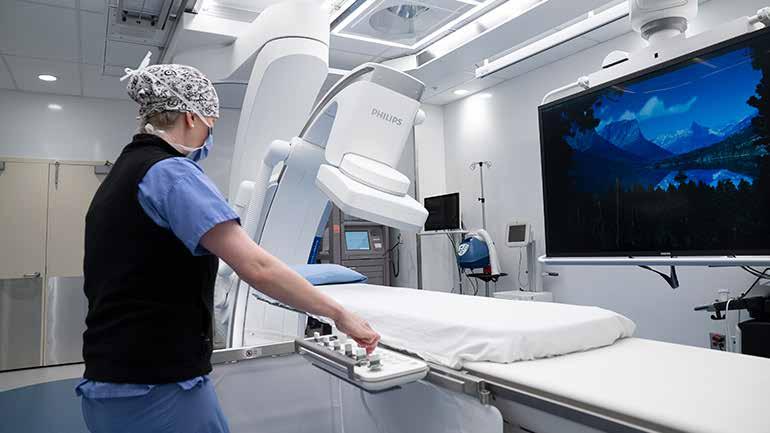
Modernized interventional radiology suite at Abbotsford Regional Hospital and Cancer Centre brings more advanced, less invasive care to the community
People in the Fraser Valley now have better access to minimally invasive procedures with the opening of a modernized interventional radiology suite at Abbotsford Regional Hospital and Cancer Centre.
“This new interventional radiology suite brings advanced, specialized care closer to home, helping patients avoid unnecessary stress, long travel, and delays when they need treatment,” said Josie Osborne, Minister of Health. “As the Fraser Valley grows, the Province is strengthening the health care system so people can access the timely, high quality care they deserve.”
The modernized suite features advanced imaging technology that helps clinical teams see inside the body in greater detail, supporting more precise, minimally invasive care. This means patients can receive complex procedures locally, reducing the need to travel and helping them stay closer to their families and support networks during treatment.
“This newly renovated interventional radiology suite at Abbotsford Regional Hospital reflects the impact that strong partnerships and community generosity can have on care,” says Dermot Kelly, President and CEO, Fraser Health. “We are deeply grateful to all the partners
whose support helped make this modernized space possible, improving access to advanced, minimally invasive treatments for people across the Fraser Valley closer to home and their loved ones. This investment will enhance the care experience, support faster recovery and help people return sooner to activities that matter most to them.”
Clinical teams can perform a wider range of complex procedures, including treatments that help manage conditions affecting quality of life.
For example, a procedure called prostatic artery embolization reduces blood flow to the prostate, helping men manage a common condition that causes urinary tract symptoms.
The suite also supports intravascular ultrasound, which allows clinicians to see inside artery walls, assess plaque buildup and better perform vascular procedures.
“The new equipment has much higher resolution, allowing Imag-
ing teams to treat small areas and vessels which were not visible on older equipment,” says Dr. Amarjit Bajwa, Department Head, Radiology, Abbotsford Regional Hospital and Cancer Centre and Mission Memorial Hospital. “This opens the door for us to offer a wider range of interventional services, including prostate and gynaecological treatments.”
Interventional radiology is a rapidly evolving area of medicine where care teams use technology to guide needles, wires and catheters into small incisions in the skin and through blood vessels to treat a range of conditions including urologic, gynecologic, dialysis, abdominal, and musculoskeletal conditions. These approaches are often less invasive, can reduce recovery times and improve patient experience. Interventional radiology is also used in emergency settings to treat life-threatening embolisms and internal bleeding.
The modernization project, which included renovations and new equip-
ment, cost $6 million, with $3 million provided by the Province, $2 million funded by the Fraser Valley Regional Hospital District, and $1 million from generous donors to the Fraser Valley Health Care Foundation.
“The Fraser Valley Health Care Foundation is deeply grateful to the James and Pamela Braun Family for their generous $1 million contribution toward the upgrade of the interventional radiology suite at Abbotsford Regional Hospital,” says Liz Harris, Executive Director, Fraser Valley Health Care Foundation. “Leadership gifts like this have a profound impact on patient care and help ensure our community has access to leading-edge technology, close to home.”
About Fraser Health:
We recognize that Fraser Health provides care on the traditional, ancestral and unceded lands of the Coast Salish and Nlaka’pamux Nations and is home to 32 First Nations within the Fraser Salish region.
Fraser Health is dedicated to serving all Indigenous people, and honours the unique cultures of the First Nations, Métis and Inuit living within the Fraser Salish region.
Our hospital and community-based services are delivered by a team of 50,000+ staff, medical staff and volunteers dedicated to serving our patients, families and communities.
Making government services more equitable for all
A new provincial anti-racism plan will help create stronger, healthier communities throughout B.C. by setting out actions to address the systemic barriers Indigenous and racialized people face when accessing government services.
“Despite progress, too many people in B.C. still face racism when accessing services meant to help everyone,” said Niki Sharma, Attorney General. “This plan sets out clear actions to undo the unfair and unjust legacy of systemic racism. This is how we create a government that people trust, and works for everyone, regardless of their race or identity.”
The inaugural Anti-Racism Action Plan sets out measurable, practical actions government will take from 2026 until 2028 to remove barriers and improve access to services for Indigenous and racialized people in B.C. It covers government sectors, such as health care, public safety, education and climate response.
The plan is partly informed by data collected under 2022’s Anti-Racism Data Act (ARDA) and addresses the Anti-Racism Act’s (2024) direction for government to take action to address systemic racism and improve equity in public services.
Protecting workers at risk of exploitation
Research gathered under ARDA found that temporary foreign workers, international students, newcomers to B.C. and racialized people working in the gig economy, such as in ride-hailing and delivery driving, can face a higher risk of abuse and exploitation. This is often because of language barriers, job dependency and limited awareness of their rights.
The plan aims to improve these groups’ labour conditions and financial outcomes with actions, such as:
strengthening the legal oversight of immigration consultants and reviewing how regulatory bodies that assess the validity of foreign professional credentials
reviewing employment standards and legal protections for temporary foreign workers and gig workers
identifying and addressing barriers in income and disability assistance programs
providing materials and resources in multiple languages that are clear and easy to understand
This work will help workers better understand their rights, reduce barriers to support and improve job stability and fair pay.
Ethical use of AI and other emerging technologies
In recent years, artificial intelligence (AI), machine learning and other forms of emerging technology have become more prominent across all aspects of life. People are increasingly using AI. However, as most AI models are based on human knowledge and data, early research indicates that AI systems can exhibit racial bias.
As government explores how AI can be used to make services more connected and responsive, the action plan commits to creating a multidisciplinary group that will:
develop an ethical, anti-racist AI-use policy for the public sector
identify potential harms that could be caused or worsened by unregulated AI use
recommend how these risks might be mitigated
explore how AI can be used to counter historical marginalization of Indigenous and racialized people and improve their life outcomes
This will help ensure that government is embracing technology without deepening racial inequality or perpetuating harms on historically marginalized communities.
Racism in health care
Findings from the independent In Plain Sight Report in 2020 and ARDA research show that Indigenous and racialized people experience stereotyping, racism and discrimination in B.C.’s health-care system. These experiences can make people hesitant to seek care or return for followup treatment, affecting early intervention and long-term health outcomes for chronic conditions like asthma, diabetes, and mood and anxiety disorders more prevalent in Indigenous and racialized communities.
To address this, the plan includes actions to:
establish a new centre for anti-racism and cultural safety within the Ministry of Health to lead and co-ordinate efforts to eliminate Indigenous-specific racism in health care
adapt chronic-disease programs and supports to better reflect the needs and experiences of racialized communities set learning expectations for all healthcare workers on Indigenous-specific racism and how to provide culturally safe care
These actions aim to make health care safer and more accessible, helping people feel confident seeking care and improving health outcomes over time.
Build public safety and trust in the justice system
Historical and ongoing experiences of discrimination have contributed to lower trust in the justice system among many Indigenous and racialized people, affecting whether they report crimes and how they engage with legal processes.
This plan includes actions such as:
piloting a Red Dress alert system to support timely and co-ordinated responses when Indigenous women, girls, Two-Spirit and gender-diverse people go missing
establishing a First Nation safety officer program to support community-based safety initiatives and enforcement
providing funding for legal, mental health, healing and community-based supports for people and communities affected by racism
These steps aim to ensure that when Indigenous and racialized people are targets of crime, their concerns are taken seriously and responded to quickly, while helping them feel safer engaging with law enforcement and increasing their trust in public institutions.
Support for Indigenous people and communities
Despite recent governmental efforts, systemic racism continues to affect outcomes for Indigenous and racialized children, youth and families. Research gathered under ARDA has found Indigenous over-representation in the child welfare system and disparities in education outcomes.
Under the plan, government is committing to:
ensuring First Nations communities understand existing self-determination provisions that can help them advocate for their communities in child and family welfare matters
reviewing how Indigenous youth are supported and treated by the justice system
strengthening the STAR Elder Program through which Indigenous Elders are able to provide guidance to child welfare staff and cultural support for Indigenous children, youth and families
reviewing why Indigenous students are over-represented in special education categories and school completion (evergreen) certificates and working to address this
These actions will help ensure Indigenous and racialized youth are supported from birth through adulthood, without facing discrimination, allowing them the same access to supports and opportunities as their non-racialized peers.
About the action plan
The action plan includes 37 commitments from 17 core government ministries and bodies. It is informed primarily by research under ARDA, consultation and co-operation with Indigenous partners, engagement with racialized communities, advice from the Provincial Committee on Anti-Racism and other action-specific evidence and ministry analysis.
To support transparency and accountability, individual ministries will monitor progress on their commitments and report to the Ministry of Attorney General regularly. Government will publish annual progress reports starting in 2027 to show actions taken and areas where more work may be needed. The next action plan will be published in 2028 and will build on lessons learned and progress made, informed by ongoing consultation and co-operation with Indigenous and racialized communities.
Under the plan, government will develop and implement learning and incident-response resources to counter rising antisemitism and islamophobia in schools. This addresses gaps in supports available for Jewish and Muslim students that are already in place for other racialized students.
The action plan complements the Province’s ongoing anti-racism work, including the racist incident helpline, Resilience BC and historical projects that address past harms committed by government.
Rental prices down, rental housing construction up in B.C. Housing
plan delivering results as BC Builds breaks ground on 4,000th unit
Renters in B.C. are seeing significant cost-of-living improvements as British Columbia leads Canada in bringing rent costs down with the largest yearover-year declines in asking rents of any province.
Construction on rentals continue as BC Builds breaks ground on nearly 820 new homes in Burnaby.
“In the face of a national out-of-control housing crisis, here in B.C. we are taking on wealthy speculators, protecting renters from eviction and turning vacant units back into homes for people,” said Premier David Eby. “Our plan is leading the country in results. Rent prices are down, rental home construction is up, and we’re building faster by removing roadblocks to construction. There’s more to do. Keeping this momentum and delivering even more is our priority.”
If government did not take action on housing, rents would be hundreds of dollars more per month in B.C. than they are today. People are paying less and have more choice and ability to negotiate rent.
Since 2017, B.C. has been taking strong action to crack down on speculation and deliver more homes for people, turning the page on decades of underinvestment from previous provincial and federal governments.
In 2023, as housing costs were rising around the world, government doubled down on actions to deliver housing affordability through the Homes for
People action plan, introducing new tools to respond to market challenges, such as short-term rentals, outdated zoning restrictions and red tape. The results of this work are now contributing to significant cost of living savings for British Columbians, highlighted by the asking price for rent in B.C. to fall by 12.5% from August 2023 ($2,671) to April 2026 ($2,338), a $333-a-month reduction B.C.-wide, saving renters an average of $4,000 per year.
Other housing-related progress includes:
Asking rents in Vancouver and Burnaby have fallen on a year-over-year basis for 29 consecutive months.
The average asking rent for apartments and condos is approximately 20%
lower than its 2023 peak, a reduction of more than $650 per month, or nearly $8,000 per year for renters.
Only two provinces have seen asking rent declines over the past three years, B.C. and Ontario, and the most significant declines were seen in B.C.
The vacancy rate for Metro Vancouver has increased. In October 2023, it was 0.9%, now it’s 3.7%.
B.C. is seeing record levels of rental housing construction, with 2025 rental housing starts triple what they were in 2015.
New registrations of purpose-built rentals are also at record levels year over year, hitting more than 26,000 in 2025. The average number of yearly purpose-built registrations from 2007 until 2016 was just 2,500.
Action to rein in the short-term rental market and B.C.’s speculation and vacancy tax on vacant homes are returning thousands of units to the long-term rental market and easing pressure in high-demand communities.
The Shelter Aid for Elderly Renters (SAFER) program is now helping more than 27,000 low-income seniors annually with the cost of rent.
Renter protections are keeping costs stable. The annual allowable rent increase is tied to inflation, eliminating the previous automatic extra 2% rent increase on top of inflation.
“It takes sustained action on all fronts, year after year, to actually take on a challenge as big as the housing crisis,” said Christine Boyle, Minister of Housing and Municipal Affairs. “Rents are still too high for too many people, but the direction is changing in B.C. – asking rents are going down – and we’re going to keep lowering costs for people and increasing housing options by reducing costs to deliver housing. We are making life and housing more affordable for renters, not somewhere down the line, but now.”
Since 2017, through provincial investment and key policy decisions, more new rental and affordable homes are opening in communities throughout B.C. than ever before, and more than 99,000 homes have been delivered or are underway.
Public engagement now open to gather input about future of child care in B.C.
The Province is asking families for input about the future of child care in B.C. using a new online, provincewide survey.
Hearing directly from parents, educators, and operators
Since the launch of ChildCareBC in 2018, space-creation programs have delivered substantially lower fees, more spaces and a bigger workforce in the child care sector. With the newest social program in B.C. in a generation,
the Province is continuing to build on this progress and is seeking input to guide the future of child care in B.C. Budget 2026 provided a $330-million lift to ChildCareBC to stabilize the programs and services that families rely on. Government is now asking for public input to assess child care in B.C., how it is progressing and working for families, and to determine priorities.
The provincial government has launched a survey to hear directly from
families, early childhood educators and child care operators about their experiences. The survey is online: https:// gov.bc.ca/childcaresurvey
Currently in English only, the survey will be available in French, Punjabi, simplified Chinese and traditional Chinese in the coming days.
Ensuring the sector is part of the conversation
The Province has been engaging extensively with child care partners following the announcement of new funding for child care in Budget 2026. On May 20, 2026, early childhood educators and providers were invited to take part in a virtual town hall with the Ministry of Education and Child Care. More than 300 people attended to provide feedback and ask questions about the future of child care with Lisa Beare, Minister of Education and Child Care, and ministry staff.
Showbiz full of insecurities: Randeep
Actor Randeep Hooda has opened up about the long-standing perception that he is blunt and difficult in the film industry. In a recent interview with, the actor spoke candidly about how his straightforward personality was often misunderstood in Bollywood. According to Randeep, many assumptions about him stemmed from cultural differences and the direct communication style commonly associated with people from Haryana. The actor explained that he never intentionally disrespected filmmakers and maintained that most misunderstandings stemmed from how his reactions were interpreted on film sets.Talking about how gossip spreads within the industry, Randeep
shared, “I did not realise that the mouthpiece of the chatter that goes on in movies comes from assistant directors. So when you’re getting ready and something is not right, maybe the look isn't right or you're not getting something correct before going to the set, and there's an assistant dire{ctor knocking every minute saying, ‘Sir, ready?’ after you've already told them to give you five minutes, then obviously the Jat in you comes out.” The actor also admitted that his direct way of speaking was often mistaken for aggression. “I think it was blown out of proportion. Also, because I was not mixing around with people too much, those Chinese whispers grew beyond their merit. The film industry is full of fragile glass egos and insecurities. I was not diplomatic,” Randeep said.
Anjali misses star mystery
Anjali Anish believes today’s actors are slowly losing the mystery that once made movie stars so fascinating. Speaking about the growing pressure of constant online visibility, the actor said social media has changed how audiences perceive celebrities, leaving very little to imagination. “I’m Gen Z, but I still miss the mystery around actors,” Anjali shared, adding that she grew up admiring stars whose personal lives remained largely private. According to her, audiences connected more deeply with actors on screen when they knew less about them in real life. “As an audience member myself, I feel the less I know about an actor’s personal life, the easier it is for me to accept them as a character,” she explained. The actor admitted feeling
disconnected from today’s culture of overexposure, where performers are expected to constantly post content, reels, and updates to stay relevant. While visibility is important in the industry, Anjali believes it should come with substance rather than constant online presence. She also reflected on the emotional highs and lows of acting, saying the silence after film shoots can be difficult to handle. Over time, however, she has learnt to detach her self-worth from the unpredictability of the industry and trust the process more patiently.
Actor and musician Saba Azad recently spoke candidly about period shame, women's health and the stigma surrounding gynecologist visits while promoting the second season of Who's Your Gynac?. During a podcast appearance, Saba highlighted how conversations around women's bodies and reproductive health are still considered uncomfortable in society, despite growing awareness about mental health and therapy. She explained that many women avoid visiting gynecologists because of fear, shame and misinformation. According to Saba, women often do not feel safe during consultations and are worried about being judged for their choices. She also questioned why medical forms continue to ask women whether they are married, saying marital status has nothing to do with understanding or treating a woman's body. Saba further addressed the stigma attached to menstruation in India, recalling how sanitary napkins are often wrapped in newspapers and black plastic bags at pharmacies to hide them from public view. Calling it unnecessary, she shared that she deliberately removes the wrapping as her own form of rebellion against period shame. The actress stressed the importance of sex education, regular gynecologist visits and creating safe spaces where women can openly discuss their health without fear or embarrassment.
Ishaan named
jury member
Mrunal hints at big reveal
A ctress Mrunal Thakur, who currently awaits the release of her upcoming comedy film Hai Jawai Toh Ishq Hona Hai, revealed that she is busy dubbing for 'something special' and will be making an "announcement" very soon. Mrunal on her stories section shared a video of herself in a dubbing studio and is heard saying: "All right lets go!" She wrote: "Dubbing for something very very special! Can't wait for you all to witness the magic we have created... My heart is so overwhelmed and just so grateful to universe! Announcement soon." Hai Jawai Toh Ishq Hona Hai is all set to release in June. Directed by David Dhawan, the film is about a boy who had been rejected by many women. He was in a relationship with loneliness. But then he receives help from God, and suddenly, his mind fills with many different thoughts. For those who do not know, Hai Jawani Toh Pyaar Hona Hai is a hit song from David Dhawan's film Biwi No 1, featuring Salman Khan, Karisma Kapoor, and Sushmita Sen. The name of the forthcoming drama is believed to have been inspired from this popular track. It marks the final film for David Dhawan, who started his journey in Hindi cinema in 1989 with Taaqatwar.
Bollywood actor Ishaan Khatter has been named as a jury member for the upcoming Biarritz Film Festival (BFF), joining an international panel of actors and filmmakers. According to a press release, Khatter will serve on the jury alongside personalities such as Kristen Stewart, Whitney Peak and Raphael Quenard. The festival is scheduled to take place from June 23 to June 28 in southwestern France and is known for spotlighting youth-focused cinema, emerging voices and innovative global storytelling. The jury lineup also includes French filmmaker Nathan Ambrosioni, French actress Suzy Bemba, Italian director Carolina Cavalli and British actor Esme Creed-Miles. Khatter has earned recognition for performances in projects such as Dhadak, A Suitable Boy and Homebound. He also appeared in the Netflix series The Perfect Couple, marking his Hollywood debut.
The actor will next be seen in Jugaadu and the new season of the Netflix series The Royals.
buwDvfr, 1 julfeI
sMq bfbf mYNgl isMG jI nfnksr klyrF vfilaF dI Xfd nUM
Dfrimk smfgm 5 jUn nUM aKMz pfT sfihb afrMB hoxgy. ijnHF dy Bog 7 jUn idn aYqvfr nUM pYxgygI AuprMq ZfzI drbfr kIrqn drbfr hovygf.
ivÈyÈ not ienHF smfgmF ivwc bfbf arivMdr isMG jI nfnksr vfly hfjrI Brngy. sMprk kro: 604-621-3062 imqI 5 jUn qoN 7 jUn 2026 qwk gurduafrf bfbf bMdf isMG bhfdr aYbtsPorz ivKy krvfieaf jf irhf hY