Rewards of Determination
Private Sector Perseverance Empowers Community
Maintaining a Field of Excellence • Pioneering a Movement • Keeping it in the Family


BUSINESS BRIEF
Dear Readers,
Most business owners dream, build and persevere for years, if not decades, to finally achieve a level of success that a legacy is built upon.
Overnight success rarely means just that. It’s often more myth than reality, especially in the world of small business. Behind every thriving company is usually a story of years spent navigating challenges, making sacrifices, overcoming setbacks, and learning through trial and error. Small business owners rarely achieve success instantly; instead, they build it one customer, one decision, and one lesson at a time. The journey often includes long hours, financial uncertainty, and moments of doubt, but perseverance through these hardships is what creates something lasting. More than simply generating profits, successful entrepreneurs are building a legacy—one rooted in resilience, dedication, and a commitment to creating value for future generations.
In this issue, we decided to shine a light on several businesses and their owners whose tireless efforts over time and through trials, have built companies with decades of history resulting in legacies…for their families, for their industries and our community.
and the entire staff at Pulse Publishing
Error correction:
Unfortunately we got it wrong: In the article "Landfills and Recycling: Include Waste Management in Your Business Plan" from our Fall 2025 issue, we identified McCutcheon's employee Tina Armentrout as Lisa.

PUBLISHER
Donna S. Elbert donna@pulsepublishing.net
EDITOR/CREATIVE DIRECTOR
Melissa Howes-Vitek melissa@pulsepublishing.net
DIRECTOR OF OPERATIONS
Gabby Mongeau gabby@pulsepublishing.net
COPY EDITOR
Molly Fellin Spence molly@pulsepublishing.net
GRAPHIC DESIGNER
Ana Lazo Eastep
CONTRIBUTING PHOTOGRAPHERS
MK Battles
Shuan Butcher
Naomi Pearson
DISTRIBUTION distribution@pulsepublishing.net
CONTRIBUTORS




Shuan Butcher is a nonprofit professional, writer, and event planner. He previously served as the executive director of the Frederick Arts Council and has been a member of the City of Frederick’s Public Art Commission and the Visit Frederick board of directors.
Naomi Pearson is an accomplished journalist who began writing features and short articles for local magazines about people, activities, and community issues particular to Frederick County, shortly after moving to the area in 2009. She freelanced as a side hustle to her day job in her previous role as a technical writer and editor. She also was a Citizen Blogger ("Fresh in Frederick") for the Frederick News Post until the program was discontinued in 2017.
Laura Rennie is a passionate storyteller with a background in feature writing, travel writing, and creative nonfiction. She now works as a copy specialist for Postern, a marketing agency in Frederick, Maryland, where she uses her expertise to craft compelling messages that capture her clients’ brand voice and values.
Molly Fellin Spence is an accomplished writer and editor with more than two decades of experience in the world of journalism. She’s worked with a variety of print and digital publications in the Mid-Atlantic region creating and honing compelling content to engage readers. A native Pennsylvanian, she has called Frederick, Maryland, home since 2002.

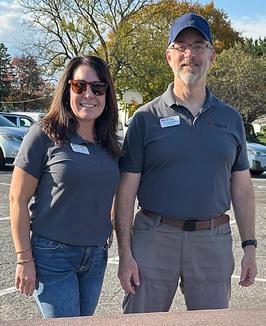
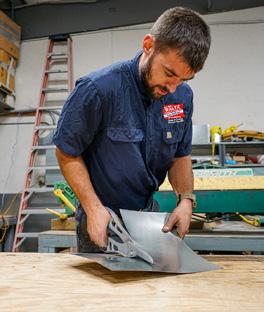
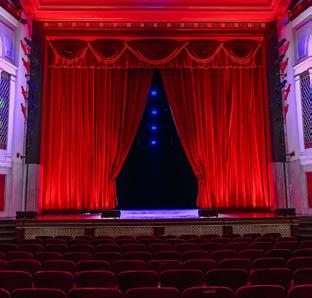





Family Meets Family at Bollinger’s




Stop Wasting Time Finding the Right Consultant
You don’t need more options. You need the right one.
If you’ve ever tried to find a trainer, consultant, or coach, you know how quickly it becomes a drain on your time and resources.
Endless referrals. Dozens of proposals. Conversations that go nowhere.
And at the end of it, you’re still not entirely confident you’ve made the right choice.
That’s where we come in.
The Trainers and Consultants Referral Network, managed by HR Answerbox, connects you with vetted experts who align with your specific business needs. We work with more than 260 consultants, trainers, coaches, and speakers across a wide range of specialties.
But this isn’t a directory.
We don’t expect you to sort through profiles or sit through multiple pitches. Instead, we take the time to understand what you’re trying to solve and connect you with 2–3 experts who are the right fit for your goals, culture, and budget.
Whether you’re navigating a complex employee issue, developing your leaders, improving engagement, or addressing a critical business challenge, we help you move forward faster and with greater confidence.
No RFP process. No wasted time. No guesswork.
Just the right expertise, when you need it.
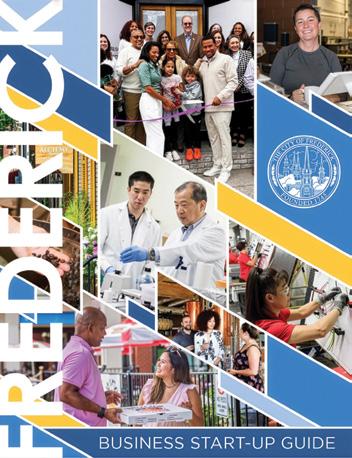
Starting a Business in Frederick? Start Here.
Turn your business idea into reality with the City of Frederick’s Business Start-Up Guide. Designed specifically for entrepreneurs, this easy-to-use resource walks you through every step of launching a business in Frederick—from permits and licensing to site selection, financing opportunities, tax credits, local resources, and marketing support.
Whether you’re opening your first storefront, launching a startup, or relocating an existing company, the Business Start-Up Guide connects you with the tools and information you need to succeed. Best of all, you won’t do it alone. The Department of Economic Development and Frederick’s business community are ready to support you every step of the way.
LEADERS WHO LEARN...
Where do executives and small business owners go to tune into the latest trends and cultivate inspiration? We asked a few of our contributors for their top picks in print and podcasts.

PRO PODCAST
Coaching for Leaders with Dave Stachowiak
The “Coaching for Leaders” weekly podcast, with the tagline, “Leaders aren’t born, they’re made,” was founded in 2011 by host Dave Stachowiak, a former senior vice president at Dale Carnegie Training. Its nearly 800 episodes include interviews with business leaders, university lecturers and professors, entrepreneurs, strategists, researchers, bestselling authors and even a retired military fighter pilot!
Each guest brings an approach to leadership that is beyond just being the boss, focusing on the bottom line and how to get their employees to maximize it. Providing deeply human and personal perspectives, guests instead draw clear connections from the condition of the relationship between leaders and

employees to the successes of their organization, business or company.
In every episode, I have found lessons applicable to my daily interpersonal interactions, and advice that even someone who finds themself in unofficial leadership positions could use. I’m hooked!
At the heart of each episode is the assertion that leaders and potential leaders in any realm of life and business at any level should first see the human value of their associates, not just their financial or social value. Any situation can be addressed through the lens of human experience and compassion.
Stachowiak and his guests discuss how this principle applies across a wide range of situations and subjects including: addressing bad behavior and normalized toxic corporate culture, experiencing layoffs, living in survival mode, marketing, cybersecurity, business strategy, growth, remote team support and parenting.
Occasionally some of the subjects are readdressed from a different perspective, or may have a closely related topic in other episodes, which Stachowiak cross-references for more or deeper insights.
My aim is that each time you listen to an episode, you discover at least one, key idea you can put into practice immediately.
But my larger goal for you is way bigger…
I want for you, like many of our longtime listeners, to develop a practice of consistent growth.
Some of what guests share are practical reminders of actions and habits we can take to center our shared humanity, to promote self-management, to avoid self-sabotage and to provide coaching versus commanding. The focus is on improvement for personal and professional success through conventional wisdom and innovative ideas for continual growth.
- Dave Stachowiak on Coaching for Leaders
According to the “Coaching for Leaders” website, “[t]he kinds of people who listen to Coaching for Leaders take responsibility to improve themselves, have a desire to better the careers of others, and show up in the world with a kind and humble heart, ready to make it better.”
I’d like to think we all are ready to make the world better.
Available on Apple podcasts, YouTube podcasts, Spotify, Overcast, and Pocketcasts, or for the entire searchable episode archive plus audio courses, at https://coachingforleaders.com with a free membership.

Naomi Pearson is an accomplished journalist who began writing features and short articles for local magazines about people, activities, and community issues particular to Frederick County, shortly after moving to the area in 2009.
Do you have a book, podcast or app that you've found helpful and/or inspirational to your life and career? We'd love to read your review!
Submit your thoughts and ideas to Melissa@pulsepublishing.net
Main Street MIDDLETOWN From Small Seeds Great Things Grow
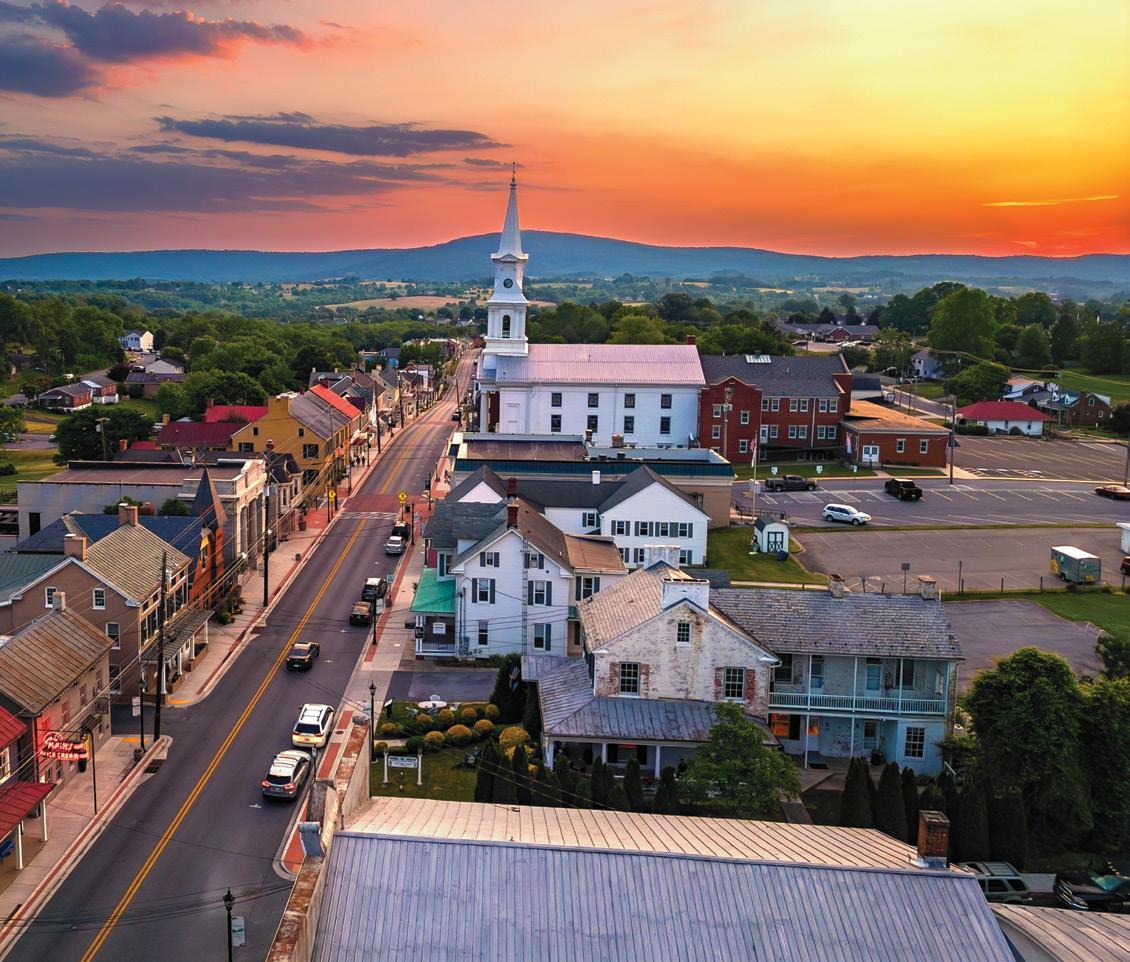
Main Street Middletown is more than beautiful views. Our Main Street is full of businesses that started small, but have grown to serve generations of families, reach clients throughout the nation, and even world-wide! Our vibrant downtown is populated with niche businesses, restaurants, retail, and healthcare. Despite our rural views, we are conveniently located within minutes of downtown Frederick, major interstates, and an hour from Washington DC and Baltimore.
Main Street Middletown works to revitalize, preserve, promote, and support our fascinating downtown. We provide business support throughout the life of your business - from grand opening celebrations to milestone anniversaries, business mixers with technical assistance and educational opportunities, grants for building improvements, a robust marketing plan for the downtown, and special events that bring potential clients to your front door.



SPOTLIGHT on Middletown’s Inspiring Eateries and Locally Loved Dining



Many entrepreneurs start with a dream, a passion project, and watch in amazement as their passions spill into careers, and beloved businesses. Middletown has a plethora of distinct dining options, led by exceptionally creative and talented chefs, bakers, and visionaries.
Mention Middletown, and many folks immediately respond that they have dined at The Main Cup, the local hot spot for upscale American-dining options. Under the new ownership, Sheriff Salam and Cherie Neuman understand they are taking on a legacy business, keeping the local flavor intact, while bringing new and exciting dishes to discover. Founded in 2005, the restaurant is located within another Middletown institution – Main’s Ice Cream Factory- which put Middletown on the map with its fresh-churned ice cream flavors starting in 1922. Mixing flavorful history, with dining options that tempt today’s palette’s is a forte of the Main Cup.
Dempsey’s Grille is family-owned and operated by a father and son duo, Joel and Igor Peltier. This Middletown staple is where all generations gather to enjoy Dempsey’s diner-style menu of freshly plated comfort food at its finest. Locals appreciate the daily specials, on top of the varied menu options such as making your own omelet with an assortment of stuffings that go well beyond cheese and ham, the Blackened Salmon BLT Salad, the hearty Chicken Pot Pie, and fries with homemade gravy! Save room for a slice of cake, too!
Aleko’s Village Café is the newest restaurant to open in Main Street Middletown. Joanna Tsinois is a visionary and chef. As you walk through the front door, the first thing you notice is the family photos on the walls. Cooking and serving food is part of Joana’s upbringing and her love language. Her Greek heritage is showcased throughout the menu, her hospitality is instantaneously felt as you walk through the door, and the aromas of the kitchen fill your soul, all within the background of clinking glasses, silverware, and soft laughter creates the background music.
Deb King, owner of Deb’s Artisan Bakehouse is full of enthusiastic energy and thrives on creating and baking the most decadent cookies, cakes, and croissants, and more! Her melt-in-your-mouth items provide the exact combination of sweet, savory, and satisfying and even surprising, so one bite is never enough. The Bakery is only open a few days a week, but be prepared to stand in line. Trust us, it is worth the wait!
IN THEIR SHOES
In Frederick County, many businesses are owned and operated by community members whose names may be familiar, though their daily work may be less so. Each issue invites you behind the scenes for a glimpse into the everyday life of one of those business owners, their employees or independent workers.
A Day in The Life of Mike Dunn, the Frederick Keys’ head groundskeeper
By Shuan Butcher
There is a version of baseball that most fans never see. It happens before the first pitch, before the gates open, before the players stretch. It happens at dawn, when a groundskeeper walks onto the field alone and begins the quiet, exacting work of turning dirt and grass into a playing surface worthy of the game.
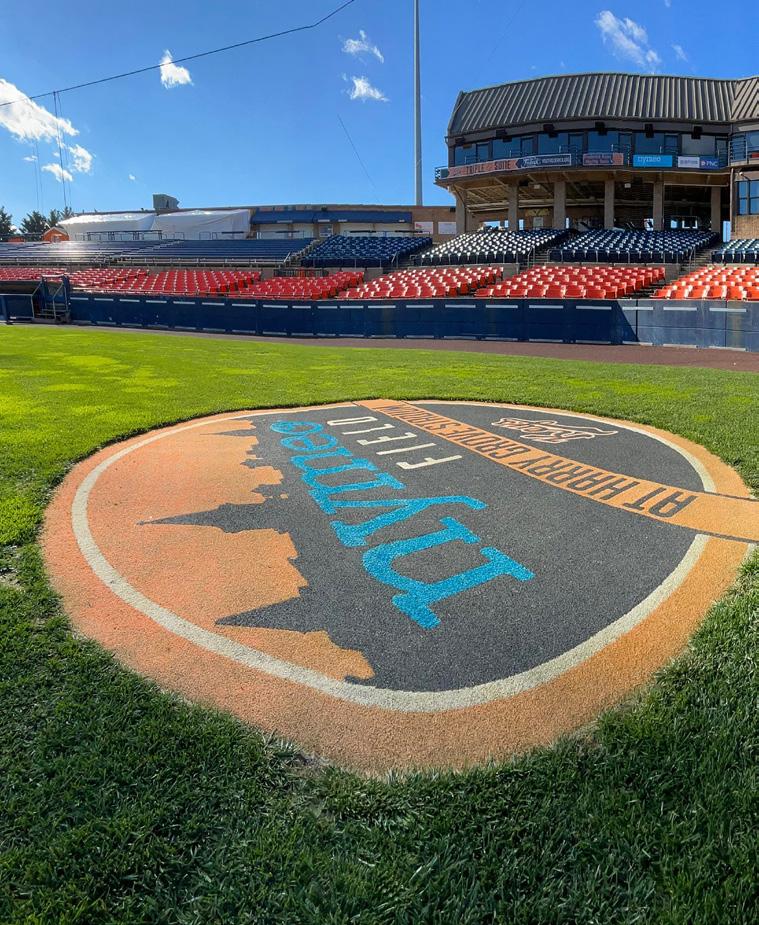
For the past nine years, that person at Nymeo Field has been Mike Dunn. As head groundskeeper for the Frederick Keys, Dunn oversees every dimension of field maintenance — turf science, playing surface safety and the daily orchestration of labor that makes the ballpark ready for competition. He does this work without fanfare, guided by a philosophy built on discipline, repetition and hard-won knowledge.
Dunn grew up in New York playing baseball, the way countless kids in this country do — chasing fly balls, arguing over calls, developing a feel for the game. But his path to making baseball his profession was anything but direct.
After serving in the U.S. Army, Dunn came home looking for work. In 1999, he landed a job with the Oneonta Tigers, the former short-season affiliate of the Detroit
Tigers that played June through September in upstate New York. It was a modest entry point into professional baseball operations, but it opened a door.
During his time with the Oneonta Tigers, Dunn had the opportunity to train with Heather Nabozney, who has spent more than two decades as the head groundskeeper for the Detroit Tigers. Their time together — four intensive days — gave Dunn a foundation in turf management and field preparation at a professional level.
He stayed with Oneonta for several years, absorbing everything he could. Much of it came the hard way. "I learned a lot by trial and error," he says. That kind of learning — through mistakes, observation and repetition — would define his development as a groundskeeper.
Dunn's career took him south to Florida, where he maintained a complex that included three baseball and softball

by Shuan
Photo
Butcher
Background photo courtesy of Frederick Keys
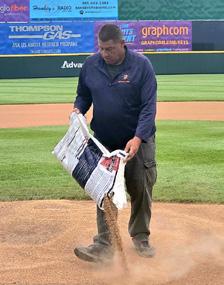
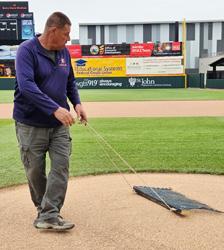
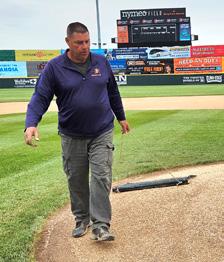
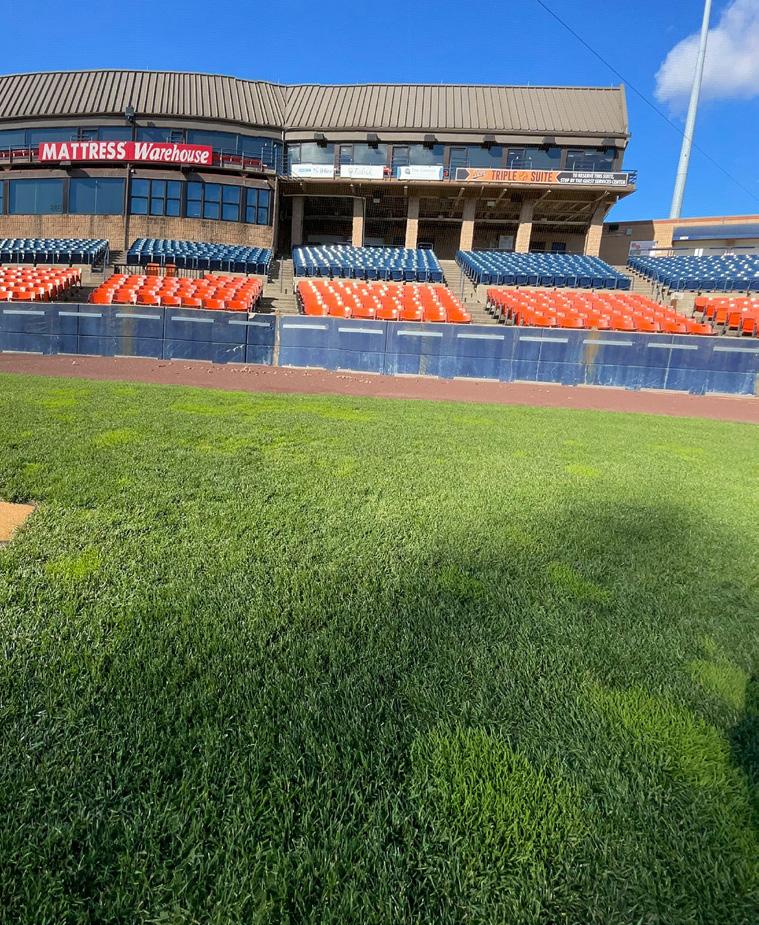
The mound is the most intensely used and structurally complex piece of real estate on the field. Clay composition, slope and firmness must all be precisely maintained, not only for performance but also for player safety.
fields and a soccer field at a spring training site. He returned back to Oneonta to work at the Cooperstown All-Star Village, a premier youth baseball tournament and training facility. His next venture would be with the Brickman Group, a large commercial landscaping and sports turf maintenance company, where he gained experience with sports fields at scale.
The Science of Grass and Dirt
Throughout these experiences, Dunn would come to understand the science of grass and dirt. He would learn how to properly do clay work — specifically, how to build and maintain a pitcher's mound and the area around home plate. These are among the most technically demanding surfaces on a
baseball field, absorbing punishment from every pitch and every play.
"It starts with the pitcher's mound," Dunn says. The mound is the most intensely used and structurally complex piece of real estate on the field. Clay composition, slope and firmness must all be precisely maintained, not only for performance but also for player safety.
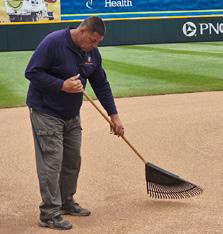
He is clear-eyed about where the real action is on a baseball field. "Play is 90% infield," he says. While outfield turf demands its own attention, the infield is where the game happens — where grounders skip, where runners slide, where the ball meets the dirt dozens of times each game. Getting the infield right is paramount. That is why he makes sure continued page 20
Photots by Shuan Butcher
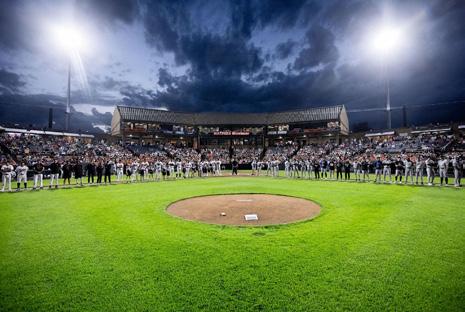
“It’s a lot of work. You gotta love what you do.” - Mike Dunn, Frederick Keys head groundskeeper
the infield is dragged three times a day to move the conditioner around evenly.
But Dunn is focused on more than just the dirt. "Grass is important," he says. "We cut the grass every day. It's important to keep the blade sharp." A dull mower blade tears the grass rather than cutting it cleanly, leaving the turf vulnerable to disease and stress. That daily mowing is not routine in the dismissive sense of the word. Rather, it is the discipline that makes excellence possible.
Frederick’s field consists of Kentucky bluegrass, a cool season grass that likes cold weather. “It’s a living plant, so it needs food and water.” He and his crew, which includes a seasonal assistant and four game-day staff, monitor the surface temperature on hot days and run irrigation to cool the grass down. At various times, they also have to spray and fertilize to maintain the perfect playing field.
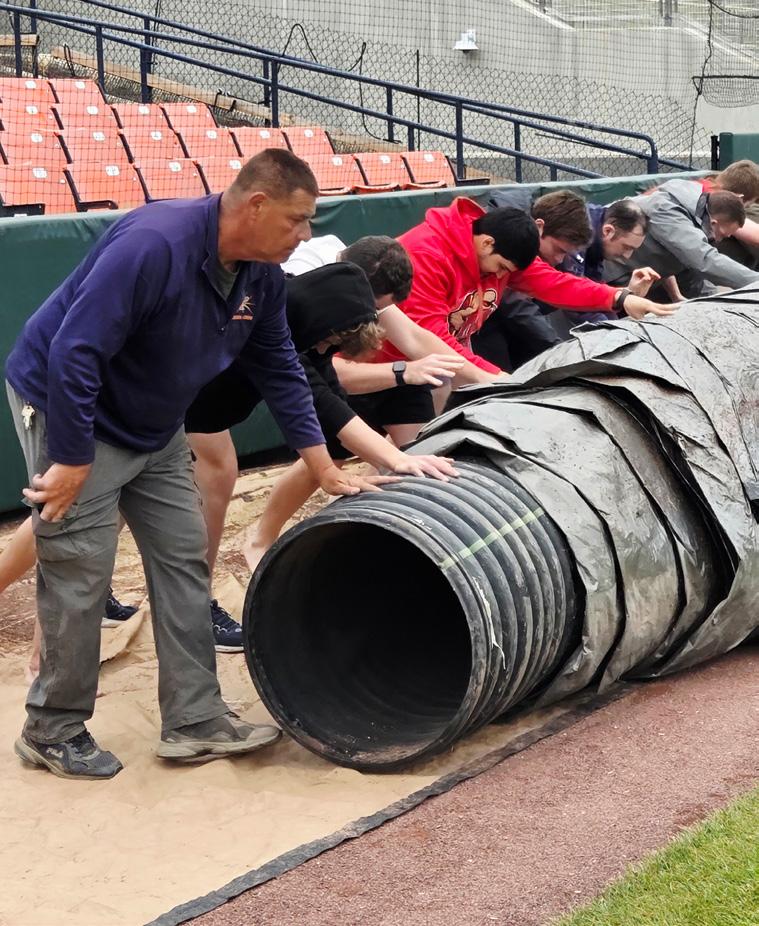
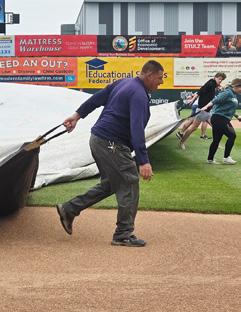
During my visit, Dunn was taking care of some of the routine maintenance required before the game that evening. He and Keys General Manager Slater Fuchs were also checking the weather radar, as a storm was brewing, which could wreak havoc on the diamond. In fact, staff had to tarp the field while I was there to make sure it was protected.
A Typical Game Day
A game day for Dunn and his crew is a study in sequencing. It begins with a fresh mowing in the morning, followed by a heavy watering of the infield to stabilize the surface. In the early afternoon, the staff sets up the field for batting practice — a process that requires its own configuration of the space and surfaces.
After both teams have taken their cuts, Dunn moves into pre-game preparation: dragging the infield, another round of watering, striping the batter's boxes and swapping out the bases. By the time the umpires walk onto the field, every element has been checked and rechecked. The league insists the field is safe to play on, and Dunn takes that mandate personally.
If you’ve been to a game, you also know the dedicated crew comes out on the field at the bottom of the third and sixth innings to drag it out.
Connected to the Profession
Dunn, who has 27 years of professional experience and received the Ray Cipperly Groundskeeper of the Year Award from the Atlantic League of Professional Baseball in 2023, is not working in isolation. He has a professional connection with
Nicole Sherry, the head groundskeeper for the Baltimore Orioles, who is widely recognized for her contributions to the field. Through that relationship and others, Dunn remains plugged into the broader network of groundskeepers who share knowledge and raise standards across professional baseball.
It is a network built on mutual respect — people who understand that the field is not a backdrop for the game. It is part of the game itself. “It’s a nice network. It’s a family. And a place where you can reach out and get advice,” Dunn said.
Lessons Beyond the Field
Throughout his career, Dunn has learned a lot by trial and error. "Don't second guess yourself," Dunn says. It sounds simple. But behind that phrase is a career spent learning when to trust your instincts. “You also have to pay attention to details and take pride in your work.” These lessons should transfer to anyone in any job.
“It’s a lot of work. You gotta love what you do,” he says. And those who know Dunn will tell you that he definitely loves his job and that he is one of the hardest workers you’ll meet. 3
Top left
photot by Shuan Butcher; top right courtesy of Frederick Keys
Shifting the Blueprint: The Distinct Advantages of Women in Frederick County’s Construction Industry
By Sandra Hofmeister
For decades, the construction industry was viewed through a singular lens. Today, that blueprint is being redrawn. Nationwide, women make up roughly 11% of the building workforce, but here in Frederick County, that number climbs past 17% — a clear indicator that the local landscape is evolving.
While entering a male-dominated field comes with its challenges, women executives and trades professionals are discovering that their unique perspectives result in a major competitive advantage.
1. Communication, Trust, and the "Relationship Advantage"
Modern construction is as much about managing people and expectations as it is about moving materials. Women in the industry frequently excel in areas that define a premium client experience: meticulous communication, active listening and high emotional intelligence.
In residential and commercial contracting alike, clients are increasingly looking for transparency and reliability over high-pressure sales tactics. Contractors who lead with detailed project walkthroughs, consistent scheduling updates, and an empathetic approach to a property owner’s anxieties are rapidly capturing market share. By prioritizing relationship building, women-led firms naturally foster deep client trust, turning one-off projects into lifelong referrals.
2. A Fresh Eye for Quality Control and Precision
There is an industry-wide shift toward precision, clean organization and zero tolerance for "cut corners." Many women leaders in construction bring a heightened focus on meticulous detail to job site management and quality control. Whether it’s ensuring flawless siding alignment, proper roofing ventilation, or spotless postproject cleanup, an eye for exactness directly reduces costly callbacks and material waste. This focus on premium workmanship elevates a company's brand and establishes an undisputed reputation for excellence in the community.
3.
Natural
Agility and Creative Problem Solving
Because women in construction often have to navigate unconventional paths to establish their careers, they enter leadership with a highly developed sense of adaptability. This background breeds a culture of creative problem-solving and operational agility. When supply chains fluctuate or unexpected structural issues arise on a job site, leaders who are used to navigating complex dynamics can pivot quickly, keeping projects on time and within budget.
Looking Forward
The future of Frederick County’s built environment relies on diverse leadership. Women are proving that bringing a different perspective to the job site doesn't just alter the culture — it alsoimproves the bottom line, elevates building standards, and sets a powerful example for the next generation of industry leaders.

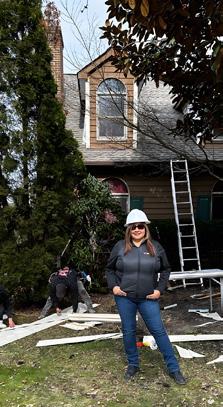

Sandra Hofmeister is the President and Owner of A&S Construction, LLC, a certified woman- and minority-owned business. A respected leader in Frederick’s construction industry, she is a SHERO Award recipient, Top 50 EmPowered Leader, mentor, and advocate for women, diversity, and affordable housing initiatives.

SPONSORED CONTENT






•
•
•
•
Take the Next Step with BMC
If


Fort Detrick Alliance works to connect Frederick community with the fort’s mission
By Naomi Pearson
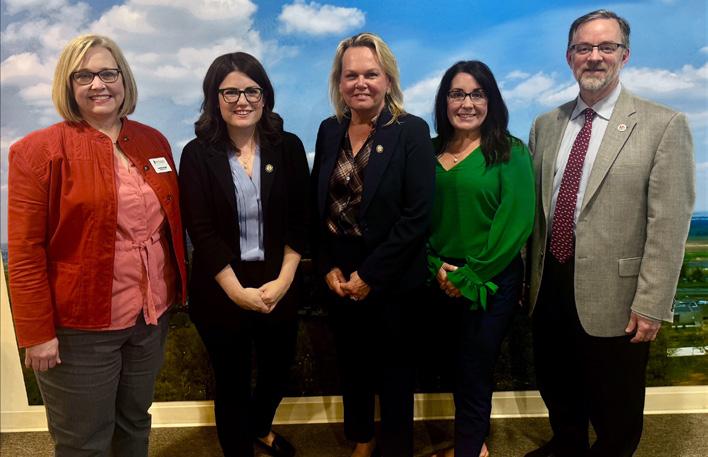
The Fort Detrick Alliance aims to bridge the gap between Fort Detrick and the local business community, to help build strong relationships between Fort Detrick and the region, providing information and resources.
The nonprofit also works to demystify the fort through facilitating communication between it and the Frederick community to promote understanding of Fort Detrick’s and federal agencies’ operations and missions.
This communication is integral to comprehending how both communities are deeply connected and benefit each other. Not only is Fort Detrick an Army base, it is also home to cabinet-level federal agencies, such as the National Cancer Institute and Frederick National Laboratory, and more than 40 tenant organizations, including contractor bioscience laboratories working on research for health and safety and national security. More than 100 members
of the alliance collaborate in efforts to support the various missions of the fort and its entities.
Furthermore, as the largest employer in the City of Frederick – 10,827 direct employees as of Jan. 9, 2026, according to the Frederick County Office of Economic Development website – the economic impact of the Fort Detrick installation is undeniable, with no less than $11.2 billion in annual economic output. The total employee compensation is $5.7 billion, as reported in 2021 by the Maryland Department of Commerce.
“Fort Detrick generates 66,409 direct, indirec, and induced jobs as a result of its operations in Frederick and the surrounding region. This includes the military, civilian, and contractor employees responsible for carrying out the installation's mission and the employment opportunities generated by local spending on goods and services by the workforce,” the Department of Commerce report states.
Photo
“The alliance can help organizations by identifying some of the various ways to work with Fort Detrick. … Options may include contracts, grants, service agreements, cooperative research and development agreements and other mechanisms.”
- David Evans Alliance president and Program Manager, Leidos Health United States Army Medical Research and Development Command (USAMRDC)
Alliance president David Evans, who is also program manager with Leidos Health for the United States Army Medical Research and Development Command, says, “The alliance can help organizations by identifying some of the various ways to work with Fort Detrick. … Options may include contracts, grants, service agreements, cooperative research and development agreements and other mechanisms.”
When procurement opportunities for services and goods arise, “we want our companies to be in the running” to provide them, says Richard Griffin, director of economic development for the City of Frederick, and alliance co-founder.
Other ways local businesses, organizations and residents could provide a form of community support for Fort Detrick missions is through supporting the quality of life for fort-adjacent individuals and their families, offering services, discounts,
events, activities, etc. to the folks that work at and/or live on the base.
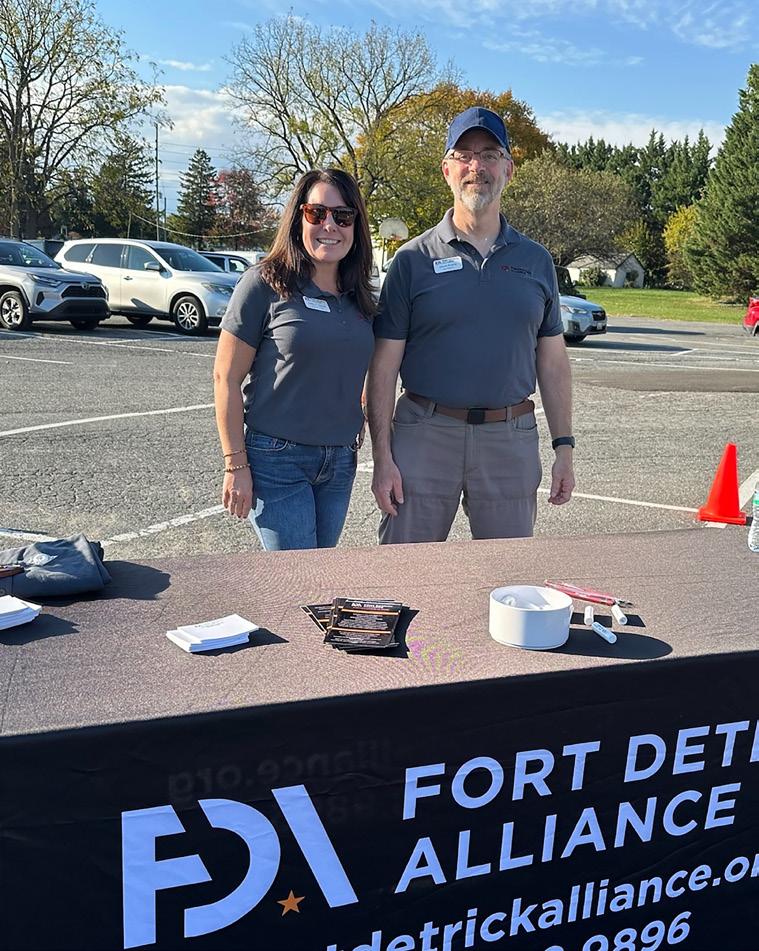
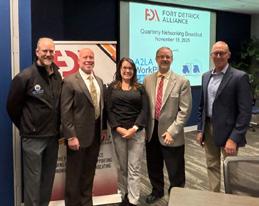
Additionally, through networking events, workshops and discussions facilitated by the Fort Detrick Alliance or sponsored by alliance members, individuals and local businesses can meet Fort Detrick and federal agency officials and contractor representatives to learn about some of the projects, missions and various topics and issues affecting the Fort Detrick community, and to find out ways to provide support. One such event is the quarterly networking breakfast hosted by the alliance that features speakers from federal labs and facilities to educate community and business leaders on critical work at the fort and by the fort community, including the NCI and FNL, making it accessible and understandable.
Other events include networking receptions, an annual recognition dinner, and the Frederick Innovative Technology
Photo courtesy of Fort Detrick Alliance
Center Inc. Technology Showcase, which spotlights technology transfer opportunities with the federal laboratories.
One of the biggest changes in the landscape of the relationship between the local business community and Fort Detrick and its tenant agencies and organizations that previous alliance president Dr. Jen Staiger, associate vice president of academic affairs at Mount St. Mary’s University, has noticed is: “As we have grown biotech and tech organizations in Frederick there has definitely been an increase in the number of [alliance] members coming from those organizations. Some of these are at Fort Detrick and others are in the greater Frederick community. Over the last five to six years, from Fort Detrick, we have seen the most engagement from the NCI and FNL who have sponsored several events and consistently attend our events.”
“Moreover, the alliance’s Workforce and Education Committee serves as a
connector between employers supporting the installation and regional education and training providers,” says Dr. April Boulton, dean of the graduate school at Hood College, and chair of the WEC. “By aligning education partners with real-world workforce needs, the alliance helps employers upskill and reskill their teams while strengthening the region’s talent base.”
The WEC “supports the long-term readiness, competitiveness and sustainability of Fort Detrick and its surrounding ecosystem by strengthening workforce pipelines, professional development and employer-education partnerships,” Boulton says.
Additionally, through these joint efforts, partnerships across biotech, tech, service and traditional industries are being encouraged and more people (especially the younger adults) from the community are more aware of opportunities for employment with fort-associated entities
“Over the last five to six years, from Fort Detrick, we have seen the most engagement from the NCI and FNL who have sponsored several events and consistently attend our events.”
- Dr. Jen Staiger
Associate Vice President of Academic Affairs at Mount St. Mary’s University
Photo courtesy of Fort Detrick Alliance
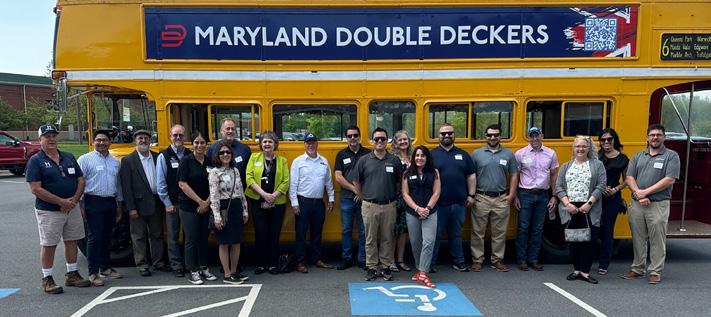
Randy Querry, director of government relations for Alliance member A2LA, has observed how the alliance promotes communication and relationships between the larger Frederick community and fort-associated entities, as well as expands visibility for small and niche businesses within the region. (either directly or through the biotech and tech organizations) because of the networking and other events being sponsored where they can meet some of the on-base employees.
Each of these provides occasions for businesses and community leaders to connect and engage with each other, direct access to officials, representatives and partners, insights into regional economic impact and growth areas, lowering barriers to entry for working with federal agencies and helps ensure small businesses can have the chance to participate as part of the same mission-driven ecosystem as the Fort Detrick.
Randy Querry, director of government relations for Alliance member A2LA, has observed how the alliance promotes communication and relationships between the larger Frederick community and fortassociated entities, as well as expands visibility for small and niche businesses within the region.
“In the past, we were directly working with our customer laboratories exclusively,” he says. ”Now we have the opportunity to see the larger picture and interact with other laboratories, hear their experiences and needs, network with laboratory vendors and suppliers, and see the bigger mission of Fort Detrick.”
“We have been headquartered in Frederick since 1998, and we have international recognition and reach; yet locally our neighbors really don't know our name and our story,” says Querry, “The Fort Detrick Alliance has helped us with our local visibility and helped us to share that story and how we support laboratory quality and technical competency.”
David Hawkins, owner of Hawkins Landscaping, notes that involvement with the alliance “brings together business and individuals that might not otherwise cross paths in other networking groups,” he says.
Querry believes that even a local small business owner could find it beneficial to be involved with the alliance.
“Organizations such as ours that operate in a specific niche may not be seen and understood by the broader community,” he says, but “once you meet in person and describe your activities, people understand that there are applications that are shared that can provide more opportunities. It provides that opening to not only Fort Detrick but the greater Frederick business community.” 3
IMPACT:
Through the Generations
N.E. Bob Waltz Plumbing & Heating Celebrates 70 Years of Family-Owned Service to Frederick County Company Marks Milestone Anniversary with $70,000 Investment in the Frederick Community
By Laura Rennie
Photo courtesy of NE Bob Waltz Plumbing & Heating, Inc
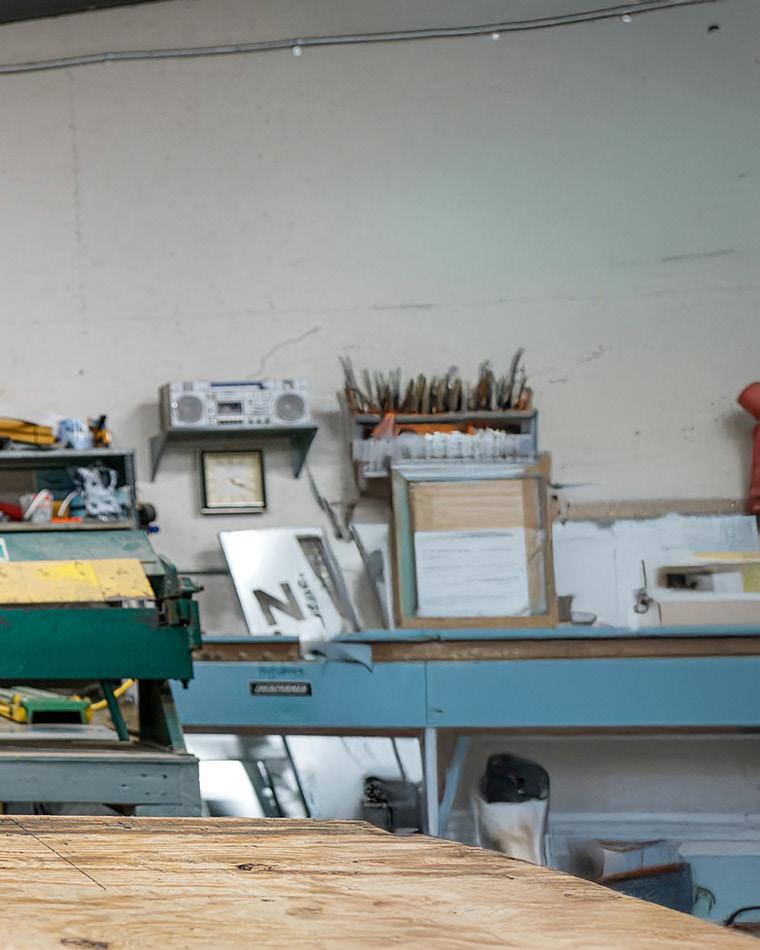
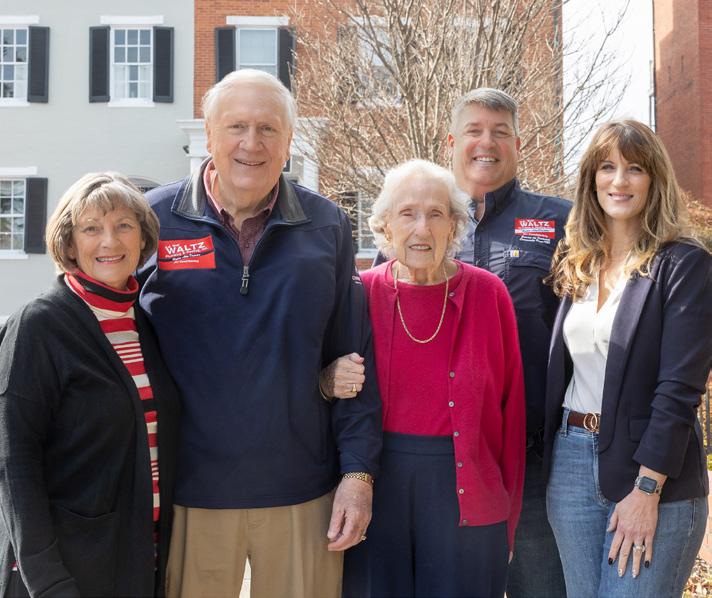
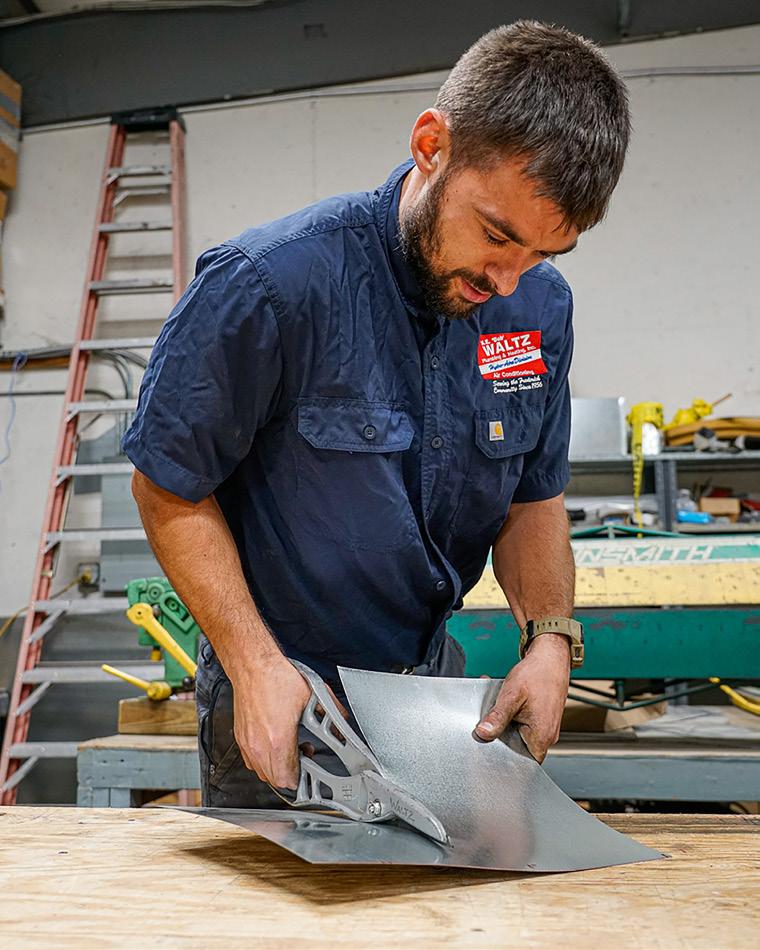
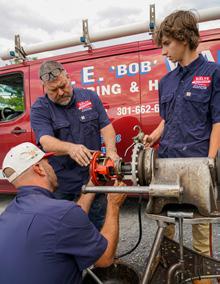
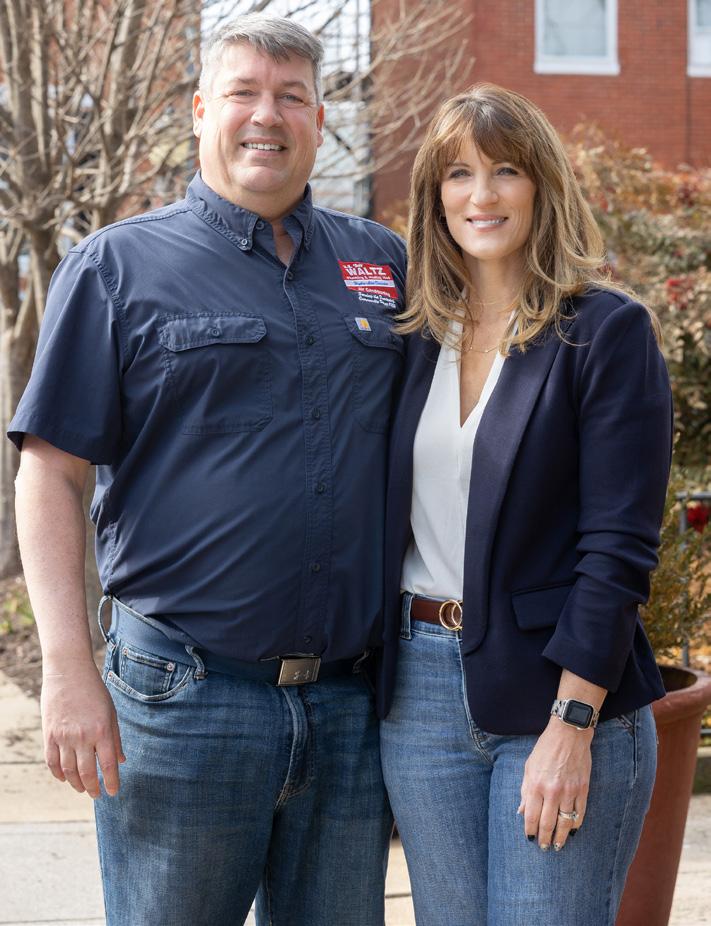
N.E. “Bob” Waltz Plumbing & Heating, Inc. is proudly celebrating 70 years of continuous, family-owned service to Frederick County and the surrounding communities. The company — now under third-generation leadership — is marking the milestone by donating $70,000 to local nonprofit organizations as thanks to the community that has supported it for seven decades.
The initiative will direct resources toward key areas of need in Frederick County, including youth and senior services, veterans and first responders, basic needs, mental health, ministries, health and wellness, and animal welfare. The first donation will be made to the Community Foundation of Frederick County, an organization with deep ties to the company’s history, as founder Norman E. “Bob” Waltz played an instrumental role in helping establish the foundation.
“Our community service isn’t about recognition — it’s about stewardship,” said office manager Jill Waltz. “We’re giving back to the community that has stood by our family and our business for generations.”
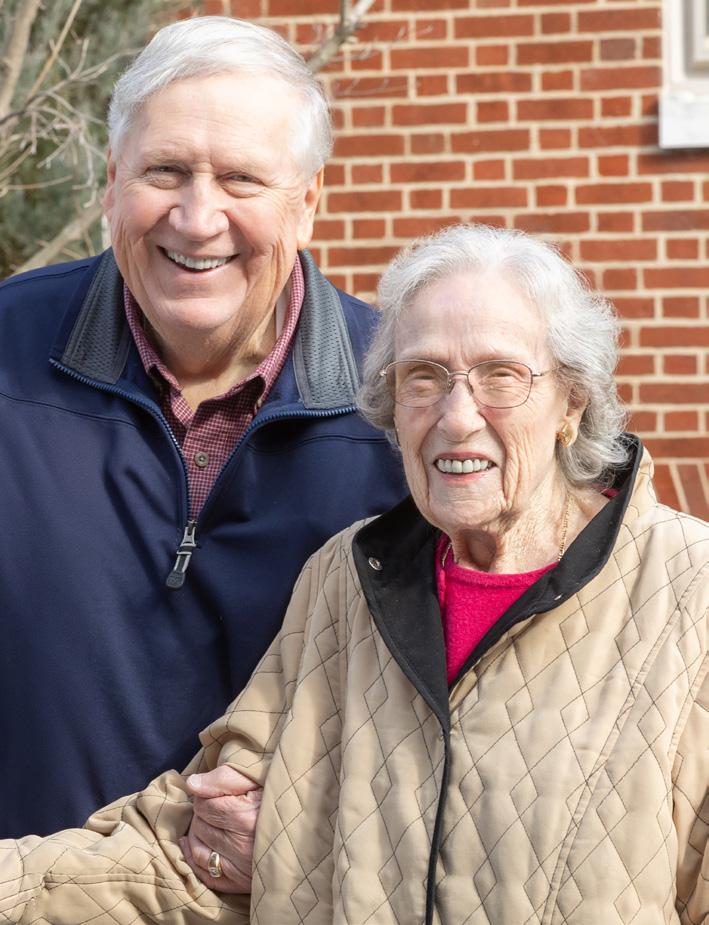
For the Waltz family, the anniversary is an opportunity to reflect on a business that has grown alongside Frederick County for three generations. Bob Waltz founded the company in 1956 after returning from serving in the Pacific during World War II and learning the plumbing trade thanks to the GI Bill. He and his wife, Betty, built the company on a simple mission: always do right by customers and team members.
Their son Robert (who also goes by Bob) and his wife, Sherry, joined the business in 1975. Today, Bob and Sherry’s son, Jeff Waltz, leads the company as president and plumbing general manager, working alongside his wife, Jill.
“It is with pride and thankfulness to see our company continue with a third generation to carry on what my father and mother started in 1956,” Robert Waltz said. “Hard work, dedication, and perseverance should be our legacy moving forward to serve our community.”
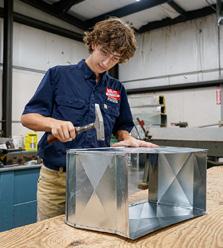
Three generations of the Waltz family have worked in the business, and a fourth may soon follow. The eldest member of the next generation, now a college sophomore, already works as a plumber’s apprentice when home, continuing the same hands-on path taken by his father and grandfather.
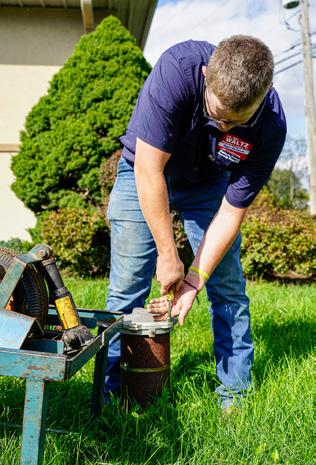
During the past seven decades, the company has evolved in the plumbing and HVAC industry. Services have expanded, and ongoing training and education have helped the team embrace innovations while preserving the craftsmanship and customerfirst values that have defined the business since its founding.
While equipment and systems have changed, the company says its core mission has remained the same: provide dependable service, honest pricing and quality work that stands the test of time.
“Reaching 70 years in business is both humbling and deeply meaningful to our family,” said Sherry Waltz. “What began as a small operation, built on hard work and a handshake, has grown into something that now spans generations. It represents decades of loyal customers and dedicated employees who became like family.”
Photos courtesy of NE Bob Waltz Plumbing & Heating, Inc.
FUN FACT: How Bob got his name
The story goes that when he was a very young child, he was full of energy. Either his mother or grandmother remarked that he used to “bop” around everywhere, and from that, they started calling him “Bob.” The nickname stuck at a very early age, and from then on, he was known as Bob.
When he started the company, he had read or perhaps been advised that you should include your name in your business so people know who you are and who to call. Since very few people knew him as Norman Eugene, he chose to use his first two initials, N.E., along with the name everyone recognized him by: “Bob” Waltz.
And that is how the company name, N.E. “Bob” Waltz Plumbing & Heating, was born.
by
Photo
MK Battles
About N.E. Bob Waltz Plumbing & Heating, Inc.
Founded in 1956, N.E. “Bob” Waltz Plumbing & Heating, Inc. is a third-generation, family-owned business serving residential and commercial customers throughout the Frederick, Maryland region. Established by Norman E. “Bob” Waltz, the company provides full-service plumbing, heating and cooling services with a reputation built on technical expertise, responsive service and long-term customer relationships. With seven decades of experience, N.E. “Bob” Waltz Plumbing & Heating delivers reliable, high-quality workmanship tailored to the needs of the communities it serves.
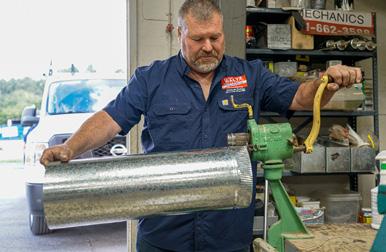
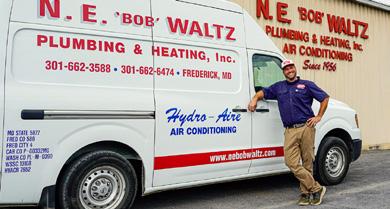
Some employees have spent decades with the company, and many customers today are the children and grandchildren of the families the company first served years ago. Those long-standing relationships remain a source of pride.
For the Waltz family, success is measured not only by revenue, but also by enduring relationships — with customers who return year after year, employees who build lasting careers with the company and a community they are proud to call home.
As more companies in the plumbing and HVAC industry are acquired by private equity firms, N.E. “Bob” Waltz Plumbing & Heating remains firmly committed to remaining family-owned and operated, preserving its independence, values and personal approach to service for years to come.
Looking ahead, the Waltz family believes the same principles that built the company will continue to guide it.
“We are honored to mark 70 years as a family-owned business — an achievement
made even more meaningful by the continuation into a third generation, a milestone few family enterprises attain,” Jeff Waltz said. “This legacy extends beyond the Waltz family; it reflects the dedication of our entire N.E. ‘Bob’ Waltz Plumbing & Heating team and the enduring support of the Frederick community. As we look ahead to the next 70 years, we aim to carry forward a legacy of service delivered with the values and care that have guided us from the beginning.” 3

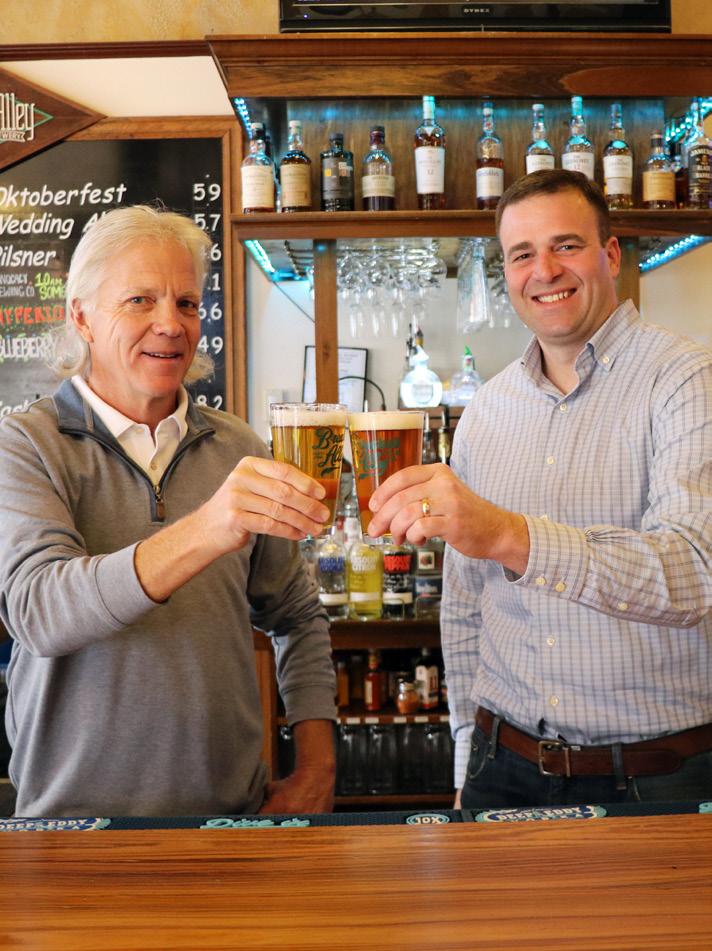
Pioneering the Pint:
How Brewer’s Alley Leveraged Legislative Strategy and Capital Risk to Anchor Downtown Frederick for 30 Years
By Molly Fellin Spence
Photo courtesy of Brewer's Alley
When
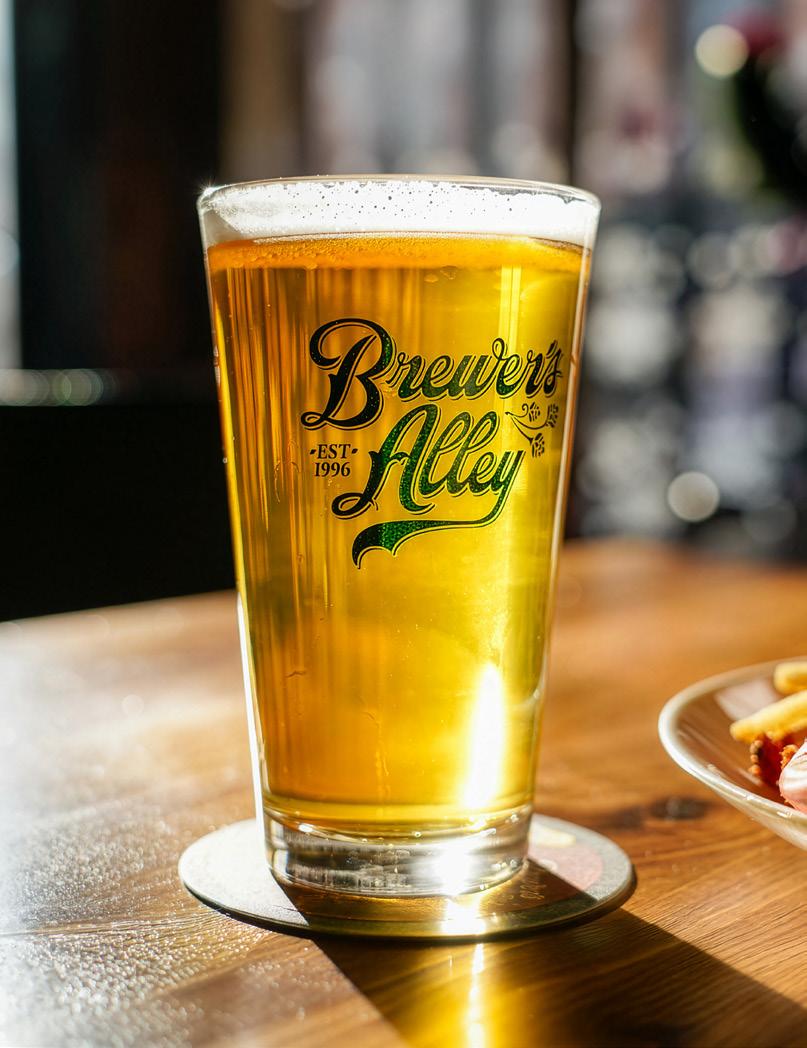
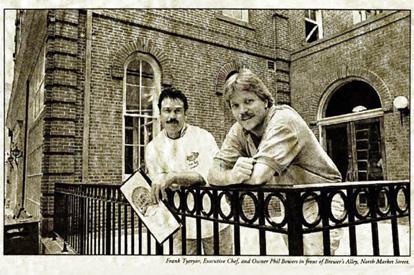
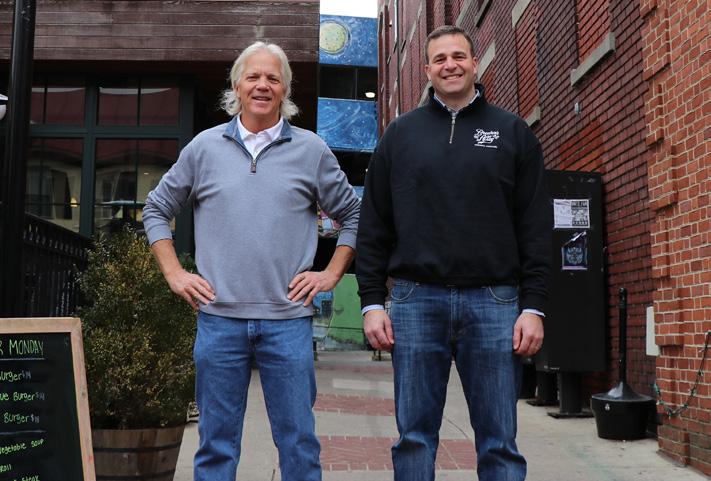
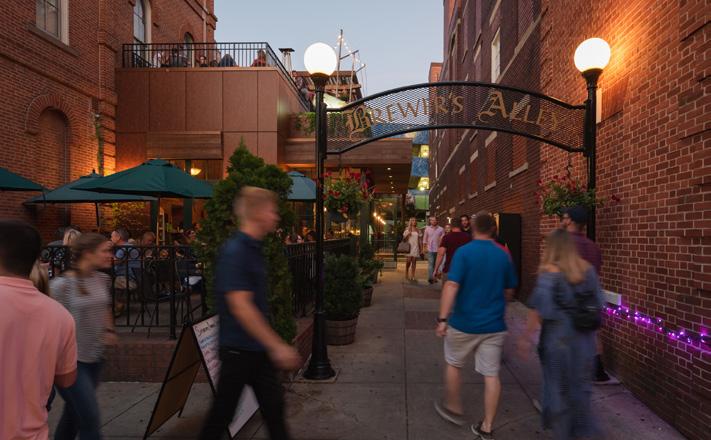
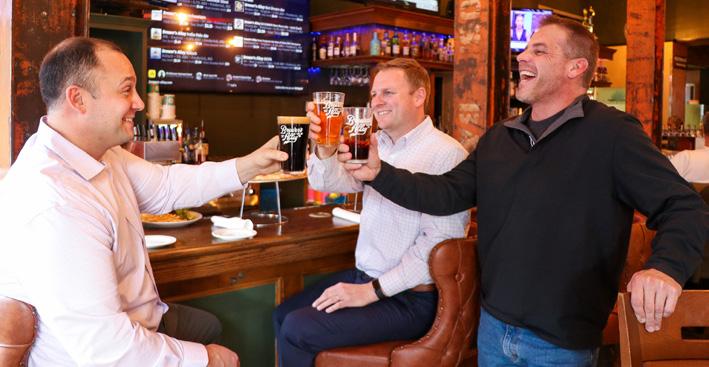
Brewer's Alley first opened its doors in 1996, it wasn't just launching a restaurant; it was pioneering a movement. In an era when the modern craft beer landscape didn't yet exist and Maryland’s laws were infamously restrictive, founder Phil Bowers had to fight legislative and zoning battles just to legally operate a brewpub. Brewer’s Alley’s success became a crucial early victory for the state’s brewing industry and paved the way for the boom that followed.
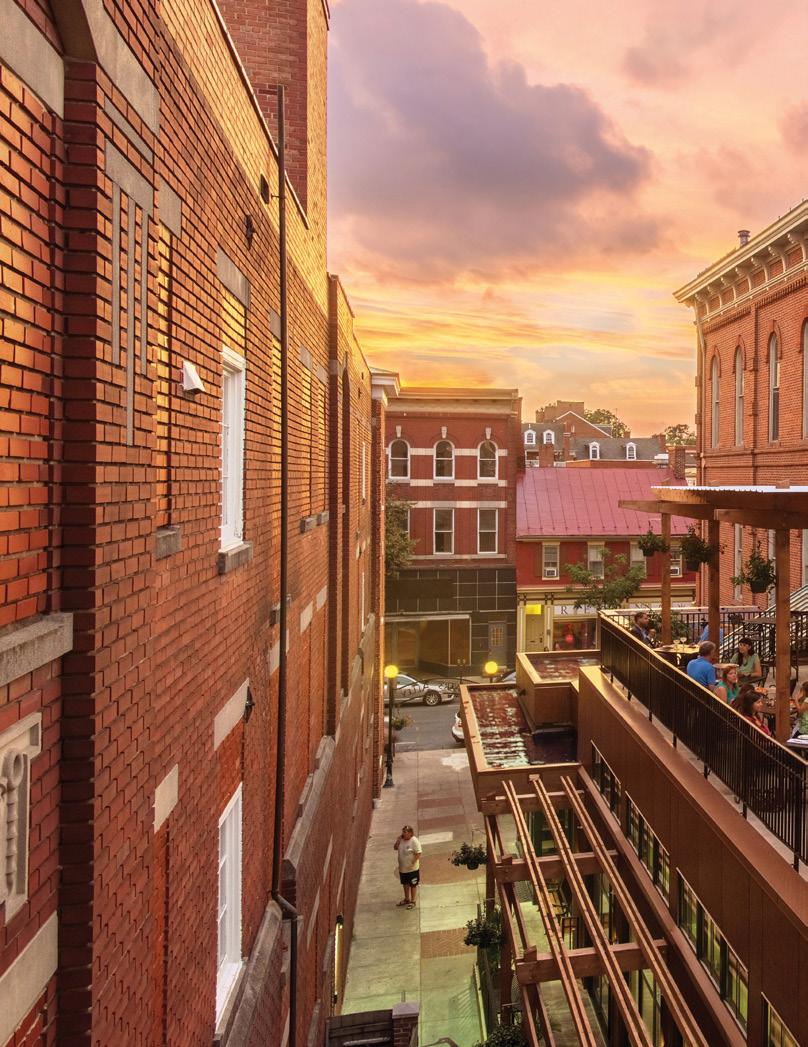
Beyond legislative hurdles, Brewer’s Alley took a significant capital gamble on North Market Street, transforming the area from a quiet downtown core into the premier regional destination it is today. Their presence, alongside an innovative chef and menu, served as a vital proof-of-concept, sparking broader downtown revitalization and earning them the very first neighborhood revitalization loan from the state.
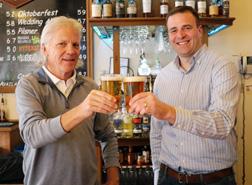
Now, celebrating three decades, Brewer’s Alley has cemented its status as a true anchor in Downtown Frederick. Greg Brown, president of Monocacy Hospitality says this means continuously investing in the team, balancing deep history with aggressive modernization of the physical space and product, and actively advocating for the entire hospitality industry to ensure the rising tide continues to lift all ships in Frederick County.
We asked Bowers and Brown to talk about Brewer’s Alley’s history and future, as it celebrates 30 years in Frederick.
When Brewer’s Alley opened in 1996, the modern craft beer landscape didn't exist, and Maryland laws were notoriously restrictive for brewpubs. Can you take us back to those early days and describe the specific legislative and regulatory battles your founding team had to fight just to allow a business like this to legally operate and pave the way for the boom that followed?
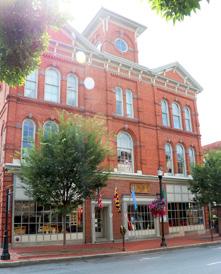
Bowers: In 1996, the Maryland legislature had already passed enabling legislation at the state level for brewpub licensing, but the counties still had to individually adopt them. Frederick County had not done that yet. We had to go through the process of getting the county to recognize the license, and then work with the city and the planning commission to establish the proper zoning. Because the state-level framework existed, we didn’t have to reinvent the wheel, but it was definitely a learning process for the continued page 43
Photo
The timing worked well because the craft beer movement was just getting ready to explode. People were starting to realize that fresh, locally brewed beer was excellent. We also launched with an innovative chef and a great menu, which made us a dining destination.
- Phil Bowers, Founder, Brewer's Alley
Photos courtesy of Brewer's Alley
local governments. There weren't necessarily roadblocks, but there were a lot of questions.
We were fortunate to have peers in the industry going through this at the same time — a brewpub in Baltimore had already started the process, and Frederick Brewing Company was setting up its micro-brewery around the same time, so we all worked together.
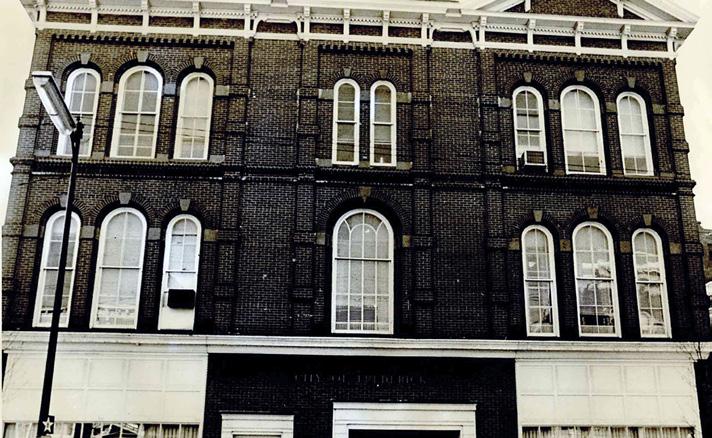
Honestly, the biggest hurdle was the building itself. At the time, the old City Hall building, our building at 124 N. Market St., was owned by the city. We entered a lease with a purchase option, and the Board of Aldermen was a bit concerned about a brewery opening right on Market Street. They had a lot of questions about how delivery trucks, kegs, and the general operation would impact downtown. Through a number of meetings, we answered those concerns well enough to get the green light.
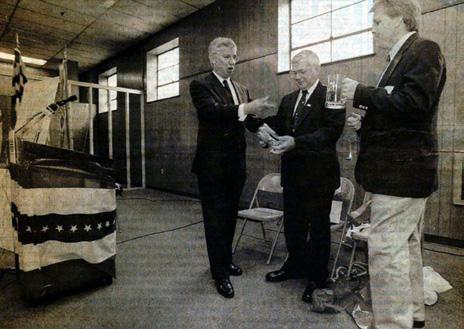
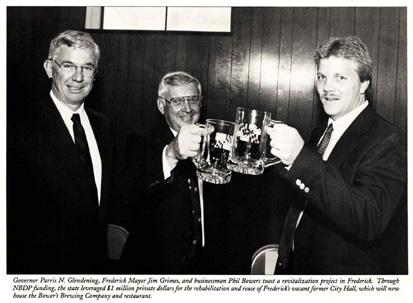
Around the time we signed the lease and started preliminary demolition, the state created a new neighborhood revitalization program under Gov. Parris Glendening. It set aside low-interest loans for downtown redevelopment projects. The Greater Frederick Development Company, the precursor to the Downtown Frederick Partnership, had an office in our building. A state representative visited their office, the GFDC director pointed to us working in the dust and said, "This project is the perfect example of what this program is for." We applied and received the very first neighborhood revitalization loan from the state of Maryland. The timing was perfect.
Thirty years ago, North Market Street was a gamble, not the premier regional destination it is today. What did it take from a capital risk and business planning perspective to scale up a major footprint here in the 1990s, and how did your presence serve as a proof-of-concept that attracted other businesses to invest in the downtown core?
Bowers: Raising the money was probably the hardest part. Restaurants are notoriously risky investments to begin with, but a brewpub? People would look at us and ask, "What do you mean you’re going to brew your own beer?" There was a steep learning curve, and finding investors was a
Other restaurateurs looked at our success and realized they could safely invest in downtown Frederick. It truly was a case of a rising tide lifting all ships. The community supported us, and the rest is history.
- Phil Bowers, Founder, Brewer's Alley
massive challenge. A lot of it came down to friends and family who probably didn't think they’d ever get their money back, but they were happy to help us try. People genuinely thought we were crazy because downtown Frederick was a lot slower back then.
We looked at national trends. Craft brewing was exploding out west in places like Colorado and Washington. The Wynkoop Brewing Company in Denver, for instance, had served as a major catalyst for its downtown revitalization. There were early examples proving that a brewpub could go into an older, quiet downtown area and spark a rebirth. We figured, why not Frederick?
The timing worked well because the craft beer movement was just getting ready to explode. People were starting to realize that fresh, locally brewed beer was excellent. We also launched with an innovative chef and a great menu, which made us a dining destination. Soon after we opened, a couple
of young, entrepreneurial retailers opened shops nearby, so people coming down for dinner suddenly had places to shop. It built simultaneous momentum. Other restaurateurs looked at our success and realized they could safely invest in downtown Frederick. It truly was a case of a rising tide lifting all ships. The community supported us, and the rest is history.
As one of the largest independent, nonchain employers in Downtown Frederick, your payroll directly feeds back into the local economy. From a human resources and workforce development standpoint, how has your strategy for hiring, training, and retaining local talent evolved to survive three decades of shifting economic cycles and labor shortages?
Bowers: From the very beginning, local hospitality workers were excited to try something new with us. We had a highly unique concept, nobody else in the area was brewing beer right inside the restaurant, and our menu was fairly cutting-edge for the time. That allowed us to attract great talent early on. People in this industry are naturally drawn to concepts that are unique, busy, and offer creative freedom, whether they work in the front or back of the house. A bustling environment creates great energy. But at the end of the day, retention comes down to a simple philosophy: you treat people right. You give them a quality product they can proudly stand behind, and you make them feel like part of a team.
We have always made it a priority to be deeply supportive of the Frederick community, and the community has responded by being incredibly supportive of us. I started that approach, and Greg Brown and his team have carried that torch seamlessly. Brewer’s Alley became a go-to institution because we caught that initial craft brewing wave, gave people a place to grow their careers, and maintained our commitment to the people who make this place run.
Brown: Culture drives absolutely everything we do. Our mission statement is simple: “Dare to be great.” It perfectly reflects the type of employees who will enjoy and thrive in our environment. We always strive to put our team first, and in return, we expect
to build a culture focused on people who have the courage to check the “dare to be great box” each and every day, delivering a positive impact for themselves, our team, our guests, our business, and our community. We fundamentally believe that businesses with the best people will always succeed.
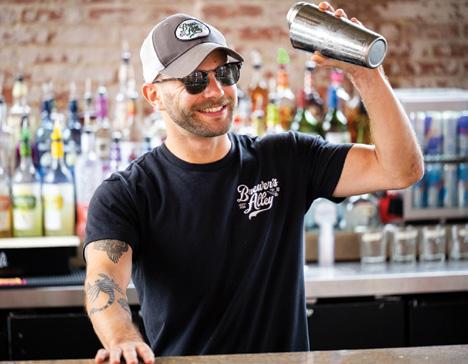
You can see the proof of that philosophy in the incredible longevity of our team. We are fortunate to have core staff members who have become institutions in their own right. We have countless examples of folks that have spent 10, 15, and 20-plus years with our organization. Our beloved bartender, Chris Owens, has been holding down the bar and taking care of our regulars for 20 years. Our general manager, Jaime Ellis, is a perfect example of internal growth, she started with us as a floor manager and has been driving our operations forward for about a decade now. She’s actually going to be venturing into a new role we believe will further foster her development and also improve our organization by creating a more specific focus on our team, systems, and administration.
That retention also extends to our Culinary Team. Some of our key Culinary Team Members have been with us 20-plus years and are absolute rock stars. In an industry notorious for high turnover, having that level of dedication tells you everything you need to know about our team and the culture we've built together.
You don’t survive 30 years by standing still. You have been actively overhauling the space, menu, and service standards to keep the brand elevated. How do you strategically balance honoring the deep history and nostalgia that local regulars love with the aggressive modernization needed to compete with newer, trendier concepts?
Bowers: That balance goes right to the heart of how we have done business for three decades, and it’s a strategy Greg has stepped right into and maintained. You absolutely have to stay relevant. You cannot expect people to keep showing up for the exact same menu for 30 years.
The same rule applies to the physical building. Every single year, we made it a point to close down — sometimes for just two
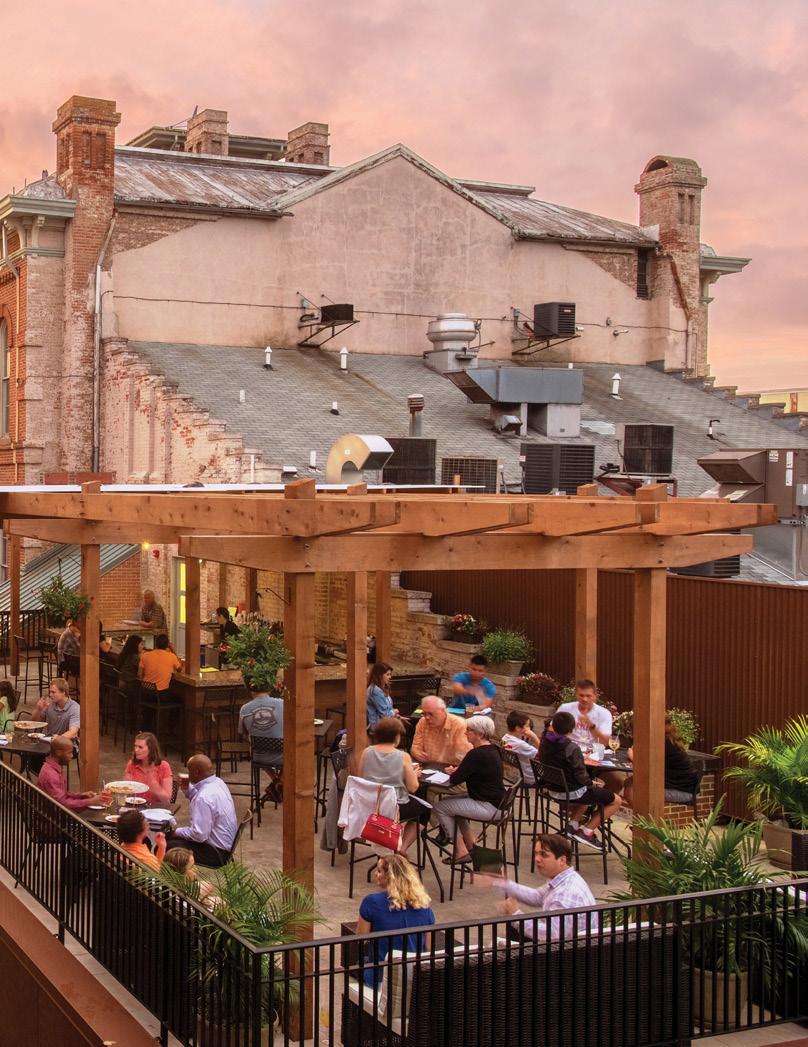
days, sometimes for two weeks, and back in 2015, we closed for an entire month. Some years it’s just fresh paint, new carpet, or new chairs. Other years, it’s a full-blown structural renovation, like blowing out the side of the building to create a brand-new dining space and the Brewer’s Alley Rooftop Bar.
Brown: Many folks do not realize just how capital-intensive the restaurant industry truly is. We reinvest as much as we possibly can back into the business, not only to maintain our relevance but to ensure we are considered a benchmark and the most innovative hospitality organization in the area. We manage a strict capital plan that we keep a close eye on to guarantee we are making responsible, impactful enhancements to our Brand and employees.
We spend countless hours working with a variety of partners to figure out how to pay homage to the intricate history and unbelievable 30-year run of Brewer’s Alley, while simultaneously balancing where we are going so we continue to grow and adapt to the modern market.
Ultimately, though, the most important aspect of our business is our people. Choosing to invest heavily in our team and creating a culture that attracts and retains the best possible hospitality talent will always be
our greatest tool for ensuring relevance, both now and in the future.
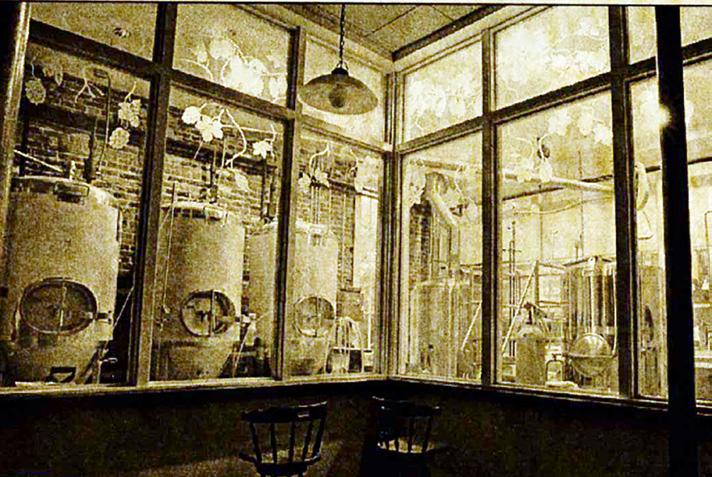
Over the past several years, we have renovated the Main Bar, renovated our event spaces, invested in a Pub Brewer so we can do more small batch brewing onsite, enhanced our kitchen equipment, added some of the coolest, most innovative umbrellas available to our first floor patio and rooftop, and upgraded flooring in several of our dining rooms.
I’ll also add that almost every dollar going through Brewer’s Alley finds its way back into the Frederick community. We make a point to partner with local, independent businesses and the vast majority of our employees live and work in Frederick County. In today’s environment, this is a very important differentiator versus large, publicly traded chain restaurants where a large percentage of dollars leave Frederick County.
When other business owners look at the longevity of Brewer’s Alley as a true corporate anchor of the city, what do you hope they take away as the definitive blueprint for building a lasting, multidecade business in Frederick County?
Bowers: The blueprint comes down to the core fundamentals: investing heavily in your employees, your building, and your product.
Photo courtesy of Brewer's Alley
There is no bigger compliment than being considered the favorite place for folks to gather, break bread, and enjoy a pint.
-
Greg Brown, President, Monocacy Hospitality
You have to continually strive to be the absolute best at whatever it is you do. Entrepreneurship is not easy; it requires an immense investment of time, energy, and capital. But if you truly believe in what you are doing, and you genuinely take care of your staff, your product, and the customers coming through your door, you will build something lasting.
Above all, you just have to be real. We are fortunate to live in an era where consumers deeply appreciate local independent businesses and the hard work that goes into them. There is a strong community trust here. But that consumer appreciation only stays strong because local entrepreneurs are putting out high-quality products. If we put out a lousy product, the customers wouldn't be here. The bottom line is that you have to put the work in, be willing to constantly reinvest in your business, and stay true to your community. If you do that, success follows.
Brown: Take care of your team, take care of your guests, take care of your community,
and have the courage to choose greatness each and every day. There is no bigger compliment than being considered the favorite place for folks to gather, break bread, and enjoy a pint.
But a lasting business isn't built in a vacuum. Just like Phil did 30 years ago when navigating the new legislation and zoning needed to open our doors, it is important to look outside your own four walls and work with other businesses and organizations to make the hospitality industry better for everyone.
and educating elected officials on the realworld implications these laws have on the livelihoods of our employees. It’s a year-round effort that takes me to Annapolis to testify multiple times a year. I’m also a member of The Rotary Club of Carroll Creek.
True corporate anchors don't just survive the community's landscape, they help shape it. If you want a multi-decade business, you have to be willing to advocate for your industry, protect your people, and put in the work to lift the entire business community forward. 3
I currently serve as the Chair of the Public Policy Committee on the Frederick County Chamber of Commerce Board of Directors, and I sit on the Government Affairs Committee for the Restaurant Association of Maryland. Karl Knoop, our Brewery General Manager serves on the Board of the Brewer’s Association of Maryland. Through these groups, we spend countless hours building relationships with lawmakers, analyzing bills,
STRATEGY & GROWTH
Local Theater
All the World's a Stage: How
a Thriving Theater Scene was Built in Frederick
By Molly Fellin Spence
In a mid-sized city sometimes better known for its Civil War history and craft breweries, Frederick has quietly become one of Maryland's most surprising theater towns. While communities far larger struggle to sustain even a single professional company, Frederick County is home to a constellation of live theater offerings — from a city-owned 1920s theatrical palace to a scrappy professional ensemble that grew from an improv troupe performing in the backs of bars.
It is, by most measures, an unlikely abundance. Professional theater is a notoriously difficult business, one where ticket sales rarely cover more than a fraction of actual costs and where organizations live and die by grants, donors, and sheer community goodwill. Yet in Frederick, the stages keep filling. The question worth asking is why — and whether what's happening here offers a model for smaller cities struggling to keep the arts alive.
Weinberg Center for the Arts
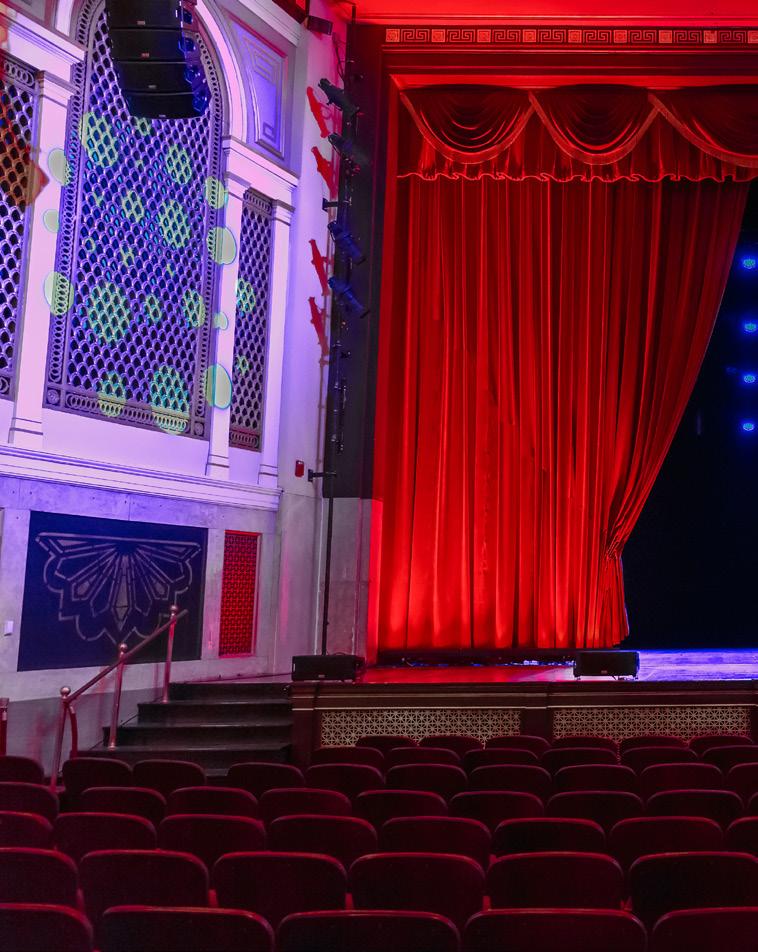
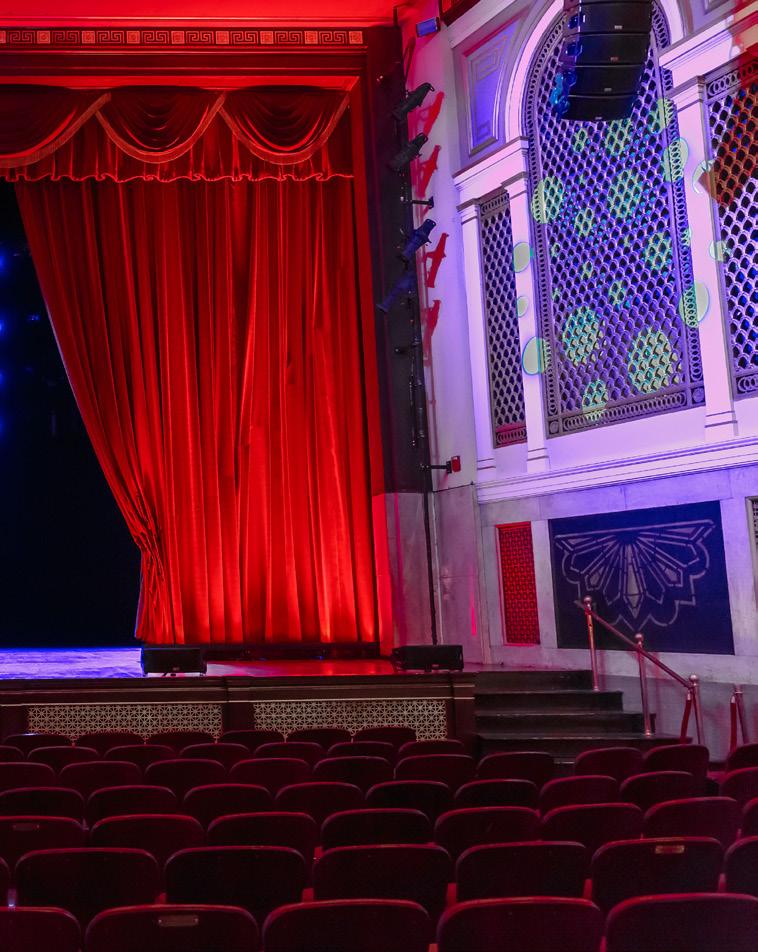
The story of Frederick’s Weinberg Center of the Arts came to be is rooted in a flood, a generous family, and community revival. The building started as the Tivoli Theatre, built by the Stanley-Crandall Company and opened on Dec. 23, 1926, serving as Frederick's premier movie theatre for decades.
In the late 1950s, local businessman Dan Weinberg and his wife Alyce took an interest in restoring the Tivoli to its past grandeur, buying the theatre in 1959 for $150,000 and eventually renovating and reopening it.
By the 1970s, Downtown Frederick was deteriorating, and the Tivoli struggled to compete with modern movie theaters. Its struggle reached its low point when storm-driven waters flooded the theater and downtown Frederick in 1976, with water peaking 3 feet above stage level, submerging the seats and floating the Wurlitzer organ onto the stage.
Rather than try to rebuild it as a cinema, the Weinberg family chose to donate the property to the City of Frederick, envisioning its transformation into a community performing arts center to revitalize downtown — a vision inspired by Alyce Weinberg's cultural advocacy and the couple's pride in preserving the venue's legacy.
The community rallied around the restoration. Although tearing down the building was an option, individuals and companies in the community decided to donate their services to restore much of the Tivoli's 1920s elegance. Sixteen months and $175,000 later, on Feb. 9, 1978, the theater reopened as the Weinberg Center for the Arts, named in honor of the Weinberg family. continued page 48
Photo courtesy of Weinberg Center for the Arts
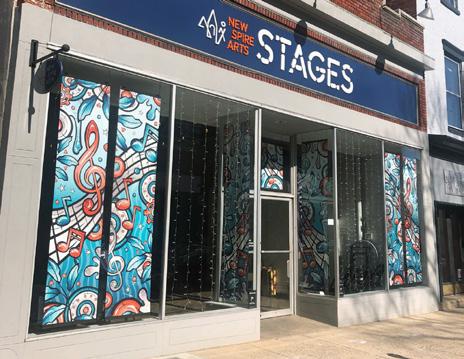
Directly across West Patrick Street from the Weinberg Center sits a former five-anddime store that has become one of downtown Frederick's most important arts spaces.

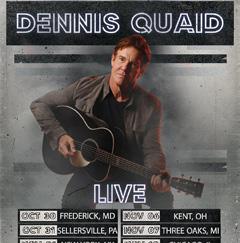
The center is still owned and operated by the City of Frederick, with the support of the Weinberg Center for the Arts Inc. — a nonprofit organization created in 1995.
The Weinberg Center for the Arts is an example of how the local government has strategized to help the community hold onto and maintain a valuable cultural asset.
In Mayor Michael O'Connor's proposed fiscal 2027 budget, the Weinberg Center is slated to receive more than $3 million from the city. The nonprofit side of the equation supplements that public investment through ticket sales, memberships, donations, and corporate sponsorships. The Weinberg describes itself as relying on generous donations from individuals and sponsors to help keep the arts in Frederick accessible and affordable to the broadest audience possible.
The city’s investment pays dividends beyond the stage. The Weinberg attracts more than 85,000 patrons annually who visit shops, restaurants, and local stores, and provides educational programs to over 8,000 Frederick County schoolchildren each
year. The theater offers about 150 events annually, and numerous local arts groups perform there to raise funds for their own organizations. Over the years the Weinberg has drawn such famous names as Marcel Marceau, Hal Holbrook, George Carlin, Judy Collins, Tammy Wynette, Garrison Keillor, the Temptations, Michael Moore, and Tom Jones to Frederick. Broadway plays and musicals have graced the stage, as well as symphony orchestras, choirs, comedians, dance groups, bands, storytellers and other live performances.
New Spire Arts
Directly across West Patrick Street from the Weinberg Center sits a former five-anddime store that has become one of downtown Frederick's most important arts spaces. New Spire Arts Inc. was founded in 2016 with a catalyzing grant from the Ausherman Family Foundation. The building it calls home has its own storied past — 15 W. Patrick St. spent almost 70 years as McCrory's 5 & 10¢ Store before the
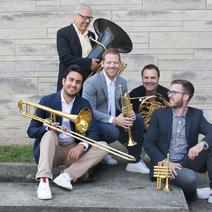
chain filed for bankruptcy and the Frederick location closed in 1996. In 1998, the property became the Cultural Arts Center of Frederick County, owned and managed by the Frederick Arts Council until 2013.
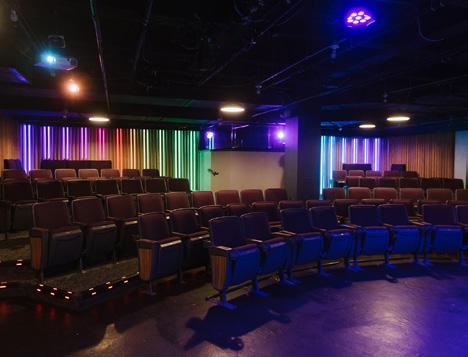
When New Spire Arts took over the building, it set about transforming it entirely. In 2017, New Spire Arts contracted Ziger/ Snead Architects to design a new performing arts center, and construction culminated in a sellout opening weekend in January 2019. The renovated space features a stateof-the-art black box performance venue accommodating up to 275 patrons in multiple configurations, along with a lobby serving as a community gathering space, dressing rooms, a green room, and a catering kitchen.
The organization's independent nonprofit run proved challenging, and its arc took a significant turn in 2022. The City of Frederick signed an agreement with the Ausherman Family Foundation, handing operations of New Spire Arts over to the city. New Spire Arts dissolved as a nonprofit entity, and the venue is now
Photo courtesy of New Spire Arts
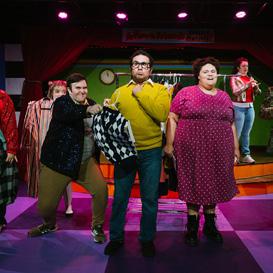
MET was founded by Tad Janes and Gené Fouché, whose creative and personal partnerships have fueled the theater company since 1993.
managed as part of the Weinberg Center's operations — with its own dedicated line in the city budget. The city's fiscal 2026 budget includes funding for two full-time staff positions at New Spire Arts.
The Ausherman Family Foundation's executive director described the transition as fulfilling the original vision for the building — to give back to the community and further enhance its vibrancy. Today, the venue serves as a more intimate complement to the Weinberg's main stage, offering local theater companies, touring artists, and community groups a flexible, professionally equipped home in the heart of Frederick's theater district.
Maryland Ensemble Theatre
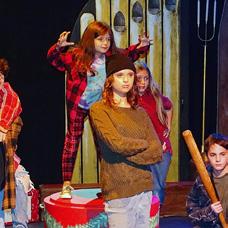
Known as MET to its ardent fans, Maryland Ensemble Theatre is a professional company headquartered in downtown Frederick offering mainstage plays, family shows, and several improv comedy groups. It began as a scrappy improv troupe performing in the backs of
Frederick bars and has grown into one of Maryland's most distinctive professional theater companies.
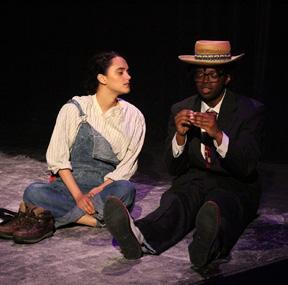
MET was founded by Tad Janes and Gené Fouché, whose creative and personal partnerships have fueled the theater company since 1993. MET began teaching acting and improvisation classes in 1995, piloting its mainstage program with the ensemble-created production "Finally Heard! Heroines of an Uncivil War" in the summer of 1997. Its first dedicated theater space opened with a full season of plays in June 1998.
Today, the company embodies a far more prominent place in the city's cultural landscape. MET now occupies more than 15,000 square feet in the historic FSK Hotel in Frederick's arts and entertainment district. This includes a recently upgraded 93-seat mainstage black box theater, a 72seat Stage 2, often used for young audiences, both in the lower level, as well as Key Stage, opened last fall as a cabaret space on the main floor. “Ultimately, Key Stage is an investment in the future of live theatre
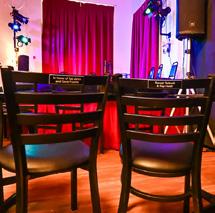
in Frederick. It gives us space to say ‘yes’ more often. Yes, to new artists, to growing our educational programs, and to serving a wider, more inclusive audience,” Janes told Broadway World.
MET has produced more than 200 fulllength plays and educated more than 16,000 students over the years.
So how has MET kept the lights on? It's a classic nonprofit arts organization model with several interlocking revenue streams.
Ticket sales are only part of the picture, covering only about 40% of the expense of creating theatre, according to MET's fundraising materials. Paid educational programming via MET's Ensemble School provides classes in theatre and improv for children and adults, and the FUN Company works with area elementary and middle schools to help students produce their own productions. Those tuition-paying classes generate consistent revenue year-round.
MET also draws from multiple grant sources. The Maryland State Arts Council
is a key one — its Grants for Organizations program provides general operating support to nonprofits that produce or present ongoing arts programming open to the public. Private foundations also chip in; for example, the Ausherman Family Foundation gave MET a $25,000 general grant to support operating costs during the pandemic.
As a nonprofit, MET actively solicits individual donors, corporate sponsors, matching gifts, bequests, and stock donations. Their strategic plan explicitly lists fundraising as one of five core organizational goals, with an aim to identify and recruit dedicated, reliable, and sustainable funding sources to ensure MET's financial goals are achieved, including building toward an endowment.
When they want to expand rather than just sustain, they go to the community. MET recently ran a $175,000 capital campaign to create Key Stage.
In short, MET survives the way most small professional nonprofits do — by diversifying well beyond ticket sales into education, recurring programming, grants, and donor cultivation. The weekly comedy
The company produces four mainstage shows and two children's shows each year, performing in the Performing Arts Factory's 114-seat black box theater, drawing actors from across the tri-state area.
nights and year-round acting classes are probably more financially important to their stability than the mainstage season itself.
Other Voices Theatre
A few blocks south of Frederick's downtown theater district, tucked into a building on South Jefferson Street, sits one of the city's longest-running and most community-driven theater companies.
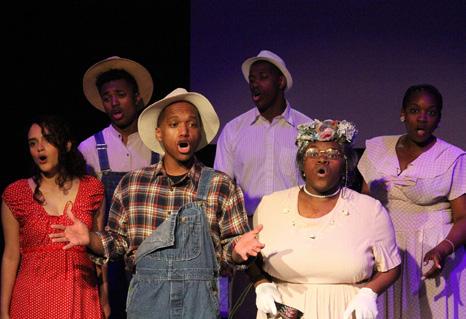
Other Voices Theatre got its start with a production of "The New Adventures of Alice in Wonderland" Easter weekend in 1996. The response was strong enough to sustain the effort, and two years later the organization was officially established as a nonprofit, founded in 1998 to provide the Frederick community quality theatre and dance performance opportunities.
Nearly three decades later, Other Voices is the resident theater company at the Performing Arts Factory, located at 244 S. Jefferson St., under the direction of Susan Thornton. The company produces four mainstage shows and two children's shows each year, performing in the Performing Arts
Factory's 114-seat black box theater, drawing actors from across the tri-state area.
What distinguishes Other Voices from the city's other theater organizations is its deliberate community focus. The company's "Community Onstage, Community Offstage" mission holds that its volunteers come together not just to perform, but to play an integral role in the broader community — and OVT pairs each production with a community service project. The company has also grown to support local high school productions and tour theater-for-youngaudiences shows to area elementary schools and daycare facilities.
Financially, Other Voices operates on the lean model typical of community theater. The organization relies heavily on the support and generosity of local businesses and individuals, and also generates revenue by renting its 100-plus seat theater to outside groups, including churches, performance groups, stand-up comedians, and other theater troupes.
Photo courtesy of Other Voices Theatre

The Endangered
Species Theatre
Project officially began
on May
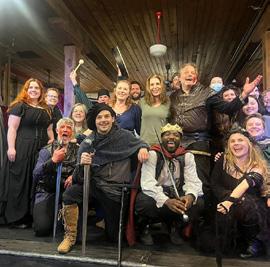
1, 2018, founded by a group of friends with a shared goal: to increase representation on stage for women over 40 and other historically excluded artists, with an early focus on forgotten plays.
Endangered Species Theatre Project
In a city already rich with theater options, one of Frederick's newest companies has carved out a distinctly different lane — one defined by who gets to be on stage as much as what gets performed there.
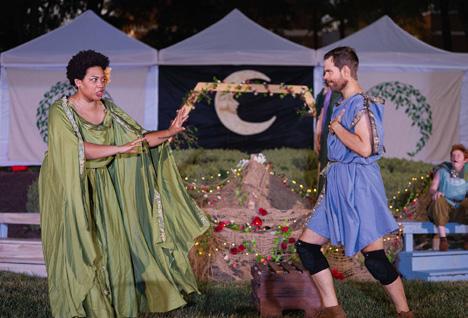
The Endangered Species Theatre Project officially began on May 1, 2018, founded by a group of friends with a shared goal: to increase representation on stage for women over 40 and other historically excluded artists, with an early focus on forgotten plays. Founding Artistic Director Christine Mosere brought with her more than 15 years leading a New York City theater company dedicated to breaking stereotyping of women in casting, winning an Off-Off Broadway Review Award and earning notice from the Village Voice and the New York Times.
The company has grown steadily since that first production. By summer 2019, Mosere and Hood College professor Aaron Angello co-founded the Frederick Shakespeare Festival, which has become one of the organization's signature offerings. In 2019, the company also launched a deaf
youth program, expanding in 2021 to include deaf adult actors and directors.
Today, the organization is home to the Frederick Shakespeare Festival and offers acting classes for adults, seniors, and teens, along with Riotous Youth, a young actors' program offering hands-on training in Shakespeare for ages 9 to 15.
Financially, ESP Theatre operates as a lean, community-rooted nonprofit. Mosere says theatres like ESP often feel the most financial pressure during “the quiet stretch between benefits and grant cycles.”
The company embraces minimalist, artist-driven productions, reusing and repurposing set materials to keep overhead low. Notably, every performance follows a pay-what-you-can model, reflecting its commitment to access.
The group looks to the community for its support, recently launching a $20,000 fundraising campaign to fund permanent lighting and soundproof curtains for its loft space at 16 E. Patrick St. 3
Weinberg Center for the Arts weinbergcenter.org
F facebook.com/ WeinbergCenterfortheArts d @weinberg.center
New Spire Arts weinbergcenter.org/our-venues/ new-spire-arts
Maryland Ensemble Theatre marylandensemble.org F facebook.com/MarylandEnsemble d @marylandensemble
Other Voices Theatre othervoicestheatre.org F facebook.com/ othervoicestheatrefrederick d @othervoicestheatre
Endangered Species Theatre Project esptheatre.org F facebook.com/ESPtheatre d @esp_theatre
Building the Future of Frederick County, Together
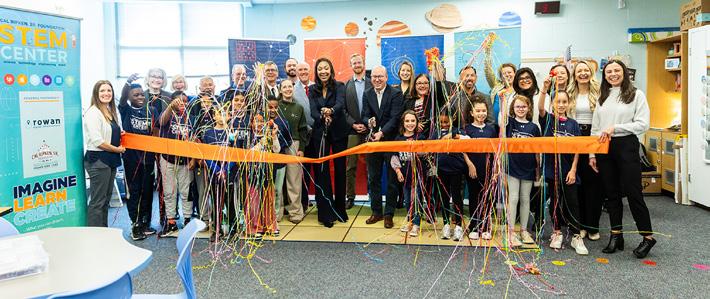
We believe in making a difference where it matters most — right here in Frederick County.
Our commitment to community empowerment has inspired us to support several impactful local initiatives, including two recent projects that are worth highlighting.
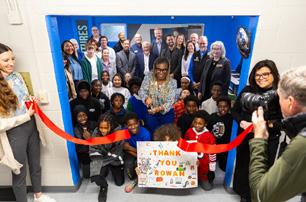
Discover more about our efforts at rowanfrederick.com and let us know your thoughts—we’d love to hear from you!
We launched a new STEM Center at Lincoln Elementary School (our second in Frederick County), and a brand-new Technology Lab at the Boys & Girls Club of Frederick County.
Our STEM Center sponsorship is about more than funding; it’s about sparking a lifelong love for science, technology, engineering, and mathematics. This space, similar to our first STEM Center at Carroll Manor Elementary, provides Lincoln Elementary students with hands-on learning experiences, helping them imagine the future and feel empowered to shape it.
The Boys & Girls Club plays such a vital role in this community, providing support, structure, and inspiration after school and throughout the year. By funding their new Tech Lab, Rowan is thrilled to be helping expand that impact – giving kids the tools to dream bigger and build confidence in their future.
Our Commitment to Frederick County
For us, investing in the community is a promise to support and uplift the people around us. Together, we’re nurturing the builders and dreamers of tomorrow and creating spaces for every family to feel at home.
A New Model for Community-Driven Economic Development
By Theo Stamatis
Frederick County is at an important moment of growth.
As new industries invest in the region, there is increasing focus not just on economic expansion, but also on how that growth translates into long-term value for the community — stronger workforce pipelines, more resilient local organizations and a higher quality of life for residents.
At Rowan, that perspective has shaped how we approach development from the beginning. Infrastructure is only one part of the story. The other is how that investment shows up in tangible, sustained benefits for the local economy.
That’s the thinking behind our new Community Catalyst Program.
The program is designed to align private investment with community priorities — supporting organizations that are already advancing workforce development, education, affordable housing and economic vitality across Frederick County. It’s not a one-time initiative, but an ongoing commitment to invest alongside the community as it grows.
In the first quarter of 2026, we partnered with a range of organizations that reflect those priorities.
On the workforce and talent development side, that includes support for AI seminars led by Boffman Consulting and programming through Tech Frederick — both of which are helping expand access to emerging skills and connect local talent with opportunities in a rapidly evolving technical economy.
We’ve also made targeted investments in education and early pipeline development. Through partnerships such as the Flying Cows Basketball STEM Night and support for students at Carroll Manor Elementary via Blessings in a Backpack and Carroll Manor
continued page 54
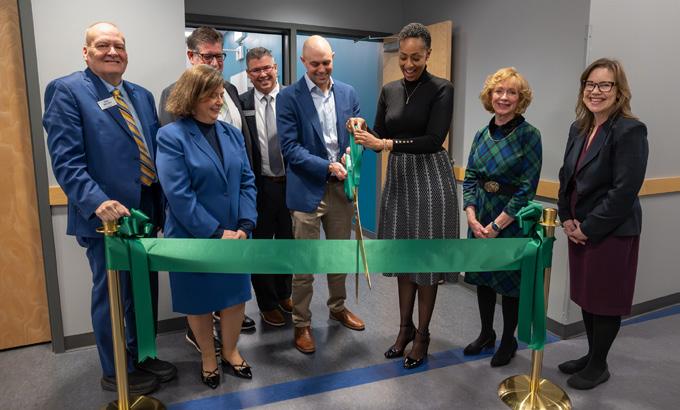

Recreation, we’re helping create more consistent access to learning opportunities, extracurricular activities and basic needs that enable student success.
At the same time, we’re supporting the broader economic and nonprofit ecosystem that underpins long-term growth. Organizations such as the Downtown Frederick Partnership, the Women’s Giving Circle, and the Ausherman Family Foundation play critical roles in strengthening collaboration, supporting small businesses and ensuring that growth remains inclusive and community driven.
These investments are intentionally diverse because Frederick’s economy is multifaceted. A strong workforce pipeline depends not only on training programs, but also on stable families, accessible resources and a connected local business environment. The Community Catalyst Program is designed to support that full picture.
Additionally, Rowan is making a commitment to help Frederick County meet its affordable housing goals. Groups such as Habitat for Humanity are instrumental in helping preserve and develop affordable housing in our community. We are proud of the investment we made in the West All Saints development, which resulted in building 12 affordable homeownership opportunities for families in need. We are helping meet the moment for affordable housing and our goal is to continue to partner on more affordable housing opportunities in the future.
Just as importantly, the program establishes a consistent framework for engagement. Rather than approaching community investment on a project-byproject basis, we are building a repeatable model — quarterly partnerships, ongoing dialogue with stakeholders and a focus on measurable outcomes over time.
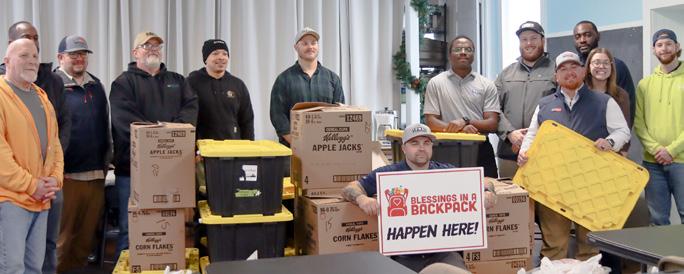
This approach reflects a broader evolution in economic development. Increasingly, communities are evaluating projects not just on capital investment or job creation, but on how well developers integrate into the local ecosystem and contribute to long-term regional competitiveness.
In Frederick County, that means being accountable not only for what we build, but also for the role we play in strengthening the local economy around it.
Alongside the Community Catalyst Program, Rowan is investing more than $20 million in infrastructure improvements across Frederick County. These investments are designed to support current and future economic activity — from roadway maintenance and cleaning to bike and turn lanes and other safety enhancements that help keep people moving efficiently.
Taken together, this is about building a durable foundation for economic expansion — one that supports business growth, develops local talent and reinforces the institutions that make Frederick County a competitive place to live and work. SPONSORED CONTENT

Theo Stamatis is an external affairs manager at Rowan Digital Infrastructure. Theo’s focus is on connecting with community organizations, elected officials, residents and others to ensure
Rowan’s data center developments in Frederick County have the broadest positive impact possible.

Grow Your Business in Frederick, Maryland
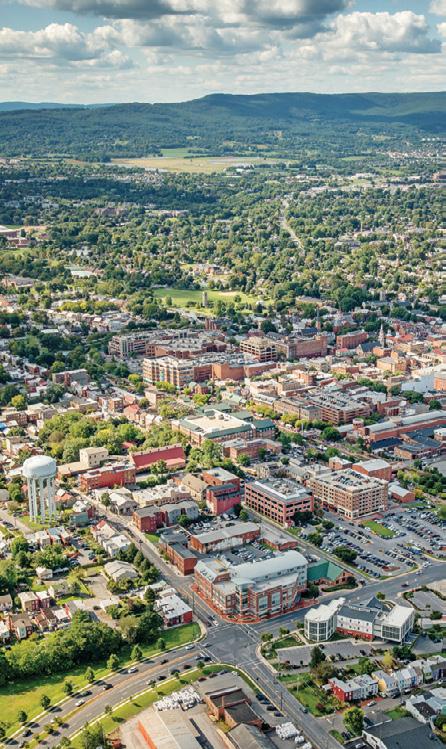
Discover why businesses of all sizes are choosing the City of Frederick. Nationally recognized for its exceptional quality of life and unique hip-storic charm, Frederick combines innovation, opportunity, and community in one thriving location.
Home to more than 4,100 businesses and 60,000 jobs, Frederick offers a dynamic business environment supported by world-class assets including Fort Detrick, the Frederick National Laboratory for Cancer Research, leading higher education institutions, international corporations, and entrepreneurial incubators. Whether you’re launching a startup, expanding operations, or relocating a corporate office, Frederick provides the talent, infrastructure, and resources to help your business succeed.

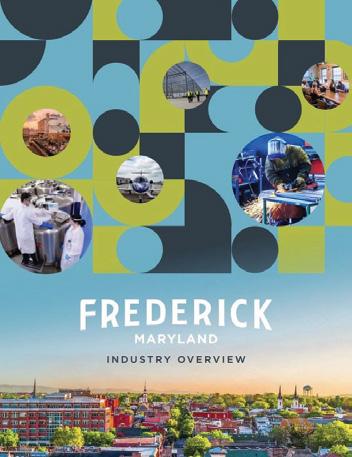
Download and explore the City of Frederick’s 2026 Industry Overview brochure at businessinfrederick.com

BEYOND THE BOARDROOM
Event Spaces to Help Create the Ultimate Networking Experience




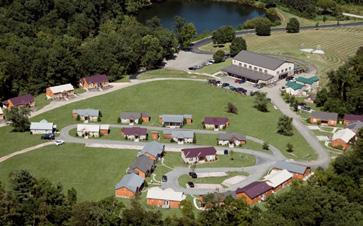
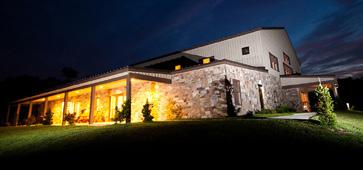
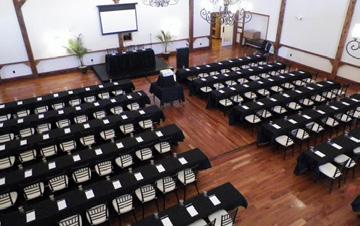

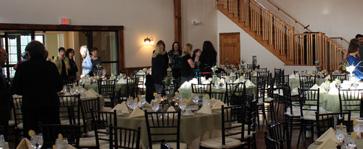

Perched atop one of the highest ridgelines in Gettysburg, framed by historic wood and stone architecture and stunning views of historic Gettysburg battlefields and Hunter Lake, The Lodges at Gettysburg is a destination unlike any other in the area.
It’s peaceful here with a timeless tranquility and rustic elegance that settle you into a relaxed state of mind. Beautifully maintained grounds and lodging, surrounded by 63 acres of rolling Gettysburg countryside, with a dash of historic charm – the perfect backdrop for corporate team building, outside-the-box meetings and extended stay conferences.