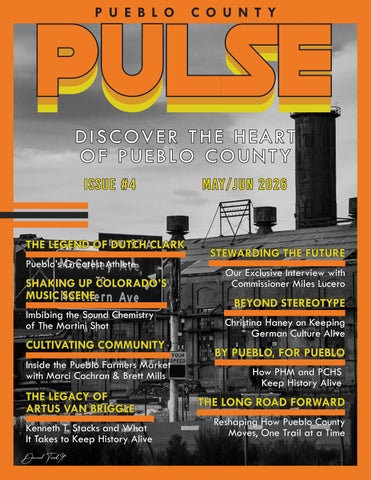
Inside the Pueblo Farmers Market with Marci Cochran & Brett Mills
THE LEGACY OF ARTUS VAN BRIGGLE
Kenneth T. Stacks and What It Takes to Keep History Alive
STEWARDING THE FUTURE
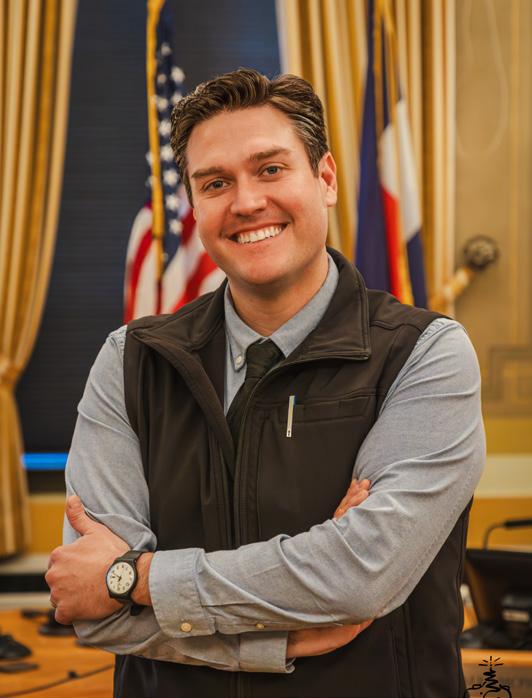
Our Exclusive Interview with Commissioner Miles Lucero
BEYOND STEREOTYPE
Christina Haney on Keeping German Culture Alive
BY PUEBLO, FOR PUEBLO
How PHM and PCHS Keep History Alive
THE LONG ROAD FORWARD
Reshaping How Pueblo County Moves, One Trail at a Time
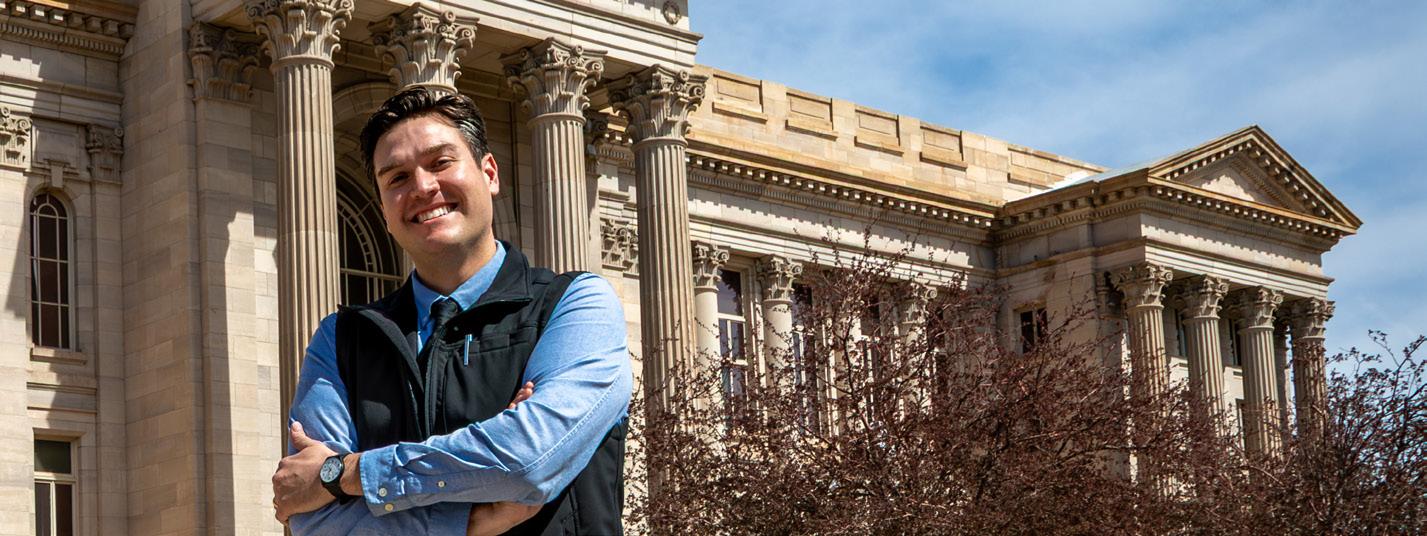
18 STEWARDING THE FUTURE
Commissioner Miles Lucero on Leadership, Growth, and the Responsibilities of Local Government
BEYOND STEREOTYPE
Christina Haney on Keeping German Culture Alive
Inside the Pueblo Farmers Market with Marci Cochran and Brett Mills
Kenneth Talmadge Stacks and
History is never only what happened. It is what we remember, what we preserve, what we argue over, what we pass down, and sometimes, what grows into legend.
This issue of Pueblo County Pulse leans into that space between record and story. We look at Dutch Clark, Pueblo’s greatest athlete, whose name still carries the weight of myth. We sit with The Martini Shot, a band shaping its own chapter in Colorado music. We talk with Commissioner Miles Lucero about leadership, growth, and the responsibility of guiding a county with deep roots and a complicated future.
We also explore the people and institutions keeping culture alive: Christina Haney and the Pueblo German American Club, Pueblo Heritage Museum and the Pueblo County Historical Society, Kenneth Talmadge Stacks and the legacy of Artus Van Briggle. These stories remind us that history does not protect itself. It takes caretakers, collectors, storytellers, volunteers, artists, families, and communities willing to keep showing up.
And because Pueblo’s story is still being written, we visit the Pueblo Farmers Market, where community grows one conversation at a time, and look at the long road forward as trail advocates reshape how Pueblo County moves through its landscape.
Legends are not just old stories. They are signals. They tell us who we have been, what we value, and what kind of future we can build.
As always, by Pueblo, for Pueblo.
- Nate Jordon -
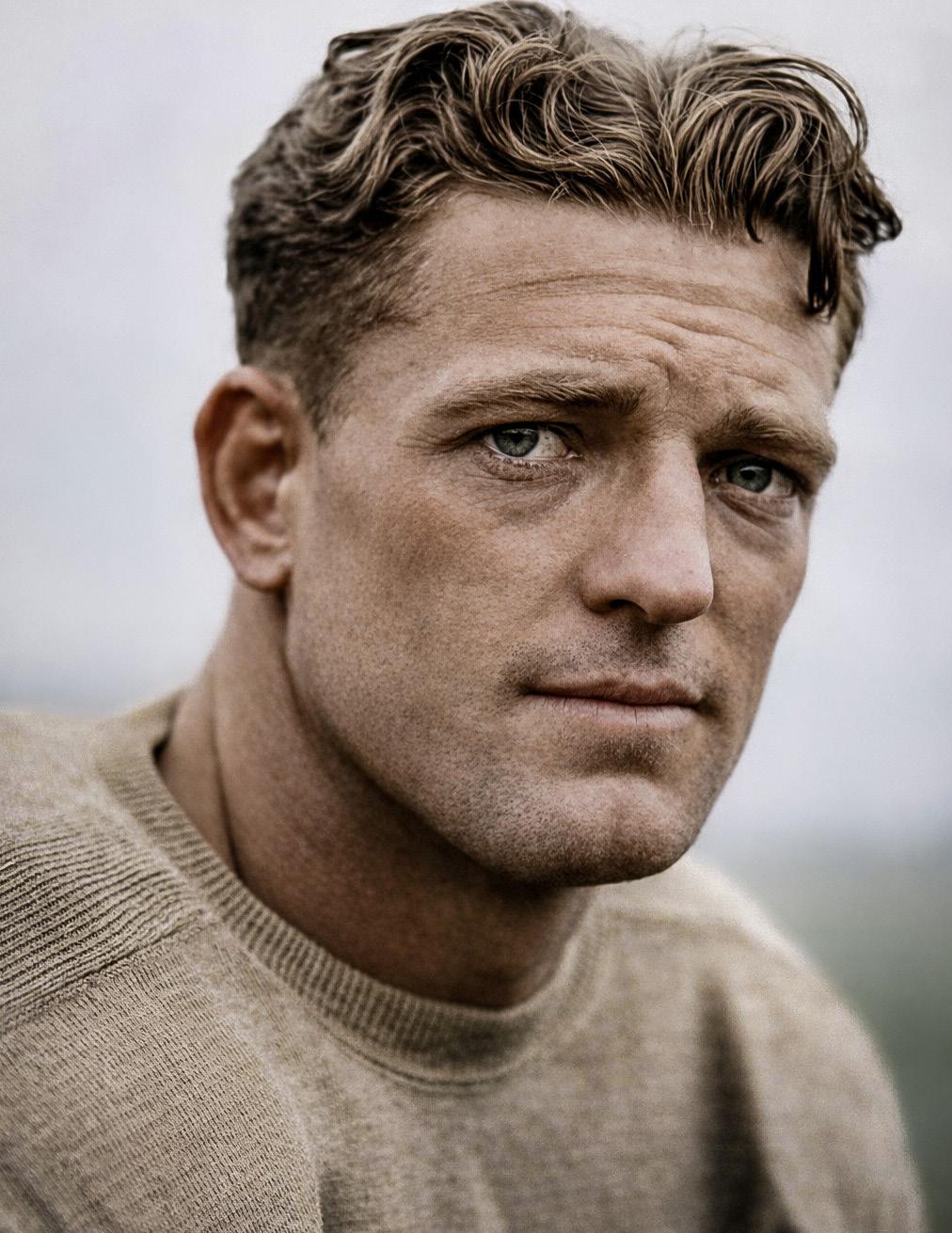
THE LEGEND OF DUTCH CLARK
The “Home of Heroes” is home to more than war heroes. It’s also home to a legendary athlete, one who is known largely by the name of Pueblo’s largest stadium.
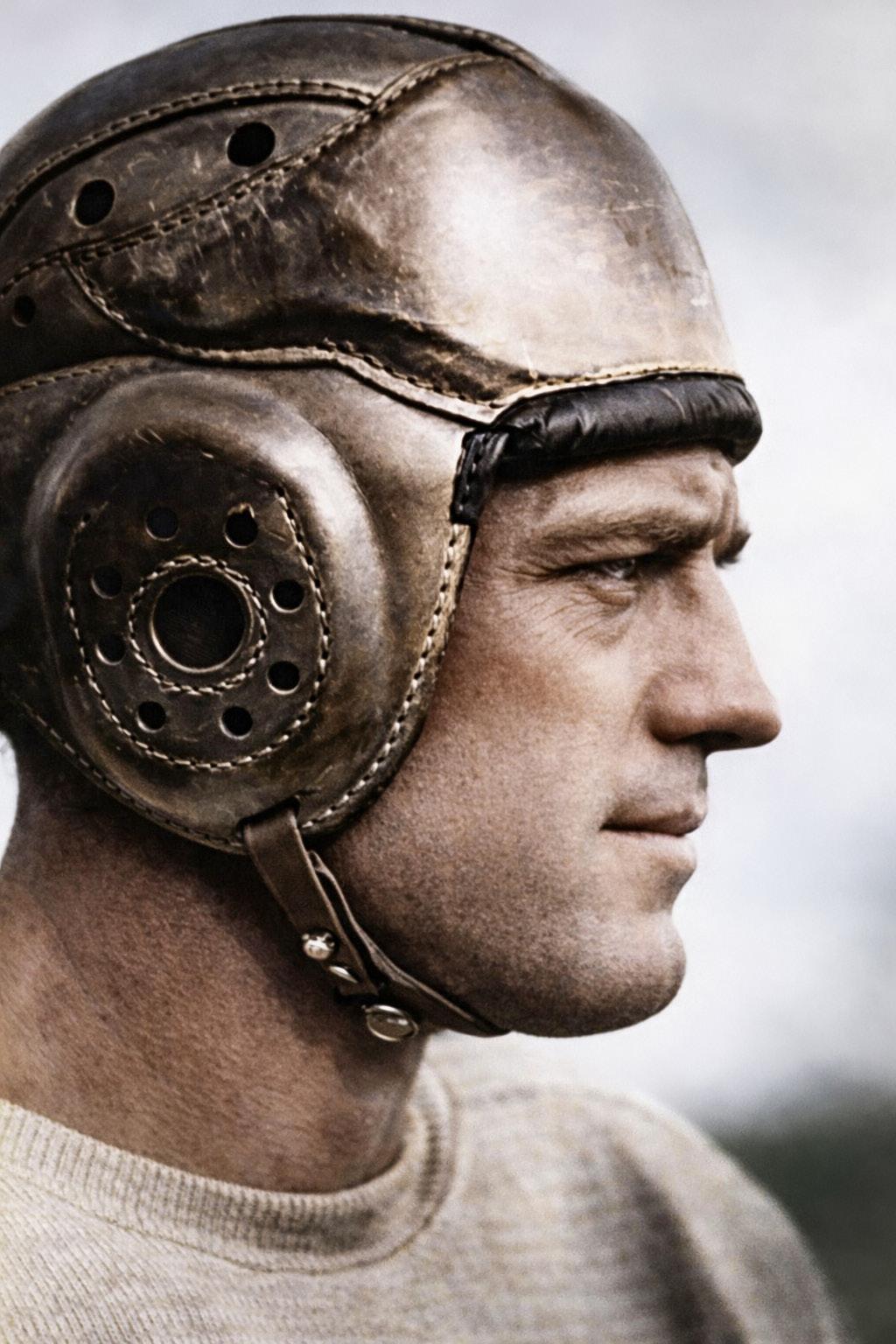
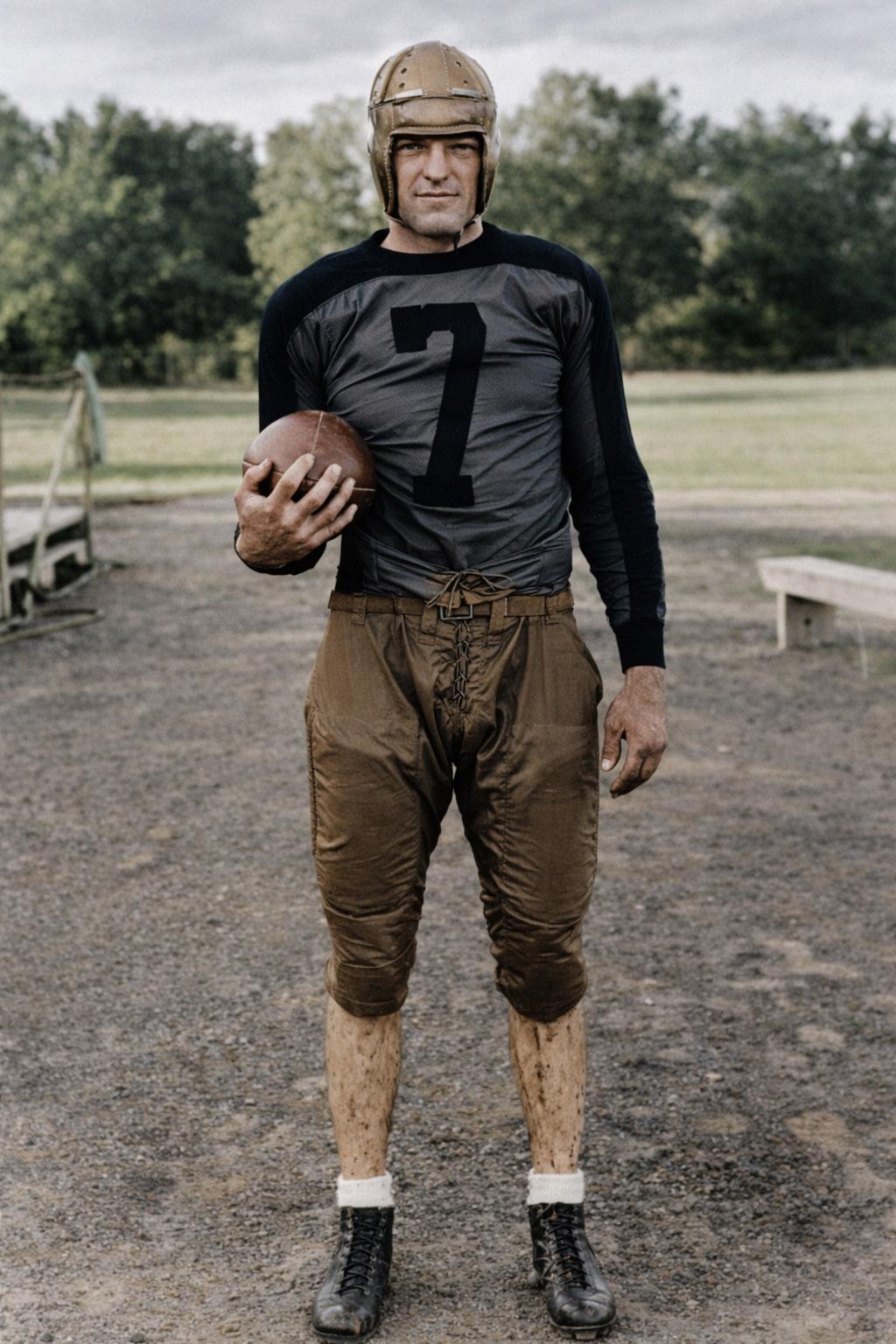
Long before professional sports became the billion-dollar spectacle it is today, before highlight reels and endorsement deals, Dutch Clark was redefining what it meant to be an athlete. He wasn’t just good, he was the complete package. Quarterback, kicker, runner, defender, coach, teacher. And he did it with roots firmly planted in Pueblo.
BUILT IN PUEBLO
Born in Pueblo in 1907, Clark grew up in a city defined by steel. This was a steel town, a railroad town, a place where hard work was more than necessary for survival; it was celebrated as a virtue. The sons of Pueblo didn’t grow up dreaming of fame; they grew up learning resilience.
At Pueblo Central High School, Clark quickly stood out. Not just as a football player, but as a multi-sport force. Football, basketball, baseball, track—he excelled in all of them. Even then, there was something different about him. Coaches didn’t just see talent; they saw instinct.
That instinct would carry him far beyond Pueblo, but it never left him.
A COLLEGE STAR WHO DID IT ALL
Clark stayed in Colorado, attending Colorado College, where he became one of the most dominant players in college football during the late 1920s.
He played quarterback, but that hardly captures it. He passed when passing was rare. He ran with power. He kicked. He defended. In an era
when players rarely left the field, Clark thrived on both sides of the ball.
He led Colorado College to national prominence, an unlikely powerhouse from a small school. In 1929, he was named an All-American, cementing his place among the best players in the country.
But what made Clark special wasn’t just production, it was intelligence. Teammates and opponents alike noted his ability to read plays before the snap. He wasn’t reacting. He was anticipating.
THE EARLY NFL AND A NEW KIND OF STAR
When Clark entered the NFL, still finding its identity, he joined a league that looked nothing like it does today. The forward pass was still evolving. Players often worked second jobs. Clark’s natural athleticism stood out immediately.
He played for the Portsmouth Spartans, who would later become the Detroit Lions. As a quarterback, he brought a level of versatility that was almost unheard of. He could throw, run, and even execute dropkicks, skills that have all but disappeared from the modern game.
Clark led the league in scoring multiple times and became one of its first true stars. But he wasn’t flashy. He was efficient, tough, and relentlessly smart. In 1935, he helped lead the Lions to an NFL Championship, the franchise’s first.
In an era without face masks and with far fewer rules protecting players, Clark took hits that would sideline modern athletes. But he got up and kept playing. That’s how it was back then. Toughness was the standard.
And in many ways, that standard was shaped by where he came from.
MORE THAN A PLAYER
Clark’s story doesn’t end with his playing career, it expands.
While still active in professional football, he pursued a career in education. He earned advanced degrees and became a teacher, eventually coaching at what is now Western Colorado University in Gunnison. Later, he would return to his alma mater, Colorado College, as both a coach and educator.
Think about that for a moment: a pro football player who also built a life in the classroom. Today, we talk about “student-athletes” as a concept. Clark lived it fully, then carried it forward. He approached teaching the same way he approached football, with discipline, curiosity, and a belief that preparation matters.
A HALL OF FAME LEGACY
In 1963, Dutch Clark was inducted into the Pro Football Hall of Fame as
part of its inaugural class. That should tell you everything you need to know about his impact. When the NFL set out to define its history, Clark was among the first names included.
He wasn’t just great for his time, he helped define what greatness looked like.
He was also inducted into the College Football Hall of Fame and remains one of the most celebrated athletes in Colorado history.
But accolades only tell part of the story. What matters more is how he’s remembered: as a player who could do everything, and a man who carried himself with quiet confidence.
WHY DUTCH CLARK STILL MATTERS
Pueblo has no shortage of stories—of resilience, of reinvention, of pride rooted in place. Dutch Clark fits squarely within that lineage.
He represents something that still
resonates today. Greatness can come from a steel town along the Arkansas River. It can come from a kid who learns early that nothing is handed to you. It comes from being tough, resilient, and community-focused.
And maybe that’s why his story remains relevant.
In a culture obsessed with recognition, he stands as a model of quiet excellence. In an era where athletes are often defined by a single role, he showed what it means to be versatile. For Pueblo, he’s more than a historical figure. He’s a benchmark.
THE LEGACY LIVES ON
Walk through Pueblo today, and you’ll still feel echoes of the kind of toughness that shaped Dutch Clark. It’s in the small businesses, the blue-collar work ethic that exists in both construction workers and artists, it’s in the people who refuse to give up, everyone grinding it out without guarantees. It’s in the knowing that success isn’t about where you started, but what you build.
Clark built something that lasted. Not a career, but a standard. And for a city that takes pride in its people, that might be the most important legacy of all.
DUTCH CLARK STADIUM
SEEN & SCENE
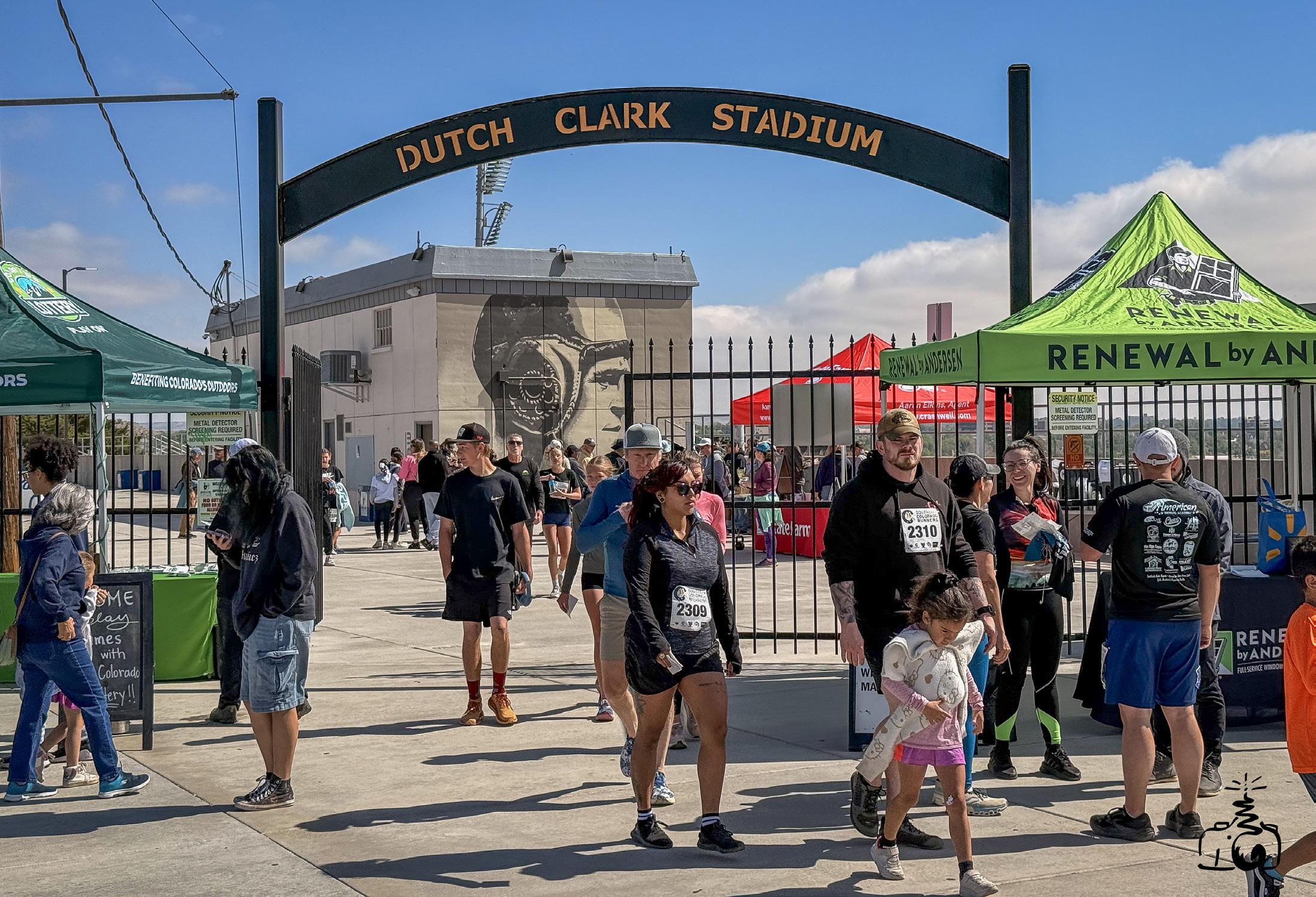
Opened in 1950, Dutch Clark Stadium is more than just a football field — it’s a cornerstone of Pueblo’s athletic history. With a 12,500 capacity, it is consistently ranked among the top and largest high school sports venues in Colorado.
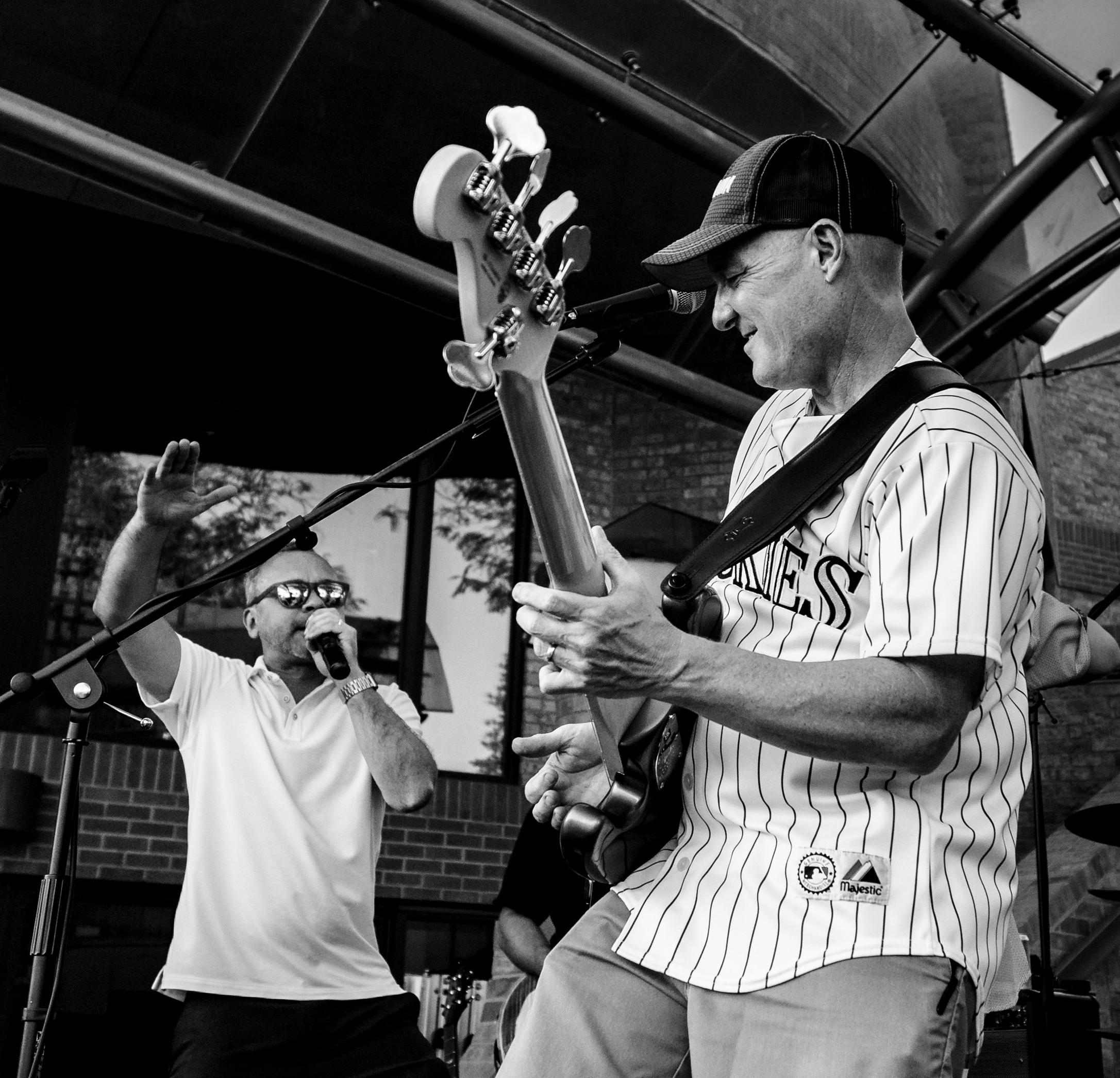
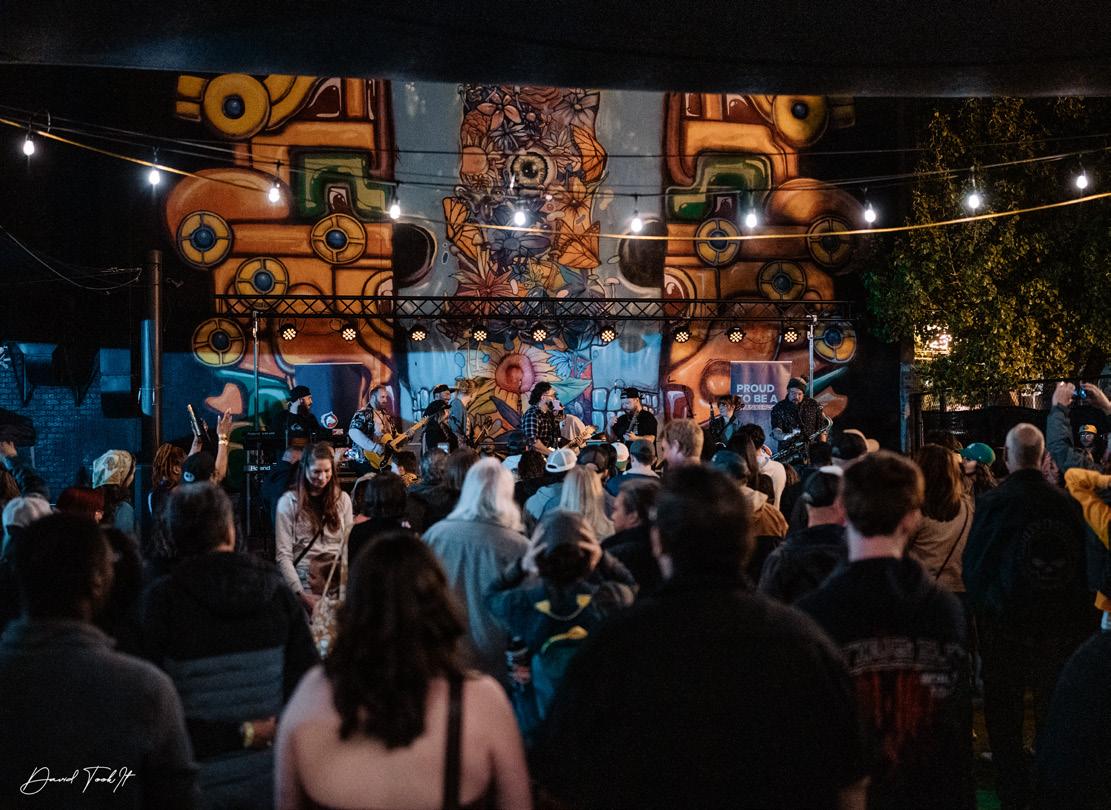
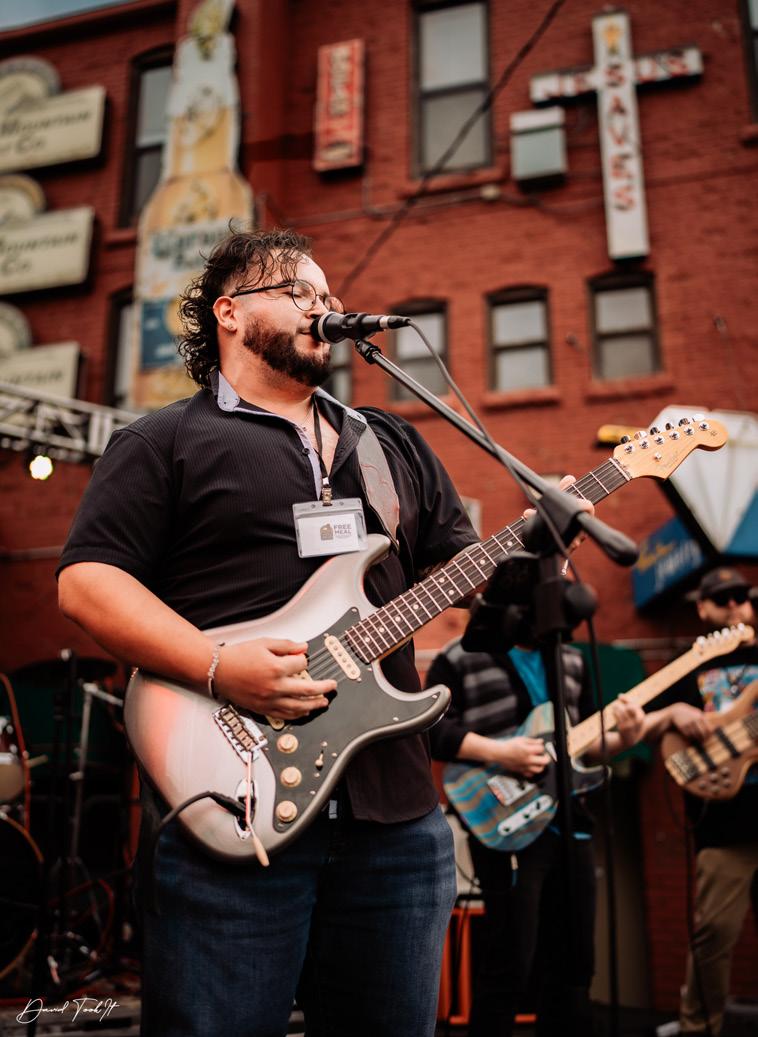
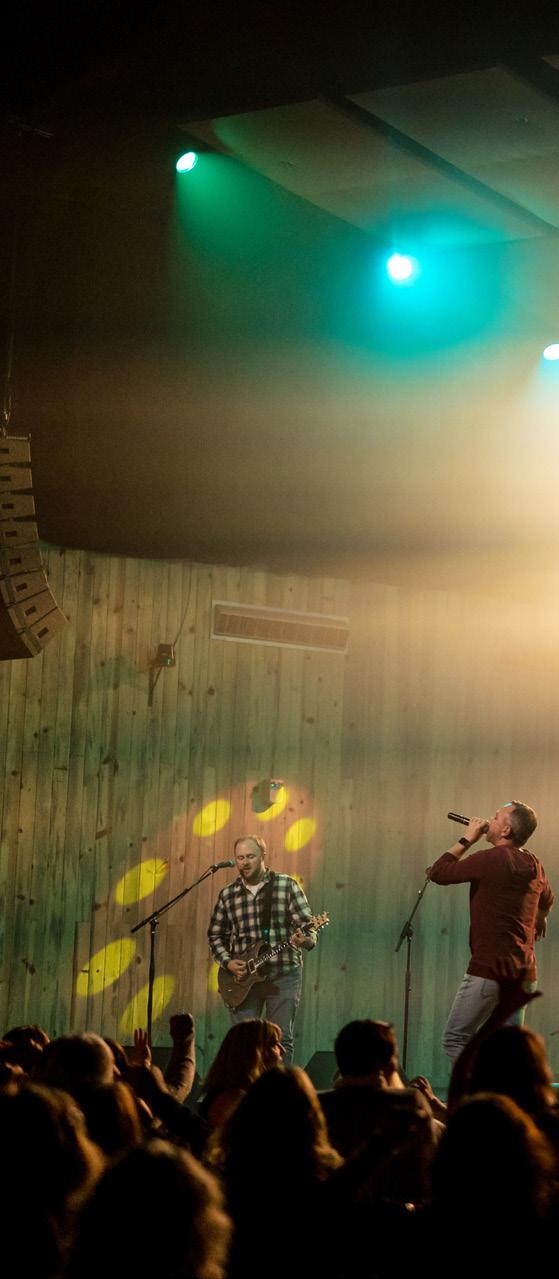
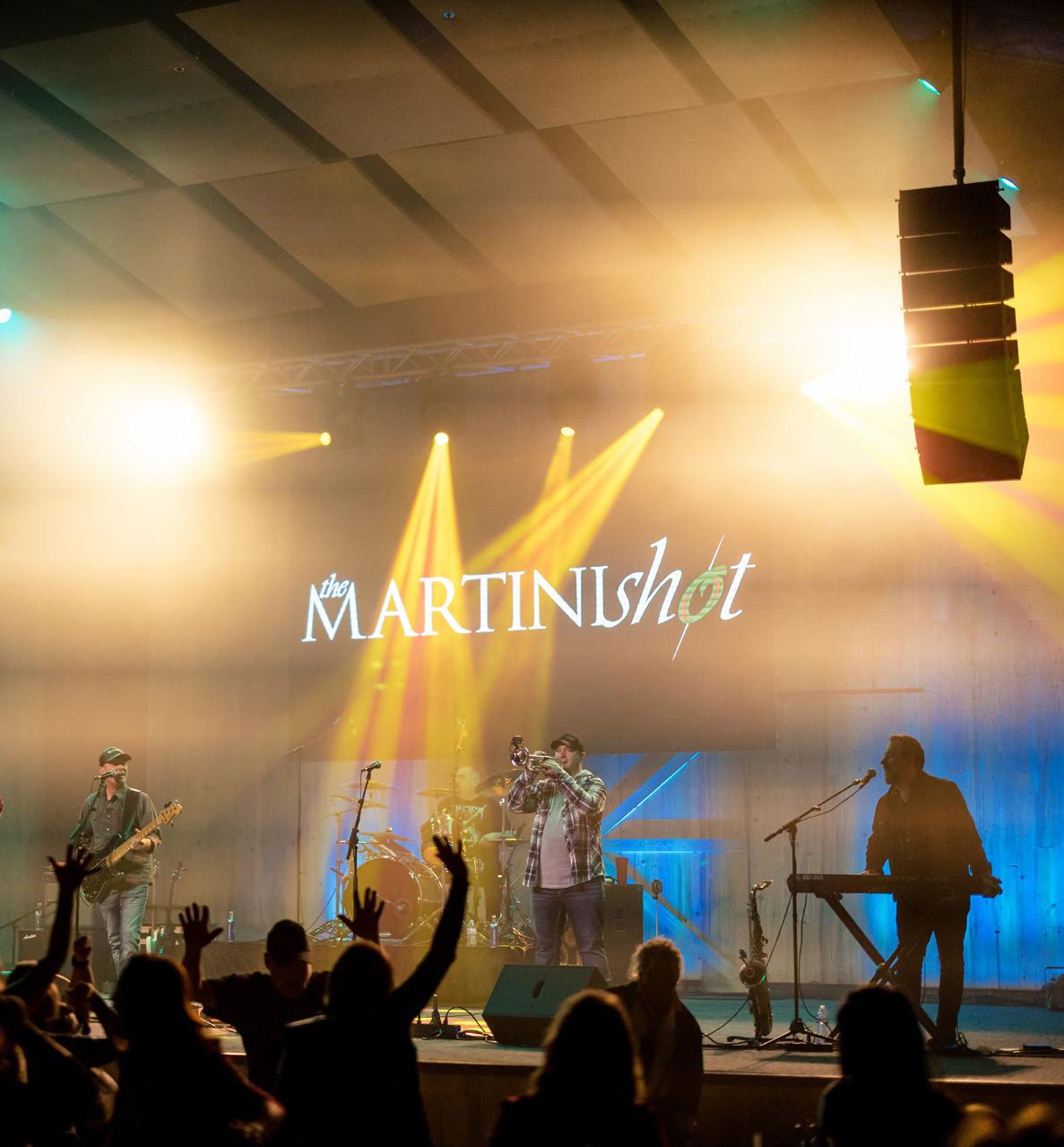
Live music always has a way of turning ordinary spaces into something electric. A bar fills with conversation, the lights dim, then the first notes cut through the room, and feet begin tapping to the same rhythm. That moment, when a band locks in and the crowd comes alive, is where the real magic of a local music scene lives.
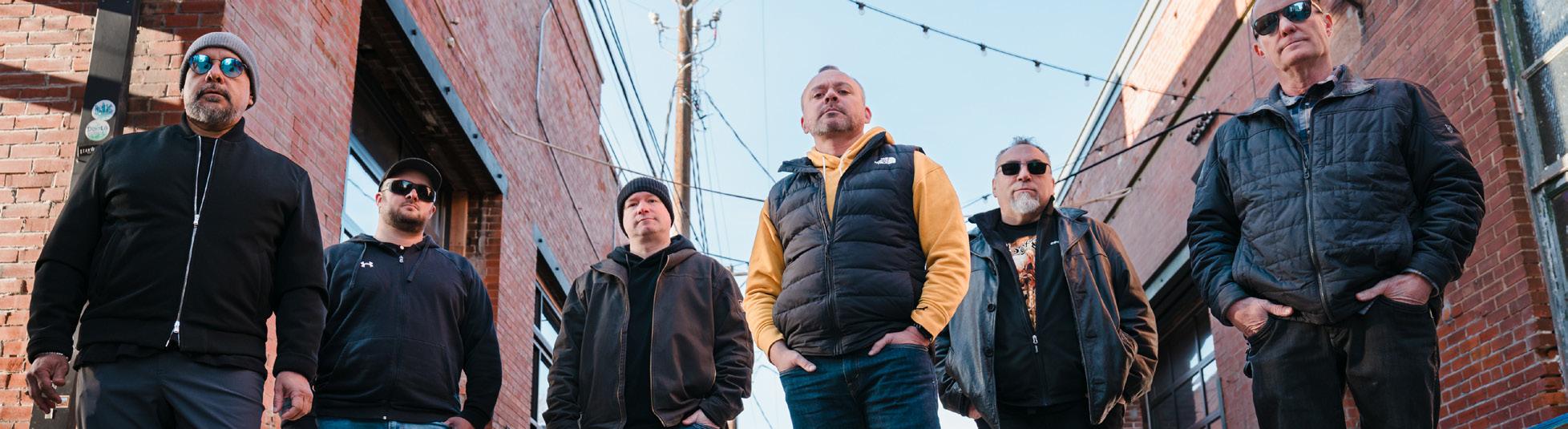
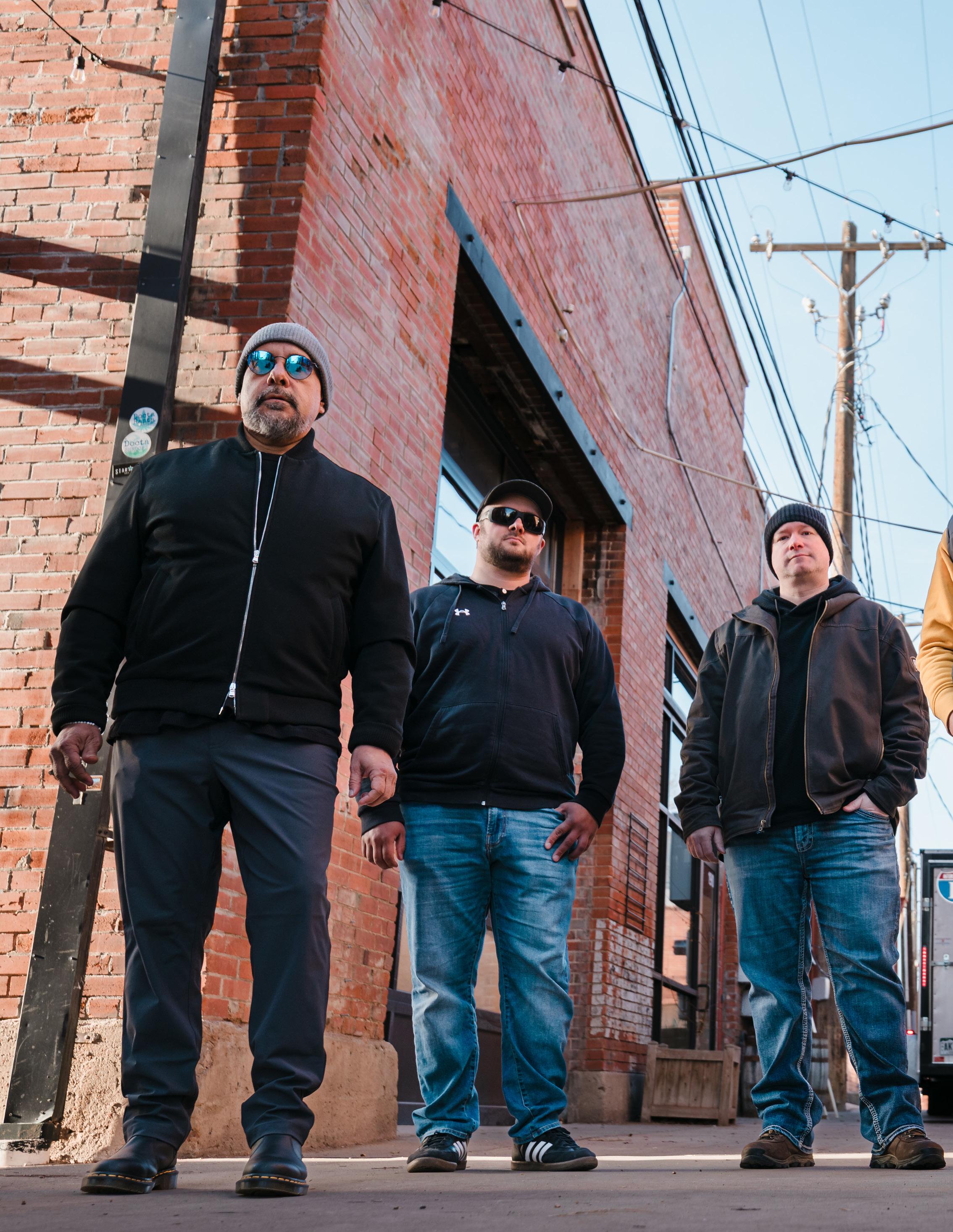
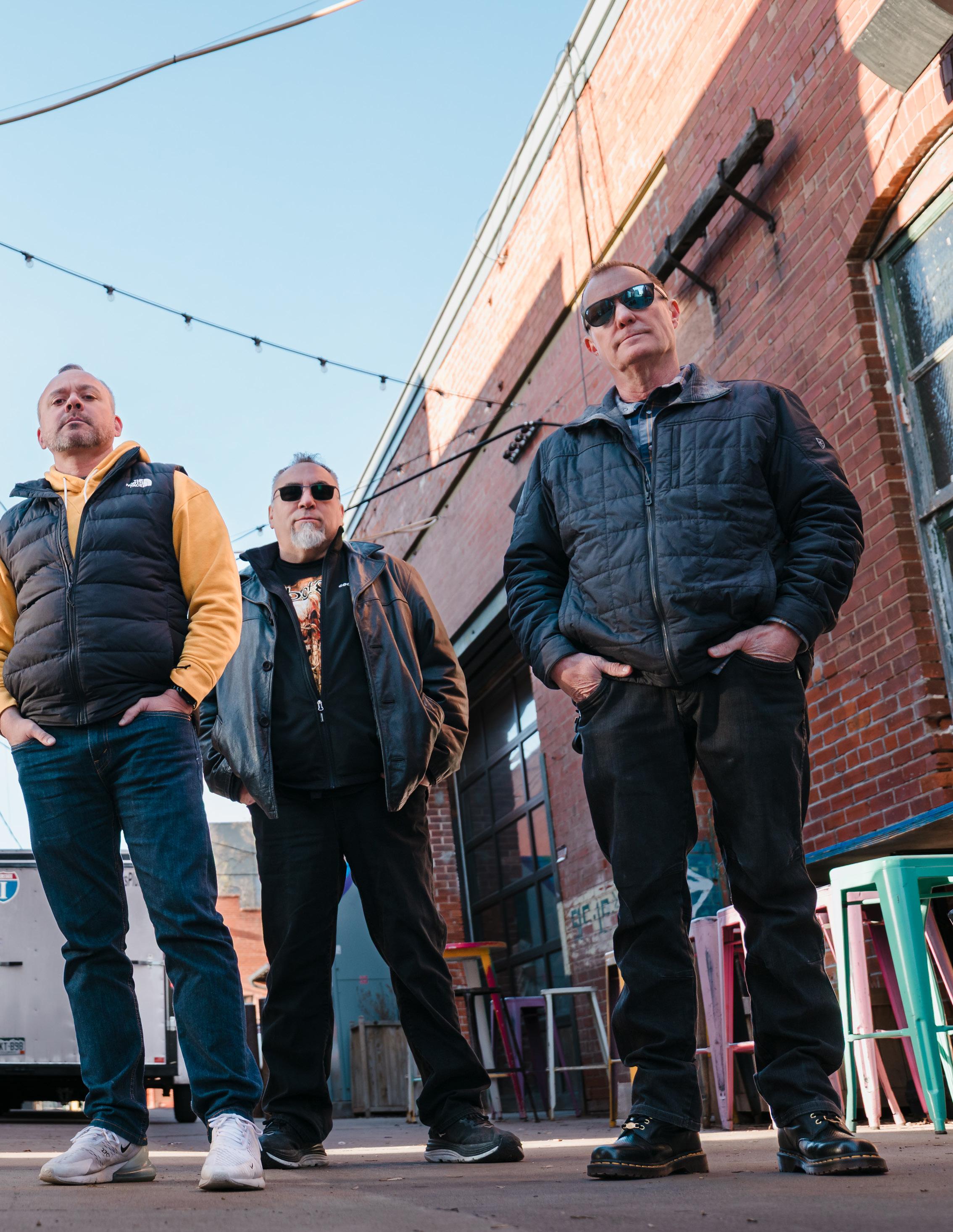
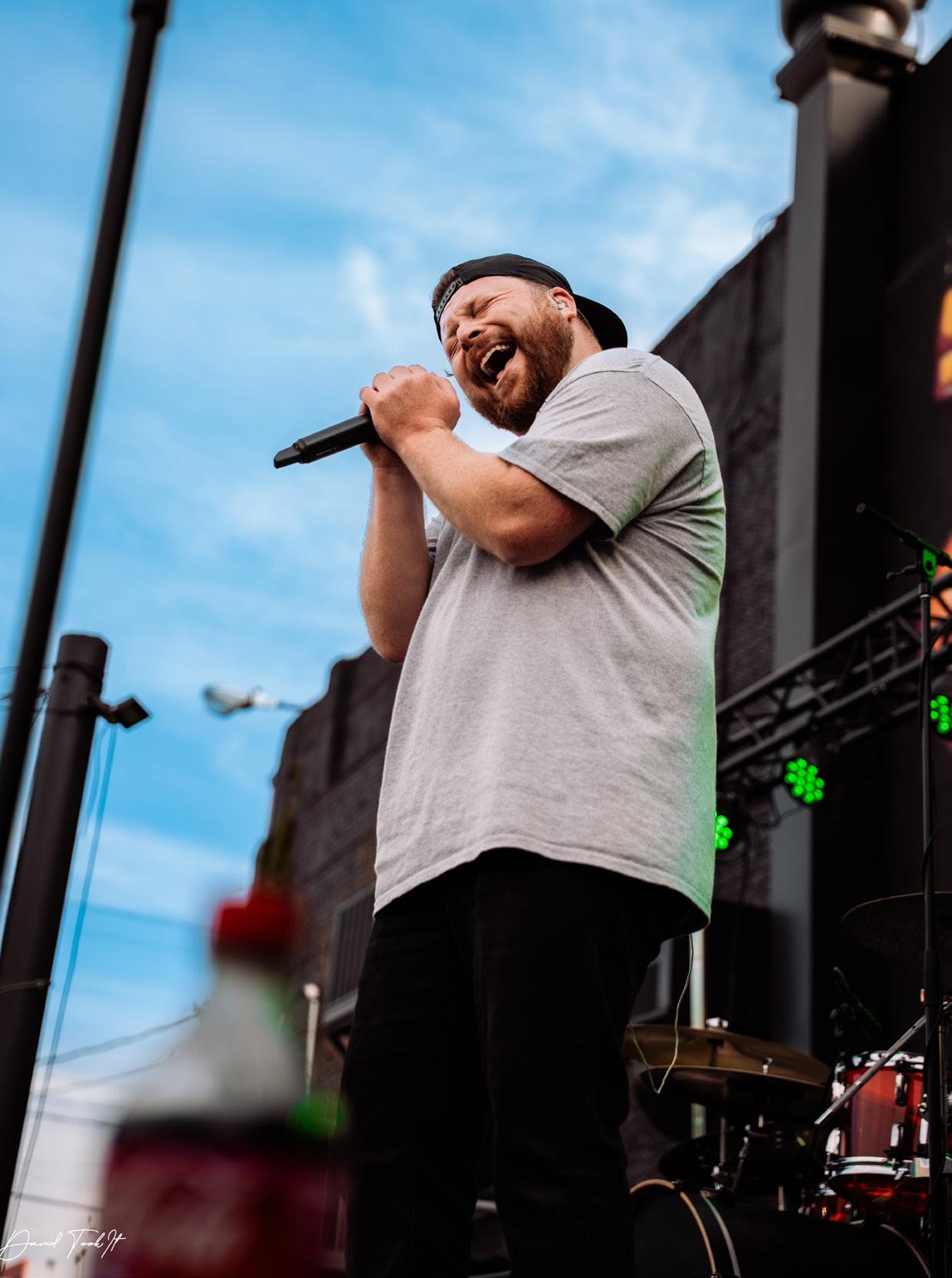
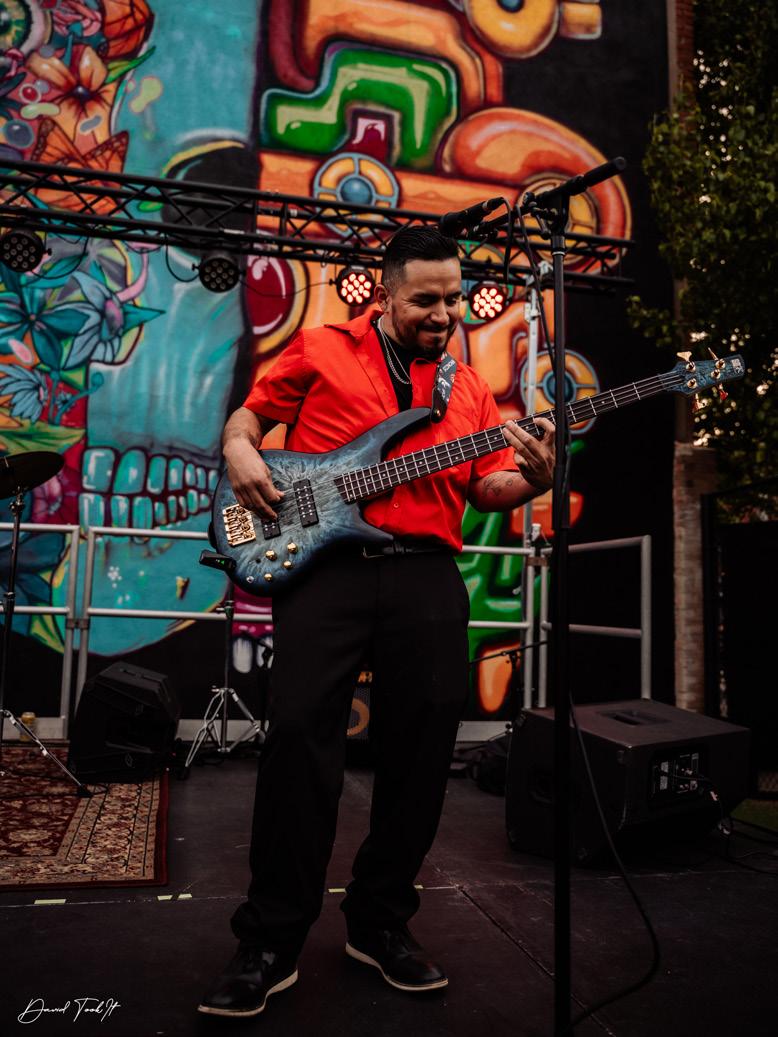
For The Martini Shot, that energy is the whole point. Fronted by lead singer Andy Clementi and anchored
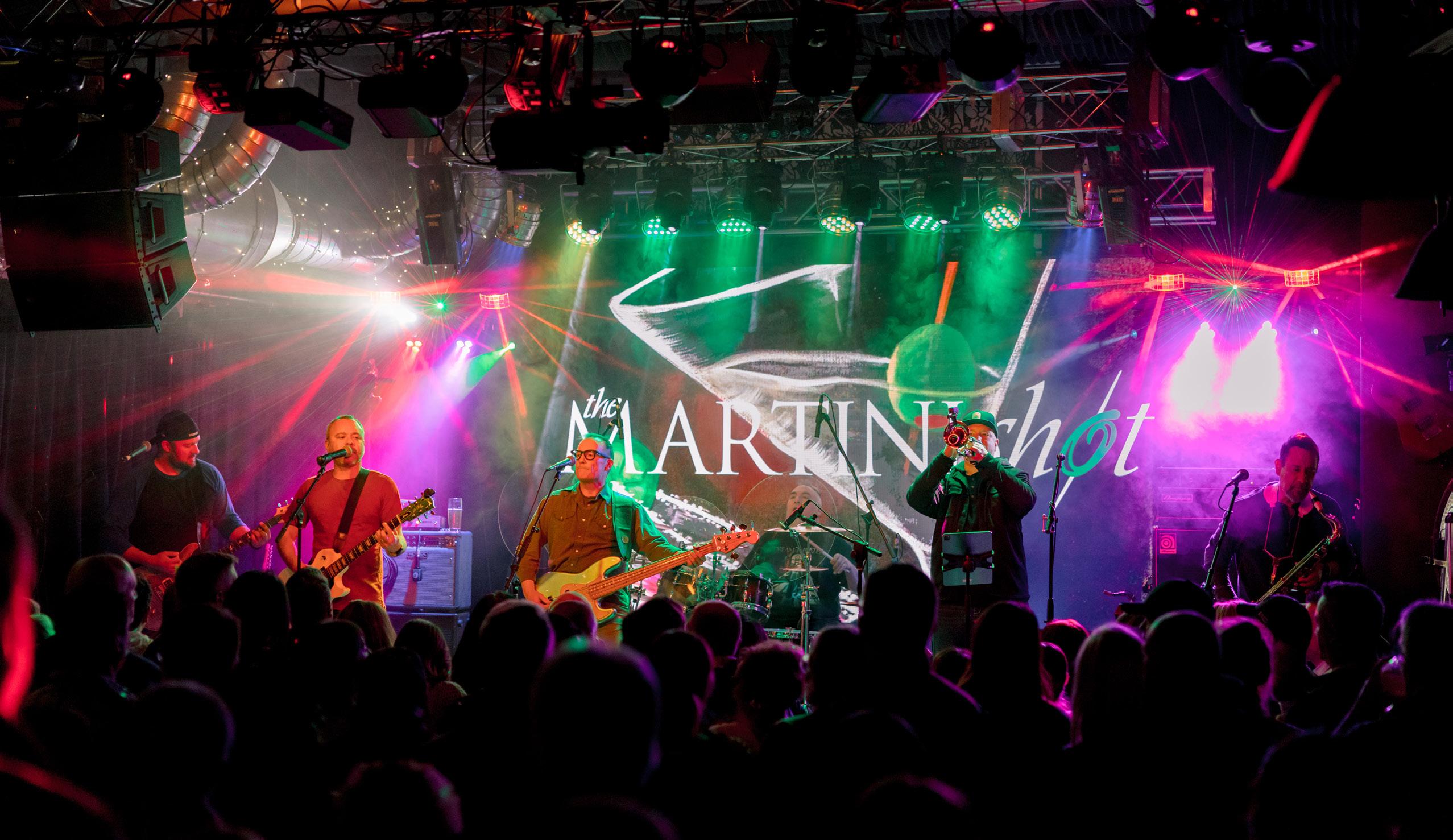
by bassist Brook Mead, the band has been building a reputation for tight musicianship, dynamic performances, and a sound that carries both grit and groove. Their music feels equally at home in an intimate venue or on a bigger stage, driven by the kind of chemistry that only comes from musicians who know how to listen to each other.
In a city known for its working-class spirit and creative independence, bands like The Martini Shot help keep Pueblo’s music culture alive and
evolving. I sat down with Andy and Brook at the Sacred Bean on a warm March morning to talk about how the band came together, what drives their songwriting, and why performing live still feels like the heart of it all.
PULSE: For readers who may be discovering The Martini Shot for the first time, how would you describe the band’s sound, and what makes it distinct in Pueblo’s music scene?
ANDY: We’re one of the only bands around here that has a pop-rock feel
It’s a gift to perform in front of an audience.”
but with a horn section. That horn section really sets us apart from other bands in Pueblo. Our songwriting is extremely eclectic. We write music that we like and that we want to hear, so it comes from a lot of different influences and backgrounds.
Early on, we leaned a little more toward ska-rock, but as we’ve released more albums, we’ve expanded stylistically. One song might be straight-up rock. Another might have country-rock influences, reggae, or funk. We might do a soft love song. There are just a lot of different styles in the mix. So, though there was more ska influence in our early work, on our most recent there isn’t a ska tune at all.
BROOK: I think the biggest shift came when we started writing what we wanted to hear instead of what we thought people expected us to sound like.
PULSE: Andy, as the lead singer, and
Brook, as the bassist, you occupy very different roles in the band’s sound. How do those roles shape the way each of you approaches songwriting and performance?
ANDY: That’s a good question. Vocally, Brook and I actually approach things very similarly. We’re both trained singers—we both have degrees in vocal music— so we think about harmony and arrangement in similar ways.
For a long time, one of our secret weapons was three-part harmony. Our old guitar player sang too, so we had these big layered harmonies. We’re huge fans of The Beatles, where harmony really shapes the texture of a song.
We also love when vocals do something unexpected. Like R.E.M., where Mike Mills might sing an entirely different line over the top of the main melody. We use that idea a lot.
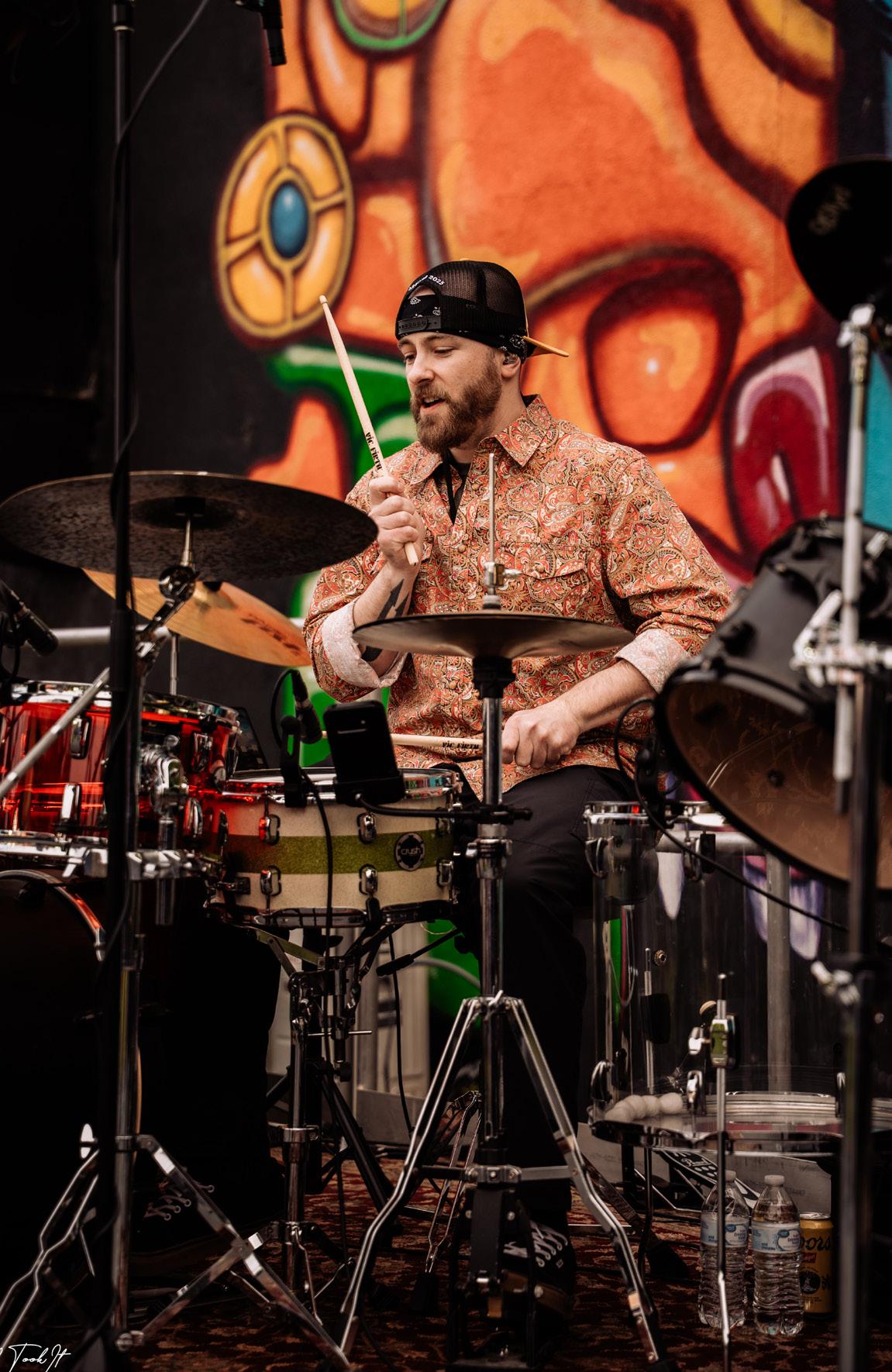
BROOK: From the bass perspective, I’m always thinking rhythm section first. My relationship with our drummer, Greg, is the foundation. My job is to lock in with the groove.
Bass can get flashy if you want it to, but a lot of times, less is more. I try to create interesting lines without cluttering up the sound or distracting from the rest of the band.
So, I’m always thinking like a drummer. Lock into the pocket first. Once that’s solid, then I might add melodic movement within the line—but always in service of the song.
ANDY: That’s another one of our secret powers. Brook is such a well-rounded musician. He understands the language of music deeply, so what he plays always complements what the rest of us are doing.
PULSE: Every band has an origin story. What was the moment when The Martini Shot went from a loose idea or jam
session into something you knew had real momentum?
ANDY: Funny enough, we actually didn’t start as a jam session band. Back when I was in college at Adams State, my buddy Kevin and I had this idea that we should form a rock band—but instead of just grabbing whoever was around, we’d find the best players in the music school.
Adams had an incredible music program, so we went out and found the best drummer, the best horn players, the best musicians we could find, and put a group together.
We rehearsed once.
Then we took it straight to a club in Alamosa.
BROOK: We were just playing simple cover songs—three-chord tunes like “Sweet Home Alabama.” We had a notebook with all the songs written out as chords. Nothing fancy. Just letters on a page.
After that first show, the club owner came up to us and said, “Can you guys come back next week?”
We said sure.
And that Wednesday night gig basically became our regular show.
PULSE: And that’s when it started feeling real?
ANDY: That’s when we started thinking maybe this could really become something.
Eventually, we started coming up to Pueblo to play, which was actually weird for me because it’s my hometown. It was harder than you’d think to break into the scene here at first. But a guy named Smitty at the Green Light finally gave us a shot.
And that’s when Brook showed up.
BROOK: I was playing in another band at the time. When I saw what these guys were doing, I realized it was something different. So I approached Andy and said, “If you ever need anybody, let me know.”
It wasn’t long after that he called me.
ANDY: I remember exactly where I was standing when I made that call. I was teaching at Carlisle Elementary School. I called Brook and said, “Dude, I need a bass player.”
He said, “But I’m a drummer.”
I said, “You can play bass.”
That was 24 years ago.
PULSE: Josh Lepik mentioned that several members of the band are educators. Has teaching shaped the band in any way?
ANDY: Absolutely. A lot of us came from education. I taught vocal music for years before moving into administration.
BROOK: I still teach vocal music, and I also teach guitar and two rock band classes at Centennial High School.
ANDY: A few of our other members were teachers, too. So, education has always been a big part of who we are.
BROOK: For us, it’s about paying it forward. Someone did that for us when we were younger. That’s why we became educators.
ANDY: One of the things we say in the documentary is that The Martini Shot is about connection.
Brook sold me one of my first electric guitars when I was a kid trying to learn how to play. Years later we’re bandmates.
Some of the musicians who influenced us growing up ended up becoming our bandmates too. And now we have former students who are part of our extended musical family.
That legacy is something we’re really proud of.
PULSE: Pueblo has a deep music tradition, from blues and rock to Chicano soul and metal. How has the city itself influenced your sound or the way you approach music?
BROOK: Pueblo used to have a really unique sound in the ’60s and ’70s. It was kind of a Latin-influenced rock
and soul style—not exactly Tejano, but something close to that mix you hear in bands like War or El Chicano.
Musicians from all over the region came here to hear what was happening. There was a melting pot of styles.
I remember as a kid there was live music everywhere. Every bar had a band. And the musicians were monsters—really incredible players.
ANDY: A lot of those guys became our teachers.
BROOK: Exactly. We studied with people like Bobby Montoya and John Gerlock—guys who had played with huge musicians and brought that knowledge back here.
So when you hear our music, that lineage is in there. It’s part of what shaped us.
PULSE: What does the songwriting process look like for you? Does a song usually start with lyrics, a riff, a groove—or chaos in the rehearsal room?
ANDY: Honestly, every possible way.
A song might start with a riff, or a lyric idea, or a groove someone brings to rehearsal.
Sometimes it’s just chaos.
BROOK: One of our newer songs actually started with a premise I gave Andy. I basically said, “Here’s the idea—make a pop hit out of it.”
And he came back with a fully written song.
ANDY: Other times the whole band sits down together and writes. On one of our early albums we would meet in my condo and just hammer out songs in a night.
There was this time we went up to a cabin for a few days and wrote and recorded songs simultaneously. Someone might be outside on the deck writing lyrics while another group inside was working on a different song. Those were some of the most creative sessions we ever had.
PULSE: Bands often struggle with ego dynamics. How do you keep that in check after so many years together?
BROOK: Honestly, I think we just don’t really have that problem anymore.
ANDY: Early on there were probably moments when we were figuring out who did what. But after a few years everyone kind of found their role.
BROOK: And once you understand that your role is important—even if it’s different from someone else’s—it becomes easier to work together.
ANDY: I also intentionally wanted people in the band who were better than me at certain things. When you surround yourself with musicians you respect that much, your ego gets checked pretty quickly.
At this point we’re family. We’ve known each other for decades. That kind of relationship matters more than anything else.
PULSE: Live music is where bands really reveal themselves. What do you want people to feel when they see The Martini Shot perform?
BROOK: First of all, I want people to know that what they’re hearing is real.
A lot of bands now play with backing tracks or click tracks. We don’t do that. When we’re on stage, it’s just us up there. No safety net.
ANDY: And we believe that if people come out to see you play, they deserve your best. It’s a gift to perform in front of an audience.
You never know when it might be the last time you get to do it, so you should always give everything you have.
PULSE: Andy, lyrics can carry a lot of emotional weight. What kinds of stories or ideas tend to find their way into your songs?
ANDY: Sometimes they come from real life. Love, relationships, things you’ve experienced personally.
I’ve written love songs for my wife. I’ve also written breakup songs about my wife from before we were married.
Other times it’s just a premise someone gives me and I build a story around it.
We have songs about trips to Las Vegas, songs about one-night stands, and even some pretty goofy lyrics that we thought were hilarious at the time.
We’re a rock band with horns. Not every song has to have a serious message.
PULSE: Every band hits turning points, moments where something clicks creatively or professionally. Has there been a show, recording session, or collaboration that felt like a defining moment for The Martini Shot?
BROOK: Playing the World Arena for the State Games of America was huge.
ANDY: There were around 17,000 people there. The entire arena floor was packed.
I don’t think the crowd quite knew what to expect from a rock band with horns—but by the end we had them.
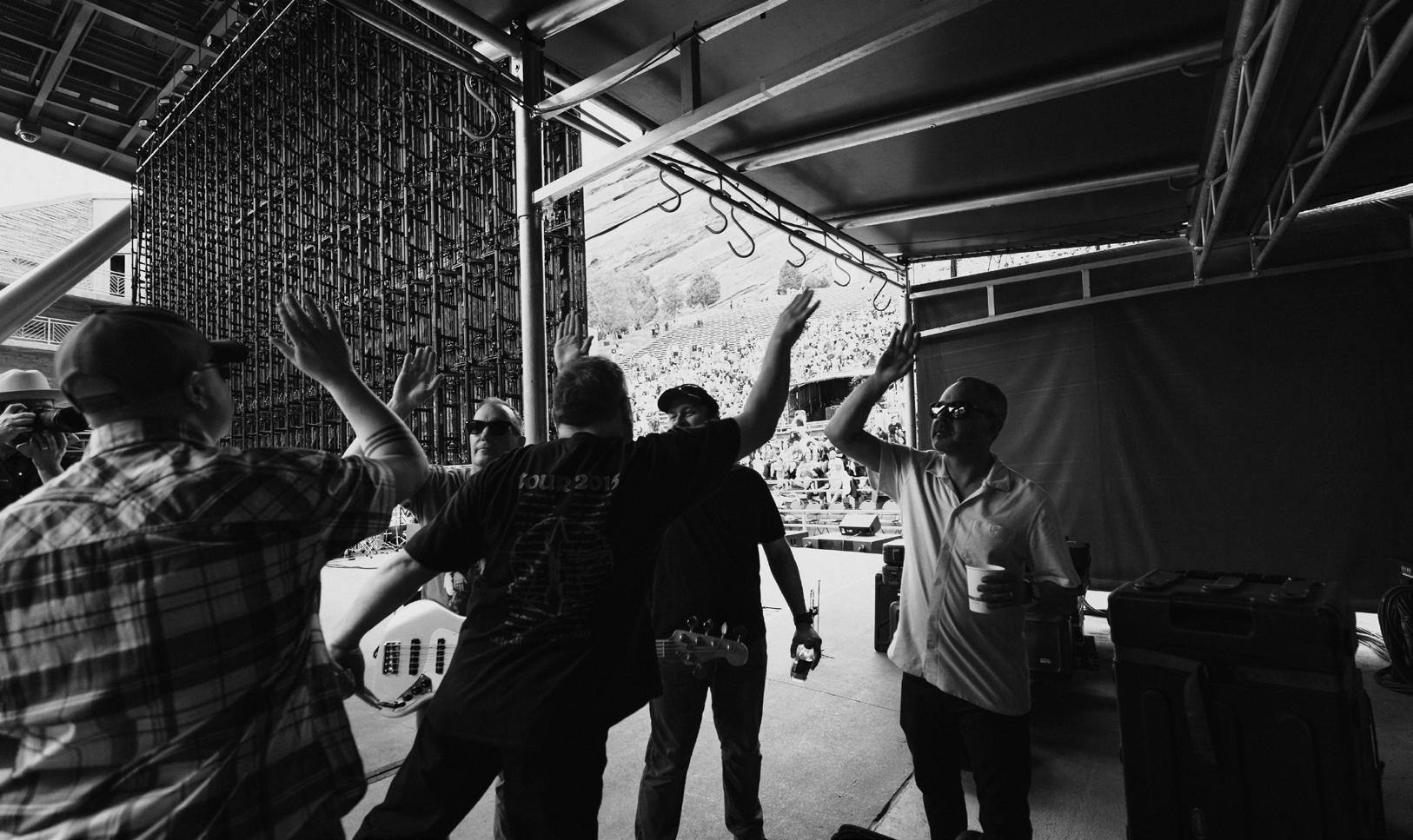
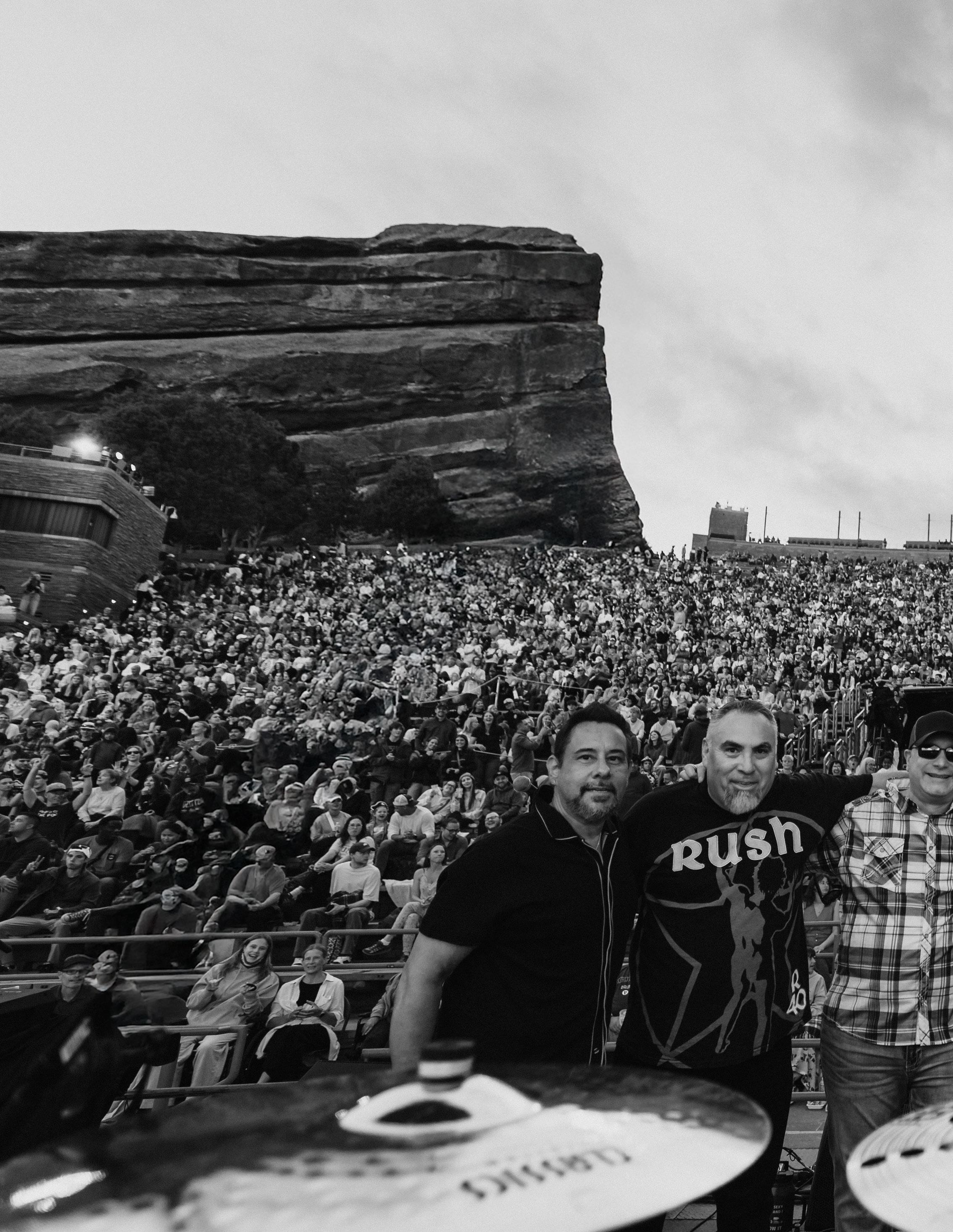
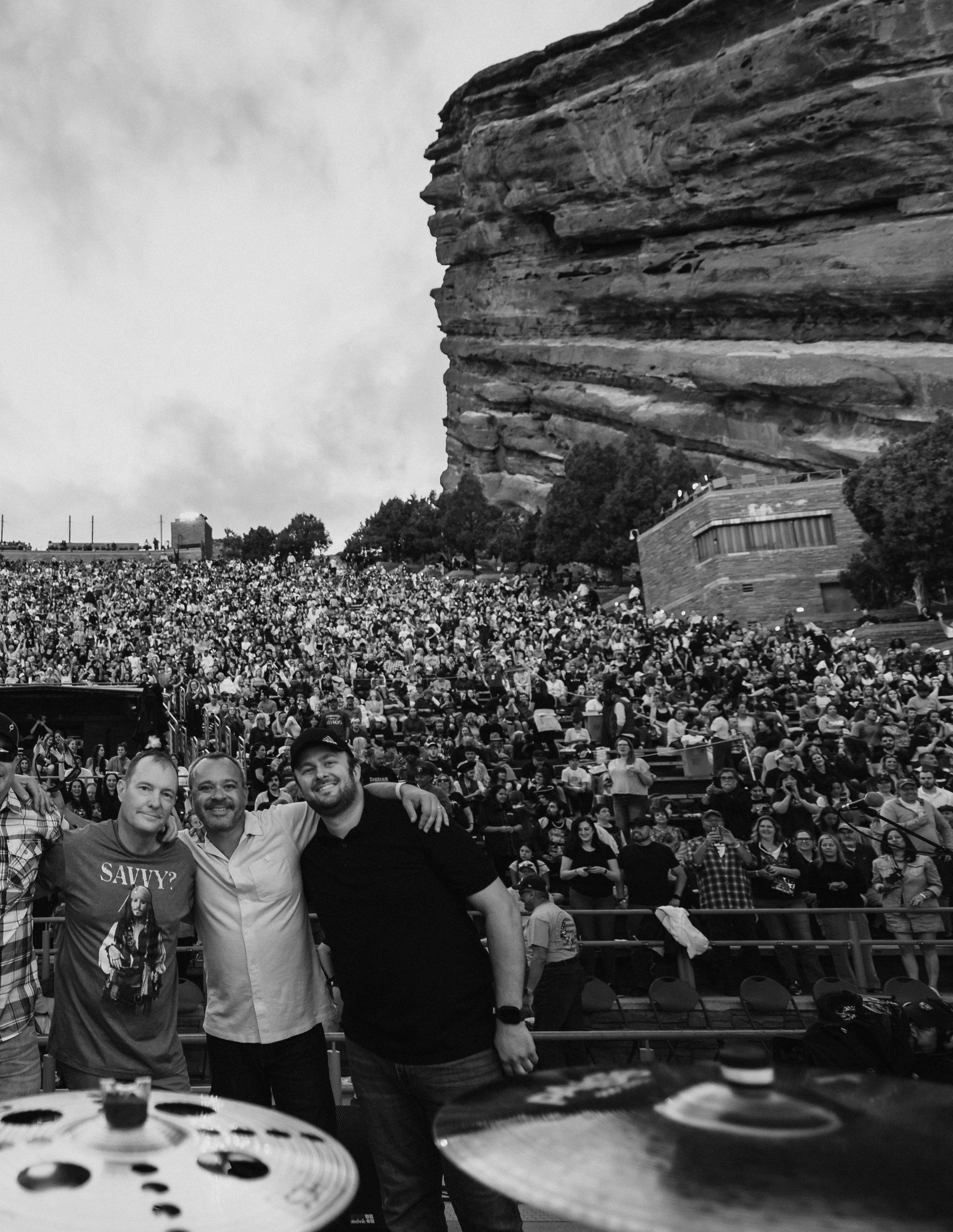
BROOK: And more recently we played a sold-out show at Red Rocks last summer.
ANDY: Being able to play our own original songs at Red Rocks was pretty special. Standing there looking out at that amphitheater, thinking, “I can’t believe we’re about to play here,” was surreal.
PULSE: Looking ahead, what’s next for the band? New music, bigger stages, different directions—or something the Pueblo community should keep an eye out for?
BROOK: We’re working on new material right now.
We’re not in a rush to release anything—we just want it to happen naturally.
ANDY: We’re also revamping our live show for the summer and festival season. There will definitely be some new songs added to the set.
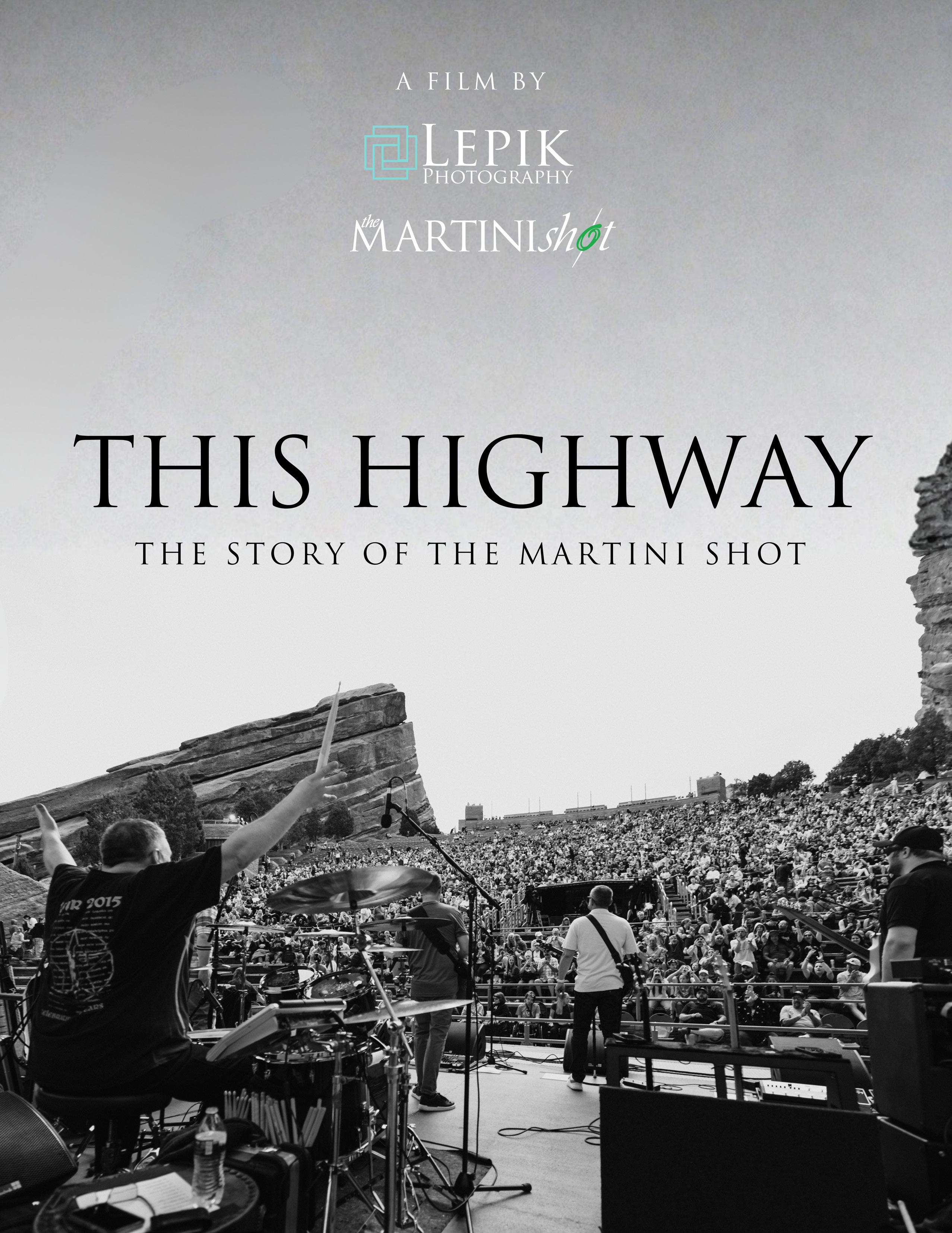
And right now a lot of our focus is on finishing the documentary about the band.
PULSE: What does the documentary mean to you?
ANDY: It’s really just a way to document what we’ve done. We’re not trying to be pretentious about it. But for a band from a small town to stay together for twenty-five years, record albums, and play the stages we’ve played—we’re proud of that.
BROOK: We’ve played everywhere—from weddings to corporate events to festivals to mountain stages in Aspen.
We started a podcast because we wanted to capture all the stories we’ve accumulated over the years. The documentary kind of grew out of that.
ANDY: At the end of the day, we hope people in Pueblo and Colorado Springs see it and feel some nostalgia. Because when we watch it, that’s what we feel too.
teachers and students, and the moment when a room full of people moves together to the same groove. After more than two decades together, The Martini Shot has learned that the real measure of a band isn’t just albums recorded or stages played. It’s the relationships built along the way. In a city with deep musical roots, The Martini Shot isn’t just part of the scene, they’re part of the story.
For a band that began with a notebook of three-chord covers and a weekly gig in Alamosa, The Martini Shot has traveled a long road—one built on collaboration, mentorship, and a deep respect for the craft of live music. Along the way, they’ve played big stages, shaped young musicians in classrooms, and carved out a sound that reflects Pueblo’s own musical melting pot. But ask them what matters most, and the answer comes back to connection: the bond between bandmates, the lineage of
CommisSIoner Miles Lucero on Leadership, GrowTH, and THe ResponSIbiliTIes of Local Government
by Nate Jordon
In Pueblo County, the decisions that shape everyday life often happen quietly. They show up in the roads people drive, the land that gets preserved or developed, the resources available to rural communities, and the long-term vision guiding the region’s growth. Much of that responsibility falls to the Board of County Commissioners—a role that requires balancing competing needs while keeping the broader future of the county in view.
For Commissioner Miles Lucero, the work is both practical and deeply personal. County government isn’t just about budgets, permits, or policy debates. It’s about stewardship—of the land, of the communities that stretch from Pueblo’s urban neighborhoods to its rural valleys, and of a region with a history rooted in hard work, cultural diversity, and resilience.
In a time when Pueblo County is navigating growth, economic opportunity, and changing expectations from residents, Lucero finds himself in a position that requires equal parts listening, leadership, and long-term thinking.
I sat down with Commissioner Lucero to talk about the challenges facing Pueblo County, the opportunities ahead, and what responsible leadership looks like at the local level.
PULSE: Pueblo County has a deep history rooted in industry, agriculture, and culture. As commissioner, how do you see the county honoring that heritage while still preparing for the future?
LUCERO: What makes Pueblo special is how deeply we hold onto our culture and take pride in it. This has long been a borderland—where Indigenous, Western, and Mexican influences all meet—and that blend defines who we are. It shows up in
everything from our food to our sense of community.
Honoring that heritage happens naturally here, but it’s also important to be intentional about it—reminding people why we are the way we are and why that matters. Pueblo is still a place where neighbors take care of each other, where people wave from their cars and look out for one another. That’s something worth protecting.
At the same time, growth is coming. People from California, Texas, and other states are looking for affordability, sunshine, and quality of life— and Pueblo offers all of that. But we don’t need to become anyone else. We need to grow into who we already are.
That means supporting local businesses, supporting the people who are here, and making sure growth is sustainable. Preservation and growth aren’t opposites—we can do both. It’s our responsibility as leaders to make sure we do it thoughtfully.
PULSE: Many people talk about economic development, but fewer talk about identity. What do you think makes Pueblo County unique, and how should that shape the way we grow?
LUCERO: Our identity comes down to community. We prioritize family,
relationships, and taking care of each other. At the end of the day, most people here want the same things— safe neighborhoods, good opportunities for their kids, and a strong sense of belonging.
A lot of people are choosing to stay here because you can’t replicate this kind of community. My wife and I are here because we want our kids raised around family—grandparents, cousins, that whole support system. That’s something money can’t buy.
In a world that pushes individualism, Pueblo still leans into connection. People here know they have others they can call on. That’s rare, and it’s powerful. That commitment to community is what makes Pueblo unique, and it should absolutely guide how we grow.
PULSE: Pueblo has often been described as a place with grit and resilience. From your perspective, what are the biggest opportunities for the county over the next decade?
LUCERO: We have a strong foundation for growth, especially when it comes to infrastructure. With freight rail access and major highways, Pueblo is well-positioned for manufacturing and distribution. We have land, water, and the logistics to support that kind of development.
But we also need to diversify. We’ve seen what happens when we rely too heavily on one industry. There’s opportunity in manufacturing, but also in arts, food, and small business development.
I’m also a big supporter of the Front Range Passenger Rail. If that becomes a reality, it could be transformative. It would give people easier access to Pueblo, and once people experience this place—our culture, our food, our people—they tend to leave with a very different impression.
A big part of our opportunity is simply exposure. People don’t always know what Pueblo has to offer. When they do, it changes how they see it.
PULSE: County government touches everything from roads and land use to public safety and economic development. What responsibilities of the commissioner’s office do you think residents most often overlook?
LUCERO: People often think of elected officials as policymakers— and we are—but a huge part of this job is administration. You’re essentially running a large organization.
You have to understand budgets, financial statements, hiring practices, and operations. Especially right now, with budget challenges, a lot of my time is focused on efficiency and making sure we’re using resources effectively.
That’s something I underestimated before taking office. The skill set isn’t just about being likable or representing the community—it’s about managing a complex organization responsibly.
You also have to be adaptable. One moment you’re in a land use discussion, the next you’re talking about water policy or infrastructure. You
have to quickly understand technical issues and then communicate them clearly to the public.
That administrative and operational side is what people most often overlook.
PULSE: Growth is coming to Southern Colorado. How do you balance welcoming new development while protecting the land, communities, and character that already exist here?
LUCERO: It starts with setting clear expectations. We want development, but we also need to define what that means—especially when it comes to land use, water, infrastructure, and environmental impact.
If someone wants to develop agricultural land, we have to ask: what happens to the water? What does that mean for surrounding communities? How does it affect roads, traffic, and air quality?
Our role is to look at those down-
stream impacts—not just locally, but regionally. Water, for example, doesn’t stop at county lines. What we do here affects communities throughout the Lower Arkansas Basin.
We want to welcome development, but it has to come with responsibility. Developers need to be good partners to the community, and that means meeting both financial and environmental expectations.
And part of leadership is knowing what you don’t know. These are complex issues, and it’s important to rely on experts and listen to people with deeper knowledge.
PULSE: Local government can sometimes feel distant to the public. What do you think county leaders should do to build stronger trust and transparency with residents?
LUCERO: First, leaders need to remember that they’re just people. I tell folks all the time—I’m just a guy from Pueblo. This job isn’t about me;
We don’’t need to become anyone eLSe. We need to grow into who we already are.”
it’s about representing the community. This role is about listening, understanding different perspectives, and making decisions that reflect the broader community—not personal preference.
It’s also about accountability and communication. People deserve to understand not just what decisions are being made, but why they’re being made and how those decisions come together.
This job has humbled me. The level of responsibility is significant, and it’s reinforced for me that leadership is about service. Building trust starts with that mindset.
PULSE: Pueblo County has both urban neighborhoods and vast rural landscapes. How do you approach representing such a wide range of communities and needs?
LUCERO: The only real way to do it is to be present—spend time in those communities and listen. The needs across Pueblo County are complex. Someone in Rye has a very different experience than someone on the East Side of Pueblo. Financially, culturally, and socially, there’s a lot of diversity here. But at the core, people want similar things—stability, opportunity, and a good life for their families.
Pueblo County is geographically larger than people realize, and that diversity is part of what makes it special. You’ve got mountains, farmland, and urban neighborhoods all within a short distance.
I also think it’s important for people— especially younger residents—to explore the whole county. The mountains, the lake, the open spaces— they’re all part of what defines Pueblo.
@davidtookit
PULSE: If you look back at the first day you took office, what has surprised you most about the realities of serving as a county commissioner?
LUCERO: The biggest surprise has been the scope of responsibility and the breadth of knowledge required. This is a county with a long history, and there’s real weight in that.
You quickly realize that nothing just happens. Every project, every program—takes people, effort, and leadership to make it work.
I’ve also developed a deep appreciation for those who came before us. Every road, building, and trail exists because someone cared enough to make it happen.
Another surprise is how much the role becomes part of your life. It doesn’t turn off when you leave the office.
You’re always representing the community.
I still see myself first as a father, husband, and son—but this role carries responsibility beyond the job itself. It pushes you to be more intentional about how you show up, both professionally and personally.
PULSE: Some of the most important decisions in local government are the least visible. What is one issue or challenge facing Pueblo County that you think deserves more public attention?
LUCERO: Our financial condition— without question.
The core responsibility of a county commissioner is to ensure the county is on solid financial footing. That’s not where we are yet, but it’s what we’re working toward.
Budget issues aren’t always visible to the public, but they affect everything—roads, services, facilities. When people hear about a deficit, it can feel abstract, but it directly impacts what the county can and can’t
provide.
My goal is to help people understand how we got here and what it takes to fix it. We need long-term stability so we’re not facing the same challenges year after year.
It may not be the most exciting topic, but it’s the most important.
PULSE: When future generations look back at this period of Pueblo County’s history, what kind of legacy would you hope today’s leadership helped create?
LUCERO: I’d hope they see this as a time when standards were raised— when transparency and accountability became the expectation.
More than pointing to one specific project, I want to elevate how this organization operates. If leadership holds itself to a higher standard, that mindset spreads.
I also want people to see this as a moment when Pueblo recognized its own value. We’ve told ourselves for too long that we’re just tough or resilient—but we’re more than that.
We have incredible talent here—artists, entrepreneurs, leaders. We have the culture, the history, and the community.
The legacy I want is simple: that we realized we are more than just “good enough”—but capable of being a place others look to as an example.
* * *
In a role where many of the most important decisions happen out of view, Lucero’s approach is rooted in something simple but demanding: responsibility. To the land. To the people. To the long arc of a county still shaping its identity while preparing for what comes next.
Growth will come. Change is inevitable. But if Pueblo County holds onto what has always set it apart—its sense of community, its cultural depth, and its willingness to take care of its own—then the future won’t be something to fear. It will be something to build, together.
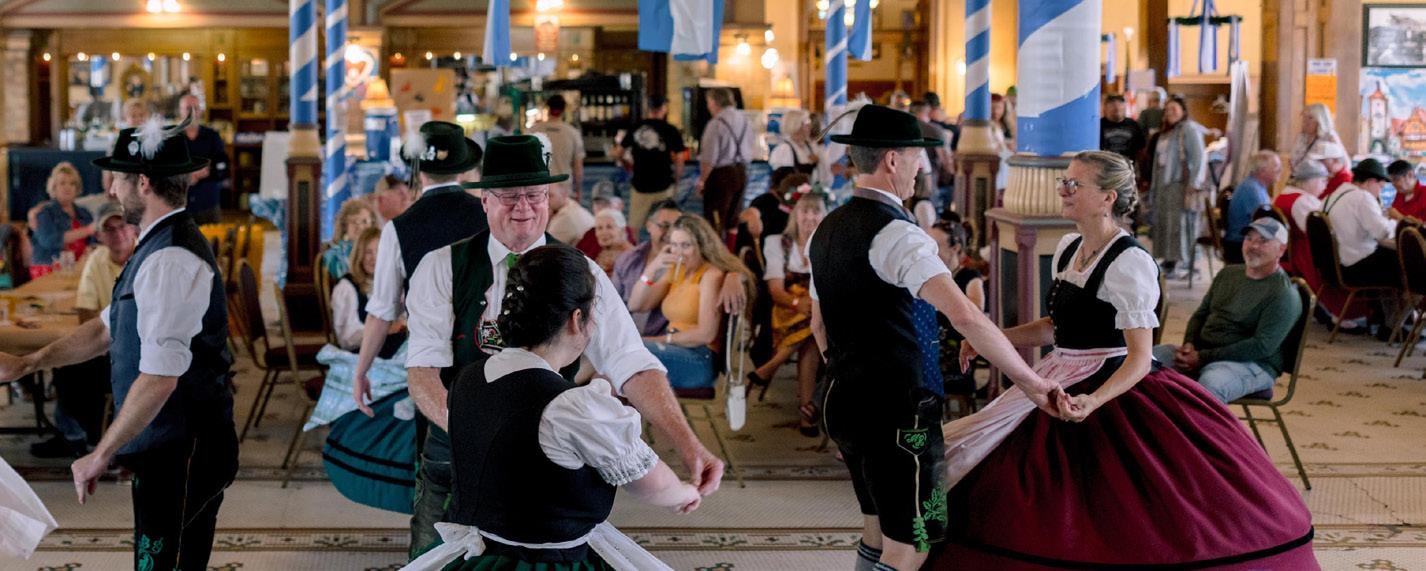
In a city often defined by its strongest visible cultural influences, it’s easy to overlook the quieter threads that helped shape Pueblo’s identity. Pueblo’s story has never belonged to just one or two traditions. It has always been a place of crossings—of languages, customs, industries, families, and inherited memories carried from somewhere else and made new here.
For Christina Haney, President of the Pueblo German American Club, preserving heritage is about far more than repeating old stereotypes or staging nostalgic celebrations. It’s about asking harder questions: What does culture really mean? What survives when people assimilate? And how do you keep a tradition alive for younger generations who may not
feel drawn to the old ways of organizing around it? As Haney guides the club through a period of transition, she’s also trying to broaden the public’s understanding of German identity itself—past the clichés and toward something more expansive and alive.
PULSE: For readers who may not be familiar with it, what is the Pueblo German American Club, and what role does it play in preserving and sharing German heritage in Southern Colorado?
HANEY: The club began with a group of German immigrant women who wanted a place to gather, talk, and stay connected to their culture. It started informally, as a coffee klatch, then in December 1969, they organ-
ized the first official meeting of what became the Pueblo German American Club.
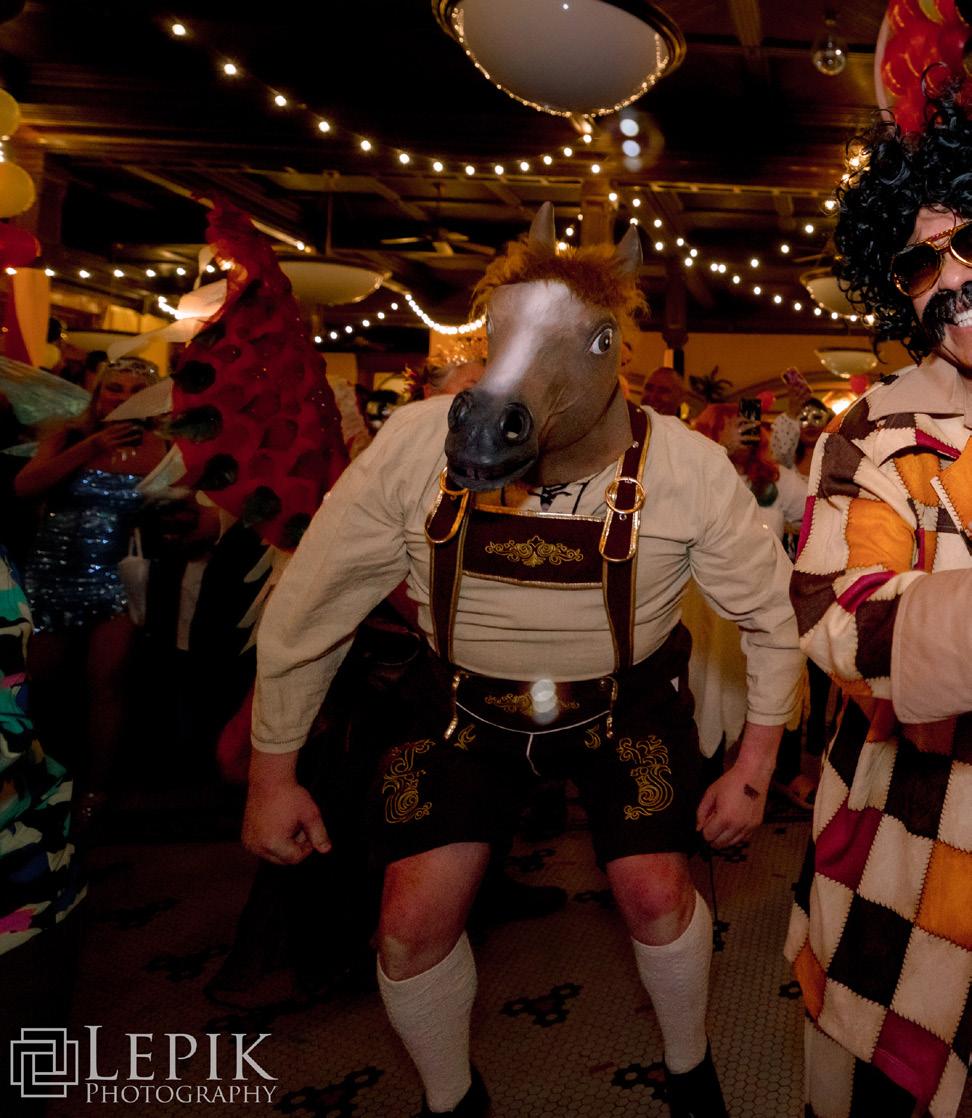
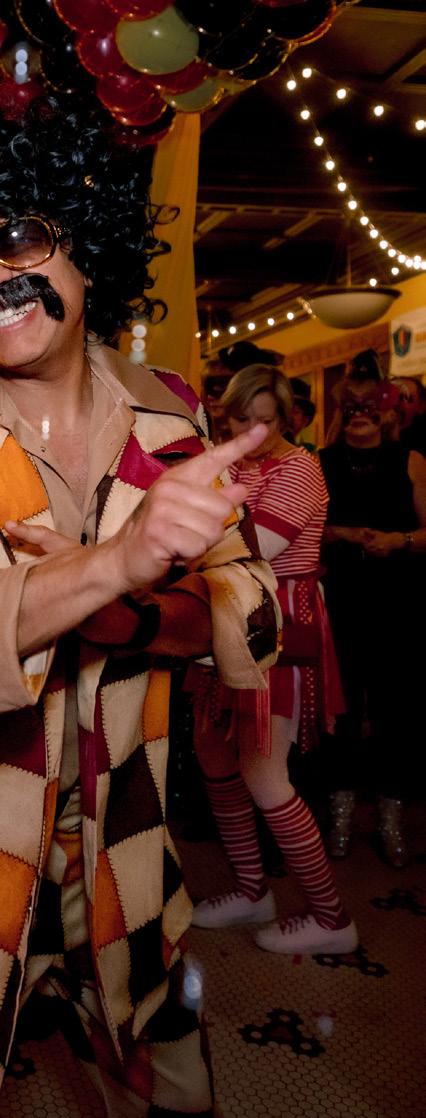
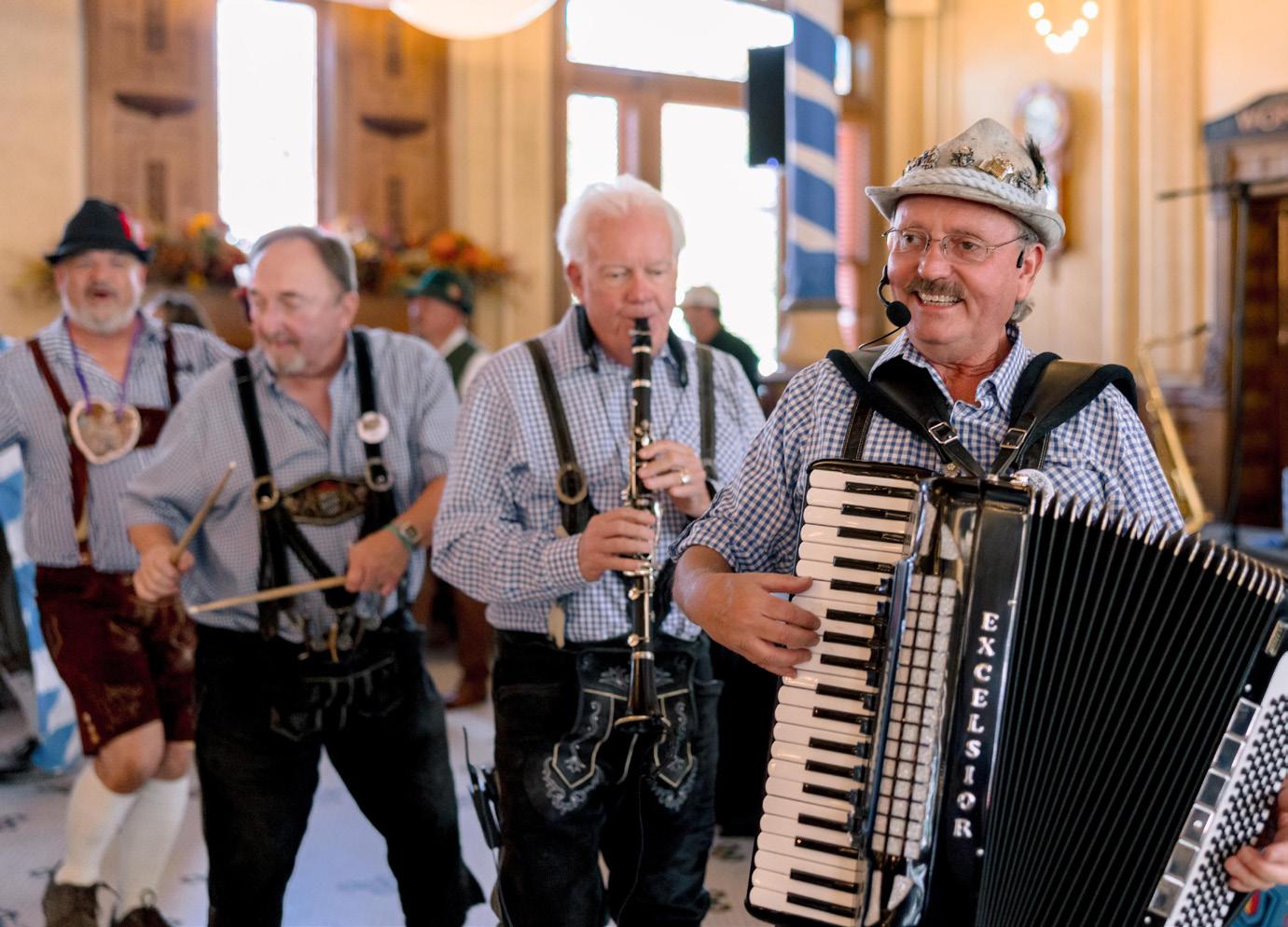
For many years, the club was very active. It launched Pueblo’s first Oktoberfest in 1970, hosted Fasching (Karneval) celebrations, and even gave scholarships to students studying German. In its earlier years, members worked hard to preserve language, customs, and traditions.
Today, I think the role of the club is still important, but it’s evolving. It’s not just about preserving some frozen image of the past. It’s about helping people understand that German culture is much broader, richer, and more modern than the stereotypes people often associate with it. I want the club to be a place where people
HeRItage is not a museum piece. It’s something you live wiTH, reinterpret, and share.”
can experience heritage, but also rethink what heritage actually means.
PULSE: German immigrants played a role in shaping many American communities. How has German culture historically influenced Pueblo and the surrounding region?
HANEY: Pueblo’s story is a little different from places like Texas or Minnesota, where German settlement is more visible and deeply rooted. I don’t think Pueblo ever had a large, concentrated German population in the same way. The Germans who came here seem to have assimilated quickly, and I think that’s part of why their cultural footprint feels less obvious now.
A lot of Pueblo’s immigration story is tied to the steel mill and industry. My sense is that some Germans came here for those opportunities, but they often blended into the broader community rather than maintaining a tight ethnic enclave the way some
other groups did. There was also a lot of shame attached to being German after the world wars, and I think that contributed to people keeping a lower profile.
So, part of the challenge now is that we are trying to preserve something that was never as publicly visible here as other cultural traditions. That doesn’t mean it wasn’t here. It just means much of it was absorbed into everyday American life and, over time, became less recognizable as specifically German.
PULSE: The club has become known for hosting events that bring people together. What do those gatherings mean for the community beyond just celebration?
HANEY: For me, the events are about creating experiences that help people connect to each other, to culture, and to something outside of their daily routine. They aren’t just parties. They’re opportunities to
encounter a piece of German tradition in a way that feels welcoming and alive.
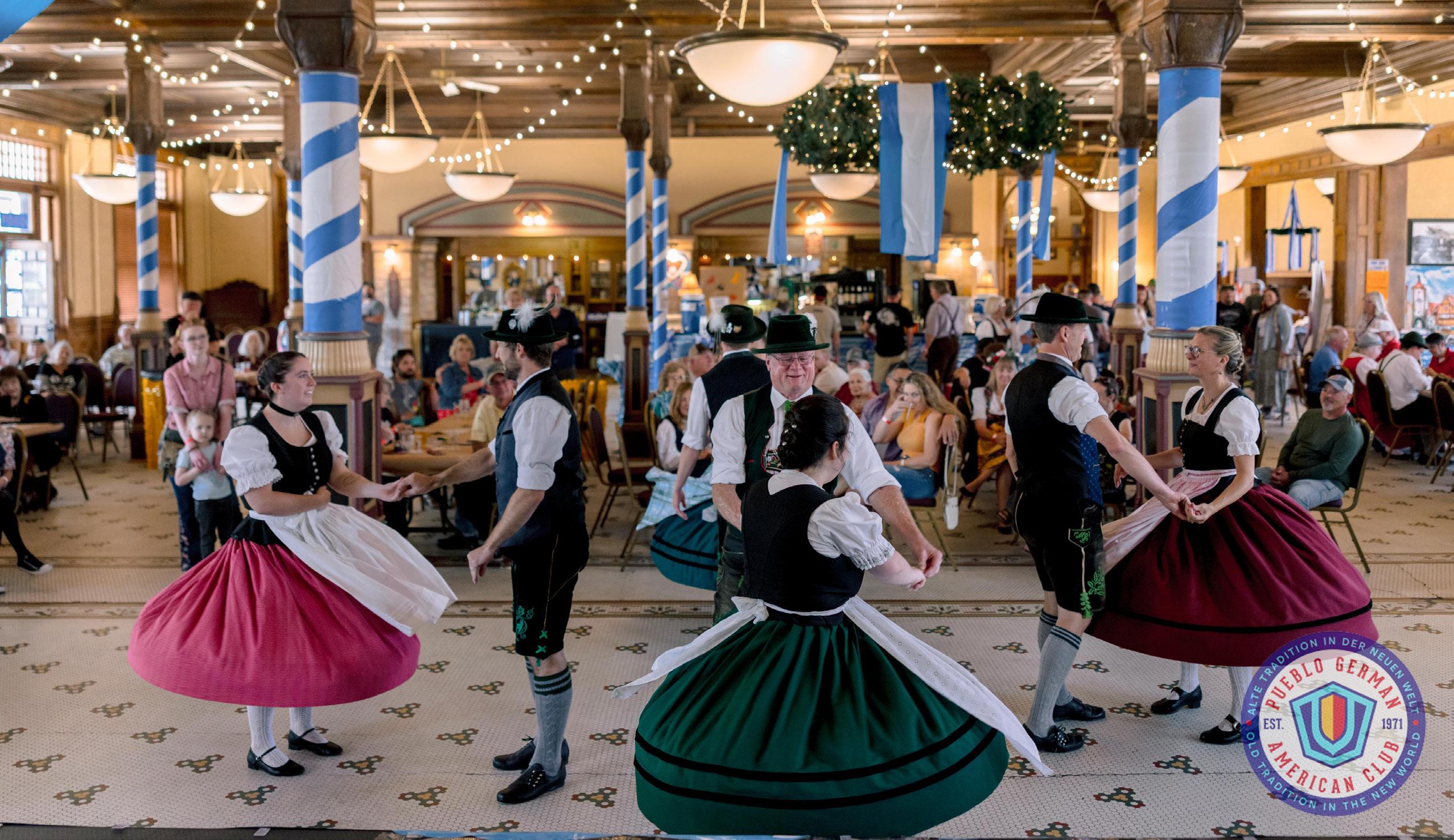
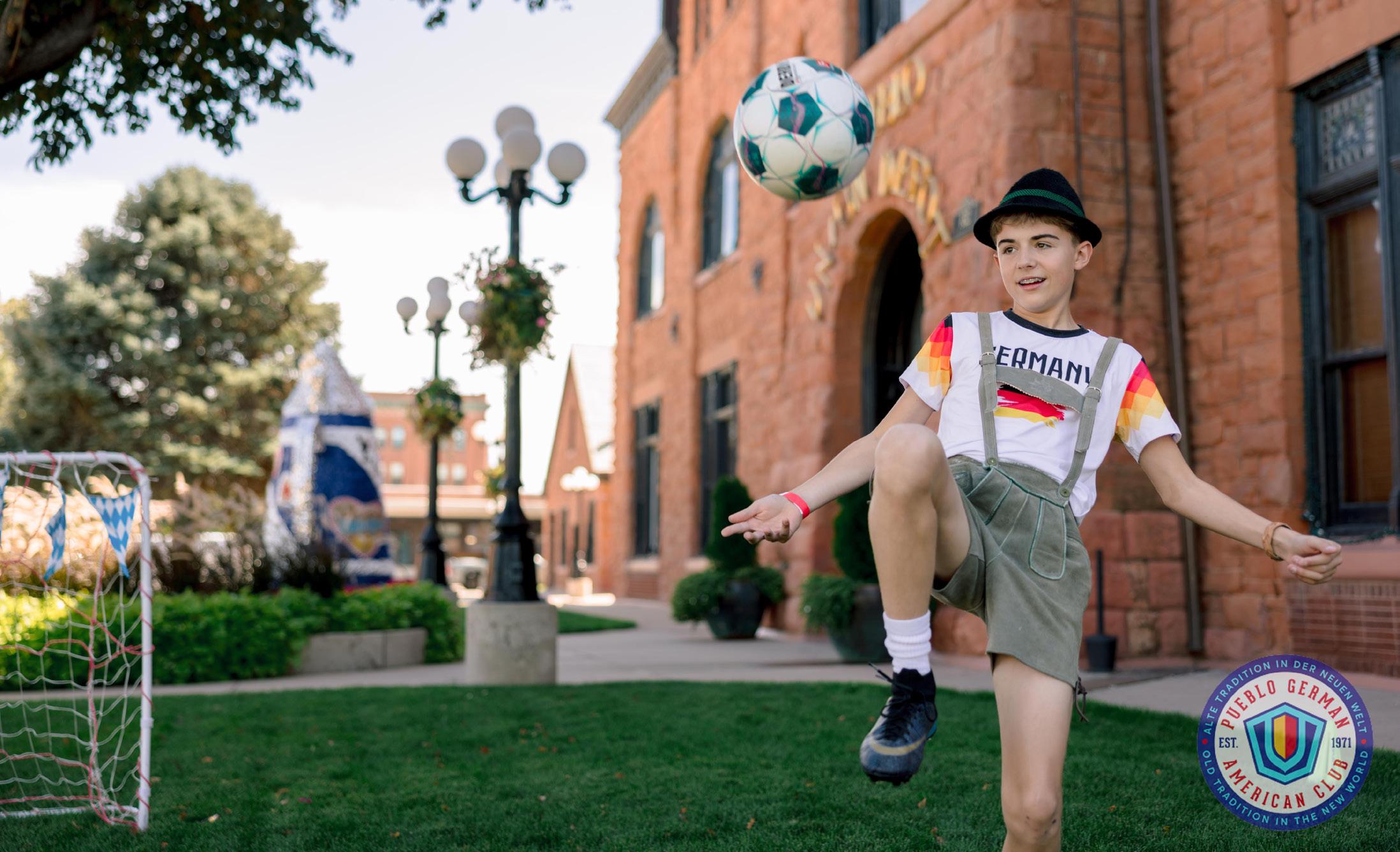
With Oktoberfest, for example, I want people to experience something more authentic and more thoughtful than a generic fall festival. That means German food, German-inspired traditions, music, contests, and activities that actually reflect parts of the culture. I also try to introduce things that make people curious. Whether that is a soccer component for kids, wedding traditions like a two-person log saw, or other customs people may not expect.
Fasching serves a different purpose. That event gives me room to show a more modern, playful side of German culture. We’re not limited to the clichés people expect. I want people to come in and realize German culture is not one-dimensional. It’s historical, yes, but it’s also contemporary, creative, and social.
These gatherings give people a reason to sit together, share food, talk, laugh, and experience something in person. That matters right now. People are craving real connection, even if they don’t always know how to ask for it.
PULSE: Many cultural organizations are working to keep traditions alive for younger generations. How does the club engage younger people or newcomers who may not have a direct German heritage but are curious about the culture?
HANEY: That’s one of the biggest challenges we face, and I think honesty matters here: younger people are not lining up to join clubs in the traditional sense. The word club itself can feel outdated to them.
So, I try to meet people where they are. Social media matters. Events matter. Atmosphere matters. If younger people are going to connect
with culture, it usually starts with an experience, not a meeting. They come because something looks fun or interesting, and then once they are there, maybe they start asking questions. Maybe they try the food, hear the music, or begin to see themselves as part of something.
I don’t think most younger people reject heritage. I think many of them have just not been shown a version of it that feels relevant or inviting. They do not want to inherit something that feels closed off or stuck in the past. They want something living, social, and meaningful.
That’s why I keep trying to build events that feel contemporary while still honoring tradition. If we can’t bridge that gap, these organizations will disappear. It’s that simple.
PULSE: You brought up an important idea earlier: heritage is not always what people think it is. What does
heritage mean to you?
HANEY: That’s the big question behind all of this. People often reduce German heritage to stereotypes—polka music, lederhosen, bratwurst, Oktoberfest. Those things may be real in some contexts, but they are only a very small part of a much larger story.
To me, heritage is deeper than costume or cliché. It is language, memory, values, family stories, art, music, food, place, and the way identity gets carried forward through generations. It is also complicated. A lot of what Americans celebrate as “heritage” is really our grandparents’ version of the old country. It may reflect a specific place, time, or immigrant memory, but not necessarily the full reality of a culture as it exists today.
That’s what fascinates me. I want
Knowing where you come from matters. Not because it makes you better THan anyone eLSe, but because it helps you understand yourself.”
people to think beyond the stereotype. Germany is not just one thing. It is regional, historical, artistic, modern, and constantly changing. So, when I talk about preserving heritage, I’m not trying to preserve a cartoon. I’m trying to preserve a connection—to the bigger picture, to the humanity in it, and to the parts that still matter.
PULSE: Why does this work matter to you personally?
HANEY: A lot of it goes back to identity, family, and the search for connection. Knowing where you come from matters. Not because it makes you better than anyone else, but because it helps you understand yourself.
I think many people feel that, whether they are German, Mexican, Italian, Irish, or anything else. Heritage gives people a sense of continuity. It gives them language for who they are, what shaped them, and what they want to pass on. When that connection is lost, something important is lost with it.
That’s part of why I keep doing this, even when it is difficult. I don’t want to see another cultural thread disappear simply because no one made the effort to carry it forward.
PULSE: What do you hope the future of the Pueblo German American Club looks like?
HANEY: I hope it becomes something more open, more visible, and more sustainable. I want it to be a place where older members still feel honored, but where younger people can also see themselves. I want the public to feel welcome, even if they have no German background at all.
I would love to expand what people think of German culture. That means more education, more experiences,
more collaboration, and more room for modern ideas alongside tradition. I want people to understand that heritage is not a museum piece. It’s something you live with, reinterpret, and share.
Most of all, I want the club to survive this transition. There is value here. There is history here. And if we can find the right support, the right energy, and the right way to invite people in, I think there is still a future for it.
Haney’s vision for the Pueblo German American Club isn’t rooted in nostalgia for nostalgia’s sake. What she’s trying to preserve isn’t a caricature of heritage, but a living sense of connection, one that can still speak to people in the present. In a city as layered and culturally complex as Pueblo, that effort matters. Because when lesser-seen traditions fade from public life, a part of the community’s fuller story fades with them.
If the club can navigate its current crossroads, it may end up doing more than preserving German heritage in Pueblo. It may offer a broader reminder that culture survives not by staying stagnant, but by finding new ways to be shared, understood, and lived.
THese gaTHeRIngs give people a reason to SIt together, share food, talk, LAugh, and expeRIence something in person. THat matters RIght now. People are cRAving real connection, even if THey don’t always know how to ask for it.”
President of the Greater Pueblo Chamber of Commerce Duane Nava
BY PUEBLO, FOR PUEBLO
How THe Pueblo HeRItage Museum and THe Pueblo County HiSToRIcal Society Keep HiSTory Alive
by Nate Jordon
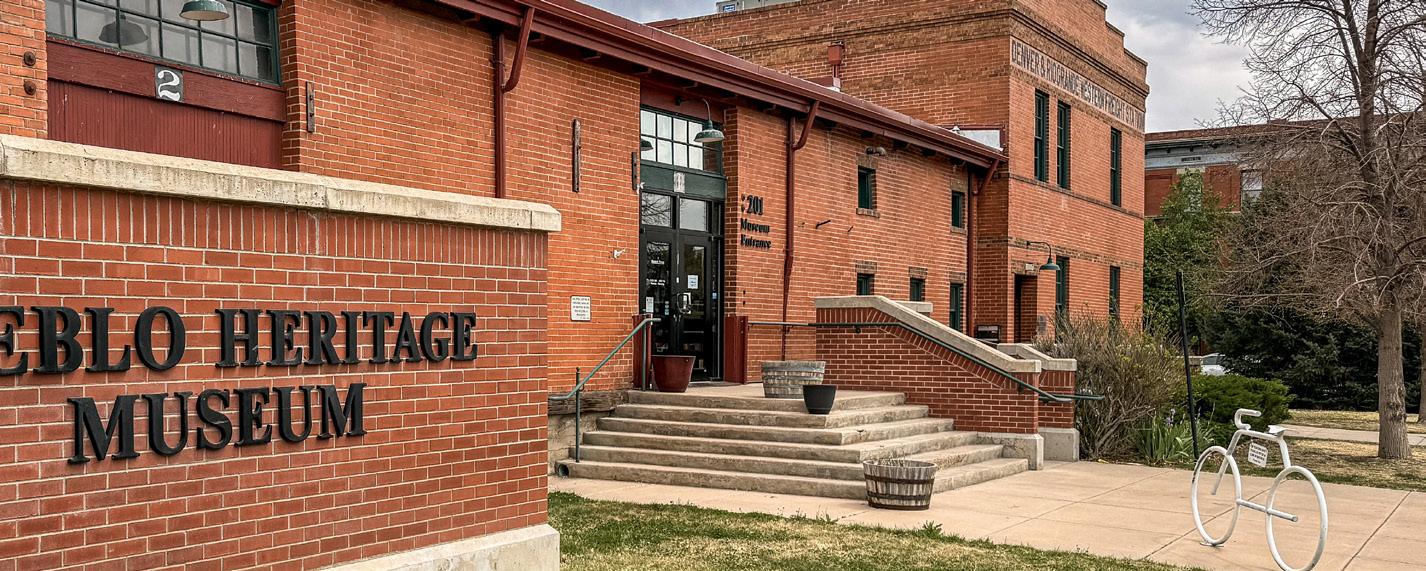
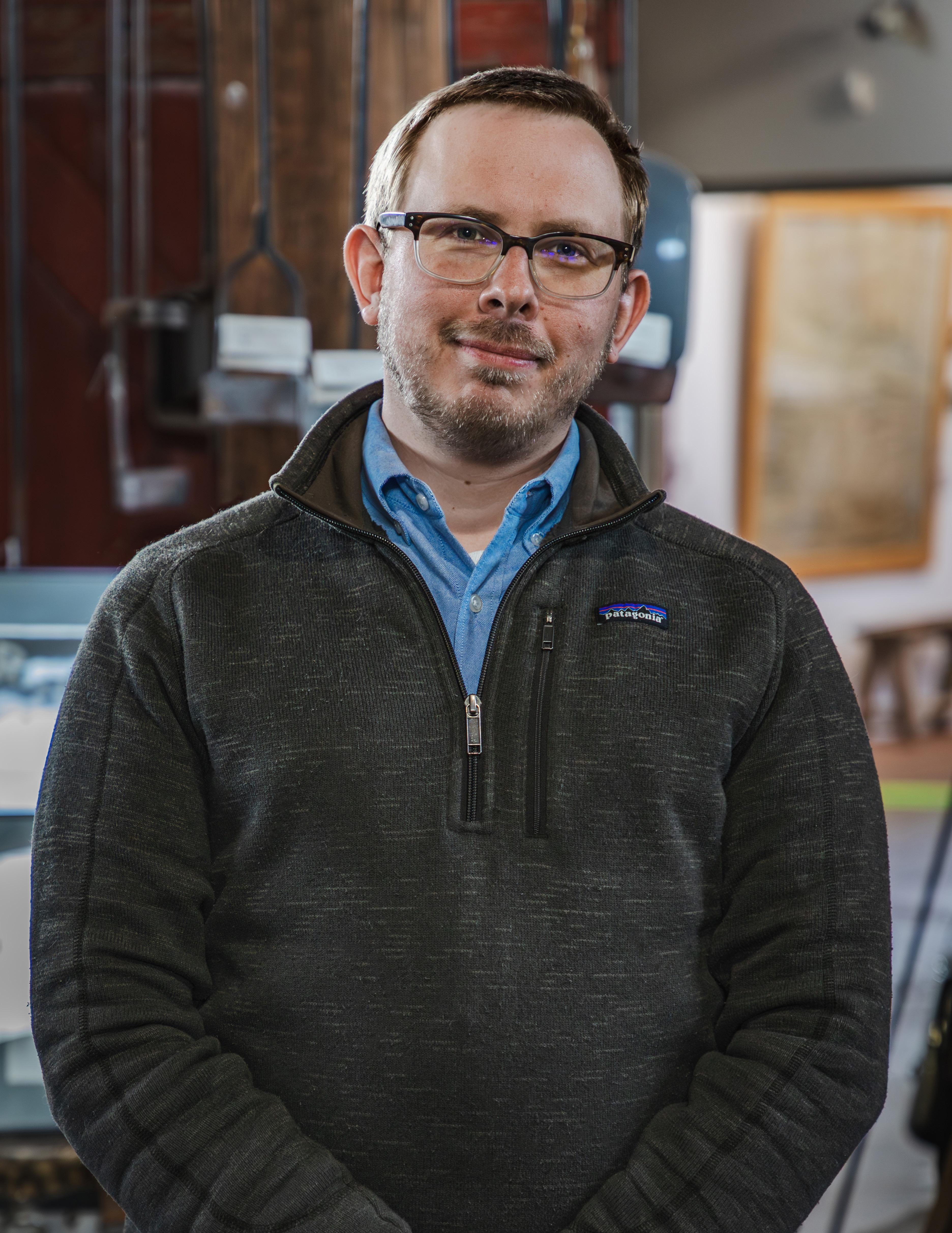
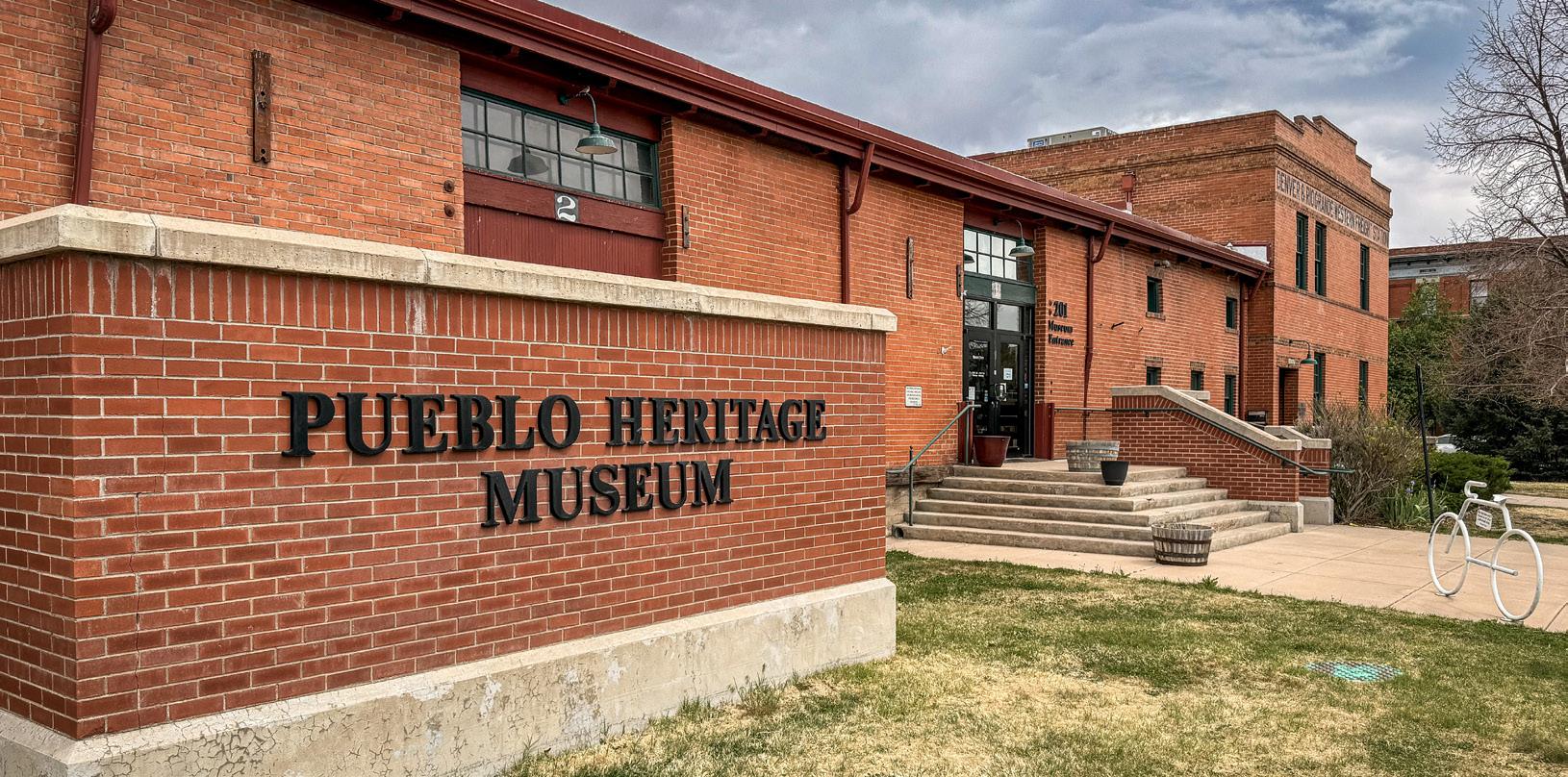
Step into the Pueblo Heritage Museum and you’ll find more than artifacts behind glass, you’ll find a conversation. Not just about what Pueblo was, but about what it is, and what it’s still becoming.
At the center of that conversation is John Wendt, Ph.D., Executive Director of both the Pueblo Heritage Museum and the Pueblo County Historical Society. His approach challenges a long-standing assumption about history: that it’s something fixed, something settled. In Wendt’s view, history isn’t static. It’s alive, shaped continuously by the people who live it.
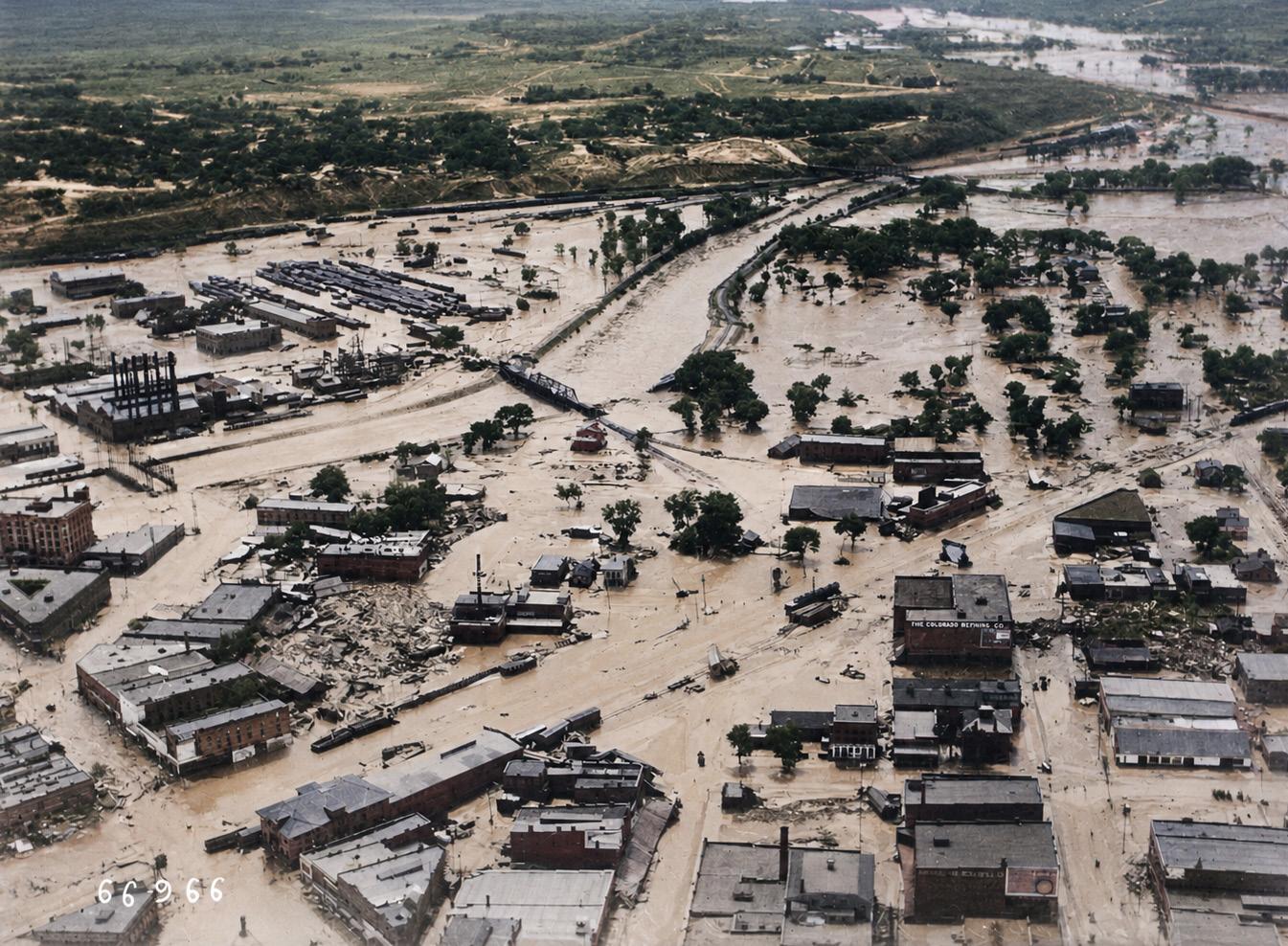
That philosophy feels especially at home in Pueblo, a city defined as much by endurance as by reinvention. From the devastation of the 1921 flood to the rise and fall of major industries, Pueblo has never had the luxury of standing still. And yet, it’s precisely that persistence, rooted in community, labor, and shared experience, that gives the city its identity.
Wendt doesn’t see his role as the final authority on that story. Instead, he sees himself as a facilitator, someone who helps the community tell its own history, in its own voice.
In a place where past and present constantly overlap, where century-old buildings still line the streets and families trace their roots back generations, the question isn’t just what happened here.
It’s who gets to tell the story, and how.
PULSE: Pueblo has a reputation for grit and resilience. How much of that is rooted in its history versus the way we choose to tell that history today?
WENDT: There’s no real separation there. Pueblo’s history is a history of resilience, and the stories we tell
201 W. B St. Pueblo, CO, 81003
about it are, more often than not, accurate. This is a place that doesn’t need embellishment.
You look at events like the Pueblo Flood of 1921—that alone tells you everything. It wasn’t just a single day like people often think. It was days of devastation, followed by recovery efforts that brought the entire community together. And that pattern repeats—economic collapse, industrial decline, you name it. People here stay. They dig in. They make it work.
That’s what fascinates me. In a lot of places, people leave when things get tough. Here, they don’t. That shapes everything—culture, identity, even how people run businesses today.
PULSE: As director of both the Pueblo County Historical Society and the Pueblo Heritage Museum, how do you decide which stories are essential to preserve, and which ones risk being lost?
WENDT: The short answer is—we don’t decide alone.
Everything we do is community-driven. Nothing in the museum should be permanent. Every exhibit should be open to reinterpretation. We rely heavily on feedback from the people whose stories we’re telling.
We have exhibits focused on differ-
ent ethnic communities, and each of those communities has its own perspective. My job isn’t to tell them what their story is—it’s to help them tell it in a way that’s accessible and meaningful, especially for younger generations.
That’s what makes this a heritage museum, not just a history museum. It’s living, evolving, and collaborative.
PULSE: What’s a part of Pueblo’s history that you think is misunderstood or oversimplified by the public?
WENDT: Almost all of it gets oversimplified.
People reduce Pueblo to labels—“mill town,” “crime town,” “mob town.” There’s truth in those, but they’re incomplete. Every story here is more complex than the headline.
Take the 1921 flood again. It’s often taught as a one-day event. It wasn’t. It lasted days, and the recovery effort was just as important as the disaster itself. You had organizations like the Red Cross, local groups, everyday citizens all stepping in at different times to rebuild.
That layered complexity—that’s where the real story is. And you can find that depth in just about every chapter of Pueblo’s history.
PUEBLO HERITAGE MUSEUM
PULSE: Pueblo sits at a cultural crossroads — Indigenous, Hispanic, European, industrial — how do you approach telling a story that is both unified and deeply complex?
WENDT: You accept that there isn’t one single version of the story.
There are always new perspectives, new voices, and even new evidence. That makes history a moving target— but that’s not a weakness. That’s the challenge.
Our goal is to make these stories accessible without flattening them. A fourth grader walking through the museum should feel a sense of pride in where they’re from, even if their experience looks different from their grandparents’.
It’s about connecting generations— helping people understand where they come from so they can build their own place in that story.
PULSE: In your view, what responsibility does a community have to its own
history? Is preservation enough, or does it require active reinterpretation?
WENDT: Preservation isn’t enough. It has to be active.
Museums can fall into the trap of complacency—building an exhibit and leaving it untouched. But if people don’t see themselves represented, then we’ve failed.
I had someone come in after we opened a Black history exhibit and tell me we should take it down. That could’ve gone badly—but instead, we talked. She brought in photos, records, personal history. Now we’re expanding the exhibit to include those perspectives.
That’s how it should work. History should be revised, expanded, corrected. If it costs us a little money to reprint a sign, that’s worth it.
PULSE: What role does place — specific streets, buildings, landscapes — play in shaping memory, and what happens when those places disappear?
WENDT: It’s everything.
We’re sitting in a building from 1924, surrounded by structures from the late 1800s. These places aren’t just backdrops—they’re part of the story.
Walk down Union Avenue, and you’re literally walking through layers of history. Railroads, industry, red-light districts, commerce—it’s all there.
And it goes deeper than that. The land itself holds thousands of years of history. We’ve had artifacts dated back 5,000 years. This has been a gathering place for a very long time.
When those places disappear, you lose more than buildings. You lose connection.
PULSE: Looking at Pueblo today, what historical patterns do you see repeating themselves — either in encouraging or concerning ways?
industry—but it’s never been just one thing. Saddles, steel, defense, manufacturing—this town adapts.
Right now, the question is: what’s next?
The concern I have is around preservation. Historically, the city has supported it. Lately, that support feels less certain. And in a place like Pueblo—where so much of its identity is tied to its history—that’s a risky shift.
You can’t separate the future from the past here. They’re intertwined.
PULSE: If someone new to Pueblo walked into the museum and you had one exhibit to show them first, what would it be — and what would you want them to understand about this place when they left?
WENDT: The flood exhibit. Every time.
It captures everything—disaster, resilience, community response, rebuilding. It’s a microcosm of Pueblo’s identity.
You see stories like Josephine Pryor, a telephone operator warning people as floodwaters rose around her. You see the aftermath, the rebuilding, the levee project that followed—one of the first of its kind in the country.
And then there’s “Lucky,” the papier-mâché horse that survived the flood and even a fire decades later. It sounds small, but it’s symbolic. That’s Pueblo in a nutshell—it survives, it rebuilds.
PULSE: What story about Pueblo hasn’t been told yet—but needs to be?
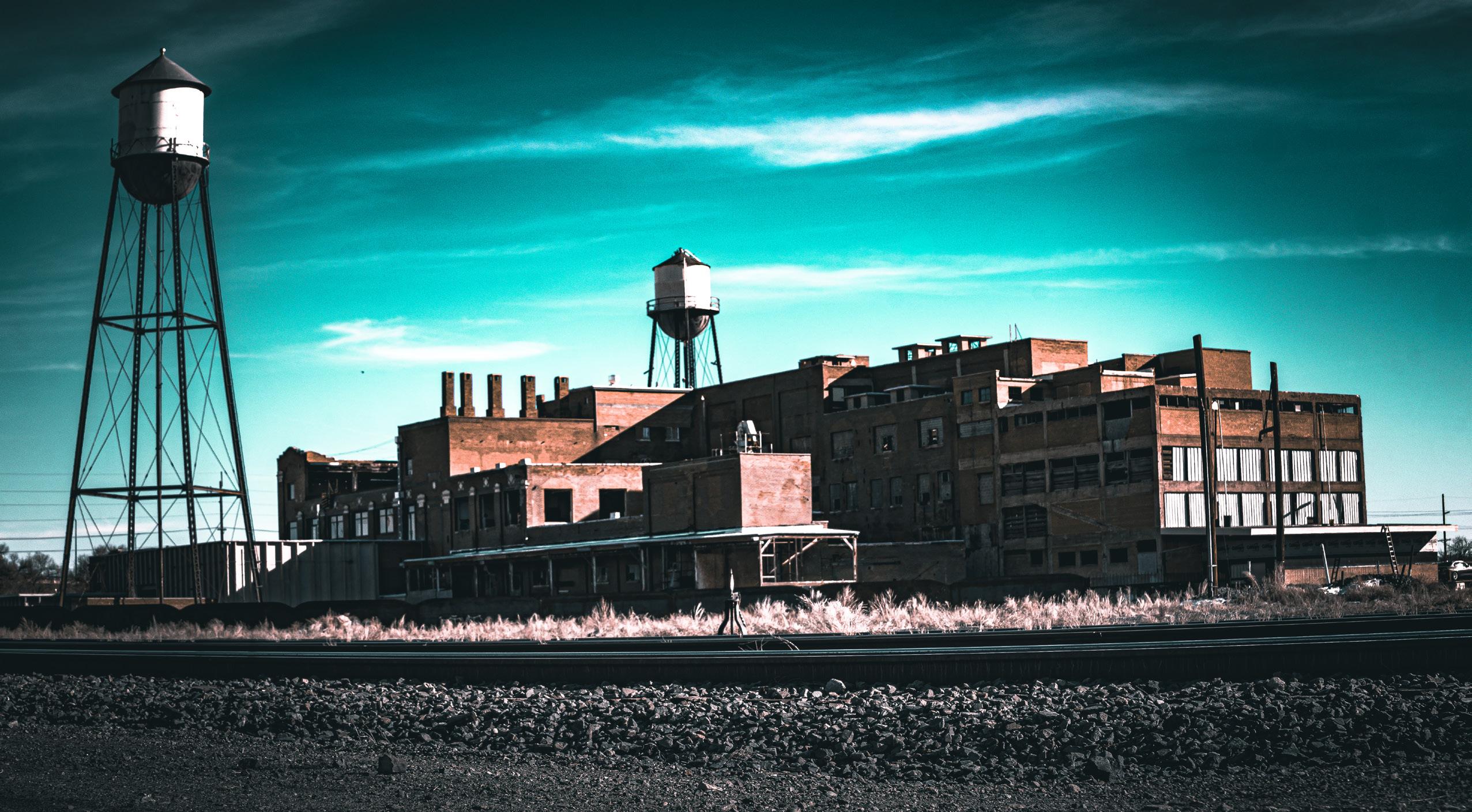
WENDT: The chemical depot. It was one of the largest employers in Pueblo after the steel mill declined, but it doesn’t get the same attention. Maybe because it’s tied to military
work, maybe because it’s less visible. But it’s part of the fabric of this community. Just like the mill was.
That’s the kind of story we need to dig into—because it helps fill in the gaps of who we are.
idea that history belongs to institutions alone. Instead, it places ownership back where it belongs: with The People. The result is something far more powerful than a traditional museum experience. It’s a living archive of resilience, reinvention, and connection.
If there’s one thing that becomes clear after talking with John Wendt, it’s that Pueblo’s story isn’t finished—and it never will be.
It’s still being written in small businesses that refuse to close, in families who stay when others might leave, and in communities that continue to redefine what it means to belong here. The work happening inside the Pueblo Heritage Museum isn’t about preserving a frozen version of the past. It’s about making space for new voices to enter the conversation.
That matters—especially in a city like Pueblo, where identity has always been layered, complex, and, at times, misunderstood.
Wendt’s approach strips away the
For Pueblo County Pulse, that mission feels familiar. Because at its core, this city isn’t defined by a single narrative. It’s defined by the accumulation of many—some celebrated, some overlooked, all essential. And maybe that’s the real story.
Not just what Pueblo has been.
But what it continues to become.
Restored Photograph of the Great Pueblo Flood of 1921. Public domain image, digitally enhanced by Unalome Photography, LLC
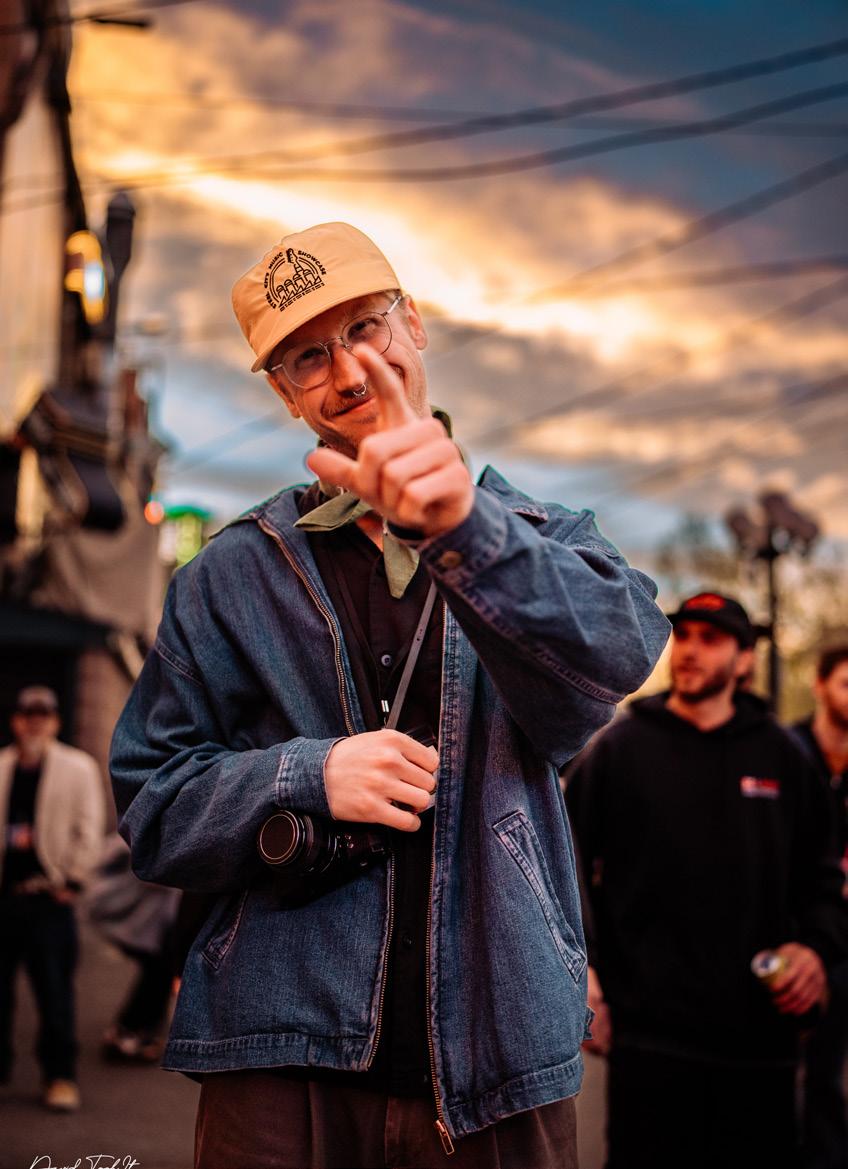
@photos.scs
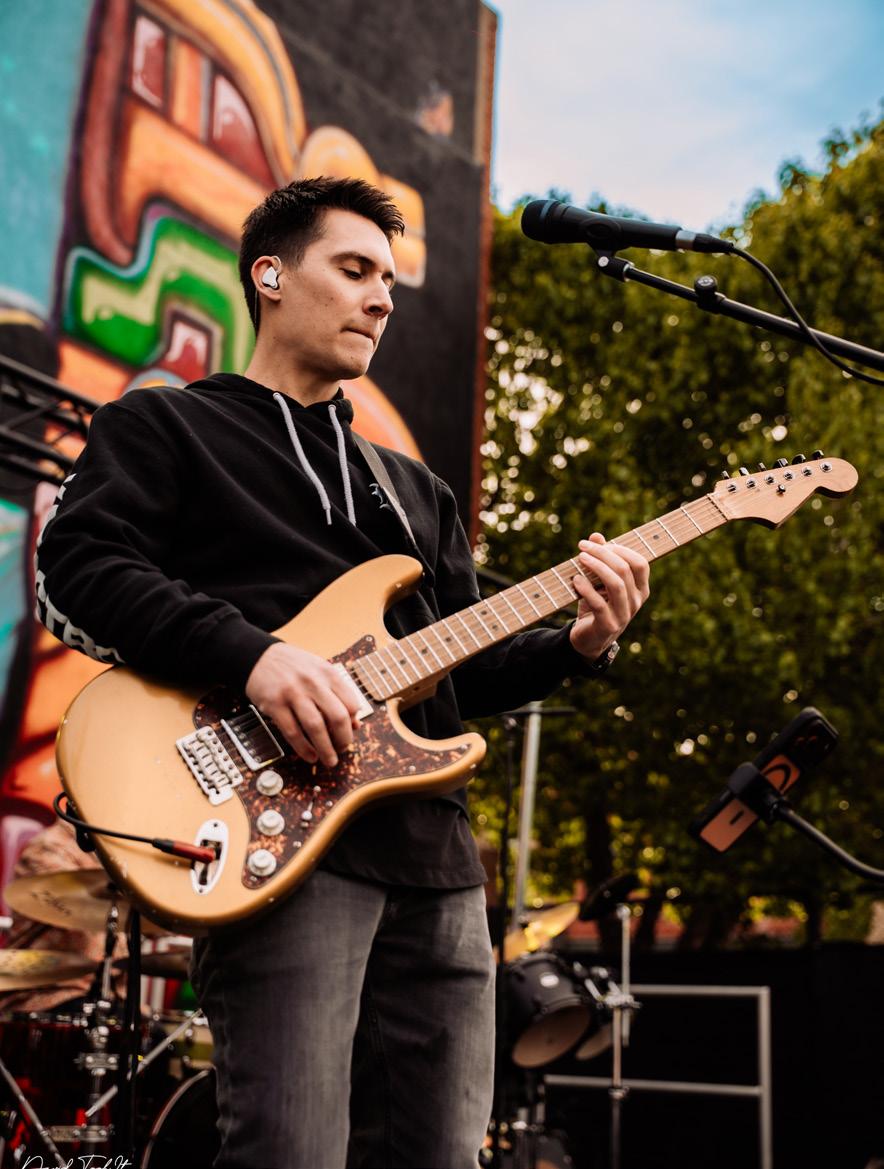
@lepikphotography
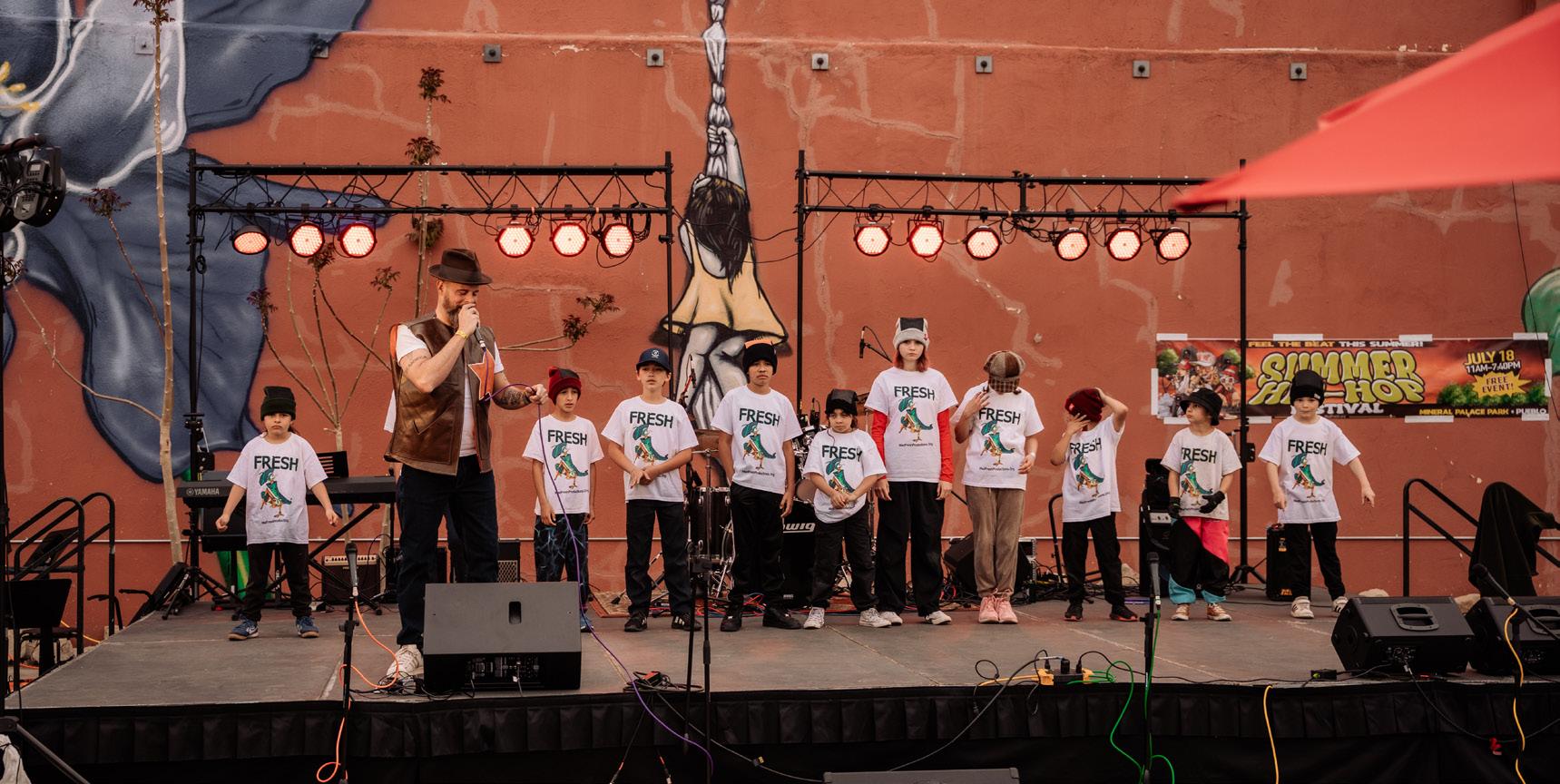
@mad_fresh_productions_
@lepikphotography
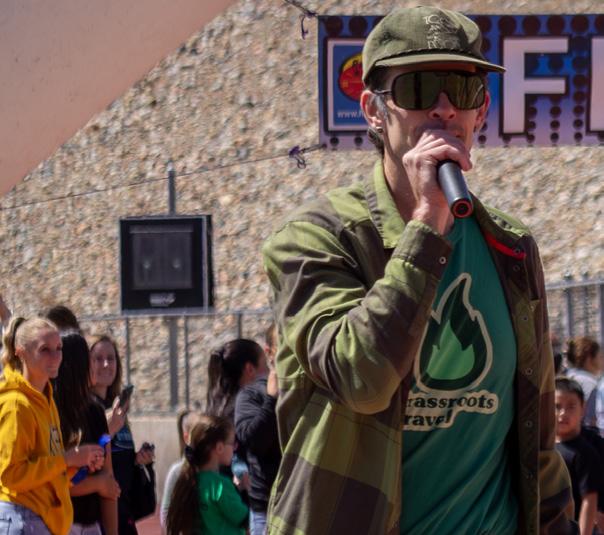
CULTIVATING COMMUNITY
InSIde THe Pueblo Farmers Market
wiTH Marci CochRAn & Brett MilLS
by Nate Jordon
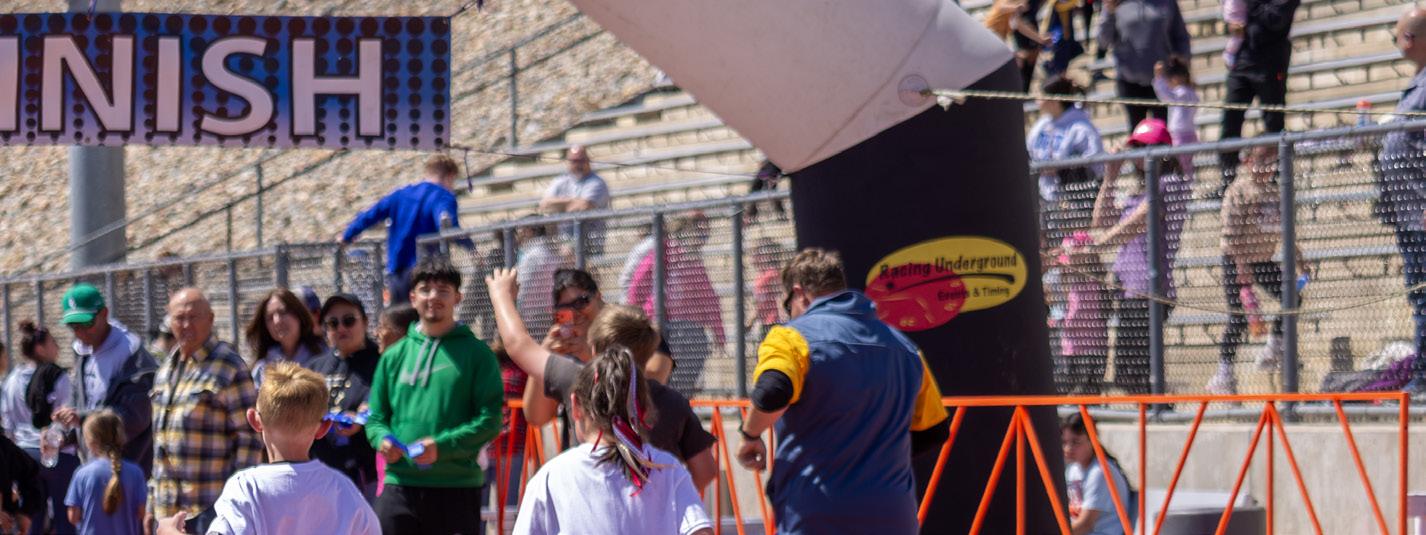
PHOTOS COMPLIMENTS OF PUEBLO FArmErs MARKet
Fresh, local, and full of community, the Pueblo Farmers Market is your go-to spot for farm-grown produce, handmade goods, and live local flavor.
Where: Mineral Palace Park
When: Saturdays, May through October
Time: 7:00 AM – 12:00 PM
Come early, grab a coffee, meet your local growers, and experience Pueblo at its best.
On Saturday mornings in Pueblo, something quietly radical is happening.
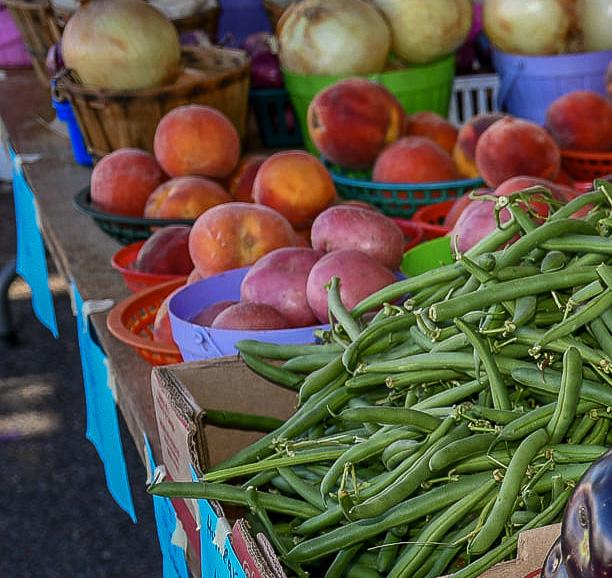
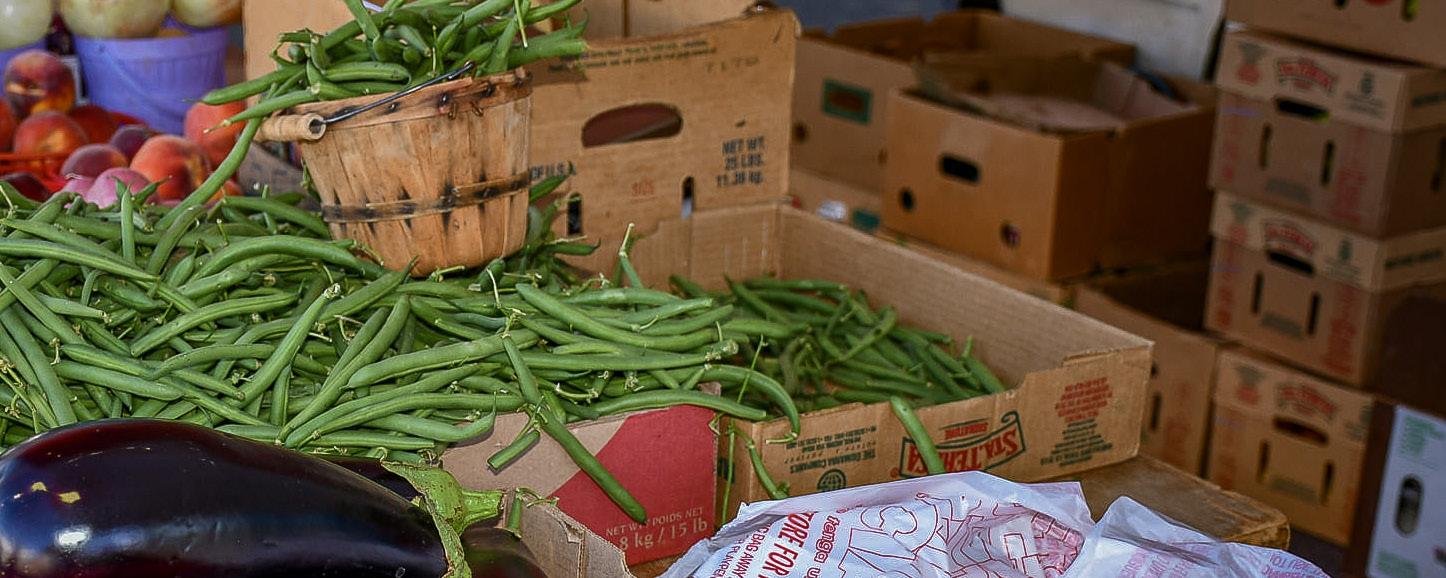
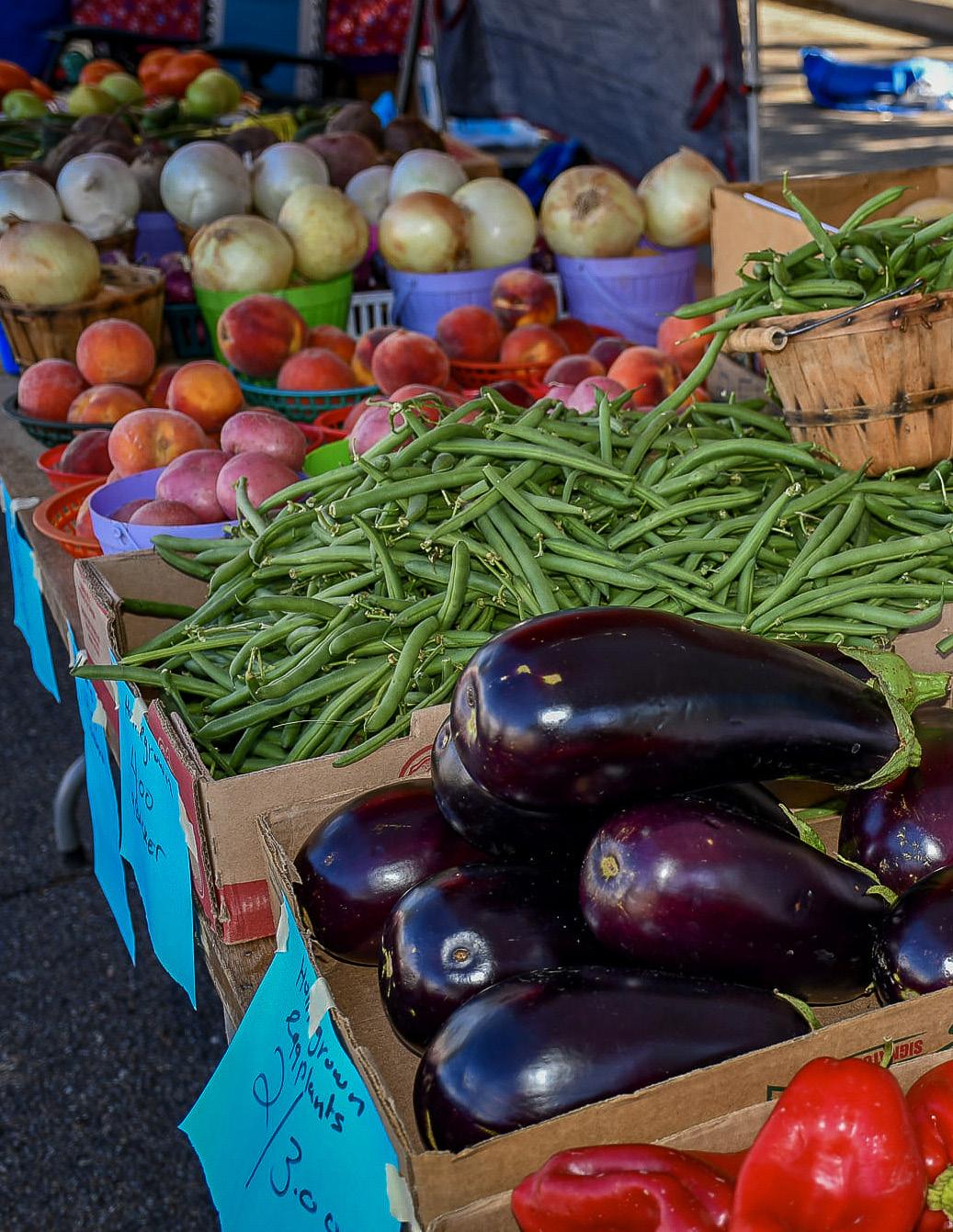
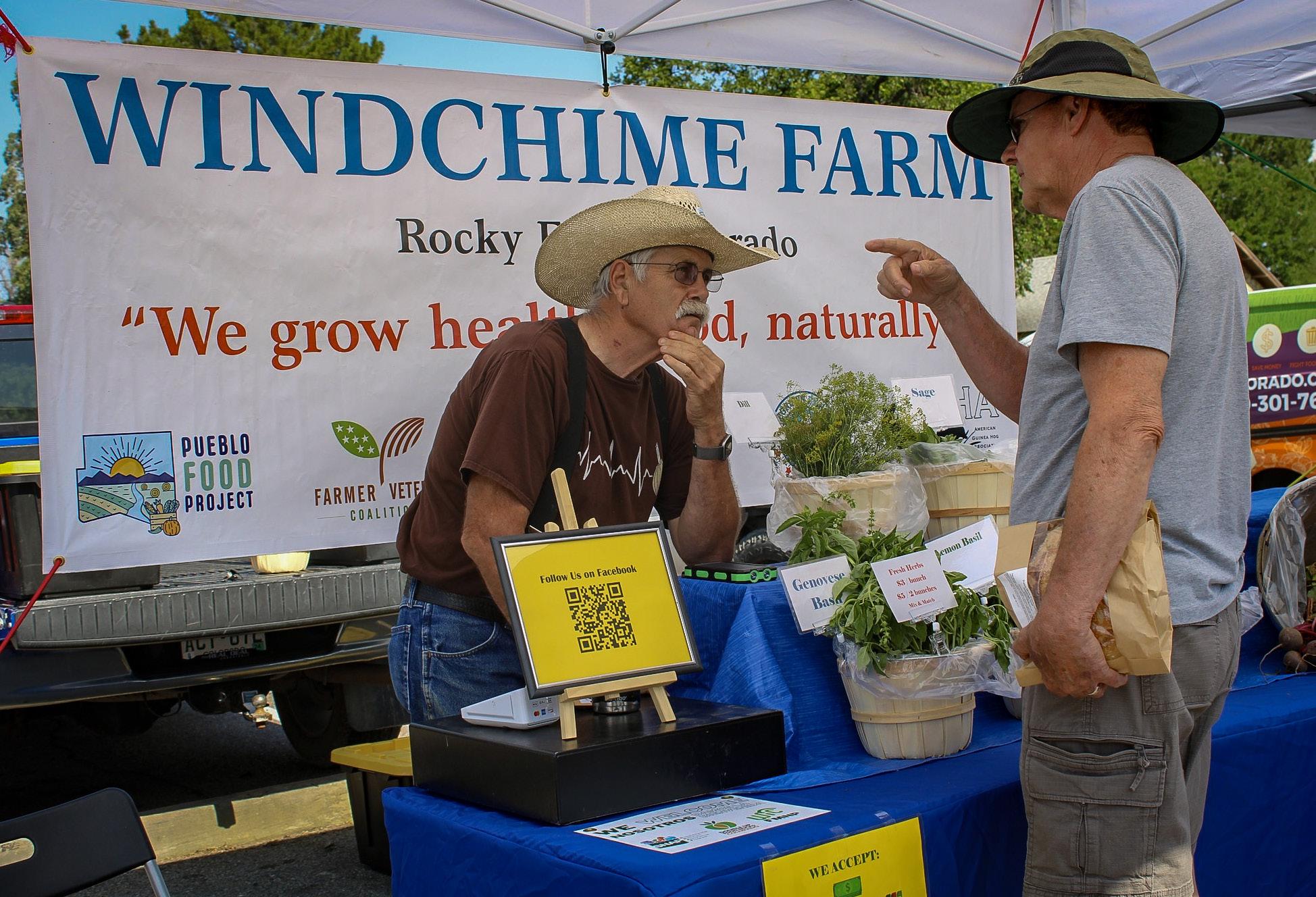
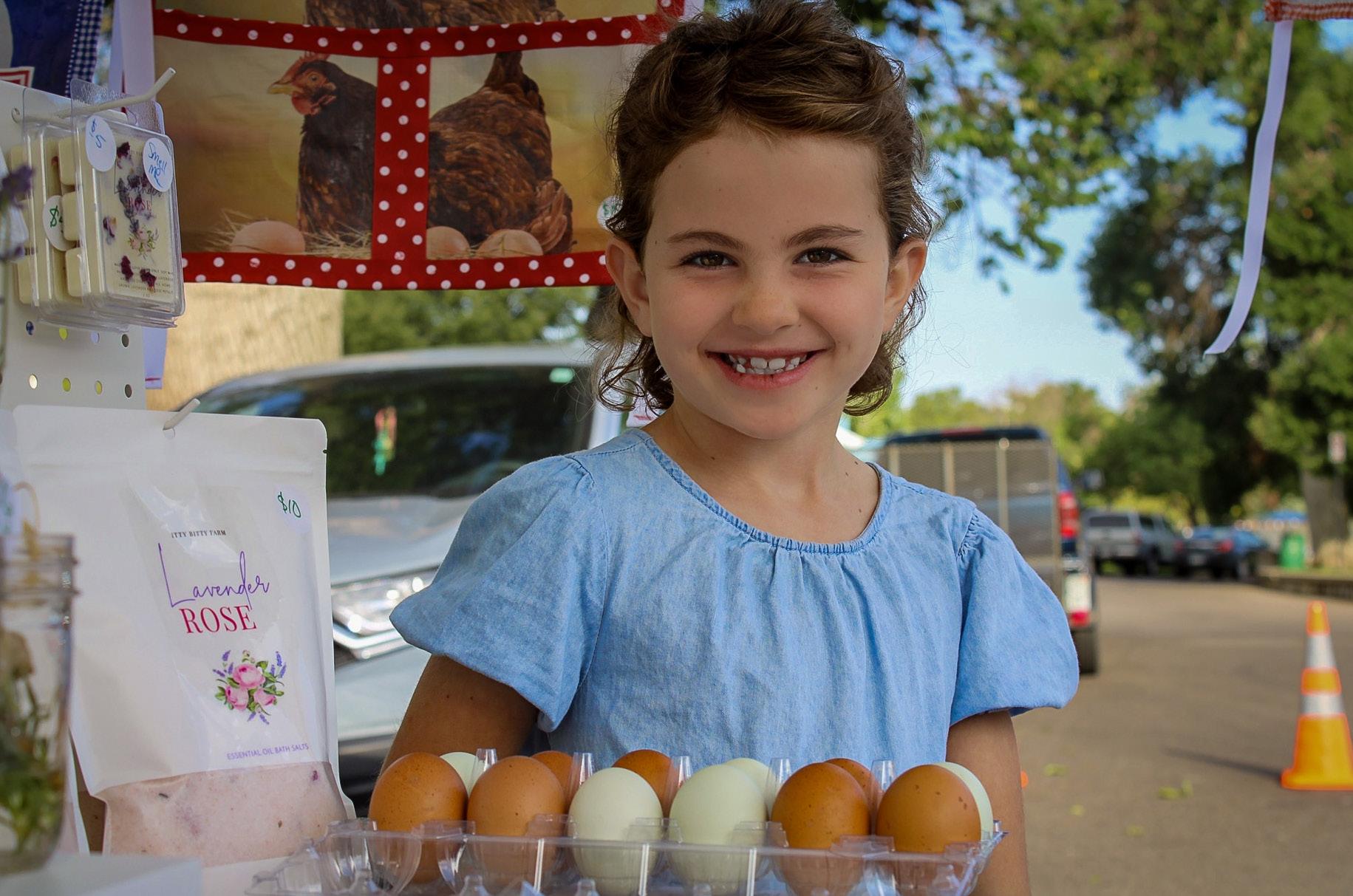
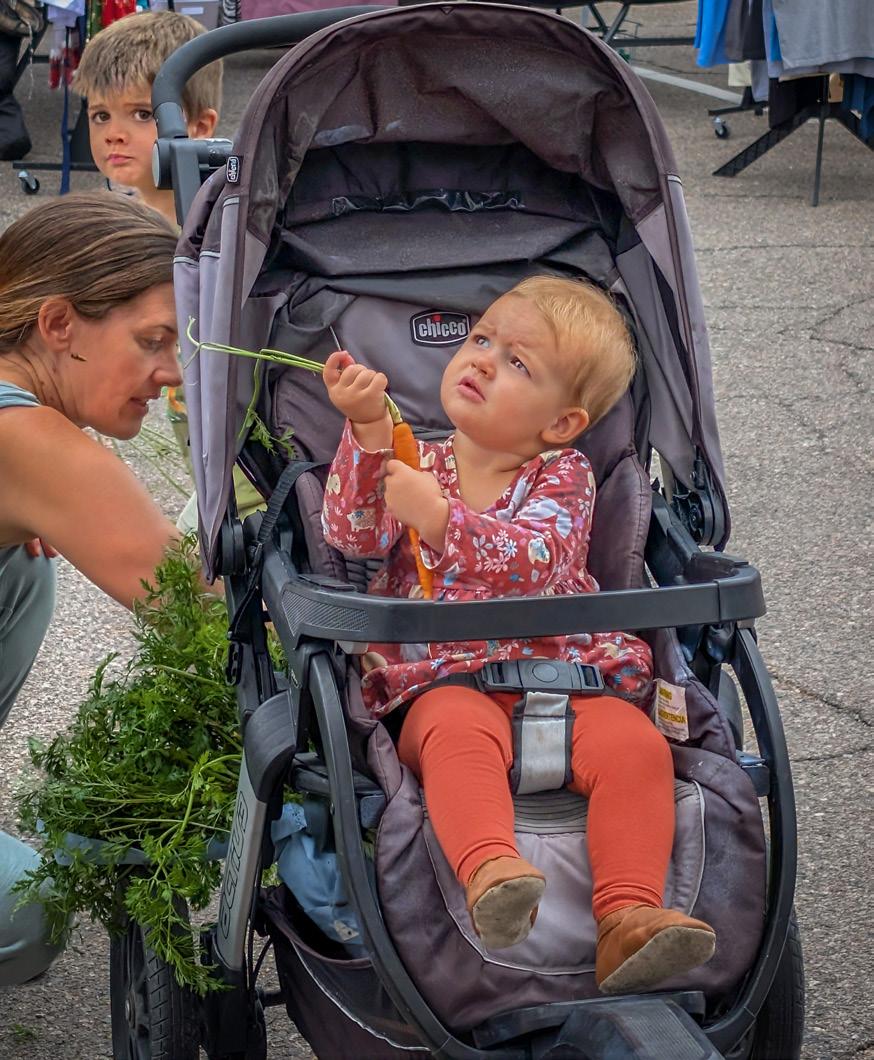
Before the sun climbs too high, tents go up in Mineral Palace Park. Farmers unload crates in the cool morning breezes. Baskets are placed. Bread is set out. Herbs, honey, early-season starts, vegetables, everything arranged not just for sale, but for conversation. By mid-morning, the market begins to hum. Friends bump into each other. A kid takes a bite of a freshly-picked carrot and laughs. A tourist asks a farmer if a red chile is hotter than a green one. Spend a little time here, and it becomes clear: this is infrastructure. This is education. This is community, being built in real time. This is the Pueblo Farmers Market.
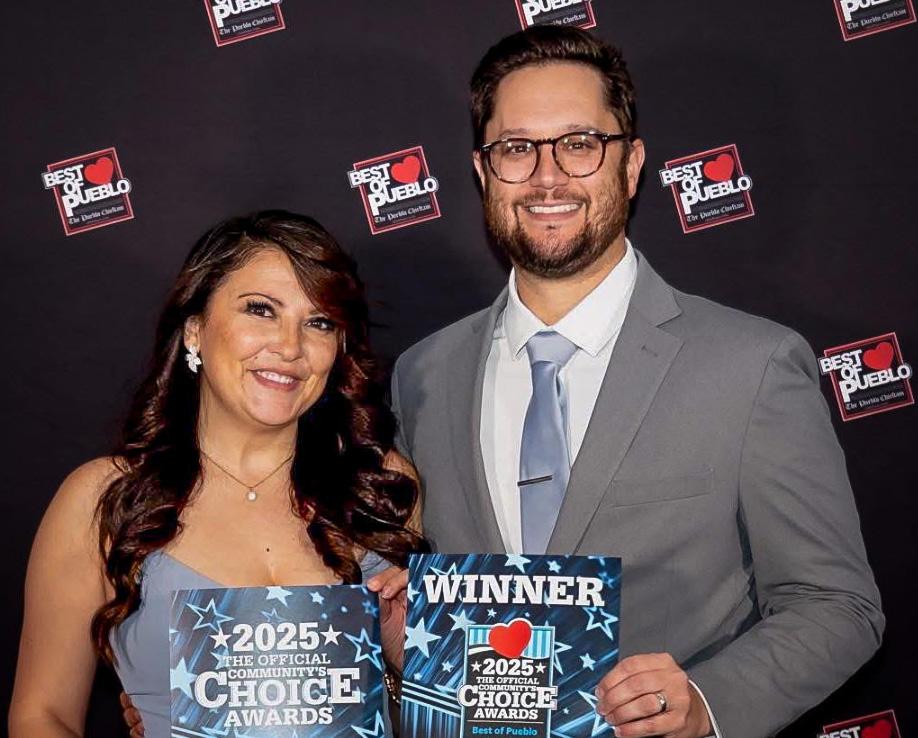
At the center of it are Marci Cochran and Brett Mills, who aren’t just running a market, they’re helping reshape how Pueblo thinks about food, connection, and what it means to support something local. Marci is the Director, and Brett is the Marketer, as well as being “Head Cabbage” at Sweet Valley Farm.
PULSE: Pueblo has deep agricultural roots, but many people still feel disconnected from where their food comes from. Where do you see that disconnect most, and how is the farmers market working to close that gap?
COCHRAN: That disconnect shows up every time someone walks into a grocery store and expects everything to be available all the time—tomatoes in March, produce from anywhere, regardless of season. We’ve lost our sense of seasonality, of what grows here and when, and what it takes to produce that food.
At the market, we rebuild that awareness in real time. You don’t just
buy a tomato—you shake the hand of the person who grew it. Food stops being just a product and becomes a process tied to land, weather, and people. That understanding is vital.
There’s also a bigger piece: local food is food security. During supply chain disruptions, people who were buying locally were far less affected. That matters.
MILLS: From a farmer’s perspective, this disconnect has evolved over time. Large grocery chains offer cheap, convenient produce year-round, and people have adapted to that.
We see the biggest gap with younger generations who don’t always understand where food comes from. That’s why we focus heavily on engaging kids—through hands-on activities, events, and programs like our Community Quest passports with D60. It’s about teaching those connections early.
PULSE: What’s one misconception people have about farmers markets you wish you could correct immediately?
MILLS: The biggest one is price. People assume farmers markets are
always more expensive than grocery stores. Sometimes that’s true—but not always. We work hard to keep prices competitive.
What people don’t always realize is that grocery store produce is often days old and bred for durability, not flavor. When you taste a farmers market tomato next to a store-bought one, the difference is obvious.
I grow heirloom varieties specifically for flavor. My goal is to grow the best-tasting food I can and share that with people. Like we say—pay the farmer now or pay the doctor later.
COCHRAN: I’d add that markets aren’t just a “cute weekend activity.” They’re infrastructure. For many small producers, markets are the difference between staying in business and shutting down.
And no, you can’t get the same thing at the grocery store for less. You can get something that looks similar, but it’s not the same. One was picked yesterday by someone you can talk to. The other was shipped from who-knows-where.
PULSE: When you look at the vendors in your market, what do they represent
We don’’t need big commercial farms here. We need a network of people growing food and supporTIng each oTHer.”’’”
about Pueblo right now — economically, culturally, and even generationally?
COCHRAN: They represent a city rebuilding something real.
Economically, you’re seeing people create their own opportunities— small-scale agriculture, cottage foods, handmade goods. This is a small business incubator.
Culturally, it’s tradition and reinvention side by side. You’ll see chile, honey, baked goods next to newer concepts and younger entrepreneurs. We even have youth vendors and host children’s entrepreneur markets.
And importantly, this isn’t cutthroat competition. We’re building something together. When we collaborate, the whole community benefits.
MILLS: Exactly. Competition here isn’t about beating each other—it’s about raising the quality across the board. It pushes everyone to bring their best.
PULSE: What does it really take for a small, local producer to survive today, and how important is a market like yours to that survival?
MILLS: It’s not easy. I’ve been farming
for over 15 years, and I can tell you I wouldn’t be able to do it without the farmers market and my customers.
Without this market, I’d have to travel farther, spend more, and take money out of the local economy. Pueblo deserves a strong market—and when the market grows, farms like mine grow with it.
COCHRAN: Our role is to build the structure that makes survival possible.
We handle permits, coordinate with city departments, manage SNAP and nutrition programs, provide marketing support, and ensure vendors get paid. We’re creating an environment where people can test and grow their businesses without having to figure everything out alone.
Without that system, a lot of these businesses wouldn’t make it.
PULSE: Farmers markets often feel like community gathering spaces as much as places to buy food. How intentional are you about building that sense of connection?
COCHRAN: Completely intentional.
We’re not just setting up booths— we’re creating a space for community. That includes arts, music, yoga, workshops, and opportunities to learn. We want people to come, stay, connect, and feel like they belong.
Community isn’t a byproduct—it’s the point.
MILLS: Our whole 2026 theme is “cultivating community.” We’re building an experience people actually want—something that feels grounding, welcoming, and real.
PULSE: What’s a moment — something you’ve seen at the market — that made you step back and think, this is
why this matters?
MILLS: It happens all the time. Someone tries a tomato they’ve never had before and comes back the next week saying it’s the best they’ve ever tasted. Or they share memories of gardening with family members who’ve passed. Those moments remind you this isn’t just commerce— it’s connection.
COCHRAN: For me, it’s watching kids try new foods without pressure—and actually like them. Or seeing families use their benefits to take home food that will nourish them for the week. Those small moments turn into lifelong habits.
PULSE: How has the Pueblo Farmers Market evolved over the years, and what pressures or challenges are shaping its future right now?
COCHRAN: We’ve spent years testing everything—days, times, locations— and actually listening to the community. Moving to Saturdays was a direct result of that.
The biggest challenge now is capacity, especially for farmers. It takes serious time and labor to show up consistently.
And we desperately need the next generation of farmers. Without them, the system doesn’t sustain itself.
MILLS: There’s also a cycle we’re trying to break: customers say they want more farmers, and farmers say they need more customers. We need both to show up.
We’re putting everything into making this season strong—but the community has to meet us halfway.
PULSE: Food access is a big issue in many communities. What role does your market play in making fresh, local food more accessible, and where are
the gaps that still need work?
COCHRAN: We play a major role, but we’re not the whole solution.
We accept SNAP and multiple nutrition incentive programs. Someone can turn $10 into $30 worth of food at the market. That’s huge.
But gaps still exist—transportation, awareness, and zoning restrictions. We’re working on solutions like shuttle programs and pop-up markets in underserved areas.
Access isn’t just about food—it’s about systems.
PULSE: If someone new walks into the market for the first time, what do you hope they feel, not just what they buy?
MILLS: We want them to feel like they’ve found something meaningful—like coming home.
COCHRAN: Exactly. Real food, real people, real conversations. A place where you belong just because you’re there.
PULSE: Looking ahead five or ten years, what would success look like for the Pueblo Farmers Market—and what would concern you if things don’t move in that direction?
COCHRAN: Success is a thriving, consistent market—more growers, stronger partnerships, and people making it part of their weekly routine.
What concerns me is losing small producers faster than we replace them—or becoming something that looks like a market but no longer supports local agriculture.
MILLS: I want to see more small, local growers—backyard farmers, micro-producers—coming together to supply the community. We don’t need big commercial farms
here. We need a network of people growing food and supporting each other.
What’s happening at the Pueblo Farmers Market doesn’t announce itself with headlines or grand statements. It builds slowly—week by week, conversation by conversation, transaction by transaction.
None of it feels monumental in the moment. But taken together, it adds up to something bigger: a system rooted in trust, built on relationships, and sustained by people who choose to show up.
If the future of the market depends on anything, it’s that choice. To come back next week. To support local. To grow. To be part of something very simple, but increasingly rare. Something with a pulse.
THE LEGACY OF ARTUS VAN BRIGGLE
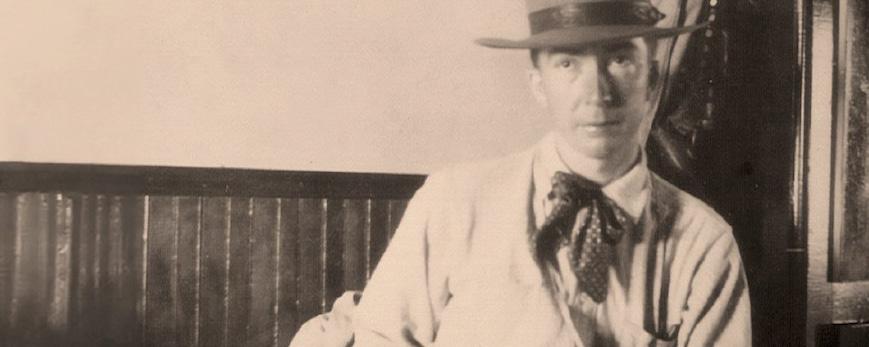
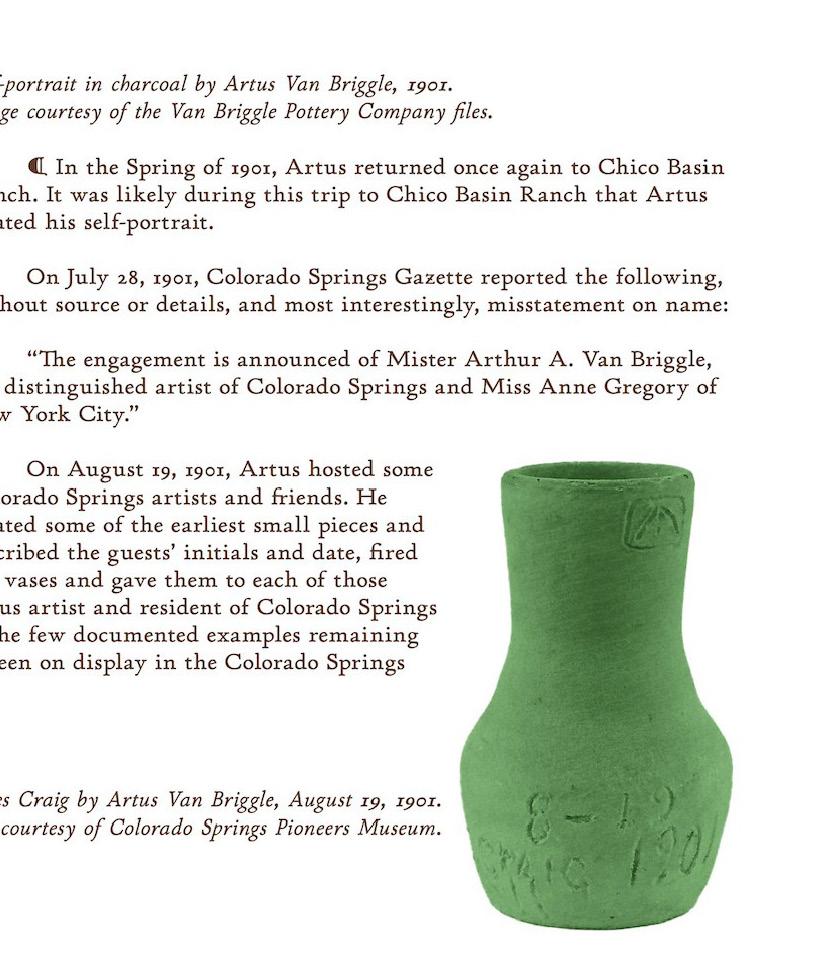
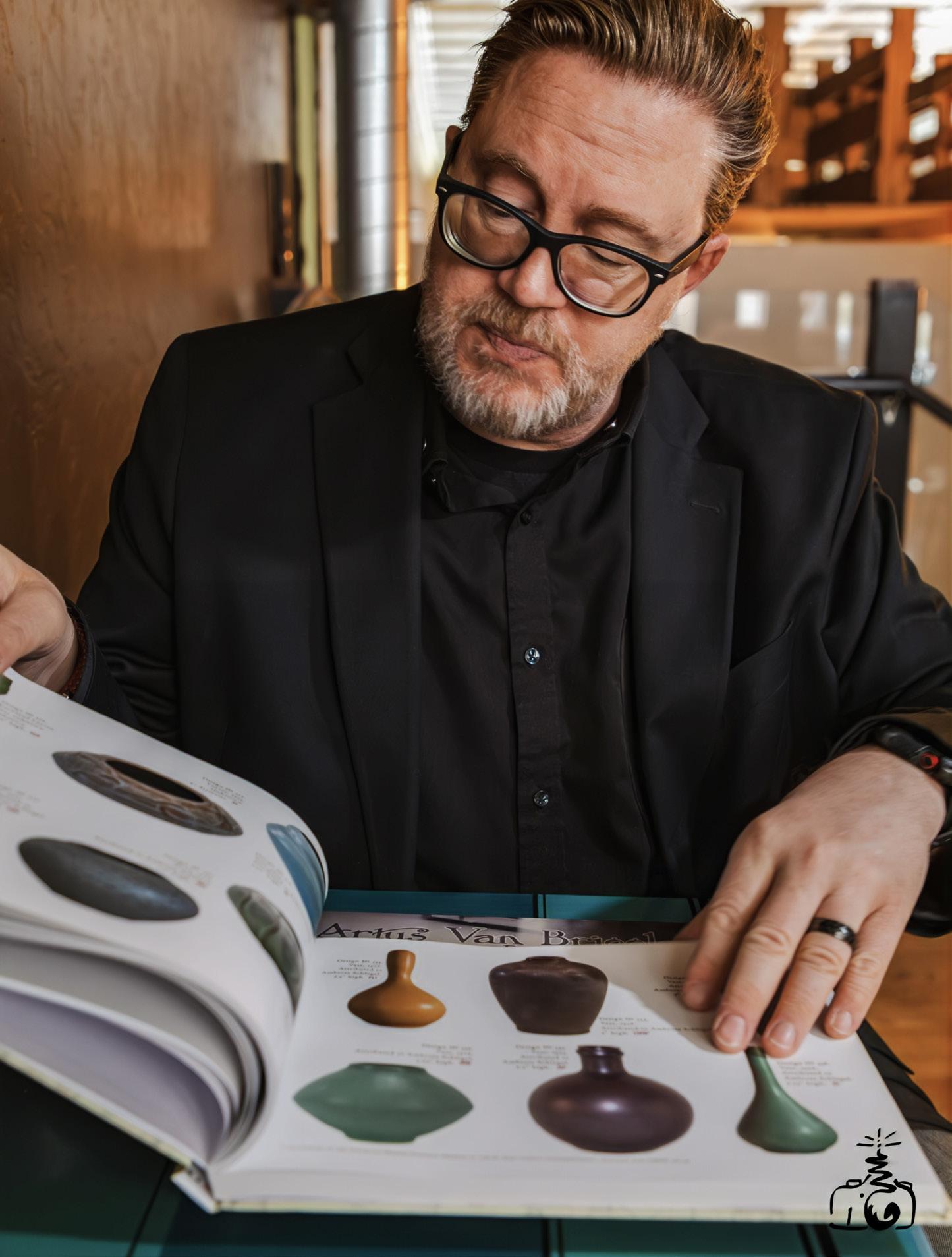
In Southern Colorado, history doesn’t just sit in museums. It lives on shelves, in studios, and in the quiet collections of people who care enough to preserve it. For Kenneth Talmadge Stacks, that preservation started with a single piece of pottery and grew into something much larger: a deep, ongoing effort to understand and document the legacy of Artus Van Briggle.
It Takes to Keep HiSTory
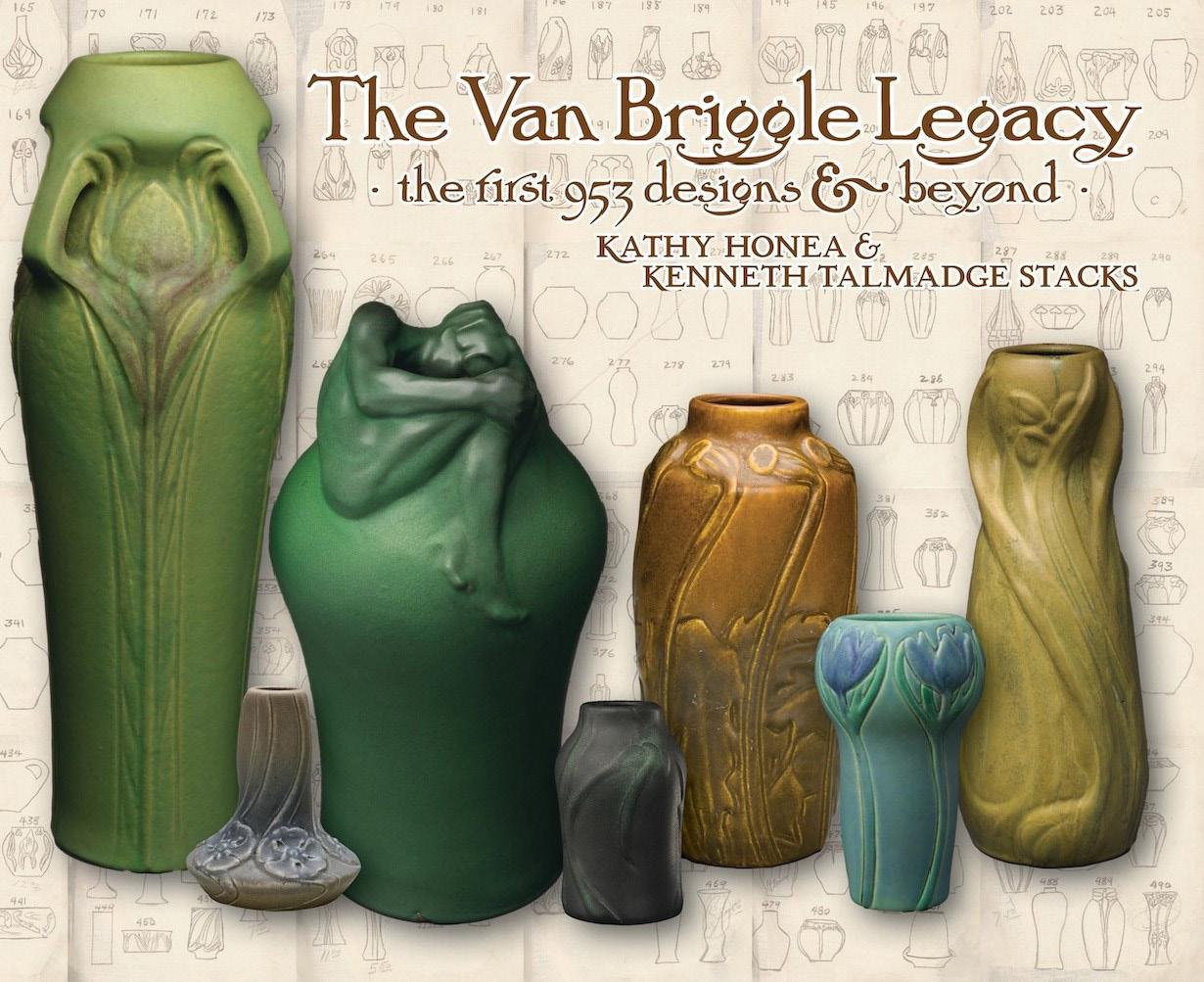
As a collector, writer, and independent publisher through Kunsthaus Press, Stacks occupies a space where curiosity meets craftsmanship. His work on Van Briggle (a collaboration with longtime researcher Kathy Honea) does more than catalog an artist’s output. It reconstructs a story that has been scattered by time, fire, and flood, piecing together the life of a man whose influence extends far beyond the clay he shaped.
by Nate Jordon
Van Briggle is often associated with Colorado Springs, but his reach and his relevance run deeper across the region. At a time when Pueblo was a booming industrial and cultural center, his work found its way into local galleries and homes, quietly embedding itself into the artistic fabric of Southern Colorado. Yet for all its visual familiarity, much of Van Briggle’s story has remained incomplete, shaped by assumptions and missing records.
Kenneth Talmadge STacks and What
Alive
For More Information:
Kunsthaus Press
https://kunsthaus.press/
Stacks set out not just to fill those gaps, but to acknowledge them, to present a history that is as honest about what we don’t know as it is detailed about what we do. The result is a body of work that feels less like a definitive answer and more like an invitation: to look closer, to ask better questions, and to recognize that the story of this place is still being built.
PULSE: What first pulled you into the story of Artus Van Briggle, and at what point did you realize you had a book on your hands?
STACKS: I collect American Arts and Crafts antiques, so Van Briggle pottery somehow found its way into my collection. At this point, I can’t remember what my first piece was or where it came from. My wife was an art teacher and sculptor, and when we met, she fell in love with my collection. So, we became serious collectors around 2006 or so. As the collection grew, the turning point came when I started looking for reference material. The most useful resource I found was Van Briggle Notes by Kathy Honea, but it was out-of-print. I reached out to her to see if she’d like to re-release it as a PDF or an E-book, but she had some other ideas, and two books later,
here we are. Neither book would have existed without Kathy’s knowledge, input, and resources.
PULSE: Van Briggle’s work is often appreciated visually, but less understood historically. What did you discover about him that most people have been missing?
STACKS: I think it was something I had been missing as well. Artus’ importance as an artist was not just regional, but national—even global, to a degree. Along the Front Range, his work is often appreciated visually, but the depth of his career before arriving in Colorado is easy to
overlook. Our first book covers his art education and career in depth. Not everyone knows that he didn’t plan to live here. He came because of tuberculosis, and he only lived about five more years. What surprised me was how much he and his wife Anne accomplished in that short time, creating a body of work that continues to define American art pottery.
PULSE: In researching Van Briggle, did you encounter any myths or long-held assumptions about Van Briggle that didn’t hold up under scrutiny?
STACKS: One of the biggest assumptions is that Van Briggle was a single,
consistent operation with a clear and documented history. In reality, the pottery changed hands multiple times over more than a century, and each owner brought a different vision, at times emphasizing tourism, at others producing glossy, stylized work during the height of Mid-Century Modern design. Another misconception is that there is a complete and reliable historical record, but there isn’t. There were two major fires, and part of the pottery was destroyed when Fountain Creek flooded, which resulted in the loss of important records, designs, glaze formulas, and more. The result is a fragmented understanding. People often know one version of Van Briggle, but not the full picture.
PULSE: Pottery doesn’t always get the same cultural spotlight as painting or sculpture. What do you think Van Briggle’s work says about the artistic identity of the American West?
STACKS: Pottery can be functional or decorative, and take many forms, but Artus’ work reflects a shift in his identity. He began at Rookwood Pottery Company in Ohio during the golden age of American art pottery, but once he relocated to Colorado, his entire design approach changed. Influences from Ute design motifs, local wildlife, plants, soils, and clays all became central to his work. His artistic identity became a direct response to the landscape and culture around it, a kind of snapshot of that time and place.
PULSE: As both a writer and a publisher through Kunsthaus Press, why did you decide this story matters now?
STACKS: It’s no secret that technology has had a massive impact on the humanities—music, literature, art, and so on. I think it’s important to preserve stories like Artus Van Briggle’s while information is still accessible and can
be meaningfully organized. Parts of that history have already been lost or fragmented over time, but I hope these books contribute in some small way.
PULSE: What was the most surprising or humanizing detail you uncovered about Van Briggle during your research?
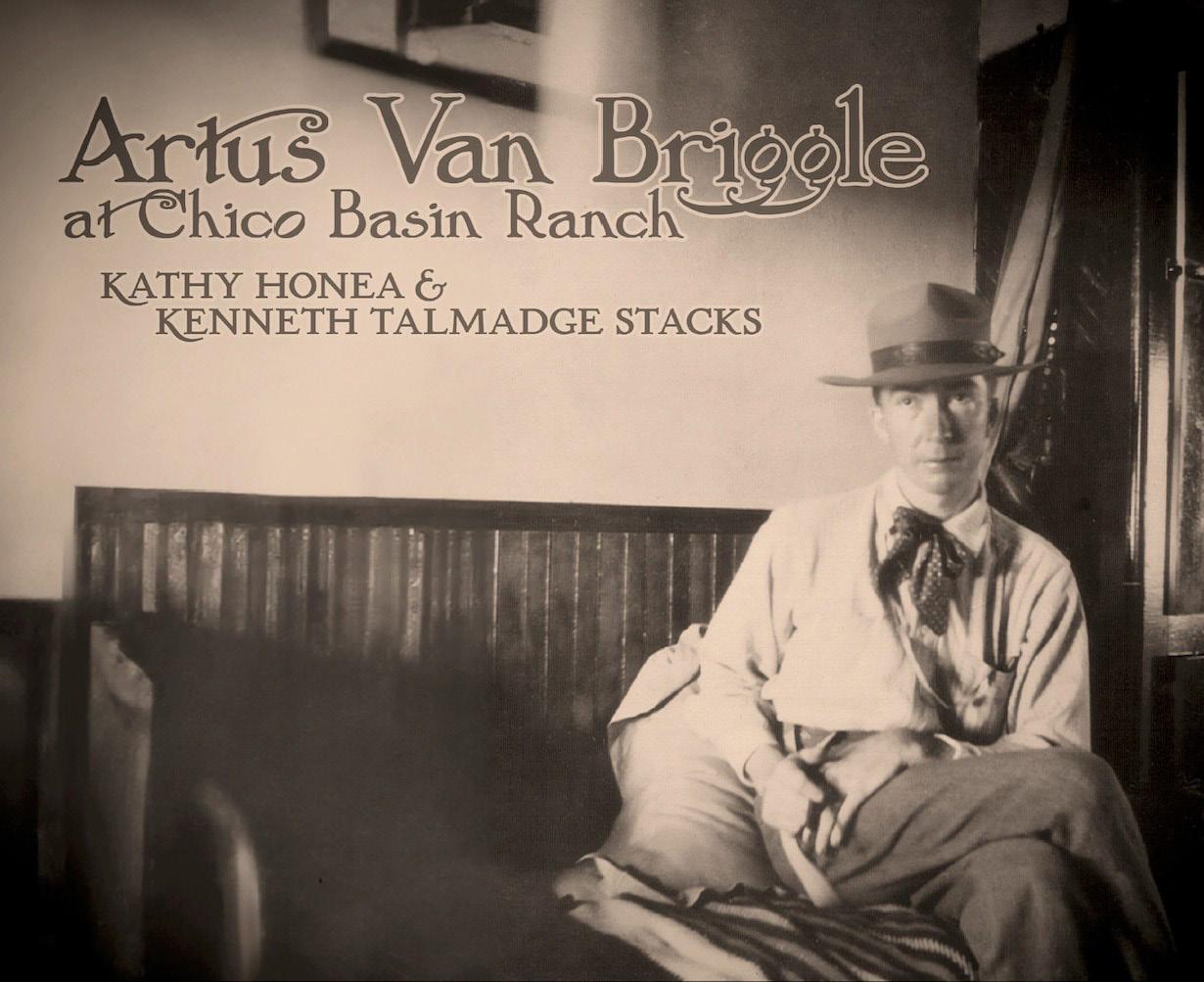
STACKS: That Artus was a normal guy, without any pretension whatsoever. When he felt well enough, he would visit Chico Basin Ranch and the Holmes family. He’d play the piano for everyone, sketch and paint with their daughter Agnes, play practical jokes, smoke cigars and enjoy an occasional sip of whiskey.
PULSE: There’s a strong thread of craft, labor, and legacy in Pueblo’s history. How does Van Briggle fit into that broader story of the city?
STACKS: When Artus was in Colorado Springs, it was smaller than Pueblo. Pueblo was more industrial and, in many ways, more affluent at the time. Several upscale Pueblo retailers carried Van Briggle pottery, including the Foltz-Hardy art gallery, which was featured in a CF&I newsletter describing the pottery as “famous” and “purely native.” I think of Pueblo as a city of labor and industry, but also one that valued craftsmanship and design, from steelworks to architecture. Van Briggle’s emphasis on handcraft and regional influence fits right in.
PULSE: Independent publishing can be a grind. What keeps you committed to doing this work outside of the traditional publishing system?
STACKS: By publishing independently, I’ve been able to take the content Kathy and I have collected and present it in the manner that I think suits it—where the photos are placed,
how the text flows, usage of period fonts and their exact sizes and colors. For our initial run, we were even able to offer a tipped-in signature plate.
PULSE: How do you balance honoring historical truth with telling a compelling narrative that keeps readers engaged?
STACKS: I would hope those aren’t opposing goals, but you never know. The historical truth is the foundation, and that a story like Artus’ would be compelling. There are gaps in the record, and I think it’s important to be honest about those, rather than try to fill them in. We’re trying to present the material clearly and accurately, and let the story speak for itself. If we’re interested, then it may interest others as well.
PULSE: If someone in Pueblo picks up your books on Van Briggle, what do you hope they walk away understanding, or feeling, about their own connection to this place?
STACKS: Pueblo, Colorado Springs, and Colorado in general have a rich artistic history—one that people may not always recognize as part of their everyday surroundings. To know that it’s not distant or abstract, but rather something tied to the place they live,
and perhaps they’ll have a greater appreciation for what’s been built here over time.
* * *
What emerges from Stacks’ work, and from the story of Artus Van Briggle, isn’t just a clearer picture of an artist, but a reminder of how fragile and essential cultural memory can be. History isn’t a fixed narrative. It’s something that has to be gathered, protected, and, at times, rebuilt from what remains. It’s the dedicated work of people like Stacks who collect these stories, piece by piece, that becomes the difference between a history that fades and one that endures.
In a region often defined by steel, railroads, and industry, Van Briggle’s legacy offers a parallel story—one rooted in craft, design, and a deep response to the landscape itself. It’s a reminder that the identity of Southern Colorado has always been more layered than it first appears, shaped as much by artists and makers as by labor and industry. Through his work, Stacks isn’t just preserving the past—he’s making a case for paying attention to it.
THE LONG ROAD FORWARD
Reshaping How Pueblo County Moves, One TRAil at a TIme
by Nate Jordon
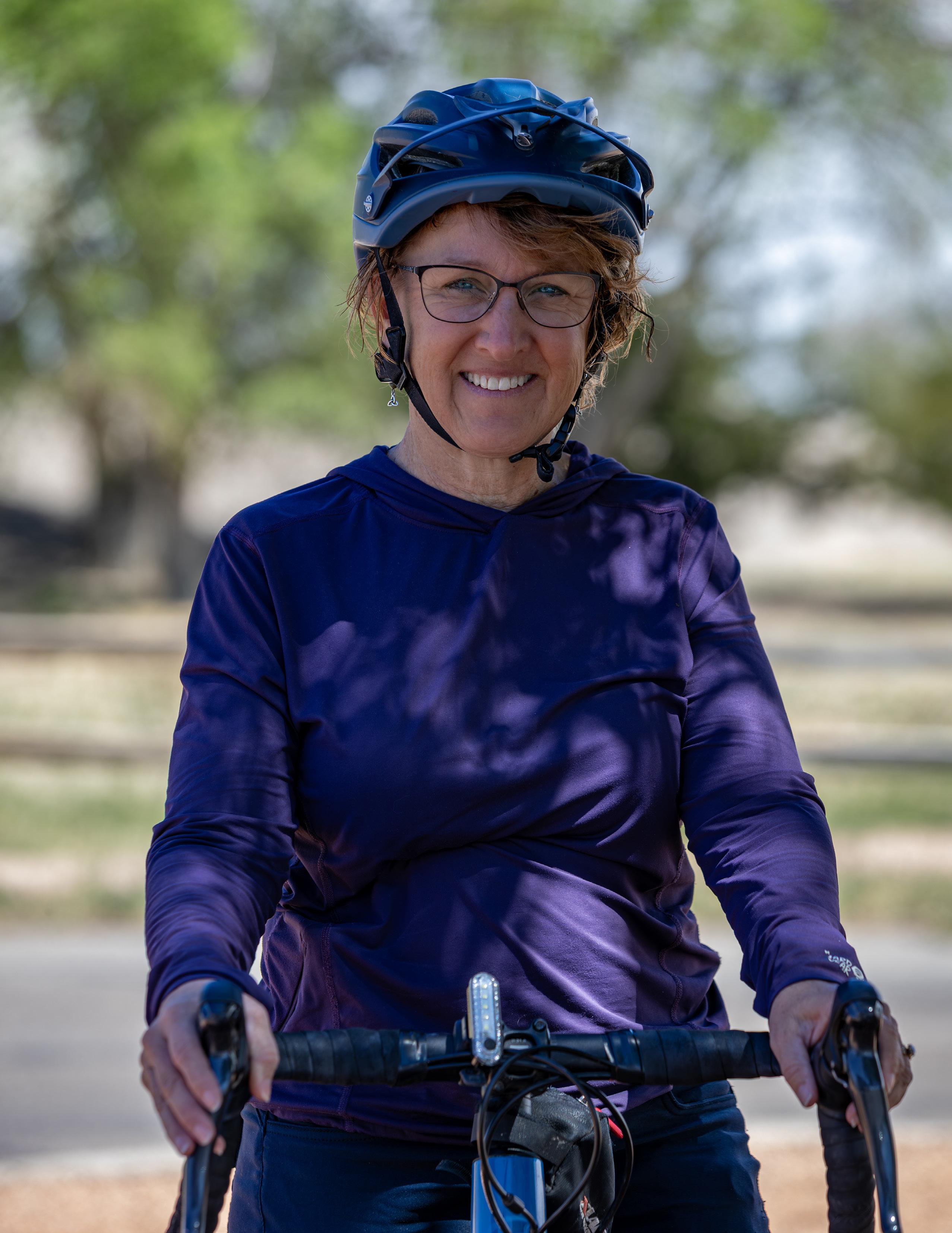
Change doesn’t always arrive with a parade. Change often comes through persistence, patience, and the drive to show up and do the work when no one is paying attention. Few understand that better than Kim Arline.
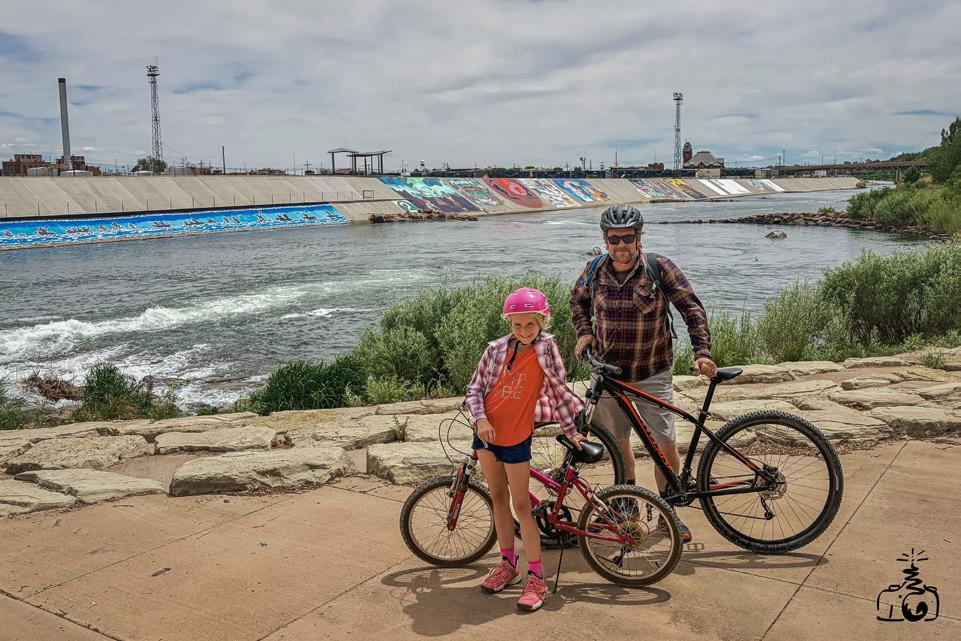
For nearly two decades, Arline has been at the center of a quiet but transformative effort to reshape how Pueblo County moves. As a volunteer leader with PACE (Pueblo Active Community Environments), she has pushed for a connected network of trails, bike lanes, and pedestrian pathways, work that began not with a grand vision, but with a simple goal: helping her own kids safely get to school.
What followed were years of advocacy, public meetings, grant writing, and persistence in the face of skepticism. Over time, Arline has become a steady voice for something bigger: a community designed not just for cars, but for people.
Today, as long-awaited trail connections finally take shape and more residents embrace walking and biking, that vision is becoming visible in ways it never was before. But the story of PACE isn’t just about infrastructure. It’s about culture, access, and the belief that small changes, sustained over time, can fundamentally reshape a place.
PULSE: You’ve been working on PACE since 2008, and even earlier on your own. What kept you going through the years when progress was slow?
ARLINE: I started in 2006, writing a grant for a bike path to my kids’ school. Progress was slow, and at first, I wasn’t patient. I spent years attending public meetings, getting on agendas, and explaining not just the health benefits, but the economic value of building a community where
people actually want to live.
There wasn’t much understanding early on. I became known as “the bike lady,” even though I was advocating for both pedestrians and cyclists. I’d invite officials to ride with me so they could see what it was really like. Over time, I learned you have to keep showing up—and let people catch up to the idea.
PULSE: When you look at Pueblo today compared to when you started, what’s the most significant shift you’ve seen in how people relate to biking and walking?
ARLINE: People are more active now. Years ago, most cyclists either rode out of necessity or drove their bikes somewhere else to ride. It wasn’t seen as something you did in town.
We heard a lot of, “This isn’t Boulder or Portland.” So, we focused on changing that perception—encouraging people to get out, leave the car at home, and experience the community differently. That shift didn’t happen overnight, but you can see it now.
PULSE: You mentioned at one point, people only rode bikes out of necessity. What do you think changed culturally to make biking something people
choose to do?
ARLINE: We focused on what’s called the “Five Es”:
• Engineering
• Education
• Encouragement
• Enforcement
• Evaluation
Infrastructure matters—but so does education. We worked with schools, created safety programs, and even trained police officers on bicycle laws. Encouragement was huge too—events like Bike to Work Day, community rides, and our weekly cruiser rides helped people feel comfortable.
Those rides introduced hundreds of people to biking in Pueblo. Over time, confidence grew, and participation followed.
PULSE: A lot of your work depends on grants and long timelines. What have those delays taught you about how change actually happens in a community?
ARLINE: Federal funding takes 4–5 years from approval to completion. I wrote a grant when my son was in first grade—he finally used that path in fifth.
I had to learn to shift gears. While waiting on infrastructure, we focused on establishing priorities within non-motorized transportation plans and tackled the low-hanging fruit like bike racks, identifying small, easy gaps to fix, and clearing debris. You make a push, then wait. Eventually, it snowballs.
In the past few years, we’ve seen that momentum. Projects we worked on for over a decade are finally coming together.
PULSE: The new trail connections—like Purcell and the Medal of Honor extension—are finally coming together. What do these projects unlock for Pueblo that didn’t exist before?
ARLINE: Connection.
That’s always been the goal—connecting neighborhoods to schools, recreation, and businesses. In Pueblo West, especially, we’ve been able to use existing easements to build that network.
When people can move safely and easily through their community, everything changes.
PULSE: Your work touches safety, accessibility, and recreation all at once. Who do you think benefits the most from a connected trail system, and who still isn’t being reached?
ARLINE: Everyone benefits—whether they’re walking, biking, or driving. Giving people their own space makes things safer for everyone.
The biggest gap is people who haven’t tried it yet. Most people would enjoy the trails if they experienced them. That’s why group rides and events matter; they help people take that first step.
PULSE: You’ve emphasized “all ages
and abilities.” What does that actually look like on the ground, and where do you think Pueblo still falls short?
ARLINE: About 30% of our community can’t drive—whether due to age, physical limitations, or cost. And our transportation system doesn’t serve them well.
I love seeing kids, seniors, and people using wheelchairs out on the trails. I’ve seen people improve their health dramatically by getting outside and being active. As a pharmacist, I see how much illness is due to sedentary lifestyles.
But we still fall short on basic connectivity. Sidewalk or trail gaps, poorly designed facilities with routes blocked by curbs or ninety-degree turns that work for pedestrians but not bicycles. These are real barriers. We need to design infrastructure with everyone in mind, not just drivers, not just bicycles, and not just pedestrians.
PULSE: Campaigns like Bike Bingo and Pick Up the PACE are creative ways to engage people. What have you
learned about what motivates people to actually get outside and use these spaces?
ARLINE: It varies. Competition worked for a while, but not for everyone. Now we’re focusing more on connection—getting people involved through events and community engagement.
Sometimes the hardest part is just starting. Once people get out there, they usually realize how much they enjoy it.
We will see if the competition and a big anniversary inspire people. At times, I feel like we have come so far, and I am thinking we are doing pretty well compared to where we used to be.
PULSE: You’ve been doing this long enough to see seeds you planted years ago finally take shape. Is there a specific moment or project that felt like a turning point for you?
ARLINE: Yes, when I saw local officials start to take non-motorized transportation seriously. That’s when it
Pueblo has been underesTImated for a long TIme, but people are STarTIng to see its potenTIal
When people can move safely and eaSIly THrough THeir community, everyTHing changes.”
stopped feeling like pushing water uphill.
Now, it feels like guiding something that already has momentum.
For me personally, connecting Pueblo West to the city has been huge. After years of advocacy, that network is finally coming together. There’s still work to do, but it’s a big step.
PULSE: Looking ahead, if Pueblo fully embraces this connected network, how do you think it changes the identity of the city over the next decade?
ARLINE: Pueblo has been underestimated for a long time, but people are starting to see its potential and what it offers: affordability, friendly community, and access to the outdoors.
Colorado attracts active people, and Pueblo has the weather and landscape to support that lifestyle. A connected network gives people options—reducing traffic, saving money, and giving young people more independence.
It changes how people experience the city—and how they feel about living here.
movement is something reserved for convenience or something that becomes part of daily life.
After nearly two decades, Arline’s work offers a simple but powerful idea: when a community invests in how people move, it changes how they live.
The next phase of the work for PACE is not just building infrastructure but building participation.
Because at its core, this isn’t just about bikes or trails. It’s about how a city chooses to care for its people, how it creates space for health, connection, and independence. It’s about whether
Arline’s “Funner to Be a Runner” 2026 was held at Dutch Clark Stadium.
Check out this beautiful Pasque flower we found in Pueblo Mountain Park in March. It’s one of Colorado’s earliest spring wildflowers, often blooming just as the snow begins to pull back from the foothills., meadows, and rocky slopes. Its name comes from its tendency to bloom around Easter, making it a fitting symbol of renewal, resilience, and the first quiet signs of life returning to the high country.
CONTRIBUTOrs
DAVID ARMENTA
David (aka David Took It) is one of Pueblo’s signature photographers. David’s work is instantly recognizable. His use of light, both natural and artificial, is what makes his work pop, as well as his use of warm tones. David provides us with eye-catching images of the people and events that make Pueblo County a unique place to live and visit.
JAVIER
QUINONES
Javier is a community leader and arts advocate based in Pueblo. He is the founder and executive director of Mad Fresh Productions, a nonprofit dedicated to youth development through Hip-Hop culture. Javier creates platforms that celebrate graffiti, breakin’, emceeing, and DJing while strengthening community connections. Through events like the annual Hip-Hop Festival, he empowers young people to lead, create, and thrive.
STEVEN SPENCER
Steven is a retired veteran with a master’s degree in film, bringing a disciplined eye and storytelling mindset to everything he creates. As a photographer, he focuses on capturing moments with intention, blending technical skill with narrative depth shaped by both service and cinematic training.
FORD GRANADA
Ford is Nate’s alter-ego. The bastard child of Rocky Balboa and Forrest Gump, Ford is a Neanderthal. He refuses to assimilate. He pounds the typer with his fists. His eloquence puts a walrus to shame. He lives a life like no other. When he’s not creating visual and written content for Pueblo County Pulse, he’s fooling around with his creative experiment: THE LIFE AND MISADVENTURES OF FORD GRANADA. Google it.
LEPIK PHOTOGRAPHY
From weddings and senior portraits to small business projects and documentaries, Lepik Photography has cultivated more than a business—they’ve built a practice rooted in connection, collaboration, and community pride. This dynamic duo was recently awarded the 2025 Best of Pueblo for Photography/Videography!
UNALOME PHOTOGRAPHY
Unalome Photography, LLC (aka Nate’s side-hustle) focuses on portraits, events, and restorations. Based in beautiful Pueblo West, we serve all of Colorado.
ON THE COVER
Easily identifiable from I-25, the legendary Colorado Fuel and Iron Company was a major 19th-century industrial powerhouse based in Pueblo, acting as the largest private landowner and employer in Colorado. Founded in 1880, its Minnequa Steel Mill created “the Pittsburgh of the West,” producing rails, nails, and wire while employing a diverse, immigrant workforce. Today, the site operates under Evraz and is preserved by the Steelworks Center of the West.