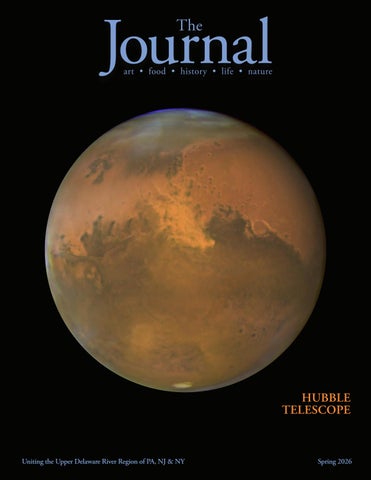
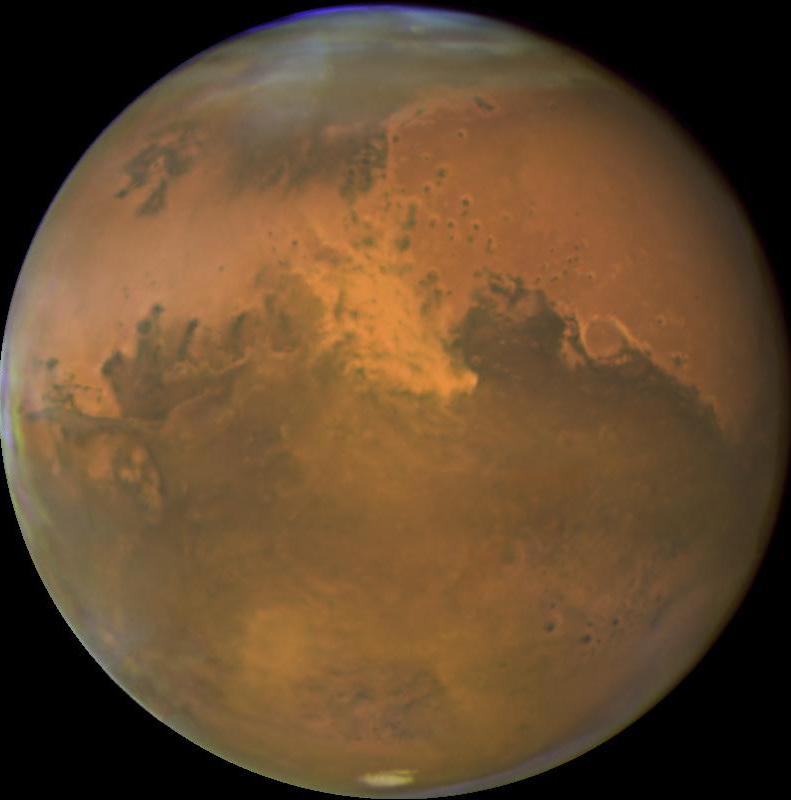
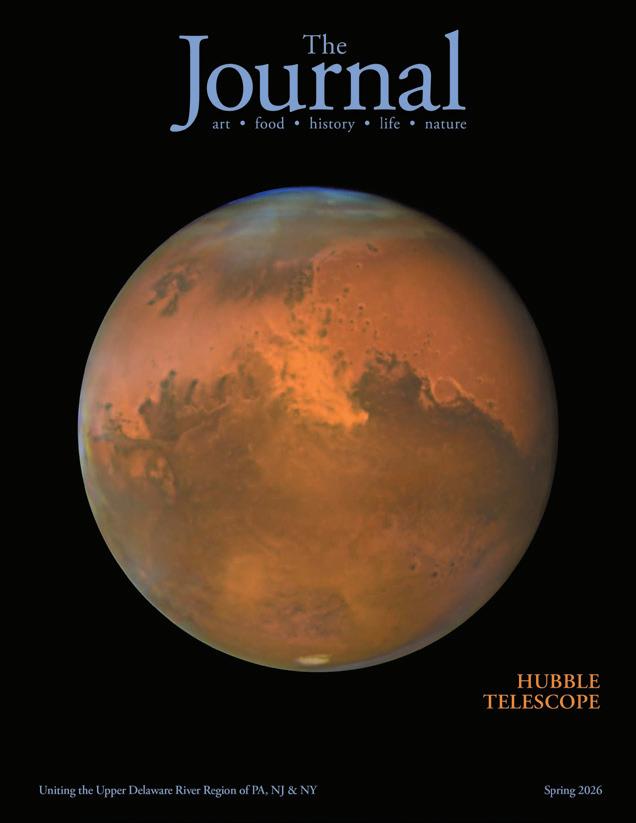
A dust storm on Mars appears as the brighter red, cloudy region, October 29, 2005. Photo credit: NASA, ESA, The Hubble Heritage Team (STScI/AURA), J. Bell (Cornell University) and M. Wolff (Space Science Institute)
Publisher & Editor
Amy Bridge publisher@milfordjournal.com
Graphic Design
Maureen Taylor
Susan Mednick susanmed2@optonline.net
The Journalists
Associate Editor
B’Ann Bowman Editorial Readers
Robert Bowman Amy Smith
Advertising Team
Amy Bridge amy@milfordjournal.com
Kimberly Hess kimberlyhess212@gmail.com
Armand Ensanian • Jessica Storch Bathgate
Marilyn Rosenthal • Noreen Case
Eric Francis
The tri-state upper Delaware River highlands and valleys are a place of rare beauty…
Seeing the region and living in it almost aren’t enough. Such beauty should be captured on canvas or film so that one can truly appreciate it, glimpse it in the quiet of an art gallery or museum, or between the pages of a poetry book or literary sketch.
The Journal Group’s mission is to capture these momentary snapshots of beauty graphically and through the written word. We celebrate our area and the uniqueness of the people who live and work in the tri-state region. From Pike to Wayne and Monroe to Lackawanna Counties in Pennsylvania, upriver to Sullivan County and on to Orange County in New York, and to the headwaters of the Wallkill River and
Mission
David Dangler dangler908@yahoo.com
The Poet
Amy Bridge
along Warren and Sussex Counties’ rolling hills in New Jersey, with quaint, historic towns and hamlets at the center, the Journal Group opens its doors to our communities, businesses and organizations, to serve as a communicative journal of all that we have to offer for those who live here and for those who love to visit us, too.
Publication Information
The Journal Group publishes The Journal eight times a year and distributes it in eight counties in PA, NJ and NY. We assume no responsibility for unsolicited manuscripts. Contents may not be reproduced in any form without prior written permission. We reserve the right to refuse to print advertisements that we deem inappropriate. All rights reserved.
Working Like a Dog (and other idioms)
I was talking to my sister the other day. A friend of ours had passed away, and we both said that when we heard the news the first person we wanted to call was our mom, but she had passed away a few years back. I reminisced that Mom was always the person we’d go to when we needed to “lick our wounds.” As soon as those words came out of my mouth, I thought, “What a strange thing to say!”
The phrase stuck in my head.
I wondered what the origins of this saying were. It made sense to me to think of animals licking their wounds. I’d always heard that there are enzymes in a dog’s saliva that help to clean and heal. But I didn’t know that back in the day, humans would lick their own wounds, or have others lick them, for healing purposes. Not really sure how I feel about that.
I discovered that in the 1500s this was referred to as “licking oneself whole.” Today the phrase means taking time out to recuperate from a nasty blow.
So how did the practice of physically licking ourselves morph into an emotional metaphor? How does that ever happen? An idiom is a saying that only makes sense in a particular language and can never be translated literally.
There are so many dog idioms we use in the English language without ever considering the origins. From “It’s a dog-eat-dog world” to “Every dog has its day.”
I’m wondering, “Can you teach an old dog new tricks?” Or “Am I barking up the wrong tree?”
It’s not good to “dog-ear” a book. (Page bending is referred to as dog-eared because it looks like a flopped dog ear.)
To be accused of putting on a “dog and pony show” is not a compliment; it implies a lack of sincerity. And you certainly don’t want to be put in the “doghouse,” no explanation necessary.
You may have heard the 1970s rock group, Three Dog Night? (Joy to the World and Mama Told Me Not to Come were a few of their hit songs.) “Three dog night” is actually an idiom for a very cold night when you’d need three dogs, probably in your bed, to keep you warm. How about the movie titled, Wag the Dog, who knew?
At the risk of being “thrown to the dogs,” I’m signing off and wishing everyone a Happy Spring!
Role Call
Seagulls line the parking lot
Heads bowing cotton puffs
Surreal soldiers kissing ground
Mid swaths of windswept tufts
Tipped wings salute the air stream
Worn talons, battle blades
Synchronize in unison
As earth views slowly fade
A landlocked flock of starlings
Veer right to left to right
Free rangers sensing wind shift
Seeking hunger’s sheltered site
Navigating flight techniques
The team steers earthly bound
Manna crumbs gleam tarry patch
On Shangri La they’ve found
Crows sweep the litter droppings
Of soggy day-old bread
Screaming beaks of sermon screech
Come now ye shall be fed
Pigeon swoops from corner ledge
Discovers day of feast
Cardboard box of doughy grace
Attracting hungry beast
The homing dove leaves her nest
In time to join the ranks
Painted asphalt marked with hope
On Walmart’s muddy banks
-Amy Bridge
Around the Towns Spring
April 22nd
Wednesday 1:30–4 p.m.
Mixed Media Art Workshop: Whimsical Forest or Landscape. Art Gallery, Sussex County Community College, Newton, NJ. For beginners and intermediate artists. All materials provided. Info: www.sussex.edu/commu nity/center-for-lifelong-learning.
7:00–9:30 p.m.
Camera Night: Photo Editing. Sparta Ambulance Building, Sparta, NJ. For SCC members only: bring laptop and photos to edit. Info: www.spartacameraclub.org.
April 23rd
Thursday 3:30–5:30 p.m.
Write Now! Liberty Public Library, Liberty, NY. Workshop for creative writers of all experience. Meet with a book editor, learn about publishing, get feedback and advice. Info: 845.292.6070, www.libertypubliclibrary.org.
April 23rd, 24th, 25th
Thursday & Friday 7 p.m. Saturday 2 p.m. & 7 p.m.
Clue: The Musical. Preforming Arts Center, Sussex County Community College, Newton, NJ. Solve the mystery. $15–$20. Info: Sussex.edu/pac.
April 25th
Saturday 8 a.m.–5 p.m.
One-day Dulcimer Mini-Fest: A Day with Bill Collins & Mary Lynn Michal. Presbyterian Church of the Mountain, Delaware Water Gap, PA. Workshops, music jam & more. $65. Hosted by Pocono Dulcimer Club. Info: www.poconodulcimer.club.
10 a.m.–Noon
From Seed to Sprout: Growing Your Own Food. Van Scott Nature Reserve, Beach Lake, PA. Part 1 of a 3-part series hosted by Delaware Highlands Conservancy. Part 2: May 30th, 10–11:30 a.m. Maintaining and Caring for Your Seedlings. Part 3: September 19th, 10 a.m.–noon Harvesting Your Hard Work. $10/ session. Info: 570.226.3164 ext.4, Delaware Highlands.org.
10 a.m.–3 p.m.
Art at the Towers: A Celebration of Creativity and Heritage. Grey Towers, Milford, PA. A plein air art show with regional artists. Free admission. Info: 570.296.9625, www.grey towers.org
11 a.m.–4 p.m.
Earth Day Festival. PEEC, Dingmans Ferry, PA. $5/car. Hikes, crafts, food, music & more. Info: 570.828.2319, www.peec.org.
April 26th
Sunday 3:00–4:30 p.m.
Musical Tales: The Dolphins String Quartet. Grey Towers, Milford, PA. Chamber music by Beethoven, Dvorák & Schulhoff. $45. Hosted by Kindred Spirits Arts Programs. Info: kindredspiritsarts.org.
5–8 p.m.
The Party: Reflections. The Tower, Montgomery, NY. An evening of art, food & music to support Wallkill River Center for the Arts. $95–$125. Info: 845.457.2787, wallkill.art.
April 27th
Monday 6–9 p.m.
Taste of Vernon. Red Tail Lodge, Vernon, NJ. Highlighting local eateries. $55. Benefits local philanthropic organizations. Hosted by Vernon Chamber of Commerce. Info: 973.652.9145, www.vernonchamber.com
April 28th
Tuesday 7–8 p.m.
Build an Audience: Social Media Marketing for Artists. Via Zoom. Learn how to turn social media into a practical tool for visibility, opportunity, and income. $25. Hosted by Peters Valley School of Craft, Layton, NJ. Info: 973.948.5200, www.petersvalley.org
April 30th
Thursday 9 a.m.–Noon
Professional Women’s Health & Wellness Forum. Lackawanna College Lake Region Center, Hawley, PA. A morning of connection, learning & growth. Free. Hosted by the Women in Business, Pike County Chamber of Commerce. Info: 570.296.8700, pikechamber. com.
May 2nd
Saturday Noon–3 p.m.
Spring Fling. Veterans Park, Wurtsboro, NY. Crafts, bird show, plant sale, food & more. Sponsored by Wurtsboro Board of Trade. Info: www.wurtsboro.org
May 3rd
Sunday 9 a.m.
Delaware River 5K Run & Walk. Riverside Park, Port Jervis, NY. Registration: $22–$35. Entertainment and food trucks. Hosted by the Port Jervis Recreation Dept. Info: 845.858.4045, Facebook: Port Jervis Recreation.
May 4th
Monday 8–11 a.m.
Birdwatching, NJ School of Conservation, Sandyston, NJ. Guided walk. Identify migrating & resident birds. Free. Info: 579.0555 ext 1277, njsoc.org.
6 p.m.
A Taste of Talent. Perona Farms, Andover, NJ. Tasting stations from local restaurants. Live music. $300. Benefits Project Self-Sufficiency. Info: 973.940.3500, www.projectself sufficiency.org.
May 7th
Thursday 4–6 p.m.
High Tea for Hospice: Springtime in Paris. Farmstead Golf & Country Club, Lafayette, NJ. Buffet, hat contest, music. $65. Benefits Karen Ann Quinlan Hospice. Info: 973.782.1251, karenannquinlanhospice.org.
6–9 p.m.
Heroes of Childcare Gala. The Barn at Villa Venezia, Middletown, NY. Honoring our children’s champions. $60. Hosted by Childcare Council of Orange County. Info: 845.294.4012, www.childcarecounciloc.org
May 9th
Saturday 10 a.m.–2 p.m.
Meditation Workshop: The Power of Loving Kindness. Kadampa Meditation Center, Glen Spey, NY. $30. Experience practical methods and timeless meditation. Info: 845.856.9000, www.kadampanewyork.org.
May 14th
Thursday 4 p.m.
YMCA Golf Outing. Mansion Ridge Golf Course, Monroe, NY. Supports our mission of strengthening the community. $125 per player. Includes dinner, prizes & more. Info: 845.782.9622, middletownymca.org.
May 16
Saturday 10 a.m.–Noon
Walk & Talk. Forest Reserve at Smallwood, Smallwood, NY. Forester Tim Yeatts will guide participants along the reserve’s scenic trails and pristine waterways, sharing insights into forest management. Info: 570.226.3164, DelawareHighlands.org.
11 a.m.–2 p.m.
At Home with the Pinchots. Grey Towers, Milford, PA. Visit with actors who portray the Pinchots and describe the history of Grey Towers. Refreshments. Tours run every 20 minutes. Presented by the Grey Towers Heritage Association. Free–$20. Info: 570.296.9630, greytowers.org.
11 a.m.–3 p.m.
Pet Lover’s Fest. The Shoppes at Lafayette, Lafayette, NJ. Celebrating pets, community, and all things animal-loving. Benefits Father John’s Animal House. Info: 973.300.5909, www.FatherJohns.org
1–3 p.m.
Summer Strides: Guided Hike Series. High Point State Park, Montague, NJ. Hike on the Life Trail/Park Ridge Road. Info: 973,875.4800, Facebook: High Point State Park and New Jersey Veterans’ Memorial.
4 p.m.
Romantic Discoveries. First United Methodist Church, Newton, NJ. Beethoven, Prokofiev & Elgar. Performance by New Sussex Symphony. $10–$15. Info: 973.579.6465, www. newsussexsymphony.org.
4–6 p.m.
Drive Thru Community Chicken BBQ. Time and the Valleys Museum, Grahamsville, NY. $15. BBQ by the Neversink Fire Department to support the museum. Info: 845.985.7700, www.timeandthevalleysmuseum.org.
May 17th
Sunday 2 p.m.
The Calm Before the Storm: George Washington on the Eve of the Revolution. Delaware Township Municipal Hall, Dingmans Ferry, PA. Explore Washington’s time before he became commander of the Continental Army. Hosted by Dingmans Ferry-Delaware Township Historical Society. Free. Info: www.dingmansferry historicalsociety.org.
May 21st
Thursday 7:00–8:30 p.m.
An Evening Debate: Abigail Adams & Thomas Jefferson. Presbyterian Church Hall, Sparta, NJ. $15. Performance by American Historical Theatre of Philadelphia. Light refreshments. Hosted by Sparta Historical Society. Info: www.vankirkmuseum.org.
May 23rd–24th
Saturday–Sunday 10 a.m.–5 p.m.
Spring Festival. Sugar Loaf Arts & Crafts Village, Sugar Loaf, NY. Vendors, music, food trucks, drinks & more. Info: 845.570.5189, www.sugarloafnewyork.com.
Memorial Day Parade. Spring Street, Newton, NJ. Sponsored by the Greater Newton Chamber of Commerce. Info: 973.300.0433, www. greaternewtoncc.com
Memorial Day Parade. Main Street, Branchville, NJ.
Memorial Day Parade. Lake Mohawk Marina, Sparta, NJ. Sponsored by the Sparta VFW. Info: 973.729.7011.
Memorial Day Parade. Hosted by Milford VFW. Milford, PA.
11 a.m.
Memorial Day Celebration. Orange Square Park, Port Jervis, NY. Info: 845.858.4000. www.portjervisny.gov.
) 754-1808
SATURDAY BRUSHSTROKES
May 9th, May 16th and May 23rd • 1-4pm GROOVE-PORT PRESENTS Friday, May 22nd • 7pm Supercluster
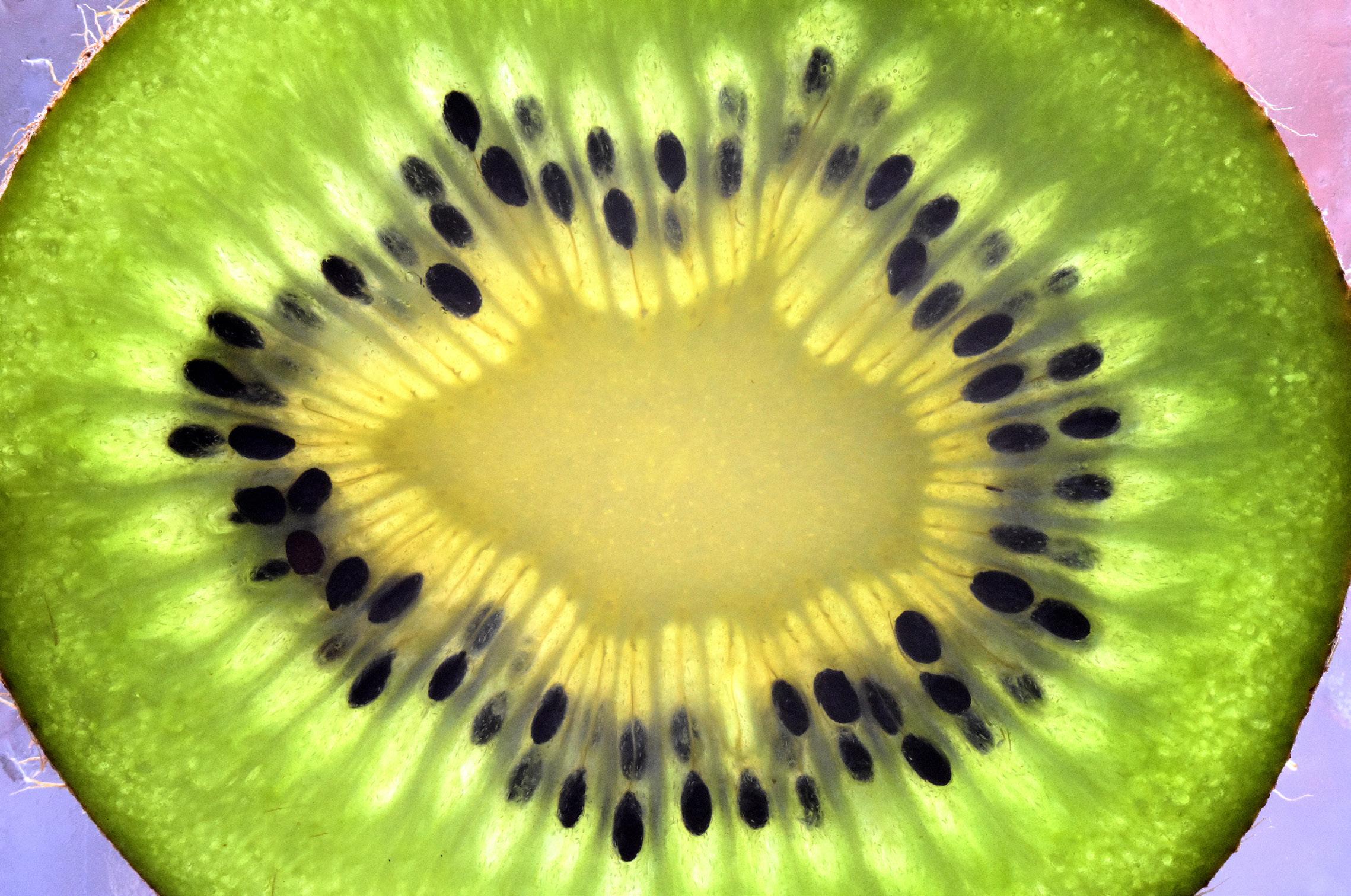
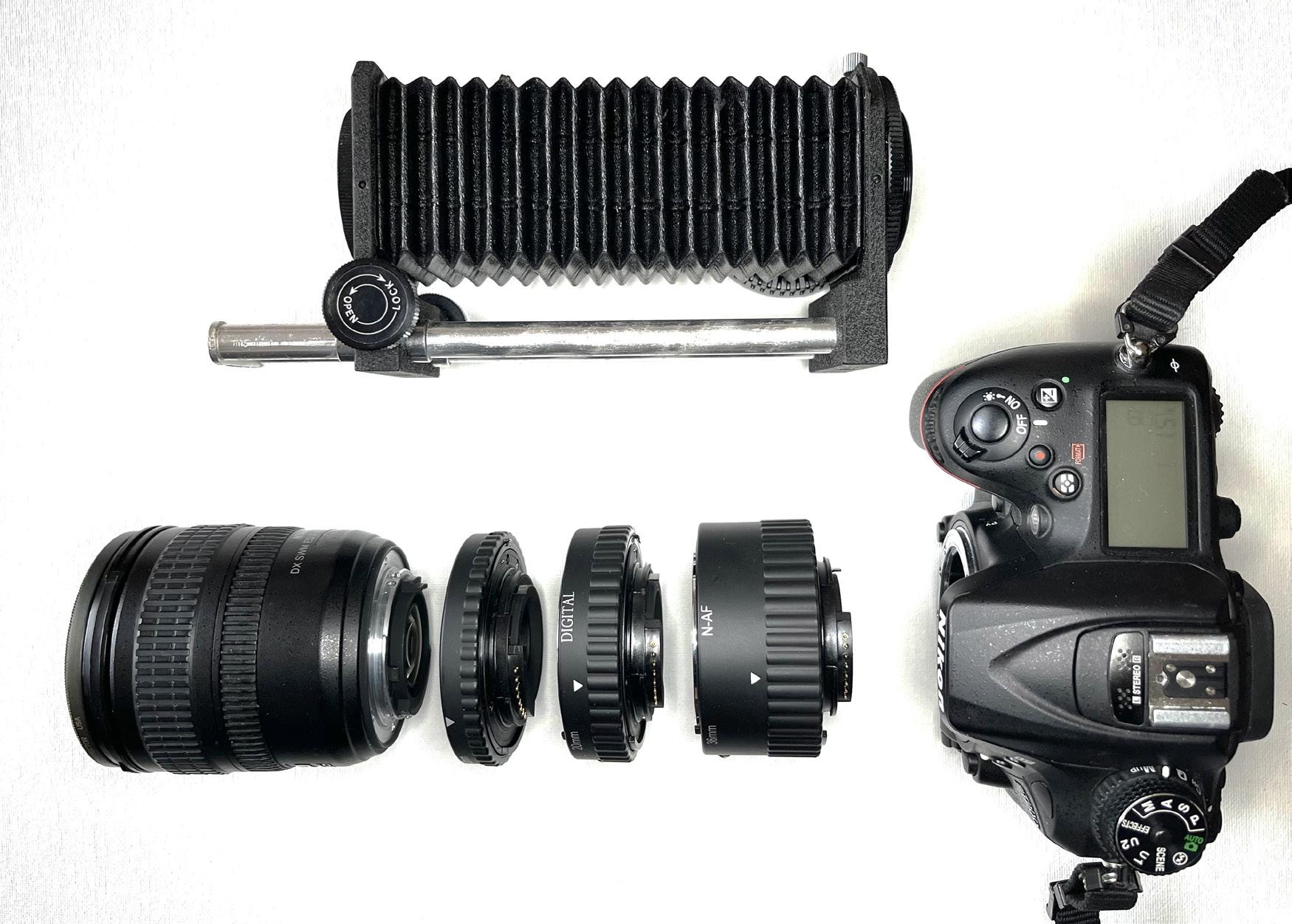
70mm lens with 36mm extension tube.
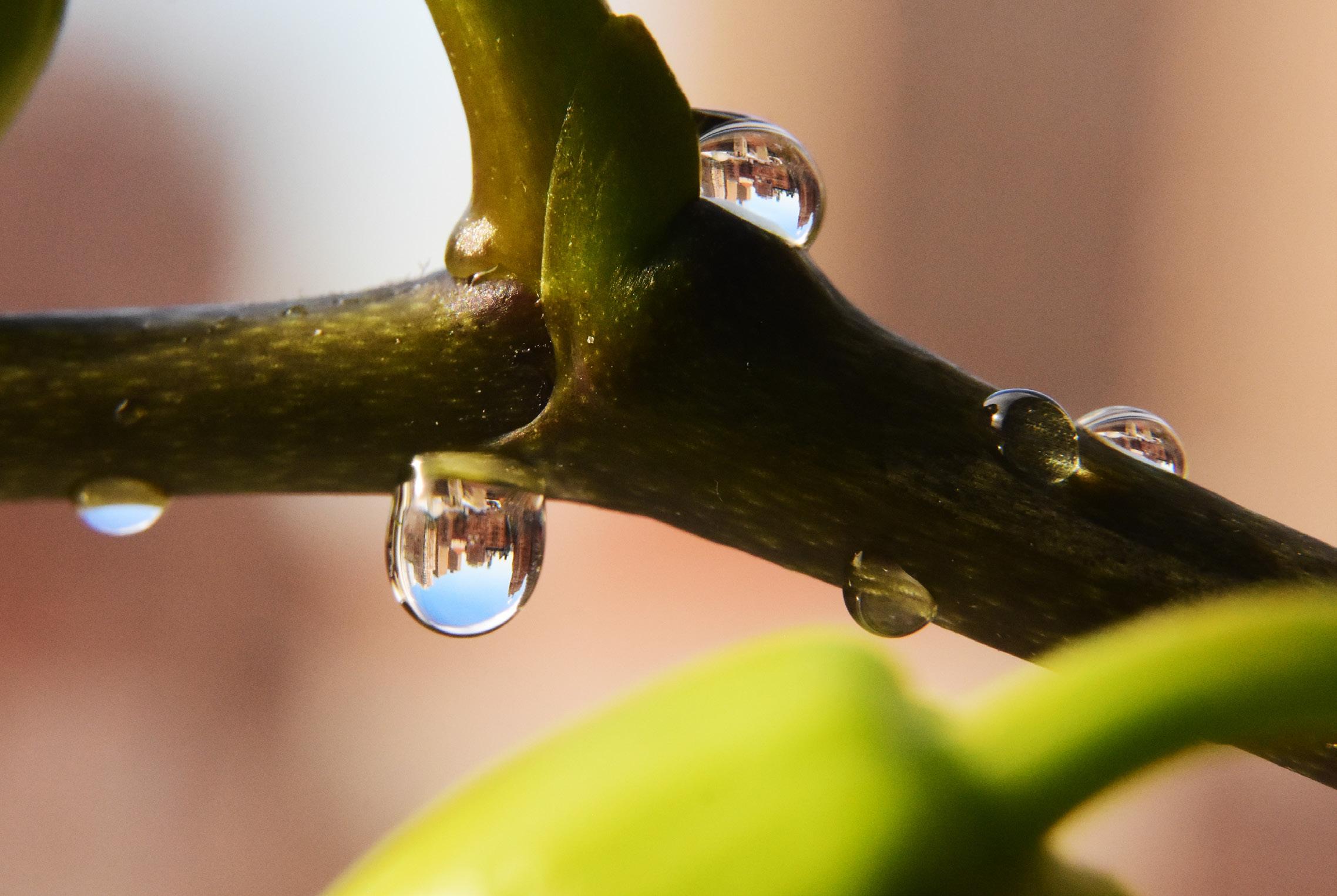
Photos by Armand Ensanian
Water droplet city, 200mm lens with extension tube.
From Camera to Cell Phone Macro Photography
Digital cameras, particularly those in smartphones, have brought photography to the masses, far beyond the dreams of George Eastman when he introduced his roll film Kodak camera in 1888. His hope of everyone having the ability to picture their families for future generations has been validated by trillions of digital images stored in the cloud.
I got my first camera in 1958. I was eight years old. It too was a roll film camera but offered a major advancement over a simple box camera like the first Kodak. I was able to adjust the lens for the proper distance to the subject, resulting in sharper pictures.
I loved capturing the world I lived in. However, I soon became frustrated. I couldn’t break that 1-meter close-up barrier. Like most of us shooting with our cameras or cellphones today, I only photographed what was in front of me within the limits of the lens and my visual acuity. I wanted to get closer.
After many attempts and a few dozen blurry close-ups, I had a breakthrough. I held a magnifying glass in front of the camera’s lens to take a picture of a small rose being visited by a bee in the garden. I was less than a foot away.
Unlike using today’s smartphones or digital cameras with their nice big screens, I couldn’t see what I was doing. I had to wait impatiently for a couple of days to pick up the developed roll of film.
I wouldn’t call the results magnificent but gave myself an “A” for effort anyway. The pictures were recognizable and got me excited about the extraordinary images hiding just a few levels of magnification away.
My journey in photography continued at a steady pace. I became the official family photographer, relieving my mother of that duty. Yearbook photography in high school gave me the opportunity to use big professional press cameras. That inspired my interest in photojournalism, which I, alas, experienced in wartime photography in Vietnam. That’s when I truly learned of the power of close-up photography.
The Army offered a large variety of equipment that allowed me to experiment in my spare time. My reliable 35mm Pentax single-lens-reflex camera let me see exactly what I was zooming in on. It was a welcome relief to photograph exotic flowers and colorful insects in between excursions to combat zones.
That experience opened doors for me. Popular Photography and Modern Photography magazines loved some of the tricks I came up with and commissioned countless articles while Popular Mechanics offered me a monthly column. It was a wonderful journey as I navigated that polarizing time in technology when digital cameras came onto the scene. Steve Sasson, a Kodak engineer, invented the first self-contained digital camera in 1975. Film loyalists stood firm, only to lose ground over decades of development as digital cameras ultimately offered superior image quality.
My exploration with digital cameras progressed throughout the 1990s. Point-and-shoot models were offered by all the top electronics and optical brands. The idea was to follow Eastman’s model of simplicity of use when capturing moments in life. Today’s point-and-shoot cameras are marvels of engineering. Most offer a close-up mode, indicated by a flower icon on the shooting mode dial. The results can be impressive.
I quickly came to favor digital cameras that allow lens interchangeability as the best suited for close-up work, i.e. digital single-lens-reflex cameras (DSLR). New mirrorless digital cameras achieve the same results because both enable us to see what the lens is seeing on a vibrant sharp screen mounted on the back.
Many digital camera lenses offer a “macro” mode. Macro photography refers to close-ups where the image on the film (or image sensor) is at least the same size as the subject itself; namely 1:1 magnification. Macro has become sort of a buzz word. Some lenses labeled with a macro function don’t quite achieve this ratio but offer sufficient exploration regardless. True macro lenses can exceed this magnification by several factors but can be quite expensive. Less costly alternatives can easily achieve similar results.
Teaching photography over the years at community colleges and high schools demanded offering low-cost solutions. Students living on pizza were enthusiastic about the small world but certainly could not afford $1,500 lenses just to get a close-up of an ant.
The first alternative is no different than using a magnifying lens. Glass close-up lenses, also called filters, are screwed to the front of one’s camera lens, magnifying the subject image. They are no more inconvenient to carry along than a pair of reading glasses.
Magnification depends on how strong the lens is. Just like drugstore reading glasses, close up lenses are labeled with numbers indicating their magnification strength, technically referred to as a lens’s diopter. Be sure to measure your camera’s lens filter diameter accurately in millimeters before ordering. The diameter is often printed on the lens barrel itself. Buy a set for the most versatility. They typically include +1, +2, and +4 diopters.
The next method for DSLR or mirrorless digital cameras uses extension tubes. These tubes, typically offered in sets of three with varying lengths, mount between the camera lens and body and bring us closer than screw-on lenses. The greater the distance between lens and film (or sensor), the greater the magnification. Extension tubes can be used individually or in combination. They are available for as little as $50. Look for ones that maintain the automatic functionality of your lens, which includes auto-focus and auto-exposure. Just a note of caution: cheap lens accessories can have problematic lens release mechanisms. It pays to spend a bit more.
An alternative to extension tubes is the macro bellows. They are an adjustable, accordion-style accessory that fits between the lens and camera body. The plus side is that they allow continuously adjustable extension. The downside is that they lose some of the automatic functionality of the lens
The nice thing about extension tubes is that they are rugged and can be used with any of your lenses. A telephoto lens, for example, can be converted to a telephoto macro lens, allowing extreme close-ups at a safe distance from the subject, something I found useful when photographing those large intimidating giant wood spiders in Vietnam.
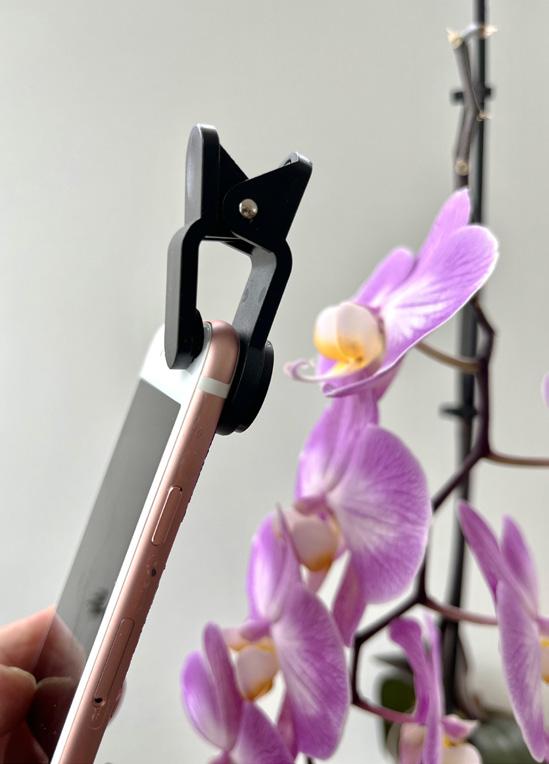
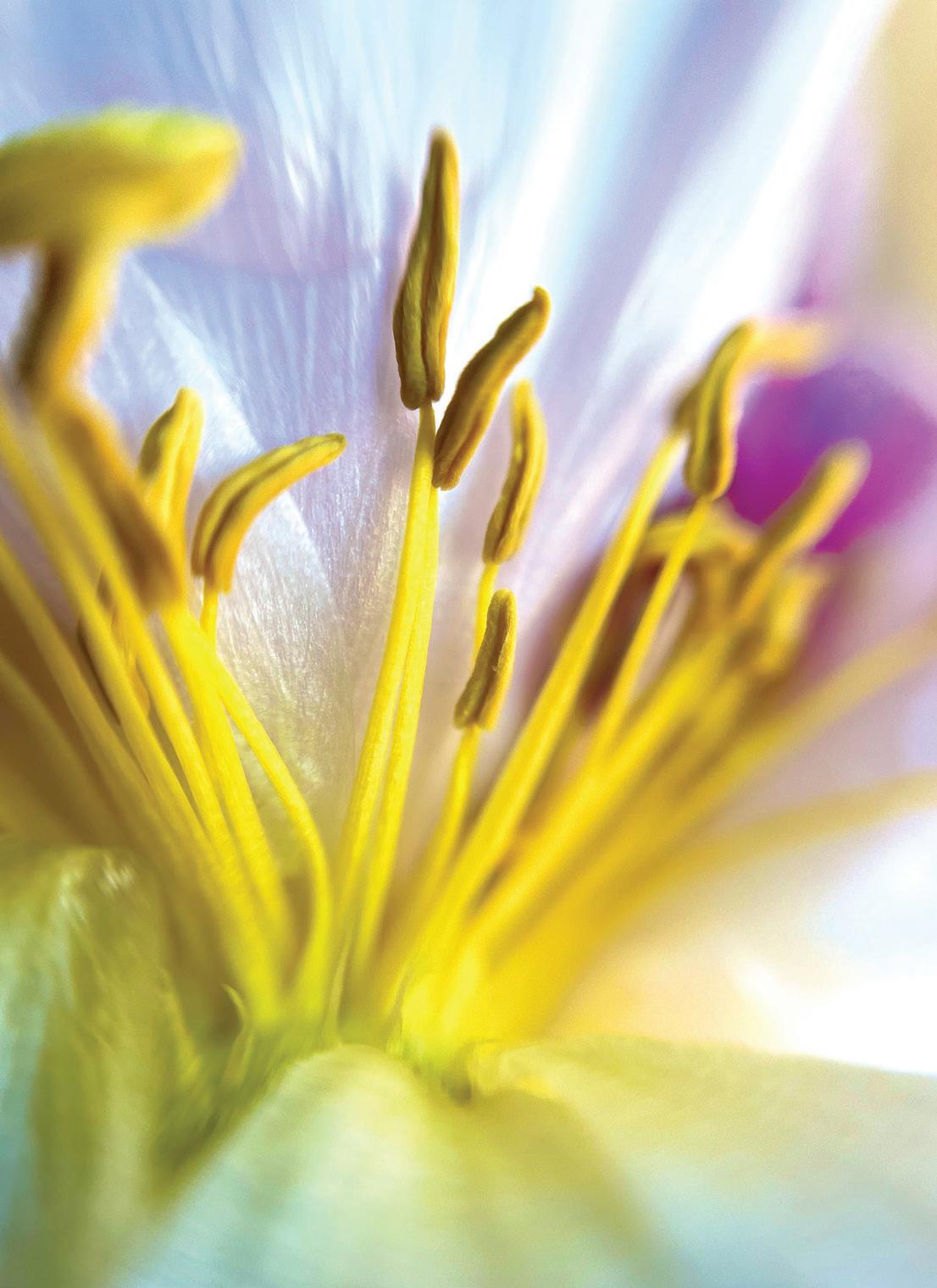
Close-up of Peony using $15 clip-on iPhone lens.
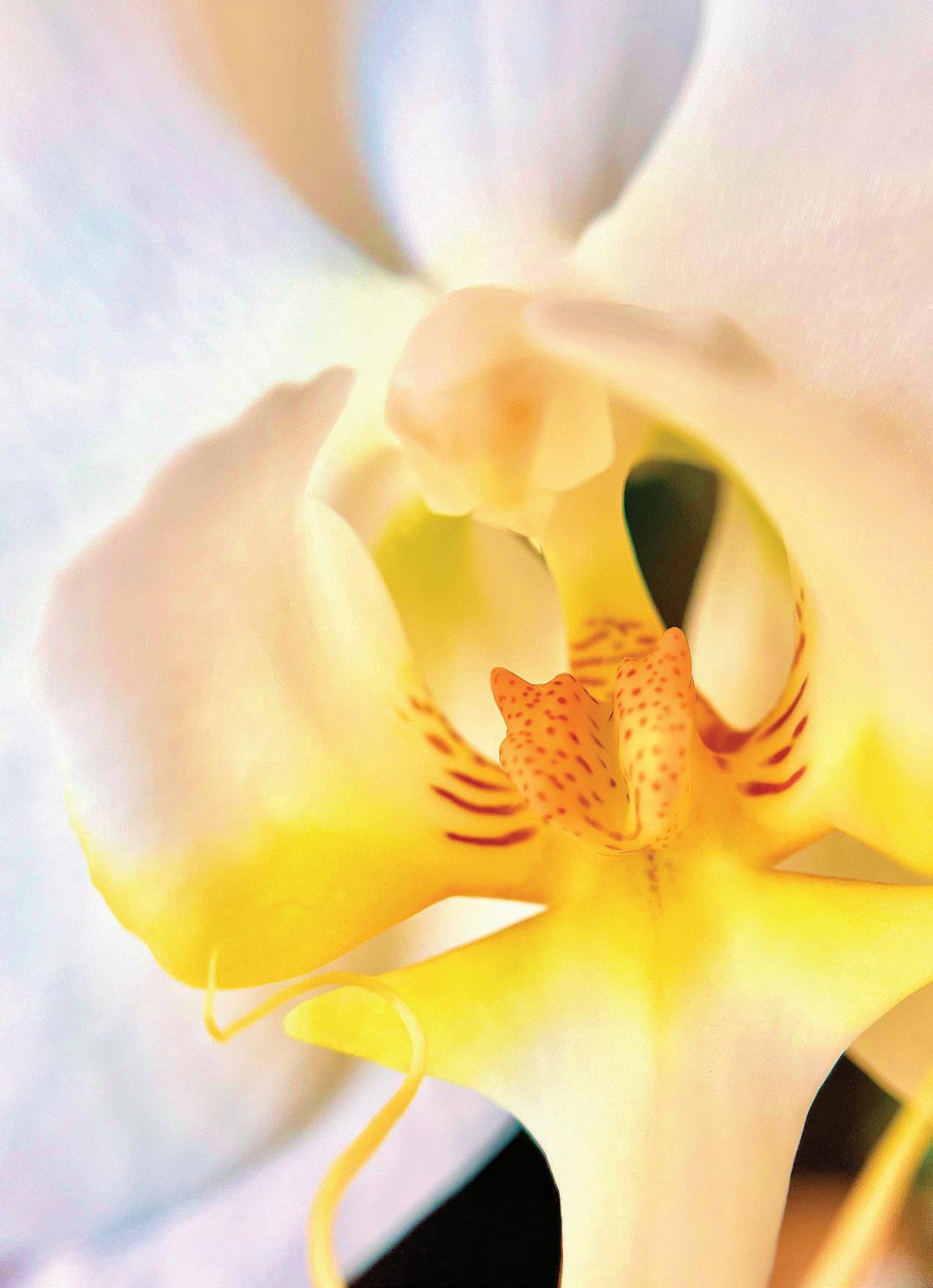
As I evolve in photography, smartphones have become a welcome tool. The last few generations have greatly improved close-up capability. Minimum focusing distance is getting closer with each new release. Close-ups of butterflies and flowers can typically be taken without any accessories. For subjects greater than 2 feet away, use the Portrait mode to blur the background. This is called having a shallow depth-of-field. It makes the subject stand out.
Newer iPhone and Android cell phone cameras also offer a dedicated macro mode for even closer photos. This feature can be found in Settings in the camera app or activated by pressing on the flower icon. The camera’s minimum focus is greatly reduced in this mode, down to 2 to 5 centimeters using the phone’s wide-angle lens. Remarkable close-ups can be captured at this range.
No worries if you have an older phone without the macro setting. One alternative is to hold a small magnifying lens in front of the phone’s lens like I did back in 1958. This works well but can be cumbersome. For as little as $15 one can buy a clip-on magnifier online. The soft nature of their imagery creates an ethereal world we can all get lost in.
Focusing with a phone for close-ups is a manual process. Move the camera back and forth until the image on the
screen is sharp. Depth-of-field shrinks significantly the closer we photograph. And since you are close to the subject, watch for shadows created by the camera or phone itself.
To get even closer and sharper with smartphones, dedicated lenses combined with custom apps can bring the small world to your phone at magnifications of 20x and more. There are plenty of options available online.
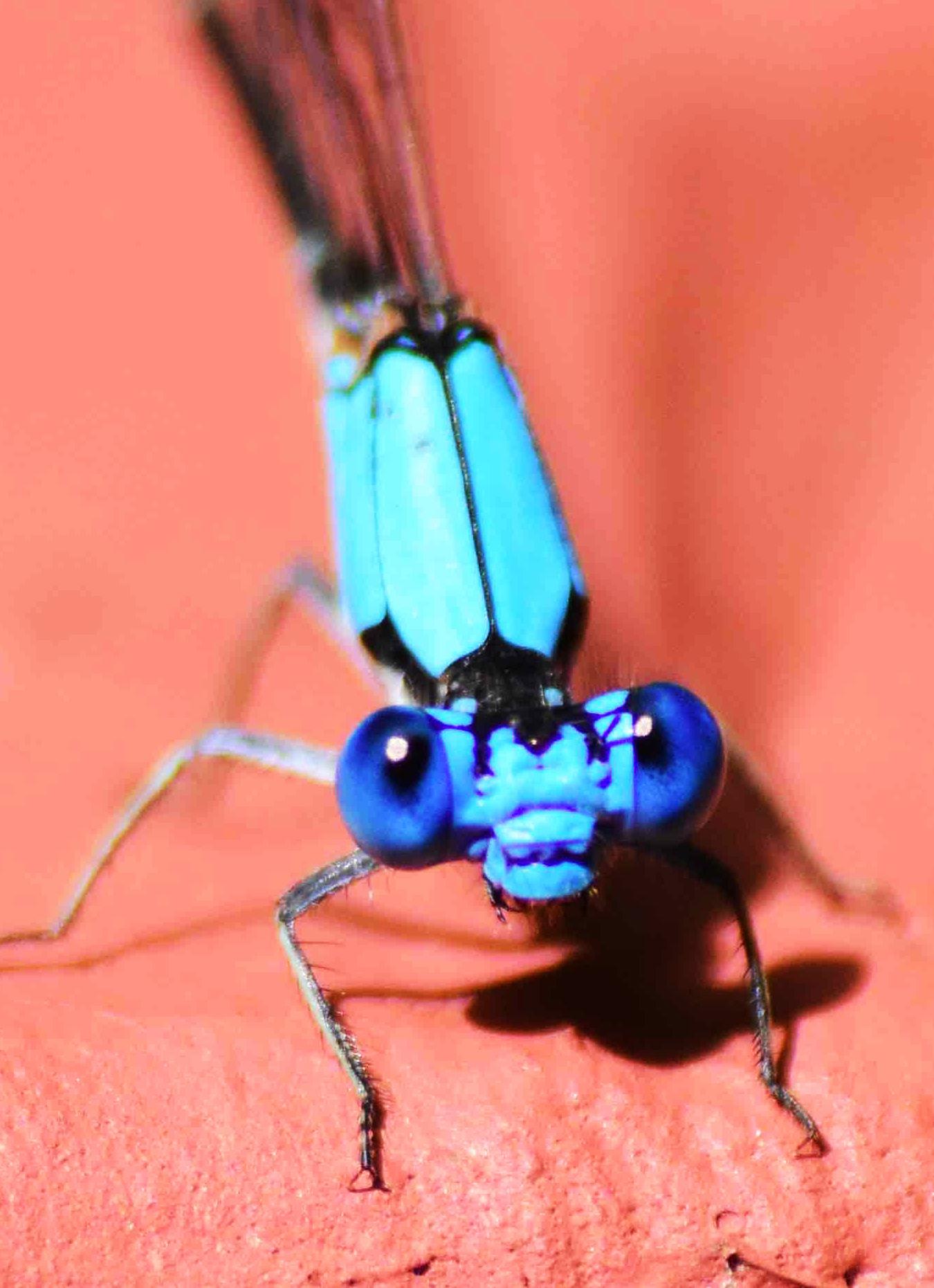
Close-up photography is not without its challenges. For example, photographing a snowflake melts the little crystals whenever one exhales. A scarf wrapped around the face solves that problem. Insects tend to be very uncooperative as well. Jumping spiders jump before most of us can get a shot off. Chilling them down in the fridge for a few minutes solves that problem. And getting too close to pollen, soap bubbles, or a curious salamander can certainly soil your lens. This is all part of the journey of experiencing the magical world hiding just inches away.
Armand Ensanian’s article contributions to The Journal include “Vintage Motorcycles,” August 2018; “Birth of the Automobile,” October 2018; and “Angels in Blue: Donut Dollies,” Spring 2025.
GGathered
Gabrielle Cerberville
abrielle Cerberville, known on the web as the Chaotic Forager and the Internet’s Mushroom Auntie, became immersed in the forest world as a young girl growing up in Milford, PA. She and her two younger brothers were homeschooled; local fields, forests, and mountains became their playground.
Her many passions have spanned worlds. She is currently working on earning her PhD in music and has spent years lecturing and teaching national and international workshops about developing an ethical relationship with nature through foraging, all in the pursuit of wild food.
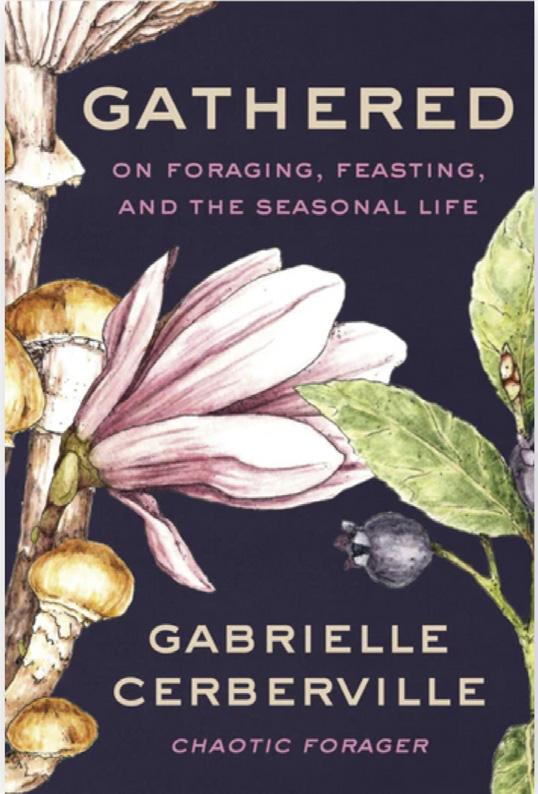
Gabrielle is also a published author. Her book, Gathered: On Foraging, Feasting, and the Seasonal Life (Harper, 2025), is an informative and entertaining memoir that serves as a guide to the practicalities of foraging. Gathered includes an inspiring diary of her adventures from Milford to the Midwest, from childhood through her twenties, as well as advice on finding and identifying plants and fungi with a glossary of terms.
The book contains how-tos on cooking and preserving wild food, recommendations for useful kitchen tools, suggestions on what to wear and what items are needed in the field, as well as recipes and detailed illustrations. All this is intermingled with both humorous and soulful sentiments about a chosen life path that connects her with the natural world.
In speaking with Gabrielle, I wondered why the field-totable movement is gaining in popularity, when we have
easy access to so much in a supermarket or a farmer’s market. What compels a foodie to go into the wild?
“I think one of the main reasons is lack of access,” Gabrielle responds. “We produce tons of food in North America, literally over 500,000 metric tons of it every single day. However, food is becoming more inaccessible to the average person, who has been watching their grocery bill rise every single month without their wages doing the same to make up for it.
“Food insecurity is a serious problem that affects around 18 percent of Americans to some degree or another, and many of those people are disenfranchised. Many of those affected are children,” she states.
“Something you’ll notice is that particularly in rural places such as parts of Appalachia, the far North, or the deep South where people can’t necessarily rely on grocery stores or access fresh food, seasonal foraging is still deeply ingrained in the culture. Wild food may require particular skills to obtain, but those skills are helped by some of the things that humans are already quite naturally good at—particularly pattern recognition, sensory awareness, the ability to synthesize details and recall experiences.
“Beyond that,” she continues, “I think that on some level, you can take the human out of nature but you can’t take the nature out of the human. We are social animals that long for connection; to know that we have a place in the world, to know that we can be a part of something bigger than ourselves.
“For many of us, we return to the forest again and again in search of treasure because we know it can be found there. Being outdoors helps us to reset, to realign to a slower rhythm and way of being, and collection activities like berry-picking, mushroom hunting, and root-digging are meditative and calming to our nervous systems.”
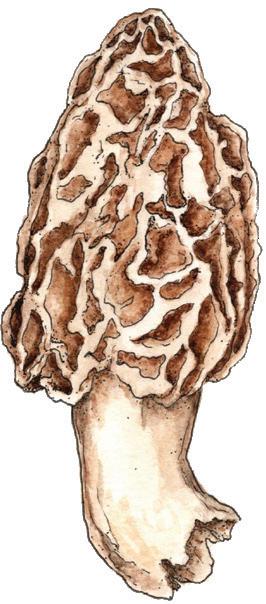
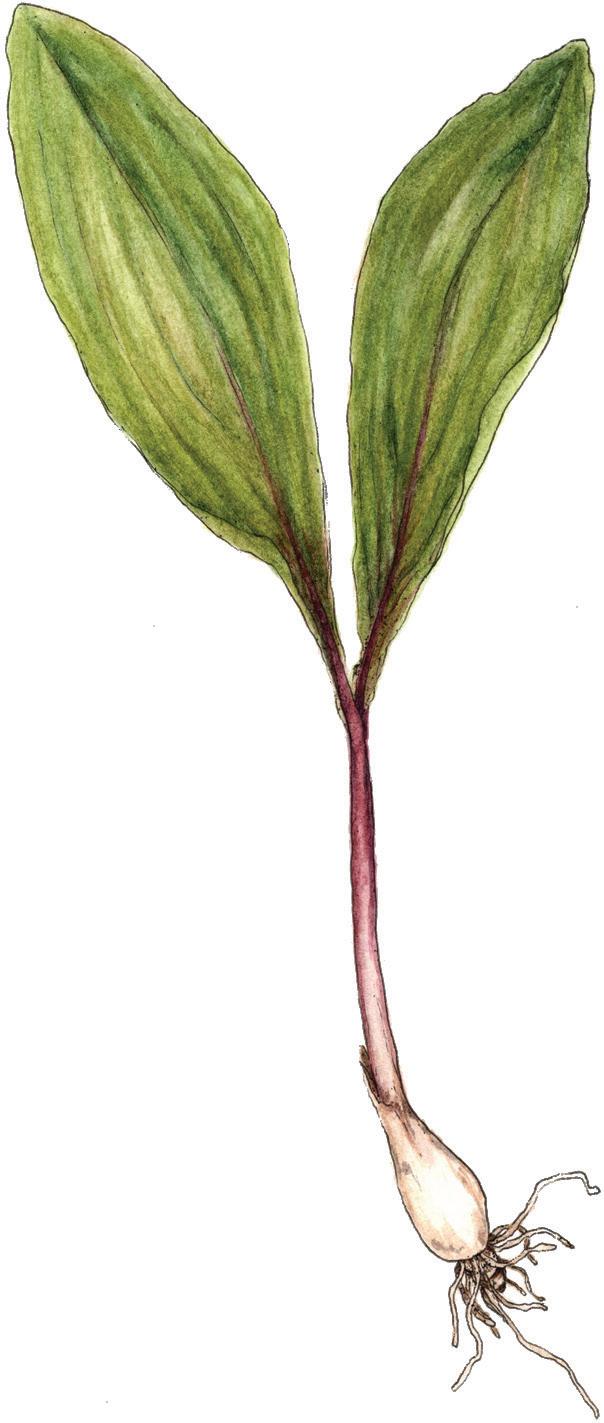
According to Gabrielle, April and May are the perfect season for gathering ramps and garlic mustard. It’s the height of magnolia flower season, as well as a number of other edible florals and greens. These spring months also contain the very brief season for perhaps the most famous of wild edible fungi, the morel.
Her initial journeys in search of morels, the holy grail of the mushroom foraging world, were not always fruitful. After two spring seasons of futile morel hunting, she laments in her book, “I’m somehow cold and sweaty at the same time. My filthy body aches from crawling around on the forest floor, searching unsuccessfully for an elusive treasure…It will be getting dark soon and I should be getting home. Another empty basket day.
“Something no one will tell you about morels is that they tend to appear only after you stop looking. If you move too fast, even with a trained eye, you could walk past hundreds of them without having a clue what you’re missing.”
Gabrielle describes morels as dainty and secretive. “The first morel can be difficult to spot due to the sheer number of decoys, but once you see one, more are revealed as if by some ancient magic.
“I experiment with sitting perfectly still beside my basket and letting the forest swallow me.” As she continues her search for morels, a newly sprung patch of ramps catches her eye. She, along with many foragers, believes in sustainability and only collects a small amount of leaves ensuring that the plant will continue to photosynthesize. “The ramps,” she writes, “have stained the thumb and index finger on my right hand with their cloying perfume and green ink. I reek, yet deliciously.”
Gabrielle includes recipes in her book for Ramp Leaf Compound Butter and Ramp Leaf Salt that don’t sound too hard to make because you can visually estimate the ingredient ratio.
Further along in her book, Gabrielle describes in detail the sensations that she experiences as an experienced forager. “I can feel myself being watched by tiny eyes as I lie alone, motionless, but I am not afraid. The animals in this forest seem more comfortable with my presence than before.”
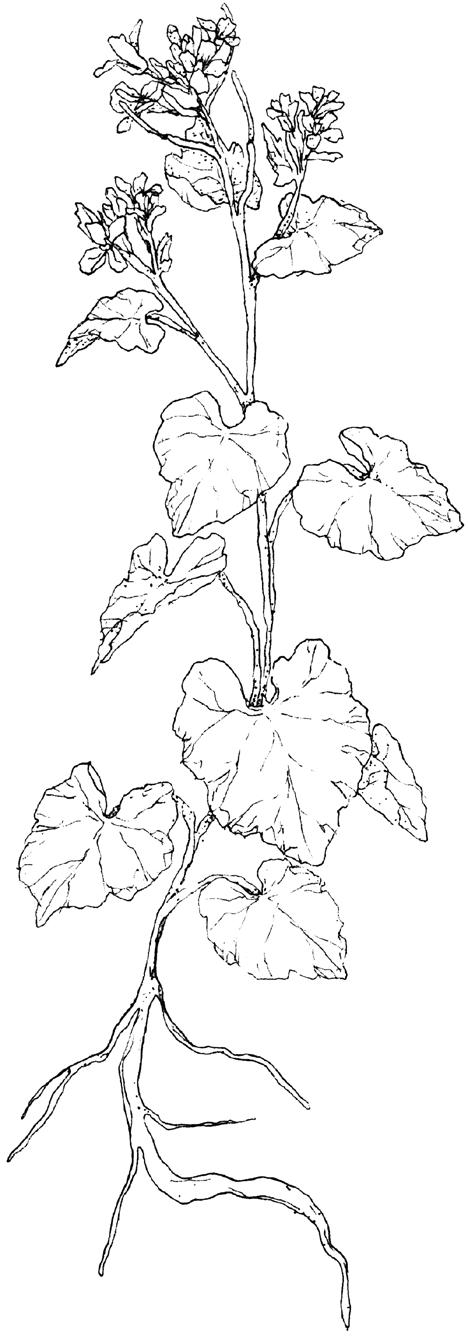
I ask her to tell us a bit about garlic mustard. “I can’t remember a time where I’ve ever had to look for garlic mustard (Allaria petiolata),” Gabrielle said. “It’s a fairly ubiquitous invasive plant from Europe, one that has a frustrating habit of secreting plant-killing chemicals (a process called allelopathy) from its root systems as a defense mechanism, which harms surrounding brushheight native plants. They are very stubborn and can be challenging to address in forest landscapes. They love disturbed soil, and I often find them growing along the sides of walking paths and hiking trails.
“Fortunately for us, aside from being invasive, they’re also edible, and pretty delicious. (Imagine a spicy green with a garlic aftertaste!) Every part of the plant is edible, and the roots taste a bit like horseradish. In my book, I describe a few different ways that I use this plant, including as a pesto, which I’ve included here for your enjoyment. Eating invasive plants like garlic mustard is a great way to enjoy a fresh, cheap, locally grown, carbon-negative treat, since the plant doesn’t benefit the ecosystems in North America. Removing it is a positive move for the environment and helps native plants to repopulate areas where they have been pushed out.”
How about magnolia? I ask.
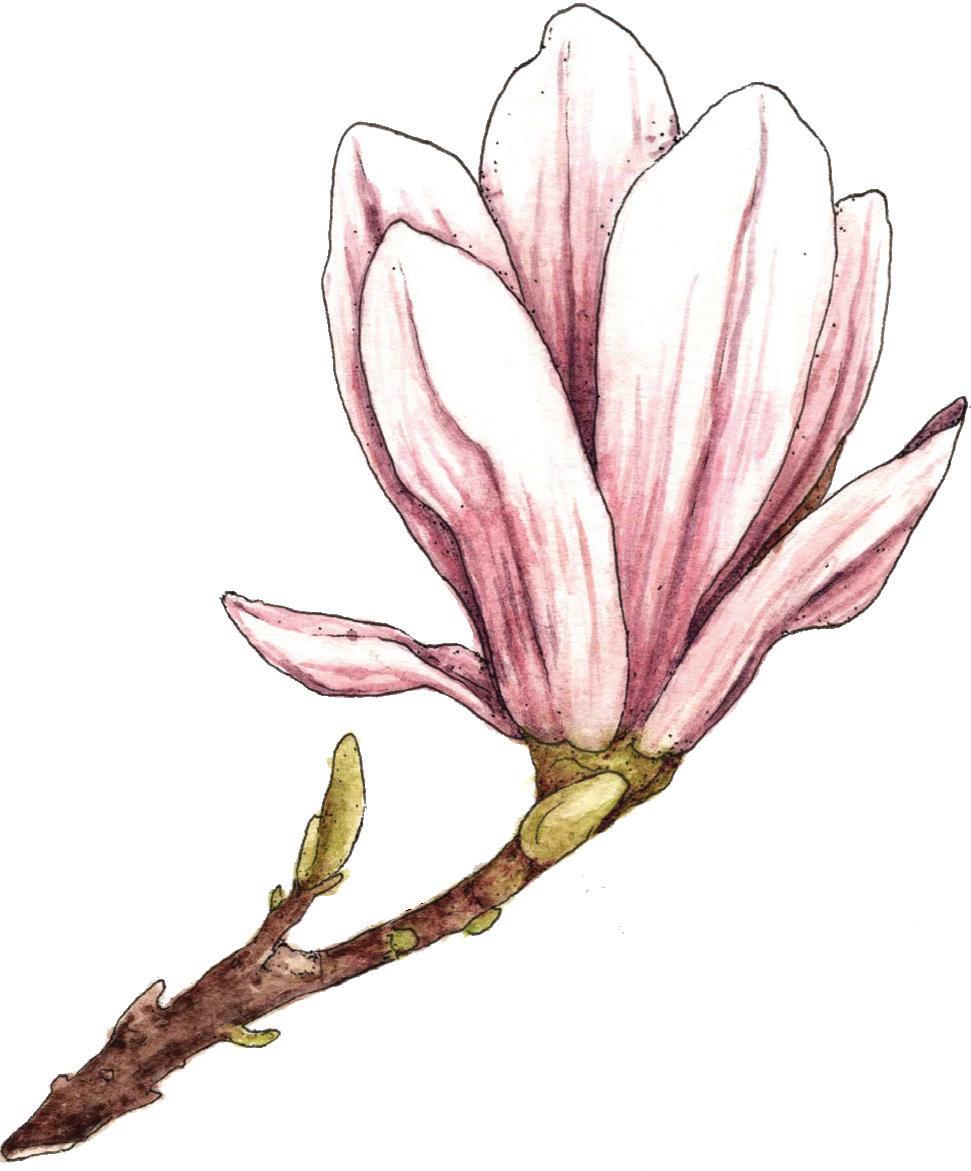
“Regarding magnolia, we don’t eat the greens, but you can eat the flowers and the unopened flower buds. There are many varieties of magnolia, all of them edible, but in the tristate area, you’re most likely to run across saucer magnolia (Magnolia x soulangeana), sweetbay magnolia (Magnolia virginiana), and star magnolia (Magnolia stellata). Each of them tastes a little different, some skewing more towards a sharp ginger flavor, others more towards warming spices like clove or even black tea.
“I highlight saucer magnolia in my book, which has lovely pink blooms and a strong, spicy ginger flavor. There are plenty of ways to prepare them—you can ferment the fuzzy, unopened buds for a few days in a sealed jar until it starts looking a little humid, then dry them out and enjoy them as a tea, or you can wait until the blooms have erupted and pickle them to make a sort of ‘pickled ginger’ product that tastes wonderful with sushi. I also use them to make a pink tea tiramisu, which is always a hit.
“If you’re pinched for time but want to preserve them for later, try blending some of the pinkest blooms you can find with either sugar or salt until you have a wet paste, then spread it out and dry it in the sun to make a beautiful finishing touch for your favorite sweet or savory dishes.
“To use magnolia leaves in the kitchen, many cultures in East Asia collect the leaves and use them the way we might use a banana leaf—you can use them to steam food, grill fish on them, or even just wrap your lunch up to take to work.
“Because so much of the work available today is knowledge labor, where you aren’t necessarily seeing concrete outcomes from what you’re putting your effort into, it can be incredibly rewarding to do a task like foraging where the rewards are tangible and delicious.
“It’s fun to hunt for treasure. (Just ask anyone who likes thrifting or going to yard sales.) Doing it in the forest has the added benefits of not costing us any money and of making us feel more connected to the world we live in.”
Lacto-Fermented Garlic Mustard Pesto Makes 1 to 2 pints
Lacto-fermentation, simply put, is a process whereby Lactobacillus bacteria breaks down sugars in food and converts them into lactic acid. Sound scary? It’s not, I promise. Lacto-fermentation is probably one of the most predictable, safe, and beginner-friendly ways to preserve all kinds of fruits, veggies, and greens. It is easy to tell when a lacto-ferment has gone off (it will smell bad or have mold), and it can improve, deepen, and enrich simple flavors into something absolutely wonderful.
• First, place your jar without the lid on your scale. Zero out the scale (usually done by hitting a button that says “zero” or “tare”) and set the jar aside. Fill up the jar with loosely packed garlic mustard leaves, making sure to leave room for your weight. Place the jar on the scale again and continue to slowly add garlic mustard leaves until you reach a nice, even number (like 200 grams, for example).
• Now we have to do math, but it won’t be too difficult! Take the final weight of your garlic mustard leaves (in grams), and multiply that number by 0.02 to find how many grams of salt to add. In this case, 2% of 200 is 4, so we’ll add 4 grams of salt to the jar.
• Zero the scale out again to measure and add your calculated salt quantity.
• Seal the jar and give it a good shake, making sure the salt coats the leaves. When they’re evenly coated, remove the lid, place your fermentation weight on top of the garlic mustard leaves, and seal the jar up again.
• Once per day for the next two days, remove the lid to let excess carbon dioxide escape. You will know your garlic mustard is ready when it smells funky, the volume has reduced significantly, and the jar suddenly has a lot of liquid in it that you don’t remember adding. (Save some liquid to use in the pesto.)
From here, you can use your lacto-fermented garlic mustard to make pesto!
To make the pesto:
There are two basic kinds of fermentation: aerobic and anaerobic. Aerobic fermentation is commonly used in making products like kombucha and beer. It requires oxygen to support the yeast and transform sugars during the fermentation process. Anaerobic fermentation does not require oxygen, using enzymes to convert sugars into alcohols, gases, and acids. Lacto-fermentation is an anaerobic process.
To begin, you’ll need a digital food scale that can weigh to the gram. These are fairly inexpensive (and depending on your lifestyle, you might already have one for weighing… other things).
To make the lacto-fermented garlic mustard you will need:
A sterilized glass mason jar, or any glass jar with a sealable, airtight lid
2 cups fresh garlic mustard leaves
Non-iodized salt (This is very important! Iodine is antibacterial and may kill the useful bacteria involved in fermenting your food. I like using sea salt or pickling salt.)
A stone or fermentation weight (you can also use a ziptop plastic bag filled with water)
1/2 to 1 cup lacto-fermented garlic mustard, plus 3 tablespoons lacto-fermentation liquid 1/2 cup grated Parmesan cheese 1/2 cup pine nuts or walnuts 1/4 cup olive oil
• Pulse the lacto-fermented garlic mustard and liquid, the cheese, and nuts together in a food processor to make a slightly chunky paste.
• Re-spin on medium speed and add the olive oil gradually while spinning, a drizzle at a time. The final texture should be soft and light but not overly smooth, like chunky almond butter but slightly runnier.
I love adding a spoonful of garlic mustard pesto to sandwiches, pasta, and flatbreads.
Gabrielle will be holding an author talk/book signing at Foundry 42+ in Port Jervis on Saturday, May 23rd. For more information, visit www.chaoticforager.com.
By Jessica Storch Bathgate
Jager Road
“In every conceivable manner, the family is link to our past, bridge to our future.”
– Alex Haley –
Sometimes, family stories pour forth from loved ones with the rhythm and rise of incoming tidal waters. At other times, they sprinkle a dusting of their histories as small gifts from the past for their listeners to collect over time. This is how it is with my mother.
Over the course of my life, she has bestowed upon me glimpses of her childhood on the farm, love and pride for her family, and what it was like to grow up in a simpler time and place. I hold all of these tales close to my heart.
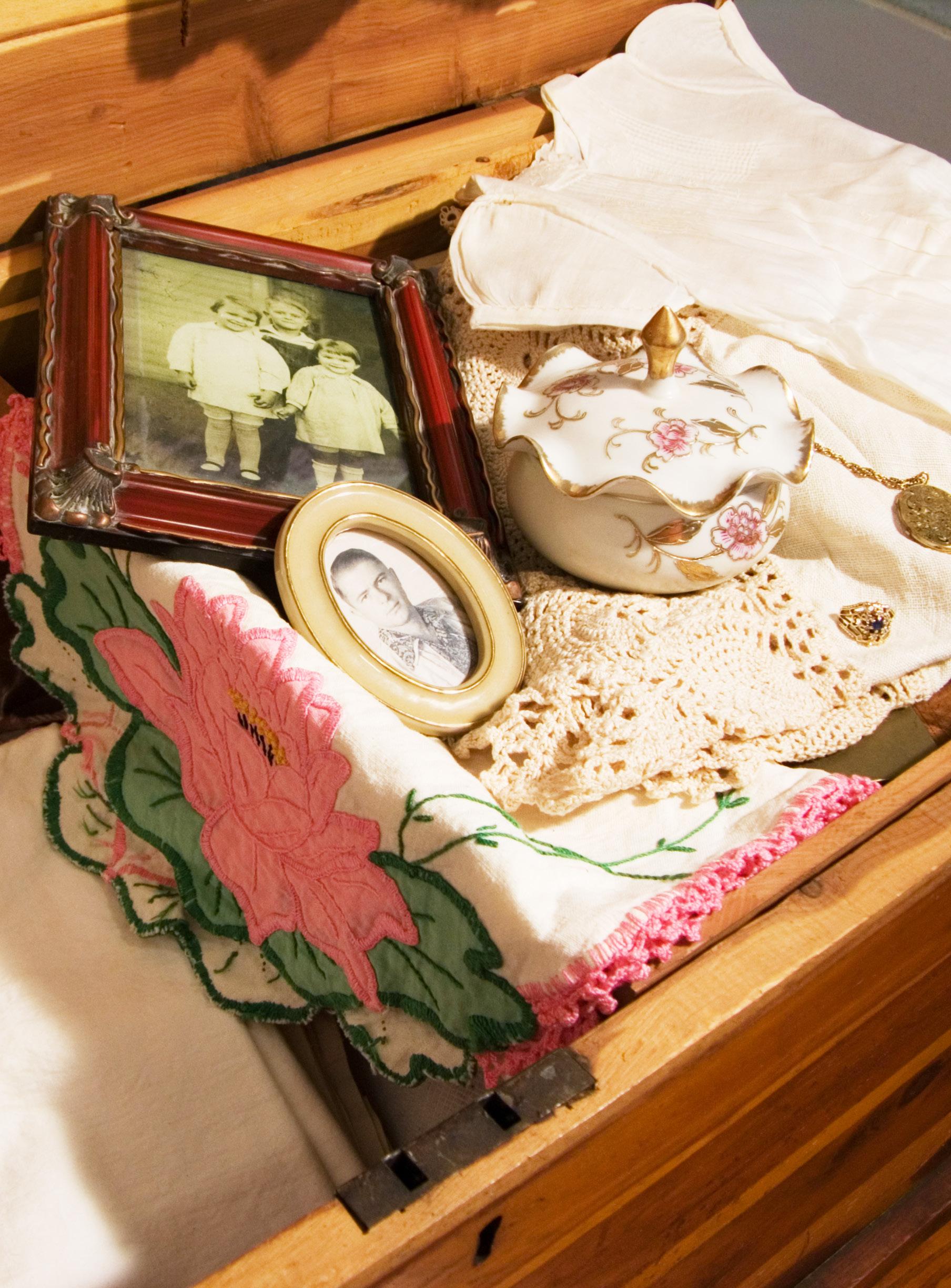
Jager Road in Hainesville, NJ, is a long distance from Altavista, VA. Yet when I lift the lid of my Lane Cedar Chest to reveal the company logo and town, my thoughts eventually wind their way back to the quiet country lane in New Jersey. My mother had suggested the chest as a college graduation gift—a hope chest, she called it. I’d instantly loved the idea of having a place to store the housewares I’d one day use in my own home, for my own family. That was the intended purpose of cedar chests like this one. At the time, I hadn’t realized the significance of this particular gift given to me by my mother.
Daily life was family-centered and uncomplicated. Bev and her siblings turned the family’s farmland into a playground, depending on its varied geographical features. The children would play house in areas of dense woodland and swim and fish in the pond during summer. In winter, they ice-skated on that same pond and skied down hills in the upper fields.
“There was a freshwater spring near the woods, and Dad had hung an old soup ladle on its post. We would use it to get ice-cold drinks of water in the summer while we were playing,” Bev recalls. The children’s escapades also took them into the barn, where they would spend hours playing in the haymow and among the new litters of barn kittens that always seemed to be there.
In 1947, the year my mother, Beverly Jager, was born, her family farm on Jager Road had a two-family farmhouse, a barn, a chicken coop, some garages, and sheds. Bev’s father and uncle had inherited the farm from their parents, and the road where it was located was named for their family. Bev, eventually her younger siblings Sue and Ben Jr., and their parents, Isabel and Ben Sr., lived in half of the farmhouse. Her Uncle Sam, Aunt Grace, and cousin Carol inhabited the other side. Everyone shared one bathroom, but they did have an exterior outhouse in case of emergencies.
When Bev was seven, her family built their own house on the property, and her Grandma Jessie moved into their half of the farmhouse. No tale of Beverly and her family on the farm can be told without including Jessie Jager. She was the heart of the family, and I am lucky enough to be her namesake. Bev fondly recalls that Grandma Jessie always had a deep drawer in her Hoosier cabinet filled with homemade cookies. “I would regularly reach down into that drawer and take one cookie for myself and one for the farm collie, Pat,” she confesses.
As the children grew, the importance of education was impressed upon Bev and her siblings by their parents’ insistence and example. “My mother earned her RN at Newark City Hospital immediately after high school. Later, when we were still young, she attended Fairleigh Dickinson University at night and earned her BS there,” Beverly shares. All of Ben and Isabel’s children were expected to go to college after high school, and this became Bev’s predominant ambition for her future.
Running a farm and raising a family is hard work. Beverly remembers the long hours her parents put in tending to the animals, fields, and family. Once the three young siblings were in school, their mother, Isabel, began a job as the head night nurse at the Sussex County Homestead.
Bev explains, “When we came home from school, I was in charge. We’d amuse ourselves with games and reading until Dad came inside from the barn. Then the four of us would eat the dinner that Mom had prepared earlier and left in the oven.” Isabel got home from her shift after midnight, and Ben would get up at 5 a.m. the next morning to milk the cows. Then it would all start again.
While in high school, Bev and her friends were in the same college preparatory classes. They traveled through school together and focused their hopes and dreams on attaining a higher education. Socializing for this group meant community involvement. Several local parents ran Continued on next page
a Teen Town every Friday night in the spring, summer, and fall in downtown Hainesville, where the kids could dance, snack, and play volleyball.
Beverly was also involved in many 4-H clubs and competitions, and Thursday nights were for junior choir practice at the Methodist Church. “My parents led the Junior Youth Fellowship there, and I never missed a Sunday service until I eventually moved away,” she reminisces with fondness.
It was during the 1960s, while Bev was taking the steps to prepare for college, that the Lane Cedar Chest Company of Altavista, VA, ran a sample marketing campaign. Entire classes of high school senior girls across the country were given free miniature replica chests as gifts from their local furniture stores.
In those days, young women of high school age were expected to be thinking about marriage and starting families of their own. The thought was that, upon graduation, they would want to purchase a real cedar chest, known as a hope chest, to begin collecting linens, service ware, and other items for their future homes.
While it was true that many of the girls in high school wanted to graduate and get married, Beverly still considered college as the next step in her life. She says, “Of course, I wanted marriage and a family, but I don’t remember much talking about that.” She kept her sights on college and maintained the perseverance and resolve it would take to get there. Her sample Lane Cedar Chest was stored away without any thought given to buying a real one. She was on the path to higher education.
Bev’s determination to become a high school teacher of mathematics led her to Montclair State. College was good, and unlike anything she had ever known. The classes were demanding, but Bev enjoyed learning and had many friends and great roommates. The young women
would take advantage of the half-hour bus ride into New York City to walk around and visit museums on weekends and days off from classes—a stark contrast to life back on the Jager farm.
Collegiate life wasn’t all learning and fraternizing. By her senior year in 1969–1970, protests opposing the Vietnam War were being held at colleges across the nation. Many young American men had been sent there to fight and never returned home. As the war raged on, so did the protests, and in May 1970, a protest at Kent State College in Ohio resulted in students being killed.
College campuses all around the country began shutting down early in an attempt to keep their students and staff safe, and this included Montclair State. As fate would have it, this was crunch time for Bev in her computer programming class. She confesses that it was a difficult class and the last one she needed to pass in order to graduate.
“I was taking the class in the basement of College Hall, where the computers were the size of pianos,” she remembers. “Everyone else had either left campus or was in the process of moving out, but I needed to complete three additional programs to finish the course.” Bev worked to finish the task with the stress of the outside world working against her. Eventually achieving success, she moved out of her room along with the last few other students to leave campus. She graduated that May with her degree in teaching mathematics.
Jager Road had led her away to college and back again, but now with her dreams accomplished, she was ready to make her own way in the world. During the years that followed, Beverly went on to use her higher education as a professional while being a wife and mother of three daughters. Growing up on the farm instilled within her the values of hard work, family, and education that allowed her to always know how to provide the love and support her own family needed.
That miniature Lane Cedar Chest of my mother’s had seemed almost magical to me as a child. I’d been certain that something so small and perfectly detailed must hold treasures both priceless and profound. In truth, it held something better—a story.
The chest contained the history of who my mother is: the morals and principles that had shaped her, the quiet convictions that had led her to happiness. Isn’t that what she wanted to make sure I would have when she gave me a full-sized Lane Cedar Chest for my college graduation?
Yet, I’d had them all along, these simple but invaluable gifts that my mother had instilled in me. They are parts of her that have led to my own happiness and fulfillment. And it was all because they were bestowed upon her from those days on Jager Road.
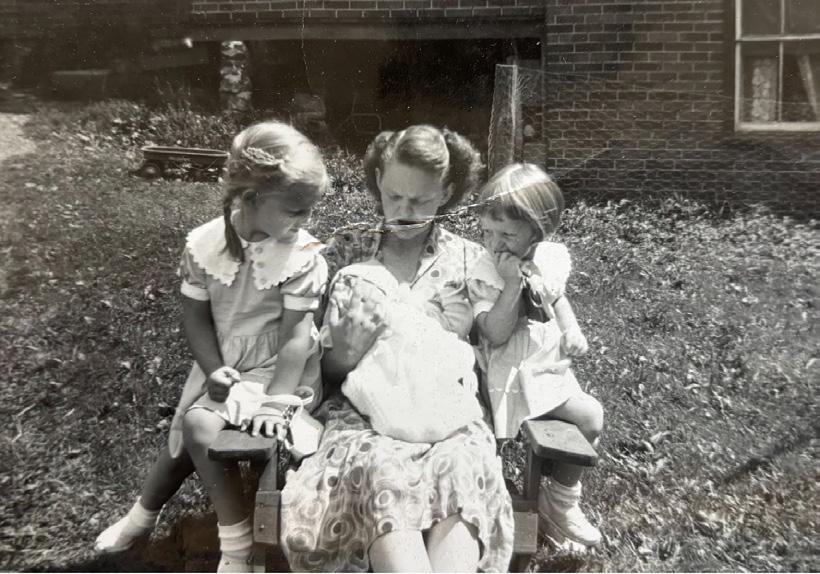
Celebrating Mother’s Day are left to right: Beverly, Isabel holding baby Ben Jr., and Sue
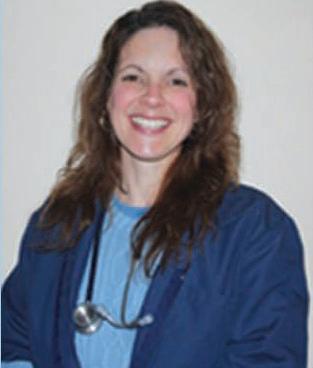
Dr. Sherri Talbot-Valerio
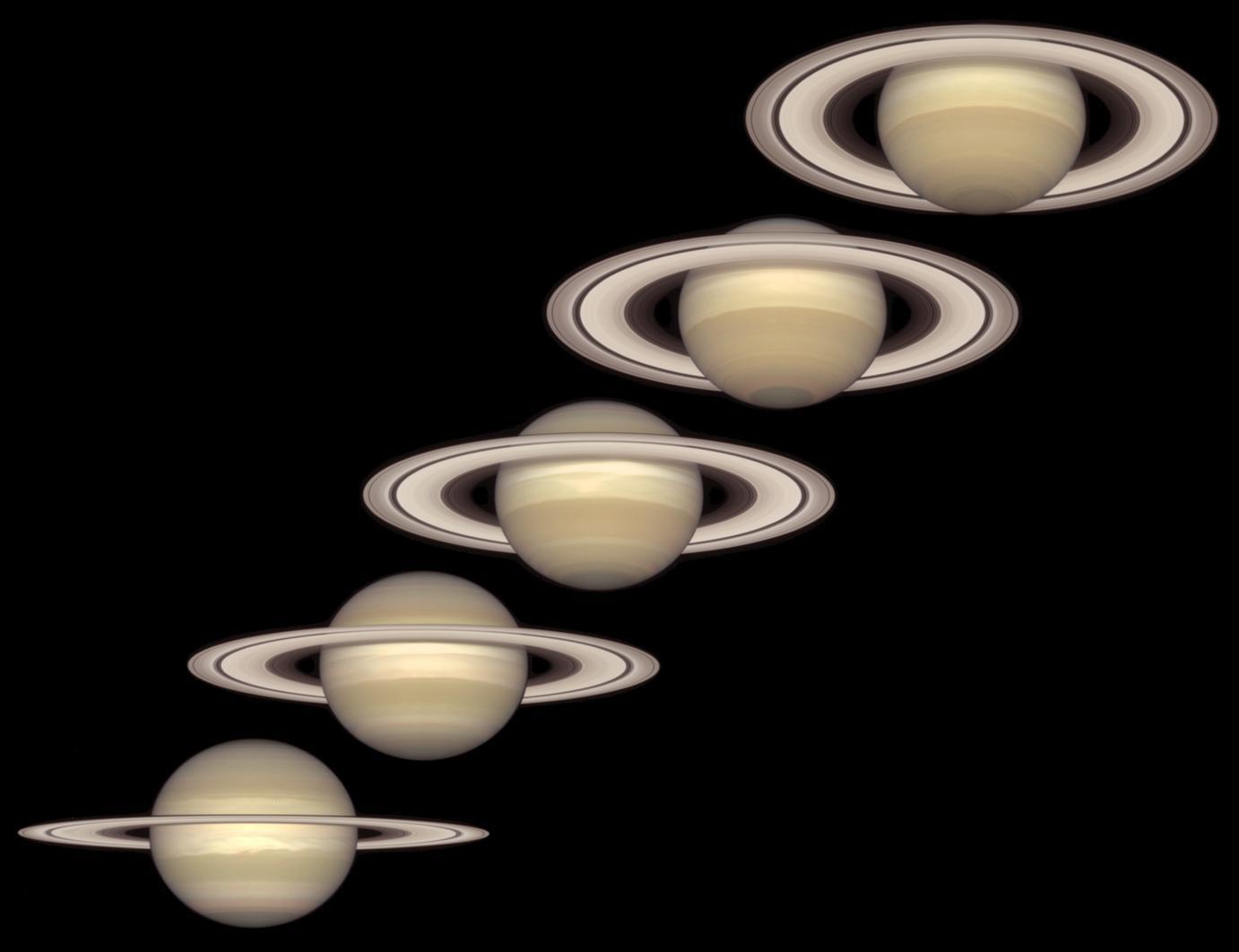
rings open up in images captured from 1996 to 2000.
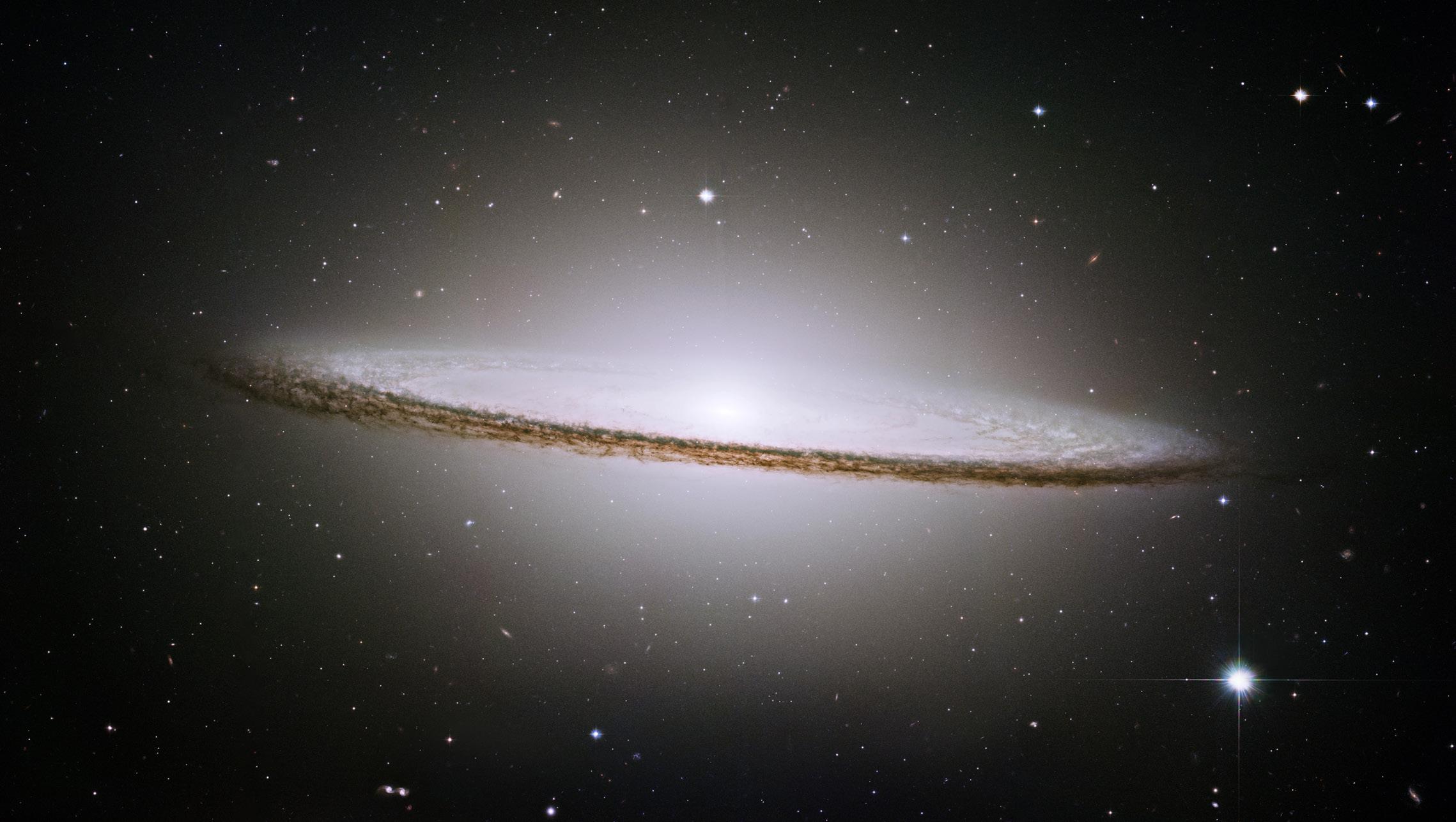
Sombrero Galexy M-104, 10 to 13 billion years ago.
and
Photo courtesy of NASA
the Hubble Heritage Team (STScI/AURA
Saturn’s
Photo courtesy of NASA and the Hubble Heritage Team (STSel/AURA)
By Marilyn Rosenthal
The Hubble Telescope
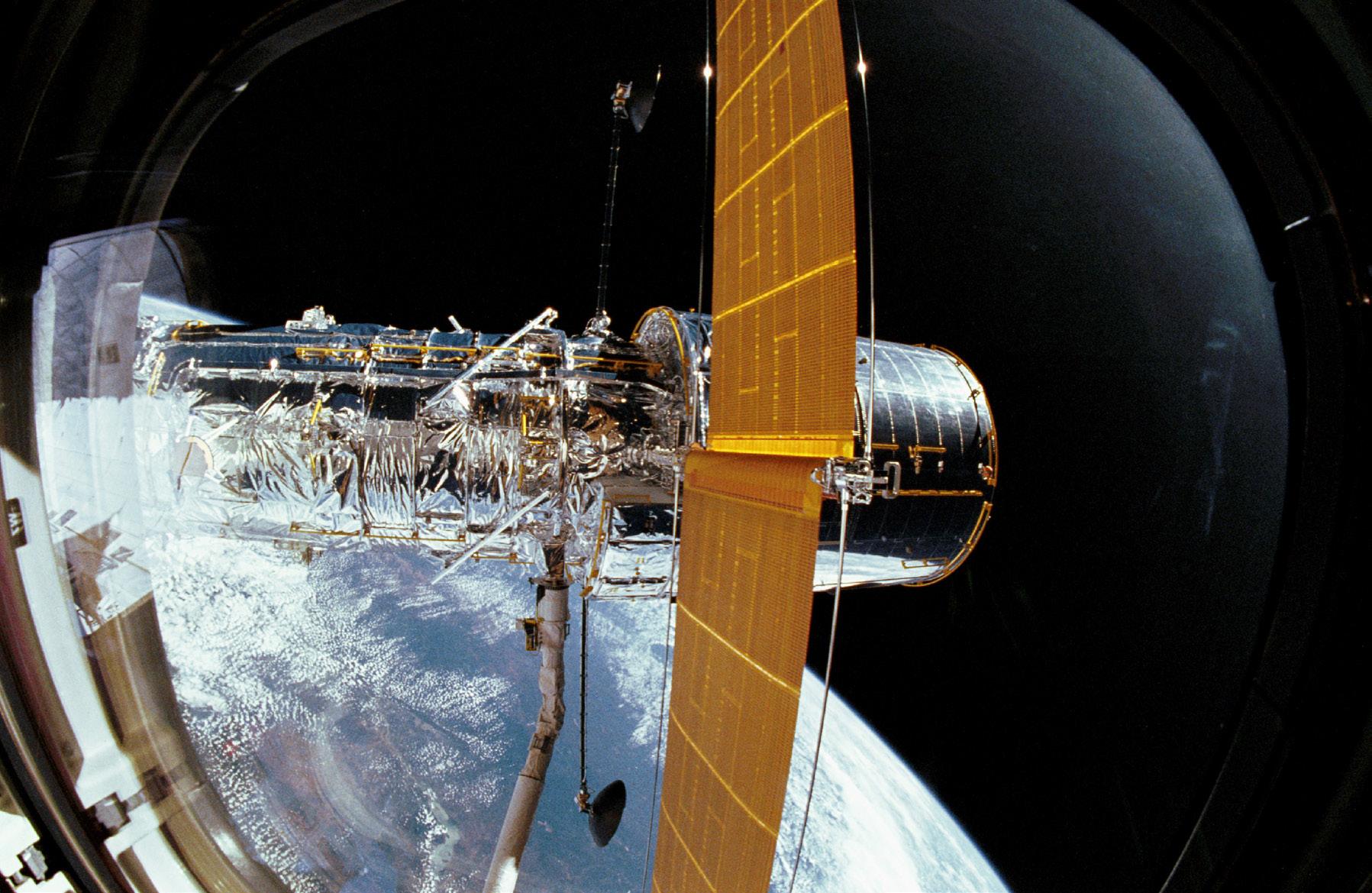
If you’re wondering what is approximately 43 feet long, 14 feet in diameter, weighs about 13 tons, flies 340 miles above the earth and has completely transformed our view of the universe, think Hubble telescope.
The Hubble is named for American astronomer Edwin Hubble, renowned for proving that the universe extends beyond our own Milky Way galaxy and that it is expanding with galaxies moving away from us at speeds proportional to their distance (Hubble’s Law). This discovery proved the vastness of the universe and shattered the belief that our galaxy was the entire cosmos. Observations from the Hubble telescope have led to enormous advances in the fields of astronomy, technology, and medicine, among other academic sciences. It is held in great esteem and is recognized universally for its achievements.
This past month saw NASA send four astronauts to orbit the moon on the space shuttle Artemis II for the first time in fifty years. Coincidently, this renewed interest in human space travel coincides with the current traveling exhibit of the Hubble telescope at the Everhart Museum of Natural History, Science, and Art in Scranton, PA.
The exhibit, “Hubble Space Telescope: New Views of the Universe,” was developed in partnership with NASA and the Smithsonian Institution Traveling Exhibition Service. This exhibit has toured nationally for more than two de-
cades and is regularly updated. It generally has been on loan to much larger museums, and the Everhart is excited and honored to have been chosen this year.
On April 24th, 1990, the Space Shuttle Discovery with the Hubble tucked securely in its bay, released the telescope into orbit, ready to begin its journey. (The space shuttle, which had been developed to return to Earth intact and to be used again, had been making orbital operational flights since 1982.)
The Hubble makes about fifteen orbits a day, circling Earth roughly once every 95 minutes. To date, it has circled Earth almost 200,000 times over more than thirty years.
It observes and tracks planets, stars, galaxies, black holes, and comets so it can tell us about their origins and movement and how they change over time.
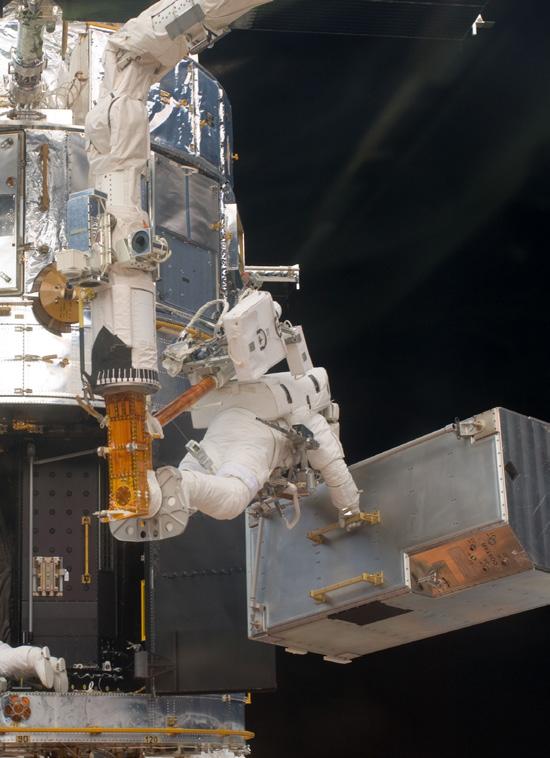
One of the inventive aspects of the Hubble is that it was designed to be serviced in space by astronauts using the space shuttle. This became necessary when early astronauts realized that the telescope’s primary mirror was ground to the wrong specifications and the images were coming back out of focus. The first servicing mission in 1993 fixed the famous mirror problem. There were five servicing missions all together with the last one in 2009.
Window on the Universe
Astronauts performing repairs and major upgrades are responsible for keeping this extraterrestrial observatory in excellent shape for over 30 years. They have now found other ways to keep the telescope exploring for years to come.
The Hubble and Wavelengths of Light
The Hubble takes pictures of its observations. It can see different kinds of light, beyond what the human eye can see. (Humans can see visible light, as in the colors of a rainbow.) The Hubble’s abilities can reveal shapes of galaxies, star clusters, and some of the beautiful images it is famous for.
The Hubble can also see ultraviolet light (short energetic wavelengths invisible to the human eye that can detect hot stars, gas clouds, and regions where new stars are forming). Additionally, the Hubble can see infrared light (longer, less energetic wavelengths that reveal cooler stars and planets and very distant galaxies).
Because the Hubble can combine all three types of light, it can see things we simply cannot. It can study both hot and cold objects and can look deeper into space and further back in time.
The Hubble and the Planets
The solar system is constantly moving and changing. The Hubble observes the planets in orbit and can tell us where
they came from, how they form, and how they change over time.
It can see storms across Mars, for example, a comet as it strikes Jupiter, or the rings on Saturn as they open up to move from autumn toward winter in its northern hemisphere. It’s a space weather satellite for the whole solar system.
The Hubble and the Stars
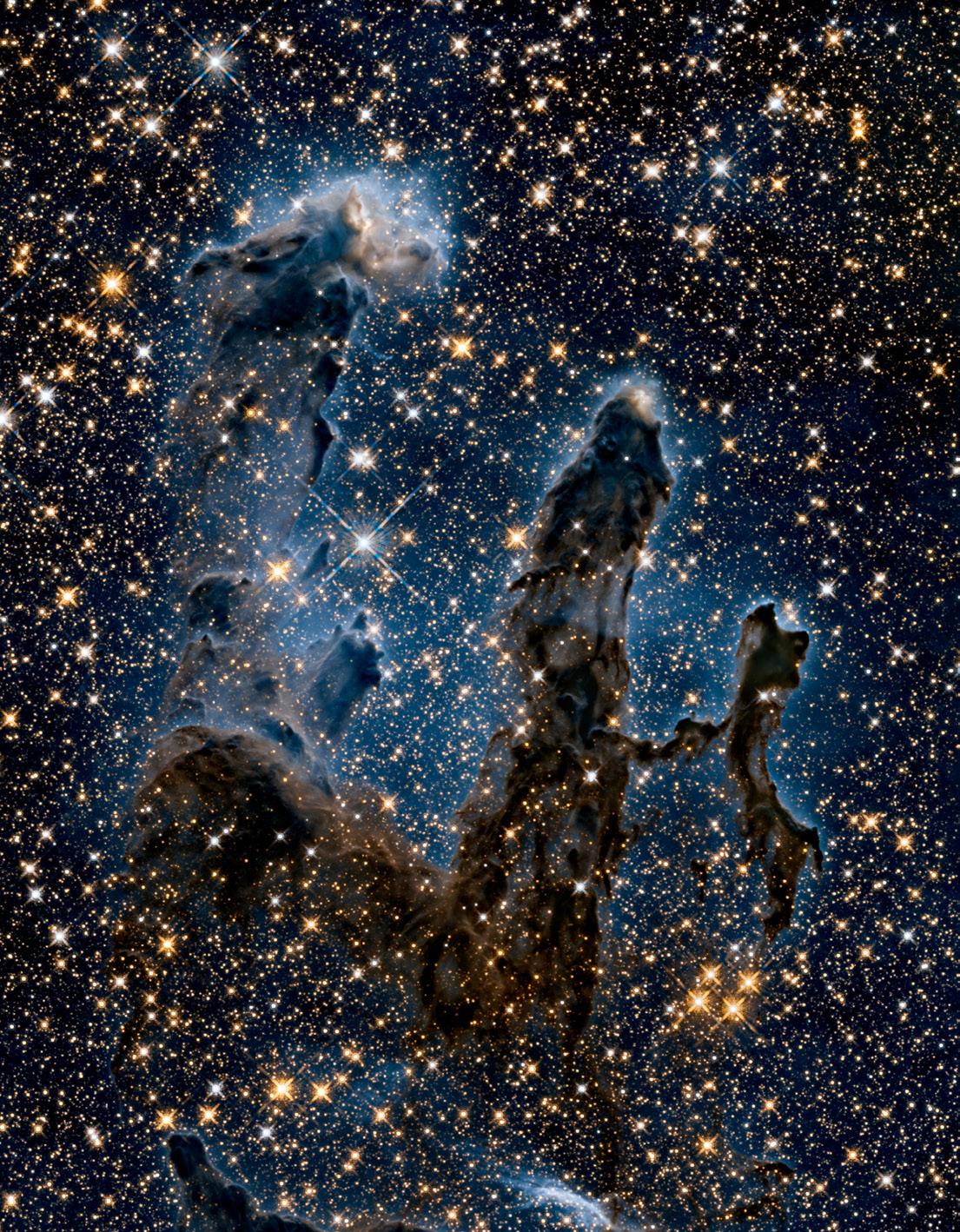
The Hubble can tell us how stars are born. For example, photos of the famous “Pillars of Creation” show huge towers of gas and dust. Radiation had eroded the surrounding gas leaving behind tall, dense columns that look like pillars. Baby stars formed inside the pillars. The pillars are inside the Eagle Nebula, a huge cloud of hydrogen gas and dust about 7,000 light years from Earth. The nebula is located in the constellation Serpens and is part of our Milky Way galaxy.
The Hubble and Galaxies
The Hubble takes thousands of “deep field images” concentrating on a small dark patch of sky. The camera is left on for days to get more detail to emerge. It has helped to explain how galaxies formed and changed. Some of these images look as small as a grain of sand, but are, indeed, entire galaxies.
The Hubble has discovered billions of galaxies with many different shapes. Because light takes so long to travel, the farthest galaxies in deep fields are seen as they were billions of years ago and shed light on the early universe. (Estimates of the age of the universe are about 13.8 billion years.)
The Impact of the Hubble
The extent of the Hubble’s scientific reach is enormous. Thousands of products and discoveries have come about because of the Hubble. It has generated more than 430 terabytes of data, produced more than 1.7 million observations, and its data has appeared in more than 22,000 peer-reviewed scientific publications on a broad variety of topics. These have been cited in other academic papers more than one million times.
Any organization can apply for time on the telescope. There are no restrictions as to nationality or academic affiliation. However, funding is available only for U.S. institutions. Competition for time on the Hubble is fierce with only about one fifth of proposals being accepted. The type and depth of information scientists want to access from this telescope is, in some cases, so rarefied, it needs to be shared to get a broader understanding of its totality.
“Hubble is not just a satellite. It’s a symbol of humanity’s quest for knowledge,” Astronaut John Grunsfeld remarked.
Marilyn Rosenthal is a freelance writer who lives in Pike County, PA.
HUBBLE SPACE TELESCOPE: IT TAKES A UNIVERSE
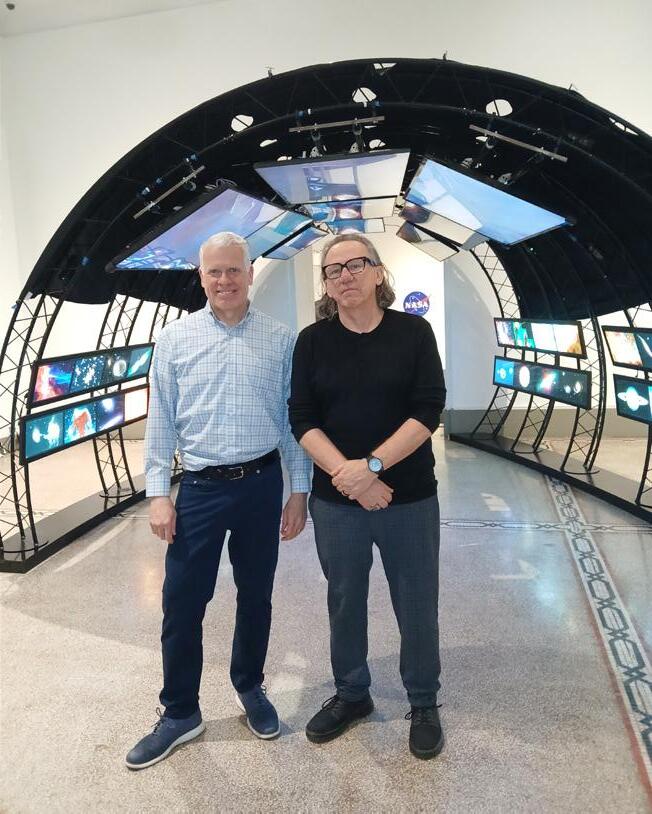
When museum curator James Lansing (below right) and CEO Timothy Holmes (below left) were notified that they were one of a select few institutions to be the recipient of the NASA and Smithsonian Institution Traveling Exhibition, they were “over the moon” because of the significance of the exhibit and the honor it represents. That was before they realized they had to logistically arrange the contents of two 53-foot tractor trailers into a 3,000 square foot area in a 118-year-old museum. “But it was worth every ounce of effort,” said Holmes.
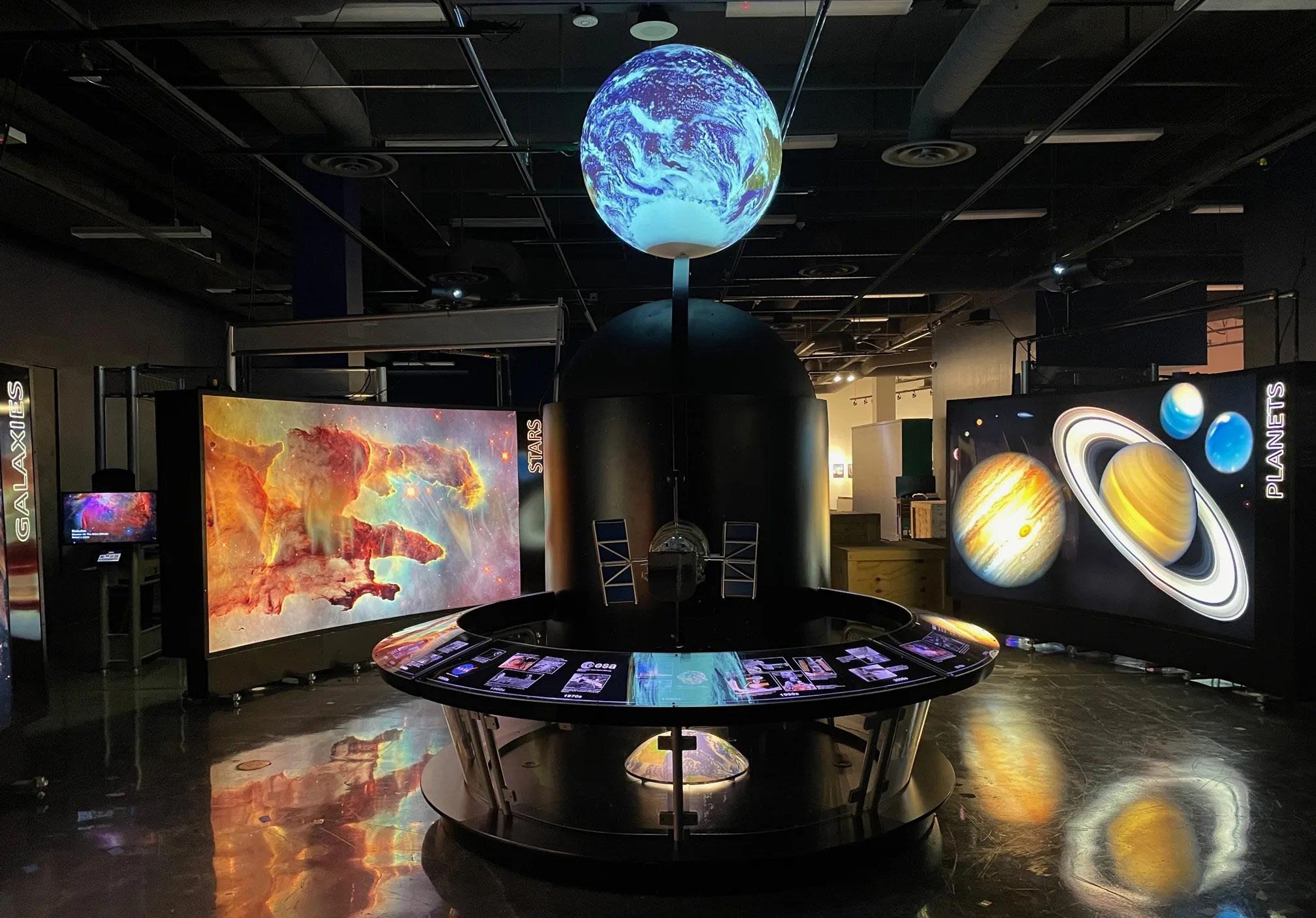
The exhibit features a scale model of the Hubble as well as several satellite units that allow visitors to have an interactive, hands-on experience. A scale model of the James Webb telescope is also on display. Schott Glass, located in Duryea, PA, producers of mirrors and glass for the Hubble, and Gentex in Carbondale, who designed advanced protective helmets for John Glenn, are featured in the exhibit.
Scranton boasts its own former astronaut, Paul Richards, who held three events at the Everhart in March. Richards, a mission specialist, was on the Shuttle Discovery STS 102 and part of the first space station transfer at the International Space Station.
The old adage, “Think globally, act locally,” is now becoming a reality.
The exhibit will be open 11a.m.–5 p.m., Wednesday–Sunday, through the end of July at the Everhart Museum of Natural History, Science, and Art, Scranton, PA. www.everhart-museum.org
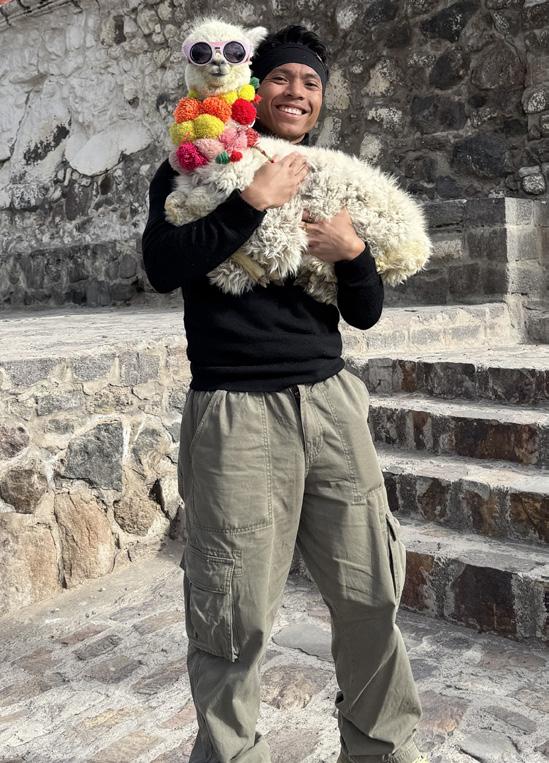
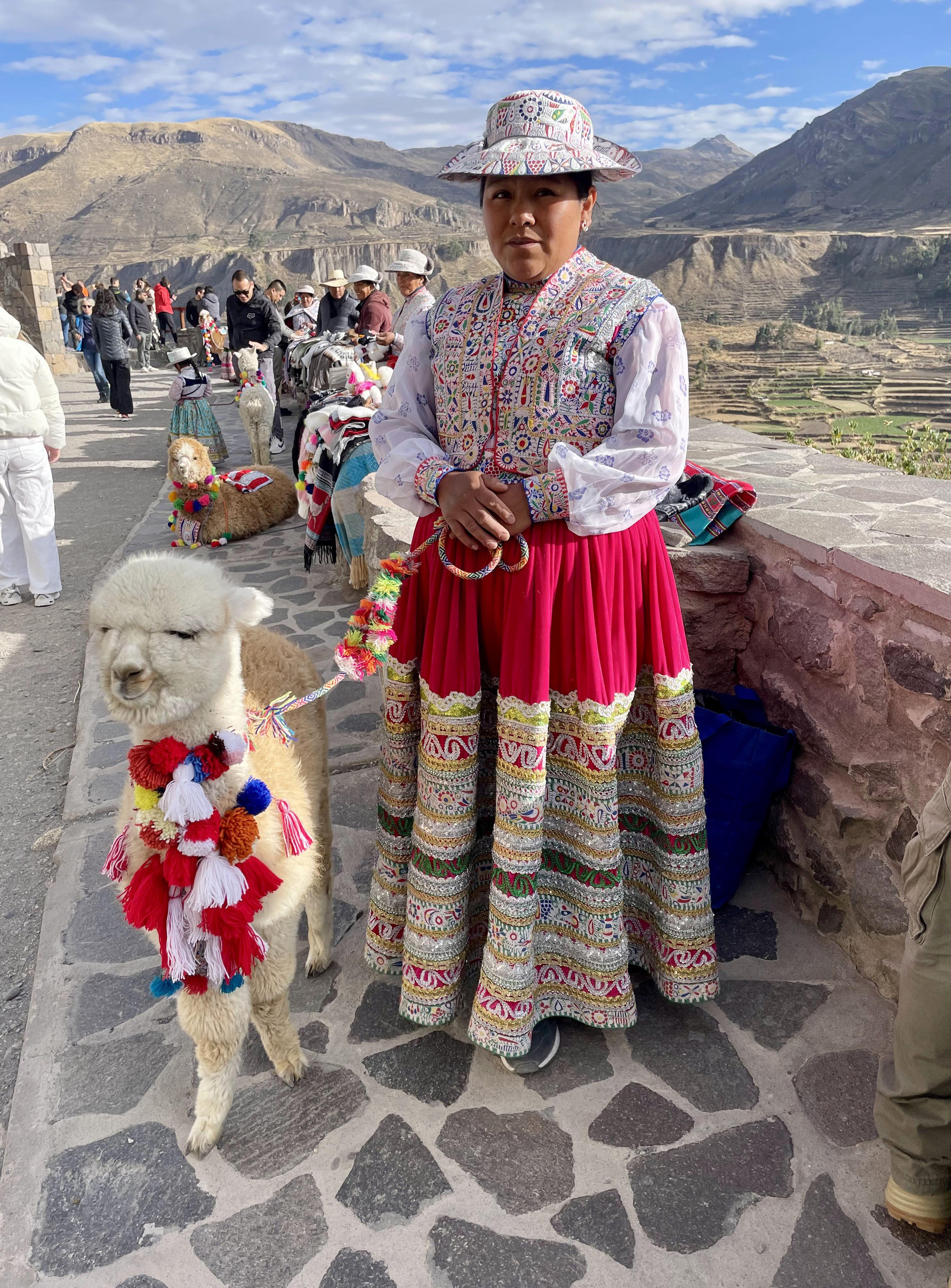
Peruvian in traditional dress and her alpaca.
Photos by Noreen Case
A Land of Natural Beauty and Adventure Peru
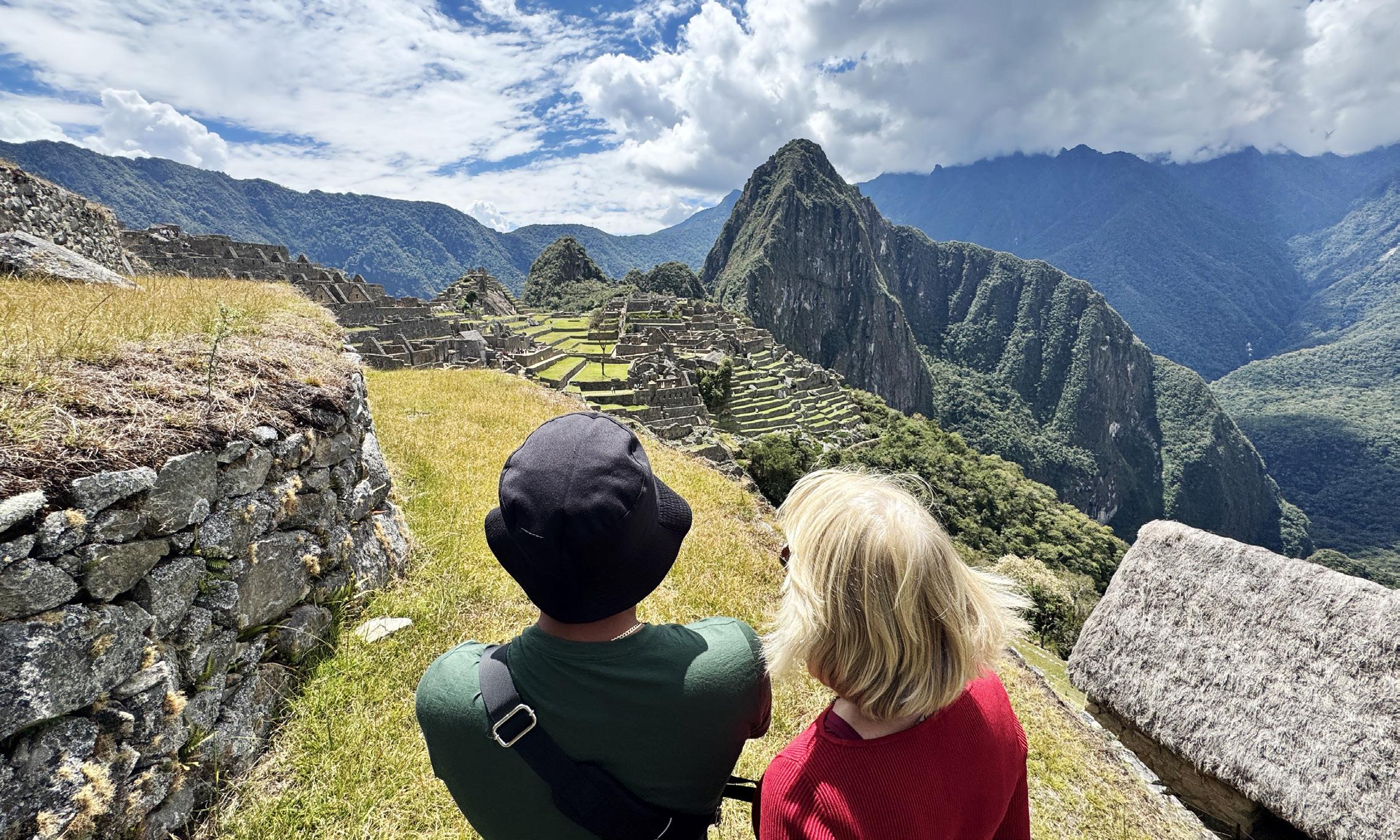
Peru is so much more than Machu Picchu.
The Andes, the world’s longest continental mountain range, slope down to the coastal Pacific Ocean beaches that in some places greet the desert in powerful, visual contrasts. It is a land of stunning natural beauty and diverse climatic landscapes that attracts adventure seekers from all over the world.
After many years of yearning for a trip to Peru, my dream was finally realized, when my son volunteered to be my travel companion. It was last September, “off season” for tourists, when we set off for a super invigorating twoweek outdoor adventure, visiting five locations, each one in a different ecosystem in southern Peru, an area of plentiful natural and manmade wonders.
We visited Colca Canyon, the second deepest canyon in the world, twice the depth of the American Grand Canyon with a nearby mineral hot springs to soak in.
In the Nazca Desert, we climbed up a tower to view the ancient Nazca Lines. These giant geoglyphs, were drawn on the desert floor between 500 B.C. and A.D. 500 and are only visible from the air. The well-preserved drawings represent geometrics, insects, plants, and figures. They cover four-hundred square miles, over hills and valleys.
The who, how, and why of these thousand plus drawings remains a lingering mystery.
The city of Arequipa, where we spent three days, is the second largest after the capital Lima and has a foreboding yet stunning backdrop of active, snow-capped volcanoes so close to Arequipa that they form the city’s skyline.
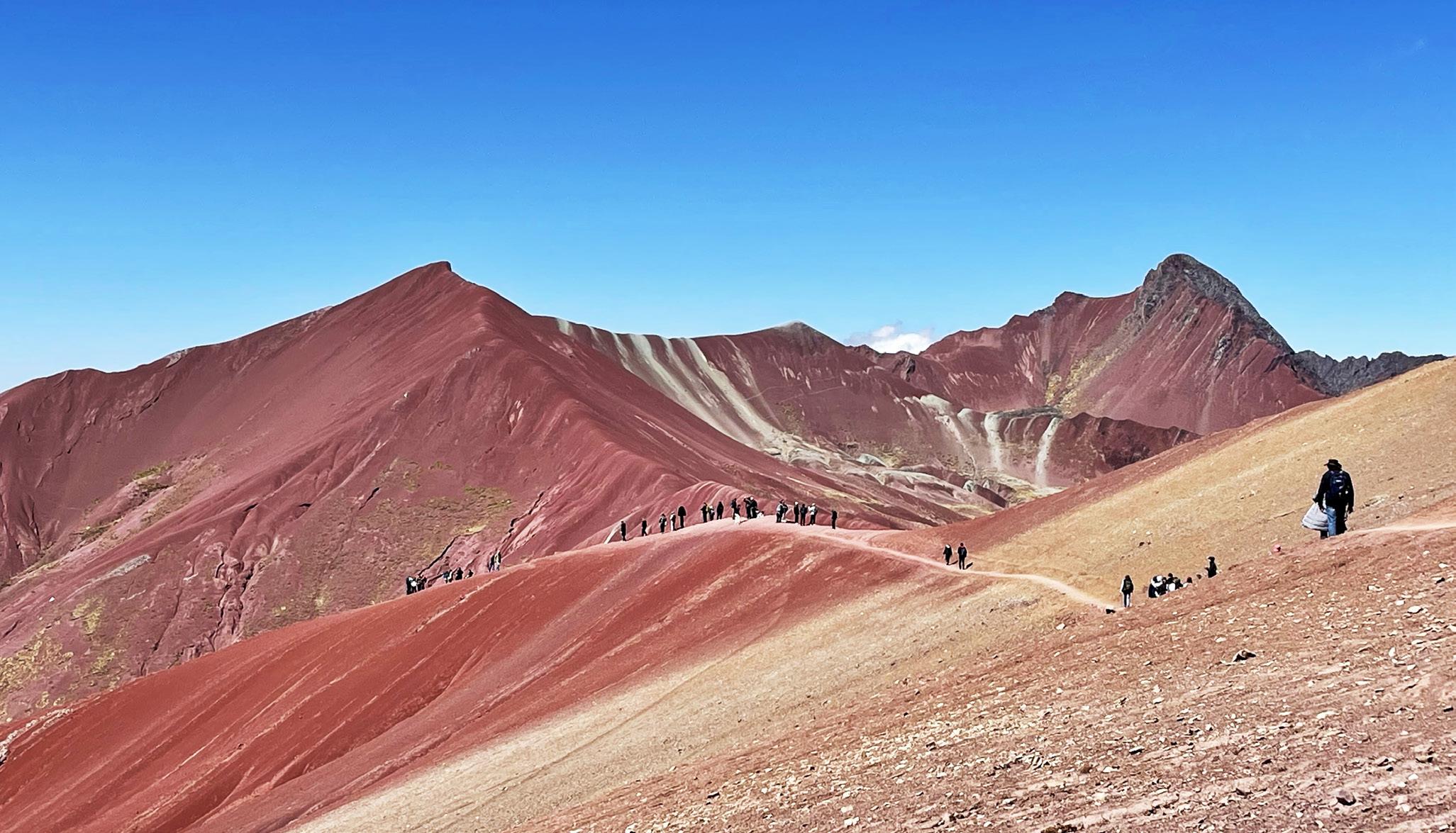
While visiting the ancient Incan capital of Cusco for five days, we went on a day trip to Rainbow Mountain, a 13,000-foot mountain that rivals others with its splendor and mineral rich colors, just begging to be climbed.
Peru’s southern wine-growing region produces the country’s signature national drink, Pisco, which is a delicious brandy spirit with quite a kick. Made from handpicked grapes and grown in five southern coastal regions, it’s fermented, pressed, and distilled to create a clear, unaged brandy, similar in proof to tequila. It is available clear or mixed with tropical fruits and as a mix for the famous “Pisco sour” (pisco, lime, egg white, sugar & bitters), similar to our whiskey sour.
This region is also rich with giant salt flats cascading down high mountains. Its mining industry provides a lucrative resource. In contrast to the country’s several high-altitude turquoise-color lakes that stun hikers and photographers
alike, Peru is also one of the nine countries that share the wondrous Amazon rain forest and jungle.
The ancient Incan civilization has left its footprints on the Peruvian culture through architecture, engineering ingenuity, early religion, and food.
All of these well-preserved historical treasures attract a burgeoning tourist industry that greatly contributes to Peru’s economic stability. Much value is placed on the success of tourism, and this was very apparent at all stages of our trip. We received excellent service, reliability, and a sense of safety and hospitality that exceeded my expectations.
A few hours south of Peru’s coastal capital city, Lima, just outside the inland city of Ica, lies a tourist location that has been popular with international visitors only since the 1960s. Passing through Ica by bus, there were no signs of what we were about to approach, only a few road signs showing accommodations or sand-related activities.
We caught our first glimpse of what lay ahead when passing through the gates of Huacachina, a tiny town of one hundred or so inhabitants: piles of sand that looked out of place, little mounds growing bigger and higher as we neared our arrival point. By the time we stepped off the bus and stood on the streets of the tiny village, the scenery metamorphosed into a moonlike mirage with sand dune
peaks that reached up to1,600 feet high. This was the Peruvian coastal desert, and at its center was a natural oasis.
Looking as make-believe as a movie set in Hollywood, the oasis formed the center of a desert paradise; imagine a lake of jade-green the size of a small lagoon like a hole dug into a giant’s sandbox. It was surrounded by tropical palm trees, the only source of shade in the hot, dry climate.
Clusters of small hotels encircled the oasis, along with shops and eateries, lending a cozy and romantic ambiance to the enclosure. There were many types of lodging: youth hostels, glamping tents, mid-size two-star hotels with pools. Ours was a well-established 19th-century Spanish colonial, the Hotel Mossone; a hacienda-style relic of former glory days when important officials stayed there. For USD $83, we had a two-room suite, a free full-buffet breakfast, and access to a huge inner courtyard where we could relax or view climbers up on the towering dunes that hovered over us like sentient beings.
We spent the afternoon strolling the promenade around the lake, getting our bearings and assessing the multitude of eateries, before bravely venturing out onto the vast desert to test our endurance in the unrelenting sand. With scarves over our faces to avoid sand rash, we stepped into the golden world of Dune, and immediately our shoes filled up with sand and became heavier. Our leg muscles worked overtime in a challenging attempt to scale the ev-
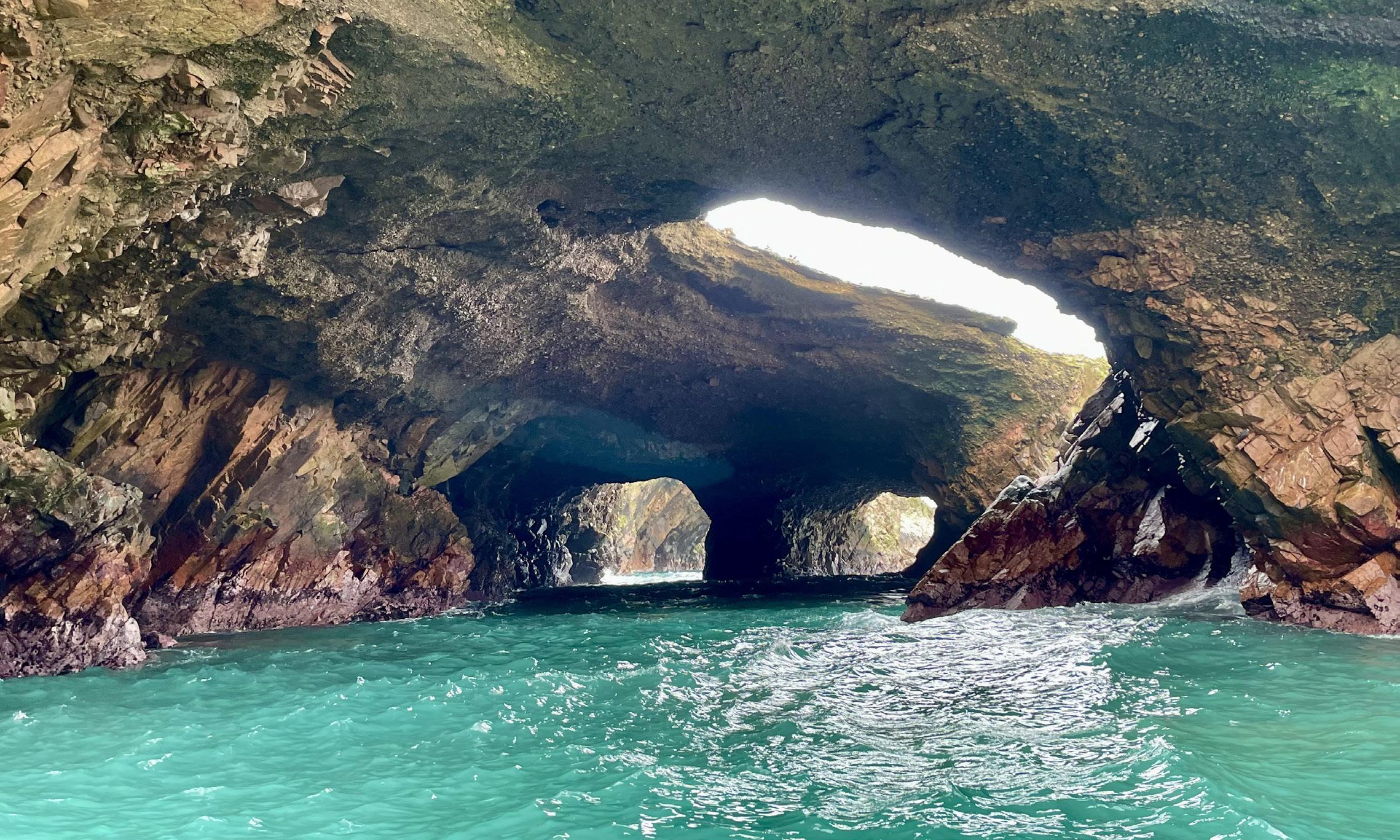
Ballestas Island in the Pacific Ocean.
er-rising terrain, and our feet failed to get traction in the deep, shifting sand.
Our determination carried us up to a panoramic view of our surroundings: undulating sandscapes, breathtaking peaks and valleys, monochromatic light and shadow that swished and swooned before vanishing into the horizon.
There was bustling activity below our vantage point with fleets of dune buggies lining up to haul dozens of gleeful thrill-seekers across the sand dunes at high speeds and paragliders soaring and descending off in the distance, like seagulls on an ocean shore.
A group of local schoolgirls on a sandboarding field trip (the clever sand version of snowboarding) appeared on the scene. Down a steep, long crevice, they boarded on their bellies, screaming with delight as hats flew off and shoes filled with sand, only to head back up and repeat the same delight again and again.
I was content to remain an observer of such activities on this particular day, as I’d had my own thrills the previous day in the Paracas National Reserve, a desert that runs along the Pacific Ocean.
It was the ride of a lifetime in the passenger seat of a dune buggy, piloted by my fearless son. My white knuckles were glued to the single roll bar for the whole twenty
minute, albeit scenically breathtaking, ride, as our vehicle bumped its way up and down rough paths and sharp turns that cut through the sand, over jumps you didn’t see coming until it was too late. It was invigorating, indeed, and I live to tell.
By late afternoon, the Huacachina sky began showing golden colors, the change of light further contrasting the sand’s otherworldly shapes with deeper shadows. I heard my son’s voice descending from the mountain above, and he joined me on the side of the dune to watch the sun sink into the desert horizon.
With enthusiasm, we planned the following day, where my son would have an early morning paragliding adventure, while I drank coffee on the colonial veranda of our hotel, overlooking the romantic oasis one last time before the movie ended.
Our last day in Peru was reserved for Lima, our departure point, and after a fun-filled two weeks, all we had energy for was a relaxing lie on the rocky beach to watch the surfers go in and out. We breathed in the sea air and reflected on our whirlwind adventures — the mountains, the deep canyon, two deserts, an oasis, a vineyard, three cities, and now the Pacific Ocean that connects us to our home country.
Peru really is much more than Machu Picchu.
Aries (March 20-April 19) – Your sign has the reputation for being the assertive go-getter of the world, though you personally may be the kind of person who waits for an invitation. Still, you’re likely to feel tremendous drive, and at times, impulsive. Therefore it’s essential that you attenuate your energy to the situation you’re in. The energy is going to be so powerful over the next six to eight weeks that you must work with intention, and also consider the law of unintended consequences.
Taurus (April 19-May 20) – Venus and Ceres in Taurus describe factors that are taking off a little of the internal pressure you’ve been feeling. Both are earth-centered planets that will provide grounding influences. If they have not come to you, you can go to them. Both can be found outside; you know your way there. Both planets speak of some blend of luxury and nourishment, and of having some real experience of springtime and a sense of the seasons changing.
Gemini (May 20-June 21) – Uranus entering your sign in April is going to accelerate every facet of your life and shake up the known order of your existence. It’s an indicator that there must be clear metes and bounds between you and the world around you; between you and the people around you. While you may be driving a car that can go 100mph, you must set your own speed limit. You will need to pace yourself carefully, and it would be wise to delay your reactions and responses to new life situations.
Cancer (June 21-July 22) – Jupiter in your birth or rising sign is providing you stability and protection. Aspects that might signify risks for others offer you opportunities. So you don’t need to let the business or the problems of others distract you; you have done plenty of that. Now is the time to focus on your professional aspirations as if nothing could possibly get in your way. The only condition is that you be true to yourself and your purpose.
Leo (July 22-Aug. 23) – At the moment you are going through a profound rebirth, which is likely calling on you to devote all of your energy to it. And sadly, part of the challenge of existing now is that there is rarely time to pause, think and feel. Yet this time in your life is so distinct, so unusual and moving you so deeply that it would be wise to focus. You owe yourself some self-devotion, which is time when everything around you is not demanding your involvement.
Virgo (Aug. 23-Sep. 22) – It is the quest of Virgo to maintain your personal integrity while at the same time being present for the people around you. Yet this can be extremely challenging when you are growing, becoming and emerging so quickly and with such inner determination that there is no stopping you. Then all you can do is be present for yourself, be present for others, and above all, be honest. You may find some clarity when you remember that ultimately, you are responsible for your life.
Libra (Sep. 22-Oct. 23) – You may not be aware of the amount of energy you emit; you may not be aware of your magnetic power. While you are observing how people treat you, be conscious of any undue demands you may feel entitled to make. Listen to your tone when you speak to others, or write to them. Modulate and attenuate. You have a journey ahead over the next six weeks or so, and you will truly need to mind your borders, and be diplomatic with others while you’re being honest with yourself.
Scorpio (Oct. 23-Nov. 22) – The willingness to be vulnerable is as necessary as being present for whomever you are with. If this is evading you, or makes you nervous, you might question why that is. Yet you must be careful not to come to conclusions about yourself, about others, or about your relationships. The emotional energy is running high right now. You are a water sign; you exist as part of the deep element, and must learn how to turn your body and your feelings gently, feeling each movement and point of contact.
Sagittarius (Nov. 22-Dec. 22) – Jupiter, the Sagittarius planet, will be in the sign Cancer for about three more months. For you, this is a study in partnership, resources and agreements. Use this season as an opportunity to get these things right. Meanwhile, I think any shaky feeling you have about existence will find some relief in devoting yourself to creative activity and self-care. I don’t think you need to be ambitious now. The planets describe you being involved in life and taking pleasure in what you do.
Capricorn (Dec. 22-Jan. 20) – Are you feeling grounded and stable in yourself? You may be feeling like a new person is emerging from within you. While various metaphors of aspiration and ambition are usually used to describe Capricorn, the truth is that you live your life from the inside out. You exist within yourself in a deep place, and there has been much mysterious transformation that you have not caught up with. So if you feel like staying in your proverbial shell or hobbit hole, honor that need.
Aquarius (Jan. 20-Feb. 19) – You are about to experience a burst of energy as Uranus enters your fellow air sign Gemini. The past year or so has been a nonstop experience of rethinking and revising many facets of who you are and how you think of yourself, and the pressure has been full-on. Uranus changing signs will give you an outlet for your ideas, and the willingness to take chances. You will feel like you have the opportunity to express your brilliance in new ways.
Pisces (Feb. 19-March 20) – The next big move is Uranus entering Gemini, which is your home and security angle. You may be questioning your living arrangement; if it’s not copacetic, now is the time to make it so. Then there is the human factor. We live in an increasingly isolated world, and your home can be a center of social activity. Such would make productive use of this transit, which lasts seven years and connects to many other developments that will give you the power to shape your life your way.