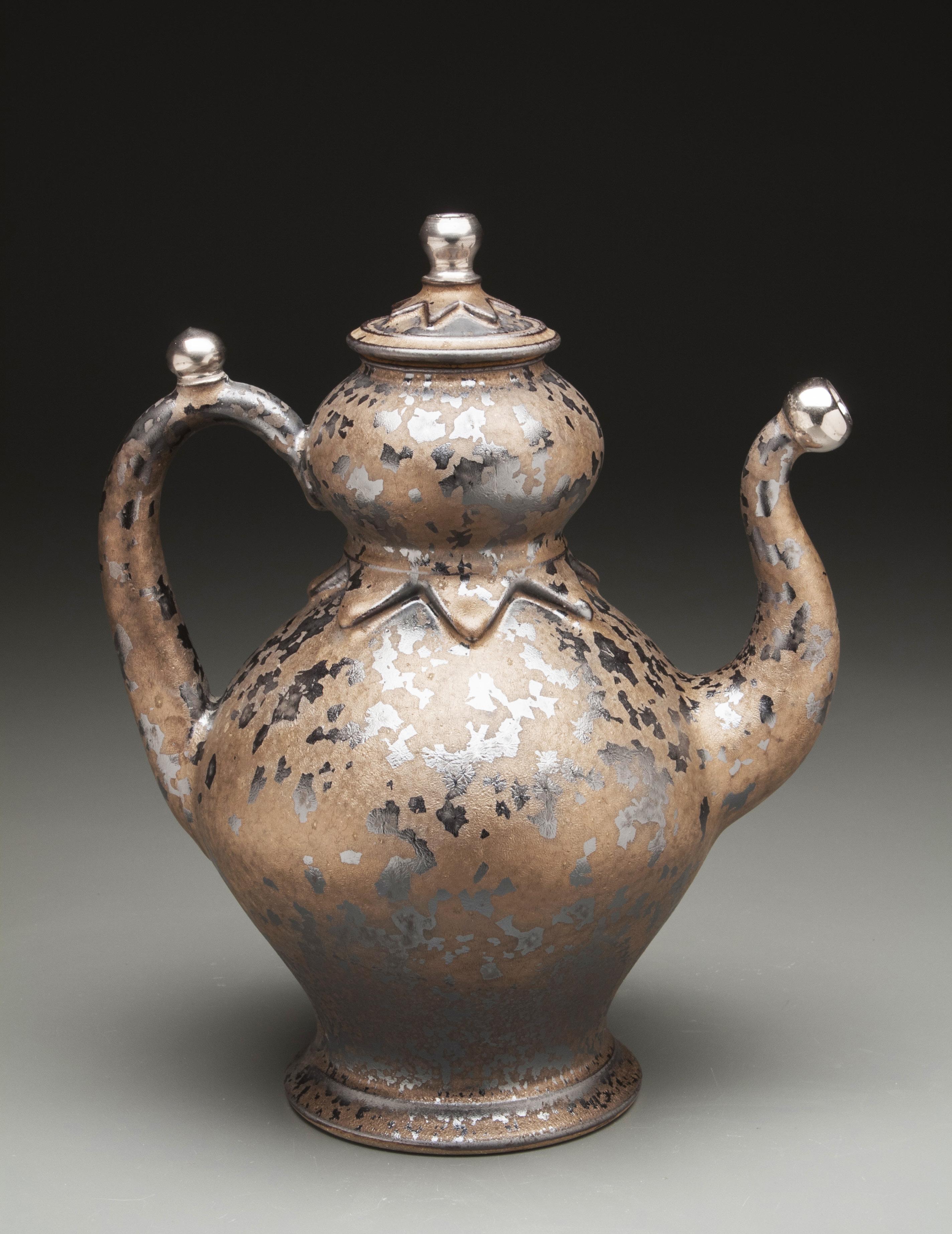
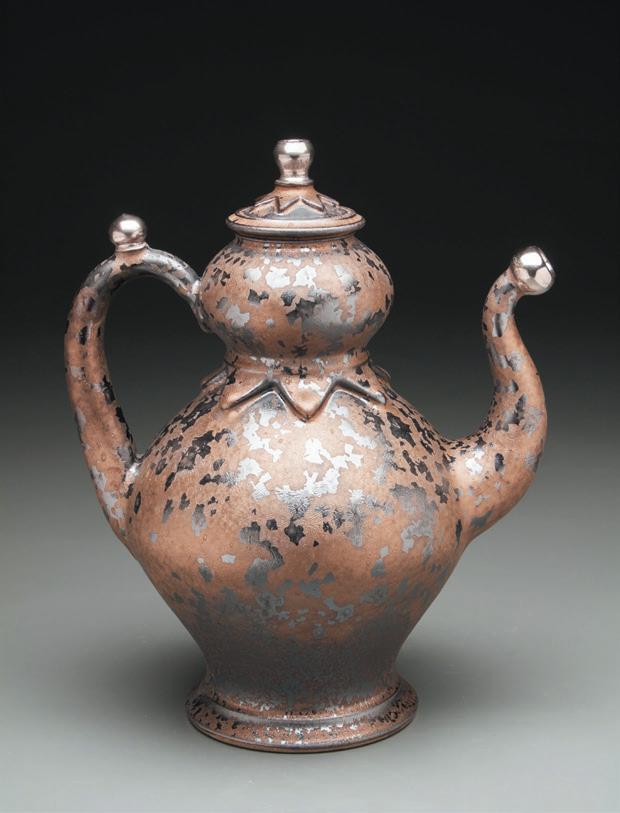
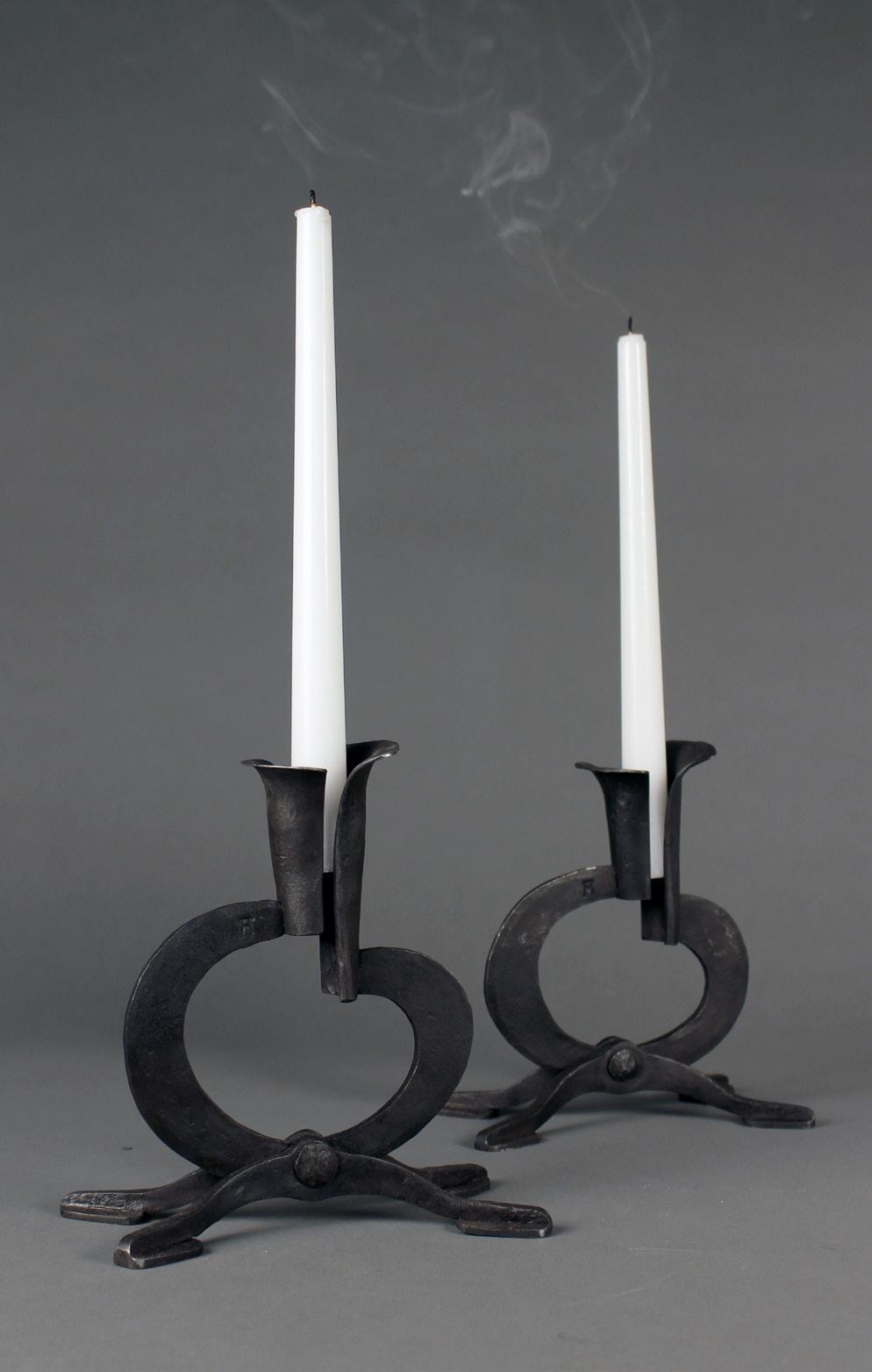
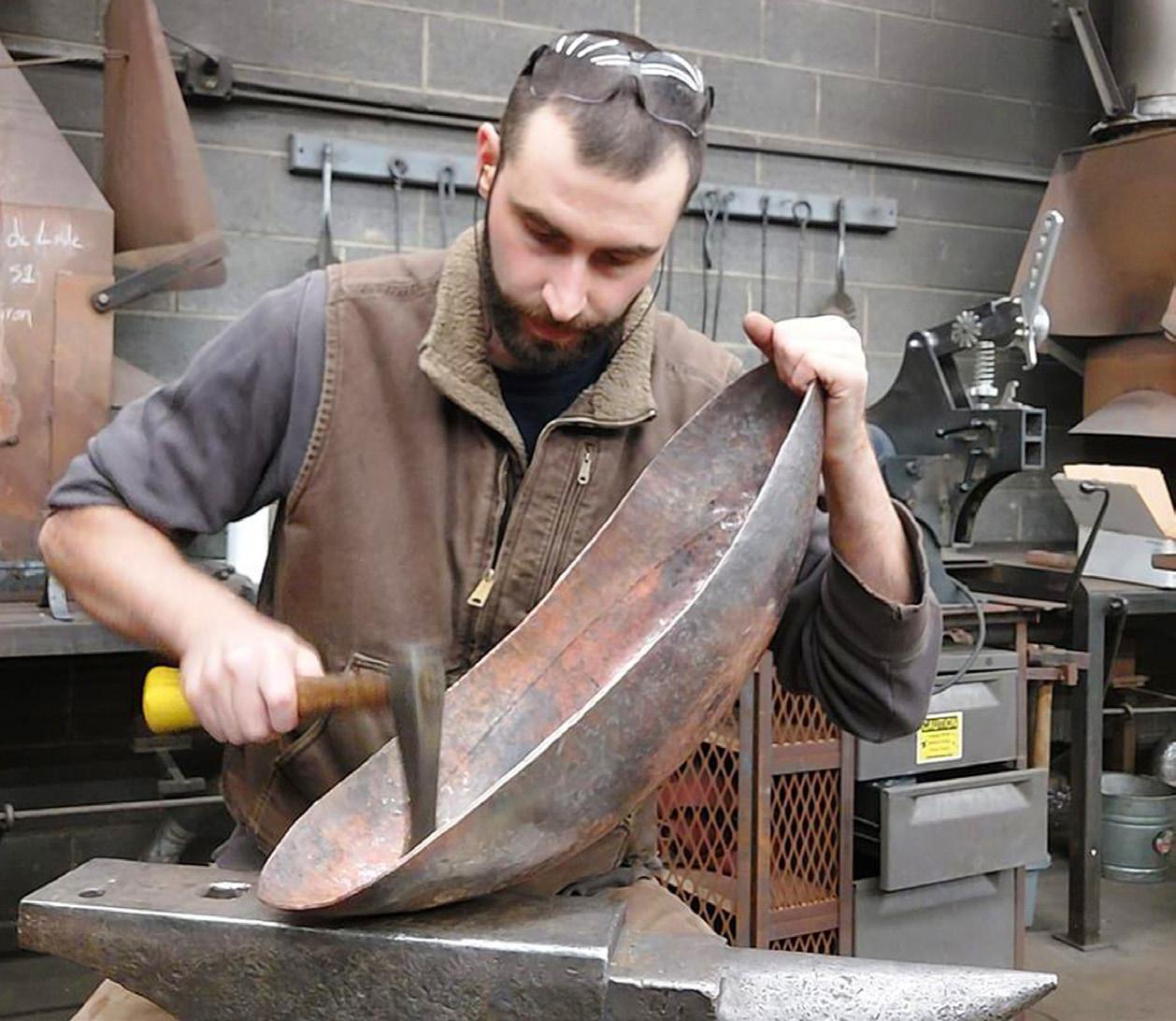
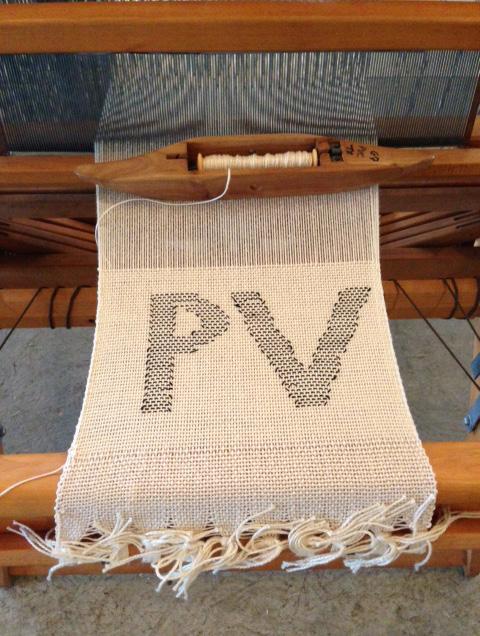
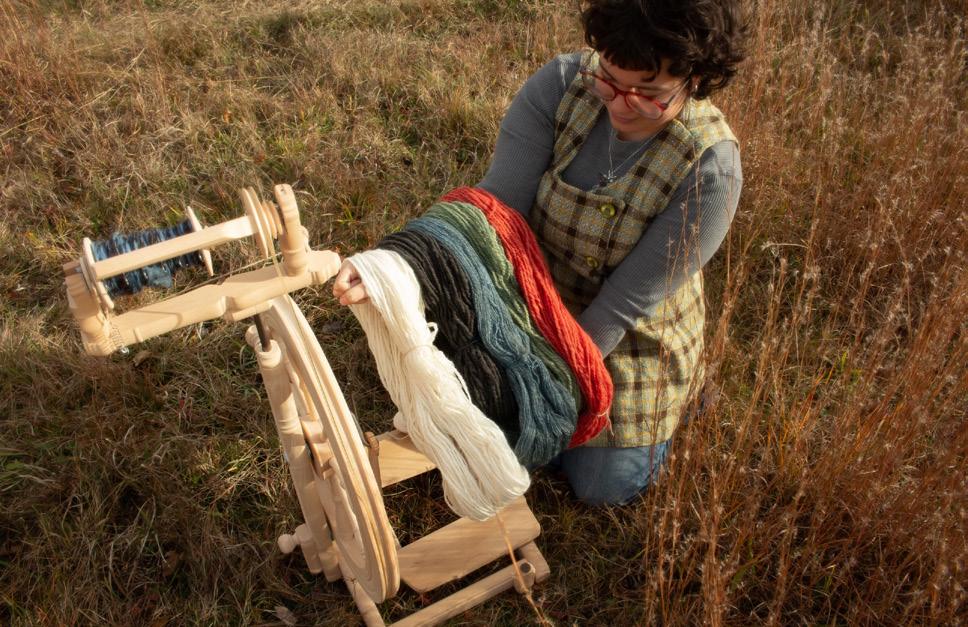
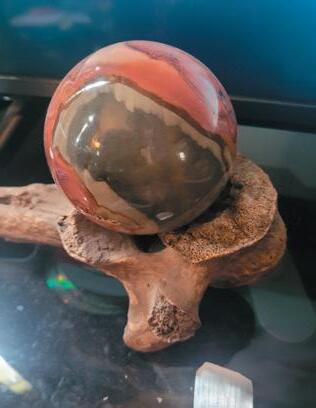
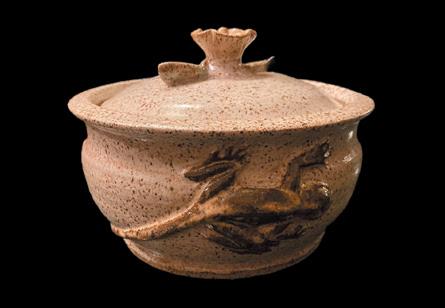
Teapot. Reduction-fired Stoneware, Platinum Luster. “My work symbolizes strength in purpose and the potential for transcendence toward something higher and greater.” Seth Green Pottery and photo by Seth Green
Publisher & Editor
Amy Bridge publisher@milfordjournal.com
Graphic Design
Maureen “Moe” Taylor
Kimberly Hess kimberlyhess212@gmail.com
The
Journalists
Marilyn Rosenthal
Joseph Blanco • Bob Romano Eric Francis
Associate Editor
B’Ann Bowman
Advertising Team
Amy Bridge amy@milfordjournal.com
David Dangler dangler908@yahoo.com
The tri-state upper Delaware River highlands and valleys are a place of rare beauty…
Seeing the region and living in it almost aren’t enough. Such beauty should be captured on canvas or film so that one can truly appreciate it, glimpse it in the quiet of an art gallery or museum, or between the pages of a poetry book or literary sketch.
The Journal Group’s mission is to capture these momentary snapshots of beauty graphically and through the written word. We celebrate our area and the uniqueness of the people who live and work in the tri-state region. From Pike to Wayne and Monroe to Lackawanna Counties in Pennsylvania, upriver to Sullivan County and on to Orange County in New York, and to the headwaters of the Wallkill River and
Mission
Editorial Readers
Robert Bowman Amy Smith
Nancy DeRienzo nancyderienzo33@gmail.com
The Poet
Maureen Newman
along Warren and Sussex Counties’ rolling hills in New Jersey, with quaint, historic towns and hamlets at the center, the Journal Group opens its doors to our communities, businesses and organizations, to serve as a communicative journal of all that we have to offer for those who live here and for those who love to visit us, too.
Publication Information
The Journal Group publishes The Journal eight times a year and distributes it in eight counties in PA, NJ and NY. We assume no responsibility for unsolicited manuscripts. Contents may not be reproduced in any form without prior written permission. We reserve the right to refuse to print advertisements that we deem inappropriate. All rights reserved.
A Beacon of Light
The 250th Anniversary of America’s formation is in full swing.
What a wonderful opportunity to put our political differences aside and celebrate the things that helped to make our beautiful country.
In this issue, we examine how craft helped shape America. I learned so much in preparing to write this article. Historian Joseph Blanco educates us about what really happened just before, during, and right after the founding of our democratic republic.
Meanwhile, in Pike County, PA, a long-standing tradition has been restored.
For those who aren’t familiar, there’s a path that you can hike, up the mountain in back of Milford town, that leads to the lookout point referred to as the Knob.
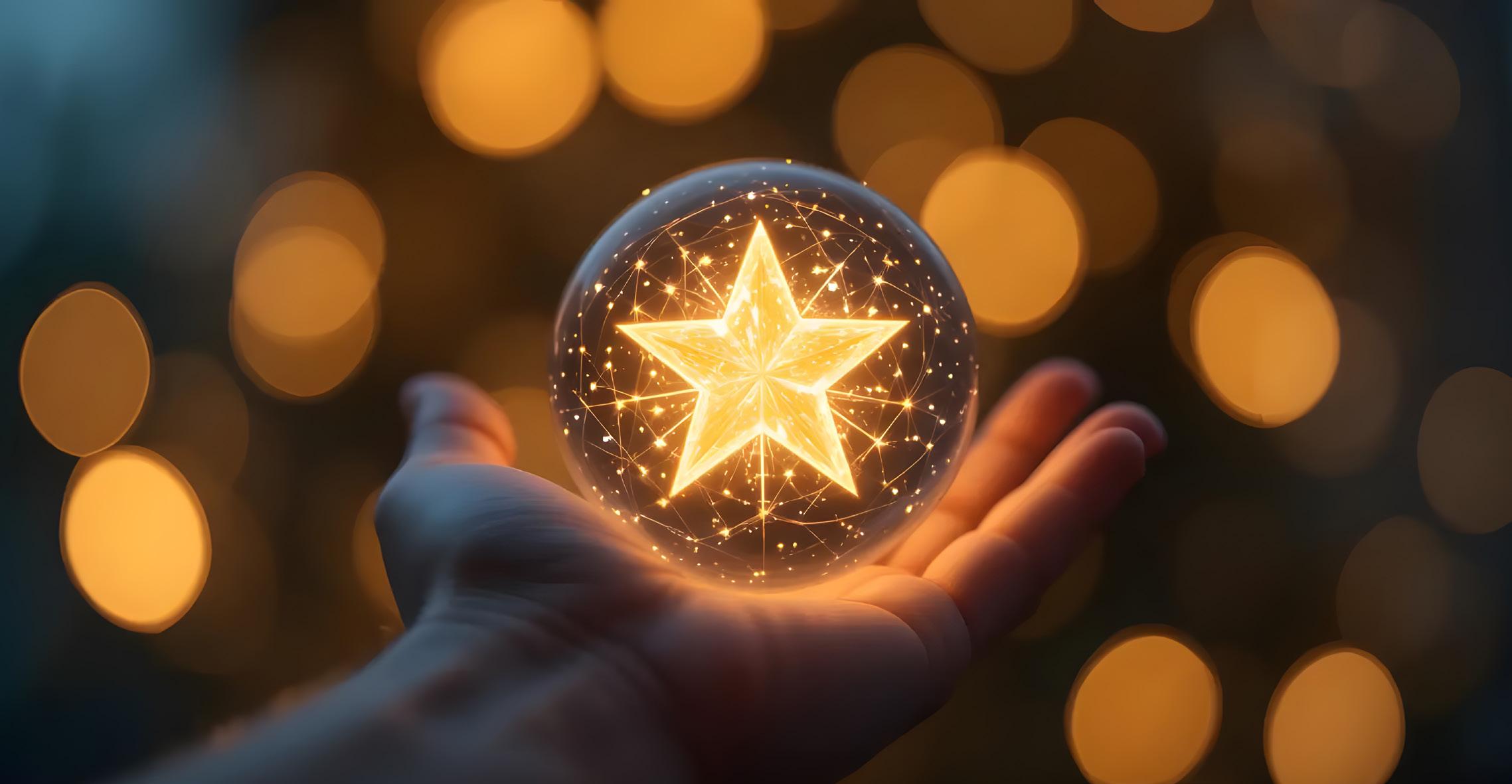
For many generations, there sat a star that was lit every Christmas season. Until it wasn’t.
Over the years, there has been a unified effort to bring the shine back to Milford’s star.
Community leaders collaborated with local organizations, federal officials, and the National Park Service so that the historic star will be lit (via solar power) every Christmas season for generations to come.
The Star on the Knob—a symbol of community, a symbol of unity, proof that Americans can still work together for the greater good with dedication and perseverance—will be relit for the first time in many years on July 4th, 2026.
Happy semiquincentennial!
The Ocean’s Bestowal
After a storm or, An hour before low tide, I run down to the seashore, To see what I can find.
Imagining the hunt, With sand dipper in hand, Hoping and anticipating, Discoveries so grand.
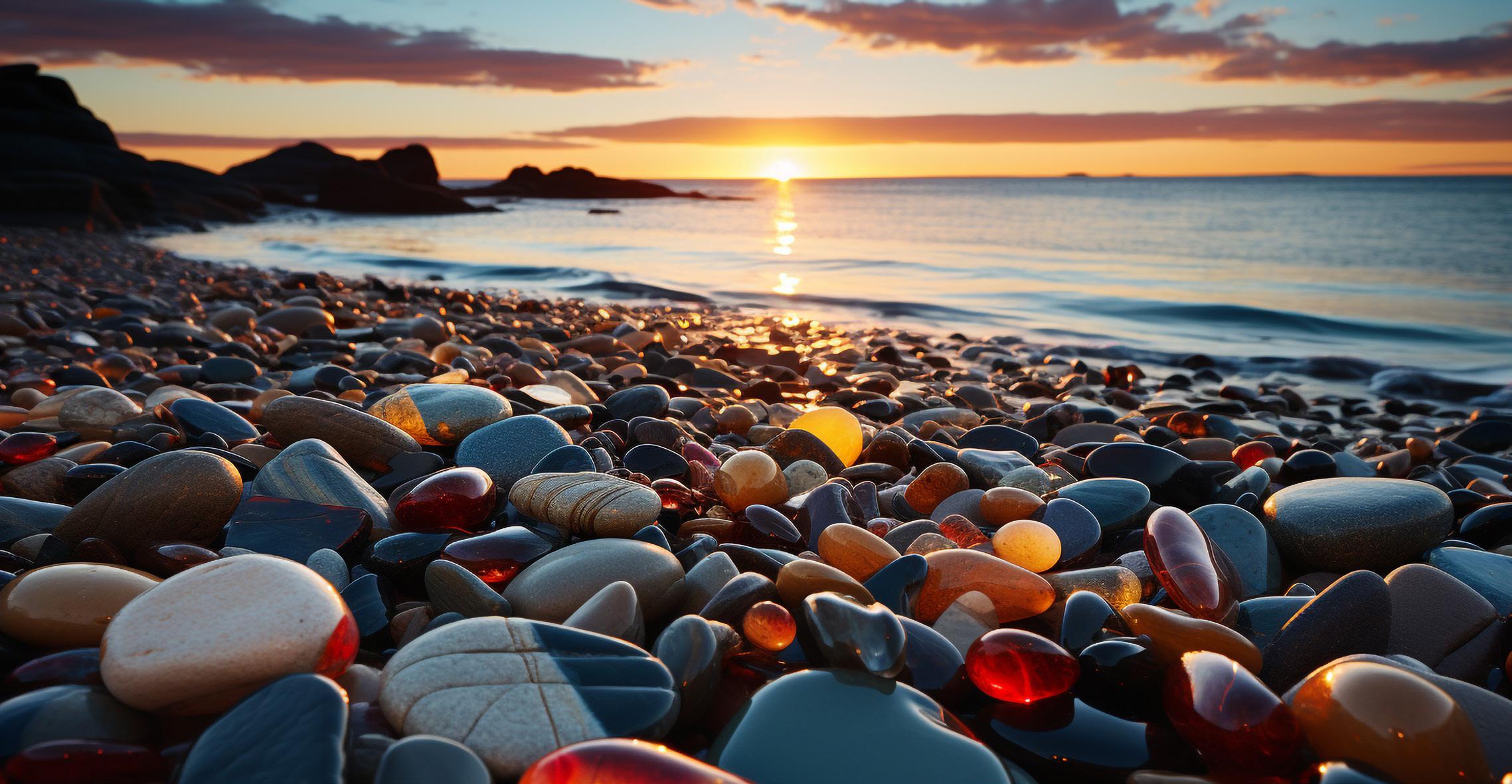
Without a care in the world, And no concept of time, Walking for miles, Collecting gems, totally mine.
Oyster shells, cockles, And angel wings, Gorgeous colored sea glass, Gifts of so many things.
Now back home, Admiring all my treasure, Looking over this bounty, I feel rich beyond measure.
-Maureen Newman
THE ANTOINE DUTOT MUSEUM & GALLERY 2026 SEASON
The Antoine Dutot Museum houses a historic collection of artifacts and memorabilia from the golden age of the Delaware Water Gap as the premier resort destination in the east.
The Museum is located at 24 Main Street (Route 611) Delaware Water Gap, PA (570) 476-4240
Hours are seasonal: Memorial Day through Columbus Day
Saturday and Sunday from 1-5 pm with art openings Friday nights from 7-9 pm
www.dutotmuseum.org
Follow us on Facebook: DutotMuseumandGallery
In the Gallery:
May 22-June 7 Andrea Levergood-Flaherty
June 12-28 Beth Halliwell & Khrystyna Khristianova
July 3-19 Photography group show
July 24-Aug 9 Linda Schwartz
August 14-30 Caren Shapiro (CJ)
September 4-20 The $150 group show Sept 25-Oct 11 Darlene Farris-Labar
Dr. Sherri Talbot-Valerio
Nicole L. Francoeur, BFA, CPF - Proprietor 270 S. Sparta Ave • Ste. 107 • Sparta, NJ 973.660.0922 www.rosecityframemakers.com
Enjoy a Summer Evening With Us!
Pub Style Food • Budget Friendly Online Ordering • Dine In • Take Out
31 Jersey Ave, Port Jervis ( 845 ) 754-1808 Celebrating 18 Years! GROOVE-PORT PRESENTS: Eric Person Quartet
Around the Towns
Early Summer
July 2nd
Thursday 5–10 p.m.
Food Truck & Fireworks Festival. Riverside Park, Port Jervis, NY. Live bands, vendors & games. $5. Info: pjfoodtruckfireworks.org.
6 p.m.
Aint No Friend of Mine. Harmony in the Woods, Hawley, PA. Performance by Bywater Call, southern soul & rock. $38. Visit the website for complete summer schedule. Info: 570.503.6685, harmonyinthewoods.org.
July 3rd
Friday 6:30 p.m.
Honesdale’s America250 Celebration. Central Park, Honesdale, PA. Vendors, music, fireworks. Presented by Greater Honesdale Partnership. Info: 570.253.5492, www.visit honesdalepa.com.
July 4th
Saturday 10 a.m.–dark
4th of July Celebration. Main Street, Liberty, NY. Vendors, parade, entertainment, fireworks. Hosted by Sullivan County Chamber of Commerce. Info: 845.791.4200, catskills. com
10:30 a.m.
July 4th Parade: 250th Anniversary. Eastshore Trail to Dykstra Park, Sparta, NJ. Awards, DJ, kids crafts & more. Free. Hosted by Sparta Elks. Info: 973.726.0169, spartaelks. org.
Noon
Pike County Semiquincentennial Parade Milford, PA. Patriotic music and America250PA Bells Across PA at the Community House. Hosted by Pike County Commissioners Office. Info: 570.296.7613, pikepa.org/ pike250.
9:00 p.m.
Fireworks over Lake Wallenpaupack. Wallenpaupack Area High School, Hawley, PA. Hosted by Northern Poconos Chamber of Commerce. Info: 570.226.3191, northern poconos.org.
July 4th–5th
Saturday–Sunday 9 a.m.–5 p.m.
Barn Sale. 156 Cricket Hill Rd., Hawley, PA. Large variety of interesting & useful items. 50/50 raffle. Benefits the Guardians of Mercy Animal League. Info: 570.226.1570.
July 5th
Sunday 11 a.m.–5 p.m.
Summer Fun Fair. Kadampa Meditation Center, Glen Spey, NY. Fresh vegetarian food, art vendors, music, activities for all ages & backgrounds. Info: 845.856.9000, www.kadampanewyork.org.
11:30 a.m.–2 p.m.
Smoky Joe Wood Softball Soiree. Little League Field, Port Jervis, NY. 9-inning game, organ music, live play by play, hot dogs. Hosted by Pike County Historical Society. Info: 570.296.8126 www.pikehistorical.org.
2–4 p.m.
Music in the Park: Generation Jones. Ann Street Memorial Park, Milford, PA. Presented by Milford Borough Parks and Recreation. Info: Facebook: Milford PA Music in the Park.
6 p.m.
Best of the Eagles. Dorflinger-Suydam Wildlife Sanctuary, White Mills, PA. Wildflower Concert Series continues on Saturdays in July and on Wednesday, July 29th. $15–$30. Info: 570.253.1185, dorflinger.org.
July 10th
Friday 5-7 p.m.
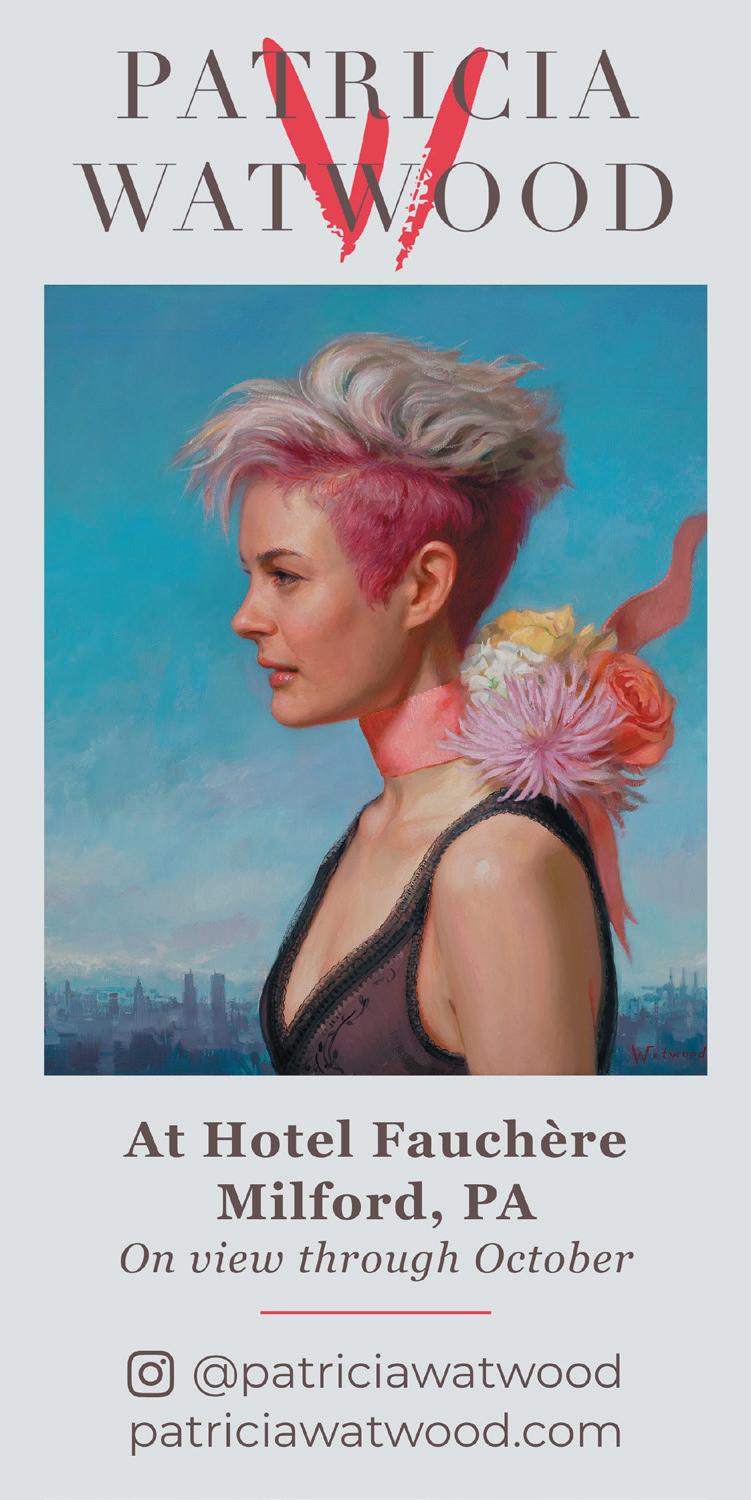
Paintings by Patricia Watwood: Opening Reception. Hotel Fauchère, Milford, PA. Hosted by the Milford Hospitality Group. Info: 570.300.8020.
5–9 p.m.
Candlelight Dinner at the Finger Bowl. Grey Towers, Milford, PA. Historic dinner and music. $100–$125. Benefits Grey Towers Legacy Scholarship program. Hosted by Grey Towers Heritage Association. Info: 570.296.9630, greytowers.org.
July 10th–12th
Friday–Sunday 10 a.m.–6 p.m.
Artists’ Studio Tour. Locations throughout Wayne County, PA. Hosted by the Wayne County Arts Alliance. Info: 570.729.5740, waynecountyartsalliance.org.
Milford Jazz Festival. Venues all over Milford, PA. Live jazz all weekend. For a complete schedule, visit MilfordJazzFest.com.
Founders Day Street Fair. Wurtsboro, NY. Hosted by Wurtsboro Board of Trade. Music, food, crafts, car show & more. Benefits scholarship fund. Info: www.wurtsboro.org
5:30 p.m.
The Pilgrimage: Alkemie Early Music Ensemble. Grey Towers, Milford, PA. Music of medieval France, Spain & Portugal. $30. Presented by Kindred Spirits Arts Program. Info: 570.390.8699, kindredspirits.org.
6–9 p.m.
Annual Gala. Renaissance Park, Livingston Manor, NY. Fundraiser for Catskill Art Space. From $350. Info: www.catskillartspace.org.
7 p.m.
Neil Simon’s Rumors. The Playhouse at Museum Village, Monroe, NY. Dessert served at intermission. $28. See web site for other performances in July. Presented by Muddy Water Players. Info: 845.294.9465, ctmwp.org.
July 11th–12th
Saturday–Sunday 10 a.m.
Art & Antiques Show & Sale. Wayne Highlands Middle School, Honesdale, PA. Appraisals, demonstrations, refreshments. Hosted by Women’s Club of Honesdale. Benefits scholarships, community service, charities. Info: www.womensclubofhonesdale.com
July 12th
Sunday 11 a.m.–1 p.m.
If Trees Could Talk. Grey Towers, Milford, PA. Guided walk led by Dr. Paul Kovalski, “Dr. Dinosaur.” Free/members; $10/public. Hosted by Grey Towers Heritage Association. Info: 570.296.9630, greytowers.org.
4:00–5:30 p.m.
Florian Schantz Jazz Combo. Van Kirk Museum, Sparta, NJ. Bring your chair & picnic lunch and listen to jazz. Non-members/$10. Hosted by the Sparta Historical Society. Info: 973.726.0883, www.vankirkmuseum.org.
July 15th
Wednesday 8–10 a.m.
Morning Bird Walk. Van Scott Nature Reserve, Beach Lake, PA. Hosted by Delaware Highlands Conservancy. Info: 570.226.3164, delawarehighlands.org.
July 16th–18th
Thursday–Saturday 10 a.m.
Sidewalk Sales. Downtown Honesdale, PA. Artisan vendors, music on Saturday. Hosted by Greater Honesdale Partnership. Info: 570.253.5492, visithonesdalepa.com.
July 18th
Saturday 10 a.m.–4 p.m.
OC Live! 2026. Sweet Clover Farms, Highland Mills, NY. Full-day of music & arts fest: performances, demonstrations. $10. Hosted by the Orange County NY Arts Council. Info: 845.202.0140, www.ocnyartscouncil.org.
10 a.m.–4 p.m.
Music in the Valley. Quiet Valley Living Historical Farm, Stroudsburg, PA. Learn about folk instruments & traditional music. Info: 570.992.6161, quietvalley.org.
July 19th
Sunday 2 p.m.
James and Dolley Madison. Delaware Township Municipal Hall, Dingmans Ferry, PA. Presentation by historical interpreters, Kyle Jenks & Elissa Paulissen. Free. Hosted by Dingmans Ferry-Delaware Township Historical Society. Info: dingmansferryhistoricalsociety.org.
July 23rd
Thursday 5–7 p.m.
Cocktails & Conservation. La Cigogne, Narrowsburg, NY. Learn about the work of the Delaware Highlands Conservancy over appetizers & drinks. $10. Info: www.delawarehigh lands.org.
Orange County Fair. Orange County Fairgrounds, Middletown, NY. Rides, vendors, exhibits, concerts & more. $7–$10. Info: 845.775.4968, www.orangecountyfair.com.
July 24th–26th
Friday–Sunday
Borscht Belt Fest. Ellenville, NY. Saturday: Makers Market. Sunday: Street Fair. Live music, comedy & much more. Info: 646.481.8398, www.borschtbeltfest.org.
July 25th–August 1st
Warren County Farmers’ Fair & Hot Air Balloon Festival. Harmony Township, NJ. Family fun, free concerts, tractor pulls & more. Info: 908.859.6563, warrencountyfarmersfair.org
July 26th
Sunday 10 a.m.–4 p.m.
Riverfest: Art, Music & Ecology. Narrowsburg, NY. Music, art, food, poster auction & more. Presented by Delaware Valley Arts Alliance. Info: 845.252.7576, www.delawarevalleyarts alliance.org/riverfest.
July 31st–August 8th
Weekdays Noon–10 p.m. Weekends 10 a.m.–10 p.m.
New Jersey State Fair & Sussex County Farm & Horse Show. New Jersey State Fairgrounds, Augusta, NJ. Info: 973.948.5500, www.sussex countyfairgrounds.org.
Poem Jar by
Dave the Potter
How Craft Helped Shape America
America was built by hand.
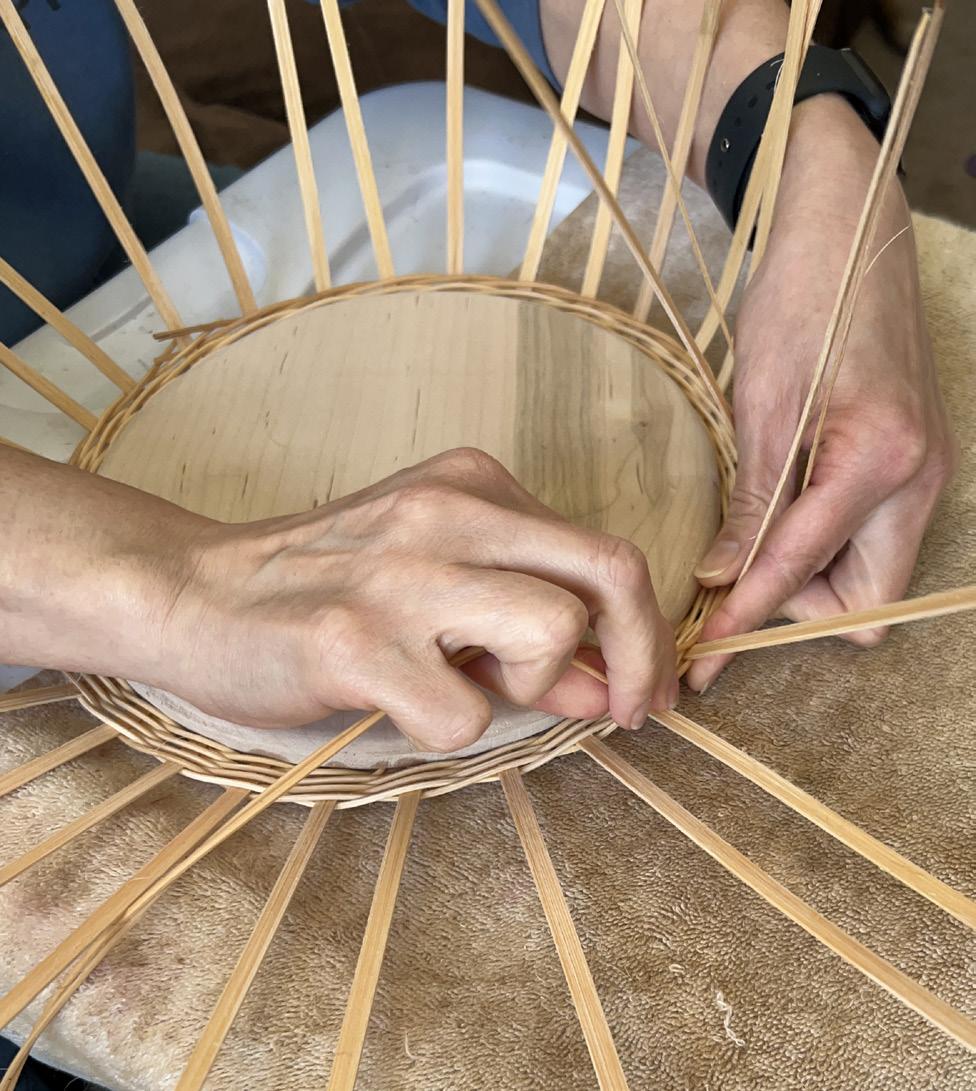
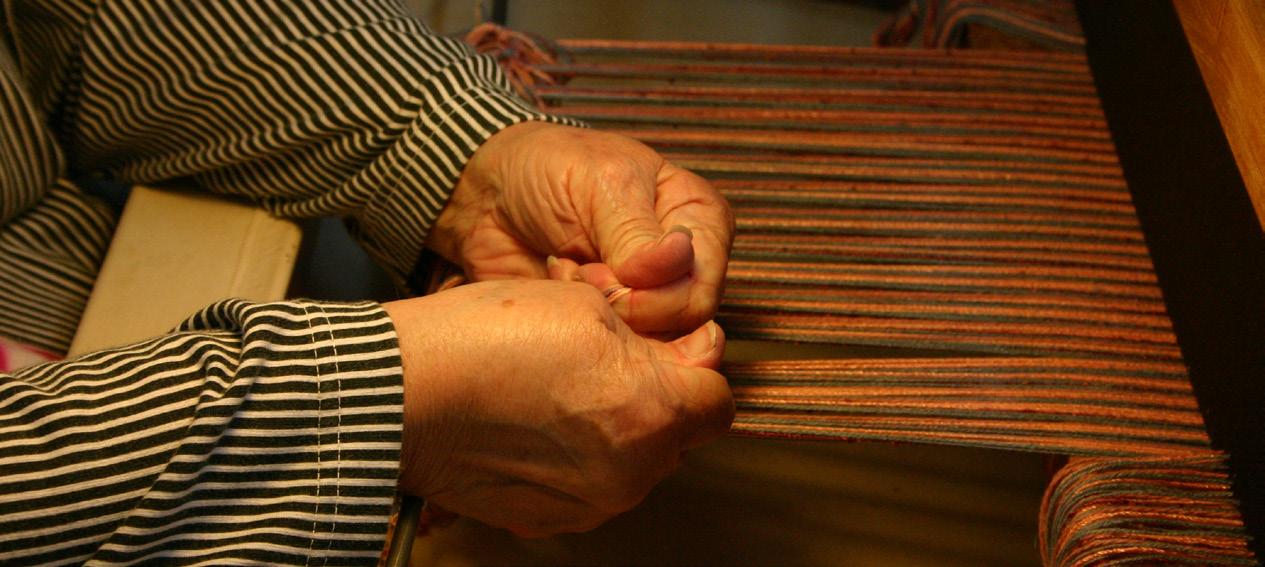
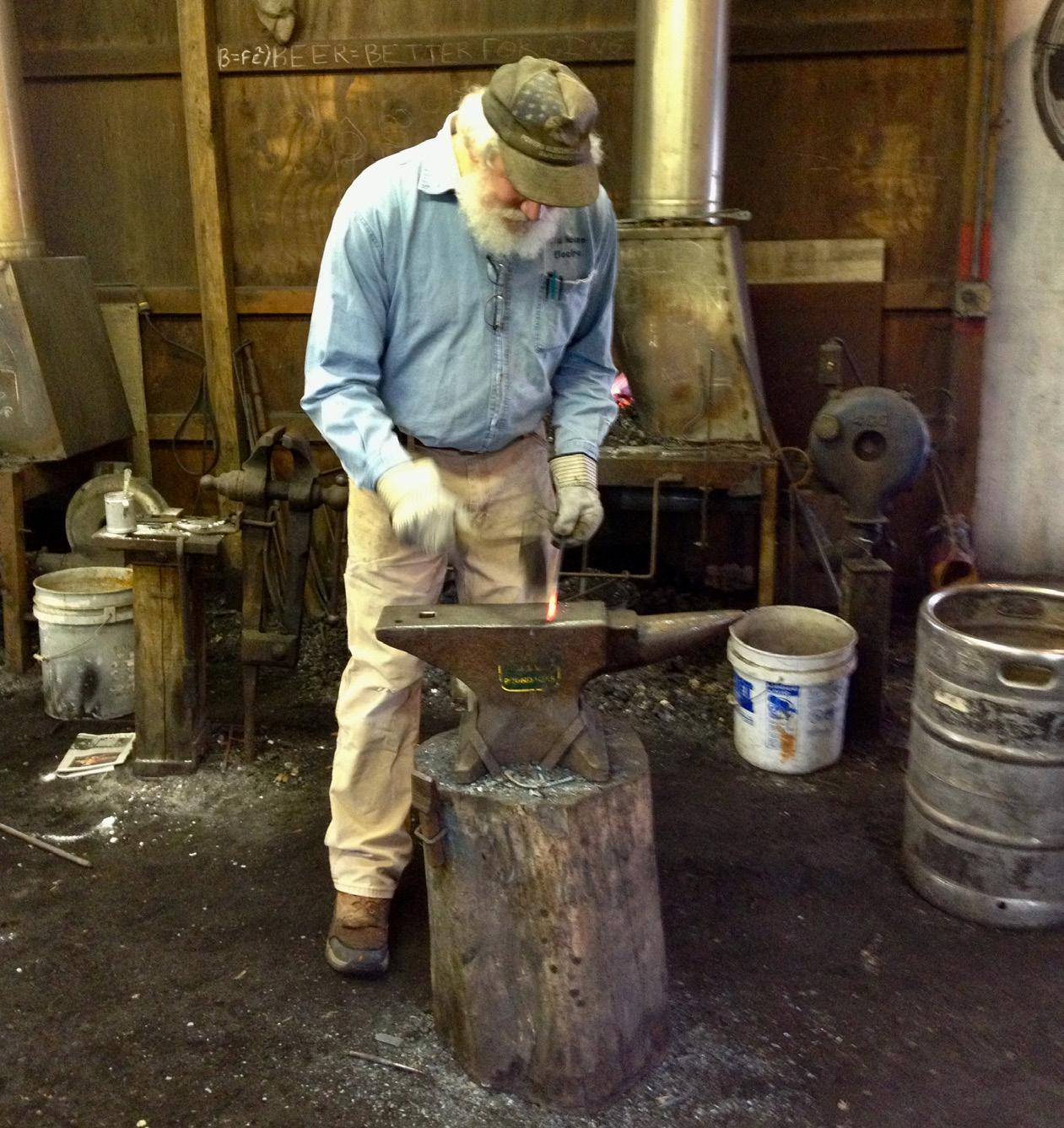
Potters, metalworkers, textile artists, woodworkers, and glassmakers have had a significant impact on the development of the United States. By taking a look back at important historical milestones in the world of craft, we can get a better feel for where we are today as we understand how crafters are continuing to work toward making the American Dream a reality.
1776
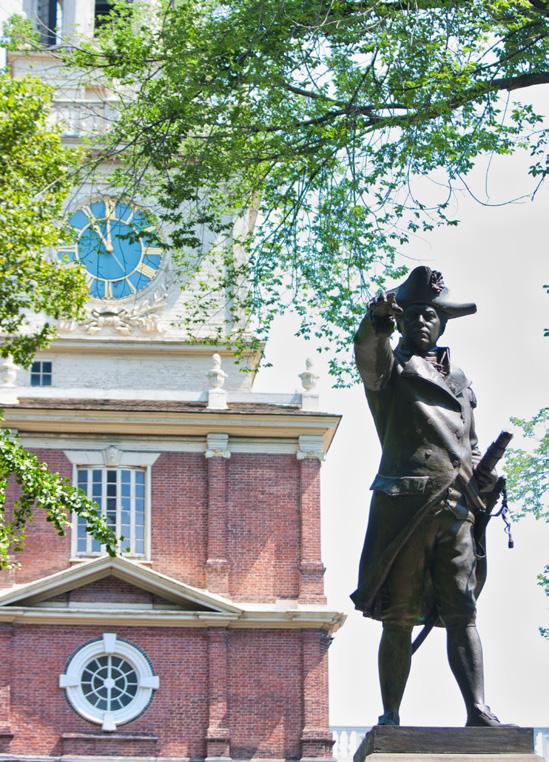
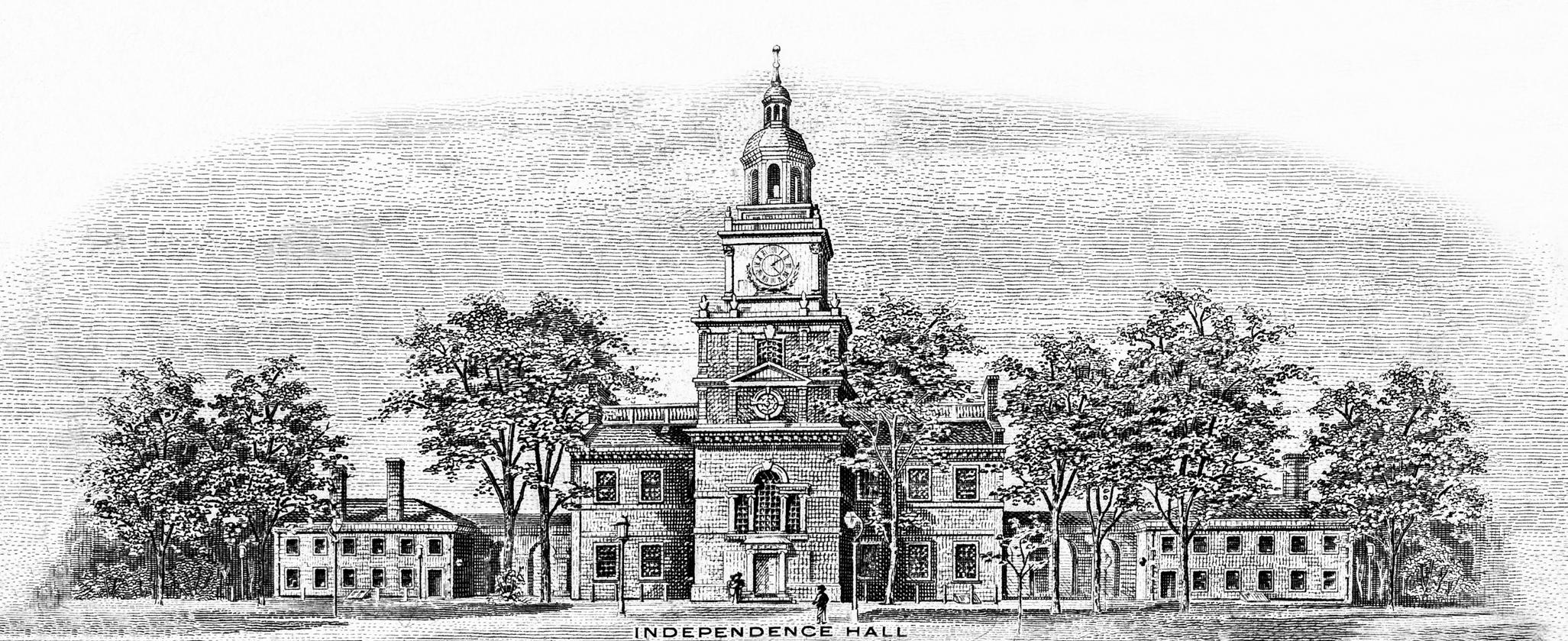
“In 1776, the most well-crafted building in the country was the State House, now known as Independence Hall,” Jennifer Zwelling tells me. Jennifer is an art historian, curator, and director of artistic programs at The Clay Studio in Philadelphia, PA.
The elaborate building was infused with art throughout. The Georgian-styled architecture was fashioned from handmade bricks, marble keystones above the windows, and embellished wood carvings, which spoke to the value placed on craft during the building of our country. It was high-quality work, showcasing the vision and dream that Americans held for the future.
Highly skilled craftspeople from England had settled in the colonies and were able to apply their trades, as cities such as Boston and Philadelphia experienced an increase in construction. Even the laying down of cobblestones was a major artistic endeavor of the colonists.
“When I look at cobblestone streets, I think back to the firing of the bricks, the clay used, how they laid the streets. As they were building the country, they were building the nation,” Jennifer continues. “Craft literally built the country at that very basic level.”
Revolutionary War figure Paul Revere was a master silver-
smith and engraver. Betsy Ross, who is thought to have sewn the first American flag, was a successful upholsterer with her own shop. A small company in Philadelphia, the American China Manufactory (Bonnin and Morris) became the first to produce commercial porcelain in the new world. Prior to this, porcelain was made with a secret recipe from China and Japan. Beautiful but functional objects became fine examples of the quality of craft in the new nation.
Interesting to note that the increase in pottery manufacturing became an economic threat to the colonists during the Revolutionary War, as British soldiers destroyed kilns, and potters faced trade restrictions under England’s aggressive suppression policy toward all colonial manufacturers.
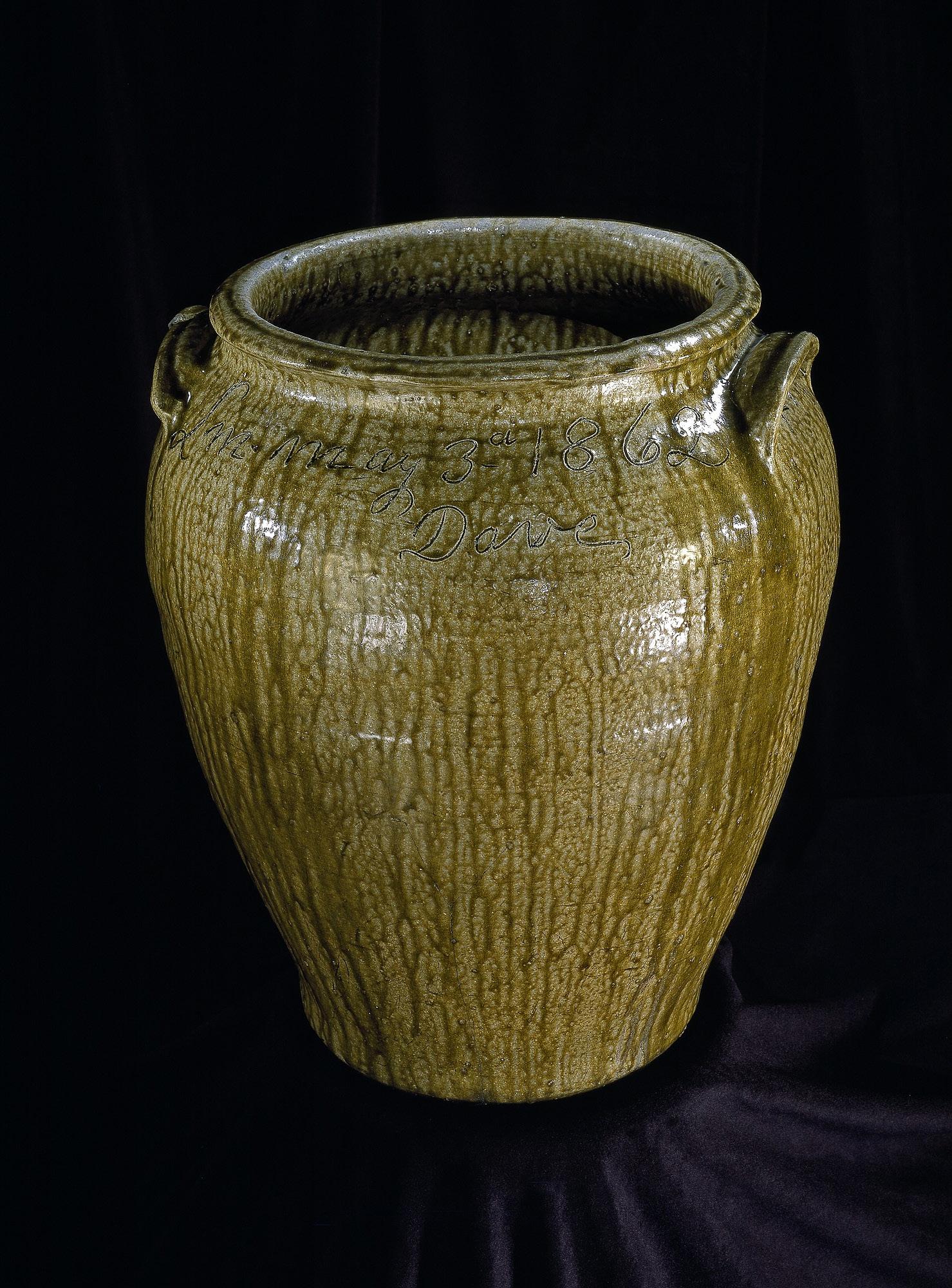
All walks of life were engaged in craftmaking. Enslaved people not only worked in fields but often worked in industry, learning trades and making functional objects. David Drake was a slave from an area of South Carolina that was known for its rich clay. Dave the Potter made large clay pots that were sold to plantations for food storage. Although it was not legal for enslaved people to learn to read or write, he was believed to be the first enslaved potter to write inscriptions and poems into his pieces such as Poem Jar and Storage Jar.
1876
After the Civil War, the country was quite divided, and the federal government encouraged a sense of unity and patriotism.
Jennifer explains, “At our one hundredth year anniversary, we realized that there was enough history to contemplate and to save it. The William Penn house had been demolished, but a movement began to save other historical structures, such as the Betsy Ross House.”
The Centennial Exposition in Philadelphia was actually the first World’s Fair. Nine million people, a third of the population of the United States, were there.
“The fair provided both an inward and outward look, as countries from all over the world came to Philadelphia to be inspired,” Jennifer states. “American crafts were displayed alongside international crafts from faraway places such as Japan, India, and Africa. This gave us pride in our own accomplishments but also served as an expansion of American thought processes. The Centennial Exposition was a major event in terms of craft. It’s thought to be the birth of the department store and the beginning of modern shopping.”
An outcome of this celebration was the realization that we didn’t always measure up, and that we needed to have good craft schools, so many schools for industrial or functional art were founded at this time.
A design reform that began in the late 1800s became known as the Arts and Crafts movement, based on simple, utilitarian, traditionally styled design. Gustave Stickley emerged as a voice of the movement with his easily recognizable “Mission style” furniture. He was also the publisher of The Craftsman magazine that honored America’s natural resources and the hardiness of its people.
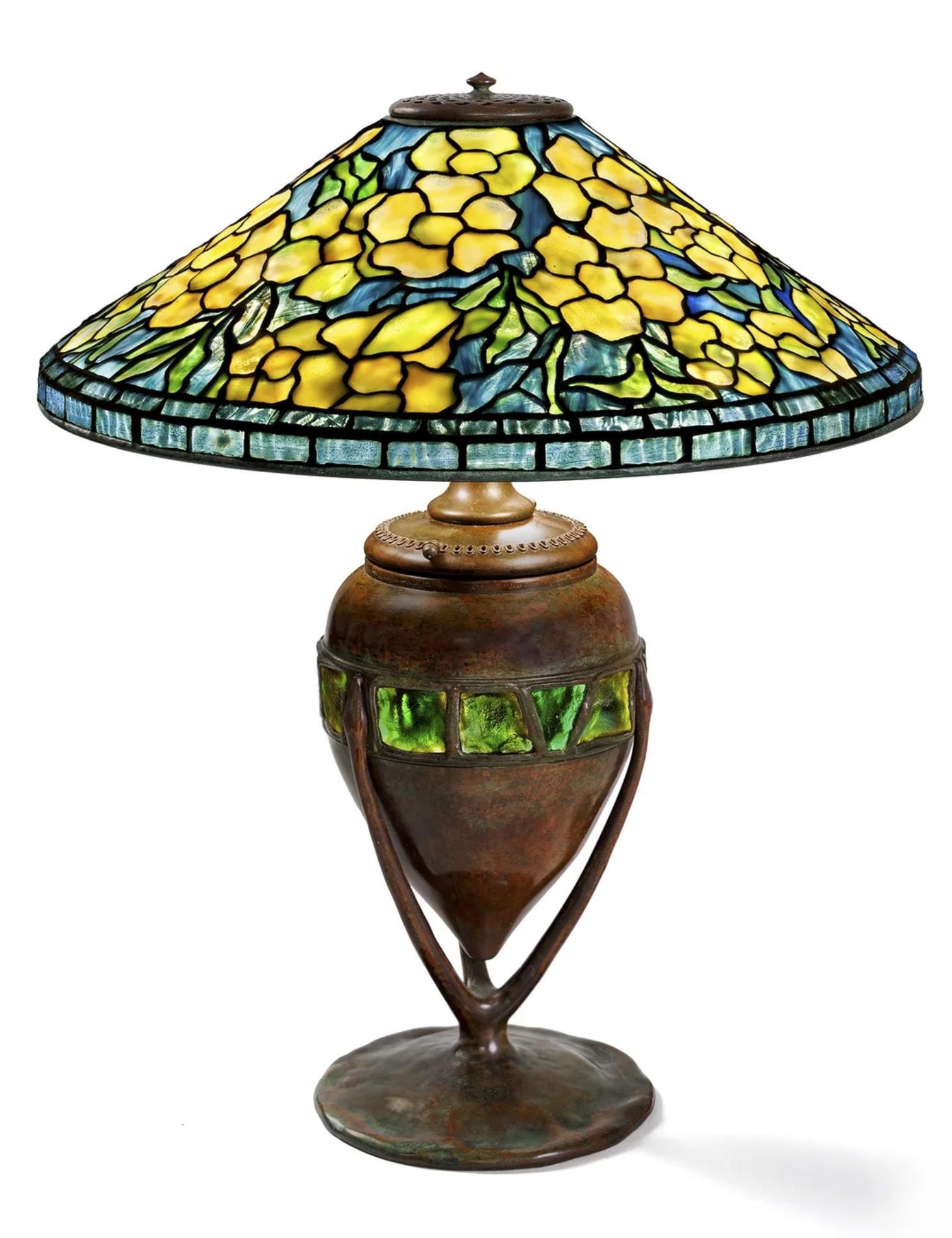
Louis Comfort Tiffany, son of the Tiffany & Co. founder, was an artist and visionary who looked to nature for inspiration as industrialists changed the landscape of the country with steel and concrete, railroads, and factories. Tiffany became a leading American designer who worked in stained glass during the Art Nouveau period at the turn of the century. Today, his design of stained-glass windows and mosaics can be found in many prominent building lobbies. A Tiffany lamp featuring dragonflies, flowers, or grapevines became a representation of America’s natural beauty.
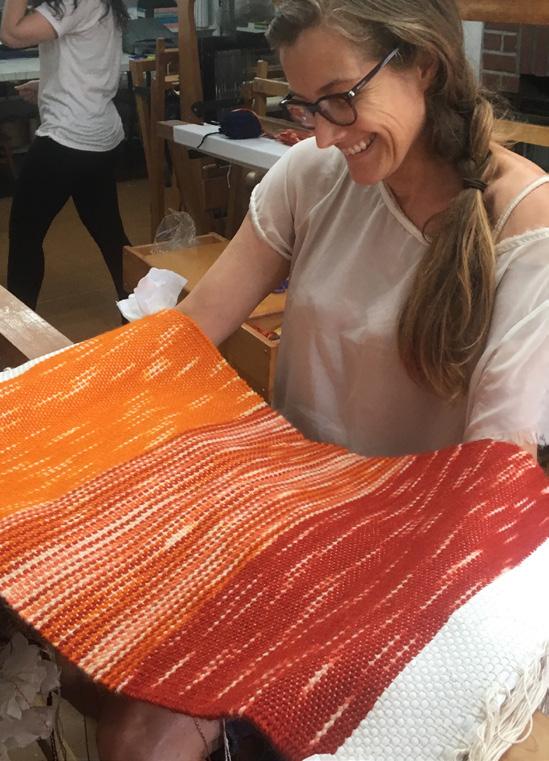
Textile designer Candace Wheeler was inspired by the Centennial to reach outside of our borders. She sent a buyer to Japan to bring back crafts and artwork to model and design. She also studied wood carvings in India. Wheeler joined forces with Louis Comfort Tiffany to form an interior design firm. Considered a pioneer in bringing women into the design field, she started her own company, Associated Artists, in 1883, which she staffed with women designers and weavers.
Above: Alamanda Lamp, circa 1900, leaded glass, bronze
1926
The 150th anniversary of our country’s formation brought about a period of colonial revivalism. Fashion magazines and early movies reflected this trend. The antique furniture market became very valuable, and this encouraged crafters to make reproductions referencing the style of 1776.
World War I was over and the Great Depression had not yet begun. People began to adopt crafts as a hobby by turning their basements into wood shops or taking up embroidery, much like what had been done during colonial times.
The popularity of industrial design also had an influence on the country’s crafters as the Roaring Twenties ushered in Art Deco, which had its start in Europe. Design motifs represented the machine age with geometric patterns, such as zigzags and chevrons.
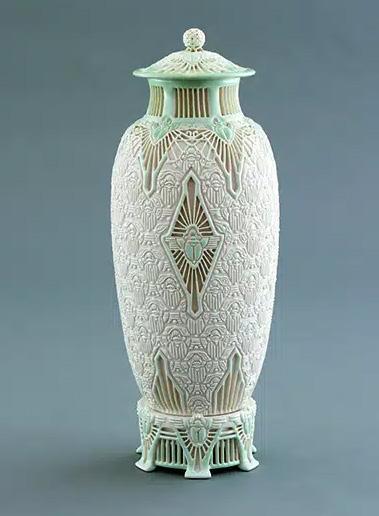
A very active studio potter at this time was Adelaide Alsop Robineau. Her greatest masterpiece, which took over one thousand hours to make, was the porcelain Scarab Vase for which she had invented special semi-opaque glazes in greens, blues, ivory, and gold.
1976
TheBicentennial was an important moment in our history. Again, our country was in conflict. The Vietnam War had ended, Watergate had rocked everyone, and we were in the midst of an oil crisis. Celebrating the country’s two hundredth year was seen as a healing balm, an opportunity for unification. During the celebration, people dressed in colonial clothing, and there was another revival in colonial furniture.
“Crafters would look back and use the iconography of the Revolutionary War as a way to symbolize the hope of the American Dream.” Jennifer Zwelling continues, “The formation of the Declaration of Independence had presented a better way to live. Artists were able to express their hopes and dreams.” Continued on next page
Scarab
Vase by Adelaide Alsop Robineau
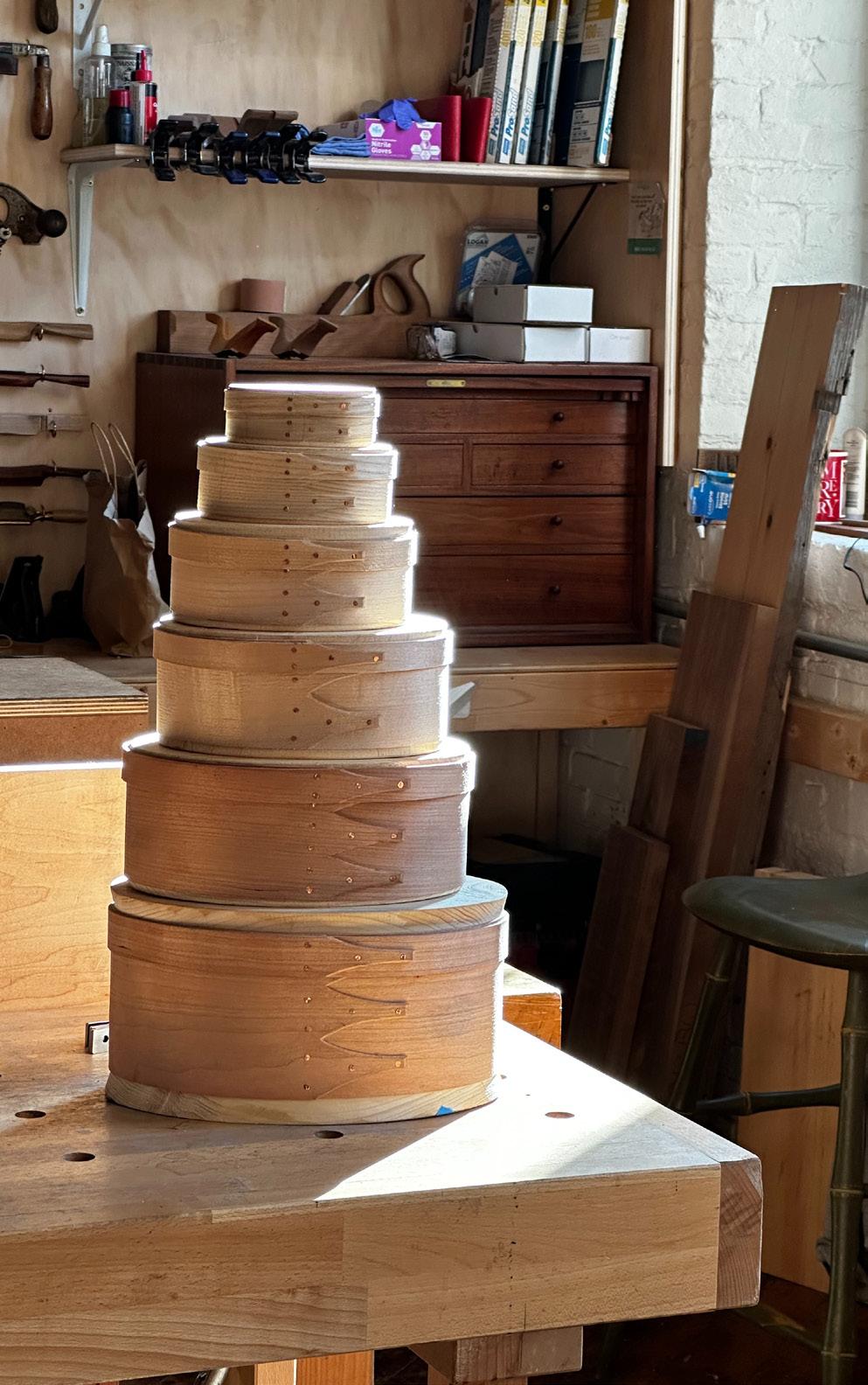
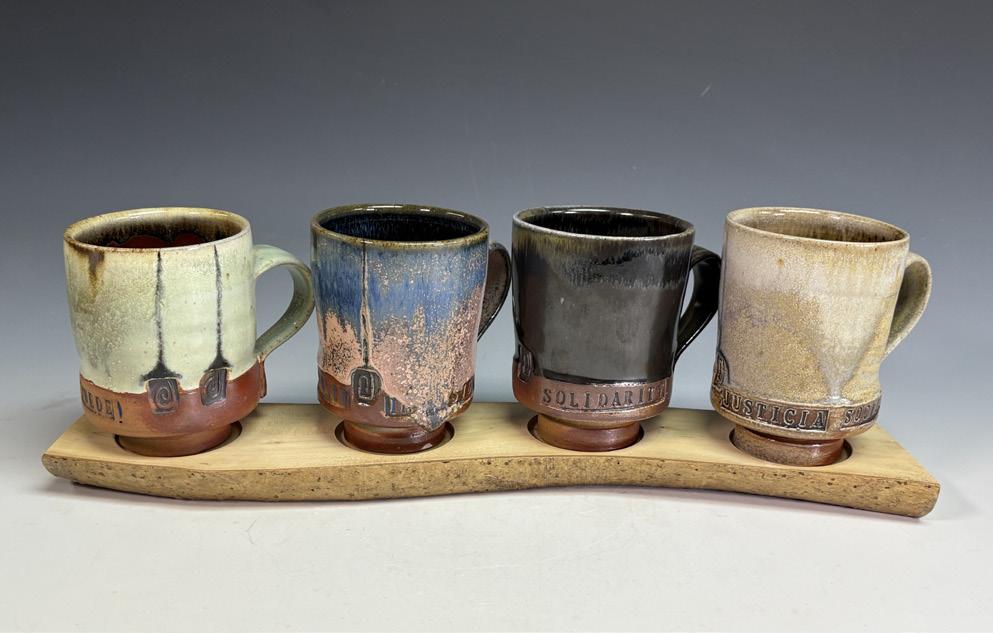
Bottom: Kolin Schmidt, Shaker-style wooden boxes. Right: Alan Willoughby bilingual empowerment mug set
Today, we are celebrating America’s 250th anniversary, the semiquincentennial.
“The field of craft today is remarkably dynamic, expansive, and interdisciplinary,” states Kristin Muller, Executive Director of Peters Valley School of Crafts. “There are craft artists whose work challenges distinctions between art, design, and utility. At the same time, there is a renewed appreciation for material knowledge, slow processes, and hand skills in a culture dominated by speed and digital production.”
Modern-day metalsmith Albert Paley started his career making jewelry, notably altering wrought iron to make delicate forms with a sinuous Art Nouveau style. Mid-career, he turned to outdoor sculptures. He has become an influential metal sculptor doing work for public spaces and museums, including a commission by the Smithsonian Institute to design and fabricate the Renwick Gallery Portal Gates at the National Museum of Art in Washington, D.C.
Harvey Littleton was considered father of the studio glass movement in the United States. His dad had worked for Corning Glass and had brought home experiments that intrigued Harvey. In a moment of innovation, he took art glass (venetian glass), which at the time was only achievable in larger factory settings, and created a way to make glass that had a lower melting point. Crafters could now experiment with the material in the same way a potter could work with clay in a studio. Harvey went on to teach studio glass throughout the country. One of his more famous students was Dale Chihluly.
“African American ceramic artist Syd Carpenter was a student in 1976 at the Tyler School of Art,” Jennifer added. “Her work was influenced by the Bicentennial. In addressing the United States’ issues around racism, equality, and women’s rights, Syd wanted to show that the promise of the Declaration of Independence could live up to the American Dream for everyone.”
As the country was able to move forward in our perceptions, the Museum of Fine Arts and the Metropolitan Museum of Art held an exhibit in 2022 with some of Potter Dave’s inscribed pots entitled, “Hear Me Now: The Black Potters of Old Edgefield, South Carolina.”
Embracing our current Digital Age, technology and craft are melding. Kristin Muller believes, “Technology has not replaced traditional making as once predicted; instead, it has complicated and enriched it.Technologies like laser cutting, digital weaving, CAD modeling, or 3D printing are sometimes incorporated not to replace tradition, but to expand what is possible within it. A ceramic artist may use 3D modeling software to prototype forms before hand-building them. A fiber artist might combine traditional weaving with digital jacquard technology.”
Skill carries value. Artists working with craft materials are carrying tradition forward by continuing to learn traditional processes. Artists have a special way to access ideas and emotions and to share them with their viewers to inspire. In looking back at these moments in time (in order to look forward), we see that craftspeople have been able to embrace their craft because the American Dream is available to everyday people.
Small businessowner craft artists who manufacture in the United States have embraced the entrepreneurial spirit that is one of the great benefits of living here. Every citizen has the right to “life, liberty and the pursuit of happiness,” regardless of social class or background. The inspirations and traditions of American craft will continue to be necessary to our society as a part of the progress we make going forward.
Large
Spiritual
Book
●
●
●
●
Not Just Plates that Are Small Small Plates
C“ommensality,” derived from Latin, means together at the table and is a term used in the social sciences. People coming together over food results in human interactions, such as food sharing, and is often cited when describing small-plate dining.
Local chef Peter Daniel, former co-owner of The Fork in Shohola, PA, shared some thoughts about small plates. “Small plates are now beyond trending. They are part of the American cuisine. They have evolved into a tasting menu and, in some cases, morphed into a smaller version of an appetizer.”
Small plates have recently become popular at weddings. Instead of being tied down to a multicourse dinner, guests can mingle at their own pace. Chef-led stations feature various small plates and allow the couple to offer their guests tastes of their favorite foods and provide more choices than a sit-down dinner would allow.
Restaurants that feature small plates may have an eclectic vibe; many feature customary ethnic dishes that are crafted with seasonal local ingredients and are well-loved by local foodies. Some restaurants focus on new American small plates known for their flavorful tasting portions. Either way, the chef can highlight their high-end specialties
or perhaps offer street food, which reinforces a cultural tradition.
Small plates on a restaurant menu usually exhibit similar features and functions throughout various culinary environments around the world.
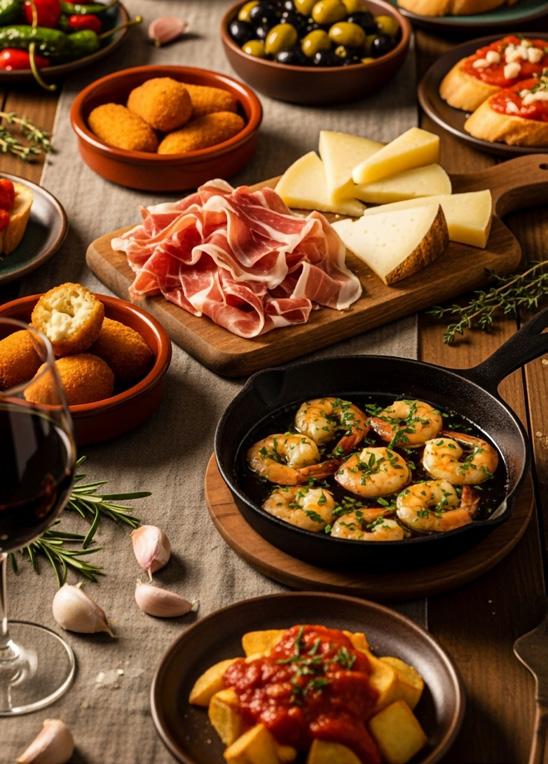
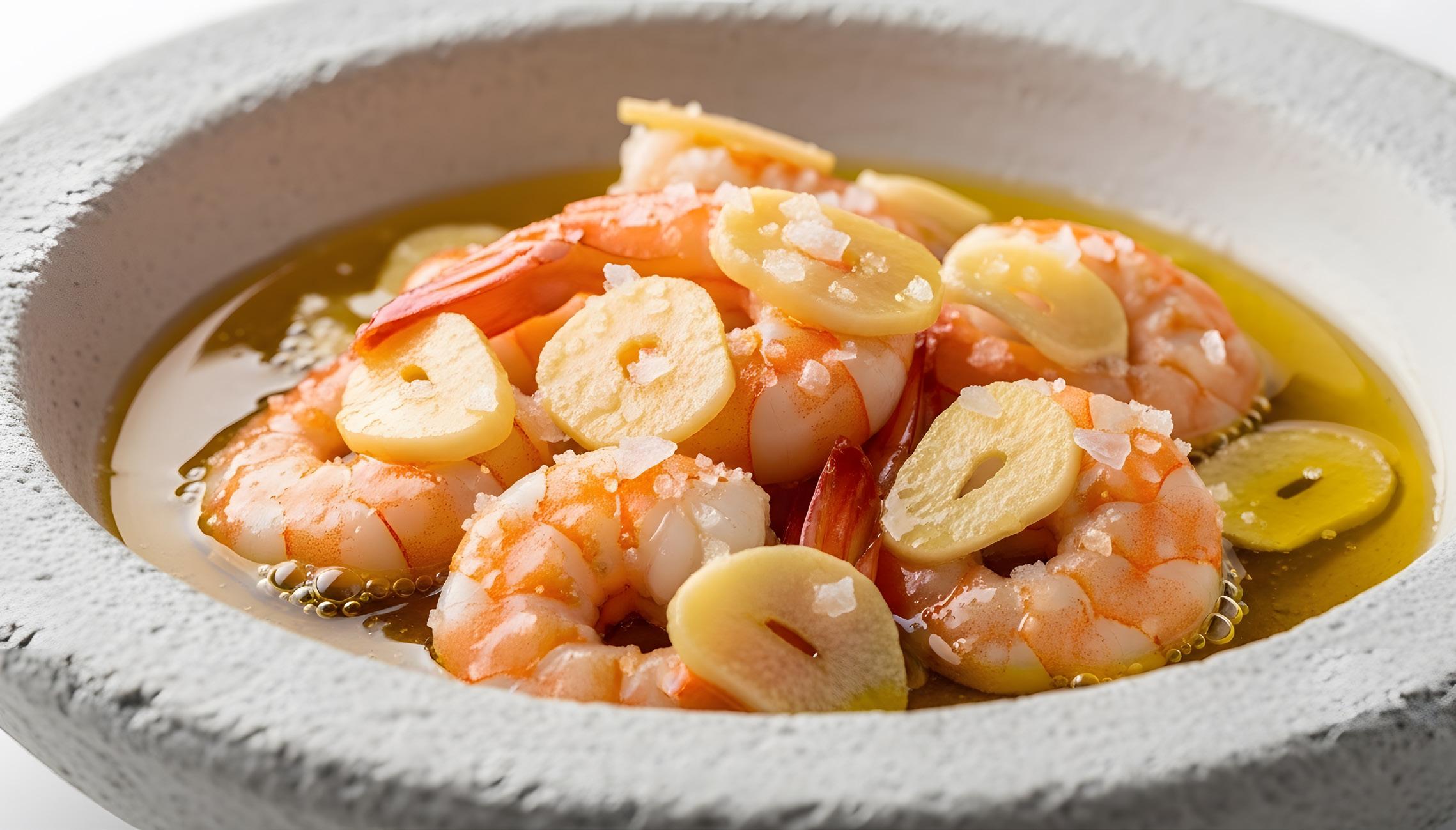
Perhaps the most well-known of the ethnic small plates are “tapas,” which originated in Andalucia, Spain. They are the quintessential bar food, although there are many tapas restaurants in Spain and elsewhere. Businesses usually close down after lunch, and a national siesta goes into effect. Bars serve small plates around 6 p.m., and the tradition of going from tapas bar to tapas bar continues.
Tapas typically contain slices of Ibérico ham, chorizo, and wedges of Manchego cheese, often served with nuts and dried fruit. Tapas became popular in Spain because the big heavy meal has always been served at lunch time. The concept has immigrated around the world. In Venice, Italy, tapas are often called “cicchetti. ”
The literal translation of “dim sum” is a gesture from the heart. According to Stillwater, NJ, resident Michelle Vosper, who spent years living in Hong Kong, “Hong Kong is known as the dim sum capital of the planet. Dim
sum is a social event. People will invite you to ‘yam cha,’ which means to drink tea, but never actually say you are invited to dim sum. There will be a pot of tea on the table that you serve to each other. Sometimes a whole family will attend; there can be fifteen people at one table. They come to be together, and they eat slowly because they’re chatting, while eating one dish at a time.”
Dim sum consists of bite-sized dumplings and other Cantonese Chinese foods that can be served in stackable bamboo steamers or on plates. They are served gradually, one by one, on carts at the table as diners chose which dim sum they would like.
Standard choices include steamed shrimp dumplings in translucent skin and shumai (open-faced pork dumplings), barbecue pork buns, chicken feet in black bean sauce, deep-fried spring rolls, fried dumplings, egg tarts, and sauteed turnip cake.
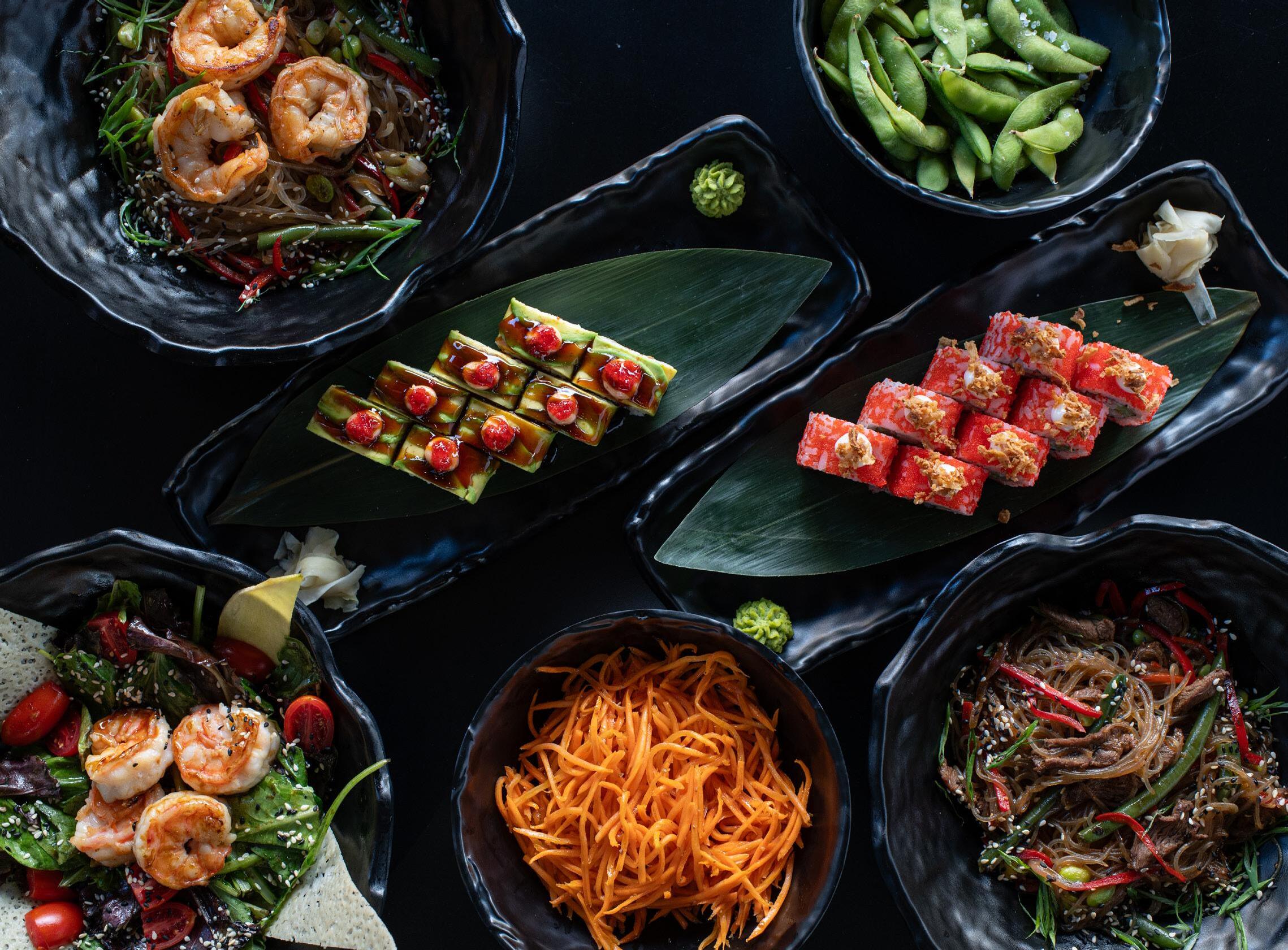
In other Asian countries such as Japan, small plates called “kozara” are often served in traditional tatami-matted rooms in Japanese inns (or ryokan). These might include varieties of sushi and sashimi, edamame (steamed soybeans), yakitori (grilled chicken), and tofu dishes.
Korean small plates are called “banchan” and often include kimchi and pickled vegetables.
Mediterranean, Middle Eastern, and North African small
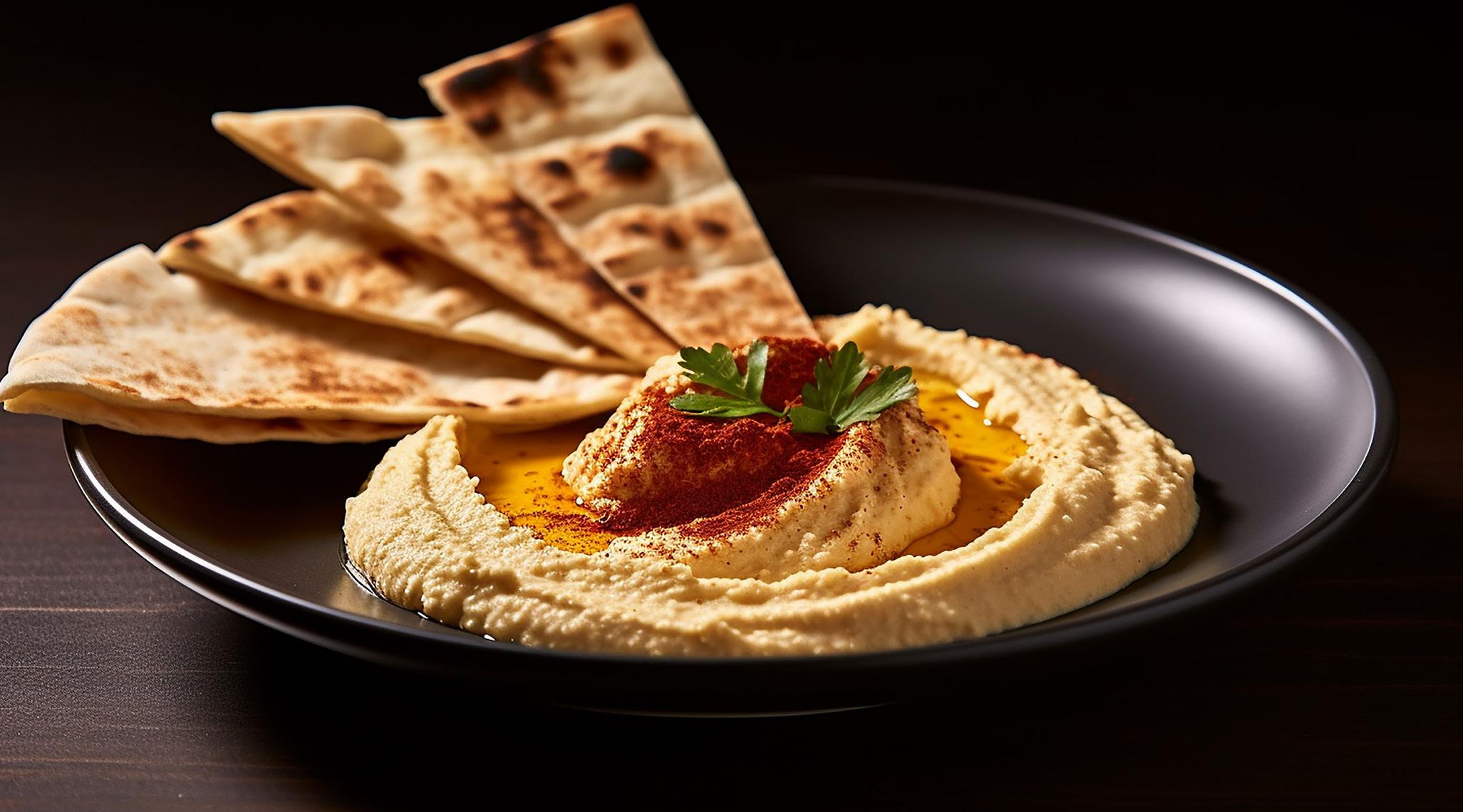
plates are called “meze.” They are served in Greek restaurants in big cities in the US. There is some variation by region, but they mostly contain pickled vegetables, meats, seafoods and fish, and tzatziki or hummus. Tzatziki is a creamy cucumber yogurt dip (or sauce) made from simple ingredients including strained yogurt (or Greek yogurt), cucumbers, and garlic. Hummus is a dip made from chickpeas and garlic. Cold cuts and octopus can be included as well.
Chef Miguel Gonzalez of La Posada in Milford, PA, serves small plates Mexican style from the Yucatan. “Botanas” are bite-sized tapas-type of dishes. “We prepare aguachile, which is spicy but very light with thin slices of shrimp and shallots and a cucumber jalapeno pesto sauce,” he said. “The most popular small plates are four small mole-covered lambchops. You could have up to four people enjoy that.” Gonzalez thinks the demand for small plates is soaring because people want healthier, lighter food.
He mentioned that their sister restaurant in Milford, the Hotel Fauchère, has their own version of small plates called “Girl Dinner,” which consists of truffle fries, Caesar salad, and a small martini. “It’s one of the most soughtafter small plates. What does it tell you when two restaurants within a mile of each other are capitalizing on small plates?” Gonzalez smiled.
Marilyn Rosenthal is a freelance writer who lives in Pike County, PA.
Left: Korean banchan. Right:
“Girl Dinner” at the Hotel Fauchère
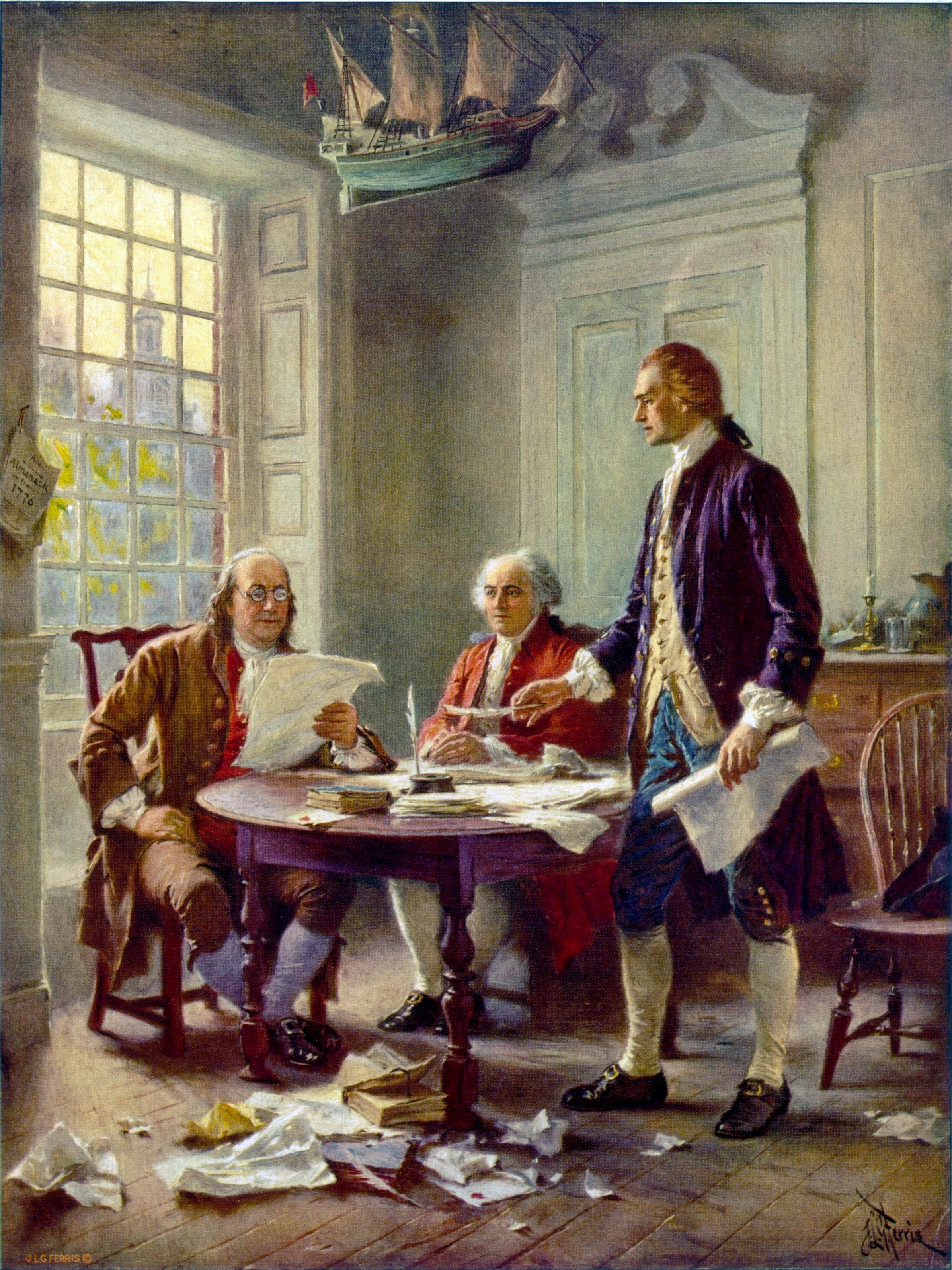
by Jean Leon Ferris
Founding America
History sometimes comes by way of an unexpected turn of events After shots were fired at Lexington and Concord in the spring of 1775, many of our founding fathers believed they had just one choice— bid adieu to King George and the English Parliament.
And boy was it scary! Benjamin Franklin told his fellow revolutionaries, “We must, indeed, all hang together or, most assuredly, we shall all hang separately.” Ol’ Ben would go on to lecture anyone opposed to saying adios to England by bluntly suggesting, “Those of you who would give up essential liberty to purchase a little temporary safety deserve neither liberty nor safety.” And he meant it.
As we celebrate America’s 250th birthday (the semiquincentennial), know that America’s birth wasn’t easy. There were lots of labor pains. Being born was stitched together in New England tap rooms, plantation dining rooms, and a sweltering meeting hall in Philadelphia. And that stitching was done by men who argued a lot and perhaps drank a little too much, but somehow still managed to give birth to a country.
The journey to America’s founding was challenging. It began with King George and company slapping the colonies with taxes, and those 13 colonies holding tea parties—and not the finger-food kind. There was the Boston massacre, Paul Revere’s famous ride, and heated debates inside that hot hall in the city of brotherly love. The result— a “Dear George” letter we call the Declaration of Independence.
That “see ya” letter said two things. It set forth a list of abuses by the king that justified saying goodbye. But its more enduring legacy was the assertion of a broad set of
universal rights and liberties. Those ideals would influence the course of American history and would inspire independence around the world.
Besides that skirmish at Lexington and Concord, there were other events that pushed the 13 colonies to make the choice to say, “We’re outta here.”
One significant event was the publication of a pamphlet by Thomas Paine. This ex-British citizen (and newly naturalized colonial troublemaker) published, at Ben Franklin’s urging, a short piece called Common Sense. It hit the presses on January 10th, 1776, and attacked the very idea of monarchy and “taxation without representation.”
Paine told his fellow colonials to rid themselves of both king and Parliament. His blunt style, aimed at the common man and woman, and its timing—when even moderates were starting to doubt England’s goodwill—placed Common Sense on the “best-seller list” for months.
By late spring, events were moving quickly. On May 15th, John Adams introduced a resolution to the Continental Congress that all 13 colonies should “call themselves states and start writing their own constitutions.” It passed easily.
And if that wasn’t enough to stir up things, on June 7th, Richard Henry Lee of Virginia proposed “that these united colonies are, and of right ought to be, free and independent states, that they are absolved from all allegiance to the British Crown.” Congress spent two days heatedly debating this resolution; the real issue before them was not whether to declare independence—but when. They tabled Lee’s proposal until a draft of a separation letter was before them.
Next up, a Committee of Five—John Adams, Benjamin Franklin, Thomas Jefferson, Robert R. Livingston, and Roger Sherman—met to work out the basic framework of a declaration of independence. They assigned Jefferson to produce the first draft, which he did between June 11th and 12th.
Jefferson initially declined the assignment, saying Adams would be the better choice to create the document. Adams said that’s not happening, claiming Jefferson was the right man for three reasons: “Reason one, you are a Virginian; reason two, I am viewed as obnoxious, and you, sir, are otherwise; reason three, you are ten times a better writer than me.” So Thomas Jefferson it was.
Jefferson wrote the draft and presented it to John Adams and Benjamin Franklin late in the day on June 12th. Both made some changes, but the most important one came from Franklin. Jefferson’s opening line in the preamble read, “We hold these truths to be sacred and undeniable.” Ben didn’t like how that sounded. He said it “smacked too much of the pulpit,” so he changed the “sacred and undeniable” to “self-evident”—giving it a more secular tone.
After Jefferson fine-tuned the document, his revised draft was presented to the Continental Congress on June 28th. The delegates began arguing, discussing, and editing Jefferson’s draft, making many changes. Adams explained and defended the text to the members as Jefferson sat silently, wincing at every change and making notes on his rough, now almost unrecognizable, draft. One wonders if he regretted taking the job. All totaled, 80 plus changes were made to Jefferson’s original draft, and it looked quite different from the one he first created.
Now came the moment of truth—Richard Henry Lee’s original separation resolution was placed on the table. It was hotly debated and finally approved, but not on July 4th as many today believe, but on July 2nd, making it the real Independence Day. After the vote, John Adams excitedly wrote home to his wife, Abigail, that “the second day of July 1776 will be celebrated by succeeding generations as the great anniversary festival.” He would shudder to think we now celebrate our nation’s birthday on the 4th of July.
So what did the Declaration declare? The final document consists of a brief opening statement of natural rights and a lengthy list of over two dozen grievances against the king. These abuses included legislative and judicial gripes, military and tyrannical acts, and economic and political oppression.
Today, we revere the first part of the Declaration, but in 1776, the second was considered much more important. Its form was in step with an English tradition, a bill of indictment listing a series of complaints. The Declaration of Independence created a common narrative from the
grievances of all 13 colonies, and it shattered the fiction that King George was a good guy at the mercy of a wicked English Parliament.
It’s interesting to note that many Americans picture all the delegates solemnly signing that famous document on the 4th of July. That’s not the way it happened. Only John Hancock, president of the Continental Congress, and secretary Charles Thomson signed a rough paper copy of the Declaration that day. Hancock even taunted the king by signing his name in king-sized letters and bragging to Thomson that “King George can now read it without his spectacles.”
By July 5th, presses were cranking out copies with just Hancock’s and Thomson’s signatures. Then they were stuffed into saddlebags and carried to all 13 states.
Philadelphia witnessed the first public reading of the Declaration. The next day, George Washington ordered it read to his troops in New York City. Up and down the seaboard, Americans pulled down images of King George and other symbols of royal authority after hearing the Declaration’s words.
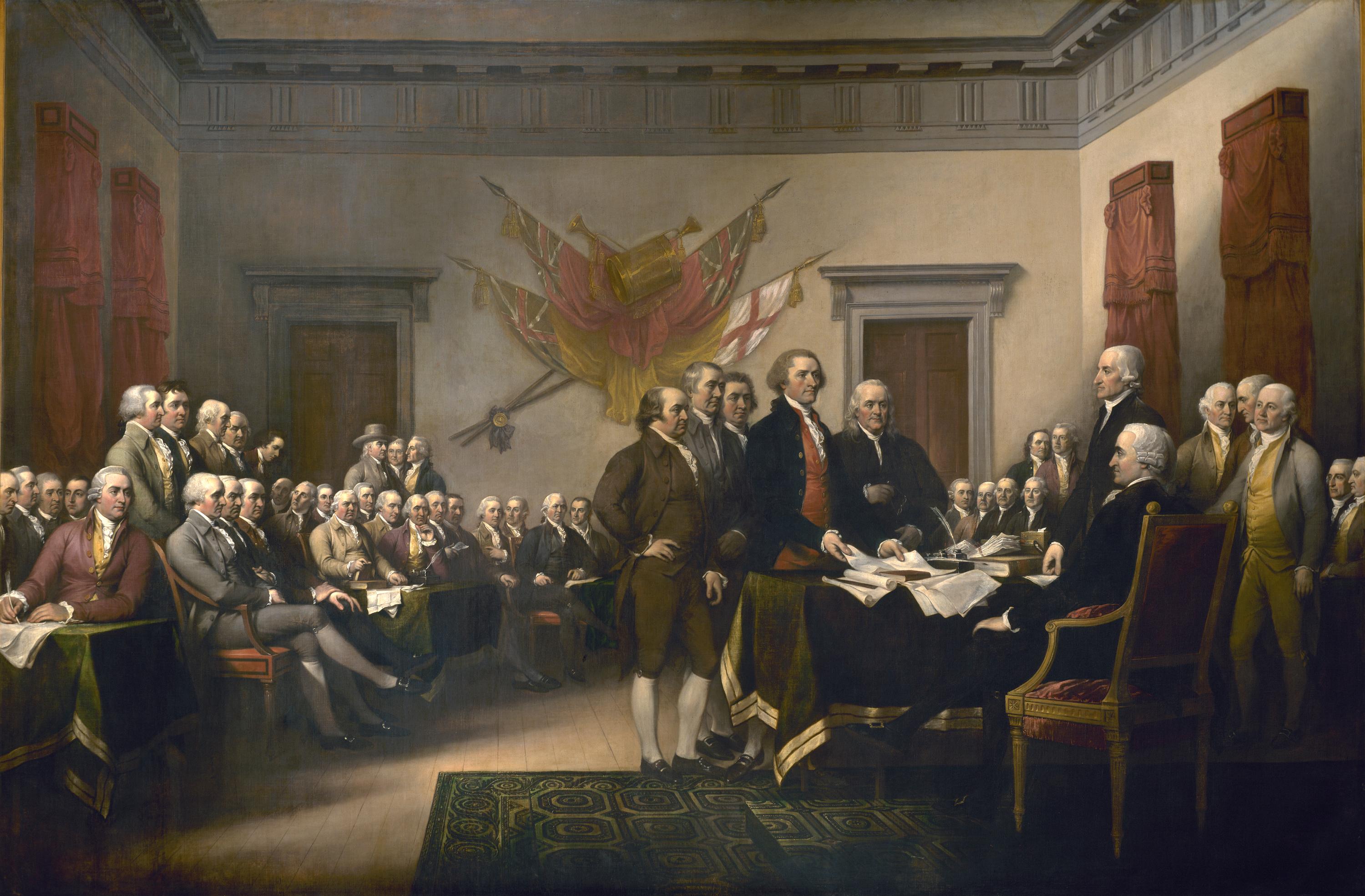
Congress had the Declaration of Independence rewritten on parchment and prepared it for signing by all members. On August 2nd, (the actual signing date), the document was ready. Members of Congress who were in Philadelphia that day gathered around a table to sign the sacred document, knowing full well they could be signing their own death warrants. Delegates who were out of town signed during the following weeks.
One member, William Whipple, from New Hampshire, freed a man he had enslaved, believing that he could not both fight for liberty and own a slave. His behavior wasn’t copied by Thomas Jefferson and other delegates who owned slaves.
Finally, on January 18th, 1777, a full six months after the motion and approval to separate, Congress ordered copies printed showing the names of all the signers and sent them to the 13 states. The colonists were free; now all they had to do was win the war. Then the choice of how to govern would be the next challenge.
Remember Ben Franklin saying “We must all hang together?” Well, no founding father had a noose placed around his neck, although they knew by autographing the Declaration of Independence, they would be inviting the hangman to their house, since the British would consider them traitors. Some signers did suffer hardships during the Revolutionary War. William Floyd of New York saw the British use his home as a barracks. His family fled to Connecticut, where they lived as refugees. After the war, Floyd found his fields stripped and his house severely damaged.
Richard Stockton of New Jersey was dragged from his bed, thrown into prison, and treated like a common criminal. His home was looted, and his fortune was badly impaired. He was released in 1777, but his health was broken. He died a few years later.
At age sixty-three, John Hart, another New Jersey signer, hid in the woods in December of 1776, while Hessian soldiers hunted him across the countryside. He died before the war’s end. The New Jersey Gazette reported that he “continued to the day he was seized with his last illness to discharge the duties of a faithful and upright patriot in the service of his country.”
Thomas Nelson, a Virginian, commanded militia and served as governor during the Revolution. He instructed artillerymen “to fire at my own house in Yorktown” when he heard the British were using it as a headquarters. Nelson used his personal credit to raise money for the Patriot cause. His sacrifices left him in financial distress, and he was unable to repair his Yorktown home after the war.
Thomas Heyward, Arthur Middleton, and Edward Rutledge, three South Carolina signers, served in their state’s militia and were captured when the British seized Charleston. They spent a year in a St. Augustine prison and, when released, found their estates plundered.
Even the wives of some signers paid a price. Among them:
• Elizabeth Lewis (wife of Francis Lewis of New York): British troops sacked her Long Island home, shooting at it with cannons. She was taken prisoner in 1776 and held in appalling conditions, resulting in her death in 1779.
• Mary Bartlett (wife of Josiah Bartlett of New Hampshire): Her home was burned down in 1774. She managed the family farm alone while taking care of her 12 children.
• Gertrude Read (wife of George Read of Delaware): She faced constant threat and was often left alone with her four children, forced to move them for safety while her husband was away fighting in the Continental Army.
Many signers of the Declaration of Independence suffered from financial ruin, with homes sacked or destroyed. They were often targets of retribution by Tories (those colonials loyal to the king), including the kidnapping of their children or confiscation of their property. Such were the prices paid so we may celebrate freedom every 4th of July.
Today, an original copy of the Declaration of Independence is on display at the National Archives in Washington, D.C. It’s worth the trip to see it.
Founding America was not easy. It always has been and will be about a group of men who, with their families, risked all so we may have a democratic republic. And as we approach our 250th birthday party, let’s hope that what they did in that fly-infested hall in Philadelphia during the summer of 1776 will continue on for many more years.
Happy birthday, America!
Contact the author at historian@outlook.com if you would like information for your organization about a multimedia presentation on the founding of our nation. The program tells the entertaining saga of America’s birth using lots of stories, music, film clips, and audience participation.
The Declaration of Independence
by John Trumbull
Scratch-Made Donuts!
P-38 Lightning
The Ultimate Pickleball Shoe
Pickleball, the fastest growing sport in the country, combines elements of tennis, badminton, and ping pong.
The game’s inventors, Joel Pritchard, Bill Bell, and Barney McCallum, created this game in the summer of 1965 on Bainbridge Island in Washington State to entertain their bored children.
Little did they think that it would garner such tremendous growth and hold appeal to people of all ages. The popularity is attributed to the fact that the game is easy, fun, not too exerting, and a very social experience; it’s not uncommon for a group of players to go for drinks and nibbles after a game.
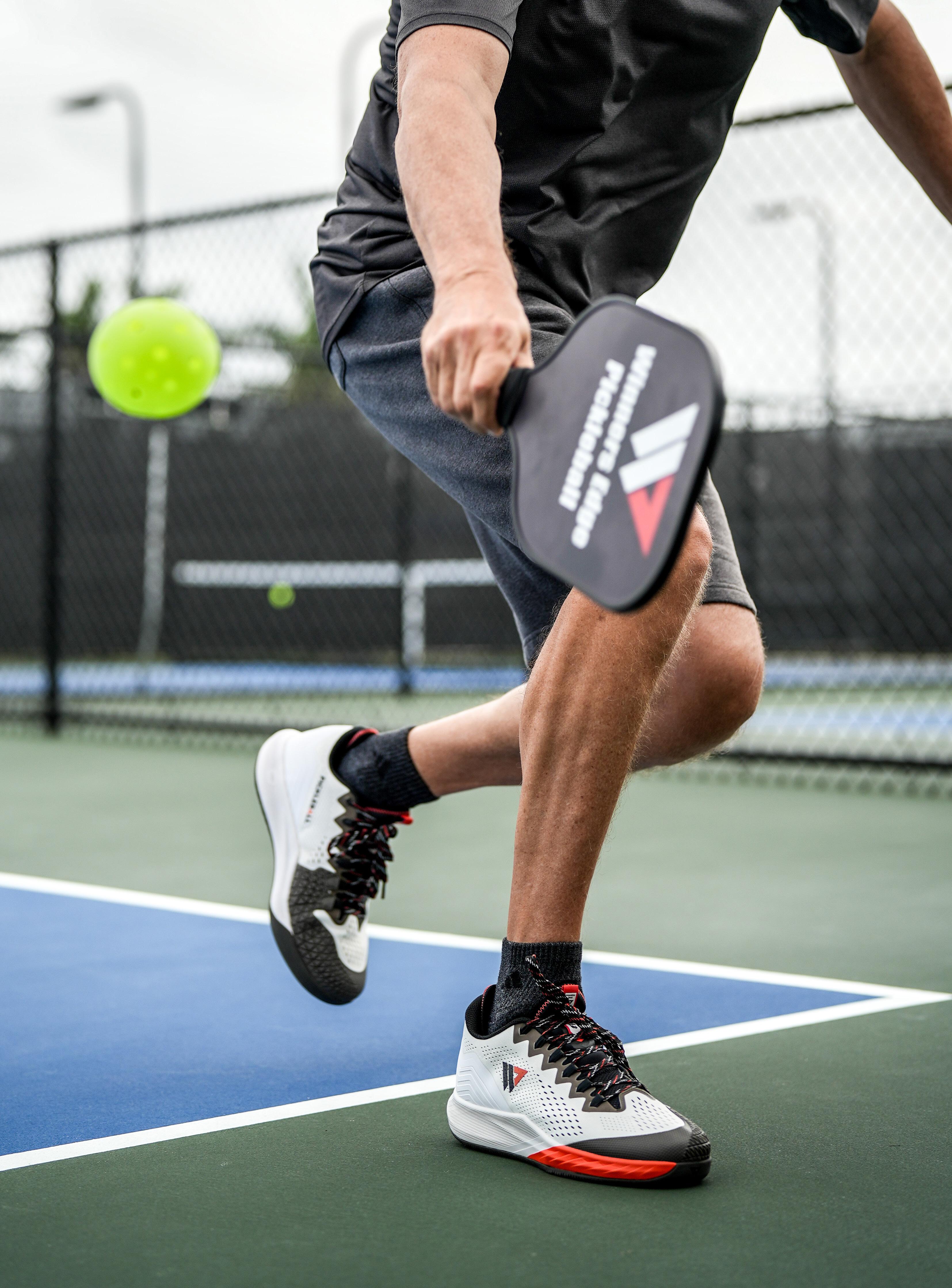
The game can be learned in about three hours and can provide competitive play or casual recreation. Pickleball is played outdoors or indoors, but most people play it outdoors. It’s played with a lightweight graphite high grade paddle and a perforated plastic ball, which is similar to a wiffle ball.
The sport of pickleball has exploded. There are about 50 million players in the United States. The game is played in 71 different countries by players ranging in age from 6 to 90.
Many team owners are high-profile athletes or entertainers, such as Tom Brady, LeBron James, Eva Langoria, and, of course, Mark Cuban. There are many more owners, such as Bill Gates, Naomi Osaka, and Patrick Mahomes, who own teams not just for investment benefits, but because of the game’s culture, which prioritizes both inclusivity and a competitive spirit.
Outside of the glamorous aspects of the pickleball world, there are the millions of regular players who just go out and enjoy the game and its health and social benefits. One of those players is Hank Kliesbisch, an avid pickleball player who lives in Hamburg, NJ, and Jensen Beach, FL.
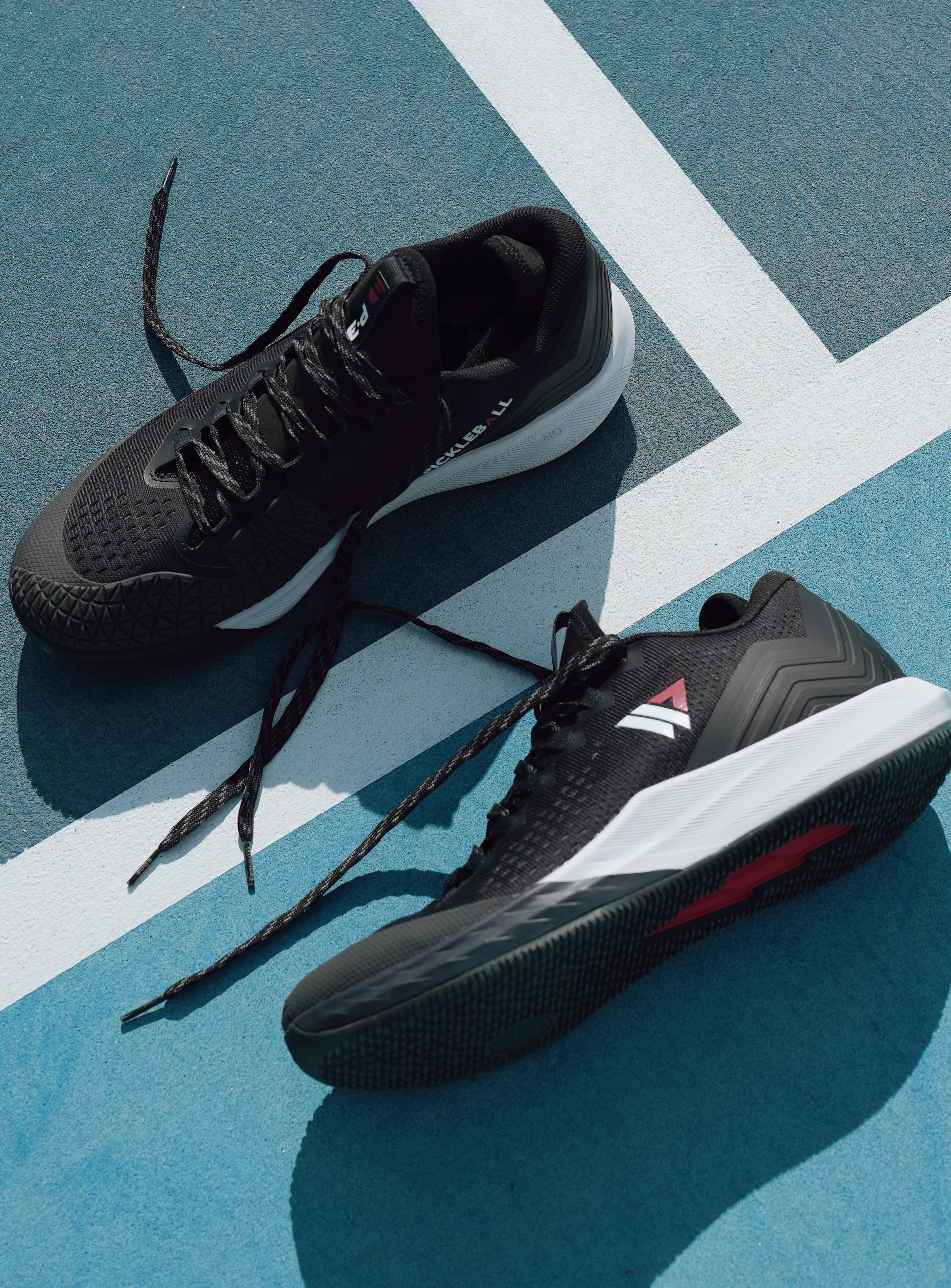
Kliesbisch noticed that many of his pickleball friends were getting injuries in their ankles and wrists. He attributed this to the stop-and-go, jerky motion of the game. Regular tennis or running shoes can’t support this sideways motion. So he decided to develop what he calls “The Ultimate Pickleball Shoe,” made exclusively for the idiosyncrasies of the game.
With a background as a serial entrepreneur, Kliesbisch is reminiscent of a one-man Shark Tank. He started an executive search firm that he sold to his employees. He then wrote a book, started a real estate subdivision, and founded a business of providing movies on buses. When that
Hank Kliesbisch
was taken over by the big companies, he started “Gorilla Cookies,” developing a very large chocolate chip cookie, but as soon as the cookie was becoming successful, the competition took it off the supermarket shelf and started breaking the cookies. Kliesbisch strongly believes that one learns from his mistakes, so he went “all in” to develop a pickleball shoe.
In typical fashion, he did a deep dive into the business that took about four years from concept to product. He hired Nike and Brooks shoe designers and worked with the top five pickleball players in the nation to help develop the current product. Kliesbisch calls it “P-38 Lightning” after the American fighter aircraft whose exploits helped win World War II, especially in the Pacific theater.
The brand that makes the shoe is Winners Edge, which produces only shoes exclusively designed for pickleball. “They have support, comfort, traction, fit, stability, balance, durability, and performance,” Kliesbisch proudly says. They have specialized features to customize it for the sport. (www.wepickleball.com)
Winners Edge has donated to the American Red Cross for California Wildfires Disaster and to Goodwill Industries by giving extra and returned shoes to help widen access to their shoes. “These donations help promote inclusion, mobility, and opportunity on and off the court,” he notes.
Kliesbisch and his wife have also established a fund in honor of their son, Derrick, a gifted musician who suffered with scoliosis and died of an addiction to oxycodone. “The Dynamic D. Music Fund provides free music lessons and equipment to underprivileged kids who wouldn’t otherwise have access, along with educating them about the dangers of drug use and addiction.”
Kliesbisch is contributing all profits from his share of Winners Edge to support the fund. For more information about the fund, go to dynamicdmusicfund.com
As they say in pickleball, practice good sportsmanship and “Paddle Up!”
Pike Pickleball will be having a tournament on July 25th at 9 a.m. sponsored by the nonprofit organization, Choosing Integrity, whose purpose is to support people impacted by the criminal justice system. There will be 18 teams of two players each. Sign up at www.chooseintegrity.org.
JUST THE FACTS
A standard pickleball court is 20 feet wide by 44 feet long; the size of a badminton court
Three pickleball courts can fit in one tennis court
Two premier leagues are Major League Pickleball and the Professional Pickleball Association
Team franchises can sell for an estimated $16 million
Top professional players can earn $1 to $3 million annually
Stream professional tournaments on PickleballTV, Amazon Prime Video, YouTube TV, and Fubo
by Patricia Romano
Photos
By Bob Romano
Summer Trout
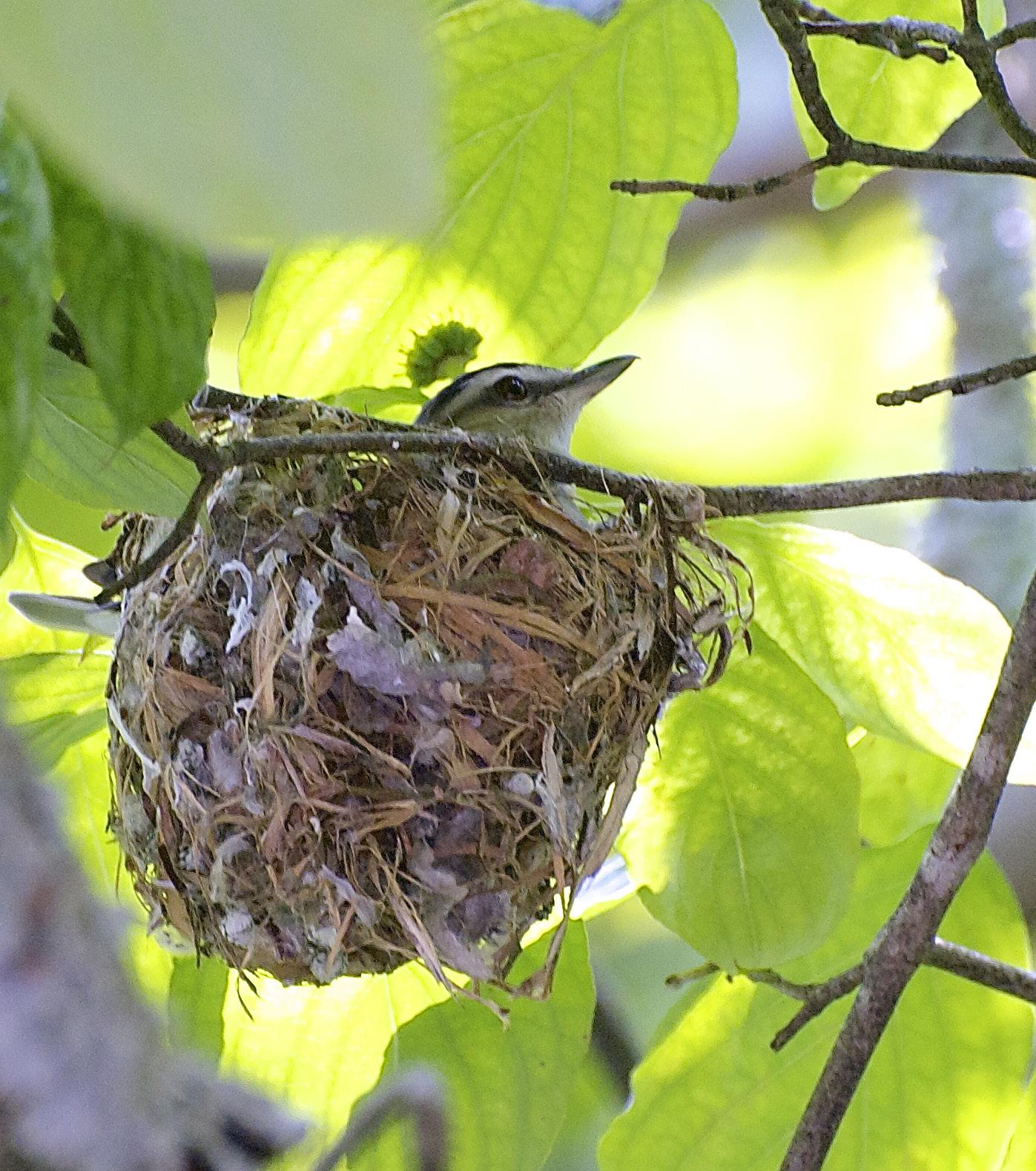
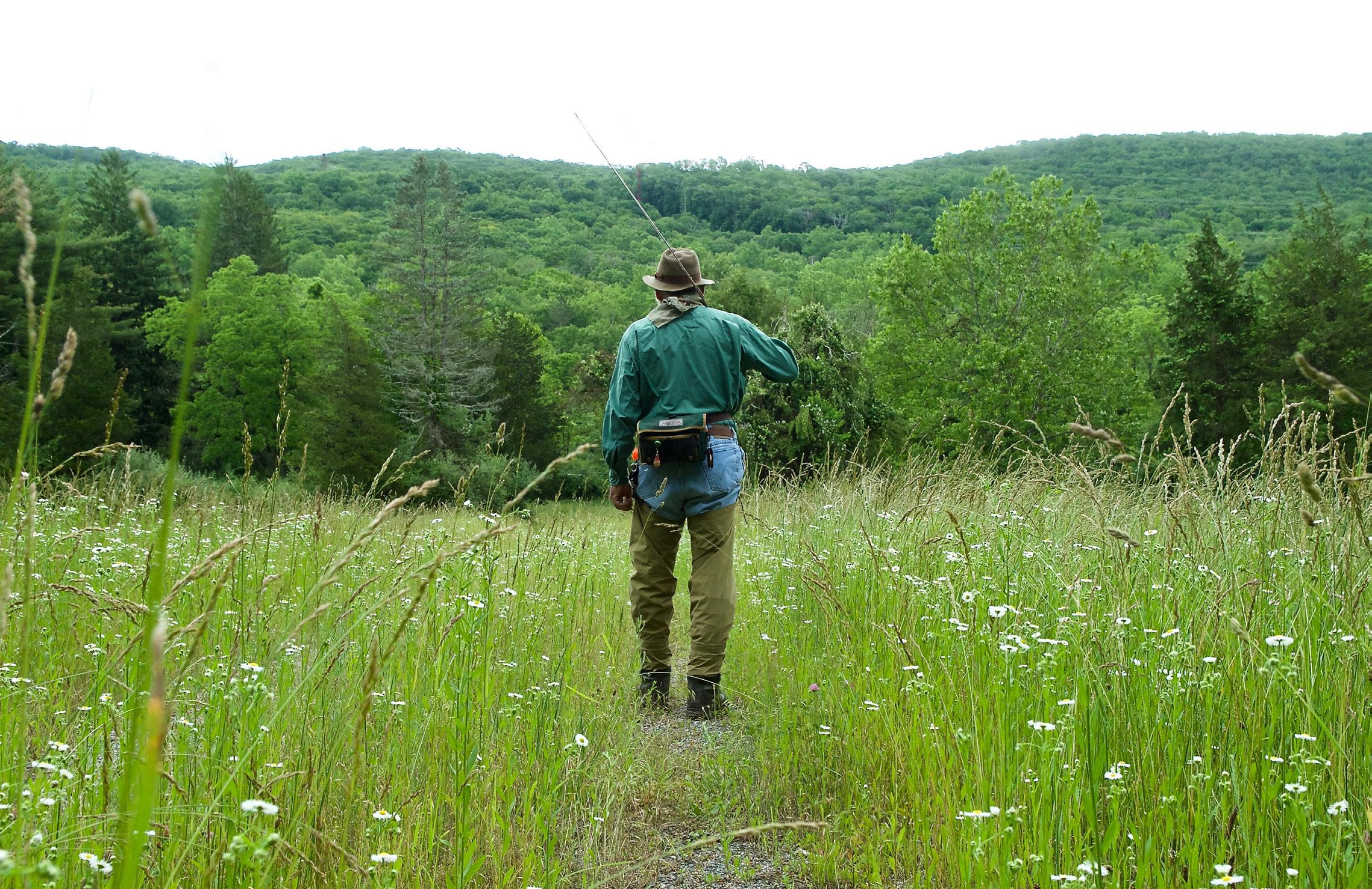
As I hike down the path that winds along the edge of a field, the thorns of an unruly rose grab my shirtsleeve. All around me, birds gossip about the decadence of tent caterpillars writhing in their web-like chambers spun across the notch of a chokecherry tree. When the field gives way to woodland, I follow a wellworn trail established by deer on their wanderings. The creatures of the forest, engrossed in their secret lives, ignore my footfall while high up in the hardwood canopy the calls of black-and-white warblers sound like squeaky wheels.
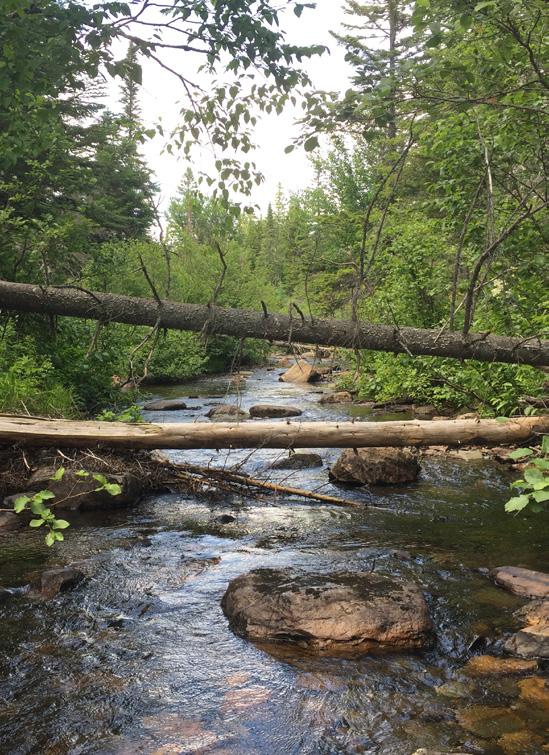
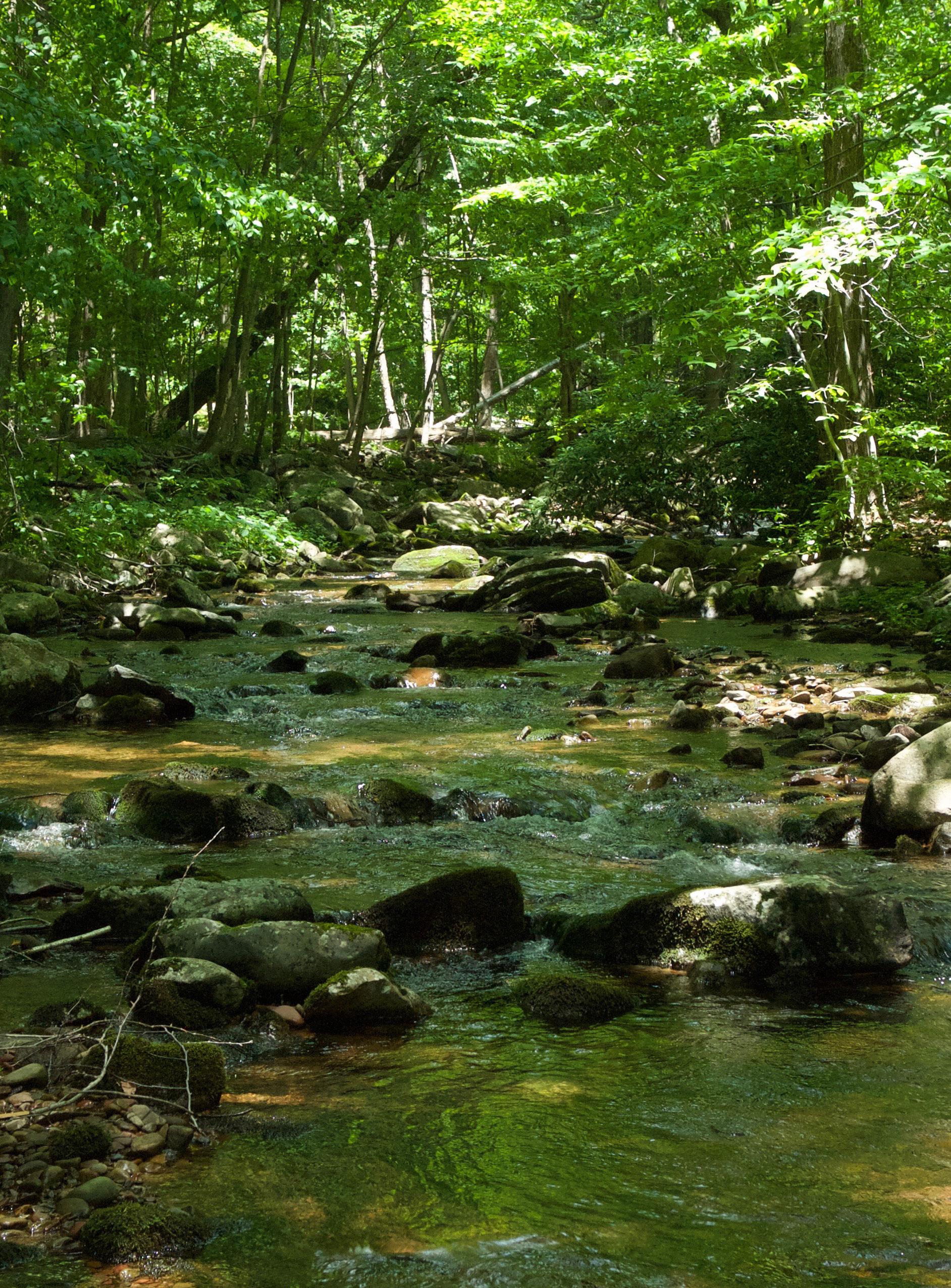
My pace quickens at the sound of the brook. Only a gurgle this late in the season, its vitality has been sapped by successive days of drought. A yellowthroat flits among the branches of a streamside barberry, the bird’s notes tumbling along with the meager current. A redstart darts from one bank to the other snatching a mayfly from the heavy air. While watching the blur of black-and-orange, I nearly step on a garter snake, the little yellow-striped ribbon indulging in the late-afternoon sunshine. When I cross the brook, the water is cool against my hip boots.
The trail ascends a ridge along the far side of the stream. Hemlocks replace hardwood trees. Mountain laurel and rhododendron sprawl down the far side of the steep incline. Although the laurel’s pink blossoms have fallen, the wild rhododendrons are in full bloom. Stepping around boulders, over roots, and the occasional fallen limb, I’m careful to carry my little cane rod with the tip facing backward. My knees nearly buckle when it’s time to descend. A few stones dribble down the hillside in advance of my steps.
Nearing the bottom, I once again come upon the stream that now flows through a glen lush with vegetation. I sit on the trunk of a fallen tree while catching my breath. The sun has nearly set, its rays slanting down through the evergreen ceiling, and although the heat has receded, the humidity remains. My shirt is damp with perspiration. A dragonfly hovers inches from my face. For the briefest of moments, we stare at one another before the tiny predator resumes its hunt for airborne insects.
During the last few years, heat and humidity have descended sooner, drought and hurricane becoming more frequent, talk of global warming hanging like a shroud over this woodland stream. As Joni Mitchell reminded us, “We are stardust, one-billion-year-old carbon.” Although those bits of stardust may appear eternal, the unique combinations of carbon that result in this lovely little stream and the moths, mayflies, and mosquitos that flutter about it; the birds, bushes, and trees; the snakes, squirrels, and even you and me, dear reader, are certainly not. Whether guided by the Almighty or nature’s elegant plan, our time here is short, making our fragile place in this universal wonderland that much more precious.
I draw a neckerchief from the back pocket of my jeans and wipe away the perspiration from my face and neck. Following the course of the stream, the trail is wider now, and more or less level. When I hike around a bend, a great-blue heron rises from the shallows, with its legs dangling down like some knobby-kneed septuagenarian.
White-throated sparrows have been calling for Sam Peabody, but as the light begins to fade, the sparrows grow
quiet, leaving only the occasional pip, pip, pip of a wood thrush and the sound of the current falling over shale into a deep, dark pool where I stop to rig the little cane rod.
The trout season begins under gray skies and hard rain, the fish easy to find as the sweet scent of honeysuckle and wild rose drifts down from the banks of this brook, but by Father’s Day, the temperature rises, warming the pools and runs and causing the trout to sulk, leaving me to seek out their hidden places like the pool I’ve come to visit on this summer evening.
The stream that has wound its way through field and forest falls some thirty feet off the side of the ridge I have just crossed, slipping down a series of smaller pools like steps leading to this larger, deeper pool.
In the gloaming, a few caddis flies flutter in the air. Others skitter along the surface of the water that appears to shimmer as darkness approaches. During the height of this activity, fish will sometimes slash the surface while feeding on these aquatic bugs that return to the little brook later and later over a number of evenings to drop their eggs.
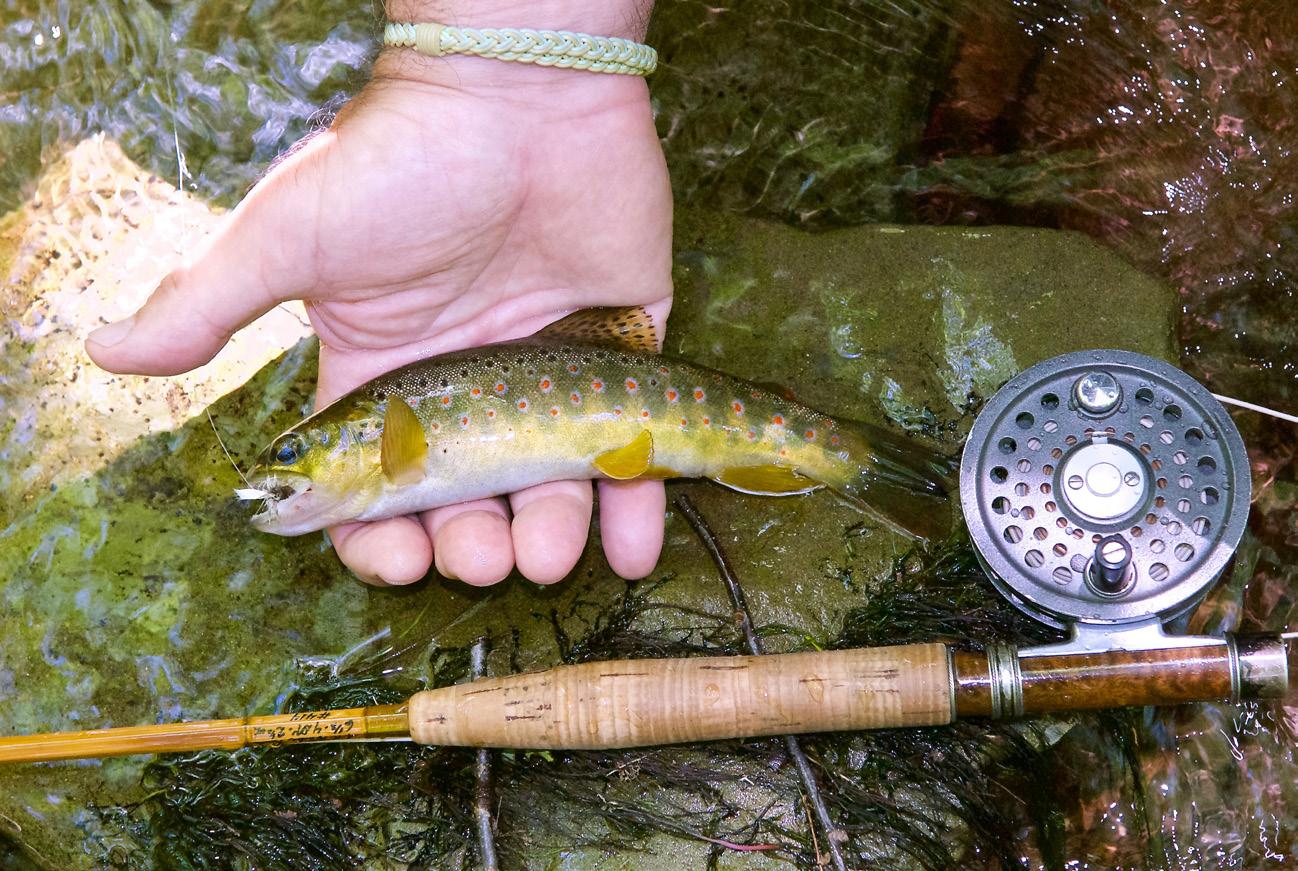
The brown trout of this stream are mostly small, but wild, with dark green vermiculated trails running down their backs and bold, pumpkin-colored spots along each flank. About this time last week, I spied a very large swirl at the head of the pool, a fish bigger than I’ve encountered feeding in the froth created by the fall of water, a trout that has most certainly migrated up from the larger river into
which this mountain rill ends its journey.
I pull a small tin from my shirt pocket. Inside are artificial flies, bits of feather and fur I’ve wound around hooks to imitate bugs like those whose numbers have increased now that the that air has cooled. As I choose a pattern similar in size, shape, and color to the caddis hovering over the pool’s surface, I hear the splash of a trout. A moment later, another jumps clear of the surface, a third rising only a few feet from where I’m standing.
After a few casts, I take my first fish, a comely six-inch brown trout. On my next cast, a trout slashes at the fly, but in my excitement, I pull back too soon on the caramel-colored rod. By the time the first stars appear, I’ve released four fish, each no larger than the first, their flanks glistening in my moist palm as I bend forward to slip each back into the water.
After drying off the battered-and-bruised fly, I hastily cast into the froth at the base of the falls. No longer able to see the swirls left behind by rising trout, I raise the tip of the fly rod when I hear a splash. The little cane rod momentarily bends forward, the line held taut to a good fish, but then it springs back when a knot fails to hold, the line now lying in a confusion of tangles at my feet.
Later, as I climb back up the trail, a field mouse scampers under shadows cast by a gibbous moon that has risen above the ridge line. In the distance, I hear the hoot of an owl.
by Robert J. Romano, Jr.
Join Nathaniel Palmer, George Anne Brady, and company as they seek meaning in an increasingly troubling world among the vast lakes, unrestrained rivers, and those little rills found only by following a logging road through the heart of western Maine.
Sat., Sept. 5th • 9am - 4pm Ann Street, Stroudsburg, PA
75 plus artisans representing many different art styles. Framed and unframed oil, acrylic and multimedia, fabric artists, photograpy, pottery, woodworkers, local winery, local brewery, food and more.
AVAILABLE THROUGH: https://shop.midcurrent.com and https://www.amazon.com For an autographed copy email Bob at magalloway@mac.com
s an s O n An n FREE PARKING & ADMISSION! Call 570-424-1174 for more details.
Hosted by The Potting Shed & American Ribbon
Aries (March 20-April 19) – Chiron is about healing through raising awareness. Its presence in your 2nd solar house, Taurus, will take you deep into matters of self-esteem and the ways it may have been compromised. Remember: Chiron’s job is to bring what is in the dark up to the light, where it can be healed. When that happens, you may agree: you always knew what was right and true for you all along. And you still know.
Taurus (April 19-May 20) – Chiron’s recent arrival in Taurus is the best news for our outrageously disembodied age. Chiron is here to bring you back into your senses, into your feelings and into your desires. The digital environment tends to grind down these natural human capabilities. But as the most physical of all the signs, you will value coming back into the real world of sound, touch and scent.
Gemini (May 20-June 21) – Uranus is fully underway on its seven-year journey through Gemini. If you’re feeling unusual or uncomfortable in the world we live in now, let your mind spread out and get a feeling for what underlies everything. It’s right there, tugging at your hand. The trick is to look away from what has everyone else hypnotized. Go deeper. Keep your mind open and flexible. You will receive the information and observations that you need.
Cancer (June 21-July 22) – With a cluster of slow-moving planets lighting up Aries, your 10th place, you may be driven to succeed like never before, but wondering how it will be possible amidst the chaos of the world and the constant changes in the business environment. The notion of building a reputation seems ridiculous when people who know nothing are suddenly famous for nothing. However, you have an old-school approach to life that I suggest you maintain. The reputation you’ve earned is valuable despite anyone else’s claims of rare genius.
Leo (July 22-Aug. 23) – Pluto moving through your opposite sign Aquarius is confronting you with forces outside of your control. Chiron’s arrival in your 10th place represents an event or opportunity that will help you get your priorities in order. This is the turning point in the year for you, coming with the feeling of your ears popping and your mind clearing; the sensation that you are suddenly you again. And that is just the beginning.
Virgo (Aug. 23-Sep. 22) – You are too hard on yourself, at the same time you keep finding yourself in situations where you seem to have no control. You have to decide if you want dependence or independence in certain contractual or collaborative situations. Whether you’re a leader or a follower, an independent agent or a functionary, you’re an essential node of communication. Nearly all difficulty can be ascribed to either a failure of words, or a failure to use words precisely.
Libra (Sep. 22-Oct. 23) – From your viewpoint, it must seem like the world has gone mad, nobody can show up on time,
follow logic or tell up from down. The problem seems to be the chaos of society, but the net effect is that nearly everyone is confused about who they are. The question is not about any of those other people, however; your grounding in who you are is what you must focus on. Putting it succinctly, you’re not well served by counting on others for the discipline and time-framing element of what you’re doing.
Scorpio (Oct. 23-Nov. 22) – You’re arriving at a turning point in your relationships, which I suspect you will welcome. Chiron has entered Taurus, which comes with the gift of focus. You might say intensity, or you might experience the arising of a certain issue that has persisted in your relationships. Now is the time to address it. Chiron is in Taurus only a few months this summer (to return in April); what surfaces will give you a look at what you’ll be addressing for the next few years.
Sagittarius (Nov. 22-Dec. 22) – Pattern recognition is the literacy of the electronic age we now live in. Adults who cannot recognize patterns in their environment seem to not grasp that such a thing is even possible. It is possible and as necessary as reading is to a child. Rare events in your environment house, Gemini, indicate that it’s more important than ever. You no longer live in a world of categories and separate events, but a holistic universe of patterns that you can no longer afford to have be a blur. You will learn to see them through ongoing, careful practice — just like you learned how to read words.
Capricorn (Dec. 22-Jan. 20) – Despite all that is going on in the world, and the worldly nature of the mighty sign Capricorn, your most important territory is within. Digital consciousness has obliterated the concept of privacy and the experience of one’s private being. For you the digital influence is the closest to home of all the signs, deep at your core, where you know who and what you are. Yet you may, if you wish, summon the essential power to tell truth from lies. That is strong within you now.
Aquarius (Jan. 20-Feb. 19) – You have a great mind, sometimes a little too good for your own wellbeing. The thing about creativity that makes it so daunting is that it’s not really about “personal expression.” It’s about daring yourself to be someone you never were before. Allow yourself to break out of the trap of ego and “identity” and seeming “self” and let yourself be born into a new phase of your existence. Dare to be real. I can’t promise you that you’ll be safe, but safety isn’t everything.
Pisces (Feb. 19-March 20) – The question is, what is the most embodied form of your idea? What takes it out of the abstract and puts it into tangible, physical form? I get the appeal of daydreaming, though now is not the time for that. If you’re thinking of a bridge, reach for a pencil and paper. If you come up with the title of a novel or movie, write it down. Pisces may be a visionary sign, but you must observe your tendency to idle fantasy.