Tattler




If you’re anything like many people in Jersey, two things come up time and time again:
• “I’m not actually sure where all my assets are.”
• “I don’t know when I last reviewed it all.”
Sound familiar?
Life gets busy, and financial admin often takes a back seat. But here’s the thing: not knowing can quietly chip away at your peace of mind, and potentially your future financial security.
When you have sight of all your finances in one place, something powerful happens: you gain clarity. You know exactly what you have, where it is, and how it’s working for you. This brings piece of mind.
We can then build a plan that’s grounded in facts and aligned with your goals, whether that’s preparing for retirement, supporting the next generation, or simply enjoying life. With everything clearly laid out, you gain a sense of control, seeing how each piece of your financial jigsaw fits together to support the life you want today, tomorrow, and into your future.
An important question to ask yourself is:
“If the worst was to happen tomorrow, would you know where everything is and feel financially prepared?”
Common worries are:
• “I don’t have a will”, or “I haven’t reviewed it in a long time” – It’s easy to put this task off, but having it sorted can really help your family. Having a will makes everything smoother, quicker, and less stressful at a difficult time for your loved ones.
• “I’m not sure what insurance I actually have.” – Many people don’t realise they might be overpaying for insurance, underinsured, or missing important cover altogether. Taking the time to understand what you have and what you might need, can give you a real safety net when life doesn’t go to plan.
• “I’m worried my savings and pensions won’t last in my retirement”
– Many people realise their Jersey state and workplace pensions may not be enough for the retirement lifestyle they worked hard for. With retirement possibly lasting 30+ years, that gap can be significant.
The good news? You don’t have to figure it all out on your own. With the right plan, you can feel more in control.
This is where working with a financial planner can make a real difference.
• We can help you bring everything together into one clear picture.
• We can use cashflow planning to see what your future could look like.
• We can together build a plan with that’s tailored to your life and your family’s objectives.
Let’s have a no-commitment conversation. It’s never too early, or too late, to plan for the future you want.

Matthew
Fielding Chartered MCSI Financial Planner
Email: matthew.fielding@quiltercheviot.com
DL: +44 (0) 1534 506128

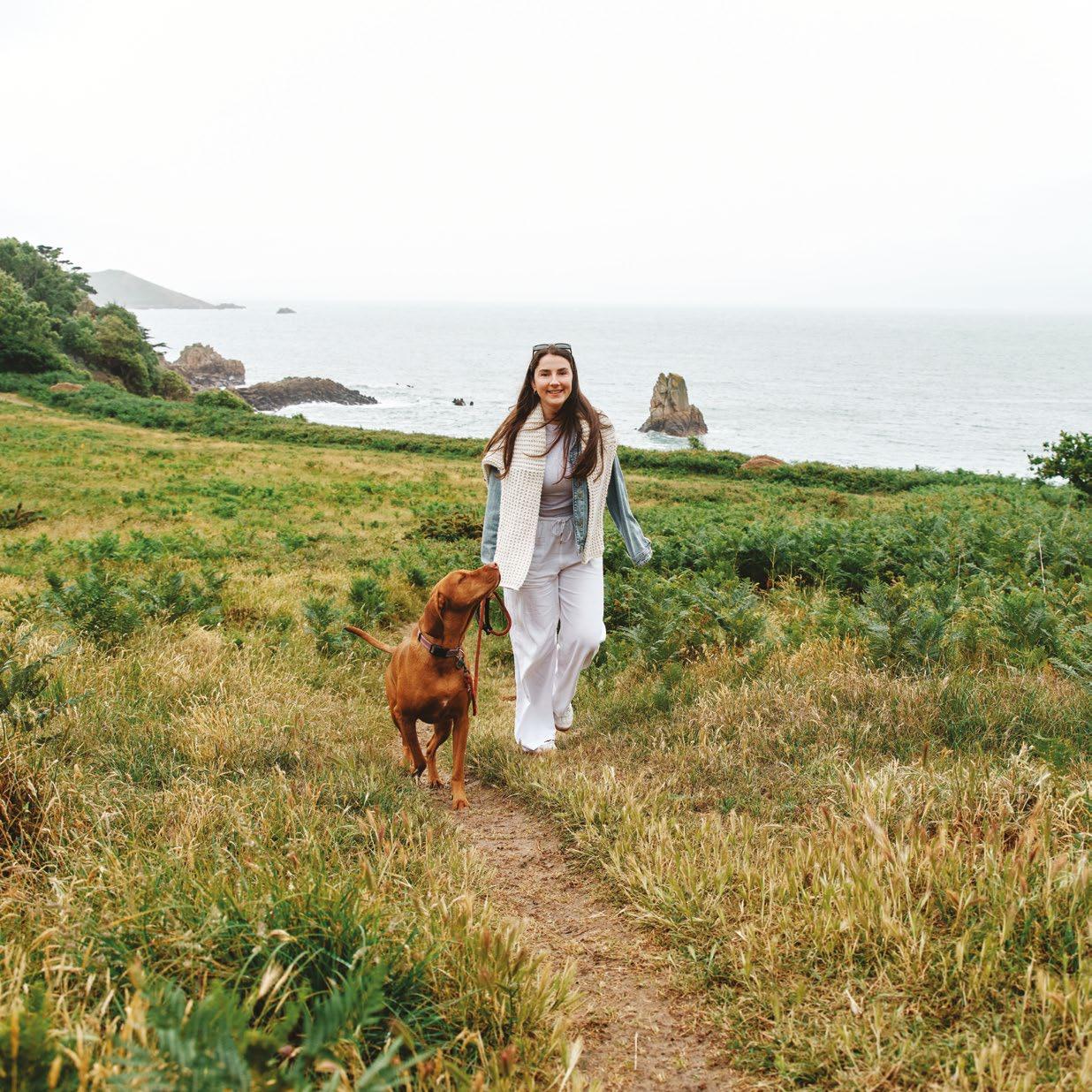
I know us British are famous for being obsessed with the weather but wasn’t this summer a lovely one?
It was a shame that it seemed to change just as the schools broke up but before that it was such a treat to have day after day of warmth and sunshine. The activities going on at Bouley Bay and Rozel certainly looked like everyone was making the most of it.
I chose the melée of photos on the front cover as they just show how much our Honoraries enjoy doing their job. I am sure it must be hugely rewarding to be helping the community in such a variety of ways. These good people give up their time for free and deserve a massive pat on the back from us all. There are vacancies if you think you might like to join them.
As always, we have some really interesting articles in this, the Autumn edition of the Tattler. Julia, Fred and Helen have come up trumps as always. I hope you enjoy reading their articles as well as the others from the many people who have kindly taken the time to contribute. We are a busy, friendly lot here in Trinity and reading about what the various clubs and associations get up to makes you realise how much is out there – you just have to give them a go.
All the best,
Josie
P.s. Please do get in touch and let us know if you particularly enjoyed an article in this edition or if there is a subject you would like us to cover in a future one: trinitytattler@gmail. com. Also do remember that copies of this and past issues can be viewed on line on the parish website.








Do you have something to or

Trinity Tattler is a community magazine, for you, about you and from you!

Got something you’d like to see in the next edition? Send us your ideas, articles or pictures or thoughts to: trinitytattler@gmail.com
Even though I write this short piece at the end of July, I think I am safe in saying that, in general, the summer has been good to us.
AA word from your

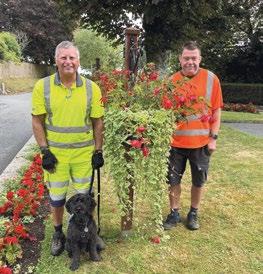
s a result of the good weather and a tremendous amount of hard work, I am delighted that the Parish achieved second place in the RJA&HS’s competition for Best Floral Parish Hall. Our Foreman’s choice of ruby red for the 80th anniversary of Liberation was warmly received. My congratulations and thanks to Mark Friend (Parish Foreman) and J-P Doucet (Parish Gardener) for all their hard work in achieving this. Congratulations too to Trinity School Gardening Club that achieved second place in the class for Young Gardeners and also to Sue Ingram, one of the Parish’s Constable’s Officers who achieved second place in the Small Garden class.
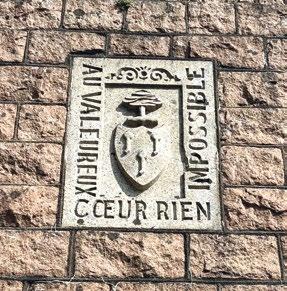
One award that came as a bit of a surprise was the Jersey Scenic Lanes Award.
I say it was a surprise as it is the second occasion on which La Rue de L’Epine has won the Award for the Parish. There is more on this later in the Tattler but if anyone would like me to consider an alternative lane for entry into next year’s competition, please let me know.
Looking ahead to Remembrance Sunday, in addition to the usual services and coffee morning, I have a creative project in mind that I hope parishioners will get involved in. The Parish Office will be issuing more on this in the near future.
With best wishes’
Philip
Philip
Le Sueur, Connétable of Trinity

This has been an interesting summer! I had the honour of joining our Rector, Geoff Houghton, at the National Parliamentary Prayer Breakfast at Westminster Hall in June. It was a diverse and thoughtprovoking service, with very good music, and it was a great opportunity to meet parliamentarians and clergy from across the UK and beyond.
In July, I went to Orkney to support Team Jersey in the Island Games – they did brilliantly! It was also great to see sponsor Jersey Post there to provide practical help to the team. Orkney shares many of the issues that we face but in areas such as renewable energy, they are far advanced.
Back in Jersey, wearing my ministerial hat, we have been working hard to finalise the Budget for 2026 and there will be more work to do before the debate in November. States members have a busy end to 2025, with debates on the reintroduction of Senators, a new Residential Tenancy Law and assisted dying scheduled before the end of the year. Please do continue to let us all know what you think on these subjects.
Best wishes, Elaine
I do hope you have had a wonderful Summer? It is hard to believe that Autumn is almost upon us with the leaves turning the most beautiful hues of orange, red and brown. I continue to be very much available if I can help in anyway with issues you may have. Please don’t hesitate to get in touch. Every good wish to you all, Andy.
01534 861227 / 07797 888806

NB: Just a reminder that you can come and speak to your Deputies at any of our surgeries, whether or not they are in Trinity. You can also call or email - all our details are online or available at the parish hall. It really is good to know what you think and to hear about things that concern you.
The
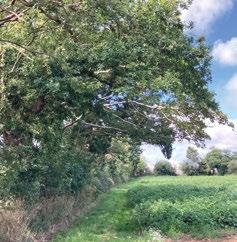
ancient footpath or ruelle, seemingly without a name but known as the chemin de quatre pieds at Field 1007, is in the process of being prepared for reopening to the public at the time of writing.
It connects La Grande Route de St Jean in St John to Rue Coutanche in Trinity. From its entrance near Hautes Croix over steps set into a low wall, it passes between Field 1007 and Les Ruelles and the industrial estate behind the latter property before reaching a second granite stile built on the parish boundary between St John and Trinity. The path then passes alongside a field in Trinity behind Kosangas, passing by the remains of a third granite stile before entering a lane which winds its way to Laurel House at Rue Coutanche.
was pleaded on Mr Manning’s behalf that the parties were not neighbours, necessitating further research to be undertaken.
As a result of the lodging of parish documents, which had not formerly been available, at the new Jersey Archive, Mr Manning discovered the record of a decision by the St John’s Roads Committee in 1870 granting permission to George Hocquard, the then owner of Les Ruettes, to rebuild the stile against the main road, which decision referred to the said Act of the Royal Court in 1808.
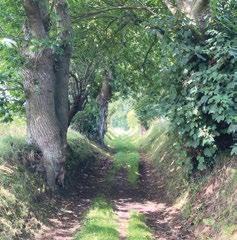
The lack of a name is strange given its history. The late Herbert Le Feuvre, who lived nearby at Le Feugerel, recounted that the path had remained open despite an order of the Royal Court closing it, two brothers having soon after used the path in 1781 to muster with the Militia to repel the French invasion. A previous Visite Royale to St John on the 7th July 1768 had ordered the closure of the western half of the path (without reference to the Parish of Trinity) and vested title in the owners of Les Ruelles, then known as Les Ruettes, (the property on the north side of the path upon which the industrial estate was later developed.) Perhaps as a result of its use by the two brothers, locals refused to recognise its closure, and litigation between the adjoining owners in St John resulted in the Royal Court in 1808 ordering the reinstatement of the path under the supervision of the Roads Committees of both parishes.
Although the footpath was in use until the 1960s, it subsequently became overgrown and consequently on the 20th August 1997 was the subject of a further Visite Royale. Its status however as a public path was uncertain, the Act of 1808 having been forgotten over time, and the issue remained unresolved until further litigation between the former owner of Les Ruelles, alleging an encroachment on that property, and the late David Manning who owned Field 1007. Given the existence of the path between the two properties, it
The dispute between neighbours thereupon became one of fixing the boundary of the footpath between them. This was resolved by a Vue de Vicomte, an ancient remedy involving the appointment of six experts to determine the issue. Their record fixing the boundary of the ruelle in St John was registered on 29 November 2013. The late John Vasselin, who was brought up at Belle Vue Farm (later La Minoterie) opposite the entrance to the path and who gave evidence at the Vue, informed the writer that the path had been used to carry his uncle’s coffin to Ebenezer Chapel because Rue du Feugerel was impassable due to a heavy snowfall.
The public status of the ruelle in Trinity was also confirmed by the Visite Royale to the parish on 13 July 2017, several parishioners confirming that they had habitually walked along the path in the past. There remained the issue of rebuilding the granite stile which had fallen into disrepair on the boundary between the two parishes, and clearing the path obstructed by the construction of fences and apparatus on the industrial estate.
Happily, at the time of writing, the work of reinstatement is in the process of being completed and the path will have been, or shortly will be, opened when this article is published. Like the Ruelle du Mont Ifer, (see Tattler’s last edition,) it has taken some time for the chemin de quatre pieds to be reopened, but the delay since August 1997, when the request to reopen the path was first raised, is worth waiting for.
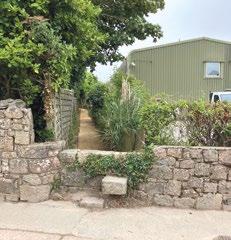
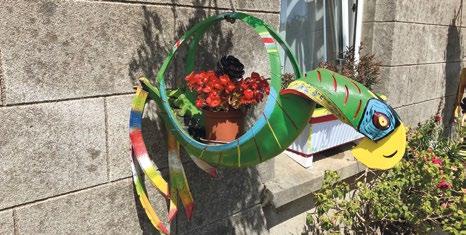
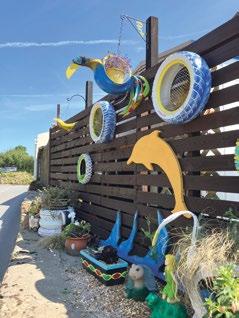
Trinity boasts many attractions, but none as unusual as Nuno Correia’s colourful creations which decorate his home behind Morrisons at Hautes Croix. The grey cement rendered exterior of the house where he lives has been transformed since Nuno and his family moved in 12 years ago.
Toucans, butterflies, little dogs, hedgehogs, owls, snakes, guinea pigs and all sorts of other things all painted in vivid colours that support or are surrounded by equally colourful flowers and plants adorn the fences and walls. One can’t but help noticing the smiles from most people driving past and particularly from those who stop to shop. Indeed, whilst the writer was speaking to Nuno, two ladies who had parked at the shop took the trouble to tell him how lovely it all looked. Explaining that he was brought up in Madeira where flowers grow everywhere, Nuno told me “I love colour, and flowers are tender and need love and care — and don’t answer back.”
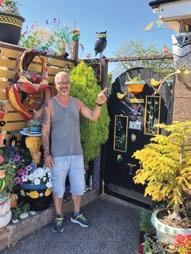
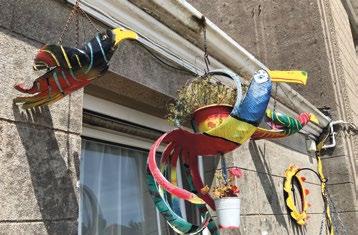
6 hours to make one” Nuno says. There are now on display an innumerable number of animals and different objects he has made, “I never plan to do anything beforehand; it just happens. I love to see the surprise in people’s faces and the joy it brings — both to me and to them.”
When Nuno was a child before the revolution in Portugal, his native island was very poor and nothing was wasted. He made his own go cart and catapult and hated waste. Inspired by the memory of a collection of exotic birds in the Botanic Gardens in Madeira, his love of colour and hatred of waste, together with a ready supply of cast-off tyres from a friend in the motor trade, prompted the creation of an increasing number of toucans, some acting as plant pots. “It takes me 4 to
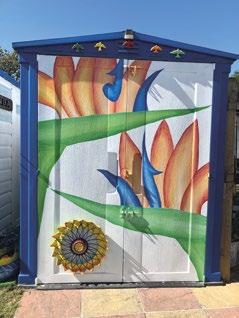
The exterior display is only half the story. Unsurprisingly, Nuno’s garden is also a riot of colour, bedecked with flowers, burgeoning succulents and his extraordinary creations. His young daughter Linda is a talented artist and has painted a hut with a striking mural to which Nuno has attached a large artificial flower made out of an abandoned wall clock and a toy’s tyre. The little birds above the hut doors are again a reminder of Madeira, traditionally hung up as harbingers of spring, bringing joy and freedom. Fred
Building community relationships is one of our key principles – you learn to trust us, inform us of your concerns and where possible, we act on the information. If we can’t assist, we work closely with a number of partner agencies who we may also be able to call upon.
Have you ever thought to call us, but decided against it, thinking it’s probably nothing to concern us about, or that we are too busy? Well don’t – put that mindset aside. We have each signed up to help our Community – if it is concerning to you, we want to know. Do you even know how to reach us? Have you saved the Duty Centenier telephone number in your phone or got it written easily to hand somewhere? 01534 680599
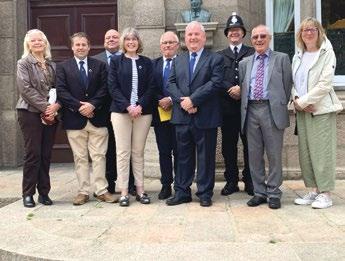
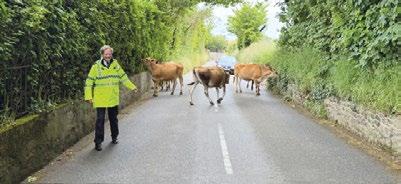
You would be amazed at the calls we receive – some require an immediate response, others can be dealt with less urgently. Just recently officers had to divert from a road closure to a report of cows merrily trotting down a road and entering gardens – have you ever tried to ‘moo’ve a cow who doesn’t want to be? No training course covers this; however, our officers sprang into action, safely resolving the situation and alas we didn’t get steak that night!

Centenier Dennis OWEN has stepped down to CO and Vingtenier Alissa OZOUF promoted to Centenier – our third ever female in the role. We have also delightedly welcomed CO Rob MARKHAM & Vingtenier Lee SCOTLAND. We have room for several more…. Maybe you?
It’s
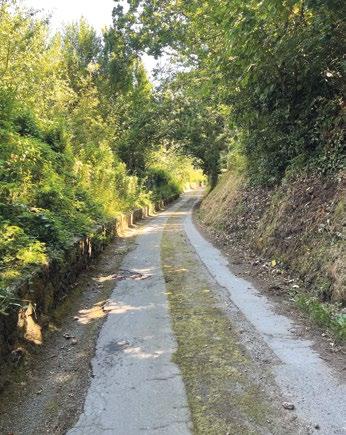
La Rue de l’Épine (meaning road of the thorn), running down from La Rue de la Bergerie to La Vieille Charrière, has been named Jersey’s most scenic lane for the second time in 15 years.
Nominated by the Connétable it has been described as having a ‘delightful ambiance and natural and rustic feel to it.’ Praised for the area’s range of wildlife and plant species, it features winding stone walls, a trickling stream and fern fringed banks. The lane itself has moss growing down the centre and tracks either side where vehicles have passed over, giving it a rustic appearance and a rugged feel under foot.
Ten parishes entered the annual contest run by Société Jersiaise and judges represented the National Trust for Jersey, Environment Department and Rotary Club de la Manche. The award, a wooden plaque, will be presented to the Parish in the near future.
We must be doing something right as our team are all fully committed and staying on for another year and our membership list remains healthy.
We are always extremely saddened to learn when a member leaves us, be it a change in personal circumstances preventing them attending any longer, or that they have passed away. Those that are poorly – we wish you a speedy recovery and hope to see you back before too long. The rest of you 60+ year olds in Trinity - what is stopping you from coming along for at least one month and giving us a try? If you aren’t too sure please reach out to us and we will hopefully put your mind at rest – we are not boring or cliquey. Our current members range in ages from 66years to 94 years.
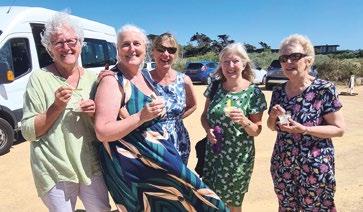
We were delighted to learn we had successfully secured a Grant from the Connect Me: Connecting our Communities grant scheme. This money takes considerable fundraising pressure off of us and will allow us to fund trips out. Generous donations received also enable us to plan special events. Heartfelt thanks go to the Gotel Family in Canada and the Laurent family for their financial support.
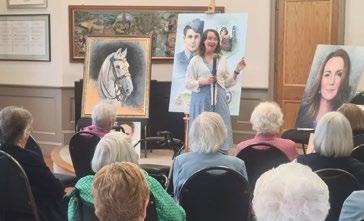
In May we took a visit to the Maritime & Tapestry Gallery and in June we met the extremely talented local artist and author, Kate Hamilton. She regaled us with the fascinating true story ‘The Great Escape’. In July we ventured out to the Channel Islands Military Museum followed by an Ice-cream and our team are busy at the moment planning the programme for the rest of 2025.
Stuart Burgher has over 30 years of knowledge and expertise.
Experience counts when it comes to making Dentures.
Trust us with your dental care.


It was the turn of the Agon Coutainville to host the Trinity Twinning Association this year and a jolly group set off one weekend in June.
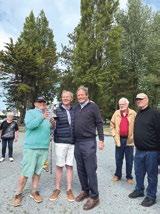
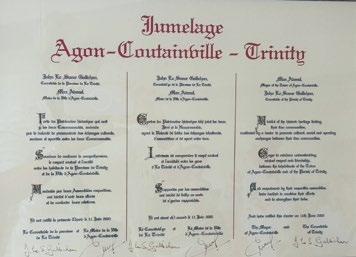
The Trinity Twinners met their hosts in the Agon Coutainville Town Hall and were welcomed by the Mayor, Christian Dutertre to celebrate the twentieth anniversary of the signing of the charter in 2005. John Gallichan, Phillip Le Sueur, John Howell and Philippe Robbe gave speeches confirming that since its inception the Twinning weekends have always been a pleasure and have always made our bonds of friendship stronger and stronger, especially since we have so much in common. As John Gallichan noted “Brexit will never come between us!
model of the inside of a troop plane about to disgorge its parachutists over the French countryside complete with very loud engine noise as an accompaniment! Several videos play memories of survivors which were reminiscent of the ones we have in the Jersey War Tunnels and Maritime Museum.
Afterwards some of us looked round the church where the statue of John Steele is still attached to the side of the steeple with his parachute flapping in the breeze. John Steele was an American paratrooper who landed on the side of the church steeple during the D-Day invasion. He hung there for 2 hours before being captured. Inside the church are some unusual stained-glass windows reflecting the events of that night in beautiful colours.
There followed a convivial vin d’honneur and then dinner at home with our hosts - while the rain poured down outside! The following morning was free to enjoy with our hosts and many of us visited the French market to stock up on local produce.
The afternoon included a trip to le Musée de Ste Meré Eglise where we walked round the exhibition/commemoration to the events on 6 June 1944 when the Normandy Landings took place. This museum is spread over five buildings, mostly shaped like parachutes. Inside are displays of allied soldiers (mostly American) preparing to ambush the German troops. One building housed a plane and another had a very lifelike

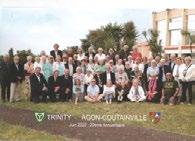
On Saturday evening, after posing for a group photo which seemed extremely difficult to organise, we were treated to a delicious meal at the Casino in Coutainville. This was preceded by several speeches where the speakers hoped both Twinning Associations would continue to flourish along with our friendships. Thanks were expressed to many, but particularly to the two secretaries of the associations - Jacky Austin and Michel Lemercier for their hard work behind the scenes to make our meetings so enjoyable. Special thanks went to John Gallichan for all his hard work over the years.
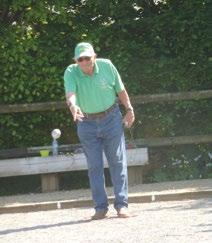
Sunday morning was the usual pétanque competition between Jersey and the French and, despite our best efforts, the French won convincingly and took home the trophy.
After a final lunch with our hosts, it was time to take our leave and drive to St. Malo to catch the ferry to Jersey. We all have lots of fond memories of the weekend and look forward to returning the hospitality next year.
If someone’s asking for private information, ask yourself why.
Think. Report. Protect. Been caught out? Call the number on your bank card.
Want to stay one step ahead? Visit ciiom.hsbc.com/fraud or fraudprevention.je









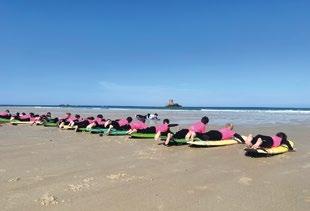
‘During the year 6 residential at Brig y Don, my favourite bit was probably surfing because I had never surfed before or even been near trying to surf so I enjoyed how it was new and also super fun (especially in the deeper part). It was early in the morning, so it was quieter and apparently the waves are the best at that time of day. I thought the best bit of it was when I was pushed into the wave for the first time and it was a lot faster than I had expected and I was so shocked about it, I didn't even try to stand up!

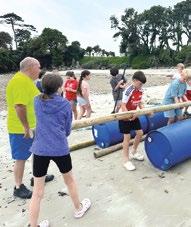
A challenge I faced was going on the raft because I was overthinking about if we went further out and then it just randomly sank. I could obviously swim, but the water was freezing cold. I was quite scared when I got on but now, I'm not sure why I was scared because it was very fun and everyone was very good at paddling along.
I would like to thank Alan, Callum and Cassie, Mrs Flett, Mr O'Connell, Ms Dodd, Mrs O'Connell, Mrs MartinFoley and the chefs.’
By Rose
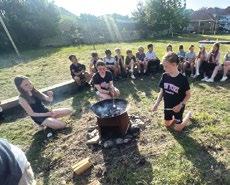
I also found out that I was good at volleyball (sort of). On the first day, we were all in the garden and me and my friends were all sitting in the sun until we saw the volleyball come out with the net, so we went over to try it out. I had done volleyball before but not in a while. When we started off, we weren't very good, but by the end of the residential and after all the time we had in the garden, we were actually quite good at it! Although our days were packed with activities, we still found time in the evenings to play some quick matches or just practice.
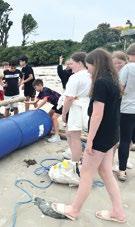
One of our team building activities, was raft building. I was quite proud when we all got on the raft and it floated well and nobody fell off (phew) and it was very fun too, to paddle in the water despite it being freezing cold. It took a lot of effort to build it and attach everything and even just preparing it or taking stuff doing the path was hard work it. The raft turned out great!
If I did it again, I would definitely try surfing again, as well as it being super fun it's also quite hard to stand up (especially since I had just started). I would put more effort into standing as last time I only knelt down.
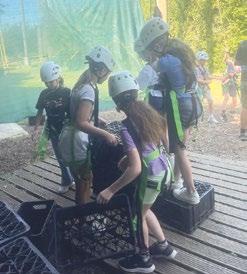
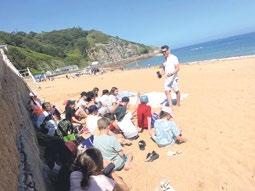
‘Crabbe was incredibly fun because of all the stuff we did. We went to Greve de Lecq beach and stayed there all day. We even got to go in the sea to practice positions to stay afloat with Jersey sport as part of the Swim safe programme. We also made lots of amazing sandcastles for a competition. When we got back to Crabbe, we got to play outside and play board games.
The next day, in the morning, we got changed and ate breakfast. Then went straight to Valley adventure at Les Ormes to do some team activities and aerial trekking. Then, we ate lunch in a tent while watching the King Swing, then we left and went back to the camp. We ate dinner and got into bed again.
One thing I forgot to mention was the talent show. Everyone had to perform a talent. We had singers and dancers. It was the most fun thing we got to do! Crabbe was so much fun and was the best thing we did in Year 5, even though it all was amazing.’
By Theo
‘In May, we had our residential trip to the Durrell hostel. We stayed for one night and two days. We arrived at the hostel bright and early and put all our bags in the hostel. We then had a day in the Zoo, starting with a lesson all about Gerald Durrell and his legacy. We were fascinated by the story of how he and his friend saved the Madagascan pink pigeon from extinction after the spray they used to kill mosquitoes made all of their eggs too fragile to hatch. We also enjoyed the ‘food chain’ game where the crickets were eaten by the lizards and the lizards by the kestrel and we learnt how the energy is passed along the chain. We then looked at the different habitats around the zoo and linked them to the different places in the world and the animals that live in them. In the afternoon, we watched the Galada monkeys being fed. They were very funny, especially the boss monkey.
Back at the hostel, we had some time in our rooms to relax and play and we really enjoyed playing in the lovely garden. Pizza and chips were very yummy for dinner and then we had a quiz in the evening. Everyone was very tired so that helped us to sleep as for many it was our first time sleeping away from home and lots of us were a bit worried about that! Out teachers were very proud of us for doing so well and persevering.
On our second day, we stayed at the hostel and in the garden for orienteering activities and we made posters all about conservation to share Gerald Durrell’s legacy with people. We must all remember the 4 R’s - to reuse, recycle, reduce and rewild to help protect our environment and the animals that live there. Why don’t you visit Durrell’s Park, the café or the charity shop this summer? They really appreciate everyone’s support.’
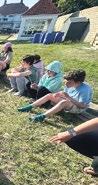
By a pupil
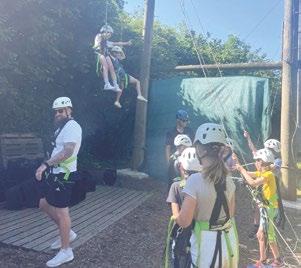

This term has been busy with lots of activities and exciting projects. We started the term with the winners of our poetry competition being invited to read their beautiful poems at the Parish afternoon tea on 11th May.
The children read so well and the poems were enjoyed by all attending. We also completed our kindness project, where every class completed 80 acts of kindness which were written onto paper leaves. These have now been displayed in the nature garden and look really lovely.

Our second-hand uniform shed is now fully functional, and we are hugely grateful to the parents (and particularly one grandparent) who spent a lot of time and effort helping us sort uniform, and build both the shed and shelving inside. We will be holding regular sales from on the first Friday of every month after school from September.
We held our biggest event of the year, the summer fete on Saturday 12th July. It was a scorcher of a day but despite the 30 ˚ heat, the event was busy with children enjoying stalls such as Splat the Rat, Crafting, Glitter Tattoos, Treasure Map, Sand game, plus our usual bottle stall and cake stand which are very popular.
Many thanks to the PTA members, parents and school staff who help make all our events a success. We’re looking forward to making new plans in September for the coming school year.

Find us at Houguemont, La Rue d’Aval, St. Martin, JE3 6ER which is halfway between Ransom’s Garden Centre and the entrance to Queen’s Valley Reservoir.
Tel: 636903 Email: matt@goreywinecellar.com Our Loyalty Program is




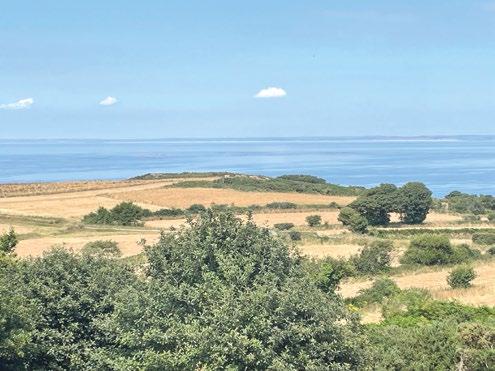
Tucked away among gorse and heather at the highest point of the island is a site so elusive you’ll need a stubborn sense of curiosity to find it. The Hougue des Platons sits almost completely hidden beneath the encroaching undergrowth, bearing witness to human history from approximately 5,000 years ago, waiting for walkers who wander off the obvious tracks to discover it.
On a clear day, the views alone are worth the search. From this subtle mound location, you can look out towards France, the Ecréhous and Dirouilles reefs (both administered by the parish of St Martin), other of the Channel Islands, and the rolling agricultural headland of Trinity’s Egypt area. But the real magic lies underfoot, where the island’s oldest known parish inhabitants once stood, looked at these same horizons, and buried members of their community in what we now know as a Neolithic cist grave.
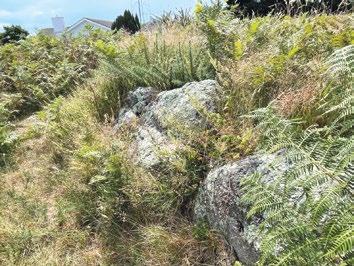
First, the practicalities: the Hougue des Platons is around 100 metres northeast of the radio mast at Les Platons, standing 100m above sea level. The easiest access is along the road signposted as private as you travel east towards Egypt, just before the 90-degree bend. Despite the sign, there is public access to the Hougue des Platons plateau, and you might choose to park at the Les Platons carpark and walk along, or
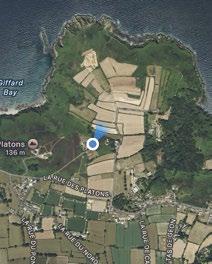
cycle, or make it part of a longer ramble along the rugged north coast.
Be prepared for a bit of an adventure, as the site is shrouded by thick vegetation known as dwarf shrub heath, with the path not always obvious, especially in summer when the plant life thrives. It’s occasionally cleared, so if you’re lucky, you might find the route more accessible. If not, embrace the mild scramble and the prickly welcome of the gorse; this is all part of visiting a site that feels wild and secluded.
The Hougue des Platons is a late Neolithic to Chalcolithic age cist in a circle (cist pronounced “kist”), estimated as having been built between 2850 and 2250 BC. Originally, it was a low circular mound about 8.4 metres in diameter, under which lay a small, stone-built coffin-like box, surrounded by a circle of upright stones and dry-stone walling.
Think of it as a small stone box grave under a mound, surrounded by a ring of standing stones rather than the large stone table-like structures you might associate with dolmens.
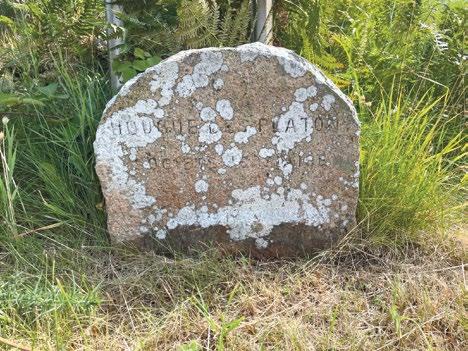
In fact, there’s an ongoing debate about whether Hougue des Platons should be classified as a dolmen at all, since it doesn’t follow the classic dolmen definition of upright stones capped by a flat stone. The Prehistoric Jersey website might list it under dolmens, but technically, the experts might argue that it is not one.
In 1914, members of the Société Jersiaise excavated the site and found a capstoned cist under a mound of fine clay within the stone circle. Inside the cist were two pottery urns resting on a bed of charcoal. The larger urn contained cremated remains believed to be of a woman and a child, providing a tangible connection to the island’s earliest communities.
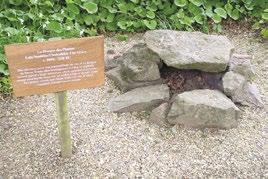
For preservation, the Société removed the cist and re-erected it in the grounds of the La Hougue Bie Museum in Grouville, where you can still visit it today. The large urn also resides at La Hougue Bie, while the smaller urn can be seen in the Jersey Museum, together forming a precious chain linking this windswept mound to the island’s heritage collections.
When you reach the site, you’ll notice that the stones are weathered, soft-edged, and beautifully covered in welldeveloped lichen growth, a reminder of the centuries they’ve withstood the north coast’s prevailing winds and seasonal storms.
The grave itself was built with heavy pieces of granite and volcanic tuff. The granite was quarried at Mourier
Valley and Anne Port, about a mile and a half away—imagine the effort it took Neolithic islanders to transport these slabs without roads or machinery. The volcanic tuff is a softer stone made from volcanic ash and is found in the area, unlike the granite.
And if you’re curious about the name, “Hougue” comes from the Jèrriais word (with Norse roots) meaning “mound,” often referring to ancient burial mounds like this one.
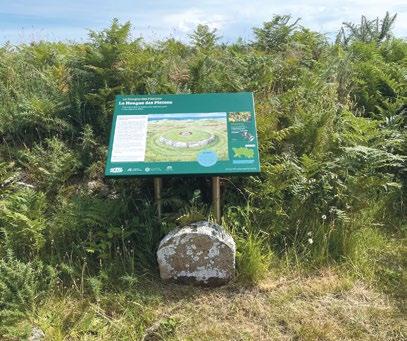
While the site is rugged and overgrown, a recently renewed information board has been installed, providing context and interpretation for visitors, ensuring you can appreciate the layers of history under your feet. There’s something quietly powerful about reading these details while looking out over the reefs and France, imagining early islanders standing where you stand now.
It’s a reminder that Jersey’s story is not just castles and bunkers, but also these small, sacred places tucked away under the vegetation. The Hougue des Platons is one of those rare treasures that repays the effort of finding it. It isn’t grand or dramatic like Gorey Castle, nor immediately accessible like La Hougue Bie, but it is fascinating in a subtle, modest way.
So, pack a flask and a sandwich, wear sturdy shoes, and take your time to find it. Read the information board, touch the weathered stones, look out towards the Ecréhous, and enjoy the solitude. It is, quite simply, one of Trinity’s best-kept (and oldest) secrets.
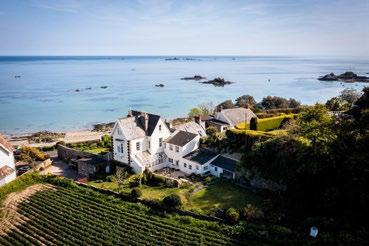

Experience the difference with one of Jersey’s only residential estate agencies with a global profile. Whether you’re looking for an investment, or your next family home, our dedicated agents are uniquely positioned to meet your property needs.
If you’d like to arrange a viewing or understand the true value of your home, get in touch with our team of experts today on 01534 722 227.
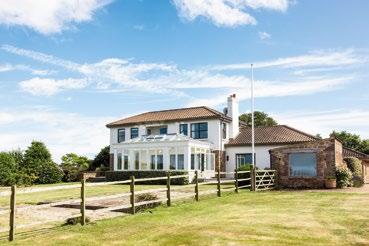

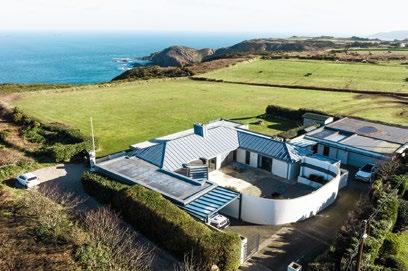
“Savills have been nothing short of exceptional. They were honest, approachable and found us the perfect home, taking all factors into consideration.”
If your property is currently on the market with another agent, you should check your Terms of Business in order to avoid paying two commissions. All information is correct at time of print – August 2025.
by Taylor Smythe
This year, Trinity-based regenerative festival announces a £20K Food System Prize for disruptive food, farming and health businesses.
Jersey may be best known for its famous cows, rugged coastline, and quiet charm, but a new story is emerging: an island-led transformation of the food system. Jersey is beginning to ask the urgent questions of our time. How do we feed ourselves well? Build resilience and food sovereignty? And ensure the next generation of farmers isn’t the last?
Finance is key to this transition. Regenerative change needs not just vision, but capital that flows differently. That’s why Regen Gathering, a free annual food, farming and finance festival held 5-6 September in Trinity, brings together diverse groups to explore models that prioritise long-term health, biodiversity, and resilience over shortterm gain.
This year, HYPHA Consulting launched the £20K Food System Prize, supported by Lloyds Bank, the Co-op, the Crown, Woven, Evelyn Partners and Alex Picot. Open to new and existing businesses across the UK and Crown Dependencies, the prize supports ideas improving food, farming and health. Winners receive cash, brand support, and potential access to Co-op markets. Applications close 25 October and winners announced 6 November at the Jersey Farming Conference.
Now in its third year, Regen is more than a festival; it’s a growing movement. Held on Le Tacheron farm in the heart of Trinity, and led by the people who work with soil and community every day, it offers a glimpse into how a small island can lead the way in reimagining our food future. This September’s event featured
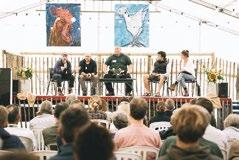
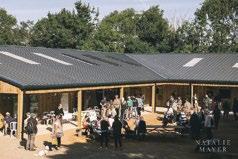
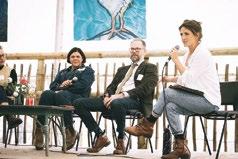

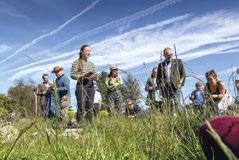
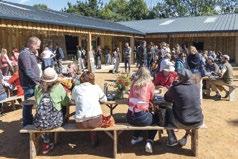
talks and demos where 30 speakers explored soil health to fisheries, equine, dairy and arable crops, business models, and human health.
Jersey’s agricultural roots run deep. For over 1,200 years, the island’s market innovation and wealth generation have thrived, from premium produce and seafood to the world’s first 100% LEAF-accredited dairy. But as an island, it’s vulnerable to supply chain shocks, climate change, and price volatility, making food security a growing concern. Yet islands also adapt quickly, and Jersey is proving it.
Jersey is rebuilding the link between people, food, and place. In four years, rural businesses have tripled. The Rural Economic Framework supports regenerative practices, farm education, conservation crops, and local markets, not just land area or livestock.
Nearly 2K km of hedgerows, vital for biodiversity and habitats, are now mapped and protected. That’s the distance from Jersey to Gibraltar and back: a living investment in future generations.
Jersey’s vision isn’t nostalgic, it’s transformative. It sees a future where food, health, finance and biodiversity are deeply connected. Where young people can see a future in farming. Where local investment drives global inspiration.
When we invest in local food, we invest in our own resilience. When we support rural businesses, we secure market sovereignty. By backing rural businesses and regenerative systems, Jersey is not just securing its own future. It may be showing the world how to do the same.
To apply for the Prize, visit www.regen-gathering.com
On the UK mainland hedgehog numbers have declined by 30% in urban areas and 50% in rural areas. They are listed as “vulnerable” on the red list of mammals in danger of extinction.
The Jersey Hedgehog Preservation Group has seen the decline mirrored here, through the reduction in admissions to the Group.
Our mission is to rescue, treat and rehabilitate sick and injured hedgehogs before releasing them back into the wild.
Hedgehogs are nocturnal, so their eyesight is poor and they rely on their heightened sense of smell and hearing to find prey. Leading up to the branchage in July and September, we receive hogs with severe strimmer injuries. Very few can be saved.

The summer months are birthing time. If a nest is disturbed by over exuberant gardeners, or mum is injured, abandoned or orphaned hoglets are unlikely to survive unless they are rescued and brought into care.

Long grass, undergrowth under hedges, leaf piles and compost heaps all make cosy nesting sites, as well as providing ideal conditions for the caterpillars, beetles, grubs and other insects that hedgehogs like to eat. In warm weather hedgehogs will just lie up in long grass and not use a nest.
It takes just a minute so please do Check Before You Chop!
The erosion of habitat, use of pesticides, and global warming are all playing a part in the decline.

Increased human population means more houses encroaching on rural land. They often have enclosed low maintenance gardens, with few places to nest.
Fewer wild areas, and fewer invertebrates means less food for hedgehogs.
Pesticides and rat poison leave poisoned carrion, which hedgehogs may eat, and it will kill them.
Our admissions have included hogs wrapped in netting, dog bites, one rescued from a cesspit, one shut in a garage, another trapped in an uncovered drainhole and one with a six-pack plastic ring around its middle.
• Shallow dishes of clean water topped up daily all year round. This is a life-saver particularly in hot dry spells when the ground is too hard for them to dig for natural food.
• Ensure ponds or swimming pools have escape routes, such as bricks or rigid mesh over the side.
• Garden access can be created with a 13cm hole in fences, gates or walls. Hogs must be able to roam.
• Supplement their natural diet, particularly in dry weather and through winter with cat or small size dog kibble. In mild winters Jersey hedgehogs only hibernate for short periods if at all.
• Never give mealworms, sunflower seeds, peanuts, and definitely no milk and bread.
Feeding boxes are available from Jersey Hedgehog Preservation Group for a donation.
If you find a sick or injured hedgehog out in daylight, please telephone 01534 734340

St Brelade appears to be the hedgehog capital of Jersey, where we know a lot of residents regularly feed their hedgehogs. Sadly, it is also a hot spot for road deaths, particularly near the Rugby Club, the Airport Road opposite the entrance to Lakeside, and Red Houses. It featured the highest number of recorded sightings in the survey.
St Mary which is less lit up and has more wild areas for hogs to roam after dark had the least sightings in the survey (130 in St Brelade, only 10 in St Mary).
St Saviour, St Helier and St Peter recorded the next highest numbers of sightings (in that order).
This guide explains how to use the Trinity household recycling collection. A collection planner is included so you know when your recycling will be collected. Every home in Trinity receives a recycling collection, in addition to the existing rubbish and glass collections. Recycling collections will be on the same day as your glass collection. For more information, visit gov.je/recycling
For the month of September
Glass & Recycling
For the month of October
Glass & Recycling
For the month of November
Glass & Recycling
For the month of December
Glass & Recycling
Thursday 25/09
Friday 26/09
Thursday 23/10
Friday 24/10
Thursday 27/11
Friday 28/11
To be advised
For collection enquiries, contact GermBusters Ltd. Tel (01534) 869918 | Email info@germbusters.je
To be advised

Myth
All recycling collected in Jersey just gets burned in the Energy Recovery Facility.
Items sent for recycling through Parish and Government of Jersey collections are not incinerated Only contaminated materials are diverted for energy recovery.
Myth Recycling and general refuse are collected by the same truck, and get mixed together
Some collections rounds use the same type of vehicle , but the loads are kept separate to ensure proper recycling.
Myth You don’t need to rinse out food containers or bottles before recycling.
Dirty items can contaminate the whole collection, making them unrecyclable . Always rinse before recycling!
Myth You should leave metal lids on jars and bottles.
Myth Glass can go in general waste orenergy recovery.


Myth Plastic bottle tops can’t be recycled.





Metal lids and tops should be removed and placed with your household metal recycling. Glass can damage the Energy Recovery Facility , leading to costly repairs. It must be recycled properly.


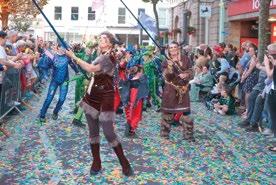
The hard work of a small organising group paid off with this year's Battle of Flowers through the streets of town, proving a great success with thousands turning out to watch the day and evening parades.
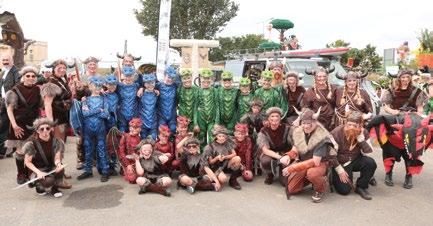
The crowds appreciated that the event was free to watch and they also loved the more intimate carnival atmosphere. Along with bands and performers, 19 floats took part including one from the Northern Parishes accompanied by both senior and junior representatives from Trinity, St John and St Martin dressed as Vikings and dragons.
The float's design was based on the 'How to Train your Dragon' film series featuring Toothless, the main dragon, ridden by Dylan Eder and three baby dragons. The float was flowered with white and yellow chrysanthemums, but with alternatives permitted this year to help keep down costs, there was also use of harestails, beans and spray paint.
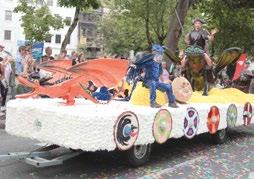
Although, the town route prevented anything larger than a 30 foot float taking part, the new Battle formula seems to have proved so popular that it could be here to stay. No decision has yet been taken, so we will have to wait and see whether the larger 40 to 45 feet floats have had their day or whether there will be a return to Victoria Avenue next year.
At the Bouley Bay shed, it was great to see that the spirit of Battle is very much alive with some families represented by three generations. It was also good to see so many juniors having a go at everything from harestailing and papier mâché modelling to flowering. Thank you to everyone who supported Battle this year especially Darren Dupre, the main constructor and our Battle tractor driver; June Armstrong and Becky Morris, who created and sourced costumes and to committee members and representatives from all three parishes.



Jersey Heritage’s education team have created a new programme called ‘Farming for the Future’ in partnership with Le Tâcheron farm in Trinity.
The programme, which is supported by the Roy Overland Charitable Trust focuses on the rural heritage of Jersey, linking the history of farming to sustainable farming and how farming has influenced the landscape, identity, culture and traditions of the Island.
Many children attending had surprisingly limited knowledge of where their food comes from, or the processes involved in producing it. In addition to this, many had experienced limited time in a nature setting. The programme has provided children with the opportunity to get out into the countryside to be immersed in nature and near animals, which for many they would not likely be able to otherwise enjoy.
Jersey Heritage needed a starting point, so they started by inviting schools who had little outdoor space, who might benefit most from visiting the grounds at Hamptonne and the open quadrant, surrounding barn complex and fields at Le Tâcheron. After a soft launch of the “Farming for the future” (FFF) programme in 2024, where they invited 3 school groups to trial it, 2025 has had a huge uptake with 17 different classes and over 400 children taking part.
The aim of the programme is to teach children about the history of farming and rural Jersey but also to go on
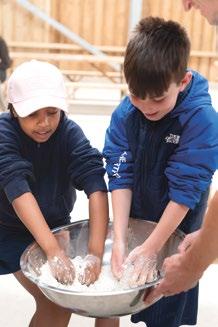
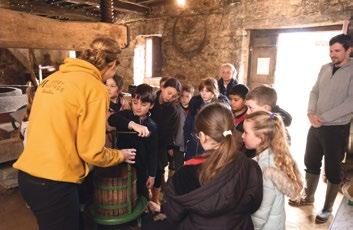
Each session offered a hands-on approach for the children so they could really immerse themselves in their learning. Working alongside the curriculum it included Living things, habitats and ecosystems, as well as animals, their biological systems and anatomy. Combining these two sides of learning, the sessions were split into 3 topics. Food and farming, soil, and biodiversity.
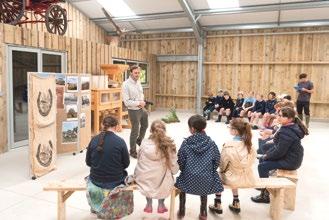
to explore the work of Jersey farmers today and what future issues they face, with a particular focus on sustainability.
Schools signed up for either 3 or 6 sessions. Each 2-hour session was conducted across varying seasons to enable children to see the changes and cycles in nature throughout the year.
One of the sessions at Hamptonne taught the children what an orchard is and what trees do for us. They got to go into the orchard and pick a tree which they then needed to find out what variety of apple tree it was, do a leaf-rubbing of it and write a letter of thanks to it on their rubbings. These rubbings were laminated and in December the children had a mini tree dressing ceremony where they got to hang their rubbings and read out their messages of thanks to the trees. The children also had the opportunity to make apple juice in the traditional press and taste it too. Some groups even got to taste black butter on a bit of cabbage loaf!
By introducing the children to FFF at Hamptonne it helped them understand that rural heritage does not mean its’ history but instead means to show where it comes from and where it’s going in the future.
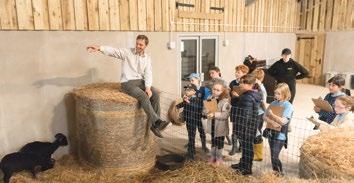
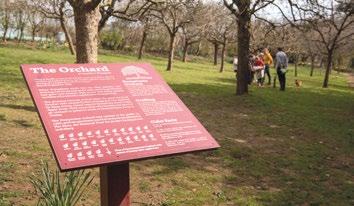
Le Tâcheron is an organic farm where they are passionate about preserving and enhancing the countryside they farm, whilst producing sustainable food as well as being a rare breed centre. The education programme emphasizes the importance of farming locally and aims to inspire the next generation to protect our natural environment, which aligns to the values of Le Tâcheron. Whilst there’s no current orchard there, the children learnt more about how the landscape has been influenced by farming across the Island by having many miles of hedgerows, which were planted as windbreaks to protect the apple trees.
food and how that affects their poo! They even got to do a mini “Whose Poo is it Anyway” quiz.
And then, there’s always a tractor and trailer ride to finally thrill them with! With squeals and screams of happiness, even the sternest onlooker couldn’t fail to smile. While they waited their turn for a ride, the children reveled in the pure joy of freedom running around the fields feeling the grasses and flowers running through their hands and enjoying the ‘best game of hide and seek they had ever had!’.
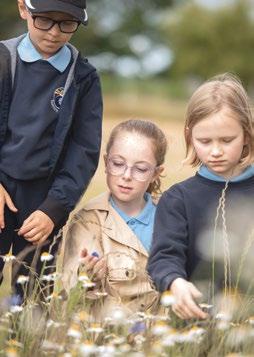
Here at Le Tâcheron, the children learnt about how the farm plants, harvests and processes its’ crops, and this included a flour milling demonstration
First the children were shown the wheat which had been harvested straight from the field. They then got to feel what the grain felt like and many of them took great delight plunging their hands into a big bowl and enjoying how it felt running through their hands. When it was milled John Le Maistre showed them, firstly how the whole grain became wholewheat flour before they were shown how it was separated out into white flour with the biproduct of bran left over. There were frequently gasps of amazement from the different groups as the grain went in and the magic of the mill churned out the powdery flour. In addition to wheat, the children learnt more about cereals and what they are used for.
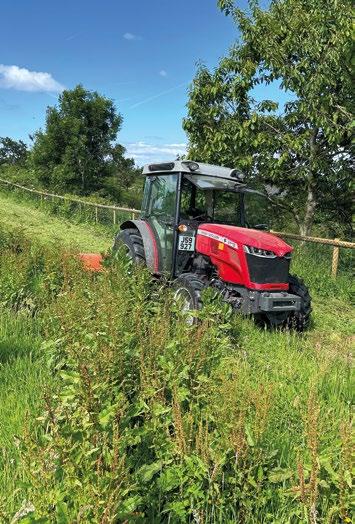
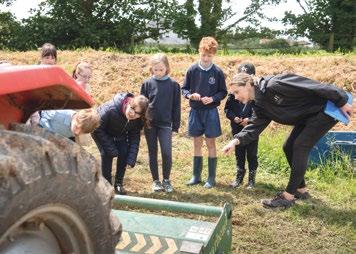
Children were shown how technology in agriculture is developing all the time, they got to try their hand at tilling the soil with a hand plough, finding out just how hard that can be and began to understand the pressure farmers were under to produce lots of food quickly and why motorised machinery has made this easier over the years along with some of the impacts that this has had. The children were even allowed to sit on the array of tractors at Le Tâcheron and enjoyed assessing which was their favourite!
A highlight for many children is meeting the animals on the farm including cows, sheep, goats, donkeys and often Ringo, their shire horse, can be seen out in the field. The children learnt what the animals eat, how they chew and digest their
There are endless advantages to this amazing programme. Most importantly it is about making connections, connections to their food, connecting with nature, to the soil and connecting to their rural heritage in the present.
The hope for Jersey Heritage and Le Tâcheron is that the programme will continue to evolve and the children who started this journey will be able to revisit in Years 5 & 6 to deepen their knowledge and understanding of Farming whilst the Year 4 classes will continue to be introduced to it.
The evaluation form feedback that has been received from the schools has been fantastic with some of the comments below being highlights:
Children (and staff) really enjoyed these sessions. We all learned lots of new information and greatly appreciate the thought-out activities designed to engage the children.
The delivery of the programme was high quality, well-pitched, paced and resourced. This programme is a perfect example of how learning outside the classroom with experts is important and powerful.
It was clear on a recent trip to the Scout Hut how the children had really connected with nature. This, I believe, is a direct result of our visits to Hamptonne and Le Tâcheron.
We pick up the story from the last Tattler when, on 14th May 1894, Ebenezer Chapel as we know it officially opened. We pay tribute to our forefathers whose innovation and bold action has paved the way for Christian worship, mission and service over the past 130 years.
Edward de Gruchy was one of up to 100 children who attended the Sunday School in the early 1920’s.
Lessons were held between 9.30 – 10.30am, prior to the morning service, and he recalled having to learn the Catechism in French. The Sunday School Anniversary was the main event of the year, with 3 services; one in French and two in English. Church pews were let to families annually and these seats were given priority on Anniversary days when the Church would be packed. Sunday School outings were a highlight, with lorries replacing horse drawn vans.
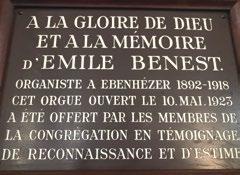
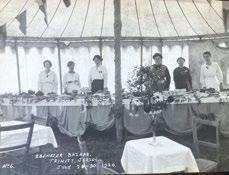
In July 1920, a three day ‘Grand Bazaar’ was held to raise funds for the organ and choir stalls; previously music was played on a harmonica. The magnificent sum of £1,000, was raised, a vast amount at that time, and the organ was in use by 1923. It was built in memory of Emile Benest and is recognised as one of the finest in Jersey.
worker who had escaped from the labour camp found refuge with a family who lived at Crown Lodge (near Trinity Village Stores) and came to worship at Ebenezer every Sunday until the end of the Occupation.
After the Occupation, the Church continued to flourish with a busy Sunday School and Wesley Guild week night activity. Later, a vibrant Youth Club was established and an active Women’s Network group.
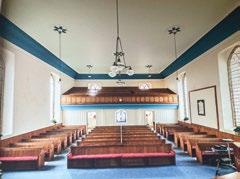
During the late 1900’s, the vestibule at the front of the church was remodelled to give more space with a beautiful internal stained glass window, and the entrance door was replaced to include glass panels.
In March 2007 it was announced that the neighbouring Highfield Hotel would be sold and the site re-developed to provide residential apartments. For many years Ebenezer had enjoyed an informal arrangement to use the car park during church services. Working with the developer and with the assistance of other landowners, we were able to develop the car park we have today.
An entrance leading off the car park was created and designed for easy disabled access. A new vestry, meeting rooms and toilet facilities were also built in the church, together with some meeting rooms and the hall was completely refurbished. The cost of the project was a little under £400,000. For a church of 40 members this was a staggering amount.
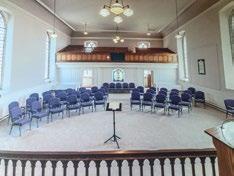
The last phase of the re-development was completed in 2009 when the upstairs of the former caretaker’s cottage was converted into a two bedroom flat. The final bold move was the removal of the pews in the church in 2015 and the creation of a small kitchen area in 2022.
Music and singing have always been a big part of Ebenezer. Young people with a good singing voice were asked to join the choir and lead the singing during the services. Musical events were held; Oratorias and Cantata’s on Good Friday, and special arrangements for Harvest and Christmas.
Throughout the Occupation years the church was a great source of strength to all who worshipped there with blackouts in the window a necessity. In 1942 a young Russian slave
The changing pattern of life means that Ebenezer’s focus is very different now, with a small congregation on a Sunday and an emphasis on community outreach through our weekday groups; Pickles Mother & Toddler, Pickles Plus after school club and Generations when young and old come together.
Over the past 17 years since the start of the re-development, a total of £746,000 has been invested in our properties. Whilst we hold on to the valuable qualities of the past, we look forward to the opportunities that lie ahead, as we live out our purpose to be a Church for the generations, meeting people where they are in the community.
A complimentary colour harmony created with Hydrangea paniculata, Cercis canadensis ‘Eternal Flame’, Phormium tenax ‘Jester’, Verbena bonariensis and Dahlia ‘Copperboy’. The Hydrangea transforms from white to a pink hue in the Autumn.


Verbena rigida (used in borders and as a bedding plant). The Hummingbird Hawk Moth is attracted to all types of Verbena.
Dahlia ‘Totally Tangerine’ provides both colour and textural interest throughout Summer into Autumn. It also creates height in a mixed border.
Great news for Trinity Manor Farm! We had a very excellent Summer Fair during the weekend of the 14th & 15th June. The weather was super and with over 3,000 attendees, it was a spectacular event.
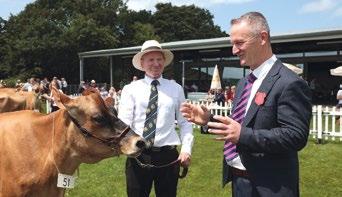
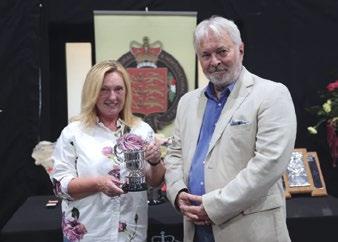
Our Farm Manager, Jim Carter, and his team won the KING GEORGE V PERPETUAL CHALLENGE + CRYSTAL BOWL –Supreme Open Champion and eight other major trophies over the weekend.
For Trinity Manor Farm, to win the Supreme Champion is a tremendous achievement. It was last won by Trinity Manor Farm in 2003, the then ‘Supreme Cow’ prize.
This year, we have had a large number of unexpected visitors in the unheated greenhouse. We suspect that the Bufo spinensis, commonly known as the Jersey Toad or Crapaud, have spawned in the closest pond, which is situated in the Japanese Garden. We are presently using aquatic planting to create a biodiverse environment in all of our decorative ponds, having removed mechanical filtration systems.
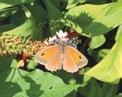

In the White Garden, we have extensive planting of Lysamachia clethroides, which, each year, attracts an abundance of the dainty butterfly ‘Gatekeeper’. You walk through clouds of butterflies as you pass by.
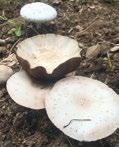
The first of the extensive range of fungi that we have here at Trinity Manor have appeared growing from the farmyard manure, used as a mulch on the beds in the Zip Garden.
How proud are we to have Jim Carter win the Supreme Open Champion at the cattle show. This is the dream of all diary farmers in Jersey. What an honour!
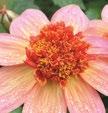
Also, congratulations to Jane Fraser on winning the Dhalia Cup. This was Jane’s first flower show. There must be some magic in Trinity soil.
Kind regards Pam and Paul Bell
John was born in a nursing home in London in June 1950. His father had aspirations that he should be a good cricketer and in order to qualify to play for the MCC his mother had to travel all the way there from Amersham in Buckinghamshire to have him.
Unfortunately, he never quite fulfilled his father’s dreams but John hopes that when he dies and if he goes to heaven, there will be a cricket pitch up there. He also hopes he will score a century with his father watching from the pavilion, sitting in a deckchair!
John went to Shrewsbury School and had a happy time there and went on to qualify as a doctor from St. Bartholomew’s Hospital Medical School in November 1976. He met Andy in February 1977 and they were married six months later. They have three ‘wonderful’ children and four ‘fabulous’ grandchildren.
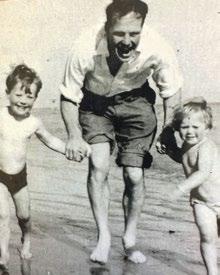
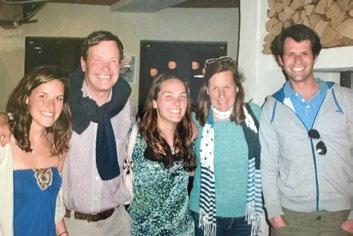
John says that he particularly enjoyed teaching and often had a medical student or a trainee doctor sitting in with him in the surgery. Many of the medical students also stayed with him and Andy. One of these became his son-in-law who is now a consultant cardiologist at the Jersey General Hospital. He was also involved with post-graduate education for many years, organising meetings and the annual Doctor’s Ball. John was the medical director of the Jersey Dive Chamber for many years and also involved with the Jubilee Sailing Trust. He had several very memorable and amazing trips sailing on a tall ship with disabled and able-bodied crew on board.
The family moved to Jersey and he worked as a GP from 1982 before retiring in 2018. He says he had lovely partners and patients and adored being a GP. It was very special to him that his son David followed in his footsteps and worked with him in the same practice for ten years.
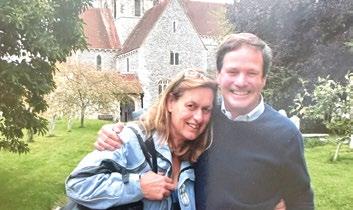
In 2016, once partially retired as a GP, he joined Trinity’s Honorary Police. He really enjoys being in the honorary police and has met some ‘really lovely people in the team’. John says that it is true community policing in Trinity and all the officers are there to help and support the people of the Parish. In fact, there seem to be more problems with local animals rather than parishioners, who, in his opinion, seem to be all very well behaved.
Whilst being sworn in on one occasion the Bailiff commented that John had been known as the laughing doctor and was now known as the laughing policeman! He is most proud of all his ‘lovely family’ and everything they have achieved. John feels that he has had the most wonderfully happy life and that he considers himself very fortunate and grateful. Contentment and enthusiasm oozes out of John from every pore and anyone who comes across him can’t help but feel this positivity rub off on them.
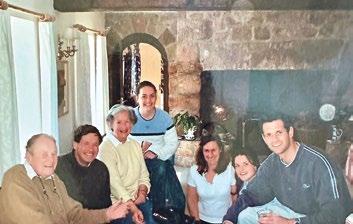
How long have you lived in the Parish?
Since 1982. Andy and I were previously living in Chichester, West Sussex, where I did my GP training.
What is the best thing about living in Trinity?
The beautiful countryside, wonderful community spirit and the kindness and friendliness of everyone. We are also so fortunate to have the Zoo, Acorn Enterprise and the Royal Trinity Showground in our Parish as well as a thriving church and parish team, led so well by our Rector, Geoff Houghton and Constable, Phil le Sueur.
What's been the best day of your life so far?
Meeting Andy when I was doing my first ‘House job’ in St. Richard’s Hospital in Chichester. We were married six months later, almost 48 years ago! How time flies. Andy is just as lovely and kind as she was all those years
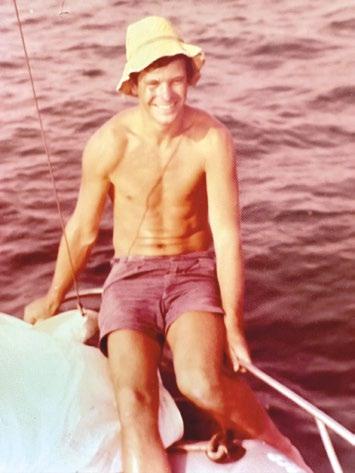
ago. Our three wonderful children along with their super partners and children all live in Jersey. We know how fortunate we are.
What is your favourite Parish memory?
Going down to Bouley Bay slipway with the children before school, where we would have a swim and breakfast. In those days we were almost the only people there.
What's the biggest change you've seen in the Island over the years?
Jersey has become more crowded and is busier. There are certainly many more swimmers in Bouley Bay throughout the year which is wonderful. They are so brave to continue to swim in the winter.
Who stands out as a memorable parish personality (past or present) and why?
Bill Corson, our next-door neighbour for many years. He was a ‘larger than life character’ and was a very good and hardworking farmer. He was an excellent Vingtenier and he was instrumental in persuading me to join the Trinity Honorary Police.
Where’s your favourite spot in the Parish?
When walking our dogs, sitting on the bench in Jardin D’Olivet, overlooking beautiful Bouley Bay and the shimmering sea. You can also see the Normandy coastline and the Ecrehous, which we often visit in our little boat. Bouley Bay has hardly changed in all the time we have been here.
Which Islander (past or present) would you like to chat to over dinner?
Nigel Broomfield, who was Ambassador in East Germany when the Berlin wall came down in 1989. He was then ambassador to Germany between 1993-1997. He was just so fascinating and interesting and I loved listening to him talk about world affairs and his time working in the Diplomatic service in Germany, Russia and India.
If you could change one thing on the Island, what would that be?
Ideally, I would love the population of Jersey to reduce and to stop the urbanisation of the countryside.
Can you describe our parish in three words?
God’s Own Parish
A time-honoured Jersey tradition for many parish churches is to organise a Summer Treat for families to enjoy a lorry ride together and Trinity Church is no exception.
The Trinity Church’s Summer Treat was held on Saturday 5th July and my grandson, Robbie, and I were lucky to get a space on one of the three vintage lorries that left from the parish hall. Red, green and grey lorries were decorated with flags and families of all ages clambered on board and off we set. Right from the start there was a lot of cheering and waving. We were given paper streamers to hold and bubbles and whistles to blow making sure we were seen and heard as we were driving along.
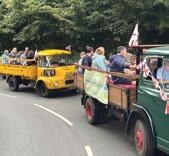
Our route took us down Trinity Hill, through town and then through the tunnel. We went around the roundabout three times before going back through the tunnel, along the Esplanade and heading up Queen’s Road and along Les Platons. Many people waved or tooted their horns as we passed but the best bit was going through the tunnel. Everyone on the lorries took the opportunity to shout and whoop as loudly as possible, including Robbie and I.
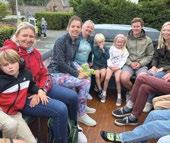
As we got off the lorry back at the parish hall there was nothing but smiles on everyone’s faces. We then enjoyed a picnic in the rectory garden and I took the opportunity to chat to some of the families.
Alice and Rob said the ride was lovely and they particularly liked going through the tunnel. They were impressed that cars did not beep when we went around the roundabout three times. Jane and David said it was good fun and nice to see everyone’s reaction as we went past. Stephen and Sarah said that their children love it and they look forward to it every year.
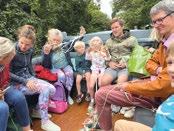
It is clear that this time-honoured tradition is a firm favourite and will be enjoyed by many generations to come. Robbie and I certainly enjoyed our morning and we are very grateful to Vicky Bartlett and Geoff and Fran Houghton for welcoming us aboard.

‘Ignorance is costing us time and money’
An incident of fly tipping has prompted Acorn Reuse to remind Islanders what they should do –and what they shouldn’t.
After a fridge was dumped on their Trinity site, Acorn Operations Manager Darren Arnold said: ‘This kind of thoughtless action costs the charity. We don’t want to waste our time and money throwing away items that should never have reached us in the first place. And this is the same for many items we have donated every day.
Admittedly it can feel like a never-ending list of what we can’t take, but most of our staff and volunteers have a disability or health condition and it is imperative that they are kept safe. People might not realise that we have to pay for the safe disposal of knives and dangerous items. We ask customers to please not bury dangerous items amongst other things.
People think we can recycle or repair everything but we can’t. We also appeal to people not to use our skips. We carefully sort what we must throw away and it costs us to have the skips taken away. Islanders should be using the Household Recycling Centre at La Collette.’
Darren added that Acorn is always very grateful for public support. ‘We don’t like to turn people away but we need to remind people to sift first. Understand who we are and what we are doing, because at the moment ignorance is costing us time and money.’

Technical Team Leader Ian Florence says ‘Please don’t use our skips’
Ask yourself:
Is it clean? Is it safe? Would someone buy it in its current condition? Do sofas and soft furnishings have fire labels on? Do children’s items have the CE mark?
For the full list of what Acorn can’t accept, please go to their website www.acorn.co.je/reuse/ and if you are still unsure, please email donate@jet.co.je with a photo.
Islanders living with glaucoma now have access to the highest standard of specialist care, thanks to a new addition to the Evolution Eye Care team. Mr Alastair Lockwood, a leading UK glaucoma surgeon, joined the practice in May 2025, bringing his first-rate specialist expertise to Jersey.
Mr Lockwood’s academic and professional credentials include undergraduate studies at Cambridge and Oxford Universities, a specialist glaucoma fellowship at Moorfields Eye Hospital in London, and a PhD in glaucoma surgery.
Mr Lockwood said: “I’m delighted to have joined Evolution Eye Care and brought a dedicated glaucoma service to Jersey. As a subspecialist, my clinical practice and research is focussed on glaucoma, so I’m able to offer up-to-date, tailored advice and treatment options for each individual patient.”
If backup reviews are needed between my visits, the experienced team at Evolution – the island’s largest private eye clinic – are on hand to support.”

Most glaucoma is managed with medications, regular consultations, and laser procedures – all of which take place with Mr Lockwood at Evolution Eye Care, offering convenience and reassurance. If specialist glaucoma surgeries are required, Mr Lockwood performs these at his dedicated unit in Portsmouth, where he continues to practise and lead in glaucoma surgery.

Evolution’s co-founder, Mr Anish Shah, welcomed Mr Lockwood’s appointment. “Alastair is the only fellowship-trained glaucoma surgeon consulting in Jersey, and his arrival marks a major step forward for eye care on the island,” said Mr Shah.
“We’re proud to offer a glaucoma service that combines world-leading expertise with the personal, accessible care our patients expect,” Mr Shah said. “Evolution’s goal is to make the best ophthalmic care available here in Jersey — and Mr Lockwood’s glaucoma clinic is a huge part of that mission.”

Patients with glaucoma — whether newly diagnosed or under care elsewhere — are now seeking second opinions or transferring their management entirely to Evolution’s specialist-led service. Mr Lockwood’s regular Jersey clinics provide important constancy for glaucoma, a lifelong condition requiring close monitoring and timely intervention.
Mr Lockwood added: “Continuity of care is vital in glaucoma. By visiting Evolution every month, I am building strong, ongoing relationships with my patients.
Patients wishing to book an appointment with Mr Lockwood, or seek a second opinion on their glaucoma care, can contact Evolution Eye Care directly.
To make a booking, visit www.evolution.je/book email info@evolution.je, or call 01534 835400

1st Floor
Little Grove Clinic
Rue de Haut
St Lawrence JE3 1JZ








































Over the next few years, we will carry out the largest ever upgrade to the Island’s energy network. It will ensure every home and business continues


















www.jec.co.uk/thebigupgrade

























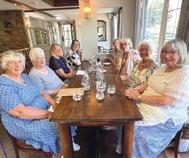
The W.I. Federation Annual Council Meeting was well attended by Trinity members. Kate Wright, Chair of Jersey Violence against Women and Girls Taskforce and also CEO of FREEDA, spoke of Jersey being male biased with untouchable gaps in our legal system and closed ranks.
She said we needed to open our eyes to a culture of fear and silence. It takes time to change but if survivors are heard, a more equal Jersey will emerge. It was a powerful message and thought provoking.
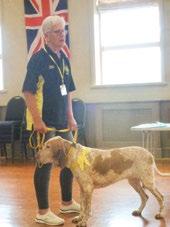
At a recent Trinity meeting, four therapy dog volunteers introduced us to Olive, Lily, Pearla and Gigi. They explained that dogs are chosen from all breeds for their temperament and assessed every three years. They visit schools, hospitals, hospices, the prison and the library where they interact with the public and give children confidence with animals. The dogs accept strangers and noises and obey commands. They pick up on people’s stress and interact with the sick and vulnerable. Stroking a dog is therapeutic, reducing stress and is good for wellbeing. One special moment was when a mute child started talking to the dog and eventually gained his speech.
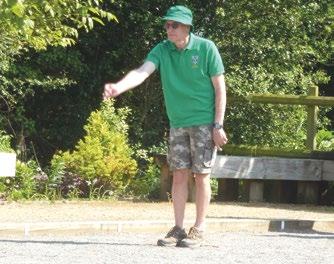
The game of pétanque in its present form was invented in 1907 in the town of La Ciotat near Marseilles. A French boules player suffered with rheumatism which prevented him from running before he threw the ball and so he devised the new game of pétanque which became hugely popular.
The first pétanque tournament took place in 1910, but it is known that a similar game called “spheristics” was played as early as the 6th century B.C. The first pétanque club in Jersey was founded in 2004 and is one of the fastest growing sports in the island.
At another meeting Liz Walsh, introduced herself as being “Batty About Bats.” Bats existed at least fifty million years ago and are known as Chiroptera which means hand and wings. There are 1,487 known species of these fascinating creatures which make up 20% of the earth’s mammal population. In Jersey we have nineteen different species, some being very rare, with the pipistrelle being the most common. They each eat 3,000 mosquitoes a night. They act as pest control, saving on pesticides, pollution and chemical residues and disperse seeds helping restore forestation. They are an important part of the environment and the advice given to us was to have a garden for wildlife and to reduce outside lights in order to encourage bats.
Trinity’s club was formed in 2016 and has gone from strength to strength. One member, Paul Waters played for Jersey in the winning Home Nations team in 2024 and has been chosen again for this year. There are many opportunities for competitive players to play in both Spain and France combining their sport with a holiday in the sun.
During the 80th Liberation Family Fun Day celebrations at the Glebe field Trinity members were at hand to introduce both adults and children to the game.
THERE have been many histories written about the German occupation of the Channel Islands. The islands were the only British soil to be occupied by the Germans thus giving much to write about. This series of articles is not intended to be just another history of that time but an example of “What if…?”.
On 1 July 1940, German forces invade the Channel Islands. But what if, as prime minister Winston Churchill (we will recall that he was formerly First Lord of the Admiralty) had actually suggested several days earlier, possibly goaded by an equally belligerent Jerseyman in the House of Lords, Lord Portsea, that the Royal Navy should be charged with the task of resisting any German invasion of the islands?
Let’s imagine the scene. “The Channel Islands will not be taken!” A blast of cigar smoke. “The Navy will see to it!” And the First Sea Lord, Admiral Sir Dudley Pound, always in awe of his former First Lord, will seek to comply.

The taking of the Channel Islands – Unternehmung Grüne Pfeile (Operation Green Arrows) - was planned by Admiral Karlgeorg Schuster and his Flag Officer Vizeadmiral Eugen Lindau. Schuster relies on the Luftwaffe to prevent any intervention from the Royal Navy. Although the German Navy possesses modern and sophisticated warships it does not, in 1940, possess enough of them to threaten Britain’s dominance of the seas.
Despite the Kriegsmarine’s interest, surrender demands have been received on both Islands from the area’s Luftwaffe commander, Generaloberst von Richthofen, and
It is understood that Admiral Friedrich Hüffmeier, commander-in-chief of the German forces in the Channel Islands, in April 1945 and despite Germany’s defeat being inevitable, stated to Jersey’s Bailiff Alexander Coutanche that ‘you and I will be eating grass before I surrender’. Even if that’s a myth, it makes a good title for a compendium of myths, mysteries and minutiae of the only German Occupation of British Soil, compiled by Jersey author and historian Peter Tabb.
Let’s start right at the beginning with the first possible “What if…”.
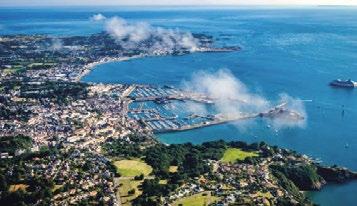
communicated to London. The local authorities are advised not to respond for, during the 24 hours’ grace given by the Germans, units of the Royal Navy, including two County-class heavy cruisers (HMS Norfolk and HMS Suffolk are temporarily but conveniently positioned at Portsmouth) with escorting destroyers will be despatched to provide both resistance to any invading naval forces and anti-aircraft cover against any incursions by the Luftwaffe. The cruisers both carry companies of Royal Marines who will be landed on Guernsey and Jersey to bolster the local defences.
The Island authorities wait in nervous anticipation (the German air attack of 28 June had come without warning and killed more than 30 islanders). Although those attackers flew from an airfield near Paris, Heinkel bombers are now based at Querqueville near Cherbourg and Pleurtuit near Dinard, just ten minutes’ flight from the Islands).
Norfolk and Suffolk sail from Portsmouth. The fast Countyclass cruisers, with their distinctive high freeboard and three funnels, bear a passing resemblance to ocean liners and although heavily armed with eight 8-inch guns, they are lightly armoured and possess little specific anti-aircraft armament.
The appearance of Norfolk and Suffolk and their attendant destroyers off the Islands is reported by German aerial reconnaissance. Schuster has no forces capable of dealing

with 8-inch gun cruisers and confers with von Richthofen. The invasion must be postponed, he reasons. Von Richthofen is scornful. His attitude towards the Kriegsmarine is one of cordial loathing.
Von Richthofen is one of Hitler’s favourites and, in February 1943, he will be appointed Germany’s youngest ever Generalfeldmarschall. He insists that if the Channel Islands authorities fail to respond to his demands, they, and their supposed protectors of the Royal Navy, should be attacked without mercy. He proposes supplementing his force of Heinkel He-111 medium bombers with Junkers Ju-87B Stukas, the screaming gull-winged dive-bombers that created terror during the Blitzkrieg across Europe.
With 12 hours before the ultimatum to the Islanders expires, von Richthofen assembles his air fleet; three squadrons of He-111 bombers and two squadrons of Stukas flown from Paris. Schuster and Lindau are nervous. The fighting spirit of the Royal Navy is well known. But von Richthofen ignores their objections and his air forces take off into the setting sun.
HMS Norfolk and HMS Suffolk are ten miles south of Alderney approaching at 25 knots the Little Russel on Guernsey’s east coast. The cruisers, more used to patrolling the world’s oceans, are line astern, their commanders wary of the unfamiliar waters with their swirling tides and barely concealed reefs.
The Stukas swoop out of the dusk. The warships are slow to react, despite being at Action Stations. The Stuka pilots are well practised at their craft, plummeting vertically like screeching gannets towards their prey. A deadly hail of 500-kilogram bombs hurtles towards the cruisers; the bombs have whistles fitted to their fins to ensure that the intended recipients know just what to expect. Norfolk is the first to be hit, the Stukas seemingly immune to the barrage of anti-aircraft fire directed towards them from the destroyers. The 10,000 ton cruiser shudders under the impact and slows, gravely wounded. Suffolk, so far unscathed, swerves to avoid her injured consort.
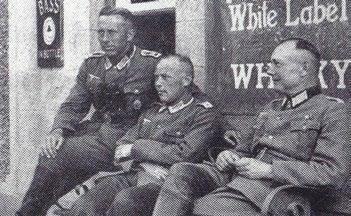

The Royal Navy’s big guns are useless against concerted air attacks (in 1941 the Japanese Air Force will sink the battleship Prince of Wales and battle cruiser Repulse) and the attackers are too fleet to be deterred.
Despite the lively barrage put up by the escorting destroyers the cruisers are now both hit and on fire. Norfolk is almost stopped in the water and is down by the head. Suffolk is now circling her, barely under control, her bridge has suffered a direct hit, killing her captain and navigating officer. On after control and with little room to manoeuvre, Suffolk, which draws more than 20 feet, runs aground on the Platte Fougere reef and comes to a shuddering stop, immediately heeling over. The destroyers close to assist but come under further bombardment from more Stukas and He-111s.
With a similar mix of high explosives and incendiaries, other bombers devastate St Peter Port and St Sampson.
With Norfolk and Suffolk reduced to sinking, smoking hulks, the remaining Royal Navy vessels hurry off into the last remnants of a fiery sunset.
The Royal Navy’s attempt to prevent the invasion of Jersey and Guernsey causes the loss two heavy cruisers and a destroyer, severely damaged in the Stuka assaults, sunk by its own consorts. Altogether more than a hundred RN officers and men die in the futile defence of the Islands.
German casualties are light: three Stukas shot down into the sea and a He-111 damaged by anti-aircraft fire crash-lands into Guernsey’s power station on the Northside at St Sampson’s. In London, no-one dares tell the prime minister ‘I told you so’.

The foregoing, of course, didn’t happen, but even if it had, the Occupation would have evolved much as it did.
Flicking through the pages of the first Trinity Tattler, published in the autumn of 2015, it is interesting to see that not much has changed.
The format is still very much the same, with the exception of the Young Farmers Club, the clubs and associations still thrive and the community spirit of the parish remains. Phil, Anne and Rosemary have kindly written the following comments, ten years on:
‘When Josie asked me to write something for the 10th anniversary edition of the Tattler, I looked back at the piece I wrote in that first edition in 2015, then having been Connétable for just under a year.
I’m really pleased that the Tattler has proved so successful and thank the two editors, Rosemary and Josie, together with all the contributors over the 10 years. It never ceases to amaze me how they manage to find so much material to write about our interesting Parish. In June next year I hand the reins to my successor and I hope the Tattler continues long into the future.’
‘As your Deputy 10 years ago, I wrote an article for the Tattler’s first edition and I have been asked for my reflections on that article 10 years later. I congratulated the then editorial team for setting it up. I also mentioned that the Community support team was up and running too. My sincere thanks go to the team of volunteers then and now and I am pleased it is still as active and busy today.
Where have all those years gone?
There have been changes in our Parish and Island but the Tattler is still thriving today. Over the years we have been fortunate to read wonderful articles on
the richness of our Parish, from the 3 in 1 Club, Trinity School, Trinity Youth Club and others from all walks of life, keeping us up to date with their news and events. Through the Tattler’s pages we have also met some wonderful ‘Trinitais’ with such stories to tell. A joy to read with a cup of coffee!
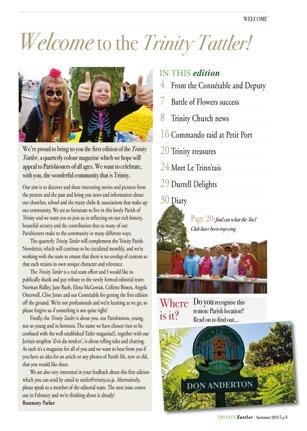
Thank you to the past and present Editorial team for putting together the Tattler. I’m sure it is no mean feat and I wish the team well for the next 10+ years.’
Pryke
‘It doesn’t seem possible that it was 10 years ago when candid discussions with the Connetable took place to get involved with the launch of a Parish magazine, following my decision to take a break from honorary police service. At that time, only Trinity and St Mary were without a Parish magazine and that had to be put right - what a privilege! The strength was in the editorial team (Norman Ridley, Jane Rueb, Elena McGowan, Collette Bisson, Angela Otterwell, Clive Jones and the Connétable) and the decision to include regular items, such as ‘Meet Le Trinn’tais’ and ‘Where is it?’, which remain part of the Tattler today.
My highlight was the Liberation 75 issue and capturing the memories of 36 of our parishioners. Just under half of those I spoke to are no longer with us and the fact that their stories are captured forever is a blessing. What really pleases me is handing over the reins to Josie and the new team and seeing the Tattler go from strength to strength.’
Rosemary Parker
It may seem odd that a feature creating awareness of diabetes should highlight feet but, if you are diabetic, the daily check of your feet and keeping them in good condition, will prevent one of the disease’s worst consequences, the loss of limbs due to a lack of feeling in the extremities (neuropathy) leading to cuts or blisters in particular becoming gangrenous.
Today managing Type 1 diabetes with insulin injections is commonplace but diabetes itself still remains something of an enigma. It is a condition which is not preventable and Type 1 occurs when the pancreas ceases to produce the insulin we all rely upon to manage the level of sugar in our blood.
Type 2 diabetes, which occurs as the pancreas progressively produces less insulin, while itself not totally preventa-
the risk of acquiring it can be managed and diminished, by the way in which we live.
Most of us would assume that choosing our lifestyle is very much up to ourselves. However, your lifestyle can actually lead you down a path whose ultimate destination is the very last thing you want and that is to diabetes.
Diabetes is all about sugar in the blood and occurs when the body becomes incapable of controlling how much sugar our blood is prepared to accept. Fortunately for most of us our pancreas (a large gland behind the stomach) produces the hormone insulin which automatically regulates glucose levels in the blood.
Why diabetes occurs is not known and therefore it cannot be prevented and Type 1 can strike children as young as two or three years old. There is no early detection for Type 1 diabetes, but Type 2 can be detected with a blood test and if detected early enough, can be managed, and even reversed.

The Healthy Living & Lifestyle Event is returning to the Radisson Blu Waterfront Hotel, St Helier on Friday 26th September until Sunday 28th.
This year we will be having a Preview Evening on Thursday 25th September, from 6pm until 9pm for those that can’t make it at the weekend.
This event promises to be a dynamic platform for showcasing exhibitor’s brands, connecting with health-conscious professionals, and contributing to the vibrant wellness community in Jersey.
Discover the latest products, services, and innovations in the health and wellness industry.
With Free Admission and the option to visit as many times as you like, there are opportunities for the general public to discuss their health and fitness concerns, on a one to one basis, with our health & wellness professionals.
With over 36 Stands (11 from the UK) there will be plenty of things to inspire and interest you and the whole family.
On Saturday and Sunday there will be free demonstrations and workshops in the Noirmont Room just across the way from the Main Hall from 11am on both those days.
Opening Times:
Friday 26th - 10am to 6pm
Saturday 27th - 10am to 6pm
Sunday 28th - 10am to 5pm





As part of the Government of Jersey’s broader initiative to showcase progress on our shared Common Strategic Priorities, Islanders may have seen recent updates highlighting how the New Healthcare Facilities Programme (NHFP) is advancing its commitment to “start building a new hospital at Overdale”. So, for this quarter’s edition, I thought it would be helpful to take a moment to recap where we currently stand with the Programme as a whole – and what critical work is still to come.
Since the Independent Review was presented to the States Assembly in November 2022, the Programme has made steady progress. The review found that a single-site hospital at Overdale was no longer achievable within the approved budget and recommended a phased, multi-site approach.
In line with good governance, the Strategic Outline Case was developed and endorsed in June 2023. It considered different options for new facilities and confirmed the continued urgent need, or case for change. The recommended way forward from that review was a multi-site model and the Feasibility Study explored different options for two configurations of multi-site proposals (Hot and Cold vs Acute and Ambulatory, both combining with a separate Health Village) and locations, with Overdale selected for the Acute Hospital, Kensington Place for Ambulatory Care, and St Saviour for a new Health Village.
Key milestones since then include the start and completion of demolition at Overdale (December 2023–Nov 2024), the relocation of Samarès Ward to St Ewold’s (May 2024), and a public consultation on the Acute Hospital’s concept designs to support the Planning Application. The Outline Business Case was approved in November 2024, securing Phase 1 funding from the States Assembly. Design work for the Acute Hospital progressed throughout 2024, with planning permission granted earlier this year. Meanwhile, the procurement process to appoint a Main Works Delivery Partner has been ongoing since December 2024. Crematorium services will move from Westmount to the refurbished Members’ Room at RJA&HS from September.
Given the critical importance of delivering the Acute Hospital at Overdale, much of the team’s recent work has rightly focused on developing its design, securing planning permission, and progressing the procurement of a Main Works Delivery Partner to build the facility.
However, the Programme goes far beyond Overdale. Both the Kensington Place Ambulatory Facility – utilising the site on Kensington Place and part of the existing General Hospital site –and St Saviour’s Health Village remain essential components in the wider redevelopment of our healthcare estate.
Work is now underway to refresh the Functional Briefs and Concept Designs for Kensington Place and St Saviour. This work is still in its early stages, and the next steps will involve re-engaging with clinical colleagues across Health and Community Services, as well as other key stakeholders.
The phased and flexible structure of the Programme is intentional and beneficial. It allows plans for areas that are more subject to change - such as Kensington Place and St Saviour - to evolve as required, rather than locking us into fixed decisions too early. It also enables schemes to be progressed as they are affordable.
There is still significant work to do to develop these plans, and they will only move forward with the right level of engagement. That includes input from clinicians, local residents, and the wider public.

We are currently working towards completing the updated Functional Briefs and Development Control Plans (DCP) for both sites by Q4 2025, with a view to sharing these more widely in early 2026. A DCP is a document that sets out how best a site can be most efficiently, and cost effectively developed. Once the DCPs are further developed, the team will be providing more detail on the first permanent construction works on each of the sites. They need to be carefully considered to ensure that throughtout the NHFP and especially at the end of every phase, healthcare services are operating efficiently and effectively, providing the care that islanders expect, helping staff to do their work.
In the meantime, as part of the phase one funding approved by the States Assembly, there is also budget available to develop more “meanwhile” uses for the Kensington Place site. It has been used since purchase by HCJ for valuable additional storage and other operational needs. We are actively exploring how the site could be continued to be used in the short term to support the overall needs of HCJ as well as deliver improved Public Realm. These discussions are ongoing, and while there isn’t a confirmed timetable at this stage, the current intention is to begin meanwhile works in early 2026, subject to proposal approvals and any required regulatory sign-off (for example, Planning Services).
The procurement process for a Main Works Delivery Partner to build the Acute Hospital
continues, with parties who are capable of building the facility having expressed their interest. A preferred tenderer for these construction works is expected to be agreed in Q3 2025, with the signing of a main contract hopefully before the end of the year and construction works following.
The main focus of the procurement process is to deliver quality and value for islanders, and the timeline may change to ensure we achieve this.
As I hope Islanders understand, this process is commercially sensitive and complex with all parties needing to ensure that they understand the designs and anticipated costs before entering into a contract.
However, I look forward to providing further information about this important progress as soon as possible. In the meantime, the NHFP will continue progressing works at the site, ensuring continuity of development. In coming months, works will continue to prepare the old Jersey Water buildings to be site offices, erecting hoardings, diverting existing services, developing designs for site welfare, and site excavations.
Find out more about the New Healthcare Facilities Programme and stay in touch:
▪ Listen to our podcast to find out more about the Programme
▪ Watch videos about the Programme
▪ Follow us on social media

Introducing the latest new arrivals at Jersey Zoo; giant otters Alexandra and Fia. The mother and daughter duo arrived in July from Yorkshire Wildlife Park where they had been living for the past few years with their family.
Alexandra and Fia have already settled into their new home at the zoo’s South American House, which is shared with giant anteater Zena. Guests to the zoo will find it hard to miss them as they are very chatty, sociable animals and enjoy splashing around in the water.
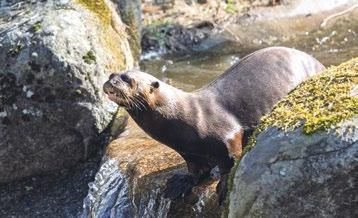
Found in South America, giant otters are the largest species of otter and the largest member of the mustelid family, which includes weasels, mink and badgers. With thick fur to keep their skin warm and dry, webbed feet, and a long, powerful tail, giant otters are speedy swimmers and well evolved for life in the water. Classified as Endangered on the IUCN Red List, giant otters are under threat from habitat loss due to logging and damming of rivers for electricity, a lack of prey due to overfishing and water pollution from mining and farming. They are also hunted illegally for their fur and meat.
Talking about their arrival at the zoo, Ben Matthews, Curator of Mammals commented: “It’s always exciting when we get a new species at the zoo, especially when it’s an animal as charismatic as a giant otter. The team at the zoo worked really hard to adapt the enclosure ahead of their arrival and it was great to see how quickly they both settled in. The team are looking forward to sharing more with members and guests about these fascinating creatures and the wider work of the Trust in South America.”
It is with thanks to a generous donation from some close supporters of Durrell, that the team at Jersey Zoo were able to undertake the work that was needed ahead of the giant otters’ arrival.

‘Where Care is not just Private; It is Personal’ A specialty medicine platform with unique setting, providing high quality, easily accessible, holistic approach to your health and optimal outcomes.
Invest in your wellness with our ‘health in a blood drop’ panel of tests, revealing an enormous amount of data about your current and future health.
Dr E e Liakopoulou
MD, PhD, FRCP(Glasg), FRCPath, CMM. Professor & Consultant in Haematology and Stem Cell Transplantation
Call us on O7797 788828
Jh-admin@jersey-haematology.je
The Harvey Suite, Lido Medical Centre, St Saviour’s Road, St Saviour JE2 7LA www.jersey-haematology.je



If
you plant a lot of trees, you’ll need to carry out a lot of maintenance, which is exactly what Jersey Trees for Life does for most of the year. Those of you who have planted trees of your own are probably well aware of this.
Over summer and early autumn, competing species like bracken, bramble, bindweed, sticky plant and nettles can grow prolifically. Bracken is the poster child, rapidly engulfing banques, côtils and valleys Island wide.
While there’s nothing intrinsically bad about most competing species, they divert vital nutrients and water away from trees, slowing down growth. The problem is therefore most acute when whips and saplings (as opposed to larger trees) are overwhelmed by one or more of these interlopers, which can happen surprisingly quickly. That’s why it’s so important to clear them and why Jersey Trees for Life and its volunteers spend so much time doing so at this time of year.
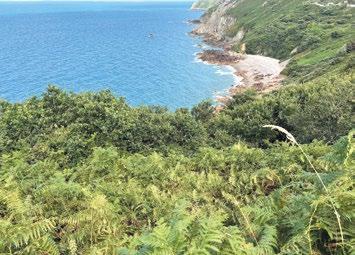
It's impossible to talk about maintenance without watering, especially after a dry summer (not that it’s the most complex facet of tree care). A thorough watering every 7-10 days is optimal, ensuring a deep soak into the roots – root hydration is key to successful growth.
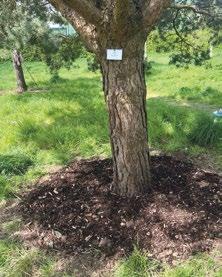
Mulching – removing existing plants from surrounding ground and adding a layer of woodchip or other (typically) organic matter – is another useful tool in the tree care kitbag. If you have the time and inclination, this technique is great for reducing weed growth, plus it helps soil to retain water and control its temperature. It even looks good. Examples can be found at Adelina Wood and Val de la Mare, if you’re keen to see for yourself.
As for pruning, autumn’s typically not the time, as trees are preparing for dormancy. As a rule, stick to winter (there are plenty of summery exceptions).

As global temperatures rise, treescapes will follow. For Jersey, this means a long-term transition to more drought-tolerant species while the likes of beech, Scots pine and silver birch struggle. We shouldn’t write off our current crop too soon, though. Trees are famously resilient and can adapt to their environment by developing strategies primarily based on drought avoidance.
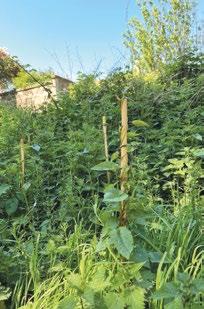

Avoidance is based on simply maximising intake and/or reducing water use. As water intake is a function of root surface area, trees can survive drought by evolving larger root systems. Conversely, to reduce water use they slow transpiration by manipulating their leaves with tactics such as restricting growth, forming a layer of hair or wax and even shedding (abscission).
The ability of trees to adapt to changing conditions is remarkable but naturally has its limits, even if our native species aren’t going anywhere quite yet. This is why we need to look after today’s trees while preparing for tomorrow, managing the gradual transition to less familiar but more drought-tolerant species. Our future treescape is sure to look different.
£9,000GETUP TO
Did you know you could get up to £9,000 towards the cost of a heat pump?
When you switch from fossil fuel heating to a low carbon heating alternative, there are subsidies available through the Government’s Low Carbon Heating Incentive.
For full details, visit our website and contact one of our approved contractors.
We’ve made improvements to routes 20 and 24 to help further enhance accessibility around town.
Three new stops have been added:
• Castle Street
• Outside the Town Hall
• Hill Street
These new stops are designed to make it easier for you to reach the heart of St Helier, with buses arriving three times an hour.
You can now travel between main line services and Townlink routes, including the new stops.
With energy costs rising and long-term electricity plans for Jersey still evolving, many Islanders are starting to ask: how can we create more certainty for ourselves and our families? For an increasing number of local households, the answer is solar energy, a simple, reliable way to take control of energy use while contributing to a stronger, more resilient community.
Jersey has long benefited from superior energy security through a stable connection to the French electricity grid. Whether we continue with imports at the same level or eventually benefit from the potential offshore wind farms in our coastal waters 10+ years from now, many people are looking for ways to become more selfsufficient. Solar is emerging as THE most practical option.
More than just long-term savings, solar photovoltaic (PV) systems allow you to generate your own electricity and take part in Jersey’s future energy system by producing clean power at home and reducing reliance on imported energy.

Take the Vardon family. In 2022, they installed solar panels on their home. Within a year, they cut their energy usage by 27 percent and saved around £1,000 on their electricity bills. This year, they expanded their system and are on their way to near energy independence.
Or the Lewis family, who shared: “We have had our panels up for nine months. Our electricity bill for the last three months was £62. The same period last year? £432.” That is the kind of impact solar can have.
Solar is not just about reducing bills; it is about building something bigger. Smart technology now makes it easy to monitor and manage energy use, and parishioners can play a key role in shaping a cleaner, more resilient energy system.
Across the island, SunWorks has installed over 15,000 panels on more than 600 homes. These families are part of a growing movement, one that supports independence, local innovation, and practical solutions to everyday challenges.
You do not need to be wealthy or technical to benefit from solar. Systems start from around £7,000 and are tailored carefully to your roof size and energy needs. Panels work well even on cloudy days, and thanks to Jersey’s rainfall, they are mostly self-cleaning. Maintenance is minimal, and most systems pay for themselves within 8 to 12 years - and after that, it’s all savings.
• You can export electricity to Jersey Electricity at 9.4 pence per unit
• Solar panels can last up to 25-30 years with warranties of 20+ years
• Panels work effectively in Jersey’s mixed climate, even on cloudy days
• Solar panels can help preserve your roof and increase home value
• Solar offers strong financial returns and long-term peace of mind
• SunWorks carries out roof repairs, reroofing and insulation
• Systems are expandable — add panels, batteries, EV chargers, and more
• Interest-free finance options with SunWorks make solar more accessible than ever
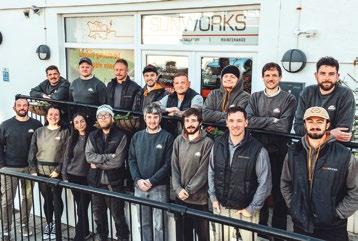
It’s time to start thinking about your renewable future. Reclaim your energy independence, reduce your bills, and help light up our community — one rooftop at a time.




“Haematology


Haematology is the medical science of Blood. Blood is central to our health, carrying oxygen, nutrients, and immune protection to every part of the body. So, when something is wrong with the body it can show in the blood. Equally when something is wrong with the blood, it can affect energy levels, wellbeing, and sometimes even life expectancy. Yet, many people live with unexplained fatigue, anaemia, or iron deficiency without realising that an effective, personalised approach and treatments are available right here in Jersey.
Jersey Haematology is a bespoke private consultancy, developed to provide islanders with direct access to high level specialist care based on the study of blood . Led by Dr Effie Liakopoulou, an international expert haematologist, our clinic offers rapid access to consultations, blood tests, and treatments such as iron infusions and venesections. We perform a range of diagnostic procedures and treatments and provide ongoing support for patients with chronic blood conditions.
Our mission is to make expert haematology care more accessible, so patients do not need to travel off-island.
Whether you have been struggling with tiredness, recovering from illness, or have a diagnosed blood disorder, we can help guide you through diagnosis and treatment in a calm, supportive environment where only You matter.

We work closely with local GPs and international experts to ensure optimal benefit for every patient without delay.
In many cases, people discover that a simple test or treatment can transform their quality of life.
To benefit from a visit to us, please visit www.jerseyhaematology.com, call us or speak with your GP about referral.
At Jersey Haematology, we believe expert blood care should be accessible, compassionate, and local –helping islanders live healthier, fuller lives.
Standing with Road Crash Victims for Over 30 YearsNow Expanding Support to the Channel Islands
For over three decades, RoadPeace has stood as a vital lifeline for those affected by road crashes. As the UK’s national charity for road crash victims, RoadPeace supports people who have been bereaved or seriously injured in road collisions.
They provide practical and emotional assistance while also campaigning tirelessly for road danger reduction and justice for victims.
Until now, the Channel Islands have remained one of the few areas without direct representation or structured support from RoadPeace. That is about to change. Howard Jones, the charity’s new CEO, visited Jersey and Guernsey recently to begin expanding the charity’s work across the islands. Whilst RoadPeace has been active for more than 30 years, the Channel Islands are among the gaps in our coverage and representation,” says Howard. “As new CEO, I’m putting that right.”

During his visit, Howard met with key figures in politics, policing, the legal sector and media. The response was overwhelmingly positive and welcoming.
RoadPeace’s mission is twofold: to support victims and their families, and to advocate for policy and legal changes that reduce road danger and ensure justice. They run a national helpline, offer peer support networks, remembrance events, and legal guidance. Crucially, they also push for system-wide change, calling for improved road crash investigations and greater recognition of the trauma road crashes cause.
Now, that mission is being brought to the Channel Islands. Victims, past and present, can contact the RoadPeace helpline about the services available. The expansion marks the beginning of a local support presence, with the charity actively inviting islanders to join as supporters, sponsors, or volunteers.
To find out more or get involved, visit www.roadpeace.org or contact them directly 020 7733 1603















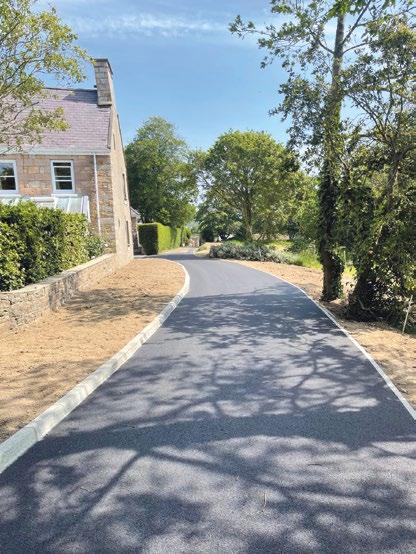















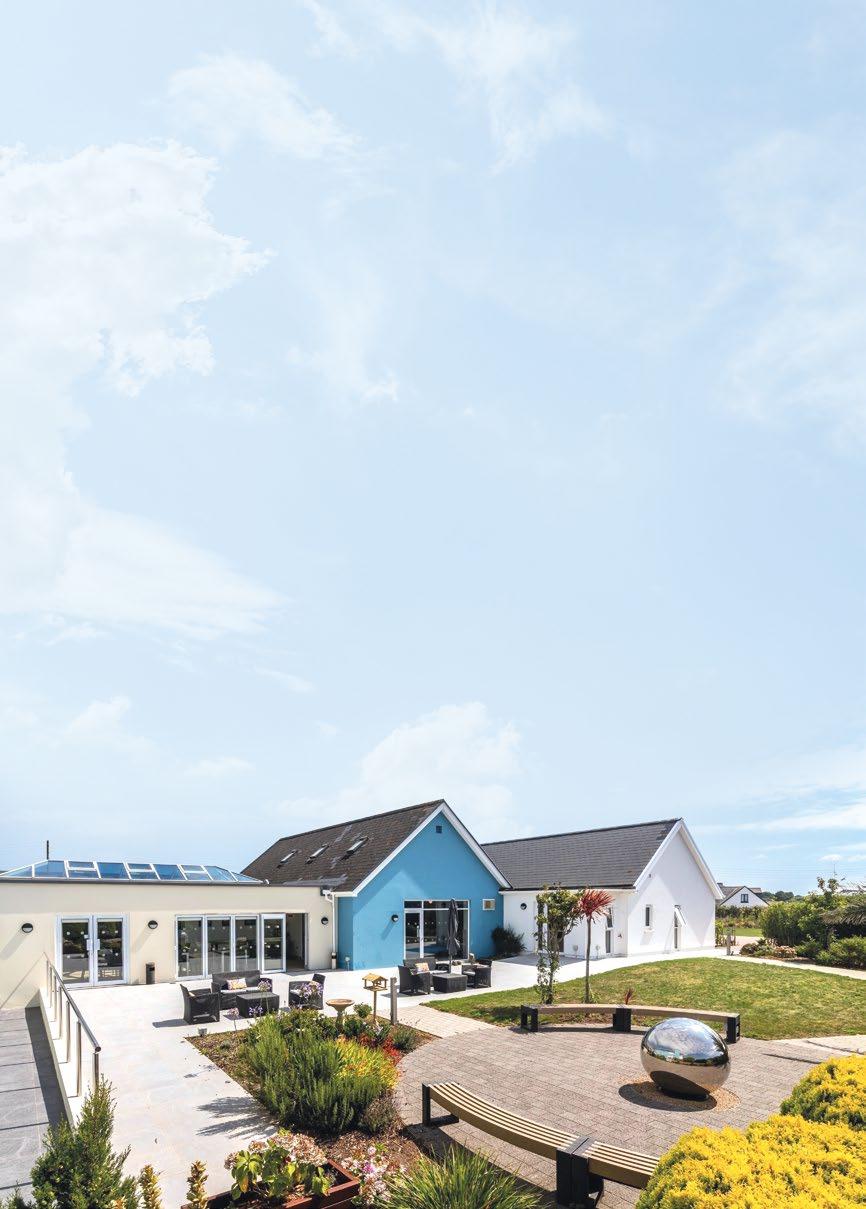
Located on the edge of the Jersey National Park in St Ouen, Maison des Landes Hotel and Community Hub blends the peaceful charm of the countryside with the very best in modern design to offer a fully inclusive environment.
Maison des Landes is a place where you can relax, recharge and feel truly looked after, whilst enjoying the tranquil gardens and panoramic coastal views. With 15 out of 23 rooms fully adapted to suit a range of needs, everything has been thought through. Enhance your visit with a swim in the hydrotherapy pool, maintained at 33 degrees, which is perfect for relaxation and rejuvenation.
When it comes to food, you’re in for a treat! Head Chef Sachin and his team proudly create fresh, locally sourced dishes at very reasonable prices that are available for breakfast, lunch and dinner.
At Maison des Landes, our guests come first. Friendly, dedicated and always willing to go the extra mile, our staff team take genuine pride in what they do - and it shows. Whether you need a little extra support or simply a warm welcome, nothing is too much trouble.
“We just wanted to take a moment to express our heartfelt thanks for the incredible hospitality we experienced during our recent stay at your hotel. From the moment we arrived, the staff went above and beyond to make us feel welcome and comfortable. Their friendliness, kindness and professionalism truly made our stay unforgettable.”
A stunning venue for any wedding or special occasion, and if anyone needs accessible facilities, they’re already in place, from step-free spaces to accessible bedrooms.
Treat your loved ones to a delicious meal or overnight stay at Maison des Landes, our gift vouchers are easy to purchase by phone and are valid for 12 months. Vouchers can be sent electronically or by post.

Exclusive to readers of the parish magazines, we are delighted to offer the following discounts:
• £149 GETAWAY FOR TWO – overnight stay for two people including three-course evening meal plus full English and continental breakfast.
This offer is available for purchase until 23rd December 2025 and is valid for stays from May-September 2026, subject to availability at time of booking.
• 10% OFF food and drinks – please quote PARISH MAGAZINE OFFER when booking or paying at the hotel restaurant until 23rd December 2025.
To book, purchase a gift voucher or discuss your specific requirements, please call the hotel directly on 01534 481683 or email reservations@maisondeslandes.co.uk
Trinity Football Club celebrated the end of the season with a junior football fun day organised by their social committee. The event quickly became a sell out with over 200 tickets sold. Many families took the opportunity of coming together to celebrate the success of the junior players at the end of the season.
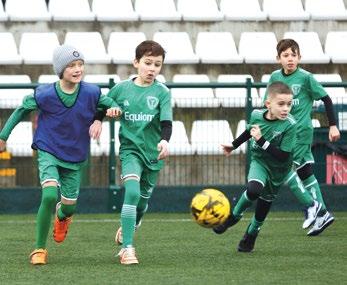
With the sun shining, everyone made the most of the bouncy castles, slip and slide mats and some delicious BBQ food. The event raised some much-needed funds for the club. Planning for next season is already underway together with buying much needed sports equipment in order to continue to support junior football at all levels.
Minis and Junior football is hugely popular across the Island and Trinity Football Club play a significant role within the Jersey junior football ecosystem, training and developing young players in a welcoming and fun environment. The end of season event very much epitomised the community foundation the club is built on, a great time being had by all who attended.
The club is continuing to raise money to develop the facilities, including building a new clubhouse. If you would like to support the club in anyway then please do reach out.
For further information go to www.trinityfootballclub.com/minis-teams

As another fun-filled term comes to an end these fab photos show what we have been up to.
All our meetings are held on Wednesdays at Trinity Youth Centre & St Mary's Youth and Community Centre:
• Squirrels (St Mary & Trinity): 17:30 – 18:15
• Beaver Colony: 17:30 – 18:30
• Cub Pack: 18:30 – 20:00
• Scout Troop: 19:30 – 21:00
Note: Squirrels meet at Trinity Youth Centre and include young people from both St Mary’s and Trinity.
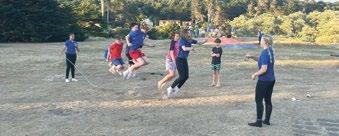

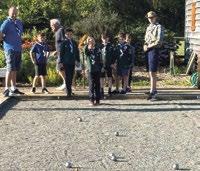
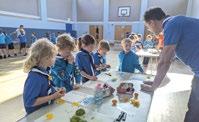
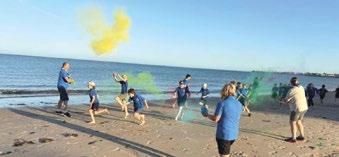
If you would like to find out more, please contact Evelyn Martin-Foley Group Lead Volunteer email: e.martin-foley@ scouts.org.je
October Half Term - 2025

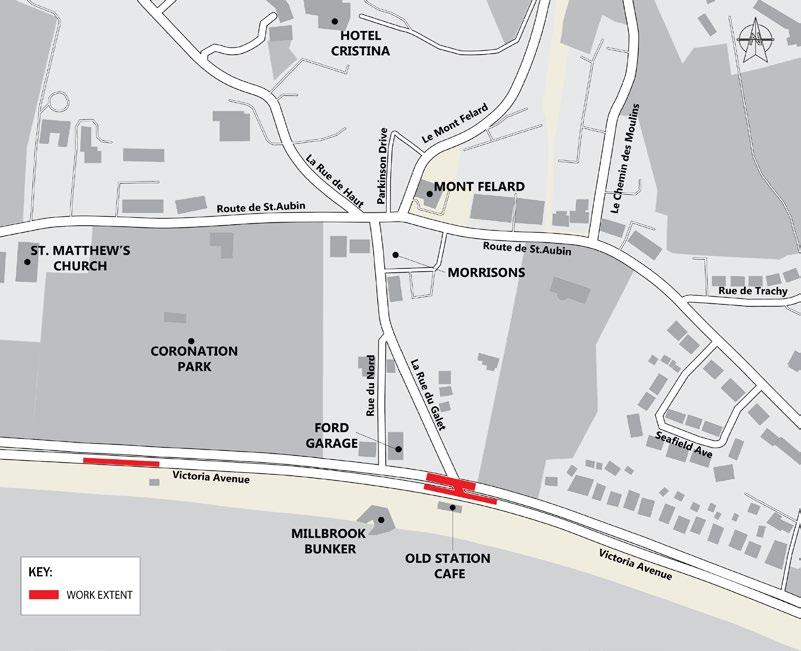
Further information
As part of the ongoing highway maintenance by Infrastructure and Environment (I&E), resurfacing works are planned along sections of Victoria Avenue, including junction with Rue du Galet.
Stay up to date on access arrangements,traffic managements and working times by visiting gov.je/roadworks or scanning the QR code provided.
Thank you for your patience while these essential works take place.We apologise for any inconvenience caused.

Here’s some of what we have been up to lately!
Field games - Making use of the nice weather: Donut games – National donut week: Wheelchair games: Slime making (and cleaning): St Catherines woods trip: BBQ’s: Obstacle courses: Tye Die: Shell painting for our art piece: Cricket evenings.
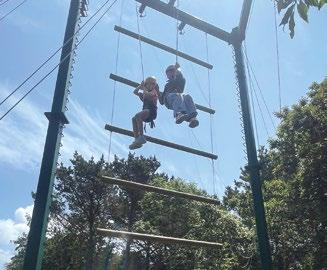
We also recently had two residentials at Crabbe where both our inters and juniors spent the weekend doing lots of fun activities including:
Quizzes: Flint and steel workshop: Fire and smores: High ropes – Crate stack & leap of faith: Den building: Archery tag: Conservation effort – Bug mapping: Zorbs: Flashlight hide and seek (young people's favourite)

We offer a wide range of activities like sports, arts & crafts, music, and more – all in a safe, supportive environment. Whether you're into sports, games, or just hanging out, there's something here for everyone!
Tuesdays 7 - 9pm Seniors – Year 9+
Thursdays 6:30 - 8:30pm Juniors – Years 5&6
Fridays 7 - 9pm Inters – Years 7&8
So, if you’re looking for a place to make new friends, discover your passions, and have a blast please don’t hesitate to contact Jamie Gray – jamiegray@jys.je
As I write this, we are enjoying a hot, dry spell of weather and many of the club members are playing outdoors but there are still a few groups playing regularly in the Bowls Centre and in August we are planning to run a new team competition which we hope will prove to be a big success and become a regular part of our summer programme.
As well as providing opportunities for members to use the bowls rink the club has recently been pleased to host guests from the Jersey Cheshire Homes who are able to use the facilities thanks to the availability of the lift. Several club members have generously given their time and have enjoyed helping the staff who accompany the residents to provide an opportunity for them to have a game.
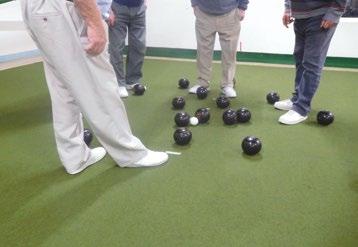
The club is delighted to have welcomed several new members and hopes they will enjoy taking a full part in all the club’s activities. We are always pleased to welcome new members and if you think that you would like to have a try, we would be happy to arrange for a club member to show you the ropes. All you need is to wear flat soled shoes.
Everything else including basic coaching can be provided. Please contact Club Chairman, Alan Otterwell on 07797 766969 or the Club
Secretary, Norman Cabot on 01534 861413