St Mary Matters
OUR COMMUNITY PAST, PRESENT & FUTURE


If you’re anything like many people in Jersey, two things come up time and time again:
• “I’m not actually sure where all my assets are.”
• “I don’t know when I last reviewed it all.”
Sound familiar?
Life gets busy, and financial admin often takes a back seat. But here’s the thing: not knowing can quietly chip away at your peace of mind, and potentially your future financial security.
When you have sight of all your finances in one place, something powerful happens: you gain clarity. You know exactly what you have, where it is, and how it’s working for you. This brings piece of mind.
We can then build a plan that’s grounded in facts and aligned with your goals, whether that’s preparing for retirement, supporting the next generation, or simply enjoying life. With everything clearly laid out, you gain a sense of control, seeing how each piece of your financial jigsaw fits together to support the life you want today, tomorrow, and into your future.
An important question to ask yourself is:
“If the worst was to happen tomorrow, would you know where everything is and feel financially prepared?”
Common worries are:
• “I don’t have a will”, or “I haven’t reviewed it in a long time” – It’s easy to put this task off, but having it sorted can really help your family. Having a will makes everything smoother, quicker, and less stressful at a difficult time for your loved ones.
• “I’m not sure what insurance I actually have.” – Many people don’t realise they might be overpaying for insurance, underinsured, or missing important cover altogether. Taking the time to understand what you have and what you might need, can give you a real safety net when life doesn’t go to plan.
• “I’m worried my savings and pensions won’t last in my retirement”
– Many people realise their Jersey state and workplace pensions may not be enough for the retirement lifestyle they worked hard for. With retirement possibly lasting 30+ years, that gap can be significant.
The good news? You don’t have to figure it all out on your own. With the right plan, you can feel more in control.
This is where working with a financial planner can make a real difference.
• We can help you bring everything together into one clear picture.
• We can use cashflow planning to see what your future could look like.
• We can together build a plan with that’s tailored to your life and your family’s objectives.
Let’s have a no-commitment conversation. It’s never too early, or too late, to plan for the future you want.

Matthew
Fielding Chartered MCSI Financial Planner
Email: matthew.fielding@quiltercheviot.com
DL: +44 (0) 1534 506128

The last three months have seemed very quiet in St Mary, nothing significant seems to have happened since the events marking the 80th anniversary of the Liberation.
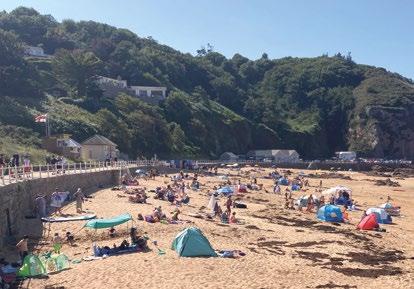
However, I’m glad to see the beach at Grève de Lecq has been much busier than last summer and the car park above the old Seaside Café has been mobbed at times during some of the recent warm spells – which makes the States decision to buy the property look a very sensible move. Indeed, quite apart from the traditional summer pastimes on the beach, thanks to the involvement of both the National Trust and Arthouse Jersey, based at the old Grève de Lecq barracks, the area has become quite a hub of activity.
One of the events inspired by the latter is featured in this edition of St Mary Matters, a festival celebrating the summer solstice which certainly turned a few heads. Talking of celebrations – what an amazing summer it’s been for the Perrett family and, young Mollie in particular, with their haul of medals from the Island Games. Mollie is a volunteer worker at the St Mary Youth and Community Centre – and so is Lauren Le Garignon, another remarkable young woman who organised a special event designed to encourage girls to get properly involved in a variety of sports. And, still on the subject of youngsters, we hear how members of the St Mary dance school got on when they performed at Disneyland Paris.

If you would like to contribute to future editions of “St Mary Matters”, please email Mike Fennell at mlpfennell@googlemail.com

And this issue is not just about our brilliant kids - at the other end of the scale, we feature the tributes paid by the children at St Mary School to their much-loved caretaker, Steve Michel, who retired at the end of term.
Mike Fennell Editor
EDITORIAL Mike Fennell
T: 07797 916991
E: mlpfennell@googlemail.com
ADVERTISING Martyn Farley
T: 07797 743191
E: martyn@farley.je
ACCOUNTS Helen Carré
E: helen@mediamasters.je
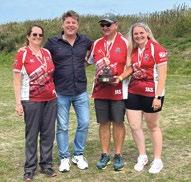
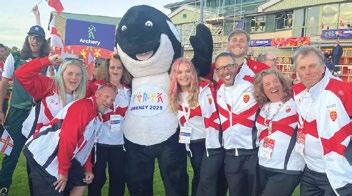
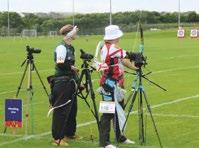
Not only did local archer, Mollie Perrett, succeed in her quest to win a gold medal at the Island Games - as featured in the last edition of St Mary Matters – she also struck gold twice more and added silver and bronze medals for good measure.
Indeed, the Perrett family – including mother Angela and father Heath (who doubled up as team manager and Jersey Flag bearer for the closing ceremony) came away from Orkney with a glittering haul of medals and a treasure trove of memories of a fantastic week in the Scottish island.
Talking after winning her first gold medal, Mollie made it clear her success was far from a given. “I’m absolutely speechless, after weeks of difficulties with technique, injury and mental game with the pressures I was putting on myself from being the only Recurve lady on the team, it has all come together when it mattered. Wasn’t the best of starts but kept strong and turned it around for a gold medal finish. There’s been a lot of ups and downs recently, but it feels great to finally get that shot flowing and the recognition from scores that it’s working even if the weather did mean the scores weren’t where they should have been.

Hampshire Championships in September and hopefully selection to shoot for Hampshire at the National County Team Tournament.”
Meanwhile, back home in Jersey, Mollie and her family, attended a memorial competition at the Crabbé range in honour of Harry Heeley, the man credited with setting up the structure that enabled archery to develop on the Island. A club member commented: “Sadly we lost Harry a year ago but today we remember him and his impact on grass roots archers, through to performance archers and the development of the sport in the Island.” The competition was done on a handicap basis involving all the sport’s disciplines. In the event the result was a 1-2-3 for the Perretts, Mollie coming third, Mum second and Dad first..
In the Women’s Recurve event Mollie scored 1122 points across the four distances, 40 points higher than her nearest rival from the Falkland Islands. She also scored the highest number of Golds (bulls-eyes to you and me) with 20. The last time a Jersey competitor won this event was in Shetland in 2005.
So, where does Mollie go from here? “I have been lucky enough to recently join the Jersey Sport Performance Sport Programme for 2025 and receive some funding, so this has had an influence on my upcoming goals and challenges. Now I hope to enter and compete at one of the Indoor World Series Events, either Kings of Archery in the Netherlands or The Vegas Shoot to sort of keep a foot in the international circuit alongside the National competitions we are booked into for the rest of the season, They include the upcoming


Rue de la Grange is not the busiest thoroughfare in St Mary – in fact it’s a small country lane, a place where you might find the odd car or passing dog walker.
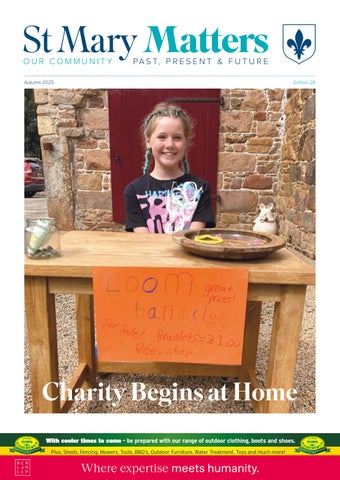
Perhaps then not the ideal location to set up a charity stall. But in tenyear-old Evelyn Gilbert’s case the drive outside her home was the perfect place to sell her beautiful homemade friendship bracelets. According to her mother she worked really hard weaving the colourful loom bands. Evelyn’s plan was that any money raised would go to the MacMillan cancer support charity. She was inspired to take on her fund-raising effort because of her grandfather’s illness. She’s certainly a socially aware youngster – she was an anti-bullying ambassador at school and recently took on the daunting challenge of speaking in the Chamber of the States of Jersey.

Fifteen-year-old St Mary Youth Club assistant, Lauren Le Garignon, has a problem. She’s one of Jersey’s top young footballers, playing for Jersey Wanderers on their ground near Jersey Rugby Club.
She wants to develop her game by playing at a higher level. But she can’t. Officially she’s too young to play against boys and she’s not old enough to play with women footballers. Coming at a time when women’s sport has never been popular, especially after the triumph in the European Cup, it’s just one example of how girls who want to get involved in sport feel they are held back.
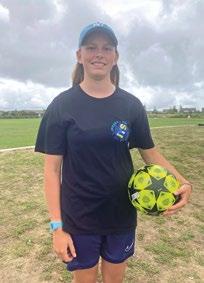
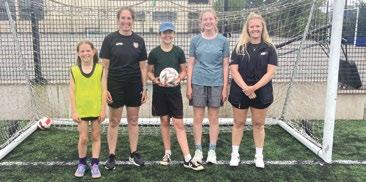
But Lauren for one is not taking it on the chin. With the help of St Mary Youth Club lead worker, Josh Twohig-Jones, they organised a special day-long event at Les Quennevais School. Billed as “Every Girl Moves,” it was a drop-in sports event aimed at empowering young women aged between eight and 14 to get involved in sport. A variety of sports clubs and organisations were involved, setting up workshops and practical sessions where girls could try their hand – and feet – at one or more of a dozen or so sports including karate, kickboxing, netball, hockey,

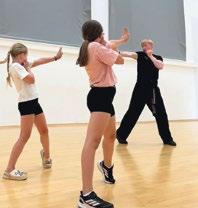
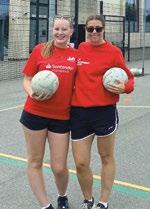
football, cricket, rugby, skateboarding and pétanque. The event was funded through the Governments Connect Me funding for which Lauren applied. This helped supply food for the over 90 participants and continues to fund various items of sports equipment for local youth clubs.
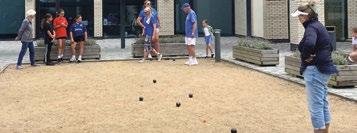
One of the sessions was set up by St Mary Pétanque Club member Richard Sowerby who said he was surprised hy the number of girls who were interested in trying the sport, most of them for the first time. Nearly a hundred girls turned up during the day. Thirteenyear-old Anika Kudielka from St Mary was one of the youngsters who took part and tried a number of sporting disciplines. “It’s been amazing, such a great experience. So many girls have turned up –and they’re all smiling. I’d never tried fencing before, but now I have and I’m really glad I did.”
Another parent wrote afterwards: “I went along to this today with my daughters. What an incredible event to inspire girls to try out a new sport and develop a love of sport. Lauren’s aim was to provide an event where girls could build confidence, try new sports without barriers and ultimately have fun. This event really did deliver all of this and much more. Thank you to all those involved, my girls had a ball!”

Lauren herself was really encouraged by the way the day went. “Sport is so good for not only exercise but also your mental health. But the problems is there’s a stigma against girls staying involved in sport when they get older.” She hoped events like ‘Every Girl Moves’ could help turn the tide and she hopes to hold a similar event next year – “and, hopefully, in the years after that!”
HSBC Premier gives you more than banking, unlock a world of benefits, from expert support to global perks, alongside a branch that matches your status. Benefit from a dedicated Premier space for your personalised financial discussions with our team.
“Our team are looking forward to seeing some new faces, and welcoming back our longstanding customers soon. We’re here to help support your financial goals, offering wealth advisory [1] alongside your everyday banking. Premier banking [2] gives you more, so stop by and see us to find out how you could benefit.” Alistair Philp, Head of Retail Distribution in the Channel Islands.

Located in the same convenient spot, the updated branch has been thoughtfully designed to offer an improved experience for all. Visitors will notice a spacious interior paired with a fresh and inviting design. Counter services have been refreshed for seamless everyday transactions, while advanced technology ensures efficiency and convenience. Fancy a chat with an advisor? We've got plenty of comfy spots where you can discuss your financial needs with our team.
Inclusivity has been prioritised in the redesign. Spacious and accessible facilities aim to better accommodate individuals who may require additional assistance with in-branch banking services.
“We are delighted to see HSBC investing in serving the St Brelade community in this way and considering the needs of those with limited mobility. Improved access makes vital banking services available to all, including people with disabilities and older customers who may need more support.” Ben Shenton, Chairman, Age Concern.
"Our St Brelade’s branch is coming back to better serve our island community. We’ve invested in a more seamless customer experience, with a spacious and accessible branch kitted out with the latest tech. From an entire floor dedicated to Premier banking, to comfortable spots to chat with an advisor, and improved accessibility, we're confident that everyone will enjoy the refreshed experience."

Alvaro Teixeira, Head of Wealth and Premier Banking in the Channel Islands.
We look forward to re-opening our doors in the west of the island, stop by and see us at your new and improved St Brelade’s branch soon.
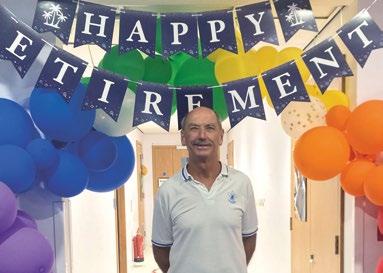
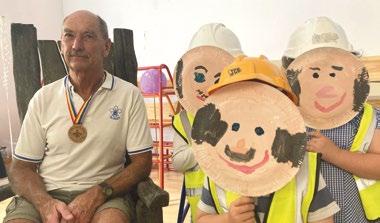
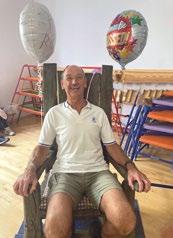
The final day of term at St Mary’s School in mid-July featured a special assembly where the children bid a fond farewell to a favourite member of staff, handyman Steve Michel.
For more than 20 years he has been a key figure in looking after the smooth running of the school. During that time, he has been a jack of all trades and, as far as the staff and children are concerned, a master of most of them, including caretaker, builder, electrician, plumber, stage and set designer, school bus driver and IT support worker. He’s even been a lifeguard, having had to train as a first-aider on school outings to the swimming pool at Les Quennevais. He has also looked after the children on residential trips to St Aubin’s Fort and Crabbé as well as on visits to France. Although the first skill he learnt from his predecessor was making tea for everybody. “That was the first thing I stopped,” said Steve, “nobody was really interested in drinking tea. Otherwise, I’ve done almost everything and anything. In fact, the only thing I haven’t done is teaching.”
Steve had a fantastic farewell from the children and staff, all of whom were wearing masks, either bearing a picture of his face or paper plate versions the children had painted themselves. They then sang a specially written song to the tune of ‘Bob the Builder’: “Can he fix it? Yes he can” was the theme. Then another familiar refrain was used, this time with reference to the song, ‘YMCA’, about life after St Mary’s School. “In retirement, you can sail the seven seas; in retirement, you can put your mind at ease; in retirement you can do whatever you please; in retirement no more unblocking the loos; in retirement, no more driving children to the zoo; in retirement, no more swimming with year four.”
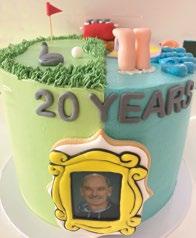
A chorus of three cheers followed. The head teacher Maria Stegenwalner said that Mr Mich had been the cornerstone of the school for nearly 21 years and that they were really going to miss him. That was followed by the presentation of a school leaver’s book and medal – as had been given earlier to the Year Six leavers who’d be moving on to secondary schoolfollowed by a magnificent cake, decorated with ideas of what Steve might be doing in the future including playing golf and swimming, plus some special vouchers to help further his golfing ambitions.
Afterwards he said he was going miss his workshop. but was looking forward to filling his time working on his house as well as swimming, cycling and playing golf – once he’d completed the long list of tasks his wife had given him!























In late May a group of 69 people, including dancers, teachers and families, all connected to the Just Move dance school in St Mary, made their way to Disneyland Paris.
Some travelled by plane, others by train or boat, but they all arrived safely at Disney’s Hotel Cheyenne, ready for a week guaranteed to create treasured memories. Just Move principal Danielle Bryan takes up the story.
After checking in and exploring the parks, we held our first group meeting on Monday afternoon at 5pm. It was great to see all of our dancers together, including those who arrived via Blue Island who managed to arrive on time which was quite the achievement after all their cancellations!
Tuesday morning began bright and early with a 7am start as we headed to meet Disney staff for the pre-parade rehearsals. This was a great experience for our girls, they had the chance to rehearse their routine alongside other dance groups from around Europe and the UK.
Later that morning, we had a 20-minute session at the Videopolis Theatre where we would be performing. The girls used this time to space out and rehearse all eight of their dances on the big stage. We also had a behind-the-scenes tour of the theatre, which gave the students an exciting glimpse into Disney’s backstage operations.
While the students got ready, hair and makeup done to perfection, the teachers snuck off to enjoy a bit of the park. We met the girls again at 3pm for their big performance. An hour later they took to the Videopolis stage in front of a diverse international audience. It was an incredible showcase of their talent and hard work and watching them dance on such an iconic platform was an incredibly proud moment for all of us.
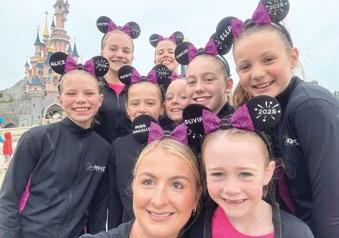
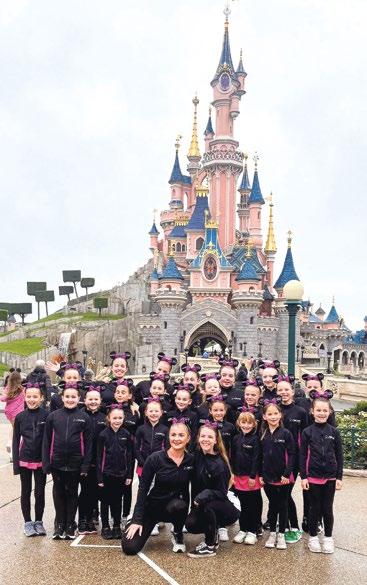
Wednesday was packed with more magical experiences. We started the day with group photos in front of the castle during Magic Hour, followed by a few rides with the girls and their families, including Space Mountain, Buzz Lightyear’s Laser Blast, and Pirates of the Caribbean. It was a lovely bonding experience for everyone.
Florence Millett from St Mary spoke for the youngsters: “I really enjoyed spending time with my friends on the Disney Trip and having fun on the rides, but most importantly. I was proud to dance on the stage and be in the parade. The highlight from Disney was dancing with my friends and celebrating our adventure together as a dance family.”
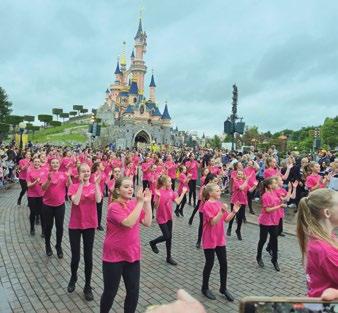
At 10.15 in the morning, the dancers joined over 400 students from across the UK and Europe for the pre-parade down Main Street. Watching them perform in perfect sync, dancing past Cinderella’s Castle and waving to crowds, was emotional beyond words. It was without doubt the highlight of the trip and a moment I’ll never forget.
That evening, some of the girls enjoyed a celebratory dinner at Cape Cod, which gave them a chance to wind down and reflect together, just us teachers and the students, no parents for that part of the evening! We later rejoined everyone to watch the latenight firework display, which was absolutely breathtaking. The entire park lit up in colour and music, it truly felt like the perfect Disney ending.
Thursday morning came far too quickly. We checked out of the hotel and began our journey home, leaving with full hearts and memories to last a lifetime. This trip wasn’t just about dancing at Disneyland (though that in itself was extraordinary). It was about growing in confidence, working as a team, and embracing new experiences. I couldn’t be prouder of our students, not only for how beautifully they performed, but for the way they supported each other and represented our school with such maturity and joy.
A special thank you must go to my mum, Sandra, for all her help and support throughout the last year, especially with the incredible amount of work involved in costumes. and to Paris, for all her all her time and effort and the amazing choreography she put into all the rehearsals as well as helping with me admin and logistics. Their hard work made this experience possible, and I’m so grateful to have had such a strong and supportive team by my side.





If someone’s asking for private information, ask yourself why. Think. Report. Protect. Been caught out? Call the number on your bank card. Want to stay one step ahead? Visit ciiom.hsbc.com/fraud or fraudprevention.je

Have you ever thought about wwoofing? Do you even know what it means?
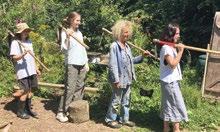
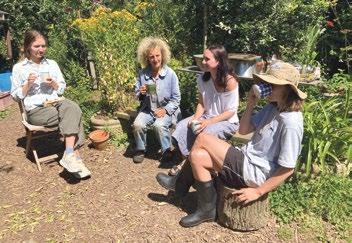
If you’re interested, you could pick up bee-keeping skills on the Isle of Attica in Greece or learn about medicinal plants in Canada – or even come to St Mary and help out at Birdsong, an organic community garden run by volunteers interested in promoting a sustainable lifestyle. And the latter, is exactly what a young musician from Massachusetts in the USA decided to do this summer.
Wwoofing stands for Worldwide Opportunities on Organic Farms. Tt’s a programme links visitors with organic farmers, promoting an educational and cultural exchange while “building a global community consciousness of ecological farming practices.” Volunteers give their time and energy to help out in exchange for board and lodging and being taught a new skill set.
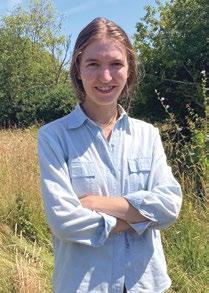
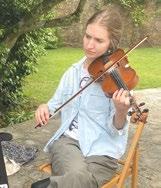
And that’s what 26-year-old Olivia Munson decided to do. She plays the violin and other stringed instruments professionally, playing in various bands and orchestras. She also teaches music. “It’s quite intense and I had this two-month school break this summer and decided, what with everything going on in America at the moment, I’d like to get away and see things in a new light.”
She looked at a world map of where wwoofing opportunities were on offer and spotted one that struck her as worth exploring. “I wanted to do something different. I was clicking around and I saw this little island north of France and I thought that it might be something that would enable me to learn more about food sustainability” She also had family connections in Britain so her plan was to look up relatives in the UK after a ten day stay in Jersey.
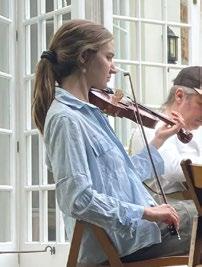
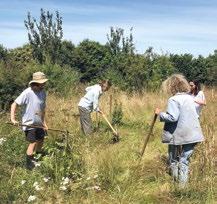
enjoyed it though. But I love it here at Birdsong. It’s soul-calming.” It was also hard work as evidenced by her work with other young volunteers swinging hoes preparing some heavy ground for the planting of an olive tree. She’s also been involved in mulching, weeding, watering and picking fruit and vegetables.
And it isn’t as though Olivia has been neglecting her first love – music. She’s been playing the violin since she was a five-yearold. The day she arrived in the Parish she found herself playing with a local band at the St Mary church garden party. “Last night I sat in with the Jersey Youth Orchestra. I’ve been playing traditional music sessions at the Moulin de Lecq and I’ve also helped out accompanying the local Morris dancers.”
Olivia’s only regret is that her stay in St Mary is so short-lived. “Everyone’s so welcoming here. I think what they’re doing at Birdsong is really worthwhile. Thanks to Birdsong I have an enormous sense of there being more in my life. You need to step out of your normal environment to be reminded of that and that’s what Birdsong has done for me.”

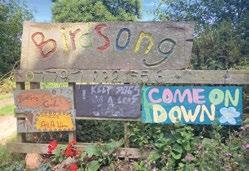
It’s not the first time Olivia has tried wwoofing: “I’ve also done it in Japan. That was a very different experience to Jersey. It was much more of a school environment rather than the more laid-back approach here at Birdsong, I really







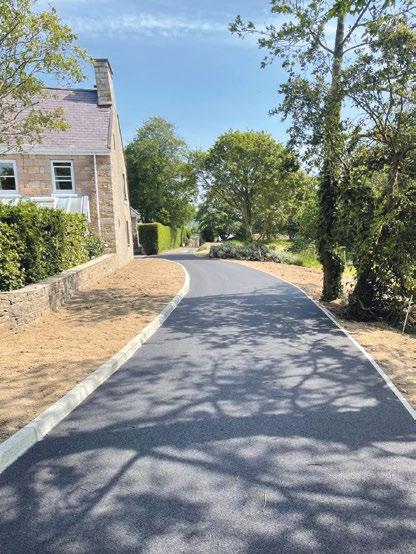








Although the agricultural landscape in St Mary has changed much over recent decades, it is still dotted with granite buildings that were once thriving farms and smallholdings, sitting on winding country lanes, surrounded by the hedge-bound fields. Researcher Jane Aubin has been looking into St Mary’s agricultural legacy, and, in particular, at how we housed our pigs.
It is hard to believe that in 1914 our small island of 45 square miles supported 1900 farms. An average farm of about 45 vergées would consist of two horses, six cows and six heifers, chickens, rabbits and a few pigs; typically a couple of piglets for fattening and perhaps a sow for breeding. Pork was the most popular meat in the local diet and was the mainstay for farming families.
A pig provided good value, nourishing and readily available food, particularly over the hard winter months. A pig cut up and stored in a saleur (salt pot or trough) could last several months. The animal was fed on scraps from the kitchen and waste products from crops and, importantly from the farmer’s point of view, did not occupy valuable land, as it could be sheltered within the farmyard.

By the 18th century, farmers were constructing granite sties in which to confine the pigs to prevent them from grubbing up crops and causing nuisance to neighbours. You may have seen such pigsties when going for a walk and peering into roadside farmyards. Recording pigsties has been taking up much of my time since 2015. The information gathered will provide a comprehensive record of current and former pigsties across the island and help paint a picture of everyday life for so many local families living in the countryside.
It has been a delight, over the years, to walk around the lanes of St Mary, speaking to householders and chatting to them about their pigsties whilst pointing out features that they may not have noticed. Even where little remains, there may be the telltale features of low sloping roofs, granite troughs or, most distinctive of all, the square openings that served as feed chutes for tipping food into the sties.
Talking to Ernie Le Feuvre, previously a farmer at Timaru Farm, I learnt that in the 1950s, when he was a lad helping on his father’s farm, it was not uncommon for farmers to gather wild bracken to use as bedding for their animals. Every penny counted in those days.
Jersey pigsties commonly have a shelter to the rear with a low sloping roof covered in slate or pantiles. From this shelter the pig can wander into a small yard, with walls 3 to 4 feet high made of granite or a mixture of granite and brick. The pigsty at La Ferme du Marais in the north of the parish is typical of such a layout.
Another impressive pigsty can be found at Anciennété in

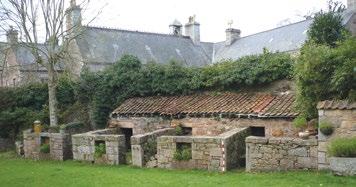
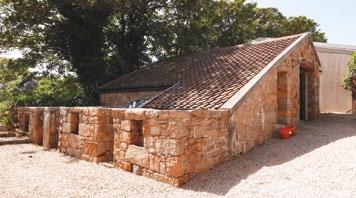
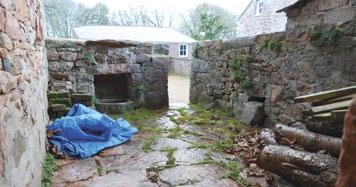
the centre of St Mary. In its heyday these 4 sties would have held several sows and significant numbers of squealing piglets, raised to supply the local markets. One pigsty that particularly drew my attention was that at Oak View, a complex range of sties which were developed and adapted over 200 years (for more details, please read my article in the Annual Bulletin of the Société Jersiaise 2023).
Despite having over 750 pigsty records, my survey is not finished; I still have quite a few roads to walk down, particularly in the east of the island. I am always happy to hear from anyone who owns a pigsty that I have not yet visited (or knows of one that has disappeared). I am always grateful for an invitation. (email: janeaubinhr@gmail.com or tel: 07797834216)
Please note that all the pigsties mentioned in this article are on private land.

Sadly, the shortest night of the year is behind us, and autumn beckons. But the summer solstice didn’t slip by unnoticed in St Mary. Although the celebrations may have left you wondering just what was going on.
That’s because there was a distinct East European flavour to the proceedings. Although, it being Jersey, the day wasn’t going to be allowed to pass without a traditional British summer downpour.
The event was created by Arthouse Jersey, both on the beach at Grève de Lecq and in the grounds of their HQ in the old barracks.
Nearly 400 people turned out to join the celebration of Kupala – an East European midsummer tradition. The word ‘Kupala’ comes from the Ukrainian, meaning ‘to bathe’ and refers to the symbolic act of sending wishes for an abundant harvest.
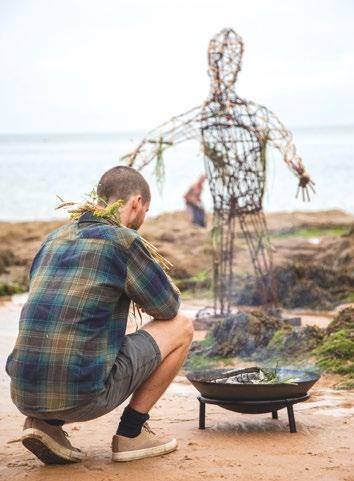
Grève de Lecq was an ideal place to stage the event because traditionally the celebrations take place near water. A number of activities and rituals are associated with Kupala Night, such as gathering herbs and flowers and decorating people, animals, and houses with them; bathing, or dousing with water, lighting fires, dancing, singing, and jumping over fire – and even hunting witches! Not that there’s any evidence of their existence in St Mary!
In Jersey the festival involved several of those themes, especially the wearing of flower garlands and some of the costumes were quite extraordinary. The conical green costumes were made from netting, a variety of coloured twine, grass and flowers, all inspired by the Mavka, a mythical Ukrainian spirit that connects people and nature and often lives in trees.
Local artists were invited to perform at the event. One of them was Colin Lever: “I turned up, only for the heavens to open. Undaunted, I put away the guitar and sang acapella for half an hour! The song had its origins in Ukraine. It was a privilege and a delight. So many thanks to ArtHouse Jersey.”
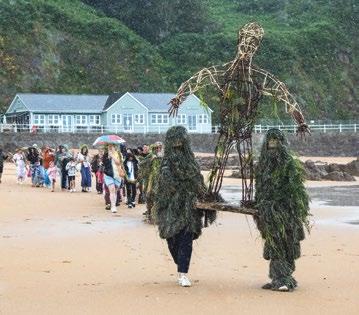
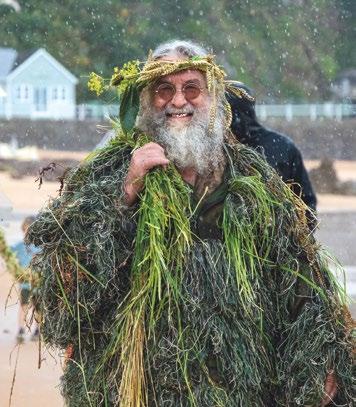
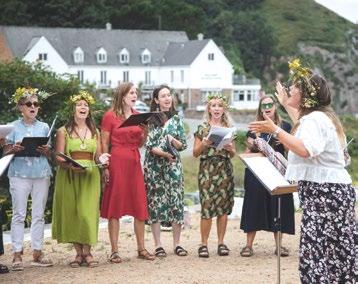
The afternoon began with hands-on craft workshops including chances to make traditional floral crowns and wish dolls as well as Mavka costume-making. There was also a poetry workshop celebrating the Jersey Royal potato, and a performance by the Lullaby Choir singing songs from around the Island.
The event was organised by Ukrainian-born artist Olha Pryymak, under the auspices of a project called ‘Abundant Futures’ sponsored by Spoor & Fisher Jersey. It was led by Dana Olărescu, and closed with a flower-filled procession leading dozens of participants down to the beach.

On the UK mainland hedgehog numbers have declined by 30% in urban areas and 50% in rural areas. They are listed as “vulnerable” on the red list of mammals in danger of extinction.
The Jersey Hedgehog Preservation Group has seen the decline mirrored here, through the reduction in admissions to the Group.
Our mission is to rescue, treat and rehabilitate sick and injured hedgehogs before releasing them back into the wild.
Hedgehogs are nocturnal, so their eyesight is poor and they rely on their heightened sense of smell and hearing to find prey. Leading up to the branchage in July and September, we receive hogs with severe strimmer injuries. Very few can be saved.

The summer months are birthing time. If a nest is disturbed by over exuberant gardeners, or mum is injured, abandoned or orphaned hoglets are unlikely to survive unless they are rescued and brought into care.

Long grass, undergrowth under hedges, leaf piles and compost heaps all make cosy nesting sites, as well as providing ideal conditions for the caterpillars, beetles, grubs and other insects that hedgehogs like to eat. In warm weather hedgehogs will just lie up in long grass and not use a nest.
It takes just a minute so please do Check Before You Chop!
The erosion of habitat, use of pesticides, and global warming are all playing a part in the decline.

Increased human population means more houses encroaching on rural land. They often have enclosed low maintenance gardens, with few places to nest.
Fewer wild areas, and fewer invertebrates means less food for hedgehogs.
Pesticides and rat poison leave poisoned carrion, which hedgehogs may eat, and it will kill them.
Our admissions have included hogs wrapped in netting, dog bites, one rescued from a cesspit, one shut in a garage, another trapped in an uncovered drainhole and one with a six-pack plastic ring around its middle.
• Shallow dishes of clean water topped up daily all year round. This is a life-saver particularly in hot dry spells when the ground is too hard for them to dig for natural food.
• Ensure ponds or swimming pools have escape routes, such as bricks or rigid mesh over the side.
• Garden access can be created with a 13cm hole in fences, gates or walls. Hogs must be able to roam.
• Supplement their natural diet, particularly in dry weather and through winter with cat or small size dog kibble. In mild winters Jersey hedgehogs only hibernate for short periods if at all.
• Never give mealworms, sunflower seeds, peanuts, and definitely no milk and bread.
Feeding boxes are available from Jersey Hedgehog Preservation Group for a donation.
If you find a sick or injured hedgehog out in daylight, please telephone 01534 734340

St Brelade appears to be the hedgehog capital of Jersey, where we know a lot of residents regularly feed their hedgehogs. Sadly, it is also a hot spot for road deaths, particularly near the Rugby Club, the Airport Road opposite the entrance to Lakeside, and Red Houses. It featured the highest number of recorded sightings in the survey.
St Mary which is less lit up and has more wild areas for hogs to roam after dark had the least sightings in the survey (130 in St Brelade, only 10 in St Mary).
St Saviour, St Helier and St Peter recorded the next highest numbers of sightings (in that order).
Looking for a vet who takes the time to really care? At All Pets, we o er 20-minute consults as standard, same-day appointments when you need them, and even home visits for extra comfort. We’re proudly independent, based in the heart of St Peter’s Village, and run by a small, compassionate team who treat every pet like their own.





The most important meeting of the year in any Constable’s calendar is the annual Rates Assembly which was held on June 26th. This provided parishioners with the opportunity to raise any questions on the accounts. A record of the meeting is available on the parish website, but it is perhaps appropriate to highlight a few matters here.

Over the year, expenses were within budget estimates, leading to a surplus and, for achieving this in challenging times, I am indebted to the Parish Hall staff, our honorary accountant and the Procureurs. My thanks also to our Roads Committee and the Roads Inspectors who oversee the maintenance of our parish roads; whilst we may have the smallest number of residential properties of all parishes, our road network is amongst the longest and, with few of these being States roads, this reflects on the degree of commitment required by our volunteers. Apart from the approval of the previous year’s accounts, the main purpose of the Assembly is to approve the estimates for the current year which in turn will determine the level of rates. That led to a proposal that the parish rate be set at 1.95p (broadly equivalent to RPI) which was approved by the Assembly.
At the same time grants of £500 were approved for each of the 6th Jersey Scouts, 20th St Mary Brownies and Kid’s Club with £1500 additional funding for the Youth Club. £1500 was also voted to the Silver Lily Club towards their 50th anniversary celebrations and my congratulations to them on reaching that milestone. The same Assembly also saw the re-election of Sue Heppolette as Vingtenier and, on behalf of the parish, I both congratulate her on her appointment and thank her for her previous 16 years’ service to the parish.
It has been said that a Constable has two jobs, one being the Constable of his parish (his primary function) and the other being that of member of the States – who after all do pay us! As regards that second role, my membership of various panels ensures that I am not idle during the summer recess but, acknowledging that matters do generally ease off during this period, I am in no doubt there will be a backlog of propositions etc to confront us when we resume in September! This is particularly so given that next year’s election is now on the horizon which, in practical terms, means little more than six months for ministers to have any outstanding policies approved - I anticipate a heavy schedule ahead.
Some will be of more interest than others and one such is a possible amendment to the Dogs Law, yet to be published. A number of parishioners have expressed concern as to the present situation regarding ‘control’ of dogs and where the relevant provisions are contained in ‘guidance’ rather than in the law itself. This is something I have previously raised with Environment, and I am anticipating that new measures will be introduced.
Finally, writing this as I do in late July, I hope that you have an enjoyable summer and that we are blessed with good weather. And expecting this publication to arrive on your doorstep in early September shortly before the beginning of the academic year, I hope those of you starting a new school or college will quickly settle in.
Best wishes
David
There are a number of important roles in the Parish where the current post-holders are standing down.
For the most part these are unpaid positions which require volunteers to put their names forward – the exception being that of the Connétable. David Johnson has already indicated he won’t be standing again and his replacement will have to be determined at the next Island-wide elections on June 7th next year.
More immediately, the St Mary Youth & Community Centre needs a new chairman - Tim de Gruchy is standing down in that role at the AGM on 28th September and the management committee will be hoping for a new leader to take the organisation forward.
Back to the Parish administration and as far as the Roads Committee and Roads inspectors are concerned, all the terms expire at the end of the year. At least one of their number –Peter Le Liard – won’t be standing again.
Meanwhile another key role in the Parish will become vacant early next year. We are losing one of our two Procureurs with David Munns standing down at the end of his term in March.
And if you don’t fancy any of the above, don’t forget the St Mary Honorary Police are always on the look-out for new members.

As I write, the rectory garden has an abundance of fruit ready for harvesting. Plums, eating apples, Bramley cooking apples, and blackberries, the last two combining to make THE most delicious blackberry and apple crumble.
The raspberries and blackcurrants didn’t do so well this year - I suspect because of that very dry spell we had early in the growing season - but Jess managed to make a batch of jam nevertheless.
Over the season we call ‘ordinary’ in the church calendar, where you’ll find the altar frontals green, we’ve been looking at the words of The Creed in our Sunday services. The Nicene Creed is 1700 years old this year, having been written in 325 in Nicaea, now modern-day Turkey. It was agreed by a varied group of Christians from different backgrounds. The Nicene Creed, or a form of it, are the words that Christians say each week and are what we believe. Our fifth session of this sermon series was about the Holy Spirit, the Holy Spirit being the third part of the Trinity. God the Father, God the Son (Jesus) and God the Holy Spirit. As we pray, we pray to the Father, through the Son, in the Holy Spirit.

It’s what enables us to develop what the bible calls the fruits of the Holy Spirit which are: love, joy, peace, patience, kindness, goodness, faithfulness, gentleness, and self-control. So not the plums, apples and raspberries of the rectory garden, rather very different fruits! Christians believe that these fruits should be evident in our lives, in what we say and in what we do.
That said, we don’t always exude love, joy, peace, patience, kindness, goodness, faithfulness, gentleness or self-control, because we are human and we all have the propensity to mess up. But with faith in a God who forgives and loves unconditionally, every day is a new day, and we can start again afresh, just as the fruit bearing trees renew each year.
The ever-present problem with organising garden parties is the constant worry about what the weather has in store.
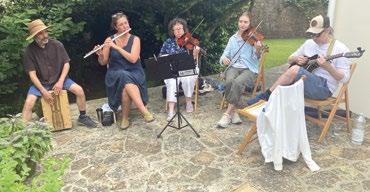
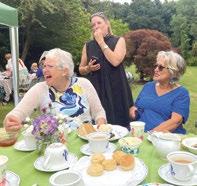
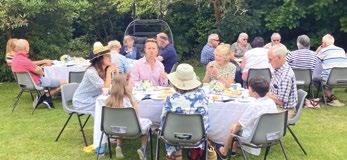
Well, St Mary’s Church held its annual afternoon tea in early July and, divine intervention or not, the day was blessed with sunshine and blue skies. Add to that the perfect setting of the garden at the home of Liz and Danny McCann, not to mention, the gentle accompaniment from a small group of local musicians – aided by a skilled violinist who was visiting from America – and some delicious cakes and sandwiches, the afternoon couldn’t have been bettered. Thanks are also due to the team of young helpers who did most of the legwork, looking after the guests. The successful afternoon was rounded off with the news that £750 was raised for church funds, but as one commentator put it, “the community spirit was priceless!”
THERE have been many histories written about the German occupation of the Channel Islands. The islands were the only British soil to be occupied by the Germans thus giving much to write about. This series of articles is not intended to be just another history of that time but an example of “What if…?”.
On 1 July 1940, German forces invade the Channel Islands. But what if, as prime minister Winston Churchill (we will recall that he was formerly First Lord of the Admiralty) had actually suggested several days earlier, possibly goaded by an equally belligerent Jerseyman in the House of Lords, Lord Portsea, that the Royal Navy should be charged with the task of resisting any German invasion of the islands?
Let’s imagine the scene. “The Channel Islands will not be taken!” A blast of cigar smoke. “The Navy will see to it!” And the First Sea Lord, Admiral Sir Dudley Pound, always in awe of his former First Lord, will seek to comply.

The taking of the Channel Islands – Unternehmung Grüne Pfeile (Operation Green Arrows) - was planned by Admiral Karlgeorg Schuster and his Flag Officer Vizeadmiral Eugen Lindau. Schuster relies on the Luftwaffe to prevent any intervention from the Royal Navy. Although the German Navy possesses modern and sophisticated warships it does not, in 1940, possess enough of them to threaten Britain’s dominance of the seas.
Despite the Kriegsmarine’s interest, surrender demands have been received on both Islands from the area’s Luftwaffe commander, Generaloberst von Richthofen, and
It is understood that Admiral Friedrich Hüffmeier, commander-in-chief of the German forces in the Channel Islands, in April 1945 and despite Germany’s defeat being inevitable, stated to Jersey’s Bailiff Alexander Coutanche that ‘you and I will be eating grass before I surrender’. Even if that’s a myth, it makes a good title for a compendium of myths, mysteries and minutiae of the only German Occupation of British Soil, compiled by Jersey author and historian Peter Tabb.
Let’s start right at the beginning with the first possible “What if…”.
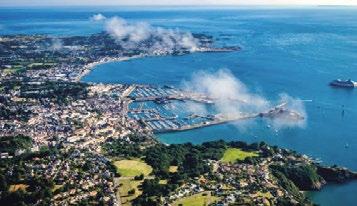
communicated to London. The local authorities are advised not to respond for, during the 24 hours’ grace given by the Germans, units of the Royal Navy, including two County-class heavy cruisers (HMS Norfolk and HMS Suffolk are temporarily but conveniently positioned at Portsmouth) with escorting destroyers will be despatched to provide both resistance to any invading naval forces and anti-aircraft cover against any incursions by the Luftwaffe. The cruisers both carry companies of Royal Marines who will be landed on Guernsey and Jersey to bolster the local defences.
The Island authorities wait in nervous anticipation (the German air attack of 28 June had come without warning and killed more than 30 islanders). Although those attackers flew from an airfield near Paris, Heinkel bombers are now based at Querqueville near Cherbourg and Pleurtuit near Dinard, just ten minutes’ flight from the Islands).
Norfolk and Suffolk sail from Portsmouth. The fast Countyclass cruisers, with their distinctive high freeboard and three funnels, bear a passing resemblance to ocean liners and although heavily armed with eight 8-inch guns, they are lightly armoured and possess little specific anti-aircraft armament.
The appearance of Norfolk and Suffolk and their attendant destroyers off the Islands is reported by German aerial reconnaissance. Schuster has no forces capable of dealing

with 8-inch gun cruisers and confers with von Richthofen. The invasion must be postponed, he reasons. Von Richthofen is scornful. His attitude towards the Kriegsmarine is one of cordial loathing.
Von Richthofen is one of Hitler’s favourites and, in February 1943, he will be appointed Germany’s youngest ever Generalfeldmarschall. He insists that if the Channel Islands authorities fail to respond to his demands, they, and their supposed protectors of the Royal Navy, should be attacked without mercy. He proposes supplementing his force of Heinkel He-111 medium bombers with Junkers Ju-87B Stukas, the screaming gull-winged dive-bombers that created terror during the Blitzkrieg across Europe.
With 12 hours before the ultimatum to the Islanders expires, von Richthofen assembles his air fleet; three squadrons of He-111 bombers and two squadrons of Stukas flown from Paris. Schuster and Lindau are nervous. The fighting spirit of the Royal Navy is well known. But von Richthofen ignores their objections and his air forces take off into the setting sun.
HMS Norfolk and HMS Suffolk are ten miles south of Alderney approaching at 25 knots the Little Russel on Guernsey’s east coast. The cruisers, more used to patrolling the world’s oceans, are line astern, their commanders wary of the unfamiliar waters with their swirling tides and barely concealed reefs.
The Stukas swoop out of the dusk. The warships are slow to react, despite being at Action Stations. The Stuka pilots are well practised at their craft, plummeting vertically like screeching gannets towards their prey. A deadly hail of 500-kilogram bombs hurtles towards the cruisers; the bombs have whistles fitted to their fins to ensure that the intended recipients know just what to expect. Norfolk is the first to be hit, the Stukas seemingly immune to the barrage of anti-aircraft fire directed towards them from the destroyers. The 10,000 ton cruiser shudders under the impact and slows, gravely wounded. Suffolk, so far unscathed, swerves to avoid her injured consort.
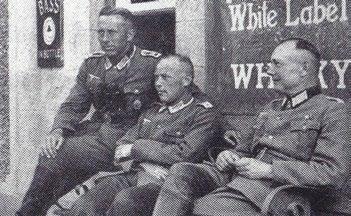

The Royal Navy’s big guns are useless against concerted air attacks (in 1941 the Japanese Air Force will sink the battleship Prince of Wales and battle cruiser Repulse) and the attackers are too fleet to be deterred.
Despite the lively barrage put up by the escorting destroyers the cruisers are now both hit and on fire. Norfolk is almost stopped in the water and is down by the head. Suffolk is now circling her, barely under control, her bridge has suffered a direct hit, killing her captain and navigating officer. On after control and with little room to manoeuvre, Suffolk, which draws more than 20 feet, runs aground on the Platte Fougere reef and comes to a shuddering stop, immediately heeling over. The destroyers close to assist but come under further bombardment from more Stukas and He-111s.
With a similar mix of high explosives and incendiaries, other bombers devastate St Peter Port and St Sampson.
With Norfolk and Suffolk reduced to sinking, smoking hulks, the remaining Royal Navy vessels hurry off into the last remnants of a fiery sunset.
The Royal Navy’s attempt to prevent the invasion of Jersey and Guernsey causes the loss two heavy cruisers and a destroyer, severely damaged in the Stuka assaults, sunk by its own consorts. Altogether more than a hundred RN officers and men die in the futile defence of the Islands.
German casualties are light: three Stukas shot down into the sea and a He-111 damaged by anti-aircraft fire crash-lands into Guernsey’s power station on the Northside at St Sampson’s. In London, no-one dares tell the prime minister ‘I told you so’.

The foregoing, of course, didn’t happen, but even if it had, the Occupation would have evolved much as it did.
In recent issues of St Mary Matters we’ve heard about Jean Vautier’s childhood in London’s East End. But just how did she end up in St Mary? This is her account of what happened next.
In 1948 my mother was told she only had just over a year to live. She suffered from tuberculosis, and both her lungs were affected. In those days it was incurable. If that news wasn’t bad enough, it meant the end of my hopes of going to university, because I was my mother’s carer (which also meant I could only attend school occasionally).
Not long afterwards, the doctor told my mum she had just six months to live – but only if she moved out of London. She wouldn’t survive another winter fog. I remember the fog. It was so thick that you couldn’t see your hand held out in front of you, and it had a yellow ting. “Where should I go?” my mother asked the doctor. He told her to go somewhere where she could breathe more easily.
My parents sold their shop and started looking for somewhere we could move to. Mum liked mountains. So, I went with her to Scotland to try out the air there. It was lovely, but it was too cold. We were both freezing. So, Scotland was out of the question. Mum then thought about Cornwall. She wanted a cottage in the countryside near the sea.
Then one day there was an article in the News of the World about Jersey: ‘Paradise Island,’ it said. “We’ll try it,” said Dad. So Mum, Dad and I came to Jersey in February 1949 to test the air. “Lovely. This is the place for me,” said Mum. We stayed at a guest house in Roseville Street. The sun was shining, and we went and sat on the beach at Havre des Pas. “This is the life,” says Mum, “warm enough to sit on the beach in February!”


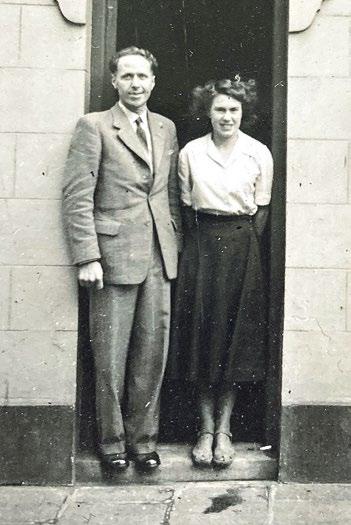
I was never tall. In school I was the shortest in my class, so when we lined up to go to prayers, I led the line. The first thing I noticed when I came to Jersey in 1949 was that the people were the same height as myself. It was strange not having to look up to people as I spoke. The average height of a man was 5ft 7ins. If you reached 5ft 10 ins you would be considered tall. Most women were between 5ft and 5ft 3 ins, I was 5ft 1 inch. So fitted in well with the population. That was really nice for me. It was the first time in my life I wasn’t considered to be short.
In London I had left school, having passed all my exams to become a secretary, and I earned £4.15 shillings a week. In the three months that I was employed, I rose from being in a typist pool to be the director’s private secretary. But now I had to find work in Jersey. The first thing I discovered was that the wages were much lower. My first wage was £3 15s a week at the Island Estate Office. In 1953 I had a small operation at the hospital. It wasn’t free. You had to have a means test to decide how much you had to pay. They decided that I should pay one and a half times my weekly wage.
Dad set about looking for a business to buy, and he settled on a shop on the corner of Val Plaisant & Victoria Street. He named it ‘Barkers’ (our family name). It’s still called ‘Barkers’ today. Mum lived long enough to see both her children married, and she died in the spring of 1956.
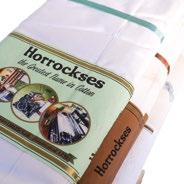
That was a bombshell, as I was saving up to get married, and a girl was expected to provide all the linen, crockery and tableware. The man bought the furniture! Most girls embroidered tablecloths and tray cloths to bring to their new home. I did likewise. I remember my mother telling me to buy ‘Horrocks’ cotton sheets, which were expensive. “I know they cost more,” said Mum, “but they will last a lifetime.” I did as I was told - and they did indeed last for years and years. They only made them in white, and, as later in life, coloured sheets became the norm, I only unwrapped the last pair of Horrocks sheets a few years ago. I am now 94 years old. So, mums really do know best!
We’ve made improvements to routes 20 and 24 to help further enhance accessibility around town.
Three new stops have been added:
• Castle Street
• Outside the Town Hall
• Hill Street
These new stops are designed to make it easier for you to reach the heart of St Helier, with buses arriving three times an hour.
You can now travel between main line services and Townlink routes, including the new stops.
Walking on my rounds at Crabbé the other day I was asked by a visitor if it was safe to do so as the Rifle Club was popping off a few rounds. I explained to them that the open season on visitors had finished a fortnight earlier, so all was well. They did look a bit surprised but continued on their way chattering merrily to themselves.
As this publication hits the door mat the first signs of autumn will be upon us and many will be reflecting on the “season” which even by official figures are down on last year and that was not too clever either. Fear not however, Durrell have come up with a scheme to help increase the numbers of visitors to the island - they are building a special enclosure for a breeding pair of these rare creatures. Hopefully in the fullness of time the numbers will grow to the levels we experienced in the 1990s. Those who have any connection with visiting couples that would like a comfortable home with free food and a wonderful rope walk please send post cards to the Rare Breeds Secretary.
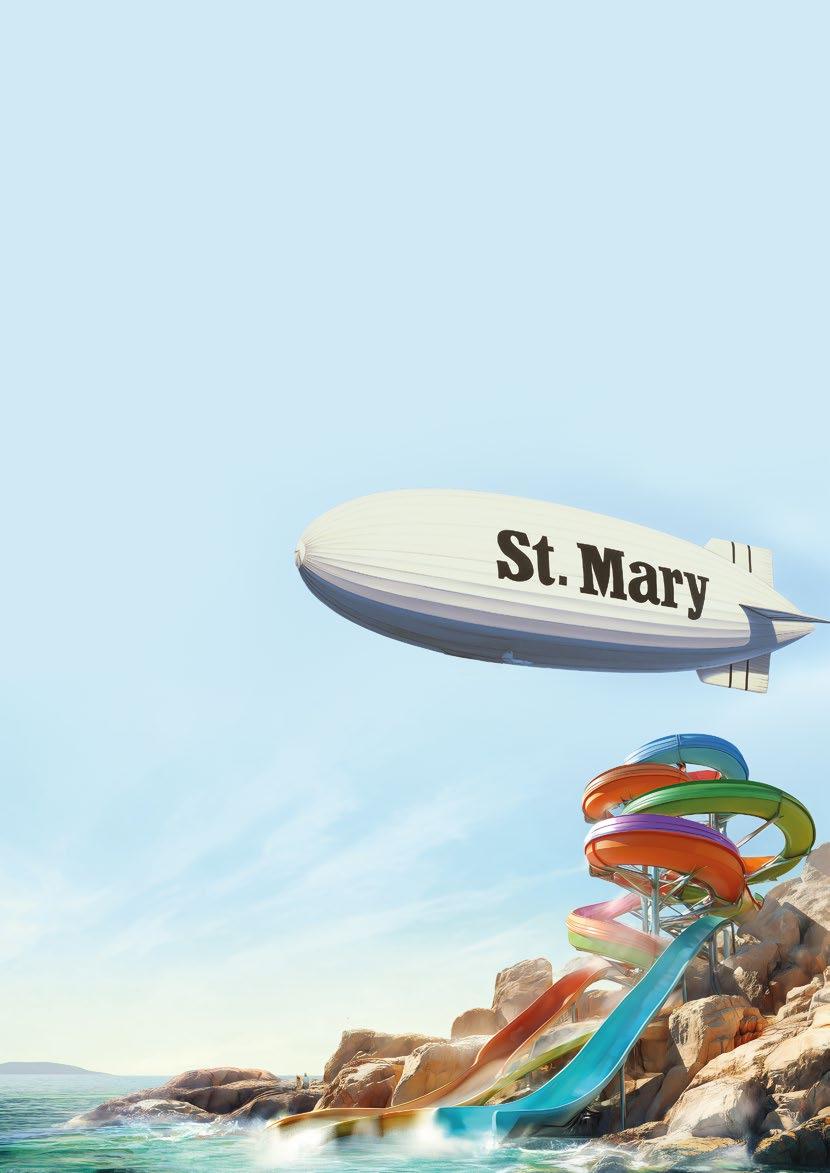
The twinning with Alderney could also benefit the tourism as we could have a daily ferry boat to the sister island. Alternative ideas are being circulated and these include a cable car to Guernsey and from there by galley to Alderney - basically row yourself and enjoy the whip round halfway across. The other hypothesis is to set up a balloon station in St. Mary (Zeppelin style), possibly not quite as big, and run the craft on biofuel made from the remnants of the harvesting of root vegetables and flower stalks.
To make the scheme viable will require volunteers with a variety of skills. Making the balloon will require many cyclists to surrender their Velcro clothing which can then be used by the sewing circle to make the ovoid shape. Those who are proficient in the art of basket weaving could be put to work on the passenger compartment which will be large enough to carry eight passengers and a hostess who will be serving Valium tablets for those of a nervous disposition and large measures of spirits for those with a more gung-ho attitude to this mode of transport.
Our tourism experts have decided in their wisdom to target the eighteen to thirty brigade. For the dare devils and thrill seekers, forget cliff diving and try the giant slide which will be erected from the cliff top above Grève de Lecq and propel the individual at
breakneck speed down the three-hundred-foot chute. This should have the dynamic effect of hitting the water at such a speed as to skim the person across the surface and with luck they could have a free visit to Guernsey thrown in.
Now, imagine if you, cycling tracks on rough terrain - i.e. the wrong way down streets on the uneven pavements doing fancy twists and turns around the unsuspecting pedestrians, go-carting in and around the unimaginative streets in St. Helier, and speed racing in reinforced rally cars through a twenty mile an hour area, especially those with pedestrian crossings. Most of these activities will of course be accompanied with the usual mixture of gallic and AngloSaxon expletives mainly from the spectators. The usual response from such riders and drivers are delivered with hand and finger gestures.
The reason that various individuals have, and are still contemplating, these somewhat fanciful ideas is down to one factor: they want to be elected to the big house in the metropolis. Hopefully there are many in the Parish and beyond who would care to take on the task of being a member of the States. Remember what Disraeli said about Gladstone when a wag from the opposition asked him to tell the difference between a catastrophe and a disaster. He replied if Mr Gladstone were to fall into the Thames it would be a disaster if however someone were to pull him out, it would be a catastrophe.
It may seem odd that a feature creating awareness of diabetes should highlight feet but, if you are diabetic, the daily check of your feet and keeping them in good condition, will prevent one of the disease’s worst consequences, the loss of limbs due to a lack of feeling in the extremities (neuropathy) leading to cuts or blisters in particular becoming gangrenous.
Today managing Type 1 diabetes with insulin injections is commonplace but diabetes itself still remains something of an enigma. It is a condition which is not preventable and Type 1 occurs when the pancreas ceases to produce the insulin we all rely upon to manage the level of sugar in our blood.
Type 2 diabetes, which occurs as the pancreas progressively produces less insulin, while itself not totally preventa-
the risk of acquiring it can be managed and diminished, by the way in which we live.
Most of us would assume that choosing our lifestyle is very much up to ourselves. However, your lifestyle can actually lead you down a path whose ultimate destination is the very last thing you want and that is to diabetes.
Diabetes is all about sugar in the blood and occurs when the body becomes incapable of controlling how much sugar our blood is prepared to accept. Fortunately for most of us our pancreas (a large gland behind the stomach) produces the hormone insulin which automatically regulates glucose levels in the blood.
Why diabetes occurs is not known and therefore it cannot be prevented and Type 1 can strike children as young as two or three years old. There is no early detection for Type 1 diabetes, but Type 2 can be detected with a blood test and if detected early enough, can be managed, and even reversed.

The Healthy Living & Lifestyle Event is returning to the Radisson Blu Waterfront Hotel, St Helier on Friday 26th September until Sunday 28th.
This year we will be having a Preview Evening on Thursday 25th September, from 6pm until 9pm for those that can’t make it at the weekend.
This event promises to be a dynamic platform for showcasing exhibitor’s brands, connecting with health-conscious professionals, and contributing to the vibrant wellness community in Jersey.
Discover the latest products, services, and innovations in the health and wellness industry.
With Free Admission and the option to visit as many times as you like, there are opportunities for the general public to discuss their health and fitness concerns, on a one to one basis, with our health & wellness professionals.
With over 36 Stands (11 from the UK) there will be plenty of things to inspire and interest you and the whole family.
On Saturday and Sunday there will be free demonstrations and workshops in the Noirmont Room just across the way from the Main Hall from 11am on both those days.
Opening Times:
Friday 26th - 10am to 6pm
Saturday 27th - 10am to 6pm
Sunday 28th - 10am to 5pm




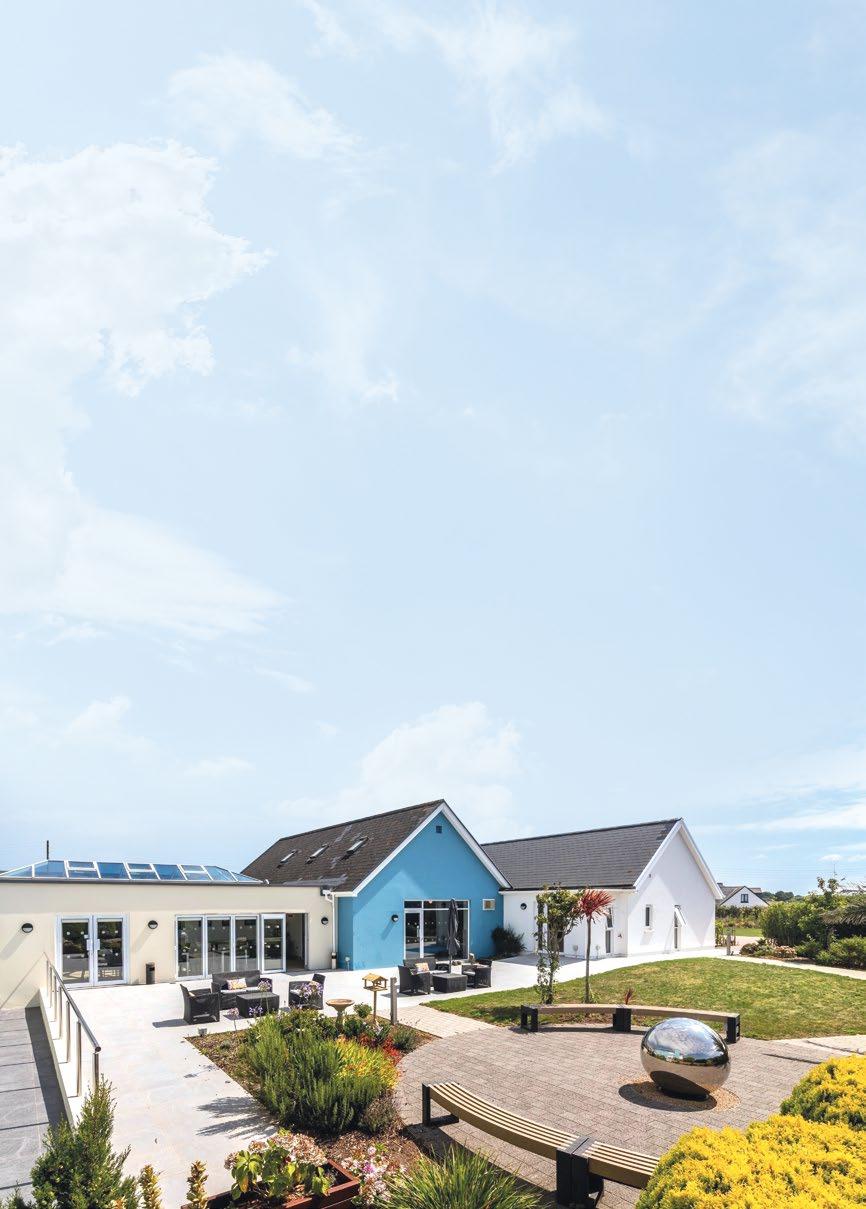
Located on the edge of the Jersey National Park in St Ouen, Maison des Landes Hotel and Community Hub blends the peaceful charm of the countryside with the very best in modern design to offer a fully inclusive environment.
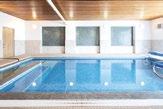
Maison des Landes is a place where you can relax, recharge and feel truly looked after, whilst enjoying the tranquil gardens and panoramic coastal views. With 15 out of 23 rooms fully adapted to suit a range of needs, everything has been thought through. Enhance your visit with a swim in the hydrotherapy pool, maintained at 33 degrees, which is perfect for relaxation and rejuvenation.
When it comes to food, you’re in for a treat! Head Chef Sachin and his team proudly create fresh, locally sourced dishes at very reasonable prices that are available for breakfast, lunch and dinner.
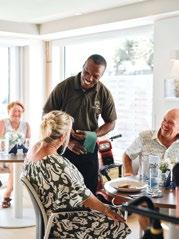
At Maison des Landes, our guests come first. Friendly, dedicated and always willing to go the extra mile, our staff team take genuine pride in what they do - and it shows. Whether you need a little extra support or simply a warm welcome, nothing is too much trouble.
“We just wanted to take a moment to express our heartfelt thanks for the incredible hospitality we experienced during our recent stay at your hotel. From the moment we arrived, the staff went above and beyond to make us feel welcome and comfortable. Their friendliness, kindness and professionalism truly made our stay unforgettable.”
A stunning venue for any wedding or special occasion, and if anyone needs accessible facilities, they’re already in place, from step-free spaces to accessible bedrooms.
Treat your loved ones to a delicious meal or overnight stay at Maison des Landes, our gift vouchers are easy to purchase by phone and are valid for 12 months. Vouchers can be sent electronically or by post.

Exclusive to readers of the parish magazines, we are delighted to offer the following discounts:
• £149 GETAWAY FOR TWO – overnight stay for two people including three-course evening meal plus full English and continental breakfast.
This offer is available for purchase until 23rd December 2025 and is valid for stays from May-September 2026, subject to availability at time of booking.
• 10% OFF food and drinks – please quote PARISH MAGAZINE OFFER when booking or paying at the hotel restaurant until 23rd December 2025.
To book, purchase a gift voucher or discuss your specific requirements, please call the hotel directly on 01534 481683 or email reservations@maisondeslandes.co.uk
This guide explains how to use the St Mary household recycling collection. A collection planner is included so you know when your recycling will be collected.
Every home in St Mary receives a recycling collection, in addition to the existing rubbish and glass collections. Recycling collections will be on the same day as your glass collection.
For the month of September
Glass & Recycling Thursday 11/09
For the month of October
Glass & Recycling Thursday 09/10
For the month of November
Glass & Recycling
For the month of December
Thursday 13/11
Glass & Recycling Thursday 11/12
All refuse, recycling and glass out before 5am please
For more information, visit gov.je/recycling
For collection enquiries, contact GermBusters Ltd.
Tel (01534) 869918 | Email info@germbusters.je

Myth
All recycling collected in Jersey just gets burned in the Energy Recovery Facility.
Items sent for recycling through Parish and Government of Jersey collections are not incinerated . Only contaminated materials are diverted for energy recovery.
Myth Recycling and general refuse are collected by the same truck, and get mixed together
Some collections rounds use the same type of vehicle , but the loads are kept separate to ensure proper recycling.
Myth You don’t need to rinse out food containers or bottles before recycling.
Dirty items can contaminate the whole collection, making them unrecyclable Always rinse before recycling!
Myth You should leave metal lids on jars and bottles.
Myth Glass can go in general waste orenergy recovery.


Myth Plastic bottle tops can’t be recycled.





Metal lids and tops should be removed and placed with your household metal recycling. Glass can damage the Energy Recovery Facility , leading to costly repairs. It must be recycled properly.


Our annual Prayer Day will be on Saturday 4th October from 8.00am to 8.00pm Please pop in for a few minutes, (or a few hours!) to see the various prayer stations set up around the church.
The next day, on Sunday 5th October, we will gather outside the church from 9.30am onwards to cheer on the marathon runners passing by. Please join us to add your support. We then have a short service in the church from 11.00am
We hold regular film nights during the winter months, starting with a meal at 6.00pm, followed by the film at 7.30pm Please contact Dianne Huddlestone (483917 or diannehuddlestone@gmail.com) if you would like to come for the meal. The next two film nights will be held on Saturday 11th October and Saturday 8th November
Our ever-popular Christingle service, a celebration of Jesus’ birth, will take place on Christmas Eve. There will be a collection for The Children’s Society.
All Together Worship services are held on the last Sunday of each month and are café-style, family friendly services. Tea and coffee are served from 10.15am to 10.45am, when the service starts. Suitable for all ages and all are welcome.

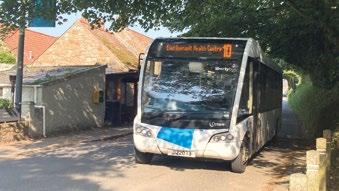
There’s good news on the buses. Following the success of the new number 10 route from Jersey Zoo to the Enid Quenault Health Care centre in St Brelade which goes through St Mary, Liberty Bus has decided to extend the route on a permanent basis.
Instead of a basically morning schedule there are now afternoon return times available and buses will run on both Saturdays and Sundays. The Route 10 is now running every two hours, but later into the evenings and on weekends.

It is also worth reporting on the fact that St Mary has now got an underground station, linked apparently to the London tube network. Well, to put it another way, one of the Parish’s model railway enthusiasts, who used to work for the London Underground, has built a model of what a tube station in St Mary would have looked like
After the latest branchage assessment there’s concern that some parishioners aren’t fully complying with the law.
The problem is not so much about cutting back the hedgerows etc, but more about what happens to the debris afterwards. There have been several instances this year when the roadsides haven’t been effectively cleaned up following the cutting back process. The Parish Hall points out that the rules are quite clear and that fines of up to £100 can be levied on offenders.
If you plant a lot of trees, you’ll need to carry out a lot of maintenance, which is exactly what Jersey Trees for Life does for most of the year. Those of you who have planted trees of your own are probably well aware of this.
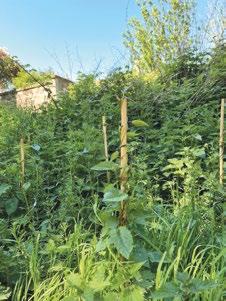
Over summer and early autumn, competing species like bracken, bramble, bindweed, sticky plant and nettles can grow prolifically. Bracken is the poster child, rapidly engulfing banques, côtils and valleys Island wide.
While there’s nothing intrinsically bad about most competing species, they divert vital nutrients and water away from trees, slowing down growth. The problem is therefore most acute when whips and saplings (as opposed to larger trees) are overwhelmed by one or more of these interlopers, which can happen surprisingly quickly. That’s why it’s so important to clear them and why Jersey Trees for Life and its volunteers spend so much time doing so at this time of year.
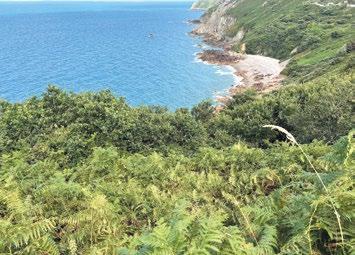
It's impossible to talk about maintenance without watering, especially after a dry summer (not that it’s the most complex facet of tree care). A thorough watering every 7-10 days is optimal, ensuring a deep soak into the roots – root hydration is key to successful growth.
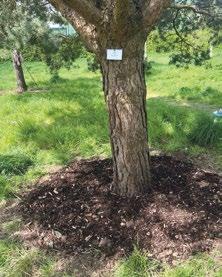
Mulching – removing existing plants from surrounding ground and adding a layer of woodchip or other (typically) organic matter – is another useful tool in the tree care kitbag. If you have the time and inclination, this technique is great for reducing weed growth, plus it helps soil to retain water and control its temperature. It even looks good. Examples can be found at Adelina Wood and Val de la Mare, if you’re keen to see for yourself.
As for pruning, autumn’s typically not the time, as trees are preparing for dormancy. As a rule, stick to winter (there are plenty of summery exceptions)

As global temperatures rise, treescapes will follow. For Jersey, this means a long-term transition to more drought-tolerant species while the likes of beech, Scots pine and silver birch struggle. We shouldn’t write off our current crop too soon, though. Trees are famously resilient and can adapt to their environment by developing strategies primarily based on drought avoidance.

Avoidance is based on simply maximising intake and/or reducing water use. As water intake is a function of root surface area, trees can survive drought by evolving larger root systems. Conversely, to reduce water use they slow transpiration by manipulating their leaves with tactics such as restricting growth, forming a layer of hair or wax and even shedding (abscission).
The ability of trees to adapt to changing conditions is remarkable but naturally has its limits, even if our native species aren’t going anywhere quite yet. This is why we need to look after today’s trees while preparing for tomorrow, managing the gradual transition to less familiar but more drought-tolerant species. Our future treescape is sure to look different.




Did you know you could get up to £9,000 towards the cost of a heat pump?
When you switch from fossil fuel heating to a low carbon heating alternative, there are subsidies available through the Government’s Low Carbon Heating Incentive.
For full details, visit our website and contact one of our approved contractors.








With energy costs rising and long-term electricity plans for Jersey still evolving, many Islanders are starting to ask: how can we create more certainty for ourselves and our families? For an increasing number of local households, the answer is solar energy, a simple, reliable way to take control of energy use while contributing to a stronger, more resilient community.
Jersey has long benefited from superior energy security through a stable connection to the French electricity grid. Whether we continue with imports at the same level or eventually benefit from the potential offshore wind farms in our coastal waters 10+ years from now, many people are looking for ways to become more selfsufficient. Solar is emerging as THE most practical option.
More than just long-term savings, solar photovoltaic (PV) systems allow you to generate your own electricity and take part in Jersey’s future energy system by producing clean power at home and reducing reliance on imported energy.

Take the Vardon family. In 2022, they installed solar panels on their home. Within a year, they cut their energy usage by 27 percent and saved around £1,000 on their electricity bills. This year, they expanded their system and are on their way to near energy independence.
Or the Lewis family, who shared: “We have had our panels up for nine months. Our electricity bill for the last three months was £62. The same period last year? £432.” That is the kind of impact solar can have.
Solar is not just about reducing bills; it is about building something bigger. Smart technology now makes it easy to monitor and manage energy use, and parishioners can play a key role in shaping a cleaner, more resilient energy system.
Across the island, SunWorks has installed over 15,000 panels on more than 600 homes. These families are part of a growing movement, one that supports independence, local innovation, and practical solutions to everyday challenges.
You do not need to be wealthy or technical to benefit from solar. Systems start from around £7,000 and are tailored carefully to your roof size and energy needs. Panels work well even on cloudy days, and thanks to Jersey’s rainfall, they are mostly self-cleaning. Maintenance is minimal, and most systems pay for themselves within 8 to 12 years - and after that, it’s all savings.
• You can export electricity to Jersey Electricity at 9.4 pence per unit
• Solar panels can last up to 25-30 years with warranties of 20+ years
• Panels work effectively in Jersey’s mixed climate, even on cloudy days
• Solar panels can help preserve your roof and increase home value
• Solar offers strong financial returns and long-term peace of mind
• SunWorks carries out roof repairs, reroofing and insulation
• Systems are expandable — add panels, batteries, EV chargers, and more
• Interest-free finance options with SunWorks make solar more accessible than ever
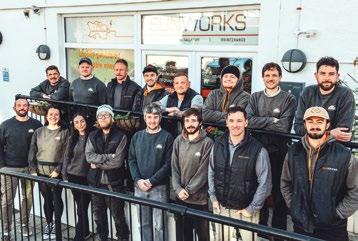
It’s time to start thinking about your renewable future. Reclaim your energy independence, reduce your bills, and help light up our community — one rooftop at a time.


























The end of summer term going into the summer holidays has been busy at St Mary’s Youth Club. We held our AGM where we launched 2 new awards from young people.
The first being the Young Worker of the Year Award which was awarded to Joel Le Mottee for his outstanding dedication to the youth club within his capacity as lead young worker. Joel has been a role model not just for other young people but for the wider young worker team. His selflessness and loyalty within the community of St Mary has been at the heartbeat of our events, fundraisers and weekly sessions and we can’t thank Joel enough for all that he’s done.

The second award is the embodied our values award. This award is given to the person who shows dedication, resilience, teamwork attributes, kindness, inspiration and empathy. Due to her resilience, following a goal she set to play more sports, the recipient of this award goes to Kyara Vieira.
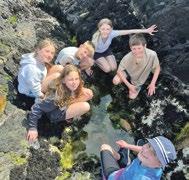
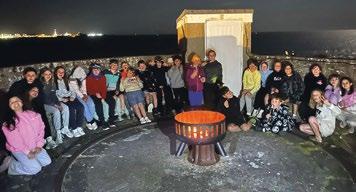
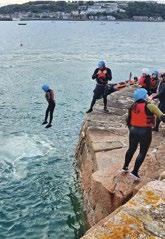
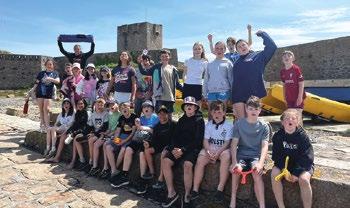
In addition to our recent awards the youth club has been busy running summer activities and drop-in sessions featuring football tournaments, skating, beach volleyball and surfing. The club welcomed The Isle of Man Youth Service who brought over a group of young workers. This was a great opportunity for our groups to meet and discuss the islands similarity and differences which was really beneficial.
On Monday 21 st July, our fantastic young worker Lauren Le Garignon ran the first girls only sports event ‘Every Girl Moves’ at Les Quennevais School. Lauren came up with the event at the beginning of the year as a way to achieve her goal of empowering more girls to get into sport in Jersey. The event featured over 15 local sports clubs and organisation who ran drop-in taster sessions with girls island-wide. Lauren promoted the event on the radio as well as featuring on BBC Channel Island News! We are super proud of what she has been able to achieve.


Islanders living with glaucoma now have access to the highest standard of specialist care, thanks to a new addition to the Evolution Eye Care team. Mr Alastair Lockwood, a leading UK glaucoma surgeon, joined the practice in May 2025, bringing his first-rate specialist expertise to Jersey.
Mr Lockwood’s academic and professional credentials include undergraduate studies at Cambridge and Oxford Universities, a specialist glaucoma fellowship at Moorfields Eye Hospital in London, and a PhD in glaucoma surgery.
Mr Lockwood said: “I’m delighted to have joined Evolution Eye Care and brought a dedicated glaucoma service to Jersey. As a subspecialist, my clinical practice and research is focussed on glaucoma, so I’m able to offer up-to-date, tailored advice and treatment options for each individual patient.”
If backup reviews are needed between my visits, the experienced team at Evolution – the island’s largest private eye clinic – are on hand to support.”

Most glaucoma is managed with medications, regular consultations, and laser procedures – all of which take place with Mr Lockwood at Evolution Eye Care, offering convenience and reassurance. If specialist glaucoma surgeries are required, Mr Lockwood performs these at his dedicated unit in Portsmouth, where he continues to practise and lead in glaucoma surgery.

Evolution’s co-founder, Mr Anish Shah, welcomed Mr Lockwood’s appointment. “Alastair is the only fellowship-trained glaucoma surgeon consulting in Jersey, and his arrival marks a major step forward for eye care on the island,” said Mr Shah.
“We’re proud to offer a glaucoma service that combines world-leading expertise with the personal, accessible care our patients expect,” Mr Shah said. “Evolution’s goal is to make the best ophthalmic care available here in Jersey — and Mr Lockwood’s glaucoma clinic is a huge part of that mission.”

Patients with glaucoma — whether newly diagnosed or under care elsewhere — are now seeking second opinions or transferring their management entirely to Evolution’s specialist-led service. Mr Lockwood’s regular Jersey clinics provide important constancy for glaucoma, a lifelong condition requiring close monitoring and timely intervention.
Mr Lockwood added: “Continuity of care is vital in glaucoma. By visiting Evolution every month, I am building strong, ongoing relationships with my patients.
Patients wishing to book an appointment with Mr Lockwood, or seek a second opinion on their glaucoma care, can contact Evolution Eye Care directly.
To make a booking, visit www.evolution.je/book email info@evolution.je, or call 01534 835400

1st Floor
Little Grove Clinic
Rue de Haut
St Lawrence JE3 1JZ

As part of the Government of Jersey’s broader initiative to showcase progress on our shared Common Strategic Priorities, Islanders may have seen recent updates highlighting how the New Healthcare Facilities Programme (NHFP) is advancing its commitment to “start building a new hospital at Overdale”. So, for this quarter’s edition, I thought it would be helpful to take a moment to recap where we currently stand with the Programme as a whole – and what critical work is still to come.
Since the Independent Review was presented to the States Assembly in November 2022, the Programme has made steady progress. The review found that a single-site hospital at Overdale was no longer achievable within the approved budget and recommended a phased, multi-site approach.
In line with good governance, the Strategic Outline Case was developed and endorsed in June 2023. It considered different options for new facilities and confirmed the continued urgent need, or case for change. The recommended way forward from that review was a multi-site model and the Feasibility Study explored different options for two configurations of multi-site proposals (Hot and Cold vs Acute and Ambulatory, both combining with a separate Health Village) and locations, with Overdale selected for the Acute Hospital, Kensington Place for Ambulatory Care, and St Saviour for a new Health Village.
Key milestones since then include the start and completion of demolition at Overdale (December 2023–Nov 2024), the relocation of Samarès Ward to St Ewold’s (May 2024), and a public consultation on the Acute Hospital’s concept designs to support the Planning Application. The Outline Business Case was approved in November 2024, securing Phase 1 funding from the States Assembly. Design work for the Acute Hospital progressed throughout 2024, with planning permission granted earlier this year. Meanwhile, the procurement process to appoint a Main Works Delivery Partner has been ongoing since December 2024. Crematorium services will move from Westmount to the refurbished Members’ Room at RJA&HS from September.
Given the critical importance of delivering the Acute Hospital at Overdale, much of the team’s recent work has rightly focused on developing its design, securing planning permission, and progressing the procurement of a Main Works Delivery Partner to build the facility.
However, the Programme goes far beyond Overdale. Both the Kensington Place Ambulatory Facility – utilising the site on Kensington Place and part of the existing General Hospital site –and St Saviour’s Health Village remain essential components in the wider redevelopment of our healthcare estate.
Work is now underway to refresh the Functional Briefs and Concept Designs for Kensington Place and St Saviour. This work is still in its early stages, and the next steps will involve re-engaging with clinical colleagues across Health and Community Services, as well as other key stakeholders.
The phased and flexible structure of the Programme is intentional and beneficial. It allows plans for areas that are more subject to change - such as Kensington Place and St Saviour - to evolve as required, rather than locking us into fixed decisions too early. It also enables schemes to be progressed as they are affordable.
There is still significant work to do to develop these plans, and they will only move forward with the right level of engagement. That includes input from clinicians, local residents, and the wider public.

We are currently working towards completing the updated Functional Briefs and Development Control Plans (DCP) for both sites by Q4 2025, with a view to sharing these more widely in early 2026. A DCP is a document that sets out how best a site can be most efficiently, and cost effectively developed. Once the DCPs are further developed, the team will be providing more detail on the first permanent construction works on each of the sites. They need to be carefully considered to ensure that throughtout the NHFP and especially at the end of every phase, healthcare services are operating efficiently and effectively, providing the care that islanders expect, helping staff to do their work.
In the meantime, as part of the phase one funding approved by the States Assembly, there is also budget available to develop more “meanwhile” uses for the Kensington Place site. It has been used since purchase by HCJ for valuable additional storage and other operational needs. We are actively exploring how the site could be continued to be used in the short term to support the overall needs of HCJ as well as deliver improved Public Realm. These discussions are ongoing, and while there isn’t a confirmed timetable at this stage, the current intention is to begin meanwhile works in early 2026, subject to proposal approvals and any required regulatory sign-off (for example, Planning Services).
The procurement process for a Main Works Delivery Partner to build the Acute Hospital
continues, with parties who are capable of building the facility having expressed their interest. A preferred tenderer for these construction works is expected to be agreed in Q3 2025, with the signing of a main contract hopefully before the end of the year and construction works following.
The main focus of the procurement process is to deliver quality and value for islanders, and the timeline may change to ensure we achieve this.
As I hope Islanders understand, this process is commercially sensitive and complex with all parties needing to ensure that they understand the designs and anticipated costs before entering into a contract.
However, I look forward to providing further information about this important progress as soon as possible. In the meantime, the NHFP will continue progressing works at the site, ensuring continuity of development. In coming months, works will continue to prepare the old Jersey Water buildings to be site offices, erecting hoardings, diverting existing services, developing designs for site welfare, and site excavations.
Find out more about the New Healthcare Facilities Programme and stay in touch:
▪ Listen to our podcast to find out more about the Programme
▪ Watch videos about the Programme
▪ Follow us on social media


It’s more than roadworks, it’s powering big nights out.





































Over the next few years, we will carry out the largest ever upgrade to the Island’s energy network. It will ensure every home and business continues to access affordable, sustainable energy.



















www.jec.co.uk/thebigupgrade












TUCSON has got you covered
Availabe now from Featuring a cutting-edge design, a new redesigned interior and state-of-the-art smart technology.
£32,908
October Half Term - 2025

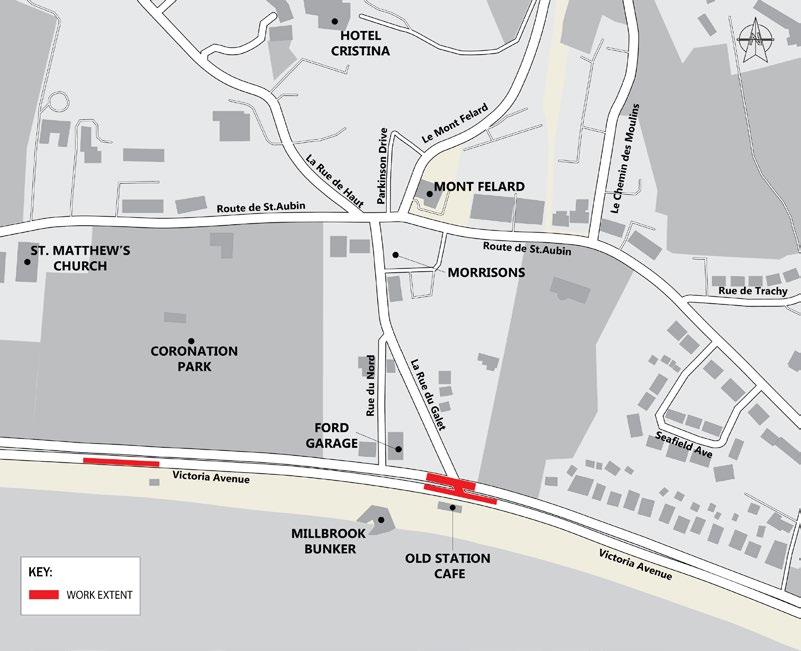
Further information
As part of the ongoing highway maintenance by Infrastructure and Environment (I&E), resurfacing works are planned along sections of Victoria Avenue, including junction with Rue du Galet.
Stay up to date on access arrangements,traffic managements and working times by visiting gov.je/roadworks or scanning the QR code provided.
Thank you for your patience while these essential works take place.We apologise for any inconvenience caused.









LA TANIERE, UPPER MIDVALE ROAD, ST HELIER, JE2


PARISH HALL T: 482700 Mon – Fri 9.am to 1.pm
CONNÉTABLE
David Johnson 07797 770 950 d.johnson@gov.je
PROCUREURS DE BIEN PUBLIQUE
David Munns, Cynthia Cotillard
CENTENIERS
ASSISTANT SECRETARY
Annie Le Voguer
ROADS COMMITTEE
Alan Moullin, Peter Le Liard
Trevor Le Sage
ROADS INSPECTORS (Sud)
Ivor Barrette

Chris Bunt, John Alcock, Glynn Bower, Jim Drew
DUTY CENTENIER 07797 712 972

RECTOR
Rev Kirsty Allan
VINGTENIERS (Sud) Annette Johnson (Nord) Sue Heppolette
CONSTABLE’S OFFICERS
Stacey Powys, Sally Redman, Claire Harrington, Joan Enriques
PARISH SECRETARY Peter Routier
Jeremy Holmes (Nord)
Emile Drean
Adrian De Gruchy
RATES COMMITTEE
Robin Stockton
David Munns
Martin Stodart
Les Stanton
Cynthia Cotillard
CARETAKER
Guy le Guyader
Jason Langlois
CHURCH WARDENS
Frank Wood
Ann Watson