L’Amarrage
St Clement Parish Magazine



Independent.
Hannah Roynon-Jones Director E hannah.roynon-jones@alexpicottrust.com


Sarah Carolan Legal Assistant
Planning for the future may feel daunting, but it is one of the most valuable steps you can take to protect your loved ones. At BCR Law LLP, we specialise in wills and estate planning, offering clear and practical advice designed to give you complete peace of mind.
A properly drafted will guarantees that your estate is distributed in line with your intentions, rather than leaving it up to standard rules that may not reflect your wishes; our estate planning team will ensure your wishes are protected and your loved ones are cared for.
For added peace of mind, you can also appoint us as your executor. We take on the practical and legal responsibilities at what is often a difficult time, managing your estate with care and professionalism, and easing the pressure on your loved ones. This gives you complete confidence that everything will be handled smoothly and exactly as you intended.
To find out more about how we can support you, contact us at enquiries@bcrlawllp.com.
Parishioners, in the last edition, we mentioned that many of you had been asking about Alan Le Breton’s health. Very sadly, as some of you may already be aware, we lost Alan recently after a long and brave battle with cancer.
Alan was a great supporter of our Parish and was a proud and talented journalist who was our magazine editor for many years. Alan leaves his wife Isabelle who is a regular contributor to our magazine and both the Parish and our Community Services team have reached out to her with our sincere condolences at this very sad time.


This edition contains a special appreciation in memory of Alan. Parish life won’t be quite the same without Alan pushing me for a deadline or snapping away taking photos at Parish events.
As the cold winds signal that we are heading into winter, with the clocks changing, we reset for the coming months and our focus must be on, not just the weather, but also what it brings - a reality that we need to look after each other and help where it is needed. So, as we move quickly towards Christmas, our focus is about those people who are struggling with finances, mental health and physical ailments. How pleasing is to have our Trusts, our Community Services Team and the Tara Centre helping as much as possible with all these needs. If you know of someone with any problems of this nature, please ask them to get in touch. If you think they may be too proud to reach out for help, please get their contact details and we will contact them and offer help.
Of course, we cannot talk about community without mentioning our effervescent and hard-working Julie Martin, who heads our Community Team within the Parish Hall. Julie has worked for the Parish for 30 years in different capacities but is best known for organising our Community Support Team with all its activities and meeting a growing number of people with various difficulties, financial and mental. Sadly, Julie will be leaving us in the new year but leaves us with a reputation as being the undisputedly best
parish in the Island for community and social care. She has been the guiding light and is irreplaceable as we know. We will miss her dedication, her smile and humour. Bless you Julie for teaching us humility. We will all miss you… more about Julie in the next edition.
We are always looking for more volunteers for our Community Services, Honorary Police and other Parish Organisations, Parish in Bloom, Twinning Association, Battle of Flowers, St Clement Sports and Social Club, Pétanque, the Churches, St Clement Community Hub, Rates Committee, Roads Committee and our two new initiatives St Clement Goes Green and Pathways East. It all revolves around our committed Parishioners and their finances, so please try to support their efforts by offering your time or expertise. Thank you.
In other news, the solar panels are going up and should be finished by the time this publication reaches you. Then, we must install the heat source pumps and should have a switch on in the new year; we have had delays particularly due to the weather, but this project is now on track, and we are looking forward to getting rid of our outdated oil-fired heating system. This will be financially better for the Parish and beneficial for climate change.
We have just recruited five new Constable’s Officers who were sworn in at the Royal Court on 7th November - a warm welcome to our new recruits.
I mentioned the winter weather earlier in this article but forgot that there is our annual bonus for this time of year - of course, I am talking about Christmas! Our team is preparing for our Christmas Lunches at the Hotel Ambassadeur, our Christmas drinks awards

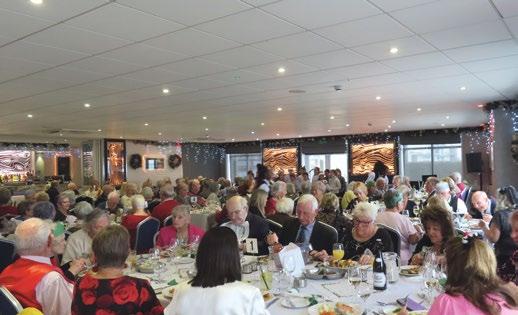
ceremony, and Father Christmas is coming to the Parish Hall on 11th December for the kids. Father Christmas will also be going to the Community Hub at Clos Mourant at a date to be finalised, so look out for updates.
With all of this going on, we have an ever-changing and bright future in our Parish. I look forward to your continuing support in all that we do.
Please look after each other.
Best wishes, Marcus
Following his successful career with the BBC and his retirement in October 2005, Alan returned to Jersey with Isabelle to the family home Beauvais, St Clement. However, the word ‘retirement’ does not correctly describe Alan’s ongoing involvement in Jersey life and most importantly, St Clement – God’s Own Parish.
We first met at a Parish Dinner held at the Shakespeare Hotel – no pre-ordering and Marcus taking the table orders in his calm and professional manner. My initial involvement with Alan was through L’Amarrage, Alan bringing his well-honed editorial skills to the fore. Our friendship blossomed and Isabelle and Alan used to visit us at Greenhill.
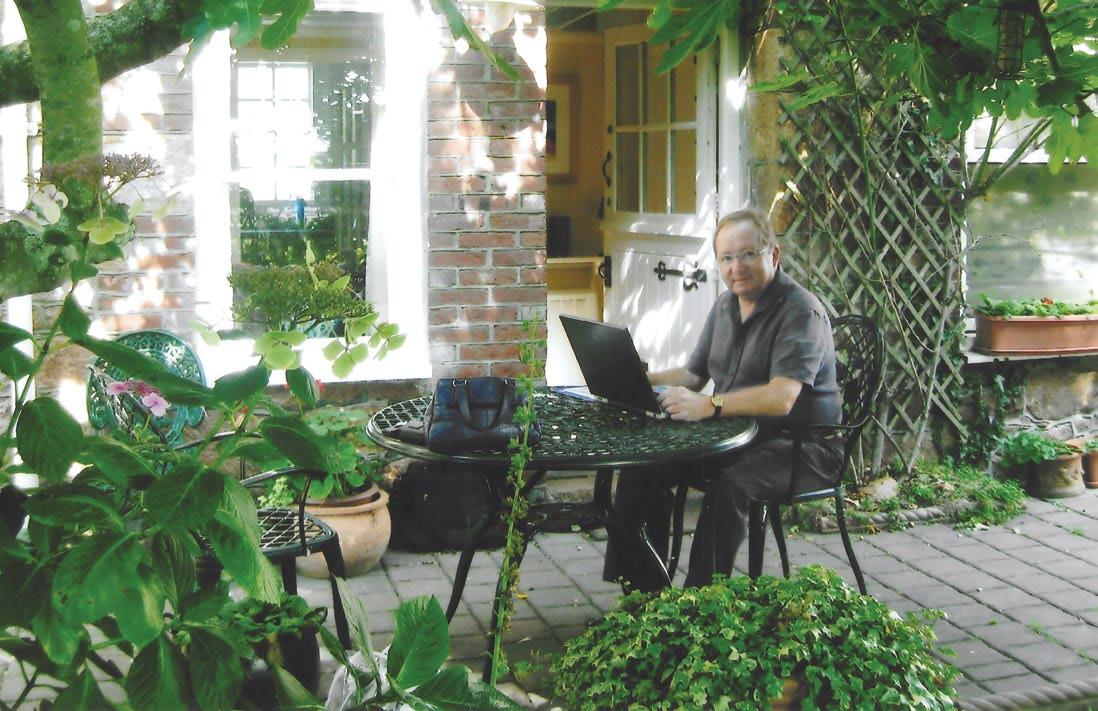
They were kind enough to look after our cats, Monty and Sweep, and Nelson our African Grey parrot, when we went on holiday. A photograph of Alan outside our lobby door, sitting at a garden table with his laptop editing L’Amarrage, appeared in an edition of the magazine.
Alan’s busy retired life was, to a considerable degree, centred around the Parish and through our friendship, I submitted articles about all manner of things. The articles duly appeared in the magazine, but in true style, well edited by Alan. He even selected one of my photos for the front cover of L’Amarrage – Miss St Clement arriving by boat at Le Hocq Slip.
Whilst Alan was best known to me through L’Amarrage, his literary expertise included editing the Our Island publication and, during the editorship of Chris Bright, a weekly opinion page in the JEP.
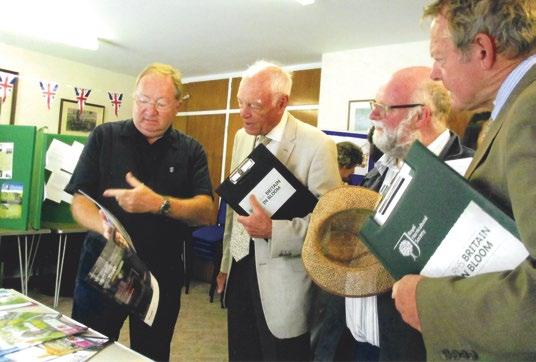
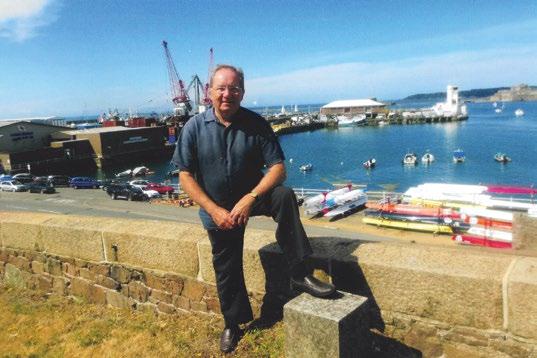
Alan’s parochial involvement also included being an active member of the Parish Twinning Committee. Alan was a fluent French speaker.
Outside the Parish, Alan served as Chair of the Arts Trust and as Vice President of the Eisteddfod. From my conversations with Alan, these voluntary positions had his full involvement, ably assisted by Isabelle.
Able to relax on occasion, Alan and Isabelle enjoyed the ambience of and lunches at Samares Manor which was a special place to them. The various events at the Manor were a ‘must’ for the columns
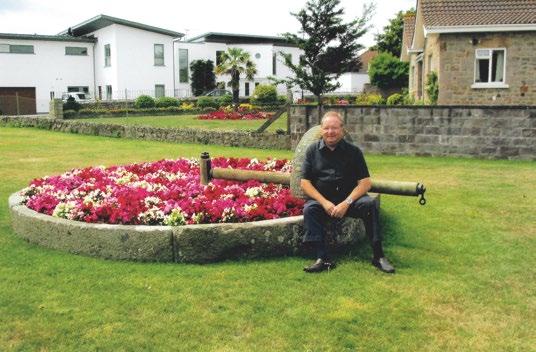
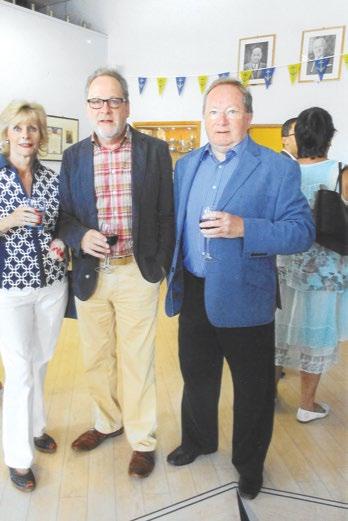
of L’Amarrage. Alan would remind me of, for example, the Threshing Fair and I would pop down with my camera.
An authority on local bus companies and the vehicles involved, Alan also had in draft a booklet about the various amphibious vehicles that had been and are now being used for transportation to and from Elizabeth Castle. When in London, if the opportunity arose, I would send Alan a photo of a red Routemaster bus - rare these days but occasionally seen on vintage sightseeing tours.
One of Alan’s most treasured awards was presented to him by Connétable Len Norman at the at the Parish Hall in 2012 for his ‘Outstanding Contribution to the Parish.’
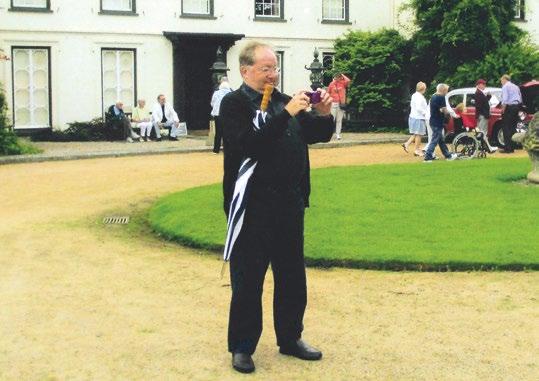
It is impossible to speak of Alan without including Isabelle. They lived and worked as a team for almost 33 years, not least on the Parish Social Committee, organising the fundraising raffle at Parish Lunches. In the run up to Christmas, they would spend time decorating the Christmas trees at the Parish Hall.
Alan was ‘un vrai St Clementais’ and the Parish will be forever grateful for his contribution.
Alan’s memory will live on in L’Amarrage, which plays an integral part in holding the Parish together.
BN
In Jersey, a Roads Committee member plays a vital role in the maintenance, safety and administration of parish roads. Here's an overview of what the role involves.
Highway Authority for Parish Roads - the Roads Committee (French: Comité des Chemins) is the official body responsible for overseeing by-roads within the parish.
Elected Position - members are elected by the Parish Assembly for a three-year term.
Committee typically includes:
• Connétable (who chairs the committee)
• Rector
• Three elected members
Key Duties:
• Supervise road repairs and maintenance
• Conduct annual inspections (eg Visite du Branchage in June and September)
• Issue licences for placing structures on or above roads
• Review planning applications affecting parish roads
• Propose new road names for approval
• Collaborate with Roads Inspectors, who carry out the committee’s instructions.
Roads Committee members help ensure roads are safe, accessible, and well-maintained.
1. Parish Assembly
• Elections take place during a Parish Assembly, typically held in December.
• The Assembly is open to all eligible parishioners.
2. Eligibility to Stand Candidates must be:
• aged 18 or over
• a Ratepayer, Elector, or Mandataire (a nominated representative of a company that pays rates)
• proposed and seconded by members of the Parish Assembly on the night
3. Nomination and Speeches
• Candidates can, if they wish, give a short speech (around 3 minutes) outlining their manifesto.
• They may be asked questions by the Assembly.
4. Voting
• A ballot is held among Assembly attendees.
• The top candidates are elected to serve a three-year term starting from 1st January.
5. Swearing-In
• Successful candidates must take an oath before the Royal Court to officially assume their duties.
Welcome to Our New Caretaker, Paul!
We are excited to introduce Paul as the new Caretaker for our Parish Hall. Paul brings a wealth of practical skills, a friendly attitude and a genuine commitment to supporting our community spaces. With 14 years of experience working with other parishes, he is well equipped for his new role.
Born in Jersey, Paul knows the area very well and is settling in nicely. He will be working throughout the Parish to ensure everything runs smoothly, from maintaining the Parish Hall and grounds to assisting Jason, Mick and Brock whenever needed.
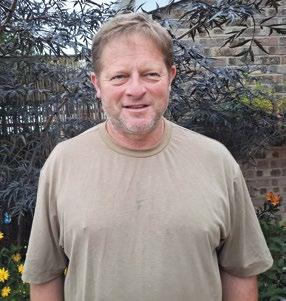
Outside of work, Paul enjoys gardening, playing racquetball, and spending time outdoors with his family.
Please join us in giving Paul a warm welcome and don’t hesitate to say hello when you see him around!
We are thrilled to have him on board and look forward to all the great work ahead.
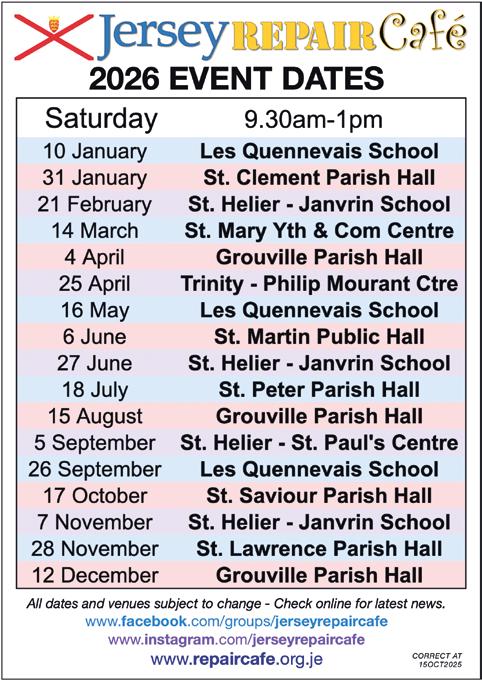

We still have a couple of vacancies available. If you are interested in joining our team of volunteers who look after our Parish, please email Policeliaison@stclement.je or call and ask for Kim on 854724
A vacancy for Procureur du Bien Public will be opening soon. If you’re interested in serving the Parish, please keep an eye out for further details or contact the Office for more information.
This year’s Christmas lunches will be held on: Tuesday 9th December Wednesday 10th December at Hotel Ambassadeur at 12.30pm
These lunches are especially for those who are lonely, isolated or struggling financially. Please contact the Parish Office to nominate someone or to request a place.
Just as L’ Amarrage was about to go to print, word came through that our Parish in Bloom team have won Gold in the Coastal category of the 2025 RHS Britain in Bloom competition. More information and pictures will follow in our Spring Edition.
Please note that Parish Office opening hours are changing from January 2026. The new hours will be Monday to Friday at 8am to 4pm
Control of Dogs in Public Areas to help keep our Parish safe, clean and enjoyable for all:
Dogs must be kept on leads at all times in public areas.
-•-
Dog fouling is strictly prohibited Owners must clean up after their pets.
-•-
Failure to comply may result in fines of up to £1,000.
Several areas of concern have been noted and will be monitored regularly.
Father Christmas will be visiting the children on Thursday 11th December at the Parish Hall. Come along for festive fun and a chance to meet Santa himself!
Please ensure vehicles do not overhang pavements or roads from driveways or garages.
-•-
Overhanging vehicles can obstruct access for wheelchair users, prams and pedestrians
-•-
You may incur a fine if you are found to be obstructing a public area.
-•-
Be considerate and help keep pathways and roads clear and safe.
The St Clement Honorary Police team consists of twenty-four officers, all of whom volunteer their personal time and expertise.
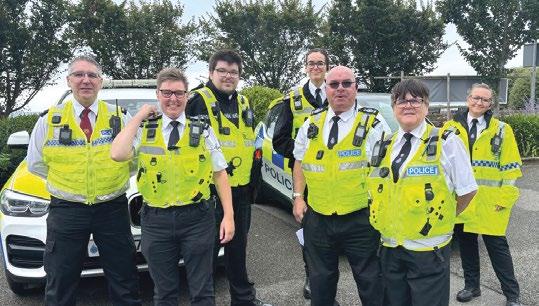
The Honorary Police are a unique and historic part of Jersey’s community life, dating back to at least the 15th century. Our volunteer officers play a vital role in maintaining law and order, supporting the professional police force and upholding local traditions.
We have four Centeniers whose responsibilities include:
• Charging individuals with offences
• Granting bail
• Presenting cases in the Magistrate’s Court
• Conducting Parish Hall Enquiries (informal hearings for minor offences)
There are also four Vingteniers whose duties include:
• Conducting road safety checks
• Assisting with searches and patrols
• Supporting Centeniers in investigations
• Traditionally involved in parish administration (eg dog licensing, collecting rates and overseeing Branchage)
Additionally, there are sixteen Constables’ Officers who assist Centeniers and Vingteniers by helping with public events, patrols, and community policing.
Each parish also appoints a Chef de Police to lead the operational part of the team.
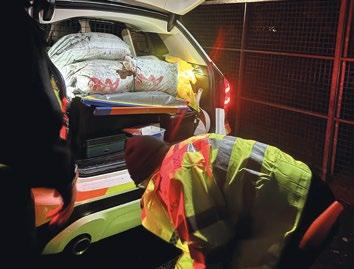
We undertake a wide range of tasks, including:
• Foot and mobile patrols
• Speed and road checks
• Addressing complaints from parishioners
• Conducting curfew and licensed premises checks
• Assisting with missing persons searches
• Policing public events
• Supporting the States of Jersey Police
• Charging individuals (Centeniers only)
We also play a key role in community justice, often resolving minor issues informally without the need for formal court proceedings.
Over the past five years, we have been involved in:
• Ensuring compliance with COVID-19 restrictions and conducting well-being checks during lockdown periods.
• During Storm Ciaran, we opened the Parish Hall to assist and support parishioners who lost their homes due to the storm. We also transported families to hotels for accommodation.
• We helped with the emergency evacuation of Clos Mourant during a gas leak scare, providing a safe and warm place for residents until they could be relocated to alternative accommodation.
• Collaborating with our States of Jersey Police colleagues and DVS to conduct road checks ensuring vehicle safety on our roads.
In addition to our regulatory duties, we actively participate in community events, such as the Hospice Fun Run, the half marathon, and the Samares Manor Fête, among many others.
No two weekends are ever the same! There are times when we find ourselves helping a wayward sheep or goat to find their way home after an adventurous outing.
This is just a small snapshot of the duties we carry out within the parish. If you see us out and about, we are always happy to chat!
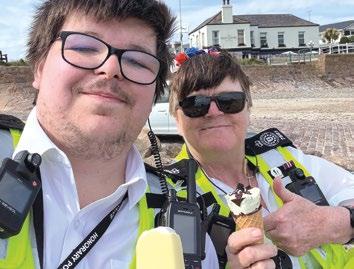
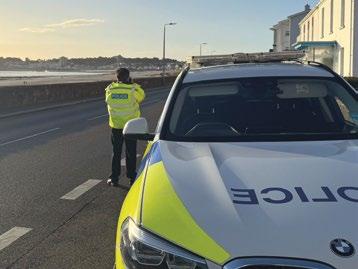
We have added some photos from over the years to show you that it’s not all serious and we do have some fun.
If you need to report anything, please contact the Duty Centenier on 07797 711 392
Thank you for your support!



For many young people, finding a place where they truly belong - where they can grow, learn and be themselves - can make all the difference.
That’s exactly what Pathways offers: a supportive environment where children and young people develop confidence, leadership and life skills that are valid in whatever career they choose.
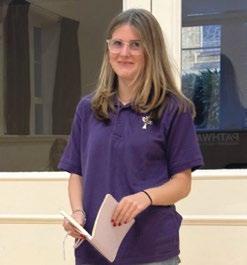
At a recent presentation, Abi who is in Year 9 described Pathways as “a safe space to relax, be myself, and grow in confidence whilst learning leadership skills.” Her words capture the heart of what Pathways is all about – creating opportunities for young people to flourish, to step outside of their comfort zones and to discover what they’re truly capable of.
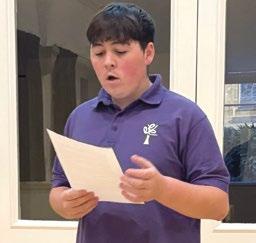
For Charlie, who is 17 years old, Pathways has been nothing short of life changing. Having joined ten years ago, he reflects on a journey of growth and achievement that began with small steps and led to extraordinary experiences. With support from Pathways, Charlie became the Lions Club Young Ambassador for Jersey and the Southeast of England, earning the prestigious Ship Shape Award. That opportunity took him aboard a sailing ship on a five-day voyage – a-once-in-a-lifetime adventure he never imagined when he first began.

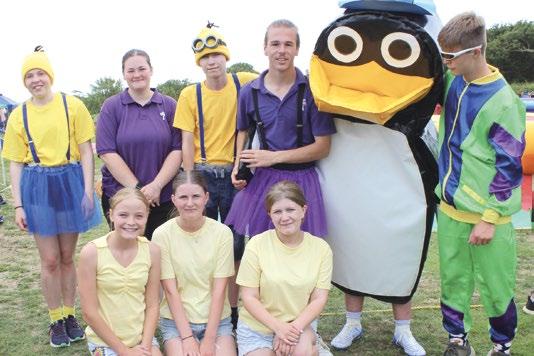
“Pathways has given me confidence, leadership skills and belief in myself,” Charlie says. “It represents opportunity, support and belonging. It’s given me the chance to turn challenges into achievements, to build friendships that feel like family and to gain the confidence to step into leadership roles that I never thought possible.”
Behind stories like Charlie’s and Abi’s is a dedicated team committed to investing in young people’s potential. Pathways helps participants to gain practical qualifications, take on challenges and develop skills they can carry into adulthood. It’s about growth –personal challenges and emotional – and empowering every young person to see their own potential.
As Charlie puts it, “Pathways doesn’t just change young people – it shapes them into amazing people. And I’m proud to be living proof of that.”
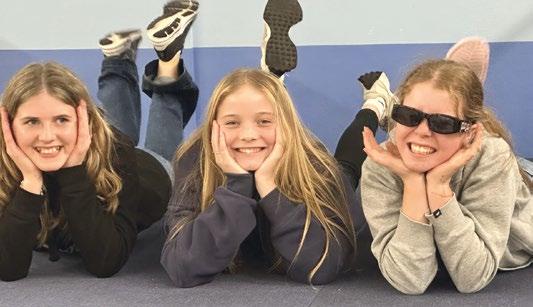
Now, Pathways is expanding its reach. This November, the programme will launch in the East of the Island, offering sessions every Friday evening from 6:30pm to 8:30pm, starting on 7th November. The sessions are open to young people in Years 5, 6 and 7, and the Pathways team is currently seeking a venue with an indoor hall and outdoor space to facilitate the mix of team games and leadership activities that make Pathways so special. If you can help, please contact us on hello@pathwaysjersey.co.uk
With new opportunities on the horizon, Pathways continues to grow — helping more young people find confidence, community and a sense of purpose that will guide them for years to come.

For more information, please visit our website at www.pathwaysjersey.co.uk or find us on Facebook at Pathways
This November saw Jersey once again take part in Brake’s annual Road Safety Week. The theme for 2025 was ‘Be Safe, Be Seen’, reminding all of us of the importance of visibility when travelling in the darker winter months.
The Infrastructure and Environment Department, together with Driver and Vehicle Standards (DVS) and the States of Jersey Police (SoJP), delivered a programme of events and activities under the framework of Building a Safer Community. The focus was staying safe in low-light conditions, whether walking, cycling, riding a moped, or driving.
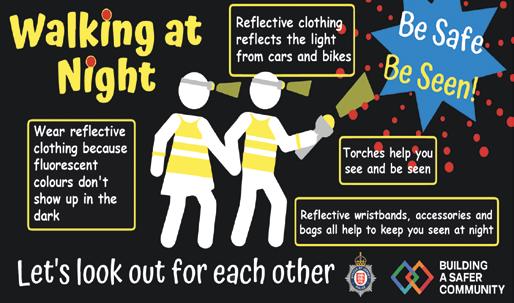
Key Stage 2 pupils across the island took part in special ‘Be Safe Be Seen’ assemblies and each child received a reflective slap band to encourage safer journeys.
For Year 12 riders, DVS offered free safety inspections of mopeds and motorcycles. These checks focused on ensuring lights and indicators were working properly, and advice was given on maintenance and replacing bulbs.
To reach drivers, SoJP carried out night-time vehicle light checks supported by the Comité des Chefs de Police.
Alongside these activities, the Jersey Road Safety Hub (www. jerseyroadsafety.je) was updated with new guidance and refreshed its ‘Be Safe Be Seen’ information.
By working together – schools, young riders, motorists and the wider community – we can all play a part in reducing risks on our roads this winter.
So, as the evenings draw in, remember the simple rule: If you’re out and about – Be Safe, Be Seen


by Sarah Lumsden, Year 5 Teacher
Democracy Week in Jersey took place in September so we thought it fitting to hold our School Council elections at that time. Children could put themselves forward as candidates, and they then delivered a short speech to their class about why they would make a good School Councillor. Many children put themselves forward –there were 19 candidates in Year 2!

On 24th September, our library was converted into our polling station where children entered their vote on their ballot papers ready for collection and counting.
Our new School Councillors were revealed to the school on 1st October during our weekly celebration assembly. They have been very busy already, attending the Island’s School Council Network meeting at Highlands Great Hall where they discussed and shared views on ‘Healthy Online Habits’ as well as reviewing Jersey’s ‘Play Plan’.
Their first job in school is to listen to the views of their peers during our Oracy assemblies during which all children get to share their ideas and opinions on school matters. The first item on the agenda is the ‘Playground Charter’ – a whole-school agreement about how we can respect the United Nations Convention on Rights of the Child Article 31 which says that ‘all children have the right to rest, leisure and play.’


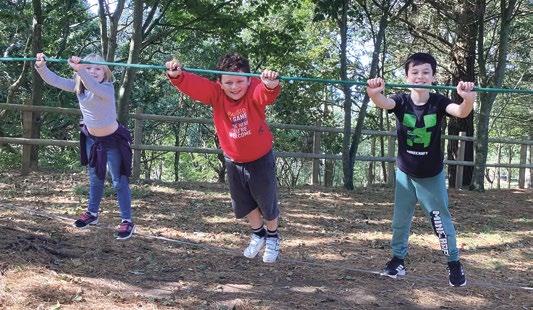
At the end of September, Year 5 had their first residential overnight stay at Crabbe. The weather was perfect, the children were excited and keen, the activities were fun and challenging.
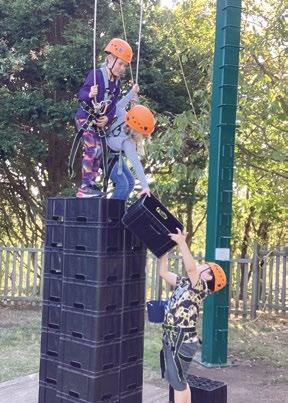
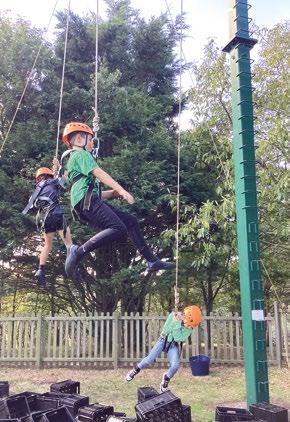
Within minutes of arriving, one group were in harnesses and safety helmets, learning how to work together and safely in a group activity on the high ropes course. The school’s Core Values of collaboration and perseverance were soon put into practice as children worked together to create an ever-increasing tower on which to balance. Children were challenged to communicate well with each other and show empathy for their classmates whilst having fun.
Other activities were planned over the two days to interest, challenge and develop the skills of the class. Highlights include the low ropes circuit, nature school activities, orienteering and weaving and knot activities.
As darkness approached, s’mores around the campfire were enjoyed, along with a good sing song and some star gazing on what was a perfect calm and clear night sky. All children managed some sleep (eventually!) and returned home buzzing about the fabulous time they’d had. The children were an absolute credit to their families and to their school.
by Jackie Almeida
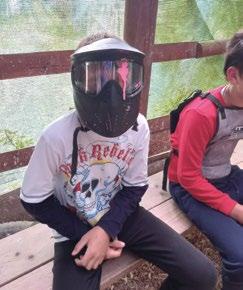
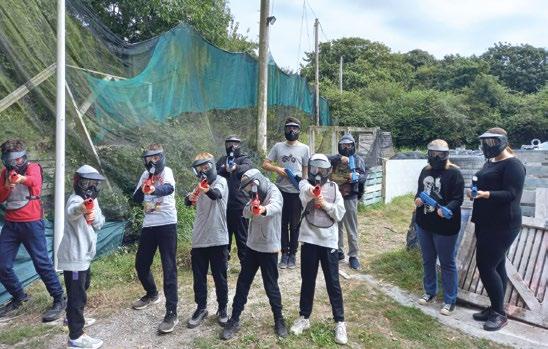
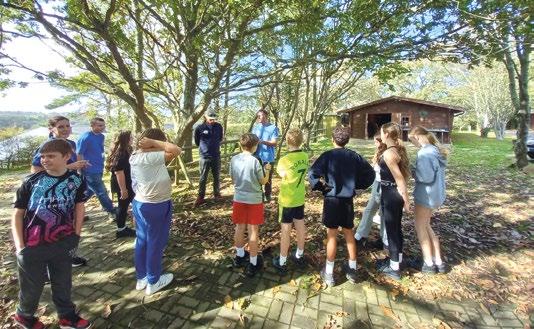
This summer, we opened in the evening and offered activities during the day too. These activities were planned by the young people and identified as places they wanted to visit.
Young people took part in high ropes, climbing, swimming, young people faced fears, built confidence, made new friendships, and reconnected with nature — and themselves.
Our summer taught us to do less scrolling and more exploring.
We also said our goodbyes to Anna Peters who is moving on from Le Squez Youth Project. We would like to thank Anna for her hard work at the project and the support for the community which she has provided. We will miss Anna and wish her all the best in her new role - we have a feeling we will still be seeing Anna around.
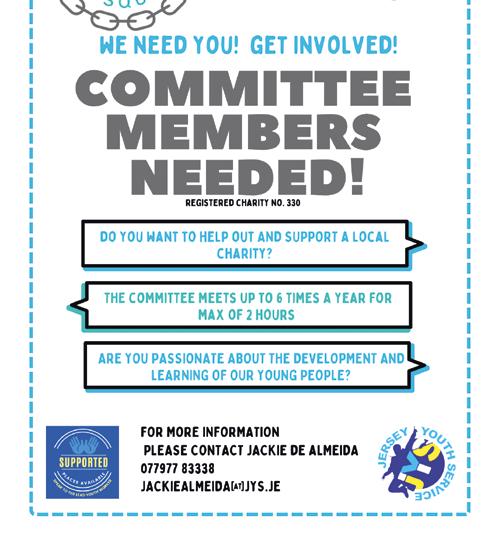
We're inviting passionate, creative, and driven young people to join our Youth Project Charity Committee. This is your chance to:
• help fundraise for exciting youth-led initiatives
• share your skills – whether it's in design, media, planning, or leadership
• develop the project to better serve young people in your area
• create lasting impact by improving community opportunities
Whether you’re looking to gain experience, build your CV or simply give back, this is a meaningful way to get involved, meet new people and be a voice for positive change. Ready to join or want to find out more? Please contact jackiealmeida@jys.je – we’d love to hear from you!
Join our Youth Project – a space created by young people, for young people! Learn new skills, meet new friends and get involved in exciting community activities, there's something here for everyone:
• creative workshops
• events and community projects
• real-life skills and learning experiences
• a chance to shape what happens in your area
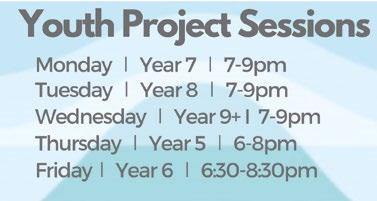
It’s fun. It’s free. And it’s all about helping you grow, connect, and shine. Open to school years 5-11 with sessions weekly – come along and check it out! Please email matthewdaly@jys.je to get involved or find out more.
by Susan Parker
L’Office du Jèrriais is working hard around the Island to revitalise our native language. Learner numbers of all ages are increasing, and there is a quiet realisation that Jèrriais is something which makes our Island truly distinctive.
Few books have eaten their way into the hearts of more children than “The Very Hungry Caterpillar”. Written by Eric Carle, the book was first published in 1969 and has since sold over 60 million copies and been translated into more than 80 different languages – and now Jèrriais is one of those languages.
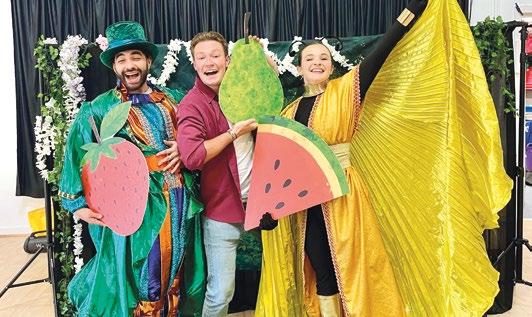
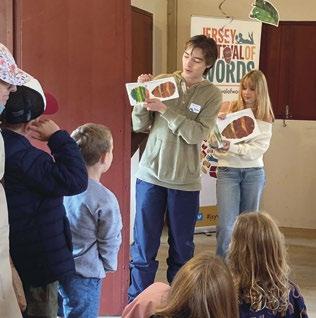
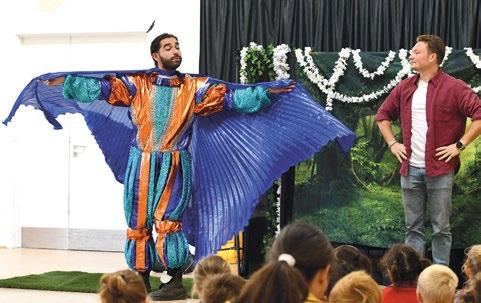
The book launch event at the zoo was attended by around 150 children and parents, where they enjoyed craft activities, dramatic book readings and received a free copy of the book.
The fun, energetic drama production brought the excitement of live theatre to young learners at 19 primary schools around the Island this term and was enjoyed by over 2,500 children. An audio recording of the story can be found at www.jerriais.org.je and additional copies of the book are available to purchase online at jerriais.sumupstore.com
If you are interested in embarking on your own Jèrriais learning journey, you can access a free subscription to the uTalk app:
1. Go to www.jerriais.org.je then click the English menu drop down, and select Learn
2. Scroll down and select Adult Learning, then Learning Resources
Every year since the publication of J’allons à la chasse à l’ourse (We’re Going on a Bear Hunt) in 2018, the Jèrriais Teaching Service has translated a well-known children’s book which has been gifted to children starting school in Reception, including La P’tite Gruffalinne (The Gruffalo’s Child) in 2020 and D’vinnâle dé Marmoûset (Monkey Puzzle) in 2022.
This year, it is the turn of La Carpéleuse Hardi Affanmée (The Very Hungry Caterpillar) which is being given to 1,000 children throughout the Island to encourage young readers and their families to explore Jersey’s native language.
To celebrate the publication of La Carpéleuse Hardi Affanmée, the Jèrriais Teaching Service held a launch event at Jersey Zoo and staged a number of duallanguage performances in Jèrriais and English, in partnership with Flair Entertainment and kindly supported by Le Don Balleine Incorporated Association, as part of the Jersey Festival of Words 2025 Schools Programme.

3. Under Online Apps, please complete the very short registration form under the uTalk logo with your name and email address
4. You will be taken to a special uTalk page to create an account using the same email address and a new password. You should receive a verification email to complete set up
5. Download the free uTalk app onto your phone, tablet or laptop
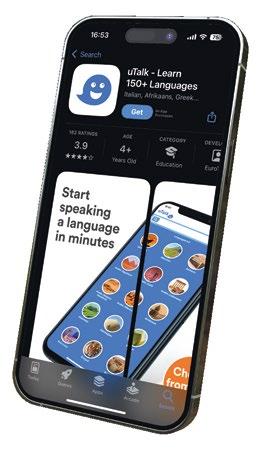
You can hear and speak Jèrriais every weekday, so please join native speakers and learners on:
MONDAYS Santander Work Café, St Helier 1.00 - 1.50pm TUESDAYS The Adelphi Pub, St Helier 5.30 - 6.30pm
WEDNESDAYS The Village Café, St Martin 10.30 - 11.30am
THURSDAYS Jersey Museum, St Helier 10.30 - 11.30am
FRIDAYS Jersey Pearl, St Ouen 10.30 - 11.30am
(Until next time)
For further information about Jèrriais, please contact L’Office du Jèrriais at info@jerriais.org.je



















































by Bernadette Cooper
An enthusiastic group of 18 St Clement parishioners went to Cancale in early September for the weekend. Despite the early onset of the autumnal weather, the sun was shining and it was still quite warm. The group stayed in two hotels north of the town itself, where the welcome was warm and inviting.
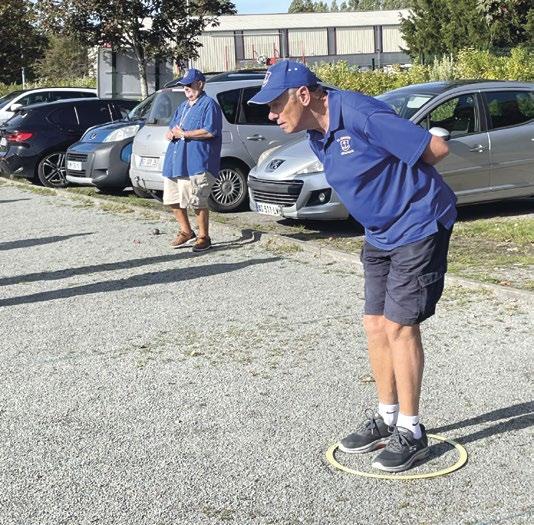
On Saturday morning, after breakfast, we all assembled at the Boulodrome in Cancale where we encountered many familiar faces from the previous visit to St Clement last year. These included the Maire, Pierre Yves Mahieu, and the Maire Adjointe Samantha Bernier and her husband. The day’s activities were organised by Alain Chaufaux and his team from Cancale Pétanque. Teams were mixed so many of our ‘debutants’ were able to partner the more skilled Cancale players. A good time was had by all, both players and spectators, and with much laughter, applause, serious measuring and banter. Communication was certainly not an issue. Some of our members participated in the top teams: Mike Robinson in the winning team, Bob De La Haye in the second placed team, and Ray Kittow’s team came third.
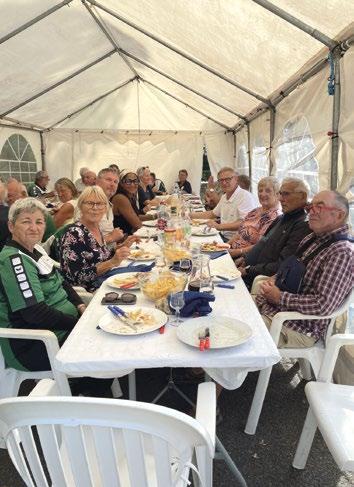
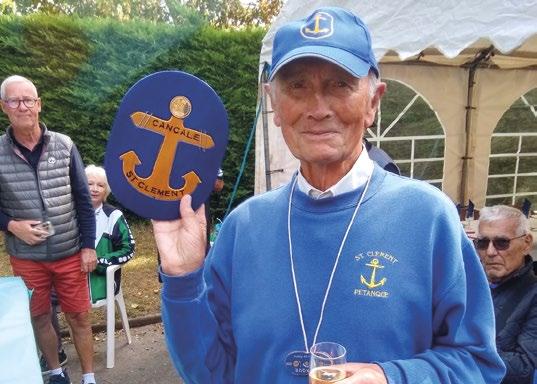
Cancale also presented us with a blue wooden plaque featuring a gold anchor, which was kindly accepted by Brian Daghorn on behalf of St Clement.
The games were followed at lunchtime by aperitifs and then a filling four-course meal prepared by ‘occasional’ chef Philippe, who excelled with his food offerings. This took place in a marquee adjoining their headquarters.
After the meal, everyone went back to their respective hotels, some used the time to go shopping. A large group met again in the evening at the very busy, lively port for a drink.
Sunday promised to be another good day and, after breakfast, many members of the group visited the local market located behind the church and along the side streets, selling a variety of goods.
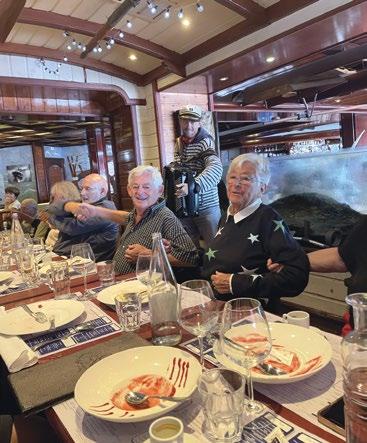
We all met up again for lunch at the port, courtesy of the Maire, Pierre Yves Mahieu who joined us with his wife Fabienne, Philippe (the chef from the previous day who works at the Mairie) and Alain Chaufaux. Lunch was a lively affair and we were able to officially thank Pierre Yves and Alain for their hospitality over the weekend and present them with a few gifts from Jersey.
Our twinning history continues to develop and it was lovely to see new faces in our group, but also to witness the camaraderie between our group and the ‘Cancalais’ in both French and English.

These relationships, as explained by Pierre Yves in his French section below, are so important and fundamental to Twinning, especially when we are continually facing challenges with Brexit outcomes, poor ferry timetables and border control rulings. Pierre Yves believes that communication may also have been helped by our recent course of French lessons in St Clement, giving the participants more confidence to speak. Other initiatives to be worked on include the school exchange, young people and participation in the Cancale Carnaval next May.
From Pierre Yves Mahieu
Cancale est la seule commune bretonne jumelée avec une commune de Jersey - St Clément. Les 6 et 7 septembre, un nouvel échange a pu être organisé à l’initiative des deux villes et grâce à l’implication de l’association Cancale Pétanque. Deux difficultés que ne facilitent pas la tâche sont les conséquences de Brexit concernant les obligations administratives et la piètre qualité des liaisons maritimes entre St Malo et Jersey.
Les compétitions de pétanque ayant combiné des équipes composées à la fois de jersiais et de cancalais - au sein desquelles le maire de Cancale et Mme Samantha Bernier, maire-adjointe à la jeunesse ont participé - l’objectif premier était bien de conforter les échanges entre personnes. Objectif facilité par les cours de français effectués préalablement par Mme Bernadette Cooper à de nombreux habitants de St Clément.
D’autres initiatives, suivant les volontés des deux maires Pierre Yves Mahieu et Marcus Troy, vont accompagner la vitalité de ce jumelage avec le souhait de mettre en place des échanges entre écoles et de participer à la prochaine édition du carnaval de Cancale.
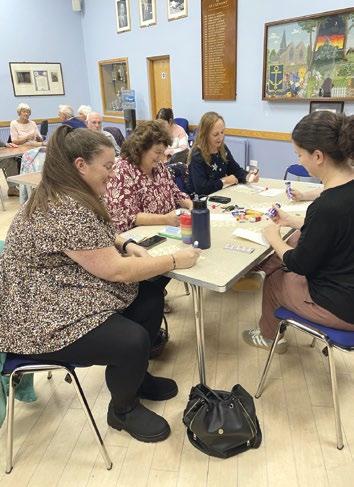
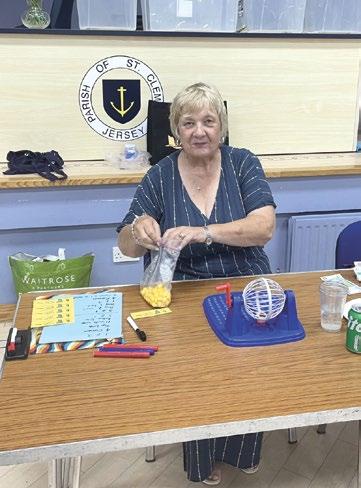
Our first fundraiser was bingo which took place at the end of September and we welcomed many new faces. As usual, Collette Willmett put together a super raffle with a range of prizes which were kindly donated by various supporters. It was a very good start to our Autumn/Winter schedule, and our next fundraiser in October was a quiz evening to challenge those grey cells.
The dates of next year’s Carnival in Cancale will be 23rd and 24th May 2026, so please look out for details. We have also been invited to run a Twinning Stall at the Christmas Fayre on the 29th November at the Parish Hall, so do come along and see us. Suggestions for Twinning activities are always welcome. Please contact Bernadette at bernadettecooper62@gmail.com
Games Night
Saturday 22nd November
Christmas Fayre Saturday 29th November
Le Saint Valentin Saturday 14th February
Bingo Saturday 21st March
Quiz Saturday 28th April
Carnival in Cancale
Saturday 23rd-Sunday 24th May
Fête de la Bastille Tuesday 14th July
Islanders seeking freedom from glasses or contact lenses can now access expert vision correction closer to home. Led by renowned refractive surgeon Mr Mike Tappin, Evolution Eye Care’s Vision Correction Service has become an established part of its regular clinic schedule throughout 2025.
Patients considering treatment are assessed in Jersey directly by Mr Tappin – the same surgeon who would perform their procedure.

Mr Tappin is a leading surgeon with over 30 years’ experience in refractive surgery. He conducts clinics in Jersey, and operates at Prema, a state-of-the-art surgical facility in Portsmouth operated by Laser Vision UK. Prema is conveniently located just 20 minutes from Southampton airport, with three modern hotels next door if accommodation is required.
“Our goal is to make the vision correction process as seamless and reassuring as possible for Jersey patients,” said Mr Tappin. “By combining consultations onisland with surgery at Prema, patients on our collaborative pathway receive the convenience of local care, with the safety and reassurance of a leading UK surgical environment.”
“It’s important that patients meet the surgeon who will perform their procedure,” added Mr Anish Shah, co-founder of Evolution Eye Care. “That continuity builds trust and ensures decisions are always made in the patient’s best interests.”
Some refractive clinics offer free consultations. This can create pressure to convert enquiries into surgery, just to cover costs. At Evolution Eye Care, a £99 vision correction consultation fee reflects a commitment to transparency, allowing the clinic to provide honest, impartial guidance –even if the best recommendation is not to proceed with surgery.

“Charging a modest consultation fee allows us to offer genuine advice rather than sales-driven opinions,” said Mr Shah. “Our patients receive clarity, not persuasion.”

Prema is equipped with modern, regularly serviced laser and surgical equipment, maintained to the rigorous standards required by the UK Care Quality Commission (CQC). This ensures every procedure is performed with the precision, safety, and reliability expected of the UK’s top ophthalmic centres.
Jersey patients are already benefiting from this trusted and convenient pathway, exploring laser vision correction or lens replacement surgery with world-class expertise and modern technology – all coordinated through Jersey’s largest private eye clinic.
For more information or to book a consultation, visit www.evolution.je/book email info@evolution.je, or call 01534 835400

1st Floor
Little Grove Clinic
Rue de Haut St Lawrence JE3 1JZ
by
What happens if my memory becomes impaired and people think I have lost the capacity to make significant decisions?
Unfortunately, this is the reality for many people in our community, especially as we are all living longer. If you have family and friends you trust, you can plan ahead by appointing a “Lasting power of attorney” (LPA). You may have an LPA for Property and Finances and also for Health and Welfare. The person may be someone you trust or a legal professional.
The purpose of the Capacity and Self Determination (Jersey) Law 2016 is to ensure that, if you do lack capacity, all decisions made by others for you are (as far as possible) in line with what you would have wanted for yourself. Your wishes and rights must be protected and respected, and every decision must be in your Best Interests. This is a legal safeguard against people doing what suits them, or what is cheapest or easiest, rather than what is best for you.
The Capacity Law provides for an ICA (Independent Capacity Advocate) to represent individuals who have no LPA or appropriate other in their lives. This happens more often than we would like to believe. The ICA is appointed under the law to work independently from the government or health services and is free of charge. An ICA must be referred clients when the following significant decisions are made:
• Serious Medical Treatment
• Change of Accommodation
• Safeguarding
• Care Review
• SROL - Significant Restrictions of Liberty

The ICA will meet with the person and gather information about their views and wishes in relation to their options. They will also look at choices the person has made in the past before they lost capacity so that can be reflected in future decisions. The ICA will then provide a report for the person making the decision. The key role of the ICA is to ensure that the person - who they are, how they lived, what choices they made and what their values were - remains at the centre of decision making, and that processes are lawful.
My Voice Jersey is under contract to the States of Jersey to employ ICAs who are fully trained and hold a national qualification. They are ultimately accountable to the Royal Court for the work that they do.
For more information, please visit
or refer to the Capacity and Self Determination (Jersey) Law 2016.



















































































































Over the next few years, we will carry out the largest ever upgrade to the Island’s energy network. It will ensure every home and business continues to access affordable, sustainable energy.















www.jec.co.uk/thebigupgrade




















Scan to find out more
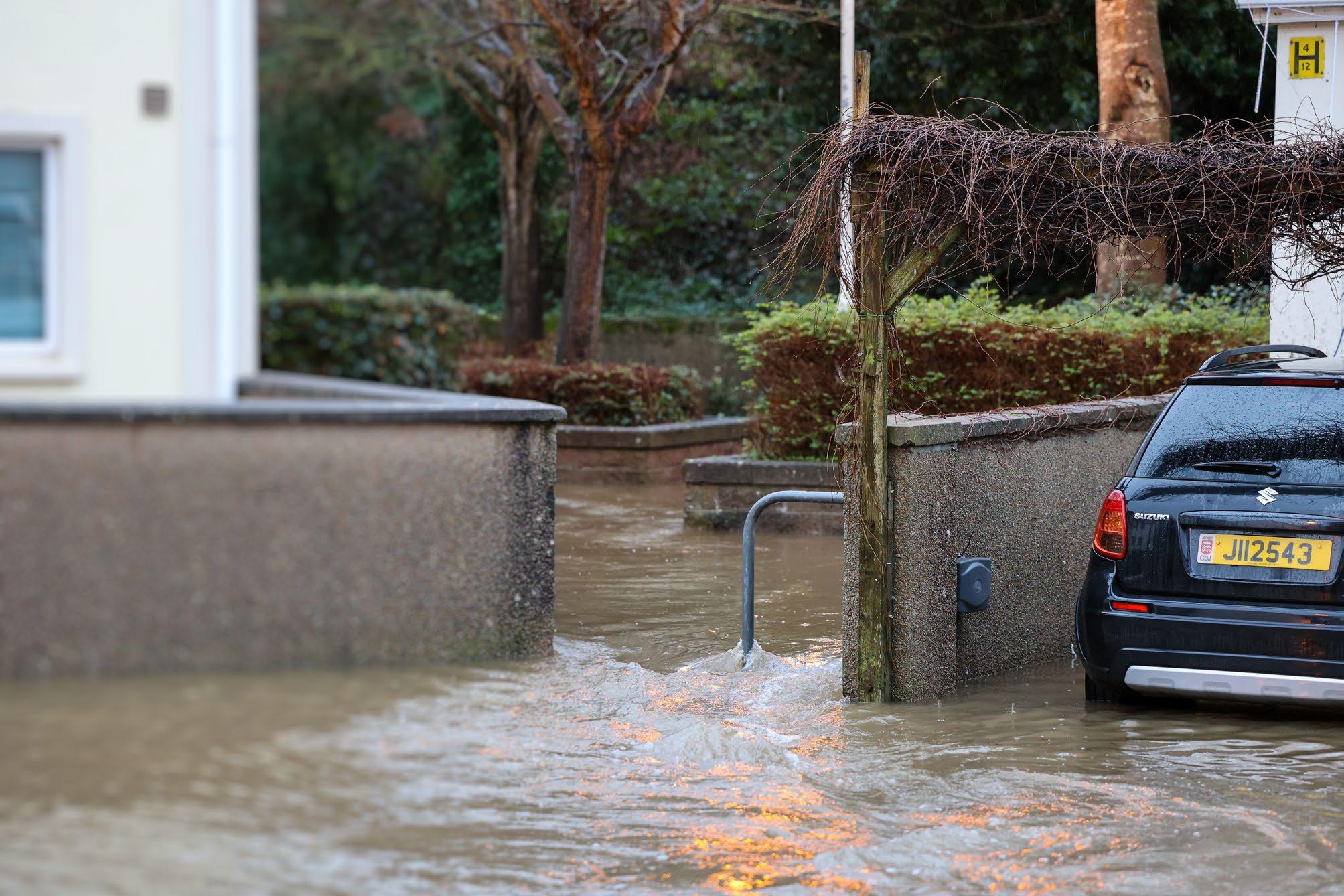
As the wetter weather approaches and autumn draws in, we kindly ask Islanders to take simple steps to help prevent flooding. By working together, we can reduce the risks to our roads, homes, and environment.
Check and clean your drains and gutters
Ensure your gutters and surface water drains are free of debris, particularly after heavy rain.
If a stream or watercourse runs through your property, keep it clear to ensure the free flow of water and prevent upstream flooding.
Don’t leave branchage debris on roads
After completing branchage or bank maintenance, ensure any cuttings are fully cleared from the road. Leaves, twigs, and branches can block drainage systems.
Help with road gullies
If you notice a road gully covered with leaves or debris, and wet weather is on the way, please clear it to help water drain properly.
Drive carefully through flooded areas
If flooding occurs, slow down when driving through these areas to avoid making the flooding worse or splashing pedestrians.
Don’t rush to report flooded gullies
After heavy rainfall, give gullies time to handle the excess water. Flooding during heavy rain does not always mean a blockage; it often just takes time to drain.
KEEPING THE ISLAND RUNNING
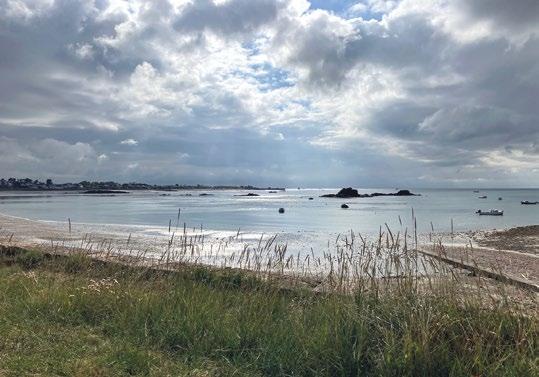
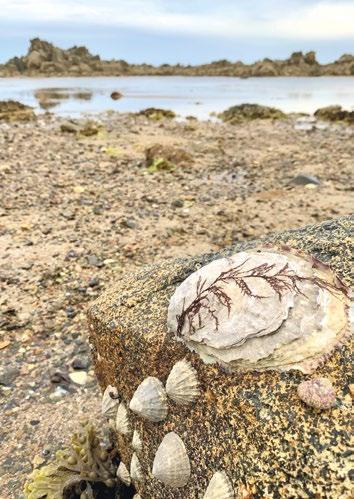
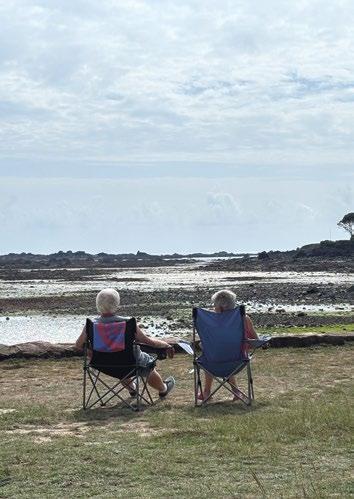
A big thank you to everyone who took the time to submit a photo!

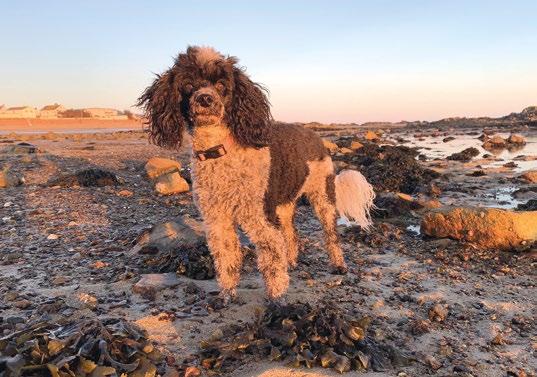
They were all lovely and it was very difficult to choose, so we’ve included as many as we could. If you don’t see your photo here, the main reason will be that the image we received was too low resolution to print - we need a file size of at least 1MB. There will be another opportunity to submit your photos in January and early February in time for the Spring 2026 edition.




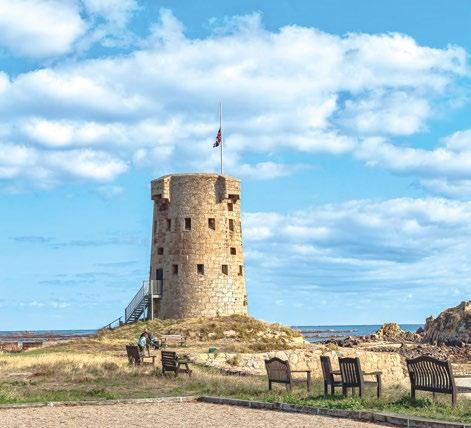
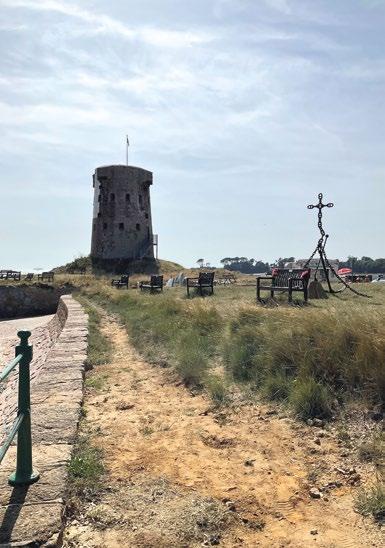
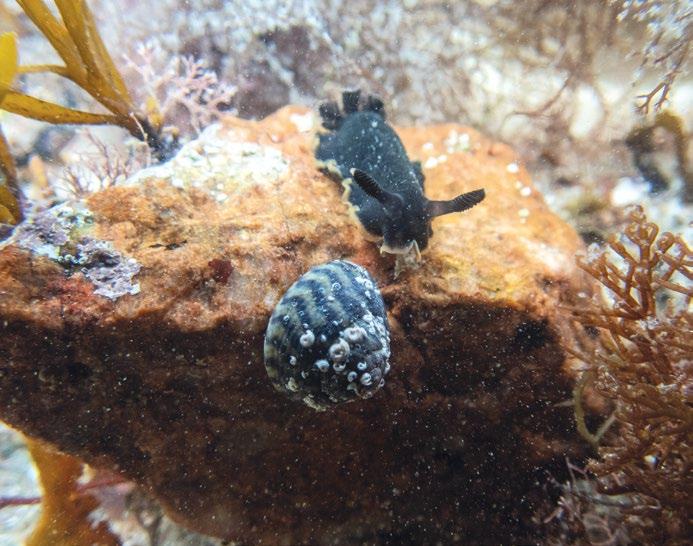
By Alastair Christie, Senior Scientific Officer – Invasive Species
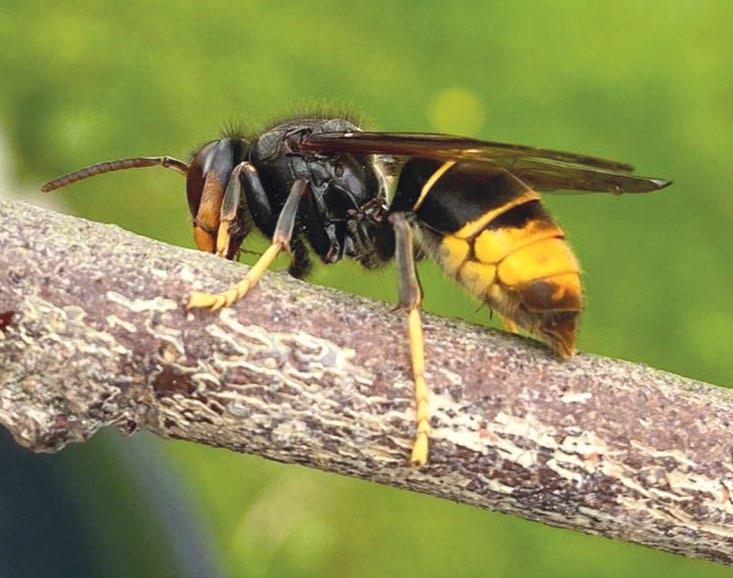
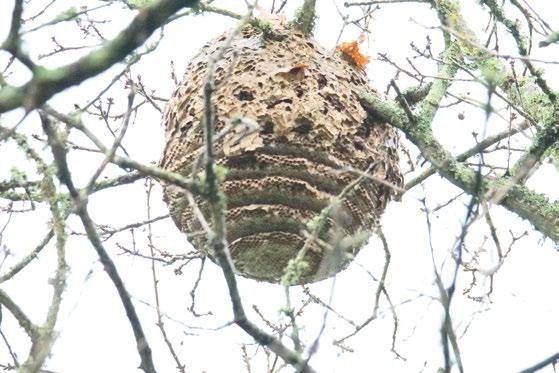
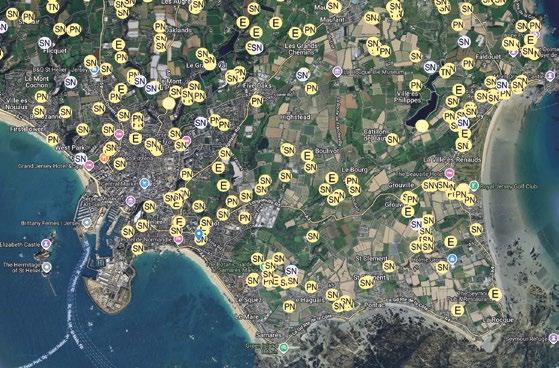
If you are one of those who has encountered Asian hornets this year, then you are not alone. To say that the year has been unprecedented is somewhat of an understatement.
The number of queens reported in the spring, with the majority trapped by volunteers in official traps, was at record levels, nearly five times any previous year. Since the spring there have been several thousand reports of worker hornets across the island and the numbers of nests so far in 2025 is more than double that of the whole of 2024 already, standing at 539 at the time of writing in early October versus 262 nests in 2024.
In the parish of St Clement, you have not been immune to this upsurge in Asian hornets. For those who are not comfortable with buzzy, stingy things, this may be a concern, and indeed more people have been stung by Asian hornets this year than any other. The main risk is of nest disturbance rather than an individual foraging hornet, with gardeners the largest group as they strim and hedge-cut.
Beekeepers will also be particularly concerned as the predominant portion of the diet of Asian hornets is honeybees. This year beekeepers have found their hives under great pressure and have had to deploy various protection measures to limit the detrimental effects of the Asian hornets. Apart from carrying off dismembered honeybees to feed to their developing larvae, the hornets cause honeybee colonies to go into ‘foraging paralysis’, when they stop doing what bees are supposed to be doing: gathering nectar and pollen and generally being busy bees. The result is weaker honeybee colonies that are at greater risk of dying out during the winter. Fortunately, beekeepers can help their bees along with various devices and management techniques, but with the best strategy being to find the Asian hornet nest causing the issue and have it destroyed.
For the future, we have to accept that Asian hornets are here to stay, but is the huge level of work to control them sustainable? The logistical issues of dealing with so many reports, processing them efficiently and destroying any nests have been extreme. Many of the numerous nests are in difficult locations requiring specialist equipment and skills to deal with them and sometimes occasional road closures and marshalling of the public needed also.
As the season draws to a close, and we can begin the process of reflecting on this year and what it means for the future, the public of Jersey can still play their part. Reports of Asian hornets should be reported to asianhornet@gov.je.
If you spot any nests in the trees, now that the leaves have fallen, please do report that as it may be a nest that we were not aware of. Please also consider whether you can help in the springtime by monitoring a trap. The more queens that we can trap, then the fewer nests we should have later. For further information see www.gov.je/asianhornet




Sometimes whole groups of soldiers marched along the road in front of the house. Occasionally, they stopped and went down to the beach through our garden for a rest or a cigarette. They usually carried rifles with them. One day, one of the soldiers let me pick up his rifle and hold it. I found it quite heavy and would have had no idea how to use it.
A lot of the beach was out of bounds and there were warning signs on some of the rocks to say so. It was forbidden to go beyond them. I think the reason for this was that sometimes the Germans would have gun firing exercises. They would position their guns near to Nicolle Tower up Rue au Blanc and aim at Icho Tower. They usually missed, but one could quite clearly hear the sound of gun shells whistling over head.
My best friend at that time was a boy called Alan Aubert; he was the same age as me and lived about 500 yards away, towards Green Island. The back of his house looked on to a field where the farmer usually grew potatoes. One night, a German plane (a bomber) got into difficulty over St Clement and crashed into the field at the back of his house. There were no survivors and one of the engines became detached from the wreckage in the crash and continued to travel towards a neighbouring house. The burn mark that it left on the paintwork remained for years after the Occupation until the house was redecorated. We can remember Alan coming to our house the next morning and telling us all about the excitement they had during the night. It was lucky that the engine hadn't hit Alan’s house!
One day, early in the morning towards the end of the war, we were wakened by distant aircraft engine noise. It was a beautiful day and, when we went outside to see what it was, it turned out to be very large formation of American bombers returning to England after carrying out a bombing raid in Germany. To me, it looked like hundreds of aircraft flying very high and leaving vapour trails behind them; the dull noise from the engines seemed to drone on for ages. At one point, German anti-aircraft guns stationed at La Rocque opened fire on them, but they were too high and out of range of the guns. All the same, one of the aircraft broke off from the formation, dived down and dropped bombs, hoping to hit the guns that opened fire on them. They missed and unfortunately killed a couple of Jersey people. I remember the noise of the bombs exploding and of the gunfire. School children were frightened to go to school that day!

Mr Gilbert, the baker from La Rocque, used to come by periodically in his converted horse-drawn van. I can’t remember whether bread was available through the Occupation - by many accounts it was not. Anyhow, availability was very limited for much of the time.
by Chris Le Cornu
We quite often used to visit the Willcox family who were good family friends - Jack, Sally and three daughters who lived at a Le Haguais, a large property/smallholding In Rue de La Croix. They often supplied us with vegetables and other goodies. It was always a joke that we hid the potatoes we had been given in the bottom of my pram and therefore unlikely to be found by any passing German soldier if they decided to search us.
I was always a bit frightened of going to visit the Willcox family because we had to go past Mrs Winkle’s House along Rue de la Croix. Mrs Winkle (I have no idea of her real name) was a tiny figure, always dressed in black clothes with a white headscarf, and I found her appearance rather frightening. She was frequently on the beach collecting winkles and we knew she was there because all you could see was her white headscarf bobbing up and down among the rocks as she gathered her winkles.
Opposite our house was a large house and garden called Le Fromentel, owned by the Le Quesne family (three sisters Winifred, Dorothy and another whose name escapes me) who were living with their mother and pet black poodle. Their mother, old Mrs Le Quesne, was totally blind and enjoyed the company of children; my mother and Dorothy became good friends, and we were often invited over there for friendship and to play in the garden. Winifred, I seem to remember, was a good piano player and I believe she gave my sister, Valerie, piano lessons. Their family doctor was Harold Blampied who happened to be my Godfather. From time to time, he paid visits to the sisters and would park his car, an old grey Standard, on the road outside our house and was quite content to let me sit and play in the driver’s seat whilst he made his visit.
Another disconnected memory I have is being invited, around the time of Liberation, to go on to the roof of Le Fromental via an indoor stairway to watch what now seems like a mass of allied aircraft buzzing around in the skies above at quite low level. I have a vivid memory of seeing a seaplane, identified by the floats, amongst the many others. Perhaps it was this experience which first kindled my interest in aviation.

Not far from where we lived was a beachside bungalow which had been requisitioned by the Germans for use as a weekend retreat for some of their officers. This one was used mostly by a civil servant called Dr Pelz, accompanied by his little dog called Sark. We later learned that he worked in the civil administration at their headquarters at College House, with responsibility for overseeing agriculture and making sure that farmers were growing the right crops to feed the island population (Jersey people as well as Germans) with the right food ingredients. In the summertime, Dr Pelz frequently stayed at the bungalow with friends and often played ball games on the beach when the weather was fine. We children were often on the beach too and liked watching these Germans playing their games; they sometimes let us join in and were always kind to us.
Our house was situated on the roadside with just a small low wall and a wooden fence on top of it such that I could climb on to the wall to look over the top and watch pedestrians and traffic going by. We were situated halfway between Green Island and Le Hocq, both of which was where quite large numbers of German troops were living or billeted. Consequently, there were frequent movements of troops between the two places, and I used to enjoy watching them passing by – marching in large formations and singing as they went, sometimes driving motor vehicles of various sorts. I particularly remember German motorcycles with a passenger in the side car. I was puzzled by these because I had a notion they ware permanent fixtures and never became separated from the motorcycle – rather like a mermaid is permanently attached to her fishtail!
Following the first instalment in the Summer edition of L’Amarrage, we are delighted that Chris has described more of his memories from the Occupation. Our sincere thanks to Chris for sharing these precious memories.
by Rev Martin Dryden
Harvest Thanksgiving was first recognised in the Church of England in 1862, soon becoming one of the most popular festivals in the Christian Year, with church attendances in some places exceeding those at Christmas and Easter!
They were the brainchild of Rev Robert Stephen Hawker, Vicar of Morwenstow in Cornwall in 1843. The gathering-in of crops had traditionally been celebrated “in pagan fashion with beer and tumult” in his part of the world, but he thought that his parishioners should have the opportunity to give thanks for God’s generosity.

St Clement has undergone significant urbanisation since the 1960s, so it is appropriate that the emphasis of our Harvest Festivals has shifted from pure thanksgiving for the harvest to a wider concern for the interdependence of all God’s people, along with issues of justice and of the care and integrity of creation.
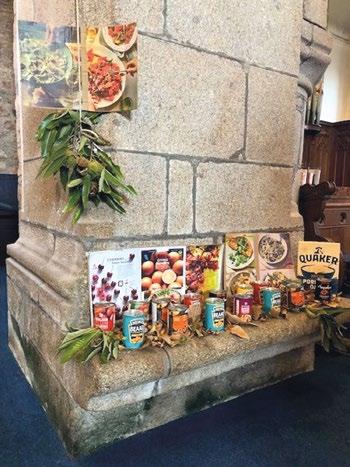
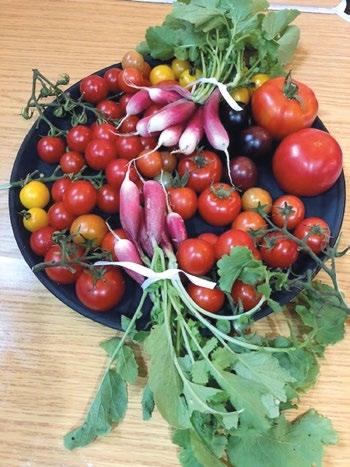
This year we decided to have a harvest weekend. We met in the Caldwell Hall on the Thursday for a “chat and bake” morning, making things with apples and oats. We hosted a “MacMillan's Jersey Greatest Coffee Morning” on the Friday, raising over £500 for this very deserving charity, and we decorated the church with flowers and produce on the Saturday. We donated all nonperishable food items to the Grace Trust on the Sunday, with
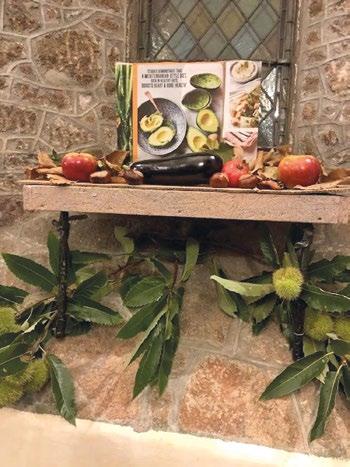
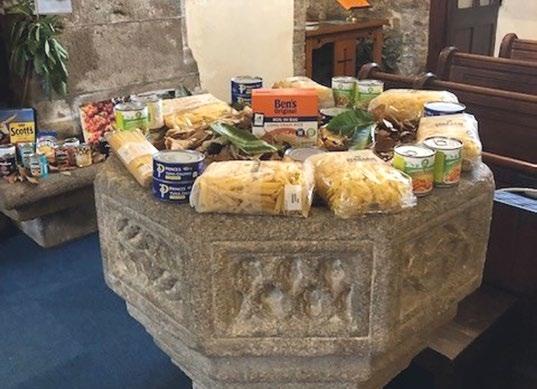
the proceeds of sale of the fresh produce going to our Porridge Fund, which supports the pupils of St Clement’s School in Malindi, Kenya. Huge thanks to Dacia and Mike Kidman for their energy and imagination, which has reminded us that you first have to sow before you can reap.
We are very pleased to announce that Rev James Porter has been appointed to be our next Rector. James, who is currently Associate Rector of the Town Church, will be inducted and installed (the technical description) at a special service to be held on 22nd January 2026 which will involve representatives from across the parish and the Island. James is married to Katie (who is a lay minister) and they have six children. It didn’t take as long to appoint James as it did to appoint the new Archbishop of Canterbury, but the process was no less thorough. It involved representatives from both the civil and ecclesiastical parish because the Connétable and Rector are both responsible for caring for the parish in different ways. James will be leading us in sowing love, joy, peace, forbearance, kindness, goodness and faithfulness - the things that make us “God’s own Parish”
Rev Tracy Bromley and I have been “looking after” the church since David Shaw retired as Rector on 31st May with the help and support of many people, for which we are very grateful, and will continue to do so until James is appointed. That means taking a deep breath and rolling up our sleeves to make sure that the parish can properly celebrate the birth of Jesus at Christmas. Do please join us if you are able.
You are welcome to join us for any of our Sunday services, at 9am at St Nicholas or at 10.30am at the Parish Church. You can find more details on our website www.stclementschurch.org.je which includes a weekly letter.
Sunday 21st December
3pm Carols & Christingles at St Clement for babies, toddlers and noisy children!
Christmas Eve
3pm Carols & Christingles at St Clement
5pm Carols & Christingles at St Nicholas 6pm Carols & Christingles at St Clement 11pm “Midnight” Communion & Carols at St Clement
Christmas Day
9am Holy Communion & Carols at St Nicholas 10.30am Family Service with Carols at St Clement
Thursday 22nd January
7.30pm Institution & Induction Service for James Porter as the new Rector of St Clement
by Pat Guegan
The Society of St Vincent de Paul, or SVP as it is known, is a Lay Catholic International Organisation serving the poor in our society, which aspires to bring about a more just and compassionate society
It was founded in Paris in 1833 by Frederick Ozanam, an Italian student studying there who was shocked by the lives of the poor Parisians at that time. SVP Jersey has been operating for over 100 years, and one of the stained-glass windows in St Thomas’ Church indicates that SVP was operating in Jersey in the late 1800s.
Although a Christian organisation affiliated to the Catholic Church, it runs independently with help from Catholics and non-Catholics. The income to support the charity is donated by individuals, corporates, Church groups and the Government. Assistance has also been received from The Jersey Community Foundation. Due to increased publicity in recent years concerning poverty and low incomes on the Island, SVP has been fortunate to receive some substantial donations, as well as numerous smaller individual donations.
Food banks are used by people with low incomes, unemployed, sick and disadvantaged. Due to recent changes within the Island, SVP is now the largest food bank in Jersey. The approximate number of beneficiaries is 1600 individuals across 500 households. There are currently some 20 volunteers.
The town food bank behind St Thomas Hall, Val Plaisant, is open on Wednesdays at 2pm and Saturdays at 10am to cater for those who drop in, but there is also a ‘Click and Collect’ service for those unable to attend these sessions. Assistance is also available for organisations such as Mind Jersey, whose clients find it hard to cope with the ‘waiting room experience’.
During Advent and Lent, FCJ Primary School and Beaulieu Convent School hold weekly collections to provide special extras for Christmas and Easter.
Food collection bins are in the back of all Catholic Churches on the Island and at various offices and retail outlets. It is however necessary to purchase most of the food and hygiene products, and this is all funded by financial donations received.
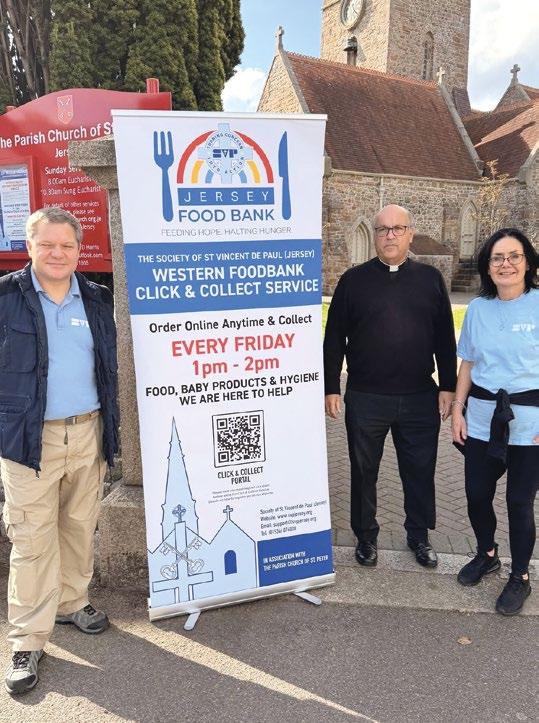
One of SVP’s ambitions was to reach a wider audience, and this came to fruition recently when they opened a branch in the west of the Island at St Peter’s Church, in partnership with the Reverend Robert Harris. The Western Food Bank will be open on Fridays at 1pm to 2pm. Please call in for further information as this is a ‘Click and Collect’ service and registration is necessary. In addition to food parcels, baby items such formula and nappies are also available.
If you are in need, please contact the SVP team at support@ svpjersey.org or call 874008




Chouquettes get their name from the French for little pieces of choux pastry. Unlike profiteroles which are filled with cream, these are crisp, light and hollow.
Ready in 1 hour 20 minutes
Preparation time 10 minutes
Cooking time 30 minutes
Makes approximately 40
INGREDIENTS
• 1.5 cups of water
• 100g unsalted butter, cut into cubes
• 1 teaspoon sugar
• ½ teaspoon salt
• 200g plain white flour (1.5 cups)
• 4 large eggs
• Pearl sugar - for decorating
METHOD
• Preheat the oven to 200 degrees, fan 180 degrees, 400F, gas mark 6
• Line 2 large baking trays with parchment paper
• Place the butter, sugar and salt in a large saucepan. Add the water and bring to the boil. Reduce to a moderate heat.
• Add the flour and stir vigorously with a wooden spoon until a tight dough forms and pulls away from the sides of the pan. Leave it for two minutes then remove the pan from the heat.
• Beat the eggs in a bowl and add the dough in four instalments, stirring vigorously each time until the eggs are completely incorporated and the mixture is smooth. The dough should be glossy and slowly hang, stretch and fall from the spoon in thick ribbons. If necessary, add and beat in an additional egg.
• Transfer the dough to a piping bag fitted with a ½ inch plain tip. Pipe 1½ inch mounds onto the baking sheets, leaving 1 inch between them.
• Generously sprinkle each mound with ½ teaspoon of pearl sugar.
• Bake the chouquettes for 30 minutes, until browned and puffed, moving the baking trays from top to bottom and front to back in the oven halfway through.
Bon Appétit Isabelle

We’re aware of the expression ‘colourful language’ which normally refers to using expletives or other strong words to convey displeasure.

However, when used literally, you might be surprised how frequently the English language uses colour to refer to emotions ‘white with rage’ and ‘green with envy’. And we’re not alone. Cross the Channel and you’ll encounter a similar predilection. Isabelle Le Breton has collected some examples for you to try next time you venture abroad.
être vert(e) de rage to be angry
être vert(e) to be annoyed se mettre au vert to take a break in the countryside / to lie low
voir rouge to be angry
être rouge comme une tomate to become red in the face
être dans le rouge to have money problems
avoir un bleu to have a bruise une cuisson bleu very rare (cooking style)
être blanc comme neige to be as white as snow montrer patte blanche to prove your identity être connu comme le loup blanc to be well known
dire les choses noir sur blanc to say things as they really are c'est noir de monde there's a lot of people travailler au noir moonlighting
faire grise mine to look miserable
voir la vie en rose to be positive envoyer sur les rose to tell someone off tout n'est pas rose all is not positive
rire jaune to force yourself to laugh
MULTI-COLOURED
en voir de toutes les couleurs to have a hard time

In my previous quarterly updates on the progress of the New Healthcare Facilities Programme (NHFP), I have focused on key developments and milestones. However, this Programme is about more than just bricks and mortar – it is about creating lasting benefits for Jersey that extend well beyond the enhanced healthcare services enabled by the new buildings and infrastructure.
I confess, Social Value is not something that meant a lot to me as a phrase before I started working as a Minister. Here, it refers refers to the broader positive impact a project can have on society beyond its core purpose. These are all part of a business case for a project that tries to communicate not just the cost of a project, but also the benefits, including Social Value. For the NHFP, this means making sure that every pound invested not only delivers new healthcare infrastructure, but also supports jobs, skills development, community wellbeing, and environmental sustainability, locally and also globally.
Social value is considered in every procurement across the Programme, ensuring that benefits are measurable and meaningful. Contractual commitments will deliver long-lasting improvements for Jersey – during construction and into the future. This is a Government of Jersey requirement for all procurements and the NHF Programme is taking it very seriously.
The Programme has committed to 19 areas for Social Value that are aligned with Jersey’s Common Strategic Policy and the Future Jersey vision, as well as the United Nations Sustainable Development Goals.
Much of the social value activity will be confirmed once a Main Works Delivery Partner has been appointed, however meaningful social value is already being achieved through contracts already awarded. For example, social value was fully embraced by Jersey Demolition Contractors (JDC) during the demolition of more than 20 buildings and associated structures at Overdale. Amongst other social value, JDC added:
• more than 200 hours volunteering towards biodiversity at Overdale, including planting and replacing hedgerows that were damaged by Storm Ciarán
• sub-contracted work as part of the demolition project to at least 10 local companies
• provided more than 300 hours of training and development as part of the Overdale demolition contract, enhancing the knowledge and skills of the existing workforce
In addition, JDC donated more than £13,000 worth of demolition waste from the site, including timber to local charities to support the circular economy.
The Constructing Your Success education outreach programme, which ran in October 2024, was designed to inspire young people to explore careers inconstruction and the built environment. Delivered as a partnership between the NHFP team and Skills Jersey, the initiative aimed to build students’ confidence, skills, and awareness of the wide range of careers available within the sector.
During the programme, the team hosted a week of sessions tailored for students in Years 7 to 11. A total of 12 sessions were delivered, supported by 19 volunteers – including the NHFP team and professionals from contractors working on the NHFP – who collectively contributed 136 hours of their time. The programme included creative engineering challenges, project management tasks, and insights into roles such as quantity surveying, architecture, and electrical engineering.
Feedback from the week was overwhelmingly positive. Of the 23 students who attended, 91% reported feeling inspired to pursue a career in construction by the end of

• employed six people facing barriers or challenges to employment to work on site.
it is a long-term commitment. The Programme’s approach includes monthly monitoring, quarterly reviews, and annual reporting with all parties involved in the Programme (including professional advisors) to ensure that objectives are met, and lessons are learned.
This structured and robust approach ensures that social value is delivered consistently and meaningfully throughout the life of the Programme. As described here, it’s not just the Programme’s contractors who contribute towards the social value initiatives, but the Government of Jersey Programme team, too.
This year more Islanders are eligible for their shingles vaccination than ever before:
Those aged 50+ with a weakened immune system
Those turning 60 this year
Those aged 68 to 79 who have not previously been vaccinated for shingles
Anyone who's had chickenpox in the past may still go on to develop shingles.

Vaccination provides strong protection from shingles and reduces your chances of getting serious problems if you do get shingles.
Shingles can be very painful and is most common in people aged 60+.
Contact your doctor’s surgery to book an appointment today.
THERE have been many histories written about the German occupation of the Channel Islands. The islands were the only British soil to be occupied by the Germans thus giving much to write about. This series of articles is not intended to be just another history of that time but an example of “What if…?”.
…in September 1942 an advertisement appeared in the Islands’ newspapers announcing that, at Adolf Hitler’s command, British-born men and their families were to be deported to Germany.
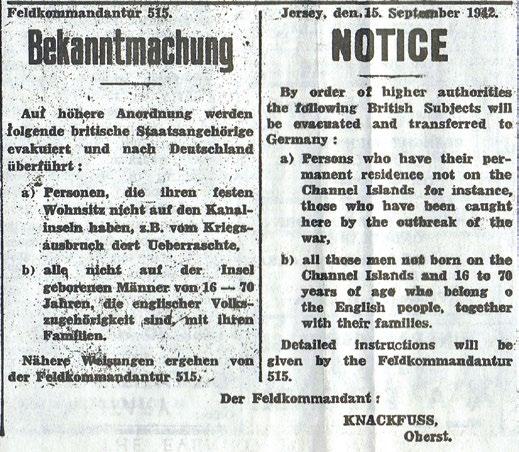

Could the unjustified deportation of non-combatant civilians to an unknown fate have been the trigger for an insurrection?
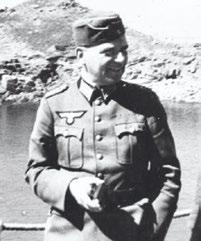
In Jersey, despite his colonel’s rank, Friedrich Knackfuss has not seen action since 1918 and the prospect of having to deploy armed force to quell civilian disorder is not one he wishes to contemplate. However, he has rarely seen Coutanche so angry at the notice and was acutely embarrassed when the usually urbane Bailiff accused him of a monstrous breach of faith.
The Islands’ Befehlshaber (commander in chief) in Guernsey, Generalmajor Erich Müller has been unhelpful. “You’re dealing with unarmed civilians, Friedrich, for God’s sake!”
It is understood that Admiral Friedrich Hüffmeier, commander-in-chief of the German forces in the Channel Islands, in April 1945 and despite Germany’s defeat being inevitable, stated to Jersey’s Bailiff Alexander Coutanche that ‘you and I will be eating grass before I surrender’. Even if that’s a myth, it makes a good title.
A compendium of myths, mysteries and minutiae of the only German Occupation of British Soil.
Compiled by Peter Tabb
“All routes to the harbour will be lined by armed troops,” Oberst Knackfuss announces. “Any attempt at disorder must be dealt with immediately. There must be no shooting. Unruly demonstrators must be detained, that’s all…”
The deportation notices are duly served and, to Knackfuss’s dismay, on 14 September, noisy crowds line the principal routes to the harbour to watch the deportees board the steamer La France for St Malo. And before the vessel sails with almost 300 detainees, the crowd will have grown to nearly five thousand.
On Pier Road is a gathering of almost two hundred young people who, since they are well away from the route of the deportees, are watched by only a handful of soldiers whose rifles are slung over their shoulders. In the crowd teenager Marguerite Mière begins to sing ‘There’ll always be an England’. Her song is taken up by the crowd with enthusiasm.
No-one knows who it is who throws the first stone but clearly many of the youngsters have filled their pockets with pebbles and pieces of brick. A stone strikes the helmet of a German soldier standing guard on the roadway below. Before the Germans can react, a hail of missiles falls down on them, knocking several from their feet. A soldier, Schütze Küpfler, unslings his rifle, intending to fire a warning shot above the heads of the throng, many of whom are his own age. However, Küpfer panics and pulls the trigger. The heavy Mauser K98k, its muzzle actually pointing downwards, fires. The bullet hits the road and ricochets into the crowd, hitting sixteen years old Daphne Le Bailly in the thigh. She falls to the ground screaming.
The crowd howls its fury but faced with alarmed soldiers holds back.
However, in the crowd one youngster draws back a catapult which is powerful enough, when firing a ball bearing, to kill a rabbit at 15 yards. Schütze Küpfer advances towards the crowd, his action entirely humanitarian since he is horrified to have shot someone, even by accident.
Daphne Le Bailly is lying on the road, moaning. As Küpfer bends over her, he is struck by a ball bearing fired just a few feet away. The bearing penetrates his skull above his eye and embeds itself in the soft tissue of his brain. In agony, Schütze Küpfer stumbles and falls. His colleagues cannot believe what they see. Despite the heavy Mausers the Germans are overwhelmed and punched and kicked to the ground in a frenzy of blows that their thick uniforms and helmets are helpless to deflect. Too late the crowd realises what is happening and suddenly they break and run, scattering in all directions, leaving four blood-soaked bodies lying in the roadway and a still moaning Daphne Le Bailly whose flesh wound is bleeding freely.
More armed Germans arrive on the scene. What they are unprepared for is four German soldiers and a teenage girl lying in the road, all bleeding profusely.
All the injured are bundled into vehicles and rushed to the General Hospital. Schütze Küpfer is pronounced dead on arrival. Daphne Le Bailly is treated alongside the injured soldiers.
La France sails for St Malo that evening with 280 deportees.
Oberst Friedrich Knackfuss is outraged. Schütze Küpfer was killed by a ball bearing probably fired by a catapult found in a gutter at the scene. Bailiff Coutanche is summoned and receives a severe dressing down and threatened with dire consequences.
“But we are talking about a crowd of almost two hundred youngsters,” Coutanche protests. “How will we ever find out who fired that ball bearing?”
“You must, Mr Bailiff,” Knackfuss replies. “Behlshaber, Generalmajor Müller, is most insistent and demands 20 hostages whose lives will be forfeit if the perpetrator is not forthcoming within seven days. I suggest that you publicise this action in The Evening Post.”
“If the perpetrator is found, what will happen to him?”
Although Bailiff Coutanche has a sickening apprehension of the perpetrator’s fate.
“That will be decided by the Militärgericht,” Knackfuss replies coldly. “We are not barbarians, Mr Bailiff.”
Following the rounding up of 20 hostages and publicity in The Evening Post, the morning before the German ultimatum expires, Mrs Edith Le Messurier appears at the Town Hall with her fifteenyear-old daughter Eunice and asks to see the Connétable. In the presence of Connétable Cuming and his Chef de Police, a tearful Eunice Le Messurier admits that it was she who fired the deadly ball bearing with her brother’s catapult.
At 6.00 pm the hostages are freed and Mrs Le Messurier and her daughter are undergoing interrogation at the Feldkommandantur. Bailiff Coutanche insists the girl be legally represented but Knackfuss refuses. “This is entirely a military matter, Mr Bailiff.”
Within a matter of weeks Mrs Le Messurier and her daughter, have been transported to France, their sentences and ultimate fate unknown. Despite Bailiff Coutanche’s persistent enquiries and protests, he is unable to discover their fate.
They would be swept up by the notorious Nacht und Nebel (Night and Fog) decree of December 1941 whereby prisoners became property of the German state and could be made to disappear, usually to a death camp.

The foregoing is fiction, but could this have happened?


















“What Was but What If” will be published next spring.
Urban trees have become something of a cause célèbre recently, with good reason. While we’ve long known about their benefits, the idea is now gaining wider traction.
There’s no shortage of excellent reasons for this, of course, including the twin drivers of shade and cooling; indeed, most of us have experienced the heat-retaining properties of concrete and metal that can make urban life unbearable, especially further south.
Boosting urban tree cover is a relatively simple way to improve life for millions, with statistics firmly backing this up. It’s beyond doubt that urban tree cover lowers maximum temperatures, reducing heat-related deaths. In fact, a 2023 study in The Lancet posited that 30% canopy cover in Europe could have prevented almost 40% of deaths during extreme heatwaves.
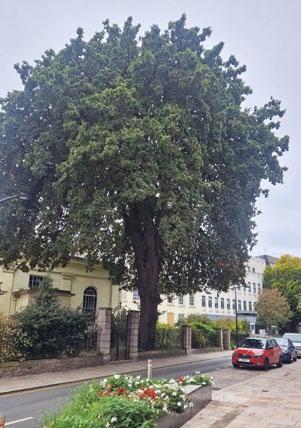
Spending time around trees provides a wide range of health benefits, notably improving air quality, lowering blood pressure, boosting immunity and reducing the prevalence of heat-related health issues. It also reduces stress and anxiety, improves mood and can even benefit cognitive function.
In 2021, Dutch urban forestry expert Dr. Cecil Konijindijk devised a new rule of thumb for urban planning. Seeking a mantra to “enhance urban greenery, biodiversity, climate adaptation and public health”, he coined 3+30+300:
• At least three mature trees visible from every home, school and workplace.
• Minimum 30% tree canopy cover in every neighbourhood.
• Residents live 300 metres (max.) from nearest high-quality green space.
While the numbers clearly have an arbitrary element to them, the criteria do not. Tree visibility, canopy cover and access are all integral to optimal neighbourhood life.

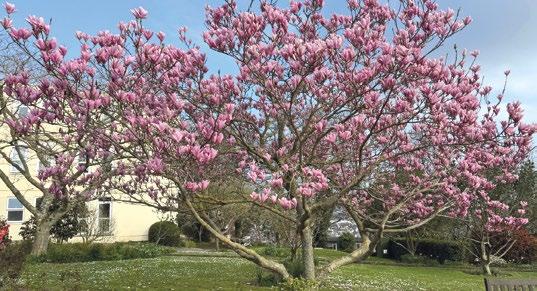
How does St Helier fare? Let’s not forget how many of us head there daily, after all. According to Global Forest Watch, it has 4.17% cover – a very low figure compared to UK cities like London and Birmingham (18-19%) or even the least green US cities like Denver (9.6%) and Phoenix (8.5%).
While it’d be wrong to compare like-for-like with these metropolises, it’s still a fascinating metric that strongly suggests we could be a lot greener. You can’t plant trees anywhere, however, making it vital to protect what we have.
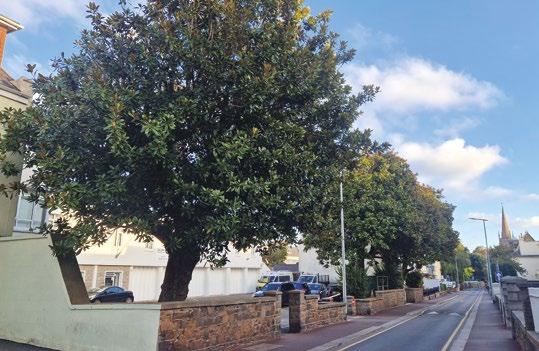
For example, the felling of 33 mature trees at St Joseph’s Care Home was successfully blocked but, at the time of writing, is under appeal. These are the only trees visible to many of the residents, providing colour, wildlife and seasonal variation in a way only nature can.
Surprisingly few trees are protected locally and there’s certainly a strong case for more tree protection. Architects can also make a huge difference by integrating existing trees into design.
It’s not going to get any cooler, so it’s time to up our urban tree game.






This starts from Black Friday in November, and we’re still very busy until mid-January with returns. Our Posties, Counter Colleagues and Customer Care team work incredibly hard at this time of year delivering parcels (in all weather) and answering queries to help islanders send to loved ones across the world.
We see an increase in items of around 30% – our team deliver up to 65,000 items daily! We’ve recruited extra team members to help us, and our Post Offices at Broad Street and Rue des Pres will extend their opening hours to help customers. We’ve delivered a handy guide to every household with everything you need to know about posting over Christmas.




It’s the busiest time of year at Jersey Post. Julie Thomas, Chief Operating Officer tells us how the team is preparing to deliver for our island community this Christmas.
Absolutely! Seeing the handwritten envelopes from excited children, many decorated with glitter and stickers, is a highlight for us every year! We receive around 1,500 a year, which our Posties deliver to Santa in the North Pole. Children can post these free of charge in any Post Box around the island. It’s very important to include your address so Santa can reply, and we need to receive these by 12th December to get them to Santa in time. JERSEYPOST.COM/CHRISTMAS
We’d like to wish all our customers a Happy Christmas and a prosperous New Year!
And say a huge thank you to our teams, who work so hard to serve our community.
• Beat the rush - post as early as you can before the last posting dates!
• Pre-pay VAT on goods going to the UK to speed up delivery.
• Buy your postage online – simply print your label and then drop your item at your nearest Post Office.


• Sign-up for SecureDrop – your letters and parcels (including signed-for items) will be delivered to your property, even when you’re not at home!
In almost all of its publicity, and even at the foot of many of the letter written from Diabetes Jersey will use the phrase that “every day one more person in Jersey acquires diabetes”. This is statistically accurate since the number each year is circa 400, i.e. around one every day.
Why does this happen?
Diabetes is all about sugar in the blood and occurs when the body becomes incapable of controlling how much sugar our blood is prepared to accept. Fortunately for most of us, our pancreas produces the hormone insulin which automatically regulates glucose levels in our blood.
Just what stimulates the pancreas in some people either to stop abruptly producing insulin or to slow down its production is not known. Therefore, there is no way we can prevent it. No-one has yet invented a vaccine and Type 1 diabetes (where the pancreas stops producing insulin completely) can strike children as young as two or three years old.
While there is no early detection of Type 1 diabetes, Type 2 can be detected with a simple blood test and if detected early enough, can be managed, and even reversed.
Today managing Type 1 diabetes with insulin injections is commonplace.
Type 2 diabetes, which occurs as the pancreas progressively produces less insulin, while not actually preventable, can be managed and diminished, either by diet or medication and particularly by the way in which we live.
What we consume can have a significant impact. If we knowingly adopt a lifestyle to which our body objects – putting on weight is the most obvious objection – then achieving well-being becomes more difficult. Sugar exists in almost everything we consume, e.g., fructose in fruit, lactose in dairy products and glucose generally.
However your lifestyle leading you down a path to Type 2 diabetes , is the very last thing you want.
Many elements of our adult lifestyle can increase the risk of acquiring Type 2 diabetes, e.g., being overweight, not exercising, drinking to excess and smoking. What’s more, already having diabetes in the family also increases that risk.
In Jersey around 4,500 people have diabetes of which around ten per cent are Type 1.

Investment management and financial planning are not one-off tasks to be ticked off to-do-lists once implemented. Strategies must continually be reviewed and refined to reflect the evolving financial landscape. As we work our way through the final quarter of 2025, now’s a good time to take stock of the year to see what learnings can be taken for 2026 and beyond.
Arguably, 2025 saw the world become a more uncertain place, both geopolitically and economically. Geopolitically, look no further than the ongoing Russia/Ukraine war and Israel’s invasion of Gaza; economically, developed countries’ high debt/low growth profiles and global trade tensions have weighed on markets. Take trade. Liberation Day was a game-changer - not the 9 May Liberation Day here in Jersey, but US President Donald Trump’s self-declared Liberation Day on 2 April, when he announced all US imports will be subject to a 10% tariff. Certain nations, including China, were hit harder. A full-blown trade war and global recession seemed likely. A sell-off in global stocks followed.
Trump’s Liberation Day, a stand-out example of how in 2025 previously regarded givens - free trade, globalisation, responsible US global leadership – could no longer be taken for granted. Elevated uncertainty became the order of the day.
Takeaway: Government bonds rose in the immediate aftermath of Liberation Day. So too, did other safe-haven assets, highlighting how diversified, multi-asset portfolios can provide protection.
In the event, a global recession was averted as the US significantly rowed back tariffs, while companies adapted by diversifying supply chains, adopting near-shoring strategies, adjusting prices, and investing more in technology. Together with renewed excitement surrounding technology stocks and artificial intelligence (AI), it wasn’t long before the ‘everything’ rally resumed. Markets from equities to gold soared.
Takeaway: The turnaround highlights the importance of staying the course. Volatile markets, geopolitical/ macroeconomic uncertainty will cause strategies to drift off course but, with insightful stewardship, they can be corrected. Withdrawing funds during a market downturn, by contrast, can derail long-held plans and be hard to recover from.
Many of the issues that dominated sentiment in 2025 remain. Cue recently reignited trade war fears following China’s decision to impose export controls on rare earth minerals and Trump’s tit-for-tat threats to hit China with 100% tariffs. Closer to home, a year after her £40bn tax-raising budget, UK chancellor Rachel Reeves is looking to plug yet another multi-billion-pound funding gap. Against such an uncertain backdrop, expect further bouts of volatility.
As April 2025’s tariff tantrum showed, knee-jerk fund withdrawals often lead to poor results. Cutting through the noise, focusing on market fundamentals and maintaining an analytical approach to investing was the correct course of action. That’s the longterm approach we take at Quilter Cheviot when constructing and managing diversified, multi-asset portfolios. We believe this not only generates better outcomes for investors but will also position portfolios better to deal with whatever 2026, and beyond, has in store.
Investments and the income from them can go down as well as up, you may not get back what you invest.

Tim Childe Chief Executive Officer Quilter Cheviot International

Flu and COVID-19 continue to pose a risk to thousands of Islanders who have lower levels of protection.
Vaccination is an important part of building your defences. Particularly if you are at higher risk of serious illness from COVID-19 and the flu.
If you’re 65 and over, or pregnant, or living with certain health conditions you’re eligible for a flu vaccine.
If you’re aged 75 and over, or living in a care home for older adults, or immunosuppressed, you’re eligible for both a COVID-19 and flu vaccine.

Book your appointment today:
Contact your doctor’s surgery. For more information or to check you’re eligible visit gov.je/wintervaccines


As winter arrives, it’s crucial to think about keeping ourselves and our loved ones safe from illness. Two viruses that pose a risk to Islanders during winter are influenza and COVID-19. By increasing our defences through vaccination, our bodies are more able to fight off these viruses.
Both flu and COVID-19 can be serious for many Islanders. According to Professor Peter Bradley, Director of Public Health and Medical Officer for Health, “Most people who get COVID-19 or flu experience mild illness, but some can develop severe disease.” This includes older people, young children, and those with conditions where the immune system may not be as strong, like heart or lung disease.
“The more people who are vaccinated, the less these viruses circulate, giving better protection for people with weaker immune systems and ensuring the health system can continue to function.” explains Prof. Bradley.
Both vaccines help the immune system build defences. They contain weakened proteins from the virus, allowing the immune system to develop a response without exposing us to the full virus. This means that if we do encounter the virus, our bodies are better prepared to fight it off quickly, helping us avoid serious illness. Over time, viruses mutate and our immunity wanes which is why booster doses are necessary. While not all vaccines prevent infection, they do significantly reduce the severity of the illness and risk of long-term complications.
Vaccine safety is a common concern for some, especially given the speed at which COVID-19 vaccines were developed. Prof. Bradley emphasises, “COVID-19 vaccines went through the same rigorous testing as other vaccines but was done at speed thanks to advancements in technology. These vaccines have been administered to hundreds of millions of people, with their safety closely monitored.”
When Islanders choose to be vaccinated, the entire community is protected.
Professor Peter Bradley Director of Public Health
Side effects are usually limited to some soreness or redness at the injection site. “Serious side effects are rare and are much less common than the complications from the illnesses themselves.”
Prof. Bradley stresses.
With regular COVID-19 boosters and other vaccines being offered over the last few years, some may feel exhausted by the idea of another. Prof. Bradley urges us to consider the broader picture: “These are serious diseases, and the viruses causing them are constantly changing. By getting vaccinated, you are not only protecting yourself but also those around you. Someone infected with flu could infect another four people.”
High vaccination rates in Jersey have helped us avoid outbreaks of illnesses seen in other places like measles. Prof. Bradley notes, “When Islanders choose to be vaccinated, the entire community is protected.”
“If you’re unsure about getting a flu or COVID-19 vaccine, a simple first step is to check your eligibility on gov.je or consult your GP. In most cases, they will reassure you that vaccination is safe and highly beneficial.”
The Royal Society for Public Health emphasises that it’s never too late to get vaccinated. Even if you’ve missed previous doses, it is still beneficial to protect yourself going forward.
Take a proactive step to defend your health and the wellbeing of your loved ones this winter. Getting vaccinated means fewer days spent ill and more time enjoying the season.
Contact your GP or visit gov.je/wintervaccines for more information.
by Sara Pendergast, Chairman of the Parish Pastoral Council
Close to 300 parishioners of the Catholic Church in Jersey gathered at Coronation Park at Millbrook on Sunday 28th September for a parish social event, which was organised by the Parish Pastoral Council.
The aim was to bring all parishioners together for food and fellowship. To guard against any inclement weather, we hired a marquee with tables and chairs, with our costs covered by generous donations from parishioners.
We started with the celebration of Mass, led by Canon Dominic and Fr Ambrose, which was a beautiful occasion to come together and give thanks for our wonderful parish. Everyone was in good voice joining in the hymns and an extended sign of peace was a highlight for many.
Mass was followed by a sharing lunch where parishioners shared their picnic food with those on their table and surrounding tables. It proved to be a veritable feast and a good way to get to know one another and to try some different cuisines.
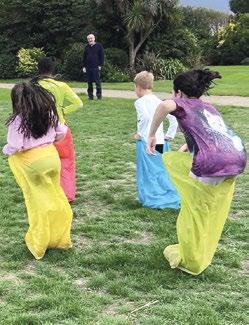

During and after lunch, we enjoyed various entertainment in the form of a sociable quiz, a talent show and a competition to draw portraits of our two priests. After lunch, we held some fun sports races for the children who were presented with medals and sweets. Then, the results of the quiz, drawing competition and talent show were revealed and prizes were awarded. We hope to repeat this event in future years as all who attended said how much they had enjoyed it.

Meet your elected representatives
Deputy Philip Bailhache, Deputy Alex Curtis, Deputy Barbara Ward and Deputy Karen Wilson
Thursday 27th November 2025
Thursday 29th January 2026
Thursday 26th February 2026
Thursday 26th March 2026
St Clement’s Parish Hall 5.30-7.00pm
St Clement’s Parish Hall 5.30-7.00pm
St Clement’s Parish Hall 5.30-7.00pm
St Clement’s Parish Hall 5.30-7.00pm
• All parishioners are welcome on a drop-in basis
• Discussions take place in an open forum
• Members will be in attendance depending on their availability
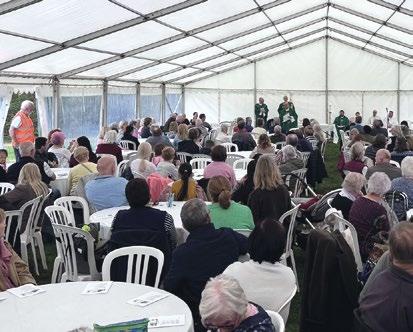


L’Amarrage is a community magazine, for you, about you and from you!
Got something you’d like to see in the next edition? Send us your ideas, articles or pictures or thoughts to: susiep99@hotmail.com
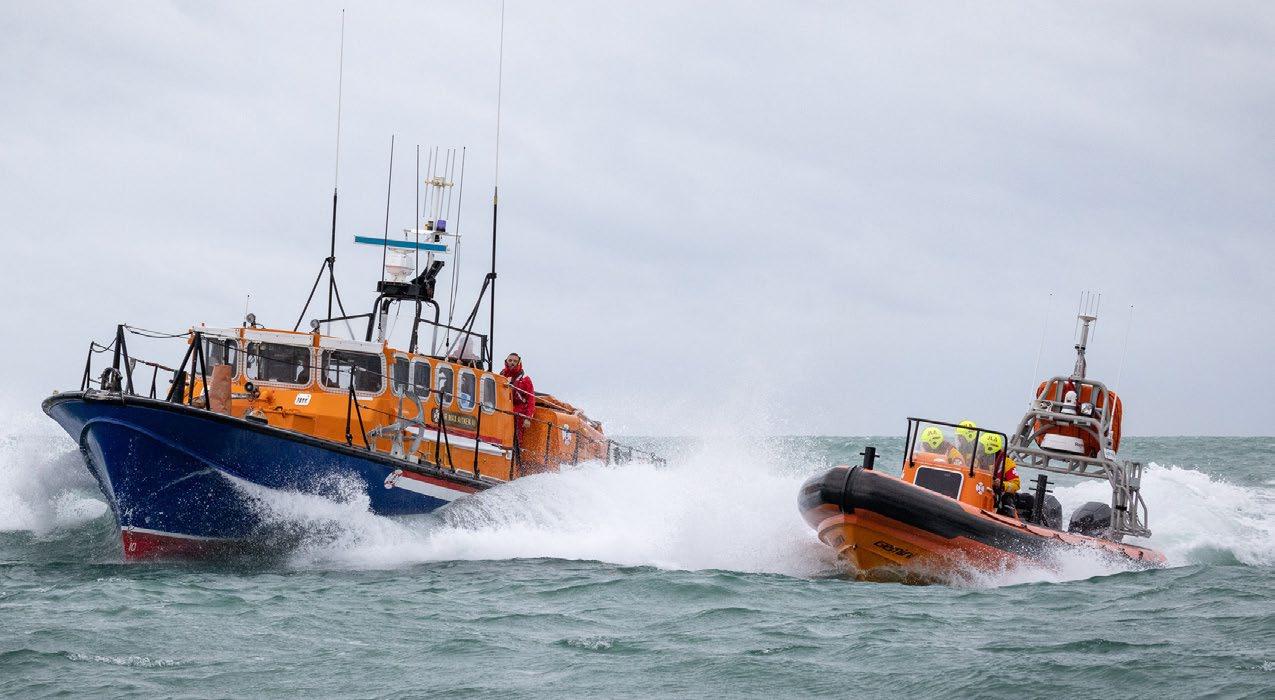




Brightly, formerly Brig-y-Don Children’s Convalescent and Holiday Home, has been celebrating 100 years of supporting children in Jersey.
The Brightly Board and staff, both former and current, have used the occasion to thank islanders for their commitment, dedication and support for the popular charity.
2025 has seen events take place ranging from planted flower displays in the Howard Davis and The Lower Park courtesy of the Parish of St Helier; flying of the Brightly flags from various buildings, private homes and parish halls and an original book launched at St Clement’s Primary School and given to children in Years 1 and 2 islandwide.

Two special events were held, one at Brig-y-Don House for people with a connection to the home, the other at Government House in June where His Excellency, the Lieutenant - Governor and his wife kindly hosted a special party for children supported by Brightly and their families. Many memories were shared and old friendships renewed at these events.

The centenary year will see the retirement of its serving member of staff Allison le Blancq after 46 years.
“My 46-year journey with Brig-y-Don Children’s Charity began in 1979 with a one-year role in the playgroup. I was interviewed by Miss Holley, Head of the Children’s home and the person I owe thanks to for my life-long vocation. The wonderful staff team showed me what it was to be part of a caring, fun, supportive team who looked after and advocated for the children, unable to be with their families, with such compassion that I am still with the charity.
“I held several different roles; in the playgroup, residential home and pre-school nursery, until 2004 when I became ‘secretary’ for the Charity. This was a learning curve but enabled me to stay involved with and support the staff and children cared for by the charity.


The centenary will end with the planting of a time capsule at Brig-y-Don House to be opened in another 100 years.


“When the Children’s Home sadly closed in 2009, I helped to develop a new way of supporting children and young people in care, leaving care or in need. The charitable support grew from helping 54 children to over 500 last year. In 2018 we renamed the charity to Brightly,” she said.
“It is not possible to name everyone individually, but I would like to say a huge thank you to all the staff and Board members I have worked with over the years. It has been a privilege to work for such an invaluable charity.”
Brightly wishes to thank all its donors large or small for the support given to the charity and looks forward to the next 100 years!











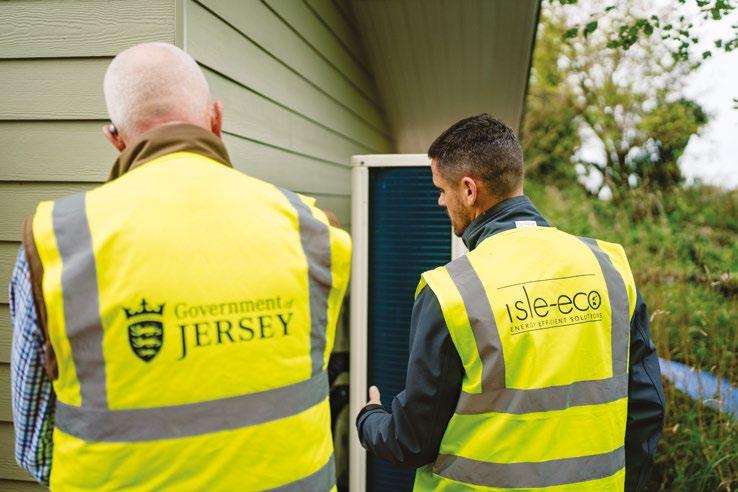






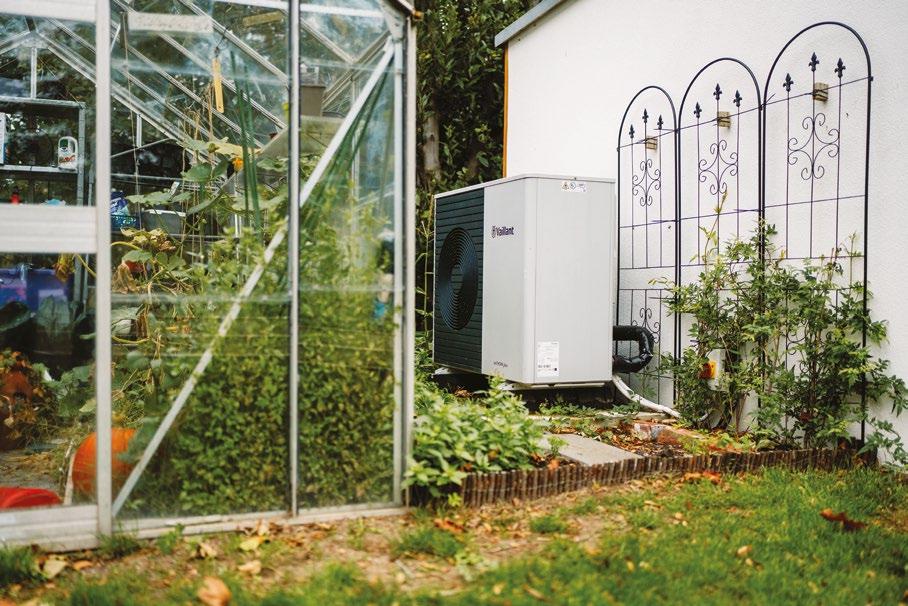




























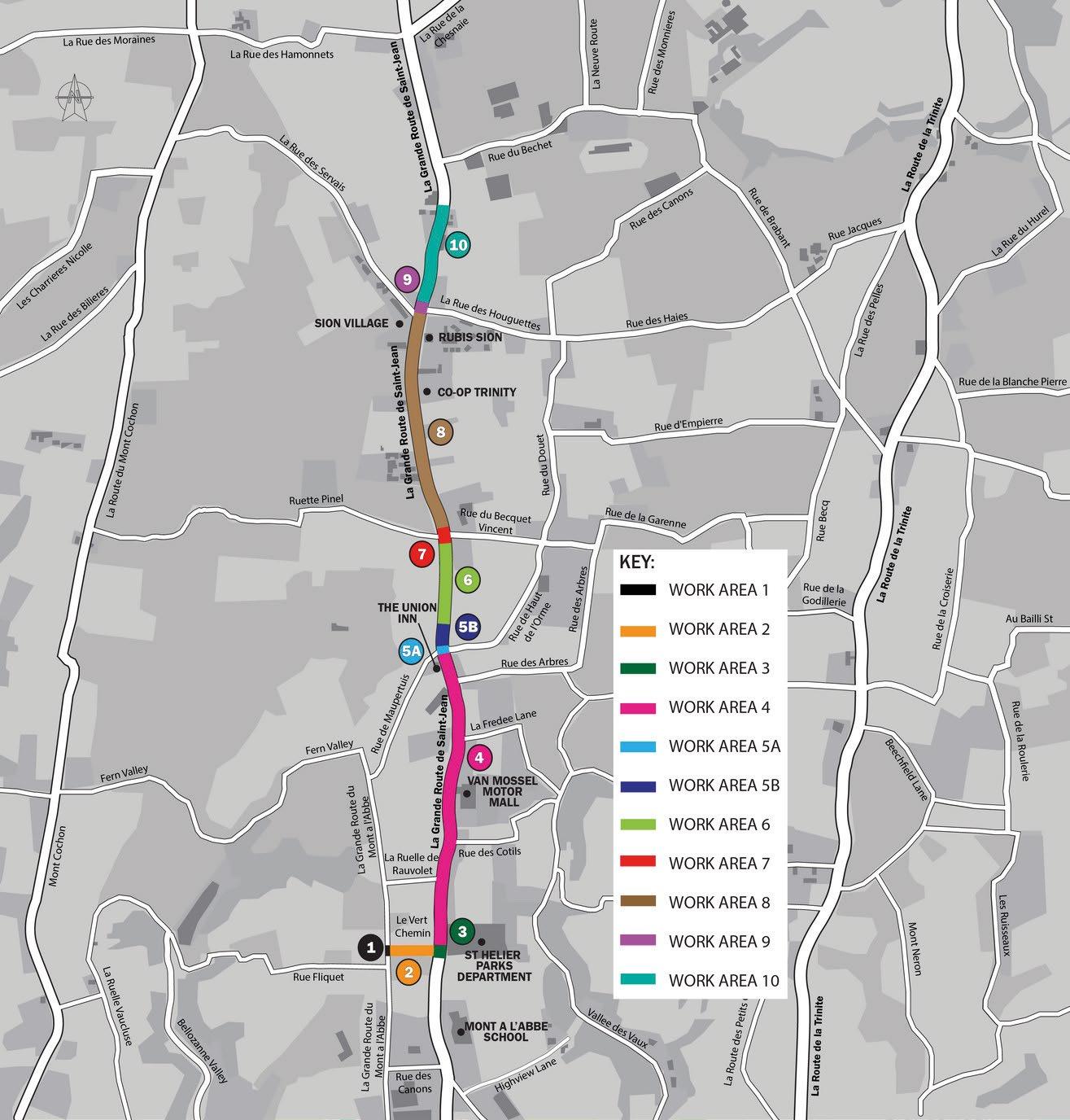




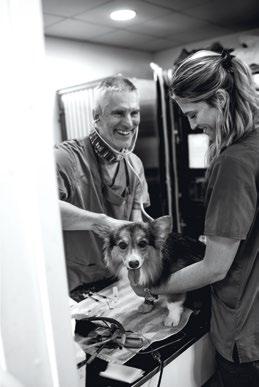
“At the heart of the Community” is a phrase that can be banded about without substance but here at Jersey Village Vets, it’s more ethos than phrase.
As Jersey Village Vets enters its eleventh year, having previously traded as Allen Rushton-Taylor Vets since 1976, our mission to be at the heart of the outlying Parishes, goes from strength to strength.
Most of our team know most of our clients, and more often than not, a chat and a catch up proceeds an appointment.
We throw ourselves into community projects and strive to help our communities where we can. To us at Jersey Village Vets, our clients are our friends and as the world and peoples lives become more insular and isolated, it’s important to us to maintain that human interaction when we can. We consciously locate our five, well equipped branches and expert teams, in the country Parishes and always aim to support those parishioners and communities we serve. That’s not to say we distract from our core value of providing your pets with the best possible care and compassion, using the most up to date methods and state of the art equipment. We just like to go that one step further and really be at the heart of the community.










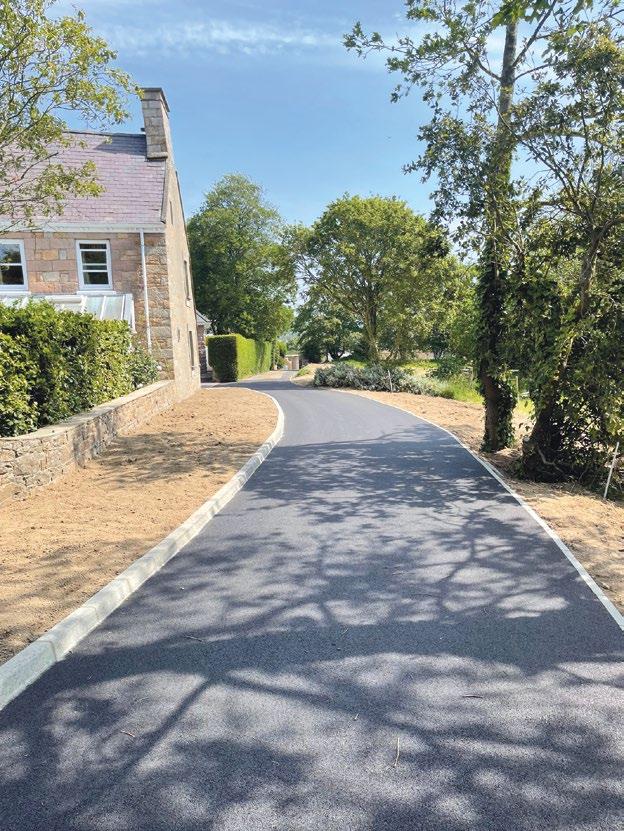


















St Helier Town Hall
St Brelade Parish Hall
St Clement Parish Hall
St Ouen Parish Hall
Trinity Parish Hall
St Saviour Parish Hall
St Martin Public Hall
10am-12pm
Throughout



Visit the Parish of St Clement website to sign up to News & Events direct to your inbox. To sign up please visit www. stclement.je/news-events and enter you email in the box that says GET PARISH NEWS & EVENTS DIRECT TO YOUR INBOX
Community Support Drop-in Coffee mornings
Third Thursday each month. 10am to 12.30pm at the Parish Hall. The Community Support Team on 854724
Parish Market
Third Saturday of the month. 9.30am to 1.30pm Parish Hall. Stalls, produce and crafts. Details from Parish Hall or Anna Staveley, Anna.staveley@icloud.com
St Clement WI
Second Monday each month, 2:30pm. Parish Hall. Mary Marshall 857616
Greve d'Azette WI
First Monday each month. 2.30pm at the Parish Hall. Sue Manning 888542
Le Hocq WI
2nd Tuesday each month. 8pm at Caldwell Hall. Andy Albert 525552 or Jenny Totty 723397
Jersey Sugar Art
Every 4th Tuesday 7.30 - 10pm Parish Hall. Tracey 07797 782385 or Margaret 07797 784699 or Mavis 732038
To avoid any disappointment or error, with the possibility of late changes and distribution delays, please check with the contacts listed below or the St Clement Parish Website for details. IN CASE
St Clement Bridge Club
Every Friday evening Parish Hall. Prompt start, 6.45pm. Suitable for advanced beginners and upwards. David Delauney on 720638
Pain Support
Seated exercise sessions Tuesdays 10am, Parish Hall. PSJersey15@gmail.com or 07797 952165 www.painsupportjersey.com
Slimming Together
Meet at Good Companions Club on Monday evening at 6.30pm.and Tuesdays at 6pm. Joanne Reid Rodrigues 856490, joanne@slimmingtogether.com
Good Companions Club
Cash prize bingo the last Friday of every month, open to the public, starts at 7 pm (doors open for food & drinks at 5.30pm). Call 871451
Over 55’s Gentle Exercise Class
9.30am -10.30am Mondays. Good Companions Club. Helena Parris 07797 742531
Weight Watchers
Mondays 5.30pm at St Patricks Church Hall. Sharon (O’Brien) 07797 848955
Catholic Women’s’ League Jersey (East)
First Monday of the month. 7pm St Thomas Small Hall. Pat Guegan 07797 724054, gueganfamily@gmail.com or Facebook cwljerseyeast
Petanque Group
The group meets at the terrain opposite the Parish Hall every Thursday at 10 am. New and seasoned players welcome. (Please park in the Public Car park alongside the Parish Hall)
St Clement Battle of Flowers Bingo, quiz evenings (See Facebook) Contact: Chair: Graham Gibson, grahamgibs@aol.com or 07827 2774236 or Jean Chapman 734732 or 07797 842225
Connétable Marcus Troy T: 07797 710 111 marcus.troy@stclement.je
Procureurs du Bien Public Sandra Mathew, Garry Beardshall
Deputies Philip Bailhache T: 852533 p.bailhache@gov.je
Alex Curtis T: 07797 932 214 a.curtis@gov.je
Barbara Ward T: 07797 761 560 b.ward@gov.je
Karen Wilson T: 07429 380 693 k.wilson2@gov.je
Centeniers Phil Heard, Lisa Stubbs, Tia Kirton-Read & Tony Maindonald
Chef de Police Phil Heard
Rector Reverend Martin Dryden T: 745260
Parish Secretary Beverley Corley
Assistant Parish Secretary Kim Beaumont
Admin Assistants Claire Pulley, Carla Domingos, Katrina Waight, Juliette Jackson
Foreman Jason Sims
Asst. Foreman Brock Thompson
Sexton Michael Le Jehan
Caretaker Paul Sheehan
Community Support Chair: Lesley Aubert
Liaison Officers: Julie Martin
Social Committee Chair: Sandra Mathew sandra.mathew@stclement.je
Twinning Committee Chair: Bernadette Cooper bernadettecooper62@gmail.com
Refuse Collection Contractor: Graham Pallot T: 07797 748 286
Parish Hall Opening Hours
Monday to Thursday 8:15am - 5:00pm Friday 8:15am -3:45pm T: 854724 parishhall@stclement.je
please contact the Duty Centenier on 07797 711 392
St Clément Parish Church www.stclementschurch.org.je Reverend Martin Dryden
St Patrick’s Roman Catholic Church www.catholicchurch.org.je Canon Dominic Golding Samarès Methodist Centre www.samares.ci-methodist.org.uk Angela Noel 851571
Editorial Susan Parker E: susiep99@hotmail.com
Advertising Martyn Farley T: 07797 743191 E: martyn@farley.je
Accounts Helen Carré E: helen@mediamasters.je