
By ocean mason, board president
I sat here, contemplating the phrase “Rise with Purpose” and honestly, I was drawing a blank. Whose purpose? What does it actually mean to rise? Seeking inspiration, I re-read The Co-op’s mission“Working together to nourish our community” – and things snapped together for me. For all the purposes we could have chosen, this mission is the core of what it means to be The Food Co-op. We come to the Co-op on many different paths, but the purpose that calls us there is the same –community.
Community is the hearth-fire we tell stories around when it’s dark and cold. The place we celebrate harvest and abundance in its season. The place we gather when times are tough. Whatever purposes we carry as individuals, in community we weave them together into a fabric – both a shelter and a work of art. I think we come to the Co-op as members because we want to build a world that centers collaboration, one that deeply recognizes and nourishes the interconnectedness of all things.
To rise to that purpose calls us to work together, to make the effort to understand each other and bridge difference with curiosity and presence. To grow in relationship and learn to be uncomfortable, vulnerable, and brave when we can. It means putting in the work – tending to our community as the living thing it is. As the Board we do this by taking the long view, looking at that mission and collaborating with our General Manager to keep moving toward it.
For the Board, much of 2025 was about finding our footing – rooting, if you will. The complexity and controversy the Board faced through the year has been both a challenge and an opportunity to grow. We were largely new members, and we learned from our predecessors’ work, reviewing and seeking to understand past decision and policies. We also learned, and continue to learn, from the changes our community asks of us – asking us to always be aligned of our mission and aware of our role in the larger community. We are learning how to authentically rise to the purpose – the mission – we’ve chosen.
The biggest challenge set for us in 2026 is hiring a new General Manager. This is arguably one of the most important jobs a Board is called on to do. We are fortunate that our Staff, current GM and Board members have led us to a strong place, both to make the choice and to hold the next GM with care. Thank you for your trust, it’s an honor to be able to represent you all.
In care and community, ocean mason

BY KENNA EATON, GM
The past year was one of growth, challenge, and meaningful change for our Co-op. From navigating operational disruptions and labor conversations to investing deeply in our people, systems, and community, 2025 truly demonstrated what it means to work together to nourish our community!
Early in the year, the Co-op experienced an important moment when a petition was filed with the National Labor Relations Board seeking union representation for employees. This process prompted thoughtful dialogue and reflection across the organization. In February, staff ultimately voted against unionization.
In March, we took a significant step forward by launching an Employee Working Group (EWG), creating a formal, ongoing space for employees to voice concerns, share perspectives, and actively participate in improving our workplace culture. We began that work by running a survey that gathered input on the areas employees felt strongly about. Three keys areas stood out: accountability, training, and communication, which became the focus of our work throughout 2025. While we had already been working on those three areas, the desire of some employees to unionize made us realize we needed to do more.
Another major theme of 2025 was investment in inclusion, learning, and engagement. Managers participated in DEI-focused harassment awareness and inclusion workshops. DEI consultant Kevin Henry worked closely with the management team to strengthen inclusive meeting practices. Additional learning included a workshop on Gender Diversity and a Healthy Workplace, mandatory for all employees and an ongoing training for all new employees. As well the launch of a Youth Mentoring Program.
The EWG laid the foundation for rebuilding our workplace culture by publishing a detailed work plan focusing on accountability, communication, and training. As a result, the organization created a Safety Compliance Officer role, currently held by our Director of Facilities and added focused training and development into our workplan. Again, while these are areas we have tried to address throughout the years, staff surveys indicated a need to do more.
In April, the store temporarily closed to allow for critical infrastructure upgrades, including the replacement of a water line and installation of a new deli case.
In June, a cybersecurity incident affecting UNFI disrupted product availability nationwide. Staff responded by sourcing products from local and secondary suppliers. That same month, the Co-op implemented an ICE response plan, installed parking lot speed tables, and launched a Customer Experience Survey.
Internal systems improvement continued with the identification of 25 leadership priority projects, implementation of new Food Services inventory software, and adoption of several National Cooperative Grocers programs.
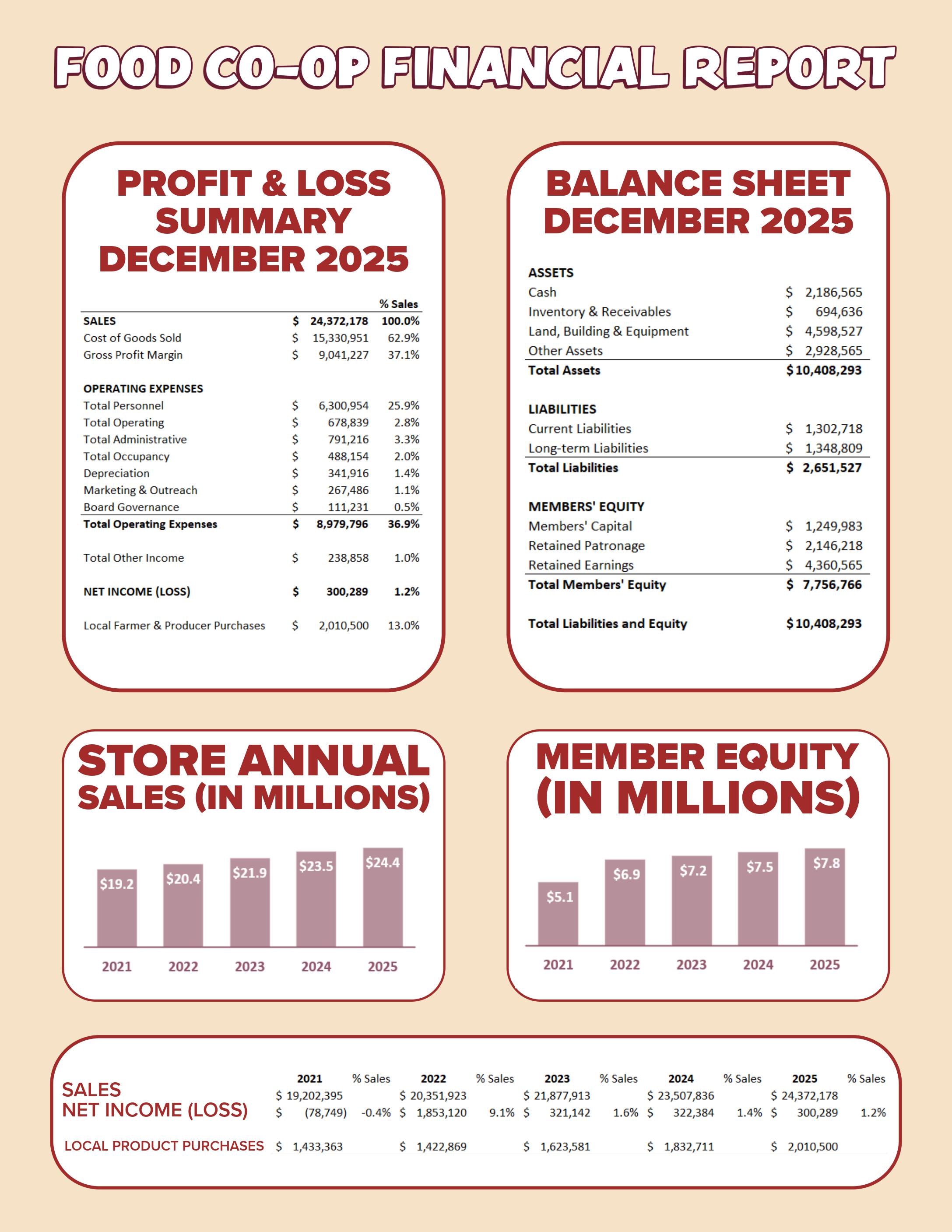
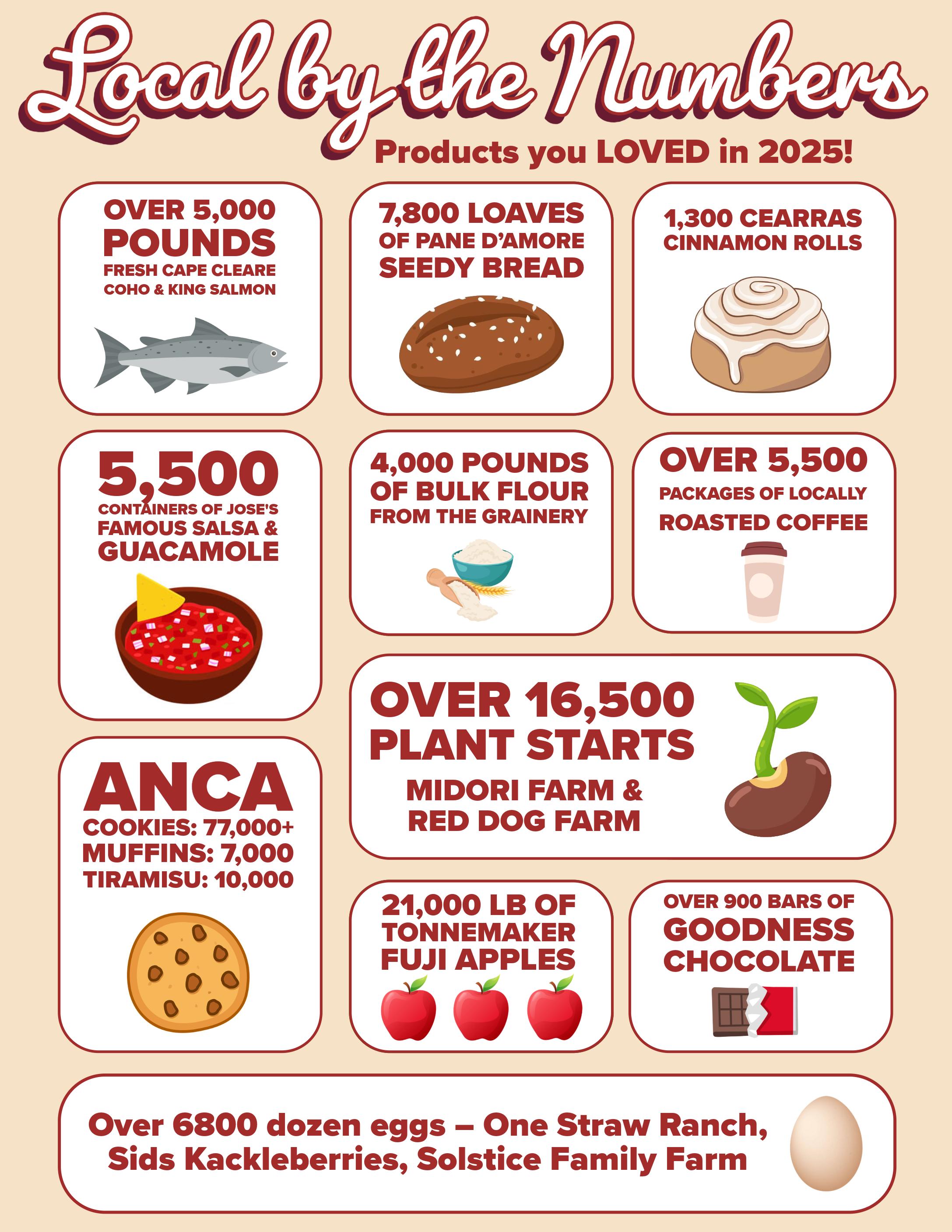
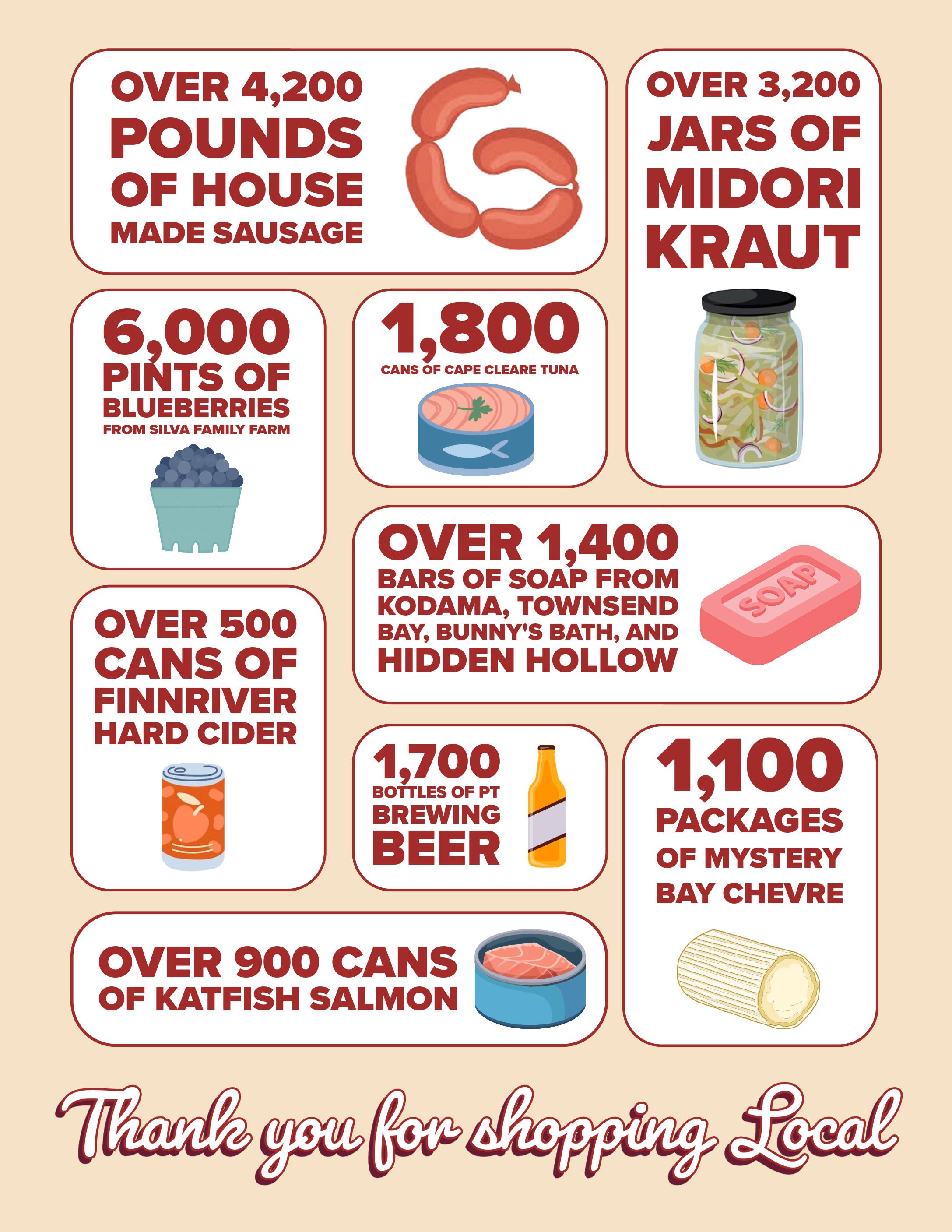
Supporting local farmers and producers remained central to our mission, with local purchases reaching 13% of all Co-op purchases. Customer-facing improvements included the completion of the center store reset in October. Our improvements led to increased positive feedback in our Customer Experience Survey, along with identification of areas for us to work on.
New initiatives included recycling produce ties into plastic lumber, improving lobby flow, adding covered outdoor cart storage, and installing a 24-hour public bicycle fix-it station. Small actions taken together add up to meaningful impact.
Sustainability, to us, is about stewardship—of the land, of our local food system, of our workplace, and of our community. When you shop at the Co-op, you support local farmers, keep dollars circulating in our regional economy, and participate in a food system built on care and responsibility for future generations. And that is a legacy that I can feel proud of as I retire at the end of 2026— after 15 years of leadership, I am excited for the next iteration, and the next chapter of our amazing story.
In cooperation, Kenna

BY AMANDA MILHOLLAND, JCFM EXECUTIVE DIRECTOR
The Jefferson Farmers Markets are springing forward into 2026. Parents, look for our weekly kids’ program at the Wednesday afternoon market in Port Townsend and also on the first Sunday of the month at the Chimacum Farmers Market. We are also entering a new phase of planning for the long-term sustainability of the Port Townsend Farmers Market. We extend our thanks to everyone who continues to make the farmers a success: customers, vendors, food access partners, performers, our market board and staff, and especially our sponsors and donors, including the Food Coop. We cherish our shared vision for vibrant markets where community, small businesses, arts, and local agriculture thrive.
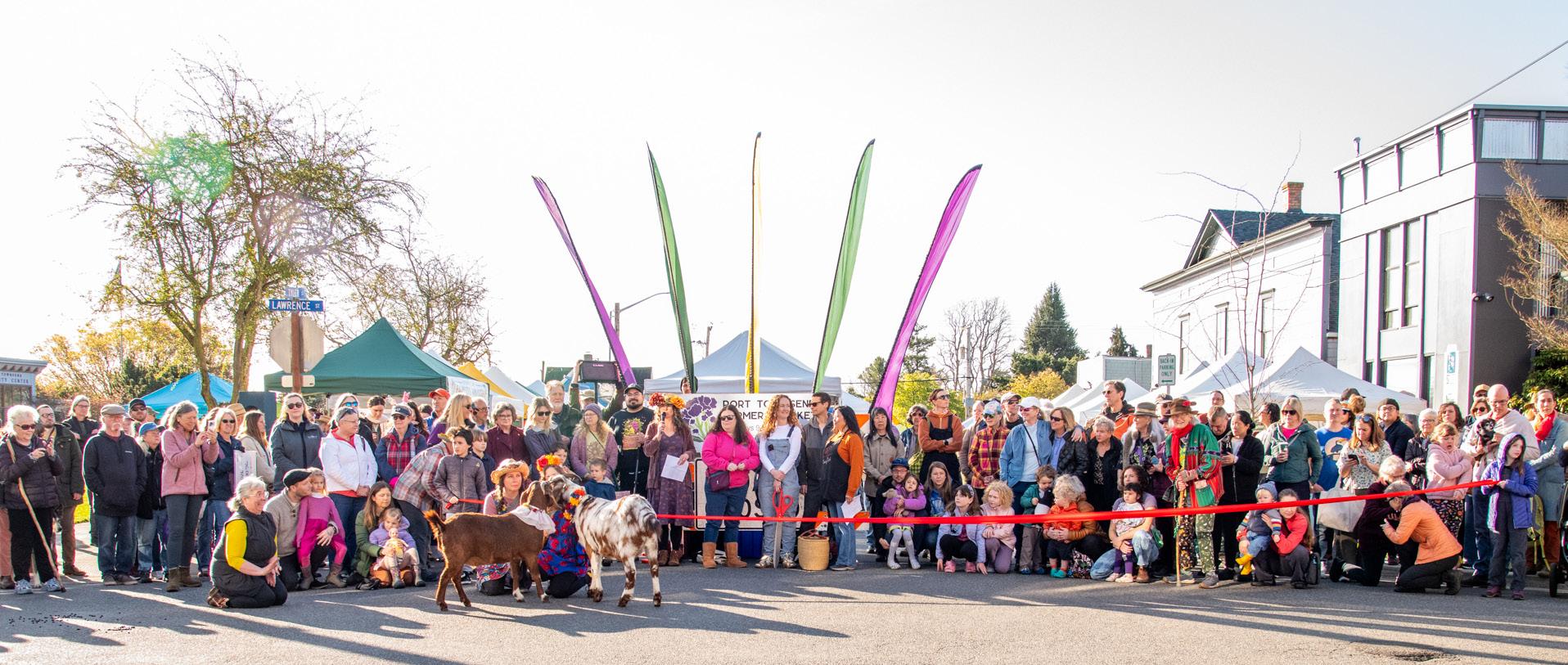
In 2026, we broke attendance records on the opening day of the Port Townsend Saturday Farmers Market (9am-2pm) with almost 5,000 market visitors. Wow! Thank you, community! The Chimacum Farmers Market (10am-2pm) on Sundays is off to a great start, and we kick off the Port Townsend Wednesdays Farmers Market on June 3, 3-6pm on Tyler Street in Uptown PT. Our community farmers markets strengthen our connections to local food, expand opportunities for growers and artisans through directto-community sales, while also empowering people with low incomes to stretch their budgets to put more fresh, healthy food on the table.
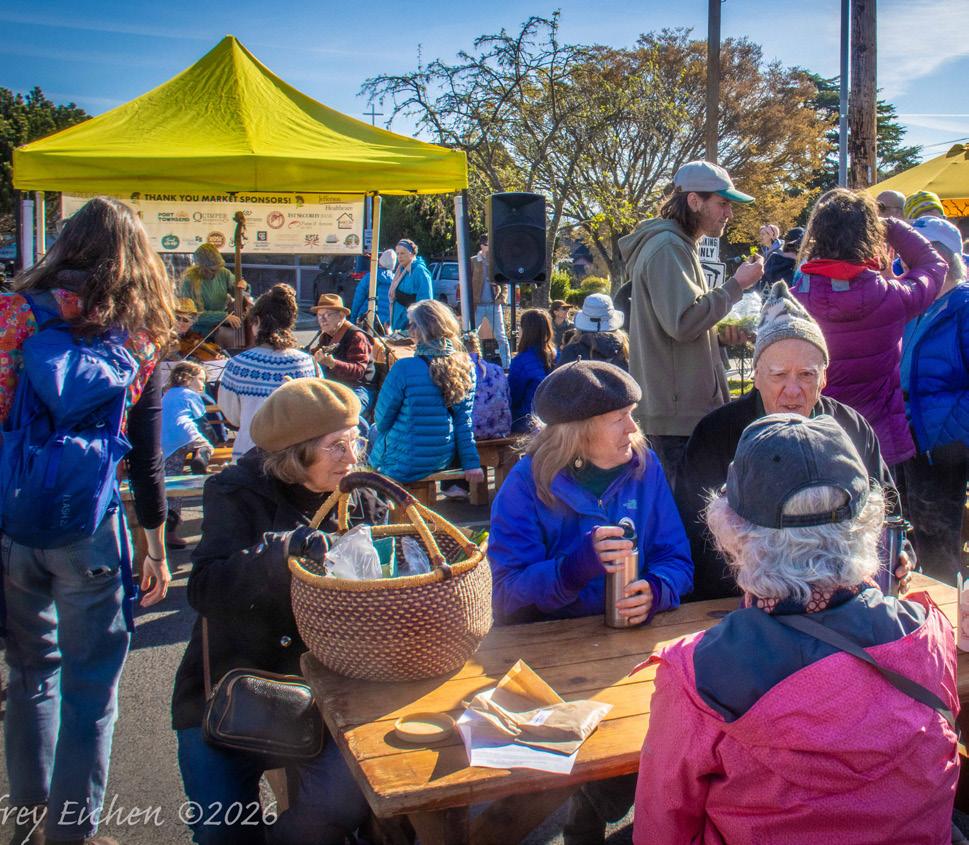
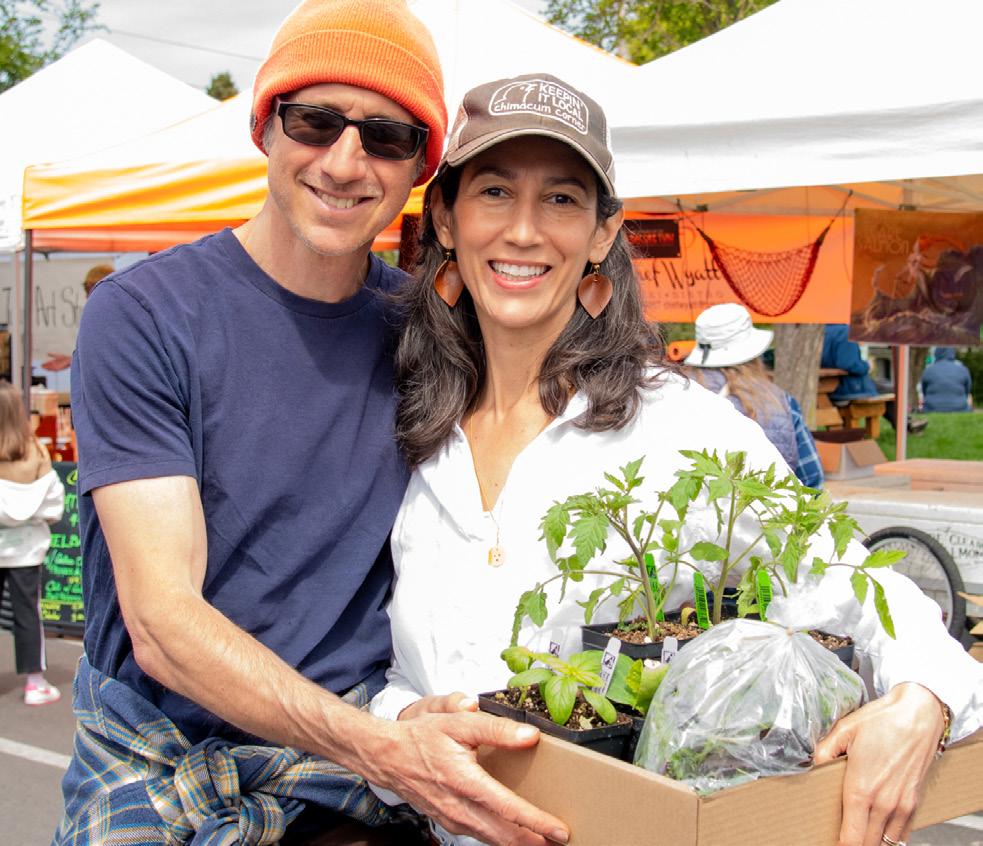
The Chimacum Farmers Market (CFM) opened in May for the second time (past years, we opened in June). Our longer six-month season expands community access to local food and supports small businesses. Join us on Sundays from 10am–2pm at the Chimacum Corner Farmstand and see what makes the Chimacum market so special: kids playing on the grass, live music in the air, customers visiting with farmers, artisans, and food vendors, nestled right behind everyone’s favorite corner store. And, new this year, there is a goat herd right next to the market, hard at work clearing invasive plants. Come meet the Corner goats!
This year, we are especially excited about the Power of Produce (POP) Club, both at the Chimacum Market and the Wednesday afternoon markets in Port Townsend. Led by JCFM staff member Raven Salter, POP Club introduces children to local food through arts, play, and tasting activities. Join us on the first Sunday of each month from 11am–1pm and from 3-4pm at every PT Wednesday market for POP Club. Participating kids receive $2 to spend on fresh fruits and vegetables. Our popular chef demonstrations will also continue this season, mostly at the Wednesday market led by JCFM staff member Amber Langley in collaboration with local culinary partners, including Arran Stark, Rufina Garay, and some of our market vendors.
This summer, we’re partnering with Port Townsend Pride and gudlife to create a community mural and crosswalk at Lawrence and Tyler Streets. This will be the first street painting approved through the City’s planning process in Jefferson County. The project is designed to foster inclusivity, strengthen neighborhood connections, and create a safer, more welcoming Uptown. Community members are invited to participate in painting and to support the project through donations for materials.
Looking ahead, JCFM is undertaking a critical longterm infrastructure project to support the future of the Port Townsend Farmers Market. For 23 years, the market has been located on the 600 block of Tyler Street, where it has grown into a beloved gathering space, local food hub, and small-business incubator. However, the current infrastructure available on Tyler no longer meets the market’s needs. Based on community and vendor surveys conducted in 2023 and 2025, our priorities include improved weather protection, better access to utilities, and expanded restroom facilities. We are working with partners— including the City of Port Townsend, Jefferson County, Studio STL, and others—to explore options for a more resilient and accessible market space at our Uptown location. This process is inspired by community and vendor feedback, and we will continue to collaborate and engage with market stakeholders and our community to create long-term market sustainability.