PORTRAIT SOCIETY OF AMERICA volume XXVIII
3rd Quarter 2026
issue no. 110
Board Members
d irector's let ter
F RO M T H E D E S K O F C H R I S T I N E E G N OS K I
Five Years of Growth, Impact & Building for the Future While preparing for our annual board meeting, I found myself reflecting on how much has changed at the Portrait Society over the past five years. It has been a remarkable period of growth, and I am incredibly proud of what we have accomplished together. Under the leadership of our Chairman, Michael Shane Neal, and with the dedication of our board, staff, volunteers, donors, and members, we have expanded our programs, strengthened our financial foundation, and made important investments that position the Portrait Society for the future. Education and mentorship remain at the heart of everything we do. Five years ago, we launched our Wednesday Webinars, creating year-round opportunities to learn from accomplished artists and experts. We established the Kinstler Mentoring Fellowship, honoring Everett Raymond Kinstler’s belief in passing artistic knowledge from generation to generation, as well as the Edward Jonas Memorial Grant, financially supporting artists pursuing their work and education.
Advisory Board Sam Adoquei, New York, New York Susan Basham, Nashville, Tennessee Peggy Kinstler, Easton, Connecticut Sandra Murzyn, Manitowoc, Wisconsin Burton Silverman, N. A., New York, New York Timothy Standring, Denver, Colorado Jennifer Welty, Santa Cruz, California Sheila Wolfe, New York, New York Staff & Newsletter Contributors
Our new logo is featured on a variety of merchandise available through our website. Whether you’re a longtime member or new to the Portrait Society, it’s a great way to celebrate our community and show your support.
We have also made tremendous strides financially. The creation of the Sargent Circle has allowed us to build deeper relationships with donors who believe in our mission and want to invest in its future. Additionally, the Portrait Society paid off our mortgage and received the extraordinary William Rorick Endowment. Together, these milestones provide greater stability while opening new possibilities for serving artists for generations to come. Our leadership structure has evolved as well. We expanded our Executive and Advisory Boards, strengthened communication through regular meetings and updates, and returned to annual in-person meetings that give us dedicated time to evaluate where we are and where we want to go. Progress has also taken place behind the scenes. We transitioned to new membership management software, providing a more modern foundation for managing membership, communications, renewals, programs, and services. Perhaps our most visible change is our new logo and refreshed brand identity. Our updated look honors the traditions that have defined the Portrait Society while reflecting the energy and creativity of the organization we continue to become. And we are not finished. We are undertaking a comprehensive review of the International Portrait Competition prospectus and developing a members-only online forum where artists can connect, exchange ideas and information, ask questions, and engage with one another. When I look at these past five years, one word keeps coming to mind: building. We have been building programs, relationships, leadership, infrastructure, and a stronger financial foundation. Most importantly, we have been building an organization better equipped to fulfill its mission and serve artists well into the future. I am grateful for how far we have come and to everyone who has been part of that progress. The Portrait Society has always been about people—artists learning from artists, members supporting one another, and individuals coming together because they believe in the importance of portraiture and figurative art.
Christine Egnoski, CEO P.S. Recently, we hosted a live discussion on the International Portrait Competition selection process, offering a behind-the-scenes look at our anonymous judging procedures, evaluation criteria, and how finalists are selected. If you missed it or would like to watch it again, email me at christine@portraitsociety.org, and I’ll be happy to send you the link.
I PO R T R AI T S O C I E T Y O F A M ERICA
CEO Christine Egnoski
I am excited about what lies ahead and look forward to sharing the next chapter with you. Warmly,
2
Michael Shane Neal, Chair, Nashville, Tennessee Dawn Whitelaw, Vice-Chair, Franklin, Tennessee Wende Caporale-Greene, Treasurer/Secretary, Woodbury, Connecticut Quang Ho, Denver, Colorado Mary Whyte, Charleston, South Carolina Louis Carr, Cary, North Carolina
Kim Azzarito, Director of Programs Amanda Oliver, Membership Director Allison Gilliard, Special Programs and Outreach Becka Darling, Executive Assistant Karey Mortimer, Special Events Coordinator Kerry Vosler, Writer, State Ambassador Coordinator Scott Jones, Writer, Washington State Ambassador Sargent Circle Platinum Members Susan Basham Bryan and Alice Essary Aida and Kevin Garrity Tim and Joy Liddle Sandra Murzyn Scott and Kathi Myers Michael Shane Neal Leslie Nordness Sarah Perot Brant and Joelle Phillips Trish Savides Henry Garth Smith, MD Mary Whyte Gold Barbara Greco Hope and Billy Reis Teresa Spinner Louis and Jessica Sterchi Jerry Williams Silver Melinda and Jeff Balser Peggy Kinstler Sheila Wolfe Carol and Darryl Yochem Mailing address: Portrait Society of America P.O. Box 11272 Tallahassee, FL 32302 Shipping address: 1109 S. Magnolia Ave. Tallahassee, FL 32301 Toll free Telephone: 1-877-772-4321 Web: www.portraitsociety.org This newsletter is published quarterly by the Portrait Society of America. All contents copyright Portrait Society (unless otherwise noted). No part or whole of this newsletter may be reproduced or transmitted in any form unless prior express consent has been given. Please send submissions to the editor at the Portrait Society. Design Charity Myers I THE CREATIVE POOL DESIGN thecreativepool@gmail.com
6
10 table of contents
16
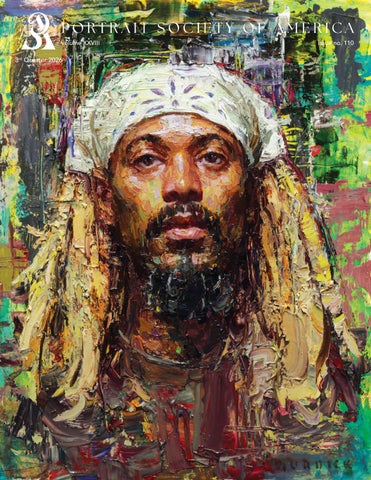
Cover: Scott Burdick, The Poet, 16x20”, oil
4 Legacy and Vision: R.R. Christensen 6 Future Generation: Becka Darling 9 State Ambassador Report: Kerry Vosler Your Bliss: A Life of Painting, Travel, 10 Following and Curiosity: Becka Darling 15 Business Side of Art: Scott Jones 16 A Day in the Life: Janelle Hatherly to Mix Various Skin Tone Types: 18 How Nicole Troup 20 Portrait Society Member News and Renewing Members: 22 New June, July, August 24 Call for Entries www.portraitsociety.org
I 3
legacy a nd vision
LIZ HARRIS:
C H A S I N G T H E S PA R K By R.R. Christensen
Liz Harris’ life has been a master class on fanning a spark of passion into the sustained blaze of a thriving career—she has, after all, done it three different times. After earning a degree in Educational Psychology and working in the field for several years, Harris eventually turned to abstract art and built an extensive career creating large-scale abstract paintings for commercial clients, such as dental offices and construction companies. Eight years ago, prompted by fatigue with the abstract world and a suggestion from her husband, Harris attended a Portrait Society conference in search of something new. She felt instantly drawn to the materials and techniques described by the presenters and was deeply inspired by conversations with the other artists. When she flew home to her Utah-based studio at the end of the week, she began a new artistic journey through selfstudy and eventually sought training under artist Casey Childs. Despite her enthusiasm, pursuing an entirely new direction was not an easy change. Harris recounts the difficulty of transitioning from loose, abstract methods to the technical requirements of portraiture. She established a strict work schedule of 9:00 AM to 4:00 PM, Monday through Friday, and the professional discipline of this routine allowed her to quickly advance her technical skills while managing the responsibilities of raising four children. Within eight years she attained Signature Status in both the Oil Painters of America and the Portrait Society of America. During this period of change, Harris found success not only as a portraitist but as a teacher to the next generation of artists. Her quickly-filling mentorship program became an opportunity to return to her former educational background and the philosophical views she gained from her time living in France and Germany. Harris draws on her experience in educational psychology to design custom exercises for every student she takes, to address the specific remedial needs of the individual. Harris identifies three fundamental keys to her teaching, things she asserts are necessary for her students in order to communicate what they want through their art. The first and most important is to find their own spark, or the reason they want to paint what they’re painting. This drive must be intrinsic, motivated by passion or interest, and can change throughout an artist’s life. As for her own artistic motives, Harris says she paints for the sheer love and enjoyment of creating. “I find so much beauty and joy in everyday life, and I want to share it. For many of us, there are times in life when it can be hard to see beauty or see joy in life. My paintings and drawings are, I hope, a muchneeded respite.” 4
I PO R T R AI T S O C I E T Y O F A M ERICA
1 2
4 3 The second thing Harris teaches her students is that the truest freedom of self-expression comes from great skill acquisition. In her own words, “the more you are able to do, the more skills you have, the closer you can represent that three-dimensional world and the feeling of that world on your two-dimensional surface, the more freedom you have to be able to communicate with people.” Lastly, she teaches the importance of utilizing skill to convey ideas and emotions. Artists must act as interpreters of life, not just imitators, and must take advantage of the incredible power of the universal visual language that they have access to. One of her favorite quotes from Edward Hopper expands on this idea: “If I could say it in words, there would be no reason to paint.” Despite Harris’s prodigious skill as an artist and stellar work ethic, the most impressive thing about her is her bravery and commitment to her inner voice. In our interview, she spoke extensively about how vital it is to not allow yourself to get stuck painting for financial gain, clinging to a subject matter or style long past when it calls to you, simply because it sells well or a gallery advises you to not ruin a good thing. When she feels the call to move on to something new, when the spark of inspiration and excitement is pulling her in a new direction, Harris jumps after it immediately. “When I have these moments” she says, “it feels almost like magic. It strikes my heart and my mind. It almost makes me catch my breath and feels like a spiritual experience.” When viewed as a whole, perhaps the greatest takeaway from Liz Harris’s life is this: the best and truest art is created where dedicated skill meets the spark of passion. Successful creative evolution requires discipline, but if we face it with courage and trust in ourselves, our artistic practice will not only survive the change but grow into something great.
5
1. Elegance, 16x20”, oil on linen 2. Hush Little Baby, 18x24”, charcoal and chalk 3. Cohen Watchdog, 23.5x31.75”, oil on board 4. Joan of Arc, 30x40”, oil on linen board 5. Windswept, 30x20”, oil on linen
www.portraitsociety.org
I 5
compet it ion winners
F U T U R E G E N E R AT I O N COMPETITION WINNERS
By Becka Darling
We recently announced the winners of our annual The Future Generation Competition, created to recognize and encourage talented emerging artists aged 18 to 25. Early recognition can have a meaningful and lasting impact on a young artist’s career. John Singer Sargent experienced this himself when, at just 23 years old, he received an Honorable Mention at the Paris Salon for his portrait of his teacher, CarolusDuran. Since its inception, The Future Generation has attracted an impressive caliber of work, showcasing the talent, dedication, and promise of the next generation of artists. This year, judges Dawn Whitelaw, Chelsea Lang, and Shana Levenson reviewed over 350 images from young artists around the world including Armenia, Australia, Belgium, Brazil, Bulgaria, Canada, China, Ecuador, Egypt, France, Germany, India, Israel, Italy, Jordan, Lithuania, Malaysia, Mexico, the Netherlands, Romania, Spain, Sweden, Switzerland, the United Kingdom, the United States, and Vietnam. The top five winners shared a little bit about their background in art and the inspiration behind their winning pieces.
1
1. FIRST PLACE WINNER: Rubén Astudillo, Ecuador, The Weight of Staying, 29.1x26.4x20.9”, clay I believe the body carries experiences that are not always visible. Rather than representing a person at a specific moment, I seek to create bodies that suggest states of change, uncertainty, or resistance. The Weight of Staying was important for me in understanding one of the most difficult processes of life: learning to let go. It explores internal tension, where the body becomes a site of resistance. The figure grips tightly to its base, refusing to let go. Its posture is compressed and weighted, suspended between tension and release. The gesture suggests both physical strain and emotional attachment, where staying becomes an active, almost visceral act. 6
I PO R T R AI T S O C I E T Y O F A M ERICA
My admiration for my grandfather, Ruben Ortega, as well as a strong connection with my art teacher, Boris Salinas, drew me to the field of portraiture and figurative art. The first three-dimensional portrait I ever made was of my grandfather. I felt the need to express my love through an object, something tangible that could hold that feeling. My teacher was an amazing artist and sculptor. He started training me when I was very young and cultivated my interest in art. I also feel fortunate because many incredible artists are open to teaching and mentoring young artists. I have learned from artists such as Simon Lee, David Simon, Andrew Freeman, Valter Casotto, and Brian Booth-Craig. I spent one year at the Accademia di Belle Arti di Verona and three years at The Florence Academy of Art. This gave me the opportunity to deepen my understanding of traditional figurative art and develop my technical skills. I am excited to continue my education through the Graduate Residency program. Every stage of my education has brought something different to my development as an artist.
2 2. SECOND PLACE WINNER: Giuseppe de Palma, Italy, Portrait of Laura, 19.7x27.6”, oil on linen Portrait of Laura began as a meditative pause within the artistic research I have been pursuing, increasingly focused on narrative and exploring painting as a language and a means of dialogue. Much of this work involves multi-figure compositions and themes of philosophy and psychology. Portrait of Laura offered an opportunity to step away from crowded, emotionally charged scenes and return to the subject that first drew me to painting: the human face. I have long admired the commanding portraits of Peter Paul Rubens and the more intimate portraits of Anthony van Dyck. I try to understand how composition and shape decisions convey life and movement and serve an intimacy in the gazes and gestures. This led me to Philip de László and his ability to surround sophisticated and statuesque faces with fabrics of vitality, connecting his narrative images stylistically to other masters. Though I’m still a young and developing painter, Portrait of Laura marked the beginning of my journey toward understanding movement. Painting and drawing have always been part of my life, driven by my desire to create stories. Figuration seemed the only visual language capable of bringing together form, color, material, and recognizability. Portraiture became one of the most unpredictable, exciting, areas of my practice and taught me to appreciate the asymmetry and uniqueness of individual faces.
3 I began by copying paintings from the past before moving to painting from life, completely transforming the way I see. I started training with Filippo Cacace at age 14 and moved to Florence at 19. There I took a workshop with Cesar Santos and then began at the Florence Academy of Art under Daniel Graves, Simona Dolci, Tom Richards, and others. I began to appreciate observation and started to notice steady improvement. This all has led me to engage with other emerging and established artists who continue to inspire me. 3. THIRD PLACE WINNER: Leo Bignell, United Kingdom, Arnold Turning, 15x15”, trois crayons This portrait was another step in understanding the method “Trois Crayons”, and its interplay of materials. It’s something I used quite a lot previously and even with the same generous subject, Arnold. There are countless varied examples of three-colour drawings from history, so for me it’s yet another intriguing area in the practice of drawing. Figurative and portrait focused work has always been an interest of mine and something I explored across most mediums. However, it has now certainly become central to my practice; anything inherently human, to do with nature, or related to stories of the past and occasionally the present. I’m aware that my career will be an ongoing process of learning and refinement, but at this stage I can identify the things I found to be most pivotal, mainly working www.portraitsociety.org
I 7
compet it ion winners directly with specific artists whose work I found inspiring and wanted to understand more deeply, both in workshop environments and less formal artistic settings. Watching these artists at work is what taught me the most, alongside drawing from life which is undoubtedly an irreplaceable part of the practice.
5. FIFTH PLACE WINNER: Mattie Ree Neal, United States, Hiram Chodosh, 30x40”, oil I was commissioned to paint the official portrait of President Hiram Chodosh for Claremont McKenna College in California. He wanted something light, fresh, and lively, rather than the stuffy portraits he had seen in the past. When I saw the sculpture he commissioned for the science center, I knew it would make a colorful and dynamic setting.
4. FOURTH PLACE WINNER: Cara Wilmanns, Germany, Adorned, 39x47”, oil The inspiration for Adorned was pretty straightforward. It’s a painting dedicated to art itself, to being an artist and the doubts that come with it. Being an artist never felt like a choice to me; if you are one, you must immerse yourself completely in art. My model is a brilliant artist himself, and I couldn’t resist painting him. He embodies this belief, and his tattoos were a bonus. I really wanted to paint them; it was so much fun!
4
I never had a choice but to become an artist. I come from a musical background, so I’ve always been familiar with the life of an artist. When I discovered painting in my youth, I fell in love with it, especially the connection you build with the model in portraiture. It’s an honour to get to know the amazing people I paint. My educational background is a bit unconventional. I have studied mathematics and art for a teacher’s degree in Germany, where I live and work. I strongly believe that, as artists, we need an education that broadens our horizons and can support us when times get rough. For the past year, I have finally been able to fulfill my dream of studying with Jeff Hein at the Hein Atelier of Traditional Art. Before that, I have been completely self-taught.
5
8
I PO R T R AI T S O C I E T Y O F A M ERICA
I’ve been surrounded by great artists all my life. How could you want to do anything else? I attended my first Portrait Society conference with my father, Michael Shane Neal, at age 8. His studio was my favorite place, and I thought he had the best job in the world. I visited his teacher, Everett Raymond Kinstler, every summer in Connecticut; my training began there at the breakfast table. I loved to draw and always had my sketchbook. I began oil painting when I was 12. I wanted to work in a traditional, representational way and loved painting people. I attended life sessions and took workshops while in high school. After graduating, I studied directly with master artists, travelling all over to seek instruction in artists’ studios and classes. I was fortunate to learn from today’s best painters and sculptors. My dad is my primary teacher and the anchor that made it possible for me to study varying methods and approaches. My husband, Samuel Walter, has also helped me grow as a painter. I always wanted to paint portraits but try to follow Kinstler’s advice of being “an artist first.” As John Singer Sargent said, “The object of the student should be to acquire sufficient command over his material to do whatever nature presents to him.”
s ta te a mbassador Remembering Herbert Arthur “Herb” Mays August 3, 1939 – July 15, 2026 Kerry Vosler The Portrait Society of America was built on the dedication, generosity, and vision of volunteers who believed in the power of art and the importance of bringing artists together. Herb Mays was one of those extraordinary individuals whose contributions helped shape the organization and whose legacy continues to influence the Portrait Society today. Herb was the driving force behind the creation of the Ambassador Program, transforming an idea into a thriving network that connected artists and strengthened the Portrait Society’s presence across the country and internationally.
increase in overall membership since the program’s inception. His vision addressed an important need: creating local events and opportunities that brought artists together, fostered support, encouraged continued artistic growth, and expanded awareness of the art of portraiture. Herb’s story reflects the very spirit on which the Portrait Society was founded: individuals stepping forward, sharing their talents, and working together to build something that serves generations of artists. His contribution was not simply the creation of a program, but the cultivation of a community.
Herb Mays, front and center, with the Portrait Society State Ambassadors at The Art of the Portrait 2006 conference in Dallas, TX.
Herb Mays was one of many volunteers helping with badge pick-up at The Art of the Portrait 2006 in Dallas, TX.
In 2002, Herb approached Director Christine Egnoski with the idea of establishing state-level Ambassadors. Christine brought the proposal to the Board, and Herb took on the work of turning that vision into reality. Drawing on thirty years of experience as a district manager for Ross Laboratories, he brought valuable leadership, organizational expertise, and a genuine understanding of how to build relationships. He established the program’s core mission and personally interviewed the first group of approximately 18 Ambassadors.
Beyond his leadership and service, Herb was a gifted painter who devoted his retirement to pursuing a full-time career as a portrait artist. His warmth, generosity, and dedication left a lasting impression on all who had the privilege of knowing him.
Herb understood that the strength of the Portrait Society rested not only in its national programs, but in the connections created among artists within their own communities. Through his approachable nature, professionalism, and commitment to service, he inspired Ambassadors to embrace their roles and help build a stronger organization from the ground up.
“In closing this chapter, I humbly make one last request, ‘Beat not the Slow Drum of Lament’ for me, instead ‘Rejoice with Thanksgiving.’ For you see, this day I have arrived at the Studio of the ‘One and Only, True Master Artist,’ and with me I bare the Portrait of my Life’s work, which I will be presenting for Consideration. Upon receiving my Review, I look forward with anticipation to Greater Insights, with a deeper grasp of Enlightenment, resulting in an Enriched Understanding of the Process, and also, of course Most Certainly ‘My Critique.’” — Herb Mays
Within just a few years, Herb presented membership data at the annual Ambassador meeting during the Portrait Society conference, demonstrating a noticeable
We close with an excerpt from Herb’s own written obituary, prepared before his passing as a reflection of his faith, his humor, and his lifelong commitment to learning and growth as an artist.
www.portraitsociety.org
I 9
fea ture
F O L LO W I N G Y O U R B L I S S : A L I F E O F PA I N T I N G , T R AV E L , A N D C U R I O S I T Y By Becka Darling
For artist Scott Burdick, painting is more than simply recording what he sees. It is a way of connecting with people, places, ideas, and experiences. Whether painting a landscape, portrait, or figure, he hopes his work carries some trace of what first inspired him, such as the beauty of nature or the humanity in a child’s eyes. That sense of curiosity has taken Burdick around the world and introduced him to people and cultures that permanently changed the way he sees. His paintings are grounded in careful observation but equally informed by history, literature, science, philosophy, and the countless people who have influenced his life. “Painting gives me the opportunity to travel,” Burdick says, “and those people I meet and learn from change what and how I paint.” Some of his earliest travels, just after finishing art school in 1989, profoundly expanded his understanding of the world. He volunteered with a group of other college students, helping to build an orphanage in Matamoras, Mexico. On the way home, they visited a refugee camp in Texas. These experiences exposed Burdick to true poverty and displacement on a scale he had never witnessed. He returned home determined to learn more and shared what he had experienced as much as possible. He also created paintings of the children he had encountered from photographs taken during the trip. The following year, Burdick traveled to the Rosebud Lakota reservation in South Dakota, where he and other volunteers stayed with Native families. He made pastel drawings of the three generations of his host family, giving the drawings to them as gifts. Once again, Burdick felt that he was the student as he learned about the history of the land and the profound challenges facing the community. He was angered by the racism the Native families faced when they traveled off the reservation, and he heard firsthand accounts of the forced assimilation policies that had separated Native children from their families and culture. The trip also introduced Burdick to the landscapes of the American West. What began as a volunteer experience became the beginning of a lifelong fascination with the region and led to many subsequent journeys to paint Native Americans, deserts, and mountains, as well as people in Tibet, Guatemala, Tanzania, and elsewhere. 10
I PO R T R AI T S O C I E TY O F A M ERICA
Back home in 2008, Burdick volunteered for the Obama campaign to help encourage voting in his rural North Carolina county. During this time, he came face-to-face with racism in his own state. He also had the opportunity to meet an inspiring elderly black woman. Emotional at the opportunity to vote for a black president, she shared her story of life before the Voting Rights Act was passed in the ‘60s. Burdick painted her with her campaign poster and, after being purchased by a collector, the piece was donated to the United Center in Winston-Salem, NC. For Burdick, these encounters with people and places aren’t simply about collecting subjects but allowing experience to change the artist. That openness carries into his studio practice. When asked how he balances faithful observation with expressive interpretation, Burdick admitted that there is no simple formula. “Sometimes I have a clear vision of the final painting,” he explains. In those instances, he knows early on what to emphasize and what to leave out or alter. Other paintings evolve through experimentation by trying one approach, wiping it away, changing direction, setting the work aside, and returning to it months, or even years, later. Even a painting that doesn’t succeed can teach an artist something. For Burdick, the willingness to experiment is part of the lifelong process of becoming a better painter. That attitude was formed early. Burdick’s path toward art began in childhood, during years of medical treatment for clubfoot. Repeated operations and long periods in hospitals meant that he spent much of his childhood away from the ordinary activities of other children. His mother brought him pencils, paper, and books to occupy his time. He became, in his own words, “hopelessly addicted” to drawing, reading, and writing. His early experiences also introduced him to people whose generosity had a lasting impact. Physicians helped his family navigate the extensive treatment he needed, and one doctor used Burdick’s case as part of his work documenting the treatment of pediatric orthopedic conditions. Rather than viewing those years as an obstacle, Burdick recognizes them as an unexpected beginning. “All that time spent reading and drawing as a kid on crutches is what truly started me on the path of art and writing,” he says. Anke the Animator, 18x24”, oil
www.portraitsociety.org
I 11
fea ture
Another pivotal moment came in high school when Burdick became determined to win a scholarship to the American Academy of Art in Chicago. He took life-drawing classes with Bill Parks and John Naylor on Saturdays and during summer breaks. When the letter arrived announcing he
had won a full-tuition scholarship for his first year, it was, as he says, “beyond description.” Then came another transformative influence: Richard Schmid. When Schmid returned to Chicago for his daughter to attend the American Academy, Burdick had the opportunity to paint with him at the Palette and Chisel club. He found himself surrounded by an extraordinary group of artists, including Nancy Guzik, Rose Frantzen, Dan Gerhartz, Romel de la Torre, Tim Lawson, Clayton Beck, and others. This experience changed Burdick’s understanding of what a life in art could look like. These artists demonstrated that it was possible to make a living painting subjects that genuinely interested them rather than simply producing work according to someone else’s specifications. And there was another lifechanging discovery at the Palette and Chisel: Burdick met artist Susan Lyon, who would become his wife. “Talk about a pivotal moment in my life!” he says.
1 12
I PO R T R AI T S O C I E TY O F A M ERICA
Burdick’s commitment to teaching grew naturally from his own experience. He sees the artistic tradition as a continuum in which artists learn from one another and then pass on that knowledge. “There’s very little I know that I didn’t learn from others,” he says. “It’s not just an obligation to pass these things on, but exciting to feel like I’m part of some continuum of progress into the future.” For Burdick, one of the greatest rewards of teaching is seeing the moment when something clicks for a student. He
remembers those moments from his own education, the times when another artist explained something he might never have discovered on his own. “We’re all students and teachers to one another,” he says. That philosophy extends beyond painting. Burdick is also a novelist, and his writing reflects the same intellectual curiosity that informs his art. He writes about complex subjects that may be difficult to convey in a single image and enjoys developing characters with opposing viewpoints. His novels allow him to explore ideas from multiple perspectives without telling the reader which position to adopt. Painting works differently. “When I do a painting, I’m attempting to create a compelling image that spurs an emotional reaction in the viewer,” he says. Rather than explaining the story behind a painting, he prefers to ask viewers what they think the story is. Their answers can be as interesting as anything he originally imagined. For artists hoping to build a meaningful career, Burdick’s advice is simple: “Follow your bliss.” The phrase, borrowed from Joseph Campbell, captures a philosophy Burdick has tried to live by. Becoming skilled at anything requires an enormous amount of work, he says, and sustaining that effort is difficult if the motivation is primarily money, popularity, or outside approval.
2
That doesn’t mean ignoring practical realities. Burdick worked numerous jobs, accepted commissions, and took on whatever work was necessary to support himself during and after art school. But he continued making art and doing writing that excited him, even when those pursuits weren’t particularly profitable. Eventually, he and Susan left Chicago and bought an old house in the foothills of North Carolina. They slowly renovated it themselves and kept their expenses manageable. Paying off their mortgage gave Burdick something he considers essential to an artistic life: freedom. The freedom to wait when work doesn’t sell, to experiment, to make something simply because he wants to. “To me, as long as I have enough money to keep creating whatever crazy thing I want to, enough is good enough.” Burdick continues by saying that he doesn’t know the secret to becoming famous, “But I do know that fame doesn’t necessarily equal happiness.”
3
1. Young Tibetan Herder, 30x40”, oil 2. Presidential Portrait, 24x60”, watercolor 3. Scott sketching the Himba
www.portraitsociety.org
I 13
feature
That philosophy also informs Burdick’s approach to the inevitable anxiety that accompanies creative work. Every painting and novel remains a struggle, he says. The solution isn’t to wait until fear disappears, but to keep working through it. Concentrate on the fundamentals like drawing, values, edges, color, and then use those tools to express what you want to say. Establish a routine of working, whether or not inspiration arrives. “The main difference between a great artist and a beginner is that the great artist has done more bad paintings or more rewrites.” It is an honest admission from an artist with decades of experience: success does not eliminate doubt. The frustration may remain, but so does the opportunity to learn. For Burdick, that may be the most important lesson of all. A meaningful artistic life isn’t built from a series of perfect paintings. It is built by remaining curious, continuing to learn, absorbing the world, sharing what you’ve discovered, and returning to the easel again and again. The goal isn’t simply to produce a successful painting. It is to remain engaged with the extraordinary, complicated world that made you want to paint in the first place.
4
4. Da’Nika with Headscarf, 18x24”, vine charcoal and pastel pencils on acrylictoned crescent watercolor board 5. The Ocean Within, 18x24”, oil
5 14
I PO R T R AI T S O C I E TY O F A M ERICA
bus iness side of art
LESSONS FROM A SUMMER OF ART, CONNECTION, AND CREATIVITY I am writing this on Labor Day following a most amazing summer of art travel, exhibitions, workshops, plein air events, conferences, artist studio visits, atelier visits, and more. I will share three things that have been confirmed to me this summer. First, artists need to gather and feed off each other’s creativity, drive, love, and support. Guess what I enjoy most about these artist gatherings? Watching and listening and seeing mentoring live and in action. Everyone needs to have a mentor, everyone needs to be a mentor, and neither happens in isolation. You have something to learn and/or to teach in every interaction you have with another artist. Do not forget that. Second, a life of artistic devotion is hard – often excruciatingly so – but I have watched the joy, fulfillment, and successes of hundreds Marilee Campbell, Figure #3, pastel and hundreds of artists this summer. I celebrate you! Carly White honored her grandmother by preparing her grandmother’s works for an art show exactly one year after her passing. I was honored to attend and see her work, primarily landscapes. I share, with Carly’s permission, excerpts from what she wrote in the Exponent II magazine about her grandmother. “In 2002, my grandmother, Marilee Campbell, was named one of Utah’s Hundred Most Honored Artists by the Springville Museum of Art, cementing her legacy as a groundbreaking pastelist. She transformed what was often dismissed as a hobby into a sustained, flourishing career – a rare feat for any artist, let alone a female artist of her generation. But this dual identity, as an artist and a mother, also troubled her. She admitted: ‘I have spent much time wondering if it hadn’t been for my art, that my children would have been more problem-free.’ A statement many mother-artists can relate to, if rarely said aloud. “When I was twelve, she wrote me a list of advice. I keep it now like a small manifesto, and I share it because I think it may bless others as well.
by Scott Jones
1. Draw from life. 2. Ask the Lord for guidance. The two of you are “co-creators.” 3. Don’t be afraid to fail. 4. Explore — grow — take chances. Pray for guidance. 5. Study! Go to art museums. 6. Work hard. Keep learning. 7. Find balance in your life. 8. Avoid negative people and places. 9. Never give up on what you love that is good. 10. Find beauty everywhere. Even in things that are common. 11. Dedicate yourself and your art to the Lord. 12. Learn about light and anatomy. They are God’s creations. 13. Life will make you wiser and deeper.”
Carly wrote, “Today, I wish I could tell her that without her art, her granddaughter would not have inherited a life shaped by creative seriousness, by courage, by permission. What she worried was a failure of devotion became, across generations, a form of inheritance.” Thank you, Carly White, for sharing your grandmother with us. Third, you are creating for someone. I have been honored to personally witness the excitement and happiness of millions and millions of dollars in art purchases. It does not matter if the price is $4,000,000 or $200 – the right piece for the right person at the right time is what you as the artists are doing every time you create. I recently participated in my first plein air event, and for the first time, I put my artwork on display. I was a little surprised at the satisfaction I felt in doing so, along with the associated doubts which I have preached against in the past. Experiencing why someone purchased my paintings has given me an added push to do more. Who am I painting for? Who are you creating for? After 210,000 miles of art related travel and gallery commutes, my Audi’s engine “blew” last week on the Mount Hood Scenic Highway. I limped into town to participate in a wonderful exhibition, but I missed being able to paint as I worked on getting engine diagnostics, salvage, and rental. May my next 200,000 miles of art travel I put on a new vehicle be just as fruitful and rewarding! Scott Jones has been a passionate art collector since the age of 16 and shifted his focus to selling art nearly 20 years ago. While having retired from the gallery world, he remains committed to the success of artists. He serves as State Co-Ambassador of Washington for the Portrait Society.
www.portraitsociety.org
I 15
a da y in t he l if e
A DAY I N T H E L I F E O F SAMUEL ADOQUEI
By Janelle Hatherly
2
1
Can you walk us through a typical day in your studio and your daily routine? First thing in the morning, I go to my computer to check messages and reply to any correspondence. When I get to the studio, I take a moment to plan my day’s work, clear my head, and spend time meditating. I devote the rest of my day to painting and teaching, and I do my writing at night, from about 11:30pm to 2:30am.
As well as winning several international awards, Adoquei is well known for his history painting Death of a President (John F. Kennedy) and monumental triptych The Legacy of Martin Luther King Jr. (The Entombment).
How do you balance studio time with other aspects of life, like family or personal commitments? In my youth, I decided to dedicate all my time to pursuing art and learning, so I could do more and be more. We create what we are, and we are our desires, beliefs, and knowledge. I devoted myself to understanding the energy behind the creative mind and sought spiritual guidance for my life’s mission. Because I believe I have been gifted, I feel obliged to lead a purposeful life. I maintain this focus to this day. Fulfilling my mission has meant sacrificing some other pursuits that I could have undertaken, but I have accepted this.
Adoquei is the first African artist in Western art to serve on the faculty of all four major academic art institutions in New York City and is a highly sought after commissioned portrait artist. In 2011, Adoquei was invited to join the Advisory Board of the Portrait Society of America. Here’s what he is currently up to.
Is there a time of day you feel most productive or inspired to create, and how do you make the most of that time? There is more to painting than producing artworks and the wisdom needed comes not from the painting process, but from all around us.
Sam Adoquei is a highly accomplished painter, educator, and author whose African heritage has given him an innate love of nature and a deep respect for spirituality and the human condition. His second book, Origin of Inspiration, was described by Rolling Stone Magazine as “A treatise on the best way to live a creative life.”
16
I PO R T R AI T S O C I E TY O F A M ERICA
3 In the middle of the night, I believe divine messengers (assigned to fulfill what immortals couldn’t complete) roam around mortal beings and reveal their plans. Around midnight, I like to converse with gods, saints, and immortals asking them to help show me what awaits. This is one of the major themes of my new book, Jewels of Govindu. Around me on my shelves are beat-up, dusty books that I consult to connect with the immortals who await with answers we each need for our journey. How do you handle creative blocks or days when inspiration is harder to find? I find solace in nature, spirituality, and philosophy. Such consultation always leads me to ideas and creations that bring me answers. Artists who connect this way just don’t have creative blocks. By the time they get in front of the canvas, they know what to do. Are you currently teaching, and how do you incorporate that into your schedule? Yes, I teach at my studio a couple of days a week. As a professional artist, teaching is part of my mission, so I schedule time to fit in teaching. I provide students with practical skills and a mentoring experience so they understand how to use materials and how to move through the stages of the painting process. I teach them principles they need to create timeless portraits, and I aim to guide them to find their own star to lead their way. What do you find most fulfilling about your life as an artist? Most fulfilling is the gift of seeing the beauty of life and understanding the importance of sharing. Whether I paint apples, landscapes, or portraits, or write an essay, I rely on divine insight and wisdom to guide me to create qualities that inspire, invigorate, and elevate others. I feel lucky to understand that we are what we create. This is why we should beautify our minds, enrich our brains, and always find moments of meditation.
4 What projects are you currently working on? I’ve just finished three major portrait commissions and am working on a classified project. I also teach, but, unlike my early career when I taught large groups at the New York academies, now I prefer to teach a few select students at a time in my atelier. I also continue to write and am gearing up for the launch of my newest book this fall. Reflecting on the role of traditional art practice, what does the future hold for artists as society moves rapidly into a digital future? I believe there will always be a place and a purpose for art. After all, the aim of the serious artist is to make the public see anew. And there will always be the need for mechanical or technological help to serve commercial purpose. The camera obscura came and went, then the camera, film, Photoshop, and now artificial intelligence (AI). Whether you ride the horse or the horse rides you … we shall see. Change, or change will change you. The artist must learn traditional skills, wisdom of the field, survival instincts, and experiences to prepare for challenges and chances. Real human qualities will be a rare commodity people will crave. Aspiring artists of all types must pursue and produce what machines cannot. Understanding this helps us confront all that life entails in this ever-changing, changeless world.
1. Portrait of Beverly McNeil, former owner of Portraits, Inc., 40x30”, oil on linen canvas 2. Arrangement in greens, whites and oranges, 16x20”, oil on panel 3. Portrait of my friend Rodney, 24x30”, oil on linen 4. Lucky Tree: the tree the monks hug, 30x24”, oil on linen canvas www.portraitsociety.org
I 17
ins truct ional
MIXING SKIN TONES RANGING F RO M L I G H T TO DA R K : U N D E R S TA N D I N G T H E S C I E N C E B E H I N D I T
By Nicole Troup
When I look at my palette I see far more than a collection of individual colors – I see endless possibilities for creating something uniquely beautiful. From the palest ivory to the deepest umber, human skin tones have an extraordinary range of colors and subtle distinctions. Skin color is influenced by the skin pigment melanin and hemoglobin, the pigment inside red blood cells that gives a pink or reddish color to the skin, visible especially in people with lighter skin tones. Melanin is a natural pigment that determines the darkness of one’s skin, hair, and eyes. There are two types of melanin. Eumelanin creates brown or black colors. Pheomelanin creates red and yellow colors. The palette of skin tones can be simplified from light to dark by organizing them into four groups: Caucasian, Asian/Pacific Islander, Brown/Hispanic, and Black/African. When mixing skin tones, keep in mind that most are a version of orange, grayed down with a cool color such as blue and/or green. Caucasian Groups Caucasians represent the lightest skin color range, further extended by the wide variety of hair and eye colors. Among the biggest differences between Caucasians and other groups are the distinct color zones that divide the face into thirds. Due to low melanin content, the center band contains more reds and pinks throughout the cheeks, nose, and ears. The more melanin someone has, the darker their skin, hair and eyes. The less a person has, the more transparent their skin is, revealing the network of blood vessels and circulation underneath and creating reddish tones. The upper band (forehead) is more yellow/golden in tone due to less superficial capillaries in its bony structure. The lower band, from the bottom of the nose to the chin, may have a mixture of colors, including green undertones. In adult males, facial hair creates a bluish-gray appearance to the lower band unless the beard is red. Caucasian skin tones are divided into three groups: Redheads Redhead skin color generally ranges from very fair to medium light, and it contains the least amount of melanin of all skin types. The skin is more translucent, revealing red/pink, violet/blue, and green undertones and making redheads interesting to paint. The orange in their skin color leans more towards the red or yellow side. Freckling, due to the skin’s sensitivity to the sun, can affect the colors you see as well. 18
I PO R T R AI T S O C I E TY O F A M ERICA
1 Blondes Blondes have more melanin in their skin than redheads, but usually less than brunettes. Their skin tone typically ranges from light to medium in value. The color range can still be somewhat broad and can include orange, redorange, olive, or light yellow-orange. Brunettes A Caucasian brunette typically has more melanin in their skin and hair than blondes or redheads. Contrarily, brunettes can be almost as light as a redhead or as dark as someone ethnically brown, but typically they will fall into the medium light to medium range. The orange in a brunette’s skin is generally a middle orange or slightly on the red side. 1. Fleeting, 16x20”, oil and silver leaf on panel 2. Rebecca, 16x20”, oil on panel 3. Girl with a Red Scarf, 12x16”, oil and gold leaf on linen canvas
2 Asian/Pacific Islander Groups Asian skin values range from light to medium dark. Northern groups, such as Japanese and Korean, tend to have the lightest skin while southern groups, closer to the equator, have darker skin. Asian skin color is a version of orange that gravitates more towards yellow than in Caucasian skin. They also have a less noticeable red band across the middle of the face, creating an even color distribution from the forehead down to the chin. In men, less dense facial hair tends to make the lower band of the face less of a cooler color shift than in a Caucasian. This color difference is due to higher melanin levels and the presence of a thicker middle layer of skin which masks the blood vessels under the surface. Brown/Hispanic Groups The value ranges from medium light to medium dark. The orange in the skin leans slightly redder and has fewer yellow tones. The center color band on the face has less red than Caucasian, but more than Black and Asian. Black/African Groups Black skin ranges from medium to dark and contains tones from yellow-orange to a dark, grayed down red-orange (similar to burnt Sienna). Black skin tone mixtures can be grayed down and darkened with greens and blues. There is very little red in the center color zone of the face due to the significant amount of melanin. Base Skin Color Mixture When mixing the base skin color for all groups except for very dark skin, you will create some version of orange made from red, yellow, and white. It will then be greyed down or muted with a cool color (blue or green); I generally use Ultramarine blue, cerulean blue, or sometimes viridian green. For very dark skin tones, I create the base by mixing cadmium red and ultramarine blue. Depending on the artist, the colors might be slightly
3 different, but this is what I generally mix for flesh tones. After creating the base mixture, add other colors as needed for warm and cool effects and value changes. Caucasian: Cadmium red + yellow ochre + titanium white. Gray it down with cerulean blue. Asian/Pacific Islander: Cadmium red + yellow ochre (or cadmium yellow) + titanium white. Gray it down with Ultramarine blue. Then add more yellow ochre or cadmium yellow as needed. Brown/Hispanic: Alizarin crimson + yellow ochre (or cadmium yellow) + titanium white. Gray it down with Ultramarine blue. Black/African: Cadmium Red or Burnt Sienna + Ultramarine Blue. Nicole Troup is an award-winning commissioned portrait artist and instructor whose work has been featured in national and international publications, including American Art Collector and Fine Art Connoisseur. A Pennsylvania State Ambassador for the Portrait Society of America, her work is held in private collections across the United States, Canada, and Great Britain. Through her nonprofit, Portraits for a Cause, she collaborates with muses to share their stories while raising awareness and funds for charitable causes. You can find out more at www. nicoletroupmasterpiece.com.
www.portraitsociety.org
I 19
member news 1. Giselle V. Brown received the Mary McCord Award for her charcoal drawing Little Muse at the Salmagundi Club’s Muses and Members Exhibition this September 2026. 2. Elizabeth Dyer recently completed a commission that was a true honour, a portrait of the Right Honourable Brian Mulroney for his family.
2
3. Ambareen Kazmi’s oil portraits, Bella (pictured) and Woman with Pearl Earring, were juried into West Portal Gallery, San Franscico. 4. Kai Lun Qu won 1st place in both Oil Painters of America Summer Showcase and Las Vegas Art Guild’s Roots and Rhythm Exhibit for the same painting, Grace becomes Poetry.
1
4
5. Steve Scheuring’s oil painting Philly Special was awarded Best in Show in the American Artists Professional League’s First Annual Juried Online Exhibition. 6. Kathie Wheeler was awarded Best of Show for the Signature Member division at the American Impressionist Society’s 27th Annual National Show in the Wet Wall Exhibition. 7. Dawn Whitelaw’s painting Confetti was awarded the Elizabeth S. Daly Memorial Award: Master as well as the Artists’ Choice Award in the American Impressionist Society’s 27th Annual Juried Exhibition. 8. Jing Zhao’s painting, Stride for Stride, was juried into the 2026 Virtuosos of the OPA, hosted by Principle Gallery in Alexandria, Virginia.
3
5
7
6 8
20
I P O R T R AI T S O C I E TY O F A M ERICA
exhi bit io ns
1
1. Kerry Dunn’s solo exhibition, Under Strange Skies, opens October 2 through November 1, 2026, at the Interactive Museum of Contemporary Art (IMOCA) on South Broad Street in Philadelphia, PA. 2. Rosanna Gaddoni’s work, Empty Garments on the Wall, has been juried into the 51st annual exhibition of Birds in Art at the Leigh Yawkey Woodson Art Museum in Wausau, Wisconsin. The exhibition will be on view now until January 3, 2027. 3. Alexandrea Nicholas-Jenning’s oil painting, Avarice - The Queen of Hearts, is on exhibit now through January 3, 2027, at the Reading Museum in Pennsylvania with the Annual Allied Artist of America Juried Show.
4
2 5
4. Paul Schulenburg will have a solo show of work at the St Botolph Club in Boston from December 2, 2026, through January 8, 2027. Approximately 30 paintings will be on display, consisting mostly of figurative works and portrait studies. 5. A survey of oil paintings by American realist artist Patricia Watwood will be on view at the historic Hotel Fauchère in downtown Milford, Pennsylvania until November 30, 2026. Pictured: Kyng Kimmah, 22x20”, oil on linen 6. Louise Solecki Weir’s show, Sacred Forms, is on display with paintings by Dr. Cathy Key now through January 16, 2027, at the Cowichan Public Art Gallery, with support from the Jackman Foundation, in Duncan, British Columbia, Canada.
6 3
works hops 7. Join Oliver Sin’s “Expressive Portrait Drawing Workshop” at Scottsdale Artist’s School in Scottsdale, Arizona on November 9-13, 2026. Students will learn the technique of mastering expressive portraiture drawings with vine charcoal on white drawing paper and pastel pencils on tonal papers by working with live models. More info at www.scottsdaleartschool. org.
7 8
8. “A Shared Legacy of Friendship, Artist’s Life, and Lifelong Learning” Workshop with Nancy Guzik and Rose Frantzen will be held at the Palette & Chisel Academy of Fine Arts on October 26-30, 2026. The focus of the workshop is on the “model with the still life,” providing the student with the opportunity to explore a larger composition in extended hours of studio learning. Learn more at paletteandchisel.org/workshops. www.portraitsociety.org
I 21
renewals & new members RENEWING MEMBERS We gratefully acknowledge all members who renewed in June, July, and August. Your ongoing support sustains the Portrait Society’s mission. JUNE Patron Sonny E Abesamis, CA James Christopher Andrews, WA Donald Battles, IN Travis Biller, TN Judy Black, GA Linda Mount Cappelluzzo, AL Judith A. Clark, RI Suzanne Clark, VA Michael A. Hoskins, CA Patrice Hudson, WI Eric Marts, WA Gretchen Pravaz, FL Tom Quaid, LA Andrea K. Schneider, NJ Patricia Watwood, PA Terrie Whitehurst, MS Vladimir Zlotskiy, NY General Tony Armendariz, IL Richard Arnemann, TN Marshall J. Barrash, GA Teresa Bastian, NC Becky Beals, AZ Mohammad Ali Bhatti, TX Amanda Bonner Adamson, TN Susan Brunson, GA Shannon Burch, IL Olena Burykina, TN Caroline Dickerson Ceconi, CA Sang Chon, TX Kathy Corey, FL Renee Corwin, CA Eric Crenshaw, MD Chris Crotty, SC Jenny Davis, VA Jerry Dupuy, TX Donna M Favreau, CT Janice N. Frederick, PA Priscilla Froelich, WA Katherine Frey Galbraith, NY Peter Gillespie, IL Julia Hankins, AL Deborah Hansen, AK Kristine Hargreaves, MN Liz Harris, UT Dana Hawk, NY David P. Hettinger, IL Tim Hodge, TN Julie Hopkins, NY Janice Huckaby, TX Jacqueline Jasper, PA Laurie Johnson, WV Anne Turner Keifer, NC Gregory Kellogg, NY Laura Kemmerling, NY Nicole White Kennedy, NC Steve Ko, TX Julie Korsmeyer, AK Sarah Labrot, GA Laura Lawson, TX Judith R. Legg, NC Robert Liles, LA Michal Liske, GA 22
Julia Maddalina, MI Michael Martonick, WA Foxey Mccleary, CA Joanna A. McKethan, NC Kathy Briggs Mere, LA Jessica Michaelson, UT Marie Migliaccio, MA Michelle Mishaan, AK Lorraine Mocco, NJ Crystal Nichols, GA Connie Hargitt Nobbe, IN Terra Novak, CO Joy S. Olney, WA William Olsen, KY Tom Ouellette, MA Judith Pacher, AZ Paula Parsons, NC Candy Perque Herlihy, MD Cynthia Peterson, AZ Robert L. Prapuolenis, NY Terrence Pratt, VA Carol Prior, CA Debra Reid Jenkins, MI Wendy Rogers, GA Joan S. Ruprecht, MN Christopher Schade, IL Katherine Schuber, GA Hallie Seibels, SC Anita Simes, IL Charlotte M Smith, LA Warren Stevens, WA Scott Sullivan, MD Matt Talbert, CA Robert Talbert, MD Constantia Thibaut, MA Lynn Thompson, FL Yvonne Todd, KY Katherine A. Walters, TX Jerri Whitman, ME Kathleen Wildman, IL Larry Witham, MD Jackson Wrede, WA International Nayla Barnstead, Canada Vasily Danilenko, Austria Pamela Leiper, Canada Sergey Malina, Canada Ann Morton, Australia Dr. Guenter Schwarz, Austria Svetlana Semenova, United Kingdom HongBin Zhang, China Visionary Charles Miano, FL Judy Takács, OH J U LY Patron Chantel Lynn Barber, TX Victoria C. Bell, CA Neal R. Benham, FL Stephen E Buie, NC Donna Carr, TN Pam Carraway, WA Mary Claire Coster, VA Laura Era, MD Brent Erickson, VA Eddie Joseph Filer, TX Sara Hadley, MI Richard Halstead, IL Marion Field Koch, TX Mary Lazar, NH Setsuko LeCroix, OH Dodie Loewe-McPhie, OH Nancy Mann, FL
I PO R T R AI T S O C I E TY O F A M ERICA
Erica Marshall, CA Paul Murphree, TX Lyndsie Nash, UT George Newton, FL Sarah Pflasterer, NC Christopher Phillips, VA Linda Harris Reynolds, DE Lisa Rico, CA Marianne Rose, NC Robert L. Scott, Australia David Sierra, KY Wende Szyperski, VA David W. Terry, OR Robert H. Way, NC General J. Susan Aitken, MI Andrew Helene Aviste, GA Dolores Barrett, TN Nathan David Bartlett, MD Sherron Belk, MS Suzanne Morell Berry, TX Marci Blattenberger, TN Sue Blodgett, MT Mike Brewer, VA Don Burchett, KY Kathleen Canterbury, IL Richard Casali, MD Sarah Clinton, TN Gina Marie Cohen, CA Gary Cooley, NC Karen Coughlan, MD Carole Dakake, NJ Cynthia Davis, OH Crystal DeSpain, CO Paul DiVito, DC Paul Stanley Dobbins, VA Susan Dull, VA Jill Eberle, NC Karla Esley, NY Heidi Fisher, FL Gayle Isabelle Ford, VA Amy Foster, MI Nanci France-Vaz, NJ Karen Garnett, CA Claudia Goertz, CA Diane Greenberg, PA Erin Grover, NC Laura A Guerra, NY Catherine D. Hafer, MA Kaye L. Hanna, FL Catalina Harman, CA Colleen Harmon, CA Theresa Harris, GA Helen H. Harrison, CO Julian Hartzog, FL Hiroshi Hayakawa, OH Aaron F. Henderson, GA Kaeti Hinck, DC April Hopkins, TX Chin-Cheng Hung, GA Gurmeet Jabbal, UT Maga Jackson-Triche, CA Barbara Jacobsberg, NY Anna Jarrell, NC Ann Johnson, GA Cary Jurriaans, WA Mariah Kaminsky, CO Irina Kaplan, NY Ambareen Kazmi, CA Judithann Kelsen, VA Sonja A. Kever, TX Marjie Laizure, NC Dennis Lake, SC Chelsea Lang, NC Hannah Leach, SC Jim Leach, MI Ceci Luepnitz, TX Debra A. Mandel, NJ Linda Marsh, MN
Kiki Martin, MI Christina Grace Mastrangelo, FL Jan Lorine Matthews, TX Cathy McArthur, FL Barbara McClure, IL Krystii Melaine, WY Vana Meyers, FL Rachel Mindrup, NE Dwayne Mitchell, GA R. Thorpe Moeckel, DE Charlotte Mortimer, UT Melanie O’Keefe, AL Terri Otten, NC Vicki Page, TN Karen S. Paris, CO Corey Pitkin, NY Tamara Poff, AZ Alicia N. Ponzio, CA Catherine Prescott, PA Cathy Priest, IL Deb Putnam, MA Lisa Rainbird, NM Kris Rehring, TX Andrew Reinhardt, VA Pauline Roche, CA Natalya Rowland, IL Andrea-Lynn Saltzman, NY Gillian Sargeant, CO Juan Shen, CA William Snyder, PA Hodges Soileau, FL Sharon Sprung, NY Donna Stadler, AZ Nicole Stewart, MD Derek Stroh, NV Yan Tan, CA Grace M. Tang, TX Sue B. Thomas, TN Elizabeth Hiltz Thomas, CT Lynn R Thomas-Beckett, FL Eliner Tryon Elgin, MD Shelly Vandermeulen, FL Jean Wagner, WA Sharon White, VA Ann W. Wildmon, GA Maria Willison, TN Rainny Zhao, WA International Frøydis Aarseth, Norway Betina Fauvel FauvelOgden, Australia Xiaopeng Liu, China Rosemary Mihalyi, Canada Meredith Nichols, Canada Martine Norman, United Kingdom Jane Pestell-Litten, New Zealand Sukhvinder Saggu, Australia Mitchell Schneider, OH Brenda St. Hilaire, Canada Jimmy van Geet, Australia Visionary Lisa Joy Betteridge, MA Thomas Knowles, MI Student Audrey Mundell, VT
AUGUST Patron Leslie Adams, OH Michelle Andrews, OH
Robert T. Barrett, UT Lindy Bruggink, AL Michael Butler, GA Kevin Casey, PA Mercedes Lopez Cisneros, FL Tom Edgerton, NC Pierre Forest, Canada Karen Lindemann Fortier, VA Marilyn Gasparini, FL Tomoko U. Gillespie, VA Jose Gonzalez-Mendez, AL Jacquelyn Hill, GA Xima Lee Hulings, TN Cindy Hung, CA Kate Mills Irby, LA Virginia (Jini) L. James, FL Marcus A. Keene, WA Deborah D. Kepes, GA Deborah A. Kerr, Canada Marinela Manastirli, WI Heather Marcus, NY Pat Collins McCormick, TX Eloise Parker, NY William Calvin Person, TN Claudia Lang Pitts, GA Jami Nix Rahn, CO Timothy E. Rees, AZ Eluster Richardson, FL Sheri Sands, TN Sydnei Smith Jordan, NJ Cheryl H. Spenzer, PA Thalia Stratton, CA Elizabeth Ryan Swartz, VT Margaret Taylor, Canada Laura Vailati, FL Julie Williams, TX Patricia Quinn Williams, GA Cietha Wilson, CA General Dee Abbate, IL Anna Abramskaya, FL Jo Adachi, PA Anthony Adcock, IL John R. Anderson, Jr., MD Valentine Aprile, MD Jane A. Armstrong, PA Jessica D. Armstrong, CO Lisa Bane, PA Coleen B. Barnhart, GA Reena Bates, MA Bill C. Baykan, IL Kathleen Beggerow, FL Carol Volz Begley, PA Judith Bemis, MI Marian Berg, NM Norma Binam, TX Kelly Birkenruth, CT Patricia Boes, NY Andrew Brazier, CA Katherine Bruner, UT Anita Lynn Buschhof, CO Janie Carey, FL Keri Carnes, NC Haiqi Carr, GA Jamie Cassaboon, NY Connie Clutter, PA Brie Clymer, WA Chris Coleman, GA Amy P. Collins, AL Ric Conn, MD Alan E. Corbett, GA C. Hope Cunningham, SC Kathy Cupp, OR Audrey C. Dalton, FL Nan Dawkins, VA Cindy A. DiBlasi, AZ Rochelle DuBoff, VT
Kayley Jane Jane Dykman, CA H. Marie Easley, NC Virgil I. Elliott, CA Janie Emery, LA Cathy Erdmann, UT Tony Falcone, CT Rebecca Finelli, VA Gary Fisher, FL David E. Fisher, CT Summer L. Foster, FL Barbara Fox, NY Pat Frank, SC Jerri Freeman, GA Darlene Gabanek, WA Stephanie Gaffney, LA Dulce Garcia, NY Johana Garcia, VA Mardilan Lee Georgio, CA Patricia Givens, SC Danny Gordo, WA Jennifer Goyette, FL Margriet Grant, VA Curtis Green, CA Peggy Hagler, AL Chris Michael Harmon, SC Janet R. Hawse, WA Claude "Claudio" Hennessey, VA Lynn Marie Hock-Napoli, CA Judy Lynne Holt, GA Shaoli Huang, CA Krista Lee Johnson, MN R. Lynn Johnson, MD Carolyn Karasek, IL Sandy Kaufman, NC Jean Kinney, WA Beatrice Ku, HI Alison Landry, VA Jesse Lane, TX Jacqueline Langlinais, LA Arlene Lawrence, CT Krisztina Lazar, CA Ji Hoon Lee, WA Sue Ann Leighty, NJ Susan Lindsey, AK Xiaoxue Liu, GA Cheryl Lockhart, WA Jill Lundstrom, CO Paola Luther, CA Robin MacKillop, TN Laurie Maddalina, NY Donna Magana, TX Patrice Maloney, NY Jeffrey Markowsky, TX Elizabeth McGhee, CA Sherry Marie McNamara, MI Lori Grant Meyer, NC Angela Mia, TX Elizabeth Miller, VA Carly Milligan, UT Johnny Monstroski, PA Richard Moure, MD Franklin M. Murphy, GA Kim Natarajan, GA Patrick Neilson, PA Negin Mohsei Nejad, MD William H. Neukomm, GA Pamela Nichols, FL Richard F. Parker, AL Kathi Geoffrion Parker, NM Dorothy Parr, MS Susan Jill Patton, MS Van Buren N. Payne, PA Carol Peebles, LA Samantha Penner, UT David Philips, TX Susan Cone Porges, OH
John Procyk, NJ Kai Lun Qu, NV Michelle Recke, MN Elof Nilsson Ricklund, CA Bryan Robinson, MD Ashley E. Robles, PA Arkady Roytman, IN Don Ryan, IL Edgar Saldana, MN Manu Saluja, NY Constance Sanocki, MI Diana Dee Sarkar, TN Rena Selim, VA Sadeka Shahani, GA Skeet Sirmons, KS Shamim Sisson, VA Stacy Sopcich, KS Valerie Southwood, HI Mary Stovall, TX Jim Edward Stovall, TX Peggy Sullens, GA Susan Swiderski, AK Terry Jo Tasche, CO SatyaMa Teasley, WA Elizabeth Thayer, UT Emily Reeves Tremml, FL Germaine Trenary, MT Elsa Wade, GA Barbara K. Wang, PA Rose Wang, MA Michael Weitzenhoff, HI Dani Wheeler, AZ Kathie Wheeler, WI Pamela Lynn Wilde, FL Robert R. Williams, MI Marcia Williams, NM Trilby T. Wood, GA Yiping You, CA Janet L Zabilski, MA Jing Zhao, TX International Chris Arnol, Australia Teresa Bolen, Japan Wendy Cerin, Singapore Alan Clarke, Ireland Beatrice Curty-Golay, Switzerland Laurie DeMatteo, PA Yolanta Irena Desjardins, Canada Eric Drummond, Canada Gillian M. Dunlop, Australia David Goatley, Canada Chantal Graveline, Canada Irena Korosec, Canada James Middleton, Canada Andreas Muscat, Malta Calistus Ugo Obidike, United Kingdom Fernando Robles, Philippines Denitsa Stachowski, Switzerland Visionary Gary M. Rodolitz, NY
NEW MEMBERS Welcome to all who joined in June, July, and August! We’re excited to have you as part of the Portrait Society community. JUNE Patron Sharon Amann, NJ Stuart W. Burton, CA Shelly D. Hubel, CO Patrick Sweeney, PA General Carlotta Battaglia, TX Carol Bultsma, WA Lujza Buseska, IL Beth Carlton, VA Michael Robert Clark, OR Robert Finelli, TN Diana M Garrett, IL Charlie Goss, IL Brooke Kesler, SC Heather Sangeun Lee, NC Schin Loong, NV Juan Carlos Lopez, FL Jason E McPhillips, IL Margaret Minkiewicz, GA Ruth Pitman, NC Roslyn Rudolph, NJ Frank Sherrod, UT Patricia Ann Smith, NE Natacha Villamia Sochat, NC Carlos Suarez, FL Lisa M Swift, GA Kristin Tollin, MD International Yong Chen, China Peizhen Li, China Helen Marx, Australia Mantana Sujitjorn, Thailand Xin Xu, China Student Kelsey Logue-Struble, PA
J U LY Patron Arlene B Hermansen, VA Halil Hodzic, AZ Kristi Renee Jensen, CA Catherine P Sodano, DE Mary Wilson, CT General Andi Azuz, GA Emily Bird, NY Tamara Evelyn Burnett, ID Rebecca M Clarke, CO Kelly E. Cottingham, PA Allison Dee, TN Andrea G. Florstedt, FL Seyna Joan Fredrickson, NC Brandon J Johnson, IN Serhii Korabelnikov, MA Silvia Martinez, DC Misty McNally, MO Alan T. Medak, WA Carol A. Olsen, MD John R. Peck, CA Robert D Peterson, IA Dorothy Ann Siclare, NJ
Lucy Sensing Siegmann, WA Tegan Titlebaum, NC Katie Tolleson, GA Michael Tolosa, SC Maryna Tsoneva, FL Warren A Walters, AR Dorene Louise Zebarth, NJ International Teresa Araujo, Portugal Tingwei Chang, China Monika Hap, Poland Alon Martsiano, Israel Visionary Edgar Bustos, NY Heather Anne Tessier, NV
International Ocean Hoi Ching Chan, Hong Kong Marc Andre Dalessio, France Xiaoming Diao, China Jianqi Du, China Wenjun Liu, China Edith Nicolau, Panama Chu Tian Thang, Sr., Vietnam Libo Zhu, China Visionary Kimi Jean Slayden, TN Student Anna Wang, MN
Student Aliiyah Aniika Cole, MA Sasha Tseng Tai, WA
AUGUST Patron Nancy M Bush, TX Nancy Fortino Bates, MI Barbara Cricchio-Efchak, FL Shannon Gaub, WA Paul Nash Huntley, CT Lisa Kerr, CA Sasha A. Kinens, IL Bassant Mahran, CO LaeAhna Gabrielle Newman, TX Janice Tippett, MD General Angela Bandi, DC Yaakov Bar Am, MD Rosemary T. Bodell, AL Cynthia Bridgman, VA Debra Wasser Brocht, MD Kristin Brown, VA Giselle V. Brown, NJ Lise Buonocore, NY Heather Burton, CO Sarah Calandro, VA Kimberly Ann Carter, TN Jose Antonio DeJesus Zamora, NY John Douglass, MA Nick Eisele, WA Cheryl C Fall, WA Jasmin Faraone Mennella, CA Lynn Fargo, WA Steve Forster, GA Martha Little Fuentes, MA Anna Ladyzhenskaya, SC Gloria Leach, AZ Amelia Leslie, TX Debora Schubert Lytle, TX Maria Alicia Medina, CT Crystal J Miller, AK Donna Napolitano, NY Michelle Marie Nixon, UT Gail O’Hara, MD Abigail Joy Olson, MN Linda J Shaw, VA Monica Skrzypczak, IL Clint Smith, MI Terri Lynn Suraco, GA Juliana Szakacs, NH Justin Ron Voight, OK Michael Weitzman, MT Karolina Zakharova, MD www.portraitsociety.org
I 23
Non-profit Organization U.S. Postage PAID Permit 977 Tallahassee, FL
PORTRAIT SOCIETY OF AMERICA P.O. Box 11272, Tallahassee, FL 32302
CALL FOR ENTRIES Ready to put your work in the spotlight? Art competitions offer more than recognition— they’re an opportunity to challenge yourself, grow as an artist, gain exposure, and see how your work resonates alongside artists from around the world. The Portrait Society has two upcoming competitions offering cash prizes, awards, and international recognition. Enter your work and take the next step in your artistic journey. Submit online at www.portraitsociety.org or scan the QR code.
INTERNATIONAL PORTRAIT COMPETITION Entry deadline: February 17, 2027 First Place Painting Grace DeVito, Dziedzictwo (Heritage), 24x30”, oil MEMBERS ONLY Entry deadline: November 4, 2026 info@portraitsociety.org www.portraitsociety.org 877-772-4321
Sixth Place Non-Commissioned Portrait Wendi Zlamal, Adventure Awaits, 18”x 24”, graphite and pastel