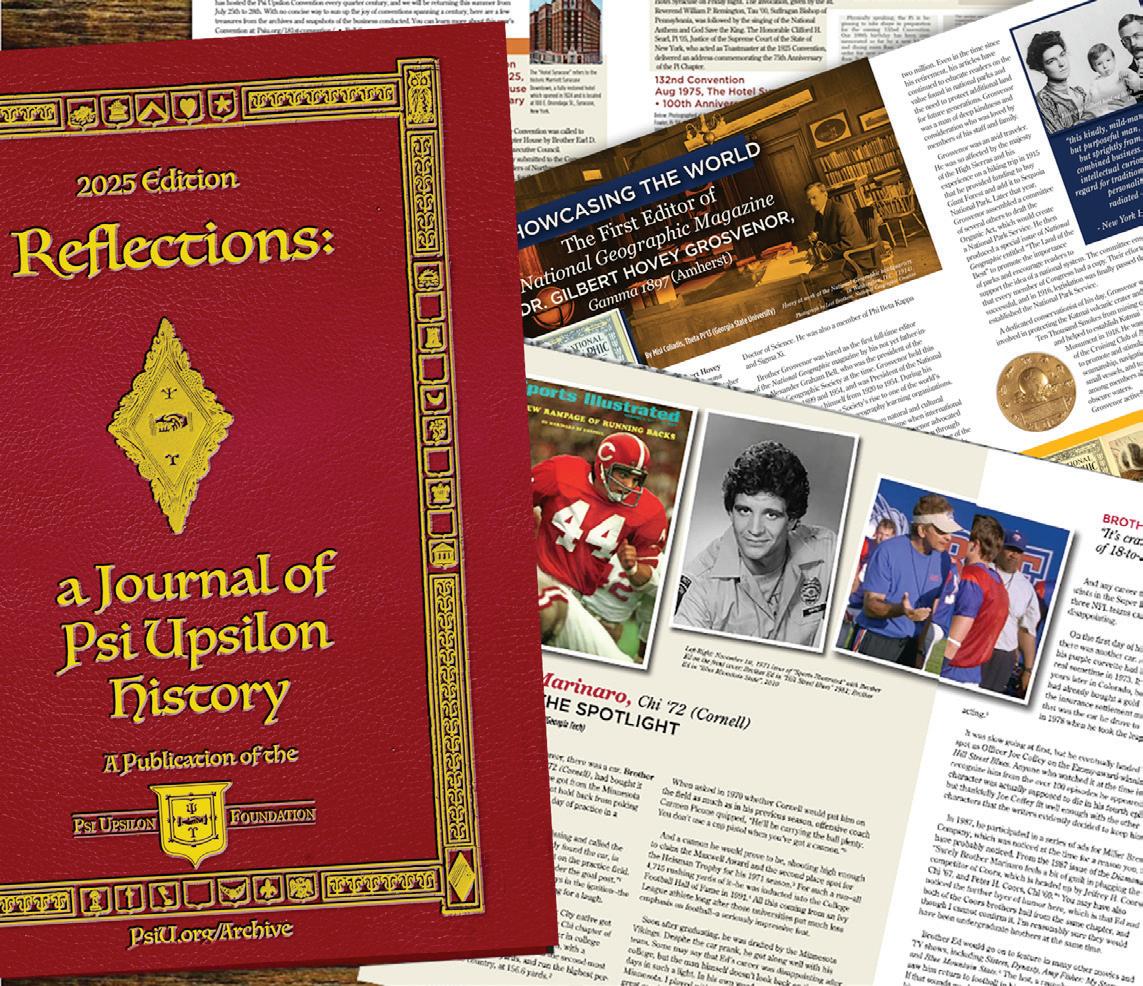
Reflections: A Journal of Psi Upsilon History is a publication of the Psi Upsilon Foundation focused on researching and highlighting the stories behind the members, buildings, artifacts, and traditions of our order as we approach two centuries of brotherhood.
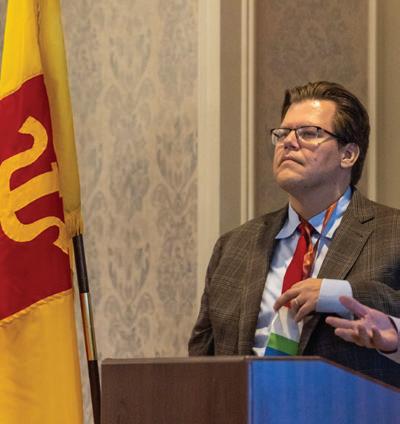
Greetings brothers! With this issue, the History and Archives committee marks six years of active existence. I’m excited to see several new folks researching and writing about Psi U and the exciting accomplishments of our brothers from the 1800s to the present day. Last year Psi Upsilon hit an exciting milestone with the initiation of our 50th chapter, the Delta Omicron at Purdue University. Evan Terry, Epsilon Phi ’93 (McGill) gave an excellent keynote at that occasion using his research, and we’ve expanded it here with more fascinating information about Psi U brothers who helped get the university off to its illustrious start. Nickie Saylor, Epsilon Iota ’08 (Rensselaer Polytechnic Institute) recorded new arrangements of “Our Lodge Room” to make it easier for brothers to learn a new Psi U song. Please enjoy those and many other fine articles. The committee recently completed a multi-year research project about our named scholarships and their recipents, and are preparing our next challenge. We’ll be planning it in person and brainstorming at the Psi U Archives Research Weekend in Indianapolis, IN, June 5-7. All brothers are welcome. Part of our goal is to begin planning events and activities for the Bicentennial of the Fraternity, just a scant seven years away! Please consider making a gift to the Psi Upsilon Foundation (scan or visit http://www.psiu.org/ foundationgift) in order to support our publications and the preservation of Psi Upsilon’s history and archives. Yours in the Bonds, Jonathan Chaffin, Gamma Tau ’00 (Georgia Tech)


We wish to recognize brother Cushing Donelan, Gamma ’05 (Amherst College) & Donelan Family Wines for their generous support of Reflections: A Journal of Psi Upsilon History, of the Speaker Series, and of the programs of Psi Upsilon. DONELANWINES.COM
4 | ABOUT OUR FOUNDERS
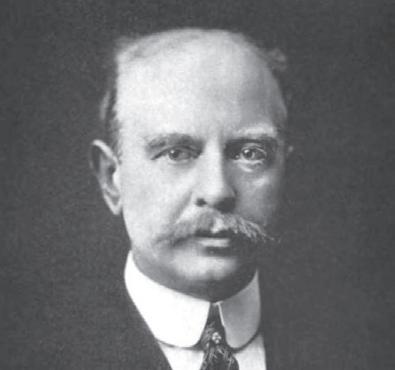
Merwin Henry Stewart, Theta 1837 (Union College)
5 | PSI UPSILON, ZETA CHAPTER AND TAJ MAHAL
An Honorary Brother, Spring 1962
A fascinating first hand rememberance by Dewey Crawford, Zeta ’63 (Dartmouth)
6 | DELTA OMICRON CHAPTER INSTALLATION AT PURDUE REVEALS A Deep Historical Connection
Psi Upsilon brothers were instrumental in the development of Purdue University.
7 | A PSI U FAMILY LEGACY
William Stuart, Gamma 1880 (Amherst)
A brother from a large family of Psi Upsilon brothers, railway lawyer, and influential early trustee of Purdue.
8 | THE ART OF ILLUMINATION
Louis Bell, Zeta 1884 (Dartmouth)
Pioneer of principles of photographic light that are still studied today and early shaper of Purdue’s engineering program.
10 | A PIONEER OF NEW JOURNALISM
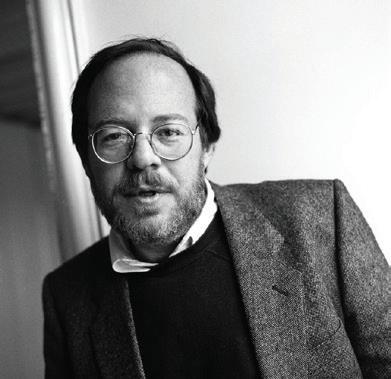
Michael Herr Pi ’61 (Syracuse)
From battlefield to cinemas worldwide, Michael influenced some of the greatest stories of the Vietnam conflict and pioneered combat reporting.
12 | OUR LODGE ROOM
An early Psi U song re-discovered and shared with new recordings.
14 | A DREAM REALIZED
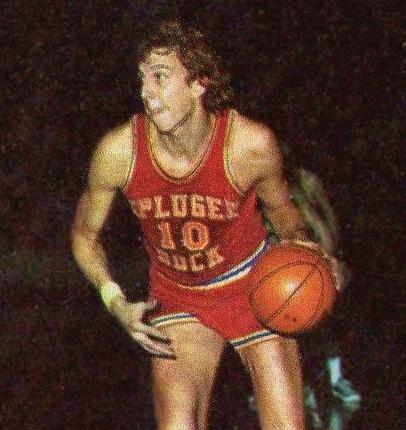
Steven Sherburne Hawes
Theta Theta ’72 (Washington)
The 6' 9” center and power forward starred at the University of Washington before spending 10 seasons in the NBA.
CHAIR
Evan W. Terry, Epsilon Phi ’93 (McGill University)
Jonathan M. Chaffin, Gamma Tau ’00 (Georgia Institute of Technology)
Gary W. Curzi, Epsilon Iota ’89 (Rensselaer Polytechnic Institute)
Heather A. Burns Edmisten, Gamma Tau ’02 (Georgia Institute of Technology)
Clifford J. Edmisten, Gamma Tau ’00 (Georgia Institute of Technology)
Joseph McCaskill, Chi Delta ’00 (Duke University)
Nickie Hirlinger Saylor, Epsilon Iota ’08 (Rensselaer Polytechnic Institute)
Alex Senchak, Eta ’06 (Lehigh University)
Paul H. Travis, Gamma Tau ’01 (Georgia Institute of Technology)
Madison Turkette, Delta Omicron ’19 (Purdue University)
Joshua Rogers, Phi Beta ’23 (College of William and Mary)
Jonathan Chaffin, Gamma Tau ’00 (Georgia Institute of Technology)
Mia Driskell, Delta Omicron ’24 (Purdue University)
Misi Coliadis, Theta Pi ’13 (Georgia State University)
Nickie Hirlinger Saylor, Epsilon Iota ’08 (Rensselaer Polytechnic Institute)
Evan Terry, Epsilon Phi ’93 (McGill University)
S. J. Tinaglia Sr., Omega ’88 (University of Chicago)
Madison Turkette, Delta Omicron ’19 (Purdue University)
ABOUT OUR COVER:
The cover is from an engraving reproduced in a Diamond issued for the convention. The symbols represent the chapters extant at the time with elements from their respective coats of arms.
Have feedback? Want to write for Reflections? Email jonathan@psiu.org
PsiU.org/Archives @PsiUpsilon @PsiUpsilon1833/ @Psi_Upsilon

By Jonathan Chaffin, Gamma Tau ’00 (GeorgiaTech)
Little is known about Psi Upsilon founder, Merwin Henry Stewart; his life is well summed up by this imagined recollection in “HISTORY OF THE THETA CHAPTER” by Robert H. Bush, Theta 1947 (Union College), from a 1954 Diamond:
“Stewart, poor youngster, also achieved election to Phi Beta Kappa before his graduation and became a private tutor in Virginia. But he was ill, and passed on before he could enter the ministry in 1838.”
He was known variously as “Merwin” and “M.H. Stewart,” and died before photography was widely known; he passed away before the invention of either Daguerreotype or Calotype cameras. In recollections years later, Rev. Samuel Goodale, Theta 1837 (Union College), remarked on Merwin’s ill health, calling him “sickly.”
Little is recorded on the subject of his birth, parentage, or childhood. Merwin is from New York — he’s originally listed as from “Troy, New York” in the constitution he signed. There is a “Henry Stewart” who lived in Petersburg, New York, on the 1830 census, which is a few miles east of Troy. That census lists seven in the household, five male and two female, although they may not all be siblings/family members.
We can assume he was an excellent student, and from at least a comfortable background, by his attaining Phi Beta Kappa and attending an institution as reputable as Union College. Brother Stewart was a roommate of Edward Martindale, and their next door neighbor was Charles W. Harvey.
Per the Story of Psi Upsilon, the first meetings were held in West College, situated in the town of Schenectady, New York, and occupied at that period by underclassmen.
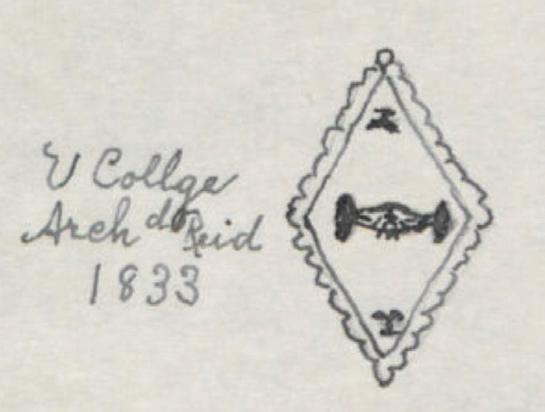
The Story of Psi Upsilon notes; “Martindale, Harvey, Hadley, and Stewart were especially active [in the structure and founding of Psi Upsilon], while the others, as Judge Hadley assures us, “were no drones.” Along with Col. Edward Martindale, Theta 1836, Stewart may jointly lay claim to the first suggestion of the Fraternity’s name, and acted as the first secretary.
From a letter that remains in the Union College archives, we can infer that as a student poor finances were on Merwin’s mind, but that he was trusted with loans. The letter with Rev. Prof. J. A. Yates details borrowing money for his travels to and from school, and his desire to enter the ministry unburdened. (In the letter he thanks the reverend for vouching for him so he could borrow $10 to get to New York City by boat in 1837.)
He graduated in Latin Oration, and tutored briefly in St. George’s County, Virginia. Died at Troy, New York, of consumption (tuberculosis), October 12, 1838, age 26. Gravesite, presumably in Troy, New York, unknown by author.
Born | Presumably in 1812 (record unknown)
1833 | Attends Union College
1833-34 | Establishes Psi Upsilon and acts as first secretary 1837 | Borrows money to travel to New York City
1837 | Graduates from Union 1837-1838 | In the 1842 Psi Upsilon Catalog, he is listed as “being from” Kings George Co., Virginia, but that is where he tutored for two years after graduation 1838 | October 12 - Died of Consumption in Troy, New York
By S. J. Tinaglia Sr., Omega ’88 (Chicago)
Founded in 1833, Psi Upsilon has long distinguished itself by the seriousness of its fellowship and the breadth of its members’ pursuits. Across its chapters, the fraternity has counted among its brothers leaders in public life, the judiciary, academia, business, and the arts — including presidents of the United States, cabinet officers, university presidents, and other figures of national consequence. Since the founding of the Zeta Chapter at Dartmouth College in 1842, those traditions have been carried forward with particular distinction.
One memorable episode from the early 1960s reflects those values in a cool way. Spring 1962.
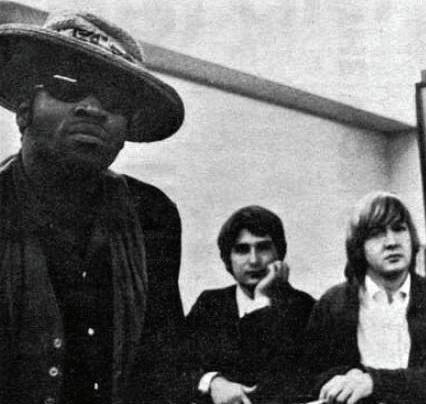
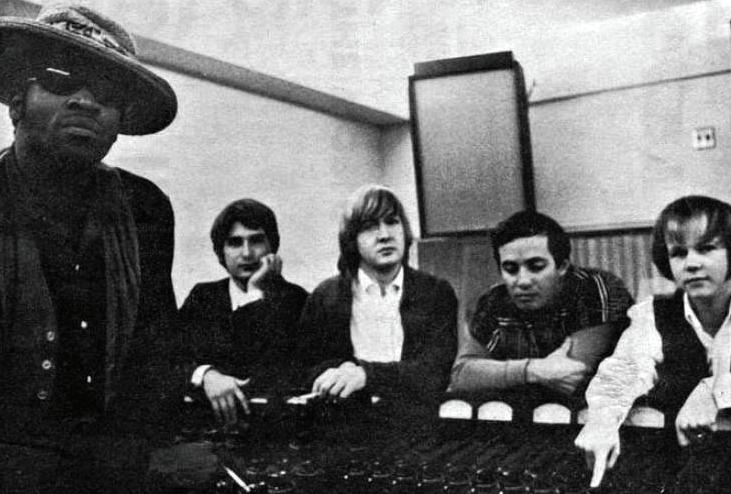
The musician later known worldwide as Taj Mahal was still at the outset of his career. Born Henry St. Claire Fredericks Jr. in 1942, he was then a student at the University of Massachusetts Amherst, and became deeply immersed in African-American blues music. During this period, he adopted the name Taj Mahal and led a regional band, Taj Mahal and the Elektras, which performed frequently at colleges throughout New England. (One has to wonder whether there was some connection with the fictional Otis Day and the Nights given the Dartmouth connections to the movie Animal House).
One such engagement brought Taj Mahal and the Elektras to Dartmouth College, where they were invited to perform at the Psi Upsilon Zeta Chapter house following a meeting of the chapter’s trustees. According to the recollection of Dewey B. Crawford, Zeta ’63 (Dartmouth), then an undergraduate brother of Psi Upsilon and president of the chapter, the gathering shifted from a formal dinner to the fraternity house, where the music quickly became the focus of the evening.
“I interrupted their break to announce that if Taj were amenable we would like to make him an honorary member of Psi U. … I took Taj through his pledge, pinned a pledge pin on his shirt, and then declared him to be an honorary brother of Psi U.”
— Dewey B. Crawford, Zeta ’63 (Dartmouth)
With trustees and brothers present and observing, Taj Mahal agreed. He was formally pledged and received as an honorary
brother of Psi Upsilon, in accordance with the customs of the time. [This was not intended as a symbolic gesture alone; within the fraternity’s understanding, Taj Mahal was welcomed as a brother.] The moment was met with applause, perhaps confusion by a trustee or two, and afterwards Taj Mahal and the Elektras resumed their performance.
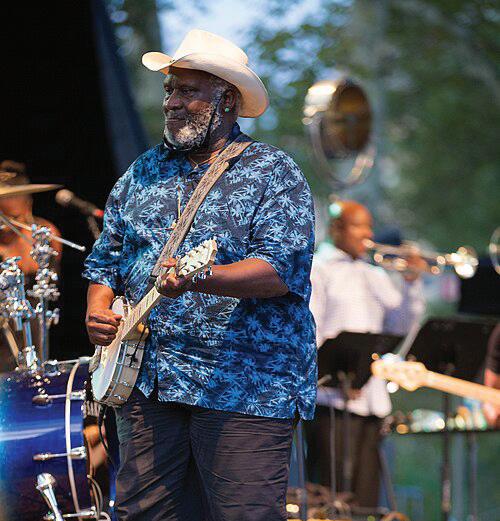
For Taj Mahal, the Dartmouth visit proved an early waypoint in a remarkable career. In the decades that followed, he emerged as one of the most influential figures of the American blues revival, expanding the genre through Caribbean, African, and global musical traditions. His work has earned multiple Grammy Awards (1997, 2000, and 2018), along with numerous lifetime honors recognizing his impact on American music.
Seen in retrospect, Taj Mahal’s initiation as an honorary brother of Psi Upsilon stands as a small but resonant moment — brothers recognizing talent, depth, and originality before the wider world had fully taken notice. It reflects part of the Psi U motto of social excellence in all its forms.
Dewey B. Crawford is a longtime Psi Upsilon brother whose recollection preserves this episode. After graduating from Dartmouth, he earned his J.D., with distinction, from the University of Michigan Law School. He then served two years in the United States Army, including service in Vietnam, before embarking on a distinguished legal career in Chicago. Over several decades, Brother Crawford became a senior partner and practice leader at some of the city’s most prestigious law firms, specializing in corporate finance, securities, and governance, and earning national recognition within the legal profession.
By Evan Terry, Epsilon Phi ’93 (McGill)
Purdue University marked an important milestone this year with the installation of the Delta Omicron Chapter of Psi Upsilon, officially welcoming the fraternity’s 50th chapter nationwide. While Delta Omicron is fairly new to campus, the connection between Psi Upsilon and Purdue is long-standing — rooted in the university’s early history and in individuals who helped shape its academic and institutional foundations.
Established as a provisional chapter in 2016, Delta Omicron’s path to installation was shaped by persistence. Like many student organizations, the chapter faced years of delay, including disruptions caused by the COVID-19 pandemic. Its eventual installation reflects the determination, continuity, and commitment expected of a Psi Upsilon chapter and long associated with Purdue students.
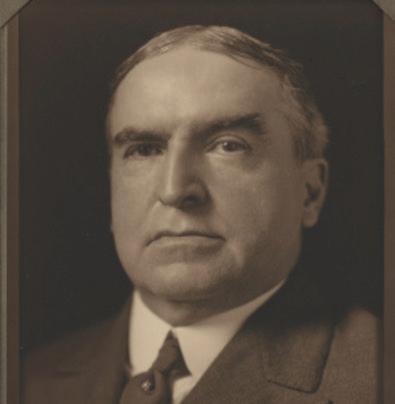
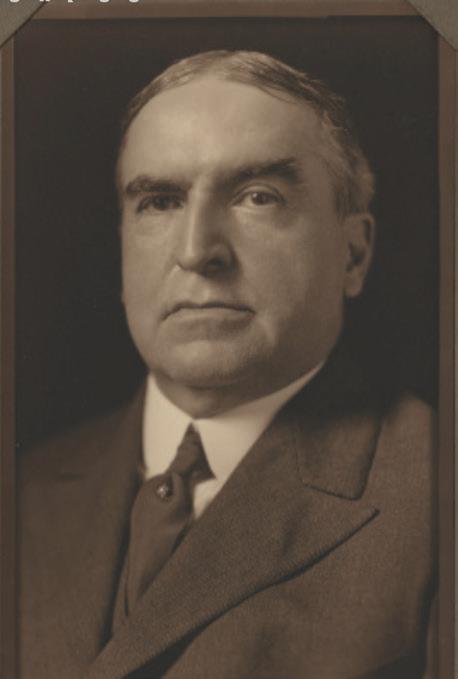
William Vaughan Stuart, Gamma 1880 (Amherst College)
Although Purdue has not previously hosted a fully initiated Psi Upsilon chapter, the fraternity’s ties to the university date back

to the late 19th century. One early connection is William Vaughan Stuart, Gamma 1880 (Amherst College), who served as chairman of the Purdue Board of Trustees from 1899 until 1921, and president for eight years, leaving an indelible mark on the institution. Stuart Field — once a centerpiece of Purdue athletics and now the site of Elliott Hall of Music — stands as a lasting reminder of that period of leadership and growth; the west grand stand of the field was adjacent to the Purdue Armory.
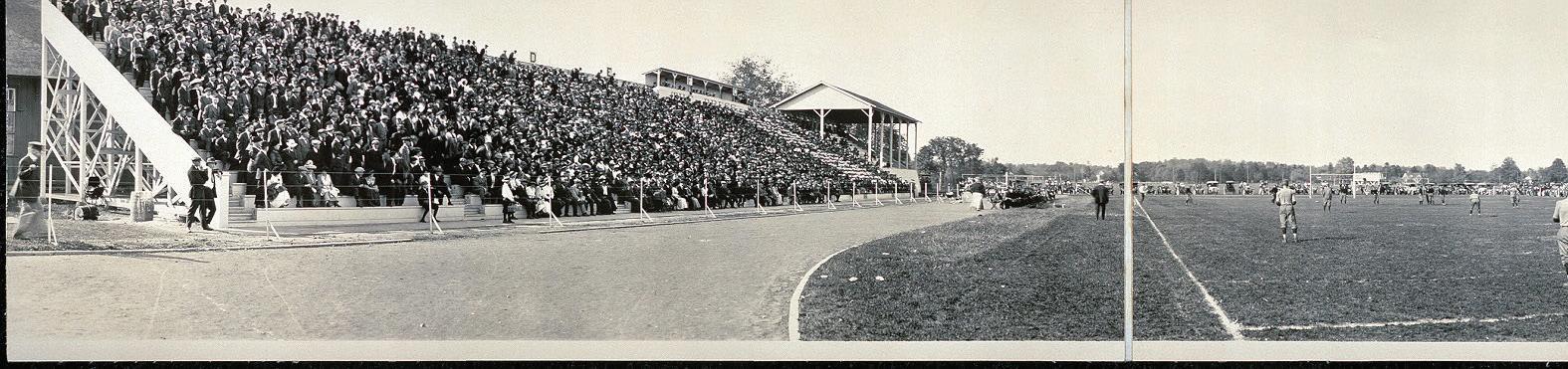
Stuart Field (pictured below) was the home field of the Purdue Boilermakers football team from 1892 until 1924 when Ross-Ade Stadium opened. Purdue’s baseball team continued to play at Stuart Field until 1939. The field was dedicated on April 16, 1892 and named for William V. Stuart and his brother Charles, who both served on the university’s board of trustees. Originally a seven-acre field with 800 seats, by the 1910s it was expanded to twice that area and a seating capacity of 5,000. Stuart Field was also used for special events, including a biplane demonstration on June 13, 1911, which attracted 17,000 spectators.
December 1, 1857 - May 31, 1922
By Misi Coliadis, Theta Pi ’13 (GeorgiaState)
William Vaughan Stuart, Gamma 1880 (Amherst), was born in Logansport, Indiana, on November 1, 1857, into a family of prominence at Amherst College and in Psi Upsilon Fraternity. His father, the Hon. William Zephaniah Stuart, LL.D., Gamma 1833, was a distinguished lawyer and Justice of the Supreme Court of Indiana. (Note: William Z. Stuart was initiated while attending Amherst for post graduate work in 1868. The Gamma Chapter was founded in 1841 after his initial graduation in 1833). William’s brothers, Charles Benedict (Gamma 1873), Thomas Arthur (Gamma 1874) and William Zachary (Gamma year of initiation unclear), were all graduates of Amherst as well. Not to be outdone, a fifth brother was also a member of Psi U, Francis Hart, Zeta 1871 (Dartmouth). To this day, few families can claim the same distinction of having six members who were all brothers of Psi Upsilon.
Dr. Louis Bell, Zeta 1884 (Dartmouth College)
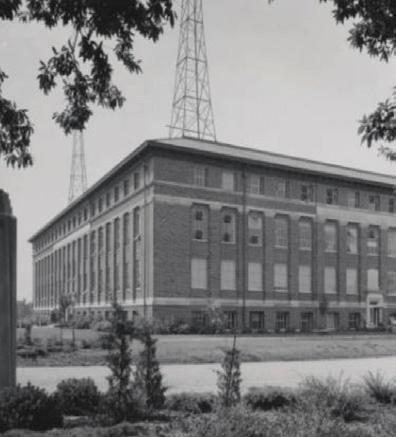
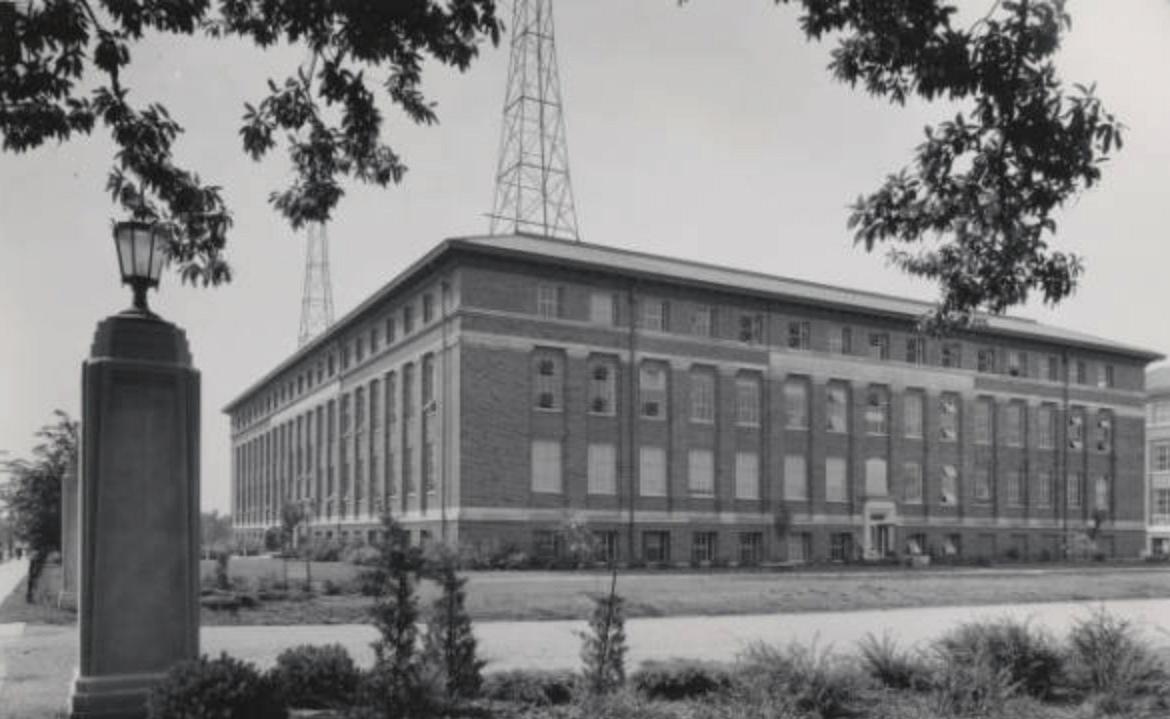
Also in the late 19th century, Dr. Louis Bell, Zeta 1884 (Dartmouth College) was integral in the growth of the Purdue Electrical Engineering program. Like its sister schools, the program shared space in Purdue’s first campus building, which broke ground in 1871. Brother Bell was on the faculty as a professor of physics and applied electricity when Purdue opened a new and separate School of Electrical Engineering building, which shared the space with the Physics Department. It was one of the most complete laboratory buildings of the time. The first unit of the New Electrical Engineering building was completed in 1925. The first unit was comprised of a one story building with one general electric laboratory, one high-voltage laboratory, and one lecture room with seats for 488 students. The second unit was completed in 1926 (pictured left). It added on a three-story addition with a basement and a one-story wing. It contained staff offices, 13 recitation classrooms, 19 small laboratories, and the WBAA radio broadcasting studio and operating rooms.
William graduated from Amherst in 1880 before also earning a master’s degree in 1883. While at college, he was widely known and exceptionally popular. He received the first Alexandria Prize in his freshman year, was vice president of the class sophomore year, president of the class junior year, and president of the baseball association senior year. He was a leader of the class in the department of political science, and went on to be an active public servant in state and municipal affairs.
Following his master’s degree, Stuart studied law at Columbia University and was admitted to the bar. He immediately began the practice of law in partnership with his brothers. Stuart was mayor of Lafayette, Indiana, in 1887 and 1888, and was at one time county attorney. He never lost interest in public affairs and gave generously for the public good. At the time of his death, he was the senior member of the well known law firm of Stuart, Simms & Stuart. He had served as counsel for the Wabash Railroad, was also a vice-president for some time and a director to the time of his death.
For 25 years, he was a member of the board of trustees of Purdue University, and for many years chairman of the board, resigning only when his health failed. He helped to shape Purdue’s successful policies and to direct its growth and expansion. Purdue’s early prosperity is largely due to his efforts. Equipped as he was with sound legal knowledge, business capacity and fine culture, he was a perfect fit to direct the growth of an educational institution.
William was a member of St. John’s Episcopal Church, Lafayette, and served for many years as vestryman. At different times, he was director of the Lafayette Joint Stock Land Bank, trustee of the Lafayette Savings Bank, director of the Lafayette Union Railway Company, director of the National Fowler Bank and of the Star City Building and Loan Association. He assisted in organizing and was first president of the Lafayette Country Club and was a member of the Lafayette Club and the Lafayette Lodge of Elks.
In 1896, he married Geneve E. Reynolds, with whom he had a daughter, Sophie Wolcott Stuart. Sophie graduated from Smith College in 1921. The Honorable William Vaughn Stuart died at his home in Lafayette May 31, 1922. He had been in failing health for more than a year.
“In his presence, one always felt his friendliness, his kindliness and geniality and at the same time realized the real dignity of his character.”
Although living at a distance from Amherst College, Brother Stuart never lost interest in his alma mater or in his class, rarely missing a class reunion. His letters always showed a keen desire to know all about his old college friends. Although in failing health, he attended the Amherst College Centennial and his class dinner. He understood people. He possessed the wisdom and sound discretion that comes from large experience. To his close associates, he possessed a graciousness and charm that never diminished.
Diamond-of-Psi-Upsilon1922-4.-Vol009-Num1 - Obituary
By Misi Coliadis, Theta Pi ’13 (GeorgiaState)
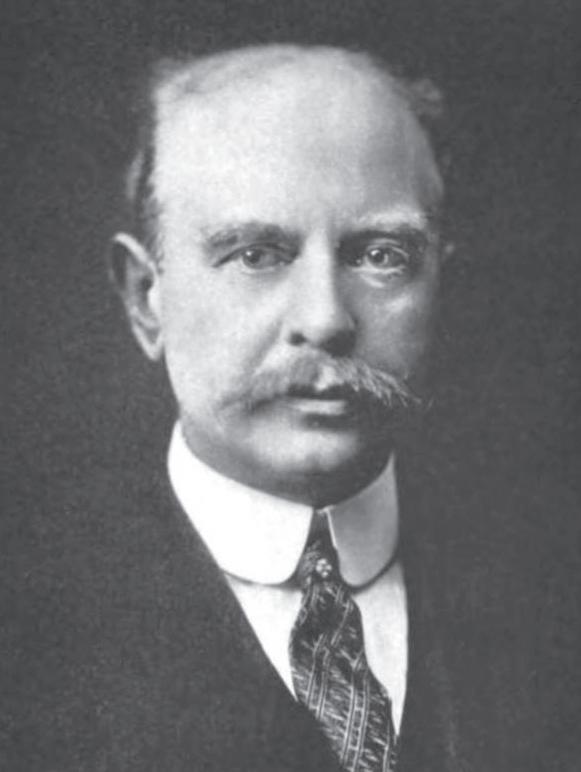
An early pioneer in illumination engineering and the transmission of electricity Louis Bell, Zeta ’84 (Dartmouth) was awarded 25 patents in power transmission. He was born on December 5, 1864, in the small village of Chester, New Hampshire. His father was a lawyer who died in 1865 while serving as a Union Army colonel during the American Civil War. His mother died shortly thereafter, leaving Louis and his older sister to be raised by their grandmother, the widow of a prominent politician.
At the age of 10, Louis attended the nearby Northwood Academy. After two years, he was sent to Phillips Exeter Academy and then on to Dartmouth College in 1880. There, he studied physics and chemistry, among other subjects, while also taking an interest in astronomy. Louis served as associate editor of The Dartmouth and The Psi Upsilon Diamond during his time at Dartmouth. He graduated with a
Bachelor of Arts degree in 1884, winning final honors and distinction in physics and honorable mention in English.
Brother Bell remained for a year at Dartmouth as a postgraduate before moving on to three years of residence at Johns Hopkins University studying physics and chemistry. He was awarded a Ph.D. in 1888 with his thesis titled “On the Absolute Wave-length of Light.” He next joined the staff of Purdue University as a professor in the newly established chair of applied electricity, and found himself at the head of the newly founded school of electrical engineering. Though he left Purdue after only a year, he laid the
groundwork for a program that would become central to the university’s identity and global reputation.
In 1892, Bell was hired as chief engineer for the power transmission department at General Electric. There he designed some of the first polyphase power transmission plants in the country.
During 1893, he supervised the installation of the nation’s first three-phase generators at the Redlands Power Plant in California. He then worked on the Folsom Powerhouse in California, which became the most powerful in the world at that time.
Louis married Sarah Gross Hemenway in 1893, who was a Dartmouth alumna from the class of 1884. They had one son together. He became an engineering consultant for the City of Boston, Massachusetts, in 1895, and he remained in this job for the rest of his life. Initially his focus was on power transmission, but later he specialized in the engineering of illumination. He lectured at both Harvard and the Massachusetts Institute of Technology. In 1897, he published Electric Power Transmission, which became a standard textbook on the subject for years to come.
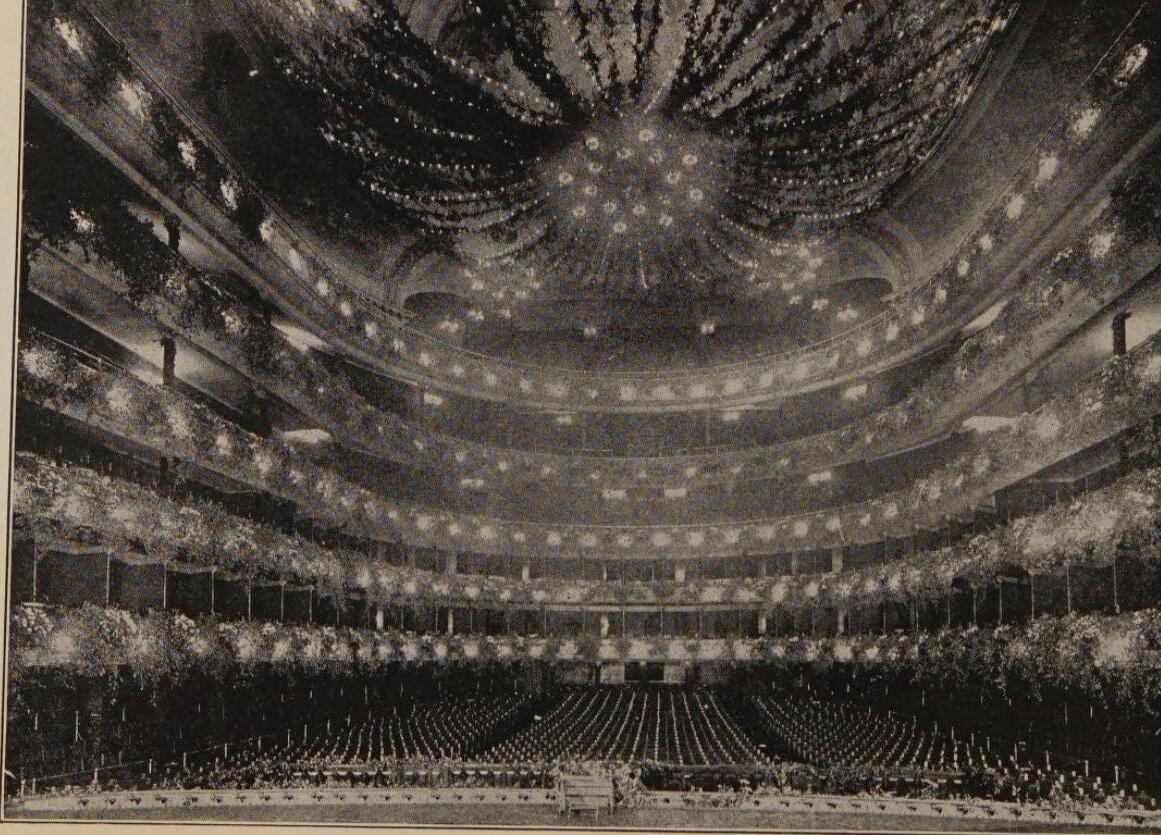
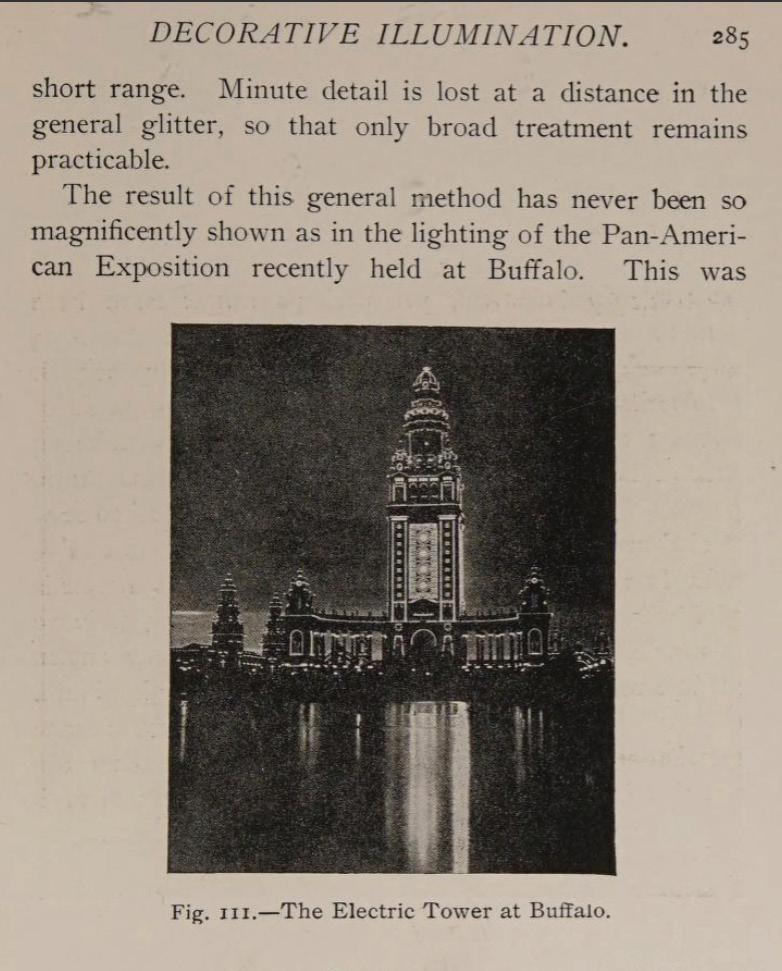
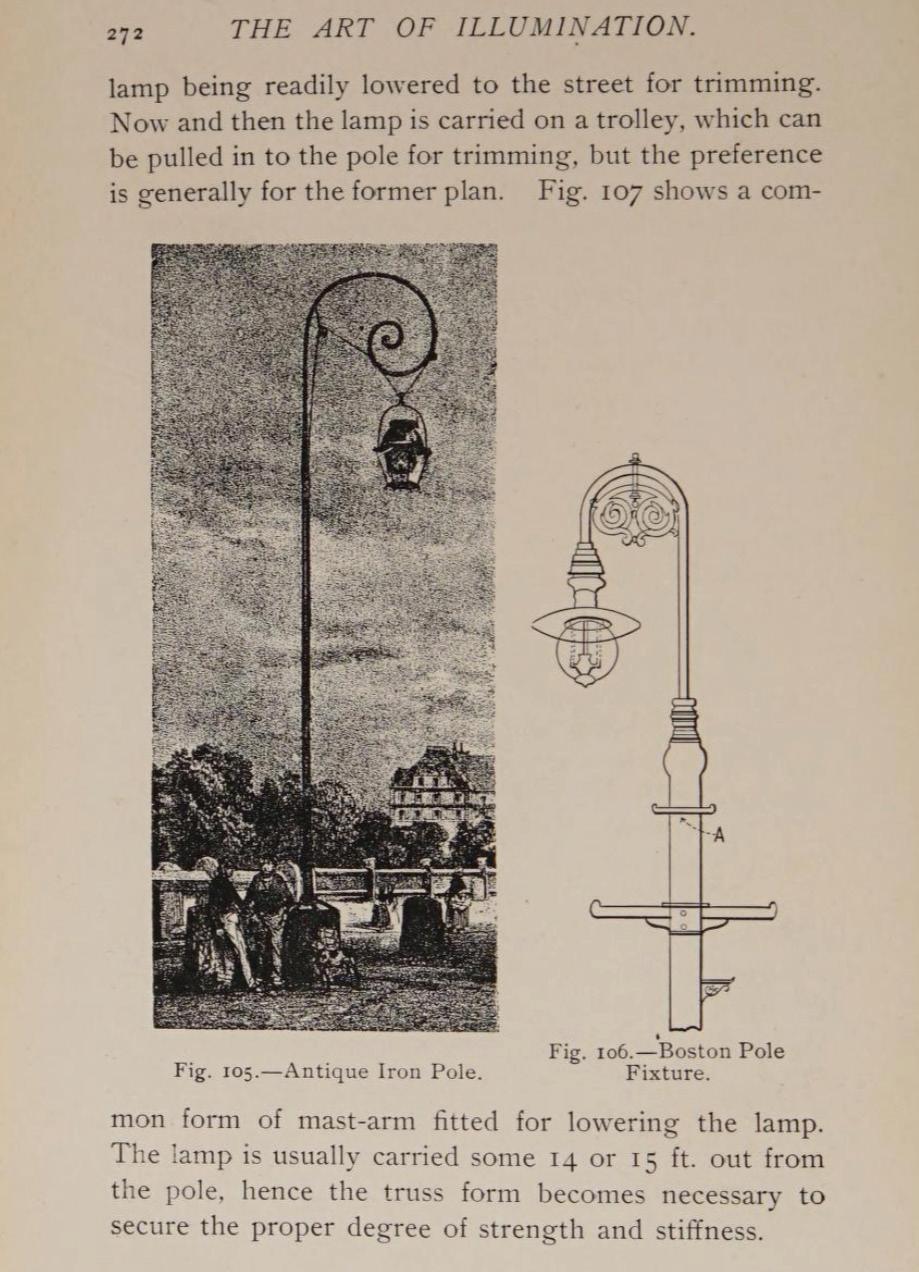
Brother Bell’s most widely renowned book, Art of Illumination, was published in 1902 and is a comprehensive guide to the techniques and principles of illumination in art. It remains available today in the public domain, and continues to serve as an invaluable resource for artists, students, and enthusiasts interested in mastering the craft of drawing and design. His book delves into the historical context of illumination, exploring its significance across various artistic movements. The book’s enduring appeal lies in its ability to bridge historical artistic practices with practical applications, making it a timeless reference for anyone seeking to understand and create beautiful illuminated art.
Brother Bell went on to contribute articles on electric power transmission and electric motors to the 10th and 11th editions of Encyclopedia Britannica. In 1908, he served as the third president of the Illuminating Engineering Society. During World War I, he was a member of the advisory committee for the Council of National Defense. During the early days of the automobile, he worked on headlights and the development of headlight lenses. He died June 14, 1923. Dartmouth awarded him an honorary Doctorate of Science shortly thereafter.
The Psi Upsilon International Office is pleased to announce we have partnered with LifeWeb 360 to bring you a brand new digital necrology where our brothers can reconnect and commemorate those members of our Fraternity who have passed away.
LifeWeb 360 is an online platform where friends and family can share stories, photos and memories of their departed loved one. It is designed to harness the outpouring of love that happens when someone passes to capture their essence in an authentic way, honor them, and give comfort to their family.
Within the brotherhood, we find stories of lives lived to the fullest and of unique men and women who left an indelible mark on the world. Discover the common threads that weave us together and — when you see someone you know — share your cherished memories, anecdotes, photos, and laughs to honor the strong connection we have with our departed brothers.
We’ve included all notices of a brother passing, and the obituary if it can be found, since 2019. If you know of a brother who passed away and is not included please pass along their information using the form at https://psiu.wufoo.com/forms/farewell-parting/ or MemoryPort.
SCAN QR CODE TO EXPLORE THE NEW DIGITAL PSI UPSILON NECROLOGY


By Madison Turkette, Delta Omicron ’19 (Purdue)
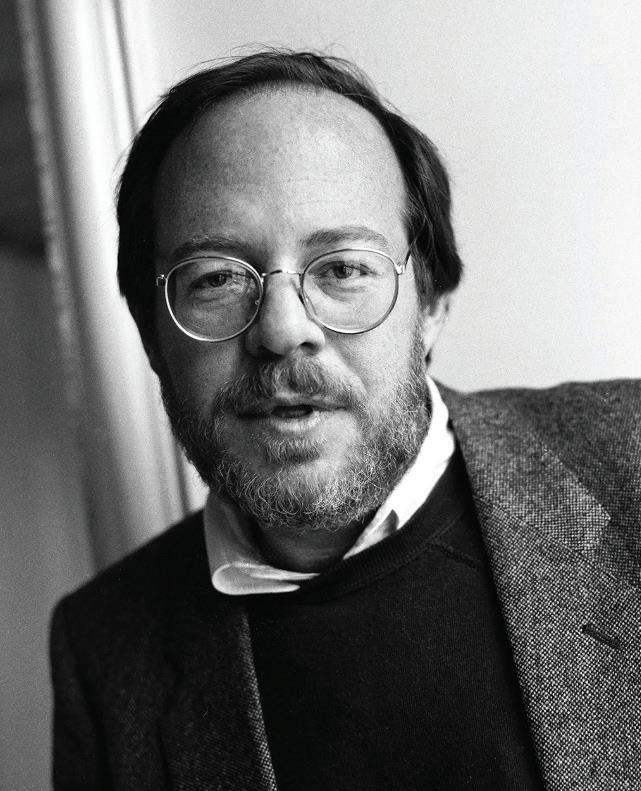
As a war correspondent during the 1960s, Michael Herr, Pi ’61 (Syracuse), had the difficult job of reporting on the Vietnam War, which was known as one of America’s most divisive conflicts1. Brother Herr was a pioneer of the New Journalism literary movement of the 1960s-70s, which pushed the boundaries of traditional journalism and nonfiction writing. He wrote his articles for a variety of publications with a subjective literary style that captivated readers with a vivid, long-form non-fiction now more commonly known as narrative non-fiction.
Born in Lexington, Kentucky, in 1940, Michael grew up in Syracuse, New York2. He recalled that as a pre-teen he followed strangers around town by bus and foot because he “just wanted to see where and how they lived.” 3 He ventured into university life at Syracuse University, where he began writing for the college literary magazine. At the time, the magazine editor was Joyce Carol Oates, an award-winning American writer of both fiction and non-fiction. His stint at Syracuse University was
short-lived, but still gave him time to refine his writing. Driven by a wanderlust attributed to an idolization of Ernest Hemingway and other authors who traveled the globe, Michael dropped out.
He traveled through Europe in the early 1960s4 as a film and music magazine writer. He went on to write for a number of magazines throughout the 60s. An article from the travel magazine Holiday5 focused on Bleecker Street in Greenwich Village in New York City in 1965 — a place described by many with both derogatory and flattering remarks during that decade. Similar to his pre-teen era, he captured the personable moments from street vendors to models, people he found meandering down this “parade route for visiting liberals, anarchists, socialists, apolitical grousers, peace marchers and civil-rights workers.” He juxtaposed them against the “neighborhood of Ghibelline rigidity, prejudice, [and] reaction.”5

While traveling, Michael befriended Esquire magazine editor Harold Hayes6 and proposed becoming the magazine’s war correspondent in the spring of 1967. He spent well over a year cataloguing the events in Vietnam that happened with different units before compiling them into long-form narratives.
Khesanh, a nine-page article published in Esquire’s September 1969 issue7, focused on an isolated plateau, the Khe Sanh Combat Base in the Highlands of South Vietnam. What was described by the press as the 77-day siege, “the hideous Battle of Dakto” included roughly 6,000 U.S. Marines and South Vietnamese Rangers and was written with an intense respect and admiration for the soldiers. This article explored the intense psychological, emotional, and mental breakdown experienced rather than just the physical battle. The development of the base and surrounding area combined with the characterization of the units and soldiers within the article provided a glaring perspective

against the propaganda and censorship efforts to keep the losses away from public knowledge. The article was later included as a part of an anthology of journalism titled The New Journalism in 1973 — a manifesto by Tom Wolfe and included a collection of examples of New Journalism by American writers.
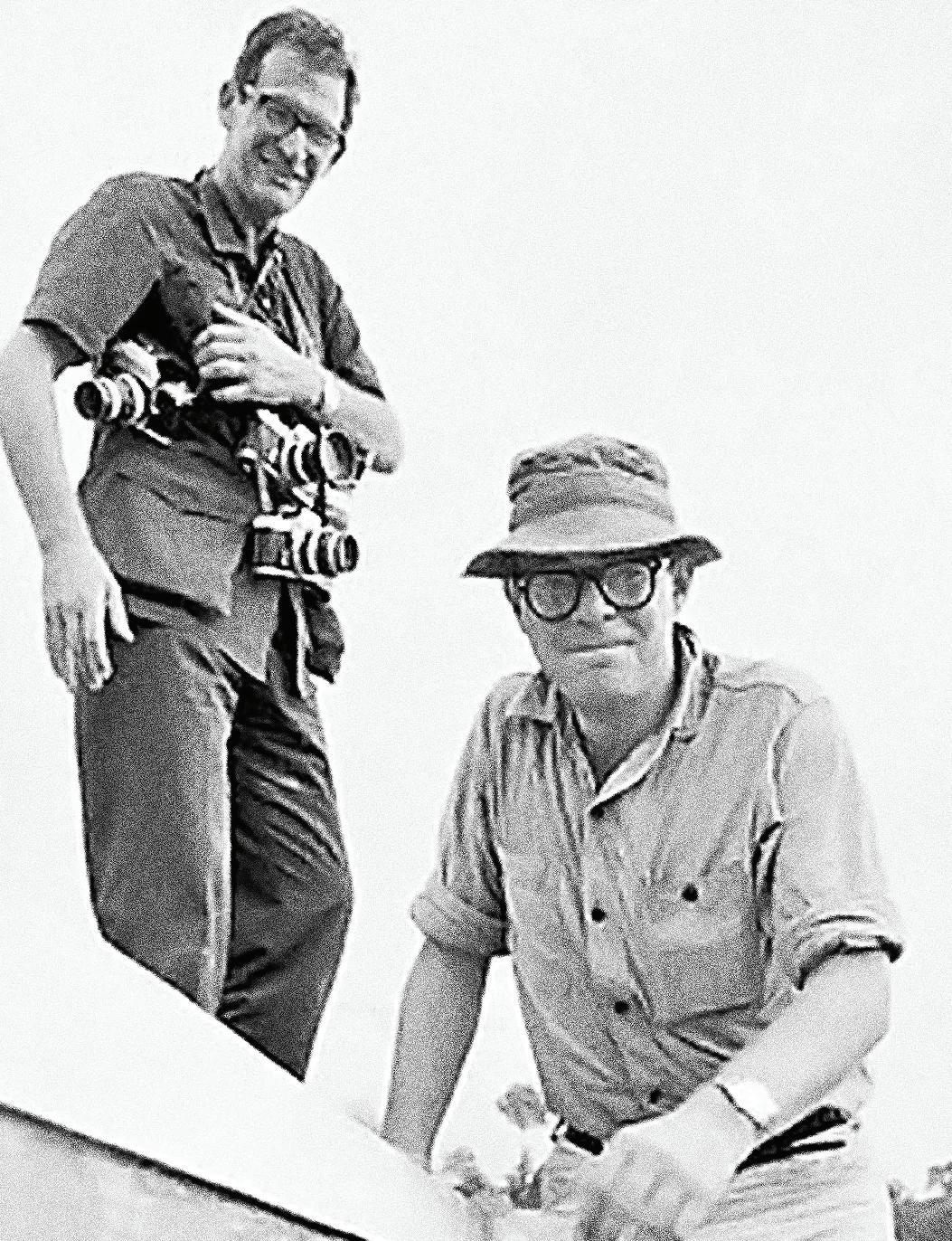
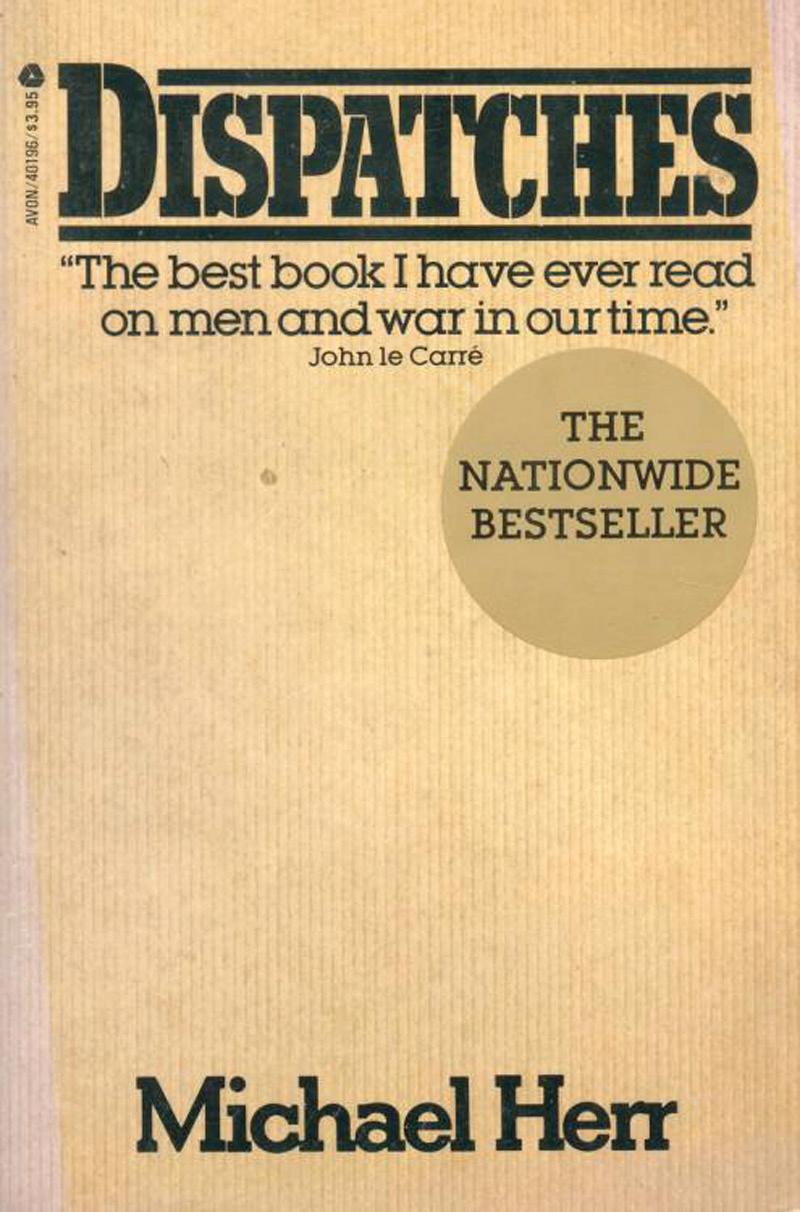
After returning from his post as a correspondent, Brother Herr continued his writing, eventually completing a book, Dispatches, for first publication in 1977. The book drew resounding critical praise and was one of the first books to confront the war from the perspectives of a journalist and the Marines that Michael shared space with. Within the first chapter, a now well-known name in photojournalism — Tim Page — was introduced. They became close friends and he would continue to be included in Michael’s works post-war. As a freelance photographer, Tim documented the conflict in Vietnam from 1965 to 1969. Dispatches included a scene where Tim was injured while documenting the heavily fought-over Y Bridge in Saigon.8 The book also included the recapture of Hue plus some additional field operations that rounded out Michael’s overall experience in Vietnam, retelling it in a vivid, impactful stream-of-consciousness that would influence the author’s future in screenwriting.
After Dispatches released, Michael and Tom Page joined Aerosmith and Ted Nugent’s tours in 1977. The article, published in Crawdaddy magazine’s January 1978 edition, an American rock music magazine, focused on the cultural influence of popular music at the time9. In the article, Michael connected the rock & roll genre to war, similarly describing topics like substance use and psychological trauma between the artists, the concert attendees, and the soldiers in Dispatches. Ted Nugent’s song “Death by Misadventure” was an ode to Brian Jones’ life, and phrased by Michael as a thematic expression of grief, compassion, and support for those affected: “Death by drugs (pity for the casualties); by drowning (love for the survivors); by plane, car and bike crash (respect for the masters); combat and rock hardly unconnected in his experience.” From literary journalism articles and novels, Michael used his honed techniques and knowledge of the Vietnam War to branch into screenwriting, writing for movies that are considered highly-rated and acclaimed classics.
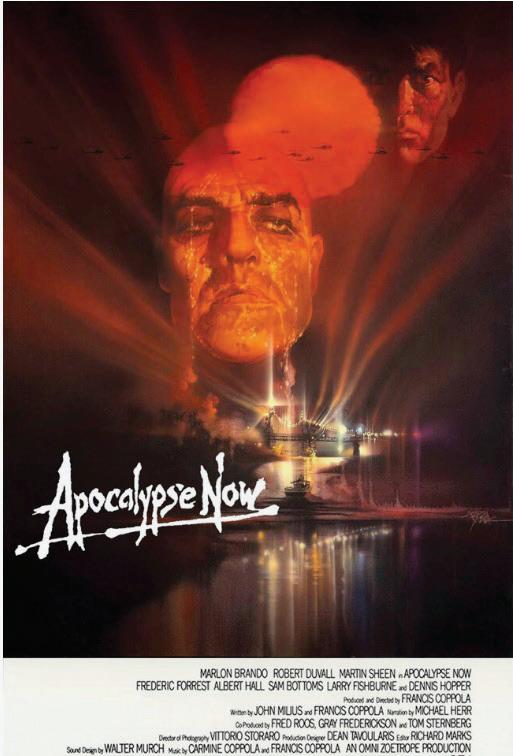
Apocalypse Now is an American psychological war film released in 197910. Hired as a key contributor, Michael wrote the voiceover narration for Martin Sheen’s character, Captain Willard. The voiceover grounded
the film’s nightmarish view with his real experiences as a correspondent. The New Journalism style Michael perfected over the years led to a blend of the psychologically stressful atmosphere witnessed in Vietnam and the fictional elements portrayed in the voiceover.
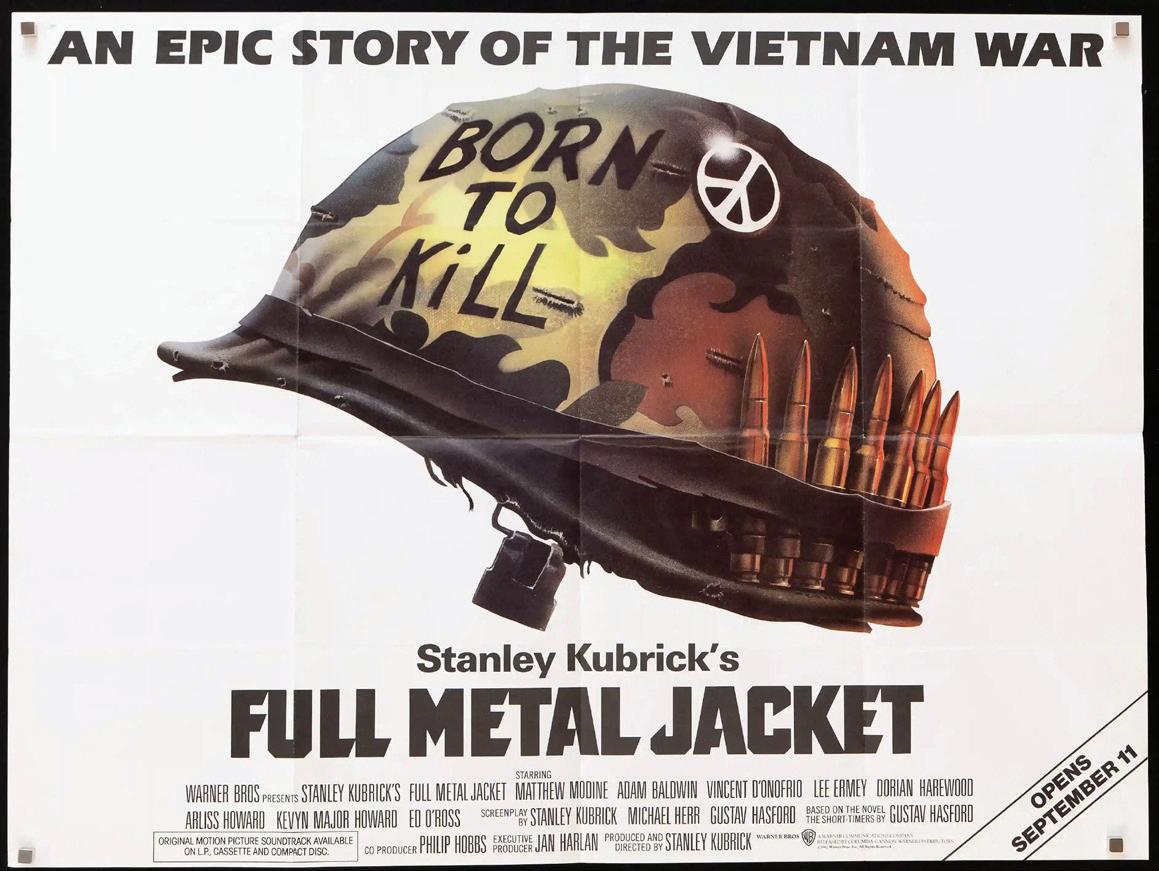
Brother Herr continued in the film industry as a key screenwriter for Stanley Kubrick’s Full Metal Jacket11 Released in 1987, the period drama follows a Marine who observes the dehumanizing effect on his fellow recruits, from boot camp training to street fighting in Vietnam. After Kubrick’s passing, Herr released a memoir titled Kubrick, which provided a masterful look at their nearly 20-year friendship and the success of the filmmaker’s creative passion and powerful intellect.
Michael Herr’s life was defined by a profound and lasting impact on literature and film. His subjective, immersive literary style successfully translated to complex visual media, contributing to acclaimed and Oscar-nominated releases. Through his articles, his most famous novel, and his work in cinema, Brother Herr secured his legacy as one of the most significant and influential American writers to confront the psychological and moral complexities of the Vietnam era.
References
1.https://www.pritzkermilitary.org/explore/vietnam-war/key-terms
2.https://www.syracuse.com/news/2016/06/michael_herr_syracuse_native_who_chronicled_vietnam_war_ dies_at_76.html
3.https://web.archive.org/web/20160626134655/https://www.washingtonpost.com/entertainment/books/ michael-herr-who-wrote-powerfully-about-vietnam-in-dispatches-dies-at-76/2016/06/24/ac9c0e58-3a2e11e6-9ccd-d6005beac8b3_story.html
4.https://www.theguardian.com/books/2016/jul/05/michael-herr-obituary
5.https://holidaymag.wordpress.com/2013/12/27/bleecker-street-bohemias-barometer-by-michael-herrdecember-1965/
6.https://www.esquire.com/news-politics/a46147/hell-sucks-michael-herr/
7.https://classic.esquire.com/article/1969/9/1/khesanh
8. page 37 of Dispatches
9.https://www.scribd.com/document/693205860/Crawdaddy-January-1978#content=query:michael%20 herr,pageNum:44,indexOnPage:0,bestMatch:false
Quote Pg 48 Crawdaddy mag ^
10.https://www.imdb.com/title/tt0078788/ 11.https://www.imdb.com/title/tt0093058/

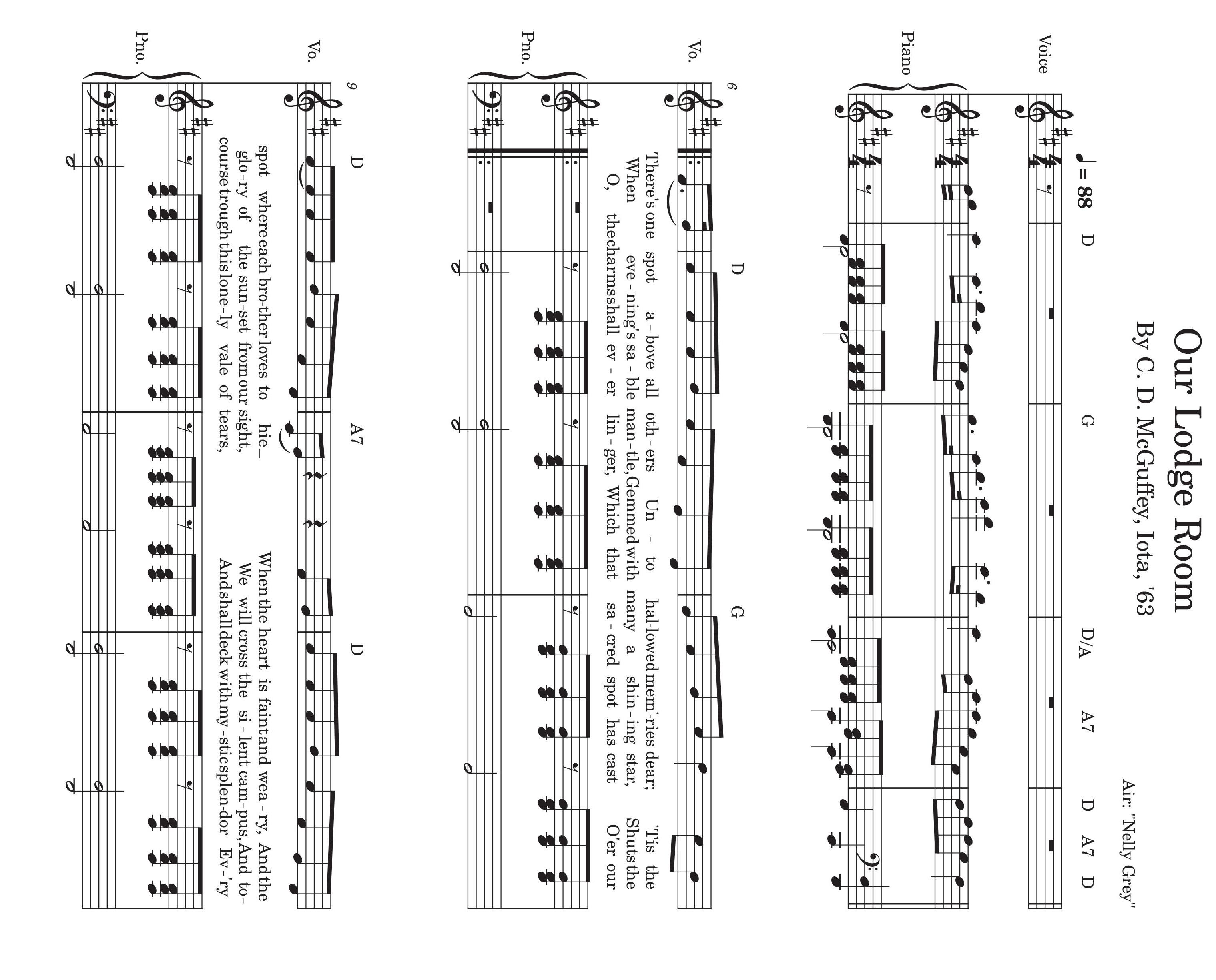
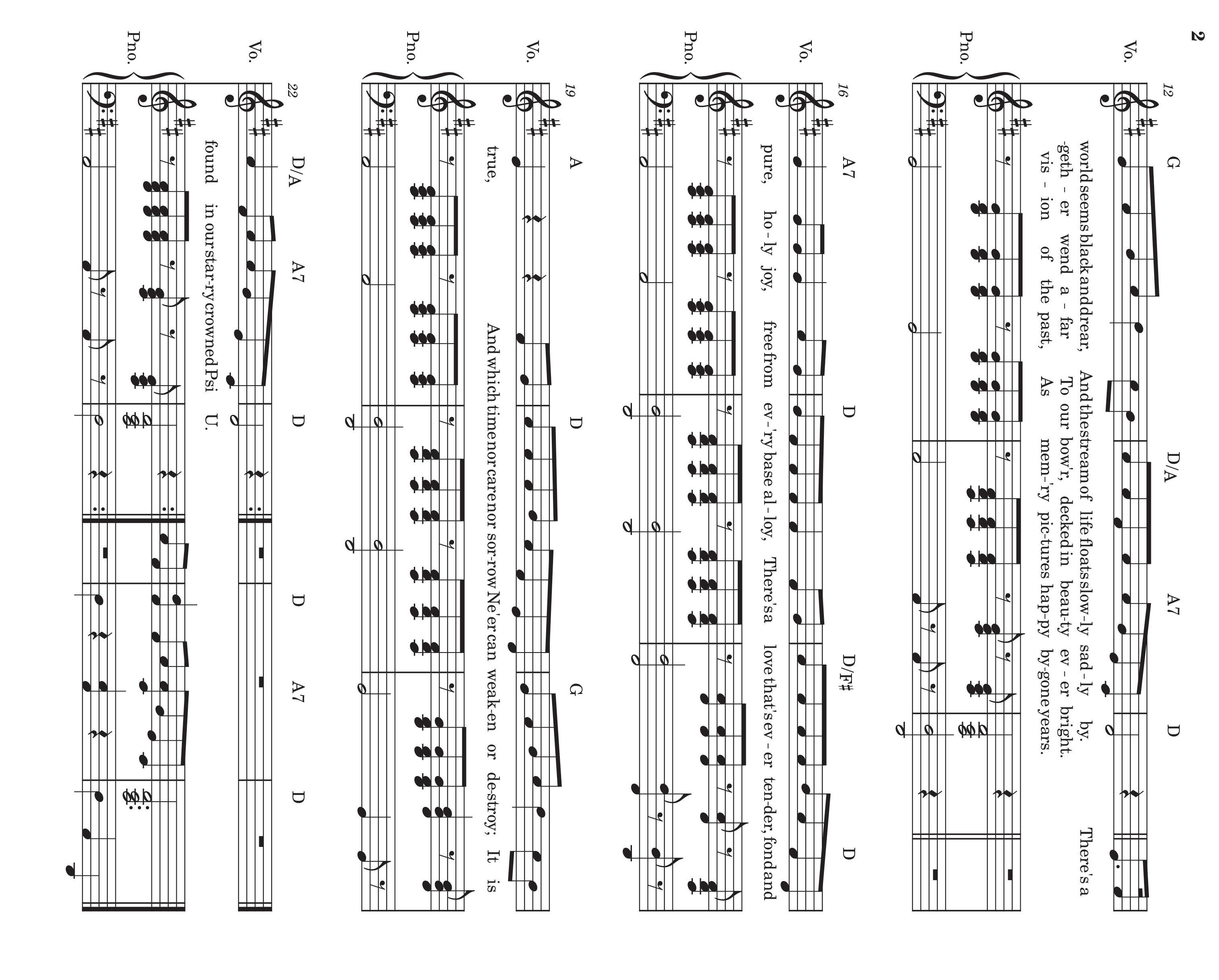
composed by Charles McGuffey, Ιota 1863 (Kenyon College)
By Nickie Hirlinger Saylor, Epsilon Iota ’08 (RensselaerPolytechnicInstitute)
One of my fondest memories of being an active undergraduate member of a Psi Upsilon chapter at Rensselaer Polytechnic Institute is making music with my brothers. Being at a school famous for engineering and science, it might surprise you to know that these young men and women had a budding affection for art, poetry, literature, and yes — music! There is a universality of music to speak to experience in a way that can transcend both time and culture. I can remember many a night, and quite deep into the night, passing the time to raucous laughter and singing fraternity songs, but just enjoying music together of any genre.
Of course, many of our favorite tunes were the boisterous ones, and we sang from cover to cover the light blue songbook that was published and sold at our yearly convention in the early 2000s. However, despite our very good fraternal education and being informed of our fraternity’s place as being the first to publish a songbook, it wasn’t until a few years ago that I was able to obtain an older copy of one of our songbooks and peruse the tunes. I was able to get my hands on a digital version of the 1891 songbook, published by the Executive Council of the Psi Upsilon Fraternity and edited by Karl P. Harrington, Xi 1882 (Wesleyan University), and to my delight, there were 256 pages worth of tunes!

One night, I was alone in my home, being sentimental and missing my fraternity friends, and was playing through some of the pieces on my piano while singing along. One in particular caught my attention. It was named “Our Lodge Room” with lyrics written by Charles D. McGuffey, Iota 1863 (Kenyon College), and set to the tune of Nelly Grey, which was written by Benjamin Hanby who was a composer, pastor, and abolitionist from Ohio. “Darling Nelly Gray” - 1856 - Performed by Tom Roush (scan QR code for song)
I remember right away playing the first few bars and immediately loving the song. It was so nostalgic and longing, and I just thought about how much I really missed my friends. I had moved out to California away from most of my fraternity friends in New York and Washington, D.C., and I really wished I could see them more often. Anyway, I ended up calling and texting my Psi U friends that night and felt inspired to stay connected and make a better effort
to see them more frequently. Music has a beautiful way of connecting people and making us extra sentimental and connected.
Of course, I owe Brother McGuffey and his Kenyon brothers a little shout-out. Our dear Brother McGuffey probably didn’t think that in the late 1800s he would be having any kind of impact on someone in the early 2000s, but that’s how all our lives will affect the future — in ways that we have no real way of understanding.
McGuffey was born in Cincinnati in 1842. He was a lawyer, a teacher, and a Mason. He remained active with Psi Upsilon after graduation and wrote lyrics for at least three of our fraternity songs, including “Convention Song” and “The Origin of Psi Upsilon.” He was the convention poet for 1867, and convention toastmaster in 1884. Through his contributions to song and story, his voice is still echoing in our lives.
I have included with this article a modern transcription of the piece. The original in the songbook is in D-flat major, which is lovely on piano (and my favorite key), but not really a nice key to play in if you like the guitar or ukelele. Instead, I’ve transposed the piece into D major, and have included chords at the top so it is easily playable by pianist, guitarist, or ukelelist. I have also attached a recording of the piece, which I hope you will enjoy and forgive for its modest quality.
Finally, beyond just enjoying this single tune that I have pulled out of the archives, I hope that we can keep close to our hearts the meaning of these words:
“Until the sands of life are run We’ll sing to thee, Psi Upsilon.”
Music is a way to share experiences throughout generations, even over the centuries. I encourage all my brethren to dig into our old songbooks and see what gems you can find. There are many playful or sentimental ditties that I’m sure you’ll enjoy. Do reach out to me if you find one that catches your eye or ear.


By Mia Driskell, Delta Omicron ’24 (Purdue)
“I feel like the game, at this [high school] level, is basketball in its purest form…It’s really fun to see [the kids] progress and become a team that functions well together.”
- Steven Sherburne Hawes
Born May 26, 1950, Brother Hawes comes from a long line of Huskies. Steve’s grandfather — Edward Hawes — served as one of the University of Washington’s first athletic managers. During his time there, Edward hired legendary crew coach Hiram Conibear in 1907 and helped purchase the school’s first racing shells. Steve’s father — Kinne Hawes — rowed for the Huskies in the late 1930s. With such a family legacy, it’s no wonder Steve spent much of his childhood playing sports. From baseball to football to basketball, he spent countless days playing with siblings, school teams, and neighborhood friends.
His passion for sports continued into high school, where he starred on the Mercer Island High School’s basketball team alongside his little brother, Jeff (Jeffrey P. Hawes, Theta Theta ’73). A 6'7'' forward, Jeff was the state’s leading Class 3A scorer during the 1969-70 season, averaging 24.7 points per game as a senior for Mercer Island High.
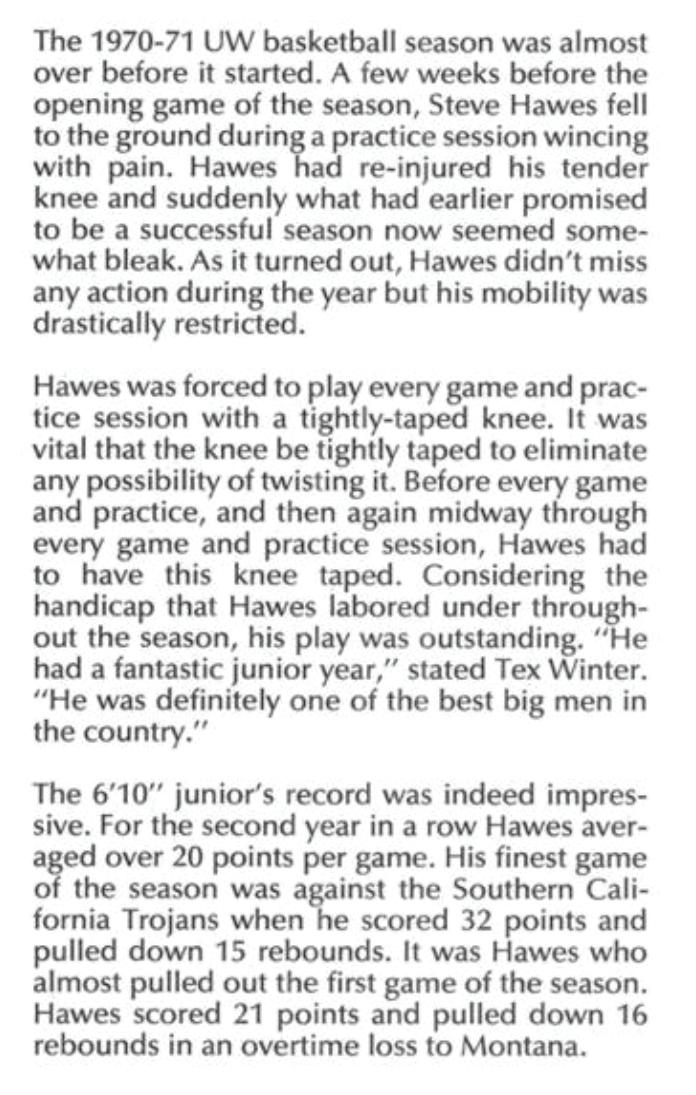
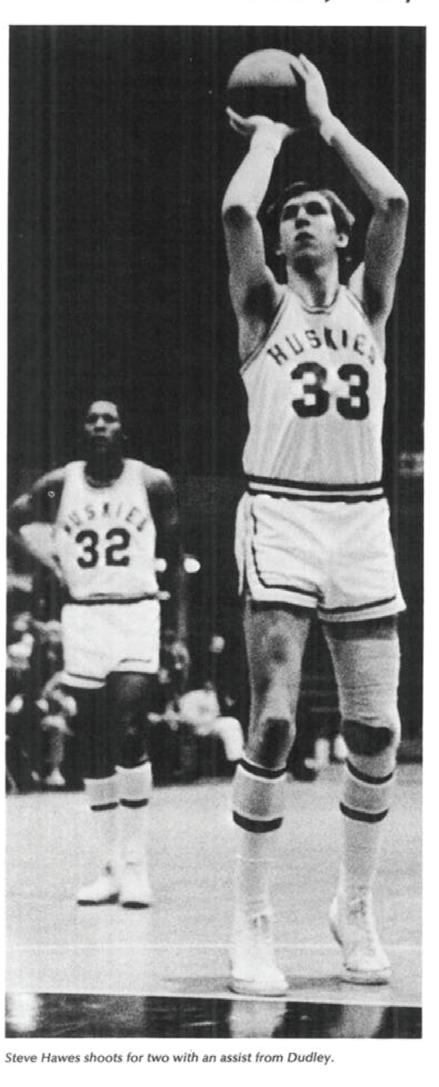
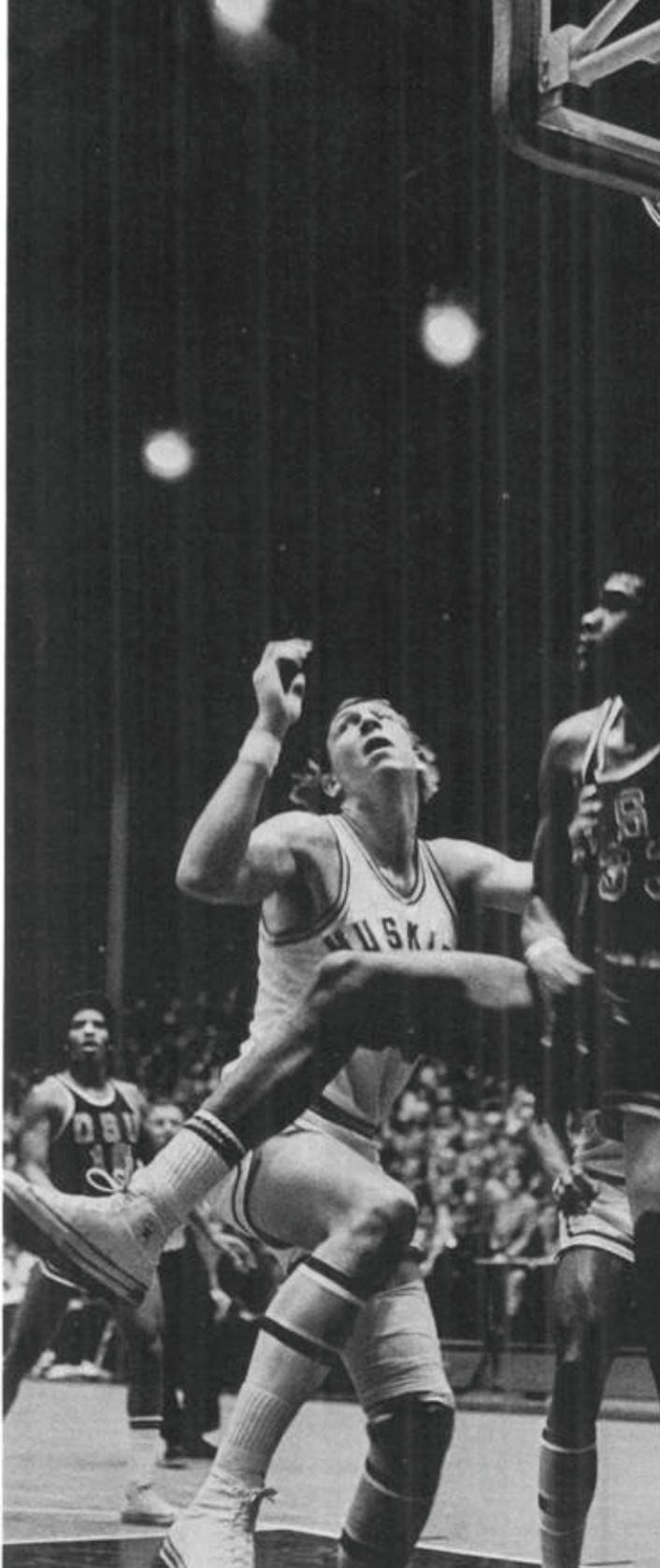
Steve followed in his family’s footsteps, playing basketball for the University of Washington. He amassed an impressive number of records: His senior year, he helped lead the Huskies to a 20–6 record, the program’s first 20-win season since 1953. Hawes averaged 21.7 points per game that year. He finished his college
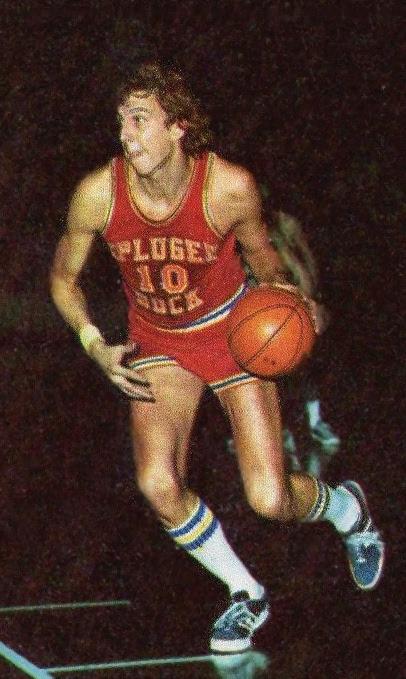
As a teenager growing up near Seattle, Steven Sherburne Hawes, Theta Theta ’72 (Washington), dreamed of playing professional basketball for the Seattle SuperSonics, sneaking off to their games whenever he could. The 6'9''center and power forward starred at the University of Washington before spending 10 seasons in the NBA playing for multiple teams, eventually realizing his dream when he was traded to the SuperSonics in 1983. He retired after the 1983-84 season, having played for the Houston Rockets, Portland Trail Blazers, Atlanta Hawks, and the SuperSonics, scoring a total of 5,768 points and grabbing 4,272 rebounds. He was voted onto Washington’s AllCentury basketball team in 2002.
career with 1,516 points and a 20.8 points per game scoring average. He also set the single-season rebounding mark as a junior with 386 boards and closed his career second on the Huskies’ rebounding-average chart at 13.1 per game. Hawes averaged 14.8 rebounds per game as a junior and 14.0 as a senior.
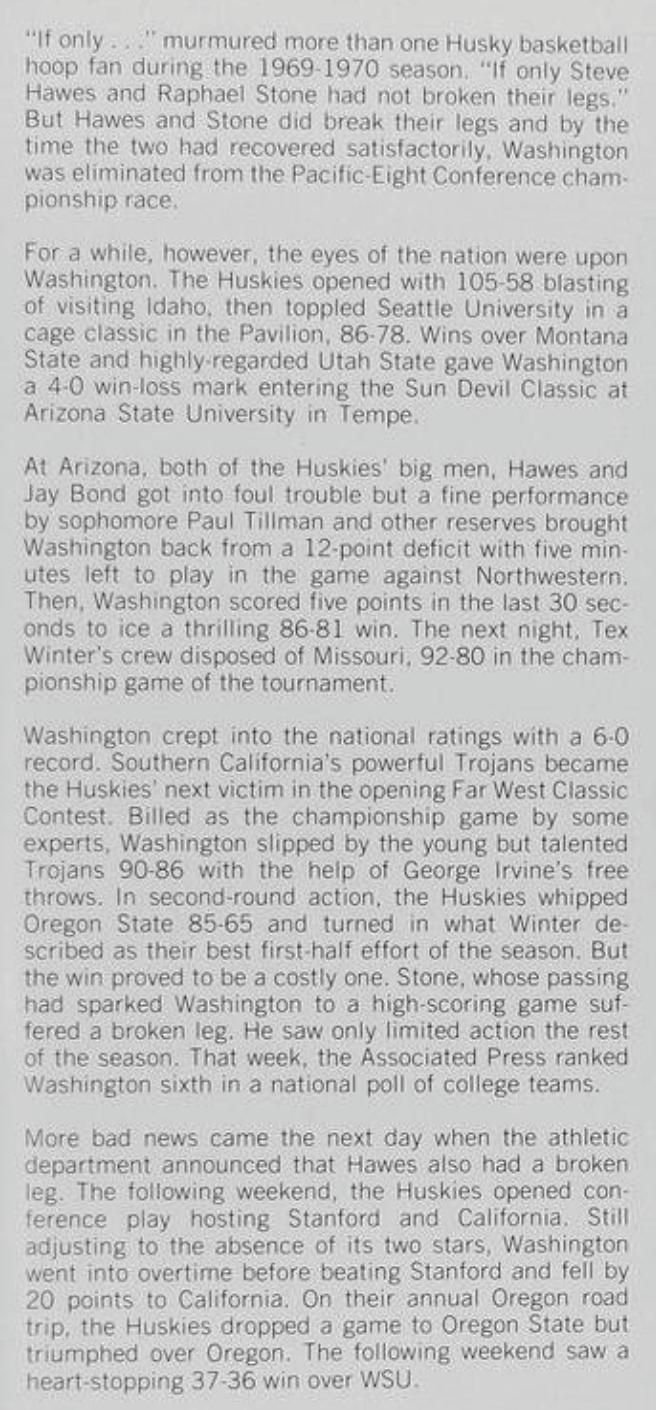
A broken leg early in his college career led to heavy taping during his junior year, making his later performance all the more impressive.
After his time at Washington, Steve was chosen in the 1972 NBA draft in the second round, 24th overall, by the Cleveland Cavaliers. Because he wasn’t satisfied with the team’s offer, he decided to play in Venice, Italy, for two seasons instead. Steve loved his time in Italy, spending the two years traveling with his wife Janise and steadily improving his skills on the basketball court. He returned to the United States in 1974, beginning his 10-season career in the NBA. He returned to Venice for one season in 1985 before retiring as a player.
In 1987, Brother Hawes was inducted into the Washington Huskies Hall of Fame. At the time, the two-time All American had the highest scoring average of any player in the history of the University of Washington.
Hovey at work at the National Geographic headquarters in Washington, D.C. (1914),
Steve spent some time as an assistant basketball coach at Seattle Pacific, Seattle University, and his alma mater: the University of Washington. He later transitioned to high school coaching, spending the better part of 25 years mentoring young athletes, including his son Ellis. Reflecting on the experience, he said, “I feel like the game, at this level, is basketball in its purest form… It’s really fun to see [the kids] progress and become a team that functions well together.”
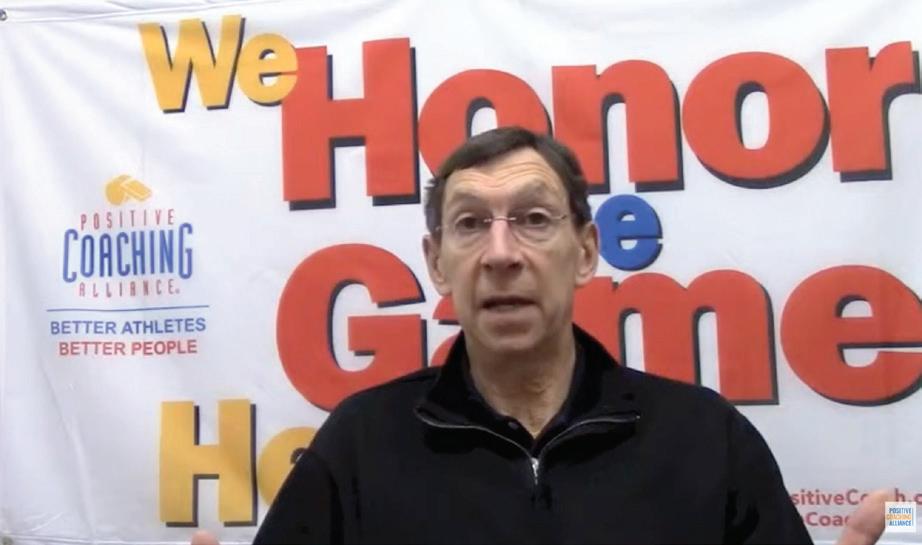
Steve’s post-NBA career wasn’t limited to coaching. From 1993 to 2013, he was also the owner of Advent Print Resources, a Tukwila company that had $6 million in annual sales and promoted itself as the largest independent print distributor in the Northwest. In 2015, he teamed up with the Positive Coaching Alliance, creating a series of short videos covering topics like self-motivation, dealing with anxiety, and demonstrating integrity through action. He also guest starred on The ‘Be Early’ Podcast, an audio program exploring the history of Mercer Island basketball.
In 2002, Hawes was selected by fan vote as a member of Washington’s All-Century basketball team. The AllCentury team was one of several activities helping to celebrate Washington’s 100th season of basketball in 2002.
The extensive career of Brother Hawes and his continued contributions to the athletic community illuminate not only his passion for basketball, but also an emphasis on teamwork and a commitment to continuous improvement. His advice for young players today is straightforward: “Make it fun for yourself. And in order to do that you have to commit to the program, to the team… I think without that, you’re missing a lot.”
Sources
WhereAreTheyNow:SteveHawes,formerUW,NBAbasketballplayer Backcourtside:FormerSonic,HuskyreturnstocoachBushbasketballteam|Queen
Anne & Magnolia News
HuskiesgreatSteveHawesrealizedhisdream.Nowhe’shelpingothersachievetheirs.|TheSeattle Times
Prep’s7-footerHawesheadedtoUWtobuildonfamilylegacy|TheSeattleTimes
Schrempf Heads up Washington All-Century Basketball Team - University of Washington Official Athletics Site
Episode3:SteveHawes,MIHSBasketballLegend,10YearNBACareer-The‘BeEarly’Podcast|Podcast on Spotify
Who is Positive Coaching Alliance?
“AlumniNewsandNotes”.TheDiamondofPsiUpsilon,vol.74,no.1,Autumn1987,pp.16 https://psiu.org/wp-content/uploads/2023/08/Diamond-of-Psi-Upsilon-1987-3.-Vol074-Num1-Autm. pdf#:~:text=sides%20with%20his%20wife%20in,Atlanta%20Hawks%20and%20two%2Dtime%20Ail%2D
Extra Reading
SteveHawes,2020MercerIslandSchoolDistrictPathfinderAwardrecipient 197071WASHINGTONHUSKIESBASKETBALLMEDIAGUIDEYearbookSTEVEHAWES1971AD:FreeDownload, Borrow,andStreaming:InternetArchive


A Publication of the Psi Upsilon Fraternity & Foundation 1389 West 86th Street #345 Indianpolis, IN 46360
Named for Paul H. Schoepflin, Pi 1912 (Syracuse University), The Schoepflin Society recognizes members and friends who have made a planned gift to the Psi Upsilon Foundation. Brother Schoepflin’ s bequest resulted in a gift of more than $700,000 to the Foundation, the largest contribution to date. Many brothers have made provisions for Psi Upsilon in their estates and wills, and we wish to honor those who inform us while they are living for their future generosity.
Thomas T. Allan IV, Theta Theta ’89 (Washington)
Mark D. Bauer, Omega ’83 (Chicago)
John E. Boccaccio, Phi ’75 (Michigan)
James S. Bradley, Tau ’63 (Pennsylvania)
J. Martin Brayboy, Gamma ’84 (Amherst)
Joanie R. Brewster, Gamma ’86 (Amherst)
David H. Brogan, Epsilon Nu ’56 (MSU)
David A. B. Brown, Epsilon Phi ’66 (McGill)
Joseph P. Cillo, Delta ’61 (NYU)
Joseph N. DiNunno, Gamma Tau ’80 (Georgia Tech)
Murray L. Eskenazi, Lambda ’56 (Columbia)
Donald H. Francis, Nu ’48 (Toronto)
Gerald P. Gehman, Omega ’61 (Chicago)
A. Todd Gehrke, Delta ’81 (NYU)
Gregg Giasson, Zeta Tau ’92 (Tufts)
John Gray, Psi ’37 (Hamilton)
Charles M. Hall, Nu Alpha ’71 (Washington & Lee)
Edward O. Harris II, Epsilon Nu ’62 (MSU)
Christopher W. Hart, Ph.D, Chi ’72 (Cornell)
James E. Heerin, Jr., Tau ’58 (Pennsylvania)
Douglas R. Jung, Tau ’73 (Pennsylvania)
John D. Kay, Delta ’78 (NYU)
Andrew Kerstein, Delta ’76 (NYU)
Kevin A. Klock, Chi Delta ’01 (Duke)
Jack Lageschulte, Epsilon Omega ’59 (Northwestern)
Thomas A. Leghorn, Esq., Delta ’77 (NYU)
William McPherson, V, Phi ’71 (Michigan)
Richard E. Meese, Phi ’78 (Michigan)
Robert S. Petersen, Omicron ’68 (Illinois)
James E. Platner, Phi Delta ’10 (Mary Washington)*
Keith J. Poopor, Gamma ’96 (Amherst)
Richard A. Rasmussen, Upsilon ’72 (Rochester)
Gregory P. Rupp, DDS, Phi ’81 (Michigan)
Ralph E. Steffan, Jr., Iota ’51 (Kenyon)
Samuel J. Tinaglia, Omega ’88 (Chicago)
Edgar H. Vant, Jr., Chi ’57 (Cornell)
Howard C. Webber, Phi ’56 (Michigan)
Mark A. Williams, CFRE, Phi ’76 (Michigan)
William N. Wishard III, Delta Delta ’64 (Williams)
*New Member
To learn more about making a planned gift to Psi Upsilon Foundation, please contact President Alex Senchak at asenchak@psiu.org