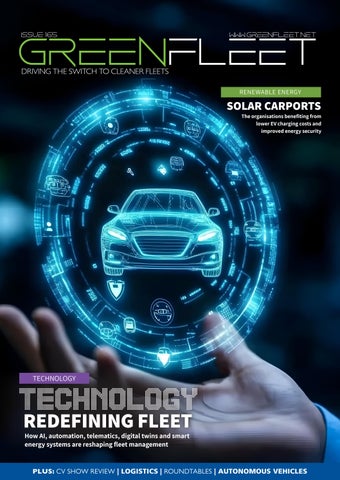

REDEFINING FLEET TECHNOLOGY



























Paul Hollick, chair, Association of Fleet Professionals

Why fleets are worried about OTA updates
Over the air (OTA) software updates that reduce the capabilities of company cars and vans were the subject of discussions at a recent meeting of the Association of Fleet Professionals’ Megafleets Committee, consisting of some of the UK’s largest car and van operators. It was reported that certain OTA updates have slowed the charging speeds of electric vehicles, sometimes quite substantially, and this obviously has a direct impact on their operational potential. If a fleet manager has allocated 30 mins to charge a van midway through a carefully planned route and it suddenly takes 45 minutes instead, that has cost and service implications.
The meeting discussed where fleets might feel the need to draw the line in terms of the extent of OTA modifications. The possible answers are not clear but at the very least, we’d like to see limits placed on the number and extent of changes that are made, and much more information provided about what is happening to fleet vehicles and why.
Manufacturers are no doubt making these changes for good reasons such as improved battery life or even safety but they are also reducing the capabilities of a vehicle long after the fleet has decided to buy or lease it, and that simply doesn’t seem right. www.theafp.co.uk
INFRASTRUCTURE
Ultra-rapid EV charging hub opens near Heathrow Airport
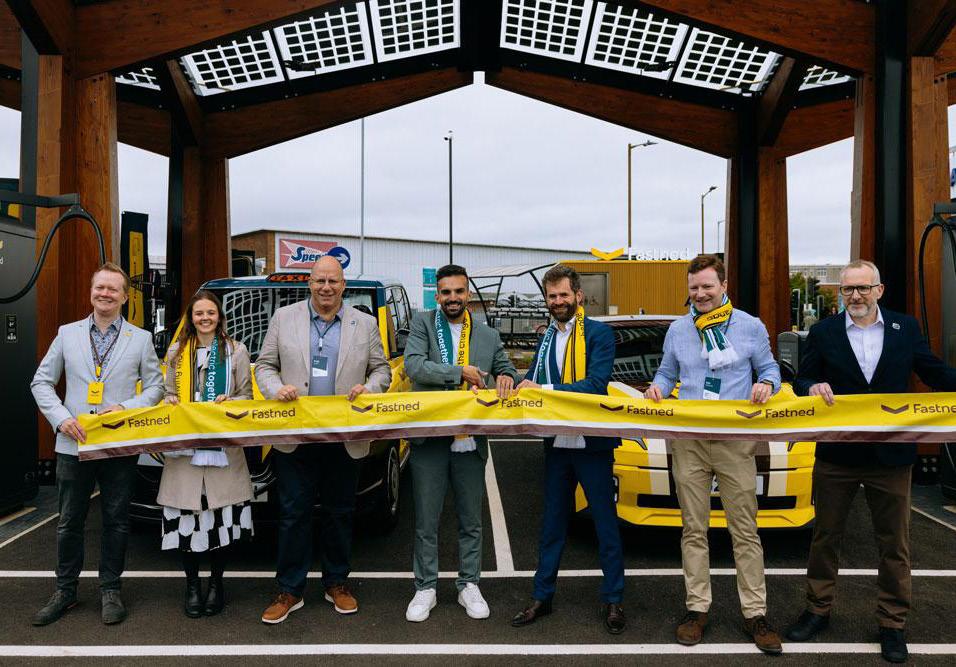
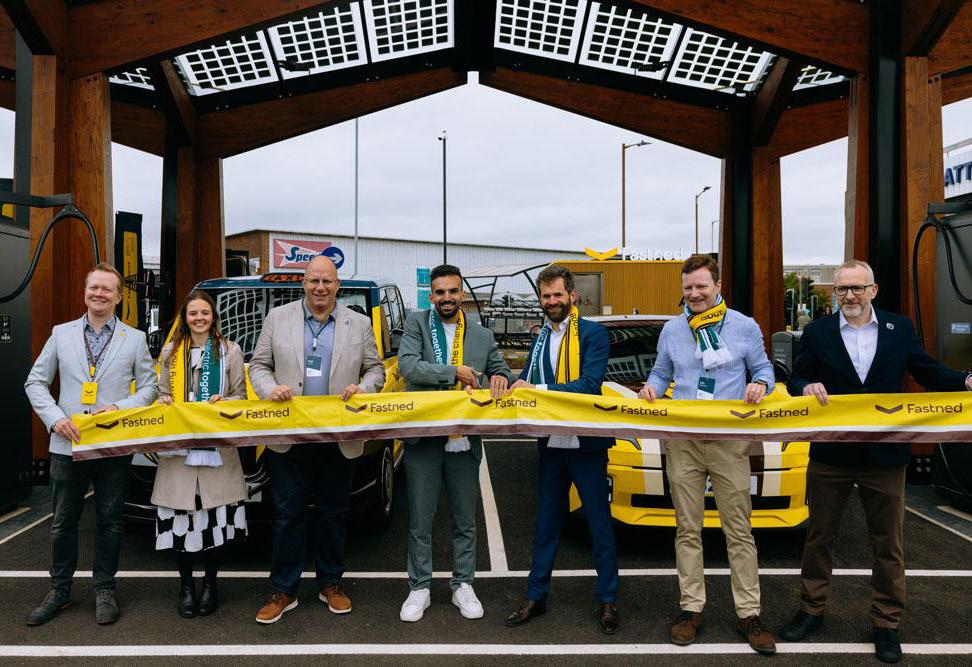
The first ultra-rapid electric vehicle (EV) charging hub from the Places for London and Fastned partnership has opened at Hatton Cross Underground station, near Heathrow Airport.
The new EV hub, part of work to deliver on the Mayor of London’s manifesto target of up to 40,000 charge points in London by 2030, is the first of 25 planned to be delivered across London by the partnership, has been designed with accessibility and comfort in mind. It includes extra-wide bays and two fully accessible charging spaces in line with the latest British Standards Institution guidance, alongside weather protection provided by Fastned’s signature yellow solar canopies. The hub also has CCTV coverage throughout the site and multilingual customer support, ensuring a safe, easy and enjoyable experience for all users.
Open 24/7 and powered entirely by renewable energy, the hub features 12 ultrarapid (400kW) charging bays, capable of delivering up to 100 miles of range in just five minutes. It is strategically located within easy access to Heathrow Airport, the M25, M4 and A30, making it a convenient stop for airport commuters, residents, taxi and private hire drivers, and business fleets.
The partnership aims to make ultra-fast charging more accessible in London by creating a city-wide network of hubs which are thoughtfully designed for all users, with planning already in place for a flagship 36-bay location at Hanger Lane...

The AFP’s Paul Hollick
Government aims for 55 per cent of short journeys to be ‘active’
The government has launched a new cycling and walking investment strategy, which sets a national target for people to walk or cycle for 55 per cent of short trips in towns by 2035.
It also aims for 60 per cent of children and young people aged 5 to 16 to travel actively to school by the same year.
The government is projected to invest over £4.5 billion in active travel over the next five years, and will work with Active Travel England and local authorities to deliver 5,000 new walking, wheeling and cycling routes and 10,000 safer crossings by 2030
This will also encourage people to walk or bike to public transport hubs, such as train stations, making them more achievable and in line with the way people travel every day.
Transport Secretary, Heidi Alexander, said: “Too many people would like to walk, wheel or cycle more often but don’t feel they have safe and convenient options to do so.
“Our new cycling and walking investment strategy sets out how we will change that, with ambitious targets, record levels of investment and a clear plan to make active travel a practical choice for millions more journeys.”
The strategy marks a new cross-government approach to active travel, bringing together transport, health and investment while giving local leaders a greater role in shaping delivery to meet the needs of their communities...



As the EV market matures, nobody should be left behind
The latest EV sales figures suggest that the uncertainty caused by the Middle East crisis may be encouraging more buyers to make the switch while also pointing to a rapidly maturing UK market.
There are still significant challenges, though, and one of the big ones is the cost of public charging for those who can’t charge at home or at their workplace.
The Government has just published the terms of reference for the cost of EV public charging review, chaired by Philip New (former Chair of the Zemo-convened Electric Vehicle Energy Taskforce which set out some of the charging network fundamentals between 2018 and 2022). The review will examine the costs of charging electric cars and vans on the UK public chargepoint network, how charging costs have changed in recent years, and how they could evolve in the future without intervention. It will ultimately propose recommendations for reducing EV public charging costs.
While tax costs will be reflected within the report, the review will not make recommendations on tax policy changes, meaning that equalisation of VAT applied at home and public chargepoints, a change called for by Zemo and many other organisations, is unlikely to feature amongst its recommendations. The review will, however, look at the costs...
www.zemo.org.uk
Zemo Partnership’s Jonathan Murray
Jonathan Murray, acting managing director, Zemo Partnership

Cancer Research adds electric vans to retail logistics fleet
Cancer Research UK has added Renault Master E-Tech electric vans to its retail logistics fleet, helping the charity keep donated stock moving between its regional distribution centre in Fleet and its shop network.
The new vans are expected to cover up to 800 miles per week. Each van has been equipped with racking, LED lighting and 360-degree parking sensors to help make light work of busy daily deliveries, while Cancer Research UK’s distinctive livery ensures they are instantly recognisable on the road.
Colin Jones, senior contracts manager, fleet & travel at Cancer Research UK, said: “Every item we move through our retail network has the potential to help fund life-saving research, so having the right vehicles in place really matters. The Renault Master E-Tech electric gives our teams the space, range and usability they need to keep stock flowing from our regional distribution centre into local shops, while helping us reduce local emissions from our operations.”
Seb Brechon, head of LCV, Renault UK, said: “Cancer Research UK’s adoption of the Master E-Tech electric shows how electric vans can deliver in busy, real-world fleet operations where practicality, range and driver confidence all matter. With strong load-carrying capability, a highly usable working environment and up to 285 miles of WLTP range, the Master E-Tech electric is well suited to organisations that need their vehicles to perform every day. We’re pleased to support Cancer Research UK as it puts electric vans to work in a way that...

Russell Group installs megawatt charging for HGVs
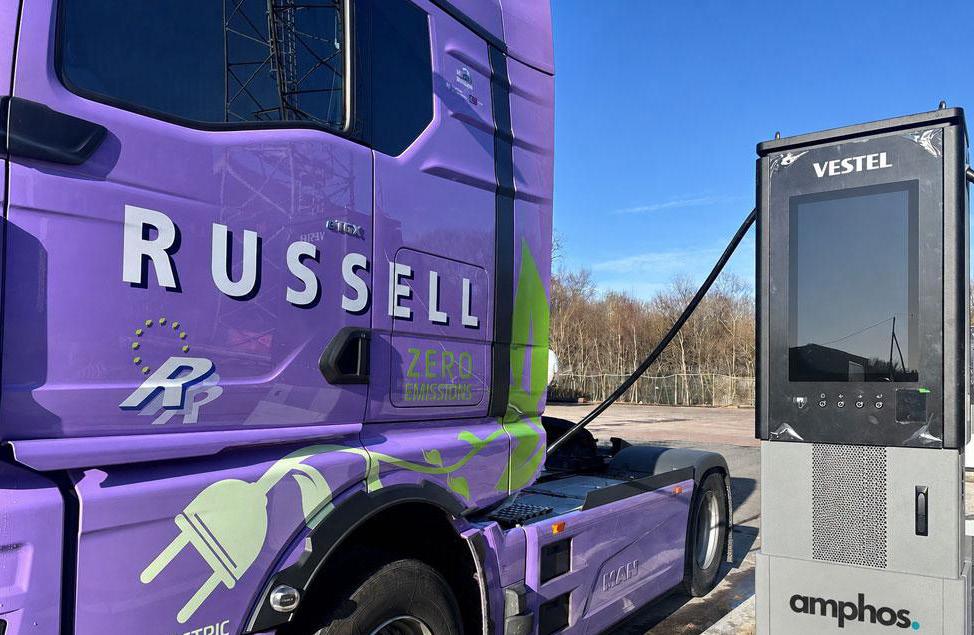
Transport and logistics company John G. Russell (Russell Group) has had a megawattscale charging hub for electric heavy goods vehicles (HGVs) installed at its Coatbridge logistics hub.
Live as of May 2026, the system enables ultrafast charging, with HGVs able to recharge in around 40 minutes using current Combined Charging System (CCS) charging technology. Planned Megawatt Charging System (MCS) upgrades in July 2026 are expected to reduce charging times to around 20 minutescomparable to a standard driver rest break.
The company’s new electric 4x2 tractor units are capable of carrying full 42-tonne loads and deliver a range of more than 430 km per charge. The charging hub will support Russell Group’s battery-electric HGV operations for its customers in Scotland, enabling zero tailpipe emission deliveries.
Each charging unit, manufactured by Vestel Mobility, delivers up to 3.75 megawatts of highvoltage DC power. A specialised connector and cable system ensures safe handling, while onboard systems enable rapid battery recharge - supporting simultaneous charging and significantly reducing downtime.
To support the new fleet, Russell Group is installing two 720 kW double-port chargers and one 1.2 MW double-port charger. The hub is only the second of its kind in the UK and the first in Scotland. It follows the UK’s first megawatt charging site at East Midlands Gateway in January 2026, where units deliver up to 1MW. At 3.75MW per charger - more than three times the power - the Russell Group site...
CONTINUE READING
TRUCK CHARGING
New analysis maps eVED burden on drivers across UK
New analysis by the British Vehicle Rental and Leasing Association (BVRLA) and New Automotive has mapped the full financial impact of a proposed pay-per-mile (PPM) eVED) tax across every parliamentary constituency in the United Kingdom.
The findings expose an unfairness for drivers least able to reduce their mileage and least likely to have access to the public transport, charging infrastructure, or household income that would make EV ownership straightforward.
At 3p per mile, the proposed PPM eVED rate, annual bills will vary enormously depending not on how much a driver earns, or how much they pollute, but simply on where they live.
The analysis reveals two distinct pictures depending on how the burden is measured.
Measured by total constituency eVED bill, the projected annual sum taken from all EV drivers in a seat, the highestimpact areas are urban constituencies with large and growing EV fleets.
But measured by what each individual EV driver pays, the picture inverts. In highmileage, low-fleet constituencies, areas where car ownership is essential, but EV adoption has been slower, the per-driver burden is highest.
The difference is structural. Rural drivers travel further because they have no choice. The same 3p-per-mile rate that feels modest in a city where a commute might cover five miles each way becomes a significant annual outgoing for someone covering twenty miles to reach a GP surgery, a supermarket, or a train station...

Ben Fletchern, chief executive, Logistics UK


Logistics industry continues to invest in decarbonisation but barriers to uptake still exist
Logistics businesses continue to prioritise technology and innovation investment that support operational efficiency, cost control and the transition to loweremission operations but confidence in the logistics sector’s ability to achieve net zero emissions by 2050 remains low. These are some of the findings revealed in The Logistics Report 2026, Logistics UK’s annual analysis of the sector that also includes the results of our annual Logistics Industry Survey. This brings together the opinions and experiences of over 500 respondents from across the sector. We know from experience how committed the industry is to decarbonisation, and our members, along with the wider sector, continue to make significant investments to facilitate the switch away from conventional fuels. For example, major EV charging hubs have opened this year in key strategic locations in the East Midlands and Tilbury, and electric HGVs have also travelled into continental Europe through the Channel Tunnel for the first time. The Logistics Report 2026 reflects this progress, with 64.3 per cent of respondents to the survey indicating an intention to invest in vehicle technologies, reflecting the adoption of cleaner vehicles and transition to low carbon operations. Investment in alternative fuels is led primarily by...
www.logistics.org.uk
Logistics UK’s Ben Fletcher
ELECTRIC VANS
McFarlane Telfer takes on 20 Farizon SV electric vans
Commercial kitchen maintenance specialist McFarlane Telfer (MCFT) has placed an order for 20 new Farizon SV large vans to support its team of nationwide service engineers, marking Farizon’s first fleet deal.
Several MCFT engineers at four locations trialled the vans for a full month, with particular attention being paid to load space, versatility, range, and ease-of-use.
Supplied by Heathrow Van Centre, MCFT chose the SV L1H1 83 kWh as the ideal model in Farizon’s all-electric line-up that would best meet its requirements. Each van will be fitted with bespoke racking supplied and fitted by Van Racking Solutions and will be used by the company’s Catering and Refrigeration Engineers to attend maintenance and repair visits, along with new equipment deliveries to commercial kitchens nationwide.
The Farizon SV L1H1 offers 6.95 m3 of load space, a maximum payload of 1,265 kg, and an ultra-low loading height of just 550 mm. Combined with the 83 kWh battery option, the L1H1 delivers a range of up to 234 miles (WLTP Combined), while a 20-80 per cent charge takes from just 36 minutes.
David Meacock, group director of engineering at MCFT, said: “As a global business, MCFT always looks at how we can support our customers in the most sustainable way. As the market begins to transition to eLCVs, our new fleet of all-electric Farizon SV vans will not only enhance the efficiency and reliability of our service operations, but also...
Industry-first battery warranty for used EVs launched: READ MORE
Charging still biggest barrier to electric car adoption for fleets : READ MORE
Aldi expands its store EV charging network: READ MORE
Gruber Logistics to trial IVECO electric HGV: READ MORE
Cenex EV service for local authorities in Wales extended: READ MORE
SHARED CHARGING
Stagecoach evolves bus depots into charging hubs
Stagecoach has launched a new B2B electric vehicle (EV) charging proposition called Chargd, turning its bus depots into commercial EV charging hubs.
This enables third party fleets to charge vehicles throughout the day from strategically located sites across the country.
The launch marks the first stage of a phased national rollout, with seven Stagecoach depots now beginning to offer the Chargd proposition and further locations across the company’s estate of over 100 depots planned throughout 2026 and beyond.
Purpose built for commercial use, Chargd is designed around the operational realities of fleet charging, including large vehicle access, high capacity power supply and rapid charging capability. Selected sites also support eHGV charging, reflecting growing demand from logistics, construction and utilities operators.
Debra Goodwin, chief people and customer officer, at Stagecoach, said: “We’ve spent years electrifying our own fleet at scale, and we know that charging infrastructure is one of the biggest barriers facing businesses on that same decarbonisation journey.
“Chargd is about using that experience to go further, opening up our depots and providing practical, reliable charging that works for real world fleet operations. This isn’t a future concept. It’s live, it’s scalable and it’s...
Road-to-Zero Roundtable: East
The GREENFLEET roundtable series visited Norwich on 7 May and brought together fleet operators, public sector representatives and infrastructure specialists to explore the practical realities of decarbonising fleets. While policy direction is becoming clearer, the discussion highlighted that delivery on the ground remains complex and highly context‑specific
Presented by Dean Hedger and supported by Drax Electric Vehicles, Flexis and Geotab, the roundtable highlighted that the transition to zero emission vehicles requires collaboration, evidence - led decision - making and sustained momentum. Suffolk County Council spoke of their work procuring charging infrastructure through the LEVI scheme, with a focus on providing charging for residents without off- street parking. In parallel, the region has years of experience delivering community chargepoints, demonstrating how local authorities can support residents. Work with Innovate UK and UK Power Networks on depot- sharing pilots further reinforced the value of partnerships. A recurring theme was the opportunity to develop multi - purpose charging hubs. These could support a mix of local authority vehicles, commercial fleets such as waste collection, and
potentially the wider community. However, participants stressed that theory and practice do not always align. While analysis can suggest optimal charger locations, real - world vehicle behaviour often tells a different story.
Understanding duty cycles, dwell times, mileage patterns and driver behaviour was seen as essential to avoiding costly mis - investment.
Getting the “back- office” right emerged as a critical enabler. From charge management and data integration to billing and reporting, participants agreed that technology behind the scenes is just as important as the vehicles themselves.
Funding and policy frameworks were another area of concern. Participants agreed that the right grants and initiatives are crucial, but that “one size fits all” rarely works. Either greater standardisation or a wider, more flexible range of funding options is needed. L


Smarter ways to run a fleet
Once used primarily to track vehicles, fleet technology has evolved into a powerful tool for managing everything from driver behaviour and fuel consumption, to electrification and charging strategies. With AI taking these capabilities to the next level, there are now even smarter ways to run a fleet. So which fleets are reaping the rewards?
For decades, fleet management relied heavily on manual record-keeping and reactive decision-making. Today, advances in telematics, artificial intelligence (AI) and connected vehicle technologies are changing that picture dramatically, giving fleet operators even better visibility over vehicles, drivers and operations and helping them improve both productivity and compliance.
The rise of connected fleets
By collecting and analysing real-time vehicle data, telematics systems provide fleet managers with detailed insights into fuel consumption, vehicle location, maintenance requirements, mileage, speed and driver behaviour. This information allows operators to identify inefficiencies, improve route planning and reduce operating costs. Rather than relying on assumptions, fleet managers can make decisions based on objective data.
Safety is another major benefit. Monitoring harsh braking, speeding, excessive idling and aggressive cornering enables organisations to identify risky driving behaviours and introduce targeted training programmes. The result is often fewer accidents, reduced insurance claims and lower vehicle wear and tear.
The technology is also proving invaluable as fleets begin the transition to electric vehicles. By analysing vehicle usage patterns, mileage and dwell times, telematics can identify which vehicles are suitable candidates for electrification and where charging infrastructure will be required.
AI enters the fleet
While telematics provides the data, AI is increasingly providing the intelligence.
As fleet operations become more complex, AI is helping organisations process vast quantities of information that would be difficult to analyse manually. Modern AI platforms can E
By analysing vehicle usage patterns, mileage and dwell times, telematics can identify which vehicles are suitable for electrification and where charging infrastructure will be required
F identify trends, predict future outcomes and generate recommendations within seconds.
Fleet operators are already using AI to forecast maintenance requirements, optimise routes, reduce fuel consumption and improve vehicle utilisation. Increasingly, these systems are also being used to support decarbonisation strategies.
For organisations considering electrification, AI can analyse years of operational data to determine which vehicles should be replaced first, estimate charging requirements and model the financial impact of transitioning to electric vehicles. Some systems can even simulate vehicleto-grid (V2G) charging scenarios and assess whether expensive grid upgrades can be avoided.
This provides fleet managers with a clearer understanding of long-term costs and savings before major investment decisions are made.
For smaller organisations without dedicated fleet analysts, AI and fleet technology is proving particularly valuable.
TBL Fire Protection, for example, has used telematics data, journey profiling and driver insights to identify which vehicles would best be suited to electrification, and has now introduced 10 electric vans into its 42-vehicle fleet.
Better fuel economy
Cold-chain logistics specialist Chiltern Distribution installed a connected fleet management platform across its 55 HGVs as part of an effort to reduce emissions and improve efficiency. The company reported a 1.5 per cent improvement in fuel economy alongside a two per cent reduction in fuel consumption, supported by route optimisation and driver behaviour monitoring. For a fleet that covers more than 87,000 miles each year, these improvements translate to significant CO2 savings.
The system also provides real-time visibility of vehicles, automated compliance reporting and detailed driver performance data, allowing managers to identify areas for improvement and target training where needed.
At electrical retailer Currys, driver coaching technology has delivered efficiency and safety gains. Across more than 670 vans, the company recorded a 10.8 per cent increase in fuel efficiency, an almost 11 per cent reduction in CO2 emissions and a five per cent decrease in vehicle idling since the technology was implemented in 2016. These improvements contributed to annual fuel savings exceeding £400,000.
A key factor was the use of real-time feedback rather than retrospective reporting. Drivers receive instant alerts encouraging smoother acceleration, braking and cornering, helping to improve performance while reducing fuel consumption.
Tech for charge management
Technology can also be used to manage electric vehicle charging operations efficiently.
The Metropolitan Police Service (MPS) operates around 5,500 vehicles, with approximately 30 per cent already electric or hybrid. The force plans to

add a further 250 electric and hybrid vehicles and motorcycles over the next year as it works towards a carbon net-zero fleet by 2030.
To support this transition, the MPS is using a new charge management system, providing a central platform to oversee charging operations across depots and public charging networks. The software gives fleet managers real-time visibility of charging activity, showing which vehicles are charging, ready for deployment or require attention.
For organisations operating missioncritical fleets, where vehicle availability can directly affect frontline services, charge management is vital.
Geoanalytics and machine learning
Openreach, which operates the UK’s secondlargest commercial fleet of around 24,000 vans, has expanded its use of AI and cloudbased analytics to improve fleet efficiency, accelerate electrification and reduce emissions across its nationwide operations.
By combining telematics data with advanced geoanalytics and machine learning tools, Openreach can identify where electric vehicles can be deployed most effectively based on realworld driving patterns, route requirements and charging availability. The approach has helped accelerate EV adoption across the fleet, with additional electric vehicles estimated to remove around 10,000 tonnes of CO2 emissions annually.
The company is also using AI to identify the causes of excessive mileage and vehicle idling, improve vehicle utilisation and reduce vehicle-off-road time through predictive maintenance insights. Rather than simply

reporting what has happened, the technology enables fleet managers to anticipate problems and make proactive operational decisions.
Perhaps most significantly, Openreach has created a digital twin of the UK’s transport corridors, combining information on 35 million homes and businesses with road, rail and waterway networks alongside its own infrastructure data. Powered by AI, the system allows planners to model future network expansion and identify opportunities to deploy resources more efficiently.
Improving safety through data
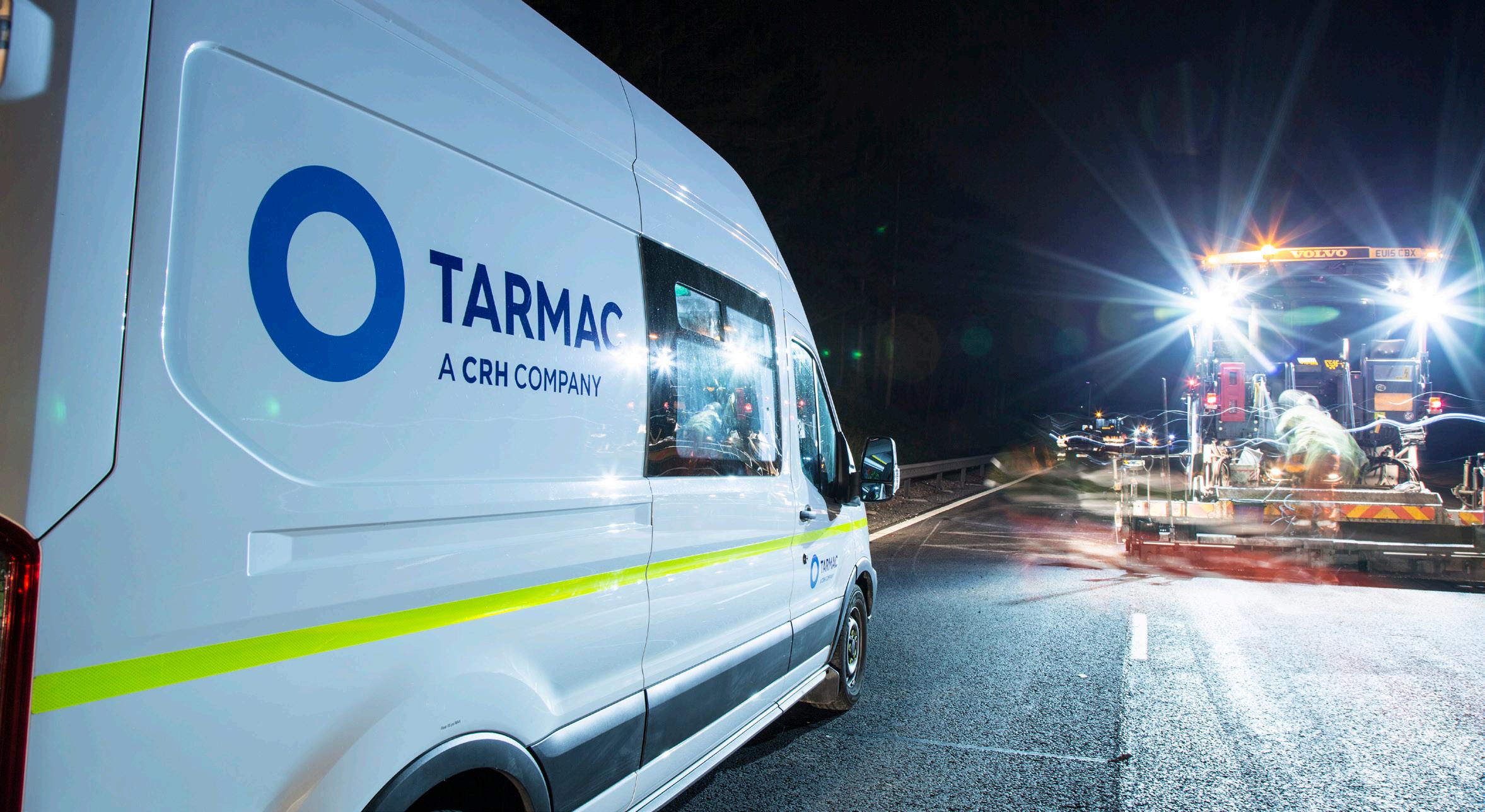
Construction materials company Tarmac has demonstrated how integrated telematics and video systems can transform fleet risk management.
Operating a fleet of more than 2,000 vehicles, the company introduced a combined camera and telematics platform that provides managers with real-time access to both driving data and video footage.
Within 12 months, Tarmac reduced driver-fault collisions by 30 per cent, cut speeding incidents by half and achieved a 25 per cent improvement in fuel economy across its van fleet. The proportion of high- and medium-risk drivers fell from 40 per cent to just 6.5 per cent.
The integration of video evidence has also improved insurance claims management, helping establish liability more quickly and reducing repair costs.
The challenges ahead
Despite the opportunities, the increasing use of AI and connected technologies raises important questions.
Data security remains a key concern, particularly as fleet operations become increasingly reliant on cloud-based platforms. Organisations must ensure sensitive operational information is protected against cyber threats and unauthorised access.
Privacy is another consideration. Many telematics systems collect detailed information about driver behaviour, vehicle movements and, increasingly, video footage. Striking the right balance between operational oversight and employee privacy will remain an important challenge.
Industry experts also stress that AI should support human decision-making rather than replace it. While algorithms can identify patterns and make recommendations, strategic decisions still require human judgement and oversight. L
The cost

of standing still
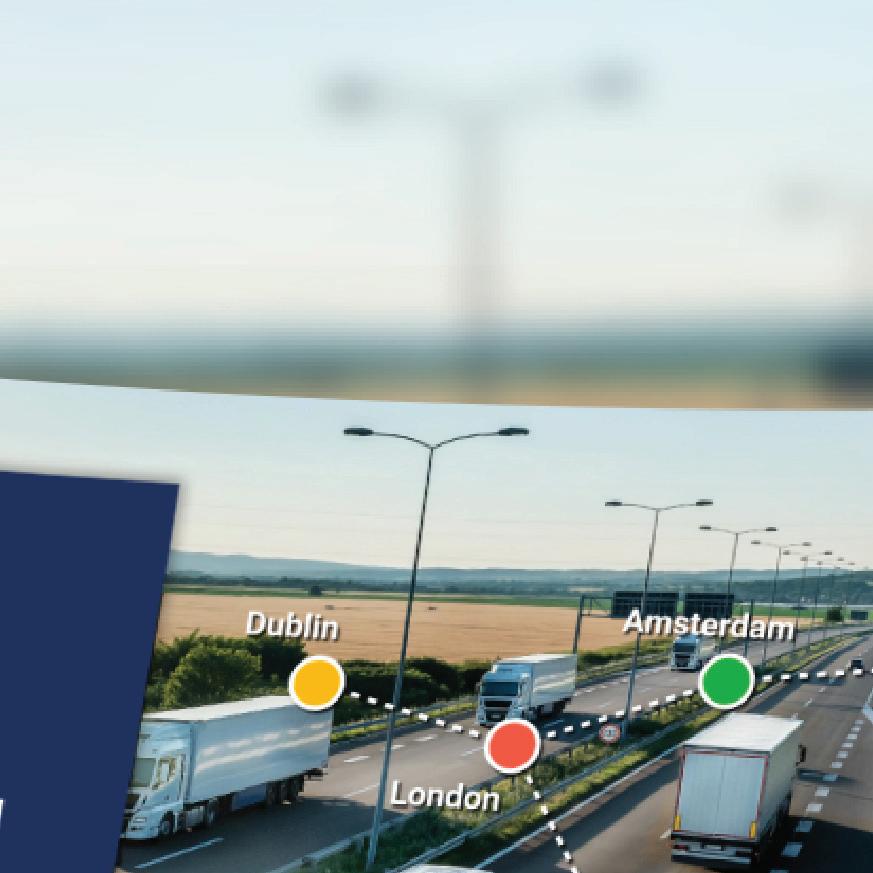
Did you know London is one of the hardest cities in Europe to run a fleet in?
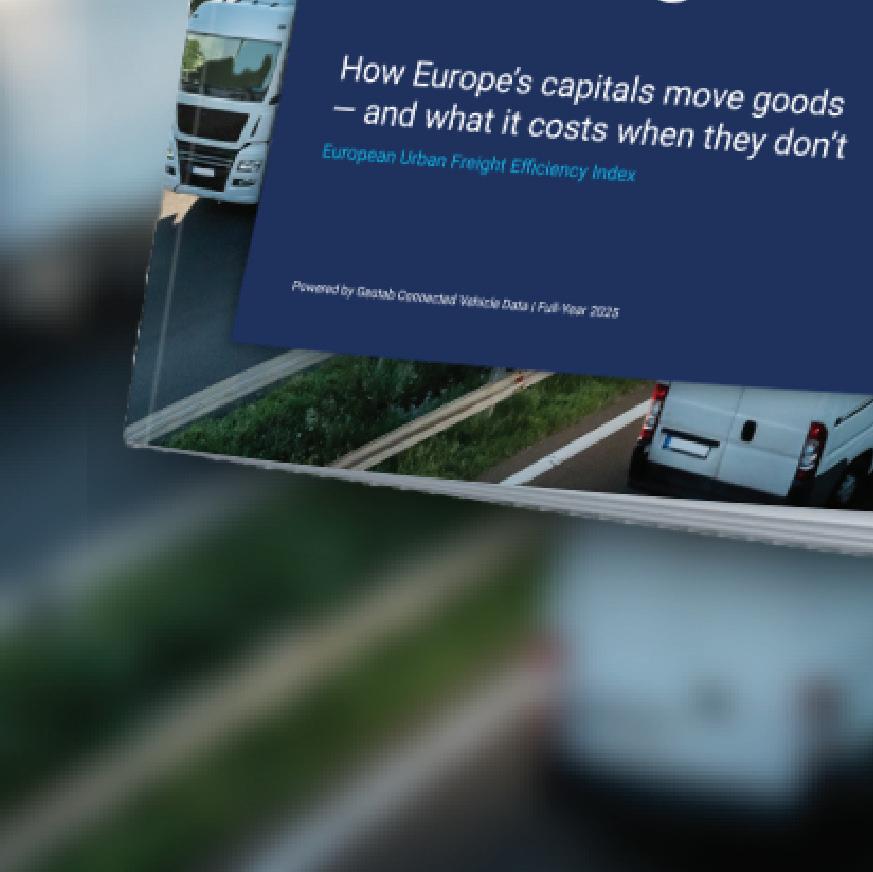
Geotab analysed a full year of connected vehicle data across seven European capitals and uncovered where the system itself begins to work against a fleet.
London doesn’t just slow fleets down, it burns through their fuel doing it Of seven European capitals, it ranked last for fuel and second worst overall.

Download the free repor t r



Systemic Friction: Analysing the European Freight Divide
Urban freight is under pressure. Tighter delivery windows and rising fuel costs are reshaping how fleets operate across Europe’s major cities, and the differences between markets are greater than most operators realise
Geotab’s first European Freight Efficiency Index analysed a full year of connected vehicle data across seven European capitals. The findings are stark.
London ranks second to last in the study, the only city where congestion is both severe and unpredictable. The same delivery route can take 20 minutes one day and 50 minutes the next. Stationary time wastes fuel, increases emissions, and inflates costs. Connected vehicles in the study burned over 1.5 million litres of fuel while stationary in 2025, not because of how fleets are managed, but because of how the road network behaves.
This unpredictability is a “structural tax” on fleets, creating inefficiencies that routing
and training alone can’t solve. You can route around congestion, but the cascading chaos of unpredictable journey times creates a compounding operational drain. What emerges from Geotab’s research is a shift in how freight efficiency should be understood, congestion alone is not the defining issue. Unpredictability is. M
FURTHER INFORMATION
Read the full European Urban Freight Efficiency Index here



The technology enabling freight innovation
Empty miles, congested roads and rising energy costs have long challenged the freight sector. Today, new technology such as AI, automation, energy management systems and digital twins is helping fleet operators move goods more efficiently and accelerate decarbonisation
From artificial intelligence and automation to digital twins and smart energy systems, innovations in technology are helping freight operators maximise capacity, reduce costs, improve resilience and accelerate decarbonisation.
One major area that technology can help tackle is the number of vehicles travelling with unused capacity or returning empty after deliveries. Advanced digital tools are helping operators tackle this challenge by matching freight with available capacity in real time.
Digital freight matching platforms use cloud-based marketplaces and AIpowered algorithms to connect carriers with suitable return loads, reducing empty miles and improving fleet productivity. Artificial intelligence is also enhancing route planning. Modern transport management systems can analyse live traffic conditions, weather patterns, delivery schedules and vehicle availability to optimise routes dynamically. Multi-drop planning software ensures vehicles follow

the most efficient delivery sequence, while automated re-routing helps fleets avoid delays and minimise fuel consumption.
Meanwhile, telematics and Internet of Things (IoT) sensors provide real-time visibility of vehicle capacity and performance. Fleet managers can monitor trailer utilisation, identify underused assets and automatically dispatch vehicles to available loads, improving operational efficiency while reducing emissions.
Technology is also enabling greater collaboration across the industry. Shared logistics networks allow multiple shippers to consolidate less-than-truckload (LTL) shipments into fully utilised vehicles, while trailer pooling and “drop-and-hook” systems minimise vehicle idle time by allowing drivers to exchange trailers quickly rather than waiting for loading and unloading operations.
Enabling modal shift
Moving freight from road to lower-carbon transport modes such as rail and inland waterways has long been recognised as a key decarbonisation opportunity. Historically, however, intermodal transport has been constrained by complexity, poor visibility and coordination challenges.
New digital technologies are helping overcome these barriers, such as platforms that use real-time data to dynamically select the most efficient combination of road, rail and water transport based on changing conditions such as congestion, weather and terminal capacity. Freight operators can compare transit times, costs and carbon impacts across multiple transport modes, allowing more informed decision-making.
Rail freight is also becoming more efficient through digitisation. Digital Automatic Couplers (DAC) automate the physical and data connections between rail wagons, significantly reducing train assembly times while creating connected “digital freight trains” capable of sharing operational data in real time.
DP World has invested in expanding direct rail freight services. Through its Modal Shift Programme, it provides financial incentives for cargo owners to move containers by train rather than road, drastically cutting supply chain emissions. From launch in September 2023 to December 2025, it has transferred 13 million road miles to rail.
Ports and terminals are increasingly adopting automation and smart operating systems that coordinate cranes, trucks, trains and storage yards.
Technologies such as optical character recognition (OCR), automated gate systems and just-in-time arrival management reduce congestion, improve asset utilisation and speed up the transfer of cargo between transport modes.
Creating smart energy hubs
With the growing adoption of electric heavy goods vehicles, the power needs for organisations are rising.
But there is a growing trend for warehouses to evolve from energy consumers into active energy producers and managers.
Advances in renewable energy, battery storage and intelligent energy management systems are allowing logistics facilities to reduce costs, improve resilience and support grid decarbonisation.
Smart meters and wireless sensors provide detailed insights into energy consumption across warehouse operations, identifying inefficiencies in lighting, heating, automation systems and machinery. This data enables operators to optimise energy use and reduce waste.
Large warehouse roofs are increasingly being utilised for solar photovoltaic E
F generation, while battery storage systems capture excess renewable energy for use during periods of peak demand or low generation. This reduces reliance on the grid and improves energy security.
AI-driven Energy Management Systems (EMS) bring these technologies together by analysing weather forecasts, operational schedules and electricity market conditions. The software can automatically determine when to consume, store or export energy, transforming warehouses into intelligent, flexible energy assets that support both business operations and wider grid stability.
Building digital twins of freight networks
Digital twins are emerging as one of the most powerful tools available to logistics operators. By creating virtual replicas of physical assets, vehicles, warehouses and supply chains, organisations can simulate, analyse and optimise operations before implementing changes in the real world.
Digital twins combine data from sensors, telematics systems and operational platforms to create dynamic models that reflect current conditions. Operators can test different
Digital twins are also becoming valuable tools for sustainability planning. Companies can model the environmental impact of different transport modes, evaluate the benefits of electrification and identify the most effective pathways to reducing carbon emissions
routing strategies, warehouse layouts or fleet deployment plans to identify the most efficient and cost-effective outcomes.
The technology also enables predictive maintenance by continuously monitoring asset performance and identifying signs of wear before failures occur. This helps reduce downtime, extend equipment life and lower maintenance costs.
Within warehouses, digital twins allow operators to model inventory flows, optimise storage layouts and improve automation

performance. Across supply chains, they provide enhanced visibility and resilience by simulating disruptions such as port congestion, extreme weather or geopolitical events.
Digital twins are also becoming valuable tools for sustainability planning. Companies can model the environmental impact of different transport modes, evaluate the benefits of electrification and identify the most effective pathways to reducing carbon emissions.
Maersk, for example, uses AI-powered digital twins to simulate, monitor, and optimise its global supply chain. By creating virtual replicas of physical assets, such as vessels, warehouses, and port terminals, Maersk can safely test “what if” scenarios, predict disruptions, and make datadriven decisions before implementing changes in the real world.
Accelerating automation and AI adoption
Automation is transforming freight operations by reducing manual processes and creating highly coordinated logistics ecosystems powered by artificial intelligence.
In warehouses, autonomous mobile robots (AMRs) can move goods independently
across facilities, transporting pallets and inventory while working safely alongside employees. Automated storage and retrieval systems increase storage density and improve picking efficiency by bringing products directly to workers.
Computer vision and AI-powered robotic arms are becoming increasingly capable of identifying, sorting and packing items with minimal human intervention. Machine learning algorithms can determine the most efficient way to stack and load goods, maximising trailer utilisation and reducing handling times.
Artificial intelligence also acts as the coordination layer across these automated systems. Advanced fleet and warehouse management platforms analyse vast amounts of operational data in real time, optimising workflows, directing robotic movements and continuously improving performance.
The result is a freight sector that is faster, more resilient and increasingly data-driven. As digital technologies continue to mature, the integration of AI, automation, digital twins and smart infrastructure will play a central role in delivering the efficient, low-carbon freight networks needed to support future economic growth. L





The data behind a greener, leaner fleet
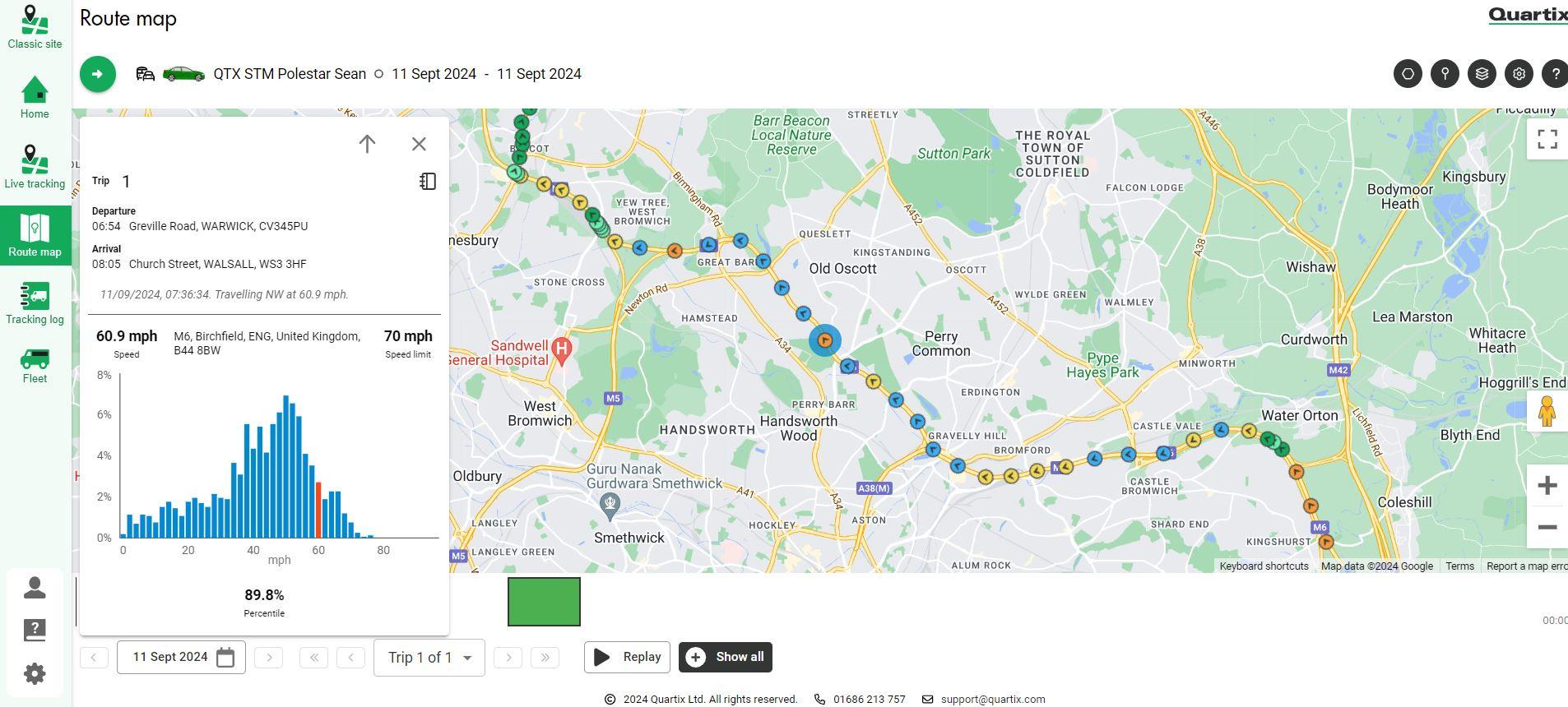
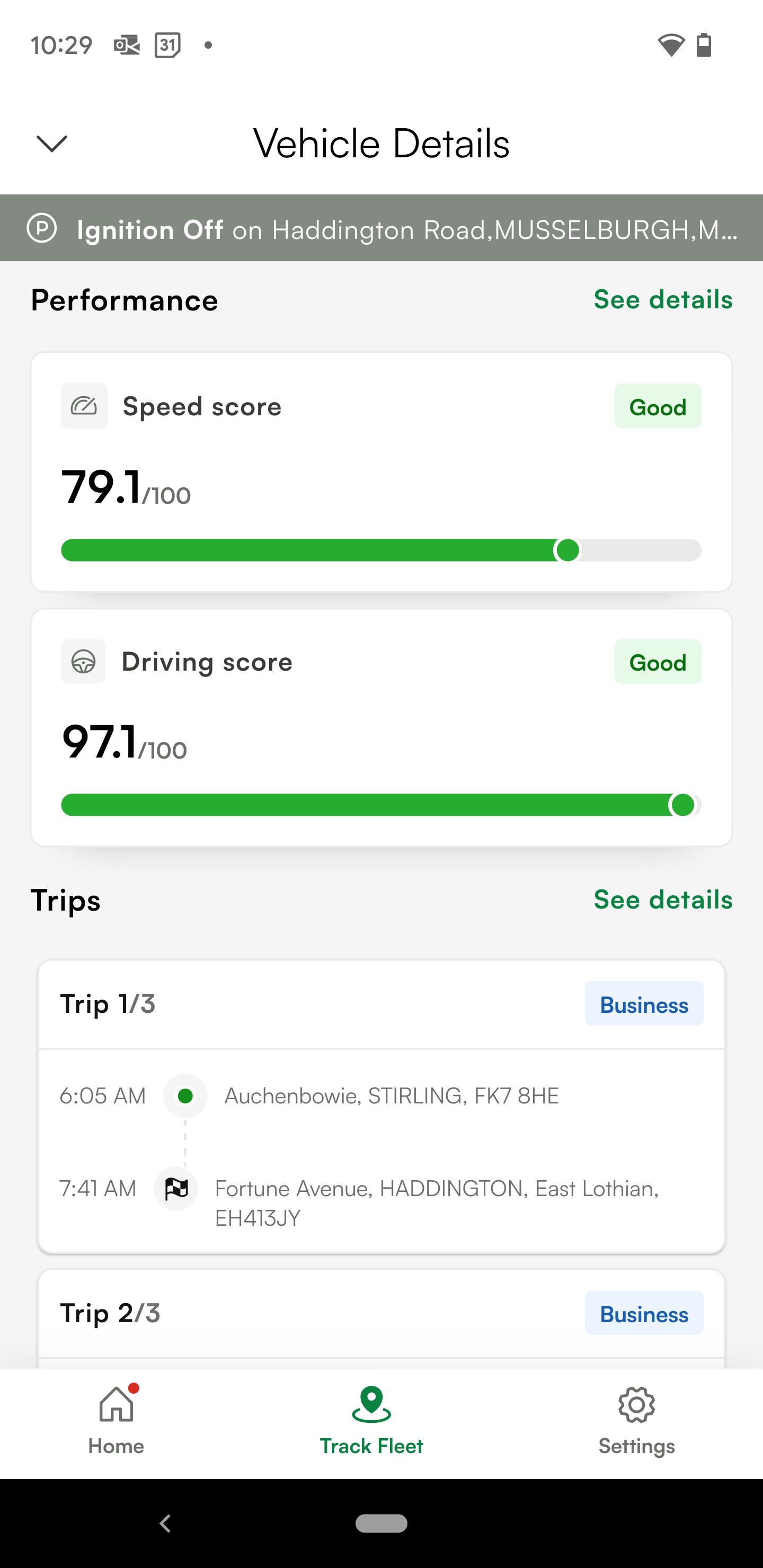
Fleet budgets are under pressure from every direction, with fuel volatility, shifting ownership models, and vehicle cost inflation. But the fleets cutting costs right now aren’t waiting for these pressures to ease. They’re finding the losses buried in daily idling, driver behaviour, unexpected claims and underused vehicles. These small, invisible inefficiencies accumulate quickly and go undetected, but Quartix gives you the visibility to find them
Every trip is logged and categorised with a tamperproof audit trail, and habits that quietly inflate fuel spend come into focus through driver behaviour inefficient routing and unauthorised vehicle use. Beyond day-to-day costs, Quartix can help you dashcam footage accelerates claim resolution, present. Meanwhile, daily vehicle safety inspection data surfaces defects before they become costly
And for fleets navigating the transition to EV,
electrification decisions can be grounded in evidence, not assumptions. The result is smarter decisions now, progressively lower costs over time, and a fleet that performs efficiently and sustainably. Discover how much your fleet could save with Quartix. M


Using data to simulate zero carbon freight
How do you decarbonise long‑haul freight without disrupting the flow of goods? Dr Alex Foote explains a project that uses digital twins, AI‑powered simulations and industry partnerships to help map out a future with electric HGVs
Here’s my route. I’m in London, and I need to get to East Midlands Airport in North West Leicestershire, where some of my cargo will be catching a flight.
My truck is an electric heavy goods vehicle, so I’ll need to recharge the battery at some point. This means I need to know where and how long I can charge for.
The timings are tight. The cargo plane my goods are due on needs to leave on time, so any delays are a risk.
It’s a scenario that poses so many questions. Will there be a charging point available? Do any HGV charging points even exist on my
route? How do I minimise the risk of delays? Would a single charge get me the whole way?
As a logistics and freight modeller for TransiT, these are the kinds of questions I explore every day. TransiT is a national UK research hub using digital twins – digital replicas of the physical world – to identify the fastest, least risky and lowest cost pathways to decarbonising transport.
We are fortunate to work with almost 70 industry partners across the UK’s transport, energy and technology sectors. And one of these, DHL, is providing critical support to my own research into decarbonising road freight.
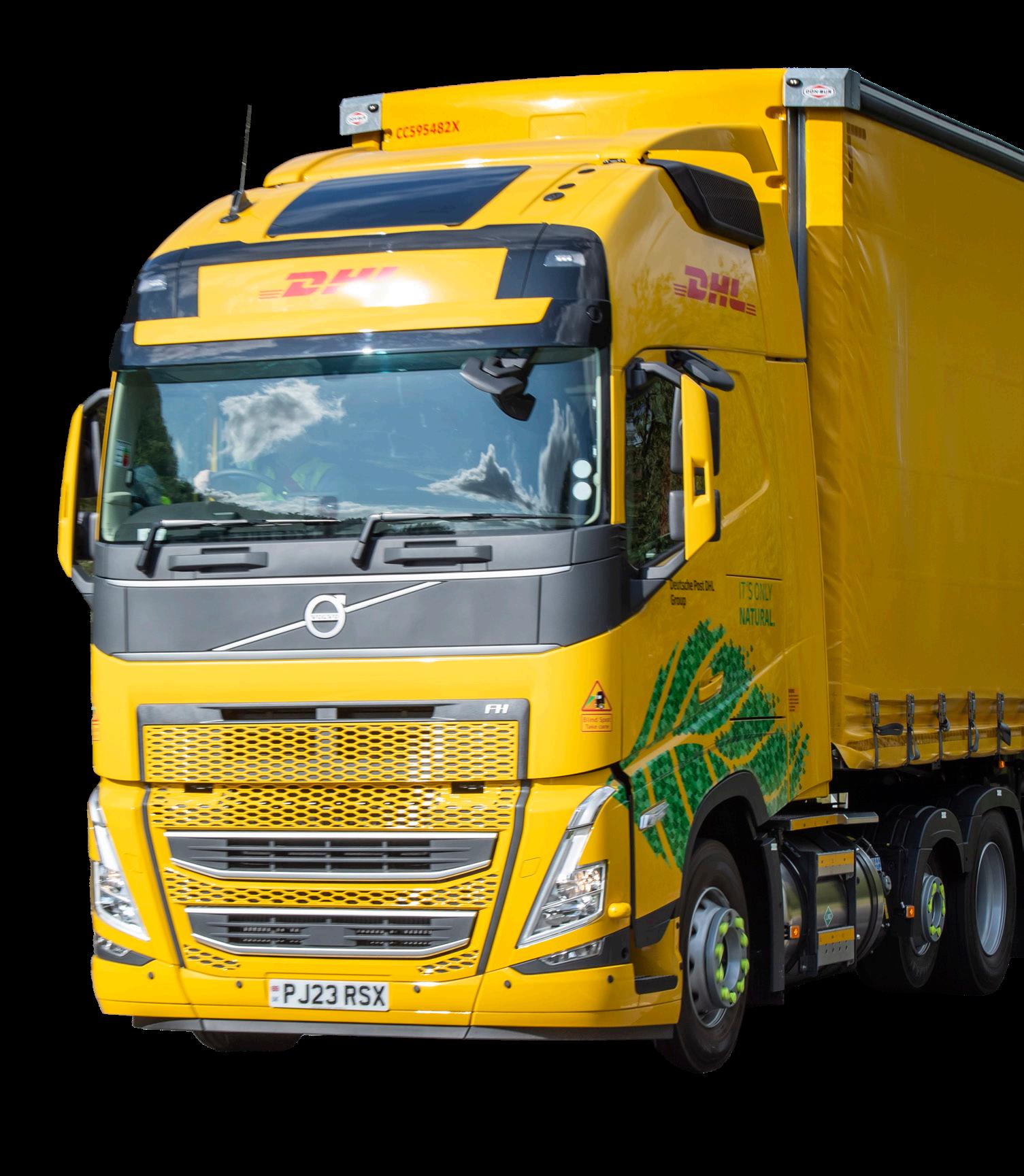
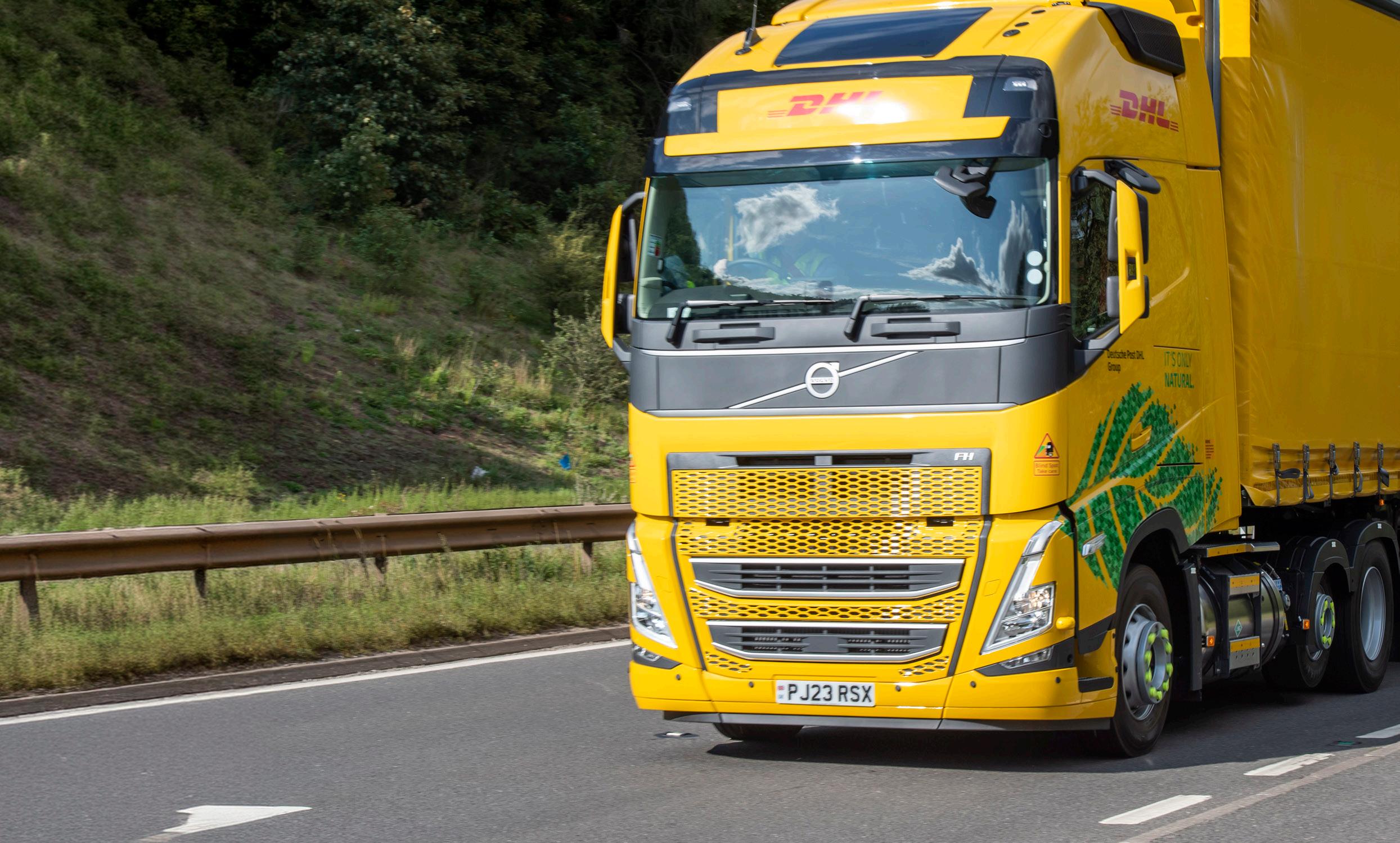
DHL is an international logistics company employing around 400,000 people in more than 220 countries. The business aims to achieve net-zero emissions logistics by 2050 and in the UK, is providing TransiT with data from some of its UK fleet of around 6,500 trucks and vans.
We are using this to simulate journeys across the UK by a fleet of delivery trucks, with routes from London to East Midlands Airport electrified first, and other routes following in further simulations. We’re confident this is a UK first for research in this area, and the aim is to investigate what electric vehicle charging points are needed, and where, along the M1 motorway.
East Midlands Airport is our other critical partner in this research. The airport is the UK’s largest dedicated express air freight hub and handles around 400,000 tonnes of cargo a year. DHL operates cargo planes at the airport, carrying European and intercontinental air freight, so DHL trucks travel regularly between London and the East Midlands dispatching and collecting goods.
Simulation techniques
This gives us a rich seam of data for our other collaborators in this research – computer agents. Specifically, we use a computer simulation technique called agent-based
We hope that digital twinning can deliver transformative change, where real world trials would be too costly and would take too long
modelling (‘ABM’) to visualise ‘what if’ scenarios – including future transport scenarios that don’t yet exist in the real world.
Agent-based modelling simulates how individual agents – like drivers and vehicles –interact with each other and their environment, and the impacts these interactions can have on the wider transport system. These models can identify the changes needed to ensure logistics companies remain reliable and profitable – including where vehicle charging points should be located, at what speed they should charge, and which mix of vehicles would be most effective for fleets.
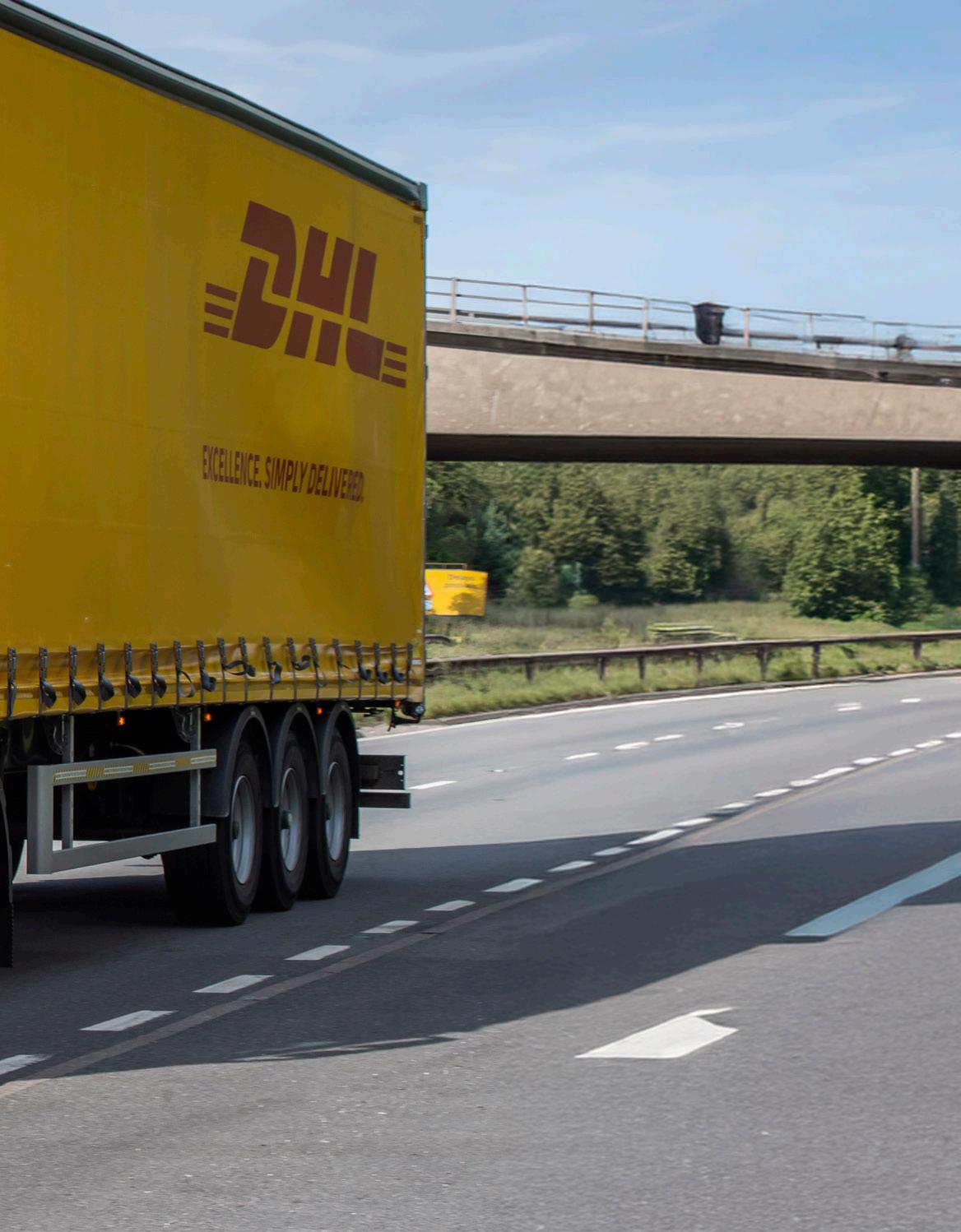
The beauty of these computer agent truck drivers is that they can be in incentivised to find the most beneficial routes and locations. This is what I’ve been doing in my own research, and it involves giving our agents better scores if their trucks find shorter routes that reduce the time and cost of their journeys. This might mean, for example, that our agents favour charging at their departure depot before starting their journey, during wait times between jobs, so they don’t have to stop en route. Or if it’s a long route, they might have to charge at a service station along the way.
The great advantage of agentbased models is that the agents can tell us what the best solution is.
A 2030 scenario
I’m currently simulating a 2030 decarbonisation scenario where 10 per cent of the fleet on DHL’s London to East Midlands Airport route is electrified.
This will identify locations, like service stations, where grid capacity may need to be strengthened to support new charging infrastructure.
Electric fleet adoption can then be increased in the simulation to 50 per cent by 2040 and 100 per cent by 2050, with the addition of new electric vehicles and infrastructure. Ultimately, I’d like to try and find a way to demonstrate that electric HGVs in long haul freight are viable earlier than E
F people expect – and that they can manage the journeys quickly and reliably. We’re a bit behind the curve in the UK at the moment on electric HGV adoption, so it would be good to know that we can get the ball rolling quite quickly without too many big infrastructure changes.
Air freight simulation
Next steps for this research include integrating our road freight simulation with an air freight simulation being developed by our research partners at Cranfield University in Bedfordshire, in collaboration with DHL and East Midlands Airport. This will help our researchers understand the best decarbonisation pathway for air-to-road freight, as part of TransiT’s goal to build a connected network of digital twins representing the whole UK transport network.
As part of their research, Cranfield’s team are studying aircraft operations, as well as the energy and logistics systems that support them. This includes how aviation fuel is produced, transported and delivered. As the aviation sector shifts toward cleaner energy sources, our researchers are assessing what this means for emissions, costs and future infrastructure, and how the transition can happen in a practical and scalable way.
All of this work is part of TransiT’s Air and Road Freight Demonstrator project. This is one of three place-based ‘Challenge-Led Demonstrators’ involving interconnected road, rail, air and maritime systems across different regions of the UK. Our demonstrators are designed to demonstrate and prove that digital twinning – and specifically a ‘whole system’ network of digital twins – can deliver scalable solutions to the integration and decarbonisation of transport.
Digital twins are digital replicas of real-world systems, processes or things – like vehicles, roads or traffic management systems. They are created using data collected from the physical world in real time. This can include data from traffic cameras, sensors in vehicles, roads or tracks, and realtime positioning data from satellites.
The digital twin rapidly analyses the real-world data to test and improve different scenarios. It then sends back its solution for an improved process to the physical world. This exchange happens almost instantly – in close to real time. In the transport sector, digital twins are increasingly being used to improve efficiency and sustainability through functions like
predictive maintenance and route optimisation. But digital twin networks that can span and improve whole systems are still in the early stages of being developed.
This is where TransiT comes in, and we hope that digital twinning can deliver transformative change – where real world trials would be too costly, and would take too long.
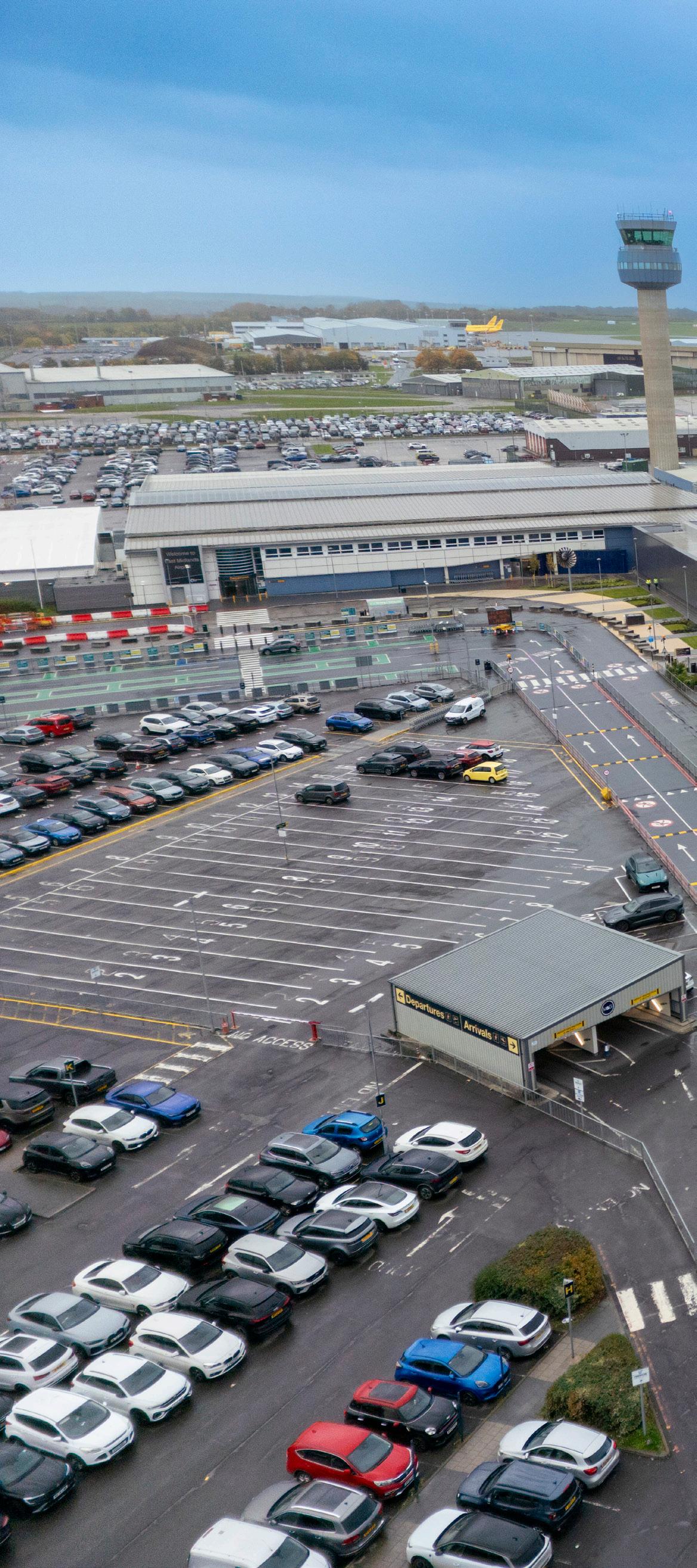
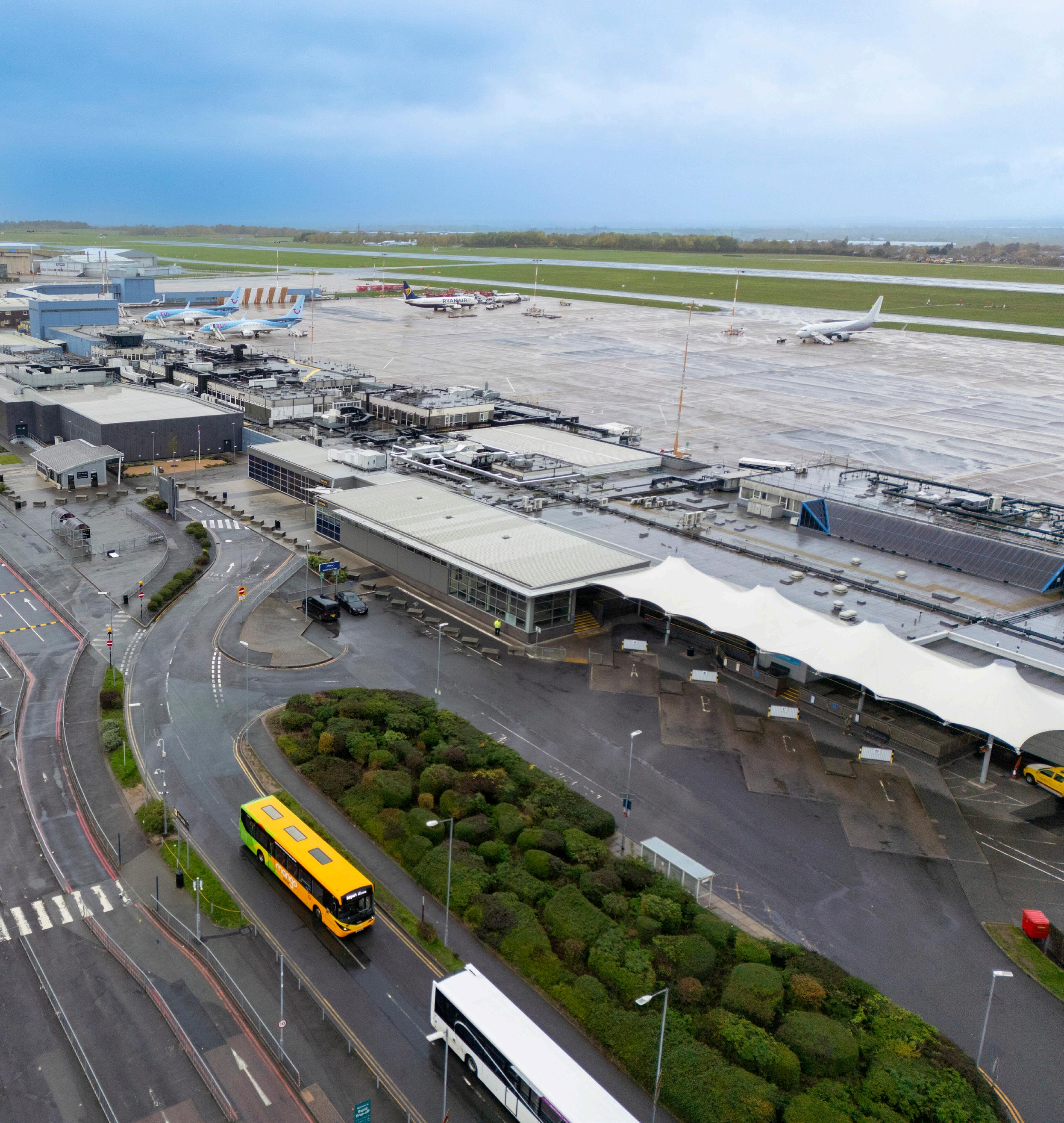
East Midlands Airport is a crucial partner in the TransiT project. Image © East Midlands Airport
By using technology to visualise what works and what doesn’t, our ultimate aim is to remove risk and uncertainty in the transport transition – so that fleet operators can move ahead –and the UK can deliver its net zero goals. L
Dr Alex Foote is a research associate at Heriot-Watt University in Edinburgh working with UK research hub, TransiT.


Digital Twins Technology Redefining Fleet
Dr Alex Foote
From reactive to predictive: how technology is reshaping fleet performance
The future of fleet management is no longer reactive. Businesses are using technology and real‑time insights to reduce downtime, improve efficiency and prepare for the transition to electric vehicles
Fleet management has never been simple, but for many businesses it’s starting to feel like the pace of change is accelerating.
Costs are rising, expectations are shifting and the pressure to operate more sustainably isn’t going anywhere. For fleet operators, that creates a different kind of challenge. It’s no longer just about keeping vehicles moving. It’s about keeping control when so much around them is changing. Technology has a vital role to play.
Moving beyond reactive management
Traditionally, fleets have worked in a relatively reactive way. Something goes wrong, it gets fixed, and the vehicle gets back on the road.
That still happens, of course. But it’s becoming harder to rely on that model when downtime is more expensive and disruption is felt more acutely across the

business. What’s changing is the ability to anticipate and deal with problems before they have any real business impact.
Connected vehicles and predictive tools are making that possible. Instead of waiting for something to fail, fleets can spot warning signs and deal with issues before they escalate.
It’s not a dramatic shift overnight. It’s more gradual than that. But over time, it changes how fleets think about maintenance altogether.
Making better decisions, day to day Where things get more interesting is in the everyday decisions that don’t always get noticed. Fleet managers now have far more visibility over how vehicles are actually being used. Not just where they are, but how they’re driven, how often they’re idle and whether journeys are as efficient as they could be.
That kind of insight doesn’t usually lead to big, sweeping changes. More often, it leads to small adjustments. A route gets tweaked. A schedule gets tightened up. A vehicle gets reassigned.
On their own, those changes might not feel significant. But when they’re applied consistently, they start to add up.
We’ve seen that within our own operations. In The AA’s latest ESG report, more than 120,000 customer issues were resolved remotely during the last financial year. That’s fewer unnecessary journeys, lower emissions and less pressure on operational resources.
Supporting the shift to electric James Starling, director of AA Business Services says: “As more fleets begin introducing electric vehicles, that visibility becomes even more important. Running EVs isn’t just a case of swapping one vehicle for another. It changes
Ryan Naughton, head of B2B connected car & European relations, AA Business Services
how journeys are planned and how time is managed during the day. Charging needs to be factored in. Routes need to be thought through more carefully - without good data, that can become difficult quite quickly.
“Technology helps remove some of that uncertainty. By understanding how vehicles are used in practice, businesses can make more confident decisions about where EVs will work and how to introduce them without disrupting operations.”
The human side of change
Stuart Thomas, director of fleet banking and insurance says: “For all the focus on vehicles and systems, people are still at the centre of the business driving eco-system. Drivers and fleet managers are now working alongside connected tools as part of their dayto-day roles. That changes the job in subtle ways. There’s more information to take in, more to respond to, and often a closer link to the customer experience at the end of the journey.”
“What tends to make the difference is how that technology is introduced. When it feels like support, it’s usually welcomed. When it feels imposed, it can meet with resistance.“
A more connected future
Stepping back slightly, there’s a bigger shift happening underneath all of this. Vehicles
are no longer just assets to be managedthey’re becoming sources of insight, helping businesses understand performance in ways that weren’t possible before.
That doesn’t mean technology solves everything. The biggest gains still come from how it’s used day to day, alongside practical changes in how fleets operate.
What is changing is its role. It’s moving from something that supports the operation to something that quietly shapes it.
Always ahead, The AA continues to support businesses through this shift, helping fleets make sense of the data, adopt the right tools and move forward with confidence in a rapidly changing landscape. Businesses can also follow AA Business Services on LinkedIn for the latest insights, practical guidance and updates. M



Autonomous freight: Why the UK could lead the next transport revolution
With the Automated Vehicles Act creating a pathway from trials to commercial deployment, and autonomous taxi services expected on UK roads later this year, Voltempo’s Michael Boxwell explains why autonomous HGVs could be closer than many think
If autonomous taxi services are set to become a reality on UK roads, could autonomous HGVs be far behind?
According to a new report from the eFREIGHT Autonomous consortium, the UK now has a clear pathway to become one of the world’s leading autonomous freight markets.
Led by Voltempo alongside Connected Places
Catapult and autonomous vehicle design specialist Berkeley Coachworks, the study concludes that autonomous freight is moving from research and demonstration projects into early commercial deployment internationally, while the UK’s combination of legislation, logistics expertise and innovation capability creates the conditions for early deployment.
“We’ve focused on understanding where autonomous freight can deliver genuine operational value for UK fleets and what conditions are needed to make deployment practical,” explains Michael Boxwell, corporate development officer at Voltempo.
“What’s become clear is that this is no longer a future concept. The technology, legislation and commercial interest are all moving forward quickly.”
The report identifies hub-to-hub motorway trunking and intermodal shuttle operations as the most viable starting points for autonomous freight in the UK. More importantly, it concludes that the opportunity extends far beyond the vehicles themselves, encompassing software,
Berkeley Sentinel autonomous cabless tug

safety assurance, systems integration, operations and even the design of an entirely new generation of freight vehicles.
A regulatory head start
For all the attention given to autonomous vehicle developments in the US and China, the report identifies the UK’s regulatory framework as one of its biggest advantages.
The Automated Vehicles Act 2024 provides the legal foundation for self-driving vehicles in Great Britain, establishing how autonomous systems will be authorised and where responsibility sits when the vehicle is operating autonomously.
While further implementation work remains, the report concludes that the UK has established a clear pathway from trialling autonomous vehicles to commercial deployment.
“The UK has taken an important step forward with the Automated Vehicles Act,” says Boxwell. “For businesses considering investment, clarity is critical. Having a framework that provides a route from trials through to commercial deployment gives confidence that autonomous freight can move beyond demonstration projects.”
The report notes that forthcoming regulations are expected to allow companies such as Waymo to operate autonomous taxi services in the UK, creating a pathway for the first commercial driverless passenger services on public roads.
For Boxwell, those developments matter because they demonstrate how quickly the regulatory landscape is evolving.
People often focus on the truck, but autonomous freight is really an end‑to‑end operational system. Alongside the vehicle you need remote supervision, software management, maintenance procedures, incident response processes and safety assurance
“We’re moving beyond asking whether autonomous vehicles will happen and starting to focus on where they can deliver value first,” he says.
The report concludes that the UK is well placed to be an early deployment market for autonomous freight and to help shape its development internationally.
Combined with a strong logistics sector, active innovation programmes and involvement in international standards development, the UK has an opportunity to become a leader rather than a follower in autonomous freight.
Why freight?
While autonomous passenger vehicles often dominate public discussion, freight presents a particularly compelling use case.
Heavy goods vehicles underpin the UK’s economy, moving goods between ports, distribution centres, factories and customers. According to the report, road freight accounts for around 81 per cent of domestic freight movements by weight, making it one of the most important parts of the UK’s transport system.
The sector is also facing a combination of challenges that autonomy could help address. Driver shortages continue to affect recruitment and retention. Operators face rising costs, congestion impacts efficiency and reliability, and fleets are under growing pressure to decarbonise while maintaining service levels. “Freight operations are often structured, repeatable and highly predictable,” says Boxwell.
“Vehicles regularly travel between the same locations and interact with controlled logistics environments. That makes freight particularly well suited to early autonomous deployment.”
The report identifies a number of potential benefits, including improved vehicle utilisation, E
F lower operating costs, enhanced road safety, increased supply chain reliability and reduced pressure on driver availability. Importantly, it does not present autonomy as a replacement for people.
Instead, the study points towards new roles emerging in areas such as remote operations, fleet supervision, safety assurance and systems management as autonomous technologies become more widely adopted.
Starting with the right use cases
A major focus of the study was identifying where autonomous freight could realistically deliver value first.
Following engagement with vehicle manufacturers, fleet operators, ports, technology providers, National Highways and freight customers, two priority use cases emerged.
The first is hub-to-hub trunking between logistics centres using motorways and high-quality A-road corridors.
The second is intermodal shuttle operations linking ports, rail terminals, inland freight facilities and nearby distribution hubs. These use cases were selected because they combine clearly defined operational environments with measurable outcomes around productivity, safety, utilisation and emissions.
“Both applications involve repeatable routes and controlled interfaces,” says Boxwell.
“That allows operators to build experience, generate evidence and demonstrate value before moving into more complex environments.”
Hub-to-hub operations are particularly attractive because they mirror the way freight already moves across the UK’s Strategic Road Network. Intermodal shuttle operations, meanwhile, offer short, frequent and predictable journeys where the benefits of automation can be demonstrated relatively quickly.
The report concludes that more technically demanding applications, such as urban freight operations, are likely to follow later as systems, standards and public confidence mature.
More than a self-driving truck
One of the most important findings from the report is that autonomous freight should not be viewed simply as a vehicle technology. Successful deployment depends on a much broader ecosystem.
Autonomous freight combines onboard sensors, advanced software, localisation systems, mapping technologies and powerful computing platforms capable of understanding their surroundings
and making driving decisions. However, the vehicle itself is only one part of the equation.
“People often focus on the truck,” says Boxwell. “But autonomous freight is really an end-to-end operational system. Alongside the vehicle you need remote supervision, software management, maintenance procedures, incident response processes and safety assurance.”
The report highlights the growing importance of digital infrastructure, connectivity, remote operations platforms and operational oversight. It also identifies opportunities for UK businesses in areas such as autonomy software, simulation, safety validation, systems integration and fleet operations.
In many respects, some of the greatest economic opportunities may sit beyond the vehicle itself.
Rethinking freight vehicle design
One of the more distinctive aspects of the eFREIGHT Autonomous project is the involvement of Berkeley Coachworks, which has been exploring how freight vehicles could be redesigned specifically for autonomous operation.
Without the need for a traditional driver cab, entirely new vehicle architectures become possible.
Among the concepts examined is a “smart trailer” configuration capable of carrying more payload while reducing overall vehicle weight and length.
According to the report, such designs could deliver around 15 per cent greater volumetric payload capacity and approximately seven per cent greater weight payload capacity compared with conventional articulated
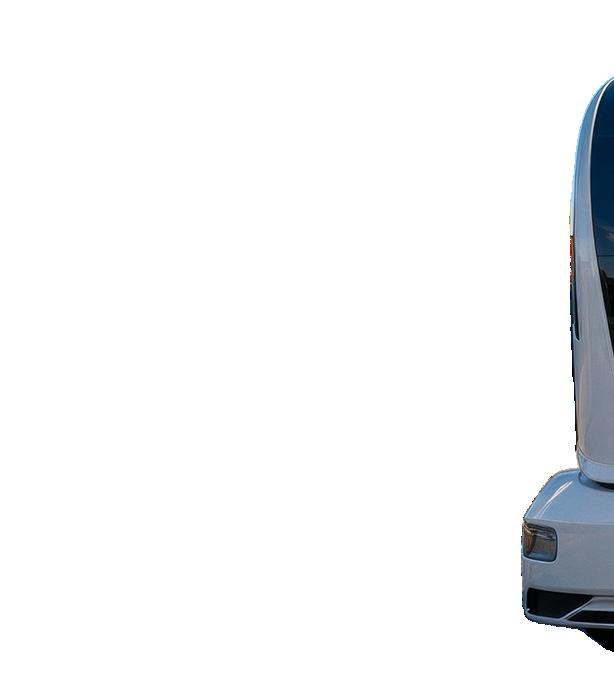
Autonomous truck
HGVs. That has implications not only for productivity but also for sustainability. Moving more goods per journey means fewer vehicle movements are needed to transport the same volume of freight.
“It’s important to remember that autonomy creates opportunities beyond simply removing the driver,” says Boxwell. “It gives us the chance to rethink how freight vehicles are designed and how efficiently they move goods.”
The report suggests that vehicle concepts of this type could ultimately contribute to reducing the number of heavy vehicles required on UK roads while improving freight efficiency. Autonomy and decarbonisation
For GreenFleet readers, one of the most interesting themes emerging from the report is the relationship between autonomous freight and the transition to zero-emission transport.
Although autonomous and electric vehicles are often discussed separately, the study identifies significant synergies between the two technologies.
Higher vehicle utilisation is one example. Autonomous operation has the potential to improve the economics of zero-emission HGVs by increasing the amount of productive work each vehicle can undertake.
The report also highlights how smoother, more consistent driving behaviour can help reduce energy consumption, while automated systems could support more efficient operational planning.
Boxwell believes autonomy and decarbonisation will increasingly develop alongside one another.
“Many of the same operators that are looking at autonomous technologies are also looking at electrification,” he says.
“The two are not competing technologies. In many cases they are complementary.”
As the industry works towards the UK’s zero-emission HGV targets, autonomous technologies could help improve efficiency, utilisation and overall fleet performance.
What happens next?
The report’s recommendations are clear.
According to Boxwell, the next step should be structured, real-world trials focused on the priority use cases identified through the study.
These trials would generate the operational, economic and safety evidence needed to support future deployment while helping to shape regulatory frameworks, insurance models and operational standards.
For government, the priority is converting the Automated Vehicles Act into a practical deployment pathway. For industry, it means bringing together operators, manufacturers, technology providers, infrastructure owners and insurers to develop scalable operating models.
Autonomous freight is not yet a mainstream reality. But the findings of the eFREIGHT Autonomous report suggest it is no longer a distant prospect.
“The legislation is taking shape, the technology is maturing and commercial interest is growing, Boxwell concludes. “The opportunity now is to ensure the UK does more than adopt autonomous freight technologies developed elsewhere. The real prize is helping shape the future of autonomous freight itself.” L
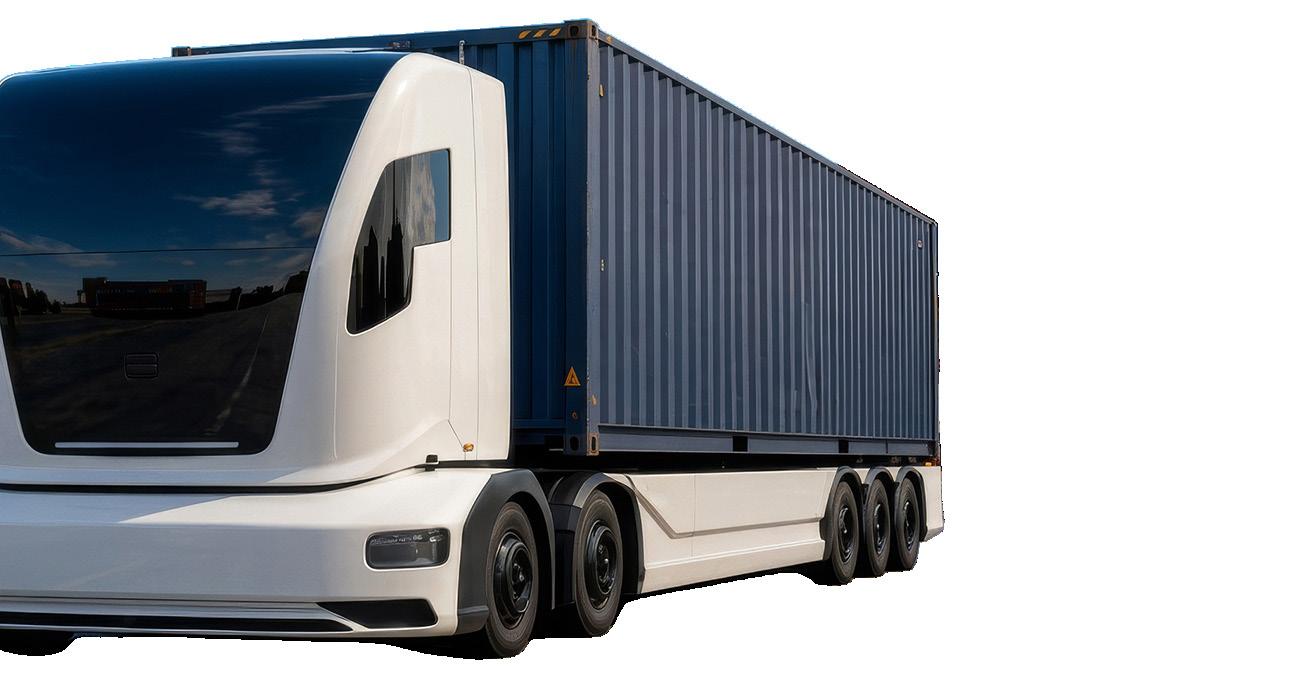
Autonomous





The data-driven future of fleet safety and compliance
Fleet management is at an inflection point. The pressures facing today’s operators such as tightening compliance requirements, rising safety expectations, and increasingly complex operations, demand more than reactive decision‑making. They demand intelligence
At the heart of modern fleet compliance lies a fundamental challenge: data fragmentation. When critical information sits across disconnected systems, fleet managers are forced to make decisions blind. The consequences range from missed compliance obligations to preventable incidents on the road. Consolidating that data isn’t a luxury – it’s a legal and moral duty of care.
API led and AI-powered analytics are transforming how fleet operators meet their compliance responsibilities, providing real-time insights that replace outdated, retrospective reporting. Combined with digital tools like automated walkarounds, instant defect reporting, and licence verification – safety and compliance become proactive rather than reactive.
Risk is identified and addressed before it becomes incident or infringement. But technology alone isn’t the answer. Before investing in any new platform, fleet operators must ask the right questions: Does it integrate with existing systems? Does it scale with the business? Does it put safety and compliance at its core? The future of fleet management belongs to those who treat data as their most powerful compliance asset. M




Road-to-Zero Roundtable: Birmingham
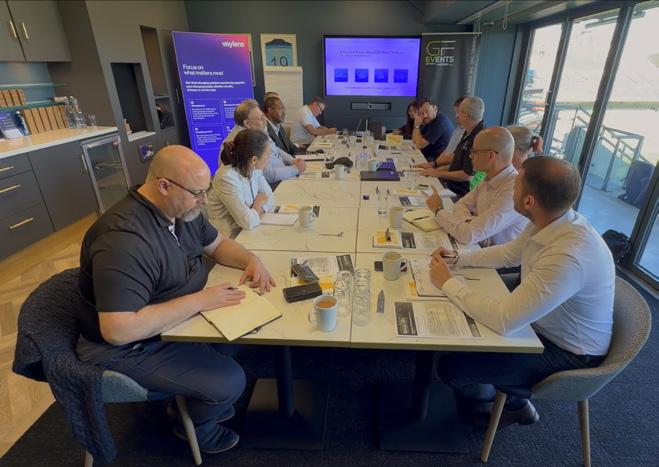
Hosted by Andy Eastlake and supported by Vaylens, GREENFLEET’s April roundtable at Edgbaston Stadium brought together fleet and sustainability leaders to discuss the key challenges and opportunities facing fleets as they transition to low and zero carbon operations
When embarking on a fleet decarbonisation journey, roundtable delegates raised the importance of having a well-defined target set at leadership level. Having a clear direction from the top gives all stakeholders a shared understanding of the destination and the role they need to play in reaching it.
Representatives from OVO, which had transitioned all but two of its vans to electric by the end of 2025, highlighted the importance of driver engagement throughout the process. While home charging offers significant benefits for both operators and drivers, practical challenges can make the transition appear complex. However, advances in telematics, data management and consolidated payment systems are helping to simplify fleet
administration and driver reimbursement, regardless of where charging takes place.
Delegates from three neighbouring local authorities shared their experiences of electrifying everything from van fleets and refuse collection vehicles, to rural community minibuses, which underlined the diversity of charging needs across different operations.
Rob Anderson of Mitie highlighted the need to “electrify at the right speed.” The phrase captured a widely shared view that electrification should be guided by operational suitability rather than arbitrary timelines. While not every vehicle can transition to electric power today, more than many people realise can, once individual use cases have been properly assessed and drivers are fully engaged in the process. L




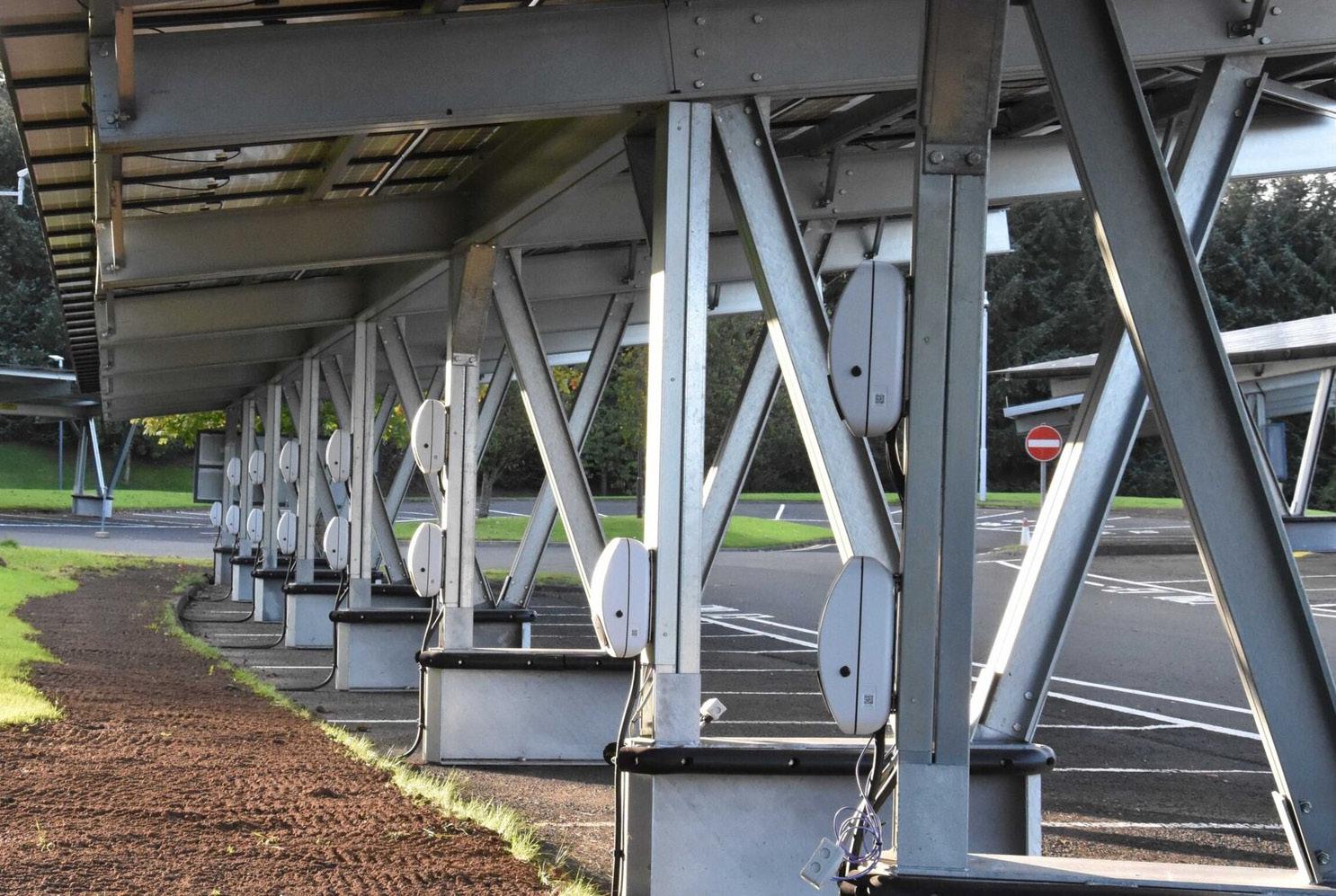
Solar Carpor ts turn parking areas into on-site energy assets, reducing energy costs and suppor ting EV charging where roof space is challenging or restricted Book a Solar Carport feasibility review insights.alt-group.uk/solarcarports

Power from parking spaces
Solar carports are becoming an increasingly attractive solution for fleet operators, offering a way to lower EV charging costs, improve energy security and make better use of existing estate space
With electricity prices remaining volatile, solar carports have emerged as a strategic solution to give organisations improved energy predictability and greater protection against rising utility prices – all while making better use of existing estate space.
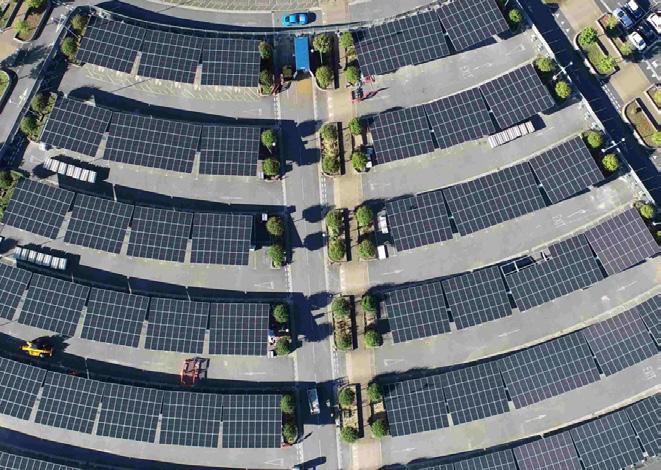
Solar carports do this by transforming underused parking areas into energygenerating assets. Installed above parking bays, the canopies are fitted with photovoltaic (PV) panels that generate electricity on site, reducing reliance on the grid.
When integrated with EV charging infrastructure and battery storage, the electricity generated can power electric vehicles directly, making solar carports a great strategic asset for fleet operators.
Government momentum behind solar Solar carports are already mandatory in some European countries, including France and Slovenia, providing their countries with an abundance of cheaper solar power.
In the UK, interest in solar infrastructure grew at policy level last year, when the government launched a consultation which explored the possibility of mandating solar installations on new outdoor car parks for public and private organisations, alongside reforms on EV charging deployment.
However, while giving a detailed response to the EV charging infrastructure section, the government has said that proposals to mandate solar canopies on new outdoor car parks will not be taken any further. E
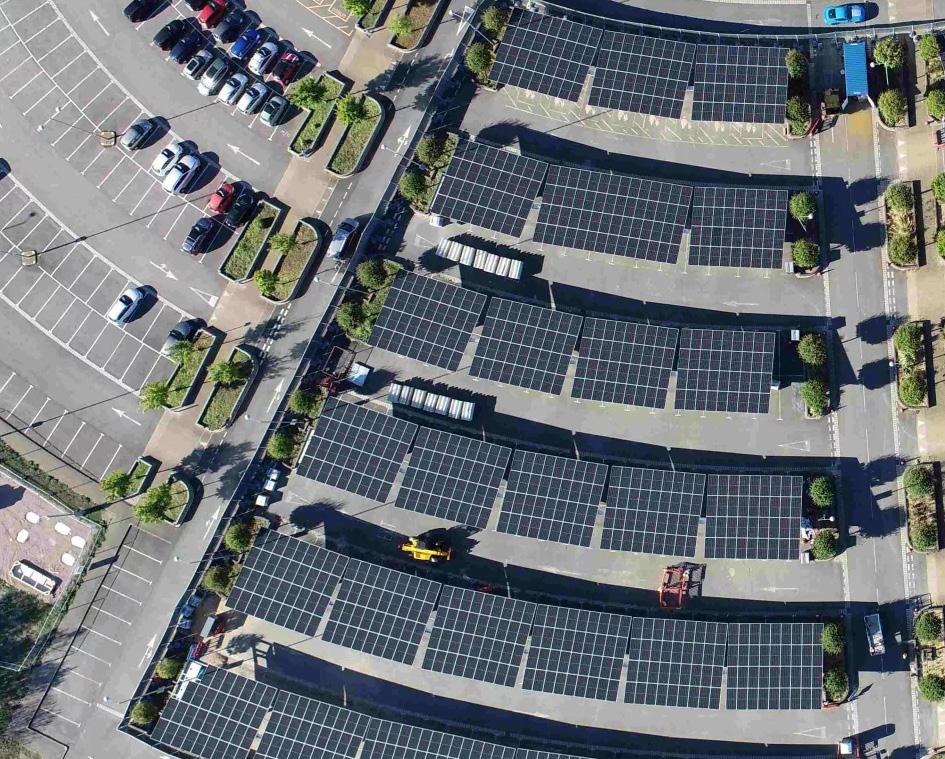
Aviva has installed a massive solar carport consisting of 3,283 solar panels at its Perth office in Scotland

Solar Carports












F That said, government clearly still has great interest in solar. The UK’s Clean Power 2030 Action Plan targets a major expansion in solar capacity, with ambitions to increase deployment from around 18GW today to at least 45-47GW by the end of the decade.
The business case
With or without a mandate, the business case of solar carports is becoming increasingly compelling for organisations.
Industry estimates suggest that an 80-space solar car park can save approximately £28,000 annually when the electricity generated is consumed entirely on site.
Companies could also make back the cost of installing solar in carparks by selling energy back to the grid or through longterm power purchase agreements.
Battery storage in particular is a critical component to making the most of a solar carport. By storing excess solar generation during the day and discharging it during peak charging periods, battery storage can help smooth demand, reduce peak charges and provide greater operational certainty for high-usage EV fleets.
Solar canopies also have the benefit of providing shaded cover for cars during heatwaves, creating a cooler environment for both vehicles and pedestrians.
When integrated with EV charging infrastructure and battery storage, the electricity generated from a solar carport can power electric vehicles directly, making them a strategic asset for fleet operators
Examples of solar carports
Across the UK and Ireland, many organisations are already demonstrating how solar carports can support large-scale operational energy strategies, as well as the electric vehicle transition.
Northumberland County Council has a major solar carport installation at its County Hall headquarters in Morpeth. Delivered by UK Power Networks Services, the project combines an 800kW solar canopy, a 400kW battery storage system and 120 EV charge points to provide renewable energy for the council’s buildings and vehicle fleet.
Councillor Glen Sanderson, council leader and cabinet member for climate change, said that the project will save a “massive amount on council energy supply spending” and will also reduce the need for the council to rely on fossil fuels to power its main building. E
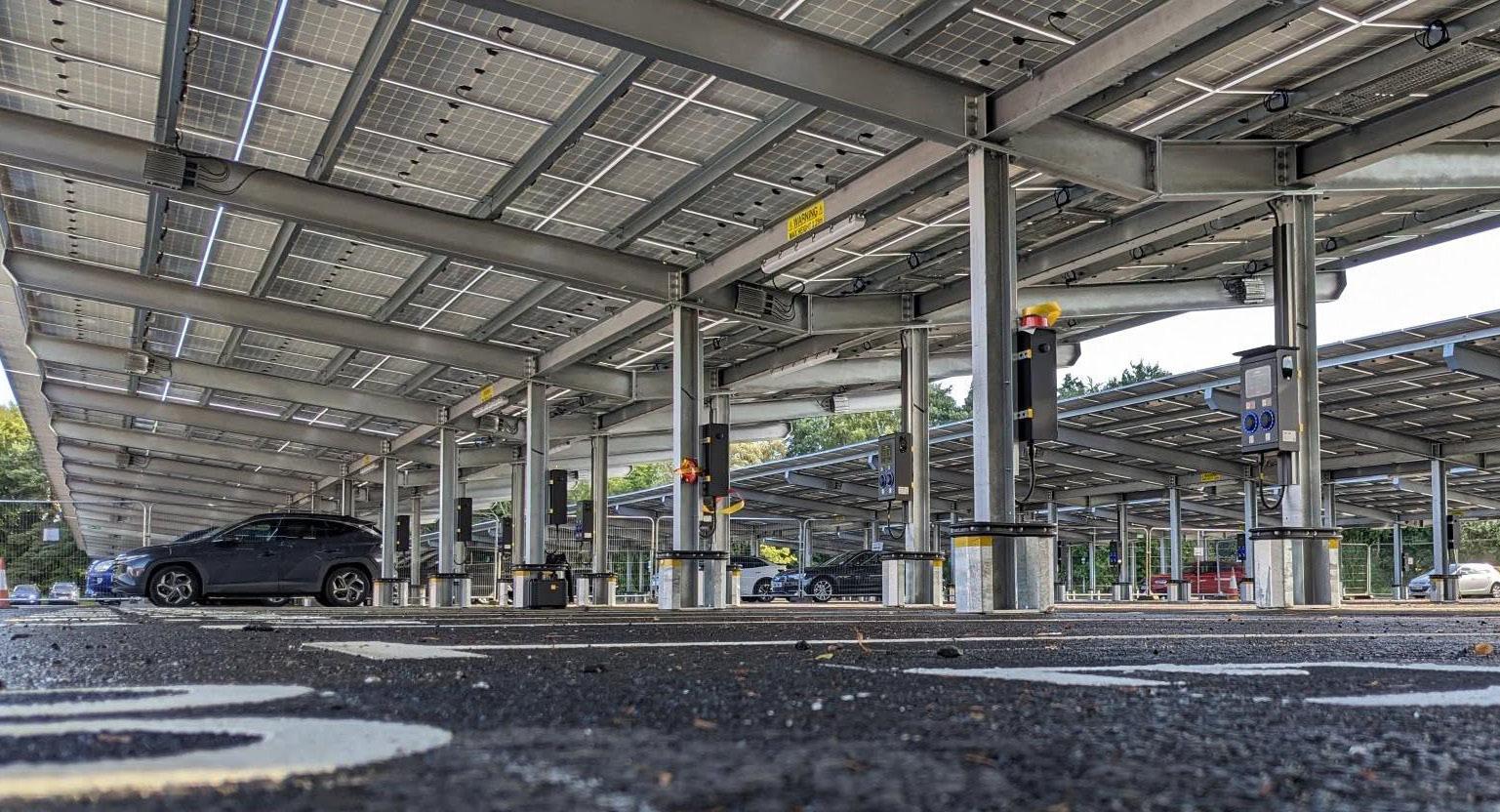
Northumberland County Council has a major solar carport installations at its County Hall headquarters in Morpeth
F Aviva meanwhile has installed a massive solar carport consisting of 3,283 solar panels at its Perth office in Scotland. The system features 50 smart chargers linked to central smart hubs, allowing them to safely distribute power and charge 50 electric fleet and commuter vehicles simultaneously using clean energy.
In the healthcare sector, Eastbourne District General Hospital has an installation which spans more than 2,400 solar panels across 400 parking bays. The system is expected to generate around 1,000MWh of electricity annually while powering ten EV chargers and reducing carbon emissions by 222 tonnes each year.
At Scunthorpe Hospital, meanwhile, a £27 million decarbonisation programme includes replacing an existing staff car park with a solar canopy installation designed to help cut emissions by more than 4,000 tonnes annually.
Northumberland County Council has a solar carport that combines an 800kW solar canopy, a 400kW battery storage system and 120 EV charge points to provide renewable energy for the council’s buildings and vehicle fleet
Education providers are also recognising the value of integrated solar infrastructure. Mid Kent College has incorporated solar carports into a wider campus decarbonisation programme that combines rooftop solar, battery storage and solar façades. The project is expected to
generate more than 310,000kWh annually while also serving as a live educational resource for students studying sustainable technologies.
Reducing grid dependence
At Legoland Windsor Resort, a 1.2MW solar PV carport installation has been installed, which is capable of generating more than 1.1 million kWh of electricity annually. The system now supplies renewable energy across the resort, reducing grid dependence and improving long-term energy resilience.
Cork Airport recently announced plans to develop what is expected to become the Republic of Ireland’s largest solar-powered carport. Having secured €2 million in government support, the 1.7MW installation will consist of nearly 3,700 solar panels mounted above the existing Holiday Blue car park. Once complete, the project is
expected to generate approximately 1.5GWh annually – enough to supply around 20 per cent of the airport’s electricity demand.
St Ives Park & Ride Smart Energy Grid project in Cambridgeshire combines a 1MWp solar canopy with EV charging bays, battery storage and advanced digital energy controls. The advanced grid controls and energy management system enable efficient balancing of energy production and consumption on-site, while providing flexibility to the local grid.
A strategic asset for companies
For fleet operators, solar carports are becoming a strategic asset, particularly in the context of EV adoption. Co-locating solar generation with charging infrastructure not only reduces electricity costs but also improves energy security and reduced exposure to future grid pressures. L
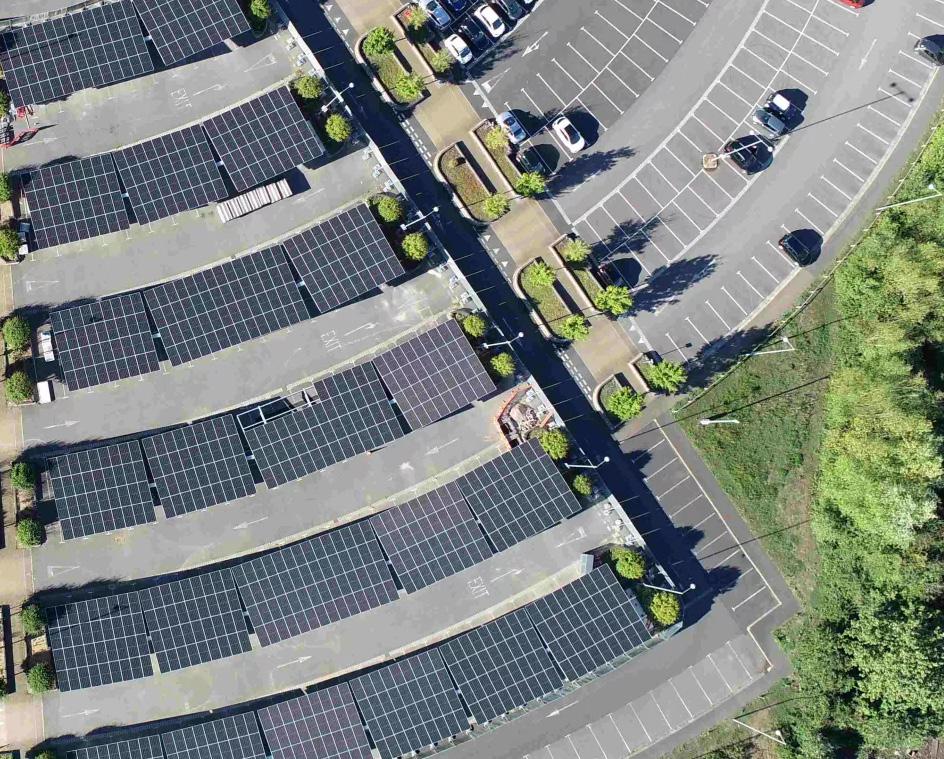
St Ives Park & Ride Smart Energy Grid project in Cambridgeshire

Power Where You Need It, When you Need It

JTM Energy designs and manufactures mobile Battery Energy Storage Systems (BESS) for construction, electric transport, and renewable energy applications.
Built for on-grid and offgrid performance, our solutions reduce energy costs, lower emissions, and deliver reliable clean power where it’s needed when it’s needed!
Construction EV Charging Events Film & TV
Solar & Storage Live London
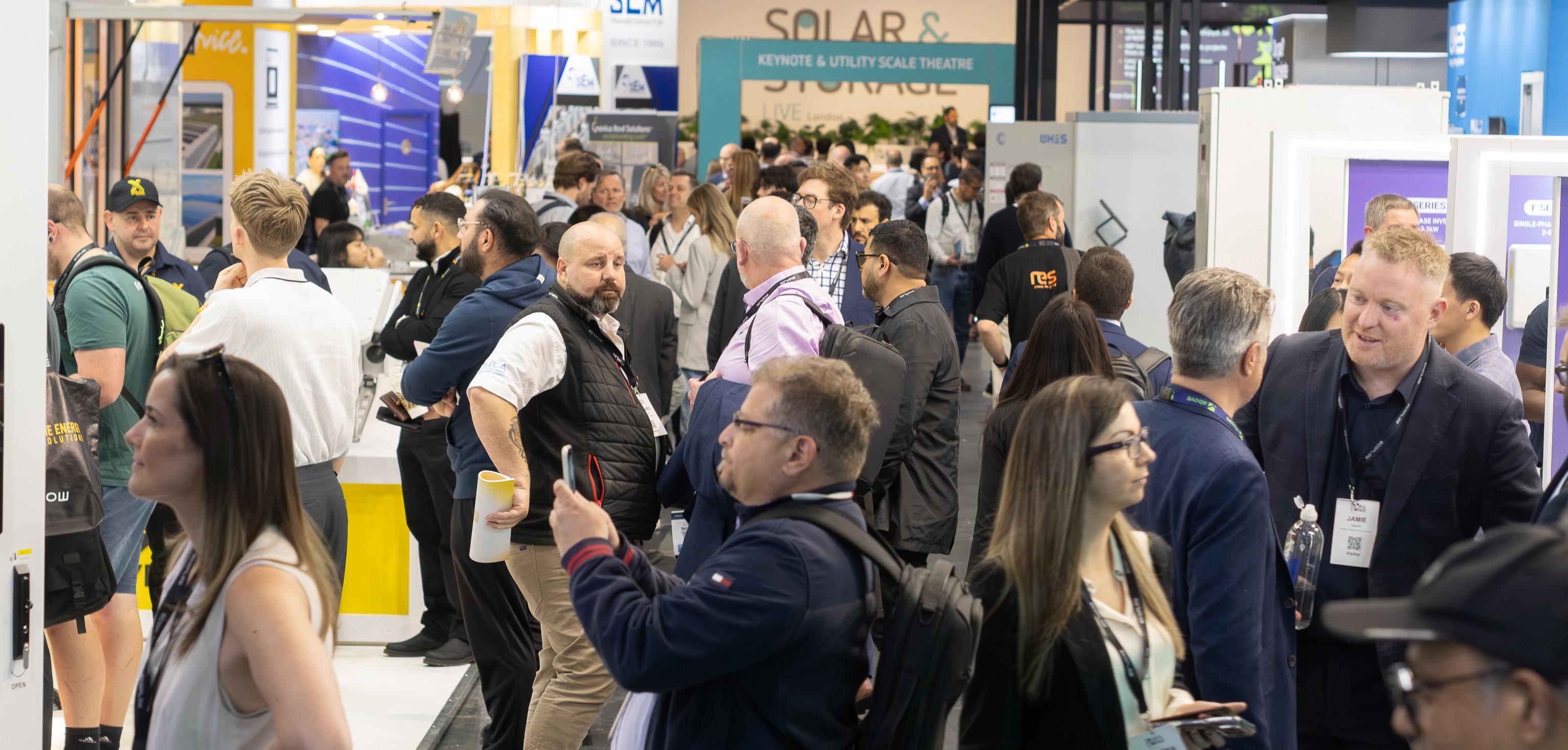
Solar & Storage Live, which took place at Excel London on 29‑30 April, highlighted how integrated solar and energy storage systems are helping organisations reduce grid reliance and improve energy resilience
With rising energy costs and growing pressure to decarbonise transport operations, many fleet operators are now exploring how solar generation, battery storage and smart energy management can work together to power EV charging infrastructure more efficiently. Solar & Storage Live London 2026 enabled them to see first hand how solar and energy storage can support them.
Across two days, the event welcomed over 8,800 industry leaders including installers, developers and asset managers to exchange insights and share best practice. The event showcased a line-up of 150 plus speakers who tackled critical industry challenges, offering the practical strategies needed to thrive in today’s evolving market.
The exhibition brought together international and local manufacturers, suppliers, distributors and solution providers to present the latest technologies to delegates.
Policy and regulation
Policy, regulation and grid reform kicked off the keynote agenda. Daniel Cox from
the Department for Energy Security and Net Zero addressed government strategy around renewable electricity deployment.
Tim Cullen, director of Great British Energy, and Chris Hewett, chief executive of Solar Energy UK, outlined the country’s progress in renewable energy and the sector’s role in driving the next era of clean power.
Several later sessions built on these themes, particularly discussions around grid reform, planning reform and post-consent barriers for utility-scale solar. Speakers highlighted how delays in grid connections and planning remain major obstacles to deployment, despite growing investor appetite.
Storage is key
The event also demonstrated how energy storage is becoming central to the future of solar. Speaker sessions in the Storage Theatre focused on what’s required to scale the energy storage industry beyond early deployment. Discussions covered capital, contracts, revenue certainty, and grid integration, as well as the challenges holding the sector back. E

















F Cyber security was also discussed in detail. There was a session on the growing cybersecurity risks linked to connected storage systems, including data integrity, system vulnerabilities, and remote access threats. It also explored how IoT is transforming battery energy storage system performance through real-time monitoring, optimisation, and predictive maintenance.
A strategic infrastructure
Public-sector decarbonisation was examined during the event. Steven Heape, project development lead at the Carbon and Energy Fund (NHS) examined how solar is moving from a bolt-on technology to a strategic enabler of NHS decarbonisation. Drawing on real projects and national delivery experience, Steven examined how solar deployment has accelerated across the NHS, what investment has been achieved, and how different delivery models are shaping future opportunities.
With rising energy costs and growing pressure to decarbonise transport operations, many fleet operators are now exploring how solar generation and battery storage can work together to power EV charging more efficiently
Steven also explored how solar supports NHS net zero targets for 2032 and 2040, as well as how revenue-generating power strategies can help unlock wider estate decarbonisation, particularly heat.
Overall, Solar & Storage Live London successfully brought together the renewables sector to discuss challenges and share best practice as solar and storage continue moving into the mainstream of the UK energy market. L
Fuel cards for modern fleet management
Once viewed primarily as a convenient way to pay for fuel, fuel cards are increasingly becoming a strategic management tool for fleets, particularly as they integrate electric vehicles alongside conventional petrol and diesel models
Fuel cards have become into a strategic asset for fleets, especially as they begin to incorporate electric vehicles (EVs) alongside traditional petrol and diesel models. At their most fundamental level, fuel cards simplify the way businesses pay for fuel, charging and related travel services. Drivers can simply present a card at the point of purchase, removing the need for out-ofpocket spending and expense claims.
Monthly transaction reports provide a detailed breakdown of every purchase, making it far easier to track fuel expenditure, identify inefficiencies and reduce time spent reconciling receipts. Fuel cards can also prevent unauthorised spending with secure PIN and driver-specific controls. This level of visibility and control is especially important at this time when fuel prices have risen so sharply due to the conflict in Iran.

The accessibility of fuel cards is another factor behind their growing popularity. There is no minimum fleet size requirement, meaning small organisations and even self-employed operators can benefit.
Indeed, according to Right Fuel Card, 40 per cent of fuel card users are self-employed. Over a third (39 per cent) employ under ten members of staff, while just eight per cent belong to companies of more than ten people. This trend highlights the widespread adoption of fuel cards among smaller businesses, where managing fuel expenses efficiently can be crucial for managing cash flow.
At the same time, larger organisations gain tighter control over multi-vehicle operations by assigning cards to either drivers or vehicles.
Fuel cost efficiency
Cost efficiency remains a central advantage as fuel cards often provide lower fees than standard market rates, alongside perlitre savings at the pump. Some suppliers also offer route-mapping support, helping fleet managers identify the most costeffective refuelling or charging locations.

As fleets adapt to rising fuel costs, tighter budgets and the transition to EVs, fuel cards are evolving into a key management tool rather than simply a payment method
Crucially, fuel cards can be of real benefit when it comes to electrification. With the UK’s planned 2035 phase-out of new petrol and diesel cars and vans approaching, fuel cards are adapting, increasingly offering integrated EV charging capabilities that allow businesses to manage mixed fuel fleets through a single platform.
Fuel cards can centralise payments across public charging networks, eliminate reimbursement processes for drivers, and provide consolidated reporting on both fuel and electricity usage. This unified view is particularly useful for organisations developing carbon reduction strategies, as many providers now include carbon emissions reporting as part of their service.
Kent Police and Essex Police, for example, have a fuel and EV payment solution supporting a fleet of more than 1,600 vehicles, including 85 electric vehicles. The solution enables officers to access a wide network of discounted fuel sites, embed cost-efficient refuelling behaviours, and utilise integrated EV charging payment solutions as the electric fleet expands. Enhanced management reporting has also delivered improved spend visibility and carbon emissions insight, supporting both operational performance and decarbonisation objectives.
Facilitating shared charging
Fuel cards are also helping organisations open up their depot charging facilities to other fleets. Welch Group for example, is working with Voltempo and Corpay so that Openreach engineers can use its charging facilities using existing EV charge cards, including Allstar Chargepass, within a single, streamlined billing relationship.
Meanwhile chargecard provider Paua has integrated Fleete’s new electric HGV charging hub at the Port of Tilbury into its network, giving fleet operators access to its truck charging sites. Truck and van drivers using Paua can now turn up, charge, and pay using a single solution, without needing separate accounts or cards. E
F A procurement framework for fuel cards
For public sector fleets, the Government Commercial Agency, previously the Crown Commercial Service, has launched a framework to support them with buying fuel cards.
Purchasing through the framework provides public sector buyers with faster, legally compliant and cost-effective procurement. Benefits include vetted suppliers, aggregated buying power for better value, simplified tender processes and adherence to Procurement Act 2023 standards.
Available for an initial four-year term, with the option to extend for a further year, the ‘Fuel Cards and Associated Services VII’ agreement offers a range of financial and operational benefits. These include reduced fees and charges compared with standard market rates, fuel savings through discounts on pump prices and charging, and supplier support to identify the most cost-effective refuelling routes.
Fleet managers can also use the framework to improve cost control and, where required, purchase fuel in bulk for storage at designated sites.
A key management tool
As fleets adapt to rising fuel costs, tighter budgets and the transition to electric vehicles, fuel cards are evolving into a key management tool rather than simply a payment method.
Modern fuel card platforms now help organisations control costs, streamline administration, manage mixed fuel and EV fleets, and track carbon emissions through integrated reporting and charging solutions.
With frameworks also making fuel card services easier and more cost-effective to access, fuel cards are playing an increasingly important role in supporting both operational efficiency and net-zero ambitions for fleet operators large and small. L
Beyond electric: What next for fleet operators?
With over 80 per cent of company car drivers choosing plug‑in models, Grosvenor is looking ‘beyond the current EV trend’ at a future of broader and more flexible, sustainable business travel options
Nearly one-third (32.8 per cent) of all UK licenses are now held by those aged 60 and over, while drivers aged 17-24 account for just seven per cent of full license holders.
As a result, a lower proportion of new talent coming into the UK workforce has a driving licence, with many younger employees accustomed to using apps and flexible travel options.
To support companies in planning their future fleet strategies, Grosvenor recently launched Vista. This consultative solution looks at how businesses will move employees from A to B sustainably, efficiently and cost-effectively.
Vista is made up of eight pillars that cover all key areas, from policies and infrastructure, through to culture and financial, with the Vista team advising companies on flexible travel choices to complement the company car.
Steve Beadle, head of Vista said: “EV uptake in the company car sector has been successful due to tax incentives and business decarbonisation strategies.
“Whilst continuing to support customers with the transition to EVs, we must begin planning our longer-term business travel strategies, where the company car is supported by other sustainable, digital alternatives.” M
www.grosvenor-leasing.co.uk info@grosvenor-leasing.co.uk 01536 536 536


Industry navigates net zero at the CV Show 2026
Set against the theme of decarbonising road transport, the Commercial Vehicle Show 2026 reflected both the scale of ambition across the industry and the challenges that remain
The Commercial Vehicle Show 2026 brought together 14,991 visitors and more than 320 exhibitors at the NEC Birmingham, with attendance rising 15 per cent yearon-year and exhibitor numbers up 30 per cent compared to 2025. Co-located with the Bus & Coach Expo, this year’s event delivered a broader, more integrated view of the future of commercial transport. Set against the theme “Fuelling Change: The Route to Decarbonising Road Transport”, the show reflected both the scale of ambition across the industry and the challenges that remain as the transition progresses. Following a challenging 2025, the sector continues to navigate slowing manufacturing output, policy uncertainty and the pace of zero-emission adoption.
While the UK’s ZEV mandate requires 24 per cent of new van sales to be zero-emission by the end of 2026, current figures remain below this trajectory, sitting at around nine per cent. This gap framed much of the discussion across the show, with calls for a more flexible and pragmatic approach to the transition.
New models highlight innovation
This year’s show floor featured a wide range of new vehicle launches, reflecting both rapid innovation and growing diversity in the LCV market.
Ford drew significant attention with the public debut of the Transit City, while new and emerging brands also made a strong impression, with Farizon, Foton and Chery (through its Delivan brand) highlighting increasing global competition.
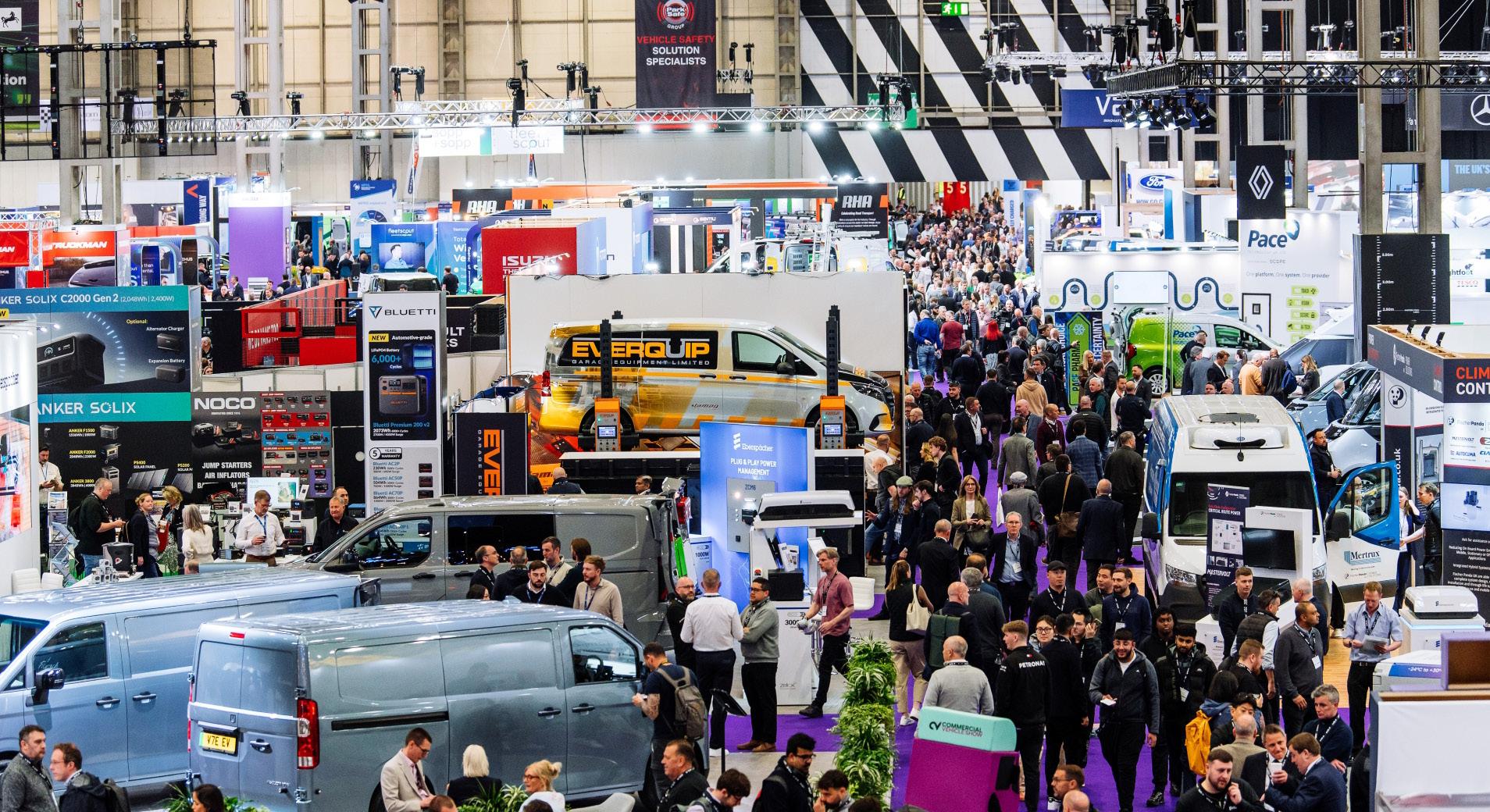
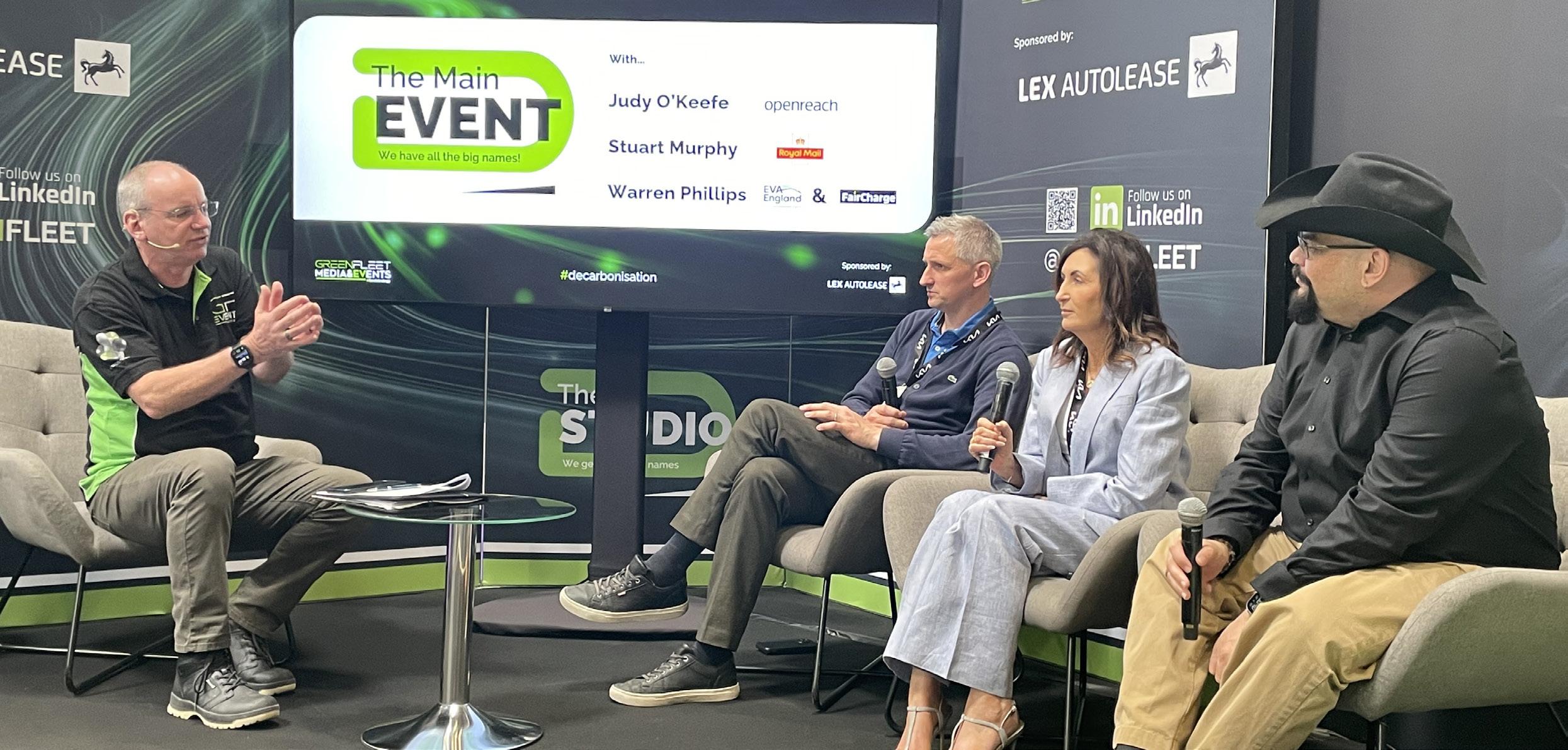
Additional launches, including Iveco’s eJolly and eSuperJolly, BYD’s first UK van, the Dolphin Cargo, and the latest Isuzu D-Max added further depth, underlining the mix of electric and conventional powertrains shaping the sector. Kia also showcased its expanded PV5 line-up with new variants, reflecting ongoing development of its electric van offering.
Together, this breadth of innovation reinforced the strong momentum behind zero-emission vehicle development across the sector.
Industry calls for flexibility and a multi-pathway approach
Across the seminar programme, it was clear that while progress is being made, adoption across commercial vehicles remains uneven.
Zero-emission uptake has reached around 22 per cent in cars, but lags at roughly 10 per cent for vans and just one per cent for HGVs. Continued government support, including around £1 billion in grants, and ongoing consultations on future HGV, bus and coach strategy were highlighted as key to accelerating progress.
However, industry voices stressed the need for a more pragmatic approach. Electrification alone will not deliver the transition at the required pace, and alternative fuels such as hydrogen and biomethane were widely recognised as playing an important role in the short term, offering meaningful carbon reductions where full electrification is not yet viable.
While
the UK’s ZEV mandate requires 24 per cent of new van sales to be zero‑emission by the end of 2026, current figures remain below this trajectory. This gap framed much of the discussion across the Commercial Vehicle Show
Operators also highlighted the commercial realities of transition, with cost, infrastructure and operational constraints limiting the speed at which fleets can shift.
GREENFLEET’s Decarb Hub
The sustainability agenda continued at GREENFLEET’s Decarb Hub, which returned to the show for a second year.
The hub served as a one-stop-shop for fleet operators, giving them access to expert advice and practical support to help them achieve their decarbonisation goals.
A strong programme of content saw a mix of fleet managers and industry professionals share their advice and experiences on electrifiying their fleet and installing charging infrastructure, alongside ways to decarbonise heavy goods vehicles through alternative fuels.
Delegates could also visit the dedicated ‘pod holders’, who showcased their latest products, services and expertise designed to support fleets. E
F A broader transport conversation with Bus & Coach Expo
The co-location with the Bus & Coach Expo expanded the conversation beyond vans and trucks to the wider transport ecosystem.
Opening keynote and panel sessions focused on a “new era of buses”, setting the tone for a seminar programme centred on decarbonisation, infrastructure and cross-sector collaboration.
The combined event reinforced a clear message: achieving net zero will require a more joined-up approach across all vehicle types, supported by aligned policy and long-term investment.
A renewed sense of momentum
Nick Davison, event director of the Commercial Vehicle Show, said: “Following the close of this year’s Commercial Vehicle Show and Bus & Coach Expo, it’s clear that the energy across the halls has shifted dramatically in the right direction.”
“There was a renewed sense of momentum and optimism that we haven’t seen in quite some time, and it was felt by everyone in attendance. This uplift is reflected in the strong growth we’ve seen, with more exhibitors on

Decarb Hub served as a one‑stop‑shop for fleet operators, giving them access to expert advice and practical support to help them achieve their decarbonisation goals
the show floor and a significant increase in visitor numbers compared to recent years. The quality of engagement has been exceptional, and it’s been particularly encouraging to see such high levels of interest from exhibitors already looking to rebook for 2027.
“We’re incredibly proud of what’s been achieved, but this is just the beginning. We’re already making big plans to build on this success and continue growing the show further and further, ensuring it remains the must-attend event for the commercial vehicle and transport sector.” M
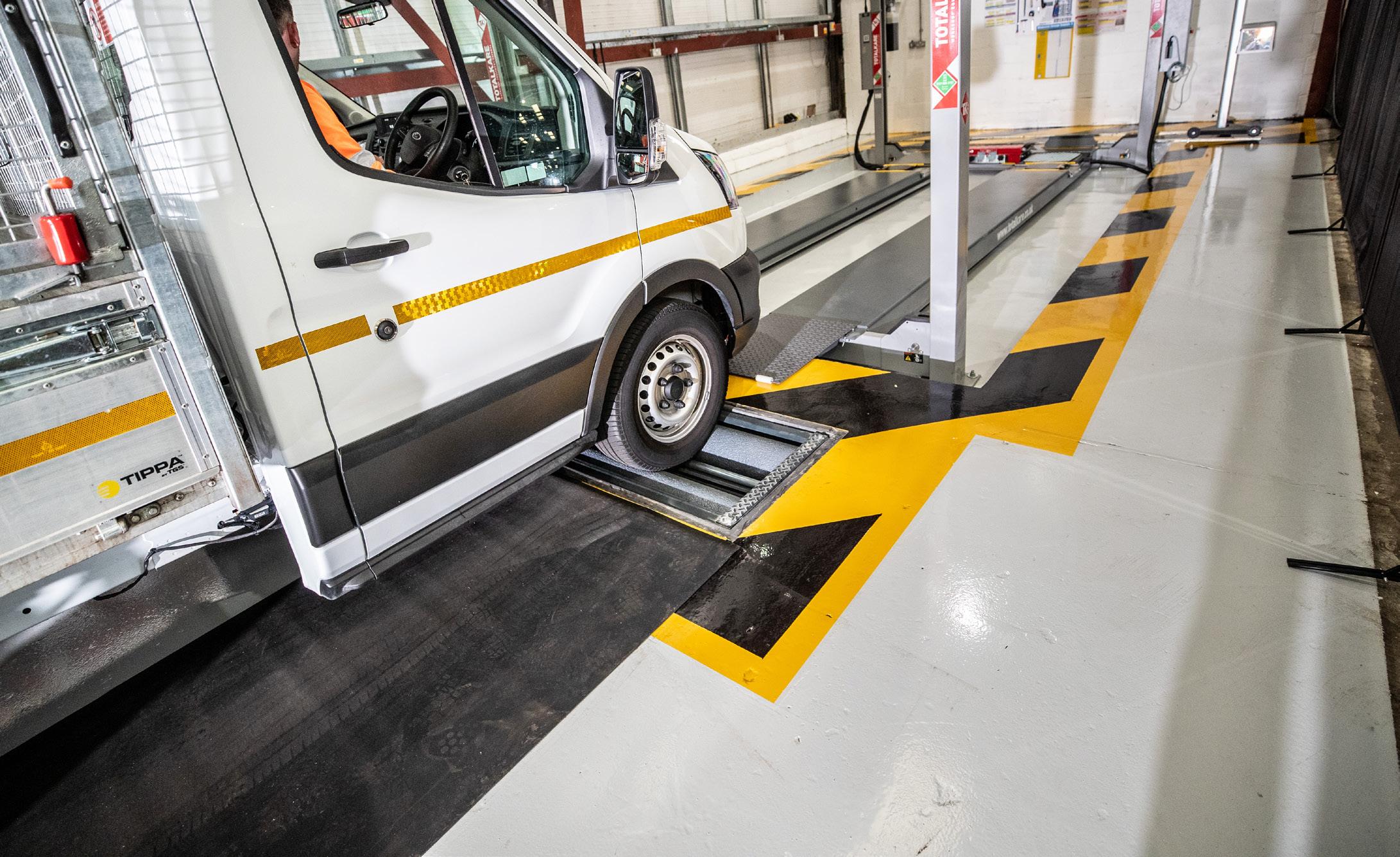
Road-to-Zero Roundtable: North West
The GREENFLEET Road‑to‑Zero Roundtable series stopped at Bolton Football Ground on 9 April to gather fleet operators from across the North West to discuss the key barriers to fleet decarbonisation, from infrastructure delays and charging challenges, to skills shortages, data integration and the complex transition of van fleets to electric
The GREENFLEET Road-to-Zero Roundtable at Bolton Football Ground brought together fleet operators, industry experts and key stakeholders to discuss the Northwest’s journey to net zero transport operations. Hosted by Gill Nowell, with support from the North West Net Zero Hub, and partners Jaama, Flexis and The AA Business Services, the event provided valuable insight into the challenges and opportunities facing fleet decarbonisation.
Discussions highlighted several key themes, including the mismatch between infrastructure delivery timelines and business requirements. Grid connections, planning approvals and permissions are still taking too long, while fleets need solutions in months. This
disconnect is one of the biggest blockers to faster electric vehicle adoption.
The complexities of scaling depot charging, and the ongoing cost challenges associated with electrification was also raised as a challenge.
Participants also identified vans as a particularly difficult vehicle segment to transition, citing limited model availability, payload concerns and policy uncertainty.
The importance of better data integration and addressing industry-wide skills gaps was also emphasised, with attendees agreeing that people, knowledge and collaboration will be just as critical as vehicles and infrastructure in achieving net zero vehicle ambitions. L

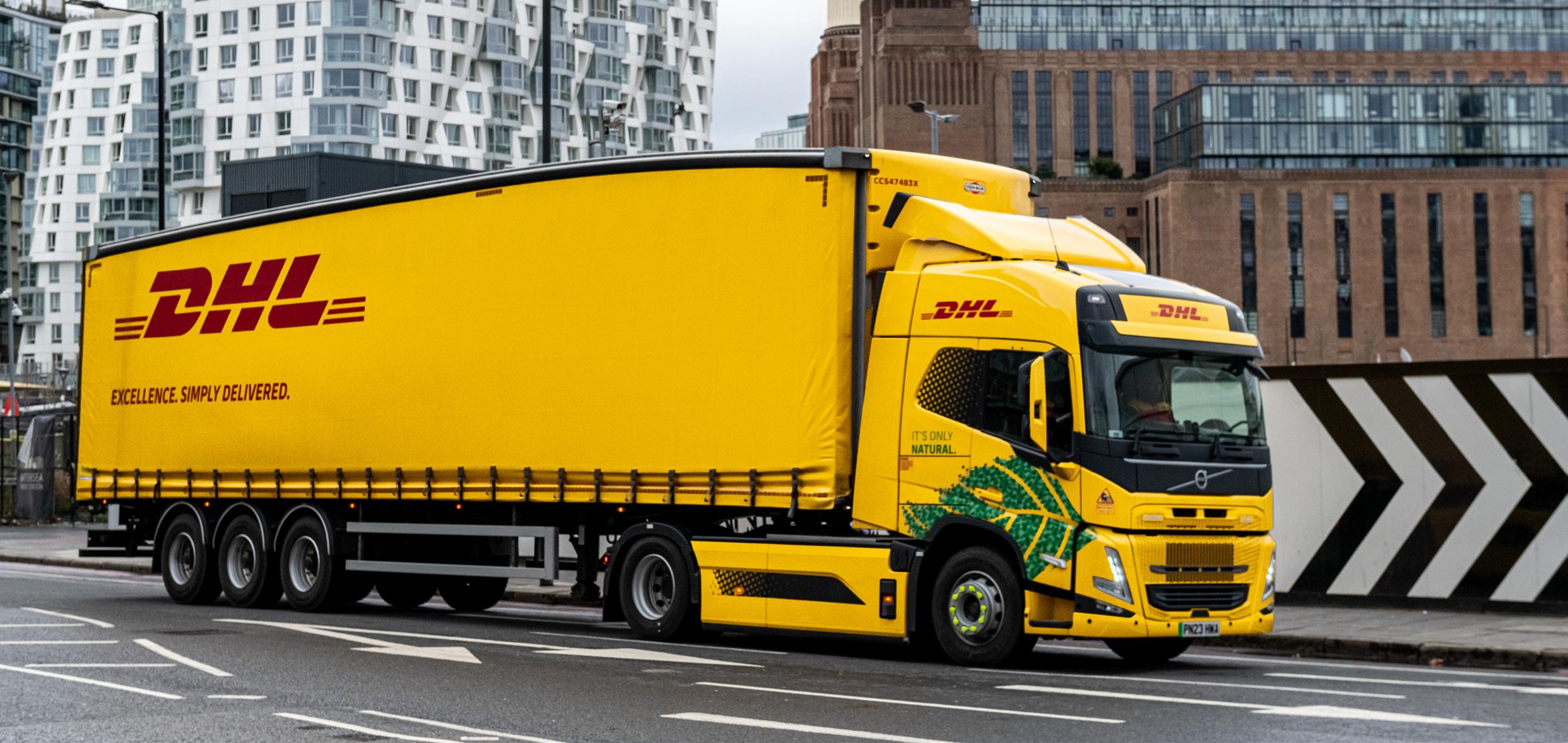
Alleviating transport pressures in the multi-fuel era
Gavin Murdoch, MD for network transport solutions at DHL Supply Chain UK & Ireland, outlines how the company is combining transport management technology, alternative fuels and fleet electrification to improve efficiency, strengthen operational resilience and reduce emissions across its transport network
For many businesses, the journey to net zero transport is well underway but the current operating environment remains defined by a series of pressures. Rising fuel costs, fluctuating delivery volumes and an increasingly complex regulatory landscape have made fleet optimisation more than just a costsaving or efficiency-driving exercise. Instead, it’s now a matter of operational resilience. While the transition to net zero is a key goal, the journey towards a greener fleet is also intertwined with how we alleviate the day-today pressures on our transport networks.
Optimisation as the foundation of sustainability
While much of the discussion around decarbonisation naturally centres on alternative fuels, the first step for any transport network to drive down emissions is to optimise
efficiency. In an era of volatility, the most effective way to alleviate transport pressure is to ensure that the existing network is performing at its absolute limit. Burning less fuel, running fewer empty miles and mapping smarter routes all contribute to emissions reduction, and technology is already delivering measurable results in this space.
Transport Management Systems (TMS) sit at the heart of modern fleet operations, enabling operators to allocate fleet and optimise routing and scheduling in ways that were simply not possible a decade ago. Combined with fleet management, tachograph management and carrier performance tools, these systems give operators real-time visibility to make better decisions on cost, service and carbon savings.
At DHL, we’re evolving our TMS landscape, standardising and simplifying our tools, which aids scalability across the business and helps E
F to drive productivity gains. As these tools mature, and the use cases for Agentic AI become realised, the opportunity to use them in realtime becomes genuinely exciting and unlocks new time, cost and fuel saving capabilities
However, technology only completes the picture when it also empowers the human element of our networks. From digital walk-round checks to sign-on-glass proofof-delivery, drivers’ days are increasingly digitised. This reduces the administrative burden and improves compliance, but it also provides the granular performance data that drives continuous improvement, such as fuel consumption per mile.
Strategic decarbonisation
Once a network is optimised to “burn less,” the focus shifts to “burning clean.” Ultimately, businesses are working towards the goal of a zero emission fleet but the transition to this requires a practical, blended approach. The reality for heavy-duty operations remains challenging. While EV technology is progressing and electric van adoption has grown steadily, the limitations regarding range and the availability of public charging infrastructure for HGVs are still significant hurdles. To achieve meaningful emissions reduction in the present and short-
Once a network is optimised to “burn less,” the focus shifts to “burning clean.”
Ultimately, businesses are working towards the goal of a zero emission fleet but the transition to this requires a practical, blended approach
term, the sector must leverage bridging technologies that offer immediate impact.
As a drop-in fuel, Hydrotreated Vegetable Oil (HVO) has become a cornerstone of the green fleet transition. It allows operators to cut carbon emissions by up to 90 per cent without the need for new infrastructure or fleet replacement. At the same time, bioLNG and bio-CNG gas trucks remain a key intermediate technology for long-haul distribution, providing a proven, commercially viable alternative to diesel that delivers up to an 80 per cent reduction in emissions. By adopting a multi-fuel strategy, businesses can avoid the trap of coming to a standstill in their decarbonisation journey, waiting for a perfect public charging network or better
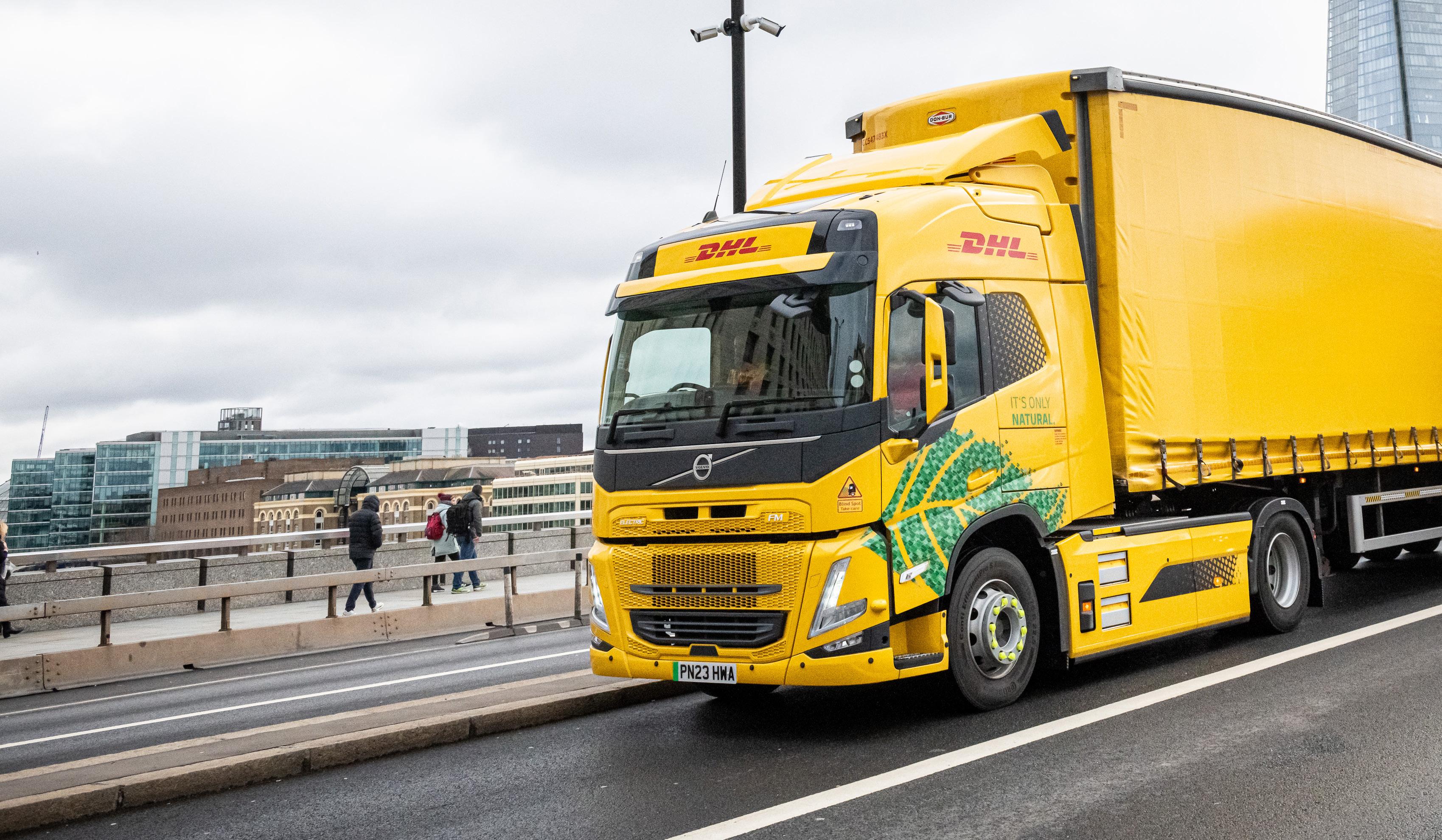
availability of electric HGVs. Diversifying fuels creates resilience in transport networks, delivering immediate carbon savings and also ensuring the network remains functional if one energy source is under pressure.
Keeping up momentum on electrification
While gas and HVO have a key role to play, the strategic electrification of fleets remains a core focus for long-term decarbonisation, offering a viable, zero emission alternative to traditional diesel vehicles.
At DHL, we have been driving this forward, introducing Volvo fully electric 40-tonne trucks into our operation in 2023 following our 16-tonne launch in 2022. These vehicles, with a range of up to 300km, are already proving their worth on full round-trips for retail and automotive customers.
To support this, we are investing heavily in our own charging infrastructure, with much of this powered by renewable energy generated on-site at facilities like our BREEAM “Outstanding” Coventry hub.
Transparency and the value of partnership
As businesses navigate the transition to zero emission transport networks, the
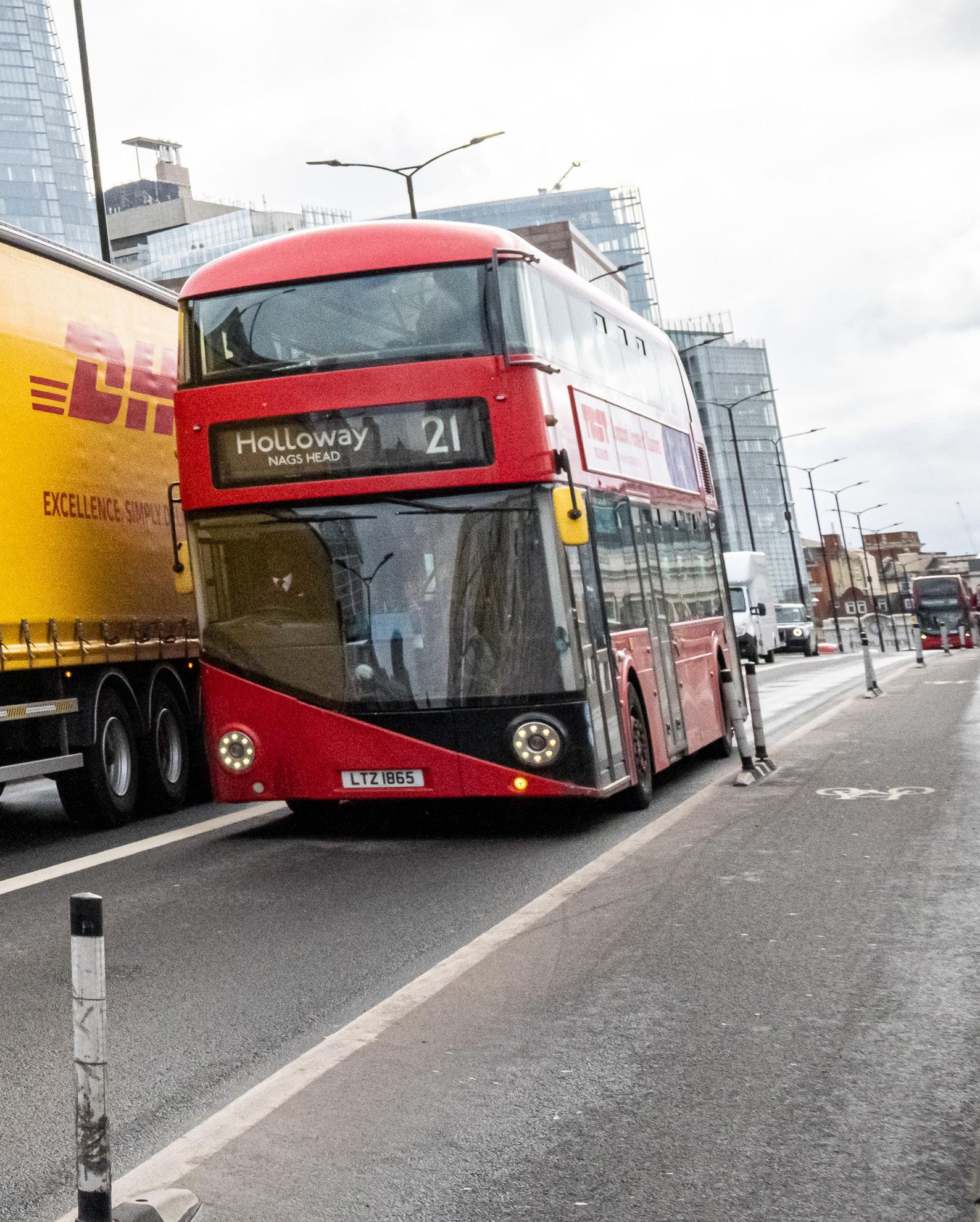
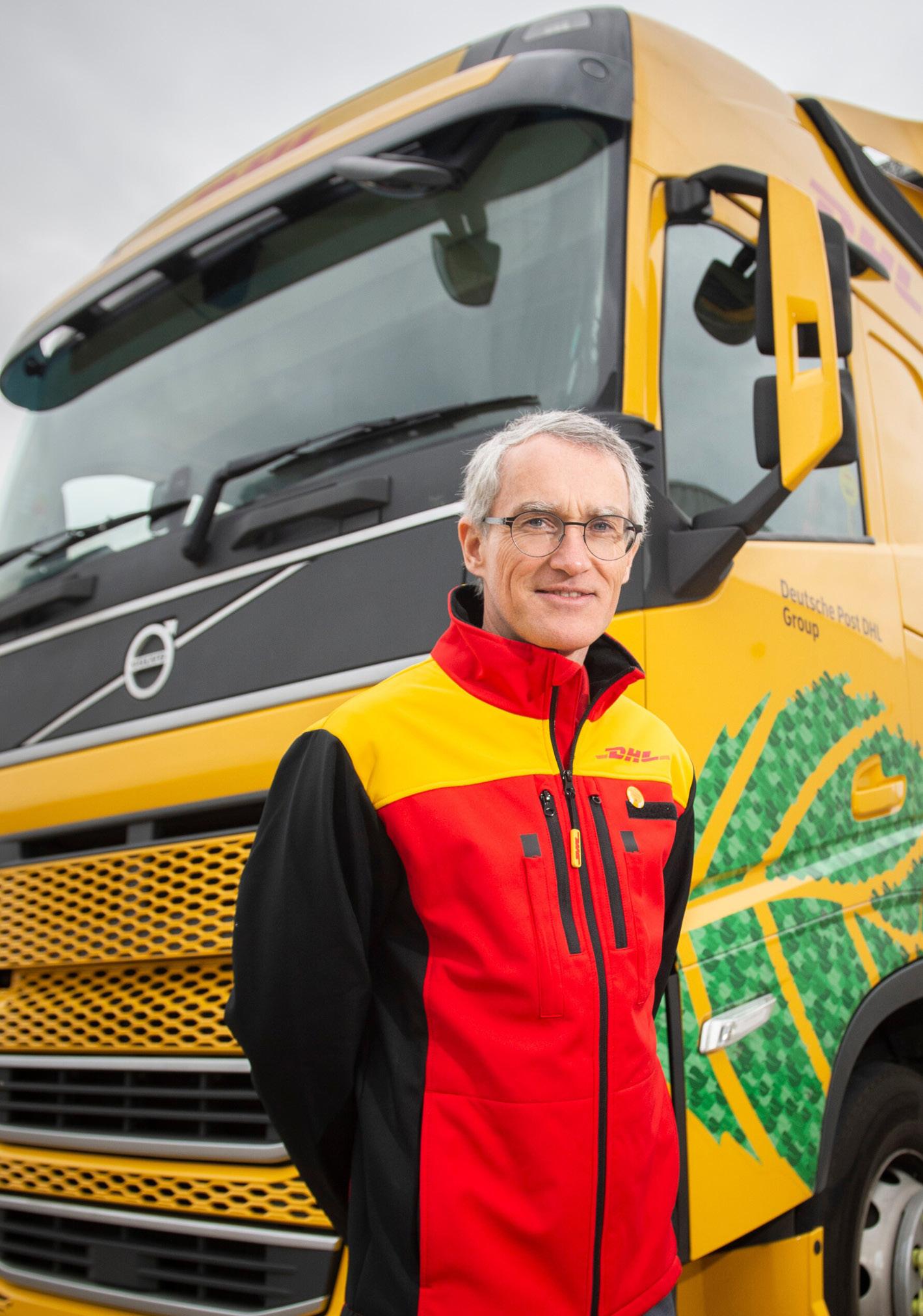
requirement for transparency has moved from a “nice-to-have” to a commercial necessity. Customers and stakeholders now want to see detailed, data-backed reporting, while simultaneously keeping costs down.
This is where the value of a third-party logistics partner like DHL becomes clear. The investment required for alternative fuel fleets and the complexity of managing multi-fuel infrastructure represent major barriers for many businesses. By partnering with an operator that has already invested in scaling the right technology and infrastructure, businesses can drive down their Scope 3 emissions while avoiding major barriers and complexity.
The road to resilience
Ultimately, building a sustainable and optimised transport network depends on the strategic coordination of transparency, emissions reduction and integration. This journey begins with the use of data to pinpoint exactly where a network is under strain, followed by a “burn less, burn clean” philosophy that prioritises route efficiency before transitioning to alternative fuels. By ensuring that these new technologies and energy sources are integrated into a scalable infrastructure rather than treated as isolated additions, fleet operators can create a resilient operation that is prepared for both future growth and the long-term road to net zero. L
Gavin Murdoch, managing director for network transport solutions at DHL Supply Chain UK & Ireland
We have the power
The new Isuzu D-Max and Masters of the Universe

Witness a fully electric, fully capable warrior
isuzu.co.uk/ev