Improving the cyber resilience of the UK government and public sector is central to BlueFort’s mission. Our security solutions and services are widely adopted across central departments and local authorities - enhancing governance, compliance, and operational resilience.
Cyber Assessment Framework (CAF)
Meeting CAF requirements means proving security outcomes, not just controls BlueFort helps organisations align with CAF expectations through practical, outcomedriven identity solutions
Continuous Cybersecurity Modernisation
BlueFort supports the public sector in adopting modern security technologies, refreshing legacy systems to keep pace with evolving threats. We focus on best-inclass solutions that are simple to manage and built for long-term resilience
Cost Control
BlueFort helps streamline and optimise security investments, reducing complexity while improving overall effectiveness Work
Identity Security
Complete identity protection from legacy to cloud
Secure & Compliant AI adoption
Implement AI tools securely while protecting data and meeting compliance
Security Platforms
Maximise protection and efficiency with integrated, modern security platforms
Zero Trust
Simplify and strengthen remote access with Zero Trust architectures
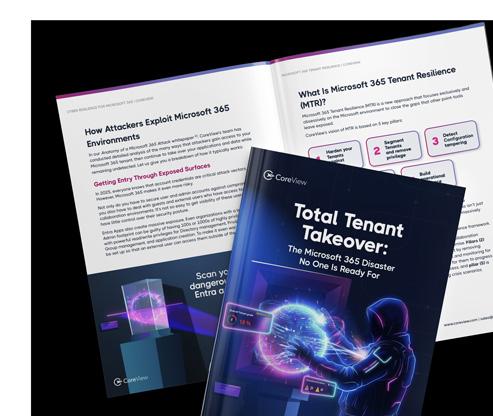
SaaS security, PAM vaults, and backups protect users and data, not the tenant-level roles, policies, and configurations that attackers target.
HOW COREVIEW HELPS YOU
Backup your Entra, Intune, Defender, Purview, and M365 configurations
Restore your configurations in a disaster scenario
Maintain a version history of configuration change
Comply with UK Cyber Assessment Framework, NIST, CIS, and Essential 8 disaster recovery standards
Roll back to a previous state on demand with point-in-time restoration
Significantly reduce operational downtime in the event of a disaster
£30 million to boost innovation
The government has announced up to £20 million for regions across England and Wales to strengthen their local innovation economies.
The money comes from the competition element of the UK government’s £500 million Local Innovation Partnerships Fund.
The funding will help the the South West become one of the best places in the world to develop, test and use autonomous technology like drones on land, at sea and in the air.
It will also bring together the OxfordCambridge Growth Corridor’s strengths in autonomous vehicles, high - performance engineering and space technology, helping ideas move faster from test track to real - world use.
The money will support Greater Lincolnshire in turning its mix of agri -tech and defence expertise into real - world products and growing businesses.
In South-West Wales, it will be spent on Energy Security, helping scale offshore wind, hydrogen and cleaner industrial energy using the region’s ports and infrastructure; and Materials Security, developing new ways to recover, recycle and process critical materials so UK manufacturers rely less on imports.
Elsewhere, it will help East Midlands manufacturers to scale up clean energy and advanced production technologies and jointly support the regions of East Yorkshire and Hull, and separately Tees Valley, with up to £30m to support those regions working on a powerful clean energy and industrial...
First companies to receive support from Sovereign AI
The first companies are set to receive support from the UK’s £500 million Sovereign AI. Sovereign AI will invest directly in the UK’s most promising AI startups, help them scale quickly, and give them the support they need to compete with the best in the world.
The first beneficiaries are working on technologies that could transform daily life – from tackling devastating diseases like Alzheimer’s and Parkinson’s, to building AI systems and computer chips that push the limits of what today’s technology can do.
Sovereign AI’s first equity investment will be in the AI infrastructure startup Callosum, while 6 further startups will receive access to some of the UK’s foremost supercomputing capacity through the Unit.
Startups backed by Sovereign AI will gain access to support normally inaccessible for them. This includes fully funded access to the UK’s largest AI supercomputers, with up to 1 million GPU hours available per startupproviding the horsepower needed to help train state of the art AI models.
Every company receiving investment will get visas decisions within a working day, plus access to an initial 10 cost-free visas for the world’s top R&D talent to come and work for them in the UK.
Start-ups will also receive government support avigating access to data, early procurement opportunities, independent product validation and routes into new approaches to regulation...
GOVERNMENT
New strategy sets out how science and engineering will support government decision making
The government has published a new strategy, which describes how the Government Science and Engineering (GSE) profession will strengthen capability and leadership across departments.
The Government Science and Engineering profession strategy 2026 will place greater emphasis on how science and engineering capability is developed and sustained across government, with clearer priorities for existing programmes.
The new strategy introduces new and strengthened initiatives, including a mid - career leadership offer for scientists and engineers, work to improve skills, recognition and reward, and continued development of existing programmes such as the Science and Engineering Fast Stream.
Professor Dame Angela McLean, Government Chief Scientific Adviser and Head of the GSE profession, said: “Science and engineering equip us with the tools to help us understand our changing world and shape decisions to create a more resilient future for the United Kingdom.
“This strategy sets out how the Government Science and Engineering profession will put science and engineering at the heart of government decision making, ensuring we have the very best expertise to ask the right questions, provide evidence, and make decisions that will stand the test of time.”
Digital service to be default for planning and enforcement appeals
The Planning Inspectorate has announced that a new digital service will now be the primary route for planning and enforcement appeals.
The new service is designed to make it simpler and faster to submit appeals.
The legacy Appeals Casework Portal (ACP) has now stopped accepting new planning and enforcement appeals.
The ‘Appeal a planning decision’ service has successfully been rolled out across the country. Built to meet the latest Government Digital and Data standards, the new platform provides a more intuitive, secure, and resilient experience for appellants, agents, and local authorities.
The following appeal types are already supported on the Appeal a planning decision service: Householder; Planning; Listed Building; Commercial Planning; Commercial Adverts and Advertisements; Enforcement Notice; Enforcement Notice Listed Building; and Lawful Development Certificate.
A small number of specialist appeal types are not yet hosted on the new service. These will be onboarded throughout the 2026/27 financial year.
£80 million announced for life sciences RESEARCH & DEVELOPMENT
£80 million has been announced for UK life sciences in a bid to give patients better access to medicines.
These investments come from the government’s Life Sciences Innovative Manufacturing Fund (LSIMF) and will support over 500 jobs.
This announcement takes the amount invested so far this year in UK life sciences to £600 million.
The money will strengthen regional clusters, create new career opportunities across the country and help forge a new era for UK life sciences, which is on track to be boosted by £1 billion through the Fund by the summer.
Science and Technology Secretary Liz Kendall said: “By manufacturing more medicines in this country we can make sure more people get the vital treatments they need. These investments will make a real difference to people across the country and show our Life Sciences Sector Plan is bearing fruit.
“We are delivering the advanced treatments that patients need, growing our economy, and creating and protecting highly skilled jobs for people across the UK.”
Dr Zubir Ahmed, Health Innovation and Safety Minister, said: “I have seen first-hand the difference latest treatments can make to a patient’s life. These investments mean more people living with conditions like bipolar disorder will benefit from cutting-edge medicines - developed and manufactured right here in Britain...
More top news stories from www.governmenttechnology.co.uk
Tech secretary calls for greater control over AI to protect national security: READ MORE
New package announced for fintech: READ MORE
AI companies urged to work with government on national cyber defence: READ MORE
£48 million for farm tech: READ MORE
UK Cyber Security Council launches new professional title: READ MORE
Study to look at how AI court transcripts could improve justice: READ MORE
New transport strategy to enable ‘tap and go’ travel: READ MORE
Pilots begin in Barnsley tech town: READ MORE
AI prioritised for national security
AI AI is one of four areas set to be recognised as critical for national security.
Shipbuilding, steel, AI and energy infrastructure will all be recognised as critical for national security
New guidance will prioritise contracts for British business where necessary to protect national security.
The announcement comes with the government saying that recent events have shown the fragility of global supply chains and the importance of securing domestic capacity in key sectors which are vital for national security.
This is the first time the government is introducing clear guidance on how departments can protect the UK’s economic security and build resilience across the four sectors.
Cabinet Office Minister, Chris Ward said: “This Government is backing British businesses and the working people who power them. These reforms are about using the full weight of Government spending to support British jobs, protect our national security and grow our economy.
“Whether you make steel in Scunthorpe, build ships on the Clyde or run a small tech firm in the Midlands, this Government is on your side.”
Are you ready for HMRC and Joint & Several Liability reform?
As Joint & Several Liability takes effect from April 2026, public‑sector end‑hirers must strengthen labour‑supply‑chain governance
What previous reform has already taught the public sector
The public sector has already learned, expensively, underestimating labour supply chain risk. Post IR35 reform, government bodies recognised ~£263 million in additional tax, provisions and liabilities for failing to implement the rules correctly. These are audited losses (NAO) and a clear signal of how HMRC will treat future failures.
What Joint & Several Liability changes
From 6 April 2026, JSL applies to labour supply chains involving umbrella companies. Where an umbrella fails to pay PAYE/NIC, HMRC can pursue the recruitment agency and, in certain circumstances, the end hirer directly, with no “reasonable care” defence. End hirers are directly in scope where there is no agency in the chain, a connected/common ownership umbrella is used, or the agency is based offshore. Due diligence only determines how defensible your position is when scrutiny arrives.
Why public sector supply chains are exposed
Most public sector labour supply chains are multi tiered, with records dispersed across HR/Procurement/Finance. Fragmentation creates blind spots leaving organisations exposed to “knew or should have known” challenges when non compliance is uncovered. If HMRC requested your labour supply chain “defence file” tomorrow, would you be handing over scattered emails and certificates, or a single, audit-ready evidence pack?
The Virtual
Compliance
Office solution
To close this gap, OPRaaS provides a Virtual Compliance Office service on a retained basis,
powered by its Labour Supply Chain Assurance (LSCA) 2.0 platform. The service is designed to avoid a repeat of the IR35 experience by delivering continuous, audit ready assurance and embedding structured governance across complex labour supply chains. Outputs include strategic review/gap analysis of current capability/governance; technical and operational support to interpret and apply new legislation; ongoing risk checks across agencies, umbrellas and sub tiers; access to the OPRaaS LSCA training and audit platform and application of the LSCA 2.0 methodology, plus-time stamped records, exportable evidence packs and a live risk register with actions, owners and timelines.
Act now to build an audit-ready defence
With JSL enforcement from April 2026, building an audit ready oversight model is no longer optional. Public sector end hirers acting now will protect public funds, maintain operational resilience and be better positioned when HMRC scrutiny arrives. M
FURTHER INFORMATION
For further information on the Virtual Compliance Officer service, please contact Chris Dunn, OPRaaS at info@opraas.co.uk
Why the Cyber Security and Resilience Bill must go further to protect the UK economy
Chris Dimitriadis, chief global security officer at ISACA, outlines how the Cyber Security and Resilience Bill provides an important foundation for UK cyber governance and where further measures could strengthen national resilience
The Cyber Security and Resilience Bill is currently making its way through UK Parliament. At its core, the Bill is being introduced to update and strengthen the UK’s outdated cybersecurity rules, replacing and expanding the old framework from 2018 to better protect critical infrastructure and essential services from cyberattacks.
If made law in its current form, it would bring more types of organisations into scope, such as large data centres, managed service providers, and key suppliers, which make up key components of the UK’s digital infrastructure. It will also tighten incident reporting rules and gives regulators and government stronger powers and penalties to enforce security standards.
Ultimately, its overall aim is to make the UK’s digital systems more resilient to evolving threats and keep essential services running safely. There’s no doubt that it is a vital step forward in updating outdated cyber laws.
But as it stands, it doesn’t go far enough. It must go further by expanding its scope,
strengthening accountability and mandating resilience testing to fully protect the UK economy from escalating cyber threats.
Why up-to-date legislation is critical for the UK
This is such an important piece of UK legislation, especially in the wake of highprofile cyberattacks which have shown just how devastating cyber incidents can be. Attacks on major UK retailers such as M&S and The Co-op are stark reminders of just how vulnerable the UK’s digital ecosystem has become. They exposed significant weaknesses in digital infrastructure, wiped millions off share prices, and disrupted operations for months at a time.
Beyond the financial impact, the attacks halted everyday services that people rely on, affecting supply chains and customers, and significantly damaged those business’ reputations. They show that cyber incidents are no longer abstract IT issues but real-world disruptions with huge economic and social consequences. E
F And the threat landscape will only get more severe. As organisations become more digitally connected and increasingly reliant on data, the potential attack surface for cybercriminals continues to expand. ISACA’s State of Cyber 2025 research found that almost two in five (39 per cent) European IT and cybersecurity professionals report that their organisation is experiencing more cybersecurity attacks than this time last year, while a further 27 per cent report facing a similar number of incidents. This expectation reflects a sense of realism rather than pessimism. Cyber attackers are becoming more sophisticated, while many organisations are struggling to keep pace with evolving threats. Without stronger governance and regulation, these risks will continue to escalate, with far-reaching consequences for businesses, individuals, and public trust.
In its current form, the Bill does not go far enough
In its current form, the Bill would mean that digital service providers such as cloud platforms and data centres would fall in scope and be subject to closer scrutiny on their cyber resilience. Whilst a step in the right direction, many major private sector employers will remain outside of meaningful cyber regulation and legislation. This poses a problem for resilience. Cyber regulation has to date focused on Critical National Infrastructure – when digital systems weren’t so developed, this was logical and sensible to protect the UK economy. But now every large organisation runs on digital infrastructure. Without the right defences, they are all vulnerable to cyberattacks which can disrupt daily life.
Furthermore, the Corporate Governance Code, which sets standards for premium-listed companies, applies to the largest publicly traded
companies in the UK, including M&S, but currently the Code only asks that these firms “have regard to” cyber risks and security in their annual reports. It is no surprise, then, that progress has been limited: without robust regulatory requirements, firms that have a major role in the UK economy have been left to identify and justify their own incentives for investing in more resilient systems.
The Cyber Security and Resilience Bill is a critical opportunity to close these gaps. Without stronger standards and clearer accountability, cyber risk will remain a drag on our economy and a growing threat to national security. It is imperative that the Government expands the legislation to make cyber risk a clear part of corporate governance for all major employers –with this in place, cyberattacks are so much less likely to have such an impact.
Our practical recommendations for the UK Government
ISACA has three practical recommendations for government policymakers to strengthen the Bill further and make sure it delivers meaningful impact. These cover: scope and governance, accountability and competency, and resilience and testing.
Scope and governance
First, we recommend introducing a statutory duty for the Government to report on the uptake of its new voluntary code, the Cyber Governance Code of Practice. The Code is presented by Government as its go-to governance framework for all medium and large UK businesses who rightfully fall outside scope of the Bill. A statutory report would enable Parliament to track progress and identify sectors where voluntary adoption remains low.
Further, the Bill should enable the Government to require annual board-level evidence to
the Code’s principles for sectors where risk is rising or uptake is insufficient. This would allow the Government to escalate uptake in a proportionate way, without imposing technical controls on lower-risk organisations.
Structured maturity assessments, such as those based on the CMMI framework, offer a proven way for organisations to benchmark their cyber governance capabilities and demonstrate meaningful progress over time, moving beyond simple compliance checklists toward genuine organisational improvement.
Accountability and competency
Currently, the Bill does not require all regulated organisations to name a clearly accountable individual for cyber resilience, or to ensure that those responsible have the right skills and experience. Having accountable individuals within organisations who are responsible for resilience is effective. For example, in industries such as nuclear and civil aviation, this is addressed through the principle of “suitably qualified and experienced persons”, which helps ensure clear responsibility and informed decision-making at leadership level. Without similar requirements, there is a risk that accountability becomes too diffuse and cyber compliance becomes another boxticking exercise rather than a serious leadership responsibility. Introducing clear competency expectations would help ensure that the individuals overseeing cyber governance have the knowledge and training needed to do the job effectively.
Resilience and testing
Mandatory resilience testing is a proven way to enhance how well organisations can respond to real cyberattacks. In the financial services sector, the Financial Conduct Authority has required firms undertake regular, realistic cyberattack simulations for over a decade. These exercises help uncover weaknesses that paperwork alone can miss and give senior leaders a clear, practical understanding of how resilient their organisation really is.
However, the Bill does not currently mandate similar requirements for other essential sectors – despite ISACA’s State of Cyber 2025 research finding that only two in five professionals (38 per cent) are completely confident in their organisation’s ability to detect and respond effectively.
Giving regulators the power to require regular resilience testing from all in-scope organisations,
Only two in five professionals are completely confident in their organisation’s ability to detect and respond effectively
such as attack simulations, recovery exercises, communications drills, and penetration testing, would significantly strengthen the Bill. These measures would support continuous improvement and help ensure essential services can withstand and recover from major cyber incidents. Without structured testing, organisations risk relying on assumptions that may fail during a serious attack.
Adopting recognised maturity models like CMMI, as well as standards such as the Software Security Code of Practice, would give organisations a structured path to measure and improve their resilience posture, ensuring that testing drives lasting capability.
A critical moment to get UK cyber regulation right
The Cyber Security and Resilience Bill is a vital step towards strengthening the UK’s cyber defences. But it must be more ambitious if it is to meet the scale of today’s threat landscape. Cyber risk now affects every major organisation and, by extension, the everyday lives of the UK general public, making it too important to leave large parts of the economy outside meaningful regulation.
By expanding the Bill’s scope, strengthening accountability, and embedding good cyber governance across all major employers, the Government has an opportunity to deliver lasting resilience. Failing to act risks leaving the UK exposed to increasingly frequent and damaging cyber incidents. Getting this right now will help protect our economy, our essential services, and public trust in the UK’s digital future.
Chris Dimitriadis, chief global security officer
at ISACA
The Cyber Health Show 2026 | IGPP
How can we ensure the safety of our patients if our healthcare systems are vulnerable to relentless cyber attacks?
The digital health landscape is under unprecedented strain. In 2025, the National Cyber Security Centre (NCSC) dealt with 204 “nationally significant” cyber-attacks, an average of four major incidents every week.
The UK government has responded by proposing strengthened laws to improve cyber-defences for essential services, including healthcare.
At the same time, recent news reports confirm actual data breaches affecting NHS organisations, underlining the reality behind the stats and reinforcing the urgency for action.
Many NHS trusts and care providers continue to rely on legacy infrastructure and systems that are increasingly vulnerable in
today’s threat environment. The rapid adoption of connected medical devices and cloud-based systems expands the attack surface, while evolving supply-chain and third-party risks raise exposure from external providers. Furthermore, uneven cyber maturity across organisations and gaps in incident preparedness leave health services vulnerable to disruption and data loss.
The Institute of Government & Public Policy’s Annual Cyber in Health Conference and Exhibition 2026 has been designed around the current cybersecurity challenges in the NHS, strategies for resilience, cultural transformation, innovations in cybersecurity, the importance of collaboration and learning,
and the outlook on emerging trends and potential threats in healthcare cybersecurity.
Join the Institute of Government & Public Policy for the Annual Cyber in Health Conference and Exhibition 2026, which will explore strategies for minimising cybersecurity risks for health and social care organisations, safeguarding patient, service user, and staff data, and implementing measures to ensure rapid recovery from cyber attacks.
Agenda for the day
The day will begin 9.30 with the chair’s opening remarks.
The first session of the day ‘From Legislation to Frontline: Delivering the UK Cyber Security & Resilience Bill in Health and Social Care’ will look at the the policy direction shaping healthcare cybersecurity; examine accountability at Board and system level; explore supply chain and third-party obligations; and identify priorities for implementation across regions.
The 10:00am slot ‘Cyber Threats, Legacy Systems & NHS Vulnerability’ will assess the current cyber threat landscape facing healthcare; understand the risks posed by legacy infrastructure; and evaluate system-wide cyber maturity.
A panel discussion will look at ‘When the System Goes Down: Incident Response,
Recovery & Clinical Impact’. The panellists of this session will be discussing the realworld clinical and operational consequences of cyber incidents across health and care systems. Drawing on recent experience and regional insight, they will explore how system outages impact patient safety, elective recovery, diagnostics and emergency services, as well as the leadership pressures faced during live cyber events. The discussion will examine crisis governance, communication strategies, recovery planning and business continuity frameworks, while also addressing difficult questions around accountability, transparency and ethical decision-making in the midst of disruption.
In the afternoon ‘Data Protection, Patient Safety & Public Trust in a CyberVolatile NHS’ will highlight the regulatory expectations surrounding data protection; examine cyber security as a patient safety issue; and explore public trust and transparency.
In the session entitled ‘Future-Proofing Healthcare: AI, Supply Chain & Secure-byDesign Innovation’, attendees will understand emerging cyber risks linked to AI and digital innovation; evaluate supply chain security and assurance models; explore secureby-design principles; identify strategic opportunities for innovation with resilience.
At the end of the day, a Panel Discussion will look at ‘Building a Cyber-Ready NHS Workforce: Culture, Capability & Leadership Accountability’. The panellists of this session will be discussing how the NHS can build a sustainable, cyber-ready workforce capable of responding to evolving digital threats. The conversation will explore leadership accountability at board level, current capability gaps across systems, and the challenges of embedding cyber awareness beyond IT departments into frontline clinical and operational teams. Panellists will debate how to move from compliance-driven approaches towards a culture of shared responsibility, ensuring cyber resilience becomes an organisational priority rather than a technical afterthought. Tickets are free for the public & voluntary sectors using discount code PSI-IGPP M
Cutting through complexity in digital public services
As CIOs and transformation leaders work to transform public services, XMCS brings proven experience and techniques to accelerate understanding the present, shaping the future and creating programmes to get there
The challenge
In their article, techUK have neatly summed up the challenge faced by the public sector, in delivering world leading digital public services.
So, what should you, as a CIO, CTO, Transformation Director or similar do about it?
The obvious answer is: become the best you can at “getting your arms around” complexity, integrating services (business as well as technology), and being an “intelligent supplier” to your organisation and an “intelligent client” to your supply chain.
How XMCS can help
Easier said than done? XMCS has decades of experience in designing and launching high-performing organisations and setting up transformation in the public and private sectors. We help executives to quickly break the organisation’s external services down into internal services, understand how they inter-operate and explore transformation options. We create properly integrated, practical transformation programmes (whether using Agile, Waterfall or Hybrid). We set up procurements to buy or projects to build new services. We build intelligent client capabilities – supporting and coaching the organisation until it is fully mature.
Our successes include:
DWP Universal Credit – Post-PAC hearing, we created proper integration of the disparate work/teams for Operating Model/Roadmap, Agile Delivery and Programme planning/reporting.
Cabinet Office – We stood up the GMPP Programme that created the “Rosa” pangovernment shared secure technology service for working at “SECRET”.
ONS – We created a security transformation programme to implement “security by design”, appropriate to the new data that ONS would be receiving (and holding in a new Cloudera data lake) from HMRC and DWP under the Digital Economy Act.
Tunstall Healthcare – We created a new deployment project method to help this £100m t/o TeleHealthCare Technology business become a Managed Services provider
We also: launched a US bank in the UK; ran Aviva’s global SharePoint/Intranet implementation (cited by Steve Ballmer in the top 5 globally, for pace); helped set up MetroBank; were asked by one of the big-4 to advise on their global implementation of O365; and advised Edinburgh City Council on a £1.3Bn TCV outsourcing programme.
Get in touch
So, if you need help to get your arms around complexity, get in touch with our CEO, Duncan Hare for an informal chat. Duncan is a NISTA Advisor and High-Risk Review Leader; he was PwC’s Global Lead for Programme Management and he turned around the worlds biggest ever Oracle ERP programme (DWP’s CPS). He loves helping solve practical delivery challenges. You can reach him via enquiries@xmcs.co.uk or 020 7084 5760. M
The balancing act of delivering world-leading digital public services
Heather Cover‑Kus, associate director for central government and education at techUK, examines how delivering world‑leading digital public services now requires balancing sovereignty, security, capability and public interest
Weighing up the factors
Things move fast in tech and famously slowly in government. What does that mean for public sector technology? Unsurprisingly, it’s a mixed picture. The UK is ambitious about its approach to technology, and bold in its desire to deliver seamless digital public services; however, there are many variables to be weighed in the pursuit of that goal that might slow things down. To deliver world-leading public services today, a government must consider speed, cost, effectiveness, and trust.
In many ways, at its core, governance has always been an exercise in managing scarcity and balancing trade-offs. How should the budget be split between investing in the
long-term benefits of education versus the immediate, lifesaving demands of healthcare? Should the Government spend on roads and bridges or airports and harbours? Every policy decision carries an opportunity cost. In the current digital age, the decisions around delivering public services are more complex with a growing number of factors to consider and balance. AI or robotics? Speed or security? Invest to save or lower cost now?
There are two issues that have recently become important factors in public sector digital considerations – sovereignty and public interest. While these issues are not necessarily new, they have come to the forefront in light of the current financial and geopolitical context E
F of the UK. This article explores the impact of these two issues on public sector digital services and the tech supplier community that works with government to deliver them.
The Sovereignty Scale
In an increasingly connected world, the issue of digital sovereignty is clearly becoming more pressing. This growth in importance is the result of a two main factors.
The first is cross-border digital services – with the increased use of cloud computing and data centres, national borders are often crossed to deliver services that are efficient and costeffective. Data is constantly pinging across the globe. Moreover, those services are delivered by multinational tech companies with interests in many countries.
The second is geopolitical shifts. There is no doubt that there has been a seismic shift in global alliances recently. We are operating in a new geopolitical reality where traditional allies no longer behave predictably, and, conversely, certain non-traditional partners are proving to be surprisingly more reliable. These factors taken together have transformed sovereignty from a theoretical preference into a necessary consideration. When traditional geopolitical anchors shift, governments start to more deeply examine the network of interconnected cross-border digital services and the impact on digital services. In a
new geopolitical landscape, what does it mean to have digital sovereignty?
Despite its growing importance, digital sovereignty is probably the most cited yet least understood priority in modern policy. Everyone has a different interpretation of what it means. The Government has not provided a functional definition to operate from, so suppliers will often adopt a definition that aligns with their own commercial interests. We see a recurring pattern where the definition shifts to suit the specific agenda of the provider.
In reality, there is no “one size fits all” definition to be had. Issues of sovereignty will have a different significance in the defence and national security space than they do in education or health. Context matters. Additionally, issues of cost, control of data, and technical capability will all factor in considerations of the importance of sovereignty. Essentially, sovereignty is linked to issues of security and resilience and is an important factor to consider in what world-leading digital public services looks like for the UK.
The Government also must weigh up whether to procure from the market or develop in ‑ house
The path forward is found only in the delicate balance between security, sovereignty, and capability
We watch with interest to see how the government in the UK, and indeed other jurisdictions around the world will approach the issue of digital sovereignty as decisions on sovereignty will have a huge impact on the tech supplier market.
Reframing the Public Interest Test
The Government also must weigh up whether to procure from the market or develop in-house. While the build versus buy debate is not new, the Government has recently announced a new “Public Interest Test”, compelling departments to assess whether outsourced service contracts over £1 million could be delivered more effectively in-house. This test impacts over 95 per cent of central government contracts by value. They argue that this change will deliver value for money and provide “taxpayers a fairer deal by ending outsourcing by default”. However, this approach to procurement sets up a false tension and creates the impression that building in-house is better for the public than buying from the market. When it comes to technology, the choice of build vs buy is not a good versus evil debate. Private sector markets have an important role to play in driving innovation. Those companies are the creators and the risk takers. They sometimes offer capabilities and skills that are not always easy to find (in scale) in the public sector. Although the public sector is rapidly growing the size of its digital professional class, there is still a lack of digital skills in government. By the same token, government procurement plays an important part in supporting and developing markets and SMEs in particular. Government spending is a key element of economic growth and public procurement helps support and sustain native industries. Along with steel and shipbuilding, AI and energy infrastructure was recently recognised as critical for national security, with new guidance prioritising contracts for British business, where necessary, to protect our national security expected to be published.
There will be times when developing inhouse may be more cost-effective, or secure, or possibly even faster – and in these instances, it
is in the public interest to do so. But one hopes that all procurement decisions are already undertaken with public interest in mind. If this is the case, the new Public Interest Test will not move the needle much and there won’t be many savings to be had here.
Balance for a Smarter State
In a world characterised by fragmentation, there are no easy answers or “off-the-shelf” solutions for digital governance. The path forward is found only in the delicate balance between security, sovereignty, and capability. Every choice to prioritise one will inevitably strain the others.
On Wednesday 13 May, techUK’s annual public sector conference Building the Smarter State (BtSS) will explore these topics under the theme World Leading Digital Services. The event looks to welcome over 200 senior leaders and decision-makers from across government and the technology industry to showcase how innovation is reshaping public services today and building the smarter state of tomorrow. There is big ambition to deliver leading digital public services in the UK –and there are pockets of excellence already happening. The conference will explore how to balance sovereignty, AI capability, security, and procurement power to deliver even better services going forward. M
Why local authorities must build a parallel path to resilience
In the last two years, the defining narrative of public sector IT has shifted from digital transformation to digital survival. A hard truth has emerged that no amount of policy language can soften: when a local authority’s Windows environment goes down, the community it serves goes down with it. Residents dependent on frontline services are left waiting, potentially for weeks
The NCSC Cyber Assessment Framework (CAF) compliance is now a live expectation and the Government Cyber Action Plan has set a clear benchmark for 2026. With nearly 28 per cent of the public sector estate still classified as legacy infrastructure, the vulnerability is a systemic risk to the communities they exist to serve.
The problem with better backups
Traditional disaster recovery (DR) has attempted to solve this by building a better backup of the same vulnerable system: restore the servers; re-image the machines; rebuild the environment. The most forward-thinking councils are beginning to reframe the problem entirely.
This “Broken Glass” strategy - the deliberate construction of a secondary, immutable path to service delivery that exists entirely outside the vulnerable Windows estateoffers a parallel environment that’s ready to deploy the moment the primary network fails. The technology to do this exists today: ChromeOS, Chrome Enterprise Premium and Cameyo by Google. ChromeOS , as a read-only, cloud-native operating system, is architecturally immune to the Windows-based ransomware attacks that have crippled other councils and organisations. Features such as process sandboxing and verified boot prevents malicious payloads from ever executing and spreading across the IT estate.
Combined with Virtual App Delivery using Cameyo by Google, which containerises legacy Windows applications and delivers them securely through the browser
(entirely eliminating the need for VPNs), frontline staff can be provided access to their exact working tools within minutes of a crisis event, on any available device.
Chrome Enterprise Premium (CEP) is the security layer that binds the solution together, enforcing Zero Trust access and advanced Data Loss Prevention controls right in Chrome Browser. In a crisis scenario when staff might be operating from shared or personal devices, CEP is the difference between a controlled recovery and a secondary data breach.
Resilience without rip-and-replace
For many organisations, the barrier isn’t appetite, but the assumption that resilience requires new hardware. ChromeOS Flex removes that assumption entirely, transforming existing end-of-life Windows devices into secure, cloud-first recovery stations. Sweating assets rather than replacing them, especially in the current IT procurement landscape, is the smarter, more sustainable choice.
As Google’s #1 Premier Partner in the UK and Ireland, Getech offers funded proofof-concept programmes using devices you already own. Click here to register your interest in a Discovery Day at Google London. M
One monitor, two screens: how the Philips 24B2D5300 is rethinking public sector workspaces
A new dual‑sided monitor design is offering public‑facing services a simpler way to share information clearly across the desk, improving transparency and reducing friction in everyday interactions
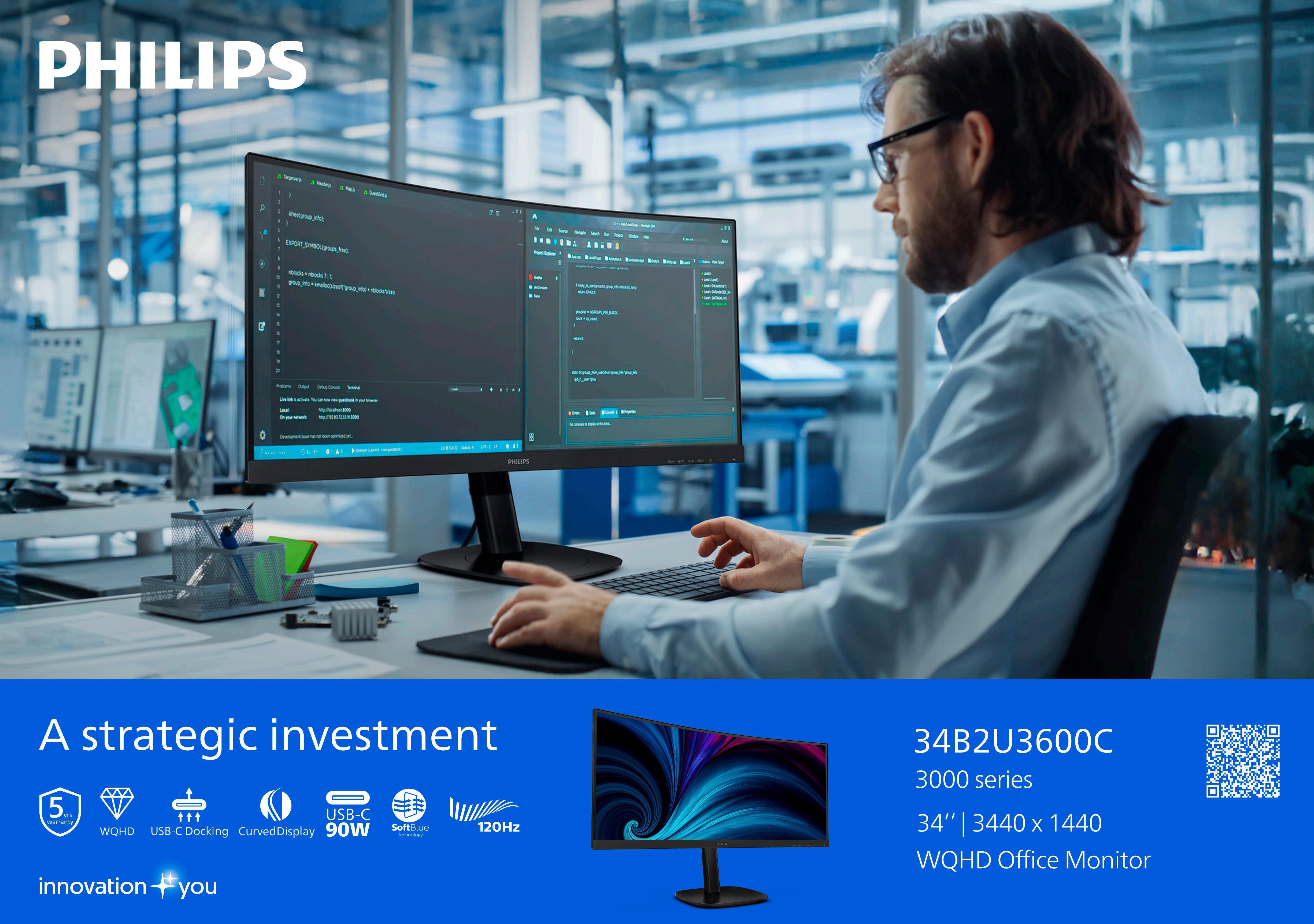
Anyone who has visited a council office, GP reception or job centre will recognise the scene: a member of staff turns their monitor around to show a citizen something on screen, only to lose sight of it themselves. A small moment, but one that highlights a persistent challenge in public-facing environments: the gap between what staff can see and what the person across the desk needs to see. Philips Monitors is addressing this with the 24B2D5300, a 23.8-inch Full HD business display with screens on both sides. Available in the UK from May 2026, the dual-sided design places a front-facing screen for the operator and a rear-facing screen for the visitor within a single compact unit. No second monitor, no extra cables, no additional desk space required.
The implications for public services are significant. At a housing office reception, staff can walk a resident through a benefits application while the resident follows along on their own screen in real time. In a planning department, an officer could display interactive maps for a visitor while retaining access to the case management system on their side. The built-in DualView function allows each screen to operate independently from a single PC, effectively replicating a two-monitor workspace without the footprint. The operator can also keep tabs on what the citizen-facing screen is showing: Philips SmartView enables a picture-in-picture or split-screen preview of the rear display directly on the front screen, so nothing is shared without oversight.
The 24B2D5300 is equally versatile beyond the single-PC scenario. Each side has its own dedicated HDMI and USB-C input, meaning two separate devices can drive each screen independently, turning one
monitor into a shared workstation for two users sitting across from one another. For organisations modernising service delivery on tight budgets, replacing two displays with one reduces procurement costs, simplifies IT asset management and frees up desk real estate. USB-C power delivery of up to 65W per port means each connected laptop charges through the same cable carrying the display signal. Staff wellbeing has been factored in, too. The 120 Hz IPS panel delivers wide viewing angles and accurate colour reproduction, while TÜV EyeSafe-certified blue light filtering and Flicker-Free technology reduce eye strain during long shifts. Sustainability credentials complete the picture: 85 per cent post-consumer recycled plastic, 100 per cent recyclable packaging, mercuryfree and PVC/BFR-free housing, plus Energy Star, EPEAT, TCO Certified Edge and RoHS certifications backed by a five-year warranty. The Philips 24B2D5300 represents a fundamental shift in how public services interact with the people they serve. By putting the screen on both sides of the conversation, it turns a routine transaction into a genuinely collaborative experience. M
Ways of Working in the local public service sector
Operating models now matter more than technology says Diana Rebaza, senior research analyst with Socitm
Over the past four decades, the sector’s gone through a huge shift in how work is organised, how decisions are made, and how our services are delivered. While technology has played a big role in all this, the most meaningful change has been organisational. Rather than technical.
Today, “ways of working” sit at the heart of our transformation. They shape how we collaborate; design services; work across places; and achieve outcomes.
And all of this is within and against an environment of sustained pressures on finances and people.
Using digital, data and technology (DDaT) to do all of this is now fundamental to how our local public services are created and used.
The challenge for today’s Chief Digital Information Officer (CDIO) is not simply to modernise technology, but to help shape how their organisation delivers outcomes.
This means working with executive peers to deliberately design and evolve DDaT operating
models that align with strategy, funding, governance, people and culture.
The latest installment of Socitm’s Digital Trends for 2026 is all about Ways of Working. What I’m trying to do here is to write about my research this year. This is a real summary of what I’ve been reading about and what Socitm’s trustees and President’s Team have shared with me about how this is working for them in their organisations.
A quick glance to see how we got to the DDaT we’re using now
From silos to systems
1980s and 1990s
Most public sector operated with rigid hierarchies and silos. Decision making followed formal chains of command. Information flowed slowly through paper processes and scheduled meetings. IT was a back office support keeping systems running. E
F 2000s: the era of e-government Services started to go online, as portals, electronic forms and CRM systems emerged. Online delivery meant service, policy, and technical specialists had to work together (often for the first time). It didn’t make silos disappear, but things were starting to shift.
2010s: when ways of working really begin to change
This is when the organisational started to catch up with the technical. Of course, the tech continued to change (cloud computing and more mobile devices) but at the same time so did the way we manage how we work: agile; user centred design; multidisciplinary teams.
All looking much more familiar to our day-today experiences in 2026.
I won’t run through a summary of the early 2020s. We’re all living and working with the consequences of the Covid-19 pandemic. And I’m sure you remember it all too well.
Moving from ICT to DDaT brings along new challenges
Yesterday’s ICT was a support function
ICT-enabled ways of working were largely transactional. Seeking changes depended on services defining their requirements, ICT then delivered solutions and success was measured through stability and cost control.
Today’s DDaT is integrated into overall strategy
DDaT leaders work alongside services and corporate leaders as equal partners. They help shape service design, organisational change, collaboration across partners, prioritisation of
To get your people and organisation where they need to be, you’ll need more than one approach
limited resources and the sourcing of external capability.
DDaT teams are increasingly expected to be involved early in the process, take an enterprise view of demand, share accountability for outcomes and provide insight to support evidence-based decision making.
With all of these in mind, how do and should you organise your DDaT? Our public sector organisations must keep delivering reliable services now and still get ready for tomorrow’s transformational outcomes.
There is no single or correct operating model. It’s not that easy!
To get your people and organisation where they need to be, you’ll need more than one approach.
My research for Digital Trends 2026 has found three common themes that define public sector operating models for ways of working: process/project, which prioritises control, compliance and reliability; enabling, which strengthens alignment between DDaT and services through shared accountability for outcomes; and product/value, which integrates multidisciplinary teams around services or value streams to support continuous improvement and user-centred delivery. In practice, you’ll need a combination of these models, with active management of the interfaces between them.
Find a way (or ways) of working for your team and organisation
As I’ve already said, ways of working do not rely on adopting one specific method, but to deliberately design and evolve an operating model over time.
This approach allows our local public services to deliver better outcomes efficiently, collaboratively and at scale for their communities, and places.
10 steps to follow to find the best way of working for you
To find the best way of working for you, start by establishing a shared understanding of the types of operating models, then check your current position and maturity before moving
on to define a suitable operating model. From there, align all components of the operating model and co-produce the model across your organisation, ensuring that you adopt an ambidextrous approach throughout. As you progress, strengthen your enterprise architecture and design authority, invest in platforms and shared capabilities, and focus on people, culture and leadership. Finally, evolve iteratively over time so the approach remains relevant and effective.
And then they’ll each need different leadership behaviours. So, for instance, process/project is direct and control orientated, enabling is collaborative and facilitative, and product/value is outcome focused.
With most teams working with all these models and leadership behaviours, the key responsibility (and burden?) for leaders is being able to juggle and balance them all.
When you’re managing these hybrid or ambidextrous combinations of models – where different parts of the organisation require different operating and leadership styles at the same time – you need to be adaptive: the right leadership style, in the right place, at the right time.
And that is not easy.
Looking ahead to the next 40 years
This year Socitm celebrates its 40th anniversary. I have done a little looking back to see what’s changed since 1986, but our focus remains on now and next. And it’s this now and next that’s reflected through the Digital Trends 2026 work and publications.The transformation underway in the local public sector is not about adopting new technologies. It’s about re designing how
Digital, data and technology matter because they support these new ways of working
work happens. There might be something new (AI obviously comes to mind) to use but it might just as importantly be using what we already have differently.
Digital, data and technology matter because they support these new ways of working. The organisations and places that succeed will be those that invest as much in how people work together as in the tools they use.
And it’s people that I haven’t mentioned enough here! Throughout all this discussion of models and style it’s people and our individual and collective experiences and ideas that will make these Ways of Working work. Take them and make them your own.
Diana’s worked with the Socitm Institute team, trustees and President’s Team to research and write the next module in this year’s Digital Trends series.
Socitm is the Society for Innovation, Technology, and Modernisation. A leading independent membership organisation for people transforming local public services. Our members, throughout the public sector, are passionate about the people and places they serve. Creating better local public services for all of us. M
Bruno Sanglé‑Ferrière discusses the principles behind entangled‑photon communication, why governments are paying attention, and what leaders should consider as quantum‑enabled infrastructure develops
How would you describe entangled-photon communication and the principles behind it?
We use photon entanglement to transmit information, as entanglement provides a link between two photons that are entangled, where the detection of a particular polarisation of one photon will impact the polarisation of its sister photon, even if this sister photon is far away.
We need to treat each photon pair separately as otherwise, if we were treating a flux of photons, the measures would average and we would not benefit from the quantum effect.
On one end we encode the data on single photons by choosing the directions and the dephasing, at which their polarisation may be measured. On the other end we read the photon polarisation after its sister
photon has been encoded, and after having made numerous copies of the photon using an erbium doped light amplifier.
Why are governments and public sector organisations increasingly interested in quantum-based communication methods and how might this technology support public sector need such as secure data transfer or long-distance connectivity?
Quantum - based communication can be made ‘quantum secure’, meaning data can be transmitted safely without using any encryption technology. This matters because quantum computers are becoming increasingly capable of breaking the encryption keys used in today’s communication systems. Quantum communication is therefore seen as an important step forward for long -term security. However, by ‘quantum communication’ people are usually referring to QKD (quantum key distribution) which uses quantum effects to generate encryption keys that are then used in classical encrypted communication. Our approach differs in that it aims to transmit the data itself rather than just the keys. Our system can support long - distance links – for example, around 200 km through optical fibre or via low - orbit satellites for earth -to - earth communication.
What should public sector leaders understand now to prepare for quantum-enabled infrastructure in the future?
Bruno Sanglé-Ferrière, director, Carrousel Digital and Marbeuf Conseil et Recherche
Bruno Sanglé-Ferrière is director of Carrousel Digital and Marbeuf Conseil et Recherche, companies based in Paris specialising in digital security and energy. Marbeuf Conseil et Recherche, Carrousel Digital and Bruno Sanglé-Ferrière have published and obtained numerous patents, in particular allowing data communication with entangled photons, the electronic signature based on singleuse keys, the secure transfer of documents and money from card to card, indoor Geolocation, and quantum Lidar, but also in energy, notoriously on chemical recycling of heat in hydrogen fuel cells.
Bruno Sanglé-Ferrière is a graduate of the Ecole CentraleSupélec and worked as a UK hedge fund manager, before getting involved in technology.
Public sector leaders should understand that they will need to change their routers that link their office to other sites and internet providers, as well as client applications such as web browsers and email clients. They will also need to look into the protection of their sensitive data. This could be done by strengthening the access to such data, and the encryption algorithms. Finally they should also review the protection of the various firmwares used to run IoT and routers, as these will probably be protected by classical e-signatures. They may also need to understand that post- quantum encryption is still developing, and organisations may need to carry out regular upgrades. This is because the power required for quantum computers to break encryption will rise alongside the power required to perform that encryption. It is also because because algorithms may be vulnerable to attacks from foreign entities.
The National GovTech Show and Exhibition 2026 | IGPP
What does it take to build a government fit for the digital age?
Public services across the UK are going through significant change. The government’s Blueprint for Modern Digital Government has set out a clear path, consolidating GDS and CDDO into a new integrated Digital Centre under DSIT. By 2030, the UK has committed to expanding public sector computing power twentyfold, rolling out the GOV.UK App and Wallet, and embedding AI across services through initiatives like the AI Accelerator and the National Data Library. The scale of ambition is unprecedented: over £573 million in AI contracts have already been awarded in 2025 , with projected savings of up to £45 billion annually through automation of routine tasks.
Legacy IT systems still underpin many critical functions. Cybersecurity threats remain high. Citizens want faster, more personalised and more inclusive services, yet digital exclusion continues across regions and communities. Questions around data governance and the ethical use of AI highlight the need for greater transparency and accountability. At the same time, councils and local authorities face growing financial pressures that make it harder to invest and innovate. Addressing these challenges
calls for strong leadership, close collaboration and a new approach to how government and citizens interact through technology.
The Institute of Government & Public Policy’s National GovTech Show and Exhibition 2026 will bring together senior leaders from central government, local authorities, the wider public sector and technology innovators to showcase and debate the latest advances shaping the future of the UK public sector. The programme will focus on the realities of today’s cybersecurity landscape, strategies for resilience, cultural change, innovation in service delivery and the importance of collaboration in meeting emerging threats and opportunities.
Join the Institute of Government & Public Policy at the National GovTech Show and Exhibition 2026 to explore practical solutions to the sector’s most pressing challenges. Themes will include AI and data-driven government, cyber resilience, procurement reform and citizen-centred service design.
Agenda for the day
Registration will begin at 8.30, with David Bicknell, principal analyst, GlobalData
delivering the Chair’s Welcome Address at 9.40.
Other highlights throughout the day include ‘A National Blueprint for Local Government Digital Transformation’ with Helen Stevenson, AI & Digital Innovation, Local Government Association; ‘Reimagining Case Management Systems with AI’ with Jonny Hoyle, group manager, North Yorkshire Council, and Elliot Hudson, Microsoft; and the chair’s closing panel at the end of the day.
In the morning, Nadira Hussain, chief executive officer, Socitm, and Barry May, assistant director, Resident Experience, Digital & Commercial, London Borough of Barnet will deliver ‘The Future of Digital Local Government: From Strategy to Delivery’ where they will explore how local authorities can move beyond strategy documents and into delivery and discuss what successful digital leadership looks like in practice, and how councils can build the capability, culture and confidence to transform at pace.
In ‘Building the Foundations for Smarter Public Services’, Alexandra Luck, programme director - National Digital Twin Programme, Department for Business and Trade will explain what the National Digital Twin Programme is, and how it supports national ambitions for public sector modernisation and infrastructure transformation. Attendees will learn how digital twins can improve strategic decisionmaking and identify practical first steps that councils and public bodies can take.
Zakki Ghauri, group director of Digital, Information & Technology, City of London Corporation will deliver a session entitled: ‘Digital Leadership in a Unique and Complex Authority’ where he will discuss leading digital transformation across complex organisations and embedding digital, data and technology as a core strategic function; building highperforming digital teams and the capability to support long-term innovation and service improvement; and balancing innovation, resilience and operational stability when modernising legacy systems and infrastructure.
In ‘Embedding Sustainability into Digital Transformation’, Lydia Tabbron, digital sustainability lead, Department for Environment, Food and Rural Affairs will look at transforming end-user services at Defra by embedding sustainability into digital delivery while improving user experience, efficiency and reducing costs; balancing resilience, cost and sustainability across government digital estates;
and collaborating with industry, partners and academia to deliver on governments net zero and digital sustainability commitments.
In a session on ‘Building Quantum Readiness Across the Public Sector’, Faiyaz Amin, senior policy adviser - Quantum Readiness and Adoption, Office for Quantum, Department for Science, Innovation and Technology will look at understanding the implications of quantum technologies for public sector systems, data and infrastructure; preparing for the transition to quantum-safe security, including the impact on encryption and cyber resilience; building organisational awareness and capability to support future quantum adoption; and exploring early use cases and opportunities for quantum across public services and national infrastructure.
Sarbjit Bakhshi, digital best practice manager, London Office of Technology & Innovation will explore how councils can escape the “incumbency trap,” reduce vendor lock-in, and build a more flexible, responsive digital ecosystem in ‘Rethinking Procurement and Legacy Systems in Government’.
‘Building a County-Wide Digital Service in Essex: Vision, Priorities and Preparing for Local Government Reorganisation’ will look at what structures, governance and priorities are needed to drive transformation at scale across a complex authority. Nathan Pierce, director of Essex Digital Service, Essex County Council will discuss preparing digital, data and technology functions for Local Government Reorganisation and creating the foundations for sustainable transformation.
Later in the day, Judith Greenhalgh, executive director, Resources, Walsall Council will showcase ‘Delivering Organisational Transformation Through Skills and Culture Change’. This session will look at restructuring the organisation to enable transformation, aligning services, leadership and ways of working to deliver better outcomes; investing in workforce development and digital skills, equipping staff with the capabilities needed for a modern, digitally enabled council; and improving staff engagement and organisational culture to support sustainable change and better service delivery.
Tickets are free for the public & voluntary sectors with discount code PSI-IGPP M
www.4-secure.com
Digital Outcomes and Specialists 7
Digital Outcomes and Specialists 7 brings outcome delivery, specialist roles, capability support and user research services into a single route for buying digital, data and technology work across the public sector
Digital Outcomes and Specialists 7 (DOS 7) is Crown Commercial Service’s latest agreement for buying digital, data and technology services across the public sector. It brings together outcome - based delivery, specialist roles, capability support and user research facilities into one streamlined route, making it easier for organisations to access the expertise they need to design, build and improve digital services. The agreement supports agile delivery, aligns with government standards, and is designed to give buyers a flexible, competitive way to procure high - quality digital work.
Digital Outcomes and Specialists 7 provides the public sector with access to agile development and user- centred design services, giving organisations the ability to bring in digital specialists who can deliver defined outcomes or respond quickly to urgent needs. The agreement brings together the previous RM1043.8 Digital Outcomes 6 and RM6263
Digital Specialists and Programmes frameworks, creating a single, streamlined route for buying digital, data, and technology services.
Through this agreement, buyers can procure suppliers who work in line with government policies, standards, and recognised best practices. Suppliers are able to support the full agile delivery lifecycle, covering discovery, alpha, beta, live, and retirement phases, ensuring that organisations can access the right expertise at every stage of developing or improving a digital service. These services help teams deliver application development and user- centred design support so they can build digital products and services that genuinely meet the needs of citizens.
The framework is open to central government, charities, education, health, local authorities, blue light (police, fire, ambulance, search and rescue) devolved administrations. E
F Benefits
This framework is designed to be genuinely accessible to small and medium enterprises, and gives organisations the ability to draw on a wide and diverse pool of specialists experienced in agile methodologies, while also providing straightforward access to essential DDaT capability. All work delivered through this route is assured against the Government Digital Service standard, and buyers can make use of flexible call - off award procedures that allow them to shape their procurement approach around their specific needs, timelines, and levels of complexity.
Lot 1 is for Digital Outcomes and is used when an organisation needs suppliers who can take responsibility for delivering a defined, outcome - based digital project, working in line with agile practices and government digital standards. Lot 2 is for Digital Capability and Delivery Partners and can be used to procure suppliers who can bolster long -term digital transformation programmes, support capability - building, and provide strategic resource augmentation over an extended period. Lot 3 is for Digital Specialists and allows buyers to bring in individuals with digital expertise in specific roles to strengthen existing teams and contribute targeted skills to projects, services, or transformation initiatives. Lot 4 is for User Research Studios and Participants and can be used when organisations need access to dedicated research facilities or help
Purchasing through this agreement is done exclusively via further competition
recruiting participants to support the testing and development of digital services.
Buying
Before you begin, you should carry out the necessary research and early engagement to understand your requirements clearly, and you should read both the buyer guide and Framework Schedule 1: Specification. This preparation will help you develop a well - defined statement of requirements.
Purchasing through this agreement is done exclusively via further competition, and you can choose to run a single - stage, two - stage, or multi - stage competitive selection process. Direct award is not permitted, and each procurement must result in a contract with one supplier only.
To run your competitive process, you will need to access the agreement through the Public Procurement Gateway (PPG), engage with suppliers, and develop your specification and assessment criteria. You may also use the filtering tool available on the Contract Award Service (CAS) to refine your approach. Once ready, you can run your chosen competitive process, make and publish your award decision, and then complete your call - off contract.
All requirements must be published on CAS, which is provided as part of the service and accessed through your PPG account. Every supplier appointed to the agreement and registered on the platform will be able to view your opportunity and submit a response.
DOS 7 offers a comprehensive and flexible route for public sector organisations seeking high - quality digital delivery support. By combining outcome - based projects, specialist roles, capability partners and user research services into one agreement, it enables buyers to access the right expertise at the right time while maintaining alignment with government standards. Its SME - friendly design, broad supplier base and structured competitive processes help ensure that organisations can procure digital services efficiently, transparently and with confidence. M
FURTHER INFORMATION
www.gca.gov.uk/agreements/RM1043.9
Data logging: the key to unlocking the source of damp and mould
Embracing the available technology has an important role to play in achieving the goal of eliminating mould in homes, writes James Berry, deputy chief executive at the Property Care Association (PCA)
Monitoring technology and data logging systems are providing property professionals with a cutting-edge toolkit that establishes how buildings perform during day-to-day use.
Growing use of the technology is helping professionals create a clear, evidencebased approach to identifying sources of condensation, damp and mould.
As set out in the Housing Ombudsman’s spotlight report from 2021, landlords should ensure their staff and contractors have appropriate expertise to properly diagnose and respond to reports of damp and mould as part of a proactive, rather than reactive approach.
The Ombudsman highlights a data-led approach as an example of good practice, citing instances of landlords adopting new
systems that earmarked properties for specialist interventions according to the level of risk.
In one case, a pilot scheme in 2018 involved completing risk assessments for nearly 300 homes, classifying them as being at low, medium or high risk of condensation, damp and mould and assigning appropriate actions to each risk level.
On review a year later, the landlord found that 100 per cent of residents reported that condensation, damp and mould issues had been rectified.
While specialists such as PCA members have the knowledge and experience to identify the type of damp and suggest remediation options, these new systems can assist by revealing patterns that point to definitive sources of E
Our experience shows that there remains a clear gap in knowledge across all expert trades with no synergy combining their works alongside their impacts. This ongoing process will not solve the problems such that, it needs a defined uniform approach outside of all existing individual trade Acts, Guidelines, Laws etc.
Such an approach needs to be independent and could well be legislative if we are to solve the problems in all our buildings for the long-term.
Cars have to have a lawful MOT to ensure its health and compliance for those who drive and are passengers in them.
We spend more time in our homes and, don’t have any compliance measures aimed at providing occupants with peace of mind in line with how installed elements
operate, perform, deliver etc such that their isolation for example is undertaken with no recognition of impact.
A new extractor, new doors, new windows or a new kitchen are certified for their trade compliance but, their delivery and impact across all sectors of the dwelling in order to uphold a healthy home, office or classroom is not!
We are looking to bridge the gap with realistic everyday experience from our repeat surveys for damp and mould that indicate a break in knowledge and impact awareness.
Knowledge sharing is based upon facts, experience, witnessing, credible data and the visual patterns that all deliver bespoke root causes that can be embraced by ‘did you know’ and not blame!
F damp issues as well as effective solutions, avoiding unnecessary works and costs.
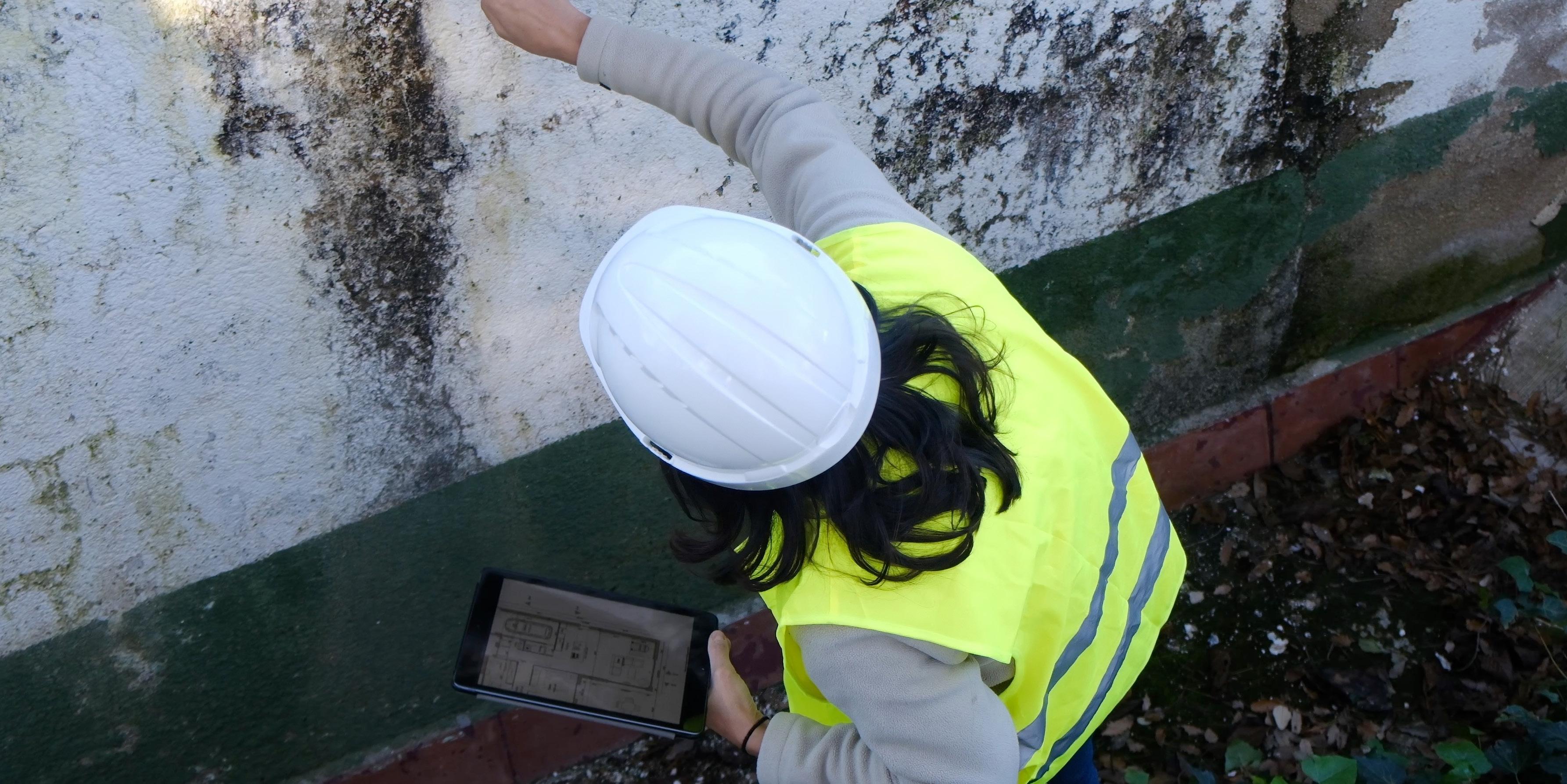
One of the most common causes of damp problems is condensation, which is often caused by a lack of adequate ventilation to remove moisture generated by normal activities such as cooking, showers, baths, washing and drying clothes and even breathing.
The impact of condensation on a property can be widespread and varied, commonly householders will see water beading on the interior of windows and occasionally running down walls, resulting in the deterioration of decorative condition, from stained curtains and damaged fabrics to decay in window frames.
Householders may also report the appearance of moulds on the surface of wallpapers and paints as well as an unpleasant damp smell in poorly ventilated areas.
At its most severe, condensation can damage plaster and timber and if it occurs under suspended floors, can greatly increase the chances of dry or wet rot in floor timbers.
There are hundreds of thousands of mould species and appearances vary vastly. Typically, only around 100 are found in homes.
Tiny spores produced by mould and high numbers of dust mites due to moist conditions can increase the risk of asthma and respiratory conditions in some people.
Regular cleaning of small amounts of mould is vital, but the only lasting way to avoid recurring mould is to eliminate the cause of dampness within the property, and a qualified,
A data ‑ driven approach provides the reassurance that remediation is based on accurate diagnostics
experienced surveyor is best placed to identify sources of moisture within the home and set out potential solutions.
Too often, condensation is attributed to the ‘lifestyle’ of residents, with day-to-day activities blamed for on-going issues with damp and mould.
Data-driven approaches
However, as the Housing Ombudsman has set out, a data-driven approach provides the reassurance that remediation is based on accurate diagnostics and will solve the problem safely and effectively.
Instead of relying on traditional ‘snapshot’ surveys, professionals who utilise technology to monitor a property over time can demonstrate how a building actually performs in daily use, not just how it looks on the date of inspection.
Specially designed sensors can be installed at strategic locations around a property to record thermal performance and use of the building as well as tracking temperature and relative humidity.
The information is gathered over a set time period, sometimes over several weeks, and can be analysed by professionals to separate E
Better diagnostics support more proportionate and effective remedial decision
F condensation risk from other moisturerelated defects, reducing the possibility of misdiagnosis.
The data can also highlight patterns linked to heating, ventilation, occupancy and fabric performance, providing clearer insight into root causes and giving an evidence base to indicate whether problems stem from ‘lifestyle’ activities or structural issues.
Awaab’s Law
In October last year, the implementation of the Hazards in Social Housing (Prescribed Requirements) (England) Regulations 2025, known as Awaab’s Law, saw the introduction of mandatory response times for social landlords to deal with hazards such as damp and mould.
Potential emergency hazards now must be investigated within 24 hours of being reported, with significant hazards examined within 10 working days and a summary report then provided to tenants within three working days.
Following conclusion of the investigation, any safety work should be undertaken within the five working days.
As a national trade body, the PCA fully supports the regulations and recognises the importance of ensuring tenants live in homes that are free from hazards.
However, there is a significant challenge in meeting the timescales, prompting concerns that inexperienced and unqualified operatives could attempt to undertake damp surveys
and remediation, resulting in incorrect recommendations, which could exacerbate the risk to tenants’ health and increase costs to housing associations.
Record-keeping helps establish patterns in housing stock and can also confirm if damp and mould is caused by lack of heating, not enough ventilation or too much moisture production. Typically, monitoring should be conducted over a period of at least two weeks.
Better diagnostics support more proportionate and effective remedial decisions, which in the long run helps avoid unnecessary or inappropriate work and supports the ethos of providing tenants with hazard-free homes that are safe and healthy places to live.
Dampness in a residential property should be investigated swiftly to avoid greater and more costly damage.
Any defect that permits moisture of damp to get into the fabric of a building should be identified and remedied or treated, with further entry of water prevented and the affected area thoroughly dried out.
In circumstances where it is unknown how long a problem has existed it is advisable to seek a detailed inspection from a competent specialist in order to identify any damage to the internal fabric of the building or fungal decay such as wet rot or dry rot.
Rushed remediation could result in further problems down the line, for example recommending ventilation in a property that is already too cold may not be the answer.
As experts in protecting the integrity and comfort of domestic buildings, PCA members who specialise in damp and mould work closely with the Association to drive good practice and maintain high standards.
Our members undergo extensive annual audits to provide reassurance that they have applicable expertise and operate in compliance with relevant legislation.
They are also required to have qualified specialists on board who have obtained the Ofqual regulated Certificated Surveyor of Timber and Dampness in Buildings (CSTDB).
This is a professional level qualification that requires in-depth knowledge of both building construction and structural and joinery timbers, as well as the causes and effects of dampness in buildings and a detailed understanding of legislation and guidance that affects the assessment and treatment of damp and timber problems.
The combination of cutting-edge technology with the expertise and experience of property professionals such as PCA members, is the key to unlocking the source of condensation, damp and mould and providing effective solutions for remediation. M
About the PCA
The Property Care Association (PCA) is the leading representative organisation for the UK’s building protection industry.
Its skilled and audited membership operates across domestic, commercial and civil sectors in the structural repair, structural waterproofing, wood preservation, damp protection, flood remediation and invasive weed control industries.
Focused on the complete building envelope, their expertise protects the integrity and comfort of domestic buildings in both new build and refurbishment projects, guarding against moisture damage, damp, mould and decay.
Members also deliver cutting edge techniques to protect commercial and civil structures
The combination of cutting ‑ edge technology with the expertise and experience of property professionals is the key to unlocking the source of condensation, damp and mould
against water penetration and ground gases, as well using the latest scientific methods to tackle invasive weeds, including Japanese Knotweed, across all urban, rural and watercourse environments.
Formed more than 90 years ago, the PCA is noted for its training and technical expertise, with knowledge built up over the decades combined with a focus on best practice and innovation forged in partnership with industry, academics, fellow trade associations and professional bodies, as well as local and national government partners.
The PCA is currently developing training programmes, guidance documents and other support material to support the government’s 2025 introduction of the Future Homes Standard.
FURTHER INFORMATION
For insight into best practice around the various types of damp, a library of technical documents, guidance notes and best practice outlines is available to view at www.property-care.org.
James Berry, deputy chief executive, the Property Care Association (PCA)
Ordnance Survey delivers Britain’s most detailed digital map ever
Ordnance Survey (OS) has recently released the latest expansion of the national map of Great Britain (GB), the OS National Geographic Database (OS NGD)
Three and a half years since it was originally launched, the database has now expanded into an unprecedented collection of datasets which deliver the most detailed and data-rich digital map in history. The database brings together a high volume of authoritative geographic data for GB into one location, which therefore offers improved access and richer attribution. OS has now released 16 data collections and 70 major data enhancements into the OS
NGD to make it the richest map of Britain ever created. The latest data release includes full GB coverage of bus and cycle lanes, which supports local authorities and central government in promoting Active Travel and public safety. This expansion follows the partial coverage released in September last year. The update also adds improved postcode unit areas and points data, a new retail areas dataset which provides a geographical view of retail activity across GB,
Location data is an enabler for public services
and OS’s structures data has been enhanced with third party-bridge information which helps identify the location of emergency incidents.
225 years of data
This year marks the 225th anniversary of the creation of OS’s first map, commissioned with the single purpose of protecting national security. Fast forward and OS NGD data is now being used to help solve a myriad of diverse national challenges and helping to improve decision-making across the public and commercial sectors.
Location data is an enabler for public services, helping them to boost economic growth and improve social and environmental factors, whilst also delivering greater value and efficiencies. Access to authoritative and trusted data under the Public Sector Geospatial Agreement allows 6000 public sector organisations across GB to provide routine but crucial services to the public. These include: emergency services and public safety;
transport and infrastructure management; healthcare access and planning; sustainability and environmental initiatives; and climate adaptation and resilience.
The emergency services are additionally supported with bespoke offerings such as the OS ESG and the Vernacular Names Tool.
Tina Kennedy, chief customer officer at OS, said: “Providing detailed, trusted and accurate data has been part of Ordnance Survey’s DNA since its first map was created 225 years ago. OS has since evolved into a data powerhouse which supports many different sectors with critical and actionable insights –from insurance and property to local authorities under pressure to meet biodiversity net gain targets. And despite the unprecedented scale of datasets already delivered with the latest data release, OS continues to deliver further enhancements and products to meet the growing needs of our customers and deliver greater value, because high-quality data is an asset for everyone.
Retiring old formats
Alongside the latest release of data into the OS NGD, OS is currently progressing an end-of-life roadmap where some of its older products will be retired. One example is the OS MasterMap Topography Layer, OS’s most popular product, which was launched in 2001. Its successor will be OS BaseMap Pro, which is currently in its prototype phase and will be ready for full launch next year. The new product will continue to provide the most detailed and trusted basemap for GB but in a more advanced format, suitable for modern applications, and will provide a gateway to unlock and allow usage alongside OS NGD analytical data. Customers and partners are being actively supported and encouraged to adopt replacements from OS’s latest generation of OS NGD-derived products.
OS’s new data has been released into the OS NGD as part of the PSGA. The PSGA is a contract between Government Digital Service, managed on behalf of the UK Government, and OS for the provision of geospatial data and services to the emergency services and wider public sector organisations. To access all of OS’s location data visit the OS Data Hub – which provides access to the data through both APIs and downloads. M
FURTHER INFORMATION
For more information about the OS NGD, visit OS National Geographic Database (OS NGD) | Data Products | OS
New geospatial analysis reveals the transport corridors most exposed to flooding across England
Climate‑related flooding events threaten to cut off more towns and commuter routes across England
After a winter marked by storms, flood warnings and severe weather alerts, new analysis from Ordnance Survey (OS) has identified the road and rail pinch points across England most vulnerable to river and sea flooding, highlighting how climate-related events could isolate communities, disrupt critical transport networks, and leave England’s towns and cities partially, or completely cut off during extreme weather events.
Britain’s transport network underpins national productivity, yet new geospatial analysis reveals the growing scale of its exposure to flooding. This analysis combines the latest Environment Agency flood data with OS’s
National Geographic Database to map rail lines and road access routes to local communities, while accounting for the presence and impact of flooding defences. The results pinpoint the commuter corridors, economic routes and access points most vulnerable to river and sea flooding. These assets sit within highprobability flood zones defined as areas with a 1-in-1,000 annual chance of flooding during extreme weather events with modelling that accounts for flood defences At a national level, the scale of exposure across England’s transport network is clear. An estimated 7,564 total road kilometres (12 per cent of the nation’s total) and 3,003
total rail kilometres (20 per cent of England’s rail network) intersect this highest-risk flood boundary for river and sea flooding.
North Yorkshire is recorded as the most vulnerable local authority to flooding, with 102kms of road exposed to river flooding, and 49kms of road networks exposed to sea flooding; the most of all local authorities in England in both defined boundaries. Thirty-six local authorities are at risk of complete rail isolation. Kirkby-in-Furness, Collaton St Mary, Swinefleet, Belton, Bradwell and Burgh Castle could face being cut off by sea flooding. Key commuter lines in Marlow and Henley-on-Thames remain susceptible to isolation through river flooding.
A total of 587km of England’s motorways fall within the highest-risk flood zones. Routes most exposed include the A38, where 12 per cent of its total length is considered vulnerable to flooding by river; followed by the M45 (9 per cent), the M32 (9 per cent), and the A58 (8 per cent).
Roads and rail
Community-level analysis reveals the scale of potential isolation facing towns and cities across England. More than 1,000 “built-up areas” have been identified where all of their access roads (100 per cent) are at risk of river flooding, leaving them at risk of shutdown during severe flood events.
In Greater London, four areas appear most vulnerable to transport isolation through river flooding. Kingston upon Thames ranks highest
Thirty ‑ six local authorities are at risk of complete rail isolation
in the capital, with 29 of its 40 access roads vulnerable to river flooding – equivalent to 73 per cent of its routes in and out of the borough. Sutton (51 per cent), Waltham Forest (45 per cent), Hounslow (38 per cent) similarly rank highly.
Greater Manchester faces even greater exposure than the capital. Salford records 43 at-risk access roads, comprising 66 per cent of its total road infrastructure. In Old Trafford, 41 roads (67 per cent) are exposed, while in central Manchester, 40 access roads (45 per cent) remain vulnerable to severe flooding events. Exposure extends to rail connectivity. Thirty local authorities face the risk of complete rail isolation from river flooding, even after accounting for the presence and impact of flood defences. Commuter branch lines into London from Marlow and Henley-on-Thames are among those identified. Other commuter and regional rail hubs remain exposed, including Penzance (71 per cent), King’s Lynn (71 per cent), Walsall (67 per cent), Stamford (66 per cent), Exeter (65 per cent) and York (52 per cent), where significant proportions of rail infrastructure lie within the highest-risk flood zone.
Motorways are similarly exposed. OS analysis reveals that an estimated 587km of England’s E
Road networks identified as intersecting the highest-risk flooding boundaries in England, with a 1-in-1000 chance of flooding, accounting for the impact of defences
Road Networks Most Vulnerable to Flooding
Concentrated risk at these locations highlights the vulnerability of rail connectivity in flood ‑ prone areas
F motorways intersect with the highest-risk river flooding boundary. The motorways most exposed include the A38, with 12 per cent of its total length considered vulnerable to flooding by river; the M45 (9 per cent), the M32 (9 per cent), and the A58 (8 per cent).
Disruption at these locations could sever critical links between homes, workplaces and regional economic centres, highlighting the increasing pressure that flooding risk places on the resilience and reliability of England’s road and rail networks.
Tidal flooding
Tidal and sea flooding further compound connectivity risks. A total of 94 local authorities have been identified where 100 per cent of access roads are located within the highest risk flooding zone. North, South and the East Riding of Yorkshire features prominently in this assessment, with 30 local communities on this list.
Newham in Greater London records the highest number of access roads at risk of flooding isolation (16), with 24 per cent of its routes in and out of the borough at risk of
Rail networks identified as intersecting the highest-risk flooding boundaries in England, with a 1-in-1000 chance of flooding, accounting for the impact of defences
isolation through tidal flooding. Barking and Dagenham (38 per cent), Redbridge (25 per cent), Greenwich (20 per cent), and Tower Hamlets, round off the areas with the most access roads at risk of flooding in the highest risk flooding zone, reflecting continued exposure along the tidal Thames and associated river corridors.
Rail infrastructure shows a similar pattern of exposure. Kirkby-in-Furness (Cumbria), Collaton St Mary (Devon), Swinefleet (East Riding of Yorkshire), and Belton, Bradwell and Burgh Castle in Great Yarmouth have been identified as having 100 per cent of their rail access located within the highest risk flooding zone. High levels of exposure are also recorded in other economically significant towns, including Penzance (92 per cent), Selby (65 per cent) and Dawlish (53 per cent), as well as key commuter lines from Great Yarmouth (87 per cent) and Exmouth (77 per cent).
Concentrated risk at these locations highlights the vulnerability of rail connectivity in floodprone areas. Disruption here could constrain labour mobility, interrupt freight flows and weaken regional economic resilience.
The findings reveal the exposure of key commuter, freight and economic links to flooding risk, and underlines the increasing importance of high-quality geospatial data in targeting investment to strengthen network resilience, and safeguarding communities, to keep England safe and moving as flood risk continues to intensify.
Based on Flood Defence Modelling Rail Networks Most Vulnerable to Flooding
Kirkby-in-Furness
Climate change
Tom Gray, transport market development lead at Ordnance Survey, said: “Disruption from flooding on rail and road networks is increasing as climate change continues, turning what was once an occasional challenge into a persistent planning reality. In this context, the ability of central government, local authorities and planners to rely on comprehensive, accurate geospatial insights is essential to reduce risk, protect communities and strengthen long-term resilience.”
He adds: “With economic growth increasingly driven by new housing, infrastructure and major construction projects, investment is flowing into assets that must be resilient from day one. These projects depend on secure funding, compliance with climate resilience regulations, ESG reporting metrics, appropriate insurance and effective mitigation measures - all of which require a clear, forward-looking understanding of environmental risk.”
Methodology
This analysis combines the latest Environment Agency flood data with OS’s National Geographic Database to map road and rail lines, as well as road access routes to local communities, while accounting for the presence and impact of flooding defences in its modelling. These assets sit within high-probability flood zones defined as areas with a 1-in-1,000 annual chance of flooding during extreme weather events. This analysis does not account for precise local topography such as hills, or the slope angle of infrastructure. Data is broken down into flooding defined by the Environment Agency as an area with a recorded source from rivers, and by sea, combining conventionally termed flood zone 2 (medium 1-in-100 probability of flooding) and flood zone 3 (high 1-in-1000 probability of flooding).
Attribute: road/rail_flood_percent If a section or polyline of road or rail network intersects a flood boundary then the complete polyline is flagged as ‘yes’. The length of these
polylines are divided by the total length of the polylines to get the road or rail flood percentage. The percentage is not the length of road or rail in flood boundaries, but the length of the network flagged as flooded during extreme weather events. A section or polyline is a length of road or rail that is between two junctions/bridges/intersections/turnings and can vary in length from a few metres to a number of kms depending on where you are in the country.
Attributes: road statistics
This analysis combines the latest Environment Agency flood data with OS’s National Geographic Database to map road and rail lines
Road networks are grouped by their road classification i.e. M3, M6, A43, B12 which enter a ‘built up area’, and this is classed as 1 road included in its ‘total roads’ count. If any section of the complete road intersects a flood boundary it is counted as disrupted by flooding and flagged as ‘yes’. The percentages are then derived from the road networks that intersect road flooding divided by the roads that are entirely unflooded during extreme weather events. M
Smarter roads, safer futures: how technology is redefining road safety
Luca Pascotto, FIA head of road safety and global advocacy, explores how data, connected vehicles and simulation technologies are reshaping approaches to road safety and enabling more proactive risk prevention
Across the world, mobility is changing at speed, and our understanding of road safety is evolving with it. For many in the UK, the image of road safety may be traffic lights, seatbelts or even a lollipop lady outside a school. These measures are of course important for road safety, but the reality for modern mobility is far less visible. With the connected vehicle more available in showrooms and sales courts, and the increasing intelligence of transport infrastructure, the data generated by these systems is growing exponentially. But it’s how we make sense of this information and turn data into practical
road safety tools that can help fleet operators and policymakers better understand risk, and act on it. By combining data-driven insights with modern technology, we can shift from reacting to road traffic crashes to proactively preventing them. This is central to the work of the Fédération Internationale de l’Automobile (FIA), where initiatives like the FIA Road Safety Index, FIA Driver Safety Index and the Roadscor project, are illustrating how data and technology are driving meaningful road safety improvements in the digital age.
Tracking road safety footprints
Too often, road safety efforts only focus on the individual level. While each person’s actions make a difference, it’s organisations and fleet owners who can really drive change at scale.
The amount of data that companies and governments have access to is already informing corporate and policy decisions. Tracking carbon footprints is now common practice as many organisations work towards net zero. And for some, this approach is being taken to road safety.
In the same way as tracking carbon footprints, the FIA Road Safety Index (RSI) gives organisations a data-driven methodology to assess, manage, report, and improve their road safety footprint, and embed a culture of safety across their operations.
Private sector organisations are already using the FIA RSI to strengthen their approach to safe mobility, with Amazon, Uber, IKEA Supply Chain Operations and Waymo implementing it through their fleets and logistics networks. And in the public sector, conversations are ongoing with the New York City Department of Citywide Administrative Services, which manages the largest municipal fleet in the United States.
But subscribing to a methodology only works if outcomes are improved and verified, and that’s why the FIA RSI recognises road safety commitment through a star-based rating
system. Just as chefs compete for three-stars from the Michelin Guide, organisations seek three-star accreditation from the FIA RSI, strengthening trust from business partners, communities and regulators by demonstrating they understand and manage their risks effectively. With the programme soon moving to five-star recognition, it will set a new gold standard for road safety.
Most recently, Poste Italiane , one of Italy’s largest delivery networks of almost 31,000 vehicles, was awarded the maximum rating, while tech giant Lenovo became the first Chinese organisation to receive three stars for its operations in China.
Artificial intelligence is revealing how drivers really think and act on the road Policies and safety standards alone don’t improve road safety, they’re only effective when informed by a clear understanding of real-world driver behaviour. This understanding allows organisations to identify gaps in road safety E
Trained on over 20 years of real ‑ world driving records across 106 countries, the FIA DSI uses GPS data to quantify the risk of being involved in a crash
F culture, and target efforts where they can make the biggest difference.
The leading cause of death for children and young people worldwide is road traffic crashes, and human behaviour remains one of the biggest contributors to this reality. Speeding, mobile phone use, ignoring pedestrian crossings, are all decisions made behind the wheel that add up to the 1.19 million road deaths reported annually.
Recognising the impact of these choices makes the Safe System approach essential. Because human error and unsafe behaviour are inevitable, we cannot rely on perfect compliance to save lives.
Traditional surveys provide a snapshot of driver behaviour but rarely capture the full picture. The FIA Driver Safety Index (DSI) aims to support organisations with an accurate measure of driver risk to inform evidence-based decisions.
Powered by Greater Than’s AI technology, trained on over 20 years of real-world driving records across 106 countries, the FIA DSI uses GPS data to quantify the risk of being involved in a crash and offers a universal scoring system to make driver risk measurable, comparable and actionable.
No two organisations are the same, and each has its own challenges and behaviours to address. Taking this into account is vital to ensure organisations benchmark their progress against comparable regions and industries and take action to reduce the impact of human decision-making in road traffic crashes.
By turning behavioural data into clear insights, governments and businesses can better target their policies, training and enforcement strategies to deliver more effective interventions.
A virtual world protecting road users in an ancient city
Data and technology are not only transforming how we understand behaviour, they are also enabling us to simulate how road users and infrastructure interact in real-world conditions. This matters because the roads we travel on can determine whether a mistake behind the wheel becomes a tragedy, especially in dense urban environments.
Historically, assessing road risk in cities has been lengthy and resource-intensive. City planners typically rely on inspections, surveys or crash data analysis, but without advanced technologies, these processes are timeconsuming, with solutions often implemented years after incidents occur. Time is then needed to assess whether the solution is even effective.
Historically, assessing road risk in cities has been lengthy and resource ‑ intensive
We cannot afford to be purely reactive and leave risks unaddressed for so long when it comes to road safety.
In the heart of Rome, the FIA, in collaboration with its Member Club the Automobile Club d’Italia and Roma Capitale, joined EIT Urban Mobility to support the first implementation of Roadscor, using simulation to identify potential traffic conflicts at intersections and prevent crashes before they happen.
Intersections are among the highest-risk areas in cities, where multiple road users come together, creating complex situations that are difficult to predict. Roadscor addressed this challenge by building a digital twin of one of the city’s busiest intersections, simulating thousands of interactions to identify potential conflicts, including near misses that would otherwise go unseen.
Instead of relying solely on historical crash records, Roadscor integrates a variety of data sources, including road characteristics, traffic patterns and movement analysis, to provide a more complete picture of risk and a digital testing ground.
For city authorities, this means gaining valuable time by testing interventions virtually, prioritising investments more effectively and implementing the best solutions to save lives. In Rome, Roadscor proved that redesigning the intersection could reduce potential collisions by 70 per cent.
Scaling these solutions requires strong collaboration, clear and trusted frameworks for responsible data use, and continued innovation
This shift, from reactive crash analysis to proactive risk identification, is one of the most exciting developments in road safety and if it can work in a city like Rome, this could be translated to other regions worldwide.
Turning data and technology into meaningful change on the road Technology alone will not solve the global road safety challenge, but when its effective use is rooted in human-centric design, it can dramatically improve how we address the problem.
Scaling these solutions requires strong collaboration, clear and trusted frameworks for responsible data use, and continued innovation to measure and manage safety across an increasingly complex mobility system.
The building blocks are in place, the challenge, and the opportunity, is to turn that insight into meaningful action. M
Your AI strategy is only as good as your data.
You want to modernise IT. You want better decisions. You want faster services.
But… your data is locked in legacy systems.
Catapult helps government organisations prepare data for AI using the FAIR framework. Findable Accessible Interoperable Reusable
Clean. Structured. Governed. AI-ready.
Unlock the future of government AI
Make your data FAIR. Make AI possible.
Technology Services 4
Technology Services 4 gives public‑sector organisations a flexible, compliant route to procure the full range of technology services needed to run operations, support users and deliver digital change
The Technology Services 4 framework from Crown Commercial Service supports public sector organisations to procure a wide range of technology services with flexibility. The framework covers areas such as digital and technology strategy, service design, user device support, IT infrastructure, software development, data services, and wider transformation work.
Those services matter because they cover the core technology functions every public sector organisation relies on to operate safely, efficiently, and in a way that meets rising user expectations. Having access to service desk support, device management, networks, infrastructure, applications, and data services through a single, compliant route means organisations can keep essential systems running smoothly while modernising at their own pace. The consultancy, design, and transition elements help teams plan and deliver change without disrupting frontline services, and the inclusion of large - scale transformation and emerging capabilities like AI gives buyers a way to future - proof their estates.
Running from 12 December 2025 to 11 June 2028, the framework is available for central government, charities, education, health, local authority, blue light and devolved administrations.
The refreshed framework continues to offer the full scope of services available under Technical Services 3, but it has been updated to include artificial intelligence (AI) and automation as ancillary services.
The framework covers the full spectrum of technology services that public sector organisations rely on to keep operations running smoothly. This ranges from core functions such as service desk provision, end - user device support, network management, and the upkeep or disposal of IT assets, through to the development and ongoing management of applications and data services. It also includes support for the underlying infrastructure that keeps systems stable and secure, such as servers, storage, and wider hardware environments.
Alongside day -to - day operational support, the agreement also provides access to strategic E
ADM COMPUTING LTD: PROTECT. MANAGE. EVOLVE.
ADM Computing Ltd is a UK based managed service provider (MSP) and a trusted leader in strategic AI advisory, helping organisations understand, adopt, and implement AI safely and effectively. We specialise in AI readiness assessments, identifying practical use cases, and enabling organisations to drive efficiency and innovation without compromising their security or risk landscape.
Protect:
Stay ahead of cyber threats with ADM’s layered security approach. Our services include 24/7 SOC-backed MDR, XDR, endpoint and email protection, and user awareness training, helping you prevent, detect, and respond to threats in real time.
Trusted, Flexible Partner
As an agile SME, we combine enterprise grade technology with a highly responsive, customer focused approach, supporting organisations to modernise IT, strengthen cybersecurity, and operate confidently in an evolving digital environment.
Our approach is built around three core pillars: Protect. Manage. Evolve.
Manage:
ADM delivers proactive managed IT services that keep systems secure, compliant, and running smoothly. From 24/7 helpdesk support to monitoring, patching, and network management, we reduce complexity and minimise downtime.
Evolve:
We help organisations modernise IT and adopt new technologies with confidence. From cloud and infrastructure transformation to responsible AI adoption and resilient backup and disaster recovery, ADM enables secure, scalable growth.
As an SME listed on Technology Services 4, DOS7, and Bloom NEPRO³, ADM provides tailored, responsive IT and cybersecurity support for the public sector.
F and change - focused services. Buyers can draw on expertise in service strategy, design, and transition to plan improvements or move to new operating models with minimal disruption. For organisations undertaking more ambitious modernisation, the framework also enables procurement of large - scale digital transformation programmes, helping teams reshape services, adopt new technologies, and deliver better outcomes for users.
Technology Services 4 cannot be used to buy certain products and services, including IT hardware, telephony and mobile services, managed print, physical data - centre space, or wide - area network connectivity. It is also not a route for contingent labour, interim
The framework also enables procurement of large‑scale digital transformation programmes
staff, management consultancy, or resource augmentation. Specialist needs such as individual DDaT experts, digital capability for health and social care, independent quality assurance and testing, or cyber security health checks must be sourced through the appropriate dedicated agreements instead.
Benefits
The framework offers several benefits. Buyers benefit from contract terms that can accommodate a range of commercial approaches, greater flexibility in how services are sourced, and an improved lot structure that helps speed up the buying process. The framework also introduces simpler routes to purchase and strengthens transparency and governance throughout. Importantly, there are no maximum call - off terms, giving organisations the option to put longer-term arrangements in place where appropriate.
Sustainability is also built into the agreement. All suppliers have committed to meeting the requirements of Procurement Policy Note 006 on carbon reduction plans for major government contracts. Where a supplier is required to publish a plan, it is available on their individual supplier page, supporting informed and responsible procurement decisions. E
F Lots and suppliers
The framework is organised into a series of lots, each focused on a different area of technology services. Lot 1 covers technology and digital consultancy, offering expertise ranging from enterprise architecture to end - user service design, with 166 suppliers available. Lot 2 focuses on transition and Service Integration and Management (SIAM), providing options for end -to - end managed services, standalone support, or professional services, delivered by 124 suppliers.
End - user support is split across two lots: Lot 3, which includes 96 suppliers offering end - user computing and device management services, and Lot 3a, a lower-value, lower- complexity route with 176 suppliers. Infrastructure management follows the same structure, with Lot 4 providing 95 suppliers for full - scale infrastructure services and Lot 4a offering a simplified route with 176 suppliers.
Application and data management services are available through Lot 5, which includes 105 suppliers, and Lot 5a, a lower- complexity option with 203 suppliers. For organisations undertaking major digital change, Lot 6 provides access to 67 suppliers specialising in large - scale technology transformation programmes. All lots run until 11 June 2028.
How to buy
The buying process is supported by a buyer guide and FAQs, which explain how the agreement works and help organisations
Under the agreement, there are two ways to buy: running a competitive selection process or awarding without competition
prepare effectively. A key early step is pre - market engagement, which allows buyers to refine their requirements, understand the market, and choose the most suitable route to procurement. Under the agreement, there are two ways to buy: running a competitive selection process or awarding without competition. Competitive selection requires a clear specification, a defined procurement strategy, and the use of the eSourcing tool to invite and evaluate bids fairly. Buyers can also use matrix lots to combine requirements from two lots into a single procurement. Award without competition is available for several lots and is intended for straightforward, low -value needs where competition would not add value. Buyers identify their requirements, review catalogue items in the government eMarketplace, check for any exclusions under the Procurement Act 2023, and then apply the objective mechanism to select a supplier before placing an order. Both routes are fully supported by the buyer guide, which provides detailed instructions for each step. M
Best practice in the procurement of HealthTech for 2026
Luella Trickett, executive director of medical devices, value & access at the Association of British HealthTech Industries (ABHI) outlines how genuine engagement, stronger category management and a shift to value‑based procurement can help the system adopt innovation at pace and deliver long‑term benefit for patients and the public purse
Procurement of HealthTech has never been more strategically important to the future of health and care in the UK. As the NHS continues to navigate pressures around productivity, workforce constraints and rising demand, the role of HealthTech in enabling safe, efficient and effective care is increasingly clear. Yet the system’s ability to adopt these technologies at pace depends heavily on the quality of its procurement processes. With sustainability requirements intensifying, and expectations around social value growing, 2026 offers an opportunity to embed procurement practices that truly unlock value for patients and the public purse. This article outlines what good
looks like, and how the principles of value, partnership and proportionality can support the NHS in making decisions that deliver long-term benefit.
Genuine pre-market engagement: the foundation of good procurement If there is one area where improvement would deliver immediate benefit, it is in strengthening pre-market engagement. Too often, suppliers are invited into engagements that feel more like a formality than a genuine attempt to understand what the market can offer. Superficial engagement leads to poorly specified tenders, missed opportunities for
innovation and an environment where suppliers cannot meaningfully contribute to shaping the solution.
Effective engagement is fundamentally about intent. It requires procurement teams to be open about their goals, constraints and desired outcomes, and for suppliers to bring forward evidence, insights and new possibilities. When
Strong
category management is another hallmark of effective procurement practice
done well, it sharpens specifications, reduces risk, and ensures that the resulting competition is fair, transparent and aligned with clinical need. It also enables buyers to understand what is realistically deliverable.
Pre-market engagement is also essential for shaping social value requirements. The NHS frequently sets ambitious social value goals, but without early dialogue, suppliers cannot meaningfully plan or cost their contributions. This not only limits the impact of social value activity but risks excluding SMEs that lack the resource to respond to overly burdensome or unclear criteria. Genuine engagement ensures social value expectations are proportionate, deliverable and aligned with the realities of the market.
Category management and clinical engagement: aligning procurement with real need
Strong category management is another hallmark of effective procurement practice. While some regions demonstrate real excellence in this area, performance is inconsistent nationally. Good category management provides clarity, standardisation and efficiency, E
F ensuring that buyers understand the market, the evidence base, and the clinical context for each category of product.
Clinical engagement is central to this. Procurement colleagues cannot determine value without direct insight from those delivering care. Specifications that overlook clinical nuance risk compromising patient outcomes or embedding inefficiencies. Where procurement teams, clinicians and suppliers collaborate, tenders become better targeted, more realistic and more capable of driving quality improvement.
Value-based procurement: moving from products to pathways
A central theme of good procurement in 2026 is a shift towards value-based procurement (VBP). Traditional approaches that focus primarily on unit price miss the wider benefits that the right technology can deliver across a patient pathway. True VBP accounts for clinical effectiveness, patient experience, operational efficiency, sustainability and long-term health outcomes.
A simple example illustrates the point. Optimising surgical instrument trays (ensuring clinicians have the right tools, in the right configuration) may cost more upfront but delivers significant value through reduced delays, safer procedures and improved theatre productivity.
The optimal future state is one where VBP is applied across entire patient pathways, rather
than isolated products or services. This means considering the full journey, for example, the whole surgical experience from pre-operative preparation, through theatre and post-operative care, to recovery at home. Evaluating value at this level supports sustainability by reducing waste, lowering energy use and cutting unnecessary variation across the system. It also aligns procurement decisions with broader NHS priorities around earlier diagnosis, elective recovery and the delivery of more personalised and preventative care.
Recognising the true cost of doing business
One of the single biggest factors affecting HealthTech business growth in the UK is the rising cost of doing business. Energy costs, labour costs and broader operational pressures are all increasing, alongside ongoing regulatory expenses and global cost pressures linked to materials and logistics.
The challenge is that NHS procurement processes are often reluctant to accept inflationary price increases from suppliers, even when these increases reflect genuine, unavoidable cost pressures. Over time, this can threaten the sustainability of supply, discourage
Energy costs, labour costs and broader operational pressures are all increasing
HealthTech plays a vital role in supporting the NHS to deliver high ‑ quality, sustainable and efficient care
investment and limit the UK’s competitiveness as a market for innovation.
VBP offers a practical route through this. By evaluating outcomes rather than inputs, VBP enables a more mature conversation about price. It recognises that the lowest cost is not always the most efficient choice, and that sustainable supply chains depend on fair pricing that reflects economic reality. Embedding this principle across the NHS would support both innovation and resilience.
Social value and sustainability: ambition delivered through proportionate practice
Social value is now a core requirement for all public sector procurement, with the UK Government mandating a minimum 10 per cent weighting. Yet interpretation varies widely across the NHS. Some organisations have developed sophisticated frameworks, while others apply generic or overly localised requirements that are not always relevant to HealthTech or proportionate to the scale of the tender.
A particular challenge stems from the national nature of NHS procurement. Unlike sectors with strong local footprints, for example, the Ministry of Defence presence in North Bristol, HealthTech suppliers typically support customers across the entire country. Hyper-local social value commitments can therefore be difficult to deliver meaningfully. Many suppliers have strong corporate social responsibility programmes, but translating these into tangible benefits for NHS procurement requires clearer guidance and greater flexibility.
The same principle applies to sustainability. HealthTech companies are investing heavily to support NHS Net Zero goals, but the way requirements are framed can either accelerate progress or create unintended barriers. Unrealistic carbon reporting expectations or requests for granular product-level data can disadvantage suppliers, particularly SMEs, without delivering meaningful environmental benefit.
A proportionate approach is essential. Early engagement enables buyers to set realistic,
outcome-focused expectations for both social value and sustainability, aligned with the reality of national supply chains.
Building best practice for 2026
To support a procurement system that delivers value, fairness and improved outcomes, several principles should guide NHS buyers. This includes conducting genuine pre-market engagement to shape realistic, shared expectations; strengthening category management and ensure robust clinical engagement; and apply value-based procurement across whole care pathways. It also includes recognising that fair pricing supports sustainable supply chains and long-term value and adopting proportionate, outcome-focused social value and sustainability criteria.
Conclusion: procurement as a strategic lever for better care
HealthTech plays a vital role in supporting the NHS to deliver high-quality, sustainable and efficient care. Getting procurement right is central to enabling the adoption of innovation that benefits patients, clinicians and the wider system. By embedding value, partnership and proportionality into procurement practice, the NHS can create a more consistent and impactful approach nationwide. ABHI remains committed to supporting buyers and suppliers in achieving this vision, ensuring that the UK continues to benefit from a vibrant, innovative and globally competitive HealthTech sector. M