




Managed IT, cyber security and end-to-end technology support — delivered and looked after by our own dedicated UK service desk.
01
Managed IT & Service Desk
A dedicated UK service desk providing responsive day-to-day support, proactive monitoring and a single point of accountability.
02
Cyber Security
Protective controls, threat monitoring and compliance support aligned to public sector security requirements.
03
Cloud & Infrastructure
Design, migration and ongoing management of resilient cloud and on-premise environments.
04
ICT & Technology Support
End-to-end ICT, hardware and wider technology services that keep teams connected and productive.
Trusted to support major public sector and enterprise technology programmes, including work delivered alongside organisations such as IBM and the Ministry of Justice.





















Engineering is our passion, but our delivery is our signature. Tony Gee is owner-managed and renowned for delivering complex infrastructure designs.
Our collaborative approach and technical excellence ensures every solution is buildable and adds real value. Our expertise spans a diverse portfolio of projects for


South Wokingham Distributor Road













Andy Burnham has become the UK’s fifth prime minister in four years after officially accepting the role from the King.
Burnham was only sworn back into parliament a month ago, after serving as Mayor of Greater Manchester.
Former PM Sir Keir Starmer announced his resignation on 22 June, just four days after Burnham was elected as an MP.
There were no other challengers to the position of leader of the Labour Party and, by extension, PM. 379 Labour MPs nominated Burnham for the job.
Starmer visited the King to offer his resignation, followed by Burnham to accept the job. Burnham is the King’s fourth prime minister since he took the throne in 2022.
Burnham is expected to try and tackle the cost of living crisis, as well as promising huge plans for devolution, more public control over water and energy, and a massive house building programme.
While parliament breaks for the summer, Burnham is expected to undertake a listening tour of the UK.
In his final speech as PM, Sir Keir Starmer highlighted some of his achievements. He said: “In six and a half years, I took our party from a historic defeat in 2019, changed it so it was fit to face the country and won a landslide general election victory in 2024.
“Since then, it has been the privilege of my life to serve you and this great country as Prime Minister. I am confident that Britain is now stronger and fairer than it was two years ago...
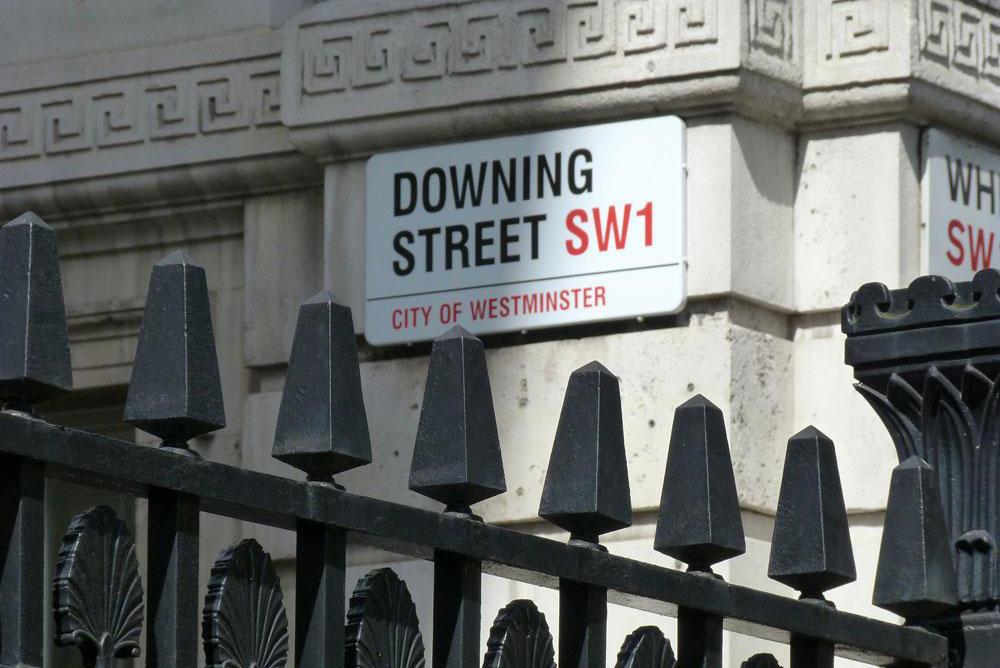


New PM Andy Burnham has announced his new cabinet after becoming Prime Minister yesterday.
Shabana Mahmood stays as home secretary and Angela Rayner is back as housing secretary. Mahmood was appointed home secretary by Starmer in September 2025 during a reshuffle caused by Rayner’s resignation after she was found to have broken the ministerial code, by underpaying stamp duty. Rayner is now back in position as housing secretary after settling her tax affairs.
John Healey has been appointed chancellor just months after quitting as defence secretary over spending plans. Former chancellor Rachel Reeves is no longer in the cabinet.
Wes Streeting has been appointed defence secretary, replacing Dan Jarvis, who was only in the role for a few weeks. Streeting quit as health secretary in Starmer’s government saying he had lost confidence in the PM. He was expected to launch his own bid for leader of the party, but then backed Burnham.
Yvette Cooper is now health secretary, having previously served as foreign secretary and home secretary in Starmer’s government. An MP since 1997, she was also a minister in the Blair and Brown governments.
Former Labour leader Ed Miliband takes on the role of foreign secretary, moving from energy and net zero. Miliband has been MP for Doncaster North since 2005 and was Labour leader from 2010 to 2015, taking on the role after the 2010 general election and resigning after the 2015 general election...

Andy Burnham is to become the first PM to work from No10 North.
No10 North will be based in Heron House in Manchester City Centre.
Burnham is expected to work from No10 North each week so that decisions about the country’s economic future will no longer exclusively be made in Westminster. Other ministers are also expected to work from the location.
The PM has chaired the first meeting of the revived National Economic Council at No10 North on Friday. This brings together senior ministers and regional mayors to put devolution at the centre of the government’s mission to make Britain better.
Prime minister Andy Burnham said: “For 40 years, power and resources have been sucked into the centre, and too many communities have felt forgotten, without the attention and investment they deserve.
“No 10 North will change that by putting more power into every postcode across the entire country.
“It will be the situation room for making Britain better - the place we use to get power out of Westminster, into the hands of people at a local level, so that they can turn things around.
“The days of Whitehall resisting devolution are over, for good.”
First secretary of state Louise Haigh said: “Today marks a fundamental re-balancing of where power sits in our country. No10 North has been set up to drive economic growth in every postcode and put power in the hands of every community...


New PM Andy Burnham has pledged to cut tax on household electricity bills.
It is part of plans to help with the cost of living.
VAT will be removed from domestic electricity bills from October 1 in time to impact the next Ofgem price cap. This applies to and is funded for this financial year.
The changes will funded by the cancellation of the Digital ID programme.
Cutting VAT on electricity bills is expected to take around £45 off the yearly Ofgem price cap in October. This is on top of the £150 removed from bills at the last Budget.
Suppliers are expected to pass the VAT reduction on to all customers, including those on fixed tariffs, as they did with the £150 of costs taken off energy bills announced at the last Budget.
Prime minister Andy Burnham said: “Westminster has not been working for people for too long, with families struggling with the cost of living.
“That needs to change. I said I wanted to give people breathing space, and that’s what I’m announcing on my second day as Prime Minister.
“We’re taking immediate action to cut taxes on energy bills, put more money in people’s pockets and bring back hope.”
Chancellor of the Exchequer John Healey MP said: “For too long, too many people have struggled with the cost of living.
“Today’s energy tax cut will give families some breathing room on bills, and provide some reassurance this winter...

Andy Burnham has announced plans to cap single bus tickets at £2 outside of London.
The changes will come into effect from 1 January 2027 and remain until the end of the year.
Fares are already capped at £3 until the end of March 2027. The announcement lowers the cap to £2 from January and extends it until the end of the year.
The plan is designed to help ease the cost of living and help millions of people across the country access affordable bus travel more easily.
The last time a £2 cap was introduced, an estimated 30 million more journeys were taken by bus in 10 months.
The scheme is backed by £400 million of extra funding, which comes from a reprioritisation of DESNZ’s budget, switching funding that had been set aside for international climate finance projects into loans.
Prime minister Andy Burnham said: “Good, affordable transport links are an essential. No one should be priced out of those and left behind.
“But for too long people have said that cheaper transport isn’t an option. I don’t accept that. I’ve done it before and I will do it again now: a £2 cap on bus fares for millions across the country.
“Lower fares will help people get to where they need to – giving them breathing space to help with the cost of living...


The government has announced tougher onthe-spot fines for waste criminals.
New legislation will increase the maximum fine for fly-tipping waste to £5,000 and the top fine for littering on streets will also be increased to £750.
The changes will come in this summer and are designed to act as a stronger deterrent and help reduce cases of littering and fly tipping.
The legislation is part of the government’s Waste Crime Action Plan, which sets out a range of measures to stop waste criminals.
Environment secretary Emma Reynolds said: “Fly-tipping and littering is a disgrace that blights local communities.
“Under this government, criminals who break the rules will face heftier fines to clean up the mess they make.
“We are sending a clear message to those who dump their rubbish - we are coming after you and you will pay the price.”




Stannah is a family-owned business that has been manufacturing award-winning stairlifts since 1975.
Our dedicated team of locally based experts work closely with almost 300 public sector and housing associations across the UK to ensure that we meet their customers’ need for reliable, high quality and safe products, which enable them to continue living independently in their own homes.
Contact our Public Sector - Business Partner today to find out how we can take care of you and your clients’ adaptation needs.
We take care of all our customers
We take care to try and exceed expectations
We take care over the design and engineering of our products
We take care of all our people
In fact, in whatever we do, we take care
The second phase of Awaab’s Law is set to come into effect on 30 November 2026.
The regulations for phase 2 were laid in parliament on Monday 13 July.
The rules will address seven more hazards such as electrical faults, risks of falling, structural defects, excess cold and heat, fire risks and hygiene issues like pest infestations.
Landlords must investigate within 10 working days and inform the tenants what is wrong and what they will do about it within three working days in a written summary.
They must carry out urgent safety work within five working days on the investigation. This means homes will be made safe within 15 working days.
Since 27 October 2025, Awaab’s Law has required social housing landlords to fix dangerous damp and mould to these firm timeframes.
New guidance is being published on the extended hazards, to help landlords prepare.
Then housing secretary Steve Reed said: “Awaab’s Law sends a clear message that tenants’ health and safety can never be compromised.
“This action will mean dangers have to be dealt with quickly by law, protecting tenants’ rights to a safe and decent home.”
Gavin Smart, chief executive of the Chartered Institute of Housing (CIH) said: “Extending Awaab’s Law to these hazards is an important step towards safer, healthier homes, and we welcome the collaborative approach the government has taken. This is about more than compliance; it is a culture of listening to residents and acting on their concerns, and that is the change we want to help the sector deliver...

14 government buildings shut, saving millions: READ MORE Councils warn of £7 billion black hole: READ MORE
Chewing Gum Task Force grants £1m to towns and cities: READ MORE
GPA publishes new government office design guidance: READ MORE
£50 million to prevent homelessness in Scotland: READ MORE

15 towns have been shortlisted for UK Town of Culture 2028 out of 400 entries.
For small towns, Ilfracombe, Isle of Bute, Lerwick, Sandown, Strabane, and Stockton Town Centre Ward made the shortlist.
Medium towns on the list include Corby, Great Yarmouth, Leith, Pontypridd, and Port Talbot.
Large towns that made the cut include Basildon, Birkenhead, Grimsby and Rotherham.
Those on the shortlist will now each receive £60,000 to develop their bids, which will then be assessed by and independent judging panel.
One finalist will be selected from each category and the overall winner will be announced next year.
The UK Town of Culture competition is part of the government’s ambition to restore pride in local areas in every part of Britain and deliver a decade of national renewal, following the announcement of the Pride in Place Programme last year.
Culture secretary Lisa Nandy said: “I want to say a massive congratulations to the fifteen shortlisted towns and I wish them luck in the next round of the competition.
“The fact that we received so many applications just goes to show how proud people are of their towns. When I launched this competition, I wanted to shine a light on our amazing towns all across the UK and the huge contribution they make to our national life...


Public Realm Lighting Transforms a Historic Urban Centre Into a Vibrant Destination After Dark.
A lighting-led public realm transformation enhances movement, visibility and activity across Woolwich’s historic town centre

With a rich history as a key military and industrial hub, Woolwich has long been a focal point in southeast London. At its core, Beresford Square has hosted the town’s market for over 400 years, alongside Powis Street, the ‘Ramblas’ of Woolwich. Overtime, both spaces became defined by movement, with limited opportunity to gather or experience the town centre beyond its functional role.
To unlock the potential of Woolwich’s historic centre, The Royal Borough of Greenwich delivered a major public realm regeneration scheme focused on transforming Beresford Square and Powis Street into more accessible, welcoming and economically active civic spaces.
At Beresford Square, the design prioritised clearer movement patterns, reduced visual clutter, and stronger spatial connections, including links to the historic Gatehouse and the nearby Elizabeth Line station. On Powis Street, the focus shifted towards creating a more coherent and pedestrian-friendly high street experience, improving legibility and comfort for visitors.
Lighting was central, helping define routes and unify the town centre after dark.
Urbis Schréder worked alongside Michael Grubb Studio, LDA Design, WSP and Elite Landscapes
Limited to deliver a coordinated lighting strategy aligned with the wider public realm vision.
On Powis Street, 16 custom parallel columns were introduced, each fitted with Flexia Maxi
luminaires at 2700K. These multifunctional columns also integrate 16A electrical sockets and selected CCTV mounting points, combining lighting and infrastructure needs within a single, uncluttered streetscape solution.
In Beresford Square, 13 custom 10-metre columns were installed, each supporting four Valinta Midi Curve luminaires, with one column adapted for CCTV integration. A further 50 Valinta Micro luminaires were used to softly illuminate trees and planting, adding depth and enhancing the reintroduced landscape character. The Valinta range provided a consistent design language across multiple scales while delivering precise optical control and flexibility. The integrated column approach also reduced street clutter by combining lighting, power and surveillance infrastructure into single coordinated elements.
To support accessibility across level changes, seven Grade 316 stainless steel handrails were fitted with Alinea lighting modules, providing discreet, continuous illumination along key pedestrian routes. Environmental performance was a key consideration throughout, with careful control of light spill to support a more sensitive night-time environment.
The completed scheme repositions Woolwich Town Centre as a more legible, inclusive and active civic space. Improved visibility and atmospheric quality now encourage greater evening use, supporting local activity and reinforcing the area’s identity as a destination.
Through collaboration, the project demonstrates how integrated lighting can define regeneration, strengthening place identity and long-term vitality. M

Public sector organisations continue to face increasing financial pressures while being expected to deliver high-quality services, improve efficiency, and demonstrate value for money. In this challenging environment, identifying opportunities to recover costs and maximise budgets has never been more important

At Twice2much Ltd, we help public sector organisations uncover financial opportunities that may otherwise remain hidden, enabling them to retain more of their budgets for frontline services and strategic priorities. Our specialist review services are designed to identify areas where organisations may be entitled to recover funds, claim refunds, or benefit from financial efficiencies that have previously been overlooked. What makes our approach particularly attractive to public sector bodies is its simplicity and lack of financial risk. There are no upfront fees, no implementation costs, and no financial commitment required to begin the process. Our services operate on a no-win, no-fee basis, meaning organisations only pay if we successfully deliver a measurable financial benefit.
This model provides complete confidence and transparency. At a time when every expenditure decision is subject to scrutiny, public sector leaders can explore potential savings and recoveries without allocating precious budget or taking on unnecessary risk. If no financial benefit is identified, there is nothing to pay.
Twice2much Ltd has developed a proven methodology that combines detailed analysis, sector expertise, and a collaborative approach. We work closely with finance teams and key stakeholders to ensure that the process is efficient, minimally disruptive, and fully aligned with organisational governance requirements. Beyond the immediate financial gains, recovering funds or identifying efficiencies can create wider benefits. Additional revenue can be redirected towards essential services, investment programmes, digital transformation initiatives, or other organisational priorities that directly support communities and service users.
As public sector organisations continue to seek innovative ways to do more with less, risk-free solutions that deliver tangible results are becoming increasingly valuable. The ability to access specialist expertise without upfront investment offers a practical route to improving financial resilience while maintaining accountability.
For organisations looking to maximise value, improve financial performance, and explore opportunities without cost or obligation, Twice2much Ltd provides a straightforward proposition: if we do not deliver results, you do not pay.
In an era where every pound matters, that is a compelling opportunity for any public sector organisation.


SFG20’s Davy Clark highlights how inconsistent updates, fragmented systems and vague asset data continue to undermine FM performance, even as organisations prioritise stronger asset management
Fewer than two in five facilities management professionals can say with confidence that their asset registers are fully accurate. According to a recent survey, 38 per cent of facility maintenance professionals do not update their asset registers or do not know how frequently they are updated. While the proportion of FM professionals reporting 100 per cent accurate registers has risen to 15 per cent, a six per cent uptick on last year, nearly one in ten organisations still have no asset register at all. The finding carries particular weight given where the industry says it wants to invest. As part of its State of Facilities Management 2026 Report , SFG20, the industry standard for building maintenance, surveyed nearly 200 professionals from a range of roles across the built environment sector to assess the challenges and priorities shaping facility
management. Against a backdrop of high cost and compliance pressures, asset management and maintenance emerged as the leading threeyear investment priority, selected by 72 per cent of respondents. The data suggests an industry that recognises the value of getting asset information right, but is still some distance from doing so consistently.
A built asset register is the foundational record of what exists within a building and what must be maintained. When that record lacks a uniform, logical structure, or contains outdated information, it becomes difficult to work with and creates problems that ripple through the entire life of the building, particularly at the post-handover stage. E


PPS develop, manufacture, install, maintain and monitor systems for both ground and foul water

When your facility floods, who do you call?

Flooding is a risk, and failure to plan makes it inevitable
F The principle is a simple one: you can only maintain what you can see and understand. Every downstream activity in facilities management, from planning maintenance to pricing a contract and demonstrating compliance, depends on the register being an accurate reflection of the building. The financial stakes are easy to underestimate, too. An inaccurate register can mean paying to maintain assets that no longer exist, while critical equipment goes unserviced because it was never recorded, and over the lifecycle of a building, these inefficiencies, and subsequently costs, can add up.
Compliance raises the stakes even further. Much of the maintenance carried out in a building is required to comply with relevant legislation. An accurate, well-structured register is the foundation on which compliant and efficient maintenance strategies are built. Without it, organisations are exposed not only to operational risk but to legal and reputational consequences should something go wrong. In a sector facing mounting compliance pressure, a fully fleshed-out asset register is fast becoming a must-have rather than a nice-to-have.
The biggest obstacles to effective asset management
1. Half of FM organisations still store part of their registers in spreadsheets. The report reveals that 50 per cent of respondents still store at least part of their asset register in spreadsheet format, with only 58 per cent using dedicated software solutions such as CAFM systems. A further 4 per cent of FM organisations rely on paper-based records to manage their registers.
The accuracy gap between these approaches is telling. Organisations using software solutions reported higher asset register accuracy, around 70 per cent
An accurate, well-structured register is the foundation on which compliant and efficient maintenance strategies are built
on average, compared with around 60 per cent for those relying on spreadsheets or paper.
The continued reliance on spreadsheets, often alongside other systems, highlights the fragmentation in how asset information is managed. Spreadsheets can be effective for smaller estates, but they introduce well-known challenges around version control, governance, and consistent updates across teams and suppliers. The fact that respondents using software solutions report higher accuracy reflects how systematisation and control can support better data quality when implemented well.
2. Over a third still do not update their registers, or do not know how often they are updated.
Perhaps the most concerning finding relates not to how asset data is stored, but to how reliably it is kept current. The 2026 survey shows that the proportion of FM organisations updating their asset registers on a monthly basis has dropped from 22 per cent to 13 per cent, while yearly updates have seen a slight uptick from 28 per cent to 32 per cent. Most striking of all, 38 per cent of FM organisations do not update their registers or do not know how often they are reviewed and refreshed, up from 34 per cent in 2025.








F surrounding asset register updates appear to be declining for others. An accurate register is not a one-off achievement. It is the product of a robust, ongoing maintenance strategy. Without a clear frequency for register reviews, even a register that is accurate today can quickly find new inconsistencies, and the organisation may not even realise it has happened.
3. Vague and inconsistent asset descriptions undermine the data itself.
Even where a register is stored well and updated regularly, the quality of the data within it can let an organisation down. One of the most common issues we encounter in asset register projects is the lack of consistency and specificity in asset descriptions. Too often, assets are recorded with vague descriptions like “boiler” or “pump”, making it incredibly difficult to map them to the correct maintenance tasks. This leads to inefficiencies, increased risk, and compliance challenges. Ensuring asset data is consistently structured, complete, and digitally maintained in a single source of truth is essential — not only for effective planned maintenance, but also for long-term cost savings and compliance.
The consequences of poor asset data are felt most acutely after a building changes hands, and they fall on three groups in particular: facility managers, contractors, and consultants. For facility managers, inconsistent or inaccurate data causes a lack of clarity over what assets actually exist, making it difficult and timeconsuming to prepare tender specifications and bespoke maintenance plans. Benchmarking
a proposed specification against unreliable information adds further cost and delay. There is a compliance dimension too: where poor asset data meets limited knowledge of current legislation, the risk of agreeing to non-compliant contracts rises sharply.
For contractors, poorly organised registers mean difficulty locating and identifying assets, inadequate maintenance due to missing or incorrect information, and challenges in creating accurate Planned Preventive Maintenance (PPM) programmes. Both compliance and safety are at stake, because contractors cannot maintain what they cannot locate or do not know exists. Speed worsens the problem, where manually cross-referencing fragmented data slows competitive bids and raises the risk of inaccurate tender responses.
For consultants, illogical naming or numbering systems make assets hard to locate, wasting time and reducing productivity. Maintenance planning becomes even harder when crucial details such as IDs, serial numbers, and warranty information are missing altogether.
The route forward has a clear direction. Our State of Facilities Management 2026 survey points consistently in one direction: organisations that move away from fragmented spreadsheets toward systematised software solutions, that record assets with consistent and specific descriptions, and that maintain a disciplined frequency of updates, are the ones reporting the strongest data quality. Accuracy is not simply a matter of good housekeeping. It underpins effective planned maintenance, protects against compliance and safety failures, and delivers long-term cost savings. L
Harvey Allpress, co-founder of LaserTec, explains how laser cleaning delivers precise, low-waste surface preparation for assets, offering a safer, cleaner alternative to traditional abrasive or chemical methods

What is laser cleaning and how does it work?
Laser cleaning works by directing precisely controlled pulses of light at a surface. The contaminant absorbs the energy and is instantly vaporised or lifted clear, while the substrate underneath is left intact. Because the beam can be tuned to the material being cleaned, an operator can strip a paint layer or a film of corrosion without damaging the metal, stone or historic fabric beneath it, unless abrasion is required, in which case the depth can be controlled to the micron scale. The process is
selective, repeatable and contactless, and it prepares surfaces to recognised standards such as Sa 2.5, ready for inspection or recoating. The only by-product is a small volume of fine residue, captured at source by extraction, rather than tonnes of contaminated grit or chemical run-off. It is this combination of precision and cleanliness that lets a single method serve work as varied as delicate conservation and heavy structural steel. There are no consumables to buy in bulk and no spent media to clear away, so the same equipment can move from one job to the next with very little waiting.
How can laser cleaning be used across government and the public sector?
The public sector owns an enormous and varied estate, and much of it is exactly what laser cleaning was made for. Local authorities and heritage bodies look after

listed buildings, monuments, bridges and public realm structures where traditional cleaning risks damaging irreplaceable fabric; laser cleaning removes soiling, graffiti, paint and corrosion without abrasion or chemicals, and can even restore historic artwork and ironwork. Highways and rail infrastructure carry steelwork that needs corrosion removed before recoating. The defence estate and nuclear sector have decontamination and surface-preparation needs where controlling airborne hazards and secondary waste is paramount. Schools, hospitals and government buildings undergoing refurbishment, or being reinstated after fire or flood, benefit from a method that produces minimal dust, no runoff and far less waste to dispose of. Because it is contactless and selective, laser cleaning suits occupied or sensitive sites where blasting and other traditional methods would be disruptive, hazardous or simply not permitted.
What are the main benefits of laser cleaning for the public sector?
The advantages are environmental, practical and financial. Abrasive blasting generates large volumes of spent grit and dust; chemical stripping leaves contaminated run-off to manage; both can damage delicate substrates. Laser cleaning avoids all of this. On a recent structural steelwork project on the Broadgate estate in London, using 20 lasers in tandem, it reduced waste by 98.7 percent compared with abrasive blasting, cutting 236 tonnes of material down to just 2. Skanska calculated the carbon saving at 257,420 kgCO2e, the equivalent of taking 56 cars off the road for a year. For public bodies under pressure to hit net-zero targets and reduce landfill, those are measurable, reportable savings. The process is selective and gentle, protecting heritage assets and reducing the risk of costly damage, and it can often be carried out on occupied or live sites with minimal disruption. Because the work is documented, it supports the audit trail and quality assurance that public procurement increasingly demands.
Why is laser cleaning becoming more viable at scale?
For years laser cleaning was seen as a niche, slow technology suited only to small or specialist jobs. That has changed. We operate a fleet of more than 50 laser systems, from compact 100-watt units for delicate heritage work up to 6-kilowatt continuous-wave systems

Harvey Allpress, co-founder, LaserTec
Harvey Allpress is a co-founder of LaserTec, the UK’s largest dedicated industrial laser cleaning specialist. Based just outside London and covering the whole of the UK, the company removes rust, paint, pollution and contamination from steel, stone, brick and wood. Harvey works to raise standards across the laser cleaning industry.
built for heavy structural steel. That depth of equipment means we can match the right tool to each task rather than forcing one machine to do everything, and we can deploy several crews at once on large contracts. Few, if any, operators in the UK can call on that kind of capacity. Equipment has become more reliable and more affordable, making larger contracts commercially competitive with traditional methods. Just as important, the workforce and the standards around it are maturing. Through proper training, assessment and certification, the aim is to give clients confidence that anyone arriving on site with a laser has been trained to use it, and to hold the whole sector to a consistent standard. More power, more trained crews and proper governance together are what finally make laser cleaning viable across large, scheduled projects. Work that was once dismissed as too slow or too costly is now being specified on major contracts, and the case grows stronger as clients see the waste, carbon and disruption figures for themselves. M
www.lasercleaning.co.uk

Andrew Devitt of the Property Care Association explains why competency, design-led strategies and robust risk assessment are essential to preventing below-ground waterproofing failures and protecting long-term building performance
Basement accommodation continues to grow, providing much needed living space especially in towns and cities where there is limited open space to extend and where land costs are high. In some boroughs of London, domestic accommodation below ground level amounts to over 4.5 per cent of the housing stock which is significant. Basement living provides a muchneeded requirement for UK housing in densely populated areas.
The structural waterproofing requirement of basements below the ground remains one of the highest risk elements of both new and retrofit construction. Whether in residential developments, commercial premises, public buildings or critical infrastructure, protecting occupied space from groundwater, surface water and ground gases is fundamental to the long-term performance and resilience of a structure below the ground.
When waterproofing systems in below ground construction, the consequences can be severe. Water ingress can result in substantial financial losses for clients, insurers and businesses alike, while investigation, remediation and reinstatement can take many months or even years. Importantly, failures are not always the result of poor workmanship. In many cases, the root cause lies within the design process itself, including inadequate consideration of site conditions, unsuitable waterproofing strategies or insufficient risk assessment.
Whilst no comprehensive national dataset exists, water ingress remains one of the most significant causes of building defects and insurance claims in the UK. The wider economic impact extends beyond repair costs to include business interruption, temporary accommodation, professional fees, reputational damage and loss of productivity.
It is therefore unsurprising that warranty providers such as NHBC, Premier Guarantee and LABC Warranty increasingly place emphasis on: compliance with BS 8102:2022 Protection of below ground structures against water ingress — Code of practice; assessment of geology, hydrogeology with intended use; appointment of a suitably qualified Waterproofing Designer; documented waterproofing strategies; and quality assurance during installation.
This reflects a growing recognition that waterproofing failures should not simply be viewed as construction defects. More often, they are systems failures involving multiple stakeholders including clients, architects, engineers, contractors, waterproofing specialists, warranty providers and insurers.
Over the last two decades, the waterproofing sector has undergone a significant transformation. Historically, project teams often focused on products and guarantees. Today, the emphasis is increasingly on competency, risk assessment and design-led solutions.
The publication and development of BS 8102 has been instrumental in this change. The current edition, BS 8102:2022, promotes a risk-based approach to the protection of below ground structures and requires consideration of factors such as geology, groundwater conditions, topography, construction methodology and the consequences of failure. This shift acknowledges a fundamental reality, successful waterproofing cannot be achieved through product selection alone. Effective protection requires a coordinated approach
Today, the emphasis is increasingly on competency, risk assessment and designled solutions
involving competent design, appropriate specification, quality installation and ongoing management of risk.
For government, local authorities and public-sector asset owners, this message is particularly important. Failures affecting basements, archives, plant rooms, underground infrastructure and occupied spaces can disrupt services, impact building users and generate significant financial liabilities.
Long before the Building Safety Act placed competency at the heart of construction quality, specialist sectors were already recognising the need for independently verified standards.
An example was a Basement Insurance Scheme developed by an Affinity warranty provider and a specialist underpinning trade association. This specialist insurance cover introduced during the growth of the UK basement construction market, sought to address the increasing risks associated with deep excavation, structural waterproofing and below ground development.
Although insurance formed part of the solution, the true significance of the scheme was its focus on risk reduction rather than compensation after failure. The scheme promoted technical competence, quality assurance and professional accountability, demonstrating that defects could be reduced E

The Building Safety Act has accelerated the construction industry’s focus on competency
F through better planning, oversight and specialist expertise. The principles represented an important shift in industry thinking. Instead of accepting defects as an inevitable consequence of construction, the scheme promoted the idea that failures could be significantly reduced through better planning, improved oversight and greater technical competence.
Whilst affinity insurance schemes are no longer available, their legacy remains highly relevant. They demonstrated how trade associations, training teams, insurers and specialist contractors could work collaboratively to improve standards and reduce claims through proactive risk management.
For more than twenty years, the PCA has played a central role in advancing standards within the structural waterproofing sector. The Association has consistently promoted the principle that risks should be identified and mitigated before construction commences. Whether dealing with foundations, retaining walls, underground car parks or deep habitable basements, the PCA has championed a design-led approach that prioritises long-term performance, resistance and resilience.
This philosophy aligns directly with BS 8102:2022 and the recommendations for the early assessment of groundwater, geology, hydrogeology, topography and environmental conditions.

A significant part of this work has involved developing training, qualifications and competency frameworks for professionals operating within the sector. The Association recognised early that reducing failures required more than product knowledge, demanding an understanding of design principles, construction methodology and risk management. As a result, structural waterproofing has evolved into a recognised professional discipline.
The Building Safety Act has accelerated the construction industry’s focus on competency. Central to this agenda is the principle of Skills, Knowledge, Experience and Behaviours (SKEB), ensuring that those responsible for critical elements of design and construction are able to demonstrate competence appropriate to their role.
The PCA, working with CITB and industry stakeholders, has recognised that competency requirements within structural waterproofing must continue to evolve.
Historically, the Certificated Surveyor in Structural Waterproofing (CSSW) qualification became recognised as the benchmark standard for waterproofing designers. Today, however, competency extends beyond design knowledge alone.
Modern waterproofing projects require an understanding of risk assessment, construction sequencing, installation practices, inspection procedures and long-term performance. A successful design must be both buildable and capable of performing throughout the design life of the structure.
This broader approach reflects Section 4.2 of BS 8102:2022, which identifies the importance of the Design Team. The Standard recognises that successful outcomes depend upon collaboration between designers, engineers, contractors, specialist suppliers and the Waterproofing Design Specialist.
For many years, the PCA has maintained a Waterproofing Design Specialist Register, providing clients and project teams with access to recognised expertise. More recently, competency standards for entry onto the register have been strengthened significantly. Drawing on SKEB principles, candidates are now assessed against a benchmarked framework that extends beyond design capability and

includes understanding of: construction techniques and sequencing; waterproofing materials and system selection; installation methodologies; site quality assurance; inspection and verification processes; documentation and evidence gathering; and certification and underwriting considerations.
The competency framework recognises that waterproofing failures rarely result from a single design or installation error. By requiring candidates to demonstrate both technical design expertise and practical construction awareness, the PCA is helping bridge the gap between design intent and construction delivery.
By requiring candidates to demonstrate both technical design expertise and practical construction awareness, the PCA is helping bridge this gap and improve the resilience of below the ground structures. The competency model also aligns with insurer and warranty provider expectations. The industry’s focus is increasingly on ensuring that waterproofing strategies are practical, buildable, inspectable and capable of supporting latent defects insurance protection for completed structures. The PCA’s competency framework and specialist register provide confidence that registered practitioners possess the skills, knowledge and experience necessary to develop robust waterproofing solutions. The benchmarking process therefore assesses a wide range of competencies including risk analysis, design specification, materials knowledge, construction sequencing, site oversight, certification and underwriting awareness.
The structural waterproofing sector has travelled a considerable distance over the
Modern waterproofing projects require an understanding of risk assessment, construction sequencing, installation practices, inspection procedures and long-term performance
last twenty years. The focus has evolved from products and guarantees towards competency, collaboration and risk management.
For insurers, warranty providers, clients and asset owners, this evolution provides greater confidence that projects are being designed and delivered by suitably qualified professionals, resulting in reduced risk and improved longterm performance.
Most importantly, it reinforces a fundamental principle: successful structural waterproofing begins long before installation starts on site. It begins with competent people making informed decisions, understanding risk and developing effective strategies for protecting below-ground structures.
The PCA has been promoting this philosophy for many years and continues to lead the sector in developing the competency standards needed to meet the challenges of modern construction. In doing so, it is helping to ensure that that all structures built below ground today remain dry, durable and insurable tomorrow. M
www.property-care.org
Cornerstone deliver a consistent approach to assessing the structural condition and indoor atmospheric environment of the buildings where people live, work and learn. Without a full understanding of the likely causes of reported damp, condensation and mould, these issues are likely to persist during colder months
Our extensive experience in investigating these recurring issues and providing practical, cost-effective recommendations has helped reduce both case numbers and associated costs through more informed, proactive decision-making based on a clearer understanding of all contributing factors.
Survey data shows that inadequate ventilation is the main cause supported by evidence-based reasoning in a recognised format, leading to the provision of tailored guidance on how to manage these issues, particularly during the winter months. However, our surveys are increasingly identifying overheating and indoor air
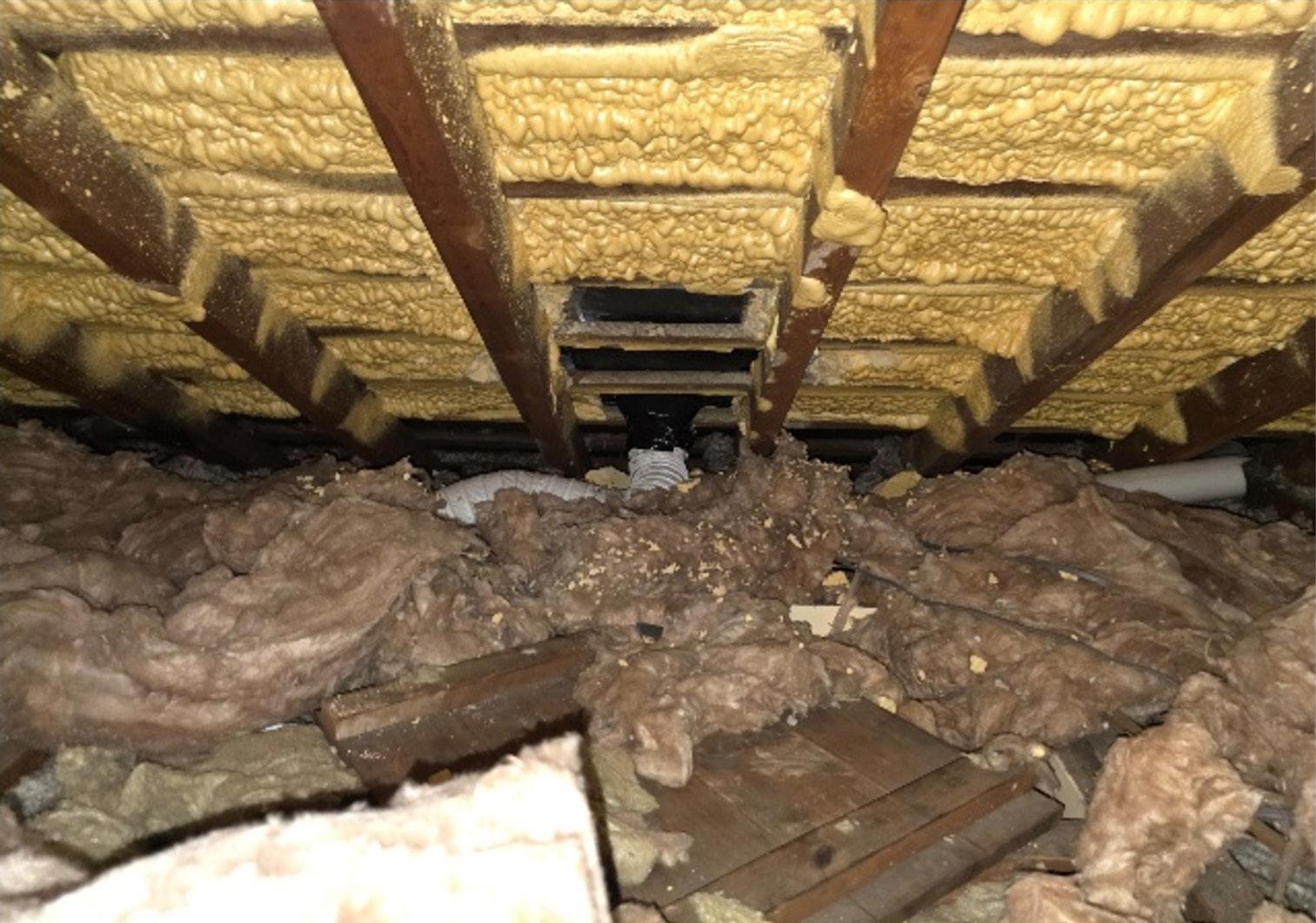
quality issues in buildings that have had extra insulation added as part of net zero initiatives. In many cases, these measures have resulted in installations that are unsuitable or insufficient for their intended purpose.
It is important therefore to understand a building’s existing permeability, or leakiness, before making any improvements, as this affects both the internal atmosphere and the comfort of those who work, live or receive care there.
Where a building has no installed or poor ventilation, it may rely on opening windows to purge warm, moist air and, although this is particularly effective in winter because outdoor air contains less moisture than summer air, the provision of guidance for undertaking this short yet effective air change is absent for many occupants resulting in the retention of atmospheric moisture leading to the condensation and mould issues being reported.
Cornerstone recognise this is not always feasible during colder periods in a number of situations such that, consideration could be given to utilising dehumidifiers for periods to control the closed atmospheric moisture content and reduce the potential for resultant mould issues due to their ‘atmospheric cycle being broken’.
We recognise that visible mould is harmful to the health of anyone in the building and indicates an underlying atmospheric problem. It is not caused simply by a cold structure or by the natural moisture generated through normal occupation and use.
The issue lies in how the indoor atmosphere is managed because mould can develop within a few days with it likely to return unless the moisture cycle is broken.
Suffice to add, we have witnessed a significant number of unsuccessful mould removals linked again to a gap in knowledge either for the product used and how it is applied. For example, biocides or fungicides are recommended in order to the deal with the mould root system (mycelium) and, many are noted to be sprays. With one square inch of mould potentially holding up to 10 million spores, spraying the outbreak will readily enable their release raising the potential for secondary related issues.
To support those managing and occupying affected buildings, our CPD-accredited Damp, Condensation and Mould workshops explain the conditions mould needs to grow, how it behaves once established, and the steps occupants, managers and business owners can take to

maintain effective repairs while ensuring adequate ventilation from both structural and atmospheric perspectives. The workshops also cover how to remove mould effectively once the cause has been identified, helping to reduce the risk of it returning. In addition, they provide a clear understanding of the difference between damp and mould, supporting competent decisions and helping to avoid inappropriate, costly and repeat remediations.
This unique training also explores the impact of retrofitting and net zero plans, helping building owners and managers understand how these measures affect different building types, patterns of use and locations. It supports confident decisionmaking through a defined approach and provides tailored guidance for occupants to help create a healthier indoor environment.
And, in advance of any sought-after training, a new Property Health Application is available to all from occupants through to managers and property owners.
An internal ‘did you know’ process delivers timely and recognisable guidance for these issues aimed at delivering immediate reasoning for what, where and why alongside effective remediation to manage the internal health of your home, school, hospital, care home or office.
And, if you still require expert advice, our services are onboard ready for your selection – when you need it. M
E: info@cornerstone-ltd.co.uk T: 0344 846 0955
We strive to deliver first class scaffolding solutions that meet the unique needs of our clients while ensuring the highest standards of safety and reliability. Our team of highly skilled professionals is dedicated to providing exceptional service from the initial planning stages to the completion of your project. We are fully committed to the needs of our clients, employees and all parties that interact with our company.

Need a quote for a project? Get in touch below

NASC explains why credible contractors, competent CISRS-qualified operatives and compliant scaffold designs are essential for public-sector clients commissioning work at height
It wraps around buildings we use every day and hangs high above our busy high streets, doing a job people rarely think about until something goes wrong. But for local authorities, housing associations and any government departments commissioning work at height, picking the right scaffolding contractor for a project is one of the most important appointments they make. Get it right and work proceeds safely, on time and within budget, with properly trained
operatives working to nationally recognised standards. Get it wrong and the consequences can be severe, not just financially, but in terms of public safety, legal liability and reputational damage.
A wide-ranging service sector
It is worth starting with a basic but often overlooked point; scaffolding is not just about construction. It is a safety-critical, highly E

F technical engineering service that requires significant skill, training and competence at every level, from operatives to directors.
The UK scaffolding sector contributes to virtually every area of the economy. While construction remains the most significant market for scaffolding, and every major building project, from housing developments to commercial towers, depends on safe, professionally designed access solutions, construction is only part of the story.
You’ll find scaffolding wherever people need to work safely at height or access difficult environments. From maintaining critical energy infrastructure like offshore platforms in the North Sea to providing complex access
The results of poor procurement can be catastrophic
solutions inside factories and industrial plants, scaffolding supports a range of sectors. It’s a vital part of everything from the heritage sector to aviation, outdoor events to the film industry.
Don’t procure on price alone
But it’s an industry where procurement decisions are too often driven by price, with insufficient attention paid to standards and qualifications. The results of poor procurement can be catastrophic.
Poorly erected or inadequately maintained scaffolding puts workers and members of the public at risk. For public sector clients, with a duty of care to both their workforce and the wider communities they serve, this is not a theoretical risk.
The Building Safety Act (BSA) has introduced new duties for clients, principal designers and principal contractors on higher-risk buildings, with greater scrutiny at each gateway stage E


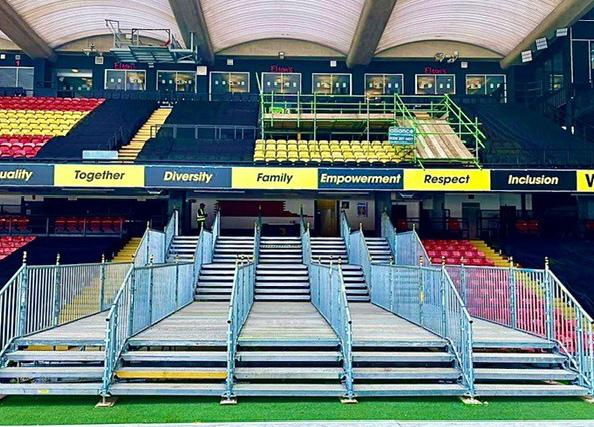
In need of a temporary means of access for commercial, industrial, and residential projects across the UK.
Whether it’s for planned works, emergency access, or to maintain safe evacuation routes during construction, our experienced team delivers reliable, fully compliant installations tailored to your requirements.
With safety, reliability, and customer satisfaction at the heart of everything we do, Tamworth Scaffolding is the trusted choice for high-quality access solutions.


01827 892900
07850 520637
enquiries@tamscaff.co.uk

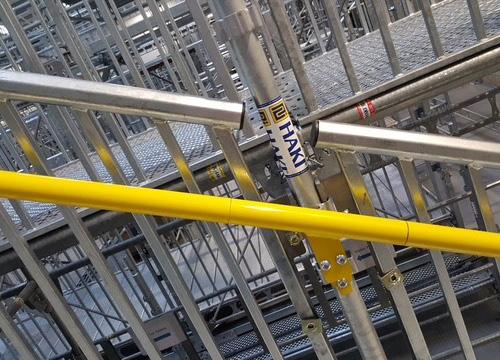
• Temporary Fire Escapes
• Scaffolding Design & Installation
• Commercial & Domestic Scaffolding
• Industrial Access Solutions
• Temporary Roof Systems
• Nationwide Service
• Fast Response & Competitive Pricing

Need a temporary means of access or scaffolding solution?






F of a project. While scaffolding is viewed as temporary works and not always within scope of the BSA, this doesn’t mean competence and standards are less vital. Due diligence on scaffolding contractors is not optional. Clients need to be able to demonstrate that the contractors they appoint are competent, their workforce is properly qualified and that appropriate risk management processes are in place throughout a project.
NASC is the UK’s leading trade body for scaffolding and access. Membership of NASC is the clearest and most reliable indicator available to clients that a contractor meets the highest standards of safety, competence and professionalism. NASC is the only UK trade body
CISRS has been the recognised mark of competence for scaffolders in the UK for over half a century
in the sector with a contractor membership that is 100 per cent audited. NASC’s Safety Report for 2026, based on RIDDORS submitted by 100 per cent of membership, showed no fatalities. This compares to wider industry data from the No Falls Foundation showing 31 deaths in 2025/26.
Contractors who want to join NASC undergo rigorous independent auditing. To achieve and maintain membership, they must demonstrate consistent compliance with NASC’s technical guidance, health and safety standards and contractual requirements.
Importantly, NASC members are required to prove that 90 per cent of their operative workforce holds a valid Construction Industry Scaffolders Record Scheme (CISRS) card. CISRS has been the recognised mark of competence for scaffolders in the UK for over half a century. This matters enormously. There are still too many operatives working in scaffolding without proper qualifications, and too many contractors with no accountability to any industry body. E
If your scaffolding is already in place for refurbishment, you've already made one of the biggest investments in accessing your building.
Now's the perfect time to maximise that opportunity with a Light Gauge Steel (LGS) rooftop extension, creating valuable new residential or commercial space without the need for major additional access works.
Lightweight, fast to install and precision-engineered, LGS enables additional floors to be added quickly and efficiently, with minimal disruption to the existing structure. It's a smarter, more cost-effective way to unlock valuable new space while the scaffolding is already there.
Don't just refurbish. Build upwards with Nexus Modular.


Get in touch today to find out how an LGS rooftop extension can add value to your next project.
F NASC members represent around 80 per cent of the UK scaffolding market by turnover and these are the contractors public sector clients should be appointing.
A valid CISRS card confirms a scaffolder has completed the appropriate level of training and assessment for their role, from operative to advanced scaffolder or supervisor. Specifying a CISRS-qualified workforce on scaffolding contracts is a simple and effective safeguard. It’s not enough for a contractor to claim operatives are experienced or even trained. Clients should be asking for evidence of current CISRS card status and include this as a requirement in tender documentation.
Clive Dickin, Group CEO of NASC and CISRS, explains: “Public sector clients have a responsibility to the communities they serve to make sure work carried out on their behalf is done to the highest possible standards.
“Specifying NASC membership in scaffolding procurement is a straightforward and effective
Standards can only rise as fast as procurement practices allow
way of doing that. It’s not just about compliance, but about choosing contractors who are genuinely committed to raising standards and who can be held accountable if things go wrong.”
What does best practice scaffolding procurement look like?
Best practice can be summed up in three words; credibility, competence and compliance. Better procurement in scaffolding requires you to use a credible firm, employing competent staff and working to a compliant design.
NASC membership should be specified as a requirement rather than a preference in documentation. This filters out contractors who can’t demonstrate they meet the required standards. You know the firm you hire will be credible. E






are rising, technology is advancing and the expectations placed on contractors have never been higher
F A minimum of 90 per cent CISRS-carded operatives should be another requirement and contractors should be asked to confirm current compliance rate and provide evidence. This is second nature for NASC members. You know the workforce being used will be competent.
And make sure they work to a compliant design, ideally TG20 for traditional tube and fit scaffolding or TG30 if they are using newer, modular system scaffolding. Ask for evidence, such as signed compliance sheets.
Other quality criteria that should also carry significant weight in any evaluation include health and safety records, method statements and evidence of previous public sector experience. Oversight and inspections should continue throughout the project, not end at the point of appointment.

Too often scaffolding is treated as peripheral rather than a central element of site safety management. But scaffolding is changing. Standards are rising, technology is advancing and the expectations placed on contractors have never been higher.
But standards can only rise as fast as procurement practices allow. When public sector clients specify quality, demand evidence of competence and hold contractors accountable to recognised compliance standards, they create the conditions for a safer and more professional sector. When they procure on price alone, they undermine those efforts and put people at risk. The public sector has enormous purchasing power. Used thoughtfully, that power can be a genuine force for good. It starts with asking the right questions at the procurement stage. M
NASC Information membership is free to anyone working in the public sector commissioning scaffolding or access solutions. Visit nasc.org.uk/membership for more details or contact enquiries@nasc.org.uk.

Sarah King, public sector development and framework manager at Tony Gee and Partners, explains how early design-and-build collaboration helps councils cut risk and deliver stronger long-term value

What are the biggest opportunities for local authorities to unlock value through design-andbuild partnerships, particularly when budgets are tight and expectations are high?
As councils must deliver more with less, design and build partnerships offer a practical way to maximise value whilst controlling costs. Design and build integration is no longer just a procurement choice; it’s a strategic lever for unlocking better outcomes across the public estate.
By bringing designers like Tony Gee, contractors and engineers together early, councils can test options, challenge assumptions and refine solutions before construction begins. This reduces the risk of costly redesign ensuring that limited capital funding is efficiently used.
Design and build also enables a shift from lowest-cost procurement to wholelife value. Assets can be designed with maintenance and operation in mind, reducing long-term cost pressures across infrastructure portfolios. This is particularly
important as councils manage ageing assets alongside growing service demands.
Ultimately, the greatest opportunity lies in making better-informed decisions earlier, avoiding rework and ensuring that every pound spent delivers lasting public value.
What are the core benefits of strong design and build partnerships for councils?
Design and build partnerships move councils towards a more integrated and outcomefocused approach.
A key benefit is improved programme certainty. When the whole delivery team is aligned from the outset, projects progress more smoothly with fewer delays. This is particularly valuable for high-profile or time-sensitive infrastructure schemes.
Quality outcomes are strengthened through continuous collaboration. Design intent is maintained throughout delivery while benefiting from real-world construction insight, resulting in more robust, reliable assets with fewer defects or post-completion issues.
Partnerships also create the right conditions for innovation. Digital tools, standardisation and modern methods of construction can be adopted more effectively when all parties are aligned, improving efficiency and consistency across projects.
Sustainability and social value are more effectively embedded when considered from the outset. Carbon reduction, resilient design and community benefits can be planned into delivery, rather than introduced later at additional cost.
Ultimately, strong partnerships build trust, transparency and shared accountability
– helping councils deliver infrastructure that meets both immediate community needs and long-term strategic priorities.
What types of risk can be better managed or reduced through a design & build partnership model, and why does this matter for local authorities delivering essential public infrastructure?
Design and build partnerships give local authorities a more predictable and accountable way to deliver public infrastructure, particularly where scrutiny is high and resources are constrained.
Cost risk is reduced by eliminating disconnects between design and construction, which are a common cause of variations and budget overruns. Integrated teams improve cost certainty and reduce the likelihood of unexpected increases.
Programme risk is also lowered. Aligned teams and parallel working enable earlier identification of issues, leading to more reliable delivery timelines and fewer delays.
Technical and constructability risks are mitigated because construction expertise informs design decisions in real time. This results in more practical, buildable solutions and fewer on-site complications.
Quality and performance risks are reduced through continuous collaboration, ensuring that infrastructure performs as intended and requires less remedial work after completion.
Environmental and regulatory risks can also be addressed earlier. Planning requirements, compliance standards and sustainability targets are considered from the outset, reducing the likelihood of redesign or approval delays.
Managing these risks effectively is critical for local authorities. Public infrastructure projects are highly visible and directly impact communities. By reducing uncertainty and improving outcomes, design-and-build partnerships help councils deliver with confidence.
What role do digital tools such as BIM, modelling and simulation play in improving delivery efficiency and helping councils make more informed decisions?
At Tony Gee, digital engineering and modern methods of construction are central to improving delivery efficiency and supporting better decision making for local authorities.

Sarah King, public sector development and framework manager, Tony Gee and Partners
Sarah King is the public sector development and framework manager at engineering design consultant Tony Gee and Partners. Sarah is passionate about helping local authorities deliver solutions that make a real difference to communities. She is recognised for shaping collaborative, outcome-focused design and building partnerships that bring whole-life value.
Tools such as BIM, 3D modelling and simulation enable teams to identify and resolve issues early in the design process. Coordinated models allow for clash detection and constructability reviews before work begins on site, reducing rework, cost and disruption.
4D planning adds a time dimension, allowing construction sequencing and temporary works to be tested in advance. This helps councils understand programme risks and plan effectively while maintaining public access during delivery.
Clear 3D visualisations also support stakeholder engagement, enabling more transparent communication and more confident decision making throughout the project lifecycle.
Asset information embedded within digital models also improves the quality of handover data, supporting efficient maintenance planning and whole-life cost management.
Together, these tools allow councils to test options earlier, reduce delivery risk and achieve better long-term value. M
The FIA explains how the Building Safety Regulator’s External Remediation Improvement Plan marks a shift from identifying unsafe buildings to enforcing timely, competent remediation and strengthening accountability across the sector
More than eight years after the Grenfell Tower tragedy exposed fundamental failings in building safety across the UK, cladding remediation remains one of the most significant challenges facing the built environment. While substantial progress has been made in identifying unsafe buildings and establishing funding mechanisms, thousands of residents continue to live in buildings affected by unsafe cladding and other fire safety defects.
The publication of the Remediation Enforcement: Guidance for Regulators, alongside the government’s wider Remediation Acceleration Plan , marks a significant shift in approach. The focus is no longer solely on identifying buildings with problems; it is now firmly on accelerating remediation, improving regulatory oversight and ensuring those responsible for unsafe buildings are held accountable.
For the fire sector, the construction industry and building owners alike, the message is clear: anyone who is delaying action will no longer be tolerated.

The Grenfell Tower Inquiry highlighted a series of catastrophic failures across multiple sectors, from the behaviour of product suppliers through to design, construction, management and regulation. While many reforms have followed, the pace of remediation has remained a major concern.
Government figures show that although most buildings with the same aluminium composite material (ACM) cladding that was used on Grenfell have now been addressed, the wider remediation picture remains far more complex. Thousands of medium and high-rise residential buildings continue to require remediation, while additional buildings are still being identified through ongoing assessments.
The challenge extends beyond cladding alone. Many buildings require remediation for a range of fire and structural safety defects, including issues with cavity barriers, fire stopping, compartmentation and external wall systems. Addressing these defects is often technically complex, expensive and time-consuming. For residents, the consequences of delay are significant. Interim measures, uncertainty, increased insurance costs and concerns about safety continue to affect quality of life. The government’s latest plans acknowledge that progress has been too slow and seek to introduce a stronger framework for delivering permanent solutions.
One of the most significant aspects of the new approach is the introduction of clear targets and measurable outcomes.

The government has set ambitious objectives, including the remediation of all high-rise buildings over 18 metres that are within government-funded schemes by the end of 2029. In addition, all residential buildings over 11 metres with unsafe cladding are expected either to be remediated, have a clear completion pathway, or face significant enforcement consequences by the same date. These targets represent a notable departure from previous approaches. Rather than relying primarily on voluntary progress and funding incentives, regulators are being equipped and encouraged to use enforcement powers more proactively.
The new guidance explicitly recognises that regulators have a critical role in ensuring remediation progresses where landlords, freeholders or other responsible parties fail to act. Local authorities, fire and rescue authorities and the Building Safety Regulator are expected to work together more closely to ensure unsafe buildings are identified, monitored and, where necessary, subject to enforcement action.
This coordinated approach reflects a broader cultural change within building safety regulation. The emphasis is increasingly on accountability, transparency and measurable outcomes.
The External Remediation Improvement Plan provides clarity on how regulators should operate within what has often been a complicated and fragmented enforcement landscape.
Building safety regulation involves several overlapping legal frameworks, including the Housing Act 2004, the Regulatory Reform (Fire Safety) Order 2005 and the Building Safety Act
Thousands of medium and high-rise residential buildings continue to require remediation
2022. Different regulators have responsibilities depending on the nature, height and occupation of a building.
For higher-risk residential buildings, the Building Safety Regulator plays a central role. Local authorities and fire and rescue authorities also retain significant powers, particularly in relation to residential premises and fire safety management
The new guidance aims to reduce ambiguity by establishing clearer expectations around which regulator should take the lead in different circumstances. This is intended to support faster decision-making and reduce the risk of delays caused by uncertainty over responsibilities.
Importantly, the guidance reinforces the principle that remediation should not be delayed because of complexity in ownership structures or uncertainty over funding arrangements.
One of the greatest obstacles to remediation has been the complexity of ownership arrangements within residential buildings.
Leasehold structures often involve multiple parties, including freeholders, head lessees, management companies, accountable persons and responsible persons. Determining who has responsibility for remediation can be challenging, particularly where ownership has changed since construction. E
One of the greatest obstacles to remediation has been the complexity of ownership arrangements within residential buildings
F The government’s guidance acknowledges this complexity but makes it clear that ownership structures cannot become an excuse for inaction.
The Building Safety Act 2022 introduced significant reforms aimed at strengthening accountability and protecting leaseholders from remediation costs. It also created new mechanisms to ensure those responsible for defects contribute to remediation.
The latest improvement plan builds on these reforms by reinforcing expectations around action and providing regulators with greater clarity on intervention options when progress stalls.
A notable feature of the guidance is its emphasis on permanent remediation rather than reliance on interim measures.
Following Grenfell, many affected buildings introduced temporary risk reduction measures such as waking watches and enhanced fire detection systems. While these interventions can provide an important layer of protection, they were never intended to be long-term solutions.
The guidance defines successful remediation as achieving a sustainably safe and liveable condition in which interim measures are no longer required.
This distinction is important. Fire safety professionals have long argued that temporary controls should not become a substitute for addressing underlying risks. Permanent remediation provides certainty for residents and delivers the long-term resilience required of modern residential buildings.
The focus on sustainable solutions also aligns with the wider objectives of the Building Safety Act, which seeks to embed safety throughout a building’s lifecycle rather than relying on reactive interventions.
While enforcement and accountability are central themes within the improvement plan, successful remediation ultimately depends on the availability of competent professionals.
The demand for fire engineers, fire risk assessors, building control professionals, remediation specialists and competent contractors remains significant. As remediation activity accelerates, maintaining professional standards will be critical.
The Grenfell Inquiry highlighted serious concerns about competence across multiple disciplines. Since then, considerable work has been undertaken to improve professional standards and strengthen competency frameworks throughout the sector.
The FIA has consistently advocated for competency, third-party certification and professional development as fundamental components of building safety. These principles become even more important as remediation programmes increase in scale and pace.
There is a risk that pressure to meet ambitious deadlines could lead to shortcuts or inconsistent quality if competence is not prioritised. Regulators, building owners

and contractors must therefore ensure that remediation work is undertaken by appropriately qualified and experienced professionals.
Another important element of the government’s strategy is the commitment to identify all unsafe buildings.
The government expects to review the majority of the 11-metre-plus building stock and continue developing a comprehensive understanding of buildings that may require intervention. Improved data collection and analysis will play a critical role in achieving this objective.
For regulators, accurate data supports riskbased decision-making and more effective prioritisation of resources. For residents, greater transparency can help build confidence that risks are being properly identified and managed.
The creation of more comprehensive building records also aligns with the broader ambitions of the building safety regime, including the “golden thread” of information introduced through the Building Safety Act.
Reliable information enables better management of safety risks throughout a building’s life and supports more effective regulatory oversight.
The publication of the External Remediation Improvement Plan should be viewed as more than an operational update. It represents a clear statement of intent from government and regulators that remediation must move faster and that accountability will be strengthened.
Building owners should review their remediation programmes, ensure

responsibilities are clearly understood and engage proactively with regulators where necessary. Responsible and accountable persons should ensure that building safety risks are properly assessed and that remediation plans remain on track.
For fire safety professionals, the increased focus on remediation creates opportunities to contribute expertise while reinforcing the importance of competency and professional standards.
For regulators, the guidance provides a stronger framework for collaborative enforcement and more consistent decisionmaking.
Most importantly, for residents, the plan aims to bring greater certainty that unsafe buildings will be identified, remediated and made safe within a defined timeframe.
The UK’s building safety landscape has undergone profound change since Grenfell. New legislation, new regulatory structures and new responsibilities have created the foundations for a safer built environment. However, legislation alone does not make buildings safe. Safety is achieved when risks are identified, responsibility is accepted and remediation is delivered effectively
The Building Safety Regulator’s External Remediation Improvement Plan signals a transition from planning and policy development towards implementation and delivery. Its success will ultimately be measured not by the publication of guidance or the creation of frameworks, but by the number of residents who can finally live in homes that are demonstrably safe.
As remediation enters this new phase, collaboration, competence and accountability will be essential. The fire safety sector has a vital role to play in ensuring that lessons from the past continue to drive meaningful change and that building safety remains a priority long after remediation programmes have been completed. For the FIA, the message is straightforward: remediation is not simply a construction challenge or a regulatory requirement. It is a fundamental building safety obligation, and one that must be delivered with urgency, professionalism and an unwavering commitment to protecting life. M

Philip Mallon MRICS of Archway FM explains why unsafe cladding often goes unnoticed for years and how coordinated, expert support is essential to move remediation forward

Many buildings still have unsafe cladding. What are the main reasons action hasn’t been taken on these buildings? It may be surprising to learn that many stakeholders (freeholders, leaseholders, and property managers) don’t realise they have a cladding problem until someone decides to sell their flat.
Cladding risk doesn’t tend to be visible to the naked eye, and those who manage residential blocks aren’t usually equipped to assess whether their cladding meets current fire safety standards. Without a Fire Risk Appraisal of the External Wall (FRAEW), the problem can continue to go undetected.
It’s usually only when a leaseholder tries to sell that the question arises: ‘has a FRAEW
been undertaken?’ Suddenly, everyone is confronted with a problem that has likely been sitting unaddressed for years. This is a reactive way to identify fire risks and suggests that many buildings remain unassessed.
Even stakeholders who are aware of the issue often don’t know where to start. The funding landscape, regulatory requirements, and number of parties to get involved can feel overwhelming.
Cladding remediation involves residents, RTMs, managing agents, consultants and contractors. How can we overcome fragmentation when it comes to tackling the problem? Fragmentation is one of the most common reasons remediation projects stall. With so many parties involved, communication breaks down, accountability becomes unclear and everyone is waiting for someone else to take the lead.
This was the driving force behind founding Archway FM in 2020. We act as the central partner across the entire process, removing that burden from those responsible for these buildings.
For freeholders and leaseholders, that means managing the entire funding process on
their behalf, with consistent communication throughout. As a director-led company, clients work personally with me, so there’s no ambiguity about who is responsible and no risk of anything getting lost between teams.
Working directly with Homes England and the Cladding Safety Scheme, we take full responsibility for compliance, portal updates, and cashflow drawdowns. For contractor teams on site, having us as the single contact managing the client means significantly less burden on their own teams.
One experienced party holding all of this together makes an enormous difference. Our projects move faster, smoother and are fully compliant at the point of handover.
Government funding is available for remedial works. What do building stakeholders need to understand about how to access it and what typically slows applications down?
Grant funding is available through the Cladding Safety Scheme, designed to ensure that leaseholders aren’t left to foot the bill for remediation work. However, accessing that funding catches many applicants off guard. Applications must be submitted through the CSS portal and they require detailed technical information. For many, this is a technically complex and stressful process. After all, freeholders and RTM directors are often managing full-time careers. They’re not funding specialists, nor should they have to be.
Incomplete applications are what consistently slows the process down. Having completed countless applications with a 100 per cent success rate and over £120 million secured, we know exactly what Homes England needs to see.
We recommend gathering building plans and documents as early as possible. Delays usually stem from information gaps rather than eligibility issues. Beyond that, finding an experienced partner who understands the process is invaluable. We manage the entire CSS application on behalf of our clients at zero cost to them. Anyone is welcome to get in touch for a no-obligation call to talk through where your building stands.
Facilities management teams are often responsible for coordinating remediation. What practical steps can help reduce the pressure for them?
Facilities Management teams are often handed responsibility for cladding remediation

Philip Mallon MRICS, director, Archway FM
Philip is a cladding remediation specialist with 20+ years’ experience in the construction industry. Since founding Archway FM, he has become one of the sector’s most experienced practitioners in navigating the Cladding Safety Scheme. Working directly with Homes England, Archway FM has secured £120+ million for clients, helping 800+ homeowners return to safe, compliant buildings.
without the specialist knowledge to manage it alongside their other responsibilities. Bringing in an experienced partner early is the most effective way to keep the process moving.
Working hand in glove with facilities & property management teams is central to how Archway FM operates. We don’t hand over a report and leave a team to figure out next steps. We stay actively involved managing resident communications and on-site management throughout.
We also maintain a preferred framework of project partners with verified experience, insurance, and technical expertise. For management teams, that removes the time-consuming task identifying and vetting suppliers.
The practical difference is significant. Teams spend less time chasing updates, navigating unfamiliar processes, and explaining complex regulatory requirements to boards and residents. We handle that. Their job is to manage the building and ours is to get it remediated. M

For 20 years, The Emergency Services Show has been where the UK’s blue light sector comes together to solve frontline challenges, share operational lessons and discover what’s next for emergency response
In 2026, ESS returns to the NEC Birmingham for its landmark 20th anniversary alongside The Emergency Tech Show, bringing frontline operations and digital innovation together under one roof at a pivotal moment for the sector.
Over two days, more than 16,000 professionals and 550+ exhibitors will gather to explore everything from rescue equipment and fleet to AI, drones, communications and resilience.
For policing, fire and rescue, ambulance and emergency planning professionals, Birmingham will once again become the centre of the conversation around the future of emergency response.
Emergency services are operating in one of the most challenging environments in recent memory.
Demand is rising while budgets remain constrained. Workforce wellbeing has become a growing concern, while agencies are also being asked to respond to increasingly complex threats including terrorism, public disorder, severe weather, cyber risk and infrastructure disruption.
At the same time, technology is rapidly transforming frontline operations.
Artificial intelligence, cloud infrastructure, predictive analytics and unmanned systems are
no longer future concepts. They are becoming embedded in day-to-day emergency response.
That shift sits at the centre of ESS and ETS 2026.
The co-location of both events reflects a new operational reality: frontline capability and digital technology can no longer be treated separately. Modern emergency response now depends as much on data, connectivity and situational awareness as it does on physical equipment.
Paramedics increasingly rely on integrated patient data, fire and rescue teams use drones and live mapping during incidents, and police services are investing in AI-assisted workflows and digital evidence management.
The lines between operational response and digital capability are becoming increasingly blurred, and ESS and ETS aim to reflect that evolution.
Since launching in 2006, The Emergency Services Show has become one of the UK’s leading events for the blue light sector, bringing together frontline responders, senior leaders, resilience professionals and suppliers under one roof.
The 2026 edition marks its 20th anniversary, with exhibitors spanning PPE, rescue equipment, communications, medical technology, fleet, wellbeing and operational support.
But ESS has always been more than an exhibition. Its value lies in the conversations, connections and shared learning that
happen across the show floor, helping emergency services tackle challenges together and shape the future of response.
The 2026 event is built around four core themes reflecting the operational realities facing emergency services today.
The programme will also see the return of established content theatres including the Royal College of Paramedics Theatre, the People and Skills Theatre and the Protecting the Protector Stage, focusing on workforce wellbeing, leadership and responder safety.
This theme focuses on frontline care, rescue capability and interoperability, with sessions exploring pre-hospital care, trauma response and the tools supporting responders in high-pressure environments.
A major addition for 2026 is The ATACC Group’s Life Saving on the Front Line demonstration, delivering practical, scenariobased resuscitation training across both days.
Designed for police, fire and ambulance personnel, the CPD-accredited sessions focus on applying Immediate Life Support (ILS) and Advanced Life Support (ALS) skills in realistic operational conditions.
Preparedness and resilience continue to rise up the agenda for


F emergency planners, local authorities and blue light agencies.
The programme places strong emphasis on civil contingencies, public protection and multi-agency coordination, with Martyn’s Law and climate-related disruption expected to feature prominently.
A key addition is the new Local Resilience Forum Conference, delivered in partnership with the West Midlands Resilience Forum.
Fleet of the future
Fleet remains one of the fastest-changing areas across emergency services.
Police, ambulance and fire fleets are under pressure to decarbonise while maintaining operational readiness.
The new Fleet of the Future feature area will provide a dedicated space for fleet managers and procurement teams to
This strand focuses on workforce capability, leadership, wellbeing and professional development, including immersive training environments, digital learning tools and mental health support.
One of the defining characteristics of ESS has always been its emphasis on collaboration. Multi-agency working is no longer aspirational within emergency response. It is essential.
The Collaboration Zone at ESS 2026 has been designed to create space for agencies, organisations and partners to share operational experience, strengthen relationships and explore coordinated approaches to resilience and response.
Bringing police, fire, ambulance, resilience professionals, voluntary organisations and technology providers into the same environment


Conference reflects the growing focus on community-led resilience and multi-agency preparedness.
Bringing together resilience professionals, emergency planners, voluntary organisations, faith groups and policy leaders, the twoday programme will explore how stronger partnerships can improve response, recovery and long-term resilience.
Another major addition is the launch of the Resilience360° Summit.
Part of the wider Response360 ecosystem, the summit focuses on the full lifecycle of operational resilience, from prevention and preparedness through to response and recovery.
The event will bring together leaders from emergency services, transport, utilities and critical infrastructure to examine resilience strategy, collaboration and the role of emerging technologies during disruption and major incidents.


Emergency Tech
comes into focus
Running alongside ESS, The Emergency Tech Show has rapidly established


itself as a dedicated platform for digital transformation within public safety.
The 2026 edition will feature more than 150 technology exhibitors and thousands of digital and data specialists working across emergency response.
The programme has been developed alongside organisations including the Police Digital Service and the NPCC Digital, Data and Technology Coordination Committee, ensuring sessions remain grounded in operational need.
Key topics will include AI adoption, cloud migration, cyber resilience, data sharing, digital evidence and automation.
One of the strongest themes emerging across the sector is the need to move beyond experimentation.
Emergency services are no longer simply exploring what technology can do. They are now focused on implementation, interoperability and measurable operational outcomes.
That focus will run throughout ETS.
The AWS Partner Zone will explore how emergency services are using cloud and AI technologies to improve efficiency and reduce administrative burden.
Meanwhile, the Microsoft Partner Stage and Microsoft Village will showcase how digital tools are supporting safeguarding, operational decision-making and workforce efficiency.
The Drones and Robotics Zone will also return with live demonstrations showcasing aerial E

F surveillance, thermal imaging and robotics platforms designed for high-risk environments. Alongside this, the Ordnance Survey Mapping Zone will demonstrate how location intelligence and geospatial data continue to shape emergency response planning and incident coordination.
More than an exhibition
More than a trade show, ESS and ETS have become one of Europe’s biggest meeting points for emergency services professionals. Across two days, visitors can access CPDaccredited sessions, live demonstrations,

specialist feature areas and valuable peer-topeer networking at a time when collaboration and shared learning have never been more important.


Birmingham becomes the sector’s meeting point
The Emergency Services Show and The Emergency Tech Show return to the NEC Birmingham on 16–17 September 2026, bringing the blue light community together at a pivotal moment for the sector.
As operational pressure, technological change and public expectations continue to reshape emergency response, ESS and ETS remain where the sector comes

At work, fire safety is something most of us take seriously. We carry out risk assessments, maintain fire extinguishers, test alarm systems and ensure escape routes are kept clear. Yet when we return home, many of those same principles are often forgotten
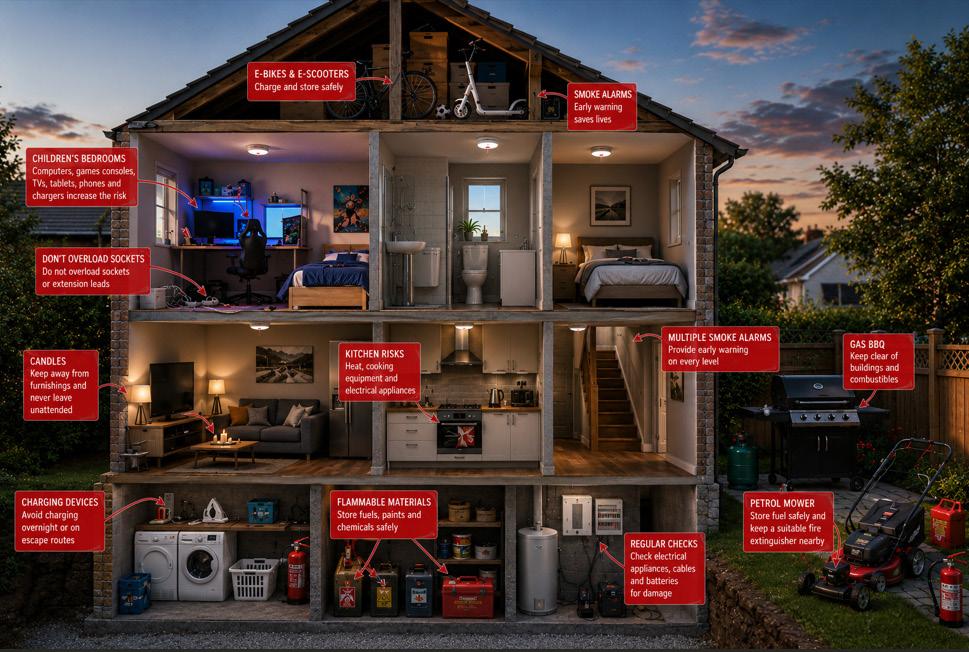
Modern homes contain more electrical equipment and battery-powered devices than ever before. From cordless vacuum cleaners and power tools to tablets, smartphones and e-bikes, these items have become part of everyday life. While generally safe, damaged batteries, poor-quality chargers and unsafe charging practices can increase the risk of fire.
Children’s bedrooms are a good example of how our homes have changed. Many now contain computers, gaming consoles, televisions, mobile phones, tablets and multiple chargers, all connected to a limited number of sockets. It is important not to overload electrical outlets or extension leads, particularly where several devices are being used or charged at the same time. Damaged cables and chargers should be replaced promptly, and extension leads should never be connected together. When charging battery-powered devices, use the manufacturer’s charger whenever possible and avoid charging items overnight or on escape routes such as hallways and landings. If a battery becomes swollen, damaged or unusually hot, stop using it immediately. Another area often overlooked is the garage or garden shed. Many households store petrol lawn
mowers, fuel cans, paints and other flammable materials. Good housekeeping and safe storage can help reduce fire risks. Where appropriate, keeping a suitable fire extinguisher in the garage can provide an additional level of protection for dealing with a small fire in its early stages.
Candles also remain a common cause of accidental fires. Always place candles on a stable, non-combustible surface, keep them away from curtains and furnishings, and never leave them burning unattended or while sleeping.
Perhaps the most important fire safety measure is ensuring your home has adequate smoke detection. Many properties rely on a single smoke alarm on the landing, but additional smoke alarms and heat detectors can provide valuable early warning, giving occupants more time to escape safely.
The same principles that protect people and property in the workplace can help safeguard our families at home. By applying a few simple precautions, we can significantly reduce fire risks and help keep our homes and loved ones safe.
If you would like advice on how to make your home or business safer from fire, contact 20A Limited for professional guidance and practical fire safety solutions. M
FURTHER INFORMATION
www.20alimited.com
Tel: 01639 381057 / 07545482777
Email: richard@20alimited.com

is your system appropriately serviced, maintained and certified?
Paul Markham of the Fire Protection Association explains why compliant servicing, maintenance and certification are essential to ensuring sprinkler systems operate effectively when needed and remain legally fit for purpose
Fire sprinkler systems are an integral part of the building fabric. Often overlooked, they can stand idle for long periods of time, but when called into action, they are required to operate in earnest to allow evacuation of a building, protecting lives, property, and the businesses that operate within. This article explores the legislative requirements to maintain a compliant sprinkler system whilst ensuring it remains fit for purpose in changing environments.
In May 2017, Optimal Economics published a report detailing the Efficiency and Effectiveness of Sprinkler Systems in the United Kingdom. In conjunction with the NFSN
(National Fire Sprinkler Network) and NFCC (National Fire Chiefs Council) and supported by BAFSA (British Automatic Fire Sprinkler Association), the data gathered provides significant insight into the sprinkler saves within both domestic, residential and non-residential fires. Extracts below from this report provide a brief overview based on four sectors accounting for 73 per cent of all non-residential fires – industry (manufacturing and processing), retail, warehousing and bulk storage, and education.
Of the data provided between 2011 and 2016, there have been 629 recorded fires in industrial manufacturing or processing premises in E


F which sprinklers were installed. The number by year is shown in Figure 1. On an annual basis, the number of fires has gradually reduced from 162 in 2011 to 99 in 2015.
Figure 2 shows the number of fires across the different industrial sub-sectors with the largest number of fires occurring in factories (47 per cent).
The impact of the sprinkler system is known for 178 of the 294 fires where the system operated. Figure 3 shows the effectiveness of the system in containing the fire for each industrial sub-
sector. Across all industry sub-sectors, the sprinkler system contained/controlled or extinguished the fire in 99 per cent of cases.
In November 2020, the FPA published an article “Fires Risking Livelihoods” detailing analysis of 4,782 major UK fires between January 2009 and December 2019 with the average loss per incident being £657,074. Industrial processing and manufacturing buildings witnessed the largest financial impact through fire over the 10-year period with losses totaling £808m.
These figures act as a reminder that a fully compliant operational sprinkler system provides the reassurance that, when it is called into action, a fire can be contained or extinguished minimising the direct impact to life and business.
If you were to consider a sprinkler system as your car, whereby keeping fluids topped up, air in your tyres, regular maintenance and taking precautions for adverse weather, this would keep you mobile and your car reliable. A sprinkler system should be treated the same way. Leaving fire pumps and installation control valves idle for long periods of time without exercise, water-filled pipework exposed to
freezing conditions, or poor housekeeping around the sprinkler protection sites could lead to their failure to function in the event of a fire, with a part or full loss of premises or life. A sprinkler system is a significant investment by the building owner and should be serviced and maintained accordingly to ensure correct operation when called into action.
The design, installation, testing, commissioning, and maintenance of sprinkler systems in the UK are commonly carried out in accordance with LPC Rules/BS EN 12845:2015 (Commercial and Industrial), FM /NFPA (US standards) or BS9251:2021 (Domestic and Residential). For the benefit of this article, we will be focusing on the requirements set out in LPC Rules/BS EN 12845:2015 – Rules for Automatic Sprinkler Installations.
The British (European) Standard covers automatic sprinkler protection to be installed for ‘safety of life’ purposes to satisfy building regulations, in which case BS EN 12845 (i.e. Part 1 of the LPC Rules) would apply and Section 20 covers maintenance requirements.
UK insurers routinely require automatic sprinkler protection to be installed for ‘property protection’ purposes, in which case the requirements of BS EN 12845 as updated and modified by Technical Bulletins (i.e.
Part 2 of the LPC Rules) would apply, where TB203 covers maintenance requirements.
LPC Technical Bulletin TB203 provides a comprehensive guide to care and maintenance of automatic sprinkler installations, with significant updates and enhanced understanding against clause 20 of BS EN 12845:2015 (Part 1 of the LPC Rules). This should therefore be applied for ‘property protection’ applications, which would then also automatically include ‘safety of life’ coverage.
It is important to recognise that where premises have been third-party certified, for example under the LPS1048 scheme, the service and maintenance regime should be carried out in accordance with the appropriate standard – in this case LPC Rules/BS EN 12845:2015 – and by an approved LPS1048 contractor to the appropriate level to suit the type of sprinkler work required.
Often business owners have a budget in mind for the service and maintenance of their sprinkler system and subsequent negotiations with service providers can lead to cutting out some elements of the servicing to drive down costs. This however can lead to the provision of a non-compliant service and maintenance contract. Under the LPS1048 scheme and outlined in Guidance Note GN12, if the system is not serviced and maintained to standard (i.e. is non-compliant), then the E

F system certification is invalid. If this were the case, would it be permitted by the authorities having jurisdiction and would the insurer pay out for fire damage if the system was not properly serviced? These considerations are essential when choosing the service and maintenance plan for your sprinkler system.
Every sprinkler system is unique, designed specifically to protect the building occupancy and environment in which the business operates. As a result, there may be a variety of components which make up an effective sprinkler system. These could include: water supplies (consisting of storage tank(s) and single/multiple fire pump arrangements –electric and/or diesel); installation control valves (wet, dry, alternate, pre-action or deluge); zone and/or subsidiary valves; alarm system; frost protection measures; fire detection that works in conjunction with pre-action valves; and pipework network, support bracketry, and sprinkler heads. These components rely on periodic inspection and testing routines to maintain good working order. The frequency and guidance to maintain compliance is outlined in TB203 – Care and maintenance of automatic sprinkler systems.
Part 2, Article 17 of the Regulatory Reform (Fire Safety) Order 2005 (RRO) covers the maintenance of fire safety systems, outlining the legal obligation on the building owner/occupier’s Responsible Person (RP) to ensure their sprinkler system is suitably serviced and maintained. It is a legal requirement for ‘safety of life’ sprinkler systems that the sprinkler system owner (the RP) appoints a competent individual or company who shall undertake specific tasks related to the sprinkler system. These individuals should receive basic outline training
in order to carry out weekly and monthly checks of the sprinkler system. Security staff or employees should be given suitable levels of instruction to cover: purpose of a sprinkler system; how the system operates in the event of a fire; what to do if the system operates by fire or accidentally; keeping sprinkler heads clear of obstruction; the avoidance of damage to sprinkler heads and pipework; upkeep of records and documentation; emergency procedures; and contact details of the servicing company (24-hour call-out).
It is not uncommon to have staff trained on the sprinkler system. However, individuals can move on, and the knowledge is therefore lost, leaving the company vulnerable and having to use untrained or temporary agency staff. It is therefore crucial to keep staff training records up to date to ensure the sprinkler system is maintained and operated by trained competent personnel who, in the event of an emergency, can ensure swift and effective action can be taken.
LPC Technical Bulletin TB203 sets out the requirements for the service and maintenance routines of a sprinkler system covering both visual testing and maintenance inspections. The frequency consists of weekly, quarterly, bi-annual, annual, two-yearly, three-yearly, five-yearly, ten-yearly and every 25 years. However, these are typical routines covering the components installed and may not be applicable to all sprinkler systems. Some routines require little specialist knowledge and can be carried out by the appointed responsible person with the correct training, such as weekly fire pump testing and installation control valve bell tests along with visual inspections of the system components. Others are more complex and shall only be carried out by a specialist sprinkler service contractor, who is third-party accredited (by UKAS) to the appropriate level.

An independent sprinkler inspection is a yearly requirement whereby the sprinkler system is inspected by a qualified person to assess whether the system is in accordance with the standard. This covers items such as, but not limited to, maintenance records, operation, and adequacy of risk. A report is generated and, where appropriate, a list of deficiencies identified against criticality will be issued for action. This periodic inspection must be carried out by an independent suitably trained person with knowledge and experience in all aspects of LPC Rules/BSEN12845. This impartial inspection cannot be carried by the system owner, building occupier, insurer, system installer, or service and maintenance provider (or by a competing service and maintenance provider). In other words, contractors cannot mark their own homework or that of competing contractors.
Is your sprinkler system fit for purpose?
At 13-week intervals, a Review of Hazard should be carried out to monitor changes that may occur that might change the effectiveness of the sprinkler protection, so that immediate remedial action can be taken. The inspection can be carried out by the user’s appointed RP and takes the form of a tick box report which would be formalised by returning the form to the service and maintenance provider for review and immediate appropriate action. The forms are geared towards the user who would be best positioned to respond, example questions include:
Has there been any structural changes to your building?
Introduction of ceilings or wall/partition changes without consideration to the sprinkler protection could allow a small fire to increase in size and overwhelm the sprinkler protection.
Has any painting and decoration been carried out?
Painting without consideration for sprinkler heads will impede the operation time and/or water discharge pattern. Any sprinklers painted or damaged should be replaced without delay.
Has any new storage commodity been introduced?
New storage commodities and their packaging can impact the category of goods which could require a review of the existing sprinkler protection, as well as storage
arrangements, location in the building, and permitted storage height. Additionally, the introduction of aerosols and idle wooden pallets require specific design approaches.
Storage proximity to the sprinkler heads?
Specific clearances are required between the top of goods and sprinkler deflector plates depending on hazard classification and product location to allow water discharge from the sprinkler to develop and cover the calculated area per sprinkler, whilst wetting and allowing rundown of the perimeter walls where applicable.
Is the building temperature within operational limits?
Sprinklers subject to higher temperatures than originally specified risk false discharge, likewise pipework permanently charged with water is subject to frost damage where the temperature drops below 4 degrees Celsius. Where the Review of Hazard is undertaken by the user’s appointed RP, at least one of the four annual Review of Hazards shall be carried out by a competent person such as a qualified design/project engineer from a sprinkler service contractor. As with the checklist sheet, the annual inspection should be returned to the user’s appointed specialist sprinkler service and maintenance contractor for review and immediate remedial action undertaken where identified.
The primary purpose of a sprinkler system is to save lives and limit the damage to property. The building owner/occupier has a legal obligation (under ‘safety of life’ standards) to ensure the sprinkler system is serviced and maintained in accordance with the relevant standard. Regular Review of Hazard inspections will ensure the sprinkler system remains fit for purpose in ever changing environments. M
The FPA offers Free to Download Sprinkler Service & Maintenance guidelines and a copy of TB203 – Care & Maintenance of Sprinkler Systems within our Index of Resources through the FPA website. Additionally, for more information of services the FPA can offer, such as Annual Sprinkler Inspections or Review of Hazard, visit our website: Sprinkler Services | Fire Protection Association

London Build 2026 brings together leaders from across the built environment to explore solutions to the UK’s housing, infrastructure, sustainability and digital transformation challenges
The UK built environment sector is facing some of its most significant challenges and opportunities in decades. From delivering much-needed housing and upgrading critical infrastructure to achieving net zero targets and embracing digital transformation, there has never been a more important time for industry leaders, policymakers and practitioners to come together, share expertise and explore solutions.
This is why London Build 2026 , taking place on 25-26 November at Excel London, continues to bring together the organisations, professionals and decision-makers shaping the future of the built environment. Colocated with elementalLONDON , the event
provides a unique platform for sharing knowledge, discussing policy priorities and exploring the innovations driving change across construction, engineering, sustainability and building services.
With more than 25,000 attendees, 650 exhibitors, 900 speakers and 17 CPDaccredited conference stages, London Build has established itself as the UK’s leading and largest construction and design show. The event welcomes professionals from across government, local authorities, housing associations, contractors, developers, architects, engineers, consultants and suppliers, creating an unrivalled environment for networking, collaboration and learning.
Housing delivery and infrastructure investment will be key themes at London Build, reflected across the UK Housing Stage , Social Housing Stage and Civils & Infrastructure Stage. These sessions will bring together local authorities, developers, housing providers and delivery partners to explore approaches to planning, regeneration, major infrastructure delivery and the future of urban development.
Across the programme, attendees can expect discussions focused on practical solutions and live project delivery, alongside opportunities to exchange ideas with peers facing similar pressures across the built environment.
These conversations will be led by senior industry figures including Andrew J Taylor (group planning and sustainability director at Vistry); Diana Otieno (head of resident engagement and compliance (Fire Safety) at Peabody); Ana Stanojevic (principal, Workplace Practice Group manager at Arcadis)
For professionals working within local government and the public sector, these stages offer a space to explore approaches being taken across the UK and connect with organisations driving development forward.
With the co-location with elementalLONDON, sustainability will be a central focus at the event, with the Sustainability Arena bringing together leaders from across construction, architecture, engineering and real estate to share practical approaches to decarbonisation, energy efficiency and the delivery of net zero goals.

The programme will focus on real-world solutions and strategies being implemented across the built environment, from improving building performance and reducing embodied carbon to embedding sustainability across design, procurement and delivery.
ElementalLONDON further strengthens this focus, creating a combined platform for discussions around energy efficiency, HVAC and building performance.
These conversations will be led by senior sustainability leaders including Timothy Clement (director of social value & sustainability at Morgan Sindall), Hannah Rich (head of sustainability at Bovis) and Cressida Curtis (group sustainability director at Wates Group). E

Digital transformation continues to reshape how the built environment is designed, delivered and managed, with increasing focus on improving efficiency, reducing risk and enabling better decision-making across projects of all scales. These themes will be explored within the AI & Digital Construction Arena , where discussions will centre on how technologies such as artificial intelligence, BIM, digital twins, data-led design and automation are being applied across live projects and wider programmes of work. The stage will bring together professionals at the forefront of digital delivery to share practical insight into how organisations are embedding technology across the project lifecycle, from early design and planning through to construction, operation and long-term asset management.
Speakers include Janne Aas-Jakobsen (head of AI for engineering at AECOM), Thomas Flannery (head of digital information management at McLaren Group) and Nidaa Alazmeh (digital project delivery lead at Sisk), alongside other experts driving digital transformation across the sector.
One of the major attractions of London Build is the opportunity to hear directly from the people leading some of the UK’s most significant projects and initiatives. The 2026 conference

programme will feature more than 900 speakers across 17 CPD-accredited stages, covering everything from housing and infrastructure to sustainability, fire safety, architecture, digital construction and innovation. Industry organisations already represented within the speaker line-up include Arcadis, Vistry Group, Peabody, Wates Construction, Structure Tone London, Landsec, Bovis, Purcell, BAM, Sisk, Places for People, Clarion Housing Group, Notting Hill Genesis, Bellway, Graham, London Councils, Brent Council, Pascall+Watson and many more. View the full speaker line-up here .
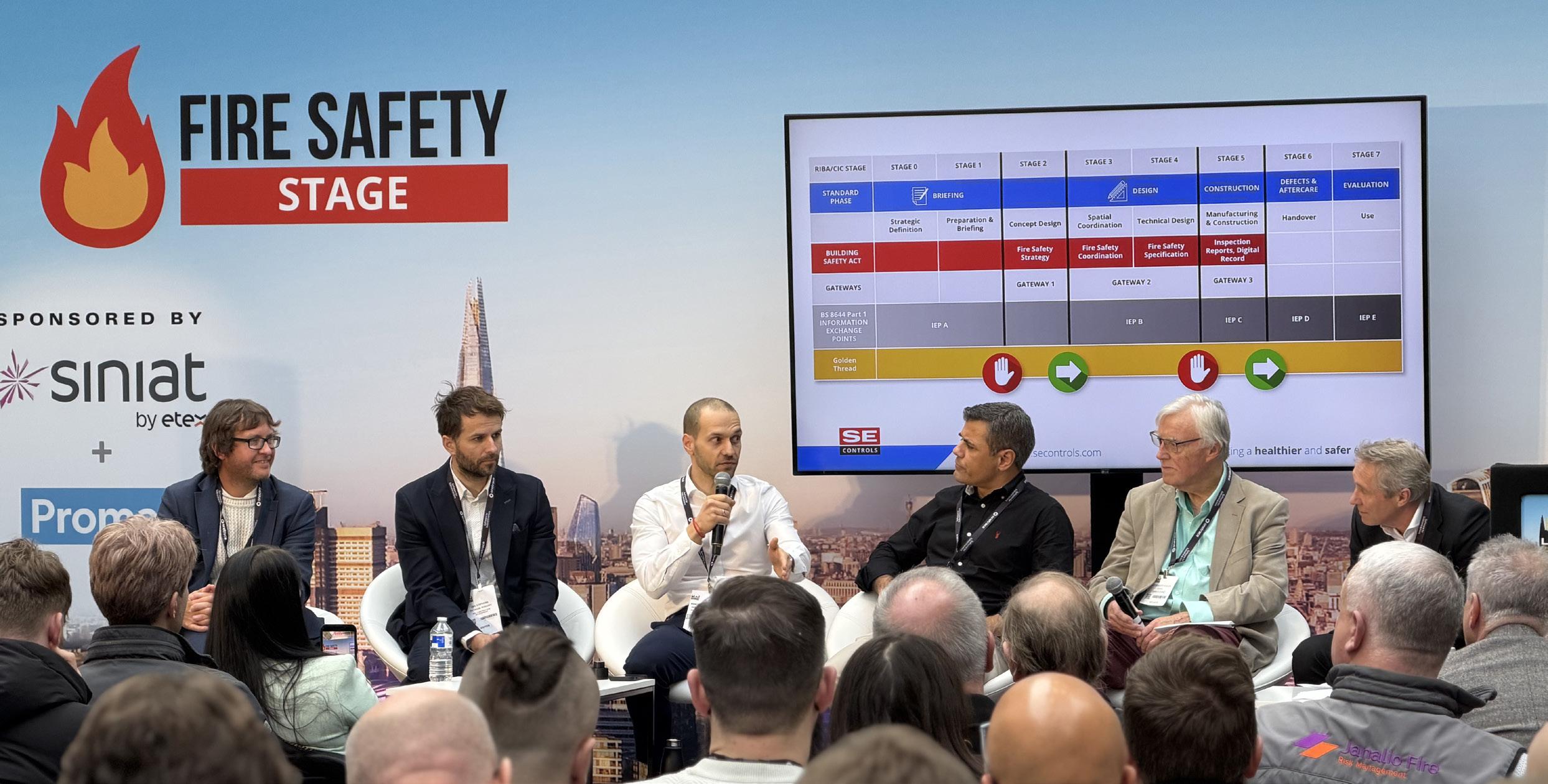
Conference stages for 2026 include: Sustainability Arena; Fire Safety Arena; AI & Digital Construction Arena; Methods of Construction Stage; Architecture Stage; Skills & Marketing Stage; Health & Safety Stage; Interior & Fit Out Stage; Social Housing Stage; Civils & Infrastructure Stage; UK Housing Stage; Innovation Arena; and Careers in Construction Hub. View the full agenda here .
Alongside the conference programme, London Build will showcase leading manufacturers, suppliers, and solution providers shaping the future of construction.
Confirmed exhibitors include: Rockwool, Ryno, Duco, ELTA, HSS Proservice, A.Proctor Group, Strongdor, Quelfire, Onetrace, Smeg, Howdens Kitchens, Wavin, Siniat & Promat by Etex, Hempel, Saint-Gobain Interior Solutions, Yesss Electrical, NoMorePly, CEF (City Electrical Factors), Qvantum, JMS Powered Access, EMS, Kidde Group, Simpro and many more.
These exhibitors will present the latest innovations across building materials, digital construction, fire safety, energy efficiency, MEP solutions, and site services – offering attendees direct access to products, technologies and partnerships driving industry progress.
As the built environment sector continues to evolve, the need for collaboration, innovation and knowledge sharing has never
been greater. London Build 2026 provides a unique opportunity for public and private sector organisations to come together, exchange ideas and explore solutions to the challenges facing the industry.
Whether attending to gain CPD education, discover the latest products and technologies, connect with industry peers or hear from leading experts, visitors can expect two days packed with valuable content, networking opportunities and business connections.
As the UK’s leading construction and design event, London Build continues to play an important role in bringing together the people and organisations shaping the future of the built environment.
Registration for London Build 2026 is now open. Free tickets are available here: https://forms.reg.buzz/ londonbuildelementallondon-2026/ partner-government-business. M
Registration for London Build 2026 is now

As temperatures continue to rise across the globe, air conditioning is rapidly becoming one of the fastest-growing drivers of electricity demand. While this challenge is often associated with hotter climates, emerging research suggests the UK may face similar pressures in the coming decades
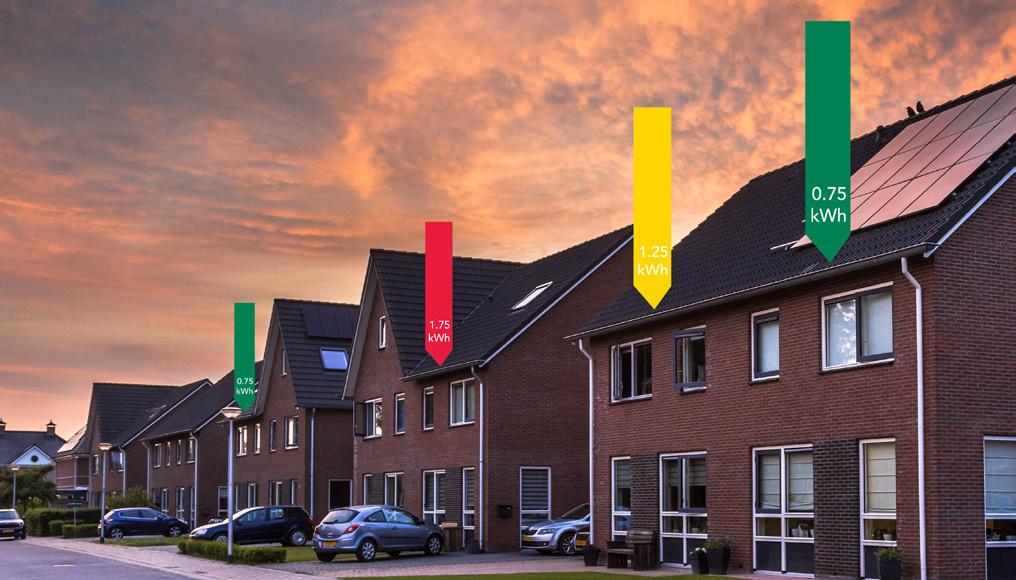
A research project led by the University of Reading is investigating the impact of growing air conditioning adoption on the electricity grid in Burkina Faso, West Africa. The project is monitoring energy consumption in 100 homes across the capital city of Ouagadougou to understand how electricity demand changes throughout the year, particularly during periods of extreme heat when cooling systems are most heavily used.
The findings have implications far beyond Burkina Faso.
Researchers involved in the project highlight that air conditioning has become one of the largest drivers of household electricity demand in the country, creating challenges for grid stability as urban populations continue to grow. Similar trends are now beginning to emerge in the UK.
Recent modelling suggests that between 5 and 6 per cent of UK homes already have air conditioning installed, with significantly higher adoption rates in some parts of the South East. As heatwaves become more frequent and prolonged, homeowners are increasingly looking for ways to improve comfort and protect vulnerable occupants, particularly young children and older people.
While air conditioning can provide an effective solution, widespread adoption raises important
questions about future electricity demand. Alongside the growing use of electric vehicles, heat pumps and other electrified technologies, cooling systems could place additional strain on energy infrastructure during periods of peak demand. Understanding how and when electricity is used will therefore become increasingly important. This is where energy monitoring plays a vital role. By accurately measuring electricity consumption, organisations, local authorities and researchers can identify usage patterns, understand peak demand periods and make informed decisions about future energy strategies. Reliable monitoring data also supports investment decisions, helping users evaluate technologies such as solar PV, battery storage and energy efficiency improvements.
Tinytag Energy Loggers are designed to provide precisely this type of insight. By recording voltage, current, power and power factor over time, they enable detailed analysis of energy consumption in homes, buildings and infrastructure projects.
As the UK moves towards a more electrified future, understanding energy demand will be essential to maintaining resilience, supporting sustainability goals and ensuring that increasing comfort does not come at the expense of grid stability. M FURTHER INFORMATION
www.geminidataloggers.com/housing sales@geminidataloggers.com
+44 (0) 1243 813000


Record solar deployment, falling installation costs and new plug-in technology are reshaping how public bodies manage energy. With budgets under pressure and demand rising, solar is emerging not just as a clean power option, but as a practical efficiency tool that helps organisations cut waste, stabilise costs and build resilience
Rising energy demand across public services, ageing building stock and continued pressure on budgets mean organisations are looking for measures that deliver both immediate savings and long-term stability. At the same time, national policy is shifting towards a system built around local generation, smarter consumption and technologies that reduce reliance on volatile global markets. Against this backdrop, solar is becoming more popular as a mature, scalable option that can be deployed across a wide range of public buildings and integrated with the digital tools estates teams increasingly rely on to manage energy more efficiently.
Public bodies are facing rising pressure to cut energy waste and stabilise budgets, and the surge in UK solar deployment shows why on-site generation is becoming central to that effort. 269,000 solar installations were completed in 2025, this is the highest total ever recorded in a calendar year and 37 per cent more than the year before. Around 255,000 of these were rooftop solar – meaning at least 95 per cent of all new solar was installed on homes, businesses and other buildings. This equates to a new rooftop solar installation every two minutes throughout 2025 E

F In March 2026, the UK surpassed two million total solar installations for the first time, across homes, communities and solar farms.
Figures from April 2026, show that nine of the ten best-performing months ever recorded occurred in the past year. There were 23,000 new installations in May, with more than half of those being rooftop solar on homes.
The data also shows that the cost of acquiring and installing solar PV has decreased by up to nine per cent.
Then energy secretary Ed Miliband said: “As we face a second fossil fuel crisis in 5 years, Britain is taking back control of their energy by generating more clean power than ever before. Record-breaking solar growth means greater energy security, lower exposure to volatile fossil fuel markets which we can’t control.
“This is what our clean power mission looks like: backing homegrown energy, giving people more control over their bills, and building a stronger, more resilient energy system for the future.”
Meanwhile, ministers have confirmed that plug-in solar panels will be available in UK shops within months, offering a low-cost, accessible route to small scale generation for
organisations with limited budgets. Together, these developments signal a shift: solar is no longer just a decarbonisation tool, but a practical efficiency measure that helps public buildings reduce grid dependence, manage demand more intelligently and protect themselves from energy price shocks.
Solar is increasingly being treated not just as a clean power measure but as a practical energy efficiency tool for public buildings, helping organisations reduce waste and manage demand more intelligently. Recent government funding announcements underline this shift: in February 2026 , the government announced £74 million for clean energy updates for hospitals and military sites.
The money will be split between 82 NHS Trusts, eight military sites and one prison.
The funding can be spent on adopting clean energy technologies and improving energy efficiency.
It is anticipated that the money will save 190 NHS sites £30 million a year on energy bills. Meanwhile, military sites are expected E

F to make annual energy savings worth hundreds of thousands of pounds.
Lincoln County Hospital for example will receive over £1.2 million to install solar panels, while the Harbour, a mental health hospital in Blackpool, will benefit from £590,000 to install new battery technology.
RAF stations including RAF Lossiemouth, RAF Waddington and RAF Marham will benefit from upgrades to manage energy usage, making them cheaper to run.
£9 million will be delivered in partnership with Great British Energy (GBE) for batteries and solar panels.
Then minister for energy consumers Martin McCluskey said: “More money will go straight to frontline services as hospitals, prisons and military sites benefit from cheaper bills and cutting-edge green technology.
“This is our clean power mission in action –cutting bills, investing in public services and providing energy security for our country.”
Then health and social care secretary Wes Streeting said: “With lower bills for hospitals, better value for money, and a cleaner, more efficient NHS, everybody wins.
“Every penny of these savings will be redirected straight back into frontline care and delivering an NHS patients, staff and the whole country can be proud of again.
“This investment will help us build an NHS fit for the future.”
Alongside this, the Future Buildings Standard (2026) introduces mandatory solar PV for new non domestic buildings from 2027, embedding
Solar is becoming a practical way for public bodies to cut operational costs, particularly for buildings with high daytime electricity use such as offices, schools and leisure centres
on-site generation directly into the UK’s energy efficiency regulations and tightening fabric standards to reduce overall consumption.
Plug-in solar is emerging as a new, low-cost entry point for organisations that lack the budget or roof space for conventional PV. In March 2026 , the UK government confirmed that plug-in solar panels will be legal and available in shops within months, following updated safety standards and certification rules designed to support small-scale, consumer-level generation.
Plug-in solar panels can be placed in outdoor spaces or on balconies and plugged in to a mains socket to provide energy for households. The tools could reduce the amount of electricity taken from the grid and cut energy bills.
The government is working with retailers like Lidl and Amazon, and manufacturers like EcoFlow to enable the products to be brought to the UK market.
In Germany, around half a million new devices are brought in every year.
In June , retailers including Currys, B&Q, Amazon and Lidl joined government plans to bring plug-in solar panels to UK homes.
Then minister for energy consumers Martin McCluskey discussed the topic at a roundtable of some of the biggest retailers in the country, with a combined total of almost four thousand stores.
McCluskey said: “Plug-in panels can be transformative for renters or those on lower incomes, so I welcome the conversation today with household names such as B&Q and Currys showing a huge amount of support for getting the panels in people’s homes.
“This easy to install tech can cut people’s bills and help make the UK less reliant on global fossil fuel markets.”



Georgina Hall, corporate affairs director at Lidl GB, said: “At Lidl GB, we want to make sustainable choices affordable and accessible to every household which is why we are supporting DESNZ’s latest steps toward modernising regulations for ‘plug-and-play’ technology.
“By establishing a clear, robust framework to bring plug-in solar to market safely and efficiently, it could unlock a highly effective, low-cost route for people to reduce their energy bills. We welcome this consultation and look forward to working alongside the government and industry partners to explore how these products can safely play their role in the UK’s clean energy revolution.”
Solar is becoming a practical way for public bodies to cut operational costs, particularly for buildings with high daytime electricity use such as offices, schools and leisure centres. Government analysis shows that rooftop solar can save households up to £480 a year by offsetting daytime grid consumption, and public sector sites with larger loads can achieve proportionally greater reductions. The Treasury’s 2026 clean energy upgrade package also highlighted that solar, when paired with efficient lighting and heat pump systems, can deliver multi-million-pound annual savings across large estates. As energy prices remain volatile, these savings are increasingly seen as a form of budget resilience: generating power on site reduces exposure to peak
time tariffs, stabilises long term operating costs and helps organisations redirect funds to frontline services rather than utilities.
Solar is increasingly being paired with digital energy management tools to help public buildings reduce waste and align consumption with on-site generation. As more organisations install rooftop or plug-in solar, energy tech providers are reporting rapid growth in demand for smart building controls, real time monitoring platforms and battery optimisation software, allowing estates teams to shift loads, such as HVAC, lighting and EV charging, to periods when solar output is highest.
Solar is becoming a core part of how organisations manage energy, not simply how they decarbonise. Record deployment, falling costs and new plug-in technology are widening access. Government investment, from NHS sites to RAF stations, shows how solar, batteries and smart controls can deliver tangible, recurring savings and reduce pressure on frontline budgets.
With the Future Buildings Standard set to make solar mandatory on new non domestic buildings from 2027, and digital tools enabling smarter alignment between generation and demand, public bodies are moving towards a more resilient, data-driven energy model. Solar is now a practical lever for reducing waste, stabilising costs and strengthening operational resilience. L



With over 3 decades of experience, we understand the unique operational demands faced by environmental and cleansing departments in their street cleaning, and we’re here to support your team with reliable, costeffective solutions. For local authorities operating mixed fleets, we offer a one-stop shop solution for brushes to fit all municipal sweepers. Our




The Environmental Services & Solutions Expo (ESS Expo), the UK’s largest environmental event, has announced that visitor registration is now open for its 2026 edition, taking place 16-17 September at the NEC Birmingham. Free tickets to attend are available now at ess-expo.co.uk
ESS Expo 2026 is expected to welcome over 16,000 professionals from across a range of environmental and sustainability sectors. The event brings together a wide-ranging programme of speaker sessions, supplier exhibitions, policy-led debate, and networking opportunities – making it an essential gathering point for the environmental sector each year.
A cross-sector environmental platform ESS Expo unites seven co-located sectorspecific shows in one place, enabling attendees to explore developments, policy trends, and technical solutions across the full breadth of the environmental industry with one free ticket: RWM Expo – Resource & Waste Management; EFD Expo – Energy, Fuels & E
✓ Peristaltic Pumps – Ideal for abrasive, corrosive and shear-sensitive media.
✓ Diaphragm Pumps – Handles aggressive, viscous and solids-laden fluids with safe dry-run capability.
✓ Lobe Pumps – Hygienic, low-shear pumping with smooth, pulsation-free flow for sensitive and high-viscosity applications.
✓ Dosing Pumps – Accurate, repeatable chemical dosing delivering precise flow control and reduced chemical consumption.


F Decarbonisation; CLR Expo – Contamination & Land Remediation; WWEM Expo – Water, Wastewater & Environmental Management; AQE Expo – Air Quality & Emissions; GEO Expo – Geotechnical Engineering & Operations; and CARS & MRE – Complete Auto Recycling Show & Metals Recycling Event.
Subject areas span air quality and carbon capture to waste processing, land remediation, recycling, net-zero strategy, and circular economy legislation, positioning ESS Expo as the most complete crosssector environmental platform in the UK.
Exhibitors, industry insight, and policy dialogue
ESS Expo 2026 will host more than 700 exhibitors across the seven shows.
Institutional support includes contributions from CIWM, ESA, and the Environment Agency, which returns in 2026 as the event’s Lead Partner.
The two-day conference programme will feature speakers from across UK and European government, regulatory bodies, and industry, with confirmed names including: Toby Perkins MP, Member of Parliament for Chesterfield and Chair of the Environmental Audit Committee; Julia Buckley MP, Labour MP for Shrewsbury; Mike Reader MP, Labour
MP for Northampton; Abby Chicken, head of sustainability, Openreach; Carolyn Cadman, chief sustainability and natural resources officer, South West Water; Judy Procter, deputy director water regulation, Environment Agency; Stephen Elderkin, director of environmental sustainability, National Highways; Sam Bower, head of sustainability: natural environment, Balfour Beatty. Discussions will focus on key policy areas including: extended producer responsibility & packaging reform; deposit return schemes & collection reform; circular economy in practice; waste crime & compliance; decarbonisation & low carbon materials; construction, demolition & the built environment; food waste & organics; fleet, technology & innovation; fire safety & batteries; sustainable business models; communications & community engagement; the UK’s pathway to net zero; air quality and emissions frameworks; remediation strategies for land and water; environmental funding and regulatory compliance.
New for 2026: a bigger, broader ESS Expo
Alongside the core expo programme, ESS Expo 2026 introduces several new features for attendees and exhibitors alike. E

Trusted water testing solutions for environmental monitoring, wastewater operations, drinking water, recreational water and regulatory compliance.
Public Sector Water Compliance


Support Section 82 monitoring requirements
Verify online monitoring systems
Independent field-based validation
Portable testing where results matter most
Scan to explore Lovibond water testing solutions

140+ years of analytical measurement expertise
Lovibond® Water Testing


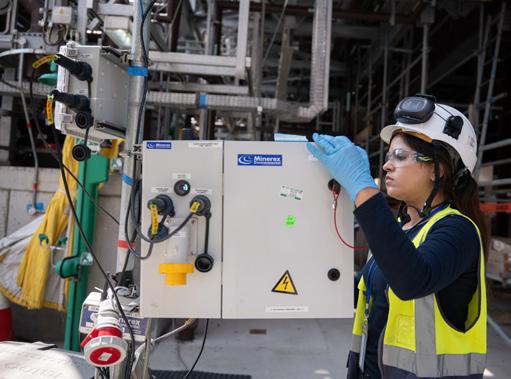







Since 1994, we have helped construction, infrastructure and industry projects manage groundwater and surface water safely, sustainably and in full compliance with environmental regulations, always aiming to keep sites “dry and compliant.”
Our specialists design and deliver dewatering, water treatment, over‑pumping and remote monitoring systems that work in the real world, backed by robust sampling, analysis and hydrogeological assessments. From deep saturated excavations to contaminated land and tight discharge limits, we provide data‑driven solutions that reduce risk and protect the environment while keeping programmes on track.
With three decades of experience, a multidisciplinary team and constant investment in technology and training, Minerex is trusted for reliability, safety and measurable results. When your project depends on getting water and environmental compliance right, talk to Minerex Environmental.
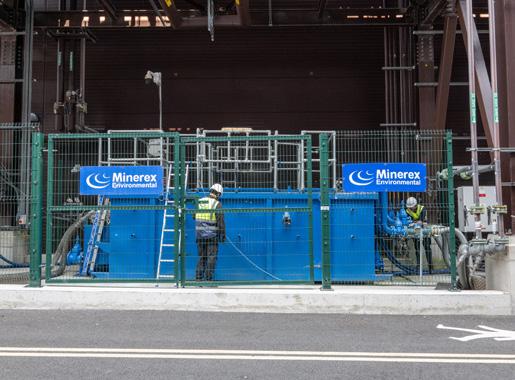

A dedicated recruitment-focused feature connecting employers, recruiters, and training providers directly with students, graduates, career changers, and professionals looking to build careers in the environmental sector. Located adjacent to the Future Talent Hub, sponsored by Grundon, the Careers Fair includes a live jobs board, one-to-one career clinics, and a networking zone for informal meetups.
A new feature designed to level the playing field for early and growth-stage environmental businesses, connecting innovation with the investors and communities that help it scale. Recognising that emerging businesses often face barriers to exhibiting at major trade events, this dedicated space offers subsidised opportunities to showcase, connect, and grow.
Taking place on the evening of Day One, RWM Connect is the resource sector’s biggest networking event – bringing 900+ professionals from the waste, recycling, resource, and

energy industries together in a relaxed, informal setting. Drinks, entertainment, quiet networking, direct access to speakers and senior figures, and a room full of the sector’s most influential people. Places are limited and expected to sell out.
Following a record 2025 edition, the Environmental Monitoring & Measurement Achievement (EMMA) Awards return to recognise outstanding projects, organisations, and collaborations delivering impact across air quality, water and land management. E


Set within RWM Expo, Waste Trucks Live is the UK’s most comprehensive showcase of specialist waste vehicles, helping fleet managers compare and specify the right solutions for their operations in one place.
Now in its third year, the Environment 100 Awards celebrate the individuals making a significant impact across the UK’s
environmental and sustainability sectors – from leaders and innovators to activists and self-starters. Taking place at the Future Talent Hub on Day Two (17 September, 12:00–14:00), the awards recognise those driving real, tangible progress across the sector.
The 35 under 35 Awards, sponsored by Grundon Waste Management Recognising the pioneers and trailblazers driving change across the environmental sector,
the 35 Under 35 Awards programme celebrates rising talent from across waste and recycling, water management, energy, construction, land management, air quality, and sustainability. Free to enter and free to attend, entrants submit a 250-word entry along with any supporting material for consideration by the judges. The awards ceremony takes place on Day One (16 September) at ESS Expo, NEC Birmingham.
Rob Mowat, managing director of ESS Expo, commented: “ESS Expo has grown into something truly unique – there is no other event in the UK that brings together the full breadth of the environmental sector in one place at this scale. 2026 is set to be our biggest and most ambitious edition yet, and the introduction of new features like the Careers Fair and the Start-up, Scale-up, Innovation & Investors Network reflects our commitment to not just showcasing the sector, but moving it forward.

“Whether you’re a policymaker, a major operator, an innovator, or a student taking your first steps into the industry – ESS Expo 2026 has something for you. We look forward to welcoming 16,000+ professionals to Birmingham in September for our most impressive showcase yet.” L
The full programme, speaker announcements, and exhibitor listings will be confirmed in the coming months. To register free to attend, visit ess-expo.co.uk .


Across the public sector estate – from town halls and hospitals to schools, courts and blue-light facilities – waste has traditionally been treated as a background service. It is essential, but largely invisible; something to be managed efficiently rather than examined strategically
That position is becoming harder to sustain, says Mike Agate of IWFM – the professional body for workplace and facilities managers, which has recently published a new Good Practice Guide – Recycling, Resource and Waste Management.
Tighter regulation, rising expectations around sustainability, and increasing financial pressure are forcing a reassessment of what waste management really means for public sector organisations. It is no longer just about collection and disposal. It is about risk, performance, accountability and, increasingly, value.
Waste can’t be hidden for long. Unlike many other operational services, its success or failure is immediately obvious – whether through overflowing bins, poorly labelled recycling points or inconsistent provision across a site. In public sector environments, that visibility carries particular weight. Estates are not closed systems – they’re used by staff, service users and the wider public. A poorly managed waste system reflects directly on the organisation itself, inviting questions about efficiency, standards and commitment to sustainability.
This is why, for public bodies operating under scrutiny from taxpayers, regulators and government, best practice guidance is vital.
IWFM is the professional body for workplace and facilities managers. It sets the standards and plays the leading role in building skills and raising the standing of the FM sector. According to head of policy and insight, Andrew Gladstone-Heighton, “With the rise in batterypowered e-waste, and increasing scrutiny and regulations on what we throw away, waste is now a strategic concern. From the moment we’re thinking of acquiring an asset, through its lifecycle, to its end-of-life disposal, we really need to start thinking carefully of everything that comes through our workplaces and spaces. There’re also brand and reputational risks tied to how we manage and dispose of our waste, along with social value opportunities linked to our disposal of furniture and IT.”
At the same time, the regulatory landscape is becoming more demanding. Changes to recycling requirements, particularly around the separation of materials, are placing new obligations on organisations to standardise and improve their systems, and this creates practical challenges. Many public sector buildings are older, space-constrained and not designed with modern waste segregation in mind. Retrofitting can be complex and costly, particularly in live environments where disruption must be minimised.
Then there is the admin burden. Duty of care responsibilities require organisations to understand where their waste goes, ensure contractors are compliant and maintain accurate documentation. With the introduction of more detailed tracking requirements on
The regulatory landscape is becoming more demanding
the horizon, expectations around data and transparency will only increase.
With budgets already under pressure, this creates a difficult balancing act – delivering compliance without adding cost.
Rising energy prices, maintenance backlogs and competing service demands leave little room for inefficiency. Waste management, if poorly handled, can quietly add to those pressures. High levels of residual waste, contamination of recycling streams and inefficient contracts all increase costs, often without being fully understood.
But the reverse is also true. Effective resource management and thinking in line with circular economy principles can unlock savings. Reducing waste at source, improving segregation and working more strategically with suppliers can all contribute to lowering disposal costs and improving value for money.
This is where FM’s strategic position really comes into its own. By understanding waste in detail – what is produced, where and why – FM teams can influence decisions that reduce both cost and environmental impact.
Perhaps the most significant shift is the recognition of waste as a contributor to carbon emissions. For organisations with net zero commitments, this changes the conversation entirely. E

F Waste is not just a by-product. It is part of the organisation’s carbon footprint, including emissions from landfill, energy recovery processes and transport. For many public sector bodies, these impacts sit within Scope 3 emissions, which means they’re receiving increasing attention, and this places estates and FM teams firmly within the climate agenda. Decisions about procurement, materials, catering, cleaning and asset management all influence the volume and type of waste generated.
In practice, this means that reducing waste has become a necessary component of meeting carbon targets – and avoiding future financial and regulatory penalties associated with them.
Public sector estates are rarely, if ever, straightforward. A single organisation may operate multiple sites, each with different functions, constraints and user groups.
A hospital produces clinical, hazardous and food waste alongside standard recycling streams. A school must manage waste in a way that is simple and safe for pupils. A council building may need to balance office recycling with public-facing waste provision. Across all of these, space limitations, access constraints and operational pressures complicate decisionmaking.
Hybrid working adds further complexity. Services designed for full occupancy may no longer be appropriate, yet scaling them back introduces risks around compliance and user experience.
Which all means that there is no single ‘correct’ solution. Instead, estates teams must develop tailored approaches that balance regulatory requirements, operational practicality and financial constraints.
While legal compliance is a central concern, the risks associated with waste management extend further.
Poor practices can lead to contamination of materials, reducing recycling quality and increasing costs. Weak oversight of contractors can result in waste being mishandled, with potential environmental consequences and

reputational damage. High-profile cases of illegal dumping and waste crime illustrate how quickly such issues can escalate into public controversies.
There are also health and safety considerations. Poorly managed waste areas can present risks to staff and users, from fire hazards associated with batteries to physical risks linked to storage and handling.
For public sector organisations, where accountability is paramount, these risks require consistent oversight, clear processes and robust partnerships with service providers.
Delivering social value through waste Waste management also offers opportunities that align closely with public sector priorities around social value.
Surplus materials and equipment can be diverted for reuse, supporting community organisations or reducing demand for new resources. Partnerships with local suppliers can reduce transport impacts and support regional economies. Programmes can be linked to education, skills and employment initiatives. These outcomes are increasingly reflected in procurement processes, where contracts are assessed not only on cost and service, but on their contribution to wider social and environmental goals.
For FM teams, this presents an opportunity to demonstrate impact beyond operational delivery. Waste becomes a route through which estates can contribute to organisational objectives in a tangible and measurable way.
Even the best-designed systems depend on people to function effectively. Contamination of recycling, misuse of bins and inconsistent behaviours are common challenges across all types of estate.
In public sector environments, this is compounded by the diversity of users. Staff, visitors, patients, students and contractors all interact with waste systems in different ways.
Clear communication is therefore critical. Signage, staff engagement and consistent messaging all play a role in shaping behaviour. Crucially, users need to understand not just what to do, but why it matters – whether in terms of cost, environmental impact or organisational values.
Cultural change is rarely immediate, but without it, even well-designed systems will struggle to deliver intended outcomes.
Taken together, these pressures point to a broader shift in how waste management is
viewed. It’s no longer sufficient to treat it as a discrete operational task. Instead, it needs to be understood as part of a wider system that touches on finance, sustainability, compliance, risk and public perception.
This is where facilities management can add huge value – something IWFM has been working very hard to promote. By bridging strategy and operation, FM professionals are uniquely placed to translate organisational goals into practical, site-level solutions. They can influence procurement, shape behaviours, manage risk and deliver measurable improvements.
At a time when public sector organisations are being asked to do more with less, that professional capability is vital.
Waste, in this context, is not just about what is discarded. It is about how organisations use resources, manage risk and demonstrate responsibility in an environment where performance is always on show. L
www.iwfm.org.uk









Free tickets are now available for RWM Expo 2026, the UK’s leading event for professionals working in the recycling, resource, waste and wider environmental services industry
Part of the Environmental Services & Solutions Expo (ESS Expo), RWM returns to the NEC Birmingham on 16-17 September 2026 for two action-packed days of networking, knowledge exchange and business opportunities. You can secure your tickets here
About RWM Expo
RWM Expo is the UK’s largest and most comprehensive trade exhibition for the waste management, recycling and resource sectors. Championing the circular economy and sustainable resource management,
RWM brings together the latest recycling machinery, waste processing technologies, material handling equipment, municipal and commercial collections solutions, logistics, transport and energy-from-waste innovations under one roof for two high-impact days.
In 2025, RWM welcomed over 10,000 highlevel attendees from across the sector. In 2026, the event is set to be bigger and more ambitious than ever, with 13,000+ professionals expected across the two days. With 80 per cent of attendees holding buying power and 82 per cent from senior management, RWM E

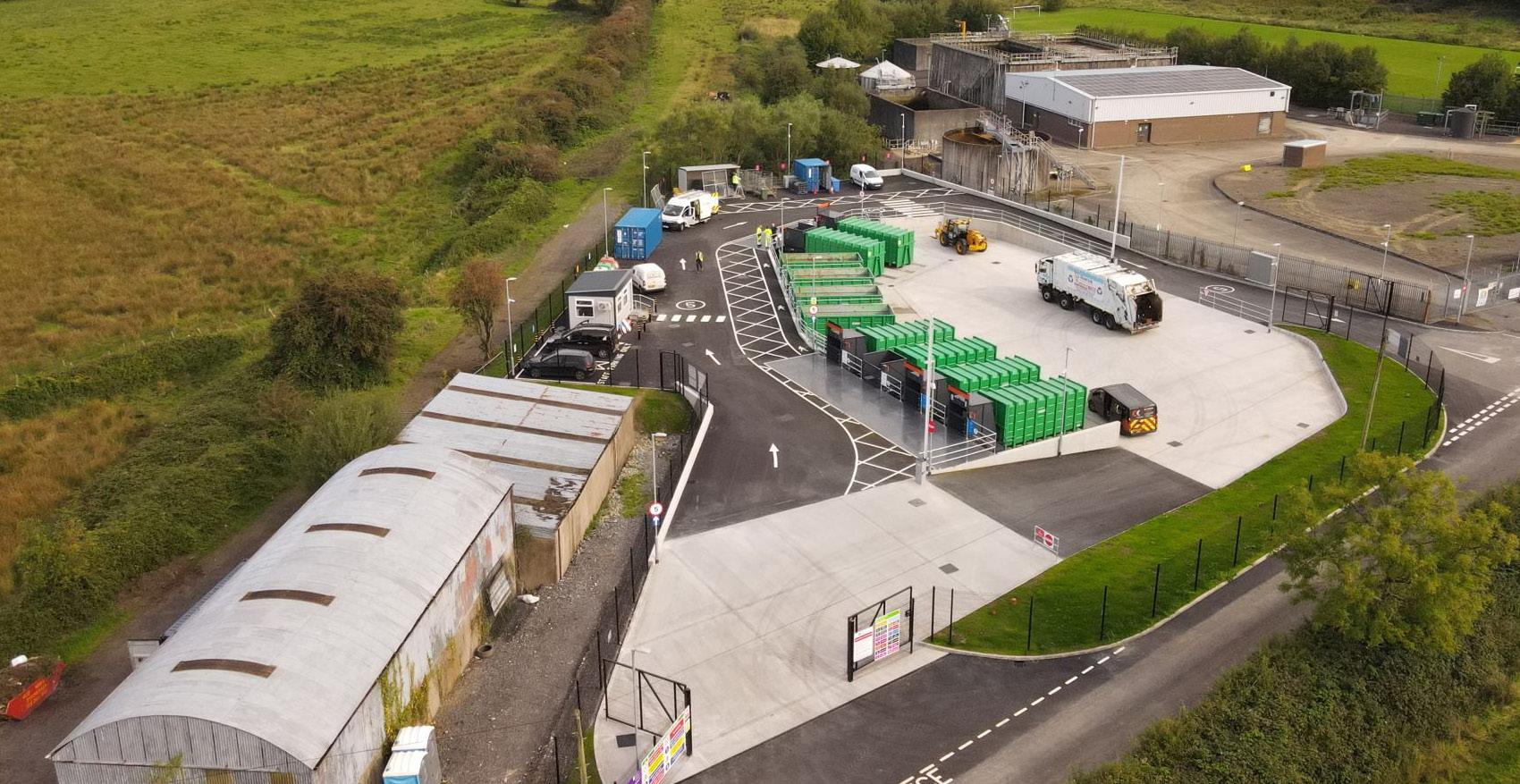
Plastic film recycling remains a significant challenge for local authorities and government facilities. CK Lyndex provides proven solutions that help Local Authorities compact and manage plastic films efficiently, supporting compliance with simpler recycling while reducing transport costs and improving site operations.
Our extended equipment portfolio includes fully automatic Twin Ram Balers, Channel Balers, Semi-Automatic Balers and Vertical Balers, all delivering measurable benefits across local authority recycling facilities.
Recent kerbside collection trials conducted by one of our local authority customers using the CK600 HFE PC Semi-Automatic Horizontal Baler exceeded expectations. Already trusted for processing PET and HDPE materials, the CK600 HFEPC successfully produced highdensity plastic film bales, demonstrating a practical and cost-effective solution for future recycling streams.
To request a Free waste audit, visit:
www.ckinternational.co.uk
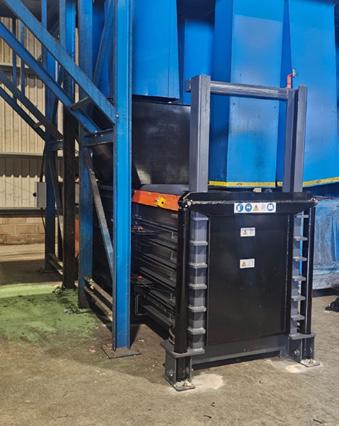
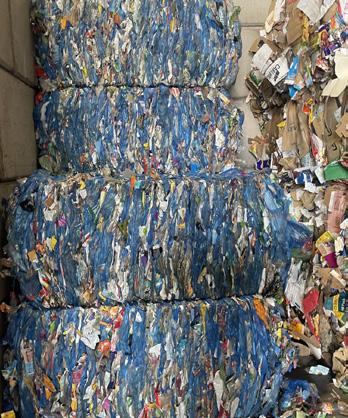
Local authorities and government agencies trust CK Lyndex Equipment to maximise recycling performance at their recycling centres.
Council - Pembrokeshire Council Circo - Yorwaste - Falkirk - Norse - Anglesey Council - Mid Devon - TeignbridgeBryson HM Wormwood - Wonsworth HMP Hydebank - HM Wayland Current Contracts




F is where real business decisions get made, deals get done, and resource is redefined.
The RWM show floor is the most efficient route to discovering what’s new, what works and what’s next in resource and waste management. With 400+ world-class suppliers exhibiting across three halls and a large outdoor demonstration area, visitors have unrivalled access to the products, services and solutions shaping the future of the sector.
The RWM conference programme brings together senior voices from government, leading environmental bodies and the brands setting the pace on policy and innovation. Confirmed keynote speakers for 2026 include Toby Perkins MP (Member of Parliament for Chesterfield and chair of the Environmental Audit
Committee) and Julia Buckley MP (Labour MP for Shrewsbury), alongside senior figures from the Environment Agency, CIWM, Veolia, Biffa, SUEZ, Grundon, DEFRA and FCC Environment – with more announcements to follow.
Sessions and workshops cover the sector’s most pressing topics, including: Extended Producer Responsibility and Packaging Reform, Deposit Return Schemes and Collection Reform, Circular Economy in Practice, Waste Crime and Compliance, Digital Waste Tracking, ecarbonisation and Low Carbon Materials, Food Waste and Organics, Fleet, Technology and Innovation, Fire Safety and Batteries and The UK’s pathway to Net Zero.
The outdoor demonstration area at RWM is one of the show’s most popular features. Visitors can witness live displays of the latest material handling machinery, municipal E



F vehicles, waste processing equipment and refuse collection vehicles in action – seeing first-hand how the industry’s most advanced solutions perform in real-world conditions.
As part of the UK’s leading event for environmental services & sustainability –Environmental Services & Solutions (ESS) Expo 2026 – there are a plethora of exciting new features alongside the core RWM programme:
On the evening of 16 September, join 900+ professionals from across the recycling, waste and resource sector for RWM Connect – the industry’s biggest networking evening, cohosted with CIWM at The Vox Conference Venue, NEC Birmingham, right around the corner from the show. With complimentary drinks, food stations, live entertainment and direct access to networking with senior industry figures, RWM Connect is the social highlight
of the circular economy calendar. Individual tickets are £99 + VAT, with a group deal for 10. Places are limited! Secure your evening tickets here for the official afterparty of the show.
The UK’s most comprehensive showcase of specialist waste vehicles, Waste Trucks Live, helps fleet managers compare and specify the right solutions for their operations in one place. Designed as a one-stop-shop for specialist waste trucks, the zone will feature vehicles displayed together on site, allowing fleet operators, managers, buyers and decision-makers to compare specifications, configurations and applications side by side in a practical, real-world setting. Sponsored by NRG Riverside. Find out more here
The ESS Expo Careers Fair is a dedicated recruitment-focused feature at the show, E

F designed to connect employers, recruiters and training providers directly with students, graduates, career changers and professionals looking to build careers in the environmental sector. Find out more here
Recognising that early-stage and growth-stage businesses often face barriers to exhibiting at major trade events – from limited budgets to a lack of visibility or investor connections – the Start-up, Scale-up, Innovation & Investors Network at ESS Expo is designed to level he playing field and connect innovation with the communities that help it scale.
This dedicated zone serves as a collaborative space that brings together startups, scale-ups, SMEs, investors, banks, funding bodies, legal advisers, private equity firms and corporate buyers in one highly visible, dynamic setting; showcasing investmentready start-ups and scale-ups developing commercially proven technologies and services across the sector. Find out more here .
This is a brilliant awards scheme that recognises the rising stars driving change across the environmental sector – the 35 Under 35 Awards celebrate talent from across waste and recycling, water management, energy, sustainability and everything in between. They’re free to enter, with entries closing 17 July 2026. Enter free here.
RWM is the cornerstone of the Environmental Services & Solutions (ESS) Expo, which unites seven co-located sector-specific shows under one roof at the NEC Birmingham. One free ticket grants access to all seven exhibitions: Resource & Waste Management Expo; Energy, Fuels & Decarbonisation Expo; Contamination & Land Remediation Expo; Water, Wastewater & Environmental Management Expo; Air Quality & Emissions Expo; Geotechnical Engineering & Operations Expo; and Complete Auto Recycling Show & Metals Recycling Event.

With 16,000+ professionals, 700+ exhibitors, 450+ expert speakers, and representation from 65 countries, ESS Expo is the most complete cross-sector environmental platform in the UK.
Register free now
RWM is the ultimate platform to engage in critical discussions, explore groundbreaking green technologies and build the
commercial relationships that drive the sector forward. Whether you’re a seasoned professional or attending for the first time, this is two days you cannot afford to miss. M
Date: 16-17 September 2026
Venue: NEC, Birmingham Opening Times: 09:30 - 16:30
Register free at: https://hubs.la/Q04mF7hG0


With Martyn’s Law slated to come into force in 2027, regular updates from the SIA and the Home Office are paving the way for implementation. The conversation is now moving beyond legislative intent to the practical realities of compliance, inspection and support. This feature examines the latest developments, the role of the Security Industry Authority, and what the guidance signals for organisations beginning to plan their response

In April, the Home Office published its most detailed guidance yet to support the implementation of Martyn’s Law. The guidance sets out steps for businesses to ensure evacuation routes are in place, staff know how to swiftly implement a lockdown in their building, and staff know how to quickly communicate with their customers were an attack to occur.
For larger premises and events like concerts and sports stadiums, where 800 people or more will be present, further actions will need to be taken. This includes having CCTV, bag search policies or vehicle checks.
The Terrorism (Protection of Premises) Act 2025
The Terrorism (Protection of Premises) Act 2025, also known as Martyn’s Law, is named after
Those responsible for premises and events in scope can comply without needing to buy specialist or consultancy services
Martyn Hett who was killed in the Manchester Arena attack.
Then security minister, Dan Jarvis, said: “Martyn’s Law will help to save lives by making sure venues are ready to act if the worst happens.
“Today’s guidance is a significant step toward turning the law into action, giving organisations clear, straightforward advice to protect the public.
“I pay tribute to Figen Murray, whose dedication was instrumental in bringing this landmark law into existence.”
Figen Murray, mother of Martyn Hett said: “This represents another significant milestone for the Martyn’s Law campaign and will provide the clarity for venues and events within scope to
begin to implement proportionate measures set out within Martyn’s Law.
“We must now ensure everyone is aware of what is required and to make public spaces more secure from the impact of a terrorist attack, so no family has to endure the lasting pain that mine and 21 others have gone through.”
The government hopes that by providing practical advice and clear instructions, organisations will be empowered to take proportionate steps to protect lives and improve emergency preparedness.
The guidance highlights that those responsible for premises and events in scope can comply without needing to buy specialist or consultancy services.
It also provides advice and illustrative examples to help those with responsibilities under the legislation.
Jon Savell, Counter Terrorism Policing Senior National Coordinator for Protect and Prepare said: “This is legislation borne out of tragedy, and from the tenacity of people personally affected by horrific events, and we remain E


The SIA is onboarding its digital partner and starting work to build a user-focused and secure digital platform for notifications
F humbled by their drive to work with authorities to ensure what they went through won’t happen to others.
“Securing public spaces so people can enjoy events and social activities free from the fear of the enduring threat of terrorism is something Counter Terrorism Policing has long championed – the new guidance from government to help venues fulfil that legal duty is a welcomed step.
“We know that it’s not a one-size-fits all when it comes to safety; Martyn’s Law takes account
of that, with different measures depending on the size and type of venue. We will continue to support the implementation of this legislation as it’s introduced.”
As the regulator, the Security Industry Authority will support, advise and guide those responsible for premises and events in meeting the requirements of this legislation.
Michelle Russell, Chief Executive of the Security Industry (SIA) said: “Today is an important milestone. As the regulator of Martyn’s law, the SIA’s approach will be driven by public protection objectives. Our focus will be to ensure compliance with the requirements set out in the legislation and Home Office section 27 guidance published today.
“This guidance will enable us as the independent regulator to take decisions on whether premises and events in scope have taken the steps, they need to comply and play our part in bringing about improvements to protective security across the UK.”
The SIA’s draft section 12 guidance explains how the regulator plans to operate and use its powers, taking a supportive, proportionate and risk-based approach.
The guidance sets out that the SIA’s regulatory approach will be driven by its public protection objectives. It explains how the SIA will provide guidance to help premises comply with the law; when the SIA may provide tailored regulatory advice in response to specific compliance concerns; and how the SIA’s powers to obtain and share information will work.
It also includes how the SIA will carry out inspections and assessments of compliance documents and how the SIA will address non compliance, including how it will make compliance decisions, when it may use enforcement powers and how financial penalties will be set.
At the beginning of June, the SIA published a further update.
In May, Gibb visited the Glade of Light memorial commemorating the victims of the Manchester Arena attack, which she described as “a beautiful tribute and serves as a critical reminder of why our work matters so much and why we must be relentless in our pace as we work towards Martyn’s Law coming into force”.
Gibb said the SIA is making good progressing recruiting inspectors and assessors and building regional inspection teams across Scotland, Northern Ireland, Wales and England.
Work is ongoing to develop the SIA’s inspection and assessment approach with the first pilot inspections completed.
The SIA is onboarding its digital partner and starting work to build a user-focused and secure digital platform for notifications.
Members have been travelling around the UK, speaking at events and engaging with those in scope through those first pilot inspections and a series of webinars.
Martyn’s Law is expected to go live in spring 2027.
Businesses and organisations are urged to identify whether they are in scope and to build an understanding of what compliance will look like.
With Martyn’s Law scheduled to take effect in 2027, further operational detail from the Home Office and the SIA can be expected over the coming year, including additional guidance, examples of proportionate measures and clarification of inspection processes. The regulator will continue to build its inspection teams, develop its digital notification system and refine its assessment approach as pilot activity expands.
operational detail from the Home Office and the SIA can be expected over the coming year
For organisations, the immediate requirement is to establish whether they fall within scope and to review the published guidance against their current arrangements. This includes identifying evacuation routes, confirming lockdown procedures, assessing communication capabilities during an incident and, for larger venues, considering measures such as CCTV, search policies and vehicle checks. Early familiarisation with the duties, participation in consultations and preparation for the notification process will place organisations in a stronger position ahead of the law’s commencement. M

Martyn’s Law introduces new legal responsibilities that can feel complex and daunting. We simplify the legislation, providing practical, scalable support to ensure compliance and build calm confidence without overwhelming teams.
Our role is to guide you, combining expertise with a practical, people-centred approach.
We take a simple, structured approach:
& UNDERSTAND establishing clarity through tier identification, response assessment, and requirement mapping
If you would like to understand what Martyn’s Law means for your organisation and take a practical, proportionate approach to compliance, you can book an initial compliance call or start with a simple readiness checklist.
To begin the conversation, please contact us at contactus@morserv.co.uk





www.onlineprintsolution.co.uk/governmentbusiness


From wayfinding and safety signage to vehicle graphics, educational materials and sustainable print production, today’s print and sign technologies are helping public sector organisations improve communication while reducing costs. The Print Show 2026 and co-located The Sign Show 2026 will bring together the latest innovations under one roof
Public sector organisations are under increasing pressure to do more with less. Budgets remain tight, expectations around service delivery continue to grow and there is an ever greater need to communicate clearly with a wide range of audiences. Whether informing residents, supporting patients, engaging students or promoting community initiatives, organisations must ensure their messages are both effective and cost-efficient.
Against this backdrop, print and signage continue to offer significant value. Far from being replaced by digital channels, printed communications have evolved alongside them, with advances in technology making production faster, more sustainable and more versatile
than ever before. From high-impact graphics and wayfinding systems to personalised communications and on-demand print, today’s solutions are helping organisations improve engagement while maximising value.
The Print Show and The Sign Show – the leading UK-facing events in their respective markets – provide an opportunity to explore these innovations first-hand and understand how they can support projects across the public sector.
While digital communication has become an integral part of public sector engagement, print continues to provide a level of visibility and E
Visitors can gain valuable insight into the technologies and trends influencing the future of print
F accessibility that online channels cannot always match.
Printed materials remain a trusted source of information, ensuring that important messages are available to everyone, regardless of their access to technology or digital confidence. In many cases, print also complements digital communications, reinforcing key messages and helping organisations reach audiences through multiple touchpoints.
This can be seen across almost every area of the public sector. Hospitals and healthcare providers continue to rely on printed patient information, appointment literature and wayfinding signage to support visitors and improve the patient experience.
Local authorities also use print to promote public consultations, communicate changes to local services and provide essential information during emergencies, while schools, colleges and universities depend on printed learning resources, campus signage and promotional materials throughout the academic year.
Meanwhile, printed election materials remain a legal and practical necessity, while libraries, museums and other cultural institutions use high-quality graphics, exhibition displays and visitor information to engage communities and enhance the visitor experience. In each case, professionally produced print plays an important role in delivering clear, consistent and accessible communication.
Keeping pace with the latest developments in print and signage is therefore important not only for commercial print providers, but also for the organisations that procure these services. Advances in equipment, software, materials and workflow continue to shape what is possible, helping suppliers deliver faster turnaround times, greater flexibility, improved sustainability and better value for money.
This is where The Print Show and co-located The Sign Show come in. Taking place in Hall 1 of the NEC in Birmingham from 29 September to 1 October, the events will bring together many of the industry’s leading manufacturers, suppliers and experts to showcase the latest innovations

across commercial print, wide-format graphics, signage, finishing and workflow automation. HP, Fujifilm, Agfa, Roland, Epson, Konica Minolta and Mimaki are just some of the names featured on the exhibitor list across the two shows this year.
Through live demonstrations, expert presentations and the opportunity to speak directly with exhibitors, visitors can gain valuable insight into the technologies and trends influencing the future of print.
For Chris Davies, event director of both The Print Show and The Sign Show, helping visitors understand how rapidly the industry is evolving is one of the key aims of this year’s events. He says the shows have been designed to offer practical insight into the technologies, materials and ideas that are shaping the future of print and signage, giving visitors the opportunity to see innovations in action and speak directly with the experts behind them.
For Chris Davies, event director of both The Print Show and The Sign Show, one of the key objectives of this year’s events is to demonstrate just how quickly the print and signage industries continue to evolve.
“Public sector organisations, like many others, are looking for solutions that deliver greater efficiency, improved sustainability and better value,” Davies said. “The Print Show and The Sign Show provide visitors with the opportunity to see the latest technologies running live, speak directly with manufacturers and suppliers, and better understand how these innovations can help meet those challenges.
“Whether you’re involved in procuring printed communications, signage or graphics, or you’re working with suppliers to deliver these services, the events offer valuable insight into where the industry is heading and the opportunities that exist today.”
With hundreds of products, live demonstrations and expert advice available across the three-day event, visitors will be able to explore a wide range of solutions designed to improve productivity, expand capabilities and reduce costs.
Sustainability continues to be a major focus for organisations across the public sector, with procurement decisions increasingly influenced by environmental performance. As a result, suppliers are investing heavily in technologies that reduce waste, improve energy efficiency and minimise the environmental impact of print production.
Many of the latest printing systems consume less energy than previous generations, while developments in water-based inks, recyclable media and print-on-demand production are helping reduce unnecessary waste. Workflow software also enables businesses to produce only what is required, cutting surplus stock and improving resource efficiency.
These innovations will be a major talking point throughout The Print Show, with exhibitors showcasing technologies and materials that can help organisations meet both operational and sustainability objectives without compromising on quality.
Alongside sustainability, productivity remains another key area of innovation. Automation has transformed many aspects of print production in recent years, enabling suppliers to complete jobs faster, reduce manual intervention and deliver more consistent results. Modern workflow software can automate everything from job submission and file preparation through to production scheduling and finishing, helping reduce turnaround times while improving accuracy.
Visitors can explore these developments through live demonstrations and discussions with manufacturers, software developers and industry specialists.
Running alongside The Print Show, The Sign Show offers a dedicated showcase for the latest developments in signage, display graphics and visual communication.
Signage continues to play a vital role throughout the public sector. Clear wayfinding, safety signage and public information displays all contribute to better user experiences, while vehicle graphics and outdoor displays help organisations communicate with residents and visitors alike.
Advances in wide-format print technology have significantly expanded what is possible, with improved colour quality, greater durability and a wider range of printable materials opening up new opportunities for indoor and outdoor applications. At the same time, innovations in installation methods and finishing technologies are helping signage providers deliver projects more efficiently while maintaining high standards.
Alongside the exhibition floor, visitors will also be able to take advantage of an extensive educational programme designed to share practical knowledge and insight.
The Knowledge Zone will once again host presentations from experts covering topics such as sustainability, artificial intelligence, cybersecurity and business management, while additional feature areas will provide further opportunities for learning and networking. Combined with live equipment demonstrations and direct access to manufacturers and suppliers, The Print Show and The Sign Show offer public sector professionals the opportunity to better understand the latest technologies, gain practical insight and make more informed decisions when planning future print and signage projects. L


Our environmentally friendly solar powered Christmas trees are a perfect solution for your Christmas display.
Whether you prefer the hanging or half Christmas trees, or even wish for additional red and gold bauble decorations, there are options for everyone. Solar powered they come complete with battery pack and timer, making them completely self-sufficient and removing any need for wiring or electrical certification.
These ingenious Christmas Trees come with their own in-built timer so that they can be programmed to switch on and off. There are no cumbersome and dangerous wires and no unwanted electric bills. Available on a rental basis, we will programme the Christmas Trees, install them and then remove them after the Christmas Period. These Christmas Trees can fit around lampposts or hang from the hanging basket brackets you already use for your floral displays.





• Many component parts are made from recyclable materials
• Fits onto our standard Holestar brackets
- no drilling required!
• Hangs from your hanging basket bracket
• Can be attached to lamppost column
• No cutting down Christmas trees
• No electricity bills or storage cost
• Available on a rental basis, we will programme the Christmas trees, install them and then remove them after the Christmas period
• Save time and money




A well placed real Christmas tree can provide a spectacular, sustainable and memorable focal point for festive celebrations in towns and cities across the UK, says the BCTGA
A thoughtfully designed Christmas display with a prominent tree at its heart, helps bring communities and visitors together, creating a welcoming and vibrant environment. A statuesque tree effortlessly becomes the centre of seasonal activity, providing a visual backdrop to musical performances, late-night shopping, specialist markets and attracts more residents and visitors into local high streets.
“Making a real British Christmas tree the centrepiece of your town’s festive celebrations can transform a town centre,” said chair of the British Christmas Tree Growers Association (BCTGA), Russell Parkins.
“Structured seasonal events, such as a Christmas tree light switch-on, create a valuable opportunity to bring communities and visitors together, encourage more footfall to local
businesses and create a welcoming, vibrant environment,” Russell said.
There are many towns and cities across the country which have turned their Christmas Tree light switch-on into an annual event marking the start of the festive season for their community. Creating a shared moment which can then grow into a wider programme of seasonal events, foster local pride, strengthen community engagement and support retail activity.
But to create maximum impact and be able to build this strong foundation for its seasonal offer, selecting the right Christmas tree is crucial for councils and town centre managers.
“To achieve a high-quality and impactful display, there is no better starting point than engaging with suppliers of UK-grown Christmas trees,” said Russell. E
Choosing a British-grown Christmas Tree is choosing to support a sustainable crop
The BCTGA represents British Christmas tree growers and, through its annual Wholesale List, a directory of its members supplying the wholesale industry, provides a valuable resource for councils and town managers.
The Wholesale List, updated each year, helps identify reputable growers, many of whom specialise in providing trees for public displays at scale. Working directly with growers, also allows councils to access practical advice on species selection, sizing, installation and any traceability documentation required.
Choosing a British-grown Christmas tree is choosing to support a sustainable crop which is part of a carefully managed cycle of planting, pruning, fertilising and harvesting, Russell explained.
Trees are not taken from woodland or unmanaged forests, professional growers across the country specifically cultivate trees for seasonal use, managing plantations over many years to produce consistent, wellshaped specimens suitable for everything from small decorative displays to large-scale civic installations.
The BCTGA stresses that selecting the right species is essential to creating a successful seasonal centrepiece. For outdoor civic displays, it said the Norway Spruce remains the most widely used option, valued for its traditional appearance and classic conical shape as well as being cost effective in larger sizes.
One of the most well-known is the 18ft Christmas Tree which stands outside one of the most prestigious addresses in the country – 10 Downing Street. Each year this tree is provided by the Champion Grower of the Year, chosen at the BCTGA National Grower’s Championship, a tradition which began in 1982.
For indoor settings such as civic buildings or covered retail areas, the BCTGA said Nordmann Fir is often preferred due to its excellent needle retention and fuller, softer appearance, which makes it more suitable for indoor environments and longer display periods.
The indoor Christmas tree displayed at the Foreign Office is also provided by a winner at the BCTGA’s National Grower’s Championship.

The BCTGA said professional growers are perfectly placed to offer advice and guidance on which will be the best species for the setting and its members are committed to ensuring buyers get a tree that fits both the setting and the intended visual impact.
The majority of civic displays will feature a large tree, often reaching up to 10 metres, acting as a visual anchor for the festive activity.
These stunning, sustainably harvested, large display trees represent decades of committed growing. A single specimen may have taken up to 30 years to mature, with pruning, fertilising and ground maintenance needed throughout that period. Specialist expertise and equipment is needed to harvest, transport and install trees of this size and, when considering options for your town centre, it is important to understand why specimens this size are cut, rather than container trees.
A container-grown or root-balled growing tree, will rarely exceed two metres in height (including pot), which can make them unsuitable for civic displays.
However, some councils may find investing in a living tree as part of the longer-term landscape plan would work all year round. With the right care, a planted tree can grow by one to two feet per year although this approach does need forward planning, ongoing maintenance and
active management to ensure the tree reaches and then remains the right size for its setting.
A sustainably harvested, cut tree offers important operational advantages. It arrives ready to install each year, removing the need for ongoing maintenance, long-term space allocation or specialist care. It also allows the space to be used flexibly for other activities throughout the year, rather than being permanently occupied.
Wider impact: sustainability, local economy and community value
While a container-grown or root-balled growing tree may feel like a more sustainable choice, a UK-grown cut tree has spent years sustaining native wildlife and eco systems as part of the plantation.
As they operate within a continuous cycle of planting and harvesting, Christmas Tree plantations provide a valuable service to biodiversity and carbon capture. Each tree absorbs carbon dioxide as it grows, contributing to soil health and supporting oxygen release. Once harvested, new seedlings are planted – up to 10 seedlings replace each harvested tree –maintaining the sustainability of the crop. These plantations not only perform a vital contribution to the connectivity of our rural landscapes but the overall biodiversity of arable areas. The mix of tree sizes across growing sites due to the consistent replanting provides valuable habitats for birds, mammals and invertebrates, supporting our native wildlife all year round.
Christmas tree plantations provide a valuable service to biodiversity and carbon capture
And it is not only our wildlife that benefits, equally important is the role UK tree production plays in supporting rural economies.
The sector is largely made up of familyrun farms which have diversified and small enterprises which have seen a sustainable marketplace. By sourcing locally, councils can help sustain jobs, skills and investment in these communities, while also reducing their carbon footprint and the impact long transportation can have on the environment.
“This alignment between environmental responsibility, economic support and community benefit makes British-grown trees a strong choice for public sector buyers,” Russell said.
Funding, sponsorship and supporting the high street Russell said the BCTGA is very aware of the ongoing pressure on public budgets and that many councils are finding success through partnership approaches to festive displays. Bringing local businesses, trade organisations or community groups in through the sponsorship of large civic trees is now common practice and a great way to foster community ownership and pride. E

Early planning and strong collaboration are the key to successful festive displays
F As well as providing cost relief, working in collaboration with other key stakeholders in the community offers positive visibility and opportunities to engage with relevant audiences. This way of working can be extended into the accompanying activities, helping to create a more vibrant and inclusive programme.
Providing ‘pop up’ Christmas tree retail space can further support town centres.
With purchasing a Christmas tree increasingly becoming a key part of family festive celebrations and a staple on social media channels, a dedicated, temporary retail space can significantly increase footfall and dwell time, encouraging visitors to spend more time and money supporting surrounding shops, cafés and businesses.
A fully immersive festive experience can be achieved with the addition of smaller trees, perhaps sponsored by local businesses, placed alongside the main display. They can line the high street, decorate public squares, bring some sparkle to transport hubs or sit outside individual businesses. These smaller installations can be a lovely way to guide visitors through the town, encourage exploration and extend the benefits of seasonal footfall more widely.

Planning ahead for successful displays
Early planning and strong collaboration are the key to successful festive displays. The BCTGA would encourage councils to get in touch with growers well in advance to talk through what they would like to achieve, and to secure the right tree for the best possible result. This is particularly important for larger installations where availability may be limited.
“Speaking directly to the grower early in the process, gives time for a full discussion and the opportunity to use growers’ expertise on species, sizing, installation requirements and logistics, as well as any documentation that needs to be provided to support the procurement processes,” said Russell.
“A beautifully decorated real Christmas Tree will not only create the perfect focal point to seasonal activities but integrate into a programme of festive events as well as helping to play a vital role in supporting biodiversity and rural ecosystems all year round,” he said.
The BCTGA’s annual wholesale list, published at the start of August, provides a useful starting point for identifying suppliers and planning purchases. To register your interest in the 2026 directory and to find out more about sustainably grown UK Christmas Tree growers go to: bctga.co.uk
Why councils should choose
BCTGA-grown trees
Sustainability and biodiversity: British-grown, real Christmas trees help reduce transport emissions and support local wildlife habitats. Their harvest is offset by replanting – up to 10 seedlings replace each 6ft harvested tree. A large tree sustainably harvested will have contributed to carbon capture and wildlife habitats for around 30 years.
Support rural economies: Purchasing from British growers sustains family farms, small enterprises and local economies, particularly in rural regions.
Creativity meets practicality: Species such as Norway Spruce, Nordmann Fir, Fraser Fir, Lodgepole Pine, Noble Fir, Douglas Fir, Blue and Serbian Spruce offer a wide variety of choices in shape, needle retention, scent and price.
Large-scale, high-quality supply: Many BCTGA members specialise in supplying large display trees, perfect for civic centres, shopping districts and community installations. The 2026 BCTGA Wholesale List is a great place to find a sustainable, responsible UK grower.

Species spotlight
A range of species allows planners to choose trees suited to their specific context:
Norway Spruce: Classic cone shape, affordable and ideal for outdoor use.
Nordmann Fir: The UK’s favourite, great needle retention, symmetrical branches for heavier ornaments.
Fraser Fir: These trees have great fragrance with dark green needles which are silvery underneath. Good needle retention and pyramidshaped strong branches which turn upward.
Noble Fir: Ideal for great needle retention and fresh fragrance. With bluish-green needles and short, stiff branches, it is great for heavier ornaments, and it keeps well.
Douglas Fir: Probably the strongest scent of all Christmas trees, it is very popular in the USA.
A true fir with great shape but a little harder to decorate with baubles as the foliage is usually much denser.
Blue Spruce: Beautiful, unique blue colouring, this tree has good stiff branches, great for hanging heavy decorations.
Lodgepole Pine: A low-needle-drop tree with beautiful tapering branches that rarely loses its needles if well hydrated. The needles are green/yellow in colour. This is the traditionalists Christmas tree.
Serbian Spruce: Tall and slender with graceful upswept branches. It has glossy dark green needles with slender streaks of white. This a very good ornamental alternative tree. L
FURTHER INFORMATION
bctga.co.uk

Getting the 'hardest to reach but easiest to ignore' across the country into sustainable work and further education through mentoring, vocational courses, job search support, CV coaching, work placements and more.
OUR COURSES:
SIA Door Supervision
SIA CCTV
SIA Close Protection
CSCS
Level 2 Gym Instructing
Level 3 Personal Training
Forklift Operative
Fibre Optics Engineering
Level 3 Emergency First Aid At Work
Essential Online Skills


PPMA president Sandra Farquharson sets out why councils must treat talent as a systemic priority, creating clearer pathways, broader exposure and modern working cultures to sustain future leadership
Local government spends a great deal of time thinking about how to attract talented people into the sector. It is an important task, and the Local Government Association’s recent campaign to highlight careers in the sector is exactly the kind of collaborative effort we need.
But attraction is only one side of the talent coin and, if we were to reflect on whether the sector spends enough time asking whether it is making the very best use of the talented people it already has, it would be hard to say an emphatic ‘yes’.
Local government reorganisation and transformation programmes provide a oncein-a-generation opportunity to change that and think again about how the sector grows its own people. As councils across England rewrite
organisational charts, leadership structures and ways of working, it would be a missed opportunity if we redesigned organisations without redesigning how people progress through them.
Local government already possesses extraordinary knowledge, commitment and leadership at every level. So I would argue a better way to think about our talent challenge is that we don’t have a shortage of talented people: we have a shortage of opportunities for talented people to grow.
LGR and transformation programmes gives us the chance to change that: to move talent from being an HR concern to being a core principle of organisational design by thinking about the E

We need to build systems which deliver the mobility that attracts and nurtures talent
F talent systems we need for the future health of our organisations and the sector itself.
Here is how I think we can achieve that
Recognise this as a systemic risk, not a recruitment problem
Fewer than 5 per cent of people working in local government are under 25, while around twothirds of the workforce are aged between 40 and 64. What’s more, today’s experienced leaders and managers were built by years of stretch, exposure and development that the sector is no longer providing consistently.
The reality today is that we are living off past investment in talent and that investment is not being replenished at anything like the rate it is being drawn down.
This is a systemic risk to the sector’s ability to function in ten years’ time and it belongs on the same agenda as financial sustainability and service delivery.
HR and OD can help with the challenge but chief executives, finance directors and heads of service should all be asking the same question: what happens when the geneation we are relying on now has gone, and who have we developed to replace them?
Our best work as a sector is done when we work across silos, when ideas and shortcomings are shared openly, and when new and fresh eyes in a team spot the opportunities for change that people too close to the work can miss.
This is the argument for talent mobility in our organisations and it applies as much to managers as it does to future leaders. We need to build systems which deliver the mobility that attracts and nurtures talent and builds capability.
We should do that by adopting what we know that is proven to work well, through apprenticeships, secondments, rotations and cross-functional projects, used deliberately rather than left to chance. And it shouldn’t stop at the boundary of one local authority. A secondment to a neighbouring council, a placement in the NHS, or a rotation through a combined authority, and even Private Sector Partners can offer breadth that a single, leaner
organisation may no longer be able to provide on its own
The new person that comes in or the person who comes back is more skilled with a different view of how things could work. And this is exactly what a team that has only ever worked one way is missing.
Within services and corporate functions, the steps between manager, head of service and director are often too big. Someone can be highly effective at one level and still be several steps away from the skills the next one demands. This isn’t because they lack capability but that the level above asks for things the level below never required or equipped them with: influencing across services, building political relationships, leading through ambiguity rather than delivering against a clear brief.
These are skills and capabilities which are learned through exposure, the very thing that gets lost when the rungs between levels are too far apart to climb without a leap.
We need to recognise that the gap between a head of finance or HR and the director role above them will not be closed by someone sitting in the same seat, doing the same job, for another five years. That guarantees stagnation or team turnover, not readiness for succession.
Promotion and career pathways structures cannot continue to favour compliance and longevity over impact and innovation
Leaders and managers should treat succession and progression as a core accountability of their own role, not as a project handed to HR to manage on their behalf.
The way we shortlist, interview and appoint carries real risk, and at senior levels in particular, the pattern is hard to miss. The same names appear on shortlists across the sector, are appointed, then reappointed elsewhere a few years later. This may show these people are highly talented, but it is also a signal that we are limiting our own talent pool and doing it by habit rather than by design.
Part of the problem sits earlier than the shortlist. If a job specification simply repeats what was written the last time the role was vacant, or is copied from another organisation, we have not actually asked what the organisation needs now, or what it will need in five years’ time. Instead, we have asked for E



means more than technical training
F a safe pair of hands to do the same job, the same way as they did somewhere else. It may have worked in the past but it will not sustain the innovation, drive change or help grow our organisations in the way we need.
This is because when you recruit like that consistently enough, at every level, you create a closed loop, where the same pool of proven names moves between authorities doing versions of the same role, while the people already inside those organisations who could do something different or do things differently, never get asked.
The cost of that loop is a sector that keeps recruiting for the organisation it used to be, leaving talent out in the cold at the exact moment LGR and the public services transformation agenda is asking every council to become something different. Promotion and career pathways structures cannot continue to favour compliance and longevity over impact and innovation, effectively penalising high-potential employees who challenge the status quo.
Deployment, development and visible career progression are core to why people choose local government careers and why they stay. A council that can point to colleagues who joined five years ago and are now leading major services has a stronger proposition than one that simply advertises vacancies.
When I talk to people considering a career in local government, particularly those at the start of their careers, they rarely ask only about the job. They want to know what comes next. Can I develop? Will I be trusted? Will I get opportunities? Those are questions every employer should be able to answer confidently.
Around one in three young people say they have never considered local government as a career, and those who do increasingly expect meaningful progression alongside flexibility and purpose. Career pathways should sit at the centre of our offer to the people we want working with us.
We cannot think about talent attraction and retention without thinking about culture. One perception of local government is that its working environment is staid rather than dynamic and perceptions like that are not normally built on nothing.
This means how we approach and manage the way we work has a direct impact on talent and static ways of working carry a cost.
Where one mode, office or remote, is treated as inherently more serious or more trustworthy than the other, that judgement gets noticed and it shapes who wants to stay and who chooses not to apply in the first place. The same is true of how technology is used, or resisted, day to day and of how people are actually managed once they are in post. An organisation that has not moved on in how it works since long before the pandemic is telling people something about itself, whether it means to or not.
None of this is really a debate about desks. It is about whether an organisation is visibly still learning how to work or has settled into a way of doing things and stopped asking whether it still serves the people in it. The first is attractive. The second, whatever its intentions is less likely to hold on to the people it needs.
Become a genuine learning organisation
Everything in this manifesto rests on one foundation: development sits at the centre of
how an organisation sees itself, not at the edges of what it can afford.
Learning means more than technical training. It means learning from mistakes rather than burying them, learning about the organisation itself and not just individual roles, and valuing the peer and network learning that happens at conferences and across professional bodies, because the sector’s collective knowledge is an asset to every organisation within it.
A council that understands the value of learning is investing in the only mechanism that turns today’s workforce into tomorrow’s leadership. Succession planning and development is something we simply cannot afford to ignore anymore. Institutional inertia actively filters out the exact cognitive diversity and disruptive thinking needed to solve complex modern challenges.
HR and OD professionals sit at the intersection of organisational design, workforce planning, leadership development and culture, which gives them a unique responsibility in this moment. But this is a challenge which extends beyond HR and every chief executive, senior leadership team and political leader involved in reorganisation should ask themselves
A council that understands the value of learning is investing in the only mechanism that turns today’s workforce into tomorrow’s leadership
one question before they sign off their new structures: what kind of leadership pipeline will our new organisation inherit?
The greatest legacy of local government reorganisation should not be the structures we design but the talent systems which attract the right people and then sustain and grow future managers and leaders.
One thing is clear: we cannot keep drawing from the same well and expect it never to run dry. While the whole system is open for redesign, we have the chance to replenish it. This chance will not come around again for a generation and we must take it with both hands. M






Focused on rapid, practical upskilling, our programmes build real workforce capability fast - getting people jobready in a f raction of the time compared to traditional approaches.
Aligned with UK industrial strategies and in-demand employer roles, what learners gain is exactly what organisations need.
Four focused brands, each built around critical industry sectors where skills shortages are real
Rated 5 stars by over 100 learners on Google Reviews



2,500+
80%
Learners Trained Career Advancement
Practical, employer-led courses in advanced manufacturing, nuclear, additive manufacturing, green skills and EV, delivering job-ready skills and fast
18
Courses Available
Funded bootcamps, employercommissioned packages and self-funded upskilling across the most in-demand technical disciplines in line with real employer need

8 in 10 of our learners secure a new role or achieve career progression as a result of their training. Audited, evidenced and employer-verified
£3M+
Social Value Delivered
Delivered £3m+ in measurable community and economic impact since 2021, and help other businesses achieve 16 times more measurable social value than traditional outreach