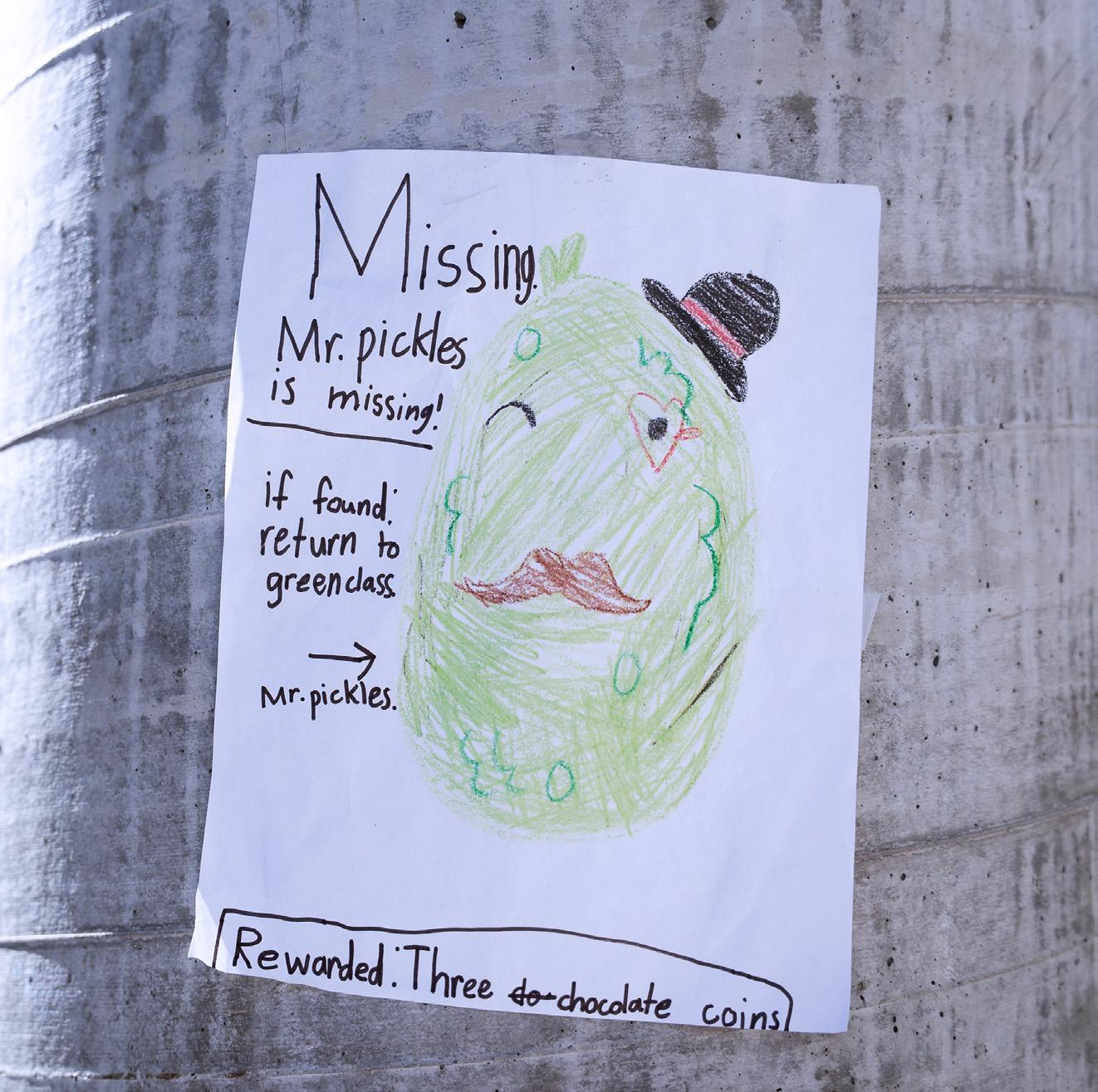
It began as a small mystery in the Green class, but it quickly became a campuswide investigation.
When Mr. Pickles, the beloved class “pet,” disappeared without a trace, students jumped into action. They shared the news at Circle Time and encouraged Youngers, Middles and Olders to join the effort. Together they scanned the yard, and helped hang “Missing” posters across campus.
What started as a simple question, Where is Mr. Pickles?, became something much more. The mystery sparked curiosity, creativity, and problem-solving, turning an unexpected moment into a shared experience of inquiry.
And then, the breakthrough: Mr. Pickles was discovered, safe and sound, tucked away in the library.
Case closed. Community strengthened. Mystery solved.
Head’s Column
It feels like such an appropriate topic for a Spring Periscope to lean into mystery and problem solving. Each spring we welcome a new group of children and families into our PS1 community and each one of them is a bit of a mystery to be discovered. It is a mystery that we will uncover over the seven years to follow— who this child will become, where their passions will lie, what questions will captivate them, and how they will learn to make their mark on the world.
Luckily, our work at PS1 is deeply rooted in learning about how to navigate mysteries and solve problems when we find ourselves in unexpected or unfamiliar situations. With lots of practice, children graduate from PS1 not only with academic skills, but also with the confidence, flexibility, and curiosity to face these mysteries.
This year, those moments of mystery and discovery unfolded everywhere we looked.
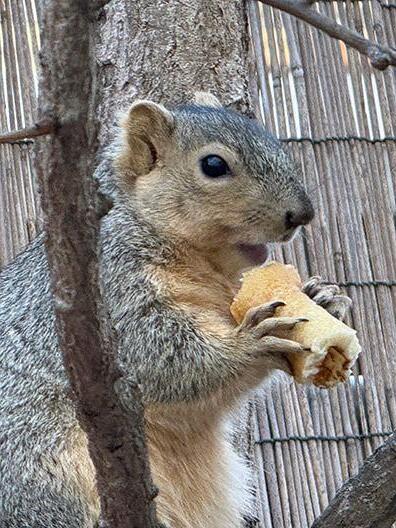
Sometimes they emerged in playful and unexpected ways, like when Georgie became concerned about the wet walkways after a rainstorm and began wondering how we might keep everyone safe. A simple observation quickly turned into questions, investigations, and collaborative problem solving. Across campus, children planted seeds in the garden beds, carefully tending them while imagining what might eventually grow and what the garden itself might someday become. In Olders, students puzzled over how to protect their belongings from the increasingly bold squirrels who seemed determined to outsmart them at every turn.
Other mysteries took shape through creative work and performance. Bridge, Middles, and Olders students immersed themselves in the challenge of bringing their plays to life, solving countless problems along the way: how to collaborate as an ensemble, how to transform ideas on a page into
We cannot solve every mystery for children, nor should we. Instead, we strive to give them the tools, confidence, and sense of belonging that allow them to approach the unknown with curiosity.
something meaningful and alive on stage. Each rehearsal required adaptability, patience, and imagination.
And of course, mysteries often reveal themselves in the classroom (some of which you can read about in this issue). During Math Morning, students encounter new challenges each week that invite them to think creatively, test strategies, revise ideas, and persevere through uncertainty. At PS1, math is not about quickly arriving at the correct answer; it is about developing the problem-solving tools that help move us to understanding. Children learn that struggle is not something to avoid, but a productive and essential part of learning.
Spring also brings the mystery of what comes next. Our students embark on the camping trip; sometimes experiencing their first night away from home. Our grads prepare to leave the familiarity of PS1 for new schools and new experiences. Younger students begin imagining themselves in different classrooms, with new teachers, new friendships, and new opportunities. There is excitement in that uncertainty, but also vulnerability. And yet, year after year, we watch children (and families) rise to meet these transitions with resilience because they have spent years practicing exactly this kind of growth.
At PS1, we believe childhood should be filled with opportunities to wonder, question, experiment, and discover. We cannot solve every mystery for children, nor should we. Instead, we strive to give them the tools, confidence, and sense of belonging that allow them to approach the unknown with curiosity.
The mysteries ahead will continue. And so will the joy of discovering them together.
Warmly,
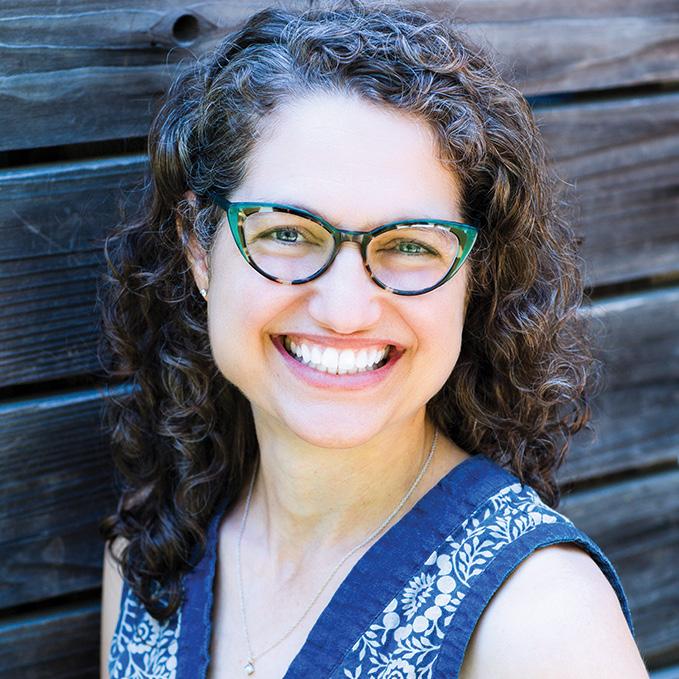
Susannah Wolf, Head of School
Spring Gala: Rock Revolution!
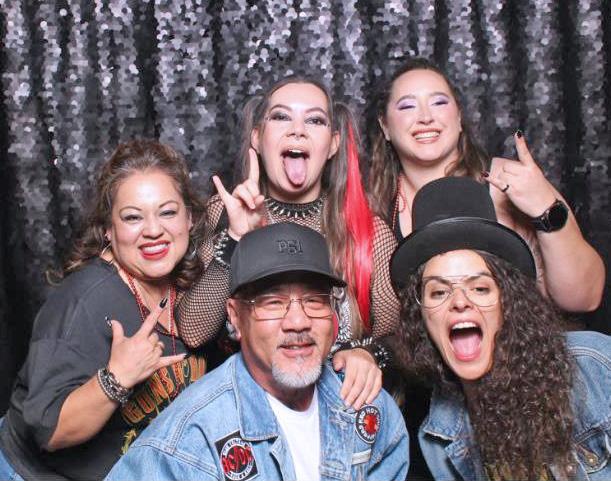
This year’s Spring Gala turned up the volume as the PS1 community gathered for Rock Revolution, a night filled with music, energy, and connection. With the incredible dedication of parent volunteers and the generosity of our community, the evening raised essential funds for Tuition Assistance, ensuring access to a PS1 education for a diverse range of students; something that benefits the entire community. The theme came to life through standout style, with guests embracing the spirit of rock in everything from vintage band tees and leather jackets to sequins, sparkle, and bold, expressive looks. Beyond the theme and festivities, what stood out most was the shared commitment to supporting one another and investing in the future of our community.
TRADITIONS OLD & NEW
Earth Day: Community Clean Up
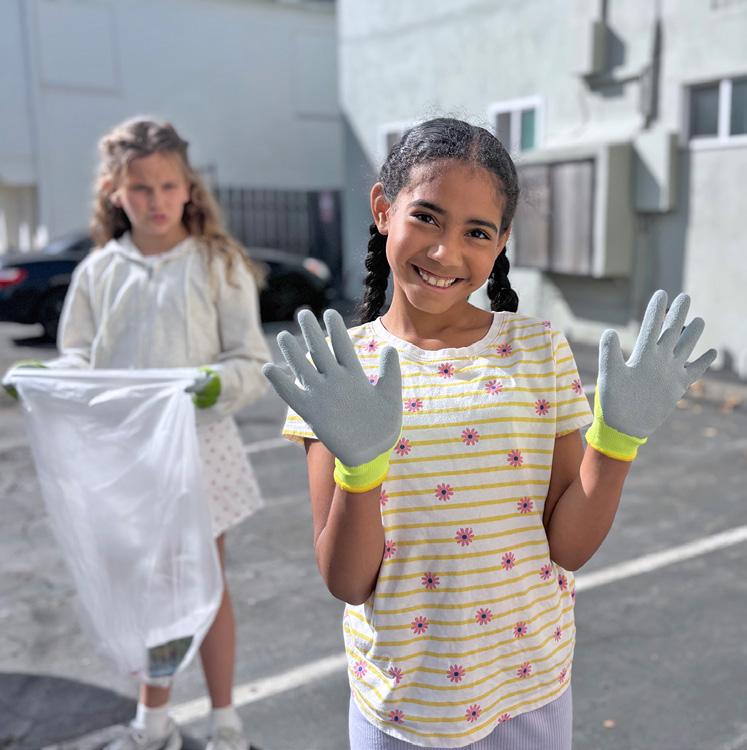
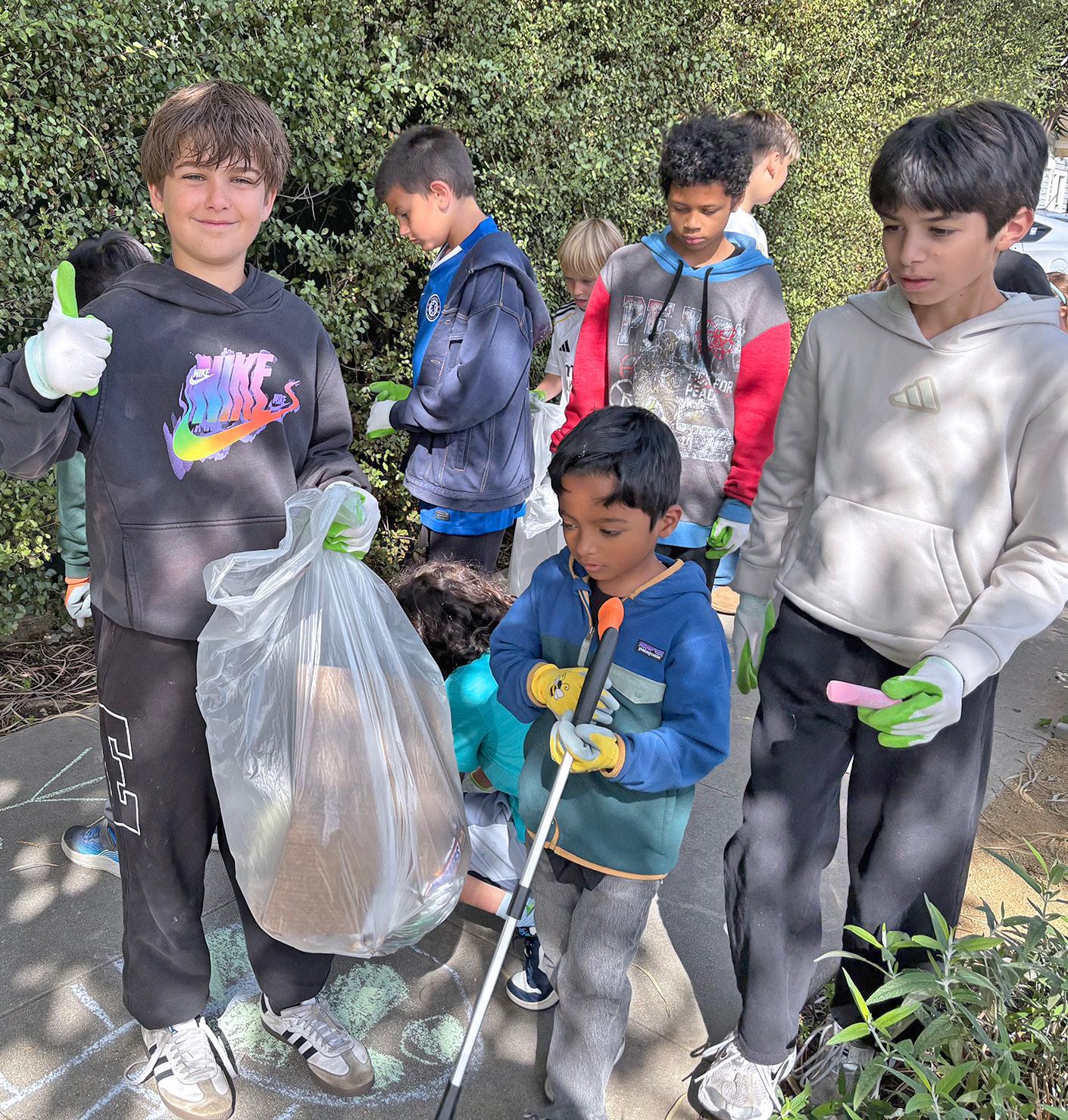
In honor of Earth Day, PS1 students put our values into action. The initiative was sparked by a Youngers student who noticed a need around campus and, with support from the Student Sustainability Committee, helped bring the plan to life. Equipped with gloves, bags, and a shared sense of purpose, participants worked side by side to care for our local environment. The experience offered a tangible way for students to see how individual ideas can grow into collective action, reinforcing responsibility, stewardship, and connection to the world around them. At PS1, caring for our environment is not just something we talk about, it is something we do, together.
Bridge and Middles Musical: Madagascar Jr.
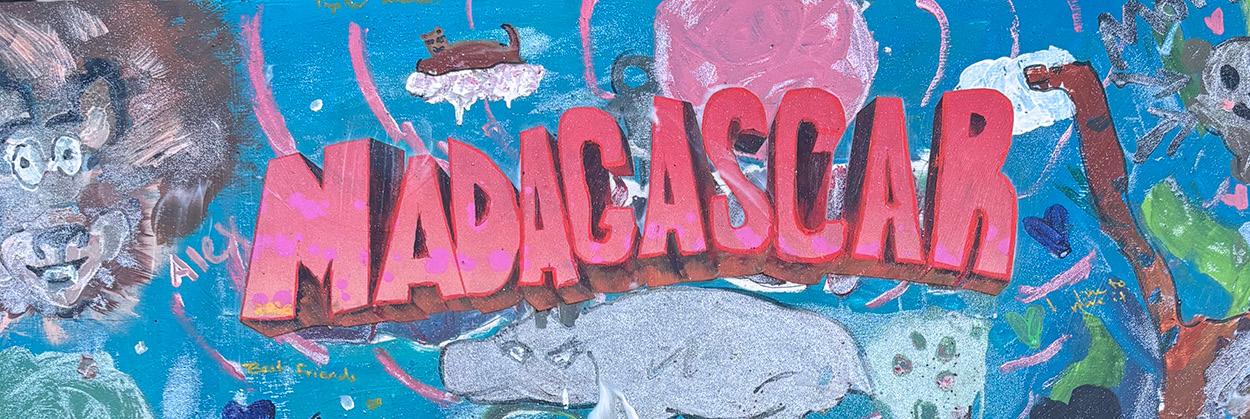
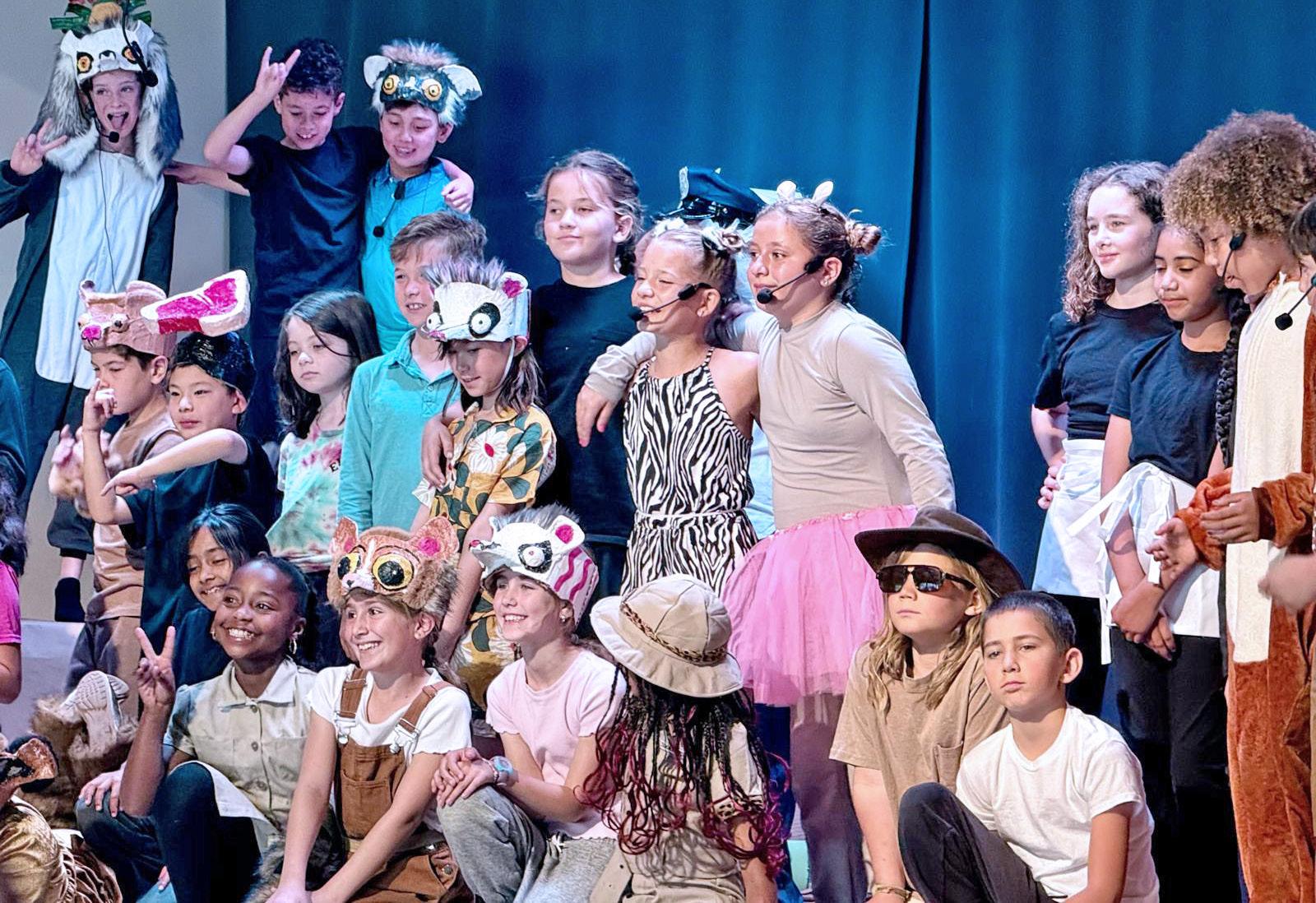
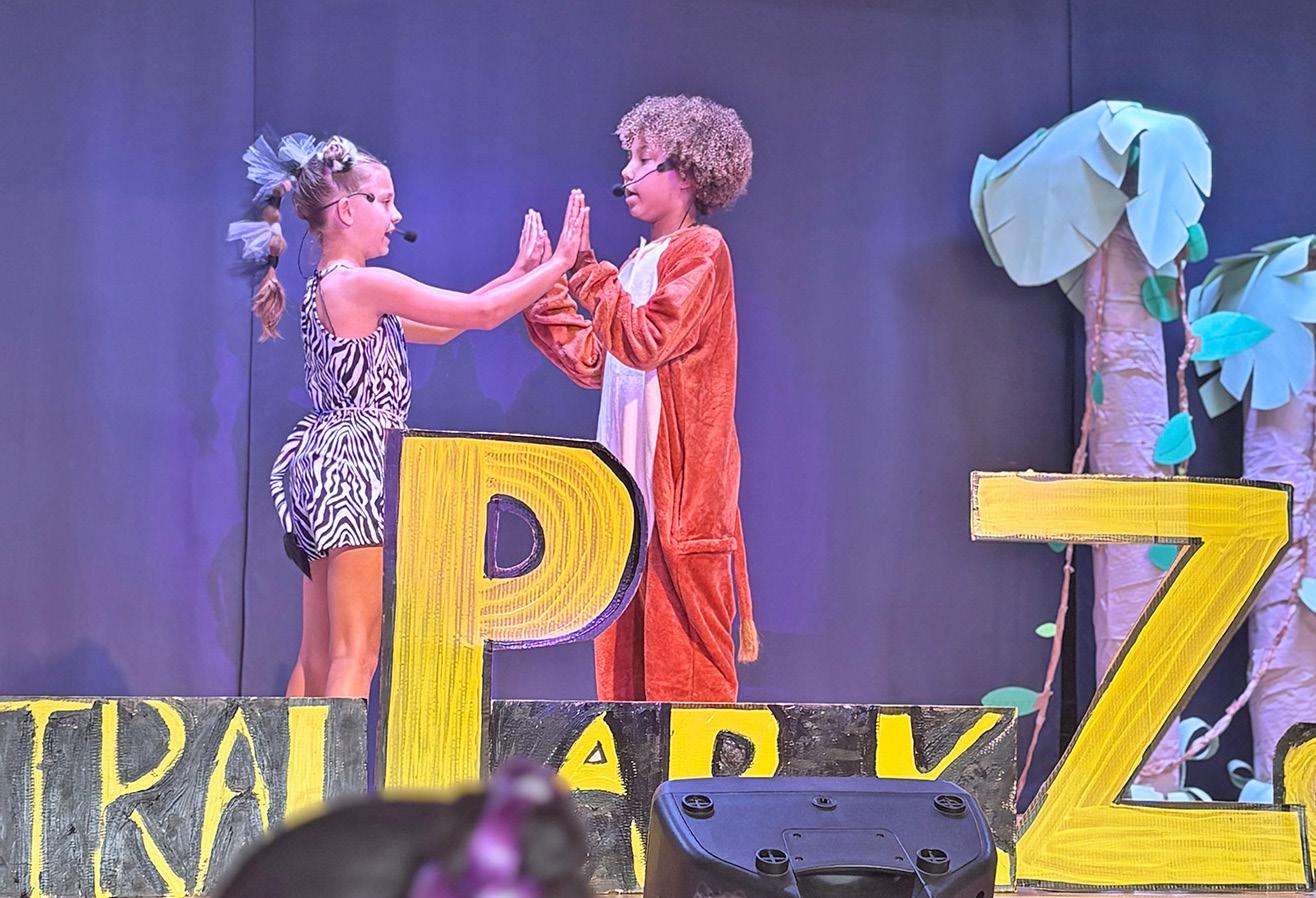
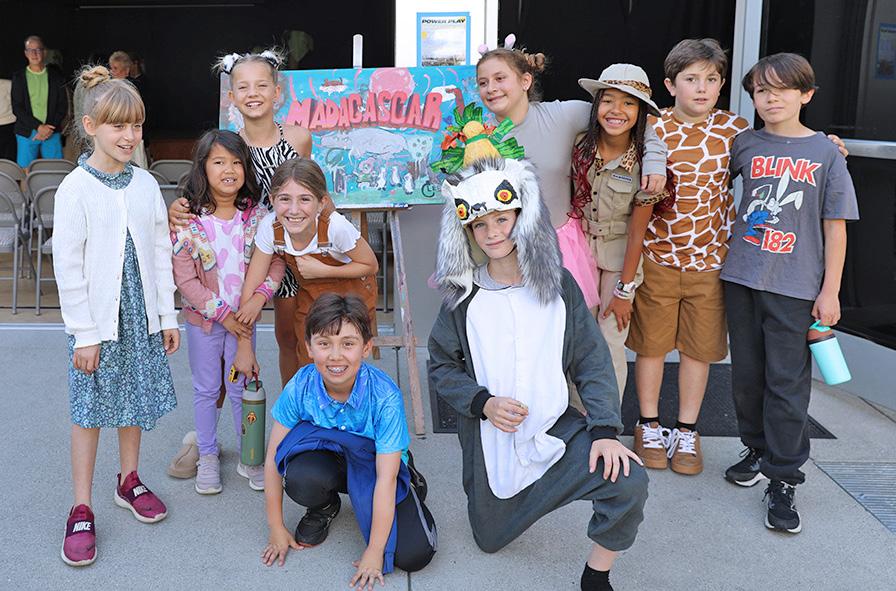
The stage came alive on April 24 as Bridge and Middles students brought Madagascar Jr. to life in a high-energy performance full of humor, music, and heart (not to mention amazing costumes and choreography thanks to parent volunteers!). From the first line to the final bow, students shined as actors, singers, dancers, and collaborators, showcasing not only their talent but their courage and commitment to the ensemble. Rehearsals were filled with teamwork, problem-solving, and creative expression, culminating in a joyful production that had the audience laughing, clapping, and cheering along. More than a performance, Madagascar Jr. was a celebration of student voice, confidence, and the power of working together toward a shared goal.
Camping Trip
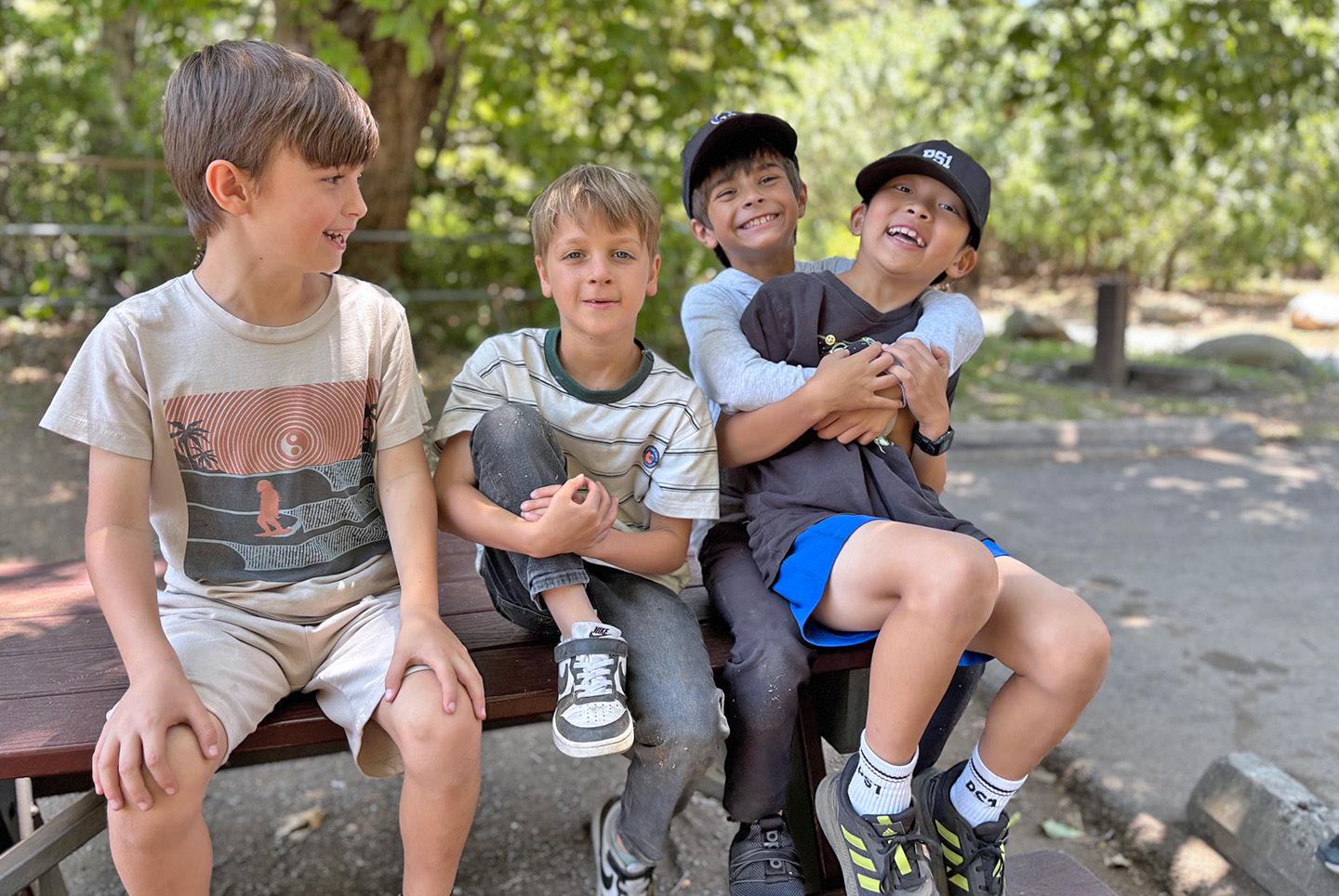
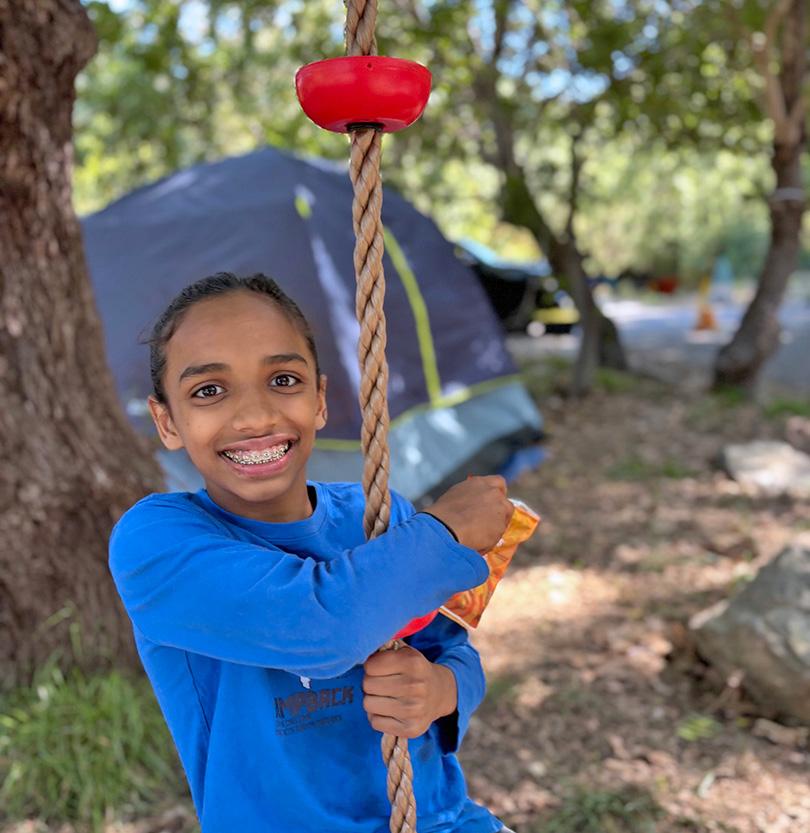
Each spring, the PS1 camping trip invites students to step beyond the classroom and into a shared outdoor experience rooted in connection, independence, and discovery. More than a tradition, it is an intentional extension of our program, supporting the development of the CASEL 5 competencies: selfawareness, self-management, social awareness, relationship skills, and responsible decision-making.
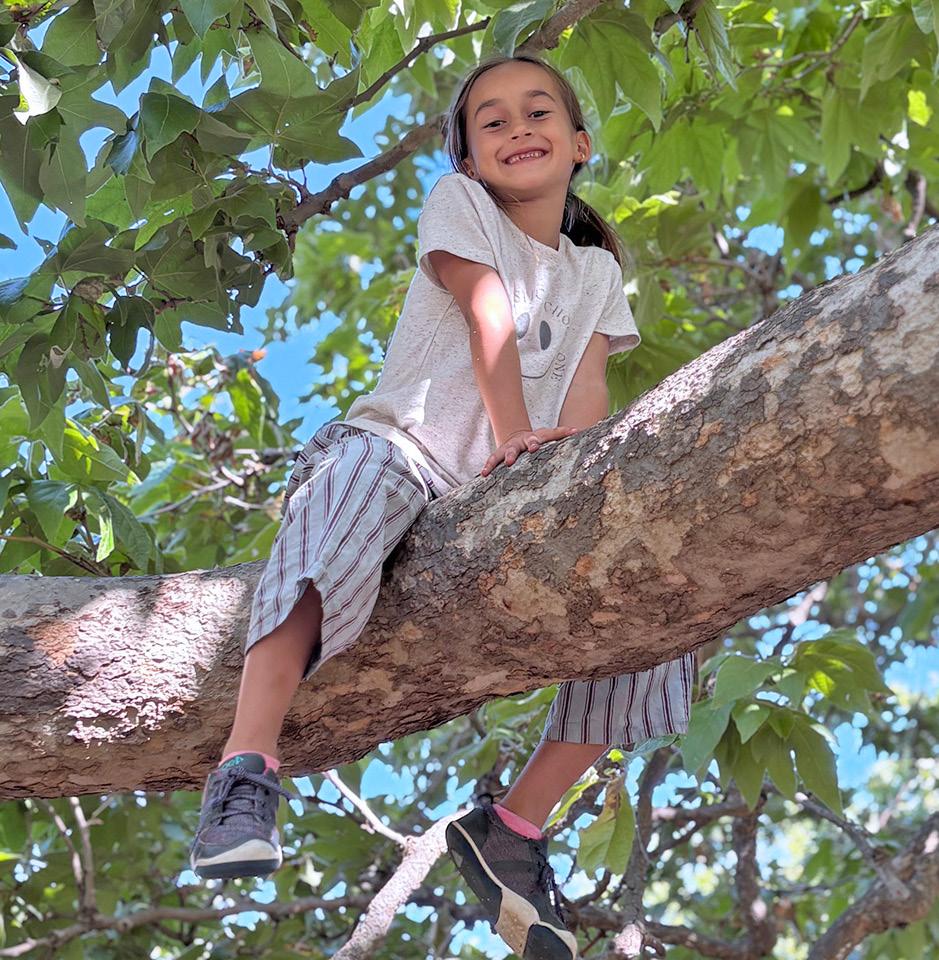
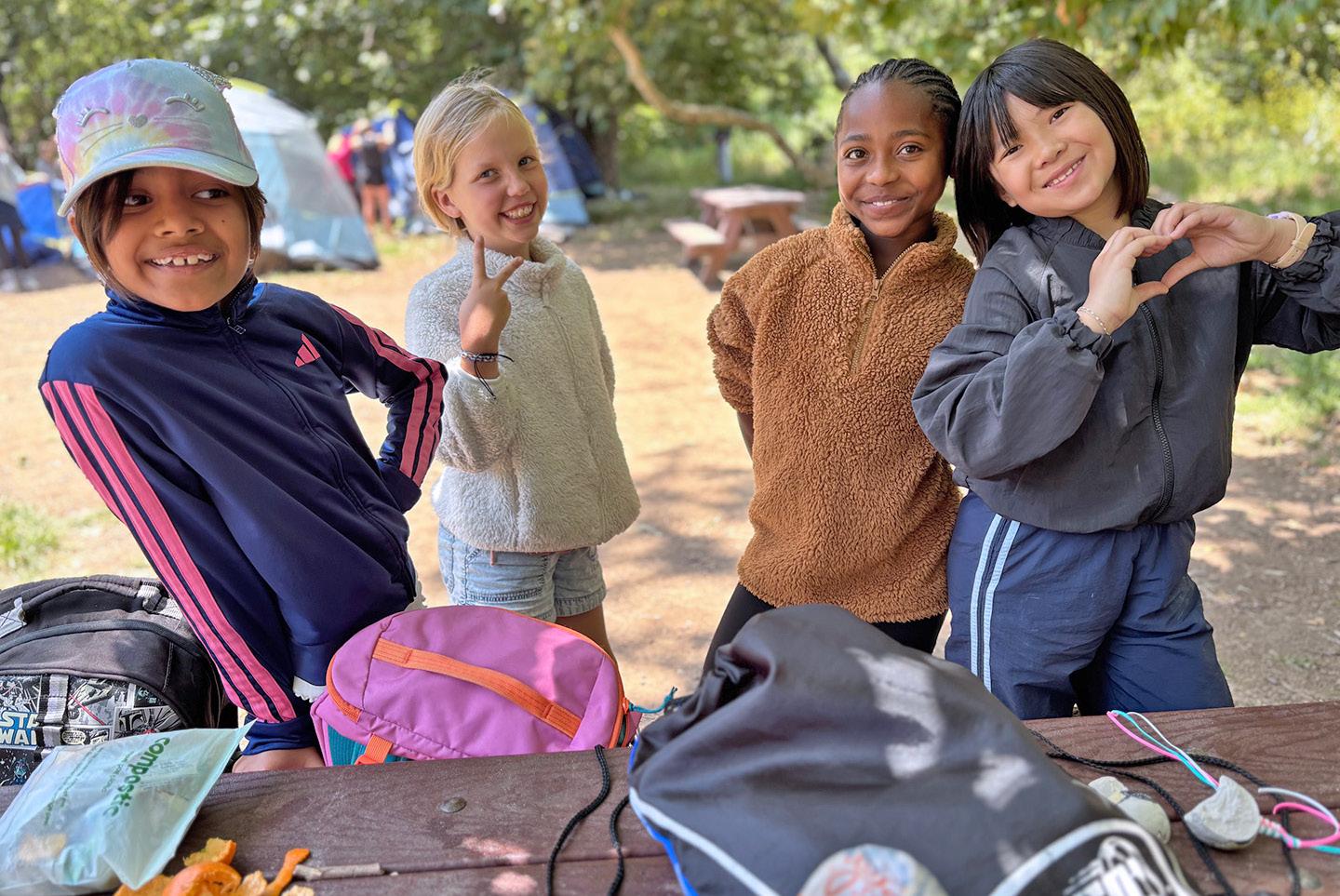
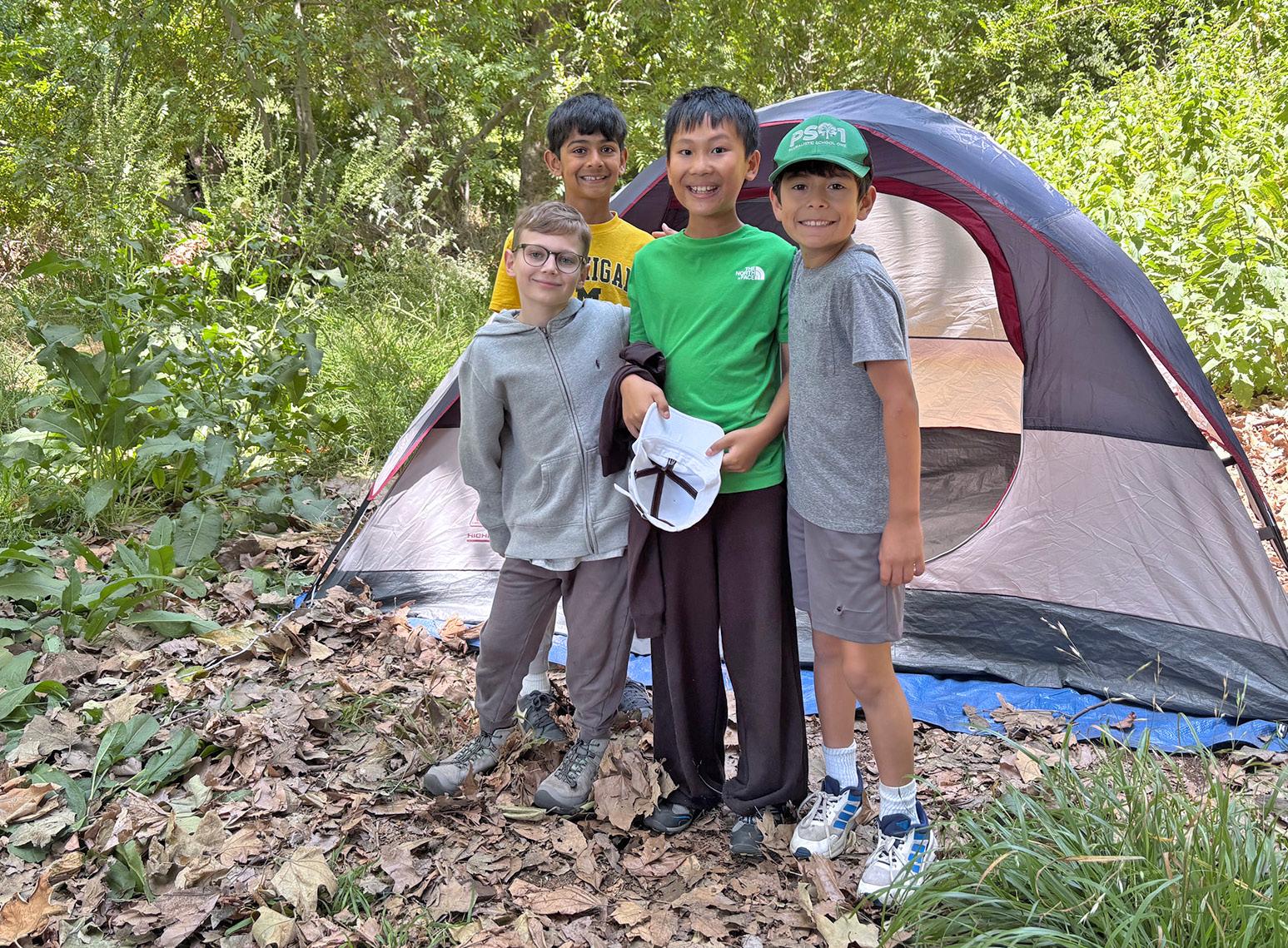
This year’s trip to Sycamore Canyon was filled with moments both big and small: pitching tents, preparing meals, climbing trees, hiking scenic trails, exploring the creek, and gathering around the campfire for songs and skits. Along the way, students practiced responsibility, collaboration, and resilience, building confidence and trust in one another.
These shared experiences deepen friendships and strengthen a sense of belonging, reflecting PS1’s belief that some of the most meaningful learning happens when we step into the world together.
Curriculum Connections
Math Morning
McKendree
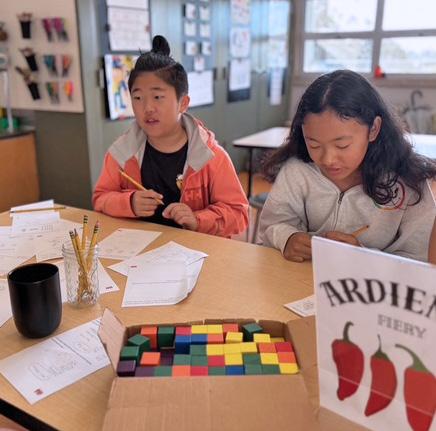
Math Morning continues to be one of the highlights of our school’s learning community, where curiosity meets challenge and discovery. Each Math Morning invites students and families to become problem-solvers, tackling intriguing problems that spark imagination and critical thinking. From logic puzzles to hands-on problem-solving, every activity encourages participants to test ideas, make connections, and try new strategies.
What makes Math Morning especially meaningful is the emphasis on perseverance. Not every problem is solved right away. In many ways, math is a mystery to be solved, and that’s part of the excitement. Students learn to stick with a challenge, collaborate with others, and celebrate progress along the way. With activities designed at a range of “spice levels” — picante, caliente, candente, ardiente, y pimienta fantasma — each learner can find just the right balance of challenge and success.
Together, we’re building more than math skills; we’re nurturing confidence, resilience, and a love of learning that extends far beyond the classroom.
Literacy: Word Study Noelle
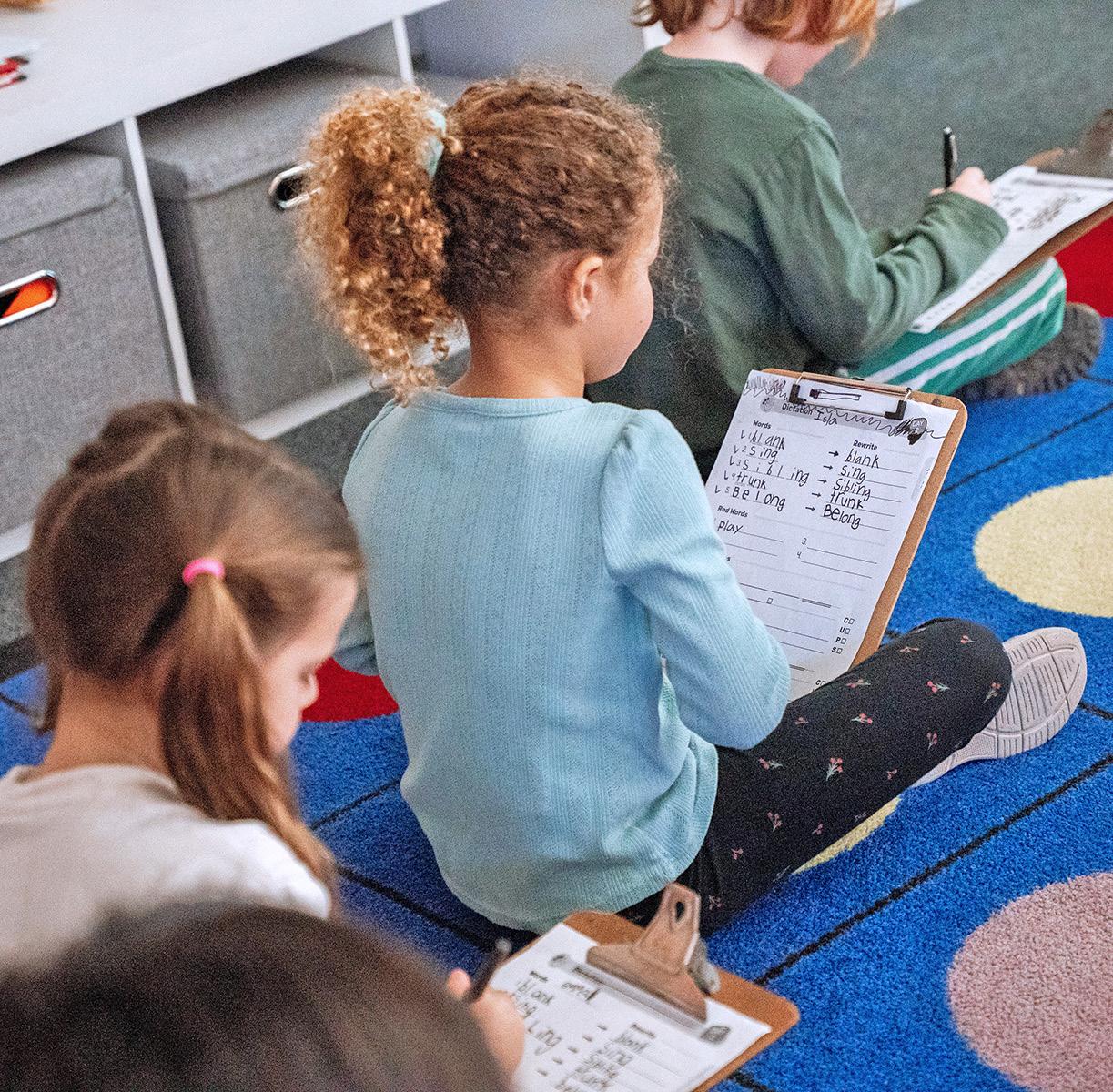
Word study helps students uncover the structure behind written language. In our K-4 classrooms, teachers use structured literacy approaches grounded in Orton-GIllingham based instruction, which systematically builds understanding of how language works from the earliest stages of reading development.
Rather than relying on memorization, students learn to analyze how words work. From the beginning, students are taught to see language as structured and pattern-based. They break words apart, notice patterns, and make connections that help them to understand both spelling and meaning. Each word becomes an opportunity to investigate how language is constructed.
As instruction progresses, students begin to recognize broader word patterns and structures, including syllable types and meaningful word parts.Each word becomes an opportunity to explore how written language is organized and how meaning is constructed. What once felt random becomes something they can decode, understand, apply with confidence.
Word study ultimately helps students move from guessing at words to understanding the system behind them. By making the structure of language visible, word study helps students move from decoding to truly understanding how language works.
In the Youngers cluster, our study of insects created many meaningful opportunities for exploration, observation, and inquiry-based learning. Students were encouraged to ask questions, share ideas, and investigate the natural world around them.
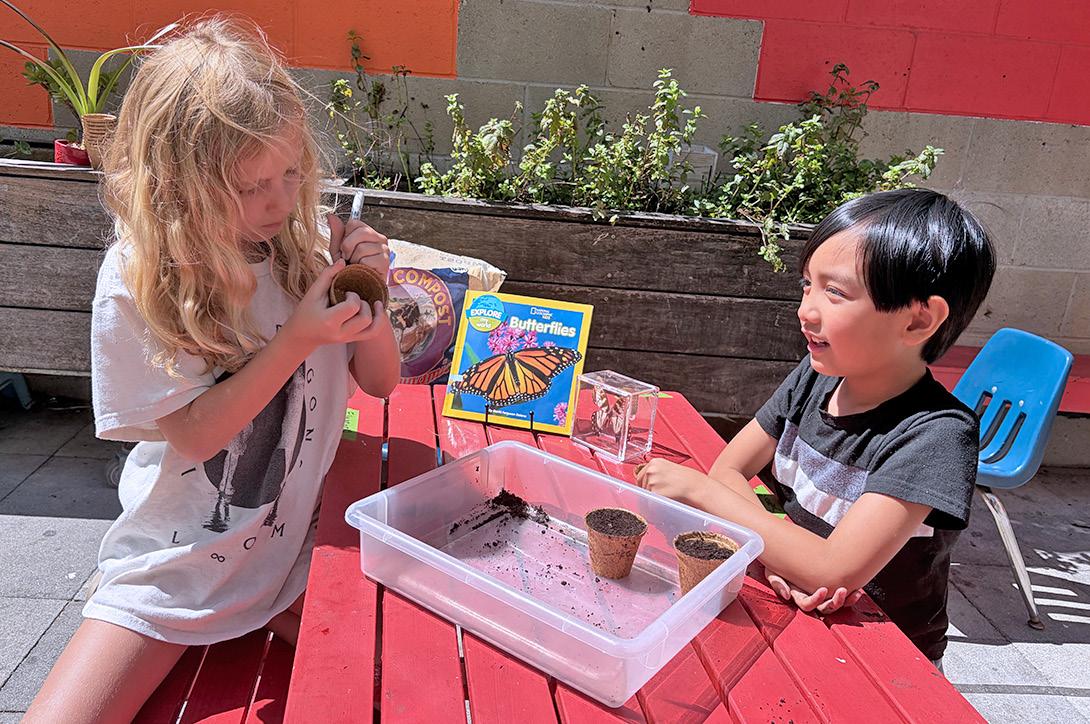
In the Red class, the question “Who eats butterflies?” sparked a rich and engaging discussion that led to a deeper investigation of food webs and the interconnected relationships between plants and animals.
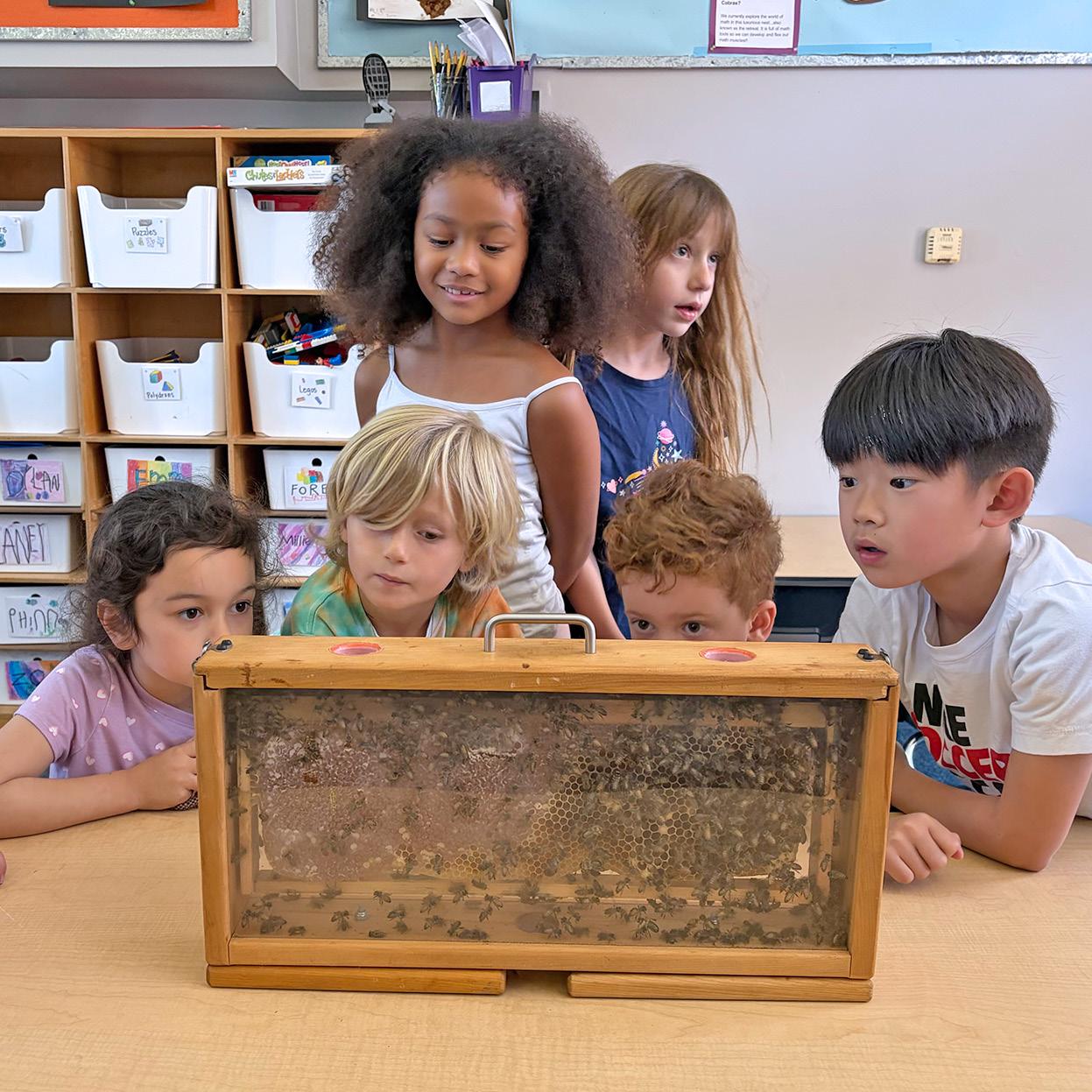
In the Orange class, students applied their knowledge of bee colonies, bee behavior, and the importance of bees in our environment to investigate the mystery of two local bee hives that had died. Through research, observation, and collaborative problem-solving, the Orange class used their understanding to come up with a variety of science-based theories as to what could have caused these hives to die.
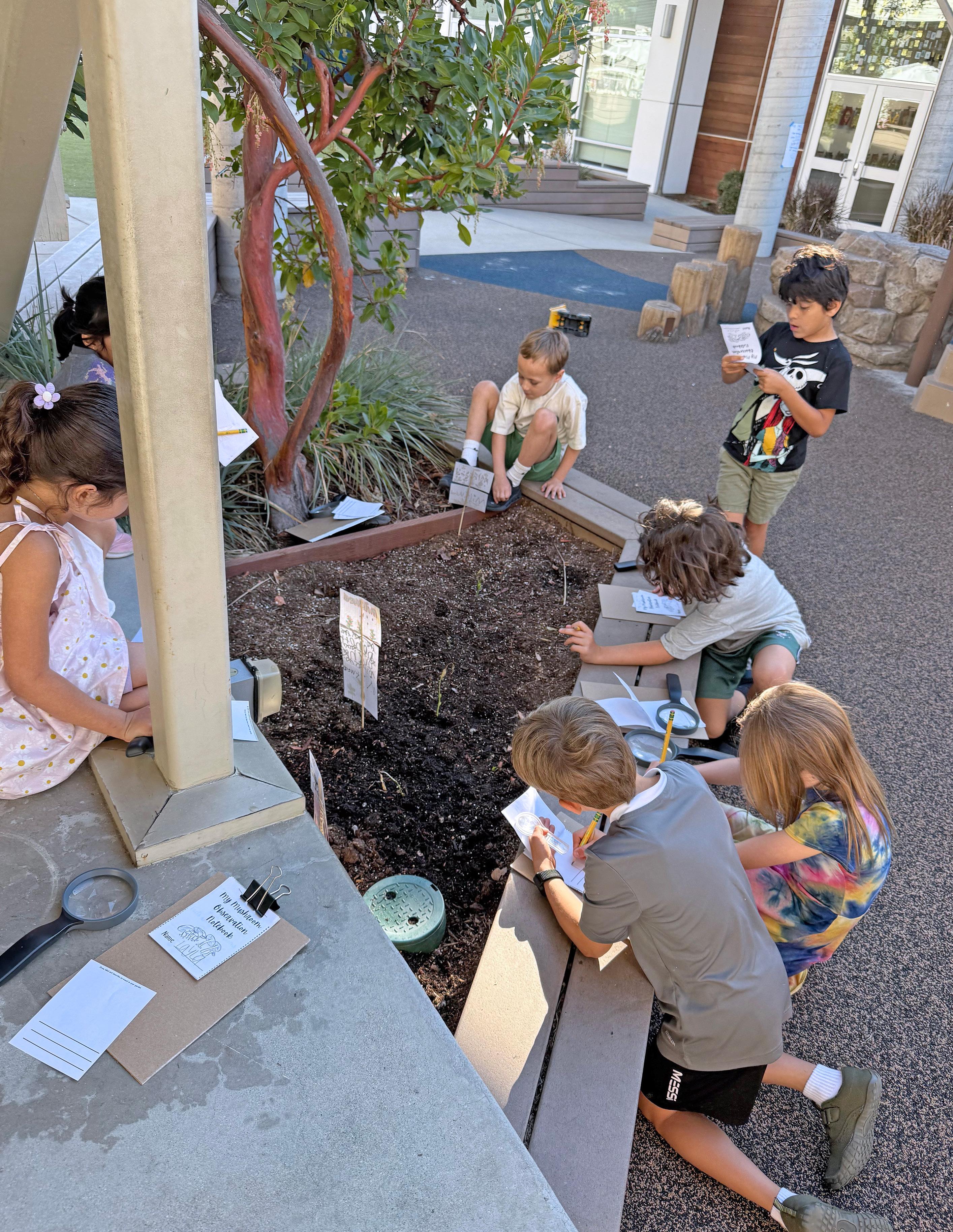
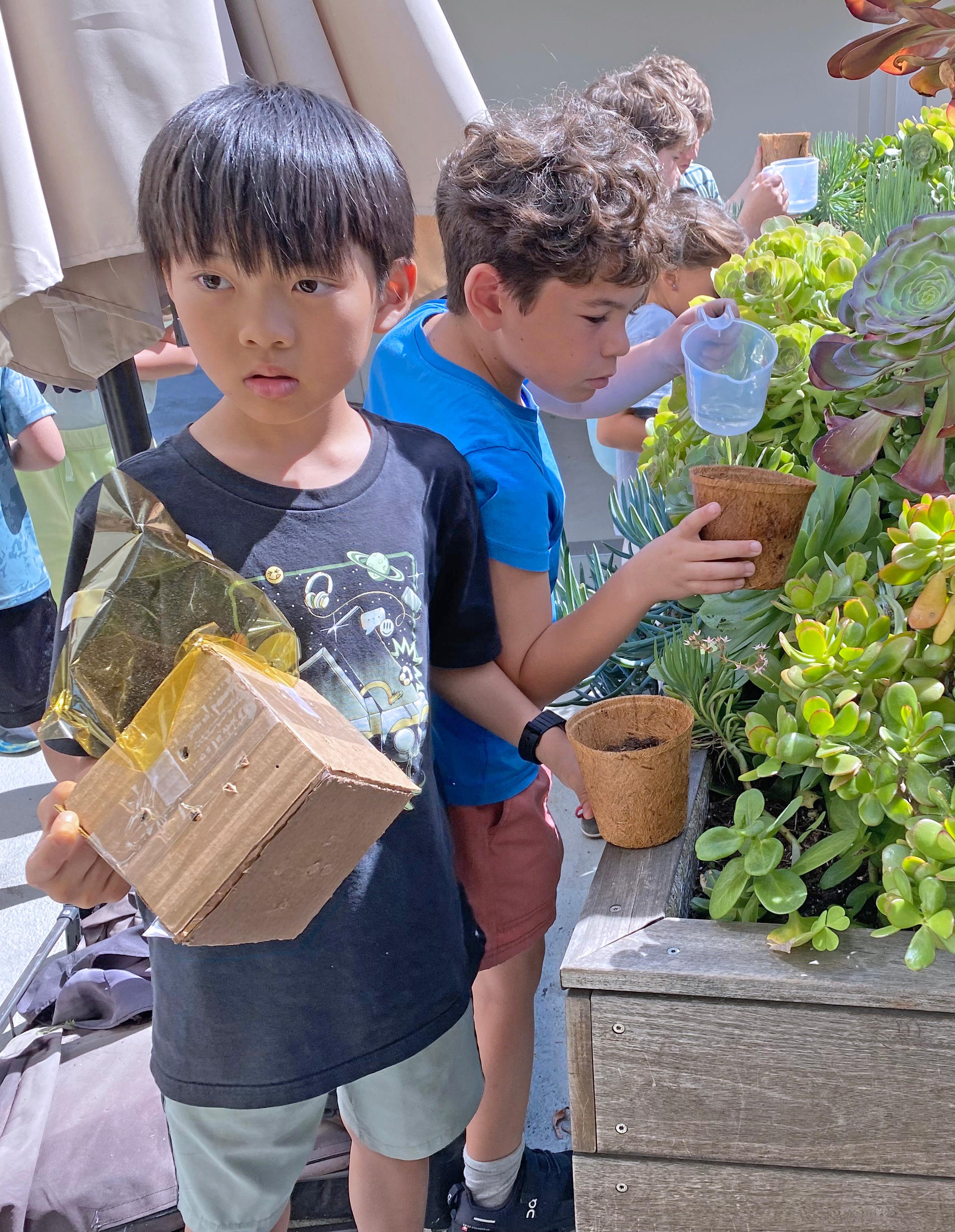
In the Yellow class, an empty garden bed outside their classroom became an exciting opportunity for student leadership and hands-on learning. Inspired to make a difference, students launched a project to develop and care for new garden spaces. The “Garden Guardians” actively planted and nurtured milkweed, wildflowers, strawberries, and pea plants. Their efforts attracted a wide variety of caterpillars and butterflies, bringing their learning to life.
Red JOSIE | LUCIA
Orange HOLLY S. | MEGHAN
Yellow BONNIE | MELVA
YOUNGERS CLUSTER (GRADES K–1)
In the Yellow class, an empty garden bed outside their classroom became an exciting opportunity for student leadership and hands-on learning.
BRIDGE CLUSTER (GRADE 2)
Green
BILLY | DANIELLE
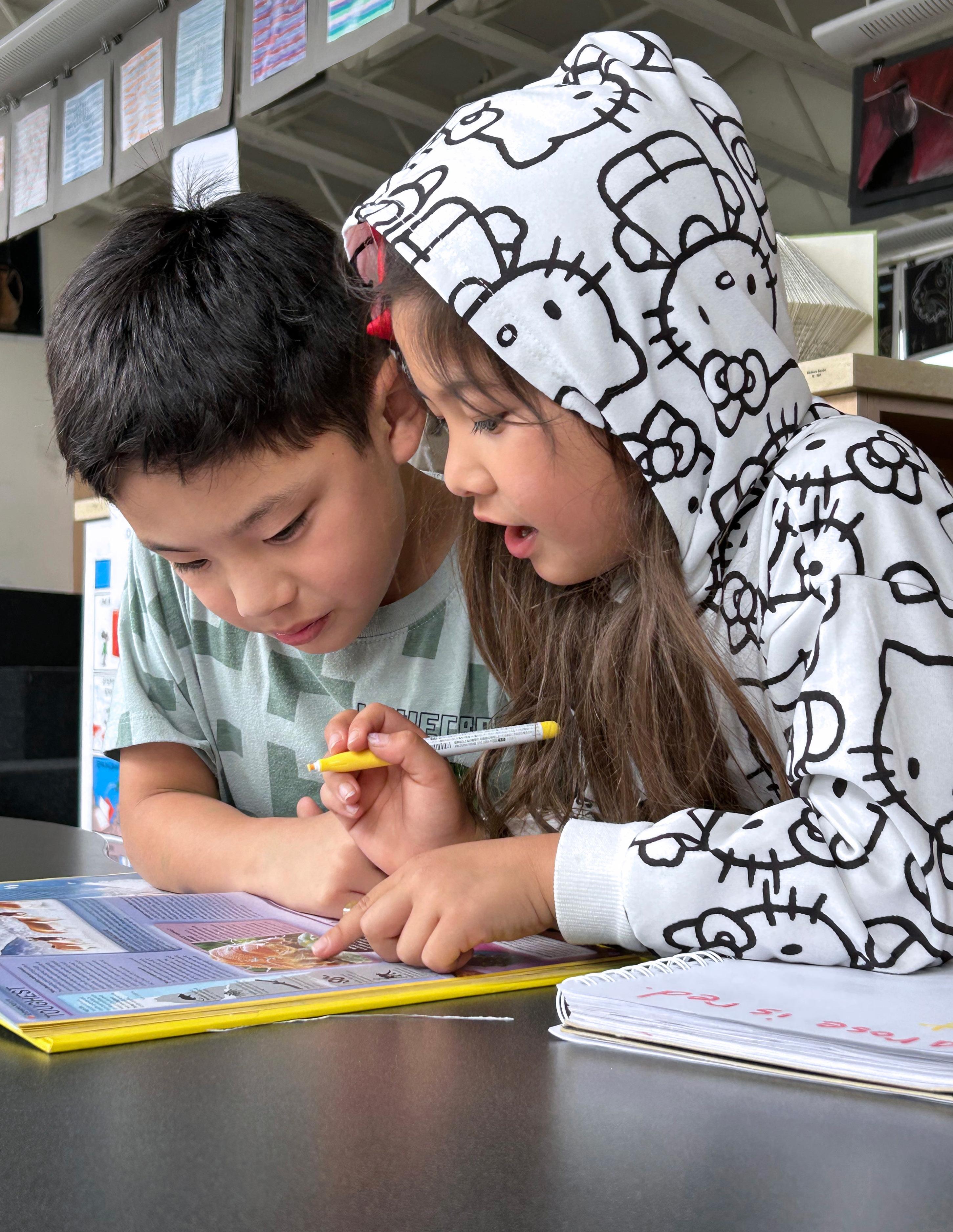
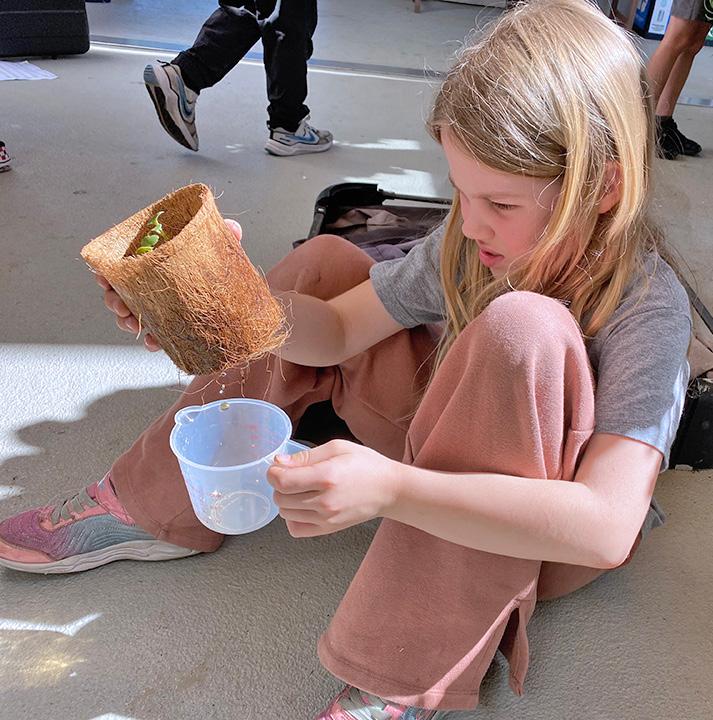
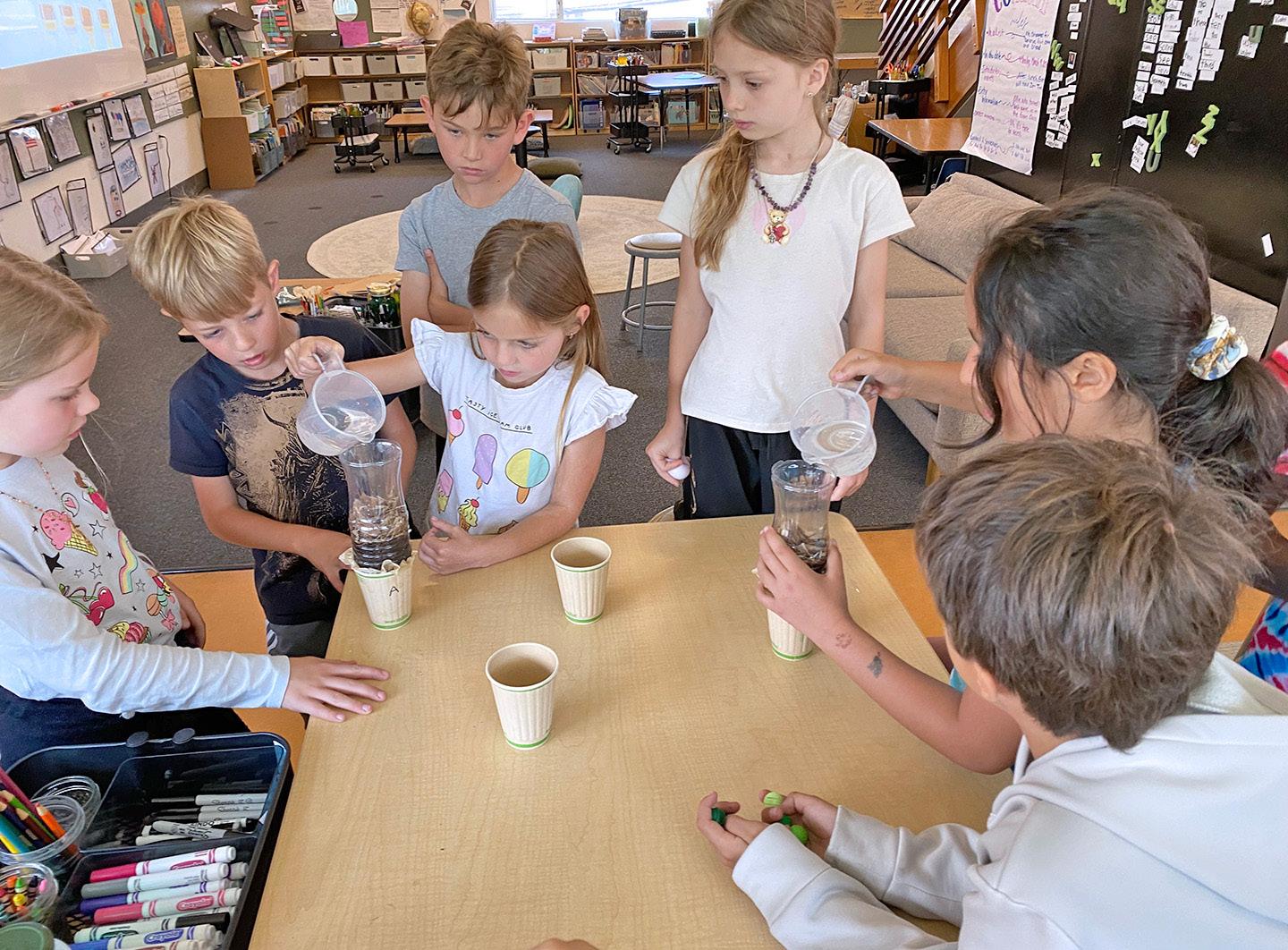
The Green class explored the mystery of plant growth through hands-on experiments that built curiosity, collaboration, and critical thinking. Students learned about variables, understanding that a variable is any condition that can change, such as light, water, soil, or temperature. Through this work, they developed the skills to ask questions, make predictions, and test their ideas.
In one investigation, students explored how different types of water affect the growth of radish plants. They carefully controlled their experiment by using the same size pots, seeds, and soil, while only changing the type of water. After making predictions, they observed surprising results, discovering that sparkling, pond, and emergency kit water supported strong plant growth.
In another experiment, students tested how the color of light impacts development by growing seeds under red, blue, yellow, and green light. Together, they identified the independent variable as the color of light and the dependent variable as plant growth, while keeping all other conditions the same.
Through careful observation, collaboration, and reflection, students are learning that science is a process of inquiry. By testing variables and analyzing results, they are building confidence, perseverance, and a deeper understanding of how living things grow and thrive.
By testing variables and analyzing results, they are building confidence, perseverance, and a deeper understanding of how living things grow and thrive.
MIDDLES CLUSTER (GRADES 3–4)
Indigo
DAVID B. | NORA
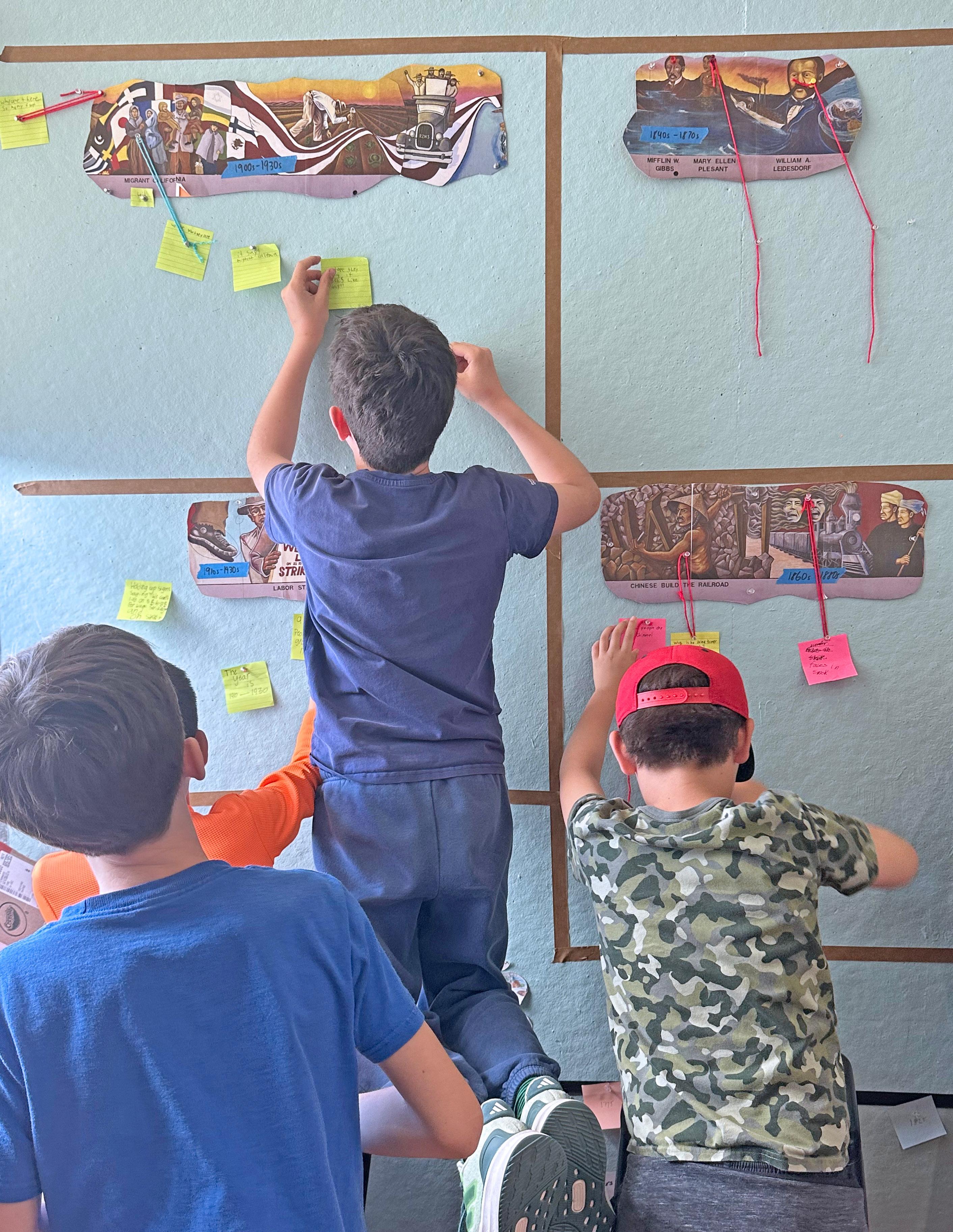
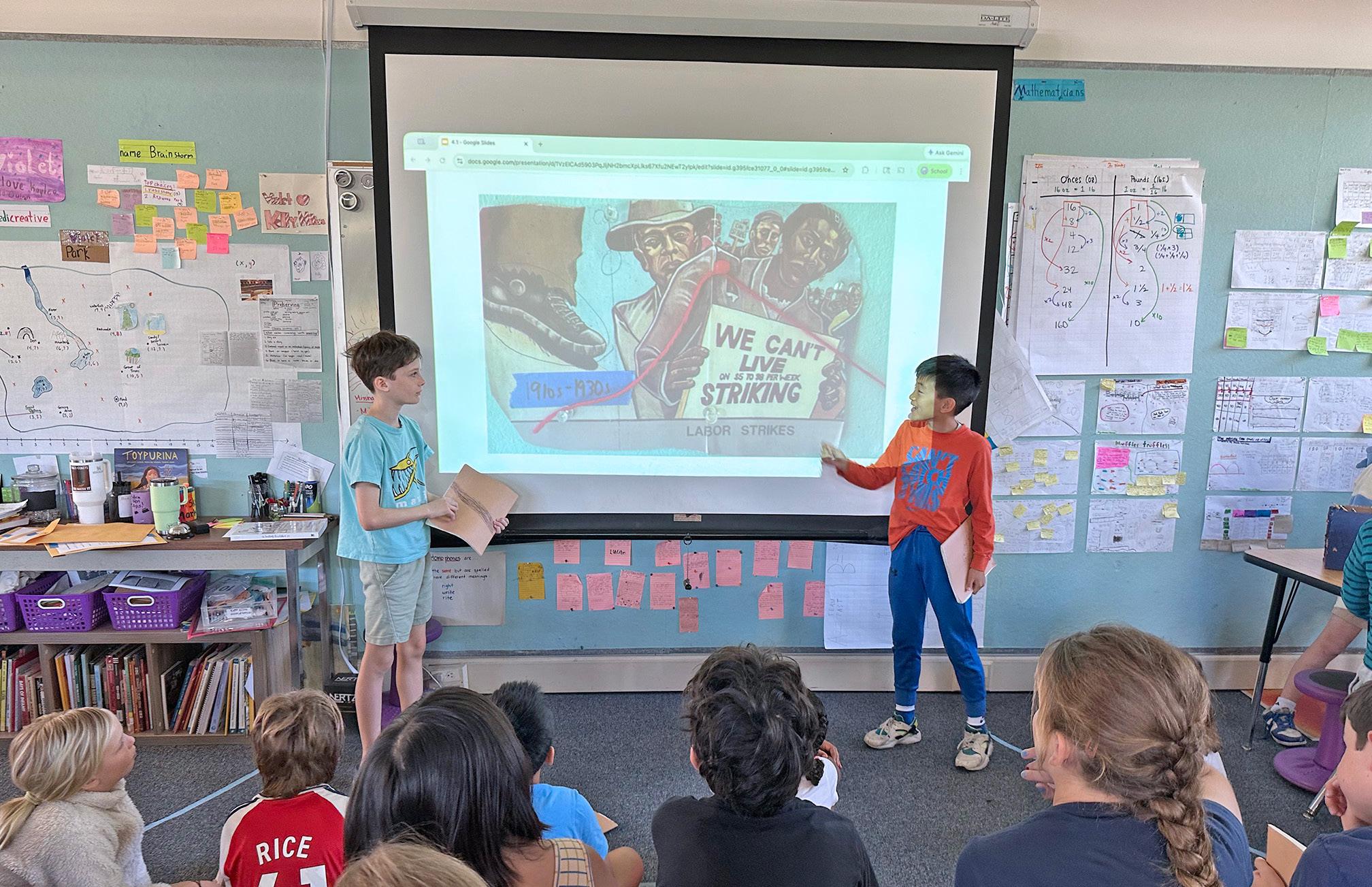
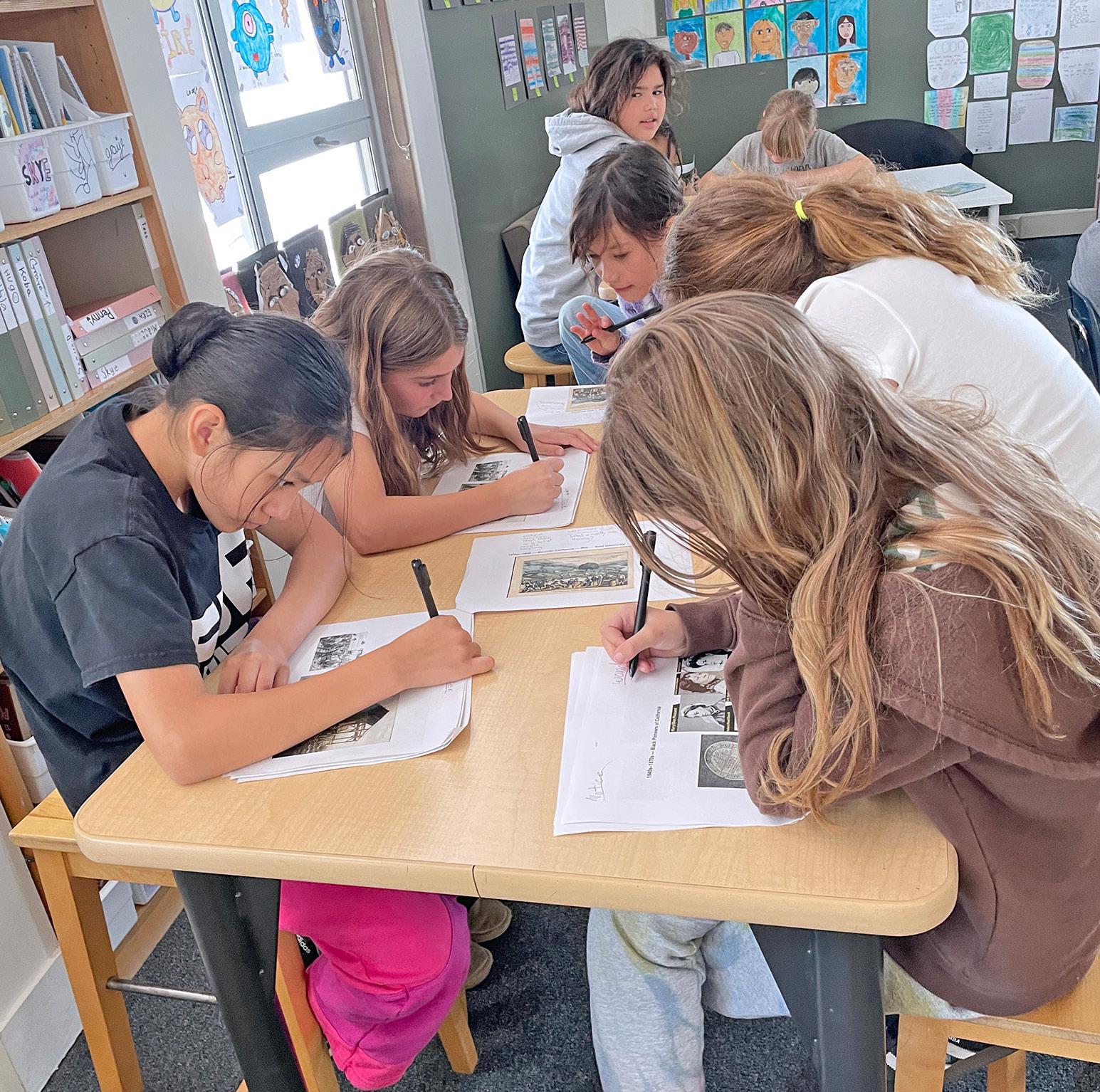
This spring, Middles students in Violet and Indigo continued their yearlong work as archaeologists, taking on a new mystery connected to California’s past. Building on their ongoing practice of studying artifacts, students were presented with fragments of a large-scale mural, each piece offering clues about a different historical moment.
Violet KELLY | MILICA
Working in partnerships, students closely observed their assigned artifact, asking questions and developing initial theories. They used their classroom “detective wall” to track their thinking, adding notes, questions, and early ideas as they worked to piece together what each image might represent.
Through the spring, students continued this investigation as a fictional newspaper reached out to report on the discoveries. Students were tasked with helping tell the story behind the images, using their own research questions to guide their work with historical texts. As they read, reread, and annotated like researchers, they deepened their understanding of the events and people represented in the mural.
As the study unfolded, students clarified unfamiliar vocabulary, identified key ideas, and connected evidence from their reading back to what they saw in the mural. They revisited and revised their thinking over time, using the wall to track new insights, questions, and emerging explanations.
As the study unfolded, students clarified unfamiliar vocabulary, identified key ideas, and connected evidence from their reading back to what they saw in the mural.
OLDERS CLUSTER (GRADES 5–6)
West Oak
North Oak
Oak
HOLLY F. | JOHN East
LIANNE | YVONNE
ALECE | KAYLA
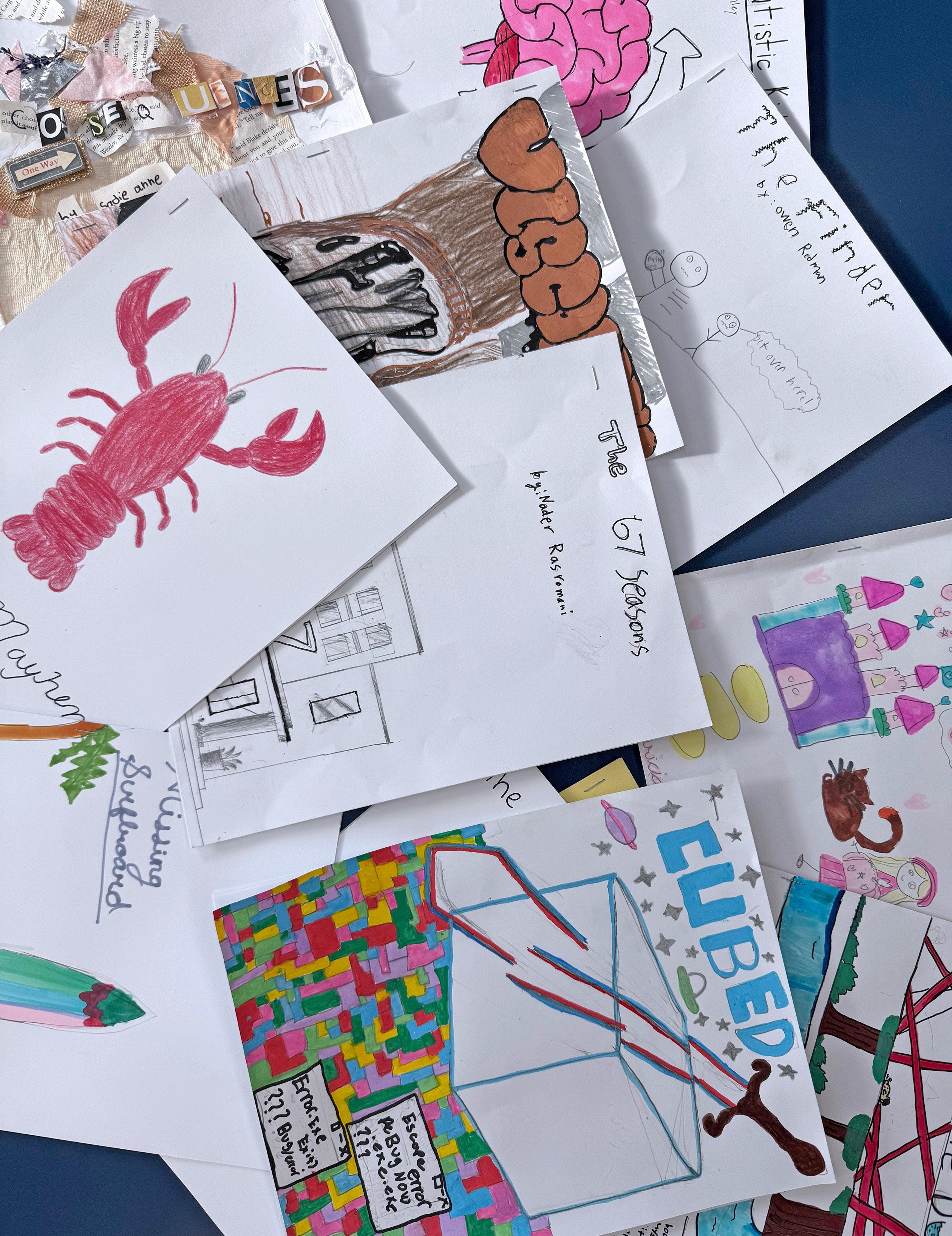
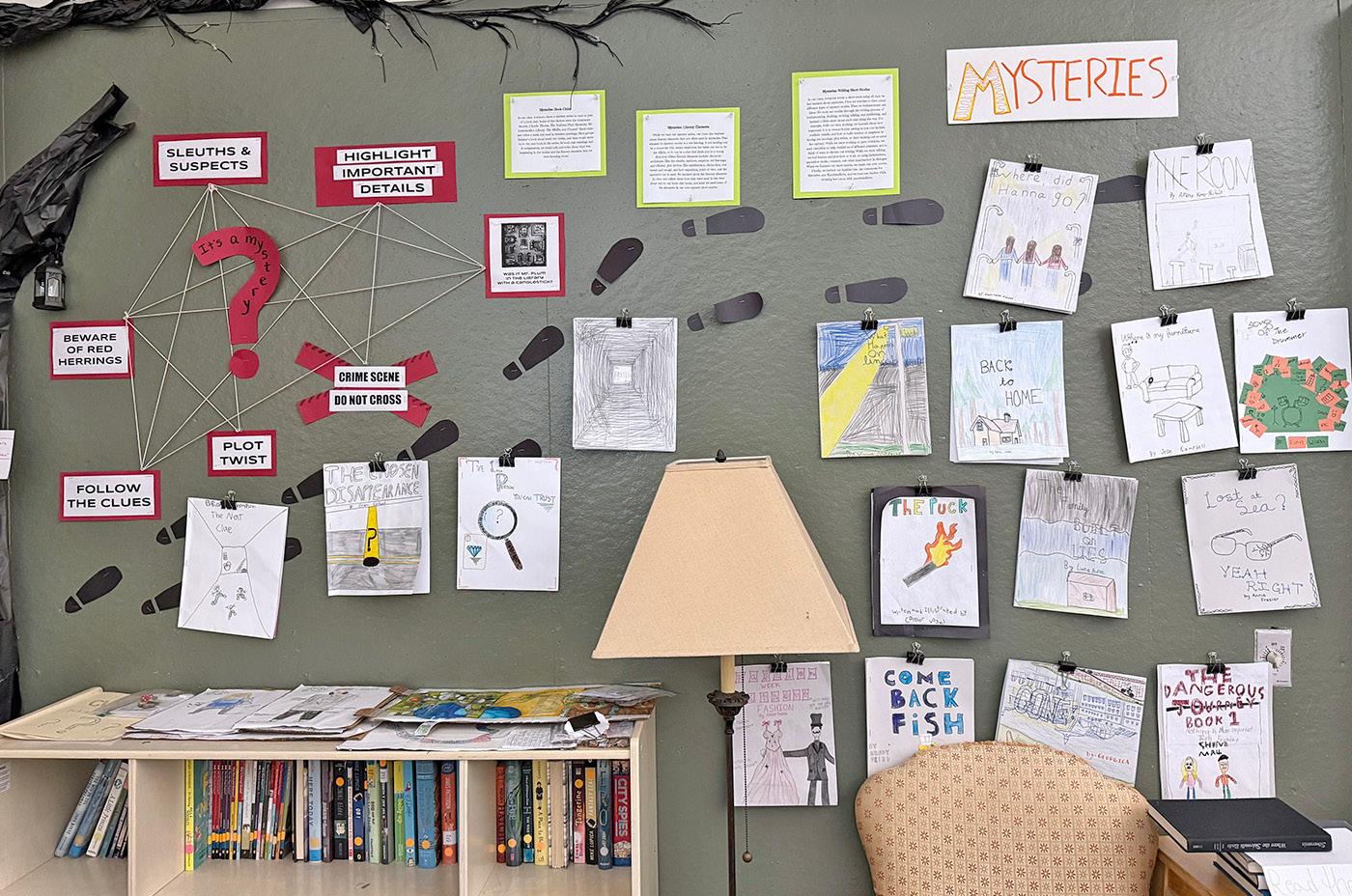
When traveling through the Olders cluster this year you most likely would have come upon stories with titles such as What Happened on Lincoln, The Room, The Missing Necklace, Viscosity, The Lost Fairy, Mystery North and myriad others. They were authored by our students and were the result of a first semester intensive study of mystery as a major literary genre.
The unit began with students selecting titles from a recommended list and forming directed book clubs with their classmates. Popular titles included Greystone Secrets, The National Park Mysteries, The Misfits, Framed, Mr. Lemoncello’s Library, Winterhouse, and City Spies. Students would create a reading calendar and meet to discuss what they read. In directed lessons they learned about mystery archetypes such as sleuths, mentors, red herrings and villains and literary elements such as exposition, setting, point of view, reveal, and narrative arc which informed their contributions to discussions and their writing in Reader’s Notebook entries. Clubs would complete books in 2–3 weeks and then move on to either the next title in a series or a brand new series. This immersion in the genre became the template from which the students wrote, revised, illustrated and published their own stories.
…immersion in the genre became the template from which the students wrote, revised, illustrated and published their own stories.
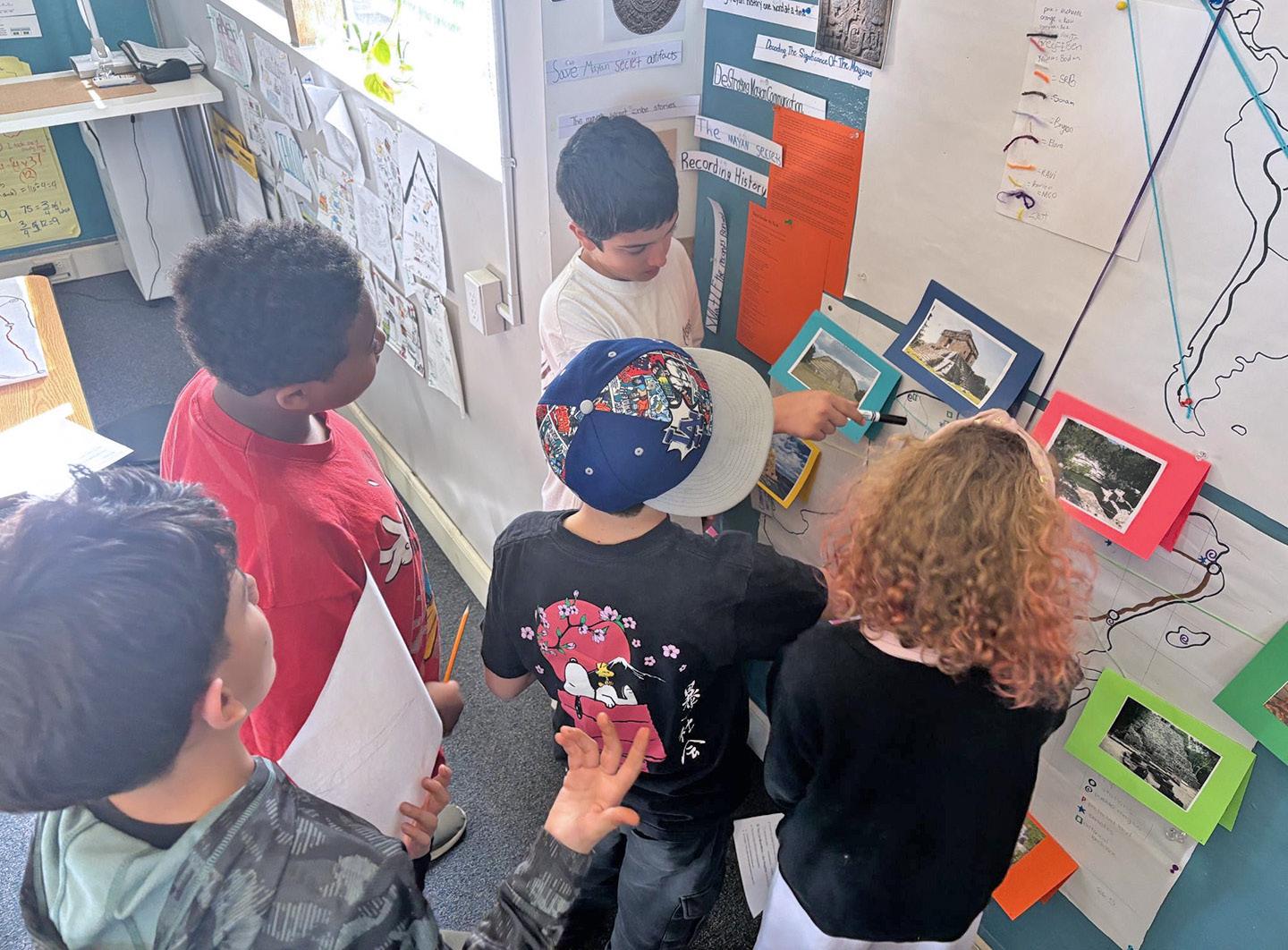
Our students also employed the tools of a sleuth in our Imaginative Inquiry project in Social Studies when they uncovered the mysteries of the Mayan civilization in the Yucatan Peninsula. Using maps and artifacts and their inquisitive skills, students took on investigative roles to both understand the past and set up a train system whereby tourists could learn about Mayan culture while preserving the extraordinary environment in which they thrived. As news reporters the students wrote articles on what they discovered.
Art
LINA
In Art, we use problem-solving skills in many creative ways while learning new techniques and exploring different materials. Across all of the following examples, we learned that problem solving is an important part of the artistic process because artists must constantly make decisions, adapt ideas, and think creatively in order to turn their ideas into successful works of art.
Youngers (K-1)
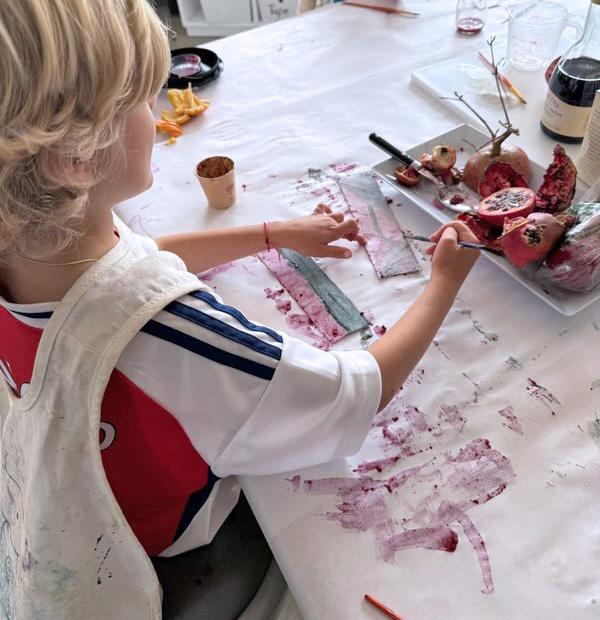
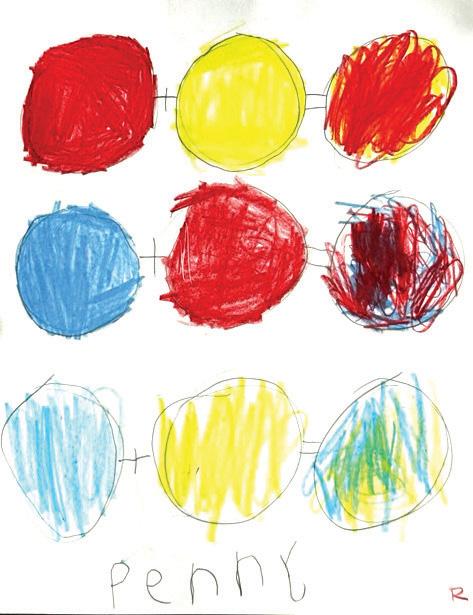
In our primary colors and sustainable paint project, Youngers discovered how the three primary colors can be mixed together to create secondary colors like green, orange, and purple, which helped us understand how artists experiment and make decisions when creating artwork. We also learned about sustainable paint and how paint can be made from natural materials, which encouraged us to think critically about where art supplies come from and how we can create art in environmentally friendly ways.
Bridge (2)
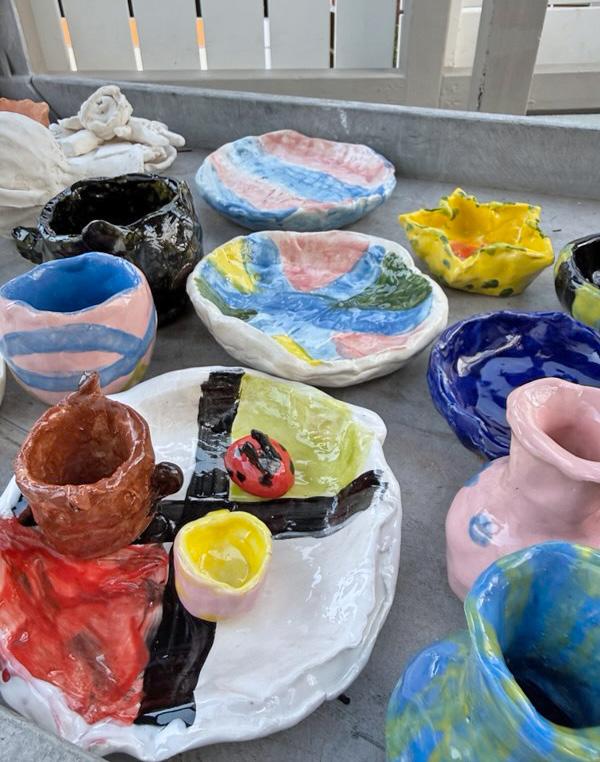
In ceramics class, Bridge used the pinchpot technique to make flower pots, which required patience and careful problem solving as students had to figure out how to shape the clay evenly without it collapsing or cracking. After glazing the pots, we prepared them for planting edible plants, connecting art with responsibility and real-world use.
Middles (3-4)
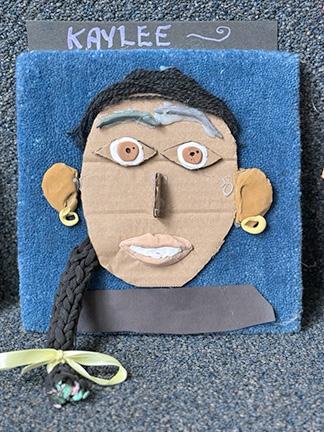
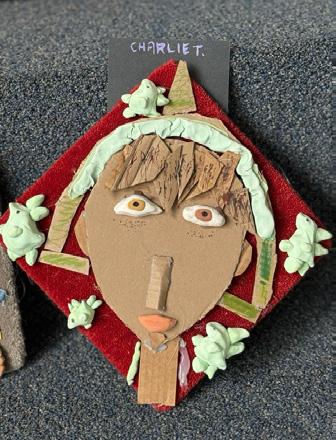
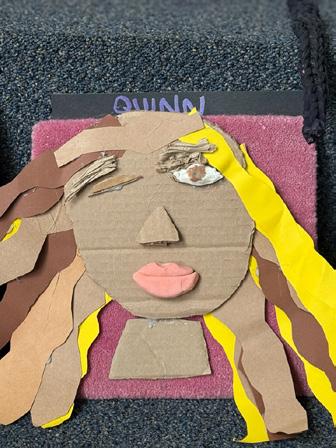
During our self-portrait collage project, we solved problems by finding creative ways to use recycled materials like cardboard, yarn, fabric, rug samples, egg cartons, and toilet paper rolls to represent our personalities and facial features. Each student had to think imaginatively about how different textures, shapes, and materials could work together to create a detailed and unique portrait.
Across all of the following examples, we learned that problem solving is an important part of the artistic process because artists must constantly make decisions, adapt ideas, and think creatively in order to turn their ideas into successful works of art.
Music
Olders (5-6)
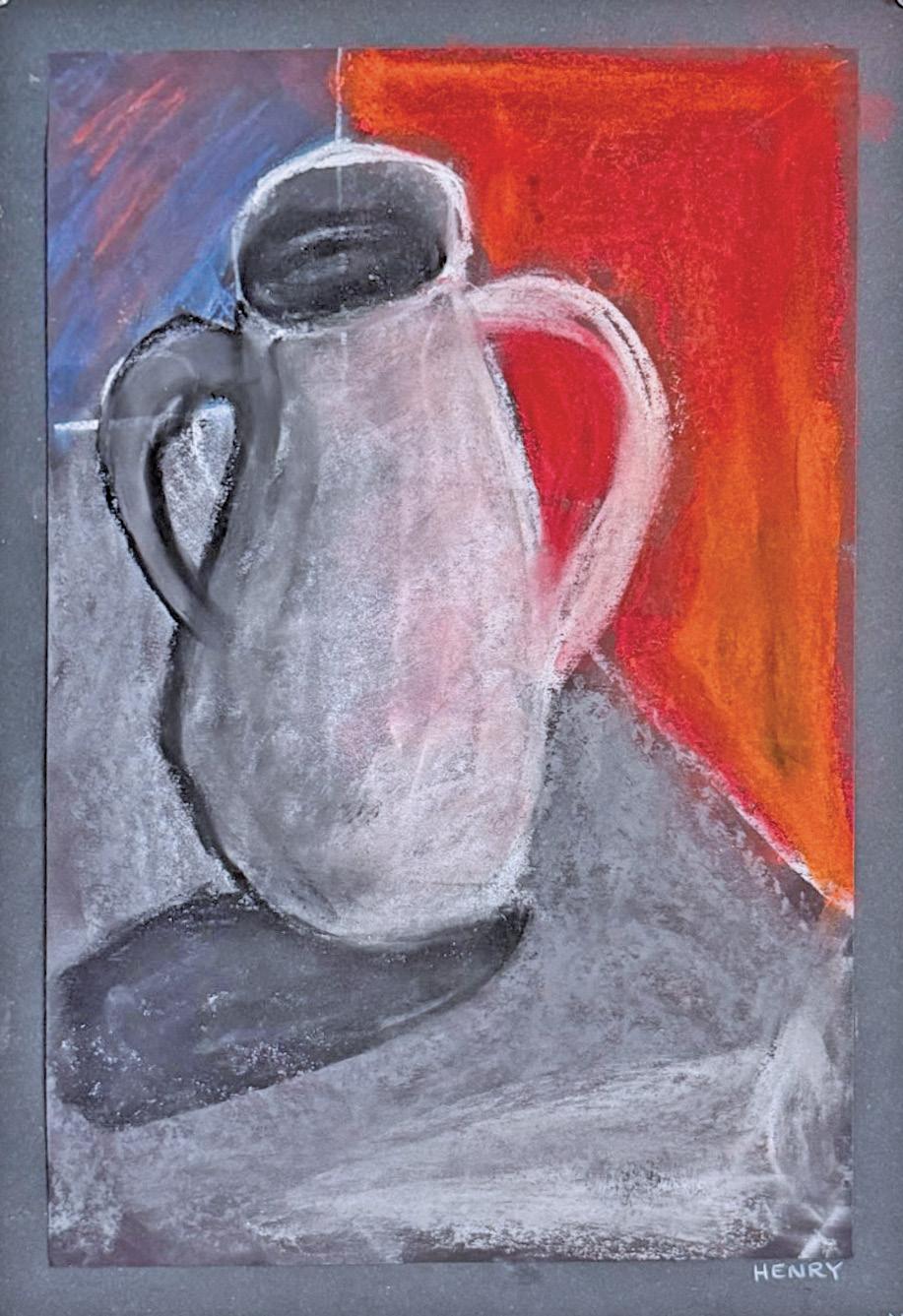
In our vases with depth and perspective project, we focused on understanding why artists use shading, tints, and shades to create the illusion of space and depth. We practiced manipulating light and shadow to make drawings appear as if they were popping off the paper, which required observation, experimentation, and persistence.
They collaborated, performed for one another, and refined their work, learning that even simple musical elements can be arranged in countless ways.
This semester in Music, students across all clusters engaged in creative problem-solving through composition, performance, and research.
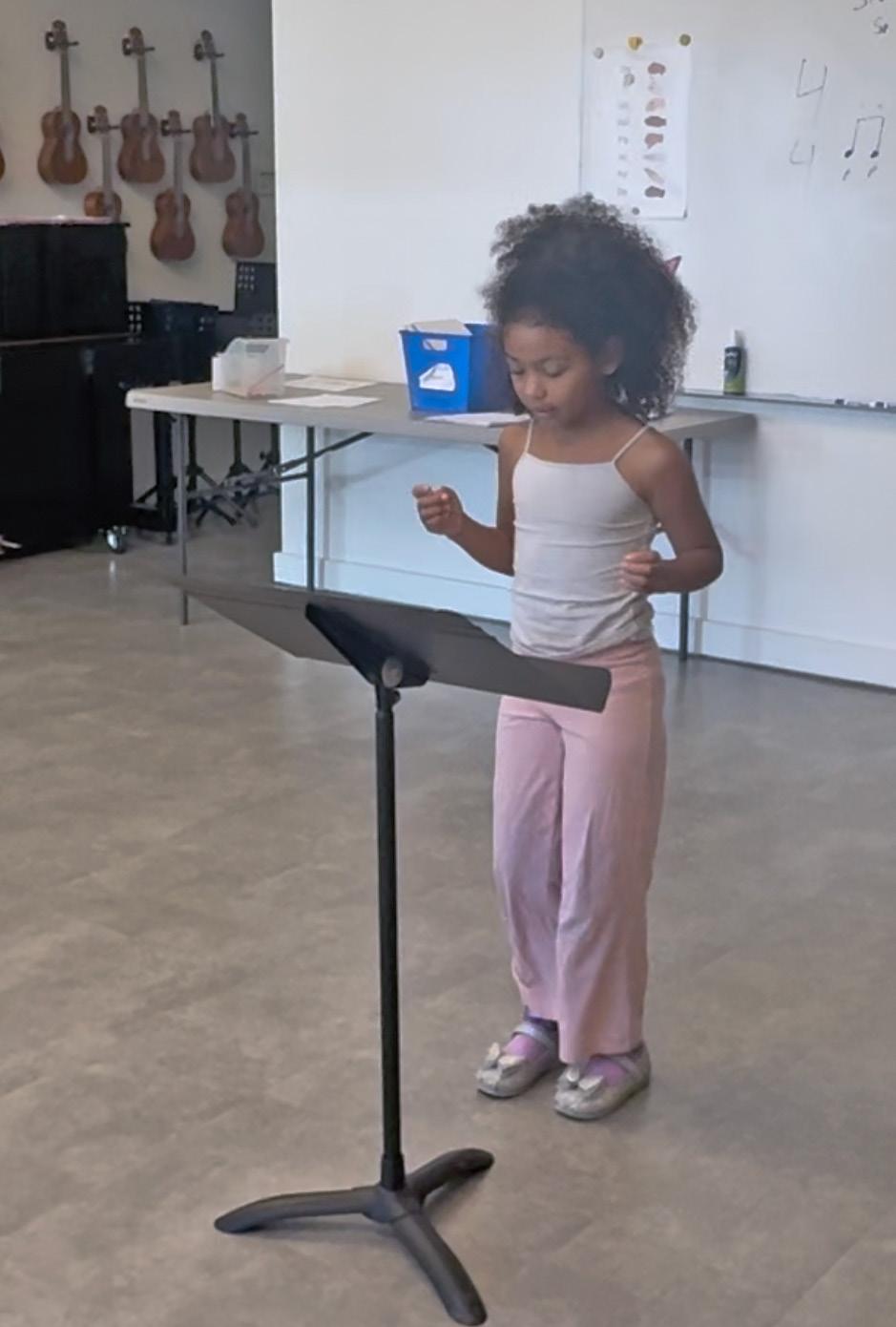
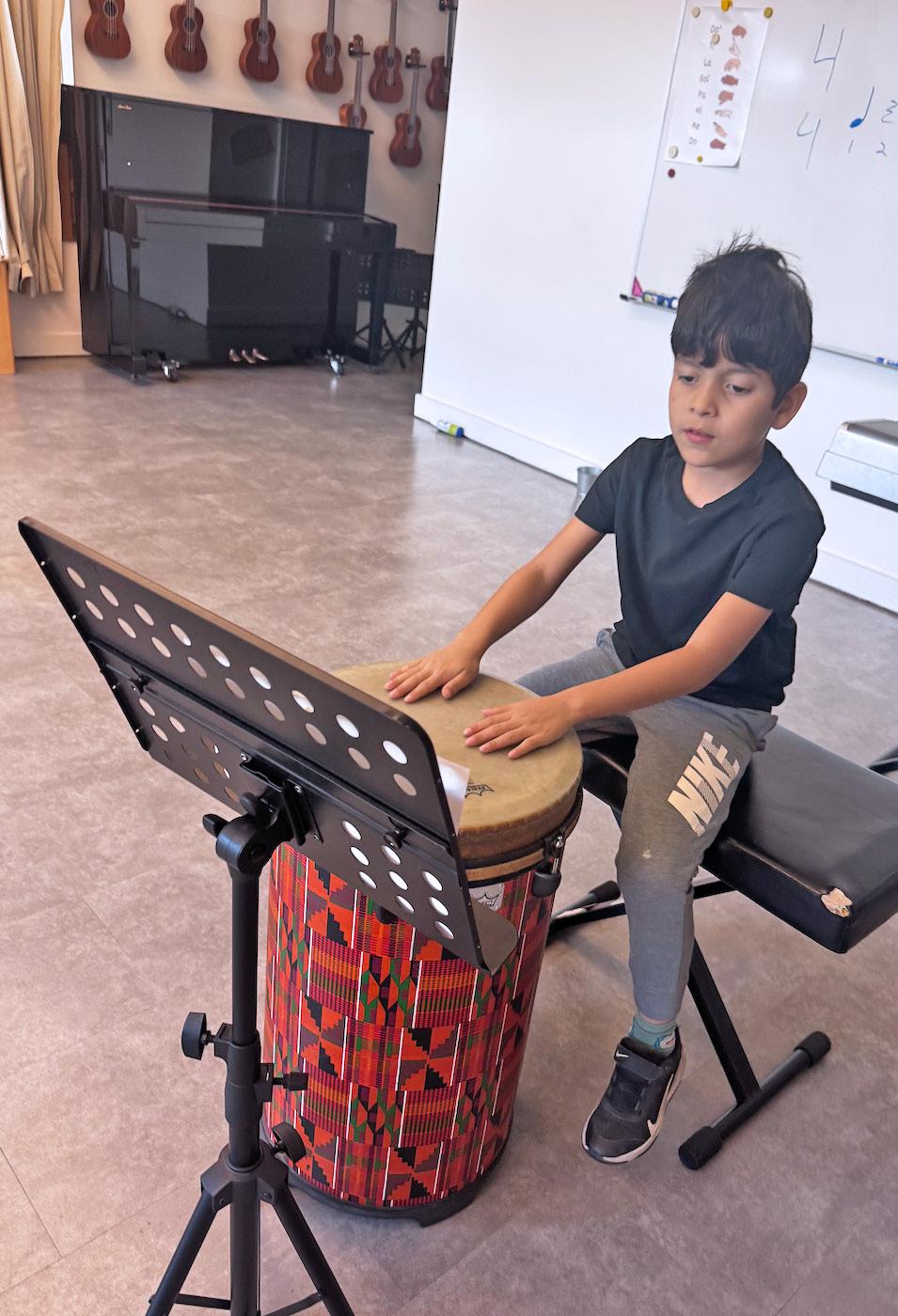
Our Youngers explored the “mystery” of how rhythm works by creating their own two-measure patterns using body percussion. Through clapping, tapping, and movement, students experimented with half notes, quarter notes, and eighth notes, discovering how different combinations create unique rhythmic ideas. They collaborated, performed for one another, and refined their work, learning that even simple musical elements can be arranged in countless ways.
In Bridge and Middles, students took on the complex challenge of bringing Madagascar Jr. to life. From learning lines and choreography to navigating staging, timing, and collaboration, the production required students to think critically and adapt in real time. They worked together to solve problems both on and off the stage, ultimately creating a cohesive and engaging performance for the community.
Our Olders stepped into the role of researchers, investigating composers of their choice. They explored each composer’s musical style, historical context, and lasting impact, synthesizing their findings into presentations. This process encouraged students to ask questions, make connections, and deepen their understanding of music as both an art form and a reflection of its time. Across all levels, students developed not only musical skills, but also confidence, curiosity, and a strong sense of collaboration.
CARISSA
Physical Education
In Physical Education, students took on the role of active learners, exploring movement and strategy beyond basic skill practice. They were encouraged to ask questions, try different approaches, and identify what worked best for themselves and their teams. Lessons emphasized developing balance, coordination, and control while engaging in partner and group challenges.
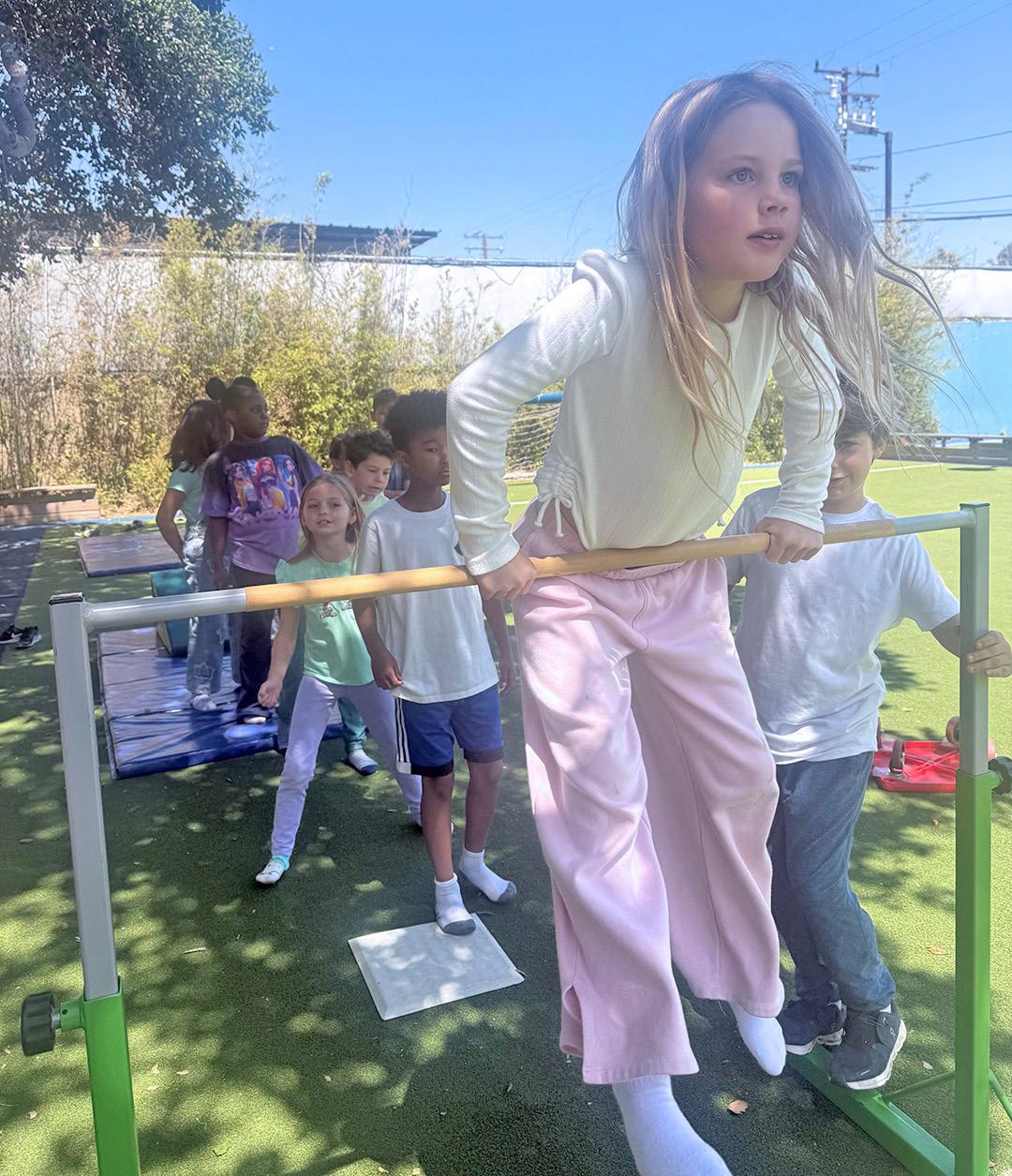
Through obstacle courses, cooperative activities, and skill-based games, students tested strategies, observed outcomes, and made adjustments. They practiced moving safely in shared spaces, controlling objects with greater accuracy, and linking movements together effectively, all while staying engaged.
Problem-solving played a key role in both teamwork and social development. Students worked together to complete challenges, exchange ideas, and support one another in reaching shared goals. These experiences helped with confidence, resilience, and independence while reinforcing that learning often comes through trial and adjustment.
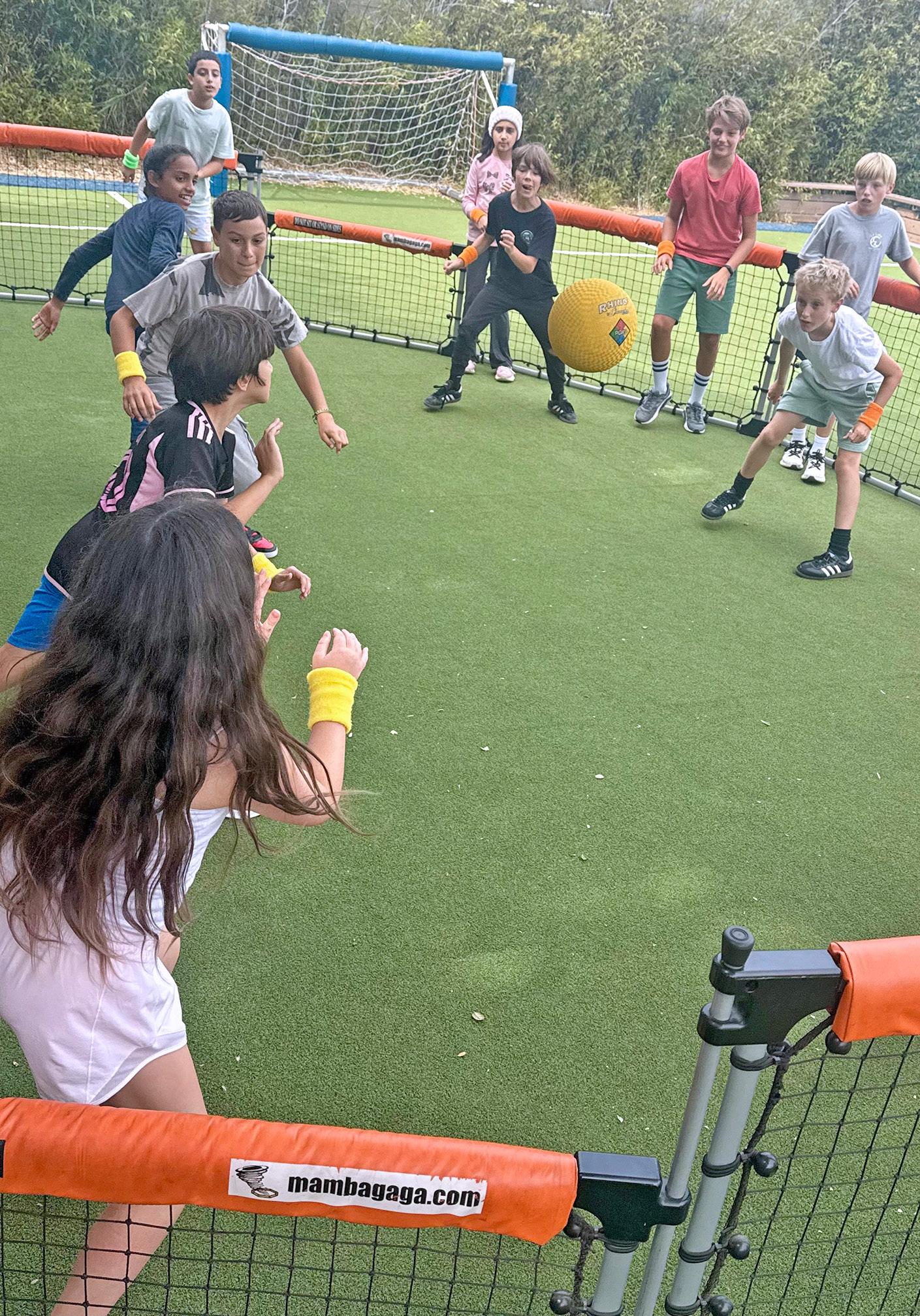
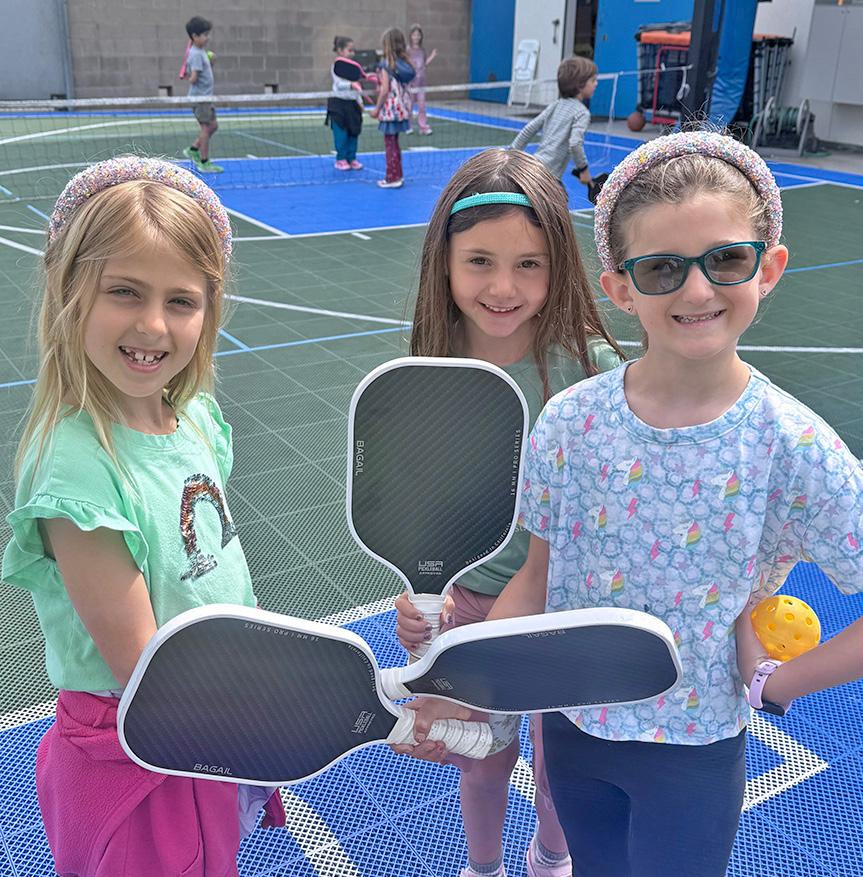
In many of our units, such as striking and net games, we focused on positioning, timing, and control. Students learned to make quick decisions in order to improve performance. Throughout the year, they developed not only physical skills but also critical thinking, perseverance, and collaboration skills. By approaching activities with curiosity, students grew into confident problem-solvers, making Physical Education a space for growth, both physically and socially.
In many of our units, such as striking and net games, we focused on positioning, timing, and control. Students learned to make quick decisions in order to improve performance.
PEDRO
This project not only reduced squirrel interference but also empowered students to see themselves as problem-solvers capable of improving their community through thoughtful design and collaboration.
Older students in The Studio took on a real-world campus problem using design thinking to guide their work: How might we keep squirrels out of the trash/recycling/compost bins after lunch?
Beginning with empathy, students observed lunchtime routines and identified patterns—no lids, an abundance of food waste, and sometimes lunch boxes and backpacks left on the ground— all contributing to the problem. They began brainstorming creative and practical solutions.
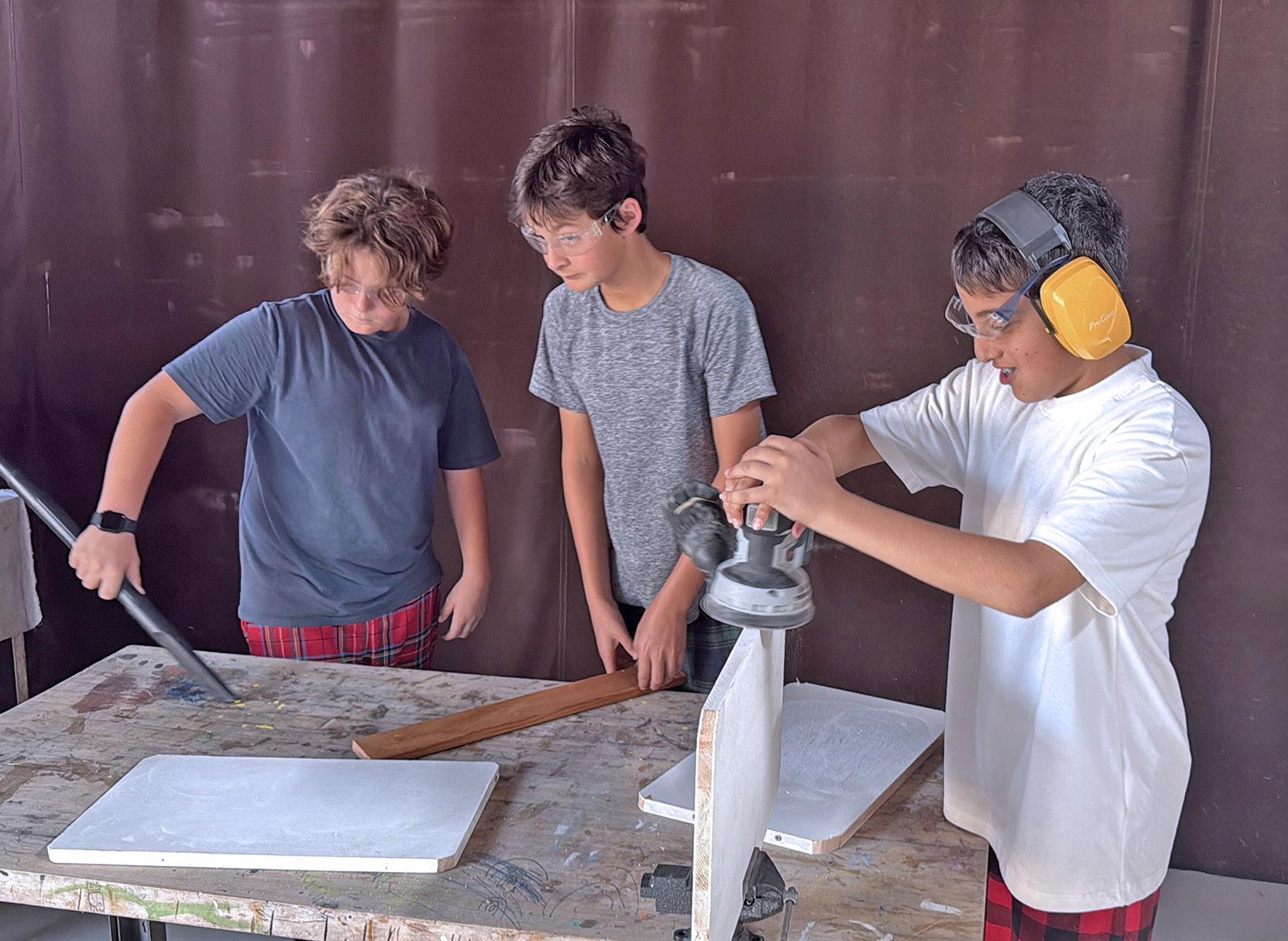
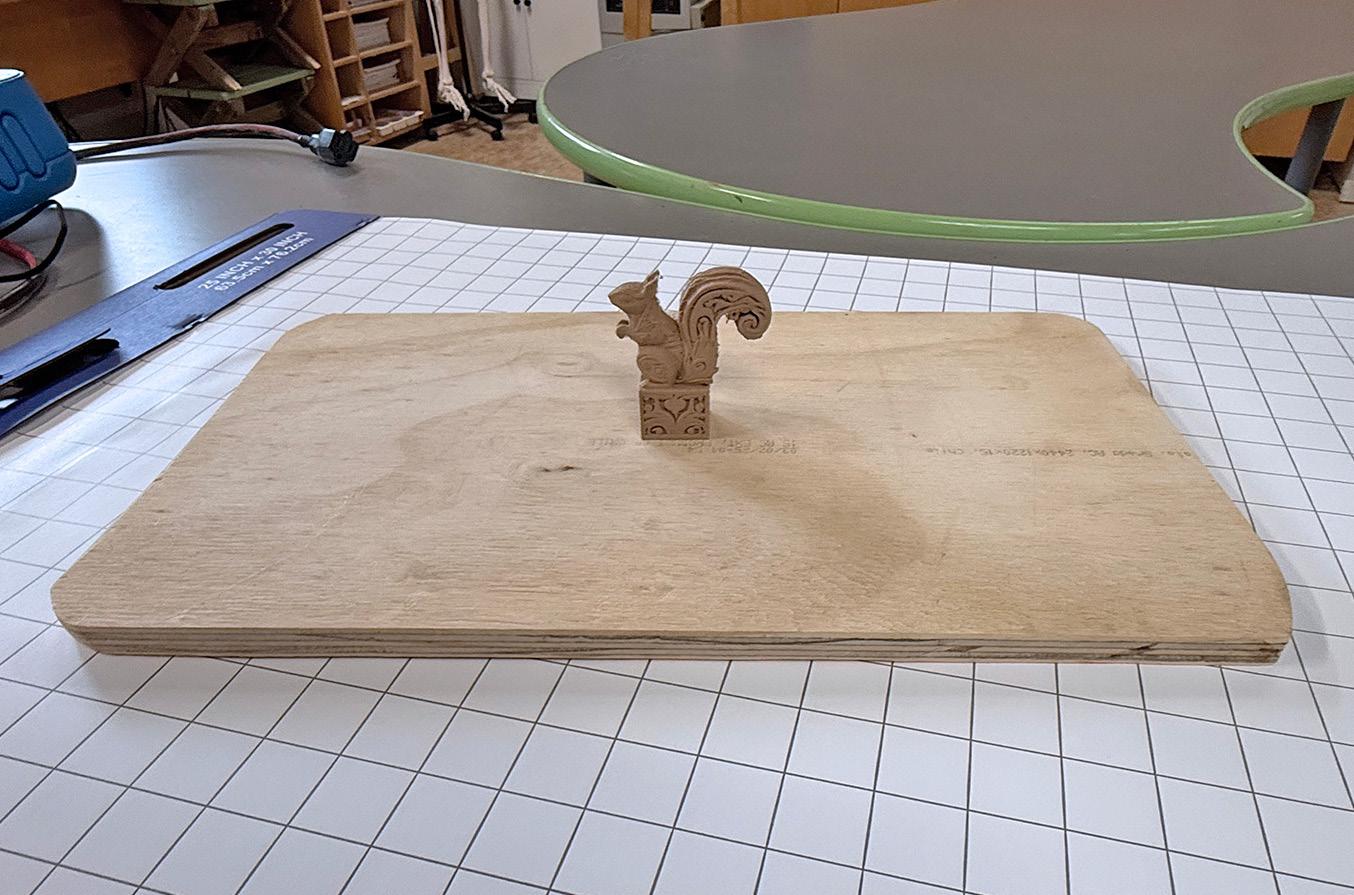
Through ideation, students discussed multiple ideas before selecting one key direction: building secure covers for trash/compost cans. In the prototyping phase, they experimented with different materials, hinges, and fastening systems to create lids that were easy for students to use but difficult for squirrels to access. They designed and installed simple, sturdy wood lids with fun 3D printed handles. This lid greatly reduced food exposure.
Testing and iteration were essential aspects of the process. Students refined their designs based on peer feedback and real use during lunch. This project not only reduced squirrel interference but also empowered students to see themselves as problem-solvers capable of improving their community through thoughtful design and collaboration. At the same time, they also learned about squirrels and how to keep them safe from eating human food.
The Studio CHRIS
Through interactive routines, songs, and hands-on experiences, students worked to decode meaning, uncover patterns in Spanish, and build understanding through context, repetition, and shared experiences.
SPECIALISTS
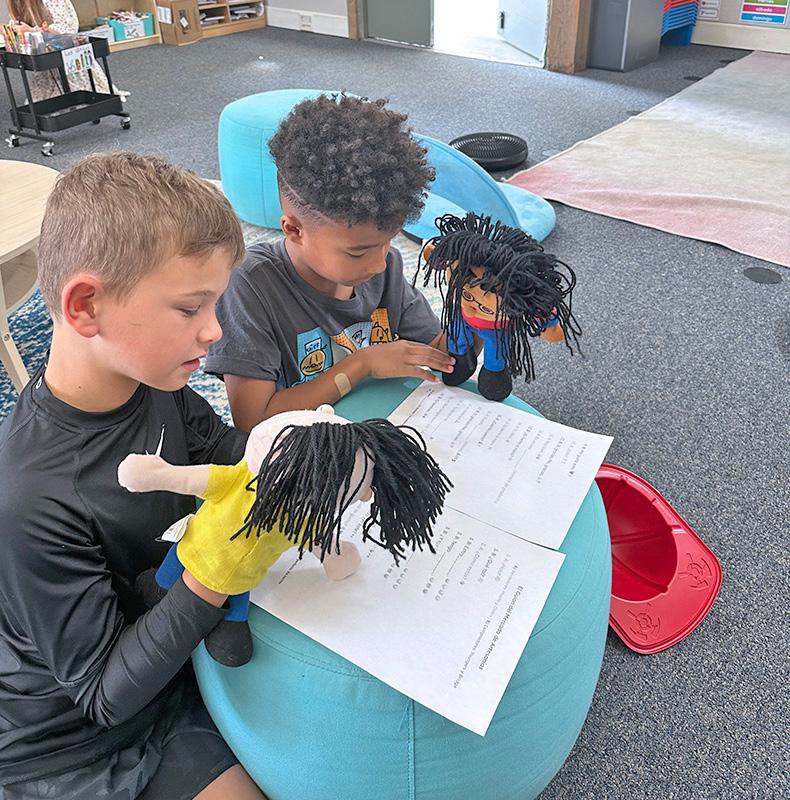
Across Spanish classes, students stepped into the role of investigators, using language as a tool to explore, question, and make meaning. Through interactive routines, songs, and handson experiences, students worked to decode meaning, uncover patterns in Spanish, and build understanding through context, repetition, and shared experiences.
Our Youngers and Bridge students engaged in discovery through movement, visuals, and guided inquiry—identifying familiar words, responding to questions, and making meaning from gestures, images, and language. Students frequently used a mix of Spanish and English (Spanglish) as they communicated ideas, prioritized comprehension, and built confidence as emerging speakers.
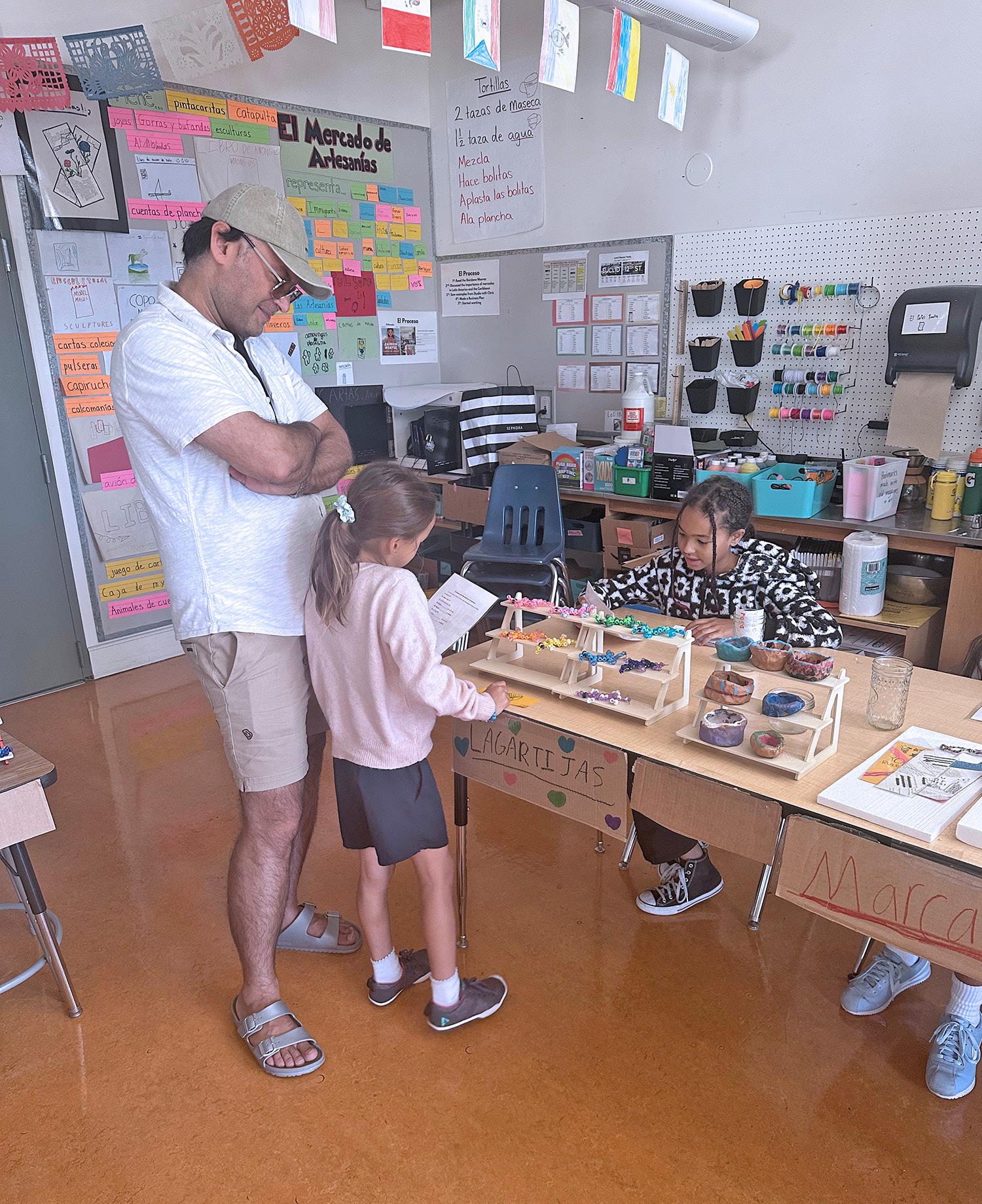
In Middles and Olders, students deepened their skills through collaborative, project-based experiences such as the Mercado de Artesanías and Feria de Celebraciones. They used Spanish and English to exchange information, describe products, and share cultural knowledge, often combining familiar vocabulary with new language to express their thinking. Students interpreted authentic resources, gathered information, and communicated ideas with increasing independence and flexibility.
Across all clusters, the focus remained on communication over perfection. Students were encouraged to take risks, use all their language resources, and prioritize expressing meaning rather than producing error-free speech—an approach that supports confidence, curiosity, and real-world language use.
Library
CHRISTINA
The
true mystery for this Librarian is the way these words and pictures resonate and sing to children—it is like watching magic at work.
Why? How? Where? What if? Why not?
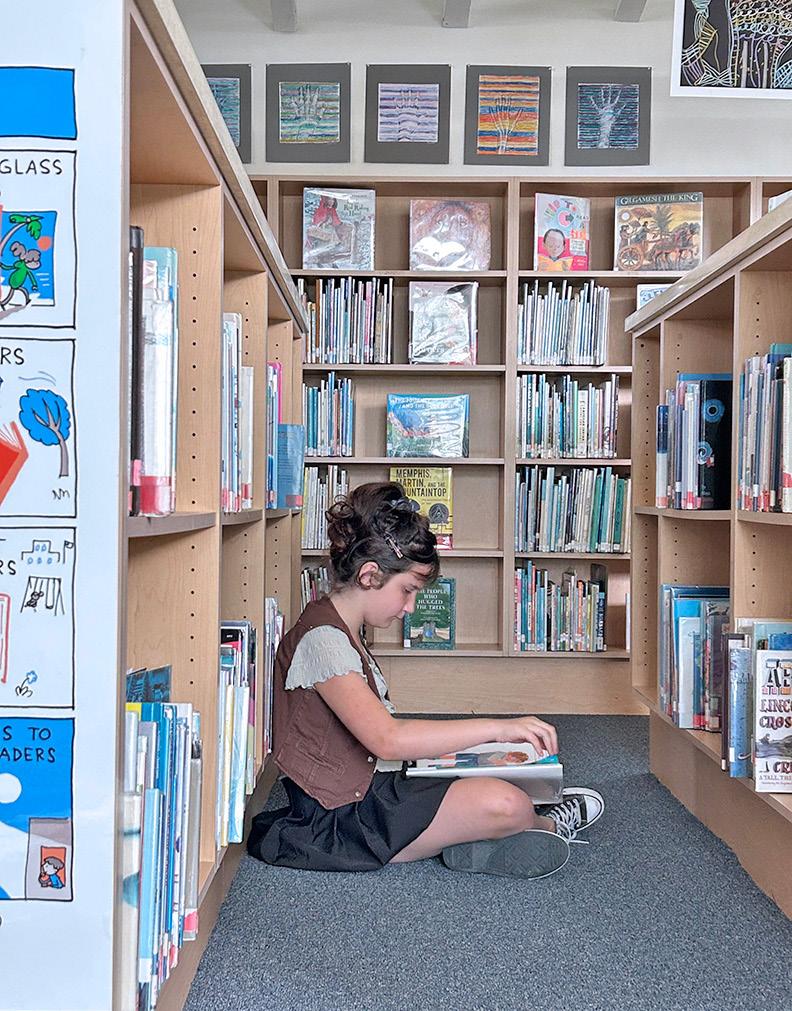
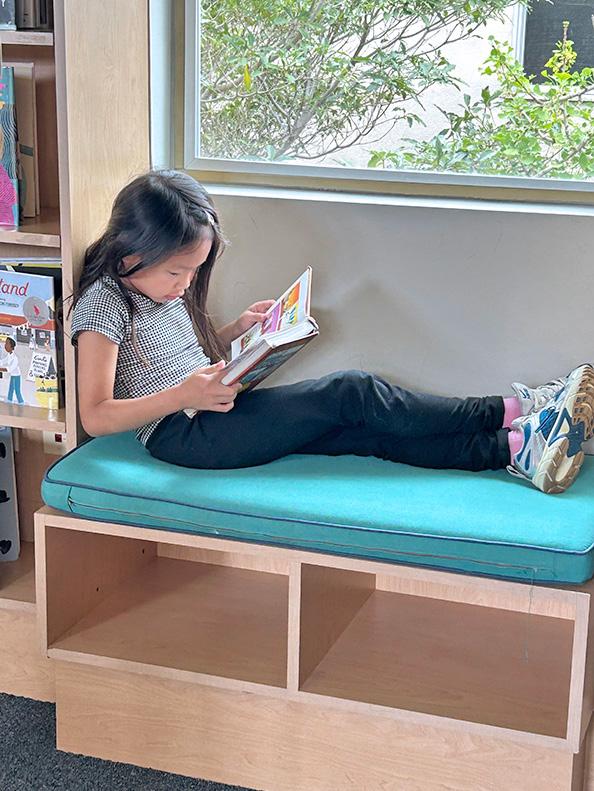
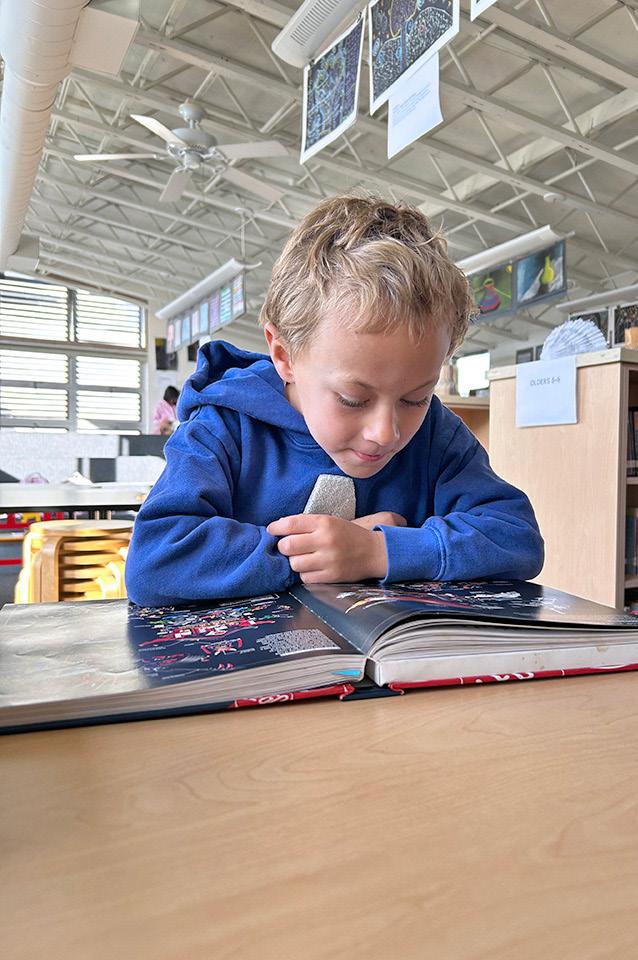
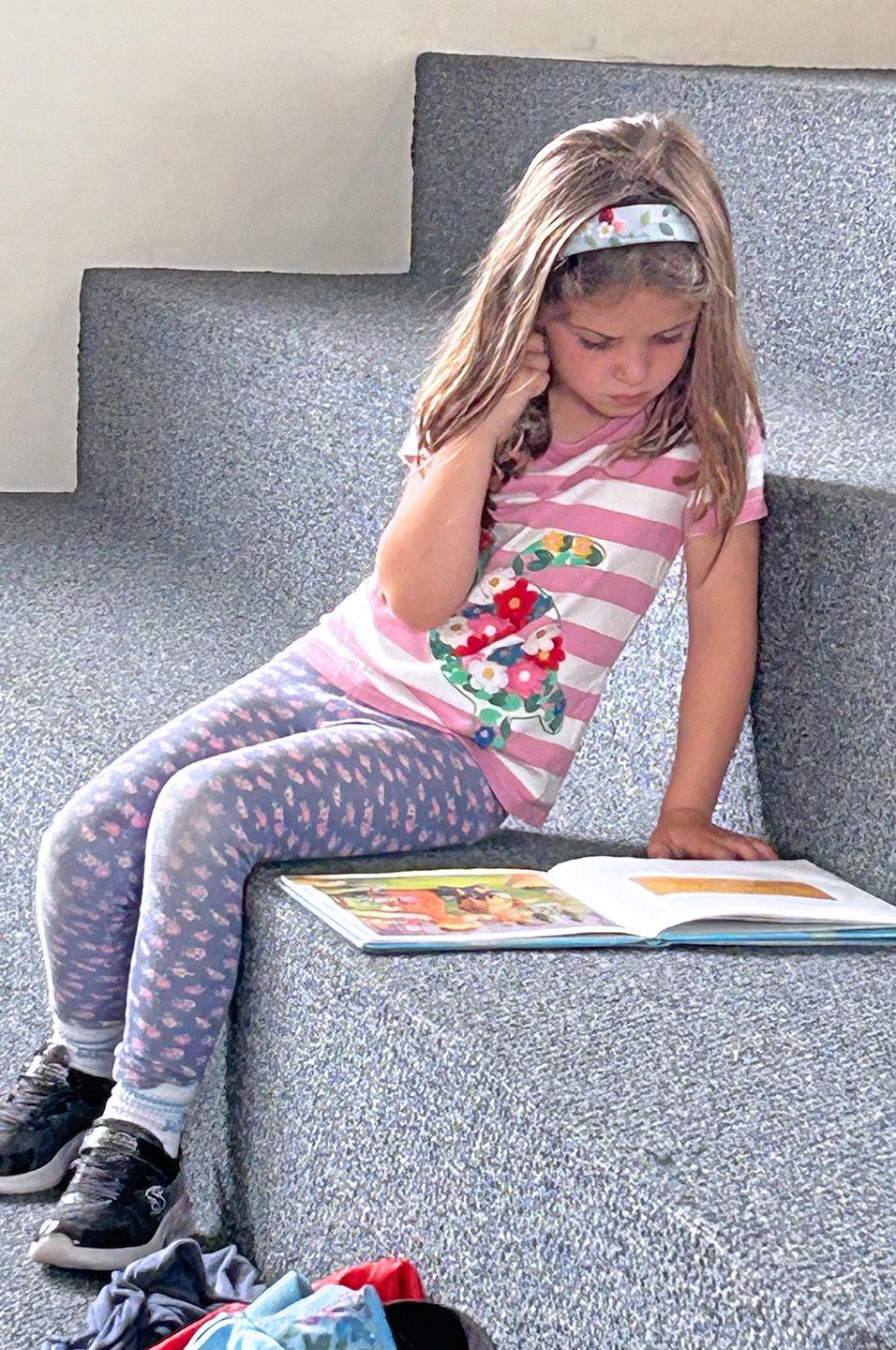
In the Library, there is storytime for all— Kindergarteners through Graduates. And, while we don’t exactly sit around a fire to put ourselves in Story Place, it does feel like we should be. The children are draped about on the Library Steps, comfortably and cozily, while we share poetry and stories of all kinds every week for the seven years they are students at PS1.
The true mystery for this Librarian is the way these words and pictures resonate and sing to children—it is like watching magic at work. But the magic can also be understood as the ways in which children are able to create meaning from Story Place. I see this as a collaboration between the book/poem/author/ illustrator, the listener, and the group of students. Oftentimes, a student will have noticed some detail from the text that brings clarity for many of the listeners.
Recently, we shared a book in the Middles in which a ten-year-old-girl is narrating the story of Mr. Bellavista and the summer her father was ten. The introductory text reads: Mr. Bellavista lived alone in the third floor apartment above my father and my grandmother. There was some discussion in the group about who just exactly was living with her father—his grandmother? But, one especially clever listener referred us all back to the text and the narrator, the 10-year-old girl. The girl’s grandmother, her father’s mother.
This collective understanding of important details is just one way of comprehending the text and creating meaning. The student-led discussion always involves predicting, questioning, clarifying, and summarizing as ways to come to a deeper love and appreciation for reading.
But the magic? The magic is everything.
Alumni Corner
Faculty Spotlight: John Waldman
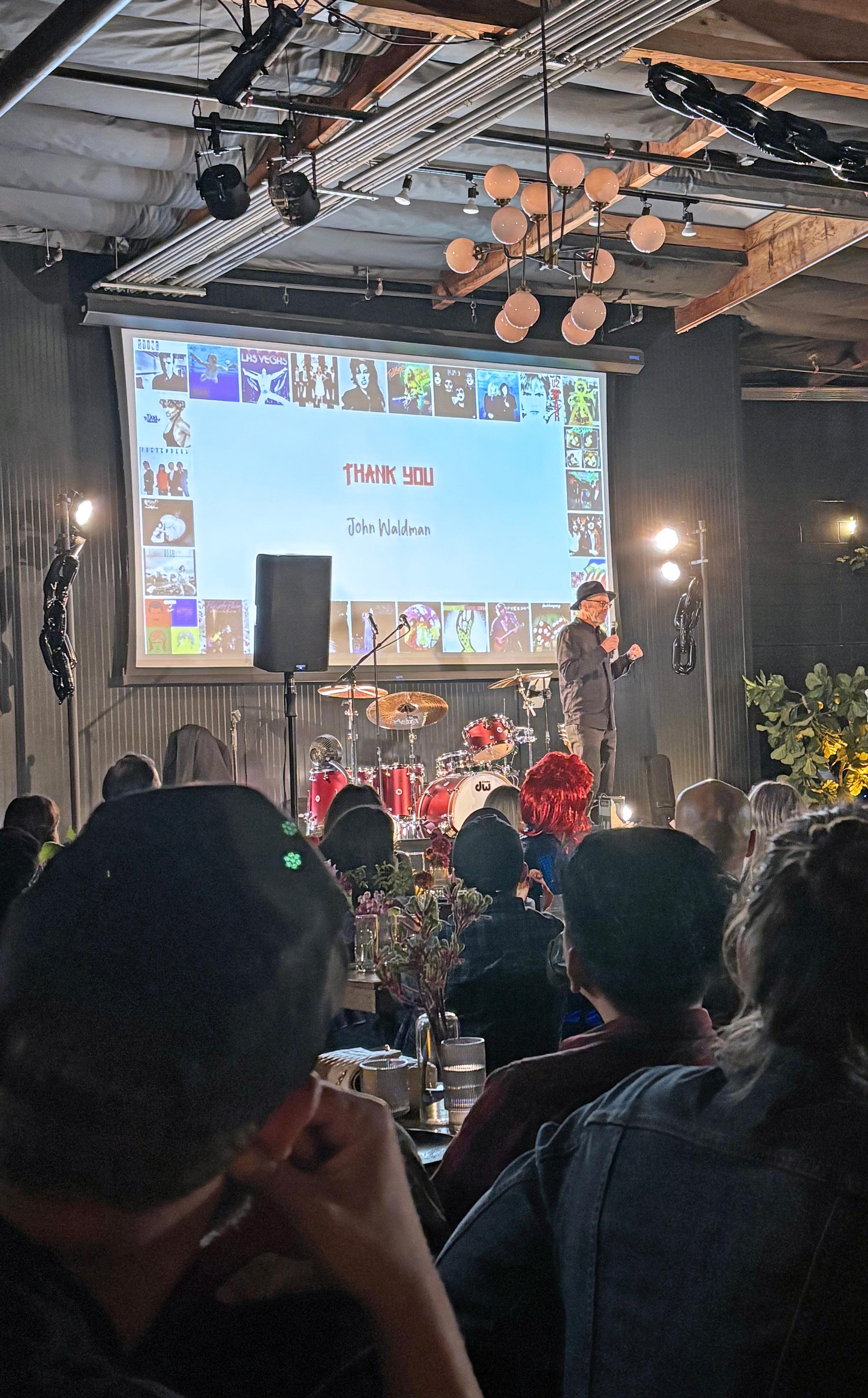
After 30 remarkable years at PS1, John Waldman will retire at the end of this school year, leaving behind a legacy that is deeply woven into the fabric of the school. A beloved teacher, poet, and colleague, John has been a constant and joyful presence, known for the care, curiosity, and intention he brings to each day.
Across three decades, John has inspired generations of students to find their voices, cultivating a love of poetry and a confidence in self-expression that extends far beyond the classroom. He has built lasting relationships with students, families, and colleagues, showing up not only as an educator, but as a thoughtful and engaged member of the community in every sense.
John’s impact is both profound and enduring. He embodies the spirit of PS1: a lifelong learner, a connector, and someone who finds meaning in the everyday moments that make a school community so special.
Class of 2020 Class Reunion
John’s Message to the PS1 Community:
Dear PS1 family,
Into my forty-second year as a teacher and in the process of completing my thirtieth year at PS1, I will be retiring at the end of this school year. As I hope you can imagine this was a difficult decision. To be part of this community for such a substantial amount of time has been extraordinary.
Not long after we met, my wife Elizabeth introduced me to her aunt Ellie Pelcyger and her step-uncle Joel Pelcyger. Four years later I began teaching here. After our children Louis and Melina were born, not only did I get to drive to work with them each day, eventually I also got to teach them. Concurrently, Liz was an active member of the Parents’ Guild so for a while this was truly a family enterprise.
Now Louis is twenty-seven and living in Pasadena and engaged in all sorts of creative pursuits, and Melina is twenty-four and a high school math teacher in the Bronx. I will be joining Liz in retirement. Part of our shared good fortune is PS1.
In the meantime I am extremely excited for each day of this final semester. Holly and I have much to offer our class and the other students on campus all the way through graduation and Moving Up Day in June and we will be doing this alongside an unparalleled staff and you, the school’s tremendous families. Thank you for bringing such joy to my life.
With love and gratitude, John
Alums from the Class of 2020 shared memories, reminisced with teachers and staff, and brought news of their upcoming adventures as they move on to colleges and universities around the country including Williams College, Wellesley College, University of Michigan, University of Wisconsin-Madison, Tufts University, Barnard College at Columbia University, University of Colorado-Boulder, New York University, and Tulane University. We can’t wait to see what the future holds for them!
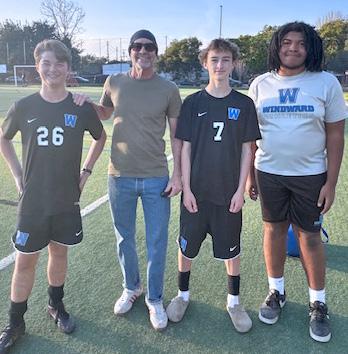
When Windward and Crossroads played a game at a local park, PS1 teacher John Waldman didn’t miss the chance to join the crowd to cheer on all of our alums. L-R, Fred Kemp, John Waldman, Ford Wilson, and Rhazes Spell (Class of ‘23)
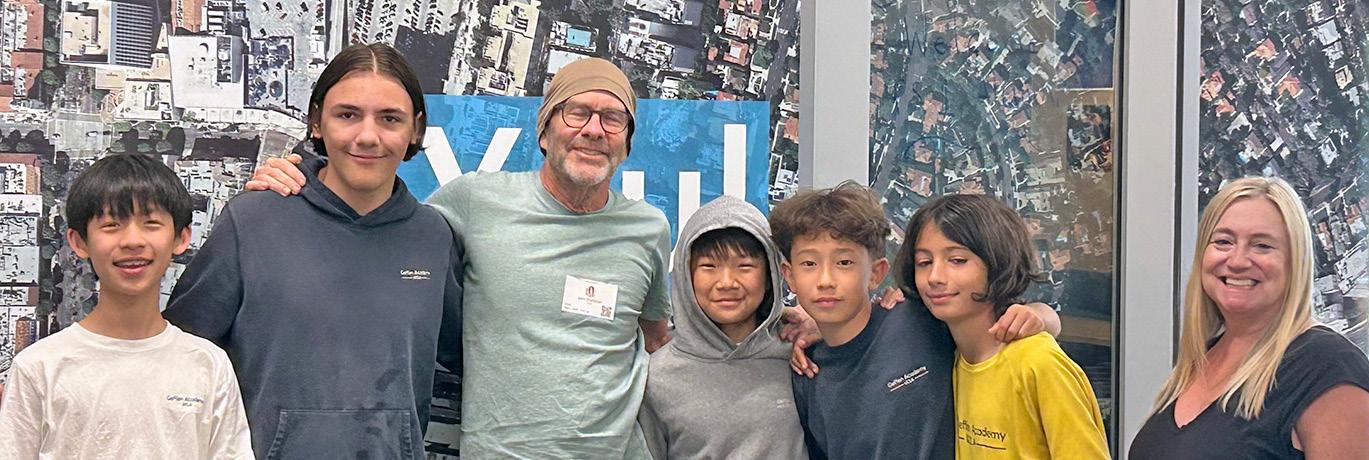
Tisa and John visited Geffen Academy where they caught up with PS1 alums.
Alumni Updates:
Aiden Lloyd, Class of 2001
Aidan wrote in and reflected on the lasting impact of his experience more than twenty years later, sharing that the joy, curiosity, and love of learning he developed at PS1 have stayed with him to this day. He remains close with many of his classmates and has followed the paths of his tight-knit class, noting how their shared foundation set them apart throughout their education. Now a parent himself, Aiden often speaks about how deeply those years shaped him and his hope that his own child will experience that same sense of enthusiasm for learning and connection.
Alexandra McCown (1995-2002)
Alexandra continued on to Crossroads and later Parsons/The New School in New York City, where she graduated with honors and earned a place on the Dean’s List. She is now an entrepreneur, owning three natural wine bars, a wine shop, and a French restaurant in Brooklyn. Alexandra credits her curiosity, love of learning, and adventurous spirit to her years at PS1, noting the lasting impact of her teachers and the school community on her family.
Elijah Kirkland-Cuffee, Class of 2007
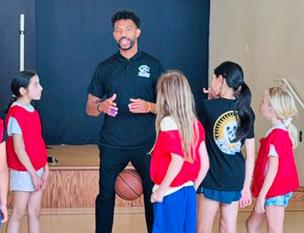
Elijah and PS1 collaborated to co-sponsor a girls basketball clinic at PS1 on May 9. He currently works as the girls varsity basketball coach at New Roads, and previously coached the JV girls basketball team at Milken.
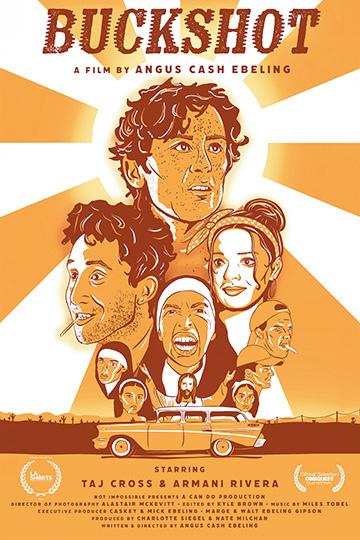
PS1 alums Charlotte Siegel and Angus Ebeling, (both Class of 2016), are collaborating on a new short film, Born to Be. Set in present-day New York City, the coming-of-age drama follows a Ukrainian immigrant navigating grief, identity, and belonging. The project builds on their previous work together, including Angus’s 2023 film BUCKSHOT, which screened at major festivals. Deeply personal in origin, the film explores themes of loss, connection, and self-discovery. Production began in April, and the team is currently fundraising to support the project.
Indie Bickle, Class of 2022
Windward student Indie Bickle earned national recognition at the 2026 Scholastic Art & Writing Awards, receiving both a Gold and Silver Medal for her photography. The Gold Medal, awarded to only 5–7% of submissions nationwide, honors exceptional technical skill, originality, and personal voice.
Nabil Rasromani, Class of 2024
Nabil attends Geffen Academy where he plays soccer and will be attending a World Cup game in July.
Joshua Hyun, Class of 2025
Joshua attends Geffen Academy where he plays golf.
Otto Inaba, Class of 2025
Otto attends Geffen Academy where he plays soccer, participates in track and plans to travel to Japan and Europe this summer. He also enjoys the food clubs offered at Geffen.
In January, PS1 alums Malia Dawkins and Inigo Smith, Class of 2025 participated on stage in Crossroads School’s production of Twisted Tales, with Class of 2023 alum Judah Krauss contributing backstage on the technical side. In the audience was fellow alum Eleanor Kemp, Class of 2025 who attends Windward.
Alumni Panel Q&A
Liam Seet, (2019–2025)
Liam attends Geffen Academy and participates in yearbook and track. He also produced a video about PS1 with classmate Micah Kim (‘26) that is featured on the homepage of PS1’s new website.
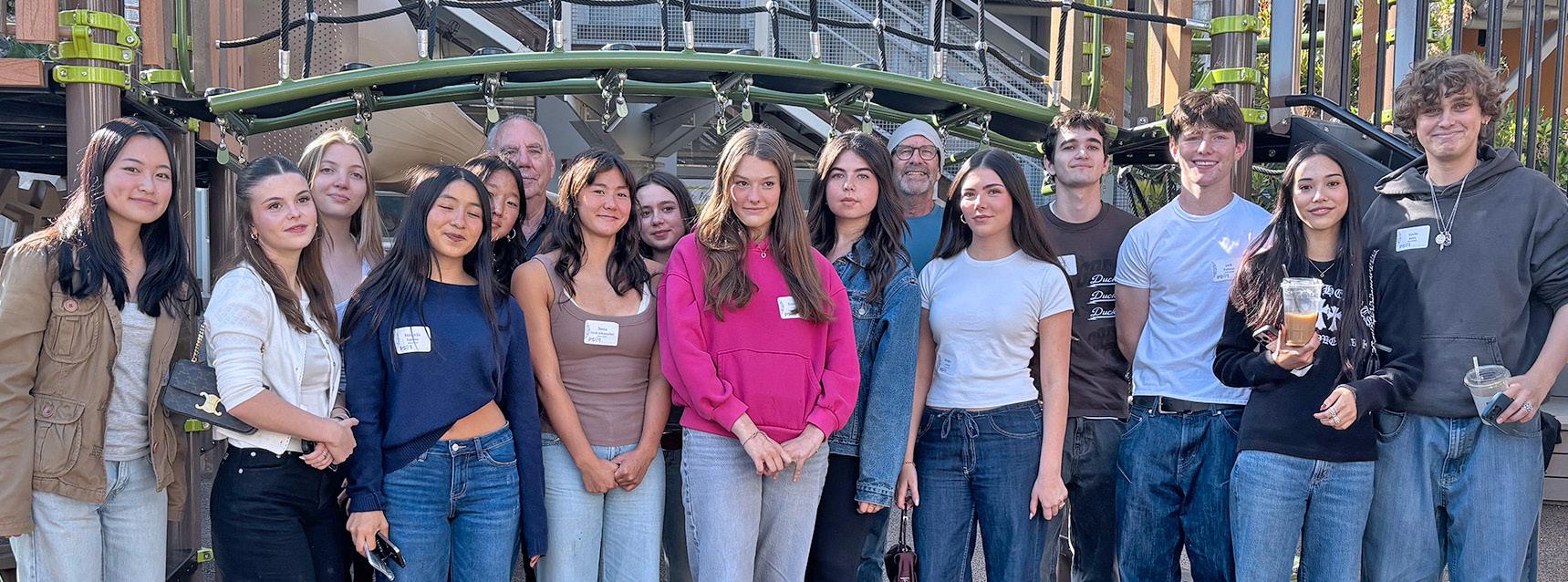
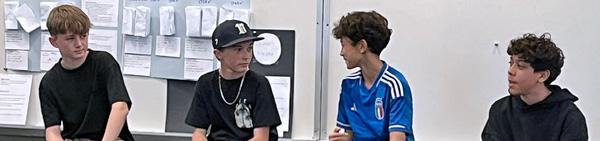
As part of our alumni visits, we ask for students to sit for a Q&A panel before they eat lunch with the Olders classes. Pictured is an alumni panel from the Friday before Spring Break (schools represented: Harvard Westlake, New Roads, Geffen Academy, and New West Charter School).
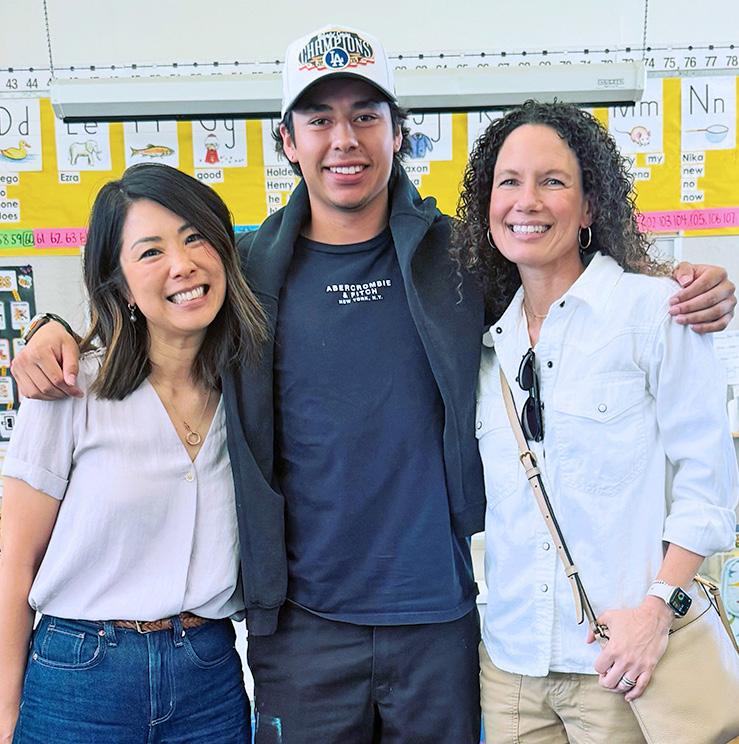
Aftercare teacher Justin Rodriguez, Class of ‘14 is pictured in his former classroom with his former Youngers teachers (Bonnie and Jennine)—18 years later. Jennine is now a middle school head at an independent school in New York City.