7 ASVO concludes search for new executive director
8 NZ Winegrowers launches May campaign with white wine emoji petition
10 Riverland Wine appoints new executive officer
11 South Aussie brand Y Series appointed official wine sponsor of NFL
12 Barossa Valley is the most affordable wine region in the world: report
13 Taylors Wines appoints new GM of sales following strategy pivot
GRAPEGROWING
16 GIN Virus detected in Australia for the first time
18 ANU PhD student awarded for vineyard pest research
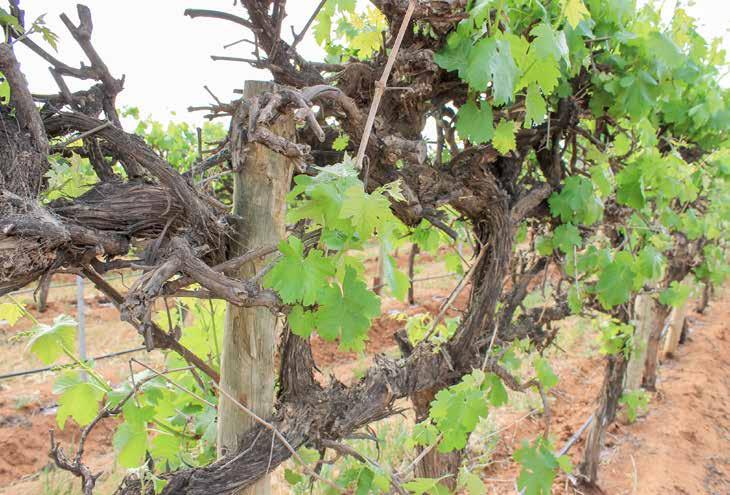
20 Post-harvest trellis checks: Fixing weak points before winter sets in
Why climate smart vineyards are the future
26 The oral history that supports the Busby origin of “Mount Pleasant” Pinot Noir
35 Filter nomenclature and production: what’s in a name?
41 VA – Where does it come from?
44 BEHIND THE TOP DROPS – Canobolas Wines Chardonnay
SPECIAL FEATURE: PACKWINE 2026
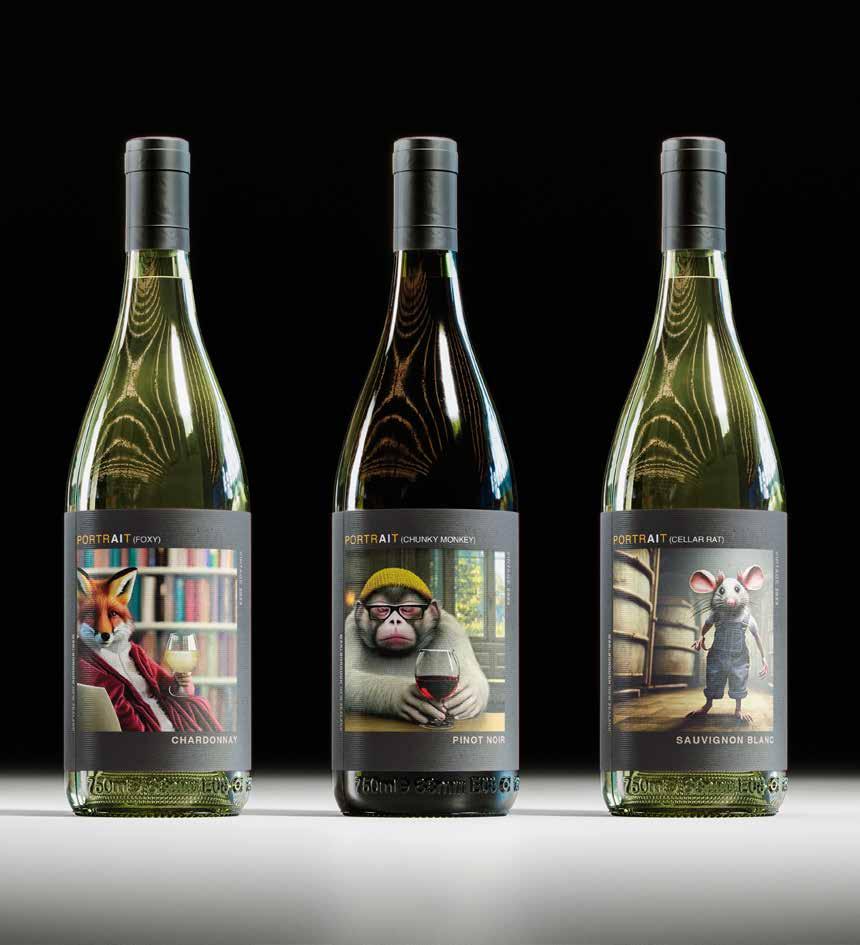
50 Wine packaging in 2026: How to design for growth when consumers are drinking less, and expecting more
58 The next evolution of wine packaging: How automation, data and flexibility are reshaping wine production systems
62 Packaging that will make your brand look good
65 Tradition weighs heavy, but this French flute is light
69 Orora working to maintain supply after UAE plant pause
70 Fixing wine’s traceability problem: Where NFTs meet packaging and supply chains
72 Getting closure: Navigating modern wine closures and capsules
BUSINESS & TECHNOLOGY
78 WA wine industry urges pause on “counterproductive” Container Deposit Scheme
80 Energy efficiency gains in vineyard and winery operations
82 TWE flags operational changes amidst company restructure
84 WISA farewells committee members and confirms 2026 leadership
SALES & MARKETING
85 Calabria unifies domestic distribution under House of Fine Wine
87 Why Canadian buyers are rediscovering Australian wine
GIN Virus detected in Australia for the first time
Vinehealth Australia issued a biosecurity alert in April to advise the grapegrowing industry that Grapevine Berry Inner Necrosis Virus (GIN Virus/GINV/ Trichovirus necroacini) has been detected in vineyards across Victoria, Queensland and South Australia.
The detections are the first time GIN Virus has been recorded and reported in Australia, however, Vinehealth Australia said that the virus is likely to have been present in Australia for some years. It is likely that the virus propagated and distributed in plant material across eastern Australia, therefore, Vinehealth concluded that eradication is not possible.
According to Vinehealth, during late 2025 and early 2026 the virus was detected in table grapevines and rootstocks that were diseased yet asymptomatic in grapegrowing regions within Victoria, Queensland and South Australia.
Asymptomatic mature grapevines samples from South Australian table grapes returned positive results to GIN
Virus in 2026. The extent of the virus spread is currently unknown.
Vinehealth Australia explained that some infected vines in Australia displayed restricted growth in spring, however, it is not possible to confirm if this was due to the virus or other contributing factors causing the reduced growth. As the season progresses, vines may grow out and appear normal. Asymptomatic infections also occur, meaning an infected vine may not show any visual symptoms of the virus.
“The disease is established in China and Japan where it is known to impact the health and productivity of sensitive varieties. Overseas experience has shown that symptoms vary across different varieties.
“Leaf symptoms have been recorded in some GIN Virus infected wine and table grapes and rootstocks, but asymptomatic infections also occur. Impacts on fruit production are only recorded in table grapes. Although some winegrape varieties may show leaf symptoms, it is unknown if GIN Virus will significantly impact fruit quality and yield or sensory differences on resulting wines.
“Visual symptoms can include delayed budburst, stunted growth, zig zag shoots and affected shoots may have internal necrosis. Leaves may be smaller and can show yellow blotches, mosaic-like patterns or small rings. Bunches may be more compact and unusually tight, berries may be smaller, ripen slowly, and have reduced grape quality including reduced sugar and acid balance. Berries
Filter nomenclature and production: what’s in a name?
By Paul K. Bowyer1 and Ivan Roletti2
Introduction
There are not too many people around who really get into the nitty gritty of filters and filtration. Filtration in general is often thought of as a necessary evil at worst and an annoyance at best. Crossflows have alleviated this in the cellars of wineries to a large extent, but there’s no getting away from the need to sterile filter most wine being produced today. The general filtration process in whatever form is aimed at reducing particulates (mainly for attractive visual clarity and a pleasant drinking experience) and microbial loading (for stability and cleanliness of the wine).
Few producers want to take the intrinsic risk of sending wine around the country and/or globe without this precaution, and consequently a very high percentage of wine is now sterile filtered.
But what does it mean for a wine to be sterile filtered? What is involved in this process? What are the filters being used in this process anyway? This article will delve into some aspects of filter production including nomenclature, materials, and construction methods in order to answer these questions.
Nomenclature
First things first. The terminology associated with different grades of filtration has been covered previously (Bowyer and Edwards, 2018; Bowyer, 2015) so we only summarise here.
Nominal-rated filters have no accountability to perform according to the number on the label. The stated porosity of a nominal filter can be viewed as approximate at best. Absolute rated filters are a step up in terms of filtration performance as pertaining to the indicated porosity. Typically, absolute rated filters perform to a level of being able to withhold 4999/5000 particles bigger than the stated porosity, referred to as a beta ratio of 5000. Note that the absolute efficiency (viz. performance) rating is tested using non-deformable particulates, such as sieved soil particles. Then we get to membranes, where the filtration efficiency is typically so high that beta ratios no longer suffice, and it becomes easier to move to the log scale, with efficiency being expressed as a log reduction value (LRV) of microorganisms, not soil particles.
2Product Manager Filtration AEB SpA, Via Vittorio Arici, 104 - S. Polo 25134 Brescia, Italy
Wine packaging in 2026
How to design for growth when consumers are drinking less, and expecting more
Founder and creative director of The Creative Method, Tony Ibbotson examines how wine packaging is being reshaped by tighter retail conditions, shifting consumption habits and growing export competition, arguing that clarity, emotional connection and system-led design will define the brands that win.
loudest labels, they’re the ones that remove hesitation fastest: clearer positioning, modern category cues, rightweighted packaging, format strategies that create occasions, and connected labels that turn compliance into trust (and trust into sales velocity). And that starts with a simple design truth: every category has markers of trust. Know what they are, use them well, and then break them deliberately –so you stand out for the right reasons.
Wine has always been good at romance. Vines on idyllic French rolling hills. Soil stories. Generations. A winemaker who can tell you what direction the wind was blowing when the fruit came in.
But romance on its own isn’t enough anymore. You need a distinct, emotive story, and you need clarity. Not just clarity in words – clarity in feeling. The best packs will create an instant emotional connection at shelf: nostalgia, joy, pride, even a hint of rebellion. That emotional “yes” is what makes someone pick you up in the first place.
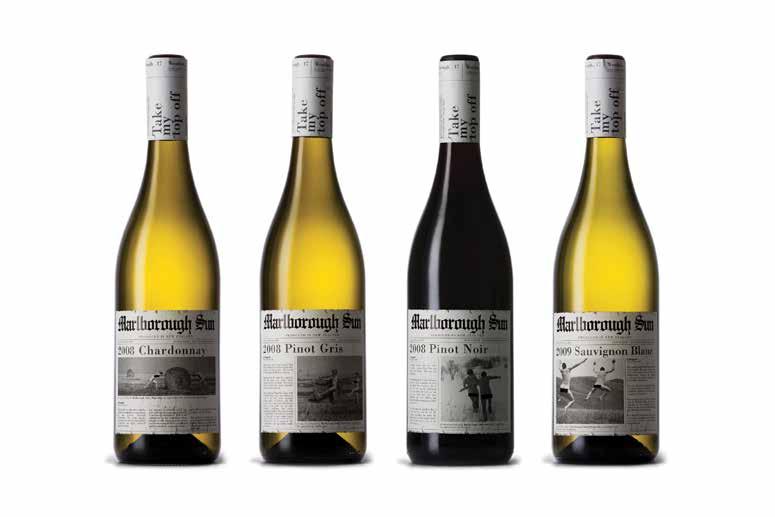
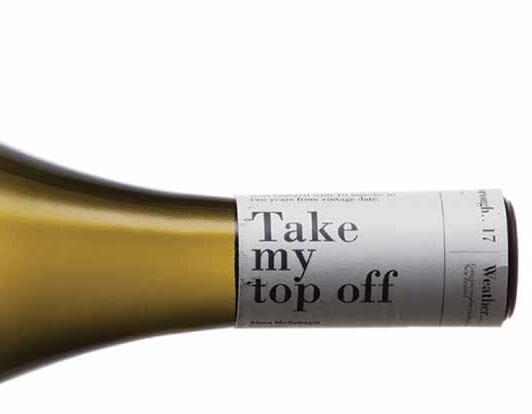
Marlborough Sun used wit and disruptive design to cut through and become the highest rated Sauvignon Blanc in Ukraine. There’s nothing much more disruptive than nudity.
WA wine industry urges pause on “counterproductive” Container Deposit Scheme
By Kyra Trussell
The Western Australian wine industry is calling on the state government to delay the introduction of the Container Deposit Scheme (CDS), claiming it will put “thousands of regional jobs at risk in what is widely considered the Australian wine industry’s most challenging time in history”.
The Friends of WA Wine group said that the CDS, which is due to be implemented on 1 July, will put WA producers “at a serious disadvantage” compared to those in other states where it is not scheduled to be introduced until 2027.
Participating consumers would receive a 10 cent refund for returning a wine bottle under the scheme, however,
Friends of WA Wine said that the Wine Equalisation Tax (WET) and GST combined with added administrative, logistics and labelling costs means that the actual cost to all wine buyers in WA is estimated to be between $1.15 and $1.25 per bottle.
WA wine critic and journalist Ray Jordan said that the math “simply does not add up” for the state’s array
of family winemakers and regionally based producers.
“Wineries are being asked to implement a policy that targets less than 1% of the state’s litter at an annual cost of up to $11 million to the industry.
“This is a solution that costs far more than it is worth, putting 4,000 regional jobs at risk for a mere 2% projected increase in glass recovery. And wine
Bottles & Bottling
Why Canadian buyers are rediscovering Australian wine
Canada is emerging as a bright spot for Australian wine, driven by sustained visitation programs with Canadian liquor board buyers and sommeliers, structural shifts in distribution and evolving consumer preferences. These efforts have strengthened buyer confidence and supported expanded listings, premiumisation and wider grocery distribution.
In the year to March 2026, exports to Canada rose 24 per cent in value to $188 million and 15 per cent in volume to 69 million litres, supported by growth in higher priced packaged wines and, in part, the removal of US products from shelves due to tariffs. While much of the growth has come from exporters already established in market, the number of Australian businesses exporting to Canada has increased to 220, reversing a previously declining trend, with producers reporting firm momentum, particularly in the >$20 premium segment.
As Mark Ramm of Angove Family Winemakers notes, market sentiment is strongly positive.
“Canada is a market with deep goodwill toward Australian producers and momentum is building. The opportunity is significant, and now is the right time to back it with sustained investment and on-the-ground presence.”
Building momentum
Alexia Roberts of The Randall Wine Group explained that the appeal of Australian wine is increasingly reputational.
“The consistent feedback is that Australian wines are dependable, well-made and over-deliver for their price. There’s a growing appreciation for authenticity, regional expression, sustainable practices and clear brand stories. Canadian consumers trust Australian wines and feel a connection to our culture, attitude and winemaking approach.”
While opportunities are growing, producers note that the market is increasingly ‘pay to play,’ with promotional activity, in-store visibility and consistent in-market presence essential to securing and retaining shelf space. Large retailers are becoming more price sensitive, even as premium wine continues to lead growth.
Wine Australia has highlighted the importance of sustained engagement to convert momentum into long-term gains.
“Canada is rewarding quality, authenticity and diversity; all areas where Australian producers excel,” explained Paul Turale, General Manager Market Development at Wine Australia. “The work we’ve done to connect directly with buyers and sommeliers is paying off, positioning Australia as a trusted and exciting choice in a competitive market.”
Producers agree that the combination of structural market change, stronger buyer relationships and compelling regional stories is positioning Australia for continued success in Canada. With sustained investment and consistency, Canada remains one of the strongest global opportunities for Australian wine.
More information can be found online at the Wine Australia Market Bulletin: www.wineaustralia.com/news/marketbulletin/issue-361