86 Newly refurbished cellar door opens in the Tamar Valley
BUSINESS & TECHNOLOGY
89 From boom to surplus – the Australian wine industry’s reckoning with a world drinking less
92 The grant is dead! Long live the WET?
SALES & MARKETING
96 Langtons announce Australia’s firstever Classification of International Wine
98 Wine Growth Summit facilitates sharing of international expertise with Aussie industry
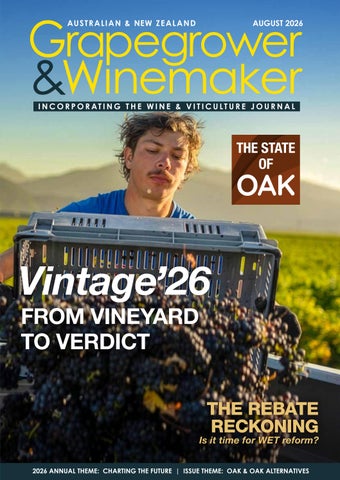
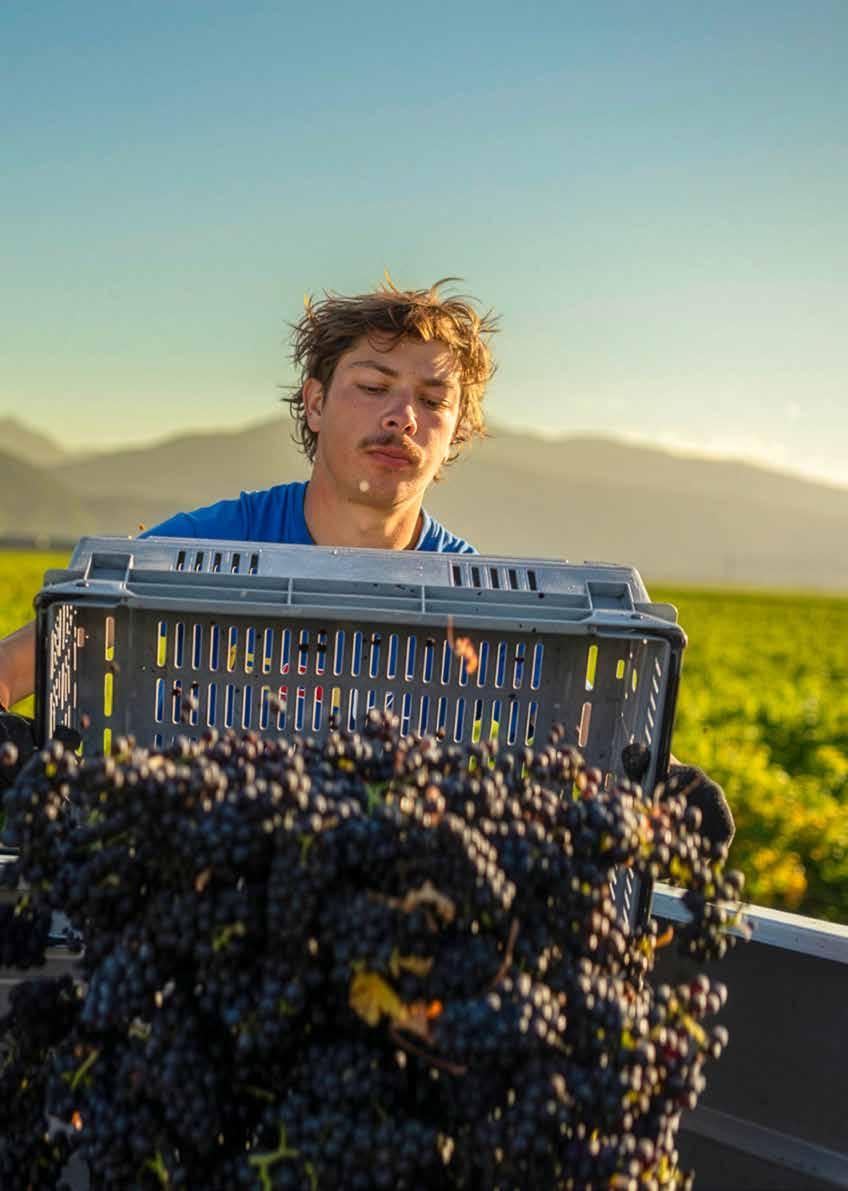
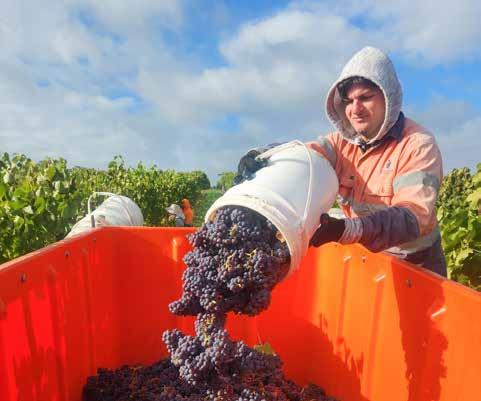
Cover: Vintage worker Corentin Viellefond at Clos Henri in Marlborough, New Zealand. Image credit Thomas Lugo
Russell Andrew Cook
13 November 1960 - 2 April 2026
A legacy worth preserving
Wine writer Mark Smith reflects on the late Russell ‘Rusty’ Cook’s stewardship of Providence Vineyard, where his commitment to preserving Tasmania’s oldest vineyard was matched by an unwavering determination to secure its future.
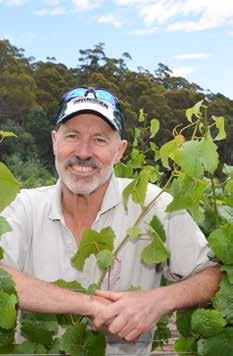
Russell ‘Rusty’ Cook knew he would need to walk a fine line between preserving Jean Miguet’s wine legacy and operating Providence Vineyard as a viable commercial business proposition. But taking ownership of Tasmania’s oldest vineyard in late 2018 was something the former Margaret River winemaker said he just had to do.
Long-time friend and property owner Stuart Bryce was then 73 and battling his third bout of cancer. The added opportunity for Cook to end his career with a significant heritage project proved irresistible.
The 4ha site at Lalla – outside Lilydale, in the State’s North East – is widely recognised as the birthplace of the modern Tasmanian wine industry. Seventy years ago this spring.
Significantly cooler than today’s Piccadilly Valley (MJT 20.4°C; 1730 GDD)1 and the Macedon Ranges (MJT 19.9°C; 1365 GDD)2, its protracted
growing and ripening seasons (MJT 17.8°C; 1096 GDD)3 would have been entirely at odds with a 1950s Australian wine industry dominated by Spanish⁴ rather than French varieties.
“I’m sure vineyard founders Jean Miguet and his wife Cecile didn’t set out to become wine pioneers,” Cook remarked.
“What they attempted in the ‘50s and ‘60s and ‘70s – and what they achieved – is absolutely fascinating and amazing. There’s a lot the Miguets really don’t get credit for doing. It was pretty heroic stuff.”
That noted, the Roseworthy College graduate knew his own viticultural skills would be sorely tested by this new custodial role. Cook had worked in Tasmania before. Back in 1997, he’d arrived in Launceston to become general manager and winemaker of the Heemskerk Wine Group, then owned by prominent local businessman, Josef Chromy.
“Providence soils would bog a duck,” Cook later asserted.
Marked seasonal variability is a key feature. Total annual rainfall in the district can fall below 800mm one year (2006) and exceed 1200mm (2016) a decade later.4 Recent figures show totals oscillating between 640mm and 1040mm.⁵
Heemskerk’s 1997 production base was located in the Tamar Valley, 40km from Lalla. It wasn’t long before Cook and Bryce crossed paths and formed the close personal bonds that spanned almost three decades.
Both became committee members of the Vineyards Association of Tasmania, with Bryce subsequently steering the industry body until 2006.
“After I moved back to Melbourne from WA, I used to come down to help prune. It was fantastic. Stuart’s ownership began in 1980. He’d even got to know
The state of oak in 2026
The evolving role of oak in Australian winemaking
Oak remains one of winemaking’s most influential tools, but its role is undergoing significant refinement. Producers are looking beyond simple flavour contribution to consider structure, texture, oxygen management, sustainability and economic realities. Grapegrower & Winemaker examines where oak currently sits in Australian winemaking and where it may be heading next.
For generations of winemakers, oak has been inseparable from the language of premium wine. The aromas of vanilla, spice, cedar and toast associated with barrel maturation have become deeply embedded in consumer expectations and winemaking tradition alike.
Yet modern discussions about oak are increasingly less about flavour alone.
The contemporary winemaker is not simply asking whether a wine should see oak. The more important questions are becoming: what type of oak, in what format, for how long, and for what purpose?
The answers are rarely straightforward. Oak remains a remarkably complex winemaking tool because its contribution extends well beyond the transfer of aromatic compounds from wood to wine. A barrel is simultaneously a vessel, a maturation environment, a source of extractable wood-derived compounds and a means of facilitating gradual oxygen exposure. The interaction between wood, wine and time is one of the most sophisticated processes in the cellar.
For Australian producers in particular, these decisions carry particular significance. The country’s wine industry operates across a vast range of climates, varieties and production models. A Barossa Valley Shiraz producer, a Margaret River Cabernet producer and a Tasmanian Chardonnay producer may all rely on oak, but the objectives behind that use can be entirely different.
Australian producers have often approached oak pragmatically. Maturation practices have evolved according to wine style, market expectations and production realities rather than adherence to a single model.
Today, that same practical mindset is shaping the next stage of oak use.
The conversation is moving away from the old binary choice between ‘oak-driven’ and ‘unoaked’ styles. Instead, producers are increasingly focused on precision: selecting the maturation pathway that best preserves fruit character, builds structure and reflects regional identity.
of quality and ambition. Premium red wines, particularly Cabernet Sauvignon and Shiraz, were frequently defined by significant barrel influence. Many Australian Chardonnay styles of the 1980s and 1990s also embraced substantial oak characters, with barrel fermentation and new French oak becoming closely associated with prestige.
Consumer preferences, viticultural improvements and greater winemaking understanding have since shifted the conversation.
The contemporary winemaker is not simply asking whether a wine should see oak. The more important questions are becoming: what type of oak, in what format, for how long, and for what purpose?
The pendulum has moved from oak as a dominant sensory feature towards oak as an integrating component. Many contemporary Australian wines seek greater transparency of fruit, regional expression and textural complexity, with wood playing a supporting rather than leading role.
This does not represent a decline in the importance of oak. Rather, it reflects a more sophisticated understanding of its use.
A well-managed barrel program can contribute considerably to wine quality. It can influence tannin perception, mouthfeel, aromatic complexity and ageing potential. However, excessive or poorly matched oak can obscure varietal character and regional identity.
The challenge for modern winemakers is therefore not whether oak matters, but how to use it with greater precision.
A
long relationship with wood
Australia’s relationship with oak has evolved considerably over the past century.
In the early modern era of Australian fine wine production, generous use of new oak was often regarded as a marker
What does a barrel actually contribute?
One of the enduring misconceptions about oak is that its primary function is to add flavour.
While flavour compounds are certainly important, the role of a barrel is considerably broader.
Design
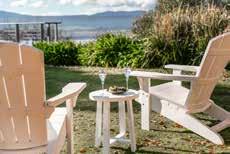
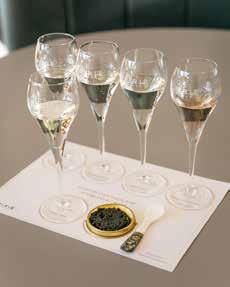
Newly refurbished cellar door opens in the Tamar Valley
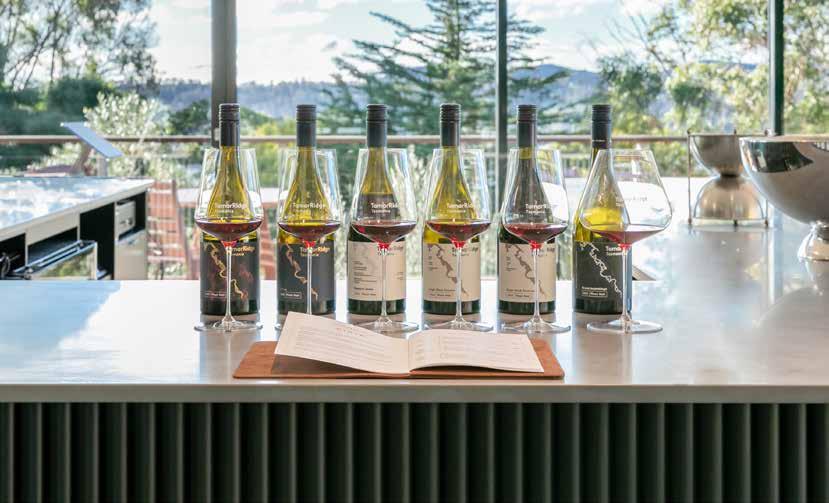
Tasmanian wine estates Tamar Ridge and Pirie have unveiled a freshly refurbished cellar door in the Tamar Valley.
Located 20 minutes north of Launceston, the cellar door has been designed “to reflect the quality and craftsmanship synonymous with both brands,” which form part of the Brown Family Wines portfolio.
Completed in just eight weeks by local builder Zanetto, the brands say the transformation “introduces a refined contemporary interior”, including “a striking double-sided fireplace” and “bespoke Spiegelau crystal glassware”.
Luxury portfolio manager Katherine Brown said the new cellar door reflects the evolution of both brands while remaining true to their Tasmanian roots.
“It’s incredibly exciting to welcome guests to a true brand home for Tamar Ridge and Pirie that reflects the quality, prestige and character of our wines.
“Set high above the Tamar River, the cellar door enjoys one of the region’s most spectacular outlooks, creating an extraordinary setting in which to experience our fine wines. Whether
It’s incredibly exciting to welcome guests to a true brand home for Tamar Ridge and Pirie that reflects the quality, prestige and character of our wines.
Katherine Brown
Images courtesy Tamar Ridge and Pirie
The grant is dead! Long live the WET?
How an opportunity now presents itself to rethink the wine equalisation tax and its accompanying rebate system
The way of taxing wine in Australia is imperfect. With the termination, recently, of the Wine Tourism and Cellar Door grants, wine historian Edward Cavanagh provides an overview of recent policy developments in order to call into question the current system of bundling together a wholesale tax and a goods and services tax with rebates.
In the recent federal budget of May 2026, it was announced by the Labor government that the Wine Tourism and Cellar Door grant was winding up.
The decision has taken many within the industry by surprise.
A sense of surprise is fairly enough felt. After all, just a few weeks earlier, the very same initiative was being flaunted by the government as an example – indeed, the foundational example – of the work it is doing to ‘focus on growing domestic
Now, I think, is the time for the industry to rethink its blasé acceptance of the ways in which grants, rebates and taxes have applied to cellar door operations and winery businesses across Australia.
demand by encouraging visitors to wine’. These are the remarks published in the official government response of April 2026 to a Senate Committee report of 2025 on the grape and wine sector. Treasurer Jim Chalmers must have missed it in his inbox.
Australian Grape & Wine is understandably livid.
“At the worst possible time,” writes CEO Lee McLean in a press release, “this Government has chosen to withdraw a