what’s ONLINE
Future of iconic wine label Wolf Blass unclear amid TWE restructure
TWE outlined the strategy by highlighting 10 brands that will lead a restructure and become the focus of the company’s investment. SA’s Penfolds has been classed as one of three “power brands”, and Wynns and Pepperjack as “regional heroes” in its future line-up. The future of the remaining 66 labels in TWE’s portfolio, including Wolf Blass, is unclear. “We’ve probably moved some of those brands more into the sort of tactical-type space as opposed to the power brands,” TWE chief supply and sustainability officer Kerrin Petty said. The company attempted to sell Wolf Blass alongside Lindemans, Blossom Hill and Yellowglen last year. Source: ABC Electric autonomous tractors changing NZ viticulture
Elmo the eTractor is a “genuinely useful bit of kit”, says Wither Hills’ Assistant Vineyard Manager Mike Western, who is waiting on the arrival of another little helper - Kermit. The electric, autonomous eTractors are made by Agovor, a New Zealand horticultural robotics company that was founded to solve a problem at Ardmore Nurseries in Clevedon. “We had the same problems as everyone else,” says nursery owner and Agovor co-founder Richard Beaumont. “Hard to find and retain good labour, always trying to reduce costs, and the new solutions we did look at had too many barriers to overcome for us to use.”
Source: New Zealand Winegrower ‘Not going anywhere’: Limestone Coast winery to keep doors open
The story of Sue Bell’s beloved Limestone Coast winery Bellwether Wines is set to continue despite reports it had “collapsed”, the winemaker telling InDaily all was “not over yet”. The wine industry leader, whose Bellwether Wines lives inside the old Glen Roy Shearing Shed in the Coonawarra, on May 20, 2026, placed a company called Glen Roy Winemakers Ptd Ltd into liquidation. The only problem: Bell can’t sell any wine, including its renowned Cabernet Sauvignon grown in the region’s famed terra rossa soil. As part of the deal with the liquidators, Bell had to apply for another liquor licence, which might take weeks to be approved. Source: InDaily
Daily Wine News is a snapshot of wine business, research and marketing content gleaned from local and international wine media sources, with a focus on Australian news and content.

In this issue
“A common mistake is to treat poor performance as a single visible symptom: low vigour, poor set, uneven ripening, bunch rot, powdery mildew, poor colour, weak roots or low yield. The visible symptom is important, but it is rarely the whole story. In many vineyards, the real causes sit below the surface or within the nutritional balance of the vine.”
Marco De Angeli Rego, p. 42
“The power of Woolworths and Coles in Australia – which translates to the buying power of a duopsony as well as the selling power of a duopoly – is arguably the most important corporate development of the first quarter of the twenty-first century for the wine industry.”
Edward Cavanagh, p. 62
“I’ve seen a couple of cycles. At the moment, we’re in a really bad oversupply situation. But then also, as a child, I remember in the mid-1980s or late 1980s burning Grenache vines at our vineyard in McLaren Vale. I’ve seen the cycles in both directions, seen good times where there’s been an investment in machinery, and obviously times like now, where everyone’s trying hard to tread water and survive the next upswing.”
James Mungall, p.69
“I still find it hard to believe that some winery websites are not properly mobile optimised. If this is you, then you are a dinosaur. Customers expect websites to work seamlessly on mobile. If the experience is chunky, slow, or difficult to navigate, they will simply move on.
Lynda Schenk, p. 78
7 Treasury Wine Estates flags major brand cull in portfolio restructure
10 Endeavour to close more than half its wineries and restructure production
12 Successful participants announced for Wine Industry Mentor Program
13 Misha’s Vineyard Wines announces the sale of its 57-hectare Bendigo vineyard
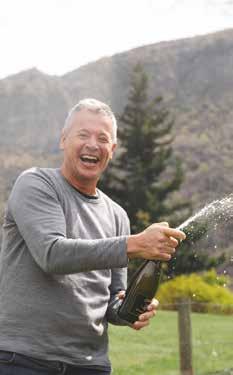
14 Hawke’s Bay delivers first major Aussie market activation
16 Tumbarumba wine region gains visibility at industry event
GRAPEGROWING
24 National Vineyard Register: a building block for the wine industry’s future
28 Respectful pruning practices can limit Eutypa dieback
38 Soil health, nutrition and vineyard resilience
WINEMAKING
44 Introducing a new tool to help combat calcium instability in wine
48 Craft versus Science: Finding the balance in modern winemaking
51 BEHIND THE TOP DROPS: ChaLou Quixotic Reserve Pinot Noir
54 Central Otago’s organics shift celebrated
BUSINESS & TECHNOLOGY
56 WA producer goes off-grid with new estate development
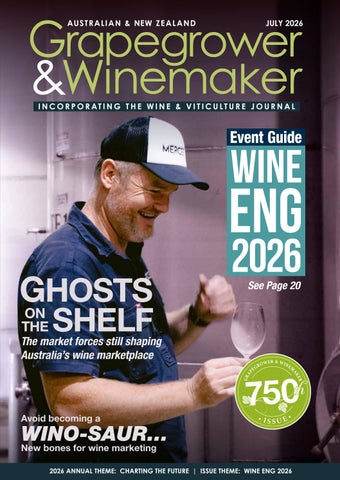
58 ANALYSIS: Seeing ghosts – How supermarket private labels, retail consolidation and competition policy reshaped Australia’s wine market
65 Where innovation embraces tradition –Celebrating 100 years of Patritti
69 WinePro NZ 2026 delivers ‘strong industry engagement’
SALES & MARKETING
70 When the old playbook isn’t enough –Gen Z marketing for confused wineries
76 What makes a wine brand memorable?
78 Prestigious wins propel proud producers at National Wine Show
82 A journey through Coonawarra’s winemaking story
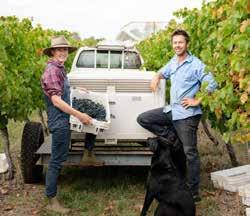
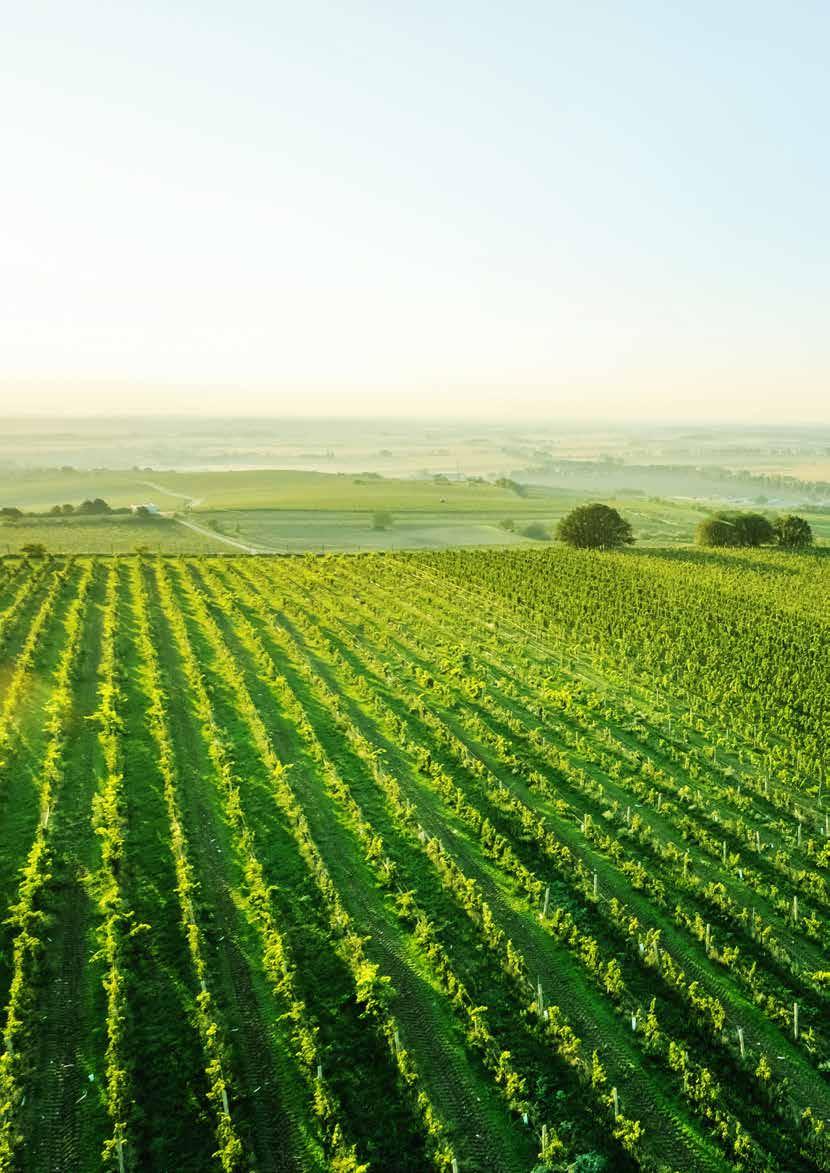
National Vineyard Register: a building block for the wine industry’s future
By Sandy Hathaway, Senior Analyst, Wine Australia
Australia doesn’t currently have a complete, up-to-date picture of what is planted in winegrape vineyards across the country. That
makes it harder to understand grape supply, plan for future demand and make informed decisions at a national, regional and individual business level
The National Vineyard Register (NVR) is being developed to help fill this gap and is a practical response to one of the sector’s biggest challenges – the
Craft versus science
Finding the balance in modern winemaking
By Paul Le Lacheur
For many years, winemakers have debated the relative merits of craft versus science. One approach places its faith in experience, intuition and traditional methods; the other relies on analysis, measurement and technology to guide decision-making.
But, as is often the case in wine, the best answer may not lie at either extreme.
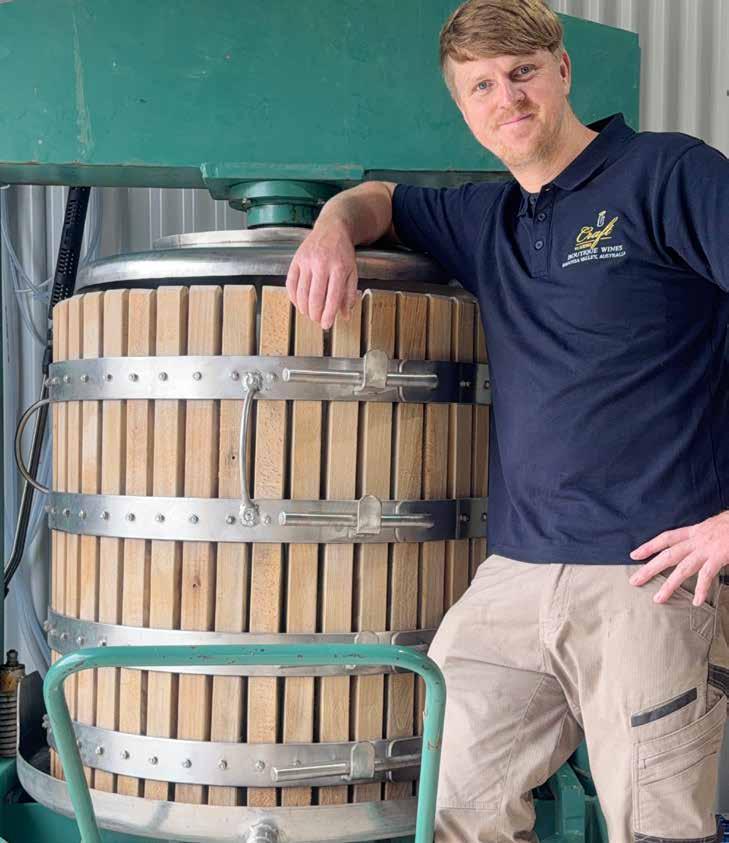
Stuart Bloomfield, founder of Craft versus Science Wines at Bethany in the Barossa Valley, has built his small-batch wine business around the belief that
craft and science are not competing philosophies, but complementary ones. His approach is based on combining traditional winemaking knowledge with the benefits of modern research and technology to achieve the best possible results.
Stuart Bloomfield with his beloved basket press

Energy Alternatives & Efficiency
WA producer goes off-grid with new estate development
As a part of its “commitment to low intervention winemaking and regenerative farming”, Wayfinder in Margaret River is set to publicly open its new Wilyabrup winery, cellar door and restaurant next month.
Wayfinder revealed that its newly constrcuted estate features “energy-efficient architectural design, re-established local flora and a farm-to-table philosophy”.
The existing market garden, which supplies the Wayfinder Wine Bar & Restaurant in Dunsborough, will undergo a “significant expansion”, growing to a full acre. The garden team reportedly plans to grow and harvest “everything from heirloom vegetables to edible flowers”. Wayfinder said the focus will be on seasonal crop rotation, no-dig beds and cover crops to enrich the soil.
Newly hired executive chef Brendan Pratt will lead the on-site restaurant with “a seasonal approach”, where the garden-led menu will build on the Dunsborough Wine Bar & Restaurant concept. Alongside the refreshed menu, the full Wayfinder range of wines will be available by the glass or in tasting flights.
‘Connection to the land’
Local WA artist Lajos Vargos, as well as other Australian artists including Lindy Lee, Tjawina Porter, Abie Kemarre Loy and Melissa Kngwarreye Long have been commissioned for various artworks and installations, inspired by the site’s “underpinning connection to the land”.
The new winery build was completed in January 2026 in time for vintage in February.
Designed by Kerry Hill Architects Fremantle, the winery is built underground into a turkey-nest dam wall and powered by solar panels, making Wayfinder fully off the grid.
Wayfinder said the multilevel design of the winery “allows grapes to be received on the ground level, with gentle gravity leading juice below ground to 12 concrete tanks (six 4,500L and six 5,700L), conserving energy and preserving integrity”. It also reportedly
benefits from natural temperature control provided by the landscape itself.
Paul McArdle, CEO of Overstory, which owns Wayfinder, explained the new design.
“From the beginning, Wayfinder’s philosophy has been grounded in environmental responsibility and a deep respect for the land. Every architectural decision has been made to minimise our footprint, with less impact on the surrounding ecosystem,” he said.
Director at Kerry Hill Architects Patrick Kosky said that they wanted the transition from Earth to building to feel seamless, as if the design “emerges from the surrounding landscape”.
“This idea is reflected in the sloping rammed earth wall, natural materials, and the carefully considered landscape design,” he said.
The new winery build was completed in January 2026, in time for vintage in February, while the cellar door soft launch is set to be completed in August.
A render of the entrance and garden. Images supplied A render of the entrance and garden. Images supplied
When the old playbook isn’t enough
Gen Z marketing for confused wineries
For many wineries, Gen Z and younger millennials can feel like an impossible to reach (let alone please) audience. Yet what a lot of wineries fail to realise is that their websites, social media and even branding (or lack thereof) might just be working against their mission to recruit a new generation of wine drinkers. Moreover, they could be unintentionally orchestrating these efforts based on misconceptions about Gen Z. With the Australian wine industry in the midst of an oversupply crisis, there has never been a more crucial time for targeted and informed approaches to wine marketing. Journalist Kyra Trussell, as a Gen Z herself, set out to hear from experts in the field on how wineries can better manage marketing efforts and break the intergenerational communication barrier. Damian Hamilton, brand keeper and designer at Adelaidebased design boutique Cornershop, and Lynda Schenk, head giraffe at nationwide marketing consultant agency Purple Giraffe, offer their professional perspectives in this inspiring read.
Why Gen Z presents a challenge
“I believe the Gen Z consumers are a generation that appears to be more in tune with their bodies, their mental wellbeing and the choices they make around consumption,” begins Schenk.
“They are more likely to question what they are drinking, why they are drinking it and how it makes them feel.”
Hamilton agrees, expressing that Gen Z are often opting for low and no alcohol options.
“They’re also pretty keen on more convenient packs, so wine in a can, for example, something that’s transportable and they can take to parties or festivals,” he added.
Schenk and Hamilton both drew attention to the broader social context of 2026.
“Gen Z has come of age in a world where health information, lifestyle content and social influence are constantly in front of them at lighting speed,” Schenk notes.
Hamilton highlighted that Gen Z tend to choose brands with the same values as them, such as environmental or world initiatives. When a brand supports the same cause as a Gen Z person, it resonates with them. Schenk backs this, saying “purpose is important”.
“From a marketing perspective, this means wine brands cannot rely solely on heritage, awards, technical notes or tradition to win their attention. Gen Z wants to know what a brand stands for…they are drawn to authenticity, transparency, visual storytelling, sustainability, inclusivity and experiences they can connect with personally.
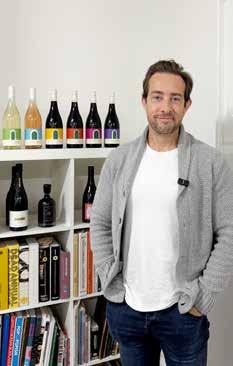
Damian Hamilton, image credit Thea Economos
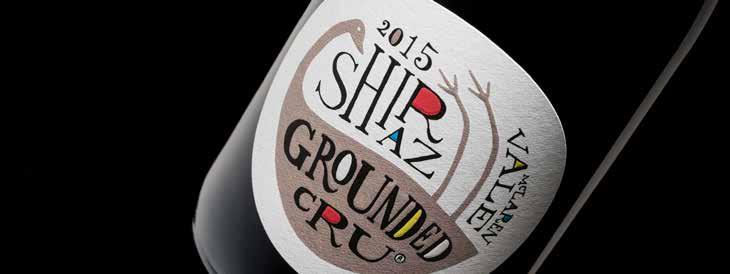
Grounded Cru Shiraz label
Marketing & Design