

Real-time visibility for real-world timber operations.
Track packs, grades, treatments and stock movements with systems designed specifically for the timber industry.


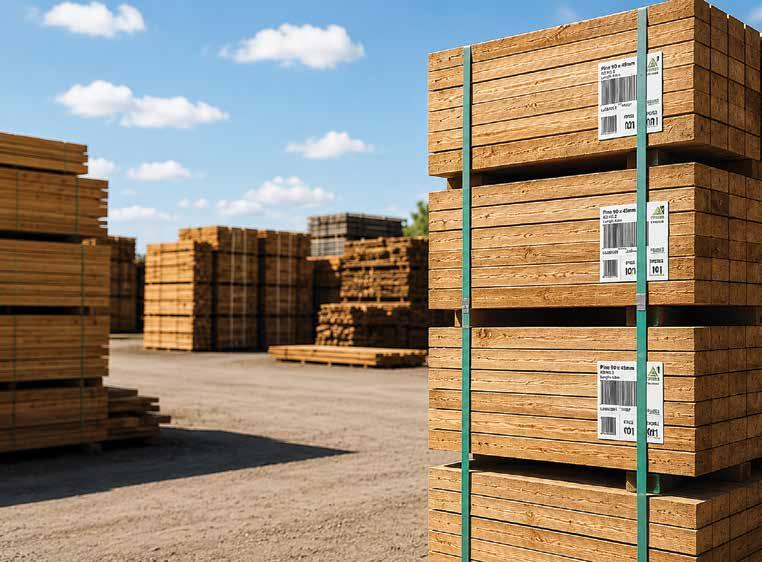
Pack Tracking & Serialization
Mobile Scanning Integration
Live Inventory Visibility
Multi-UOM Management

See every movement. Make every decision with confidence



TimberSmart delivers fully integrated Enterprise Resource Planning and mobile solutions that streamline operations from log intake to dispatch. We help sawmillers, wholesalers, and re-processors run more efficiently with real-time data, greater visibility, and reduced manual processes.
Use real-time data and industry-specific functionality to gain the visibility you need to reduce errors, and make effective decisions.

CAMILLO MALACARI
Amajor NSW forestry consultation has highlighted the Tumut and Tumbarumba regions’ importance to Australia’s softwood processing industry, while revealing divisions over forest management and bushfire resilience.
The NSW government last week published its Independent Forestry Panel Stakeholder Consultation Report, a step towards the development of a Forest Industry Action Plan (FIAP).
The panel received written submissions from over 1500 individuals and 160 organisations representing a cross-section of the timber industry, environmental groups, researchers, residents and businesses from regional NSW and others, guided by six prompts based around areas to be addressed in the FIAP.
While the report focuses primarily on native forest harvesting, it also addresses the softwood industry in the Snowy Valleys and across the state.
It groups Tumbarumba within its Coastal (Southern) forestry region, which it described as Australia’s most concentrated softwood processing area.
The report identified several shared objectives across submissions, including bushfire resilience, however stakeholders differed on how forests should be managed to achieve that.
“Some [say] that timber harvesting, salvage logging, and silviculture techniques like thinning reduce bushfire risks and others [say] that harvesting, salvage logging and thinning all increase bushfire frequency and intensity,” the report reads.
“Despite that divergence,
the submissions clearly demonstrate a deep shared concern about bushfire risk now and in the future, and that there is urgent need for improved fire policy and management based on empirical evidence and up-to-date scientific consensus.”
The report notes different cohorts have different conceptions of what appropriate active management of forests for fire resilience is.
“Some favour hazard reduction burning and robust fuel load reduction methods … Others caution that this approach only works in some forest types and that a much more nuanced, adaptive and multifaceted approach is needed.”
The report noted some stakeholders highlighted “the strong capacity of Forestry Corporation’s staff and other timber industry workers to cost-effectively prepare and respond to
bushfire threats as being highly valuable.”
“Previous reviews have noted that the Forestry Corporation is a statutory firefighting authority and plays a role in fire management in native forests,” the report said.
“Forestry Corporation’s workforce includes trained firefighters who carry out firemitigation and hazard reduction (including fire trail maintenance, specialist tall tree felling skills), training and maintenance programs, a large fleet of heavy machinery and equipment and supply agreements to enable quick uplift in people, plant and equipment and firefighting response in coordination with other agencies.”
The Independent Forestry Panel is chaired by Peter Duncan with other panel members Professor Mary O’Kane and Mick Veitch.
A ministerial statement
from the offices of the Minister for Agriculture, the Minister for Energy and Climate Change, and the Minister for Environment and Heritage thanked all those who made submissions and attended focus groups and stakeholder interviews.
“Making this report available to the public is a key step towards modernising forestry in a way that protects biodiversity,” the statement reads.
“Following the finalisation of the stake holder report, the panel has been tasked to produce a considerations report.
“This report will accommodate the stake holder report findings and identify opportunities to ensure the ongoing sustainability of the NSW forestry industry and support jobs, in the context of recent and ongoing changes.”
Tumbarumba Times
ForestrySA has appointed South Australia Forest Products Association’s Nathan Paine as its new CEO.
Mr Paine will start in his new role on 22 June following five years as CEO of the South Australia Forest Products Association where he has been highly successful in raising the profile of the state’s sustainable plantation industry. His appointment by the ForestrySA Board follows a comprehensive recruitment process that attracted a significant field of highly qualified candidates.
It comes amid a period of leadership changes in both the Australian Forest Products Association and the Tasmanian Forest Products Association.
AFPA CEO Diana Hallam recently resigned to pursue other interests and



Tasmanian Forest Products Association CEO Nick Steel has indicated he will not renew his contract after six years leading Tasmania’s peak body.
ForestrySA says Mr Paine is well-placed to lead the organisation in its management of more than 10,000 hectares of sustainable pine plantation in the Mount Lofty Ranges, and its stewardship and protection of the more than 16,000 hectares of native
forest in the Mount Lofty Ranges and Limestone Coast regions.
“ForestrySA plays a critical role in the management of South Australia’s forest industries, from the Adelaide Hills where pine forests are both valued recreational spaces and productive plantations, to the forest industry powerhouse of the Limestone Coast region,” Mr Paine said.
“With forecast demand
for wood fibre expected to quadruple over the next 25 years, there is a need and an opportunity to grow ForestrySA’s plantation estate in order to meet that demand.
“The opportunity for the state’s forest industries is not just to grow the forest estates that will build the houses of tomorrow, but also to educate the community about the vital importance of timber products in our economy.”
Forest Industries Minister Clare Scriven said she looked forward to continuing their work together in growing SA’s forest industries.
“Nathan has been outstanding in his five years as CEO of the South Australian Forest Products Association, and his depth of knowledge of timber industries and insights into forest industries more broadly will be of significant value when it comes to managing the state’s pine plantations,” she said.
“As South Australia continues to grow both its economy and its ambition into the future, I am confident Nathan Paine will be an effective and reliable partner in the delivery of stronger and more prosperous forest industries across the stat e.”
3 – Volume 37
Established 1991
News 3-18
My View 6 Training 14 New Conferences 19 Silviculture 23-25 Plantations 26-29
Front Cover: Forestry Minister
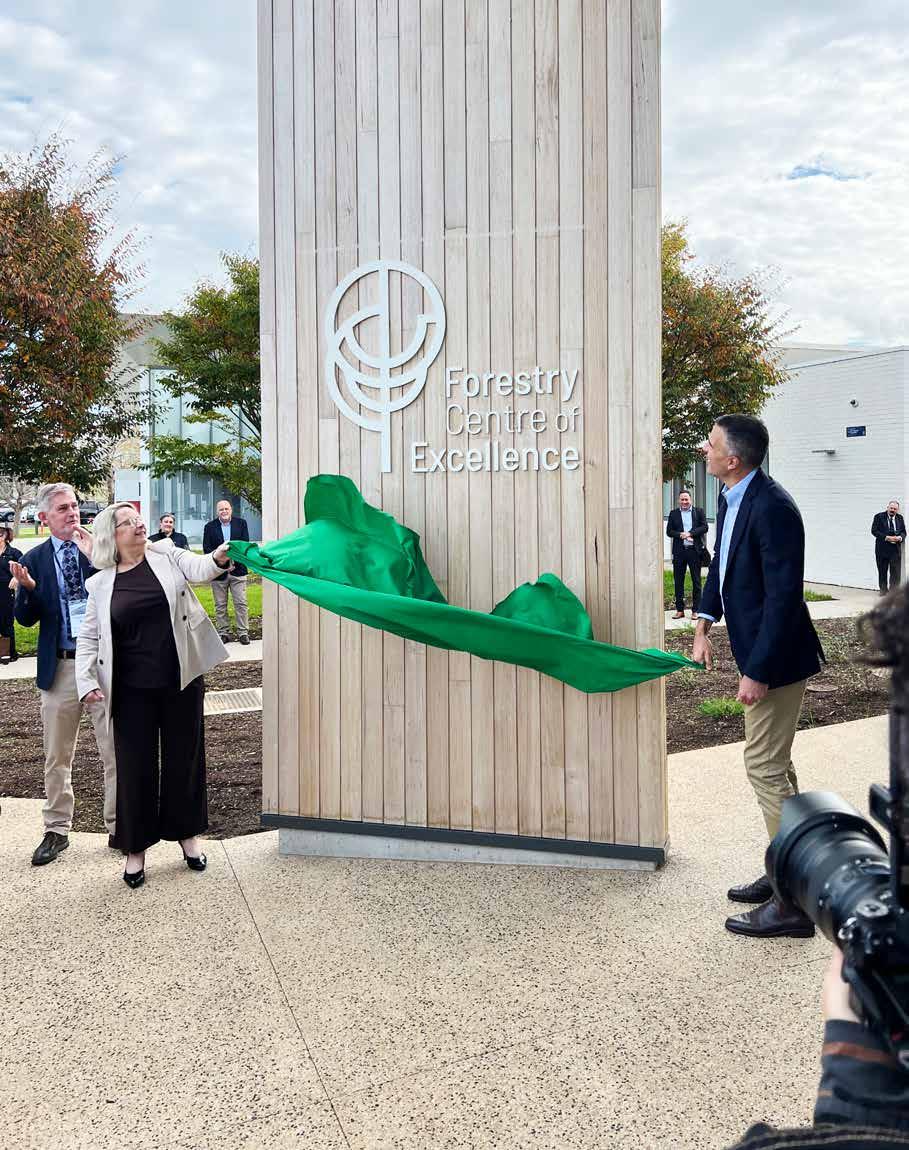
Clare Scriven and SA Premier Peter Malinauskas at the official opening of the Forestry Centre of Excellence in Mount Gambier.
Story page 18.
Publisher and Chief Executive: Hartley Higgins
General Manager: Robyn Haworth
Editor:
Bruce Mitchell
b.mitchell@ryanmediapl.com.au
Adelaide Office: (08) 8369 9521
Advertising: Jamie Richardson
j.richardson@winetitles.com.au
Adelaide Office: (08) 8369 9514
Creative Services: Robyn Haworth
Trader classifieds:
Jamie Richardson
Adelaide Office: (08) 8369 9514
Subscriptions:
subs@forestsandtimber.com.au
Adelaide Office: (08) 8369 9500
Subcription rates
One-year (6 editions) $44.65
Two-years (12 editions) $77.65
Accounts: ar@winetitles.com.au
Adelaide Office: (08) 8369 9500
Postal Address: 630 Regency Road, Broadview South Australia 5083
Phone: (08) 8369 9500
Melbourne Office: Suite 207/19 Milton Parade, Malvern VIC 3144
Phone: 0402 494 041
Website www.timberbiz.com.au
Printed by Lane Print, Adelaide, SA
Conditions
The opinions expressed in Australian Forests & Timber News are not necessarily the opinions of or endorsed by the editor or publisher unless otherwise stated. All articles submitted for publication become the property of the publisher. All material in Australian Forests & Timber News copyright 2026 © Ryan Media. All rights reserved. No part may be reproduced or copied in any form or by any means (graphic, electronic, or mechanical including information and retrieval systems) without written permission of the publisher.
While every effort has been made to ensure the accuracy of information, the published will not accept responsibility for errors or omissions, or for any consequences arising from reliance on information published.
The Green Triangle’s fire detection camera network has again proven critical in protecting communities, plantations and landscapes, delivering rapid identification of unplanned fires and enabling swift suppression during a season marked by elevated fire risk.
Despite a dry, fuel-laden summer following green drought conditions, the Green Triangle Fire Alliance (GTFA) managed camera network detected 15 unplanned fires across the south-west of Victoria during the 2025/26 fire season.
All were contained quickly, with early detection allowing firefighting resources to be deployed before fires could escalate.
Most detections occurred on agricultural land (11), with two identified along roadsides and two in native vegetation, highlighting the cameras’ ability to monitor a broad and varied landscape in real time.
GTFA General Manager Anthony Walsh said the network’s effectiveness relied on its ability to provide immediate, reliable intelligence to fire agencies and forest fire management teams.
“The seven strategically located camera sites give us instant 360-degree visibility across the south-west landscape, often detecting
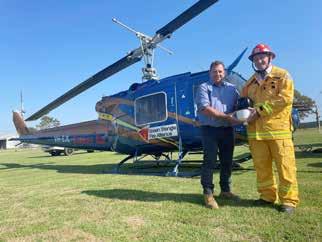
smoke before a fire is reported from the ground,” Mr Walsh said.
“That time advantage is critical, it allows crews to be dispatched earlier, when fires are smaller, easier to control, and far less likely to threaten plantations or communities.”
GTFA Chair Andrew Matheson said the Dergholm fire, near Sandy Gate Track, in early February demonstrated the cameras’ operational value on a high fire risk day.
“The Dergholm camera site provided the first point of detection, triggering immediate deployment to a fire burning close to both softwood and hardwood plantations,” Mr Matheson said.
Cornerstone
“Without that early detection, the outcome on a day like that could have been very different.”
Victorian Forest Products Association CEO Andrew White said the cameras were a cornerstone of the region’s fire management approach, which includes sharing surveillance data with the CFA and Forest Fire Management Victoria, complementing traditional fire tower operators.
“Early detection is one of the most important factors in keeping fires small, and the camera network gives the Green Triangle a decisive advantage,” Mr White
said.
“It allows crews to respond immediately, with accurate location and situational awareness, rather than losing valuable time confirming reports from the ground. It ensures the right appliances can be deployed rapidly.”
While Victoria recorded 46 unplanned fires during the 2024/25 season, largely due to widespread lightning events, 40 were recorded in 2023/24, both largely on public land.
These detections were reported up to six minutes before other sources.
“These results show what’s possible when you invest in technology that works,” Mr White said.
“The cameras don’t replace people, they empower them, and that’s what has kept fires small and impacts low in the Green Triangle.”
The GTFA Victorian fire camera network includes cameras at Dergholm, Lake Mundi, Digby, Dartmoor, Rennick, Nelson, and Hicks Hill near Macarthur.
The network also extends cross the border in South Australia with cameras that were co funded between the GTFA and SA Government located at Mt Benson, Elad Road, The Bluff at Tantanoola, Furner, Mt Burr and Carpenters Rocks. Page 6: My View
Installing more AI fire detection cameras across Victoria is a necessary step to strengthen bushfire prevention, protect communities, and reduce environmental damage.
Victoria has experienced some of Australia’s most destructive bushfires, including the Black Saturday bushfires, which caused devastating loss of life and property. With climate change increasing the frequency of extreme heat
and dry conditions, early fire detection has become more important than ever. Although installing the cameras requires investment, preventing large bushfires saves billions of dollars in recovery costs, insurance claims, and emergency response operations. Early intervention also reduces health im-
pacts caused by smoke pollution and protects tourism and agriculture industries that are vital to Victoria’s economy.
Furthermore, AI technology improves the accuracy of fire detection and reduces false alarms compared to older monitoring systems.
By supporting firefighters with real-time information, these cameras help emergency services make quicker and safer decisions. Expanding AI fire detec-
tion networks in Victoria is therefore a practical, forward-thinking solution that will save lives, protect the environment, and strengthen disaster preparedness for the future.
But as VFPA CEO Andrew White points out, fire cameras are not a silver bullet. They must sit alongside — not replace — the fundamentals of good land and fire management. He is right that Victoria should not fall behind.
Award-winning journalist, author and Monash University Professor Stan Grant will deliver a keynote address at the 2026 Forestry Australia Symposium in Canberra, with registrations now open for the three-day event in October.
Professor Grant will headline the program as keynote speaker, with Dr Simon Longstaff AO, Executive Director of The Ethics Centre, also delivering a keynote address as part of a program built around the theme The forestry story: Strategies for improved awareness, social licence and effective engagement.
Held at the Rex Hotel, Canberra, from Wednesday 7 to Friday 9 October 2026, the Symposium builds on the success of Forestry Australia’s 2025 Conference in Adelaide and the 2024 Symposium in Ballarat, bringing the forest science and management community together to examine how the sector can articulate its values and engage constructively with the broader Australian community. The program will examine how forestry can build trust with, local communities, Traditional Owners,


policymakers, the media and the wider public, while demonstrating the accountability, transparency and shared vision for Australia’s forests on which its social licence depends Forestry Australia CEO Jacquie Martin said the program reflects a commitment to open and constructive engagement.
“Forestry has an important story to tell, we also have a responsibility to listen, build trust and engage respectfully with the people and communities around us,” Ms Martin said.
“Bringing thought leaders such as Professor Grant and
Dr Longstaff into the conversation with our forest management community provides an important opportunity to challenge our thinking, consider our current approaches and reflect on how we can strengthen positive and authentic engagement into the future.”
“Social licence is not something our sector can take for granted. It depends on a genuine connection, trust, accountability and a shared commitment to the long-term stewardship of Australia’s forests.
“We encourage everyone with an interest in Australia’s forests, and the role
forestry plays in supporting environmental, social, cultural and economic outcomes, to join us in Canberra for this important conversation.”
Keynote Speakers:
• Stan Grant: Professor Grant is one of Australia’s most respected journalists, with a four-decade career across television, radio and print. A former senior CNN correspondent who has reported from more than seventy countries, he is a threetime Walkley Award winner and the bestselling author of seven books on world affairs, philosophy, theology, political science and Indigenous history. He is Professor of Journalism at Monash University and Director of the Asia Pacific arm of the Denmark-based Constructive Institute, which works with media organisations, citizens, advocacy groups, faith-based organisations, thought leaders and political figures to improve the quality of public discourse.
• Dr Simon Longstaff AO: Dr Longstaff has been Executive Director of The Ethics Centre for 30 years,
working across business, government and society on questions of ethics, governance and corporate responsibility. He holds a PhD in philosophy from Cambridge University and is an Adjunct Professor of the Australian Graduate School of Management at UNSW. He was made an Officer of the Order of Australia (AO) in 2013 for distinguished service to the promotion of ethical standards in governance and business, and to philosophy.
The 2026 Symposium is a focused three-day gathering, with two days of plenary and concurrent sessions followed by a day of field trips.
The program will feature a range of keynote and invited speakers, alongside several social functions to support networking and collaboration in an informal and relaxed environment.
Registrations for the 2026 Symposium are now open with full event details and sponsorship information available through the conference’s dedicated website: www.forestryconference.com.au.
The Australian Forest Contractors Association has been placed into voluntary liquidation over a historical project debt owed to Forest and Wood Products Australia.
The Association says the decision follows an extended period of financial remediation, stakeholder consultation, and unsuccessful efforts to resolve a historical project-related liability and establish a viable long-term operating pathway for the Association.
The Association says the “materially significant debt owed to FWPA, with no

means of plan to repay” came to light at a Board meeting in October last year. The value of the debt has not been disclosed.
In November the Board entered “good faith negotiations” with the FWPA to find a solution on repayment of the debt.
However, the Board says that also in November, due to insufficient funds, it resolved to sell ForestFit, supplier agreements with administration contractors ceased and Board members took on some administrative tasks.
The Board says consultation and feedback received from members and sponsors confirmed that, while there remained strong support for contractor representation and the issues
AFCA has been advocating on, confidence in AFCA’s ability to continue effectively under its current structure had been significantly impacted by “historical legacy decisions and resulting actions”.
Chairman Lloyd Martin said the feedback was that the damage to the credibility of AFCA, its effectiveness and its reputation “was irreparable”.
He said major sponsors, who had been with the AFCA since the beginning, were beginning to question their involvement.
And Mr Martin said around 30 per cent of the
members surveyed had indicated they were considering withdrawing. In April AFCA received a legal demand for the money owed to FWPA. The Board concluded that voluntary liquidation represented the most responsible course of action to “transparently address the organisation’s liabilities and provide clarity for members, sponsors, and industry stakeholders”.
The Board said that further information regarding the liquidation process would be communicated “as appropriate”.FWPA was contacted but declined to comment at this stage.
Victoria has just experienced another challenging bushfire season.
Communities across the state have felt the impact — from the Upper Murray to the Otways — with lives disrupted, businesses affected, and landscapes scarred.
The recent Parliamentary Inquiry into the 2025–26 summer fires has again reinforced a central truth: while we cannot prevent every fire, we can do far more to detect and respond to them earlier.
That is where technology must play a bigger role.
The Victorian Forest Products Association is calling on all sides of politics to support a practical, proven solution — investment in an expanded network of AIenabled bushfire detection cameras across the state.
Industry has funded and deployed a pilot network of cameras powered by PANO AI in the Green Triangle – the western part of Victoria which is home to vast amounts of plantations used for housing – which has demonstrated real, measurable results.

These cameras act like “smoke detectors for the bush”, scanning 24/7 across a radius of more than 20 kilometres and providing real-time intelligence to fire agencies and land managers.
Over the past three fire seasons, the system has detected dozens of unplanned fires — in many cases identifying ignition points minutes before other detection sources.
Those minutes matter. They are often the difference between a small, contained incident and a major fire event.
Examples from recent seasons show exactly what is at stake. At Hotspur in
western Victoria, early detection enabled a rapid response that protected hundreds of hectares of plantation — a critical future supply of timber for housing.
At Lake Mundi in Western Victoria, camera detection triggered an immediate aerial response, containing the fire before it could spread into surrounding assets and farmland.
These are not isolated examples. They are proof that early detection works.
Importantly, the benefits extend well beyond the timber industry.
Up to 85 per cent of the proposed camera coverage is on non-plantation land — protecting communities, farms, public assets and the broader environment.
This is shared infrastructure for regional Victoria.
Yet despite this, Victoria still has significant gaps in coverage — including in areas that have recently experienced major bushfires.
That is why we are proposing a simple, cost-effective next step: a 50:50 co-investment between the plantation industry and
government to expand the network to 18 camera sites across the entire state over three years.
The total cost is $3.78 million — with $1.89 million sought from government.
In the context of bushfire response and recovery spending — which runs into the hundreds of millions — this is a modest investment with a high return.
But it is important to be clear: fire cameras are not a silver bullet.
They must sit alongside — not replace — the fundamentals of good land and fire management. Planned burning, well-maintained firebreaks and well-resourced fire fighters remain essential to reducing fire intensity and protecting communities. The recent inquiry has reinforced the need to strengthen these prevention measures, not step away from them.
For the wood fibre industry, the stakes are particularly high.
Plantations are long-term assets, taking 25 to 30 years to mature. Once lost to fire, they cannot simply be replaced overnight.
Protecting what is already in the ground is essential — not just for our industry, but for housing supply, regional jobs, and sovereign manufacturing capability.
But this is not about asking government to carry the load alone.
Industry is already investing — through funding the bushfire camera pilot program, supporting Forest Industry Brigades, and contributing significant resources to fire response on the ground.
What we are seeking now is a genuine partnership.
South Australia, New South Wales and Tasmania have all committed funding to expand their own fire camera networks, through their governments or government agencies.
Victoria should not fall behind.
This is a practical, bipartisan opportunity.
It supports community safety. It strengthens emergency response. It protects regional economies. And it helps safeguard the timber supply needed to build the homes Victoria will require in the decades ahead.
Tabula has partnered with Helitak Fire Fighting Equipment to deliver an integrated aerial firefighting solution that connects drop execution directly with fireground decision-making thereby helping operators and incident controllers move from estimation to informed action.
Built around the Helitak Fire Tank, the integration combines Helitak’s proven aerial delivery system with Tabula’s FireVision platform to capture and share targeted drop data in real time. The result is a more connected fireground, where every drop contributes to a clearer operational picture.

Aerial firefighting has traditionally relied on postdrop observation and radio communication to assess effectiveness. This new integration removes that disconnect.
command
• Enable faster, more accurate retargeting for follow-up drops
• Reduce reliance on manual reporting and interpretation.
This creates a continuous feedback loop from execution in the air to decisionmaking on the ground improving both efficiency and effectiveness in fastmoving fire environments.
tem, removing the need for additional in-cab hardware while still delivering detailed operational insight to fireground teams.
Together, the solution is designed to fit seamlessly into existing workflows, supporting both pilots in the air and teams coordinating response on the ground.
“This is about more than capturing data — it’s about making every drop count,” said Michael Whittaker, CEO & Executive Chairman of Tabula.
• Capture precise data on where and how drops are deployed
• Share that information instantly with fireground
By linking the Helitak Fire Tank system with Tabula FireVision, operators can:
As part of the integration, a dedicated screen is removed from the aircraft, reducing cockpit clutter and allowing pilots to stay focused on the task at hand.
Drop data is captured and transmitted automatically through the connected sys-
“By connecting what happens in the air with decision-making on the ground, we’re giving fireground teams the information they need to respond faster and more effectively.”
Onet r ak
Timber Towns Victoria has met with six Political parties in Victoria calling for preelection commitments on three policies, one of which proves technology that has already detected 90 unplanned fires across Victoria in two seasons.
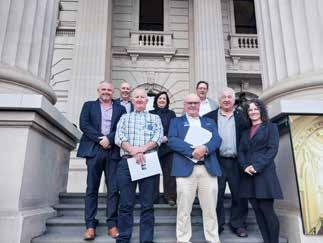
Timber Towns Victoria met with representatives from the National, Liberal, Labor, One Nation, Shooters and Fishers, and Libertarian parties at the Victorian Parliament, presenting a three-priority 2026 Government Brief ahead of the state election on November 28 this year.
TTV’s priority ask is calling for multi-year funding commitments for rural road repairs and dedicated funding for freight-critical bridge upgrades, citing accelerated deterioration across key regional corridors under heavier freight loads and more frequent severe weather events.
TTV President Cr Karen Stephens said roads were vital for the freight network as logs could not be moved by rail due to the rural
spread of plantation areas.
“We ask for a commitment to strengthening Victoria’s regional transport network by increasing roads and bridges maintenance funding, and prioritising long-term, durable solutions that support community safety and economic resilience,” Cr Stephens said.
TTV also wants a statewide expansion of AI-
enabled fire detection cameras. The network has already detected almost 90 unplanned fires across Victoria over the past two fire danger seasons — 40 in 2023-24 and 46 in 2024-25.
In South Australia, the same system has detected almost 90 fires since rollout across more than one million hectares, with 90 per cent of coverage extending beyond plantations into
surrounding communities.
The data was provided to TTV by the Victorian Forest Products Association (VFPA) and the Green Triangle Fire Alliance (GTFA), which manages the network across both states.
Cr Stephens said regional communities were looking for firm commitments.
“We ask for a commitment to supporting a safer Victoria through expanded fire camera coverage, modern AI-enabled detection systems, and long-term funding that protects communities, forests, and regional industries,” she said.
The technology uses AI, ultra-HD 360-degree cameras and satellite data to detect smoke and ignition points continuously across large landscapes, with all alerts verified by human analysts before dispatch.
Despite the proven results, Victorian coverage remains uneven, operational funding is inconsistent, and integration with the CFA, FFMVic and the SES is limited.
TTV also wants a statewide expansion, sustain-
able operational funding, and a fully integrated fire intelligence system connecting camera feeds with emergency services across all agencies.
On forest policy, TTV is calling for Victoria’s state policy settings to align with the Australian Government’s Timber Fibre Strategy, providing the coordinated framework that plantation investors, processors and regional employers need to plan and grow with confidence.
TTV will be seeking a formal response from all six parties on each priority ahead of the state election.
“We ask for a commitment to develop a wholeof-government forestry and fibre growth strategy to include streamlining planning and environmental approvals for plantation and processing projects, supporting investment in engineered timber and advanced wood manufacturing, and embedding forestry and fibre in Victoria’s climate and housing strategies,” Cr Stephens said.
The Federal Government has announced 16 new grants covering almost 9500 hectares of new softwood and hardwood plantations across Australia under the $73 million Support Plantation Establishment program.
The program is supporting the growth of almost 40,000 hectares of new hardwood and softwood plantations.
The Federal Government says it will help meet growing demand for domestic timber including for the construction of new homes and support jobs in regional communities across Australia.
The Minister for Agriculture, Fisheries and For-
estry Julie Collins said the Federal Government was committed to a bright future for Australia’s forestry industry which was why it was “delivering record investments”.
“These latest grants will increase our sustainable timber supply and support industry, business and jobs in rural Australia,” she said.
“This is helping build a Future Made in Australia - increasing our domestic timber supply to support our domestic manufacturing and value-adding capabilities.”
The government says the fund will invest in the new equipment and facilities that are key to enabling in-
dustry modernisation and advanced processing.
It will also invest in training for the forestry workforce, engineered and wood products innovation, and support housing and construction supply chains.
“We appreciate the Government’s continued rollout of this important program, which AFPA has strongly supported from the outset,” AFPA acting Chief Executive Officer Richard Hyett said.
“The initiative has become a highly effective partnership between industry and government, delivering positive and
tangible benefits for Australia’s forestry sector and the national economy.
“Before the introduction of this program, plantations declined by 230,00 hectares in six years. This program has been critical in reversing the decline in plantation investment that was occurring before it was introduced. It’s now supported nearly 40,000 hectares, and is helping to restore confidence and encouraging growth and much-needed investment in our sector,” he said.
“Since launching in 2023, the initiative has successfully driven new plantation investment across Australia, supporting regional economies, local jobs,
improving future fibre security and contributing to the Government’s climate and sovereign capability targets. These sustainable plantations will also help support the long-term future of the construction industry.”
Mr Hyett said it was encouraging to see almost $26 million in last week’s Federal Budget, as part of the final allocation of the SPEP.
“Given the importance of this program, we have encouraged the Government to extend the SPEP as ongoing funding so timber plantation establishment and expansion can continue across Australia into the future,” he said.
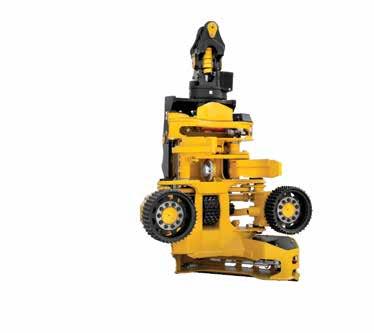
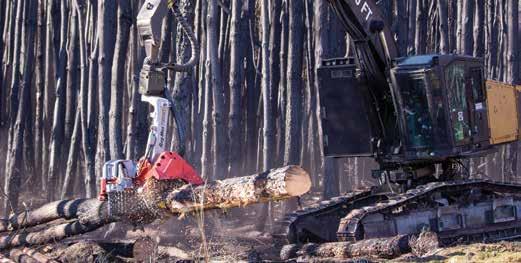
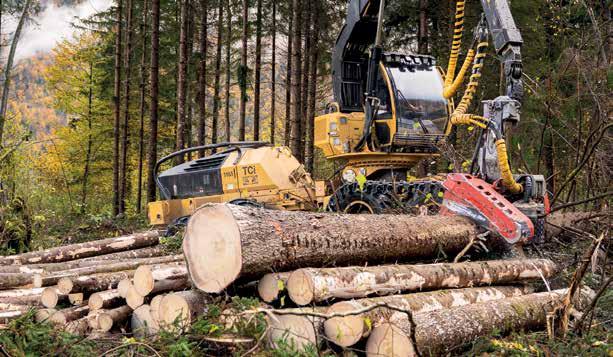
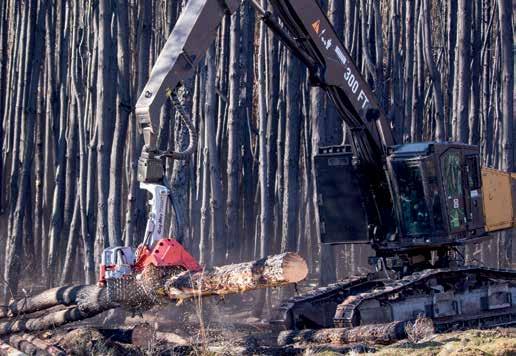
When productivity matters, Log Max delivers. As a leader in the forest industry, Log Max harvester heads are built to work harder, cut faster, and last longer. Engineered for maximum output and minimum downtime, they give operators the edge in demanding environments. From thinning to heavy final felling, every head is designed to boost efficiency, reduce costs, and keep your operation moving. If you want results, you want Log Max.
Log Max 7000XT Top Saw has been designed to be extremely durable and withstand the toughest conditions. It is equipped with a top saw and therefore has two saw units, an advantage when working with process work or in deciduous forest. -


Forestry Australia acknowledges the Australian Government’s decision to list the Alpine Ash forests of mainland Australia as an endangered ecological community under the Environment Protection and Biodiversity Conservation Act 1999 (EPBC Act), effective from 20 March 2026.
Forestry Australia supports the protection and recovery of Alpine Ash forests and recognises the seriousness of the pressures facing these ecosystems, particularly from repeated highseverity bushfire, climate change and other interacting threats.
At the same time, Forestry Australia remains concerned that the listing process has not adequately reflected the full breadth of operational and traditional knowledge and on-ground management experience relevant to these forests.
Forestry Australia provided a detailed submission to the committee last year, with extensive input from leading forest scientists. Yet, there is little evidence of direct, transparent considera-
tion of Forestry Australia’s submission, and its central concerns with the listing. Forestry Australia considers that forest scientists and Traditional Owners should have been more meaningfully involved in the process.
The intent of the EPBC Act listing process is to safeguard ecosystems that are genuinely at risk of extinction. Listing such an extensive and predominantly intact ecosystem, most of it located on public land already managed for conservation, represents an unprecedented step in Australia.
The listing will have significant implications for the management of Alpine Ash forests and surrounding landscapes, with the potential for unintended consequences if it constrains
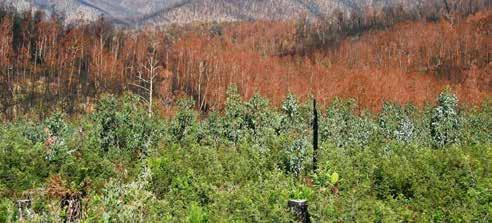
active forest management approaches to reduce risk and support forest recovery. Alpine Ash forests are dynamic, disturbanceshaped systems that require thoughtful, evidence-based and practical management if they are to persist into the future.
Forestry Australia President Dr Michelle Freeman said the organisation’s concern is not with the need to conserve Alpine Ash forests, but with ensuring the policy response supports the right
kinds of action.
“Forestry Australia strongly supports the conservation of Alpine Ash forests. Our concern has been that any listing and associated policy settings must help, rather than hinder, the active and adaptive management these forests need.”
“These forests face real risks, particularly from repeated fire and climate change. Responding effectively requires the best available science, genuine engagement with those who
manage these landscapes, and a practical pathway for restoration and resiliencebuilding at scale.”
Forestry Australia had previously called for fuller engagement with State land management agencies, Traditional Owners and forest scientists with direct expertise in Alpine Ash ecology, silviculture, fire and restoration.
Dr Freeman said those voices remain essential to the success of any recovery effort.
Timber Towns Victoria has condemned the Federal Government’s decision to list Alpine Ash and White Ash forests as endangered, warning the listing rewards ideology over evidence and risks making the forest management that these ecosystems most urgently need harder, slower, and more dangerous.
TTV President Cr Karen Stephens said the focus must be on genuine stewardship, not political posturing.
“The primary focus should be on genuine stewardship of the landscape rather than ideological posturing,” Stephens said.
“These forests face real and immediate threats

from excessive fuel loads and repeated wildfire. So, this listing actually leads to less management, not more, and will do nothing to protect them.”
The Federal Government’s own Draft Conservation Advice released for public consultation in December 2024 recorded that less than five per cent of Alpine Ash Forest distribution has been lost since 1750, leaving approximately 95 per cent of pre-settle-
ment communities intact across a 720,000-hectare range throughout southeastern Australia.
In its formal submission to the government, TTV warned that the conservation advice was biased, rushed, and overly reliant on the work of a single researcher, while ignoring other scientific research and recent field evidence. The submission cited a stark example of declining management capacity: where 70 personnel were once stationed at Connors Plain north of Licola during summer months in the 1960s and 1970s, today one or two staff in an office in Heyfield are responsible for overseeing tens of thousands of hectares of forest.
TTV’s submission also flagged the critical importance of seed collection, noting that Alpine Ash seeds require 15 to 25 years to mature, leaving younger trees entirely unable to regenerate after fire. The Mt Buffalo area, now a national park, has experienced five intense fires since its designation a century ago. Each fire occurring roughly a decade apart, resulting in the loss of all existing seed trees and a dramatic alteration of the ecosystem.
TTV warned this pattern is the direct consequence of a lock-up-and-leave approach applied to some of the most fire-prone country on earth.
The submission also drew on findings from the 2024
International Fire Behaviour and Fuels Conference in Canberra, which found the current split between preparation and response sits at roughly five per cent planning and prevention against 95 per cent firefighting and recovery, a ratio TTV described as completely inverted from what is needed to protect Alpine Ash forests in the face of a changing climate.
“We wish to extend an invitation to the Threatened Species Scientific Committee panel members to participate in a tour of the Alpine Ash forests in Eastern Victoria and gain a real understanding from within the forests of what is actually happening on the ground,” Cr Stephens said.
Queensland’s forest and timber industry is entering a decisive period as new government policy settings, housing supply targets and resource security intersect, with Grounded 2026, the latest industry magazine from Timber Queensland, outlining what the State’s Future Timber Plan means in practice for forestry, manufacturing and construction businesses.
This year’s edition is published against the backdrop of the Queensland Government’s Future Timber Plan (QFTP), released in October 2025, which sets a 25 year direction for the industry and frames timber as a critical input to meeting the State’s target of delivering one million new homes by 2044.
Timber Queensland CEO Mick Stephens addresses the plan directly in Grounded 2026, including the role of timber in housing delivery and carbon outcomes. The magazine reports that
in 2025, around 80 per cent of Queensland’s 33,000 plus new home completions used renewable pine framing, removing an estimated 265,000 tonnes of carbon dioxide from the atmosphere.
Queensland Minister for Primary Industries Tony Perrett also contributes to the edition, acknowledging the impact of fuel costs on industry opera-
tions and outlining implementation measures under the QFTP, including work to deliver new timber sales permits from available state forests in 2027.
Timber Queensland Strategic Relations and Communications Manager Clarissa Brandt said the 2026 edition reflects a sector at a genuine turning point.
“There is a lot happening
right now in policy, markets and workforce and Grounded 2026 gives people across the supply chain an opportunity to step back and see the bigger picture,” Mrs Brandt said.
“From government direction and housing demand through to the people and projects delivering outcomes on the ground, this edition speaks to issues that directly affect how the industry plans, invests and operates,” she said.
Mrs Brandt said that Grounded 2026 also profiles Timber Queensland’s valued annual partners — Australian Retirement Trust, Responsible Wood, Komatsu Forest, Rivers Insurance Brokers, Choice Energy and IVS Labs — highlighting their role in supporting industry capability and resilience.
Designed as a resource for the entire forest and timber sector, Grounded 2026 combines policy commentary, housing and sustainability insights, work-
force development stories and recognition of industry excellence, including the establishment of the Colin MacKenzie Award for Technical Excellence in Timber Application and Use.
The 2026 edition of Grounded is available now at https://online.flippingbook.com/ view/276084078/
“Whether you work in plantations, native forestry, processing, construction, transport or training, the themes explored in Grounded 2026 connect directly to real-world challenges and opportunities facing the industry,” Mrs Brandt said.
Available as an interactive digital flipbook, the magazine is intended to be shared widely across workplaces, boardrooms, site sheds and classrooms, while also supporting printed copies for offices and lunchrooms.
Anew Gippsland Forestry Hub report has exposed the Victorian State Government’s ongoing failure to maintain the regions transport infrastructure, directly undermining forest fuel reduction and bushfire preparedness.
The report states key roads and bridges are not fit for purpose with imposed load limits and transport route restrictions on the deteriorating network, highlighting missed opportunities to shift freight to rail, reduce truck movements and improve road safety.
The Nationals’ Melina Bath who is also Shadow Minister for Public Land Management said Labor is aware of the problem, but
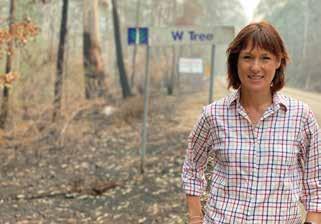
it’s refusing to act which is leaving communities exposed to a heightened bush-
fire risk.
“Blocked access hurts jobs, stymies forest fuel re-
duction work, delays firefighting response and puts lives at risk,” said Ms Bath.
“Poor maintenance and restrictive access rules on state managed roads is pushing trucks onto unsuitable local roads.
“The Allan Government is failing to perform basic maintenance required for the movement of firefighting crews and equipment and support bushfire preparedness.
“You cannot protect the environment and people if machinery and fire trucks cannot access the fire ground in an emergency.”
The report highlights the need for state government investment in key infrastructure projects including
the Traralgon Bypass and Sale Alternate Truck Route and the removal of 80km per hour speed restrictions on the Princes Freeway.
Ms Bath said the Allan Government’s prolonged neglect of regional road infrastructure disadvantages motorists and puts communities and our environment at risk.
“Rural and regional Victoria are 25 percent of the population but receives only 13 percent of the state’s infrastructure spending.
“Victorians deserve safe roads, effective fuel hazard management and a state government that plans and acts before disaster strikes –not after.”
The NSW Government’s justification for the Great Koala National Park is increasingly being contradicted by its own scientific evidence and appeared to be driven more by carbon credit generation than koala conservation, according to Forest & Wood Communities Australia Chair Steve Dobbyns.
“The NSW Government’s Environment Minister Penny Sharpe continues to promote the Great Koala National Park as essential for koala conservation, yet its own scientific evidence does not support the claim that regulated native forestry is causing widespread koala decline on the Mid North Coast,” Mr Dobbyns said. “Instead, the proposal is increasingly being driven by the prospect of carbon credits under the proposed Improved Native Forest Management (INFM) methodology - a scheme that raises serious concerns about carbon leakage, displaced timber production and questionable net climate benefits.”
Mr Dobbyns said years of NSW Government-funded research failed to support the political claim that ending native forestry would “save koalas”.
“Research undertaken by NSW DPI Forest Science and reviewed through the NSW Natural Resources Commission found no statistically significant decline in koala density following selective timber harvesting in northeast NSW state forests,” he said.
“The NRC reported koala densities remained stable in harvested forests, koalas continued using harvested areas after operations, and any declines observed during the study period were more strongly associated with drought and climate stress, particularly across the National Park estate."
For many timber businesses, inventory uncertainty doesn’t appear as one major operational failure — it shows up quietly in the background of day-to-day operations.
It’s the extra time spent validating stock before committing to a customer order. The manual checks between the yard and the office. The hesitation around whether inventory data is fully accurate. The production delays caused by uncertainty around pack status, location, or availability.
Over time, these small inefficiencies compound, affecting productivity, customer responsiveness, and ultimately profitability.
Across the timber industry, businesses are under increasing pressure to operate faster, leaner, and with greater accuracy. But unlike standard inventory environments, timber operations involve a level of complexity that generic inventory systems often struggle to handle effectively. Timber products don’t remain static throughout the supply chain. A log becomes green packs. Green packs become kiln-dried boards. Boards may then become treated products or value-added components. Throughout that process, dimensions, grades, treatments, and pack configurations can all change.
At the same time, timber businesses are managing:
• Variable pack sizes and tallies
• Multiple units of measure
• Grade and treatment tracking
• Pack movements across yards and locations
• Inventory transformations throughout processing
This level of operational movement creates a challenge for systems designed around fixed products and
standard inventory structures. In many businesses, teams compensate through experience and manual processes. Spreadsheets are maintained alongside ERP systems. Stock is physically checked before orders are confirmed. Information is manually reconciled between departments to ensure accuracy.
These workarounds may keep operations moving, but they also create operational drag.
One of the biggest operational challenges timber businesses face is visibility. Not just knowing what stock exists — but understanding:
• where it is
• what stage it is at
• how it has changed
• whether it has been allocated
• and whether the information can be trusted in real time.
Without accurate visibility, even routine tasks become harder.
Sales teams hesitate before committing to delivery dates. Yard teams spend time locating or verifying packs. Dispatch planning becomes reactive instead of streamlined. Production decisions are made using incomplete information.
The issue is rarely one dramatic failure. More often, it’s a constant series of small interruptions, delays, and inefficiencies that reduce performance.
As customer expectations continue to rise, businesses that cannot respond quickly and confidently risk losing both time and trust. Across the industry, more businesses are reassessing whether their existing systems can support current operational demands.
The shift is no longer simply about digitising paperwork — it’s about creating connected operations with reliable, real-time visibility
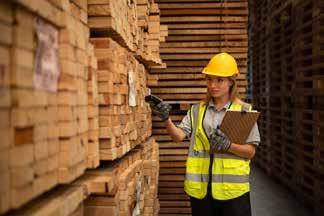
● Modern timber operations are increasingly relying on mobile scanning and live yard updates
across the business.
Purpose-built timber systems are helping businesses move away from fragmented workflows by bringing inventory, processing, sales, logistics, and reporting into a more integrated environment.
Modern timber operations increasingly rely on:
• Real-time inventory visibility
• Pack-level traceability
• Serialization and pack history reporting
• Mobile scanning and live yard updates
• Accurate tracking across multiple units of measure
These capabilities allow businesses to reduce reliance on manual checks while improving confidence in operational decision-making.
Importantly, the technology itself should not become another layer of complexity. The right systems are designed around the way timber businesses already operate — supporting operational realities rather than forcing teams to adapt around software limitations.
Building confidence across the
With over 25 years of experience working alongside timber businesses,
TimberSmart has seen firsthand how inventory uncertainty impacts operations across the supply chain.
Designed specifically for timber operations, TimberSmart supports the complexities of pack tracking, grading, treatments, inventory transformations, and real-time stock visibility in a way that reflects how the industry actually works. By bringing together people, processes, and systems into a connected operational environment, businesses gain greater visibility, stronger control, and more confidence in their day-today operations.
As the industry continues to modernise, inventory visibility is becoming more than an operational improvement — it’s becoming a competitive advantage.
For many timber businesses, the question is no longer whether greater visibility is needed, but how quickly they can achieve it.
The future of timber operations will rely on greater visibility, stronger integration, and systems built specifically for the way the industry operates.
For many businesses, that transition is already underway.
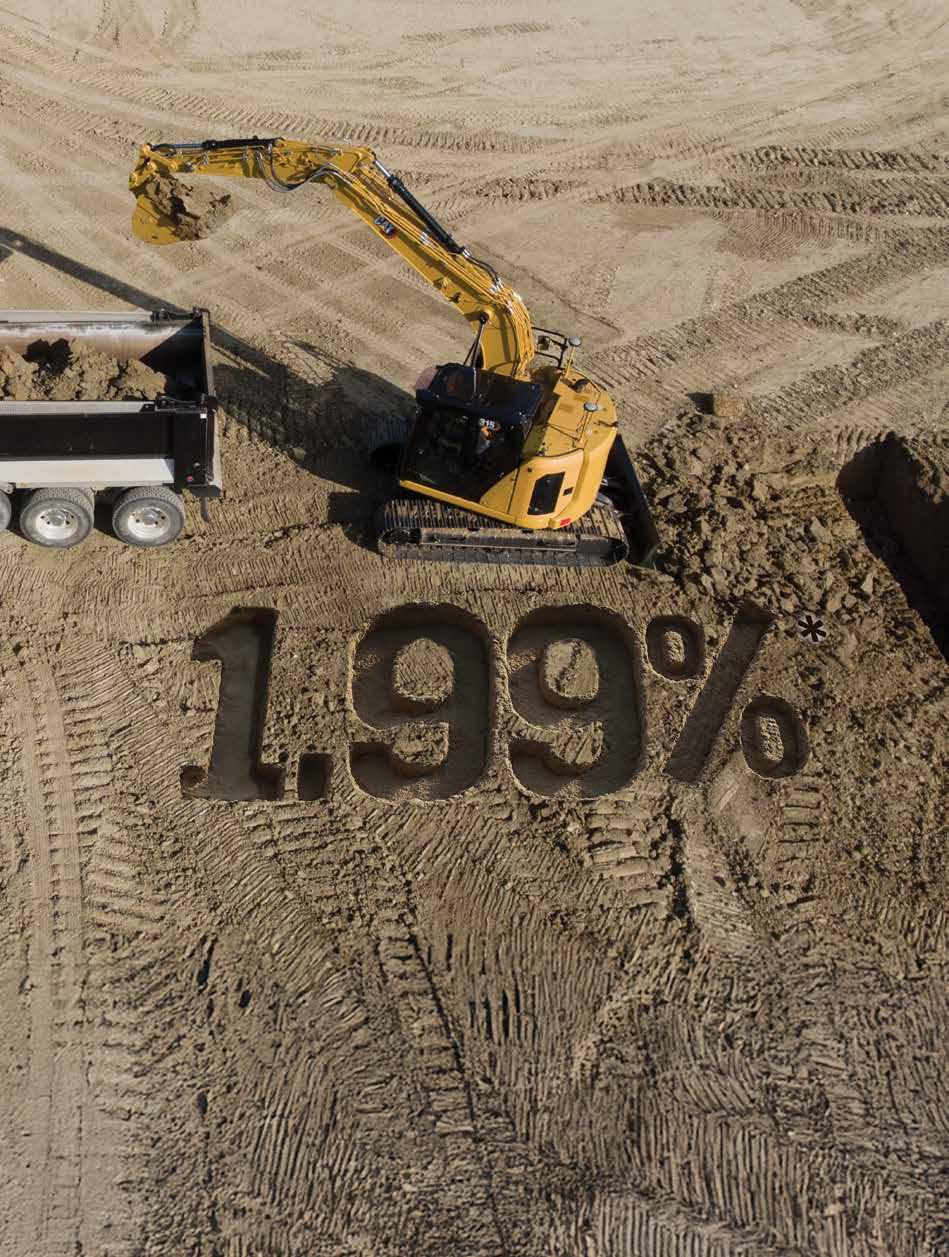
Right now, you can secure 1.99%* finance for 36 months on select Cat® Excavators:
• Small excavators 313*, 315, 315 GC
• Medium excavators 320, 320 GC, 323, 325, 326, 330, 330 GC
This offer is subject to finance approval and ends 30 June 2026. For what you’ve done and for what you’ll do, we’re here for you. Don’t miss out. Contact your local Cat dealer for a quote.

Anew national forestry education program, built on a century of professional training and designed to meet the demands of a rapidly changing sector, has graduated its first cohort.
The milestone is the subject of a perspective piece published in Australian Forestry tracing the arc of national forestry education from its origins in 1926 to the Graduate Certificate in Forestry that welcomed students for the first time in 2024.
The Australian Forestry School was established at the University of Adelaide in 1926 before transferring to Canberra as a Commonwealth entity in 1927. And for most of the twentieth century it served not only Australian students but cohorts from across the wider region, including Burma, Malaysia and New Zealand.
The Victorian School of Forestry at Creswick, established in 1910, ran a parallel programme with both eventually folded into the Australian National University and University of Melbourne respectively.
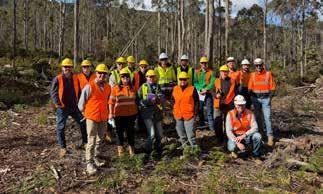
“Changes in the structure and funding of Australian higher education have made it difficult to maintain relatively small, focused professional programs such as forestry,” according to Julianne O’Reilly-Wapstra, Professor, Forest Sciences and Course Coordinator for the University of Tasmania’s Graduate Certificate of Forestry.
“The Graduate Certificate in Forestry has been designed with, and is financially supported by, the forest industry.
“This program demonstrates a new era of universi-
ty-industry collaboration to meet the need for skilled forestry professionals and support universities’ capacity to deliver specialist forestry education. This collaboration provides a sound basis for developing the future education needs to support sustainable forest management.”
Forestry Australia kicked off a fresh round of industry and university discussions in 2022, establishing a Committee on the Future of Forestry Education. The result was the Graduate Certificate in Forestry, hosted by the
University of Tasmania and drawing on courses contributed by Adelaide University, the Australian National University, the University of Melbourne, the University of the Sunshine Coast and the University of Tasmania.
Industry partners are financially supporting a minimum of 18 students annually across each course for an initial five-year term, with the Federal Government supporting a program coordinator through the Forestry Workforce Training Program managed by ForestWorks, for the first three years of the five-year term.
The four-course program covers Introduction to Australian Forestry, Carbon Forestry, Plantation Silviculture and Forest Operations, each delivered in a mixed format combining online live-time learning with lecturers and a five-day residential field school.
The program is designed to bring professionally employed staff without formal forestry qualifications into the discipline, while also offering a pathway for those with TAFE qualifications and recognised prior learning
Public claims that timber harvesting increases bushfire risk are based on narrow and contested evidence, and should not be generalised across Australia’s diverse forests, according to a new evidence review released by Forestry Australia. The review, Contested Evidence About Timber Harvesting and Bushfire Risk in Australian Landscapes, examines claims that timber harvesting increases forest flammability and bushfire risk. It finds that many public claims rely on evidence from one particular forest type and management system – tall wet eucalypt forests in southeastern Australia that have
been previously clearfelled – and that these findings are often presented as though they apply universally across all Australian forests.
Forestry Australia President Dr Michelle Freeman said the review was developed to help clarify a complex and often misunderstood area of forest science: “Public discussion about timber harvesting and bushfire risk is often highly contested, and at times, confusing,” Dr Freeman said.
“The purpose of this evidence review is to unpack the science. It looks carefully at what the evidence does and does not show, where research find-
ings are contested, and why terminology matters when discussing bushfire risk, fire severity, flammability and fire intensity.”
Dr Freeman said the diversity of Australia’s forests meant evidence could not be applied uniformly:
“Australia’s forests are highly diverse. Evidence from one forest type, management system or landscape context should not be generalised across the country without careful qualification,” she said.
The review highlights that different forms of forest management can have very different outcomes, and that it is inappropriate to reduce complex for-
and/or industry experience. Beyond curriculum, the program revives something the profession has been without for a generation — the national professional networks that were a defining feature of residential forestry study at the AFS and ANU, giving the next generation of forest managers the opportunity to learn with, and from, each other across regional field-based settings.
“This marks a significant step in rebuilding national forestry education capacity in Australia,” according to Dr. Mohammad R. Ghaffariyan, the Managing Editor of the Australian Forestry Journal.
“The program responds directly to industry needs while strengthening the professional networks that underpin the sector. We are pleased to document this important development.”
The paper by P. Kanowski, R. Keenan, J. O’Reilly-Wapstra, M.R. Ghaffariyan, A. Spokevicius and D. Weber, was published online on 21 April 2026 and appears in Australian Forestry.
est and fire dynamics to a simple claim that timber harvesting always increases fire risk.”
Dr Freeman said Forestry Australia hoped the review would support a more informed and constructive public conversation.
“Our role is not to prosecute simplistic arguments. Our role is to support evidence-based discussion, grounded in forest science, so that policy makers, media and the broader community can better understand what the research is actually saying.
“These issues deserve careful, evidence-based discussion."
Tasmanian farmers and landowners will have access to free resources and events to learn about how carbon forestry works as part of Private Forests Tasmania’s new Carbon Forestry 101 project.
Supported by the Tasmanian Government’s Renewables, Climate and Future Industries (ReCFIT), Carbon Forestry 101 will be rolled out from 2026-2028 to Tasmanian farmers and landowners.
The project will see all information about carbon forestry brought together into the one place and unpacked in plain, easy to understand language without the jargon.

This will include information on carbon science, carbon forestry methodologies, carbon markets (what are they) and governance.
It will also cover off on the sustainability integration of carbon forestry projects and their benefits across entire properties.
Private Forests Tasmania’s
Chief Executive Officer, Dr. Elizabeth Pietrzykowski said Carbon Forestry 101 was a learning experience.
“We hope this project will give Tasmanian farmers and landowners the knowledge and confidence to make informed decisions about carbon opportunities for their properties.
“Information about carbon and carbon forestry can be complex and full of jargon. It is also available through different channels but can rarely be found in the one space or solely with a Tasmanian context.”
“Carbon Forestry 101 will address this exactly and will be a great way for farmers and landowners to enhance their knowledge before committing to undertake a carbon forestry project.”
Dr Pietrzykowski said
carbon forestry projects are not a ‘one-size-fits-all’ situation and often are most successful when they are integrated in addition to existing farming enterprises and can be navigated with clear awareness of the opportunities and risks.
“We know that farmers and landowners know their land best. They understand where its most productive, least productive and are managing complex risks and changing conditions and costs every day.”
“Carbon forestry projects have been around for a while now, but are becoming increasingly appealing for their environmental, economic and sustainability benefits.”
“It can be difficult to know where to go to even start to understand what it is and
how it works.”
“Private Forests Tasmania’s Carbon Forestry 101 will bring all the pieces of carbon forestry together.”
The Carbon Forestry 101 project was formally launched at Agfest.
Farmers and landowners’ interested in being part of Carbon Forestry 101 are encouraged to register their interest in the project by providing their details to Private Forests Tasmania. Tasmanian farmers and landowners wishing to register for Carbon Forestry 101 can do so by visiting www.pft.tas.gov.au/carbonforestry-101
For more information about Carbon Forestry 101, contact Private Forests Tasmania by calling 1300 661 009 or emailing admin@pft. tas.gov.au

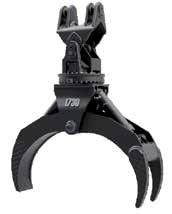

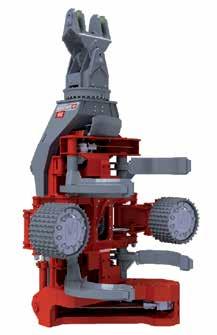

Whether you’re in hardwood, softwood task. Its simple design with excellent tree harvesting.
OVERVIEW
Harvesting and processing in late thinnings or regeneration harvesting; productive in crooked or straight wood.
APPLICATIONS
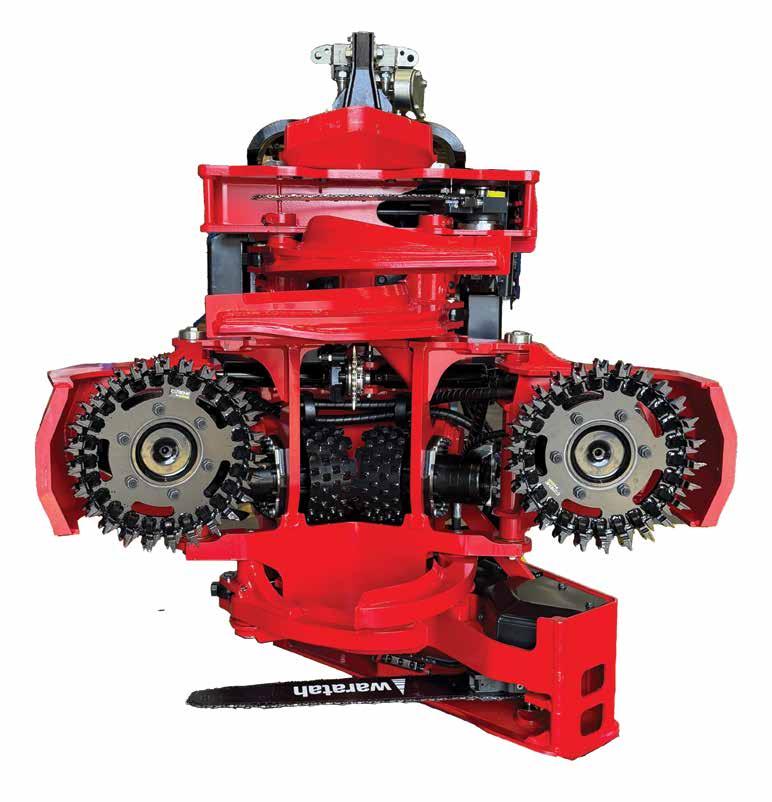
OVERVIEW
Hardwood harvesting
Softwood harvesting
Multi-tree harvesting
Debarking
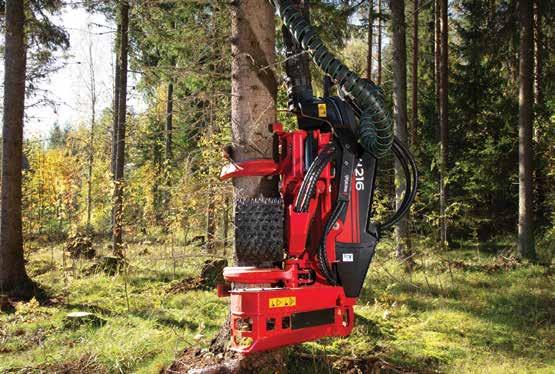
Harvesting and processing in late thinnings or regeneration harvesting; productive in crooked or straight wood.
APPLICATIONS
Hardwood harvesting
Softwood harvesting
Multi-tree harvesting
Debarking
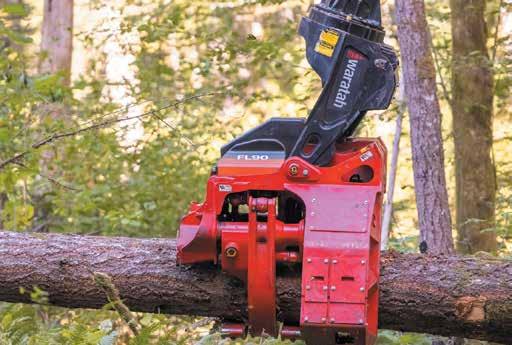
Whether you’re in hardwood, softwood task. Its simple design with excellent tree harvesting.
Big on performance and equally capable head offers strength, agility and smarts. a large capacity and intelligence to OVERVIEW
Thinnings, steep slope, shovel logging/hoe-chucking, topping, storm damage, clean-up.
OVERVIEW
APPLICATIONS
Shovel logging
Big on performance and equally capable head offers strength, agility and smarts. a large capacity and intelligence to
Thinnings, steep slope, shovel logging/hoe-chucking, topping, storm damage, clean-up.
Late or final thinnings/clear felling
Topping
Storm damage
Steep slope
APPLICATIONS
Shovel logging
Late or final thinnings/clear felling
Topping
Storm damage
Steep slope

Harvesting in late thinnings; regeneration harvesting; tracked and wheeled
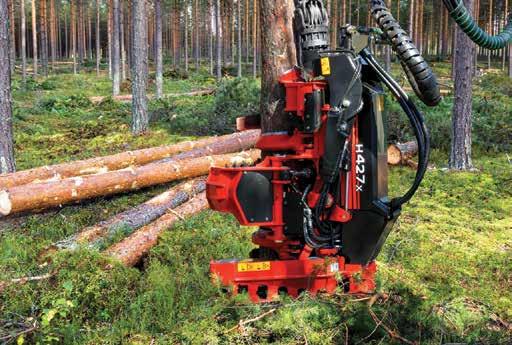
The tough H427X is purpose-built for tracked machine applications. With a standard, heavy-duty tilt frame and heavy-duty feed motor covers, this powerful head delivers durability for extreme harvesting.
Whether you’re in hardwood, softwood or debarking, the
Built for hardwood, softwood, crooked timber and everything in between. Whatever the bush throws at it, the H216 handles it without breaking a sweat. Add the optional top saw and Intelligent Harvester Control (IHC) and you’ve got a head that handles
Harvesting in late thinnings; regeneration harvesting; tracked and wheeled machine applications.
Softwood harvesting Mixed stand (hardwood and softwood) harvesting Multi-tree harvesting
of the
capable in many felling applications, the FL90 directional felling smarts. It makes no compromises with enhanced durability, work fast. Simply put, it’s perfectly sized for productivity.
The big brother to the H425X. Built for late thinnings, tracked and wheeled machines. The H427X was built for exactly this. With the Intelligent Harvester Control (IHC) top delimbing knife, it automates delimbing knife pressure settings in real time.
5-70 cm / 2-27.6 in.

the FL90 features TimberRite X26 control system with DBH diameter optional mapping and connectivity.
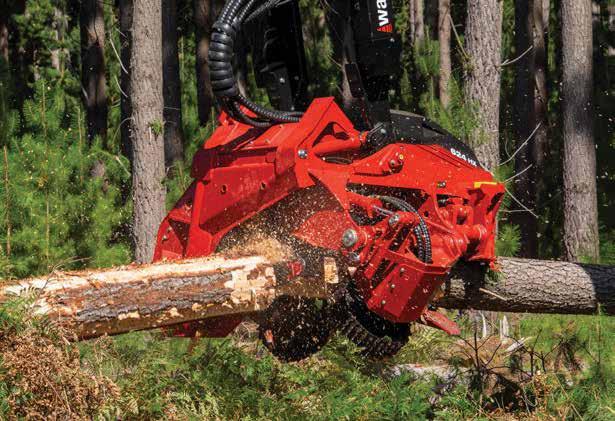
As part of the all-new HX line, the new 624HX is faster, smarter and stronger than ever before. This powerhouse delivers impressive log picking, feeding and handling with unmatched uptime –taking your productivity to the extreme.
saw capacity means it handles serious timber without breaking stride. Built tough, built smart, built to work.
The 624HX is everything you would power and improved fuel efficiency,
OneFortyOne has appointed current Forest & Wood Products Australia CEO Andrew Leighton as its new Chief Executive Officer.
Mr Leighton will succeed Michael Barbara who has been serving as Interim CEO for the past eight months following the departure of Wendy Norris.
Parrot research
A critically endangered parrot facing functional extinction by the end of this decade is being killed off primarily by an introduced predator, not native forest harvesting — and a new peer-reviewed study argues that conservation strategy needs to catch up with that reality.
Swift parrots breed only in Tasmania. The species has no other known breeding range, making its population uniquely vulnerable — and uniquely dependent on getting the conservation response right.
India agreement
The New Zealand Forest Owners Association has welcomed confirmation that legal verification of the New Zealand-India Free Trade Agreement has been completed, with both countries confirming the agreement will be signed on 27 April in New Delhi.
The agreement will eliminate or reduce tariffs on 95 per cent of New Zealand’s forestry and wood product exports to India, giving our sector better access to this market.
Shutdown fallout
Victoria’s timber towns continue to pay the price for Labor’s reckless closure of the native timber industry, with the Auditor General’s report exposing the failures of the Allan Government’s botched transition plan, according to Nationals’ Melina Bath.
Ms Bath said the report confirmed Labor’s transition failed to deliver secure jobs or sustainable livelihoods, validating the firsthand experience of workers and regional communities.
The report found the majority of timber workers employed full time before Labor’s forced shutdown were pushed into casual or insecure jobs, with little prospect of stable, long term employment.
The Forestry Centre of Excellence (FCoE) has reinforced its growing role as a hub for industry connection and regional innovation, hosting its inaugural Annual Showcase, marking its first 18 months of operation at the Mt Gambier Adelaide University campus.
More than 120 growers, processors, researchers, students, community partners and government representatives attended, highlighting the centre’s early achievements in establishing new research capability, building industry partnerships and translating applied research into practical outcomes.
The showcase also featured the official opening of the recently completed FCoE building by SA Premier Peter Malinauskas, who reinforced the Centre’s strategic role in supporting the long-term sustainability of the Forestry sector in the region, including capability across the workforce.
FCOE Director Professor Jeff Morrell said the showcase demonstrated how the Centre was already delivering value to both industry and the broader community.
“The FCOE exists to bring
growers, researchers, students, and community partners together to solve
Presenters shared new insights on remote sensing, safety innovation, sil-
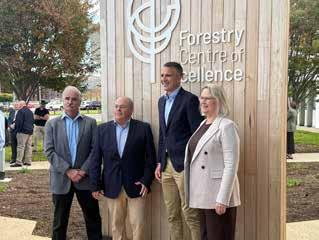
Centre General Manager Dr Jim O’Hehir SA Premier Peter Malinauskas and Forestry Minister Clare Scriven at the official opening of the Forestry Centre of Excellence
real problems and build a stronger future for the region. The engagement we saw at the showcase illustrates how deeply this work matters,” Professor Morrell said.
The program featured keynote presentations and four technical breakout streams spanning grower innovation, timber processing, forest health, and emerging technologies.
viculture trials, water-use research, biochar opportunities, and climate-ready breeding programs; research that directly supports the region’s workforce, productivity and environmental resilience.
Centre General Manager Dr Jim O’Hehir, who was recognised by Premier Malinauskas for his exceptional contributions to the Centre, said the Showcase
feedback would play a pivotal role in shaping the Centre’s forward research agenda.
“The conversations and priorities raised throughout the day give us a clear signal of where industry needs support. These insights will guide our research program, partnerships and capabilitybuilding efforts over the coming years,” Dr O’Hehir said.
The outcomes from the Showcase will feed into the Centre’s strategic planning for 2026–2030, helping refine priority research themes and ensuring the FCOE continues to deliver practical, applied outcomes for growers, processors and the wider community.
The event concluded with a networking session at the Adelaide University Piazza, strengthening relationships across the sector and fostering new collaborations.
The FCoE is a partnership between the South Australian Government, Adelaide University, the Green Triangle Forest Industries Hub and the South Australian Forest Products Association.
Tasmania’s Business, Industries and Resource Minister Felix Ellis says the State Government is committed to the forestry industry ahead of changes to federal Environment Protection and Biodiversity Conservation laws.
The reforms remove the long-standing exemption for Regional Forest Agreements (RFAs). Starting July 1, 2027, forestry operations will require full EPBC assessment and must comply with upcoming National Environmental Standards.
The AFPA says the new Environment Protection and Biodiversity Conservation (EPBC) laws, negotiated between the Federal Government and the Australian Greens, will not
achieve improved environmental outcomes in Australia’s native forests but instead undermine the future of Australia’s world-class and sustainable native forest industry.
The Mercury in Hobart reports that the Tasmanian government is being urged by the Wilderness Society, the Greens and independent MPs to halt the signing of new long-term native forest logging contracts ahead of the changes to federal environment laws and what they claim is a looming shortage of native saw log supply.
“The Wilderness Society are barking up the wrong tree again,” Mr Ellis said.
“Unlike the Victorian Labor State government, which spent $1.5 bil-
lion of taxpayer money to shut down regional jobs, here in Tasmania, we back in the native forestry sector.
“We want to deliver certainty, and so, of course, we’re looking to sign long-term contracts, so that businesses can invest in the future of their people and their plants.
“The federal government has told us that its environmental laws won’t end native forestry,” Mr Ellis said.
“They need to, of course, guarantee that no forestry businesses in Tasmania will be worse off, and we’ll be holding them to account.
“But it’s time to deliver the certainty that our forestry businesses need; timber for the future, jobs for the future, and investment for the future.”
In September a practical group of industry-leading speakers will deliver innovative case studies and new opportunities at Innovatek’s Residues to Revenues (R2R) conference.
Running in Brisbane this popular forest and wood technology event brings industry leaders together for networking and learning about new developments that are now valuing wood byproducts more than ever before.
With increasing financial pressures facing our forest and wood products sector its essential for forestry and energy professionals seek new ways to convert wood byproducts from logging and sawmilling into profitable and climate positive bioenergy applications.
The Innovatek event provides new insights into emerging biomass markets, connects suppliers with industrial energy users, and showcases innovative technologies for efficient residue recovery and processing in Australasia.
With new processes being commercialised now, wood residues are being sought for liquid fuels and carbon-positive products that bring credits and new product markets never before available.
Speaker highlights:
• Biomass for Energy: The Redbank Power Station Transformation by Mike Haywood, General Manager, Verdant Earth Technologies
• Residues to Liquid Fuels: Bridging the Gap by Miriam Blaine, Process Engineer, HAMR Energy
• Turning Waste Into Wealth: Pyrolysis Technology for Biochar, Energy and Carbon Removal Revenue by Melissa Rebbeck, Business Development, Metamorf Engineering
• Biocarbon, The GreenChar Roadmap: Utilising Waste Biomass for Industrial Metals Production by John Mellowes, Co-Founder & Chief Engineer
Miriam’s presentation for HAMR Energy An emerging low-carbon liquid fuels industry, including shipping and aviation, presents a compelling new market for underutilised forestry biomass — one that needs feedstock at scale and on long-term contracts.
Forest managers across Australasia forest plantation sectors are well-placed to supply.
One obstacle has been a lack of validated data on residue chemistry, collection logistics and carbon intensity needed to underpin commercial supply agreements.
Drawing on HAMR Energy’s Fibre to Fuels research program, conducted with CSIRO, university part-
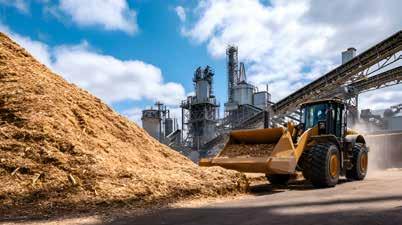
● For Australian forest managers and sawmillers there have been positive developments in the applications for wood residues.
ners and forestry partners across three Australian forestry hubs, her presentation outlines what we are learning and what it means for those across the forestry sector looking to access this opportunity. Key reasons to attend R2R Conference:
• Understand High-Value Markets: Learn how to transform forestry residues, slash, and manufacturing waste into high-value bioenergy and renewable products.
• Networking and partnerships: Connect with forest owners, contractors, wood processors, and large industrial energy users switching from fossil fuels to biomass.
• Case studies of new technologies: Access real-world examples of in-field chipping, residue processing innovations, and regional supply chain models.
• Address high energy costs: Discover how to navigate increasing energy demand and moderate fuel costs for wood manufacturing.
• Expert insights: Hear from global and local experts regarding the future of the bioeconomy and regulatory drivers influencing the industry.
• Comprehensive exposure: The event includes both expert speakers, practical technologies and vendors with innovative new processes on our indoor exhibits machinery used in wood chipping, residue handling and processing. For Australian forest managers and sawmillers there have been positive developments in the applications for wood residues.
The multi-day conference is heavily focused on demonstrating some of the potential high-value bioeconomy operations. Key focus areas include:
• Bioenergy & Biofuels: Replacing fossil fuels, modern sawmill energy systems, and supplying biomass to industrial heat and energy users.
• Value-Added Bioproducts: Commercial-scale methods to transform low-value wood and biowaste into high-value ingredients
like chemicals, glues, bioplastics, and natural fibres.
• Supply Chain & Logistics: Solutions for residues recovery, woody biomass supply and demand, and biomass resource pricing
The conference is designed for those in the forestry, wood processing, and bioenergy industries to move from simply disposing of waste to creating sustainable revenue streams
We have the potential to transform the forestry sector into a provider of biofuels, bioenergy and a range of renewable bioproducts. This event helps forest owners and managers, harvesting contractors, sawmills and wood manufacturing companies better understand the real value of wood residues and the opportunities in supplying this growing market. Other biomass technology speakers include:
• Regional Biomass Manufacturing Platform, by Curtis Gibson, Managing Director, A&E Gibson
Continued page 24
Blake and Caree Speirs are the owners of Speirs Logging Ltd., based in Gisborne, New Zealand. Blake’s father, Murray Speirs founded the company in Waitārere Beach, on the lower North Island of New Zealand, around 1998.
The business began as a small family operation focused on harvesting and processing trees from the family farm. In its early years, Speirs Logging Ltd. worked primarily on woodlots, servicing various sites across the lower North Island. As demand grew, the company expanded its operations to include two hauler crews and one ground-based crew, servicing the Wellington and Wairarapa regions. In 2010, a significant transition occurred when one crew was relocated to Gisborne. At that point, Blake and his wife Caree, took ownership of the company, marking the beginning of a new chapter for Speirs Logging.
For the first five years in Gisborne, the company operated as a swing yarder crew before shifting to a road line configuration to better meet the needs of its clients and the terrain. Today, Speirs Logging operates as a road line clear-fell operation, utilizing a combination of yarding and ground-based equipment. Speirs Logging also holds the road building contract for its operations, which is currently managed by an external subcontractor.
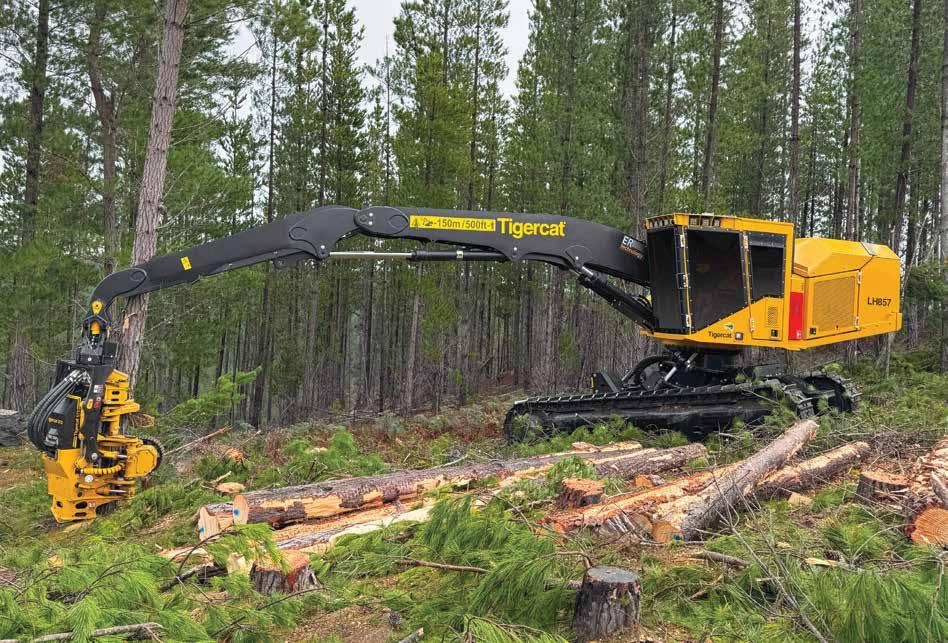
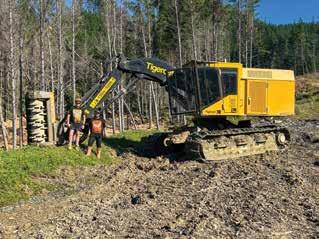
The company processes approximately 170 000 tonnes of wood annually and employs a dedicated team of twelve. The Tigercat fleet is comprised of two Tigercat LS855 series shovel loggers, two Tigercat 635 series skidders and a new Tigercat L870D track carrier fitted with a 4161-15 mulching head.
Operating in the Gisborne region presents a unique set of challenges due to steep terrain, poor soil conditions and consistently high rainfall over the past few years. These factors demand robust, reliable equipment capable of
performing in this environment. Around 90% of the company’s operations require winch assisting, particularly in high-risk areas where the terrain is more unstable or challenging.
“Our harvesting operation includes both cable extraction and steep-slope ground-based logging, with the support of winch assist technology to enhance safety and productivity on challenging terrain,” says Blake. “This approach enables us to maintain consistent output while prioritizing environmental care and crew wellbeing.”
The Speirs Logging team works a structured tenhour day, typically achieving 85-90% machine availability after factoring in maintenance time and operator breaks. The crew runs a well-coordinated system, falling and extracting a 500-metre (1 640 ft) section of the road line, then relocating the crew and equipment to allow the road building subcontractor to come in. Minimal downtime helps to ease and simplify scheduling between the harvesting and road building crews.
Impact of Cyclone Gabrielle
In 2023, Cyclone Gabrielle devastated parts of the North Island of New Zealand. The cyclone had a significant impact on the region, leading to increased scrutiny and tighter compliance regulations across the forestry industry. Leftover harvesting
pecially in locations prone to landslips.
“This combination of power, flow capacity, and slope stability made this mulcher package the ideal choice for our needs.”
residue suddenly became a matter of utmost urgency and significance. The event highlighted the need for higher standards in slash management and erosion control, pushing everyone in the sector to raise their game.
There is now a stronger collective focus on proactive risk management and environmental responsibility. The steep terrain mulching system is one of the ways Tigercat is responding — offering a practical, forward-thinking solution that helps reduce slash-related risks and supports more sustainable forestry practices in the wake of extreme weather events.
A portion of the Radiata pine plantations in Gisborne, Hawke’s Bay and Wairarapa, is managed by Forest Enterprises.
Blake explains that Speirs Logging has been contracted to Forest Enterprises with a specific focus on reducing risk in potentially hazardous cutblocks.
“Our primary objective is to mitigate the potential impact of slash and erosion on steep or sensitive terrain. Using drone technology, we conduct aerial surveys of cutover sites [harvested compartments] to identify areas where slash volumes are particularly high. From there, we strategically deploy the Tigercat L870D equipped with the 4161-15 mulching head to reduce that material, aiming to minimize the volume left on the hill, es-
This proactive approach helps prevent debris movement during heavy rain events and improves site stability. Additionally, the mulched material supports better conditions for second-rotation growth and delivers environmental benefits such as reduced runoff and improved ground cover. “By laying down mulch mats over gullies and exposed soils, we help to minimize erosion and retain moisture. When it rains, the mulch absorbs the water, preventing it from washing away the soil and promoting better land stability,” explains Blake. Machine productivity can vary depending on the terrain and conditions, but overall, Speirs Logging is achieving the results it budgeted for. “We find that wood in the 20-30 cm (8-12 in) diameter range is the most productive for our operations. Larger diameter wood takes longer to process, although we can still handle stumps effectively with the mulching teeth. Our focus isn’t to mulch everything. Rather, we’re targeting high-risk areas where the land is more likely to shift,” explains Blake.
While the creation of windrows increases costs due to the additional work involved in forming them, it has led to an overall increase in production. By setting up windrows, the mulcher carrier can process more volume with fewer movements, allowing the operator to focus more on masticating with far less machine travel.
Blake chose the Tigercat L870D equipped with the 4161-15 mulching head primarily because it offered the highest hydraulic flow of any comparable machine on the market,
an essential feature for efficient and effective mulching performance. “Having operated various Tigercat machines over the years, we’ve consistently experienced strong reliability and performance, particularly in challenging conditions,” says Blake. “Tigercat machines are exceptionally well-suited to steep terrain, offering excellent stability on the hill — something that’s critical for our operations in the Gisborne region. This combination of power, flow capacity, and slope stability made this mulcher package the ideal choice for our needs.”
When mulching material that is spread over a cutblock, medium-grade, impact-resistant tools are used on the mulching head. This setup allows the head to work through variable terrain, including areas with hard soil, without experiencing excessive wear or damage to the tooling. When the machine transitions to processing large slash piles, the tooling is switched to sharper, knife-style tools. These are better suited for highvolume mulching where there’s less risk of hitting dirt or rocks, ensuring cleaner cuts and greater efficiency in breaking down the material. This dual-tool approach gives Speirs Logging the flexibility to adapt to different conditions and slash types while maximizing performance and longevity.
Blake has seen a significant increase in productivity since the Feed Control Rotor system (FCR) was added. The FCR system utilizes a drum with rakers installed that effectively limit the engagement of the tools, reducing the potential for stalling out the drum, while making the operator’s job easier.
“Since adding the rakers and adjusting to the right set of teeth, we’ve noticed a substantial improvement, especially in handling larger material. I estimate that the rakers have boosted productivity by about 30%,” says Blake. “The key benefit is that the rakers allow the machine to take smaller bites and prevent
it from stalling out. For our operations, the rakers have proven to be the right solution.”
In Blake’s view, the Tigercat L870D simply isn’t comparable to a standard excavator fitted with a mulching head. The key differences include the leveling system and the 370 hp (276 kW) engine output, which gives the Tigercat a significant advantage, especially on steep and uneven terrain. The added power, stability and control not only improve operator safety but also allow for more efficient and precise mulching in challenging environments.
The Speirs Logging operators are very positive about the Tigercat machines. One of the standout features for them is the high level of comfort in the cab, which makes a big difference over long shifts.
“When you’re working in demanding conditions for extended periods, operator comfort isn’t just a bonus, it’s essential. Tigercat delivers on that, contributing to both productivity and overall job satisfaction,”
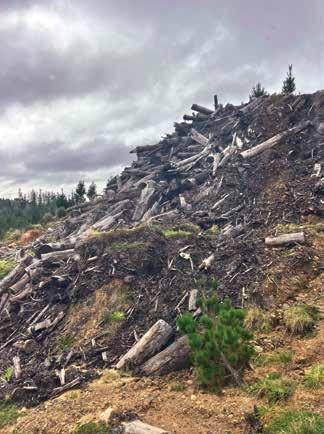
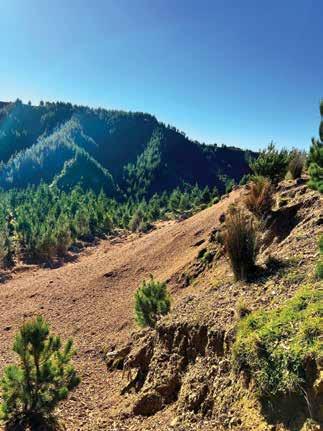
● Before and after. A treated area shows a remarkable difference.
adds Blake. “Tigercat machines are purpose-built for the demanding work we do. They stand out for their
excellent fuel efficiency, robust construction, and superior stability, especially on steep terrain where
leveling is essential. In our experience, Tigercat equipment handles tough conditions better than many
other brands, and that performance translates directly into safer, more productive operation.”

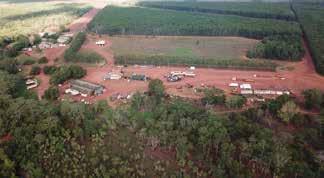
May usually marks the approaching end of the fiscal year for many businesses and a rush to find receipts and finalise financials, but for one Tiwi Islands organisation, the focus is firmly on planting for the future.
Tiwi Plantations Corporation – based 80 kilometres north of Darwin on the Tiwi Islands – has released the Tiwi Forestry Workforce Plan 2026–2030, a coordinated roadmap designed to grow Tiwi participation in forestry and strengthen long-term local employment across the industry.
The plan outlines the stages of forestry on the plantation, the range of jobs and career pathways available and the qualifications and skills required at each stage.
It responds to the scale of upcoming work with the business preparing to replant 30,000 hectares with Eucalyptus pellita over the next ten years.
The Workforce Plan was developed alongside the Tiwi Forestry Seasonal Calendar, a first of its kind which supports forestry operations by aligning work programs with Tiwi seasons and ecological knowledge.
Forestry is a crucial part of the Tiwi Islands economy and engaging more Tiwi people, particularly young people, into the workforce has become a strategic priority.
Charles Darwin University (CDU) Northern Institute Research Associate
Alicia Boyle, who is the academic lead on the project, said the Workforce Plan was developed to ensure information about jobs, training and progression pathways was clear and accessible.
“The plan provides a practical way for Tiwi people to see what roles exist in forestry and how to move into them,” Ms Boyle said.
“It shows clear training and career pathways for young people, as well as leadership opportunities. When Tiwi people move into supervisory and senior roles, they create visible pathways for others to follow.”
Ms Boyle said the timing of the plan was critical with the first rotation of plantations now harvested and a significant replanting phase recently commenced.
“This was an opportunity to look at what comes next,
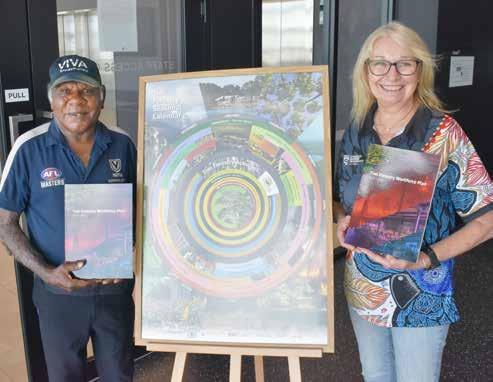
what we can do differently and how we can better support Tiwi people to build long-term careers in this industry,” she said.
The plan is being shared with schools across Darwin and the Tiwi Islands to help engage Tiwi students early and demonstrate the skills and training needed for a future in forestry.
Tiwi Plantations Corporation Chair Gibson Farmer Illortaminni said the plan
was a key step towards realising long-held aspirations for a strong, local Tiwi forestry workforce.
“This has always been part of our vision. Now we have a clear plan to support the next generation to step into the workforce and into leadership,” Mr Illortaminni said.
“We’re excited to showcase the plan to our people, because there are jobs on the Tiwi Islands, and we
have to get our people into the workforce”.
“In the old days, it was the elders’ vision to get our people in the workforce. The next generation needs to step up”.
“The calendar makes sure everyone knows which seasons are for burning, planting and looking after the plantation, while also making sure our people know when not to light fires.”
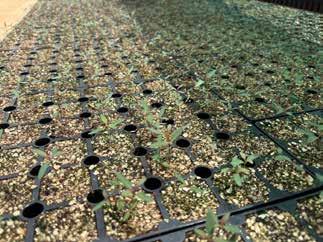
Australian Bluegum Plantations is highlighting the role of adaptive silviculture and long-term landscape thinking in the recovery of its Callendale plantation estate following the devastating January 2022 bushfire in South Australia’s south-east.
The fire, in the heart of the Wattle Range region of South Australia, impacted more than 3800 hectares of ABP plantation, presenting significant challenges including extensive tree loss, erosion challenges, and sensitive post-fire environmental conditions. Recovery required more than a standard recovery and replanting response.
ABP’s silviculture forester Neil Turner led the development and delivery of the complex salvage program, recovering 277,000 m3 of timber over an 18-month operation. The program required careful sequencing and on-ground decision making to navigate winter seasonal constraints to recover as much fibre as possible without compromising site conditions.
“This fire event burnt almost 100 per cent of the stands, wiping out everything in its path,” Mr Turner said. “These 16-year-old trees were more than 30 metres tall, and the flames were well above the canopy, it was enormous. With strong winds, the fire raced across the landscape. During mop-up it was clear the salvage task would be challenging and would require significant planning and coordination.”
Beyond salvage, ABP’s re-establishment program prioritised land recovery, environmental protection and long-term productiv-
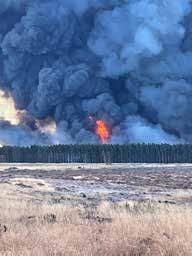
● The Callendale plantation fire in 2022 in South Australia’s southeast.
ity. Rather than rushing to replace trees, the focus was on restoring healthy plantation systems.
“After a fire of this scale, the land tells you what it needs,” Mr Turner said. “In some areas, that meant slowing down, managing erosion risk, and allowing time for conditions to stabilise before reestablishment. In others, it meant trialling different establishment techniques to better suit the postfire environment.”
The Callendale response deliberately moved away from a onesize-fits-all approach. Planting was delayed in selected areas, site preparation methods were adapted, and lessons learned were embedded into future operations. This evidence-based approach balanced immediate recovery pres-
Forestry Corporation’s Elissa Tolson has been recognised as the top student in TAFE NSW’s Certificate III in Forest Operations, receiving the G&J Groves Award for outstanding achievement across the two-year course. The award recognises excellence in practical forestry operations, safety, planning and industry knowledge.
Elissa was one of 20 Forestry Corporation staff to undertake the qualification alongside employees from Local Land Services, forestry contractors and members of the NSW timber industry.
Currently based in Grafton, Elissa works as a forestry officer oversee-
sures with the long-term health of soils, waterways, and surrounding landscapes.
The recovery program also strengthened future fire preparedness, including the establishment of additional fire-water resources within the local drainage network to improve resilience against future events.
ABP Chief Executive Officer Darren Shelden said the work at Callendale reflects a broader shift in how the company approaches plantation recovery after major disturbance.
“Neil’s leadership at Callendale demonstrates that good silviculture is as much about stewardship as it is about production,” Mr Shelden said. “The decisions made following the fire prioritised land capability, environmental outcomes, and long-term value. This is exactly the kind of thinking our industry needs as it adapts to a more challenging climate.”
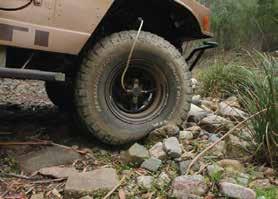

The Callendale recovery has since become a reference point within ABP, informing post-fire rehabilitation approaches across the estate and reinforcing the importance of flexibility, innovation, and on-ground expertise.
“As foresters, we’re working with long timeframes. Success isn’t just measured by survival rates at planting, but by how well the landscape performs years down the track. Callendale has been about setting that foundation properly,” Mr Turner said.
ABP continues to monitor and refine its silvicultural practices at Callendale, with lessons from the recovery program contributing to ongoing improvements in environmental management and plantation resilience across the business. This includes construction of a purpose-built fire resource dam to support future firefighting defence.
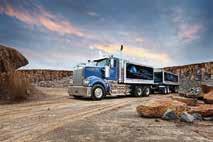


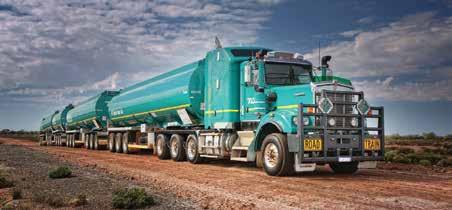

ing hardwood timber operations across the Clarence Valley and Northern Rivers.
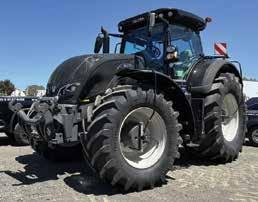
“I work as a harvest coordinator looking after hardwood timber harvest crews and conducting pre-harvest forest surveys through to monitoring harvest operations and quality control audits,” Ms Tolson said.
“I’ve always been interested in the environmental and scientific side of forestry. Before this, I worked at the University of Queensland’s St Lucia campus in Brisbane as an animal research assistant. I love being in the bush all the time and the thrill of working outdoors."
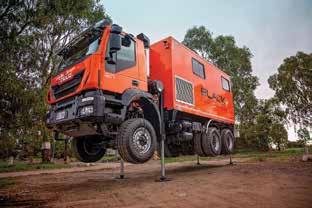


New Zealand researchers are developing biodegradable sensors to monitor tree health, with technology and expertise from international partners helping to advance their projects. By combining local research with specialised printing techniques only available overseas, the team aims to make forestry monitoring more sustainable, data-driven and efficient.
Researchers from the Bioeconomy Science Institute are developing next-generation sensor devices that could transform the way New Zealand monitors the health and productivity of its forests.
Bioeconomy Science Institute scientist Dr Robert Abbel is leading the project, ‘Next generation sensors for the digitalisation of the forestry sector’, with support from the Royal Society Te Apārangi Catalyst: Seeding fund. It involves developing biodegradable electronics that can be embedded into trees. Instead of using rigid chips or circuit boards, the devices are printed with functional inks on biodegradable materials and used to track nutrients inside trees, giving foresters real-time information about tree health.
The project was initially planned as a collaboration

with the Hebrew University of Jerusalem (HUJI) under Professor Shlomo Magdassi. It was later carried out at the Singapore-HUJI Alliance for Research and Enterprise (SHARE), part of the Campus for Research Excellence and Technological Enterprise (CREATE). SHARE fosters collaboration between HUJI and
Nanyang Technological University (NTU) in Singapore, where Professor Magdassi also holds an adjunct position.
During their visit, Robert and colleague Dr Angelique Greene trained with leading experts in inkjet printing technology not available in New Zealand. They also tested new biobased
inks - including carbon formulations and melanin pigments from black soldier flies, which could help enable fully biodegradable electronics and support New Zealand’s push for sustainable technologies.
Technologies
“This approach gives us far greater control over how we build our sensor devices and has enabled us to improve performance and even repair damaged components in ways that weren’t possible before,” Robert says.
“The project is helping to establish New Zealand’s presence in the growing field of biobased electronics. By collaborating internationally and testing new materials, we’re contributing to technologies that are innovative and sustainable.”
Devices in Bioeconomy Science Institute labs are made using screen printing, a contact method that works well for some applications but can damage delicate layers, produce too thick deposits and require new screens for each design change. Inkjet printing, by contrast, is noncontact, creates thinner layers and allows instant design changes from a digital file. By using both methods, researchers can directly compare their strengths
and weaknesses and determine which is more suitable for each application.
Bioeconomy Science Institute scientist Yi Chen says this research is part of a broader effort in sustainable and biobased printed electronics. “Much of the work carried out in Singapore contributes to larger initiatives within this space,” he says.
“For example, we have a long-running Strategic Science Investment Fund (SSIF) funded project focused on biobased printed electronic devices for packaging applications. Alongside this, a number of externally funded projects build on and complement the work, showing how this Catalyst project is part of a wider ecosystem of innovation in sustainable electronics.”
The next generation sensors project has already sparked ideas for future collaborations with Israel and Singapore-based researchers and other New Zealand science organisations. Professor Magdassi will visit New Zealand in 2026 to continue the partnership, share expertise and explore opportunities for joint international funding.
From page 19
A&E Gibson has completed the design and build of an innovative conveyor system for Seata Group, providing an integrated material handling solution suited to the demands of Seata’s pyrolysis and gasification process. It forms an important part of Seata’s pilot plant in Glenn Innes, NSW. This plant promises to play a critical future role in renewable gas, biofuels
and biochar areas.
Seata’s core innovation is combining two well-established industrial principles — thermal looping and chemical looping — into a single unified process. Instead of burning biomass (which releases CO₂), the system uses a recirculating heat carrier to break down organic material without combustion. This produces two valuable outputs at once: clean syngas for energy, and biochar for car-
bon storage.
Curtis’ presentation will demonstrate how we can solve for the growing biosolids and organic waste streams across Australia and provide a case study with our customer on how this was achieved.
This ‘Residues-2-Revenues’ Conference is also a great place to network with your industry colleageues with mutual interests in lifting productivity for foresters and millowners alike
for using wood residues
The next issue of Australian Forest & Timber News will highlight more biomass technology speakers spearheading further innovations including:
• Jacob Kohn, CEO & Cofounder, Futurity Bio Ventures
• Gareth Forde, Principal Engineer, All Energy
• Ben Crispe. Managing Director, Suncoast Green Energy
• Lachlan Esplin & Tony
Esplin, RTG (Recycling Technology Group)
• Roger Timms, Managing Director, ACORA
• Christian Jirkowsky, General Manager, Polytechnik Biomass Energy
• New initiatives from major forest owners partnering with large energy users and state development authorities.
For details see: https:// innovatek.co.nz/event/residues2revenues-2026/
Bark and ambrosia beetles are acting as tiny taxis for fungi across New Zealand, giving researchers valuable clues about how these organisms travel through forests and crops.
To understand whether plant disease-causing fungi are being moved this way, Bioeconomy Science Institute Maiangi Taiao scientists are identifying the species being carried on beetles found in New Zealand forests and orchards.
“While a lot is known about the beetles, less is known about the fungi that travels with them,” task lead Darryl Herron says.
Since 2024, researchers across the Bioeconomy Science Institute, including teams from Lincoln, Rotorua, Ruakura, Auckland and Motueka, have been collaborating to trap bark and ambrosia beetles across New Zealand and analyse the fungi they carry, through projects funded by Better Border Biosecurity (B3) and Zespri.
By combining expertise and sampling capability across teams and sites, this work has revealed a broad range of fungal associates linked to native and introduced beetle species. While most of these fungi are common plant associates, the team has detected species with the potential to disrupt plantation forestry, horticulture and native ecosystems if conditions change or new beetle species arrive.
The work includes assessing potential risks to native bush, urban environments and botanical collections and monitoring beetle activity in and around orchards, where new associations and increased aggressiveness in the beetle-fungal system could pose future threats.
Bark and ambrosia beetles tunnel into trees and interact with fungi in different ways. The latter carry and cultivate specific fungi, while the former pick up a more mixed assortment. Together, they’re associated with a wide range of woody plants across plantation forests, orchards, urban areas and the native estate. Their rapid breeding ability means beetle numbers can rise quickly – so their fungal passengers are never short of taxis.
“It’s often these fungi that cause the greatest harm,” Darryl says. “Some fungal species block a tree’s ability to move water and nutrients, weaken natural defences or accelerate disease, particularly when trees are already stressed by drought, age or harvesting activity.
“By identifying these fungal “passengers”, we’re building a clearer

● Black pine bark beetle (Hylastes ater).
picture of the microscopic communities being moved across New Zealand and which beetles are more important to focus on from a biosecurity perspective. This helps us assess whether these beetles have the potential to facilitate the movement of fungi not currently established in New Zealand.”
Overseas, certain beetle–fungus partnerships have caused extensive forest dieback. “Our focus is understanding what risks exist here before those impacts occur,” Darryl says. “If we know which beetles can carry damaging fungi and where they’re moving, we can respond faster and reduce the risk to forests and export markets.”
Surveillance
The research also contributes valuable information to national surveillance efforts led by the Ministry for Primary Industries (MPI) and industry partners, including the Forest Owners Association, alongside other research programmes. Understanding fungal diversity being carried on these tiny beetle taxis could help refine risk modelling tools, guiding where and how surveillance and monitoring is most effective and strengthening post border surveillance.
Together, these investments support New Zealand’s ability to stay ahead of emerging biosecurity risk, helping protect forests, horticulture and ecosystems and the industries and communities that depend on them.
“Maintaining strong biosecurity pathways is critical for protecting plantation forestry and export markets,” Darryl says.
Because bark and ambrosia beetles can occasionally arrive in wood packaging and untreated
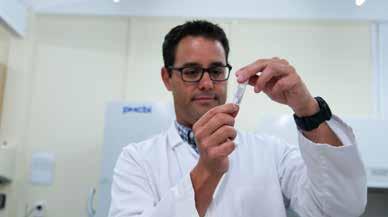
wood products brought into New Zealand, sector and public awareness remains vital.
Anyone noticing dying trees accompanied by significant insect activity is asked to report it to
(https://report.mpi.govt.nz/ pest/) or the or the Bioeconomy Science Institute.



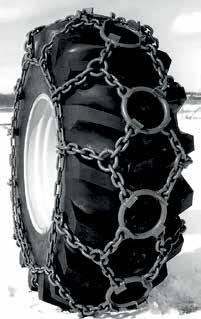
Australia’s carbon market is entering a more disciplined phase, where quality, transparency and supply certainty are becoming central to procurement decisions.
Recent data from the Clean Energy Regulator shows a significant increase in Australian Carbon Credit Units (ACCUs) and Safeguard Mechanism Credit retirements, alongside a decline in SMC issuance — reinforcing that compliance demand is strengthening as baselines tighten.
In practical terms, this means many large emitters are relying more heavily on carbon credits, with fewer internal or lower-cost alternatives available, and there is increasing pressure to secure supply ahead of fur-
ther tightening.
This shift is sharpening focus not just on accessing ACCUs, but on securing the right types of credits — those that can withstand regulatory scrutiny, support disclosure obligations and align with long-term decarbonisation strategies.
And it’s in this environment that plantation forestry ACCUs are attracting growing interest.
Plantation forestry is not new to the Australian economy. It underpins an approximately $25 billion renewable manufacturing sector and has operated within a corporate and regulatory environment for decades.
The industry supports the production of construction timber, pulp and paper, and packaging and fibre prod-
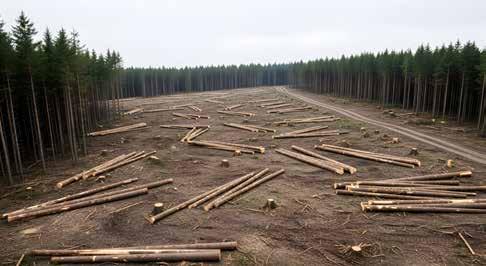
Plantation forestry underpins
ucts — all of which play a critical role in housing supply, domestic manufacturing capability and regional
employment. It also contributes to climate outcomes through carbon sequestration and
the substitution of more emissions-intensive


Projects Manager, says the emergence of plantation forestry in the carbon market is a natural extension of this established role.
“Plantation forestry has always delivered across multiple dimensions — economic, environmental and regional. What we’re seeing now is the formal recognition of its carbon value within a regulated framework,” Ms Jones said.
“For corporate buyers, that’s important. These are not one-off projects — they’re part of an established industry with real assets, long-term management and wellunderstood systems.”
Under the ACCU Scheme’s plantation forestry method, eligible activities can generate carbon credits by increasing the amount of carbon stored in plantation forests.
This includes practices such as transitioning to longer-rotation plantations, maintaining forest cover where it might otherwise be lost, or establishing permanent forest outcomes where appropriate. These projects operate under legislated rules, with defined accounting approaches and requirements for monitoring, reporting and — where required — independent audit.
According to SFM Managing Director Strategy, Risk and Trading David Wise, this level of structure is becoming increasingly important for corporate buyers.
“There is a growing expectation that companies can clearly explain and stand behind the offsets they use,” Mr Wise said.
“Plantation forestry ACCUs sit within a regulated Australian framework, with defined methodologies and reporting requirements. That gives buyers a level of transparency and confidence that is increasingly valued.”
As demand for ACCUs grows, so too does scrutiny around credit quality and availability. At the same time, international carbon markets continue to develop — including through mechanisms under the Paris Agreement’s Article 6 — but are not yet delivering consistent global standards or supply certainty.
This is placing greater emphasis on domestic ACCUs, particularly those that can meet both compliance needs and rising expectations around integrity.
Mr Wise notes that this is changing how organisations approach procurement.
“We’re seeing a shift toward more deliberate, forward-looking strategies,” he said. “It’s not just about sourcing volume. It’s about securing the right credits, in the right structure, with a clear line of sight to delivery and disclosure.”
While high-quality ACCU projects are being developed, connecting
that supply with the right corporate buyers — under the right commercial structures — remains a key challenge in the market.
SFM is working in partnership with leading Australian carbon platform, Clima, to address this.
Clima specialises in carbon market advisory and transaction services, operating across project origination, corporate procurement and secondary market activity.
Clima’s Managing Director, Guy Dickinson says this role is becoming increasingly important as the market matures.
“Large emitters are managing complex, multi-year compliance obligations, often alongside significant reputational considerations,” Mr Dickinson said.
Corporate buyers
“What we do is help translate carbon supply into structured procurement strategies — whether that’s long-term offtake agreements, portfolio construction or market access — so that buyers can secure ACCUs in a way that is both cost-effective and defensible.”
Through this partnership, SFM’s plantation forestry projects are being brought to market and matched with corporate buyers seeking compliance-grade carbon supply.
There is also a timing dimension that is becoming increasingly relevant.
As Safeguard Mechanism baselines decline through to 2030, demand for ACCUs is expected to increase. At the same time, the availability of higher-integrity, domestically generated credits remains finite. This dynamic is encouraging some organisations to move earlier — securing supply through forward agreements rather than relying on spot market availability.
Mr Dickinson notes that this approach is increasingly being viewed through a risk management lens.
“For many buyers, the question is no longer whether they will need ACCUs — it’s when and under what conditions they secure them,” he said. “Taking a structured approach now can provide greater certainty on price, availability and quality over time.”
As Australia’s carbon market becomes more sophisticated, procurement decisions are becoming more nuanced.
Buyers are placing greater emphasis on how credits are generated, how they are verified, and how they can be justified within internal governance frameworks and external disclosures.
Plantation forestry ACCUs — grounded in a legislated methodology and linked to an established

● Plantation Forestry ACCUs (Schedule 3) in comparison with generic ACCUs.
domestic industry — represent one pathway that is gaining traction in this environment.
“The market is moving toward greater transparency and accountability. In that context, the ability to demonstrate where your carbon credits come from, how they’re generated, and how they fit within your broader strategy is critical, Mr Wise said.
As the market continues to develop, closer engagement be-
tween project proponents, intermediaries and corporate buyers will play an important role in ensuring that supply and demand are effectively aligned. Through its partnership with Clima, SFM is working to facilitate that connection — helping ensure that high-integrity plantation forestry ACCUs are accessible to the organisations that need them.
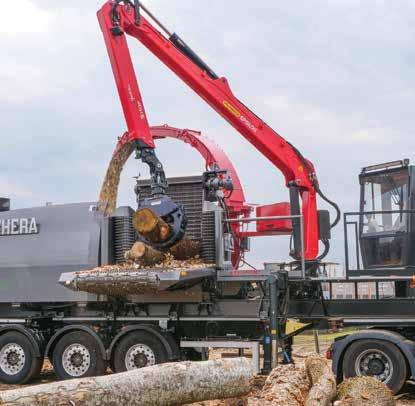

75hp to 908hp, 12 to 36 inch wood chippers. Wheels, tracks, PTO, or bin and chipper combinations. All chippers come with biomass screens. Different options are crane fed, in-feed chain, splitter, & extra side rollers.
Forestry has long sat at the margins of the insurance market, often folded into broader property portfolios and lightly scrutinised. That position, according to Daniel Longden, head of forestry at UK-based Orvia Underwriting, is becoming harder to sustain.
Mr Longden believes that the class now requires a level of focus and expertise the market has not always applied
Australia’s climate is naturally fire-prone, but climate change has seemingly intensified heatwaves, droughts, and extreme weather conditions.
Events such as the 2019–2020 Black Summer bushfires destroyed large areas of commercial plantations, causing billions of dollars
in damage.
Insurers have generally responded by increasing premiums, reducing coverage, or imposing stricter conditions on plantation owners.
In high-risk fire regions, some insurers are reluctant to provide comprehensive cover at all, leaving plantation owners exposed to substantial financial risk.
“When you look at a forest fire or a hurricane, for example, they can just flatten entire areas or burn entire areas of forestry,” Mr Longden said in an interview with Insurance Business.
“It’s a truly cat-exposed business.”
Another significant issue is the long growth cycle of forestry plantations. Trees require 10 to 30 years to ma-
ture, depending on the species and intended use. This long-term investment creates difficulties in assessing the value of plantations and estimating future losses.
Unlike annual crops, forestry assets remain exposed to risk for decades, making insurance pricing more complex. Insurers must evaluate changing timber values, inflation, environmental conditions, and future market demand over extended periods. This uncertainty can result in higher premiums and disputes over compensation values after losses occur.
Pest infestations and plant diseases also present ongoing insurance challenges. Australian plantations are vulnerable to threats such as fungal infections, insect attacks,
and invasive species.
These biological risks can spread rapidly and may not always be covered under standard forestry insurance policies.
Some insurers exclude losses caused by disease outbreaks because they are difficult to predict and control. Plantation owners therefore need to carefully review policy terms and may require additional specialised coverage.
“One of my favourite things that I always say about forestry insurance is that no two submissions are the same. Everything is entirely different,” Mr Longden told Insurance Business
In Australia forest insurance is a specialised service offered by only a few insurers.
According to Forestry Australia – which has appointed PSC Insurance Brokers to assist members to secure plantation insurance - the insurance market is cyclical. When there is surplus underwriting capacity, insurance is easy to obtain and rates fall. At other times, insurers withdraw capacity, and premiums rise. The effects of this market cycle can be exaggerated by the fact of there being so few insurers.
In recent years, a number of insurers have stopped writing plantation Insurance resulting in some growers being unable to secure or afford cover for their trees.
However satellite technology now offers a more direct view of exposure.
“We review a 25-year his- ▶
Eucalyptus bark, usually stripped from logs and treated as waste, could be repurposed to help clean polluted water, filter dirty air and capture carbon dioxide, according to new research from RMIT University.
Researchers at RMIT have shown the bark can be converted into a highly porous form of carbon that traps pollutants as water or air flows through it. The findings point to a practical way of turning a common forestry by-product into a useful environmental material using a simple processing method.
Porous carbon materials are already widely used in water filters, air purifiers and industrial gas treatment systems. Their effectiveness comes
from their structure rather than the source material itself.
These materials contain a network of microscopic pores. As air or water passes through, unwanted molecules are captured and held within the tiny spaces.
PhD researcher Pallavi Saini, who led much of the experimental work, said the performance of eucalyptus bark was unexpected.
“It is usually treated as low value waste, but with a simple process we were able to convert it into a highly porous material with strong adsorption performance,” Saini said.
“It highlights how overlooked biomass can be transformed into something useful.”
In the study, the researchers used a relatively simple, one step activation process
to produce porous carbon from eucalyptus bark. While similar approaches have been explored using other biomass sources, many porous carbons are still produced through more complex, multi stage routes that require additional energy and infrastructure.
Plant-waste based carbons are being studied worldwide using feedstocks ranging from agricultural residues to forestry and industrial waste. These materials are typically assessed based on availability, sustainability, processing complexity and performance.
Dr Deshetti Jampaiah said eucalyptus bark compared favourably on several of these measures, particularly in Australia.
“The strength of this approach lies in its simplicity,” Jampaiah said. “We are converting a widely available waste material into a functional carbon with promising performance, without relying on complex processing steps. That makes it highly relevant for real world environmental applications.”
As a next step, the researchers plan to work with Indigenous people and organisations with deep knowledge of eucalyptus species to help identify which species may be best suited for this type of application. The team says there is potential to further optimise the material by understanding species specific chemical and structural characteristics, guided by both scientific analysis and long standing ecological knowledge. Any
future work would be undertaken through genuine, respectful collaboration. Because the bark comes from existing forestry operations, it does not compete with food production and aligns with circular economy and waste reduction goals.
In time, eucalyptus bark derived porous carbon could potentially support:
• water purification, including treatment of contaminated groundwater and wastewater
• air and industrial gas filtration point of use filtration systems in regional and remote communities
• carbon dioxide capture, where pore structure, regeneration and material cost are critical considerations
tory of what’s called burn scar data: the scar map of a burn over 25 years around the plantation and the surrounding areas,” Mr Longden told Insurance Business.
“That has been a huge influence on the way we price, because we can see the data without relying on the client to tell the truth, or on fire associations to provide meaningful, accurate data.
“Traditional pricing is backward-looking,” he said. “The issue with climate change is that it’s forwardlooking and getting worse.”
“One of the biggest things we’ve seen in recent years is that the one-in-250-year events are becoming onein-100-year events, or even one-in-50-year events,” he said.
“We’ll have all the data in front of us, we’ll have looked through everything, but it comes back to the team to sit down and work out what we know about that region, what we know about the risk, and what we’re comfortable with,” Mr Longden said.
“It’s an area that is drawing investment from the biggest investors around the world,” Mr Longden said. Forestry’s appeal lies partly in its insulation from geopolitical and financial volatility.
“Trees don’t fight with people. Trees don’t make people angry. People don’t want to invade someone for their trees,” he said. “It’s a very safe asset class.”
AI-enabled bushfire detection cameras are transforming fire detection and plantation management across Australia.
In the Green Triangle alone, where despite a dry, fuel-laden summer following green drought conditions, the Green Triangle Fire Alliance-managed camera network detected 15 unplanned fires across the south-west of Victoria during the 2025/26 fire season. All were contained quickly, with early detection allowing firefighting resources to be deployed before fires could escalate.
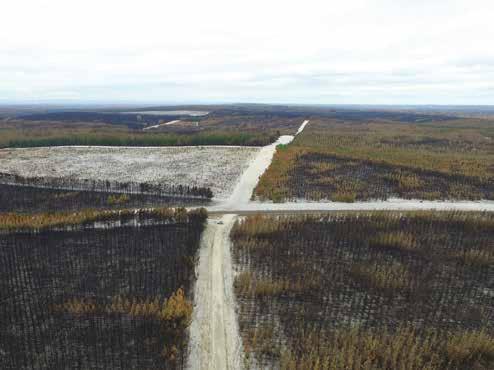
VFPA CEO Andrew White said while hundreds of alerts were received each season, the accuracy of detections continued to improve as the AI became more sophisticated from learnt surveillance data.
“These results show what’s possible when you invest in technology that works,” Mr White said.
Even so, Mr Longden remains clear about its limits.
“The cameras don’t replace people, they empower them, and that’s what has kept fires small and impacts low in the Green Triangle.”
“That final sit-down and discussion will never be replaced by technology, as it does not see the full picture,” he said.
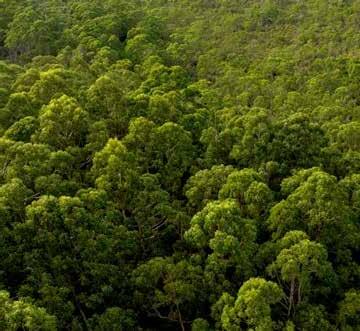
Ponsse has developed a new technology solution for forest regeneration. The Ponsse Buffalo Planter is a tillage and planting unit mounted on the frame of a forest machine, enabling mechanised and automated planting. This is the first treeplanting innovation in the company’s history.
“The Buffalo Planter is Ponsse’s solution for mechanised forest regeneration, with the entire planting process carried out by a single machine. “Built on the Ponsse Buffalo forwarder platform, the planting machine performs spot tillage, plants the seedlings and waters them – all in one seamless process,” says Juha Inberg, Ponsse’s Chief R&D and Technology Officer.
Ponsse aims for better support for the forest life cycle
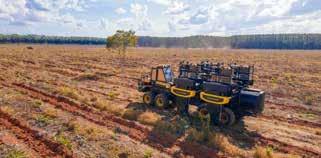
Developing the Buffalo Planter marks a new step for Ponsse, moving from harvesting technology into forest regeneration solutions and broader life-cycle support. In the first phase, the primary market for the planting machine is South America, where its benefits are most evident on plantation sites.
“The Buffalo Planter improves the productivity and cost-efficiency of forest regeneration by enabling large areas to be planted
in a shorter time. The automated planting process ensures a high-quality and consistent planting result, creating good conditions for seedling growth and reducing the need for later replanting. Outside the planting season, the system can be converted back into a conventional forwarder, which improves the machine’s utilisation rate,” says Inberg.
The new planting machine has a reliable and familiar foundation: the Buf-
falo has long been Ponsse’s most popular forwarder model.
Focus on the operator In addition to speeding up the work, the Buffalo Planter brings safety and ergonomic benefits to the planting process. Digital systems support the monitoring, reporting and documentation of work. To ensure the high quality of the work, the cameras installed on the planting device transmit information about ground-level events to the operator in the cabin. Thanks to automation, only one person is needed to control the Buffalo Planter and carry out the planting work: the operator of the machine.
• The planting system consists of four planters, two on each side of the machine.
• Each unit has a separate
tillage head, as well as a planting head that takes care of planting, watering and compacting the seedlings.
• The planting interval of the trees is adjustable both laterally and in the direction of travel.
• The seedlings are fed through four seedling cassettes with a total capacity of up to 960 seedlings per load.
• With spot mounding, the working rate is around 750 seedlings per hour, while without tillage, the machine can plant around 1,300 seedlings per hour.
The innovative Buffalo Planter was developed in collaboration with Ponsse’s technology company Epec and Novelquip Forestry, a South African company specialising in planting equipment.
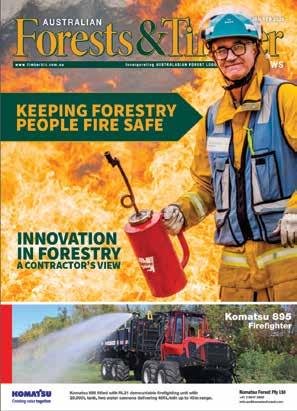
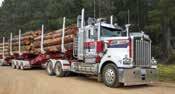
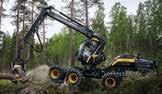
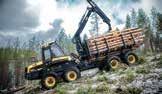
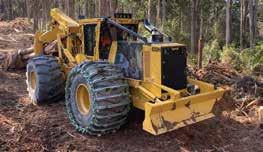
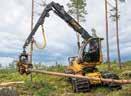
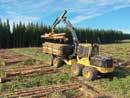
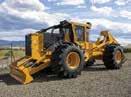
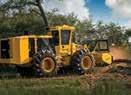
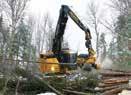
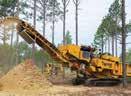
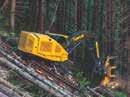
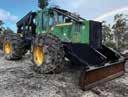
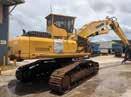




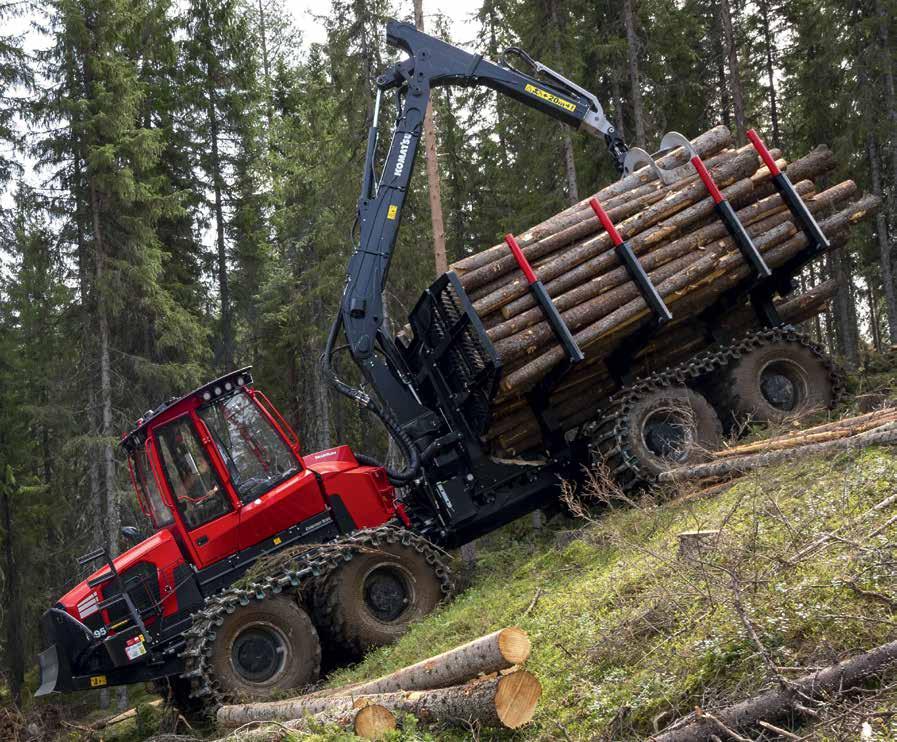
The Komatsu 895.3 offers new larger Komatsu 205F Crane with G85H Grapple supported by Smart Forest technology;
• XT Transmission......for 307kN torque
• Reinforced Frame.....for heavier loads
• Enhanced Load Space.....for increased productivity
The new 895.3 for higher productivity in tough conditions