EFFECTIVE DATE: August 2025
ESTIMATED REFRESH DATE: August 2027
EFFECTIVE DATE: August 2025
ESTIMATED REFRESH DATE: August 2027

AUTHORS: Emma Collyer, Head of Quality and Safety, Patient Safety Specialist (PSS) Tracy Rodgers, Director of Quality, Safety and Nursing, PSS Paul Binyon, Quality and Safety Specialist
REVIEWER: Quality and Safety Committee
REVIEWER: Lucy Wightman, CEO Provide Health and Chief Nurse
AUTHORISER: ICB, signed off at the Mid and South Essex ICS Patient Safety Collaborative, Friday 19 December 2025
This Patient Safety Incident Response Plan (PSIRP) sets out how all brands and services across the Provide Community Group intend to respond to patient safety incidents over a period of 24 months (April 2025 to April 2027). This plan will serve as a guiding framework, while allowing the Group to remain flexible in its response to patient safety incidents.
Each incident will be considered on its own merits, with proportionality, the needs of those affected, and the evolving nature of our incident profile, taking into account Provide Community’s continuous growth across the health and social care landscape. Whatever actions are taken in response to incidents, all information and learning will be captured to inform the next formal revision of the PSIRP.
Provide Community’s Quality Reference Group will have oversight of all incidents being managed across the Group and will escalate to the Quality and Safety Committee, Board or the Senior Leadership Team any areas of concern as required. This plan could be revised ahead of the review date if deemed necessary.
The plan is underpinned by our Incident Reporting and Management Policy (QSPOL01) which is available to all staff via our policy system, MyCompliance.
This plan is formulated from Provide Health and Provide Wellbeing patient safety incident data. A copy of this plan will be available to commissioners of the services within these group companies and the public via the Provide Community website providecommunity.org.uk
Provide Community is an employee owned, Community Interest Company (social enterprise) formed on 1 April 2011.
Our Vision: 'Transforming Lives', our vision is to be a beacon of transformation and excellence in health and social care. We are committed to enriching lives and strengthening communities through our innovative, empathetic, and comprehensive approach. Our goal is to be at the forefront of creating a healthier, more connected society, where every individual has access to the care and support, they need to thrive.
Our Values: ‘Care, Innovation and Compassion’, our values guide us to deliver excellence and profoundly touch lives in every aspect of our work. They guide our every action and drive our commitment to deliver outstanding services. Central to this is our approach to care, where compassion and empathy are paramount, ensuring that every individual feels heard, valued, and supported. Embracing innovation, we harness technology and pioneering ideas to improve every aspect of our work. Our innovative spirit is integral to our identity, ensuring we continually adapt, improve, and lead with excellence in all our pursuits.
Our Mission: An ambitious, employee-owned social enterprise, growing in size and influence. We transform lives by treating, caring and educating people.
At the heart of our operation, Provide Community Interest Company is honoured to hold an ‘Outstanding’ accreditation from the CQC, a testament to our commitment to exemplary care and continual improvement. While Provide Community, as a wider entity, facilitates a range of services across our family of brands and businesses, this CQC rating is specific to the healthcare provisions administered primarily under Provide Health.
Our various subsidiaries within our group also uphold high standards, with several holding their own individual CQC accreditations. These specific ratings, pertinent to each subsidiary, are detailed on their respective websites, underscoring our group-wide commitment to excellence, safety, and quality care.
Provide Community delivers a broad range of health and social care services in the community and are committed to making sure that they are safe, responsive, and high quality. We work from a variety of community settings, such as community hospitals, community clinics, nursing homes, and primary care settings, as well as within people's homes to provide services to children, families, and adults. We also offer some online services, and we provide services across the UK.
Provide Community:
Delivers services to a population of 11 million people
From two community hospitals with 45 beds (25 dedicated stroke rehabilitation beds)
Employs 1,600+ clinical and non-clinical staff
Provides over 80+ services to support health and wellbeing of populations
Our family of brands Companies under the umbrella of Provide Community
To understand the Provide Community profile and priorities for the financial year 2025-2026, we undertook a review of the previous two years patient safety incident data, the levels of harm and any trends. Our priority is to ensure that our services are safe, effective, caring, responsive, and well-led and to ensure we meet these priorities we continuously collect and review a range of information about our services. To support development of this plan we reviewed data and intelligence from various sources:
Thematic analysis of Datix incident data April 2023 to March 2025
Key themes from complaints and claims and specific actions as recommended following coroner inquests
Key themes from Quality and Safety Committee subgroups (safeguarding, mortality, infection prevention, medicines)
Actions/learning from incidents investigations/reports and Never Events
CQC action plans and inspection outcome reports
Actions arising from our internal programme of quality assurance visits
Feedback from external quality assurance visits by commissioners and regulators
Friends and Family Test and customer survey feedback
Feedback from our Patient Safety Partner and other stakeholders
The focus, when analysing this information, was to identify opportunities for improvement, particularly where gaps in care or treatment or recurring types of incidents continue to pose concerns due to their impact on service users, families, carers, or colleagues.
Never Events* – Provide Community reported no Never Events during this timeframe.
Serious Incidents – Provide Community reported 1 Serious Incident during April to October 2023.
Patient Safety Incident Investigations (PSII) – Provide Community has reported 1 PSII between October 2023 to March 2025.
In determining opportunities for system focus learning and improvement for the plan consideration was given to:
Potential for harm
• People: physical, psychological, loss of trust (patients, family, carers)
• Service delivery: impact on quality and delivery of healthcare services; impact on capacity
• Public confidence: including political attention and media coverage
Likelihood of occurrence
• Persistence of the risk
• Frequency
• Potential to escalate
*Never Events are defined as Serious Incidents that are wholly preventable because guidance or safety recommendations that provide strong systemic protective barriers are available at a national level and should have been implemented by all healthcare providers.
To better understand where our improvement profiles should focus over the coming 12 to 18 months, we reviewed the patient safety incident data from 1 April 2023 to 24 March 2025. The data provided insights into incident reporting numbers, harm profile and top reported categories of incidents.
The data reviewed demonstrated consistent reporting numbers reflecting our healthy, open reporting culture. From the incidents reported the data showed that most incidents reported were of low or no harm.
From the incidents reported during the period of 1 April 2023 to 24 March 2025, the top categories of incidents were ‘Pressure Ulcer’ followed by ‘Service User Fall’, and ‘Medication’.
Further breaking down the category of ‘Medication’, the greatest number of medication incidents reported involved insulin.
Despite ‘Service User Fall’ remaining within the top three categories of incidents reported, the number of falls per 1000 bed days within Provide Community has reduced. In 2023, the falls per 1000 bed days was at 5.31% compared to 4.92% in 2024 which is almost 2% lower than NHS benchmarking at 6.63%. Whilst it is not ideal for any patient to suffer a slip, trip or fall, a more in-depth analysis of the data 2024-2025 enabled us to consider the cohort of patients we care for. We have accepted the need to acknowledge the cohort of patients are at higher risk of falls and therefore do not feel this is an area that requires a focus over the next 12 to 18 months. Falls will be monitored via our incident management processes and the PSIRP Plan updated if appropriate.
A gap was identified for capturing incident data of deteriorating patients and it was felt that, whilst this category did not feature in the top reported incident categories, we are mindful of the national focus of improving safety for deteriorating patients so have added to our Local Risk Management System, Datix, the category of ‘Deteriorating Person’.

Our Board works in partnership with colleagues across the Provide Community Group to ensure the services we deliver achieve the standards of quality and safety required. The Board has set in place systems and processes including safe premises, safe systems of work, guidance, training, equipment, and leadership to enable colleagues to work safely and effectively. Regular assurance reports to the Quality and Safety Committee inform them how the Group is performing with regards to quality and safety, including information on incidents, risks, infection prevention, safeguarding, customer engagement, feedback, and compliments. Where needed, the Board takes action to address any issues in real-time.
The Board promotes a ‘Just Culture’ which ensures the fair treatment of colleagues through a culture of fairness, openness and learning by making colleagues feel confident to speak up when things go wrong, rather than fearing blame. Supporting colleagues to be open about mistakes and where they think improvements can be made, allows valuable lessons to be learnt so the risk of repeat incidents can be minimised and encourages cross-pollination of learning across the Group. Quality improvements are shared to a wider audience through the Group’s Annual Quality Account, Annual General Meeting (AGM) and through social media channels.
The Board utilities a positive safety culture where the environment is collaboratively crafted, created and nurtured so that everybody (individuals, teams, patients, service users, families and carers) can flourish to ensure safer care.
The Board supported the embedment of the Patient Safety Incident Response Framework (PSIRF) to ensure an effective patient safety incident response system is practised that:
1 Compassionately engages and involves of those affected by patient safety incidents
2 Applies a range of system-based approaches to learning from patient safety incidents
3 Responds in a considered and proportionate way to patient safety incidents
4 Supports oversight focused on strengthening response system functioning and improvement.
Provide Community is committed to contributing to improvements in patient safety and support this by setting annual priorities for focus through our Quality Account, Corporate and Health Strategies.
Our Priorities for the year ahead are designed to ensure continued delivery of high-quality care across the Provide Community and to contribute to improvement of health and social care services within the health and care systems where we work.
1 Customer Engagement and Involvement
We will continue to develop our customer feedback processes to enable more people to give us feedback and to help us understand the lived experience of all people who use our services including people from hard-to-reach populations or those who experience health inequalities.
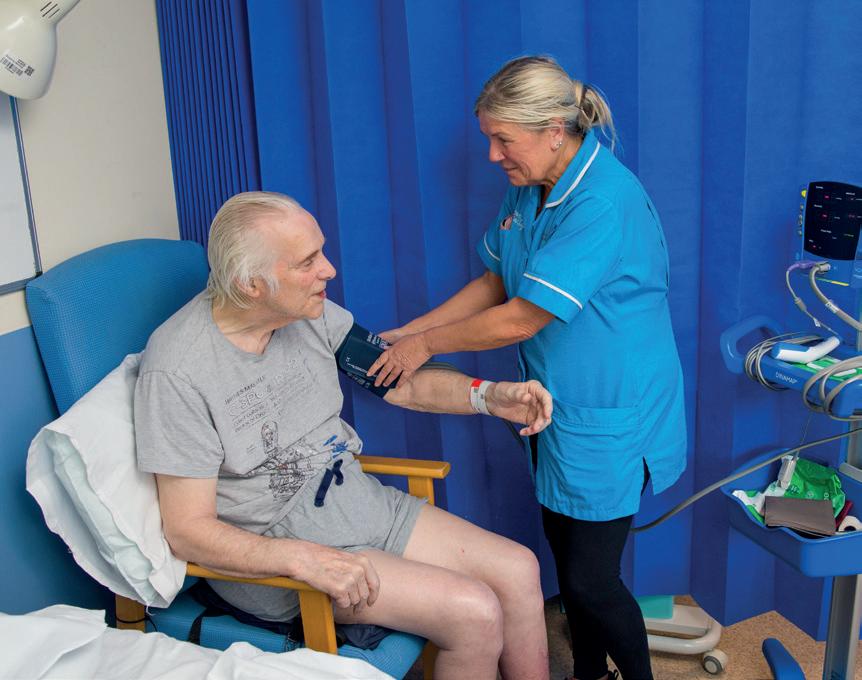
2 Deteriorating patients – community inpatient and virtual frailty wards
We will review our systems and processes to build our approaches to supporting people experiencing a deterioration in their condition to enhance safety.
3 Category 4 pressure ulcers (inpatient and community)
We will continue to embed the PURPOSE T risk assessment process across the Group and evaluate the impact.
4 Medication - insulin safety
We will review insulin incident themes and trends to identify opportunities to improve safety and quality.
We are delighted to announce the appointment of our new Quality and Engagement Manager, who will play a key role in strengthening our focus on patient engagement across Provide Community. In this role, they are leading the development of a clear strategy and work plan to ensure patient voices are at the heart of our decision-making. By raising the profile of engagement, this appointment marks an important step in driving forward our commitment to high-quality, person-centred care.
The three priorities below align the Quality Priorities 2, 3, 4 for 2025-2026 of our PSIRP. They reflect our ambitions to continually learn and improve services, to transform lives and keep those who use our services safe, whilst supporting our staff to deliver safe and effective care.
The deteriorating patient is a patient that moves from one clinical state to a worse clinical state, increasing their risk of disease, organ failure, prolonged hospital stay or death. Clinical deterioration can occur at any point in a patient’s journey. Acute physical deterioration is the rapid worsening of a patient’s condition. It can be identified from changes in physiology, such as respiratory rate, blood pressure or consciousness, or more subtle signs, such as not eating and a patient or their family’s concerns and observations around wellness, mental status or behaviour. Early recognition of the deteriorating patient, with an appropriate response and escalation can reduce patient harm and mortality.
NEWS (National Early Warning Score) is a tool developed by the Royal College of Physicians which improves the detection and response to clinical deterioration in adult patients and is a key element of patient safety and improving patient outcomes. We have supported the adoption of the latest version of NEWS2 to standardise the assessment and response to acute illness in the community setting.
We utilise the Whzan Blue Box, a digital tele-health solution developed by Whzan Digital Health, to monitor NEWS2 for our respiratory virtual ward patients. The Blue Box kit includes portable monitoring equipment and a tablet; it is used to measure body vital signs, record photos, perform multiple assessments and questionnaires, including the NEWS2 score, and allows access to patient results and analysis in real-time through a secure cloud-based portal. Its use is associated with a 49% reduction in hospital bed days, significant cost saving in A&E attendances and ambulance services; and increased staff engagement and satisfaction.
The new PIER approach will enable the effective management of acute physical deterioration in health and care and will apply to all conditions, clinical settings and specialities. The new PIER approach views deterioration as a whole pathway which is supported by systems rather than only advocating a single strategy for identification.
PIER stands for:
Prevention: planning ahead of any episode of deterioration to stop what is preventable, considering indicators of risk and patient choice.
Identification: tools and methods to identify when deterioration is occurring in a standardised way.
Escalation: timely escalation of care when deterioration has been identified using standardised communication tools.
Response: timely, appropriate and effective response to escalation of the deteriorating patient/person.
Areas for improvement within this sphere of care can be identified through incident reporting, complaints, coroner inquests and external alerts.
Review to establish appropriate mechanisms for early recognition and escalation
Work with Mid and South Essex Community Collaborative/Integrated Care System colleagues to consider/scope/implement PIER
Ensuring areas of good practice and areas for improvement are shared across the organisation
MDT and cross system working to improve the patient safety
Keep pace with the introduction of Martha’s rule* to the community
‘A pressure ulcer is localised damage to the skin and/or underlying tissue, usually over a bony prominence (or related to a medical device or other device), resulting from sustained pressure (including pressure associated with shear). The damage can be present as intact skin or an open ulcer and may be painful’. (NHS Improvement 2018)
Pressure ulcers continue to be the highest reported patient safety incident from the Provide Community informatics and data profile over the past 5 years. This is reflective of both internally reported and external reported patient safety incidents.
Ensuring patients receive safe and effective care that prevents and reduces pressure ulceration whilst within our care remains a high priority for Provide Community. Care and treatment following early identification continues to be an area of focus to prevent deterioration and associated complications such as infections. As such over the last year we have invested in training of staff and transitioning practice to include Pressure Ulcer Packs (literature, education and advise for the patient and all involved in their care), the aSSKINg framework (guidance to ensure a full assessment of the patient and prevention treatment is provided) and PURPOSE-T (Pressure Ulcer Risk Primary or Secondary Evaluation Tool).
With changes in national guidance and the introduction of PSIRF, that enables provider to take a proportional response and focus on incident where the learning is the greatest, we are moving to a position of focusing on Category 4 pressure ulcers. Category 4 are those with a full thickness tissue loss with exposed bone, tendon or muscle. Slough or eschar may be present on some parts of the wound bed and these ulcers often include undermining and tunnelling.
Monitor the introduction of PURPOSE-T
Work with system partners to support other providers’ introduction of PURPOSE-T
Establishing a programme of secondment enables all community nursing staff involved in wound care an opportunity to spend time with the tissue viability team, thereby enhancing their skills and knowledge and ensuring standards of care and treatment across the organisation are equitable and evidence based.
*Martha’s Rule is a major patient safety initiative providing patients and families with a way to seek an urgent review if their or their loved one’s condition deteriorates, and they are concerned this is not being responded to.
NHS England » Martha’s Rule
It is estimated that more than 1 million people in the UK rely on insulin to control their diabetes (Diabetes, UK 2021). Insulin is a high-risk medication, and, with the launch of different insulin concentrations and biosimilar insulins (see new insulin developments), it is crucial for all healthcare practitioners involved in prescribing, preparing or administering insulin to possess the knowledge and competency to do so safely. Insulin is recognised worldwide as a high-alert medication associated with a heightened risk of significant patient harm when errors occur. Most incidents occurred during insulin administration, while others were caused by prescribing errors or were related to the dispensing of insulin.
Insulin error accounted for 140 incidents of the medication incidents over the last 2 years and the third highest category of harm for patient safety incidence within Provide Community. It is noteworthy that a high proportion of these incidents also relates to a Transfer of Care element which is being addressed by the Mid-South Essex Insulin Safety Group.
Training for staff involved in insulin management – 6 steps to insulin safety
Supporting patients and their families to models of self-management and empowerment
Provide Community is an active member of the Mid-South Essex Insulin Safety Group
Provide Community is an active member of the Mid-South Essex Diabetes Programme Board attend
Ensuring areas of good practice and areas for improvement are shared across the organisation
Patient safety incident type Required response Anticipated improvement route
Incidents meeting the Never Events criteria
Deaths clinically assessed as more likely than not due to problems in care (including where the Mental Capacity Act (2005) applies
Locally led Patient Safety Incident Investigation (PSII)
Locally led PSII
Create local organisational actions and feed these into the Quality Account and Health Directorate strategy
Create local organisational actions and feed these into the Quality Account and Health Directorate strategy
Aligned with learning from medical examiner process
Patient safety incident type
Unexpected death of person with Learning Disability within our care
Required response
Locally led PSII if relevant
Mortality Review
LeDeR
Under 18s (child deaths) Refer for Child Death Overview Panel Review
Locally-led PSII (or other response) may be required alongside the panel review –organisations should liaise with the panel
Anticipated improvement route
Respond to recommendations as required and feed actions into the Quality Account
Respond to recommendations as required and feed actions into the Quality Account
Incidents in NHS screening programmes
Safeguarding incidents in which:
Babies, children and young people are on a child protection plan; looked after plan or a victim of wilful neglect or domestic abuse / violence
Adults (over 18 years old) are in receipt of care and support needs by their Local Authority
The incident relates to FGM, Prevent (radicalisation to terrorism); modern slavery and human trafficking or domestic abuse / violence
Local screening quality assurance process to inform locally led learning response
Refer to local authorities. Healthcare providers must contribute towards Learning Practice Reviews, Serious Adult Reviews, Domestic Abuse Related Death Review, joint targeted area inspections, and any Section 42 enquiries
Respond to recommendations as required and feed actions into the Quality Account
Respond to recommendations as required and feed actions into the Strategic Safeguarding Group and Quality and Safety Committee
Patient safety incident type
Death or severe harm clinically assessed as likely due to issues in care where immediate lifesaving treatment was required
Death within care (inpatient/virtual Frailty wards)
Moderate Harm incidents where patient required urgent referral to specialists, emergency treatment/review and/ or clinically assessed as likely due to gaps in care
Required response Anticipated improvement route
Patient Safety Incident Investigation (PSII)
Moderate harm incidents clinically assessed as requiring review
MDT to review at an Incident Review Panel and Mortality Review Group
MDT review at an Incident Review Panel or
MDT review at an Incident Review Group or
Patient Safety Incident Investigation or
Patient Safety Incident Review or
After Action Review
MDT review at an Incident Review Panel or
MDT review at an Incident Review Group or
Patient Safety Incident Investigation or
Patient Safety Incident Review or
After Action Review or Swarm Huddle
Anticipated number per quarter period
Create local organisational actions and feed these into the Quality Account ≤ 1
To identify areas for quality improvement and areas of good practice < 5
Create local organisational actions and feed these into the Quality Reference Group
< 5
To identify areas for quality improvement and highlight areas of good practice and feed these into the Quality Reference Group 6 - 12
Patient safety incident type
Incidents where patient sustained moderate harm and had complex and/or deteriorating needs and cross system care delivery was involved
Incidents where the patient acquired a healthcare related bloodstream infection within our care
System Incident Group
System Patient Safety Incident Investigation or
System After Action Review
To examine systems and processes across the patient pathway, identifying opportunities for quality improvements to be monitored via the Integrated Care Board System Quality Group < 1
No harm/low harm incidents with a common theme that are rising in occurrence across one or more services
MDT review at Incident Review Panel or
MDT review at Incident Review Group or
Patient Safety Incident Investigation or
Patient Safety Incident Review or
After Action Review or Swarm Huddle or +/- an external review if required from Integrated Care Board or UKHSA
Monthly reporting or Thematic Review
To examine systems and care delivery across the patient pathway, identifying opportunities to prevent reoccurrence ≤ 1
To identify opportunities for quality improvement and measures to prevent escalation of harm to feed into either the Quality Reference Group or Quality and Safety Committee
The numbers quoted for the ‘Anticipated number per quarter period’ are based on a review of the preceding two years relevant data. Numbers will be monitored per quarter and, if there is an increase in actual numbers, this would prompt clinical curiosity to carry out an in-depth analysis to identify emerging themes.
It is noteworthy that we will work with partner providers and the relevant Integrated Care Boards (ICBs) to establish and maintain robust procedures to facilitate the free flow of information and minimise delays to joint working on cross-system incidents. We will defer to the ICB for co-ordination where a cross-system incident is felt to be too complex to be managed as a single provider. We anticipate that the ICB will give support with identifying a suitable reviewer in such circumstances and will agree how the learning response will be led and managed, how safety actions will be developed, and how the implemented actions will be monitored for sustainable change and improvement.
We will build in a commitment to capturing structured feedback from staff and partner agencies involved in incident management processes, so that we are continually testing, refining, and improving how we undertake management itself, not only the learning outcomes.
Method
Patient safety incident investigation (PSII)
A PSIIs are led by staff trained to conduct investigations and the investigations utilise the tools and templates aligned to the NHS Patient Safety Incident Response Framework. These investigations explore decisions or actions as they relate to the situation. The method is based on the premise that actions or decisions are consequences, not causes, and is guided by the principle that people are well intentioned and strive to do the best they can. The goal is to understand why an action and/or decision was deemed appropriate by those involved at the time and to establish how changes can be made to improve safety. The National PSII template is utilised to guide standardisation of approach and report and the SII template mirrors this approach but has been adapted to suit social care services.
Patient Safety Incident Review (PSIR)
PSIRs are led by staff trained to conduct reviews to achieve learning. The review and learning is recorded in a PSIR template which aligns to the NHS Patient Safety Incident Response Framework.
Method
After action review (AAR)
An after-action review method of evaluation usually takes the form of a facilitated discussion following an event or incident. It enables understanding of the expectations and perspectives of all those involved, and it captures learning, which can then be shared more widely.
AAR generates insight from the various perspectives of the MDT and can be used to discuss both positive outcomes as well as incidents.
It is based around four questions:
What was the expected outcome/expected to happen?
What was the actual outcome/what happened?
What was the difference between the expected outcome and the event?
What is the learning?
Post Infection Review (PIR)
Swarm Huddle
Structured Judgement Review (SJR)
The principal purpose of the Post Infection Review (PIR) is to support commissioners and providers of care to deliver zero tolerance on bloodstream infections. The purpose of the PIR is to identify how a case of bloodstream infection occurred and to identify actions that will prevent it reoccurring. This review is a cross-system process and enables pathways of care and treatment to be examined to identify improvements and/or change.
A swarm is designed to start as soon as possible after a patient safety incident occurs.
Immediately after an incident, staff ‘swarm’ to quickly analyse what happened and how it happened and decide what needs to be done to reduce any risk. Swarms enable insights and reflections to be quickly sought and generate prompt learning. This has the benefit of staff being able to readily recall key information that may be forgotten over time, and to support staff that the aim is to identify learning and improvement in a ‘Just Culture’.
SJRs blend traditional, clinical judgement-based review methods with a standard format. This approach requires reviewers to make safety and quality judgements over phases of care, to make explicit written comments about care for each phase, and to score care for each phase. The result is a relatively short but rich set of information about each case in a form that can also be aggregated to produce knowledge about clinical services and systems of care.
Method
Multidisciplinary team (MDT) review/
Incident Review Panel (IRP)
Required response
The multidisciplinary team (MDT) review supports health and social care teams to:
Identify learning from multiple patient safety incidents (including incidents where multiple patients were harmed or where there are similar types of incidents)
Agree, through open discussion, the key contributory factors and system gaps in patient safety incidents for which it is more difficult to collect staff recollections of events either because of the passage of time or staff availability.
To explore a safety theme, pathway, or process.
To gain insight into ‘work as done’ in a health and social care system.
The Incident Review Panel will consider the facts of the incident and will confirm and agree if the incident can be finalised and closed as local management and learning, if appropriate; or they may recommend that the incident is further reviewed to achieve greater insight and learning from the incident.
Incident Review Group (IRG)
Thematic Review
Horizon scanning
An Incident Review Group (IRG) will be convened the Quality and Safety Team and will include the service Director. The IRG will review the incident and confirm if the incident should be reviewed in more depth utilising one of the following methodologies appropriate to the type of service where the incident occurred.
A thematic review can identify patterns in data to help answer questions, show links, or identify issues. Thematic reviews can sometimes use a combination of qualitative data with quantitative data to inform findings.
Thematic review can be used to inform a patient safety incident response plan, analyse a patient safety incident or theme and inform or assess the impact of a patient safety improvement plan.
The horizon scanning tool supports health and social care teams to have a forward look at potential or current safety themes and issues