This leaflet has been designed to give you information about your nebulised hypertonic saline treatment and answer some commonly asked questions. This leaflet does not replace discussions between you and your medical team. If you have any questions or concerns regarding the information below or your treatment, please contact the Respiratory Service on 0300 131 0111 (Monday-Friday 9am-5pm).
What does nebulised mean?
Nebulised is a way of taking medicine by using a device (a nebuliser).
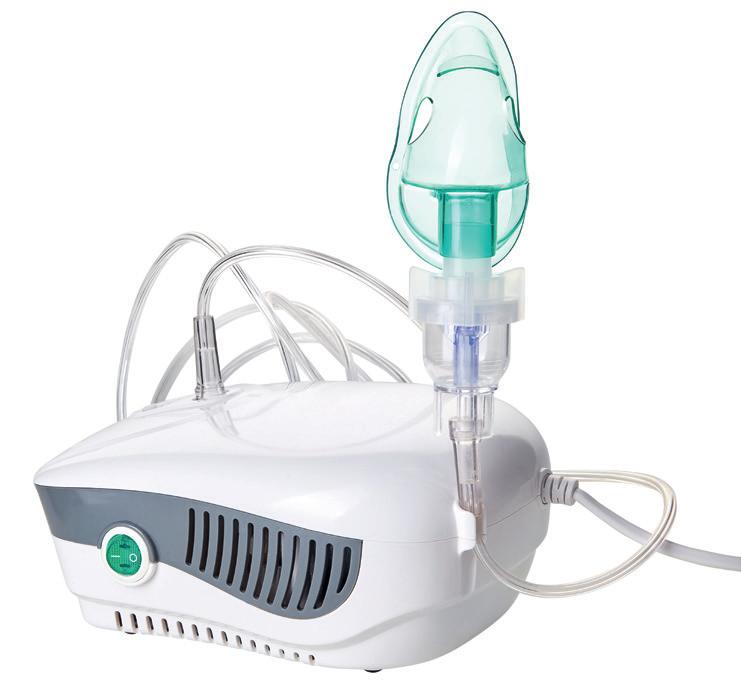
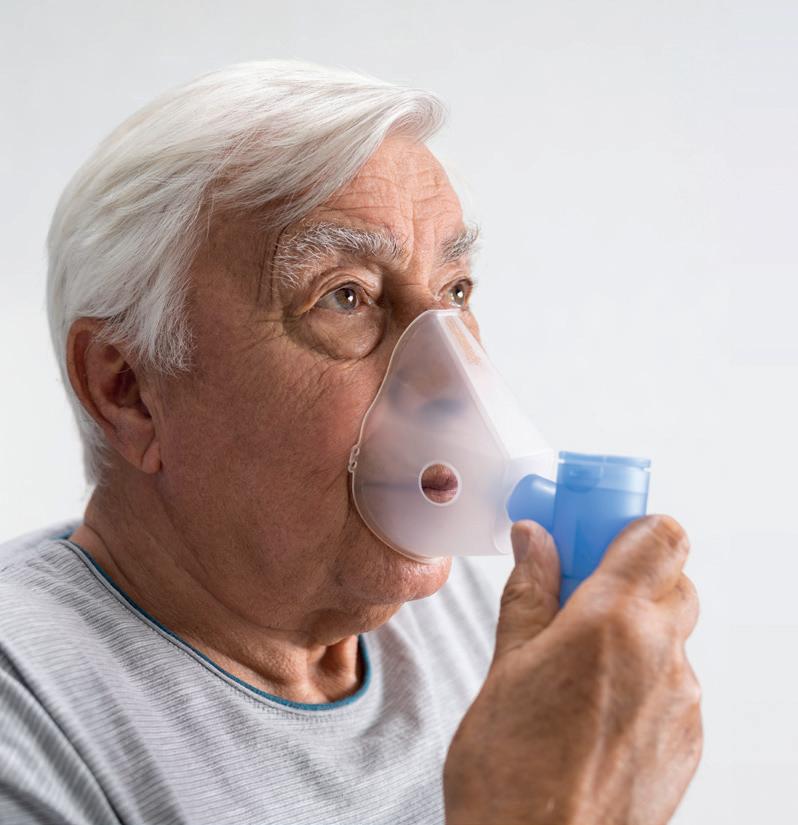
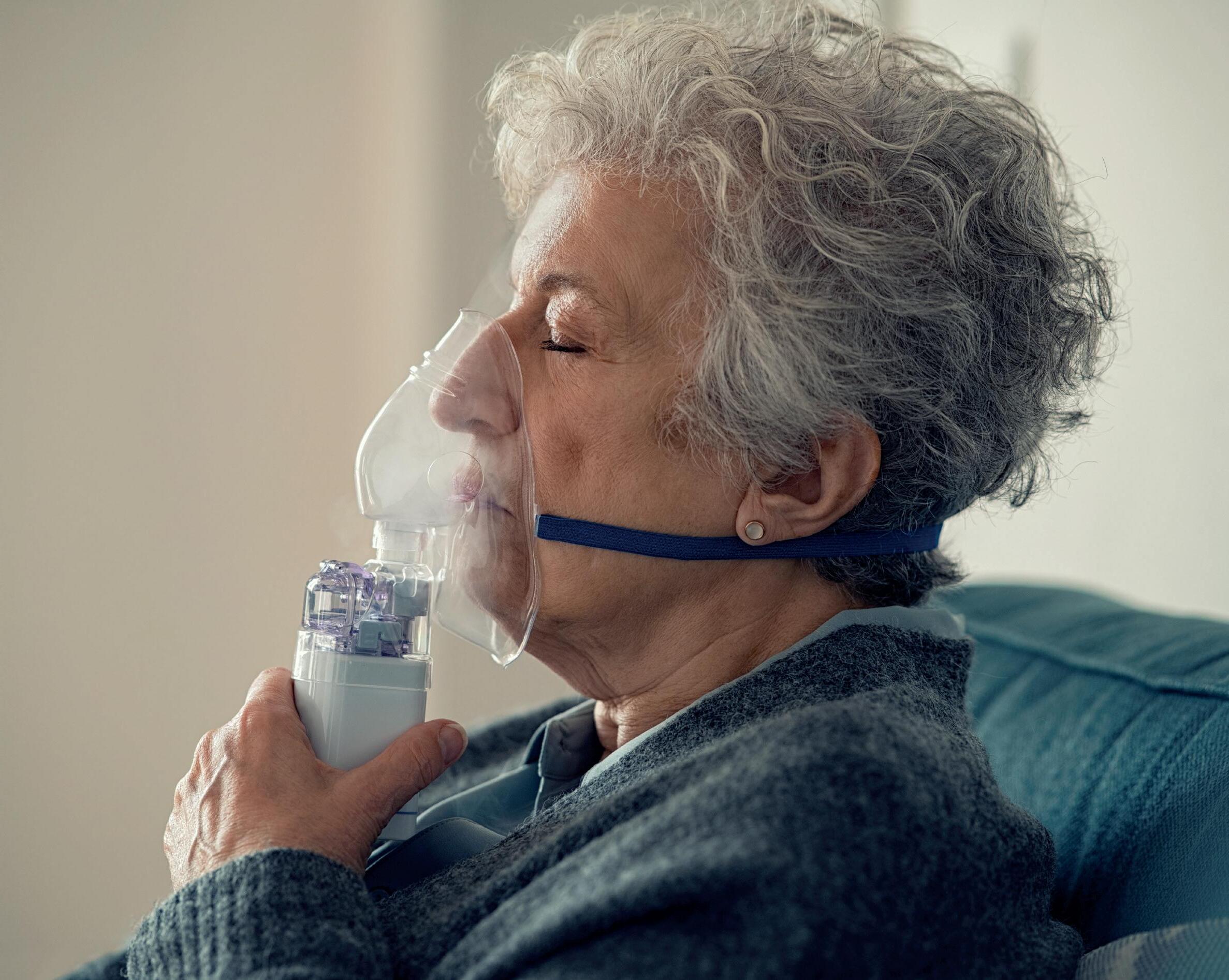
A nebuliser is a small machine (compressor) which attaches to a mouthpiece or a facemask. The mouthpiece or facemask has a small container attached into which liquid medicine can be poured.
The nebuliser then pumps air through this medicine and turns it into a fine mist, which you can breathe in to your lungs.
What is hypertonic saline?
Hypertonic saline is a strong salt-water solution.
What is salbutamol?
Salbutamol relaxes the airways in the lungs and is given before the hypertonic saline to reduce the chance of wheezing or chest tightness.
Why am I being asked to have this treatment?
You have a lung condition that affects your airways. This treatment is most used to treat bronchiectasis. Bronchiectasis is widening of the airways in your lungs. This leads to a build-up of thick sticky mucus, which can cause unpleasant symptoms.
It can also be used for patients with COPD or lung fibrosis.
Nebulised Hypertonic Saline Treatment
Airway mucous (‘phlegm/sputum’)
Your airways are producing more mucous than normal. This mucous is often very thick and sticky. This can make it very difficult to cough and clear. This mucous in your airways and could cause:
Increased breathlessness – The mucous makes your airways narrower and more difficult to breathe through.
Increased coughing – Trapped mucous is very irritating to your airways and can make you cough more often.
More frequent chest infections – Trapped phlegm allows bacteria and viruses to thrive. You may be prone to frequent chest infections, which take longer to get better.
Worse lung function – Lots of trapped secretions will lead to worse lung function. This means you will lose fitness more easily and find it difficult to exercise.
How will hypertonic saline treatment help?
When you breathe in hypertonic saline, it settles in your airways. This “pulls” water from the wall of your airways into the mucous. This extra water within the mucous makes it runnier and much less sticky. This makes it much easier to cough up and clear from the lungs.
The hypertonic saline treatment must be used alongside exercises to remove the phlegm. It does not take the place of these techniques.
By using this treatment, we are hoping for:
Better management of your day-to-day symptoms such as difficulties coughing and clearing phlegm and breathlessness. Fewer chest infections or flare ups. You to become more active and fit.
What checks will I have before I start this treatment?
It is important that we have given you the right chest physiotherapy exercises and prescribed you the right medicines before we consider prescribing hypertonic saline.
Nebulised Hypertonic Saline Treatment
Before we think about hypertonic saline, we will make sure of the following:
Chest Physiotherapist
We will make sure a specialist chest physiotherapist, has seen you. They will assess you and teach you all the different techniques for coughing and clearing your chest effectively.
The physiotherapist will also consider if an adjunct device known as an ‘Aerobika’ would help make it easier for you to clear your chest.
If you have seen the Physiotherapist previously, we may ask you to have a “refresher” visit to the physiotherapist.
Other chest medicine
If you have COPD or lung fibrosis, we will make sure you are using the right inhalers and tablets and that your inhaler technique is optimal.
We will then need to check that it is safe for you to take this treatment and that you do not have any serious side effects. Things that we will need to consider include:
Smoking
Smoking makes your airways inflamed. Inflamed airways produce thicker sticky mucous. This mucous makes it harder for your normal medicines to get into your airways.
By stopping smoking, it helps to cut down the amount of mucous your lungs are producing. If you want to stop smoking, please let us know and we can guide you to access the right support.
Hypertonic saline spirometry test
Patients who have normal or minimally narrow airways may become wheezy when they take hypertonic saline. To make sure it is safe for you to take the treatment, we will arrange a spirometry test to see how you respond to this.
The spirometry test requires you to strongly blow into a machine, this will measure the volume of air and speed you are able to blow out. You will need to do this before and twice after taking a dose of hypertonic saline.
You may experience some light-headedness during the spirometry test, this usually quickly resolves whilst with us.
Nebulised Hypertonic Saline Treatment
If the measurement of your spirometry test does not fall significantly and you have not become wheezy or breathless, you would be suitable to start the treatment.
During this period, you may experience a productive cough, this is to be expected as the mucous in your chest becomes more mobile.
Your assessment in clinic will take approximately 90 minutes.
How will I get the nebuliser and other equipment?
Hypertonic saline treatment is always discussed with a specialist respiratory doctor prior to your assessment. Your GP will then be asked to prescribe hypertonic saline nebules and salbutamol nebules.
Please bring both nebules to your appointment with the community respiratory team.
To get the best possible results we ask that you do:
Not smoke for at least six hours prior to the test.
Not drink alcohol for at least four hours prior to the test.
Not do heavy exercise on the day of the test.
Wear loose and comfortable clothing on the day of the test.
If you take inhalers, continue taking these as you would normally.
If you use salbutamol inhalers already, please avoid using on the day of the test if you can do so.
Bring a bottle of water.
If there are no concerns after your spirometry test the community respiratory team will loan you all the equipment required for nebulising.
What strength and dose will I take?
You will be taking 3-7% hypertonic saline (4mls) twice daily.
Instructions for the use of nebulised hypertonic saline
You should take this treatment twice a day, around 12 hours apart.
Nebulised Hypertonic Saline Treatment
Equipment
1 vial of salbutamol (2.5mg)
1 vial of hypertonic saline (4ml)
Nebuliser
Mask or mouthpiece
Instructions
for home use
Wash hands with warm soapy water or alcohol gel.
Open the vial of salbutamol and squeeze in to the nebuliser chamber.
Switch on compressor.
Place face mask on face or mouthpiece into mouth.
Switch compressor on.
Breathe regularly until the nebuliser chamber is empty.
Turn off compressor.
Rest for 10-15 minutes.
Open the vial of hypertonic saline and squeeze in to the nebuliser chamber.
Place face mask on face or mouthpiece into mouth.
Switch compressor on.
Breathe regularly until the nebuliser chamber is empty.
Turn off compressor.
Wash hands after you have finished.
Repeat twice per day, 12 hours apart.
Caring for the equipment
You must wash your nebuliser facemask/ mouthpiece with warm soapy water daily and leave to air dry.
Will I need to take any other medicines while I am taking this?
You will continue to take all your normal medicines as usual.
How long will I take the treatment for?
The specialist respiratory doctor will advise how long you will take this medication for. If you are feeling better and your health has improved, you may continue on it long term.
Nebulised Hypertonic Saline Treatment
How will I be monitored while I am having this treatment?
Respiratory
associate practitioner
A respiratory associate practitioner from the community respiratory team will contact you a few days after starting the medication. They will make sure you are comfortable with the equipment and answer any questions you may have.
Respiratory Service
If you have any further questions or concerns regarding your treatment, please contact the Respiratory Service 0300 131 0111 (Monday-Friday 9am-5pm).
How will you know if the treatment is working?
Your cough may be better.
Your cough may be more effective in clearing the phlegm from your chest.
Your breathing may be better. You may have fewer chest infections.
Are there any side effects that I should know about?
Most patients cope well with the treatment and do not get any side effects. However, it can cause:
Cough
Vocal hoarseness
Wheeze
Chest tightness
Will it affect any of the other medicines I am taking?
No. It is safe to take with other medicines.
Nebulised Hypertonic Saline Treatment
What should I do if I accidentally take too much hypertonic saline?
If you take too much of your normal dose and you are feeling well, there is no need to worry.
If you feel unwell, phone your GP immediately for advice. If they are not available, make your way to the nearest Emergency department.
What should I do if I forget to take my hypertonic saline?
Do not worry. Take your next dose as scheduled. The chance of your chest getting worse due to one missed dose is very small.
If I get a chest infection, will I still be able to have treatment?
Yes, please contact the community respiratory team on 0300 131 0111 and submit a sputum sample prior to starting any antibiotics or steroids.
If you get a chest infection, you should keep taking your hypertonic saline treatment. Stopping the treatment during a chest infection could mean it takes you longer to get better.
Is it safe to have an operation while I am taking this treatment?
Yes, if you need an operation, it is safe to keep taking this treatment.
Can I drink alcohol while I am taking this treatment?
Yes, this is not usually a problem. We would recommend you stay within the national safe recommended intake of two units per day, 14 units per week.
Nebulised Hypertonic Saline Treatment
Should I take the solution with me if I am going on holiday?
Yes, if you are flying it is small enough to fit into luggage, hold or carry-on as it is not pressurised.
It is a good idea to take a clinic letter or some other document that explains why you are taking this treatment and who has prescribed it. This will help if you become unwell, or if you are admitted to hospital while you are on holiday.