The Part of Live Audio No One Talks About
Most people assume that live event audio production is about mixing. And…yes, that’s absolutely the goal. You show up, dial in a great sound, and run the show. The reality, especially in corporate event audio production, is a little more complicated.
Most of the time, we’re not mixing. We’re fixing.
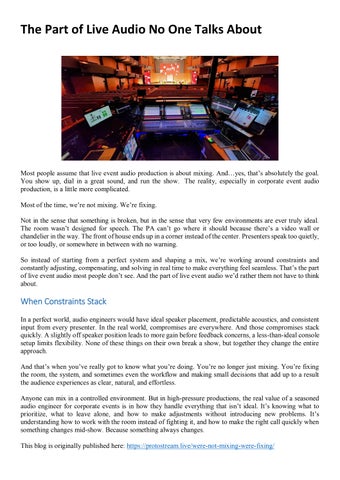
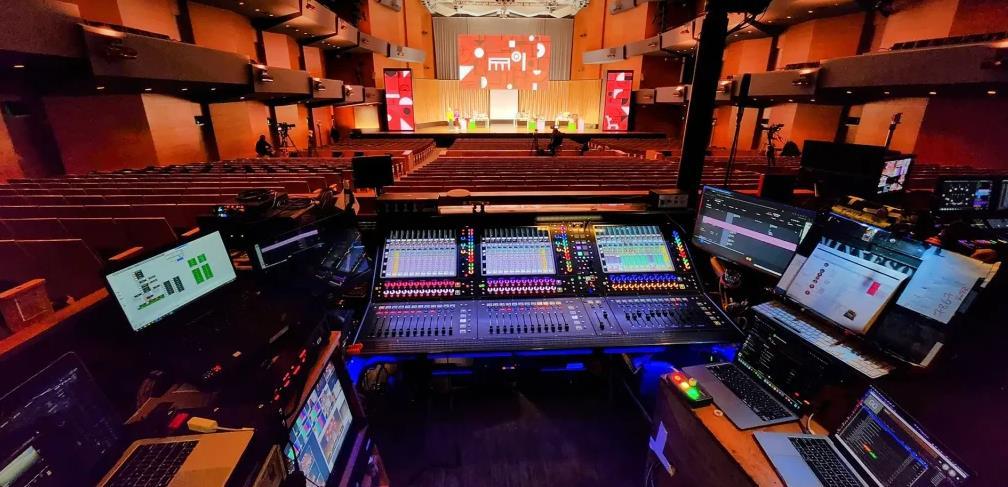
Not in the sense that something is broken, but in the sense that very few environments are ever truly ideal. The room wasn’t designed for speech. The PA can’t go where it should because there’s a video wall or chandelier in theway. The front ofhouseendsup in acorner instead ofthecenter. Presentersspeak tooquietly, or too loudly, or somewhere in between with no warning.
So instead of starting from a perfect system and shaping a mix, we’re working around constraints and constantly adjusting, compensating, and solving in real time to make everything feel seamless. That’s the part of live event audio most people don’t see. And the part of live event audio we’d rather them not have to think about.
When Constraints Stack
In a perfect world, audio engineers would have ideal speaker placement, predictable acoustics, and consistent input from every presenter. In the real world, compromises are everywhere. And those compromises stack quickly. A slightly off speaker position leads to more gain before feedback concerns, a less-than-ideal console setup limits flexibility. None of these things on their own break a show, but together they change the entire approach.
And that’s when you’ve really got to know what you’re doing. You’re no longer just mixing. You’re fixing the room, the system, and sometimes even the workflow and making small decisions that add up to a result the audience experiences as clear, natural, and effortless.
Anyone can mix in a controlled environment. But in high-pressure productions, the real value of a seasoned audio engineer for corporate events is in how they handle everything that isn’t ideal. It’s knowing what to prioritize, what to leave alone, and how to make adjustments without introducing new problems. It’s understanding how to work with the room instead of fighting it, and how to make the right call quickly when something changes mid-show. Because something always changes.
This blog is originally published here: https://protostream.live/were-not-mixing-were-fixing/