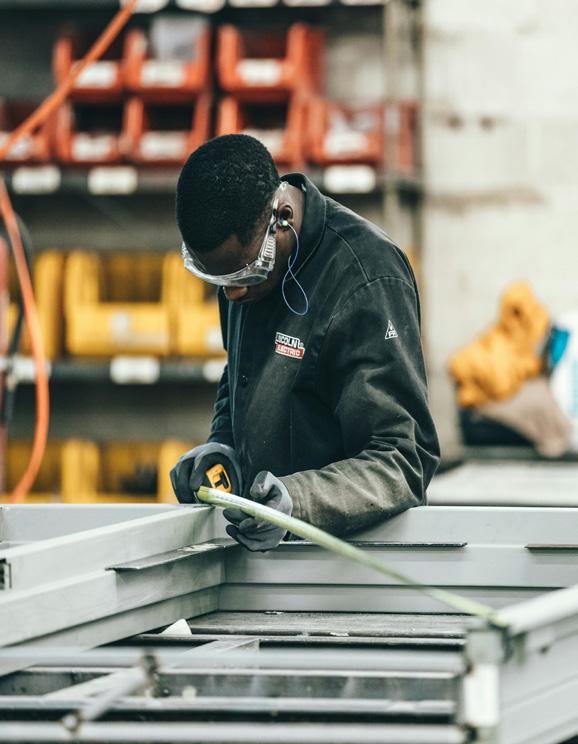
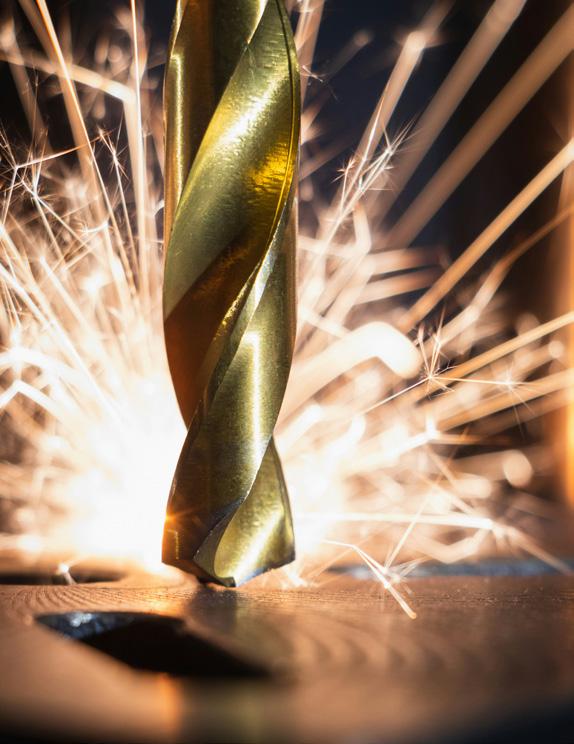
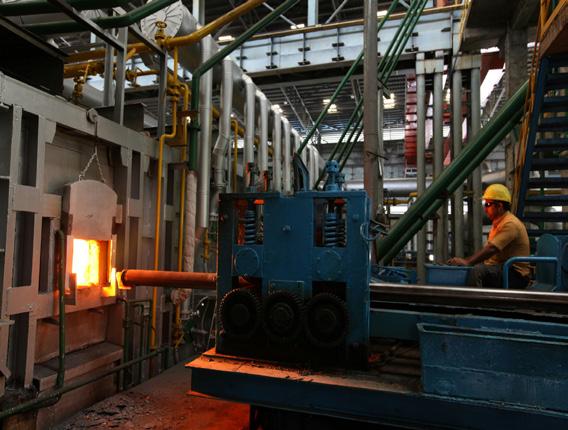
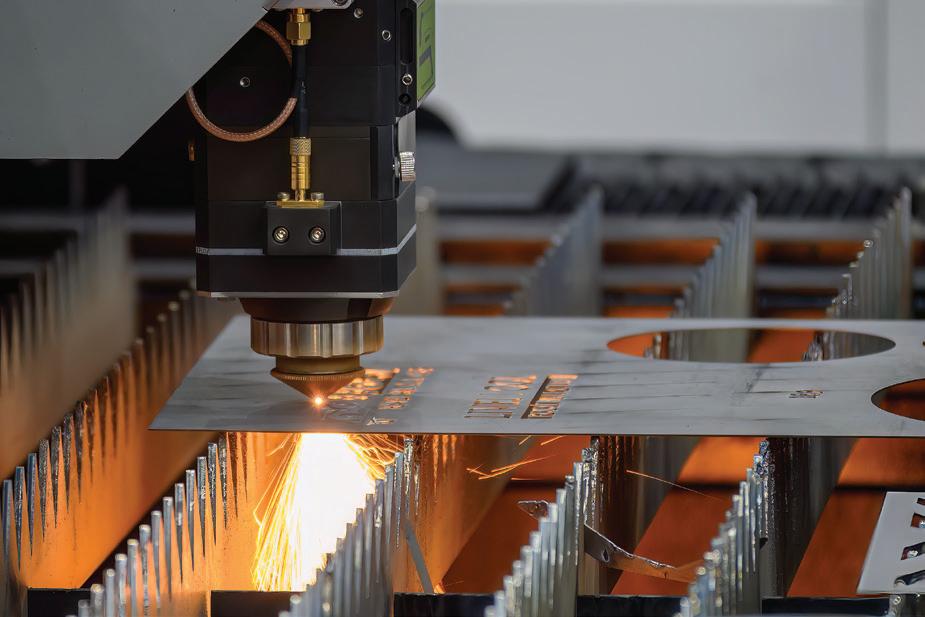
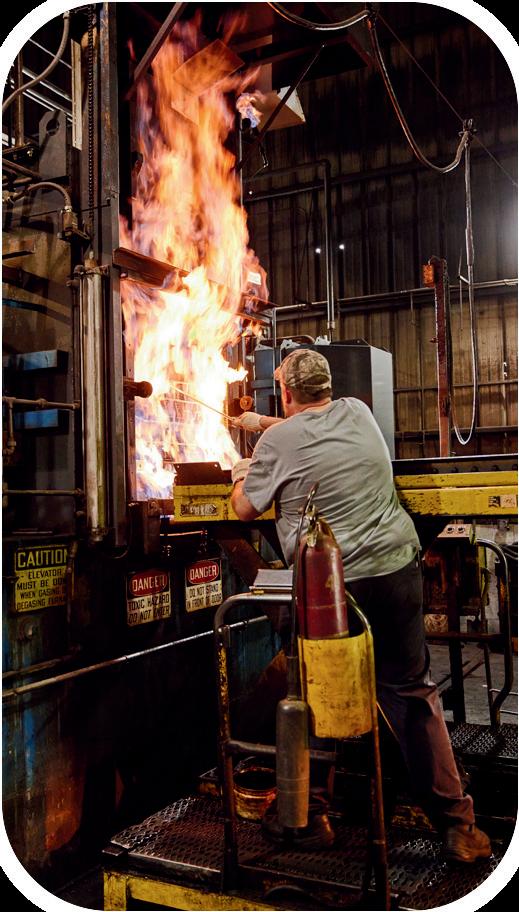
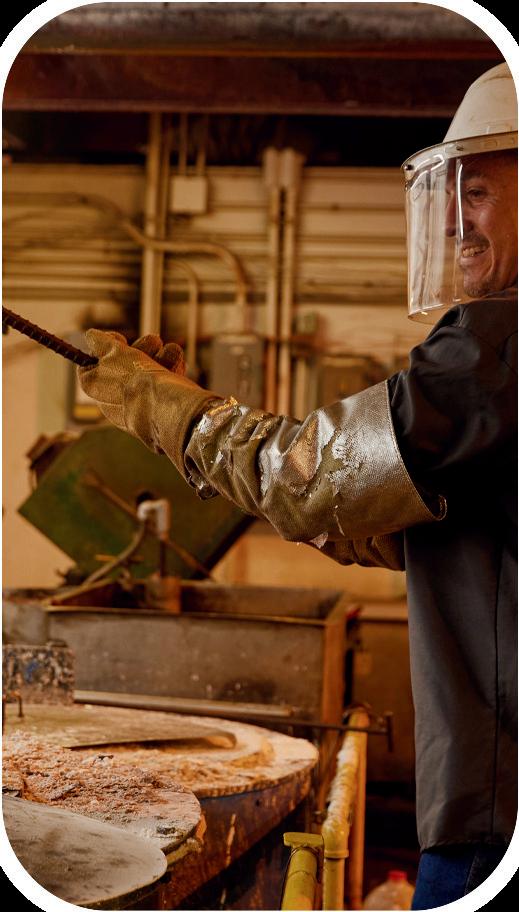
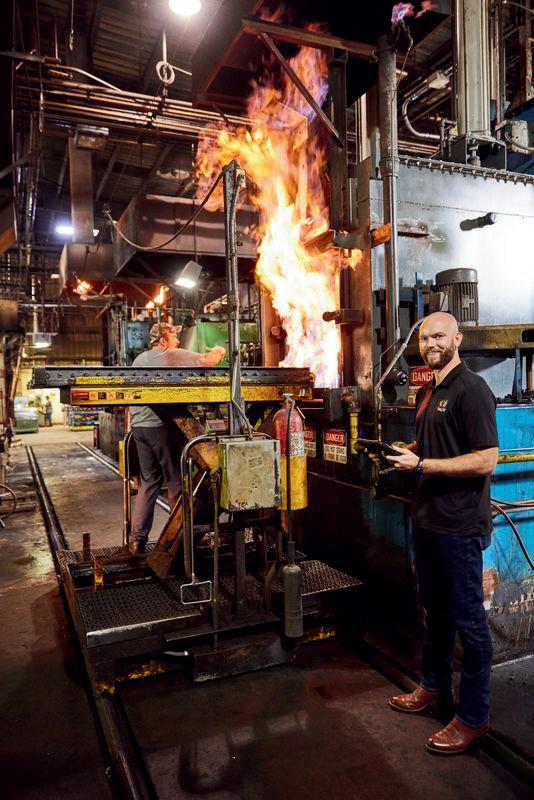
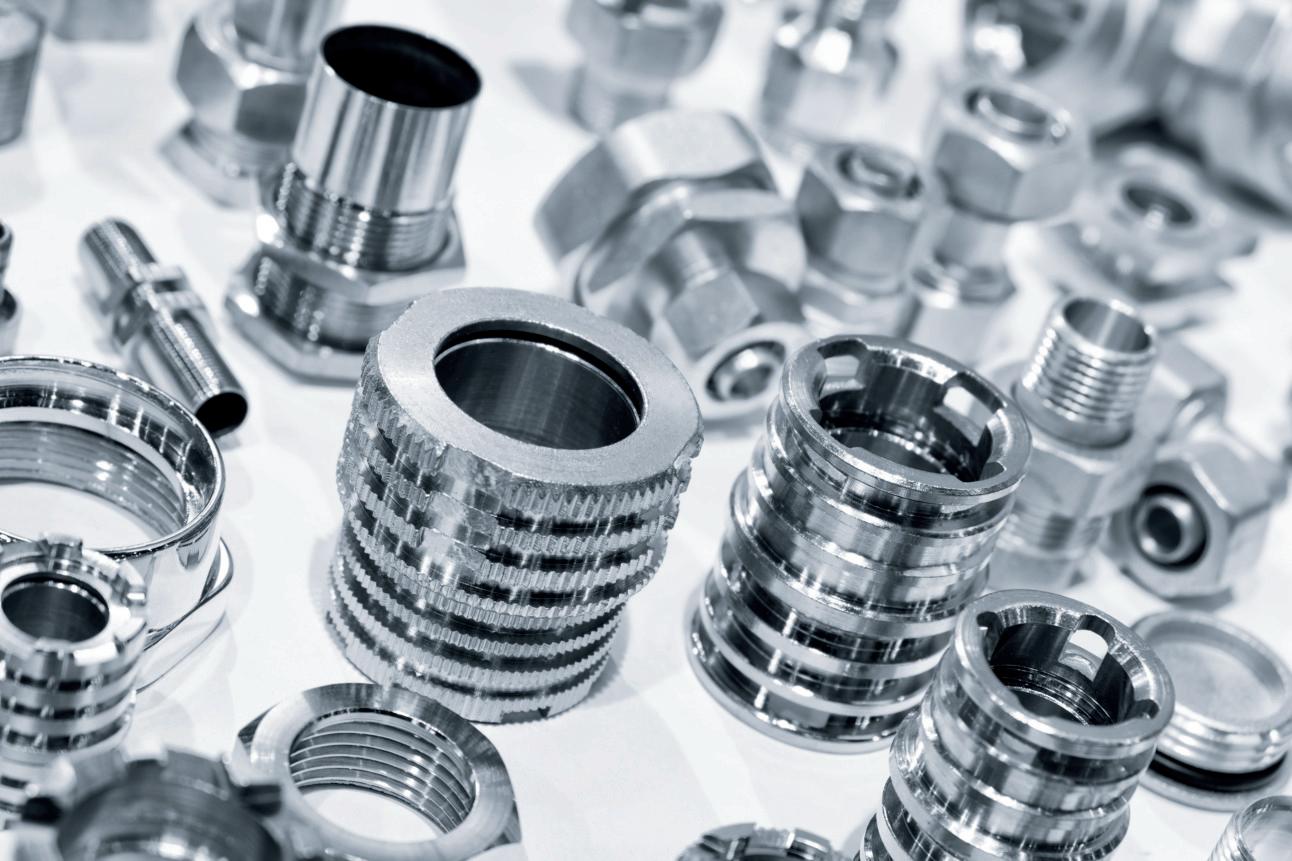
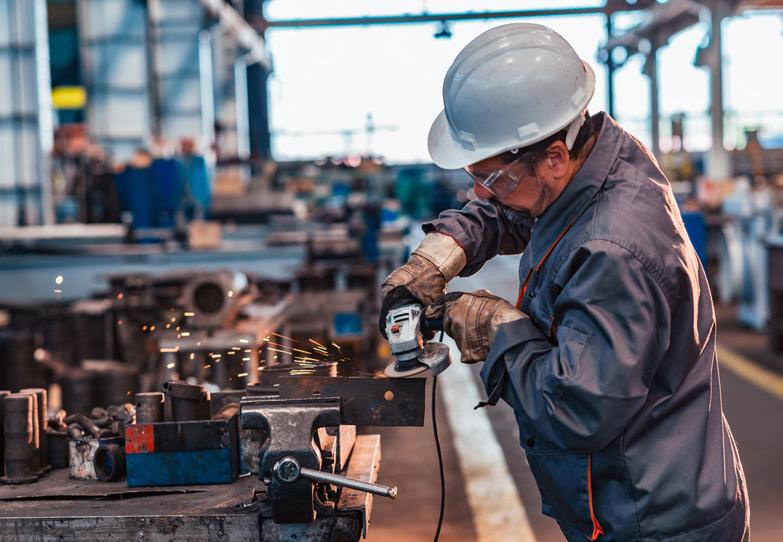
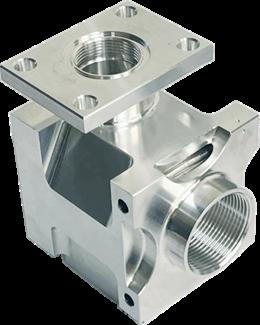
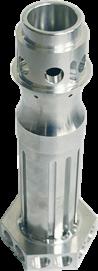
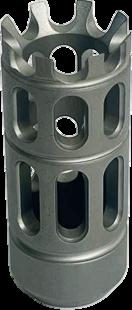
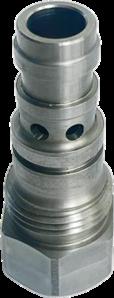
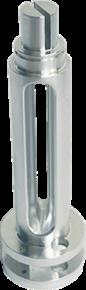
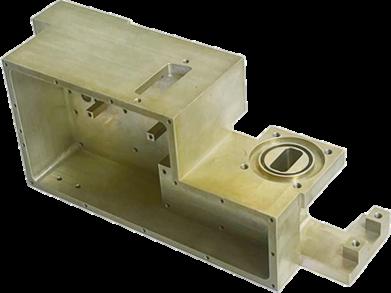
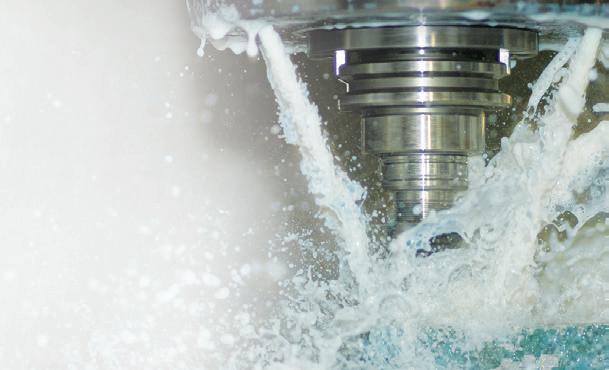
Metalworking fluids formulated to meet aerospace demands.
• Improve process stability on heat-resistant Super Alloys
• Easier robotic handling with cleaner parts
• Reduce costly maintenance interruptions
• Approved for Alloys of Aluminum, Titanium, Nickel, Chrome, and Steel
• Maximize gains from high pressure systems
• Enhance filtration system performance
REAL LEADERSHIP DEVELOPMENT.
Editors Corner:
Dear A2Z Readers,
Wow—how time flies between publications.
Every time we pull an issue together, we feel a real sense of pride in supporting Metalworking Nation. This community continues to show resilience, grit, and a willingness to adapt—no matter what the market throws its way. So what are we hearing and seeing right now?
Several sectors are keeping shops busy. Defense, space, energy, and semiconductors continue to drive demand across the board. One shop we spoke with mentioned that semiconductors, in particular, look primed for a substantial multi-year run. That kind of sustained momentum is something many in our industry have been waiting for.
Defense is also on a hot streak, fueled by ongoing global conflicts and the need to shore up domestic supply chains. However, breaking into that space isn’t easy—it comes with significant investment, especially for shops that aren’t already established players. Between certifications, compliance, and infrastructure, the barrier to entry is real.
That brings us to a topic we keep hearing more and more about: cybersecurity. CMMC and broader cyber requirements are no longer just “nice to have” conversations—they’re happening around the water cooler, in leadership meetings, and during customer audits. Shops are realizing that cybersecurity isn’t just an IT issue—it’s a business requirement.
Energy is another sector gaining attention. With increased focus from the current administration, there’s a growing push to strengthen energy manufacturing as part of national defense efforts. It’s a reminder that manufacturing doesn’t operate in a vacuum—it’s deeply connected to larger economic and geopolitical priorities.
In this issue, we’re continuing to bring you content that matters.
Lee Benson is back with more insights on leadership and culture. He’s someone who has truly been in the trenches and successfully scaled a business to a nine-figure exit. His perspective isn’t theoretical— it’s practical, hard-earned, and directly applicable to shop owners and leaders navigating growth.
Peter Hushek also continues his series on practical metallurgy. After more than 40 years of hands-on problem solving, his mission is simple: to make complex topics easier to understand and to help strengthen those critical outside vendor relationships. When everyone speaks the same technical language, better decisions get made.
We’re also excited to share some BIG news about the future of this publication and our efforts to expand into the digital space. This evolution is driven in part by you—our readers. One of the ideas we’re rolling out came directly from a reader suggestion, and we couldn’t be more excited about where it’s headed.
As always, this publication is for you.
If you have ideas, feedback, or topics you’d like us to cover, we want to hear from you. Don’t hesitate to reach out—your input helps shape what this becomes.
Until next time, keep pushing forward and God Bless America
Charlie & Alex Hushek
| Managing Partners | Editor in Chief |
Table of Contents:
Charlie and Alex Hushek connect@a2zmanufacturing.com
Address: 24 W Camelback Rd. #A408, Phoenix, AZ 85013 Telephone: (480) 395-3288 www.a2zmanufacturing.com
Published bi-monthly to keep precision manufacturers abreast of news and to supply a viable vendor source for the industry.
Circulation: The A2Z MANUFACTURING has compiled and maintains a master list of approximately 8500 people actively engaged in the precision manufacturing Industry. It has an estimated pass on readership of more than 19,300 people.
Advertising Rates, deadlines and mechanical requirements furnished upon request or you can go to A2ZMANUFACTURING.com.
The Publisher assumes no responsibility for the contents of any advertisement, and all representations are those of the advertiser and not that of the publisher.
The Publisher is not liable to any advertiser for any misprints or errors not the fault of the publisher, and in such event, the limit of the publisher's liability shall only be the amount of the publishers charge for such advertising. Speed Wins:
Announcements & News
Focused on Machining CEO Named a Titan 100 Honoree
Focused on Machining is proud to recognize CEO Justin Quinn for being named a 2026 Colorado Titan 100 honoree, a distinction that highlights some of the top business leaders across the state.
The Titan 100 program recognizes CEOs and C-level executives who demonstrate exceptional leadership, vision, and impact within their organizations and industries. Justin’s inclusion in this group reflects not only his leadership, but the strength and execution of the entire Focused on Machining team.
Under Justin’s leadership, Focused on Machining has continued to grow as a trusted partner in the aerospace and defense sectors, supporting prime contractors with high-quality, precision manufacturing solutions. The company’s commitment to reliability, responsiveness,
and continuous improvement has positioned it as a dependable resource for complex and critical work. This recognition is not just about individual achievement—it reflects a broader team effort.
At Focused on Machining, leadership is measured by outcomes: delivering results for customers, creating opportunities for employees, and building long-term value within the industries served. That mindset has been central to the company’s progress and reputation.
As the demand for high-performance manufacturing partners continues to increase, Focused on Machining remains committed to investing in capabilities, people, and processes that support its customers’ success.
Congratulations to Justin Quinn and to the entire 2026 Colorado Titan 100 class. The team looks forward to celebrating alongside an impressive group of leaders this June.
Announcements & News Continued
Mazak Open New Showroom
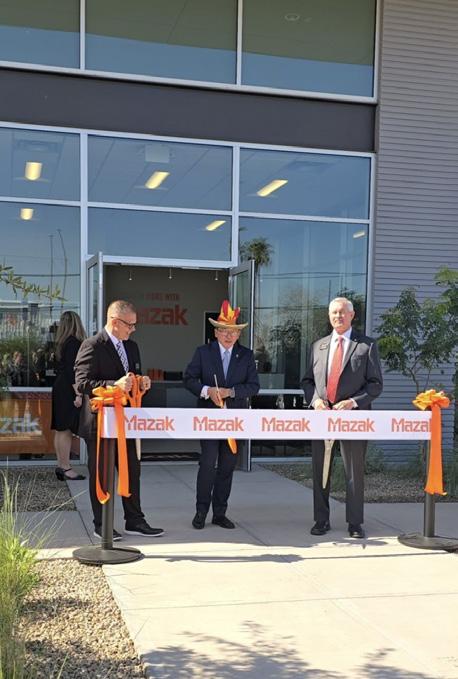
Mazak’s grand opening open house in Phoenix delivered exactly the kind of energy you’d expect from a company at the forefront of manufacturing innovation. The event kicked off with a ribbon-cutting ceremony that brought together Mazak’s North American and Japanese leadership—a strong visual reminder of the company’s global presence and unified vision for the future.
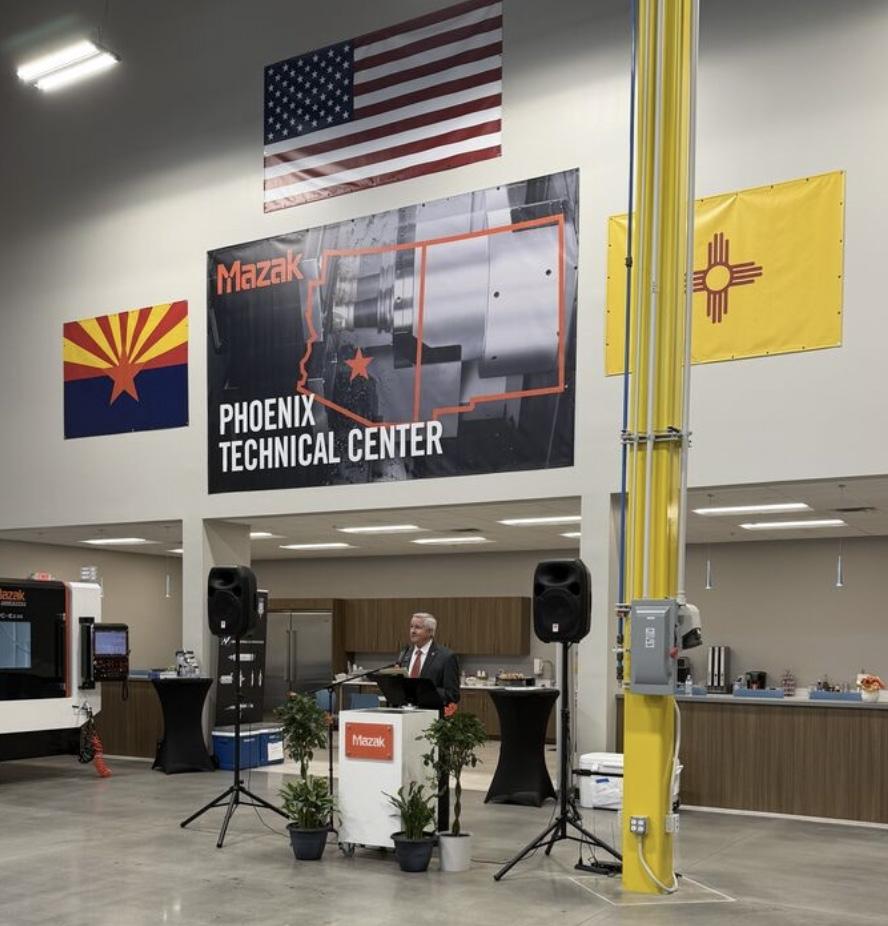
From the moment guests entered the facility, the impression was clear: this was built to showcase capability at scale. Wide, open entryways and a high-ceiling showroom created a sense of space and intention, allowing the machines—and the technology behind them—to take center stage.
The showroom floor was alive with activity. Live demonstrations were spread throughout the space, giving attendees the chance to see a range of Mazak machine tools in action. Rather than static displays, guests were able to engage directly with equipment, watch real-time machining, and ask questions— making the experience both interactive and practical.
Adding to the depth of the event, key support vendors including Kennametal, Hexagon, and LNS were on-site, offering expertise, tooling insights, and complementary solutions. Their presence reinforced the broader ecosystem that surrounds modern manufacturing—where machines, tooling, metrology, and support all come together.
Overall, the event struck a strong balance between presentation
CUT TIME. NOT CORNERS
and hands-on experience. It wasn’t just a showcase— it felt like an active, working environment designed to connect people with the technology driving the industry forward . ◊
Redevelopment of Former Semiconductor Site into Data Center
A large-scale redevelopment project is being considered for a former semiconductor manufacturing site in Colorado Springs, signaling a shift in how legacy industrial properties are being repurposed. The facility, once used for computer chip production, could be transformed into a high-capacity data center designed to support growing digital infrastructure demands.
The site already has key advantages that make it attractive for this type of reuse, including existing power capacity, industrial zoning, and a footprint suitable for large technical operations.
Rather than starting from scratch, developers are exploring how to adapt the existing structure to
meet the needs of modern data processing and storage. This reflects a broader national trend where older manufacturing assets—especially those tied to electronics—are being repositioned to support cloud computing, artificial intelligence, and other dataintensive technologies.
If completed, the project would represent a significant investment in the region’s industrial economy. While data centers typically employ fewer workers than traditional manufacturing plants, they generate demand for construction, maintenance, and specialized technical services.
Additionally, such projects often strengthen the surrounding ecosystem by attracting complementary businesses and infrastructure upgrades.
This potential redevelopment highlights an important transition within manufacturing-heavy regions: facilities built for one generation of technology are being adapted for the next. It also underscores the continued importance of power availability and physical infrastructure in determining where advanced
Announcements
& News Continued
industries locate. For Colorado Springs, the project could mark another step in evolving from traditional manufacturing toward a more diversified, technologydriven industrial base. ◊
Colorado Expands Incentives to Support Manufacturing Growth
In April 2026, Colorado officials approved a new round of economic development incentives aimed at encouraging business expansion and job creation across the state. These incentives, which include job growth tax credits and funding from strategic development programs, are designed to attract companies in high-impact sectors, including manufacturing.
The programs are structured to reward businesses that commit to creating new jobs and making longterm investments in the state. By offsetting some of the upfront costs associated with expansion—such as facility development, equipment, and workforce training—the incentives aim to make Colorado
more competitive with other states pursuing similar industrial growth strategies.
Manufacturing remains a key focus of these efforts, particularly in areas such as advanced materials, aerospace, electronics, and food production. State leaders have emphasized the importance of building a resilient industrial base that supports both local supply chains and national production needs. Incentives are often tailored to projects that bring higher-paying jobs and align with long-term economic priorities.
In addition to direct financial support, these programs signal a broader commitment to fostering a businessfriendly environment. Companies evaluating expansion opportunities often consider not only costs but also regulatory climate, workforce availability, and government support. By actively deploying incentive packages, Colorado is positioning itself as a proactive partner in industrial growth.
Overall, the latest approvals reflect a continued push to strengthen the state’s manufacturing footprint while
PHOENIX HEAT TREATING
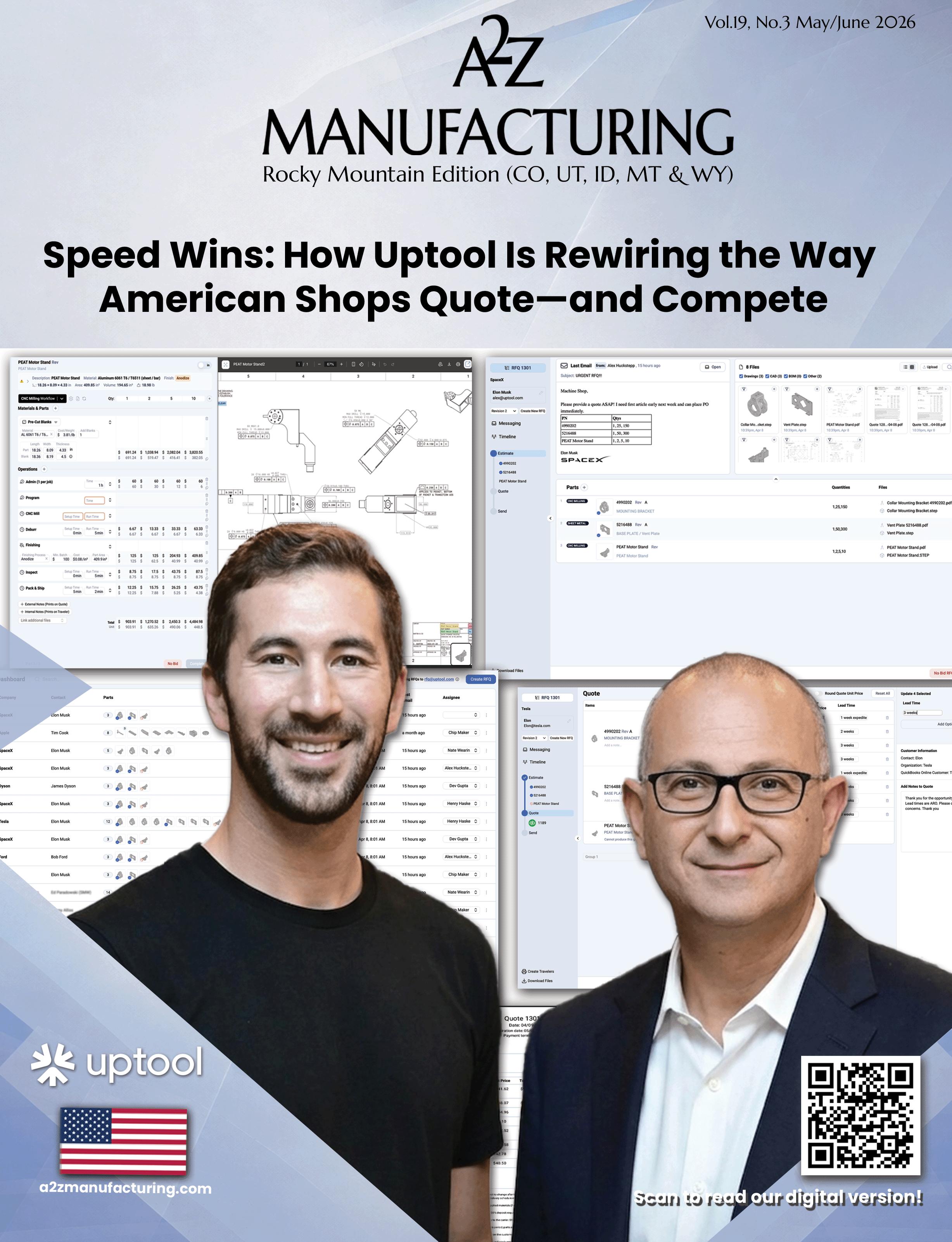
Speed Wins: How Uptool Is Rewiring the Way
American Shops Quote—and Compete
There’s a moment that plays out in machine shops across the country every single day. An email hits the inbox.
It’s an RFQ—maybe clean, maybe chaotic. Maybe it’s labeled clearly. Maybe it’s just: “ Hey, can you quote this bracket,” followed by a zip file that looks like someone dumped an entire assembly into it. Someone opens it.
Maybe not. Copies part numbers. Estimates material. Punches numbers into a spreadsheet—or just stares at the drawing for twenty seconds and throws out a number based on instinct.
And somehow… it works. Until it doesn’t. That moment— simple, messy, repeated thousands of times a day—is exactly where Uptool was born.
A Frustration That Started Early
For co-founder Benny Buller, the idea didn’t start with quoting—it started with speed. “I was able to do two or three design iterations a week when everyone around me was doing one a quarter,” he says. “For me, it was like—this is how business should be done.”
That gap—between what was possible and what was normalnever really left him. Years later, after building one of the most advanced metal 3D printing companies in the world, he found himself staring at a different problem. Not how parts were made. But how everything around making them actually worked.
Two Founders, One Realization
Benny, a physicist and founder of Velo3D, and Alex Huckstepp, a mechanical engineer who spent over a decade building manufacturing startups across robotics and additive, came from the same world: High-tech manufacturing. Complex systems. Big ambition.
But also: Long timelines. Heavy capital. Slow iteration. “We were both pretty burnt out on CapEx-heavy businesses,” Alex explains. “It takes so long to build, validate, and scale. We started asking—can we solve real manufacturing problems with pure software?” They didn’t start with a product.They started with curiosity.
The Problem Hiding in Plain Sight
As they spent time inside machine shops, a pattern emerged. The capability was there. The people were skilled. But the systems?Not so much.
“I discovered that there’s really no tools in this process,” Benny says. “Everything is very manual—everything.”
Alex saw the same thing from a different angle. “Most shops are still quoting on spreadsheets,” he says. “Even if they have an ERP, it’s too slow. So they fall back to spreadsheets.” And those spreadsheets weren’t just inefficient.
They were fragile.
• Quotes took 10+ minutes per part
• RFQs got buried in email
• Pricing varied wildly
• Knowledge lived in one person’s head
But the deeper issue wasn’t just inefficiency. It was missed opportunity. Because in today’s world— Speed wins.
Why Quoting Became Ground Zero
Interestingly, quoting wasn’t Benny’s original idea. “The person who knew quoting was the right place to start was Alex,” he says. “He saw that owners spend an unreasonable amount of time estimating—and that this would be easy to adopt.”
Alex’s insight was simple: Fix the front door of the business. Fix the bottleneck where work enters. And everything downstream improves.
When they broke down how quoting actually worked, the real surprise
wasn’t how complex it was. It was how much of it was just… busywork. “We were watching shops take 10 minutes to quote a part,” Alex says. “
And eight or nine minutes of that was just simple stuff—downloading files, opening documents, copying and pasting information.”Not decision-making Not expertise. Just friction.
The AI Moment
A few years earlier, solving that friction wouldn’t have been realistic. RFQs are messy. Emails are inconsistent. Drawings come in every format imaginable. But by 2024, something had changed.
AI had reached a point where it could actually help. “We realized AI could let us rethink how software works for shops,” Alex says. “It could handle a lot of the repetitive tasks that slow everything down.” That became the foundation of Uptool. Not replacing people. Removing friction around them.
How Uptool Works
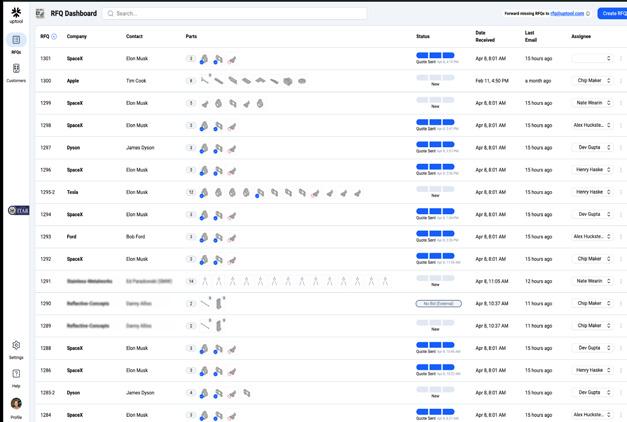
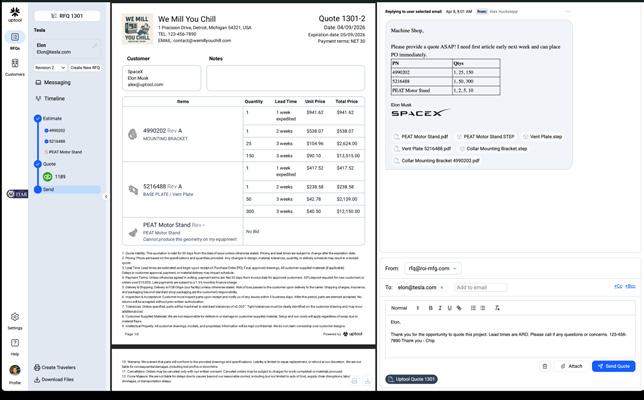
Uptool starts where every job starts: email. Instead of forcing new workflows, it connects directly to inboxes—whether there’s one or seven.
Within about a minute of receiving an email, the system determines:
• Is this an RFQ?
• Is it new or part of an existing thread?
• Who is it from?
• What company does it belong to? From there, it goes to work.
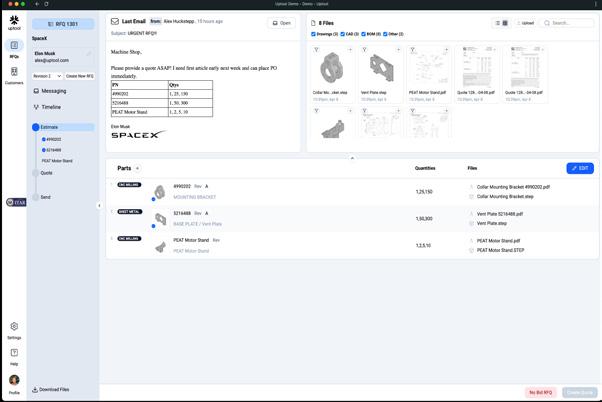
Attachments are automatically:
• Downloaded
• Classified (CAD, drawings, BOMs)
• Parsed for key information
The system extracts:
• Part numbers
• Materials
• Quantities
• Revisions
• Requirements
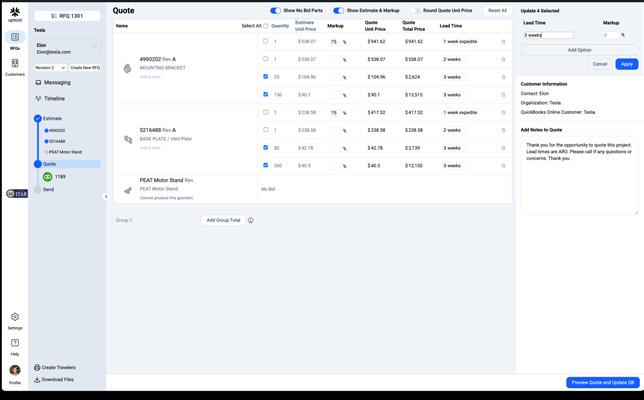
Even when the input is messy. And often, it is. “We’ve seen everything,” Alex says. “Sometimes it’s just ‘quote this bracket’ and a huge assembly file. The AI has to find the needle in the haystack.” The result is a structured quote—mostly pre-filled—so the estimator can focus on what matters.
What It Does—and What It Doesn’t
Uptool doesn’t try to replace expertise. It doesn’t try to fully automate machining decisions. And that’s intentional.
It helps automate:
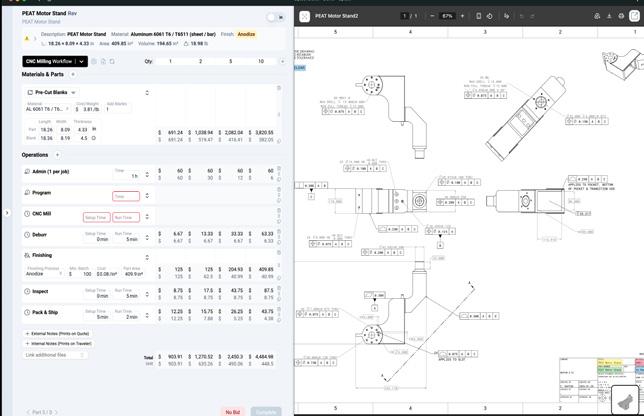
• Material cost estimation
• Standard processes (deburring, cleaning, finishing)
• Data extraction and organization
But it leaves the hardest decisions—like programming time, setup, and machining strategy—to the people who actually understand them. Because the goal isn’t to replace the estimator. It’s to make them faster.
The Real Value: Winning More Work
At first glance, Uptool is about saving time. But the real impact shows up in how shops compete.
1. Speed = Win Rate
Shops that quote faster win more work.
Simple as that.
2. Consistency Builds Trust Spreadsheets create variability. A structured system creates consistency. And customers notice.
3. Feedback Drives Improvement
Without a system, there’s no loop. No way to improve accuracy over time. With structure, that changes.
The Spreadsheet Problem
Spreadsheets aren’t going anywhere.They’re flexible. Familiar. Powerful. But they don’t scale. “They’re great because you can do whatever you want,” Alex says.
“But that’s also the problem—you can do whatever you want.” That flexibility becomes risk.
Especially when quoting depends on one person’s experience. Or one person’s memory. Because what happens when that person leaves? Or just stops quoting? That’s not a system. That’s a single point of failure.
Built for Real Shops
Uptool is seeing the strongest adoption in smaller, highmix shops:
• Under 10 employees
• Quoting 10–15+ parts per week
• Relying on email and spreadsheets
These shops move fast. They make decisions quickly. And they don’t have time for complicated implementations.
So Uptool is designed to onboard fast—often in under an hour. “If you can get a customer using the software quickly, you’re golden,” Benny says. “If not, you’re pushing a rope— and good luck with that.”
A Bigger Vision Than Quoting
Quoting is just the starting point.
“If we were just building the best quoting product in the world, I wouldn’t do this,” Benny says. “Our vision is much bigger—quoting is just the first step.
”That bigger vision? Remove friction across the entire manufacturing process. Because friction is what slows everything down. And speed is what unlocks everything.
Why Speed Matters to the Entire Industry
Manufacturing isn’t just another industry. It’s the foundation of innovation. “Machining and fabrication are the workhorse of hardware innovation,” Benny explains. “Everything is gated by that.”
If that system is slow, everything slows down:
• Product development
• Iteration cycles
• Supply chains
• Innovation
But if you speed it up? Everything accelerates. “If you can move faster, you can build more hardware, develop more products, and grow the entire ecosystem,” he says.
Local Speed Is a Competitive Advantage
There’s another layer to this. Speed is local. “Same-day or overnight delivery can’t come from overseas—it has to be local,” Benny says.
That creates a real advantage for domestic shops. If they can move faster. Quote faster. Produce faster. They don’t just compete—they differentiate.
Rethinking Manufacturing Economics
Today, most manufacturing runs on long-term agreements. Weeks-long lead times. Limited flexibility.
But that’s not how other industries operate. “In most industries, people buy a mix of long-term and spot,” Benny says.
“Manufacturing is almost entirely long-term—because it’s too hard to move fast.” If you remove that friction? You unlock a more agile system. One that can respond in real time.
AI Isn’t About Replacing People
There’s still hesitation around AI. But Uptool’s perspective is clear. “This isn’t about reducing jobs,” Benny says. “It’s about making people more productive—getting more output, not fewer people.”
The real opportunity isn’t cutting labor. It’s unlocking capacity. And, any time AI enters the conversation—especially in manufacturing—security becomes a real concern.
And rightfully so. Many shops are handling sensitive customer data. Aerospace drawings.
Defense-related work. ITARcontrolled informatio. For them, adopting new software isn’t just about features—it’s about trust.
Uptool has leaned into that reality. Since its initial launch, the platform has achieved SOC 2 certification, is now fully ITAR compliant, and operates within AWS GovCloud infrastructure—a secure environment designed specifically for regulated workloads and sensitive data. That matters.
It means:
• Customer data is handled under strict security controls
• Access is restricted and auditable
• AI operations run within a secure, compliant environment
For shops navigating requirements like CMMC, ITAR, or working with defense primes, that’s not a “nice to have.”
What the Future Could Look Like
Today, many shops operate at 15–20% utilization. That’s not a machine problem.
It’s a system problem. And fixing it doesn’t necessarily mean buying more equipment.
“You should be able to take a shop, hire maybe 10% more people, buy no new machines—and triple output,” Benny says.
That’s the opportunity. Not incremental improvement. A step change.
It All Starts With Speed
At its core, Uptool isn’t just about quoting. It’s about momentum. Removing friction. Letting shops operate at the pace modern manufacturing demands.
Because when you speed things up:
• Quotes go out faster
• Work gets won faster
• Parts get made faster
• Innovation happens faster
And in a world where speed defines competitiveness— Speed wins. ◊
diversifying its economy. The approach combines targeted financial tools with strategic planning, aiming to create sustainable, long-term benefits for both businesses and communities. ◊
2026 Colorado Manufacturing Awards Highlight Industry Leadership
The announcement of nominees for the 2026 Colorado Manufacturing Awards offers a snapshot of the state’s diverse and evolving industrial sector. The awards program recognizes companies and individuals who demonstrate excellence across a range of categories, including innovation, workforce development, sustainability, and operational performance.
The list of nominees includes both large, established manufacturers and smaller, specialized firms. This mix reflects the breadth of Colorado’s manufacturing landscape, which spans industries such as advanced materials, food production, aerospace components, and precision engineering.
Many of the recognized companies are noted not only for their technical capabilities but also for their efforts to invest in employees and improve workplace culture.
A key theme among the nominees is the emphasis on workforce development. Companies are increasingly focused on training, retention, and creating career pathways in response to ongoing labor challenges. Efforts include partnerships with educational institutions, apprenticeship programs, and internal upskilling initiatives.
Innovation also plays a central role, with many nominees adopting new technologies to improve efficiency and product quality. This includes automation, digital tools, and advanced manufacturing techniques that help companies remain competitive in a rapidly changing environment.
The awards serve not only as recognition but also as a way to highlight best practices within the industry. By showcasing successful strategies and achievements, the program encourages knowledgesharing and continuous improvement across the manufacturing community.
Overall, the nominations illustrate a sector that is actively adapting—balancing growth, innovation, and workforce investment to meet current and future demands. ◊
www.westernstatesmetals.com
Utah’s Industrial Growth
Recent announcements and project completions across Utah highlight continued momentum in the state’s manufacturing sector, particularly in heavy industry and construction-related materials. Companies such as Nucor and Holcim are among those expanding their presence, with new or upgraded facilities that support regional and national supply chains.
These investments reflect confidence in Utah’s business environment and its ability to support largescale industrial operations.
Several factors are driving this growth. Utah offers a combination of relatively low operating costs, access to key transportation corridors, and a regulatory environment that is generally seen as favorable to development. In addition, the state’s population growth and ongoing construction activity create strong local demand for materials such as steel and cement, making it an attractive location for producers
October Rocky Mtn 2018.indd 38
UTAH METAL WORKS
www.umw.com
Tollfree: 866-434-5679
Local: 801-364-5679
How Much Is My Metal Worth?
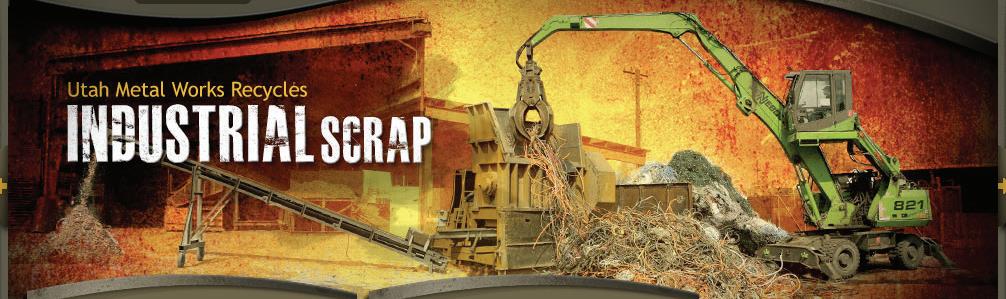
At Utah Metal Works, recycling industrial-related scrap metal is one of the things we do best. You simply won’t find more knowledgeable, capable partners for your scrap handling and recycling efforts anywhere. We are known in the industry for our honesty and integrity, and you can be sure you are always getting a competitive return along with superior service. We make it easy for you to cash in on non-ferrous metals from:
• Punchings
• Solids of any metals
• Turnings and borings
Industrial/Manufacturing Scrap
• Skeleton plate
• Machine Shop/Fabricator
• Solids of any size or type
Aircraft/High Temperature Alloy Scrap
Stainless, titanium, Inconel, Hastelloy, Monel, cupronickel, aluminum;stateof-the-art metal analysis conducted on site; Mixed or contaminated items are accepted and sorted
Overall, the continued development of new manufacturing facilities signals that Utah is solidifying its role as a key hub for industrial production in the western United States, particularly in sectors tied to infrastructure and construction.
Utah Continues to Attract Manufacturing Expansion Projects
Utah remains a strong contender for manufacturing expansion, with a steady pipeline of companies evaluating the state for new facilities or operational growth. Economic development organizations report ongoing interest from a range of industries, including advanced manufacturing, aerospace, and industrial products.
This sustained activity reflects Utah’s growing reputation as a reliable location for long-term investment.
Announcements & News Continued
The arrival and expansion of these facilities also have broader economic implications. Beyond direct employment, manufacturing plants of this scale generate demand for supporting services, including logistics, maintenance, and equipment suppliers. This can help strengthen the overall industrial ecosystem and create secondary opportunities for smaller businesses.
Another notable aspect is the long-term nature of these investments. Facilities tied to materials production typically require significant capital and are built with extended operational horizons in mind. This suggests that companies are not only responding to current demand but are also positioning themselves for sustained growth in the region.
A major factor influencing site selection is infrastructure readiness. Companies are increasingly prioritizing locations where utilities, transportation access, and permitting processes are already aligned with industrial needs. Utah has made efforts to improve site readiness, ensuring that available properties can support immediate or near-term development.
This reduces project timelines and lowers uncertainty for companies looking to expand.
Workforce availability is another key consideration. Utah’s labor market, while competitive, is supported by training programs and partnerships between industry and educational institutions. These initiatives help ensure a pipeline of skilled workers, which is critical for
manufacturers adopting more advanced technologies.
Additionally, the state’s geographic position provides strategic advantages. Located within reach of major western markets, Utah allows manufacturers to efficiently distribute goods across the region. This logistical benefit, combined with a relatively stable regulatory environment, strengthens its appeal.
The continued interest from manufacturers suggests that Utah is not only attracting new projects but also building a reputation that encourages repeat investment.
As companies look to diversify supply chains and reduce risk, locations like Utah that offer predictability and scalability are becoming increasingly attractive.
Utah’s Manufacturing Ecosystem Expands with Diverse Companies
Utah’s manufacturing sector continues to evolve, supported by a diverse mix of established companies and emerging startups. This combination is helping to create a dynamic ecosystem that spans multiple industries, including defense, consumer products, and industrial technology.
Rather than being concentrated in a single segment, the state’s manufacturing base is becoming more varied and resilient.
Smaller and newer companies are playing an important role
Announcements & News Continued
in this growth. Many are focused on specialized products or innovative processes, often leveraging advanced technologies to compete in niche markets. These businesses contribute to the overall strength of the sector by introducing new ideas and increasing adaptability.
At the same time, larger, more established manufacturers provide stability and scale. Their operations often anchor local supply chains and create opportunities for smaller firms to participate as suppliers or service providers. This interaction between companies of different sizes helps foster a more interconnected industrial environment.
Another notable trend is the increasing integration of technology into manufacturing processes. Companies are adopting automation, data analytics,
CJ Precision Machine, Inc. is a leading manufacturer of critical parts for a wide variety of industries, including aerospace, semiconductor, medical, solar, food processing, aviation, automotive, and motorsports.
From our vertical machining centers, to our state-of-the art 5-axis mills and 7-axis lathes, we provide superior customer satisfaction from prototype to production.
CJ provides superior customer satisfaction through flexible and dependable service with timely turn-around.
Our precision manufacturing includes working with both plastics and metals in our 9,500 square foot facility in Boise, Idaho. Our machinists have more than 140 years of experience and all manufactured parts are inspected by quality control.
CJ can provide finishing including anodizing, powder-coating, chromate, various types of electro-plating, and many others as required by our customers.
Supply Way Boise Idaho
1-208-908-5920
www.cjprecisionmachine.com
ISO 9001 certified
Announcements & News Continued
and advanced production methods to improve efficiency and maintain competitiveness. This shift is influencing workforce needs, with greater demand for technical skills and training.
Overall, Utah’s manufacturing ecosystem is characterized by both growth and diversification. The presence of a wide range of companies—across industries and stages of development—positions the state to adapt to changing market conditions while continuing to attract investment and innovation. ◊
Janicki Industries Considers Twin Falls for Major Aerospace Manufacturing Campus
A significant aerospace manufacturing opportunity is under consideration in southern Idaho, where Janicki Industries is evaluating locations in the Twin Falls and Jerome area for a large-scale production campus. The proposed project represents a substantial potential investment,
with plans that could include advanced composite manufacturing and fabrication capabilities tied to aerospace and defense applications.
If selected, the Idaho site would support production of large, high-performance structures used in aircraft, space systems, and other specialized applications. Facilities of this type typically require extensive infrastructure, including large buildings, specialized tooling, and highly controlled manufacturing environments.
The scale of the project suggests a long-term commitment, with the potential to bring a significant number of skilled jobs to the region.
Idaho’s appeal in this process is driven by several factors. The region offers available land, a relatively low cost of doing business, and access to transportation networks that can support movement of oversized components.
In addition, state and local economic development groups are actively working to position the area as a destination for advanced manufacturing, particularly in aerospace and related industries.
Workforce development will play a critical role if the project moves forward. Advanced composite manufacturing requires a mix of technical and production skills, and local institutions would likely be involved in training and education efforts to meet demand.
The project could also create ripple effects across the supply chain, benefiting suppliers, service providers, and supporting industries.
Overall, the potential development highlights Idaho’s growing competitiveness in attracting high-value manufacturing projects and its ability to participate in the broader aerospace production ecosystem. ◊
Great Falls Competes for Major Aerospace Manufacturing Investment
Montana is also in contention for a major aerospace manufacturing project, as Janicki Industries evaluates Great Falls as a potential location for a new production facility. The project would focus on advanced composite manufacturing, supporting industries such as aerospace, defense, and space systems.
This type of operation represents a high-value segment of manufacturing, characterized by
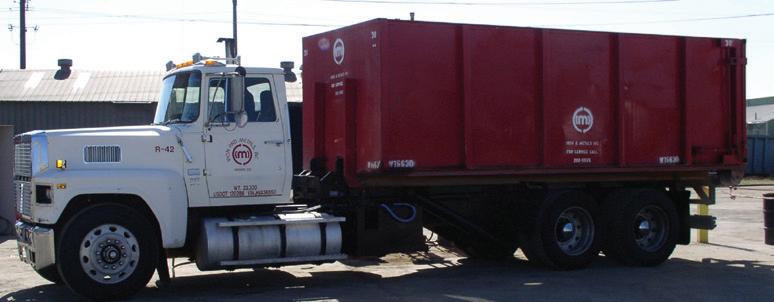
SCRAP PICK-UP SPECIALISTS
We set containers for:
• Machine, welding & fab shops • Manufacturing facilities
specialized materials and precision production processes.
Great Falls presents a unique value proposition in the competition. The area offers access to large tracts of land suitable for industrial development, along with proximity to transportation infrastructure that can support the movement of large components. Additionally, Montana’s lower population density can be advantageous for projects requiring significant space and minimal congestion.
Economic development leaders in the region are actively working to attract the investment, emphasizing Montana’s business climate and quality of life as key differentiators. While the state may not have the same manufacturing base as more industrialized regions, it has been making efforts to grow its capabilities, particularly in advanced and niche manufacturing sectors.
A project of this scale would have meaningful economic impact. Beyond direct employment, it would likely stimulate growth in supporting industries, including maintenance, logistics, and specialized services. It could also help establish Montana as a more prominent player in the aerospace manufacturing landscape.
The competition for this project reflects a broader trend of companies exploring nontraditional locations for large manufacturing investments. As businesses seek cost efficiencies and geographic diversification, states like Montana are increasingly being considered alongside more established industrial hubs. ◊
Workforce Development Efforts Strengthen Manufacturing Talent Pipeline
Efforts to strengthen the manufacturing workforce in Montana are gaining traction, with programs focused on apprenticeships and hands-on training playing a central role.
One example is an apprenticeship initiative connected to industrial employers such as American Chemet, which is designed to build practical skills and create pathways into long-term manufacturing careers.
These programs address a common challenge across the industry: the need for skilled labor. As manufacturing processes become more advanced, employers require workers who can operate complex
equipment, follow precise procedures, and adapt to evolving technologies. Apprenticeship models help bridge this gap by combining classroom instruction with realworld experience.
Participants in these programs typically receive structured training that allows them to develop both technical and professional skills. This approach benefits employers by creating a more prepared workforce while also offering individuals a clear route into stable, well-paying jobs. For many participants, apprenticeships provide an alternative to traditional four-year education paths.
Collaboration is a key component of these efforts. Partnerships between manufacturers, educational institutions, and workforce organizations help ensure that training aligns with industry needs. This coordination improves outcomes by focusing on the skills that are most relevant in today’s manufacturing environment.
In the broader context, workforce development initiatives like these are essential for sustaining industrial growth. Without a reliable pipeline of talent, even regions with strong economic fundamentals may struggle to attract and retain manufacturing investment. Montana’s focus on apprenticeships
Precision Manufacturing Demands a Precision ISO Management System
Your Quality Management System should work as precisely as the parts you manufacture – efficient, streamlined, and built to last.
At Cavendish Scott, we’ve spent over 40 years delivering custom ISO systems with measurable results –no bloated paperwork, no wasted motion, no templates.
Why Cavendish Scott
40+ Years in ISO Consulting
100% Certification Guarantee
Simple, Streamlined Systems
IRCA & Exemplar Global Certified Internal Auditing & Training
We guarantee your certification and ensure your system stays lean, effective, and easy to maintain. Get Certified. Stay Certified. Improve. Succeed. Call (303) 480-0111 | www.CavendishScott.com/A2Z
Announcements & News Continued
and training reflects an understanding that workforce readiness is a critical factor in long-term competitiveness. ◊
Collaboration between Montana State University and regional manufacturers is helping to address real-world production challenges while also supporting innovation and efficiency improvements. Through engineering programs and applied projects, students are working directly with companies to analyze processes, identify
inefficiencies, and develop practical solutions.
These partnerships provide value on multiple levels. For manufacturers, they offer access to fresh perspectives and technical expertise that can lead to measurable improvements in operations. Projects often focus on areas such as process optimization, cost reduction, and quality enhancement—key priorities for maintaining competitiveness in manufacturing.
For students, the experience offers exposure to real industrial environments and challenges. Rather than working solely on theoretical problems, they gain hands-on experience that prepares them for careers in manufacturing and engineering. This type of engagement helps bridge the gap between education and industry, making graduates more immediately effective in the workforce.
The collaboration also supports a culture of continuous improvement. By regularly engaging with academic partners, companies can explore new ideas and approaches that may not emerge through internal efforts
alone. This can be particularly valuable for smaller manufacturers that may not have extensive in-house engineering resources.
Overall, these initiatives highlight the importance of strong connections between education and industry. By aligning academic programs with real manufacturing needs, Montana is fostering both innovation and workforce development, strengthening its industrial ecosystem over time.
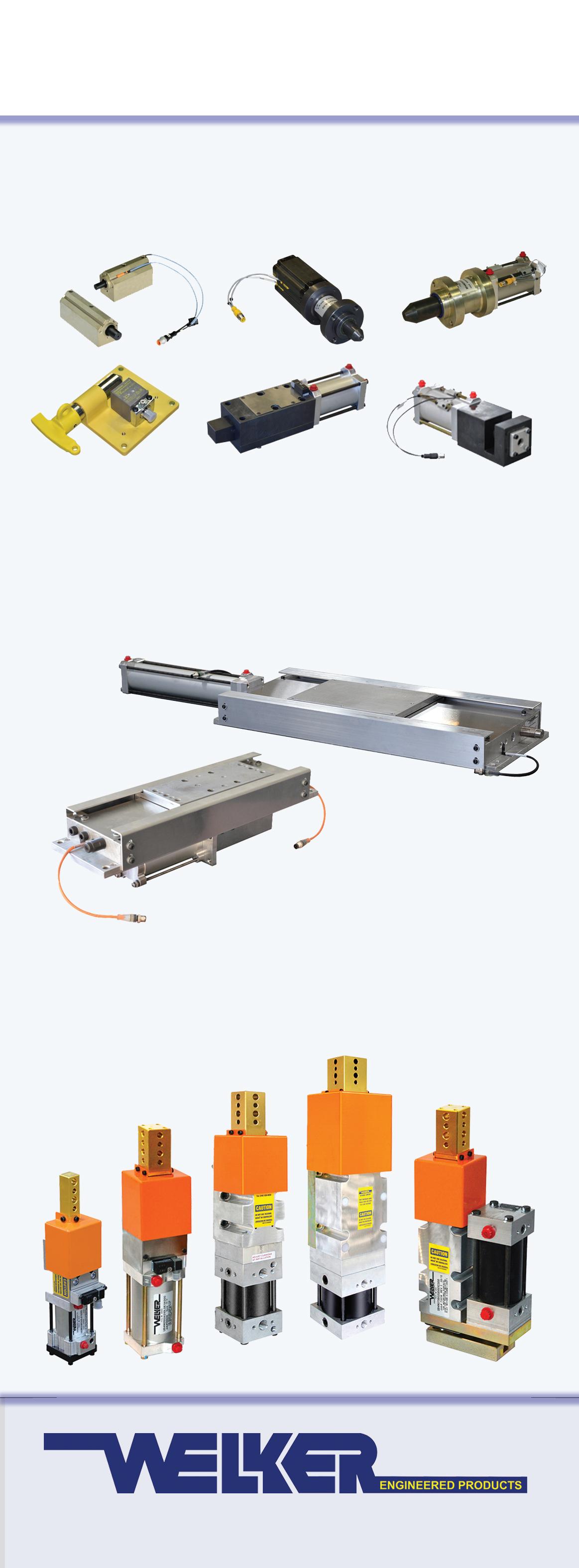
Welker Introduces Two New Variations of Belt Driven Slides
Troy, Michigan (April 14, 2026) - For over 50 years, Welker Engineered Products has been recognized for its expertise in self-lubricating plane-bearing technologies and providing “best in class” automation components. We continue to design and develop low maintenance components for flexible manufacturing environments, and pride ourselves on the ability to deliver innovative
An excellent cost and space saving alternative to conveyors, the BES series is available in a VFD gearmotor, a Clearpath® integrated servo motor, or a customer-specified motor of choice. The max payload is 360kg [793 lbs.] and the max recommended load size is 900mm x 1200mm. For more specifications and to learn more about the new BES Slide’s capabilities, contact Welker at 800.229.0809, or visit our website: www. welkerproducts.com.
Industry-Leading Innovation & Quality Control Since 1954
ISO 13485:2016, AS9100:2016 & ISO 9001:2015 Certified
Request a Technical Part Review
www.AbleElectropolishing.com (888) 868-2900
Announcements & News Continued
solutions in an ever-evolving industry.
Located in Troy, Michigan, Welker designs, manufactures, and sells standard and custom components that locate, clamp, eject, slide, lift, lockout, position, dimple, and ground, along with offering our bearings, friction rollers, and switches.
Welker Engineered Products is thrilled to announce two new variations of our Belt-Driven Extrusion Slide (BES): the Double and the Double Independent. The Double has a wider carriage that is directed by two sets of linear guides which makes it ideal for wider, offset loads while the Double Independent is designed with two carriages moving in opposite directions and driven by their own motor which makes it ideal for boosting efficiency.
“This new belt-driven slide is an outstanding solution for moving parts in place within automation systems,” explains Scot Bigelow, Sales & Marketing Manager for Welker. “It is easy to set up and requires very little downtime for maintenance.”
JET Tools Expands Lathe Line with New Gear Head Engine Lathes and Large Spindle Bore Lathes
JET Tools®, a leading manufacturer of metalworking, woodworking, and material-handling equipment, announces the expansion of its turning lineup with new gear head engine lathes and large spindle bore lathes, engineered to help shops do more per shift with enhanced safety, cleaner operation and performance that scales with growing work demands.
Designed as true workhorses for everyday turning, gear head engine lathes deliver smooth, controlled operation, faster stopping and built-in containment that keeps operators productive and focused. With the ability to handle larger parts and UL 987 certified electrical safety, these machines expand shop capability without adding complexity.
Built for more demanding applications, large spindle bore lathes provide capacity for heavy-duty turning. Featuring true large spindle bores, rigid cast iron construction and certified safety systems, these machines allow operators to push harder with confidence while maintaining accuracy, control and clean containment.
Both lathe lines are ideal for:
• Production and job shops
• Maintenance, repair, and industrial facilities
• Fabrication and custom machining shops
• Training programs and technical schools
• Shops upgrading legacy equipment
Key advantages across the JET lathe lineup include:
• Standard safety equipment: Foot brake for fast stops, chuck guard, lead screw cover and JET safety
Largest Capacity in the World
e-chuck key holder to reduce preventable errors.
• Clean operation: Splash guards and chip trays help manage chips and coolant, reducing cleanup time and improving shop organization.
• Coolant-ready performance: Standard coolant systems support longer cuts, improved tool life, and consistent finishes.
• Capacity where it matters: Select geared-head models feature a 2-inch spindle bore, while large spindle bore models offer up to a 4-1/2-inch bore for handling larger stock.
• Certified confidence: UL 987 certified electrical safety and TAA compliance on large spindle bore models support safer workplaces and industrial requirements.
• Upgradeable flexibility: Optional collet closers, taper attachments, and DRO packages, including Acu-Rite® or Newall®, allow shops to configure machines for specific jobs.
• Verified quality: Each lathe undergoes a comprehensive 30-point inspection before shipment, including spindle accuracy, gear function, control testing, and safety system validation.
“Shops need machines that keep pace with real-world demands without sacrificing safety or ease of use,” said Guna Sathyamurthy, product manager, JET Tools. “Our gear head engine lathes and large spindle bore lathes are built to deliver serious turning capability, dependable performance and the confidence operators need to do more every shift.”
JET Tools’ lathes come with a two-year warranty, local applications support that includes site assessment, and a nationwide service network with US-based technical support.
To learn more or see JET Gear Head Engine Lathes and Large Spindle Bore Lathes in action, visit www. jettools.com.
About JET Tools
JET Tools, a JPW Industries company, is a leading manufacturer of woodworking, metalworking and material-handling equipment and other tools used by professionals in plants, machine shops and workshops across the United States. For more than 60 years, JET Tools has provided the industrial marketplace with superior quality, innovation and service. Through the company’s “JET Do More” initiative, JET ensures that customers are equipped not only with superior products but also with the knowledge and support required to achieve the best possible outcomes. For more information, visit www.jettools.com.
About JPW Industries
Founded in 1958 and headquartered in La Vergne, Tennessee, JPW Industries is a global designer,
Announcements & News
manufacturer and distributor of market-leading machinery, specialty shop tools and equipment. Its portfolio includes the JET®, Powermatic®, Wilton®, Baileigh®, Edwards® and Axiom® brands, serving industrial, consumer and construction markets worldwide. For more information, visit www. jpwindustries.com.
• We are a leader in 5 Axis Manufacturing Technology, including 5 Axis Milling and 5 Axis EDM.
• We have 30 Years of Experience Servicing Customers. • Fauston Tool is a Woman Owned Small Business.
Media Contact: Larry Wegner, Senior Consultant, Dorn, larry.wegner@dorngroup.com
• Our customers span the Aerospace, Defense, Medical, Semi-Conductor, Energy and Aeronautic industries.
35% higher output and zero scrap: how Spreyer Werkzeugtechnik improved flexibility and quality with ANCA’s automated grinding solutions
Spreyer Werkzeugtechnik GmbH, based in Limburg an der Lahn, Germany, is a family-owned manufacturer of precision and special cutting tools. For over 50 years, the company has served demanding industries such as automotive, mold-and-die, and woodworking. Its portfolio includes new-tool manufacture, tool regrinding, and comprehensive tool management services.
Do You Actually Understand Your Business Model?
By Lee Benson
Ask ten manufacturing leaders to describe their business model, and you’ll get ten different answers. Some will describe their product. Others will talk about customers or markets. A few will launch into a mission statement. Very few will give you the answer that actually matters:
The financial model that proves the company can earn a profit at a reasonable sales level, and shows how that profit grows as the company grows.
That gap is expensive. You cannot optimize what you cannot articulate, and in manufacturing, where fixed costs are high, margins are tight, and scale matters enormously, an unclear business model is a quiet tax on every decision your team makes.
A business model, stripped to its essentials, is built on three policies and a math problem. The policies are pricing, expenses, and profit purpose. The math is how those three interact at different volumes.
Pricing policy answers a deceptively simple question: what are we charging, and why? A strong one sounds like this; charge the highest possible price while remaining the best-value alternative, in a way that earns future business. That’s very different from “beat the competitor’s quote.” It forces a conversation about value and about the long game.
Expense policy answers the counterpart question. The best ones are not about cutting, they’re about improving: continually improving the customer experience, internal and external, at a lower relative cost over time. That single sentence tells a plant manager, a controller, and a VP of sales how to evaluate any proposed investment.
Profit purpose is the one most companies skip. Profit is not the goal; it is the fuel. State plainly what it’s for: scaling your impact, providing job security and growth for your team, and generating a reasonable shareholder return. When people understand what profit enables, they stop treating it as an abstraction and start protecting it.
Then comes the math, and this is where leaders get their most useful surprise. Consider a simple membership business charging $30 a month, with $80,000 in fixed
costs and variable costs at 20% of revenue. Break-even lands at 3,334 members. At 5,000 members, monthly profit is $40,000. At 10,000 members double the revenue, profit jumps to $160,000. Doubling revenue grew profit by 400%.
Manufacturing businesses behave the same way, often more dramatically. Fixed overhead, tooling, plant capacity, and salaried headcount don’t scale linearly with volume. That’s both the opportunity and the trap. Leaders who understand this price differently, invest differently, and say no differently.
Here is the exercise I recommend running with your leadership team this quarter.
Have every leader, operations, sales, engineering, finance, HR, answer six questions in writing: What is our pricing policy? Our expense policy? Our profit purpose? What sales level do we need to break even? How do profits grow as revenue grows, and why? What would you change to improve our business model?
Then compare the answers. The disagreements are the point. If your head of sales and your head of operations have different mental models of how the company makes money, every cross-functional decision is harder than it needs to be. Aligning those answers, and revisiting them annually, is one of the highest-leverage things a leadership team can do.
The companies that compound over decades are not necessarily the ones with the best products. They are the ones whose leaders, top to bottom, can explain the business model on a napkin and are always looking for the next way to improve it. Could your team do that tomorrow morning? If not, you know where to start.
In my next column I will dive into the two things that drive productive employee engagement! ◊
Virtual Cert™ ISO-9001 certification with American Global Standards can lower operational costs, improve your bottom line, and offer your business a competitive advantage.
American Global Standards (AGS) is an American company and ISO registrar with nearly 30 years of experience assistin g manufacturing and service industries in their quest to remain competitive in the global marketplace, for a competitive annual fee of $1875
• No on-site audit required
• Save top management valuable time
• Save your company thousands annually
• Market your company as ISO-9001 certified
• Eliminate “non-value added” NCR’s
— Enzo Ferrari
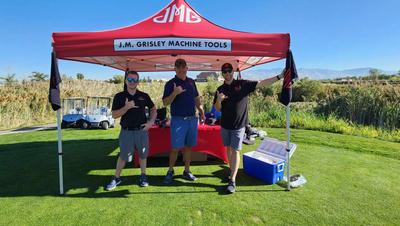
Annual Fundraiser Golf Tournament
7:00am - 4:00pm
Friday, August 21, 2026
Eaglewood Golf Course, North
For sponsorship levels & registration NUNTMA.org or Scan QR code
Announcements & News Continued
In this story, Spreyer shares how implementing ANCA’s automated grinding solutions enabled them to achieve a 35% increase in output while eliminating scrap, helping them respond more effectively to high-mix, low-volume production demands. We believe this case study will be highly relevant to your readers, particularly those focused on improving manufacturing efficiency, reducing waste, and adapting to increasing production complexity. ◊
COFA Tooling Deburrs Through-Holes In a Single Pass – Including on Sloped or Elliptical Surfaces
Heule Precision Tool presents COFA tooling for automated through hole deburring applications, including those on sloped or uneven surfaces. This unique technology uses a carbide blade to remove burrs from the front and back of a drilled through-hole in a single pass, without stopping or reversing the spindle. The edge break is always even and consistent – across a wide spectrum of metals and alloys - whether the surface is even, elliptical, or sloped.
Automating the deburring processes for hard-toreach cross burrs which were formerly deburred manually, significantly shortens cycle times and improves efficiency.
Carbide blades extend tool life and maintain edge sharpness, reducing downtime. COFA tooling performs well in both manual and CNC environments, as well as live-spindle lathes, and robotic automation cells—operating reliably with or without cutting fluid.
A variety of sizes, from 2-30mm (0.79-1.19”), are available from stock for immediate delivery from the Cincinnati area warehouse. COFA tooling is ideal for a wide range of applications with aerospace, automotive, energy, precision machining, heavy equipment, and medical industries.
Simple, Reliable Operation
Controlled by a simple spring, the carbide cutting
blade follows the contour of the hole’s surface, removing all burrs while creating an even tapered corner break.
The blade does not cut as it passes through the bore and will not damage the hole’s surface. The edge break begins only at the point where the blade contacts the material and then tapers the hole’s edge.
This allows for faster feed rates since the tool slows itself down as it enters the through hole. The simple concept of the COFA tool has no adjusting screws or presetting requirements. Available in common tool size and spring strengths for various materials and hole sizes.
A wide range of COFA tooling is available, including COFA C for threaded holes and COFA Cassette for deburring larger bores quickly and efficiently.
Custom designs are available to match unique deburring geometries and process needs, Additional information on Heule COFA tooling, including case histories, can be found at https://www.heuletool.com/ tools/deburring-chamfering/ cofa/.
Heule Precision Tool, located in Loveland, OH, supports a wide range of hole-finishing tools for front and back deburring, countersinking, chamfering, and counterboring for larger industrial manufacturing companies throughout North America.
They specialize in high production environments in the automotive, aerospace, energy, and medical industries. Their parent company, Heule Ag, located in Balgach, Switzerland, has manufactured the highest quality cutting tools in the world since 1961. For additional information, visit
Announcements & News Continued
Success on the Summit: Toolpath’s Successful Machining Summit
The Machining Summit on the Summit, hosted by Toolpath in Mammoth Lakes, California, delivered a refreshingly different experience from the typical industry event. Designed intentionally to move away from the traditional trade show model, the summit focused on creating space for authentic conversations, shared experiences, and meaningful relationships within the machining community.
What stood out most was the overwhelming feedback from attendees. Mark Roberts, Manufacturing Support Manager at The Gund Company, described it as “without question, one of the most impactful ‘conferences’ I’ve experienced in our industry.” Michael Chavez, Shop Lead at Methods MFG, echoed that sentiment, noting that “Team Toolpath really defined what business meetings can and should be.”
These reflections highlight a common theme: this wasn’t just another event—it redefined expectations.
The summit’s structure played a major role in that impact. By combining on-mountain activities like skiing and snowboarding with evening panels and hands-on “Shop Talk” sessions, the event created an environment where conversations could develop naturally and without pressure.
Mike Payne, Manufacturing Leader and Podcast Host, captured the energy best: “Being around this many people who are passionate about growing it, improving it, and pushing it forward is addictive.”
Others emphasized the lasting impression of the experience. Emily Joann Wilkins, Manufacturing Advisor and Coach, summed it up simply: “Last week was epic. Full stop.” Jon Caliguri, President of DSI, went even further, calling it the “best event of the year” and praising the strength of the community built around it.
Perhaps most telling were the outcomes attendees took home. Nick Polansky, a P3D Shop Owner, shared that he left with “a new skill, new friends, renewed energy to improve our business,” reinforcing that the summit delivered tangible value beyond networking.
Even those who didn’t attend felt the pull—Henri Freese, Head of Sales at SUPPLYCO, admitted he was “mad” he missed it after seeing the feedback.
Ultimately, the Machining Summit on the Summit succeeded because it prioritized people over presentations. By removing the noise and sales pressure, it created a rare environment where real conversations could happen—exactly what the machining industry needs to continue moving forward.
The Mystery of Metal
By Peter Hushek
The story of raw materials is not only important, but it is also constantly evolving. Until a few years ago, the manufacturing of metal parts seemed relatively straightforward; purchase metal with the desired chemistry and capability, machine it to dimensions, process it as required to meet mechanical property specifications, grind to final dimensions, validate to print, and finish as needed. Few expected this process to change—until the “additive revolution.”
With additive manufacturing, parts could be designed in CAD, printed to near-net shape, processed if required, finishmachined, and assembled. This development surprised many. While additive manufacturing is not taking over the world, it has significantly impacted supply chains. As foundry lead times and unit costs increased, manufacturers began seeking alternatives. This ongoing revolution has also introduced a new term; subtractive manufacturing, the traditional method of starting with raw material and removing material until the finished part is achieved.
However, this approach presents its own challenges. It has exposed irregularities and non-uniformities that often appear at the least opportune moments. For this reason, a brief retrospective is useful. Historically, several primary material forms have dominated; plate, bar stock, sheet, forgings, and castings. Each presents its own unique challenges.
Bar stock and plate typically begin as large billets that originate from the ladle and must be reduced in size and shaped before becoming saleable. This process often requires multiple heating cycles to improve ductility and reduce overall processing time and cost. However, repeated heating can degrade the metal’s microstructure and surface chemistry. As discussed previously, decarburization can occur and should be removed prior to further processing.
These reheating and reduction steps also influence grain size, which in turn affects hardenability and ductility.
A key takeaway is that no two mills, whether producing steel or aluminum, have identical equipment or processes. As a result, two mills can produce materials from the same starting billet with identical chemistry but significantly different mechanical properties and workability. Similarly, forgings produced at different facilities may undergo varying reheating cycles, leading to differences in mechanical properties and residual stress patterns due to grain flow.
Castings represent another product form with notable variability. In some ways, castings reintroduce billet material to a molten state, much like the original ladle process at the mill. For this reason, casting can be thought of as a “rebirth” of the alloy. Factors such as off-gassing, solidification rates, and subsequent processing all contribute to the unique characteristics of each melt lot.
As you can see, the purchased condition of any alloy can introduce a wide range of variables that directly affect manufacturability.
Adding to this complexity, global markets continue to drive technological innovation. While automation has reduced labor costs and minimized some variability, a new and often overlooked factor has emerged. Terms such as“direct solidification,” or similar variations, are now appearing on material certifications. This approach allows mills to bypass traditional reheating and working of ingots and billets, producing a nearer-net-shape product.
While this method can significantly reduce production costs, it introduces characteristics that must be considered. One notable effect is a much finer grain size. While this can enhance certain mechanical properties, it often reduces ductility. This issue first became apparent in sheet and tubing forms, where finer-grained materials proved more difficult to form compared to those produced using traditional methods.
Although this may seem like a complex problem to analyze, it is manageable. The key is to first understand the underlying mechanisms and then recognize that valuable clues are present in nearly every material certification. When these factors are incorporated into purchasing decisions, a clearer path emerges. If the material’s history is known, decisions can be guided by experience. If not, it is wise to proceed cautiously until more information is available.
Some say information is power. I would argue that collective information leads to knowledge, and knowledge in action is truly powerful. ◊
Peter Hushek Chief Metallurgical Engineer Pete.Hushek@proton.me
Reindustrializing America: Our Vision for A2Z Manufacturing
By Charlie & Alex Hushek
From a regional metalworking magazine to a nationwide platform — here’s how A2Z Manufacturing is becoming the cornerstone partner for America’s shops, A to Z.
The Vision:
Our vision for A2Z Manufacturing Magazine is bold; Our goal is to support the machine shop owner and management through a variety of daily decisions; from cutting tool selection, supplier guidance, culture and leadership to staffing. A2Z Manufacturing hopes to be at the center as a trusted partner. A2Z Manufacturing is expanding to support matters from A to Z.
In the coming months you will see new digital offerings in addition to our current print magazine. But before we get ahead of ourselves let’s talk about the print publication.
What started as Arizona Metalworker grew to a regional publication supporting Arizona, New Mexico and Nevada. Then came the expansion of the West Coast and Rocky Mountain issues. Coverage in 3 states grew to 11 states (Utah, Colorado, Montana, Wyoming, Idaho, California, Washington and Oregon).
Where We Are Headed:
We are pleased to share the expansion into all 48 states by the end of 2026.
This expansion will bring our subscriber base to just over 60,000. It I estimated that each issue is read by with two to three readers per mailed subscription bringing the estimated readership to 120,000.
We know the key to getting readers engaged with the magazine is to continually offer quality content. This has been a focus since we acquired the magazine and it will continue to be a prioity to us.
To facilitate the national expansion, we will be changing our printed format. As printing costs
have continued to climb, it became necessary for us to reevaluate our regional mailings.
Starting with our July issue, we will shift to a National Reach with Regional Insights. One national issue will be designed that includes regional sections.
So we won’t lose what made the regional issues special, they will be incorporated into the new format. We are excited about this new evolution of the magazine and can’t wait to roll it out this summer.
being anonymous). If you are looking to hire, you will be able to review posted job seekers and A2Z will help facilitate the hire. More information about this service will be coming soon!
Another new digital format we are excited about is our partnerships with leading manufacturing podcasters. Adding value to our advertisers and helping our readers find new and innovative information that will help grow your business. We will share more information about this exciting opportunity in the months to come.
Our first digital enhancement you may have skipped over without much notice! On the cover you will see a QR code taking you directly to the online copy of the issue. Take the publication with you on the go with one simple click.
The next digital improvement was an idea submitted to us by John at Advanced Precision! He suggested we take the buyers guide online and make it searchable! We thought it was a great idea, so we made it happen! QR codes in the buyer’s guide section will direct you to our website where you can filter vendors and suppliers by category and state. We are thrilled to share the enhanced digital buyers guide. Thanks John!
To support our machine shop partners with hiring, we are developing a transparent staffing dashboard. Candidates will be able to create a free profile (while
America needs a strong platform to support all facets of its manufacturing renaissance. We hope to play a small role supporting the metal working trade in all areas of business operations.
Looking Ahead
Our vision is to honor A2Z’s longstanding mission while elevating the value of every ad dollar you invest. We are excited for the road ahead, and we are committed to ensuring that your partnership with A2Z continues to yield strong, reliable results.
If you have any questions about upcoming changes, expanded opportunities, or ways we can better support your marketing plans, please reach out anytime. We are here for you.
A2Z Manufacturing (480) 395-3288 connect@a2zmanufacturing.com a2zmanufacturing.com (Scan QR Code to Read Online!)
The Language of the Shop The Language of the Shop The Language of the Shop
Think you speak fluent shop floor? Put your knowledge to the test.
Across:
2. Tool that guides cutting or drilling operations 3. Collective term for cutting tools and accessories
4. Wobble measured when a part rotates off center
6. Machine that removes material using a rotating cutter
7. Metal made by combining two or more elements
9. Measure of a material’s resistance to deformation
11. Programming language used to control CNC machines
13. Fluid used to reduce heat and extend tool life
15. Technical drawing used to manufacture a part
(Answer Key found on page 39)
Down:
1. Device used to securely hold a workpiece in place
5. Acceptable variation in a part’s dimensions
8. Machining process that uses electrical sparks (abbrev.)
10. Heat process used to soften metal and relieve stress
12. Material removed during machining
14. Machine that rotates a part for cutting operations
Buyer’s Guide & Card Gallery
EQUIPMENT , SERVICES & PROCESSES
This Get’s Page Kept
Unlike a pop up, a magazine page sticks around. It gets bookmarked. Passed along. Re-read. That’s visibility with a longer shelf life.