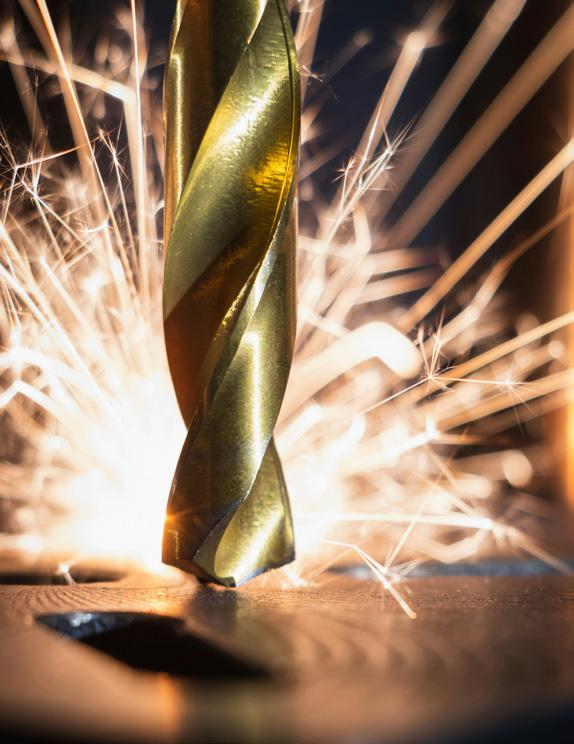
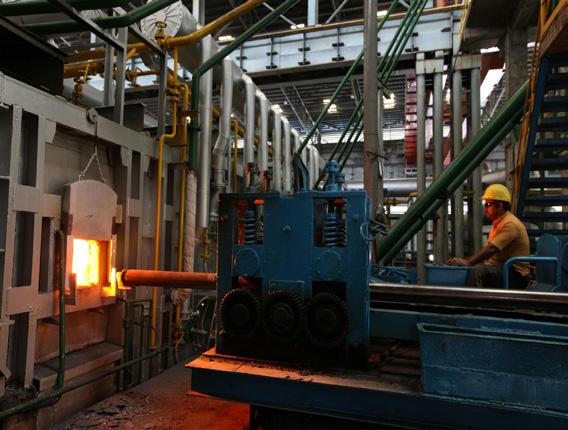
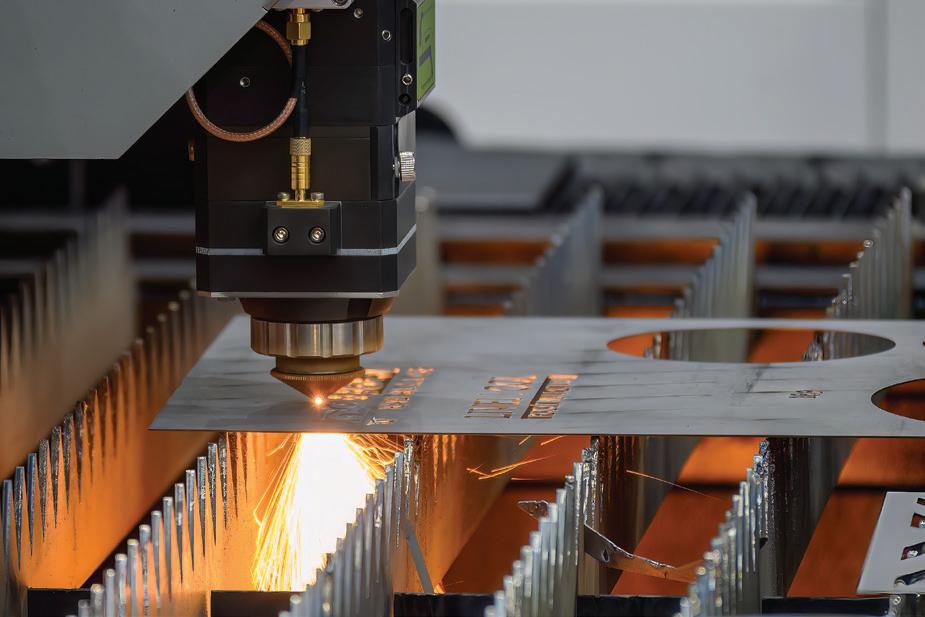
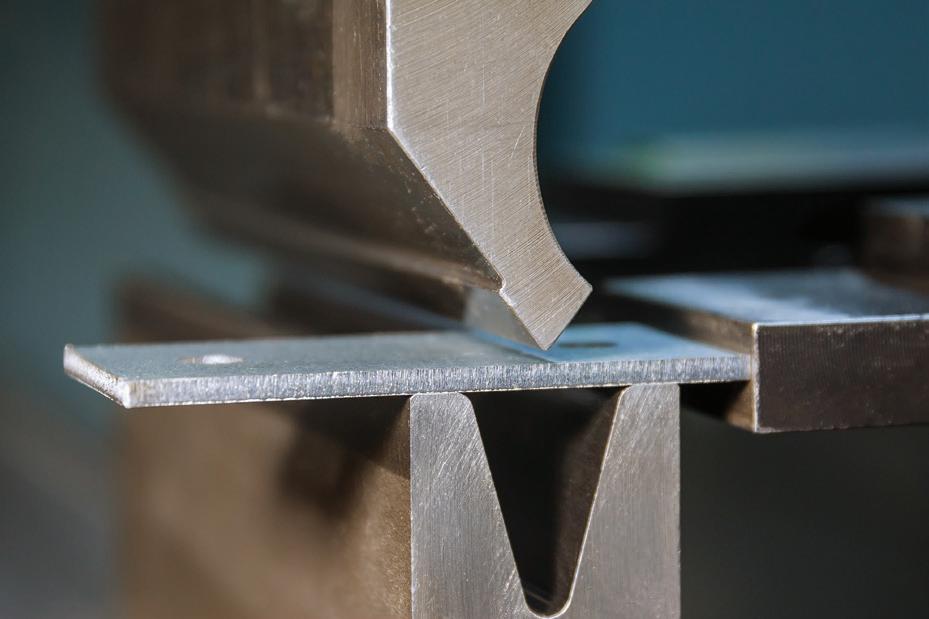
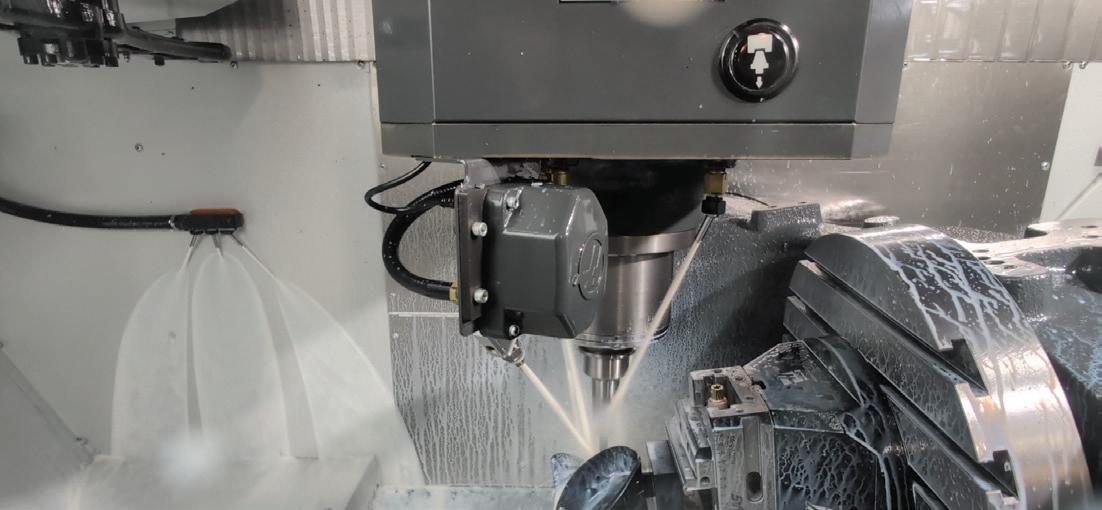
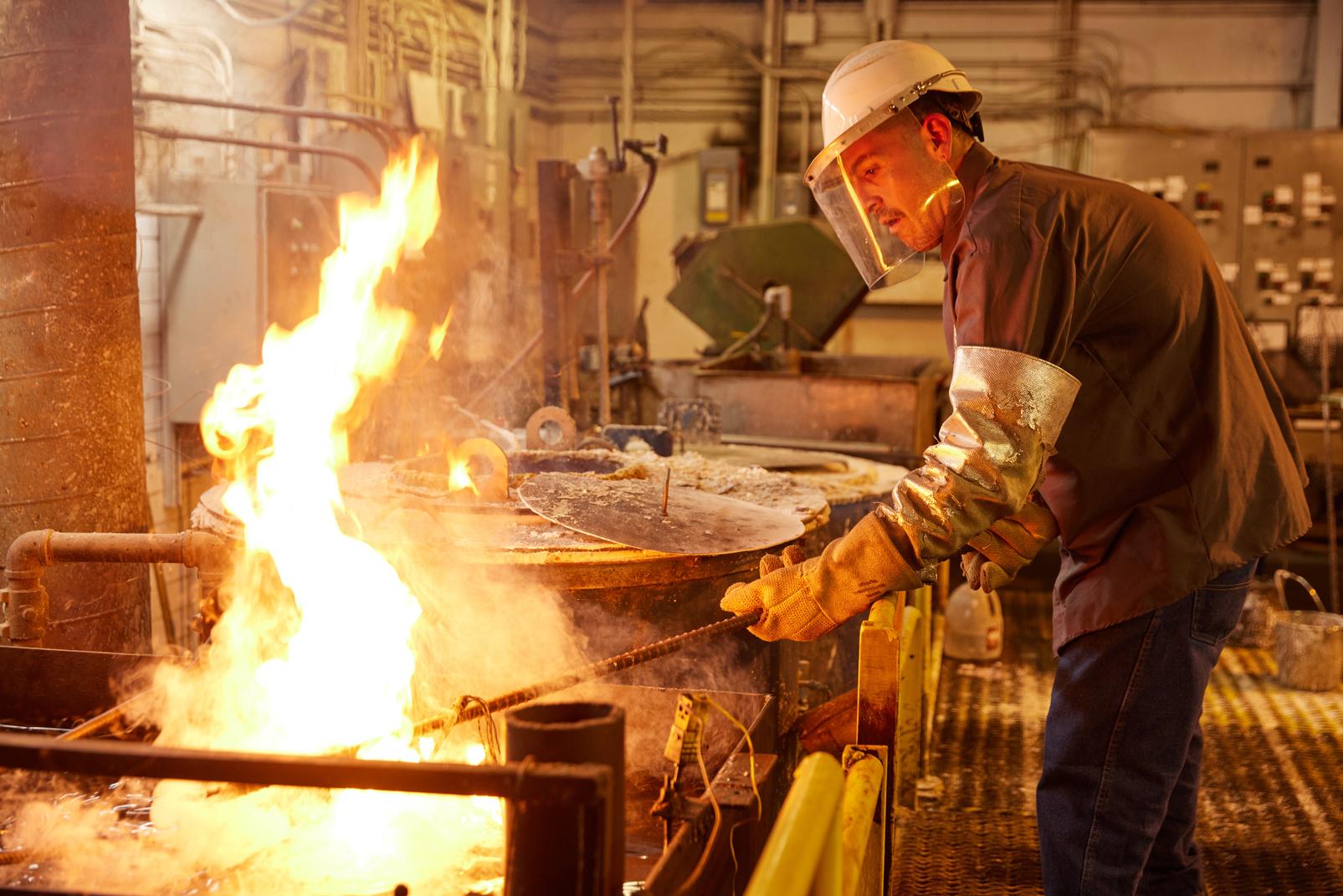
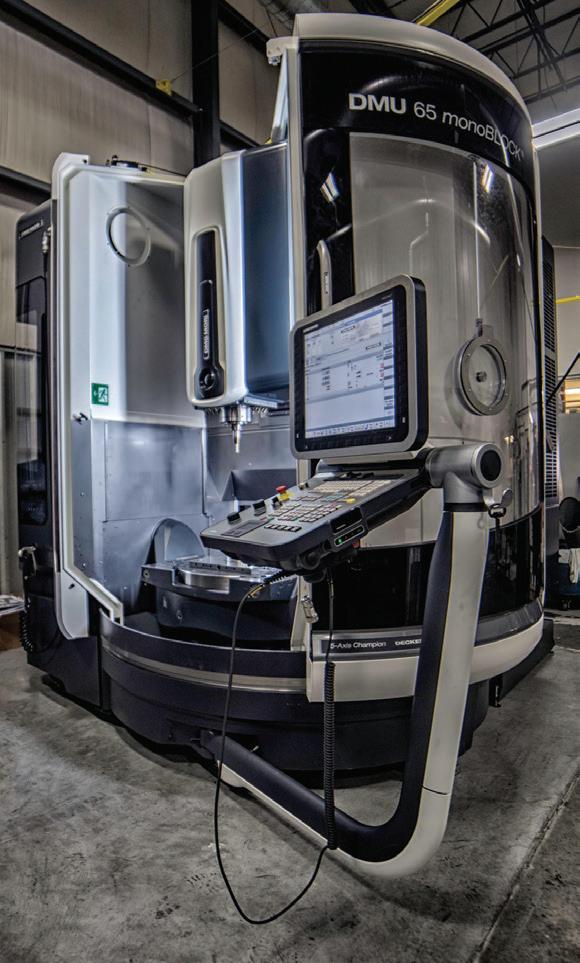
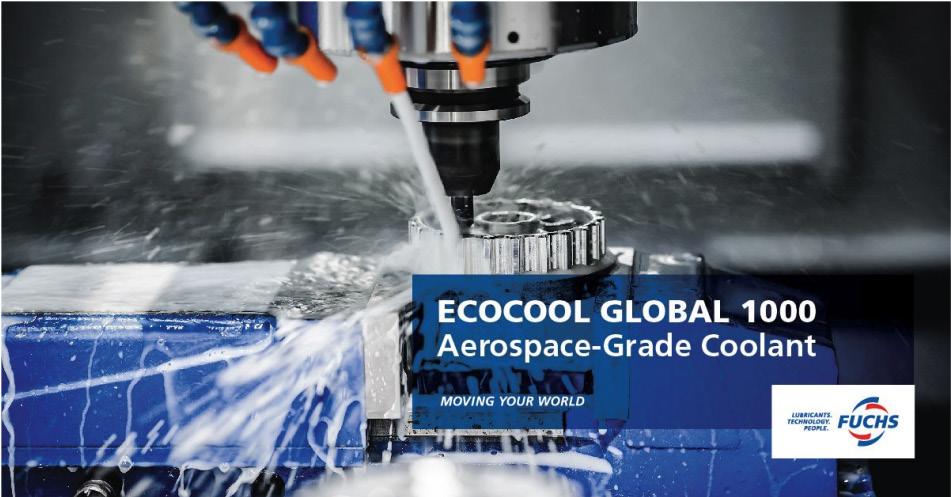
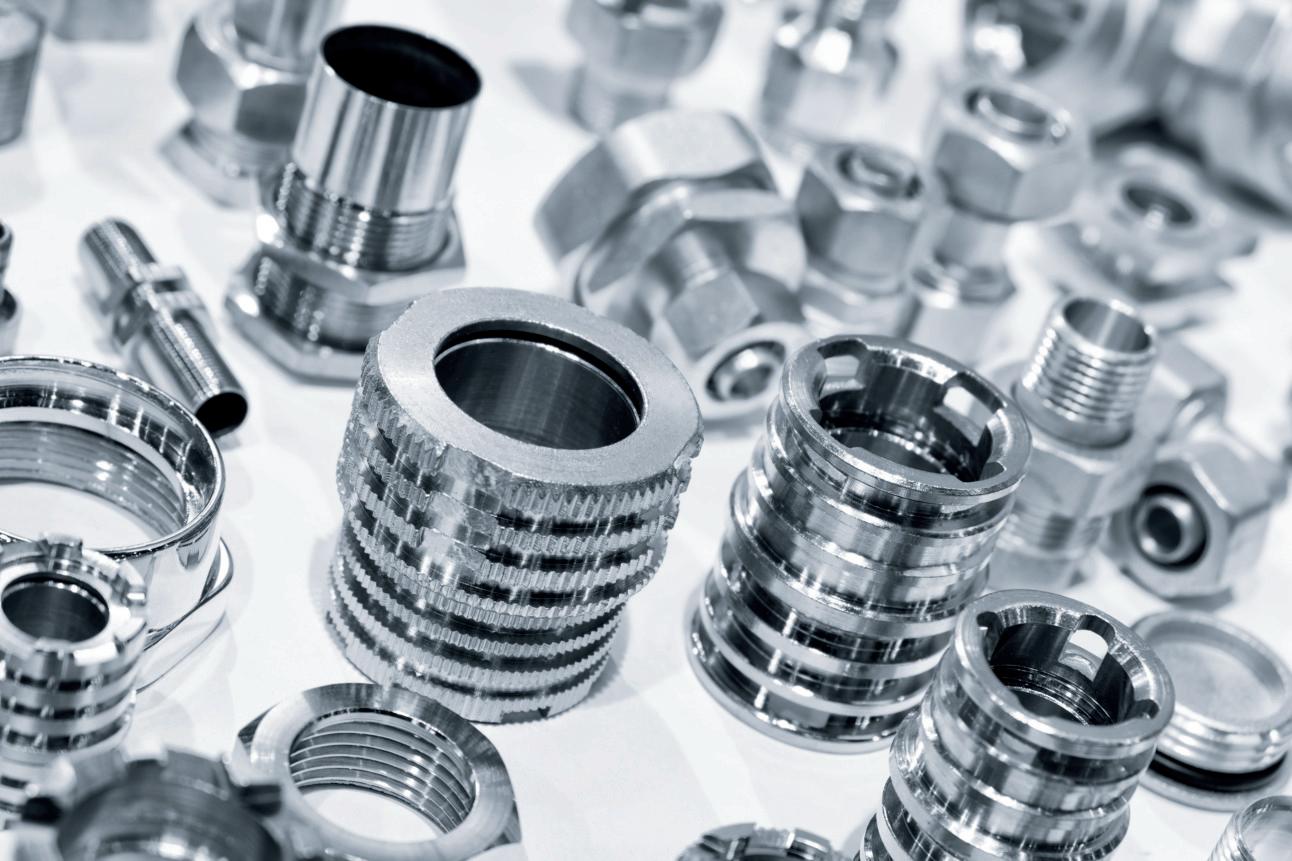
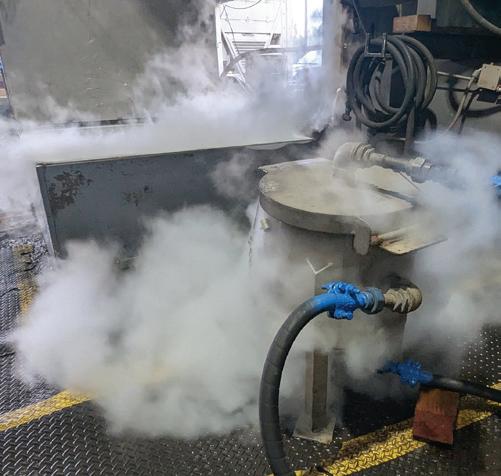
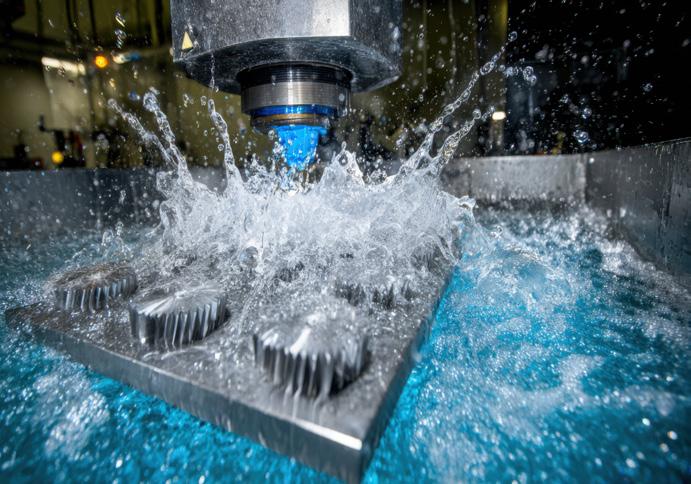
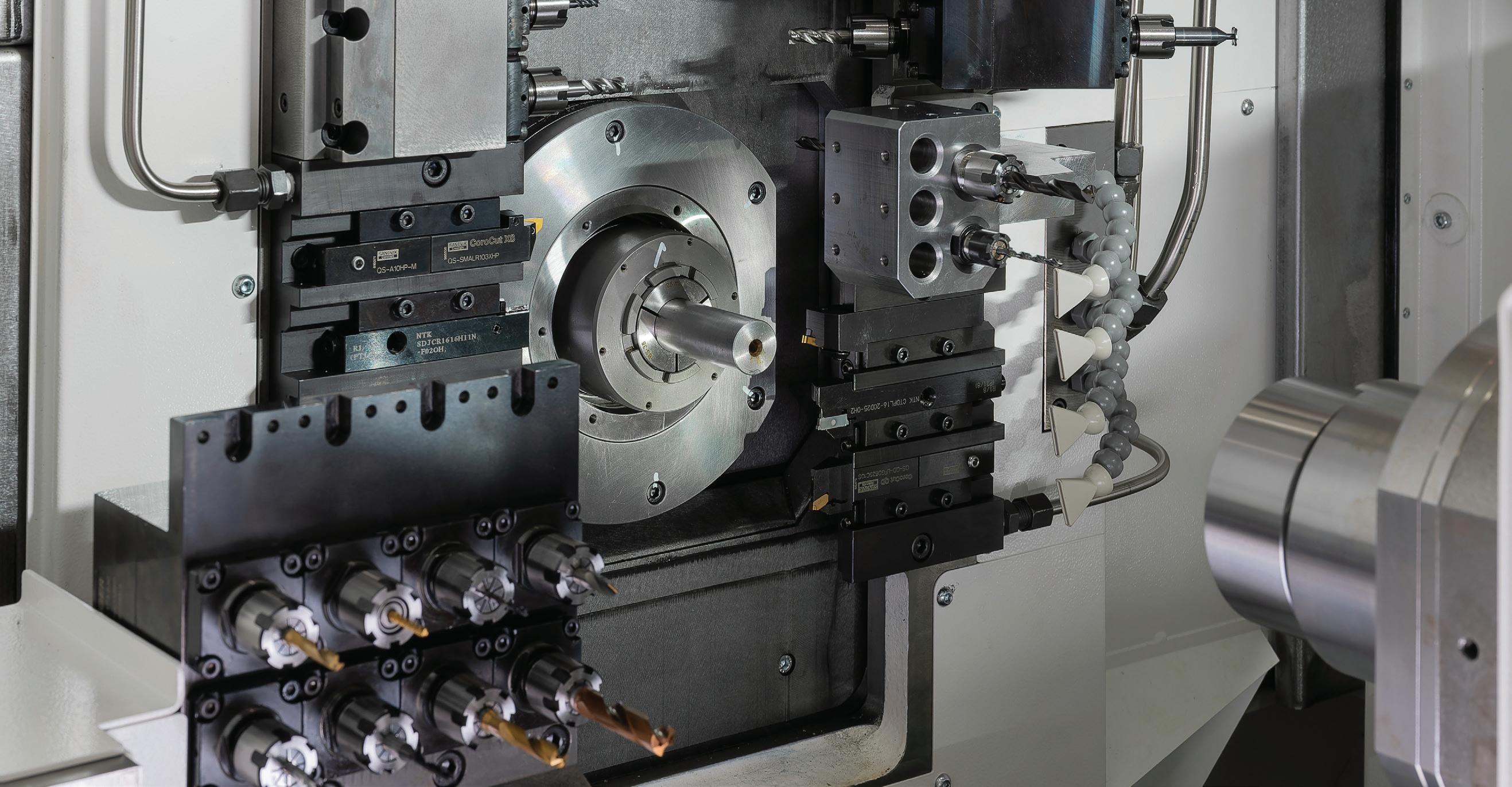
Metalworking fluids formulated to meet aerospace demands.
• Improve process stability on heat-resistant Super Alloys
• Easier robotic handling with cleaner parts
• Reduce costly maintenance interruptions
• Approved for Alloys of Aluminum, Titanium, Nickel, Chrome, and Steel
• Maximize gains from high pressure systems
• Enhance filtration system performance
Editors Corner
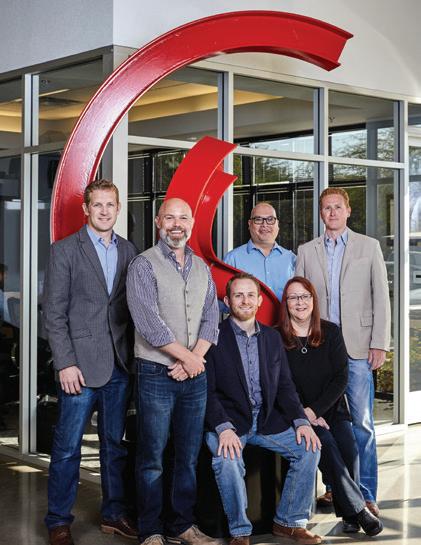
Dear Readers,
Wow - how quickly time has flown since we took over the publication. It feels like we were just getting our feet under us, and now we’re already building a rhythm. A big thank you to Linda and Kim, who have been incredible throughout the transition. Their support has made all the difference, and we are excited to keep the momentum going. Not just for the next issue, but for years to come.
We ventured into this business because we believe in precision manufacturing. We have seen first hand that machin shopes, whether they are small, family-run operations or larger, highly specialized facilities, are the backbone of our industrial economy. They solve real problems, make the parts that keep everything moving, and do it with a level of grit, creativity, and craftsmanship that does not always get the spotlight it deserves. That is where we come in. Going forward, our goal is simple: tell great stories. The stories of shops that are pushing the limits of quality and capability. The stories of suppliers who make the work possible. The stories behind the people, processes, and decisions that turn raw material into something mission-critical. If you are reading this, you are apart of that ecosystem, and we are grateful to have you with us.
You have probably hear the opinion that print magazines are “on the way out.” But a study produced by the Baxter Research Center paints a different picture, especially for niche publications like ours. A few insights we found especially interesting from this study are:
• Niche print readers are highly engaged. The majoirty of readers spend substantial time with each issue, with over 75% spending 30 minutes or more reading.
• There is hight repeat exposure. The same issue is often picked up several times, with 80% picking it up at least two times, and many three times or more.
• Ads get noticed. Magazine readers are 37% more likely to pay attention to advertisments compated to other media channels.
• 52-67% of readers consider purchasing after seeing a product or service in a magazine.
• Over 40% visit an advertiser’s website.
That matters, because this publication is built on our readers and our advertisers. So whether you are a seasoned marketing professional or you are new to advertising and thinking about making 2026 your year to jump in, do not delay! Reach out, we would love to help you find the rigWht message, the right placement, and the right plan to connect with the audience that actually cares.
Cheers to 2026, and God bless America, Charlie & Alex Hushek
| Managing Partners | Editor in Cheif |
Table of Contents:
The Machinist’s Solution How Swarf Unlimited is Ending Downtime
and Alex Hushek connect@a2zmanufacturing.com Address: 24 W Camelback Rd. #A408, Phoenix, AZ 85013 Telephone: (480) 395-3288W www.a2zmanufacturing.com
CONTRIBUTORS
Published bi-monthly to keep precision manufacturers abreast of news and to supply a viable vendor source for the industry.
Circulation: The A2Z MANUFACTURING has compiled and maintains a master list of approximately 8500 people actively engaged in the precision manufacturing Industry. It has an estimated pass on readership of more than 19,300 people.
Advertising Rates, deadlines and mechanical requirements furnished upon request or you can go to A2ZMANUFACTURING.com.
The Publisher assumes no responsibility for the contents of any advertisement, and all representations are those of the advertiser and not that of the publisher.
The Publisher is not liable to any advertiser for any misprints or errors not the fault of the publisher, and in such event, the limit of the publisher's liability shall only be the amount of the publishers charge for such advertising.
Announcements & News
Smith Optics wins “Coolest Things Made in Utah”!
Smith Optics who is celebrating their 60th year in business wins first place in Coolest Things Made in Utah. In the early years, founder Dr. Bob Smith, an orthodontist by trade, made goggles by hand using dental tools, foam and glue. Before he struck a deal for manufacturing of Smith goggles in the late 60’s, Smith would often trade his creations for lift tickets. These early prototypes were usually manufactured by Smith and friends around the kitchen table. Today, Smith Optics has become synonymous with innovative, durable, top-quality products in the eyewear and goggle market. The company is also recognized for its unparalleled team roster, which boasts some of the top names in biking, motocross, skiing, snowboarding, surfing, skateboarding and wakeboarding. Like many other companies, Smith utilizes team input as a key element of new product introductions. In addition, however, Smith athletes are actively involved in the development process for performance testing and coloration selection. ◊
RAM Aviation, Space and Defense Celebrates 50th Anniversary
RAM Company was created in the St. George home of
founders Ray & Melzie Ganowsky in 1975. In the almost 50 years since, the company has grown and expanded and now produces ever more complex mechanical parts and designs. Today RAM is an active partner in major aerospace projects. A fun fact about the company: the name is an acronym delveloped from the first names of the founders. ◊
EBITDA Growth Systems Hosts Successful Event
EBITDA Growth Systems headed quartered in Golden Colorado hosted there annual Double your Growth event which this year boasted over 100 attendees. This two-day event featured class room sessions covering topics such as CMMC Compliance among others. In addition to the sessions the event featured plenty of networking opportunities to connect with other industry professionals. EBITDA Growth Systems is a group of seasoned manufacturing business owners and executives that are driven to use our experience to help owners and leaders in manufacturing and the trades develop the business acumen they need to reach their success goals. Their promise; is through our Coaching Program, they will double the value of their clients business in three years or they will give
Announcements & News Continued
them their money back. ◊
Utah Manufacturers Association welcomes
Sue Lyon:
Director of business Development
The Utah Manufacturers Association introduced Sue Lyon to the team and has this to say “Sue has a rich history in manufacturing and we are thrilled she is bringing her talents to UMA. Let’s learn more about her.” Sue adds “I have had over 10+ years experience in manufacturing. From warehouse to purchasing to operations then to executive level in all those categories. I love working in manufacturing and building lifelong relationships from that.”
How Wyoming Is Trying To Become A Player in America’s Manufacturing Comeback
Wyoming is actively positioning itself to be a significant contributor to the U.S. manufacturing resurgence, aiming not just to participate but to lead in reshoring efforts. State leaders see bringing manufacturing back to the U.S. as vital for national and global competitiveness, especially in strategic
sectors. Governor Mark Gordon highlighted ongoing discussions with companies in Japan and Taiwan about potential investment, including components for high-tech products such as cellphone glass that could be made near Wyoming’s trona mines, giving manufacturers a cost and geographic advantage.
The state is pursuing a “long game” strategy that focuses on enabling local communities to attract and sustain new industries. This includes developing infrastructure, ensuring communities are attractive places to live, and building clusters of related businesses to support workforce recruitment and retention. The Wyoming Business Council is encouraging communities to address barriers to growth — such as utility infrastructure and housing — and to make use of local tax tools to support economic development.
However, both state officials and local manufacturers acknowledge significant challenges. Wyoming has a small population, and building new manufacturing facilities requires substantial capital investments with long time horizons. L&H Industrial’s president, Mike Wandler, noted that heavy equipment and factory
SIDEKICK
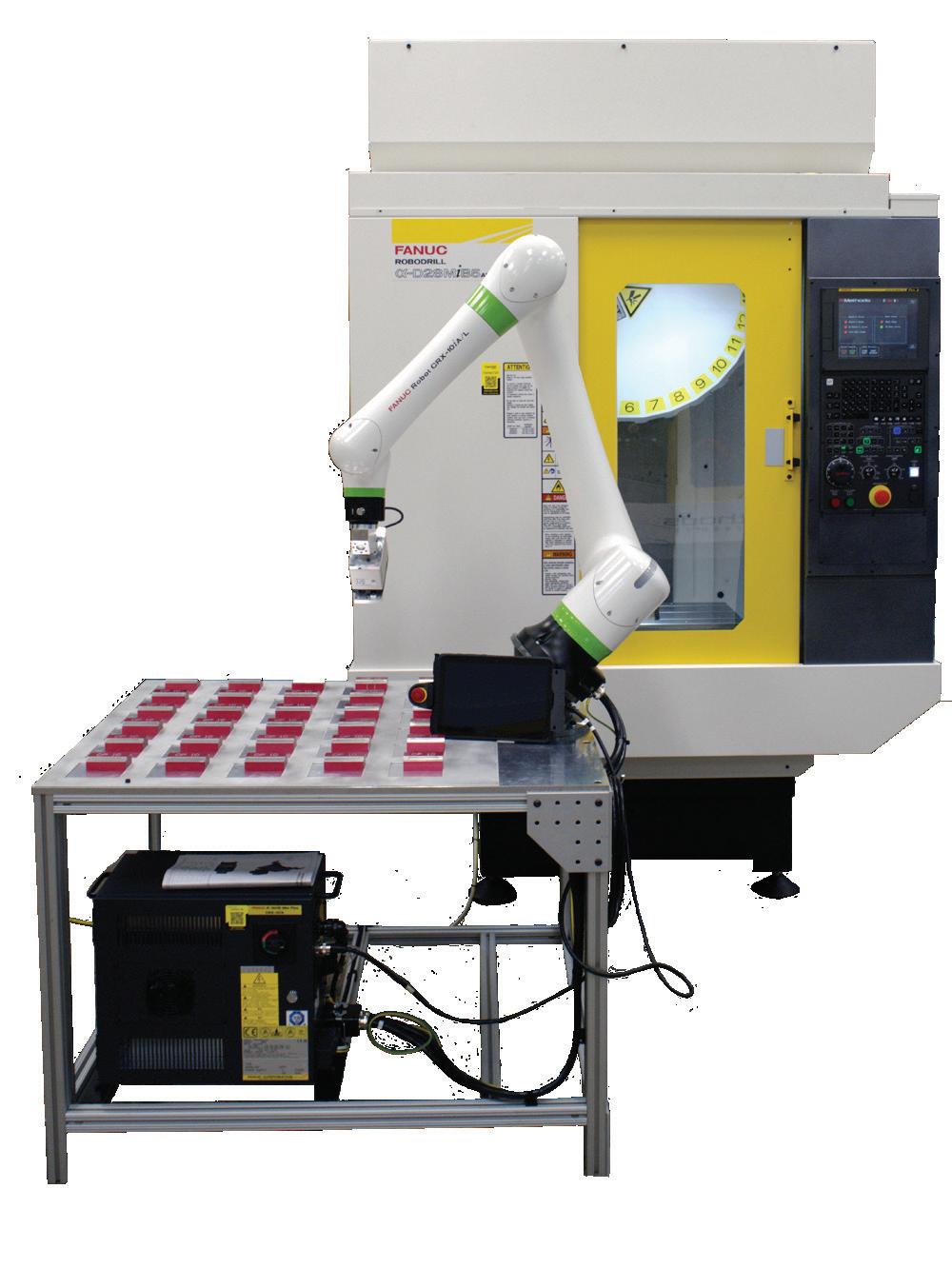
Introducing the new Sidekick!
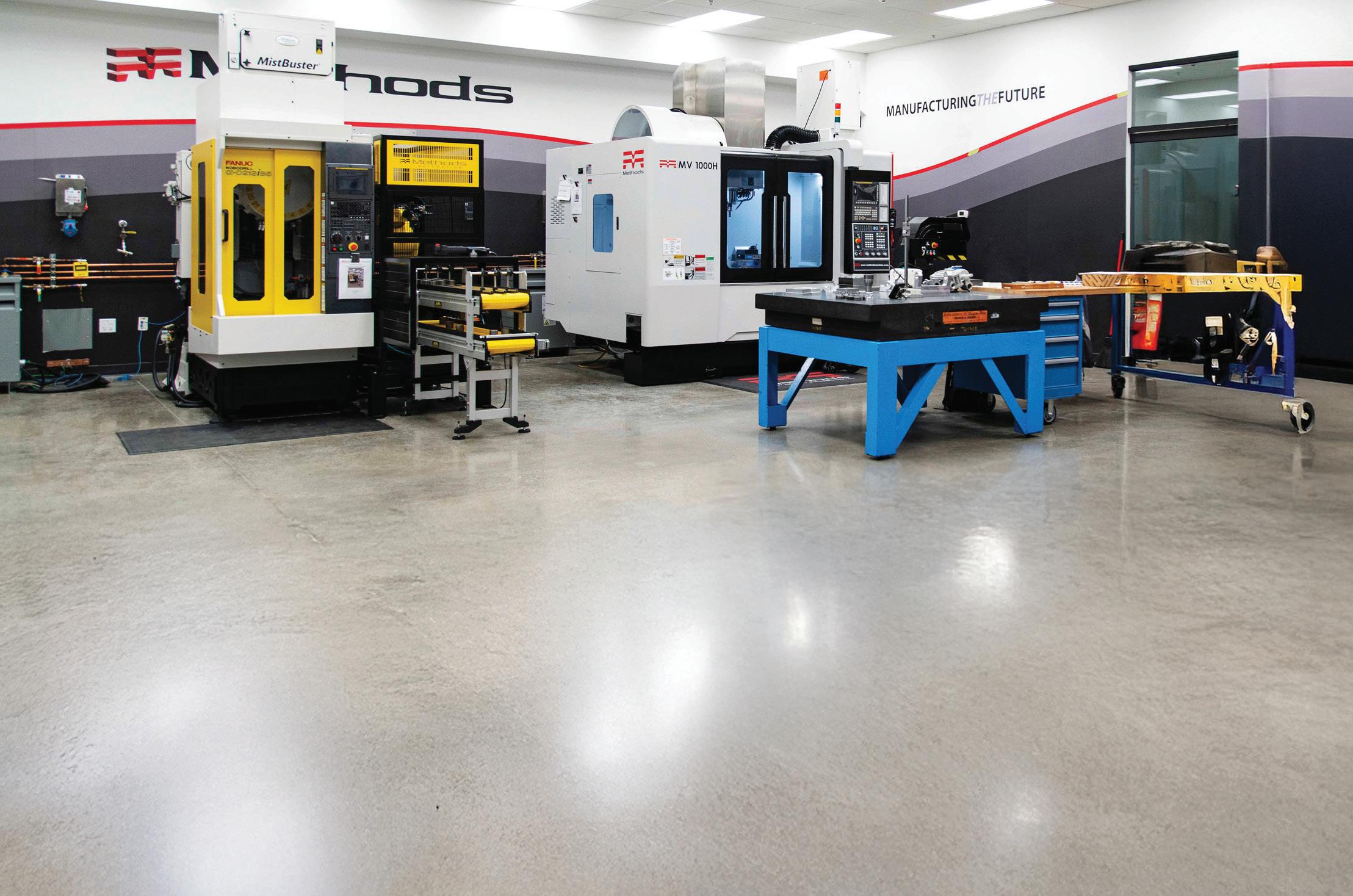
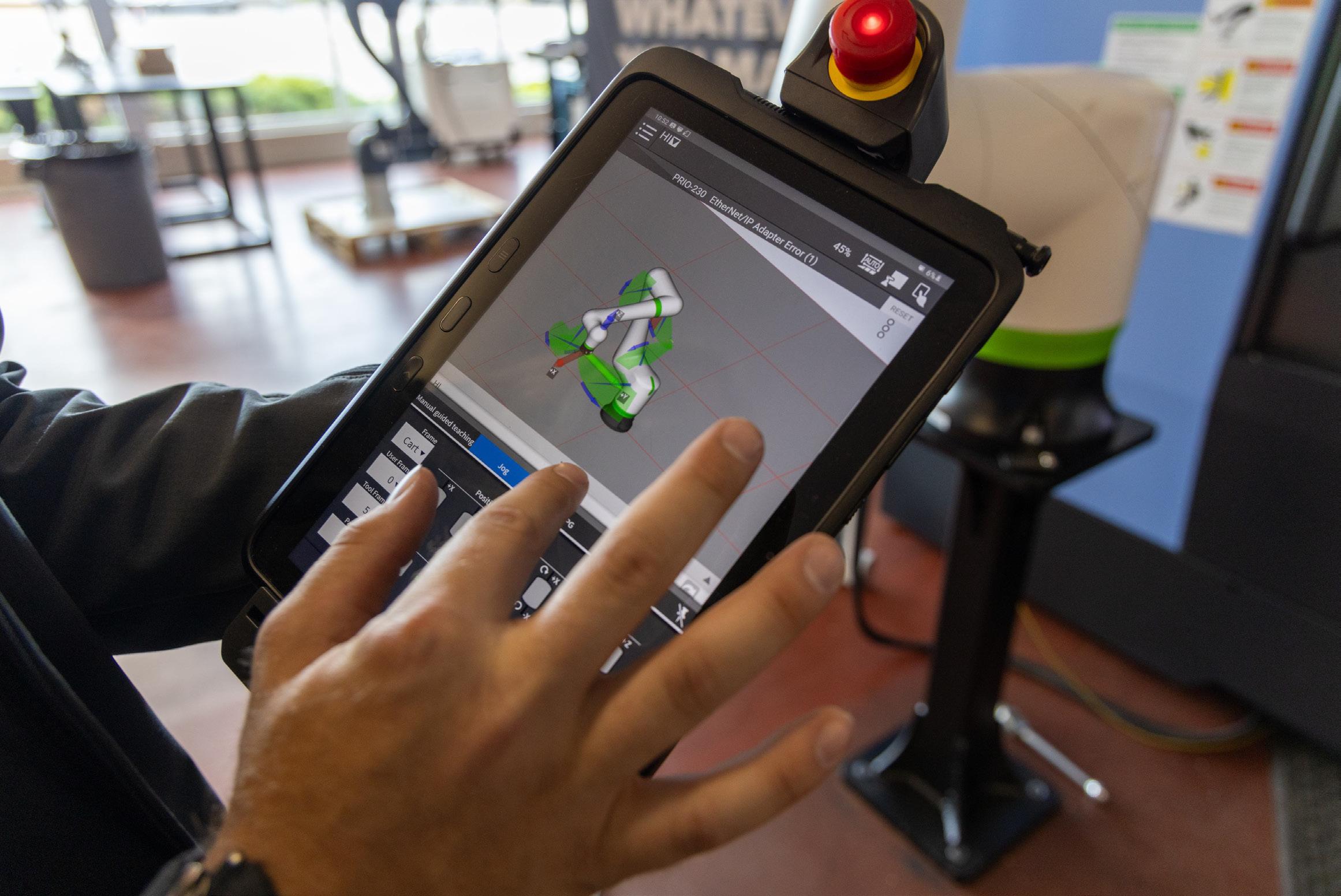
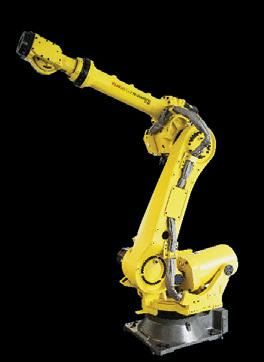
The newest member of the Methods Night Crew just became easier to use and friendlier to your bottom line. The Sidekick is the team member that will keep your FANUC RoboDrill running without ever clocking out. Faster set up with the Ready-to-Run package to get you in the cut on Day 1.
Announcements & News Continued
facilities often do not appraise for their real value, meaning companies must commit significant funds without immediate returns. Despite these hurdles, he believes resilient, technology-driven manufacturing — especially where automation reduces reliance on cheap labor — can succeed in Wyoming.
The article also emphasizes strategic planning in what types of manufacturing make sense to bring back. Wyoming’s Manufacturing Works program supports small and mid-sized manufacturers with workforce development and advanced manufacturing capabilities, which is important as the U.S. supply chain remains brittle in certain sectors.
Experts quoted argue that decisions about reshoring should weigh national security and economic sustainability, focusing on areas where domestic production can realistically compete, especially with automation and modern technologies.
Overall, Wyoming’s approach combines global outreach, community development, targeted infrastructure investment, and strategic thinking about industry types as it seeks to grow its manufacturing
footprint and contribute to America’s broader economic comeback. ◊
Ursa Major Makes News
Ursa Major Technologies, the Berthoud, Colorado–based aerospace and defense company, has recently announced major developments marking a significant growth phase in both its financial backing and physical infrastructure. In November 2025, Ursa Major closed a $100 million Series E funding round led by venture capital firm Eclipse, alongside participation from Woodline Partners, Principia Growth, XN, and Alsop Louie Partners, among other institutional investors. In addition to the equity raise, the company secured $50 million in debt financing commitments to support broad scaling of its manufacturing and production capabilities.
This latest infusion comes amid a strong year of performance, with more than $115 million in bookings through the first three quarters of 2025 from both government and commercial partners including the U.S. Department of Defense, U.S. Air Force Research Laboratory, Stratolaunch, and BAE Systems. The company’s leadership, including CEO Dan Jablonsky, emphasized that the new capital will
accelerate production of hypersonic propulsion systems, solid rocket motors, and space mobility technologies, particularly addressing urgent national security and industrial base needs with faster, more cost-effective solutions compared to legacy providers. Additionally, Ursa Major has added experienced industry leaders to its corporate board, further enhancing its governance as it scales.
Concurrent with its financial momentum, Ursa Major is also expanding its physical footprint in Colorado. In September 2025, the company broke ground on a new 400-acre solid rocket motor (SRM) test and qualification facility in Weld County, Colorado.
This large-scale site is designed to support design, testing, and qualification of large solid rocket motors — including those intended for standard missile programs and broader national defense applications.
The facility will enable full-scale static firings, qualification processes such as drop and temperature storage testing, and serve as a hub for validating SRMs produced using Ursa Major’s proprietary Lynx manufacturing process, a software-driven, additive-enabled production system capable of supporting multiple motor sizes without
retooling.
With construction already underway and testing scheduled to begin in Q4 2025, the expansion underscores Ursa Major’s commitment to building an advanced U.S. propulsion industrial base right from its Colorado headquarters.
Together, the Series E funding and the new Weld County test site represent a major leap forward for Ursa Major as it scales both financially and operationally to meet growing market demands and strategic defense priorities. ◊
Montana Manufacturing Booms, Generating $2 Billion in Wages
Montana’s manufacturing sector continues to be a major economic engine for the state, with new data showing the industry generated more than $2 billion in base labor earnings in 2024, making it the second-largest source of wage income behind the hospitality sector.
This strength comes from a series of reports Announcements & News Continued
FEED THE BEAST
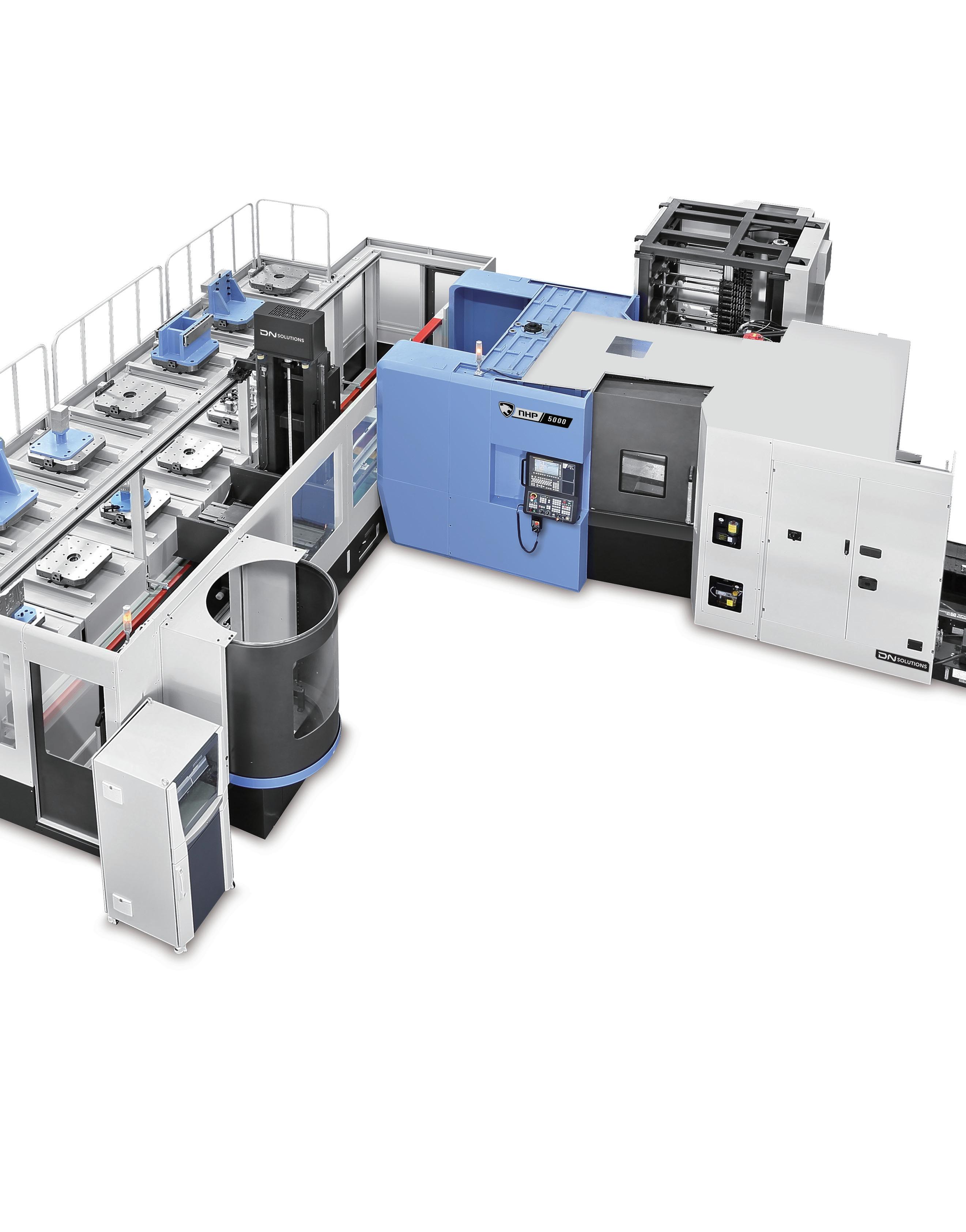
Automation keeps the NHP running. Day and night.
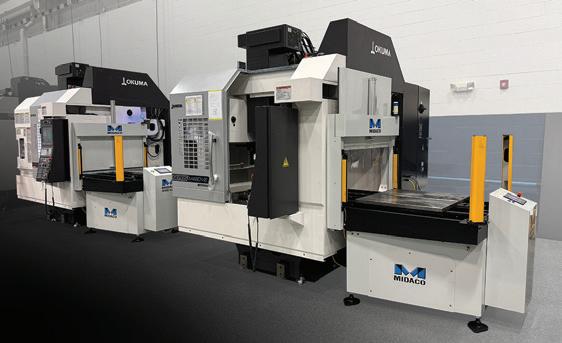
Nothing is sweeter than the sound of a spindle making chips, especially when it’s the high-performance spindle found on one of our NHP Series of Compact Horizontal Machining Centers. These workhorses can handle whatever you throw at them, and are always asking for more.
That’s where our Linear Pallet System (LPS) comes in. It feeds the NHP around the clock, which leaves nothing but pallets upon pallets of precise, ready-to-ship parts. And if floor space is a concern, the Rotary Pallet System (RPS) will fit right in.
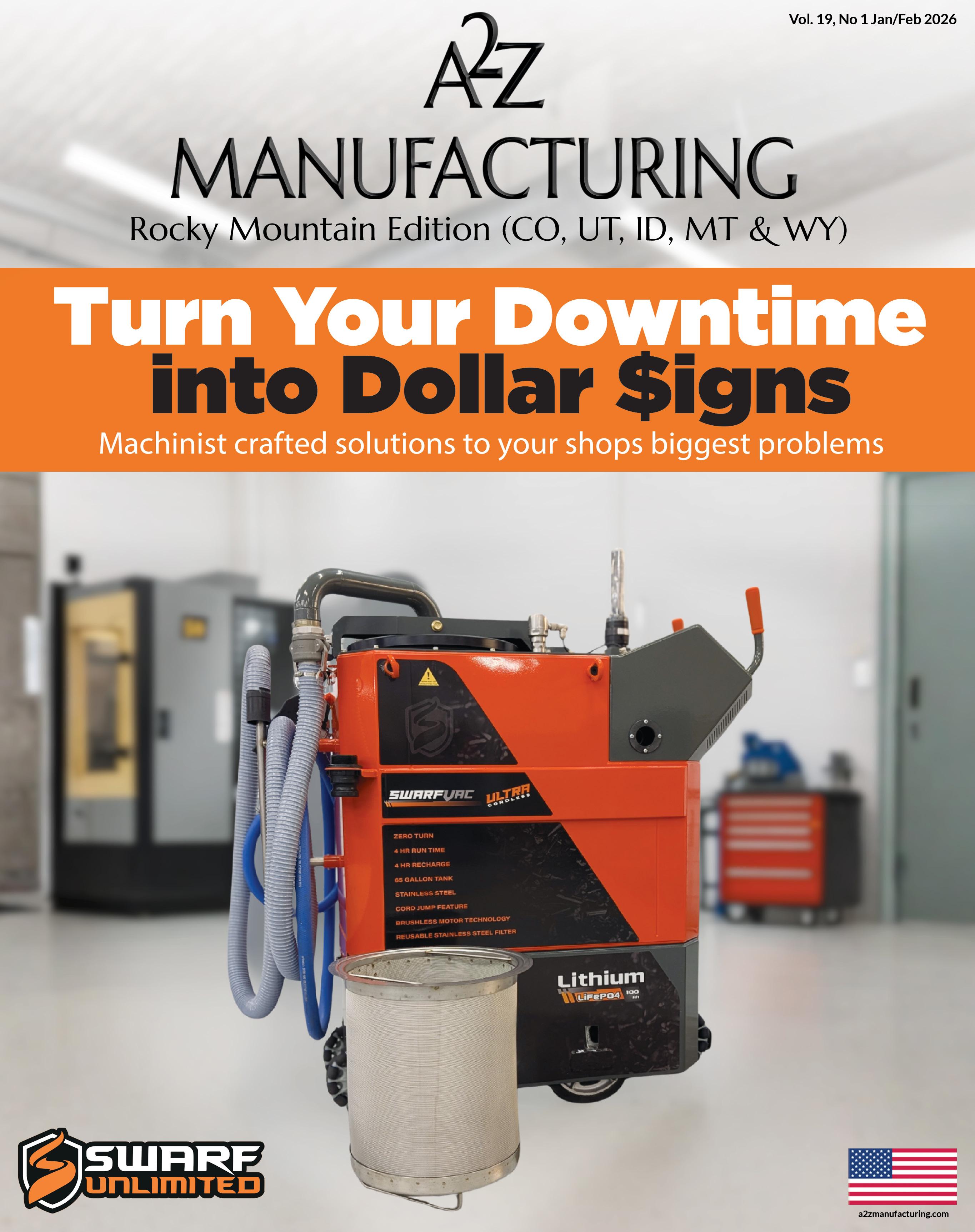
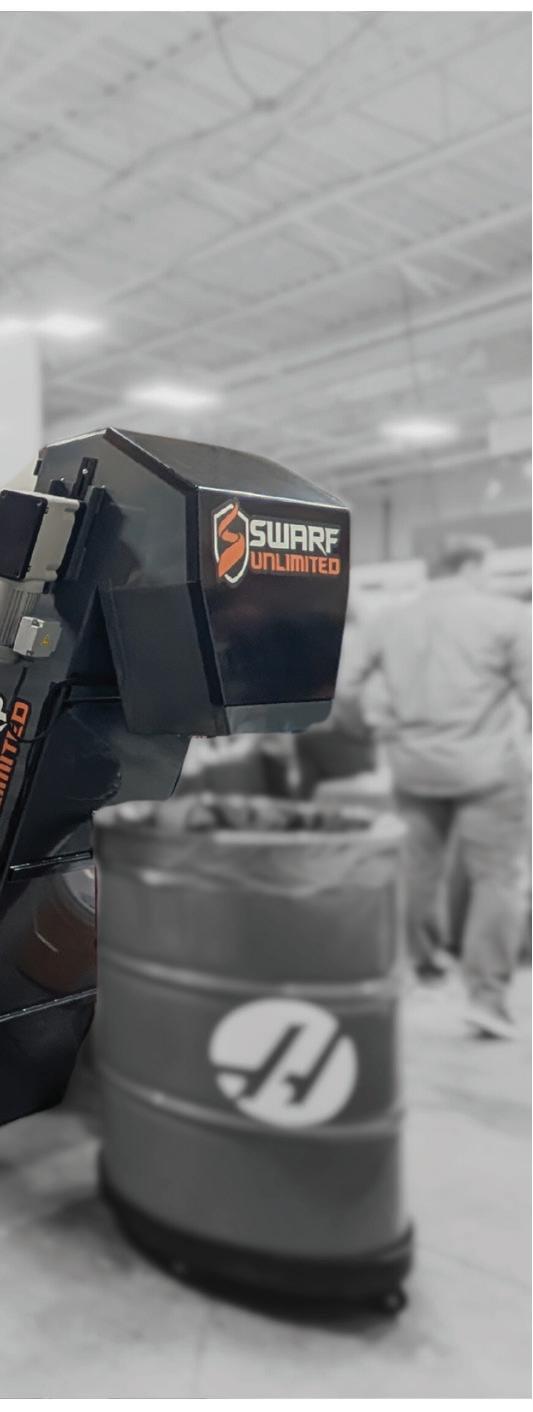
How Swar f Unlimited is Ending Downtime
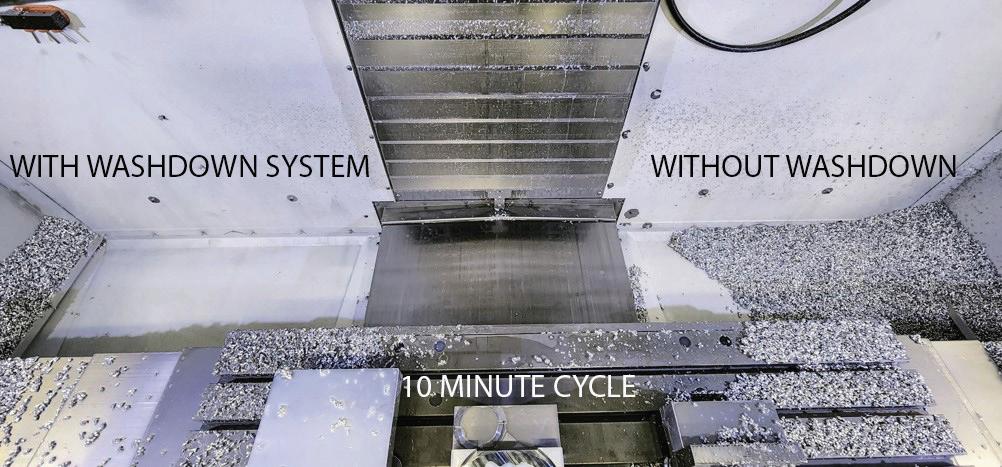
Swarf. For any CNC shop, chips are a constant drain on time, resources, and profitability. For one machine shop in Boise, Idaho, this headache became a call to action.
It all started in their own busy shop. They were constantly battling costly downtime to clean machine sumps. Their first solution, built out of necessity, was The Swarf Unlimited Washdown System. Its high-performance pump and flexible nozzles kept machines running, but this new efficiency created a new problem: the system was moving too much coolant, overwhelming their OEM Filter trays.
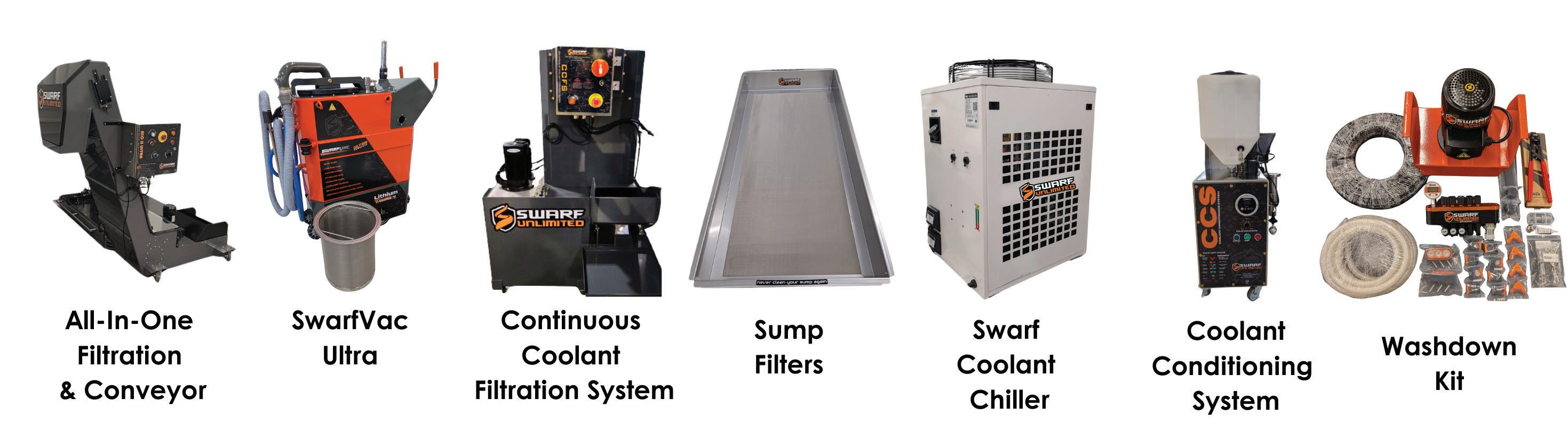
Finding no market options that were tough or simple enough, they did what machinists do best: they built it themselves. The result was the revolutionary Swarf Sump Filter. This drop-in unit captures swarf down to 100 microns, but its true innovation is its maintenance: operators can clean it in seconds while the machine is running. Downtime for cleaning is eliminated.
The impact was immediate and measurable. "We’ve seen an annual industry average increase in revenue of $8,000.00 per machine from using just our Sump Filters," the company states. "We sleep well at night knowing our solutions are turning costly maintenance downtime into profitable production time."
The machinist mindset of continuous improvement pushed Swarf Unlimited to address every aspect of coolant management, building an entire ecosystem of solutions.
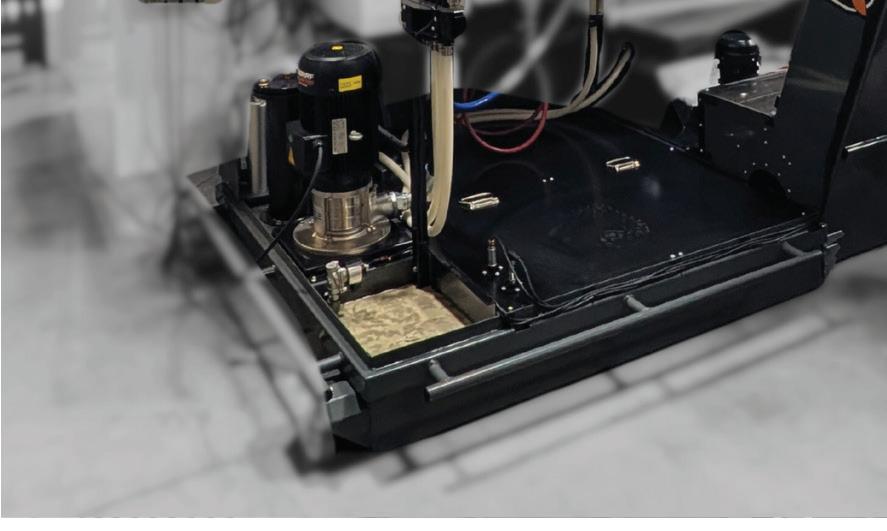
• The Continuous Coolant Filtration System (CCFS):
▪ Continuously filters grinding fines and swarf down to 10 microns.
▪ Discharge and sludge are captured in a separate sludge sump within the unit for later removal.
▪ Integrated variable-speed conveyor removes chips efficiently with minimal carryout.
▪ Continuous no touch operation.
▪ Compact, plug and play design.
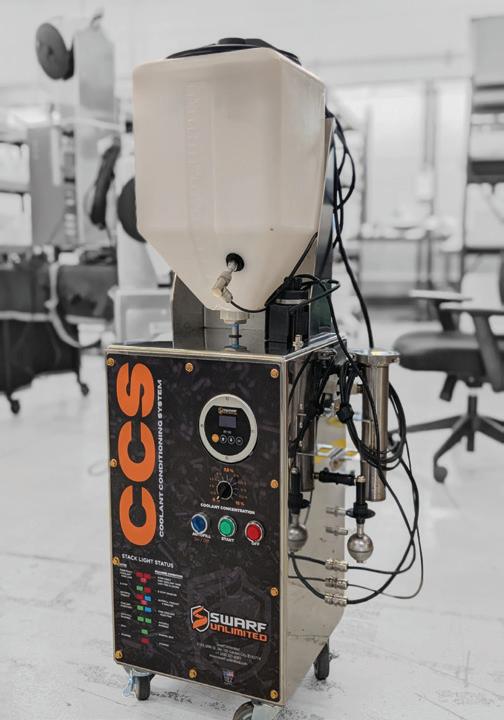
• The Coolant Conditioning System (CCS):
▪ Provides 24/7 concentration adjustment.
▪ Inline refractometer and dosing system for automated concentration control.
▪Manages and holds the brix percentage of the coolant mix to 0.1%.
▪ Holds up to 5 gallons of coolant concentrate.
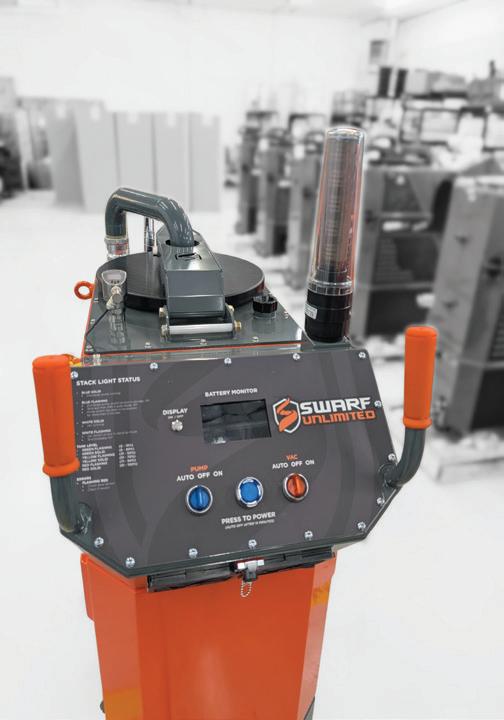
• The Cordless Swarf Vac Ultra:
▪ Provides non-stop sump cleaning with simultaneous suction and discharge.
▪A self-contained, no-consumable, cordless unit for total cleanup anywhere in your shop.
From that single shop in Boise Idaho, Swarf Unlimited is now helping machinists everywhere achieve the ultimate goal: "Never clean your sump again."
Stop letting down time drain your profitability. Contact Swarf Unlimited today at 208-321-8083 or explore their full line of solutions at:
www.swarf-unlimited.com.
CCFS
Cordless Swarf Vac Ultra
CCS
AIO
www.westernstatesmetals.com
Research at the University of Montana.
According to the reports, Montana manufacturing has outpaced national growth since 2020, particularly in the durable goods segment. However, the sector showed signs of cooling in late 2024 and early 2025, with declines in wood products and food production contributing to the first broad contraction in manufacturing establishments in years.
Despite this slowdown, exports rebounded strongly in 2024—led by petroleum and transportation equipment— and overall real gross domestic product from Montana manufacturers reached $3 billion.
MMEC Director Paddy Fleming emphasized that the contraction was not unexpected given the rapid expansion of the sector over the past decade. Growth in establishment counts—from about 1,400 in 2014 to nearly 1,900 in 2024—reflected strong entrepreneurship and diversification across the state. Although some closures have occurred, existing manufacturers are planning
expansions and there remains solid interest from companies outside Montana considering relocation.
“Retail sales are up, and sectors such as transportation, logistics, warehousing, and construction are performing extremely well,” Arora added. “Right now, business owners are confident in the future of their firms. August is typically a slow month for loan volume, but that wasn’t the case this year.”
The reports also highlight ongoing challenges facing Montana’s manufacturing industry, including labor shortages, rising input costs, and reduced rates of capital investment. The annual Montana Manufacturing Survey included in the report showed that many businesses expect only modest growth in 2025 due to these pressures.
Business loan approval rates rose at regional and community banks as well. Small banks granted 49.8 percent of the funding requests they received in August, up one-tenth from July. It represents the highest figure for small banks since November 2014.
Institutional lenders — pension funds and insurance companies — remained unchanged at an Index record 64.9 percent, up one-tenth of a percent from July’s figure.
A third report evaluated MMEC’s impact, finding that its services helped create or retain 642 jobs, generate nearly $61 million in revenue, spur over $39 million in new investment, and produce $22.8 million in cost savings for manufacturers in 2024. The center’s work provides a strong return on investment by improving operations, fostering workforce development, and facilitating collaborations with university resources.
Loan approval rates among alternative lenders rose to 56.6 percent, one-tenth of a percent higher than in the previous month.
Alternative lenders have become a source of quick capital. When small business owners, alternative lenders could approve riskier loans via innovations in fintech, which give them more flexibility than the banks to adjust rates and covenants on the deals. This includes an ability to accept non-conventional sources of collateral, such as real estate and outstanding invoices (h/t Forbes).
In sum, while Montana’s manufacturing sector faces headwinds and a recent cooling trend, it remains a resilient and influential part of the state’s economy with significant contributions to wages, output, and export growth.
Credit unions approved 40.2 percent of loan applications in August, a slight drop of one-tenth of a percent from July and a large drop from their all-time high of 57.9 percent in March 2012. By Anthony Noto – Reporter, New York Business Journal
Boeing Closes Spirit AeroSystems Acquisition
On December 8, 2025, Boeing officially closed its acquisition of major portions of Spirit AeroSystems, bringing back in-house the commercial aerostructures work that Spirit has performed since Boeing spun the business off in 2005.
The transaction is designed to tighten Boeing’s operational control over some of the most safetyand schedule-critical structures in its commercial portfolio—especially as the company continues working to stabilize production quality and delivery cadence across key programs. Boeing said the deal folds in Spirit’s Boeing-related commercial and aftermarket operations, including 737 fuselages and major structures for the 767, 777, and 787, along with significant spare-parts and aftermarket capabilities.
A central feature of the closing is that it wasn’t a simple “one buyer, one company” outcome. Because Spirit also builds major aerostructures for Airbus programs, the closing arrived alongside planned Airbus-related divestitures intended to align each airframer with the portions of Spirit most tied to its own aircraft families. Reuters reported Airbus acquired Spirit operations across several locations,
REAL LEADERSHIP DEVELOPMENT.
From
Lee Benson grew Able Aerospace from 3 people to 500+ and sold it for 9 figures.
Leadership assessment that shows where you need to focus
Monthly live calls with Lee Tools and frameworks that work on the shop floor
24/7 access to practical resources
UTAH METAL WORKS
www.umw.com
Tollfree: 866-434-5679
Local: 801-364-5679
How Much Is My Metal Worth?
At Utah Metal Works, recycling industrial-related scrap metal is one of the things we do best. You simply won’t find more knowledgeable, capable partners for your scrap handling and recycling efforts anywhere. We are known in the industry for our honesty and integrity, and you can be sure you are always getting a competitive return along with superior service. We make it easy for you to cash in on non-ferrous metals from:
• Punchings
• Solids of any metals
• Turnings and borings
Industrial/Manufacturing Scrap
• Skeleton plate
• Machine Shop/Fabricator
• Solids of any size or type
Aircraft/High Temperature Alloy Scrap
Stainless, titanium, Inconel, Hastelloy, Monel, cupronickel, aluminum;stateof-the-art metal analysis conducted on site; Mixed or contaminated items are accepted and sorted
in parallel) that the parts most central to certification, safety, and delivery performance are increasingly viewed as too important to leave at arm’s length. ◊
Lockheed Martin Announces Strategic Investment
Lockheed Martin announced a $50 million strategic investment in Saildrone aimed at rapidly advancing unmanned surface vehicle (USV) capabilities for the U.S. Navy, pairing Saildrone’s operationally proven autonomous platforms with Lockheed Martin’s combattested defense payloads.
The collaboration is positioned as a commercial path to fielding “ready-now” capability, with both companies targeting system integrations and onwater live-fire demonstrations in 2026.
including sites in North Carolina, Northern Ireland, Scotland, France, and Morocco, as part of the broader realignment.
Regulatory review shaped the final path to closing. In early December, FlightGlobal reported the U.S. Federal Trade Commission approved Boeing’s acquisition while requiring divestitures consistent with the Airbus carve-out plan already embedded in the transaction structure.
The human and industrial footprint is significant. Reuters reported roughly 15,000 Spirit employees transition into Boeing, and noted potential labor ripple effects as teams and bargaining units are integrated.
Ultimately, the closing marks a decisive shift toward vertical integration in large commercial aerospace—an acknowledgement by Boeing (and Airbus,
The press release frames the partnership as a way to accelerate the Navy’s broader USV vision across missions such as fleet defense, undersea surveillance, reconnaissance, and attack. Work is planned to begin immediately using an open-architecture approach and secure command-and-control integration.
The first major integration named is Lockheed Martin’s JAGM Quad Launcher (JQL) mounted onto the Saildrone Surveyor platform.
Beyond the Surveyor, Saildrone says larger vehicles are already in development to carry substantially larger payloads, including potential integrations like the Lockheed Martin Mk70 vertical launching system (VLS)
launcher and thin line towed arrays, signaling an intent to support more complex and higher-end naval missions. Leaders from both companies emphasize speed and scale.
Lockheed Martin’s Rotary and Mission Systems president describes the effort as combining leading commercial autonomy with trusted defense systems to deliver a lethal naval solution quickly, aligning the initiative with national defense urgency.
Saildrone’s CEO highlights that the company has spent the last decade improving platform reliability, endurance, and autonomy, noting Saildrone vehicles have completed over 2 million nautical miles of customer missions—positioning the platform as mature enough to incorporate advanced military payloads.
He also points to an expanded mission set that could include electronic warfare, anti-submarine warfare, sophisticated ISR, and kinetic effects, integrated with Lockheed Martin command, control, and fire-control systems.
Phoenix Heat Treating Phoenix Heat Treating
G E T T O K N O W U S
Servicing our industry and trade customers in intelligence heat treating for over 60 years.
Established in 1963
Real Time Live Job Tracking
10+ Processes Performed
50+ Furnaces
Operationally and industrially, Saildrone will retain shipbuilding responsibilities, while Lockheed Martin will act as lead mission integrator.
The release also highlights potential domestic economic impact, noting that larger Saildrone systems are produced at Austal USA and that scaling production could broaden benefits across the U.S. maritime and defense industrial base. ◊
AOG and Line Down
Services
Over 10+ Prime Approvals
24/7 Processing
602-258-7751
cs@phxht com
www phoenix-heat-treating com
Phoenix Heat Treating Achieves Second Consecutive ZeroFinding Nadcap Audit
Phoenix Heat Treating announced it has achieved its second consecutive zerofinding Nadcap audit, reaffirming the company’s unwavering commitment to robust systems, process control, and a culture of continuous improvement. The Nadcap auditor praised Phoenix Heat Treating’s electronic quality and production systems, stating:
“In my 20+ years of auditing across the world, this electronic system, the transparency and visibility is one of the best I have ever seen.”
This successful audit result confirms not only the strength of Phoenix Heat Treating’s procedures and controls, but also the dedication and professionalism of its people.
CJ Precision Machine, Inc. is a leading manufacturer of critical parts for a wide variety of industries, including aerospace, semiconductor, medical, solar, food processing, aviation, automotive, and motorsports.
From our vertical machining centers, to our state-of-the art 5-axis mills and 7-axis lathes, we provide superior customer satisfaction from prototype to production.
CJ provides superior customer satisfaction through flexible and dependable service with timely turn-around.
Our precision manufacturing includes working with both plastics and metals in our 9,500 square foot facility in Boise, Idaho. Our machinists have more than 140 years of experience and all manufactured parts are inspected by quality control.
CJ can provide finishing including anodizing, powder-coating, chromate, various types of electro-plating, and many others as required by our customers.
6678 Supply Way Boise Idaho
1-208-908-5920
www.cjprecisionmachine.com
ISO 9001 certified
Announcements & News Continued
“Our systems matter, but they only work because of the culture and team behind them,” said Joe “Rico” Osequera (Quality Manager). “This zero-finding result is a direct reflection of the pride, ownership, and attention to detail our people bring every day.”
As a result of the strong audit performance, Phoenix Heat Treating will remain on 18-month Nadcap Merit status, providing continued assurance to customers that their critical components are processed to the highest aerospace and industrial standards.
About Phoenix Heat Treating: Phoenix Heat Treating is a leading provider of thermal processing services based in Phoenix, Arizona, serving aerospace, defense, semiconductor, energy, industrial, and commercial customers. Operating 50+ furnaces 27/4 with the capability of performing 20+ different heat treating processing Phoenix Heat Treating is committed to being the most customer-centric heat treater in the country. ◊
Raytheon Closes 2025 Strong
RTX announced a $53 million expansion at its Andover,
Massachusetts site—an investment aimed at increasing throughput for radar and sensor production tied to the U.S. Army’s Lower Tier Air and Missile Defense Sensor (LTAMDS) program. From a manufacturing lens, this is a clear “rateready” move: more floor space, more production equipment, and more test/inspection capability to support higher delivery tempo and reduce cycletime risk.
These expansions tend to reflect multi-year demand signals and are usually paired with supplier development efforts, because complex defense electronics and phased-array radar builds rely on specialized components and skilled labor.
In parallel, industry coverage during this period emphasized the U.S. push to increase missile and interceptor availability through repeatable, higher-rate production—not just one-time surges. This has practical shop-floor implications: tighter material planning, qualification of alternate sources for constrained components, and investment in acceptance testing to prevent test throughput from becoming the bottleneck as output rises. For companies like Raytheon, the challenge is often less “can we build it” and more “can we build it reliably at scale,” while meeting stringent defense quality and traceability requirements.
Taken together, Raytheon’s posture in late 2025 reads as a shift from episodic production to sustained industrial cadence. For suppliers, that typically means longer-horizon demand planning, heavier emphasis on documented process control, and increased scrutiny on nonconformance and rework.
It can also mean new opportunities for qualified subcontractors in fixtures, tooling, special processes, and test support, because expansions frequently expose second-order constraints (like metrology capacity or burn-in test availability). If you’re evaluating Raytheon/RTX as a manufacturing ecosystem partner, the key signal is clear: capital is being put into physical capacity, indicating intent to execute at higher rates rather than simply manage backlog. ◊
Milestones Achieved for SpaceX Starship Heavy
SpaceX’s most manufacturing-adjacent news in this period was the regulatory decision that enables major new Starship ground infrastructure work in
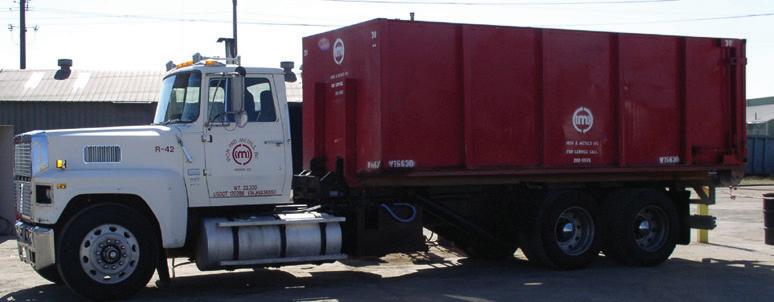
SCRAP PICK-UP SPECIALISTS
We set containers for:
• Machine, welding & fab shops • Manufacturing facilities
Florida—an industrial expansion that drives fabrication, construction, and long-term operations support. On November 20, 2025, the U.S. Department of the Air Force issued a signed Record of Decision (ROD) for the Starship–Super Heavy Environmental Impact Statement at Cape Canaveral Space Force Station (SLC-37).
While the ROD is not a “vehicle production” announcement, it is a gating milestone that unlocks redevelopment of a launch complex, propellant systems, and related facilities that collectively act as a manufacturing and operations multiplier.
From a manufacturing perspective, a second Starshipcapable coast means more than another pad. It implies additional demand for cryogenic tank farms, high-flow piping, structural steel, integration hardware, transport/ handling systems, and acceptance-test infrastructure. It also supports higher cadence potential by creating geographic redundancy and more scheduling flexibility— important for a program that uses an “industrial repetition” model: build, test, fly, recover, refurbish.
That model shifts constraints between vehicle/engine output, ground systems readiness, and licensing timelines; adding Florida capability changes that constraint map by expanding the physical base that can
support frequent operations.
Independent reporting following the ROD emphasized that environmental approval cleared a key path for SLC-37 redevelopment and described the kind of infrastructure elements that translate into real industrial work packages. Even if the execution timeline depends on leases, construction sequencing, and vehicle readiness, the manufacturing signal is that SpaceX is positioning Starship as a multi-site, hightempo system—not a single-location experimental effort.
For suppliers and manufacturing services firms, the practical takeaway is that regulatory “go” decisions precede multi-year procurement and fabrication demand. In space programs, ground infrastructure is often the less glamorous but highly tangible part of industrial scaling—requiring robust quality controls, tight safety standards, and frequent engineering changes as the operational concept evolves. ◊
Bell’s FLRAA Updates
Bell’s manufacturing-relevant news in Oct–Dec 2025 was driven by the industrialization of the U.S. Army’s
MV-75 Future LongRange Assault Aircraft (FLRAA) program, and what that shift means for Bell’s production ecosystem.
Industry coverage during this window noted that Bell’s revenue dynamics increasingly reflected MV-75 work as the program advances, even as commercial helicopter deliveries were softer.
From a manufacturing standpoint, that is a strong signal that resources—engineering effort, tooling attention, supplier bandwidth, and production planning— are being pulled toward the new platform’s build readiness.
Textron’s corporate reporting also pointed to backlog strength at Bell and to ongoing efforts to improve operations as production ramps. Investor-language can be high level, but the underlying factory reality for FLRAA is demanding: drivetrain and rotor system build discipline, highcriticality structural parts, and tightly controlled final assembly flows.
Programs like MV-75 also tend to drive earlier commitments to longlead equipment and tooling, especially if the customer explores accelerated schedules. Coverage in this timeframe referenced the Army’s interest in reducing risk and potentially moving
Precision Manufacturing Demands a Precision ISO Management System
Your Quality Management System should work as precisely as the parts you manufacture – efficient, streamlined, and built to last.
At Cavendish Scott, we’ve spent over 40 years delivering custom ISO systems with measurable results –no bloated paperwork, no wasted motion, no templates.
Why Cavendish Scott
40+ Years in ISO Consulting
100% Certification Guarantee
Simple, Streamlined Systems
IRCA & Exemplar Global Certified
Internal Auditing & Training
We guarantee your certification and ensure your system stays lean, effective, and easy to maintain. Get Certified. Stay Certified. Improve. Succeed. Call (303) 480-0111 | www.CavendishScott.com/A2Z
Announcements & News
faster—conditions that often “pull left” manufacturing investment decisions and intensify supplier qualification efforts.
Taken together, Bell’s late-2025 manufacturing theme is preparation for cadence. Even if the biggest brick-and-mortar announcements fall outside this specific window, the news still indicates that Bell is shaping its production environment through programdriven workshare changes, backlog mix, and readiness narratives emphasizing supply chain and production risk. In practice, industrializing a new aircraft requires stabilizing the bill of process, locking down special-process capability, and ensuring suppliers can maintain traceability and consistent quality at higher volu mes.
For manufacturing partners—especially those providing machining, heat treat, and other special processes—the key takeaway is that MV-75 is transitioning from
program concept to industrial reality. That shift typically increases demand for repeatable, auditable process control, because in accelerated defense programs, quality escapes are catastrophic and rework schedules are unforgiving. ◊
Anduril Scales Production of Autonomous
Platforms.
Anduril’s manufacturing-relevant news in this date range focused on the shift from prototype-scale autonomy to repeatable production—signaled most clearly by Reuters coverage of Anduril opening an Australian factory to build “Ghost Shark” undersea drones.
For a company known for rapid iteration, establishing a dedicated production footprint is a meaningful step: it indicates that customer demand is moving beyond limited demonstrations toward sustained builds, spares, and lifecycle support.
That transition is where “defense technology” becomes “defense manufacturing,” with all the accompanying requirements for documentation, configuration control, and acceptance testing.
The factory narrative also reflects growing defense emphasis on supply-chain localization and sovereign capability. Allied customers increasingly care about where systems are built, how quickly they can be replenished, and whether supply chains are resilient under geopolitical stress. Building in Australia aligns with those priorities and positions Anduril to deliver regionally while meeting partner-nation expectations for local industrial participation.
Manufacturing-wise, undersea drones create a demanding integration problem: structural housings and pressure-tolerant components, propulsion and power systems, electronics, and software integration must all be assembled repeatably and tested rigorously.
Scaling production means converting tacit prototype practices into stable work instructions, tightening sealing/waterproofing processes, standardizing acceptance-test methods, and ensuring that vendor networks can produce consistent quality with traceability. Undersea systems also face harsh environments, so reliability and testing discipline are central to the manufacturing system—not optional “later” steps.A2Z
IMPROVE THE FINISH, FIT & FUNCTION OF CRITICAL METAL PARTS
In late 2025, the practical takeaway is that Anduril is investing in physical industrial footprint, not just product concepts. Such moves often precede further industrial announcements: workforce growth, supplier qualification drives, and follow-on orders that demand improved cadence. For suppliers, these ramps can be attractive because they frequently require tight tolerance work, specialty materials, and flexible capacity—though volatility can remain high as designs mature and requirements evolve. Still, the factory opening is a clear marker that Anduril is positioning to manufacture autonomy at meaningful scale. ◊
24/5 Operations & Expedited Processing Available
In-House Testing & Analytics
ISO 13485:2016, AS9100:2016 & ISO 9001:2015 Certified
Industry-Leading Innovation & Quality Control Since 1954 (888) 868-2900
Request a Technical Part Review
Blue Origin Achieves Significant Breakthrough
Blue Origin, the aerospace company founded by Amazon’s Jeff Bezos, has steadily advanced its vision of reusable spaceflight—a concept once relegated to science fiction that is now becoming reality. Built on the principle that rockets shouldn’t be single-use, Blue Origin’s program focuses on lowering the cost of access to space by flying rockets that can successfully return to Earth and fly again.
One of the most compelling demonstrations of this ambition comes from the company’s New Glenn rocket, a heavy-lift orbital vehicle engineered to carry large payloads — including NASA science missions — into space.
How Millennials’ Technology Expectations Can Help Save Manufacturing
Millennials’ technology expectations have been shaped by smartphones, Facebook and digital media – in other words, by easy and ubiquitous connectivity. It’s not surprising, then, that traditional manufacturing systems can seem as retro as waiting for dial-up internet to connect. And that’s bad for the manufacturing sector, because its skills gap is looming large.
In November 2025, Blue Origin achieved a significant milestone when the New Glenn successfully launched a pair of NASA’s ESCAPADE spacecraft destined for Mars orbit and then completed a controlled return and landing of its first-stage booster on a drone barge in the Atlantic Ocean. This marked the first time the massive booster had been recovered after orbit insertion, overcoming technical challenges that prevented landing on its maiden January flight.
Vertical recovery of a rocket’s first stage is crucial to reusability because it allows engineers to inspect, refurbish, and re-fly major rocket hardware — drastically reducing launch costs over time. This technique, pioneered at scale by rival SpaceX, has now been demonstrated by Blue Origin with New Glenn, positioning the company as one of the few in the world capable of such feats.
A joint study by the Manufacturing Institute and Deloitte Consulting projects a surge of nearly 3.5 million open manufacturing jobs created over the next decade. Some of the empty slots will come by way of retiring baby boomers, while others are related to new positions created as a result of natural business growth, the report found.What the report also predicts: As conditions stand now, 2 million of those jobs will go unfulfilled. In other words, the need for the manufacturing sector to appeal to Millennials – the generation typically defined as those born between 1981 and 1997 – is both critical and a very tall order.
Indeed, manufacturing still has a negative image among younger generations, experts say. In a 2015 public perception of manufacturing study, also by The Manufacturing Institute and Deloitte, respondents ages 19 to 33 ranked manufacturing as their lowest preference in terms of potential career choices.
New Glenn’s success has important implications beyond business. By proving reusability works for heavy-lift orbital missions, Blue Origin paves the way for more sustainable launch operations and broader
Manufacturing’s image problem is complex and in, some aspects, based on false assumptions. But one real obstacle is that some manufacturing systems can seem antiquated, and it’s an issue that many manufacturers
Largest Capacity in the World
Continually Growing the Value of Your Business
By Lee Benson
Hello, I am Lee Benson, the CEO of Execute to Win, and Dinner Table.
From 1993 to 2016, I had one job as CEO of Able Aerospace: grow the value of the business. Everything else was secondary.
I started Able with three people in a 5,000-squarefoot facility, focusing on a single electroplating process. When we sold to Textron Aviation 23 years later for nine figures, we had over 500 team members operating out of 300,000 square feet of space. We’d gone from 7 repairs for helicopter drivetrain components to over 10,000.
As we grew, people asked, “How are you doing this?”
The answer was simple: I never forgot my number one job.
I learned that you could start from anywhere and go everywhere if you stay focused on creating value. Looking back ten years later, keeping the business would have been just as good a decision as selling it. We’d have more than doubled it by now.
I’ve started eight companies from scratch and sold three of them. I love working with teams to grow value in any industry. These days, I also lead CEO mastermind groups with leaders running everything from startups to large established businesses.
Why am I writing this column? Because I want to help organizations create value faster.
Effective leadership should be measured by the value it creates. I focus on three areas: profit, culture, and customer experience. Get these right, and the business grows. Get them wrong, and nothing else matters.
My definition of leadership is straightforward:
creating value with and through others.
By that definition, everyone is a leader. The real question is whether you want to elevate your game.
For leaders within an organization, the standard is higher: get results while fostering an environment where every team member is intrinsically motivated and empowered to create more value over time. As leaders, we create the environment. Our teams do the work. All of that work should be aimed at increasing the business’s value.
This isn’t theoretical. At Able Aerospace, we lived it. Every person understood how their work created value. Our platers knew they weren’t just coating parts, they were enabling helicopter operators to keep aircraft flying safely. Our engineers weren’t just writing repair procedures; they were solving problems that kept customers’ operations running. That connection between daily work and value creation made the difference.
The manufacturing sector needs this mindset now more than ever. You’re competing globally. Margins are tight. Labor is expensive and hard to find. Technology is changing fast. The companies that win are obsessed with creating value, not just for shareholders, but for customers, team members, and communities.
It’s simple, but it’s not easy. It requires clarity about where you’re going, alignment on how you’ll get there, structure to ensure sustainability, and culture to ensure it sticks.
Next issue, I’ll dig into the power of strategy, what actually qualifies as a strategic initiative, and how to connect your entire team to supporting it.
Virtual Cert™ ISO-9001 certification with American Global Standards can lower operational costs, improve your bottom line, and offer your business a competitive advantage.
American Global Standards (AGS) is an American company and ISO registrar with nearly 30 years of experience assistin g manufacturing and service industries in their quest to remain competitive in the global marketplace, for a competitive annual fee of $1875
• No on-site audit required
• Save top management valuable time
• Save your company thousands annually
• Market your company as ISO-9001 certified
• Eliminate “non-value added” NCR’s
— Enzo Ferrari
Announcements & News Continued
participation in space exploration — from scientific missions studying Mars to future human ventures to the Moon and beyond.
Long before New Glenn, Blue Origin’s smaller New Shepard suborbital rockets were routinely landing back at their Texas launch site after carrying passengers to the edge of space — demonstrating the company’s core reusable technology in action for years and helping normalize commercial human spaceflight.
As Blue Origin continues refining its reusable systems, each successful landing marks not just a return to Earth, but another step toward a future where space travel is routine, sustainable, and increasingly accessible.
L3 Harris Makes Significant Investment into Manufacturing Facility
L3Harris Technologies is moving to significantly scale U.S. rocket propulsion capacity with a $400 million investment to expand solid rocket motor manufacturing in Camden, Arkansas—a project the company and state officials are framing as a major step toward strengthening the domestic
missile industrial base.
According to reporting on the announcement, the expansion centers on a new 110-acre production campus that will include more than 20 buildings and is expected to increase large solid rocket motor output by roughly sixfold. That kind of step-change matters because large motors are key inputs for modern air and missile defense architectures and are increasingly used in missiles, interceptors, and hypersonic systems.
The investment comes as demand for rocket motors has surged amid continuing global tensions and the push by the U.S. and allies to rebuild and expand inventories of precision weapons and defensive interceptors. Reuters noted that L3Harris’ move aligns with broader efforts to accelerate missile-defense capacity and respond to higher consumption rates of munitions seen in recent conflicts.
Camden is already a long-standing propulsion hub. L3Harris—through its Aerojet Rocketdyne
Leaders in Aluminum Heat Treating
Leaders in Aluminum Heat Treating
Newton Heat Treating, founded in 1968, has been providing expert services to the Aerospace, Automotive, and Commercial Industries for over 55 years. As a full-service Aluminum Heat Treating specialist, we work to your exact specifications on every type of aluminum alloy and form. Many customers from other well-known heat treaters have sought our services, discovering that Newton offers higher quality, exceptional service, and faster delivery times at competitive prices.
Leaders in Aluminum Heat Treating
Leaders in Aluminum Heat Treating
Leaders in Aluminum Heat Treating
Newton Heat Treating, founded in 1968, has been providing expert services to the Aerospace, Automotive, and Commercial Industries for over 55 years. As a full-service Aluminum Heat Treating specialist, we work to your exact specifications on every type of aluminum alloy and form. Many customers from other well-known heat treaters have sought our services, discovering that Newton offers higher quality, exceptional service, and faster delivery times at competitive prices.
Real Results
Real Results
Newton Heat Treating leads the way in Cold Stabilization / Uphill Quenching, a process that can provide a real solution to reduce stresses and control movement of all aluminum alloys during machining. Our method has proven to be highly effective compared to methods used by our competitors.
Newton Heat Treating, founded in 1968, has been providing expert services to the Aerospace, Automotive, and Commercial Industries for over 55 years. As a full-service Aluminum Heat Treating specialist, we work to your exact specifications on every type of aluminum alloy and form. Many customers from other well-known heat treaters have sought our services, discovering that Newton offers higher quality, exceptional service, and faster delivery times at competitive prices.
Newton Heat Treating leads the way in Cold Stabilization / Uphill Quenching, a process that can provide a real solution to reduce stresses and control movement of all aluminum alloys during machining. Our method has proven to be highly effective compared to methods used by our competitors.
Real Results
Newton Heat Treating, founded in 1968, has been providing expert services to the Aerospace, Automotive, and Commercial Industries for over 55 years. As a full-service Aluminum Heat Treating specialist, we work to your exact specifications on every type of aluminum alloy and form. Many customers from other well-known heat treaters have sought our services, discovering that Newton offers higher quality, exceptional service, and faster delivery times at competitive prices.
Newton Heat Treating, founded in 1968, has been providing expert services to the Aerospace, Automotive, and Commercial Industries for over 55 years. As a full-service Aluminum Heat Treating specialist, we work to your exact specifications on every type of aluminum alloy and form. Many customers from other well-known heat treaters have sought our services, discovering that Newton offers higher quality, exceptional service, and faster delivery times at competitive prices.
Real Results
Real Results
If you have special quenching needs, we have the capability of quenching in various concentrations of polymer glycol solution. We also offer high velocity spray quenching to minimize distortion. You can count on us to achieve the results you need.
If you have special quenching needs, we have the capability of quenching in various concentrations of polymer glycol solution. We also offer high velocity spray quenching to minimize distortion. You can count on us to achieve the results you need.
Newton Heat Treating leads the way in Cold Stabilization / Uphill Quenching, a process that can provide a real solution to reduce stresses and control movement of all aluminum alloys during machining. Our method has proven to be highly effective compared to methods used by our competitors.
Certifications
Certifi cations
If you have special quenching needs, we have the capability of quenching in various concentrations of polymer glycol solution. We also offer high velocity spray quenching to minimize distortion. You can count on us to achieve the results you need.
We have achieved the highest NADCAP merit for five consecutive audits and are AS9100/ISO 9001 certified. By adhering to these rigorous standards, we ensure that your product is consistently processed to the highest quality while meeting your delivery needs. Phone:(626) 964-6528
Newton Heat Treating leads the way in Cold Stabilization / Uphill Quenching, a process that can provide a real solution to reduce stresses and control movement of all aluminum alloys during machining. Our method has proven to be highly effective compared to methods used by our competitors. If you have special quenching needs, we have the capability of quenching in various concentrations of polymer glycol solution. We also offer high velocity spray quenching to minimize distortion. You can count on us to achieve the results you need.
Newton Heat Treating leads the way in Cold Stabilization / Uphill Quenching, a process that can provide a real solution to reduce stresses and control movement of all aluminum alloys during machining. Our method has proven to be highly effective compared to methods used by our competitors. If you have special quenching needs, we have the capability of quenching in various concentrations of polymer glycol solution. We also offer high velocity spray quenching to minimize distortion. You can count on us to achieve the results you need.
We have achieved the highest NADCAP merit for five consecutive audits and are AS9100/ISO 9001 certifi ed. By adhering to these rigorous standards, we ensure that your product is consistently processed to the highest quality while meeting your delivery needs. Phone (626) 964-6528
Certifications
Certifications
Certifications
We have achieved the highest NADCAP merit for five consecutive audits and are AS9100/ISO 9001 certified. By adhering to these rigorous standards, we ensure that your product is consistently processed to the highest quality while meeting your delivery needs.
We have achieved the highest NADCAP merit for five consecutive audits and are AS9100/ISO 9001 certified. By adhering to these rigorous standards, we ensure that your product is consistently processed to the highest quality while meeting your delivery needs.
We have achieved the highest NADCAP merit for five consecutive audits and are AS9100/ISO 9001 certified. By adhering to these rigorous standards, we ensure that your product is consistently processed to the highest quality while meeting your delivery needs.
(626) 964-6528
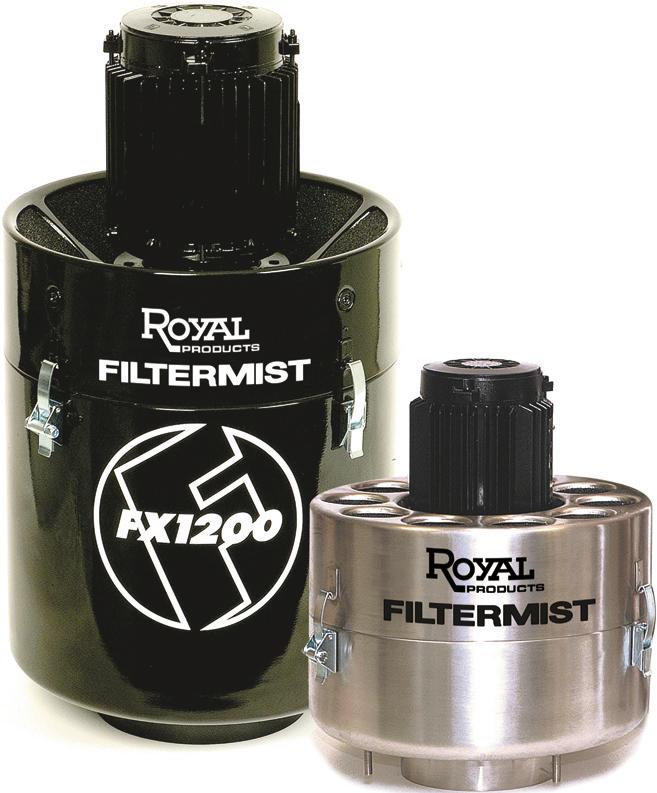
OIL MIST AND SMOKE
business—has operated in the area since 1979, and the site currently produces over 115,000 rocket motors annually across multiple sizes and applications. The new campus is intended to add capacity for medium and large motors, complementing earlier facility buildouts geared more toward smaller tactical systems.
Company statements also place the Arkansas build within a broader, multi-site propulsion investment strategy. In prior announcements, L3Harris described plans to invest hundreds of millions of dollars across major rocket motor locations (including Arkansas) to support expanded solid rocket motor output, emphasizing workforce development and state-local partnerships as key enablers.
With construction and capacity additions underway, the Arkansas expansion positions L3Harris to compete for—and deliver on—an intensifying pipeline of U.S. and allied missile, interceptor, and hypersonic programs where propulsion is often the pacing constraint. ◊
Colorado’s Quiet Dominance in Aerospace Manufacturing
While Silicon Valley chases software and Texas chases scale, Colorado has built something harder to replicate: a deeply integrated aerospace manufacturing economy where design, production, testing, and sustainment coexist in one region.
Not a New Industry — A Mature One
Colorado’s aerospace reputation is often framed around innovation and startups. In reality, its manufacturing ecosystem is defined by maturity. Large defense primes, space system integrators, propulsion developers, and precision manufacturers have been operating in the state for decades.
What has changed over the past year is not the presence of aerospace manufacturing — it is the intensity of production activity. Programs have moved from development into execution, and that shift has pulled manufacturing back into the center of the conversation.
Manufacturing, Not Just Engineering
Colorado’s aerospace economy is frequently described through its engineering talent. Yet the state’s competitive advantage lies in its ability to convert engineering into production.
Facilities across the Front Range and northern Colorado support:
• Space vehicle structures and assemblies
• Propulsion components and subsystems
• Avionics integration and test
• Advanced composites and metallic structures
• Precision machining and thermal processing
• Environmental testing and qualification
These are not lab functions. They are production disciplines.
The Space Manufacturing Effect
Space programs in particular have shifted manufacturing expectations. Schedules are tighter, production volumes are higher, and tolerance for delay is lower. This has forced manufacturers to adopt methods more typical of aerospace production than traditional R&D.
The Mystery of Metal
By Peter Hushek
My career has been centered around metals processing (heat treating) which for the most part, involve standard cycles and the ability to control part movement while providing uniform properties. In essence this is the easy part of the job but as many of you have learned metals have a mind of their own. I am here to tell you that they indeed do have a mind of their own! But they can also be persuaded or tricked into behaving better.
In nearly all cases, the appearance of a problem occurs with the starting stock of the material. One of the often missed opportunities for high quality parts is the metal distributor selection and material lot options. Most purchasing agents do not realize that the very specifications that are used to control material chemistry and mechanical properties create internal stresses through mill operations that can come back to haunt machinists.
The following is an actual case study that relates to the movement of aluminum sheet purchased in Condition T-6. A customer came to us asking to straighten the bow of an approximately 0.100” in a 4” x 3” x 0.090” thick part. The parts were unusable in distorted condition and attempts at mechanical straightening were fruitless as well as frustrating. The problem arose from the relief of rolling stresses, induced at the mill. For the mill to generate the T-6 Condition it must be processed through a solution treat, quench and artificial age. Distortion was induced at the quench step but to meet the procurement specs for flatness the material required a “cold finishing” operation immediately after the quench.
This cold finishing operation in essence is a cold reduction step that induces compressive stresses to the thin sheet stock. The material is not flat and is artificially aged to meet the Condition T-6 mechanical property requirements. The mill met the procurement specifications by performing the cold finishing but set up the opportunity for the material to move when any non-symmetrical material removal occurred. In this case, the difference between stock removal from front to back was 0.027” and only in eight small bosses.
A simple boss that looked easy from a material removal point of view resulted in over 0.100” dimensional movement. Since the material was now in T-6 it did not respond to mechanical straightening. The difference between the yield strength and the ultimate tensile was too small and as soon as the yield point was reached the movement was too great. They were truly between a rock and a hard place. No one could have predicted the problem at the time of material purchase.
The solution was developed through an understanding of the material properties at temperature combined with the restraint of the metal in the opposite direction to the bow. After two to three different optional “stress relief” cycles and differing restraint, the parts were “made flat”.
This process added cost and time to production, which is never ideal for a machinist. But the parts were salvaged. During discussions with the customer, we learned that this bow did not occur when they made the First Article parts and they wanted to know why it happened this time. If the stock material was from different material lots, it can happen. Every mill has different equipment, standard operating procedures and the billet, original starting material, can cause the difference.
The big take-away here is to keep a scorecard, not on the distributers, but rather on the mills that make the material. The products everyone purchases are products of many different factors. The material meets the procurement specifications from chemical and physical properties but must be in a state of dynamic balance. Any material removal will upset this balance and movement can happen. It adds extra work to monitor a mill’s output quality but in the long run this extra homework will ensure you have a high quality machined part.
Peter Hushek Chief Metallurgical Engineer Thermal Innovation Technologies
Mike Wright, a cybersecurity expert with 25+ years of experience, will present “E ectively Use AI: Minimize the Challenges, Maximize the Possibilities.”
Chapter Leadership Summit
Wed, Jan 28, 2026 9:00 AM - Fri, Jan 30, 2026 5:00 PM
SAVE THE DATE!
Jan 28-30; Ft Worth, TX
Machining Contest Pre Meet
Thursday, February 12, 2026
SAVE THE DATE!
6:00 PM to 8:00 PM
Announcements & News Continued
For suppliers, that means tighter quality systems, faster turnaround expectations, and higher documentation rigor — but also more consistent demand.
Supplier Networks Drive Stability
Colorado’s aerospace manufacturing base is not dependent on a single anchor program. Instead, it operates as a network of overlapping supply relationships. A machining supplier may support space structures, defense electronics enclosures, and energy systems simultaneously.
This diversification reduces cyclic risk and allows manufacturers to maintain skilled workforces even as individual programs fluctuate.
Workforce
as a Competitive Asset
Colorado’s workforce advantage is not just about availability — it is about experience. Many technicians and engineers in the region have spent entire careers inside regulated manufacturing environments.
This experience shortens onboarding cycles, reduces quality risk, and improves production consistency — all
factors that matter more in aerospace than almost any other industry.
Why Manufacturers Keep Expanding Here
Despite higher operating costs than some competing states, manufacturers continue to expand in Colorado because the ecosystem works. Proximity to customers, suppliers, testing infrastructure, and talent reduces total program risk — often outweighing cost differentials.
For advanced manufacturing, reliability often matters more than raw expense.
The Long View
Colorado’s aerospace manufacturing economy is not built on hype. It is built on programs that last decades. Once a supplier qualifies into these programs, relationships tend to persist.
This is what makes Colorado’s aerospace sector resilient. It does not chase cycles — it absorbs them. ◊
Industrial Supply Company
INDUSTRIAL SUPPLY COMPANY
1635 S 300 W • Salt Lake City, UT 84115
1635 S 300 W Salt Lake City, UT 84115
info@indsupply.com 800-288-3838
info@indsupply.com
TF: 800-288-3838
ACCESSORIES
Abrasive Products
Chemtool Inc. 815-957-4140
Balancing Machines
HAIMER 503-726-8202
Bar Pullers
Accudyne Corp 303-991-1500
Edge Technologies 951-440-1574
Boring, Grooving, Milling, Turning Tools
Sulli Tool & Supply 714-863-6019
Ceramic Tools
THINBIT 888-THINBIT
Clamps & Grips
Hainbuch 818-970-7874
SCHUNK 919-602-8294
CNC Collet Chucks
Cody R. Berg Regional Sales Manager
615 West 24th Street • Tempe, AZ 85282 Cell: (480) 229-0002 • Tel: (602) 437-2220 cberg@methodsmachine.com www.methodsmachine.com
StarRex Precision 480-834-6344 The CNC Pros 801-973-0800
Tymar Industries 719-548-8995
Weiser Engineering 303-280-2778
Machining: Ultra-Precision
Pacific Swiss & Manufacturing 503-557-9407
Pinnacle Precision 435-563-2722
MANUFACTURING
A&L Machining 303-373-1540
CJ Precision 208-908-5920
CNC Machine & Design Inc 801-531-9922
Group Mfg Serv 480-966-3952
GrovTec Machining 971-293-4269
Precision Enterprises 731-642-8709
Electromechanical Design
CAID Industries 435-890-8823
RD Machine & Mfg 801-977-0447 Composites
S.A. Composites 970-776-3877
Manufacturing: Electrode Wire-Tech 480-966-1591 Production
Aero Tech 801-292-0493
EMJD Corporation_____303-761-5236
Robotic CNC DMSI 801-972-6093
Routering CNC DMSI 801-972-6093
Skid Manufacturing
ENS Welding Service 208-670-0538 Small Part
Pinnacle Precision 435-563-2722
Turnkey Product Services
Aero Tech 801-292-0493
METAL STAMPING
A1 Precision Metal 623-377-2191
Thompson Machine 505-823-1453
Hi-Production Precision Stamping
Metalcraft 888-280-7080
Precision Die & Stamping 480-967-2038
Thompson Machine 505-823-1453
MOLDS
Blackwing Machine 801-645-4485
Loveridge Machine Co. 801-262-1414
Maverick Mold & Machine 970-535-4604
Molds: Plastic Injection
LTM Plastics 303-592-9548
Maverick Mold & Machine 970-535-4604
Molds Steel
DMSI 801-972-6093
Aero Tech 801-292-0493
Loveridge Machine Co. 801-262-1414
PACKAGING
Tymar Industries 719-548-8995
ABS Quality Evaluations
BMSC 602-445-9400
Calibration Services Advanced Coord.
PAINTING
Coating Technologies 623-581-2648
CPCS 303-438-8328
Frontier Group 602-437-2426
Perfection Industrial 520-434-9090
Pillar Machine 801-965-1900
Richards Fab 801-409-0392
Painting CARC
Frontier Group 602-437-2426
PLATING
Blanchard Metals Proc. 801-972-5590
Foresight Finishing 480-921-0000 Anodizing
Blanchard Metals Proc. 801-972-5590
Collins Metal Finishing 602-275-3117
Pilkington Metal Finishing 801-972-2146 Copper
Foresight Finishing 480-921-0000
Electroless Nickel
Collins Metal Finishing 602-275-3117
Foresight Finishing 480-921-0000
Frontier Group 602-437-2426
Nickel/Chrome/Copper
Foresight Finishing 480-921-0000
Powder Coating
Perfection Industrial 520-434-9090
Tin Plate
Foresight Finishing 480-921-0000
PRECISION FORMING
Richards Fab 801-409-0392
Thompson Machine 505-823-1453
Wrico 480-892-7800
PROCESSING: METAL
Electro Polish
Collins Metal Finishing 602-275-3117
Etching/Photochemical
VACCO Industries 626-443-7121
Passivation
Collins Metal Finishing 602-275-3117
Frontier Group 602-437-2426
PROTOTYPE MACHINERY
3D Parts To Go_____801-380-7935
PUNCHING
JD Machine 801-782-4403
Star Precision 303-926-0559
Weiser Engineering 303-280-2778
RECYCLING
Recyclable Metals
Iron & Metals, Inc 303-292-5555
Utah Metal Works 801-364-5679
Bearing Surface
Denver Machine Shop 303-295-6000
Hydraulic Cylinder
Denver Machine Shop 303-295-6000
Rolling: thread
Ron Grob Co. 970-667-5320
Scrap Metal Recycling
Iron & Metals, Inc 303-292-5555
Utah Metal Works 801-364-5679
ROBOTIC EQUIPMENT
Integrated Systems Inc 928-649-9600
SERVICES
Able Electropolishing
Accutech Machine Inc
Ace Wire Spring & Form
Acieta
Action Machinery
Advantage Manufacturing
Admiral Metal Fluids
Aero Tech Mfg
American Global Standards
Auburn Tool & Machine
AZ Tool Steel
Babbitt Bearing
BC Tool & Cutter Grinding...40
Blackwing Machine
Blanchard Metals Proc
BLM Group
BMSC
Bystronic
Cavendish Scott
CheckZero
Chipblaster
CJ Precision
Cleveland Electric Labs
CM Manufacturing
CNC Custom Parts Mfg
CNC Machine & Design
Coastal Metals
Coating Technologies
Collins Metal Finishing
Colorado Plastics
Custom Powder Cutting Sol
D2P
Datum Machining
Datron
Denver Machine Shop
Denver Precision Products
DMG Mori
DMSI
Dynamic Design & Mfg
Edge Technologies...36
EDM Network
EDM Perf. Accessories
EMJD Corp
ENS Welding
Index of Advertisers
EPOCS Mfg
Exact Tool Grinding
EZ-Access
Fiero Automation
Foresight Finishing
Frontier Group
Frontier Metal Stamping
Gage Lab Products
Grisley Automation
GrovTec Machining
HAIMER
Hainbuch
Haydale Cutting Tools
Hexagon
Hirsh Precision
Horizon Carbide
Imaginetics
Industrial Heat Treat Co
Ingersoll
Innovative Measuring Systems
Innovative Precision
Iron & Metals, Inc
JD Machine
JM Grisley
KD Machinery
KEYENCE
Kings Peak
KTR Machine
L.V. Swiss
Laird Plastics
Laube Titanium
LAYKE Inc
Leading Edge Machine
LeGrand. (C2G)
Level III Nadcap Consulting
Loveridge Machine
LTM Plastics
Machine Tool & Cutter Grinding.
Machinery Resources Intl
Mario Pinto
MarZee...8,43
MASIC Industries
Maverick Mold & Machine
Metalcraft
Methods Machinery
Micro-Fine Machining
Midaco
MLC CAD
Mountain View
MP Systems
MTI
MultiCam
Multi-Tool
Nelson Engineering
Newton Heat Treating
NUNTMA
O’Keefe Ceramics
Ogden-Weber Tech College
OGP
Orion Registrar
Pacific Swiss & Manufacturing
Paramount Machine
Perfection
Perfection Industrial Finishing
Phoenix Heat Treating
Pilkington Metal Finishing
Pinnacle Precision
Platinum Registration
Precision Die & Stamping
Precision Enterprises
Production Machine Tools
Productivity
QMS Support
Qualichem
Quality Measurement Services
R&R Tansportation
Radtech
RD Machine
Renishaw
Resell CNC
Richards Fab
Robo-Jet
Roentgen USA
Romi Machine Tools, Ltd
Ron Grob CO
Royal Products
RP Machining, Inc.
Ryerson
SA Composites
S&S Machinery
Sandvik
Schott Manufacturing (SMS)
SCHUNK
Sentry Insurance
Skydandee Mfg
Smith Machinery
Southwest Waterjet & Laser
SPRING WORKS Utah
Star Metal Fluids
Star Precision
Starrett
StarRex Precision
Steel Services Grinding
Steel Warehouse
Sulli Tool & Supply
Superior Grinding
Tech Financial Services
The CNC Pros
The Right Steel
The ToolRoom Inc
ThinBit
Thompson Machine
Toolnet International
Total Quality Systems
TUFFLabels
TVT Die Casting
Tymar Industries
United Machining
Ultimate Manufacturing
United Pacific
Utah Metal Works, Inc
Vacco
Wasatch Powder Coating
Weiser/Mile High Precision
Welker Engineered Prod
Western Sintering
Western States Calibration
Western States Metals
Wrico Stamping
Zeiss Industrial
TURN UP THE VOLUME
Mazak’s new SYNCREX Series of Swiss-style machines equips shops for high volume production of a wide range of parts.
• Full lineup of 20 machines offered in 10-38 mm sizes.
• Mazak Dynamic Chip Control (MDCC) requires less operator intervention.
• Mazak Swiss Setup Assist (MSSA) results in faster changeover.
Whether you’re new to Swiss-type turning or been at it for years, SYNCREX creates a world of new opportunities to elevate production and make the most of every machine.