
Banterra’s team, with more than a hundred years of experience, understands the challenges of running small to mid-size businesses. The things you do, day in and day out, is truly the backbone of America and as your lender, we are right there with you to support your capital needs and doing what it takes so you can compete with the world in your industry.
Industry-leading service with local decisions
Bank commitment to Made In USA and Made In Arizona values
World-class deposit products including Treasury Management
Loan products designed speci cally for machine shops and small businesses





Welcome to our newest readers,
For years, this publication has been a resource for machine shops, manufacturers, outside processing vendors and the people who keep American industry moving. With this issue, we’re taking that mission to a national audience, and we’re excited to have you along for the journey.
Our goal is simple: deliver content you can actually use.
Manufacturing is full of theory, buzzwords, and grand predictions. We prefer practical ideas. Whether it’s improving throughput, solving a growth challenges, developing employees, evaluating new technology, or learning from the successes and failures of other shops, we want every issue to contain something you can put to work the next day.
As this issue reaches mailboxes shortly after Independence Day, it feels like the right time to reflect on the remarkable story of American manufacturing.
The United States became an industrial powerhouse through a series of defining moments. The nations armories in the early 1800s, where the developers of interchangeable parts, a shift from handcrafted, hand made parts. The assembly line revolutionized manufacturing in the early 1900s. In fact, the Hushek family story has manufacturing ties back to this time. During World War II, American factories demonstrated an ability to scale production at a level the world had never seen. The decades that followed brought aerospace, semiconductors, advanced materials, automation, and countless innovations that reshaped modern life.
The story hasn’t always followed a straight path. Entire industries have shifted. Global competition has intensified. Technologies have emerged and disappeared. Yet American manufacturing has continued to evolve because the people behind it have never stopped adapting.
Today, we stand at another important moment. Advanced manufacturing, automation, additive technologies, reshoring efforts, and a renewed focus on domestic production are creating opportunities that would have been difficult to imagine just a few years ago. Across the country, manufacturers are investing, hiring, innovating, and proving that the next chapter of American industry is still being written.
That future won’t be shaped by headlines alone. It will be built inside machine shops, heat treat facilities, fabrication plants, foundries, and factories by people who show up every day determined to make things better than they were yesterday.
Those are the stories we want to tell.
Thank you for reading. God bless American and our troops.
We look forward to learning, growing, and building alongside you.
Until next issue,
Charlie & Alex Hushek
| Managing Partners | Editor in Cheif |

Cover:
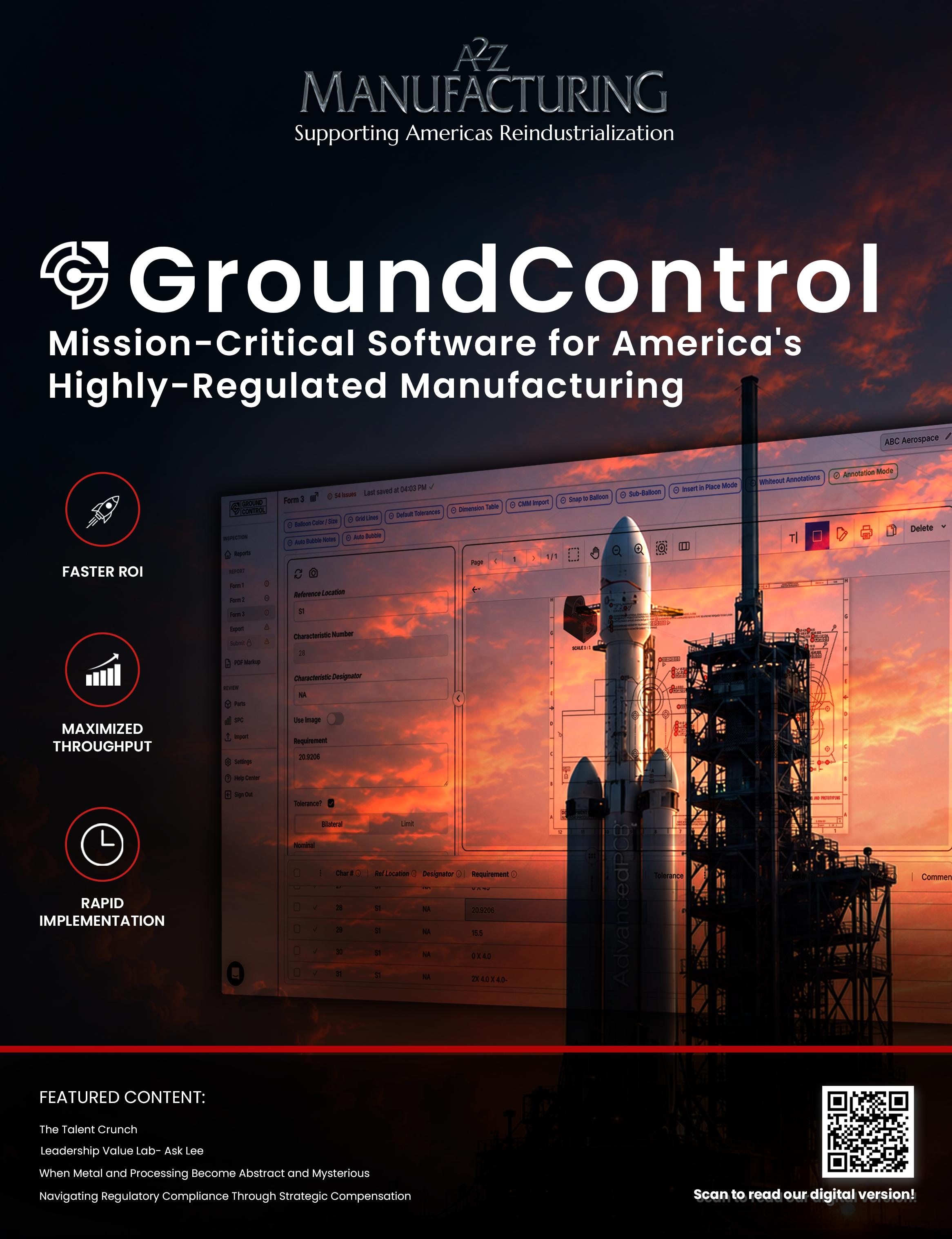
Mission-Critical Software for America’s Highly-Regulated Manufacturing
Published by: A2Z Manufacturing
PUBLISHER/EDITOR
Charlie & Alex Hushek connect@a2zmanufacturing.com
Address: 24 W Camelback Rd. #A408, Phoenix, AZ 85013
Telephone: (480) 395-3288
www.a2zmanufacturing.com
Peter Hushek Lee Benson Charlie Hushek
Hushek
Davvis Charles Horlacher
Published bi-monthly to keep precision manufacturers abreast of news and to supply a viable vendor source for the industry.
Circulation: The A2Z MANUFACTURING has compiled and maintains a master list of approximately 56,000 people actively engaged in the precision manufacturing Industry. It has an estimated pass on readership of more than 123,200 people.
Advertising Rates, deadlines and mechanical requirements furnished upon request or you can go to A2ZMANUFACTURING.com.
The Publisher assumes no responsibility for the contents of any advertisement, and all representations are those of the advertiser and not that of the publisher.
The Publisher is not liable to any advertiser for any misprints or errors not the fault of the publisher, and in such event, the limit of the publisher's liability shall only be the amount of the publishers charge for such advertising.

Seventy-five years is a long time in manufacturing.
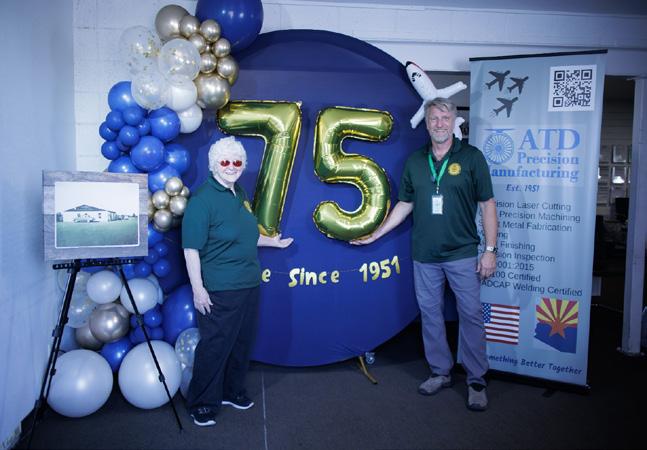
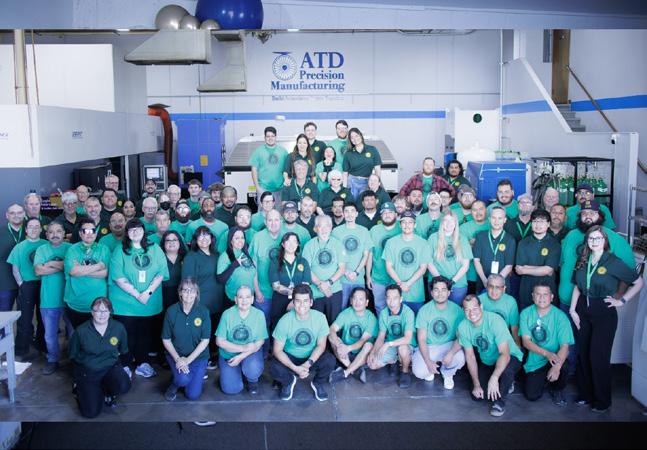
Think about everything the industry has lived through since 1951. The birth of commercial aviation, the Space Race, CNC machining, CAD/ CAM, globalization, reshoring, fiber lasers, five-axis machining, and now a new era driven by space exploration and defense manufacturing.Most companies don’t survive one major economic cycle. ATD Precision Manufacturing has successfully navigated generations of them. Founded in South Phoenix by Otis Jordan in 1951, the company began with humble roots: one milling machine, four employees, and just 904 square feet of shop space. The first work came from Garrett, producing jigs and fixtures before quickly transitioning into production machining. It was a classic American manufacturing story built on craftsmanship, customer relationships, and a willingness to evolve. Over the next three decades, the business steadily expanded. New buildings were added, capabilities grew, and Allied Tool & Die became a trusted supplier to the aerospace industry.
Like many successful family businesses, every generation inherited a different set of challenges—and each responded by investing for the future rather than protecting the past. When Mike Jordan assumed leadership in the mid-1980s, he brought an engineer’s mindset to the business. Laser cutting, welding, sheet metal fabrication, EDM, and CNC machining expanded what the company could offer customers. During Bridget Jordan’s leadership, the company continued growing its footprint while embracing emerging manufacturing technologies, including 4-axis and 5-axis machining centers and fiber laser systems.
Today, under the leadership of Bill Jordan, ATD Precision Manufacturing has continued thatv tradition of reinvention. The company now operates from a 35,000-square-foot campus serving aerospace, defense, communications, and space customers with advanced CNC machining, precision sheet metal fabrication, laser cutting, welding, inspection, and complex assemblies. Components produced in Phoenix have supported rockets carrying NASA astronauts into space while continuing to serve demanding commercial and
defense programs. What’s remarkable isn’t simply the equipment. Plenty of companies buy new machines. The real story is knowing when to evolve. Every generation at ATD has recognized that standing still wasn’t an option. Instead of chasing yesterday’s business, they’ve consistently invested in the technologies their customers would need tomorrow. That mindset has allowed the company to remain relevant through enormous shifts in manufacturing while staying true to the values that built the business in the first place. For family-owned manufacturers, longevity often depends on something less visible than capital equipment: succession. Ask Bill Jordan what advice he’d offer companies hoping to make it to a third or fourth generation, and his answer comes quickly. “The biggest and quickest advice I would give for multi-generational success would be that the succession needs to be planned and communicated by the previous generation. A failure to plan is a plan to fail.” It’s simple advice, but one that many family businesses learn too late. Across manufacturing, countless successful shops disappear not because they lose customers or fall behind technologically, but because leadership transitions become uncertain. Employees lose confidence. Customers begin asking questions. Family members have different expectations. A lack of communication creates problems that no machine tool can solve.
ATD’’s history demonstrates another path. Seventy-five years of thoughtful leadership transitions have allowed each generation to build on the work of the last instead of starting over. As American manufacturing enters another period of investment fueled by aerospace, defense, and space exploration, companies like ATD remind us that lasting success isn’t built quarter by quarter. It’s measured in decades.
The machines will continue to change. Markets will rise and fall. Technologies will come and go. But craftsmanship, continuous improvement, and planning for the next generation remain timeless competitive advantages. Congratulations to Bill Jordan and the entire ATD Precision Manufacturing team on celebrating 75 years of American manufacturing excellence. Here’s to the next chapter.
HITTING A MAJOR MILESTONE, LET US KNOW FOR A CHANCE TO BE FEATURED!
ANCA launches #ANCATooloftheYear2026 and Female Machinist Award, celebrating virtual innovation and women’s contribution in manufacturing
ANCA CNC Machines, a global leader in CNC grinding technology, has officially opened entries for #ANCATooloftheYear2026, inviting toolmakers, programmers and innovators from around the world to showcase their creativity, technical expertise and digital design skills on a global stage.

In 2026, ANCA is placing the spotlight on virtual innovation, with this year’s competition focused exclusively on the Virtual Tool category. As manufacturers continue to face fluctuating carbide and raw material costs, the competition challenges entrants to push the boundaries of cutting tool design using ANCA’s advanced ToolRoom and CIM3D software platforms, without the need to manufacture a physical tool.
Entrants will have the chance to win exciting prizes, as well as gain international recognition across ANCA’s global media, trade show and digital channels. Full competition details, entry criteria and prize information are available at www.anca.com/tool-of-the-year.
Alongside the competition, ANCA will once again recognise outstanding talent across the industry with the Female Machinist of the Year award, celebrating women who are helping shape the future of precision manufacturing through technical skill, leadership, innovation and mentorship.
“Manufacturers across the world are facing increasing pressure from fluctuating carbide and raw material costs, so this year we wanted to place the spotlight firmly on innovation, simulation and design ingenuity,” said Pat Boland, ANCA Co-Founder. “The Virtual Tool category gives entrants the freedom to explore creative geometries, advanced grinding strategies and new concepts in a highly accessible way, while the Female Machinist of the Year award recognises the talented women helping drive our industry forward.”
The ANCA Tool of the Year competition has become one of the cutting tool industry’s most recognised global awards programs, celebrating precision, craftsmanship and innovation from toolmakers worldwide. For 2026, the competition will focus exclusively on the Virtual Tool category, inviting entrants to create innovative virtual tools that demonstrate precision, creativity, manufacturability and technical excellence using ANCA software technologies. Using ANCA’s ToolRoom and CIM3D platforms, entrants are encouraged to explore creative geometries, advanced grinding strategies and new cutting tool concepts in a fully digital environment.
Judges will assess submissions based on:
• Innovation and originality
• Technical execution
• Manufacturability and application potential
• Creative use of ToolRoom and CIM3D
The Female Machinist of the Year award will recognise women making a significant contribution to the cutting tool and precision manufacturing industries through technical excellence, leadership, innovation and mentorship.
Sarah Falk, Marketing Director at Scientific Cutting Tools and one of the judges for the Female Machinist of the Year award, said the program plays an important role in recognising and encouraging women in manufacturing: “I’m proud to support ANCA’s Female Machinist of the Year program as a judge. Recognising women who are advancing manufacturing through technical excellence, innovation and leadership is an important step in strengthening our industry. I’m excited to help celebrate the individuals whose work is raising the bar and encouraging more women to pursue careers in machining.”
“Manufacturing continues to evolve, and the industry is stronger when we celebrate the diverse talent helping shape its future,” added Boland. “We hope this award inspires more women to pursue careers in engineering, CNC machining and advanced manufacturing.”
Submissions for #ANCATooloftheYear2026 and Female Machinist of the Year are open from 22 June 2026 through to 11 August 2026, with winners to be announced later this year at IMTS 2026.
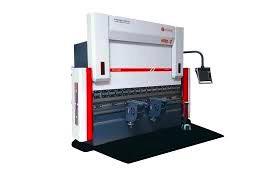
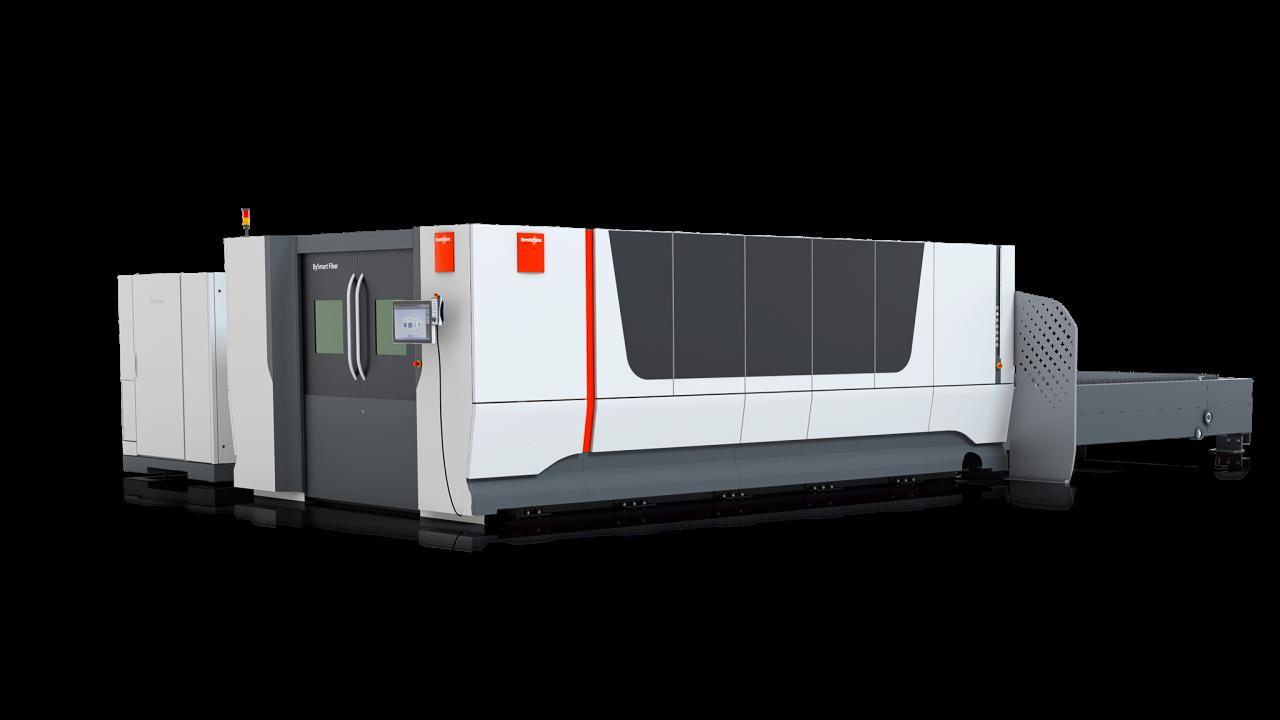
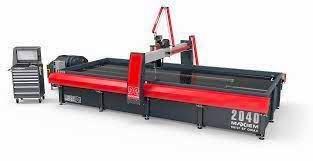
To support continued growth and increasing customer demand, Landmark Solutions is expanding its service organization and actively seeking qualified Service Technicians throughout the Western United States. The company is hiring technicians to provide installation assistance, preventative maintenance, troubleshooting, repairs, and technical support for a wide range of metal fabrication equipment. Landmark will provide equipmentspecific training, giving technicians the opportunity to work with advanced manufacturing technologies including fiber lasers, press brakes, waterjets, automation systems, robotic welding equipment, and more.
“Service has always been a cornerstone of our business,” said Chad Mooneyham, Vice President of Landmark Solutions. “As our customer base continues to grow, we’re making additional investments to ensure fabricators have access to the support they need to keep production running efficiently.”
In addition to expanding its service team, Landmark continues to strengthen customer support through Best Choice Parts, its dedicated aftermarket parts division. Best Choice Parts is the region’s exclusive distributor of OEM OMAX waterjet replacement parts, and also supplies AccuStream components compatible with a wide variety of waterjet brands including Flow, KMT, BFT, Jet Edge, and others. With thousands of American-made parts in stock for immediate will-call or guaranteed same-day shipping, Best Choice Parts helps manufacturers minimize downtime and keep production moving.
Together, Landmark Solutions and Best Choice Parts provide fabrication shops with comprehensive supportfrom equipment installation and service to replacement parts and technical expertise.For information about Service Technician career opportunities or aftermarket parts support, contact Landmark Solutions at info@landmarksolutionscorp. com or visit www.LandmarkSolutionsCorp.com.
Adjustable Chamfering Tooling Which Eliminates Burrs in Exotic Materials to be Featured in IMTS Booth #431364
system with exchangeable carbide blades enable front and back or back-only chamfering of bores from 4 mm to 36.2 mm (0.157” to 1.425”), to handle a wide range of machining requirements. Its unique blade geometry incorporates a sliding surface that enables chamfer cutting without compromising the integrity of the bore surface or interfering cross holes, ensuing surface quality.
DEFA enhances precision and streamlines machining processes by eliminating the need for spindle reversal or workpiece indexing. This ensures precision and consistency even in the most demanding applications, such as longitudinal grooves, cross-bores, and open bores with discontinuous cuts.
The DEFA Tool compensates for surface variation allowing constant chamfer sizes on unknown or cast surfaces.
This versatility enhances efficiency, optimizes productivity, and reduces set-up times, making it ideal for chamfering applications on exotic materials such as Inconel, Titanium, Hastelloy, and other hardened materials. Ideal for Shafts, Compressor cases, landing gear components, and other airframe structures and anywhere precision front and back chamfering of through holes is needed. Automotive applications such as planetary gears with multiple surface variations and burr formation can also benefit from DEFA technology.
This unique dual-cutting tool provides machinists with precise control over chamfer sizes across a range of on-tool adjustments, yielding flexibility to accommodate diverse bore dimensions and project specifications. Featuring an exchangeable carbide blade set with a material-specific coating, the DEFA tool delivers consistent and reliable performance in challenging machining environments.
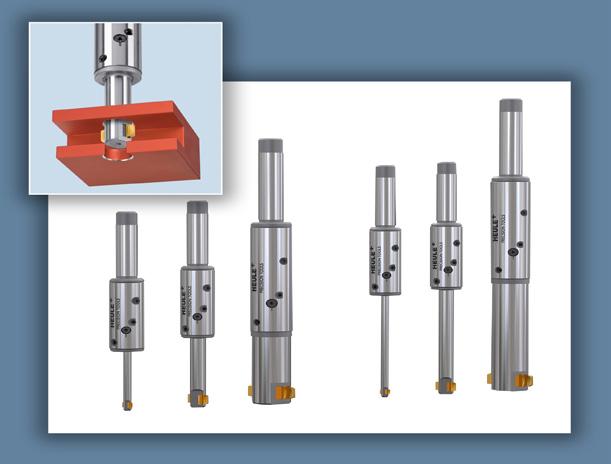
(Cincinnati, OH) – HEULE Precision Tools, a world leader in tool development, will feature DEFA tooling which provides a wide range of adjustment for chamfering operations in difficult-tomachine materials like Inconel, Titanium, 4140 Steel, and others with large burr formation, in IMTS Booth #431364. Robust construction and an advanced dual-cutting
The DEFA tool operates by cutting a pre-adjusted chamfer diameter with precision regardless of where the surface of the part is located. Its design incorporates blades that maintain a predetermined setting, for consistent chamfer diameters across workpieces. The unique design and construction of the DEFA blades enables machining in both forward and reverse directions, enhancing versatility in manufacturing processes.
As DEFA blades engage with the material, the force applied through the feed onto the chamfer definition surface triggers radial retraction along the axis of the chamfered surface. This mechanism results in a gradual reduction in cutting width, allowing for precise control over the chamfer dimensions regardless of the height of the burr formation. The chamfer angle is determined by the angle of the
definition surface, providing flexibility to adapt to diverse project requirements. Different Chamfer sizes front & back can be pre-ground into special cutting blades.
A key advantage of the DEFA tool design lies in its ability to safeguard the integrity of the hole. The DEFA tool can produce chamfers up to .050” a side, to produce a large chamfer before the thread or tap, creating a lead for the tap, and ensuring that the chamfer is larger than the OD (Outer diameter) of the thread during the chamfering process. This is achieved through the sliding surface geometry of the DEFA blades, which effectively mitigates the risk of damage, ensuring consistent surface quality.
HEULE Precision Tools has manufactured the highest quality cutting tools since 1961, supporting a wide range of hole-finishing tools for front and back deburring, countersinking, chamfering, and counterboring for larger industrial manufacturing companies throughout the world.
They specialize in high production environments in the automotive, aerospace, energy, and medical industries. For additional information, visit www. HeuleTool.com, or call (513) 860-9900, or via email to info@HeuleTool.com.

$42 Million in Defense Manufacturing Expansion

GE Aerospace announced a $42 million investment in its Lynn, Massachusetts manufacturing facility as part of a broader $1 billion U.S. manufacturing expansion plan. The investment will modernize production equipment, improve manufacturing processes, and increase output of military and aerospace propulsion systems. State officials highlighted the project as an important contribution to Massachusetts’ defense industrial base and advanced manufacturing economy.
The Lynn facility plays a critical role in producing aircraft engine components used in military and commercial aerospace applications. The investment also aligns with Massachusetts’ recently launched SHIELD Initiative, which focuses on strengthening defense innovation, manufacturing, workforce development, and applied research.
The project demonstrates continued confidence in domestic aerospace production capacity as defense spending remains elevated and aircraft engine demand grows. For suppliers supporting aerospace manufacturing, the expansion signals ongoing opportunities in precision machining, heat treating, coatings, additive manufacturing, tooling, and specialized materials processing. The investment further reinforces Massachusetts’ position as one of the Northeast’s most significant aerospace manufacturing centers.
Fuels Shipbuilding and Manufacturing Growth
General Dynamics Electric Boat continues to drive manufacturing growth across Connecticut as submarine production ramps up for both the Virginia-class and Columbia-class submarine programs.
The company plans to hire approximately 8,000 workers during 2026 to support increasing production requirements. Manufacturing employment in Connecticut has already increased substantially this year, with Electric Boat serving as one of the largest contributors to job growth. The hiring effort reflects sustained federal investment in naval modernization and undersea warfare
capabilities.
Connecticut remains a critical node in the U.S. shipbuilding industrial base, supporting thousands of jobs across machining, fabrication, castings, forgings, electronics, coatings, and specialty manufacturing. Industry leaders note that workforce availability remains one of the largest challenges as manufacturers compete for skilled labor. The expansion of submarine production is expected to generate demand throughout the Northeast supply chain for years to come.
RBC Bearings is expanding manufacturing capacity at its Oxford, Connecticut facility to support growing demand from aerospace, missile, and submarine programs.
The company reported aerospace and defense revenue growth exceeding 40% and cited increasing requirements from U.S. defense customers. Bearings and motioncontrol components are critical technologies within naval, aerospace, and missile systems. Connecticut’s concentration of aerospace and defense manufacturers continues to create a strong market for specialized precision manufacturing suppliers.
The expansion reflects broader trends across the defense sector as federal agencies seek to strengthen industrial base capacity and accelerate production timelines. For precision manufacturers, the project highlights growing demand for high-specification components that support mission-critical defense systems.
Quantum Cyber signed a letter of intent to acquire a 43,000-square-foot manufacturing facility in Bridgeport, Connecticut. The company intends to expand domestic drone production and vertically integrate portions of its manufacturing operations. The move reflects broader efforts throughout the aerospace and defense sectors to reduce foreign supply chain dependencies and increase domestic manufacturing capability.
Demand for drones, autonomous systems, and counterdrone technologies continues to grow across both military and commercial markets. Connecticut’s aerospace manufacturing infrastructure and skilled workforce were cited as key factors supporting the proposed expansion. demand for high-specification components that support mission-critical defense systems.


[New York] New York Manufacturing Activity Remains Positive Despite Headwinds
The Federal Reserve Bank of New York’s June Empire State Manufacturing Survey showed manufacturing activity continuing to expand, though at a slower pace than the previous month. New orders, shipments, and employment remained positive, while manufacturers reported ongoing concerns related to inflation, supply chain disruptions, and material costs. Despite these challenges, manufacturers expressed optimism regarding future business conditions. New York remains one of the nation’s most diversified manufacturing economies, with strength in aerospace, electronics, semiconductor technology, medical devices, and industrial equipment. Continued hiring activity suggests manufacturers remain committed to expanding production despite economic uncertainty.
The Federal Reserve Bank of New York’s June Empire State Manufacturing Survey showed manufacturing activity continuing to expand, though at a slower pace than

the previous month. New orders, shipments, and employment remained positive, while manufacturers reported ongoing concerns related to inflation, supply chain disruptions, and material costs. Despite these challenges, manufacturers expressed optimism regarding future business conditions. manufacturing economies, with strength in aerospace, electronics, semiconductor technology, medical devices, and industrial equipment. Continued hiring activity suggests manufacturers remain committed to expanding production despite economic uncertainty.
L3Harris Technologies announced plans to invest approximately $1.27 billion in Orange County, Virginia, significantly expanding solid rocket motor production capacity for the U.S. Department of Defense. The project will more than double manufacturing space and create more than 350 highly skilled jobs.








New facilities will support propellant mixing, casting, assembly, and testing operations. Defense officials have emphasized the need for increased domestic missile and propulsion production as global conflicts continue to pressure U.S. weapons inventories.
The expansion represents one of the largest defense manufacturing investments announced in the United States this year and reinforces Virginia’s position as a critical center for aerospace and defense production. Suppliers supporting precision machining, heat treating, non-destructive testing, specialty materials, automation, and tooling are expected to benefit from increased production demand throughout the supply chain.
Micron announced the start of production of its 1-alpha DRAM technology at its Manassas manufacturing facility. The project represents the most advanced memory technology currently manufactured in the United States and is part of a multi-billion-dollar expansion supported by CHIPS Act funding. The facility serves customers in aerospace, defense, automotive, industrial, networking, and medical device markets.
Micron expects the expansion to substantially increase domestic memory production while helping address supply shortages affecting critical industries. The announcement strengthens Virginia’s role in the nation’s semiconductor manufacturing strategy and highlights continued investment in domestic electronics production.


Defense technology companies across Northern Virginia continue adding manufacturing, engineering, and production capacity. One recent example includes a Ballston-based defense technology company investing $19 million to expand operations and add more than 200 jobs.
The expansion reflects sustained demand for advanced defense systems, autonomous technologies, and military modernization programs. Virginia’s proximity to the Pentagon, national laboratories, and federal agencies continues attracting defense-related manufacturing and technology investments.


We are proud to announce QualityMTS has expanded sales and service to Arizona and New Mexico. For 20 years, QualityMTS has supported customers in the Midwest.


Build a stronger manufacturing operation with Arizona MEP’s cus tomized continuous improvement solutions. We help you boost productivit y and quality, reduce waste and scrap, and strengthen customer relati onships.
Our experts bring real-world manufacturing experience and work side-byside with your team to create a clear road-map and implement so lutions that support success now and long-term.
Arizona MEP can help you: Improve productivity and quality; Reduce waste, scrap, and rework and Strengthen customer satisfaction

JetZero officially broke ground on its Greensboro headquarters and manufacturing facility, marking one of the largest aerospace manufacturing projects ever announced in North Carolina. The company plans to develop and manufacture its blended-wing commercial aircraft, a design intended to significantly improve fuel efficiency compared to traditional aircraft configurations. The project carries a long-term commitment to create up to 14,500 jobs, making it one of the largest economic development projects in state history.
Construction of the manufacturing complex represents another step in North Carolina’s emergence as a major aerospace manufacturing hub alongside established aviation suppliers and defense contractors. Industry observers view the project as a high-risk, high-reward investment with the potential to reshape commercial aircraft manufacturing if the technology succeeds.
HII announced plans to outsource more than 2.5 million hours of shipbuilding work during 2026, a roughly 30% increase compared with the prior year. The effort is designed to expand capacity across the naval shipbuilding industrial base and accelerate production for U.S. Navy programs.
South Carolina continues to play a growing role in submarine and carrier manufacturing through fabrication, structural assembly, and component production. The strategy reflects increasing federal emphasis on expanding domestic shipbuilding capacity amid growing demand for naval vessels and maintenance programs. Suppliers capable of supporting welding, fabrication, machining, coatings, assemblies, and specialty metal processing are expected to see increased opportunities as work is distributed throughout the industrial base.


Hyundai Motor Group continues ramping production at its Metaplant America facility near Savannah, one of the largest manufacturing investments in Georgia history. During the past 45 days, suppliers announced additional hiring and equipment installation activity as the plant prepares for expanded electric vehicle production.
The broader manufacturing ecosystem surrounding the facility continues to grow, with battery suppliers, automation providers, stamping operations, and logistics companies increasing capacity.
State economic development officials estimate the project and supplier network will support tens of thousands of direct and indirect jobs over the coming decade. The facility is expected to become a cornerstone of North America’s electric vehicle supply chain.
Demand for precision tooling, automation systems, metal fabrication, heat treatment, and quality-critical manufacturing processes continues to increase as production scales. The project remains one of the most significant advanced manufacturing developments in
the Southeast and is attracting additional supplier investment throughout the region.
Georgia’s growing concentration of automotive and battery manufacturing operations continues strengthening its position as a major industrial hub.
Gulfstream Aerospace reported continued production growth across its Savannah manufacturing operations as demand remains strong for business aircraft.
The company has increased hiring efforts and continues investing in production technology, advanced manufacturing equipment, and workforce development programs. Suppliers supporting aerospace structures, machined components, specialty coatings, and heat-treated materials continue benefiting from elevated production rates. Business aviation remains one of the strongestperforming segments within aerospace manufacturing, driven by sustained demand for long-range aircraft.

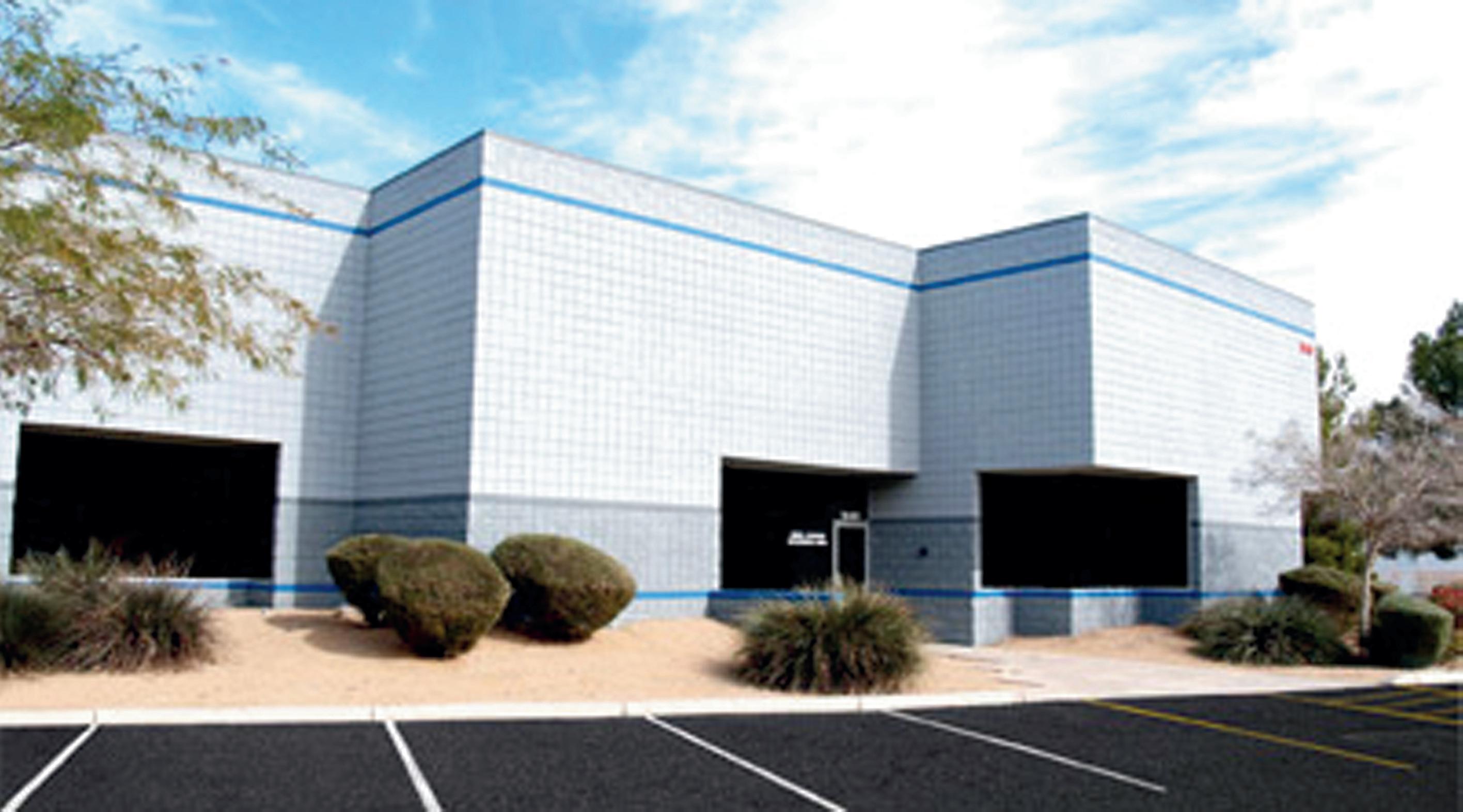
Proud to produce quality precision machined parts since 1987, and welcome the opportunity to solve your machining challenges.

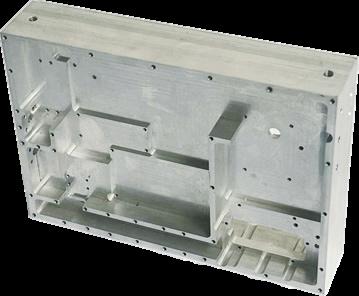
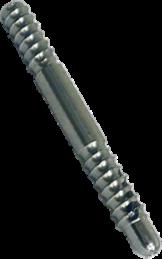
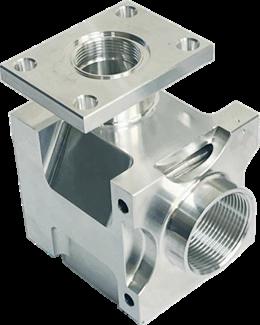
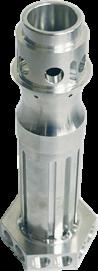
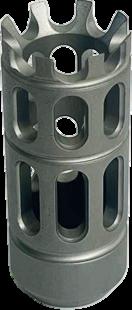
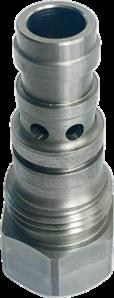
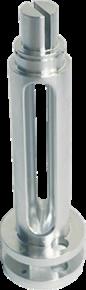
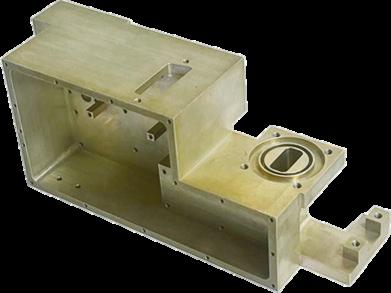
Mesa Custom Machining Corp. is located in Gilbert, Arizona. We have been proud to produce quality precision machined parts since 1987, and welcome the opportunity to solve your machining challenges.










































Georgia’s aerospace sector continues to attract investment due to its established supplier base, skilled workforce, and transportation infrastructure.

Austal USA continues investing in its Mobile-area shipbuilding operations, which support multiple U.S. Navy programs. Recent announcements highlighted workforce growth, facility modernization efforts, and continued investment in advanced manufacturing technologies.
The fir st test of a new, lightweight F-35 helmet was successful, according to the prog ram office, a promising sign that the Pentagon can qualify and implement all three fixes to the jet’s escape system by the end of the year
The recent sled test, conducted with a 103-pound mannequin, is the latest sign that the JPO can make good on its promise to finish the three design fixes by November, allowing the military ser vices to lift restrictions on lightweight pilots flying the F-35 Last year, Defense News first repor ted that pilots under 136 pounds were bar red from flying the fifth-generation aircraft after tester s discovered an increased r isk of nec k damage to lightweight pilots ejecting from the plane. The US Air Force has also ac knowledged an “elevated level of r isk” for pilots between 136 and 165 pounds.
becoming increasingly important within shipbuilding.
The prototype helmet tested weighs about 4 63 pounds, approximately 6 ounces lighter than the or ig inal Gen III helmet, and is designed to ease some strain on smaller pilots’ nec ks dur ing ejection
United Launch Alliance continues expanding manufacturing operations in Decatur to support growing demand for Vulcan rockets and national security launch programs. Production activity has accelerated as ULA fulfills contracts for both commercial and government customers.
The shipbuilder remains a critical contributor to the Gulf Coast’s defense industrial base and supports a large supplier network across the Southeast. Increased naval procurement activity continues creating opportunities for manufacturers specializing in fabrication, machining, welding, coatings, and complex assemblies.
Although the test was the fir st test of the new helmet, the JPO, Loc kheed Mar tin and seat-maker Mar tin Baker have conducted at least seven other tests with the latest ver sion of the seat, whic h is equipped with two modifications designed to reduce r isk to pilots The fixes to the ejection seat itself include a switch for lightweight pilots that will delay deployment of the main parachute, and a “head suppor t panel,” a fabr ic panel sewn between the parac hute r iser s that will protect the pilot’s head from moving bac kward dur ing the parac hute opening.
The prog ram office has about another 10 tests planned, whic h will use a mix of low-, middle- and high-weight mannequins
The facility remains one of the nation’s most important rocket manufacturing sites, producing launch vehicles used for defense, intelligence, and commercial space missions. Increased production is generating demand throughout the aerospace supply chain, including precision-machined components, propulsion hardware, thermal processing services, and advanced materials suppliers.
Advanced manufacturing technologies, including automation and digital production tools, are
Recently, at Holloman Air Force Base, New Mexico, Loc kheed Mar tin’s F-35 conducted the fir st test combining all three solutions designed to reduce the r isk of nec k injury to F-35 pilots dur ing ejection, according to spokesman Joe DellaVedova. Once the full gamut of testing is completed, hopefully by the end of the summer, the JPO can beg in implementing the two modifications to the ejection seat and issuing the new Generation III “light” helmet to the fleet, he said
“This initial test had promising results and the F-35 enter pr ise is on a path to qualify the helmet by the end of this summer, ” DellaVedova told Defense News. “The lighter helmet expected to be fielded by the end of the year is in line with the seat timeframe as well.”
Alabama’s space and aerospace manufacturing sector continues benefiting from strong federal and commercial investment.


Austal USA continues investing in its Mobile-area shipbuilding operations, which support multiple U.S. Navy programs. Recent announcements highlighted workforce growth, facility modernization efforts, and continued investment in advanced manufacturing technologies.
The shipbuilder remains a critical contributor to the Gulf Coast’s defense industrial base and supports a large supplier network across the Southeast. Increased naval procurement activity continues creating opportunities for manufacturers specializing in fabrication, machining, welding, coatings, and complex assemblies.
Advanced manufacturing technologies, including automation and digital production tools, are becoming increasingly important within shipbuilding operations.
Organizations associated with Oak Ridge National Laboratory announced new collaborations supporting advanced nuclear energy technologies and domestic manufacturing capabilities.
Efforts focus on advanced materials, additive manufacturing, nuclear fuel technologies, and energyrelated production systems. Tennessee continues leveraging its research infrastructure to attract manufacturing investment tied to clean energy and advanced industrial technologies.
Several projects announced during the reporting period aim to accelerate commercialization of technologies developed through national laboratory research. The state’s advanced energy manufacturing sector remains one of the strongest in the Southeast.workforce growth, facility modernization efforts, and continued investment in advanced manufacturing technologies.

GE Aerospace announced additional investments across its manufacturing network, including operations supporting jet engine production in Kentucky. The company continues modernizing facilities, increasing production capacity, and investing in advanced manufacturing technologies to support commercial and military aerospace demand.
Aerospace propulsion remains one of the most technically demanding manufacturing sectors, requiring extensive precision machining, heat treatment, coatings, and materials expertise. Suppliers supporting engine
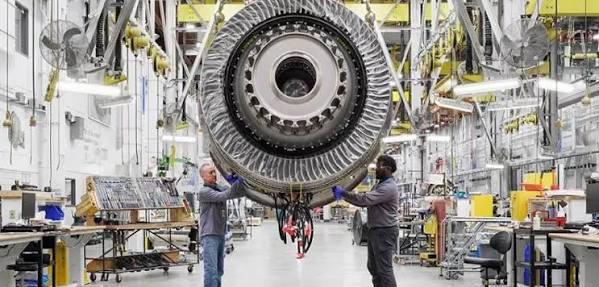
production continue benefiting from increased production rates as aircraft deliveries rise and defense programs expand.
Kentucky’s battery manufacturing sector remains one of the fastest-growing segments of the state’s economy. Construction and supplier development activities tied to large-scale battery manufacturing projects continued throughout the reporting period.
Investments in energy storage and electric vehicle supply chains are generating demand for automation systems, industrial equipment, fabricated components, and specialty materials processing.
Industry leaders expect Kentucky to remain a major participant in North America’s battery manufacturing ecosystem for years to come.


Guarantee
Precision Manufacturing Demands a Precision ISO Management System
Your Quality Management System should work as precisely as the parts you manufacture – efficient, streamlined, and built to last
At Cavendish Scott, we’ve spent over 40 years delivering custom ISO systems with measurable results –no bloated paperwork, no wasted motion, no templates.
We guarantee your certification and ensure your system stays lean, effective, and easy to maintain.
40+ Years in ISO Consulting
100% Certification Guarantee
Simple, Streamlined Systems
IRCA & Exemplar Global Certified
Internal Auditing & Training


Get Certified. Stay Certified. Improve. Succeed. Call (303) 480-0111 | www.CavendishScott.com/A2Z

Defense technology company Anduril Industries continued development of its large-scale autonomous systems manufacturing facility near Columbus. The facility, known as Arsenal-1, is designed to produce autonomous air vehicles, defense electronics, propulsion systems, and other military technologies at significantly higher production rates than traditional defense manufacturing plants. During the past 45 days, the company announced additional supplier engagement efforts and workforce recruitment initiatives as construction progresses. The project represents one of the largest defense manufacturing investments in Ohio in decades and reflects a broader shift toward scalable, software-enabled production methods.
Industry analysts view the facility as a model for future defense manufacturing due to its emphasis on automation, digital engineering, and rapid production. Suppliers supporting precision machining, castings, forgings, heat treatment, coatings, electronics, and automation systems are expected to benefit as production ramps over the coming years.
The project also strengthens Ohio’s position within the nation’s defense industrial base at a time when the Department of Defense is prioritizing increased domestic production capacity. Public officials have cited the facility as a major catalyst for advanced manufacturing growth throughout the region.
Ultium Cells, the battery joint venture between General Motors and LG Energy Solution, continued expanding production capabilities in Michigan as EV battery demand grows.
Recent announcements focused on workforce development, production optimization, and supplier engagement efforts. Battery manufacturing remains a strategic priority for Michigan as automakers continue investing in electrification.
The state has emerged as a major center for battery production, materials processing, and advanced vehicle technology development.
Industry leaders expect continued demand for precision manufacturing equipment, automation systems, thermal processing, and quality-critical production technologies as battery manufacturing scales. Michigan’s automotive
manufacturing infrastructure provides a strong foundation for future battery and energy storage investments.
The growth of domestic battery production also supports federal objectives related to supply chain resilience and domestic manufacturing capacity.
Rolls-Royce announced additional investments supporting aerospace engine manufacturing operations in Indianapolis. The facility plays a significant role in producing engines and propulsion systems for military aircraft, business aviation, and commercial aerospace programs.
Recent investments focus on production modernization, digital manufacturing technologies, and workforce development initiatives. Aerospace demand remains strong, driven by increasing aircraft production rates and continued military procurement activity.
Suppliers supporting precision machining, thermal processing, coatings, and specialty materials remain critical to the aerospace engine supply chain. The investment reinforces Indiana’s long-standing position as a center for advanced aerospace manufacturing and propulsion technology development.
Illinois continued advancing initiatives designed to attract semiconductor manufacturing, quantum technology
development, and advanced electronics production. During the reporting period, state officials announced additional investments supporting infrastructure and workforce programs tied to the IllinoisQuantum and Microelectronics Park initiative. The effort seeks to position Illinois as a leader in emerging technologies that require sophisticated manufacturing capabilities and advanced materials expertise.
Industry participants continue evaluating opportunities for future semiconductorrelated investments in the region. Growth in these sectors is expected to create opportunities across electronics manufacturing, precision machining, vacuum processing, advanced materials, and specialty fabrication. Illinois leaders view semiconductor and quantum technologies as long-term strategic industries capable of attracting significant private-sector investment.

Several energy storage and advanced manufacturing projects advanced through development and permitting stages during the reporting period. State economic development officials reported continued interest from battery technology companies, industrial equipment manufacturers, and clean energy suppliers. Wisconsin’s manufacturing base remains heavily concentrated in industrial machinery, automation equipment, and precision manufacturing. These capabilities position the state to benefit from continued investment in energy infrastructure and industrial modernization. Industry leaders continue emphasizing workforce development and automation as key drivers of future competitiveness.
Minnesota’s medical device manufacturing industry continued growing during the reporting period as major manufacturers increased production capacity and expanded hiring. The state remains one of the nation’s leading centers for medical technology development and manufacturing, producing devices used in cardiovascular care, diagnostics, surgical procedures, and patient monitoring.
Industry organizations reported continued investment in automation, precision manufacturing equipment, cleanroom operations, and advanced materials processing. Medical device production requires highly controlled manufacturing environments and stringent quality standards, creating opportunities for suppliers capable of supporting regulated industries. Continued demand for healthcare technologies is expected to support future investment throughout Minnesota’s medical manufacturing ecosystem.
Boeing continued increasing activity across its St. Louis defense manufacturing operations as production ramps for advanced fighter aircraft and military aviation programs. The facility remains one of the most important defense aerospace manufacturing centers in the United States. Recent hiring initiatives, facility investments, and supplier engagement activities reflect growing demand for military aircraft production. Boeing’s defense operations support a large regional supply

Arizona MEP's mission is to make every Arizona manufacturer the most successful business it can be. As Arizona's Manufacturing Extension Partnership, Arizona MEP's manufacturing and business experts offer customized solutions and hands-on assistance to help your company achieve its goals.
Whether you're looking for incremental improvements to your operation or a major transformation, Arizona MEP can provide a solution designed just for you.


chain encompassing precision machining, aerospace structures, electronics, coatings, thermal processing, and specialized materials. Industry observers expect sustained production activity due to ongoing defense modernization programs and future military aircraft requirements. Missouri’s aerospace sector remains heavily influenced by defense spending and continues attracting engineering and manufacturing talent.
Missouri-based companies involved in nuclear energy technologies and advanced manufacturing reported increased activity tied to small modular reactor development and energy infrastructure modernization.
Several industry groups highlighted growing opportunities for manufacturers capable of supplying components, fabricated structures, and engineered systems supporting future nuclear projects. The trend reflects increasing interest in advanced nuclear technologies as part of long-term energy planning efforts.
Texas Instruments continues advancing construction and equipment installation at its Sherman semiconductor manufacturing campus, one of the largest chip production investments currently underway in the United States. During the past 45 days, the company provided updates on facility development, workforce recruitment, and supplier engagement activities.
The Sherman site is expected to include four semiconductor fabrication plants with total investment potential exceeding $30 billion over time. The project supports growing demand for analog and embedded semiconductors used in industrial automation, aerospace, defense, medical devices, automotive systems, and energy infrastructure. The expansion aligns with federal and state efforts to strengthen domestic semiconductor production and reduce reliance on overseas supply chains. Suppliers supporting cleanroom equipment, specialty materials, precision machining, vacuum systems, heat treatment, and advanced manufacturing equipment continue seeing opportunities connected to

the project. Industry analysts view the Sherman campus as one of the most significant semiconductor manufacturing developments currently under construction in North America.
SpaceX continued accelerating Starship manufacturing and testing activity at Starbase near Brownsville. Recent milestones included additional production infrastructure, testing operations, and facility expansion efforts designed to support higher launch rates and larger-scale vehicle manufacturing. Starship remains central to NASA lunar exploration programs, commercial satellite deployment, and future deep-space missions. The expansion continues generating demand for aerospace-grade fabrication, propulsion systems, thermal protection materials, advanced machining, and specialty manufacturing services. South Texas has become one of the most active space manufacturing regions in the country, attracting suppliers and engineering talent from across the aerospace sector.
Texas remains the leading state for hydrogenrelated manufacturing and energy infrastructure development. Multiple projects involving hydrogen production equipment, industrial gas systems, and carbon management technologies advanced through planning and development stages during the reporting period. The investments are expected to generate long-term demand for fabricated systems, pressure vessels, industrial equipment, precision machining, and specialty materials processing.
Oklahoma’s aerospace sector reported continued growth driven by maintenance, repair, overhaul (MRO), military aviation support, and aircraft component manufacturing.


IS

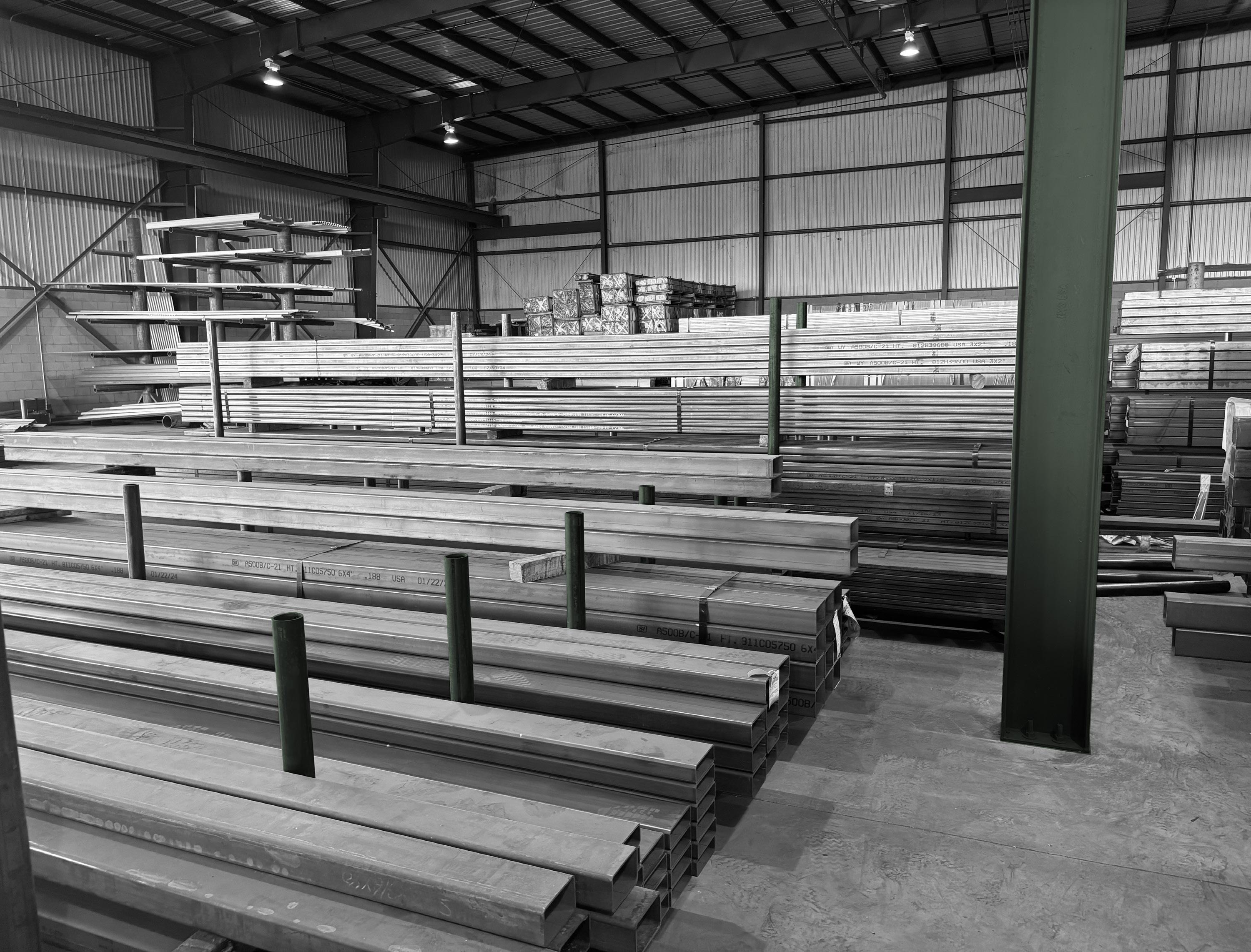
At Arizona Iron Supply, our greatest strength is our people. Together, we do more than move metal—we help move the industry forward. With one unified team and a shared vision, we are committed to delivering reliability, quality, and results on every project.
Arizona Iron Supply—built on strength, driven to deliver.

244-9649 today
Central News Continued
Several aerospace manufacturers announced workforce expansion efforts during the reporting period as demand remained strong across both commercial and defense aviation markets. Oklahoma remains one of the largest aerospace employment centers in the United States, supported by Tinker Air Force Base, commercial aviation suppliers, and defense contractors.
Increased production requirements continue creating opportunities for suppliers specializing in machining, heat treatment, coatings, and aerospace-qualified manufacturing services.
Louisiana continues benefiting from large-scale LNG export terminal construction and related industrial manufacturing activity. Several Gulf Coast projects advanced construction milestones during the reporting period, supporting demand for fabricated structures, industrial equipment, piping systems, pressure vessels, and specialty materials. Manufacturing suppliers throughout the Gulf Coast continue participating in energy infrastructure projects tied to natural


gas exports and petrochemical production. Industry observers expect strong demand for industrial manufacturing services to continue as multiple LNG facilities move toward operational status.
Spirit AeroSystems reported continued production increases as commercial aerospace demand remains strong.
The Wichita-based manufacturer supplies major aircraft structures for Boeing and Airbus programs and remains one of the largest aerospace manufacturers in the Midwest. During the reporting period, company


leadership discussed ongoing efforts to stabilize production, improve manufacturing performance, and support increasing aircraft build rates.
Higher production volumes are generating demand throughout the aerospace supply chain for machined components, specialty materials, coatings, heat treatment, tooling, and precision assemblies.
Wichita remains one of the most important aerospace manufacturing centers in North America, supporting thousands of jobs across aviation-related industries. industrial equipment, piping systems, pressure vessels, and specialty materials.
Micron Technology continues progressing on its Boise semiconductor manufacturing campus, one of the largest semiconductor investments currently underway in the United States. During the past 45 days, the company highlighted workforce development initiatives, supplier partnerships, and construction milestones supporting future DRAM production capacity.
The project is expected to strengthen domestic memory chip manufacturing while supporting national priorities related to artificial intelligence, defense electronics, automotive systems, industrial automation, and advanced computing. State and local officials continue coordinating workforce training programs designed to prepare technicians, engineers, and manufacturing personnel for future production needs.
The facility represents a major component of the broader U.S. semiconductor reshoring effort supported by CHIPS Act funding. Suppliers supporting cleanroom systems, specialty materials, industrial gases, precision machining, automation equipment, thermal processing, and facility

Schedule your no-obligation appointment and review today!
Mitch Balasu
480-822-7500
Mitch@growprotected.com
www.growprotected.com
Are You Losing Sleep With The Stock Market Ups and Downs?
Are You Planning To Retire In The Next 10 Years?
Did You know that On average, it takes the stock market 4.5 years to recover from a bear market, according to historical data?
There Is Good Reason Why Americans Have Invested Over 3 Trillion Dollars Into Annuities
• Protection Against Stock Market Risk
• Guaranteed income for life
• Reasonable Returns
• Tax Deferred Growth
• Long Term Care Benefit Potential
• Leave a Legacy
• No Fee Annuities Available
• Bonus Potential

Colorado remains one of the nation’s leading aerospace states, with a concentration of manufacturers supporting spacecraft, satellites, propulsion systems, defense electronics, and missioncritical components. Sierra Space’s expansion continues generating opportunities for suppliers specializing in precision machining, additive manufacturing, advanced materials, thermal processing, and aerospace assemblies.
Industry leaders continue identifying Colorado as a major center for commercial space manufacturing and defenserelated aerospace technologies. Growth in launch services, satellite deployments, and space infrastructure investments is expected to support continued manufacturing activity throughout the state’s aerospace ecosystem.
Northrop Grumman’s Promontory facility continued expanding production capacity for solid rocket motors and strategic defense programs during the reporting period. The site remains one of the most important propulsion manufacturing facilities in the United States, supporting missile
infrastructure remain active participants in the buildout. Industry analysts view the Boise project as a long-term catalyst for Idaho’s advanced manufacturing economy and expect additional supplier investments to follow as construction progresses and production capacity comes online.
Sierra Space continued advancing production and testing activities associated with its Dream Chaser spaceplane program and related commercial space systems. During the reporting period, the company highlighted manufacturing progress tied to orbital transportation systems, space station technologies, and commercial space infrastructure.
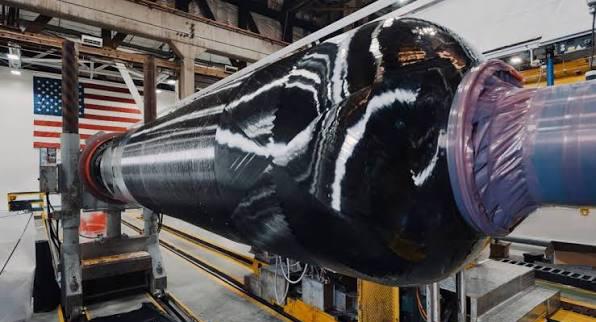
defense systems, strategic deterrence programs, and space launch applications.
Recent investments focus on manufacturing efficiency, workforce development, automation, and production scaling. Federal demand for missile systems and strategic defense capabilities continues driving investment across the propulsion supply chain.
Manufacturers supporting specialty materials, precision machining, thermal processing, coatings, testing services, and aerospace-grade components remain closely tied to ongoing growth at the facility. Industry analysts expect demand for propulsion technologies to remain elevated as defense modernization programs continue receiving funding.
Arizona continues to solidify its position as the centerpiece of America’s semiconductor reshoring effort.
New data from Industrial Info Resources shows Arizona leading the nation in semiconductor construction investment, with major capital flowing into the Phoenix region.
The state’s momentum is being driven by TSMC’s ongoing expansion, supplier growth, advanced packaging investments, and increasing demand for AI-related computing infrastructure. Arizona’s semiconductor


ecosystem has evolved beyond fabrication facilities into a broader manufacturing network that includes equipment suppliers, specialty materials providers, precision machining companies, and advanced processing operations. Industry leaders view Arizona as one of the few regions capable of supporting a fully integrated semiconductor supply chain.
The continued investment activity is expected to generate long-term demand for precision manufacturing services, industrial infrastructure, engineering talent, and specialty processing operations. Arizona’s semiconductor growth also reinforces its strategic importance to U.S. national security and domestic technology manufacturing efforts.
BMSC LLC, A Woman Owned Business • Contact Bretta Kelly Today!
√ Are you certified and ready to simplify your ISO 9001, AS9100, AS9110 or AS9120 System?
√ Do you need Quality Management System Software? Bretta Kelly also President of CIS WWSG, is now offering $3,500 Templates FREE with purchase of CIS Software!
√ Need Help Maintaining Your Internal Audits or Management Reviews? Visit www.businessmsc.com today and review the more than 220 company referrals!

BMSC is now offering packages to come in and conduct Internal Process Audits and Facilitate Management Reviews to ensure you are effectively maintaining your ISO 9001 and/or AS9100 System.
We Can Help! We Have Helped Over 200 Manufacturing and Service Companies. Call to Learn About our Templates - From $3500. CIS Software visit www.cissoftware.com. Contact us today
who flew more than 10 times in the past year wanted to hop onto an air taxi, with business travelers being chief among them (65%). And for millennials, the interest was at 65%, compared to 58% of overall respondents.
Phoenix-based Honeywell Aerospace Technologies is currently a division of Honeywell International Inc. (Nasdaq: HON), but the parent company announced earlier this year that its aerospace business and its automation unit would be split off into separate publicly traded companies. That followed calls late last year from an activist investor to make the move.
Airbus and the Arizona Commerce Authority hosted a major supplier event in Phoenix on June 12, bringing together aerospace manufacturers, suppliers, and economic development leaders. The event showcased Arizona’s growing aerospace and defense manufacturing ecosystem and highlighted opportunities for suppliers to participate in future Airbus programs.
Honeywell Aerospace — which said it will remain headquartered in Phoenix after the split, expected in the second half of 2026 — is Arizona's second-largest defense contractor, with just under 2,000 contracts in fiscal year 2024 valued at a total of $657.58 million, according to Business Journal research. With 7,124 employees in the state in 2023, Honeywell Aerospace ranked as Arizona's 23rd largest employer last year. By Jeff Gifford –Phoenix Business Journal
Arizona has become an increasingly attractive destination for aerospace production because of its skilled workforce, military presence, favorable business climate, and expanding manufacturing infrastructure.
Robotics company to establish global HQ in Phoenix
The event emphasized the importance of strengthening domestic supply chains and increasing collaboration between OEMs and regional suppliers. For manufacturers across machining, heat treating, coatings, additive manufacturing, and specialty processing, Airbus’ increased engagement signals continued opportunity growth throughout the state’s aerospace sector. Industry participants noted that demand for qualified suppliers remains strong as aerospace production rates continue recovering and defense spending remains elevated.
Imagine a world where a team of robots could lend a helping hand to small businesses for repetitive tasks, or clean and prep a construction job site overnight, allowing human workers to get more done during the day.

Revobots aims to make that vision a reality with the company’s flagship AI-driven, 3D printed humanoid robot, Taskbot, which is equipped with dual arms, a dexterous “handlike” gripper, and an intelligent “face” packed with sensors.
A proposed 2,500-acre industrial development known as Grand View Arizona is positioning Buckeye as a future hub for advanced manufacturing investment.
“The Taskbot can be controlled through AI. You tell it what you want it to do, it will figure it out and complete the job,” said Andre Christian, cofounder and chief marketing officer for Revobots. “Or you can say, ‘Hey, I don’t have a Phillips screwdriver.’ Taskbot will print one and do the job for you. That’s going to be a game changer, and that, to us, is where civilization starts to change because everybody now has the means of production at their hands.”
The project is being marketed toward companies involved in aerospace, defense, battery technology, energy systems, artificial intelligence, biotechnology, and autonomous transportation. Developers estimate the site could generate more than $1 billion in economic impact once fully developed.
The scale of the project reflects growing confidence that Arizona will continue attracting large manufacturing investments over the coming decade. Site readiness, power availability, transportation access, and workforce growth are key factors driving interest. Large industrial campuses such as Grand View are increasingly being built ahead of major tenant commitments as developers compete to attract future manufacturing projects. For suppliers throughout the Southwest, the project represents potential future demand across a broad range of industrial sectors.
The company plans to establish its global headquarters in the Valley.The Phoenix region has increasingly become a landing spot for high-tech companies.
Continued Next Page
AeroVironment is investing more than $30 million to expand its Albuquerque manufacturing operations, creating over 450 new jobs while increasing production capacity for critical defense and space technologies. The project includes modernization of existing facilities and new equipment purchases across the company’s manufacturing campus. Production expansion will focus on laser systems, advanced defense electronics, space payloads, drone technologies, and other national security programs.
State and local governments are supporting the effort through economic development incentives designed to strengthen New Mexico’s role within the U.S. defense industrial base. Company leaders cited Albuquerque’s technical workforce, proximity to national laboratories, and existing aerospace infrastructure as major advantages. The investment is one of the largest defense manufacturing announcements in the Southwest this year and reflects sustained federal demand for advanced military technologies.
Reno-based Dragonfly Energy has secured an additional $527,000 award through the Nevada Tech Hub program to accelerate battery research,
development, and manufacturing efforts. The funding will support expanded prototyping capabilities, advanced testing infrastructure, and development of next-generation cylindrical battery cells. Dragonfly is known for its Battle Born Batteries product line and has become a prominent participant in Nevada’s rapidly growing energy storage ecosystem.
Company leadership says the investment will help shorten development cycles while strengthening domestic battery technology capabilities. The award reflects broader efforts by federal, state, and regional organizations to establish a more resilient U.S.-based battery supply chain. Nevada’s growing concentration of battery companies, lithium resources, and energy storage investments continues attracting attention from manufacturers seeking domestic sourcing alternatives.


1990
center for energy technology manufacturing and critical materials processing. Suppliers supporting electrical systems, fabricated components, automation, controls, and industrial equipment stand to benefit from continued project activity.



Nevada’s energy storage sector remains one of the most active manufacturingrelated industries in the region. According to Cleanview’s June 2026 project tracker, 46 battery storage projects are currently under development across the state, representing approximately 16.7 gigawatts of planned capacity. The projects support increasing demand from utilities, data centers, renewable energy operators, and grid modernization initiatives. Battery manufacturing, recycling, critical minerals processing, and energy storage deployment are increasingly interconnected industries throughout Nevada. The scale of planned development reinforces Nevada’s position as a strategic
Rocket Lab reported continued expansion of its Long Beach spacecraft manufacturing operations as demand for satellites, national security payloads, and space systems remains strong. During the reporting period, the company highlighted increased production activity supporting both government and commercial customers.
The facility manufactures spacecraft components, satellite buses, solar power systems, and integrated space platforms used across defense, communications, and scientific missions. Growth in the satellite market continues to drive investment in advanced manufacturing technologies, precision machining, additive manufacturing, electronics integration, and specialty materials processing.
California remains the largest space manufacturing state in the country, benefiting from a concentration of launch providers, spacecraft manufacturers, defense contractors, and technology companies. Industry analysts expect continued supplier opportunities as demand grows for national security space programs, low-Earth



orbit satellite constellations, and commercial space infrastructure. he expansion reflects broader trends within the aerospace sector as companies seek to increase production capacity and reduce lead times for increasingly complex space systems.
Intel continued making progress on manufacturing and technology upgrades at its Hillsboro campus, the company’s largest research and development and process technology site worldwide. During the past 45 days, Intel highlighted workforce development initiatives, manufacturing technology advancements, and process development activities tied to future semiconductor production.
Oregon remains one of the most important semiconductor manufacturing states in the nation, serving as a center for process development, advanced packaging technologies, and next-generation chip manufacturing.
Intel’s continued investment supports domestic semiconductor competitiveness and strengthens supply chains serving aerospace, defense, medical devices, communications, and industrial automation.
The semiconductor sector remains one of Oregon’s largest advanced manufacturing industries and continues generating demand for specialty materials, vacuum systems, precision machining, cleanroom technologies, and advanced production equipment.
Boeing continued efforts to increase production rates across its Washington manufacturing operations as demand for commercial aircraft remains strong. During the reporting period, company leadership highlighted manufacturing improvements, workforce growth, and supplier engagement efforts supporting future delivery targets. Washington remains one of

the world’s largest aerospace manufacturing centers, with thousands of suppliers supporting aircraft structures, propulsion systems, electronics, interiors, and precision-machined components.
Higher production rates are expected to create additional opportunities throughout the aerospace supply chain, particularly for companies supporting critical manufacturing processes and quality-sensitive components. Industry observers continue monitoring production stability and supply chain performance as Boeing works toward higher output levels.


Blue Origin reported continued investment in manufacturing capabilities supporting rocket engines, launch systems, and space infrastructure programs. Facilities in Washington play a key role in engineering, development, and production activities tied to New Glenn launch vehicles and future space initiatives.

Growing demand for commercial launch services, national security missions, and space exploration programs continues supporting manufacturing investment throughout the state’s aerospace sector.
Suppliers supporting propulsion systems, advanced materials, machining, testing, and specialty manufacturing processes remain closely connected to the industry’s expansion.






When defense demand rises, production capacity suddenly becomes everyone’s favorite topic. Lockheed Martin and GM Defense announced a collaboration designed to strengthen the U.S. defense industrial base by combining automotive-scale manufacturing expertise with advanced defense production. The partnership is intended to improve production speed, increase manufacturing resilience, and make it easier to scale critical military programs as demand grows. For suppliers, this is another signal that prime contractors are looking
beyond traditional aerospace manufacturing. Automotive production techniques— including digital manufacturing, automation, quality systems, and flexible supply chains—are increasingly finding their way into defense programs. Shops capable of supporting highervolume precision machining, castings, forgings, assemblies, and automated inspection stand to benefit as these production methods become more common throughout the supply chain.
The announcement also reinforces a broader trend seen across the defense sector during the past year: primes are investing heavily in manufacturing capacity rather than relying solely on new product development. The emphasis is shifting toward producing more hardware, faster, while improving supply chain resilience. Machine shops that can demonstrate repeatability, strong quality systems, and dependable delivery continue to move higher on supplier priority lists.
Boeing has been selected by the U.S. Space Force to build two advanced communications satellites that will bridge today’s military narrowband communications network with the next generation of protected space architecture. While satellites often grab headlines for their capabilities in orbit, the real manufacturing story begins years before launch.
Each spacecraft represents thousands of precision components sourced from hundreds of suppliers across the United States. Precision machining,
electronics packaging, thermal management hardware, structural fabrication, specialty coatings, and complex assemblies all contribute to the final product. Programs like this typically generate work for suppliers long before the public sees a rocket leave the launch pad.
Demand for secure military communications continues to grow as the Department of Defense expands its space capabilities. For manufacturers serving aerospace customers, satellite production remains one of the more stable markets because of long development timelines and sustained government funding.
Shops with AS9100 certification, tight process controls, and experience producing missioncritical hardware remain well positioned as production ramps over the coming years.
Honeywell Aerospace officially became an independent aerospace company during the past month, giving the business greater flexibility to invest directly in commercial aviation and defense manufacturing. Company leadership says more than $1 billion has already been committed to strengthening production, with particular attention on supply chain bottlenecks involving castings, forgings, and other critical components.
For manufacturers throughout the aerospace supply chain, this is encouraging news. Investment in upstream production typically creates additional opportunities for machining, heat treating, finishing, inspection, tooling, and assembly suppliers. Honeywell also highlighted artificial intelligence as a growing engineering tool, noting that AI is already accelerating product design and manufacturing workflows, while safety-critical flight systems will continue to require rigorous human oversight.
The company serves both commercial aviation and defense customers, with roughly 40% of its business tied to defense programs. As aircraft production rates increase and governments continue investing in military modernization, suppliers supporting Honeywell programs may see stronger demand across multiple product lines.


Metalworking fluids formulated to meet aerospace demands.
• Improve process stability on heat-resistant Super Alloys
• Easier robotic handling with cleaner parts
• Reduce costly maintenance interruptions
• Approved for Alloys of Aluminum, Titanium, Nickel, Chrome, and Steel
• Maximize gains from high pressure systems
• Enhance filtration system performance


This month’s question comes from John Gerritsen at Electro-Mechanical Products. Here is what John asked:
“For future editions, I would be very interested in seeing discussion around when a gap between sales growth and production realities occurs. The challenge of balancing increased sales demand while production capacity struggles to keep pace is a tough place to manage. The idea of slowing the sales process or rapidly expanding production capabilities are simply not practical short-term solutions.
While this is certainly a good problem for companies to have, it creates significant operational and strategic challenges for organizations to navigate.
Learning how successful companies address this balance between growth, production capacity, customer expectations, and operational efficiency would make for extremely valuable content.”
In an ideal world, all functions within a business are keeping up and growing equally. I have never seen this ideal situation, at least not for long periods of time. We had this exact challenge when we were growing my aerospace business from three employees with one electroplating process to a $100MM global business with more than 300,000 square feet of manufacturing and processing space.
For the 15 years prior to selling the business in 2016, we grew by an average of just over 20% compounded annually. One of those years, we grew 98%, and wow, was it hard. We never had all the equipment and other resources we wanted, but we always made it work. There were three things we did to address this challenge effectively:
1. Built and maintained a top-notch group of suppliers to help us handle surges in customer demand.
2. Implemented significant cross-training so we could move team members to address work bottlenecks.
3. Kept a growth readiness plan in place. At any point in time, every leader had to have a plan to grow a minimum of 20% in the event a large customer opportunity came our way.
Every team member should do their job and strive for ongoing improvement as a baseline expectation. Setting ambitious goals, such as increasing growth by 20%, is only meaningful if there is a realistic plan to achieve it. Stretch goals are
valuable, but they must be grounded in reality. In the early years, we had little to no machining capability, so we had to outsource all of it. Our policy was to outsource a process until there was enough work to justify bringing the capability in-house. Once we brought the work in-house, we would still send enough work to our suppliers so they would continue to value our relationship and move us to the front of the line when we needed it.
The majority of the work we did was repair and overhaul to support aircraft operators. The work came in at low volume and very high mix. Imagine thousands of jobs per month, with some jobs having more than one thousand components within an assembly, and around one million total operations. And all of this with little to no forecasting. As a result, bottlenecks in production cells constantly moved around the facility. With effective cross-training, we solved this challenge.
Growth readiness was part of our intentional culture. Every leader was required to maintain a growth plan to handle at least 20% more work within 30 days if needed.
Because this was part of our culture, everyone was excited when unexpected work levels rose. And we made sure our incentive plans made it worth their effort to do it.
We also found it important to have marketing, sales, customer support, operations, and engineering collaborate at least once each month to optimize how they worked together and to grow the business. Doing this allowed us to grow more smoothly, help each function create more value, and select progressively better opportunities for our business to pursue.
Thank you for your question, John. I could easily write a book to fully address all of it! We discuss challenges like this and many others in my Leadership Value Lab community each month. You can learn more at ETW.com.


•
•
•
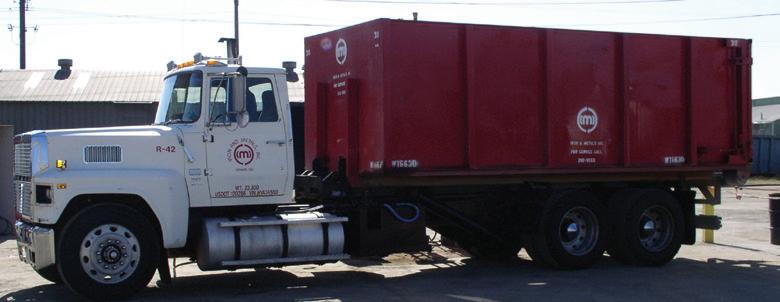
Top prices paid for:
•
• Alloys • Lead & more
Convenient drive-in recycling:
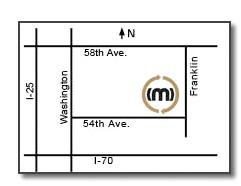
• Easy acces from I-25, I-70 and Commerce City
• Fully paved • Se Habla Espanol ~


While artificial intelligence still captures many headlines, venture investors are increasingly directing capital toward companies building physical products and manufacturing infrastructure. Industry data published over the past several weeks shows sustained investment activity across advanced manufacturing, robotics, aerospace, defense technology, semiconductors, and industrial automation. Funds such as Lux Capital, Founders Fund, Sequoia Capital, 8VC, Lockheed Martin Ventures, and others remain among the most active investors supporting these sectors.
Several forces are driving the trend. Federal investment in domestic manufacturing, expanding defense budgets, supply-chain reshoring, and rapid advances in industrial AI have made hardware companies more attractive than they were just a few years ago. Venture firms increasingly view manufacturing as a strategic technology sector rather than simply an industrial business.
For suppliers, this growing pool of venture-backed companies creates opportunities well before startups reach large production volumes. Emerging aerospace, robotics, energy, and defense firms typically require prototype machining, engineering support, fixture design, lowvolume production, and validation testing as they scale.
The result is a healthier innovation pipeline feeding America’s manufacturing ecosystem. Rather than waiting for billion-dollar OEM programs to launch, machine shops are increasingly finding opportunities by supporting wellfunded startups that are building the next generation of industrial products..

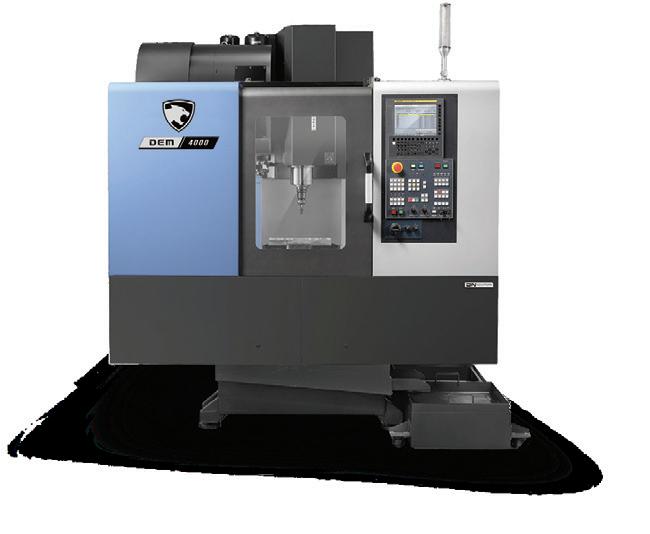
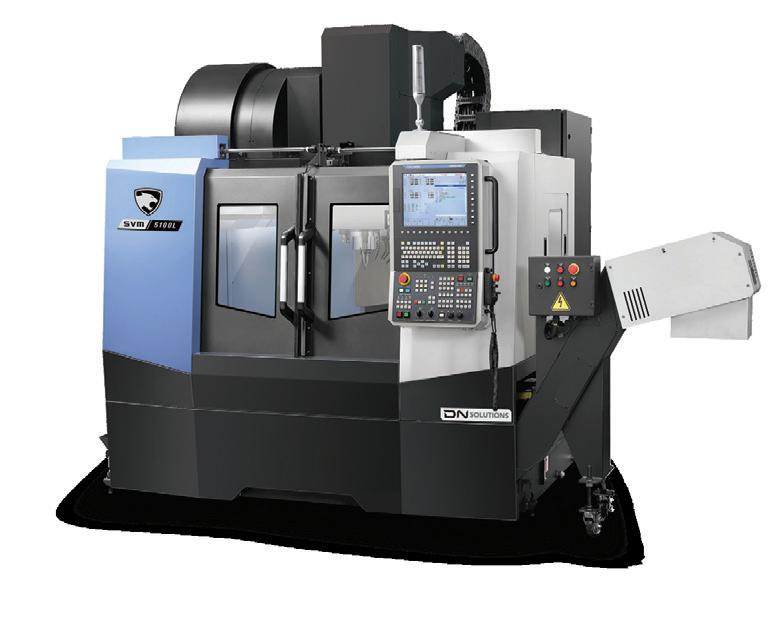
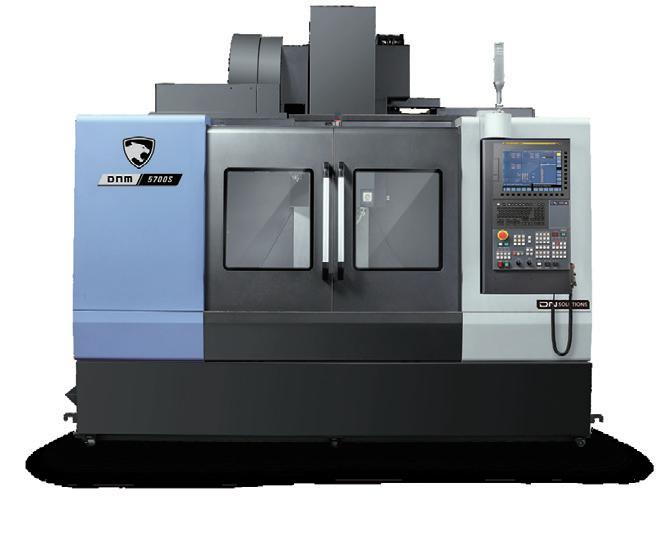
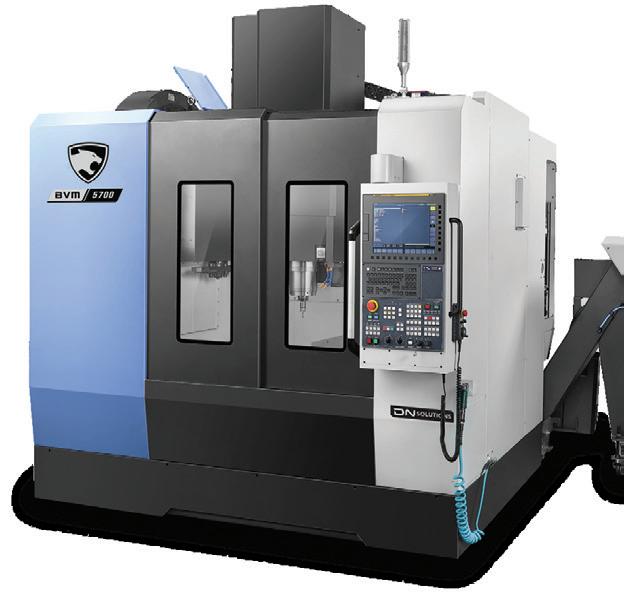


7:00am - 4:00pm
Friday, August 21, 2026
Eaglewood Golf Course, North
For sponsorship levels & registration NUNTMA org or Scan QR code




3D
We produce many of our customer’s products with metal and plastic sub-components molded in. It is very common to use threaded inserts, bushings, contacts, and plastic substrates.

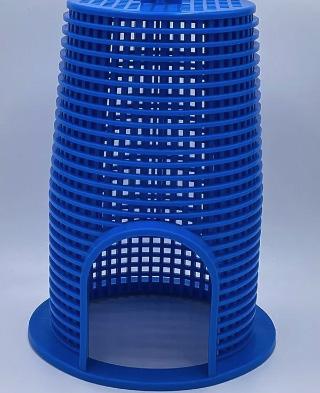
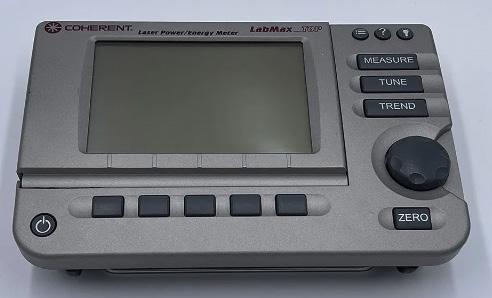

software that strengthens U.S. competitiveness. Portfolio companies include firms producing aerospace components, autonomous systems, factory automation, precision manufacturing platforms, and next-generation defense hardware.
The continued momentum behind American Dynamism has encouraged additional institutional investors to view manufacturing as an attractive long-term investment category rather than a legacy industry. This changing mindset has helped increase capital availability for startups serving machine shops, aerospace suppliers, foundries, and industrial automation providers.
For contract manufacturers, the opportunity extends beyond producing parts. Many venture-backed companies require engineering support, rapid prototyping, production tooling, assembly, and scalable manufacturing partners long before they build internal production capacity. As more capital enters industrial technology, suppliers positioned to move quickly stand to benefit.
Andreessen Horowitz’s American Dynamism strategy continues to shape investment across defense, aerospace, manufacturing, logistics, and industrial technology. While the firm’s dedicated manufacturing investments span several years, its portfolio remains one of the most active sources of capital flowing into companies rebuilding domestic industrial capacity.
The strategy emphasizes startups developing advanced manufacturing, defense technology, robotics, supply-chain resilience, and industrial
Rolls-Royce reached a significant milestone in expanding one of its major manufacturing sites to support growing defense commitments in both the United Kingdom and Australia. The expansion is aimed at increasing production capacity for military propulsion systems and supporting longterm defense programs tied to allied security initiatives. Although the project is overseas, its impact extends well beyond the UK. Modern aerospace engine programs rely on an international

Tollfree: 866-434-5679
Local: 801-364-5679

At Utah Metal Works, recycling industrial-related scrap metal is one of the things we do best. You simply won’t find more knowledgeable, capable partners for your scrap handling and recycling efforts anywhere. We are known in the industry for our honesty and integrity, and you can be sure you are always getting a competitive return along with superior service. We make it easy for you to cash in on non-ferrous metals from:
• Punchings
• Solids of any metals
• Turnings and borings
• Skeleton plate
• Machine Shop/Fabricator
• Solids of any size or type
Aircraft/High Temperature Alloy Scrap
Stainless, titanium, Inconel, Hastelloy, Monel, cupronickel, aluminum;state-ofthe-art metal analysis conducted on site; Mixed or contaminated items are accepted and sorted
SpaceX has secured one of the largest military space awards of the year, receiving a $4.16 billion U.S. Space Force contract to develop the Space-Based Airborne Moving Target Indicator (SB-AMTI) constellation. The program could ultimately grow to more than $9 billion as additional task orders are awarded through 2031. Several major aerospace companies—including Lockheed Martin, Northrop Grumman, Rocket Lab, L3Harris, and York Space Systems—have been added to the vendor pool, creating opportunities for future work packages.
From a manufacturing perspective, this is far more than a satellite program. Building a constellation capable of tracking airborne targets from orbit requires precision-machined structures, thermal management hardware, optical systems, avionics, propulsion components, RF assemblies, and countless custom parts. Every spacecraft represents hundreds of suppliers spread across the aerospace manufacturing ecosystem.
supplier network producing precision-machined components, forgings, heat-treated alloys, advanced coatings, and specialized inspection services. As defense budgets continue rising among NATO allies and Indo-Pacific partners, demand for high-performance aerospace manufacturing remains strong across the broader industrial base.
Engine manufacturers continue investing heavily in advanced manufacturing technologies, automation, and digital production methods to improve throughput while maintaining the extremely tight tolerances required for turbine components. Suppliers capable of machining nickel-based superalloys, titanium, and other difficult materials remain particularly valuable as military engine production increases.
The award also reflects a broader shift within the Department of Defense toward proliferated satellite constellations rather than a handful of exquisite spacecraft. That philosophy favors faster production cycles, repeatable manufacturing processes, and suppliers capable of scaling without sacrificing quality. For machine shops and aerospace suppliers, the message is encouraging. Companies with AS9100 certification, experience machining aluminum, titanium, and specialty alloys, and expertise in complex assemblies are likely to see
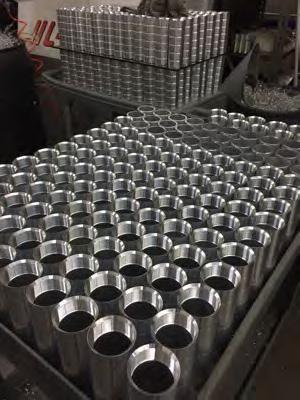
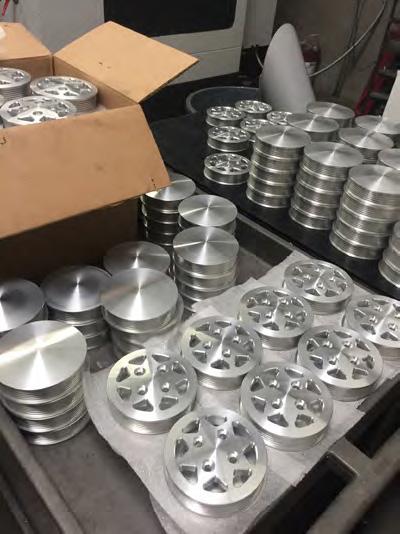



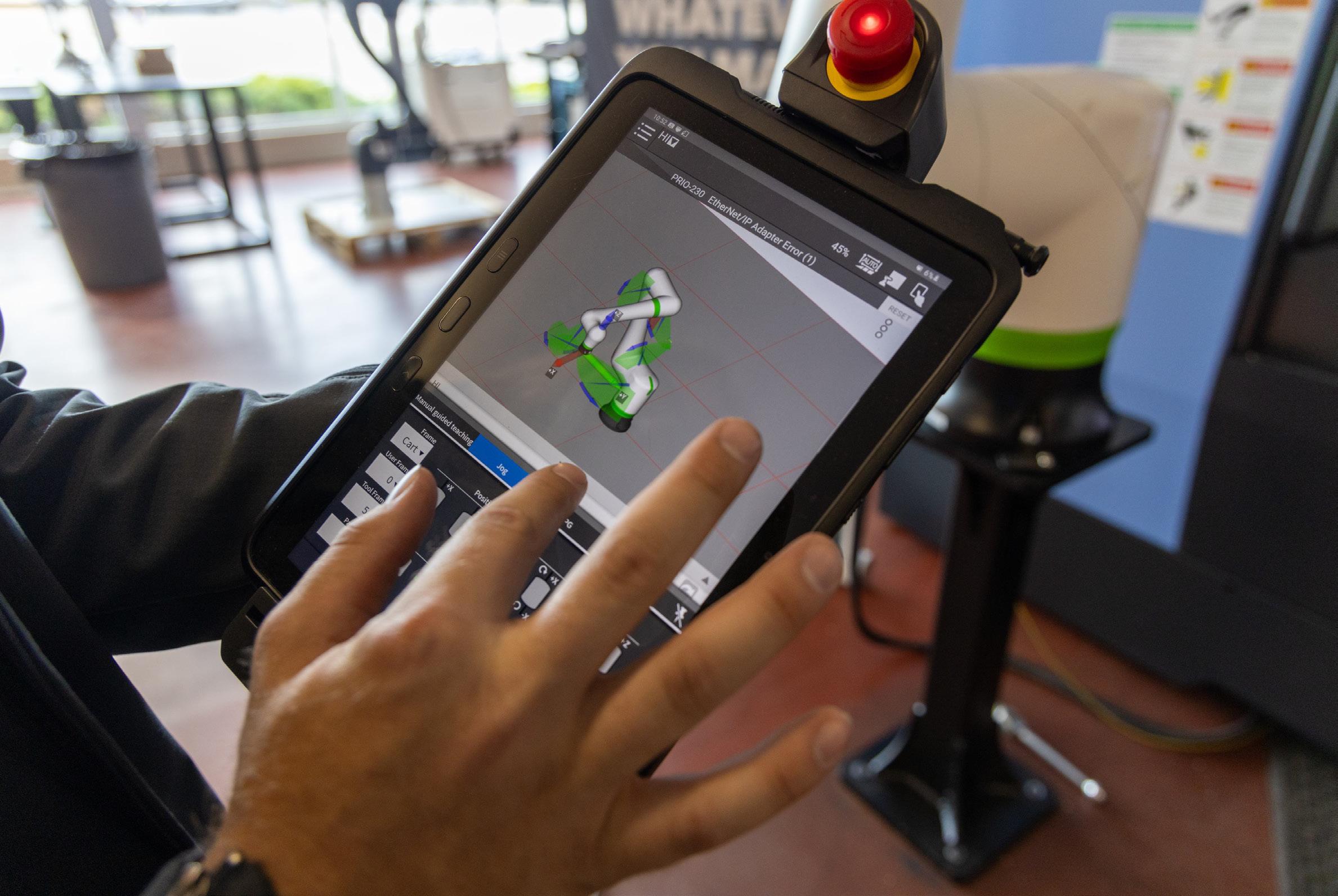

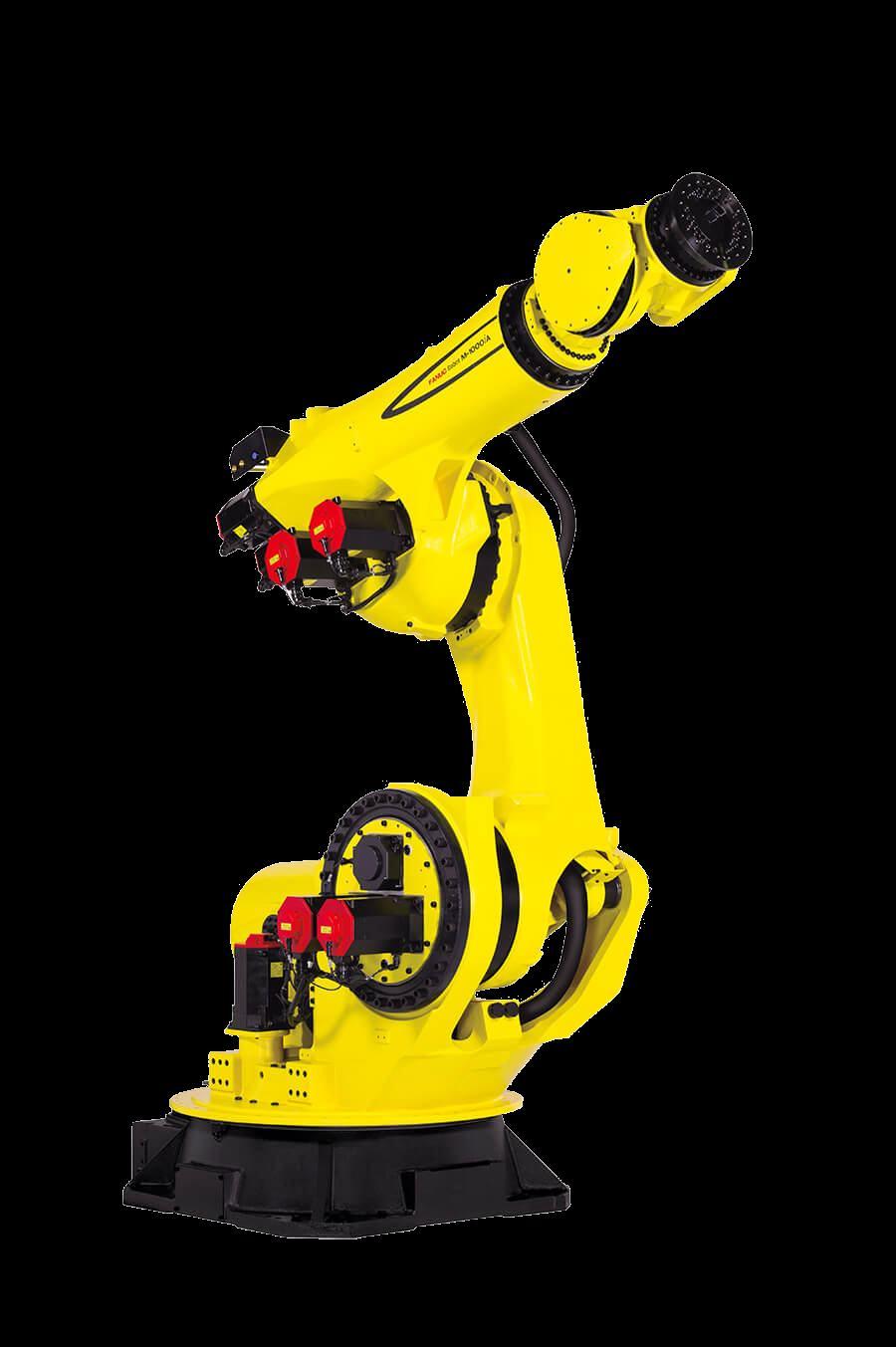


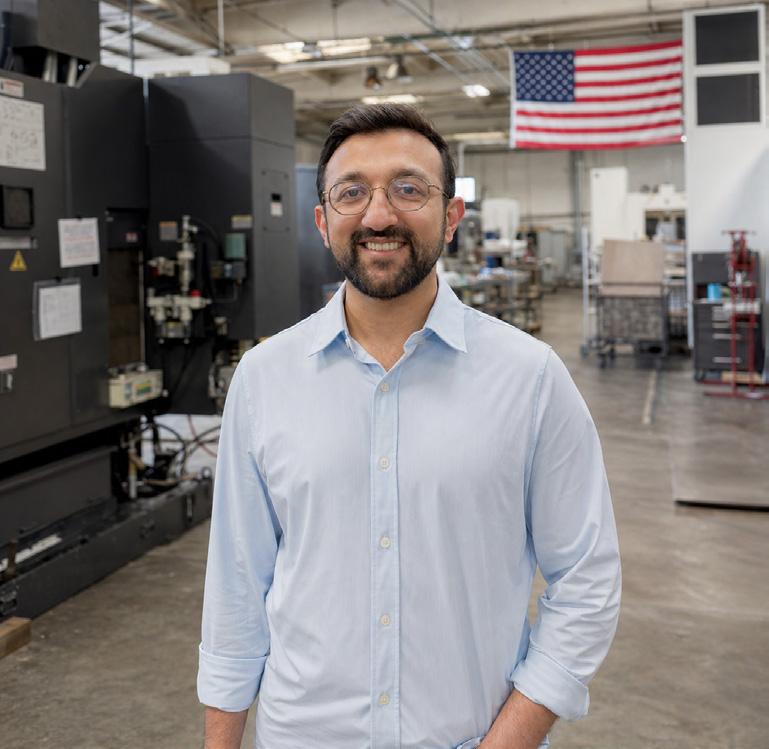
Walk into a modern aerospace manufacturing facility and you’ll witness something remarkable.
Five-axis machining centers carve hard metal components with microscopic precision.
Coordinate measuring machines inspect parts to tolerances thinner than a human hair. Satellites, fighter jets, medical devices, and next-generation defense systems all begin taking shape on the shop floor.
Then you’ll walk into the quality department. You’ll see engineers buried in spreadsheets, inspectors reviewing encyclopedias of documentation, and very little automation in place, besides actual part inspection.
For Mehul Shah, that contradiction represented one of the biggest opportunities in manufacturing.
Today, as Co-Founder and CEO of GroundControl, Shah is building what he calls mission-critical software for highly regulated manufacturing—an ambitious vision that extends far beyond quality documentation and aims directly at the operational heart of America’s most important industries.
GroundControl is backed by YCombinator, 8VC, and works with 200+ manufacturers today, automating manual workflows to ensure critical parts get delivered on time, in highquality.
Most software companies build products for broad markets. intentionally chose the opposite path. The company focuses on manufacturers operating in environments where every decision, every document, and every process matters.
Aerospace, Defense, Medical, Automotive.
Industries where a paperwork error can delay payment for months. Where a compliance mistake can jeopardize customer relationships. Where a quality escape can create consequences measured not only in dollars, but in safety, national security, and human lives.
“Highly regulated manufacturing is a different beast,” Shah explains.
That reality became clear during the decade he spent helping operate his family’s electronics manufacturing businesses.
Those facilities built products destined for some of the most advanced systems in the world. Rockets. Satellites. Aircraft. Defense systems. The customers represented the cutting edge of modern technology.
Yet the operational tools supporting those products often looked decades behind.
“We were building some of the most advanced technology on Earth,” Shah recalls, “but many critical workflows were still being managed through spreadsheets, paper, and disconnected systems.”
The disconnect fascinated him. How could industries responsible for such advanced products still rely on so many manual processes?
The answer ultimately became the foundation for Ground Control.
For years, software companies have attempted to modernize manufacturing.
According to Shah, most failures stem from a misunderstanding of the industry itself.
Manufacturing software vendors often arrive with Silicon Valley assumptions. They focus on flashy features, broad market appeal, and generic workflows.

Manufacturers have very different priorities. They want systems that work, comply with data regulations, and understand the reality of their operations.
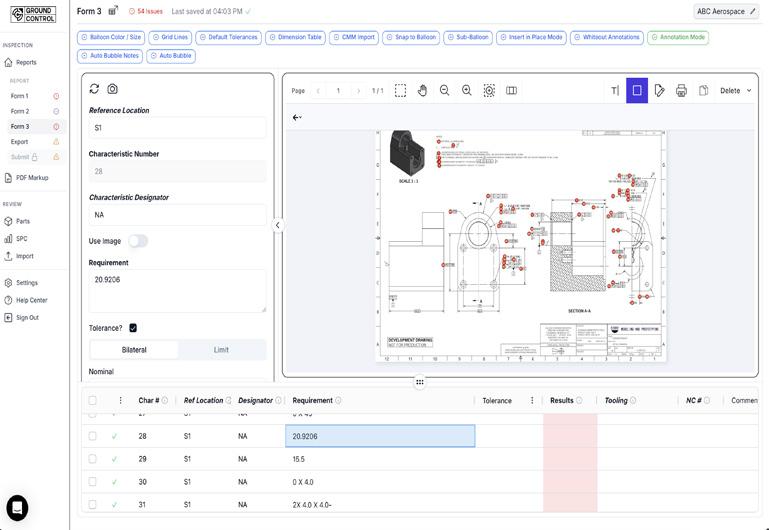
A defense supplier handling controlled information can’t simply upload documents into any AI tool. An aerospace manufacturer can’t risk undocumented changes. A medical supplier can’t ignore traceability requirements.We’re entering a new space age, our defense budget has doubled, and everyone wants to onshore manufacturing. At the same time, we have a record labor shortage and lack of automation. This disconnect could cause serious harm to our goals as a country.
However, recent breakthroughs in AI have unlocked the ability for software to generate actual outcomes, as opposed to enabling workflows. This is the key to increasing our domestic manufacturing capacity while going through a labor shortage.
When Ground Control launched in 2024, the team wasn’t trying to solve every manufacturing problem.
They were searching for one.
Specifically, a workflow that met three criteria.
• It had to be performed manually.
• It had to happen every single day.
• It had to be mission-critical to building or shipping parts.
The answer was First Article Inspection documentation.
Anyone familiar with AS9102 requirements understands the challenge.
Quality teams spend hours reviewing drawings, ballooning characteristics, creating inspection plans, collecting measurement data, and assembling reports.
The process isn’t glamorous.
But it determines whether parts ship, invoices get paid, and the supplier scorecard score.
At Shah’s facilities, teams were producing roughly twenty FAIs every day. Each report could consume six to eight hours of effort. Even worse, a single documentation mistake could trigger rejection, even if the parts were perfect.
The first version of Ground Control focused on automating FAI creation.
Customers immediately responded.
Within months, 50+ manufacturers were completing documentation dramatically faster while reducing the manual effort required from quality teams.
But Shah never viewed FAI automation as the destination. It was merely the first proof point.
The real vision was much larger.
Ground Control’s mission isn’t to become the best ballooning software. It’s to become the software layer that powers regulated manufacturing.
The company describes this approach as building a vertical AI platform for highly regulated industries. Rather than creating one standalone tool, the goal is to identify critical workflows throughout the manufacturing lifecycle and systematically automate them.
The strategy has resonated.
Today, Ground Control supports more than 200 manufacturing facilities across the United States, spanning machining, electronics manufacturing, wire harness production, and other highly regulated sectors.
Few topics generate more discussion in manufacturing today than artificial intelligence.
Some view it as transformational.
Others view it with skepticism.
Shah falls somewhere in the middle.
He believes AI represents the most significant technology shift manufacturing has seen in decades.
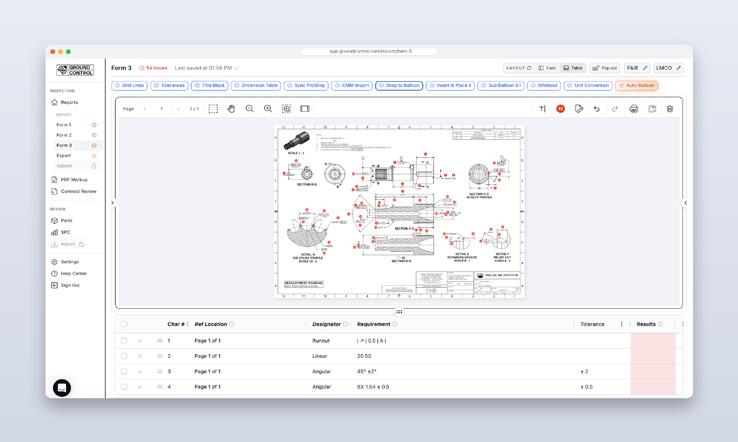
He also believes most companies are using it incorrectly.
“A lot of people start with AI and then look for a problem,” he says.
In regulated manufacturing, accuracy matters more than novelty.
A tool that completes work quickly but introduces risk isn’t valuable, it’s dangerous.
That’s why Ground Control maintains what Shah calls a “humanin-the-loop” philosophy.
AI performs the heavy lifting, but humans make the final decisions. The objective isn’t replacing engineers, inspectors, planners, or quality managers.
It’s enabling them to accomplish significantly more than before.
“We don’t believe AI replaces people,” Shah says. “We believe it helps people do the work of many.”
That philosophy has become increasingly important as manufacturers face growing labor shortages while simultaneously experiencing increasing demand.
One of Ground Control’s most significant investments came through its pursuit of FedRAMP readiness and secure infrastructure. For many software companies, compliance is viewed as a necessary burden.
Ground Control viewed it as a strategic opportunity.
The company recognized early that aerospace and defense manufacturers wanted AI-powered tools but couldn’t compromise security, ITAR requirements, or controlled information handling.
The future would require both innovation and compliance. Not one or the other.
As a result, Ground Control invested heavily in creating a platform capable of supporting regulated environments from the ground up.

That decision reflects a broader shift occurring across manufacturing.
Historically, manufacturers often faced a choice between modern software and strict compliance requirements.
Ground Control is betting that the future belongs to companies that successfully deliver both.
Ground Control’s latest product offers a glimpse into where the company is headed next.
The new product automates contract review—a workflow that
many manufacturers still perform entirely by hand.
Every purchase order arrives with customer requirements, quality clauses, flow-down provisions, drawings, and specifications. All of which must be reviewed for accuracy and consistency relative to the quote.
In many organizations, that knowledge exists inside the heads of a few experienced employees.
Ground Control transforms that tribal knowledge into a repeatable system.
The platform reviews documentation, identifies risks, compares requirements, cites sources, and produces findings reports that help teams make faster decisions.
Ground Control launched at a moment when manufacturing itself is changing.
Defense spending is rising, new OEMs are entering the market and a space renaissance is taking place in our backyard. Advanced manufacturing is returning to North America and entire supply chains are being rebuilt.
Shah believes the next decade will fundamentally reshape how manufacturers operate, because of the software supporting their growth.
The manufacturers that thrive will be the ones capable of eliminating bottlenecks, capturing tribal knowledge, accelerating compliance, and empowering employees with better systems.
That’s the future Ground Control is building toward, one workflow at a time.
In highly-regulated manufacturing, success rarely comes from a single breakthrough. It comes from building systems that allow exceptional people to move faster, make better decisions, and execute with confidence.
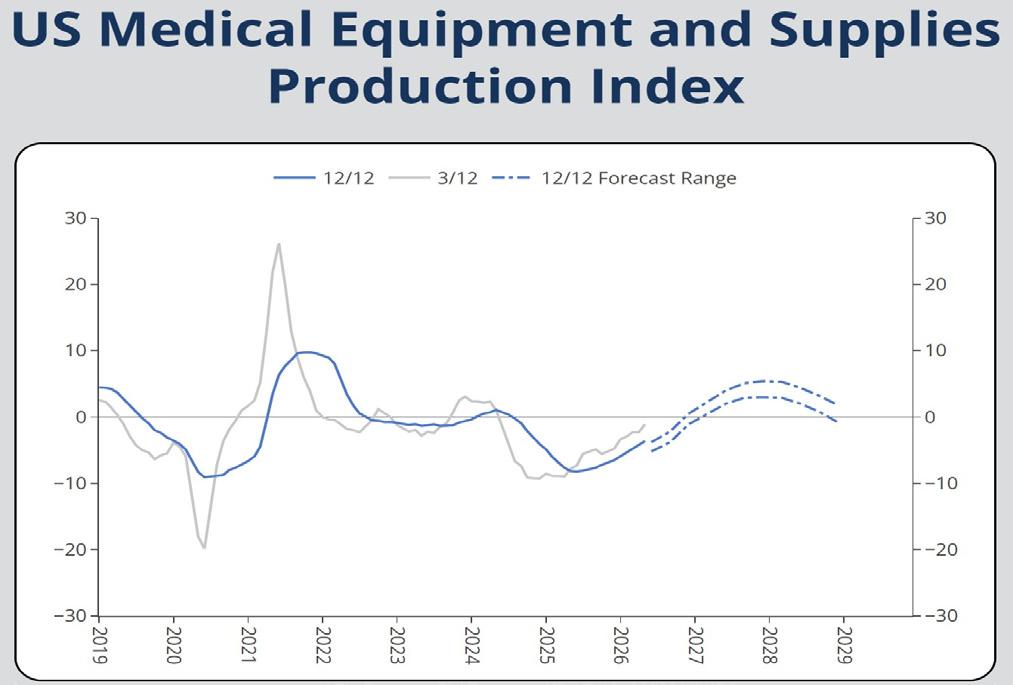

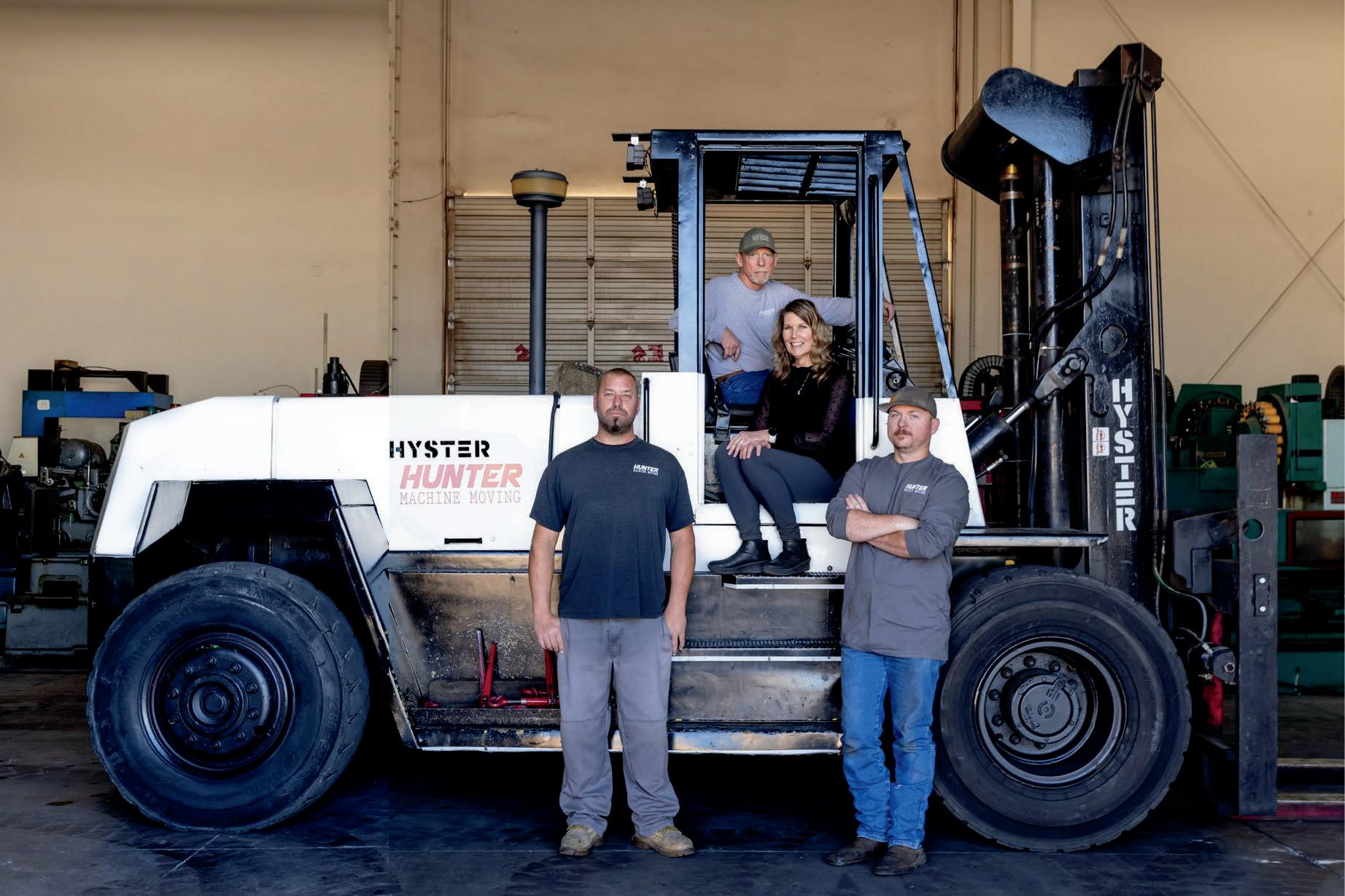



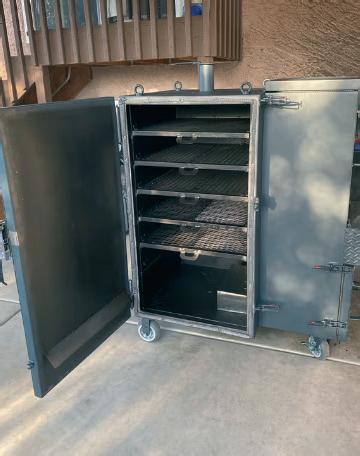
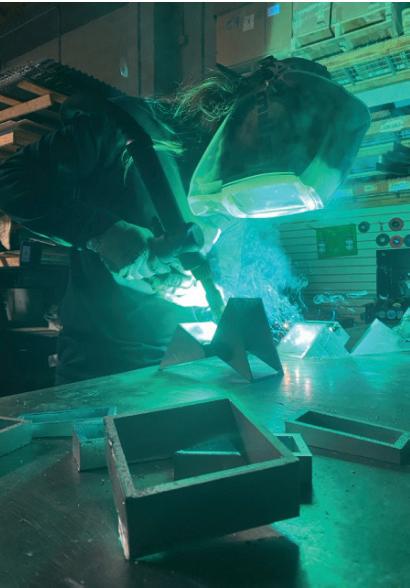
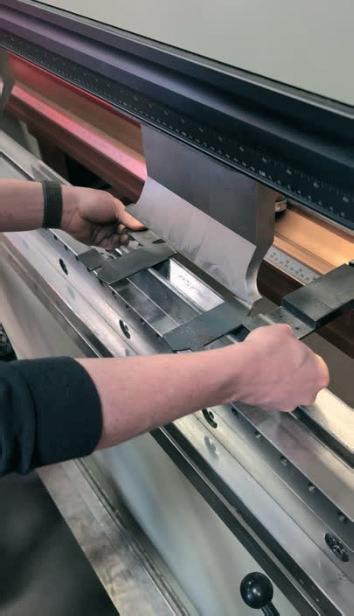


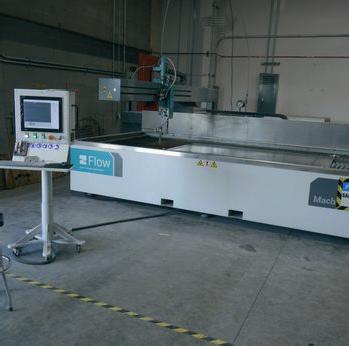

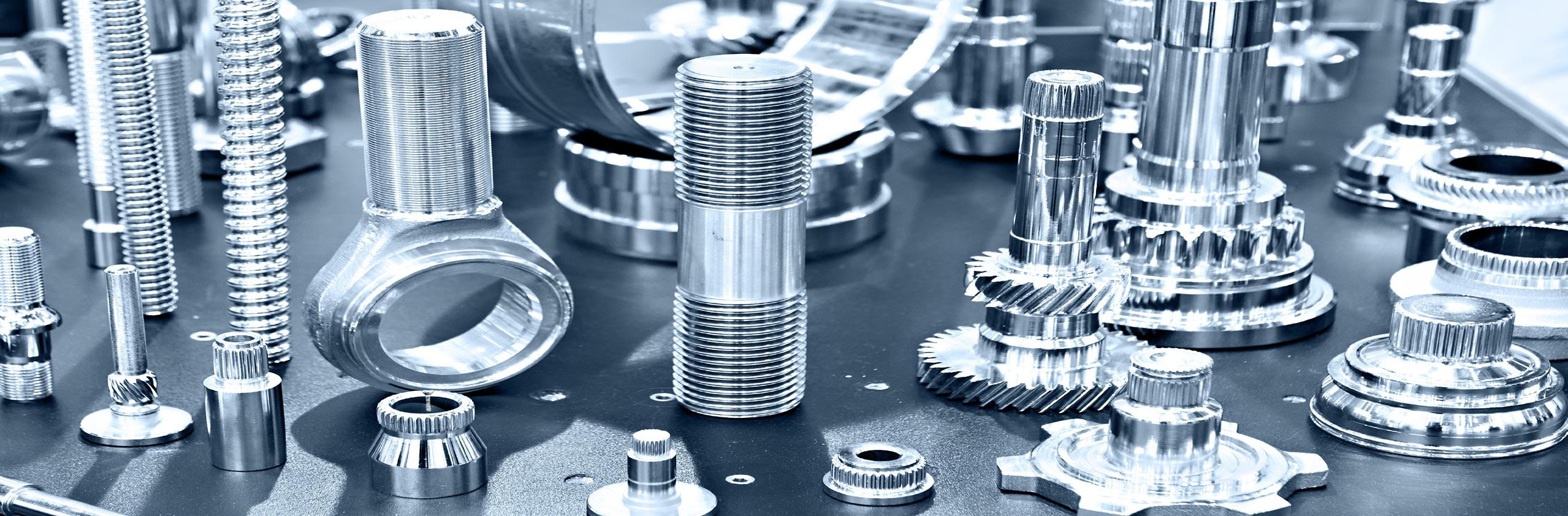
By Peter Hushek
All metal parts are made to meet print requirements. Every metal carries a list of conditions that make it appropriate for the functional integrity of the part the print describes. Material is purchased to meet print requirements which can be as simple as chemical composition and mechanical properties. For many purchasing agents once the material is received and the material cert verified for compliance it is filed away and forgotten. This can be a grave error since material certs often hold clues; what is listed as well as what they fail to state can drastically affect the finished product.
The descriptive terms hold clues to potential problems. The difference between HRS (hot rolled steel) versus CRS (cold rolled steel) or CF (cold finished), can alert purchasers to pending issues. While the chemical composition of HR versus CR or CF bar is the same, the surface condition can be drastically different. Hot rolled products are rolled at temperatures typically above 1600 F. The mills do this because reduction in section size is much easier at elevated temperatures. When the mills perform the same reduction in section at room temperature, it may require annealing cycles in between operations. Sounds simple and logical to always hot work the steel to get it to the desired plate thickness or bar diameter until one considers the downside of this hot work. When steel is exposed to air at elevated temperatures, typically above 1300 F, the carbon in the steel reacts with oxygen in the air to remove carbon at the surface. This is called decarburization or decarb. Decarburized steel will not react like the parent steel in the core of the material, and this mismatch is deceptive on many levels.
It is at this point that visual clues come into the mix. The decarburized layer, when deep enough, looks similar to the bark on a tree. It is rough to the touch, but its true nature or depth is impossible to know if the material cert does not
state it or expensive testing is performed. Not all material certs are the same. The simple, usually free version, rarely states the depth of decarburization on steel alloys. You will not get the full “story” unless you pay for the “extended cert.” Since no one wants to pay for something they do not think they need, it is often ignored. The extended cert may state decarb or partial decarb of 0.012” which means the steel you purchased has a layer of not the metal you think it is, on every surface. This means if you need to make a part with a final diameter of 2”, the surface will lack integrity for the first 0.012”. This means you only have 1.976” of good steel. This also assumes the decarburization is uniform, which is rarely the case.
So, what if someone removes the bark down to the point where it is shiny metal, is that OK? The answer is yes and no since decarburized metal can look shiny but still lack the carbon to support the processing to develop mechanical properties required per print. This is where an old rule of thumb, 2% stock removal per surface, comes into play. Truth be told, I am dating myself since few people today have heard of this rule. There is another rule, and that is the mill bark on hot rolled bar, and plate is typically twice that of cold rolled material.
Making good parts from steel requires having uniform steel. Uniform steel requires an understanding of how the product was made before the distributor purchased it for resale. So, either invest in the extended cert to be sure of the composition or remove the bark. Invest on the front end to avoid problems on the back end. Back-end problems inevitably always cost more time and money. ◊
Peter Hushek Chief Metallurgical Engineer Pete.Hushek@proton.me













continued demand as military space programs accelerate. Space hardware is no longer an occasional production run—it is becoming an increasingly steady segment of the aerospace market.
RTX’s Raytheon business has received a new U.S. Navy contract to continue production of the AIM-9X Block II Sidewinder missile, one of the military’s most widely deployed short-range air-to-air weapons. The award supports ongoing procurement for the U.S. armed forces and allied nations while helping maintain production capacity for one of America’s highest-demand missile programs.
Missile production has become one of the fastest-growing segments of the defense industrial base as global inventories are replenished and allied nations expand their stockpiles. That growth reaches far beyond final assembly. Every missile requires precision-machined housings, propulsion components, electronics packaging, guidance hardware, connectors, fasteners, composite structures, heattreated parts, and extensive nondestructive inspection.
For manufacturers serving the defense industry, sustained missile production creates predictable long-term work. Unlike development programs that fluctuate with testing schedules, established weapons systems often generate years of repeat manufacturing supported by multiyear procurement contracts.
As demand for munitions continues to increase worldwide, suppliers capable of maintaining consistent quality, traceability, and on-time delivery remain in a favorable position. Investments in automation, inspection technology, and process control are becoming competitive advantages throughout the missile supply chain.

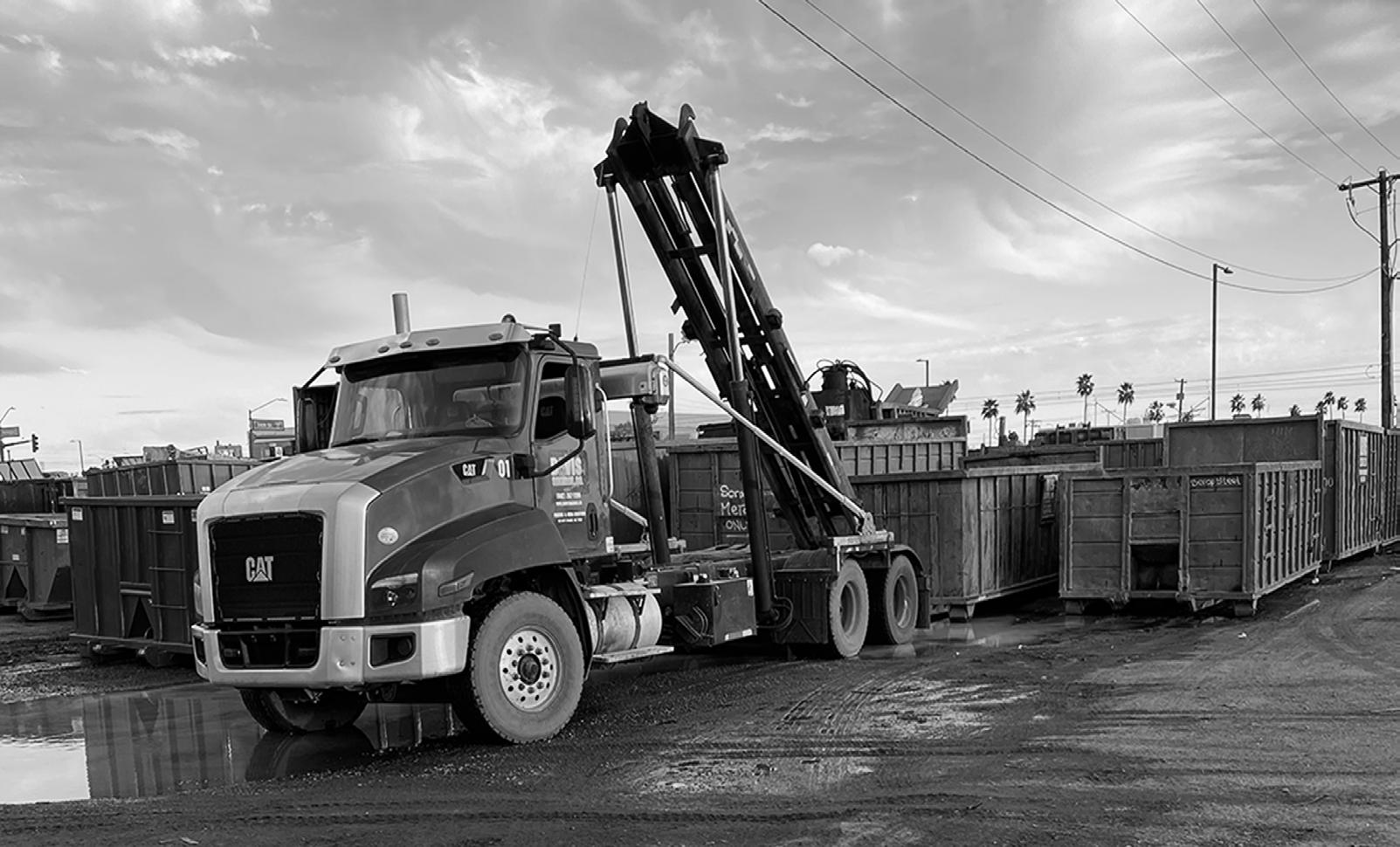




Do you ever feel like you’re caught in a high-noon showdown when it comes to hiring in manufacturing? It’s a tough trail out there, and sometimes, a poor hire can feel like a rogue desperado in your otherwise orderly town.
Think of it like the classic Western, The Good, The Bad, and The Ugly. In our world, the “Good” are those star hires who ride into town and become valued members of your crew –reliable, skilled, and a true force for progress. Then there’s the “Bad”: the smooth talkers who ace the interview, only to reveal themselves as troublesome drifters, creating headaches and slowing down operations. And the “Ugly”? That’s the fallout from bad hiring decisions – the plummeting morale among your loyal workforce, the production delays for all to see, and the financial burden that comes from a revolving door of talent.
Many businesses, desperate to fill open jobs, find themselves tolerating these “bad” hires. But clinging to poor performers isn’t just a band-aid solution. It demotivates your top talent, breeds resentment on the shop floor, and can truly crush your business from the inside out. You need a systematic approach, a proactive talent posse, always on the lookout for the right hands for the job.
There’s no perfect key that guarantees perfect hiring every time. People aren’t tangible products you can quality-control, and their emotions and behaviors can be as unpredictable as a desert wind. So, don’t beat yourself up for not seeing through every candidate.
Here’s how to fortify your hiring process:
There’s no perfect key that guarantees perfect hiring every time. People aren’t tangible products you can quality-control, and their emotions and behaviors can be as unpredictable as a desert wind. So, don’t beat yourself up for not seeing through every candidate.
• Forge a Robust Recruiting Structure: Implement clear screening protocols, thorough reference checks, and consistent verification processes. This acts like your vigilant sheriff, ensuring only vetted individuals make it past and through the hiring process.
• Sharpen Your Job Descriptions: Review and refine your job descriptions. Are you asking for a stubborn donkey when a reliable workhorse is what you truly need? Overspecifying skills can drive- up costs and scare off capable individuals who could be trained. Compare your needs to market realities – sometimes, less is more in attracting the right talent without breaking the bank.
• Establish Clear Boundaries and Processes: Just as a wellrun ranch has clear routines and boundaries, your facility
eryone on the straight and narrow, minimizing surprises and
• Study The Market: Understanding the landscape for wages, and benefits can ensure you are able to close when the right
Even with your best effort, someone might still surprise you with their unexpected behavior – that’s just the nature of dealing with people. But by having robust processes in place, you’ve done your due diligence, significantly minimizing the chances
Designed Specifically for the Metalworking Industry


www.mistcollectors.com 1-800-645-4174
Marti is the Founder of The Higher Talent Group & The Hire Network With over 30 years of agency recruiting experience,larly within aerospace and aviation. As a valued new or current subscriber to A2Z Manufacturing, I’m offering an initial

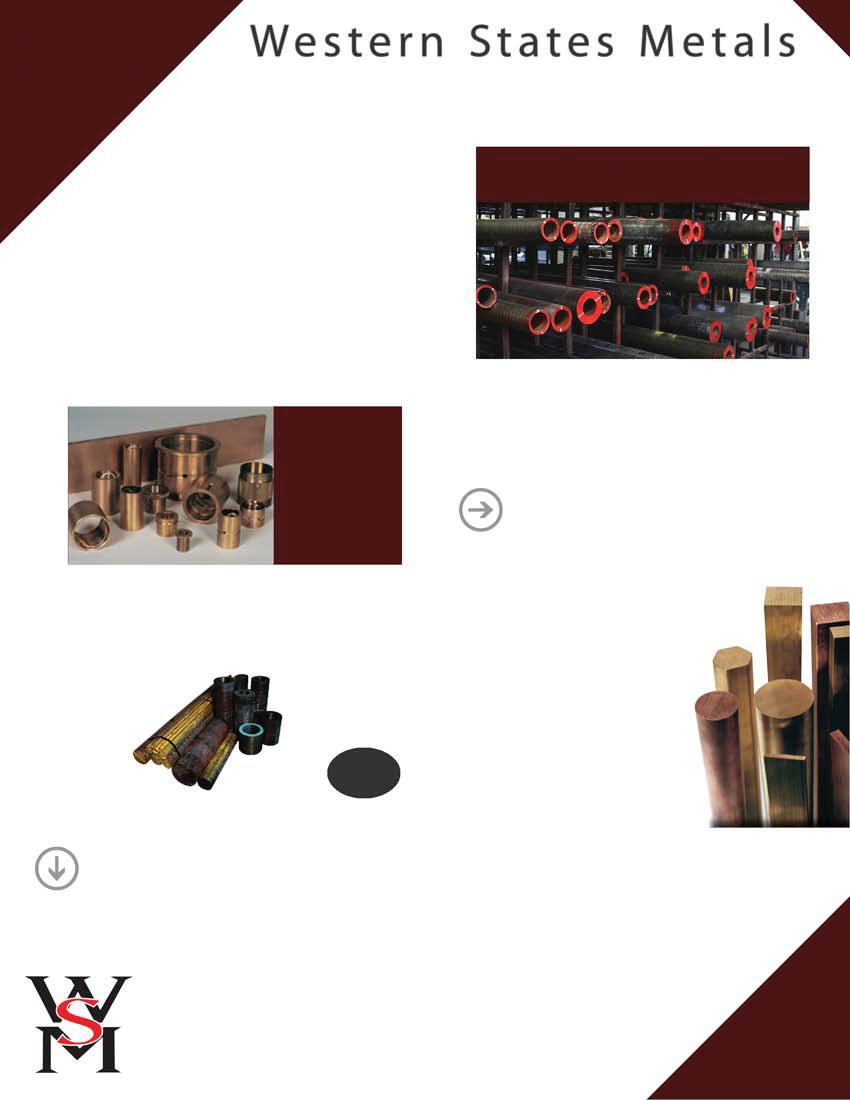

Your floor won’t wait. Neither should your metrology system.
Tighter tolerances. Shrinking timelines. More parts, fewer operators.
OGP® SmartScope® M-Series does the work of multiple systems – combining optics, tactile, and non-contact sensors in one platform. Powered by ZONE3® Metrology Software, setup is fast, programming is easy, and measurements are definitive.
Less downtime. Lower costs. Zero guesswork.
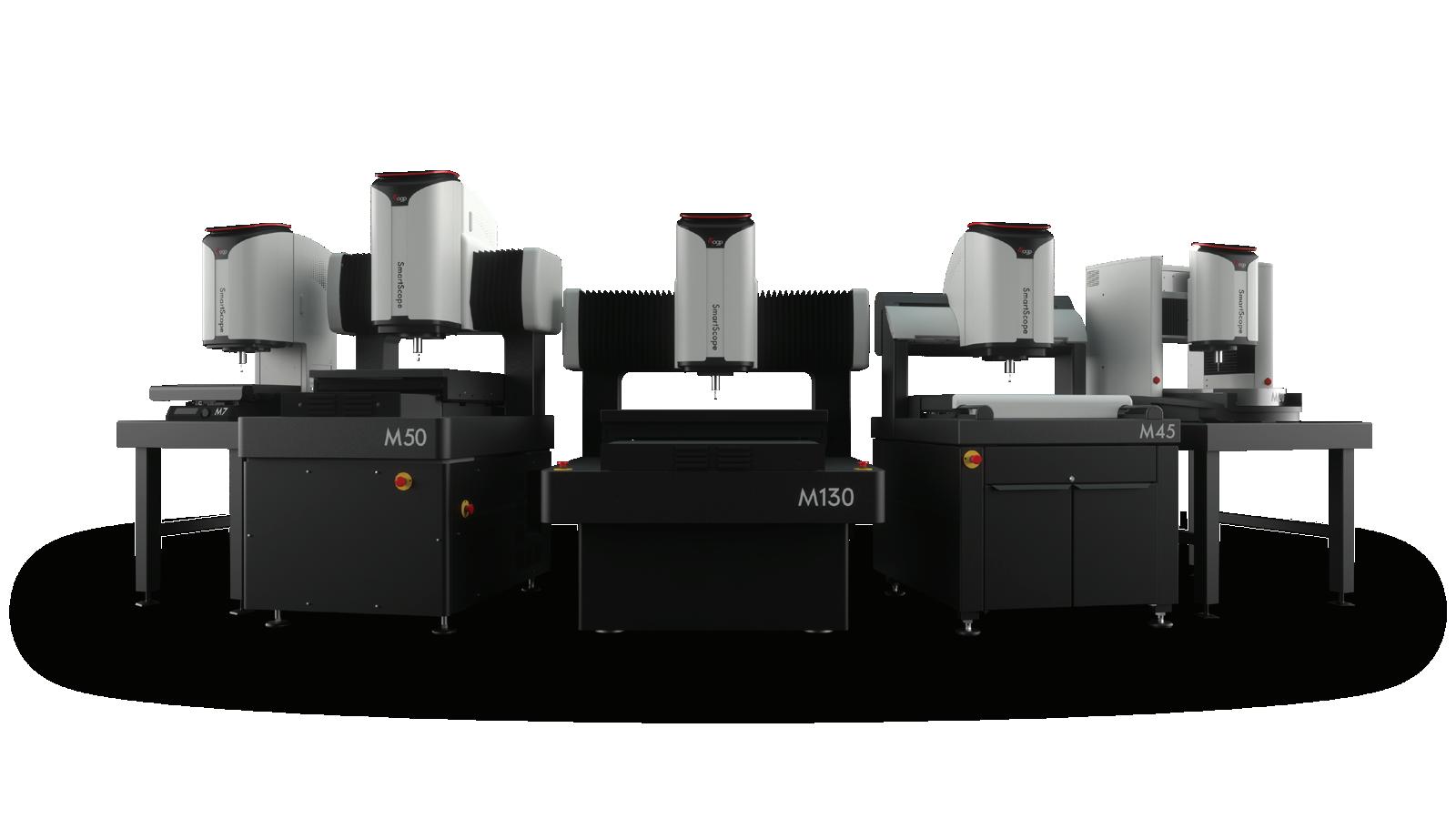
Trusted precision at the speed modern manufacturing demands.
OGP SmartScope M-Series – Measure Fast. Manufacture Faster.
Your Authorized OGP Representative in Arizona innovativemeasuring.com (602) 527-5488

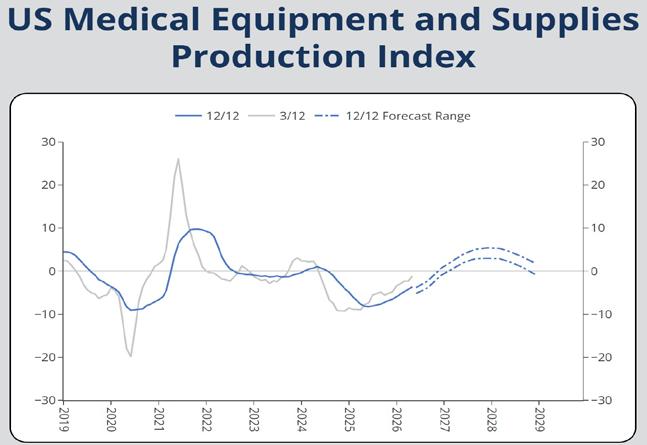
Manufacturing isn’t slamming on the brakes just yet—but it may be time to ease off the throttle.
The latest outlook from ITR Economics paints a picture of an industry that still has momentum heading into the second half of 2026. Many manufacturing markets remain in growth mode, with aerospace, defense, electronics, and machinery continuing to provide plenty of reasons for optimism. The catch? Growth is expected to cool as we move through 2027, making today a good time to prepare rather than assume the ride will stay smooth.
Aerospace continues to be one of the brightest spots. ITR modestly lowered its 2026 outlook for civilian aircraft production but increased expectations for both 2027 and 2028 thanks to Boeing’s massive backlog. For suppliers serving the aerospace market, that means long-term demand remains firmly intact despite a few short-term adjustments.
Defense manufacturing also continues to fire on all cylinders. Defense capital goods orders are among the strongest sectors in the report, fueled by increased government spending, modernization programs, and ongoing geopolitical tensions. Companies positioned in the defense supply chain should continue to see healthy opportunities well into 2028.
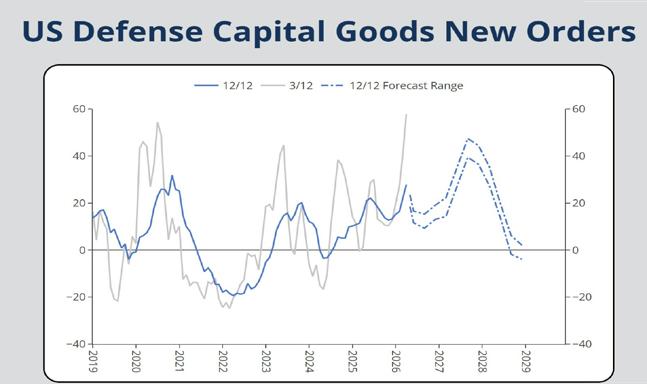
Technology investment is creating another wave of demand. Computer and electronics orders remain on an upward trajectory as AI infrastructure, data centers, and digital transformation projects continue driving capital spending. Machinery manufacturers are also expected to benefit, with new orders supported in part by growing demand from data center construction.
Not every market is accelerating. Construction machinery has enjoyed a strong run, but much of that strength has been driven by pricing and dealer restocking rather than
sustained demand. ITR expects activity in that segment to soften next year. Heavy-duty truck production is still recovering from a difficult stretch, although improving freight conditions suggest better days are ahead beginning later this year.
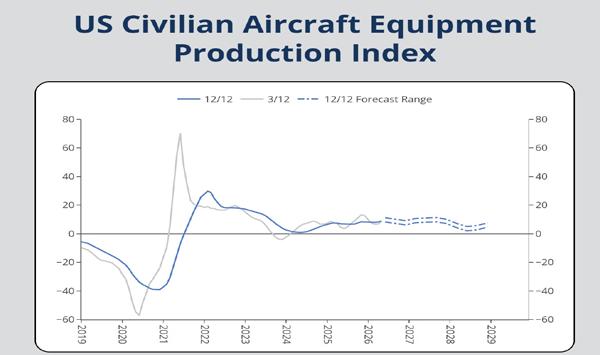
Overall, roughly half of the manufacturing sectors tracked by ITR are currently in an accelerating growth phase, while several others continue their recovery. The broader message is encouraging: manufacturing should remain on solid footing through the remainder of 2026. Looking ahead, however, companies should anticipate slower growth and increased margin pressure during 2027. For shop owners, that means now is the time to sharpen operations, strengthen customer relationships, and position the business before the cycle becomes more competitive.
Source: ITR Economics, “The Manufacturing US Economy At-a-Glance,” published June 11, 2026.

Regulatory compliance remains one of the most significant challenges facing employers today. Human Resources professionals are responsible for interpreting, implementing, and monitoring a growing number of laws and regulations governing wages, workplace safety, anti-discrimination practices, and data privacy. For organizations operating across multiple states, compliance becomes even more complex as legal requirements vary by jurisdiction.
Maintaining compliance requires a proactive approach. Employment laws evolve frequently, and new regulations can emerge rapidly in response to economic, political, and social changes. Organizations that rely on outdated policies or inconsistent employment practices risk costly penalties, litigation, reputational damage, and a loss of employee trust.Compensation management is one area where compliance risks are often overlooked. Employers that lack a structured pay framework may inadvertently create inconsistent wage practices, resulting in significant disparities among employees performing similar work. Such inconsistencies can increase the risk of violations under the Fair Labor Standards Act (FLSA) and other wage-related regulations.
A recent client engagement highlighted the importance

of establishing a formal compensation framework. The project began with a comprehensive review of employee wage data and an analysis of compensation across comparable job titles. Market research was then conducted to identify competitive pay rates within the organization’s geographic area and industry. Using this information, a compensation structure was developed for all positions, including minimum, midpoint, and maximum pay ranges. A compa-ratio analysis was performed to evaluate each employee’s placement within the new framework. Employees whose wages fell below the established minimum received market-based adjustments to bring their pay within the appropriate range.
For employees whose compensation exceeded the maximum range, the organization explored alternative solutions. Some employees were considered for higher-level positions that aligned with their current compensation and skills. Individual development plans were created for other employees to prepare them for advancement opportunities. Finally, some position titles were expanded to include career progression tiers to better differentiate skill levels and responsibilities. For example, the position of Assembler was expanded into three levels: Assembler I, Assembler II, and Assembler III. Placement within each level was based on factors such as experience, product knowledge, and job responsibilities. Employees at higher levels demonstrated increased expertise and, in the case of Assembler III, assumed additional responsibilities such as mentoring and training new employees. Implementing a structured compensation framework strengthened compliance with wage and hour regulations while reducing organizational risk. Equally important, employees viewed the process as transparent and equitable, reinforcing trust in the organization’s compensation practices.
In today’s evolving regulatory environment, employers that treat compliance as an ongoing strategic priority rather than a one-time initiative are better positioned to reduce risk, maintain operational stability, and foster employee confidence. For HR professionals, effective compliance management extends beyond avoiding penalties—it is about creating a fair, consistent, and legally sound workplace.
Charles Horlacher
Charles Horlacher is the Founder of Compass Consulting LLC. For more than 20 years Charles has supported HR efforts. Having started as an HR generalist and growing to the executive level, Charles has experience on a wide range of topics. SUBMIT A
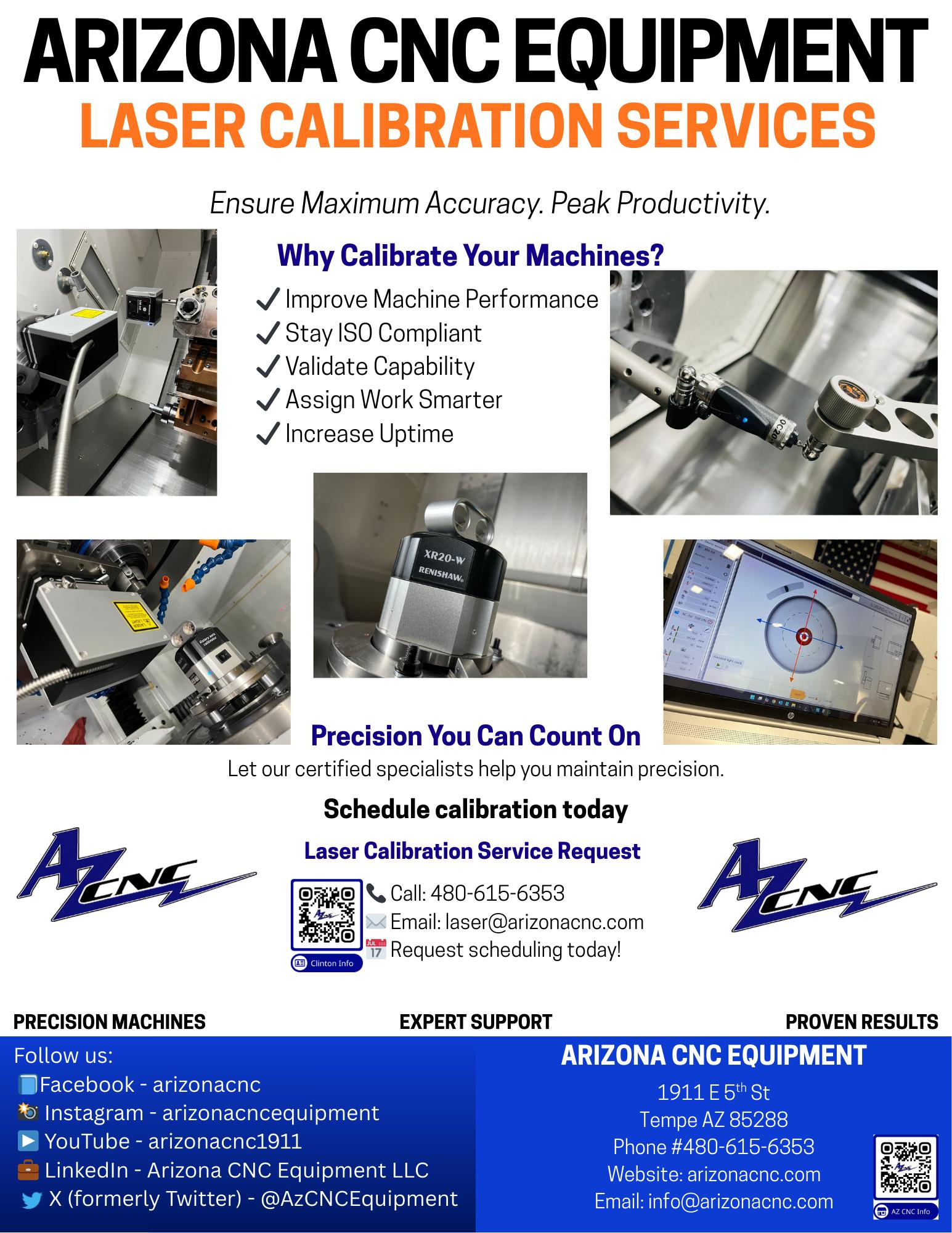


Virtual Cert™ ISO-9001 certification with American Global Standards can lower operational costs, improve your bottom line, and offer your business a competitive advantage.
American Global Standards (AGS) is an American company and ISO regi st ra r with nearly 30 years of experience a ssistin g manufacturing and service industries in their quest to remain competitive in the global marketplace, for a competitive annual fee of $1875
• No on-site audit required
• Save top management valuable time
• Save your company thousands annually
• Market your company as ISO-9001 certified
• Eliminate “non-value added” NCR’s


Raytheon is adding another headline project to its advanced manufacturing portfolio after being selected to develop the primary telescope for the Lazuli Space Observatory, a next-generation ground-based astronomy platform backed by Schmidt Sciences. While the project is focused on scientific discovery rather than defense, it highlights an increasingly important trend: the same precision optics, adaptive imaging systems, and manufacturing capabilities used for national security are finding growing demand in commercial and research applications.
The telescope leverages Raytheon’s decades of experience building space-qualified optical systems, requiring extremely tight machining tolerances, exotic materials, precision coatings, thermal management, and sophisticated integration processes. Those capabilities rely on a deep domestic supplier network spanning optics manufacturers, precision machining, electronics, composites, specialty coatings, and thermal processing companies.
For manufacturing suppliers, projects like this rarely stay confined to astronomy. The manufacturing technologies developed for large optical assemblies frequently migrate into missile defense, intelligence, surveillance, and space programs. Shops capable of producing precision components, vacuum-compatible hardware, complex weldments, and ultra-clean assemblies continue to see opportunities as government and commercial customers invest heavily in advanced sensing systems.
The award also reflects the broader diversification occurring across the aerospace sector. Prime contractors are balancing defense work with commercial space and scientific infrastructure, creating a steadier pipeline of manufacturing demand while preserving critical industrial capabilities inside the United States.
For machine shops and special-process providers, the takeaway is straightforward: investments in high-precision manufacturing continue to open doors well beyond traditional aerospace contracts.Raytheon Wins Major Space Telescope Program, Expanding High-End U.S. Manufacturing
Raytheon is adding another headline project to its advanced manufacturing portfolio after being selected to develop the primary telescope for the Lazuli Space Observatory, a next-generation ground-based astronomy platform backed by Schmidt Sciences. While the project is focused on scientific discovery
rather than defense, it highlights an increasingly important trend: the same precision optics, adaptive imaging systems, and manufacturing capabilities used for national security are finding growing demand in commercial and research applications.
The telescope leverages Raytheon’s decades of experience building space-qualified optical systems, requiring extremely tight machining tolerances, exotic materials, precision coatings, thermal management, and sophisticated integration processes. Those capabilities rely on a deep domestic supplier network spanning optics manufacturers, precision machining, electronics, composites, specialty coatings, and thermal processing companies.
For manufacturing suppliers, projects like this rarely stay confined to astronomy. The manufacturing technologies developed for large optical assemblies frequently migrate into missile defense, intelligence, surveillance, and space programs. Shops capable of producing precision components, vacuum-compatible hardware, complex weldments, and ultra-clean assemblies continue to see opportunities as government and commercial customers invest heavily in advanced sensing systems.


The award also reflects the broader diversification occurring across the aerospace sector. Prime contractors are balancing defense work with commercial space and scientific infrastructure, creating a steadier pipeline of manufacturing demand while preserving critical industrial capabilities inside the United States.
For machine shops and special-process providers, the takeaway is straightforward: investments in highprecision manufacturing continue to open doors well beyond traditional aerospace contracts.
Few milestones carry more weight in aerospace than accumulated flight hours, and Pratt & Whitney reached a significant one in June when its F119 engine surpassed one million flight hours. The engine powers the U.S. Air Force’s F-22 Raptor, one of the world’s most advanced fighter aircraft, and has quietly built a reputation for reliability over two decades of demanding operations.
For suppliers, the milestone isn’t simply about engine longevity. Every additional flight hour
translates into sustained demand for overhaul work, replacement hardware, inspection services, coatings, heat treatment, additive manufacturing, and precision machining. Mature military engine programs often provide decades of stable manufacturing work long after production rates begin to level off.
The F119 program also serves as a proving ground for technologies that eventually migrate into future propulsion systems. Lessons learned in materials, thermal management, digital engine controls, and manufacturing processes influence newer military and commercial engines throughout the RTX portfolio.
As defense budgets continue emphasizing readiness over simply purchasing new aircraft, maintaining existing fleets has become a major industrial opportunity. Depot maintenance, repair, and modernization programs increasingly require domestic suppliers capable of delivering consistent quality under stringent aerospace standards. For AS9100-certified shops and specialprocess providers, sustainment work remains one of the most dependable segments of the aerospace supply chain, offering long production runs and recurring demand that can outlast new-aircraft production cycles.

June brought another manufacturing boost for RTX as Raytheon continued ramping production of the SPY-6 radar family under a $515 million U.S. Navy contract. The radar has become one of the Navy’s highest-priority modernization programs, providing dramatically improved detection capability against ballistic missiles, hypersonic threats, cruise missiles, and unmanned systems.
Unlike previous radar generations, SPY-6 is built around modular Gallium Nitride (GaN) technology, allowing systems to be scaled across multiple ship classes while simplifying production and sustainment. That modular approach creates recurring manufacturing demand across a wide network of electronics suppliers, precision machinists, thermal management specialists, and systems integrators.
For manufacturers, GaN-based radar production represents a shift toward increasingly sophisticated semiconductor-enabled defense systems. Precision cooling components, RF housings, structural machining, specialized coatings, cable
assemblies, and environmental testing all play critical roles before a radar reaches a shipyard.
As the Navy modernizes destroyers, aircraft carriers, amphibious ships, and future combatants, suppliers supporting the SPY-6 ecosystem can expect sustained production activity for years. The program also reinforces a broader trend across defense procurement: increasing investment in domestic manufacturing capacity to shorten supply chains and improve industrial resilience.
For American job shops already serving naval or defense customers, programs like SPY-6 continue generating long-term opportunities extending well beyond initial hardware production
One of June’s notable space industry developments came with MDA Space’s agreement to acquire Blue Canyon Technologies from RTX in a transaction valued at approximately $620 million. Blue Canyon has become one of the industry’s
leading producers of small satellite buses, supplying commercial, civil, and national security customers.
The acquisition reflects continued consolidation across the rapidly expanding space manufacturing sector, where production capacity has become just as important as innovation. Satellite demand continues climbing as governments and commercial operators deploy larger constellations supporting communications, Earth observation, defense, navigation, and scientific missions.
For manufacturing suppliers, consolidation often accelerates production rather than slowing it. Larger organizations typically bring increased purchasing power, expanded customer access, and greater investment in manufacturing automation. That translates into additional opportunities for precision machining, sheet metal fabrication, electronics assembly, additive manufacturing, composite structures, and environmental testing.
Small satellites have fundamentally changed how spacecraft are built. Instead of producing a handful of highly customized vehicles each year, manufacturers are increasingly adopting production-line techniques more closely resembling advanced industrial manufacturing.
That shift favors suppliers capable of repeatable quality, shorter lead times, and scalable production. As satellite production continues industrializing, companies throughout the aerospace supply chain—from machine shops to heat treaters—stand to benefit from higher production volumes and increasingly standardized manufacturing processes.
GE Aerospace entered June with one message for investors and suppliers alike: demand remains exceptionally strong. During its second-quarter business update, the company reported a backlog exceeding $210 billion, including more than $170 billion in commercial services, while highlighting continued increases in engine production, spare parts, and maintenance activity.
The numbers underscore just how busy aerospace manufacturing has become. Airlines continue rebuilding fleets while military programs remain well funded, creating sustained demand for engines, replacement hardware, and aftermarket support. GE also reported significant gains in internal engine shop visits and spare-parts production, both areas that rely heavily on domestic machining, heat treating, coatings, EDM, grinding, and inspection suppliers.
Rather than simply increasing output, GE emphasized its FLIGHT DECK lean manufacturing system, which focuses on improving throughput, reducing bottlenecks, and strengthening supply-chain performance. Those improvements are increasingly important as manufacturers work to shorten lead times while maintaining aerospace quality standards.
For precision manufacturers, engine programs remain among the healthiest sectors of the industrial economy. Every additional engine delivered creates decades of recurring maintenance work involving thousands of precision components. That long lifecycle provides stability that many other manufacturing sectors struggle to match.
As OEM production continues recovering toward prepandemic levels, suppliers capable of consistently meeting delivery commitments will remain in high demand.








































































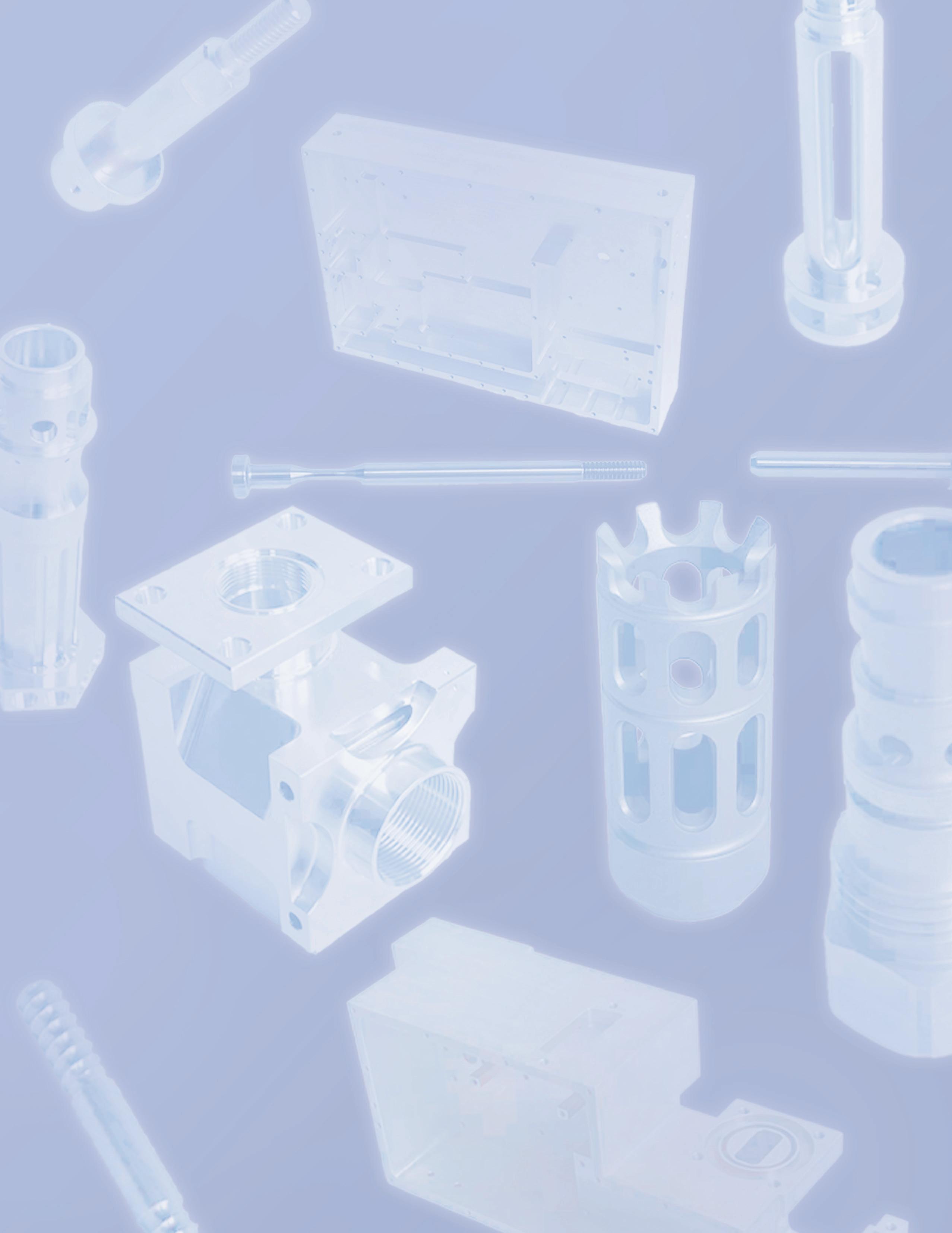

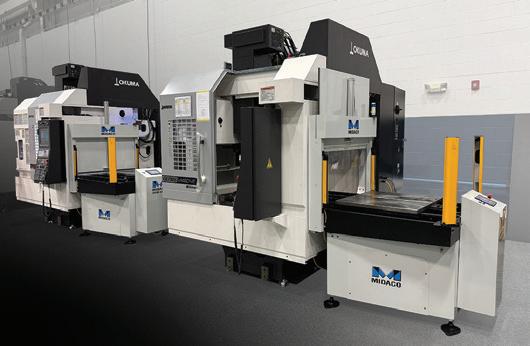



ISO 9001:2008/AS9100C

Mike Sniegowski
Precision Grinding for the Aerospace Industry since 1998 2821 W. Willetta Phoenix, AZ 85009
Phone: (602) 353-8088 Mike@BlueStreakGrinding.com www.bluestreakgrinding.com
sales@abrams.com






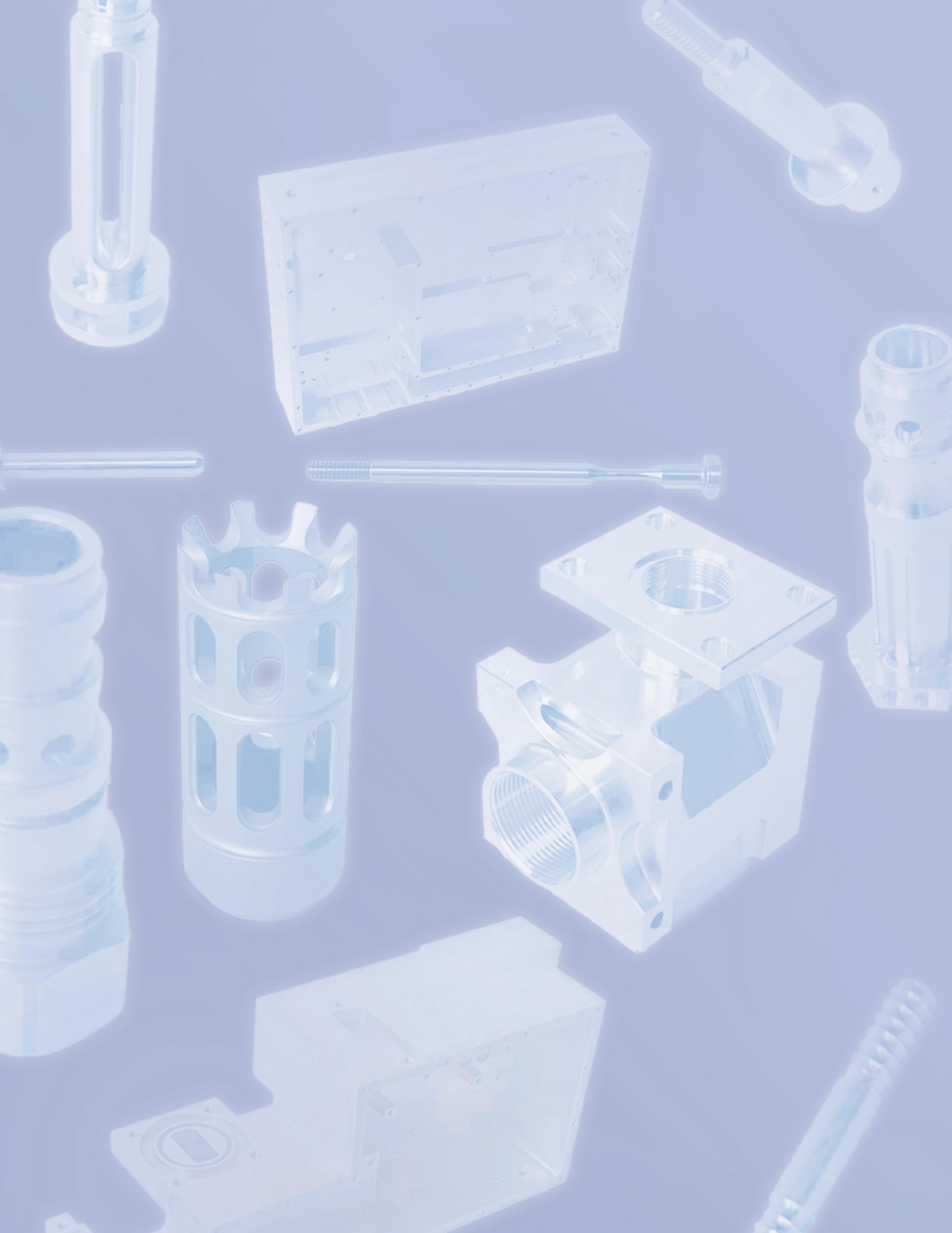






















DN 5-axis is an instant level up. But when you add turning functionality? It’s game over for your competition.
On that note, the DVF 8000T is in stock and ready for a permanent and productive home on your shop floor. Visit dn-solutions.com to see the specs, then get in touch with your local dealer before it’s too late.
5-axis is an instant level up. But when you add turning functionality? game over for your competition.
the