Planning a Bali Extended Stay? Here’s What You Need to Consider
Planning a longer trip to Bali can be an exciting way to experience the island beyond the typical holiday. Instead of rushing between beaches, temples, restaurants, and attractions, an extended stay allows you to settle into a slower rhythm and discover how Bali feels as a place to live. However, a successful Bali Extended Stay requires more preparation than a short vacation. From choosing the right location and accommodation to understanding your budget, transportation, internet connection, and daily lifestyle, every detail can influence your experience. Whether you are a remote worker, digital nomad, couple, retiree, family, or long-term traveler, careful planning can make your stay more comfortable and rewarding.
Why Choose a Bali Extended Stay? A Bali Extended Stay offers something that a conventional holiday often cannot: time. With several weeks or months available, travelers can experience the island without constantly watching the clock.
Longer stays also provide an opportunity to create a daily routine. You might begin the morning with coffee at a local café, work from a private villa during the day, enjoy an afternoon swim, and explore a nearby restaurant in the evening. Over time, Bali becomes less like a tourist destination and more like a temporary home. Another advantage is the potential for better value. Daily accommodation rates can become expensive when multiplied across several weeks. Monthly or extended rental arrangements may provide more practical pricing, particularly when they include facilities such as kitchens, private pools, housekeeping, Wi-Fi, and living areas.
Choose the Right Area for Your Lifestyle Location is one of the most important decisions when planning a Bali Extended Stay. Bali has remarkably different areas, and each offers a distinct atmosphere. Seminyak is popular with travelers who enjoy restaurants, boutiques, beach clubs, and convenient access to entertainment. Canggu attracts digital nomads and younger long-term visitors with its cafés, coworking spaces, fitness studios, and social atmosphere. Ubud provides a completely different experience. Surrounded by rice fields, forests, art communities, wellness centers, and traditional villages, it can be ideal for travelers seeking a quieter environment. For a more relaxed coastal lifestyle, areas such as Sanur may be attractive. Sanur generally offers a calmer atmosphere while maintaining access to restaurants, shops, beaches, and essential services. Before choosing a location, consider what you actually need every day. A beautiful villa may look perfect online, but being far from supermarkets, workplaces, medical facilities, or reliable transportation can become inconvenient during a longer stay.
Set a Realistic Extended-Stay Budget Budgeting for a Bali Extended Stay should go beyond the rental price. Accommodation may represent the largest expense, but it is not the only cost to consider. Create a monthly budget that includes accommodation, electricity, water, internet, transportation, food, entertainment, cleaning services, laundry, activities, and unexpected expenses. The cost of accommodation can vary considerably depending on location, property quality, season, facilities, and rental duration. A private villa with a swimming pool will naturally have different pricing from a modest apartment or guesthouse. It is also useful to ask whether utilities are included. Some long-term rental agreements include electricity, water, Wi-Fi, and cleaning, while others charge these separately. Understanding the complete cost before signing an agreement helps prevent unpleasant surprises.
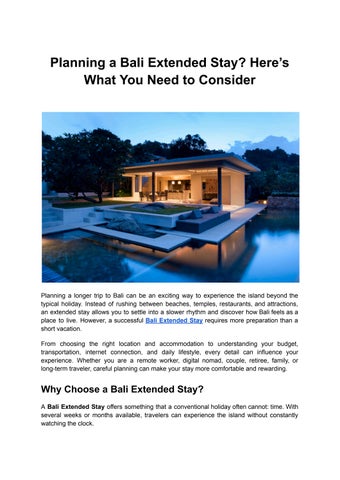
Find Accommodation That Supports Daily Living The best accommodation for a Bali Extended Stay is not necessarily the most luxurious property. Instead, it should support your daily routine. For longer stays, practical features become increasingly important. A comfortable bed, functional kitchen, reliable Wi-Fi, adequate storage, washing facilities, workspace, air conditioning, and good ventilation can make a significant difference. If you plan to work remotely, test the internet connection before committing to the property. Ask about backup connectivity if internet reliability is essential to your work. Privacy is another consideration. A private villa can provide more personal space than a hotel, allowing you to cook, work, relax, and enjoy your own schedule without sharing common facilities with other guests.
Consider Transportation Carefully Transportation should be part of your planning process before beginning a Bali Extended Stay. Bali does not have a comprehensive public transportation system covering every residential and tourist area, so mobility can affect your daily convenience. Some long-term visitors choose to rent a scooter because it provides flexibility for short-distance travel. Others prefer ride-hailing services, private drivers, taxis, or car rentals. Your choice should depend on where you live and how frequently you travel. If your accommodation is close to cafés, supermarkets, restaurants, and essential services, you may not need transportation every day. Safety should always come first, particularly when considering scooter use. Make sure you understand local traffic conditions and have the appropriate legal documentation and insurance coverage.
Plan for Work and Connectivity For remote workers, a Bali Extended Stay can provide an appealing combination of productivity and tropical living. However, working successfully from the island requires more than a beautiful view. Look for accommodation with a dedicated workspace or a comfortable table and chair. Natural lighting can also improve the working environment, while strong Wi-Fi is essential for video meetings, cloud applications, and professional communication. It is worth identifying nearby coworking spaces and cafés as alternatives. Having several places where you can work gives you flexibility when you want a change of environment or when your accommodation experiences an internet problem.
At the same time, remember to create boundaries between work and leisure. One of the biggest advantages of staying in Bali for longer is the ability to build a healthier balance between professional responsibilities and personal time.
Understand the Rental Agreement Before confirming a Bali Extended Stay, carefully review the rental terms. Do not rely solely on verbal promises. Check the rental period, payment schedule, deposit, cancellation conditions, utility charges, cleaning arrangements, maintenance responsibilities, and check-in and check-out procedures. If you are renting for several months, clarify what happens if something breaks. Knowing who handles maintenance can save considerable stress later. It is also important to understand the legal and practical requirements associated with your intended length of stay in Indonesia. Immigration and visa regulations can change, so travelers should verify current requirements through official sources or qualified professionals before making long-term plans.
Prepare for the Tropical Climate Bali's tropical environment is one of its greatest attractions, but it also requires adjustment. Heat, humidity, rainfall, insects, and seasonal weather patterns can affect your comfort. During a longer stay, air conditioning, proper ventilation, mosquito protection, and regular property maintenance become more important than they might be during a short vacation. Rainy periods can also influence transportation and outdoor activities. Planning your schedule with some flexibility allows you to enjoy Bali even when the weather changes unexpectedly.
Experience Bali Beyond Tourist Attractions One of the greatest benefits of a Bali Extended Stay is having enough time to experience everyday island life. Instead of visiting only famous attractions, explore local markets, neighborhood cafés, traditional ceremonies, small restaurants, art communities, beaches, and nearby villages. Building relationships with local people can make the experience feel more authentic. Longer stays also allow travelers to discover their favorite places naturally. A café may become your regular morning spot, a local restaurant may become your preferred dinner destination, and a nearby beach may become part of your weekly routine. This slower approach is often what makes extended travel memorable.
Create a Flexible Long-Term Plan A successful Bali Extended Stay does not require every day to be planned in advance. In fact, leaving room for flexibility can make the experience more enjoyable. Prepare the essentials before arrival, including accommodation, transportation options, budget, documentation, and communication arrangements. Once settled, allow yourself to adjust your routine based on your surroundings. You may discover that the area you initially selected is busier than expected or that another part of the island better matches your lifestyle. Having flexibility allows you to adapt without turning your extended stay into a rigid itinerary.
Final Thoughts Planning a Bali Extended Stay is about more than finding a beautiful place to sleep. It involves choosing an appropriate location, creating a realistic budget, selecting practical accommodation, arranging transportation, preparing for work, and understanding rental conditions. The greatest advantage of staying longer is the opportunity to experience Bali at a slower and more personal pace. With thoughtful preparation, your time on the island can become more than an extended vacation. It can become an opportunity to establish a temporary home, discover a different lifestyle, and enjoy Bali with greater freedom and flexibility.