Presented by Christina “Chrissy” Spears, MS, CGC
Assistant
Professor,
Internal Medicine
Certified Genetic Counselor
The Ohio State University
Presented by Christina “Chrissy” Spears, MS, CGC
Assistant
Professor,
Internal Medicine
Certified Genetic Counselor
The Ohio State University




• From Cincinnati, OH
• BS in Chemistry from Northern Kentucky University (NKU)
• Masters in Genetic Counseling fromThe Ohio State University (OSU)
• Assistant Professor and Genetic Counselor at OSU
• Embedded breast cancer counselor clinical model
• High-Risk Breast Clinic
• Graduate Students
• Research
The presentation will enable the participant to:
• Understand the role of genetic counselors in hereditary breast cancer.
• Identify the clinical characteristics of hereditary breast cancers.
• Describe common hereditary breast cancer syndromes, more than BRCA1/2!
• Discuss the current benefits, limitations and myths surrounding genetic testing for hereditary breast cancer.
• Implement genetic testing with case examples.
Healthcare professionals trained to guide and support patients that want to know how inherited diseases may affect them or their families
MS, CGC – Master’s degree - licensed through most states and certified by a national board
Work in direct and non-direct patient care

Recommend, Order, Interpret, and Explain genetic testing results
To help/educate the patient/provider/family member:
• Make an informed decision on testing
• Recognize the way heredity contributes to cancer
• Understand their risk of developing cancer
• Risk models
• Genetic mutations
• Review the options available for screening or reducing cancer risk based on genetics / family history
• Help place referrals
• Provide support resources and educational materials
Non-Modifiable Risk Factors:
• Aging
• Female Sex
• Personal history of breast cancer or benign breast conditions (i.e. atypical ductal hyperplasia, lobular carcinoma in situ)
• Hormonal Factors (i.e. early menarche <12, late menopause >55)
• Prior chest wall radiation exposure (Hodgkin's lymphoma)
• Dense breast tissue
• Family history
• Genetic Mutations
Potentially Modifiable Risk Factors:
• Not being physically active
• Reproductive History (i.e. nulliparous, first pregnancy after 30)
• Not breast feeding
• Obesity after menopause
• Certain HRT
• Alcohol use
https://www.cdc.gov/breast-cancer/risk-factors/index.html
10-15% familial
No causative gene mutation
More cancers than we expect by chance alone
Multifactorial
5-10% hereditary
Causative gene mutation
Autosomal dominant inheritance

75-85% sporadic
No causative gene mutation
Isolated/sporadic cancers
Multifactorial
Aunt
Firstcousin Maternal grandmother Maternal grandfather Paternal grandmother Paternal grandfather
Sister
1 2 1 1
Father Mother Uncle
3
Child
Brother
•Early age at diagnosis (generally <50y)
•Multiple or bilateral breast cancers in one person
•Triple negative type of breast cancer
•Male breast cancer
•Family history of male breast cancer, triple negative, ovary, pancreas, diffuse gastric cancer)
•3 breast/prostate cancers on the same side of the family
•Ashkenazi Jewish ancestry

• Later age at onset (60s or 70s)
• Little or no family history of cancer
• Single
•Early age at onset (<50)
•Multiple primary cancers
•Multiple generations with cancer
•Clustering of certain cancers (i.e. breast/ovarian)
• With the passage of time, additional diagnoses may have been made.
• These changes in diagnosis may affect the likelihood of a hereditary cancer syndrome.
•Many patients do not know the details of their family history.
•Adopted / estranged
•Health information isn’t talked about
•Specific sites of tumors unknown
•Ages of diagnosis unknown
•Historical information may be inaccurate
•Family histories change over time
• “Cancer on the father’s side doesn’t count.”
• We inherit half of our DNAfrom our biological father!These cancer genes follow autosomal dominant inheritance.
• “Ovarian cancer is NOTa risk factor for hereditary breast cancer.”
• 1.3% of women will be diagnosed with ovarian cancer compared to 13% of women being diagnosed with breast cancer. Many breast genes also increases ovarian cancer risk!
• “The most important thing in the family history is the number of women with breast cancer.”
• Young age of diagnosis is more significant than many later onset diagnosis due to those mentioned risk factors!
• “Cancer skips a generation”
• Individuals inherit genetic mutations, not cancers. Not everyone with a genetic mutation will go onto develop cancer due to incomplete penetrance!
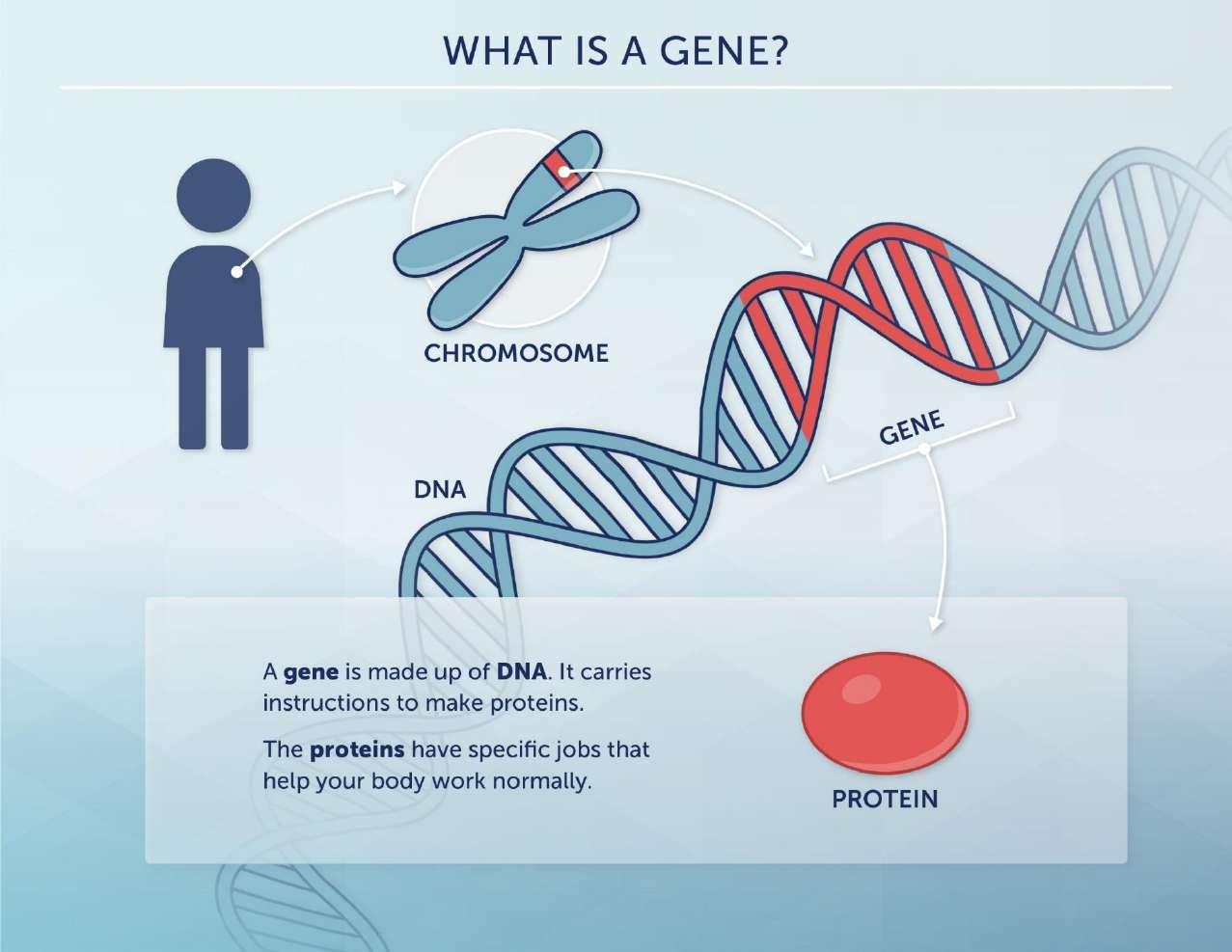
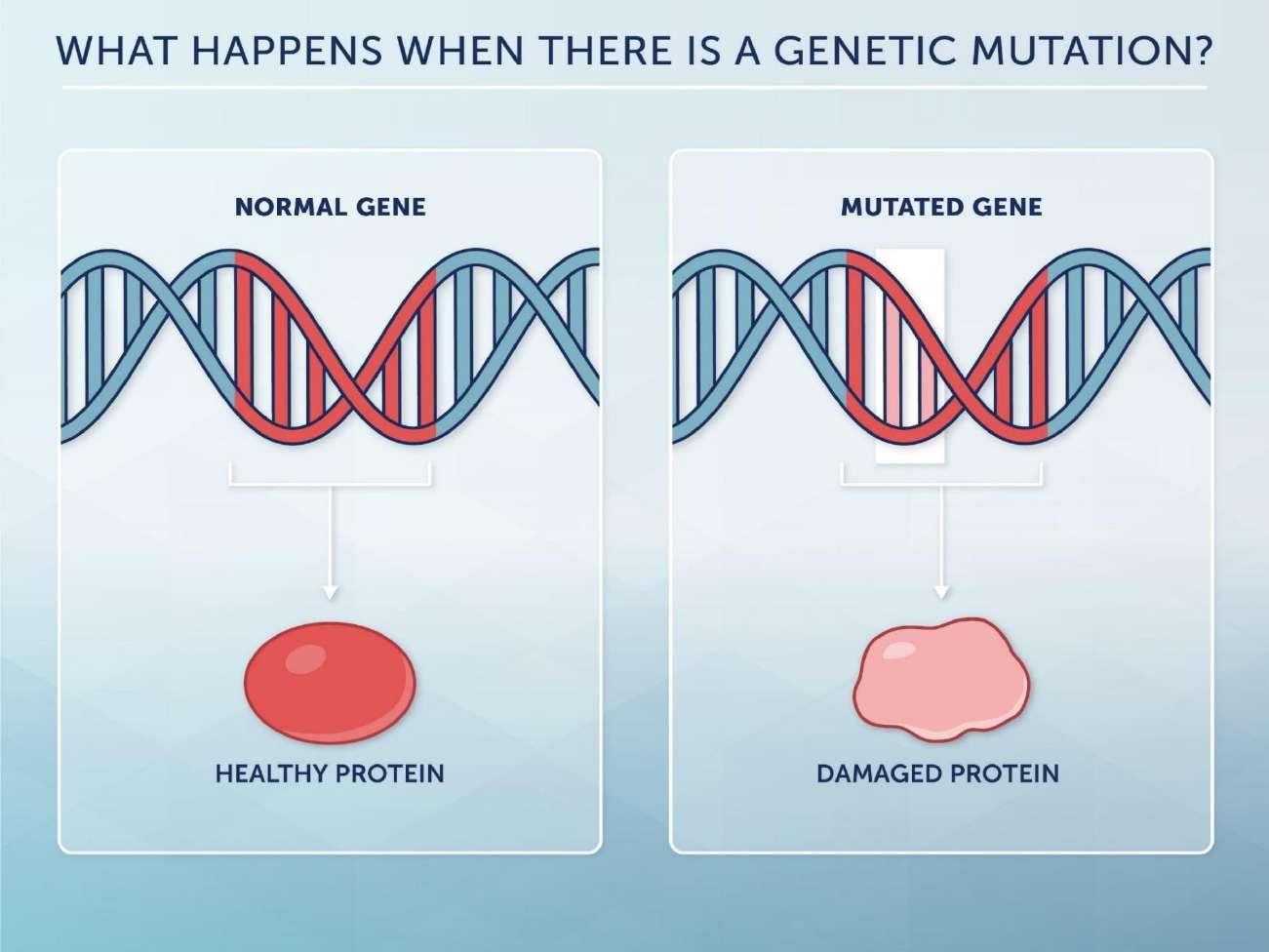
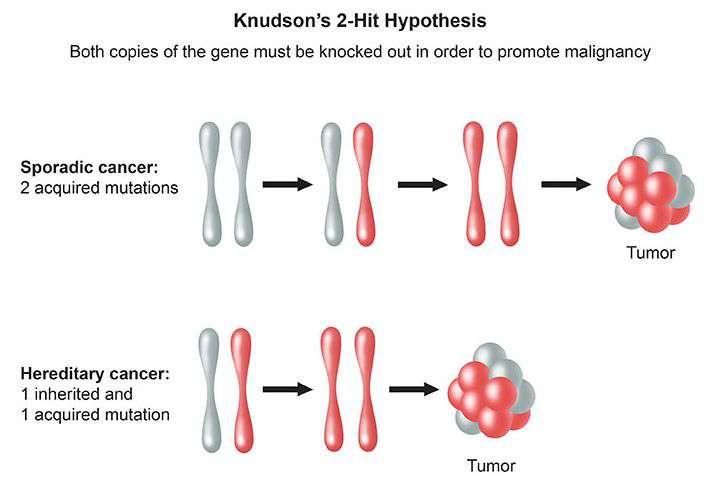
▪ We all have two copies of every gene (one from each parent)
▪ Autosomal Dominant: Asingle mutation, on one of your two genes, is enough to cause disease.
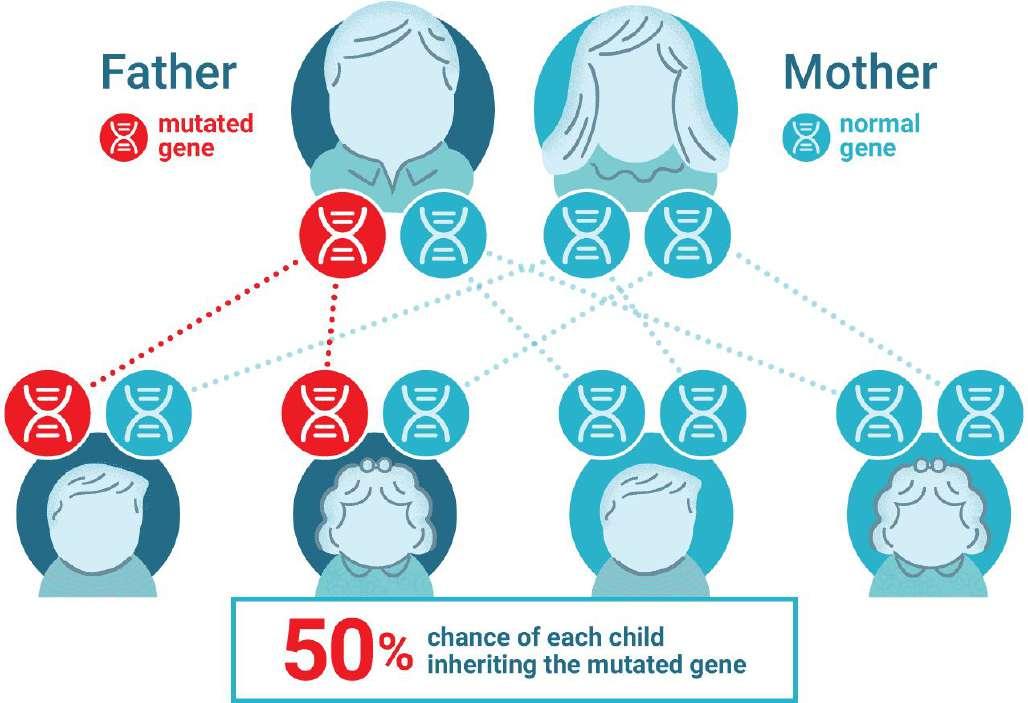
▪ Penetrance is often incomplete
▪ May appear to “skip” generations
▪ Individuals inherit altered cancer susceptibility gene, not cancer
▪ Some mutations are de novo/brand new in someone!
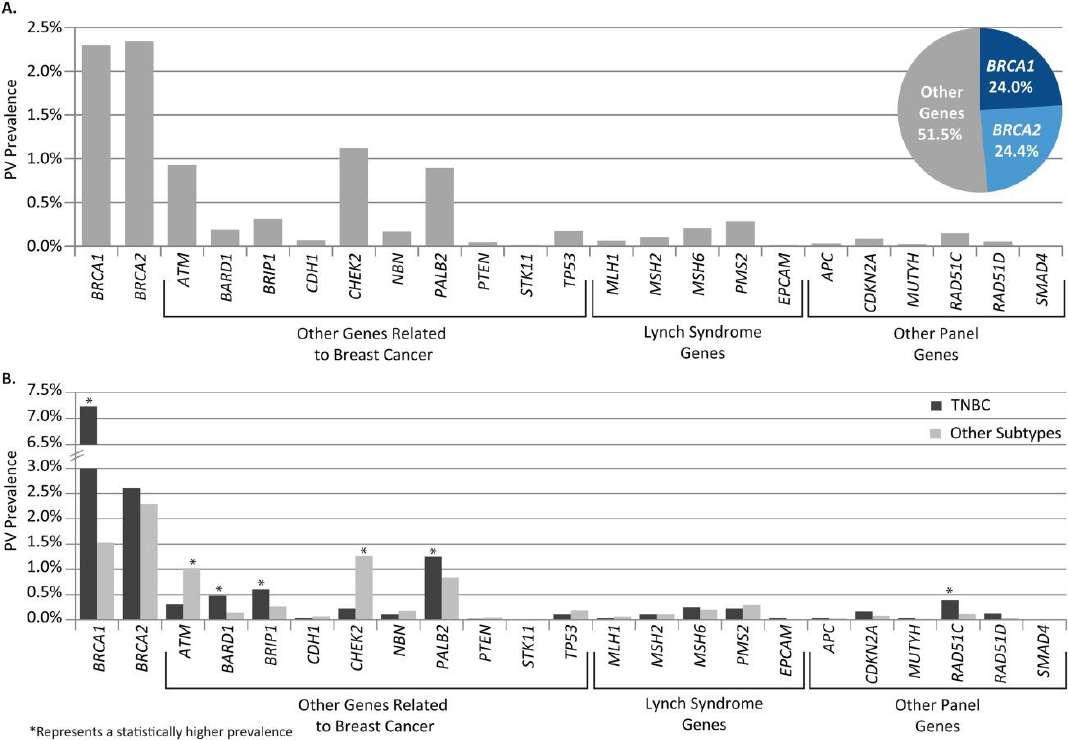
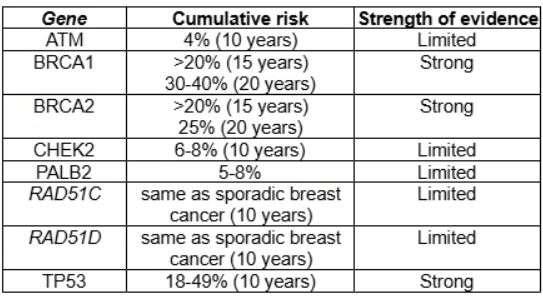
Astudy of over 35,000 women with breast cancer tested with a 25‐gene panel of hereditary cancer genes: Overall, 9.3% had a pathogenic variant.
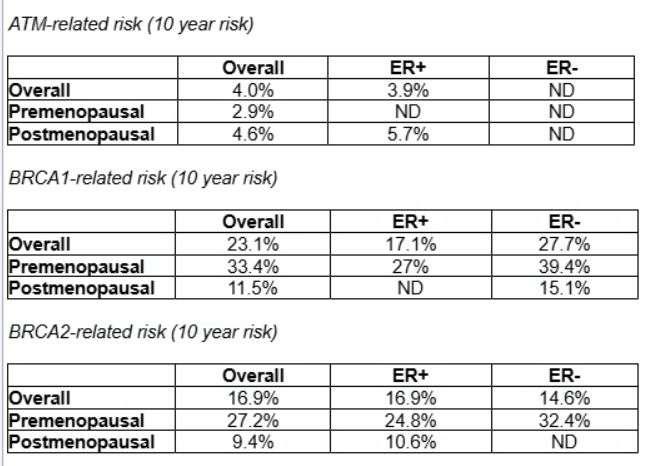
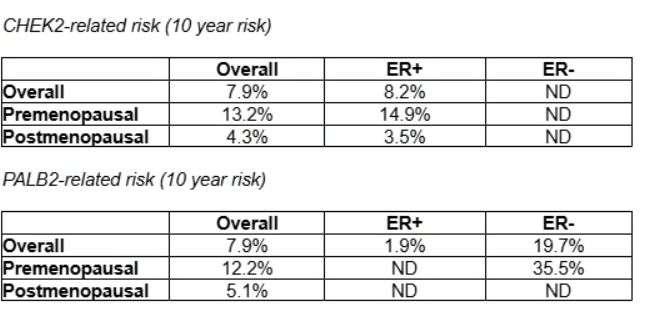
• This study of over 60,000 women with breast cancer and over 53,000 women without breast cancer tested 34 known or suspected breast cancer susceptibility genes and stratified risk of breast cancer.
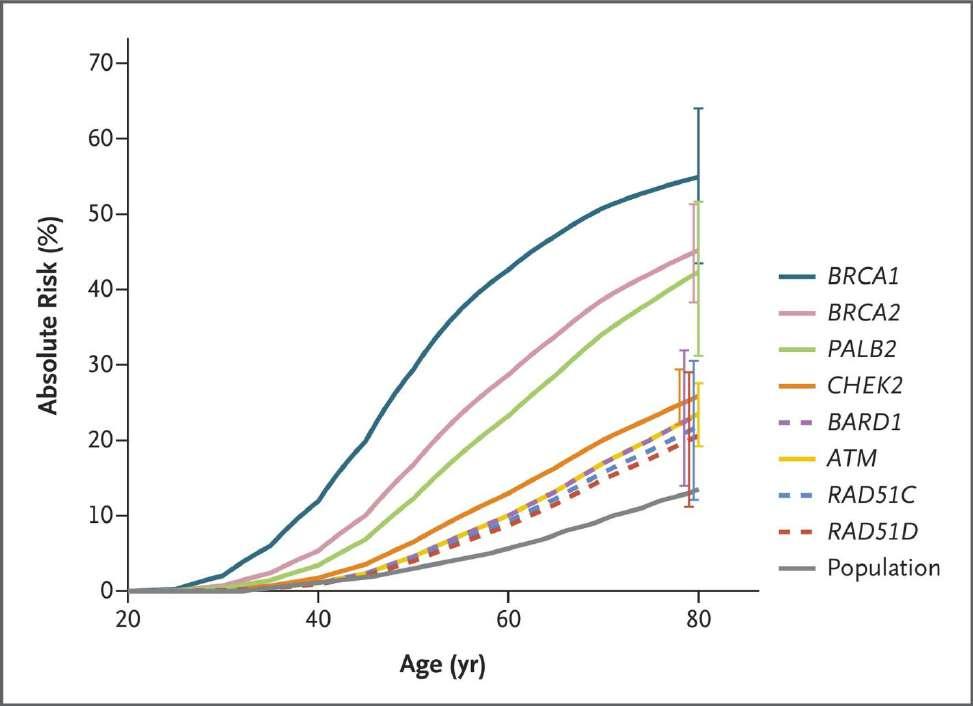
Breast Cancer Association Consortium, Dorling L, Carvalho S, et al. Breast Cancer Risk Genes — Association Analysis in More than 113,000 Women. NEnglJMed. 2021;384(5):428-439. doi:10.1056/NEJMoa1913948
*There
are thousands of different mutations in the same gene. Some mutations have lower/higher risks than others!
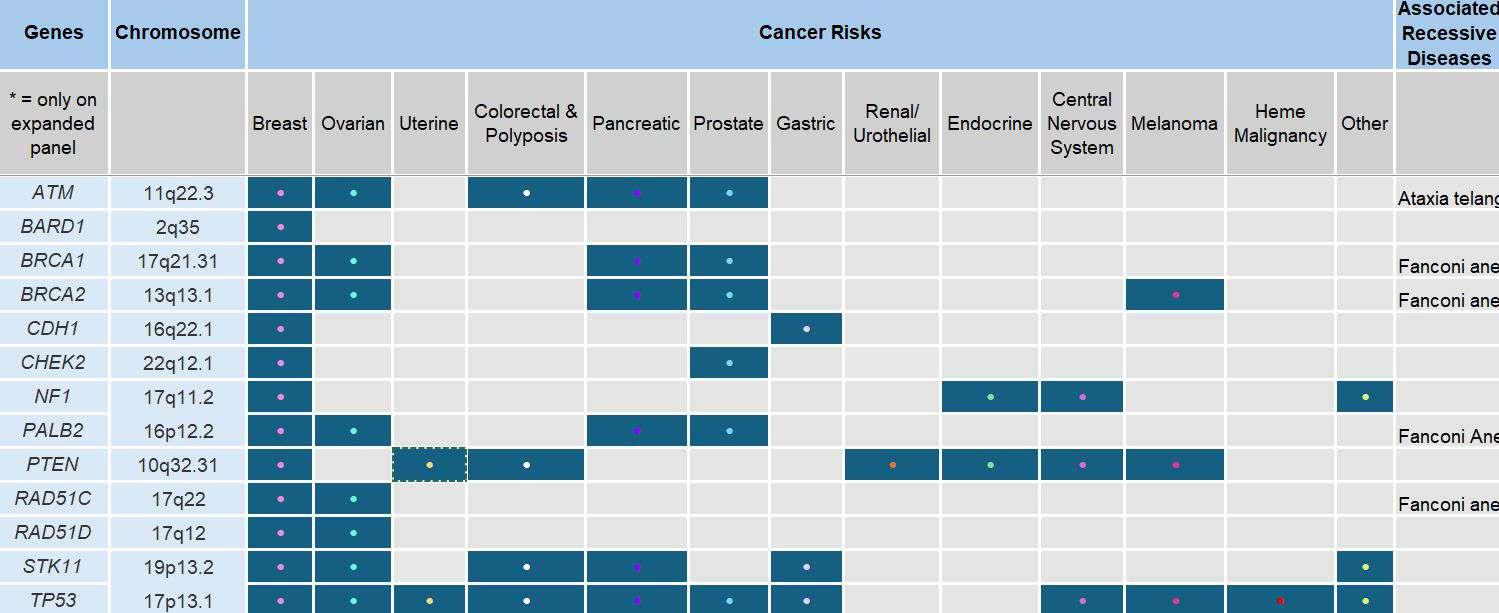
• APC- (FAP) - colon
• ATM- (AT) – breast, pancreatic
• BARD1- breast
• BAP1- uveal melanoma, melanoma, mesothelioma, breast
• BMPR1A- (JP) – colon
• BRCA1- (HBOC)- breast, ovarian
• BRCA2- (HBOC)- breast, ovarian
• BRIP1- (FA)- carriers inc risk breast, Ovarian
• BLM- (Bloom)- carriers inc risk?
• CDH1- diffuse gastric, lobular breast
• CDK4- melanoma
• CDKN2A- (FAMMM)- melanoma, pancreatic
• CHEK2- breast
• GALNT12- colon
• GREM1- Hereditary Mixed Polyposis Syndrome
• HOXB13- Hereditary Prostate Cancer
• MLH1- (Lynch)- colon, uterine, ovarian, stomach, other
• MSH2+EPCAM- (Lynch)-colon, uterine, ovarian, stomach, other
• MSH6- (Lynch)- colon, uterine, ovarian, stomach, other
• MUTYH-(MAP)- colon
• NBN- (Nijmegen Breakage syndrome)
• NF1-(Neurofibromatosis type 1)- breast
• PALB2- breast, pancreatic
• PMS2- (Lynch)- colon, uterine, ovarian, stomach, other
• POLD1- colon polyps, colon
• POLE- colon polyps, uterine
● PRSS1- Hereditary Pancreatitis
● PTEN- (Cowden)- breast, thyroid, uterine, non-cancer findings
● RAD51C- breast, ovarian
● RAD51D- breast, ovarian
● RET- (MEN2)- medullary thyroid cancer, other endocrine tumors
● SDHB- Hereditary Pheo-Paraganglioma syndrome
● SDHC- Hereditary Pheo-Paraganglioma syndrome
● SDHD- Hereditary Pheo-Paraganglioma syndrome
● SMAD4- (Juvenile Polyposis)colon
● STK11-(Peutz-Jeghers)- breast, colon, stomach, sex-cord
● TP53- (Li-Fraumeni)- breast, sarcoma, brain, adrenocortical, others
Lumpectomy vs. mastectomy, bilateral mastectomy
Second primary breast cancer risks per NCCN:
Current FDAapproved PARPi medications include:
• olaparib, rucaparib, niraparib for metastatic ovarian cancer
• olaparib for metastatic breast cancer
Breast Cancer: F: 32-53% M: 0.9%
• MRI starting at age 30 for females
• Mammogram starting at age 30 for females (consider for men at age 50)
• Risk-reducing mastectomy
• EndocrineTherapy
Ovarian Cancer: (3-5%)
• Bilateral oophorectomy between ages45-50
Prostate Cancer: (Emerging)
• Consider annual PSAtesting at age 40
Pancreatic Cancer: (2-5%)
• If family history present MRI and/or ultrasound guided endoscopy starting at age 50
General Population/Average Risk
Breast Cancer: F: 13% M: <1%
• Mammogram starting at age 40
Ovarian Cancer: 1.3%
• No general population screening recommendations
Prostate Cancer: 13%
• PSAannual testing at age 50
Pancreatic Cancer: 1.5%
• No general population screening recommendations
1996 – BRCA1/2 sequencing only
2002 - 5 common BRCA1 rearrangements added
2006 - standalone, full gene rearrangement test for both BRCA1 and BRCA2
SCOTUS strikes down Myriad patents.
Myriad introduces MyRisk pan-cancer panel
2013
2013
23&Me added 41 additional BRCA1/2 variants
March 2018
Ambry, GeneDx, U Washington introduce breast, colon, ovarian and pan-cancer panels (absent BRCA1/2)
BRCA1/2 offered and added to breast panels byAmbry, Gene Dx, Uwash –sequencing and comprehensive rearrangement
23&Me began testing 3AJ founder mutations in BRCA1/2
2023
Positive
• Increased cancer risk
• DOES NOTguarantee someone will develop cancer in their lifetime
• Cannot predict if, where or when
• Cascade testing for family members

• Found a change in a gene we don’t have all the information on
• GRAYVS. GREY
Negative
• Family members may still be at increased risk and may change screening recommendations
• “True” negative (mutation known in family)
• “Uninformative” negative in unaffected individual
• Typically treated like a negative
• VERYCOMMON! (1/3 of patients)
• May be reclassified in the future
• Will my insurance cover the testing?
• Some labs offer $250 out of pocket self-pay price, could be less or no cost at all, financial assistance programs
• Privacy Concerns
• Genetic Information non-DiscriminationAct (2008) – employment and health insurance
• Does not apply to life-insurance, long-term care, long term disability,TriCare, companies <15 employees
• What’s the turnaround time?
• Approximately 2 weeks – STATbreast genes 1 week
• How do I complete the testing?
• Typically blood or saliva, rare cases skin punch biopsy
• 30 yo healthy female presented for annual physical exam to her PCP
• She reported a family history of a sister with breast cancer at age 32; paternal grandmother with breast cancer at age 50.
• Jane’s PCPordered testing for BRCA1/BRCA2 Jane 30
• Jane’s BRCA1/2 test result: negative
• Two flaws with this testing approach:
• Ordering only BRCA1 & BRCA2
• Testing the unaffected person first
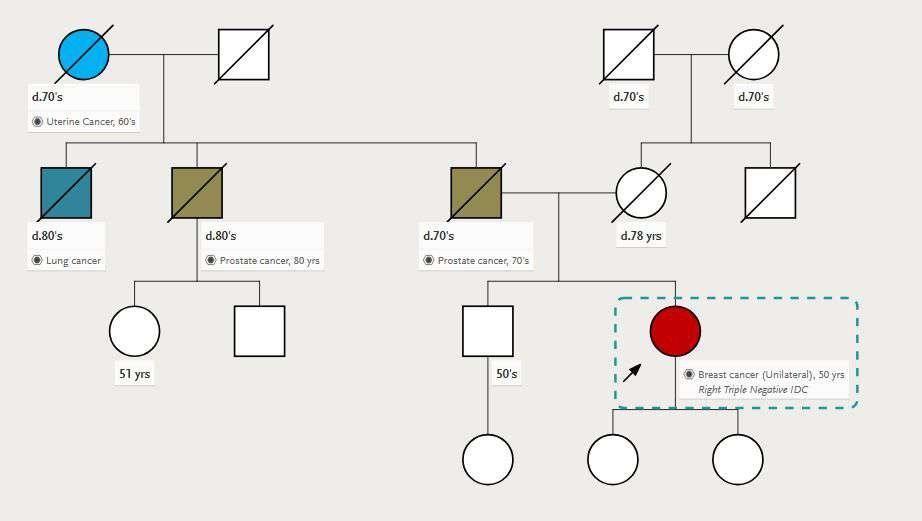
Associated with Breast, Ovarian, Pancreatic and Prostate Cancer
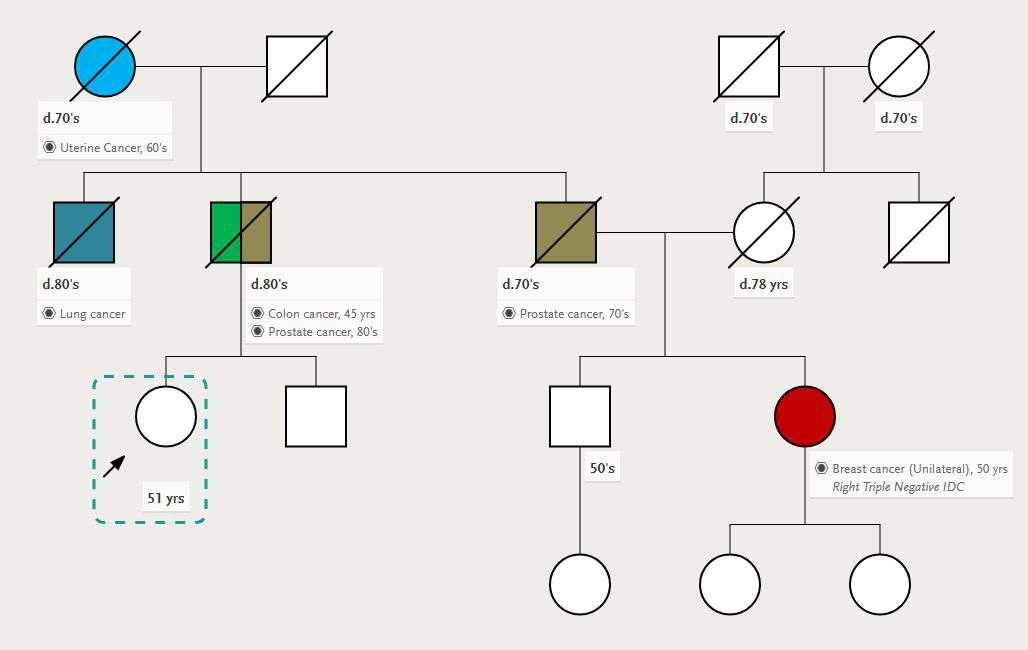
• Underwent SINGLE SITE testing
- Negative for the known PALB2 mutation identified in her cousin
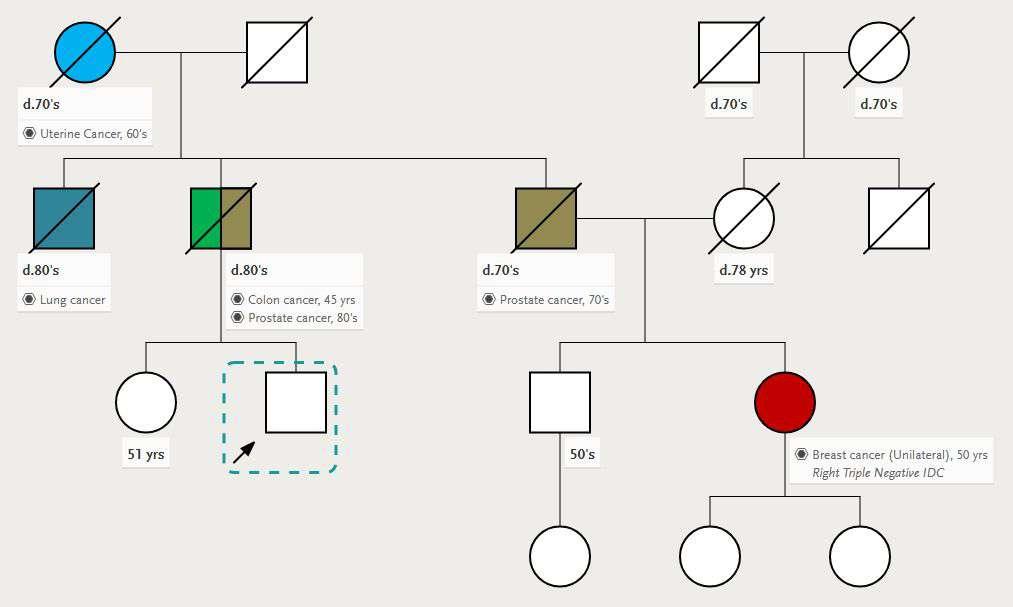
• Underwent Expanded Panel testing + MSH6 mutation associated with Lynch syndrome and increased colon and uterine cancer risks
Identifieshigh-riskindividuals Doesnotdetectallmutations,ormay identifyamutationinagene associatedwithacancernotinthe family(incidentalfinding)
Identifiesnon-carriersinfamilieswith knownmutations Continuedriskofsporadiccancer (phenocopy) (thosewhotestnegativemayhave falsesenseofassurance)
Allowsimplementationofearly detection,preventionstrategies, reproductivedecisions Efficacyofsomeinterventions unproven
Mayrelieveanxiety
Mayresultinpsychologicalor economicharm,guiltofpassingonto children
❖Not everyone with a genetic mutation develops cancer, and vice versa
❖Ask your provider about expanded panel genetic testing for other breast genes, or genes associated with other cancer types as well! (more than just BRCA1/2!)
❖Genetic testing can be powerful, life-saving information for you and your family members.
❖While you can’t control your genetic results, you can control if/when you test, and what you do with the information.