ending July 2026. Organizations that have not identified and
RC4 exposure also carries direct consequences beyond the
2. W
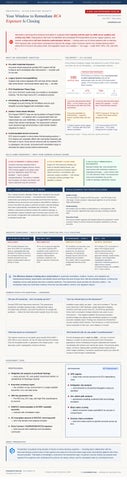
Pre-AES Credential Exposure Accounts whose passwords predate AES support will fail Kerberos auth immediately after enforcement — invisible until it's too late.
Legacy System Incompatibilities
Systems that cannot negotiate AES will drop off the network after enforcement. Discovered before patch day — not after
RC4 Disablement Phase Gaps
DCs not in KDCSVC audit mode are invisible to remediation
tracking. The tool maps every DC's compliance posture.
NTLM Relay & AS-REP Exposure
Privileged accounts forcing NTLM fallback and pre-auth disabled accounts flagged with remediation steps.
Golden Ticket Attack Window
RC4-based KRBTGT keys are the foundation of forged Golden Ticket attacks — an attacker with a compromised hash can impersonate any user indefinitely An aged KRBTGT password widens that window dramatically The assessment surfaces exact password age and prescribes a safe double-rotation sequence to close it.
Kerberoastable Service Accounts
RC4 ticket encryption is what makes Kerberoasting practical —
RC4 hashes are crackable offline with commodity hardware and free tools in hours. Every service account with an exposed SPN is catalogued, risk-scored, and paired with remediation steps to eliminate the attack surface before enforcement.
and systems, that KRBTGT rotation is current, that AES-only policy is enforced via GPO, and that findings have been systematically remediated with verification. The RC4 Collector assessment produces exactly this evidence package: a timestamped, analyst-reviewed report covering every account, DC, and domain configuration that underwriters require to move a policy to standard market rate.
RC4 is not an approved algorithm — any system claiming FIPS compliance while using RC4 for Kerberos authentication is noncompliant. Affects federal contractors, healthcare, and financial institutions referencing FIPS.
RC4 enabled is an automatic Level 1 CIS benchmark failure — the baseline tier, not advanced hardening. The benchmark explicitly requires AES128 and AES256 only for Kerberos. RC4_HMAC_MD5 in any permitted configuration fails the control outright.
SOC 2 CC6
MATERIAL WEAKNESS
RC4 violates CC6.1 (encryption of data), CC6.6 (logical access against external threats), and CC6.7 (transmission using approved methods). Auditor finding language: "use of deprecated cryptographic algorithms represents a material weakness in logical access controls." Unresolved findings risk a qualified SOC 2 Type II opinion.
⚖ The difference between a finding and a control failure is systematic remediation. Auditors, insurers, and regulators are distinguishing between organizations that identify issues and those that work through them with documented evidence. A finding that reappears across audit periods becomes a material weakness. The assessment report provides the discovery artifact — the remediation steps and verification evidence close the loop that auditors, carriers, and regulators require.
C O M M O N E X E C U T I V E Q U E S T I O N S A N S W E R E D
"We have AD monitoring — don't we already see this?"
General SIEM tools flag events reactively This assessment proactively correlates password age, credential hash status, encryption type attributes, and event log data into an outage-risk prediction — before the April enforcement update forces the issue.
"What data leaves our environment?"
The collector produces an encrypted report bundle (RSA-OAEP + AES-256) on your machine. No raw AD data traverses the network. Only the encrypted bundle is uploaded to the analyst portal — your data stays under cryptographic control at all times.
"Can't our internal team run this themselves?"
Available scripts collect raw data — they don't correlate it. This tool cross-references LDAP attributes, krbtgt replication metadata, Kerberos event logs across every DC, and AES key generation history tied to encryption changes detected over years in your environment — then applies weighted risk scoring to produce prioritized triage and step-by-step remediation guidance in a single, executive-readable report. Findings are reviewed by PresideTech security analysts before delivery That full picture is what most teams cannot assemble on their own, and it deploys in minutes.
"We'll handle this after the July update if something breaks."
The first breakage point is April 14, 2026 — not July A common finding is a cluster of service accounts tied to line-of-business applications where remediating encryption dependencies requires coordinating with vendors and internal dev teams. That process takes weeks, not hours. Starting after something breaks means doing it under outage conditions. A proactive assessment gives your team the runway to work through it methodically A S S E S S M E N T T I E R S
Weighted risk analysis & prioritized findings
— every