 By Mariame Kaba
By Mariame Kaba
By Mariame Kaba
The Ohio Penitentiary Fire of 1930
Activations N º 4
Archival
This zine is fourth in a series called "Archival Activations". Using my personal collections, I feature specific documents and records and provide historical context. I hope readers who engage the publications in this series will find some contemporary relevance in what is featured. My archival orientation is pulling from the past to make a better future. This publication is an installation of that orientation.
Read other zines from the series here: https://issuu.com/projectnia/
Designed and illustrated by Kruttika Susarla The Ohio Penitentiary Fire of 1930 by Mariame Kaba (April 2024) By Mariame Kaba
The Ohio Penitentiary Fire of 1930
Archival Activations N º 4
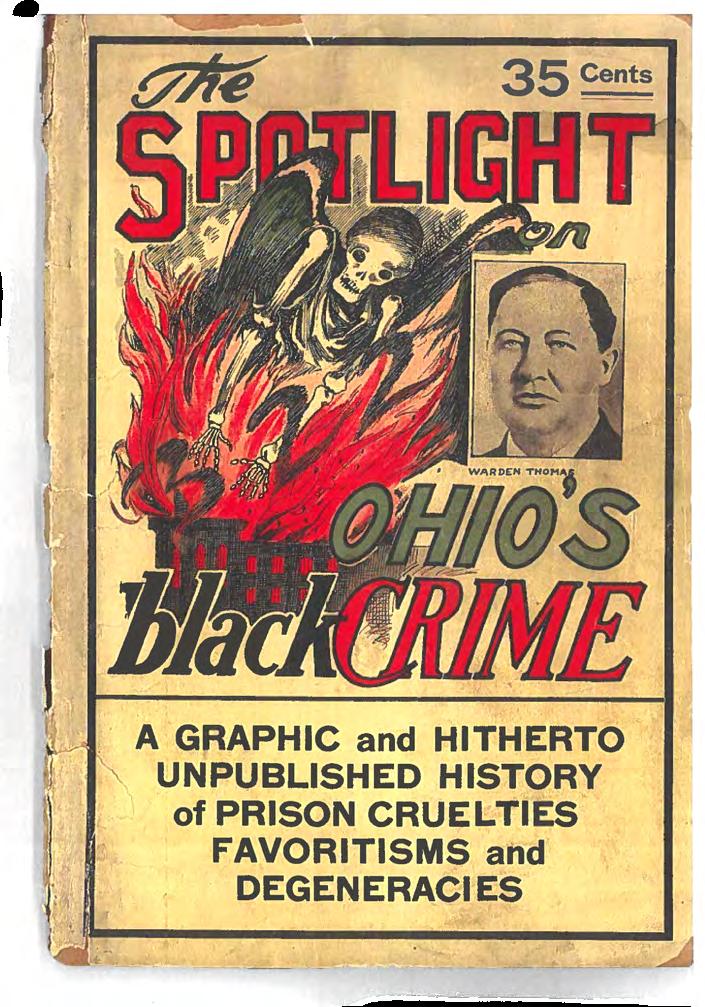
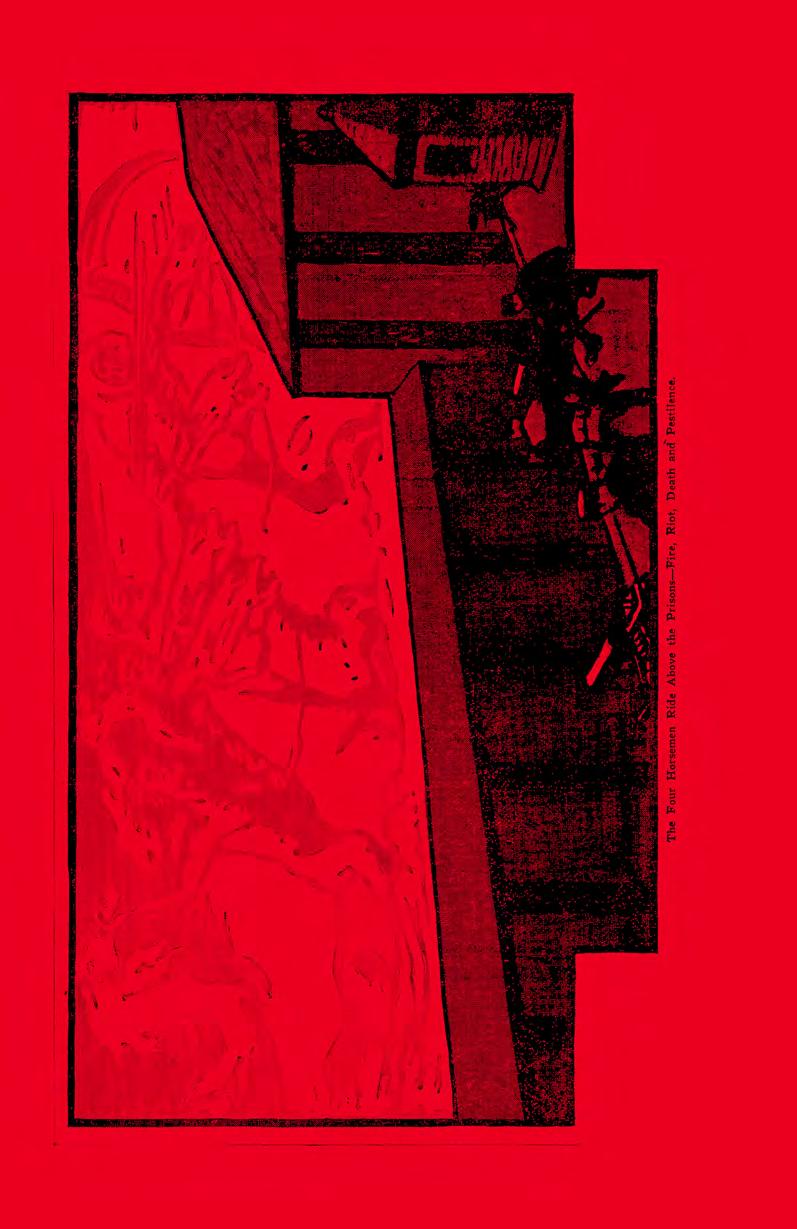
I’d never heard about the 1930 Ohio Penitentiary fire until I came across a book titled “The Spotlight on Ohio’s black Crime” by T.J. Thomas and Dan W. Gallagher. I found the book which was published in 1930 while browsing rare books dealer Type Punch Matrix’s website a couple of years ago. The book has a striking cover.
Its subtitle reads: "A Graphic and Hitherto Unpublished History of Prison Cruelties, Favoritisms and Degeneracies." I purchased the book despite its fragile state: the inner pages are browning and chipping. Paper oxidation is unfortunately a normal part of how some books age. My conservation skills aren’t good enough to preserve the book so I’m going to find a good repository to which to donate it. I gingerly read the book, carefully turning each page, for fear of further damaging it. This led me to search for other sources to learn more about the incident.
The Ohio Penitentiary Fire of 1930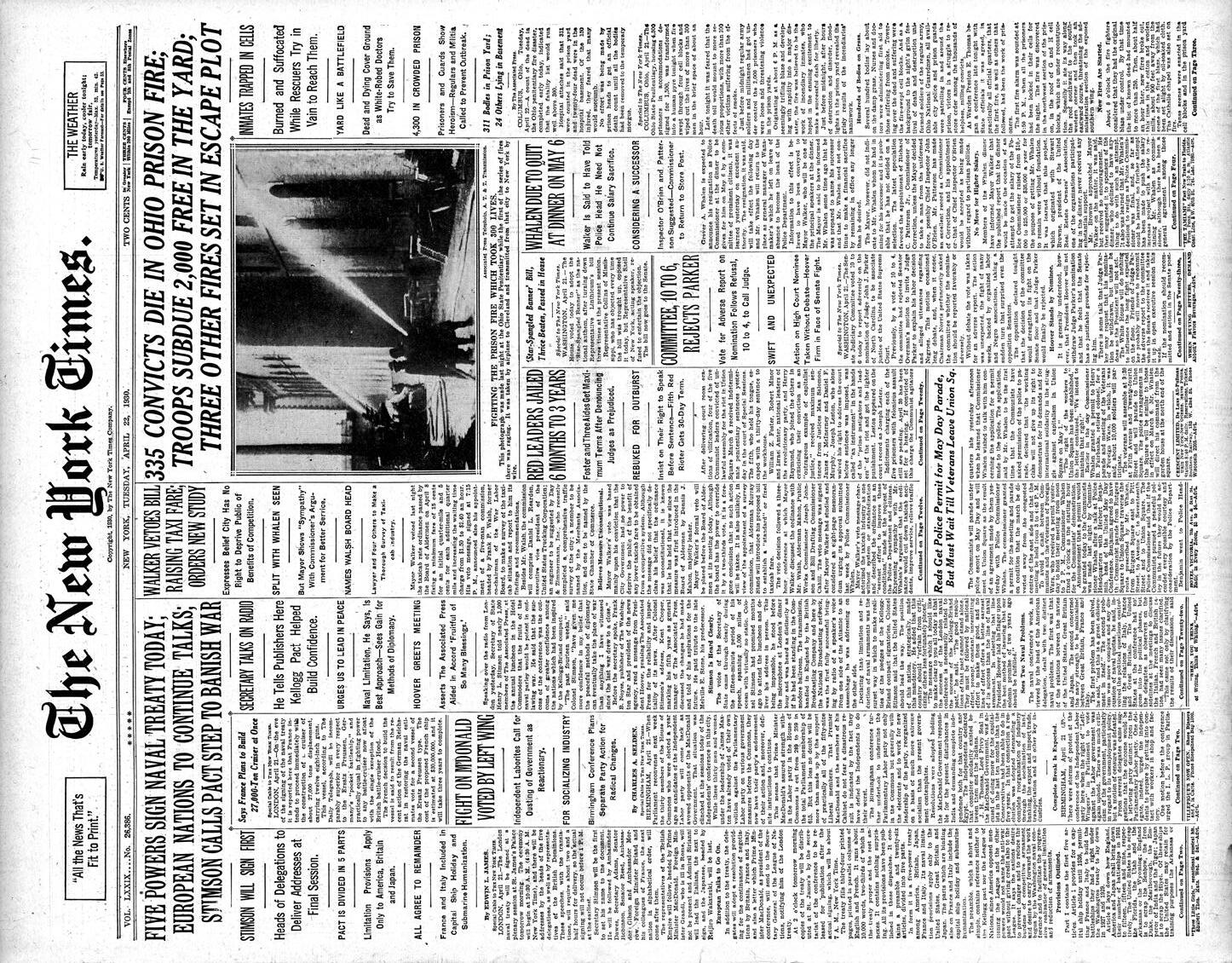
06
New York Times, April 22, 1930 (from my collection)

INTRODUCTION
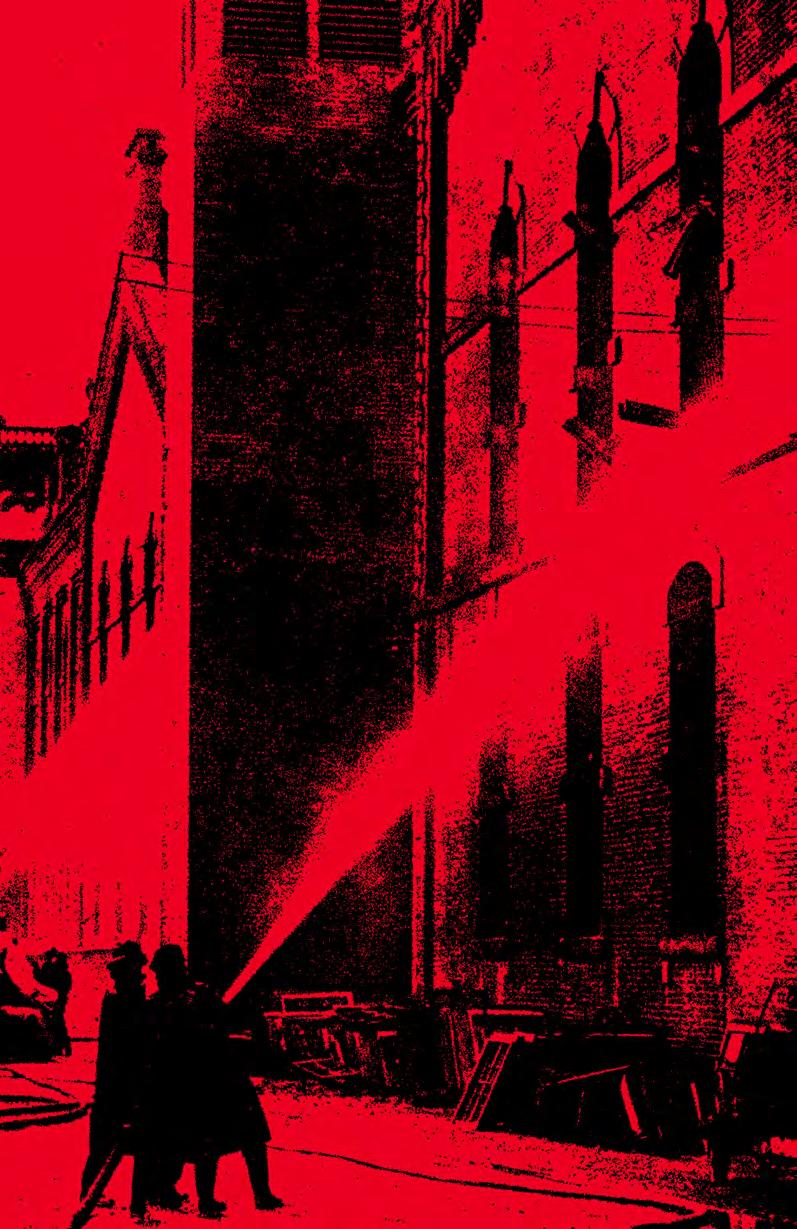
The Ohio Penitentiary Fire of April 21, 1930, was the deadliest disaster in US prison history. 322 prisoners died in the Easter Monday blaze, most from asphyxiation when smoke billowed into their locked cells. Analysts of the fire at the time and later believe that negligence and poor decisions caused the tragedy. Had the response been prompt and effective, no one need have died.
The fire was so deadly, in part because of longstanding failures to address overcrowding, prison upkeep, and fire safety. Incompetence and miscommunication played a role as well. But the overriding cause of the deaths was a prison system which had little concern for the lives or safety of prisoners.
The Ohio Penitentiary Fire of 1930OVERCROWDING & PRISON RIOTS
The Ohio Penitentiary was erected in 1834 in Columbus, OH; it could house 700 prisoners. Renovations transformed the facility into a Big House design, featuring tiers of cells stacked one above the other. By 1930, they had expanded the Penitentiary to house 1500 people. But on the day of the fire, it was holding 4300—more than virtually any other prison in the country.
Prison populations in the early 1930s had skyrocketed. Crime rates themselves were mostly flat in the 1920s. But worries about crime accelerated, driven by sensationalistic crime reporting in newspapers and radio.
In response to demands for harsher sentences, many states, including Ohio, gave authorities more discretion to deny parole. Ohio also passed a law giving judges great leeway over minimum sentences; many used their authority to extend prison terms for even nonviolent crime. One man in the Ohio Penitentiary at the time of the fire was serving a ten-year sentence for perjury.
Besides the overcrowding, another cause of tension in prisons of the 1930s was idleness. During the Depression, the public became very hostile towards prison labor, which people argued took jobs from those on the outside.
09
The Ohio Penitentiary Fire of 1930
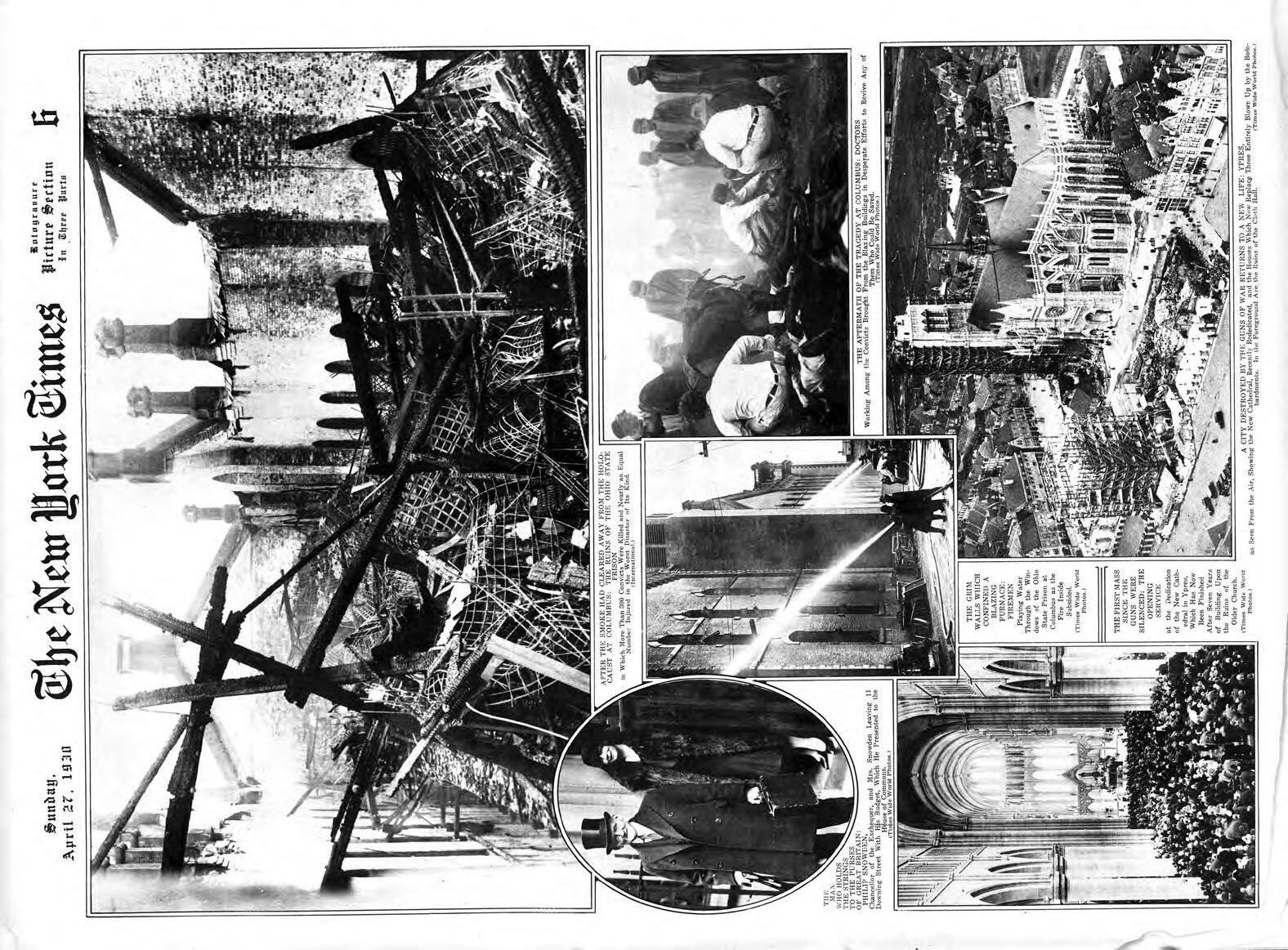
New York Times, Picture Section, April 27, 1930 (from my collection)

POOR UPKEEP & WORSE PLANNING
Jamming more and more prisoners into older and older buildings was a recipe for disaster. However, state and local officials were reluctant to use public funds to rebuild or renovate prisons wholesale, since spending money on prisoner comfort was seen as a waste.
Upkeep on the physical plant at Ohio Penitentiary was therefore piecemeal and inadequate. The cell-locks at the prison still required individual keys; there was no way to release them all at once, as in newer prisons of the day. The Ohio prison was actually in the process of replacing a wooden roof with concrete; it was the remaining wooden structure which caught fire and doomed the men in the upper cellblocks.
Warden Preston Thomas had been trying for more than a decade to get the state legislature to appropriate funds for upkeep and modernization, with little success. But he contributed to the disaster as well. They appointed Thomas as warden in 1913, but he neglected to hold a fire drill for the next 17 years. He does not appear to have even discussed fire procedures with his staff.
When Thomas was first made aware of the fire, he did not go to release the prisoners himself. Instead, he ordered guards coming in for the night shift to take keys and unlock the doors (the fact that the fire started just as the shift was changing in the evening caused some of the ensuing chaos.) Thomas then ran outside the prison to prevent escape. The prisoners disliked him, so he may have also been afraid to be in the yard when they came out.
The Ohio Penitentiary Fire of 1930
The two night guards hurried to unlock the cells, but the guard on duty, Thomas Watkinson, had the key, and refused to unlock the gate without direct orders from the Warden. “He just stood there like a damn fool,” one prisoner, Roy Williams, remembered. Over five crucial minutes ticked by as the guards argued and prisoners tried desperately to cover their heads with towels or ran water in the cells, hoping to protect themselves.
By the time Watkinson relinquished the keys, smoke suffused the upper levels and made them unapproachable. Some released prisoners found sledgehammers and dashed back into the burning tier to try to knock locks off doors.
The author, Chester Himes, was one of the 1,410 Black prisoners incarcerated in the penitentiary at the time of the fire. Seven years later, he published a fictionalized account in which he memorialized the courage of the prisoners. Many, he said, “were in for murder and rape and arson” but during the fire they worked “overtime at their jobs of being heroes…some laughing, some solemn, some hysterical—drunk from their momentary freedom, drunk from being brave for once in their cowardly lives.”
Thanks in part to the courage of these men, around 50 people escaped from the upper level. But for most, the delays of the warden and guards were fatal. In total, 130 people sustained injuries, and 322 people lost their lives.
13
The Ohio Penitentiary Fire of 1930
FEW CONSEQUENCES,SOME REFORMS
Though only 18 of those killed in the fire were African-American, the Black press, including the Chicago Defender, covered the fire extensively and used it to highlight dangerous prison conditions nationwide. White journalists, too, followed the fire and demanded accountability and answers.
The authorities quickly organized an investigation of the fire. The cause was uncertain at first; it was only a year later that three inmates confessed to having set it as part of an escape attempt. But the testimony about Thomas’ failures was damning.
The incarcerated survivors in the penitentiary, horrified and incensed at the loss of life, took advantage of the fact that most cell locks were broken and held demonstrations for more than a week in the yard, demanding the removal of Thomas. But governor Myers Y. Cooper offered “express approval” of Thomas’ handling of the fire. The governor said that he didn’t want to remove Thomas because if he gave in to prisoner demands “it would mean that in the short time we would be faced with a mutiny and fresh demands for another warden.” Once again, order and a perceived need for control and security trumped the safety of prisoners.
14
The Ohio Penitentiary Fire of 1930

The fire prompted some reforms. To address overcrowding, officials expanded parole in Ohio and repealed the law giving increased sentencing power to judges. Authorities implemented minor reforms to the Ohio State Penitentiary building, which included the removal of the wooden roof and the improvement of ventilation in cells.
Elsewhere, Massachusetts appropriated $50,000 a week after the Ohio fire to improve safety in Charlestown State Prison, and Michigan closed its Detroit House of Correction because it was a potential fire hazard. The federal government added sprinklers and fire doors to its prisons and added a fire chief for each prison to maintain fire safety.
15
The Ohio Penitentiary Fire of 1930
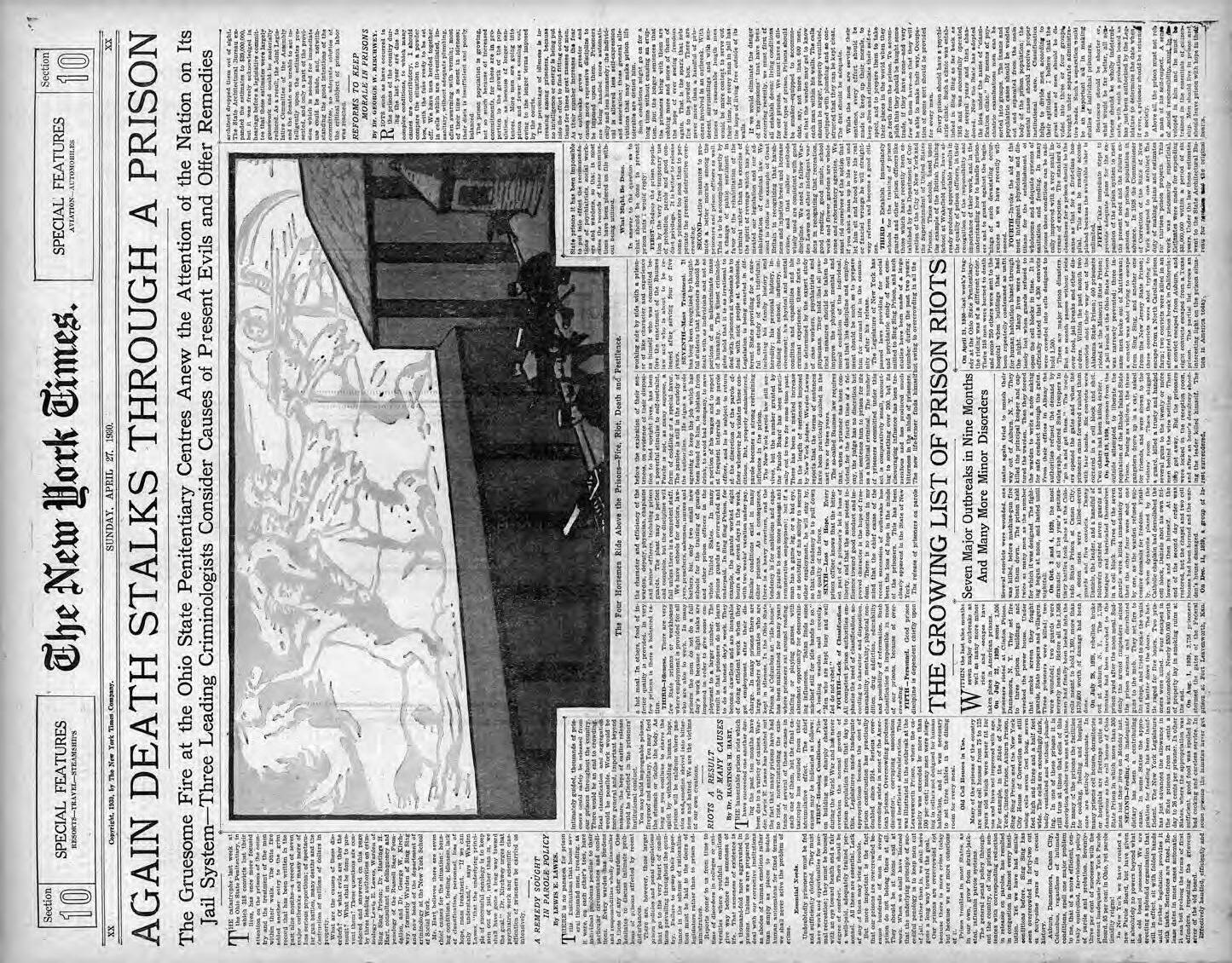
New York Times, April 27, 1930
FORGETTING
Despite receiving national attention in its day, the Ohio Penitentiary Fire did not enter popular memory in the way that the 1911 Triangle Shirtwaist Factory Fire in New York did. The 146 deaths in the Triangle fire were less than half the toll in the Penitentiary conflagration. But the victims—women immigrant workers—were seen as more innocent and more important than prisoners, for whom the public had little sympathy.
The Ohio Penitentiary was closed in 1984 and subsequently razed. According to scholar Mitchel P. Roth, there are no plans in Columbus to memorialize the victims, as of 2019, and there is no plaque on the site. However, you can find a list of their names online.
Contempt and indifference to the lives and well-being of prisoners resulted in hundreds of needless deaths. The same contempt and indifference made those deaths seem unimportant and unmemorable to later generations. The Ohio Penitentiary Fire shows how safety failures in prison can spark reforms. But it also shows that prisons are not organized to treat prisoners with dignity or basic humanity. That has not changed over the last century since the gatekeeper in the Ohio Penitentiary allowed 322 men to choke to death.
18
REFERENCES
Mitchel P. Roth, Fire in the Big House: America’s Deadliest Prison Disaster, Athens, OH: Ohio University Press, 2019.
“The Triangle Shirtwaist Factory Fire,” OSHA.
Accessed February 12, 2024.
https://www.osha.gov/aboutosha/40-years/ trianglefactoryfire
Aimee Truitt, “The Ohio Penitentiary Fire,” Ohio Memory, October 21, 2022.
https://ohiomemory.ohiohistory.org/ archives/5786
Thomas T. J and Dan W Gallagher. 1930. The Spotlight on Ohio’s Black Crime. Cleveland: C. Margolian.