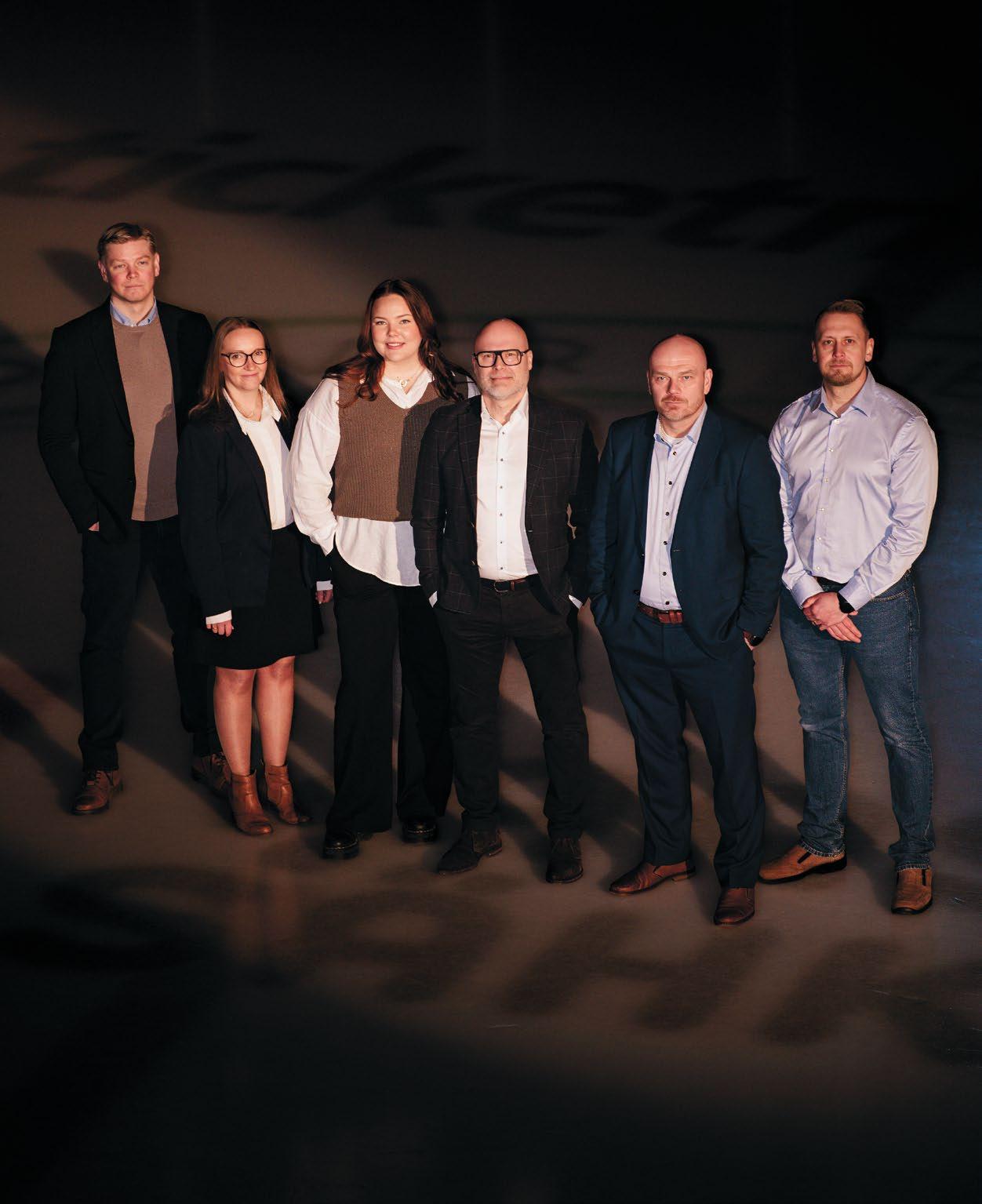
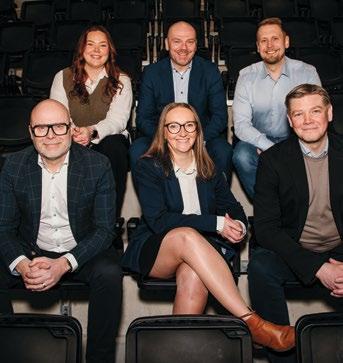

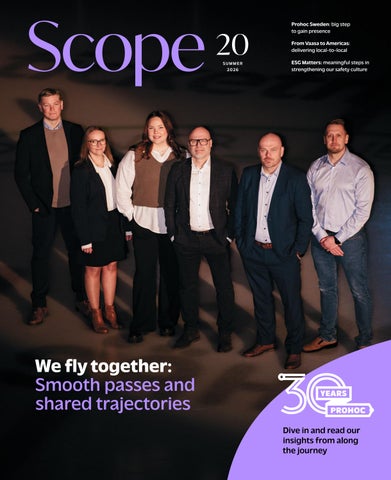
This marks a new beginning for us. Much has changed – our service offering, our targets, and our people. At the same time, we have set new ambitions for our growth, internationalization, and future customer relationships. With these changes, it is natural for us to reposition ourselves.
Our goal is to be a true partner to the industry. In today’s industrial service landscape, trust, long-term commitment, and transparency are essential. The real shift is moving from a customer relationship to a partnership, one that both parties actively choose. That is where new, value-creating collaboration can emerge.
Partnerships can take many forms. In global field service, the white label model has gained traction. In this approach, we operate as a service partner under our customer’s brand, delivering our expertise as part of
their offering. This requires clarity in our role: we act as an extension of our customer, supporting their promise without stepping beyond it.
Our growth is increasingly driven by internationalization. To be a true partner, we must serve our customers globally. We aim to grow alongside them and strengthen our presence across Europe, Asia, and the Americas, with Asia as a new key focus area. Our ambition is to be “local to local” – serving customers close to where they operate. This calls for bold growth and a shift in mindset.
Our service growth is driven in particular by production and field services, which act as our key growth platforms. Project deliveries remain an important part of our targets, while specialist services are our longest-standing and most established service area. Commissioning services are an emerging focus area currently under development, with the aim of providing comprehensive solutions for industrial plant start-ups.
At the core of everything are our people. In a multi-technology, multi-customer environment, expertise and continuous learning are critical. We are committed to expanding opportunities for development and cross-functional skills – across mechanical and electrical disciplines and different technologies. This versatility allows us to stay flexible and meet our customers’ needs effectively.
We are already moving in this direction and will continue to build on it. For our people, this means new challenges and continuous opportunities to learn and grow.
Kimmo Kohtamäki CEO
Prohoc is building its presence in the Americas by staying close to its customers – with local teams delivering Nordic standards where the work happens.
CONTACT
Text Maria Bertula Illustration Jonne-Pekka Stenroos
Major Nordic technology OEMs are delivering power plants, marine installations and industrial projects across the US and Central America at a pace that shows no sign of slowing down. Data centers alone are fuelling an energy boom that is reshaping infrastructure investment across the continent.
“Our customers are expanding in the Americas, and we want to be right there with them,” says Kimmo Kohtamäki, Group CEO. “Local to local, that’s how we work.”
The journey began with a greenfield establishment in Guatemala, followed by an acquisition in Fort Lauderdale, Florida. Two footholds on a very large continent, and the start of something bigger.
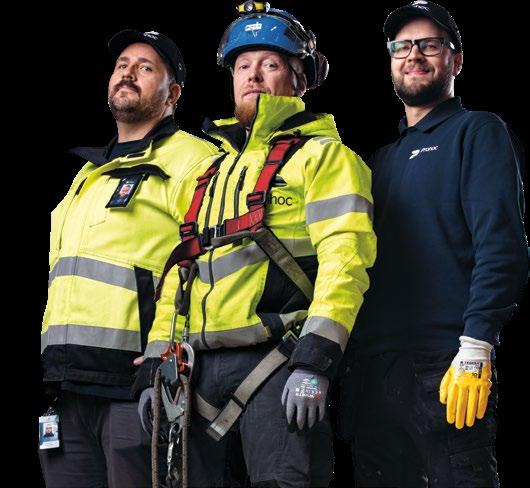
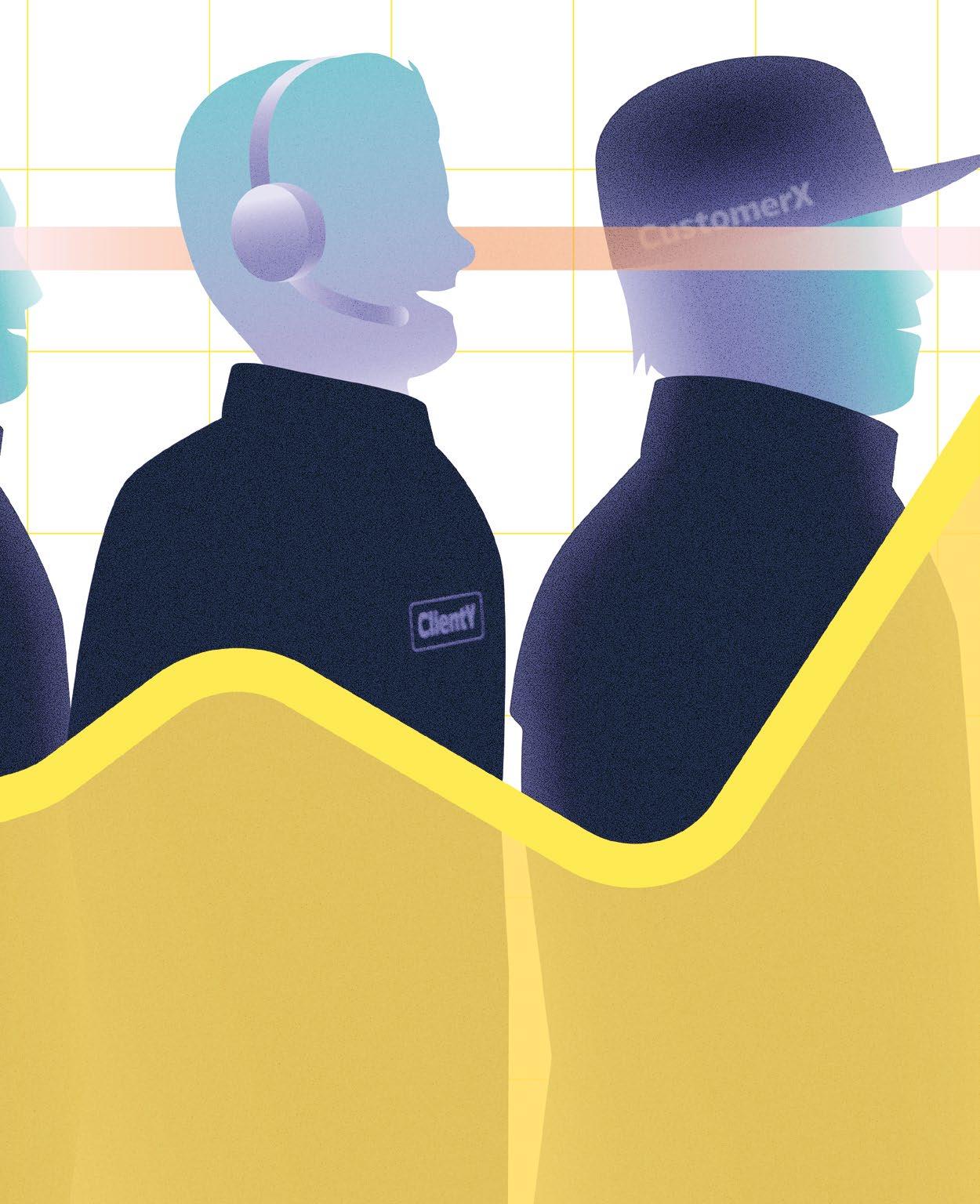
On site, Prohoc technicians wear their customer’s logo. They follow the customer’s processes, apply the customer’s standards, and work within the customer’s organisation.
“The end customer gets exactly what they would if the OEM had sent their own people. To the OEM, it is scalable capacity delivered with full reliability. That’s the idea,” explains Matias Träskbäck, Senior Vice President of Global Field Services.
Prohoc’s service offering in the region spans global field service, specialist services and project resourcing, a broad palette that allows Prohoc to step in wherever the customer needs support: from installation and commissioning through to maintenance and overhaul.
In the Americas, it is not uncommon for local service partners to gradually move closer to end customers, and eventually take them. Prohoc has made a deliberate strategic choice not to go down that road.
“Our business model is built on a simple principle: we would never compete with our customers,” says Träskbäck. “We’re there to strengthen their service delivery, not to build our own position at their expense.”
It is a principle that Juan Carlos Pérez, Managing Director of Prohoc’s operations in the Americas, has had to defend in practice. Cruise lines, power plant operators and even competitors have approached him directly, asking if Prohoc could work for them instead.
“The answer is always no,” says Pérez. “We work for our customers, full stop. It’s a true partnership, and in this part of the world, that kind of trust is rare and valuable.”
Having a Nordic company with transparent values and a long track record is a genuine selling point in a market where reliability cannot be taken for granted.
Building a local presence is not just a strategic preference, it has become a practical neces-
”Our business model is built on a simple principle: we would never compete with our customers.”



sity. Tightening US visa policies have made it increasingly difficult to send European specialists across the Atlantic, reinforcing the case for local recruitment.
Prohoc recruits in the US and Guatemala, but training often happens in Vaasa. Employees fly in from Miami, Guatemala City and Alaska to build the technical foundation that underpins every project delivery. The result is a team that is local in its operations but genuinely Nordic in its standards.
“There are definitely challenges operating across this region,” says Pérez. “Labor laws, safety standards and culture differ from the Nordics. Our setup means our customers have a partner who understands the local context while delivering Nordic-level standards.”
The Americas operation has a target of 50 people by the end of the year. Within five years, the ambition is to grow global field services to 300 to 400 people worldwide.
“It could be that we have to go bigger much quicker than this,” says Pérez. “It all depends on how things go with the projects being discussed right now.”
The political landscape, with tariffs, shifting trade policies and a changing world order, is watched carefully, but has not changed the fundamental picture.
“Investment in energy infrastructure continues and the need for qualified, reliable service partners has not gone away,” says Kohtamäki. “We are there to support our customers – and we’re just getting started.”
Jairo Cortes, Matias Träskbäck and Juan Carlos Pérez recently completed a 260 km charity bike ride from Miami to Key West.
FROM THE DESK OF COB
This year marks 30 years of Prohoc. Milestones like this invite reflection, but more importantly, they challenge us to define what comes next.
What began as support for a local ice hockey club has evolved into a globally operating industrial services company. We have helped OEMs deliver their technologies to more than 100 countries, supported asset owners and investors in executing complex projects, and offered hundreds of prohocians meaningful careers in industrial services. That journey has never been linear.
Growth, whether in business or in life, rarely follows a straight path. It moves in cycles, the S-curve of growth. Periods of rapid progress are followed by moments where the old ways no longer deliver the same results. These are strategic inflection points. They demand renewal and courage to change to keep on to that forward-leaning momentum.
Prohoc’s story has been shaped by these moments.
In 2013, we began what we now call Prohoc 2.0. We shifted from providing individual specialists to building stronger project partnerships and delivering larger teams. This was the phase where we proved we could take responsibility for execution. One defining moment was the full refurbishment of a drilling rig in Baku. During this time, we grew from 35 to 120 people.
Prohoc 3.0 followed in 2019 with our Empowering Projects strategy. We moved further up the value chain into project management contracting and expanded our capabilities into production, and operations & maintenance. Our organization grew to nearly 400 professionals, and our role with customers deepened from support to partnership.
Now, we are executing Prohoc 4.0.
Our direction is clear: From Local to Global. We are building the capability to serve our customers where they operate, not only where we are. This includes reshaping our
structure, carving out focused businesses like Camline and ProID, and establishing a stronger presence in the Americas. At the same time, we are scaling our ambition to become a Global Field Services partner for OEMs, supporting their lifecycle business worldwide.
This is a different kind of challenge. It requires a new level of discipline, leadership, and consistency.
Looking back, the journey resembles climbing a series of mountains. Each ascent has taught us something. Each summit has expanded our view. But the next climb always demands more than the previous one.
There is a thought that has stayed with me over the years: the mountain is not there to conquer, but to transform the person climbing it to become stronger. The same applies to companies. What matters is not only where you arrive, but what you become in the process.
We have climbed several smaller mountains already. Now we are preparing for our first true “eight-thousander”.
To succeed, we must sharpen how we lead, how we operate, and how we execute. Direction alone is not enough. Execution defines outcomes. As one of our global customers CEO put it: pick a direction and execute like hell. We know our direction. Now it is about consistency and performance.
At the same time, leadership today requires balance. Patience to endure uncertainty. Urgency to move forward. The ability to accept incompleteness while still driving momentum.
Because while conditions change, one principle remains constant: strong teams endure.
That is what Prohoc has been built on for three decades. And that is what will define the decades ahead.
Prohoc 5.0 will come in time. For now, we continue the climb.
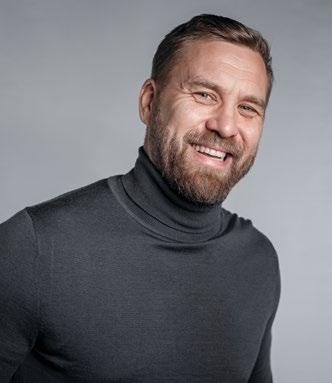
WE HAVE CLIMBED SEVERAL SMALLER MOUNTAINS ALREADY. NOW WE ARE PREPARING FOR OUR FIRST TRUE “EIGHT-THOUSANDER”.
Matti Manner Chair of the Board
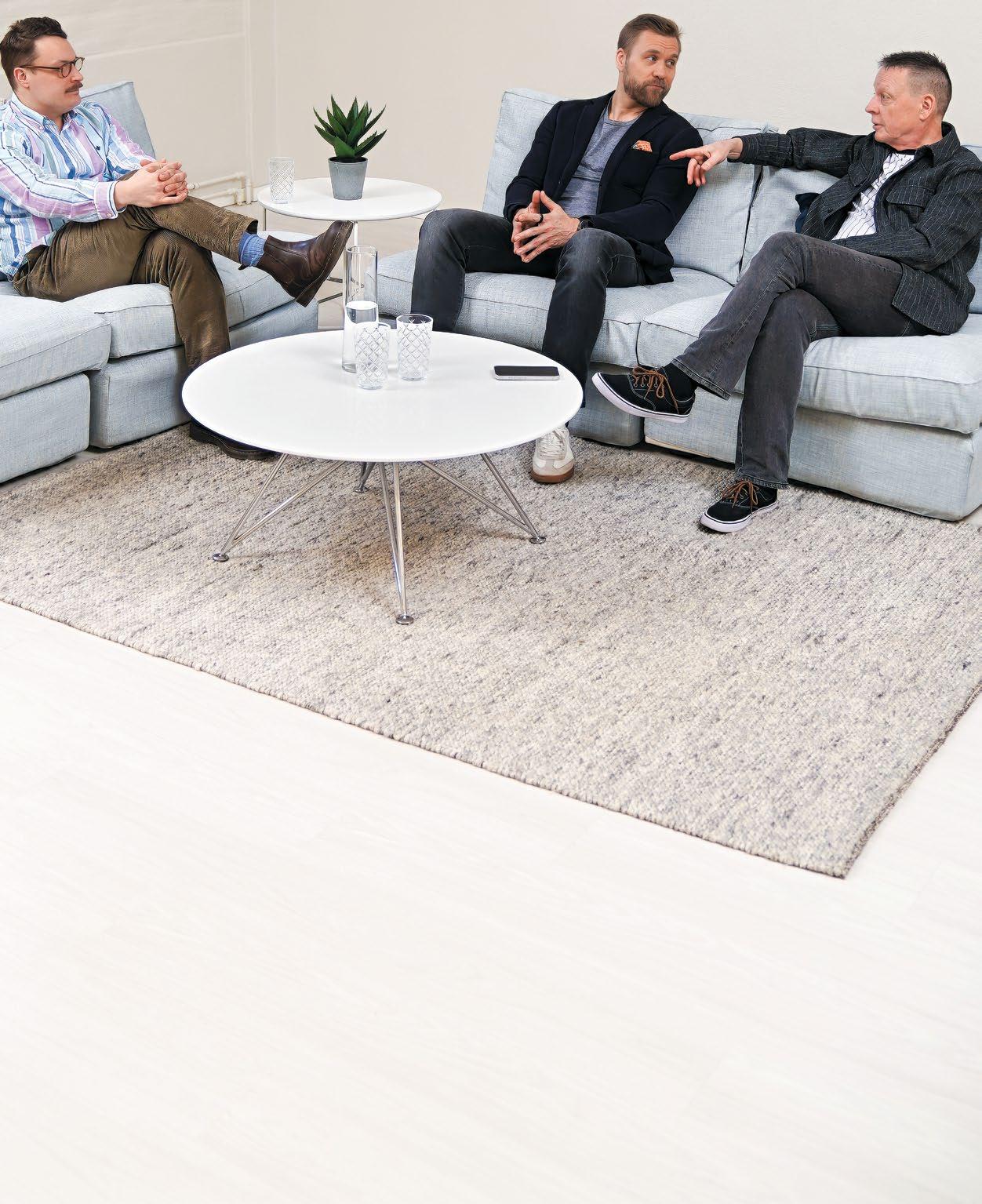
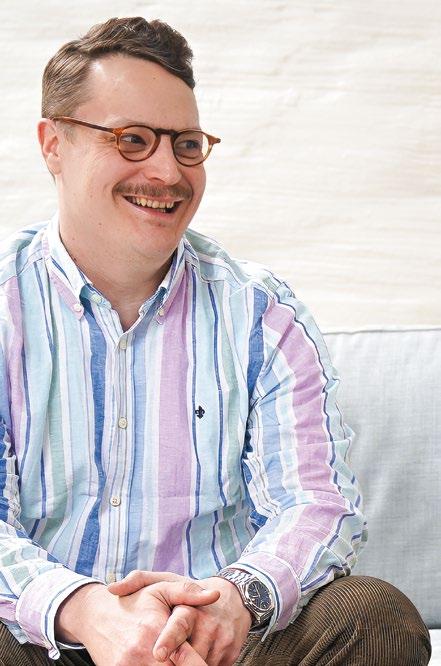


When you need a site supervisor or project manager, you call Prohoc. That’s a good reason to be in contact – but not the only one? Full project delivery responsibility is a growing part of Prohoc’s offering, and a growing number of industrial owners and technology suppliers are putting that capability to work.
Text Viivi Tervonen Photos John Råholm
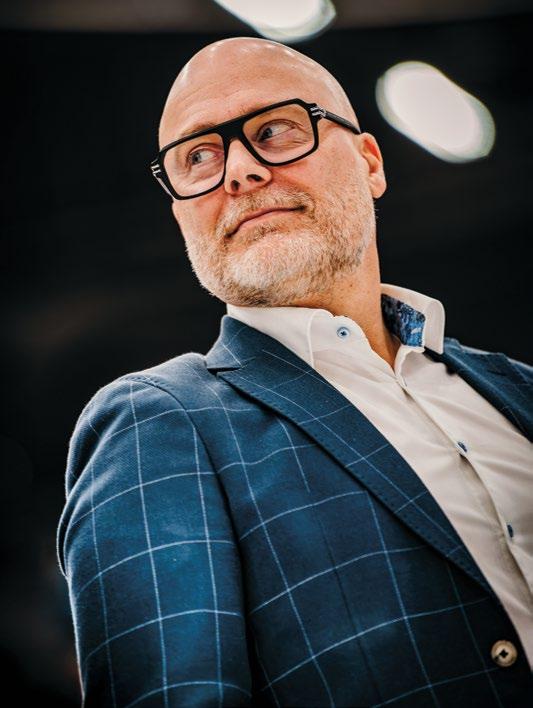
Iiro Wesslin, Vice President at Prohoc, recognises a trend that has been shaping the industry throughout the 2000s: it rarely makes sense anymore for industrial investors and plant owners to maintain their own in-house project organisation.
“When a project needs to get off the ground, the owner typically has to reach out to at least three separate parties: an engineering consultant, a technology supplier, and a contractor. If all services are sourced from different providers, that means three separate interfaces, and the coordination burden falls on the customer,” Wesslin explains.
At the same time, technology is growing more complex across all industrial production installations. This creates a rising need for system integrators capable of bringing together technologies from multiple suppliers and putting them to work for the end user. That’s exactly where Prohoc steps in.
Prohoc is often associated with resourcing. That, however, is only one part of the picture.
What may surprise many is that Prohoc also takes on full EPC responsibility, meaning one contract, one point of accountability and one contact throughout the entire project. Beyond EPC, Prohoc delivers projects across EPCM and PMC scopes, and can also act as an independent Owner’s Engineer, representing the customer’s interests and ensuring that technical, commercial and safety objectives are met at every stage.
“We take responsibility for everything in the project, supporting the customer in technology procurement in an advisory role and managing the integration of different technologies. The customer can hand over all the headaches of project execution to us, and we make sure the project gets delivered as planned,” says Simo Rintakari, Prohoc’s Head of Project Services.
Underpinning all project delivery services is a team of experienced and certified professionals who manage projects from site planning and management through to installation, commissioning, electrical works, HSEQ, scheduling and documentation.
“In practice, the customer buys a team that frees
● Prohoc delivers full project delivery services across EPC, EPCM, PMC and OE scopes
● We operate across the Nordics and globally when needed
● As a technology-independent partner, we always act in our client’s best interest Battery energy storage systems (BESS) is one of our fastest-growing delivery areas
● We’re ready to step in even at short notice. On Helen’s BESS project, we moved from an engineering consultant to Main Contractor, taking on full site management, safety coordination and supervision, while continuing to deliver the project within the original EPCM scope.
up their own time and gives them peace of mind –knowing the project is in safe hands,” Rintakari adds.
Flexibility is Prohoc’s core strength as a project delivery partner.
“We’re not tied to any specific technology or industry segment, which means we can genuinely operate on the customer’s terms. Our role adapts to the situation: sometimes we work more closely with the investor, sometimes as a local delivery partner for a technology supplier – most often something in between,” Rintakari explains.
The same flexibility shows in how Prohoc puts together its project teams.
“We have a broad and continuously growing network of professionals, from which we build the right team for each specific project, one that can also be mobilised quickly in the field. Our ability to act with flexibility and agility translates directly into cost efficiency for the customer,” Rintakari continues.
Until now, Prohoc’s project deliveries have been concentrated primarily in the Finnish market. But now, the energy transition and the growing volume of industrial investments especially in Sweden are beginning to change the picture.
“There’s strong demand for versatile operators in the market. We’ve been asked directly whether we can deliver full turnkey projects also outside Finland – Sweden in particular. My answer is: we are definitely interested. We have the capability to operate and mobilize the team to almost any location. Battery energy storage, for example, is a growing area where we have already experience with different contract models,” Wesslin says.
As the need for project expertise continues to grow, so does the case for a single delivery partner. Wesslin puts it simply: the fewer handovers, the better the outcome.
“The success of an investment is decided in the execution, and often before the project even begins. That’s why we want to be involved at the stage when plans are still being shaped. One point of contact and full accountability – that’s where we add the most value,” Wesslin concludes.
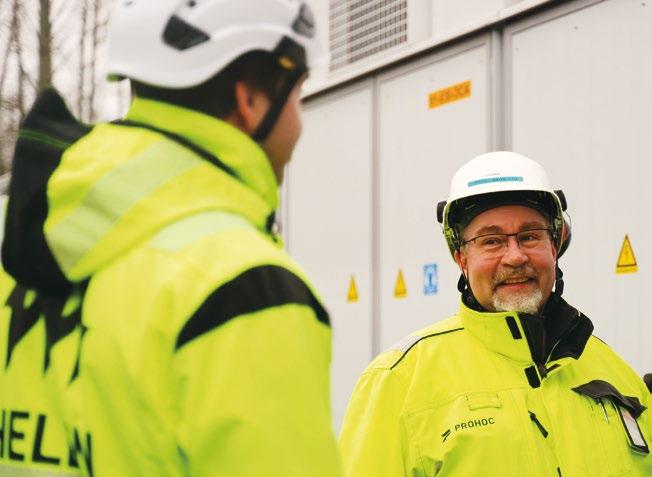
Decades of gradual development and growth with increasingly larger projects led to another new experience with Helen. Prohoc contracted EPCM-delivery project for Helen’s new battery energy storage system:
● Scope covered acting as the main contractor, project management, engineering management, electrical and civil design coordination, contractor management, site supervision and HSE responsibilities throughout the project.
● With a clear project governance model and agile execution, Prohoc ensured transparency, compliance, and on-time delivery despite evolving project conditions.
● Result: a fully commissioned, safe, and efficient 5 MW / 10 MWh BESS, strengthening Helen’s renewable energy flexibility and operational reliability.
When a Prohocian joins a project, they don’t stay on the sidelines. Specialist Services is built on people who integrate into the team and take responsibility where it matters most.
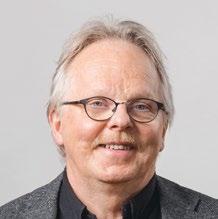
Jari Ojanen
SENIOR SITE MANAGER
“Strong technical expertise, a solution-oriented mindset, the ability to perform under pressure and, above all, excellent social skills. These have been at the core of Prohoc’s Specialist Services since the very beginning and still are today.
The service ensures that our clients have the right expertise to execute their projects. In practice, we bring the required technical disciplines and professionals into the project organisation. Skills that are not always practical to hire permanently. Our scope covers a wide range of industrial investment project needs, excluding design, from marine to heavy industry and energy.
I usually join projects when execution starts to take shape. When steel, equipment and people start moving, that’s our home ground.
I joined Prohoc as one of the early hires when the company and the service were just starting to grow. At the time, there were only around ten of us. I had also worked as an entrepreneur, but at Prohoc I got to work on equally diverse projects without having to worry about sales myself.
Now, after 15 years in the company, a lot has changed. In the past, we entered projects as individual specialists. Today, we can build complete project organisations for our clients. Projects are often global, and the required expertise is rarely found in one country or team. Our strength lies in bringing together the right people, regardless of location.
Although I now focus more on domestic projects, international projects have left a strong impression. I remember a project in Japan where we were commissioning a Palm Oil Power Plant with
WHEN THE EXECUTION STARTS AND THINGS BEGIN TO MOVE, THAT’S WHERE WE COME IN.
a technology provider, just the two of us from FInland with local japanes specilaists. I was working at engine level when the whole plant shook violently. My first thought was that someone had driven a machine and hit the engine. Then I noticed the second engine shaking as well.
It took a moment to realise it was an earthquake. The entire site was evacuated, but fortunately there was no danger. The situation illustrates well how unpredictable this work can be, and how experience and a solution-oriented mindset help you move forward, no matter the situation.
There is still plenty of work for me, even though I could already be retired. That says something about the ongoing demand for the expertise we are providing.”
Miro Dahlman
COMMISSIONING
ENGINEER
“Networks are everything in this work. The whole service is built on having an exceptionally broad pool of expertise. Today, Prohoc has over 400 employees, and we have connected with tens of thousands of professionals through recruitment processes. From this continuously evolving network, we select the best-fit specialists for each project.
Another key network is built within the projects themselves. It’s important to build strong relationships with clients, project teams and people on site through your own work.
As a consultant, you can find yourself in highly demanding projects that build experience. That requires flexibility and a willingness to take on different tasks. On site, you shouldn’t think, “this isn’t my responsibility” – quite the opposite. The more you can contribute, the more valuable you are.
You need to handle pressure, solve problems and adapt to different projects. One day I work as a consultant in a client project, the next as part of a Prohoc team. It keeps the work interesting when every day is different. With the right mindset, you keep learning and developing all the time.
In the end, it all comes down to people. We step in at the right time, work well with others, find solutions and ensure the job gets done with quality.”
ONE DAY I’M A CONSULTANT IN A CLIENT PROJECT, THE NEXT I’M WORKING ON A PROHOC PROJECT WITH MY TEAM.
2024 Global expansion to Americas 2026 Expansion in Sweden BRIEF HISTORY OF
2022 Production services expansion
2020 New Prohoc Group Structure and Producion Services startup
Prohoc was built around Specialist Services in the late 1990s. In the beginning, there was just a man with a van, bringing strong energy sector expertise to industrial clients in the Vaasa region of Finland. Through determined work, a strong network was formed – one that still underpins the business today.
Following a generational shift, operations were developed systematically: the business was professionalised, the service offering broadened and the company expanded internationally. Over the years, what started as individual experts has grown into a significant partner capable of building complete project organisations for clients’ global needs.
2027
Readiness for a new era: we’ve build our capabilities to take on another leap in glocal customer success.
2024
From local to global: Luptasitias doloreiur rem estio cuptur? Modi aut quidusa voluptatiis aut porem faccusti ut aut oditi as etumque conecust.
2019
Empowering projects strategy: Ehenis eum quas pe explaborem quas molut excerem et et quam, velic temporumquia aut volum re.
2014
Expanding customer base to serve more OEM’s and Asset Owners
ESTABLISHED IN 1996
We started as a support for local sports life, providing project information services and gradually expanded to construction management services.
Launching a safety campaign is easy. You can order posters, organise a kickoff, publish a new policy on the intranet and send an email to the entire organisation. What’s much harder is changing how people actually think and act in their daily work. And in the end, that’s the only thing that truly matters.
Text Mikko Mattila Photos John Råholm
Over the past year, we at Prohoc have launched a comprehensive safety campaign as part of our continuous safety development. At the core of the campaign is the STARR mindset: Stop, Think, Acknowledge, Report, Reflect. The idea is simple and intentionally provocative: pause and think before you act. The purpose of STARR is to engage our people in always important safety topics. But as with any campaign, its impact remains temporary without continuous effort.
In an ideal situation, no one needs to stop and think in the middle of a hectic worksite, and safe choices would come automatically from muscle memory. This is easier said than done. Researchers at University College London have shown that forming a new habit takes on average 66 days, with significant variation between individuals: for some, it takes 18 days, for others up to 254. When you have over 400 employees, you realise that this can be a long journey.
A true cultural shift requires patience, persistence and above all, collaboration. It happens through conversations and individual insights, not just posters, no matter how polished they may be.
That’s why at Prohoc we embed safety thinking through safety observations. Employees are the most important eyes and ears, for example in the production environment, and it’s essential that they recognise safety improvement opportunities in their everyday work. Observations reveal the reality of how people actually behave, not just
how they intend to behave.
A recent example illustrates this well. We received a safety observation regarding the comfort of safety caps. They were found to be hot and uncomfortable. The observation was taken forward, and now several alternative models are being tested, allowing everyone to choose what works best for them.
The results of this groundwork speak for themselves: the number of safety observations has increased tenfold, and the accident frequency has decreased significantly. In a short time, we’ve taken meaningful steps in strengthening our safety culture, and that’s something we can all be proud of.
This journey has also made me reflect on a couple of safety observations of my own.
First: an increase in safety observations does not mean the workplace has become more dangerous, quite the opposite. It reflects trust. People only take the time to report observations when they believe it truly makes a difference.
Second: practice what you preach. No one should skip a safety harness just to “get the job done quickly”, and building a stronger safety culture works the same way. It doesn’t happen by rushing or cutting corners, but step by step, one action at a time. And it applies to all of us, not just those working on site. We all need to be STARR players to build a safer workplace.
At Prohoc, we humbly continue this work together with a clear direction to be a model example of safety.
STOP THINK AKNOWLEDGE REPORT REFLECT
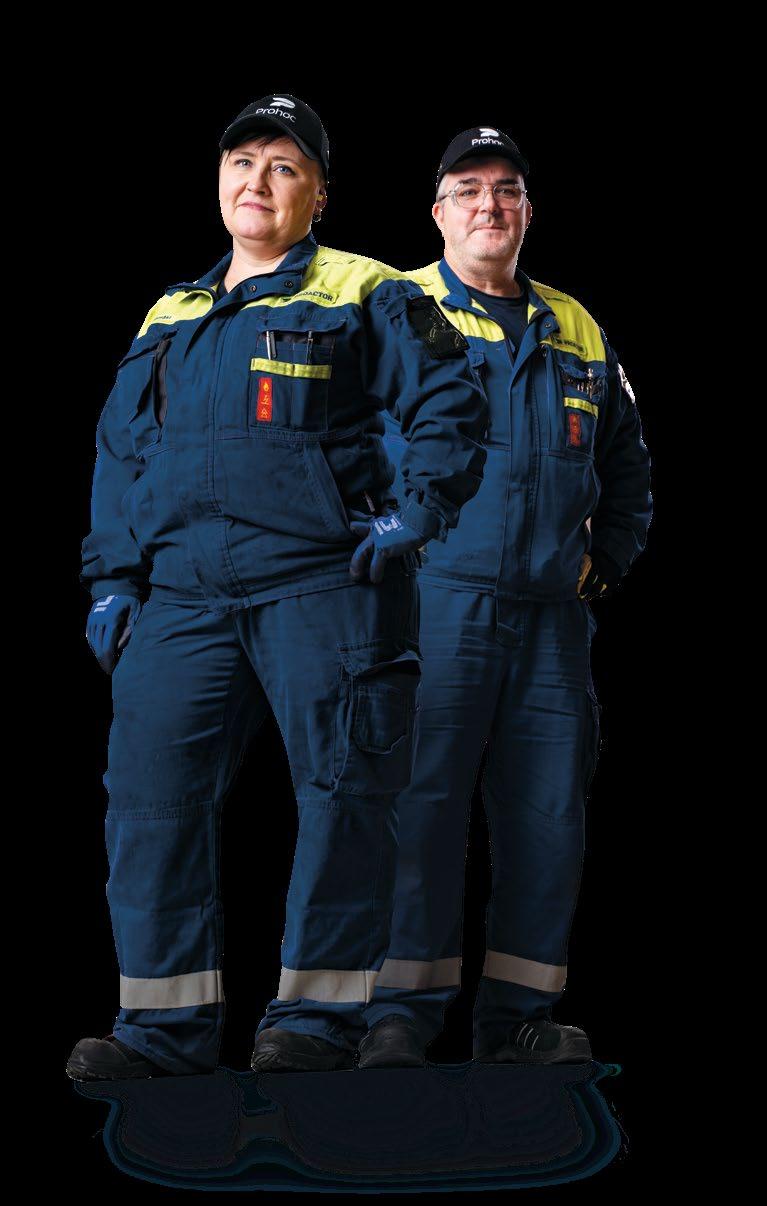
ESG MATTERS at Prohoc. Our vision is to be stronger contributor to society. In this column, we will talk about current ESG issues and how the past year has gone in Prohoc’s ESG activities. Stay tuned!

Kimmo Kohtamäki Chief Executive Officer Prohoc

Matias Träskbäck Sr. Vice President, Global Field Service Prohoc
For years, Prohoc has been sending expertise across the Gulf of Bothnia. Now the company is making it official with a strategic acquisition in Norrköping and ambitions that stretch across the Nordics.
Prohoc AB has existed as a legal entity in Sweden since 2021. With the acquisition of Sumitomo SHI FW’s (SFW) field service operations in Norrköping, the strategy becomes reality.
“We had been looking for the right target since 2021, something that fits us strategically. Now we have found it,” says Kimmo Kohtamäki, Group CEO, Prohoc.
Prohoc AB now has a tangible base, a local team with invaluable customer knowledge and an immediate foothold in one of Northern Europe’s most active industrial markets.
“Sweden is, quite simply, a golden market. In terms of industrial manufacturing, we are talking about roughly five times the size of Finland,” explains Matias Träskbäck, Senior Vice President, Global Field Services, Prohoc.
Sweden’s energy market is undergoing a fundamental transformation, and the window of opportunity is wide open. Electricity demand is expected to double in less than ten years, driving a massive modernisation cycle across nuclear, hydropower and grid infrastructure. Battery energy storage is growing faster than any other energy technology in the country.
As Mats Ohls, Senior Vice President at SFW Global Services, puts it:
“Five years ago, everyone was talking about the green transition. Today the conversation has shifted – energy security and independence are now the main drivers. But the solutions are the same.”
And the energy transition itself is now the engine behind a broader industrial revolution, where green steel, hydrogen and large-scale electrification are reshaping the entire manufacturing landscape, creating a level of investment activity the market has rarely seen before.
The critical bottleneck is not capital, it is expertise. Sweden needs experienced partners who can deliver across the full project lifecycle,

Vice
Global Services
SHI FW
from execution and commissioning through to long-term field service and operations. That is precisely where Prohoc operates.
The relationship between Prohoc and SFW did not start with this acquisition. There is a shared history of collaboration across multiple touchpoints – specialist resources on new-build projects, joint development programmes and co-ownership connections.
What this deal does is take that relationship to a fundamentally new level: from supplier to strategic partner. For SFW, whose core business is highly cyclical with maintenance concentrated in the summer months, a partner capable of growing across other industries is not just a convenience, it is a strategic advantage.
“As Prohoc grows across other industries and markets, SFW benefits too. A stronger, more capable partner means better service and more stable capacity year-round,” Ohls explains.
For Prohoc, the fit is equally clear. The SFW customer base with energy companies and large industrial investment projects is precisely the terrain they want to cover across the Nordics.
The Norrköping acquisition is the opening move in a larger Nordic strategy for Prohoc. Specialist Services and Global Field Services are ready to scale immediately while Production Services will follow as the Swedish operation matures. Norway is already on the radar, with market exploration underway.
The synergies between SFW and Prohoc are not limited to Scandinavia. Collaboration discussions are already underway in the US and Canada.
“I would rather call Prohoc than a distant overseas provider, and that says something about the kind of partnership we are building,” says Ohls.
Kohtamäki is equally pleased with the partnership.
“SFW is a model example of the OEM partnerships we are striving for: a long-term relationship that drives our strategy forward. We are honoured they chose Prohoc as their partner, and as a new home for their field service team in Norrköping.”

It was important for us to find a partner that shares the same way of thinking and that we can build something with over time. With Prohoc, that alignment was there from the beginning.
When Sumitomo SHI FW (SFW) decided to outsource its field service operations in Sweden, they evaluated several partners. Mats Ohls, Senior Vice President at SFW Global Services, explains why Prohoc stood out – and what they are building together.
The brief was clear from the start, SFW was not looking for the cheapest option. Instead, they were looking for a long-term strategic partner to build a durable relationship with.
Prohoc’s strategy to grow alongside its OEM partners and never to compete against them proved to be decisive. One of the other candidates wanted to keep open the option of going directly to end customers. For SFW, that was a dealbreaker. Prohoc’s position was unambiguous, and it aligned perfectly with what SFW needed.
“It was important for us to find a partner that shares the same way of thinking and that we can build something with over time. With Prohoc, that alignment was there from the beginning.”
Strategy and commercial logic matter, but so do people. When SFW decided to transfer its Norrköping team to a new employer, finding the right cultural fit was not a secondary consideration, it was central to the decision.
Prohoc’s people-first philosophy, its approach to employment security and its track record of treating staff as the company’s most important asset made a strong impression.
“We wanted to find a good new home for our employees, where they would be well taken care of. Prohoc’s way of working with people and the value they place on them gave us that confidence.”
Over time, Prohoc’s expansion is likely to open up new ways of working together, shaped by new markets, shared customers and emerging opportunities along the way.
“We don’t see this as something where work only comes from one direction. As the partnership develops, it will hopefully go both ways. We bring opportunities to them, and they bring opportunities to us.”
Partnerships built on the right foundations tend to grow, often in ways neither party fully anticipates at the start.
It is not outsourcing. It is not staffing. Prohoc Production Services is something the market hasn’t seen before, and it delivers up to 20% more output per shift.
PProhoc Production Services fills a gap the market didn’t know it needed.
“In our model, the customer retains control while freeing up focus for their core business,” says Tuukka Rainio, Business Development Manager. “We take responsibility for a department or a production line, and drive it forward with a clear commitment to results.”
Prohoc teams work in the customer’s facilities using the customer’s systems and processes, or in Prohoc’s own premises, depending on what suits the customer best. Either way, there is no need for the customer to build a new hall or purchase new machinery.
“When OEMs outsource to a traditional contract manufacturer, they often end up with expensive machinery sitting idle on one side and new investments being made on the other,” says Anders Karlsson, Senior Vice President of Production Services at Prohoc. “With our model, we use what the customer already has. That alone is a significant advantage.”
The value of this model is not just conceptual, it is measurable. When Prohoc enters a new production environment, the starting point is always a concrete commitment to improvement.
“We need to be more efficient, deliver better quality and create a safer working environment than the customer could achieve on their own,” says Jani Laiho, Head of Production Services. “That is the baseline. If we can’t demonstrate that, we have no business being there.”
The operating model is built on proactively identifying development needs and driving
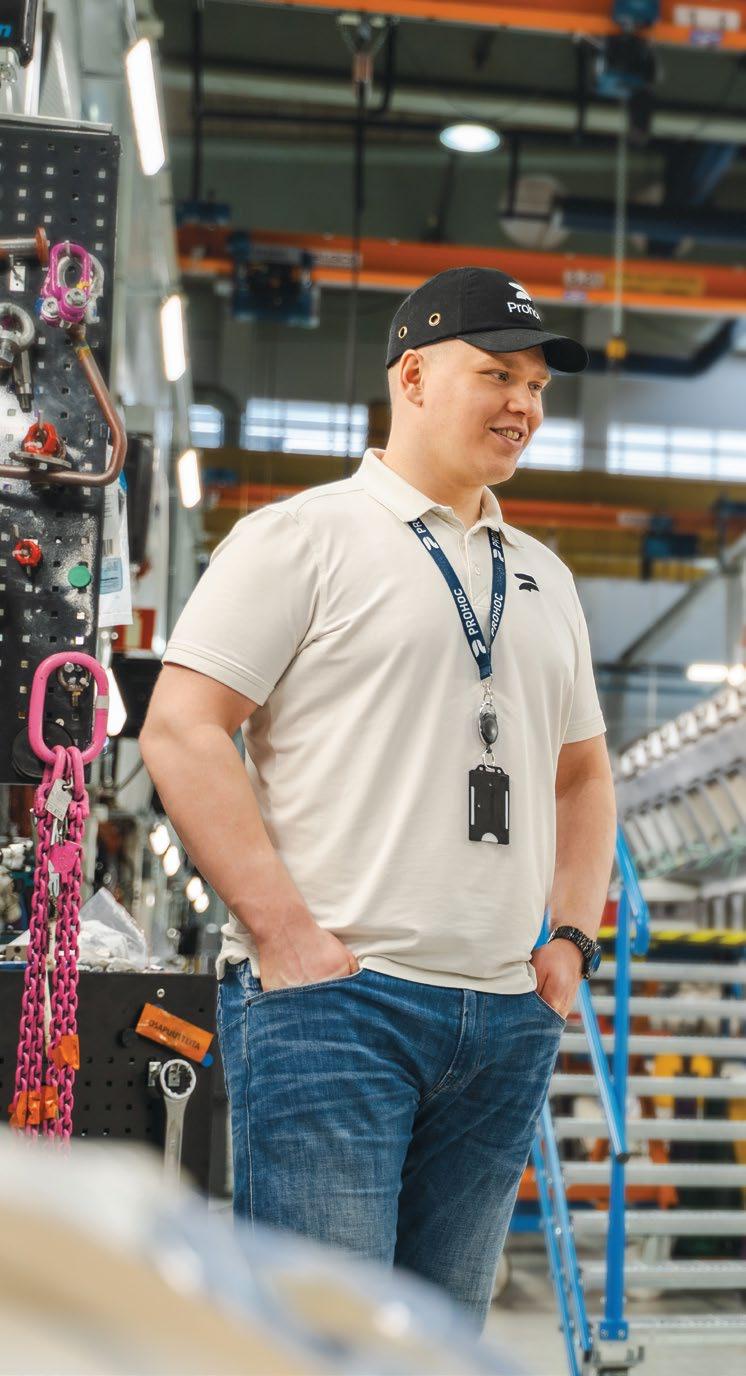
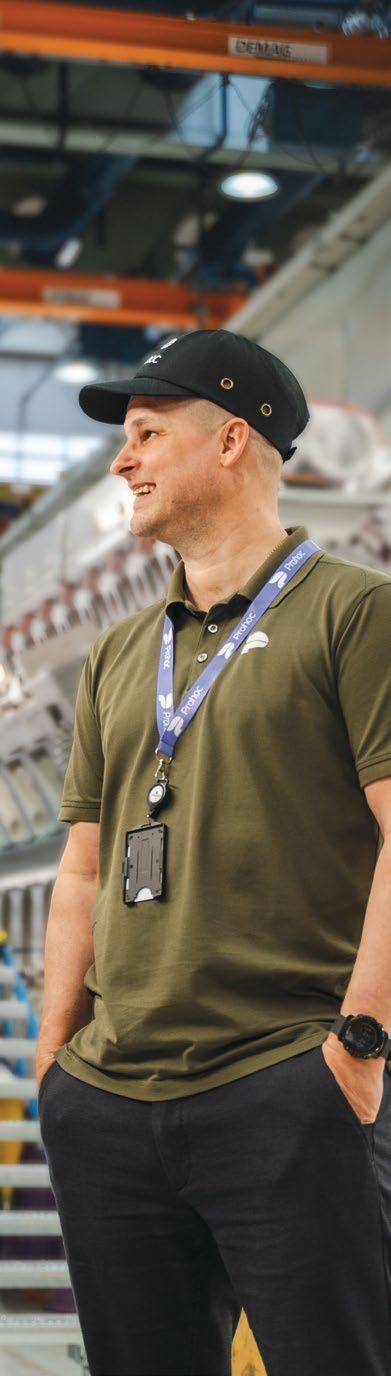
them to completion together with the customer. In one case, this approach led to a full production environment overhaul and a measurable improvement in performance, with up to 15–20% higher throughput per shift.
It is the Prohoc way. “We don’t wait to be asked,” says Laiho. “If we see something that would make the production better, we say so. That’s what a real partner does.”
The goal is not just to perform well within a defined scope, but to actively help make the customer better too.
A people-centred philosophy, deeply rooted in the company’s values, is what drives the performance. Prohoc recruits and trains staff from the ground up, offering genuine employment security in an industry where short-term contracts have long been the norm.
“We believe that if people feel secure and valued, the quality of their work reflects that, and ultimately it is the customer who benefits,” says Rainio.
As part of its regional commitment, Prohoc works closely with local vocational schools to develop industry-relevant training and create clear pathways into employment. When demand grows, Prohoc is ready. A continuously updated talent pool ensures rapid mobilisation whenever a new partnership begins.
The ambition is clear: double the team to 500 employees within five years and establish Prohoc Production Services as the partner of choice for major industrial manufacturers across Finland and Sweden.
“Our offering is particularly relevant when a customer is going through some kind of transition,” says Wesslin. “A production network being reorganised, a volume spike that the existing factory can’t absorb, a legacy product line that still sells but no longer fits the core focus. Those are the moments when our model makes immediate sense.”
Prohoc is already in active dialogue with new customers in Finland and Sweden, seeking longterm and strategic partnerships. With a young and fast-growing team, and a service model with no direct equivalent on the market, Prohoc Production Services is quietly becoming one of the most capable industrial partners in Northern Europe.
Operates as an embedded production partner for large industrial manufacturers, taking full responsibility for defined phases of the production.
Assembly, finishing, disassembly, preparation for transport and more. Collaboration models
● Shop-in-shop: Prohoc manages a dedicated department at the customer’s facilities, using the customer’s systems and infrastructure
● Prohoc premises: production is carried out in Prohoc’s own facilities, using Prohocs systems
THE SERVICE IS DESIGNED FOR
● OEM manufacturers in the energy technology and process industries
● Companies scaling up production of a new product
KEY FIGURES
● ~250 employees, growing 10–15% year on year
● Up to 20% improvement in production output per shift
LOCATIONS
Nordic industrial technology companies have delivered hundreds of billions of euros worth of equipment to the world over recent decades.
Every turbine, engine, boiler and propulsion system installed at a power plant, on a vessel or at a process facility represents a long-term service need.
The global field service market currently stands at around 35 billion dollars and is projected to reach 55 billion by 2030. For OEMs, after-sales service offers long-term agreements, predictable revenue and strong margins.
Yet capturing that opportunity is not straightforward.
Skilled technicians are increasingly difficult to find, travel costs are rising and compliance requirements are tightening. And in markets where OEMs lack a local presence, service delivery often depends on third-party providers, with limited control over quality and customer experience.
“The amount of equipment already out there is enormous, but much of it is still serviced without consistent standards or in a way that fully supports the OEM’s position. That’s the gap we’re stepping into,” say Kimmo Kohtamäki at Prohoc.
OEM manufacturers have spent decades building the world’s industrial infrastructure. Keeping it running is the next big business and Prohoc is positioning itself at the centre of it.
Text Maria Bertula Illustration Jonne-Pekka Stenroos
Delivering global service commitments requires more than technical expertise. It calls for a partner that can act as a seamless extension of the OEM’s own organisation.
At its core, Global Field Services is about mobilising the right expertise to where it is needed, bringing skilled teams to customer and end-customer sites for assembly, installation, commissioning, maintenance, repair and upgrades.
“A service contract doesn’t care about time zones or lack of resources. Our job is to make sure our customers can say yes, wherever the work needs to happen,” says Matias Träskbäck, SVP Global Field Services at Prohoc.
The work follows the OEM’s own processes, safety standards and ways of working – a meaningful differentiator in a market dominated by small local operators that often fall short on certifications and compliance.
The best service partner is one the end customer never notices. Prohoc technicians work on site entirely under the OEM’s brand. Branding, communication and reporting all follow customer guidelines. The end customer experiences a single service provider.
This matters more than it might seem.
Many OEMs have seen how a trusted service partner, given enough time and access, quietly can become a competitor.
“Our customers have worked hard to build their end-customer relationships. We’re there to protect and strengthen these relationships, not to exploit them,” states Kimmo Kohtamäki at Prohoc.
Prohoc already has operational hubs active in Europe, the US and Guatemala. Asia is next in line. Each hub is anchored by local leadership, combining consistent global standards with a strong understanding of local market dynamics, regulations and ways of working.
“The installed base is out there. The demand is growing. We’re building the organisation to meet it, on our customers’ terms, wherever that takes us,” Matias Träskbäck concludes.
Within five years, Prohoc aims to operate Global Field Services with a capacity of around 500 people, serving leading technology companies in the energy, marine and process industries.
Prohoc has spent three decades placing skilled people on industrial sites across more than a hundred countries. Global Field Services grows from that same foundation, now focused on servicing and maintaining the equipment that keeps the world running.
Kimmo Kohtamäki, CEO, has built service businesses across major companies and multiple markets. He recognised a recurring pattern: customers had attractive contracts in place but struggled to organise the actual work across different locations. That gap has always been there. Now Prohoc is built to close.

In industrial environments, performance is often measured in speed, efficiency and output. Yet the conditions that enable those results are often less visible. When people feel safe to speak up, work tends to be both safer and more effective.
It’s a familiar moment: the schedule is tight, pressure is rising, and decisions need to be made quickly. Work moves forward – but just before a decision is made, someone hesitates. A concern goes unspoken. A small issue is left unmentioned.
These moments matter.
In industrial work, efficiency, timelines and results take centre stage. Yet sustainable performance ultimately comes down to people – how they feel, how they work together and how they make decisions under pressure. Humanity is not the opposite of efficiency; it is what makes efficiency possible.
For a long time, high performance was linked to a tough, no-nonsense approach. Push harder, deliver more. However, both research and experience suggest otherwise. People are not machines and treating them like one rarely improves outcomes. The best results tend to emerge in environments where people feel able to speak up, ask questions and admit uncertainty.
Performance holds up over time
Harvard Business School professor Amy Edmondson calls this psychological safety – a climate where people can contribute without fear of embarrassment or punishment, and where even half-formed ideas and mistakes can be shared. In practice, this means better information, earlier signals and smarter decisions.
Psychological safety improves quality, resilience and attendance.
Well-being supports safety
Job satisfaction improves focus and decreases risk.
People step up more readily
When it feels safe, responsibility becomes an opportunity.
Studies have shown that the most effective teams are not the ones that make the fewest mistakes, but the ones where people are willing to talk about them. That openness allows teams to adjust quickly, learn continuously and avoid bigger problems.
In other words: performance improves not when people stay silent, but when they speak.

Better information, better decisions
When people share what they see and think, decisions are based on a fuller picture.
Collaboration reduces friction
Trust removes unnecessary double-checking and keeps work moving.
Mistakes are caught earlier
Issues are surfaced and addressed before they escalate.
Open dialogue reveals risks sooner
Those closest to the work can raise concerns early.