IN THIS ISSUE 2
Nevada Ranchers Fight Navy
3
NCA | President’s Perspective
2
“Your Ranch Insurance Specialists”
CALL FOR A QUOTE
4 6 7
1.800.523.6675 craig@stockmens.us mark@stockmens.us tom@stockmens.us 1664 Hwy 395 N #107 • Minden, NV 89423
CCFB Annual Meeting
NCA | 91st Joint NCA Convention UNR | Ag from Farm to Fork NBC | Beef Recipe
10 Eye On The Outside | Laws
12 In Loving Memory: Don Nonella and Ella May Bottari 13 Great Basin Water Network | Colorado River Feis
13 The Nevada Independent | Nevada Sues Over Colorado River Cuts 14 NFB | The Ag Start to the next Nevada Legislative Session
The Navy agreed to pay them fully for lost grazing land. But the disagreement over fair compensation could shutter their operations for good. Read article: thenevadaindependent.com/article/nevada-ranchers-fightthe-navy-to-save-a-generational-livelihood-and-a-piece-of-the-west
Churchill County Farm Bureau Annual Meeting – Sept 19 Churchill County Farm Bureau members, families, and supporters are invited to come together for the Churchill County Farm Bureau Annual Meeting.
Saturday, September 19, 2026 at 3:00 p.m. Rambling River Ranch, 3975 Reno Hwy, Fallon Members are encouraged to bring the whole family and join them for great food, kids’ games, door prizes, Farm Bureau updates, and an enjoyable afternoon with friends and neighbors. Please RSVP to Sue Frey at 775-427-1055. See you there!
View all issues & additional articles at www.progressiverancher.com
24 The Nevada Independent | Massive Data Center in Rural Nevada
25 USDA | NRCS now accepting Conservation Program Applications
26 The Nevada Independent | Why Data Centers Don’t Own Land 27 Nevada Today | Why are Elk Dying? 28 PLC | News Roundup
31 NDA | News from the Director 32 CAB Insider | Market Report
33 Dept of the Interior News Releases 34 Intermountain West Joint Ventures
35 NAF 2026 Scholarship Receipients
15 NFB | Meeting Registration Open
35 OpEd | CAUTION: Arc Welding and Parkinsonism’s Dangers
17 NFB | Celebrating Women of Ag
37 UNR | Ag: Hands-On Learning
16 NFB | Grassroots News
Nevada ranchers fight the Navy to save a generational livelihood
23 USDA | Removing Restrictions
19 Superior Livestock & Video Royale Partial Auction Report 20 SRM | Implications of Cheatgrass
36 Eating Well | Lower Cancer Risk 37 Jake Tibbitts Interview
38 BLM Advances Massive Solar Project 39 USDA Press Releases
Accepting Submissions: Articles, OpEd, Photos (208) 358-2487 progressiverancher@gmail.com Owner/Editor/Publisher – Leana Litten Carey progressiverancher@gmail.com Graphic Design/Layout | athena@athenart.com
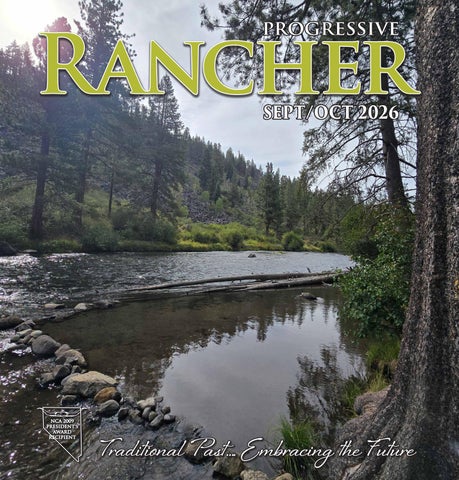
Cover Photo Credit: Leana Litten Carey | Grants Pass Campground at the Truckee River, August 2026
Published 8 times a year. View all issues at www.progressiverancher.com Readership reaches more than 20,000. The views and opinions expressed by writers of articles appearing in this publication are not necessarily those of the editor. Letters of opinion are welcome; submit via email. Advertising rates available upon request. Advertising does not imply editorial endorsement. Liability for errors or omissions in advertisements shall not exceed the cost of the space occupied by the error or omission.
© The Progressive Rancher Magazine. All rights reserved.
Leana Litten Carey, Owner/Editor
2040 Reno Hwy 432 • Fallon, Nevada 89406 (208) 358-2487 • progressiverancher@gmail.com Read the magazine and more articles online at
WWW.PROGRESSIVERANCHER.COM Ads sent to or built by The Progressive Rancher become property of this magazine.
2
SEPTEMBER/OCTOBER 2026
The Progressive Rancher
www.progressiverancher.com
Power Generation and Land Use: A Growing Conversation While driving home from a wedding last week, my wife and I passed the site near Kemmerer, Wyoming, where TerraPower is replacing the retiring Naughton coal-fired power plant with a small modular nuclear reactor (SMR). It was a reminder that America’s electric grid is changing rapidly. Since much of the work of the Nevada Cattlemen’s Association involves land-use issues, and because nearly everything we do depends on electricity, it is worth looking at how different sources of power compare.
As a general rule, one megawatt (MW) of electricity supplies enough power for about 750 to 1,000 homes, depending on climate and regional demand. TerraPower’s Natrium SMR will produce 345 MW and will include a molten salt energy storage system capable of temporarily increasing output to 500 MW during periods of peak demand. The plant will replace a 384-MW coal-fired generating station while making use of the existing transmission lines and rights-of-way—a practical advantage that reduces both cost and environmental disturbance.
For another comparison, a Gerald R. Ford-class nuclear aircraft carrier generates about 700 MW of electricity—roughly twice the output of the TerraPower reactor—and only needs to refuel about once every 25 years. Years ago, I visited with a Navy veteran who told me he had helped start up one of those reactors while the ship was in San Francisco Bay. His observation was simple: “It can’t be too unsafe if they let 20-year-olds do it.” While that comment was made with a smile, it illustrates the confidence the U.S. Navy has developed after decades of safely operating nuclear-powered vessels. The United States is the world’s leading producer of nuclear power, with about 19 percent of our electricity generated by 94 nuclear reactors. France, by comparison, generates roughly 70 to 75 percent of its electricity from nuclear energy.
Beyond producing reliable, carbon-free electricity, small modular reactors offer several practical advantages. Because they are factory-built and assembled onsite, they have the potential to reduce construction time, improve quality control, and limit cost overruns. Some designs can reduce output during the day when solar generation is abundant and increase production after sunset, making them an effective partner for renewable energy. Even smaller nuclear microreactors, producing between one and 20 MW, are designed to fit inside shipping containers and could replace diesel generators at remote locations.
Land use is another important consideration. Nuclear facilities require relatively little land compared to utility-scale solar projects. For example, one proposed solar project in Newark and Jakes valleys in White Pine County would generate 1,000 MW (when the sun is shining) while occupying approximately 6,800 acres. The proposed Lonely Road Solar Project, about 10 miles east of Ely, would produce 600 MW while using about 7,400 acres. Geothermal energy also deserves attention because it has a small land footprint while providing dependable electricity around the clock, regardless of weather conditions. Most geothermal plants produce between 15 and 20 MW.
By Dave Baker NCA President
Demand for electricity is also increasing at an unprecedented pace. One of the biggest drivers is the rapid growth of data centers. In neighboring Millard County, Utah, two enormous data center campuses are under development. The largest, the Joule HP Compute Campus, is planned to require up to 12 gigawatts (12,000 MW) of electricity when fully completed. Initial operations will rely on hundreds of natural gas generators, but long-term plans include battery storage, fuel cells, geothermal energy, and small modular nuclear reactors. To put that in perspective, Utah’s current statewide electricity demand averages about 4 gigawatts. As electricity demand continues to grow, decisions about power generation will increasingly involve more than simply producing enough energy. Reliability, affordability, environmental impacts, and land use will all play critical roles. For those involved in agriculture and public lands, understanding the tradeoffs among nuclear, geothermal, solar, and other energy sources will become increasingly important as we help shape the future of the West.
PROTECTING YOUR WATER RIGHTS MISSION STATEMENT | The mission of the Central Nevada Regional Water Authority is to prepare communities in central and eastern Nevada for sound water-resource decisions that promote prosperous economies and strong civic institutions in a healthy natural environment. The Central Nevada Regional Water Authority was established in 2005 to proactively address water issues in the Central Region, the largest of Nevada's 14 hydrographic regions. CNRWA formulates and presents a united position on water-related issues; monitors, assesses and responds to water projects that may adversely impact a member county; implements a groundwater monitoring program and encourages citizen participation in water-related issues. CNRWA’s nine member counties are: Churchill, Elko, Esmeralda, Eureka, Humboldt, Lander, Nye, Pershing, and White Pine.
www.progressiverancher.com
For more information, please contact:
Jeff Fontaine, CNRWA Executive Director cnrwa.com 775-443-7667 ccjfontaine@gmail.com
The Progressive Rancher
SEPTEMBER/OCTOBER 2026
3
by Martin Paris | NCA Executive Director | O: 775-738-9214
91st Joint Annual NCA Convention & Tradeshow The Nevada Cattlemen’s Association, in conjunction with the Nevada Land Action Association, the Nevada CattleWomen, and the Nevada Wool Growers Association, is eager to announce this year’s convention. The 91st Annual Nevada Cattlemen’s Association Convention and Trade Show will be held on November 12-14, 2026, at the Elko Convention “E” Center in Elko, NV. As NCA members around the state gather in Elko, we will celebrate a lifetime of traditions, review and revise policies, receive industry updates, and take the opportunity to enjoy our friends and neighbors. At the convention, NCA members, guest speakers, and vendors who provide services to the beef cattle industry will join together to celebrate the Nevada livestock industry. NCA staff and officers are working hard to provide you with a memorable and educational experience. The Trade Show Wine and Whiskey Walk returns during the reception on the evening of November 12th, giving attendees the chance to stop by every booth, sample a wine or bourbon selected by our vendors, and visit with the businesses that serve this industry. The forms for exhibit booths and sponsorships have been sent out. If you did not receive one of these forms and wish to, please contact us or visit nevadacattlemen.org/events-meetings to download a hard copy or complete
an online form. The Nevada Cattlemen’s Association would like to thank all of our convention sponsors and exhibitors; they help make our event a success.
NCA’s policy committees will meet prior to the convention to discuss new issues or resolutions to be proposed and will also review expiring resolutions. These meetings are the initial step in setting the Association’s policies that help guide staff, officers, and members in responding to the various issues that impact Nevada’s cattle industry. Participation in the resolution process is a great way to get involved and have your voice heard. For more information on each committee or suggestions on any new or expiring resolutions, please contact the NCA office. Registration for convention and a tentative schedule will be available at nevadacattlemen.org/events-meetings soon, and members will also receive a registration packet in the mail as well. If you are interested in attending, would like more information, or have any questions please call the office at 1-775738-9214 or email convention@nevadacattlemen.org. Our website is constantly updated with the latest information. We look forward to seeing you all at the convention!
Fallon: 8-5:30 M-F Gardnerville: 8-5 M-F Winnemucca: 8-5 M-F
800-513-4963 • www.pinenutlivestocksupply.com The and Progressive Rancher 4 SEPTEMBER/OCTOBER 2026 www.progressiverancher.com Complete selection of animal health products, feed equipment for beef, dairy, equine, sheep, goat and small animal.
www.progressiverancher.com
The Progressive Rancher
SEPTEMBER/OCTOBER 2026
5
Connecting Nevada’s Agriculture from Farm to Fork By Kaley Chapin | Agriculture Lead Program Coordinator UNR Reno Ext | kaleys@unr.edu University of Nevada, Reno Extension’s Beginning Farmer & Rancher Development Program recently brought together 115 aspiring agriculturalists, established producers, industry professionals and members of Nevada’s food system for hands-on tours, connection and locally sourced food. The two-day tour on August 7-8, 2026 showcased a diverse range of agricultural operations and food businesses throughout Reno, Sparks and the Carson Valley. Participants explored produce and flower farms, ranches, a creamery, a garden center and other agricultural businesses, gaining firsthand insights to the challenges and opportunities facing Nevada’s producers. The event concluded at Park Home Ranch in Minden with the Farm to Market Mixer and Farmto-Fork Dinner. The mixer, made possible through the NDA’s Resilient Food Systems Infrastructure (RFSI) program funding, provided an opportunity for producers and other members of the food system to make connections, build relationships and explore opportunities to work together.
The Farm-to-Fork Dinner featured an expertly curated selection of locally sourced, Nevada-grown and Nevada-made products, prepared by Tommy Linnett, Executive Chef with Liberty Food & Wine Exchange, and his team at Cucino Lupo. The dinner celebrated the depth and diversity of Nevada agriculture, with a menu that brought the program experience full circle by featuring ingredients from several of the operations guests had toured earlier in the day. Tables were brought to life with beautiful floral arrangements generously donated by Blomma Flower Farm. The full list of fresh ingredients included those provided by Frey Ranch, Prema Farms, Reno Food Systems, Ripcord Farms, Frey Family Farms, Sierra Shadows, Holley Family Farms, Hoch Family Creamery, High Desert Harvest, Park Ranch Meats, Great Basin Brewery and Liberty Food & Wine.
producers, agricultural businesses and consumers. One tour-goer reflected on the value of shared perspectives: “Honestly, it’s a combination of everyone’s story. We all share a passion for agriculture collectively. It was such a unique experience full of future collaborations, and learning to trust the process is what we took away from each farmer and rancher.” For University of Nevada, Reno Extension, the event marks a celebration of the diversity and dedication of Nevada’s agriculture and entrepreneurship, while supporting the cultivation of a stronger, more connected and resilient food system. To learn more about future programs, visit University of Nevada, Reno Extension’s Beginning Farmer & Rancher Program or email Kaley Chapin at kaleys@ unr.edu.
The event demonstrated the value of bringing Nevada’s agricultural community together, not only to learn from one another, but to strengthen connections among
Participants tour The Valley Merc in Gardnerville, owned by Jessica & Spencer Anderson of Anderson Cattle Co and 2A Beef.
The Farm-to-Fork Mixer and Dinner team included staff from University of Nevada, Reno Extension, Cucino Lupo and Liberty Food & Wine Exchange.
Guests gather for the 2026 Farm-to-Fork Dinner at Park Home Ranch in Minden, Nevada.
Participants learn about Sierra Shadows Farm and its lavender operation from Daunelle Wulstein. Established in 2018, the farm started as bee support and has grown into a boutique farm and pollinator oasis with more than 3,000 lavender plants across two properties. The farm produces lavender for culinary use, oil production and handcrafted products.
Participants tour Timberline Flower Farm, which grows local, sustainable and seasonal cut flowers, including dahlias, tulips, daffodils, iris, peonies, ranunculus and sunflowers. The farm offers seasonal flower memberships, fresh bouquets, farm tours and workshops.
Participants tour the greenhouse at Urban Roots, a community organization that provides handson agricultural education and teaches children and community members about growing food, sustainability and the importance of agriculture.
6 SEPTEMBER/OCTOBER 2026
The Progressive Rancher
www.progressiverancher.com
Recipes & photos courtesy of
Burnt Ends with Mac and Cheese Try making these smoked Chuck Roast ‘burnt end’ pieces while the weather’s still good for smoking meat outside - trust us, they’ll be the highlight of the summer wind-down BBQ!
beefitswhatsfordinner.com
Ingredients:
Cooking:
1 boneless Beef Chuck Roast (2-1/2 to 3-1/2 pounds), cut into 2-inch pieces 1/2 cup Burnt Ends Rub 2 cups barbecue sauce 1 cup water 1/4 cup red wine vinegar 1/4 cup molasses
1. Add wood chunks, chips or pellets to smoker according to manufacturer’s instructions. Preheat smoker to 225°F. Sprinkle burnt ends rub (see below) evenly across all surfaces of beef Chuck Roast pieces. Set timer for 2 hours depending on smoke flavor. Smoke 2 hours. Let rest for 10 minutes.
1/4 cup butter MAC AND CHEESE: 1/2 pound pasta (cavatappi, elbow or shells) 1-1/2 tablespoons beef tallow or butter 1 tablespoon flour 1 cup heavy cream 1 cup milk 3/4 cup evaporated milk 1-1/2 teaspoons Worcestershire sauce 1/2 teaspoon Kosher salt 1/4 teaspoon freshly ground black pepper 1/8 teaspoon nutmeg 1 dash hot pepper sauce 1 cup shredded Cheddar cheese 1/4 cup shredded Parmesan cheese
www.progressiverancher.com
BURNT ENDS RUB: 3 tablespoons sugar, 2 tablespoons fresh ground black pepper, 1 tablespoon each Kosher salt, granulated onion, granulated garlic, paprika 1 teaspoon each chili powder, ground cumin, ground coriander; mix all together. 2. Preheat oven to 350°F. Spray 13x9-inch baking dish or aluminum pan with cooking spray. Combine barbecue sauce, water, vinegar and molasses in dish. Add beef; toss to coat. Cover and bake 1 hour or until meat thermometer registers 195°F. Uncover; bake an additional 30 minutes or until meat thermometer registers 203°F. Remove from oven; add butter. 3. Meanwhile, prepare mac and cheese. Heat beef tallow in a saucepan over medium heat. Carefully whisk in flour; cook 2 to 3 minutes or until lightly browned, whisking constantly. Whisk in heavy cream and milks; cook 3 to 5 minutes or until thick, whisking constantly. Add Worcestershire sauce, salt, pepper, nutmeg and hot sauce; cook 3 to 5 minutes or until sauce thickens. Remove pan from heat and stir in 3/4 cup Cheddar cheese, Parmesan cheese and cooked pasta. 4. Preheat broiler to high. Place mixture in 8x8-inch baking dish sprayed with cooking spray. Add pasta mixture; sprinkle top with remaining Cheddar cheese. Place dish so surface is 3 to 4 inches from heat. Broil 2 to 3 minutes or until cheese melts. Serve ‘burnt end’ pieces with mac and cheese.
The Progressive Rancher
SEPTEMBER/OCTOBER 2026
7
progeny sell by
Annual Production Sale
KLA Checkered Flag
October 30, 2026 SAV Madame Pride 6625
Mohnen Troubadour
1 p.m. Ruby Valley, Nevada
ringand 70 Reg. Females fe75atuBulls Weaned Heifers • Bred Heifers
Basin Joy 2015
Ellingson Prolific
Contact us for a catalog:
Logan Sampson • Phone: (775) 389-0265 Aaron Tenney • Phone: (208) 320-8017 E-mail • logan.sampson@gmail.com www.BirchCreekAngus.com
8 SEPTEMBER/OCTOBER 2026
The Progressive Rancher
www.progressiverancher.com
Nevada Water Solutions LLC Water Rights / Resource Permitting Expertise
Thomas K. Gallagher, PE 775•825•1653 / FAX 775•825•1683 333 Flint Street / Reno, NV 89501 tomg@nevadawatersolutions.com
THE PROGRESSIVE RANCHER is now accepting Articles, Stories & Op Ed Submissions
Your Trusted Representatives in
Livestock Marketing
ADVERTISE WITH US! (208) 358-2487
progressiverancher@gmail.com
If you’re looking to sell a farm or ranch, give us call! SOLD Clover Valley Farm: 240 deeded with 160 acres water righted with home and outbuildings. $1,200,000 SOLD Wild Horse 214 Deeded with approx. 25 acres water righted with improvements. $475,000
New listing in Lamoille is 40 acres with surface water rights out of Thorpe Creek on County Road $375,000
Need more farm and ranch listings... give us a call if you’re interested in selling!
Since 1989
Upcoming Sale Dates SEPTEMBER 15 Deadline: August 31
Deadline: October 8
Haythorn Ranch Ogallala, NE
WVM Headquarters Cottonwood, CA
Watch all of our Sales On WVMCATTLE.COM Follow Us!
Paul Bottari, Broker ALC NV Broker License No B015476
BottariRealty.com • 775-752-0952 www.progressiverancher.com
OCTOBER 16
The Progressive Rancher
Contact Us!
(530) 347-3793
wvm@wvmcattle.com SEPTEMBER/OCTOBER 2026
9
Thoughts on Laws Something has been on my mind for years. No doubt most, if not all readers, have heard the phrase “the United States of America is a nation of laws and not of men”. Our legal tradition has two branches. The Common Law from our English roots concentrates on each case being decided on prior precepts and principles derived from prior individual cases. Our statutory tradition tries to anticipate each possibility of issues. Anticipating a need to solve problems comes with rules and a code that is created by a legislature and agencies established by the representatives who create those agencies and enforcers of the rules. We have a system which has created rules and codes and we have courts who decide issues based upon prior precedents in similar factual circumstances. This begs a question. How many laws are necessary for an ordered society? Do we have enough laws or do we have too many? If we need more laws, how should they be created? An ancillary question is should laws replace common sense? There cannot possibly be a law to cover every incidence and situation. Humans have the ability to analyze, evaluate and judge but they cannot always be guided by a rigid, inflexible pathway to a solution. I have a book in my library written in 1994 by a lawyer, Philip Howard, entitled “The Death of Common Sense”. A book reviewer said this about the book: “The Death of Common Sense’ is a lethal cannonball of a book. It makes me understand why so much of today’s government doesn’t make sense…. Law began infiltrating the nooks and crannies of our lives in the 1960s, crowding out our common sense. Rules replaced thinking. Process replaced responsibility. One false idea lay at the bottom of these developments: that human judgement should be banned from anything to do with the law. We fell for the idea that all could be laid out in a tidy legal system where decisions were predetermined, social choices premade.” I suspect many readers of this publication have been critical of our legal systems expressing the same frustration as that of the reviewer above. 10 SEPTEMBER/OCTOBER 2026
According to Mr. Howard, our Constitution is the perfect model of a law so flexible it can evolve with changing times and different circumstances.
Howard asks the logical question “[H]ow can law function as a guide to action if almost no one knows it? For example, if there is inevitable fine print in 4,000 OSHA rules how can anyone, including OSHA inspectors, know whether someone is breaking the rules and therefore subject to fines and punishment? In fact, the book reports OSHA estimates 80% of workplaces are not in compliance with the law.
There was an argument during the debate on the Constitution about how detailed the document should be. Alexander Hamilton thought the Bill of Rights was too specific. Lucky for future generations the Constitution has withstood many challenges but is probably not so specific that it has been amended to meet unanticipated circumstances. Such specificity also creates loopholes while The common law, on the other hand,” glorifies the attempting to be precisely applicable to all persons in all circumstances. The U.S. Constitution is a particular situation and invites common sense”. comparatively very short document of general For the years following the establishment of principles in which there are no loopholes. Our our nation, up to the 20th century, the statutory tax law has over 36,000 pages with thousands function of our legislatures and Congress was of loopholes. We as a society are creating more used to provide for public works and national problems than solving them with this misguided defense. Beginning with the New Deal, during attempt to address every eventuality. Obviously, the depression, statutes were passed creating the actual creation is done by very few people who new agencies, boards and commissions under the are acting on our behalf, some of whom do not Executive Branch of our Government. understand the consequences of their “help”. After the Kennedy Administration law making creating more power in the executive branch accelerated. The Federal Register increased from around 15,000 pages in Kennedy’s final year to more than 70,000 pages in George Bush’s last year.
Again, as cogently put by Mr. Howard,” when law is too dense to be known, too detailed to be sensible, and is always tripping us up, why should we respect it? Let us be reminded for the bulk of the history of the American nation, we as a people revered Here is Mr. Howard on the state of the philosophy our adherence to the rule of law. That respect for our system of government based upon abiding by of creating a detailed body of law: our laws is part of the citizen DNA of the United “Once the idea is to cover every situation explicitly, States. the words of law expand like floodwaters that have broken through a dike. Rules elaborate on prior I have sworn two oaths to our system of laws. rules: detail breeds greater detail. There is no logical And so, I don’t pose the above questions lightly. stopping point in the quest for certainty. Howard However, and especially in livestock agriculture, describes an OSHA regulatory scheme that we know when things get out of hand in the resulted in over 140 regulations on wooden ladders. enforcement of the rules we have to live and work One wonders if there are that many wooden ladder by. These therefore are serious questions that need regulations, how many are there for aluminum serious discussion and analysis. I hope this prompts ladders? More importantly how many regulations some of that. are needed to make ladder climbers safer? Is it I’ll see you soon. possible to reach the optimum safe use of ladders through words in a regulation? The Progressive Rancher
www.progressiverancher.com
More info at www.cityofcarlin.com
www.progressiverancher.com
The Progressive Rancher
SEPTEMBER/OCTOBER 2026
11
In Loving Memory . . .
EllaMay Bottari 8/29/1928 – 6/23/2026
EllaMay Bottari, 97, passed away on June 23rd, surrounded by her loved ones in the house she had made a home. She was a Mom, Grammy, Great Grandma, and friend to all. She joined her husband (Duilio), daughter (Peggy), son (Pete), granddaughter (Alison) and many wonderful friends and family members in heaven.
Don Nonella Donald V. Nonella of Fallon, NV passed away on August 19, 2026 at the Highland Village. Born September 5, 1931 in Fort Bragg, CA to Silvio and Martha Nonella. Don grew up on his grandfather’s ranches in Elk and Navarro Ridge, CA. He graduated from High School in 1949. He started driving teams of horses at the age of 5 baling straw. He stayed busy in his early years pitching grain bundles to a thrashing machine, shoeing horses, taking care of sheep, CAT skinning, shearing sheep, and hunting. In 1955 Don married Barbara Caughey and had four children Larry, Debra, Tom, and Carolyn. Don liked ranching and driving truck. They moved to Bly, OR in 1966 where they built 7C Ranch, with help from their children. In 1972 he purchased his first cattle truck, a 1964 Kenworth. He started hauling cattle and didn’t stop until 1997. In 1979 Don and Barabara bought the Eastgate and Campbell Creek Ranches east of Fallon, NV. They built a nice herd of Hereford Angus cross cows, but had problems with the Navy. After 9 years they moved to the Elko area, keeping the cattle truck busy, and running bred heifers in the summer. In 1993 they leased the Saval and Haystack Ranches, that kept Don busy for 15 years. Barbara died in 2000 after fighting cancer. Don retired in 2008 and bought a camp trailer. He and his dog, Shep, traveled the West visiting friends and family. He wrote a book in 2013 “Starting Below the Bottom”. In 2019 he moved back to Fallon and went to the sale barns on auction days, keeping up on the happenings. “Good things don’t go on forever.” Don passed two weeks shy of his 95th birthday, with good friend Star and her daughter Carrie checking in on him. Don is survived by son Tom (Darla) Nonella of Klamath Falls, OR, grandsons Roger (Kelsey) Nonella of Redmond, OR and Mark ( Jenna) Nonella of Klamath Falls, OR, grandson Richard (Veronica) Lamb of Spring Creek, NV, granddaughter Kelly Pfeifer of Ruby Valley, NV great grandchildren Riley and Reagan Nonella, Nathan, Ace, and Sadie Nonella, Shayna (Brandon Mariluch), Shyann, Sharmayne (Nathan Backherms) Lamb, Thomas and Sarah Pfeifer great great grandson Atlas Backherms and son-in-law Mark Leach. Don was preceded in death by his parents Silvio and Martha Nonella, his wife Barbara, his son Larry, daughters Debra and Carolyn, his grandson Ross Leach, and his siblings Roy and Delores. Don did not want a service, so family and close friends will put him to rest with Barbara and Larry in Lakeview, Or. 12 SEPTEMBER/OCTOBER 2026
EllaMay was born in Edgewood, Colorado on August 29, 1928. As a small child, EllaMay’s mom, Marguerite, moved the family to California, to be closer to where EllaMay’s Grandmother lived. EllaMay’s young life was spent in Pittsburg/Freemont, California. It was here that her mom met, and married, Ralph Allan. They combined their families into one. EllaMay graduated high school from Centerville High School. After high school, she went to work for JCPenney’s and later went to work as a telephone operator. When the telephone company closed due to going dial, she was out of a job. EllaMay decided to follow her friend Evelyn, who had also lost her job at the telephone company, to Lamoille, Nevada where Evelyn had family. EllaMay found employment again at JCPenney’s, The Telephone Company, and DuPonts in Elko. On weekends and holidays, she would go to Lamoille to help the Baroni family with cooking. It was here, that she met her future husband, Duilio Bottari. Duilio and EllaMay were married on June 21st, 1950. The couple moved into the ranch house, which was not equipped with electricity, running water, or an indoor bathroom. These were amenities that EllaMay had been accustomed to from growing up in the city. Next came the kids- Peggy in ’51, Pete in ’52, and Paul in ’53. Life was challenging with 3 little ones. Especially since EllaMay had to dip buckets of water from the creek and warm it on the woodstove to wash diapers. To help make life easier, her dad Ralph came to help pipe water and electricity into the house. After that, two more kids made their way into the family, Perry in ’57 and Pam in ’61. EllaMay and Duilio welcomed grandson Bart in ’71, who they often cared for while Peggy was working. Sadly, Peggy passed away in 1974, and EllaMay and Duilio adopted Bart.
The community of Lamoille was a huge part of EllaMay’s life. She was active in helping with Christmas parties, The Lamoille Steak Fry, being a 4-H leader, care of the Lamoille School House (1961-2019), and extremely instrumental in keeping the Lamoille Post Office operational. The people of the Lamoille Community were also on the receiving end of her generosity. She often cared for the young, the old, and the new community members by giving them her love, time, yummy food, and encouragement when needed. If you didn’t have a place to go for a holiday, you would have a place at the Bottari’s table. All in all, EllaMay loved people! She loved babies and they loved her. She somehow always found those in need of tender loving care and she taught many people to believe in themselves, and to care for others.
EllaMay is survived by sons Paul (Lori), Perry (Kim), Bart ( Jen), daughter Pam (Tom) Johnson, daughter-in-law Karen Marvel, and son-in-law Brad(Crystal) Roberts. Grandchildren Abby(Rob), Jake(Alex), Amber(Chris), Josh(Tory), Jason(Callie), Sarah(Carl), Brooke, Brittany(Ian), Megan(Marc), Makenna(Kaleb), Mandy, Dusty(Ally), Beau(Kate), Brenden, Gresyn, Bill(Kim), Chad, Kimberly(Chaz), Leslie( Juan), and Tony. Great Grandchildren Ellie Kate, Lauren, Vivi, Emme, Finn, Waylon, Ramsey, Perry, Rilee, Micah, Phoebe, Adylyn, Lyric, Justus, Case, Adree Jo, Jolee, Jay, Avi, Bridger, Cody, Jessie, Amos, Race( Josie), Hunter, Tyler(Savanna), Marina, Sascha, Jessica,. Great Great Grandkids Hennley, Clay, Rene, and Natalia. She is also survived by many beloved honorary sons and daughters, nieces and nephews, and great nieces and nephews. EllaMay’s love was so vast a complete list is very difficult to compile, but each life she touched held a special place in her heart. EllaMay was blessed enough to have many wonderful caregivers. She loved them just like her family! Thank you Beth Holmes, Laura Rogers, Evalia, Rae Lynn, Marie and Kellie for taking such loving care of our hero! We also want to thank all those who visited, sent flowers and cards, and visited with her often, she loved every bit of it. EllaMay will be remembered by many for her contagious smile, delicious food, famous pies, love of people and hummingbirds, and her ever busy phone line. In lieu of flowers, EllaMay requested that those wishing to make donations would do so in her memory to the Lamoille Post Office Maintenance Fund, as her wish was to keep the Lamoille Post Office open.
The Progressive Rancher
www.progressiverancher.com
The Colorado River Feis isn’t the End, it’s the Beginning of a New Story https://give-usa.keela.co/donate-to-great-basin-water-network The Federal government released its post-2026 Final Environmental Impact Statement (FEIS) on July 31, late Friday afternoon.
Nevada sues Interior over cuts to ‘already meager’ Colorado River water allocation by Piper Heath | The Nevada Independent Nevada became the first state to sue over new Colorado River operating rules, filing suit in federal court Monday alongside the Colorado River Commission of Nevada and the Southern Nevada Water Authority. The lawsuit filed against the U.S. Department of the Interior challenges the record of decision released Friday, which governs how Colorado River water is divided among the seven basin states.
The 1,600-page document lays out a new plan for the Colorado River starting in 2027, calling for cuts across the Upper and the Lower Basin states, including about 1.5 million acre-feet of reductions, roughly enough to supply three million homes for a year, across Nevada, Arizona, and California, the Lower Basin States. But the feds say that more cuts may be needed by the Lower Basin. Upper Basin states will not be forced to adopt mandatory cuts.
Under the decision, Nevada’s 300,000-acre-foot allocation could be cut by up to 213,556 acre-feet, leaving Las Vegas and surrounding cities with less than 86,500 acre-feet a year. An acre-foot is the amount of water needed to cover an acre of land a foot deep, about 326,000 gallons, or enough to supply roughly two to three households for a year; state water officials say there’s no way to meet Southern Nevada’s basic needs with the volume of water Interior has proposed.
Because of your enduring support, Great Basin Water Network is that tenacious. We’ve released our report on nine commonsense recommendations to transform the management of the Colorado River System.
The four Upper Basin states — Colorado, Utah, New Mexico and Wyoming — face no mandatory cuts under the decision, only voluntary conservation goals. That’s because of how the two halves of the river are legally structured. Lower Basin states hold fixed contractual entitlements to water released from Lake Mead, which gives the federal government authority to cut them administratively during a shortage.
In the two weeks since that Friday news dump, headlines have dominated each state’s news cycle — none too pleased with the reality that comes from postponing the inevitable — Water is in the West a rarity that must be managed with the same tenacity as the IRS monitoring Al Capone’s taxes.
1. 2. 3. 4. 5. 6. 7. 8. 9.
No New Dams and Diversions All States Need Curtailment Plans We Need Better Accounting and Data We Need to Fix Glen Canyon’s Antique Plumbing Curtail Junior Users to Serve Tribes Invest in Reuse and Limit Municipal Waste Protect Endangered Species Make Farms Resilient Recognize Groundwater-Surface Water Connectivity
Upper Basin states, by contrast, are only obligated under the 1922 Colorado River Compact not to deplete the river below a certain point, not to guarantee a set delivery downstream, so there’s no fixed allocation for the government to cut. Nevada and the other Lower Basin states dispute that reading, arguing the compact’s “equitable apportionment” language means Upper Basin states should share in the shortages.
REPORT: https://greatbasinwater.org/no-water-available-ngosrelease-new-report-to-address-colorado-rivers-major-problems/
While we’ve seen the FEIS, we are still waiting for the Bureau of Reclamation to issue the formal record of decision later this year. That document, not the FEIS, will control how the Colorado River operates.
But what this FEIS does offer is short-term stability and a continued presence by all states at the table as we navigate threats of minimum power pool, dead pool, and infrastructure failures at reservoirs like Lake Powell and Lake Mead.
While Lower Basin states are taking cuts, and some states like Nevada are champions in water conservation, Upper Basin states must take a new approach to water management by limiting new permits for groundwater or surface water development. Nevada and other Lower Basin states can’t solve the Colorado River Crisis without the help of our Upper Basin States.
But don’t mistake this as a division between Upper and Lower Basins — instead, this is a call to action, an opportunity to stand united and create a better future for farmers, ranchers, tribal communities, rural communities, and urban residents. After all, that unity led to GBWN’s success in defeating the Las Vegas Pipeline. All of us need to instill a sense of urgency in our Congress members to invest more funds in water recycling, water measurement, and community durability. Like we’ve said in our statement, conservation is the only way we get out of this. Some states are already doing that better than others. All states need assistance to do more. www.progressiverancher.com
That figure is Nevada’s worst-case exposure, applying only if Lower Basin shortages reach the framework’s outer limit of 3.6 million acre-feet. Southern Nevada used just 198,000 acre-feet in 2025, according to the water authority.
“Under the proposed plan issued by the Department of the Interior, southern Nevada could lose more than 70 percent of its already meager Colorado River allocation while the Upper Basin states of Colorado, Utah, New Mexico, and Wyoming are not required to contribute a drop,” Republican Gov. Joe Lombardo said in a statement announcing the suit.
John Entsminger, the water authority’s general manager and Nevada’s lead negotiator on the river, said the region has cut its Colorado River consumption by about 40 percent over the past 25 years even as it added more than 800,000 residents, but that “conservation has its limits.”
The suit asks the court to set aside the decision, arguing Interior failed to analyze the economic impact of steep cuts on Southern Nevada’s $180 billion economy, despite being required to do so and despite Nevada raising the issue during the public comment period. No hearing date has been set. Under an earlier federal framework released in July, Nevada was set to give up 50,000 acre-feet of Colorado River water a year over the next two years. That figure only applied to the near-term shortage-sharing agreement for 2027 and 2028, which the Lower Basin states — including Arizona and California — proposed in May and which Interior adopted. Beyond that, the framework shifts to allocating cuts by seniority instead, protecting the oldest water rights first. The cuts stem from a drought spanning more than a quarter century, worsened by climate change, that has pushed Lake Mead and Lake Powell to their lowest levels on record.
At a water conservation summit in Las Vegas earlier this month, Entsminger said litigation remained a last resort for Nevada, but that the state would protect its legal interests if negotiations failed.
The Progressive Rancher
SEPTEMBER/OCTOBER 2026
13
Nevada Farm Bureau
The Agricultural Start to the Next Nevada Legislative Session By Doug Busselman | NFB Executive Vice President On August 12, 2026, the Joint Interim Standing Committee on Natural Resources held its final scheduled meeting of the interim session. During the meeting, committee members reviewed their work from throughout the interim and determined which issues would move forward for consideration during the 2027 Nevada Legislative Session. As part of this process, the committee considered and approved several Bill Draft Requests (BDRs), along with other actions and recommendations. The proposed bills moving forward include: • A bill to establish a “Healthy Soils Initiative” • A bill to sort out which agency has enforcement responsibilities for distribution and sale of certain hemp products – which belong to the Nevada Department of Agriculture or what should go to the Cannabis Compliance Board. • An omnibus water bill which covers a wide range of different elements • A bill on long-term water planning • A bill to authorize additional funding (as well as ways to gather those funds) to build more wildlife crossing projects • A bill to take action on paraquat although it isn’t clear what that action might be. (Based on what we’ve learned from other states and the nature of the presentations – the bill will likely take the form of a ban of some sort.) The committee also approved developing several letters, asking for actions to be taken: • Draft a letter to the United States of Agriculture (USDA) and the Nevada federal legislative delegation which draws attention to the exclusion of alfalfa growers in federal assistance programs such as the “Farm Bridge Assistance Program”
14 SEPTEMBER/OCTOBER 2026
• Draft a letter to Nevada Governor Lombardo and the two money committees in the Nevada Legislature to request funding in the amount of $1.5 million in the Executive Budget for the next Biennium to support the Desert Research Institute’s State Cloud Seeding program • Draft a letter to Nevada Governor Lombardo and the two money committees in the Nevada Legislature to request funding in the amount of $3 million in the Executive Budget for the next Biennium to support groundwater rights retirement • Draft a letter to Nevada Governor Lombardo and the two money committees in the Nevada Legislature to request funding in the Executive Budget for the next Biennium to support the ALERT West Detection Camera System • Draft a letter to Nevada Governor Lombardo and the two money committees in the Nevada Legislature to request funding in the Executive Budget for the next Biennium to support the Shared Stewardship program which continues the working teamwork between the Nevada Division of Forestry and the U.S. Forest Service Lastly, the committee also approved a couple of requests to be included in their final report of the interim session. One of those statements sought favorable consideration in the final report dealing with the Home Feeds Nevada Agricultural Food Purchase Program. The final request for support, in the final committee report, is in favor of the Nevada Division of Outdoor Recreation and other stakeholders to mitigate visitor induced threats to Nevada ecosystems through stewardship and educational initiatives. Where To From Here? This is only a beginning point in the legislative proposals that will find their way into the legislative hopper in 2027. There are several other Joint
The Progressive Rancher
Interim Committees which have been carrying out their meetings, listening to reports and formulating what they will include in proposed bills. There are also 63 legislators who will have their share of bills to propose. In the 2025 Nevada Legislature roughly 1,200 bills and other matters were introduced for consideration or possibly not processed at all. Not all bills get any consideration, after introduction. Partisanship has become more of a standard practice over the past number of years. Depending on which political party has the majority (and consequently the chairmanship of the committees) legislative proposals may or may not ever be heard. Merit of a policy proposal depends greatly on who is making the proposal. The Legislative Calendar also plays an important role in determining whether a bill successfully moves through the process. There are a limited number of committee meetings available between the time the Legislative Counsel Bureau drafts a bill and when it is formally introduced and referred to a committee. Bills must also meet specific deadlines for consideration and action by their assigned committees. If a bill advances from committee, it must then pass its house of origin, either the Assembly or the Senate by another established deadline. Bills that successfully pass their first house are sent to the other chamber, where they are assigned to committees and face additional deadlines before potentially receiving a final vote. Bills that make it through both houses may ultimately reach the Governor’s desk for approval or veto. The process of turning a proposal into law is intentionally challenging, requiring a bill to clear several steps and deadlines along the way. While the process can be lengthy, these safeguards provide important opportunities for careful review and consideration before new laws are enacted.
www.progressiverancher.com
Annual Meeting Registration Open Mark your calendars and make plans to join us for the 107th Nevada Farm Bureau Annual Meeting, Nov 11–13, 2026, at Santa Fe Station in Las Vegas! This year’s theme, “Rooted in Tradition: Growing Nevada’s Future,” celebrates the strong foundation of Nevada agriculture while looking ahead to the opportunities, challenges, and ideas that will shape our future. 3 Days of Connection, Learning & Leadership
The Annual Meeting is an opportunity for Farm Bureau members, agricultural producers, industry partners, and supporters from across Nevada to come together. This year’s program is packed with opportunities to learn, connect, share ideas, and have a voice in the future of Nevada agriculture.
Attendees can look forward to interactive sessions, engaging speakers, networking opportunities, the YF&R Discussion Meet, the Small Farms Networking Dinner, awards and recognition, and much more. Sessions will cover practical topics that attendees can take home and put to work, while also providing opportunities to discuss the issues affecting ag and rural communities throughout Nevada. More Than a Meeting
Annual Meeting is about more than sitting in sessions. It’s about bringing our Farm Bureau family together. It’s a chance to reconnect with friends from across the state, meet new people, exchange ideas, recognize the individuals making a difference in Nevada agriculture, and help guide the direction of Nevada Farm Bureau Whether you’ve attended for years or this would be your first Annual Meeting, we would love to have you join us. Registration Is Now Open!
Registration is officially open, and we encourage you to reserve your spot early. Scan the QR code at right to register, view the complete schedule, explore registration options, and find additional Annual Meeting information. Don’t Forget Your Hotel Room
Attendees planning to stay at Santa Fe Station should also make their hotel reservations early. The deadline to book your hotel room is October 12, 2026. Come be part of the conversations, connections, and ideas helping move Nevada agriculture forward. We can’t wait to see you in Las Vegas this November! www.progressiverancher.com
The Progressive Rancher
SEPTEMBER/OCTOBER 2026
15
Nevada Farm Bureau Products Of The Nevada Legislature’s Public Lands Committee Last week we shared the announcement of the Nevada Legislature’s Public Lands Committee and their holding a meeting at the Moapa Tribal Administration Building, Moapa, NV. Along with hearing a number of presentations, the committee dealt with their work session document. Most of their actions involved letters that they intend to send to various entities. The Committee members agreed to send a letter to Nevada’s Congressional Delegation, seeking support for obtaining more money from the Santini Burton Modernization Act of 2026. A theme of the Public Lands four committee meetings – access to public lands – the final meeting approved a set of letters to promote and emphasize the priority to others. One letter will be going to the Nevada Department of Wildlife (NDOW) requesting them to update the records that NDOW has been keeping, pertaining to road closures on public lands. Along the same lines the committee approved to sending a follow-up letter to the Elko County Commission, asking them to follow the state law on access to public lands. Lastly, the State Director of the Bureau of Land Management will be receiving a letter from the committee, encouraging his support for public access to public lands. The one “Legislative” matter the committee produced is a request for drafting a resolution which urges Congress to demand transparency from federal land managers during decision-making processes governing federal land sales and permitting activities.
Farm Bureau Response To Expanded Beef Imports From Several Angles Farm Bureau has been actively engaged following President Trump’s announcement to import an additional 300,000 metric tons of beef at a time when U.S. beef imports are already at record-high levels. “Farmers and ranchers are extremely disappointed to learn that President Trump plans to flood the American market with hundreds of millions of pounds of foreign-raised beef.” American Farm Bureau Federation (AFBF) President Zippy Duvall said soon after the announcement was made. “The U.S. is already importing beef at record levels. This decision would be an unprecedented move and would translate to nearly an additional 60 percent increase in imports over the next 90 days. “We appreciate the president’s goal of reducing grocery costs, but short-term measures could have long-term negative effects for consumers and for ranchers who are making decisions on whether to retain or expand their herd.” Duvall continued, adding. “Growing dependence on foreign-grown food could ultimately lead to even higher grocery costs and reliance on other 16 SEPTEMBER/OCTOBER 2026
Grassroots News nations for our food security. We urge the president to strongly reconsider his plan.” Dr. John Newton, AFBF’s Vice President of Public Policy and Economic Analysis continued on that theme of how a short term approach to the issue of beef prices at the meat counter will lead to longer term problems. To assist the public to better understand the challenges in expanding beef production, AFBF Economist Bernt Nelson and Cameron Castillo, Associate Economist produced this primer on beef production.
You Also Can Have An Impact Along with the efforts of the American Farm Bureau Federation and state Farm Bureaus to urge the Trump Administration to reconsider the Executive Order, individual Farm Bureau members can also make their voices heard. Members are encouraged to contact their elected representatives and reach out directly to the White House. This Farm Bureau Action Request (https://tinyurl. com/FB-ActionCenter ) provides an opportunity for members to speak up and share how this decision could impact America’s farmers and ranchers. This platform makes it easy for you to contact Nevada’s two U.S. Senators and your member of Congress, asking them to carry your concerns to the White House and urge the Administration to reconsider the proposed increase in beef imports. The Action Request also allows you to contact the White House directly and express your opposition to the Executive Order expanding beef import authority. When sending your emails, we strongly encourage you to personalize your message, including the subject line. A base message has been provided to help you get started, but adding your own experiences and explaining how increased beef imports could affect you, your operation, or Nevada agriculture will make your message more meaningful and impactful.
NFB Land Use Policy For Review In this week’s review of current Farm Bureau policy we are sharing the policy on Land Use Notable specific policies in this section of the 2026 Nevada Farm Bureau Policy Book are topic areas covering Data Centers and management related to federal land management. See the file here: https://tinyurl.com/NFB-LandUsePolicy Again, we’re asking you to consider whether what we have as our current policy matches up with your views on what you would like your organization to continue to advocate for? Are there things that need to be added – are there things that need to be deleted? We look forward to receiving your responses. The Progressive Rancher
UNR College Of Agriculture, Biotech and Natural Resources/ Extension/Ag Research Field Day Planned For Friday, Sept. 25 Details: https://naes.unr.edu/fieldday Churchill County Farm Bureau Annual Meeting – September 19 Churchill County Farm Bureau members, families, and supporters are invited to come together for the Churchill County Farm Bureau Annual Meeting on Saturday, September 19, 2026. The annual meeting is a great opportunity to connect with fellow members of the agricultural community, hear updates on Farm Bureau and agriculture, and enjoy an afternoon together. Churchill County has a strong and diverse agricultural community, and the annual meeting provides a chance to celebrate local agriculture while staying connected with the work of Farm Bureau. The meeting will be: Saturday, September 19, 2026 at 3:00 p.m. Rambling River Ranch, 3975 Reno Hwy, Fallon Members are encouraged to bring the whole family and join them for great food, kids’ games, door prizes, Farm Bureau updates, and an enjoyable afternoon with friends and neighbors. Please RSVP to Sue Frey at 775-427-1055. We hope to see you there!
Registration is open for the 107th NFB Annual Meeting, November 11–13 at Santa Fe Station in Las Vegas! Join Farm Bureau members from across the state for three days of engaging speakers, hands-on sessions, policy discussions, networking, and celebrating Nevada agriculture. This year’s theme, “Rooted in Tradition: Growing Nevada’s Future,” reflects where we’ve been and where we’re headed together. Beyond the Farm Gate: Turning Community Engagement into Opportunity | Featuring Sydney Knott | Discover how farms and ranches can turn community engagement into new opportunities. Sydney Knott will share real-world experiences and practical ideas for using farm camps, field trips, family activities, educational programs, and special events to generate additional revenue while connecting the public with agriculture. Attendees will leave with tips and inspiration for creating memorable agricultural experiences that strengthen their operation, diversify opportunities, and build advocates for agriculture. Register today! www.nvfb.org/events/join-us-for-the107th-nevada-farm-bureau-annual-meeting/ www.progressiverancher.com
Celebrating Women Who Keep Nevada Agriculture Strong Every day across Nevada, women are making a difference in agriculture. They are ranchers, farmers, educators, business owners, advocates, veterinarians, researchers, volunteers, and community leaders. Their dedication and leadership help strengthen Nevada agriculture and ensure it continues to thrive for generations to come. As we count down to the 107th Nevada Farm Bureau Annual Meeting, we invite you to follow our Women in Agriculture Spotlight Series on the Nevada Farm Bureau website. During coming weeks, we’ll share the stories of remarkable women from across the state who are making an impact on Nevada agriculture. From working the land and caring for livestock to educating the next generation, leading organizations, supporting their communities, and advocating for agriculture, each woman has a unique story worth celebrating.
Celebrating Nevada’s Women in Agriculture
The series will lead up to the 107th Nevada Farm Bureau Annual Meeting, where one outstanding woman will be recognized as Nevada’s Woman of Agriculture. This special recognition celebrates leadership, dedication, service, and a commitment to strengthening agriculture in Nevada.
Follow the Series on Our Website
Visit the Nevada Farm Bureau website (nvfb. org) throughout the coming weeks to meet our featured Women in Agriculture, read their stories, and discover the many ways women are helping shape the future of Nevada agriculture. New spotlights will be added as we get closer to Annual Meeting, so be sure to check back and follow along. Their stories deserve to be told. Their contributions deserve to be celebrated. Join us as we recognize the incredible women who help make Nevada agriculture stronger every day. www.progressiverancher.com
The Progressive Rancher
SEPTEMBER/OCTOBER 2026
17
Did you know 89% of the feed cattle ingest throughout their lifetime is not human edible? Follow us on Instagram @nevada_rangeland
18 SEPTEMBER/OCTOBER 2026
The Progressive Rancher
www.progressiverancher.com
Creek Ranch, LLC Ron Cerri, Orovada, NV. 80 Weaned Str Calves @ 600#. VAC 45, Superior Superior Livestock & Video Royale Rebel Verified, AngusLink/Angus Verified, NHTC, Verified Natural Beef, Veg. Fed Approved, Superior Progressive Genetics, BQA Certified, Out of Black Angus & Black Angus cross cows by Riverbend PRESS RELEASE | July 27-30, 2026 (Incentive, Powerplant, Acclaim & West Point), 44 Farms (Full Steam, Royal Guard, Salvation
by Sarra Gerard | FULL REPORT: superiorlivestock.com/ superior-livestock-video-royale-july-27-30-2026/ Superior Livestock Auction hosted the Video Royale video auction live on July 27-30th from the Winnemucca Convention Center in Winnemucca, Nevada. Cattle producers sold 118,552 head of calves, yearlings, and bred stock, totaling 978 lots from 25 states for this offering. Strong buyer participation from hundreds of bidders throughout the auction resulted in 182 different successful buyers. Cattle were sold on contract to deliver immediately through March 2027. Superior Livestock went live with the auction at 8 a.m. PT. The Video Royale Auction was broadcast in HD on SLA-TV YouTube, Dish Network Ch. 997 and streamed on Superior Livestock Auction’s website. Despite droughts, futures, wild fires and outside pressures the Video Royale market report was very bullish especially when compared to one year ago. Regions 3/4/5/6 Feeders Steers were steady to $20 higher over the 2025 Video Royale offering. Feeder Heifers from the same regions were $20-$40 higher. Regions 1&2 Feeder Steers were $20- $40 higher than one year ago. Feeder Heifers from Regions 1&2 also saw an increase of $15 – $30 higher. Calves from Regions 3/4/5/6 saw strong demand and Steers were $20 higher while Heifers were $20-$30 higher than the 2025 auction. Regions 1&2 Calves had robust buyer interest especially where genetics played a role; Steer and Heifer Calves were rewarded at prices $40-$80 higher than last year. Beef Dairy Crosses were steady with the Week In The Rockies offering. REGION 2, NEVADA, CALIFORNIA WEANED CALVES / CALVES ON COWS: Egbert Livestock LLC , Wells, NV. 240 Weaned Str Calves @ 400#. VAC 45, Superior Progressive Genetics, Out of BWF, Black Angus, Red & RWF cows by Angus (pred. Atkin Livestock) bulls by sons of S Chism 6175, SAV Resource 1441, Tahoe, Rainfall, Resilient & Checkered Flag. $647.50, Nov 9-14 Del. Egbert Livestock LLC , Wells, NV. 220 Weaned Str Calves @ 440#. VAC 45, Superior Progressive Genetics, Out of BWF, Black Angus, Red & RWF cows by pred. Atkin Livestock Angus bulls (by sons of S Chism 6175, SAV Resource 1441, Tahoe, Rainfall, Resilient & Checkered Flag). $600.00, Nov 9-14 Del. Atkin Livestock LLC , Wells, NV. 120 Weaned Str Calves @ 400#. VAC 45+, Superior Progressive Genetics, Out of Black Angus, BWF, Red & RWF cows AI’d & natural bred to Angus (sons of S Chism 6175, SAV Resource 1441, Tahoe, Rainfall, Resilient & Checkered Flag) bulls. Approx. 95% Black hided. $651.00, Nov 1-10 Del. Brown Ranch , Carlin, NV. 107 Steer Calves @ 450#. VAC 34+, Superior Progressive Genetics, Out of Red & Black Angus cows by Red & Black Angus bulls. Red & Black Angus cross & a few mixed color. $550.00, Nov 1-15 Del. Tyler & Jennifer Holzum, Fromberg, MT. 120 Weaned Str Calves @ 490#. VAC 45, Superior Verified, NHTC, Verified Natural Beef, Veg. Fed Approved, Owner Certified Natural Plus, Superior Progressive Genetics, CARE Certified, Out of Black Angus cows by reg. Riverbend Ranch, 44 Farms & Vermillion Black Angus bulls. 100% Black hided. ***Product of the USA***. $560.00, Oct 20-Nov 2 Del. Mori Ranches LLC , Tuscarora, NV. 315 Weaned Str Calves @ 450#. VAC 45+, Superior Progressive Genetics, Out of Angus & Blk SimAngusX (Stevenson, Sitz, Gardiner & Spring Cove genetics) cows by Angus & Blk Sim bulls. AI sires: Jameson, Man in Black, Fireball, Tahoe, SimAngus:Cowboy Cut, Freightliner & Upgrade. 38 yrs/AI. Bulls avg EPD YW: +137# w/excellent carcass EPDs. $581.50, Nov 1-5 Del. Rebel Creek Ranch, LLC Ron Cerri, Orovada, NV. 102 Weaned Str Calves @ 480#. VAC 45, Superior Verified, AngusLink/Angus Verified, NHTC, Verified Natural Beef, Veg. Fed Approved, Superior Progressive Genetics, BQA Certified, Out of Black Angus & Black Angus cross cows by Riverbend (Incentive, Powerplant, Acclaim & West Point) & 44 Farms (Full Steam, Royal Guard, Salvation & 44 Loaded) South Mountain & Thomas Black Angus bulls.100% Black & BWF. ***Pasture Raised & Product of the USA***. $555.00, Dec 1-20 Del. Rebel Creek Ranch, LLC Ron Cerri, Orovada, NV. 90 Weaned Str Calves @ 540#. VAC 45, Superior Verified, AngusLink/Angus Verified, NHTC, Verified Natural Beef, Veg. Fed Approved, Superior Progressive Genetics, BQA Certified, Out of Black Angus & Black Angus cross cows by Riverbend (Incentive, Powerplant, Acclaim & West Point) & 44 Farms (Full Steam, Royal Guard, Salvation & 44 Loaded) South Mountain & Thomas Black Angus bulls.100% Black & BWF. ***Pasture Raised & Product of the USA***. $530.00, Dec 1-20 Del. www.progressiverancher.com
& 44 Loaded), South Mountain & Thomas Black Angus bulls. 100% Black & BWF. ***Pasture Raised & Product of the USA***. $484.00, Dec 1-20 Del. Rebel Creek Ranch, LLC Ron Cerri, Orovada, NV. 174 Weaned Str Calves @ 640#. VAC 45, Superior Verified, AngusLink/Angus Verified, NHTC, Verified Natural Beef, Veg. Fed Approved, Superior Progressive Genetics, BQA Certified, Out of Black Angus & Black Angus cross cows by Riverbend (Incentive, Powerplant, Acclaim & West Point), 44 Farms (Full Steam, Royal Guard, Salvation & 44 Loaded), South Mountain & Thomas Black Angus bulls. 100% Black & BWF. ***Pasture Raised & Product of the USA***. $460.00, Dec 1-20 Del. Rosco & Christin Rhodes, Lund, NV. 92 Weaned Str Calves @ 515#. VAC 45, Superior Verified, AngusLink/Angus Verified, NHTC, Verified Natural Beef, Veg. Fed Approved, Owner Certified Natural Plus, Superior Progressive Genetics, BQA Certified, CARE Certified, Verified Grassfed, Non-GMO Certified, Out of pred. Black Angus & a few Red Angus cows by Riverbend Ranch, 44 Farms & Gardiner Angus (RB Apex, RB Warchief, 44 Salvation, 44 Breakthrough) bulls. Replacement heifers AI’d GAR Transcendent. 100% Black hided. ***Pasture Raised & Product of the USA***. $525.00, Dec 1-31 Del. UC Cattle Co. LLC & Falen Family Trust , McDermitt, NV. 102 Steer Calves @ 470#. VAC 34+, Superior Verified, CharAdvantage, NHTC, Verified Natural Beef, Veg. Fed Approved, Superior Progressive Genetics, BQA Certified, Out of Black Angus & Black Angus cross cows by DeBruycker Charolais bulls. Many calves by sons of LHD Zeus & BHD Zen. DeBruycker bulls purchased last 5 yrs: top 45% YW, 25% CW, 35% REA & 45% TSI. ***Pasture Raised & Product of the USA***. $540.00, Oct 15-30 Del. UC Cattle Co. LLC & Falen Family Trust , McDermitt, NV. 340 Steer Calves @ 560#. VAC 34+, Superior Verified, CharAdvantage, NHTC, Verified Natural Beef, Veg. Fed Approved, Superior Progressive Genetics, BQA Certified, Out of Black Angus & Black Angus cross cows by DeBruycker Charolais bulls. Many calves by sons of LHD Zeus & BHD Zen. DeBruycker bulls purchased last 5 yrs: top 45% YW, 25% CW, 35% REA & 45% TSI. ***Pasture Raised & Product of the USA***. $445.00, Oct 15-30 Del. Steve, Amorita, Tim & Natalie Maher, McDermitt, NV. 81 Weaned Str Calves @ 580#. Superior Verified, AngusLink/Angus Verified, NHTC, Verified Natural Beef, Veg. Fed Approved, Superior Progressive Genetics, CARE Certified, Non-GMO Certified, Out of Angus & BWF cows by 44 Farms & Riverbend Angus bulls. Bloodlines: Riverbend-Eastwood, Best Buy & Scale House; 44 Farms Black Magic, Jet Black, Home Town & Discovery. 100% Black hided. ***Product of the USA***. $522.50, Nov 20-Dec 10 Del. GJ Livestock LLC Nick, Jaimi & Judy Wilkinson, McDermitt, NV. 100 Steer Calves @ 600#. VAC 34+, Superior Verified, AngusLink/Angus Verified, NHTC, Verified Natural Beef, Veg. Fed Approved, Superior Progressive Genetics, BQA Certified, CARE Certified, Non-GMO Certified, Out of 100% Black Angus (Connealy Clarity, Salvation, Fair-N-Square, Man in Black, Ezar Spurs Up, Winchester & Rawhide) cows by Black Angus (Tehama Tahoe, Raven Powerball, Baldridge Alternative, Iconic, G95, GAR Home Town, Growth Fund & HA Primecut 4493) bulls. 100% Black hided. $480.00, Oct 1-20 Del. GJ Livestock LLC Nick, Jaimi & Judy Wilkinson, McDermitt, NV. 380 Steer Calves @ 700#. VAC 34+, Superior Verified, AngusLink/Angus Verified, NHTC, Verified Natural Beef, Veg. Fed Approved, Superior Progressive Genetics, BQA Certified, CARE Certified, Non-GMO Certified, Out of 100% Black Angus (Connealy Clarity, Salvation, Fair-N-Square, Man in Black, Ezar Spurs Up, Winchester & Rawhide) cows by Black Angus (Tehama Tahoe, Raven Powerball, Baldridge Alternative, Iconic, G95, GAR Home Town, Growth Fund & HA Primecut 4493) bulls. 100% Black hided. $428.00, Oct 1-20 Del. Ronnie Dilday, Porterville, CA. 77 Weaned Str Calves @ 625#. VAC 45, Superior Verified, NHTC, Verified Natural Beef, Veg. Fed Approved, Owner Certified Natural Plus, Superior Progressive Genetics, Out of pred. Angus, Red Angus & a few SimAngus cows by reg. Black Angus Bulls from 44 Farms, Riverbend Ranch & TD Angus Black Angus bulls. 100% Black hided. ***Product of the USA***. $485.00, Aug 3-20 Del. Norcutt Livestock , Ely, NV. 74 Weaned Str Calves @ 650#. VAC 60, Superior Verified, AngusLink/ Angus Verified, NHTC, Verified Natural Beef, Veg. Fed Approved, Owner Certified Natural Plus, Superior Progressive Genetics, BQA Certified, Out of 90% Black Angus, balance Red Angus cows by 100% reg. Riverbend Ranch, 44 Farms & Stevenson Diamond Dot Black Angus (Riverbend Black Label M1 724, Riverbend Growth Fund M677, Riverbend Step Up L024, 44 Breakthrough 4511 & 44 Faithful 4481) bulls. $452.50, Jan 1-25 Del.
Steve, Amorita, Tim & Natalie Maher, McDermitt, NV. 80 Weaned Str Calves @ 750#. Superior Verified, AngusLink/Angus Verified, NHTC, Verified Natural Beef, Veg. Fed Approved, Superior Progressive Genetics, CARE Certified, Out of Angus & BWF cows by 44 Farms & Riverbend Angus bulls. Bloodlines: Riverbend-Eastwood, Best Buy & Scale House; 44 Farms Black Magic, Jet Black, Home Town & Discovery. 100% Black hided. ***Product of the USA***. $414.00, Aug 25-Sep 5 Del.
The Progressive Rancher
SEPTEMBER/OCTOBER 2026
19
Implications of Cheatgrass Invasions By Charlie D. Clements During my career of nearly four decades of conducting research in range science, the topic of cheatgrass as a forage and as a management nightmare have been a continuum. For well over a half-century, cheatgrass has been described as a challenge in managing western rangelands. Pioneer researchers A.C. Hull and J. F. Pechanec published the historical paper “Cheatgrass: A Challenge to Range Research” in 1947 and pointed out the ability of cheatgrass to produce large volumes of forage for livestock, as well as the concerns of shifting from a perennial grass state to an annual grass state resulting in shifts in grazing patterns, increased wildfire threats, increased soil erosion, decreased watershed health, wildlife habitat degradation, and restoration challenges. Cheatgrass is the most abundant and widely distributed forage species on Great Basin rangelands and has continued to expand in its’ distribution and dominance. Many livestock operators depend on cheatgrass as their primary source of forage due to the continued
expansion and dominance. C. A. Fleming was a true pioneer in range management. Fleming graduated from Utah State Agriculture College in 1909, he then served as Grazing Examiner for the U.S. Forest Service and then served as a researcher at both the Jornada Grazing Service in New Mexico and the Santa Rita Reserve in Arizona. Dr. Fleming then joined the Nevada Agricultural Experiment Station in 1916 and became Director of the Experiment Station in 1946. In 1942, Fleming was the primary author of the publication “Bronco Grass (Bromus tectorum) on Nevada Ranges”. This historical publication reports, “On account of its (cheatgrass) wide and abundant distribution and its ability to maintain a high density of ground cover year after year, it would seem that we should now recognize this grass as a highly important part of Nevada’s grazing resources....Because of its grazing value at various stages of growth and maturity, it contributes at least as much feed for the grazing livestock as many other single forage plants found on Nevada ranges. Bronco grass (cheatgrass) has become a
Figure 1. Conversion of big sagebrush/bunchgrass communities to annual grass dominance has occurred on millions of acres throughout the Intermountain West. This degradation has significantly reduced the sustainability of grazing and wildlife resources and has also encouraged more and more catastrophic wildfires that also threaten life and property.
permanent source of feed on many of our most important rangelands, and it will necessarily have to be taken into consideration in the determination of seasonal use and in making grazing capacity estimates.” It has been well reported that cheatgrass production varies from year to year, often dependent on the amount and periodicity of precipitation. On given favorable years, cheatgrass forage production may exceed that of perennial grasses on many sites (Figure 1), in the cold desert of the Great Basin common drought conditions can result in minimal cheatgrass forage production (Figure 2). One thing is for certain, whether cheatgrass is 1” tall or 12” tall, cheatgrass produces many more seeds than are required to not sustain the current population, but to also expand the current population. In range management literature, cheatgrass as a grazing resource is often criticized as a forage because 1) lack of digestible protein, 2) short green feed period, 3) mature seeds that are injurious to livestock, 4) herbage production that is extremely variable, 5) being such an extreme fire hazard that it cannot be counted on as forage, and 6) not being consumed by domestic livestock once it matures. As a side note, I have recorded cattle consuming cheatgrass every month of the year. Preference is related to availability, and cheatgrass is definitely available throughout the Great Basin. Cheatgrass crude protein levels are reported at 15-16% during the boot stage and are reduced to 6% during and following seed-set. Resource managers, livestock operators and scientists have a love-hate relationship with cheatgrass. Cheatgrass can provide the bulk of forage on given years, provide minimal forage on other years, yet it is the symbol of environmental degradation. Dr. Fleming posed the question over a half-century ago, “has anyone a practical method by which annuals can be replaced and perennials re-established in a density that would permit saying the range has been brought back to its’ pioneer carrying capacity?” It is important to remember that the invasion of cheatgrass increases the chance, rate, spread and season of wildfires. Numerous pioneer researchers have pointed out the increased risks of wildfires
20 SEPTEMBER/OCTOBER 2026
The Progressive Rancher
www.progressiverancher.com
due to the invasion of cheatgrass on rangelands. Pioneers such as Ken Platt, Range Conservationist with the USDI-BLM and E. R. Jackman, Agronomist with the Oregon Agricultural College, are well known for their work with cheatgrass and their many quotes, such as, “as soon as cheat is ripe, it forms a summer-long fire hazard, and the owner of the cheat range who depends on summer feed from it keeps an agonized clutch on a rabbit foot.” Once cheatgrass becomes established on a site, eventually it will cross a threshold where the abundance of the herbage of this annual will increase the chance of ignition and provide the early maturing fine-textured fuel to carry the fire from shrub to shrub and eventually result in a catastrophic wildfire storm. This sets in motion successional dynamics that lead to more frequent/reoccurring wildfires which assure cheatgrass dominance as well as increased events of soil erosion, wildlife habitat disturbance, watershed health, and temporary loss of grazing resources. A parallel dynamic is also set in motion where increased cheatgrass abundance progressively depletes soil moisture to the point where seedlings of native perennials cannot be recruited to the community. Lynn James, who worked for the Agricultural Research Service at the Poisonous Plant Lab in Logan, Utah for more than 50 years, was an individual who never backed down from conversation, and provided very valuable insights from his decades of learned experience as a researcher and livestock producer pointed out, “If plant material isn’t properly harvested, it can become fuel for fires that result in denuded rangelands. This in turn opens up the land to both water and wind erosion through the destruction of vegetation, soil structure, organic material and soil microorganisms.” Cheatgrass truncates secondary succession causing the conversion of big sagebrush/bunchgrass communities to annual grass dominance. Jerry Chatterton, retired Research Plant Physiologist with the Agricultural Research
Service in Logan, Utah proclaimed, “Stopping the wildfire cycle, soil erosion and invasion of cheatgrass is a choice. Similarly, cheatgrass invasion, repeated burning, and loss of topsoil is also a choice.” It is extremely challenging for resource managers and landowners to restore or rehabilitate cheatgrass-infested rangelands. The best-known method to suppress cheatgrass densities and associated fuel loads is through the establishment of perennial grasses. Wildfire risks are significantly reduced under a perennial grass state versus an annual grass state, therefore decreasing wildfire intervals and allowing succession to occur and critical browse species the opportunity to return back to the environment. Rehabilitation of cheatgrass-infested rangelands is essential in reducing wildfire threats, soil erosion, improving watershed health and improving sustainable grazing and wildlife resources. Platt and Jackman also pointed out nearly a century ago the downward range condition following range fires, “It does not matter what causes the downhill course, the perennials may have been killed by a combination of overuse, erosion, untimely use, fire, drought, or even insect damage. The point is that if these things are still operative, cheatgrass is only a pause on one of the downward steps. Cheat invasion is thus the red flag signaling that a range wreck may be ahead.” Management of arid and semi-arid rangelands must include fuels management, which includes integrated approaches such as mechanical, chemical and biological treatments. I have been very fortunate in my career to have numerous mentors along the way, Wayne Burkhardt and James A. Young are at the top of that list. Wayne was a big proponent of understanding vegetation types and the potential of the various habitats as well as proper grazing management. As an excellent communicator, Wayne preached, “The public needs to understand .... continued next page
Figure 2. Drought conditions are common throughout the Great Basin resulting in significant depletion of available forage and increased soil erosion. Rehabilitation of perennial grasses is critical in reversing this trend.
www.progressiverancher.com
The Progressive Rancher
SEPTEMBER/OCTOBER 2026
21
...continued from previous page
that fine fuels reduction and weed control are positive aspects of grazing and that properly managed grazing is good for the land.” These words need to ring louder today than ever, as there are years when cheatgrass production is far greater than the number of grazing animals we have to address such densities and the wildfire threats they pose (Figure 1). Along with that, proper grazing of perennial vegetation must be judicially managed to maintain the perennial state while also reducing perennial decadent fuels as well (Figure 3). The restoration/rehabilitation of cheatgrass-infested rangelands has also been topic of conversation with various points of view. I covered a lot of this in the OctoberNovember 2025 Progressive Rancher issue, where it is pointed out that when restoration/rehabilitation practices are carefully and aggressively thought out using proper weed control practices, seeding methods, timing, seed rates and mixes the results of such efforts are indeed much more successful than reported and these efforts pay dividends to improving overall rangeland conditions for our multiple use rangelands for decades (Figure 3). Taking a closer look at one of the Great Basin Rangelands Research Units’ long-term experimental research sites, Bedell Flat north of Reno (well drained granitic soil, 8-10” precipitation zone, 5,000’ elevation), seeded habitats have yielded for the last decade an average of more than 4,700 lbs/acre of forage compared to less than 2,700 lbs/acre for unseeded habitats, or 44% reduced forage (Figure 4). The stability of these seedings to be dominated by perennial grasses has decreased wildfire disturbance, decreased soil erosion and improved overall soil health and allowed for the return of critical browse species adding to species diversity throughout the seeded habitats. Researchers such as James A. Young and Niel West pointed this out decades ago, “If vegetationally depleted, burned sagebrush rangelands are not promptly reseeded after fire, dominance by annual species is likely. Furthermore, a cycle of repeated burning is initiated on unseeded rangelands, causing a disruption of natural successional processes and perpetuating the annual species.” Again, Cheatgrass can provide the bulk of forage on given years, provide minimal forage on other years, yet it is the symbol of environmental degradation.
Figure 3. (above) The establishment of perennial grasses is critical in optimizing forage, reducing soil erosion, reducing wildfire threats, and improving sustainable grazing and wildlife resources. Figure 4. (below) Habitats dominated by a perennial grass state improve dependable forage availability and reduce cheatgrass associated fuel loads. Although cheatgrass can have years of high forage yields, our research yields that seeded rangelands produce more optimal forage than non-seeded rangelands while also reducing wildfire risks associated with cheatgrass.
I am alarmed that over the years there has not been a continued sense of urgency to collectively address the ongoing dangers of cheatgrass invasions and the various debates over forage availability, wildfire risks, erosion, habitat degradation, plant materials to seed and so on. How do we collectively as livestock operators, resource managers, researchers, educators, wildlife advocates, environmentalists and other concerned citizens come together and provide truthful knowledge of on-theground realities and provide policy makers with the opportunity to make meaningful and everlasting decisions that will ultimately improve rangeland conditions for all the multiple uses involved? In the words of Dr. James A. Young nearly two decades ago, “If we continue over the next 20 years as we have over the past 20 years, we will not recognize the Great Basin as we have known it.” 22
SEPTEMBER/OCTOBER 2026
The Progressive Rancher
www.progressiverancher.com
USDA acts to remove roadless rule restrictions that exacerbate rising wildfire risk Secretary of Agriculture Brooke L. Rollins announced the U.S. Forest Service has filed a proposed rule to rescind in its entirety the national 2001 Roadless Area Conversation Rule, a one-size-fits-all restriction that has frustrated land managers and served as a barrier to wildfire risk reduction work across large swaths of America’s national forests. “Our forests can’t afford another decade of inaction. Across the country, we’ve watched preventable conditions – overgrown stands, insect outbreaks and disease – turn healthy landscapes into tinderboxes,” said Brooke Rollins. “For too long, outdated restrictions have kept tens of millions of forested acres off-limits to the very treatments that improve forest health and reduce wildfire risk to our communities. Today, we filed a proposal to restore authority to local forest managers who know the land best, removing the barriers that have kept them from doing the work the land demands. It’s time to turn the page on the failed roadless rule and return our forests to health and productivity.” For 25 years, the 2001 Roadless Rule restricted road construction and limited the Forest Service’s ability to carry out critical active management work within inventoried roadless areas. Today, that includes over 44 million acres of the 193-million-acre National Forest System. The rescission is intended to prioritize local agency decision-making over regulatory rules that are the same across the country, regardless of specific land management issues and needs. “This proposed rule is commonsense policy sought since the first Trump administration. In the years since, the need for it has only become more apparent,” said Deputy Secretary Stephen A. Vaden. “It is a credit to President Trump that
we can begin to put into place a rule that will allow us to properly manage our national forests, because the first step to managing forests is to have access to them.” The agency will seek public comment on the proposal and on a draft of the environmental impact statement filed today in the Federal Register. The rescission removes national designation of roadless areas but does not mandate timber cutting or road construction. The action removes regulatory burden and sends decisions about roadless areas to the local national forest managers. “Active forest management is not an option. It’s essential,” said Forest Service Chief Tom Schultz. “More than 40% of inventoried roadless areas, primarily in the West, have high or very high wildfire hazard potential. And only 5% of those areas have received hazardous fuels reduction treatments since 2014. At the same time, more than a quarter of these lands—11.3 million acres—are already near existing roads. Acting now, thoughtfully and decisively, is the best way to restore the balance, reduce wildfire risk, and secure the longterm health of our forests and neighboring communities.” “For 25 years, the heavy thumb of Washington D.C. has hindered Montana’s ability to properly manage wildfire risk and road development on nearly 60 percent of Forest Service land across the Treasure State,” Montana Gov. Greg Gianforte said. “Today’s long overdue decision will empower states like Montana to pursue proper forest management on federal lands with local communities in mind.” The proposed rescission reflects the administration’s commitment to return authority to local line officers and ensure they have the tools needed to restore forest health
and productivity. The rescission aligns with Executive Order 14192, Unleashing Prosperity Through Deregulation, to alleviate unnecessary regulatory burdens, Executive Order 14225, Immediate Expansion of American Timber Production, Executive Order 14154, Unleashing American Energy, and Executive Order 14153, Unleashing Alaska’s Extraordinary Resource Potential. Returning roadless-area decisions to forest-level land management planning provides flexibility the national rule did not. Future land management decisions would be based on natural resource conditions and needs and informed by states, tribes, and communities. Rescinding the rule allows forest managers to address watershed, economic, and wildfire-risk conditions within the sideboards of existing laws, regulations, and policy. That would put those decisions within the same planning framework that guides individual plans throughout the National Forest System. More than 95% of inventoried roadless areas are in 10 Western states: Alaska, Arizona, California, Montana, Nevada, New Mexico, Oregon, Utah, Washington, and Wyoming. The proposed rule does not apply to national forests in Colorado and Idaho because those lands are under separate state-specific roadless regulations. To comment on the proposed rule and draft environmental impact statement, go to Regulations.gov. Public comments must be received by midnight on Sept. 21. Information will be available Aug. 19 on the Forest Service Roadless Areas webpage.
Our Award Winning Bulls are consigned to...
8 bulls consigned to the
Great Basin Bull Sale February 13, 2027 UBIA
Utah Beef Improvement Association
March 20, 2027
5 bulls consigned to the
Midland Bull Test April 1 & 2, 2027
www.progressiverancher.com
The Progressive Rancher
SEPTEMBER/OCTOBER 2026
23
A massive Data Center in rural Nevada is one step closer to being built The vote clears a key hurdle for the 1,000-megawatt project, though Copia still needs final design approval and additional permits before construction begins. By Piper Heath | The Nevada Independent | thenevadaindependent.com Lyon County commissioners voted 3-1 Thursday to approve a zoning change needed to build the massive Monarch Data Center near Yerington, clearing a hurdle for a data center development even as many other jurisdictions in the state look to pause or re-assess data center buildout. Reno, Nye County and Humboldt County have all passed moratoriums on new data center approvals this year, while Clark County, Churchill County and the cities of Sparks and Fernley are weighing code changes of their own. But Lyon County is taking a different approach, continuing to move Monarch through its approval process even as it works separately on its own countywide rules for the industry.
Commissioner Dave Hockaday cast the dissenting vote and Commissioner John Cassinelli — who cited a potential conflict given his role with an economic development authority — abstained. Copia Power prposed the 4.6 million-square-foot, 1,000-megawatt data center campus be built on roughly 505 acres in Mason Valley. The project also includes a 500-megawatt natural gas backup plant and battery energy storage system.
During board discussion, Hockaday — the lone no vote — said the vast majority of findings in development documents prepared by county staff seemed to be framed as positive when, in his reading, most of them cut against the project, including the finding on whether the design adequately serves public services, traffic and community enjoyment. “I don’t see any positives in the other ones,” he said.
Commissioner Robert Jacobson flagged a discrepancy on water use, noting Copia’s application materials estimate total water consumption, across all uses, at under 100 acre-feet per year, while the staff report separately cites a figure of under 800 acrefeet per year, a 60 percent reduction from current agricultural use on the site. Both describe the same air-cooled, closed-loop system.
Cullen McGinnis, volunteer engagement coordinator for the Sierra Club’s Toiyabe Chapter, raised a related concern during public comment. He said Copia has been vague about exactly when its cooling system would shift toward more water-intensive operation and hasn’t specified a temperature threshold for doing so. The staff report describes the system as not being “entirely” air-cooled, without elaborating further.
Commissioners also pressed on power supply. Hockaday asked how NV Energy could provide the full 1,000 megawatts Monarch has requested, noting other companies in the region have reportedly been told they can’t get service until 2032.
Dozens of residents spoke against the project during the meeting, continuing a pattern of opposition present at every stage of the approval process. A smaller group of building-trades and business representatives urged commissioners to approve it for the jobs and tax revenue it would bring.
Thursday’s approval is only tentative. Copia still has to bring a final design back to the board before construction can begin, and the project still needs separate state approvals, including from the Nevada Division of Environmental Protection and the State Engineer. Copia also needs to complete its purchase of the land. Copia did not respond to a request for comment.
The vote follows a December vote by the board changing the site’s land-use designation from “agriculture” to “specific plan” — the step required before a zone change could be sought — after tabling it in August 2025 over concerns about the project’s primary access road. The Lyon County Planning Commission recommended the zone change, from rural residential to a planned unit development, in early July. Copia’s presentation was led by Jeff Page, a longtime Mason Valley resident and former county manager who was retained by Copia to research the company and speak with other communities where it has built. 24
SEPTEMBER/OCTOBER 2026
The Progressive Rancher
www.progressiverancher.com
A Copia representative pointed to NV Energy’s most recent integrated resource plan, filed with state regulators in April. The representative said it commits the utility to supplying 2,550 megawatts to data centers over the next several years. Until Monarch’s share of that capacity comes online, the company would selfsupply power through its own gas plant and battery storage, phasing in the data center’s buildout as grid integration happens. Chair Scott Keller asked whether the gas plant, initially described as backup power only, would end up running continuously once connected. Copia said it could run 24/7, though it usually wouldn’t.
Page has also worked with Lyon County commissioners, on behalf of Copia and EDF Winston Solar, regarding the county’s renewable energy ordinance, according to county emails obtained through a public records request. That ordinance, passed in June 2025, set standards including setback requirements for solar and battery storage facilities in the county, while also adding a board-discretionary exception that allowed those setbacks to be reduced for planned unit development projects.
OPPOSITION AND SUPPORT
Opposition centered on tribal consultation and the site’s location. The Walker River Paiute and Yerington Paiute tribes have passed formal resolutions opposing the project, according to the Sierra Club’s Toiyabe Chapter, which said afterward it believes Monarch may be the first data center proposed in Nevada to rely primarily on groundwater in an already over-appropriated basin. The chapter said in a statement it would “pursue every available legal avenue” to challenge the project going forward. Other residents raised a wider range of technical and practical objections: the potential for waste heat, heat vented off the buildings as a byproduct of cooling the servers, which could raise nearby temperatures and stress irrigation and fire risk; seismic and soil-liquefaction risk on the site, traffic during construction, and health effects from noise and air emissions. Several speakers argued inconsistencies in Copia’s presentation undermined public trust in the project.
On the other side, Eloy Jara, business manager for Laborers’ Local 169, said the project would bring significant construction work to the area. Kris Thompson, a former project manager at the Tahoe Reno Industrial Center in Storey County, told commissioners comparable data center campuses there generated millions of dollars a year in property tax revenue even after abatements.
BROADER DATA CENTER RULES FOR LYON COUNT Y
Thursday’s vote comes three days after the county held a workshop on its first data center-specific ordinance. As drafted, the ordinance would apply to new construction, major expansions of existing data centers, and conversions of existing buildings. The ordinance will not apply to Monarch, County Manager Andrew Haskin confirmed, because the rules in place at the time a project is approved are what apply to it going forward.
Commissioners weren’t satisfied with several of the draft’s standards as written. Hockaday called the draft’s 150-foot residential setback “absolutely unacceptable” at the workshop, comparing it to the county’s solar ordinance’s half-mile requirement, and argued data center setbacks should be doubled or tripled. Cassinelli had separately pushed back on the ordinance’s water-cooling language at the workshop, calling a “prohibited... but conditionally allowed” framing contradictory and proposing an annual water-consumption cap instead.
NV Energy Vice President Jeff Brigger told commissioners at the workshop that the utility has requests for roughly 22,000 megawatts of new demand statewide, most of it from data centers, against a 2025 peak demand of about 8,500 megawatts. He said a proposed cost-allocation framework would shift infrastructure costs onto large customers rather than existing ratepayers. The board voted unanimously to send the draft back to staff for revisions, directing increased residential setbacks, revised water and cooling provisions and clearer guidance on the Nevada Division of Environmental Protection’s role in air quality permitting. No date has been set for the revised draft to return. www.progressiverancher.com
Natural Resources Conservation Service US Department of Agriculture Washington, DC 20250 FPAC.BC.Press@usda.gov
NRCS in Nevada Accepting Applications for Conservation Programs The U.S. Department of Agriculture (USDA) continues to put Farmers First through a historic investment in conservation on agricultural lands through USDA’s Natural Resources Conservation Service (NRCS) as a result of the conservation funding provided by the Working Families Tax Cuts Act.
“We know that America’s producers know the land the best and are the best stewards,” said NRCS State Conservationist Heidi Ramsey in Nevada. “We encourage producers interested in conserving natural resources and keeping their operations productive, profitable and sustainable for future generations to contact their local NRCS office.” While NRCS accepts applications year-round, interested agricultural producers in Nevada should apply by October 15 to be considered for fiscal year 2027 funding. Programs include:
Agricultural Conservation Easement Program(ACEP): The Agricultural Land Easement component of ACEP enables producers to protect their agricultural land from development by enrolling it in a permanent Agricultural Land Easement. The Wetland Reserve Easement component of ACEP helps landowners protect, restore and enhance wetlands which have been previously degraded due to agricultural uses. Conservation Stewardship Program (CSP): CSP helps producers build on existing conservation efforts while strengthening their operation.
Environmental Quality Incentives Program (EQIP): EQIP provides producers with the technical and financial resources they need to address resources concerns on their land including improved water and air quality, increased soil health, reduced soil erosion, improved natural vitality and more. Agricultural Management Assistance (AMA): AMA helps agricultural producers manage financial risk through diversification, marketing or natural resource conservation practices.
NRCS is also providing additional financial assistance nationwide through the Regenerative Pilot Program (RPP), which enables producers to implement whole-farm regenerative practices through a single application for EQIP and CSP. RPP is part of USDA’s commitment to putting Farmers First and advancing the Make America Healthy Again (MAHA) agenda by building a healthier, more resilient food system.
For more than 90 years, NRCS has helped farmers, ranchers and forestland owners make investments in their operations and local communities to improve the quality of our air, water, soil, and wildlife habitat. NRCS uses the latest science and technology to help keep working lands working, boost agricultural economies, and increase the competitiveness of American agriculture. NRCS provides one-on-one, technical advice and financial assistance and works with producers to help them reach their goals through voluntary, incentive-based conservation programs. For more information, visit nrcs.usda.gov.
The Progressive Rancher
SEPTEMBER/OCTOBER 2026
25
No land? No problem: Why many Nevada Data Centers don’t own the land they’re asking to develop There’s often a scant paper trail on big projects when developers have the uncertainty of government approval processes in front of them. By Piper Heath | The Nevada Independent | thenevadaindependent.com When Copia Power unveiled plans for the Monarch Data Center, a 4.6 million sqft complex spanning 505 acres in rural Lyon County, it did so without owning a single acre of the land the project would sit on. That’s not unheard of. Large-scale development projects such as data centers and industrial parks often move through the same general sequence: a developer secures the right to buy land, wins the government approvals that make the land usable for the project and only then closes on the purchase. It means there’s often a scant paper trail indicating a major project is in the works.
Monarch is now approaching a key point in that sequence: Lyon County commissioners are scheduled to vote Thursday on the zone change the project needs to move forward. At 1,000 megawatts, the project alone would draw power equivalent to roughly half of Hoover Dam’s maximum generating capacity of 2,080 megawatts — drawing sharp opposition from area residents worried about the project’s demands on local water, power and infrastructure. Here’s how the process actually works, and how Monarch has moved through it so far.
LOCKING UP THE LAND
Developers rarely buy land outright before they know whether they’ll be allowed to build what they want on it. That’s especially true when the land isn’t zoned for what they have in mind.
The planned Monarch site is currently zoned RR-20, or “rural residential,” with a 20-acre minimum lot size, which doesn’t permit a data center campus outright. The site’s master plan designation, once “agriculture,” was changed to “specific plan” in December 2025 as an earlier step toward the more precise zone change still pending. Instead, developers often sign an option agreement — a contract giving the developer the exclusive right to purchase property or land within a set window — typically contingent on securing the zoning and other approvals needed to build. Copia Power holds an option agreement on land parcels owned by the Masini family, a longtime Yerington-area farming and ranching family, that make up the project’s core and are currently up for a zone change. Copia has also secured similar option agreements on several other nearby parcels beyond the core site, a sign that even the footprint of a project can shift and expand well before any land actually changes hands.
Sara Bronin, a George Washington University law professor who founded the National Zoning Atlas — a project cataloging zoning rules for jurisdictions across the country — said the structure is common, speaking generally and not about Monarch specifically. 26 SEPTEMBER/OCTOBER 2026
“The proponent of a project may try to delay certain types of investments or decisions until they know what will be approved,” she said, adding that the developer sometimes arranges for a landowner to submit a zoning application on the developer’s behalf, with a promise to buy if it’s approved.
Smith also described zoning and master planning as a “two-map system.” A master plan sets the broad land-use vision for an area — residential, industrial, commercial — while zoning controls the specifics, like density, within that vision. The two have to align, and changing one sometimes requires changing the other.
“If they buy the land without the zoning entitlement having been processed and approved, then they’re not guaranteed that it ever will be,” Smith said. “So then they’ve just bought the land and they can’t do what they want to do.”
This zone change, which requires approval of a majority of Lyon County commissioners present, is Monarch’s second hurdle. The first, a master plan amendment, encountered heavy public opposition and a six-month delay before it was approved in December 2025. Opposition has centered on the project’s location in a stretch of rural Mason Valley surrounded by agricultural and rural-residential land, with critics raising concerns about impacts on nearby wells, ranchland and the Walker River, and a lack of consultation with the Walker River Paiute and Yerington Paiute tribes.
Jeremy Smith, director of regional planning at Truckee Meadows Regional Planning Agency, described it in blunter terms: it’s about risk aversion.
That also explains why the public record can look thin at this stage, with no land sales recorded, even as a project moves forward behind the scenes. The Lyon County Assessor’s Office confirmed its records track parcels for tax purposes only and wouldn’t reflect an unexercised option agreement, since no ownership transfer has occurred. The only public trace is the memorandum of option, a short filing noting an agreement exists without disclosing its full terms
Elsewhere, data center developers have taken a different approach, buying land outright at steep premiums. In Port Washington, Wisconsin, developers spent at least $125 million acquiring more than 1,500 acres for a data center project, with some sellers paying several times their land’s fair market value, according to public records analyzed by Wisconsin Watch. It’s not clear whether that site already carried the zoning those developers needed — which would make an outright purchase far less risky than it would be on land like Monarch’s.
ZONE CHANGES
The zone change is where most of the public process happens, and where a common misconception creeps in: people often assume the project itself gets approved. It doesn’t, exactly. Zoning attaches to the parcel, not to the applicant. But that doesn’t necessarily mean each parcel needs its own separate approval process. Smith said often a mechanism called a planned unit development (PUD) handbook can bundle several parcels — each potentially carrying different underlying zoning designations — into a single entitlement covering the whole project area. Entitlement is the general term for the package of government approvals that a project needs before it can be built. Monarch has submitted the Monarch Data Center Specific Plan, alongside the zone-change request, that spells out exactly what’s allowed to be built. The zone change and the specific plan get approved together as one package. The Progressive Rancher
“It’s kind of a nested thing,” Smith said, though he noted the two changes are often bundled into a single process rather than pursued separately.
A year later, the planning commission voted 4-3 to forward a recommendation on Monarch’s PUD zone change on July 14, 2026, to the county commission, who are scheduled to cast the final vote on Thursday, Aug. 6.
Smith said that gap between recommendation and final vote reflects real discretion. Decision-makers have to point to specific written findings — requirements laid out in staff reports — before approving a project, he said, and “they may have a difference of opinion … ultimately, they’re the decision maker.”
CLOSING THE SALE
Once the necessary approvals are secured and the zone changes in place, the developer typically exercises its option to purchase the newly zoned land, and the purchase closes. This is the point when the transaction finally becomes visible, with a deed recorded, a property reassessment and ownership formally changing hands.
If approvals are denied, the developer can typically walk away from the option instead, and the landowner keeps the land. Smith cautioned that the sequence isn’t universal, even for data centers specifically. Whether a developer options land or buys it outright often depends on whether the site already carries the right zoning. “If it’s already zoned industrial, then that’s the expected use,” he said — a more straightforward case than land that needs to be rezoned first and there’s more uncertainty around government approvals.
www.progressiverancher.com
Why are Nevada’s elk dying each spring? By Claudene Wharton whartonc@unr.edu There’s a simple, unique, rustic beauty possessed by elk. But in some areas Nevada’s treasured herds have been experiencing a higher rate of mortality in the spring for more than a decade, and there are no simple answers. University of Nevada, Reno and Nevada Department of Wildlife researchers have teamed up to try to get to the bottom of the phenomenon, informally termed seasonal elk mortality syndrome. “Nevada has some of the finest elk populations in the West,” said Brian Folt, a U.S. Geological Survey scientist who leads the project and also serves as a faculty member in the Department of Natural Resources & Environmental Science in the University’s College of Agriculture, Biotechnology & Natural Resources. “Usually in the spring, elk do quite well here and have extremely high survival. But when state biologists first noticed these springtime mortality events over 10 years ago, they put GPS collars on the elk to learn more about the issue. It’s been pretty consistent, with the impacted population losing 10% to 30% of collared females each spring.” Folt says they suspect there is a similar mortality occurring among the males, but they are just tracking females to narrow the scope and keep the study manageable and the costs down. The work is part of the Nevada Cooperative Fish and Wildlife Research Unit, of which Folt is the assistant unit leader, along with Unit Leader Jeff Falke. A second assistant unit leader position will be filled at a future date. The Unit is part of a nationwide cooperative program of the U.S. Geological Survey. The Nevada Unit was founded five years ago to promote applied fish and wildlife research and to train graduate students in the ecology and management of fish, wildlife and their habitats. Besides the U.S. Geological Survey, the University and the Nevada Department of Wildlife, the partnership also includes the Wildlife Management Institute and the U.S. Fish and Wildlife Service. Graduate student Ava Window, pursuing her master’s in ecology, evolution and conservation biology, spent six weeks within the Independence and Tuscarora Mountains, collecting fecal and plant samples, observing the elk; where they went, what they ate and where they drank. She also worked with the Nevada Department of Wildlife Veterinarian, Dr. Nate LaHue, who helped take liver biopsies on both healthy and impacted elk. www.progressiverancher.com
University of Nevada, Reno and the Nevada Dept of Wildlife team up to try to solve the mystery and manage it “It was very remote, but my technician Sophie and I really enjoyed the beautiful area and a lot of the work we did with the elk and conducting research,” she said. “But, we did have two elk die of the syndrome in the area while we were out there. Alerts went off from their collars that told us they weren’t moving, so we went in and found them.” Window said that the impacted elk die quite suddenly, and it appears to be heart related. They display excessive fluid in the sack surrounding the heart; it almost resembles a balloon. They also have necrosis (death of cells) and lesions in the heart, and fluid in the thoracic cavity. Their internal body temperature is also high right before they die. But, the elk appear very healthy, not in a weakened condition. “Otherwise, they are in almost perfect condition, not emaciated or anything,” she said.
Is a deficiency of copper the culprit? If so, why? Window is now spending much of her time analyzing the data from her field work, as well as the rest of the data collected over the past 10 years. She and the team, which also includes Nevada Department of Wildlife Staff Specialist Cody McKee, think the deaths may be related to a copper deficiency the elk are experiencing, although it is too soon to say for sure. McKee says that deficiency may be making it so things the elk typically tolerate are now killing them, such as something they are ingesting, a common illness, parasites or other conditions that would formerly not affect them or would only affect them mildly. If a copper deficiency does end up being a key cause of the mortality syndrome, then what’s causing the copper deficiency? Do soils, plants or water in this area limit copper acquisition by elk? Have they changed their dietary choices, and if so, why? McKee said there are still more questions than answers, but that he’s grateful for the partnership that will allow the work to continue. McKee is an alum of the University who earned his master’s in environmental sciences in 2012, when he studied mule deer ecology in the Mojave Desert with Professor Kelley Stewart and had the opportunity to start networking with the Nevada Department of Wildlife while working as a graduate student. The Progressive Rancher
“Working at the University, we were a stone’s throw away from the Nevada Department of Wildlife, literally,” he said. “I was regularly interacting with the department’s staff. One thing I have learned about Nevada is how important it is to establish and cultivate partnerships and relationships. You can leverage your network to benefit wildlife conservation. I don’t think you get this same experience in other states, where these connections are so accessible and you can start building on the work that benefits Nevada’s wildlife.” The Nevada Cooperative Fish and Wildlife Research Unit helps formalize and support such partnerships. The Unit is growing fast and currently has 11 scientists, post-docs, graduate students and technicians – all helping agencies with applied projects on fish and wildlife in Nevada. Folt said the current portion of the elk project is scheduled to conclude in fall 2027 – although more study on the topic may continue, partly because the syndrome may be more widespread than they thought. Originally, they thought there were three adjacent areas where the mortality was occurring: the Bull Run, Independence and Tuscarora Mountains. “We’re beginning to see that this problem may occur in other areas as well,” he said. “One reason why the NV Dept of Wildlife wanted to do this study was to explore if this issue might be limiting elk populations in other areas of Nevada. We hope our results will directly inform wildlife management decisions and help protect Nevada’s elk.” That’s why Todd Steury, chair of the University’s Department of Natural Resources & Environmental Science, is a champion of the Cooperative Research Units. “These U.S. Geological Survey Cooperative Research Units and their relationships with the academic departments at universities have been in existence for almost a hundred years,” he said. “The partnerships grew out of the conservation crises of the 1930s, an era in which the Dust Bowl, widespread habitat degradation and declining wildlife populations demonstrated the need for science-based natural-resource management. Now, almost every land-grant institution has one, which is great. They are so important for wildlife research. We’re really grateful to be a part of it and celebrating our five-year anniversary this year.” SEPTEMBER/OCTOBER 2026
27
THE ROUNDUP An analysis of western ranching politics.
IN THE NEWS Administration: Interior Dept Imposes Colorado River Water Cuts; Property Rights Coalition Petitions FWS to Delist Gray Wolf; CO Maintains State Roadless Rule Protections Amid Federal Proposal Feds impose Colorado River cuts as reservoirs hit record lows, E&E News - The Trump administration ordered California, Arizona and Nevada to cut back their use of water from the drought-stricken Colorado River over the next two years, setting the stage for a behemoth legal fight. The Interior Department’s decision, issued on Friday in a series of documents detailing a two-year and a 10-year plan, breaks a negotiating logjam between the seven Western states that rely on the river by imposing a short-term operating plan while leaving the larger fight for later. It comes as the critical waterway, which provides water for 40 million people, has shrunk dramatically. The nation’s largest reservoirs, Lake Mead and Lake Powell, have dropped to their lowest levels since they were created. “These decisions provide a water management strategy for Basin stakeholders to respond to the prolonged drought by incorporating flexible tools and voluntary actions while leaving room for consensus agreements,” Andrea Travnicek, the Bureau of Reclamation’s assistant secretary for water and science, said in a statement Friday. The plan spares the Upper Basin states of Colorado, New Mexico, Utah and Wyoming from having to cut back their water use. Instead, it largely adopts a proposal from the Lower Basin states to jointly lower their use by 1.25 million acre-feet in each of the next two years. The brunt of the cuts would fall on Arizona, which would have to lower its use of the Colorado River by 760,000 acre-feet, or 31 percent. The plan also allows for larger cuts if needed. In a new 24-month forecast also issued Friday, the federal government is projecting levels to remain low at Lake Powell and Lake Mead because of drought conditions. As a result, it is planning on releasing relatively little water from the reservoir to keep the basic infrastructure and hydroelectric operations running — potentially leaving even less water to distribute among the Lower Basin states. The decisions now leave state and local leaders across the West having to do more with less, while deciding whether to launch a legal battle that could ultimately land at the Supreme Court. 28 SEPTEMBER/OCTOBER 2026
Property rights group petitions FWS to strip protections for gray wolves, E&E News - A collection of industry groups and nonprofits filed a petition Friday asking the Fish and Wildlife Service to remove the gray wolf from the list of threatened or endangered species under the Endangered Species Act. The petition, led by property rights group American Stewards of Liberty, argues that the currently listed wolves living in parts of the contiguous 48 states are merely a tiny portion of a “considerably larger gray wolf population extending through Canada and Alaska and continuing across Asia and Europe.” These wolves do not qualify as a species, subspecies, or “distinct population segment” under the Act and therefore should be delisted, the petition says. Currently, gray wolves on the continental U.S. are listed as threatened in Minnesota and endangered in the remaining states, except the Northern Rocky Mountain population. Those wolves were delisted by Congress in 2011, and their populations are now managed by state agencies. The petition is the most recent move in years of legal and congressional battles surrounding the species’s status. Republican lawmakers and some industry groups have argued that protections are no longer necessary and get in the way of properly managing wolves, such as when they prey on cattle or other livestock. For its part, the Fish and Wildlife Service previously concluded the gray wolf population has rebounded enough that the species is no longer in danger of extinction in the foreseeable future. The agency issued that rule in 2020 during the first Trump administration, which environmental groups subsequently challenged. Many environmentalists argue that state agencies in Idaho, Wyoming and Montana — where the wolves are not protected — allow too much of hunting of wolves, showing that the species needs federal protections. But some wolf advocates have sided with the federal agency, saying the current populations are robust. The 2020 rule was reversed by a federal district judge two years later. While FWS in that rule recognized then that the gray wolf in the U.S. did not qualify as a distinct species or subspecies, that argument was not the basis for the decision. Margaret Byfield, executive director of American Stewards of Liberty, said she was confident that the petition for delisting, if approved, would withstand court scrutiny this time. “What we’re doing that’s unique is that nobody has really raised the question of whether the gray wolf is a species under the current definition of the Endangered Species Act,” Byfield said, noting that the gray wolf was listed prior to Congress in 1978 changing the definition of “species” under the law. Last year, the House passed legislation to remove the gray wolf from its current listing in most states, while the bill’s Senate counterpart stalled in committee after Sen. Cory Booker (D-N.J.) blocked the measure from passing by unanimous consent earlier this month. Colorado keeps 4.2M acres roadless as Trump administration opens much of the West, Colorado Sun - Colorado once again has sidestepped the Trump administration’s opening of 45 million acres of U.S. wildlands through a separately negotiated “roadless rule” that the U.S. Forest Service says it will respect even while it rescinds protections in dozens of states. Colorado will keep roadless protections for the 4.2 million acres of protected lands negotiated under the administration of Republican Gov. Bill Owens in The Progressive Rancher
2012, a Forest Service spokesperson said. “Colorado and Idaho are not affected by today’s proposal because they already have their own state‑specific roadless rules, tailored to the landscapes, risks and priorities within each state,” the Forest Service national press office said in an unsigned email statement. “Those rules are exactly the kind of local, flexible solutions we want to enable nationally by rescinding the one‑size‑fits‑all 2001 Roadless Rule.” Popular scenic and wildlifeprotecting areas of Colorado included in the separately negotiated state pact include the Maroon East Roadless Area at Maroon Bells near Aspen, and the Tenmile Roadless Area in Summit County. The Forest Service under U.S. Agriculture Secretary Brooke Rollins claims new roads might be needed across millions of acres in order to more effectively prevent or combat wildfires after decades of overgrowth. Opponents of the reversal say the administration wants to open up more previously protected lands for logging, mining and oil and gas permitting that would require new roadbuilding. Environmental groups with Colorado offices welcomed news that the Forest Service would not touch the Colorado and Idaho pacts. But they noted that hunters, anglers and hikers will be affected by roads that cut up wildlife habitat in surrounding states. “Fish and wildlife don’t know state boundaries,” said Corey Fisher, Missoula, Montana-based public lands policy director for Trout Unlimited. “Big game needs big land. There are big-game populations that travel to and from Colorado and Wyoming for summer and winter ranges; just because Colorado is not included doesn’t mean Colorado hunters and anglers wouldn’t be affected.” Wildlife and outdoors groups have also pointed out that many Coloradans travel to Utah, Wyoming, New Mexico and other Western states for recreation, and could see some of their favorite places torn up by new roads. “For 25 years, the Roadless Rule has kept our wildest forests intact. The benefits have been incalculable for people, for water, for wildlife and for the climate,” Earthjustice President Abigail Dillen said. “Now, the Trump administration wants to gut the rule and open up 45 million acres of roadless forest to clear-cutting and other harmful development enabled by roadbuilding. Scientists, wildland firefighters and hundreds of thousands of Americans have fiercely opposed this attack on our public lands.” Trout Unlimited’s research into wildfire mitigation undercuts the Trump administration’s main reason for the national rule changes, Fisher said. While the roadless rules have been in place across all states, the Forest Service has still managed to treat 2 million acres of land for hazardous fuels reduction, he said. “So this idea that we need to get rid of the roadless rule because we can’t do fire management activities, the data doesn’t prove that out,” Fisher said. “As for ignitions — humans are the biggest cause of wildfires, and we tend to spark wildfires along roads. More roads means more ignitions.” Now that the proposed rule has been published in the Federal Register, a daily federal logbook that lists new rules, proposals and public notices, the public has until midnight Sept. 21 to file comments. “We want to make sure everyone weighs in,” Fisher said. “Make sure the administration knows the people who live near and work in these areas and recreate do not want to lose this rule. The opportunity before public land users right now is to make sure their voices are being heard. www.progressiverancher.com
PLC Submits Comments on DOI’s RFI for Management of Wilderness and Wilderness Study Areas
The Future of Public Lands Ranching and Pastoralism: What do you want the world to do in 25 years?
The Department of the Interior initiated a comprehensive review of recreation (rock climbing) policies and the management of wilderness and wilderness study areas (WSAs) across the National Park Service, the Bureau of Land Management, and the U.S. Fish and Wildlife Service.
Rangelands cover around half of Earth’s land surface, host unique biodiversity, store carbon, regulate water cycles, and sustain the livelihoods, nutrition, and cultural identities of millions of people. For generations, pastoralists have stewarded these landscapes through their mobility and knowledge, managing nearly one billion animals worldwide and contributing to food security. Today, rangelands and pastoralist communities are under increasing pressure from climate change, land degradation, animal diseases, and competing land uses.
The review seeks to develop a consistent approach to recreational rock climbing across wilderness areas, but also seeks information on the current boundaries and management of wilderness areas, and WSAs need to be updated. PLC submitted comments based on our longstanding policy that WSAs should be disposed (designated or released to multiple use management) and that wilderness areas have historically presented immense challenges for grazing permittees and land managers alike. PLC’s comments urge the agencies to update their respective wilderness and WSA management policies maintain existing livestock grazing authorities, protect ranching operations on public lands, and recognize the important role of grazing in supporting land stewardship and multiple-use management objectives.
USFWS Announces Revised Refuge Policy to Increase Hunting/Fishing Access The U.S. Fish and Wildlife Service has announced a revised National Wildlife Refuge System policy aimed at expanding public access for hunting and fishing opportunities where compatible with refuge purposes and conservation objectives. Throughout the review process, PLC urged USFWS to also recognize the important role of livestock grazing on appropriate refuge lands, particularly where grazing was identified as a management tool or was among the refuge’s original purposes at establishment. The final rule, according to USFWS, will be published in the Federal Register ahead of hunting season.
As part of the International Year of Rangelands and Pastoralists, we invite you, researchers, practitioners, policymakers and civil society organizations to share their experiences, ideas and aspirations to help shape a shared vision for the future of rangelands and pastoralism. The survey takes 5-10 minutes to complete: share your perspective here: https://tinyurl. com/PLC-Next25YearsSurvey
CALL YOUR SENATOR: Cosponsor IYRP Resolution! Contact your Senator today and urge them to cosponsor S.Res.645, honoring the conservation work of ranchers, researchers, rangeland conservationists, and others critical to maintaining millions of acres across the United States and around the world. PLC sends a big “THANK YOU!” to existing resolution cosponsors, including, Sen. Luján, Ben Ray [DNM], Sen. Rounds, Mike [R-SD], Sen. Ricketts, Pete [R-NE], Sen. Blackburn, Marsha [R-TN], Sen. Daines, Steve [R-MT], Sen. Moran, Jerry [R-KS], Sen. Hyde, Smith, Cindy [R-MS], Sen. Curtis, John R. [R-UT], Sen. Crapo, Mike [R-ID], Sen. Hickenlooper, John W. [D-CO], Sen. Rosen, Jacky [D-NV], Sen. Cortez Masto, Catherine [D-NV], Sen. Bennet, Michael F. [D-CO].
Sign up for the Weekly Roundup newsletter at
publiclandscouncil.org/news www.progressiverancher.com
PLC Annual Meeting 2026 Registration Is Still Open! Did you miss the early bird registration deadline? Don’t worry, you can still register to attend! We can’t wait to see you September 15–17, 2026 in Copper Mountain, CO for PLC’s 85th Annual Meeting. Get ready to head to the Rockies for an exciting few days surrounded by mountain views. For more info, visit https://publiclandscouncil. org/events/annual-meeting
Annual Meeting Speaker Highlight: US Fire Service Division Chief will Speak on Federal and State Fire Programs Ed Christopher serves as the U.S. Wildland Fire Service’s Division Chief for Pre & Post Wildfire Mitigation and Education at the National Interagency Fire Center in Boise, Idaho. He brings more than 25 years of experience working with federal and state agencies in fire and land management, with a strong commitment to advancing the principle that effective land management is foundational to effective fire management. Ed holds a Master of Science in Forest Management and a Bachelor of Science in Forestry and Wildlife Management from Virginia Tech. Outside of work, he enjoys spending time outdoors with his family, connecting with the landscapes he is dedicated to protecting. We are so excited to have him join us this year at Annual Meeting! Ed is just one of the many experienced speakers we have at Annual Meeting this year focusing on wildfires and wildfire management. You don’t want to miss the chance to hear from our engaging and expert speakers! Have a specific question you want to ask? Submit it in advance by emailing us at info@publiclandscouncil.org
of complex animal disease responses and serving in many roles within the Colorado Department of Agriculture. We are so excited to have her join us this year at Annual Meeting! Dr. Baldwin is just one of the many experienced speakers we have at Annual Meeting this year focusing on animal health. Also joining us are other State animal health officials, state government partners, and industry leaders who will highlight a variety of considerations for preparedness that apply specific to federal lands grazing operations. While New World Screwworm has been a huge focus for the last few years, speakers will also discuss ways to improve overall disease management and the importance of diligent biosecurity practices to mitigate loss and prevent outbreaks. Have a specific question you want to ask? Submit it in advance by emailing us at info@publiclandscouncil.org
Senate Confirms Lilly as Assist. Sec. for Fish and Wildlife & Parks On Friday afternoon, Kevin Lilly of Texas was confirmed by the Senate to be Assistant Secretary for Fish and Wildlife and Parks. In this position, Lilly will play a central role in overseeing the National Park Service and the U.S. Fish and Wildlife Service. Lilly has been serving in an acting capacity for the past year, and brings a blend of public and private‑sector experience, along with a personal background in hunting, recreation, and natural‑resource stewardship. PLC congratulates Assistant Secretary Lilly on his confirmation, and we look forward to working with him to support producers who rely on predictable, practical management of federal lands.
What does Don have to say about this week?
Annual Meeting Speaker Highlight: Colorado State Veterinarian will Speak on Animal Health
Our partners at AgRisk Advisors and WSR Insurance understand the need for a reliable forecast, and they want you to be able to plan for the days ahead.
Dr. Baldwin is currently serving as the State Veterinarian at the Colorado Department of Agriculture. She brings many years of experience and expertise to the field having worked on a variety
Watch the Weekly Weather Blast, brought to you by AgRisk Advisors and WSR Insurance, here on YouTube: https://youtu.be/nugZs5tx0s?si=tzVKjr9QumaKGFz9
The Progressive Rancher
SEPTEMBER/OCTOBER 2026
29
Sponsored by NRRC & The Progressive Rancher. All photos become property of NNRC & The Progressive Rancher.
Open to Ages 5 to 18 • First Place: $500
Photos will be showcased at the November 12-14, 2026 NCA Convention in Elko, NV Your image should incorporate one (or more) of the following themes: LIFE ON THE RANGE | Photos showing real unfiltered ranch work; riding, fixing fences, water improvements, putting out salt (mineral), etc. STEWARDS (KIDS) OF THE LAND | Photos showing how youth care for the rangeland - water management, grazing rotation and wildlife protection. Before and after shots of land improvements will also be accepted. THE NEXT GENERATION | Focus is on youth ranchers showing leadership, responsibility, and tradition being passed down (emphasis on Rangeland). Submit your single best high resolution photo of the above theme(s) to:
progressiverancher@gmail.com by November 1, 2026, 11:55pm
Winners will be announced in the Nov/Dec 2026 issue of the Progressive Rancher. For more information, contact Leana Carey at 208.358.2487 30 SEPTEMBER/OCTOBER 2026
The Progressive Rancher
www.progressiverancher.com
News from the desk of
NDA DIRECTOR GOICOECHEA
Disaster Assistance Programs
Funding Opportunities
Nevada communities have faced a challenging August as wildfires burned across the state, including the Bug, Fred Mountain, Stallion, Hawk, Master, Ward, New Pass, Shoshone, Mouse Meadow, Quail Springs, Oxley, Blue Eagle, McConnell, Calico and Sombrero fires. These fires, along with numerous others have impacted families, ranches, livestock, wildlife and agricultural operations. We are deeply grateful to the firefighters, first responders, law enforcement, tribal communities and volunteers who have come together to protect those affected.
USDA Farm Service Agency Adverse Weather Resources
Natural disasters are something we are all too familiar with here in Nevada. In these moments, our communities consistently show incredible resilience and a willingness to support one another. The Nevada Department of Agriculture (NDA) plays a key role in that effort, working alongside local partners to safeguard people and animals, coordinate resources and ensure those affected have the support they need.
NDA staff and local volunteers assisted livestock owners at the Nevada State Fairgrounds with evacuations and moving animals to safety. NDA leadership remains engaged with state and federal agencies as the agency provides insight to constituent needs and liaise between numerous groups. The NDA continues to support our partners like the Food Bank of Northern Nevada and local groups who provide alternative feeding sites and help ensure displaced residents have access to food and essential resources. As recovery continues, we encourage producers affected by the fires to document their losses and explore available assistance. The USDA Farm Service Agency offers disaster assistance programs that may help eligible producers recover from qualifying livestock, grazing and other losses.
Together, we will continue standing with our Nevada communities and producers as we recover, rebuild and move forward. For more info please visit: www.fsa.usda.gov/resources/ programs/disaster-assistance-programs
JJ Goicoechea JJ Goicoechea, Director Nevada Dept of Agriculture 405 South 21st Street Sparks, NV 89431 www.progressiverancher.com
• The USDA is offering assistance to producers in counties experiencing severe drought (Clark, Elko, Esmeralda, Humboldt, Lincoln, Mineral, Nye and White Pine).
• Producers in these counties may apply for: Farm Service Agency Emergency Loan Assistance, Emergency Assistance for Livestock, Honey Bees and Farm-Raised Fish (ELAP) and Livestock Forage Program (LFP). Producers affected by other natural disasters, such as wildfires, can use the Disaster Assistance Discovery Tool to find available support programs.
• Available technical and financial assistance includes Environmental Quality Incentives Program (EQIP) and the Emergency Watershed Protection Program. Other available programs:
• Emergency Conservation Program (ECP)
• USDA Rural Development: Resource guide to help rural entrepreneurs start and grow their businesses. • USDA Meat and Poultry Processing Website: A new website (www.usda.gov/meat) provides updates on current and upcoming programs focused on expanding meat and poultry processing capacity. • NRCS Support for Farmers and Ranchers
- Farmers and ranchers are encouraged to contact their local NRCS office for technical and financial assistance. A directory and map of NRCS service centers can be found at: https://www.nrcs.usda.gov/ state-offices/nevada
Spanish-language pesticide certification available The NDA now offers Spanish-language exams and study material for Restricted Use Pesticide (RUP) certification for private applicators. A Spanishlanguage certification option is also available for the use of soil fumigants. Study materials are available on the NDA website. Exams must be scheduled at least five business days in advance and are offered at all NDA offices. The NDA is exploring remote testing in some rural communities to support larger testing groups and eliminate the need to travel for those testing. To schedule an exam, email pcotesting@agri. nv.gov with your preferred testing date. The Progressive Rancher
Get ready to crunch: Celebrate Nevada foods this October The NDA is inviting schools and communities to celebrate Nevada Crunch Day this October as part of National Farm to School Month. Crunch Day is an opportunity for students to connect and learn more about where their local food comes from. Schools can participate in a variety of ways, including serving Nevada-grown food at lunch, offering a local snack or incorporating agriculture and food education into classroom activities. Whether it’s a schoolwide “crunch,” a taste test or hands-on lesson about Nevada agriculture, schools can make Crunch Day their own. The NDA has developed a Crunch Day guide with activity ideas and resources to help schools get started.
New Date: Stillwater Wildlife Refuge Native Seed Roadshow set for Sept. 22 The NDA is inviting schools and communities to Please note: The date for the Stillwater Wildlife Refuge Native Seed Roadshow has changed to Sept. 22, 2026. The NDA, in partnership with the U.S. Fish & Wildlife Service (USFWS), invites you to the Stillwater Wildlife Refuge Native Seed Roadshow on Sept. 22, 2026.
This roadshow is open to anyone interested in native seed production, habitat restoration and conservation. Participants will join a guided tour of the Stillwater National Wildlife Refuge’s native seed production fields and habitat restoration sites. The tour begins at 11:00 a.m. at the Visitor’s Station, 3175 Freeman Lane, Fallon, and concludes with lunch and Q&A where attendees can connect with restoration and conservation professionals. Please bring your own lunch, water and any questions you would like to ask. Space is limited. To RSVP, contact Stephen Kielius at seed@agri.nv.gov.
USDA-approved RFID tags available The NDA has a limited supply of USDA-approved Radio Frequency Identification (RFID) tags available for Nevada livestock owners, while supplies last. RFID tags help with animal identification and disease traceability. Ranchers interested in obtaining tags should contact their veterinarians to request tags. Please note: RFID tags do not replace Nevada brand inspection requirements. SEPTEMBER/OCTOBER 2026
31
MARKET REPORT by Paul Dykstra | cabcattle.com
Outside of the Memorial Day week, latest total federally inspected cattle harvest has been robust in the past month. Given that packers remain deeply in the red and carcass cutout values continue to move sideways, this constitutes a brisk production pace. Cash fed cattle prices continue to shrug off weaker than expected end-product values as supplies remain in tight hands. Despite volatile CME Live Cattle futures prices, cattle feeders proceed with levity, reluctant to allow price slippage in favor of letting their show-lists ripen. Just as it seemed that June Live Cattle would never converge with cash, this week’s early trading activity has quickly removed the price difference.
With cutout values accounted for, market fundamentals have called for no major price moves. Spring grilling demand is largely complete as hotter temperatures have arrived in time for Father’s Day and Independence Day holiday buying. A resurgence of rib and strip loin demand in June has injected a dose of optimism in the high-quality carcass market. Middle meat steak cuts command the largest quality-based price premiums across the carcass, generating a spike in quality-based premium spreads as these items gain market demand.
Implications of Heavier Finished Weights Unprecedented annual increases in carcass weights have caused many in the cowcalf sector to question the logic behind the trend. It’s reasonable, given that steer carcass weights are 82 lb. heavier, year to date, than they were just three years ago. At the core of the issue, the dip in fed cattle supplies has encouraged packers to accept heavier finished weights, underpinning production tonnage. As well, what was deemed “mismanagement” of cattle during the peak COVID period in 2020 served as an entry point to what would become the new norm. The supply chain discovered that end-users and consumers would continue to demand beef, despite increasingly larger portion sizes. Widespread incorporation of the latest betaagonist feeding technology, coupled with historically profitable feeding margins (cheap corn prices), added further feedlot motivation to pursue more weight on an ever-increasing cash market.
genetics toward larger mature size? Current cattle economics suggest this is true, at face value. Feeder cattle bred to achieve heavier finished weights while remaining at average USDA Yield Grade 3 are worth more. In fact, this has always been the case when the cost of adding an additional pound of live weight has been cheaper than the sale price per pound. The math is simply more pronounced when the feeding margin is well above $1/lb, as it has been for a multitude of months now.
Let’s consider the buy-side of the equation from a feedyard perspective. If, upon purchase, a cattle feeder had perfect knowledge of potential future growth and mature weight of a set of 750 lb. feeder calves, the math suggests several outcomes. The simplistic math in the chart, not accounting for declining marginal feed conversion, shows the potential breakeven purchase price for feeder steers obtaining various finished weights. Resulting prices represent an astonishingly wide range of appropriate prices, with heavier finished weights advantageous, below a threshold of too many discounts for heavy carcasses. Cow/calf producers are then left with the conundrum of how to proceed with their genetic input decisions. Are there premiums in the market for calves known to reach heavier out-weights? If so, should sire selection adjust to pursue this overriding trend in the market? The answers to these questions are never easily arrived at. It’s certain that feedyards are following the profit equation to heavier weights. Even so, the cow/calf operator needs to weigh the economics of cow cost (unit cost of production) against a market theme that may or may not reward calves bred to achieve heavier finished weights.
Genetic diversity within the Angus breed, coupled with advances in genetic technology, have given producers the opportunity to select for improvement amidst antagonistic traits. The most evident example of this is the continued spread that exists between moderate birth weights and heavier weaning and yearling weights. Producers have never been more equipped to tackle both terminal and maternal traits of importance. The key is likely to measure the value of any directional changes From a cow/calf perspective, questions linger surrounding consequential cattle alongside the potential that current trends in customer demands may evolve in a feeder expectations necessary for feeder cattle to perform up to the latest trend. different direction in the near future If bigger is better in the feedlot, doesn’t this beg the cow/calf operator to modify 32
SEPTEMBER/OCTOBER 2026
The Progressive Rancher
www.progressiverancher.com
Contact Information: Interior_Press@ios.doi.gov Interior Cuts Red Tape to Speed Water Infrastructure in the West New Secretary’s Order streamlines Reclamation construction processes and lowers costs for water and power users The Department of the Interior announced Secretary’s Order 3446, which streamlines federally funded construction projects at Bureau of Reclamation facilities across the 17 Western states. The order reduces administrative burdens, cuts costs for water and power users and supports faster delivery of critical infrastructure across the West. The order directs Reclamation to work with local water and power partners to modify certain contracts and establish new contract terms that allow qualified partners to manage portions of the procurement process on some federally funded projects. This partner-led approach is designed to speed up project delivery and improve efficiency while maintaining federal oversight. “The Trump administration is focused on unleashing American infrastructure, cutting unnecessary red tape and lowering costs for families, farmers and communities,” said Secretary Doug Burgum. “By empowering local partners and simplifying federal processes, we can deliver water and power projects faster to make life more affordable for American families while strengthening economic growth throughout the West.” Reclamation will begin implementing the order immediately. One of the early efforts will be the B. F. Sisk Dam Raise and Reservoir Expansion in partnership with the San Luis and Delta Mendota Water Authority. Under the new model, the authority will conduct procurement for a significant part of the storage raise project during the upcoming construction period. The expansion will add 130,000 acre-feet of storage capacity to the 2 million acre-feet San Luis Reservoir, the largest off-stream reservoir in the United States. In addition, the order directs Reclamation to review key processes and programs, including cost-share programs, Reclamation guidelines, engineering design review procedures and environmental compliance, by engaging with stakeholders to identify process improvements and efficiencies. “In addition to speeding up project timelines and cutting costs for our customers and taxpayers, the order directs the Bureau of Reclamation to review many of its processes, manuals and guidelines to identify further operational efficiencies,” said Assistant Secretary for Water and Science Andrea Travnicek. “We’ve heard from many of our stakeholders that there are a multitude of ways to improve Reclamation’s customer service, and this order will help facilitate that in alignment with the goals of the Trump administration.” The order also launches a broader Interior effort to identify additional opportunities to reduce regulatory burdens across major Reclamation programs, including cost-share requirements, engineering design reviews and environmental compliance. As part of this work, Reclamation will consult with water and power users, tribal nations and other stakeholders to pinpoint changes that can shorten timelines and lower costs. Interior will also evaluate whether this partner-led contracting approach could strengthen project delivery in other bureaus, including the Bureau of Indian Affairs. www.progressiverancher.com
Interior Releases First-Ever Interagency Recreation Visitation Report and Announces Nationwide Pilot Projects to Improve Recreation-Use Modeling The Department of the Interior today announced the release of the Interagency Recreation Visitation Data Report, the first unified compilation of recreation visitation estimates across all federal land and water management agencies, as directed by the EXPLORE Act. The landmark report provides a comprehensive, standardized view of how millions of people experience outdoor recreation across hundreds of millions of acres of federally managed public lands and waters.
“Outdoor recreation is a powerful economic engine and a defining part of the American way of life,” said Secretary of the Interior Doug Burgum. “With the first unified interagency visitation report, we now have clearer insight into how millions of people engage with their public lands and waters. This information will help federal agencies work together to improve visitor services, support rural and gateway communities and ensure that these opportunities remain accessible to all.” Outdoor recreation continues to be a cornerstone of American life by supporting $1.2 trillion in economic output, 5 million jobs, and 2.3% of the U.S. gross domestic product each year. Hiking, camping, boating, wildlife viewing and nature study activities deliver health, cultural, and community benefits while strengthening small businesses and rural and gateway communities. Escalating participation in naturebased recreation underscores the public’s growing demand for access to America’s natural spaces.
The federal government manages vast and varied outdoor landscapes, including lands and waters overseen by the National Park Service, Bureau of Land Management, U.S. Fish and Wildlife Service, Bureau of Reclamation, U.S. Forest Service, U.S. Army Corps of Engineers, and NOAA’s Office of National Marine Sanctuaries. The new visitation report standardizes data reporting across 11 recreation activity categories, creating the most consistent and comparable interagency dataset to date. Agencies contributed visitation estimates for activities such as biking, motorized and non-motorized boating, camping, fishing, hiking, hunting, interpretation and education programs, off-highway vehicle use, sightseeing and other recreation. The report was developed by the Federal Interagency Council on Outdoor Recreation, a coordinating body codified by the EXPLORE Act. The council includes representatives from all major federal land and water management agencies and collaborates with state, tribal and local partners to improve access, strengthen coordination and advance shared outdoor recreation priorities.
Furthermore, Section 133 of the EXPLORE Act directs federal land and water management agencies to test new ways of measuring how people recreate on public lands, particularly activities that are difficult to capture through traditional methods. In response, the Federal Interagency Council on Outdoor Recreation has identified forty proposed pilot projects across a range of landscapes and recreation settings. These pilots will evaluate innovative approaches by including data from mobile devices, automated counters, on‑site observations, GPS units, questionnaires, game cameras, community science and social media to build a more complete understanding of how visitors use both popular and lesser‑known areas. Insights from this effort will help agencies improve resource allocation, identify emerging trends, and ensure management strategies reflect the full spectrum of public use. Interior and the U.S. Department of Agriculture Forest Service are collecting comments from the public via the Bureau of Land Management’s ePlanning site. These initiatives under the EXPLORE Act will help agencies better anticipate and meet the nation’s growing recreation needs, ensuring public lands remain accessible and well‑managed for generations to come.
The Progressive Rancher
SEPTEMBER/OCTOBER 2026
33
Find out more about our partnerships here: iwjv.org/partnerships Read our compelling conservation stories here: iwjv.org/resources
The Effort Behind the Great Salt Lake’s Most Achievable Win In the drought-stricken landscape around the Great Salt Lake, there’s one water solution that is bringing everyone together: control of the invasive grass phragmites. Part one of a two-part series on this topic is available now! Read how partners are tackling this invasive here: iwjv.org/resource/fightingphragmites/
Journalists Explore Invasive Grasses and Rangeland Fire in WY In today’s 24-hour news cycle, slow, detailed, in-person, and accurate journalism is an increasingly challenging craft to practice. But there are still many incredible reporters doing this every day and a few of them joined the IWJV in a workshop for journalists. Ride along on this workshop here: iwjv. org/resource/journalists-explore-iags-in-wyoming/
Building for the Future of Flood Irrigation This Field Note from Ziani Paiz, the Rangeland Conservationist in Bishop, California, explores how flood irrigation infrastructure upgrades can help producers in the Owens Valley—and everyone else who depends on that water. Find out how Ziani works with ranchers here: iwjv.org/resource/building-forthe-future-of-flood-irrigation/
PARTNER RESOURCES: Finding Balance with Fire in Montana’s Sage A sagebrush conservation partnership in southwest Montana is tasked with restoring sagebrush rangeland that has been slowly overtaken by trees. But implementing the right treatments at the right time, in a landscape historically mediated by occasional fire, is a constant dance of quiet observation and action. Meet those implementing this balancing act here: iwjv.org/resource/ finding-balance-with-fire-in-montanas-sagebrush-country/ 34 SEPTEMBER/OCTOBER 2026
Are you a land manager or conservation practitioner in the sagebrush biome? The Mesic Analysis Platform can help you restore water where it’s needed most. This free online mapping tool helps identify, prioritize, and monitor mesic resources in the western U.S. Launch this application here: https://mesic.app/
The Progressive Rancher
www.progressiverancher.com
NEVADA AGRICULTURAL FOUNDATION 2026 SCHOLARSHIP RECIPIENTS The Nevada Agricultural Foundation (NAF) is pleased to announce its scholarship awardees for 2026. The following students are first-time recipients of NAF awards: Maura Braatz, Golconda William Denevi Premier Memorial Educational Assistance Award Lucy Brock, Winnemucca Roy & Donna Phillips Memorial Educational Assistance Award Ruby Buzzetti, Lamoille Clark J. Guild Jr. Family Foundation Educational Assistance Award Mattie DeLong, Winnemucca Dale Bohmont Memorial Educational Assistance Award Sierra Duran, North Las Vegas American AgCredit Educational Assistance Award Allie Fait, Fallon James R. Morgan Memorial Fund Educational Assistance Award Hailey Harder, Reno William Kelly Golden Premier Memorial Educational Assistance Award Grace Laca, Fallon James R. Morgan Memorial Fund Educational Assistance Award Isabel Linares, Fallon Dale Bohmont Memorial Educational Assistance Award Cameron Livingstone, Ruby Valley James R. Morgan Memorial Fund Educational Assistance Award Colson Moore, Spring Creek Kent McAdoo & Reno Rodeo Educational Assistance Awards Amaia Shedd, Ely Lawrence Belli Memorial Educational Assistance Award Kylee Simper, Fallon Jack Pursel Memorial Educational Assistance Award Reagan Weaver, Sparks Reno Rodeo Educational Assistance Award Cole Whitaker, Spring Creek Nancy & Alan List Family Scholarship Fund Educational Assistance Award The following students are recipients of renewed NAF awards: Adriana Amaya, Elko William Kelly Golden Memorial Educational Assistance Award Ella Bidaurreta, Winnemucca William Denevi Memorial Educational Assistance Award Melanie Burnett, Carson City William Denevi Memorial Educational Assistance Award Zianna Christian, Reno, Nevada William Denevi Memorial Educational Assistance Award Kerstyn Countryman, Reno, Nevada William Denevi Memorial Educational Assistance Award William DeLong, Winnemucca William Denevi Memorial Educational Assistance Award Joshua Guswelle, Fallon William Denevi Memorial Educational Assistance Award Kenleigh Jensen, Lund William Denevi Memorial Educational Assistance Award Ian Livingstone, Ruby Valley William Denevi Memorial Educational Assistance Award Louise Neff, Ruby Valley William Denevi Memorial Educational Assistance Award Whitney Walters, Genoa William Denevi Memorial Educational Assistance Award
By Ron Torell A Long Time Advocate for Agriculture, Rancher, Retired Extension Livestock Specialist, and Ex-Nevada Cattlemen’s Association President
This open editorial is not about arc welding, chemicals, or Parkinsonism. Rather, this firsthand information is intended to serve as a cautionary tale to my friends in agriculture. Please take the time to follow appropriate safety protocols when welding and applying chemicals. Failure to do so may lead to living with Parkinsonism, a situation I am all too familiar with. The term “Parkinsonism” describes conditions that affect core motor skills like slowed movement (bradykinesia), muscle stiffness (rigidity), resting tremors, gate and balance issues. It also affects non-motor skills like cognitive thinking, sleeping disorders, gastrointestinal and sensory defects. I do not wish this type of disease upon anyone.
Arc welding, particularly flux-cored arc welding, creates heavy particulate fumes containing manganese. Breathing these fumes over time leads to a buildup of manganese in the brain. According to scientific community research studies, long-term exposure to these metal fumes is one contributing factor to Parkinsonism. There are other causes of Parkinsonism including chemical exposure to herbicides and pesticides, environmental factors, genetic inheritance, age and others. My Dad taught my brother Allen and I how to “stick weld” at an early age. Allen was later diagnosed with Parkinson’s Disease as well. We both took welding in High school shop class and didn’t give much thought to the potential hazards we were being exposed to. Perhaps genetics, inhaling fumes from welding over time, or both were contributing factors to us both being seriously impacted later in life. Safety protocols when welding or applying herbicides/ pesticides are intended to mitigate the risks that come from long term exposure.
It is recommended to properly clean repurposed metal prior to welding, weld and work in well-ventilated open areas, add exhaust / ventilation fans to one’s shop, wear respirators when required, maintain helmet lenses, wear appropriate clothing including leathers. It is important to stay current on advancements in equipment and technology as they might require taking additional precautions. Unfortunately, I frequently circumvented many of these safety protocols.
Throughout the years I seldom utilized new clean metal. Instead, I searched the bone yard for scraps. These discarded scraps included old lead based painted metal, galvanized pipe, or rusted metal from discarded automobiles, haying equipment and abandoned past projects. As many ranchers do, I re-purposed and transformed scrap metal into new projects.
As I aged, I equipped my shop with arc welders and many other neat tools. My shop improvements did not include an exhaust or ventilation system. In the interest of time, I often skipped or short cut safety protocols. As an example, to compensate for declining eyesight I simply held my head and helmet closer to my welding arc instead of upgrading my helmet to include a magnified Lense. This caused me to breathe in more of the toxic fumes. I welded in closed-in areas without proper ventilation, wore no respirator when I should have. I seldom properly cleaned contaminated metal. Basically, I ignored or downplayed many of the industry safety standards for welding. Frankly, I was reckless. Over the years, I fabricated some fantastic metal projects and had fun doing them. I am convinced that I am paying the price now for ignoring safety protocols then. I felt I was “bullet proof ” and thought “it will not happen to me”. In addition to welding, I often handled and applied agriculture chemicals, another identified cause of Parkinson’s disease. I dismissed the risk here the same as with welding.
Does my story sound familiar to you? Welding and chemical application are essential to agriculture. So is following appropriate safety protocols for each. It is so easy to get lost in the moment of a project whether it is out of artistic fervor for creating something neat out of metal, or whether it is out of necessity that a project just needs to get done. I plead with you, for your own sake, to pause for just a moment and take some precautions reducing the probability that you may suffer later from a disease that will be with you for the rest of your life. Parkinsonism is a slow, lifelong degenerative brain disorder that, among other things, affects cognitive thinking, movement, gait and balance. Please heed this advice, your future quality of life may depend on it.
The Nevada Agricultural Foundation congratulates all of these students and supports their contributions to the future of Nevada Agriculture and wishes them a very successful school year! www.progressiverancher.com
CAUTION: Arc Welding, Chemicals & Parkinsonism
Similar to contracting lung cancer from smoking cigarettes, one cigarette does not cause cancer. However, a lifetime of smoking cigarettes increases that probability. If you are not currently following welding and chemical application safety- protocols, consider it helpful advice from an old friend who has Parkinsonism disease. I have no one to blame but myself.
The Progressive Rancher
SEPTEMBER/OCTOBER 2026
35
Four Dairy Products You Should Eat for Lower Colon Cancer Risk www.eatingwell.com
By Lauren Manaker M.S., RDN, LD, CLEC | Reviewed by Dietitian Lisa Valente, M.S., RD
Colon cancer risk may be reduced by eating dairy, including yogurt, milk, and cheese, which contain probiotics, calcium, and vitamin D to support colon health. Eating fiber, exercising and screening can also help reduce your risk. Colorectal cancer is a major health concern, ranking as one of the most prevalent cancers and a leading cause of cancer-related mortality worldwide. As rates of the disease continue to rise, researchers are looking closely at how our daily habits influence our risk. In fact, one global analysis found that colorectal cancer accounted for over 2 million new cases and 1 million deaths back in 2021. While we often think of dairy as a source of calcium for strong bones, its benefits go well beyond bone health—especially when it comes to protecting your gut. Scientists are discovering that the nutrients found in dairy can nourish your gut microbiome, help keep inflammation in check and may even guard against harmful changes in colon cells that could lead to cancer. By adding the right dairy products to your daily meals, you’re not just fueling your body but also tapping into powerful tools for long-term colon health. With that in mind, here are four dairy products to consider for a healthy, resilient colon. 1. YOGURT | “Yogurt, particularly dairy yogurt containing live active cultures, has been linked by emerging research to a reduced risk of colorectal cancer,” says Whitney Stuart, M.S., RD. This versatile superfood does more than just satisfy your taste buds; it actively supports your gut health. The fermentation process used to create yogurt introduces beneficial bacteria directly into your gut microbiome, helping to maintain a healthy balance of microorganisms. Beyond its probiotic content, yogurt is also a powerhouse of calcium, a mineral shown to protect colon cells from damage. One large-scale diet-wide association study found that yogurt intake is inversely associated with colorectal cancer risk, meaning that those who eat more yogurt tend to have a lower risk of developing the disease. And Stuart points to other research that showed that men who consumed two or more servings of yogurt each week had significantly lower rates of conventional adenomas, which are the precursors to colon cancer. “The suggested mechanism is that the probiotic bacteria in yogurt help modulate the gut microbiome, reducing inflammation and decreasing exposure to carcinogens along the colon wall,” she explains. 5 Enjoying plain, unsweetened yogurt a few times a week is a smart choice for supporting your colon health. 2. KEFIR | “Kefir is a fermented dairy product that’s rich in calcium and probiotics,” says Rachael Ajmera, M.S., RD. “The probiotics can [help] reduce inflammation, strengthen the gut’s barrier, and potentially even help slow the growth of cancer cells.” Dairy-related foods that deliver calcium and support the gut microbiome are associated with protective benefits against colorectal cancer, making kefir an excellent addition to your weekly routine. Recent animal research helps explain kefir’s benefits for colon health. In a study with mice that were given kefir, researchers saw both smaller and fewer tumors compared to those that didn’t get kefir. Markers linked to inflammation and cancer cell growth were also lower in the kefir group. Kefir increased helpful short-chain fatty acids, which made the colon a less-friendly place for harmful changes by lowering its pH and helping to strengthen the gut wall. Perhaps most importantly, kefir changed the balance of gut bacteria, supporting the colonization of “good” bacteria while reducing those linked to health problems. 36 SEPTEMBER/OCTOBER 2026
3. MILK | Milk serves as one of the most accessible sources of dietary calcium. And according to research, a diet low in milk is a significant risk factor for colorectal cancer globally. The study noted that a lack of milk in the diet significantly contributes to Disability-Adjusted Life Years (DALY) and death rates associated with colorectal cancer, particularly among middle-aged and older populations. The calcium content is one reason why dairy milk may be so beneficial. “Calcium binds to potentially harmful bile acids and fatty acids in the gut, reducing their toxic effects on colon cells while promoting healthy cell differentiation and limiting abnormal cell growth,” says Johannah Katz, M.S., RDN. By neutralizing these irritating digestive acids, milk acts as a protective shield for your intestinal lining, reducing the risk of cellular damage that may eventually lead to cancer. “Many dairy products are fortified with vitamin D, which works alongside calcium to regulate cell growth, support apoptosis of damaged cells, and reduces inflammation in the colon,” says Katz. Dairy milk is typically fortified with vitamin D. 4. CHEESE | Cheese is a natural source of calcium, which is a nutrient linked to colon health support. And some varieties, like hard Swiss, is a source of vitamin K2, which may contribute to colon health as well. While research on cheese and colorectal cancer is still evolving, some studies suggest that moderate consumption of certain types of cheese may offer protective benefits. The unique “dairy matrix” of cheese (its combination of nutrients and bioactive compounds) may enhance nutrient absorption and support gut health, potentially lowering the risk of harmful changes in the colon.
Other Tips to Reduce Colon Cancer Risk
While adding specific dairy products to your diet offers excellent protective benefits, actual colon cancer prevention requires a well-rounded approach to your lifestyle. Combining a balanced diet with other evidence-based habits provides the best defense. • Eat more dietary fiber: Higher intakes of whole grains, fruit and dietary fiber are inversely associated with colorectal cancer risk. Fiber dilutes the contents of the large bowel and reduces transit time, limiting how long potential carcinogens, or cancer-causing compounds, stay in your colon. • Limit ultra-processed meats: There is a potential link between ultraprocessed meat intake and colorectal cancer risk. Try to swap these meats for lean poultry, fish or plant-based proteins. • Exercise regularly: Engaging in moderate physical activity reduces systemic inflammation and improves bowel motility, keeping your digestive system functioning smoothly. • Get regular screenings: Colonoscopies remain the gold standard for prevention. Screenings allow doctors to find and completely remove precancerous polyps before they ever turn into cancer. And when it comes to choosing dairy products, Ajerma shares an important tip: “For best results, remember to limit highly processed dairy products or foods high in added sugar. Flavored yogurts, ice creams and sweetened dairy drinks can add extra sugar to your diet, which could counteract some of their potential benefits.”
The Progressive Rancher
www.progressiverancher.com
Trading summer break for hands-on learning in agriculture Program provides education, workforce development and farmer training opportunities for students and agricultural producers While some students are basking at the beach this summer, others, such as University of Nevada, Reno student Wyatt Diaz, are choosing to toil in the soil. Diaz is working at the University’s Desert Farming Initiative this summer as part of the student summer farm crew. “I wanted to spend my summer working at the farm because it’s giving me a real handon experience in the kind of work I want to do in my career, and I am able to apply my education to the real world,” said Wyatt Diaz, an agricultural science student. “My goal is to one day own and operate a farm.” Diaz and the rest of the student crew will be harvesting crops, managing irrigation systems and gaining hand-on experience in northern Nevada agriculture. The program, part of the College of Agriculture, Biotechnology & Natural Resources’ Experiment Station unit, is expanding applied training in organic fruit and vegetable production as Nevada’s agricultural industry faces workforce shortages. Besides the student summer farm crew, since 2019, the Initiative has hosted more than 25 student interns through academic internships providing immersive, work-based learning in diversified organic production systems. Students in these internships, as well as those in the paid farm crew positions, gain experience alongside staff on hoop house production, field crops, orchard management and plant propagation. Beyond student internships, the Initiative’s Nevada Farm Apprenticeship Program, launched in 2023, provides structured training for individuals seeking to establish their own farm operations. To date, three apprentices have completed the year-long program, with graduates now working across Nevada’s food system, including farm operators. Former apprentice Monica Mori is now leasing and operating farm space at Lattin Family Farm in Fallon, where she plans on growing multiple varieties of pumpkins to use for her edible fall porch-decorating business, Pumped Up Porches. Another apprentice, Jax Hart, is currently a farmhand at Holley Family Farms in Dayton. The apprenticeship program combines hands-on production training with farm business development, including crop planning, irrigation management, seasonal production systems and marketing strategies. Participants also receive support through broad partnerships, including private farms. Academic faculty such as Associate Professor Felipe Barrios Masias and Kelli Kelly, agriculture and food systems business advisor with the Nevada Small Business Development Center, providing guidance on agronomy, and on budgeting, financial planning and business development, respectively. Building on its apprenticeship model, the Initiative is currently piloting an incubator farm program designed to support producers as they transition into independent farm operations or expand current operations. The pilot has supported three local producers to date, with plans to formally launch the program in fall 2026. Farm incubators provide access to land, infrastructure and mentorship, reducing common barriers to entry such as startup costs. The Initiative also supports Nevada’s ag community through its work with the Nevada Farm Network and Grow Organic Nevada programs. The Nevada Farm Network focuses on connecting farmers, ranchers and agricultural professionals with technical resources, peer learning opportunities and industry connections. Grow Organic Nevada provides one-on-one mentorship and technical assistance to farmers pursuing organic certification and supports partnerships with experienced certified organic producers. Together, the programs expand access to resources and strengthen Nevada’s agricultural economy and capacity to meet the growing demand for organic products. “Our goal is to create a clear pathway from student learning and vocational training to agricultural careers and farm ownership,” said Jill Moe, Initiative director. “Everything we do is built around hands-on experience in production ag. We provide training from seed to market, so participants understand how a farm functions as a whole system.” Through integrated student training, farmer development programs and statewide agricultural partnerships, the Initiative continues to expand opportunities across Nevada’s food system. The combined approach to education, mentorship and applied production is helping grow a resilient agricultural workforce prepared to provide Nevadans with healthy, homegrown food, and contribute to a healthy state economy. www.progressiverancher.com
The Spirit of Service: JAKE TIBBITTS, CARET Delegate for University of Nevada, Reno & CARET National Chair In CARET, Volunteers by AgIsAmerica This National Volunteer Month, we celebrate those who serve on behalf of the land-grant university mission. Jake Tibbitts has supported Nevada agriculture throughout his career, both through his position as the Natural Resources Manager for Eureka County, Nevada and his volunteer service with the Council for Agricultural Research, Extension, and Teaching (CARET). CARET is a national grassroots coalition of volunteers advocating for sustained federal support of the land-grant university system. In addition to representing the University of Nevada, Reno as a CARET delegate for the past 12 years, Tibbitts has recently taken on the role of the CARET National Chair. Learn more about his service in this Q&A: What first inspired you to become a CARET delegate, and what has kept you committed over time? Experiencing firsthand how the research and programming from my land grant university positively impacts me and my community. My past experiences have helped drive my commitment to do my small part to help ensure future community benefits through the LGU system. How does funding for research, education, and Extension help your community? I live in a very rural area and my community’s long-term socioeconomic stability is reliant on natural resources use, primarily farming and ranching. We are also water limited. Sustainable and modern farming and ranching research developed by our ag experiment stations and disseminated through Extension, including irrigation water use efficiency, weed control, and nutrient management, has been a major component of keeping our farms and ranches in operation. Many of our farmers and ranchers, including many of their sons and daughters, were educated through the land grant system and have returned to run the family operations. Further, the efforts by the university to promote and deliver rural economic development has had real impact here. Can you share a moment from your time as a CARET delegate that really stayed with you, and/or you when saw the impact of your advocacy? In about my third year as a CARET delegate, one of the congressional offices we has been consistently meeting with, that typically has not supported federal funding for about everything, became a strong supporter of advocating for capacity funding and has remained a strong supporter since that time consistently pushing our requests forward. What does being a CARET delegate mean to you personally? I am busy in life between my full-time work and personal and family matters. I would not spend my time as a volunteer advocate if I did not strongly believe in the mission and programming CARET advocates for. It is a pleasure to spend some of my time working on land grant matters so important to my community and the country.
The Progressive Rancher
SEPTEMBER/OCTOBER 2026
37
BLM advances massive Pahrump Valley solar project By Jeniffer Solis | nevadacurrent.com Federal land managers are moving forward with the proposed Purple Sage Energy Center project, a massive solar-generation facility about 13 miles south of Pahrump, Nevada.
BLM issued a final environmental review and resource management plan last week for the proposed 400‑megawatt Purple Sage Energy Center project on more than 4,500 acres of public land near the Nevada-California border. It would be one of largest solar generation projects in the state. The project was one of at least 35 commercial-scale solar power projects that were under at least preliminary review by BLM when President Donald Trump took office. Federal land managers released the project’s draft environmental review in January 2025, taking about one and half years to issue a final review.
Several large-scale renewable energy projects planned on public lands in Nevada faced delays following Trump’s “Unleashing American Energy” executive order which targeted renewable energy. The Department of the Interior later issued a memo mandating that all solar and wind energy projects on public lands be personally approved by Interior Secretary Doug Burgum. Some of those projects have been cleared to move forward, while others, including portions of a massive solar project in Esmeralda County, haven’t. Purple Sage Energy Center is expected to generate over 1.2 million megawatts of solar energy annually, enough to power more than 100,000 homes per year, according to developer Noble Solar LLC.
The project will include an energy facility with integrated battery storage and a transmission line connecting to the Trout Canyon Substation in Clark County. While the project will be built in Clark County much of the power generated will be sold in California. In 2024, Primergy Solar – the developer’s parent company – entered a purchase agreement with San Diego Community Power.
The project has also received support from the state of Nevada. In late 2024, the Nevada Governor’s Office of Energy granted the project a partial tax abatement. The agreement provides significant reductions in both property and sales taxes over the project’s development and operational lifespan. The total value of these abated taxes is estimated at roughly $99.5 million over a 20 year period. The project developers, Noble Solar LLC, estimates the project will generate about $90 million in remaining local tax payments over its lifetime for local schools and Clark County infrastructure.
Purple Sage Energy Center is one of nine solar energy projects that BLM has approved or is processing applications for approval in the Pahrump Valley. The proposed project would be adjacent to the Yellow Pine, Larrea, and Mosey Solar projects. During the project’s comment period, several opposing groups expressed concern that the project’s water withdrawals could impact already over-allocated groundwater basins and the Pahrump Valley groundwater basin, which is interconnected with other basins.
About 900 acre-feet of water is anticipated to be used over the 18-month construction period. After the facility is operational, the water use would drop to around 28 acre-feet per year, according to the Purple Sage development plan.
The project footprint has been modified and reduced over the past four years to lessen impacts to the region’s important resources, but conservation groups said the project will still require the removal of threatened desert tortoises from the site and will degrade hundreds of acres of habitat. Construction impacts would result in nearly 860 acres of existing habitat being permanently degraded, according to BLM’s final review.
“The Purple Sage Energy Center would impact Ice Age fossils, rare plants, desert tortoises, groundwater, mesquite woodlands and the Old Spanish National Historic Trail.” Said Kevin Emmerich, Co-Founder of Basin and Range Watch. “Conservation of natural and cultural resources has taken a back seat to the BLM’s infrastructure plans for the region.” In 2023, Basin and Range Watch and several other conservation groups nominated a 140,000 acre Area of Critical Environmental Concern as a conservation alternative to the energy plans of the region, but it was never considered by BLM, said Emmerich. However, pushback on the project has resulted in the project footprint being modified and reduced over the past 4 years to lessen impacts to the region’s important resources.
In order to mitigate some of those impacts the final environmental review recommended a slight alternative to the proposed project using input from the public, stakeholders, and participating and cooperating agencies.
According to BLM, its recommended alternative would minimize long-term disturbance to vegetation and soils within the solar facility by setting stricter restoration standards. Those standards would include additional topsoil salvage that could increase potential for native vegetation regrowth once restoration is completed. Conservation groups and locals expressed concern about the potential for the solar facility to increase fire risk due to lithium-ion batteries and the spread of flammable invasive grasses, like wheatgrass. BLM said the alternative’s restoration standards would decrease the likelihood of invasive grasses by increasing the return of native plants.
Federal land managers said the alternative would also reduce the risk of Valley Fever, a potentially deadly illness carried through dust, becoming airborne in fugitive dust by restoring more native plants more quickly. The final environmental review is now under a 30-day protest period which will close July 13, 2026. 38 SEPTEMBER/OCTOBER 2026
The Progressive Rancher
www.progressiverancher.com
USDA’s Natural Resources Conservation Service Unveils New Conservation Priorities to Keep Working Lands in Working Hands
USDA Issues Directive to Restore Grazing on National Forest Lands and Strengthen Support for America’s Ranchers
NRCS is reaffirming its commitment to putting Farmers First by updating its strategic priorities, motto and mission and vision statements.
(Washington, D.C.) – U.S. Secretary of Agriculture Brooke L. Rollins announced the distribution of a comprehensive directive (PDF, 358 KB) to all U.S. Forest Service employees from the Office of the Under Secretary for Natural Resources and Environment (NRE). These actions advance implementation of the Advancing Grazing on Forest Service and Bureau of Land Management (BLM) Lands Memorandum of Understanding (MOU) and the USDA–Department of the Interior Grazing Action Plan, delivering on the Administration’s commitment to strengthen American ranching, restore multiple-use management on federal lands, and combat regulatory lawfare against producers.
(Washington, D.C.) – The U.S. Department of Agriculture is putting farmers first and reaffirming this commitment by updating its strategic priorities, motto and mission and vision statements for the Natural Resources Conservation Service (NRCS). These updates complement NRCS’s historic role in providing practical, voluntary, and locally led conservation solutions for producers. “We are reaffirming NRCS’s role as the trusted, boots-on-the-ground conservation partner for America’s farmers, ranchers and private landowners,” said NRCS Chief Colton L. Buckley. “The updated motto, mission, and vision statements better reflect the operational direction, producer-centered focus, and conservation philosophy guiding our work today and align with NRCS’s priorities.”
The new NRCS motto and mission and vision statements are: • Motto: Keeping Working Lands in Working Hands • Mission Statement: We deliver practical, voluntary, and locally led conservation solutions that help producers conserve natural resources, strengthen agricultural production, and keep working lands productive for generations to come. • Vision Statement: An America where working lands remain productive, resilient, and in the hands of those who steward them. NRCS is also updating its strategic priorities to guide agency operations, program delivery, stakeholder engagement and modernization efforts through fiscal year 2026 and beyond.
NRCS’s seven priorities include:
“America’s ranchers are an integral component of our rural economies, our food security, and our national strength,” said Secretary Rollins. “For too long, bureaucratic overreach and activist-driven lawfare have undermined the multipleuse mandate of our National Forests and Grasslands. Today, we are empowering line officers with clear direction and reaffirming grazing as an essential tool for healthy landscapes and vibrant rural communities.” The letter to Forest Service employees, addressed from Secretary Rollins and referencing the detailed implementation directives from Under Secretary Michael Boren, emphasizes the historic role of grazing on National Forest System lands. These actions build directly on the October 2025 USDA Plan to Fortify the American Beef Industry and the March 31, 2026, MOU (PDF, 1.1 MB) signed with Secretary of the Interior Doug Burgum.
Key Elements of the Directives: • Expanding access to prioritize permitting vacant and closed allotments • Maximizing grazing flexibilities to keep working lands working • Eliminating delays by streamlining permitting and allotment authorizations • Elevating rural Americans by giving ranchers a better voice • Improving service by setting expectations for positive engagement with ranchers. By elevating grazing as an Administration priority, USDA is protecting the roughly 23,000 permittees and lessees who rely on public rangelands while delivering more affordable, American-raised protein to consumers.
• Preserve and protect agricultural land; • Shift to outcome-based conservation and farmer empowerment; • Re-center field engagement and strengthen technical expertise; • Expand wildlife conservation and outdoor access; • Strengthen partnerships by streamlining processes and accountability; • Optimize mission delivery by strengthening workforce culture; and • Modernize NRCS infrastructure and technology. Learn more about the priorities at nrcs.usda.gov/about/priorities. For more than 90 years, NRCS has helped farmers, ranchers and forestland owners make investments in their operations and local communities to improve the quality of our air, water, soil, and wildlife habitat. NRCS uses the latest science and technology to help keep working lands working, boost agricultural economies, and increase the competitiveness of American agriculture. NRCS provides oneon-one, personalized advice and financial assistance and works with producers to help them reach their goals through voluntary, incentive-based conservation programs. For more information, visit nrcs.usda.gov. www.progressiverancher.com
The Progressive Rancher
SEPTEMBER/OCTOBER 2026
39
Presort Standard U.S. Postage PAID Permit #40 Tooele, UT