reaches more than 20,000. The views and opinions expressed by writers of articles appearing in this publication are not necessarily those of the editor. Letters of opinion are welcome; submit via email. Advertising rates available upon request. Advertising does not imply editorial endorsement. Liability for errors or omissions in advertisements shall not exceed the cost of the space occupied by the error or omission.
Demographics and the Long-Term Outlook for Agriculture
Demographics aren’t something most of us think about daily. Population trends morph slowly over time, often over decades, making them easy to overlook. But demographics may be one of the most important forces shaping the future of our economy, labor markets, and agricultural industry. The developed world is entering a period characterized by aging populations, lower birth rates, and shrinking workforces, while much of the population growth in the coming decades will happen in developing nations. These changes will present both challenges and opportunities for producers, businesses, and consumers alike.
Look at today’s labor market, for a clear example. For many years, economists assumed there would always be a steady supply of workers available to fill open positions. That assumption is becoming less reliable. The Baby Boomer generation is retiring in large numbers, removing millions of experienced workers from the labor force, while younger generations are not entering the workforce quickly enough to replace them. Some estimates suggest that roughly three workers are leaving the workforce for every new entrant joining it.
There are several factors contributing to this trend. Birth rates have declined for decades, slowing growth of the working-age population. In some cases, the U.S.-born workforce has begun to shrink. Net migration trends have not provided the labor force growth many economists expected. The combined result of these factors is a tighter labor market and a smaller pool of available workers.
Most business owners don’t need a government report to tell them this. Help wanted signs are everywhere. Businesses spend significant amounts of money recruiting employees, and many positions remain open for extended periods of time. Despite economic uncertainty, unemployment remains relatively low. When I was in college, economists often described the natural rate of unemployment as being around six percent. Today, the unemployment rate is just over four percent. During the 1980s, unemployment rates were often considerably higher than they are today.
The labor market many older Americans entered was very different. If a young worker lost his or her job in the 1970s or 1980s, there were often several people in line to fill that position. In 1975, overall unemployment peaked near nine percent, and unemployment among young workers bordered on 20%. Finding work was often difficult. Today, many workers have multiple employment options, and employers frequently struggle to find qualified applicants. That reality naturally changes attitudes and expectations in the workplace.
The United States is not alone. Across much of the developed world, populations are aging, birth rates have fallen below replacement levels, and life expectancy continues to increase. As a result, fewer workers are available to support growing numbers of retirees. In many advanced economies, people 65 and older are expected to account for nearly one-quarter of the total population within the next few decades.
Historically, birth rates often declined as societies became more industrialized. In agricultural societies, children were frequently viewed as economic assets. They contributed labor to family operations and often helped support aging parents. Land was relatively abundant and families tended to be larger. In industrial societies, the situation changes. Children require substantial investments of time and money, housing becomes more expensive, and women have greater opportunities in education and the workforce. As a result, family sizes tend to decline.
Compared to many developed nations, the United States may be somewhat better positioned. The Millennial generation is relatively large compared to Generation X, giving the country a broader base of workers entering their prime earning and
productive years. The next ten to fifteen years may still be challenging as large numbers of Baby Boomers retire, but the United States has more demographic flexibility than many of its international competitors. Whether that advantage continues will depend in part on future family formation and birth rates.
China faces a different and potentially more severe demographic challenge. Its population is shrinking, birth rates have fallen to record lows, and the population is aging rapidly. This creates difficulties not only because there will be fewer workers supporting more retirees, but also because China increasingly needs stronger domestic consumption to support economic growth.
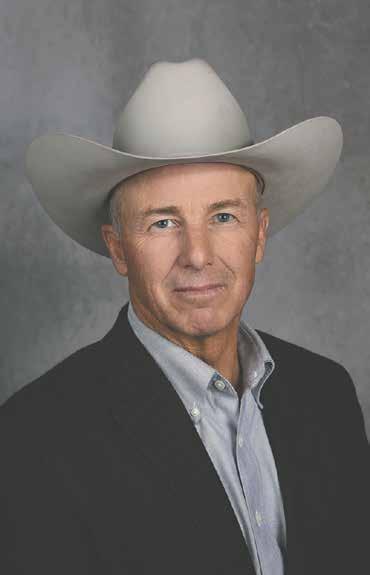
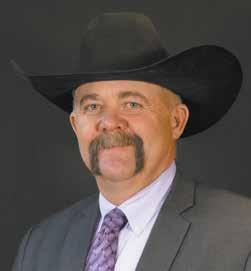
By Dave Baker NCA President
Younger people tend to be the strongest consumers. They are raising families, purchasing homes, buying vehicles, and investing in household goods. Older populations generally spend less. The Chinese government recognizes the need to stimulate domestic consumption, but doing so has proven difficult. For agriculture, however, China’s large population remains significant. Even if only a small percentage of Chinese consumers increase their consumption of products such as beef, the impact on agricultural markets can be substantial.
While populations are aging and stabilizing throughout much of the developed world, the opposite is occurring in many developing nations. Africa currently has the fastestgrowing population and is expected to add billions of people over the coming decades. This growth also presents both opportunities and challenges.
Many African countries remain heavily dependent on imported food despite possessing large amounts of potentially productive agricultural land. Industrial agriculture is expanding, but in many regions, production is still dominated by small farms using limited mechanization and relatively low levels of capital investment. Modernizing agriculture requires infrastructure, equipment, technology, and investment, all of which can be difficult to obtain when significant financial resources are already being spent on food imports.
For many developing nations, the primary challenge may not be producing food alone but producing food that remains affordable for rapidly growing populations. As incomes rise and diets change, demand for protein and higher-value agricultural products is likely to increase as well.
As producers and small business owners, most of us focus on the next season, the next calf crop, or the next few years. Demographic trends operate on a much longer timeline. However, they may ultimately prove to be among the most important forces shaping labor availability, consumer demand, economic growth, and agricultural markets.
Much of the developed world is entering an era of slower population growth and aging populations, while much of the future growth in both population and food demand will occur in developing nations. For a long time, our economies have relied on expanding numbers of workers and consumers. What happens when that growth slows or reverses remains one of the most important economic questions of our time. The next ten to thirty years are likely to bring significant changes, and agriculture will be directly affected by many of them.
Interesting times.
by
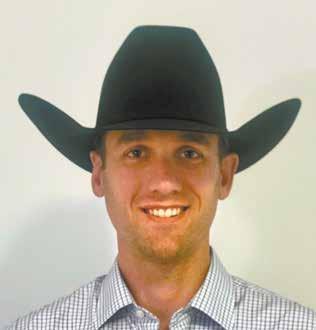
Martin Paris | NCA
2026 Nevada Cattlemen’s Association Scholarship Recipients
The Nevada Cattlemen’s Association (NCA) Research and Education Committee is pleased to announce five scholarship recipients this year.
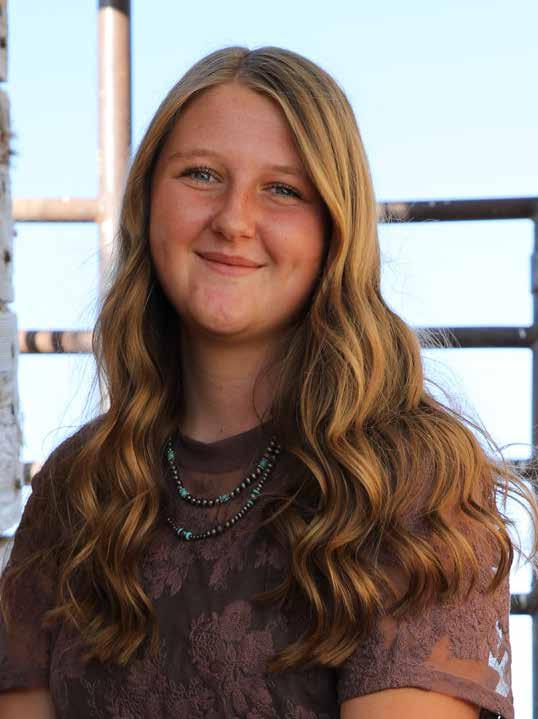
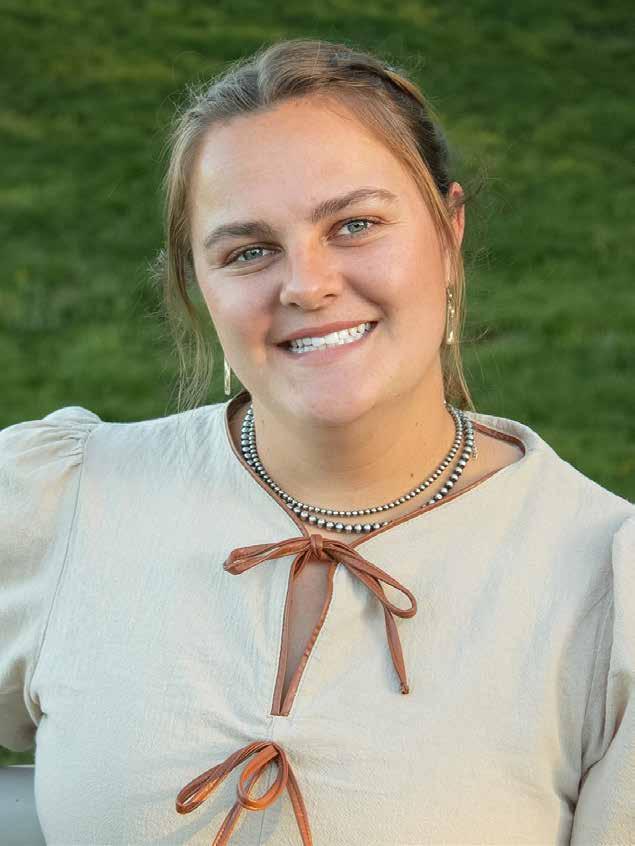
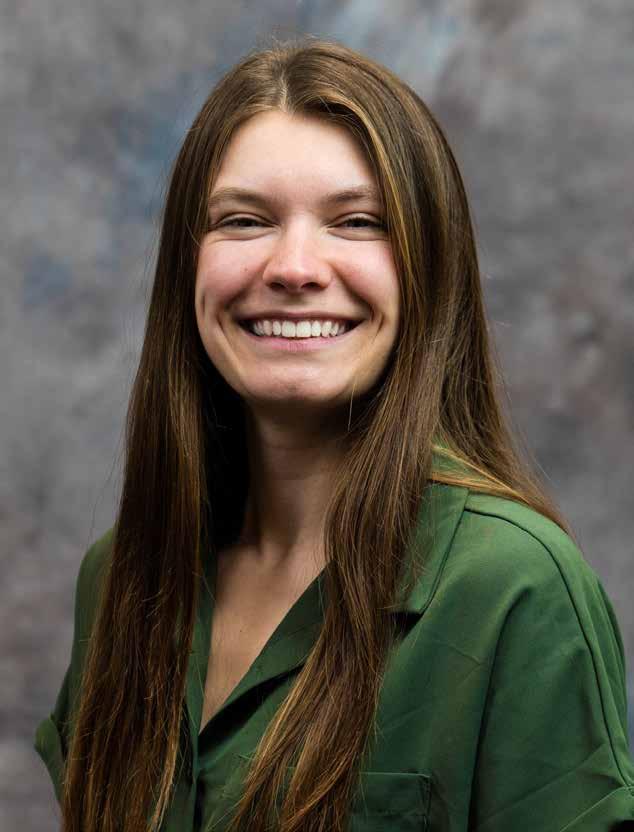
The NCA would like to congratulate Allie Fait of Fallon, NV, for being selected as the 2026 NCA Scholarship recipient; Sophia Stanton of Yerington, NV, and Kylee Simper of Fallon, NV, for being selected as the 2026 Marvel-Andrae Scholarship recipients; and, last but not least, Matti DeLong of Winnemucca, NV, and Kerstyn Countryman of Washoe Valley, NV, for being selected as the 2026 Walt Leberski Memorial Scholarship recipients.
The Nevada Cattlemen’s Association annually awards the NCA Scholarship to first-year college students beginning to pursue an education within the agricultural industry. This award is open to Nevada high school graduating seniors planning to attend a trade school, junior college, or four-year university and major in an agriculture-related field.
The Marvel-Andrae Scholarship is targeted toward students either entering their first year of college or already enrolled in college and working toward a degree in agricultural economics, agricultural business, or animal/meat science. We would also like to recognize Agri Beef for its continued support of the MarvelAndrae Scholarship program. NCA greatly appreciates our partnership with Agri Beef and thanks them for their continued support of students pursuing careers in agriculture.
The Walt Leberski Memorial Scholarship is open to graduating high school seniors, as well as students already enrolled in college or trade school. This scholarship is also intended for students who are obtaining a degree or training that will help them hone their skills for the betterment of agriculture.
All three scholarships are awarded to exceptional students who work hard, excel academically, and represent agriculture in a positive way. We thank all the students who applied for these scholarships and are confident they will be strong future advocates for Nevada’s ranching and farming communities.
NCA Scholarship Recipient
Allie Fait recently graduated from Churchill County High School in Fallon, NV, and will be attending Utah State University, where she plans to pursue a degree in Animal and Dairy Science. Allie grew up with a strong background in agriculture and livestock production. She has been active in FFA, 4-H, HOSA, Hope Squad, National Honor Society, student council, and several livestock and agricultural organizations. She also served in numerous leadership roles, including Churchill County FFA President, Nevada Junior Livestock Show Youth Advisory Council member, 4-H Junior Livestock Leader, and National Honor Society President. Allie hopes to use her education to pursue a career in embryology and artificial insemination, with a focus on genetics and helping livestock producers improve herd quality and efficiency.
Marvel-Andrae Scholarship Recipients
Sophia Stanton of Yerington, NV, has been selected as one of this year’s Marvel-Andrae Scholarship recipients. Sophia is currently a sophomore at the University of Idaho, where she is studying Agricultural Business and Accounting. She is involved in Sigma Alpha Sorority, where she serves as Recruitment Director, and Women in Agriculture, where she serves as Treasurer. Growing up raising animals and being surrounded by agriculture helped shape Sophia’s passion for the industry and gave her a strong appreciation for the hard work, dedication, and resilience it takes to be involved in agriculture. After completing her education, Sophia hopes to work in a role that directly supports farmers and ranchers, whether through financial services, agricultural sales, or management.
Kylee Simper recently graduated from Churchill Co. High School in Fallon, NV, and will be attending Utah State University, where she plans to pursue a degree in Agricultural Business. Kylee was involved in 4-H, FFA, National Honor Society, Block F, varsity girls soccer, and varsity girls basketball throughout high school. She also served in several leadership roles, including as team captain for both soccer and basketball, FFA Chapter Sentinel, and treasurer of both the National Honor Society and Block F. Kylee grew up with a strong background in agriculture, spending time riding horses, checking cattle, helping at the sale barn, and raising
and showing hogs. She hopes to use her education to give back to the agricultural industry and assist those working in the field.
Walt Leberski Memorial Scholarship Recipients
Matti DeLong recently graduated from Lowry High School in Winnemucca, NV, and will be attending New Mexico State University, where she plans to pursue a degree in Nursing with a minor in Agricultural Communications. Matti is a sixth-generation Nevada cattle rancher and has been involved in ranching, rodeo, FFA, and livestock throughout her life. She has served as FFA President and Humboldt High School Rodeo Club President, and has been involved in National Honor Society, varsity basketball, Nevada High School Rodeo, advanced dance, community service, and several other extracurricular activities. Matti hopes to use her education to help others through nursing while staying connected to her ranching roots and remaining active in cattle ranching. She plans to continue giving back to the agricultural industry that helped shape her life.
Kerstyn Countryman is currently a third-year Doctor of Veterinary Medicine student at Cornell University and works at Cornell University’s Hospital for Animals. After veterinary school, Kerstyn plans to complete an equine internship before returning to Nevada, where she hopes to eventually open her own ambulatory practice and provide rural mixed-animal veterinary care. Her long-term goal is to move to Austin, Nevada, and serve the surrounding rural communities, where there is a strong need for veterinary services. While at Cornell, Kerstyn has published research on equine infectious neurological diseases and has also helped create a mental-health initiative for veterinary and rural communities. Having grown up partly on a cattle ranch and partly on a Native reservation in Nevada, Kerstyn hopes to return home and serve the people, animals, and communities that helped shape her.
Congratulations again to Allie, Sophia, Kylee, Matti, and Kerstyn. We wish them the best of luck in their future endeavors. NCA is proud to support these students and is confident they will continue to serve Nevada agriculture well. We look forward to seeing all they will accomplish.
New Campaign to Amp Up Grilling Season Across Six Western States Includes Nevada
By Annette Kassis—Director, Consumer & Brand Marketing
You can cook dinner…or you can grill it. So, what’s the difference? While it’s true that both result in a meal, grilling seems to embody place, feeling, and memory, especially summer grilling. Whether you call it a cookout, a barbecue, or go straight to the point and invoke the name of the appliance itself as both noun and verb, grilling is synonymous with summer meals, social events, and the general sense of freedom the season evokes.
Beef is the undisputed star of summer grilling, with a majority of people citing burgers and steaks as “must haves” for the grill. This is consistent with BeefResearch.org data that continues to show that sales peak for beef during key summer holidays. However, that same research shows that rising grocery costs continue to shape purchase behavior, with consumers looking more toward budget and value, which may in turn lead them to try new cuts, flavors, and techniques. From a consumer marketing standpoint, the focus is on driving big flavor with big value messaging.
As part of the national Beef. It’s What’s For Dinner. (BIWFD) summer grilling campaign, the National Cattlemen’s Beef Association (NCBA), a contractor to the Beef Checkoff, is coordinating efforts to extend the national summer campaign through targeted strategies focused on reaching consumers across the Western States. Working to inspire and encourage summer
grillers to choose Beef for their upcoming meals while also increasing brand awareness and positive perceptions of Beef, the Western States campaign encompasses: California, Oregon, Washington, Idaho, Nevada, and Arizona.
Scheduled to run from June 15 through August 31, this Western States campaign is being funded by contributions from three non-Western states: Oklahoma; Iowa; and North Dakota. Each of these states contributes a percentage of the total campaign budget. The campaign itself includes ads running across both Connected TV (CTV) and online audio, reaching relevant and engaged consumers who are watching and listening to premium content.
For example, while listening to music on digital audio platforms (Pandora, iHeart, Spotify, etc.), the BIWFD ad will appear during a break promoting beef’s message. The ads are un-skippable and have an option to learn more on the BIWFD website. For CTV, a viewer within the campaign’s target audience watching a TV show on a popular channel such as ESPN, HGTV, Discovery, or Food Network through their Smart/Connected TV will see a :15or :30-second Beef Checkoff-funded ad during the natural commercial breaks in the show. The ads are non-skippable videos, and the viewer must watch the entire video to completion to continue their show.
Campaign spend in each region is determined by an optimization process that prioritizes the most costefficient impressions, video views, and audio listens across the Western States. Total ad spend is expected to be correlated to relative population by state. While the scale of the campaign allows for market saturation beyond the large urban markets, this campaign is expected to have a higher presence within the more densely populated urban markets within the Western States, such as Seattle, Portland, Los Angeles, San Diego, San Francisco, Las Vegas, Phoenix, and Boise.
“This kind of cooperation among the state beef councils is not uncommon,” said Bill Dale, executive director of the Nevada and California Beef Councils. “States with historically high cattle numbers but lower population numbers have long recognized the benefit of helping fund consumer outreach in more populous states with larger urban areas. The Nevada Beef Council actually allocates zero dollars to this extensive campaign.” Beef on the grill – the sizzle, the aroma, the deliciousness – fuels the summer, brings people together, and epitomizes the season’s laid-back vibe. And Beef’s big flavor and big value make it worth every bite.
Family style is in style! Beef’s unbeatable flavor and versatility make it worth every bite. Bold flavors, marinades and spices boost grilling season and impress the whole crowd.
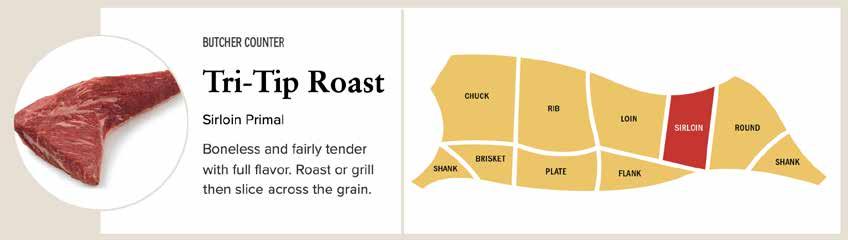
Santa Maria Tri-Tip with
Pistachio Pesto
Grilled Tri-Tip roast with West Coast flavors. This juicy, tender cut pairs perfectly with vine-ripe tomatoes and grilled zucchini and pistachio pesto.
Ingredients:
1 beef Tri-Tip Roast (about 2 lbs), trimmed
1/2 cup olive oil, divided
1 pound zucchini, divided
1 lemon, halved
1 pound cherry tomatoes, halved
Salt and pepper, to taste
2 tablespoons fresh basil, torn
2 tablespoons fresh parsley, torn
RUB:
1 tablespoon smoked paprika
1 tablespoon freshly ground black pepper
1-1/2 teaspoons granulated garlic
1-1/2 teaspoons granulated onion
1-1/2 teaspoons salt
PESTO:
3/4 cup olive oil
1/2 cup salted pistachios, toasted
4 garlic cloves
1/4 cup grated Parmesan cheese
1/4 cup fresh parsley
1/4 cup fresh basil
Cooking:
1. Combine rub ingredients; set aside. Preheat grill to medium-low heat.
2. Coat both sides of Tri-Tip Roast with 1/4 cup olive oil; sprinkle with prepared rub. Place roast in center of grid over medium, ash-covered coals or medium heat on preheated gas grill. Grill roast, covered 15 to 20 minutes for medium rare (145°F) to medium (160°F) doneness, turning occasionally.
Cook’s Tip: Ensure grid is 3 to 4 inches above heat.
3. Meanwhile, cut half of zucchini lengthwise into 1/4-inch slices. Grill zucchini and lemon, cut side down, 8 to 10 minutes or until tender and slightly charred. Remove from grill; set aside.
4. Remove roast when instant-read thermometer registers 135°F for medium rare; 150°F for medium. Transfer roast to carving board; tent loosely with aluminum foil. Let stand 10 minutes. (Temperature will continue to rise about 10°F to reach 145°F for medium rare; 160°F for medium).
5. Preheat broiler to low. Slice remaining zucchini crosswise into 1/4-inch slices. Combine zucchini and tomatoes on rimmed baking sheet. Toss with remaining 1/4 cup olive oil; season with salt and pepper, if desired. Spread in a single layer. Broil 15 to 20 minutes or until vegetables are tender and begin to dry out.
6. To prepare pesto, add reserved grilled zucchini, olive oil, pistachios, garlic, Parmesan, parsley and basil in blender container. Pulse until smooth and desired consistency. Season with salt and pepper, if desired.
7. Thinly slice roast. Place broiled vegetables on bottom of large platter. Sprinkle with torn basil and parsley; top with steak slices. Drizzle with pesto and a squeeze of grilled lemon before serving.
Recipes & photos courtesy of
$3.55M federal award drives wildfire research and forest restoration at Little Valley and Whittell Forest & Wildlife Area
During National Wildfire Awareness Month, University expands effort to protect Sierra Front communities
www.unr.edu/nevada-today
During National Wildfire Awareness Month, researchers, land managers and community partners are advancing a shared goal at the Little Valley Research Station and the Whittell Forest & Wildlife Area: reducing wildfire risk while restoring forests that can better withstand future fire.
That work recently received a major boost through a $3.55 million federal award from the U.S. Department of the Interior, funded through the Southern Nevada Public Lands Management Act. The six-year project – Little Valley Wildland-Urban Interface Wildfire Mitigation & Fire-Adapted Forest Restoration – runs from 2026 through 2031. It is led by University of Nevada, Reno researcher and Associate Professor Sarah Bisbing and forester Hunter Noble in the Department of Natural Resources & Environmental Science, part of the University’s College of Agriculture, Biotechnology & Natural Resources. Bisbing is director of the Whittell Forest & Wildlife Area, and Noble is the forest manager.
The project targets wildfire risk along the Sierra Front, where growing communities border fire-prone forests. Research and restoration efforts will focus on reducing hazardous fuels, restoring fire-adapted forest structure and monitoring treatment effects on forest health and vegetation recovery.
What distinguishes the work at the Little Valley Research Station and the Whittell Forest & Wildlife Area is collaboration. The sites support active partnerships between University researchers
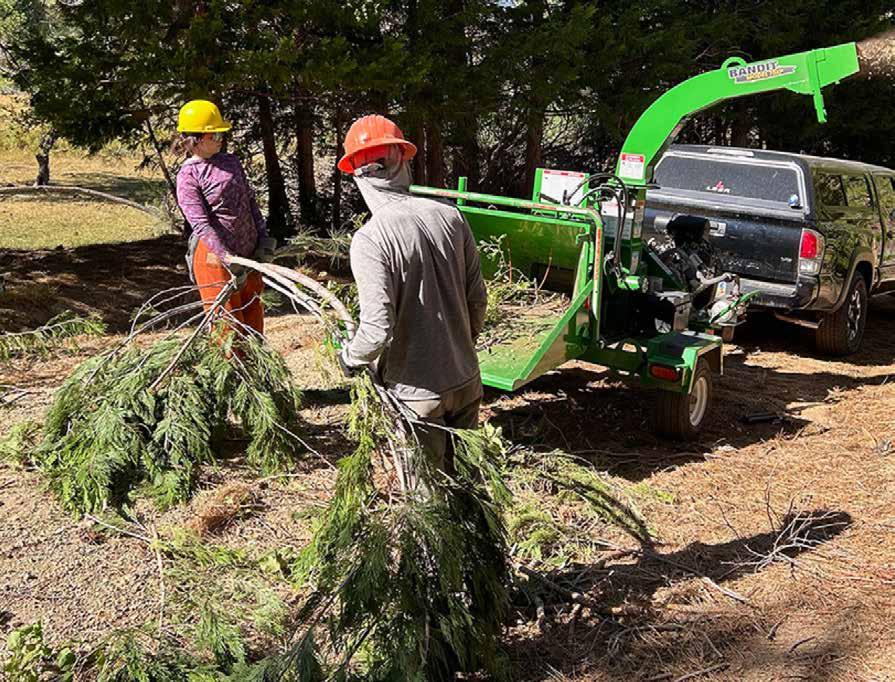
As part of a University of Nevada, Reno-led project, crews remove forest fuel materials at the Whittell Forest & Wildlife Area, work that will expand under a recently announced wildfire mitigation and forest restoration grant.
and fire agencies, land managers and local communities working on the same landscape.
“The strength of this work is knowing it needs to happen and getting it done before the next fire arrives,” said Bisbing, who also conducts research as part of the College’s Experiment Station.
Interdisciplinary projects at the site have addressed forest fuels, post-fire soil health, watershed impacts, drinking water quality, pollinator systems and climate-driven change. That research, supported by more than $15 million in active and recent funding, is designed to inform forest and fire management.
Public engagement is also part of the model. The Fire & Fuels Education Seminar Series, hosted this spring at the Little Valley Research Station, brought researchers, land managers and residents together to discuss what works on the ground in restoring fire-adapted forests and reducing wildfire risk. The series featured speakers from academia, fire districts, nonprofit organizations and state and federal agencies, creating a space for shared learning and dialogue.
“Science only matters if it’s accessible and usable,” Noble said. “These seminars connect research directly to the people making decisions and living with fire risk.”
This collaborative approach is expanding through the launch of the Nevada Forest and Woodland Restoration Institute, a new effort led by plant ecologist and Assistant Professor Robert Shriver, a colleague of Bisbing and Noble in the Department of Natural Resources & Environmental Science
who also conducts research as part of the Experiment Station. The institute is designed to accelerate applied restoration science, support cross-boundary collaboration and translate research into practical guidance for land managers and communities across Nevada.
The institute also positions Nevada for inclusion in the Southwest Ecological Restoration Institutes (SWERI) network, a multi-state initiative authorized by Congress to support science-based forest and woodland restoration across the Interior West. SWERI works closely with land managers and stakeholders to deliver actionable research, monitoring and collaborative support at landscape scale.
“Nevada’s forests and woodlands face urgent challenges from wildfire and climate stress,” Shriver said. “This institute exists to turn that urgency into action on the ground.”
As wildfire seasons grow longer and more intense, National Wildfire Awareness Month underscores the importance of preparation and mitigation. At the Little Valley Research Station and the Whittell Forest & Wildlife Area, that work is grounded in collaboration, long-term data and shared responsibility for Nevada’s forested landscapes.
This project was funded due to the Southern Nevada Public Land Management Act, which authorized the sale of BLM-administered federal lands within a designated boundary in the Las Vegas Valley and required proceeds to be used on projects to fund federal, state and local projects that benefit communities and public lands.
Thoughts on Voting
The recent Nevada Primary election had some surprises and some forebodings even for the uninterested and uninvolved.
As for the uninterested, the repetitious television and radio advertisements very quickly became boring even though there was a warning for the future in a few of them. This probably turned off some viewers and solidified their belief that a vote from them had no impact and did not matter. Another fallacy of the primary election is the closed nature to all but party registered voters. The Republican and Democratic parties have about one third of the body electorate in each of their registration bases. Independents represent over one third of the Nevada registered voters.
The numbers look like this: there are 2,060,184 active registered voters in Nevada. Sixty percent, representing the Republican and Democrat party approximate share is 1,236,114. This leaves 824,073 eligible voters who were not allowed to vote in this past primary for the U.S. House of Representatives open seat or choose a candidate for Governor, Lieutenant Governor, Secretary of State, Attorney General, State Treasurer or Comptroller. Likewise, in a closed primary independent voters cannot choose who will be in the general election ballot for the State Senate and Assembly.
The head turning statistic revealed in this latest Nevada election is the total turnout of voters no matter party or
independent affiliation. Of the active registered voters who could have voted in our primary only 406,194 people actually did vote. I’ll do the math for you. This equates to 19.72 % of active registered voters.
I have a couple of observations. If you voted, as a fellow voting citizen, I appreciate the effort you made no matter for whom you voted. If you did not vote and could have voted you have no right to complain about the election or your elected leaders.
Voting is every citizen’s responsibility. It is your obligation as a member of our free democracy to participate and choose those who will make the policy decisions and set the agenda for the near future. Without adequate input from the electorate, the people’s pulse, so to speak, will not be correctly taken. In this circumstance the decision will be flawed and maybe detrimental to the larger population as a whole. There’s an old mis-statement the non-participants in elections drag out as justification for not voting. “With millions of voters my vote won’t matter, why should I bother- it is just a waste of my time.” Let me give you an example which belies this kind of thinking.
In this recent election a long -time member of the assembly was defeated by a new comer candidate by just 42 votes. I had worked with this legislator on many issues through the years. I knew he was qualified
for the job and was a dedicated and hard -working, honest public servant. We did not always agree on things but I could depend on him to listen to my side of the story and respect, if not always agree with that point of view. The new candidate may be wellqualified and turn out to be a good legislator. We’ll see. There will be many people disappointed with this outcome. I hope they earned the right to lodge their complaints about that result.
It should be obvious these post-election comments and concerns illustrate how complicated elections are. In my opinion there is no black and white in public policy discussions and this includes elections. Voting for one candidate based upon agreement with their election platform is what we most often see. However, does a vote in that race also impact another race in a negative way which could ultimately impact your overall policy philosophy.
Voters should not only show up and participate, they should do so having educated themselves about the issues and the people regarding the election. This means do your own analysis and look behind endorsements to see if there is a good rationale that fits your own values and life experience instead of someone else’s to vote for a particular person or issue. Good luck with your general election homework. I’ll see you soon.
PROTECTING YOUR WATER RIGHTS
The Central Nevada Regional Water Authority was established in 2005 to proactively address water issues in the Central Region, the largest of Nevada's 14 hydrographic regions. CNRWA formulates and presents a united position on water-related issues; monitors, assesses and responds to water projects that may adversely impact a member county; implements a groundwater monitoring program and encourages citizen participation in water-related issues. CNRWA’s nine member counties are: Churchill, Elko, Esmeralda, Eureka, Humboldt, Lander, Nye, Pershing, and White Pine.
VIDEO ROYALE
MONDAY, JULY 27
Superior Sunrise - 7:30 a.m.
Video Auction - 8:00 a.m. (PDT)
TUESDAY, JULY 28
Superior Sunrise - 7:30 a.m.
Video Auction - 8:00 a.m. (PDT)
28th Annual Superior Livestock Cowboy Golf Tournament - 5:00 p.m.
WEDNESDAY, JULY 29
Superior Sunrise - 7:30 a.m.
Video Auction - 8:00 a.m. (PDT)
Customer Appreciation Dinner
Featuring live music from Ned Ledoux, Kevin Davis and Waylon Thibodeaux - 6:00 p.m.
THURSDAY, JULY 30
Superior Sunrise - 7:30 a.m.
Video Auction - 8:00 a.m. (PDT)
Social at The Martin House
Live music from Waylon Thibodeaux and Kevin Davis
FRIDAY, JULY 31
Superior Sunrise - 7:30
Video
- 8:00
Resilient Food Systems Infrastructure
Free Weekly Trainings & Sessions
Learn about our summer offerings!
Local Food Business Supply Chain Training on Zoom: July 15 - Aug. 12, 6-8 p.m.
Lunch & Learn Grant Writing on Zoom: July 15 - Aug. 5, 12-1p.m.
These programs provide practical guidance, expert instruction and technical assistance to support stronger, more resilient food systems.
In-Person Grant Writing Trainings: Aug. 12 in Reno - Aug. 26 in Las Vegas Farm to Market Mixers: Aug. 8 in Gardnerville - Aug. 21 in Las Vegas extension.unr.edu/food-business-center/ For questions, please contact Kaley Chapin at kaleys@unr.edu or call our Washoe County Office at 775-784-4848
Persons in need of special accommodations or assistance should contact Paul Lessick, civil rights and compliance coordinator, at plessick@unr.edu or (702) 257-5577 at least five days prior to the scheduled event with their needs or for more information. An
View Our Calendar
BLM Livestock Grazing Regulations Seek To Enhance Rangelands Through Flexibility
By Doug Busselman | NFB Executive Vice President
On May 12th the Federal Register carried two positive announcements. One from the Bureau of Land Management (BLM) and one jointly offered by BLM and the Office of Hearings and Appeals (OHA). The proposal jointly offered by the two agencies was a set of proposed new livestock grazing regulations. The singular notice was that BLM was rescinding the agency’s “Conservation and Landscape Health Rule,” which were adopted under the Biden Administration.
The livestock regulation proposal is very extensive and covers a host of areas of how BLM management takes place on the land they manage. One of the themes that is coming through the proposed changes are the details of how BLM’s intention is to make regulation over livestock grazing more flexible and practical for the benefit of the landscape.
An important improvement in the proposal relates to the emphasis on attributing land health evaluations on all possible causal factors and acting on those uses causing the problems. At various times, including the initiative that then Secretary of Interior Bruce Babbitt brought forward in his “Rangeland Reform” regulation package – ‘rangeland health’ was a key foundation. Over the course of emphasis, any and all negative situations were attributed to livestock grazing, ignoring (or at least not doing anything about) other land uses that were causing the impacts.
A couple of newly included definitions being proposed by the regulation package are “Prescribed grazing” and “Targeted grazing.”
Prescribed grazing is written into the definition section to mean the controlled harvest of vegetation with grazing or browsing animals.
Their intent, according to the Federal Register, is explained by stating that in writing this into the regulation definitions are to be more specific in identifying the management objectives that they are trying to achieve.
Under the new language, incorporated under the new proposed regulations, target grazing means livestock being used as a tool to create strategic linear fuel break to reduce fine fuel height and fuel loading and to maintain fine fuels reduction for a specified period.
All in all, there are total 33 different proposed. Some are added. redefined, or deleted actions included the Definition section of the proposed regulations.
Based on normal contentious interests attempting to dissuade the adoption and advancement of good grazing regulations, it will be important for ranchers, especially those with BLM grazing permits, to provide their comments to BLM, offering observations on the proposed regulations.
The deadline for completing the 60-day process for public input for the proposed set of regulations will be July 13th.
Your comments need to be addressed to the:
Stevan Pearce, Director
U.S. Department of Interior
Bureau of Land Management
1849 C St. NW, Room 5646
Washington, D.C. 20240
You can also send your comments using the Federal eRulemaking Portal: https://www. regulations.gov. In the Searchbox, enter “BLM2026-0001”
Fully Rescinding The Conservation and Landscape Health Rule:
As noted above, the May 12th Federal Register also noted that they were intending to rescind the “Conservation and Landscape Health Rule.” This action will take place 30 days after the publication of the Federal Register notice.
As the Federal Register reports, “This action restores balance to federal land management under the Federal Land Policy Act of 1976 by reaffirming the principles of multiple use and sustained yield, ensuring conservation does not restrict productive use the public lands, and reducing regulatory burdens that impede efficient decision-making.”
One of the arguments made by Farm Bureau and others, the actions taken by BLM officials in creating and establishing the “Conservation and Landscape Health Rule” was beyond the authority the agency had to take. A major example of this overstepping was the attempt to add “conservation” as a multiple use for their considerations of management. Within the language of their Rule, which put “conservation” being equal to all other defined multiple uses of the public lands under FLPMA’s multiple-use and sustained-yield mandate.
Rescinding the “Conservation and Landscape Health Rule” erases this misguided thought that BLM, under the Biden Administration, believed that they had authority that exceeded legislation passed by Congress.
“Ranchers appreciate Department of the Interior Secretary Doug Burgum and President Trump for working to provide certainty to ranchers who use public lands for livestock grazing, which is crucial to the success of
Nevada Farm Bureau Federation
2165 Green Vista Dr. # 205
Sparks, NV 89431 US
Sign up for the weekly Grass Roots Newsletter at: www.nvfb.org
farmers and ranchers in the Western United States.” American Farm Bureau Federation (AFBF) President Zippy Duvall said. “Modernizing decades-old grazing regulations will provide more flexibility for updated management practices and will help ranchers rebuild America’s cattle herds. Ranchers care for the land they’ve been entrusted with, and responsible stewardship of public lands helps to reduce wildfires, control invasive species, and promote overall health benefits to the land.
“Rescinding the ‘Conservation and Landscape Health Rule’ and updating grazing regulations recognizes the important balance our country has achieved on public lands. It ensures ranchers have critical access to rangelands, which ultimately supports the stability and availability of homegrown protein for America’s families.”
During the public comment process, which considered the rescission of the “Conservation and Landscape Health Rule,” BLM received 138,161 comment letter submissions, including 129,029 duplicate form letter submissions and 9,132 unique submissions.
On a national basis, BLM administers nearly 18,000 grazing permits that together authorize about 12.3 million Annual Unit Months (AUMs). BLM is responsible for managing nearly 48 million acres of land in Nevada, accounting for about 63 percent of our state’s land base.
Nevada Farm Bureau Grassroots News
Nevada Farm Bureau Voices The Need For Proper Reimbursement For Ranchers
In public comments as part of the Intergovernmental Executive Committee meeting for the Fallon Range Training Complex, held on June 23 at the Bureau of Land Management (BLM) Carson City District Office, Nevada Farm Bureau shared that the U.S. Navy needs to follow the law and reimburse impacted ranchers they are supposed to receive.
In part, Nevada Farm Bureau policy Defense – Impacts of Military Reservations: states:
“We propose that farmers and ranchers be properly compensated by the military branches or the federal government for any adverse economic impacts, short and long term, of new and existing military activities, reservations or restricted areas. In cases where grazing allotment closure is required, compensation to grazing allotment owners should be required and should take into account the value of the feed provided for that allotment (within the seasonal context of how that allotment fits into the ranch’s operations); the value of the water rights on the allotment (with the full value of the lost or change in status of the water right); the value of any and all range improvements and the consequences of the economic conditions for the ranching operation by the loss of the component provided by the grazing allotment. Compensated water rights should be retired. This speaks to the long-term economic viability and sustainability of the entire agricultural operation.”
One of the presentations to come before the committee, Adrienne Snow of Snow Livestock, covered the impact of the Navy’s Training Complex expansion has had and will continue to have on their family’s ranch. Her detailed explanation also pointed out the gap between what the law covering the expansion says and the reality of how the Navy is attempting to short-change their obligations under the enabling legislation. The law which passed Congress, to bring about the request of the Navy to expand their bombing areas, included specific provisions that the Navy shall compensate permit holders for losses suffered when replacement forage is unavailable. It was also locked in as a mandatory obligation, not a discretionary consideration. The allotments being taken are winter grazing permits and to this point the Navy and BLM haven’t located replacement allotments. The law also notes that the timeframe for the compensation is based on “in perpetuity” (considered to be 100 years).
Senate Farm Bill In The Spotlight
The U.S. Senate is kinda working on getting a version of the Farm Bill put together and moving forward. Earlier this week the chairman of the Senate Committee on Agriculture, Nutrition and Forestry, Senator John Boozman brought forward a farm bill discussion draft. It is still a long way from an actual
bill markup in committee and obtaining enough of a Senate consensus to get at least 60 “yea” votes to pass the legislation on the Senate floor. The there is also the detail of how whatever comes out of the Senate matches up with the Farm Bill the U.S. House passed. Nevertheless, American Farm Bureau President Zippy Duvall commented in a positive fashion on what progress has been made and is on the way.
“Farm Bureau appreciates Senator Boozman’s work to move a farm bill forward in the Senate. The bill text provides important support for farm families. The benefits include improved access to credit, expanded investments in specialty crops, increased transparency in fertilizer markets, and enhanced research and conservation programs.” Duvall said, “The discussion draft is a good first step and provides a solid foundation that Farm Bureau will work to improve upon as the Senate moves toward markup.
“In October 2025, Farm Bureau sent letters to President Trump and congressional leaders emphasizing the severe economic pressures facing America’s farmers and ranchers and highlighting actions that should be taken to improve economic conditions in rural America. While we have seen meaningful progress, more action is needed from Congress to ensure farmers can continue to supply dinner for families across America.
“We look forward to working with the chairman and Congress to address three top priorities not included in this farm bill draft, needed to help farmers through the current multiyear downturn in the farm economy. They include providing economic aid to help farmers struggling with historic inflation, protecting interstate commerce from a patchwork of state laws, and approving the sale of E15 blended fuel year-round, which would be a win-win for farmers and consumers.
“Farmers appreciate President Trump’s call for congressional action on E15 and economic aid and Agriculture Secretary Brooke Rollins repeatedly highlighting the need to protect interstate commerce, in addition to the need for aid and E15. We urge the Senate to quickly pass a bipartisan farm bill, and with the same sense of urgency, Congress must work together to address these additional priorities. It’s time to deliver solutions to America’s farmers and ranchers.”
Farm Bureau Pleased With White House Request To Congress For More Assistance
On June 25th, Farm Bureau President Zippy Duvall applauded the White House request to Congress for more than $11 billion in additional assistance for America’s farmers and ranchers, as well as the administration’s call for year-round access to E15 fuel.
“Farmers are grateful to have the president’s backing at such a critical time after enduring years of economic losses due to inflation and depressed markets.
Additional aid will give farmers optimism headed into harvest later this year as they await the benefits of enhanced farm bill programs, better market access overseas and stronger domestic demand.
“Not only do we urge Congress to heed the White House call to deliver economic aid, but we also know both sides of the aisle in Congress recognize more is needed as farmers’ losses nationwide far exceed $11 billion. Over the last decade we have lost nearly 200,000 farms, so we need to stabilize the farm economy and reverse that trend. Additional aid will certainly help.
“The White House also urged Congress to authorize year-round sales of E15 fuel nationwide, which we’ve long called for. Expanding access to E15 would strengthen domestic energy production, increase demand for American-grown crops and save consumers at the gas pump. That’s a win all the way around.
“We look forward to working with Congress and the administration to quickly deliver supplemental aid and year-round E15, in addition to addressing other urgent priorities Farm Bureau has identified, from the farm bill to labor reform and protecting interstate commerce. We’re grateful for the broad recognition among elected leaders of the important role farmers play in our nation’s economy, energy security and food security. Ensuring the long-term strength of American agriculture is a goal we can all rally behind.”
July 4, 2026 Cookouts will be more costly
According to the American Farm Bureau Federation’s 2026 Summer Cookout Cost Survey, a classic Independence Day cookout for 10 people will cost $73.82, or about $7.38 per person. That is an increase of $2.90, or 4 percent, from last year.
The details of how this works out is presented in this Market Intel piece where Farm Bureau Economist Faith Parum and associate economist Cameron Castillo collaborated to highlight their findings from a nation-wide survey.
Because we live here, it is noteworthy to see how the cost in the Western part of the U.S. is looking at the highest cost in the nation. “The West is the most expensive region for a Fourth of July cookout at $80 for 10 people, or $8 per person, more than $6 above the national average.” the economists related.
They also duly noted that higher grocery prices don’t mean higher prices for farmers and ranchers. “After expenses, farmers receive less than 6 cents of every food dollar. Most of what consumers pay at the grocery store reflects costs that come after the farm gate, including processing, packaging, transportation, marketing and retail,” they wrote.
News from the desk of NDA DIRECTOR GOICOECHEA
Thank You!
The NDA revived the official NV State Fair this June As June came to a close, the Nevada Department of Agriculture (NDA) reflected on a month celebrating Nevada’s agricultural heritage and the people who helped carry it forward.
Governor Joe Lombardo proclaimed June 2026 as Agricultural Heritage Month, honoring the farmers, ranchers, youth and agricultural leaders who have strengthened Nevada’s communities for generations, and the agriculture events being held this month that celebrate Nevada’s agricultural heritage.
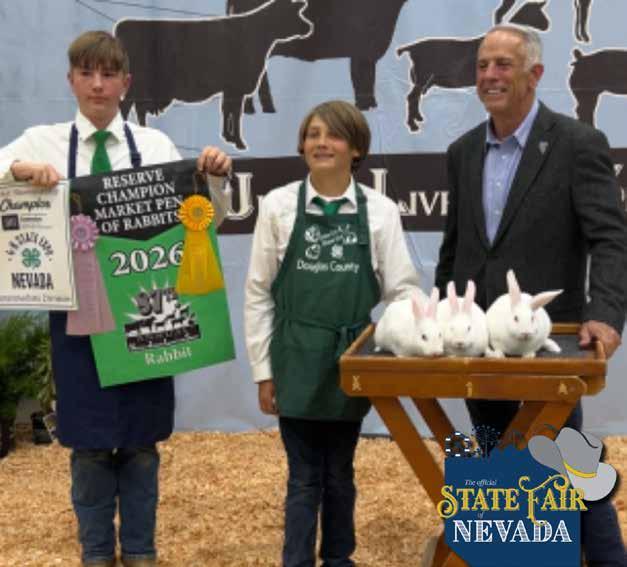
The return of the official State Fair of Nevada marked a memorable milestone during Nevada Agricultural Heritage Month, bringing together communities from across the state to enjoy educational exhibits, youth competitions, live entertainment and traditions that highlight the importance of agriculture in Nevada. We are grateful to the exhibitors, participants, partners and visitors who helped make this year’s fair such a success.
As we celebrate Nevada’s contributions to our Ag industry, we also want to highlight important agricultural programs and industry reminders.
Thank you for celebrating Nevada agriculture with us.
JJ Goicoechea
JJ Goicoechea, Director
Nevada Dept of Agriculture
405 South 21st Street Sparks, NV 89431
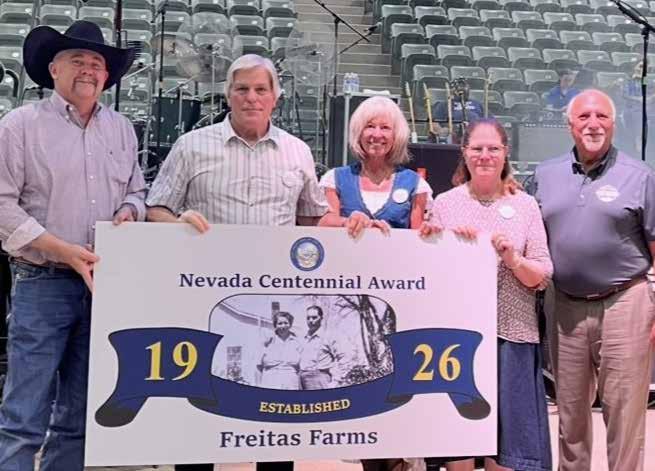
Freitas Farms receives Centennial Award
The Freitas family received the Centennial Award, recognizing five generations of agricultural stewardship and dedication to Nevada’s farming industry. This award recognizes agricultural families who have owned and operated the same land for 100 years or more and reflects the family’s longstanding commitment to preserving Nevada’s agricultural heritage.
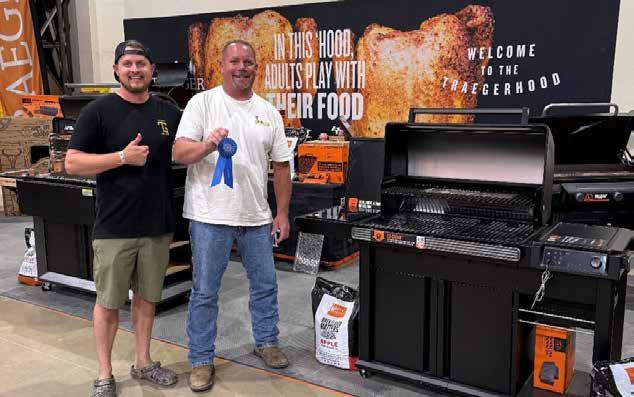
Traeger Smoke Show Winner!
BBQ enthusiasts took center stage during the Traeger Smoke Show BBQ Contest with the chance to win a Woodridge Elite Traeger Smoker! From smoked ribs to pork belly and sausage, three judges including Renobased Food Blogger (@EatingReno) Sydnye Helu, Edible Reno-Tahoe Publisher and Ad Director Jaci Goodman, and NDA School Nutrition Coordinator Allen Whitenack chose a winner to walk away with a new smoker.
1st Place Blue Ribbon - Shawn Jaynes
2nd Place Red Ribbon - Dave Ritter
3rd Place White Ribbon - Haylee Shaffer
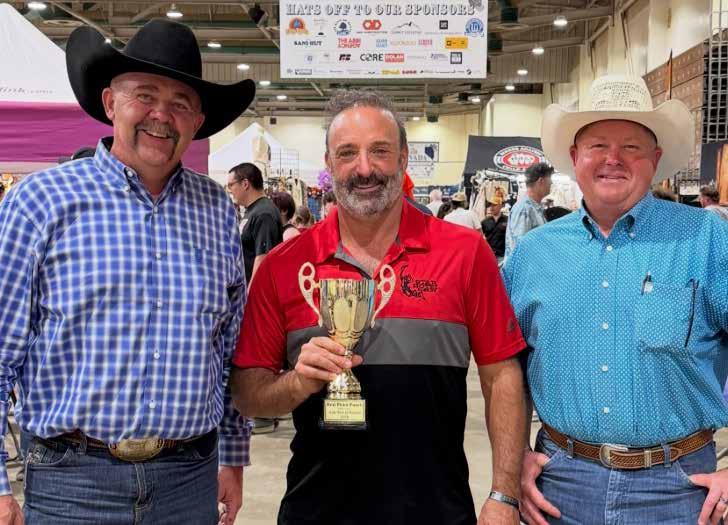
The Star named Picon Punch Champion
The Picon Punch was named the official State Drink of Nevada in 2025. A celebration of the state and its heritage wouldn’t be complete without a highlight of the quintessential cocktail of Nevada’s Basque roots. The State Fair of Nevada invited Nevada’s best Piconmakers to the fairgrounds to put their skills to the test. Judged by NDA Director J.J. Goicoechea, NDA Deputy Director Doug Farris, Piconland Writer and Director Mark Maynard, Reno-based Fashion and Travel Blogger (@HereGoesGabbi) Gabbi Hall, and Reno-based Food Blogger (@EatingReno) Sydnye Helu, Picon-makers poured their best for the panel of judges and over 100 tastings. Congratulations to Scotty Ygoa of The Star Hotel in Elko, who took home the trophy for Best Picon Punch in Nevada. Heyday Inn earned the People’s Choice Award, while Ferino Distillery, exclusive producer of the Amer Picon Liqueur received the White Ribbon for its newly released canned Picon Punch. Thank you to everyone who participated and helped make this event a memorable celebration at the State Fair of Nevada.
2026 livestock assessments due August 31
Livestock owners must complete their 2026 Livestock Assessment (Head Tax) by Aug. 31, 2026. Assessment notices will be mailed beginning July 1. Do not complete your assessment before receiving your livestock assessment number. Visit agri.nv.gov to learn more about the NDA Livestock Identification Program and to register and pay your assessment online. Completing your assessment on time helps avoid late fees and potential impacts to brand inspection services. For more information, contact the NDA Livestock Inspection Program at 775-7531360 or livestockinspection@agri.nv.gov.
Beef is not Beef is not just for just for dinner, it’s dinner, it’s for the for the benefit of the benefit of the earth earth enefit
Laying the foundation for a longerlasting cow herd with healthy heifers
Intentional
management, vaccination and
parasite control during heifer development can help build healthier cows and a more productive future herd.
Submitted by Boehringer Ingelheim | beefmagazine.com
Every cow in your pasture was once a heifer. How she develops in the first 12 to 18 months influences far more than her first calf crop, shaping longevity, productivity and return on investment for years to come.
“Heifer development is so important to a cattle operation because it is the future,” stressed Roger Thomas, DVM, co-owner of Thomas & England Veterinary Services in Smiths Grove, Kentucky.
Lee Jones, DVM, professional services veterinarian with Boehringer Ingelheim, echoed that perspective. “They’re how you make genetic progress,” he said. “It’s critical when we’re working with heifers to set them up for success from the beginning.”
Intentional management, strategic vaccination and effective parasite control during development can help build healthier cows and a more productive future herd.
Start with intentional management
For Bart Jones of Red Hill Farms near Lafayette, Tennessee, heifer development is central to herd sustainability, helping drive longevity and performance. The business retains 80% to 85% of the heifers born each year and breeds them in-house.
“We’re really looking for those heifers that’ll breed early and calve early,” stated Bart Jones. “A short calving season allows for uniform processing, weaning and marketing.”
Calving early matters for longevity, too. Dr. Thomas noted that heifers calving late in their first season often lag behind herdmates, andherdmates and may remain in the herd for 2 to 4 fewer years. “Reproduction is a luxury,” he added. “All other body needs must be met before a heifer will cycle and conceive.”
“Body condition is everything,” said Dr. Thomas. “Nutrition drives about 90% of body condition, though overall health, parasite control and vaccination also play key roles.”
Dr. Jones emphasizes developing heifers to reach about 60% to 65% of their mature body weight before breeding. “Heifers that calve in a body condition score of 6 are more likely to return to estrus quickly and breed back early,” he shared.
Low-stress handling, as well as adequate space, shade, water and proactive nutritional adjustments during weather extremes also support fertility and immune function.
Strategic vaccination protects fertility
Reproductive diseases can quietly erode pregnancy rates and herd performance. Bovine viral diarrhea (BVD), infectious bovine rhinotracheitis (IBR), leptospirosis and vibriosis are among the key threats to heifer fertility.
“BVD can be right under your nose, and you don’t even know it’s going on,” Dr. Thomas pointed out. Persistently infected (PI) BVD calves may appear normal while shedding the virus throughout the herd. Testing new herd additions before commingling, maintaining biosecurity and vaccinating strategically are essential.
A strong vaccination program should be tailored to the operation. “Producers don’t need to vaccinate for everything,” said Dr. Jones. “We want to make sure that we’re strategically vaccinating, with guidance from a veterinarian familiar with the herd.”
Modified-live vaccines generally stimulate a stronger, more durable immune response than killed vaccines. Dr. Jones recommends administering modified-live pre-breeding vaccines at least 60 days before breeding to avoid potential impacts on conception.
At Red Hill Farms, calves receive multiple modified-live vaccines, followed by a pre-breeding vaccination at 1 year of age. Bart Jones said it has resulted in strong pregnancy rates and a high percentage of cows calving in the first 30 days of the season.
Parasite control fuels growth and fertility
Even with excellent nutrition, parasites can rob heifers of performance.
“Parasites deprive heifers of nutrients,” explained Dr. Jones. “As cattle graze, they ingest infective larvae that damage the gut lining and compete for nutrients, limiting growth and fertility potential.”
Dr. Thomas believes the majority of parasite problems are subclinical.¹ “Producers may never see obvious sickness, only lost potential,” he related. “Poor weight gain and lower pregnancy rates can follow.”
A comprehensive parasite control program should account for age, grazing exposure and product effectiveness. Oral dewormers rapidly purge internal parasites, while injectable or pour-on products provide longer protection and help control external parasites. Monitoring effectiveness through fecal egg count reduction testing can help detect parasite resistance.
Longevity delivers return on investment
With replacement-heifer development input costs climbing, longevity is essential.
“You’re looking at $3,000-plus just to develop a heifer,” said Bart Jones. “Cows that leave the herd after only one or two calves rarely repay that investment.”
Focusing on intentional management, strategic vaccination and effective parasite control helps stack the odds in favor of heifers that conceive early and calve early to remain productive longer.
Work with your local veterinarian to create a heifer development plan that maximizes health, fertility and longevity. Learn more about strengthening your future herd at HealthyHeifers.com.
Farm Economy Policy Solutions Within Reach
By John Newton, Ph.D.
Vice President of Public Policy and Economic Analysis
Key Takeaways
• Farm country has endured three consecutive years of worsening economic conditions, spreading financial stress across much of rural America.
• A prolonged cost-price squeeze has increased demand for credit, reduced equipment purchases and contributed to a slight uptick in farm bankruptcies.
• Farmland values continue to provide equity support for farmers, helping to keep aggregate debt-to-asset ratios low and support access to capital.
Policy solutions such as year-round E15, the farm bill and economic aid are within reach in the Senate, offering opportunities to improve farm income, expand market access and support rural economies.
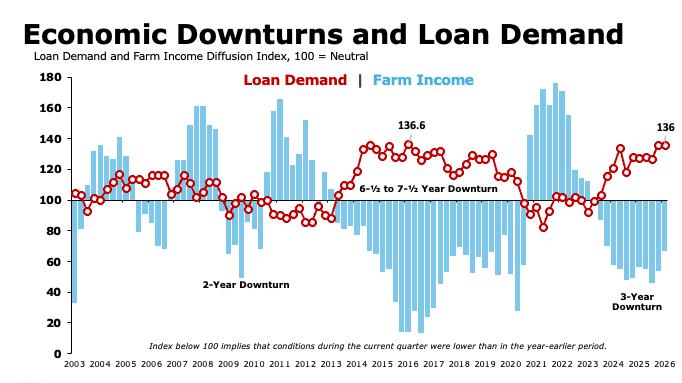
The U.S. farm economy is currently in the 12th consecutive quarter of a farm economic downturn, and given the cumulative effect of inflation, new economic pressures on input costs such as fertilizers and fuel, and crop prices below breakeven, how long the current downturn lasts will depend a lot on congressional action in the coming weeks and months.
According to the most recent data from the Kansas City Fed’s Agricultural Credit Survey, the farm income diffusion index — which measures the year-over-year change in economic conditions — was 66 in the first quarter of 2026, marking three straight years of deteriorating economic conditions on the farm and the longest downturn since that began in 2013 and lasted until 2020-2021.
The current downturn has been building for several years. The inflationary period that began in 2021 dramatically increased the cost of doing business on the farm. Farm production expenses have risen
sharply, with total expenses up 34%, or $120 billion, since 2020 and annual gross farm production expenses now approaching a half trillion dollars nationwide.
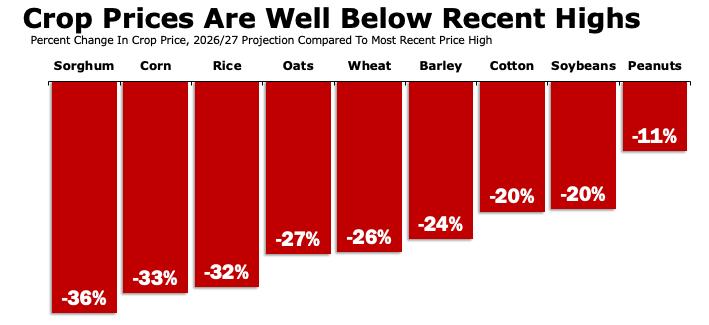
While major crop prices are expected to rebound slightly in 2026, prices for this year’s crops are anywhere between 11% and nearly 40% below levels reached only a few years prior. This pricecost squeeze has resulted in an erosion in working capital, near-record demand for loans and, in some cases, farm bankruptcies.
Rural Main Street Feels Farm Economy Slowdown
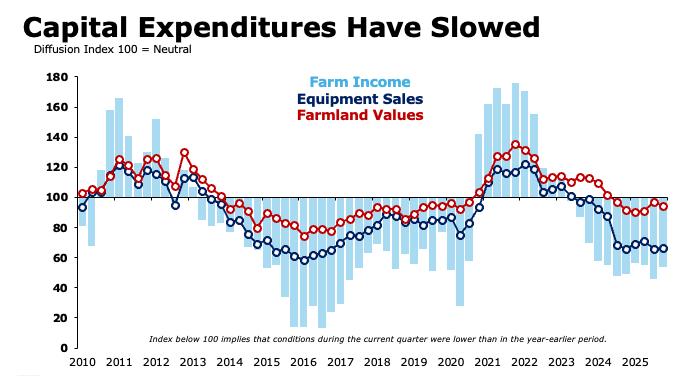
While loan demand is at near-record highs — behind only 2016 levels — this demand is likely to service lines of credit needed to keep the farm afloat through the trough. This is best supported by the significant slowdown in economic activity on rural Main Street. Data from Creighton University’s Rural Mainstreet Index reveals that farm equipment sales have fallen to among the lowest levels in the data’s history as farms hold off on making large capital purchases given the uncertain farm economic outlook.
Land Values Remain Strong
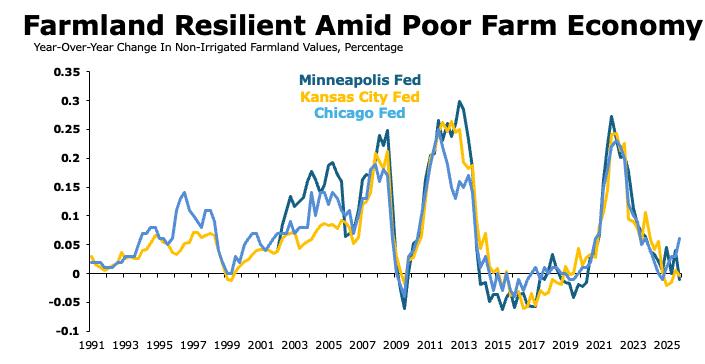
One area of the farm economy that remains resilient is farmland values. Both the Rural Main Street Index and the Federal Reserve show farmland values and values for non-irrigated farmland continue to see modest year-over-year growth and have shown no major signs retreating from the elevated values. The strength in farmland values has helped to keep equity measurements like the debt-to-asset ratio relatively low despite record farm debt and a weak farm economy. At the same time, strong land values can improve a farmer’s access to credit by providing collateral for borrowing and helping bridge short-
term cash flow or liquidity challenges. However, because land itself is not a liquid asset, higher land values do not necessarily translate into immediate or expanded access to working capital.
Importantly, farmland values are influenced by more than farm income. For example, farmland values are supported by several factors including economies of scale and farmland acquisitions, real estate investment trusts, urban sprawl, demand for renewable energy and more recently, the growth in data center development in rural areas.
Farm Economy Policy Solutions are Within Reach
There have been a number of tailwinds recently to help the farm economy, beginning with congressional support for ad hoc assistance in 2024, the One Big Beautiful Bill Act which included significant tax relief and made a historic investment in farm risk management programs, new agricultural trade frameworks including the recently announced trade deal with China (widely expected to result in approximately $30 billion annually in agricultural purchases), and strong Renewable Volume Obligations alongside a number of regulatory relief efforts.
There are other efforts on the goal line. Both yearround E15 and the farm bill have passed the House and await action in the Senate. Moreover, there is growing bipartisan support to provide additional economic aid for farmers this year to help offset rising fertilizer and fuel prices and address catastrophic natural disasters.
Combining the achieved policy solutions with those that await action in the Senate would go a long way toward improving the economic outlook for farmers, ranchers and rural America, making the weeks and months ahead in the Senate a critical time for farm country.
Nevada State Fairgrounds announces new
Rodeo Association
The Nevada Department of Agriculture (NDA) has entered into a management agreement with the Reno Rodeo Association for events and facilities at the Nevada State Fairgrounds, including the RenoSparks Livestock Events Center, effective June 1, 2026.
Individuals and organizations interested in booking events or using the Nevada State Fairgrounds will now coordinate directly through the Reno Rodeo Association.
The transition follows the passage of Assembly Bill 333, which returned oversight and management of the Nevada State Fairgrounds to the NDA, as they were originally endowed in 1867. Prior to the transition, the property was operated by the Reno-Sparks Convention and Visitors Authority under Washoe County’s lease of the property.
“The Reno Rodeo has demonstrated its ability to manage the Nevada State Fairgrounds through its longstanding presence and investment in the property,” said NDA Director J.J. Goicoechea. “We look forward to working together to support the continued success at the facility and the events it hosts.”
For more information about booking events or using the Nevada State Fairgrounds, contact the Reno Rodeo Association at 775-329-3877.
Market Intel | Apr 23, 2026
By Autumn Lankford Higgins Director, Government Affairs
By Bernt Nelson Economist Key Takeaways
• Farmland conversion is generally permanent, making site selection and land-use policy critical for long-term agricultural viability.
• Data centers create both economic opportunities and resource pressures, particularly around land, water and energy.
• Data centers represent multi-billion-dollar investments that can bring jobs, tax revenue and infrastructure improvements to rural communities.
• Balanced policy and local engagement are essential to ensure rural communities benefit without undermining agriculture.
Overview
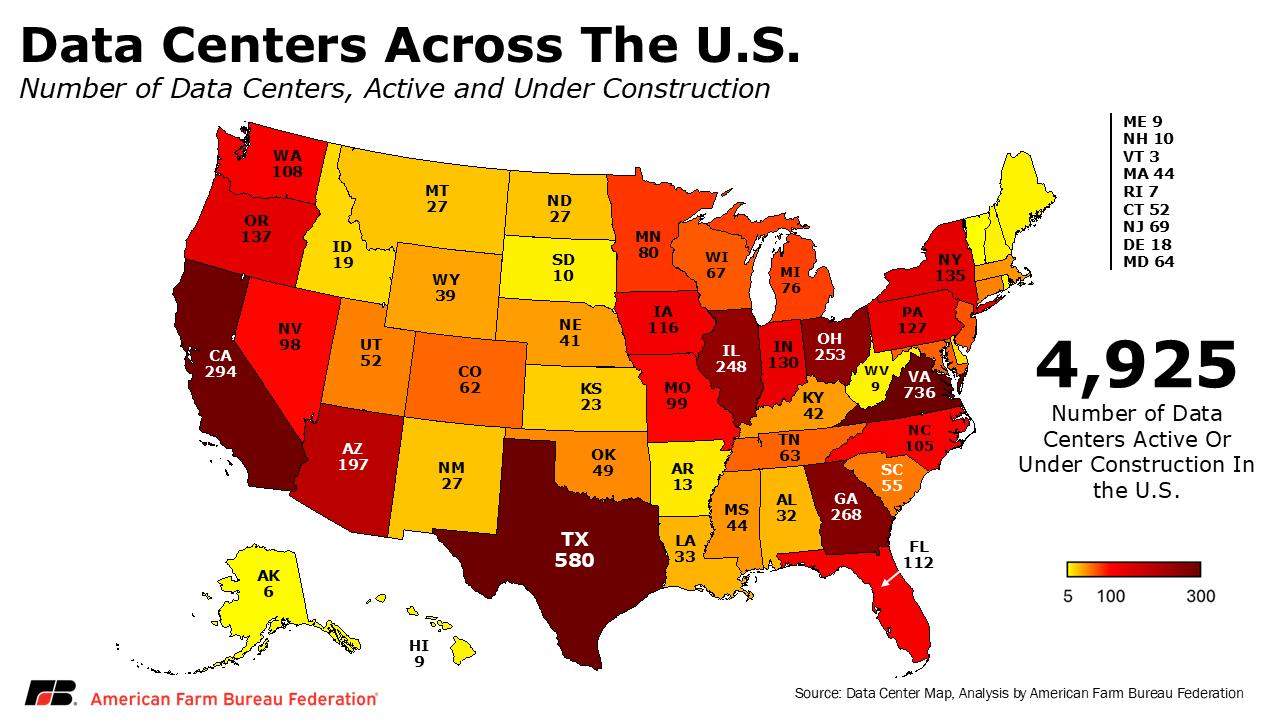
Demand for data centers – large, secure facilities that house computers and servers used to store, process and manage vast amounts of digital data – is accelerating as cloud computing, artificial intelligence and other digital services expand across the United States. These facilities form the backbone of the modern economy, powering the internet and enabling the applications and services relied upon by businesses, governments and everyday consumers. According to Data Center Map and analysis by AFBF, it is estimated, that there are 4,925 active or under construction data centers across the U.S. These facilities, often requiring hundreds of megawatts of power are increasingly
sited in rural areas where land availability, energy access and proximity to transmission infrastructure make development feasible.
The scale of investment is significant. Construction costs range from $9 million–$15 million per megawatt, meaning a typical 250-megawatt facility can cost between $2.3 billion and $3.8 billion, while the price tag for larger campuses can reach tens of billions of dollars. These projects are not just industrial developments; they are long-term infrastructure commitments that shape local economies for decades.
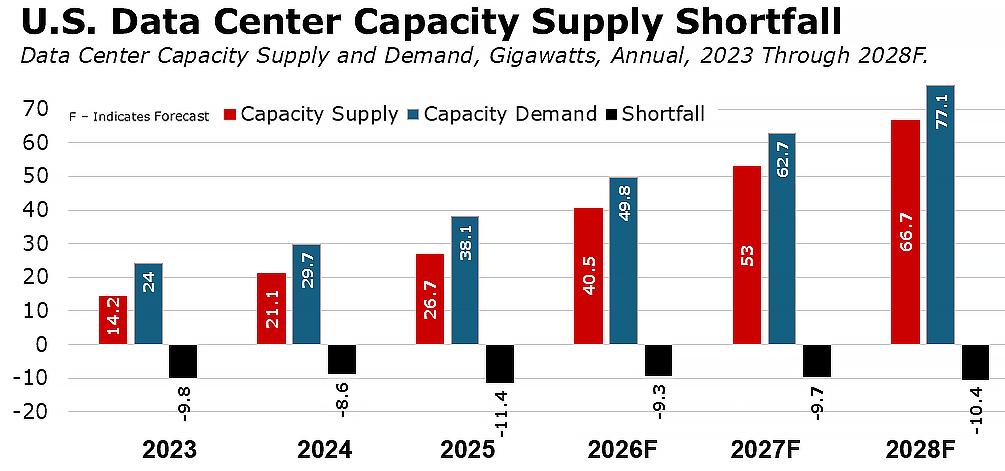
Demand for data centers, driven by the growth of artificial intelligence (AI), high performance computing and cloud service adoption, is continuing to outpace U.S. supply capacity. According to a study by Goldman Sachs, in 2025 U.S. demand for data center capacity outpaced supply by about 11.4 gigawatts or about 43%. The study forecasts the capacity supply to increase by 150%, from 26.7 gigawatts in 2025 to 66.7 gigawatts by 2028. Even with this rapid growth, 2028 demand for capacity is forecast to outpace capacity supply by 10.4 gigawatts or about 16%.
For agriculture, this trend presents both opportunity and risk. Farms and ranches depend on land, water and energy, the same inputs data centers require at scale. At the same time, agriculture increasingly depends on the digital infrastructure data centers provide.
The central question is how to integrate them into rural America without compromising agricultural productivity and community stability?
Why It Matters to Agriculture
Farmland is the foundation of agricultural production and a generational asset for farm families. Once converted to industrial use, it is rarely returned to production. In regions experiencing rapid development, the cumulative loss of prime farmland is a growing concern.
At the same time, modern agriculture is deeply connected to the digital economy. Precision agriculture, cloud-based management tools, and real-time data analytics all rely on robust data infrastructure. This creates a dual reality: 1) Agriculture depends on data centers for innovation and efficiency. 2) Data centers are increasingly competing with agriculture for access to land, water and energy.
Land Values and Site Selection
Site selection for data centers is about more than just finding available land. Land for data centers is treated as critical infrastructure that is selected based on several qualities or characteristics. Some key factors involved with site selection are the proximity to stable, high-capacity power grids, access to major fiber routes for high-speed data transfer, risk for natural disasters, climate conditions that could reduce cooling costs, and regulatory or tax incentives.
Virginia and Texas are the two leading U.S. states for data center development, with 706 and 546 data centers active or under construction, respectively. Virginia, particularly northern Virginia, is home to the world’s largest data center market due to elite fiber connectivity, tax incentives and affordable, reliable power. Texas is in second place for U.S. data center markets due to its low energy costs, abundant land, regulatory environment, independent power grid, and tax incentives. In Texas and Virginia for example, qualifying data centers are exempt from state and local sales tax on hardware, software, cooling systems and emergency generators. Electricity and fuel used by qualifying data centers are also exempt from sales tax. Developers often seek agricultural land as it is often already cleared, graded and laid out in large contiguous tracts, lowering upfront site development costs and shortening project timelines relative to more complex greenfield or urban sites.
Zoning flexibility in rural areas, where agricultural land can be rezoned for industrial use with relatively few barriers, is another factor driving data center site selection. While this flexibility can support economic development, it also introduces a form of land use competition that extends beyond individual sales. As more parcels are rezoned or considered for rezoning, farmland begins to carry speculative value tied to future development potential, increasing both purchase and rental costs for active farmers. Over time, this dynamic can shift local land markets away from agricultural production and toward development-driven pricing, even in areas where little land has been converted. In these high-demand regions, prices for land can reach millions of dollars per acre.
The sale of agricultural land for data center development can also affect land values elsewhere in the state or across the country. Through the use of section 1031 of the tax code, landowners may defer capital gains tax from the exchange of a like-kind asset. This allows, for example, a farmer to sell their farmland for data center development and then to reinvest in farmland elsewhere in the state or country, potentially driving up the value of farmland.
RESOURCE AND INFRASTRUCTURE PRESSURES
Energy Demand: Electricity expenditures on U.S. farms have risen sharply in recent years and are forecast to increase by 48%, or $2.8 billion, from $5.75 billion in 2019 to $8.5 billion in 2026, according to USDA’s Economic Research Service. Growing electricity demand from data centers, electrification and digital infrastructure is adding pressure to an already aging grid. The DOE estimates data centers used about 4.4% of U.S. electricity in 2023, a share projected to rise to between 6.7% and 12% by 2028.
Total electricity demand is expected to increase over the coming years, requiring significant investment in transmission, substations and generation capacity. These costs are often recovered through higher electricity rates, though utilities are increasingly using tools such as large load tariffs to help manage infrastructure expansion and limit impacts on other customers. Ensuring grid investments expand capacity without shifting disproportionate costs onto farm operations will be important for maintaining the competitiveness of U.S. agriculture.
Water Use: Cooling systems for data centers can require substantial amounts of water, which raises concerns in agricultural regions where water supplies are often limited. Increased demand can lead to competition for scarce water resources and create risks for local watersheds. While emerging technologies, including more water efficient cooling systems, such as closed loop cooling, offer ways to reduce these impacts, transparency around water use and accountability measures remain essential to maintaining trust and protecting shared resources.
Rural Economic Development: Promise & Tradeoffs:
Data centers can offer meaningful economic opportunities for rural communities, including increased local tax revenue, job creation and the potential revitalization of areas facing economic decline. However, these benefits are not guaranteed and can vary widely depending on location and planning. Without careful consideration, communities may also face unintended consequences, including rising costs of living and strain on existing infrastructure.
Key Policy Considerations
The American Farm Bureau Federation (AFBF) supports responsible data center development in rural areas that delivers meaningful economic benefits while respecting local resources and private property rights. State and local policymakers play a critical role in balancing growth with long-term land preservation by recognizing farmland as a strategic economic asset, protecting against unnecessary conversion of highly productive agricultural land, prioritizing brownfields or previously developed sites whenever possible. Because data center projects move quickly, outpacing local planning processes, strong local governance is essential. Transparent zoning and permitting decisions, along with early and consistent engagement with landowners and other stakeholders, help ensure that communities have a voice in development decisions and that outcomes reflect local priorities.
AFBF also emphasizes the importance of responsible resource management. Data centers should be located and operated in ways that protect agricultural water resources, including clear disclosure of water use and the adoption of water-efficient technologies such as closed-loop cooling systems. Policy frameworks should address shared demands on critical resources by encouraging continued innovation in water efficiency, supporting energy infrastructure that benefits both agriculture and data center operations, and promoting solutions that strengthen the resilience of rural communities overall.
Bottom Line
Rural communities can support both agriculture and responsible data center development, with farmers, ranchers and landowners ultimately deciding how their private property is used. Smart site selection, local engagement, and long-term planning can ensure rural America remains both a hub for agricultural production and a partner in responsible technological growth.
With thoughtful policy, strategic siting and strong local engagement, rural America can serve as both a global leader in agricultural production, and a critical partner in the digital economy.
The increasing reliance on “cloud-based computing” and recent explosion of online use of artificial intelligence (AI) has led to a booming demand for large data processing centers. Some of these facilities have been built in more urban areas, but due to their tremendous size, companies often seek to locate them in more rural areas, making these developments yet another well financed competitor for farmland. While their potential impact on agricultural land and land values may be the most obvious concern for neighboring farms, there are numerous issues created by these facilities that farmers should consider if a datacenter development is proposed in their area.
Datacenters are specially designed facilities built to house computer systems, telecommunication systems, and memory storage facilities. According to the data center map website there are currently 44 data centers in 9 different markets within Wisconsin.
How Much Land Do Data Centers Require?
Data centers need a minimum of 40 acres for a small center and upwards of 1000 acres for a large center. Siting one of these facilities in an otherwise agricultural area could obviously impact land values, but it is also likely to require changes in local zoning that could impact nearby farms.
Energy Demand and Power Infrastructure Challenges
A data center costs $7-12 million per megawatt to build. A small data center has a 1–5-megawatt consumption rate, and large-scale facilities range from 20-100-megawatts. For context, 100 megawatts could power approximately 80,000 homes in Wisconsin, and the growing number of these facilities throughout the state and country present a significant challenge for power generation and the cost of power to other consumers. Costs for construction of power generation infrastructure is generally born by ratepayers throughout the system, and increased demand for power can drive up cost due to scarcity.
How AI Data Centers Use Water for Cooling
Much of the energy consumed by these facilities, often close to half, is used to cool their systems. This is typically done by using is either a water or air-cooling system. Water is used in different forms to cool the centers systems. The most popular way to use water is by utilizing chilled water systems or cooling towers to remove heat from the systems. When using a chilled water system, coils are used to circulate the cool water from the central chiller and collect the heat from the data centers. The system then expels the absorbed heat that is collected through the coils. Then it is propelled outside into the air.
Water Usage and Cooling Systems
There is controversy around this method due to the amount of water consumption involved in the process. Water consumption depends on the size of the facility. Hyperscale data centers are large facilities like the ones built by major companies like Google or Microsoft, which can be millions of square feet in building size. They can use an average of 550,000 gallons of water a day. On the wholesale and retail side are those within the 100,000 to 250,000 sq ft, the smaller facilities use an average of 18,000 gallons of water a day and the larger one can use 88,000 gallons.
Groundwater, Wells, and Rural Water Supply Concerns
Water for the facilities is usually supplied by municipal or regional water utility facilities, but rural locations may require multiple high-capacity wells running on an ongoing basis. The water used in the data centers can only be recycled through the systems so many times due to scale forming minerals or because of the water
Growing Demand for Data Centers in Rural Areas Impacts Agriculture
conductivity. Water that can no longer be used in the centers can be discarded or repurposed for irrigation. Hyperscale facilities are tasked with water replenishment projects due to their large amounts of water consumption. The large facilities have made a pledge to be more water positive by 2030, but what that looks like right now is unclear. Some facilities have storm water retention ponds to collect water for various functions within the facilities, but using this water requires more infrastructure to treat the water before data center usage.
Air Cooling Alternatives and Tradeoffs
The air-cooling systems reduce the usage of water as a coolant in the process. This system monitors the temperature outside and draws cool air in through a filter and directly into the server rooms. There is also a method that filters hot air through a wet filter and pushes cool air into the server rooms.
Stormwater Runoff and Land Impact
In addition to considering the impacts water consumption for cooling may have on local wells, farmers should also consider the potential impacts of stormwater runoff from the facilities. These impacts can be mitigated if management mechanisms are included in the design of the facility but could still impact nearby landowners.
Noise, Lighting, and Quality of Life
These landowners may also be impacted by 24/7 lighting and noise from the facility. Perhaps more importantly, nearby landowners may experience substantial disruptions on their property from new utility easements necessary to support the needs of these facilities.
In the short term these facilities may provide a substantial boost to the local economy from construction jobs and need to feed and house a construction workforce, but in the long term they support a rather limited number of jobs for the size of the investment. The value of the improvements may add substantially to the local property tax base, but that depends on the tax incentives agreed to by state and local governments.
Tax Incentives and Wisconsin Data Center Policy
According to the Wisconsin Department of Revenue, there is a sales and use tax exemption for the sale of certain property for data centers that are certified by the Wisconsin Economic Development Corporation (WEDC). The buildings must meet a qualified investment in Wisconsin within 5 years of WEDC issuing their certification. The investment dollar amount is set by the population of the county that the building is being built in. What all is included in the exemptions can be found here. There are 3 facilities in Wisconsin as of February 2025 that have been certified by WEDC.
What Farmers Should Consider Before Development
The rapid expansion of data centers across rural landscapes presents significant considerations for local farmers. Beyond the immediate concerns of land use and value, these facilities introduce complex challenges ranging from increased demand on local utilities to potential environmental impacts like water consumption and stormwater runoff. While they may offer short-term economic benefits through construction jobs and tax revenue, the long-term effects on agriculture and community infrastructure warrant careful assessment and planning. As datacenters continue to proliferate, it is crucial for farmers and policymakers alike to engage proactively in ensuring that these developments align with sustainable practices and mutually beneficial outcomes for all stakeholders involved.
Fire Science Academy prepares high school students for firefighting careers
Students completing academic and hands-on training, and planning their next steps
While some students may be attending summer camps with campfires and marshmallows, others, such as Kai Hueber, will be at “fire camps,” helping firefighters as they battle to extinguish wildfires across the West.
Hueber is just finishing his sophomore year of high school at the Academy of Arts, Careers and Technology in Reno, part of the Washoe County School District. As a freshman, he chose to enroll in the school’s Fire Science Academy at the beginning of the school year, a program that University of Nevada, Reno Extension’s Living With Fire team developed three years ago, in collaboration with the school, Truckee Meadows Fire & Rescue, the U.S. Bureau of Land Management and other partners, to help address the increasing need for wildland firefighters.
“I’ve always looked up to firefighters,” Hueber said. “I really like helping people, and I like the idea of it.”
Having completed the second year of the program, Hueber has now been accepted by the U.S. Bureau of Land Management to be part of fire camp crews this summer, assisting firefighters sent out to battle blazes. He’ll help with maintaining equipment and supplies, rolling the fire hoses, meal prep and anything else he can do to assist. It’s a paid position, and he expects to be sent out to a few fires, working at each camp for up to a couple of weeks.
Students in the Fire Science Academy at the Academy of Arts, Careers and Technology participate in a drill with area firefighters conducting a mock firefighting scenario at Hidden Valley in southeast Reno (graduate Matthew Hart at center). University of Nevada, Reno Extension led the development of the Fire Science Academy for the school and continues to support it. Photo by Spencer Eusden.
“I’m super excited, and it seems pretty organized,” he said. “It was quite a rigorous process to get in, and I had to complete some additional online courses.”
After completing two more years of the Fire Science Academy in high school and working at the fire camps during the summers, Hueber plans to go on to higher education and major in fire science, and perhaps work as a firefighter during college. After college, he’s thinking about joining the military and flying cargo planes, so that one day, he can fly the airtankers that spray fire retardant to support firefighting efforts.
He said he’s really enjoyed the first part of his journey in the Fire Science Academy so far.
“I really like how we actually do stuff,” he said. “We get in our gear and go do drills. It really gives me an idea of what it’s like to be a firefighter – learning all what goes into a simple, routine assignment, the chain of command and things like that. The instructors know a lot about it, and we get great guest speakers. It’s pretty cool.”
Extension’s Spencer Eusden is part of the Living With Fire team that put together the curriculum for the Academy three years ago and still supports the program, revising lessons, getting guest speakers, supporting instructors and overseeing equipment needs. He’s excited that their first cohort who entered the program is graduating this year, and that they’re expanding the program to a four-year curriculum. He says each year up to 20 new freshmen will be enrolled. This fall, there will be 60 students across all four grades.
“It’s also really great that the Washoe County School District has invested in the program by funding a full-time instructor in the 2025-2026 academic year,” he said. “During the first two years of the program, Truckee Meadows Fire & Rescue and U.S. Bureau of Land Management firefighters were the primary instructors to get the program started. A full-time school district instructor is a really important step to sustaining the program for years to come.”
Eusden is also working with George Whittell and Galena High Schools to support their efforts to develop and offer fire science career and technical education programs or courses.
A few weeks ago, he also worked with U.S. Wildland Fire Service staff to arrange for students in the Fire Science Academy to participate in a drill with area firefighters conducting a mock firefighting scenario at Hidden Valley in southeast Reno. Hueber said it was a great experience, and, eye-opening.
“That was pretty physically demanding,” Hueber said. “I was like, ‘Wow, this is what they do days on end.’”
Another student who participated in the exercise is Matthew Hart, who is graduating from the program this year. He passed all the knowledge-based tests to be a seasonal wildland firefighter, and now plans to spend the next year preparing to pass the “Pack Test.” The Pack Test is a fitness test developed by the National Wildfire Coordinating Group to ensure that firefighters can meet the extreme physical demands of their assigned duties. Passing the test requires carrying a 45-pound pack for 3 miles in 45 minutes or less.
“I took the test, and it showed me where I was physically, and what I need to work on to pass it,” Hart said. “I’m going to spend the next year focusing on my physical abilities and seeing where I want to work in the fire industry.”
Hart said he wasn’t really sure what to expect when he first joined the program, but that it really gave him a direction.
“After a couple of classes, I realized how much I would like it, what we would be doing, where it could bring us in life,” he said. “I’m really glad I joined it and really excited for my future. I got great hands-on experience and a lot of good advice from people in the fire world.”
CONTACT:
Claudene
Shutting down federal bee labs threatens bees, beekeepers and the US food system
Bees are crucial pollinators for many crops, as well as producers of honey.
America’s bees and beekeepers are losing a valuable ally just when they need its help most.
The U.S. Department of Agriculture plans to soon close the Beltsville Agricultural Research Center, a 6,500-acre agricultural research station in Maryland that is home to the nation’s premier bee research and disease diagnosis hub, the Beltsville Bee Research Lab.
The closure comes at a critical moment for bees. In winter 2025, many beekeepers lost over half their operations as pesticide-resistant varroa mites spread, bringing deadly viruses. The losses have led to low honey production, and soaring fuel costs have made shipping bees cross-country for agricultural pollination increasingly expensive, further stressing the industry.
During my 14 years researching bees and beekeepers, and in writing my new book, “Bitter Honey: Big Ag’s Threat to Bees and the Fight to Save Them,” I’ve seen beekeepers frequently turn to the USDA bee labs for support during crises like this. Because honey bees contribute roughly US$15 billion to U.S. crop production – native and managed bees pollinate more than 130 crops – these labs help stabilize the nation’s food system.
Today, that scientific support system is at risk, just as beekeepers face their greatest challenges and native bee populations continue to decline.
Why the Beltsville Bee Lab matters
USDA’s bee researchers have served beekeepers for over 130 years, including nearly 90 years at the Beltsville station. One of the Beltsville Bee Lab’s standout services is its bee disease diagnostic service, where beekeepers can send samples for analysis free of charge.
Since the early 2000s, Beltsville researchers have helped beekeepers respond to varroa mites – a primary driver of high colony losses each year. Now, the lab is helping them prepare for a deadlier mite that is infesting honey bees in Asia, Tropilaelaps mercedesae, or “tropi” mites – by developing detection and response protocols that beekeepers can use to protect their colonies.
While the Beltsville Bee Lab supports beekeepers nationwide, it’s located in a prime farming and beekeeping region. Its closure would leave a critical research gap in the Northeast, where beekeepers help pollinate cranberries, squash, blueberries and other crops.
Its location has also allowed researchers to conduct extensive studies on winter colony losses, research that would be difficult to replicate at the remaining USDA bee labs, which are primarily located in more temperate climates.
Hidden costs of bee lab closures
The USDA states that it will decommission the entire Beltsville Agricultural Research Center because building maintenance and renovations would cost an estimated $500 million. But closing the lab could cost beekeepers, farmers and consumers far more.
For example, in winter 2025, beekeepers experienced their highest losses in U.S. history. Many opened their colonies in January that year and found that more than 60% of their colonies had died – nearly 1.7 million colonies nationwide. Beekeepers contacted Beltsville, and researchers quickly flew out to test affected colonies for pesticide residues, diseases and varroa mites, data that could help guide beekeepers’ treatment response.
A few weeks later, as the lab’s scientists were working on the crisis, the Trump administration fired probationary researchers and staff at the bee labs, along with thousands of other employees across the USDA. The Beltsville team was hobbled, and the remaining staff restricted from communicating with beekeepers.
Because of the communication lockdown, it took nearly six months for researchers to deliver their findings. By then, the season was over and beekeepers had been forced to navigate the crisis on their own.
Entomologist Jay Evans explains what the Beltsville Bee lab does and the diseases bees face. Watch the video here: www.youtube.com/watch?v=pwSp9oYYTjc
The loss of bee colonies ultimately cost beekeepers an estimated $600 million in lost honey production, pollination income and colony replacement costs – far more than the one-time projected costs to modernize the entire Beltsville Agricultural Research Center.
These losses can hit consumer pocketbooks too.
When beekeepers lose nearly half their operations, they often need to charge farmers more for pollination services to stay afloat. Those added costs ripple through the food system and affect what everyone pays for the fruits, vegetables and nuts that depend on pollinators.
More cuts planned to pollinator research
The Beltsville Bee Lab closure is not an isolated case. The administration has proposed eliminating the U.S. Geological Survey’s Ecosystems Mission Area, a move that could defund the USGS Bee Lab, an essential resource for research on native bees.
It also plans to decommission 16 USGS research centers nationwide, including the Northern Prairie Wildlife Research Center in North Dakota, the highest honey-producing state in the nation. For decades, beekeepers have brought colonies to forage
and produce
California
Beekeeping involves keeping colonies as healthy as possible. Often, beekeepers need help.
on grasslands in the region. Researchers have been tracking how the shift from grasslands to crops has affected honey bee health and beekeeper revenue.
The U.S. Forest Service also faces widespread cuts, including the planned closure of 57 of its 77 research stations throughout the United States. Since the Forest Service manages over 193 million acres of federal lands that support native plants and pollinators, those closures could affect crucial pollinator habitat as well.
These closures risk a severe brain drain.
When the first Trump administration moved the USDA Economic Research Service from Washington to Kansas City, Missouri, in 2019, the agency lost over 75% of its experienced research staff. A recent survey suggests that history may repeat itself. If the reorganization goes through, farmers and beekeepers will lose experts with decades of institutional and technical knowledge.
The Beltsville Bee Lab is a key part of the oftenunappreciated federal research infrastructure that supports the health of pollinators and the nation’s food supply.
If the USDA and the USGS move forward with their plans to close bee labs and research sites, the result could be slower responses to bee threats, weaker tracking of native bee populations and diminished pollinator habitat for bees – all of which raise costs and risks for beekeepers, farmers and everyone who depends on the food system.
Beekeepers often transport their bees across the country to meet pollination needs
honey at different times of year. The map shows the movement of bees out of
to other states in summer and fall. Jennifer K. Bond, et al., USDA Economic Research Service, 2021
Seeding Antelope Bitterbrush
By Charlie D. Clements and Dan Harmon
Antelope bitterbrush is one of the most important browse species on many western rangelands. Lack of antelope bitterbrush seedling recruitment in natural stands results in old decadent stands that lack seed production and nutritional value. Fire, excessive grazing, insects, drought and other unfavorable weather conditions can all contribute to the deterioration of antelope bitterbrush communities (Figure 1).
Antelope bitterbrush is a key browse species in the diets of many mule deer herds, but also is an important shrub for pronghorn antelope, elk and domestic livestock as it provides an important source of digestible protein during late summer, fall and winter months.
The importance of antelope bitterbrush on rangelands warrants the active management of antelope bitterbrush communities, which includes the use of broadcast and/or drill seeding of antelope
bitterbrush to restore and enhance this critical browse species.
Pioneer researchers, such as Gus Hormay, made it clear in the early 1940s that antelope bitterbrush populations were not renewing themselves and that artificial establishment of antelope bitterbrush was going be a major management effort to sustain this critical browse species.
A tremendous amount of research has been directed toward refining artificial seeding of antelope bitterbrush to improve restoration success, which include 1) collecting, processing, and storing seed, 2) selection of planting site, 3) time of planting, 4) depth, method and rate of seeding, 5) seedling competition, and 6) rodent predation.
Another pioneer researcher, Eamor Nord, also pointed out the importance of properly collecting, processing and storing antelope bitterbrush seed in
his 1963 publication, “Bitterbrush Seed Harvesting: When, Where and How”.
Seeds must be harvested quickly once they are ripe and before they disperse to the ground. At the time of collection, usually from late June to midJuly, antelope bitterbrush seeds have a moisture content too high for storage and therefore need the opportunity to dry and reach equilibrium with atmospheric moisture. Field-collected material will then need to be rough screened to remove twigs, leaves and other material.
FIGURE 1. Significant loss of antelope bitterbrush populations following wildfires negatively impact species such as mule deer. Active restoration practices will be needed as an average of 4% resprouts of antelope bitterbrush is too low to sustain the population.
Once the rough screening has taken place and the seeds have been allowed to dry, seeds will go through the threshing process to remove the outer sheath prior to the screening process to reduce immature or damaged seeds. Many seeds are damaged by insects and frost, therefore are not viable and should be removed from the seed lot due to proper seed rate calibrations. Our research has reported that it is not uncommon to experience more than 50% seed damage from insects and frost in a given seed collection year, and by not removing these damaged seeds from the seed lot you would be seeding nonviable seeds.
Once the seeds have been threshed and cleaned, seeds should be stored in non-coated paper, burlap or woven synthetic fiber bags that allow for air flow, versus plastic bags that are detrimental to the seeds.
The question of where to plant antelope bitterbrush would seem to have a simple answer, however that is not the case. If you are interested in creating more browse for species like mule deer, you would plant it throughout the Wyoming and mountain big sagebrush communities. Close analysis, however, would suggest planting where it is adapted to grow as this species is heavily reliant on the presence of the micro-organism Frankia in which it has a symbiotic relationship with. Land managers may want to seed antelope bitterbrush following wildfire disturbances but often miss the window of optimal opportunity.
Several interacting factors must be considered when artificially seeding antelope bitterbrush on burned areas. First, if a moderately dense to dense stand of antelope bitterbrush and big sagebrush are consumed in a wildfire, the seedbed will be relatively free of competition from cheatgrass during the first growing season after the fire allowing for an open window of antelope bitterbrush seedling establishment as cheatgrass competition is very limited. If you miss this window, cheatgrass will begin to dominate the site, taking advantage of limited moisture and nutrients needed for antelope bitterbrush seedling establishment.
Another important consideration in antelope bitterbrush restoration following wildfires is the suppression of subsequent wildfires. For many years wildlife managers reseeded with antelope bitterbrush alone rather than designing planting strategies that used additional plant species to help suppress wildfire risks. When managers established antelope bitterbrush, cheatgrass eventually invaded the stand in the absence of perennial grasses and often resulted in the stand being lost to another wildfire.
The concept of seeding antelope bitterbrush alone was largely due to the reporting that antelope bitterbrush plantings did not establish when seeded with perennial grasses, especially crested wheatgrass. Taking a closer look at this reporting, we discovered that researchers were testing the seeding of antelope bitterbrush @ 2 pounds (16,000 – 18,000 seeds per pound) per acre rate with the added rate of 8 pounds (173,000 – 220,000 seeds per pound) per acre of crested wheatgrass. Crested wheatgrass established at such high densities that the perennial grasses at this density outcompeted antelope bitterbrush for limited soil resources.
FIGURE 2. Utilizing mechanical treatments to control weeds and properly prepare the seedbed can be critical in improving antelope bitterbrush seedling establishment.
When we tested the seeding of antelope bitterbrush with perennial grasses, we dropped the seeding rate of crested wheatgrass down to 4 pounds per acre rate and kept antelope bitterbrush at 2 pounds per acre rate we experienced the establishment of more than 1,400 antelope bitterbrush per acre, far above our stated goal of 250 shrubs per acre, while also reducing cheatgrass densities and associated wildfire risks as deed-rooted perennial grasses such as crested wheatgrass and bluebunch wheatgrass are very successful in biologically suppressing cheatgrass.
Land managers throughout the Intermountain west are faced with the decision of when to seed; in the fall after summer drought or during winter with heavy snow and better precipitation? Early University Nevada Reno range scientist, Joe Robertson, would comment on how managers would argue that antelope bitterbrush should be planted in fall while others would argue that spring planting was better. Joe would point out that those seeding in the fall were so late they were actually seeding in early winter while those seeding in the spring would actually getting their planting done in late winter. Our research suggests that fall and early winter plantings are optimal for proper stratification of seeds to meet pre-chill requirements for germination.
Antelope bitterbrush seed germination following fall plantings actually germinate beneath the soil by late December to early January and do not emerge from the soil in the dicotyledon stage until early to mid-March, where they then enter the true leaf stage 10-15 days later. Planting in the spring is much riskier as conditions for proper stratification, germination and emergence can often be less than optimal as the amount and periodicity of precipitation significantly
.... continued next page
decreases during the timing of initial emergence. The fact that antelope bitterbrush seedlings begin significant root growth as soon as the moist pre-chilling requirements are met, even though no shoot growth is visible beforehand, certainly appears to be a big advantage for fall seeding.
There has also been a lot of discussion on seeding methods and depths of antelope bitterbrush, where seeding techniques have not always followed standard methods. Early researchers looked at antelope bitterbrush seedling emergence in a controlled environment and reported that practically no antelope bitterbrush established when broadcasted on the soil surface, and that planting at 2” depth was the maximum depth for any emergence and reported that ½ - 1” was preferred. Site preparation to reduce competition from exiting vegetation and to prepare the seedbed in which antelope bitterbrush seeds can be precisely placed at proper depths in the soil is critical prior to most drill seeding efforts (Figure 2, previous page).
As early as 1943, researchers reported that antelope bitterbrush seed was significantly harvested by granivorous rodents where the rodents would harvest the seed beneath the shrub, collect the seed in their cheek pouches, clean the sheath off of the seed and then cache the seed in shallow depressions, ¼ - 1” depths, referred to as scatter hoard caches, while also collecting and taking seed back to their burrows, referred to as loader hoard caches, which are to deep to emerge. The scatter hoard caches are an important dispersal and recruitment mechanism for antelope bitterbrush seedling recruitment (Figure 3, right).
We tested drill seeding antelope bitterbrush using a rangeland drill at approximately 1 – 2” depths at 3 pound per care rate, as well as broadcasting 3 pound per acre rate of seed in 2-acre plots in northern Nevada and northeastern California. Drill seeding consistently resulted in more emergence and establishment, 750 – 2,500 of antelope bitterbrush shrubs per acre (Figure 4, right), compared to broadcast seeding, 30 – 110 per acre, where we depended on the rodent behavior of scatter hoard caching to establish and recruit new antelope bitterbrush seedings. This lack of recruitment may be largely due to continued seed predation of scatter hoard caches for foraging and nutritional needs by granivorous rodents such as chipmunks, squirrels, kangaroo rats and pocket mice.
With the fire season upon us, much of the Intermountain west has experienced drought conditions, increasing the risks of wildfires throughout mountain brush communities. The ability of resource managers to properly plan for desirable species, including antelope bitterbrush, proper preparation (i. e. seed purchasing) and proper methodologies of seeding these desirable species will be imperative to achieve stated goals and objectives related to restoration of antelope bitterbrush as well as other critical herbaceous and browse species to enhance grazing and wildlife resources.
FIGURE 3. (above) Granivorous rodents play a critical role in the dispersal and recruitment of antelope bitterbrush on rangelands. Rodent seed caches can vary in size from as few as 1-2 seeds with chipmunks to more than 50 seeds with kangaroo rats.
FIGURE 4. (below) Successful antelope bitterbrush seedings, following proper seeding rates and methodologies, can provide decades of critical browse, thermal and hiding cover for wildlife and domestic livestock.
On June 7, 2026, the Nevada CattleWomen hosted their third annual Beef & Wine Pairing Event at Park Home Ranch Venue in Gardnerville, Nevada. The event brought together community members, beef enthusiasts, and local producers for an evening focused on education, flavor, and supporting Nevada agriculture.
Guests enjoyed tasting six different beef cuts, each expertly prepared with unique marinades and seasonings. The featured beef was provided by Park Ranch Meats, a local producer committed to supplying high-quality, locally raised beef. Each beef sample was paired with a complementary wine selected to enhance the flavors of the cut and preparation.
To help attendees recreate the experience at home, recipe cards were provided for each featured beef dish. Following the tasting, guests had the opportunity to purchase the showcased beef cuts directly from Park Ranch Meats.
More than just a tasting event, the Beef & Wine Pairing serves as an educational opportunity for the public to learn about the variety of beef cuts available, proper preparation techniques, and the value of supporting locally sourced beef and seasonings. The event continues to strengthen the connection between consumers and the ranchers and producers who help feed their communities.
The Nevada CattleWomen look forward to hosting the fourth annual Beef & Wine Pairing Event in June 2027 and continuing their mission of promoting beef education and supporting Nevada’s agricultural industry.
REMOVING UNNECESSARY AND COUNTERPRODUCTIVE
RESTRICTIONS ON ACCESS TO FEDERAL LANDS | Executive Order 14408
By the authority vested in me as President by the Constitution and the laws of the USA, it is hereby ordered:
Section 1. Purpose. My Administration has eliminated a record number of unnecessary regulations to further our Nation’s prosperity and reduce regulatory burdens on industries critical to our national and economic security while keeping sufficient environmental protections in place. Executive Order 11644 of February 8, 1972 (Use of Off-Road Vehicles on the Public Lands), and Executive Order 11989 of May 24, 1977 (Off-Road Vehicles on Public Lands), are examples of this excessive regulation. Both were issued about 50 years ago when today’s technology was not available to be paired with existing Federal statutes.
The Congress has enacted or amended a comprehensive set of statutory authorities to establish Federal land policy, including the National Historic Preservation Act, Public Law 89-665, 80 Stat. 915 (1966) (codified as amended at 54 U.S.C. 300101 et seq.), the National Environmental Policy Act, Public Law 91190, 83 Stat. 852 (1970) (codified as amended at 42 U.S.C. 4321 et seq.), the Endangered Species Act, Public Law 93-205, 87 Stat. 884 (1973) (codified as amended at 16 U.S.C. 1531 et seq.), and the Federal Land Policy and Management Act, Public Law 94-579, 90 Stat. 2743 (1976) (codified as amended at 43 U.S.C. 1701 et seq.). I have determined that those statutory authorities, together with executive department and agency (agency) specific land management authorities, provide the appropriate framework for managing off-road vehicle use on Federal lands without retaining the additional specific designation criteria imposed by Executive Order 11644 and Executive Order 11989. I have further determined that technological, operational, and land-management developments since the issuance of Executive Order 11644 and Executive Order 11989 support replacing those specific criteria with a framework grounded in applicable statutory authorities.
Executive Order 11644 and Executive Order 11989 direct agencies to promulgate regulations providing that, where offroad vehicle use is permitted on Federal lands, roads, and trails, such use designations must be made in accordance with ill-defined criteria purportedly intended to minimize resource impacts and conflicts between different users of Federal land. These criteria, which are not required by statute, are difficult for agencies to operationalize due to vagueness, and include “minimiz[ing] harassment of wildlife or significant disruption of wildlife habitats,” minimizing “conflicts between off-road vehicle use and other existing or proposed recreational uses . . . taking
into account noise and other factors,” and ensuring that offroad vehicle use in given locations will not “adversely affect [the location’s] natural, aesthetic, or scenic values.” These vague, subjective criteria often result in barriers to energy and timber production and utility maintenance, permit delays, and de facto bans on hiking and other forms of recreation that require accessing remote areas, all while doing little to benefit multiple use of Federal lands.
Access to Federal lands benefits all American citizens. Rescinding Executive Order 11644 and Executive Order 11989 would facilitate the replacement of current regulations with a system for off-road vehicle use designation that provides more access, recreational opportunities, and greater multiple use benefits to the public. It would also restore balanced land management by eliminating ill-defined and arbitrary environmental and social standards, thereby ensuring that all public land users will be granted access on equal terms.
Sec. 2. Rescinding Certain Prior Executive Orders. Executive Order 11644 and Executive Order 11989 are hereby rescinded. The Secretary of War, the Secretary of the Interior, the Secretary of Agriculture, the Board of Directors of the Tennessee Valley Authority, and the head of any other relevant agency shall initiate rulemakings to rescind or revise the regulations previously adopted to implement those Executive Orders.
Sec. 3. General Provisions. (a) Nothing in this order shall be construed to impair or otherwise affect:
(i) the authority granted by law to an executive department or agency, or the head thereof; or
(ii) the functions of the Director of the Office of Management and Budget relating to budgetary, administrative, or legislative proposals.
(b) This order shall be implemented consistent with applicable law and subject to the availability of appropriations.
(c) This order is not intended to, and does not, create any right or benefit, substantive or procedural, enforceable at law or in equity by any party against the United States, its departments, agencies, or entities, its officers, employees, or agents, or any other person.
(d) The costs for publication of this order shall be borne by the Department of the Interior.
DONALD J. TRUMP | THE WHITE HOUSE | May 29, 2026
Growing Roots: Greenwave Travels to the Stillwater National Wildlife Refuge
My name is Laila Perazzo, and I am a proud Churchill County High School Greenwave Senior. This past school year, I had the opportunity to be in the Plant Systems 1 class at our school. Throughout the school year I’ve had some of the coolest opportunities. I also grew a lot of unique plants in our greenhouse like pineapple, lucky bamboo, Mexican primrose, maroon-flowered coreopsis from seed, and many heirloom tomatoes. I took quite a few of the plants I grew home to grow with my family in a new garden. I’m happy to report they are growing well.
I think the highlight of our class though was our endof- the year field trip. Our teacher and true plant addict, Mrs. Sammons made it possible for all her classes to go and tour the Stillwater National Wildlife Refuge in early June. Looking back I know it was not just an opportunity to visit a beautiful place in our community, it was also a chance for us to make an impact and help keep Nevada the beautiful state it is.
I am not going to lie, I was super excited but also a little unsure because I thought we might’ve just been seeing a whole lot of nothing. The drive there was not giving me too much hope, it was just dirt everywhere. Once we got up there my mind was instantly changed. Yes it was a whole lot of dirt everywhere but there were also so many native plants and when you walked down just a little way we got to go and see one of the best views in my opinion, the Stillwater Point Reservoir. It was incredible, you could see so many different types of plants and more tons of different species of birds. As we walked towards the viewing platform, giant pelicans were flying so low over our heads, we could hear their large wings flapping.
The Stillwater National Wildlife Refuge is such an important place to our town and to our State. The wetlands provide the necessary food, water, and shelter for hundreds of shorebirds, waterfowl, and other waterbirds during their
migration up and down the Pacific Flyway. The refuge is not only there for animals though, it protects a wide variety of important flora as well. As we were taking our tour around the refuge, we passed this giant Cottonwood which earlier in the year Mrs. Sammons brought us all cuttings from the tree that we got to plant and grow ourselves. Cottonwoods are a very important riparian species in our area and they support a wide variety of wildlife. Some of the cottonwoods we grew from cuttings were sold at our annual plant sale while some of the new trees were returned to the refuge to help expand the riparian zone there.
We had a wonderful tour guide, one of the Refuge managers, Carl Lunderstadt, who even made a little game for our class so we could better understand what the wetlands provided. When we first arrived, he got on the bus with us and took us down to go look at the water and we also got to drive through the old Stillwater town where he told us all about the history of the town. Did you know that the town of Stillwater used to be the county seat of Churchill County? He also gave us so many little fun facts about all the different plants and animals we were driving past.
Throughout the school year my classmates and I had been growing a bunch of plants native to Nevada like Indian ricegrass, yarrow, apricot globemallow, great basin wildrye and prince’s plume. The goal was taking those plants we grew on our field trip to plant as part of a large restoration project that the Refuge is working on. Last year’s class grew and planted 150 plants in the pollinator garden at the headquarters office, we ended up doubling their numbers, we grew and planted 300 plants. We planted our Greenwave grown plants in a space just behind the main building that was set up for testing native plants on drip line irrigation. It was a hot day but I noticed many of my classmates were just busy working. The soil was so heavy
with clay in some places, we used a hand auger drill to dig some of our holes. The Refuge staff helped us plant, even the Federal Wildlife Officer helped dig holes in his heavy gear. Officer Kasper visited our class earlier in the year and gave us a presentation that everyone loved on his career path and how plants play a role in his day to day work. I’ve heard Mrs. Sammons say that the refuge staff adopted our class, they do feel like family.
We also got to tour the pollinator garden that the class the year before us got to plant and it was fully grown and so beautiful despite that heavy clay soil. The area was previously an old sod lawn that had to be dug out, Mrs. Sammons told us. There was plastic green webbing under the sod that she said was tricky to get rid of. The garden was in full bloom and all the plants were nearly waist high after just one year of being in the ground. This garden had some of the most gorgeous yarrow, ricegrass, and apricot globemallows I had ever seen and there were many pollinating insects I had never seen before, like the tiny apricot globemallow bee we saw sleeping in flower petals. The refuge staff told us they only have to water that garden once a week, even in the hottest summer sun. Some of my classmates harvested seeds from that garden that we will plant this upcoming school year. Those plants will also return to the refuge and some will be sold in our 4th annual plant sale in May.
Once we had finished planting and harvesting everything we all sat down in the lawn and had a giant picnic. The group of kids I got to go on this trip with were honestly some of the greatest people I’ve met. Everyone just got along so well and it was honestly one of the best experiences I’ve had this year, and I’m so grateful to everyone at the Refuge who helped make this trip so wonderful for us! We’re looking forward to the next trip already.
THE ROUNDUP
An analysis of western ranching politics.
IN THE NEWS
PLC Supports Bipartisan Legislation to Build Capacity to Combat New World Screwworm
U.S. Representative Gabe Vasquez of New Mexico introduced H.R. 9377, the Protecting America’s Herds Act. This bipartisan legislation aims to help ranchers detect and stop NWS by funding local experts who can train inspectors, inspect livestock, educate producers, and provide the hands-on support needed to catch outbreaks early and prevent them from spreading. This bill provides the essential training and support ranchers need to continue fighting NWS:
1. Equip the Cooperative Extension System to train personnel and producers on New World screwworm identification, treatment, management, prevention, and reporting.
2. Allow Extension agents to act as livestock inspectors and deputize them to train and hire additional livestock inspectors.
3. Enhance coordination between USDA APHIS, veterinarians, state animal health officials, and Tribal agricultural programs while prioritizing funding for states and Tribal communities at elevated risk of NWS introduction or spread.
“Cooperative Extension Specialists play a significant role in research and technical assistance for many rural communities across the West. Congressman Vasquez’s support for utilizing their capacity and expertise to support livestock producers, federal lands grazing permittees, wildlife partners, and state and federal partners will allow the kind of close coordination that will be necessary to eradicate New World screwworm.” - Kaitlynn Glover, PLC Executive Director.
Full press release here: tinyurl.com/VasquezScrewWorm Visit Screwworm.gov to report suspected cases and stay up-to-date on current NWS guidelines and status.
Activists Exploit Congressional Review Act Determination and Sue Over Oregon Timber Sales
This week, Cascadia Wildlands sued the Department of the Interior alleging that the timber sales under the Aloha Trout Forest Management Project are invalid because the BLM did not submit the plans to Congress.
For the first time in 2025, the Government Accountability Office published a determination that specific land use plans were considered rules under the Congressional Review Act, and therefore subject to rollback under the CRA’s terms. Until fairly recently, Congress rarely used the CRA to nullify rules at all, let alone novel interpretations like using the law to roll back a resource management plan (RMP). Today, Congress has passed a few CRAs of land use plans, requiring the managing agency to revisit the contents of the plan.
To date, no RMPs or land use plans have been submitted to Congress since the CRA was passed in 1995. Extremist groups like Cascadia Wildlands now feel emboldened to threaten all plans across the country.
PLC believes this lawsuit and others like it that are bound to follow are a blatant attempt to destabilize public land management across the West. PLC and our partners are already engaged to protect public lands grazing, multiple use, and the agencies’ ability to do what Congress tasked them to do: manage these lands for the benefit of the American people, food and fiber security, and for the valuable open space we all rely on.
Senate AG Committee Chairman Releases Farm Bill 2.0 Text
Senate Agriculture Committee Chairman John Boozman has released the Committee’s Farm Bill text, offering a wide-ranging package with significant implications for ranchers, livestock producers, and rural communities. Notably, the draft does not include the Proposition 12 fix that appears in the House version — a key divergence that will shape negotiations going forward.
The bill preserves key livestock programs, including the 50% EQIP livestock carveout, and the draft increases transparency around conservation standards while opening the door for emerging tools like virtual fencing within ECP. Forest-management provisions include a NEPA categorical exclusion for hazardous-tree removal projects up to 6,000 acres and expanded use of timber-sale revenues under Good Neighbor Authority.
While the outlook of the bill remains uncertain due to the upcoming legislative calendar and divergence from the House bill, PLC remains engaged on provisions that affect federal land and livestock producers.
For an overview, visit: www.agriculture.senate.gov/imo/ media/doc/farm_bill_20overview.pdf
Assistant Secretary of FWP Nominee Faces Senate Hearings
This week, Kevin Lilly of Texas faced a double-header of hearings in his role as nominee to be Assistant Secretary for Fish and Wildlife and Parks.
Among the nominees, Kevin Lilly drew particular attention due to the central role the Assistant Secretary for Fish and Wildlife and Parks plays in overseeing the National Park Service and the U.S. Fish and Wildlife Service. Lilly, who is currently serving in an acting capacity, brings a blend of public- and private-sector experience, along with a personal background in hunting, recreation, and natural-resource stewardship. He emphasized priorities such as keeping public lands open, addressing deferred maintenance, and improving access — themes that resonate strongly with producers who rely on predictable, practical management of federal lands.
COMMENT TODAY: Support BLM Grazing Regulations
BLM has proposed changes to their grazing regulations for the first time in more than 20 years. The regulations provide greater flexibility in managing grazing on the landscape for specific landscape outcomes, protects permittees’ preference position, and more.
Most notably, the proposed rule updates the agency’s process to conduct landscape health analyses to evaluate causes of landscape impacts, and subsequently take action to address the specific cause. Since 1995, the landscape analyses looked at landscape health but the agency was constrained from taking action to adjust anything but grazing, meaning that grazing bore the brunt of all surface disturbance and range condition. Not only is that unfair and unscientific, but that approach kept the agency from targeting management tools to optimize range health. Comments are due July 13, so comment today. Want help developing comments? Contact us today.
COMMENT TODAY: Interior Wilderness Review
The Department of the Interior has opened a comprehensive review of departmental policies related to rock climbing and wilderness study areas (WSAs). The review seeks to develop a consistent approach to recreational rock climbing across wilderness areas, but also seeks information on the current boundaries and management of wilderness areas and WSAs needs to be updated. The review has three separate comment periods for each of the agencies involved:
Fish and Wildlife Service: www.federalregister.gov/ documents/2026/06/15/2026-11956/wildernessadministration-and-resource-stewardship-requestfor-information
Bureau of Land Management: www.federalregister. gov/documents/2026/06/15/2026-11951/policyreview-blm-manual-6320-considering-lands-withwilderness-characteristics-in-the-blm-land-use National Park Service: www.federalregister.gov/ documents/2026/06/15/2026-11958/national-parkservice-level-2-wilderness-stewardship-policyreview-directors-order-41
The comment periods will be open for 60 days, so comments must be submitted by August 14, 2026. Questions? Contact Kaitlynn Glover.
CALL TO ACTION: Contact your members of Congress today!
The Pet and Livestock Protection Act would delist the gray wolf in the lower 48 states under the Endangered Species Act and ensure that the delisting cannot be overturned in federal court. Learn more about Senator Johnson’s companion legislation here: https://tinyurl. com/JohnsonDelistGrayWolf - Urge your Senators to pass the Pet and Livestock Protection Act!
The Fix Our Forests Act passed the House with bipartisan support in 2025. This bill represents a critical step toward restoring balance to our forests and ensuring that federal land management tools keep pace with today’s growing wildfire challenges. Tell Senators to pass the bill today!
The House Transportation and Infrastructure Committee voted in favor of the Build America 250 Act, as amended. Unfortunately, a harmful amendment made its way into the final version that the committee approved. Van Drew Amendment. 120: Prohibits the transportation of horses “with reason to believe that the equine may be slaughtered for human consumption.” This is a standard attack from animal rights activists who want to restrict all transportation of livestock for human consumption. Including this amendment will set a dangerous precedent for all livestock, and it is opposed by PLC. Tell your members of Congress to urge them to oppose this language before they vote on this bill on the floor! Call (202) 224-3121 and ask to be connected with your Congressional delegation!
New World Screwworm Resources and Continued Investment
PLC applauds USDA’s continued commitment to addressing the threat of New World screwworm (NWS) and advancing innovative strategies to protect livestock. USDA announced new tools and partnerships aimed at strengthening early detection. One of the most notable developments is the exploration of AI-enabled drones, created in collaboration with the Department of Homeland Security, to help identify potential NWS cases in wildlife.
TOOLS: USDA also announced an additional $105 million investment in 40 new research projects through its NWS Grand Challenge, first launched in January. These projects aim to accelerate innovative solutions, strengthen long-term preparedness, and ensure the United States remains equipped to prevent and respond to any potential NWS introduction.
CHALLENGES: Wildlife surveillance and detection remains one of the most challenging components of NWS surveillance. Ranchers remain diligent in monitoring their livestock, but tracking expansive and highly mobile wildlife populations requires federal coordination and technology-driven solutions. PLC continues working closely with USDA-APHIS to ensure wildlife monitoring remains a central priority in all NWS preparedness and response planning. PLC is also in active dialogue with both departments to ensure robust communication between animal health officials and land managers. Visit Screwworm.gov to report suspected cases and stay up-to-date on current NWS guidelines and status.
Sec. Rollins Expresses Commitment to Public Lands Ranchers
USDA recently announced new actions to increase grazing access on National Forest System (NFS) lands and streamline the administration of federal grazing permits. In remarks earlier this week, Secretary Rollins said all Forest Service employees will receive a letter and policy memo with clear direction to remove unnecessary barriers for ranchers and improve the permitting process. This is the strongest agency-wide commitment made in recent years to ensuring grazing programs function as intended. The announcement underscores USDA’s recognition of the essential role livestock producers play in
managing public lands. USDA highlighted grazing as an effective tool for reducing fuel loads, improving rangeland health, and supporting the long-term resilience of Western landscapes. Secretary Rollins also emphasized the agency’s commitment to expanding flexibility within federal grazing programs and improving efficiency across FS operations.
Bipartisan Great American Outdoors Act 250 Introduced
Last week, Chairman Bruce Westerman and Ranking Member Jared Huffman introduced the bipartisan Great American Outdoors Act 250. The legislation would reauthorize the Great American Outdoors Act, and invest $1.9 billion over the next five years to improve the health and accessibility of America’s national parks and public lands.
While the Great American Outdoors 250 Act addresses existing park and recreation maintenance needs, the bill does not address the suite of public lands issues PLC prioritizes. Western landscapes face mounting pressures from wildfire, invasive species, deteriorating infrastructure, and outdated federal processes that slow down on-the-ground work. Several major priorities remain outside the scope of this legislation and require continued attention from Congress. The Fix Our Forests Act is one of the most urgent, especially as wildfire season arrives. Western states are already experiencing hotter, drier conditions, and the need for active forest management has never been clearer. Meaningful permitting reform is also essential. Federal agencies cannot reduce fuel loads, improve rangeland health, or complete critical infrastructure projects when basic approvals take years to process. Streamlined permitting would allow agencies and local partners to respond more quickly to changing conditions on the ground.
Trump Rescinds Off-Road Vehicle Restrictions on Public Lands
President Trump signed an Executive Order repealing Executive Orders 11644 and 11989 that restricted offroad vehicle access on public lands.
The first executive order, signed by President Richard M. Nixon in 1972, established strict criteria for the use of off-road vehicles on federal lands to minimize their environmental impact. The second, signed by President Jimmy Carter in 1977, authorized the government to immediately shut down off-road driving if it was causing ecological damage. Both orders applied to a variety of vehicles designed to drive on unpaved surfaces like dirt, sand, gravel, mud, rocks, and snow. That included all-terrain vehicles, dirt bikes, and snowmobiles. In response, the Park Service has generally prohibited off-road vehicles in most national parks, with some exceptions, such as for snowmobiles in Yellowstone National Park in Wyoming, Montana, and Idaho.
Affiliates: Idaho Woolgrowers Seeking New Executive Director
The Idaho Wool Growers Association (IWGA) is seeking an Executive Director to lead events, programming, membership, and communications. IWGA’s Board has appointed a hiring committee and released an RFP, and they’re asking industry partners to help spread the word.
If you know a strong, self-motivated leader who would be a great fit for Idaho’s sheep industry, please share this opportunity with your network. https://www. idahowoolgrowers.org/wp-content/uploads/2026/05/ Executive-Director-RFP-2026.pdf
PLC 85th Annual Meeting - Early Bird Registration is Now Open
The Public Lands Council 58th Annual Meeting is now open for registration! Early-bird prices are good through August 14, 2026. You can find the registration portal here: https://tinyurl.com/ PLC85-EarlyBird or visit our website at www.publiclandscouncil.org.
Nevada Water Solutions LLC
A visit to the recent past...with the and NEWS VAULT TRIVIA!
The Nevada Agricultural Foundation (NAF) awarded Kristina Moore Carey, left, with the Nevada Ag in the Classroom Volunteer of the Year awarded during the Nevada Farm Bureau 95th annual meeting in Reno. The award was presented by the NAF Executive Director Sue Hoffman.
Teaching and agriculture: A winning combination
Kristina Carey is a lot of things to a lot of people. She is a parent, high school teacher, FFA coach, president elect of the Nevada Agriculture Teachers Association and a Nevada Farm Bureau member, but throughout all of her different projects, there seems to be two commonalities — agriculture and teaching.
Carey attributes her interest in agriculture to her upbringing. Raised on a dairy farm in southern Utah, she spent most of her time around livestock and gained an appreciation for the industry that provides the world with its food.
“We’re literally feeding the world,” Carey said. “It seems like an overstatement, but it’s the reality of it. There are so few people in the agriculture industry, and they do such a huge service to society in general. The impactful nature of the industry itself is what keeps me involved and keeps me passionate about it.”
Carey received her bachelor’s in secondary education from the University of Nevada, Reno and her master’s in agriculture education from California Polytechnic State University. After college, she started her career as a teacher. She’s taught for 18 years in both Douglas County and Churchill County. For the last eight years, Carey has been teaching at Churchill County High School.
More Than Inside the Classroom
Carey is an FFA advisor, and that role takes up a large part of her day. She started as an FFA advisor in Gardnerville, but her actual origins with the program began when she was a member in high school. Her own experiences as a participant in FFA inspired her to give her students the same opportunities.
“I just love helping the kids follow their passion, find what they’re good at, do what they enjoy and helping them find a pathway to stay involved and be involved in agriculture,” Carey said.
Advising in FFA is much more than just a job for Carey, and she stays active well passed the normal nine to five business day.
“I live it 24 hours a day, seven days a week,” Carey said. “My students call me in the middle of the night if their goat is having babies, and my vacations usually involve taking students some place. It’s a lifestyle — not a job — it’s what you do, and it’s who you are.”
What year was Kristina Moore Carey awarded NV Ag in the Classroom Volunteer of the Year?
Email your guess to: progressiverancher@gmail.com
FA has provided Carey with a deeper way to connect with her students, which she said isn’t possible inside of a classroom.
“You get to know them, their families, what their passions are and what their weaknesses are. The goal of most agriculture teachers is to figure out what makes their students tick, what makes them successful, and then you have to help direct them into those pathways.”
Connecting Students With Students
Carey started coordinating Ag In the Classroom programs in Gardnerville. Her initial experience involved bringing professionals from the agriculture industry into the classroom to teach kids. Her current involvement is more hands on.
Instead of relying solely on professionals in the agriculture industry to teach her students, she now uses her students to educate children in hopes that agricultural information will be absorbed in the earlier grades.
“My frustration in the classroom is with students that don’t know where their food comes from and frustration with society overall taking the industry for granted. There is food at the grocery store, and people don’t know why it’s there; they just know it’s there. And they don’t question the source of their food.”
Running the program in a way that allows her students to become teachers themselves is rewarding for Carey and one of her most memorable experiences with the program.
“They love interacting with those younger children, and they like the idea of sharing this information with them,” Carey said. “It gives them such a sense of pride and enjoyment out of teaching something essential and getting a genuine response from those younger kids.”
Involvement as a Farm Bureau Member
Carey became a Churchill County Farm Bureau member in 2013, but has been associated with the Farm Bureau through FFA and Ag In the Classroom for much longer than that. Ultimately, Carey found that being more involved with Farm Bureau was essential to increasing her involvement with agricultural programs.
“They’ve always been supporters of my program,” Carey said. “And realizing what an important part of having a successful FFA chapter and agriculture education department had to do with an involved community, I decided I needed to get more involved with the groups in my community that were agriculture related.”
Since joining Farm Bureau, Carey has received additional support for her projects.
“They help me to get the funding that we need to provide books to the elementary school classrooms,” Carey said. “And they help us by giving us ideas, direction and by becoming more involved in Ag In the Classroom themselves. By coordinating our efforts, Ag In the Classroom can become a bigger and better activity.”
Future Plans
Carey wants to increase her involvement in promoting agriculture wherever possible. She plans to stay an FFA advisor for as long as she can and hopes to expand agricultural literacy while also simplifying agricultural programs so that anybody can use them.
For Carey, agriculture and the education system still have a long way to go, and she intends to do all she can to further a more beneficial relationship between them in the future.
“I think we should integrate agriculture lessons K through 12,” said Carey. “I think it should be required that we teach all of our children where our food comes from. I think it’s silly we don’t do that, and I think it’s unfortunate for our society that we don’t teach our kids where food comes from.”
Agriculture is on the lesson plan in Elko
Students and teachers learn about agriculture inside and outside the classroom
By: Rachel Buzzetti – Ag in the Classroom Volunteer
The Elko Ag in the Classroom Committee brought agriculture education and literacy to 16 teachers and more than 325 students in Elko County in May. The event, which was hosted at Sage Elementary School and Ed & Linda Sarman’s Ranch, included a day of training for teachers in early March and a three-day event for them to bring their students to the ranch and learn about all things agriculture.
Teaching the teachers
Teachers from all over Elko County attended an 8-hour training in the spring to learn about how they can incorporate agriculture into their lesson plans. All Nevada Agriculture in the Classroom (AITC) resources have been developed to meet the Nevada Academic Content Standards, so training and resources are designed to contextualize their curriculum in the areas of science, social studies, nutrition and career and technical education.
Over the course of the training, teachers toured the ranch and learned about plants, cattle, sheep, watersheds, grazing, soils, branding, wool and much more. They also participated in hands-on activities they can take back to their classrooms, such as: making butter, making jam, stem projects with irrigation in mind.
Teaching about agriculture in Nevada is an ideal way for students to learn what their state is all about and provide real-life connections to science, math and core studies concepts. Agriculture themes provide perfect real-world connections to science, technology, engineering and math (STEM) education and make learning relevant to students. Agriculture is one of the topics students can easily connect to because they can apply learned concepts to daily life. After all, who doesn’t enjoy talking about food? Nearly everything they eat, wear and use –even the fuel that powers their school bus – comes from plants and animals grown on farms.
Bringing the classroom into agriculture
For three days in May, first- through fifth-grade students from throughout Elko County had the opportunity to visit the Sarman Ranch. There were over 100 students each of the three days and all had the chance to visit eight stations to learn more about agriculture. Our volunteers and Elko County CattleWomen taught about beef byproducts, and how producers use everything but the “moo,” including: leathers, hides, hair, lubricants, and plastics.
Local industry volunteers spoke to students about livestock brands – why we brand livestock, branding laws, and how it protects the producer and industry. Students even got to stamp their names using brand symbols. Students also got to learn from a local 4-H member and his beef project about animal health, nutrition and gestation. They met bees, went on a hay ride, inspected a cattle truck, learned about ranching safety, and even got to see how wool gets sheared, cleaned and used.
Nevada Agriculture in the Classroom is a shared responsibility
Bringing agriculture into the classroom (or in this case, bringing the classroom out to agriculture!) is a shared responsibility, and it wouldn’t be possible without the support, donations and time committed by volunteers from all over the community.
Funding for this event was provided by the NV Rangeland Resource Commission, Elko County CattleWomen, NV Woolgrowers, and NV Farm Bureau. Additional support in the form of time, space, food and supplies were provided by partners in the industry, area ranchers, teachers, and members of the community in effort to make the field trip a success.
Photos will be showcased at the November 12-14, 2026 NCA Convention in Elko, NV Your image should incorporate one (or more) of the following themes:
LIFE ON THE RANGE | Photos showing real unfiltered ranch work; riding, fixing fences, water improvements, putting out salt (mineral), etc.
STEWARDS (KIDS) OF THE LAND | Photos showing how youth care for the rangeland - water management, grazing rotation and wildlife protection. Before and after shots of land improvements will also be accepted.
THE NEXT GENERATION | Focus is on youth ranchers showing leadership, responsibility, and tradition being passed down (emphasis on Rangeland).
Submit your single best high resolution photo of the above theme(s) to: progressiverancher@gmail.com by November 1, 2026, 11:55pm Winners will be announced in the Nov/Dec 2026 issue of the Progressive Rancher. For more information, contact Leana Carey at 208.358.2487
Sponsored by NRRC & The Progressive Rancher. All photos become property of NNRC & The Progressive Rancher.