When the signals shift: Canada’s rental market finds a new normal
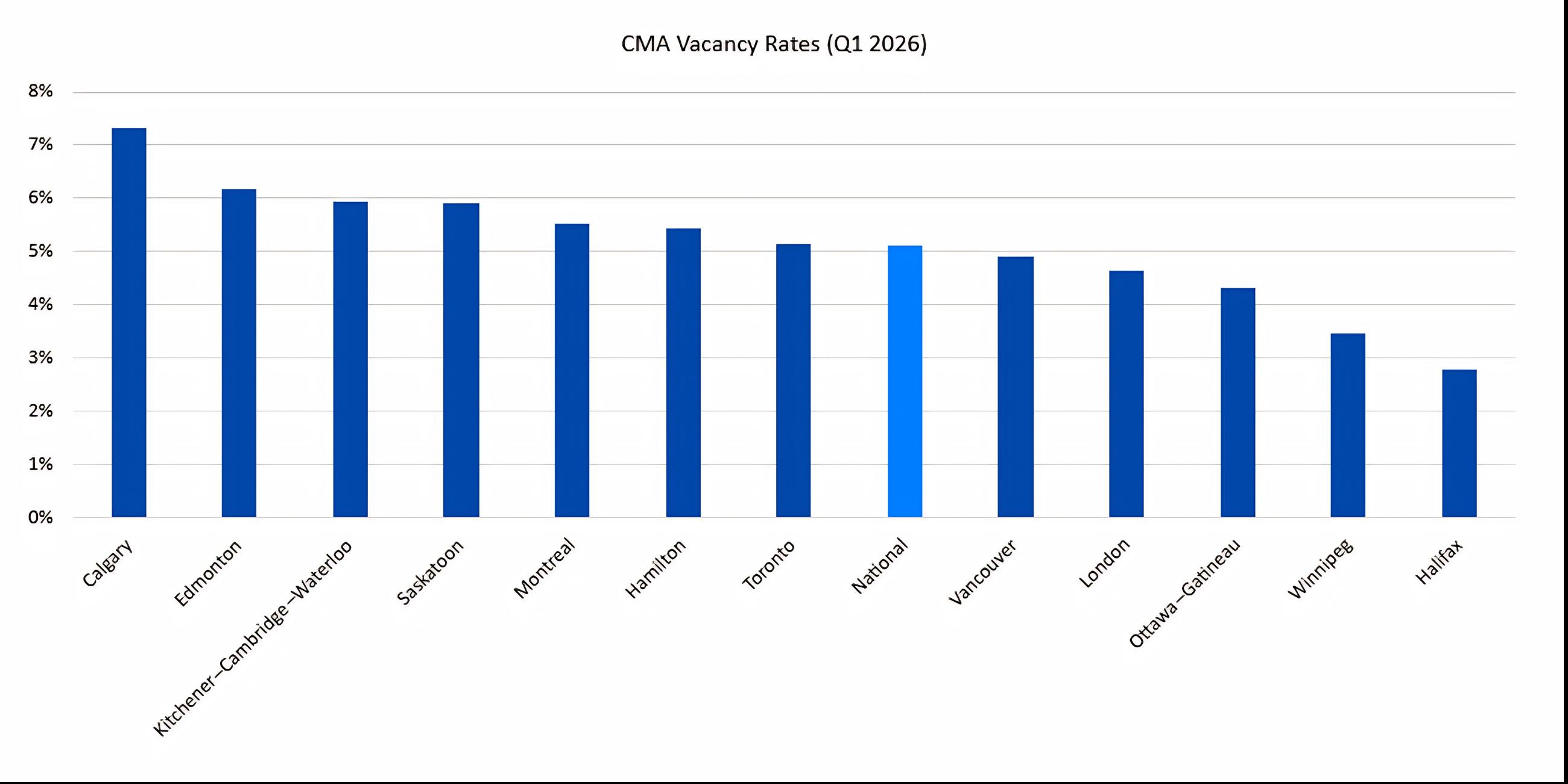
For years, Canada’s multifamily market ran hot. Now it’s cooling off, and the numbers make that clear. Vacancy has climbed past 5% nationally for the first time since Yardi began track-ing the market since 2020, new lease pricing has turned negative in most cities, and popula-tion growth has gone from a tailwind to a headwind. The era of near-automatic annual in-creases is over, replaced by a market where housing providers must work harder for every lease signed.
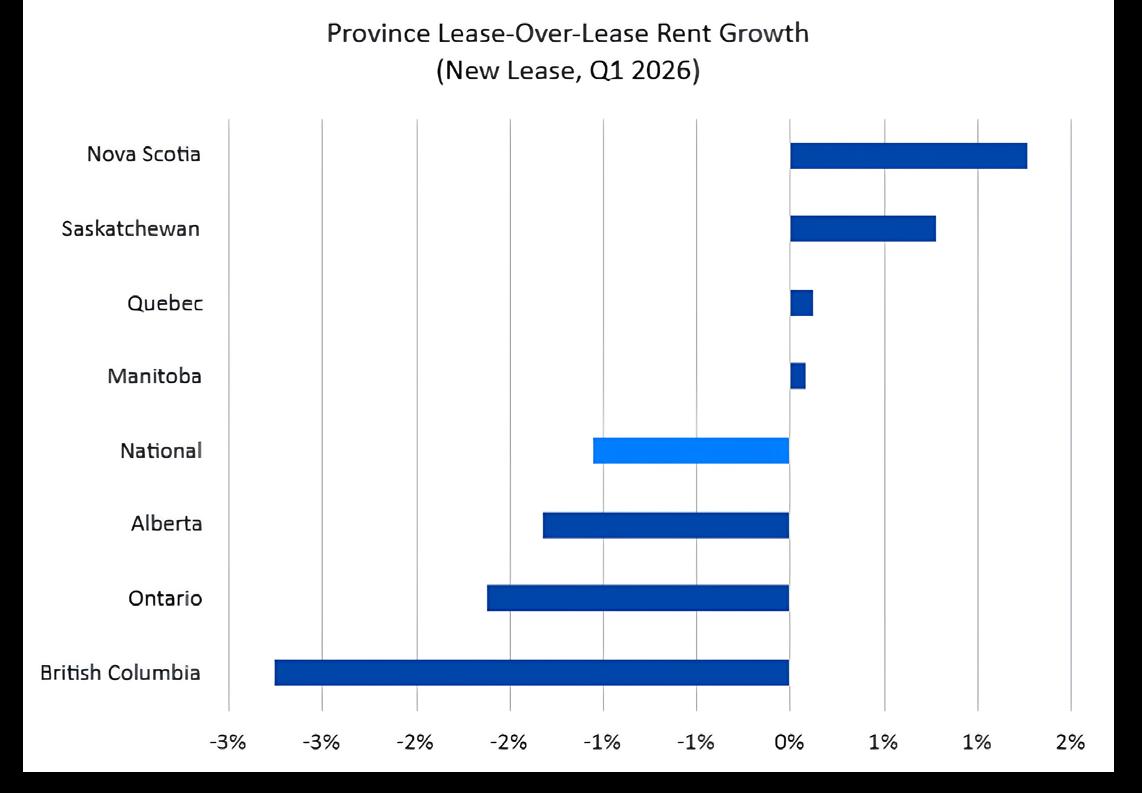
According to the latest Yardi Canadian National Multifamily Report, released in Q2 2026, the sector is adjusting to a fundamentally different environment, shaped by national averages of the vacancy rate at 5.1% (up 110 basis points year-over-year), new lease pricing at -1.0% nationally (down from a peak of 13.1% in Q3 2023) and in-place rate growth slowing to 2.7% year-over-year.
An economy still finding its footing
Trade disruption, geopolitical tension and rising energy prices have kept growth subdued. The labour market reflects the same pressure: Canada shed 84,000 jobs in February before recovering just 14,100 in March. Unemployment sits at 6.7%, with youth joblessness reach-ing 14.1%, a demographic that doubles up or moves home rather than signs leases.
Population growth, along the engine of rental demand, has reversed. Canada’s population shrank by more than 100,000 in 2025 as temporary permit holders departed. The same wave of immigration that drove vacancy to historic lows is now driving it back up, particularly in the GTA.
Canadian Apartment Industry Report
Regional standouts: where the gaps are widening
Markets are diverging sharply. Halifax leads all CMAs at 6.0% year-over-year in-place rent growth, supported by strong interprovincial inflows. Montreal (3.7%) and Winnipeg (3.5%) are also performing well, as are Alberta markets buoyed by domestic migration and energy activity. Calgary is the only market in negative territory at -2.0%, with Vancouver (1.6%) and KitchenerCambridge-Waterloo (1.5%) among the weakest.
Vacancy, turnover and renter behaviour
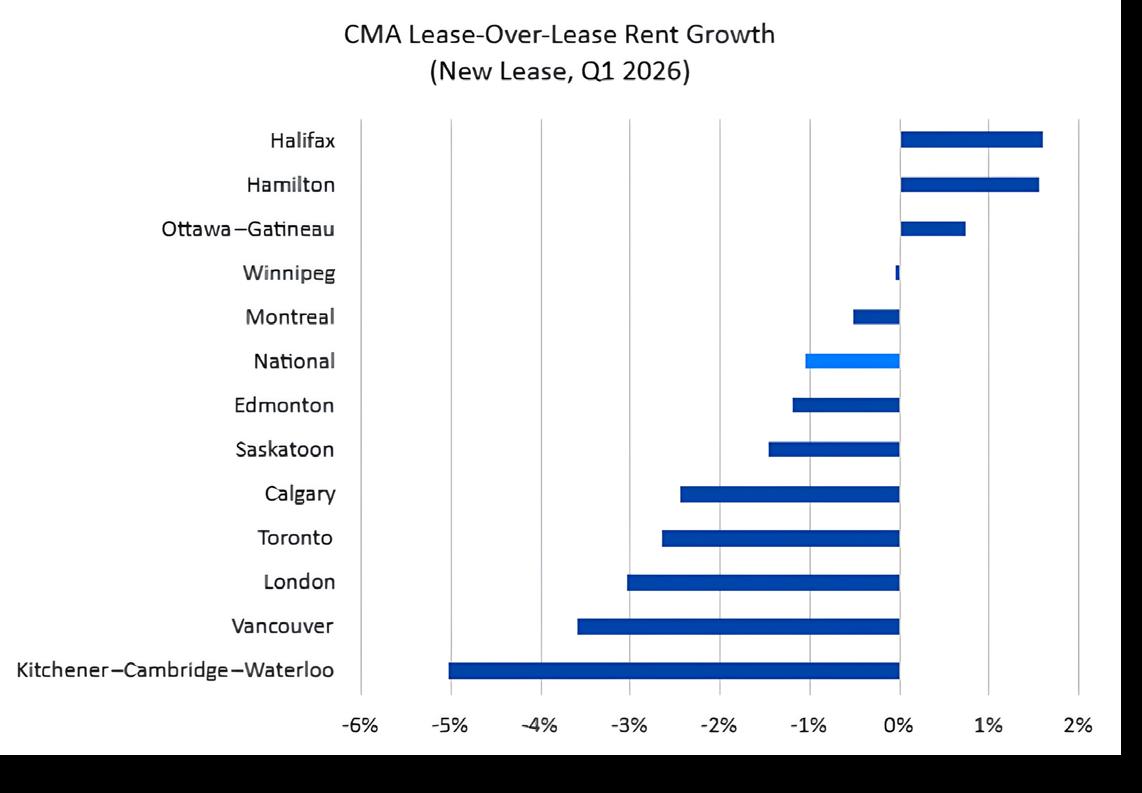
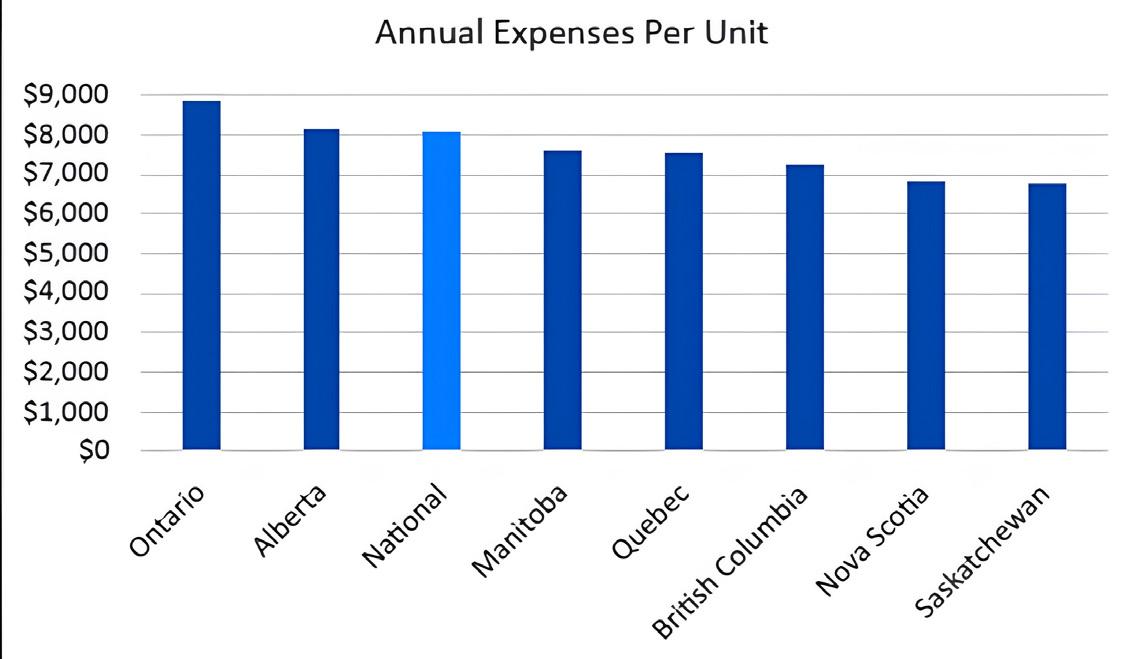
New lease pricing is negative in nine of the top 12 CMAs. Operating costs compound the divergence: Ontario providers averaged $8,858 per unit versus $8,122 in Alberta and a national average of $8,053, all figures represent trailing 12-month expenses.
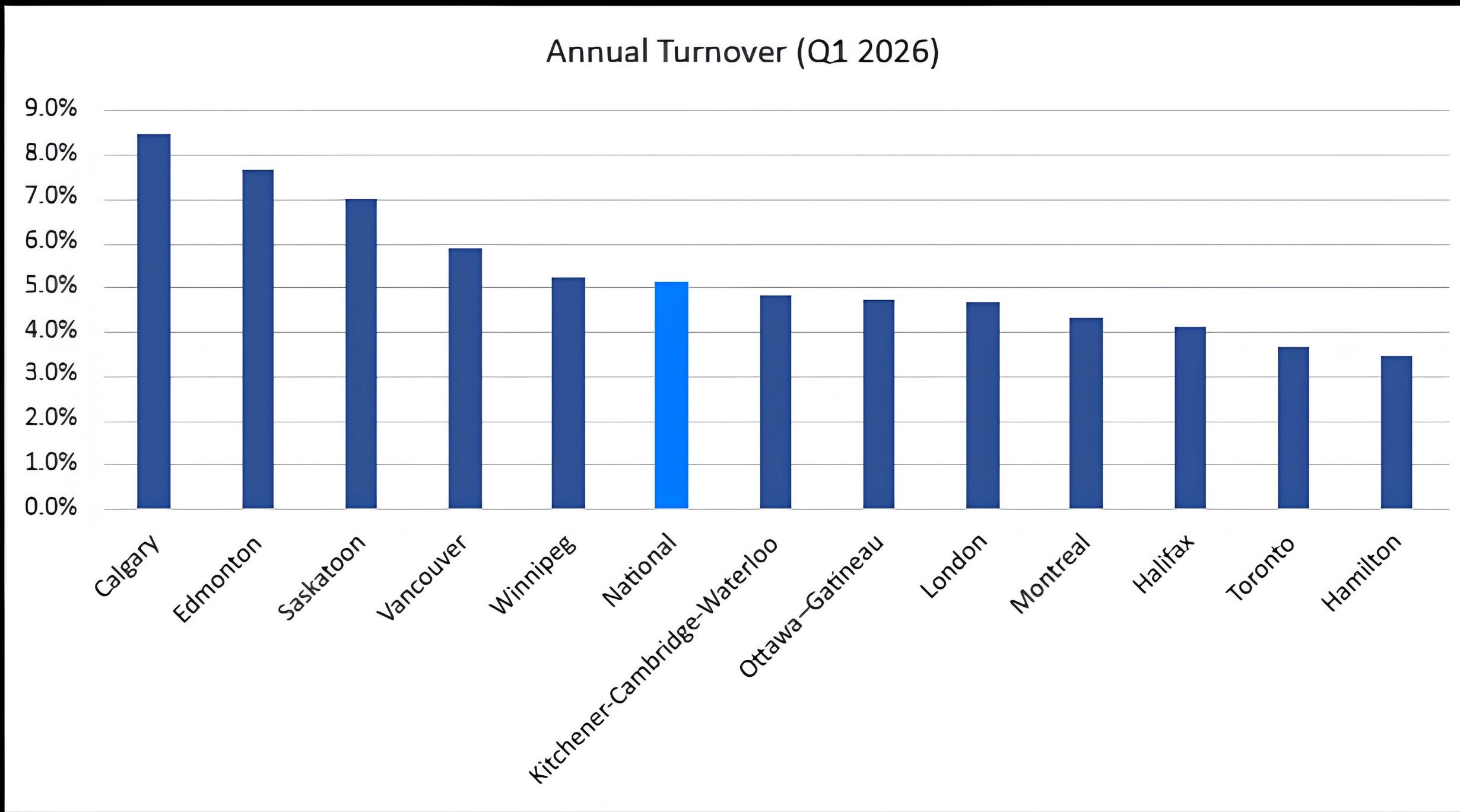
Average length of stay has increased to 40 months as Canadian residents hold their posi-tions in a softening market. Yet annual turnover has risen to 25.8% nationally, meaning when residents do leave, it happens more frequently than before.
Vacancy climbing alongside turnover tells a consistent story: active movers are more selective, decision timelines are longer and competition between properties is intensifying. Higher vacancy is direct revenue loss. Higher turnover drives costs through unit prepara-tion, leasing overhead and downtime. In this environment, retaining a qualified resident is almost always more cost-effective than replacing one.
Canadian Apartment Industry Report
What this means for housing providers
The variables that drove recent performance are gone. What replaces them isn’t just disci-pline, it’s capability.
Operators with the right data infrastructure are making faster, better decisions on pricing, retention and capital. AI-powered tools are compressing the gap between a lead and signed lease, flagging at-risk residents before they give notice and surfacing inefficiencies that manual processes never catch.
This isn’t about surviving the current cycle. It’s about building a platform that makes the next one harder for everyone else to compete in.
Download the latest Canadian Multifamily Report: www.yardi.com/cndmultifamilyreport
Yardi Canadian Multifamily Report
Quarterly insights on rent growth, vacancy, turnover and digital demand across major Canadian CMAs. info.yardi.com/multifamily-market-reports-for-canada/