


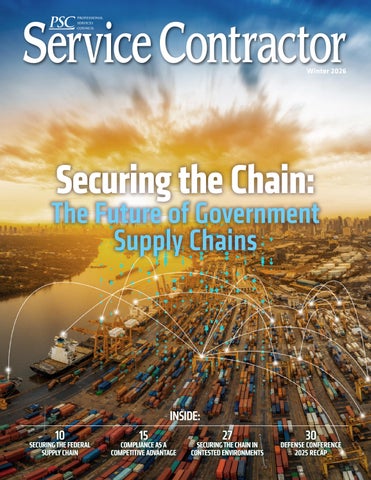



Cover photo: istockphoto.com/Suphanat Khumsap
PSC STAFF
James Carroll CEO carroll@pscouncil.org
Web: www.pscouncil.org All
To
Stephanie S. Kostro President kostro@pscouncil.org
Matthew Busby Vice President, Membership busby@pscouncil.org
Paul Foldi Vice President, International Development foldi@pscouncil.org
Steve Harris Vice President, Defense and Intelligence harris@pscouncil.org
Cassie Katz Vice President, Marketing and Communications katz@pscouncil.org
Andrea Ostrander Vice President, Events ostrander@pscouncil.org
Krista Sweet Vice President, Civilian Agencies ksweet@pscouncil.org
Donald Baumgart Director, Vision Federal Market Forecast baumgart@pscouncil.org
Sebastian Herrick Director, Procurement Policy herrick@pscouncil.org
Melissa Phillips, CMP Director, Operations phillips@pscouncil.org
Tomeka B. Scales, Ph.D. Director, Media Engagement & Communications scales@pscouncil.org
Jean Tarascio Director, Member Relations tarascio@pscouncil.org
Janet Jackson Executive Assistant jackson@pscouncil.org
Christian Larsen Director, Emerging Technologies larsen@pscouncil.org
Cierra “Cici” Earl Program Associate, Research Operations earl@pscouncil.org
Alex Fish Sponsorship Associate fish@pscouncil.org
Laila Hammonds Membership Associate lhammonds@pscouncil.org
Gisell Lopez Event Marketing Associate lopez@pscouncil.org
Taryn Phillips Marketing and Communications Associate tphillips@pscouncil.org
Marin Selig Senior Associate, Events selig@pscouncil.org
Luke Shannon Research & Analysis Associate shannon@pscouncil.org
Naomi Coleman Marketing Intern coleman@pscouncil.org

y almost all accounts, 2025 was a challenging but productive year. PSC has always been a credible voice and last year was no different as we were a strong and influential voice on key issues, including the FY26 National Defense Authorization Act, the Acquisition Reform and Cost Assessment Act of 2025, the government shutdown, and proposed rules and regulations.
PSC attended high-profile events, taking our members with us to persuade key decision-makers to support the government contractor sector. We engaged with Executive Branch leaders to make our members’ voices heard. Turn to page 33 for a snapshot of recent events and engagements.
• Membership: PSC recruited more than 80 new member companies and surpassed our member recruitment goal.
• Events: PSC’s events and meetings also continued to deliver meaningful member engagement.
• Media and Marketing: We finished the year strong and amplified our visibility with a 34% increase in media reach. PSC’s website reached almost half a million views, our newsletter had over 15 million unique views, social media followers increased by over 15%, and Service Contractor Magazine website views increased by 110% from 2024.
There are a number of things we are doing in 2026.
• New Political Appointees: With hundreds of political appointees confirmed, we are looking to see more long-range planning. There should be more definitive guidance from agencies, fewer surprise terminations, more standardized documentation requirements and greater consistency across agencies. We are already setting up meetings with these individuals to set the course of action.
• Acceleration of Awards: There should be an acceleration in Q1 and Q2, as well as the clearing of backlogged invoices, delayed contract modifications and stalled recompetes and new awards. This has been a priority for us as we engage with these decision-makers.
• Defense Modernization: With a robust defense budget, there is a commitment to modernization in artificial intelligence, cybersecurity, autonomous systems, and missile defense. There will also be increased demand for commercial and dual-use technologies. We have expanded PSC’s reach and influence in these key areas.
Learn more in What to Watch on page 8.
We appreciate your partnership with PSC and your efforts to bring new companies into our growing membership. Through policy leadership, strategic coalition building, and trusted engagement between government and industry, PSC is driving meaningful results that benefit federal missions and American citizens. Together, we are helping define the next chapter of federal contracting.
Members can connect via our PSC Member Directory—a powerful tool for searching a company’s government customers, business classifications, and more to facilitate new connections and one-on-one interactions.
Sincerely,
James Carroll, CEO Professional Services Council

elcome to the Winter 2026 edition of Service Contractor magazine.
Building on the high pace of changes—in federal government priorities, policies, and programs alike—throughout 2025, this new year has started with a host of challenges and opportunities in the federal marketplace. From re-opened solicitations for GSA’s OASIS+ governmentwide contract vehicle... to the Army’s announcement that it will proceed with its Marketplace for the Acquisition of Professional Services (MAPS) vehicle contract... to the release of large tranches of class deviations related to agency Federal Acquisition Regulation (FAR) supplements... to recent Executive Orders on artificial intelligence, executive compensation, and stocks repurchases, 2026 is shaping up to be an exciting year for current government contractors and those companies newly interested in pursuing federal work.
A critical element underpinning all these efforts is funding. As the nation continues to work through the aftermath of the historic federal government shutdown of October-November 2025 and the impacts of operating under a Continuing Resolution for most departments and agencies, the executive branch is building the fiscal year 2027 President’s Budget Request. Congress is gearing up to hold budget hearings. And another reconciliation bill may be on the table shortly. PSC will continue to engage federal leaders in both branches of government as this budget picture comes into focus. We welcome your insights at policy@ pscouncil.org throughout this process.
Readers may review PSC’s What to Watch in Washington quarterly update (page 8), which provides an overview of the President’s Budget Request and identifies upcoming milestones.
PSC seeks to deepen relations with Congressional colleagues, both elected officials and their staffs. Information on key legislation is available on PSC’s Bill Tracker on page 36.
Another element of PSC’s advocacy work is to develop, refine, and submit written comments on proposed regulations and policies impacting our industry. Upcoming opportunities will include comments on the Revolutionary FAR Overhaul rulemaking activities. Of note, since the last Service Contractor magazine was published, PSC has commented on OSTP’s RFI, “Regulatory Reform on Artificial Intelligence” and Small Business Size Standards: “Monetary-Based Industry Size Standards.”
In addition, PSC maintains ongoing engagement with executive branch officials through in-person meetings, involving PSC member companies’ senior leaders wherever possible. These candid and substantive dialogues help strengthen relationships to
advance government mission effectiveness and support industrial base resilience.
We look forward to welcoming all PSC members to our Law Enforcement Conference on February 11, 2026, and our Annual Conference from May 3-5, 2026. Attendees can expect a robust agenda and ample networking opportunities. Learn more about our events at pscouncil.org/events.
• Track Federal Acquisition Regulation developments and offer comments at the PSC Revolutionary FAR Overhaul Action Center (pscouncil.org/far).
• Find relevant Executive Orders and guidance documents at the PSC Post-Election Resource Center (pscouncil.org/ postelection).
• Visit the Member Engagement Resource Center for information on member benefits and ways to connect.
Congressional Calendar
PSC has included the 2026 Congressional Calendar to track when Congress is in session on page 41.
Federal Contracting Spotlight
PSC consistently promotes success stories in the government contracting industry. These stories showcase the value of government contractors and their important work. ICF is featured in this latest edition. Learn more on page 29.
Articles
Service Contractor magazine has long served as a platform for thought leadership in our industry, and this issue delivers a wealth of timely and insightful content. Featured authors for this edition include Michael Greenman of Deltek, Jeff Hsii and Allen Selwyn of DLH Corp., Greg Schaeffer of US Federal Contractor Registration (USFCR), Megan Maxwell of Andrew Morgan, Nathaniel J. Fuller of Noblis, J. Scott Murray of Amentum, and Tim Brennan of the Professional Services Council.
As the federal landscape evolves through executive actions, regulatory changes, and policy shifts, PSC remains committed to providing member companies with actionable insights, focused tools, and targeted advocacy. We welcome your input and engagement, and as always, we appreciate your steadfast support of PSC and our work on behalf of the federal contractor.

Stephanie Sanok Kostro, President

Single sign-in
Register for events
Update your profile

Conference-specific dashboards
Get PSC alerts
View member meetings

Scan the QR code to learn more about the app or visit pscouncil.org/app
Access PSC resources Renew membership Join PSC














For more information on PSC membership, contact membership@pscouncil.org. View all of PSC’s member companies at pscouncil.org/members
by Stephanie Sanok Kostro, President, PSC
As President Donald J. Trump’s current Administration marks one year in office, it is worth noting the many ways in which the federal government contracting has changed in the last 12 months. What are we watching at PSC – and what impacts will changes in government priorities, policies, and processes have on the contracting community?
In 2025, the President signed 225 Executive Orders (EO) – a massive undertaking, especially when compared to the 55 EOs that he signed during 2016 (i.e., the first year of his first term). These directives provided much-needed clarity into the President’s priorities and jumpstarted processes to change fundamentally federal acquisition; for example, EO 14240, Eliminating Waste and Saving Taxpayer Dollars by Consolidating Procurement, empowered the General Services Administration to leverage the federal government’s enterprise-wide buying power to cut streamline certain acquisition efforts and cut costs, and EO 14275, Restoring Common Sense to Federal Procurement, focused departments and agencies on rewriting the Federal Acquisition Regulation. Such EOs shape the federal marketplace, including but not limited to compliance requirements—and will continue to do so in the foreseeable future.
In addition, the Office of Personnel Management estimates that the existing federal civilian workforce shrank more 317,000 since September 2024. OPM further reports that, over that same time, 68,000 new federal employees joined the civil service, offsetting departures slightly and resulting in a net civilian personnel decrease of about 11 percent (source: Office of Personnel Management data). This significant downsizing was due in part to the Administration’s efforts to encourage deferred resignations and voluntary early retirements, as well as more traditional reductions-in-force.
Finally, federal departments and agencies are still grappling with impacts of the longest-ever government shutdown. When officials returned to their jobs on November 13, they began to restart the engine of government, including actions to rescind stop work orders, process and pay invoices, re-energize solicitations, and award contracts and task orders. More than
two months later, the government is still working to achieve the same level of productivity as it enjoyed on September 30.
PSC continues to engage with executive and legislative branch officials to determine the longer-term effects of these many recent changes to the federal marketplace. We welcome any input and feedback from PSC member companies as an integral element of this engagement.
In accordance with current law, the President’s Budget Request (PBR) for the next fiscal year is due to Congress no later than the first Monday in February—meaning the due date for the fiscal year 2027 PBR is February 2. That said, many presidential administrations have delayed their submissions until weeks, even months after the statutory deadline.
2026 promises to be no different, with estimated submission dates of a “skinny budget” (i.e., a preliminary, high-level description of the President’s discretionary spending priorities) in late February or early March. More detailed programmatic information would be submitted later in the year. Given that such details—along with any legislative proposals that federal officials are preparing to help support the President’s priorities—will help with business planning for the government contracting industry, PSC is eagerly awaiting these submissions to Congress.
Once Congress receives budget information, committees will start holding in-depth public hearings with senior-most federal officials, who will provide much-needed context for the requests. In addition, both Senate and House of Representatives officials will receive closed-door briefings, including but not limited to classified and otherwise controlled information. PSC plans to work with Capitol Hill staff on issues and questions related to high-interest policy topics, running the gamut from Small Business Innovation Research (SBIR) authority and programs to acquisition workforce recruitment, retention,
Other critical activities that impact the federal marketplace include recent developments in the international security environment (both within the Western Hemisphere and elsewhere around the globe) that can drive significant shifts in
the federal budget. Supply chain and strategic sourcing issues also loom large. And workforce issues continue to challenge all segments of the federal acquisition community. As noted in earlier issues of Service Contractor, look for an updated What to Watch in Washington articles in future issues. Please contact PSC subject matter experts at policy@pscouncil. org with questions, feedback, or other comments. We are here for you!

What to Watch in Washington provides a concise and authoritative overview of the most significant legislative, regulatory, and policy developments impacting the government contracting sector. This regularly issued update highlights emerging issues under consideration by Congress and federal agencies, offering PSC members timely insight into the evolving policy landscape. Designed to support informed decision-making, this resource underscores PSC’s commitment to keeping the federal contracting community apprised of key actions and trends in Washington.

by Michael Greenman, Senior Manager of Cloud Solutions, Deltek
As federal agencies continue to elevate cybersecurity and supply chain resilience as mission-critical priorities, government contractors face a clear inflection point: Business risk extends across the entire supply chain to include subcontractors, cloud environments, professional services partners, and anything that handles Controlled Unclassified Information (CUI).
While optimism remains across the GovCon market, compliance costs, cybersecurity maturity, and supply chain risk management are rising fast and unevenly across the contractor ecosystem 1 From the “Revolutionary FAR Overhaul” that will change how small businesses can win contracts, the market uncertainty from tariffs and other “America First” initiatives, to security-focused programs like “Golden Dome for America,” professional services firms will experience both challenges and opportunities in this new era of procurement.
There is a strong focus on the heart of supply chain security— an effective Supply Chain Risk Management (SCRM) strategy. SCRM is no longer a checkbox, it’s a federal mandate integrated into cybersecurity compliance requirements like the CMMC (Cybersecurity Maturity Model Certification). Agencies are increasingly incorporating supply chain risk requirements into solicitations, contract performance clauses, and post-award oversight, linking contract performance with data protection and supplier accountability. Compliance costs are among the top five business pressures affecting government contractors.1 More importantly, respondents cited cost of supply chain risk alongside labor and inflation as a material business concern—an indicator
1 https://www.deltek.com/en/government-contracting/clarity
that contractors increasingly recognized exposure in their supply chain. For service contractors, this shift is especially pronounced. Unlike manufacturers that control most from within, professional services firms rely on distributed teams, cloud partners, and third-party tools, which increases risk.
With the CMMC Program Rule finalized, cybersecurity readiness is mandatory for participation in defense-related work. This is a huge opportunity for companies that are certified or in the process of doing so, because the majority of the Defense Industrial Base (DIB) is drastically unprepared. Only 1% of defense contractors are prepared for CMMC assessments, even though 69% claim DFARS 252.204-7012 compliance via self-assessment.2
CMMC pressure is creating a market response:
• Prime contractors are publicly stating that subcontractor partners need to achieve CMMC Level 2 compliance if they want to remain a supplier going forward.
• Because certification information is not public, the responsibility for CMMC verification resides with the prime contractor, which becomes a major risk.
• All contractors that achieve compliance early are already treating it as a competitive differentiator, not merely a regulatory checkbox.
One of the most important signals is that leading contractors are integrating cybersecurity into broader operational strategy, not isolating it within IT. High-performing firms are aligning cyber investments with:
2 https://cybersheath.com/resources/downloads/from-readiness-to-reality-the-2025-state-of-the-defenseindustrial-base-on-cmmc-compliance/#register

• Enterprise risk management
• Competitive differentiation / cost justification
• Contract compliance and audit readiness
• Supply chain visibility and sustainability
• Cloud and data governance strategies
For businesses navigating this environment, several actions are becoming essential:
1. Define Supply Chain Risk Explicitly
Identify where CUI flows across subcontractors, cloud platforms, and external partners; and document inherited versus shared controls with a Customer Responsibility Matrix (CRM).
2. Align Cyber Strategy to Contract Requirements
Treat CMMC, DFARS 252.204-7012, and agencyspecific cybersecurity compliance requirements as business planning inputs, not after-the-fact compliance hurdles.
3. Invest Proportionally, Not Reactively
Take a structured, phased approach to cybersecurity
investment to better position your business rather than react under deadline pressures.
4. Use Compliance as a Differentiator Contractors that can clearly articulate their cybersecurity posture (and how it reduces overall risk) gain an edge in competitive procurements AND partnering preferences.
The federal government’s emphasis on cybersecurity and supply chain resilience is not a temporary trend. It reflects a fundamental shift in how agencies assess contractor risk, performance, and trustworthiness. This market shift makes one thing very clear: government contractors that treat cybersecurity and supply chain risk management as strategic capabilities, rather than compliance burdens, will be best positioned to compete and grow in the years ahead.
For PSC members operating at the center of federal missions, the question is no longer if cybersecurity maturity will matter, but how quickly will organizations adapt? 3
Michael Greenman is a Senior Manager at Deltek, where he specializes in cybersecurity compliance, cloud innovation, and supply chain risk management. He is a CMMC Registered Practitioner and is passionate about helping organizations leverage technology to secure competitive advantage and operational resilience.


by Jeff Hsii, Vice President, Information Technology and Allen Selwyn, Vice President, Chief Technologist, DLH Corp.
CMMC provides federal customers with greater confidence that contractors can operate security in complex, multi-vendor environments. Organizations that internalize it as an operating model will be better prepared for what comes next.
CMMC is a comprehensive cybersecurity framework developed and enforced by the U.S. Department of War (DoW) to ensure that all companies within the Defense Industrial Base (DIB) – including contractors, subcontractors, and suppliers – adequately protect sensitive government information that they handle. The first phase of Cybersecurity Maturity Model Certification (CMMC) began on November 10, 2025, marking the implementation of the final rule that incorporates CMMC requirements into the Defense Federal Acquisition Regulation Supplement (DFARS) and allowing DoW to include CMMC clauses in new solicitations and contracts.
Most companies seek CMMC certification through the lens of contract eligibility. While it is certainly true that maintaining CMMC certification will quickly become a requirement to compete for new business across the federal contracting landscape, obtaining this certification provides several significant and strategic business benefits. A mature CMMC posture delivers several outcomes that extend well beyond compliance:
• Enhanced Cyber Resilience: CMMC compliance fundamentally strengthens an organization’s security posture. It uses a standardized, multi-level set of best practices and controls as outlined in the National Institute of Standards and Technology (NIST) Special Publication (SP) 800-171. By implementing these controls, organizations follow a robust, proven security framework to safeguard sensitive data.
• Proactive Approach to Cybersecurity: CMMC mandates a more mature approach to cybersecurity, requiring continuous monitoring, regular assessments, and incident response plans, to name a few. This shifts the organization’s mindset from a reactive to a proactive defense.
• Improved Market Reputation: The NIST SP 800-171 security controls are often recognized as the gold standard for protecting sensitive data. CMMC certification, when achieved at Level 2 or higher, is a third-party, verifiable metric that demonstrates a company’s commitment to protecting sensitive data.
• Competitive Edge: CMMC certification positions a company as a reliable and security-conscious partner, not just within the DIB, but also to commercial clients who increasingly value high cybersecurity standards. It builds more trust with customers and partners, opening the door to more opportunities.
• Reduced Costs: By enhancing cybersecurity and risk management, companies significantly lower the risk of a costly data breach. Organizations with a demonstrably mature and verifiable security posture, like CMMC certification, may also qualify for lower cybersecurity insurance premiums. Furthermore, CMMC aligns with many other security frameworks, so implementing its controls can streamline compliance efforts across multiple standards, saving time and resources.

While it is certainly true that maintaining CMMC certification will quickly become a requirement to compete for new business across the federal contracting landscape, obtaining this certification provides several significant and strategic business benefits.
• Reduced Downtime: The standardized, documented processes required by CMMC, such as continuous monitoring and incident response plans, lead to less operational downtime and faster recovery times after security events.
In the modern risk environment, companies must continuously monitor their security posture and evolve constantly to improve and adapt to emerging threats. Many organizations base their technology architecture on the NIST Cybersecurity Framework, a set of processes used to help organizations manage and reduce cybersecurity-related risk. By implementing a “defense in depth” security strategy that uses multiple layers of protection
to safeguard assets, systems, and data, organizations make it harder for attackers to breach their defenses. This approach focuses on reducing risk, enhancing security posture, improving resilience, and making it easier to detect and respond to threats.
Cybersecurity is essential to any modern organization. Viewing CMMC as a one-time compliance cost is short-sighted. It is an investment in cyber resilience, market reputation, and operational efficiency that secures long-term business value. While achieving this certification is an expensive and laborintensive undertaking, a successful government contractor will view CMMC as a strategic business investment that further secures its data, enhances its market credibility, and improves the overall resilience and efficiency of its operations. 3
DLH enhances technology, public health, and cyber security readiness missions through science, technology, cyber, and engineering solutions and services. DLH operates and maintains a mature and robust technology footprint.


by Greg Schaeffer, Chief Financial Officer, US Federal Contractor Registration (USFCR)
Is it possible to approach the increasing cost of compliance as an investment that delivers a return rather than an expense reducing profitability? How leaders answer this question depends on the collective mindset and culture within the organization.
To support the mindset of compliance as a competitive advantage, it is helpful to consider examples from one of the most significant compliance efforts in United States history. After the fall of Enron and the erosion of confidence in financial reporting, the Sarbanes-Oxley Act of 2002 was enacted to restore public trust by imposing stricter rules for corporate governance, strengthening internal controls, increasing financial disclosure requirements, and raising accountability standards for executives and auditors. This was an extensive and costly compliance exercise that required businesses to examine the entirety of their internal operations.
Organizations that led the way and embraced this historic compliance effort reported measurable benefits unlikely to have occurred without Sarbanes-Oxley, including:
• Major reduction in supply-chain errors and fraud
• Increased profitability through more efficient, standardized global processes
• Turning required compliance costs into new products and revenue streams
• Lower cost of debt compared to peers with weaker internal controls
• Higher forecasting accuracy that improved investor confidence
• Time and cost savings with shorter financial close cycles
• Faster and more successful merger integrations
• Stronger access to capital due to improved governance ratings
• Revenue protection supported by strengthened customer trust
These outcomes reveal an important truth. When organizations embrace compliance not as a regulatory burden but as a structural framework for discipline, transparency, expense reduction, profit opportunities and/or process

improvement, the advantages extend beyond audits and reporting. This truth directly influences the current federal landscape, where compliance maturity can increasingly shape competitiveness, credibility, and long-term performance.
Building on this understanding, the following section examines how the same principles apply today in the federal contracting market through the lens of the Three “Ps” of Advertising: Profit, Prestige, and Protection.
Profit
As organizations work to be first to market with a strong compliance story, business development teams can incorporate best-in-class compliance into their pitch to agency decision makers.
Prestige
As organizations attain higher compliance maturity, they gain reputational advantages that elevate them above competitors who have not invested in the same rigor.
By viewing compliance as an asset rather than an obligation, organizations strengthen long-term trust with agency decision makers and improve their ability to retain existing contracts.
This creates an opportunity for the management, finance, IT, compliance, operations, business development, capture, and proposal teams to collaborate and determine how disciplined compliance investments can contribute to measurable return on investment. To deepen this analysis, there are two current compliance functions that illustrate how a return on investment can take shape: subcontractor compliance and the Cybersecurity Maturity Model Certification (CMMC).
Subcontractor Compliance
Successfully leveraging compliance to win or retain contracts often depends on how effectively the organization communicates its strengths. Assuming a structured subcontractor database is in place, and small business and set-aside participation is tracked, this data can support competitive storytelling for business development and proposal teams. If subcontractor recruiting and compliance personnel are not included in strategic discussions, opportunities may be missed. As a next step, subcontractors can be organized and filtered by key criteria, including key compliance data points, to formalize what a “best in class” team could look like when responding to agencies.
Cybersecurity Maturity Model Certification (CMMC)
Protecting mission-critical information remains a top priority for the Department of War. To remain competitive,
cybersecurity must be treated as a strategic asset rather than a compliance cost. Contractors that achieve CMMC readiness early in the government’s phased rollout will be positioned ahead of competitors and able to build stronger trust with contracting officials. Organizations may choose to attain CMMC Level 2 certification using the Phase 1 self-assessment readiness path or make the extra investment and attain certification through the Phase 2 compliance path by engaging with a CMMC Third-Party Assessment Organization (C3PAO). As a next step, IT and compliance teams should be included in business development and proposal strategy discussions to determine how CMMC readiness can be communicated or enhanced in order to be more competitive on bids.
Viewing compliance as a competitive advantage is a strategic choice available to those willing to invest, coordinate, communicate and implement effectively. The goal here is to bring multiple teams together, including the compliance teams, to brainstorm how compliance can be part of the winning story that delivers profit, prestige and protection in order to win in the federal marketplace. 3
Greg Schaeffer, CPA, has over 20 years of expertise in government compliance, business intelligence, and business growth strategies. Email: gschaeffer@usfcr.com.
USFCR brings more than fifteen years of experience helping organizations strengthen their registrations and compliance, pursue required certifications, and advance their goals through strategic planning and tailored consulting. Learn more at: https://usfcr.com/.





Attend PSC’s 10th Annual Federal Law Enforcement Conference to connect with government and industry leaders driving the future of federal law enforcement.
Hear directly from officials across DHS, DOJ, and other civilian agencies as they discuss evolving mission priorities, the new acquisition landscape, and the role of emerging technology and data.
Explore how evolving authorities, interagency collaboration, and technology including AI and counterdrone systems are shaping the next chapter of federal enforcement operations.
Don't miss the PSC law enforcement event of the year.



by Megan Maxwell Workforce Planning & Optimization Lead (SME), Andrew Morgan
Federal agencies have spent years reinforcing their physical, digital, and cybersecurity supply chains. They have diversified vendors, strengthened oversight, modernized procurement systems, and built safeguards to withstand national level disruptions.
As agencies work to secure government supply chains for the future, one critical dependency remains under protected: the workforce responsible for operating every link in the chain. Structural workforce pressures can disrupt mission execution as quickly as a delayed shipment or a compromised vendor.
In FY26 and beyond, the federal workforce must be understood and managed as a supply chain, with resilience as a prerequisite for mission success.
Every mission outcome depends on having the right people in the right roles, with the right skills, at the right time. This holds true across procurement, cybersecurity, healthcare delivery, national defense, and acquisitions. When that alignment breaks down, the effects ripple across the enterprise.
Vacancies delay program execution. Skill shortages degrade operational effectiveness and elevate mission risk.
From a risk management perspective, these failures mirror supply chain bottlenecks. Unlike material supply chains, workforce planning systems often lack real time visibility, forecasting capability, or integrated management. Closing this visibility gap has become essential for mission assurance.
Many federal workforce models were designed for a more stable era. They assume predictable workloads, slow changing mission requirements, and linear staffing needs. These models rely heavily on static billet structures, historical patterns, and siloed data systems.
Today’s operational reality is far more dynamic.
In many agencies, workforce data is spread across dozens of disconnected systems, making it difficult to generate timely, enterprise-wide insight into readiness, risk, or capacity.
Missions evolve rapidly. Skill requirements shift alongside emerging technologies and cyber threats. Operational tempo now outpaces traditional workforce planning cycles, while workforce data often remains fragmented across human resources, finance, readiness, and operational systems.
Staffing models often reflect outdated missions or legacy formulas. Forecasting capability is limited, even though retirements, training timelines, and clearance processes often span years. Vacancy counts often mask whether the workforce has the capabilities required to deliver the mission. In many organizations, hiring and onboarding timelines lag mission timelines.
Recent federal direction underscores the urgency of this shift. Governmentwide workforce modernization efforts have highlighted the risks created by fragmented personnel systems, limited workforce visibility, and delayed access to enterprise level data. Treating the workforce as a supply chain, with integrated data, forecasting, and scenario planning, enables earlier risk identification and more informed decision making.


Modernized workforce infrastructure helps leaders forecast staffing based on workload drivers, identify gaps early, and respond to surges with agility. As agencies modernize their systems, these principles are becoming essential.
Successful supply chains share core principles such as forecasting demand, understanding supply, identifying risk, and planning for disruption. When applied to workforce management, those same principles form the foundation of a more resilient, mission-ready workforce.
• Understanding the Work Ahead
Workforce planning must start with forecasting future workload and mission requirements, not simply replacing departing personnel. Agencies need clear insight into how policy changes, new technologies, cyber mandates, healthcare demand patterns, and modernization initiatives will shape the future workforce. Without an accurate view of demand, workforce decisions become reactive and misaligned.
• Understanding Workforce Capability
Agencies must understand the true capability of their workforce, including skills and certifications, readiness indicators, retirement eligibility, attrition patterns, and hiring pipeline timelines. A filled position does not guarantee the required capability exists or is mission ready.
• Identifying Points of Vulnerability
Roles dependent on only a few experts, positions with lengthy training pipelines, or mission areas with high turnover represent structural risks that can compromise execution. These are workforce equivalents of critical shortages that require monitoring and mitigation.
• Planning for Disruption Before It Occurs
Workforce leaders must test scenarios related to priority shifts, operational tempo, and technology adoption. Agencies that model these scenarios early shift from replacement thinking to resilience planning.
Large federal health and defense organizations illustrate the complexity of the workforce supply chain. Their missions depend on high readiness clinical and operational capabilities and rapid alignment between workload and staffing.
Modernized workforce infrastructure helps leaders forecast staffing based on workload drivers, identify gaps early, and respond to surges with agility. As agencies modernize their systems, these principles are becoming essential.
A resilient workforce readiness structure requires an integrated ecosystem of people, processes, data, and governance.
Agencies need unified workforce data that provides a comprehensive picture of staffing, capability, training status, and readiness. Demand models must reflect the full spectrum of mission requirements and the time required to build or acquire needed capabilities.
A well-trained workforce is a critical component of workforce resilience, particularly as agencies face the loss of experienced subject matter experts and ongoing challenges in recruiting and retaining specialized talent. Training pipelines determine how quickly new capabilities can be developed, how effectively knowledge can be transferred, and how rapidly the workforce can adapt to evolving mission demands.
Predictive analytics and scenario modeling must test the impact of funding changes, workforce shifts, or mission growth. Governance structures must bridge human resources, finance, operations, and mission leadership, so workforce decisions are made through a shared lens.
When these elements work together, workforce planning becomes a strategic capability that strengthens mission delivery and reduces operational risk.
Securing the human capital ecosystem requires shifting workforce planning from a transactional activity to an enterprise risk function. Leaders must look beyond vacancy counts and think in terms of capability, readiness, and resilience.
This shift requires multiyear workforce forecasts aligned to mission objectives, investment in integrated data and analytics, and stronger alignment between hiring, training, and mission requirements.
Agencies that adopt these practices move from reactive staffing to proactive workforce security.
As federal agencies confront supply chain mandates, modernization pressures, and evolving mission demands, strengthening the workforce supply chain has become a national imperative.
By applying proven supply chain principles to workforce planning, agencies can build the resilient, adaptive, mission-ready workforce required in FY26 and beyond. 3
Megan Maxwell is the Workforce Planning & Optimization Lead at Andrew Morgan, specializing in federal workforce transformation and mission readiness. She previously served 20 years in the United States Air Force as a healthcare executive and now focuses on helping federal organizations strengthen workforce resilience and readiness. She can be reached at mmaxwell@andrew-morgan.com.

by
Today’s technologies and innovations are composed of a hybrid of proprietary and public domain components with supply chains extending geographically, temporally, technically, and organizationally. As a result, federal contractors struggle to evaluate compliance with security standards, licensing regulations, and vulnerability analysis. Bills of Materials (BOMs) remain relevant for modern supply chain illumination for all asset types. A Supply Chain Metaverse (SCM) flattens the narrative between boardroom and edge operations by superseding domain specificity, using malleable metadata patterns. Metadata is data that describes the characteristics, context, or attributes of a data set or file related to components in a supply chain. For example, metadata for an aircraft tire might include tire manufacturer, date of manufacture, tire size, serial number, pressure rating, etc.
SCM is a digital transformation for supply chains, creating a virtual ecosystem where stakeholders, manufacturers, suppliers, logistics providers, and retailers can collaborate, analyze data, and make decisions in real-time. By leveraging Artificial Intelligence
(AI), Modeling & Simulation (M&S), and threat vector predictions, SCM can provide detailed insight and verification into the criticalities of parts, components, asset sources, policies, and known vulnerabilities.2 This approach stimulates risk-based decision-making and independent mitigation built around the contexts of what and how components are being used. These insights illuminate supply chain bottlenecks, increase operational efficiency, assist in anticipating future failure points, and lessen the risk of errors.
It also streamlines manual supply chain processes frequently used by federal contractors today. SCM offers an agile concept for federal contractors to coordinate, track, and verify goods and services more effectively, reducing risks of fraud, counterfeiting, and disruptions. Furthermore, federal contractors can enhance their audit procedures, risk management, and adhere to policy requirements using a metadata encoding schema that describes a specific part, component, and asset built from their supply chain. Figure 1 illustrates how SCM defines and describes pertinent parts, components, and assets using supply chain metadata.
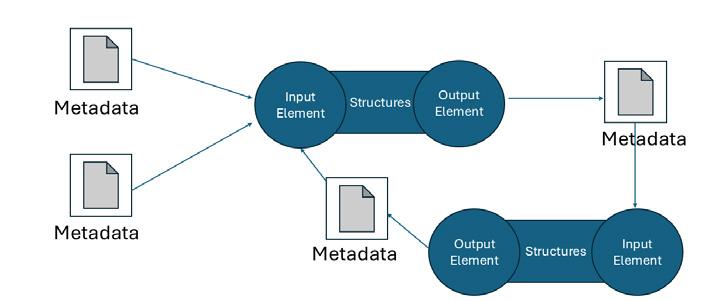
Think of SCM as the helpful organizer for all the key ingredients of components, parts, and assets in a supply chain. It clearly defines and describes every important part we use, like our software, hardware, parts, data, ML models, licenses, and even our organization’s policies.
Think of SCM as the helpful organizer for all the key ingredients of components, parts, and assets in a supply chain. It clearly defines and describes every important part we use, like our software, hardware, parts, data, ML models, licenses, and even our organization’s policies. SCM is structured using interconnected systems. The metadata output from one structure can seamlessly be used as the metadata input for another, allowing us to accurately trace and describe data and data sources from all our pertinent assets, parts, and components.
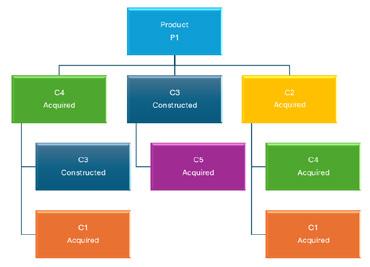
A straightforward, tree-like diagram is used to display all the information (metadata) about our assets, parts, and components. As shown in Figure 2, a final product sits proudly at the top, and all its components branch out below it, just like a family tree. It’s essentially a visual map showing how every piece is connected, forming a structure known in simple terms as a directed tree. An SCM Mesh, shown in Figure 3, is a high-level representation of several final products.
Think of an SCM Mesh as a detailed map that helps us see how everything connects, from the big picture down to the tiniest detail. It’s all about showing the relationships and dependencies
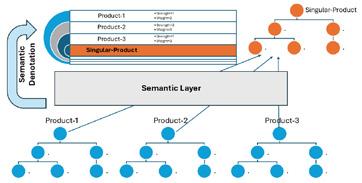
between different parts. For example, a larger item might be built from several smaller pieces, and those same pieces might be used in a bunch of other products, too. At its heart, the system is a complete list or manifest of all these different parts and their building blocks, organized so we can easily understand their hierarchy. It’s a smart, modular way to ensure comprehensive organization of internal and external supply chains.
SCM represents a transformative approach to managing modern, complex supply chains. By leveraging metadata, AI, and modeling techniques, SCM provides federal contractors with unparalleled visibility into the composition, provenance, and criticality of every part, component, and asset. This digital ecosystem not only enhances risk management, compliance, and operational efficiency but also fosters collaboration across stakeholders, from suppliers to boardroom decision-makers. Ultimately, SCM empowers organizations to proactively anticipate disruptions, reduce vulnerabilities, and make informed, risk-based decisions, creating a more resilient and transparent supply chain landscape. 3
1 Dretzka, E., Fuller, N.J, Smith, B. (2023). Weaving the Extensible Bills of Materials (xBOM) Fabric. MODSIM World 2023. https://modsimworld.org/about/publications/2023.
2 Fuller, N.J. (2023). Supply Chain Metaverse. Cybersecurity Across Disciplines (CyAD) Conference. National Cybersecurity Training & Education Center (NCyTE).

by Tim Brennan, Vice President of Technology Policy and Government Affairs, PSC
In remarks delivered to industry leaders, Michael Cadenazzi, Assistant Secretary of Defense for Industrial Base Policy (IBP), outlined a clear message for the defense services community: industrial base policy is no longer a supporting function—it is central to U.S. national security. His comments signal a consequential shift in how the Department of War views risk, acquisition, and the role of service contractors in strengthening the defense industrial base.
Cadenazzi framed his mission around rebuilding and scaling the defense industrial base at a time of unprecedented geopolitical pressure. Ongoing conflict in Ukraine, China’s decades-long industrial expansion, and persistent supply chain fragilities have exposed vulnerabilities that incremental fixes can no longer address. In response, Department leadership is embracing a wartime acquisition mindset—one that intentionally accepts greater acquisition risk today to reduce operational risk tomorrow.
For service contractors, this shift represents both opportunity and expectation. The Department is moving away from a primecontractor-dominated ecosystem toward a more dynamic, commercially oriented vendor base that can scale at the speed of conflict. Services are no longer viewed solely as labor hours or time-and-materials inputs; instead, the Department is actively seeking outcome-based, technology-enabled service models that deliver measurable mission impact.
Supply chain resilience sits at the center of this transformation. Cadenazzi repeatedly emphasized that critical minerals and munitions represent the most acute industrial base vulnerabilities. The United States remains overly dependent on foreign—and in some cases adversarial—sources for rare earth elements and other strategic materials essential to modern defense systems. To address this, IBP is using Defense Production Act (DPA) authorities to invest directly in domestic mining, processing,

and refining capacity, with the goal of rebuilding secure, scalable supply chains from the ground up.
These investments are not symbolic. Recent initiatives, supported by more than $10 billion in congressional funding through the Industrial Base Fund, are designed to operate at sufficient scale to permanently reduce risk rather than merely manage it. Cadenazzi noted that past efforts often spread limited
Services are no longer viewed solely as labor hours or time-and-materials inputs; instead, the Department is actively seeking outcome-based, technology-enabled service models that deliver measurable mission impact.

resources across too many problem areas, resulting in marginal improvements that failed to resolve underlying fragilities. The new approach prioritizes fewer, larger bets with sustained followthrough—turning supply chain risks from ‘red to green.’
Munitions production presents a parallel challenge. Years of underinvestment, limited competition, and single-threaded suppliers have left the munitions industrial base strained. The
Department is now changing both how it buys and how much it buys, signaling more predictable demand and greater volume to incentivize capacity expansion across the supply chain. These changes are expected to reshape the munitions industrial base within the next 6 to 12 months.
For service contractors, the implications extend beyond materials and manufacturing. Cadenazzi underscored that

services play a critical role in enabling supply chain resilience— through logistics, facilities management, IT modernization, data analytics, and workforce development. He challenged industry to rethink what a ‘service’ looks like in a technology-driven environment, asking whether artificial intelligence, machine learning, and software-enabled solutions can deliver outcomes faster and at lower cost than traditional labor-based models.
Encouragingly for industry, recent Federal Acquisition Regulation (FAR) reforms are intended to support this evolution. Updates to FAR Part 16 and related initiatives are designed to move contracting professionals from a default ‘no’ mindset to a ‘yes’ mindset—creating space for innovative contract structures, consumption-based pricing, and outcomeoriented arrangements. Department leadership is actively soliciting industry input on which commercial models work and which are ready to be piloted in the federal environment.
China’s industrial strategy looms large over these reforms. Cadenazzi described China’s state-directed approach to building an innovation ecosystem as a central driver of U.S. urgency. In response, IBP is pairing domestic investment with economic security measures, including scrutiny of mergers and acquisitions and the publication of lists identifying Chinese military-affiliated companies operating in the United States. The objective is clear: deny adversaries leverage over critical technologies and supply chains while strengthening allied and domestic alternatives.
Perhaps most notably, Cadenazzi emphasized the unusual degree of alignment among the White House, Congress, and Department leadership on industrial base issues. This bipartisan consensus has unlocked funding, authorities, and policy momentum that may not recur soon. For service contractors, this moment calls for engagement, experimentation, and partnership. The Department is openly asking industry to help define new pathways—new business models, new pricing structures, and new ways of delivering services that align speed, resilience, and mission outcomes.
The message to the services community is unmistakable: industrial base policy is now everyone’s business. Contractors that can demonstrate how their capabilities strengthen supply chains, enable rapid scaling, and deliver outcomes at speed will be well positioned in this new environment. Those that remain tied solely to legacy labor models may find themselves increasingly out of step with where the Department is heading.
As the Department moves from rhetoric to implementation in the months ahead, service contractors should expect tangible signals—new solicitations, new contract structures, and new investment opportunities—that reflect this transformation. The challenge now is execution. The opportunity, as Cadenazzi made clear, is to help shape the future of defense acquisition and industrial resilience at a pivotal moment for national security. 3

by J. Scott Murray, Project Management Professional (PMP) Enterprise Solutions Architect, Amentum
As federal supply chain leaders prepare for 2026, one reality is undeniable: logistics has become a primary battlespace. Once a supporting function, sustainment now shapes force design, determines deployment timelines, and influences strategic decision-making. The future of national defense rests not only on platforms and weapons, but on the resilience and agility of the systems that deliver fuel, materiel, information, and people across increasingly contested and disrupted global environments.
Nowhere is this more urgent than in the Indo-Pacific, as a priority strategic theater and the pacing challenge vis-àvis the People’s Republic of China. Anti-access/area-denial systems, long-range precision fires, and hybrid cyber operations threaten every link of the supply chain—from communications and finance to the convoy route and warehouse floor. Future sustainment will require persistent presence, autonomous capabilities, cyber-hardened systems, and resilient logistics nodes able to operate when networks are degraded, ports are denied, or infrastructure is compromised.
Federal contractors face rapidly evolving expectations as directives across the 2026 horizon demand more secure, adaptive, and digitally traceable supply chains. The White House, Department of War, and Congress are advancing requirements for end-to-end visibility, resilience to disruption, and protection from cyber, criminal, and illicit financial threats. In response, leading providers are shifting from legacy logistics support to integrated, data-driven sustainment approaches that anticipate and counter adversary action.
Amentum’s creation of the Center of Contested Logistics (CoCL) reflects this shift. CoCL unifies global sustainment capabilities into a focused effort to maintain U.S. advantage in contested supply chains. The goal is simple yet decisive: turn sustainment from a strategic vulnerability into a source of operational initiative.
The Center is anchored in a five-pillar framework that aligns with Department of War objectives while advancing innovations that federal supply chain leaders will increasingly demand.
Future sustainment must occur forward. The ability to scale, deploy, and surge rapidly—without relying on vulnerable hubs—is essential. Amentum delivers globally distributed presence through programs such as Army Prepositioned Stocks in Europe and the Middle East and Air Force Global Prepositioned Materiel Services in the Indo-Pacific, sustaining more than 100,000 items and thousands of monthly shipments. This creates ready-to-fight stores positioned for immediate projection into remote or denied areas, turning logistics into an operational accelerant.
The government contracting ecosystem is expanding beyond traditional primes and integrators. To compete with peer threats, federal sustainment partners must integrate commercial innovation—especially unmanned systems, autonomy, and expeditionary digital infrastructure. Amentum collaborates with industry leaders to advance unmanned aerial resupply platforms, all-weather UAS, modular payloads, and alternative last-mile distribution concepts that reduce convoy exposure and increase resilience. The lesson: modernization cannot be isolated; supply chains must evolve as an ecosystem.
Protection Logistics survivability requires a fusion of cyber, physical security, and resilient communications. Adversaries target sustainment networks because supply chain disruption delays deployment long before kinetic conflict begins. Amentum integrates continuous cyber monitoring, secure communications

Amentum integrates continuous cyber monitoring, secure communications hardened against jamming and intercept, biometric access controls, and tamper-evident safeguards to ensure integrity across multimodal nodes.
and enterprise aviation sustainment models use predictive maintenance and digital engineering to anticipate demand rather than react to failure. Precision logistics compresses the decision cycle, enabling commanders to make informed choices in near-real time.
hardened against jamming and intercept, biometric access controls, and tamper-evident safeguards to ensure integrity across multimodal nodes. In contested environments, the most valuable capability is the ability to operate when disrupted— without losing tempo.
Modern sustainment must deliver not only speed, but accuracy. Predictive analytics, AI-enabled forecasting, automated warehousing, modular systems, and digital twins reduce lead time, minimize downtime, and provide unmatched readiness. Amentum’s global supply chain management platforms
Supply chains are increasingly targeted through illicit finance, cyber-enabled crime, and hybrid gray-zone activity. Through contracts with the Department of War and Treasury, Amentum disrupts illegal financial systems and illicit networks that fund adversary operations. AI and blockchain analysis, combined with HUMINT and SIGINT-enabled targeting, expose and degrade the financial networks that adversaries use to blur the line between criminal and military action. Protecting sustainment today requires not only defending supply lines, but denying adversaries the means to contest them.
As 2026 begins, federal supply chain leaders face a strategic inflection point: prepare supply chains for contested environments—or risk disruption at the moment of need. The Center of Contested Logistics demonstrates a model for the future: globally positioned capabilities, supported by datadriven precision, protected end-to-end, and integrated across cyber, financial, and physical threat dimensions.
The next fight will not wait for logistics to catch up. To secure supply chains in contested environments, sustainment must be treated not as a back-office function, but as a decisive source of advantage. 3

To advance non-animal testing methods, the National Institutes of Health (NIH) turned to ICF for a faster, AI-driven approach to reviewing scientific literature.
RESULTS AT A GLANCE 91% accuracy in AI-generated results 6-week literature review (down from 6 months)

The National Institutes of Health needed to conduct a comprehensive literature review of new approach methods (NAMs), or research that doesn’t rely on animal testing. They sought to more quickly determine which technologies are available and ready to implement to evaluate these innovative research alternatives.
But with thousands of scientific papers to assess—and more published every day—the manual review process was slow, resource-intensive, and unsustainable. NIH needed a faster, more scalable approach that also preserved scientific rigor.
Challenge
The NIH Complement Animal Research in Experimentation (Complement-ARIE) Common Fund Program, which supports research to advance understanding of human health and disease, provides funds to projects that deliver the maximum return on taxpayers’ investment. To do so, staff in the program often perform an extensive literature review of thousands, even millions, of scientific papers. Traditionally completed manually, this process is effective in identifying scientific research opportunities that could benefit from federal funding. Yet the process is cumbersome and can swallow up months—if not years—of staff time. That gets expensive, fast.
To accelerate its NAM literature review, NIH partnered with ICF to build a reproducible, scalable, and validated GenAI tool.
ICF’s team of subject-matter experts and developers created a flexible workflow that integrates traditional machine learning (via ICF’s Litstream® product) and Anthropic’s Claude V2 Foundation Model. This tool is adaptable to meet the literature review needs of different agencies and takes advantage of new capabilities available in ICF Fathom, a suite of tailored AI solutions and services.
They conducted validation exercises on the tool and found it delivered a high degree of accuracy (91%). The tool reduced the overall literature review timeline from 6–12 months to mere weeks.
By implementing a GenAI-driven workflow, ICF reduced the labor required for literature reviews by 95%, significantly accelerating project timelines. The solution is both scalable and reproducible, making it well-suited for scientific applications that demand consistency and reliability.
The success of this solution has led to its adoption by additional clients and earned public recognition. In 2024, ICF received the NIH Director’s Award for their role in informing strategic planning and development of the Complement-ARIE Common Fund Program. Learn more at https://www.icf.com.
Interested in submitting a company story to be spotlighted? Visit www.pscouncil.org/spotlightsubmission or contact marketing@pscouncil.org

PSC welcomed more than 150 federal defense and intelligence leaders from both industry and the government at The Westin in Arlington, Virginia for the 7th annual Defense Conference. The event featured networking and engaging sessions focused on Thriving Through Transition: Building Resilient, Forward-Looking Solutions and spotlighted agility, efficiency, and innovation across the national security ecosystem.


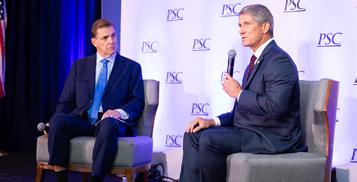
Armchair Discussion: Aligning Energy Demand and Investment for the Future Defense Industrial Base with John Gastright, Senior Vice President for Government Affairs of Amentum (moderator) and Rep. Scott Franklin, U.S. Representative for Florida’s 18th Congressional District
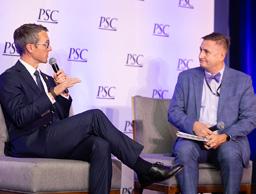
discussion with Congressman James Walkinshaw, U.S. Representative for Virginia’s 11th Congressional District and Jim Kainz, Senior Vice President, Growth of Applied Research Associates, Inc. (moderator)


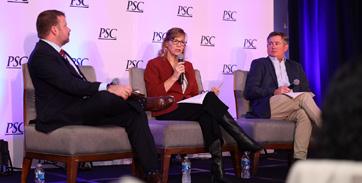
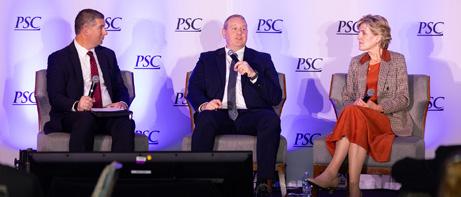
Armchair Discussion: Unlocking and Implementing Commercial Solutions Across the Defense Ecosystem featuring Steve Harris, Vice President, Defense and Intelligence of PSC (moderator), Andrew Hunter, Founder and Principal of Pax Per Consortia Strategies and Megan Dake, Vice President, Corporate Contracts and Estimating of Lockheed Martin Corporation
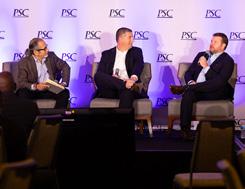
Impacts of the Funding Lapse on the Defense Industrial Base Panel featuring Tom Temin, Broadcaster, Writer, Editor and Consultant (moderator), Steve Harris, Vice President, Defense and Intelligence of PSC and Tim Brennan, Vice President, Technology Policy and Government Relations of PSC

The PSC Foundation welcomed several hundred attendees to the 2025 Vision Federal Market Forecast Conference for the release of 20+ Vision Federal Market Reports. The Honorable Michael Cadenazzi, Assistant Secretary of War for Industrial Base Policy, provided the opening keynote address, and more than 40 Vision research leads presented their findings.


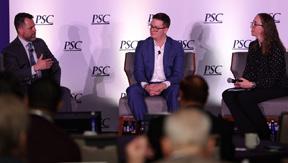










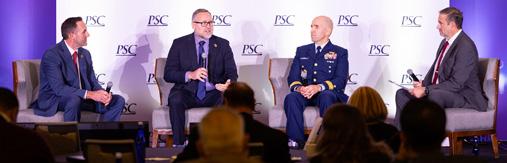






Scan the QR code or visit vision.pscouncil.org to view more pictures and recap of the conference.
The Professional Services Council (PSC) elected its 2026 Board Officers, along with 21 Board members (16 renewed, five new) for a three-year term and 17 Executive Committee members (16 renewed, one new) for a one-year term during its Board of Directors meeting on December 11, 2025. These changes took effect on January 1, 2026.
2026 Board Officers:
• Chair: John Heller, CEO, Amentum
• Vice-Chair: Bruce Caswell, President and CEO, Maximus
• Secretary: Threase Baker, President, ABBTECH Professional Resources
2026 Executive Committee Members:
* newly elected for 2026
• Threase Baker, President, ABBTECH Professional Resources
• Thomas Bell, CEO, Leidos
• Lynn Ann Casey, CEO, Arc Aspicio
• Bruce Caswell, President and CEO, Maximus
• Janet Clement, CEO, Jefferson Solutions Group
• Babs Doherty, President and CEO, Solerity
• Jennifer Felix, President and CEO, ASRC Federal*
• Andy Green, President, HII Mission Technologies
• John Heller, CEO, Amentum
• Stephanie Mango, President and CEO, CGI Federal
• John Mengucci, President and CEO, CACI
• Zach Parker, President, CEO and Board Chair, DLH Corp.
• PV Puvvada, CEO, NetImpact Strategies
• LaJuanna Russell, President and CEO, Business Management Associates, Inc.
• Julian Setian, President and CEO, SOSi
• Carey Smith, Chairwoman, President and CEO, Parsons
• Tina Wilson, CEO, T47 International, Inc.
2026 Board Members:
* newly elected for 2026
• Greg Blue, CEO, CSA Global LLC
• Stephen Deitz, President, Federal Civilian Sector, ManTech
• Angela Drummond, Founder and Chief Executive Officer, SiloSmashers
• Rob Dwyer, Principal, Federal Advisory – Technology Leader, KPMG LLP
• Kathleen Flanagan, President and CEO, Abt Global
• Dan Ford, Chair and CEO, Capgemini Government Solutions
• Craig Halliday, CEO, Unanet
• Garron Hansen, Senior Vice President, Growth Division, Chemonics International*
• John Hassoun, President and CEO, VTG
• Swami Iyer, CEO, Cook Inlet Region, Inc. (CIRI)*
• Jim Kainz, Senior Vice President, Growth, Applied Research Associates*
• Michael LaRouche, CEO, Serco*
• Ali Manouchehri, Co-Founder and CEO, MetroStar
• LaJuanna Russell, President and CEO, Business Management Associates, Inc.
• Julian Setian, President and CEO, SOSi
• Carey Smith, Chairwoman, President and CEO, Parsons
• Leslie Steele, CEO, InterImage, Inc.
• Rocky Thurston, CEO, DMI*
• Jennifer Walcott, Principal, Leader of U.S. Government and Public Services Industry Practice, Deloitte
• Helle Weeke, Senior Vice President and General Counsel, DAI
• Jennifer Welham, Senior Vice President, Health, People, and Human Services, ICF
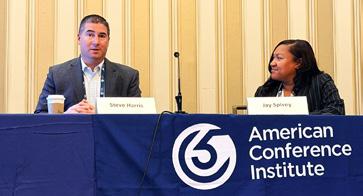
On Oct. 5, 2025, PSC VP of Defense and Intelligence Steve Harris and Parsons SVP of Contracts Jai Spivey explored what’s next in acquisition reform at the American Conference Institute’s Government Contracting Forum.
On Oct. 18, 2025, PSC VP of Defense and Intelligence Steve Harris attended U. S. Department of Homeland Security’s inaugural meeting of the Icebreaker Collaboration Effort (ICE) Pact Principals to sign a trilateral Joint Statement of Intent with Finland and Canada on arctic security, icebreaker production, and the maritime industrial base.

On Oct. 24, 2025, PSC VP of Civilian Agencies, Krista Sweet, discussed how the current administration is reshaping DHS priorities and what that means for upcoming contracts at Washington Technology’s Power Breakfast - Doing Business with DHS. Additional participants: Nick Wakeman, Aaron Roth, and Austin Gould.
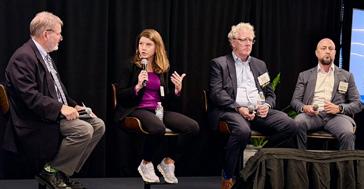
On Oct. 30, 2025, Representative James Walkinshaw (VA’s 11th Congressional District) spoke at PSC’s press briefing to highlight the shutdown’s regional impact.

On Nov. 5, 2025, PSC and the Northern Virginia Chamber of Commerce (NVC) hosted the 23rd annual Greater Washington Government Contractor Awards™ (GovCon Awards), the premier awards event for the Washington area government contracting community. The celebration honored the outstanding achievements, innovation, and leadership of companies and executives shaping the federal marketplace.






On Nov. 11, 2025, PSC attended the Secretary of War’s speech on the “Arsenal of Freedom” at the National War College at Fort McNair, Washington, D.C. PSC looks forward to working with the Pentagon to transform the warfighting acquisition system.





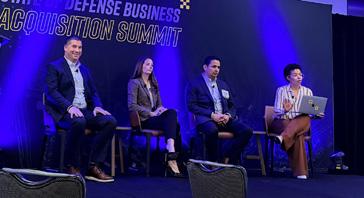
On Nov. 18, 2025, PSC VP of Defense and Intelligence Steve Harris attended the Defense One State of Defense Business Acquisition Summit, where he was a panelist for the Rebuilding Strength: The Future of the Defense Industrial Base session. He highlighted the need for transparency, competition, and shorter timelines in acquisition reform.
Additional speakers included: Margaret Boatner, Aerospace Industries Association VP of National Security Policy, and Christian Gutierrez, Shield AI VP of Hivemind Engineering.
On Nov. 20, 2025, PSC leadership and members of the PSC Executive Committee hosted the Hon. Michael Rigas, Acting Administrator of GSA and U.S. Dep. Secretary of State for Management and Resources, to discuss Dept. of State and GSA priorities and how federal contractors can best serve the American people through cutting-edge solutions to the myriad challenges confronting the U.S. at home and abroad. Included: James Carroll, PSC CEO; Stephanie Sanok Kostro, PSC President; Basil Parker, Chief of Staff, D-MR at the U.S. Department of State, and John Heller, CEO of Amentum.
On Dec. 9, 2025, PSC CEO James Carroll met with Rep. James Comer, Chairman of the House Oversight Committee, to discuss acquisition reform and reauthorizing the Technology Modernization fund.


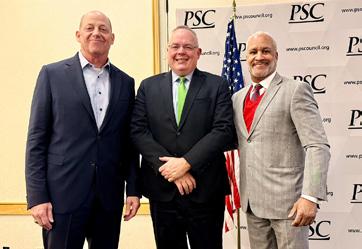
On Dec. 11, 2025, PSC elected new 2026 board officers, in addition to one new executive committee member and five new board members. Amentum CEO John Heller now serves as PSC’s new board chair, effective January 1, 2026. Also pictured: PSC CEO Jim Carroll and DLH Corp. President, CEO, and Board Director Zachary Parker.
Information as of 1/1/2026

Full-Year Continuing Appropriations and Extensions Act, 2025
Introduced 3/10/2025
Sponsor: Rep. Cole (R-OK-4)
Cosponsor: N/A
Summary: Full year continuing resolution for FY2025
Status: Became Law 3/15/2025
One Big Beautiful Bill Act
Introduced: May 20, 2025
Sponsor: Rep. Jodey Arrington (TX-19)
Cosponsors: N/A
Summary: It is known as a reconciliation bill and includes legislation submitted by 11 House committees pursuant to provisions in the FY2025 congressional budget resolution (H Con. Res. 14) that directed the committees to submit legislation to the House Budget Committee that will increase or decrease the deficit and increase the statutory debt limit by specified amounts. (Reconciliation bills are considered by Congress using expedited legislative procedures that prevent a filibuster and restrict amendments in the Senate.)
Status: Became Law 7/4/2025
SPEED Act, Streamlining Program Efficiency & Expedited Defense
Introduced: June 9, 2025
Sponsor(s): Rep. Rogers (AL-3)
Cosponsor: Rep. Smith (WA-9)
Summary: To authorize appropriations for fiscal year 2026 for military activities of the Department of Defense, for military construction, and for defense activities of the Department of Energy, to prescribe military personnel strengths for such fiscal year, and for other purposes. SPEED is the base text for NDAA which handles acquisition reform across the Department of Defense
Status: Became Law on 12/18/2025 (PL No: 119-60)
National Defense Authorization Act for Fiscal Year 2026
Introduced: July 15, 2025
Sponsor(s): Sen. Wicker (MS)
Cosponsor: N/A
Summary: This bill sets forth policies and authorities for FY2026 for Department of Defense (DOD) programs and activities, military construction, and the national security programs of the Department of Energy (DOE). It also authorizes the Defense Nuclear Facilities Safety Board for FY2026. The bill authorizes appropriations but it does not provide budget authority, which is provided by appropriations legislation.
Status: Became Law on 12/18/2025 (PL No: 119-60)
Information as of 1/1/2026
SPUR Act, Small Business Procurement and Utilization Reform Act of 2025
Introduced: January 28, 2025
Sponsor: Rep. Stauber (R-MN-8)
Cosponsor: Rep. Cisneros (D-CA-31), Perez (D-WA-3), Goodlander (D-NH-2), Meuser (R-PA-9), LaLota (R-NY-1)
Summary: Requires federal agencies to include on the annual scorecard for small business contracting the number of small businesses that receive a prime contract for the first time and are owned and controlled by service-disabled veterans, qualified HUBZone small business concerns, small business concerns owned and controlled by socially and economically disadvantaged individuals, or small business concerns owned and controlled by women.
Status: Passed House on February 24th, 2025; referred in the Senate to the Committee on Small Business and Entrepreneurship
Safe and Smart Federal Purchasing Act
Introduced: January 31, 2025
Sponsor: Rep. Donalds (R-FL-19)
Cosponsor: Rep. Connolly (D-VA-11)
Summary: This bill requires the Office of Management and Budget (OMB) to evaluate the procurement activities of federal agencies to determine whether provisions of the Federal Acquisition Regulation related to the lowest price technically acceptable source selection process have created any national security risk and report to Congress.
Status: Passed House 3/4/2025
Decoupling from Foreign Adversarial Battery Dependence Act
Introduced: January 31, 2025
Sponsor: Rep. Gimenez (R-FL-28)
Cosponsor: Rep. Green (R-TN-7), Rep. Moolenaar (R-MI-2), Rep. Pfluger (R-TX-11), Rep. Meuser (R-PA-9)
Summary: Bill prohibits DHS from using funds to procure a battery produced by certain entities, particularly six specific companies owned and operated in China. Prohibition begins on October 1, 2027.
Status: Passed House 3/11/2025
PATHS Act
Introduced: January 31, 2025
Sponsor: Rep. Guest (R-MS-3)
Cosponsor: Rep. Thanedar (D-MI-13)
Summary: This bill extends through FY2028 the authority of the Department of Homeland Security (DHS) to use other transactions
(OT) to carry out research and prototype projects when the use of contracts, grants, and cooperative agreements is not feasible or appropriate. (OTs, in contrast to traditional procurement contracts, are exempt from many federal procurement laws and regulations.) DHS must notify Congress within 72 hours of using or extending this authority for research and development projects related to artificial intelligence technology and must offer to brief Congress on the rationale for such a decision.
The bill also lowers from $4 million to $1 million the minimum value of contract awards that DHS must publicly report on its website.
Status: Passed House 3/12/2025
Plain Language in Contracting Act
Introduced: January 28, 2025
Sponsor: Rep. LaLota (R-NY-1)
Cosponsor: Rep. Tran (D-CA-45), Rep. Thanedar (D-MI-13), Rep Goodlander (D-NH-2)
Summary: Referred in the Senate to the Committee on Small Business and Entrepreneurship
Status: Passed House 6/3/2025
Coast Guard Authorization Act of 2025
Introduced: February 11, 2025
Sponsor: Sen. Cruz (R-TX)
Cosponsor: Sen. Cantwell (D-WA), Sen. Sullivan (R-AK), Sen. Baldwin (D-WI)
Summary:To authorize appropriations for the Coast Guard and for other purposes.
Status: Passed Senate 3/10/2025
ARCA Act of 2025, Acquisition Reform and Cost Assessment
Introduced: May 9, 2025
Sponsor(s): Sen. Moran (KS)
Cosponsor: N/A
Summary: To reorganize the acquisition structure of the Department of Veterans Affairs and to establish the Director of Cost Assessment and Program Evaluation in the Department.
Status: Passed Senate 12/11/2025
Information as of 1/1/2026
Allowing Contractors to Choose Employees for Select Skills Act or “ACCESS Act”
Introduced January 13, 2025
Sponsor: Sen. Lankford (R-OK)
Cosponsor: Sen Peters (D-MI)
Summary: Prohibits solicitations from minimum education requirements for proposed contractor personnel.
Status: Referred to Committee on Homeland Security and Governmental Affairs
Federal Subaward Reporting System Modernization and Expansion Act
Introduced January 16, 2025
Sponsor: Rep. Langworthy (R-NY-23)
Cosponsor: Reps Houlahan (D-PA-6), Lawler (R-NY-17), Davis (D-NC-1), Craig (D-MN-2), Guest (R-MS-3), Hageman (R-WY)
Summary: 180 days after enactment inspector general of GSA shall submit a report containing a review of the FFATA subaward reporting system, with recommendations for improvement.
Status: Referred to House Committee on Oversight and Government Reform
Domestic SUPPLY Act of 2025
Introduced: January 23, 2025
Sponsor: Rep. Morgan (R-VA-9)
Cosponsor: N/A
Summary: HHS Secretary in collaboration with Assistant Secretary for Preparedness and Response and CDC shall establish a program of entering into partnerships with eligible domestic manufacturers to ensure the availability of qualified personal protect equipment for preparing for and respond to public health emergencies.
Status: Referred to Committee on Energy and Commerce and Committee on Oversight and Government Reform
Helping Small Businesses THRIVE Act
Introduced: January 23, 2025
Sponsor: Sen. Shaheen (D-NH)
Cosponsor: Sen. Cassidy (R-LA)
Summary: SBA administrator shall establish a pilot program to assist eligible entities in limiting the risk from rising input costs from commodities.
Status: Referred to Committee on Small Business and Entrepreneurship
Fast-Track Logistics for Acquiring Supplies in a Hurry Act of 2025 or “FLASH Act of 2025”
Introduced: January 28, 2025
Sponsor: Rep. Garcia (D-CA-42)
Cosponsor: N/A
Summary: Amend the Public Health Service Act to authorize BARDA to award follow-on production contracts or transaction, procure supplies for experimental or test purposes, and acquire innovative commercial products and commercial services.
Status: Referred to House Committee on Energy and Commerce
Ensuring Accountability and Dignity in Federal Contracting
Introduced: February 5, 2025
Sponsor: Rep Valadao (CA-22)
Cosponsors: Rep. Turner (OH-10), Rep. Krishnamoorthi (IL-8), Rep. Magaziner (RI-02)
Summary: To provide for modifications to ending trafficking in government contracting and for other purposes.
Status: Pending committee review by House Committee on Foreign Affairs
SBIR/STTR Reauthorization Act of 2025
Introduced: May 1, 2025
Sponsor: Sen. Markey (MA)
Cosponsor(s): N/A
Summary: To amend the Small Business Act to reauthorize and modify the Small Business Innovation Research and Small Business Technology Transfer Research programs.
Status: Referred to Committee on Small Business and Entrepreneurship
SBIR/STTR Reauthorization Act of 2025
Introduced: May 1, 2025
Sponsor: Rep. Velazquez (NY-07)
Cosponsor(s): N/A
Summary: To amend the Small Business Act to reauthorize and modify the Small Business Innovation Research and Small Business Technology Transfer Research programs.
Status: Referred to Committee on Small Business and Committee on Science, Space, and Technology
Information as of 1/1/2026
Strengthening Agency Management and Oversight of Software Assets Act
Introduced: May 9, 2025
Sponsor(s): Sen. Peters (MI)
Cosponsor: Sen. Cassidy (LA), Sen. Ernst (IA), Sen. Tillis (NC), Sen. Lankford (OK), Sen. Wyden (OR)
Summary: To improve the visibility, accountability, and oversight of agency software asset management practices.
Status:Referred to Committee on Homeland Security and Governmental Affairs
Protecting AI and Cloud Competition in Defense Act of 2025
Introduced: May 15, 2025
Sponsor: Sen. Warren (MA)
Cosponsor(s): Sen. Schmitt (MO)
Summary: To provide for certain requirements relating to cloud, data infrastructure, and foundation model procurement.
Status: Referred to Senate Committee on Armed Services
Protecting AI and Cloud Competition in Defense Act of 2025
Introduced: May 15, 2025
Sponsor: Rep. Fallon (TX-4)
Cosponsor(s): Rep. Jacobs (CA-51), Rep. Deluzio (PA-17)
Summary: To provide for certain requirements relating to cloud, data infrastructure, and foundation model procurement.
Status: Referred to House Committee on Armed Services
Federal Contractor Cybersecurity Vulnerability Reduction Act of 2025
Introduced: May 22, 2025
Sponsor: Sen. Warner (VA)
Cosponsor(s): Sen. Lankford (OK)
Summary: To require Federal contractors to implement a vulnerability disclosure policy consistent with NIST guidelines.
Status: Referred to Committee on Homeland Security and Governmental Affairs.
Defense Technology Hubs Act of 2025
Introduced: June 5, 2025
Sponsor(s): Sen. Schmitt (MO)
Cosponsor: Sen. Hickenlooper (CO)
Summary: To enhance national security and technological superiority by requiring the Secretary of Defense to establish a network of regional defense technology hubs to foster innovation, collaboration, and rapid development of defense-related technologies to attract talent from across the United States.
Status: Awaiting committee markup
FIT Procurement Act
Introduced: June 25, 2025
Sponsor: Rep. Burlison (MO-7)
Cosponsor(s): Rep. Subramanyam (VA-10), Rep. Luna (FL-13), Rep. Lynch (MA-8)
Summary: Bill provides improvements to IT acquisition in the Federal government.
Status: Referred to Committee on Oversight and Government Reform and Committee on Small Business Updated by Tim Brennan, Vice President of Technology Policy and Government Relations, PSC







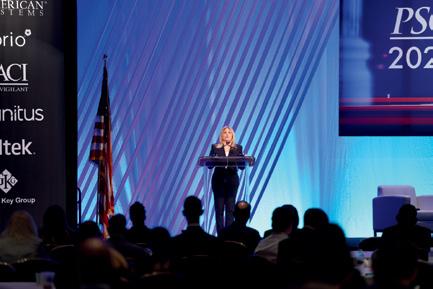




PSC offers a variety of high-visibility opportunities for your company throughout the year, including event sponsorships, advertising, and year-long partnerships.
Member Meetings Service Contractor Magazine
The PSC Daily e-Newsletter Social Media Council Spotlight e-Newsletters specific to Acquisition and Business Policy, Civilian Agencies, Defense and Intelligence Agencies, International Development & Technology

PSC offers sponsorships for key events at a variety of levels so they’re accessible for small, mid-sized, and large companies:

Advertising options include: View all options at: pscouncil.org/sponsorship Interested in a custom package that blends sponsorships and advertising? Bundle your investment to get maximum visibility and value!










4401 Wilson Blvd., Suite 1110
Arlington, VA 22203




Exclusively for PSC Members


Leadership Summit
Feb. 1-2, 2026 | Washington, D.C. summit.pscouncil.org

Law Enforcement Conference
Feb. 11, 2026 | Arlington, VA & Virtual lawenforcement.pscouncil.org

Annual Conference
May 3-5, 2026 | The Greenbrier, WV annual.pscouncil.org
FedHealth Conference
May 21, 2026 | N. Bethesda, MD & Virtual fedhealth.pscouncil.org



Federal Acquisition Conference
June 25, 2026 | Arlington, VA & Virtual acquisition.pscouncil.org

Defense Conference
Oct. 30, 2026 | Arlington, VA & Virtual defense.pscouncil.org


Vision Federal Market Forecast Conference
Dec. 8-9, 2026 | Arlington, VA & Virtual vision.pscouncil.org
PSC on the Hill
TBD | Washington, D.C. hill.pscouncil.org


