The Society of Professional Accountants of Canada (RPA Canada). All rights reserved. This publication and all associated content, including text, images, graphics, trademarks, and marketing materials, are the intellectual property of the RPA Canada. No part of this publication may be reproduced, distributed, or used for commercial, promotional, or advertising purposes without prior written permission of RPA Canada. Advertising content and comments, views and opinions expressed herein are those of contributors and do not necessarily constitute endorsement by RPA Canada.
FEATURES
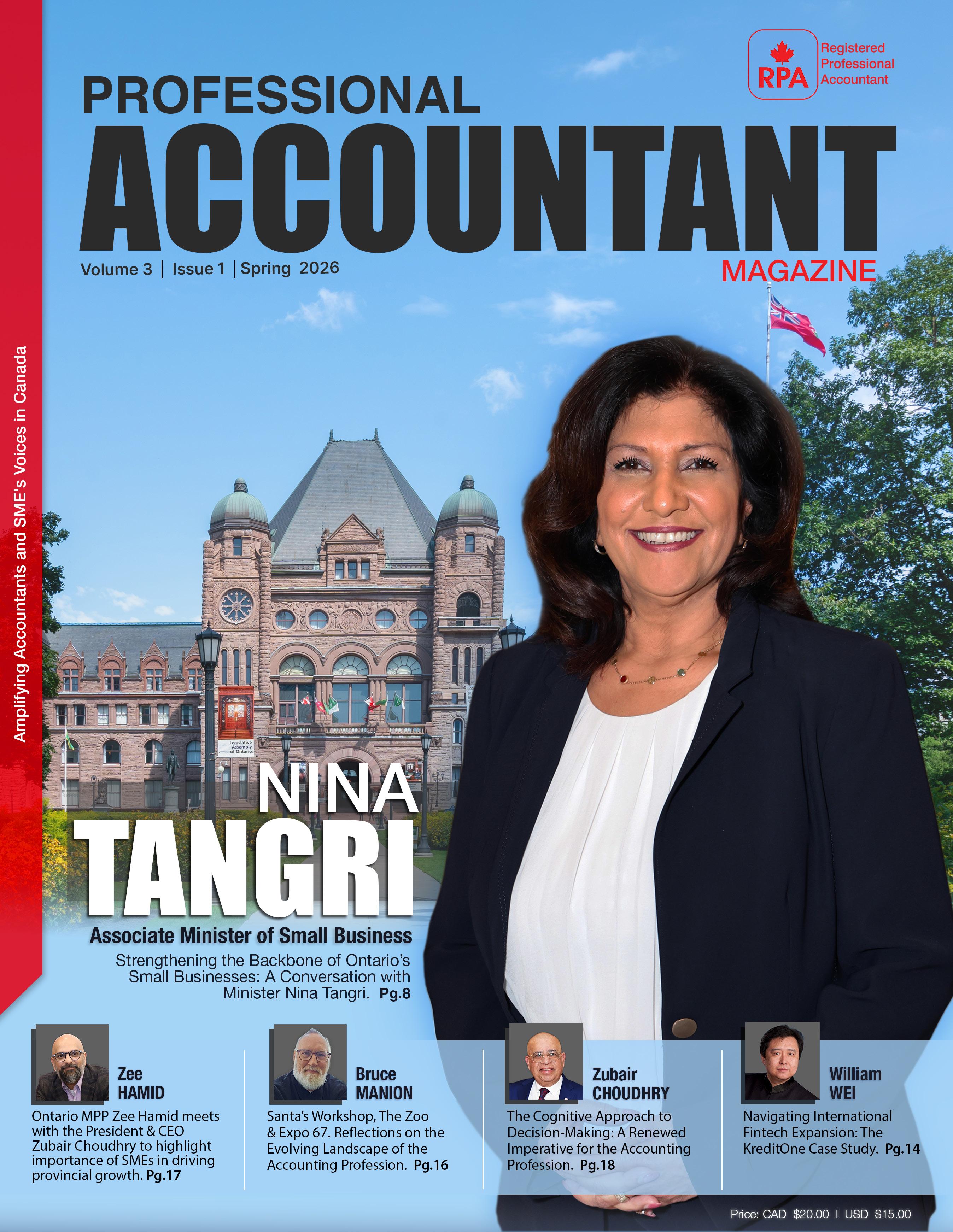
Strengthening the Backbone of Ontario’s Small Businesses: A Conversation with Minister Nina Tangri
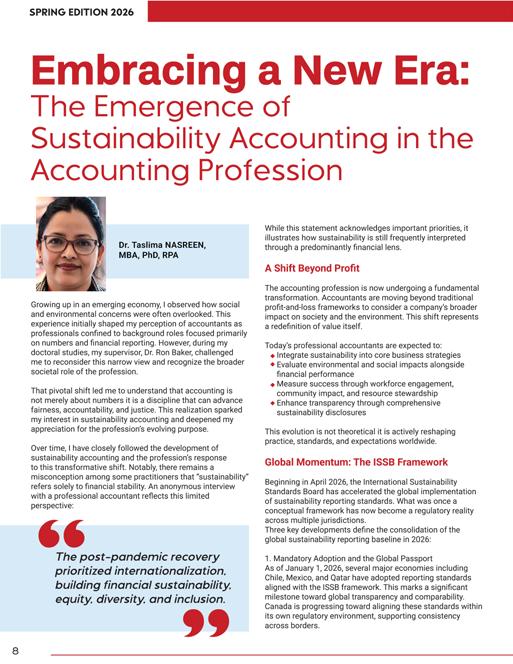
Embracing a New Era: The Emergence of Sustainability Accounting in the Accounting Profession By Taslima Nasreen, MBA, PhD, RPA
Navigating International Fintech Expansion: The KreditOne Case Study By William WEI, PhD, MBA, MA
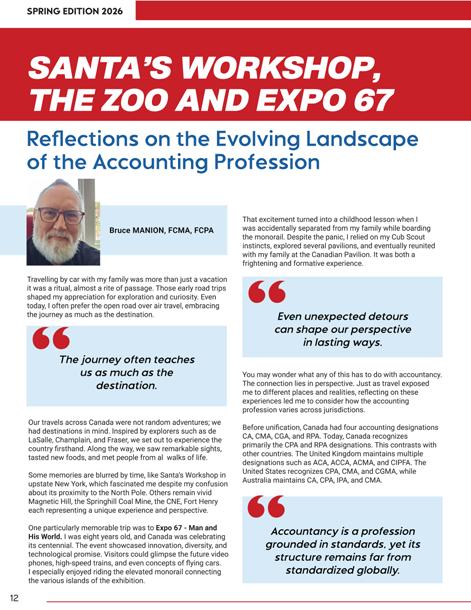
Santa’s Workshop, The Zoo And Expo 67: Reflections on the Evolving Landscape of the Accounting Profession By Bruce Manion, FCMA, FCPA
The Cognitive Approach to Decision-Making: A Renewed Imperative for the Accounting Profession By Zubair Choudhry, President & CEO, RPA Canada
12
08 12 14 16 18
14 16 18 08
TABLE OF CONTENTS
Professional Accountant Magazine – Spring 2026
INSIDE THIS ISSUE
From The Publisher’s Desk
By Zubair CHOUDHRY, RPA, APA
Editorial: Two Pathways, One Profession: What Kentucky’s CPA Reform Signals For Canada
Audit Quality, Technology and Trust: Insights from CPAB’s 2025 Annual Report By Umar CHOUDHRY, CPA, LPA, RPA
RPA Canada Celebrates International Women’s Day and Launches the 8th RPA Women Entrepreneur Awards Nominations
PRO ACHIEVE 2026: A Fast-Track Pathway to the RPA Designation
From Oil Futures to Everyday Prices A Smarter Way to Manage Inflation
By
Joseph MOHANTHAS,
RPA, APA, CMA (ANZ)
IFRS 18: Reshaping Financial Statement Presentation, Enhancing Comparability and Transparency in Financial Reporting By Deepak GUPTA, RPA, FCA (India)
Modernizing Compilation Engagements in Canada: Standards, Competition and the Public Interest By James GREEN, RPA
Looking Ahead: The Summer Edition
Strengthening the Accounting Profession for Greater Accountability, Clarity, and Competitiveness while advancing accessibility, affordability, and the protection of the public interest.
Professional Accountant Magazine connects accounting professionals with Canada’s small and medium-sized businesses, sharing stories that strengthen the profession and fuel entrepreneurship.
Be part of our Summer Edition, launching this August. We invite writers, contributors, advertisers, success stories, technology companies, and business leaders to share their voice and impact.
Tel: +1 416-350-8145 Submission Deadline for the Summer
Join the movement. Be featured. Shape the future. www.professionalaccountant.org
Email: I nfo@professionalaccountant.org
LLM Business Solutions: Trusted Support for Small Business Success
For small business owners, having the right accountant can make all the difference. Beyond numbers and reports, they need someone dependable, responsive, and committed to their success. That is the value Lana McDole, RPA, brings through LLM Business Solutions in Simcoe, Ontario.
Working closely with owner-operators and small to mid-sized businesses, Lana provides practical accounting and management support tailored to real business needs. Clients deal directly with Lana, without unnecessary layers, which means advice is timely, personal, and grounded in the day-to-day realities of running a business.
For small businesses, choosing an accountant with both a professional designation and an accounting practitioner certificate offers added confidence. It reflects a commitment to professional standards, accountability, and ethical service. Registered Professional Accountants (RPAs) provide reliable and dependable support that small business owners can trust.
Backed by a capable team, LLM Business Solutions offers tax preparation, compilation engagements, bookkeeping, budgeting, forecasting, and planning support designed to strengthen operations and protect profitability.
In today’s competitive environment, businesses need more than accounting they need guidance they can count on. LLM Business Solutions delivers that confidence with professionalism, care, and practical insight for long-term business success.
IFROM THE PUBLISHER’S DESK
am pleased to successfully publish the third issue of Professional Accountant Magazine, which continues to gain momentum due to its clear vision: amplifying the accounting profession and elevating the small businesses that drive Canada’s economy.
I encourage all professional accountants to get involved by contributing your insights, opinions, and articles, pieces that are engaging, informative, and thought-provoking. A forward-looking approach is essential as we work together to strengthen the Canadian accounting profession and position it among the best in the world.
As we welcome spring, I extend my sincere congratulations to practitioners across the country for completing another demanding and successful tax season. This period consistently tests the resilience and judgment of accountants who support millions of Canadians and small businesses. Your dedication often under intense pressure continues to uphold the trust placed in our profession.
This year marks a significant milestone for RPA Canada with the launch of PRO ACHIEVE 2026, a fast-track pathway designed for non-designated practitioners seeking to earn the RPA designation.
I am pleased to share that the four-day intensive and interactive PRO ACHIEVE 2026 program is scheduled for June 3-6, hosted at the University of Toronto Mississauga Campus, in the Maanjiwe Nendamowinan Building.
Participants will learn from highly respected and deeply knowledgeable professionals who bring both academic insight and real-world experience. This program reflects our commitment to accessible, competency-based advancement and to strengthening Canada’s accounting workforce.
As Publisher and as President & CEO of RPA Canada, I have made it a priority to intensify our advocacy and outreach to policymakers.
Our policy resolution passed at our 47th AGM calls for greater clarity, accountability, and transparency within the accounting profession, an urgent need at a time when we face declining enrolment in post-secondary accounting programs, limited alternative pathways in specialized practice areas, and the accelerating impact of emerging technologies.
The profession is being reshaped by data analytics, cloud accounting, cybersecurity, and artificial intelligence. These technologies offer tremendous opportunity, but they also require practitioners to continuously upskill. Meeting this demand will require coordinated action from governments, post-secondary institutions, accounting bodies, and business leaders.
Small businesses, the backbone of the Canadian economy, depend on accounting and related services that are affordable, accessible, and reliable. Ensuring that these services remain strong requires a profession that is adaptable, well-supported, and open to diverse pathways of entry and advancement.
As we look ahead, I am encouraged by the momentum we are building together. With collaboration, innovation, and a shared commitment to excellence, we can shape a profession that is resilient, future-ready, and globally competitive.
Thank you for your readership, engagement, and dedication to advancing our profession.
- Zubair Choudhry, Publisher
TWO PATHWAYS, ONE PROFESSION:
WHAT KENTUCKY’S CPA REFORM SIGNALS FOR CANADA
As U.S. states modernize licensure to widen the talent pipeline, Canada must confront its own single-pathway bottleneck.
When the Commonwealth of Kentucky passed House Bill 45 earlier this month, it did more than update CPA licensure rules. It signaled a profound shift in how the accounting profession understands competence, accessibility, and the future of its workforce. Beginning July 16, 2026, CPA candidates in Kentucky will be able to qualify through two legitimate pathways:
The traditional 150-credit-hour model, or a bachelor’s degree plus two years of CPA-verified experience.
By expanding access while maintaining high standards, Kentucky is strengthening its CPA pipeline.
- Darlene Zibart, KyCPA
Both routes still require passing the CPA exam and meeting the standards of the Kentucky Board of Accountancy. Nothing about the rigor has changed - only the recognition that competence can be developed through more than one educational configuration.
Kentucky is not an outlier. Maryland, Wisconsin, and numerous other U.S. jurisdictions are modernizing their licensure frameworks to address declining enrollment, demographic shifts, and the urgent need for a more diverse, sustainable talent pipeline.
The Canadian Contrast
Canada, by comparison, remains anchored to a single, consolidated CPA pathway - academically intensive, costly, and increasingly misaligned with the needs of the smallbusiness economy. Since the merger of CA, CMA, and CGA, the profession has operated under a one-size-fits-all model that prioritizes public-practice assurance competencies, even though most Canadian accountants serve SMEs, not audit clients
This rigidity has consequences: Fewer students entering accounting programs
A shrinking pipeline of practitioners for small businesses Internationally trained professionals facing unnecessary barriers
Experienced bookkeepers and controllers unable to advance despite years of practical competence
In a country where SMEs form the backbone of the economy, the absence of multiple, credible pathways is more than a structural flaw - it is a public-interest issue.
Canada’s accounting profession is not suffering from a shortage of talent - it is suffering from a shortage of pathways.
Where the RPA Fits
The Registered Professional Accountant (RPA) designation already embodies what Kentucky has now legislated: a competency-based, experience-driven, accessible pathway that maintains standards while broadening participation.
RPAs serve the very market segment most underserved by the current regulatory environment - small and medium-sized enterprises. They bring cognitive judgment, ethics, taxation expertise, and practical financial management skills to the businesses that drive Canada’s economic engine.
Kentucky’s reform validates the principles RPA Canada has championed for years: multiple pathways strengthen the profession, not weaken it.
A Call for Canadian Modernization
If the United States - long the global benchmark for CPA licensure - is embracing flexibility, Canada must ask itself a difficult but necessary question:
Why does Canada still rely on a single, restrictive pathway when the world is moving toward accessibility with accountability?
Modernization is not about lowering standards. It is about removing barriers that do not enhance competence, expanding opportunity, and ensuring the profession remains vibrant, diverse, and future-ready.
Canada’s accounting future will be strongest when it recognizes what Kentucky has affirmed: high standards, multiple pathways, one profession
Cutting Barriers, Strengthening SMEs: RPA Canada
Meets with MPP Joseph Racinsky
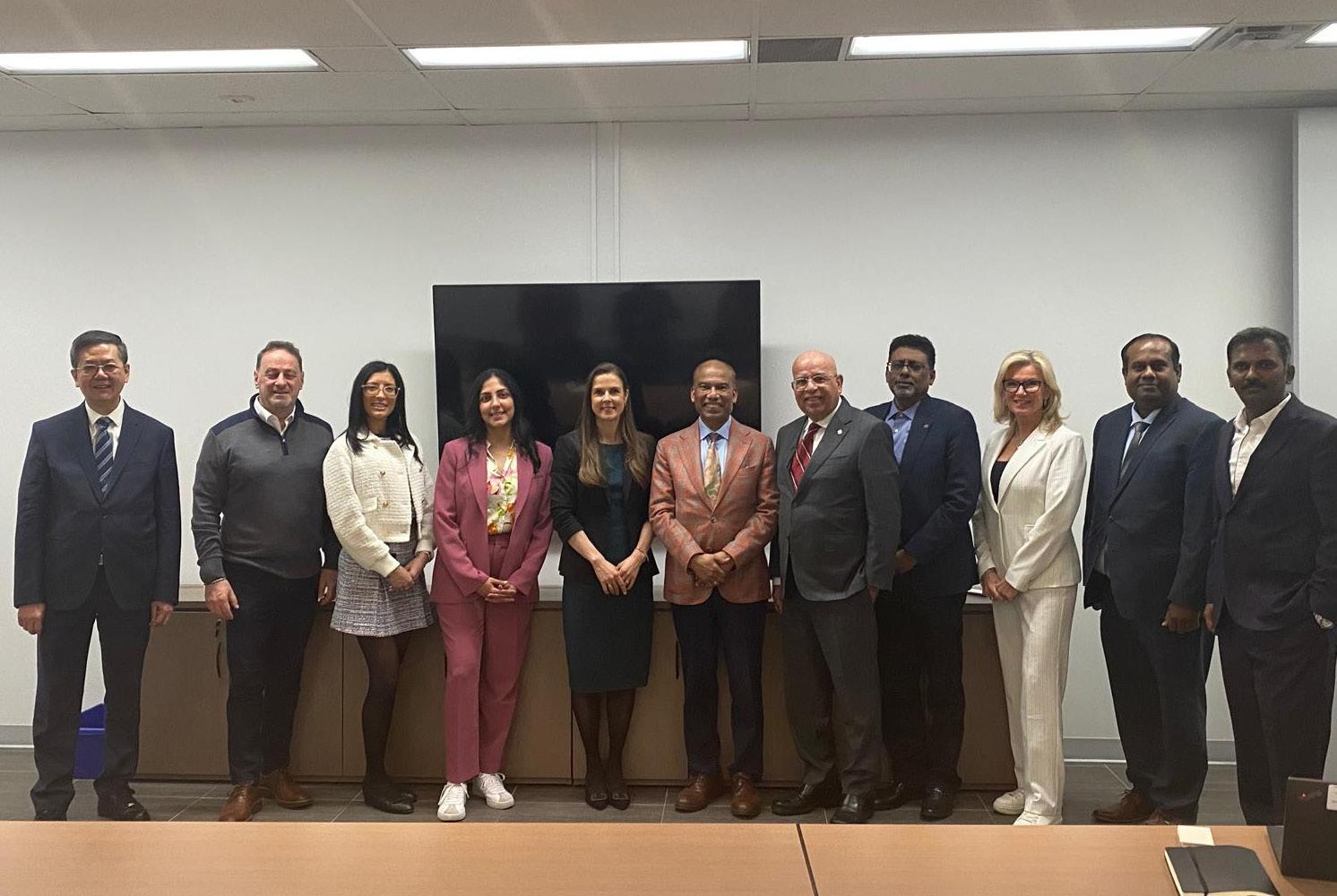
Zubair Choudhry, President & CEO of RPA Canada, met with Joseph Racinsky, MPP for Wellington-Halton Hills and Parliamentary Assistant to the Minister of Red Tape Reduction, to discuss strengthening Ontario’s small businesses and the future of the accounting profession.
With tax season approaching, both leaders underscored the need for affordable, accessible, and competency-driven accounting services to protect the public interest. MPP Racinsky recognized the essential role Registered Professional Accountants play in delivering practical, compliance-focused services that help SMEs operate efficiently and meet regulatory requirements.
Mr. Choudhry also highlighted how the RPA designation fills a critical gap in Canada’s professional landscape. Following the consolidation of CA, CMA, and CGA into the CPA designation, many students and graduates have sought an alternative pathway one that emphasizes practical training and SME-focused competencies.
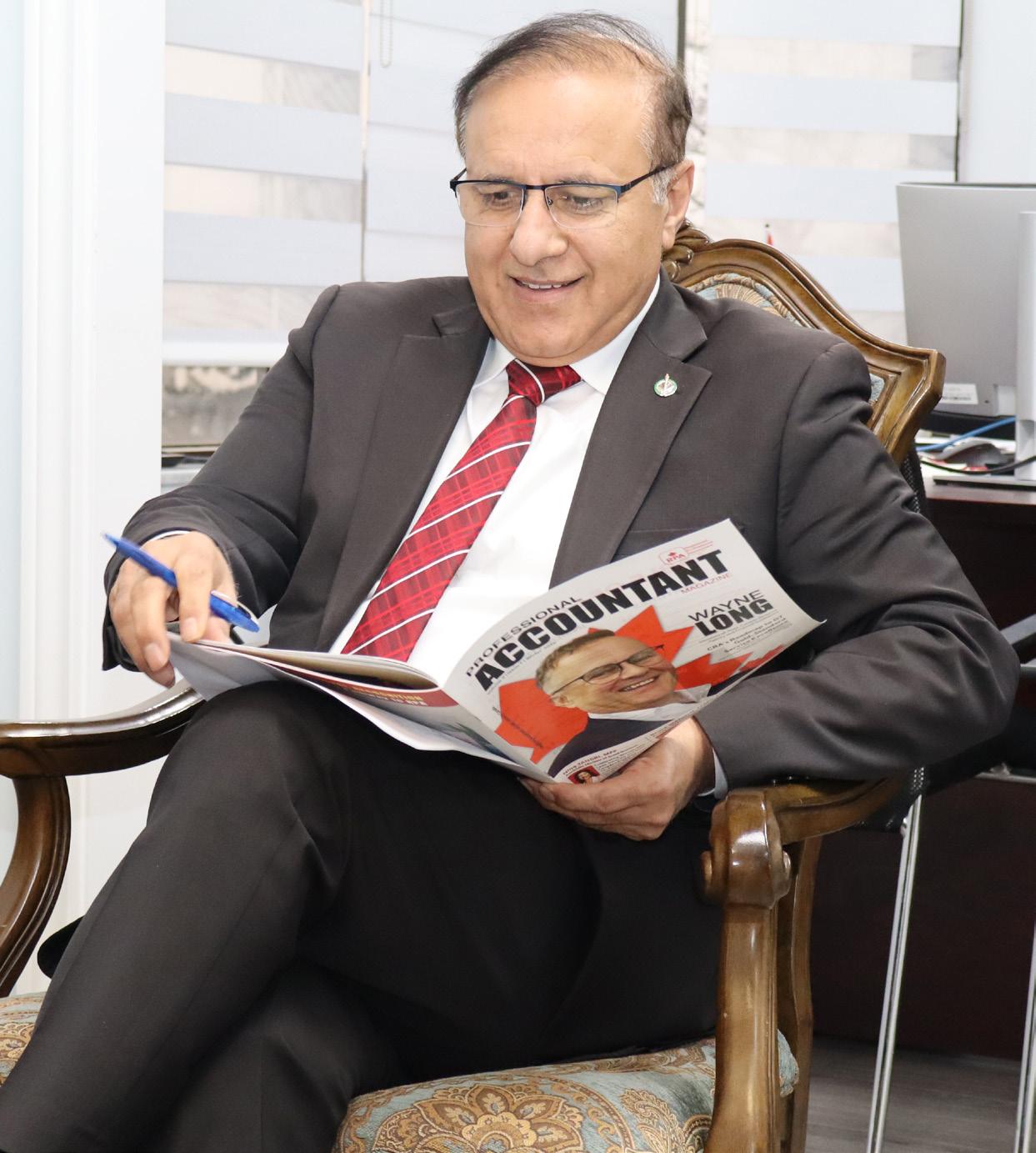
RPA Canada reaffirmed its commitment to amplifying the voices of accountants and small businesses across the province. Mr. Choudhry presented MPP Racinsky with the inaugural issue of the Professional Accountant quarterly magazine, which supports this mission through national dialogue and sector advocacy.
Strengthening the Backbone of Ontario’s Small Businesses
A Conversation with Minister Nina Tangri
Only One in Ten Businesses Has a Succession Plan: We Can’t Afford to Lose Great Companies Simply
Because Owners Retire
Professional Accountant Magazine Editor
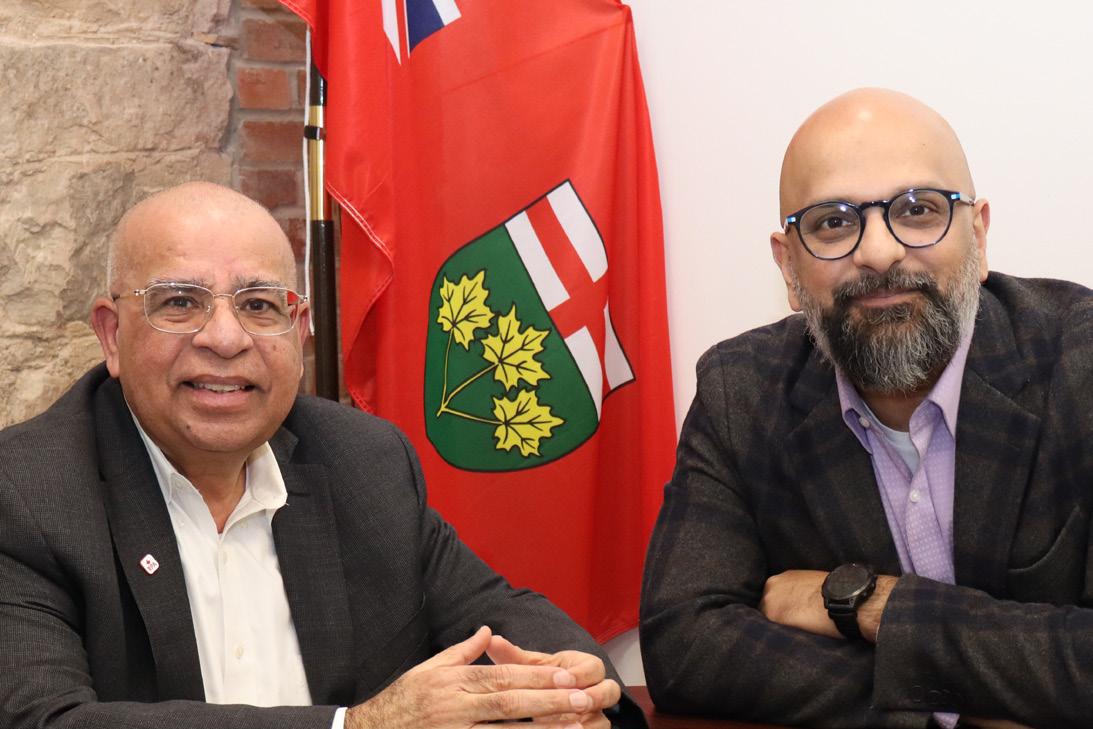
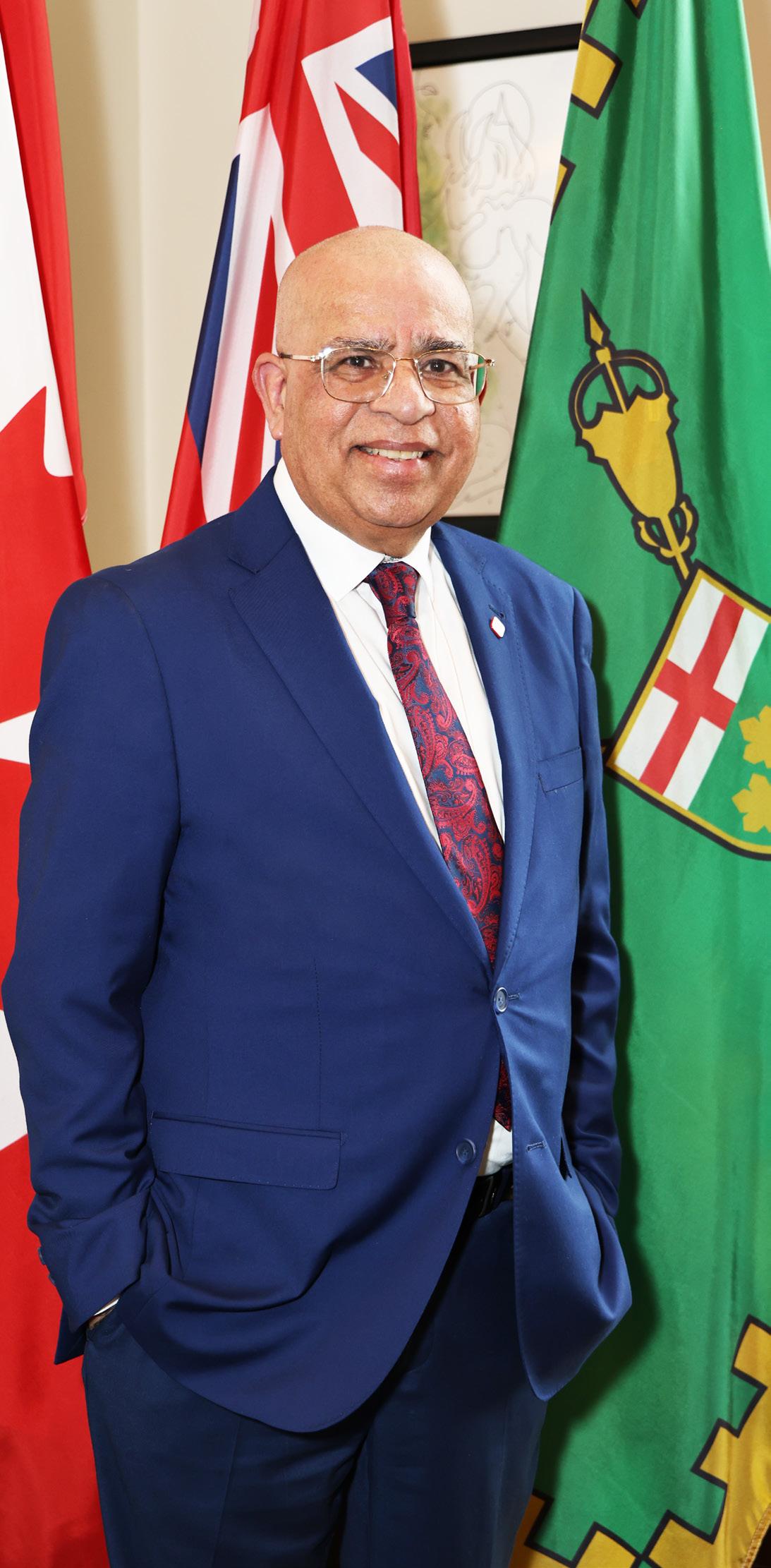
Michael Saniga sat down with Hon. Nina Tangri, MPP and Ontario’s Associate Minister of Small Business at Queens Park Ontario’s Legislature Caucus Room for a wide-ranging discussion on competitiveness, regulatory modernization, labour mobility, digital transformation, and the evolving role of professional accountants in supporting entrepreneurs. At a time of economic uncertainty and shifting global dynamics, Minister Tangri offers a candid and optimistic view of Ontario’s path forward and the essential partnerships needed to get there.
Michael: Minister Tangri, the Ontario Budget introduced several measures aimed at supporting small businesses, including tax relief and regulatory simplification. How do these initiatives address the most pressing challenges facing small and midsized businesses?
Minister Tangri: Affordability is top of mind for both people and businesses. With global uncertainty especially U.S. tariffs many Ontario businesses have been in a “wait-andsee” mode. We want them to feel confident to grow and hire. One of the most impactful measures is the reduction of the small business corporate income tax rate from 3.2% to 2.2%, a 31.25% cut. This can save a business up to $5,000, which they can reinvest in equipment, employees, or operations. It’s direct, meaningful support during challenging times.
“A 31% cut to the small business tax rate puts real money back into the hands of entrepreneurs when they need it most.
- Minister Tangri, MPP
Michael: Regulatory modernization is a recurring theme in Ontario’s economic strategy. What principles guide your approach to reducing red tape and administrative burden?
Minister Tangri: When we formed government in 2018, we heard loud and clear that Ontario’s regulatory burden was discouraging business growth. We acted immediately. Through our twice-annual Red Tape Reduction bills, we’ve saved businesses over $10 billion this year alone. If a federal and provincial regulation do the same thing, we don’t need duplication. We tackled those early. But ongoing progress depends on feedback from professionals including RPAs who tell us what their clients are facing. We listen, and we act.
“
We’ve saved Ontario businesses over $10 billion this year alone by cutting duplication and reducing red tape.
- Minister Tangri, MPP
Michael: Nationally, the federal government recently passed the One Canadian Economy Act to reduce interprovincial trade barriers. How is Ontario preparing to respond, and what impact do you foresee on small business growth and labour mobility?
Minister Tangri: For years, it was easier to do business with the U.S. than with another Canadian province. We wanted to change that. Ontario removed barriers for Red Seal trades, allowing qualified workers from other provinces to work here immediately critical for major infrastructure projects.
We also identified 23 areas where Ontario was willing to remove protections if other provinces reciprocated. Most provinces have now signed memorandums of understanding with us. There are still challenges particularly with Quebec’s language laws but we’re making strong progress toward a more seamless Canadian marketplace.
“
It should never be easier to do business with the United States than with another Canadian province.
- Minister Tangri, MPP
Michael: Access to capital remains a persistent barrier for entrepreneurs. What initiatives is Ontario exploring to help small businesses secure financing?
Minister Tangri: We hear this often. Someone has a great idea but doesn’t know where to start. Our 54 Small Business Enterprise Centres offer free mentoring and up to $5,000 for new ventures. Students can access up to $3,000 through our summer program. We also fund Futurpreneur with $6 million, supporting entrepreneurs aged 18-39 with mentorship and up to $75,000 in financing through BDC. For tech companies looking to scale globally, our Regional Innovation Centres now 18 across the province provide guidance and support. Private sector partners, including angel investors and venture capital groups, also play a key role, especially in life sciences and emerging technologies.
Michael: Workforce shortages continue to affect small businesses. How is Ontario supporting skills development, upskilling, and labour mobility?
Minister Tangri: We’re working closely with colleges and universities to ensure programs reflect today’s needs especially in areas like artificial intelligence. We’ve accelerated accreditation for Red Seal trades and introduced timelines for regulatory bodies to speed up licensing for internationally trained professionals. For healthcare, physicians from the U.K., U.S., Australia, New Zealand, and Ireland can now become licensed in Ontario much faster. Our Learn and Stay program pays tuition for nurses and PSWs who study and work in underserved regions. It’s helping fill critical gaps while supporting long-term community growth.
We’re
removing barriers so qualified people can get to work faster whether they’re Red Seal trades or internationally trained professionals.
- Minister Tangri, MPP
Michael: Digital transformation accelerated during the pandemic, but many small businesses still struggle with advanced technology. How is the government helping them build digital capacity?
Minister Tangri: Small businesses want to focus on what they do best serving their customers. Learning new technology can feel overwhelming. That’s why we invested $5 million in the Digitalization Competence Center, run through the Ontario Centre of Innovation. Since 2022, this program has created over 3,000 jobs and increased revenues by $600 million for participating businesses. We also launched the Retail Modernization Project, offering up to $5,000 in matching funds for AI tools, cybersecurity, CRM systems, POS upgrades, and more. These programs help businesses modernize, save time, and reinvest in growth.
Michael: Small business accountants often serve as the first line of advisory support for entrepreneurs. What opportunities do you see for deeper collaboration between government and the accounting profession?
Minister Tangri: It’s critical that small business owners seek professional advice early. Many try to do everything themselves but bookkeeping and compliance require expertise. An RPA is often the best first line of support because they understand the realities of small business. We want to encourage entrepreneurs to “let go” of some administrative tasks and rely on professionals who can help them grow. Accountants also play a key role in identifying regulatory burdens and advising government on practical solutions.
- Minister Tangri, MPP “ “
For small businesses, an RPA is often the first and best line of support— they understand the realities of the small business world.
Michael: Looking ahead, what is your long-term vision for Ontario’s small business ecosystem, and what role can professional accountants play in shaping that future?
Minister Tangri: Small businesses and entrepreneurs are the backbone of our economy. Premier Ford’s vision is for Ontario to become the strongest, most self-reliant, resilient economy in the G7. To achieve that, we need strong partnerships with industry and professional associations. You are on the ground; you know what challenges businesses face. One emerging priority is succession planning. Only one in ten businesses has a plan in place. We launched SuccessionOntario.ca to help owners understand valuation, prepare for transition, and avoid unnecessary closures. We ask accountants and professional bodies like RPA Canada to continue advocating, sharing insights, and bringing forward both challenges and solutions.
“Small businesses and entrepreneurs are the backbone of our economy. Supporting them is supporting Ontario’s future.
- Minister Tangri, MPP
Michael: Finally, any closing thoughts for Ontario’s professional accounting community?
Minister Tangri: We value your partnership. You play a vital role in supporting entrepreneurs, improving compliance, and strengthening Ontario’s business environment. We don’t have all the answers that’s why we rely on your expertise. Together, we can build a more dynamic, inclusive, and resilient economy for everyone.
“We don’t have all the answers that’s why we rely on professionals like RPAs to bring forward challenges and solutions.
- Minister Tangri, MPP
At Professional Accountant Magazine, we recognize that meaningful progress happens when policymakers, industry leaders, and professional associations work together to reduce barriers, modernize regulatory frameworks, and expand opportunities for all qualified practitioners.
Minister Tangri’s insights reinforce the value of this collective effort and the potential it holds for a more dynamic, inclusive, and resilient economy. We thank the Minister for her time, her candor, and her continued dedication to Ontario’s small business community.
Embracing a New Era: The Emergence of Sustainability Accounting in the Accounting Profession
Taslima NASREEN, MBA, PhD, RPA
Growing up in an emerging economy, I observed how social and environmental concerns were often overlooked. This experience initially shaped my perception of accountants as professionals confined to background roles focused primarily on numbers and financial reporting. However, during my doctoral studies, my supervisor, Dr. Ron Baker, challenged me to reconsider this narrow view and recognize the broader societal role of the profession.
That pivotal shift led me to understand that accounting is not merely about numbers it is a discipline that can advance fairness, accountability, and justice. This realization sparked my interest in sustainability accounting and deepened my appreciation for the profession’s evolving purpose.
Over time, I have closely followed the development of sustainability accounting and the profession’s response to this transformative shift. Notably, there remains a misconception among some practitioners that “sustainability” refers solely to financial stability. An anonymous interview with a professional accountant reflects this limited perspective:
The post-pandemic recovery prioritized internationalization, building financial sustainability, equity, diversity, and inclusion.
While this statement acknowledges important priorities, it illustrates how sustainability is still frequently interpreted through a predominantly financial lens.
A Shift Beyond Profit
The accounting profession is now undergoing a fundamental transformation. Accountants are moving beyond traditional profit-and-loss frameworks to consider a company’s broader impact on society and the environment. This shift represents a redefinition of value itself.
Today’s professional accountants are expected to:
Integrate sustainability into core business strategies
Evaluate environmental and social impacts alongside financial performance
Measure success through workforce engagement, community impact, and resource stewardship
Enhance transparency through comprehensive sustainability disclosures
This evolution is not theoretical it is actively reshaping practice, standards, and expectations worldwide.
Global Momentum: The ISSB Framework
Beginning in April 2026, the International Sustainability Standards Board has accelerated the global implementation of sustainability reporting standards. What was once a conceptual framework has now become a regulatory reality across multiple jurisdictions.
Three key developments define the consolidation of the global sustainability reporting baseline in 2026:
1. Mandatory Adoption and the Global Passport
As of January 1, 2026, several major economies including Chile, Mexico, and Qatar have adopted reporting standards aligned with the ISSB framework. This marks a significant milestone toward global transparency and comparability. Canada is progressing toward aligning these standards within its own regulatory environment, supporting consistency across borders.
A notable innovation is Global Passporting, which enables organizations to prepare a single sustainability report that satisfies multiple regulatory requirements across jurisdictions. For multinational corporations, this represents a major efficiency gain in an increasingly interconnected business environment.
2. Integration of SASB and TCFD into IFRS Standards
The consolidation of sustainability reporting frameworks has also advanced significantly through integration efforts led by the IFRS Foundation.
The Sustainability Accounting Standards Board continues to provide industry-specific metrics aligned with IFRS S1 and S2
Oversight of the Task Force on Climate-related Financial Disclosures has transitioned to the IFRS Foundation By 2026, organizations are expected to fully comply with IFRS S2, which incorporates TCFD recommendations
This integration enhances consistency, comparability, and credibility in climate-related financial disclosures representing a major advancement in global transparency.
3. The Interoperability Frontier: GRI and EFRAG Alignment
As reporting demands grow more complex, interoperability between frameworks has become essential.
The ISSB is actively collaborating with:
The Global Reporting Initiative, which emphasizes societal and environmental impact
The European Financial Reporting Advisory Group, which supports the EU’s Corporate Sustainability Reporting Directive (CSRD)
The shared objective is to create a unified reporting ecosystem where organizations can satisfy both investorfocused and impact-focused requirements using a single dataset. This alignment reduces duplication and moves the profession toward a more cohesive and efficient global reporting structure.
A Defining Opportunity for the Profession
At this critical juncture, the accounting profession faces a defining opportunity. It can evolve from a function centered on historical financial reporting to a strategic discipline that shapes sustainable outcomes.
While the underlying data may remain quantitative, the interpretation and the narrative it supports is changing. Accountants are now positioned to translate data into insights that drive responsible decision-making, innovation, and long-term value creation.
The question is no longer whether sustainability will redefine accounting it already has.
The real question is: will accountants rise to become architects of a more sustainable and accountable world?
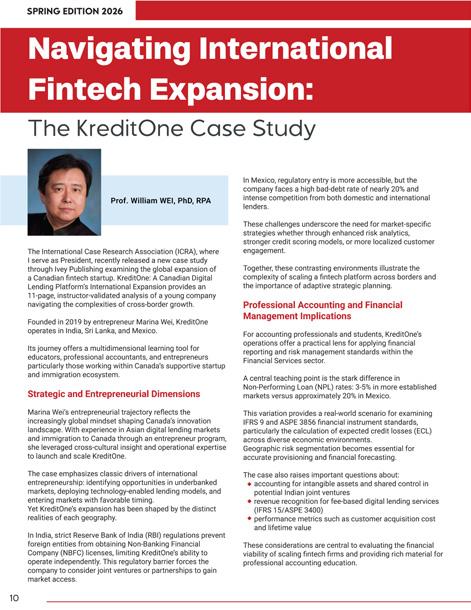
Navigating International Fintech Expansion: The KreditOne Case Study
William WEI, PhD, MBA, MA
The International Case Research Association (ICRA), where I serve as President, recently released a new case study through Ivey Publishing examining the global expansion of a Canadian fintech startup. KreditOne: A Canadian Digital Lending Platform’s International Expansion provides an 11-page, instructor-validated analysis of a young company navigating the complexities of cross-border growth.
Founded in 2019 by entrepreneur Marina Wei, KreditOne operates in India, Sri Lanka, and Mexico.
Its journey offers a multidimensional learning tool for educators, professional accountants, and entrepreneurs particularly those working within Canada’s supportive startup and immigration ecosystem.
Strategic and Entrepreneurial Dimensions
Marina Wei’s entrepreneurial trajectory reflects the increasingly global mindset shaping Canada’s innovation landscape. With experience in Asian digital lending markets and immigration to Canada through an entrepreneur program, she leveraged cross-cultural insight and operational expertise to launch and scale KreditOne.
The case emphasizes classic drivers of international entrepreneurship: identifying opportunities in underbanked markets, deploying technology-enabled lending models, and entering markets with favorable timing. Yet KreditOne’s expansion has been shaped by the distinct realities of each geography.
In India, strict Reserve Bank of India (RBI) regulations prevent foreign entities from obtaining Non-Banking Financial Company (NBFC) licenses, limiting KreditOne’s ability to operate independently. This regulatory barrier forces the company to consider joint ventures or partnerships to gain market access.
In Mexico, regulatory entry is more accessible, but the company faces a high bad-debt rate of nearly 20% and intense competition from both domestic and international lenders.
These challenges underscore the need for market-specific strategies whether through enhanced risk analytics, stronger credit scoring models, or more localized customer engagement.
Together, these contrasting environments illustrate the complexity of scaling a fintech platform across borders and the importance of adaptive strategic planning.
Professional Accounting and Financial Management Implications
For accounting professionals and students, KreditOne’s operations offer a practical lens for applying financial reporting and risk management standards within the Financial Services sector.
A central teaching point is the stark difference in Non-Performing Loan (NPL) rates: 3-5% in more established markets versus approximately 20% in Mexico.
This variation provides a real-world scenario for examining IFRS 9 and ASPE 3856 financial instrument standards, particularly the calculation of expected credit losses (ECL) across diverse economic environments. Geographic risk segmentation becomes essential for accurate provisioning and financial forecasting.
The case also raises important questions about: accounting for intangible assets and shared control in potential Indian joint ventures revenue recognition for fee-based digital lending services (IFRS 15/ASPE 3400) performance metrics such as customer acquisition cost and lifetime value
These considerations are central to evaluating the financial viability of scaling fintech firms and providing rich material for professional accounting education.
SME Training and Canada’s Startup Visa Context
KreditOne’s trajectory holds relevance for SME training programs and participants in Canada’s Startup Visa Program.
Marina Wei’s path from international professional to Canadian immigrant entrepreneur demonstrates how global experience can be transformed into a scalable, export-oriented business.
The case provides a strong foundation for training SME owners in:
cross-border financial planning, including multi-currency cash flow management and tax compliance across Canada, Mexico, and India investor reporting and grant accountability for both domestic and international funding sources risk governance frameworks suitable for digital-first SMEs operating in regulated foreign markets
For Startup Visa applicants, KreditOne reinforces the importance of validating market assumptions, understanding regulatory landscapes, and establishing scalable financial controls both before and after landing in Canada.
Integrating Learning Through Case Analysis
As a formal Strategy case from ICRA, the accompanying teaching notes recommend using frameworks such as SWOT and PESTLE to evaluate KreditOne’s strategic position. The Ansoff Matrix further clarifies potential growth pathways:
market penetration in India and Mexico market development through entry into new geographies. product development via AI-enhanced lending tools diversification into adjacent financial services.
The case’s geographic breadth and narrative detail also lend themselves to role-play decision-making exercises, enabling students to advocate for competing strategic priorities based on the company’s resource constraints.
Conclusion
The KreditOne case is more than a study of fintech expansion; it is a comprehensive, peer-reviewed learning resource that bridges entrepreneurship, international strategy, professional accounting, and SME development. Its publication by ICRA and distribution through Ivey Publishing affirm its value for classrooms and professional training environments.
For educators, it offers a dynamic narrative for exploring how businesses grow across borders. For accountants, it provides scenarios-rich applications of reporting and risk standards.
And for entrepreneurs, it delivers practical lessons in responsible scaling, financial governance, and strategic adaptation in the evolving world of digital finance landscape.
Recognizing Leadership in the Accounting Profession
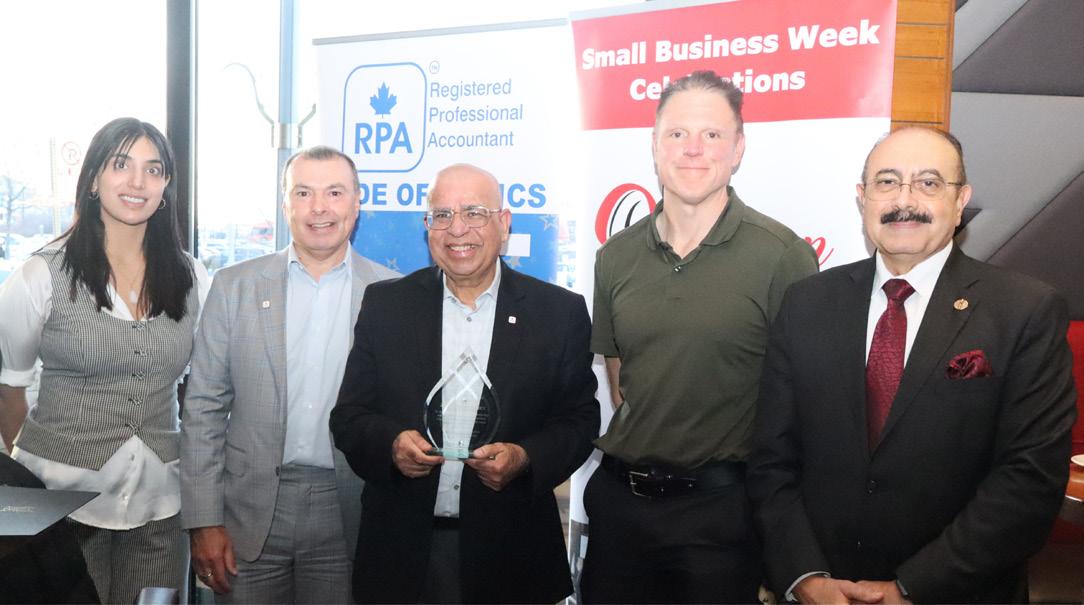
Joseph Morgado, chair of the RPA Professional Practice Committee hosted a networking get-together at Moxies Restaurant Square One in Mississauga and recognized Zubair Choudhry, President & CEO of RPA Canada, for his contributions to promoting the accounting profession in Canada and internationally.
RPA practitioners, students, and colleagues gathered to acknowledge Mr. Choudhry’s leadership in strengthening the RPA designation and advancing affordable, accessible accounting services for SMEs.
Special messages were shared by Sheref Sabawy, MPP, on behalf of the Premier of Ontario, and Hon. Nina Tangri, MPP, both praising Mr. Choudhry’s long-standing commitment to supporting small businesses and developing future-ready accounting professionals.
James Green, Secretary and Naseem Qadir, Treasurer of RPA Canada appreciated the hard work of Zubair Choudhry for his vision and dedication to the profession.
“
Zubair’s leadership continues to elevate the accounting profession and strengthen support for Canada’s small businesses.
-Sheref Sabawy, MPP
Reflections on the Evolving Landscape of the Accounting Profession SANTA’S WORKSHOP, THE ZOO AND EXPO 67
Bruce MANION, FCMA, FCPA
Travelling by car with my family was more than just a vacation it was a ritual, almost a rite of passage. Those early road trips shaped my appreciation for exploration and curiosity. Even today, I often prefer the open road over air travel, embracing the journey as much as the destination.
“
The journey often teaches us as much as the destination.
Our travels across Canada were not random adventures; we had destinations in mind. Inspired by explorers such as de LaSalle, Champlain, and Fraser, we set out to experience the country firsthand. Along the way, we saw remarkable sights, tasted new foods, and met people from al walks of life.
Some memories are blurred by time, like Santa’s Workshop in upstate New York, which fascinated me despite my confusion about its proximity to the North Pole. Others remain vivid Magnetic Hill, the Springhill Coal Mine, the CNE, Fort Henry each representing a unique experience and perspective.
One particularly memorable trip was to Expo 67 - Man and His World. I was eight years old, and Canada was celebrating its centennial. The event showcased innovation, diversity, and technological promise. Visitors could glimpse the future video phones, high-speed trains, and even concepts of flying cars. I especially enjoyed riding the elevated monorail connecting the various islands of the exhibition.
That excitement turned into a childhood lesson when I was accidentally separated from my family while boarding the monorail. Despite the panic, I relied on my Cub Scout instincts, explored several pavilions, and eventually reunited with my family at the Canadian Pavilion. It was both a frightening and formative experience.
Even unexpected detours can shape our perspective in lasting ways.
You may wonder what any of this has to do with accountancy. The connection lies in perspective. Just as travel exposed me to different places and realities, reflecting on these experiences led me to consider how the accounting profession varies across jurisdictions.
Before unification, Canada had four accounting designations CA, CMA, CGA, and RPA. Today, Canada recognizes primarily the CPA and RPA designations. This contrasts with other countries. The United Kingdom maintains multiple designations such as ACA, ACCA, ACMA, and CIPFA. The United States recognizes CPA, CMA, and CGMA, while Australia maintains CA, CPA, IPA, and CMA.
“ “
Accountancy is a profession grounded in standards, yet its structure remains far from standardized globally.
Even this cursory comparison reveals a diverse and uneven landscape. Each jurisdiction reflects different professional priorities. For example, all three countries maintain a distinct designation for management accounting. The United Kingdom also offers a public sector accounting designation and an entry-level Accounting Technician qualification, which serves as a stepping stone toward advanced professional credentials.
This lack of uniformity raises an important question: Should accountancy, as a profession grounded in standards and consistency, strive for greater global standardization? After all, the profession has embraced international frameworks such as IFRS and the work of the International Accounting Standards Board. In an era of globalization, cross-border investment, and international trade, consistency in professional structures could enhance mobility, clarity, and public confidence.
“The future of the profession will depend on how we balance diversity with standardization, and tradition with innovation.
While I do not claim to be an academic authority, I write from the perspective of a lifelong practitioner observing the profession’s evolution. Like my childhood journey through Expo 67, the accounting profession stands at an intersection of innovation and uncertainty.
The future promises both opportunity and change, and perhaps even a little discomfort as we adapt. Looking ahead, the profession’s direction will depend on how we balance diversity with standardization, tradition with innovation, and local needs with global realities. Much like those early travels, the journey continues and it is one worth following.
And occasionally, I still recall those monorail doors closing, reminding me that even unexpected detours can shape our perspective.
Strengthening Ontario’s SME Economy
Small and medium-sized businesses (SMEs) remain the backbone of Ontario’s economy, creating jobs, driving innovation, and strengthening local communities. In a recent meeting focused on advancing this vital sector, Zee Hamid, Member of Provincial Parliament for Milton and Ontario’s Associate Solicitor General for Auto Theft and Bail Reform, met with Zubair Choudhry, President & CEO of RPA Canada, at his constituency office.
The discussion centered on Ontario’s economic progress and the essential role SMEs play in sustaining growth across the province. Minister Hamid recognized RPA Canada’s leadership in supporting small businesses through bookkeeping, accounting, taxation, and advisory services. He emphasized that SMEs are key contributors to employment, provide Ontario-made products and services, and stimulate economic activity across both urban and rural communities.
Founded in 1978, RPA Canada one of Canada’s oldest accounting organizations continues to champion the needs of SMEs. The RPA designation is purpose-built to serve small and mediumsized enterprises, while preparing future accountants with practical, industry-relevant education. The program integrates emerging technologies and emphasizes practice-ready competencies designed to meet the evolving demands of today’s business environment.
Both leaders underscored that economic sustainability is fundamental to building healthy and safe communities. A strong SME sector not only supports economic resilience but also enhances public confidence. The Ontario government remains committed to protecting the public, strengthening business environments, and ensuring that professional services are delivered by qualified practitioners an approach that reinforces trust and stability across Ontario’s economy.
This meeting highlights the continued collaboration between policymakers and professional accounting leaders to advance Ontario’s SME sector. By supporting entrepreneurs and promoting accessible, reliable accounting services, RPA Canada and government partners are working together to foster sustainable economic development and strengthen communities across the province.
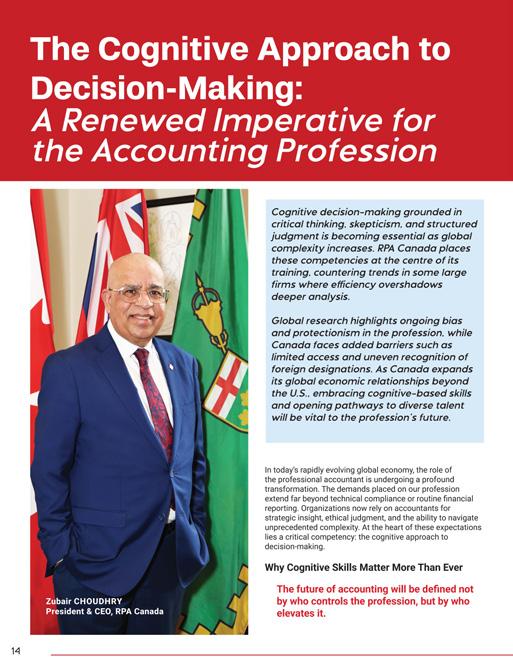
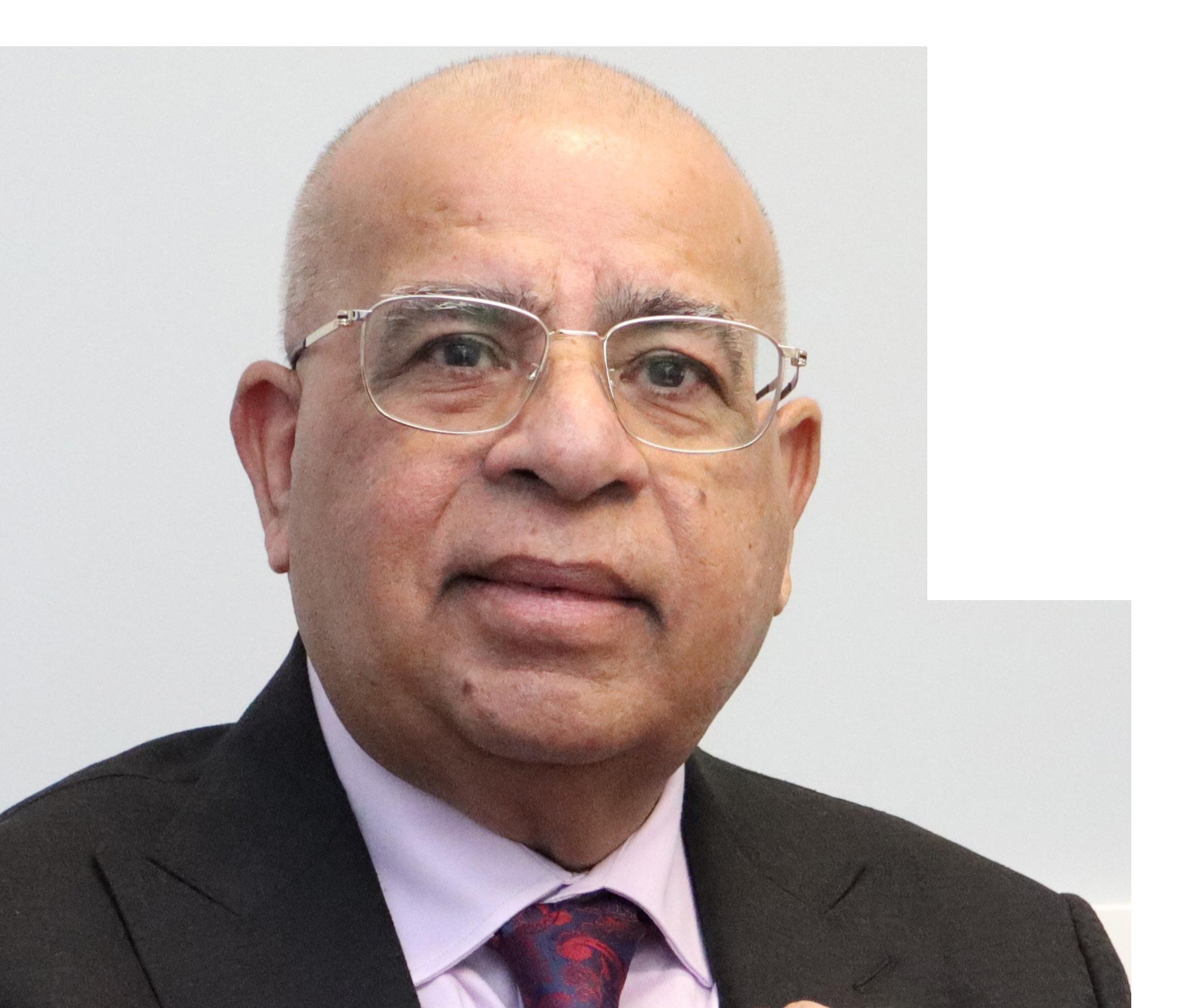
The Cognitive Approach to Decision‑Making: A Renewed Imperative for the Accounting Profession
Zubair CHOUDHRY President & CEO, RPA Canada
Cognitive decision-making grounded in critical thinking, skepticism, and structured judgment is becoming essential as global complexity increases. RPA Canada places these competencies at the centre of its training, countering trends in some large firms where efficiency overshadows deeper analysis.
Global research highlights ongoing bias and protectionism in the profession, while Canada faces added barriers such as limited access and uneven recognition of foreign designations. As Canada expands its global economic relationships beyond the U.S., embracing cognitive-based skills and opening pathways to diverse talent will be vital to the profession’s future.
In today’s rapidly evolving global economy, the role of the professional accountant is undergoing a profound transformation. The demands placed on our profession extend far beyond technical compliance or routine financial reporting. Organizations now rely on accountants for strategic insight, ethical judgment, and the ability to navigate unprecedented complexity. At the heart of these expectations lies a critical competency: the cognitive approach to decision-making.
Why Cognitive Skills Matter More Than Ever
The future of accounting will be defined not by who controls the profession, but by who elevates it.
Accounting has always required judgment. Yet the nature of that judgment has changed. The volume of data, the speed of business, and the intricacy of regulatory frameworks have all increased dramatically. In this environment, intuition or procedural knowledge alone is insufficient. A cognitive approach grounded in analytical thinking, structured reasoning, and reflective judgment ensures decisions are defensible, ethical, and aligned with the public interest.
RPA Canada’s Commitment to Cognitive Excellence
Cognitive excellence, the ability to think critically, reason independently, and act ethically, is the cornerstone of modern accounting.
At RPA Canada, we have long recognized that cognitive competence is the foundation of professional competence. Our education and training framework places deliberate emphasis on analytical reasoning, skepticism, and independent judgment elements that are increasingly overlooked in large accounting firms around the world, where efficiency-driven models often overshadow deeper professional thinking.
RPA Canada keeps cognitive judgment at the centre of professional training, where it belongs.
RPA-designated professionals are trained to think critically, challenge assumptions, and apply structured decision-making frameworks. This approach strengthens not only the quality of professional work but also the integrity and trustworthiness of the profession itself.
Global Research Confirms Persistent Bias and Protectionism
International studies published in respected journals such as Accounting, Organizations and Society and Critical Perspectives on Accounting have documented persistent issues within the global accounting landscape. These include personal biases, in-group favouritism, and professional protectionism, all of which influence hiring, promotion, and recognition across major firms.
These findings reveal a troubling reality: Certain designations are favoured regardless of demonstrated competence. Foreign-trained professionals face systemic barriers despite equivalent or superior qualifications.
Organizational loyalty and commercial incentives can overshadow objective, cognitive-based judgment. Such dynamics undermine both fairness and professional quality.
As Canada expands its global footprint, fair access to the accounting profession becomes a strategic imperative.
Canada’s Challenge: Limited Access and Uneven Recognition
Canada is not immune to these issues. Despite its global reputation for openness, the accounting profession remains difficult to access for many qualified individuals. Recognition of foreign accounting designations is inconsistent, creating barriers for internationally trained professionals who could contribute significantly to Canada’s economic growth.
This challenge is particularly pressing as Canada seeks to diversify its global partnerships, expand its economic footprint, and reduce its historical dependence on the United States. In a G7 and G20 context, talent mobility and fair access to professions are no longer optional; they are strategic imperatives. A competency-driven, cognitive-based model such as that championed by RPA Canada offers a more inclusive, future-ready path forward.
A Professional Imperative for the Future
As automation reshapes routine tasks, the accountant’s value increasingly lies in judgment-intensive work: interpreting analytics, evaluating risks, and ensuring ethical decision-making.
Cognitive skills are the anchor that keeps the profession grounded in integrity and public trust. RPA Canada remains committed to advancing these competencies and advocating for a more open, equitable, and globally aligned accounting profession.
Conclusion
The future of accounting will be defined not by who controls the profession, but by who elevates it. Cognitive excellence, the ability to think critically, reason independently, and act ethically is the cornerstone of that future.
As Canada positions itself within an increasingly interconnected global economy, embracing cognitive-based decision-making and opening pathways to diverse talent will be essential to our national and professional success.
Audit Quality, Technology and Trust: Insights from CPAB’s 2025 Annual Report
Umar CHOUDHRY, CPA, LPA, RPA
The Canadian Public Accountability Board’s (CPAB) 2025 Annual Report offers a timely and insightful look into the state of audit quality in Canada as one shaped by technological acceleration, heightened expectations, and the enduring importance of professional judgment. For Registered Professional Accountants (RPAs) serving Canada’s small and medium-sized enterprises (SMEs), the report reinforces themes that directly influence day-to-day practice and the broader public interest mandate of the profession.
Audit Quality: Progress with Purpose
CPAB’s inspection results show continued, if modest, improvement in audit quality. In 2025, 23% of inspected files contained significant findings, down from 24% the previous year.
While incremental, this progress underscores the profession’s ongoing commitment to strengthening audit execution and documentation.
The areas most frequently cited being risk assessment, sufficiency of audit evidence, fraud considerations, and independence mirror the competencies expected of all professional accountants. These themes reinforce the foundational principles that guide RPAs: professional skepticism, ethical discipline, and rigorous documentation.
Technology: Innovation with Oversight
A defining feature of the 2025 report is the rapid adoption of AI-enabled audit tools across major networks. CPAB acknowledges the potential of technology to enhance efficiency and analytical depth, but stresses that technology cannot replace professional judgment.
For RPAs working with SMEs, this message resonates strongly. Digital tools from cloud accounting to automated workflows are transforming practice. Yet the value RPAs provide continues to rest on sound judgment, contextual understanding, and trust, especially in environments where resources and internal controls vary widely.
Strengthening the Profession Through Outreach
CPAB’s expanded outreach in 2025 demonstrates a commitment to elevating audit quality across firms of all sizes. The organization hosted forums in major Canadian cities and engaged directly with smaller firms, venture market participants, directors, CFOs, and investors.
This broadened engagement helps ensure that regulatory expectations are understood consistently, and that smaller practitioners who play a critical role in Canada’s financial ecosystem are supported in meeting evolving standards.
Clarity of Roles: A Stronger, More Trusted Profession
As a CPA, RPA and Licensed Public Accountant (LPA), I recognize that clarity within the profession is essential for maintaining public trust. CPAs holding the Licensed Public Accountant (LPA) designation perform vital assurance and public accounting functions that uphold the integrity of financial reporting. At the same time, Registered Professional Accountants (RPAs) serve the SME sector with practical, accessible, and reliable accounting, bookkeeping, taxation, and advisory services.
This dual-pathway model ensures that Canadian businesses particularly SMEs have access to the right level of expertise at the right cost, while maintaining appropriate professional and ethical standards.
A Forward-Looking Profession
CPAB’s 2025 Annual Report ultimately reinforces that audit quality is not a static goal but a continuous journey. It is shaped by:
Ethical culture
Professional competence
Responsible use of technology
Transparency and oversight
Support for smaller firms and practitioners
For readers of Professional Accountant Magazine, the report serves as a reminder that trust in the profession is built not only through regulation, but through clarity of roles, commitment to high standards, and service to the public interest.
Key Takeaways from CPAB’s 2025 Annual Report
Audit Quality Trends
Significant findings decreased to 23%, reflecting steady— though incremental—improvement. Persistent challenges include risk assessment, audit evidence, fraud considerations, and independence.
Technology in Audit Practice
Major firms expanded use of AI-enabled tools. CPAB stresses that technology must support-not replaceprofessional judgment.
Outreach and Engagement
CPAB broadened national outreach, engaging smaller firms, venture market participants, directors, CFOs, and investors.
Emphasis on dialogue, education, and consistent regulatory understanding.
Role Clarity in the Profession
CPAs with LPA authority uphold assurance and public accounting standards.
RPAs continue to serve SMEs with practical accounting, taxation, and advisory services.
A complementary structure strengthens public trust and accessibility.
Core Message
Audit quality in 2025 is anchored in ethical culture, competence, and responsible technology use, supported by transparent oversight and a profession committed to serving the public interest.
RPA Canada Celebrates International Women’s Day and Launches the 8th RPA Women Entrepreneur Awards Nominations
RPA Canada marked International Women’s Day 2026 with a vibrant and well-attended reception at Venture X Heartland in Mississauga, bringing together professionals, entrepreneurs, and community leaders to honour the achievements and leadership of women in business.
The event also served as the official launch of nominations for the 8th RPA Women Entrepreneur Awards, an initiative founded by Zubair Choudhry, RPA, APA, Publisher, President & CEO of RPA Canada. The awards celebrate women entrepreneurs whose innovation, resilience, and leadership continue to strengthen Ontario’s and Canada’s economic landscape.
In his remarks, Mr. Choudhry reaffirmed RPA Canada’s commitment to advancing women’s economic empowerment through entrepreneurship and higher professional education. He highlighted the role of RPA Scholarships in supporting women seeking to elevate their professional credentials and contribute meaningfully to the growth of small and mediumsized enterprises across the country.
The audience also heard from Deepak Anand, MPP, who underscored the importance of expanding women’s participation across all sectors and acknowledged the impact of organizations like RPA Canada in creating pathways for leadership, opportunity, and economic inclusion.
“ “
Although International Women’s Day has been observed for more than a century, the pursuit of full equality and equitable opportunity remains ongoing. Initiatives such as the RPA Women Entrepreneur Awards play a vital role in recognizing excellence, amplifying women’s voices, and inspiring the next generation of leaders.
-Deepak Anand, MPP
Rebekah Wilson-Miller, Coordinator of the RPA Women Entrepreneur Awards, encouraged attendees to nominate outstanding women entrepreneurs or for eligible women to nominate themselves for this distinguished recognition. She also invited volunteers, partners, and supporters to join RPA Canada in championing this important initiative.
The evening offered a dynamic environment for networking, collaboration, and the exchange of entrepreneurial insights, reflecting the spirit of empowerment that defines both International Women’s Day and the RPA Women Entrepreneur Awards.
Balancing the scales with passion and entrepreneurial empowerment. Join us for the 8th RPA Women Entrepreneur Awards - 2026 Nominations Launch Reception.
Learn more or submit a nomination: www.wea.rpacanada.org
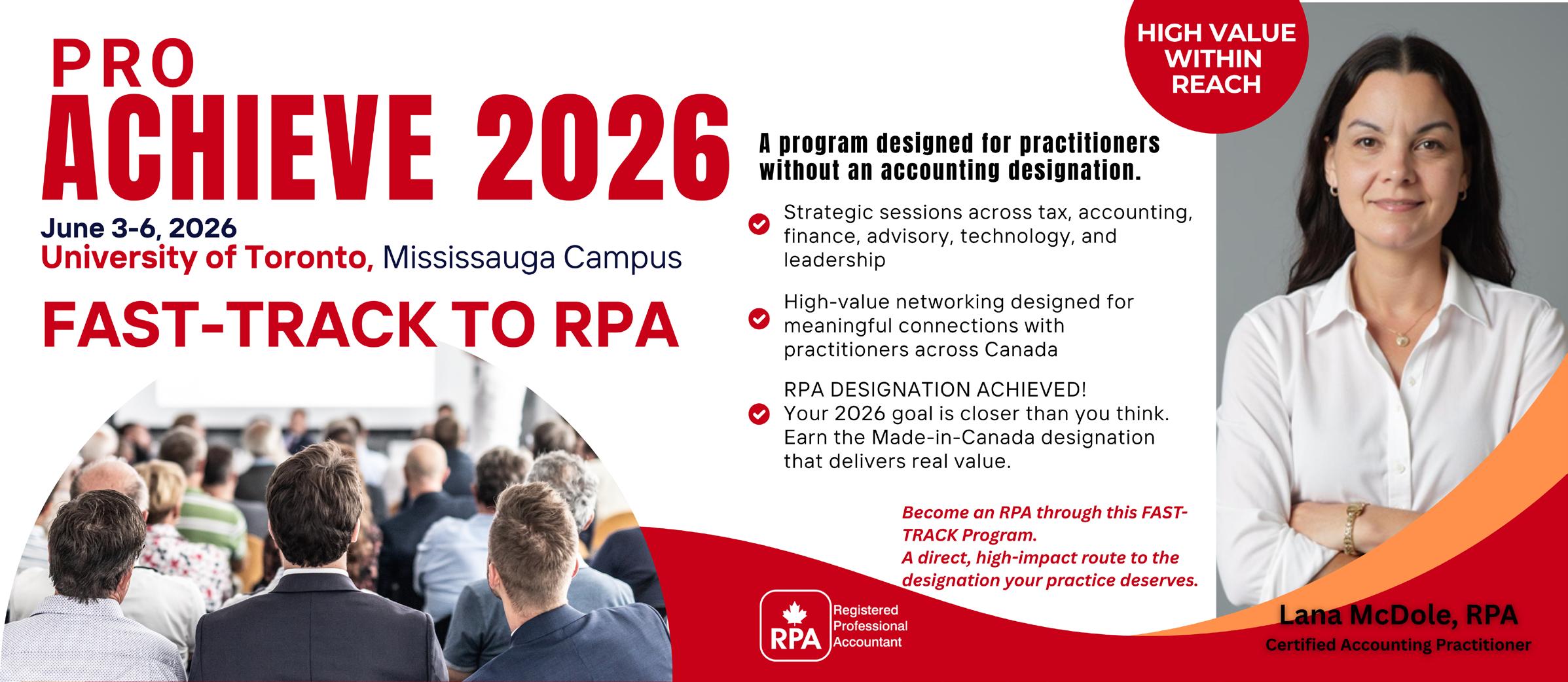
PRO ACHIEVE 2026 A Fast-Track Pathway to the RPA Designation
Joseph MORGADO, RPA, CMA (ANZ)
A One-Time Opportunity for Nondesignated Accounting Practitioners
Across Canada, thousands of accounting and tax practitioners support small and medium-sized businesses every day. While these professionals play a vital role in the economy, many continue to work without formal professional recognition. To address this gap, RPA Canada has introduced PRO ACHIEVE 2026, a focused, one-time fast-track pathway designed specifically for non-designated practitioners seeking to earn the Registered Professional Accountant (RPA) designation.
This program recognizes real-world experience and combines targeted education, professional development, and assessment to strengthen credibility and expand career opportunities. Participants benefit from a structured learning environment that enhances technical knowledge, professional judgment, and leadership capacity.
PRO ACHIEVE 2026 is designed for experienced practitioners who want a practical and efficient path to professional designation. The program offers strategic sessions across taxation, financial accounting, management accounting, advisory services, emerging technologies, and leadership. It also provides high-value networking opportunities with practitioners from across Canada.
By completing the program, participants move closer to earning a Made-in-Canada designation that delivers meaningful value to both practitioners and the small businesses they serve.
The PRO ACHIEVE 2026 program will take place June 3-6, 2026, at the University of Toronto Mississauga Campus, Maanjiwe Nendamowinan Building, 1535 Outer Cir, Mississauga, ON. The four-day intensive format combines focused learning sessions, collaborative workshops, and daily professional examination components.
The program features a distinguished group of presenters, including Michael Saniga, MBA, CPA, RPA; Dr. Taslima Nasreen, MFA, MBA, PhD, RPA; Dr. William Wei, MA, MBA, PhD, RPA; Umar Choudhry, CPA, LPA, RPA; and Bruce Manion, FCPA, FCMA. These professionals bring academic excellence, industry insight, and practical expertise to support participants advancing toward the RPA designation.
The curriculum is structured to provide comprehensive professional development:
Day 1 – Financial Accounting: Advanced reporting concepts, audit and review engagements, and integration workshops.
Day 2 – Taxation in Depth: SME tax planning, estate planning, succession strategies, and applied case discussions.
Day 3 – Management Accounting: Cost dynamics, planning and control, and data-driven decision making.
Day 4 – Emerging Technology & Practice Management: AI applications, data analytics, professional responsibility, and workflow modernization.
A Daily Mandatory Professional Examination (MPE) is conducted under formal exam conditions to reinforce learning outcomes.
PRO ACHIEVE 2026 also reflects a broader commitment to strengthening the accounting profession in Canada. Zubair Choudhry, President & CEO of RPA Canada, emphasized that the initiative aligns with commitments made to policymakers and business leaders.
“As President of RPA Canada, I made a commitment to government policymakers and business leaders to create a fast-track pathway for nondesignated accountants one that helps strengthen the delivery of affordable, reliable, and accessible accounting and related services, while protecting the public interest,
-Zubair Choudhry, RPA, APA
He further encouraged qualified practitioners to take advantage of this limited opportunity, noting that
“Make 2026 the year you earn the recognition you deserve.
-Zubair Choudhry, RPA, APA
PRO ACHIEVE 2026 includes application, assessment, exemptions (if applicable), review sessions, required courses, and four full in-person training days. Lunch and refreshments are provided. Early-bird pricing is available until April 30, 2026.
PRO ACHIEVE 2026 offers experienced practitioners a unique opportunity to gain recognition for their expertise and advance professionally. For many, this fast-tracks pathway represents a practical and meaningful step toward achieving the RPA designation while strengthening their role in supporting Canada’s SME sector.
From Oil Futures to Everyday Prices, A Smarter Way to Manage Inflation
Joseph MOHANTHAS, RPA, APA, CMA (ANZ)
Inflation is no longer an abstract economic concept it is a daily reality. Rising food prices, volatile fuel costs, and increasing living expenses are placing sustained pressure on households and businesses alike. While public discourse often attributes inflation to government policy or corporate behaviour, a more precise understanding requires examining how pricing decisions are made within the economy.
Gross Domestic Product (GDP) remains the dominant indicator of economic performance. However, GDP measures output not lived experience. It does not capture the erosion of purchasing power or the financial strain faced by individuals. A growing economy, therefore, does not necessarily translate into improved financial well-being.
The Hidden Driver: Oil and Cost Transmission
One of the most influential yet underappreciated drivers of inflation is oil. As a foundational input, oil impacts transportation, manufacturing, and virtually every supply chain. When oil prices rise, cost pressures ripple across sectors, ultimately reaching the end consumer.
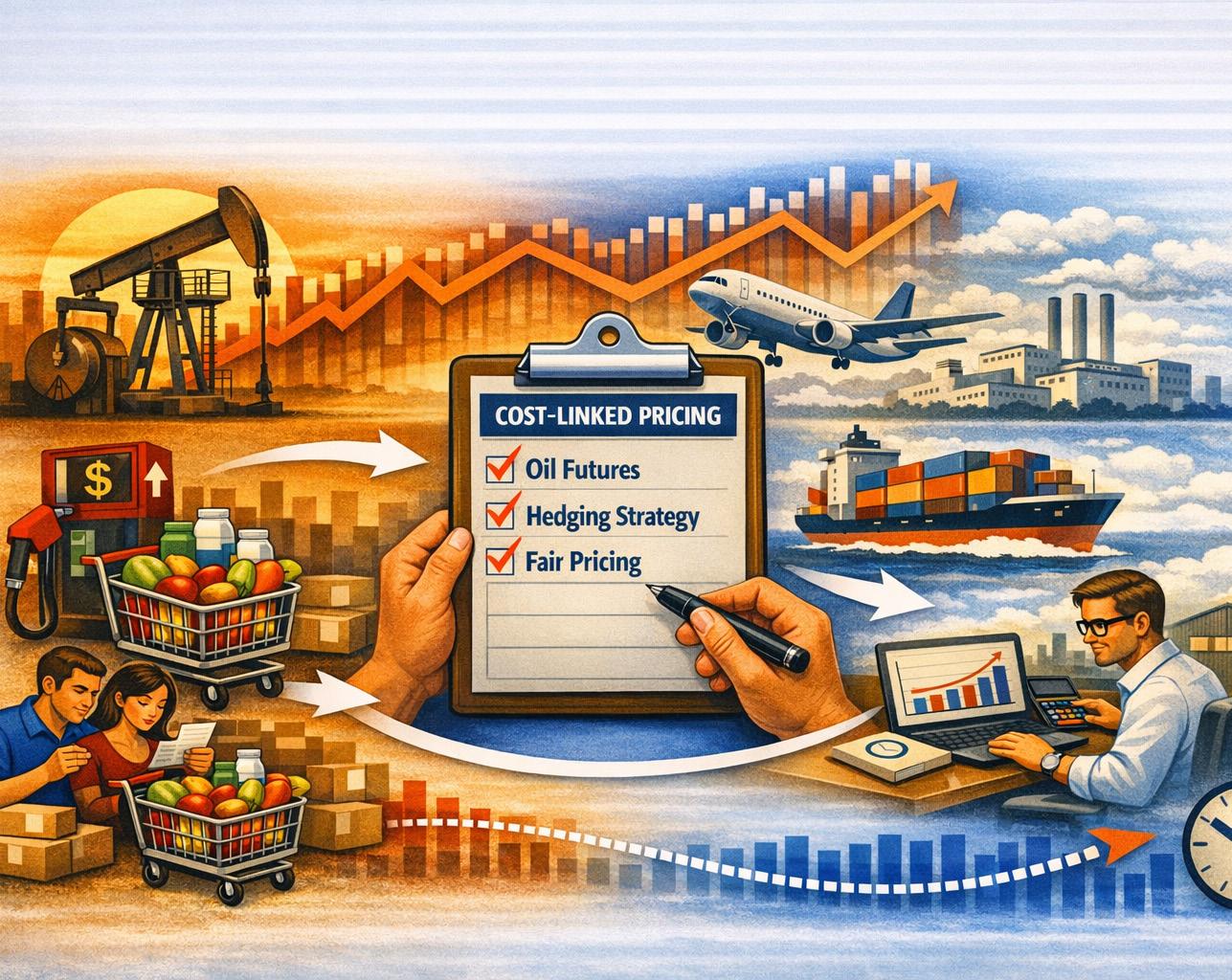
Large corporations particularly in industries such as aviation have long recognized this exposure. Their response is strategic: the use of oil futures. By locking in prices in advance, they mitigate volatility, stabilize costs, and protect margins from sudden market fluctuations.
A Broader Application: Rethinking Pricing Models
This raises an important question: Why is this disciplined approach not applied more broadly across essential goods and services?
In today’s market, pricing is often driven by anticipated future costs rather than actual incurred costs. Businesses may increase prices on existing inventory purchased at lower rates, citing expected increases in replacement costs. While economically rational, this practice frequently leads to consumer dissatisfaction and erodes trust.
At the same time, consumer behaviour is evolving. Customers are more informed, price-sensitive, and willing to challenge perceived inconsistencies. In this environment, transparency and fairness are no longer optional they are strategic imperatives.
The Accountant’s Role in Pricing Integrity
Accountants are uniquely positioned to bridge the gap between cost realities and pricing decisions. Their role must extend beyond reporting into active advisory on pricing discipline, risk mitigation, and ethical standards. A structured approach can include:
Cost-Linked Pricing: Align pricing decisions with actual cost movements rather than speculative forecasts. Inventory acquired at lower cost should reflect reasonable, not excessive, margins.
Practical Hedging Strategies: Expand the use of hedging beyond large corporations. Locking in costs for key inputs such as fuel or raw materials can enhance price stability and reduce volatility.
Transparent Communication: Clear, data-backed explanations for price adjustments foster customer trust and strengthen brand credibility.
Balanced Policy Oversight: Governments can support market stability by discouraging excessive pricing practices while avoiding overregulation that may disrupt supply chains.
Data-Driven Planning: Leveraging analytics and AIenabled forecasting allows businesses to better anticipate demand, manage inventory, and smooth pricing fluctuations over time.
From Compliance to Strategic Leadership
The evolving economic landscape demands a broader mandate for the accounting profession. Accountants must move beyond compliance and reporting to become strategic advisors guiding businesses on pricing ethics, risk management, and long-term sustainability.
Conclusion
Inflation is not solely a macroeconomic issue it is fundamentally a matter of trust, discipline, and forward planning. By extending proven financial strategies, such as hedging, into everyday business practices, organizations can reduce uncertainty and avoid reactive price increases. In a volatile environment, resilience is built not through reaction, but through preparation.
When CRA activity becomes a time problem. Not a tax problem.
Jason Koenig, Accountancy Insurance
For many accounting professionals, Canada Revenue Agency (CRA) correspondence is no longer an occasional disruption. Reviews, audits, and information requests are now a routine part of practice, particularly for firms supporting small and mid-sized businesses.
What often goes unspoken is not the technical complexity of responding to these requests from the CRA, but the time they consume.
Responding to CRA activity can mean hours, weeks, and often more, of work that sits outside standard engagements. Files must be retrieved, explanations prepared, and follow-up questions managed, often long after the original return was completed. In many cases, that time is only partially billed, or not billed at all, to preserve the client relationship.
Across Canada, recent claims data shows CRA activity continues to concentrate on processing reviews, targeted audits, and indirect tax reviews, driven by increased data matching and automated verification programs.
These are not headline-grabbing investigations. They are everyday enquiries that quietly redirect time away from advisory, growth work, and firm development.
For RPAs, this raises a practical question: How much unrecovered time does CRA activity really cost your firm each year?
Leading firms have already begun rethinking how this work is positioned. Rather than absorbing the cost or having uncomfortable fee conversations after the fact, they are offering clients a way to plan for CRA-related professional fees upfront. The result is clearer expectations, fewer write-offs, and more predictable recovery of time already being spent.
This approach isn’t about selling insurance or changing how you practice. It’s about acknowledging that responding to CRA reviews are now a normal cost of running a firm and giving clients a choice in how that cost is managed.
Having worked alongside Canadian accounting firms for nearly a decade, we’ve seen one consistent trend: firms that address CRA time proactively are better protected, better positioned, and less exposed to what is often significant fee write-offs.
If CRA correspondence is quietly shaping how your time is spent, it may be worth learning how other firms are responding.
To find out more, visit accountancyinsurance.ca or speak with the Accountancy Insurance team on 1 800 3533750.
Enhancing Comparability and Transparency in Financial Reporting
The accounting profession continues to evolve as global standards adapt to meet the needs of investors and stakeholders. One of the most significant upcoming changes is IFRS 18 - Presentation and Disclosure in Financial Statements, which introduces a new framework for presenting financial performance. Although primarily affecting publicly accountable entities, the changes are important for all accountants to understand, as they influence financial reporting, investment decisions, and overall transparency.
In Canada, publicly accountable enterprises follow IFRS as issued by the International Accounting Standards Board (IASB). Private enterprises typically use Accounting Standards for Private Enterprises (ASPE), while not-for-profit organizations may apply ASNPO or IFRS depending on their circumstances. IFRS 18 represents the next major step in strengthening global comparability and clarity in financial reporting.
Why IFRS 18 Matters
Issued in April 2024, IFRS 18 responds to investor concerns regarding inconsistent presentation of performance measures. The standard introduces clearer structure, improved disclosures, and enhanced comparability across entities. It becomes effective for reporting periods beginning January 1, 2027, with early adoption permitted.
The objective is straightforward: make financial statements easier to understand and more useful for decision-making.
New Structure for Profit or Loss
A key feature of IFRS 18 is the introduction of two mandatory subtotals in the statement of profit or loss:
Operating profit or loss
Profit or loss before financing and income taxes
These subtotals provide consistency in how performance is evaluated across entities and improve transparency for users. In addition, IFRS 18 requires income and expenses to be classified into five categories:
Operating
Investing
Financing
Income taxes
Discontinued operations
This standardized classification enhances comparability and clarity in financial reporting.
Operating Category as the Core Measure
The operating category becomes the default classification and represents an entity’s core business activities. It includes income and expenses not classified in other categories, regardless of whether they arise from primary or ancillary activities.
Entities may present operating expenses either: By nature (such as salaries or depreciation), or By function (such as cost of sales or administrative expenses)
The approach selected should provide the most useful structured summary.
Management-Defined Performance Measures
IFRS 18 introduces new disclosure requirements for management-defined performance measures (MPMs). These are metrics used by management to communicate financial performance but not defined by IFRS.
Examples include adjusted profit or adjusted operating income. Under IFRS 18, entities must disclose these measures in a single note and reconcile them to IFRS totals, improving transparency and reducing ambiguity.
Deepak GUPTA, RPA, FCA (India)
Impact on Cash Flow Presentation
The new standard also affects the statement of cash flows. When using the indirect method, reconciliation will now begin with operating profit, rather than profit before tax. This improves alignment between financial statements.
IFRS 18 also clarifies classification of interest and dividends:
Dividends paid - financing activities
Interest paid - generally financing activities
Interest and dividends received - investing activities
Benefits for Investors and Stakeholders
From a user perspective, IFRS 18 improves:
Comparability across companies
Transparency of performance measures
Consistency in reporting structure
Reliability of financial information
Previously, flexibility in presentation often made crosscompany comparisons difficult. The new standardized approach allows users to better evaluate core operating performance.
IFRS 18 transforms financial reporting by introducing standardized categories, clearly defined operating profit, and enhanced disclosures for management-defined measures.
Conclusion
IFRS 18 represents a significant evolution in financial reporting. By introducing structured categories, mandatory subtotals, and improved disclosure requirements, the standard enhances clarity and comparability for users of financial statements.
While many small and medium-sized enterprises may not directly apply IFRS 18, accountants serving SMEs should understand its implications. As investors, lenders, and stakeholders increasingly rely on transparent financial reporting, IFRS 18 will play a key role in strengthening confidence and supporting better decision-making across the business environment.
Modernizing Compilation Engagements in Canada: Standards,
Competition and the Public Interest
James GREEN, RPA, CMA (ANZ)
Canada’s framework for compilation engagements is undergoing significant modernization. In 2021, the longstanding “Notice to Reader” model under Section 9200 of the Canadian Accounting Standards Handbook was replaced by the Canadian Standard on Related Services (CSRS) 4200, governing compilation engagements involving historical financial information. That change reshaped how non-assurance financial statements are prepared and communicated. The evolution continues with the development of proposed CSRS 4250, addressing futureoriented financial information and pro forma reporting.
These developments are more than technical revisions. They represent a structural recalibration of Canada’s non-assurance reporting landscape. For the Auditing and Assurance Standards Board (AASB) an arm’s-length body responsible for setting these standards the goal has been clear: closer alignment with international standards, clearer distinctions between assurance and non-assurance engagements, and stronger public confidence in financial reporting where no assurance opinion is provided.
The new Compilation Engagement Report also provides greater clarity to accounting practitioners, financial institutions and the public by distinguishing what falls under provincially regulated public accounting legislation and what remains outside provincial regulation. In Canada, Chartered Professional Accountants (CPAs) and Registered Professional Accountants (RPAs) have adopted these standards, and accounting practitioners adhere to them when preparing compilation engagements.
As an experienced Registered Professional Accountant (RPA) and Certified Accounting Practitioner, I had the opportunity to participate in the AASB’s field-testing group for CSRS 4250. The process highlighted that even non-assurance standards are developed through rigorous consultation and practical testing. Questions of proportionality, documentation and professional judgment are examined carefully before standards are finalized. Non-assurance does not mean unstructured.
From Notice to Reader to a modern framework
For decades, compilation engagements were governed by Section 9200, commonly known as the Notice to Reader. While widely used, the framework was brief and minimally prescriptive. Documentation requirements were limited; engagement acceptance procedures were loosely defined and reporting language sometimes created confusion about the practitioner’s role.
Internationally, the International Auditing and Assurance Standards Board (IAASB) modernized its compilation framework through ISRS 4410 (Revised), introducing clearer engagement acceptance requirements, structured documentation expectations and improved reporting transparency. The AASB concluded that Canada’s model required similar modernization.
CSRS 4200 therefore introduced explicit engagement acceptance procedures, required practitioners to obtain knowledge of the entity and its accounting system, mandated documentation of significant professional judgments and standardized reporting language emphasizing that no assurance is provided. It also requires disclosure of the basis of accounting.
The result is a more structured and transparent framework without converting compilation engagements into assurance services. By clarifying responsibilities and reporting language, the standard helps reduce the expectation gap between what users assume accountants do and what compilation engagements involve.
The next stage: CSRS 4250
With historical compilations modernized, attention has shifted to forward-looking financial information. In September 2024, the AASB issued an exposure draft of proposed CSRS 4250, intended to replace the outdated AuG-16 guideline with a stand-alone standard aligned with CSRS 4200.
The proposal addresses forecasts based on best-estimate assumptions, projections based on hypothetical assumptions and pro forma financial information showing the effects of transactions as if they had occurred at a specific date. The framework clarifies scope, definitions and practitioner responsibilities.
Engagement acceptance requirements are strengthened, particularly where third-party use is anticipated. Practitioners must inquire about the intended use of the information, obtain acknowledgment of the basis of accounting and ensure that third parties can obtain additional explanation if required.
Although no assurance opinion is provided, practitioners must still obtain sufficient knowledge of the entity and review the compiled information to determine whether it appears misleading. If concerns arise, they must address them with management or withdraw from the engagement.
Required disclosures include the basis of accounting, significant assumptions and explicit caution that actual results may differ materially from projections. The proposal also integrates documentation requirements and qualitymanagement expectations aligned with modern Canadian professional standards.
Standards as a public good
The modernization of standards reflects broader governance reforms. The Independent Review Committee on Standard Setting in Canada (2023) concluded that accounting and assurance standards constitute a public good, with CPA Canada serving as steward rather than owner.
If standards are public goods developed in the public interest, their legitimacy rests on transparency, sound governance and accessibility. Their purpose is to enhance reliability and comparability in financial reporting, not to serve as instruments of market exclusivity.
Ontario’s balanced regulatory model
Ontario’s regulatory framework demonstrates how public protection and market access can coexist.
When the Public Accounting Act, 2004 was amended in 2021 following the introduction of CSRS 4200, the government intentionally preserved subsection 2(3). This provision allows accountants who do not hold an assurance licence including RPAs and CPAs without such licences to perform compilation engagements, provided that the engagement includes an assurance disclaimer and complies with CSRS 4200.
In 2024, the government reaffirmed that this approach continues to function effectively for consumers of accounting services. The model is risk-based: assurance engagements remain restricted, while non-assurance compilation services operate within an inclusive professional framework.
Competition and economic productivity
Economic research supports this balanced approach. In 2026, research commissioned by the Competition Bureau and published in the International Productivity Monitor examined the impact of restrictive regulation in professional services. Using OECD Product Market Regulation indicators, the study found that Canada’s regulatory framework particularly entry requirements and exclusive rights over certain activities is more restrictive than in leading OECD jurisdictions. Such restrictions can limit competition and reduce efficiency in upstream sectors such as accounting that support the broader economy.
Importantly, the study also found that several OECD countries have eased comparable restrictions without evidence of reduced service quality. Ontario’s inclusive framework for compilation engagements allowing participation by qualified professionals including CPA and RPA members reflects this calibrated regulatory approach.
The study estimates that pro-competitive reforms in upstream professional services could generate long-term GDP gains of approximately 6.5 to 10 per cent, as businesses benefit from lower costs and improved access to expertise.
A coherent policy framework
Canada’s transition from Section 9200 to CSRS 4200 and now toward CSRS 4250 demonstrates the maturation of non-assurance financial reporting. Even where no opinion is expressed, disciplined professional standards matter.
A coherent framework therefore requires clear standards, transparent reporting, legislative protection for assurance services and competitive access to structured non-assurance services. It must also support small businesses, which deserve affordable, accessible and reliable services from designated accounting professionals including CPAs and RPAs alike.
Public protection and competition are not opposing principles. When properly designed, they reinforce one another.
Message From Our Readers
The Honourable Rechie VALDEZ, MP Minister for Women and Gender Equality, and Secretary of State
Launch of new Professional Accountant magazine mark the new chapter for RPA Canada that will expand your reach and amplify your voice. Congratulations!
Shahid HASHMI, RPA Vaughan, ON
Professional Accountant Magazine is a valuable voice in Canada’s accounting landscape. Its rich content reflects RPA Canada’s enduring legacy and strong commitment to SMEs. As an RPA with nearly four decades of practice, I am proud to see our quarterly publication continue to lead and inspire the profession.
Robert W. FINLAY, RPA, APA, CMA (ANZ) Whitby, ON
The magazine does an excellent job highlighting the issues that matter most to practitioners across Canada. Excellent job RPA Canada!
Monica BUTTA
Chief Executive Officer, E-del Logistics Mississauga, ON
Looks Great!
Jasleen SONI
Chief Executive Officer, Soni Dental Group Brampton, ON
It was an honour to receive the print copy of Professional Accountant Magazine and see my recognition as a Women Entrepreneur Award winner featured so beautifully. The magazine is inspiring, informative, and a meaningful platform that celebrates and uplifts women entrepreneurs.
Seanan MEGYESI
Restaurateur, Boston Pizza Parry Sound, ON
A great publication that brings entrepreneurs and accounting professionals closer together. It would be even stronger with more stories highlighting entrepreneurs’ successes and challenges. A truly worthwhile initiative.
Kiran CHOUDHRY, CGA, CPA
Senior Tax Manager, Deloitte LLP Toronto, ON
This magazine is more than a publication - it is a voice that empowers professionals, connects ideas, and drives the future of accounting in Canada
Zulfiqar A. GHUMMAN, CPA
UAE, Global Lumber Resources Mississauga, ON
Professional Accountant Magazine does an excellent job covering emerging trends in the accounting profession, including technology and advisory services. It also brings attention to regulatory changes and professional standards that help accountants stay informed and adapt in a changing business environment.
Monica Singh SOARES
Councillor & Community Builder Southgate, ON
If you’re in accounting or small business, Professional Accountant Magazine is worth following. Its articles are sharp, timely, and truly relevant to today’s business growth and professional challenges.
Fayyaz AHMED
Real Estate Broker Brampton, ON
Professional Accountant is a great publication that not only keeps readers informed about industry updates and the practical application of new regulations but also broadens perspectives and supports ongoing professional growth.
President’s Outreach Initiatives
Zubair Choudhry, President of RPA Canada with Andrea Khanjin, MPP, Minister of Red Tape Reduction and Logan Kanapathi, MPP, Parliamentary Assistant to the Minister Khanjin at an important meeting on Red Tape Reduction in Ontario.
Premier Doug Ford, Minister Stephen Crawford, Zubair Choudhry, President & CEO of RPA Canada, and James Green were photographed together at a high-level event in Toronto.
RPA Canada President Meets with Minister Shafqat Ali
Advocating for Professional Accountants & Canada’s SMEs
RPA Canada advanced its national advocacy efforts as Zubair Choudhry, RPA, APA, President & CEO, met with the Hon. Shafqat Ali, MP and Minister of the Treasury Board of Canada, in Brampton. Their discussion focused on strengthening support for professional accountants especially those serving Canada’s small and medium-sized enterprises (SMEs) during a period of economic uncertainty.
Supporting qualified accounting professionals is key to supporting the small businesses that drive Canada’s prosperity.
- Hon. Shafqat Ali, MP
With tax-filing season underway, affordable and accessible professional services are essential. RPAs, backed by recognized practice certification, play a critical role in delivering high-quality compliance and advisory support to SMEs and individual taxpayers.
Minister Ali highlighted the importance of RPAs in helping small businesses navigate regulatory requirements, improve profitability, and build long-term resilience. He also noted broader challenges facing Prime Minister Mark Carney’s minority government, including pressures from recent U.S. tariff measures affecting key sectors such as automotive, lumber, steel, and aluminum.
Building a One Canadian Economy
RPA Canada emphasized the need for unity and collaboration across all levels of government. Strengthening Canada’s economic future requires coordinated, practical action. RPA Canada reaffirmed its commitment to a One Canadian Economy by:
Reducing internal barriers to labour mobility and economic efficiency
This
was a productive and valuable discussion,” said Zubair Choudhry. “At a time of economic uncertainty, it is critical that government, businesses, and professionals work together to strengthen Canada’s economy and safeguard our future.
Supporting professional mobility for accountants nationwide
Investing in training for public service employees and SME office staff
Ensuring regulatory frameworks evolve with global standards and technology
As Canada adapts to new economic realities, professional accountants especially those serving SMEs remain indispensable. RPA Canada will continue advocating for policies that empower practitioners, strengthen small businesses, and reinforce Canada’s economic sovereignty.
AI Is Changing Canadian Accounting But Not in the Way Many Expected
TECHNOLOGY & PRACTICE INNOVATION
AI adoption in Canada is accelerating - and reshaping how firms build capacity, deliver insight, and define professional excellence.
Artificial intelligence has long been part of the accounting conversation, but often more as a future concept than a practical tool. That is changing quickly. According to the Wolters Kluwer 2025 Future Ready Accountant Report, 62% of Canadian firms now use AI at least weekly, and 43% plan to implement new tools within the next year. AI is no longer experimental it is becoming part of the profession’s foundation.
Firms are already using AI for tax and audit research, document summarization, workflow automation, and productivity support. Importantly, 64% of firms say AI has exceeded expectations for efficiency and automation, with mid-sized and larger firms seeing the strongest returns. But the real shift isn’t automation for its own sake it’s capacity. AI is helping firms spend less time on repetitive tasks and more time on analysis, judgment, and client conversations.
This matters in an environment where firms face rising expectations, tighter timelines, and ongoing talent shortages. The practices pulling ahead aren’t chasing every new tool they’re strengthening their foundations. Cloud-based and well-integrated firms continue to outperform on revenue growth, profitability, and retention. With better systems and connected data, firms can communicate with clients earlier, spot issues sooner, and support more advisory-led relationships.
For students and early-career professionals, the message is equally clear. Technical fluency matters, but the profession will increasingly value those who pair AI literacy with communication, ethics, and the ability to turn information into advice. The people who stand out won’t just know how to use technology they’ll know when to trust it, when to question it, and how to apply it responsibly.
AI won’t replace the core of accounting. But it is redefining what excellence looks like. The firms and professionals most likely to lead will be those who combine trusted expertise with better systems, better data, and tools that help them deliver more meaningful work.
Wolters Kluwer, “2025 Future Ready Accountant Report,” accessed April 16, 2026, at https://www.wolterskluwer.com/en/know/future-ready-accountant
Your expertise, powered by CCH iFirm®.
Run your practice with effortless confidence. Smart, seamless, and built for the late-night crunch, CCH iFirm handles the heavy lifting from Jobs & Billing workflows, to secure client collaboration in the Portal.
It’s the platform that works as hard as you do. Always on. Always accurate. Always ahead.
Build your suite today.
ACHIEVE 2026
UNIVERSITY OF TORONTO
Maanjiwe Nendamowinan
Mississauga Campus
HIGH
VALUE WITHIN REACH
Take The Next Step
Fast-Track Your Way to the RPA Designation. A direct and powerful pathway to the professional recognition your practice deserves.