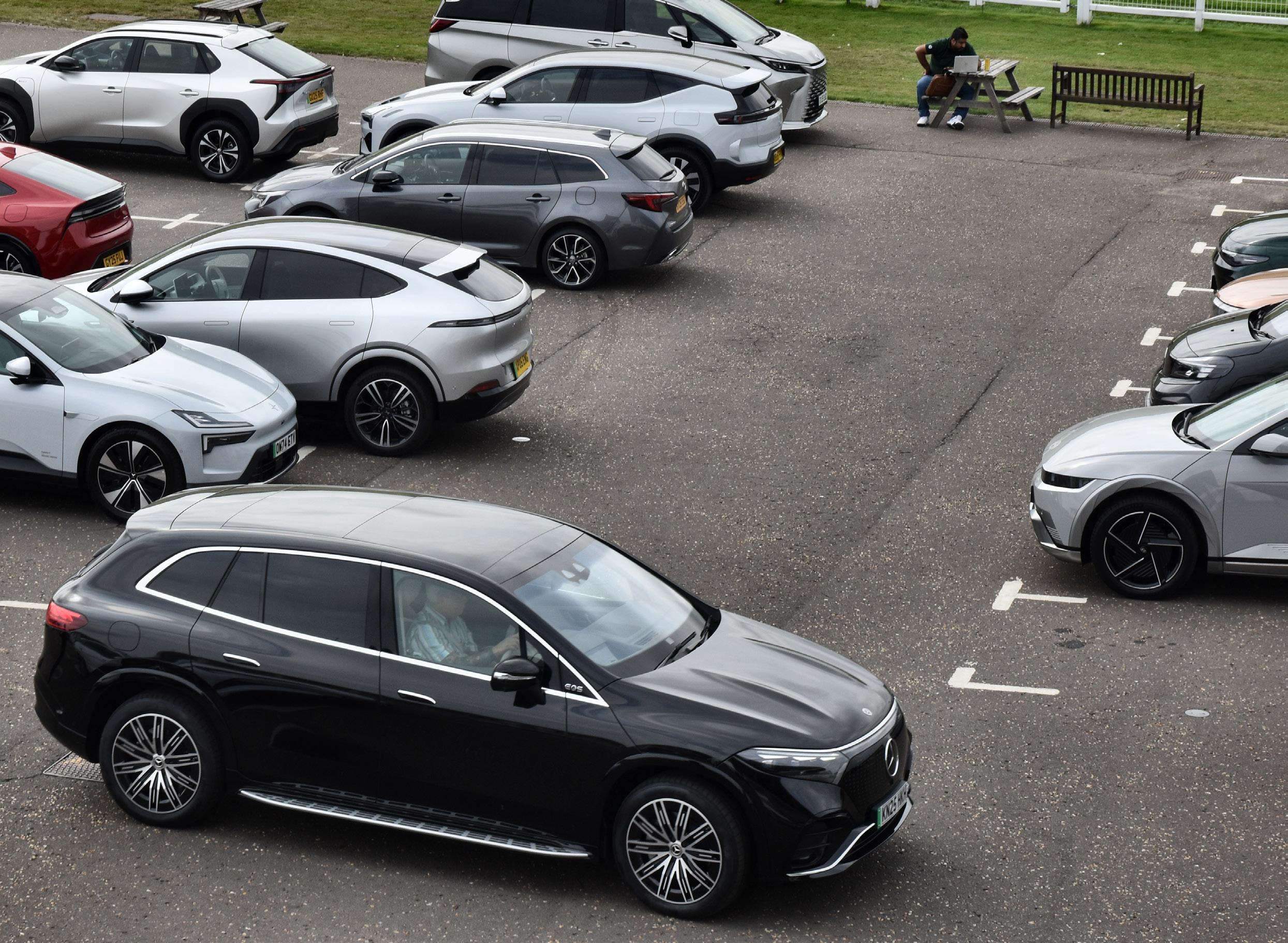
WINNING THE DEBATE: Making progress toward national standards for private hire operations ADVANTAGE CHINA: Chinese vehicles took centre stage at the 2026 Commercial Vehicle Show
EDITORIAL DIRECTOR
Mark Bursa
07813 320044
markbursa@prodrivermags.com
COMMERCIAL DIRECTOR
Paul Webb 07807 133527
paulwebb@prodrivermags.com
CONTRIBUTORS
Gary Jacobs, Kevin Willis, Tim Barnes-Clay, Dr Mike Galvin, Kwabena Dennot Nyack
Has the Government been paying attention? In the fog of battle over the thorny issue of private hire licensing, it does appear that sane voices seem to be prevailing. Following debates in both houses of parliament, the most damaging proposals relating to private hire licensing within the English Devolution and Community Empowerment Bill seem to have been removed.
Principally, the dreaded “ABBA proposal” – which would have forced journeys to either start or finish within the driver’s “home” licensing area, has once again been placed firmly in the bin, as it was the previous time it was proposed, back in 2018.
The ABBA proposal is a retrograde step in terms of passenger safety and the environment, as it would have resulted in a huge uptick in empty mileage. Nevertheless, one Greater Manchester MP tabled an amendment calling for it to be included in the Bill, while other supporters include the Unite union and Manchester Mayor Andy Burnham, who really should know better.
for vehicles and drivers are the same in every licensing authority (and costs too, hopefully), while allowing councils some leeway on local issues such as branding, CCTV or vehicle colour.
The next issue that needs to be addressed is the issue of different standards in London and elsewhere. While the London Black Cab remains a sacred cow that must have its own rules, despite dwindling numbers and the decreasing ability to make U-turns in one-way London, why should PHVs be treated differently? There is no reason why the London PHV sector needs different rules – and as we’ve seen by the £5m and rising in compensation that TfL has had to shell out, why should drivers be trapped in a broken system?
TfL continues to run its empire without a thought for the PHV operator. The license fee bands are absurd, and always have been. And now we have a ridiculous scenario where London PHV fares are subject to VAT while those elsewhere are not. Gary Jacobs covers this issue in his column on Page 34, which I’d encourage you to read.
“
In the fog of battle over the thorny issue of private hire licensing, it does appear that sane voices seem to be prevailing ”
There is considerable confusion about cross-border operation. In most cases, those Wolverhampton-plated cars are not Wolverhampton drivers. They are using the cheaper and more efficient Wolverhampton system to get a license.
This is at the heart of Andy Burnham’s confusion – along with the realisation that his council coffers are missing out on a revenue stream. And that’s hardly the fault of the drivers. If you want to compete with Wolverhampton, you’d better match them in cost and efficiency.
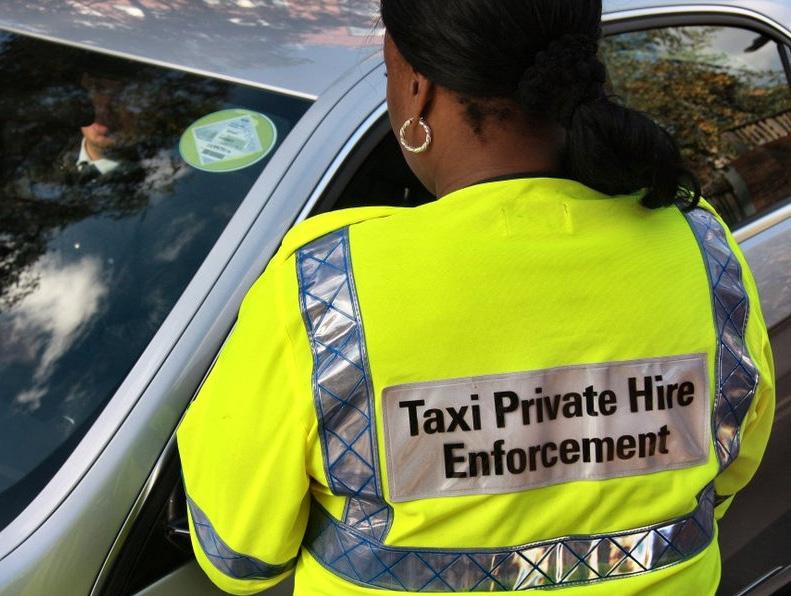
The other significant change is the decision to allow enforcement officials to inspect and, if necessary, suspend any driver or vehicle, regardless of where it is licensed. This is important, as it will mean Wolverhampton will no longer need to dispatch inspectors all across the country to monitor the cars it has licensed. If a Wolverhampton-licensed car is doing something wrong in Manchester, then the Manchester enforcement officers can deal with it.
This move alone is key to the real goal –true national standards for private hire. And the removal of the word “minimum” from the Bill is a massive win. We are now moving toward a scenario where basic standards
To end on a positive note, it’s good to see PHV and taxi included in the Department for Transport’s strategic thinking, acknowledging for the first time that the “first and last mile” element of a journey is likely to be carried out by car.
But here’s a thought – if private hire is to be considered as an integral and valued part of the public transport system (which it is!) then why should it be treated differently from other modes in terms of taxation?
Buses, trains and trams are all zero-rated for VAT. If we’re looking at joined-up journeys, why should VAT be charged only on those first and last miles? Surely there is a strong case for PHVs to be zero-rated too, which would end that debate. It’s not as if HMRC would be losing billions – most PHVs are operated on some form of margin scheme, or use self-employed drivers who don’t fall within the VAT regime.
And you can’t even use the “green” card nowadays, as PHVs are increasingly clean, green and electric. Cleaner, in fact, than buses and trains in terms of emissions.
So let’s stop debating margin schemes and arguing about who is the “principal”. Private hire is public transport. Level up and zero-rate us for VAT.
Veezu expands into Luton with Go Cars and Spearhead deal
Mark Bursa
Veezu has acquired Luton-based Go Cars, the largest private hire operator in Bedfordshire. The move adds 600 cars to the Veezu fleet and gives Veezu access to Luton and surrounding commuter towns including Dunstable.
The Go Cars deal also includes subsidiary Spearhead Cars, based at Leagrave to the north of Luton.
The move is as part of Veezu’s plan to build national private hire capacity outside London.
It is the second major deal for Veezu this year following the acquisition in March of two operators in Ipswich.
Go Cars was founded in 2010 through a merger of a number of Luton taxi firms. Its fleet has grown from 260 cars in 2010 to more than
600 vehicles The Veezu name will be adopted across all Go Cars and Spearhead vehicles, and the fleet will be integrated into Veezu’s platform.
This is expected to enhance service coverage across the Home Counties, linking existing operations in Cambridgeshire and East Anglia.
Go Cars owners Ty-
ler Pickford and Qasim Hussain are believed to be staying with the business. Luton’s position as a commuter hub has been a key factor in the deal. The town offers a direct 30-minute rail connection to central London, while Luton Airport is the UK’s fifth busiest airport, handling 16.7 million passengers in 2024.
The Veezu app will bring real-time vehicle tracking, enhanced address search and multiple payment options such as Apple Pay and Google Pay for Go Cars customers.
Veezu was founded in South Wales in 2013, and now operates across hundreds of towns and cities. It is licensed by 63 local authorities, and completes more than 25 million journeys annually using self-employed driver-partners.
Veezu CEO Nathan Bowles said: “We’ve always been clear in our ambition to build a truly national network, with a Veezu flag in every region of the UK.”
Bowles added: “Our expansion into Luton is a strong example of that in action, as we continue to grow a network of local transport hubs.”
DfT report promotes taxis as last-mile transport
Mark Bursa
The Government has earmarked private hire vehicles and taxis to play a defined supporting role in England’s future transport network, according to the Department for Transport’s ‘Better Connected’ strategy.
The Better Connected report outlines how taxis and private hire vehicles would play a key role offering “last mile” travel to complement bus and rail transport as part of an integrated public transport system designed around user experience rather than individual transport modes.
essential for bridging gaps in the transport network, particularly for first and last mile journeys.
The strategy marks a shift in policy thinking, moving away from siloed transport planning towards a network built on joinedup journeys.
Within urban areas, the strategy identifies taxis and private hire vehicles as
They are also expected to provide services during off-peak periods when traditional public transport is less available, supporting both late-night travel and the wider night-time economy.
The report states that taxis and PHVs should act as a flexible layer within subur-
ban and rural transport systems. In these areas, where fixedroute services are often less viable, the sector is expected to complement demand- responsive transport and community transport schemes, helping passengers connect to mainline bus and rail services.
The strategy also states that wheelchair-accessible vehicles would play a key role in disability transport, closing accessibility gaps in the wider network.
The App Drivers and Couriers Union has welcomed the Better Connected strategy. Cristina-Georgiana Ioanitescu, the union’s general secretary, said: “For too long, private hire drivers, who are the backbone of our transport network, have been sidelined in negotiations, leading to regulatory burdens that disproportionately affect them.”
ACDU demands fuel priority for private hire drivers
The App Drivers & Couriers Union is calling on the government to guarantee fuel access for private hire drivers in the event of petrol shortages resulting from the war in Iran.
With petrol and diesel prices soaring since the US and Israel launched military attacks on Iran in late February, operators have no option but to pass on the extra costs in the form of higher fares.
By the last week of April diesel prices were around £1.89 per litre, with petrol around £1.57, according to the AA.
ADCU said failing to secure fuel priority for PHV drivers would have serious consequences for vulnerable passengers,
and others who rely on private hire services for essential journeys – including access to medical appointments, and schools transport.
Cristina-Georgiana Ioanitescu, general secretary of the ADCU, said: “Private hire and app-based taxi drivers are a vital part of our integrated transport system. When buses and trains are inaccessible or unavailable, we are the ones transporting carers, key workers, and people with disabilities safely to their destinations.”
“If our drivers can’t fuel up, entire communities will be cut off. The government must recognise PHV drivers as essential transport workers and ensure they have
priority access to fuel in any future shortage.”
ADCU is calling on the Department for Energy Security and Net Zero to explicitly include PHV drivers in the National Emergency Plan for Fuel, guaranteeing them the same essential worker status and priority refuelling access as emergency services and public transport operators.
“The government’s current focus on energy companies and logistics firms is too narrow,” said Ioanitescu. “Resilience in the fuel supply chain isn’t just about refineries and tankers. It’s about ensuring the people who keep passengers moving can keep working.”
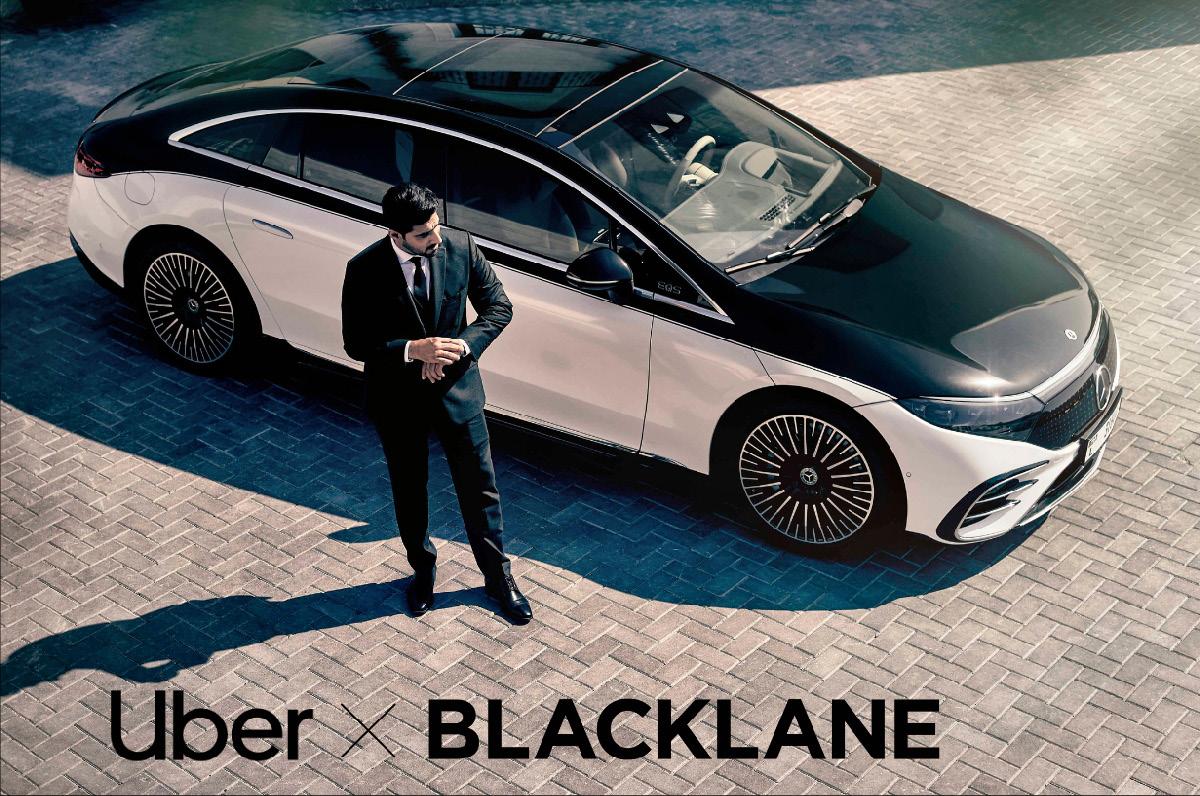
Uber boosts role in chauffeur sector with Blacklane takeover
Mark Bursa
Uber has taken a major move into the global chauffeur sector with the acquisition of chauffeuring platform Blacklane for an undisclosed sum.
The deal is subject to regulatory approval and is expected to be completed by the end of the year. Blacklane was valued at $547.32 million after a funding round in October 2024, according to PitchBook data.
The acquisition follows last week’s announcement that Uber was setting up a global chauffeuring platform of its own called Uber Elite. This was being piloted in several US cities with a view to a global roll-out.
However, Blacklane gives Uber the capability to offer an executive service much more quickly, as Blacklane already operates in over 500 cities across more than 60 countries.
Uber said it was targeting executive travel as a lucrative segment of its business, driven by strong demand for planned, high-quality trans-
port services. Pre-booked Uber Reserve trips in particular have become one of the fastest-growing parts of Uber’s mobility business.
An Uber statement was unclear on how Uber Elite and Blacklane might work together. It stated: “After the transaction is complete, the acquisition of Blacklane will further accelerate Uber’s recently-announced move into the chauffeur sector with Uber Elite, and support Uber’s ambition to deliver best-in-class service to more customers around the world.”
Uber CEO Dara Khosrowshahi hinted that the two
services could continue in parallel. “Premium travel is one of the most exciting growth areas of Uber’s business,” he said. “We want to offer the widest selection of options from the everyday commute to luxury rides.”
It looks likely that the Blacklane brand will continue. Khosrowshahi added: “We’re incredibly impressed by what Blacklane has built and we’re eager to work with them to amplify how we deliver truly exceptional service to more people in cities around the world.”
Blacklane was founded in Berlin, Germany, in 2011 as
a platform to offer chauffeur services of a consistent standard on a global basis, connecting customers with independent local chauffeur services via an app and web booking platform.
“Blacklane’s growth to date has been founded on consistently excellent service, wherever in the world our guests move,” said Blacklane founder and CEO Dr. Jens Wohltorf.
“Fifteen years after our vision to make premium travel frictionless, we are bringing luxury hospitality expertise to Uber as a leading player in mobility. This partnership marks a significant milestone in Blacklane’s next chapter and is a powerful step-change in introducing our service to new markets globally,”
The statement added that Blacklane and Uber would benefit from each other’s expertise. “Blacklane’s luxury service and specialist knowledge, combined with Uber’s global scale and technology, will deliver a powerful platform for growth,” it said.
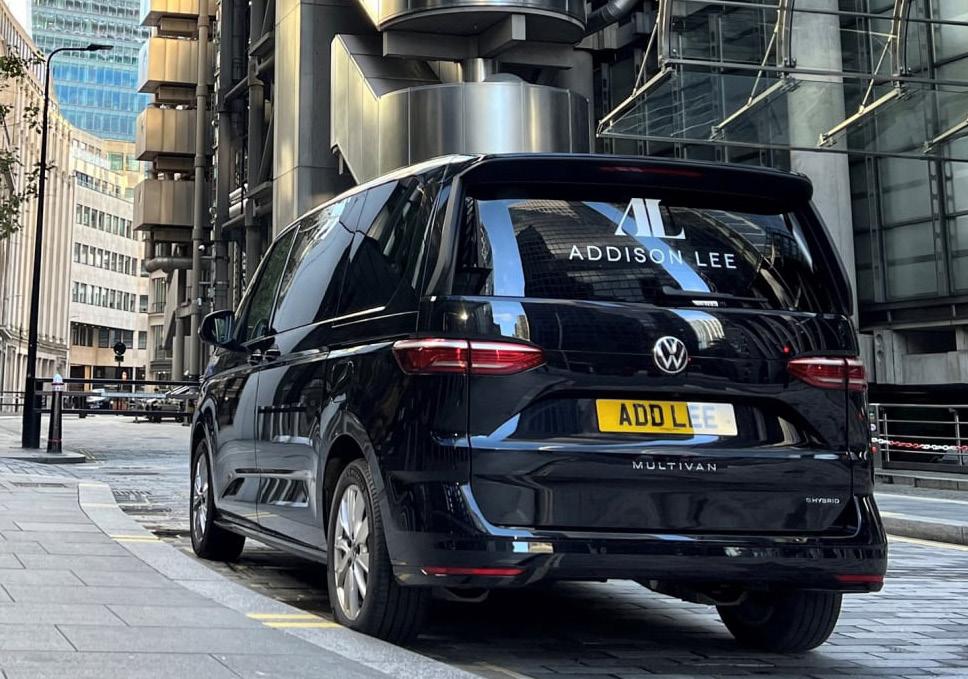
Addison Lee considers appeal as tribunal rules in favour of drivers
Mark Bursa
Addison Lee is considering an appeal against an employment tribunal ruling over compensation to drivers who should have been treated as “workers” rather than self-employed contractors.
An employment tribunal in Watford has ruled in favour of more than 920 Addison Lee drivers as to how their compensation and working time should be calculated. Lawyers at Leigh Day, which represented the drivers, estimate that drivers’ total compensation is likely to exceed £20 million.
Addison Lee had argued that the three lead claimants should receive compensation of between around £500 and £4,000. But the court supported Leigh Day’s view that the claimants could be owed between £35,000 and £65,000 each, plus interest.
The judgment confirmed drivers were entitled to 5.6
weeks of paid holiday per year, and that drivers are paid on a weekly basis. The court backed the drivers’ position on how their working time should be assessed. Addison Lee argued that the time drivers spend logged into the app waiting for jobs should not count as working time, but the tribunal ruled it should count, except when drivers remained logged in after finishing a shift.
The tribunal also confirmed that newer claims can be combined with existing ones, and drivers will receive interest at 8%
per year on holiday pay compensation owed. The court also agreed with their approach on how fuel costs should be calculated.
Liana Wood, employment solicitor at Leigh Day, said: “This is an excellent result for Addison Lee drivers who have succeeded on almost every significant issue before the tribunal. The judgment recognises the reality of the work these drivers carried out over many years and ensures they will be properly compensated for unpaid holiday and national minimum wage.”
She continued: “It is particularly important that the tribunal confirmed drivers’ claims were not broken by the Covid-19 pandemic, meaning many can recover compensation for their full periods of work. We look forward to finally securing the compensation our clients are owed.”
The tribunal previously ruled in January 2025 that drivers were entitled to workers’ rights such as holiday pay and minimum wage. An appeal hearing is listed for January 2027.
An Addison Lee spokesperson said: “We are considering our options, including our right of appeal, following the recent Employment Tribunal judgment. It is clear from the judgment itself that this does not offer a decision which can be applied to the wider group claims. With both sides having submitted appeals, and potentially more appeals to come, there is clearly a long road ahead to reach a final outcome.”
Local operators unhappy as Uber returns to Swindon
Mark Bursa
Uber has returned to Swindon and launched in Salisbury, as the ride-hailing giant continues its drive into major UK towns and cities.
The US operator was granted a private hire operator license by Swindon council last year, though no announcement was made at the time.
Uber had held a license in Swindon until 2018, but did not renew it. Uber is now fully operational in the town, as well as in Salisbury, where it has also been granted a license.
Local operators are unhappy with the decision to grant Uber a license. A spokesman for Swindon Taxi told the Swindon Advertiser that Uber had “already made it
harder” for them, and was affecting their business.
David Curwen, who runs Valley Wide Taxis, said independent companies in towns such as Chippenham and Trowbridge could see trade negatively impacted by the arrival of Uber, but that operators in rural areas may avoid the new competition.
“Uber operates on short, frequent runs,” he told the BBC. “People have tried to book Ubers here already and Uber drivers accept it, but then they decline it because it's so far away. Our average journey takes half an hour. Whereas Ubers rely on five minutes and ten minute jobs.”
Curwen said towns such as Chippenham, Trowbridge, Salisbury could be impacted by Uber but “for little rural villages, I don't think Uber will work”.
Swindon Borough Council said that licenses were issued on a case-by-case basis in line with their taxi licensing policy, but felt there was a need for more PHVs in the area.
In a report to councillors, the council’s head of service passenger transport said: “Falling vehicle numbers has a significant impact on our Passenger Transport Unit as taxis are a vital element of the school transport solution. Uber will drive forward levels of service within the county and provide a better service to the public.”
Andrew Brem, general manager of Uber UK, said he was “delighted that we’re launching Uber in Swindon and Salisbury, giving people in the city an option to take a safe, affordable ride at the touch of a button”
GMB calls on airport to improve ‘disgusting’ facilities
GMB union has called on Birmingham Airport to fix the “disgusting” facilities that private hire drivers using the airport face having to use.
Drivers are forced to pay to use bathrooms “caked in grime”, while waiting for passengers arriving at the Midlands’ largest airport, the union said
A recent survey of drivers found bathroom facilities caked in grime and waste, and no waiting areas for drivers, except the paid-for multi-storey NCP car park.
The automatic payment system often failed and generated fines of up to £500. And Muslim drivers were forced to observe Ramadan prayers on a car park floor due to the lack of appropriate facilities.
GMB Organiser Kate Gorton said: “Private hire taxis are an essential component of any modern airport. That is why it is an absolute disgrace that the men and women driving them are being asked to endure such dire conditions at Birmingham airport. This is one of the UK’s busiest airports, which seems totally unable to provide even the most basic waiting areas or facilities for the drivers to
keep the airport moving.”
She continued: “If so many UK airports can offer drivers basic facilities and waiting areas, why are our members in Birmingham being asked to use filthy bathrooms and pay for the privilege? We’re calling on private hire taxi drivers around Birmingham Airport to get involved with the campaign to deliver the services our members deserve.”
Uber’s Hiemstra replaces Alkateb as CEO at dispatch giant Autocab
Mark Bursa
Autocab has moved quickly to replace departing CEO Safa Alkateb, who is leaving the dispatch systems provider in June after 14 years to explore a new, unspecified challenge.
Experienced former Uber executive Frans Hiemstra (pictured) will take over as CEO. Hiemstra brings a decade of experience across international markets in taxi, fleet and private hire businesses with Uber.
The move signals a continuing shift in Autocab’s business away from a main focus on UK operators and a greater emphasis on serving large global fleets. Alkateb had been moving the business in this direction and the leadership change “marks an opportunity to build on this success, with continued investment into its world-class technology to help more operators reach
new customers”, Autocab said in a statement.
Hiemstra said: “Autocab is a brilliant independent British business, and I’m delighted to now be part of that team. Over the past 10 years, I’ve had the chance to work across a number of markets and business models in the taxi, fleet and private hire sectors, and have seen first-hand how transformative Autocab’s technology can be. There’s a strong opportunity ahead to invest in Autocab as we work to help
even more independent taxi companies across the world scale and grow.”
Outgoing CEO Safa Alkateb said: “Autocab has grown from an ambitious young business into a company that genuinely shapes our industry. With a strong foundation in place, I know the business will continue to thrive, maintaining the continuity and stability we’ve worked so hard to build.”
Manchester-based Autocab was established in 1989 and operates in more than
30 countries. It was controversially acquired by Uber in 2020, and was central to Uber’s Local Cab plan, under which local operators signed up and received Uber bookings via the Autocab system.
However the strategy was abandoned in 2023 as post-pandemic driver shortages meant operators prioritised their own work over Uber jobs. Uber has subsequently resumed its previous plan of launching its own services in major UK towns and cities.
The Uber deal has provoked a backlash against Autocab, with a number of operators defecting to rivals iCabbi and Cab9. Autocab has meanwhile focused on international business, such as zTrip, the largest taxi fleet operator in the US, which switched to Autocab last October. zTrip operates a total of 3,600 vehicles in 40 cities across 20 states.
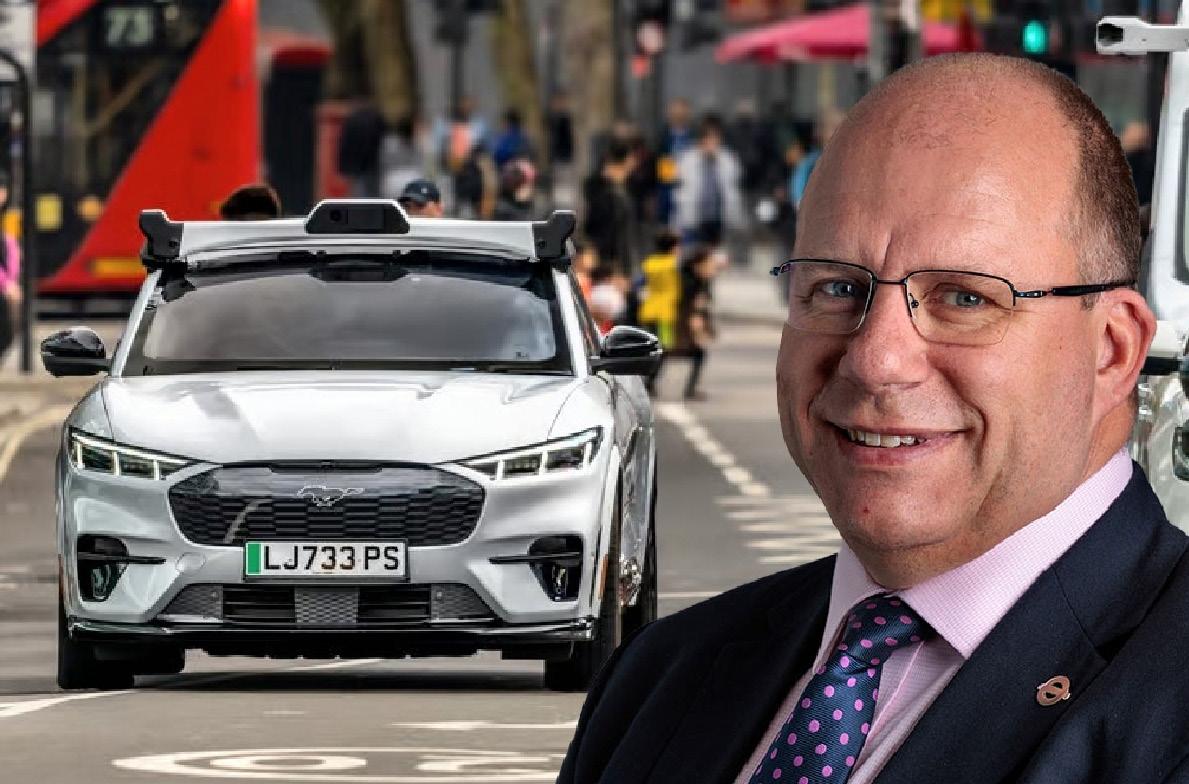
TfL could block ‘unproven’ Robotaxis in London, says commissioner Andy Lord
Mark Bursa
Transport for London could block autonomous taxis from carrying out fare-paying work in the capital, according to transport commissioner Andy Lord (pictured).
In response to a question from Green AM Caroline Russell, who asked if TfL could block AV passenger services, Lord said: “My understanding is that they will have to meet the current regulatory requirements. We do have the powers, if they do not meet those standards, to refuse them a licence.”
A number of driverless taxi services are running pilot schemes in London, with the intention of starting full services in September, but Lord said this was far from certain.
“Autonomous vehicles would have to meet our current private hire regulatory requirements, and no driverless vehicle would comply as it stands,” Lord told the London Assembly’s Transport Committee.
The Automated Vehicles Act 2024 provides the legal framework for AVs to operate, but also contains provisions to “disapply” current licensing rules. AV taxi permits would effectively be issued by the government, through the Driver and
Vehicle Standards Agency, but these permits would require the consent of the local authority, which would allow TfL to veto their use in London.
London Mayor Sir Sadiq Khan said last December: “While we want London to be the global capital of innovation, enterprise and creativity, this must not be at the expense of jobs and livelihoods. TfL must consent before automated passenger service permits can be issued in London.”
Khan’s transport deputy Seb Dance also appears unconvinced by so-called robotaxis, describing the technology as “unproven”,
and saying “an awful lot of work” needed to be done to determine whether AV technology would benefit safety.
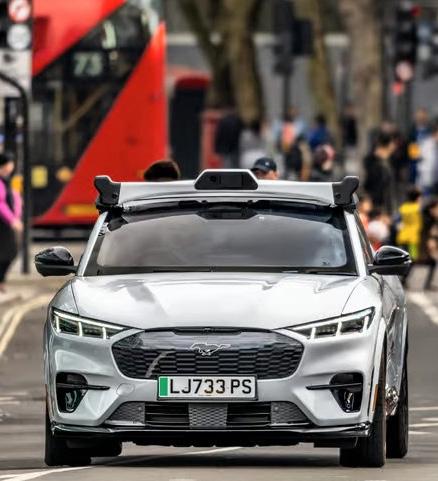
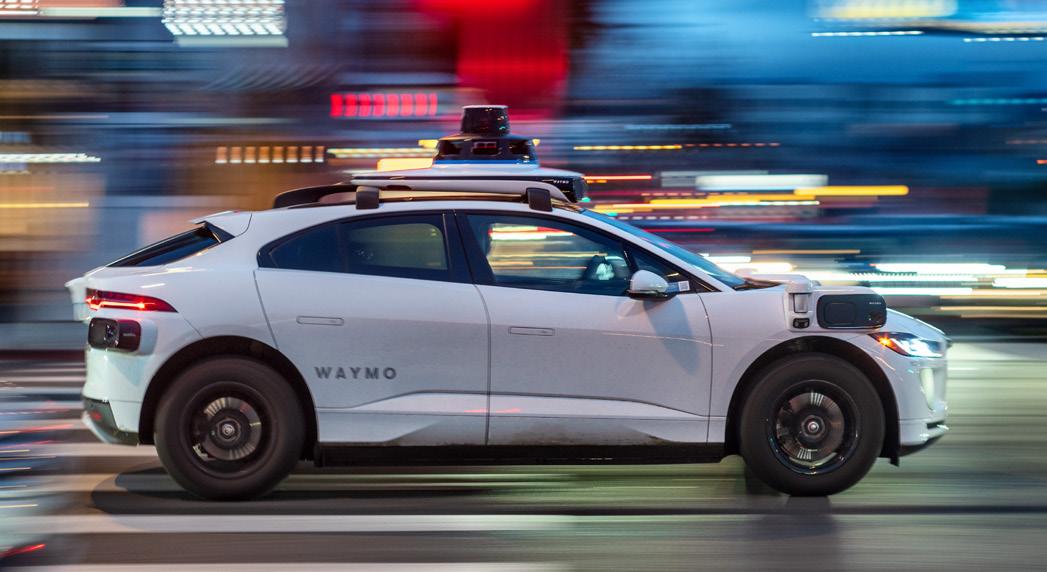
AV companies already testing services in London include Wayve, backed by Microsoft and Uber, and California-based Waymo (pictured below), owned by Google parent Alphabet. Both have experience of running robotaxis in the US, and are adamant their products are safe.
But they will need the consent of Transport for London in order to start operating, and this may require new regulations and a new classification of the vehicles.
Last year Christina Calderato, TfL director of transport strategy and policy, said: “The AV offering as we understand at the moment would be outside of that kind of taxi or bus regulation.”
And Helen Chapman, TfL’s director of licensing, regulation and charging, suggested AV operations may require some kind of
permit, but admitted nothing could be done until the government passes legislation.
At the Transport Committee meeting, further concerns were also raised around accessibility, security and safeguarding as well the impact on the livelihoods of current taxi and private hire drivers. These are under “massive threat” ac-cording to Liberal Democrat AM Hina Bokhari.
Dance said the Mayor’s recently-launched AI taskforce would be considering those implications for the city. He also promised continued support for London’s black cabs. “The black cab is a strong symbol of the city and we are very, very keen that it remains so,” he said.
There are also fears that a proliferation of robotaxis could also increase congestion and pollution levels, the committee heard. Private hire numbers were already heading towards “unsustainable” levels, Lord said, with some 130,000 PHVs registered.
protection that fits the way you drive
With more chauffeurs working through app-based platforms like Blacklane and Wheely, we’ve expanded our offering to reflect how the industry is evolving.
Our advice is built around understanding your world – giving you cover that supports the way you work today. At Howden, we get you. Speak to a specialist who understands your business.
Your contact for independent drivers and fleets under six vehicles: Your contact for fleets of six or more vehicles:
Cameron Scott
T: 020 8036 3968
E: cameron.scott@howdeninsurance.co.uk
Ricky Chivers
T: 020 8256 4916
E: ricky.chivers@howdeninsurance.co.uk
Howden UK Brokers Limited is authorised and regulated by the Financial Conduct Authority No. 307663. Registered in England and Wales under company registration number 02831010. Registered Office: One Creechurch Place, London, EC3A 5AF. Calls may be monitored and recorded for quality assurance purposes. HUBL-CS-CH-035-0326 howdengroup.com/uk-en/blacklane-wheely
Eagle partners Bespoke London to offer UK-wide chauffeur service
Mark Bursa
Two UK chauffeur operators have set up a partnership aimed at offering a national service.
Teesside-based Eagle Chauffeuring has joined forces with Bespoke London Chauffeuring (BLC) with the objective of creating a single, coordinated service for high-net-worth individuals and businesses travelling across the UK.
Eagle is a fast-growing company based in Thornaby, serving Teesside, Durham and Newcastle-upon-Tyne. The company was only founded in 2025, initially with six vehicles, but aims to have 30 cars by the end of 2026. The collaboration with long-established BLC will link London’s luxury transport market with the north-east’s main corporate and industrial markets.
Under the arrangement, the two companies will
integrate booking processes, align fleet standards and adopt shared driver protocols to ensure a consistent, high-quality experience.
The two firms expect demand for cross-regional executive travel to continue growing as businesses increase travel between London and the north-east.
Eagle Chauffeuring CEO Babar Malik said the
partnership reflects both the pace of the company’s growth and the evolving expectations of its clients.
“Since launching Eagle last year, we’ve grown far faster than we expected, and more of our clients now want national coverage without having to juggle multiple providers. BLC has long set the benchmark in London, and working alongside
Sajeel and his team allows us to match that standard seamlessly from the North East to the capital.”
Sajeel Akbar, CEO of Bespoke London Chauffeuring, said the two companies shared a similar approach: “Our clients trust us with their most important journeys, and they expect the same discretion and reliability whether they’re in Mayfair or Middlesbrough. Eagle’s approach mirrors our own, and their momentum over the past year has been impressive. This partnership gives clients a single, uninterrupted experience wherever they’re travelling.”
Eagle is an innovative operator in the north-east and last year launched a scheme aimed at increasing the number of women in the private hire trade. It has already signed up its first female driver under the scheme.
TfL compensation over licence delays hits
Transport for London has compensated more than 16,000 taxi and private hire drivers affected by licensing delays with “goodwill payments”.
In response to a formal question from Elly Baker AM, London Mayor Sadiq Khan confirmed that 16,000 payments had been made as of mid-March 2026, and more drivers were likely to receive the payments.
The total financial impact on TfL has not been revealed as officials are still assessing the full extent of claims. But with goodwill payments set at £310 for PHV drivers and £300 for hackney drivers, plus a bigger payment of £500 for drivers who were without a license for 7 days or more, the total already paid out is in excess
of £5 million – and it could be substantially higher.
The basic payments are equal to a refund of both the drivers’ Application Fee and Grant of Licence Fee. The goodwill payment scheme was introduced to compensate drivers who experienced delays while licences
through the final numbers to ensure all those eligible receive a goodwill payment.”
The scheme was introduced following delays linked to the rollout of new licensing soft ware and recovery from a cyber security incident. These issues disrupted the renewal process
£5 million
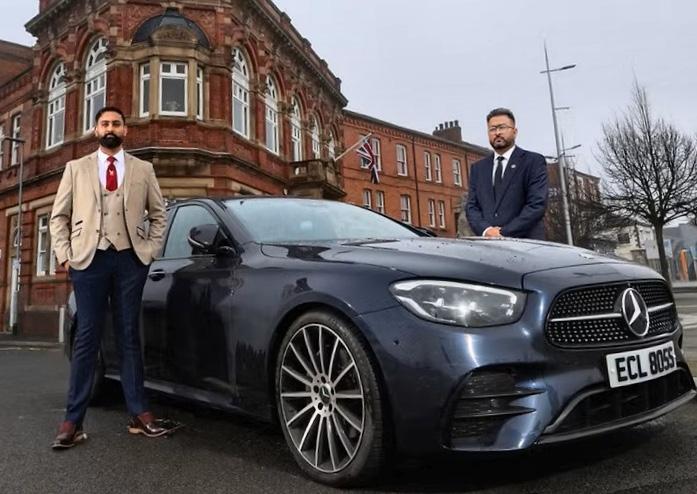
Babar Malik (left), CEO of Teesside-based Eagle Chauffeuring and Sajeel Akbar, CEO of Bespoke London Chauffeuring
Advantage China
China is taking the van market seriously, with new brands and new concepts. Mark
Bursa reports
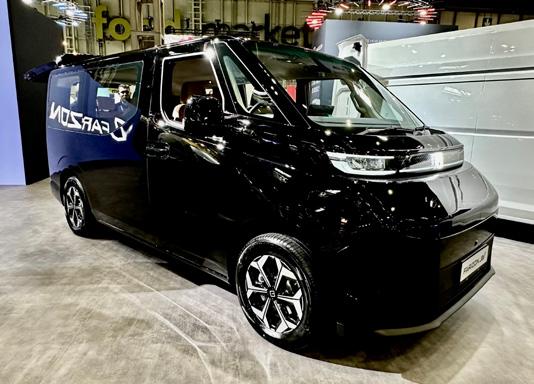
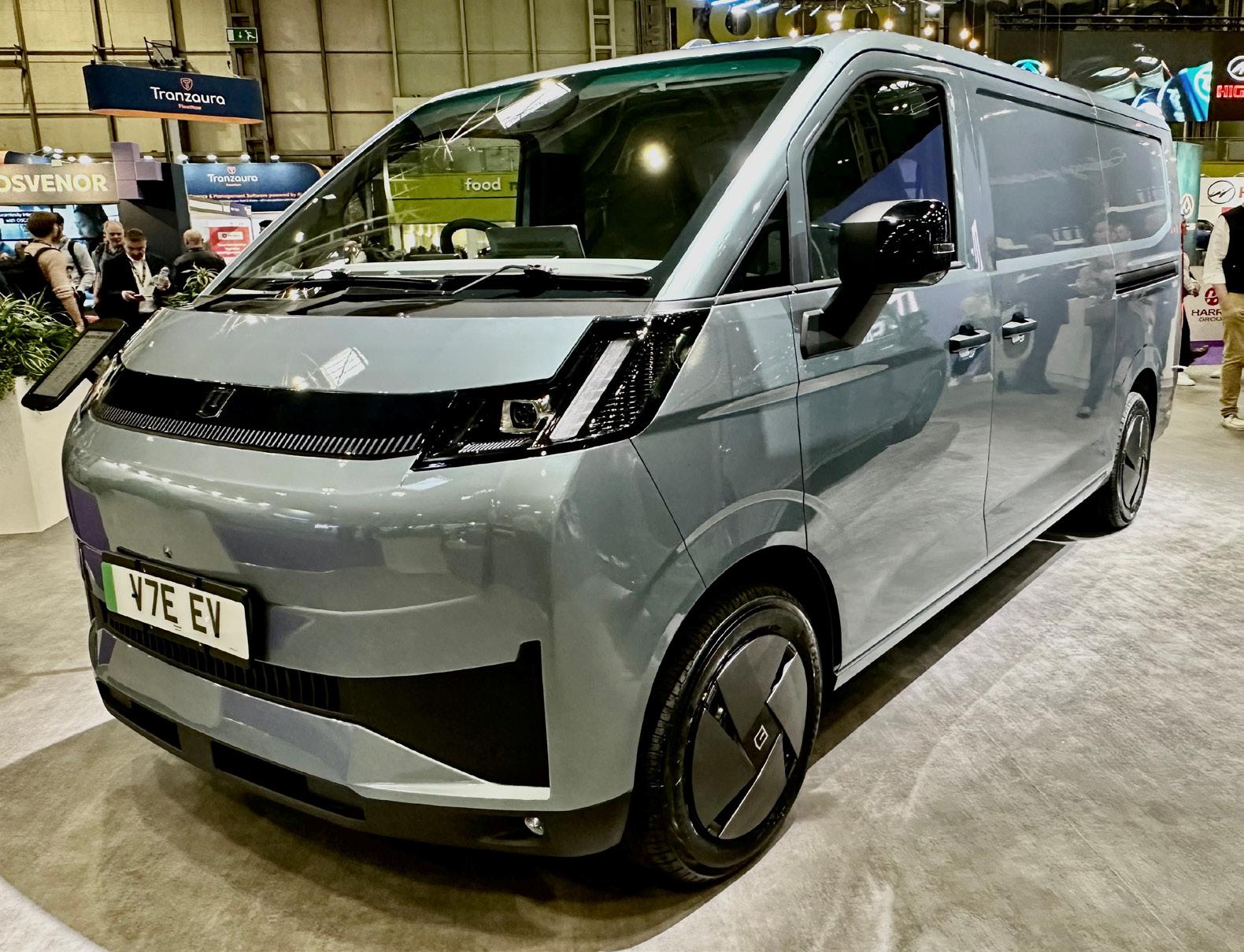
Farizon V7E
Farizon launched at last year’s show, and this year the company is back with a second electric van range, the V7E. This is smaller and cheaper than the existing Farizon SV van, and designed for urban work such as courier or multi-drop delivery jobs.
Conceptually and dimensionally, it’s very similar to the Ford Transit City – obviously a popular size in China. It’ll be similarly priced too, at around £29,000. And you’ll be able to order one soon as sales start in the first half of 2026.
The front-wheel-drive V7E is offered with either a 50kWh or 67kWh battery, delivering up to 204 miles of range. It can take a payload of up to 1,338kg.
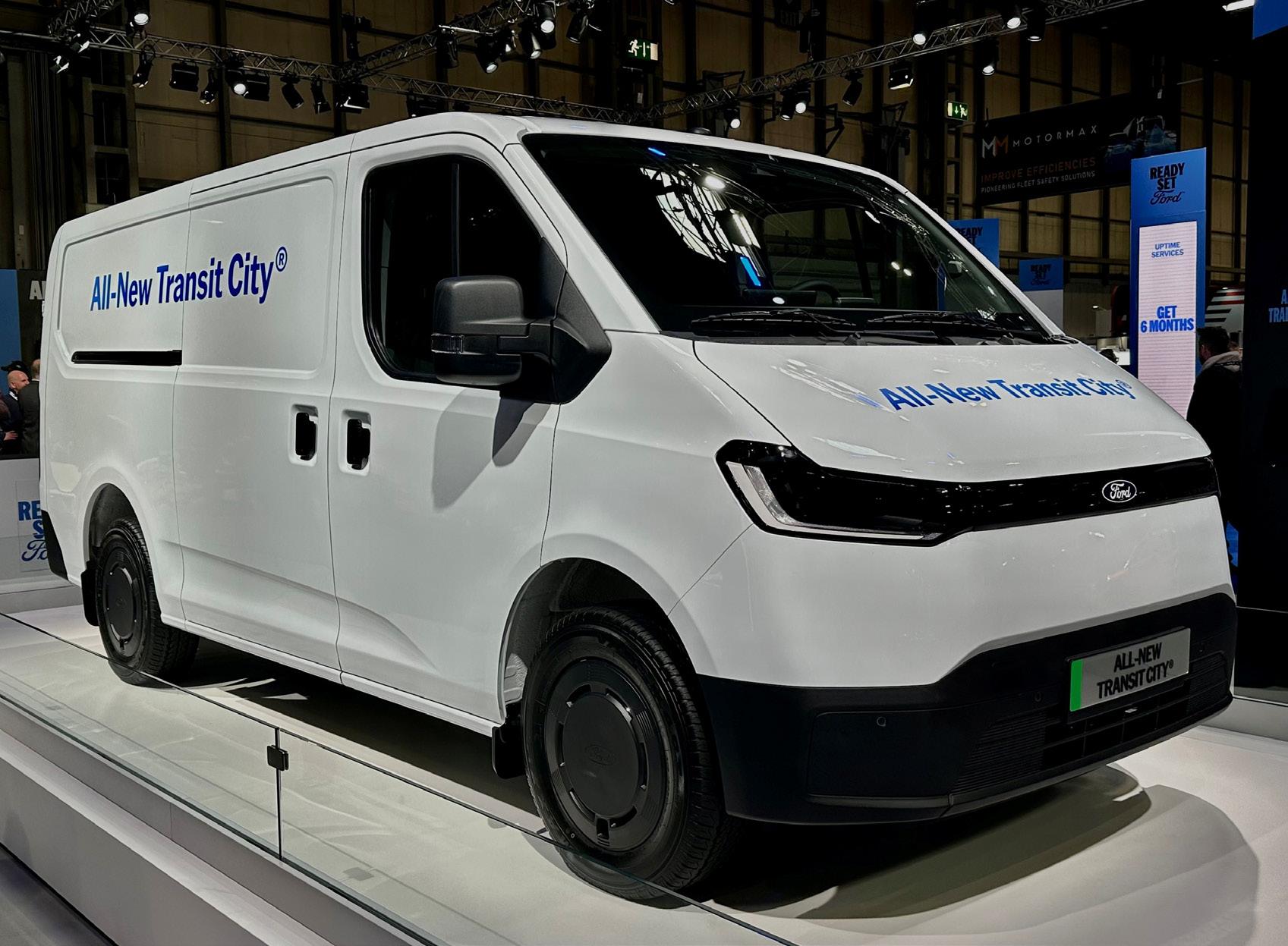
Ford Transit City
Ford has taken a novel approach to offering an affordable electric Transit. Rather than develop a new van in house, it has sourced the new Transit City from Jiangling Motor, Ford’s assembly partner in China.
The Transit City EV has been developed and built in China and is designed to slot between the Transit Connect and Transit Custom models. It’s targeted at urban delivery and courier operators, with a 160-mile range and 1.275-tonne payload. 67kW DC charging allows 10-50% recharging in 30min, or an overnight AC charge in around 5hr.
It’ll only come as a van – there won’t be a seated version. Transit City goes on sale towards the end of the year, priced at around £29,000.
Farizon SV1
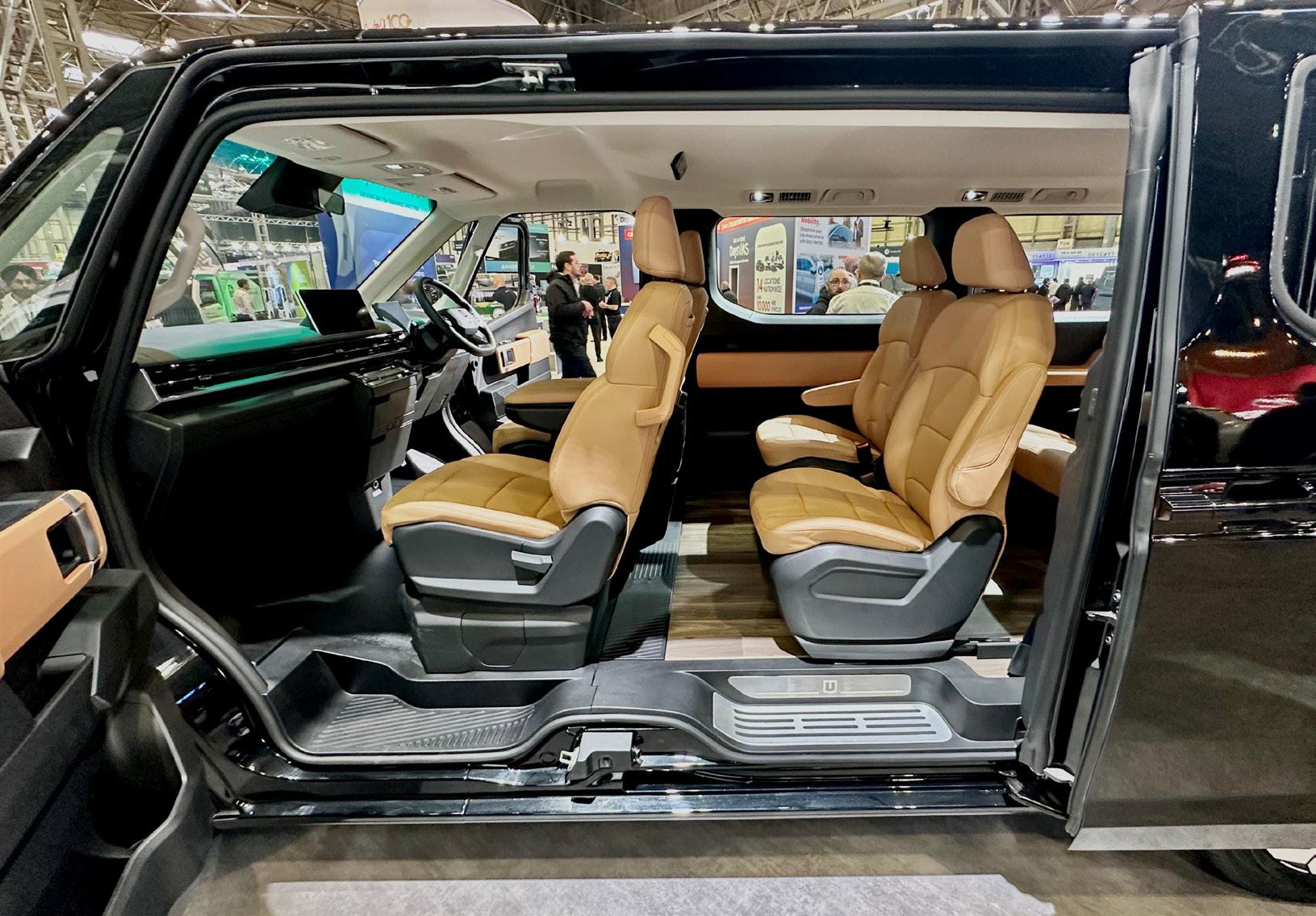
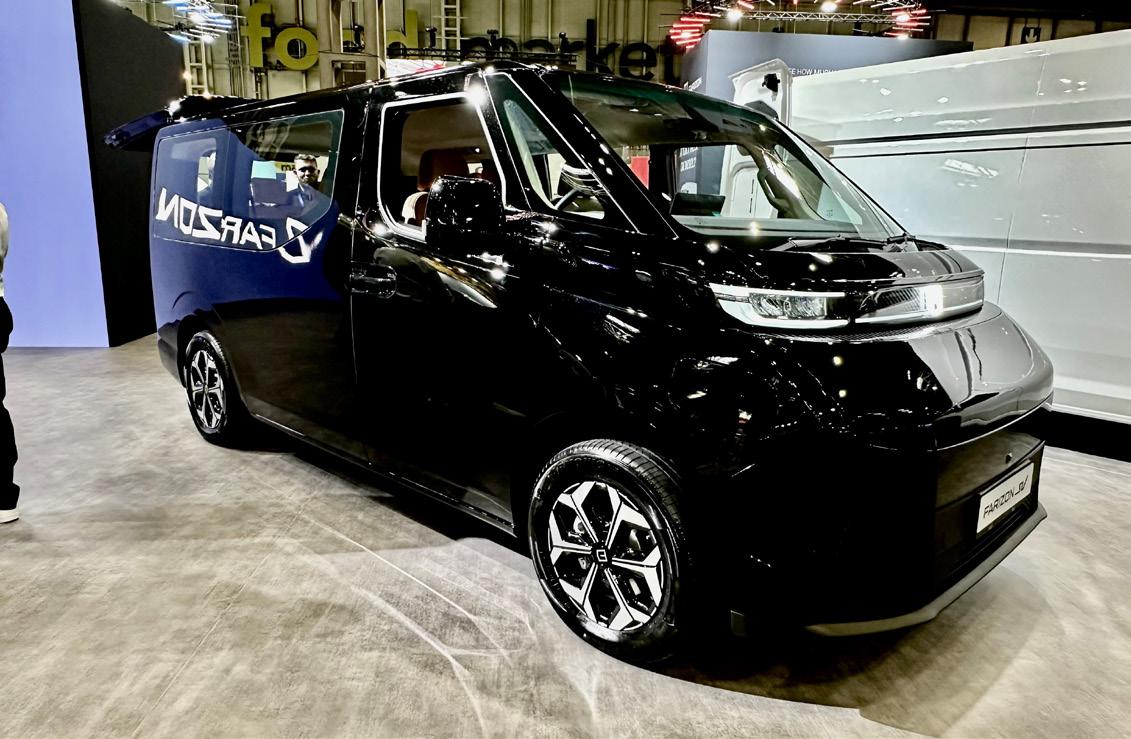
Last year Farizon promised it was looking at a passenger-carrying version of its SV panel van, and 12 months later it was back with a concept car.
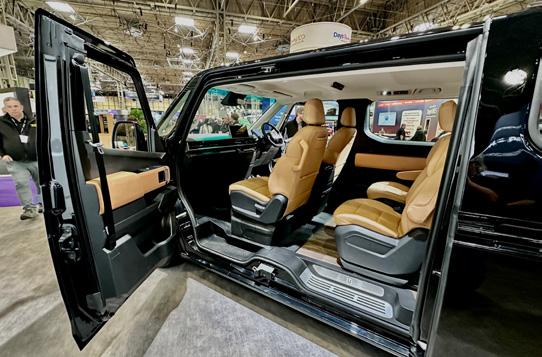
The passenger version of the electric SV has been assembled using off-the-shelf parts available in China. But for the project to proceed, Farizon is looking for a local converter to build the cars in the UK. If it can find a suitable partner, the SV could be on sale as early as 2027.
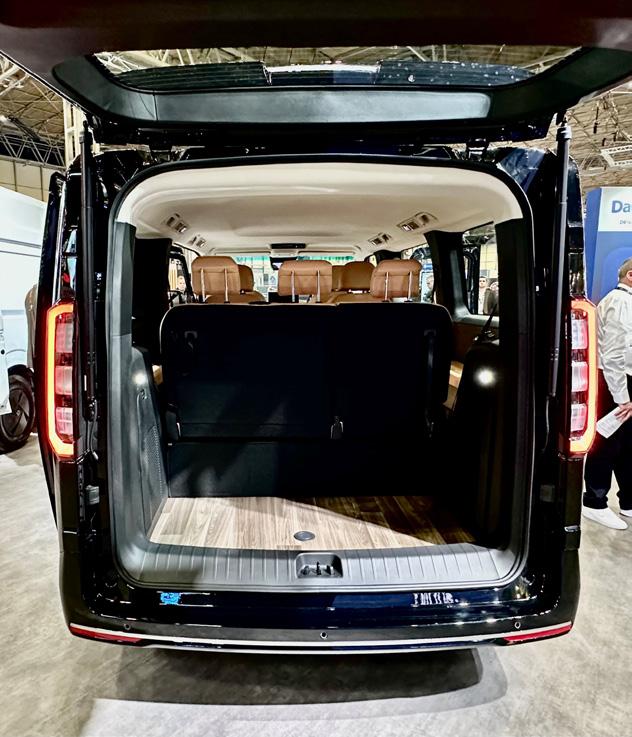
The SV has no B-pillar, giving an extremely wide cabin access door. The 7-seater layout includes individual second row seats, plus plenty of luggage space. It has a range of 235 miles, and 20-80% DC charging in 36min using a 140kW charge point.
Farizon is the commercial vehicle arm of Chinese automaker Geely, which also sells Volvo, Polestar, LEVC and Geely cars in the UK. A similar passenger SV1 is on sale in the UAE, while a specialist taxi version is available in China.
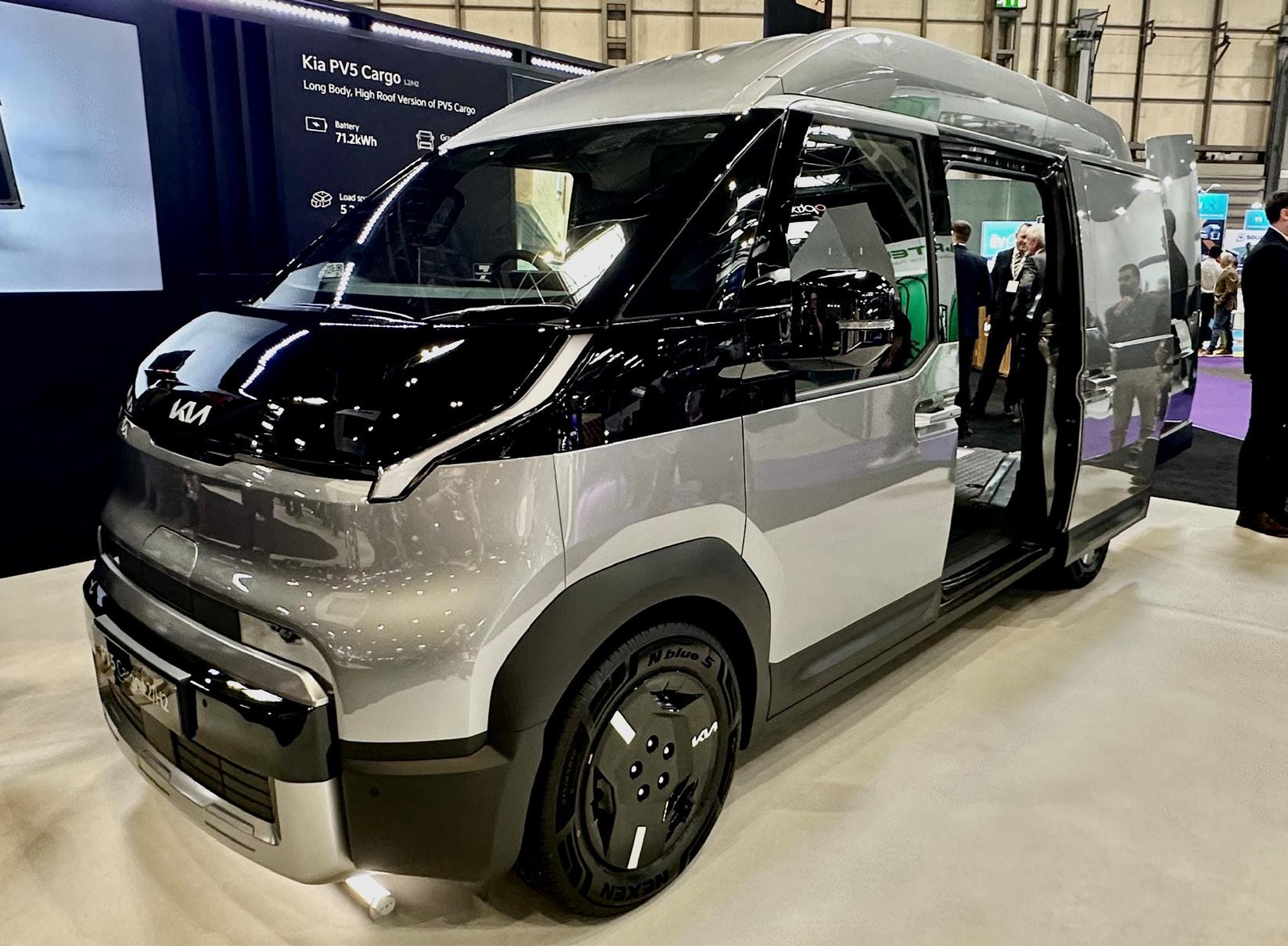
The electric Kia PV5 was one of the stars of the 2025 CV show, and Kia’s entry to the CV market is gathering pace.
A 5-seater passenger version is already on sale, and Kia confirmed that the 7-seater PV5 will be arriving in the UK in the summer, with sales expected to start in September. Luxury versions and wheelchair-accessible PV5s are under development. Meanwhile a high-roof van version (pictured) was launched at the NEC, which should appeal to operators looking to carry bulky goods. Kia is serious about the CV sector and is likely to follow the PV5 with two larger models, PV7 and PV9.
Kia PV5
Delivan concept van and Chery Micro Cargo
Chinese automaker Chery has built a rapid presence in the UK through the success of its Jaecoo and Omoda car brands. For the CV sector, it is taking a different approach, with a new, specific CV brand called Delivan.
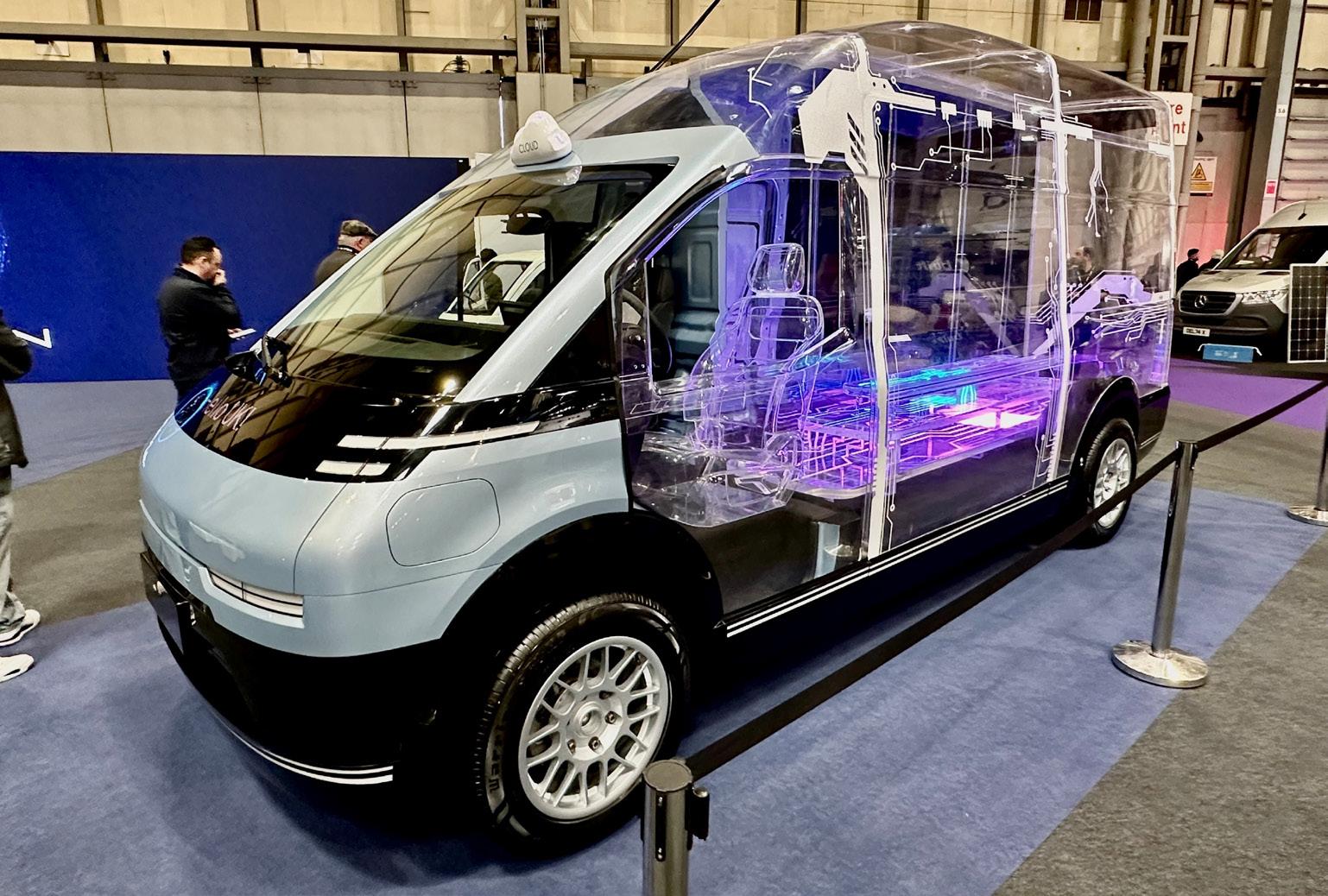
A Ford Transit Custom-sized concept van was shown with a cutaway body, giving an impression of the sort of vehicle in the pipeline for when Delivan sales start next year. Passenger versions are likely to be part of the range, and Delivan could offer hybrid models as well as pure electric vans.
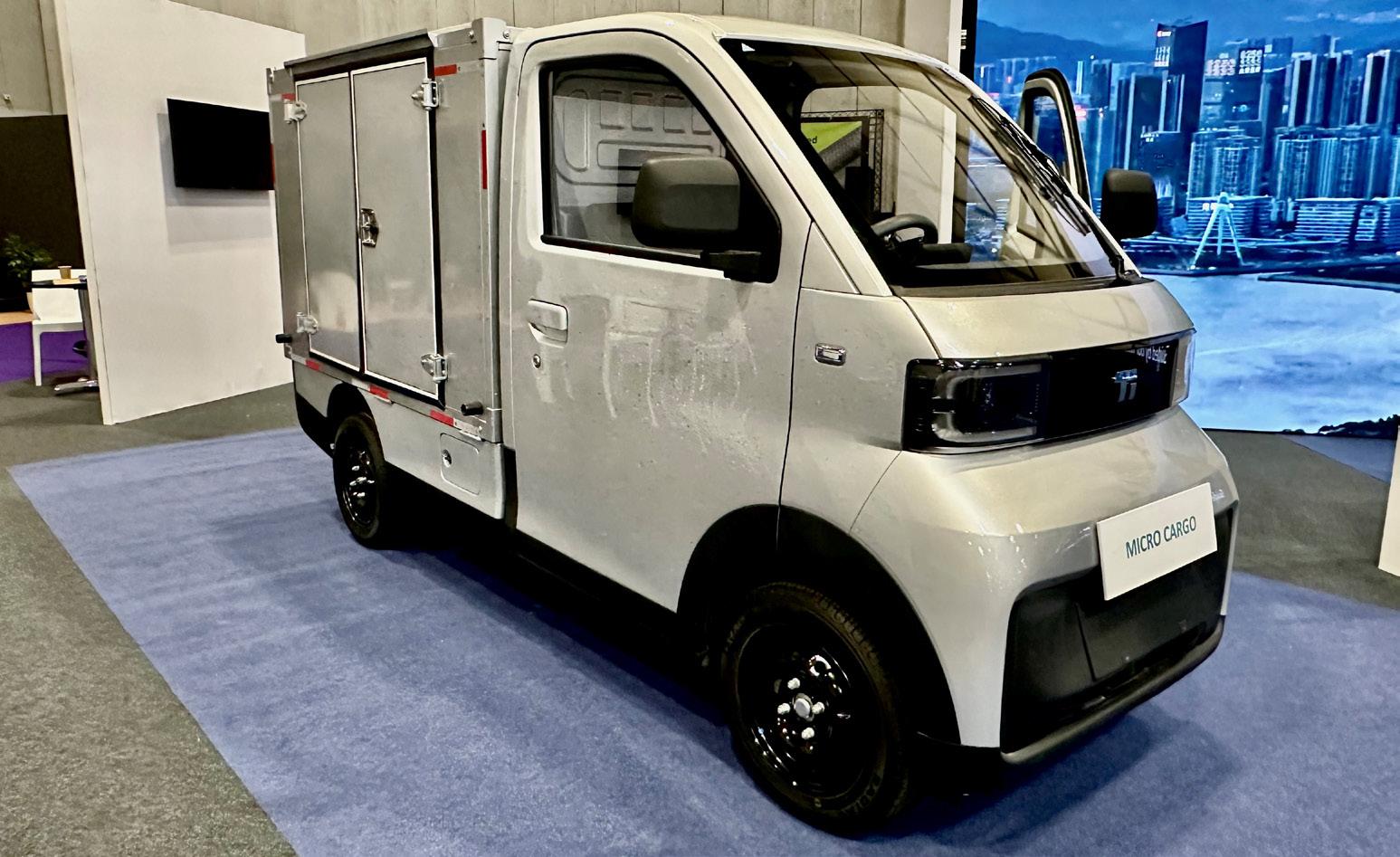
Chery also showed a tiny single-seater electric Micro Cargo van, ideal for urban food deliveries, and an autonomous cargo van that resembled a powered trailer.
Delivan CEO Jolly Yang said: “We are introducing a new generation of commercial vehicles designed specifically for European operations. By combining intelligent systems, modular thinking and a connected ecosystem, Delivan enables fleets to operate more efficiently, adapt more easily, and deliver greater value across their lifecycle.”
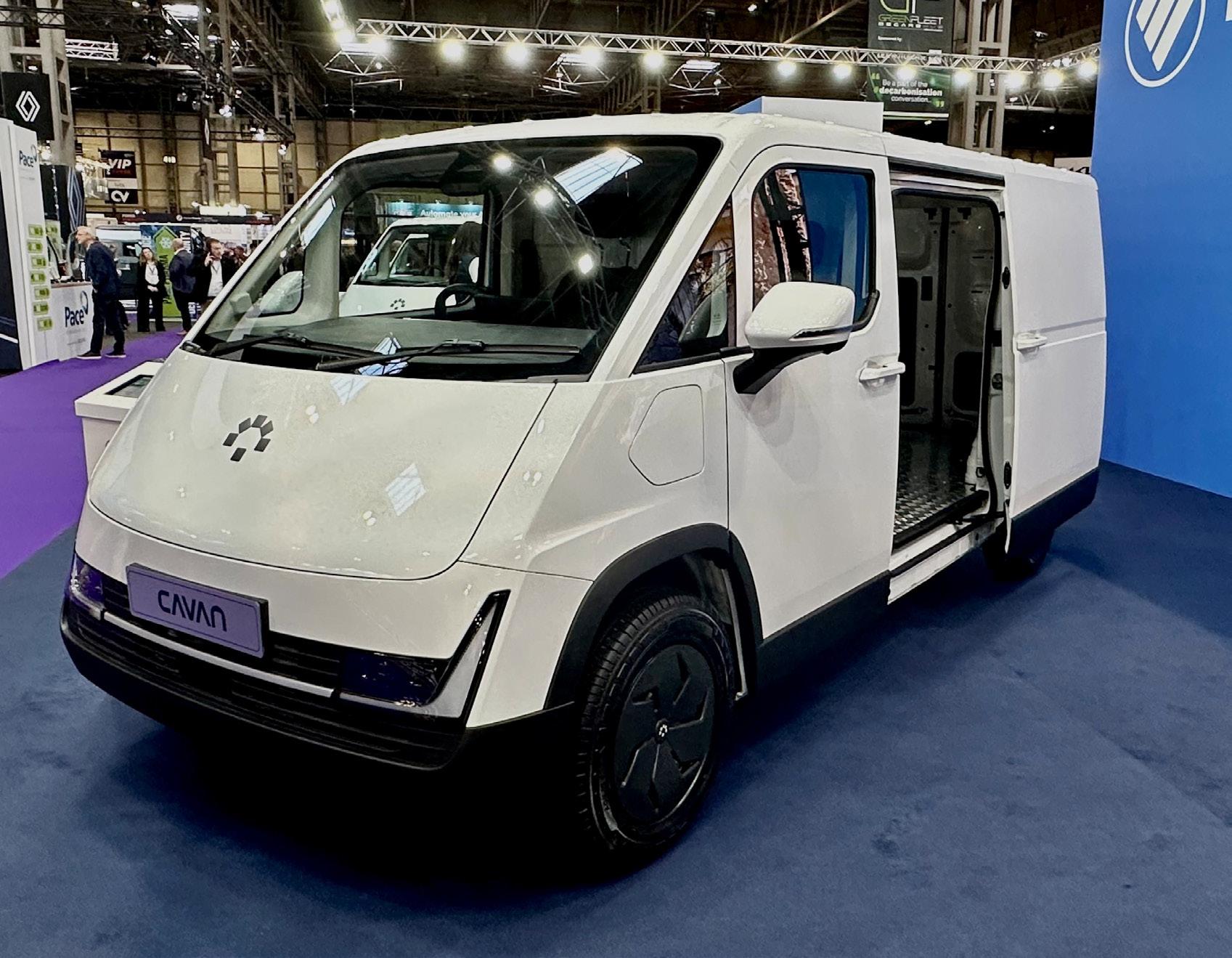
Foton Cavan
One of the largest specialist Chinese commercial vehicle makers made its UK debut at the show. Foton, established 30 years ago, is a division of Beijing-based BAIC. It makes a huge range of CVs ranging from small vans to heavy trucks and buses.
The all-electric Cavan was launched in China 18 months ago. It’s an all-electric model, available in different body lengths and heights.
Passenger versions are available in China, and are not being ruled out for the UK. Sales are being handled by International Motors, which already handles one Chinese car brand, XPeng.
birmingham cv show report
Ford Explorer van
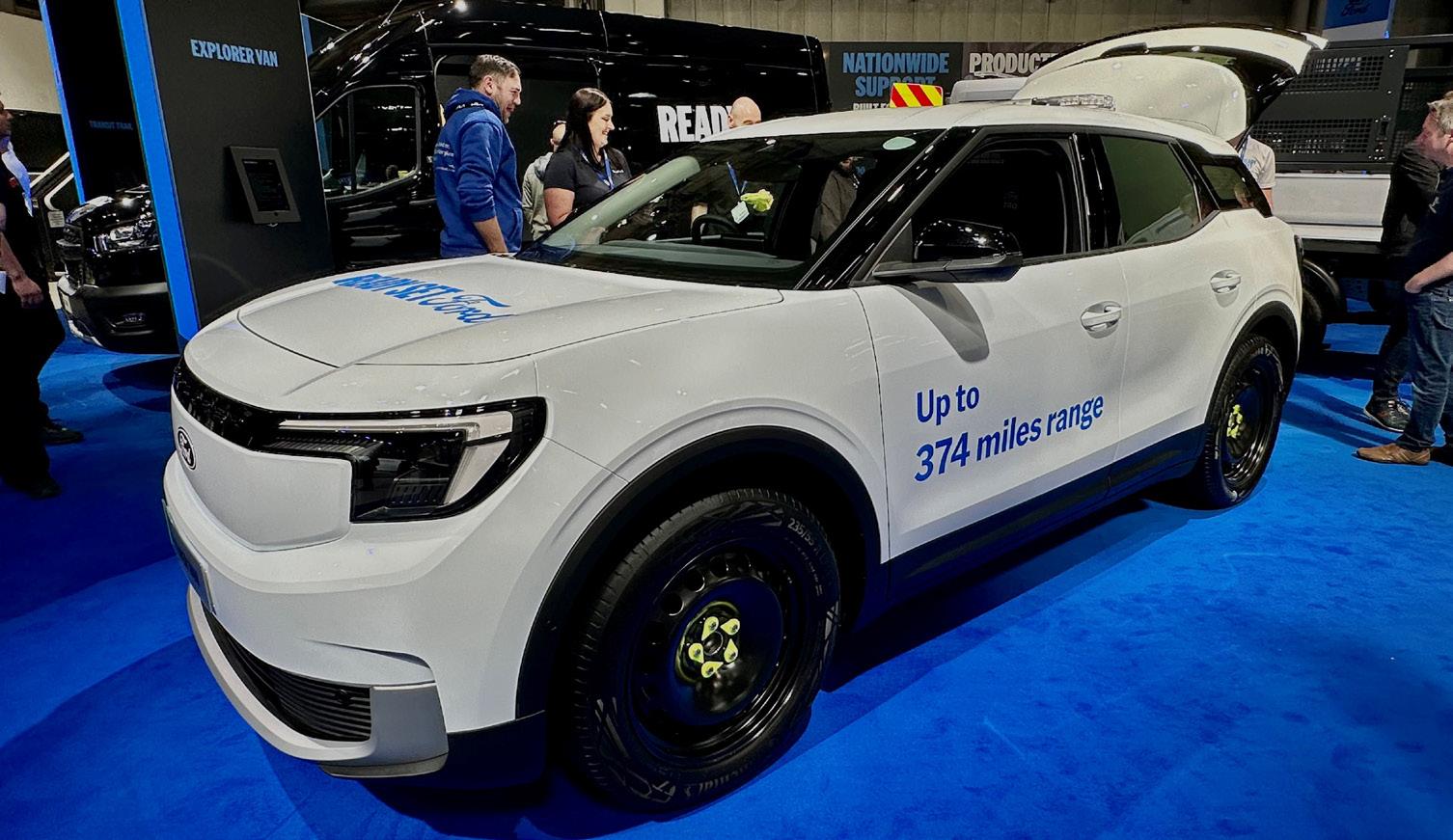
The car-derived van looks to be making a comeback, as electric vehicle architecture lends itself to removing the rear seats and utilizing the flat floor of an EV to give a decent loadspace.
Ford has done that with its Explorer EV, offering up to 374 miles (WLTP city) of range, optional all-wheel drive and up to 650kg of payload. Rapid charging up to 135 kW is available and a 10-80% charge takes approximately 25 minutes. You even get 19in steelies for that utilitarian look.
BYD Dolphin
Cargo
It’s no surprise to see China’s BYD muscling in on the commercial vehicle market, but its launch was low-key and unexpected.
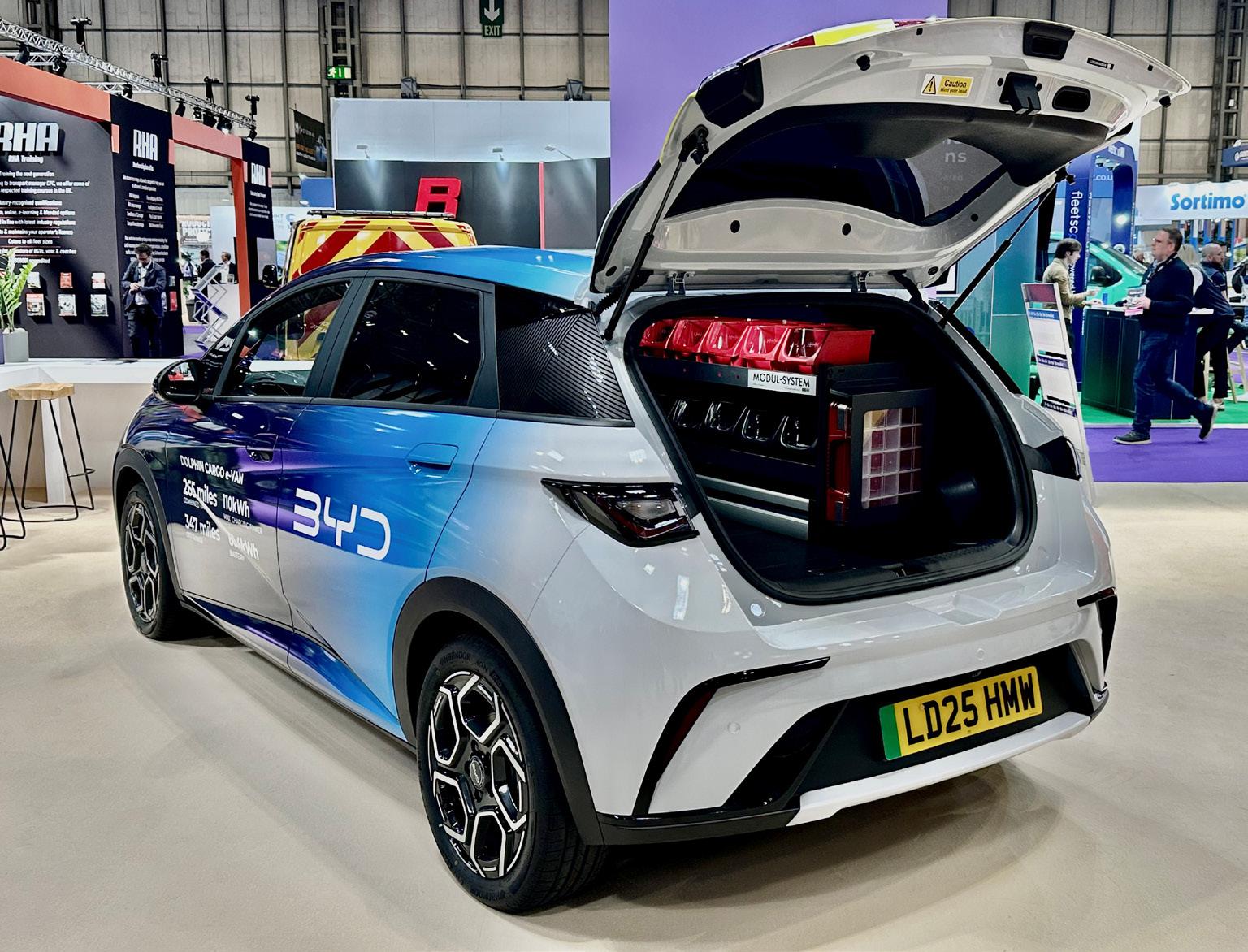
BYD didn’t have a presence at the show, but revealed its first UK LCV offering, the Dolphin Cargo e-Van, on the stand of vehicle graphics supplier Mediafleet.
The van is basically a car-derived van version of the Dolphin electric hatchback. The rear seats are replaced with a load floor, while the rear side doors are still there giving easy loaspace access from three sides. The van offers 1,000 litres of loadspace and up to 347 miles of WLTP city range, making it ideal for courier work.
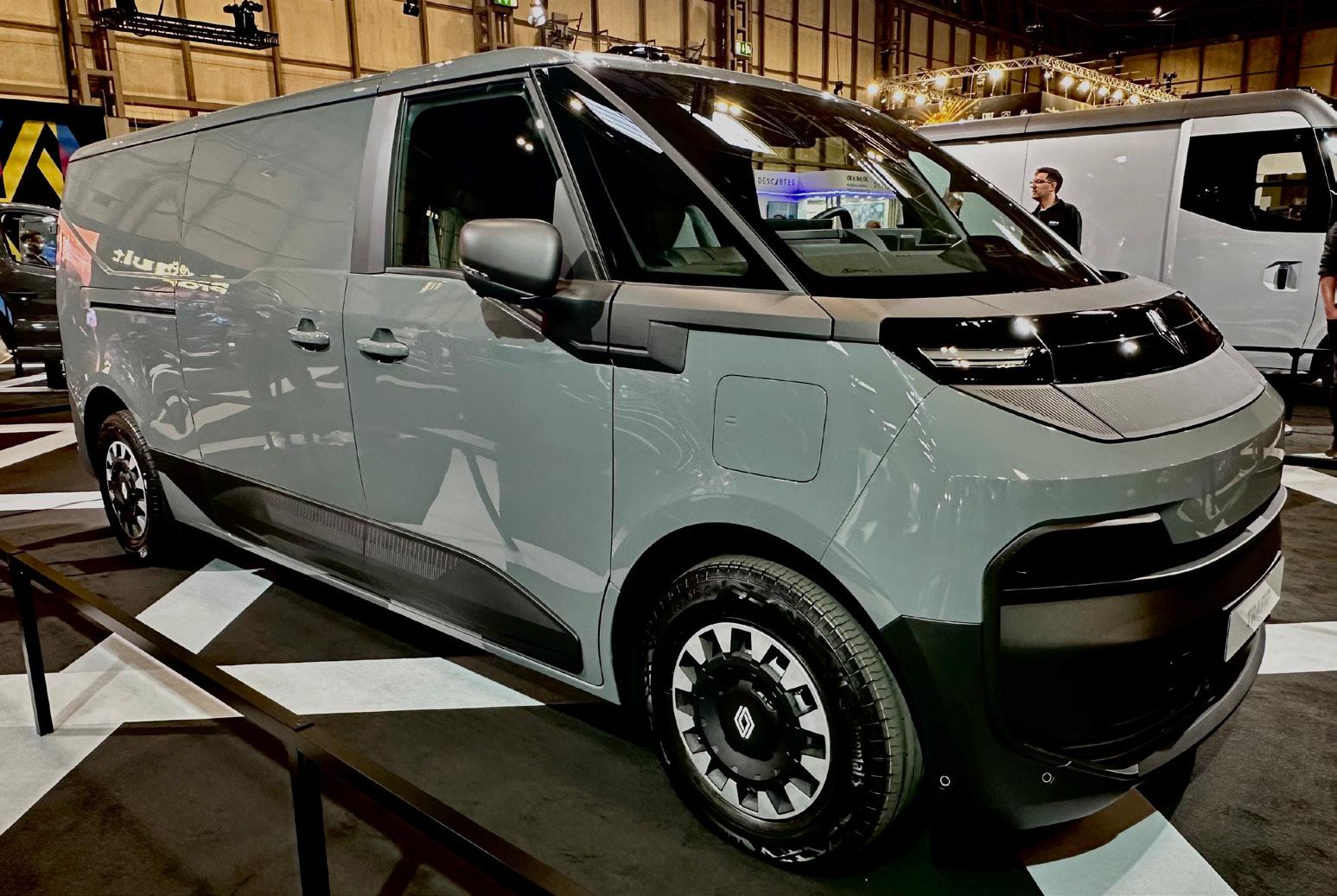
Renault Trafic E-tech Electric
Renault launched its new all-electric Trafic E-Tech van at the show. With 800v electrics, it offers very fast charging from 15% to 80% in approximately 20 minutes, together with a range of almost 300 miles.
The electric Trafic goes on sale this year, and passenger versions will follow. However, the new van will be sold alongside petrol and diesel versions of the old Trafic for the foreseeable future.
The Trafic E-Tech is now available for pre-ordering, costing from £34,500 ex-VAT including the £5,000 PiVG conribution.
POSITIVE PROGRESS
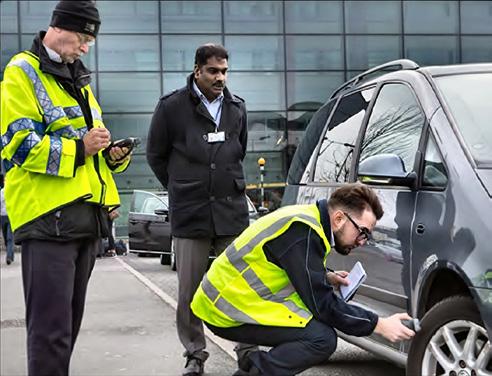
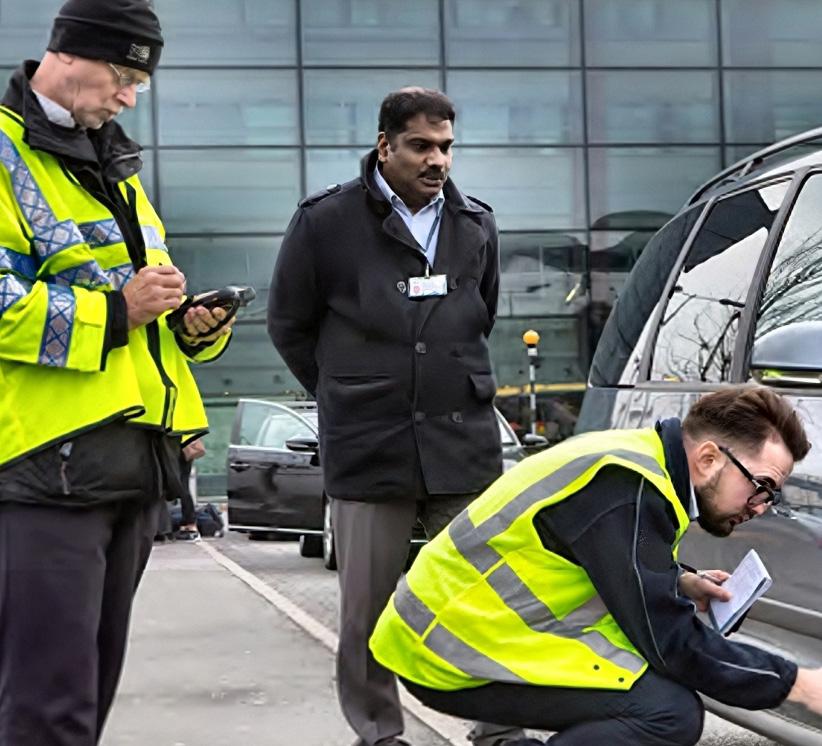
Under new proposals, local council enforcement officers will have the power to inspect vehicles licensed in other areas, removing a major problem with cross-border operations.
The Government’s open consultation on the licensing of taxis and private hire vehicles closed on April 1, and despite widespread fears that bad decisions could be made, it does appear that the Government has listened to industry responses.
The Government will make changes to the licensing of private hire vehicles in England – excluding London – based on
National standards, stronger out-of-area a rejection of the dreaded ABBA proposal the Government is listening to the licensing reform in England, Mark
this consultation via the English Devolution and Community Empowerment Bill.
Following debates in both the Commons and the Lords, the Bill passed a Commons vote by 291 votes to 154, allowing it to move on to the next stage in the legislative process.
Significant changes were made by the Lords, notably an amendment replacing “minimum standards” with stronger “national standards” in a move aimed at improving consistency and passenger safety.
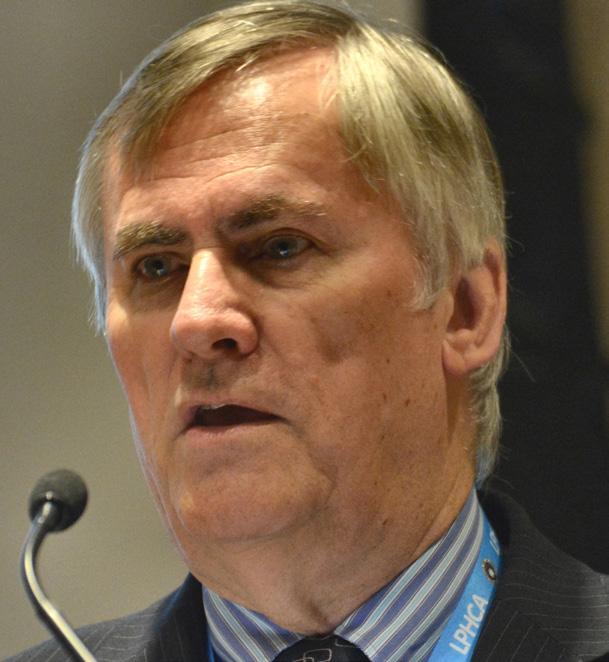
The change, Amendment 266, was introduced during a House of Lords debate on April 13, and has been welcomed by the LPHCA, which has strongly advocated true national standards for several years.
The LPHCA believes full national standards should be administered along the lines of the way Heavy Goods Vehicle (HGV) or Public Service Vehicle (PSV) drivers and vehicles are governed – with a single set of national standards.
Writing in last month’s Professional
news analysis: national licensing
ON LICENSING BILL
out-of-area enforcement and proposal are signs that the industry on the need for Mark Bursa reports
Driver, LPHCA Chair Steve Wright MBE outlined the Association’s viewpoint. He wrote: “PSV and HGV licensing is not tied to where you live or where your operator is based. The standards are national, so it does not matter where you meet the requirements. Costs are competitive and widely consistent.”
“However, the LPHCA is absolutely opposed to minimum national licensing standards, because that is what we have now. And that is the primary cause of
inconsistent UK-wide regulation.”
Under the revised wording, as amended by the Lords, the Government will set national standards for taxi and private hire licensing authorities in England. The change was welcomed by the Institute of Licensing, which said in a statement: “Previously, ‘minimum standards’ suggested a basic regulatory floor, leaving greater emphasis on local authorities to build upon it. By contrast, ‘national standards’ signals a more comprehensive and authoritative framework.”
Transport minister Lord Hendy of Richmond Hill told peers the change was intended to ensure the standards were not perceived as weak or optional. He said the goal was to create a consistent baseline that passengers can rely on, regardless of where they travel, while still allowing local councils to impose additional requirements where appropriate.
The Lords made a number of other significant amendments, and the House of Commons debated the amended legislation again on April 21.
Stronger enforcement
Other significant amendments include stronger enforcement powers for local authorities. Notably, local authorities will be given powers to inspect vehicles and suspend licenses of drivers operating in their area, regardless of where the vehicle is licensed.
Lords amendments 43 to 79 state that any licensing authority may “temporarily suspend with immediate effect any license, whether issued by that authority or by any other in England being exercised in its area, where necessary to address a risk to public safety”.
This closes the loophole whereby inspectors in, say, Manchester cannot inspect vehicles licensed in another authority such as Wolverhampton. This has necessitated Wolverhampton sending inspectors all around the country to check on “ their” vehicles, even when the driver lives in another town and has only used Wolverhampton to bypass licensing delays in their local area.
Miatta Fahnbulleh MP, Minister for Housing, Communities and Local Government, said: “It is right that enforcement powers are available to prevent those few who seek to abuse their position of trust and pose a risk to the public.”
Fahnbulleh confirmed that the measures would be supported by additional safeguards and secondary legislation.
These include the duration of suspensions, obligations on authorities issuing licenses, and an appeals process.
Fahnbulleh added: “The Lords amendments support the effective application of national standards, placing a duty on all authorities in England to report breaches of them to the authority that issued the relevant license.”
The Government also hopes that the reduction in the number of licensing authorities in England from 263 to 70 will reduce out-of-area licensing, and having fewer, larger unitary authorities will make available more resources for enforcement, even within councils that do not address the issues of cost and efficiency in the licensing process the way Wolverhampton has.
Administering National Standards
The reduction from 263 to 70 will be achieved by combining authorities into unitary bodies (for example, Greater Manchester, replacing all the various licensing departments in different towns and districts within the Greater Manchester Area). This would be a major step in the right direction, especially if all the 70 were operating to the same set of standards, and the same set of costs.
At present, the licensing system is chaotic, with wildly different standards and costs between areas – often between neighbouring areas.
For example, Slough Council has approved a massive increase in private hire licensing fees. A new one-year license for private hire operators in Slough will increase 292%from £153 to £600. And the cost of renewing a license for an operator with one vehicle will increase from £153 to £548.
However, in the neighbouring Royal Borough of Windsor and Maidenhead, a private hire operator’s license costs £318 for both a new one-year license and a oneyear renewal.
Slough council has attempted to justify these charges by comparing the Slough fees to other cities in the UK, such as Manchester, which charges £2,790 for a new operator license, and Portsmouth, which charges £836.
A set fee, applicable nationally, would remove these confusing and costly charges on private hire operators and drivers, creating a fairer system for all. This issue has not been debated, but it is to be hoped that the direction of travel will lead to
CONTINUED ON PAGE 20
news analysis: national licensing
CONTINUED FROM PAGE 19
more uniform charges.It would still be possible to incorporate a degree of “local” requirements within the national rules (eg signage, in-car CCTV or specific colours for vehicles) but the national standards would end petty arguments about window tints or whether or not a vehicle counted as a seven-seater, for example, as the vehicle’s specifications would be part of the national framework.
The ABBA principle
The biggest sigh of relief will come from the news that the unwelcome prospect of a return to the so-called “ABBA principle” appears to have been headed off. This refers to all journeys having to start of finish in the area in which the car and driver is licensed (A to B, B to A).
This has already been suggested - and rejected - by the Department for Transport in 2018, following intervention by the LPHCA. Steve Wright said this proposal “would have taken the private hire vehicle industry back to the dark ages via ridiculous, environmentally unfriendly and supply-choking restrictions, that would in my view, compromise public safety and put prices in private hire through the roof”.
This dreadful, retrogressive policy is advocated by some within the trade union movement (notably Unite), and was supported by Manchester Mayor Andy Burnham. And during the Commons debate, a number of Labour MPs, including some from Manchester, spoke in favour of it.
Elsie Blundell, Labour MP for Heywood and Middleton North, said: “I previously tabled an Amendment which I believe would have empowered mayoral strategic authorities to require private hire vehicle drivers to licence within their region.” Fortunately this amendment was rejected.
If it were introduced, the following scenarios are likely. If a car registered in, say, Slough cannot pick up in, say, Uxbridge and take a passenger to Maidenhead, that passenger would be forced to wait until either an Uxbridge-registered car is available or an empty car is dispatched all the way from Maidenhead to collect that passenger.
Meanwhile the Slough car has to return empty to base. So two needless journeys have to be carried out, wasting fuel and causing pollution, while offering a substantially worse service than at present and putting a passenger – who might be a single female, at night – at unnecessary risk.
Blundell also highlighted the problem of funding enforcement when drivers were spending money on licenses elsewhere. She said: “As we know, enforcement is
generally funded by licensing revenue. However, in Greater Manchester, around 50% of private hire vehicles are licensed elsewhere to avoid our rigorous standards and fees, thus limiting the revenue that could be used for enforcement.”
Andy Burnham’s misapprehension
Blundell is repeating the somewhat disingenuous claims made by Andy Burnham, who wrongly seems to have assumed that the Wolverhampton-plated vehicles he was seeing in Manchester belonged to Wolverhampton-based drivers, working out of area.
This is not true. The cars were owned by Manchester-based drivers who had chosen to obtain their licenses in Wolverhampton as a result of gross inefficiency within Manchester’s own licensing departments – not the “rigorous standards” that Blundell implied were better than those available 80 miles to the south.
Anecdotal evidence of long delays are backed by LPHCA’s Steve Wright: “During a trip to Manchester 5 or 6 years ago, I learned first-hand from LPHCA members of the difficulties they were having getting themselves, their drivers and their vehicles licensed. I learned that in some cases it was taking 10 months to get drivers licensed,” he said.
No wonder these frustrated drivers decided to go elsewhere. Wolverhampton has geared up to offer a more efficient service, with more than 100 members of staff, and the council said it could not
refuse applicants because they lived in a different area.
Wolverhampton’s role
The rise of Wolverhampton as the pre-eminent issuer of private hire licenses in England is an unintended consequence of the 2015 Deregulation Act, which allows private hire drivers licensed anywhere in England or Wales to undertake pre-booked journeys in areas where they are not licensed.
In the 12 months from April 2023 to March 2024, Wolverhampton council issued 32,169 Private Hire Vehicle licenses, a rise of nearly 8,000 from 24,375 the previous year, according to licensing data from private hire insurance provider Zego.
The council’s own data revealed that 95.5% of drivers applying for a Wolverhampton license do not live there, and are merely taking advantage of the city’s lower costs and faster processing to obtain a license, which they then use to operate legally in other towns such as Birmingham or Manchester.
In 2023, Wolverhampton council issued licenses to 20,375 drivers living outside Wolverhampton, with only 813 licenses for local drivers. City of Wolverhampton Council said the reason drivers chose to use its service was because of longer processing times and higher fees elsewhere. Indeed, Wolverhampton in 2025 issued a statement outlining why its standards were among the highest, offering greater safety than most councils.
Many drivers choose to get licensed in Wolverhampton because of delays and high costs in their local Manchester Mayor Andy Burnham (bottonm right) seems to believe. Meanwhile LPHCA chair Steve
news analysis: national licensing
local areas. Wolverhampton-plated drivers in Manchester are not Wolverhampton residents, as Steve Wright believes national standards, similar to HGV and PSV, will provide a solution
Wolverhampton Council stated: “We lead the way nationally on using technology to help with safeguarding, including being the only council to do daily DBS checks on all drivers and the first council to offer driver license checks by smartphone. We implement the government’s statutory standards and best practice guidance. We also have officers out across the country, every Friday and Saturday night, working to protect the public.”
Wolverhampton’s safety standards
Wolverhampton City Council has also addressed concerns about safety standards by setting up joint authorisation agreements, allowing taxi compliance officers from multiple councils to work across local boundaries.
This view is again supported by the LPHCA. Steve Wright wrote: “It is often wrongly said that Wolverhampton has low standards. However, the requirements are stringent and often far higher than many other Licensing Authorities.”
“It is also erroneously stated that Wolverhampton compliance and enforcement nationally is poor. But evidence shows that their compliance and enforcement is probably the best in England, with more late-night compliance officers and operations nationally than any other licensing authority.”
For example, a 2024 scheme in Milton Keynes saw Wolverhampton-licensed vehicles undergo roadside inspections by local officers. More than 800 roadside
checks were conducted, leading to two vehicle suspensions.
Will combining the various authorities in Manchester into one unitary licensing authority be able to match Wolverhampton’s service? Not unless comparable investment is made by Greater Manchester into speeding up the process of issuing licenses, and matching the prices and standards.
In 2024, Professional Driver reported that under Manchester City Council, it costs £255 to register as a new private hire driver plus costs for tests and between £222 and £342 to register a vehicle (depending on its age).
Under Wolverhampton Council, the application fee for a new private hire driver is £49 for a one-year license or £98 for a three-year license and £95 to register a vehicle under 10 years old. So the advantages of Wolverhampton are two-fold: lower costs and a much quicker service.
If we are to move toward a national system, with national pricing, Wolverhampton may have to raise its fees. But Wolverhampton would not lose its efficiency advantage. Therefore it is likely that councils such as Wolverhampton would continue to license a disproportionate number of cars and drivers.
Is this a problem? Not if national standards are applied. If the structures are in place across all authorities, the standard should be the same.
The environmental benefit of reducing empty running is significant. Addison Lee data from 2018 claimed that across its large fleet of around 1,000 vehicles, smart
allocation technology saved 18,000 “dead miles” per day, reduces fuel consumption, equating to an annual saving of 1,066,945 litres per year (a cost saving of more than £1.6 million at pump prices of £1.50 per litre). CO2 emissions are reduced by 1.8 million tonnes and NOx emissions by 3.65 million tonnes annually.
There are in excess of 200,000 private hire vehicles in England, so the reduction of dead mileage has a significant positive effect on air quality and greenhouse gas emissions.
Safeguarding and Grooming Gangs
Concerns about out-of-area working were raised by Baroness Casey in her National Audit on group-based child sexual exploitation and abuse report. However, one of the biggest pieces of misinformation stems from attempting to link “out of area licensed” drivers with involvement in the Rotherham child sexual exploitation scandal.
Any suggestion that major changes to the Deregulation Act, ending the principle of “cross-border hiring”, would avoid a repeat of the appalling Rotherham grooming gang scandal (as suggested by the Unite union and others) is erroneous.
In Rotherham, a group of paedophiles used taxis to pick up vulnerable children from schools. But it is important to note that the Rotherham scandal took place between 2007 and 2013, pre-dating the Deregulation Act and its well-meaning provisions that allow drivers licensed outof-area to pick up pre-booked fares.
More than 20 people were jailed for their involvement in Rotherham, and it is clear that those who were licensed as taxi drivers were licensed not “out of area” but in Rotherham. Changing the Deregulation Act and restricting out-of-area licensing would not have stopped the appalling offences from being committed.
What happens next?
While there is cause to be optimistic, we should not be popping the champagne corks yet. The Bill has a long way to go, In her closing remarks to the commons, Miatta Fahnbulleh said: “The system is not fit for purpose. Having national standards means we can ensure consistency of approach across the country and, critically, we are strengthening enforcement powers. However, we know that additional reforms must be put in place, and we are committed to bringing them forward.”
So further attempts at restricting cross-border operations could still be introduced, though it does appear that a framework of proper national standards, fewer licensing authorities and fewer limits to inspections and enforcement should provide a workable platform for sensible legislation.
ROOM FOR AI-NOTHER? ROOM FOR AI-NOTHER?
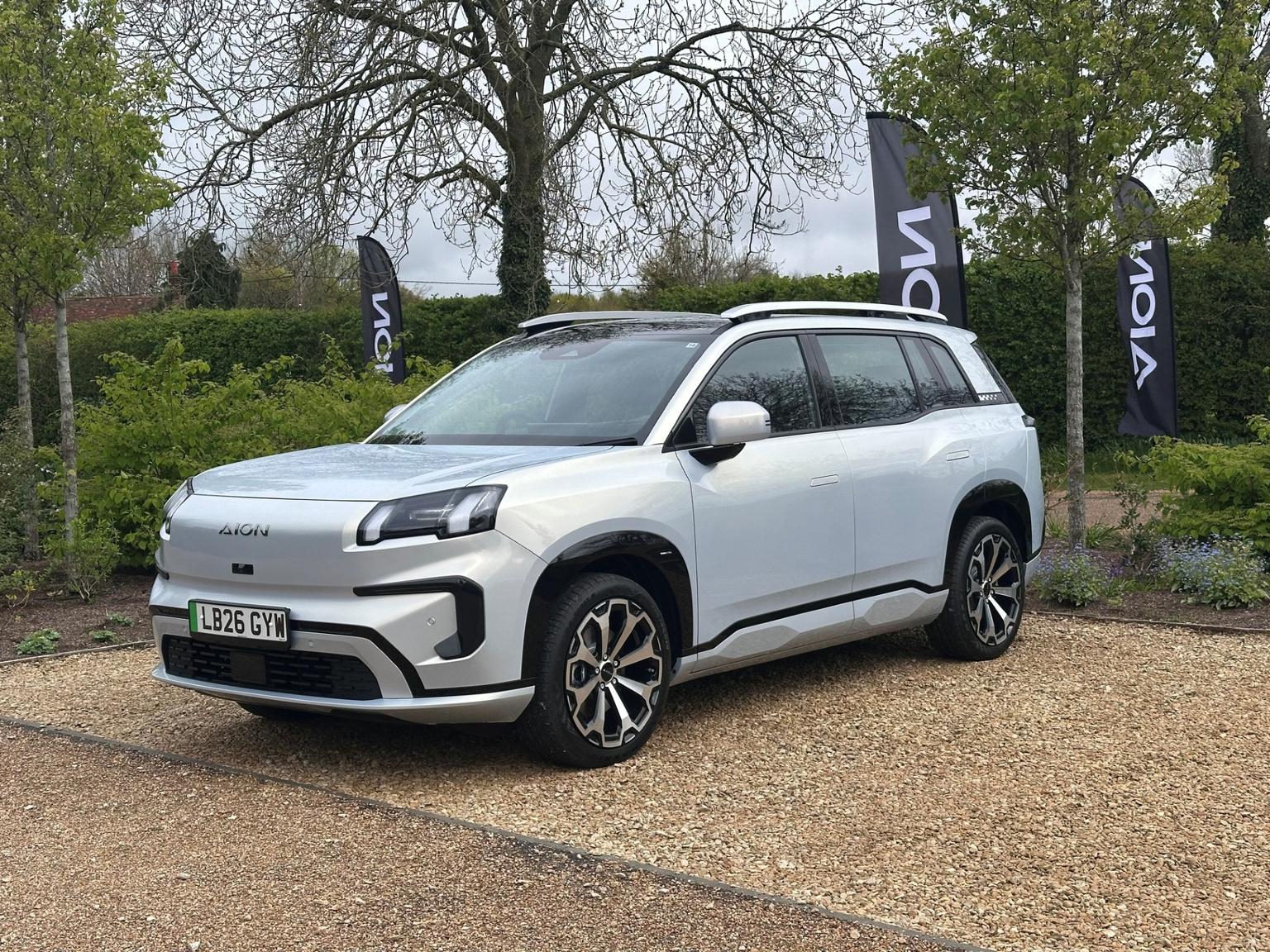
Chinese brands took a combined market share of almost 19% of the UK new car market in the first quarter of 2026, with the likes of BYD and Chery making major strides from a standing start. The Jaecoo 7 was the top-selling model in March.
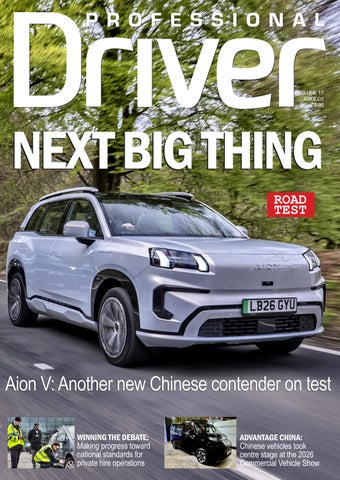
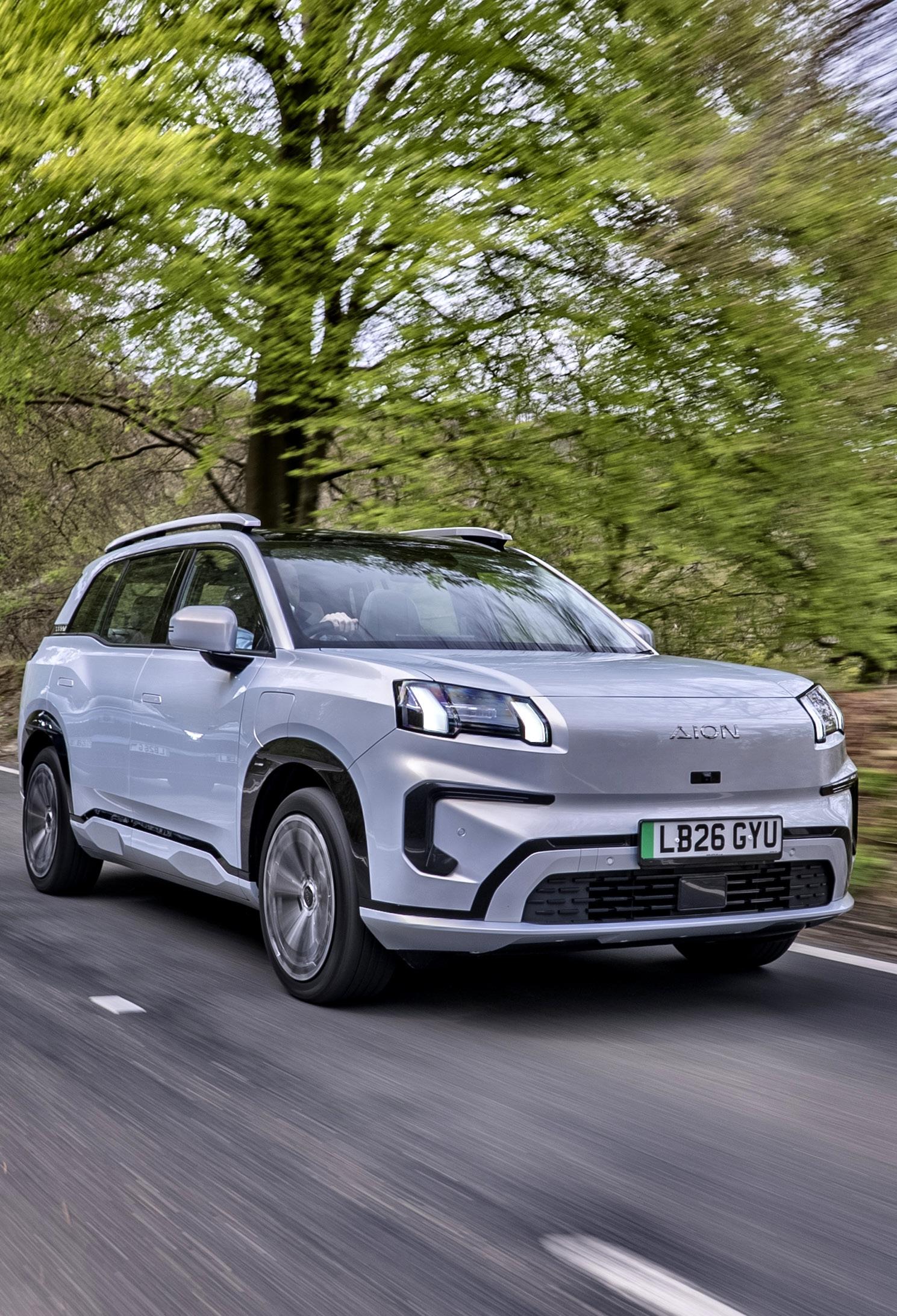
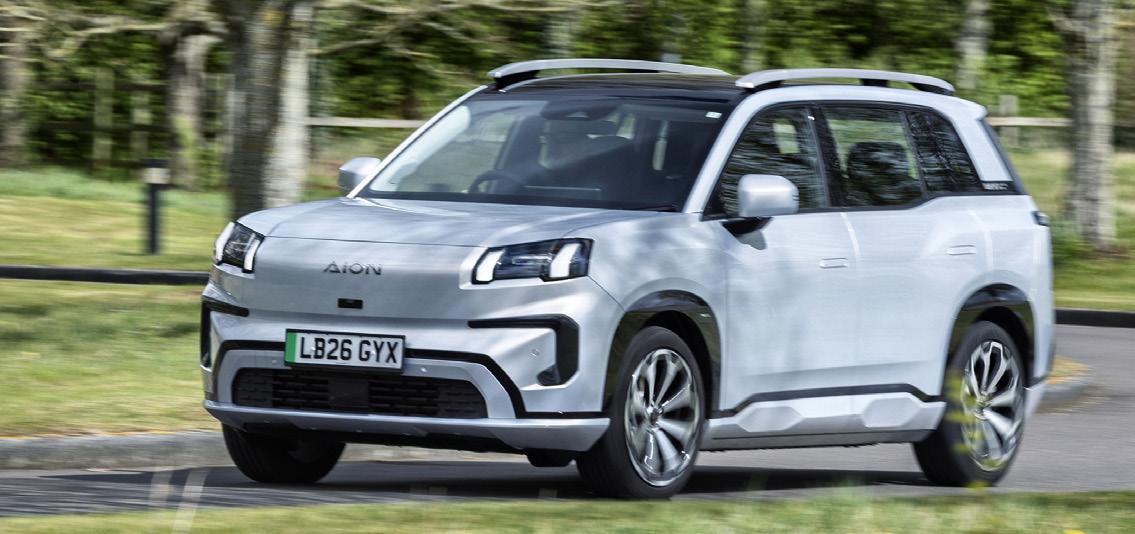
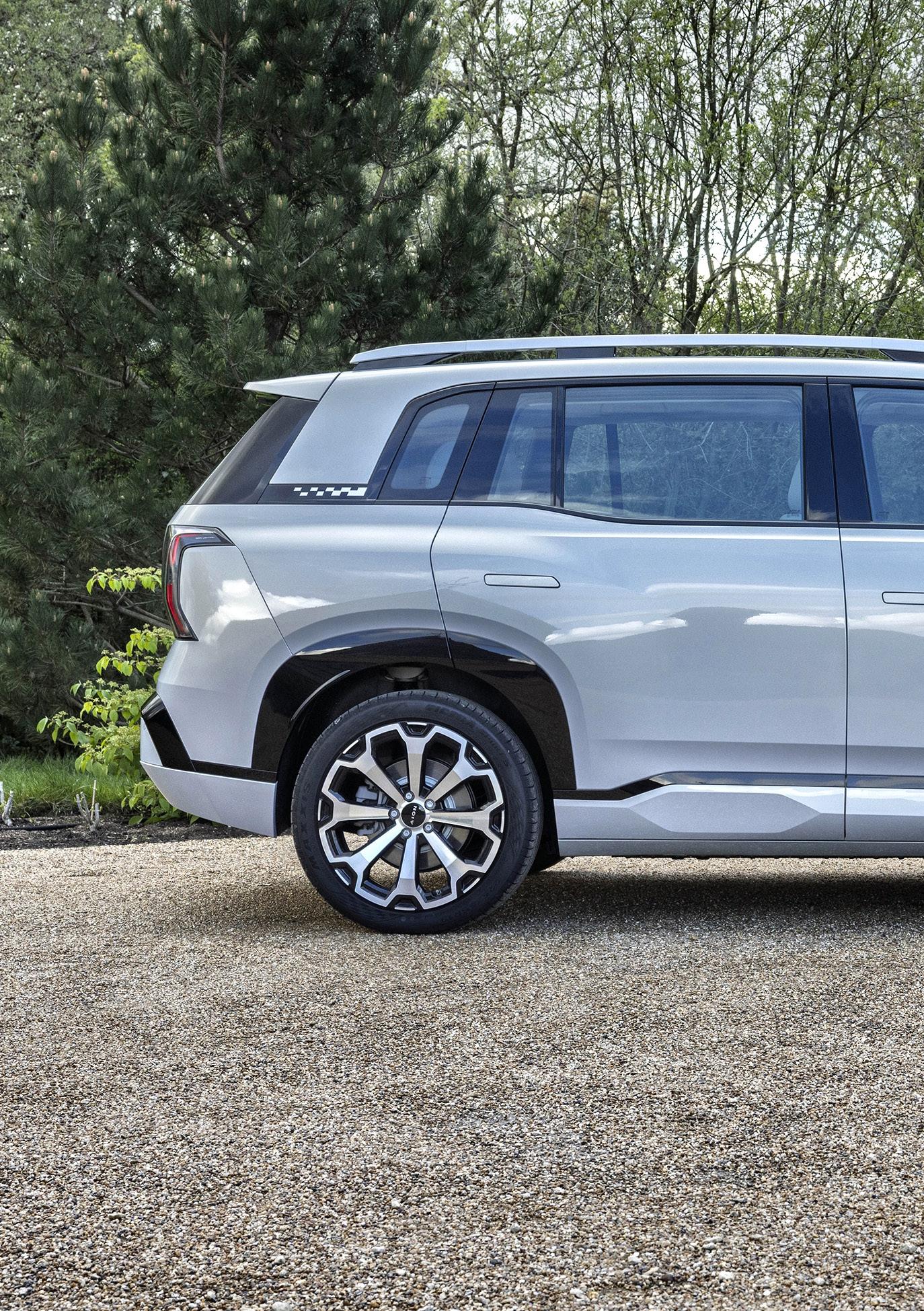
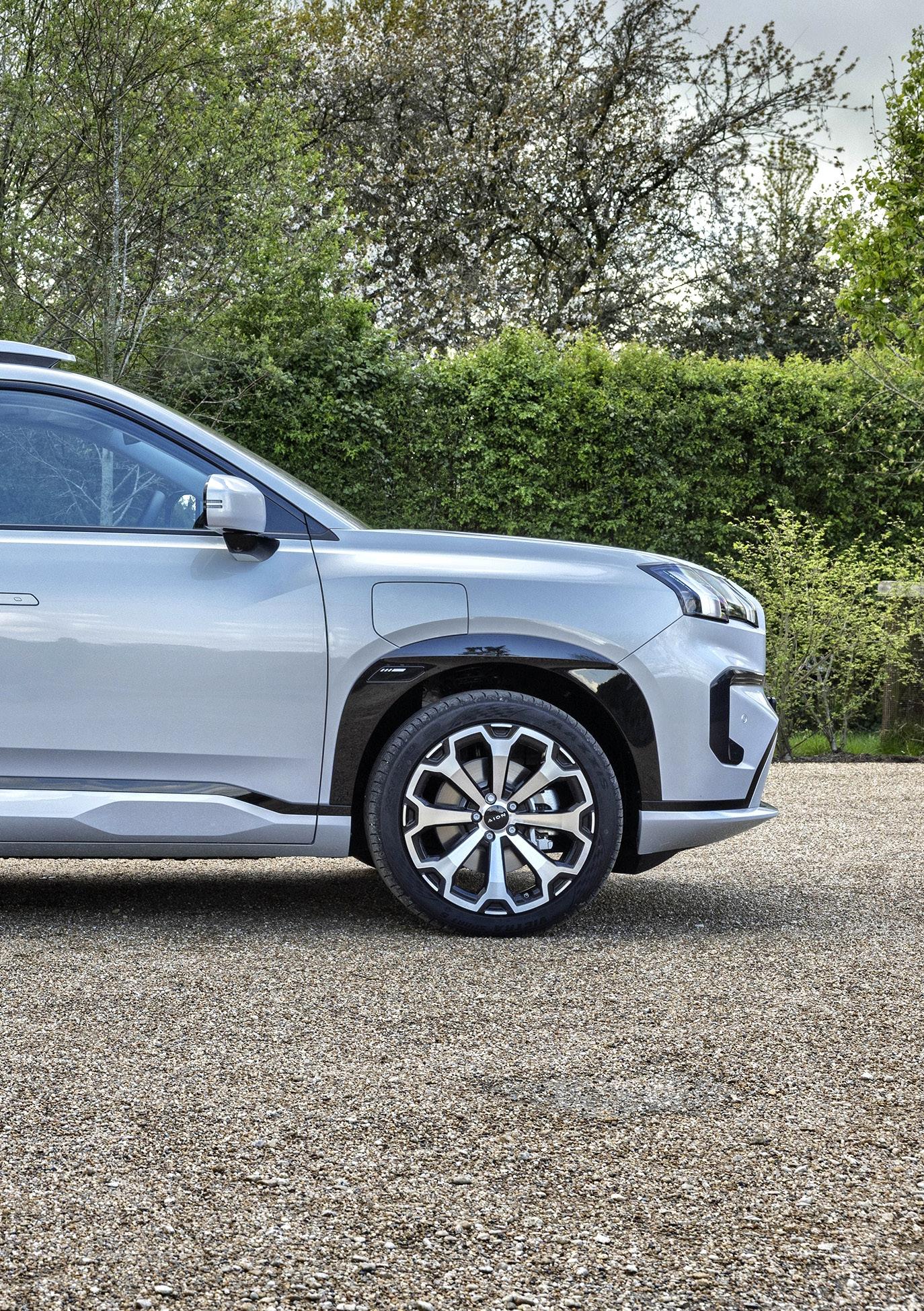
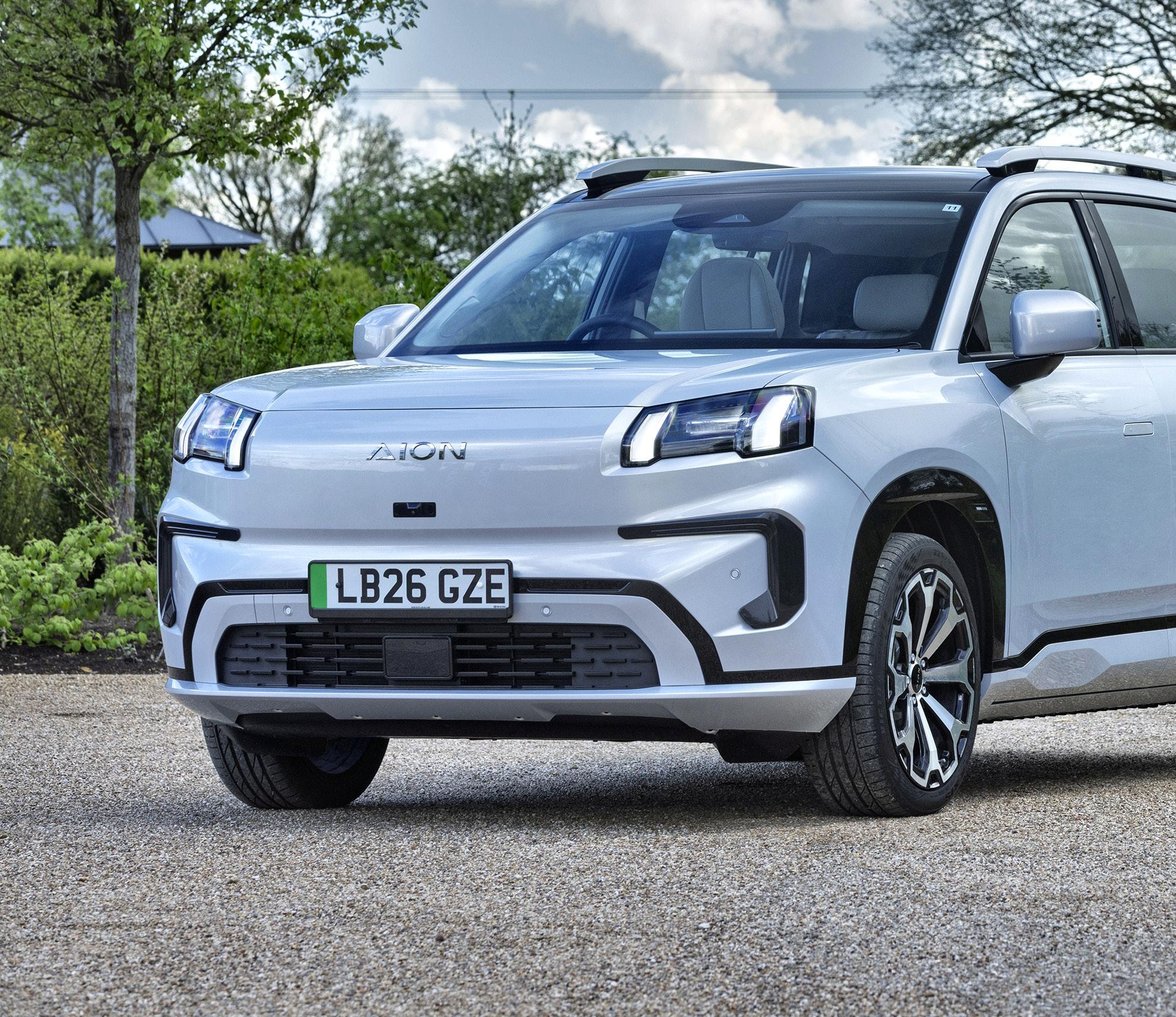
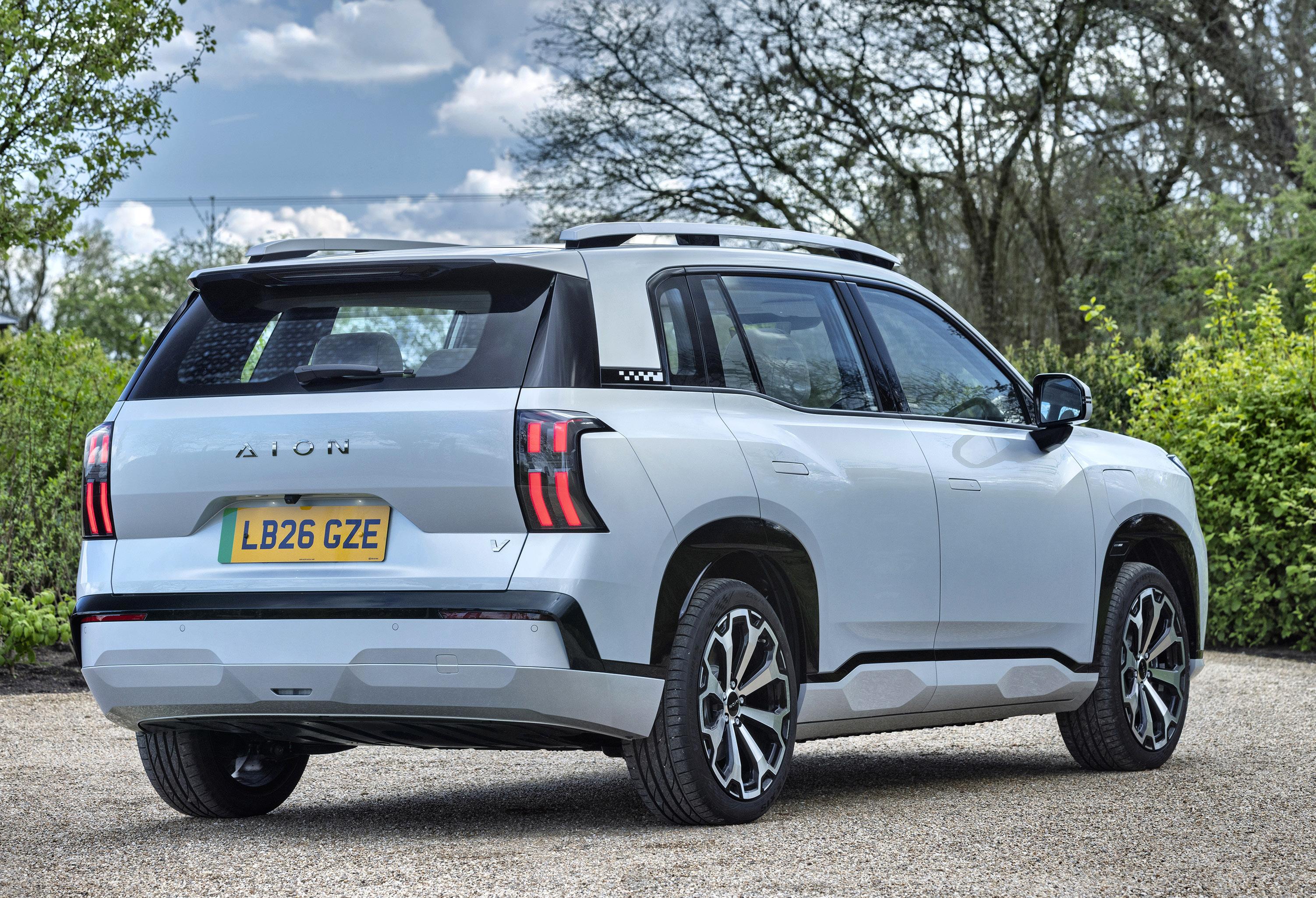
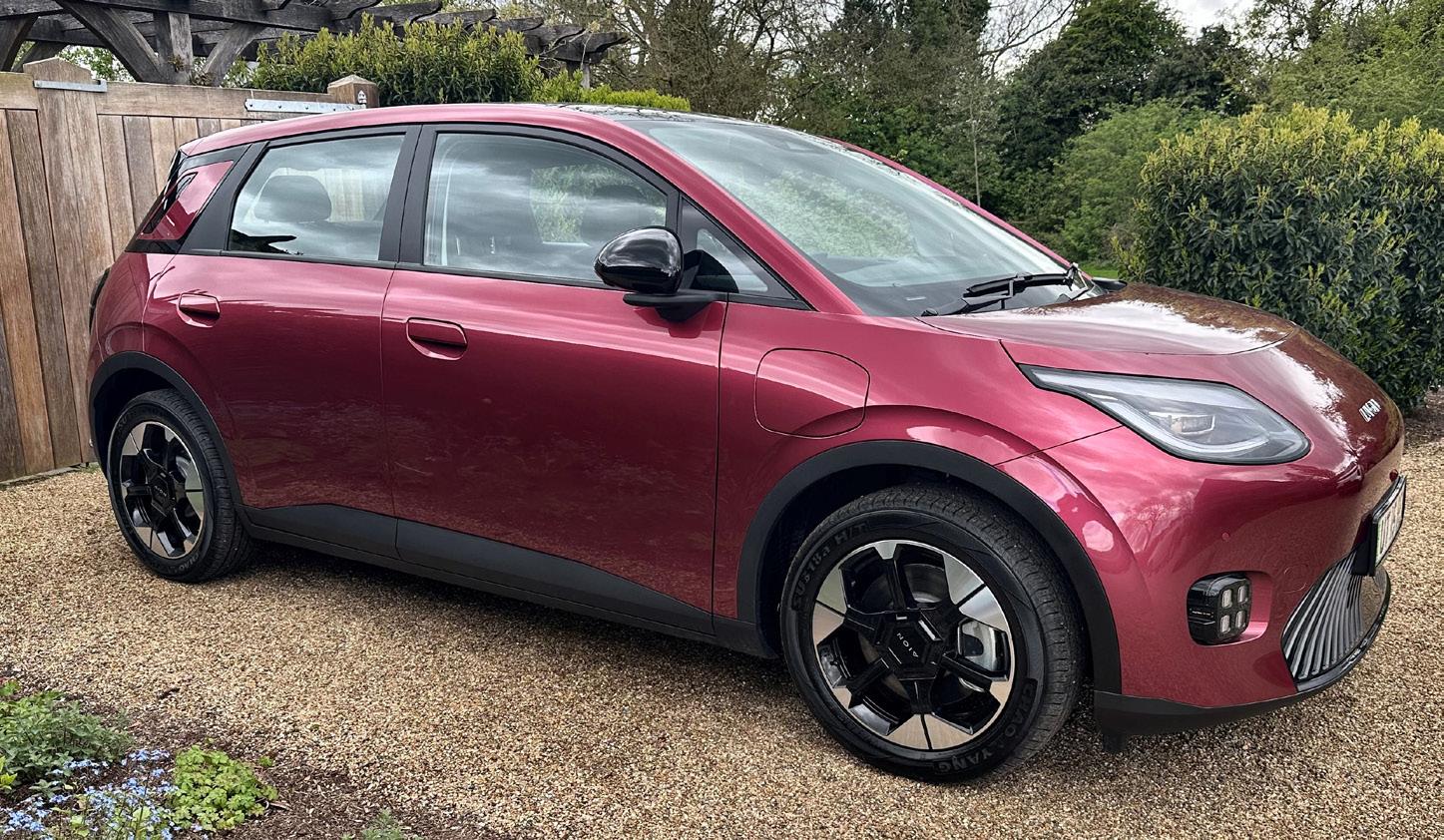
With Chinese brands now in double figures, is there room for any more? You bet there is. Not all the major Chinese automakers have shown their hands in the market yet, and now here’s another in the shape of Aion.
Aion is the export brand of automaker
GAC, based in the southern Chinese city of Guangzhou. GAC is not a newcomer – it’s been building cars for Honda and Toyota for more than 25 years, and sold about 1.74 million vehicles in 2025, making it one of the top 10 Chinese automakers.
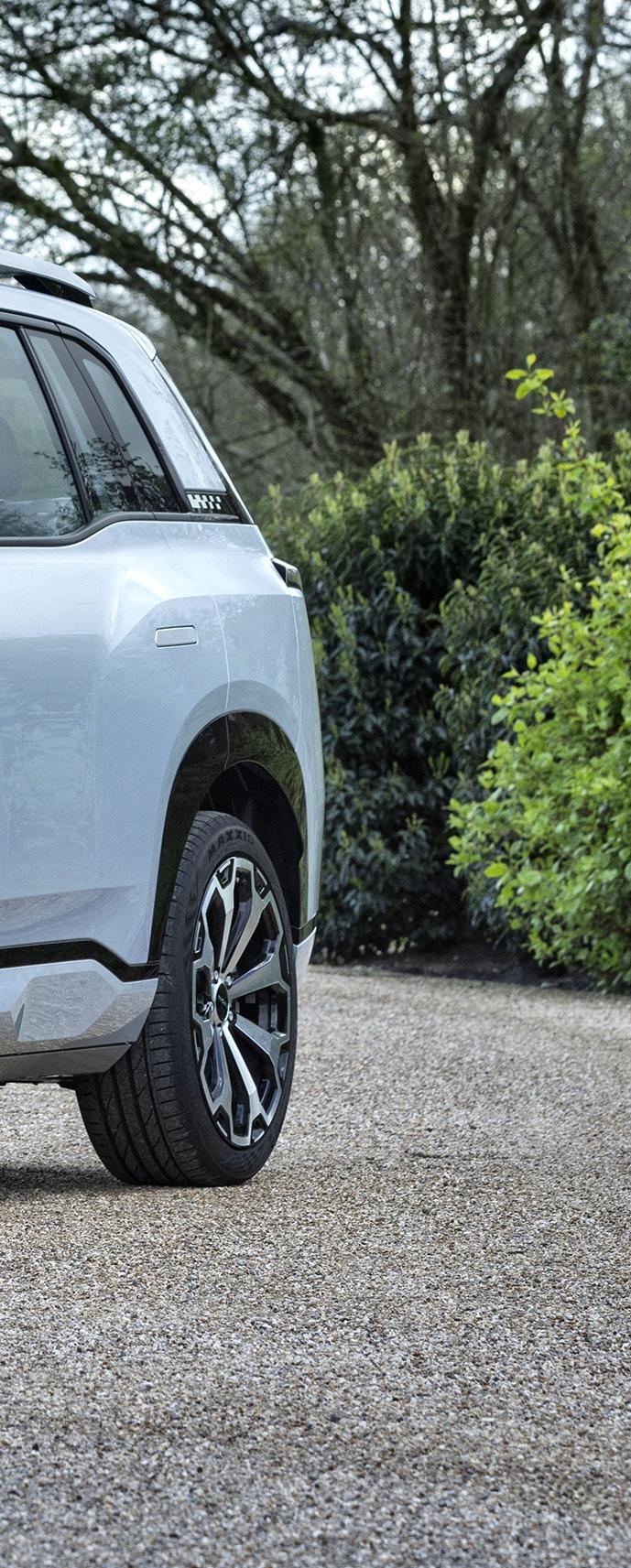
What’s more a lot of GAC’s expertise is in electric cars, with almost a quarter of its production being battery-electric. So it’s no surprise to see the UK launch model, the Aion V, is a mid-sized, all-electric SUV, very similar in size and concept to the BYD Atto 3 tested elsewhere in this edition of Professional Driver.
Aion is taking a more modest approach to the UK than BYD or Omoda Jaecoo, with a measured roll-out of models over the next two years. It’ll have two more launches this year and a further four by the end of 2027.
The approach is simple and clear –there’s just a single specification for the Aion V, together with a £1,495 Premium pack of options.
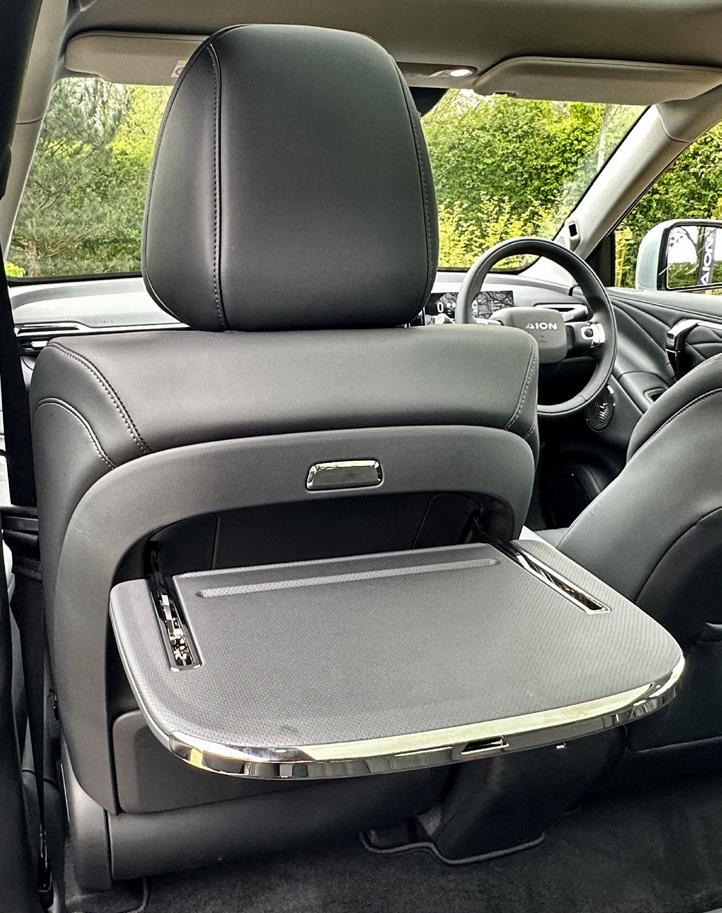
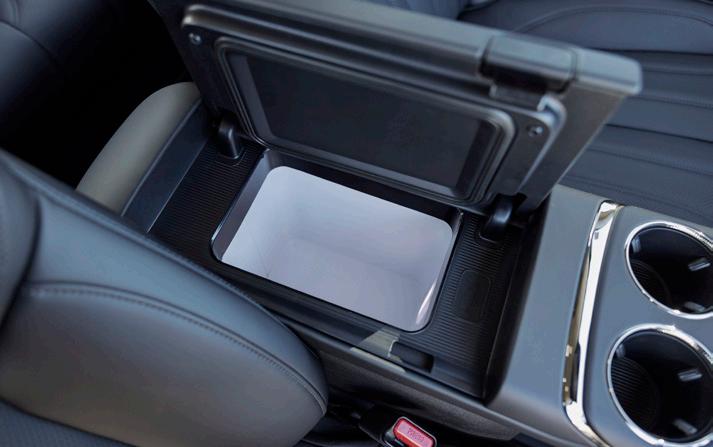
This is a pretty good deal, as it brings black leather seats, with massage function in the front, a 6.6-litre cool/hot box in the central console with freezing function, and a very neat and well-made
AI-NOTHER? AI-NOTHER? AION V Premium AION V Premium
fold-down rear table built into the back of the front passenger seat.
The basic price is £36,450 OTR, with the Premium pack and fancy holographic paint on test here taking the total up to £38,620. The standard spec is actually very good too, as is Aion’s warranty and service package with a class-leading “Great 8” package, including 8 years of warranty, servicing, MOT and roadside assistance.
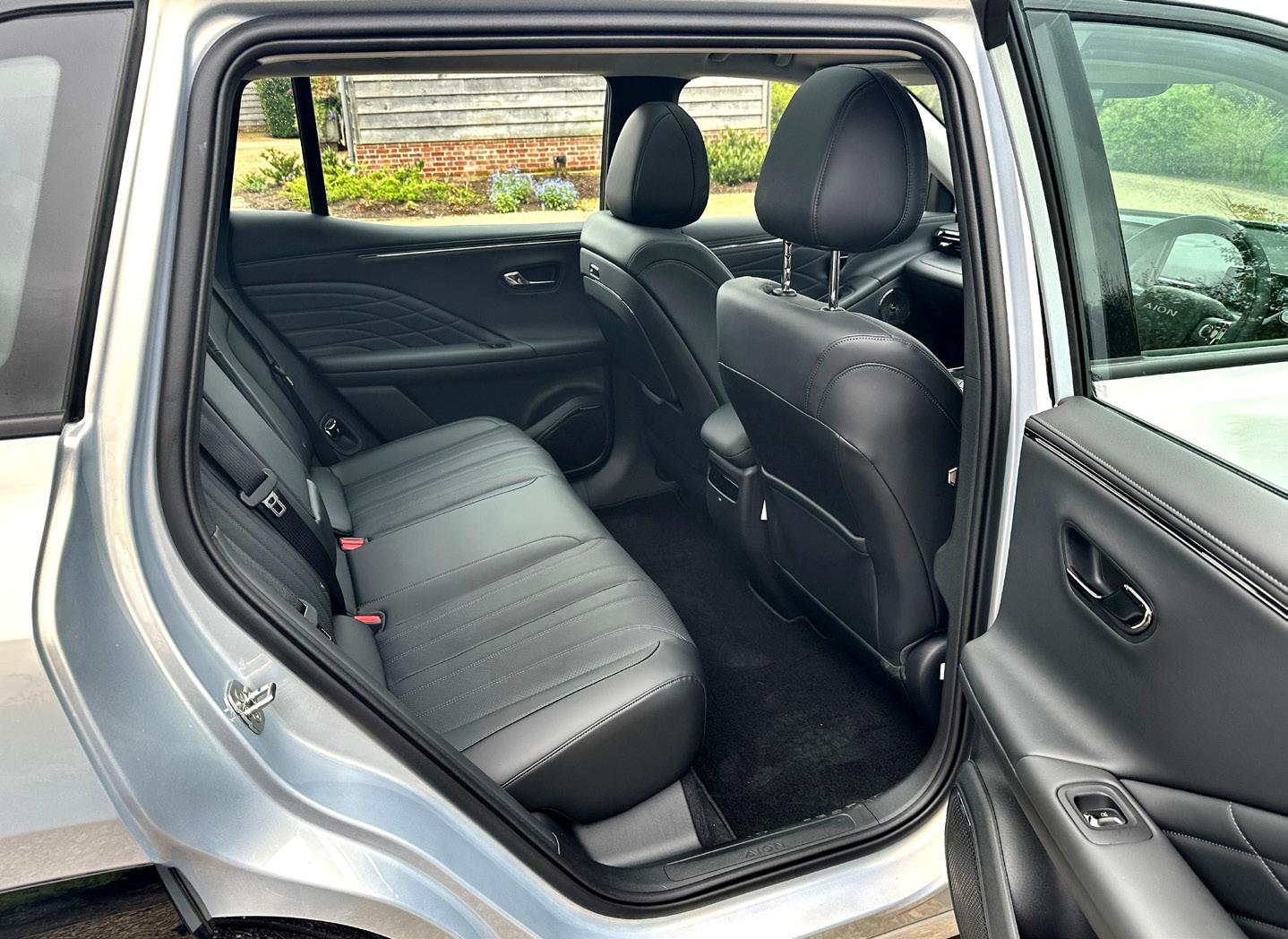
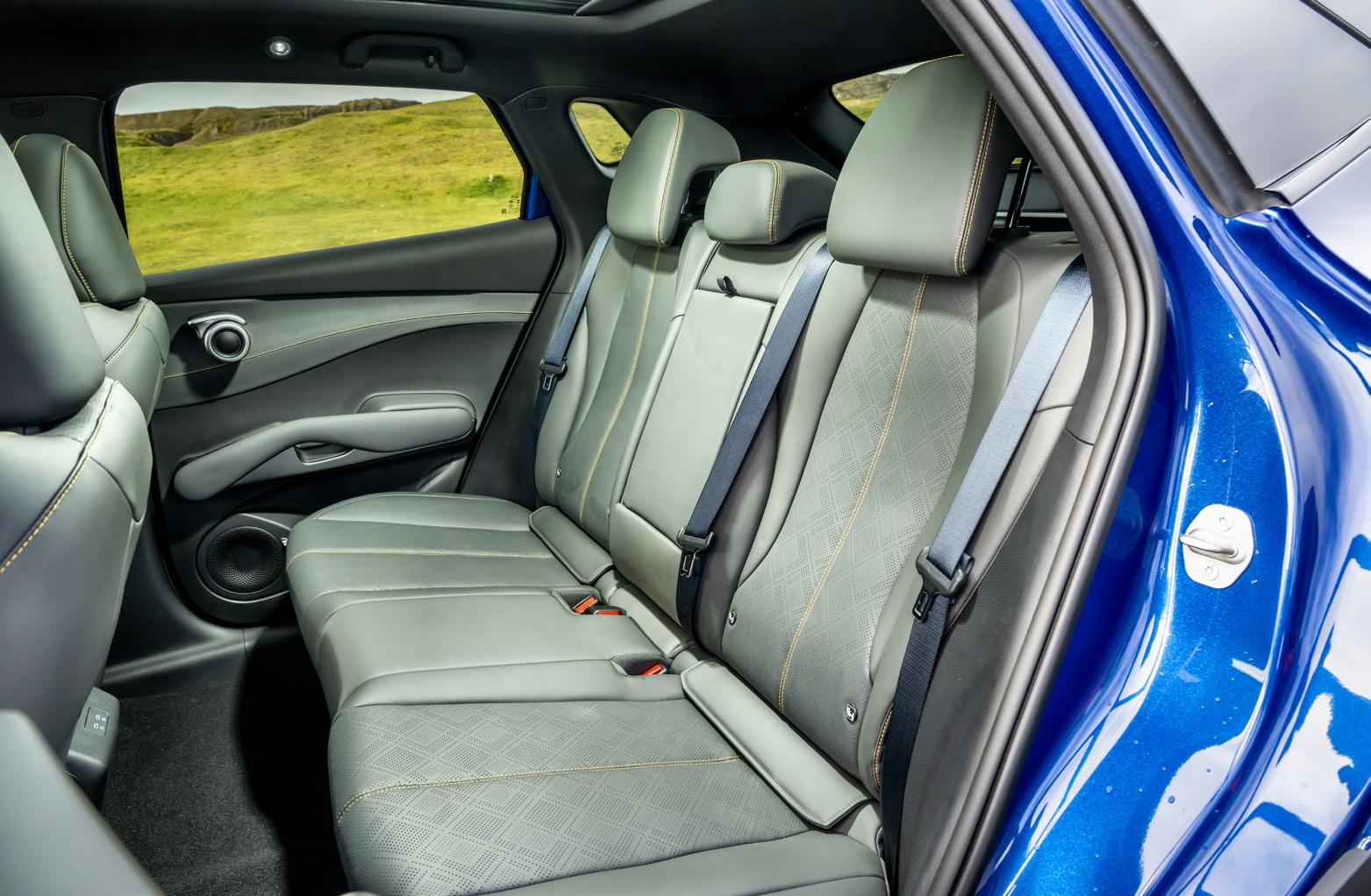
The compact SUV sector is the heart of the UK market, so it’s a good place for Aion to start. The V is one of the most spacious cars in the sector, with
large, wide-opening rear doors and plenty of rear headroom. The long 2,775mm wheelbase provides generous legroom for both front and rear passengers.
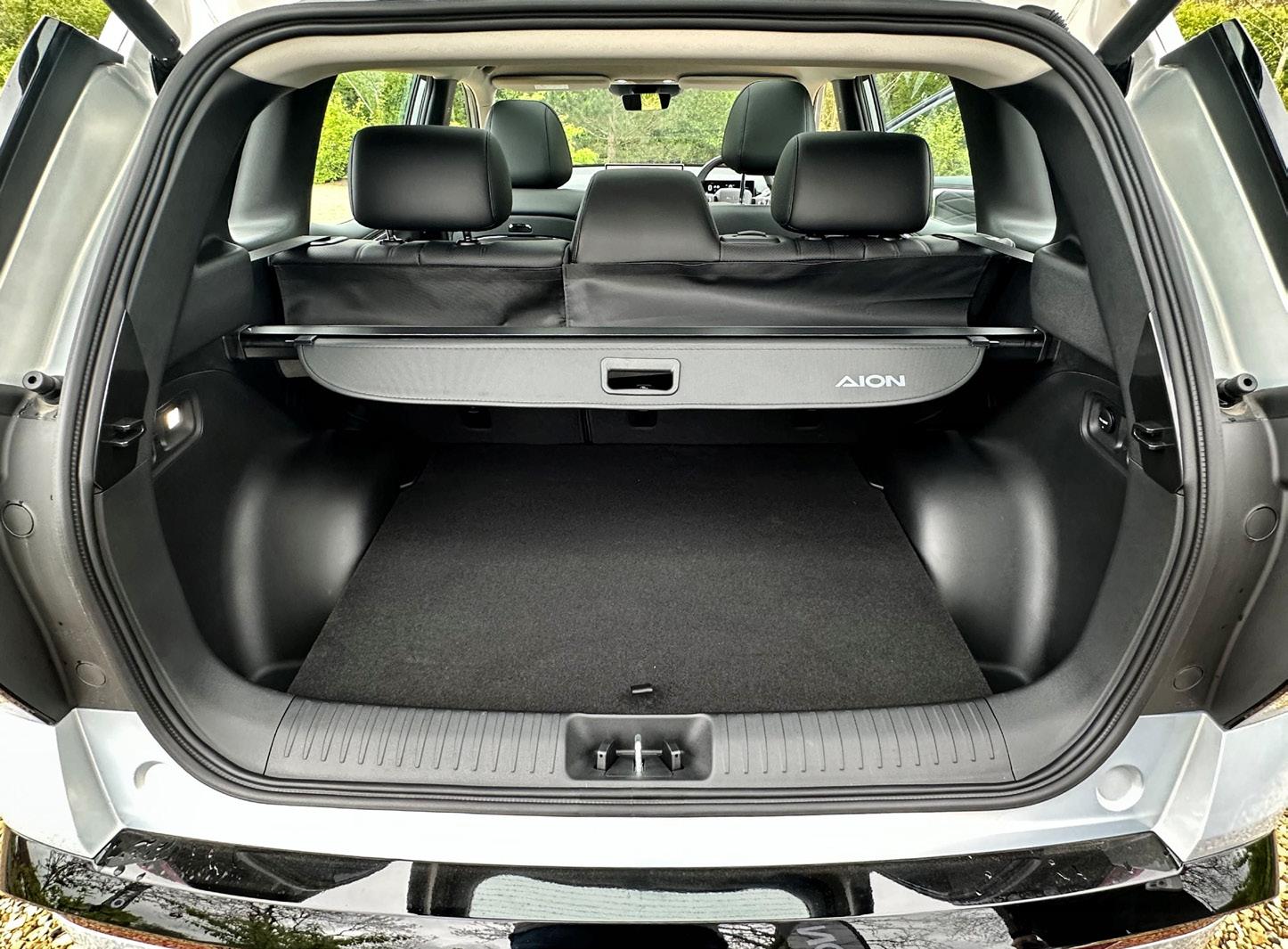
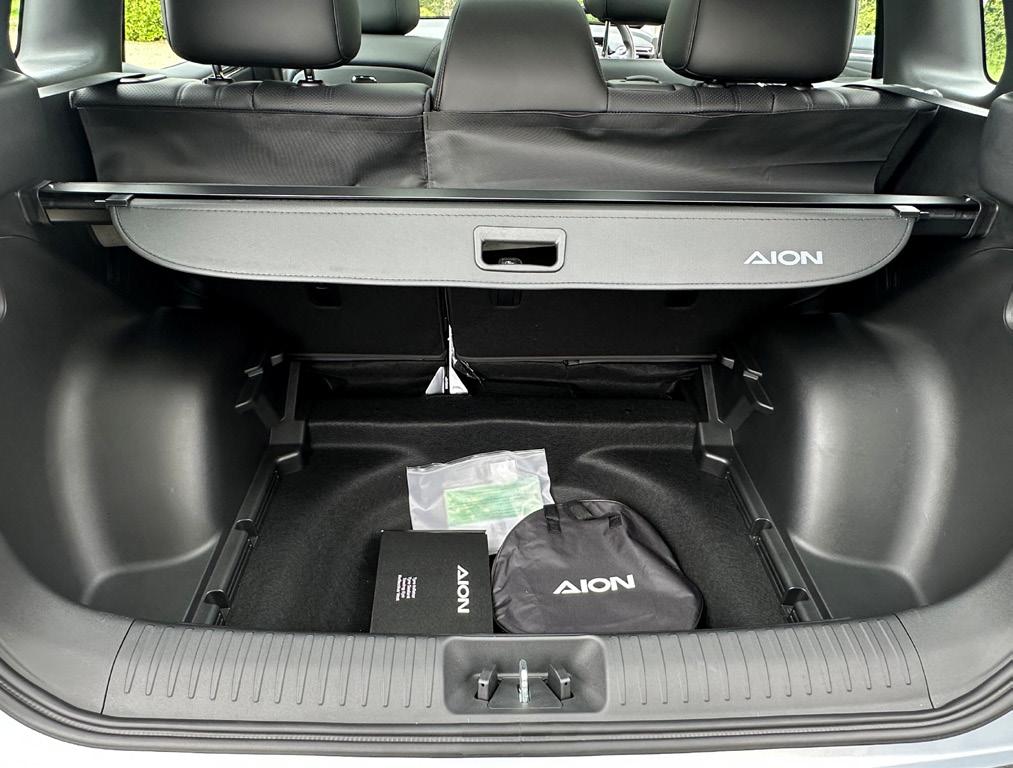
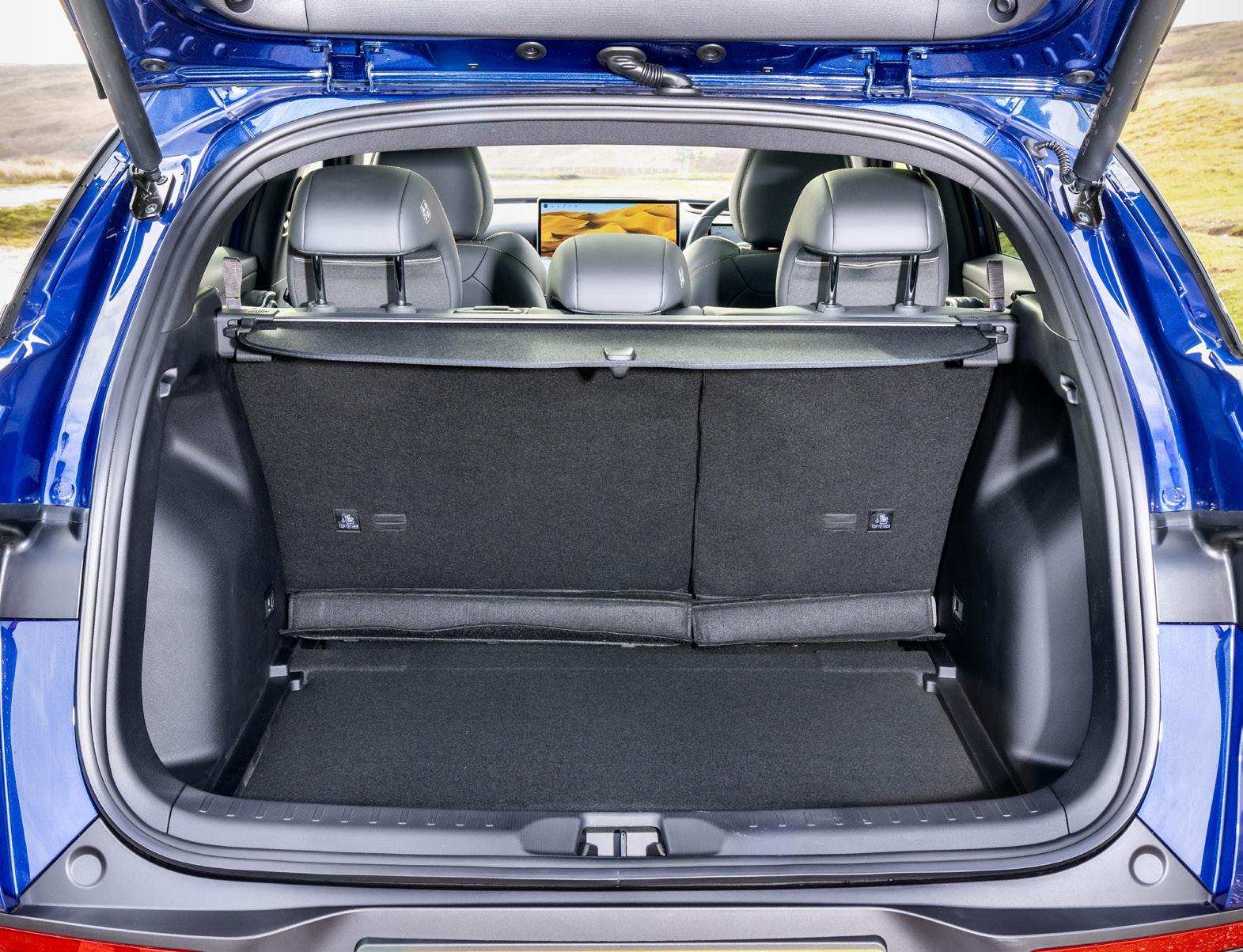
The car is front-wheel drive only, which leaves plenty of room at the rear for a large boot – 472 litres, including a substantial underfloor area. The boot floor can be removed to make more room. There’s no frunk, so luggage has to share space with the charge cables – though Aion is looking at modifying the under-bonnet design to incorporate a frunk in future versions of the car.
The design has European input from
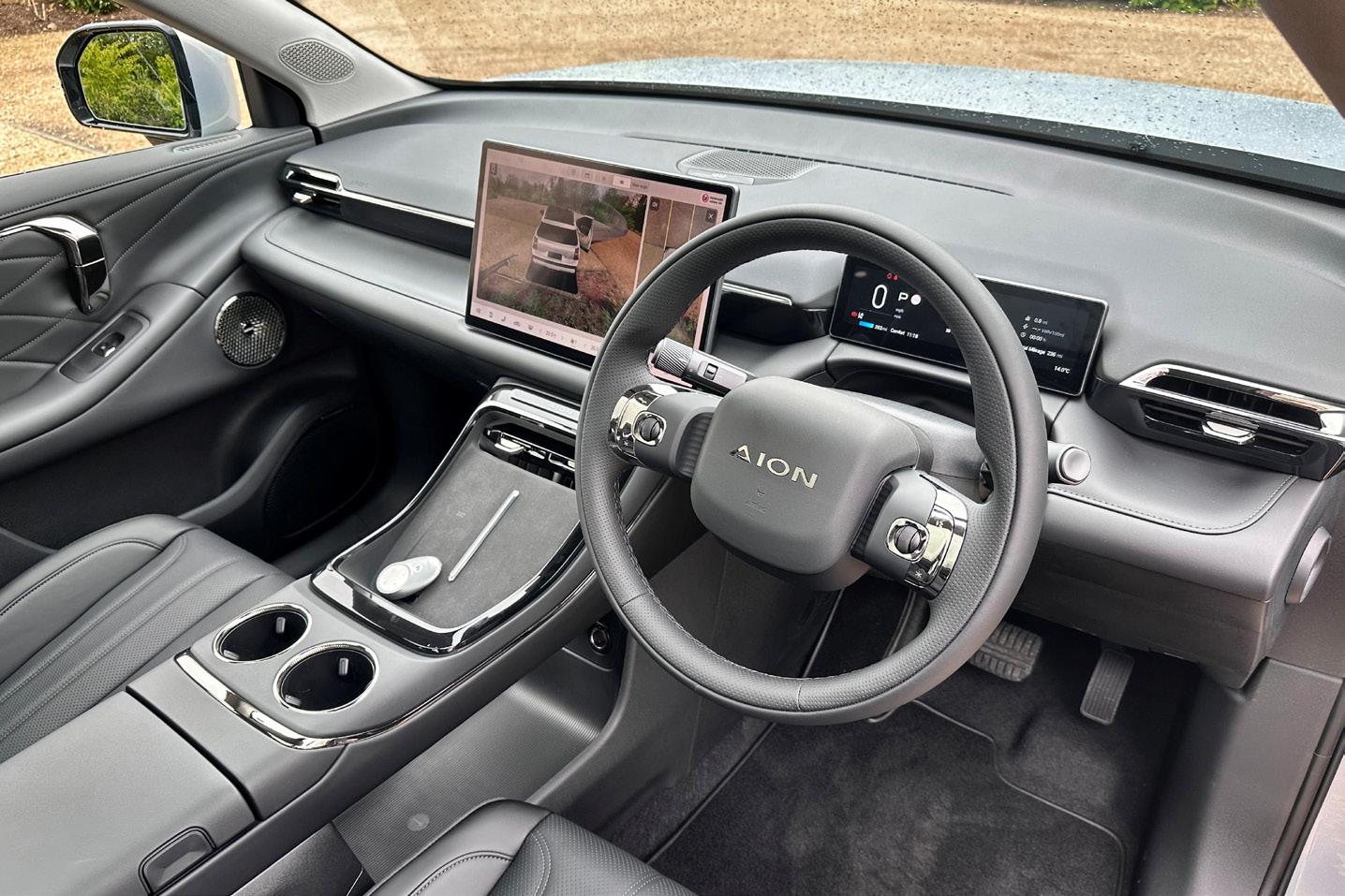
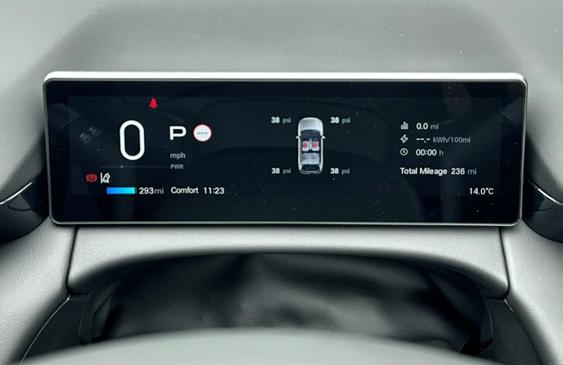
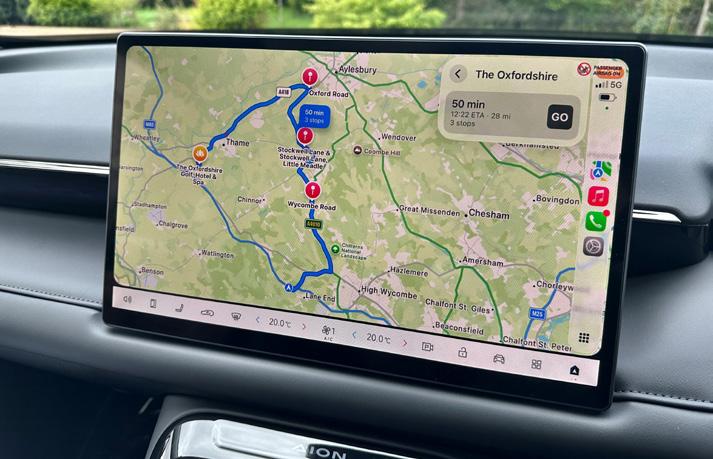
Aion’s Milan design office as well as by teams in Guangzhou and Shanghai and Milan. Fit and finish inside the car is of a high standard, with soft-touch surfaces and comfortable seats – especially with the massage function. The dashboard is typically minimalist, following the design of most new EVs with a 14.6in central touchscreen and an 8.9in dash panel.
The rear seats can recline for extra rear passenger comfort. There’s a fulllength 2,030mm panoramic roof with electric sunblind.
CONTINUED ON PAGE 22
Mark Bursa Mark Bursa
DATA
Price as tested £38,620
Includes £1,495 Premium pack
SPECIFICATION
Powertrain Single EV motor
Transmission Single-speed auto, front-wheel drive
Battery pack 75.3kWh LFP
Power 204PS
Torque 240Nm
Top speed 99mph
0-62mph 9.7sec
Electric range 317 miles (WLTP)
Charging time 8hr AC 11kW, 10-100% 24min DC 180kW, 10-80%
Max charge rate 180kW
CO2 emissions 0g/km (WLTP)
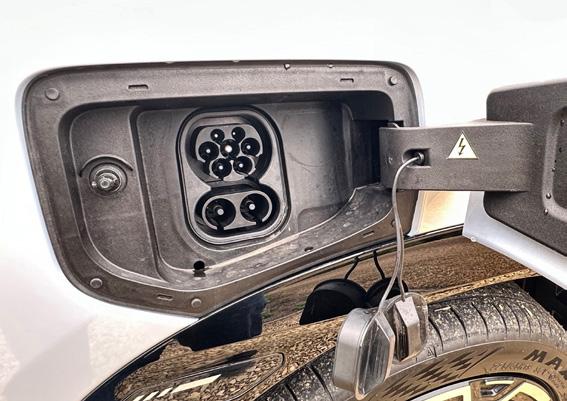
Charge port CCS2
Length 4,605mm
Width 1,854mm
Height 1,686mm
Wheelbase 2,775mm
Loadspace 472 litres
Turning circle 5.6m
Vehicle warr'y 8 years /100,000 miles
Insurance Gp 32
VED Band A
CONTINUED FROM PAGE 21
The Aion V has dual-zone climate control for the front occupants with a dedicated pair of air vents from the rear of the centre console for rear seat passengers.
A 32-colour ambient lighting system runs throughout the cabin and the centre console houses space to hold two smartphones side-by-side, with one section incorporating a fan-cooled 50W wireless charging pad, and two cup holders. Under the floating centre console are USB-A and USB-C sockets.
The electric motor is powered by a 75.3kWh LFP battery, giving a very decent 317 miles of range (WLTP) and the ability to recharge from 30-80% in 18 minutes at maximum
charging capability of 180kW. The 11 kW onboard charger enables fast and convenient AC home charging from 0-100% in around 8.5 hours.
Aion V is not designed for ultra-rapid performance, though it feels lively enough away from traffic lights, with 7.9sec 0-62 acceleration. Power is delivered to the front wheels via a single 204PS electric motor with 240Nm of torque.
There are three drive modes: comfort, sport and eco, with varying degrees of brake regeneration and pedal resistance. Comfort is pretty soft and comfortable without being wallowy.
Handling has been tweaked for UK roads through collaboration between Aion engineers in China and in the UK. The car is exceptionally good over bad road surfaces, handling some deep
potholes with ease. The 19in wheels have relatively high-profile tyres – a sensible approach. The cabin is quiet too, aided by double-glazed front windows. In fact, the loudest noise is the motors in the massage seats.
As a new brand, Aion is in the early stages of building a network. Its flagship store is about to open in Slough, which will double as Aion UK head office. More dealers will be added throughout the year, and Aion will use a concierge service to deliver and collect cars for servicing.
Servicing will be carried out via a partnership with the AA, using a nationwide network of accredited workshops and more than 100 mobile service technicians to carry out servicing, maintenance and repair at a customer’s home or work location.
VERDICT
The market is getting pretty crowded with Chinese brands, but UK consumers don’t seem to mind trying something new – we’re the least brand-loyal of all the major European markets, in fact.
Nevertheless, a new entrant needs to be good if it is to get noticed, and while Aion’s ambitions are modest, its quality is up there with the more established Chinese brands. Indeed, there’s not a lot to choose between the Aion V and the BYD Atto 3 Evo tested elsewhere in this issue in terms of size, quality, range and charging ability. Parent GAC clearly knows how to make cars.
Aion’s simpler range might be an advantage too – there’s really only one spec and one option pack. The warranty and support is excellent at 8 years, though the dealer network is a work in progress, with only 15 expected to be up and running by the end of June, and 25 by year-end.
The Aion V is roomy and comfortable, and the softer ride is a real advantage for private hire work. The boot is decent too, though the addition of a frunk to take the charging cables would be helpful.
WHAT’S NEXT FOR AION?
Aion might be new to the UK, but its parent company, GAC, is one of the major Chinese players, with production heading toward 2 million cars a year. Last year it sold more than 300,000 battery-electric cars alone.
Aion cars are already on the roads in Portugal, Poland, Finland and Greece, with further European rollouts through to 2028. Overall, the full Group product portfolio in Europe will include six model lines by 2028 and eight by 2030, with a target of 200,000 units in Europe by 2030, representing 40% of GAC’s total overseas sales. All will be electrified powertrains.
This is ambitious, though more
measured than, say, BYD or Chery, whose rapid-fire launch programme and multi-brand approach has bought both firms a strong market position in very short order. GAC runs a multiple brand strategy in China, but won’t do that here.
“For the UK, it is absolutely clear that we are only going to operate with one brand, which is Aion,” says Aion UK sales director David Pay. “We aren’t going to saturate the UK with more brands than the consumer can appreciate. But we will be able to cherry-pick the models for the UK from the wider store of GAC products.”
This includes GAC’s advanced sports car brand HypTec, maker of the SSR electric supercar, as well as the
core GAC brand. Indeed, the next two products have already been chosen, and we’ve had a sneak preview. Next up is the Aion UT, sold as an Aion in China. It is a compact 4.2m-long electric hatchback featuring a 60 kWh LFP battery.
It offers a WLTP range of approximately 267 miles and fast charging capability (30-80% in 24 minutes). It’s optimized for a large cabin, and it’s expected to sell for around £25,000 when it goes on sale later this year.
This will be followed in early 2027 by a bigger SUV, pitched directly at the hot-selling Jaecoo 7. Aion hasn’t settled on a name yet, but in China it is sold as the GAC S7. This is a plugin hybrid rather than an EV, coupling a a 1.5-litre petrol engine with electric motors (FWD or AWD). Like most Chinese automakers, Aion plans to use hybrid, PHEV and range extender tech as well as BEV.
Pay says Aion’s ambitions are modest but realistic. “We’re not trying to flood the market in UK with volume that is not organically there. So we will only bring in the right number of cars that the market can absorb. We are not going to force registrations. This year, we will be looking to register around 4,000 vehicles. Into next year, we’re looking at somewhere in the region of 10,000, rising to 18,000 the following year.”
GAC S7 PHEV will be sold as an Aion in the UK from 2027
Aion UT hatchback will be the second UK model later this year
JOIN THE EVOLUTION JOIN THE EVOLUTION
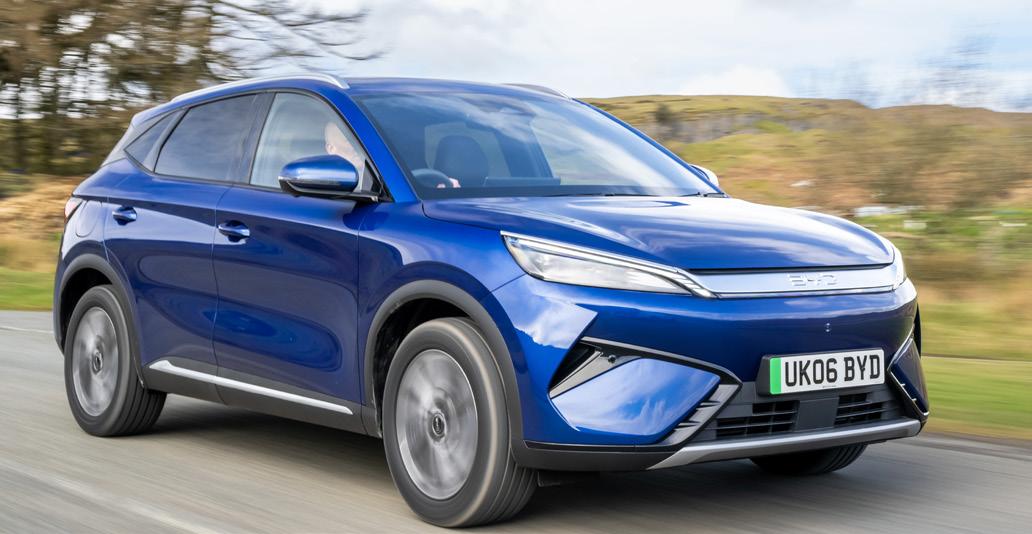
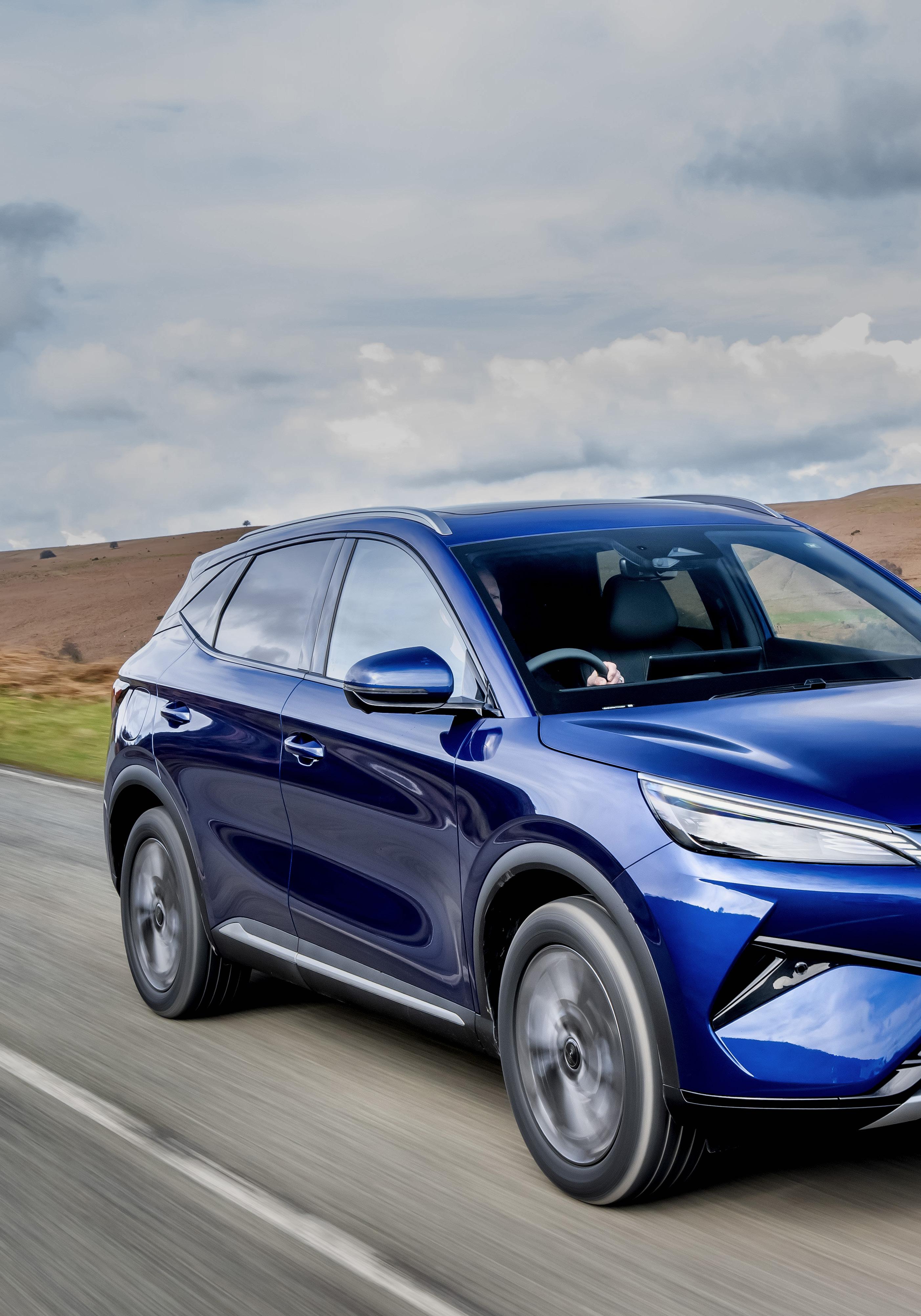
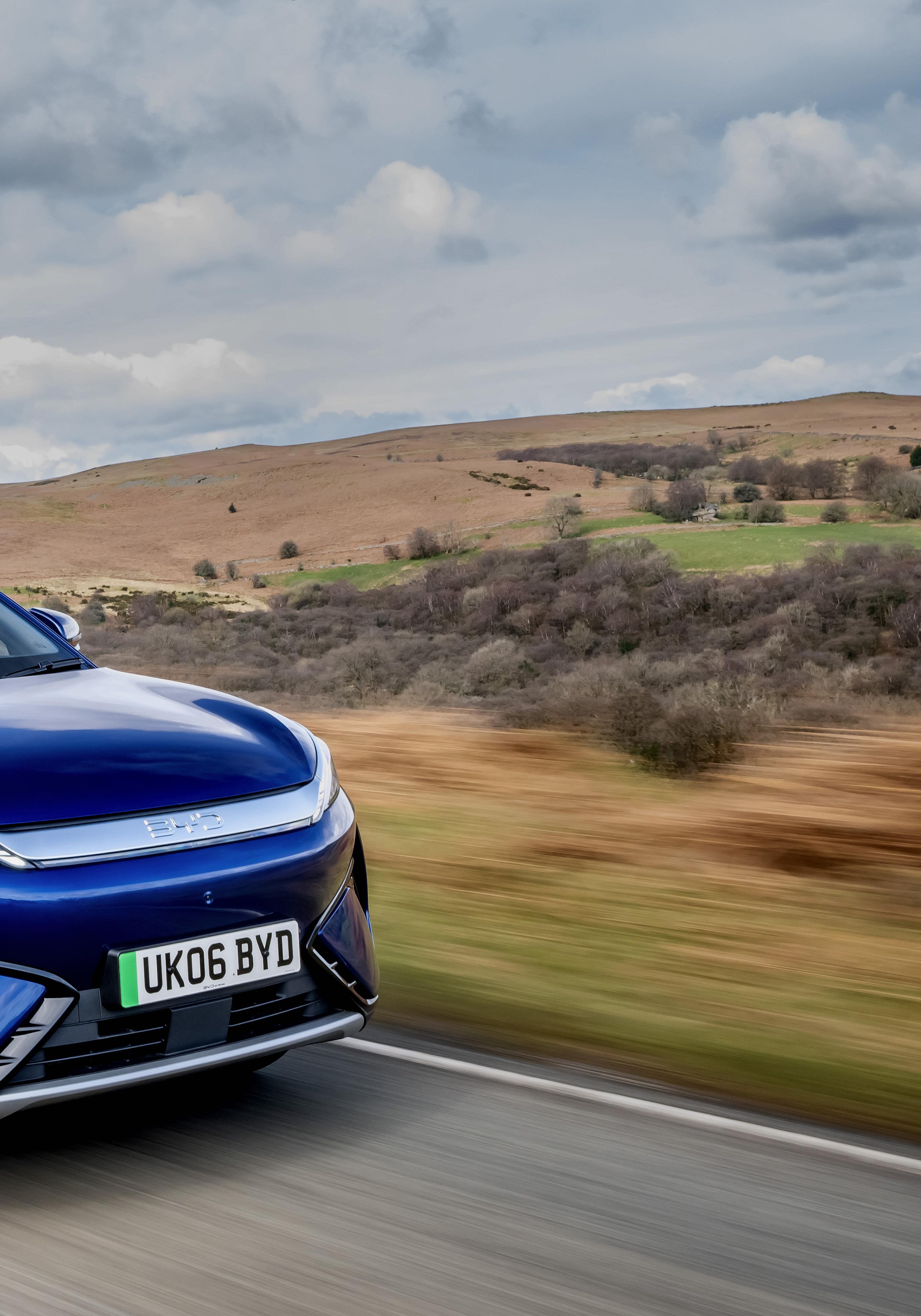
BYD Atto 3 Evo BYD Atto 3 Evo
Mark Bursa Mark Bursa
EVOLUTION EVOLUTION
BYD launched in the UK just over three years ago, but it’s already becoming difficult to consider it a newcomer. In March, it achieved almost 4% of the UK car market, and first-quarter sales topped 21,000. BYD is on course for total sales of more than 100,000 cars this year, and Chinese automakers could grab more than 20% of the market in 2026.
So perhaps it was fitting that BYD’s latest launch is a new version of the first car it sold here. The all-electric Atto 3 went on sale in March 2023, and while the arrival of newer BYD models has seen sales slow down – just 733 were sold in the first quarter – the new version is positioned right in the mainstream EV market.
It could be ideal for private hire, too. If you liked the original Kia e-Niro, the new Atto 3 Evo is very similar in size and feel. It’s bigger than you expect – Kia’s new EV5 is a close comparison in size terms too.
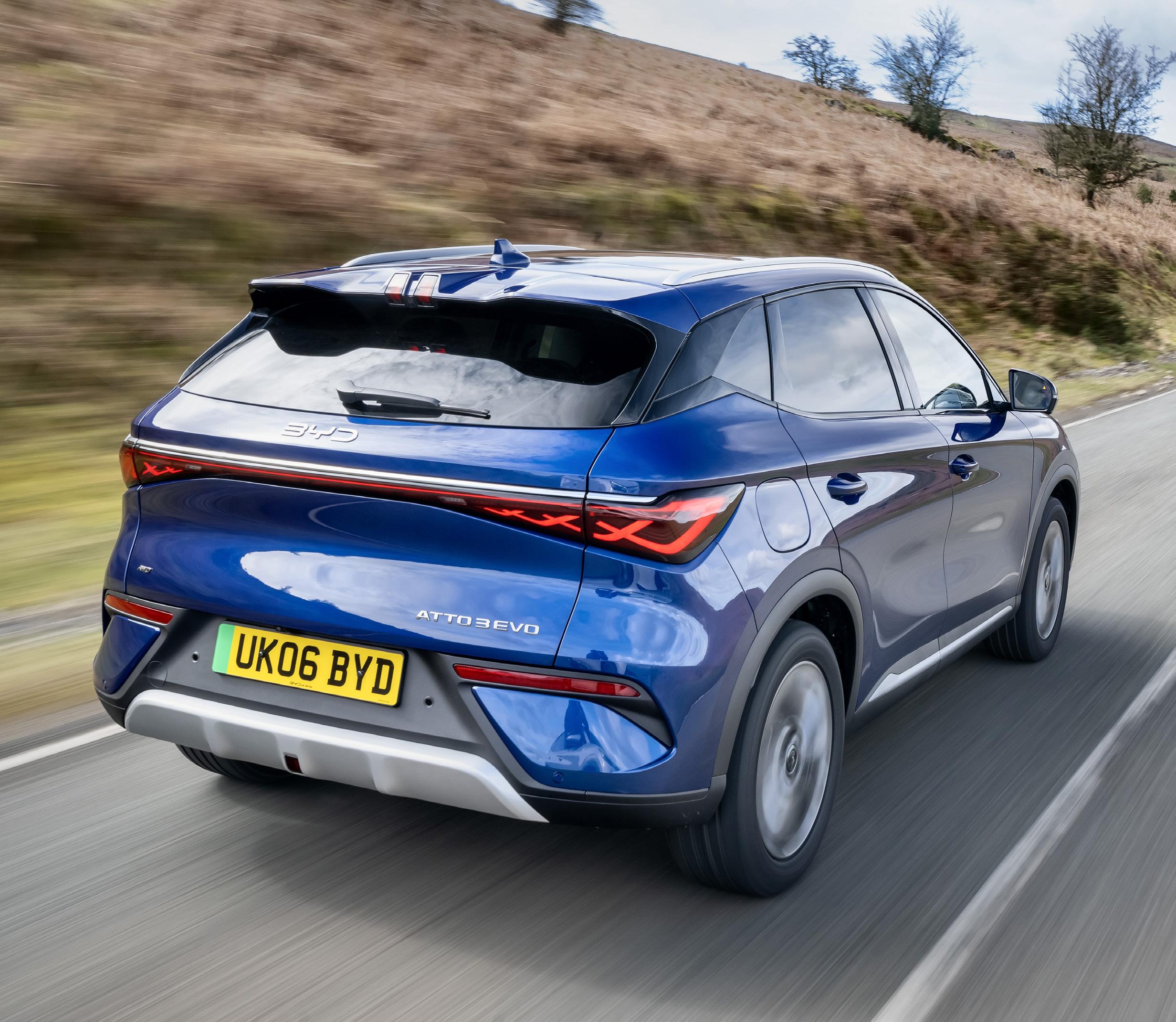
Atto 3 Evo uses the same basic body structure as the original Atto 3, with all basic dimensions and wheelbase unchanged. But it has been substantially upgraded in key areas, including range, charging speeds, performance and practicality.
Below the skin, the basic chassis has been changed, and BYD’s proprietary Blade Battery design means the cells are integrated into the chassis rather than fitted as a separate “pack”. This has allowed the powertrain to be switched from a front-wheel drive configuration to a choice of rear-wheel drive or all-wheel drive. The rear suspension has changed from a four-link setup to a more advanced five-link.
There are two trim options, each with different motors and drivetrains. Design uses a single motor with 309bhp driving the rear wheels and is capable of 0-62mph in 5.5sec. Excellence trim adds a second motor on the front axle, increasing the total output to 443bhp and reducing the 0-62mph time to 3.9sec.
At 74.8kWh, the Atto 3 Evo’s battery capacity has increased by 14.4kWh over the original Atto 3. This increases the range from 261 miles (WLTP) to 316 miles, while the new model is capable of fast charging at 220kW, double the 110kW limit of the outgoing car. This is a result of a switch from 400V to 800V electrics, and a 10-80% DC recharge takes as little as 25 minutes.
The exterior design takes an evolutionary approach, with redesigned front and rear bumpers, side skirts, C-Pillar,
CONTINUED ON PAGE 26
CONTINUED FROM PAGE 25
rear spoiler and a new wheel design. Gone too is the “Build Your Dreams” slogan on the boot – no, that isn’t what BYD stands for!
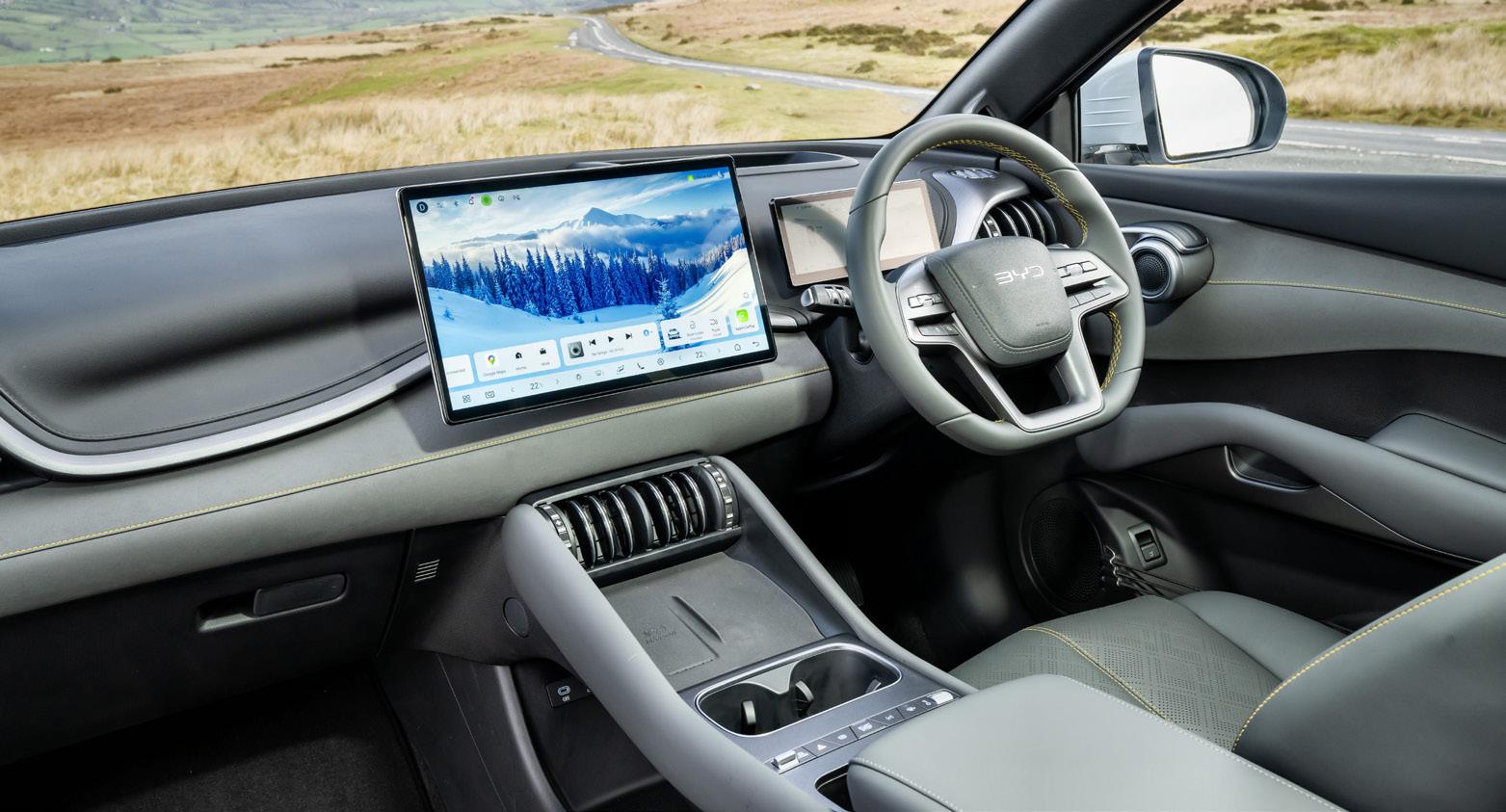
Inside, the interior layout has been changed, with the gear selector moving from the centre console to a steering column lever. The fit and finish is good, with plenty of soft-touch plastics.
The steering wheel has been redesigned with proper buttons rather than touch pads. Some of the quirks of the old model have been retained, including the door pocket straps, which can be given a satisfying twang!
There’s a small 8.8in digital instrument panel as well as a large 15.6in central touch screen, which is the same size on both trim levels. The system is Google-based, so you can use Google maps as your default sat-nav without having to run it off your phone.
The repackaged batteries have allowed BYD to make a bigger boot, which at 490 litres is 50 litres bigger than the original Atto 3’s boot. For the first time, there’s a decent 95-litre “frunk” – a benefit of the switch to RWD, though even the AWD Excellence retains the frunk.
There’s decent rear legroom and plenty of headroom. The seats are soft and comfortable front and rear.
Standard equipment is comprehensive on both trim levels. The touchscreen has integrated Google functions, there’s wireless smartphone charging, front and rear parking sensors with a 360-degree surround-view camera, a heat pump, heated and electrically adjustable front seats and ambient lighting.
The Excellence adds head-up display, heated rear seats and panoramic sunroof.
The BYD warranty offers a
6-year/93,750-mile package, plus an 8-year/155,350-mile cover for the battery. UK prices start from £38,990 for Design, an increase of £1,260 on the outgoing Atto 3 Comfort model. Meanwhile Excellence costs £42,730, £3,000 more than the previous top-line Design version.
We drove both versions, and the extra power of the Excellence version is frankly a bit unnecessary. In fact the two cars don’t feel markedly different. Both RWD and AWD models ride well, without the heaviness that blights a lot of EVs, and there’s plenty of feel from the steering, with plenty of weight.
The cars are quiet, though the driver assist systems are typically annoying, especially the driver alert and speed warnings. You can turn off the bings and bongs, but like most cars today, they reset to a default “on” position each time you restart the car.
VERDICT
The fact that BYD’s earliest models have reached the facelift phase is evidence of how quickly the company has become established in the UK.
The improvements are genuine, without losing the character of what was already a well-liked car. Range is improved, and fast-charging speed is double the outgoing Atto 3.
Of the two versions available, we’d recommend the cheaper two-wheel driver Design trim level for private hire work.
And as BYD doesn’t downgrade the spec too much (same satnav, same electric front seats) all you’re paying extra for is more lively performance, a HUD and a glass roof. Do you really need a sub-4 second 0-62 sprint?
The warranty is good and BYD support is excellent, with the company on course for 150 UK dealerships by year end. Not bad from a standing start just three years ago.
DATA
Price (Design trim)
£38,990
Price (Excellence trim) £42,730
SPECIFICATION
Powertrain Design - rear motor Excellence - front and rear electric motors
Transmission Single-speed
Battery 74.8kWh LFP Blade
System power 313PS (Design) 449PS (Excellence)
Torque 380Nm / 560Nm
Top speed 112mph / 124mph
0-62mph 3.9sec / 5.5sec
EV range 316 / 292 miles (WLTP)
DC Charging time 25 min (220kW, 10-80%)
AC Charging time 8hr (11kW, 0-100%)
CO2 emissions 0g/km
Length 4,455mm
Width 1,875mm
Height 1,615mm
Wheelbase 2,720mm
Loadspace 490 litres
Frunk 95 litres
Warranty 6 years/93,750miles
Insurance Group 40/42
VED Band A
ROOM AT THE TOP ROOM AT THE TOP
Denza D9 Denza D9
Mark Bursa Mark Bursa
DATA
Price £70,000 (estimated)
SPECIFICATION
Powertrain Plug-in hybrid with 1.5-litre petrol engine and front and rear electric motors
Transmission All-wheel drive
Battery 58.5kWh LFP Blade
System power 353PS
Top speed 112mph
0-62mph 8.6sec
Electric range 130 miles (WLTP)
Hybrid range 590 miles (WLTP)
DC Charging time 9 min (559kW, 10-97%)
Length 5,250mm
Width 1,960mm
Height 1,900mm
Wheelbase 3,110mm
Loadspace 430-570 litres
Warranty 6 years/93,750miles
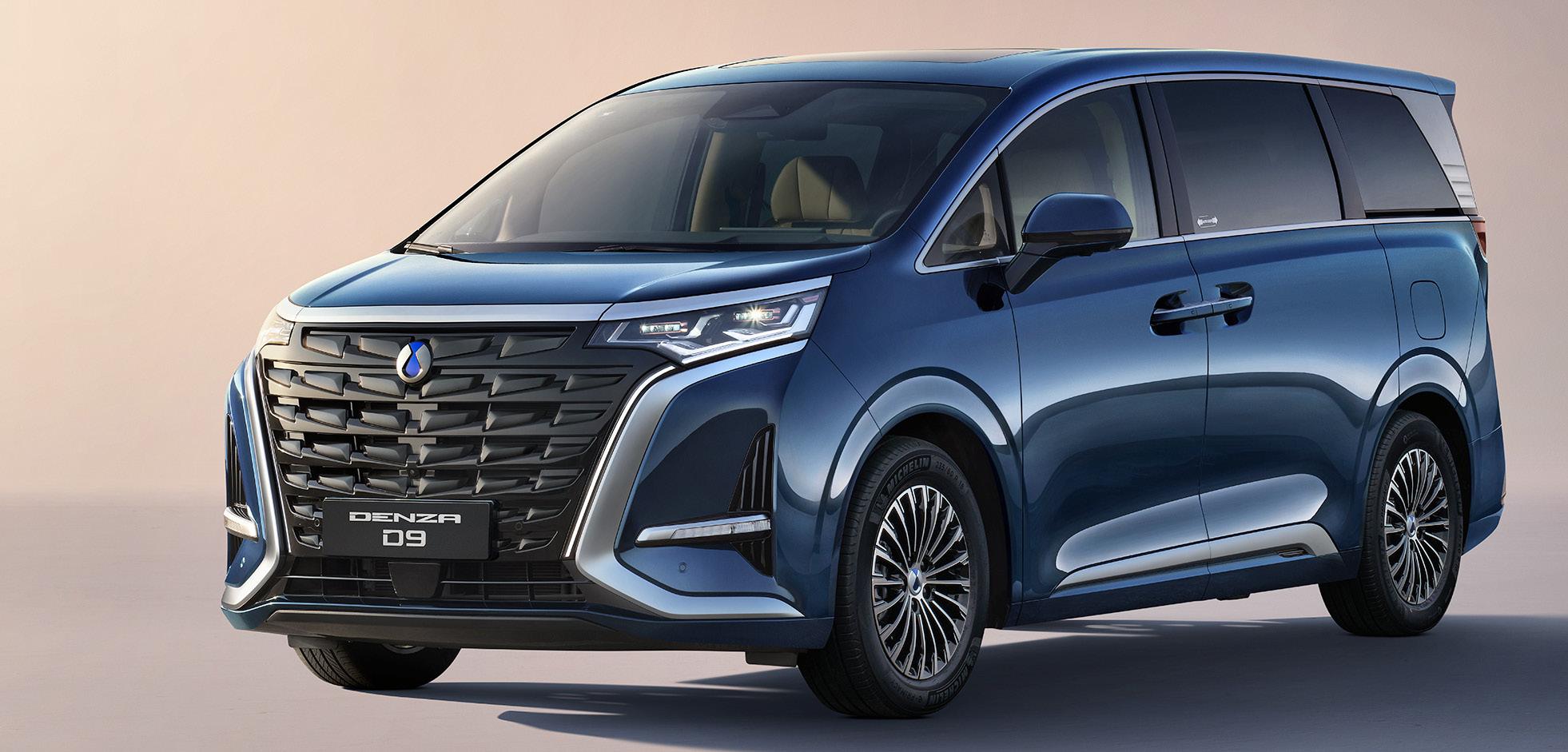
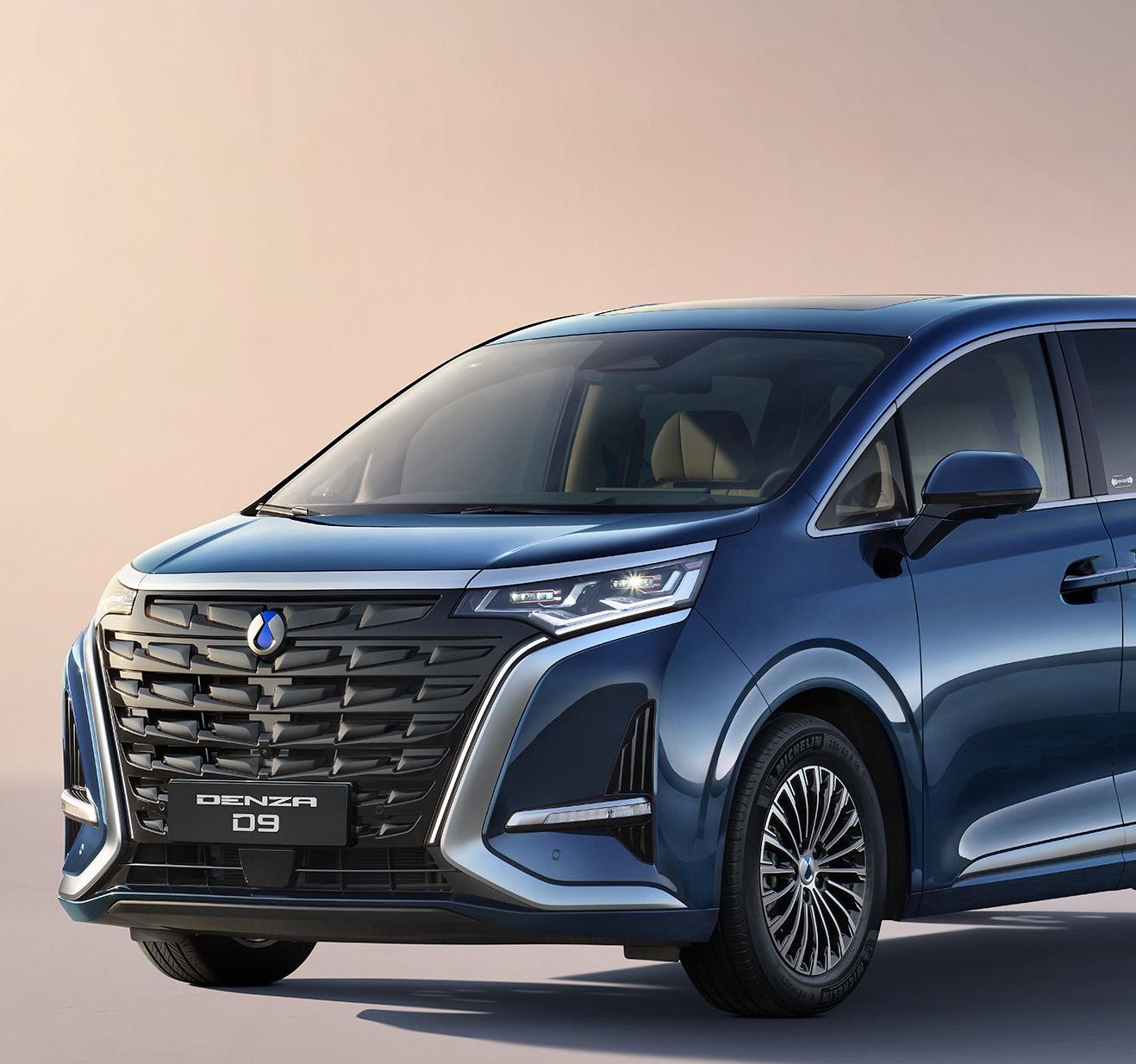
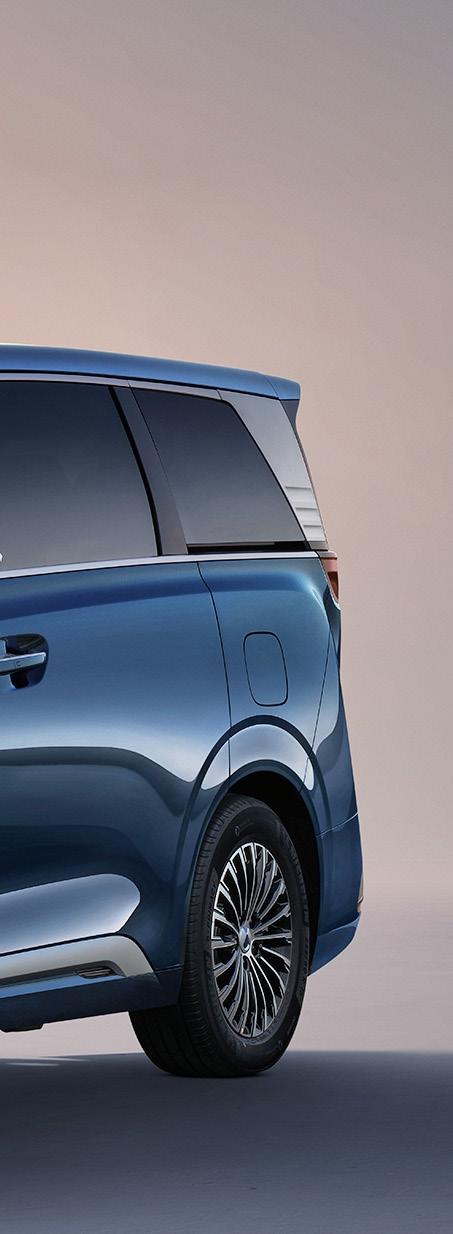
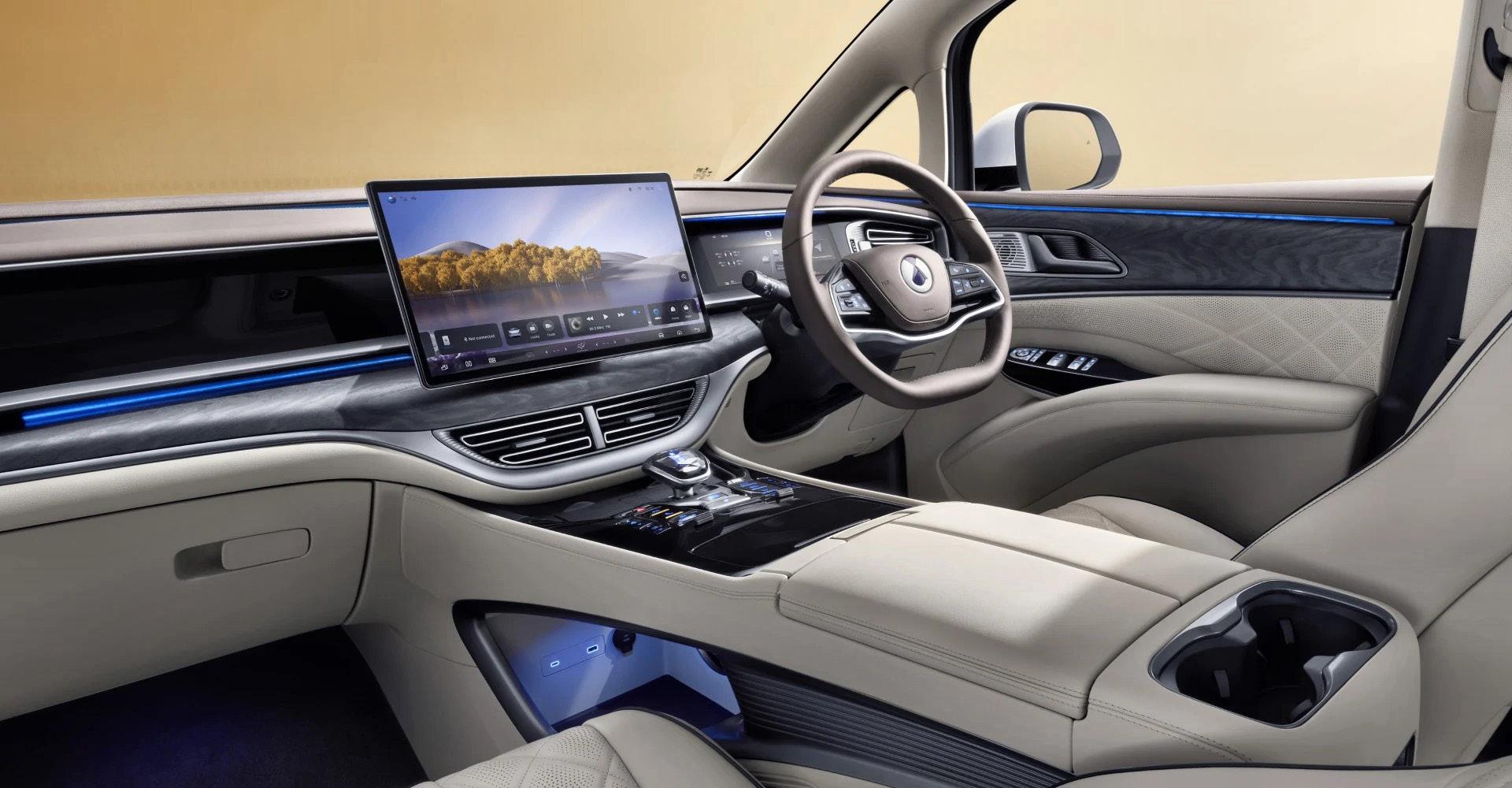
BYD’s premium brand Denza is set to launch in the UK this year, and among models planned the one of most interest to the chauffeur market is likely to be the D9 MPV.
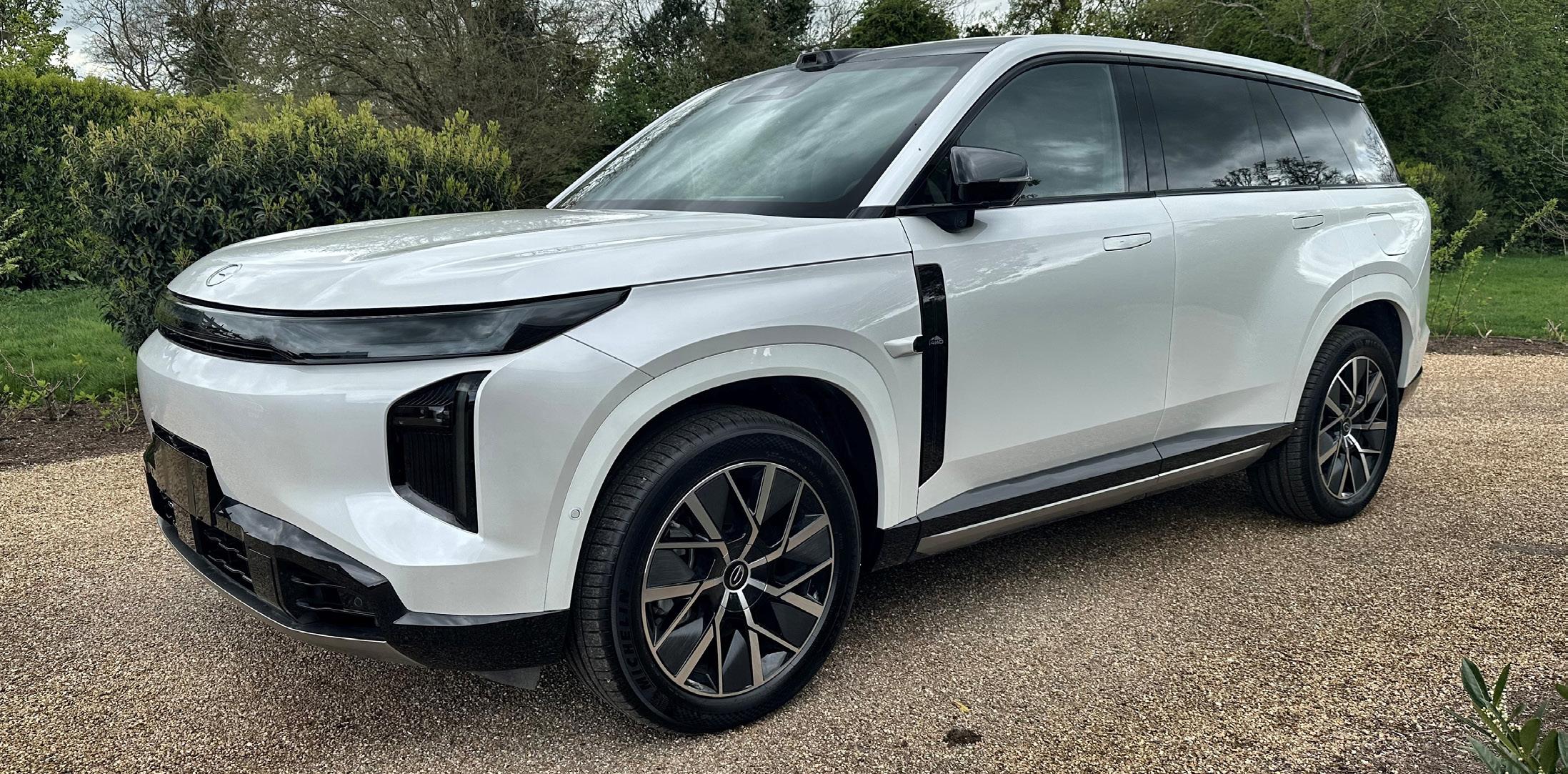
Denza is to BYD what Lexus is to Toyota, and the seven-seater D9 will be a direct rival to Lexus’s LM350 MPV, as well as forthcoming new people-movers from Mercedes-Benz and Chinese rival XPeng.
The D9 uses a version of BYD’s Super Hybrid DM-i plug-in hybrid powertrain, which gives a pure electric range of 130 miles, 590 miles on a full tank of petrol and a full charge, making it ideal for long-distance business travel.
The powertrain combines a 120PS 1.5-litre four-cylinder turbocharged petrol engine, which acts primarily as a generator for the battery and dual electric motors – one on the front axle
with 231PS, one at the rear with 61PS – for all-wheel drive. The total system output is 353PS ensuring 0-62mph acceleration in 8.6sec and a top speed of 112mph.
In addition, BYD is using Denza to launch its ultra-fast Flash Charging system, This allows the 58.5kWh battery in the D9 DM-I to be recharged at up to 559kW, using new chargers that will be introduced as part of the Denza launch. This means recharging from 10% to 70% takes just 5 minutes, while refilling from 10%-97% requires only 9 minutes.
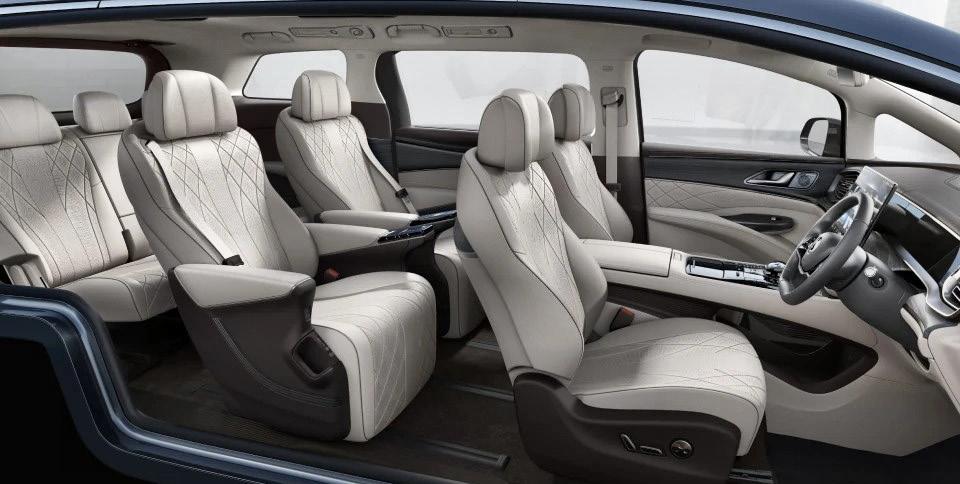
The car's cabin can operate in four configurations. In four-occupants comfort mode, the second and third rows are moved to their rearmost positions which cuts luggage space to 430 litres. In full-occupancy mode, the third-row seats are in their rearmost position, maximising comfort
TOP TOP
for seven passengers, giving 570 litres of luggage space, sufficient for seven 20in carry-on suitcases and seven smaller bags, Denza says.
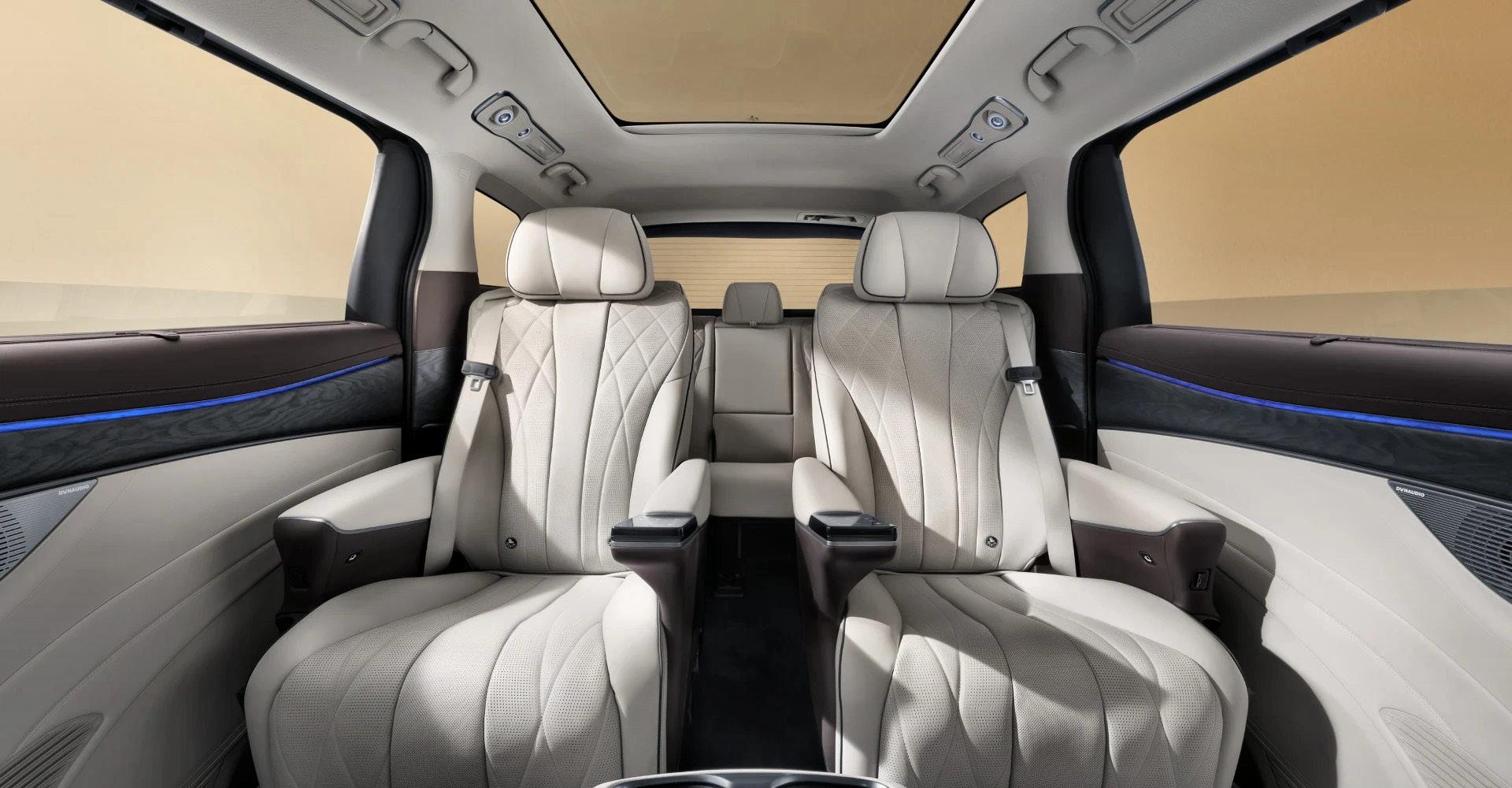
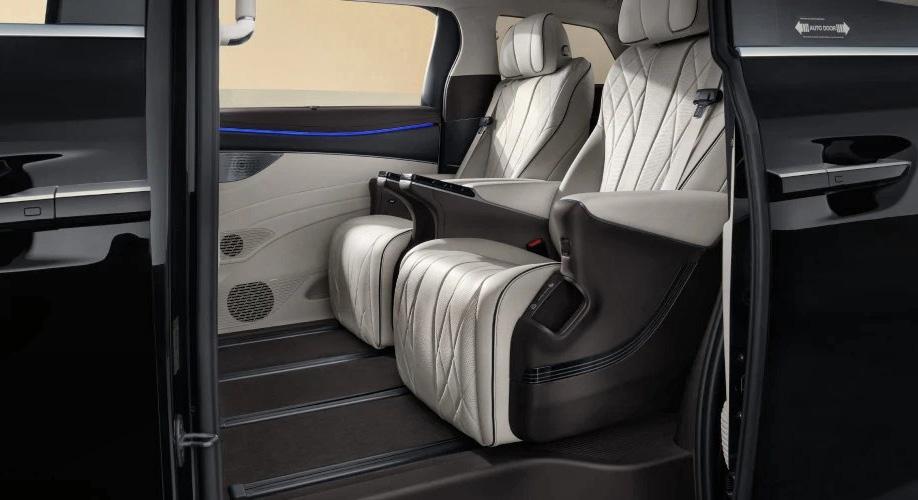
The D9 has a pair of individual second row seats that have 14-way electrical adjustment and a 16-point massage function. They can also recline to up to 152 degrees.
There are LCD screens in the armrests of the second-row seats, allowing occupants to make adjustments to entertainment choices. The third-row seats can feature heating and ventilation, along with four-way electrical adjustment. The third row seats can be folded flat, turning the D9 into a four-seater car.
The cabin has a 1.1sq m panoramic glass roof, complete with an electric sunshade, and both siliding side doors and the rear tailgate are all powered.
Gary
Gigzzee gigzzee.com
Jacobs
ASSET FINANCE SOLUTIONS FOR BUSINESS
We provide bespoke packages funding and sourcing of vehicles for the chauffeur network.
We have access to multiple funder options for vehicles finance.
We provide support and guidance throughout the entire process
We have access to competitive interest rates.
Efficient payouts to support delivery and target needs.
WHY CHOOSE ETHOS?
Here at Ethos Asset Finance, we understand the demands of the professional chauffeur services industry inside and out We can provide you with specialised chauffeur finance solutions to support you with securing the vehicles you need
With an extensive understanding of chauffeur specs and industry standards, we are more than equipped to finance vehicles that will help you make a lasting impression
the knowledge
Changes, for better or worse
Now the evidence has been gathered and the consultations analysed, the white smoke has appeared and we can start to see the shape of the changes that are on their way, though the impact of those changes will take a little longer to appear.
263 becomes 70
The Department for Transport (DfT) has held back on doing very much about cross border hiring for now. As I understand it, this is based on the reduction in licensing authorities from 263 to 70. The logic being that with fewer licensing authorities and local transport authorities, there is likely to be less cross border hiring.
That seems a touch optimistic to me, but hey, I’d struggle to point to any logic that would stand up to any real scrutiny to push back against it. At the very least I think we can be confident that the incidence of cross border working will change and possibly reduce so overall I think it is probably a reasonable approach.
National enforcement
I am grateful to the politicians for accepting the industry’s pleas for national enforcement. I have always believed that enforcement was the way to deal with the risks of habitual cross-border hiring.
I have never advocated for a ban on cross-bordering and don’t believe it is necessary. Some cross-bordering might be irritating and may even throw up competitive problems, but for many operators it is a necessity. A sledgehammer approach would have inflicted unnecessary harm on the industry.
One area I have certainly advocated for was national enforcement. The risks of vehicles and drivers never working in their own licensed area through choice are manifold. Number one risk is that both drivers and vehicles were never stopped to inspect documentation, to establish just who
Dr Michael Galvin
was actually driving the vehicle and what the condition of the vehicle was.
National enforcement will put a stop to all of that. Of course, no legislation is ever perfect. Until licensing authorities are required to carry out street enforcement, many simply will not.
Some will make cursory attempts, and - thank goodness - some will remain vigilant and active. Let’s hope that the bigger licensing authorities that are now planned will all take their responsibilities for enforcement seriously and double down on the risks.
National standards
Well nobody quite got their way on this one, the national standards are neither ‘minimum’ nor ‘mandatory’but they are ‘national’. I was always of the opinion that local variances should be possible. However, it did seem incongruous that neighbouring boroughs could have polar opposite regulations. The move to 70 larger licensing areas will largely remove that problem but still allow for some differences.
Quite where the bar will be set remains to be seen but if the service is safe, meets customer/passenger expectations and enables drivers, vehicle owners and operators to make a living that’s a good start.
Whether one licensing authority believes that CCTV should be mandatory in all vehicles or whether another wants all their vehicles to be green to fit with their tourist messaging seems to be something that adds to local democracy. The key being that the fundamentals will now be national and that may well reduce license shopping.
What happens next?
I believe the industry is destined to see constant change to regulation
and occasional change to legislation with a sprinkling of case law for good measure over the foreseeable future.
Some of the changes will be useful to assist the industry to cope with new developments such as autonomous vehicles, but others will simply add to the complexity of running a business and tick a few politicians’ boxes.
I think there is an inevitability that drivers’ working hours will come under regulation, I think facial recognition will be a requirement to ensure that the person driving the vehicle is the person who should be driving it and I believe daily walkaround checks will be a requirement similar to HGVs and coaches. Potentially operators will be required to accept further obligations.
All of the above will encourage the recent trend toward consolidation, as the increasing regulatory burden will overwhelm the smaller independent operators in the industry. Businesses that don’t have a regulatory function will struggle to keep up.
The age of the mega-operator
The logical outcome of all of this that the industry will, over time, be whittled down to between four and six large operators. The industry may well be safer, there may well be lower risks and there will still be competition as the 4-6 remainers will compete aggressively for their share of the cake.
Drivers will be far more like bus drivers with less choice and probably a flatter payment structure. The days of finding the operator that suits their lifestyle, working hours or preferred customer type will be gone.
Customers likewise will have four to six household brands to choose from. Cab services will generally be a commodity where the only differentiator is price.
I don’t see multi-apping disappearing but maybe the authorities will be less tolerant of refusals and post-dispatch cancellations.
The one certainty is that change is here and it’s here to stay.
Anger management time!
Be honest. On the one hand, WhatsApp groups are a never ending curse, while on the other they remain an absolute godsend. Great for filling an empty leg at the last minute or advising a ‘headsup’ to an upcoming event such as a fun run or protest march.
The downside of these on-line forums is the common held belief (as with most social media) that users are free to air their points of view in the belief that everyone reading agrees with them.
Not that I really care when it concerns “Spurs to be relegated” or “Arsenal bottle it” jokes and memes. All harmless fun, my current favourite being “the way things are going the only thing Arsenal will be celebrating this coming May are Max Dowman’s GCSE results.”
Kevin Willis Chirton Grange contact@chirtongrange.co.uk
days, is horrible. Sane, level-headed people no longer feel able to debate their point of view for fear of being labelled “woke”, an idiot or given that ultimate put down of “oh, you’re one of those, are you?”.
Comedy gold. And, I can take it as well as give it, so I’m more than happy to hear jibes on Eddie Howe’s obviously toxic half-time team talks.
Things then take a turn for the worse. Friends and colleagues I like and respect within our industry glibly send me pro-Israel and anti-Palestine propaganda without knowing or bothering to ask where my political views lie. ‘Starmer Out’ is a favourite (and I cleaned that up) as is most anti Muslim rhetoric.
Self-serving, nepotistic liars
Unfortunately, I have been a coward. A coward because I am guilty of either ignoring these posts or, worse still, replying with a thumbs-up or laughing face emoji just to keep the peace.
Enough is enough. Politics, these
For the record, I voted Labour at the last election. Why? Because the Tories were a mess of self-serving, nepotistic liars. I will never vote for Farage and his Tory B team. Putin is psychotic, Kim Jong Un is deranged and Trump is more dangerous than the pair of them put together. Iran need to give up their nuclear arsenal but then so should Israel… and maybe France, as who trusts the French?
People on social media must understand that not everyone shares the same viewpoint, statistically around half will disagree with you. So, we need to learn to be more sensitive to other people’s beliefs and opinionswe do not have to agree but we can still be civil about it. Part of the reason the last Conservative government got away with all they did was the lack of an effective opposition. (Having the national press in their pocket helped - Ed) Opposition is healthy and necessary.
Back in the day, over a couple of litre and a half bottles of Hock, a lasagne and sticky limoncello shots, my mother-in-law and I would rage
the evening away debating politics. Back then I was a red-braces, Filofax hugging Thatcherite while she (God rest her) was a staunch Socialist.
I love you, but you're an idiot
At around two in the morning with my eyes flickering toward sleep Gladys would tell me to “get to bed. I love you but you are an idiot”. No repercussions the next day, we simply agreed to disagree.
The world stage is a mess right now, Iran, Ukraine, Palestine and Lebanon all keep us on the fringe of the next world war.
Although, for those who care to hear my actual opinion, I see hope. Hungary voting out the pro-Putin, anti-Europe, Viktor Orban (who sounds like he owned a Mayfair hair salon back in the eighties) is a welcome step in the right direction. France keep batting the Le Pen dynasty down and here the Green Party are starting to nick the mid-term protest vote from Farage. All positive stuff in my eyes.
At its peak a single WhatsApp group can hold up to 1024 people under its unique title and group icon. So it is highly unlikely we are all going to agree on everything. We can, however, tolerate the alternative point of view.
There is a chance this magazine will decide not to print my ranting and I fully respect that. (Might tone it down a bit. Doing my bit for balance – Ed)
Adult and frank discussions
Please be aware these are my thoughts and opinions alone and in no way represent anyone else associated with this publication.
Now, I shall prepare myself for the plethora of “**** removed you” on the foot of all the WhatsApp groups I am currently on.
I welcome any of you to get in touch with me directly, through the email address above, to have an adult and frank discussion on the topic at hand. I promise to listen with an open mind, but I reserve the right to disagree.
Tuesday, August 11, 2026, Epsom Racecourse
Tuesday, August 19, 2025, Epsom Racecourse
Join our Car of the Year 2027 judging panel
e’ll be judging next year’s Cars of the Year - yes, the 2027 winners - on Tuesday, August 11, 2026, at our regular venue, Epsom Racecourse in Surrey. It’s a fun day where you will have the chance to drive up to 50 of the latest cars suitablefor private hire and chauffeur work.
We’d love it if you could join us for the day and help us choose our winners. Put the date in your diary and let us know by emailing editor@prodrivermags.com and we’ll be in touch. See you there!