We are entering a period of dramatic change for our industry. Centuries-old legislation dating from the time of horse-drawn carriages will be swept away and replaced by new rules tailored for the age of apps.
“
Mark Bursa There are a number of forces at work, all working on different pieces of legislation that will all affect the private hire sector, some of them conflicting with each other ”
Sounds good, doesn’t it? But as we’ve seen throughout the laborious consultation process that has got us so far, understanding the nuances of it seems to be something of a challenge for legislators.
What’s worse is that there are a number of forces at work, all working on different pieces of legislation that will all affect the private hire sector – some of them conflicting with each other.
Firstly there’s the Department for Transport’s ‘Better Connected’ strategy, which states that taxis and private hire vehicles should play a key role offering “last mile” travel to complement bus and rail transport as part of an integrated public transport system designed around user experience rather than individual transport modes.
The strategy identifies taxis and private hire vehicles as essential for bridging gaps in the transport network, particularly for first and last mile journeys, also providing services during off-peak periods when traditional public transport is less available.
Basically, PHVs are part of the public transport system. Great. We agree. But our friends at His Majesty’s Revenue and Customs do not. In the latest idiotic move, London private hire operators are now liable for full VAT, while those outside the Capital are only charged VAT on the margin HMRC cites legal verdicts from cases involving ride-hailers as the reason for this. But at a time when we’re finally talking about uniform national standards, this sort of muddled thinking belongs in the bin.
“But what about the money?” whines the tax man. Find it elsewhere, not in the form of higher fares for pensionsers, vulnerable travellers or schoolkids with learning difficulties.
And if, as the DfT clearly states, PHVs are part of the public transport system, why is VAT even being talked about? Buses, trams and trains pay no VAT. Nor do black cabs. Why should we? This is a playing field that’s crying out to be levelled.
Clearly, any national standards will have to address the different “speeds” in different regions. There is really no reason why London PHV licensing should be any different from anywhere else.
OK, you can make a case for London black cabs up to a point – but even the unique features of a London cab service –the knowledge, and the turning circle – are becoming redundant. AI-enabled navigation will get better. One-way traffic makes U-turns harder. These features are going the way of open platforms on buses and red phone boxes.
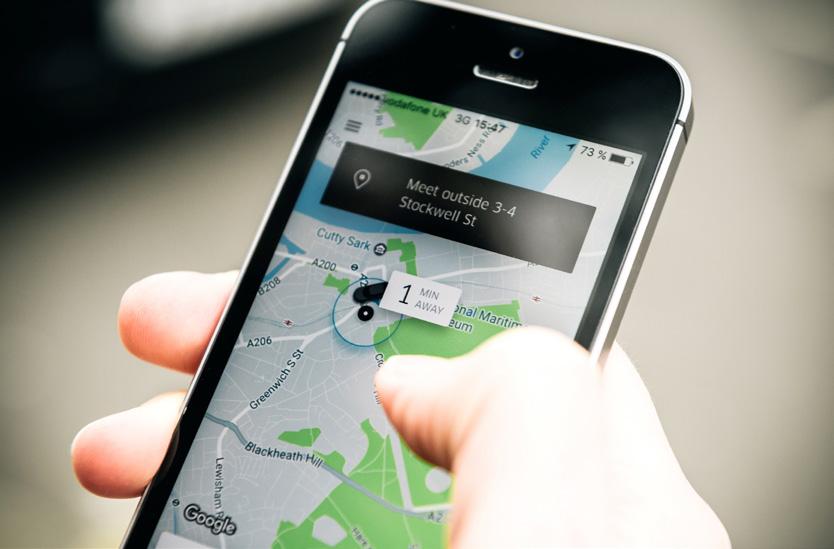
Any new legislation must also encompass ride-hailing apps. One of the reasons the earlier attempts at new legislation failed (remember the Law Commission report and the “Task & Finish” group?) was the changing nature of the business. How could you factor in apps and ride-hailing in 2010 when it didn’t exist?
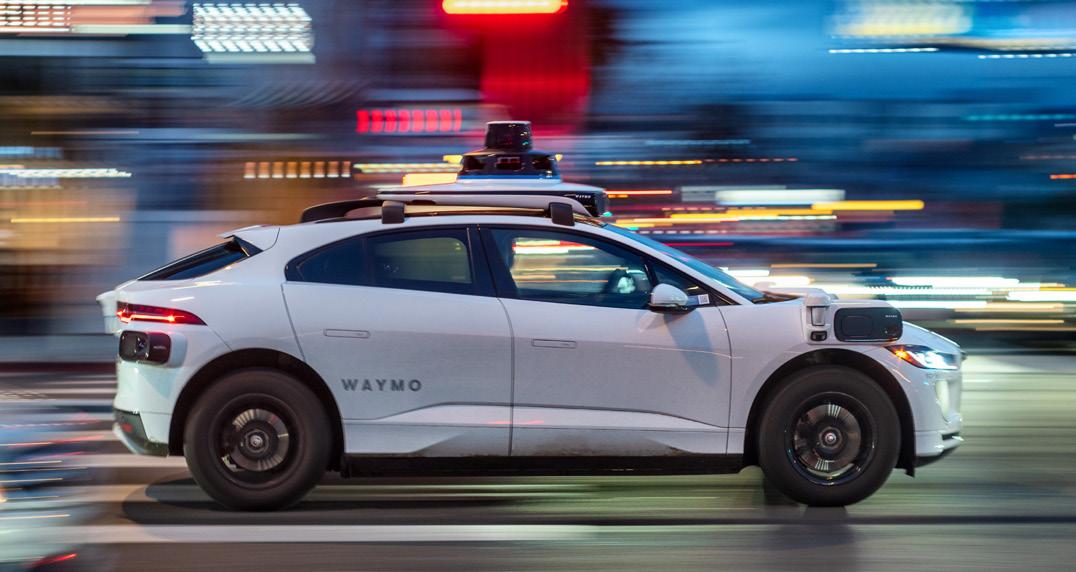
Now, we’re at a stage where ride-hailing is a known commodity. It is not the same as physical hailing and everyone can access it. But just as it was not present in 2010, autonomous vehicles are not really present yet beyond test programmes by the likes of Wayve and Waymo. Yet the Government is steamrollering ahead with legislation to allow “robotaxis” – even though there are deep-rooted concerns within the industry and the wider public.
It’s great to be at the cutting edge of technology, but creating a few thousand jobs in programming does not replace 400,000 drivers. Furthermore, has anybody ever actually asked for a driverless taxi service?
Just because you can do something it doesn’t mean you should. As far as we can see, the only real winners from “robotaxis” are US tech giants. How does this benefit anybody? US experience suggests that the service is not cheaper – if anything it’s more expensive. And there are serious concerns about safety – even in the US, with its big, straight, wide roads.
TfL is on record as saying that AV taxis could not be licensed under current regulations. The new rules being worked on don’t appear to include AV taxis – these are covered by separate laws.
We need to pause for breath on AV taxis. Work out what we’re trying to achieve beyond enriching Bezos, Musk and any other “tech bro” billionaires. Carry on testing by all means, but maybe – just maybe – conclude that the value of the jobs of hard-working drivers is above some whizzbang tech that nobody really seems to want. Joined-up thinking is what we need, and if we get it right, we could have a better joined-up national PHV service too, benefitting drivers, customers and operators.
Unions and insurers express fears over autonomous taxis
Mark Bursa
The taxi industry is pushing back against government plans to introduce autonomous taxis in London later this year, with unions organising protests against the so-called “robotaxis” and insurance companies highlighting potential problems with the schemes.
The App Drivers and Couriers Union (ADCU) held a protest in Harlesden against Waymo’s autonomous vehicle rollout in Brent. The protest follows criticism of AV testing in the borough after a Waymo vehicle reportedly entered a police cordon in Harlesden.
ACDU highlighted potential robotaxi problems including additional traffic volumes, empty repositioning journeys by autonomous vehicles and the suitability of driverless systems operating in highly congested
areas such as Harlesden High Street.
ADCU general secretary Cristina-Georgiana Ioanitescu said: “For years, PHV drivers have kept this city moving. But now, with companies like Waymo preparing to roll out driverless cars across our streets, thousands of livelihoods are being put at risk.”
She added: “Let’s be clear: This isn’t just about technology. This is about fairness, dignity, and the future of work. Autonomous vehicles don’t pay rent. They don’t
support families. They don’t contribute to local communities. But drivers do, and they always have.”
She said current legislation on driverless vehicles was focused on making the roads ready for robots, while doing almost nothing to make the future safe for workers.
“There are no retraining programmes, no transition plans, no income protections, and no guarantees for the tens of thousands of drivers who stand to lose everything..”
Meanwhile, a leading
taxi insurance specialist has warned that insurers could face major underwriting and liability challenges from driverless taxis.
David Sweeney, head of taxi broking at The Taxi Insurer, said AV taxis raise complex questions for insurers around liability, pricing and claims handling.
He said: “As companies trial driverless taxis in the UK, questions are understandably being asked about the insurance ramifications of any incident involving an autonomous vehicle.”
“The underwriting challenges are certainly significant, touching on systemic risk, cybersecurity vulnerabilities, pricing and exposure modelling, and liability and claims handling. There’s a danger that insurers could be asked to determine a variety of risks without necessary evidence being fully available.”
Kia launches wheelchair-accessible PV5 electric MPV
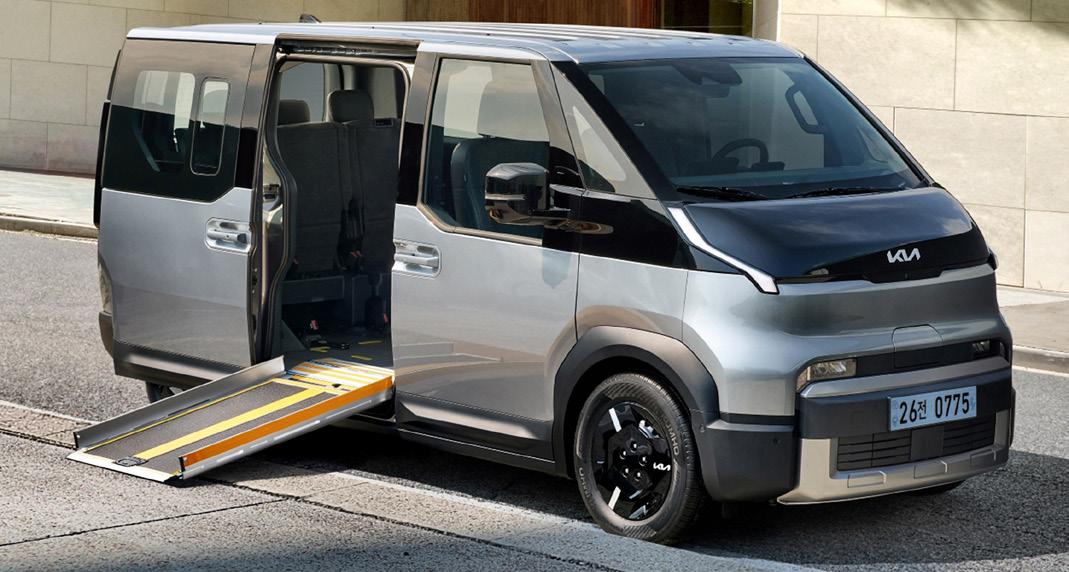
Kia has launched a wheelchair-accessible version of its new PV5 electric MPV range. The PV5 WAV Side Entry made its European debut at the Motability Scheme Live exhibition in Birmingham on May 15.
The conversion adds a twostep manual ramp with incline angle of up to 13.1 degrees, allowing safe kerbside access. Inside, flexible seating configurations support both passenger 2-0-3 or wheelchair-user accommodation 2-0-1 layouts.
The new side-entry conversion is additional to the PV5 WAV Rear Entry conversions available from GM Coachwork for UK customers.
The PV5 WAV Side Entry was developed under Kia’s ‘Made-In-Plant’ (MIP) conversion strategy. It is one of several PV5
variants produced either directly on the company’s manufacturing lines or through Kia’s dedicated conversion centre. This approach helps ensure consistent quality standards and supports scalable production for European markets.
The PV5 WAV Side Entry introduces a segment-first side-entry wheelchair-accessible configuration to the small van segment. The layout is optimised for urban
mobility use cases, including private transport, taxi services and shuttle operations.
A two-step manual ramp system is designed to accommodate varying road and pavement conditions.
The ramp provides a maximum incline of 13.1 degrees, or 11 degrees when deployed from a 150mm kerb. In addition, an integrated floor lighting module enhances visibility during boarding. The centrally positioned wheelchair space creates a more integrated cabin environment for occupants.
Seating configurations for the PV5 WAV Side Entry include a 2-0-3 layout for standard passenger use, or a 2-0-1 layout that also accommodates a wheelchair user. A 60:40 split, tip-up third-row seat allows a companion to travel alongside the wheelchair user.
Mark Bursa
North Yorkshire approves fare rises as fuel price soars
North Yorkshire Council is to hold a public consultation over plans to increase maximum taxi fares after the move was backed by councillors.
North Yorkshire Council approved the 5% rise after hearing about the impact on drivers from rising fuel prices due to the war in Iran, but ordered a public consultation – adding that if there were no responses, the move would go ahead.
Fuel price data shows that unleaded has risen from 131.7p a litre to 156.8p while diesel has from from 141.4p a litre to 188.1p since the start of the Iran war.
Lisa Ridsdale, general manager for Take Me, told a council meeting: “Taxi fares need to rise in North Yorkshire. Not to overcharge passengers, but to protect the future of a vital public service.”
She said taxi fuel costs were now at between £4,000 and £7,500 a year, while insurance was £1,500 to £4,000, depending on the driver. “With maintenance, servicing and licensing, some drivers are facing over £10,000 just to be able to work,” she said.
Conservative councillor Simon Myers said: “The council was aware of the
situation in Iran, its impact on fuel prices, and the taxi trade. Although it may seem very frustrating, we cannot just unilaterally alter maximum fares. The matter has to go out to consultation.”
Under the proposals, rates between 07:00 and 22:00 would rise from £2.22 to £2.33 per mile, while the hourly waiting time would increase from £20.23 to £21.24. Night-time fares, which apply between 22:00 and 07:00 and on public holidays, would increase from £3.15 to £3.31 per mile, with waiting time rising from £28.90 to £30.35 per hour.
Lyft expands in London with £40m Gett UK acquisition
Mark Bursa
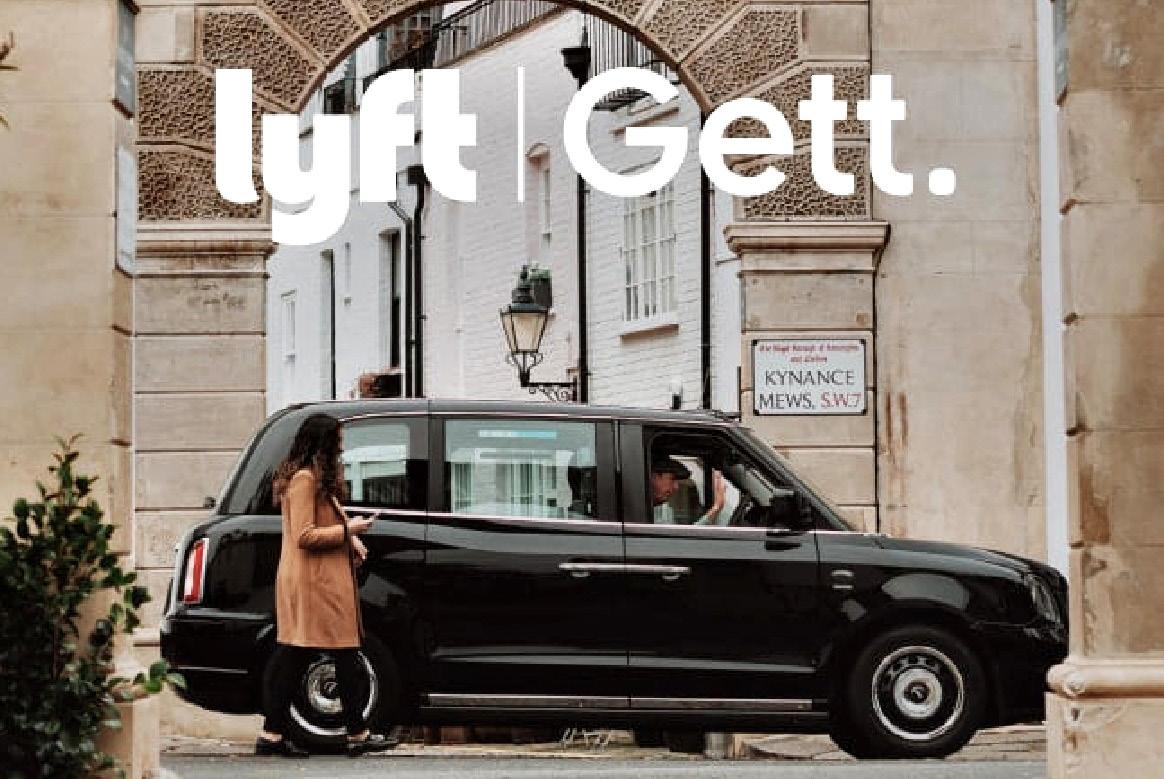
Uber’s biggest rival Lyft has made a third UK acquisition in the past 10 months with the £40.7 million takeover of taxi app Gett.
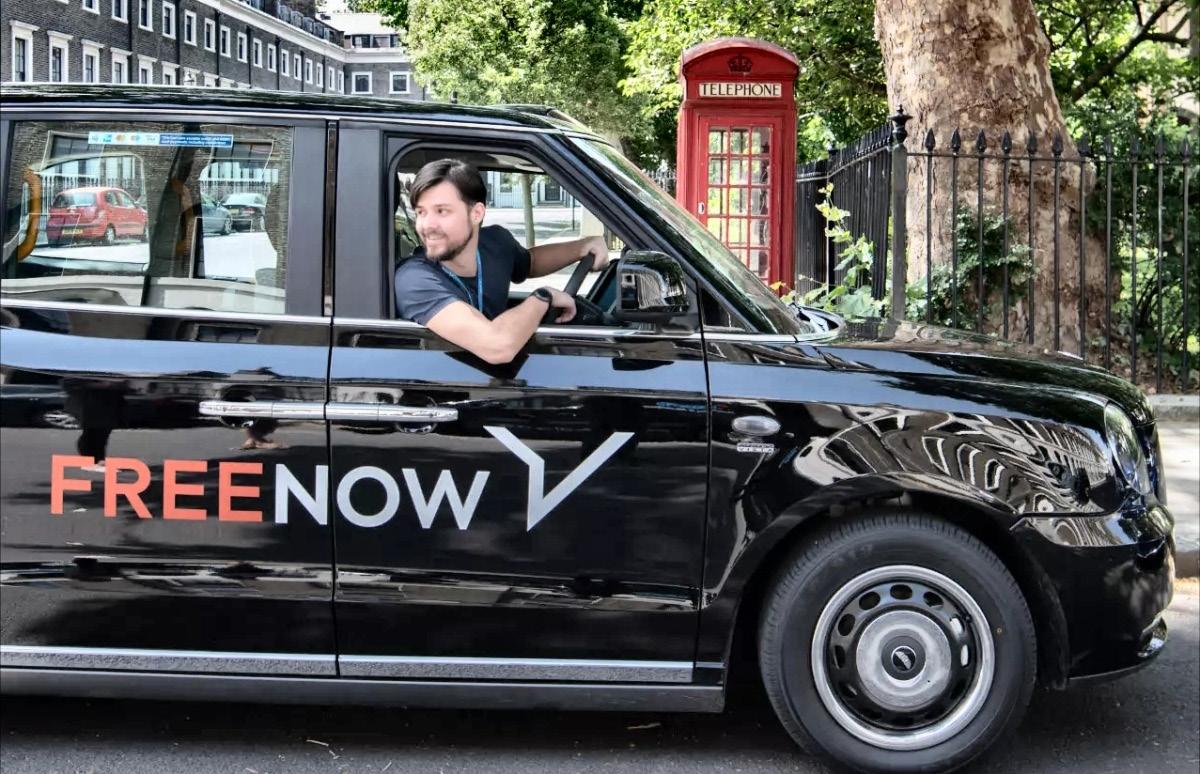
The move means the majority of London’s black cabs are now signed up to a Lyft-owned app – either Gett or Freenow, which Lyft bought last July.
Gett adds a different client base to Freenow, as it has a stronger corporate and public sector organisation user base. The takeover will nearly double the number of rides on the Lyft platform in London.
Jeremy Bird, EVP of global growth at Lyft, said: “Adding Gett to Lyft’s ecosystem positions Lyft as the leading app for London black cabs.”
Lyft appears to be developing a multi-brand approach to London. As well as Lyft and Gett, it recently acquired major chauffeur operator TBR Global, and it is planning to enter the autonomous taxi sector later in the year through a partner-
ship with robotaxi-operator Baidu.
Lyft’s strategy involves expanding outwards in more locations and upwards into more high-value segments. Lyft is adding some co-branding to all these operation (Gett by Lyft, for example) and it may combine everything under a single brand in future.
The UK taxi trade reacted cautiously to the deal.
Steve McNamara, General Secretary of the Licensed Taxi Drivers’ Association, said: “Among those who see apps of any kind as the devil incarnate, it was
never going to be welcomed news. Others who are on either Freenow or Gett, or both, have mixed views too. Some are arguing that having one giant Uber-type rival, with significant funding behind it, makes it better for customers, and logically therefore will provide more work and be better for us.
Others are concerned that with both big apps under one umbrella, it’ll inevitably lead to a higher percentage charge to drivers.”
Thomas Zimmermann, CEO of Freenow by Lyft, said: “We are excited to welcome Gett into the Lyft
ecosystem, strengthening our customer-centric black cab and private hire service for Londoners, passengers across the UK, and travelers worldwide. Gett brings not just drivers and riders, but a proven enterprise business, and its team will transfer to Freenow by Lyft once the acquisition is complete.”
The Freenow by Lyft app offers multi-mobility options including taxis, private hire vehicles, car-sharing, car rental, e-scooters, e-bikes, and public transport, across 9 European markets and 180 cities.
It is the second time Gett has changed hands in the past year. Last August, a consortium led by Leumi Partners, the real estate investment arm of Bank Leumi, acquired Gett’s operations in the UK and Israel for £138m. However, Gett’s UK have been unprofitable for several years. Even before completing the acquisition, the new owners agreed that the UK activity should be sold, allowing the company to focus on its profitable Israeli operations.
Government urged to extend fuel duty tax freeze until 2029
Mark Bursa
The UK Government has extended its freeze on fuel duty until the end of 2026, reversing a plan to phase out a temporary 5p per litre cut that had been in place since Russia's invasion of Ukraine in 2022.
Prime Minister Keir Starmer said the move was a direct response to rising petrol and diesel prices resulting from the US-Israeli war against Iran.
“We’re backing drivers by extending the freeze in fuel duty for the rest of the year,” the PM told the House of Commons. Earlier the 5p cut was due to expire in September.
But petrol reached 158p per litre last week, its highest level since the start of the Iran conflict, while diesel had climbed to 186p, up 43.5p since the end of
February.The Treasury said the extended freeze would cost around £455m for the current tax year, citing strong economic growth as making the measure viable.
The move has been welcomed, but some industry figures want the government to go further.
Gordon Balmer, executive director of the Petrol Retailers Association (PRA), called the Chancellor to
extend the 5ppl duty cut throughout the current Parliament. He said: “Currently, the legislative default will be for rates to return to levels set at Budget 2025 from January 1, meaning that drivers will be hit with a 3p per litre hike on January 1, followed by another 2p hike on March 1. However, we await confirmation of final rates at Budget 2026.”
The PRA noted that while motorists bear the brunt of rising prices, the Treasury benefits from increased VAT revenue from fuel sales whenever global oil prices rise.
RAC Foundation data shows that from the start of the war on February 27 to date, the direct costs to drivers include having been forced to pay an additional £505 million to the Government in VAT.
Jack Cousens, head of roads policy at The AA, said: “Drivers will find out in the Autumn how and when the 5p will be added back onto the pumps. This also gives an opportunity for the government's Fuel Finder Scheme to show its value, by showing drivers where to find the best prices.”
West Suffolk scraps age limits and moves to Euro 6
Mark Bursa
West Suffolk Council has scrapped controversial vehicle age limits for taxis and private hire vehicles in favour of an emissions-based scheme.
The council’s Cabinet has agreed to replace its current licensing policy requiring all new taxis or private hire vehicles to be less than five years old with a requirement that they all meet Euro 6 emissions standards – which will mean most cars registered since 2015 will be accepted. The new rules will be introduced from July 1.
West Suffolk Council wrote to drivers as part of a public consultation on the
move in March. More than 84% of those who responded were in favour of the change to an emissions-based system.
The existing policy, which aimed to keep higher polluting vehicles out of the fleet, has been in place since 2022. But since then, the Department for Transport (DfT) has issued guidance stating that vehicle emissions rather than vehicle age should be the determining factor for licensing authorities.
Cllr Gerald Kelly, Cabinet Member for Environment and Regulatory at the council, said: “This change, which has been backed by the trade, provides a more effective way to manage the emissions from the taxis and private hire
vehicles that come into our West Suffolk fleet. It will ensure that we continue to tackle air pollutants such as nitrogen dioxide which can have a huge impact on the health of our residents and on the subsequent NHS and care costs.”
“This policy change will support the trade by reducing the need for them to replace their vehicle while also stopping higher polluting vehicles from joining our fleet.”
Around 520 vehicles, representing 90% of the taxi and private hire vehicles in West Suffolk, already meet Euro 6 emissions standards. The remaining 10% will not need to be replaced – the policy only relates to new vehicles.
SMMT calls for fresh look at ZEV mandate quota targets
SMMT chairman Mike Hawes has urged the Government to take a fresh look at the EV quotas within the ZEV mandate, as the industry feels they are unachievable.
“The latest industry outlook expecting BEVs to reach 26.8% market share by year end – impressive progress from 3.4% just a decade ago, but lagging the incredibly tough 33% mandated by government,” said Hawes (pictured).
“Automotive is renowned for its ambition but the economic conditions for delivering EV growth in 2026 are far more challenging than expected when the mandate was designed five years ago,” he continued.
“Manufacturers have responded, with rapid model rollout and discounts on their sale worth £10 billion over the past two years. Assuming industry will indefinitely absorb
every additional cost, however, will only turn away investors and put jobs at risk.”
Hawes concluded: “This is not an argument for slowing the transition – to which industry remains committed – but it is an argument for regulation that is credible from a market and economic perspective.
Manufacturers have shown they can innovate, invest and supply at pace and scale. The next phase must be about ensuring regulation, infrastructure and fiscal incentives support these efforts.”
Hawes said EVs have moved “from niche to normal”, where just 14 EV models in 2016 have grown to almost 170 today. There are 51 manufacturers offering EVs today, up from 12 in 2016. Zero emission models now represent more than four in 10 new cars on sale and cover every segment.
Godwin’s heroics inspire Addison Lee to offer emergency CPR training to drivers
Mark Bursa
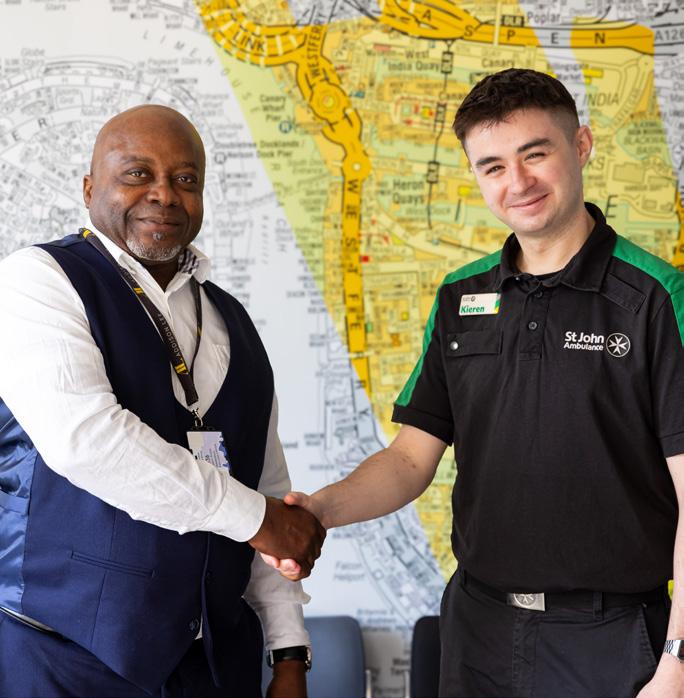
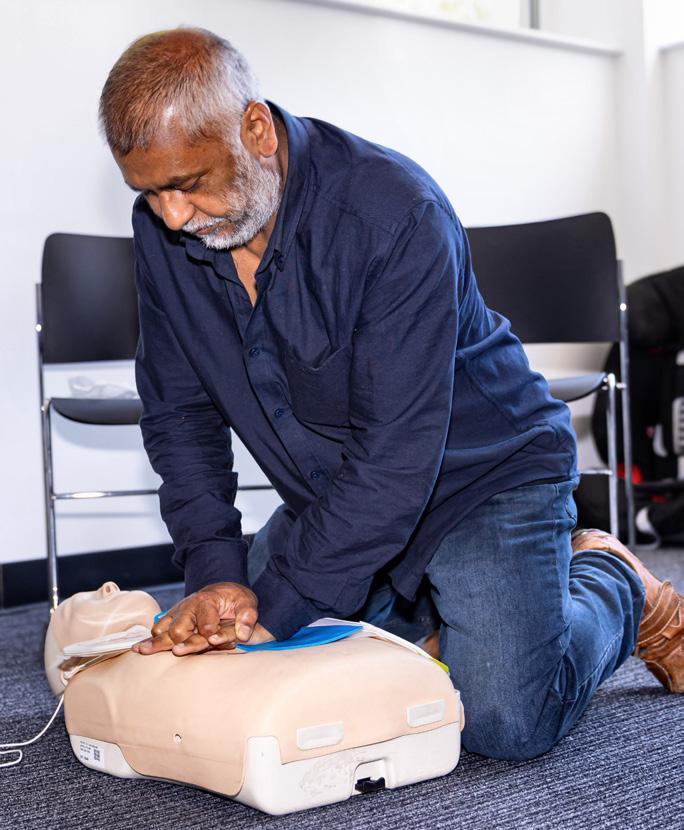
Addison Lee is rolling out training in CPR and defibrillator use for its drivers. The move was inspired by driver Godwin Omotobora’s swift actions that saved the life of a passenger during a sudden medical emergency on a journey in London last October.
Omotobora won a Professional Driver QSi Award as a result of his exemplary actions. He attended the first course at Addison Lee’s West Drayton Fleet Hub to share his first-hand experience and encourage other drivers to learn the skills that helped him to save a life. The training course, attended by 20 Addison Lee drivers, was delivered by St John’s Ambulance medics.
Omotobora has worked for Addison for 15 years. He was transporting a male passenger last October when he noticed something was seriously wrong in the back seat of his vehicle. Acting immediately, he safely
pulled over, called 999 and began administering CPR, following instructions from the emergency operator.
Paramedics and police arrived within minutes and took over resuscitation efforts before transferring the passenger, who survived, to hospital.
The police contacted Addison Lee after the incident saying: “If it wasn’t for the lightning reactions of your driver, the outcome for the passenger would have been very different. Godwin
saved the man's life and is a hero.”
He said: “When I realised something wasn’t right, I didn’t hesitate. I pulled over safely, called 999 and started CPR straight away. You don’t think in that moment - you just act. It was an overwhelming experience, but I kept going with the support of the emergency operator and the police officers who arrived. Knowing that the passenger survived makes it all worthwhile.”
Omotobora had received CPR and safety training through Addison Lee, which he credits with giving him the confidence to respond quickly and effectively.
“Training gives you the structure and confidence to step forward in an emergency.,” he said.
Patrick Gallagher, CEO of Addison Lee, said: “Godwin’s actions represent the
very best of Addison Lee. We are incredibly proud of him, and deeply grateful for the outstanding work of the emergency services who attended “Following act of bravery, we have launched this initiative with St John Ambulance to further knowledge and preparedness across our driver commu nity. We have over 7,500 drivers on the road, and we want to encourage as many as we can to sign up for the training so they feel confident respond.”
Lisa Sharman, Head of Workplace First Aid Train ing at St John Ambulance, said: “Our everyone should receive the first health emergency from those around them. By sharing essential with drivers from Addison Lee, our communities can become safer and more resilient to everyday emer gencies.”
Drivers are taught how to perform CPR correctly
Major Hanger Lane rapid EV hub gets go-ahead for 2027 launch
Mark Bursa
London’s largest ultra-rapid EV charging hub is set to open early next year after winning planning permission. The 36-bay facility in Ealing will be equipped with 400kW chargers and a dedicated retail space.
The new hub is conveniently located off the North Circular (A406) near Hanger Lane, and will be capable of serving hundreds of drivers daily. It will be the second hub to go live under the joint venture between ultra-rapid charging provider Fastned and Places for London, Transport for London’s property company.
The site will target businesses transitioning to electric fleets, particularly those operating from the huge nearby Park Royal industrial estate.
Fastned has designed the Hanger Lane hub to ensure that it meets the needs of
local residents, commuters, visitors and commercial operators such as local businesses and taxi or private hire operators.The site will feature a retail space and restroom facilities. Benches and a playground outside will help create a community space.
The hub provides accessible charging for vehicles of all sizes, from cars and taxis to vans and smaller trucks, helping address the limited
opportunities for private charging at homes or commercial depots in London.
Fastned’s signature yellow solar canopies will provide shelter in bad weather, alongside lighting and on-site CCTV security cameras.
Fastned’s Travel Demand Survey in 2024 showed that most households in London, including 93% in inner London and 64% in outer
London, do not have access to off-street parking in a driveway or garage. Tom Hurst, UK country director at Fastned, said: “In a city where space often limits charging at home or at commercial depots, the Hanger Lane site will help close a critical gap as the transition to electric gathers pace.”
“Working with Places for London on this joint venture means we can bring high-quality, ultra-rapid charging to the places it’s needed most. With more commercial fleets switching to electric, this well-located hub will help keep people and businesses moving..”
Fastned and Places for London are committed to supporting local communities and the growth of the EV sector. The plan is to roll out 25 sites across London by 2030, including Hatton Cross, Canning Town, Tottenham Hale and East Finchley.
Instavolt boosts battery storage at five more sites
Mark Bursa
Rapid charging network InstaVolt has announced the opening of five new battery energy storage system (BESS) sites as part of a major national programme to future-proof its charging hubs against rising grid costs and connection delays.
The five sites, each representing an investment of approximately £500,000, bring the total number of battery-equipped InstaVolt sites to eight. The five sites forming the current wave are:
• Hadfer Ltd at Bwch Moch Cafe
• National Co-op, Lower Addiscombe
• Burney Group at Harwich
• BNP Paribas at Northampton
• Three Trees Farm Shop and Café
They join three existing operational
BESS sites at Winchester and Corley North and South, whose performance data is informing the design and economics of each subsequent wave.
At least 20 further sites are planned before the end of 2026, with additional locations across Wisbech, Knutsford, Cheltenham, Blyth, Stockton-on-Tees,
Penrith, York, and Thirsk already confirmed for the following financial year.
Delvin Lane, CEO, InstaVolt, said: “Battery storage is one of the most powerful tools we have for accelerating the switch to electric. It lets us deploy faster, manage our costs more effectively, and pass genuine savings on to drivers.”
“Our batteries charge overnight when energy is cheaper and cleaner, and we draw on that stored power during the more expensive daytime hours. That saving goes to the consumer.”
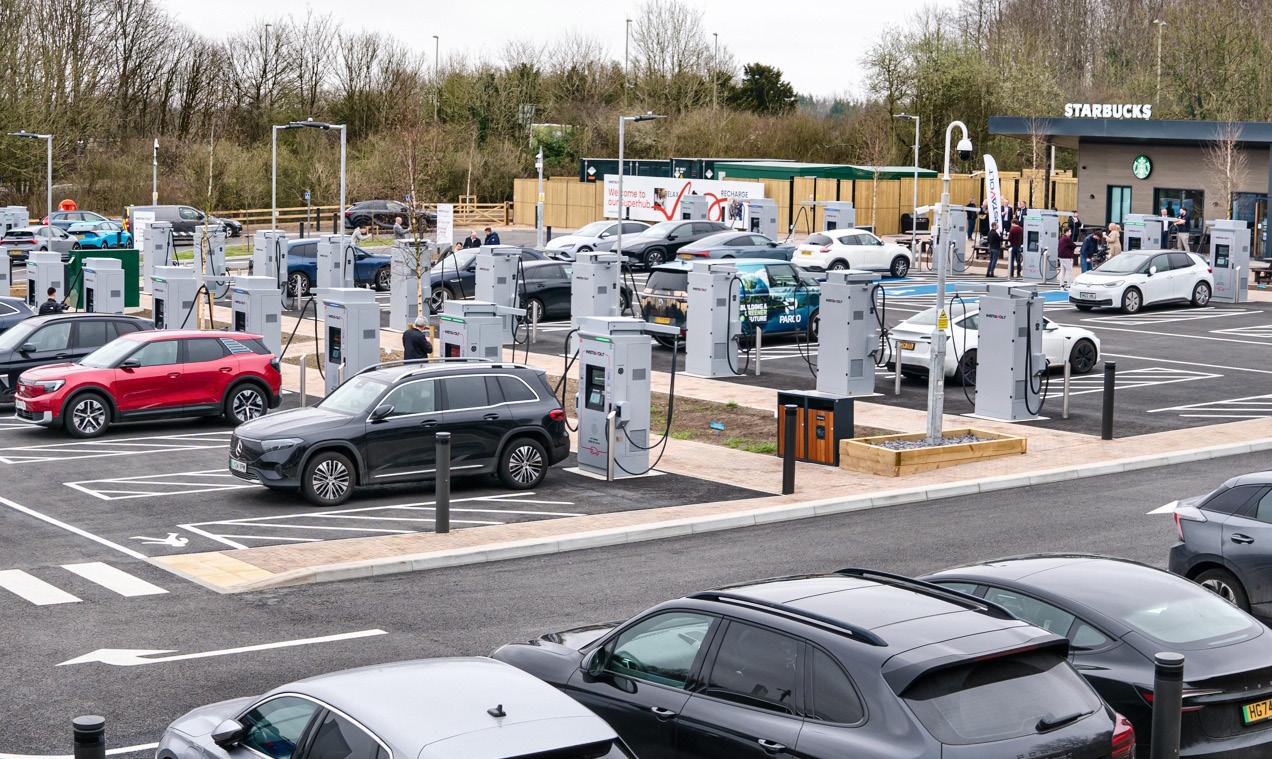
At the Winchester Superhub (pictured), batteries are charged at off-peak grid rates and supplemented by on-site solar, allowing InstaVolt to offer drivers lower prices regardless of when they charge.
protection that fits the way you drive
With more chauffeurs working through app-based platforms like Blacklane and Wheely, we’ve expanded our offering to reflect how the industry is evolving.
Our advice is built around understanding your world – giving you cover that supports the way you work today. At Howden, we get you. Speak to a specialist who understands your business.
Your contact for independent drivers and fleets under six vehicles: Your contact for fleets of six or more vehicles:
Cameron Scott
T: 020 8036 3968
E: cameron.scott@howdeninsurance.co.uk
Ricky Chivers
T: 020 8256 4916
E: ricky.chivers@howdeninsurance.co.uk
Howden UK Brokers Limited is authorised and regulated by the Financial Conduct Authority No. 307663. Registered in England and Wales under company registration number 02831010. Registered Office: One Creechurch Place, London, EC3A 5AF. Calls may be monitored and recorded for quality assurance purposes. HUBL-CS-CH-035-0326 howdengroup.com/uk-en/blacklane-wheely
Blacklane partners with luxury hotel platform GHA
In a strategic move, global chauffeur service Blacklane and Global Hotel Alliance (GHA), the world’s largest alliance of independent hotel brands, have announced a partnership to offer benefits for travellers worldwide.
Designed to streamline the way clients move and stay around the world, the collaboration brings together leaders in luxury hospitality and mobility.
As part of the first phase of this partnership, GHA Discovery members will gain access to lifestyle benefits when using Blacklane’s professional chauffeur services in more than 500 cities worldwide.
Key rewards include complimentary gift vouchers and added value on Blacklane bookings, designed to ensure a seamless
transition from home to any location.In return, Blacklane clients will have the op portunity to accelerate their status within the GHA Discovery program, gaining access to a variety of perks tailored for frequent travellers, and gifts of Discovery Dollars (D$), the rewards currency that
Top Tripadvisor award for Blyth newcomer Go2 Travel Group
Mark Bursa
Northumberland-based
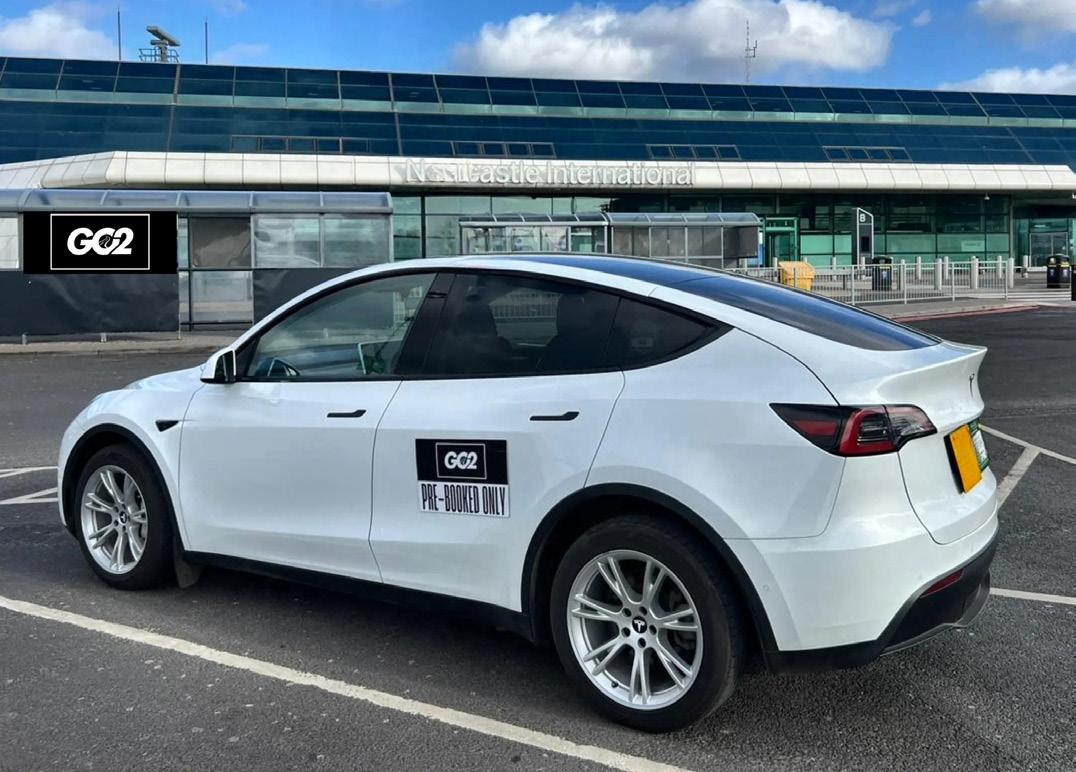
Go2 Travel Group has been awarded the 2026 Tripadvisor Travellers’ Choice Award.
This accolade places the Blyth-based company, which only started operations two years ago, in the global top 10% of all travel and hospitality listings on the Tripadvisor website.
The award is a direct result of consistent, 5-star reviews from local passengers over the past year. Go2 Travel Group has rapidly expanded its footprint across Northumberland, North Tyneside, and Newcastle upon Tyne by offering a customer-focused alternative to the unpredictable nature of standard local taxi services.
This is based on a strict focus on absolute relia-
bility for essential airport, port, and rail transfers. By operating exclusively on a pre-booked basis, with a minimum 24 hours’ notice, Go2 Travel Group eliminates the uncertainty common in on-demand services. The company scrapping meters in exchange for fixed A-to-B fares with guaranteed zero nighttime surcharges, addressing a major
long-standing frustration for consumers using traditional 24/7 taxi and private hire fleets.
Go2 Travel Group, said: “We the ground up less than two years ago, focusing strictly on pre-booked airport, port, and rail transfers. By com pletely scrapping unpredict able meters and night-time
A SINGLE, CONSISTENT
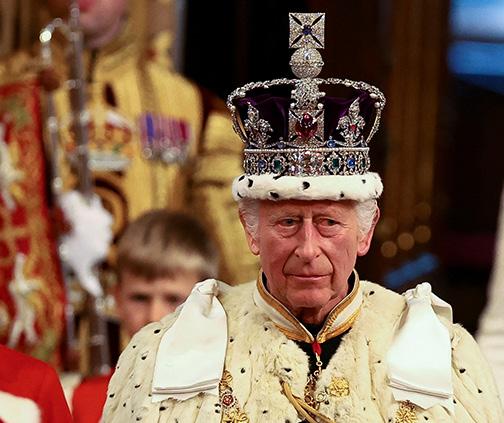
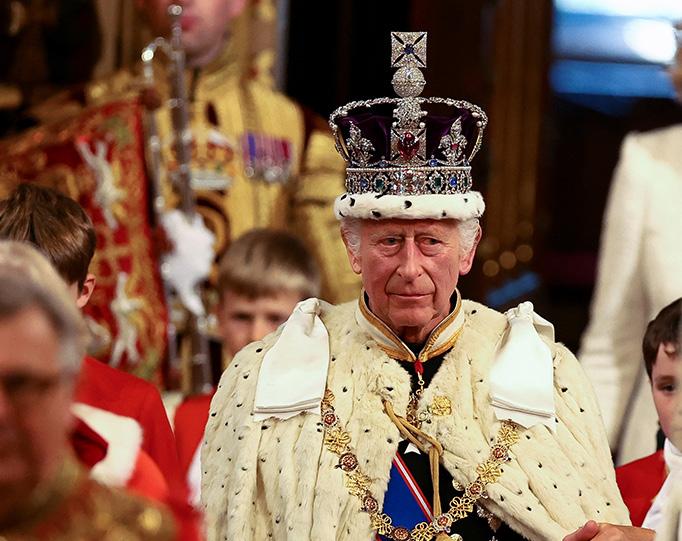
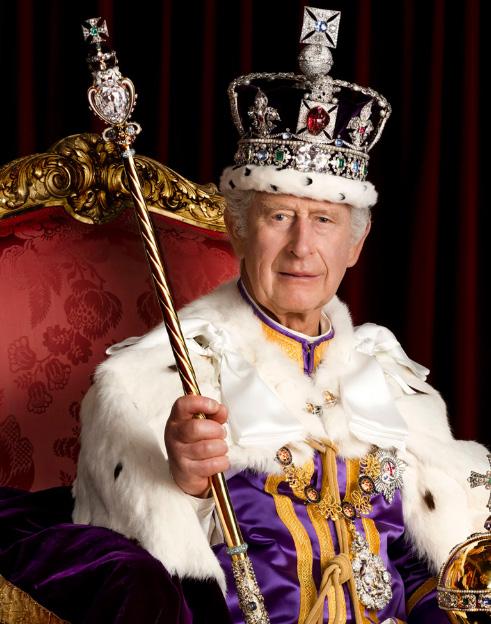
The Government’s draft Taxi and Private Hire Vehicle Bill, revealed in this month’s King’s Speech, has largely been welcomed by the industry, though the question of out-of-area licensing still remains unresolved.
The Bill is an attempt to modernise taxi and private hire law for the way people travel today, replacing what the Government describes as “a patchwork of outdated, Victorian-era rules” with a single, consistent framework across England. Indeed, outside London, parts of the Town Police Clauses Act 1847, designed for locally operating, horse-drawn vehicles, still apply to PHV and taxi licensing.
In briefing notes included with the draft bill, the Government outlined the scale of the problem. It referred to earlier work by the Law Commission, which stated that the current framework had become “too extensive in some respects, imposing unnecessary burdens on business and artificially restricting the range of services available to consumers; and insufficiently comprehensive in other ways, undermining the fundamental goal of protecting the travelling public”.
The Government said the Bill would create “a single, consistent framework across England”, reducing inconsistencies between licensing authorities, strengthening public safety, removing barriers for disabled passengers, and reflecting better how people travel today, including the use of booking apps. Licensing in Scotland, Wales and Northern Ireland are covered by devolved powers and are not part of the new legislation.
The Bill recommends full – not minimum - national standards, which was one of the key demands from trade associations and operators. And greater enforcement powers for local authorities – including the ability to crack down on vehicles licensed in another area. This may, if properly implemented, be sufficient to remove any threat to ban out-ofarea operations.
However, the Government still seems intent on limiting cross-border operations. In the speech, it was stated: “Without a closer match between where licences are issued and where journeys take place, enforcement activity and resources remain misaligned, limiting effectiveness and undermining public confidence.”
“While national standards are expect-
ed to improve baseline consistency and reduce incentives for drivers and operators to license away from where they intend to work, taken alone they are unlikely to resolve the full problem.”
The Bill also suggests that the different approach to licensing within London compared to the rest of England should also be removed, effectively aligning standards for Private Hire within the PCO area and elsewhere.
Public safety initiatives include greater transparency and information-sharing nationwide by mandatory use of a national database of all licensed vehicles, drivers
and PHV operators, so DBS checks carried out when a driver is licensed in one area are visible if the driver tries to obtain a license elsewhere.
The Government said the Bill would deliver on commitments made following Baroness Casey’s National Audit on Group-based Child Sexual Exploitation and Abuse, which said that the fragmentary nature of taxi and PHV licensing has created vulnerabilities that can be exploited by offenders.
Ruth Cadbury, chair of the Transport Committee, welcomed the Bill: “As the Transport Committee concludes its
news analysis: king's speech
CONSISTENT FRAMEWORK
National standards, greater enforcement powers and a national private hire database all featured in the draft Taxi and Private Hire Bill, included in this month's King's Speech. But crossborder licensing and operations remain a troublesome issue.
Mark Bursa reports
inquiry into the licensing of taxis and private hire vehicles, it’s encouraging to hear the Government taking serious action in the King’s Speech with a draft Taxi and Private Hire Vehicle Bill.
She added: “The move to introduce a national database of all licensed taxis and hire vehicles is very welcome – not least as it reflects the weight of the evidence that we have heard since we started our inquiry last year.”
“Efforts to modernise the legal framework, strengthen enforcement and improve information-sharing all echo themes of our inquiry, and we will look forward
to taking a closer look when the draft bill is published.”
James Button, president of the Institute of Licensing, said: “The announcement that the Government will proceed with a Bill to reform taxi and private hire licensing is welcomed. Reform is long overdue, with significant opportunities missed over the past two decades, including the Law Commission review and the Task and Finish Group report.”
He added: “Comprehensive, modern legislation is needed to deliver a cohesive and consistent licensing framework fit for the 21st century. One that strengthens public safety, supports a thriving industry, and ensures that Hackney carriages and private hire vehicles remain a vital part of the public transport network.”
Leading operators also welcomed the draft bill. Addison Lee CEO Patrick Gallagher said the company supported the draft Bill: “We welcome the Government’s commitment to bring forward a draft Taxi and PHV Bill. For too long, an outdated licensing framework has created inconsistencies that undermine public safety and put responsible operators at a disadvantage.”
“We are particularly encouraged that cross-border hiring has been identified as a central issue. National minimum standards alone are not enough. Having worked closely with the Department for Transport on these reforms, Addison Lee looks forward to continuing that collaboration as the Bill develops.”
Danny O’Gorman, General Manager at Freenow by Lyft UK, called for measures within the Draft bill to protect taxis, particularly in London, as data shows long-term decline in licensed hackney taxi numbers both in London and the rest of England.
He said: “As this Bill moves forward, the Department needs to shift its focus towards protecting licensed taxis. We need to see proper, targeted support to reverse this decline before we lose a vital part of our transport network.”
Much of the discussions have been prompted by the rise in out-of-area licensing in cities such as Wolverhampton, which has in recent years invested heavily in its licensing department in order to offer a faster and more affordable service than many other cities. Data reveals that around 96% of driver licenses issued in Wolverhampton between April 2023 and the end of March 2024 were for people living outside of the city. Figures released
last November showed the council had licensed 33,893 private hire vehicles in 2025, compared to 10,768 in 2020.
The City of Wolverhampton Council said it “wholeheartedly” supported any government plans for reform and stated that safeguarding was its number one priority.
A council spokesperson said: “We gave evidence to the government’s Transport Select Committee, stating that the law needs urgent reform and have called for the introduction of uniform standards, uniform fees and improved cross border enforcement powers.”
The spokesperson added it was illegal to refuse taxi applicants on the basis of where they live and illegal to impose a time limit on the number of private hire licenses issued. “We do not gain financially from taxi licensing, as the fees are legally ring-fenced for spend only on related activities,” they said.
The Bill also aims to remove barriers faced by disabled passengers. Government statistics referenced in the briefing documents show taxis and PHVs continue to play a critical role for passengers with limited transport alternatives.
People with mobility difficulties make almost 70% more taxi and PHV trips than those without mobility difficulties. Women make around 25 percent more taxi and PHV journeys than men, while households in the lowest income bracket make 50% more taxi and PHV trips than higher income households. The briefing notes also state that 8% of taxi and PHV journeys in 2024 were for children travelling to school, including those with Special Educational Needs and Disabilities (SEND).
The sector is growing. As of April 2024, England had approximately 313,000 licensed vehicles and 381,100 licensed drivers. Officials said around 52% of all taxi and PHV journeys support economic activity, education or essential services, reinforcing the sector’s importance to local economies, shift workers, school transport provision and night-time economies.
The draft Bill will now move into pre-legislative scrutiny, where a further round of consultations will allow industry stakeholders including operators, councils and passenger groups, to submit evidence before formal legislation is introduced to Parliament. Freenow’s O’Gorman welcomed this: “Moving the legislation to pre-legislative scrutiny is exactly the right move, as it gives the Government a proper chance to listen to the industry,” he said.
Sponsored
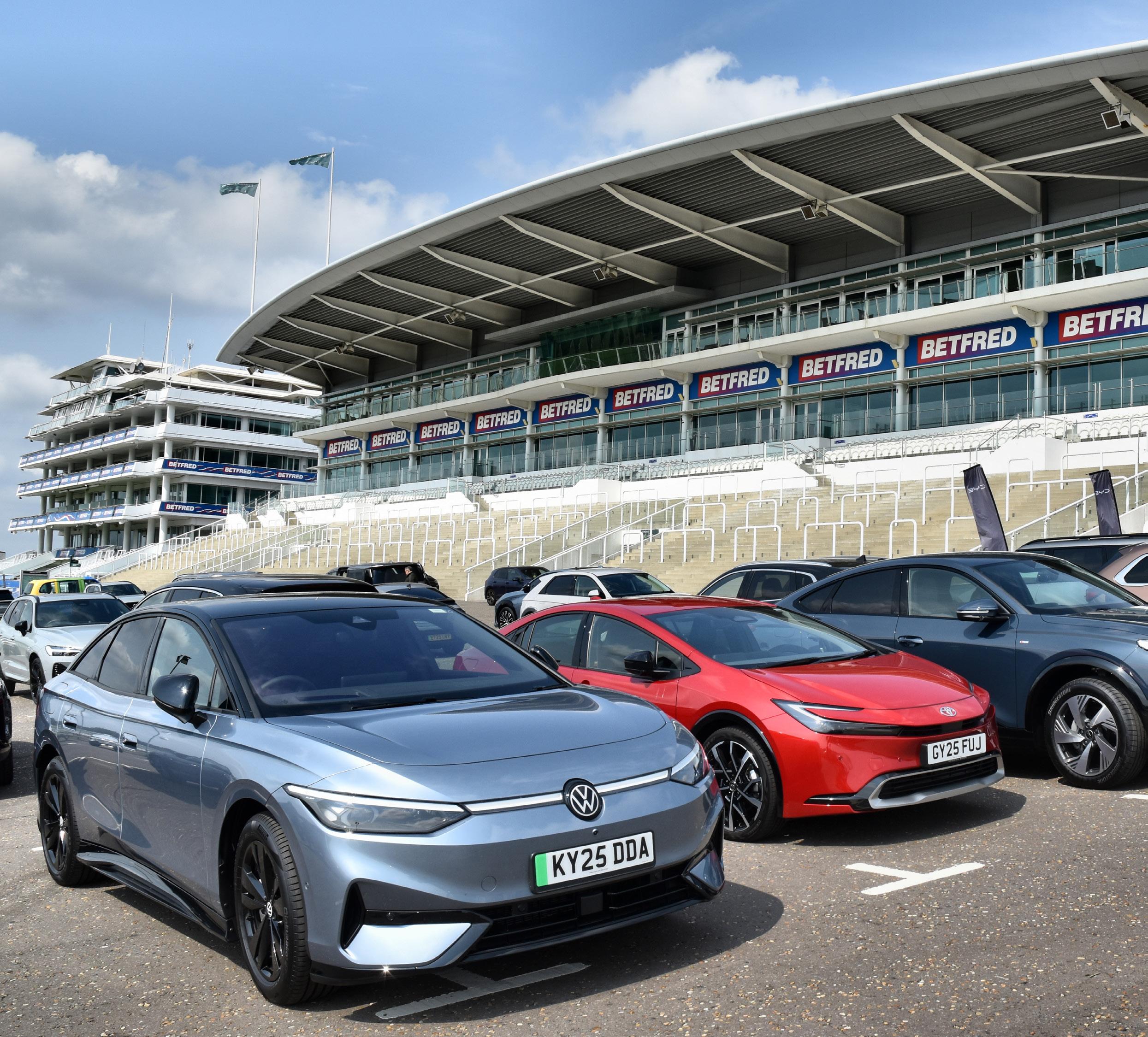
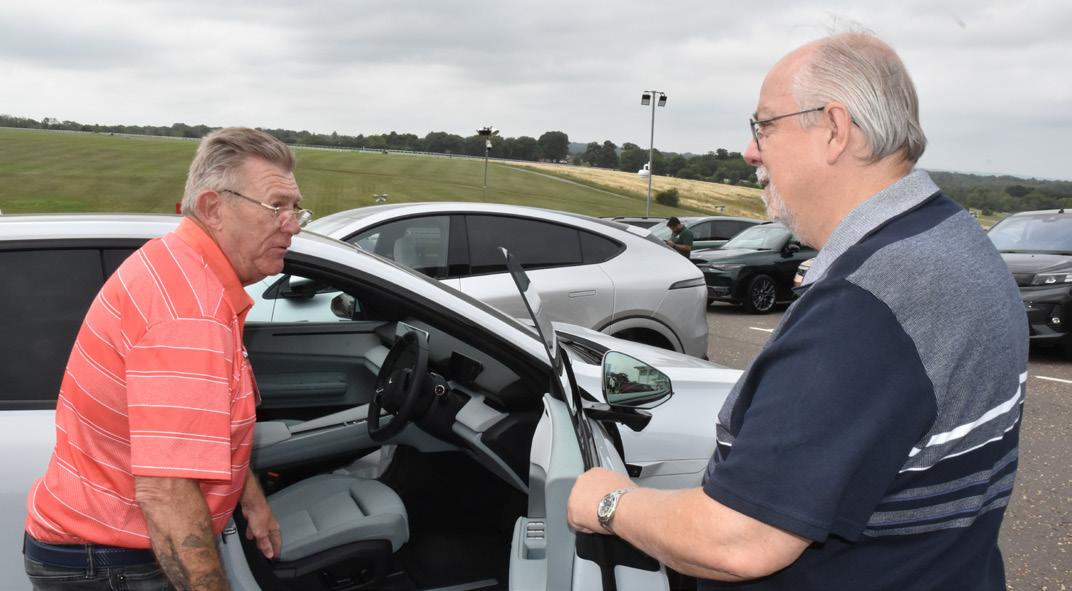
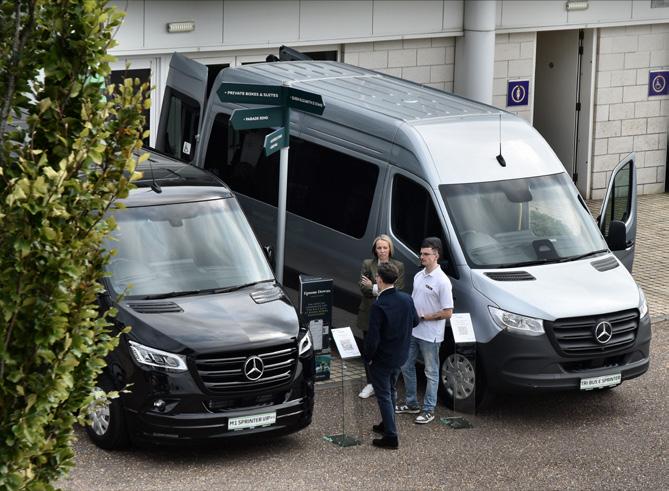
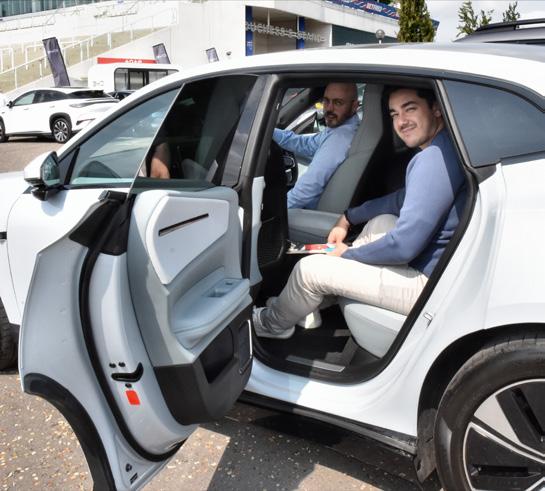
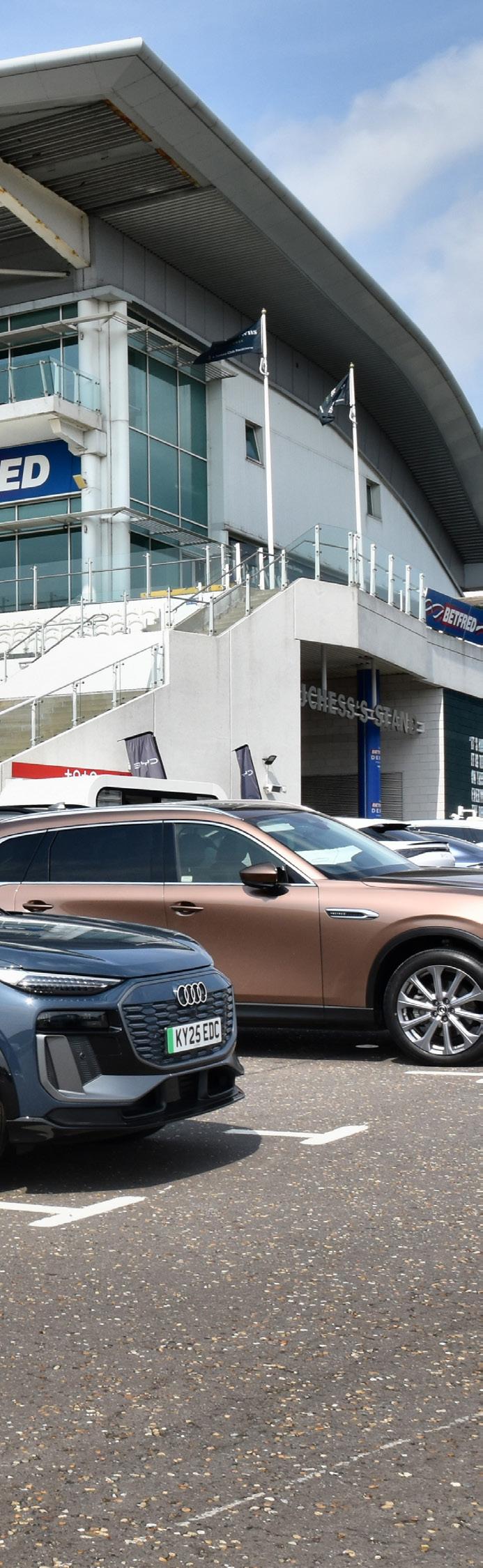
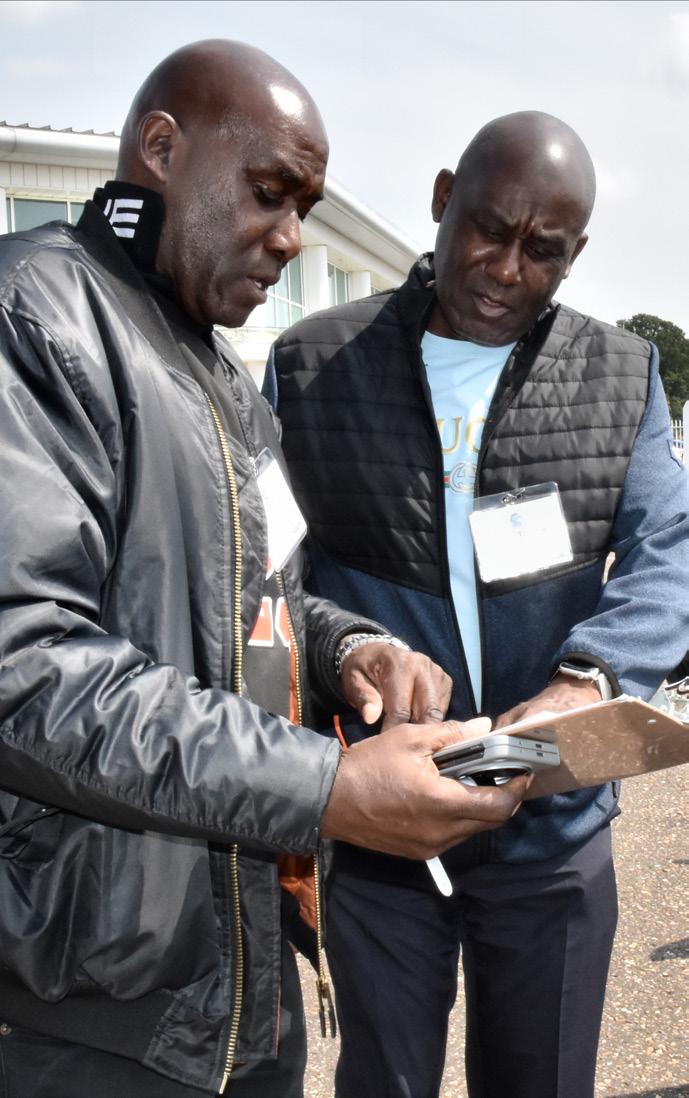
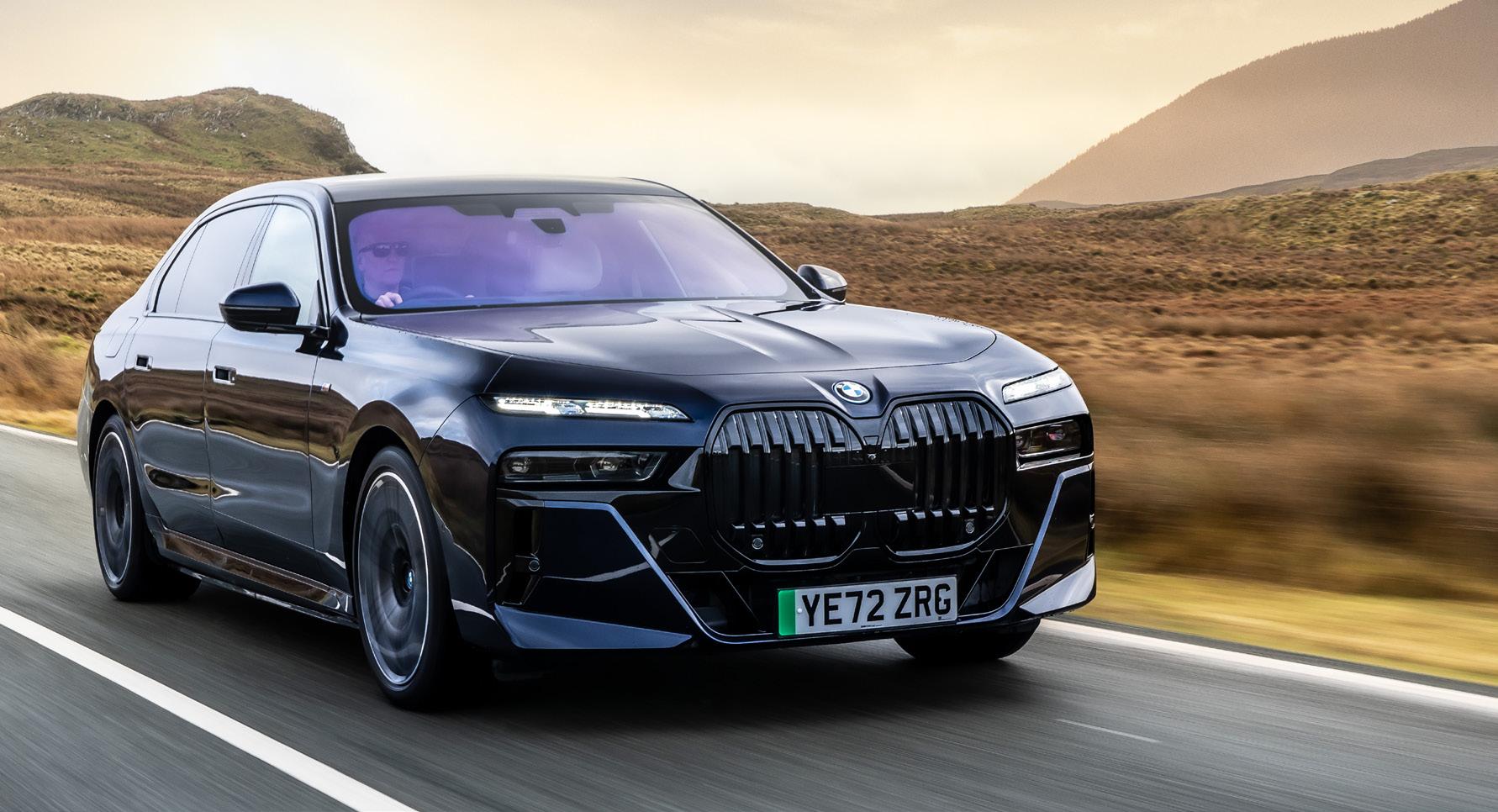
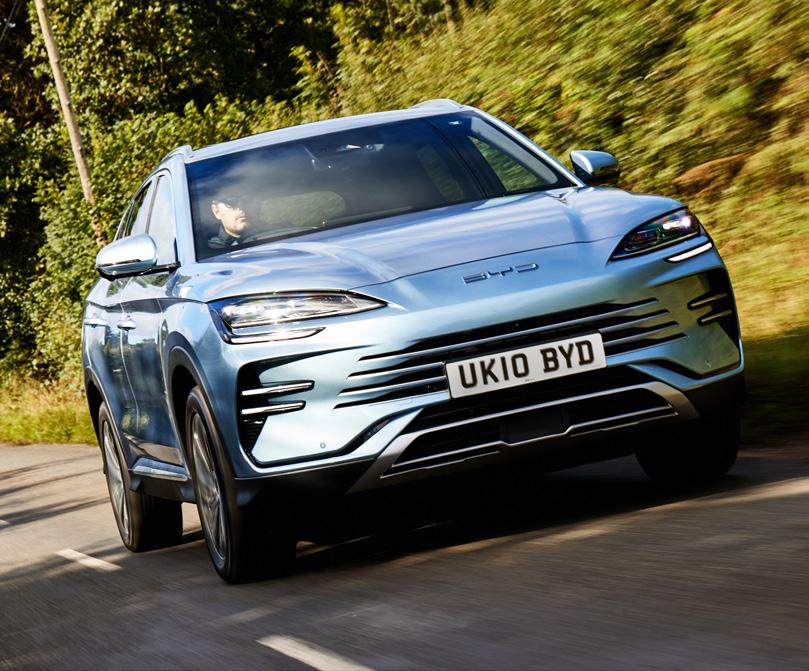
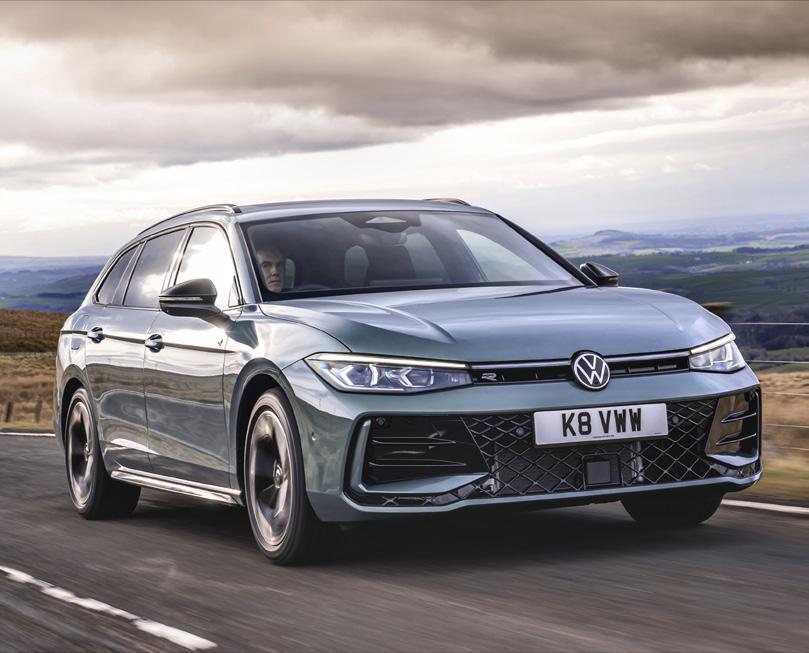
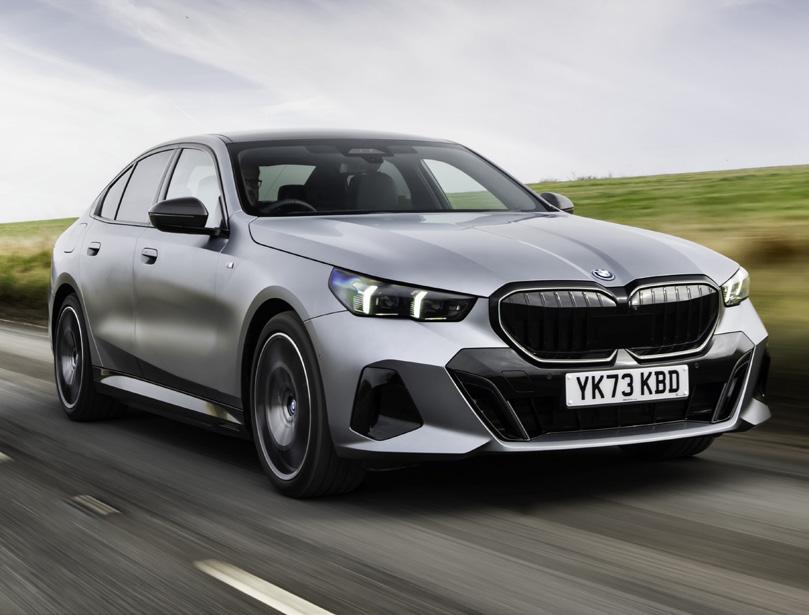
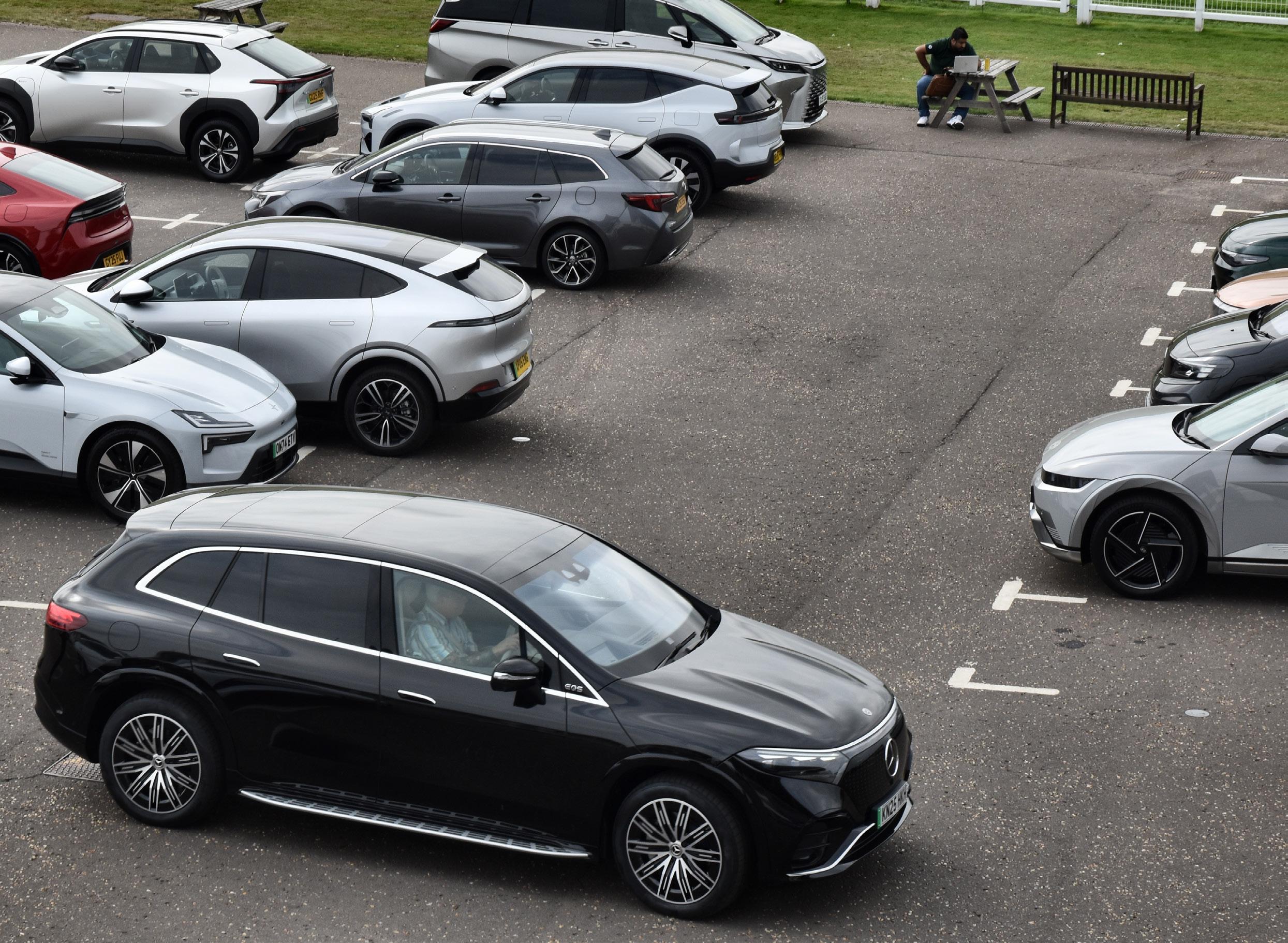
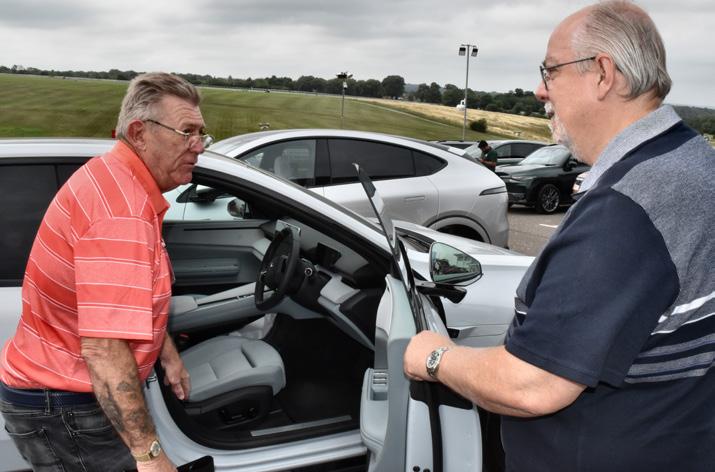
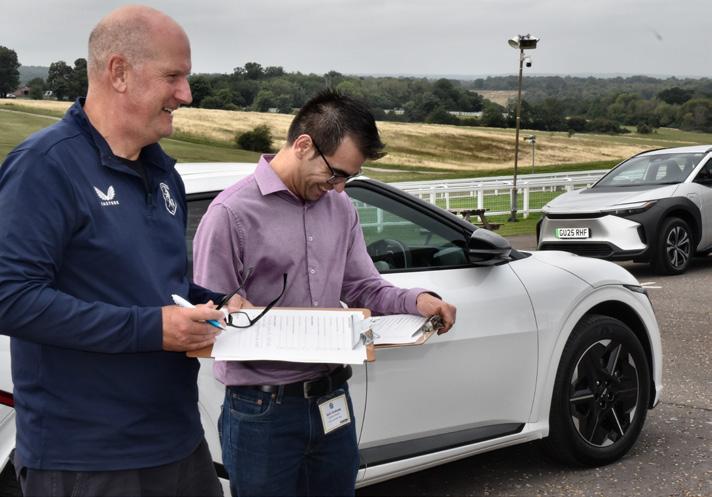
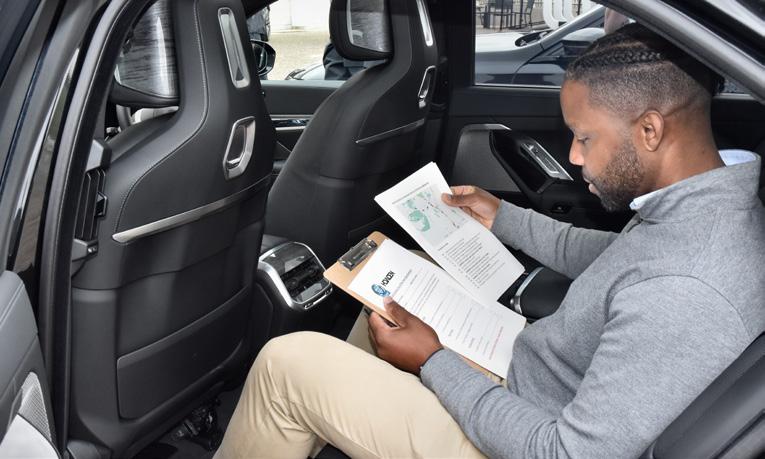
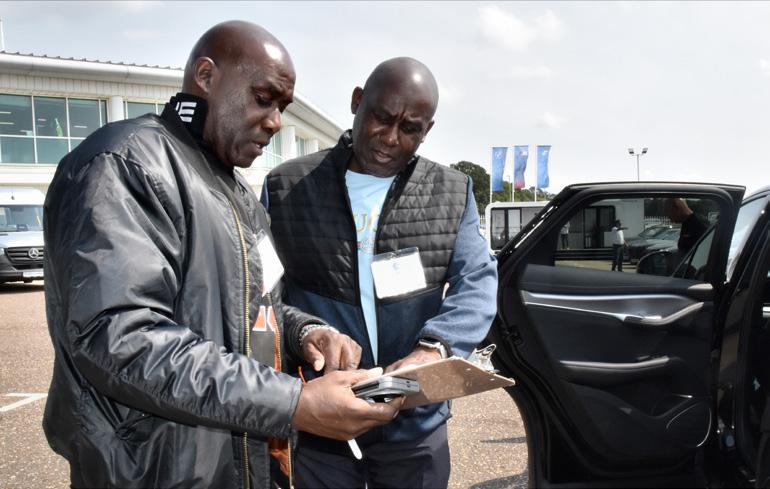
The Professional Driver Car of the Year awards are a fixture on the calendar– and here’s your chance to be a part of it. It’s free to register for anybody in the licensed taxi or private hire trade - and you’ll get the chance to try out up to 50 of the latest cars.
The event takes place at Epsom Racecourse on Tuesday, August 11. We ask our guests to take the cars for a test drive and give them a thorough once-over, then complete a 17-point checklist. The results are fed into the Professional Driver Supercomputer and that's how we choose our six cars of the year in six categories - Chauffeur Car, Executive Car, Private Hire Vehicle, Luxury SUV, Estate Car and MPV.
It's a great day out, with plenty of opportunities for networking as well as driving. Lunch and refreshments are provided.Visit our website for details of how to register - and we look forward to welcoming you on the day.
www.prodrivermags.com/car-of-the-year-home/
A NEW STAR A NEW STAR
Mark Mark
Geely Geely
STAR IS BORN STAR IS BORN
Geely Starray EM-i Max
Geely Starray EM-i Max
Mark Bursa Mark Bursa
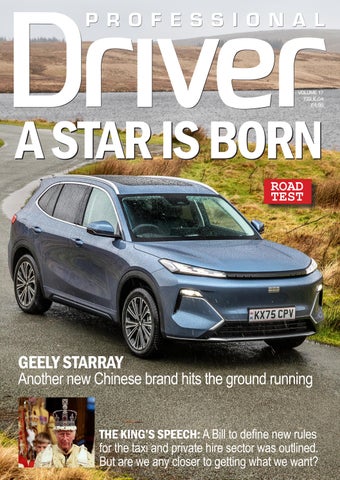
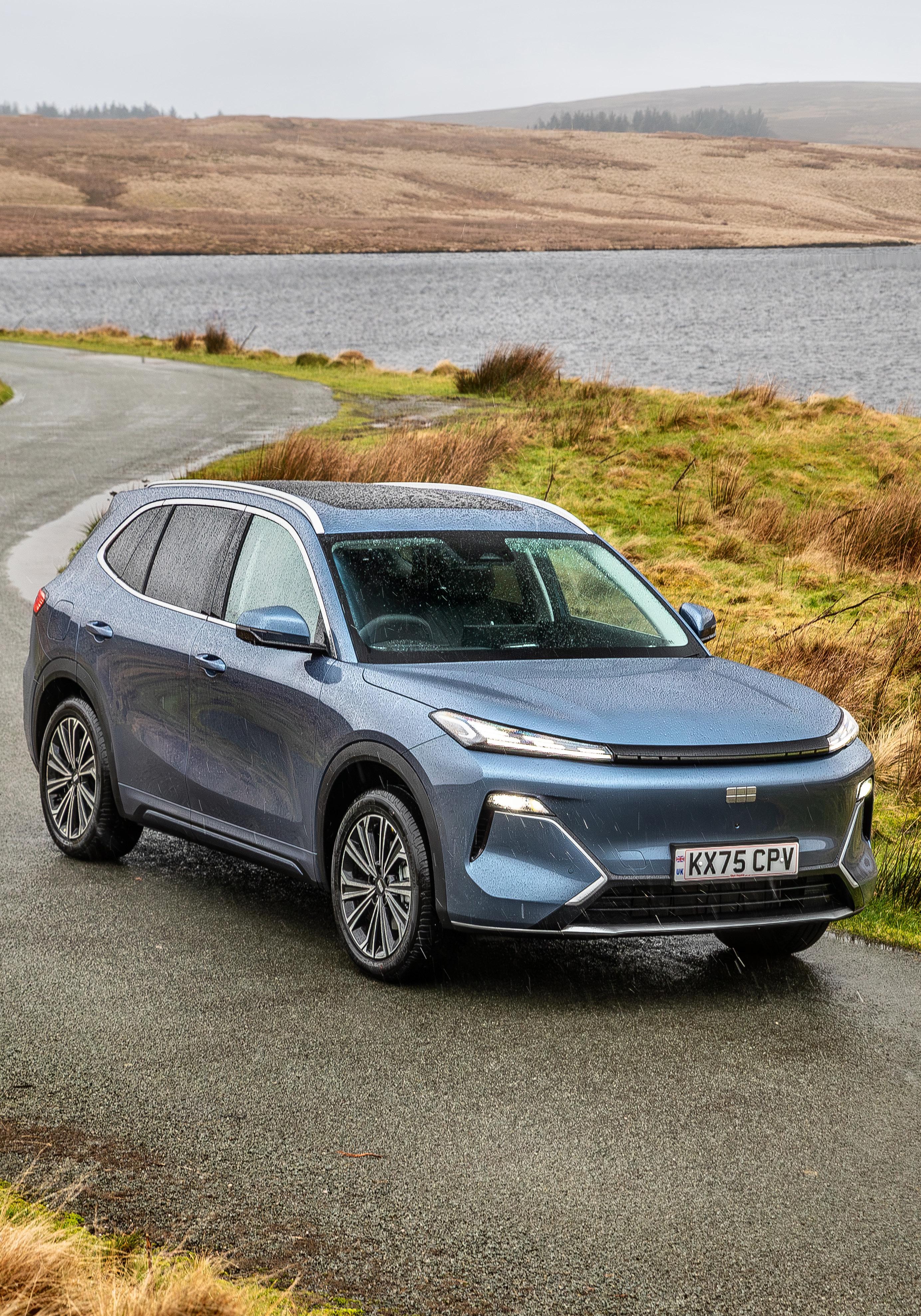
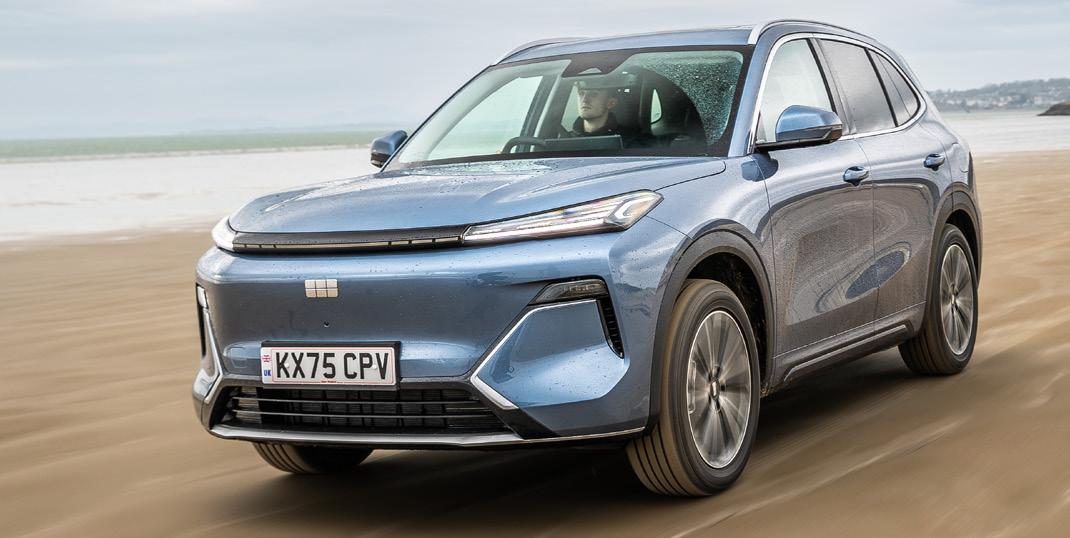
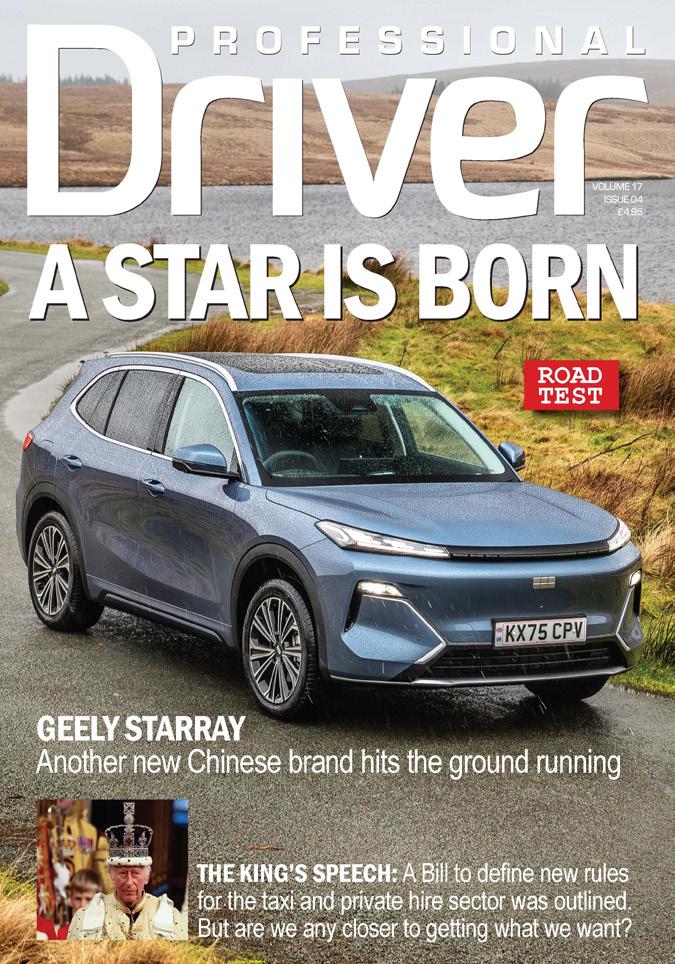
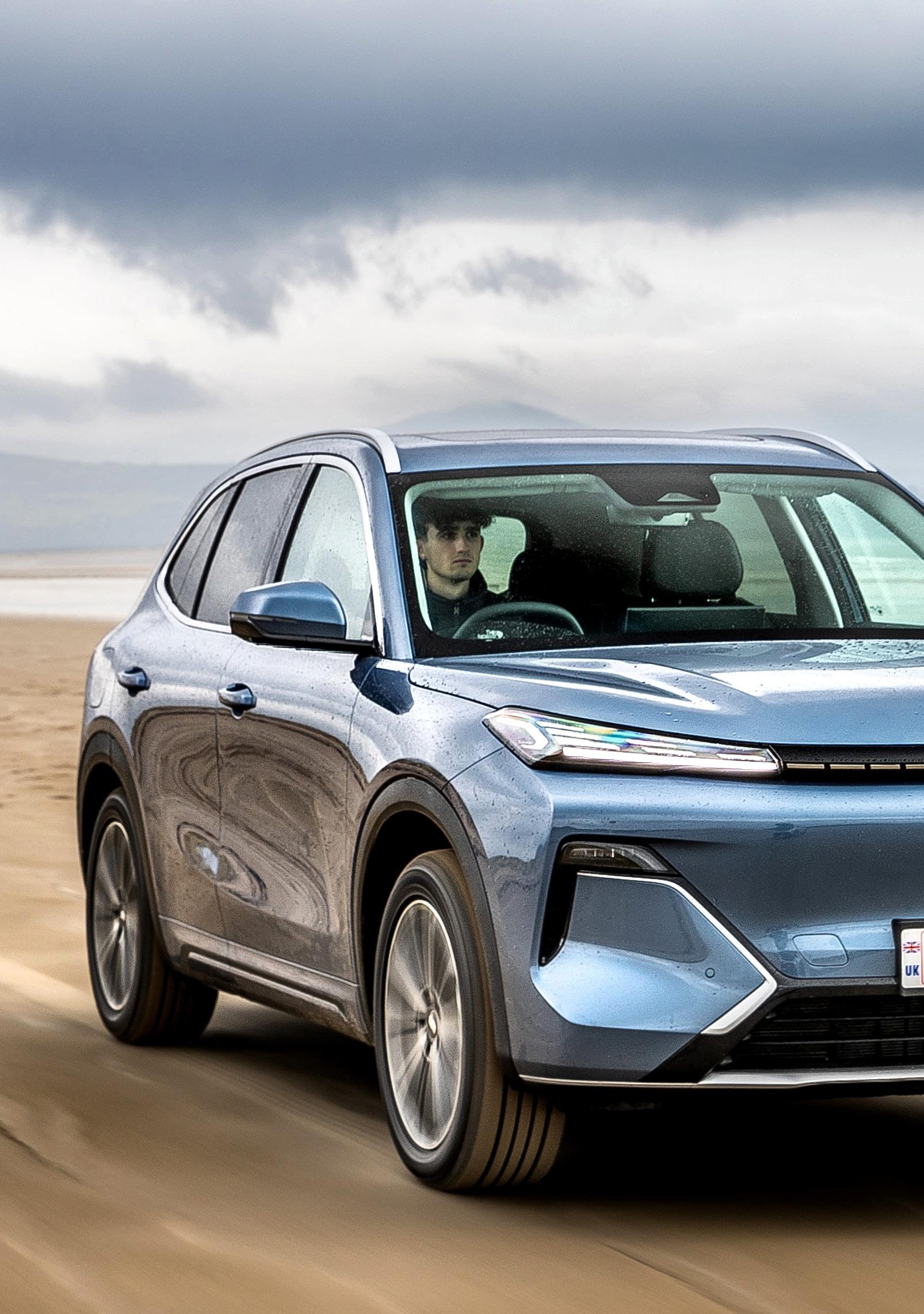
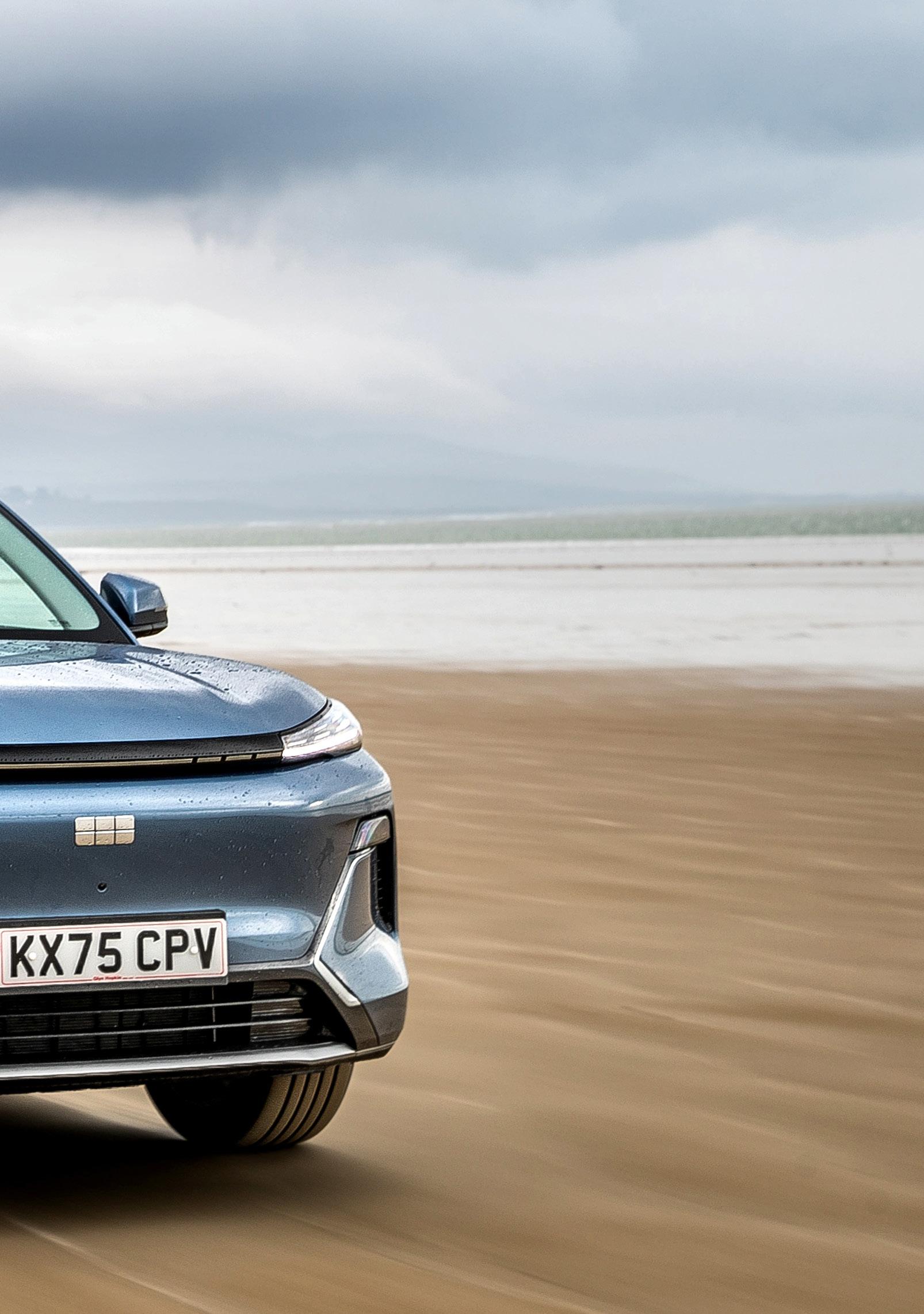
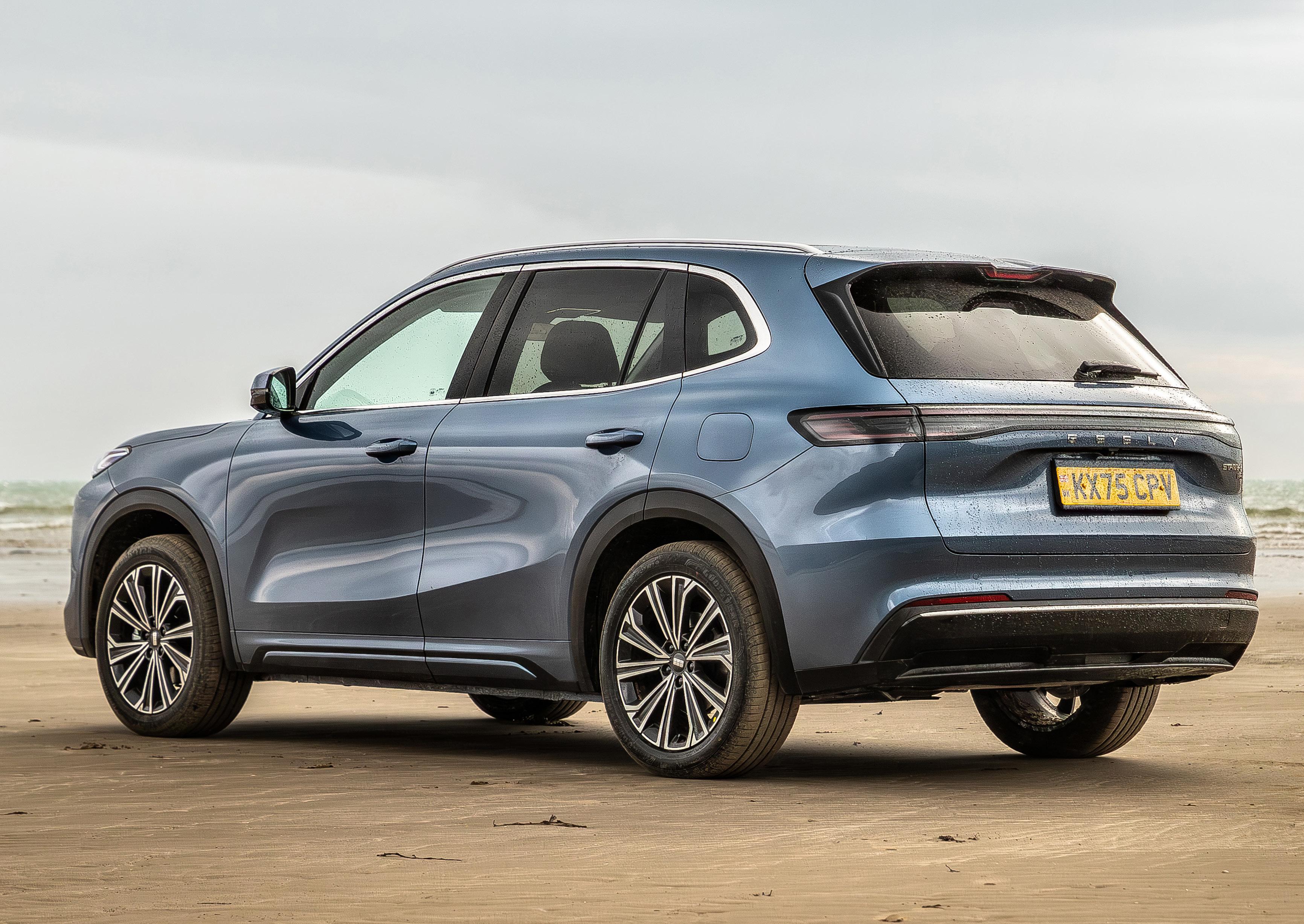
Chinese automaker Geely is a new name on the roads, but it already has a substantial presence in the UK through its ownership of Volvo, Polestar, LEVC and Farizon. And now the company has launched its parent brand into the UK, firstly with the Geely EX5 compact electric SUV, and now with a plug-in hybrid version of the same basic design, the Geely Starray EM-i.
Like its Chinese rival Chery, which launched the Chery brand after the strong start of Omoda and Jaecoo brands, the Geely brand is pitched below other brands in the group’s portfolio – and priced accordingly. The Starray EM-i starts at £29,990 OTR for entry-level Pro trim, rising to £32,690 OTR for Max trim, as tested here, and topping out with Ultra from £34,990 OTR.
These prices position the Starray as a £5,000 cheaper alternative to hot-selling Jaecoo 7. It’s also around £2,000 less than MG’s strong-selling HS PHEV. Probably the closest rivals are Chery’s Tiggo 7 PHEV and BYD’s Sealion 5, which are priced directly against the Starray EM-i at £29,995 each.
All Starray EM-i models come with a class-leading warranty of eight years or 125,000 miles. Service intervals are set at 12 months or 10,000 miles.
With the electric Geely EX5 starting at £31,990 OTR for the SE version, Geely is not hanging around – and the sales are strong so far, with more than 1,000 cars sold in March alone. By year-end Geely promises 100 UK dealers and there are 10 new models in the pipeline over the next three years, with the next launch being a smaller hatchback EV called EX2 later this year.
The PHEV powertrain of the Starray EM-i combines a 1.5-litre petrol engine and compact electric motor, powering the front wheels. Combined power output is 262PS, enabling acceleration from 0-62mph in 8.0sec, regardless of which size of battery pack is fitted.
There’s a choice of two different Lithium Iron Phosphate battery packs: 18.4kWh and 29.8kWh, delivering electric-only range of up to 51 miles and 84 miles (WLTP) respectively. Our Max trim test car had the smaller battery pack. Indeed, 84 miles is impressive
CONTINUED ON PAGE 20
road test: Geely Starray EM-i Max
CONTINUED FROM PAGE 19
for a PHEV, and better than a typical EV such as a Nissan Leaf not that long ago.
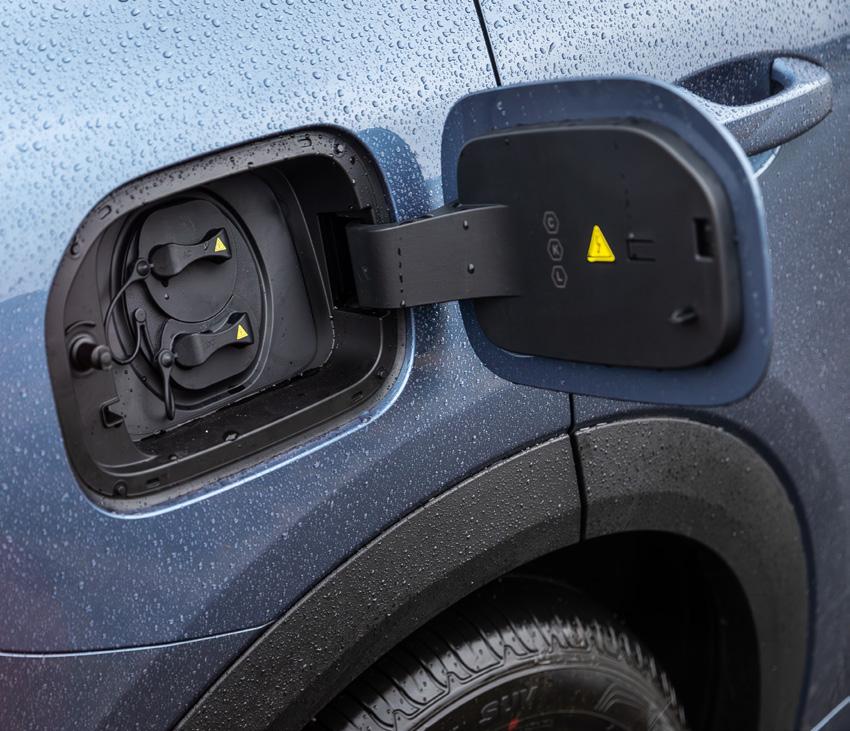
Fuel efficiency and CO2 emissions are claimed at 117mpg and 54g/km (WLTP) for the 18.4kWh battery and 202mpg and 32g/km for the 29.8kWh pack. Obviously these are test results and the mpg figure is dependent on how often you can charge the car. Ideally that would be done at home. Using a 7kW AC wallbox, such as the dual-branded smart home chargers from Geely Auto UK’s partner Andersen EV, a 25-100% home charge takes
only 3.4 hours for 18.4kWh models, and 4.6 hours for 29.8kWh models.
For those without off-road parking, DC fast-charging capability is available, at 30kW for the 18.4kWh battery, enabling a 30-80% top-up in 20 minutes. The 29.8kWh battery has faster 60kW charging ability, allowing a 30-80% charge in just 16 minutes.
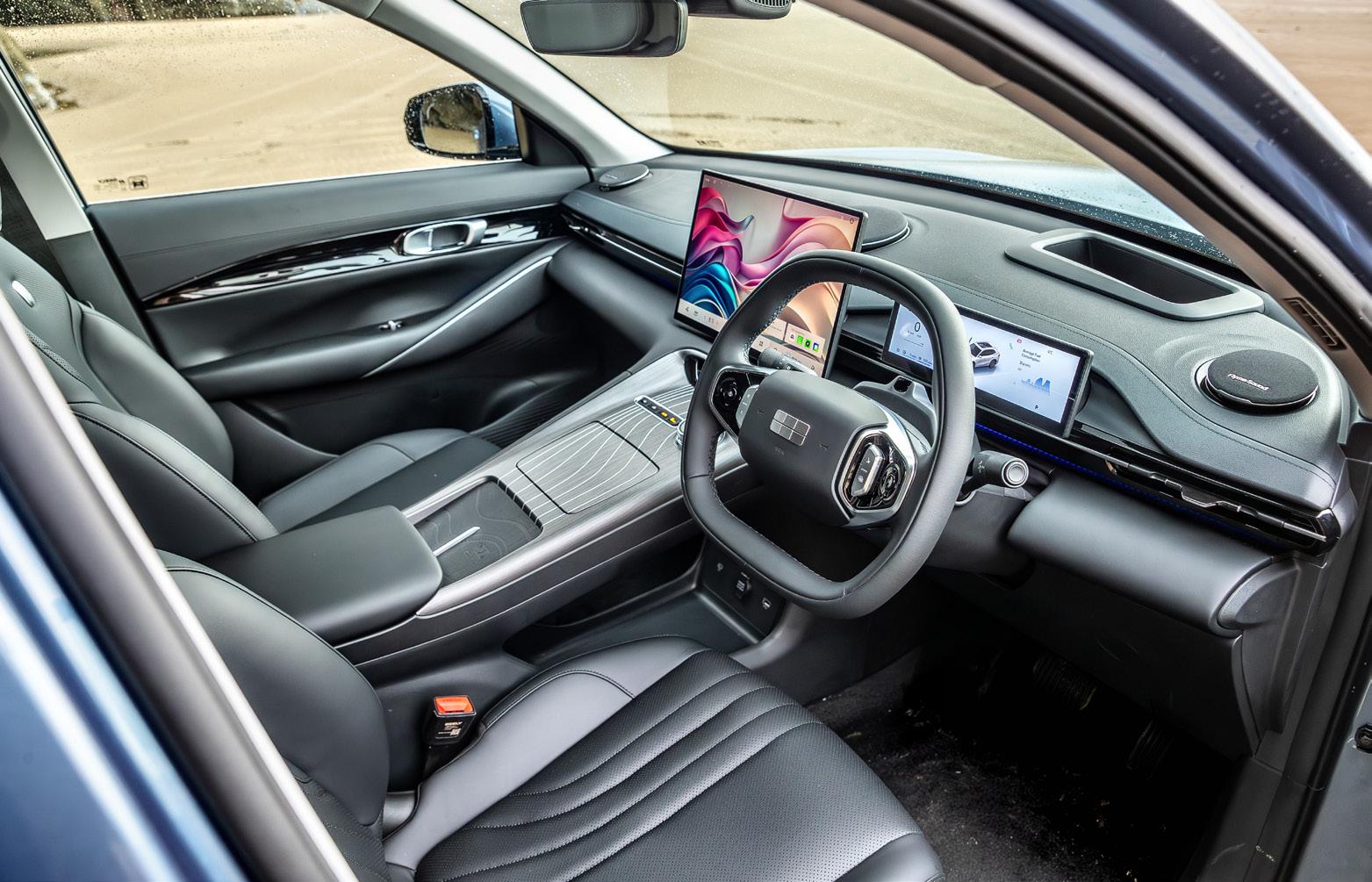
Inside the Starray, you’re met with the increasingly familiar big central 15.4in touch screen and smaller 10.2 in widescreen cockpit panel. There’s also a 13.8in head-up display on Max and Ultra versions, and all Starrays are wireless Apple CarPlay and Android Auto compatible.
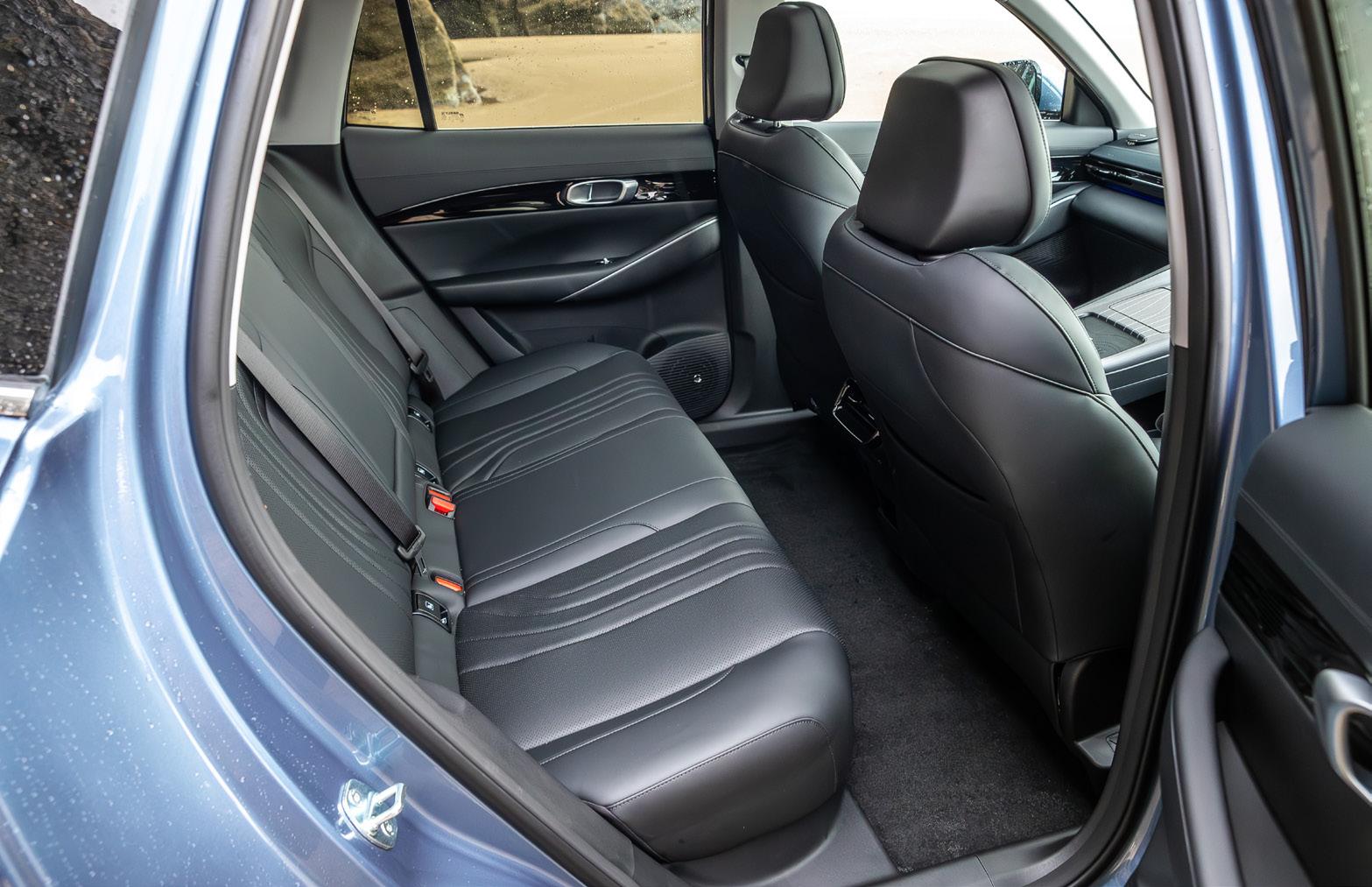
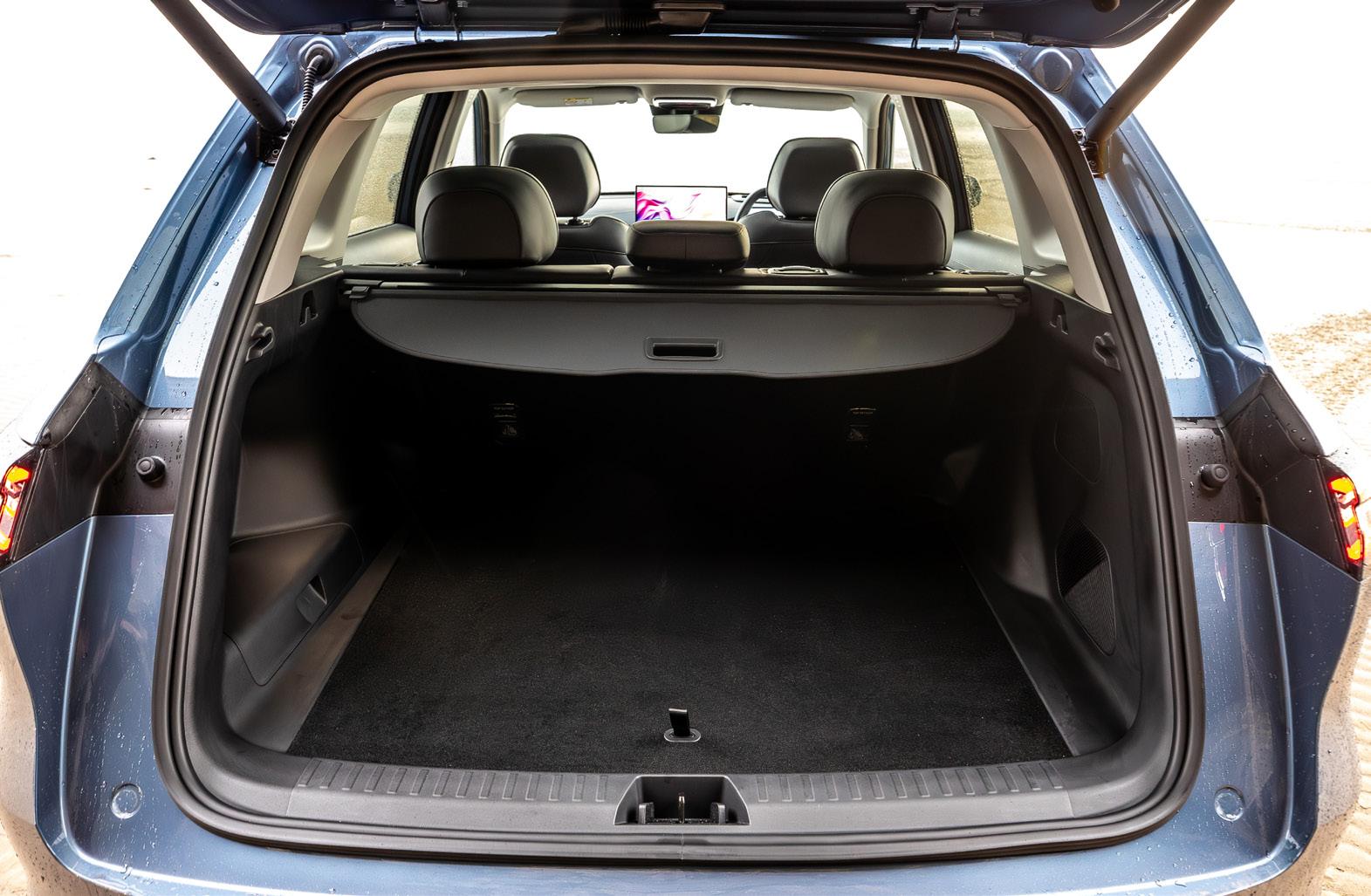
It’s a roomy car – comparable in interior space to the BYD Atto 3 and Aion V models we tested last month. Rear legroom and headroom is generous and well suited to PHV work. Seats are comfortable with plenty of padding. There’s plenty of luggage volume too, with is a generous 528 litres of bootspace and a wide-opening 1,122mm tailgate aperture. Power tailgate is standard on Max and Ultra trims.
Starray EM-I also has 256-colour ambient lighting system, panoramic sunroof in Max and Ultra trims and
soft-touch finishes throughout. There are more than 30 places to stow bags, phones, tablets, and personal belongings.
On the road, the Starray feels competent and not too firm. One of Geely’s other UK investments is a 51% stake in Lotus, and the Lotus engineering team’s expertise in chassis and dynamics has been brought to bear in refining the Starray EM-I’s ride and handling on UK roads, the Lotus test track, and a state-of-the-art multi-post rig.
These efforts result in a compliant ride, with a suspension that feels softer than some competitors – a bonus for PHV use. The slightly softer ride also makes the Starray EM-i very competent at handling the worst of Surrey’s potholes without banging and crashing.
The steering feels connected too –manufacturers are getting much better at getting rid of the bland electromechanical feel that made some EVs and PHEVs feel a bit vague.
It’s very quiet in EV mode, but you do notice the low drone of the petrol engine when it kicks in. The Starray is probably most at home on the motorway, where it’s a calm, quiet cruiser with a nice stable feel.
road test: Geely Starray EM-i Max
VERDICT
Geely introduced itself to UK audiences through a “soft-launch” last year, including displays in major shopping centres and at automotive events, before the car went on sale.
And as with the other fast-moving Chinese brands, the British public seems open to new brands, and Geely is already making inroads into the market.
The Starray EM-i is very much on trend. A compact but roomy SUV – two wheel drive and relatively nimble for a car in its class. It drives well without being truly engaging – but if you’re looking for a comfortable ride, it scores well.
There’s plenty of room for passengers and luggage, and it’s well priced. It might be worth looking at the higher-spec Ultra version, where the bigger battery gives notably more electric range for a £2,300 price premium over the Max.
DATA
Price (Max trim) £32,690
SPECIFICATION
Powertrain 1.5-litre, four-cylinder petrol engine and electric motor
Transmission Single-speed, front drive
Battery 18.4kWh LFP
System power 262PS
Torque 262Nm
Top speed 105mph
0-62mph 8.0sec
Fuel economy 202mpg (WLTP)
EV range 51miles (WLTP)
DC Charging time 20min (105kW, 30-80%)
AC Charging time 3hr 24min (7kW, 25-100%)
CO2 emissions 54g/km (weighted)
Length 4,740mm
Width 1,905mm
Height 1,685mm
Wheelbase 2,755mm
Loadspace 528 litres
Turning circle 10.4m
Warranty 8 years/125,000 miles
Insurance Group 32
VED Band B
THE REGENERATION THE REGENERATION
Genesis GV60 Pure Genesis GV60 Pure
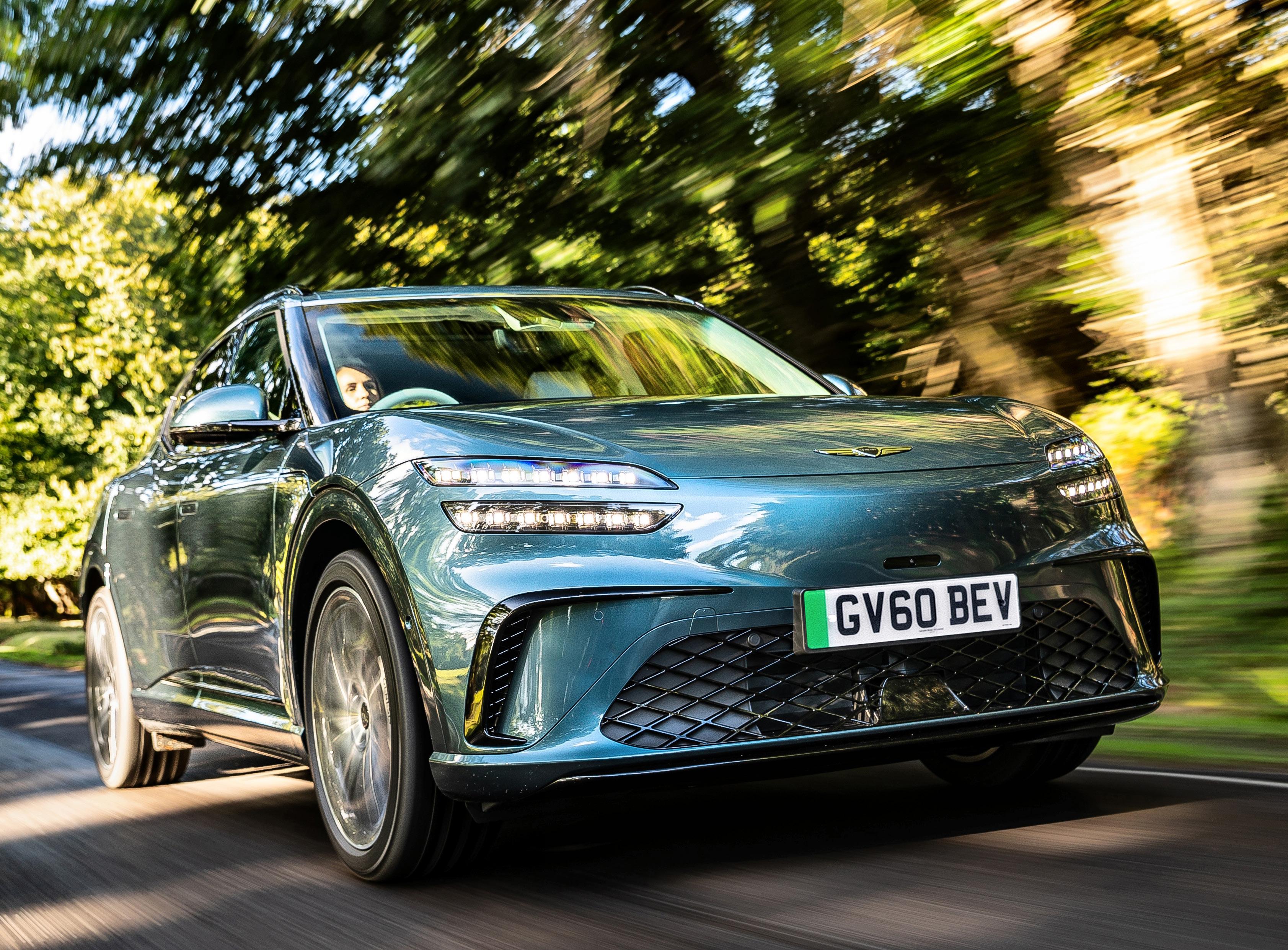
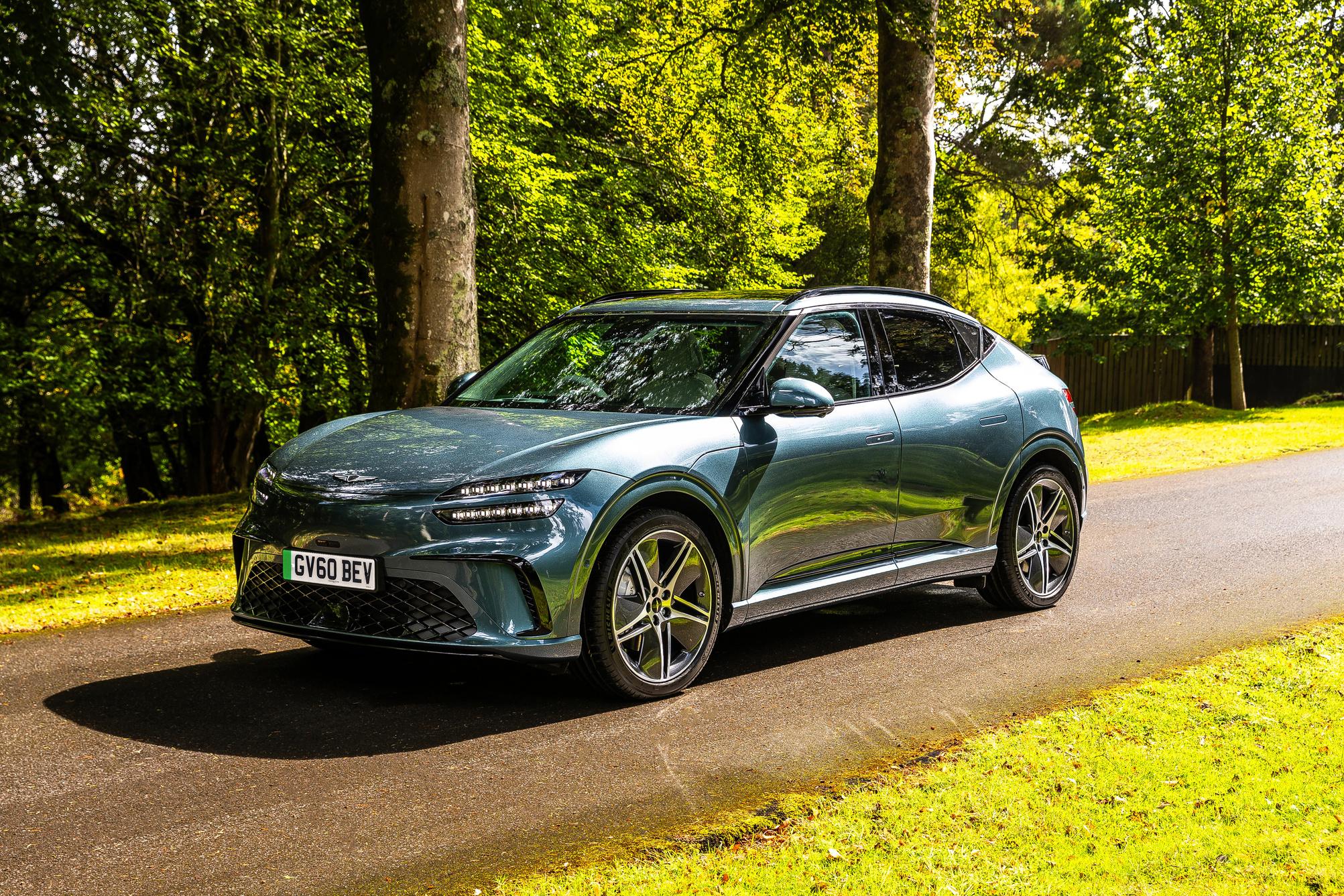
It’s not been an easy start in the UK for Genesis. The Korean brand was launched in 2021 as a stand-alone brand – the Lexus to Hyundai’s Toyota - but was reabsorbed into its parent in 2024. There had been a sense that it was trying to move rather too quickly, with a stand-alone team and a rather off-beat approach – no dealers, for example. Now that has been switched to a more regular approach. Nothing much wrong with the product, though. The big G80 saloon has made inroads into the chauffeur sector, and now, four years on from its launch,
Genesis’ first electric model has received a facelift.
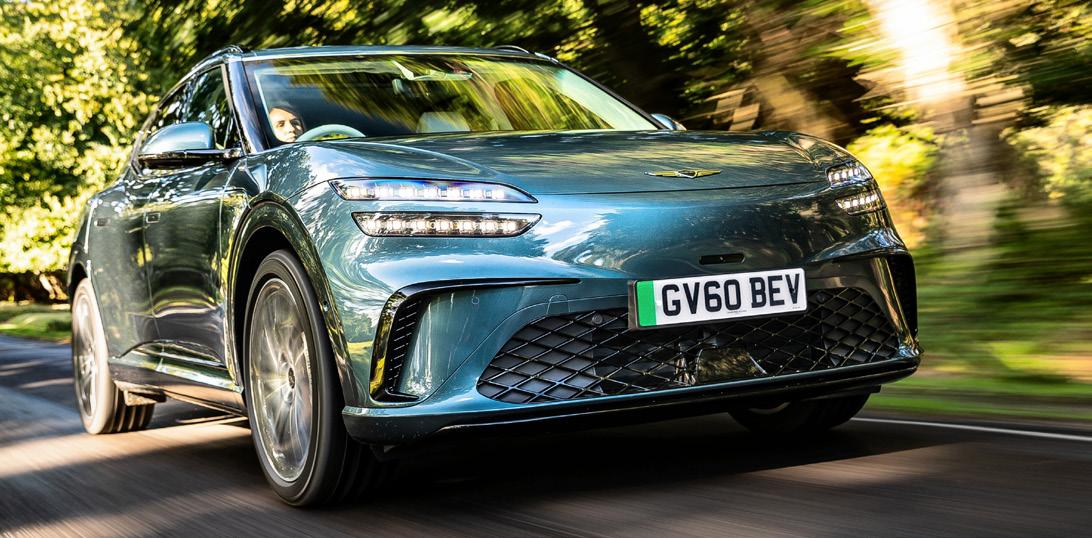
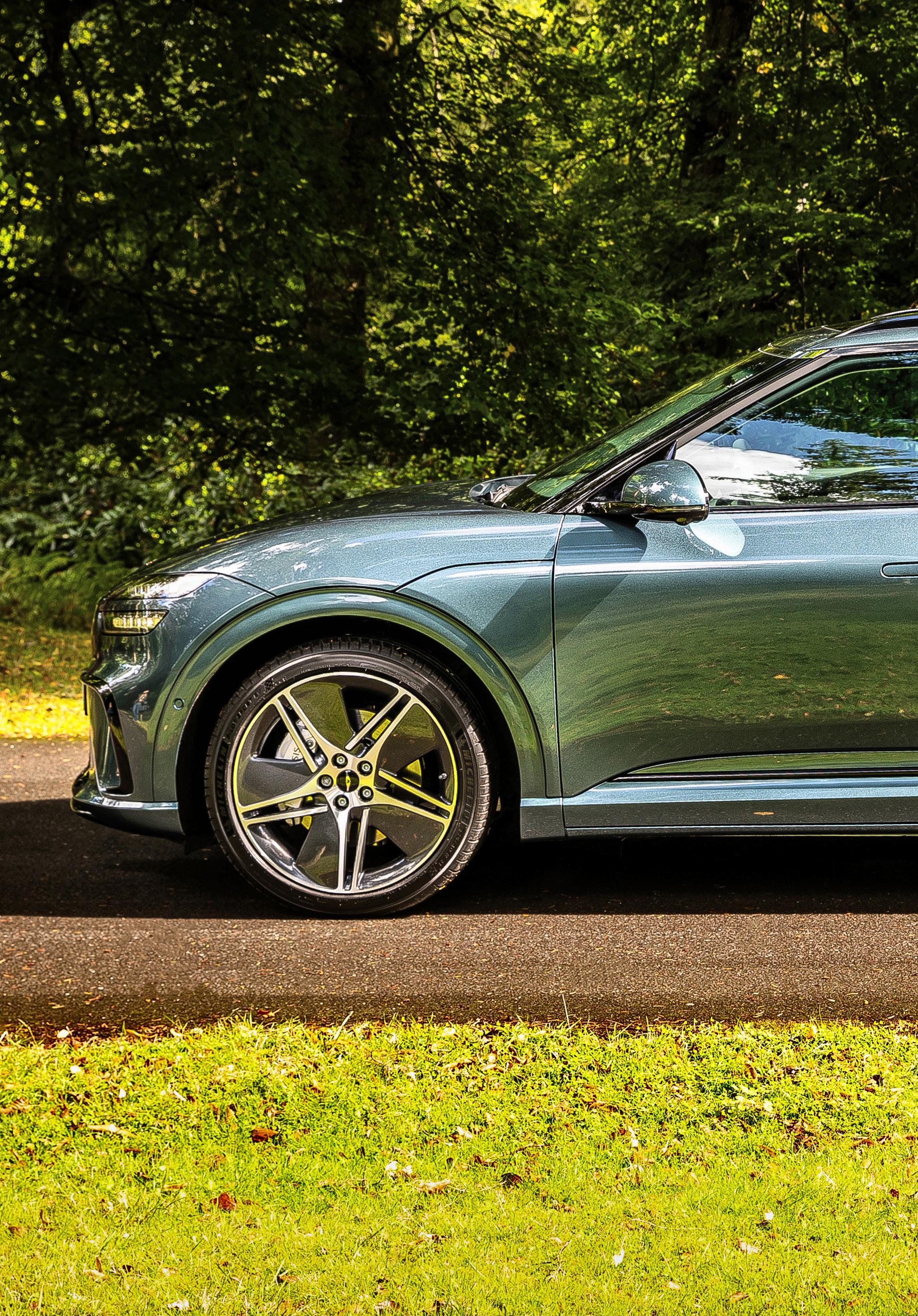
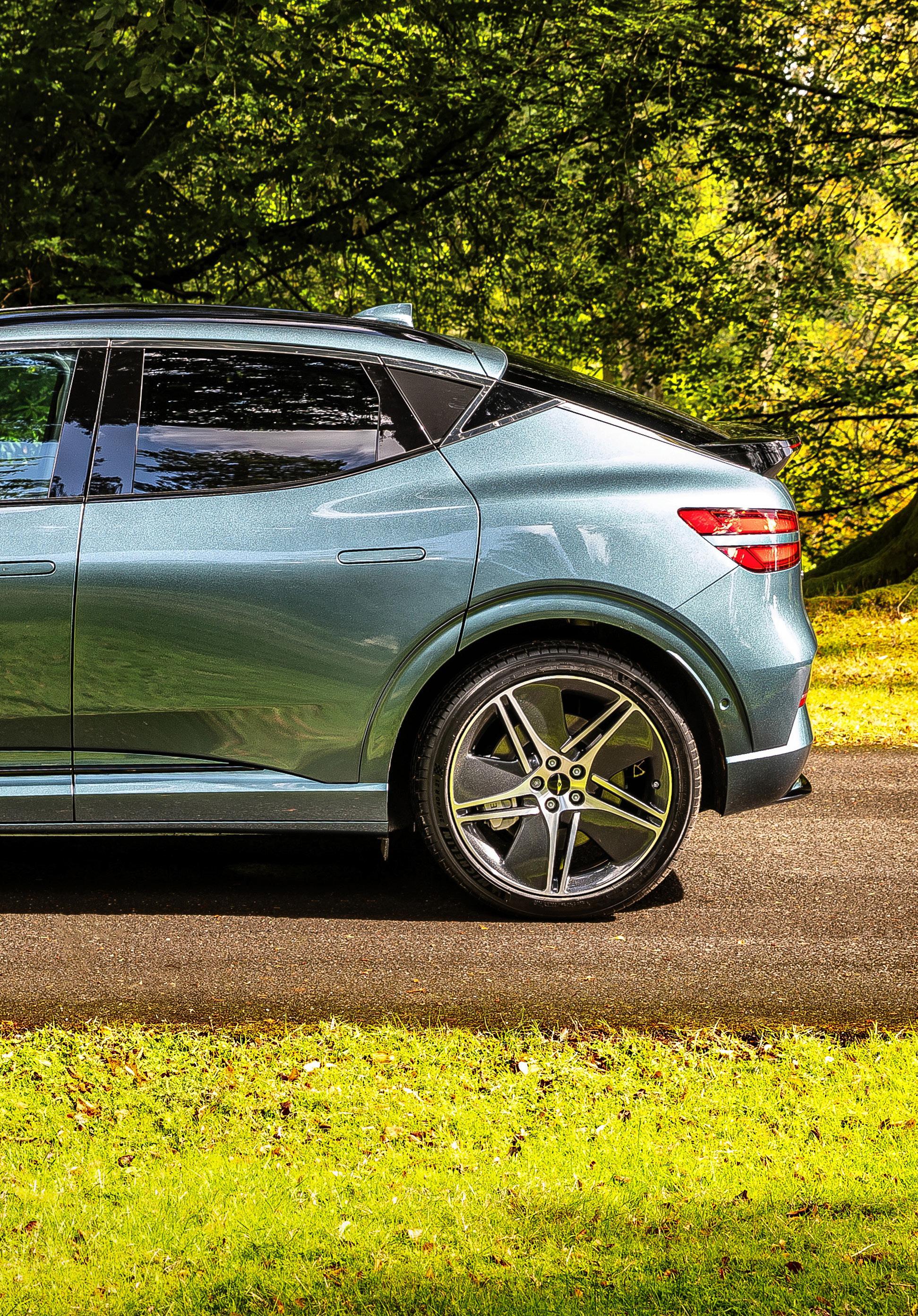
The GV60 is very obviously a car that has been designed as an EV – taller than a saloon, but lower than an SUV. Big wheels (19in on Pure trim, bigger on the more sporty trim levels) and a higher floor, so the batteries can be stashed below the passenger compartment.
The GV60 is closely related to the other EVs within the Hyundai/Kia group. You can spot a likeness to the Kia EV6 (less so to the Hyundai Ioniq5) but the three cars are very closely related under the skin – in fact the basic
platform and powertrain is the same across all three.
But while the Ioniq5 plays the big and practical card, and the EV6 gives off a more sporty vibe, the Genesis GV60 goes for a combination of traditional luxury and high technology.
Design changes to the GV60 are subtle – it was a good-looking vehicle in the first place. Minor changes to aerodynamics have brought the drag co-efficient down to 0.28Cd, and there is a revised front grille, giving a wider look, and a range of new colours.
Most of the revisions are under the
Mark Bursa Mark Bursa
REGENERATION GAME REGENERATION GAME
skin, most notably an upgraded 84kWh battery, giving a combined WLTP range of up to 348 miles as against 321 miles on the 2022 version. It retains 800 volt electrical architecture, and this offers exceptionally fast charging times, with 10-80% fast charging in as little as 18 minutes using a 350kW fast charger.
There’s a choice of three specification levels – Pure, Sport and Performance – all with the 84kWh battery. If you’re looking for maximum range rather than hot performance, then opt for the Pure trim, on test here. This replaces Premium on the original GV60, bt offers a
largely similar rear-wheel drive layout that delivers 229PS and a maximum torque of 350Nm. This version gives the 348-mile range, with the 0-62mph sprint taking just 7.8 seconds.
The all-wheel drive GV60 Sport combines a 218PS front motor with a 100PS motor at the rear, giving a total power output of 318PS and maximum torque of 605Nm. This extra power (062mph is 5.5sec) comes at the expense of range, which drops to 318 miles. The top-line Performance model has even more power - 490PS – but range drops again to 311 miles.
Ride and handling has been improved by upgrading the front and rear shock absorber valves applied to GV60’s electronically controlled suspension, increasing the tuning flexibility of the damping force to enhance vehicle stability and ride comfort. Additionally, hydro bushings - previously only applied to the front suspension - have been added to the rear to minimise road vibrations. The steering gear ratio has also been optimised to improve steering response. On the road, the GV60 feels like a
CONTINUED ON PAGE 24
CONTINUED FROM PAGE 23
substantial car, but not lacking in nimbleness. Electronic “drive-bywire” steering feels very natural, while the suspension is well tuned to cope with the car’s weight and low centre of gravity.
The suspension includes a forward-facing camera that can “read” bumps and holes in the road and adjust the suspension before the car hits them. It's a comfortable and relaxing place to be, with soft-but-supportive seats.
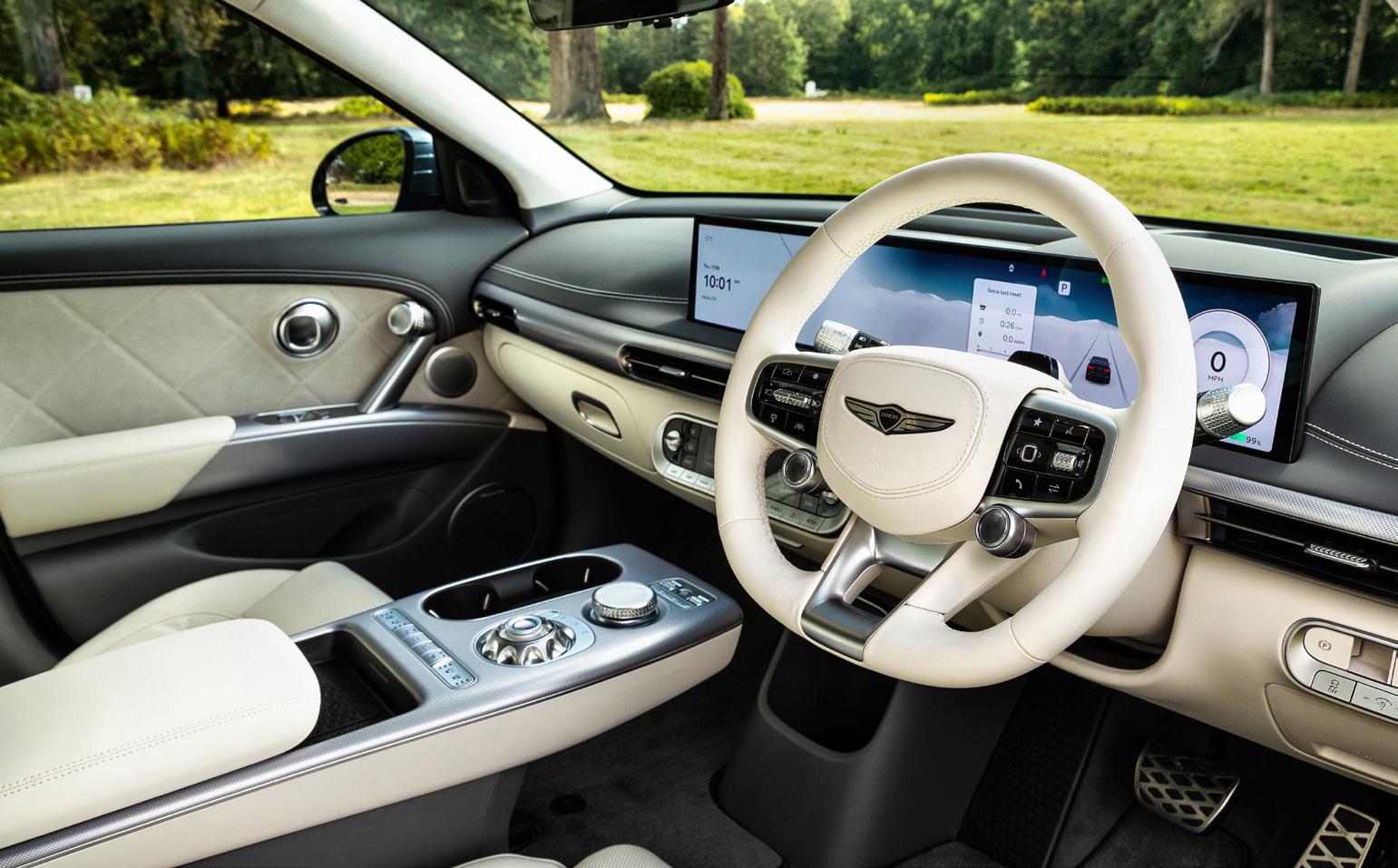
Inside the car, the interior appears to have undergone few changes. But the panoramic dashboard screen is now one single 27in screen rather than two smaller screens within the same housing.
Genesis calls this the connected car Integrated Cockpit (ccIC), merging the infotainment and driver information systems across one screen. The graphics are crisp and clear. There’s also a very good full-colour head-up display.
The facelift has also retained the delightful “crystal sphere” on the centre console, which flips over to reveal the drive select device once you press
the start button. It’s totally gratuitous, but it puts a smile on your face when you’re getting ready to set off.
When the GV60’s electrical systems are turned off, the crystal sphere becomes the vehicle’s mood lighting, delivering a calming glow to the cabin.
The drive select controller sits just behind a rotary satnav controller, which will come as a relief to those who are no fans of touch screens. Flush-fitting door handles automatically pop out when the you approach the car with the smart key, retracting once you move off to enhance aerodynamics.
And there’s the option of replacing traditional exterior mirrors with digital cameras, which show the rearward view on small OLED monitors set into the inside of the front doors. The driver’s view can be enhanced with features including ‘lane change assist line display’ and ‘reverse parking screen magnification.’
Elsewhere, physical switchgear has been kept to a minimum, though not to the minimal extent of a Tesla. Wireless phone charging is standard and there are four USB-C ports - two in the front and two in the rear. There’s
also plenty of storage space, including an area below the “floating” centre console.
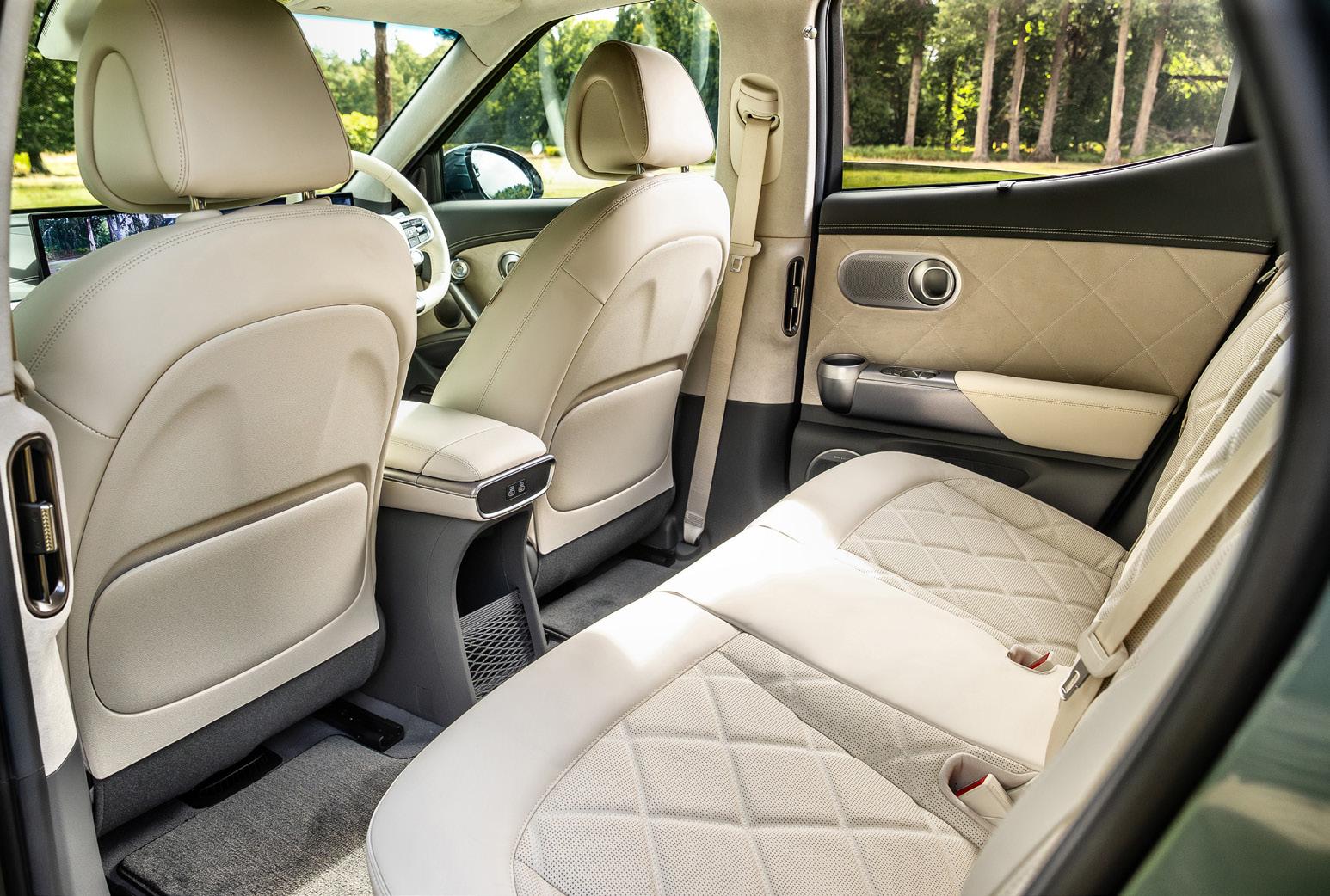
GV60’s bespoke electric vehicle platform means the car has a completely flat floor, so there’s no transmission tunnel to cramp rear legroom. Rear seat occupants have reclining rear seat backs, with heated rear seats an option.
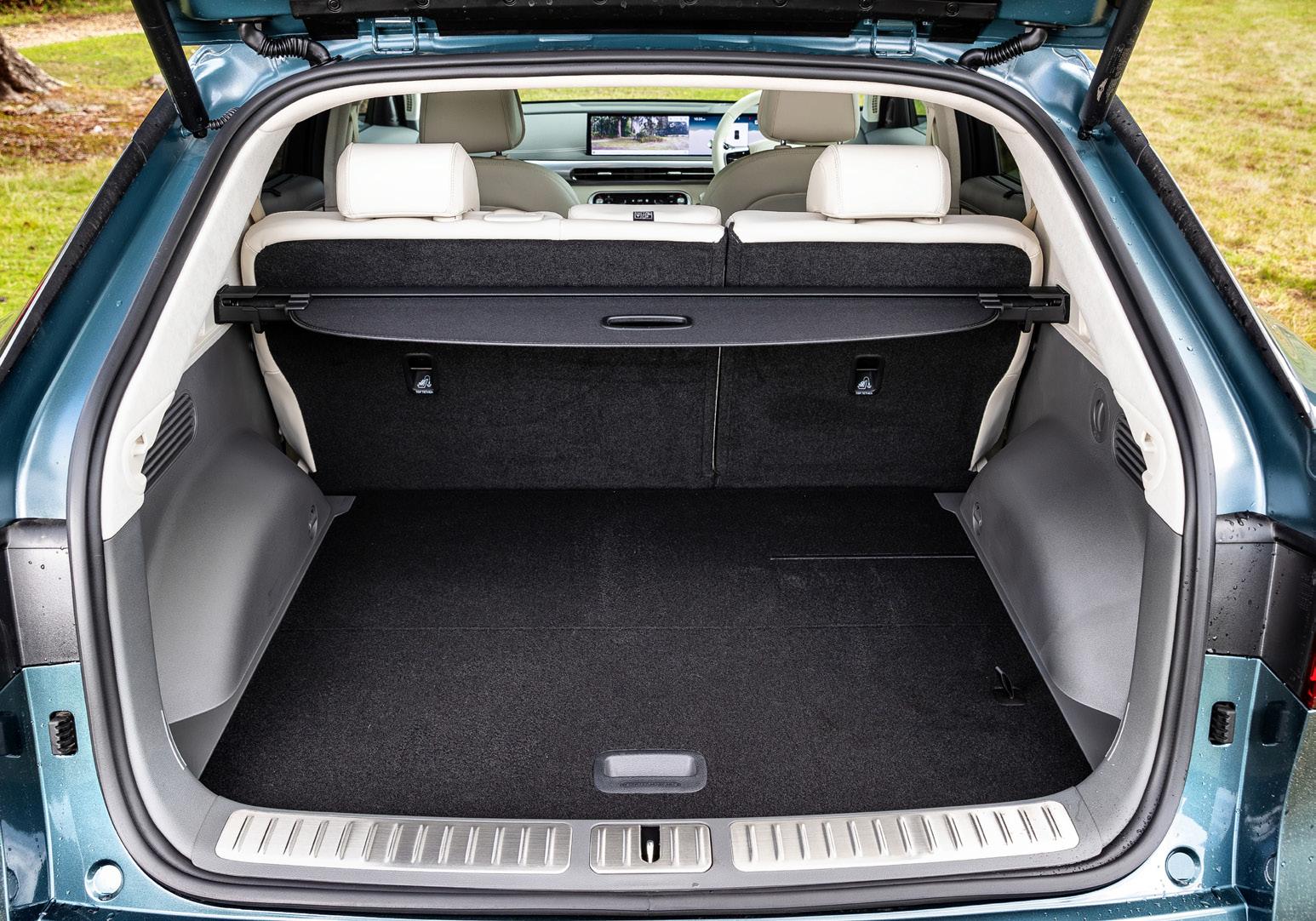
A standard smart powered tailgate allows for fuss-free access to the substantial luggage compartment. It is also possible to adjust the power tailgate’s opening height to your desired preference.
Lots of effort has been spent on sound management – with noise-cancelling audio and double-glazing designed to minimize road and wind noise. But if you actually want the car to sound like a car, there are Active Sound Design (e-ASD) modules within the audio system.
These monitor the vehicle’s speed, the position of the accelerator pedal and the selected driving mode, delivering various virtual driving sounds through the audio system – including something that sounds like a V6 engine.
VERDICT
The Genesis GV60 is a distinctive car that hides its origins well. Not that Hyundai/Kia running gear is anything to be ashamed of - the latest Korean EVs are among the best you can buy. Genesis brand is pitched against Mercedes and BMW, and it’s not quite there yet. It’s still slightly quirky, but the build quality is excellent and interior comfort is right up there for a car in this class. At £54,000 it is quite expensive compared to Chinese offerings such as the BYD Sealion 7, which starts at around £46,000.
In addition you get a five-year warranty (similar to Hyundai’s) and buyers can access a subscription-based charging programme that offers discounted rates on Shell and Ionity charge networks. And Genesis also has a scheme with home charging supplier Ohme to give discounted installations.
DATA
Price £54,115 (Pure trim)
SPECIFICATION
Powertrain Single EV motor
Transmission Single-speed auto,rear drive
Battery pack 84kWh Li-Ion
Power 229PS
Torque 350Nm
Top speed 115mph
0-62mph 7.8sec
Electric range 348 miles (WLTP combined)
Charging time 7hr 35min AC (11kW 3-phase, 10-100%) 18min DC (350kWh rapid, 10-80%)
Max charge rate 350kW
CO2 emissions 0g/km (WLTP)
Length 4,545mm
Width 1,8900mm
Height 1,590mm
Wheelbase 2,900mm
Loadspace 680 litres (rear) 53 litres (frunk)
Turning circle 5.9m
Vehicle warr'y 5years/ 100,000 miles
Insurance Gp 38E
VED Band A
ENTRY LEVELLER ENTRY LEVELLER
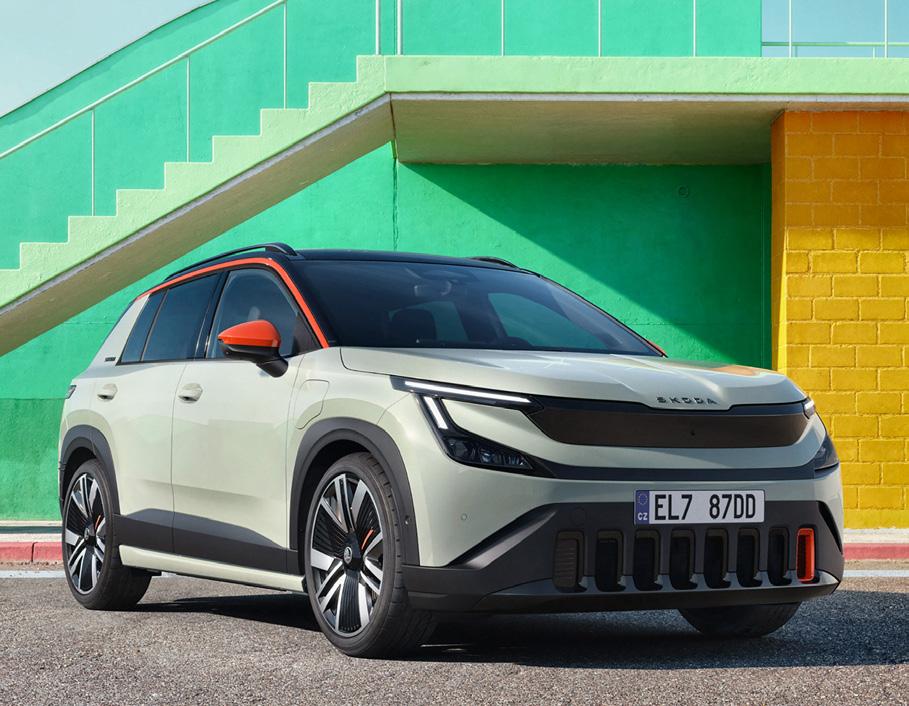
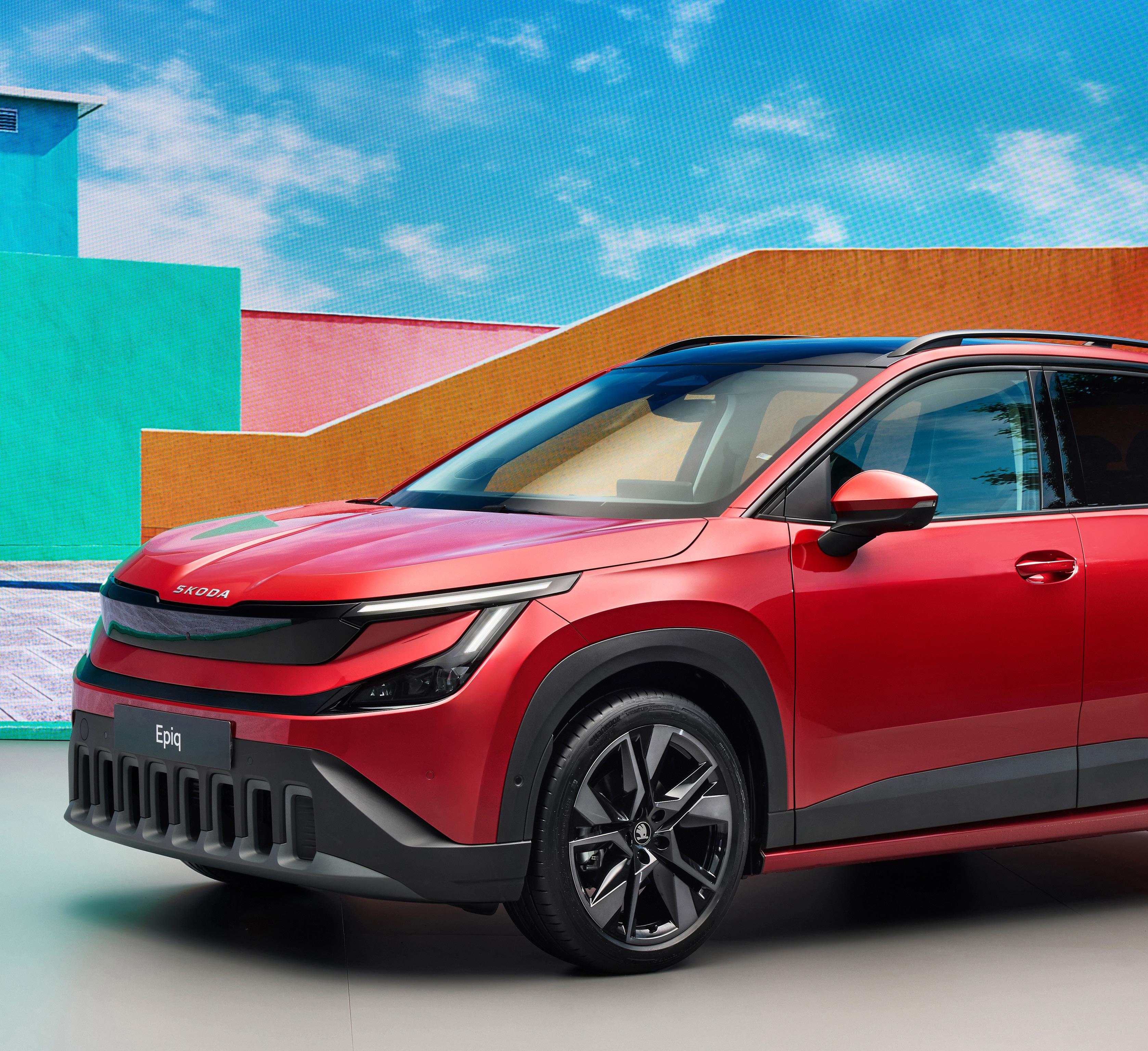
Skoda’s combination of great packaging and affordability has always been a winner in the private hire sector. Many thousands of Octavias and Superbs have found use as PHVs over the years – even the smaller, budgetpriced Rapid was a popular seller. Turning those combustion-engined sales into EVs is not so easy – the first Skoda EV, the Enyaq, starts at a shade under £40,000, a good £11,500 more than the entry-level Octavia. But here’s another Skoda EV – and this one is priced to win sales. At £24,950 OTR, the Epiq is cheaper than even the lowest-priced petrol engined Kamiq (the car that replaced the Rapid).
Epiq will come with two trim grades when it goes on sale later in the year: SE L and Edition, and there is a limit-
ed First Edition launch model, which features extra spec, a two-tone paint job and 20in wheels instead of the SE L’s 18in alloys. Order books open in July.
There are two battery size options: 37.5kWh and 52kWh, with the larger of the two offering a WLTP driving range of up to 272 miles. This battery uses nickel-manganese-cobalt (NMC) chemistry, providing a higher energy density. The smaller 37kWh LFP battery fitted to the Epiq 40 is expected to deliver a WLTP driving range of around 190 miles.
Epiq can handle rapid DC charging capacity at up to 105kW, giving a charge from 10% to 80% in under 25 minutes. Epiq also enables full one-pedal driving in B mode, with switchable regeneration intensity. In
terms of performance, the Epiq 40 generates 135PS while the Epiq 55 produces 211PS.
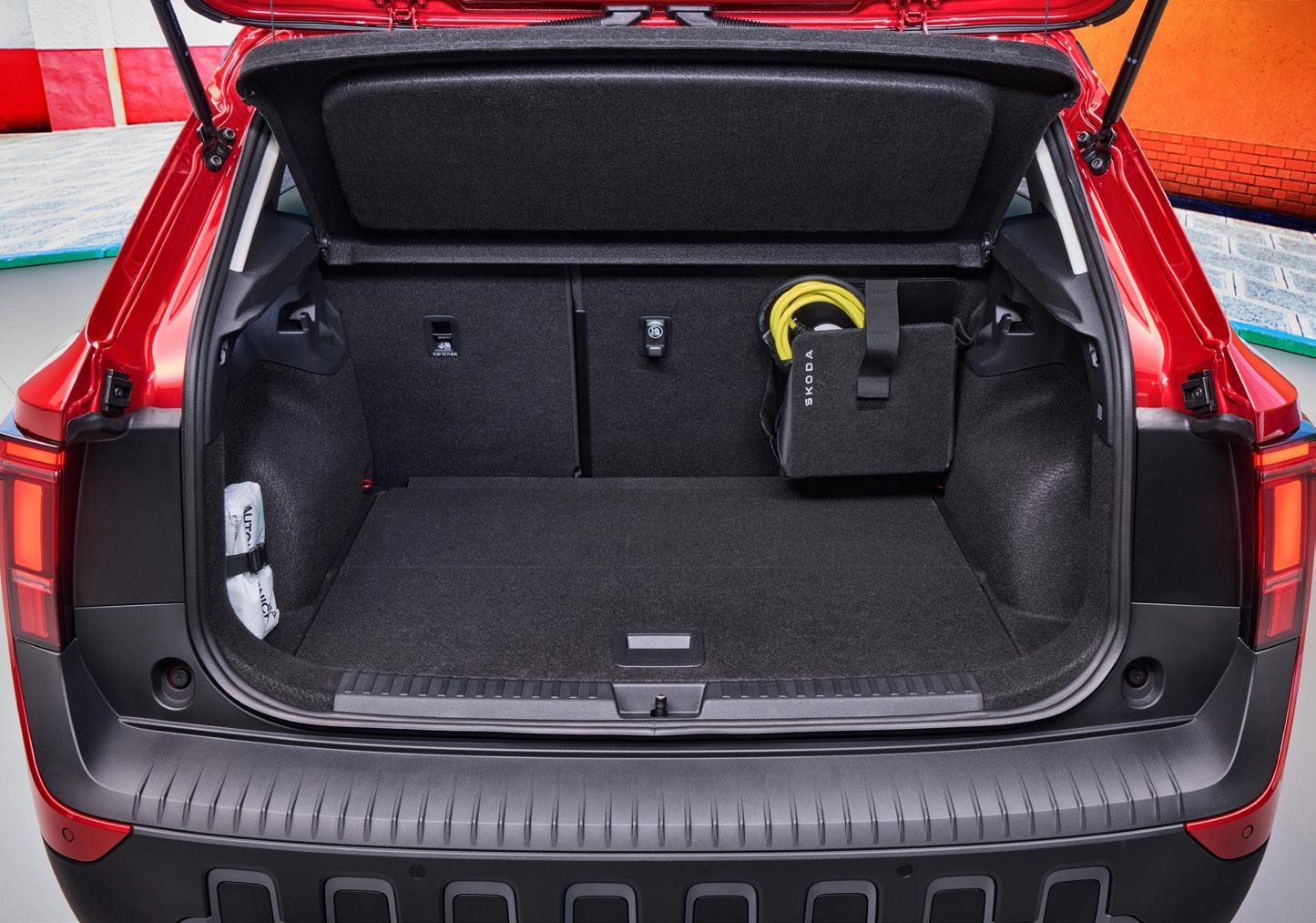
Epiq is the first Skoda model to be built on the Volkswagen Group’s new lighter and more efficient MEB+ platform. It is the brand’s first all-electric model with front-wheel drive. Epiq is a compact SUV, but it looks well packaged. As with most Skodas, there’s lots of luggage space, with a 475-litre boot and 25-litre frunk, and numerous additional interior storage bins.
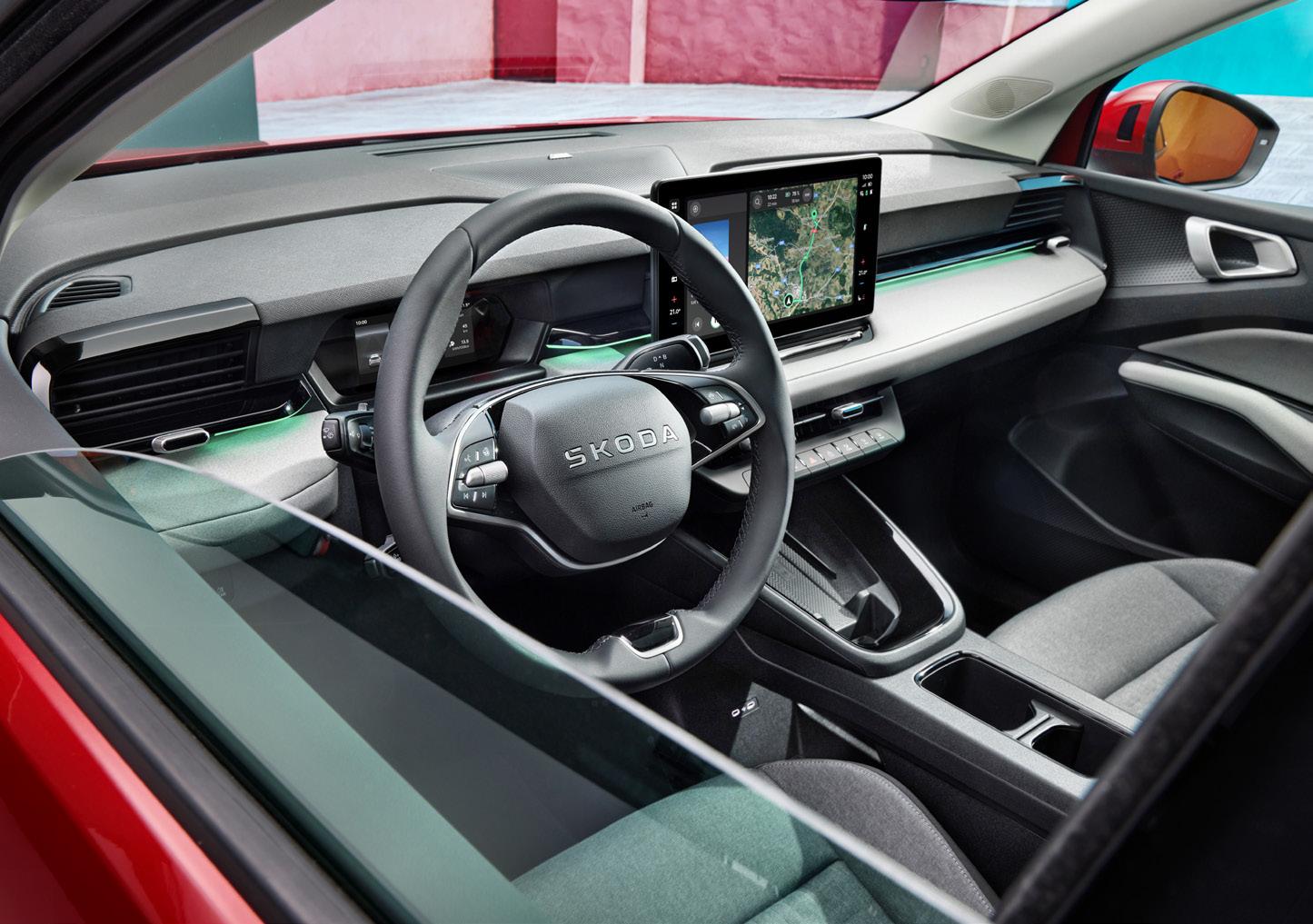
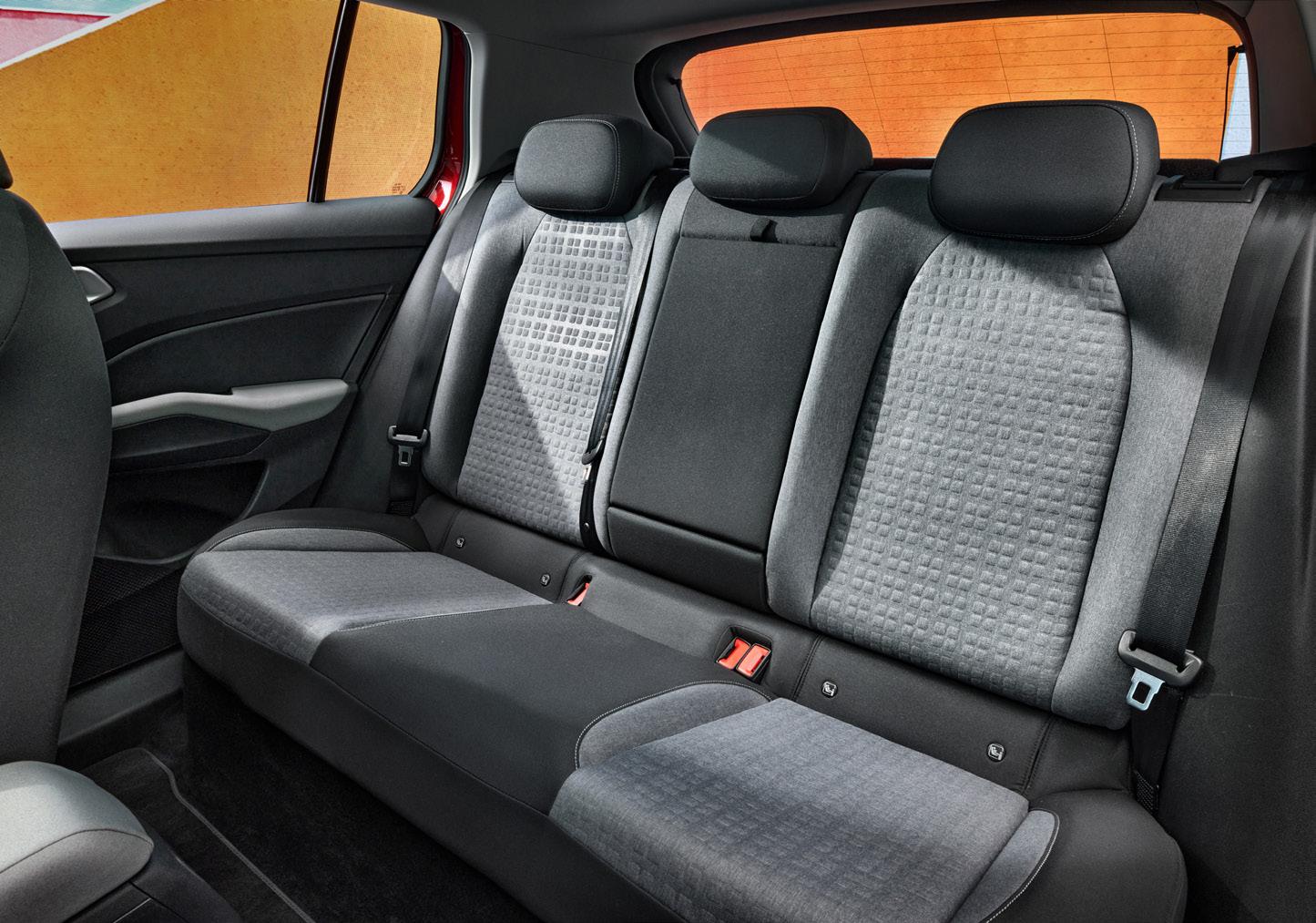
There’s a choice of three interior colour schemes. Standard issue on SE L and Edition is Loft Grey, which combines grey fabric and artificial leather with grey stitching and provides a traditional feel. The other options are Loft Mint, available as an
LEVELLER LEVELLER
Skoda Epiq Skoda Epiq
Mark Bursa Mark Bursa
option on Edition, with mint fabric and grey artificial leather with mint stitching, while Suite (also optional on Edition), comprises brown artificial leather and microsuede with brown stitching.
Connectivity in the new Epiq is centred around a new infotainment system using a 13in centre display and a 5in digital cockpit.
Epiq comes generously equipped with high levels of technology, comfort and safety features across the range, including wireless smartlink integration, rear parking sensors, climate control, keyless start/stop and adaptive cruise control.
It has LED headlights with daytime running lights and LED rear lights as standard, and a range of safety and driver assistance systems.
Gigzzee gigzzee.com
Gary Jacobs
ASSET FINANCE SOLUTIONS FOR BUSINESS
We provide bespoke packages funding and sourcing of vehicles for the chauffeur network.
We have access to multiple funder options for vehicles finance.
We provide support and guidance throughout the entire process
We have access to competitive interest rates
Efficient payouts to support delivery and target needs.
WHY CHOOSE ETHOS?
Here at Ethos Asset Finance, we understand the demands of the professional chauffeur services industry inside and out We can provide you with specialised chauffeur finance solutions to support you with securing the vehicles you need.
With an extensive understanding of chauffeur specs and industry standards, we are more than equipped to finance vehicles that will help you make a lasting impression.
Big changes are on the way
Well, it had to happen. It was a matter of when, not if, and Baroness Casey’s report has been the fulcrum for action. I’m referring of course to the new taxi and private hire bill.
We can be sure the industry will be changing and changing significantly, because if anyone set out with a blank sheet of paper to design a safe, reliable and accessible taxi and private hire service they would not have designed the one we have today.
The 1847 legislation designed for horse drawn carriages, much of which still applies, never envisaged so much of what today we take for granted: web, apps, AVs, EVs etc. The mountain of case law and idiosyncratic regulations are all going to be swept away and we start again. The shibboleths of the industry are destined for the history books and a new era of sensible and relevant law is hopefully going to take its place.
Well-prepared policies and proposals
The recent evidence sessions to the Transport Select Committee were a stark reminder of why an opportunity for new legislation might be this generation of the industry’s saddest hour. The larger companies came with well thoughtthrough policies, were well prepared and were able to get their points across clearly.
Dr Michael Galvin
Mobility Services Ltd mobilityserviceslimited.com
they want.The various pressure groups will undoubtedly take the lead on what they think should happen in areas of safety and accessibility
The industry tends to focus on what we don’t want rather than what we do. This generational opportunity is likely to be missed as a chance to fashion the industry to be set fair for a great and exciting future.
Representation?
The industry has no effective representation. I don’t mean to be dismissive to the organisations that do exist and the hard working, dedicated and well-meaning people who run them, but given only a fraction of this £13.5 billion industry belong to any organisation how can it be representative and how can those that represent a sliver of the industry possibly talk for all of it?
But as an industry it was clear that we had no obvious blueprint for the type of legislation we would like, we had no clear policies to propose and there was little real consensus.
Therefore, we only have ourselves to blame if policymakers and politicians listen to the big guys, as it is somewhat easier to work out what
Well, if you, like the majority, decided membership was all too much bother, an unnecessary expense and something for others to do, this is where you end up. In the bar after trade events, you hear people explain that they don’t belong to anything because it doesn’t make any difference and no one ever listens to us. This is not true, and it’s little more than a self-serving comfort blanket. But hey it’s a free country so join or don’t. but by not joining anything not responding to consultations and never even talking to your MP you can guarantee that no one is listening to you.
On the other hand…
The large organisations in this
industry will have their plans, policies and aspirations for their part of the industry mapped out. They will have smart, well-paid people putting their arguments across to the right people and they will seek to fashion the thoughts of politicians and policymakers to ensure that the new world is conducive to their way of doing business.
There will be some balance as charities and pressure groups will want a safer, more accessible industry, and they are likely to get it. They are powerful lobbyists.
Where to from here?
Well here’s a radical thought. Faced with the above scenarios, perhaps small- and medium-sized businesses could join their representative organisations and get their voices heard and their points included in future legislation and regulation.
Perhaps small and medium businesses who don’t want to join an organisation could think about what they want and don’t want and fill out consultations. But whatever you do, don’t cry to me.
Legislation, regulation and change affect the value of businesses, the profitability of businesses and the viability of businesses. These are your businesses and your future.
We are facing the biggest changes in a century and if you suddenly wake up one sunny morning to find your business no longer meets muster, what will you do? You won’t be selling itat least not for what you expect, you won’t be just carrying on as normal as if nothing happened, so I ask what is your plan?
Time to act
There is plenty of time. The process has just been announced. You can be a participant and not quite get all you want or a spectator and victim and potentially see your costs increase, your competitors roll the field in their favour and regulatory compliance change the shape of the industry for years ahead. Your choice!
All quiet on the black cab front
What is going on with our London black cab drivers? Back in 2012, just before the monster that is Uber launched into the UK’s metropolis, the humble cabbie was loud, brash and disruptive in blocking the narrow streets of London to protest.
“We done the knowledge!” (it was not an English test) and “level playing field” boomed from every begging box out to any punter prepared to listen.
Take the scenic route
Their protests had some legitimacy too, because they had indeed studied hard to pass the knowledge, buzzing around town on scooters long before Deliveroo did, whereas all an Uber driver needs is an iPhone and Google maps.
Also, black cabs couldn’t surge the price during busy times, unlike their platform based rival, forced instead to take tourists the “scenic route” in order to hike the fare up.
This September, a company called Wayve will launch driverless taxis in the greatest capital in the World. Seriously? These companies realise that if their product can handle the medieval streets of Londinium then everything else is a piece of cake. We have been warned, told it was inevitable, and with many American clients telling me they have been using these computers-on-wheels for well over a year now, it is happening.
Kevin Willis Chirton Grange contact@chirtongrange.co.uk
Firstly, the old guard of dyed-inthe-wool Black Cab driver has either “got out of the game cos it ain’t what it was” and retired to a bungalow in Herne Bay from where they can walk the dog to Wetherspoons for an allday breakfast and pint of Staropramen lamenting on how “we have lost this country”.
Or, as I suspect, they have cleverly changed tack. More and more regularly I see, or rather hear, cabbies doing traditional chauffeur work. They have been spotted on film sets and escorting tours of London – basically ‘our’ work - which has replaced the need for them to be ranked up for a Heathrow transfer or station pick up.
Am I worried? Not yet. I am sufficiently confident enough in my own ability to see off most competitors from whatever direction they attack. What is a concern though is how we chauffeurs will be affected in the short and long term.
September 2026, this is our wake up call to have our business ready for a seismic shift in the industry. We have a year to secure our existing clientele or, as the black cabs are doing, seek alternative ways to broaden the scope of our business.
Abandoning London
Savvy cabbies are donning Vinny Jones type caps and a pure wool, brown waistcoat to offer “London Tours by your cheeky-chappie, nobullshit, Londoner”.
The new generation of passenger does not need to converse with knowledgeable drivers, know who won the cricket, how has the weather been because the information is in the palm of their sticky hand. They simply want us to shut up as they look at fake news on X (formerly Who Gives a Twit?). Much to my anger and sadness, I am guilty of abandoning London. I now hate working in “town”. This has focused me into looking for the tours that send me out to the Cotswolds, or Cornwall or Kent anything to avoid London. Also, the new electric cabs have a range of around 62 miles (if you don’t want A/C) so I have at least another three to five years before they prepare to nick that work too.
So, where are the protests from the traditional taxi drivers of Old London town? Where are the Whitehall blockades of ten years ago? Shouldn’t London’s Finest be pelting the Mayoral office with eggs? Why aren’t the LTDA bombarding us with banners and ads warning of the tsunami of unfairness that is about to crash our fragile shores?
Yet, all is quiet, too quiet. I have three theories on this but I will share only two as one is conspiratorial.
Know your schtick
Makes sense, they know their schtick, can use bus lanes and park (mostly) where they damn well want. Better still, once they’ve dropped off at the Tower of London they might happen across a cash job to Liverpool Street station instead of sitting, as we do, watching Instagram posts of large chested women and dogs doing the silliest things (Er… - Ed).
It’s no good me trying to rally the troops to form our own protests. Experience has taught me that while my industry colleagues love to bitch and moan about our lot, we tend to “do an Isak” and go missing when needed (had you not noticed Newcastle sold him to Liverpool last year? – Ed).
Failure to prepare is preparing to fail. Once this busy summer slows to a halt I for one will be formulating a one-year then five-year plan for the future. Wishing you all the rest of a great summer and in the immortal words of Sgt Phil Esterhaus in Hill Street Blues*: “Let’s be careful out there.”
*Google it
Tuesday, August 11, 2026, Epsom Racecourse
Tuesday, August 19, 2025, Epsom Racecourse
Join our Car of the Year 2027 judging panel
e’ll be judging next year’s Cars of the Year - yes, the 2027 winners - on Tuesday, August 11, 2026, at our regular venue, Epsom Racecourse in Surrey. It’s a fun day where you will have the chance to drive up to 50 of the latest cars suitablefor private hire and chauffeur work.
We’d love it if you could join us for the day and help us choose our winners. Put the date in your diary and let us know by emailing editor@prodrivermags.com and we’ll be in touch. See you there!