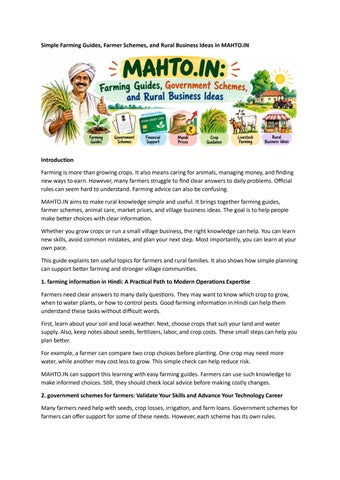
Simple Farming Guides, Farmer Schemes, and Rural Business Ideas in MAHTO.IN
Introduction Farming is more than growing crops. It also means caring for animals, managing money, and finding new ways to earn. However, many farmers struggle to find clear answers to daily problems. Official rules can seem hard to understand. Farming advice can also be confusing. MAHTO.IN aims to make rural knowledge simple and useful. It brings together farming guides, farmer schemes, animal care, market prices, and village business ideas. The goal is to help people make better choices with clear information. Whether you grow crops or run a small village business, the right knowledge can help. You can learn new skills, avoid common mistakes, and plan your next step. Most importantly, you can learn at your own pace. This guide explains ten useful topics for farmers and rural families. It also shows how simple planning can support better farming and stronger village communities. 1. farming information in Hindi: A Practical Path to Modern Operations Expertise Farmers need clear answers to many daily questions. They may want to know which crop to grow, when to water plants, or how to control pests. Good farming information in Hindi can help them understand these tasks without difficult words. First, learn about your soil and local weather. Next, choose crops that suit your land and water supply. Also, keep notes about seeds, fertilizers, labor, and crop costs. These small steps can help you plan better. For example, a farmer can compare two crop choices before planting. One crop may need more water, while another may cost less to grow. This simple check can help reduce risk. MAHTO.IN can support this learning with easy farming guides. Farmers can use such knowledge to make informed choices. Still, they should check local advice before making costly changes. 2. government schemes for farmers: Validate Your Skills and Advance Your Technology Career Many farmers need help with seeds, crop losses, irrigation, and farm loans. Government schemes for farmers can offer support for some of these needs. However, each scheme has its own rules.
Farmers should first check who can apply. Then, they should learn about the benefits, documents, and application steps. Common documents may include an Aadhaar card, bank details, land records, and other papers. The exact list depends on the scheme. Some useful schemes cover income support, crop insurance, soil testing, and farm credit. State governments may also offer extra help. So, farmers should check official notices before applying. Never pay an unknown person who promises guaranteed approval. Keep your application details safe. Also, check the status of your application when needed. MAHTO.IN can help readers learn about these schemes in simple language. This can make it easier to understand the rules before taking action. 3. PM Kisan eKYC: A Complete Learning Roadmap for Beginners and Professionals PM-Kisan provides eligible farmer families with income support under its rules. PM Kisan eKYC is an identity check linked to the scheme. Farmers should complete this step when required. First, visit the official PM-Kisan service or an approved service center. Follow the current instructions for identity checks. Online authentication may use an Aadhaar-linked mobile number. Some farmers may need help from an authorized center. Next, check your beneficiary details and payment status. Make sure your name and bank details are correct. If you find a mistake, follow the official correction process. Do not share your one-time password with strangers. Avoid agents who promise instant payments for a fee. Also, remember that completing eKYC does not guarantee payment if other rules remain unmet. MAHTO.IN can explain common steps and errors in simple terms. This helps farmers understand what to check before seeking further help. 4. Kisan Credit Card: Master the Core Concepts, Practices, and Tools Farmers often need money before harvest. They may need to buy seeds, feed animals, pay workers, or purchase farm supplies. The Kisan Credit Card scheme can provide eligible farmers with access to farm credit. A farmer should first ask a participating bank about eligibility. The bank can explain the credit limit, interest rules, repayment terms, and required documents. These details may differ by case and current policy. Before taking a loan, prepare a simple budget. List the money you need and the income you expect. Then, check whether your expected earnings can cover repayment. For example, a farmer growing vegetables may need money for seeds and irrigation. A planned loan may help cover these costs. However, poor weather or low prices can affect income. Borrow only what you can manage. Read every loan term before signing. MAHTO.IN can help readers learn the basics of farm credit and plan better questions for their bank. 5. how to check mandi prices: Understanding the Evolution of Modern IT Operations
Mandi prices help farmers understand what buyers may pay for their crops. Learning how to check mandi prices can support better selling decisions. However, prices can change by market, crop quality, and demand. First, identify the crop and the nearby markets that trade it. Then, check recent prices through official market services or trusted local sources. Compare the same crop and grade across markets. Next, consider transport costs, loading charges, and other fees. A distant market may show a higher price but leave less money after expenses. So, compare the final amount you may receive. For example, a farmer selling onions can compare prices at two nearby mandis. The farmer should also ask about demand and quality rules. Never rely on one price alone. Check the date and market name before making a decision. MAHTO.IN can help readers understand market information and plan their next steps with care. 6. how to grow paddy: Essential Technologies for Smarter and Automated Operations Paddy is a major crop in many parts of India. Learning how to grow paddy starts with choosing suitable seeds and preparing the soil. Farmers should select a variety that fits local weather, water supply, and growing time. First, test the soil if possible. Prepare the field and manage weeds before planting. Farmers can grow seedlings in a nursery or use direct seeding when suitable. The best method depends on local conditions. Next, manage water with care. Paddy needs water at key growth stages, but fields do not always need deep water. Follow local farm advice for irrigation and drainage. Watch plants for pests and signs of disease. Use approved treatments only when needed. Also, apply fertilizers based on soil needs and crop guidance. Before harvest, check grain maturity. Dry and store the crop well to reduce losses. MAHTO.IN can help beginners learn each stage through clear farming guides. 7. how to start goat farming: Building Expertise in Continuous Delivery and Engineering Excellence Goat farming can provide income through the sale of animals, milk, or manure. However, success needs good planning and daily care. Learning how to start goat farming begins with studying local demand and available resources. First, choose a suitable breed with help from a local animal expert. Build a dry, clean shelter with enough space and fresh air. Protect goats from heavy rain, extreme heat, and cold winds. Next, plan their food and clean drinking water. Goats need balanced feed and safe grazing areas. Their needs change with age, health, and pregnancy. Arrange health checks and vaccinations with a veterinarian. Keep sick animals apart when needed. Also, record births, feed costs, treatment costs, and sales. Start with a herd size you can manage. Expand only when your care system and budget can support more animals. MAHTO.IN can help new farmers learn about shelter, feeding, health, and farm costs. 8. village business ideas: Developing Skills for Intelligent and Automated IT Operations
Villages offer many ways to earn beyond crop farming. Useful village business ideas include dairy work, poultry, food processing, tailoring, repair services, and small shops. The best choice depends on local needs and available skills. First, look for a problem people face often. For example, a village may need a nearby tool repair service. Another village may need better access to fresh milk or farm supplies. Next, study your costs and possible customers. List the money needed for tools, stock, rent, travel, and daily work. Ask local people what they would buy before spending much money. You can also start small from home when rules allow. Keep clear records of sales and expenses. Use honest prices and treat customers well. Do not assume every business will make a profit. Check local demand and risks first. MAHTO.IN can help rural readers explore business options and learn basic planning skills before starting. 9. how to start organic farming: Your Roadmap to Scalable Machine Learning Operations Organic farming focuses on natural methods and careful soil care. Learning how to start organic farming begins with understanding your land. Farmers can improve soil health through compost, crop rotation, and suitable green manure. First, test your soil and learn which crops grow well locally. Next, plan how to manage weeds, insects, and plant diseases. Use healthy seeds and keep tools clean. Compost can return useful nutrients to the soil. Crop rotation can also help break some pest cycles. However, organic farming still needs close attention and good planning. Avoid changing your whole farm at once. Try a small plot first and compare the results. Record costs, crop quality, labor, and harvest amounts. Also, learn the rules before selling produce as certified organic. Certification and labeling rules may apply. MAHTO.IN can help readers explore organic methods and understand the steps involved in a careful change. 10. livestock farming information: Strengthening Modern Data Management and Delivery Skills Animals can support rural families through milk, eggs, meat, manure, and other products. Good livestock farming information helps owners care for animals and manage costs. It also helps them spot health problems early. Start by choosing animals that suit your land, budget, and local market. Provide clean water, safe shelter, and suitable feed. Keep feeding areas clean and remove waste often. Next, work with a veterinarian to plan vaccines and routine health checks. Watch for changes in eating, movement, breathing, or milk output. Seek expert help when an animal looks sick. Keep a record of feed costs, treatment costs, births, and sales. These notes help you see which animals need extra care. They can also show whether your farm earns enough money. Do not buy animals without checking their health and history. Plan for feed and medical costs before expanding. MAHTO.IN can help readers learn about dairy, poultry, goat care, and other livestock topics. Frequently Asked Questions About MAHTO.IN
1. What is MAHTO.IN? MAHTO.IN is a rural knowledge platform for farmers, families, and village communities. It aims to make farming, government schemes, animal care, and rural business topics easier to understand. 2. Can I find farming information in Hindi? Yes, the platform focuses on simple rural knowledge for Hindi-speaking readers. Useful topics include crop care, soil health, irrigation, pest control, and farm planning. 3. Where can farmers learn about government schemes? Farmers can use clear guides to understand scheme rules and application steps. They should also check official government notices before applying. 4. What is PM Kisan eKYC? PM Kisan eKYC is an identity check linked to the PM-Kisan scheme. Farmers should follow the current official process and check their beneficiary details. 5. How does the Kisan Credit Card help farmers? It can provide eligible farmers with access to credit for farming needs. Applicants should check interest rates, repayment rules, and other terms with their bank. 6. How can I check mandi prices? Check recent prices through official market services or trusted local sources. Compare the crop, grade, market, date, and transport costs before selling. 7. How can beginners learn to grow paddy? Start with suitable seeds, soil preparation, water management, and pest control. Ask local agriculture experts which methods fit your area. 8. Is goat farming a good village business? It may suit some families, but success depends on costs and demand. Plan for shelter, feed, animal health, and sales before buying goats. 9. What are some useful village business ideas? Options include dairy farming, poultry, food processing, tailoring, repair services, and local shops. Choose an idea that meets local needs and fits your budget. 10. How can MAHTO.IN help rural communities? It aims to make useful knowledge easier to access. Readers can explore farming guides, animal care, market information, and business planning tips. Final Thoughts Good knowledge can help farmers make better choices. It can also help rural families find new ways to earn. Small steps, careful planning, and regular learning can make a real difference. Farmers should check facts before spending money or changing their methods. They should also seek help from trusted experts when needed. No single method works for every village or farm.
MAHTO.IN can support this process by making rural topics easier to understand. Its focus on farming, schemes, livestock, market prices, and village businesses can help readers explore useful ideas.