
Why does your vote matter? VOTE
As someone who has spent time in prison, you understand better than most how much the justice system needs to change. You also have the power to drive that change.
Your vote is your chance to support leaders who will fight for better treatment, policies that are fairer, and true reform. By voting, you help elect leaders who work to lower the number of people in prison, stop unfair sentences, and fix the bigger problems that cause mass incarceration.
ELIGIBLE VOTERS
~30,000
ACTUAL VOTERS
52
That’s less than 0.2% participation. The Reality of Voting in Pennsylvania County Jails in 2020
Give power to your voice through your vote.
Can I register and vote?
Who can vote in Pennsylvania:
At least 18 years old at the time of the election
A United States citizen for at least one month before the election
A Pennsylvania resident for at least 30 days before the election
Once registered, you can vote if you:
Are detained pretrial: If you are in a facility waiting for trial on felony or misdemeanor charges, you can still register and vote— as long as you are not currently serving a sentence for a felony.
Are incarcerated for misdemeanor conviction: If you are serving a sentence for a misdemeanor, whether you are inside or outside of jail, you can still register and vote, unless the misdemeanor broke the Pennsylvania Election Code.
Have prior felony convictions: If you get released or will get released before the next election, you can register and vote. You only need to wait if you are still serving time for a felony conviction.
Are on probation or parole: If you are on probation or parole, including living in halfway houses, you can register and vote.
Are under house arrest: No matter your conviction, if you are under house arrest, you can register and vote.
Who Can’t Register To Vote?
If you are currently serving a felony sentence and won’t get released until after the next election, you can’t vote.
If you were convicted of breaking Pennsylvania’s Election Code in the last four years, you are not eligible.
Living in a Halfway House or Alternative Facility?
If you are living in a halfway house or other facility (like a work release program), whether you can vote depends on whether you’ve been released:
If you are on probation or parole, you can register and vote.
Just remember: You can’t use a halfway house or correctional facility as your permanent address when registering. But you can use it as the address where you’ll receive your mail-in ballot. If you don’t have a permanent address, you can use your last permanent address or provide an intersection.
Quick Quiz: True or False
CIRCLE THE CORRECT ANSWER.
Only people who are not in prison can vote.
T F
If you are on probation, you can still vote.
T F
You must vote in person at your polling place.
T F
You can vote if you have completed your felony sentence.
T F
You can use a halfway house as your residence address to register.
T F
Answers key on page 26.
Where do I register to vote?
If you are in a correctional facility, you can register to vote using one of these addresses:
The last address where you registered to vote before confinement
Your last known address before confinement
A new address you plan to live at when released
Important Note: You can’t use your correctional facility or halfway house address for voter registration, but you can use it to receive your mail-in ballot!
Find the following words in the puzzle. Words are hidden and .
REGISTER
EMPOWER
REPRESENTATION
VOICE
DEMOCRACY
VOTE
IMPACT
BALLOT
POLL
ELECTION
ABSENTEE
CHOICE
FREEDOM
EQUALITY
Answers key on page 26.
How Do You Register to Vote?
If you are eligible to vote, here are the ways to get registered:
Mail: You can get a voter registration form by contacting your county board of elections.
Phone: Call 1-887-VOTESPA (1887-868-3772) to request that a registration form be mailed to you.
Need help? Reach out to your counselor or unit manager for information about how to access a registration form. You have the right to receive one, so please contact the Prison Society if they deny it to you.
How Do You Vote?
If you are in a correctional facility, you can vote by absentee or mail-in ballot.
If you are not confined, you can vote in person at your polling place or by mail-in ballot. If you meet the requirements, you can also vote by absentee ballot.
You have the right to make your voice heard— no matter where you are.
My Personalized Voting Plan
I am eligible to vote because (circle all that apply):
I am a pretrial detainee I have served my felony sentence
I am on probation I will get released before the election (If you are unsure about your eligibility, check with the local election office.)
I will register to vote by:
I will request a mail-in ballot by:
[insert date you plan to register]
[insert date]
! In Pennsylvania, you need to apply for your mail-in ballot no later than the mail-in ballot deadline.
My mailing address for voting purposes is:
[insert the address you will use to receive your mail-in ballot]
I will return my mail-in ballot by:
[insert date you plan to mail your completed ballot]
! We recommend mailing your ballot at least two weeks before it is due in case there are mail delivery delays.
I need to contact someone for help with registration or voting:
[insert name of someone you can contact, like a loved one or a legal aid organization]
! They can assist with paperwork or help you check on deadlines.
BALLOT BOX
About the Pennsylvania Prison Society
The Pennsylvania Prison Society was founded in 1787 by this country’s founding fathers, Benjamin Franklin and Benjamin Rush. Our mission is to protect your health, safety, and dignity while you’re inside. We are the only group in the Commonwealth with the legal permission to visit any jail or prison. That means we understand what life behind bars is like and how difficult it is to stay connected to the outside world. That’s why we’ve put together this voter guide to help you understand the power of your vote and to help you make a voting plan.
Why does your vote matter? Because the people elected to office make decisions that affect your life—everything from conditions in prison to laws about sentencing and justice.
Every election counts. This November, don’t miss your chance to speak out and exercise your right to vote.
Supporting People in Prison and Families


Our Family Support Groups are free, virtual spaces where people with loved ones in prison can come together to share their experiences and support each other. The groups are led by trained facilitators to make sure everyone feels safe and supported.
Join from anywhere in Pennsylvania:
www.prisonsociety.org/services/familysupport-groups
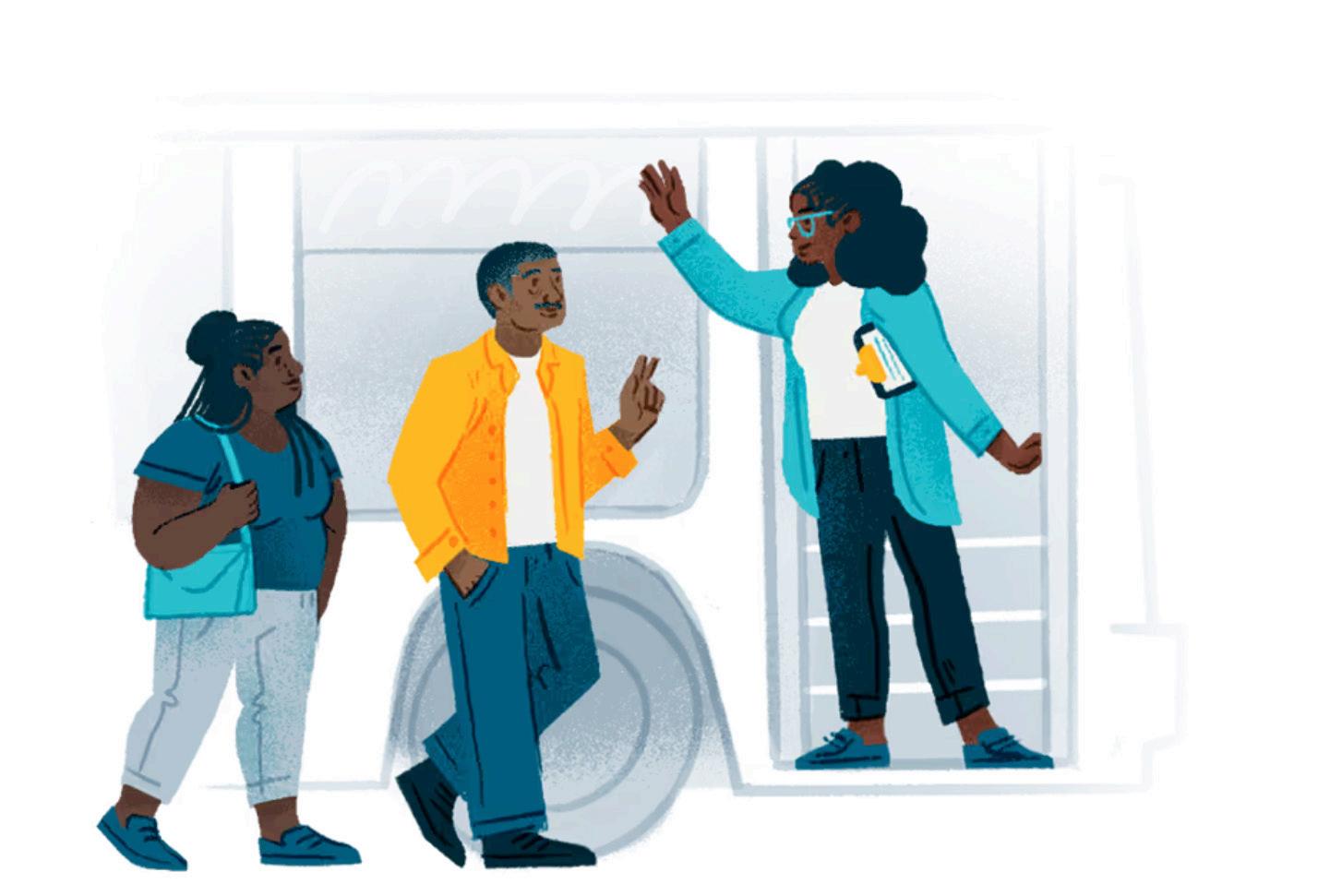
We’re Here to Help You Get There. Visiting your loved ones can make a world of difference. For years, our bus service has provided affordable and reliable transportation to make those visits easier.
Guaranteed visiting slots on the day of your trip— no need to book separately.
Check routes and buy tickets here:
www.prisonsociety.org/services/ transportation
Answer Key (Page 12)
False
True
False
True
False
Answer Key (Page 15)
PENNSYLVANIA SUPREME COURT
What do they do?
The Supreme Court of Pennsylvania is the commonwealth’s highest court, serving as the court of last resort for legal matters and holding ultimate administrative authority over the entire state courtsystem. Its purpose is to interpret state laws and the Pennsylvania Constitution.
How do they impact the carceral community?
The Pennsylvania Supreme Court has a significant impact on the state’s prisons and jailsf because it decides how laws and the constitution are used in the areas of sentencing, juvenile justice, and the rights of the accused. The court’s decisions can lead to broad changes that affect the number of people in prison, the length of their sentences, and the overall fairness of the justice system.
● Ending Some Mandatory Minimum Sentences:
The court has made important decisions on reducingmandatory minimum sentencing laws. For example, a 2015 court case decision found the state’s Drug-Free School Zones Act unconstitutional, which played a key role in reducing the prison population. These decisions give judges more freedom, to consider each person’s situation instead of following harsh rulest have contributed to mass incarceration.
● Juvenile Sentencing: The court has significantly restricted the use of life-without-parole sentences for juveniles. In2017, a court ruled that prosecutors need to prove that a child cannot be improved before deciding to give them a life-without-parole sentence