PRINCETON DAY SCHOOL SUMMER 2026

CREATIVITY IN PROGRESS
The work behind the work, in eleven parts PAGE 12

PRINCETON DAY SCHOOL SUMMER 2026
The work behind the work, in eleven parts PAGE 12
A roller coaster that didn't work. A squash app that does. This issue is about everything in between.

Summer 2026
Volume 63, No. 2
DIRECTOR OF MARKETING & COMMUNICATIONS
Deanna Harkel P’38
EDITOR
Ashley Stenger P’38
ART DIRECTOR
Kelly Koching
DESIGNERS
Em-Dash
Sarah Oskay
ILLUSTRATOR
Keith Alexander Lee
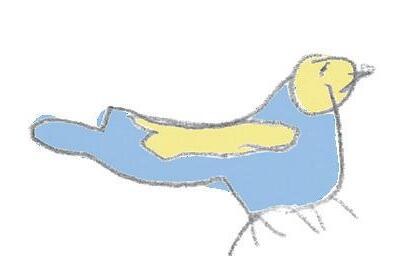
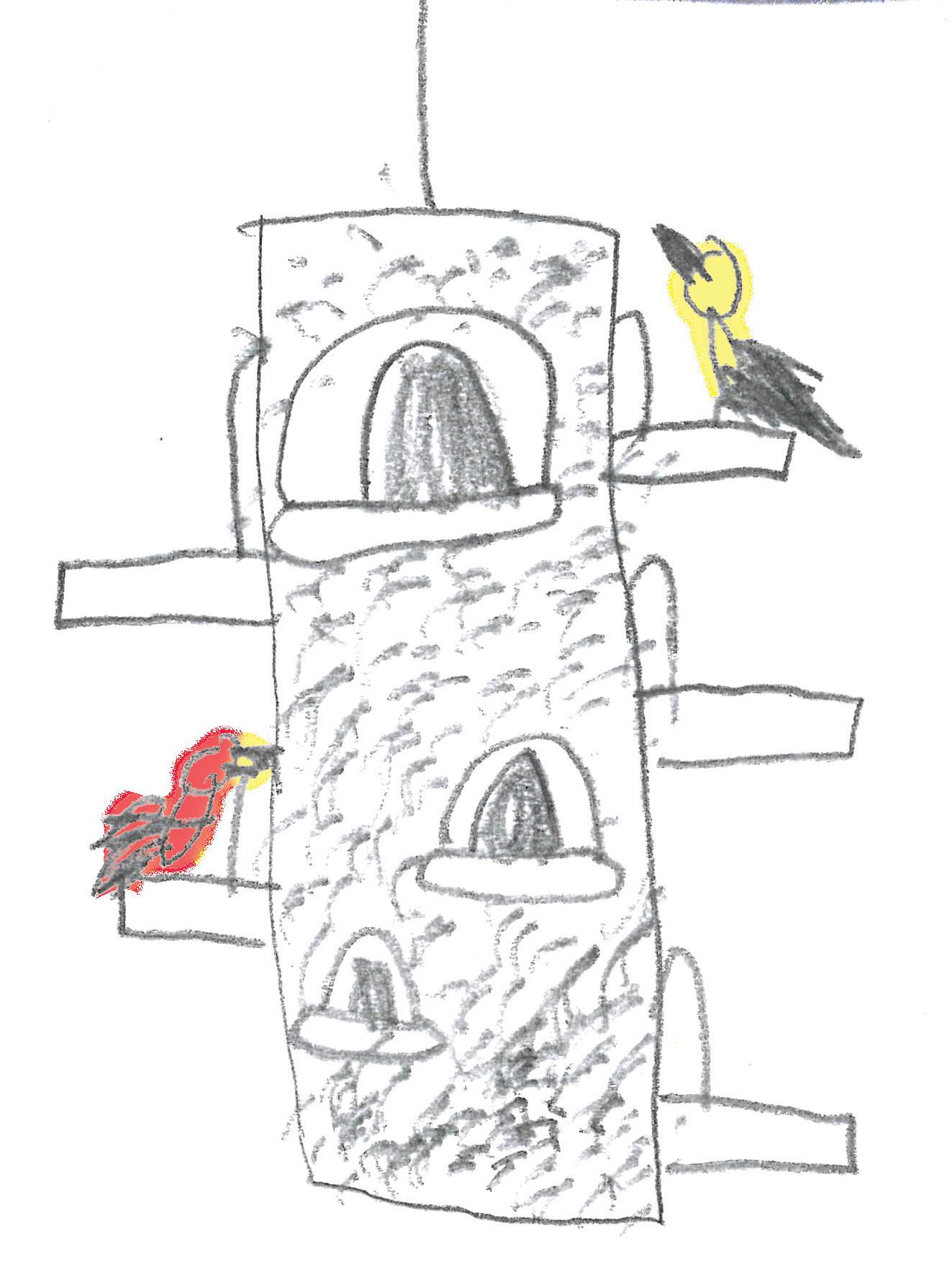
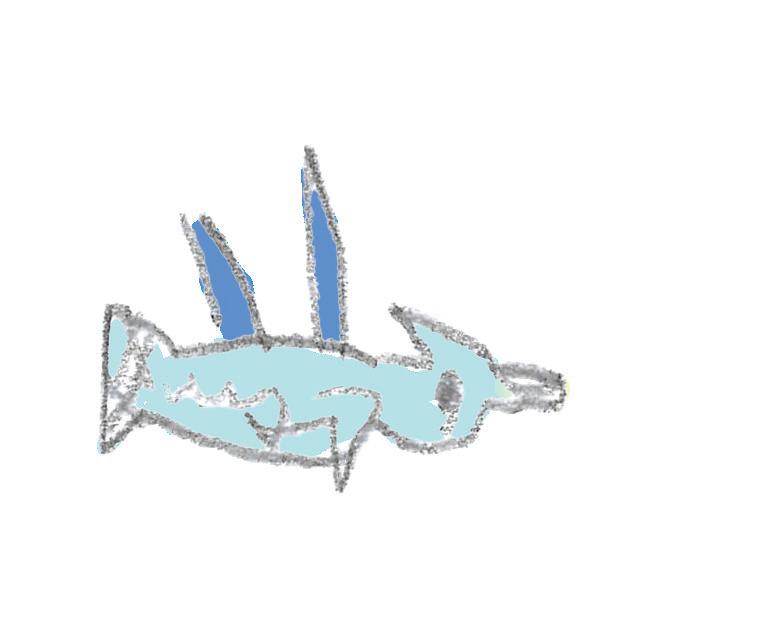
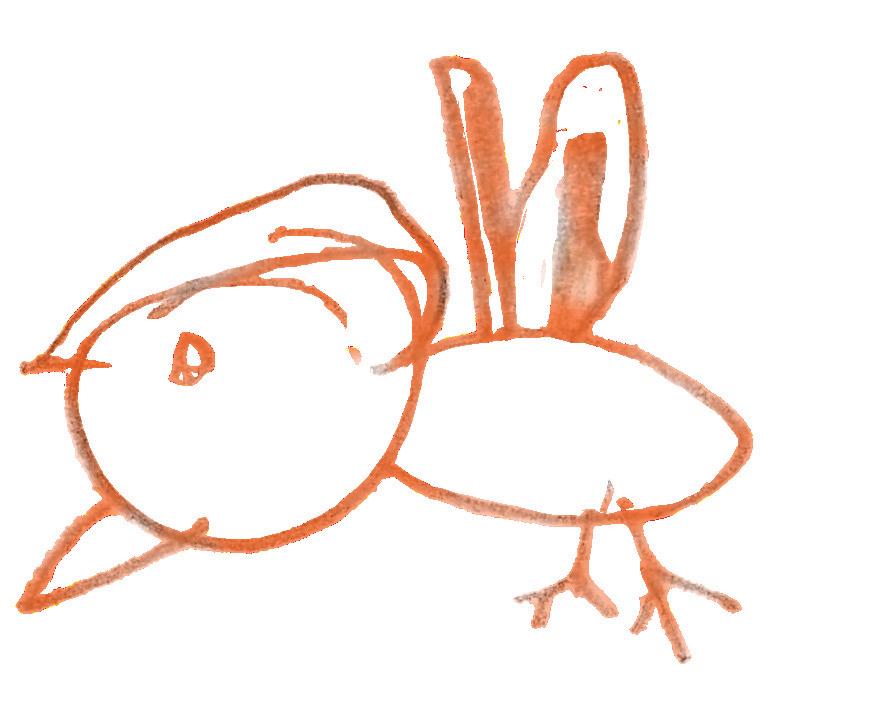
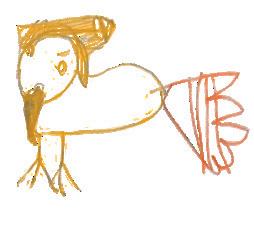
With special thanks to our first-grade Project Feather artists from the Class of 2037: Eleanor Balazsi, Trip Hatcher, Benny Harlan, James Lee, Isabella Liang, Kayli Livingston, Nyala Eliana Perry, Owen Zhang
CONTRIBUTORS
Jana Brown
Lori Ferguson
Sophie Shulman
Linda Maxwell Stefanelli MFS’62
Stella Zawistowski
PHOTOGRAPHERS
Alex Ewing ’29
Kelly Koching
Andrew Lee P’37 ’39
Matt Pilsner
Lauren Stavros
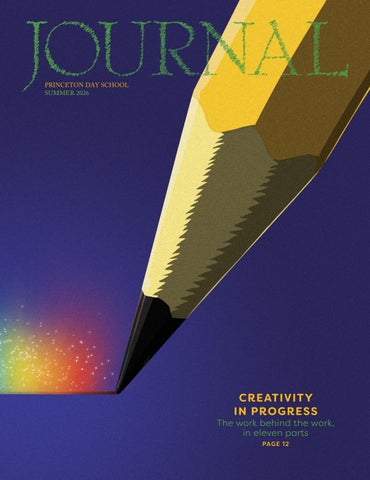
About the Cover: Artist Keith Alexander Lee illustrates the moment a tangled idea begins to take shape. Meet the students — and the faculty who guide them — in the middle of their own creative thinking on page 12.
pds.org/journal
The Journal is published twice annually by the PDS Office of Marketing and Communications. Email editor@pds.org with comments, questions, or ideas for future stories. Comments are subject to editing for clarity and length.
Dear Princeton Day School Community,
Before I was an educator, I was a scientist. For a long time, I thought creativity was a gift that belonged to others. It took me years to realize that the laboratory was one of the most creative spaces I had ever been.
The colleagues I admired most were the ones who designed better experiments when the first attempt failed. The ones who kept asking, “How could I think about this differently?” The ones who could connect and apply ideas from disciplines outside their own.
I see that same kind of thinking in our students and educators every day: a willingness to stay with a problem, revise, and keep going when the answer is not yet clear. This is creativity in its truest form and one of the most important habits of mind a school can cultivate. I hope these pages offer a glimpse of what that work looks like at PDS.
Warmly,
Head of School
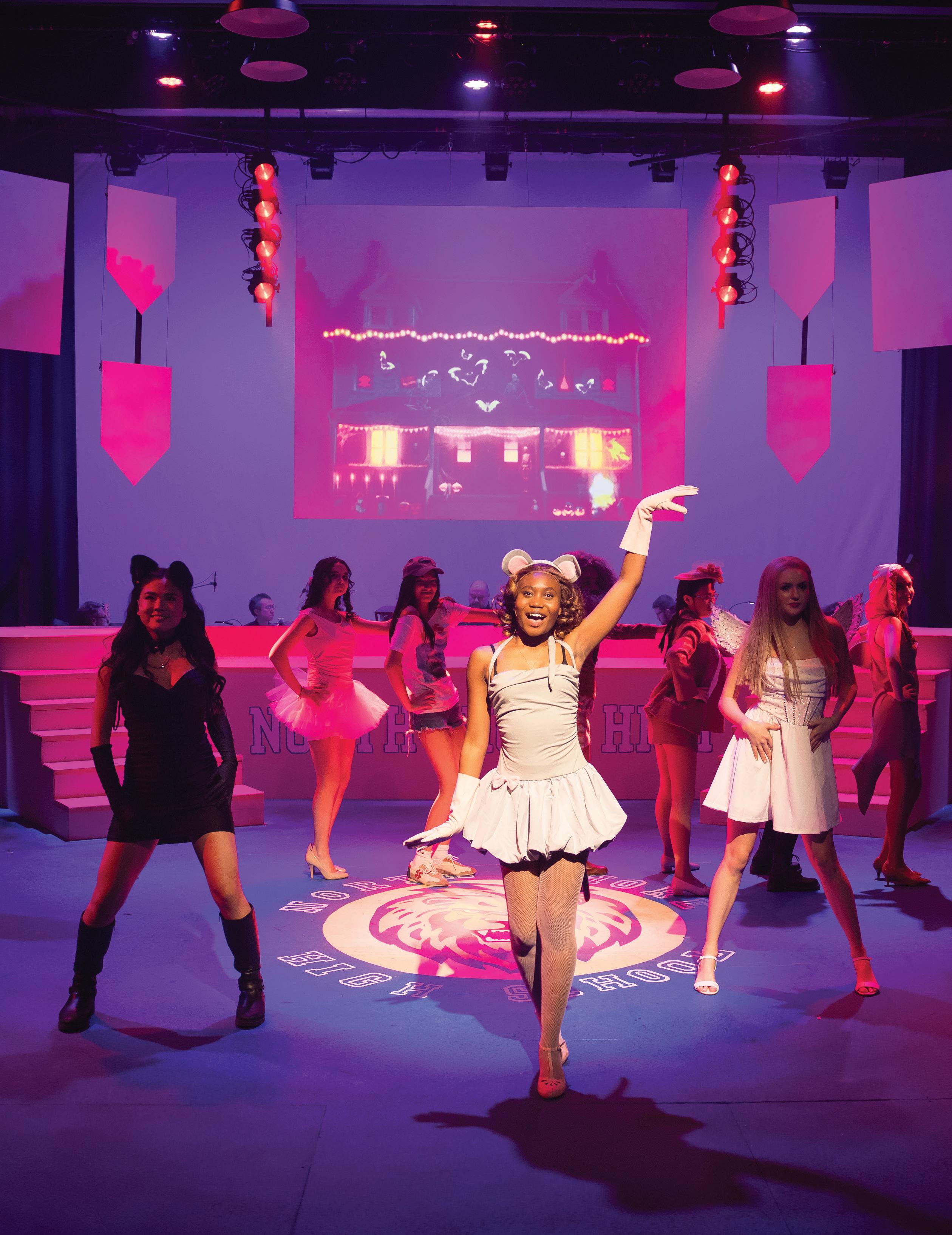
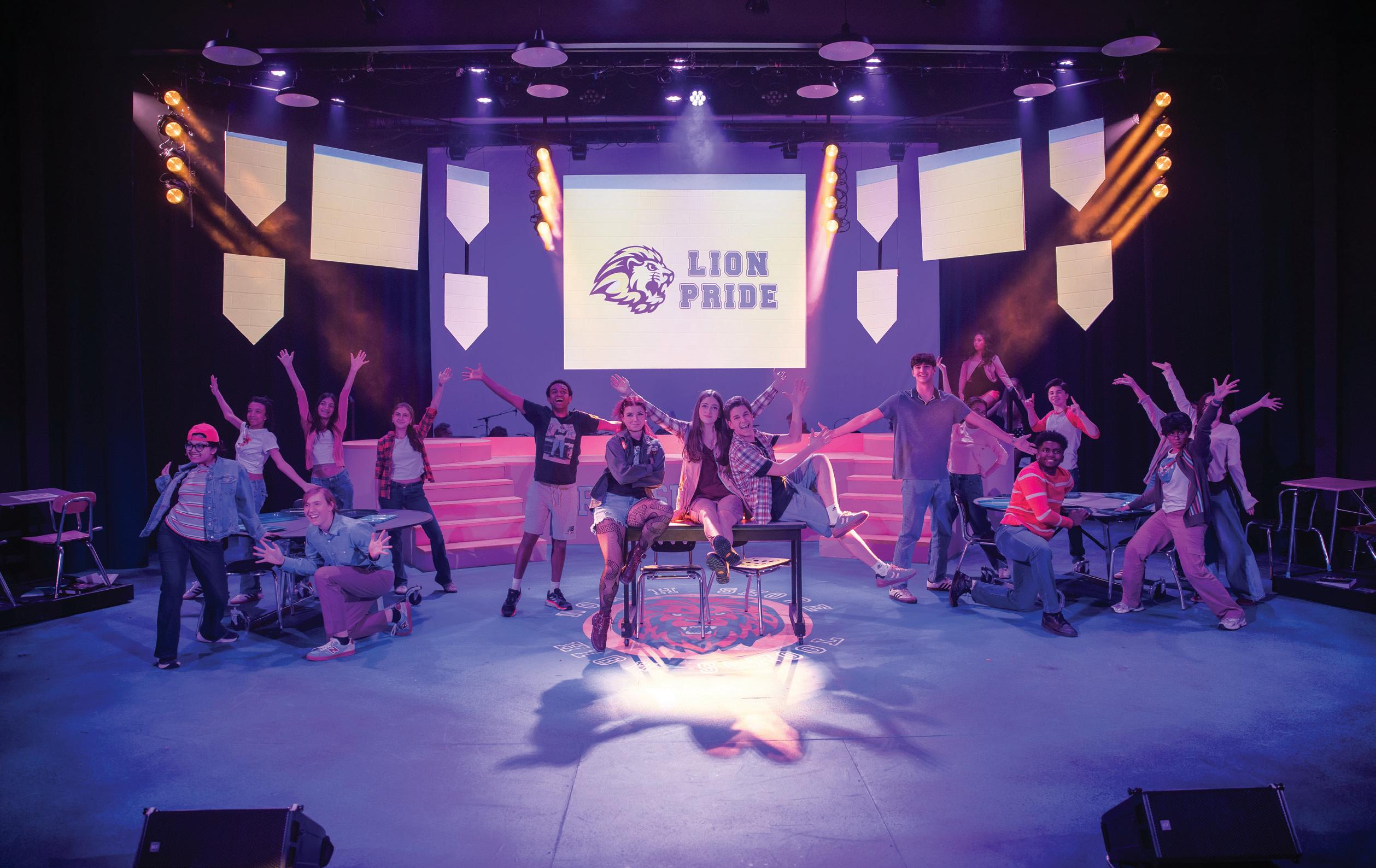
The Upper School’s winter production of Mean Girls opened to sold-out audiences despite losing two critical tech days to a major snowstorm. In fact, paint was still drying when the first audience walked in.
“We spent an enormous amount of time honing gags,” Director Stan Cahill says. “Somehow it all came together.” He credits the cast and crew’s ensemble spirit — and a projection-heavy design that, as a bonus, meant less to build. So fetch.
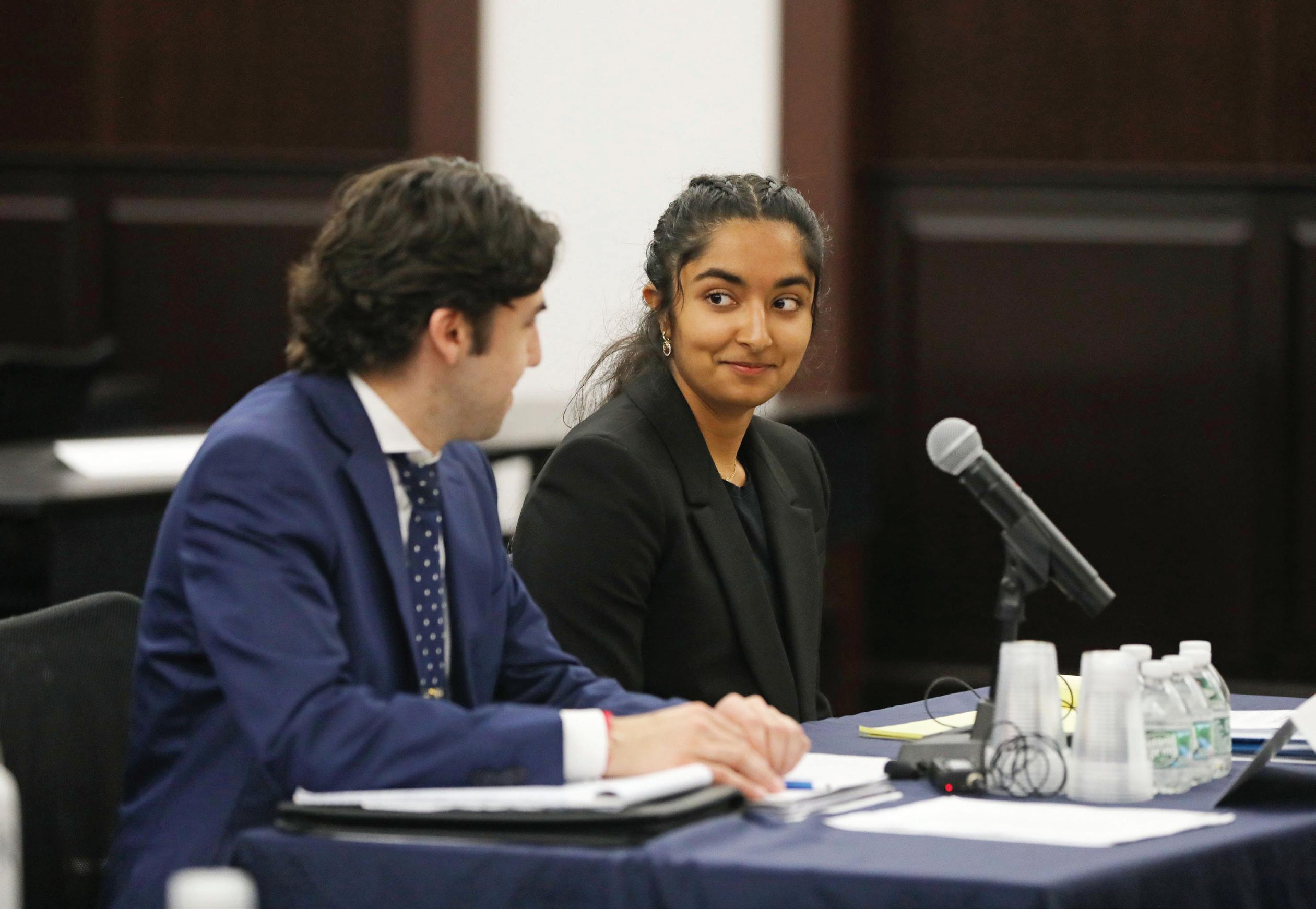
On March 25, PDS defeated Mendham High School to become the 2026 New Jersey State Mock Trial Champions, arguing before New Jersey Supreme Court Chief Justice Stuart Rabner and Hon. Marilyn C. Clark. The victory marks the team’s second state championship in three years, following its 2023 title, in a competition that drew 214 teams and more than 3,000 students from across the state. The team prepared throughout the fall and winter under four volunteer attorney coaches — Scott Rosenberg ’04, Mike Flicker P’04, Lisa Warren ’71 P’13, and
Kathy Flicker P’04 — crafting direct and cross-examinations, as well as opening and closing arguments. They also spent time drilling and polishing their delivery. Warren attributes the students’ success to their “dedication in both time and effort and, as always, in their relentless preparation.” Kathy Flicker sees a similar discipline. “I love teaching them about the law, and I love learning from them,” she says. “As is clear from their results, this team understands what is necessary to win.”
Senior attorney Simran Malik ’26,
who delivered the closing argument that clinched the title, has her sights on Nationals — but also reflects on what the past three years have given her. “While I am hopeful of winning the national title, the journey itself has been its own reward, equipping me with skills that extend far beyond the mock trial courtroom. It has taught me to think under pressure, communicate clearly, and lead with confidence.”
The team competes next at the National Mock Trial Championship in Des Moines, Iowa, May 7–10.
Does anyone actually have it all figured out?
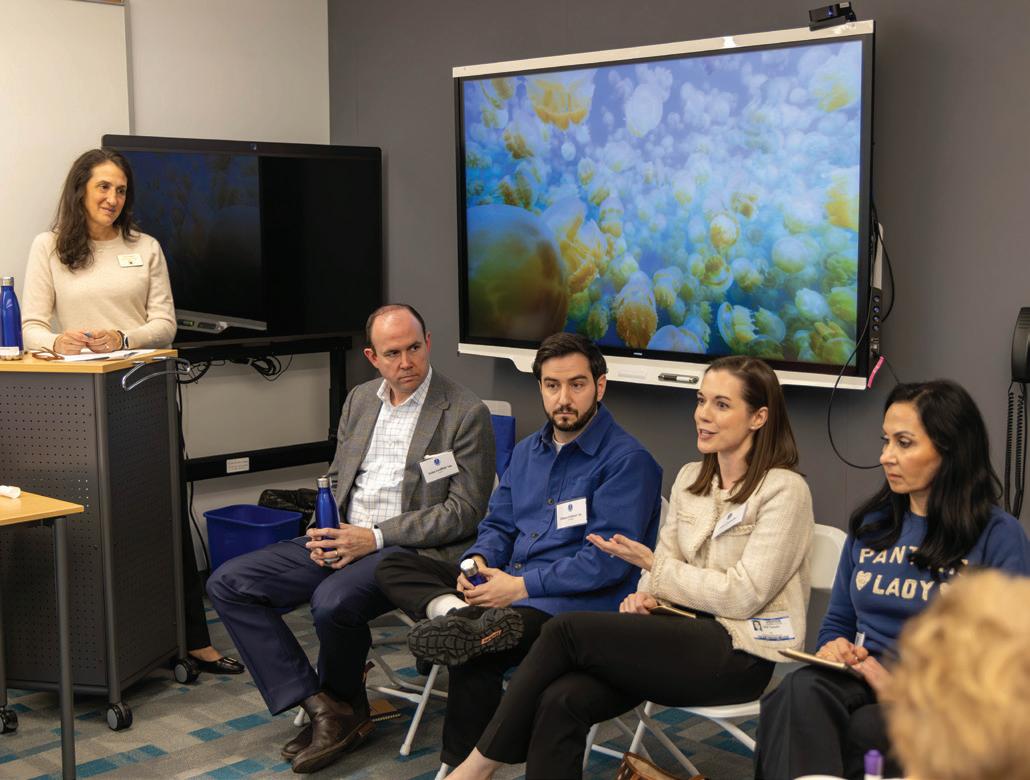
That question, more than anything else, was what PDS seniors really wanted to know during The Great Road Ahead, the school’s inaugural career exploration day.
Organized by Stephanie Balazsi P’34 ’37, assistant to the Upper School, and Amy Gallo ’03 P’32 ’35, director of alumni engagement and strategy, The Great Road Ahead was a fresh take on a standard career day — no slides, pitches, or formulas for landing the “right” internship. It was designed around the questions students actually had, most of them about uncertainty and what to do when things go wrong.
“We could have retrofitted any career day model,” says Gallo, “but we really wanted it to feel like Princeton Day School’s career day.”
“It served every purpose I could have hoped for,” says Balazsi. “The students were so present — notebooks and pens, no cellphones or laptops. The panelists built off each other, the students leaned in, and the energy stayed high for the entire day.”
Panels brought together PDS alumni and current parents from a mix of fields, and sessions were small, student-led, and moderated by a member of the PDS Leadership Team.
“I noticed a recurring theme throughout so many conversations about pivots,” says Head of School Kelley Nicholson-Flynn P’26. “Highly successful people who had been unemployed. Firstgeneration students who carried enormous pressure. Women in technical fields who spent years fighting assumptions. The common thread was a willingness to keep learning, to connect with other human beings, and to believe you have something to offer.”
With her daughter graduating from PDS this spring, NicholsonFlynn is keenly aware of how important the opportunity was. “There’s a whole community of adults out there who want to lift our students up,” she says. “Watching these seniors lean into that opportunity and make real, meaningful connections was special to see unfold.”
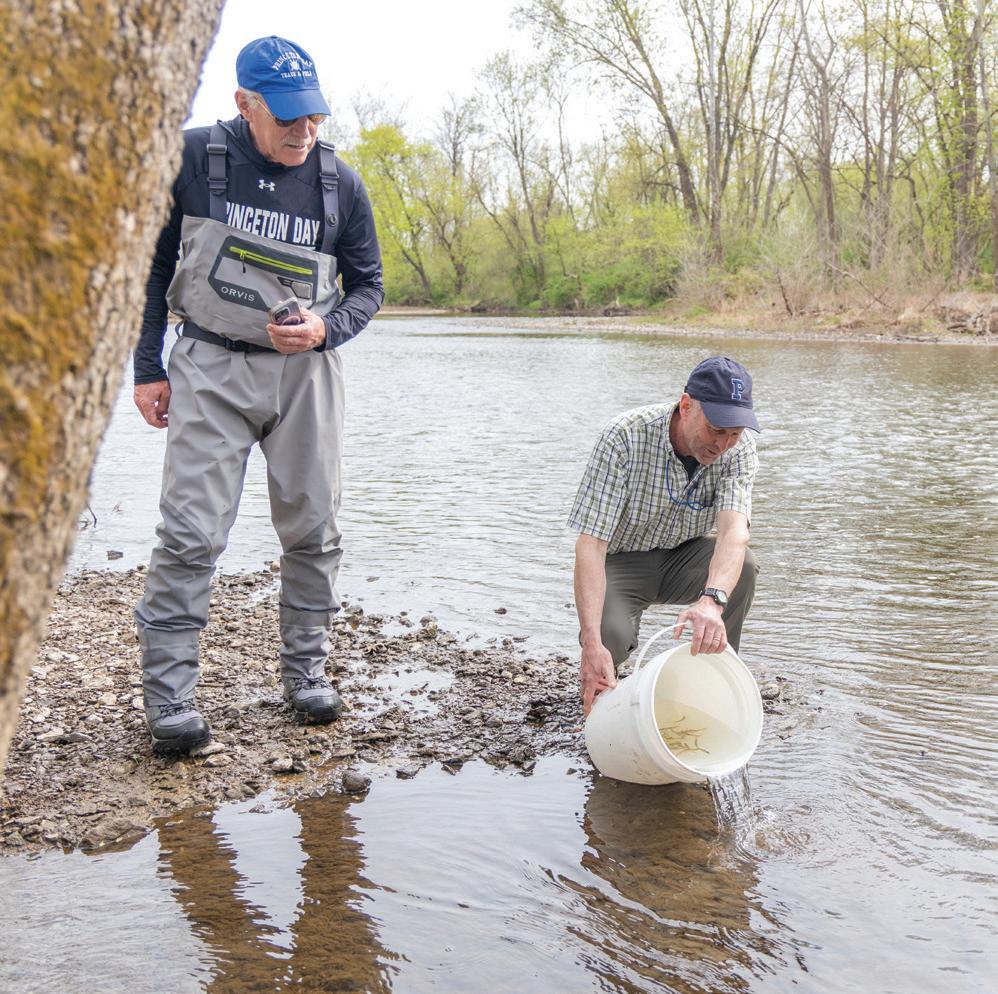
When we last wrote about the trout in Aaron Schomburg P’16 ’18’s science classroom, the eggs had just arrived, and a 55-gallon aquarium was sitting empty at the front of the room. Months later, the trout had grown, and in mid-April, they were released into the Raritan River.
Between arrival and release, third and fourth graders tracked the transition from egg to fry to fingerling. They cared for the fish daily and even wrote “day in the life” narratives exploring the trout’s imagined emotions. By the time release day arrived, students marked the moment with farewell letters and shared memories.
“When you see something develop slowly over time, it changes the way you pay attention. These students really care about the fish,” Schomburg says.
He hopes the project will eventually span all three divisions. For now, the tank continues to hum at the front of the Lower School classroom, ready for the next class of trout to arrive.
“When you see something develop slowly over time, it changes the way you pay attention.”
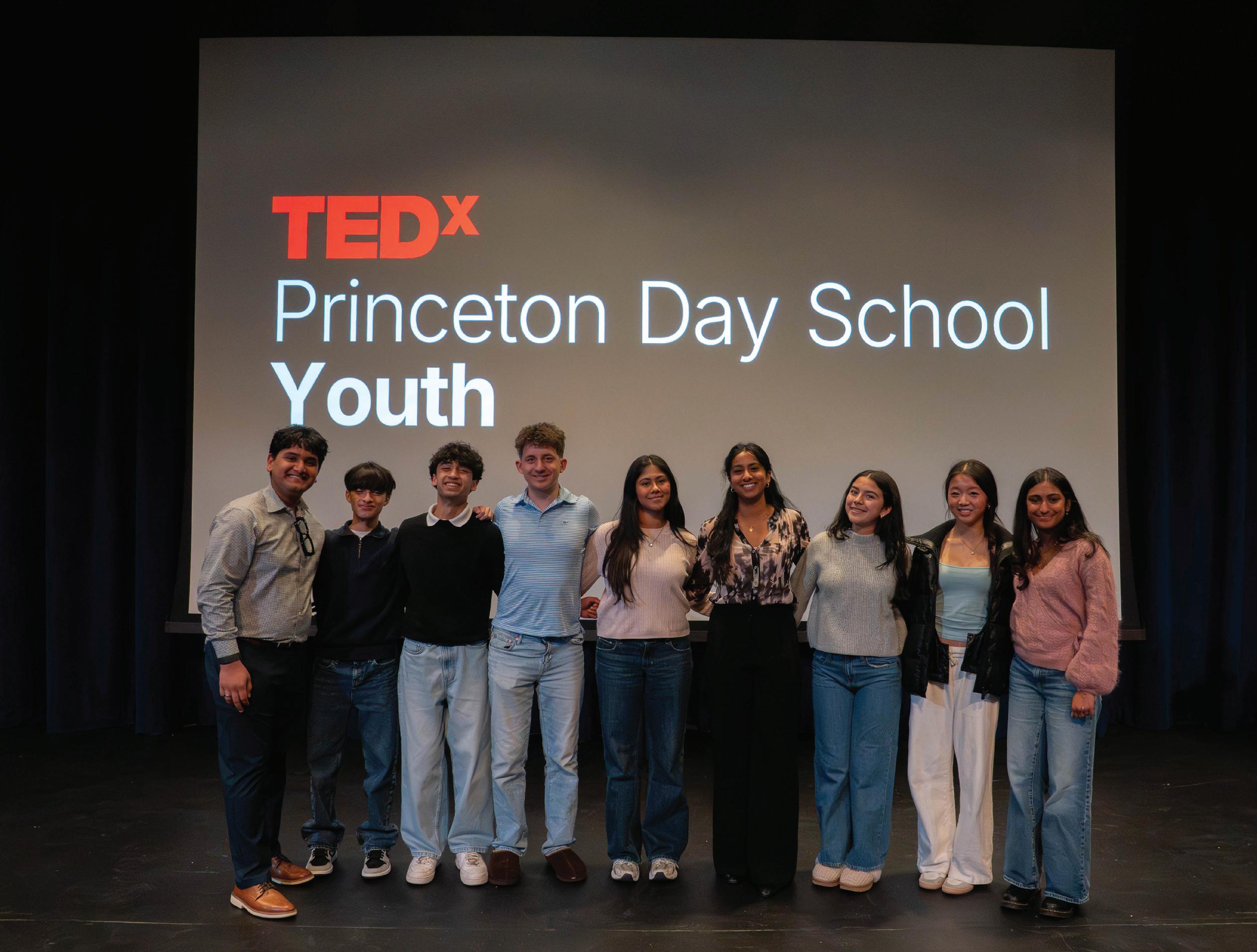
Students Launch PDS’ First Tedx Youth Event
When Amber Pancholi ’26 and Prisha Tiwari ’27 decided to bring TEDx to Princeton Day School, there wasn’t a template or an existing club to follow — just a licensing application, a faculty partnership with Creative Content & Social Media Manager Lauren Stavros and Middle School Performing Arts
Teacher Jonathan Martin, and a belief that the school had more untapped voices than people realized.
They assembled a student planning team, opened speaker applications, and built an eight-part framework to guide each student from idea to finished talk. The process pushed speakers to anchor their arguments in a single core idea,
ground them in personal experience, and support them with research and examples. Rehearsals followed, with each of the participants offering feedback. Tiwari managed much of the planning remotely, having spent the semester at the School of Ethics and Global Leadership in Washington, DC.
TEDxYouth@Princeton Day School held its inaugural event on April 21 in the McAneny Theater with six student speakers. Talks ranged from cultural appropriation in fashion to the cost of selfcensorship to the overlooked advantages of curiosity across disciplines. The theme, ‘Becoming the Future,’ asked speakers to consider how their ideas connect to the
role young people play in shaping the world around them.
For Pancholi, the event was about something larger than a single afternoon.
“Oftentimes, we don’t have as many opportunities because we’re told, ‘You’re still young, you don’t really understand,’ and when you think of TED Talks, you don’t think of high school kids. But young people have opinions, we have voices, and we have potential. So I thought this would be a really good opportunity to get young people on a stage and share, because we are the ones stepping into bigger roles in society soon.”
As part of a new humanities unit, eighth graders examined Princeton’s Witherspoon-Jackson neighborhood and its role in the town’s civil rights history.
Developed by Middle School Humanities teacher Jared Leveson ’18 and CMDT Chair Victor Cirilo P’31, the project asked students to investigate Princeton’s history of racial segregation and consider how their understanding of home might change as they uncovered more of the town’s lived history. At the center of the work was a guiding question: How did the fight for civil rights shape the community?
In partnership with the Princeton Historical Society, students were introduced to the Princeton Plan, a 1948 desegregation policy that reassigned students by grade level rather than by neighborhood to integrate the town’s schools. They then took part in the Historical Society’s Albert E. Hinds Memorial Walking Tour: African American Life in Princeton, using the neighborhood itself as a lens on the policies, people, and lived experiences they had been studying.
“The civil rights movement was not a
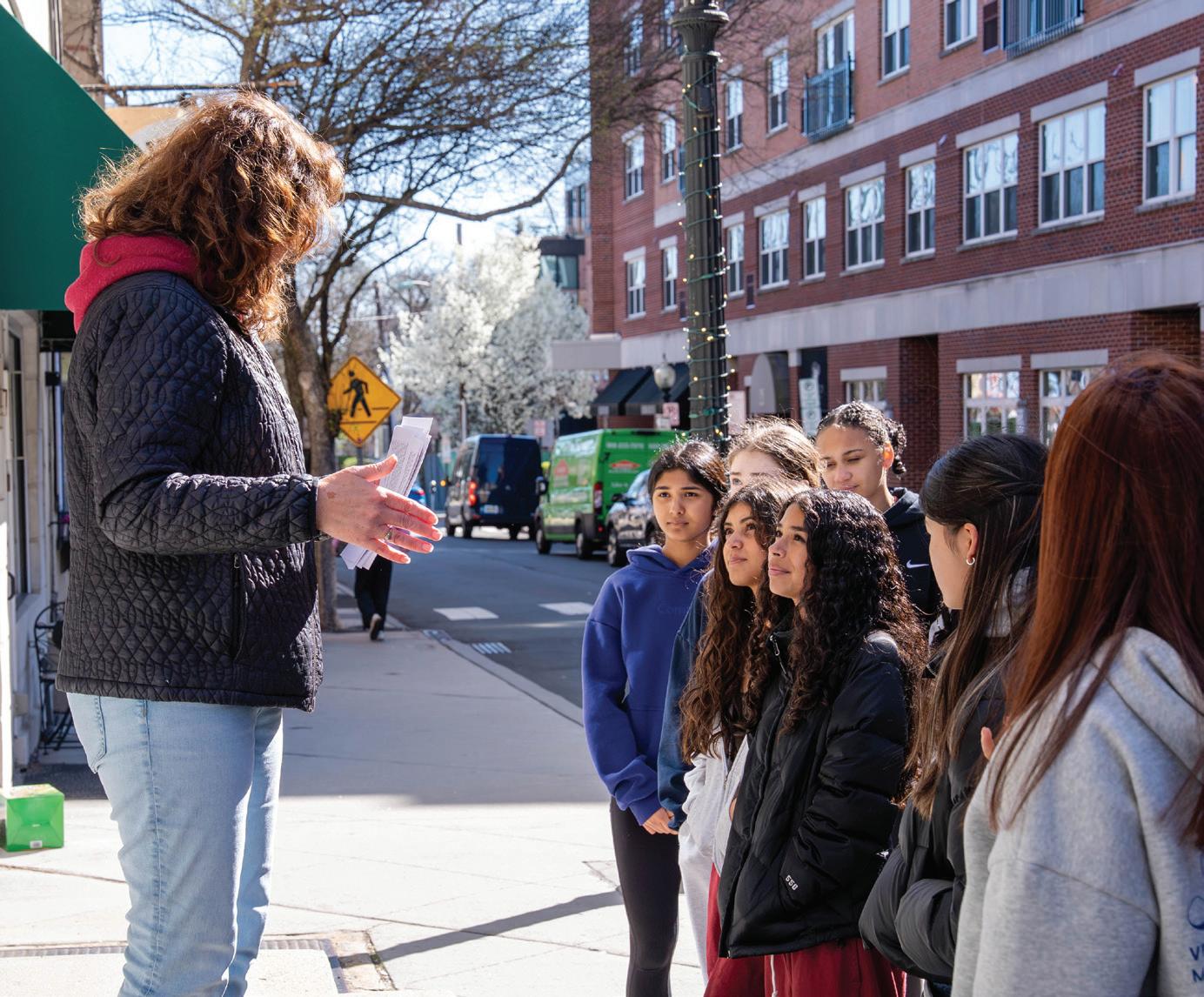
southern phenomenon,” Leveson says. “I can’t isolate my students from the reality of our history.”
Students translated that learning into a three-part narrative arc: what they used to think, what they think now, and how they will carry that forward.
“I now stroll the streets with two versions of myself,” Yuveer Chugh ’30 wrote in a reflection, “one that can appreciate the beauty, and one that acknowledges the exclusion that shaped the stones beneath the ground I am walking on.”
Elliot Williams ’94 appeared on a screen in Shepherd Commons this winter to talk with AP U.S. Government students about the Constitution, legal analysis, and how a career takes shape over time. Williams, a CNN legal analyst and former federal prosecutor, recently published Five Bullets, a nonfiction account of the 1984 NYC subway shooting and subsequent trial of Bernie Goetz. “Students found the book fascinating because it exposed them to a moment in national history that they had not previously learned about or considered,” says Upper School History Department Chair Tom Brinkerhoff. Brinkerhoff worked closely with history teacher Rob Kuchar, who assigned the reading prior to the interview. “Elliot’s writing represented an opportunity for students to more deeply understand legal analysis and the history of race in our nation,” Brinkerhoff says. Williams used the conversation to connect Five Bullets to the concepts of civil liberties and the judicial system that students are actively studying in class. Then he offered some honest career advice: his path was anything but linear, and they shouldn’t expect theirs to be either. He pointed to Sheryl Sandberg’s idea that careers are more like jungle gyms than ladders — shaped by movement, risk, and unexpected turns.
Coming from a PDS alumnus, the message carried a different kind of weight. “He represented a post-PDS world where lessons about society, law, journalism, and politics were not theoretical, but part of a distinguished career,” Brinkerhoff says. “He serves as an example of learning in practice.”

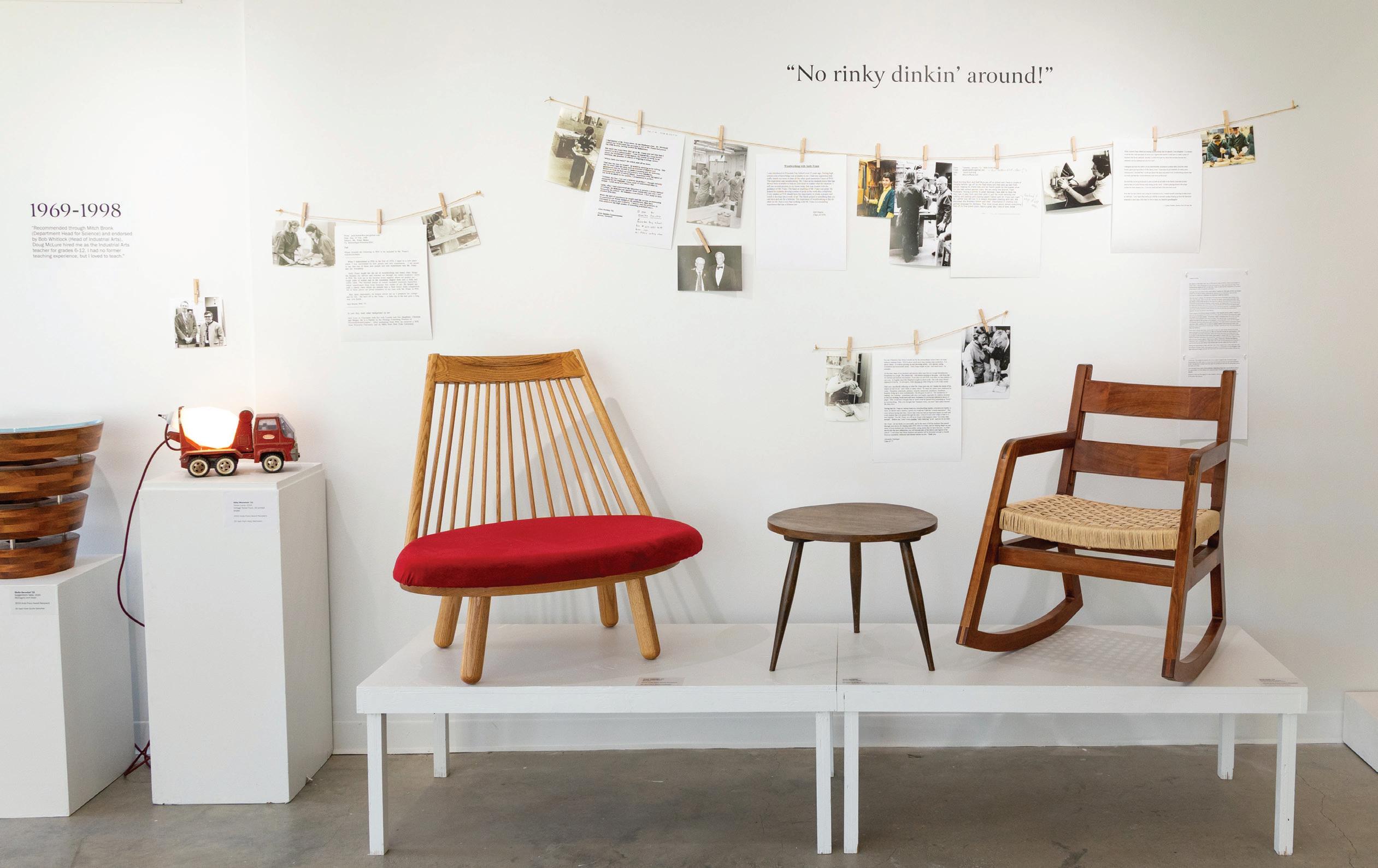
Honoring the Life and Legacy of Woodworking Teacher Andy Franz
A former PDS student flew in from Switzerland for the opening. Parents brought award-winning furniture pieces back to campus. The Nakashima Studio lent work; the Franz family contributed photographs. On April 2, the Anne Reid ’72 Gallery became a gathering point for generations of people shaped by one teacher.
Andy Franz P’83 ’86 ’91 (1935–2024) was born in Bačka Palanka, then part of Yugoslavia, to an ethnic German family. In 1944, he and his family were forced from their home and interned in the Jarek work camp; he survived four years of hunger and typhoid there before escaping on foot to Austria with his mother in 1948. At 15, Franz began apprenticing as a cabinetmaker to help support his family. By 1956, he had reached Ellis Island with twelve dollars and a cardboard suitcase; two years later, he found work as a master craftsman at Nakashima Studios in New Hope, Pennsylvania.
Franz joined PDS in 1969 as an Industrial Arts teacher and taught for 29 years. The woodshop bears his name, as does the school’s annual award for excellence in furniture design. Until his death, Franz attended the ceremony each year, meeting the winner and shaking the hand of every recognized student.
Co-curated by arts faculty Christopher Maher and Gwen Shockey ’06 with support from Director of Alumni Engagement and Strategy Amy Gallo ’03 P’32 ’35, the exhibition features Franz’s own words, furniture, and dozens of tributes from former students.
Shockey sees Franz as part of a standard the arts department has always reached for. “He treated his students seriously, expected a lot of them, and had a long career as a working artist himself,” she says. That’s the model she inherited as a student at PDS, and the one she tries to carry forward in her own classroom.
WORDS BY SOPHIE SHULMAN
A crack appears in the shell. Then anoTher.
WiThin hours, a first grade classroom aT princeTon day school is filled with sofT chirping and a sudden wAve of curiosiTy. WhAt do birds like to eAt? hoW do they sTay wArm in winTer? Why are their beaks shaped thaT wAy?
What began years ago as a classroom tradition has grown from a single lesson about chicks hatching into a year-long study that weaves together science, writing, music, engineering, and outdoor exploration.
In 2017, science teacher Carolee Van Dervort partnered with first grade teacher Emily Gallagher and garden teacher Pam Flory to expand the tradition into an interdisciplinary study of birds with a variety of lessons throughout the year. Around the same time, Van Dervort had been reading How We Learn by Benedict Carey, a book about brain research that introduced the idea of “keeping a tab open” — the idea that learning sticks when a topic resurfaces over time, rather than being confined to a short unit that begins and ends in a few weeks.
With that idea in mind, and with help from a summer stipend grant, the team built out the program now known as Project Feather.
“First graders are collectors,” says Gallagher. “They love facts. They love being experts, and this extended, multi-faceted study gives them the opportunity to become experts on birds.”
Over the course of the year, birds appear again and again across the curriculum. Students gather at open windows to observe bird feeders outside their classroom, listen to bird songs and explore pitch and rhythm in music, and use an app from the Cornell Lab of Ornithology to help identify species around campus. They experiment with how beak shapes relate to diet and habitat, and investigate which types of feeders attract different birds.
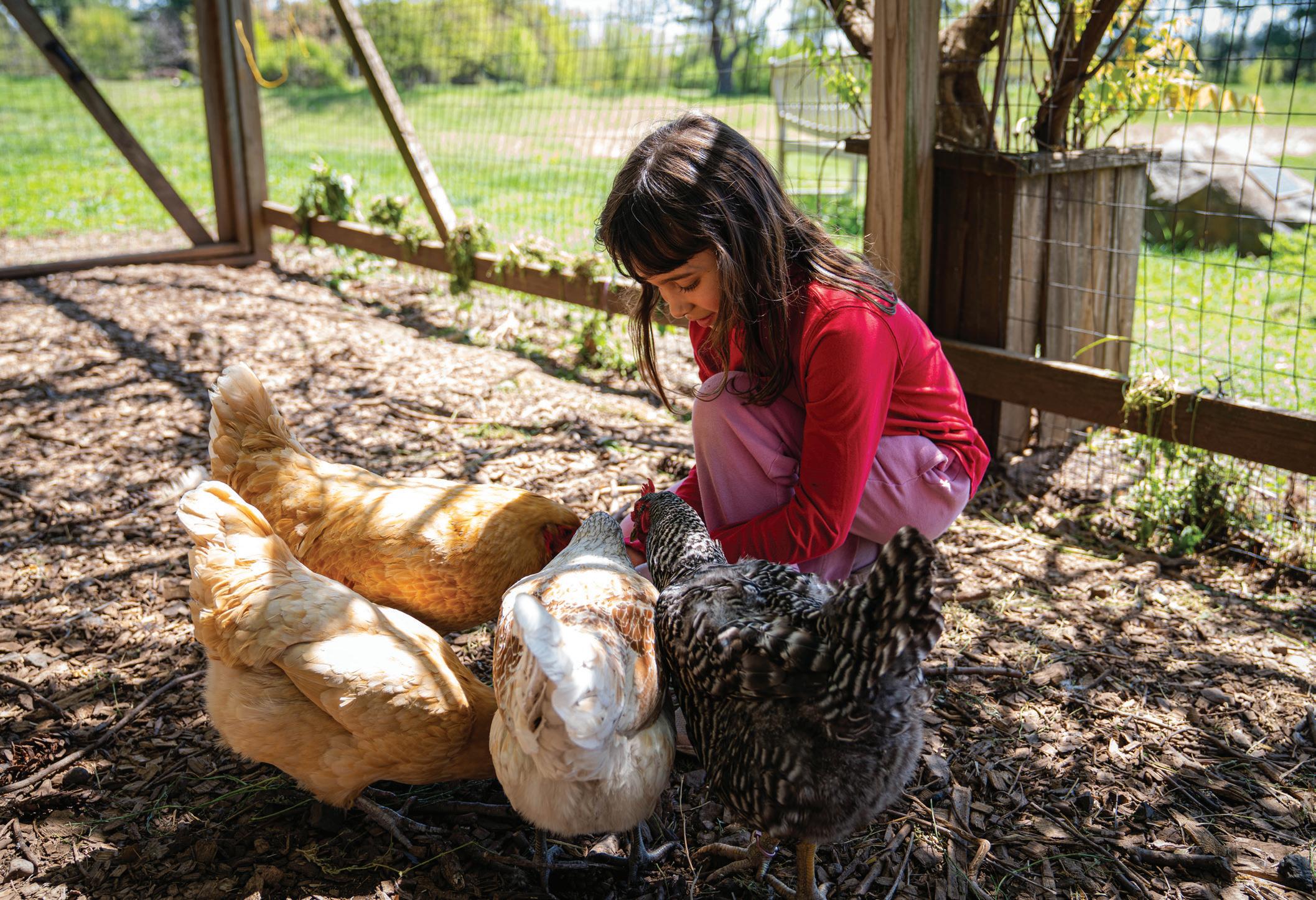
Before long, the learning spills beyond the classroom. Students start pointing to birds on the playground — a cardinal near the feeder, a chickadee in the branches above the pond. At lunch, debates emerge over whether a visitor is a sparrow or a finch, evidence that the learning has taken hold.
Then they start designing bird feeders. In STEAM, students begin by sketching their ideas based on what they’ve learned about different birds and their needs.
“For the prototypes, students work on creating plans for their feeders in science class,” says Lower School STEAM Coordinator Danielle Redd. “When they come to STEAM, they use those same plans to make their feeders. The students then work independently to create their prototypes using cardboard, popsicle sticks, strings, and other recycled materials.”
For the first time this year, the Upper
School 3D printing club helped bring their designs to life. The club’s leader, lifer Peter Longo ’28, had been reaching out across all three divisions, as well as the facilities team and kitchen staff, to see if anyone had projects that could benefit from 3D printing. The first grade team enthusiastically said yes.
“It was incredibly meaningful to be part of this project,” Longo says. “It reinforced the idea that innovation is most valuable when it serves others, and it is rewarding to see how our skills can positively affect younger students in our community.”
One feeder has already been printed and installed outside the first grade classroom, where students can watch birds interacting with their design. The collaboration with the Upper School club marks an early step in what teachers hope will become an ongoing partnership between divisions.
The year of bird discoveries culminates
“firsT graders are collectors,” sAys gallAgher. “They love fAcTs. They love being experTs, and this extended, mulTi-fAceted sTudy gives them the opporTuniTy to become experTs on birds.”
with a day-long adventure across the PDS campus. At the pond, students scour the ground for twigs, grasses, and leaves to build bird nests, much like birds do themselves.
“Our goal is to use our campus to the fullest,” says Gallagher.
For her, the project’s interdisciplinary nature makes it particularly powerful. “I love that they can learn about birds from different lenses,” she explains. “Each teacher brings a different dimension to it, from learning about bird song in music to moving like a penguin in gym class.”
The tab stays open. So do the windows.

The roller coaster never worked. For nearly a year, a group of middle schoolers set out to build something ambitious and failed. But at PDS, failure is sometimes the point. We tend to celebrate the finished version of things — the championship win, the published paper, the working model. Those outcomes matter. But they can also make everything that came before feel secondary, even though that in-between space is often where the most important learning happens. That’s what this feature is about. We’re calling it

a look at the exploratory thinking that takes shape before a final result. From a student who saw a housing debate unfolding in her own town and set out to propose a solution, to a Latin class that realized the best way to study an ancient text was to write the book on it, these stories suggest something simpler: the real achievement often takes shape long before the finish line.

from residents who felt its scale was incompatible with the surrounding neighborhood. More than 1,200 families, she would learn, were already on the waiting list for affordable housing in Princeton alone, many of them seeking low-to-moderate-income rental units.
“I was surprised to learn there was such a critical housing debate happening just steps from PDS,” Dickler says. “Once I learned more, I realized how complicated the issue really was.”
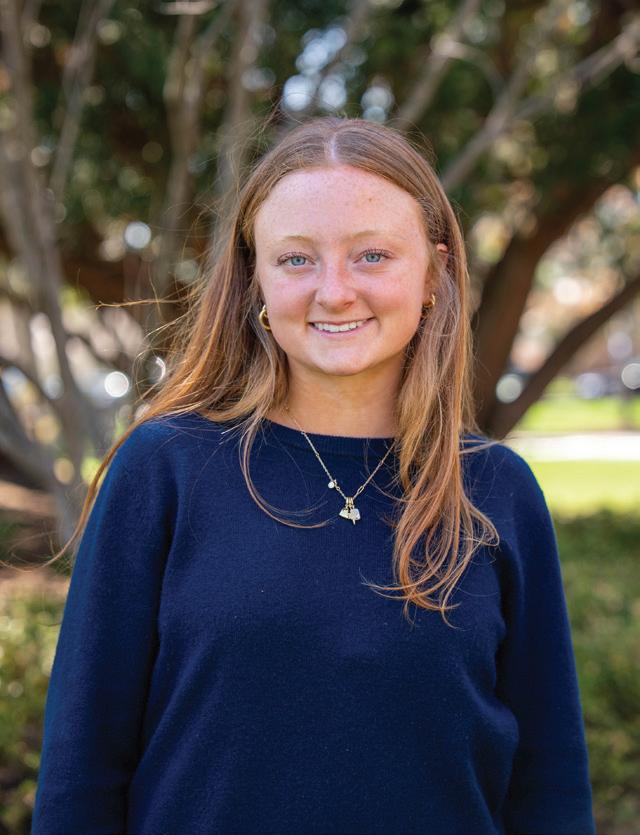
On a stretch of road between her house and Princeton Day School, Phoebe Dickler ’26 began noticing the signs.
They were hard to miss: bright orange placards planted in front lawns that read, “Defend Historic Princeton.” For months, she drove past them without understanding what they meant. What exactly was happening in her town, and why were so many people upset?
When she began researching, she discovered a debate centered on a proposed
housing development on Stockton Street, one of Princeton’s most historically significant corridors. The town was under pressure from the state to provide more than 300 affordable housing units. The proposed solution — a 238-unit, fourstory apartment complex on Princeton Theological Seminary’s former Tennent Roberts Campus — had ignited opposition
She reached out directly to the people at the center of it to learn more. Princeton Mayor Mark Freda explained the state’s mandate and the urgency behind it.
Caroline Cleaves, a local resident whose group had placed the orange signs, sent Dickler a brief on her work along with architectural renderings of the proposed development. Cleaves’ objection was about scale: the proposed complex would generate four times as many marketrate units as affordable ones. Both sides believed compromise was impossible. Dickler knew her own proposal likely
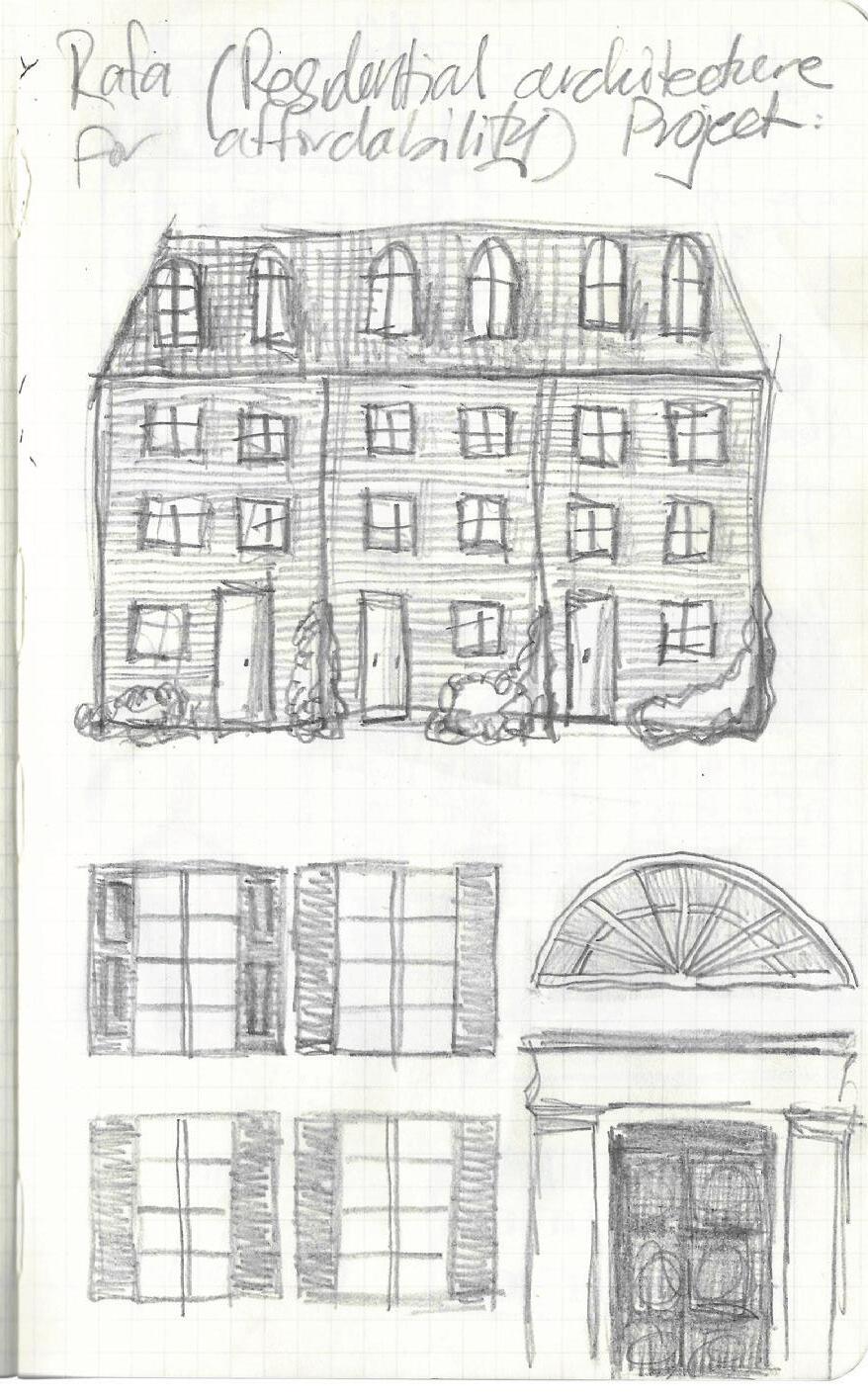
wouldn’t go beyond her desk. But she was learning the tools, cared about the question, and wanted to find out whether a compromise might actually exist. She named it RAFA — the Residential Architecture for Affordability initiative.
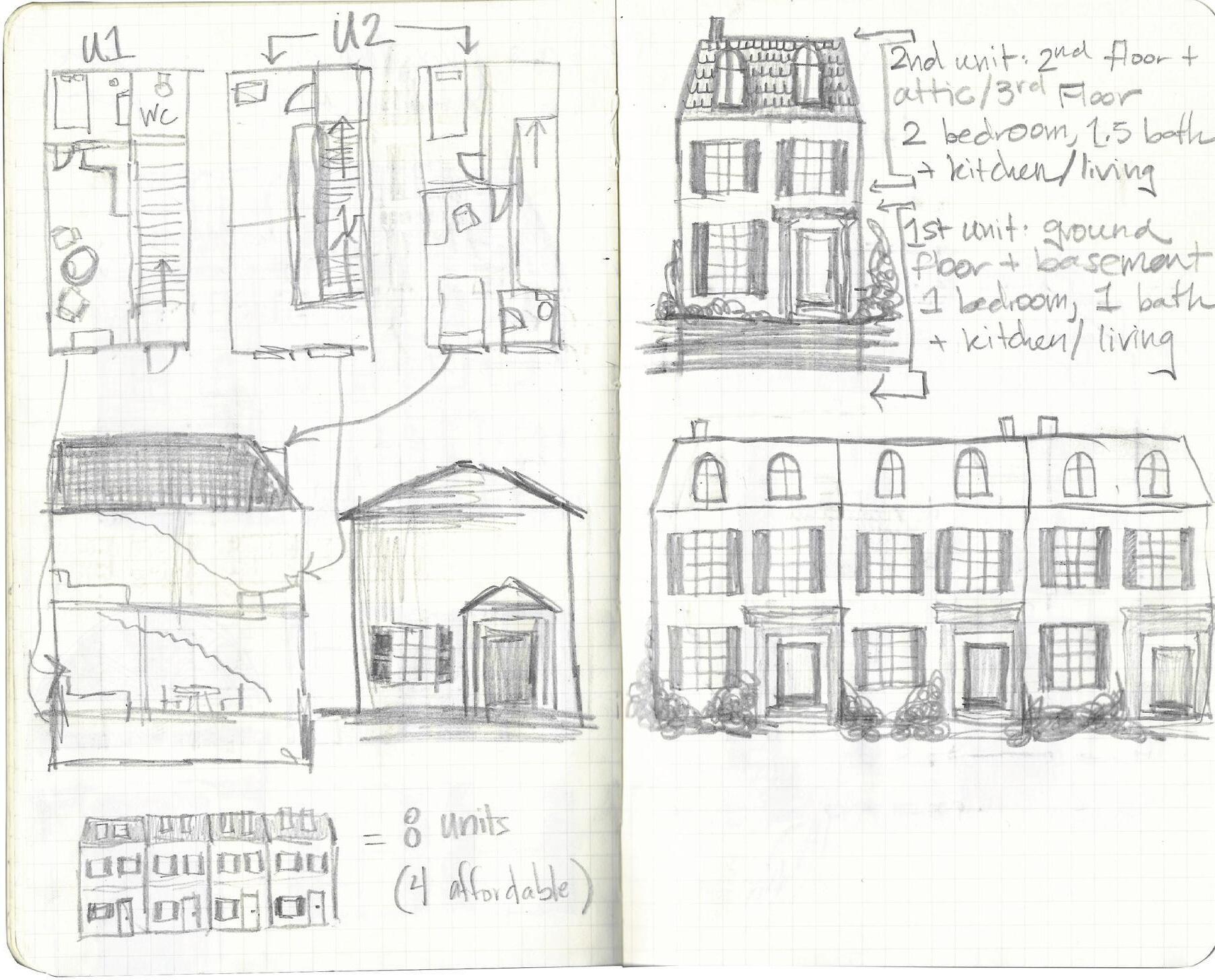
Drawing on the legacy of Charles Steadman, a 19th-century builder whose Greek Revival designs gave Princeton much of its historic character, Dickler drafted plans for 16 townhouses on roughly three acres between Stockton Street, Edgehill Street, and Hibben Road. From the street, her buildings would appear consistent with the neighborhood’s scale and rhythm. Behind the facade, each structure is designed as a duplex, increasing density without visibly altering the block’s character.
The idea took shape during her time as an architectural intern at a boutique firm in New York, where she spent her days reading about classical architecture. On the train, she sketched in her notebook. “I knew Steadman’s influence would resonate with the neighbors,” she says. “Architectural
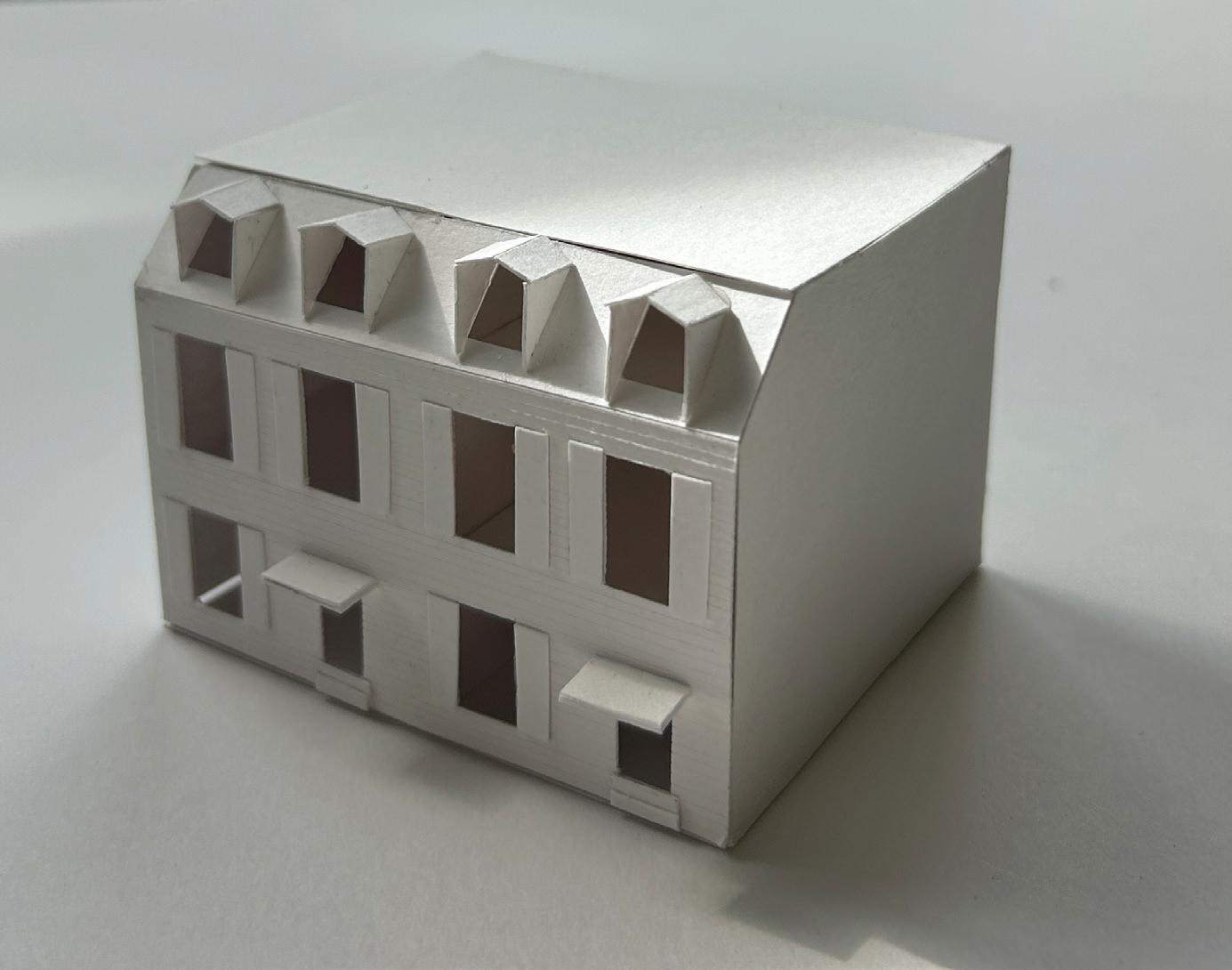
preservation is key to maintaining cultural character — but it also has to adapt to serve society’s greatest needs.”
Upper School architecture teacher Marc Robinson sees something essential in Dickler’s work. “Her whole position was asking, ‘Can we accomplish this density and affordability goal with a sensitivity to the context of the place?’ It’s a sophisticated question for anyone,” Robinson says. “Architecture is meant to be part of civic discourse — a conversation about equity, scale, sustainability, and density. Phoebe’s project engages with all of that.”
But Dickler found that building sustainably is expensive. Her project budget, which she constructed line by line, ranges from $15.8 to $17.3 million for the full townhouse development, or roughly $650,000 per unit. Those figures reflect deliberate material choices: insulated concrete walls for thermal efficiency, recycled steel framing, sheep’s wool insulation, solar panels and shingles, to name a few. Each choice was grounded in
environmental principles, but each one also pushed the per-square-foot cost higher. “In my initial stages of drafting, I was having so much fun designing with these materials in mind,” she says. “But when I would look at the budget, I saw how much those sustainable materials would actually cost. My goal was always accessibility and affordability, and the cost was becoming inaccessible.”
For now, the project exists as a detailed proposal — plans, elevations, and a lineitem budget — that she hopes will one day be built. This fall, she heads to MIT, where she’ll spend the next four years learning how.
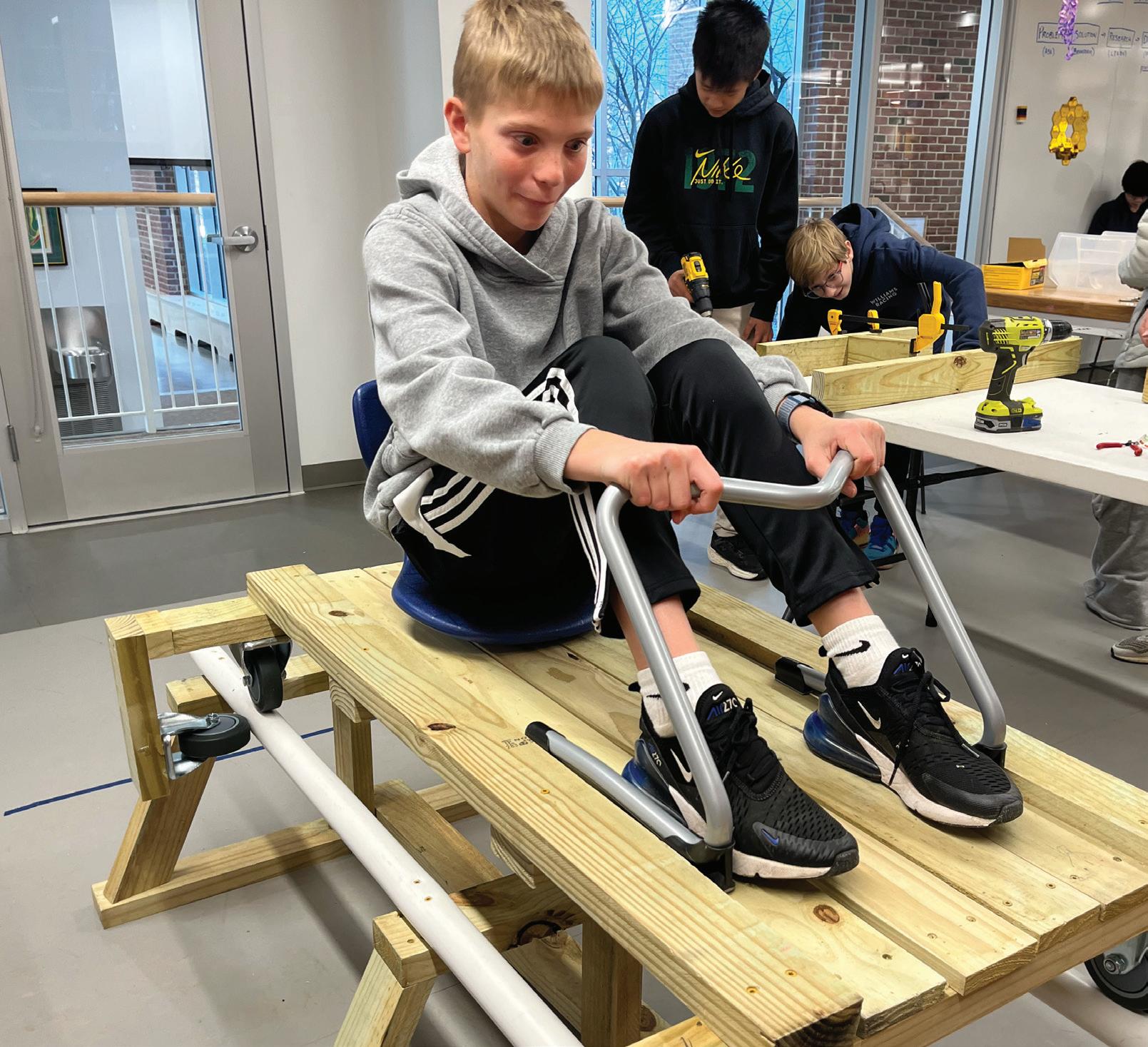
second cart addressed the weight issue by swapping 2x4s for 1x4s, but ran into the same issue. The third tried a different approach entirely: two PVC pipes running front to back like steamroller wheels. That one stalled on axle friction.
Last year, two Middle Schoolers approached Middle School STEAM teacher Greson Torchio ’01 with an idea: they wanted to build a roller coaster. Not a model or a 3D printed track — a real roller coaster.
Months earlier, William Rose ’30 was visiting MIT and spotted students experimenting with backyard coasters. When he returned to campus, he asked Teddy Aitken-Davies ’30 whether he’d be interested in a similar project, and they brought the concept to Torchio and DaVinci program coordinator Becky Malin P’26 ’29 ’32 ’33 ’39 with a simple question: could they try it, too? The answer was a resounding yes.
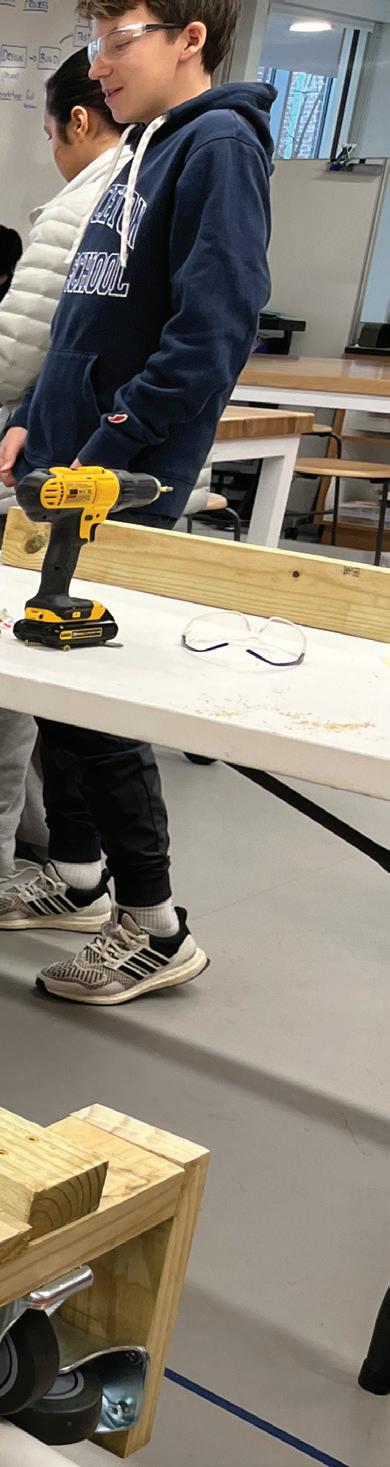
Soon, eight students joined the project, some for the engineering, others just to see if it could actually be done. They started by researching other coaster designs and working out the size, materials, and dimensions they would need. They constructed a smaller model to test
whether a cart would actually move along the track. It did, so they started building the real thing.
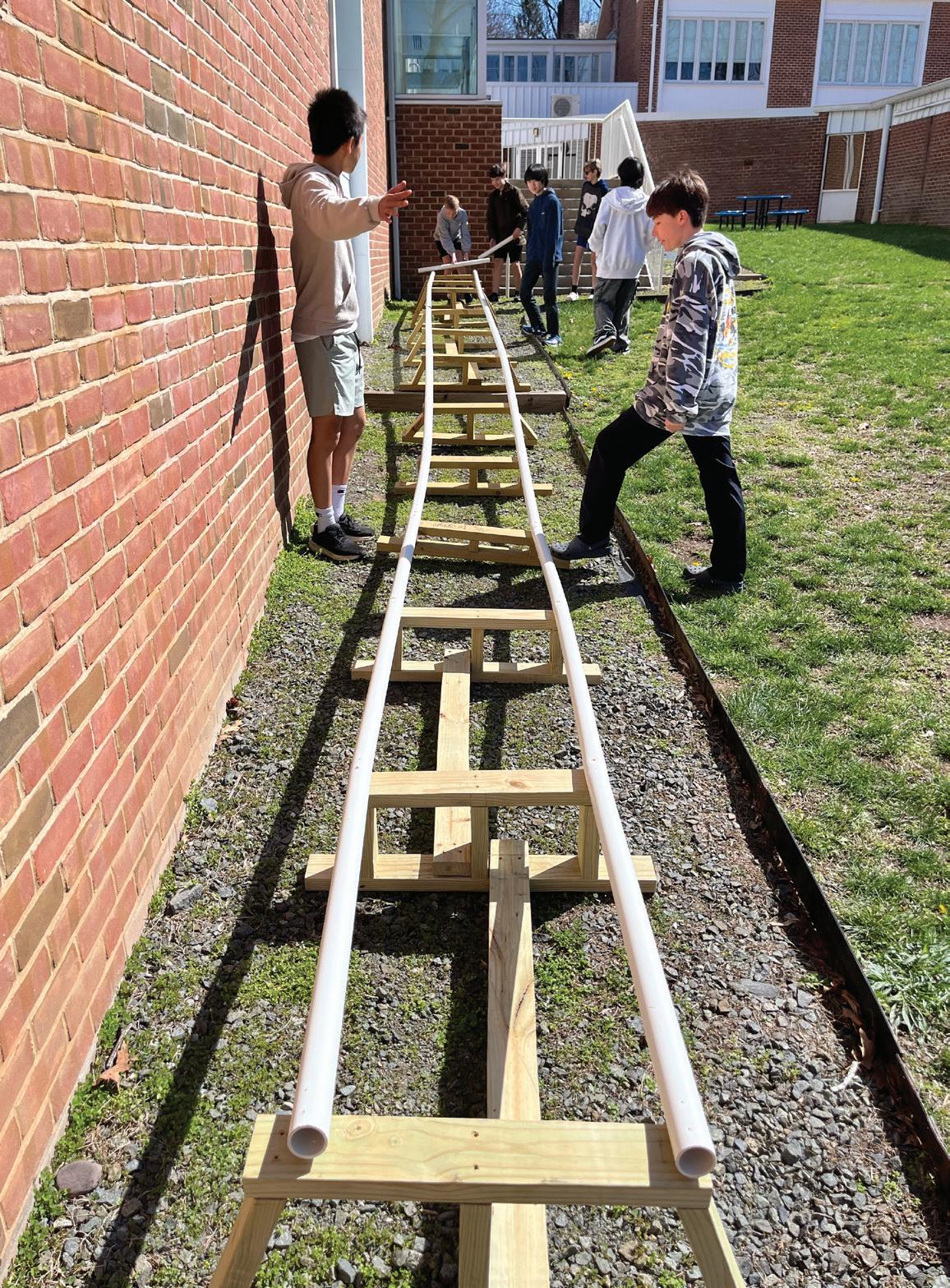
The track sections grew until the STEAM Center couldn’t contain them. Soon, the coaster was being assembled outdoors, with students working through what Torchio calls the engineering cycle: build, test, modify, repeat.
“We were cycling through that every day,” he recalls.
The students built three versions of the full-sized model. The first was large and heavy, with two wheels at each corner gripping the top and side of the PVC track. Without a third contact point on the underside, the cart would make it partway down before sliding off to the side. The
“We started becoming more open to modifying while building and being more flexible,” says Aitken-Davies. “At the beginning of the year, we were afraid that changing something might mess up the entire project. By the end, we understood that changing things was part of making it work.”
The track itself worked as intended. But fixing the cart would have meant redesigning the entire structure, and by the end of the school year, time had run out.
For Malin, the outcome still represents the ideal spirit of DaVinci. “I have an appreciation for the process,” she says.
“Even if the final product isn’t perfect, students walk away with so much.”
“Even though we had many challenges, especially with the cart,” says Rose, “we ended up creating an incredible experience and a community.”
Torchio sees it the same way. “They lived the engineering design process in the most authentic way.”

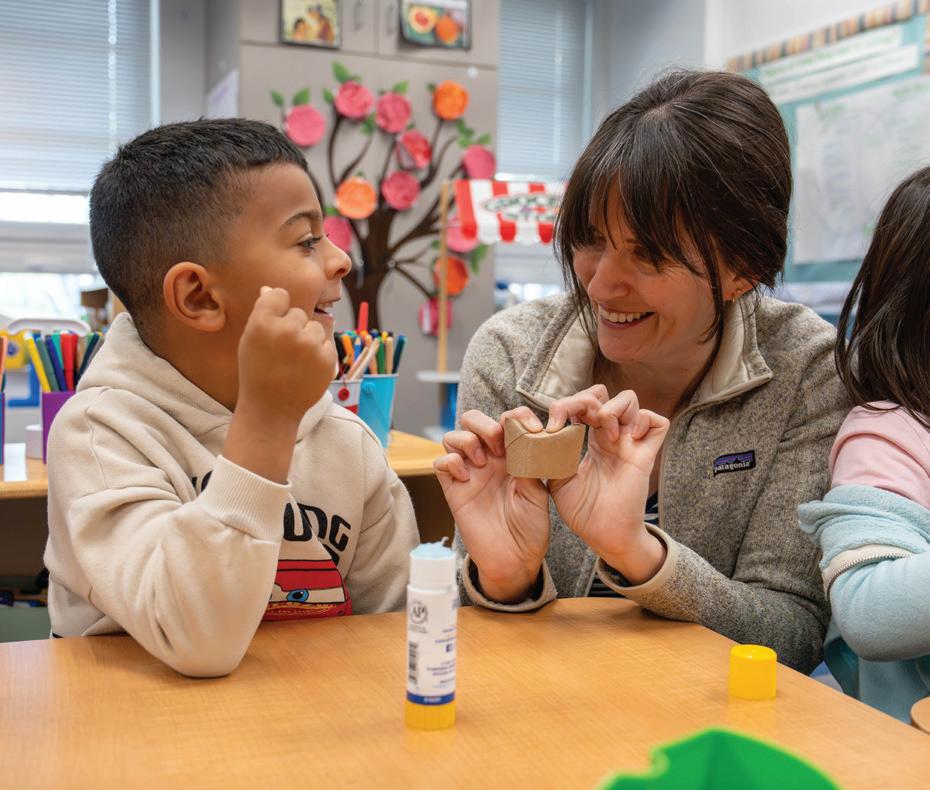
The hardest thing Anne Louise Ennis does is nothing.
When she sees a student struggling with a math problem, Ennis, the Lower School Math Chair, resists the urge to step in. She knows that doing so ends the thinking. Instead, she uses these questions to hand the work back to the student, a strategy that works just as well at the kitchen table as it does at the whiteboard.
“How do you know?”
The correct answer matters, but the reasoning behind it is the true goal. This shifts the focus from the result to the logic.
“Can you show me your thinking?”
Drawing, counting objects, or modeling a problem helps reveal where a student’s process might be misaligned.
“What would happen if…?”
This turns a problem into an experiment, encouraging students to test possibilities rather than just hunting for the “right” path.
“Will it always work this way?”
Once a student finds an approach that works, this question pushes them to look for the pattern beyond a single problem.
“Could we solve this in a different way?”
Finding multiple paths to the same result builds confidence and promotes creative, flexible thinking.
“Why might someone choose the other option?”
By comparing two different choices, like deciding between $5.50 now or 28 quarters later, students apply their reasoning to a real-world scenario.
The goal, Ennis says, is for students to build the habit of mind to ask these questions themselves, wherever the next problem finds them.
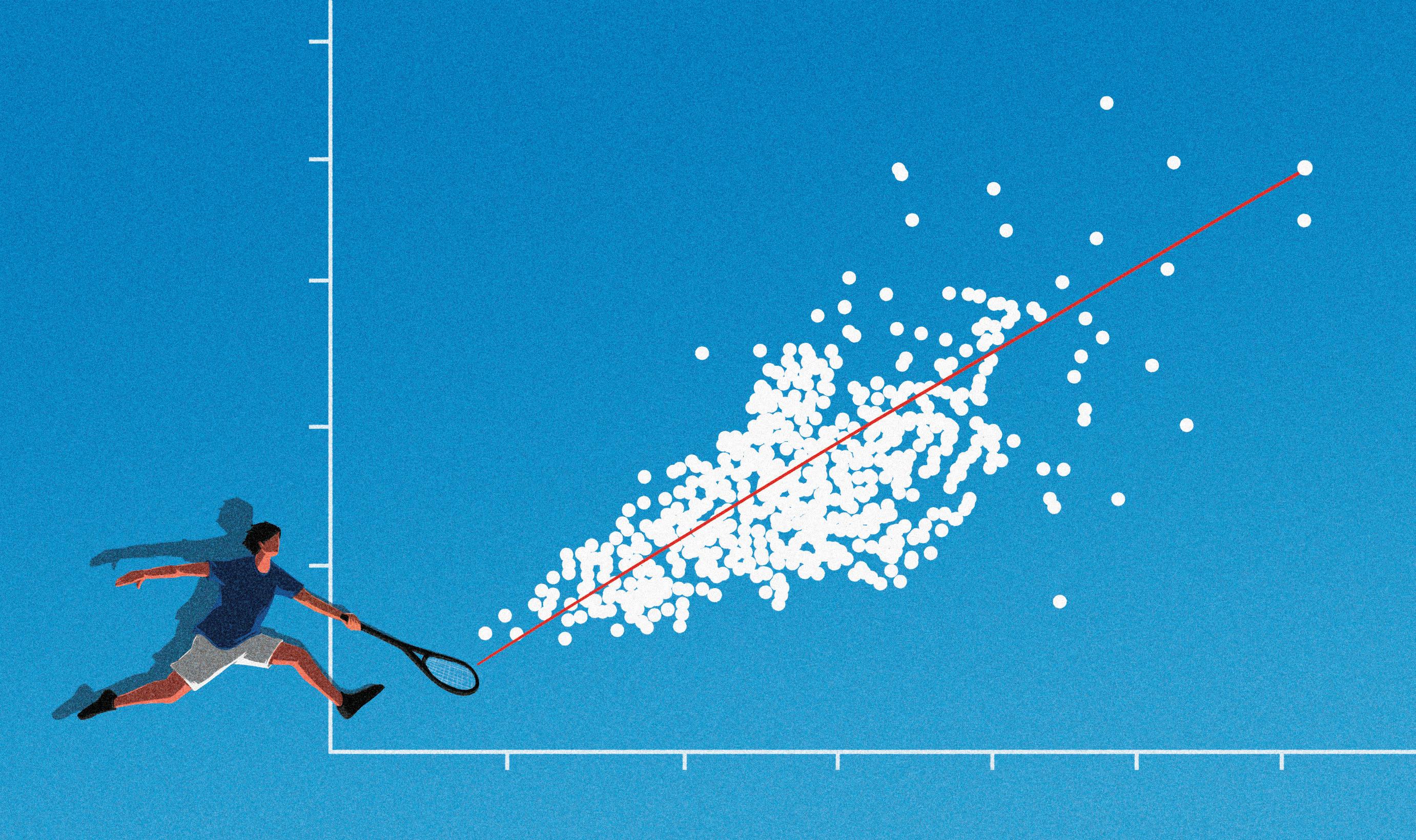
The idea for ParamSquash began with an assignment Dhruv Panchal ’27 didn’t want to do. The summer before ninth grade, the coach of his local squash club asked him to manually annotate one of his match videos by tracking shot patterns and court positioning.
Tennis has automated tools for exactly this kind of analysis, and Panchal assumed squash did too. When he discovered that no such tool existed for the sport, he decided to create one.
Panchal first had to build his own dataset. Without automated tools, he manually annotated roughly 50,000 images, labeling the position of the ball and players so the system could learn to recognize patterns.
While Panchal taught himself machine learning and computer vision largely from scratch, he relied heavily on Upper
School computer science teacher Theodor Brasoveanu for guidance. Even with Brasoveanu’s support, the early models kept failing.
A squash ball is small, fast, and black; at standard video quality, it blurs into nearinvisibility. On older courts, scuff marks and wall scratches look almost identical to that blur, and the model couldn’t tell the difference. It just tracked the marks.
So Panchal changed his approach entirely. Instead of trying to see the ball directly, he trained the model to read
the players. Where were they looking? How were they setting up to swing? If both players were tracking a single spot and one had a racket raised, the ball was probably right there. The model learned those contextual cues even when the ball itself wasn’t visible. By the end of ninth grade, he had a working prototype.
For the better part of a year, ParamSquash existed as a side project with coaches and players emailing him match videos and waiting for the data. It was only the following summer that he decided to build a web interface and started emailing college coaches, clubs, and nonprofits. ParamSquash is now used by several college teams, including Princeton, Columbia, the University of Virginia, and Vassar, as well as two youth squash nonprofits. Individual players from eight countries have also used it. He prices it at $1 per video — compared to $99 from competitors — and offers it free to nonprofits, part of a deliberate effort to put professional-grade analytics within reach of players and programs that couldn’t otherwise afford them.
“Mr. Brasoveanu is one of the main reasons I finished the project,” Panchal says. “Without him pushing me, Param would probably still just be code on my laptop.”
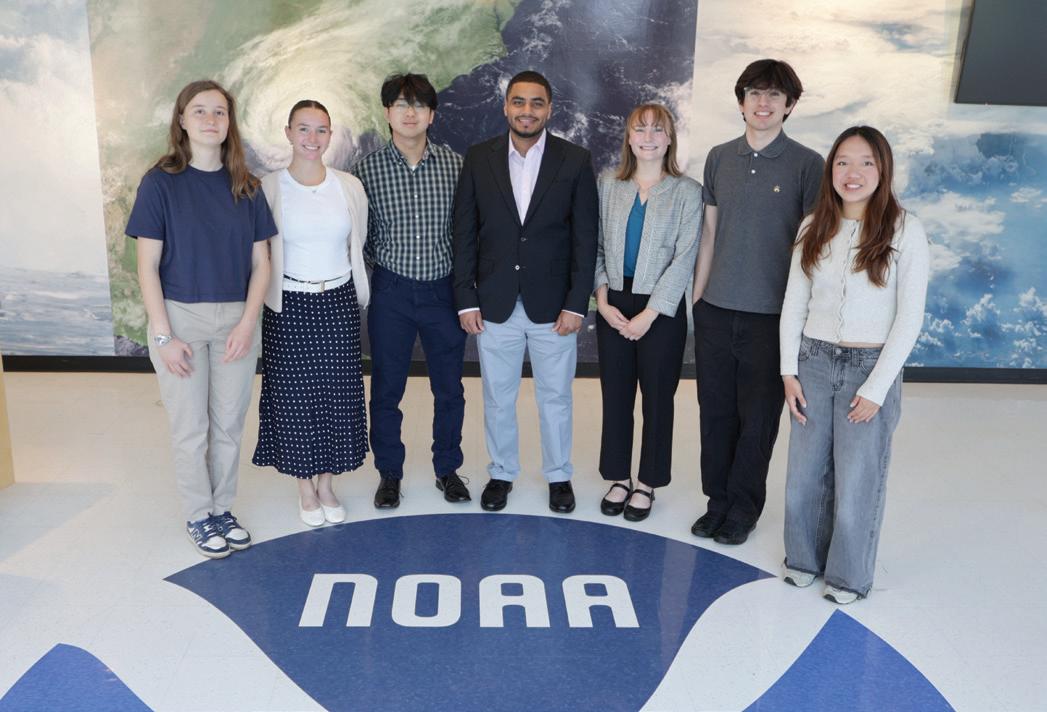
the summer at NOAA’s Geophysical Fluid Dynamics Laboratory
“Using machine learning gave me hope for the future of environmental monitoring,” she says. “It showed me how careful measurement and smart modeling can turn a messy, incomplete dataset into something meaningful.”
According to Science Department
Chair Charlie Alt P’33 ’36, moving from absorbing knowledge to generating it is exactly what the REx program was built to encourage.
“At first, students are learning the methods and the pace,” he says. “Then something clicks. They begin asking their own questions. That’s when they start thinking like scientists.”
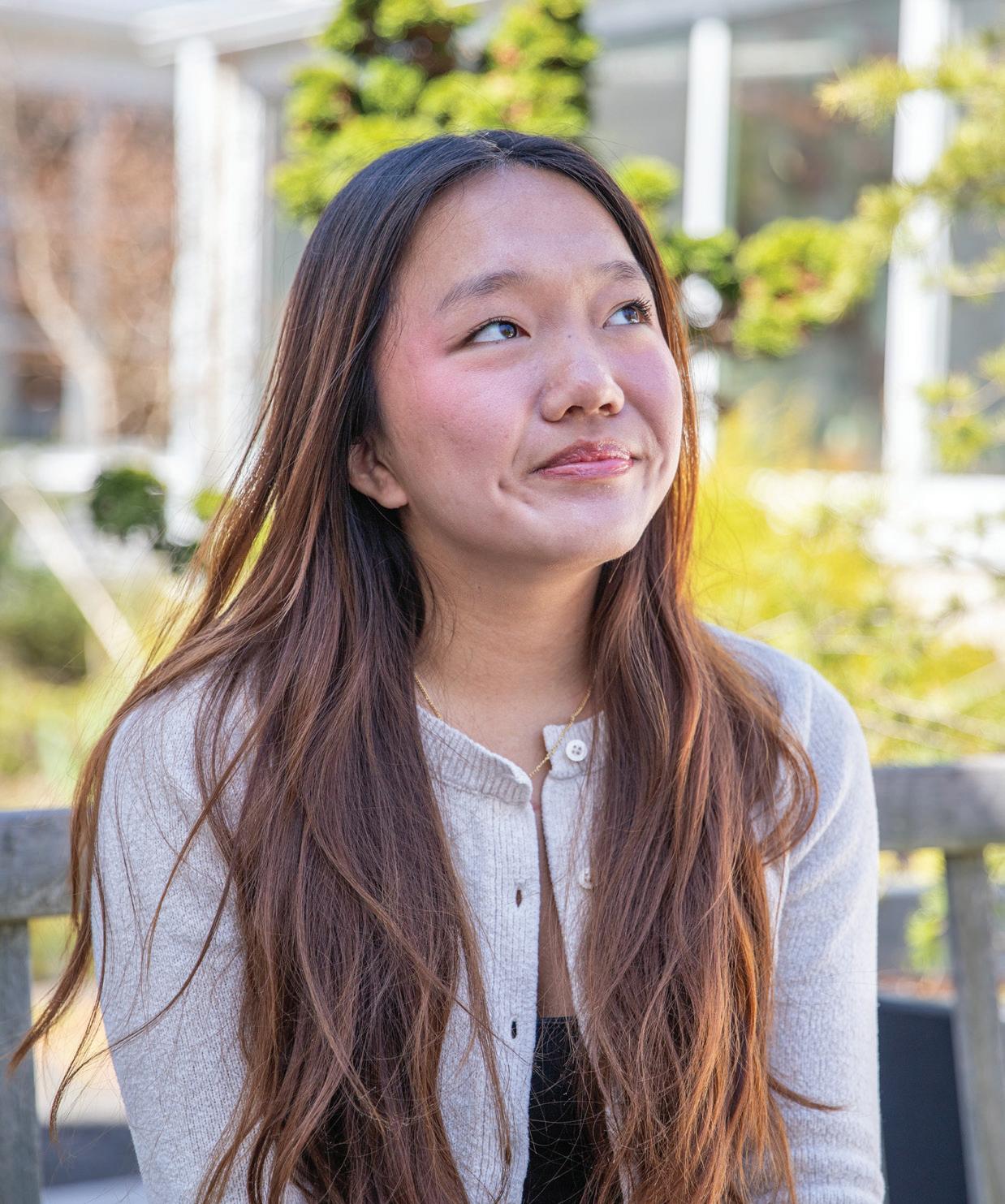
The California Current runs cold. Fed by water rising from deeper ocean layers, it’s one of the most productive marine ecosystems on Earth — and, as Beth He ’26 discovered, one of the most vulnerable.
The summer before her senior year, He worked at NOAA’s Geophysical Fluid Dynamics Laboratory through the school’s Science Research Experience (REx) Program. Her work focused on building machine learning models to identify oceanic conditions that threaten sea life.
When she ran the models, the California Current System kept surfacing as high risk for low-oxygen conditions. The pattern pointed to upwelling, a process in which cold, low-oxygen water rises from the deep ocean to the surface. Warming can make it worse, but upwelling is dangerous on its own.
Developing a model capable of capturing these shifts required careful work. Before proposing her approach, He conducted a literature review, assessing which machine learning methods were most commonly used and where they fell short. To test how accurately her model could predict oxygen levels, she and her NOAA mentor, Dr. Xiao Liu, designed a series of trials, varying sampling frequency, depth, and seasonality. The experimental design phase, she says, was one of her favorite parts of the process, allowing her the chance to ask her own questions.
She extended that work into a formal research proposal and submitted it to the Harvard Undergraduate Research Journal, where it earned second prize among North American proposals — a rare distinction for a high school student.
For Alt, the award is impressive, but only part of the story. “What I’m most proud of is what comes before recognition,” he says. “Real research teaches persistence. It teaches you to stay curious when nothing works. That’s the habit that lasts.”
In the fall, He is heading off to Yale, where she plans to keep asking questions and hopefully answer some, too.
“There is a lot of misinformation about climate patterns and what they mean,” she says. “I’m hoping that by combining scientific research with the humanities, I can help spread results to the public in a way that is more understandable and tangible.”
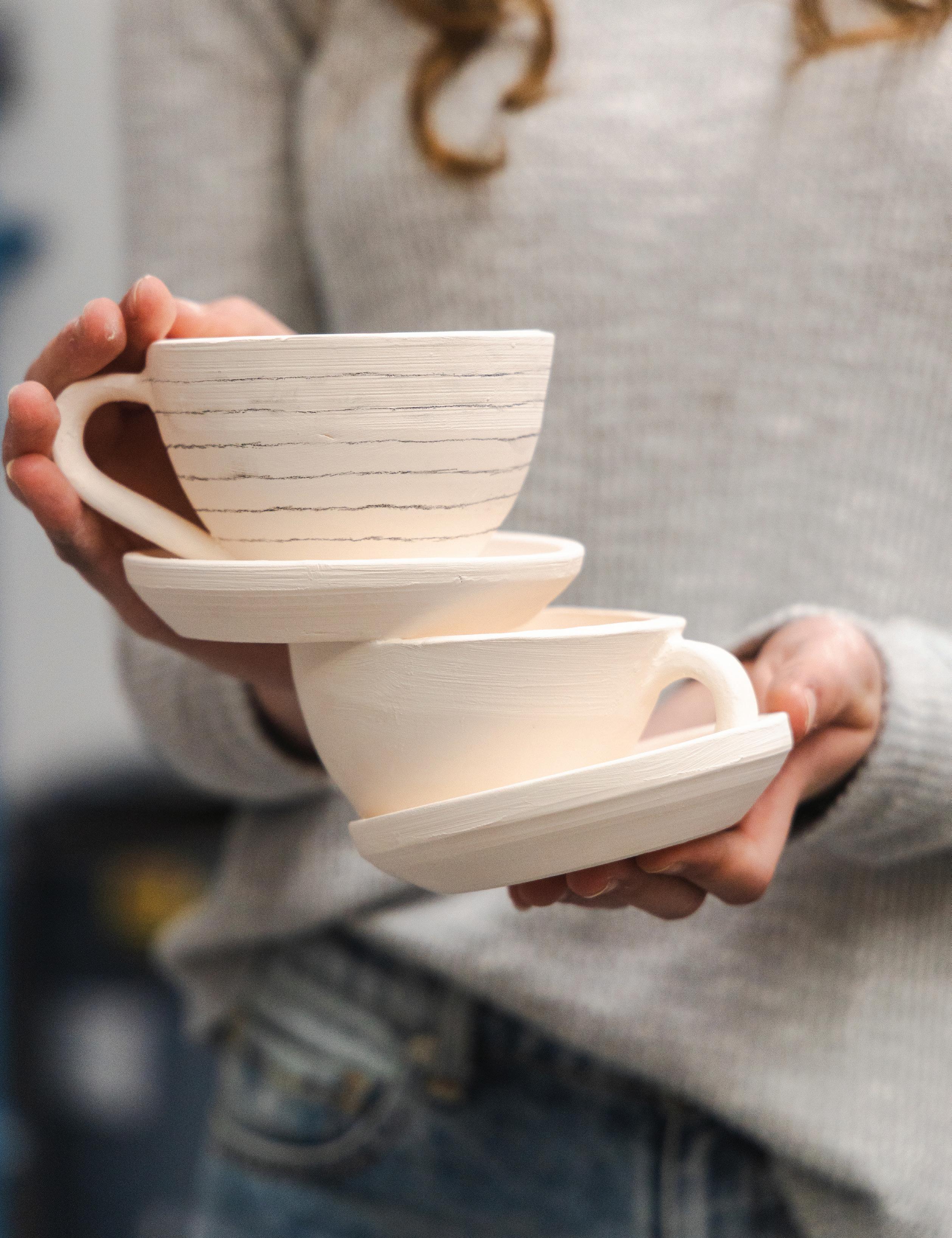
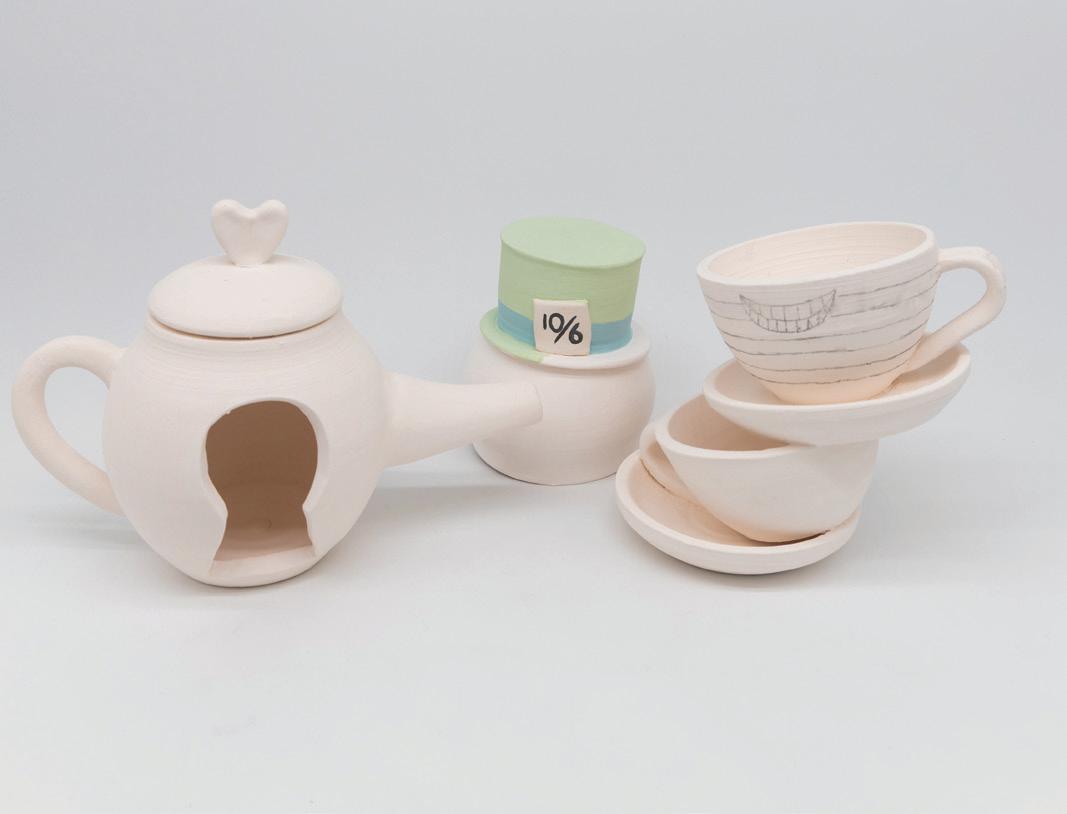
In the ceramics studio, deciding whether a piece is finished is never simple.
A bowl might be structurally sound, the glaze might sit evenly, but ceramics teacher Eric Rempe wants his students asking a harder question before they send their work to the kiln. “An important part of the process is developing the critical eye to say, ‘I can do better than this,’ and choosing to recycle it rather than fire it,” he says. That decision, Rempe says, is an act of editing. Sometimes recycling a piece means running it through the pugmill. Other times it means treating it as a prototype, cutting it apart, reassembling it, pushing it in directions that would feel too risky with a finished piece. “It presents an amazing opportunity to try something totally different with no consequence,” he says. Often, that experiment becomes the most exciting work a student produces.
Hailey Cohen ’29 learned that lesson on her fourth attempt at a teapot. Working in porcelain, she’d gotten close to finishing a set she’d been working on for months. She threw the piece, let it dry, and then accidentally overtrimmed the walls. “Instead of trying to save it, I decided to restart completely,” she says. She expressed her frustration to Rempe, who reassured her. “He said he knew I could do better,” she says. “It was a good reminder that the ceramics studio is a space where mistakes feel okay.”
Brynn Dandy ’26 has also started over plenty of times, and she knows it’s an important part of the process: “Since you know the mistake you made the first time, you’ll pay closer attention with each new piece. Every mistake is a new lesson to learn.”
Before making the call to restart a piece, students learn firsthand the work that goes into the recycling process. They spend a full class period working through it — soaking scraps, mixing reclaimed batches, and loading and running the pugmill. The bins cycle through thousands of pounds a year; scraps get packed into the 3D ceramic printer, ready to be used again. In the ceramics studio, nothing goes to waste — not the clay, and not the attempt.
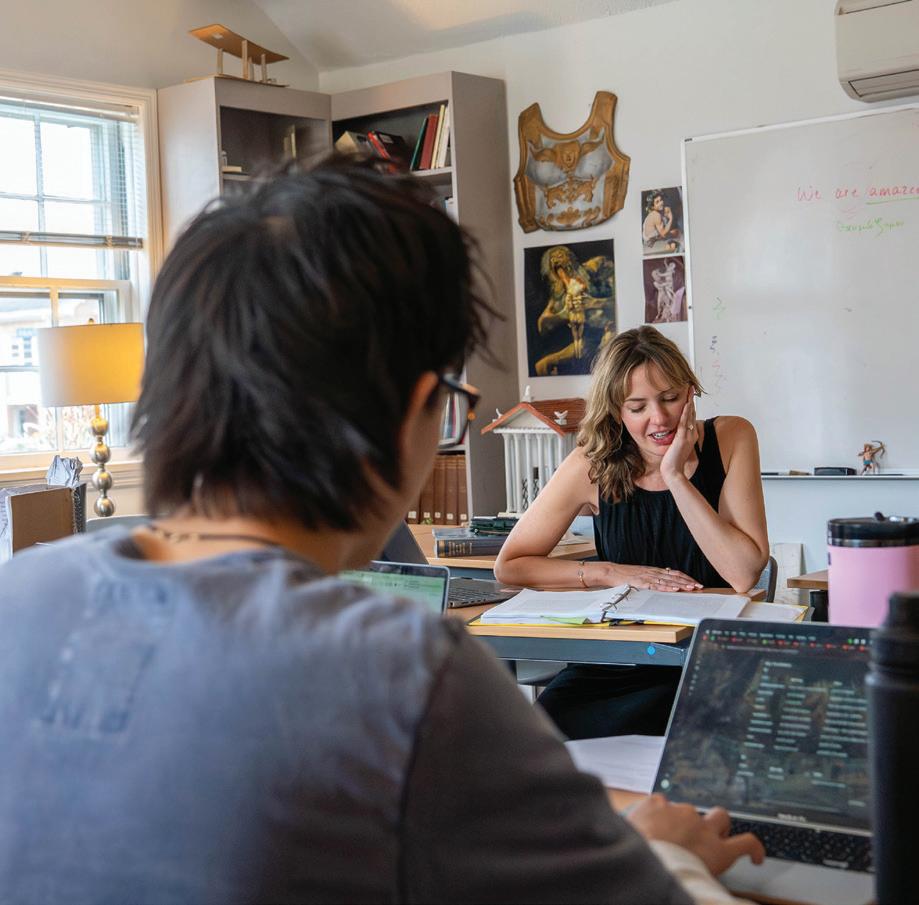
In Amanda Gregory P’37’s post-AP Latin classroom, there is no lecture.
Instead, she sits with her five students at a shared table, working through De Clementia, a treatise by the Roman philosopher Seneca written for the emperor Nero. It is, to put it plainly, a difficult text.
Intermediate “readers” — guides that pair the original Latin with vocabulary, grammar notes, and historical context — exist for many well-known works. But when Gregory went looking for one for De Clementia, she found only resources written for scholars. So, the class decided to write their own.
Each student took responsibility for a different aspect of the project, from compiling vocab to drafting literary analysis. Then the roles rotated, and students revised one another’s work.
“Everyone in the class has very different ways of working and communicating their ideas in writing,” says Charlie Kaplowitz ’26.
“By switching roles fairly often, we’ve learned to adapt to each other’s styles and combine the best parts of each person’s approach to make the strongest final product.”
“I wanted them to see what scholarship actually looks like,” Gregory says. “It’s collaborative, it’s messy, and it takes time.”
The use of AI is part of the process, too. Students experiment with different models, asking for passage summaries or proposed translations. Then they test those answers against their own understanding. Gregory draws a direct line between this and a case she studies in her own research: Plato’s student Alcibiades, who could replicate the language of philosophy perfectly, even when he lacked a deeper understanding. The teaching challenge, then as now, is figuring out whether a student actually ‘gets it.’
“There can be a stigma around using AI,” Kaplowitz says. “Dr. Gregory really changes that. She teaches us how to utilize AI responsibly to learn and grow thoughtfully.”
The book is expected to be ready this fall through the openaccess press Pixalia, available online and in print.
“He had the kids mesmerized,” says Karen Latham P’15 ’18 of poet and scholar Joshua Bennett. He’ll return in June to lead the summer workshop
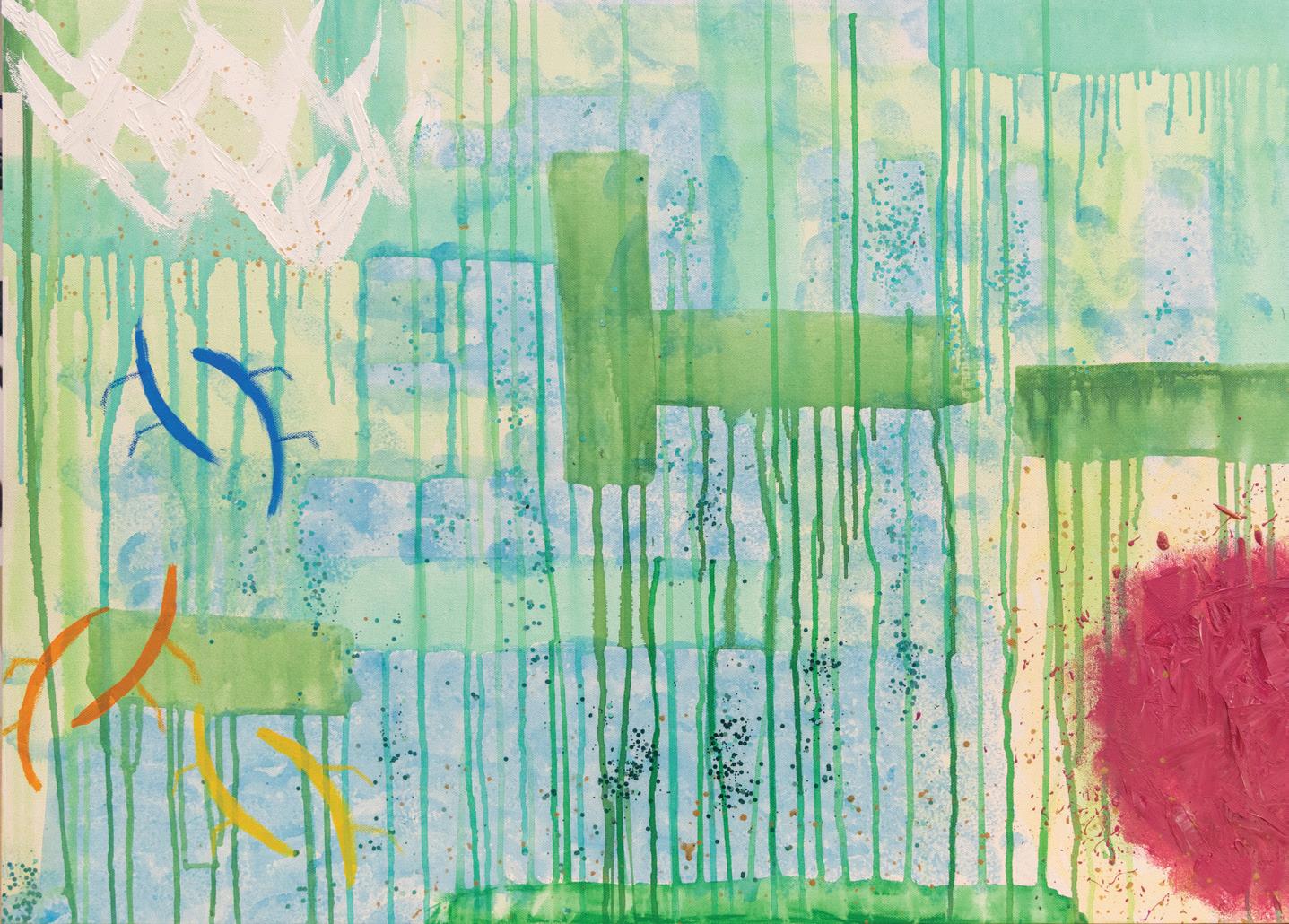
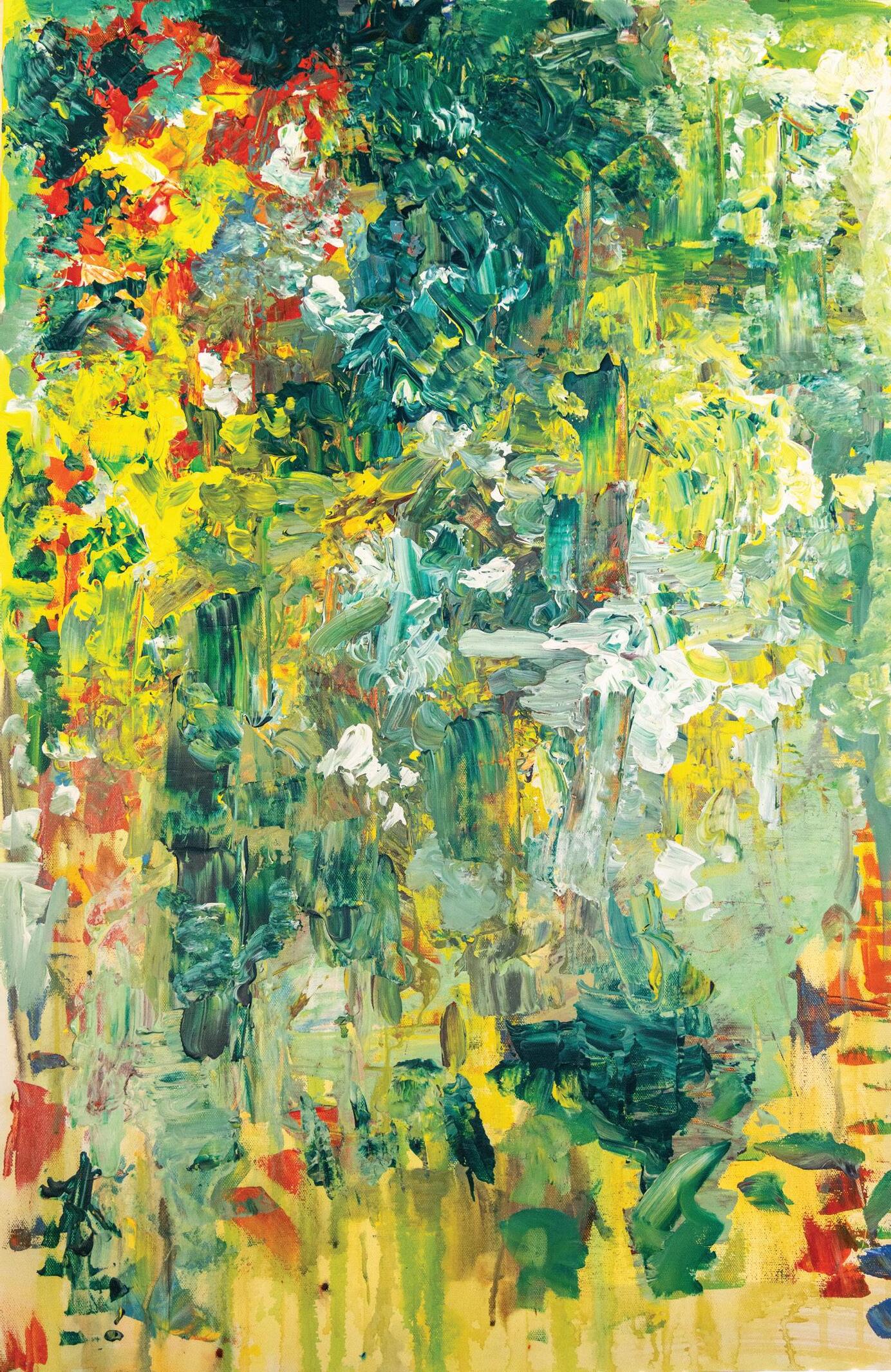
Pierson DelVecchio ’27’s response to the prompt, “Paint what something feels like, not what it looks like.”

science students, visual artists, and aspiring filmmakers. “I love the intersection of it,” Latham says. “They’re all coming from different places creatively, and they learn a lot from each other.”
At the center of the course is Mary Shelley’s Frankenstein. Students approach the novel as a meditation on the ethics of creation — questions that feel newly urgent as AI tools reshape what it means to make something, and what it means to learn. What happens when you bring something into the world, and what responsibility does a creator have for what they make?
It began with a strange prompt: describe what you are not. One student tried a storm, another tried a machine. One student imagined life from the perspective of a tomato.
“It sounds simple,” says Upper School English Department Chair Karen Latham P’15 ’18. “But the results are wild.” The exercise, designed to break students out of answer-seeking and into idea-making, is a small part of CHEx, the Creative Humanities Experience — Latham’s pilot course built around the act of creation. Inspired by the school’s Science Research Experience Program (REx), which pairs a selective student cohort
with independent research and a summer residency, CHEx applies a similar model to the humanities. “It’s a small group of students who really want to dive deep,” says Latham. “The application process, the summer component, the chance to pursue something you care about intensely, we wanted all of that for the humanities.”
Twenty students were selected for the first CHEx cohort, split across two sections. The group includes dancers, musicians, computer
It’s a question Latham has found herself sitting with as well. “As a teacher, you come in with a vision of what the course will be, and then the students arrive and it becomes something else entirely. The connections they’re making, the depth of their close readings, the way they’re bringing this work back to their own lives: I didn’t anticipate any of that. You think you’re building one thing, and then it starts building itself.” Students felt it too. “I could never have anticipated what CHEx would truly be like,” says Ava Cedeno ’27. The course moves from Shelley’s prose to the diverse creative processes of other creators: the gestural abstraction of painter Cy Twombly, the storytelling of Bruce Springsteen, and the distinctive style of filmmaker Wes Anderson. Each unit asks students to analyze closely, then

make something of their own inspired by those artists.
The Twombly unit gave students a canvas and a simple instruction: paint what something feels like, not what it looks like. One student split the canvas between clean horizontal strokes on one side and swirling loops on the other, each half representing the same body in two very different kinds of motion. Another chose their own source material — the fractured identity of Fight Club rendered in fragmented words, jagged strokes, and a question mark erupting from the center. One student composed an original song in response to Frankenstein; another designed a wedding dress inspired by the novel’s absent bride.
Cedeno assembled what she describes as a “bible” — images, scripture, drawings, and other media expressing her interpretation of the novel. “I had never before been afforded that much choice in an assignment,” she says. “Everyone responded in a unique way.”
“They’re fearless,” Latham says. “The things they’re able to connect — it’s amazing to watch.”
Zay Pack ’27 found that freedom inspiring. “I didn’t expect to be able to explore so many different styles and topics,” he says. “It has helped me see writing as something more personal and creative rather than just an assignment.”
After classes end in June, the course culminates in a weeklong creative workshop where students develop original projects across poetry, film, visual art, music, and multimedia. Working alongside them will be poet and scholar Joshua Bennett, distinguished chair of the humanities at MIT, who first came to PDS in 2024 through the Imagine the Possibilities program. “I’ve been an arts educator for 20 years, and I had never had an experience quite like that,” he says. “It was incredible.”
Though his primary involvement is the summer workshop, Bennett joined Latham early in the course to meet the students and share his philosophy on writing.
Poetry, Bennett says, is always a social occasion, shaped by live audiences, by movement, by the rhythms of daily life. It’s a sensibility he brought into the room during his visit, where he led students through an exercise from his own practice. “He had the kids mesmerized,” Latham says.
“Give me a powerful image,” he told them. “Give me something that feels true. Give me a scene from the best day
of your life — are you fishing with your grandfather? Are you running across the living room with your cousins? Why that image? What are you telling us? What are you telling yourself?”
For Pack, the experience opened something up. “The environment made it feel okay to try something different with my voice,” he says. “It made me more comfortable being honest in what I wrote.”
“They’re making things I couldn’t have imagined,” says Latham. “That’s the whole point.”
Take a walk through the campus bamboo forest, and you’ll soon find poetry tucked among the shoots.
The idea grew out of a conversation between Lower School science teacher
Aaron Schomburg P’16 ’18 and Upper School English teacher Niccolo Bechtler, after Schomburg saw poems installed in nearby Greenway Meadows and wondered what might happen if students created something similar at PDS. Bechtler’s English course, Making Meaning, soon became the natural home for what the two teachers call the Poetry Walk.
The premise is simple. Students pair up and choose “sit spots” across campus, places like the meadow or the small courtyards tucked between buildings, and return to them throughout the semester. The task is to be still, to pay attention, and to notice what changes each time.
At first, there was some skepticism. “Students would say, ‘Oh, you want us to go out in the cold and stare at each other?’” Bechtler recalls. “But after a couple of visits, once they got away from the noise of the day, they started to get into it.”
For Landon Lewis ’27, no convincing was necessary. He was immediately drawn to the dense bamboo forest on the edge of campus.
“I wanted to really get away from everything going on around me,” he says. “The bamboo forest felt separate from everything else on campus, which made it peaceful and easier to slow down and observe.”

Lewis noticed changes to the forest each time he visited.
“The first time I went, it was a warm, breezy fall day,” he says. “The second time, the air felt heavier and thicker. It was colder, and my lungs felt like they were getting a reset. The next time I went back, the forest was covered in a carpet of snow. Every time I visited, it was new. I always felt completely refreshed and at peace.”
For Schomburg, the Poetry Walk is as much about how we think as what we write. The idea has deep roots — even Charles Darwin used a “thinking path” to work through his most complex ideas.
“There’s fascinating research showing that when you return to a place you know well, your brain can relax,” Schomburg explains. “Relaxation is what lets deeper, more creative connections happen.”
Bechtler observed the shift unfold.
Students initially wrote about the physical details of their sit spots, describing the height of trees or the color of the flowers. “But at some point,” he says, “they stopped trying to describe the place and started writing about how it affected them. Their poems deepened.”
Bechtler and Schomburg plan to weatherproof the poems and place them along a path across campus.
“Having my poem placed in the bamboo forest feels meaningful because it connects the writing directly to the process of discovery that inspired it,” says Lewis.
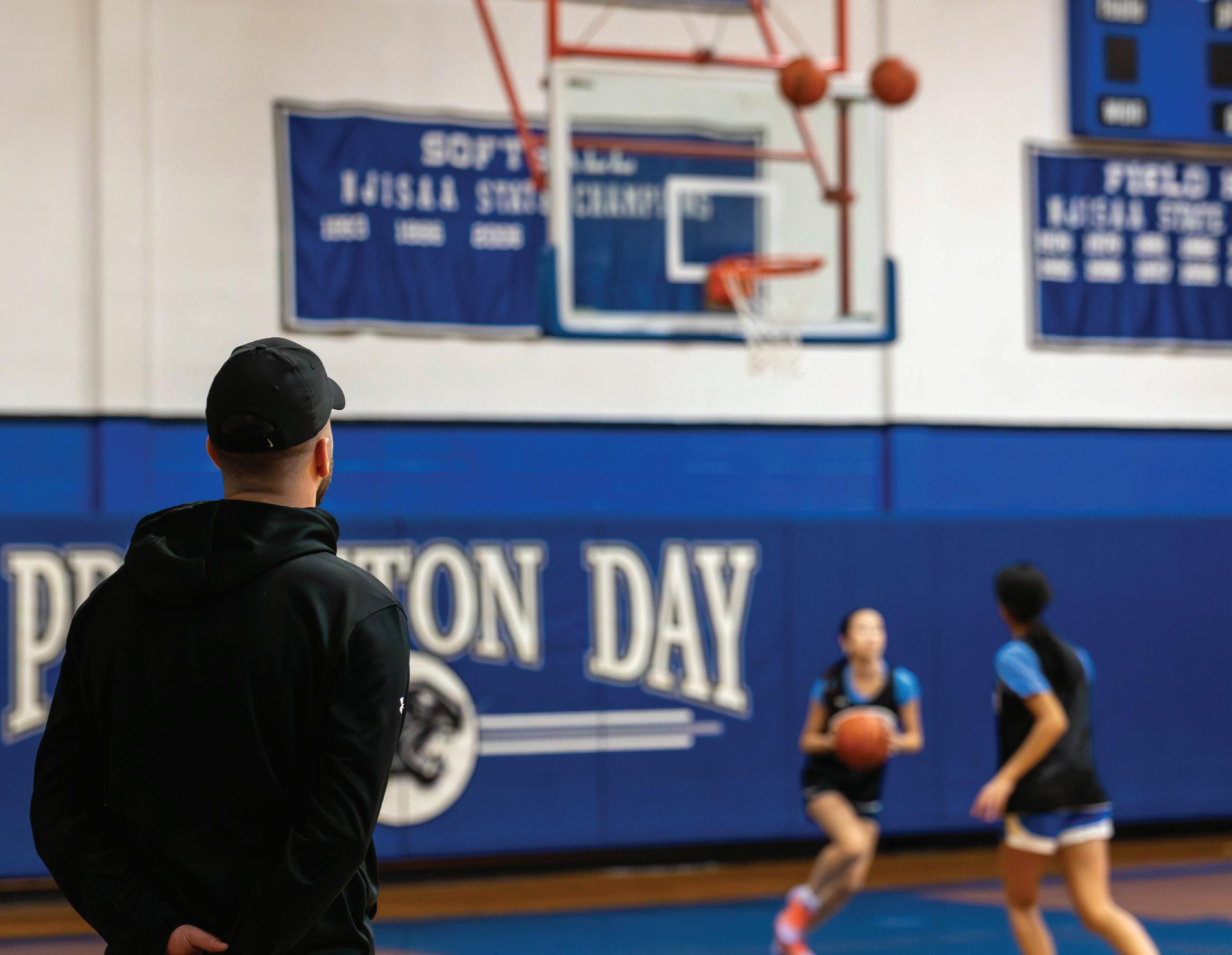
“Mistakes are going to happen,” says girls varsity basketball coach Patrick Reddington. “The key is learning how to move on to the next play.”
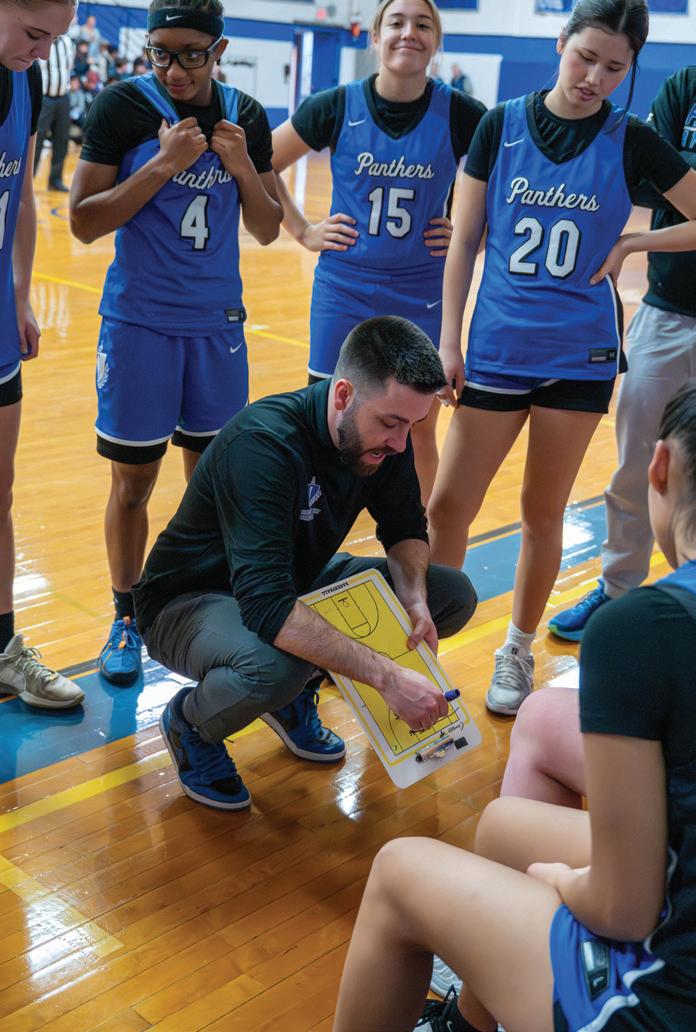

outward. When he makes a wrong call in a game, he owns it in front of his players and then moves on. That accountability, and the quick reset after it, becomes the model. “Attitude is a reflection of leadership,” he says.
Girls varsity basketball coach Patrick Reddington has never tried to coach a perfect game. He’s more focused on making sure his players know what to do when things go wrong.
“Mistakes are going to happen,” he says. “The key is learning how to move on to the next play.”
The “next play” mentality, coined by legendary Duke University head basketball coach Mike Krzyzewski, sounds simpler than it is. A missed shot, a turnover, a
bad defensive read — a player’s instinct after any of these mistakes is to replay the moment over and over. What it asks for is the opposite: full attention to what’s happening next, with no dwelling on what just went wrong.
Reddington teaches it from the bench
For Alana Williams ’29, the discipline has become internal. “If I miss a shot or turn the ball over, I try to focus on what I can do next — getting a stop on defense or making the right play. It helps me stay confident and present instead of getting stuck on one moment.”
In basketball, there isn’t time to dwell, only time to respond — a mindset that holds up well beyond the game.
“When players understand that mistakes are part of the process,” Reddington says, “it allows them to stay composed and keep making smart decisions even when things aren’t going their way.”
“Which activity looks best to colleges?”
“What level of math do I need by senior year?”
“What summer program should I do for college?”
“Don’t I need to go to [insert school here] for the best job?”
I hear these questions all the time. I understand why. But the answers to those questions aren’t what lead to success in college admissions, or beyond.
Adolescence is a messy time, thick with questions of self-discovery that rarely have clear answers. But students often feel pressured to have it all figured out, and now. They need to choose these activities and these classes to get into these colleges and land these jobs.
In that model, there’s a perceived straight line to “success” that leaves little room for creativity and deviation. But the straight line is a myth. It’s an understandable way to think, but it doesn’t line up with what we know about long-term success and well-being. In fact, several major studies point in the opposite direction.
The Gallup–Purdue “Big Six” study found that graduates’ long-term outcomes are tied less to prestige or major and more to purpose, strong relationships, and a sense of belonging.¹ Howard Gardner and Wendy Fischman at Harvard’s Graduate School of Education make a related point: there’s a difference between transactional education — focused on credentials and outcomes — and transformational education, which helps students develop
meaning, identity, and direction.² The students who thrive are rarely the ones who simply check the right boxes. They’re the ones who allow their education to shape them.
That reflects what I see in my office every day. The strongest growth tends to happen when students are willing to sit with the discomfort of not having all the answers, follow questions that interest them, and stay with work that feels meaningful even when they can’t yet explain why. That’s often when their direction starts to become clear.
And it’s not separate from the college application process. In many ways, it is the process. It’s often how the best college matches emerge.
So what does it actually look like?
It looks like the student who pursued EMT training, theater, and robotics — often told to pick a lane, but who dove deeper anyway. Senior year, while writing their college essay, the dots finally connected.
It looks like the aspiring computer science major who wrote to me years after graduation, in a job he loved, telling me he had his “priorities all wrong” in high school. He’d been chasing achievement, treating his other interests as distractions. They turned out to be part of his path.
¹ Sean Seymour and Shane Lopez, “’Big Six’ College Experiences Linked to Life Preparedness,” Gallup, April 8, 2015.
² Wendy Fischman and Howard Gardner, The Real World of College, Harvard’s Graduate School of Education.
Director of College Counseling Sarah Graham P’33 ’38 reminds students they don’t have to have it all figured out
It looks like the neurodivergent student who kept following unique interests while feeling on the fringes, then slowly realized those challenges were also a source of creativity and joy.
It looks like the first-generation student who struggled with belonging, then began to see how her life experiences had built resilience, perspective, and leadership she hadn’t yet recognized.
Seen this way, the college process becomes less about checking boxes and more about helping teenagers make sense of their own unfolding stories. So when a student asks what activity looks best or which math class to take, I understand. But the conversation is gently steered toward questions about the student themselves: What genuinely interests you? Where do you find yourself leaning in? What have you learned about yourself along the way? Those conversations don’t eliminate uncertainty, but they do make it more manageable. In my experience, students who learn to approach the process this way not only find colleges that fit them well, they also carry that self-understanding with them long after the decisions are made. The mess, it turns out, is part of the process.
—By Sarah Graham P’33 ’38, Director of College Counseling

product, but after hours of designing, planning, and crafting her abstract, porous wooden chair, Makena Graham ’25 realized she’d failed.
“She put so much work into her design, but it was a bit of a disaster in the end,” explains Chris Maher, Graham’s Intro to Furniture Design teacher. “Through no fault of her own, it ended up looking like a giant block of Swiss cheese. It was just one of those things that
Now at the University of Pittsburgh studying neuroscience and chemistry, Graham recalls the frustrating process of imagining a final version that she wasn’t sure how to translate
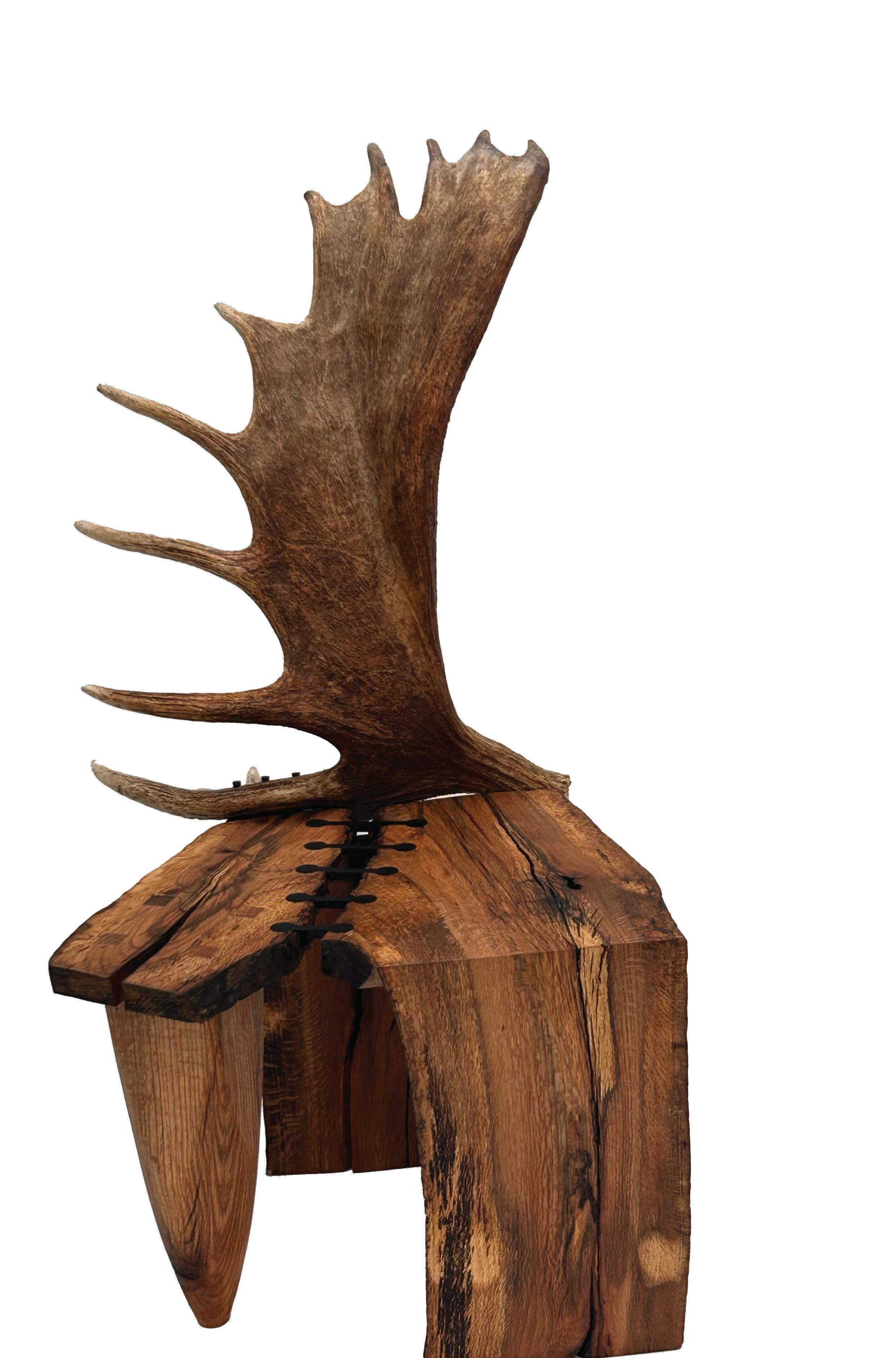
Maher makes and sells his own furniture, and he also embraces his own mistakes. When the seat of this chair split in half, he “sewed” it back together.
She remembers struggling to make the pieces fit together, realizing the chair, which sat at a 90-degree angle, wasn’t comfortable, and that its spindly legs were inconsistent with its modern vibe. When the wood began to split, Graham had to repair it with duct tape and glue.
“Even after Mr. Maher helped me fix those issues,” Graham says, “the chair was still unstable and could barely stand on its own.”
Rather than feel defeated by what is now known as the “cheese chair” incident, Graham came back as a senior in Maher’s Advanced Furniture Design class seeking redemption. Because of the lessons she gleaned the first time around, Graham was determined to avenge the cheese chair. She spent extra time developing her primary design board, while conceiving backup plans in case anything went awry.
“I learned that things don’t always go according to plan, but that’s okay,” says Graham, who built a table and a BobMarley-inspired drum in her return. “I learned how to be resilient and ask for help — and that everything will work out.”
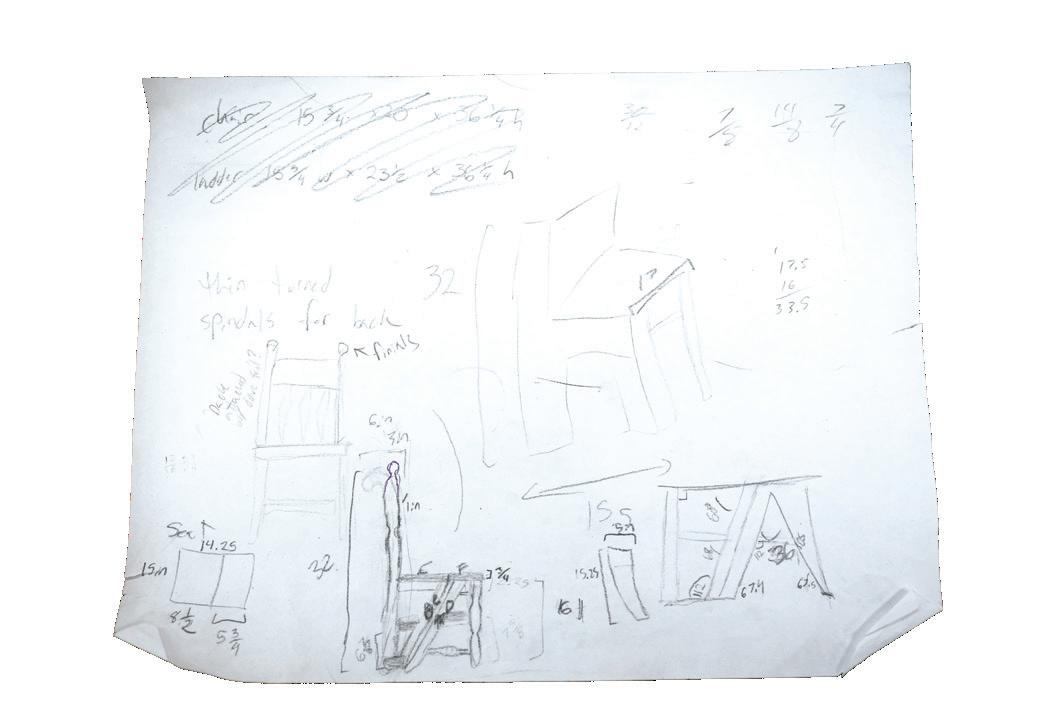
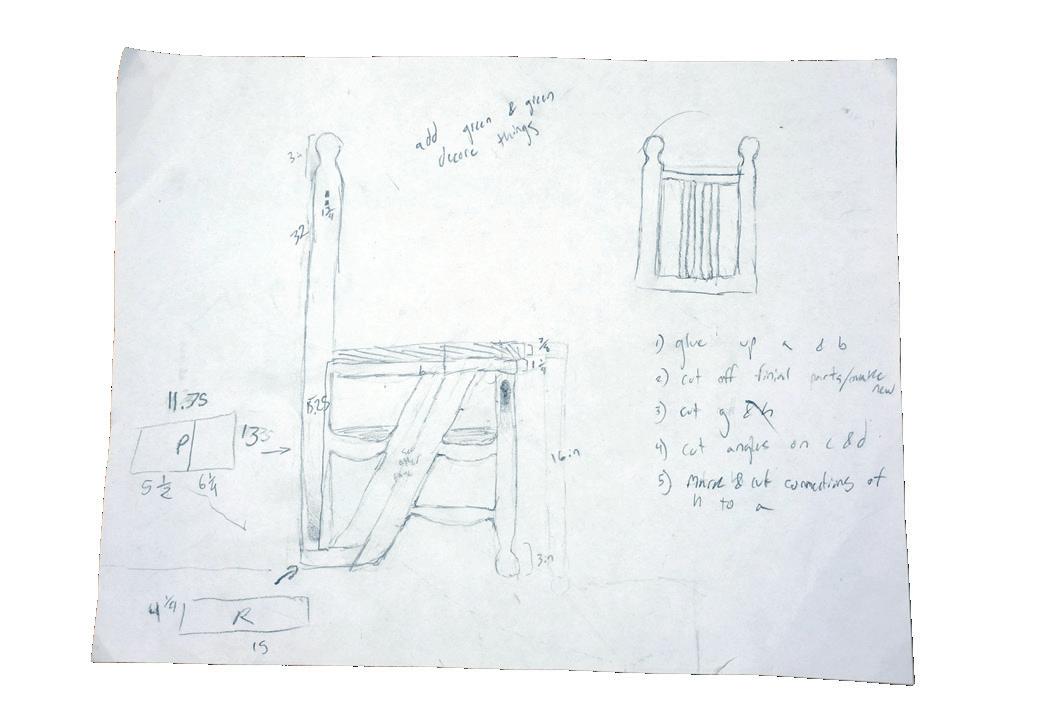
That’s exactly what Maher hopes will happen in his furniture-making classes across all divisions. Beginning in fourth grade, students can take a woodworking class that introduces them to basic tools and concepts, with a focus on “untethered joy” and freedom of expression. An eighth grade course offers increased structure, setting the foundation for more advanced design. The signature assignment in Middle School is a footstool, for which Maher gives students three pieces of wood that they must connect using traditional joinery — without nails or screws. The project, Maher explains, urges them to think spatially and approach design from a problem-solving mindset.
With a teaching philosophy that centers on embracing failure as fundamental to the creative process, Maher gives his students open-ended assignments that spark original thinking. This approach allows students at different skill levels to interpret projects according to their abilities, while maintaining their own voices.
“Whatever comes out of the studio should be your own work,” Maher says. “I’m a sounding board to encourage good ideas and maybe steer them away from bad ones. You have to learn from your mistakes. They’re not a thing to be afraid of.”
At the Upper School level, Maher teaches
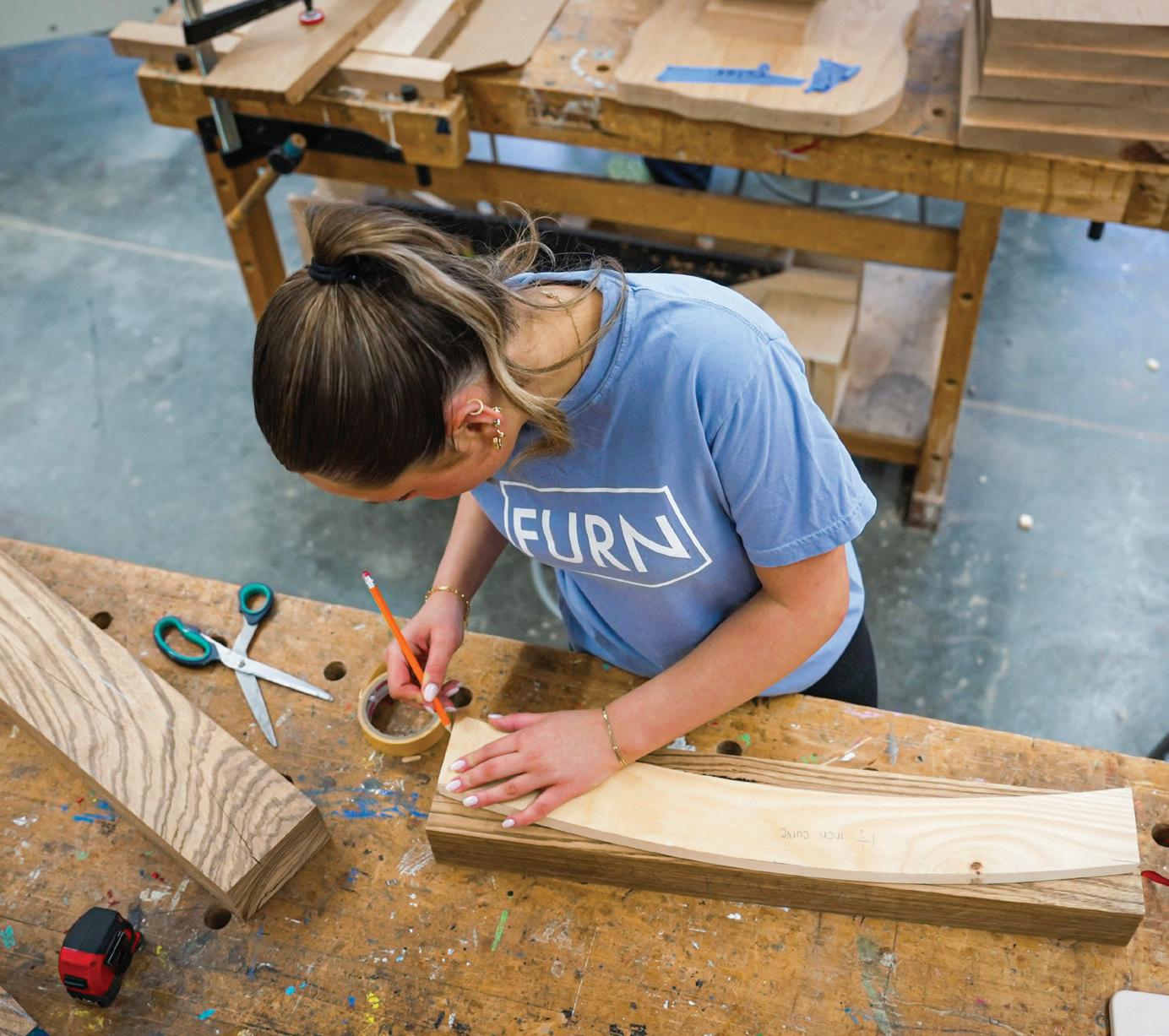
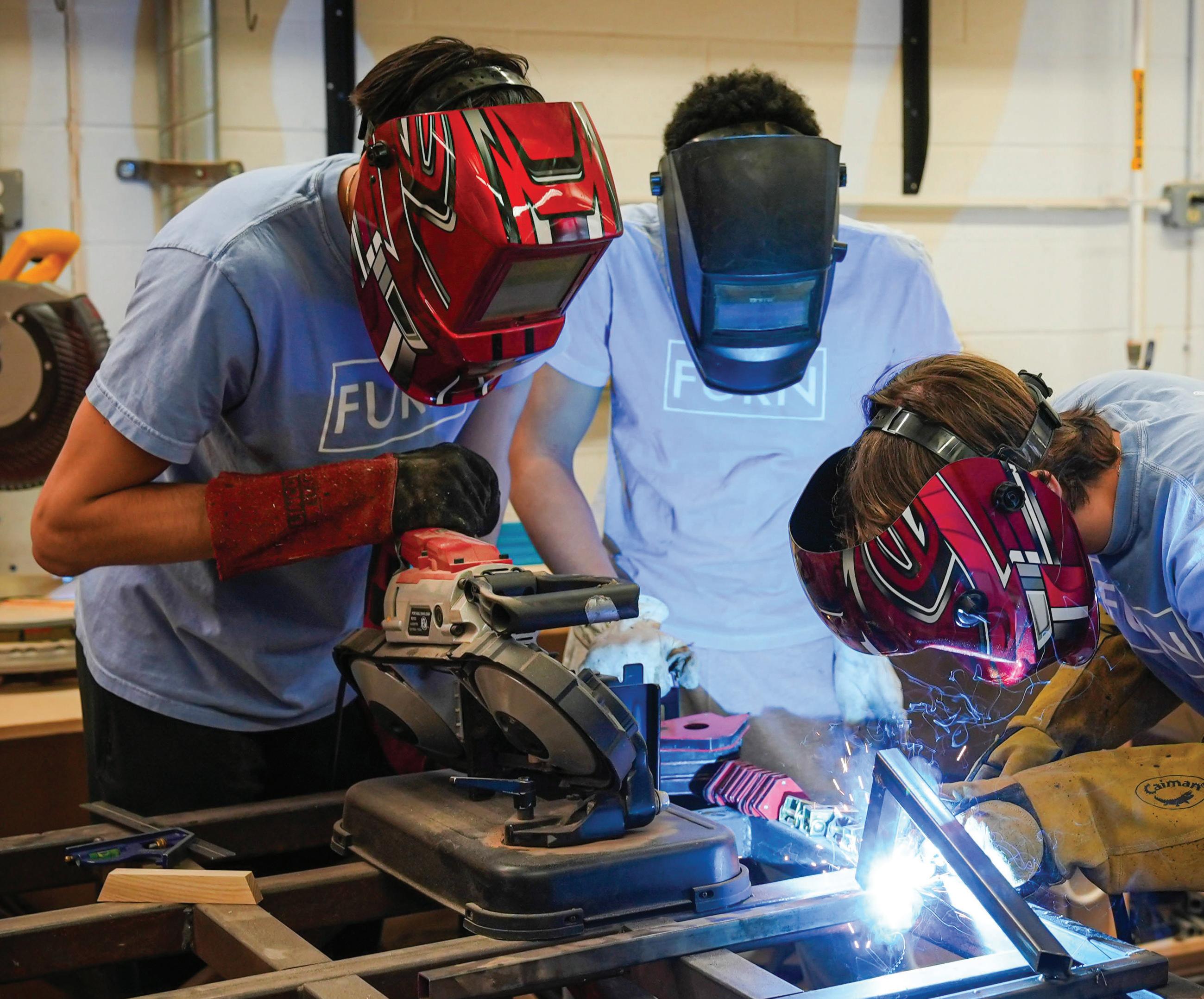
both Introductory and Advanced Furniture Design in the studio. It’s a source of pride and amusement to Maher, who’s in his 18th year at PDS, that the advanced class has developed somewhat of a cult following, complete with blue T-shirts emblazoned with “FURN” (the course catalog abbreviation) across the chest.
“You have to cut your teeth in the intro class, but after you make it to the advanced class as part of this guild mentality, everybody gets their FURN shirts,” Maher explains. “Then we have FURN Fridays,
where everybody wears them to class.”
Although Maher isn’t quite sure what has made his classes so popular, he believes it starts with the foundational offerings that attract students to eventually strive for the pinnacle level. “I’d like to take credit for it, but I don’t know,” he adds. “Maybe it’s because other classes don’t have shirts?”
While there are many creative minds among the faithful, Maher’s class rosters are a potpourri, connected by the common thread of students’ eagerness to learn about themselves. There are often more girls than
boys, and the Andy Franz Woodworking Award (a nod to Maher’s predecessor) has been presented to a female student in four of the last five years.
“The number one theme is curiosity,” Maher says. “But there are kids out to challenge themselves. They like the flow state you get into when you’re focused on a spatial project.”
In addition to that curiosity, Maher emphasizes that the class instills — and requires — essential skills beyond woodworking, including math, patience, troubleshooting, tenacity, and the maturity to refine through iteration. By focusing on novel design, Maher promotes creative ideas rather than repetitive production, making his FURN classes intellectually
engaging as well, and students tend to become persistent through challenge.
Maher remembers one young man who struggled with basic joints and got frustrated. But when the student sought extra help and finally grasped the concepts, his joy demonstrated the value of perseverance.
It’s the combination of earned membership and meaningful artistic work that differentiates FURN from a simple “woodshop” class. While he’s always in the room to guide them, Maher particularly values students who aren’t afraid to push boundaries, even when he might try to steer them in a different direction.
“I’m not always right,” Maher admits. “The thing I want from them is original
thought, and original thought is difficult. I want their voice to be heard throughout the assignment, because that’s…where kids get invested in the program.”
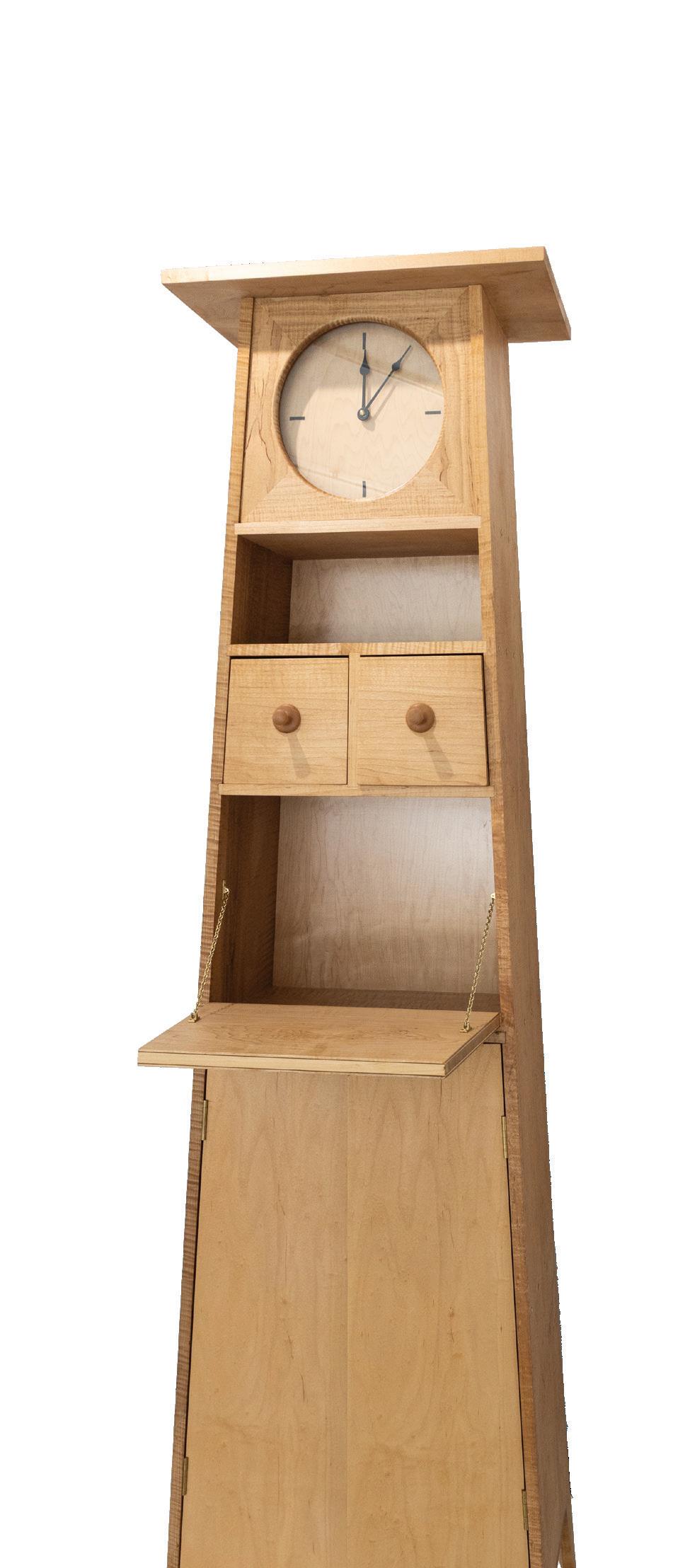
When that investment happens, students produce outstanding results. Maher marvels at some of the creations, including a sophisticated wood and brass bar cart; a cherry rocking chair with a seat woven with Danish cord; and a double-neck guitar, which the student learned to string.
A handy father prompted current FURN student Talia Berkman ’27 to continue the furniture-making legacy. Her dad, Douglas Berkman ’94, took the class with Andy Franz, and some of the work Mr. Berkman fashioned at PDS still adorns the family home. Talia is currently building a coffee
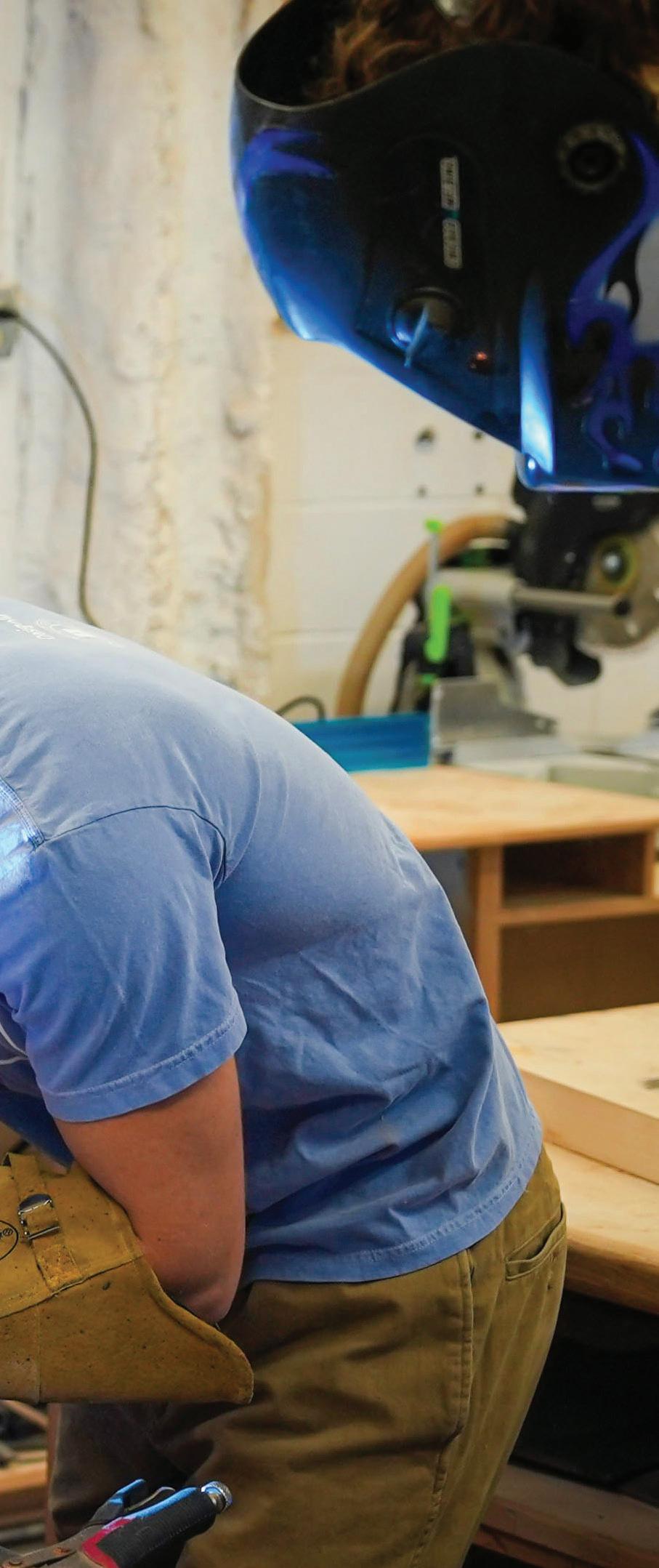
“I’m a sounding board to encourage good ideas and maybe steer them away from bad ones. You have to learn from your mistakes. They’re not a thing to be afraid of.”
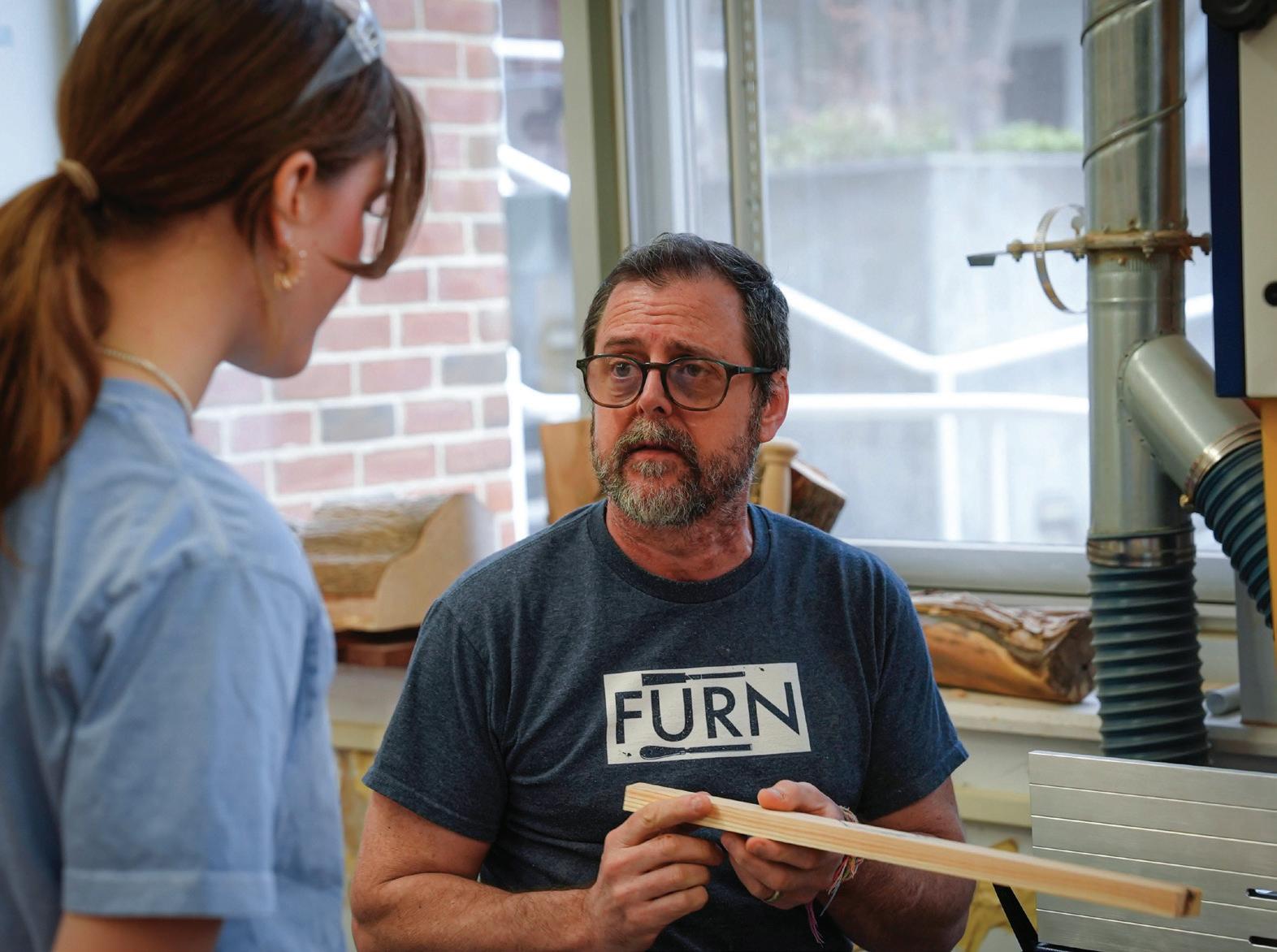
table crafted from exotic zebrawood, with a buffalo leather inlay on top and room on the bottom for storage. In addition to utilizing her math skills for precise measurements, Berkman identifies patience and flexibility as keys traits.
Berkman has absorbed Maher’s message and learned from any missteps. On a recent project, for example, she cut the pieces for the base of a stool too narrow. To correct that design flaw, she decided to cut a thin strip of another type of wood to place between the other pieces.
“It isn’t too difficult to come up with an original idea,” Berkman says, “but to take that idea, expand it, and change it to something you can actually make is really difficult. That mistake made me come up with a way to salvage my piece instead of just changing everything.”
The empowerment of FURN is closely aligned with the Upper School arts philosophy and PDS’ broader mission. Furniture design fits seamlessly within the faculty’s shared identity as working artists who continuously refine their craft, qualifying them to dispense wisdom and inspire purpose. Maher himself received formal and informal training in sculpture and design, including a carving apprenticeship in Florence. He still makes and sells his own furniture.
As for the broader PDS charge, Maher connects the themes of intellectual vitality, strength of character, shared responsibility, and joy to the arts curriculum as a whole — and to his role within it.
“All of those things are closely related,”
he says. “The idea of our mission, vision, and values is tied in with classical renaissance education. PDS has always been a champion of the arts as well as an academic education. That balance is part of becoming a whole person and thinker.”
Maher explains the way his classes progress, describing initial “organized chaos” as students pursue individual projects. The cacophony of “Mr. Maher’s” quiets down as they gain confidence. “As the year goes on and they’re building independence and you can see they’re working safer,” Maher adds, “it becomes this great building studio.”
Graham recalls that a major difference between her first experience in FURN and her second was that she was not afraid to make mistakes or ask questions. While she redeemed the cheese chair debacle by producing a beautiful table, she discovered that imperfect measurements necessitated ordering a custom (and pricey) piece of glass. Instead of panicking, Graham pivoted and crafted an unplanned — but perfect — wooden tabletop. That happened because she trusted herself to modify her vision and because Maher was there to offer the positive reinforcement necessary to make that trust possible.
“Although I didn’t realize it until I successfully created furniture,” Graham says, “the lessons I learned were far more important than bringing something home my first year.”
Location, location, location. Your garden will do best with at least six hours of direct sunlight. You’re also more likely to care for your garden if it’s close to your house, and ideally, your kitchen! 2
Fencing. Deer and groundhogs are a fact of life in the Garden State. Consider the height of your fence and possibly bury the bottom to prevent burrowing. Raccoons and squirrels are harder to keep at bay; you may need additional protection if they discover their favorite veggies.
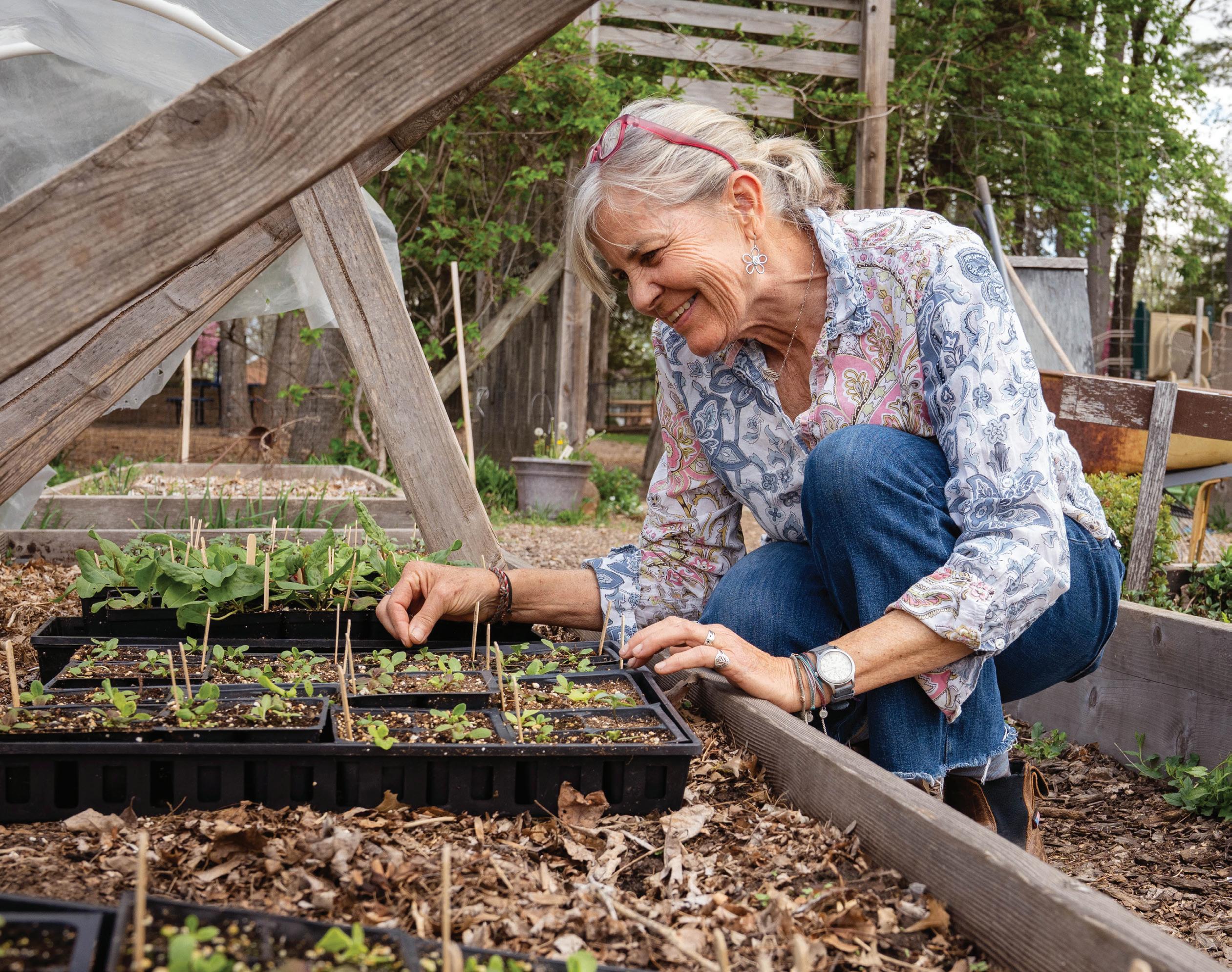

3
Protect your soil in winter months. Use fall leaves, pulled weeds from fall cleanup, or for more experienced gardeners, a cover crop of winter wheat or rye that will act as a green manure the following spring.
4
Look for high-quality planting material. When buying seedlings, look for healthy color and sturdy stems. Avoid plants that are already budding or fruiting — while it looks like a head start, it’s actually a sign of a stressed-out seedling.
Rotate where your vegetables are planted each year. If you have space, this is a simple and effective way to help with disease and pest control.
Grow what you like to eat! For years, I filled my home garden with vegetables that most of my family didn’t really like. With limited space, I now focus on our favorites like tomatoes, peppers, herbs and cut flowers. We visit and support our local farmers markets for other seasonal staples.
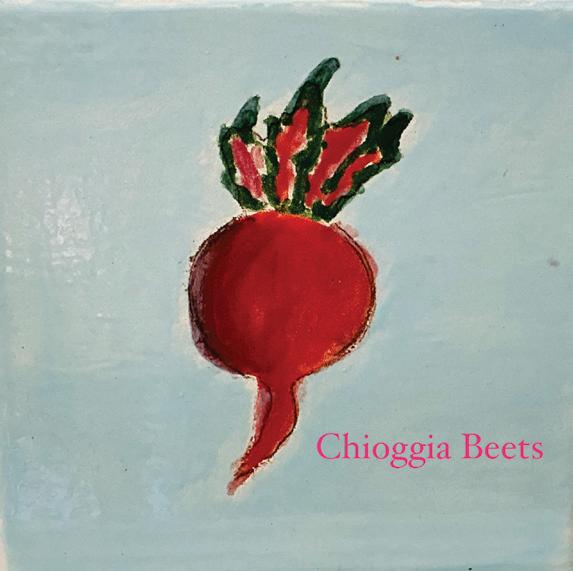
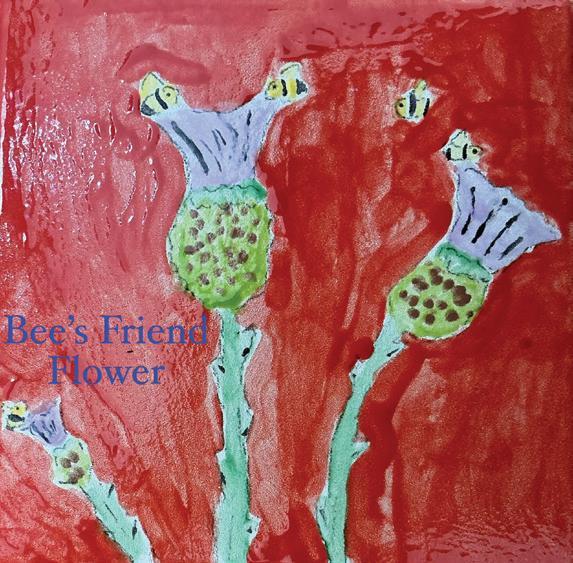
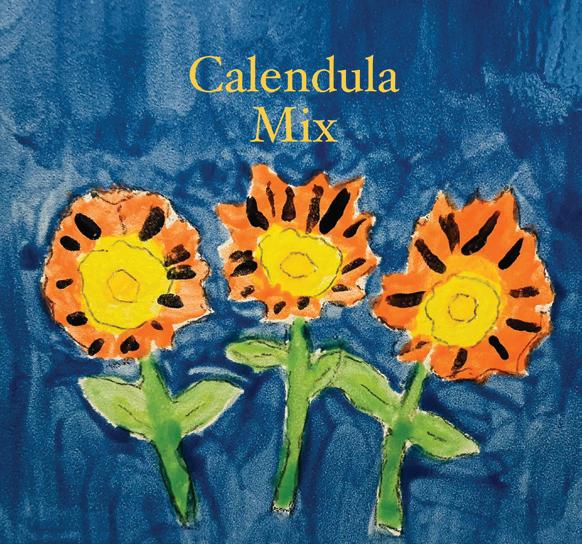
Every winter, third graders paint peas, sunflowers, carrots, and beans — vibrant illustrations for the seed packets they’ll fill and fold by hand. For one week in early spring, dozens of packets are fanned across a floral tablecloth outside the Lower School and sold for $3.50 each. Armed with a cash box and scrap paper for double-checking their math, the students calculate totals and count back change on the spot, all while fielding questions about cucumber varieties and offering opinions on marigolds.
“The Seed Store is a great example of interdisciplinary work,” Flory says. “The students begin to understand that what they're learning in academic classes is useful and important in places like art and Garden class, too.”
The Seed Store has been a PDS tradition for 14 years, starting in art class before a single seed has been purchased.
We talk about the purpose of the sale and how their art will help sell the packets,” says Lower School Art Teacher Jen Gallagher, who has been a collaborator with Garden Coordinator Pam Flory on the project. Over several classes, third graders sketch from reference, study their subjects up close, and decide how to frame them: one flower or a bunch? A whole vegetable or a cross-section? Should the tomato be growing on the vine?
The medium also changes every year. Students have worked in watercolor, pen and ink, lino print, acrylic, collage, and painted clay tiles, with styles ranging from realism to abstract.
The store,s origins trace back to before Flory arrived at PDS, when she was managing a local organic farm and sourcing seeds from Fedco Seeds, a supplier based in Albion, Maine. She'd read about a program that sold seeds to schools at a discount, letting them repackage and resell the packets to fund their own gardens. When she joined PDS, the program took shape: bulk purchasing, custom repackaging, and student-designed artwork that makes each packet its own small artifact.
Not every seed in the store comes from a catalogue, though. Flory and her students practice seed saving with some of the more accessible plants grown in the PDS Garden — flowers, mostly — and those seeds are labeled at the sale to distinguish them from the purchased varieties. “Seed saving is a science in and of itself,” Flory notes, “and we want to be sure the seeds we sell come true to type.”
Next spring, the Seed Store will mark a new kind of milestone. In 2027, PDS will host a Seed Sale retrospective in the gallery — an anniversary art show celebrating more than a decade of seed packet illustrations. The art will be on the walls; the artists will be outside at the table.

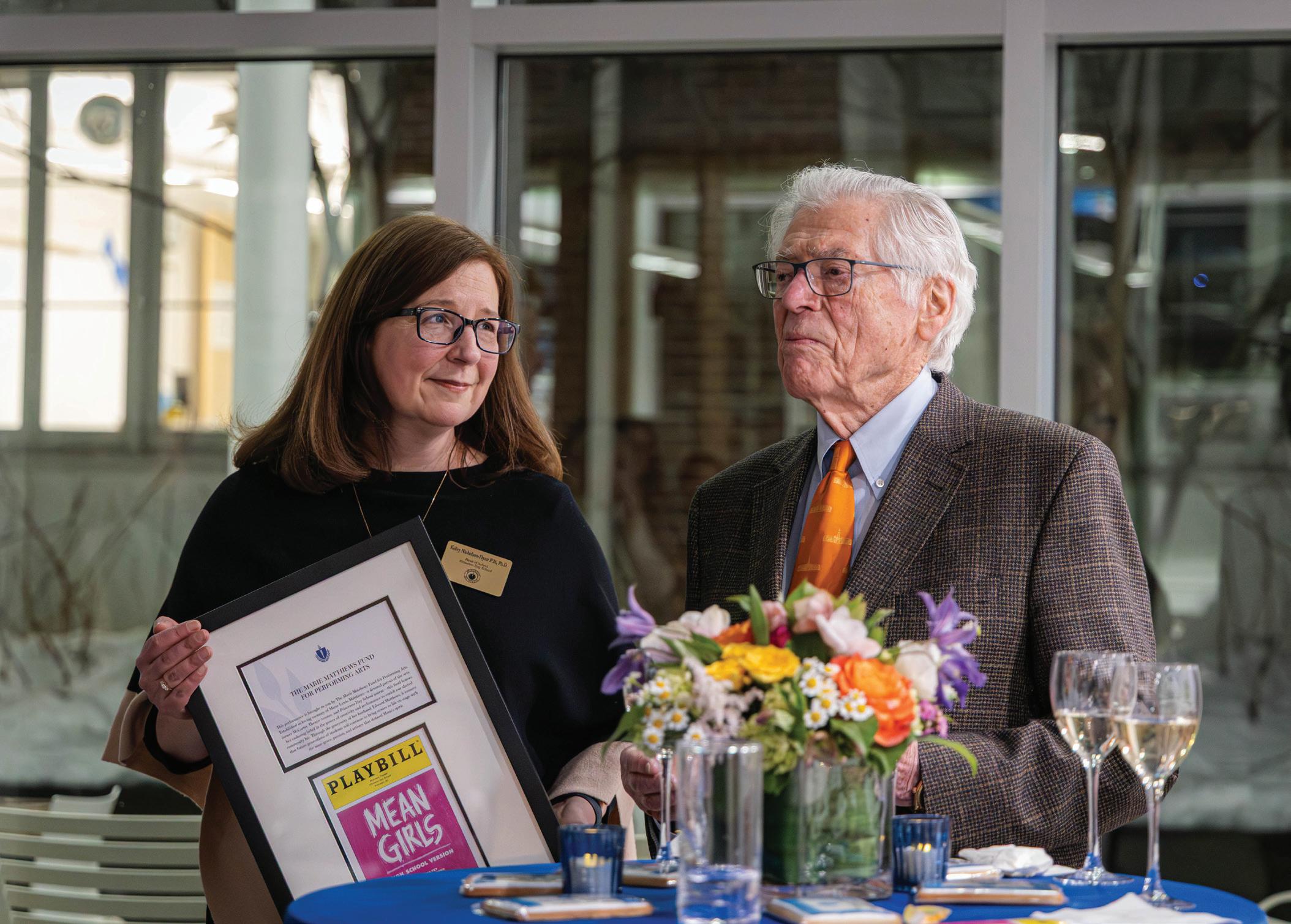
Ed Matthews P’76 ’80 ’83 ’86 is a wellknown figure at Princeton Day School: father of four alumni and grandfather of three, Trustee Emeritus, and the eponym, with late wife Marie, of the Matthews Arts Wing. He is also a dedicated supporter of the performing arts, a passion passed on to him and their children by Marie and manifested in such gifts as the beautiful Matthews Theater at Princeton University’s McCarter Theater Center. So, it comes as little surprise that when Director of Advancement Jon Cormier P’29 ’31 ’34 suggested the performing arts, Matthews recognized it as a fitting way to honor Marie’s memory. “PDS has an amazing performing arts program,” explains Cormier. “We mount a fall play and a winter musical every year, both of which are elaborate and costly. As Ed and I chatted, it became clear that an endowed fund for the performing arts would be a fitting way to support PDS
and honor his late wife, Marie, who was a passionate supporter and patron of the arts.” Ed agreed, and with that decision, Princeton Day School’s newly established Marie Matthews Fund for the Performing Arts was born.
The funds will support the PDS performing arts productions in perpetuity. One of the ways that the fund will be used almost immediately, Cormier notes, is to make all performances available to the community free of charge. “Accessibility is a big priority at Princeton Day School, and we want to ensure everyone who wants to enjoy these amazing performances can do so. Ed’s generous gift makes that possible.”
The gift also reinforces the school’s mission, vision, and values, notes Cormier. “The performing arts support intellectual vitality, compassion, shared responsibility and play,” he says. “Our productions are center stage for our community; our students are incredibly talented
performers, and our arts faculty is loaded with exceptional teachers who are also practitioners in their fields. Here at PDS, there’s an ethos of ‘we’re all in this together.’ We show up for each other, and this gift underscores that commitment to shared experience.”
Matthews is delighted to strengthen such efforts. “PDS’ performing arts program is something I wanted to support while at the same time honoring Marie’s memory in a way that she would appreciate,” he says. “I think she would be secretly flattered and honored to have her name attached to this initiative.”
The importance of the performing arts in education is indisputable, Matthews continues. “Being in a performance takes one outside the classroom and enhances your understanding of what education is all about. Learning is more than just math, science, and history, although those subjects are undoubtedly important.
A well-rounded education includes another level of engagement in life, something the performing arts embody. Helping people enjoy life and think about the world in another way through theater is a wonderful thing, and I’m delighted to be a part of it.”
For Cormier, the gift is vintage Matthews, a testament to his foresight and continued guidance at PDS. “Ed is truly service-oriented and a great example of a leader. His influence has been impactful over many decades,” he says.
Director of Performing & Fine Arts and Design Stan Cahill is equally enthusiastic. “Ed’s gift is an incredible endorsement for our theater and performing arts program,” he says. “We’re widely recognized as one of the outstanding programs in the Northeast, and The Marie Matthews Fund cements that legacy for the foreseeable future.”
For one, it ensures that PDS remains able to attract first-rate talent from the professional community to work with students in mounting productions, Cahill notes. “We’re fortunate to have lighting, sound and staging pros from Madison Square Garden, Princeton University, and Lititz, Pa., a well-known locale for the live
entertainment industry, come to PDS and work on our productions for a fraction of their fee because they believe in what we do and they see how committed our students are to the endeavor. The Marie Matthews Fund will enable us to continue to bring these individuals to campus.”
The fund will also allow the program to grow with the times and technology, he explains. “We’ll be able to continue the work we’ve been doing while also exposing students to the discipline’s future — we’re teaching them everything from the oldtime, analog approach of pushing scenery to the modern demands of manipulating terabytes. The Matthews name is a big one in the Princeton arts community, and it’s an honor to be connected with it,” Cahill says.
Head of School Dr. Kelley NicholsonFlynn P’26 is likewise grateful for Matthews’ ongoing commitment to the school. “Ed is an institution at PDS,” she notes.
“The Matthews family’s generosity has helped the school expand our arts facilities and continue growing an exceptional performing arts program,” she says. PDS is committed to mounting productions that
“PDS’ performing arts program is something I wanted to support while at the same time honoring Marie’s memory.”
“leave it all on the stage,” she observes. Nicholson-Flynn echoes Cormier’s belief that the gift speaks directly to PDS’ deepest commitments.
“I didn’t have the privilege of knowing Marie, but when I think about stewardship, I think about the ability to connect individuals with shared values across generations. With this generous gift, Ed has made an experience that he and Marie always valued accessible to future generations of Panthers. He is a role model for how philanthropy can affect entire regions, and we are incredibly proud to be a part of that legacy.”
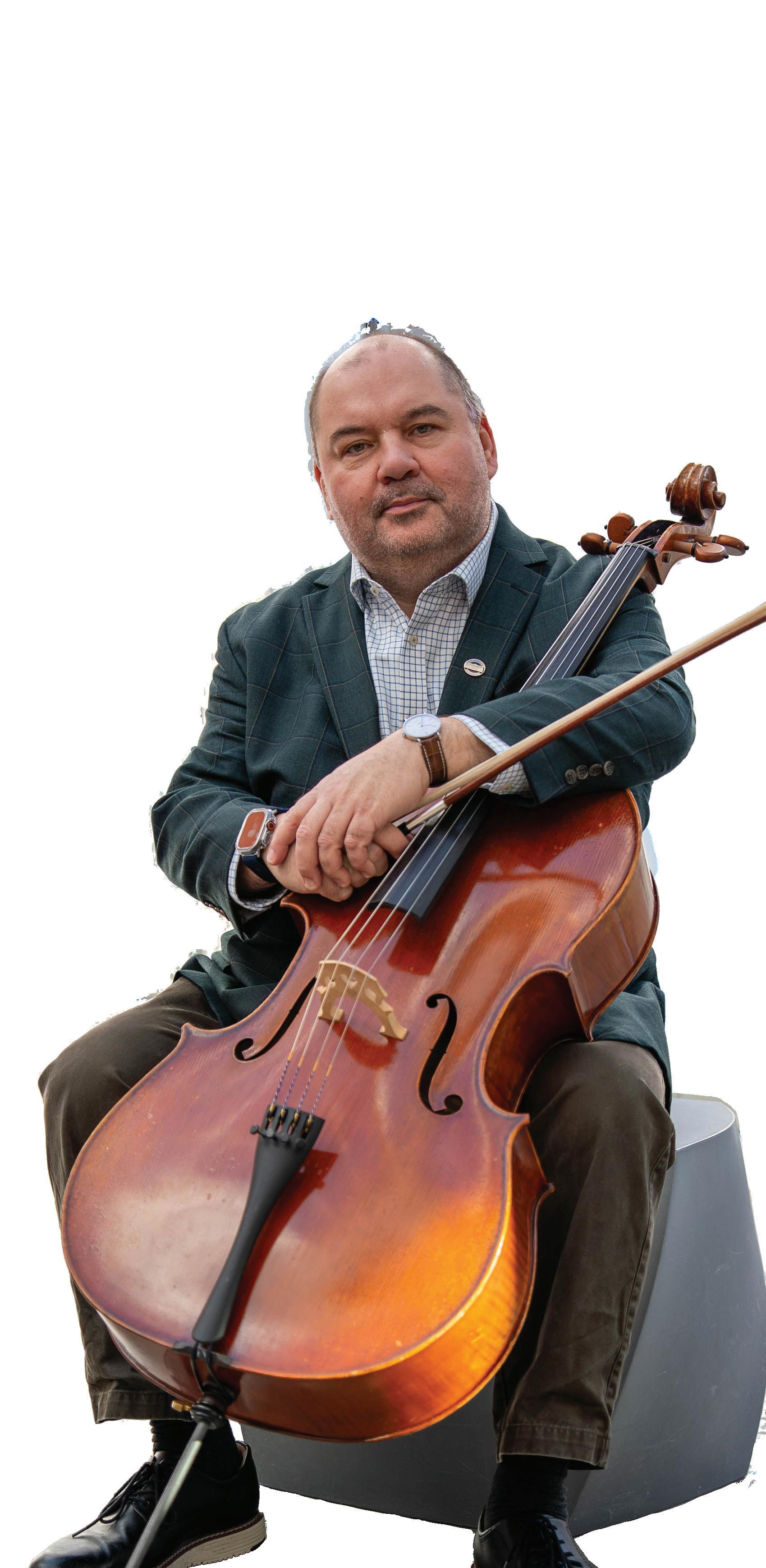
For Tomasz Rzeczycki, performing arts faculty and Upper School dean, music has always been more than something to study. Rzeczycki’s own path in music began in Kraków, Poland, and eventually led him to earn degrees in cello performance from the Music Academy in Kraków, Shenandoah Conservatory, and the University of Texas at Austin. Now in his 23rd year at Princeton Day School, he continues to perform while helping students discover what it really takes to grow as musicians.
You’re not just teaching music, you’re also performing it. How does that shape what students see and learn?
I sometimes describe performing as being a little like open-heart surgery — you only get one chance to do it right. That kind of pressure can feel intimidating, which is why confidence has to be built over time. Even 10 or 15 minutes of practice a day will make you a better musician. Last year, I played Bach at a school assembly, and I was nervous. I knew those nerves meant I needed more practice, so I’d sometimes play in Shepherd Commons after school when students were still around. I think it’s important for them to see that the nerves never completely disappear; you just learn how to manage them.
You started studying music very young. What was that experience like?
In Poland, music education is a serious commitment from a very young age. I started when I was six, and it was very structured. I would finish school around 3 p.m., and then music school would begin: music history, ear training, chamber music, instrument practice. Many nights, I didn’t get home until nine or 10, and then I was studying until one or two in the morning.
You originally started on violin. How did you end up with the cello?
It’s as simple as this: I wanted to sit down while I practiced. My older brother played viola and suggested the cello, which, of course, is a seated instrument. It turned out to be the right fit. Sometimes the path into something serious starts with a very practical decision.
What’s something students often misunderstand about practicing music?
Students sometimes apply the logic of sports to music. They think the practice happens when the rehearsal happens. But rehearsal is where we put things together. The real practice happens between rehearsals and lessons. When students come into rehearsal truly prepared, I can immediately see the difference, but most importantly, they can see the difference, too.
What do you hope students discover as they continue growing as musicians?
One of the beautiful things about music is that you can return to the same piece years later and discover something completely new. Your technique changes, your experiences change, and suddenly you hear the music differently. The notes are the same, but every performance has a different color. That’s what keeps music interesting forever.
Panther Puzzle
ACROSS
We’re running our first crossword in this issue. Give it a try, and when you’re done, send a photo of your completed grid to editor@pds.org. We’ll send a gift to the first five readers who solve it.
1. Pet that barks
4. Reversal on the road
9. Structure that allows wheelchair accessibility
13. "East of Eden" director Kazan
15. Dawn
16. Auto that needs charging
17. Structure designed by PDS first-graders to observe local avian life
19. ___ & White Day (annual PDS event)
20. Recounted, as news
21. Sealant in a bathroom
22. Finnish steam room
25. Garage band's booking
26. Ride built by PDS sixth-graders in an innovative STEAM project
31. In a unified way
33. ___ and Play (afterschool program for Lower School students)
34. Be in the red
35. Use needle and thread
36. "Who ___?" (New Orleans Saints cheer)
38. DC MLB player, for short
40. Panther ___ (source for PDS Athletics gear)
41. Not feeling well
42. Allow to borrow
44. Cook in an oven
46. Housing goal of a Princeton project by Phoebe Dickler '26
50. Classical music group to hear in Beantown: Abbr.
51. Change with the times
52. Capital of Ghana
55. "Eastside" producer Benny
59. "Parasite" star ___ Woo-shik
60. Project that invites PDS students to integrate creativity into a stroll through campus
64. Descartes of philosophy

65. The ___ Matthews Fund for the Performing Arts
66. Very narrow battery size
67. Strong farm animals
68. "Castle" actress Katic
69. The Bronx Bombers, on scoreboards
1. Amount to repay
2. Aglio e ___ (simple pasta preparation)
3. Student at PDS predecessor Miss Fine's School
4. Beneficial
5. The first "T" in MTWTF: Abbr.
6. Sturm ___ Drang
7. Have regrets about
8. "Morning Edition" network
9. Packs again, as groceries
10. Rights-defending group: Abbr.
11. Severely criticize
12. Youngest Panther grade
14. Builds an extension
18. Had a baby horse
21. CBS crime drama that debuted in 2026
23. Competitor of Tetley and Lipton
24. ___ Atrium (PDS space for getting creative)
25. Spanish painter Francisco
26. Muppet who plays the piano
27. Unposed photo
28. The present time
29. Rams' mates
30. Payment to a landlord
31. Cambodia's continent
32. ___-esteem
37. Shoe brand with a store at the Quakerbridge Mall
39. Three times (as much)
43. League with Clippers and Celtics: Abbr.
45. Home of Canada's Parliament Hill
47. TV host Conan
48. Cape Town's country: Abbr.
49. ___ Tar Pits (Los Angeles attraction)
52. Prefix meaning "height"
53. New PDS course with a creative workshop led by Dr. Joshua Bennett
54. Halo Pub offering
56. Fluffy, chewy flatbread
57. Material in the PDS ceramics studio
58. "I guess so"
60. WhatsApp notes, for short
61. Vegan milk option
62. Historically important period
63. Chemical element with the shortest name
This year PDS says goodbye to eight retiring colleagues. They’ve shaped our students, our campus, and our community, and we will carry their influence with us for years to come. We are deeply grateful for their years of service, and we wish them every happiness in the chapter ahead.
YVES MARCUARD
Middle School Classical & Modern Languages Faculty
36 YEARS
Yves Marcuard describes himself as a “Swiss Army knife—jack of all trades, master of none,” but anyone who has worked alongside him knows this is simply his modesty talking. Over 36 years, he has left a profound mark on nearly every corner of PDS. In the classroom, Yves was legendary for his ingenuity: full-body vocabulary impersonations, “creative” grammar rules that could fill their own textbook, and a deep love of etymology that could turn any question into a centuries-spanning linguistic journey. He was also ahead of his time in weaving technology into his curriculum long before it was standard practice. Beyond teaching, Yves brought an infectious energy to the whole community — whether through his encyclopedic playlist of “has-been” songs (he has one for every occasion), his years playing with the PDS band, his coaching on the soccer field, or the legendary sight of his bright yellow car topped with a kayak. He never said no to a colleague who needed help, and he always made it seem like no big deal. We are deeply grateful for his generosity, his humor, and his 36 years of dedication to PDS.
— Laurence Farhat P’16 ’19, Classical & Modern Languages Department Chair
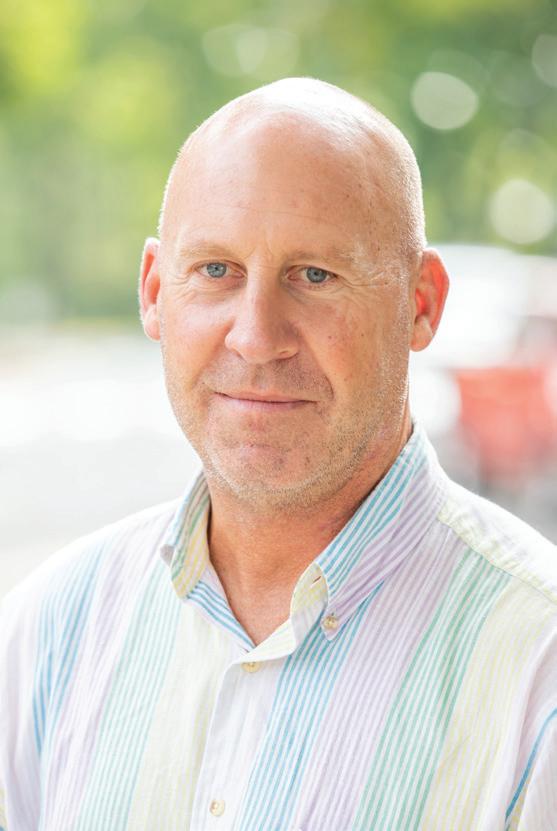
JIM LAUGHLIN ’80 P’16 ’19
Kindergarten Teacher, Lower School Assistant Teacher
34 YEARS
Working alongside Jim for the last 20-plus years has been nothing short of a masterclass in what it truly means to be a friend, colleague, and educator. In an era where the landscape of schooling is constantly shifting, Jim stands as a rare beacon of timeless values: a teacher who weaves fairness, joy, and deep-seated respect into the very fabric of Princeton Day School. His sense of loyalty is unmatched; whether it’s to his colleagues, the institution, or the wider community, Jim has always operated with an “others before self” philosophy. He is the first to raise his hand for the difficult tasks others shy away from, tackles difficult conversations, and brings joy and laughter throughout every day. He has always embraced forward-thinking philosophies while never ceasing to question the relevance of a new fad or technique, making sure others think as deeply about issues and fairness for all. Jim doesn't just teach Kindergarten; he models to us all how to live honorably and demonstrates a commitment to learning that will leave a permanent mark on every student and peer lucky enough to have known him.
— Sarah Thompson ’84 P’15 ’18 ’22, Lower School Teacher
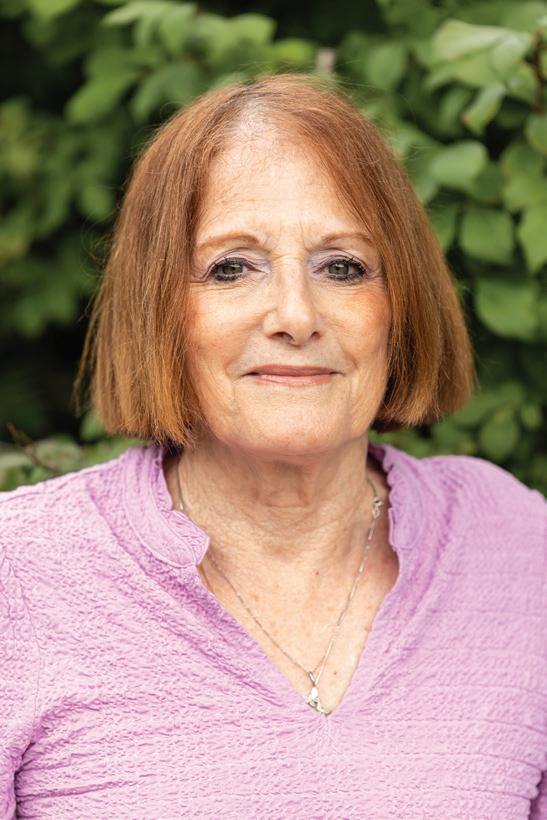
Middle School Library Assistant
28 YEARS
If you walk into the Middle School library on any given morning, you’ll see Janet Dickson chatting warmly with a gaggle of students. She has made the library a welcoming place where every student feels at home. Janet has worn many hats at PDS: advisor, theater production assistant, affinity group leader, homework club leader, and longtime MS Library Assistant. Whether delivering books to lockers or gently reminding students to return a favorite read, her care has touched not only generations of students but the entire PDS community. More than a Library Assistant, she has been a friend to all who have worked alongside her. As she begins her retirement, Janet leaves a lasting legacy of kindness, connection, and care. Her influence and generosity will live on in the students and community she has helped grow.
— Sheila Goeke, Head of Libraries
LISA WEBBER
Upper School Math Faculty
25 YEARS
Lisa is a dedicated and deeply respected educator whose impact on our school community is both wide-reaching and lasting. Having taught nearly every course in the Math Department, she has been a steady, knowledgeable presence and a trusted problem-solver, especially during times of transition when her leadership was invaluable. She is exceptionally dependable and prepared for anything, always ready to support colleagues and students alike with both practical help and thoughtful insight. Beyond her professionalism and mentorship, Lisa brings warmth to our department, and her stories and friendship will be greatly missed. While we will all feel her absence, we are excited for her as she begins this next chapter filled with travel and time with her granddaughters.
— Valerie Robinson, Upper School Math Faculty
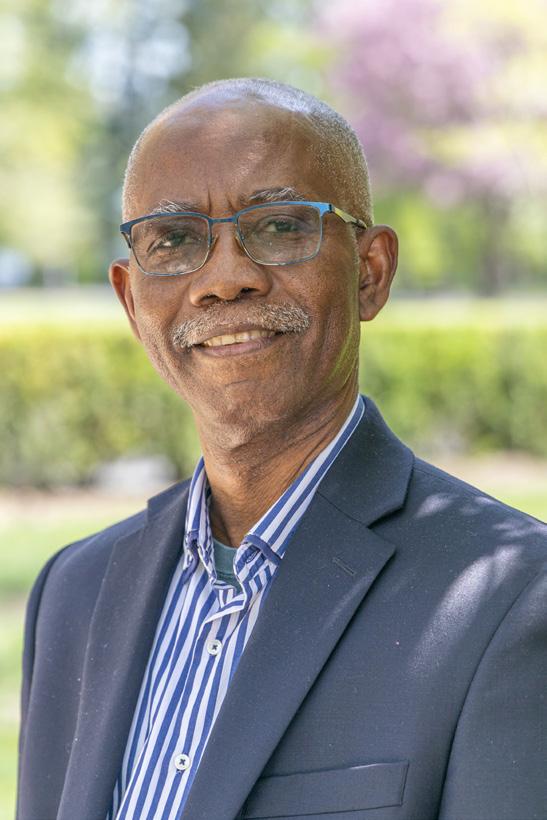
EDEM AFEMEKU P’23
Upper School Classical & Modern Languages Faculty 22 YEARS
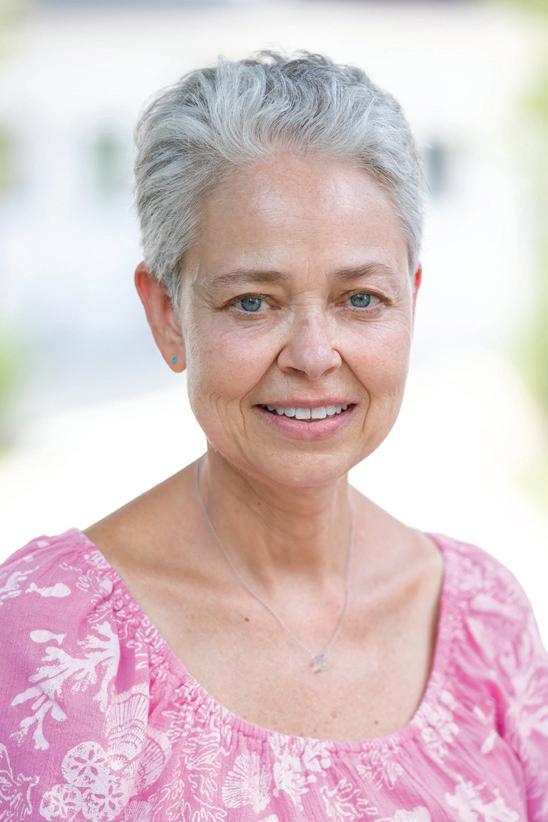
It is hard to imagine our hallways without Edem’s contagious laugh or the joy and energy he’s brought to the school through the sounds of music, drumming, and singing that filled his classroom. Edem has a rare gift for building a special rapport with everyone. Whether students need help with French or simply want to chat, his door is always open. He is the “gentleman personified,” always well-dressed, always greeting you with a smile, and never losing his cool. From his unforgettable harmonica “Happy Birthday” serenades to his famous song for memorizing object pronouns, he proved that joy is one of the most effective tools for learning. Beyond his sense of style and elegance, beyond his enthusiastic love for soccer, Edem’s impact on our department has been profound. As a polyglot fluent in English, French, German, and Ewe, he never ceases to keep our minds open to a worldwide Francophone culture. For 22 years, Edem has added a unique personality to our community. His presence, kindness, and those famous drum circles will be truly missed.
— Laurence Farhat P’16 ’19, Classical & Modern Languages Department Chair
SHEILA GOEKE
Head of Libraries, Middle School Librarian, Middle School
Service Learning Representative
Sheila has created the hub around which our Middle School rotates by embodying all of the finest traits anyone can wish to find in a librarian. Her collaborative spirit brings together students and faculty in a welcoming space that is full of joy and discovery. With her seemingly boundless curiosity and patience, Sheila is never deterred by even the most challenging requests for help tackling unique research topics or guiding the selection of independent reads. In our Humanities Department, we always consult with her as our first stop when developing new ideas, knowing we will be in the company of a supportive thought partner who will help us to refine our efforts with student-centered best practices in mind. As a personal treat, I am always delighted to discover the books she places on my desk, knowing they are just the kind I like to read. Sheila sees and appreciates each and every member of our community.
— Amy Beckford, Humanities Department Chair
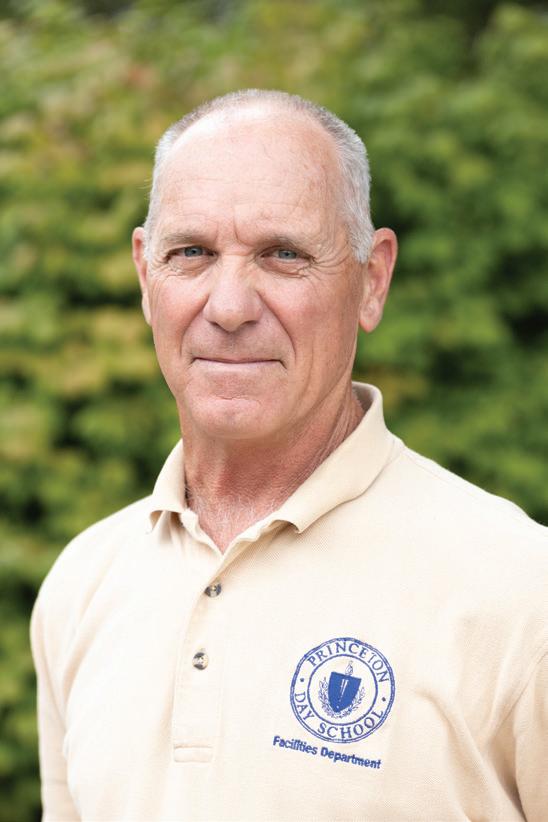
RONNY CHOY
Building Mechanic
4.5 YEARS
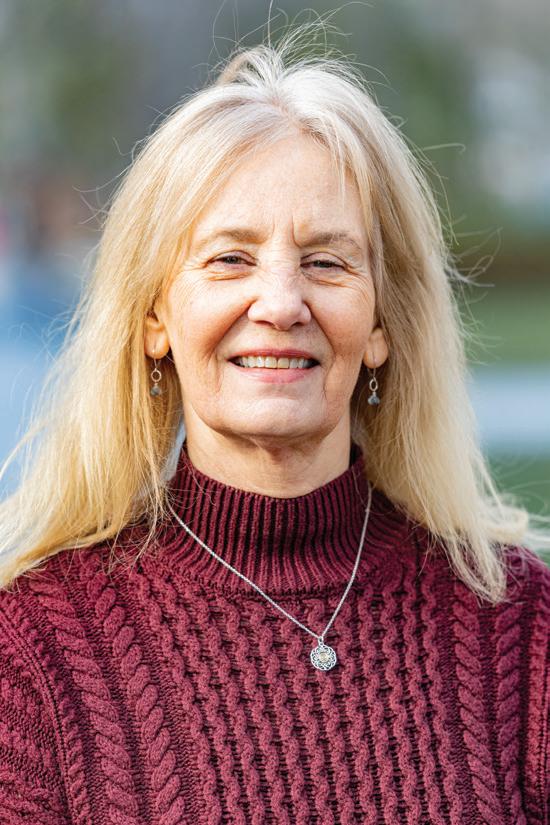
BILL GREENE Grounds Foreman
6 YEARS
I began my tenure at Princeton Day School on December 2, 2019, and Bill was one of the first team members I had the pleasure of bringing on board. At that time, the school had a small inhouse grounds team and relied heavily on outsourced services to handle much of the landscaping and sports field work. Over the past five years, Bill has grown the grounds department into an exceptionally effective and professional team, transforming our campus into a space that is consistently admired by visitors and members of our community alike. His attention to detail and clear vision have helped create a campus where our athletes can thrive and our students can connect with nature as part of their learning experience. Thank you, Bill, for your guidance and stewardship. You have left an incredible and lasting mark on Princeton Day School.
— Robert Clemens, Director of Facilities Operations
I had the pleasure of hiring Ronny Choy in 2021, and from the moment he joined our team he proved himself to be an invaluable asset to both our facilities team and the PDS community. As our HVAC expert, Ronny consistently addressed the occasional temperature concerns that arose, but what often went unseen were the many instances in which he resolved equipment issues before they ever impacted our community. The quiet, behind-thescenes dedication is where Ronny truly excelled.
— Robert Clemens, Director of Facilities Operations
As I looked for inspiration for my last letter as board chair to the Princeton Day School community, I reread my first letter and was struck by one passage in particular. Three years ago, I wrote, “As we start this next chapter, we have the luxury to ask ourselves, ‘What’s next for Princeton Day School?’ I do not have an answer yet, and that is okay.” My comfort with the uncertainty at that time was the result of the powerful combination of incredible talent, a strong history, and the affection for the school by our community.
Today, I have an answer to what is next for PDS — our new strategic plan. Launched at the beginning of May, it’s grounded in the mission, vision, and values work that concluded last spring. I could not be prouder of the work that a team of trustees, faculty, and staff produced in deeply understanding our community and thinking about the future of the school. This living document will help guide the school as we continue to “empower each student to act with wisdom and purpose.”
I want to end with a personal reflection. For the past 17 years, my family of two lifers has been part of the daily rhythm of the school. Over the years, my wife and I have volunteered our time in different ways, and it has not only added to our experience as parents but also enriched our lives through the meaningful connections we have made with our wonderful community. I will continue as a trustee next year, but I wanted to share how thankful I am to have served as Chair of the Board at the beginning of this chapter of Princeton Day School. Semper Luceat.
Christopher Bobbitt P’22 ’26 Chair of the Board of Trustees

BOARD OF TRUSTEES
Ashley Aitken-Davies P’27 ’28 ’30, Vice Chair
Sanford B. Bing H’87 P’81 ’84
Christopher B. Bobbitt P’22 ’26, Chair
Marc Collins ’88
Kerri Cook P’25 ’28 ’33
Jixin Dai P’26 ’33
Beth Geter-Douglass ’82 P’20
Georgia B. Gosnell P’03 ’08 ’09 ’14
Anna Horner P’27 ’30, Secretary/Parliamentarian
Su Jin P’27 ’31
Dylan J. Leith ’04
Amanda Maher P’28 ’30 ’34
Wesley D. Markham
Lee S. Maschler P’23 ’24
Kelley Nicholson-Flynn P’26
Howard Powers ’80 P’11 ’12 ’12
Stephanie Richman ’87 P’24 ’26
Stacy Sarvis P’28 ’30 ’33
Shefali Shah P’30
Jacob L. Silverman ’89, Treasurer
Vinay Trivedi ’09
John C. Wellemeyer PCD’52 P’18 ’18
TRUSTEES EMERITI
Marc C. Brahaney P’11 ’15
Rebecca W. Bushnell ’70
Barbara (Barbie) Griffin Cole ’78 P’08 ’13 ’17
Marilyn W. Grounds P’88 ’92
John P. Hall P’79 ’85
Thomas B. Harvey P’89
Edward E. Matthews P’76 ’80 ’83 ’86
Andrew Okun P’14 ’16
David R. Scott
Every gift to The PDS Fund supports the experiences, opportunities, and community that spark curiosity and connection. We’re in the home stretch — make your gift by JUNE 30 at pds.org/give.

C. Treby McLaughlin Williams ’80 P’12 ’15
ALUMNI COUNCIL EXECUTIVE BOARD
Marc Collins ’88, President
Zaneta Chambers ’95, Vice President
Neal Bakshi ’10
Jay Bavishi ’05
Kaylah Bland ’18
Joanna L. Bowen ’03
Jill Cacciola ’13
Sara Chopra ’18
Brooks Herr ’10
Lynch W. Hunt ’85
Taylor K. Hwong ’88
Peter Powers ’12
Anu Shah ’05
Jacob Shavel ’15
WORDS BY LINDA MAXWELL STEFANELLI MFS’62
Editor's Note: This story was originally published in the spring of 2017, when Robert S. Mueller III PCD’59 was recognized with Princeton Day School’s Alumni Achievement Award. Just days before the award ceremony, the Justice Department appointed Mueller Special Counsel to oversee the investigation into Russian interference in the 2016 election. He served as Director of the Federal Bureau of Investigation from 2001 to 2013, guiding the Bureau through the aftermath of September 11 and a period of profound change. Following his passing on March 20, 2026, we share this piece again, in slightly abridged form, in recognition of a life defined by integrity, service, and leadership.

If Bob Mueller had liked organic chemistry better, his life, and the direction of the nation’s top law enforcement agency, would have been very different. He grew up wanting to be a doctor but during his senior year at Princeton University, the advanced math and science requirements caused him to reconsider. As a result, he went into law and became the Federal Bureau of Investigation’s longest-serving and most influential director since J. Edgar Hoover. He took office in September 2001, just a week before the terrorist attacks of 9/11. Shortly before the end of his 10-year term, President Obama asked and received Congressional approval for unprecedented special legislation that extended his term another two years.
The responsibility and the pressure of those years were unrelenting, but Mr. Mueller felt he was well prepared. “The most formative experience I had early on was the Marine Corps,” he said. “For preparing you for life and leadership, there’s no better educator than military service and, particularly, the Marine Corps.”
During the Vietnam War, he led a platoon based in the dense jungles along the Ho Chi Minh Trail. In December 1968, he received a Bronze Star for his “courage, aggressive initiative and unwavering devotion to duty” in a firefight in Quang Tri province. He also received the Purple Heart, two Navy Commendation Medals, and the Vietnamese Cross of Gallantry.
“Having lived for a year in Vietnam, and survived, meant that everything else was downhill after that,” he said. “You learn how to operate under pressure; you just don’t worry that much.”
In the months before Mr. Mueller took office, there was concern at the FBI about increased terrorist-related activity online, but no specific threat. “I anticipated doing the usual work federal prosecutors do,” he said, “but all that went by the wayside after September 11th. After that, the principal concern, quite obviously, was terrorism.”
The focus of the Bureau shifted. Since
1908, its mission had generally been to investigate a crime after it was committed. In the wake of 9/11, President George W. Bush charged Mr. Mueller with gathering intelligence to stop attacks before they happened. That required an overhaul of procedure and a shift in mindset.
Mr. Mueller’s leadership was crucial in those early days. “There was no love lost between the CIA and the FBI,” he said. “But we broke down those barriers when September 11th came.”
The improved cooperation created a more effective response to future threats. Mr. Mueller was gratified “to have put into place some of the structures that enabled us to disrupt a number of terrorism plots,” but he also reflected on the weight of what could not be prevented. “There are those that slipped through,” he said, “and it felt very personal.”
During his tenure, Mr. Mueller transformed the FBI from a traditional law enforcement agency to a threat-
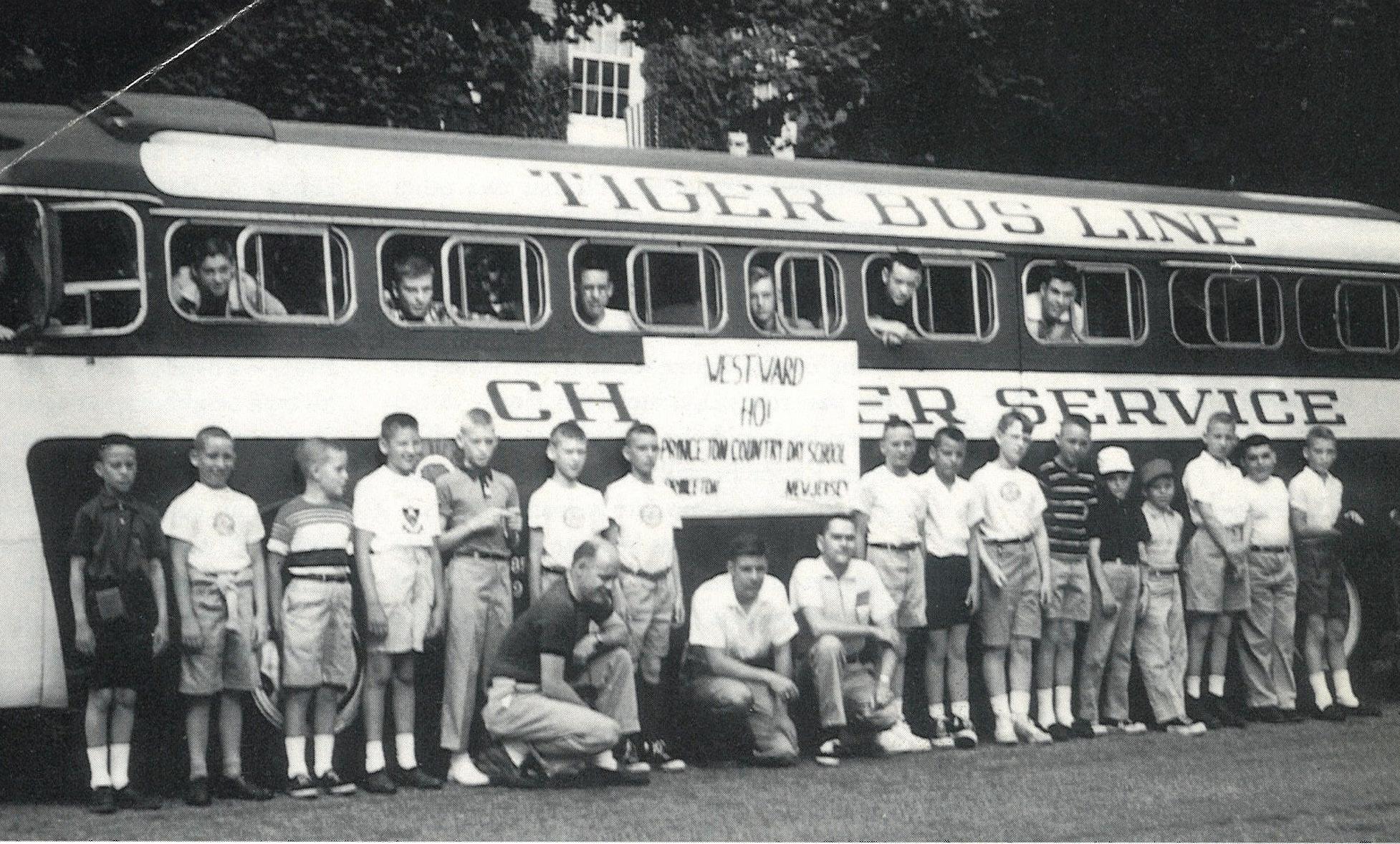
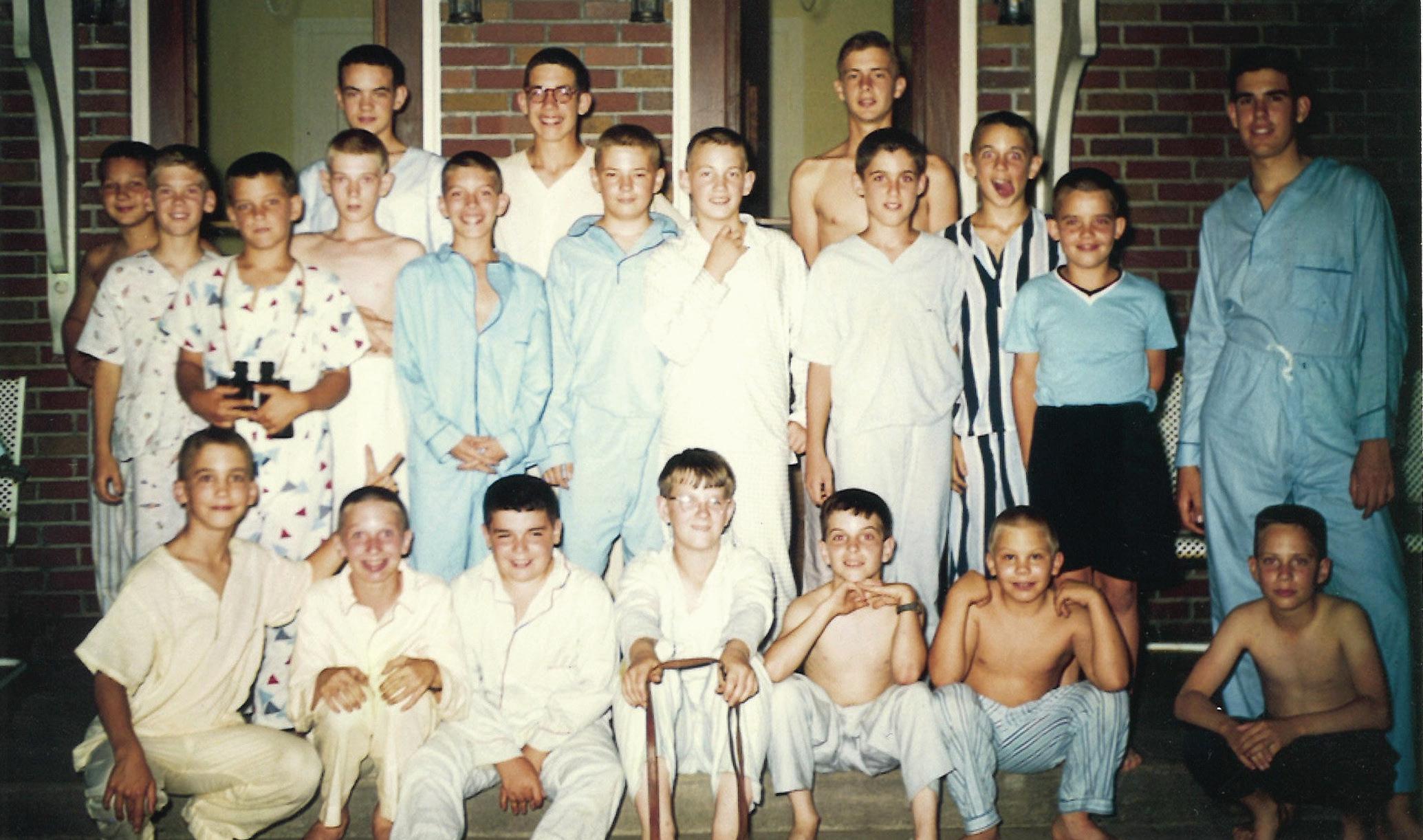
based, intelligence-led national security organization. He oversaw 12,000 agents across the United States and in more than 60 countries, often working from early morning until midnight, reporting threats to the Oval Office and coordinating responses around the world.
Mr. Mueller grew up in a bustling household with four sisters across from the Princeton Graduate School and Springdale golf course. He would often ride his bike through the University campus to Princeton Country Day School, where he
Princeton
played soccer, ice hockey, and baseball.
“I loved sports, especially hockey,” he said. “PCD was a wonderful school for those sports.”
Classmate Howard (“Mac”) McMorris PCD’59 remembered those years as idyllic. The two rode their bikes to school together and even quizzed each other on French vocabulary in the trees near the Princeton Infirmary.
Following eighth grade, Mr. Mueller’s family moved to Philadelphia. He went on to graduate from Princeton,
“You just hang onto your core beliefs.”
serve in Vietnam, and later attend New York University and the University of Virginia School of Law. After beginning in private practice, he found his way to public service, joining the U.S. Attorney’s Office and eventually leading major prosecutions, including the case against Panamanian dictator Manuel Noriega and investigations into international terrorism.
“I’ve always loved investigating criminal cases,” he said. “I’ve been very lucky to spend most of my career in public service. The rewards you get are not matched in the private sector.”
Mr. Mueller enjoyed a remarkable legal career, fueled by his passion for the work and his belief in its mission. In Washington, where politics sway most decisions, he was held in high esteem for his independence, rock-solid integrity and resourceful leadership. He believed that keeping one’s values intact is simple, whether fighting a war, upholding the law, or responding to a national crisis: “You just hang onto your core beliefs.”
memories of those we have lost and extend our deepest condolences to their families and loved ones.
BOARD OF TRUSTEES
Samuel W. Lambert P’83 ’86 ’89, Trustee Emeritus
Arthur M. Bylin P’85 ’87 ’90, Past Trustee
John M. Peach P’04 ’01, Past Trustee
ALUMNI
Harold B. Elsasser PCD’48
Dorothy Duckworth Brown MFS’51
Agnes S. Fulper MFS’54
Anne Harrison-Clark MFS’56
Daniel Quick PCD’56
Pamela Thompson Sinkler-Todd MFS’56
Robert S. Mueller III PCD’59
Linda Scasserra Masada MFS’61
Penelope Petit Kreinberg MFS’64
Donald E. Woodbridge PCD’64
Alison Hubby Hoversten MFS’65
Katherine W. Johnson ’67
Michael L. Hart ’68
Julie A. Fox ’69
Georgia Myer ’71
Jonathon Fell ’75
FORMER EMPLOYEES
Diane Ozarowski P’03 ’12
Linda Stewart
Charles “Butch” J. Riley
Sandra Sharp
Audrey W. Gates P’78
Phyllis Hamel P’76 ’79
Peggy Harrison Henderson P’79 ’85 ’89 ’92
Helene E. Kulsrud P’79 ’84
Russell M. Kulsrud P’79 ’84
Eric Martins P’30
Michael S. Mathews P’99
Barbara Mott Patton P’62 ’65
Myron Pawliw P’05
Jael Judith Ramirez P’26
Herb Spiegel P’78 ’81 ’84 ’88
Gough W. Thompson P’73 ’74 ’78 ’81 ’86
Bruce J. Westcott P’96 ’99
Benjamin Yeh P’27
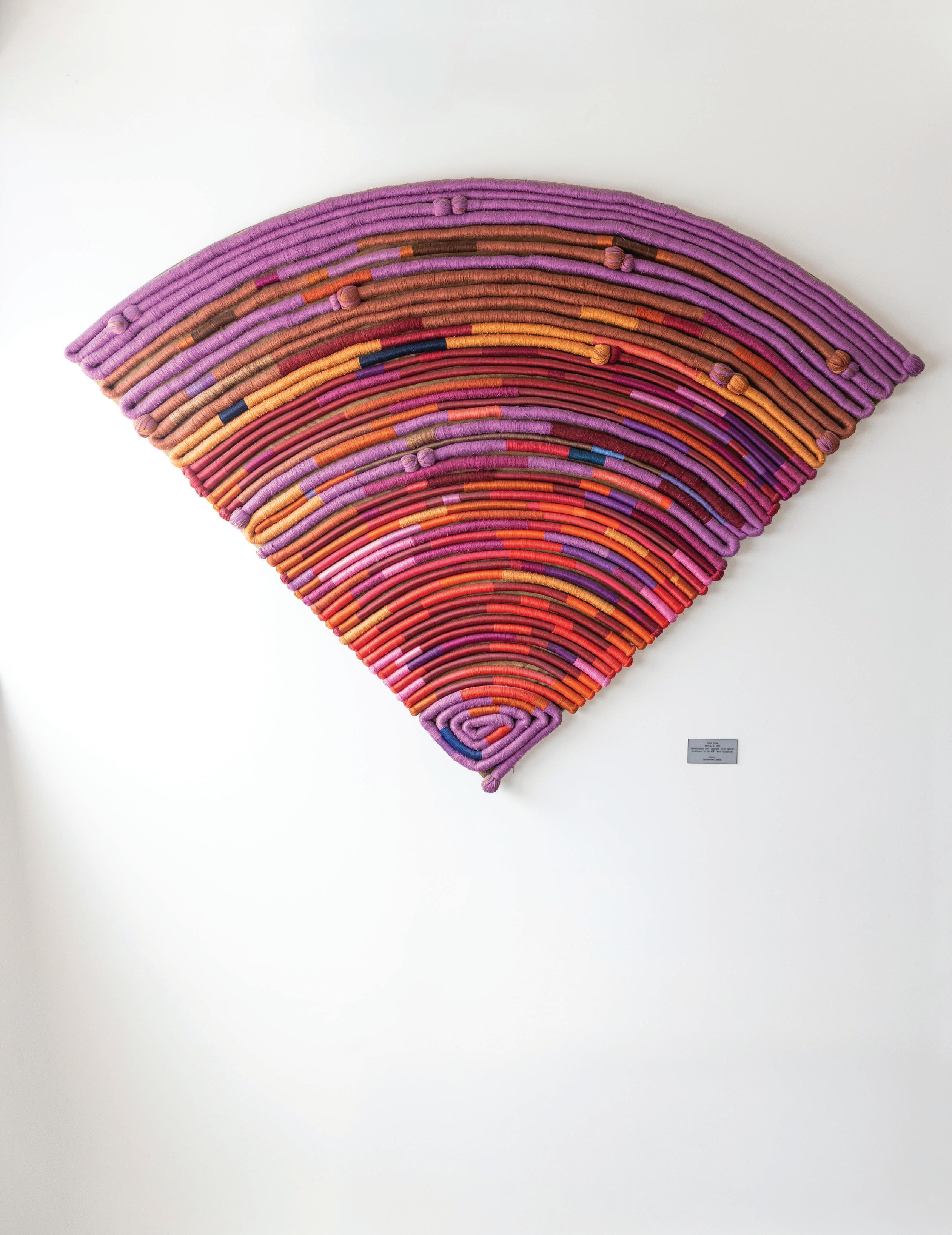
You've likely seen it a hundred times. The enormous jewel-toned textile at the top of the stairs by the Upper School library is hard to miss, though few who pass it know the story behind the art.
The piece is by Sheila Hicks, a pioneering artist whose fiber sculptures sit in the permanent collections of the Museum of Modern Art, the Whitney Museum of American Art, and the Centre Pompidou in Paris. In 1976, she created Communications Disc – Labyrinth, commissioned for AT&T's new world headquarters in Basking Ridge, part of a larger art collection assembled for the company by MoMA curator Mildred Constantine.
When AT&T left the Basking Ridge campus in the early 2000s, Communications Disc was divided into quarters.
Lynn and Robert Johnston P’92 ’94 ’97 acquired the work and placed two pieces at Lynn’s alma mater, Wellesley College, and one each at the Lawrenceville School and Princeton Day School, where all three Johnston children had been students.
For years, the piece lived in the lower level near the Middle School art studio. In 2020, it was restored and moved to its current spot at the top of the library stairs.
Turns out there's more in the weave than meets the eye.
650 Great Road
Princeton, NJ 08540 (609) 924-6700 pds.org